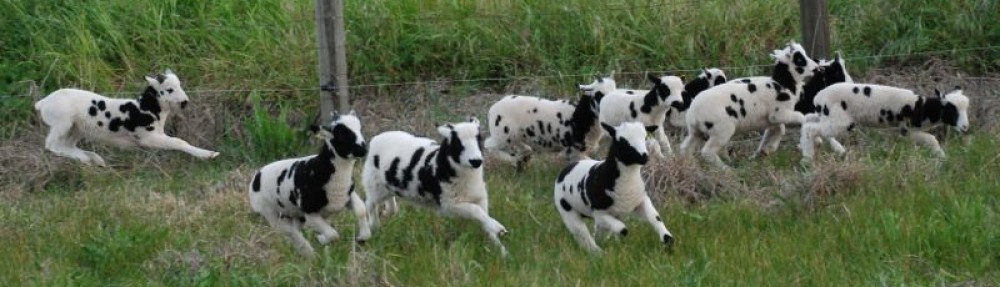
I started to name this Dress-Up Day for Sheep, but that is misleading and a little too cute. The title describes what I did yesterday.

I caught 7 of the 8 sheep that have coats. A coated fleece is often prized because it is free of VM (vegetable matter). In my situation that is mostly hay and grass seeds. My coated fleeces may not be as wonderful as some because I don’t usually coat the sheep from shearing day on. Most of these coats were put on either when the sheep traveled to Black Sheep Gathering in June or went to State Fair in July and Lambtown in October. So they may have been coated only part of the year. But that is less VM than if there was no coat. There was also the advantage that those sheep with coats won’t have as much marking crayon from the rams in their fleeces (note the green rear of the sheep on the right).
Why don’t I coat all of my sheep?
1. I’d rather see spotted sheep, not coats.
2. It’s a lot of work. Coats need to be changed periodically through the year as the wool grows and they get too tight. Then they will cause felting and may ruin the fleece. We may go through 4 coat changes in a year, especially for a younger ewe who is not only growing more wool, but she is getting larger too. If I put on a coat that is too large I risk having sheep get a leg through the neck hole or slip out of one of the back leg straps. Then you have a sheep that can be tangled up and/or cause damage to the coat.
3. It’s a lot of work to repair the coats that are torn. Horned sheep are tougher on the coats than those without horns.
4. Eventually coats need washing, especially before I take them to my sewing machine for repair.

I tied all the sheep in the lambing area and removed coats. I hung the coats on the fence near the sheep so I could find the next size without trial and error.

This photo shows another advantage of coating. The fleece under the coat does not have sunbleached tips so the color of the black yarn will look blacker than if those brown tips are mixed in. You can also see the amount of hay in the neck wool of this sheep.

These photos are some views of the fleece under the coats.

Some are cleaner than others because the sheep has worn a coat for longer.

This photo and the one below it are good examples of the different styles of Jacob fleece, at least as far as the crimp. Both fleeces are within breed standard.


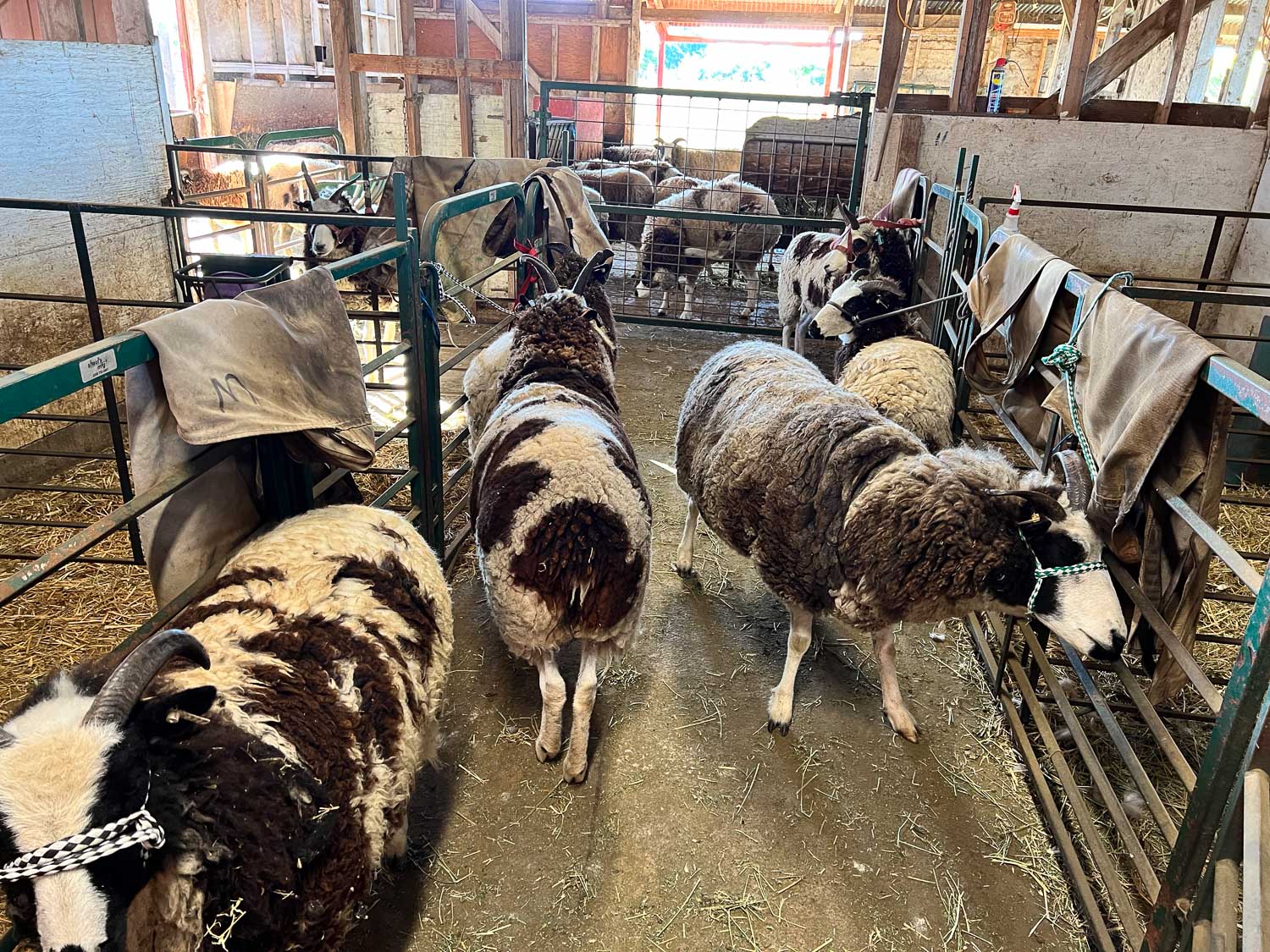
Here they are all ready to have new coats.

This coat has a little more room for growth. Most of us probably don’t walk around with our clothes size showing, but it is helpful for me when keeping track of coats that may need changing. (The number 3 is above the shoulder.)
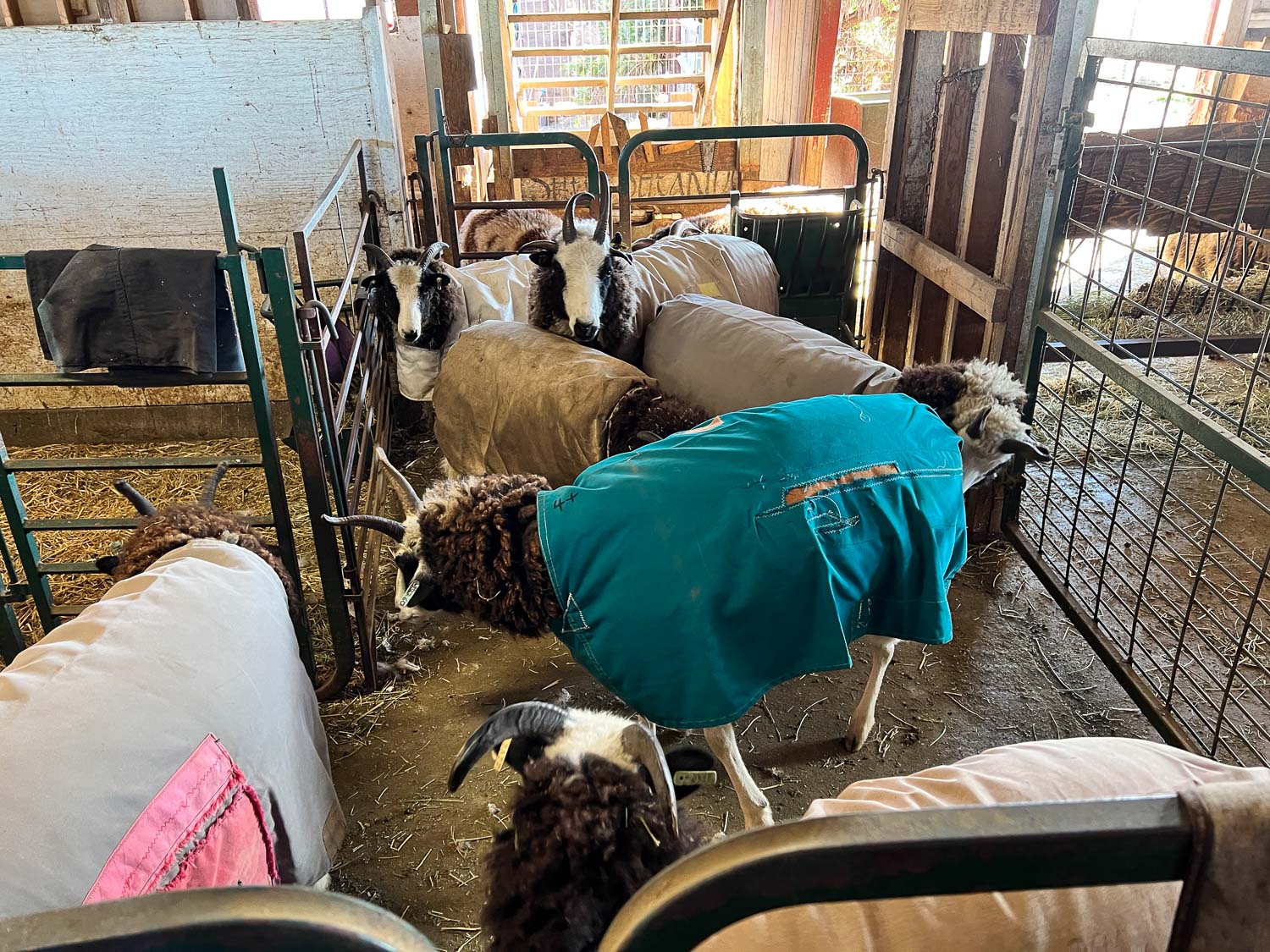
I have acquired coats from various sources although most came from Terri Mendenhall who is well-known for her award-winning sheep and fleeces. As the coats need repair they get a mix of patches.
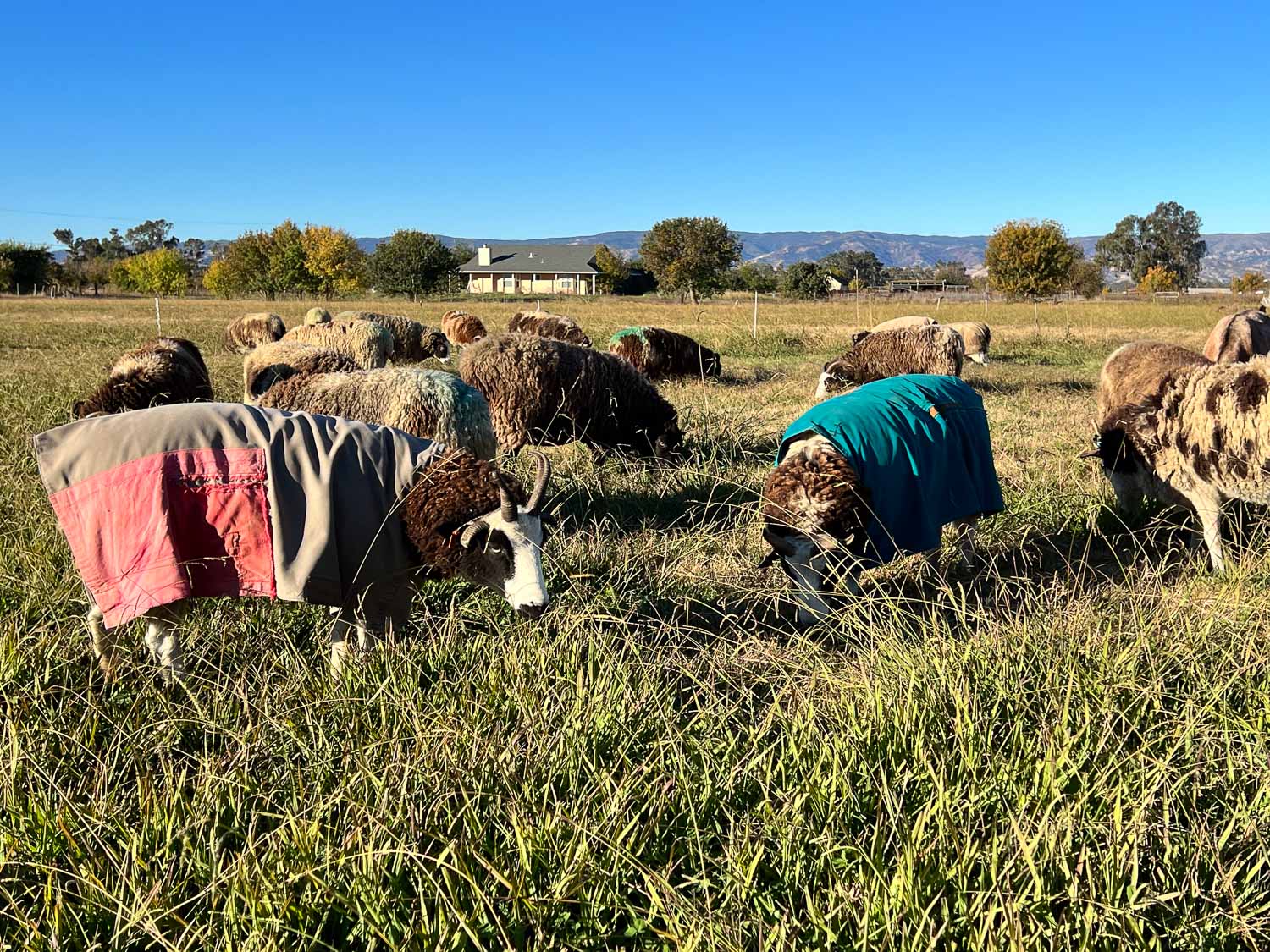
They have been repaired by a Farm Club member who took some home, by me, and by my son who lives in Idaho and works as a smokejumper. Did you know that smokejumpers learn to sew so that they can make gear and handle all their own repairs? They use heavy duty sewing machines and fabric so Chris was able to make some repairs using fabric from the scrap pile.
 Meridian Jacobs' Blog
Thank you for educating me about sheep and coats. I had no idea that sheep wore coats, but it makes sense. I love the crimp in your photos. I vaguely remember getting excited when I bought a fleece with such a nice crimp (vaguely because it’s been decades since I worked with fleece).