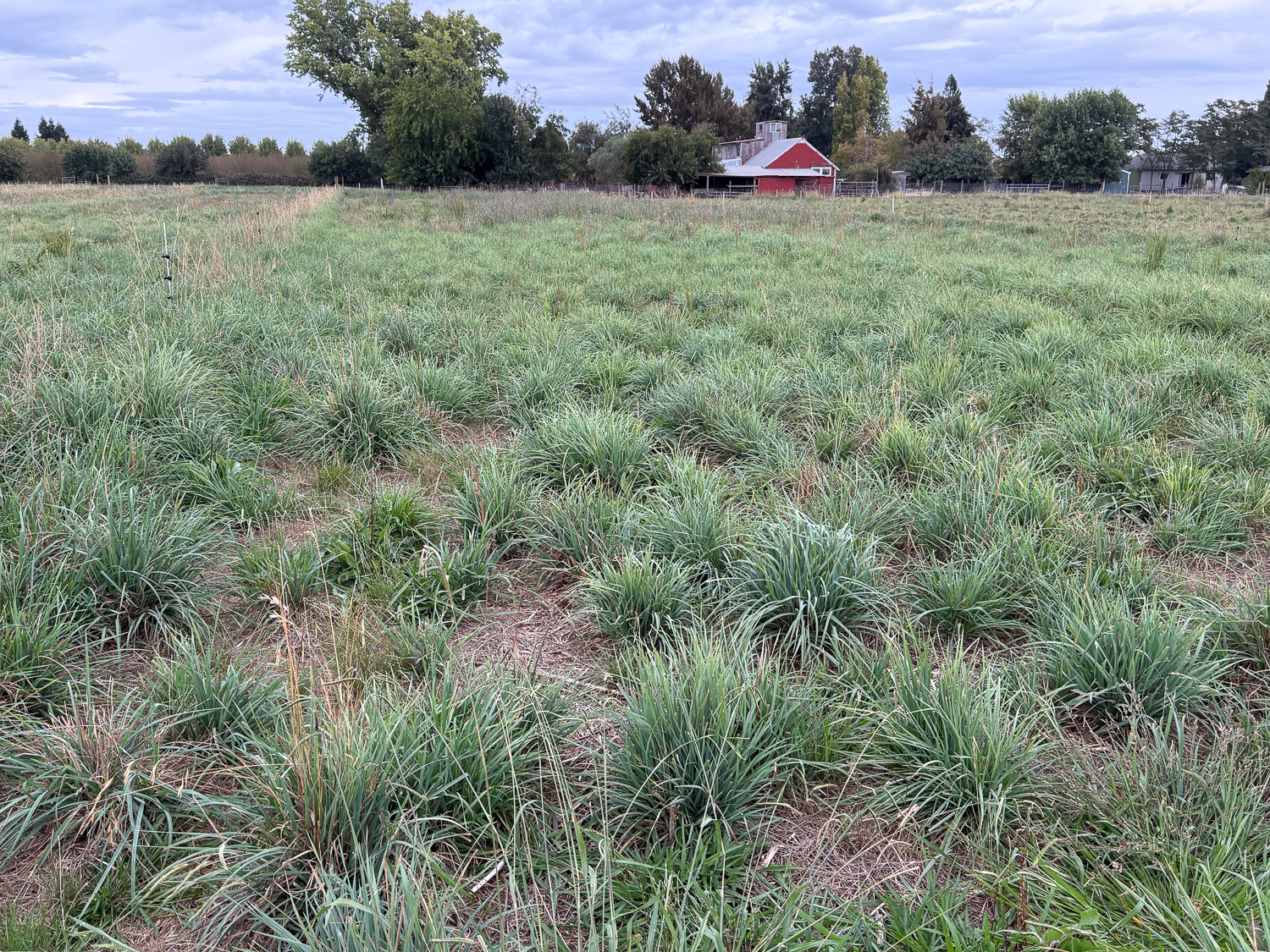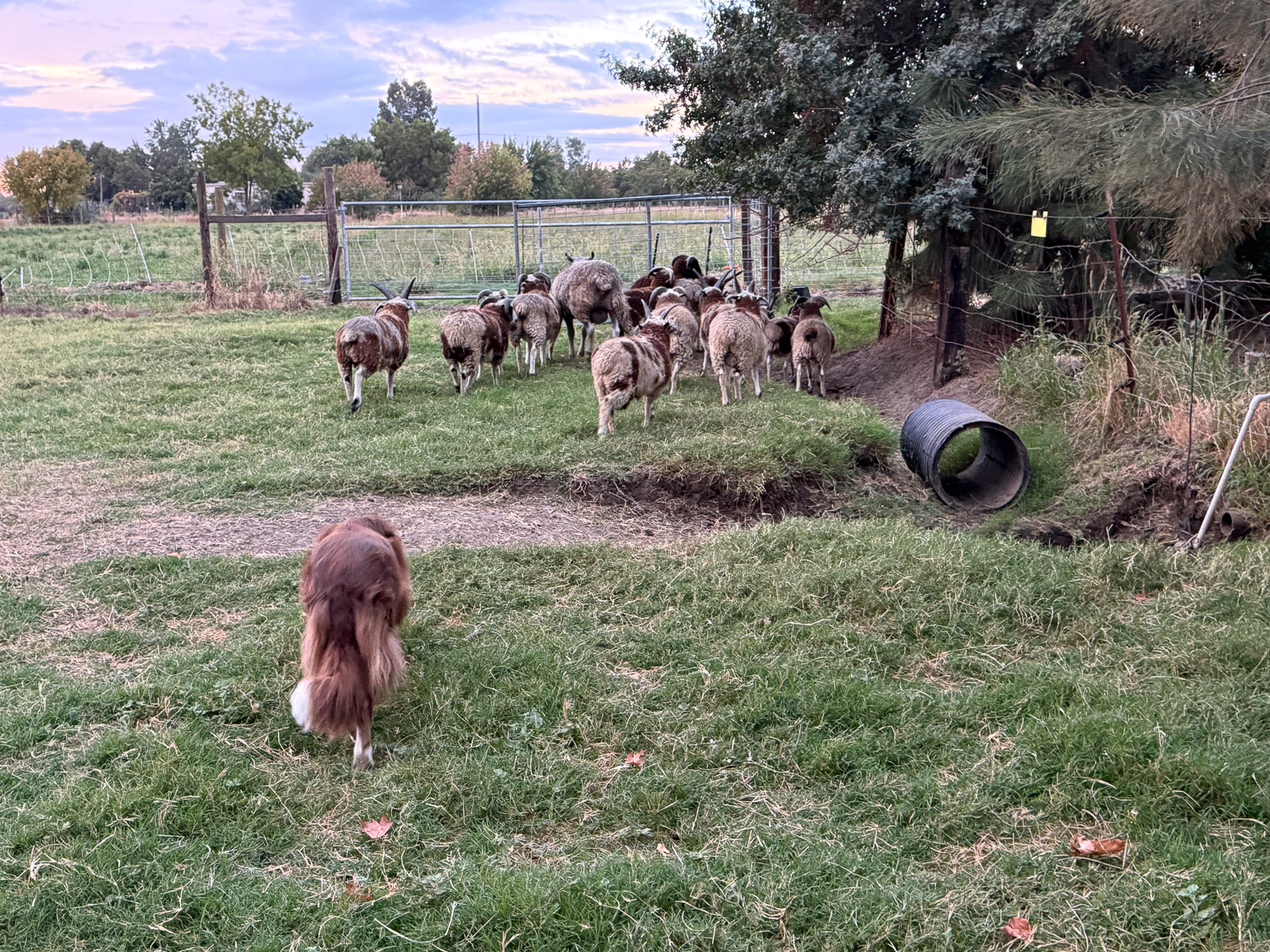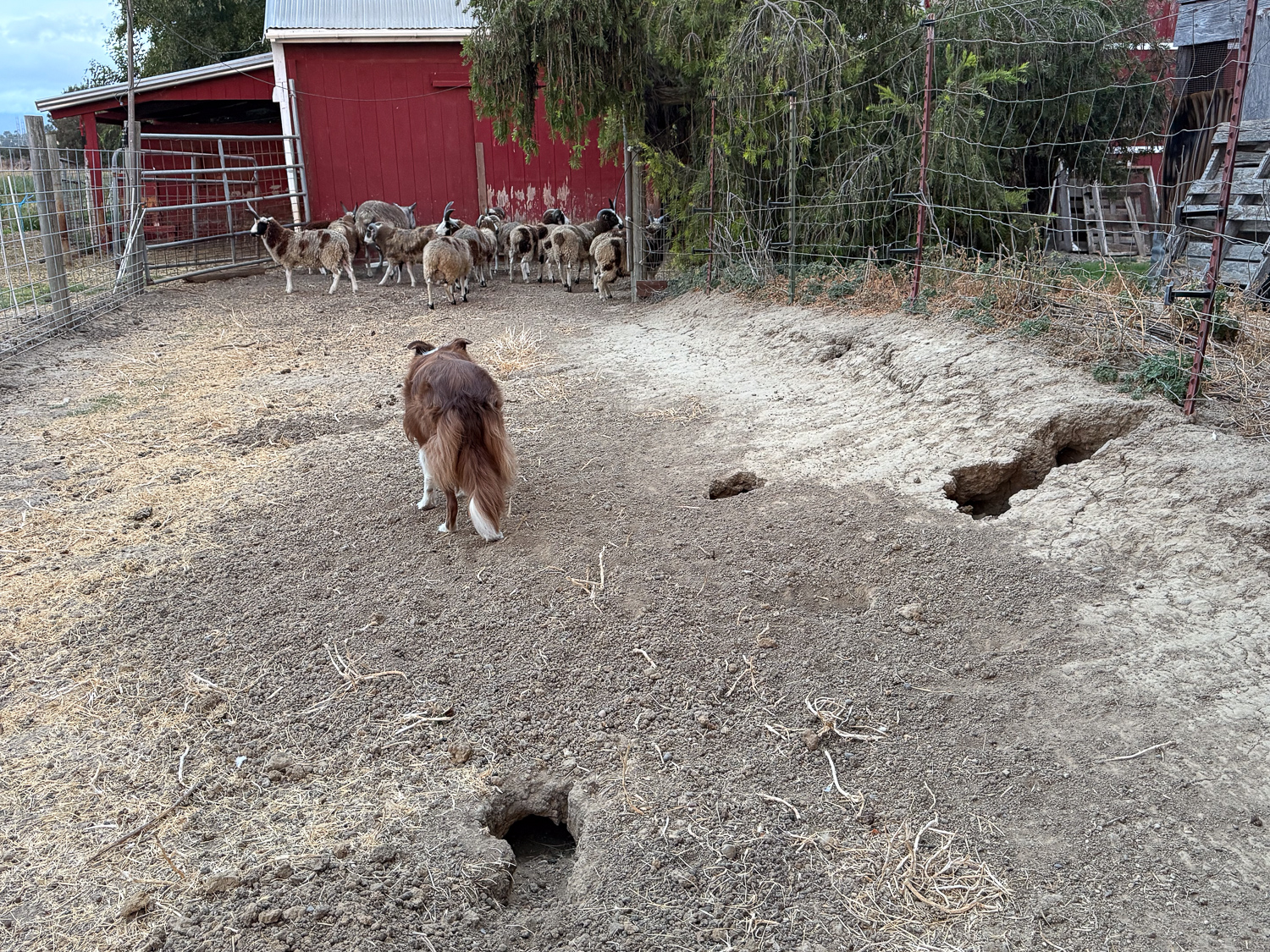
Two rams got in with the ewes on September 1. One ewe was cycling and was bred (as confirmed by the vets on ultrasound day. We knew that she would lamb in the week between Shearing Day and the Farm Club Retreat. I went to the barn the morning that we were going to leave and found lambs!
Lambs up and nursing, just the way I like to find them! Good job Hailee!
acobI brought the lambs and ewe to the barn. The ewe lamb weighed 8.3 pounds and the ram weighed 11.2 pounds. Dan was happy because he didn’t have to be on lamb watch while I was gone.
After I brought the ewe and lambs in went out to move the fence and let the sheep into a new paddock.
Even though the sun was up, the fog started to roll in again.
First daffodil, brightening up the gloom of fog!
I was gone from Friday through Sunday. I took this photo Sunday evening. The next lambs aren’t due for three weeks.
Check out the previous two posts for Shearing Day photos and info. Here is one more post.
The last group of sheep is gathered waiting for shearing. Farm Club members did all the work of gathering sheep and passing them off to the shearer.
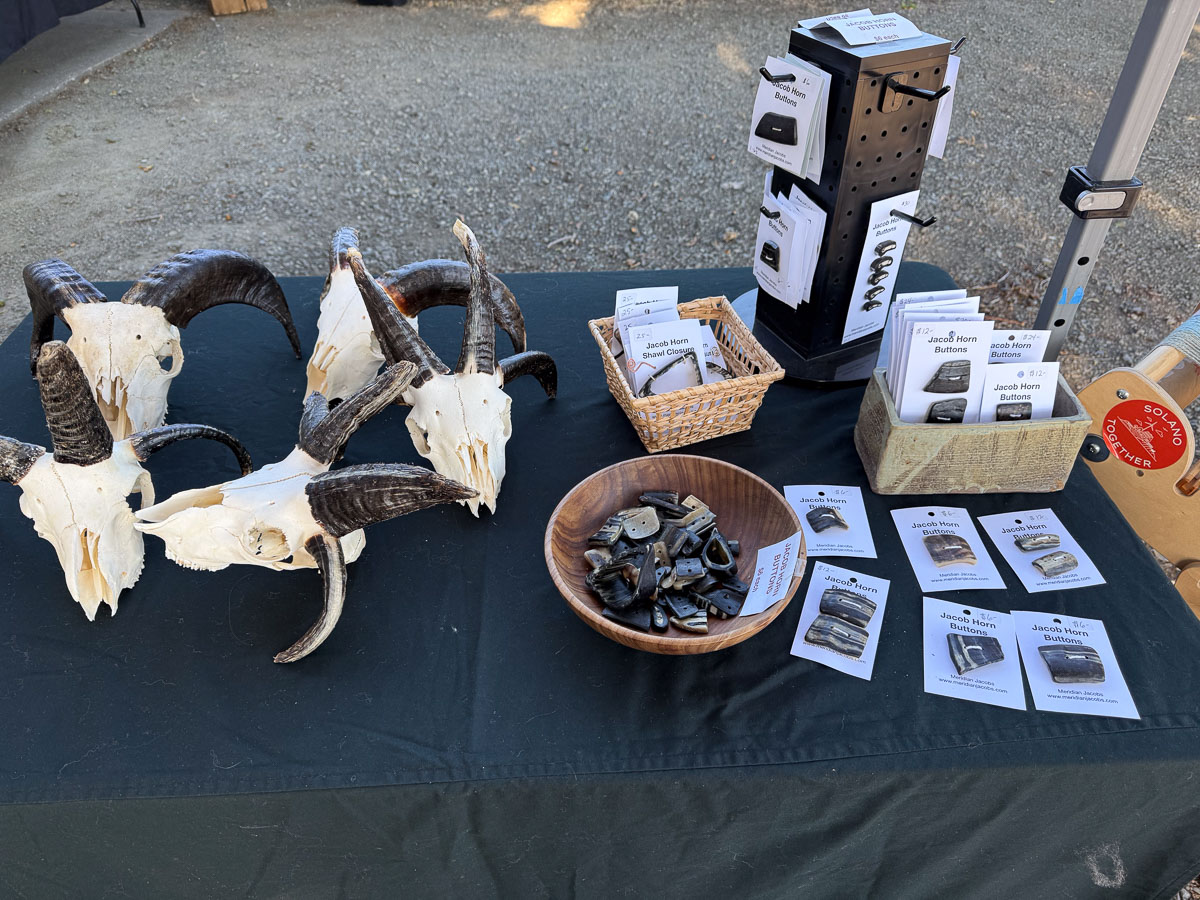
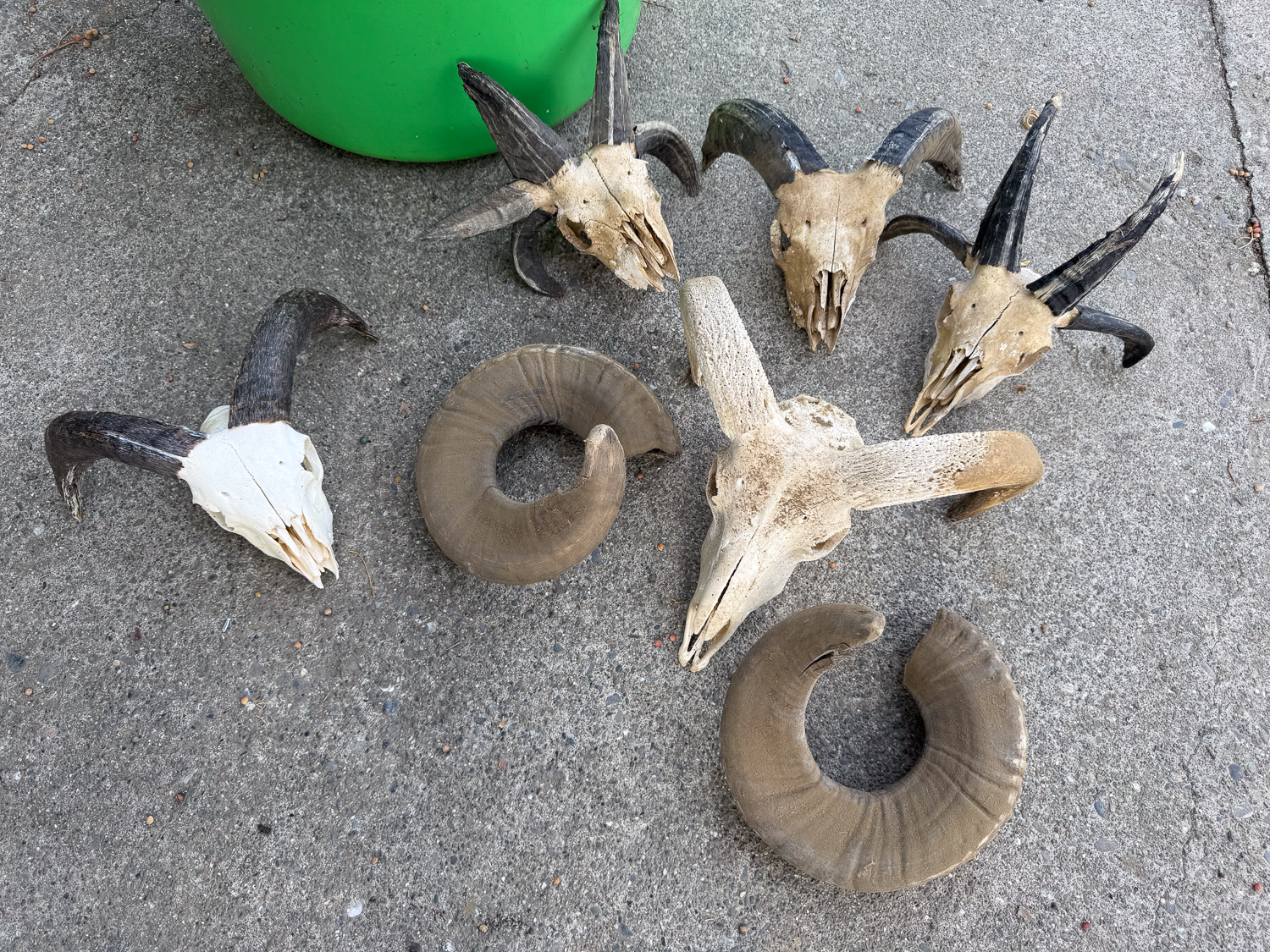
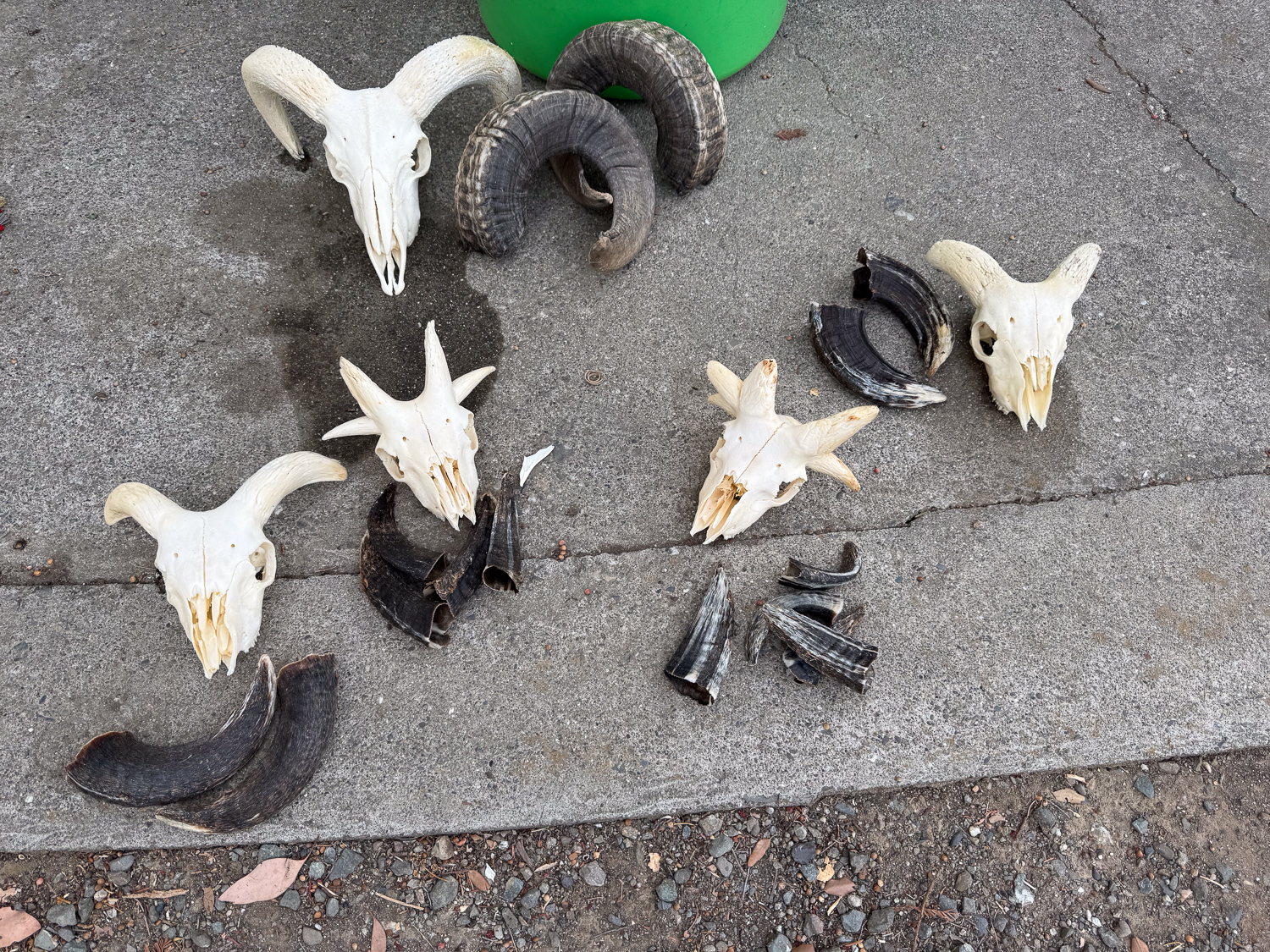
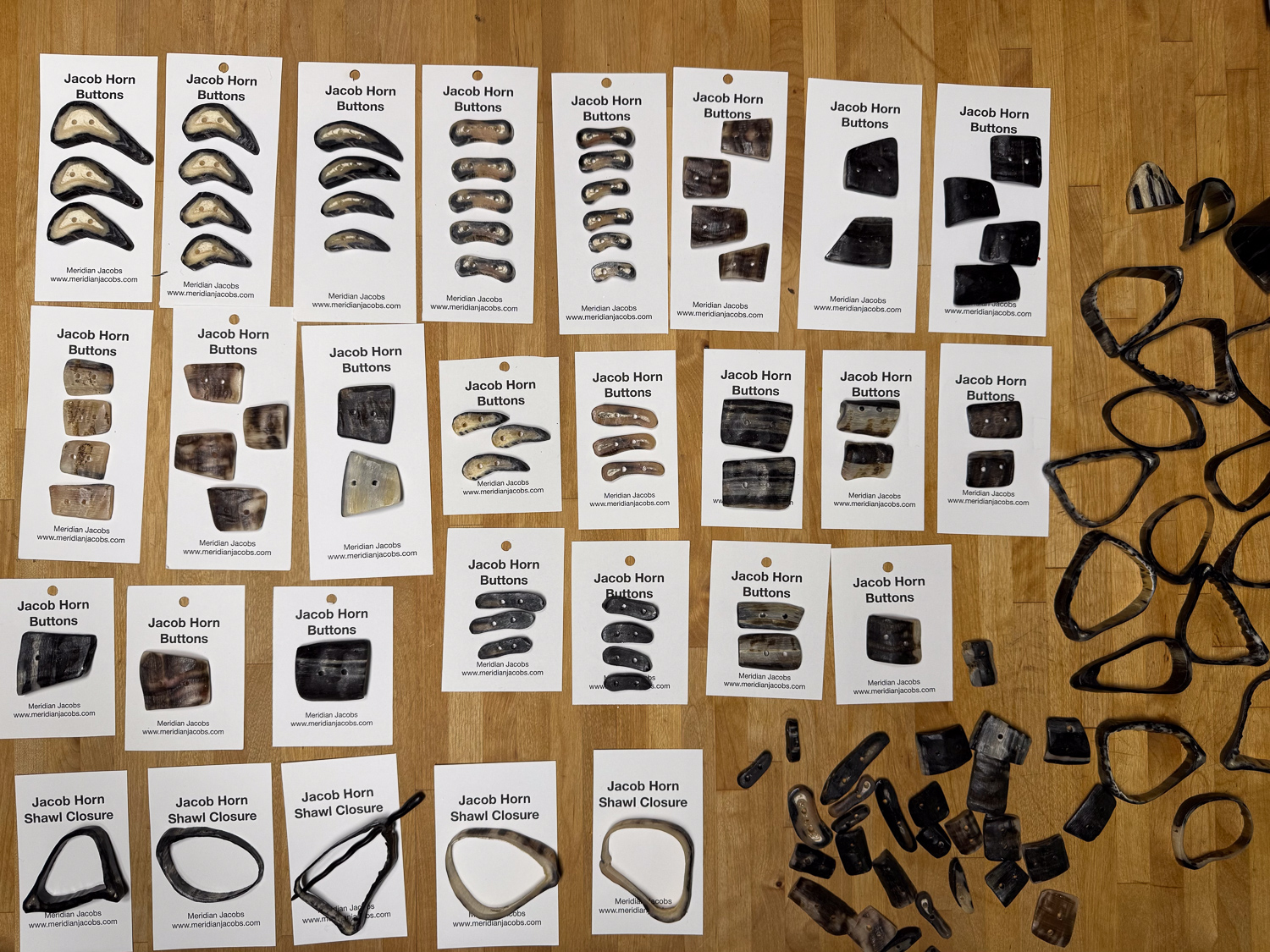
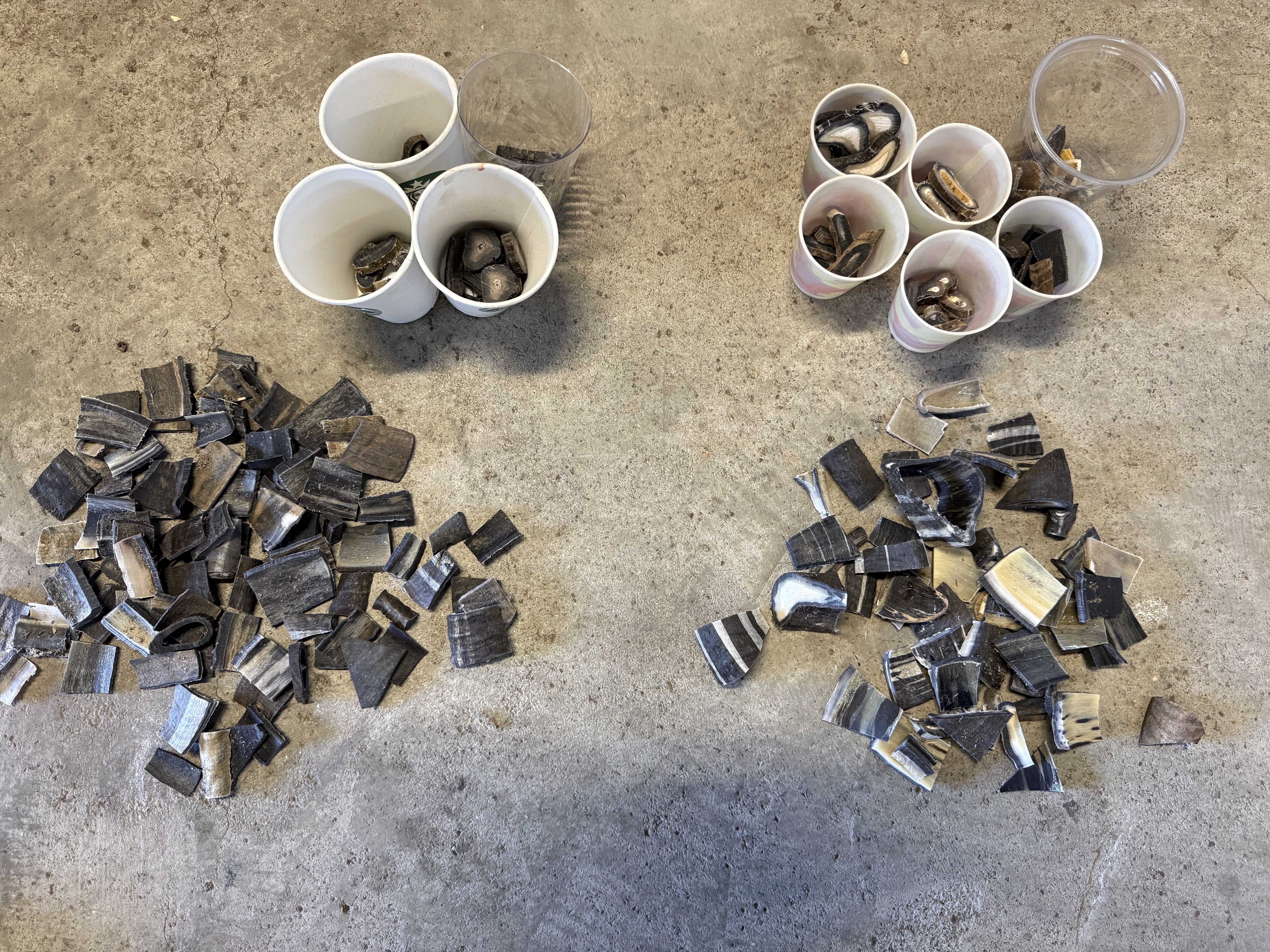
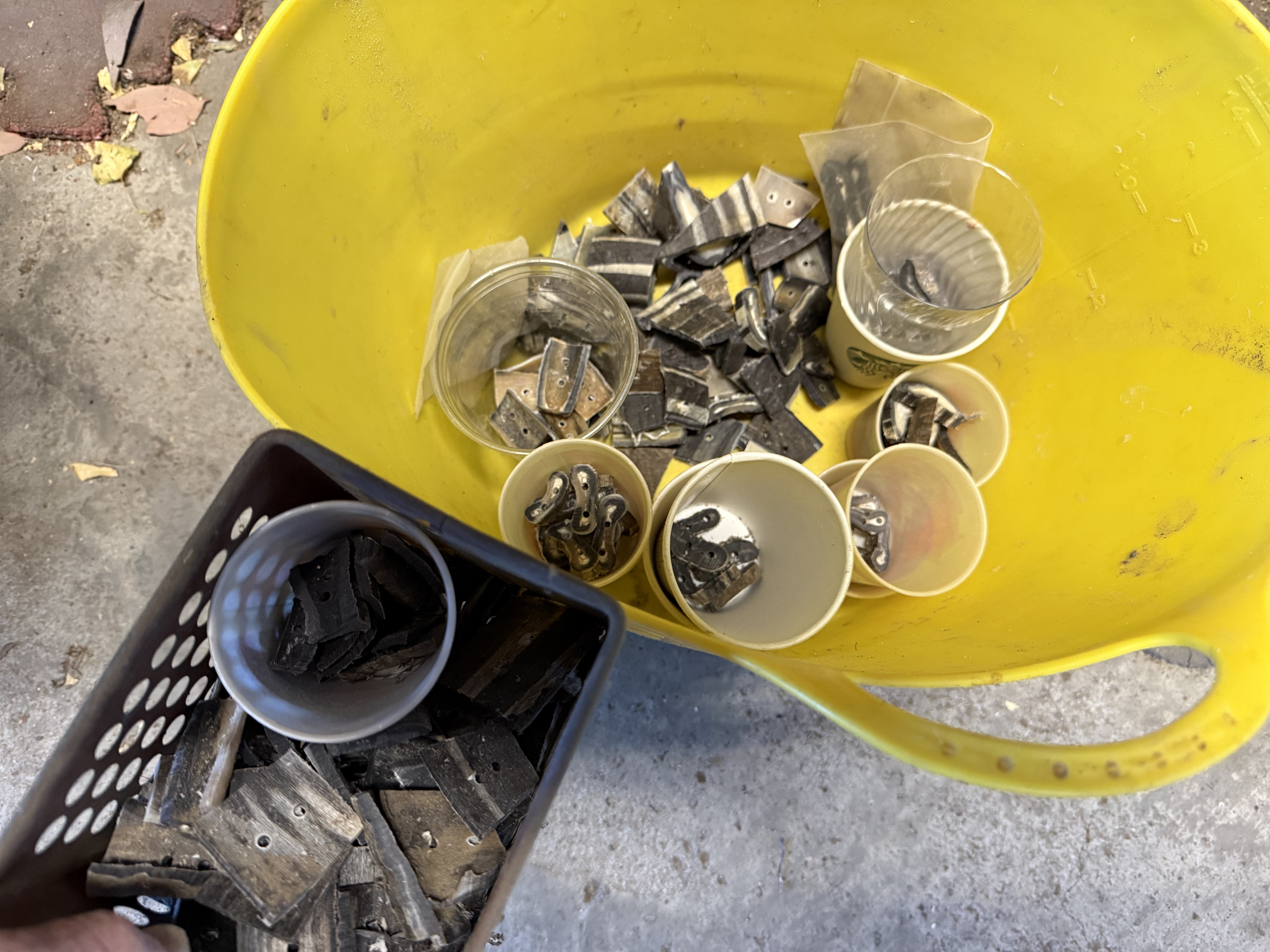
I had spent a lot of time cleaning skulls so that I could offer them for sale. Most of these will be in the shop and/or on the website.
Roy, Hank, and Gynna help every year at shearing.
Two people brought Shearing Day Cake! Both were excellent. Maybe this has started a tradition.
We work on shearer time. When John called for a lunch break everyone was willing. We’ve seen so little sun this winter that this was a real treat.
I think the sheep also enjoyed the sun.
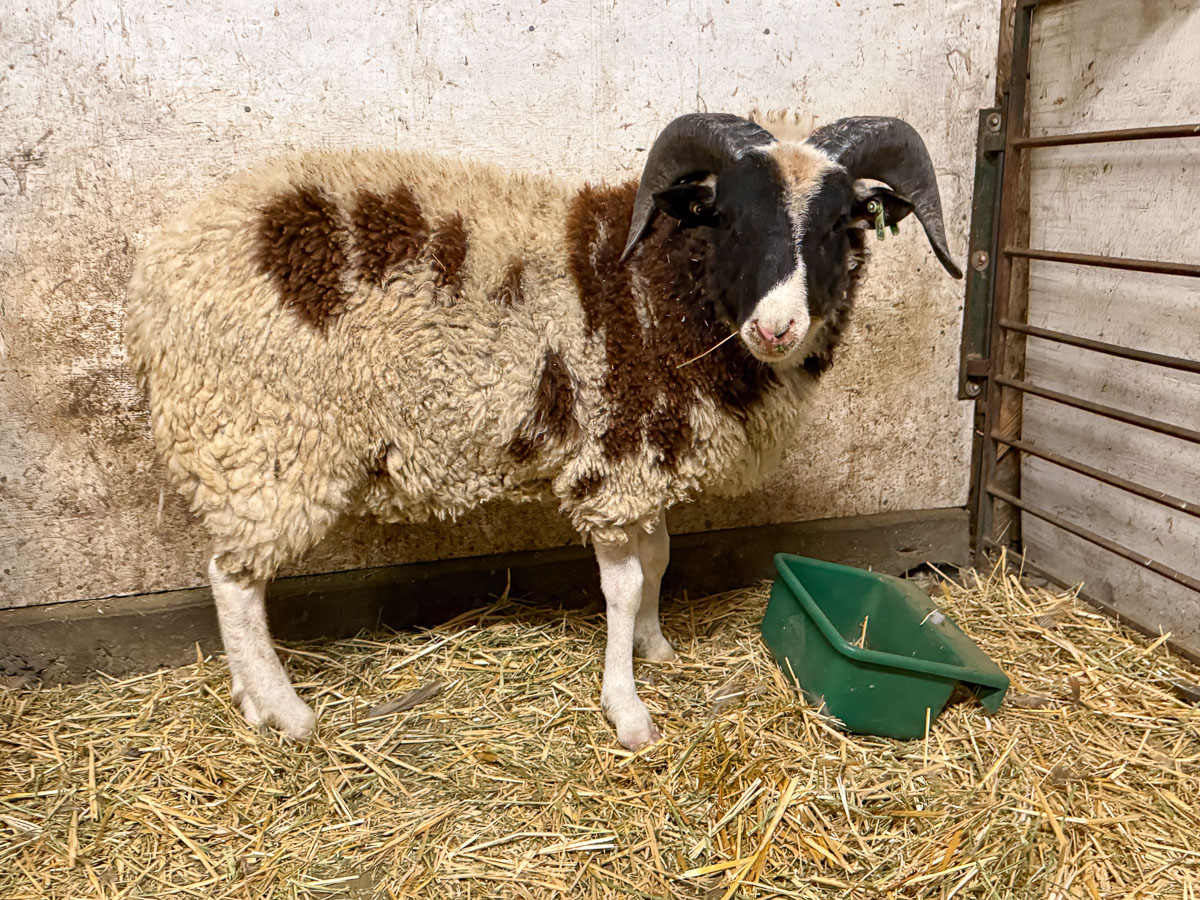
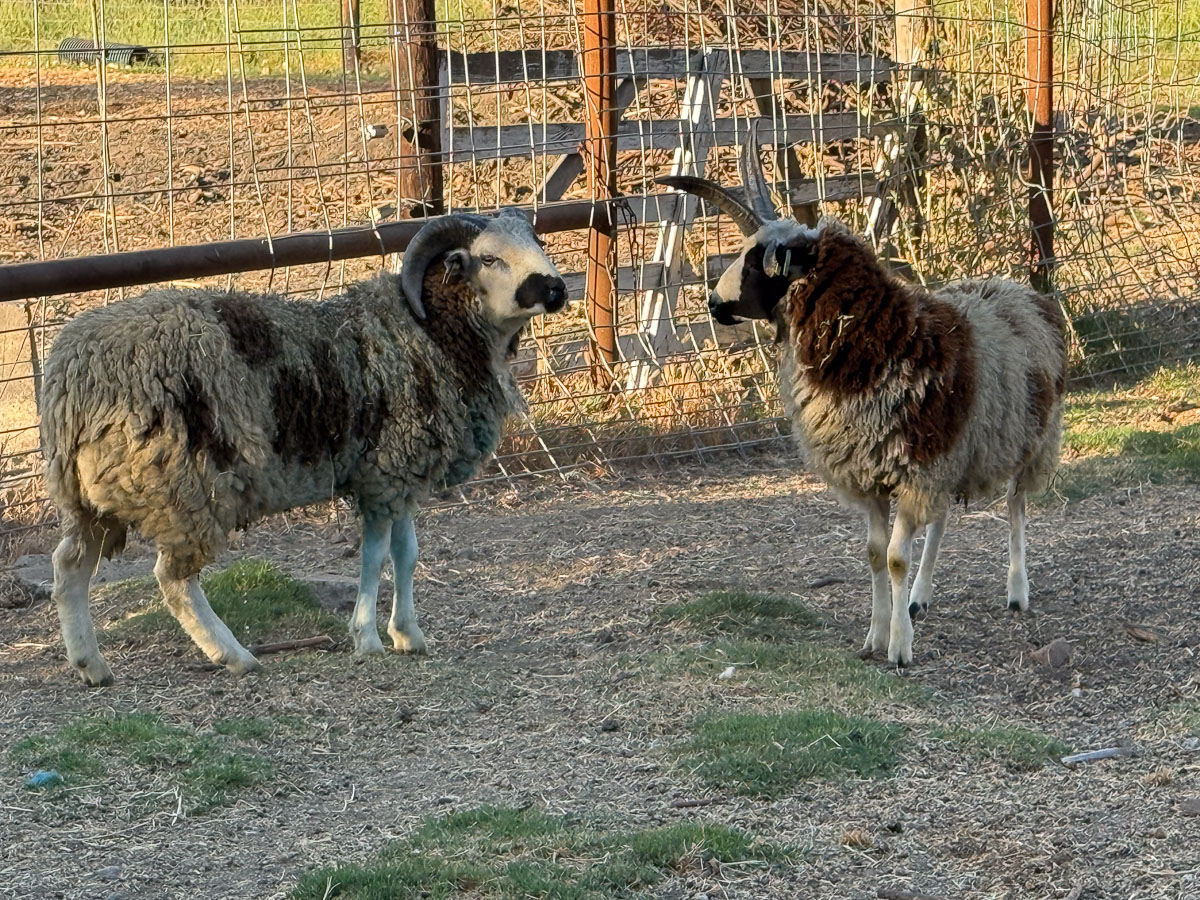
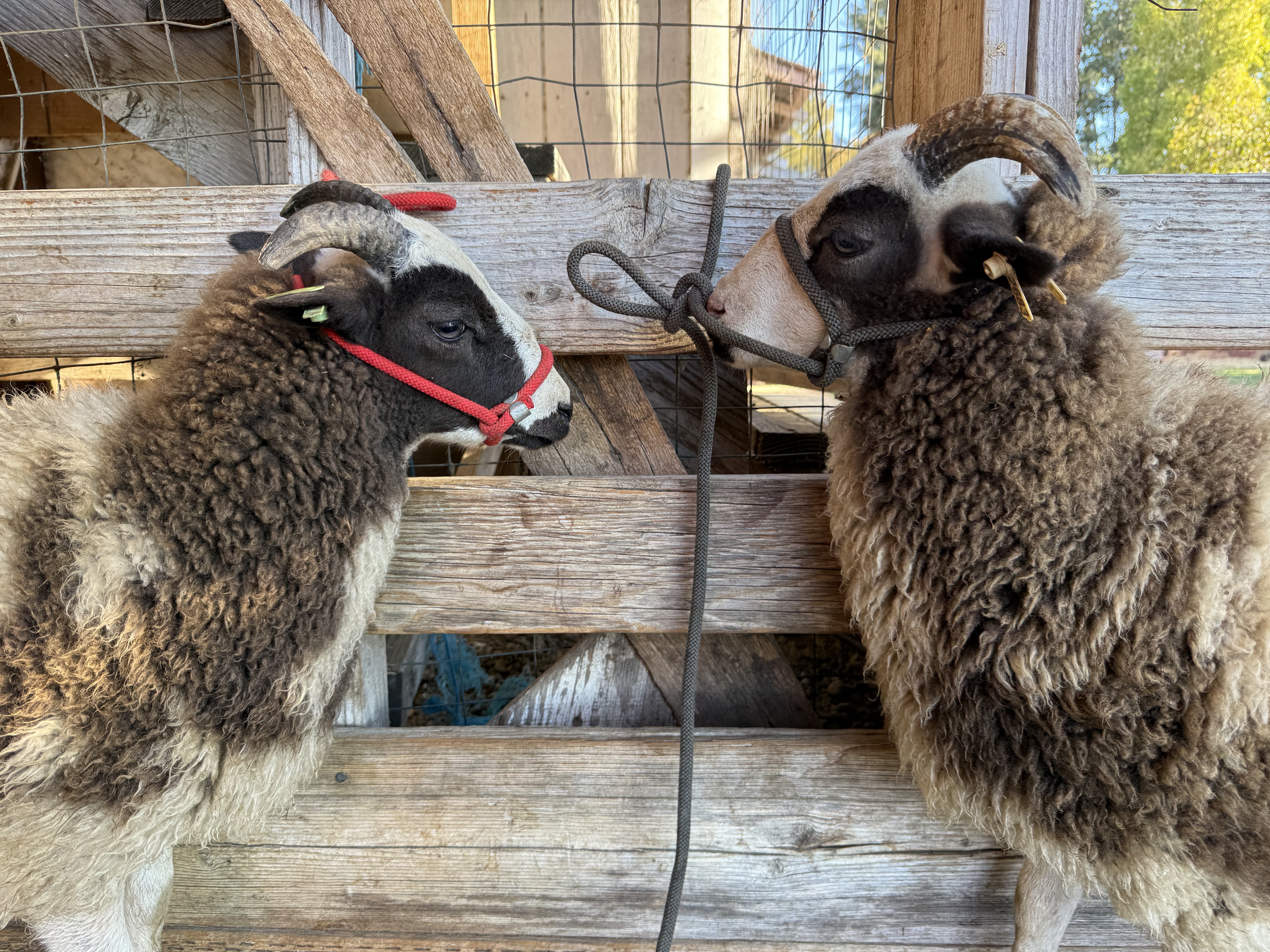
Meridian Hunter, officially still a lamb since he was born last March.
Meridian Elvis is a yearling. He is a light lilac. “Lilac” is the term Jacob breeders use to describe a sheep that has grayish markings on the face instead of black. That coloration is also in the wool.
We work up the next morning to thick fog.
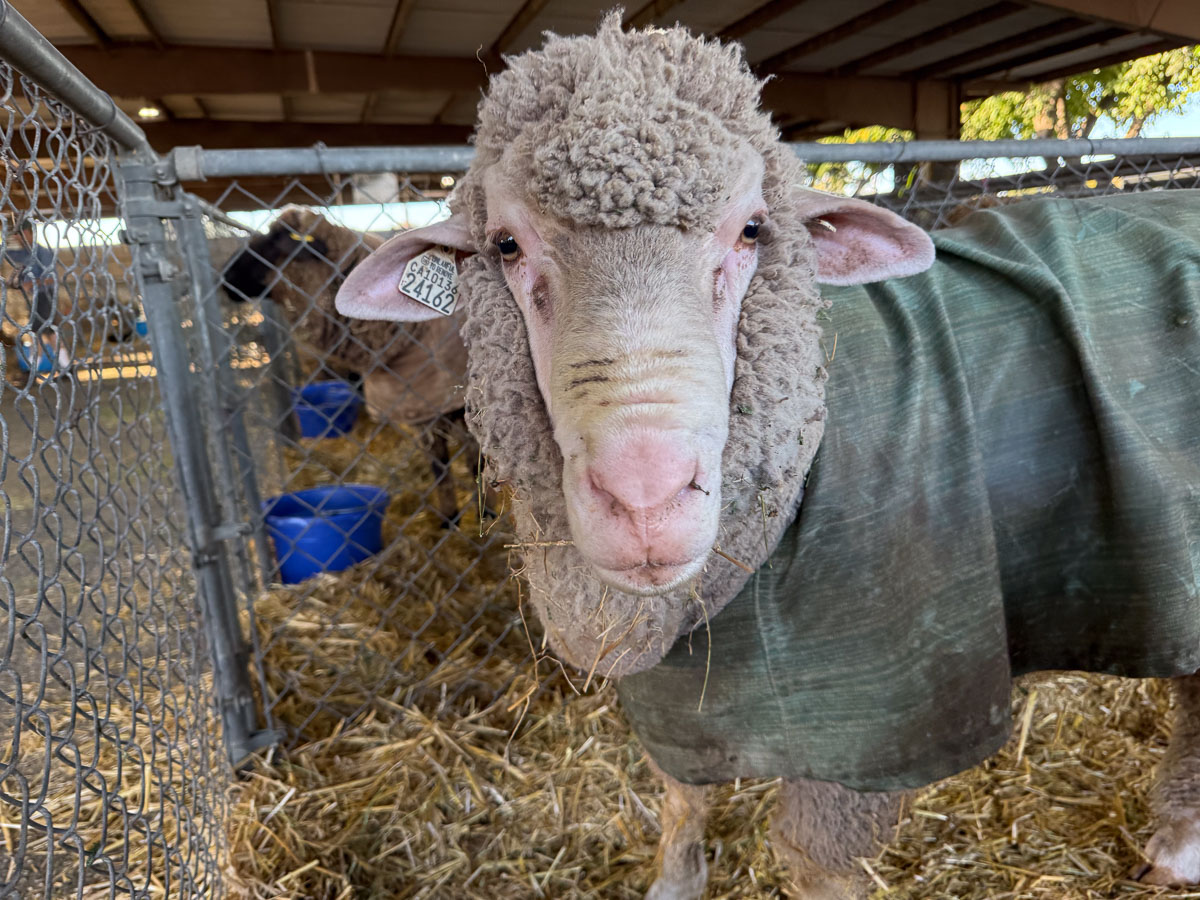
The new BFL ram that we call Clancy (although he is registered under another name).
Shearing Day was yesterday. I have far too many photos for one blog post. Starting with the beginning, the night before.
Lots of barn cleaning and organizing. One of the last things to set up is the shearing corner. This board has been in use for many years, labeled so that it never is cut up to use for something else.
The evening before shearing Dan and I went to Trish’s farm, a few miles away, to pick up her 24 Jacob sheep. With sheep in full fleece it took two trailer loads. After shearing they all fit in the trailer with room to spare. These are Trish’s three rams.
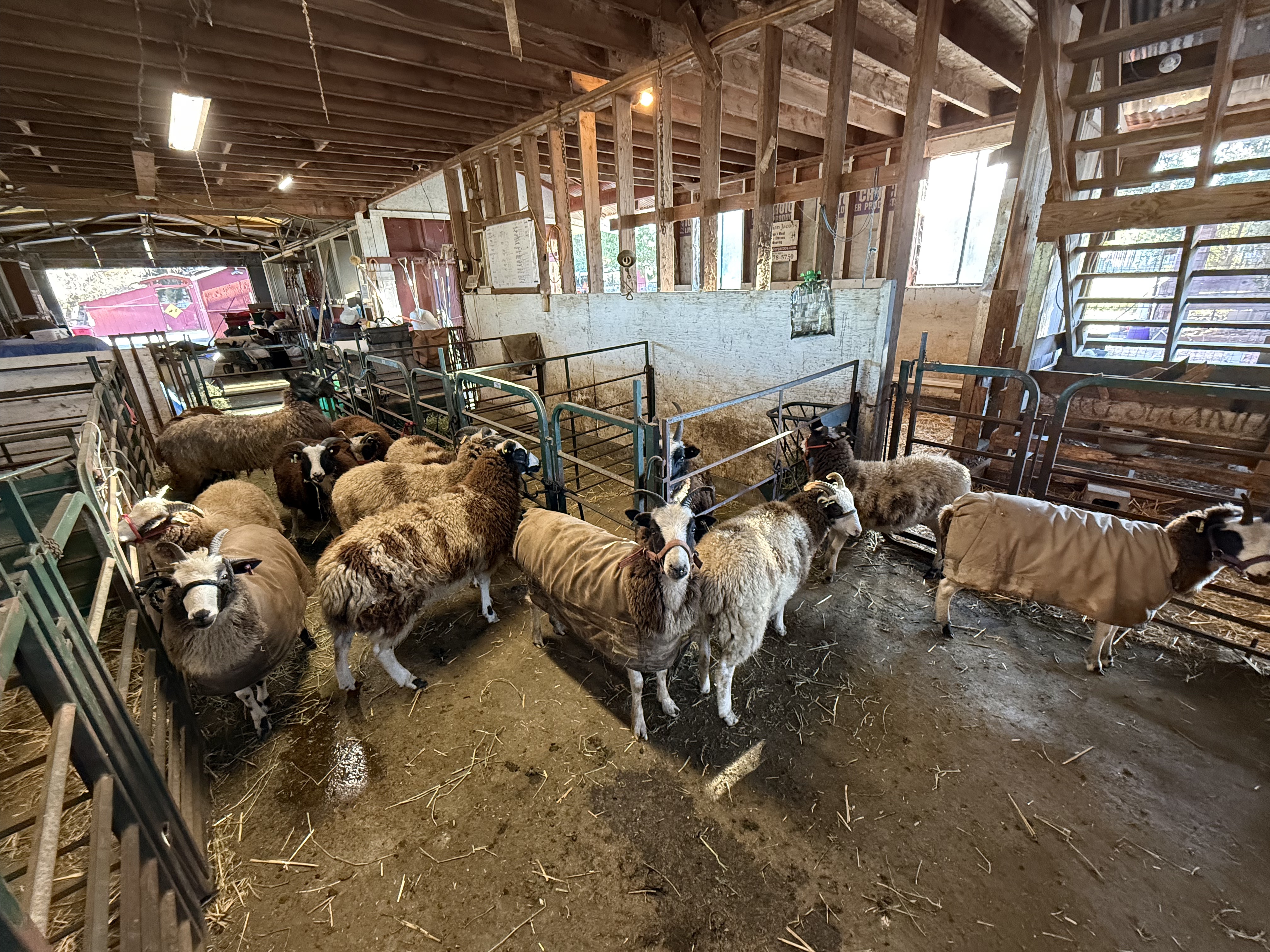
I put 10 or 11 ewes in each of two stalls for the night.
I recognize this ewe’s hairdo from when she was here last year.
John began with Trish’s rams.
As John was shearing the three rams we moved the ewes from a stall to the shearing corner. The shearer doesn’t want to stop once he starts, so we do our best to always have the next sheep ready.
I woke up early on Shearing Day so I could finish the prep for the day. One of the jobs was to get all of our rams into the shearing area before people got here. While John was shearing Trish’s sheep I worked on the rams, vaccinated and trimming hooves on all. That way I didn’t have to think about catching them later to deal with that.
After Trish’s sheep were loaded back into the trailer John started on our six rams and the wether.
In the meantime Farm club members started gathering our ewes. This photo shows what a fabulous day it was, after so many days of thick fog. We were really lucky, because that drippy wet fog was back today.
I am fortunate that I have such a willing and capable team of people.
Sheep are in the lambing area and this will be the next group to move in.
Thanks to Roy Clemes for sharing some of the photos I used here.
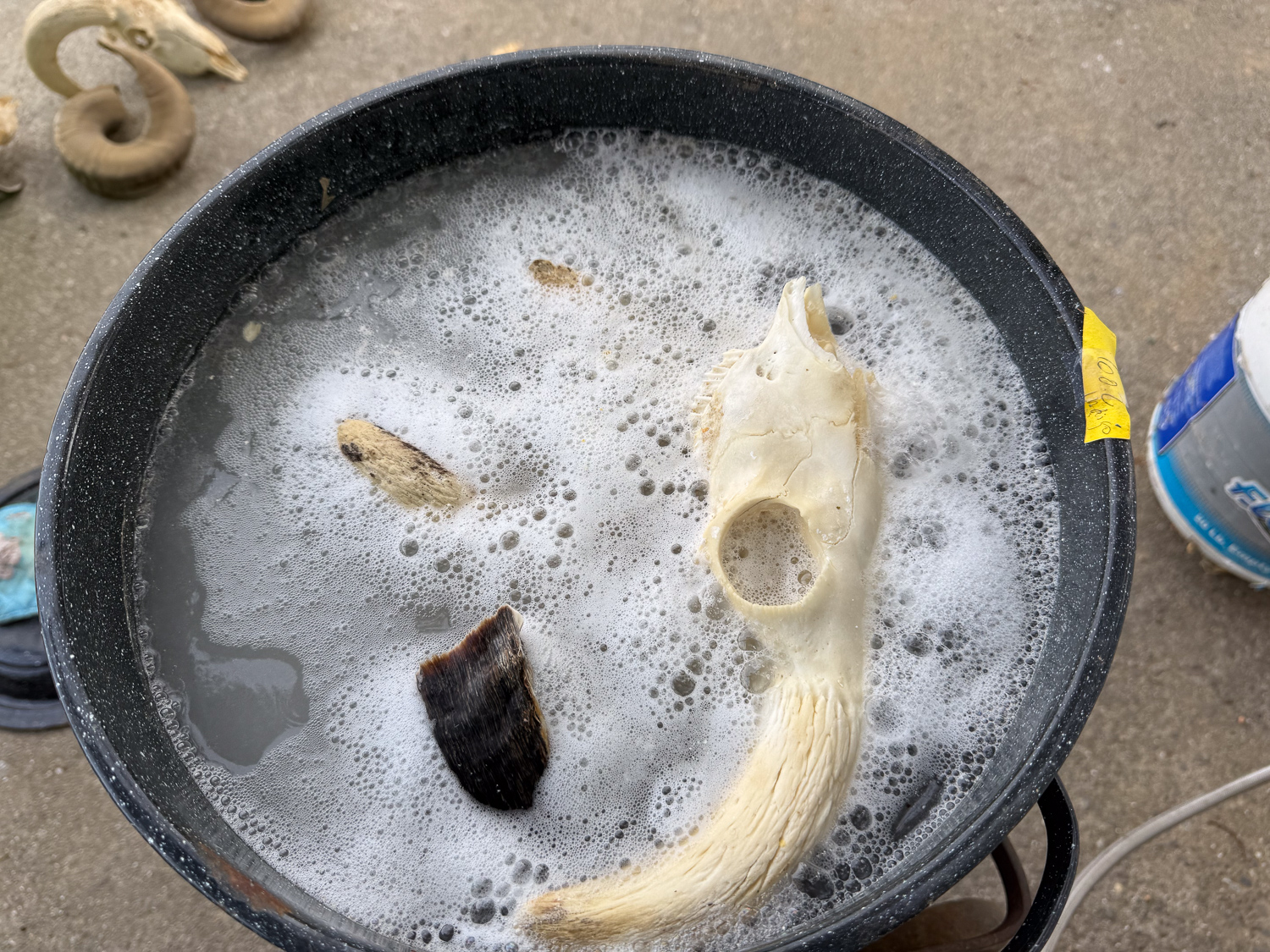
Shearing Day is Saturday and I decided to try and have the skulls ready to put out for sale. This is a work in progress. Others will be offered for sale as DIY projects because they are not as clean.
I just finished a warp with ten baby blankets. My niece will get first choice of these, because she wants a gift for a friend. Then they will be offered for sale.
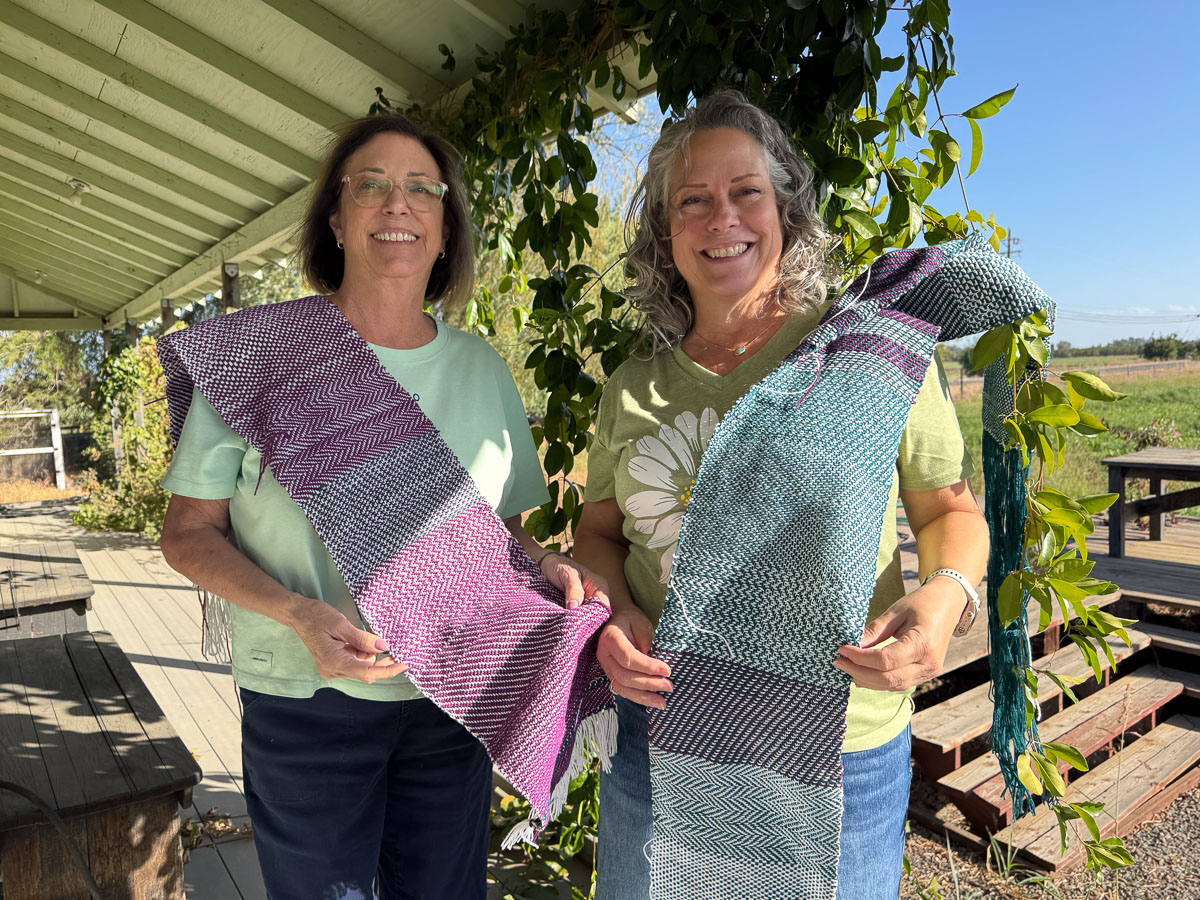
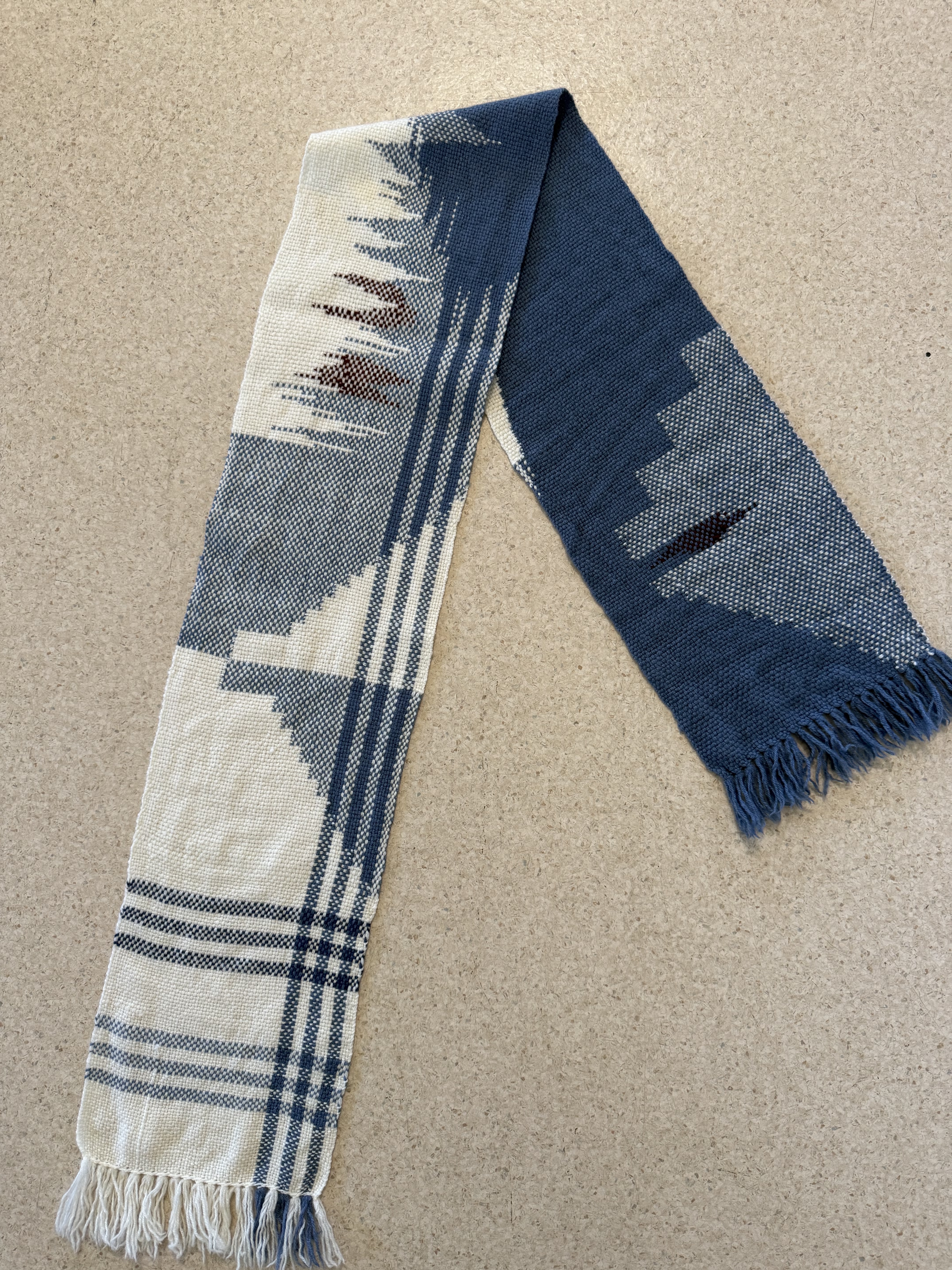
Speaking of weaving, I finished these scarves last week. These are woven using Art Fiber Frenzy yarn, in the style of the class I teach, Wild and Craze Weaving–Breaking the Rules.
Sheep at sunrise.
I entered a photo on the last day the Farm Bureau called for entries. Mine was selected! You can probably figure out which is mine.
This photo shows one reason coated fleeces are priced higher. Not only do they need changing at 4 to 5 times each year, they also require constant vigilance. I took this photo a few nights ago when doing chores.
I don’t know how the leg strap got through this hole.
Fortunately the ewe wasn’t injured and this hole won’t be too difficult to fix. I had to just get through four more days until shearing.
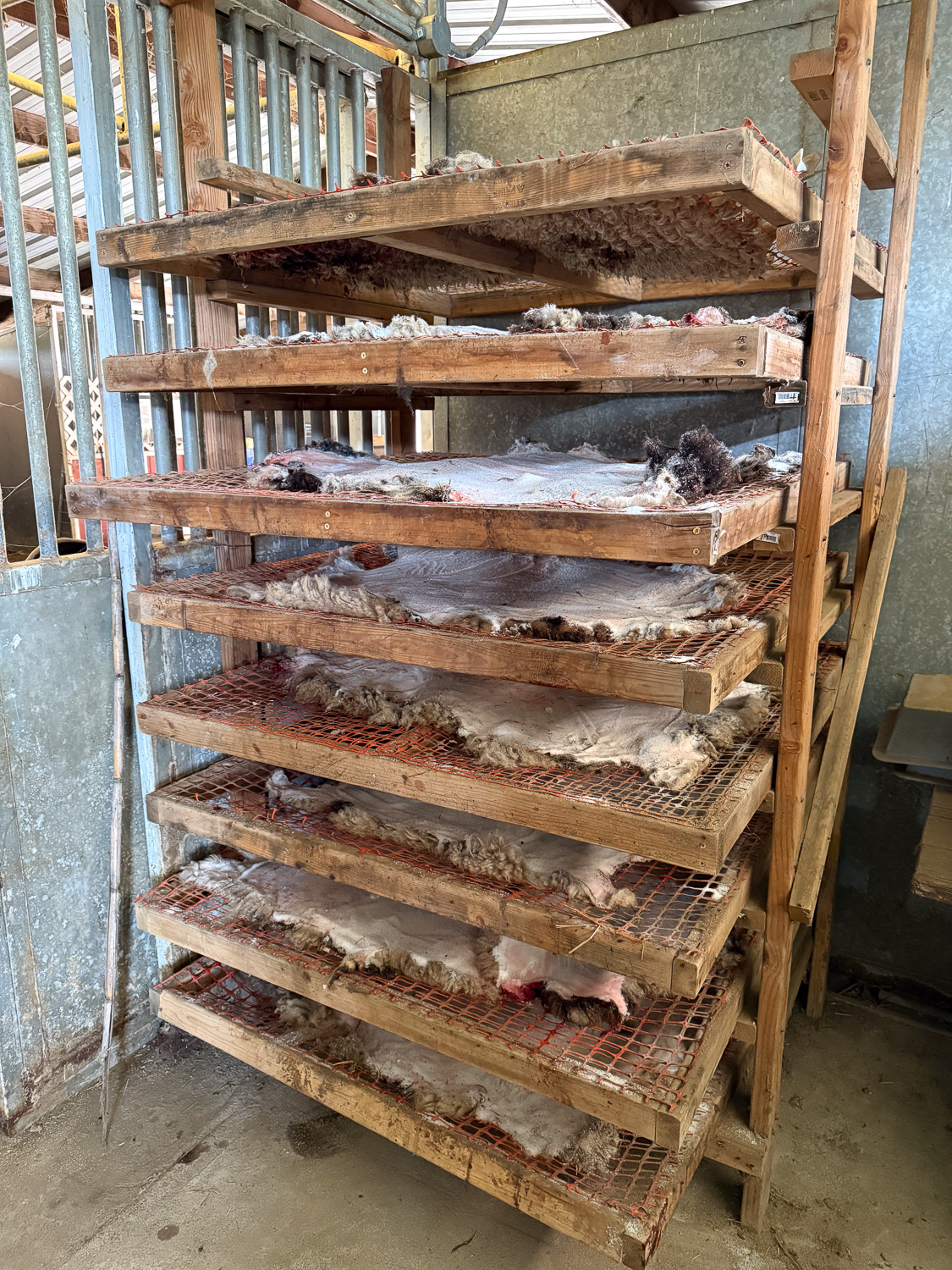
The last batch of sheepskins came back. These are available in the shop and are listed on the website.
It was a foggy morning and the fog didn’t lift until mid-afternoon.
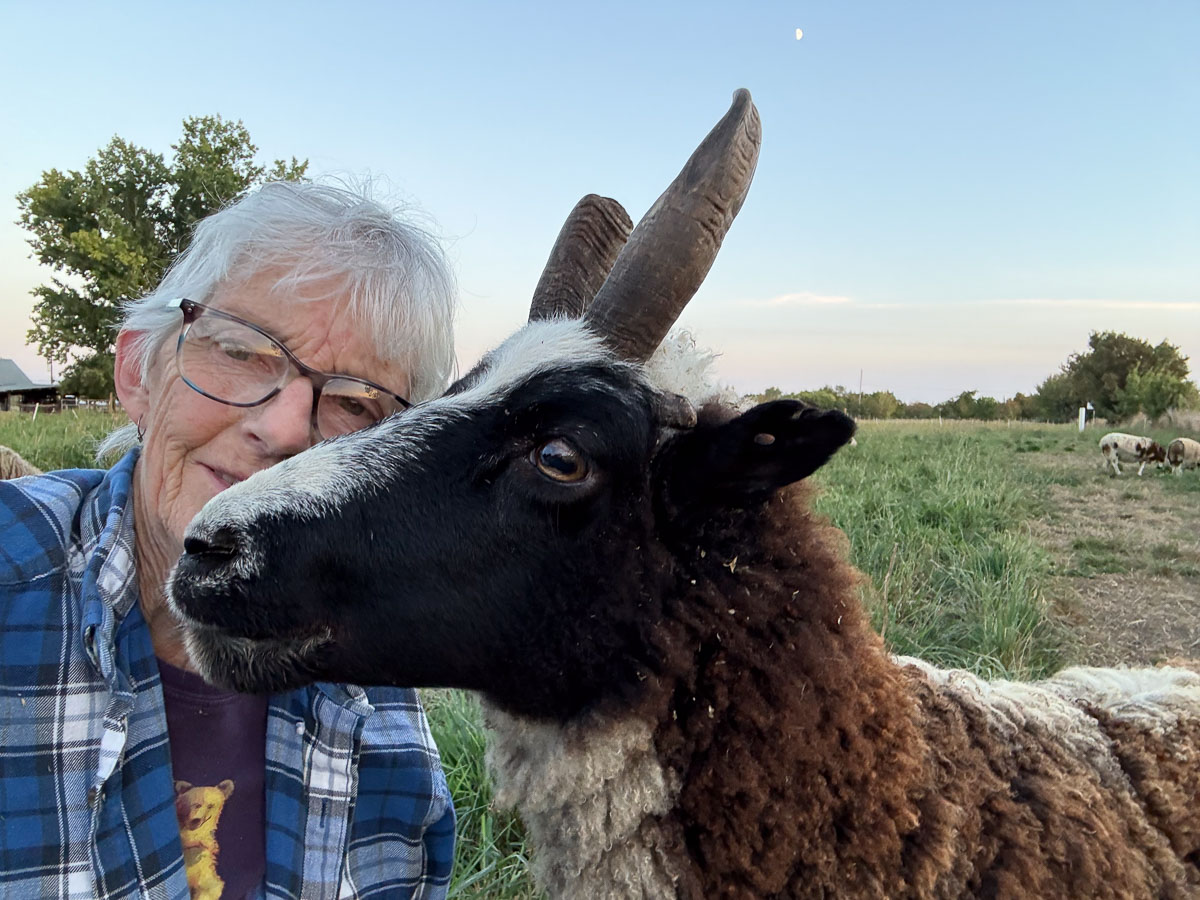
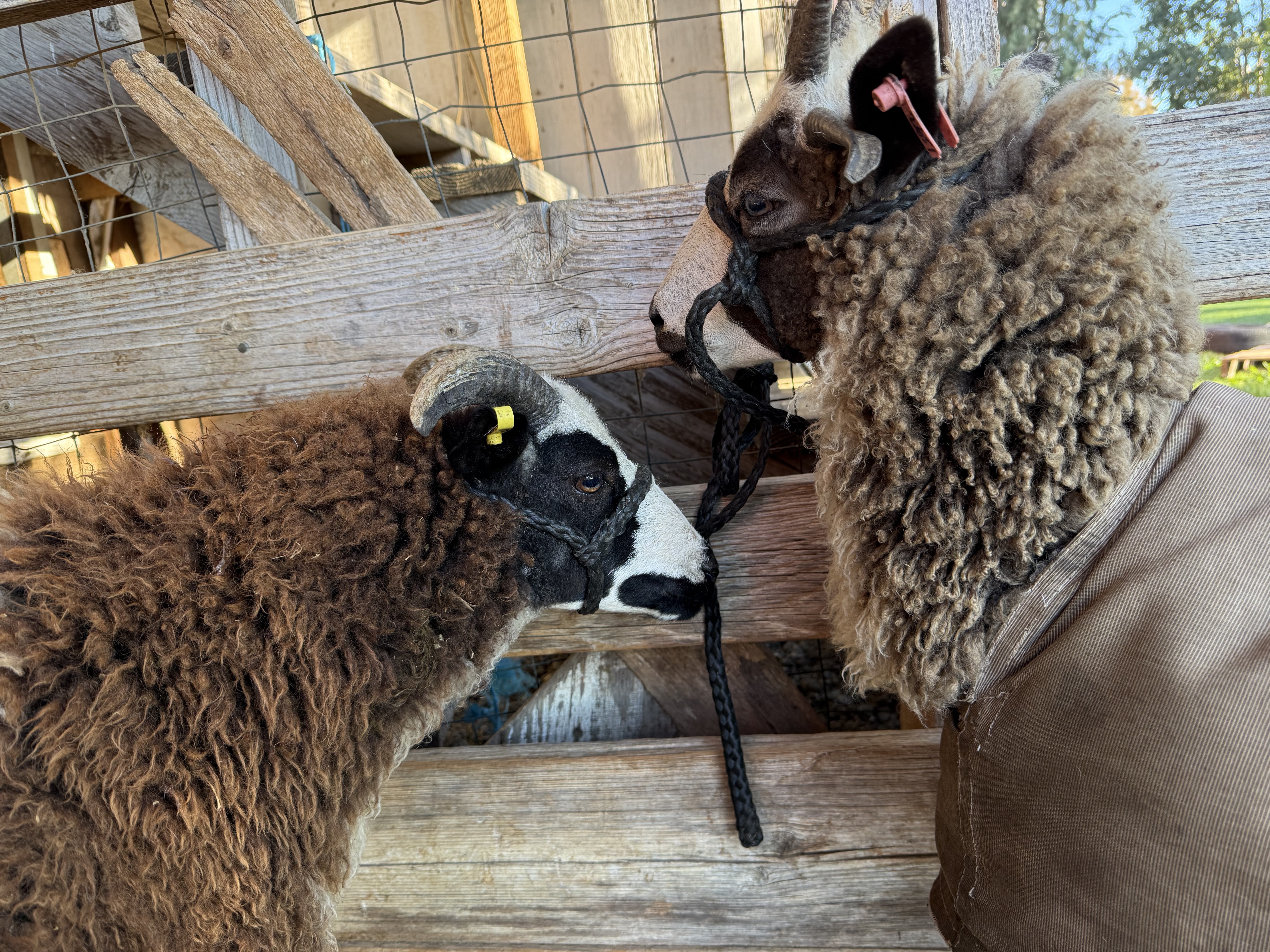
The sheep had already been out before I walked to the pasture so they didn’t bury their faces to start grazing immediately. It was a good opportunity to take sheep portraits.
Yearling ewe, Meridian Zoe, a 4-horn lilac.
Meridian Hailee has a nice wide spread to her horns.
Meridian SallyR, a ewe lamb.
Patchwork Amara, a lilac ewe, who came from Patchwork Farm in Georgia.
This is yearling ewe, Bide a wee Bobbie Jo, one of two ewes I got last summer, originally from Oregon.
Meridian Lenore, another lilac ewe.
Meridian Pecan. The ewes born in 2020 didn’t get as much handling as in other years because that was after my accident and head injury. They were all a bit nutty and that’s why most of them have nut names.
Jannie, a ewe whose horns took an interesting twist.
Corri-3, one of the three Corriedale ewe lambs I got in September.
When I did morning chores I heard loud snapping from the electric fence. I don’t understand enough about electricity so I can’t explain this, but between the cobwebs or debris and moisture this was sparking. I unplugged the charger so I could clean up the insulator. That was an easy fix.
About 10 days ago we harvested the last of the butcher lambs and, after taking a tanning class on Zoom (which I highly recommend), I decided that I would tackle one hide. It’s been salted since that day, but the weather has been so foggy or rainy that the hide never dried out. That’s OK because it was going to go right into the pickle bath. First I had to clean it up a bit, although our farm harvest guy does an excellent job. There wasn’t much to do. Before I had time to work on the hide, the vets came.
Addy is one of the BFL-Jacob cross ewes. This cyst developed from a plugged pore and was full of lanolin, not an infective abscess. So this was totally an elective surgery. I can rationalize this by also removing the risk of further injury and problems at shearing.
This is how they set up the field hospital.
This cyst had a “neck” and they could cut the skin around it (after injecting lidocaine) to remove the whole thing. There was no cutting through the middle.
This is the wound after the vet has made one stitch across the middle to start pulling the edges together.
Here is how it looked when they were finished. I’m keeping Addy in for a the week to make sure this stays clean and heals OK.
Here is what that cyst looks like on the inside. There is no smell. It’s full of lanolin and skin cells. Weird, huh?
Another reason that it made sense for the vets to come is that there was a ewe lamb that the vets wanted to recheck after the ultrasound visit a couple of weeks ago. They had given her prostaglandin to clear up fluid in part of the uterus. It looks OK now.
And while they were there I asked if they could look at the rooster who has been favoring one leg and mostly standing on the other. Actually I thought he had been getting better but wanted them to take a look anyway. He seems OK now.
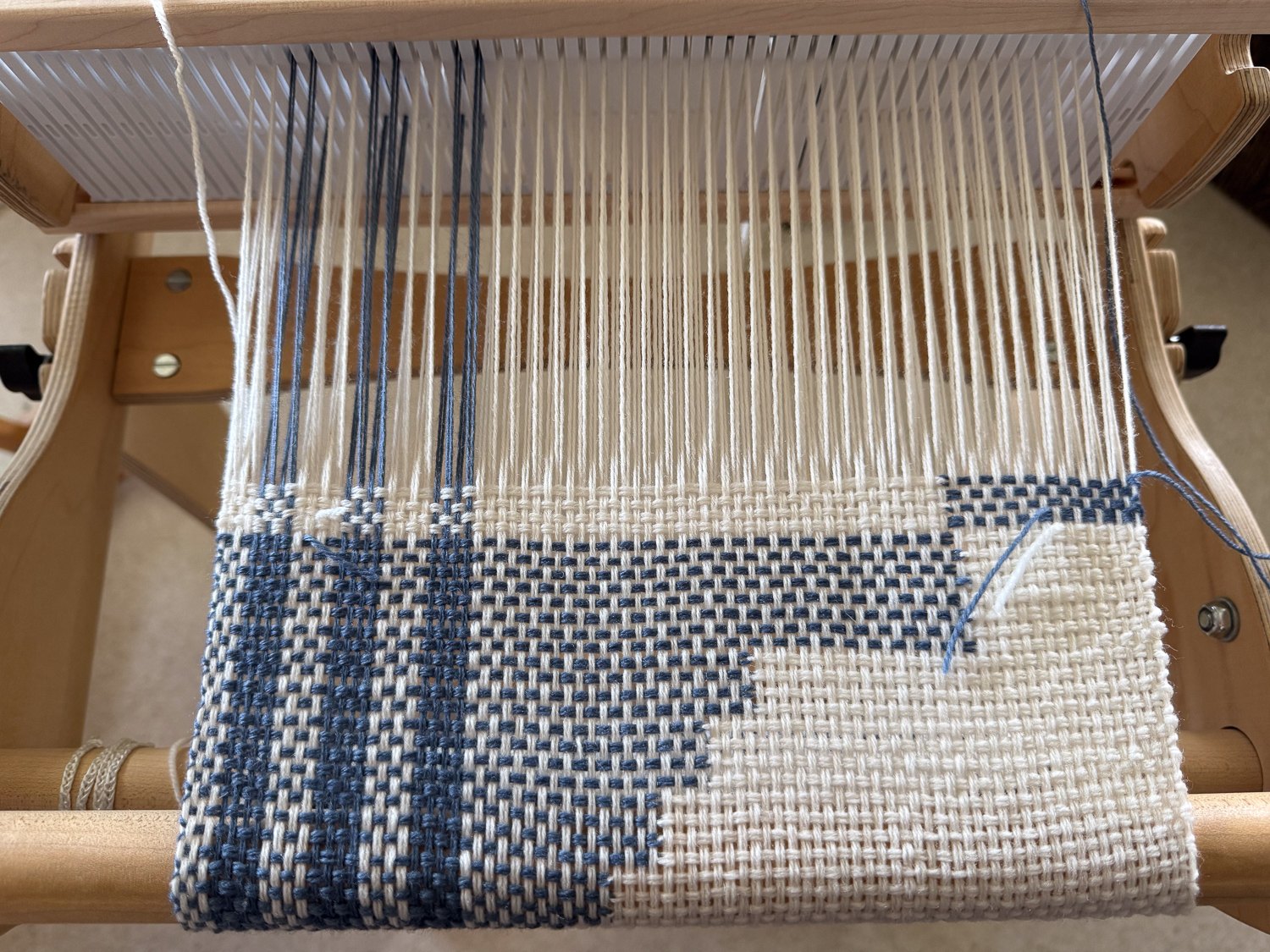
Back to the loom. This is an experiment using Art Fiber Frenzy yarn. I am presenting a guild program at the end of the month and wanted to experiment with weaving this on a rigid heddle loom instead of the floor loom.
In the 2025 Weaving Recap blog post I included a photo of baby blankets still on the loom and said that warp had been on the loom since October. How about August? That’s what I found when I looked back for photos of warping this loom. Don’t ask me why I decided to wind a warp this way, but it seemed like a good idea at the time.
I used a paddle so each pass was four threads and I made a 26 yard warp.
I have wound 20 or 30 yard warps sectionally using the traditional method for sectional warping or using the AVL warping wheel. But I got this idea of using two warping boards and thought, why not?
I had to wind two bouts to accommodate all the yarn. My goal was to use up odds and ends of cones of yarn so the second warp. That meant the second warp would be different from the first, but I wanted the colors distributed throughout. I spaced the first one out in the raddle.
Then I added the second warp in the empty spaces.
I used two end sticks instead of trying to intersperse the two bouts onto one stick.
This looked good.
This side was a little messier, but it all worked out eventually.
Weaving in progress.
I had an order for blankets so I cut some off the loom early and didn’t get back to that warp until recently.
This is the warp I just finished before cutting anything apart. People always ask how long does it take to weave a piece. There are processes other than weaving that go into completing a project. In this case all blankets were machine stitched at each end before cutting them apart. Then some were hemmed. All are washed and then I sew on my label and add the hangtag.
There are multiples of some of these blankets. Those are stacked with two or three.
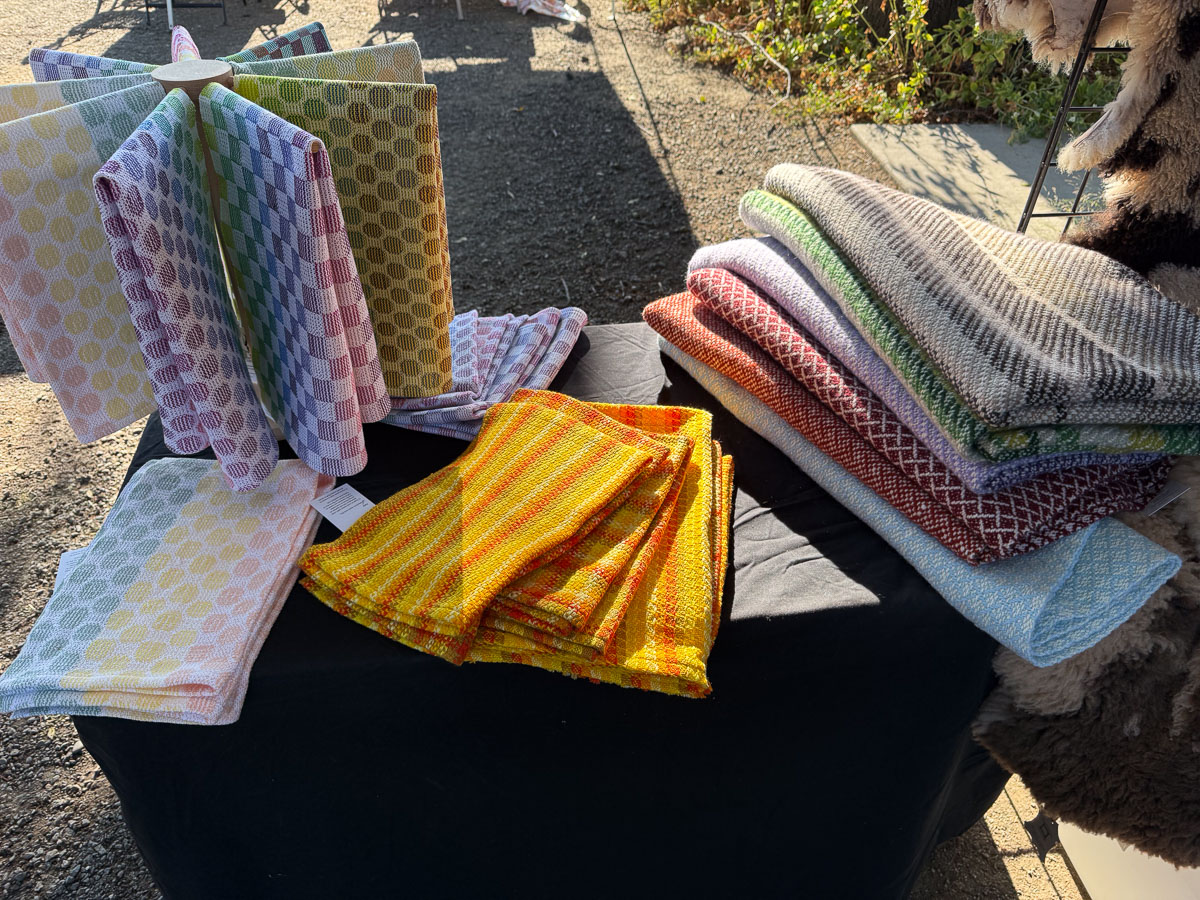
Another view of all the blankets. You can find some of these blankets on my website and here at the farm store. Others are at The Artery and some are on the Artery’s webstore (local pick-up for those right now). Next up will be a white warp so I can have a variety of colors.
I was going to get away from a weather report, but this morning the sunrise behind the fog inspired me to take photos.
It was daylight as I finished cleaning the barn, but still foggy. Sheep are off the pasture now because it’s so wet, so they were waiting to be fed.
When you sit down for a meal at home do you always sit in the same place? Probably. These sheep are always at the back part of the barn because that is where they want to eat. And Zora always puts her feet up on the feeder to eat out of the top.
This is the barn from the back. There was a prompt on the phone to clean my lens. I think the phone objected to the fog.
The ram pen is just behind where I was standing for that last shot. This is Starthist Hornblower, sire of many of the lambs to be born in February and March.
I was ready to write another Random Farm Photos blog post but then thought that maybe, since this is the last day of the year, there should be some sort of retrospective. Most of my blog posts this year have been about the sheep and the pasture, but I am also a weaver. I have neglected that.
I keep a notebook with all my weaving info. The warps are numbered. I looked for the first one of 2025 and couldn’t find a photo. I sorted my photos into date order and found 275 photos in the weaving collection. Yikes! That doesn’t mean I wove that many pieces–not even close. But they all are part of various stories, none of which I shared in my blog. Maybe forget the sheep for a while and focus on yarn?
This is the issue of Little Looms, Summer 2025, with my clasped warp scarves in cotton. They were woven the previous year, but the magazine was published this year.
These are samples, all woven the same size in three different wool yarns. This is the photo after I took them off the loom but before any finishing. Wet finishing is the topic of an article in an upcoming issue of WEFT magazine. There were some surprises but you will have to wait for the magazine to be published to find out!
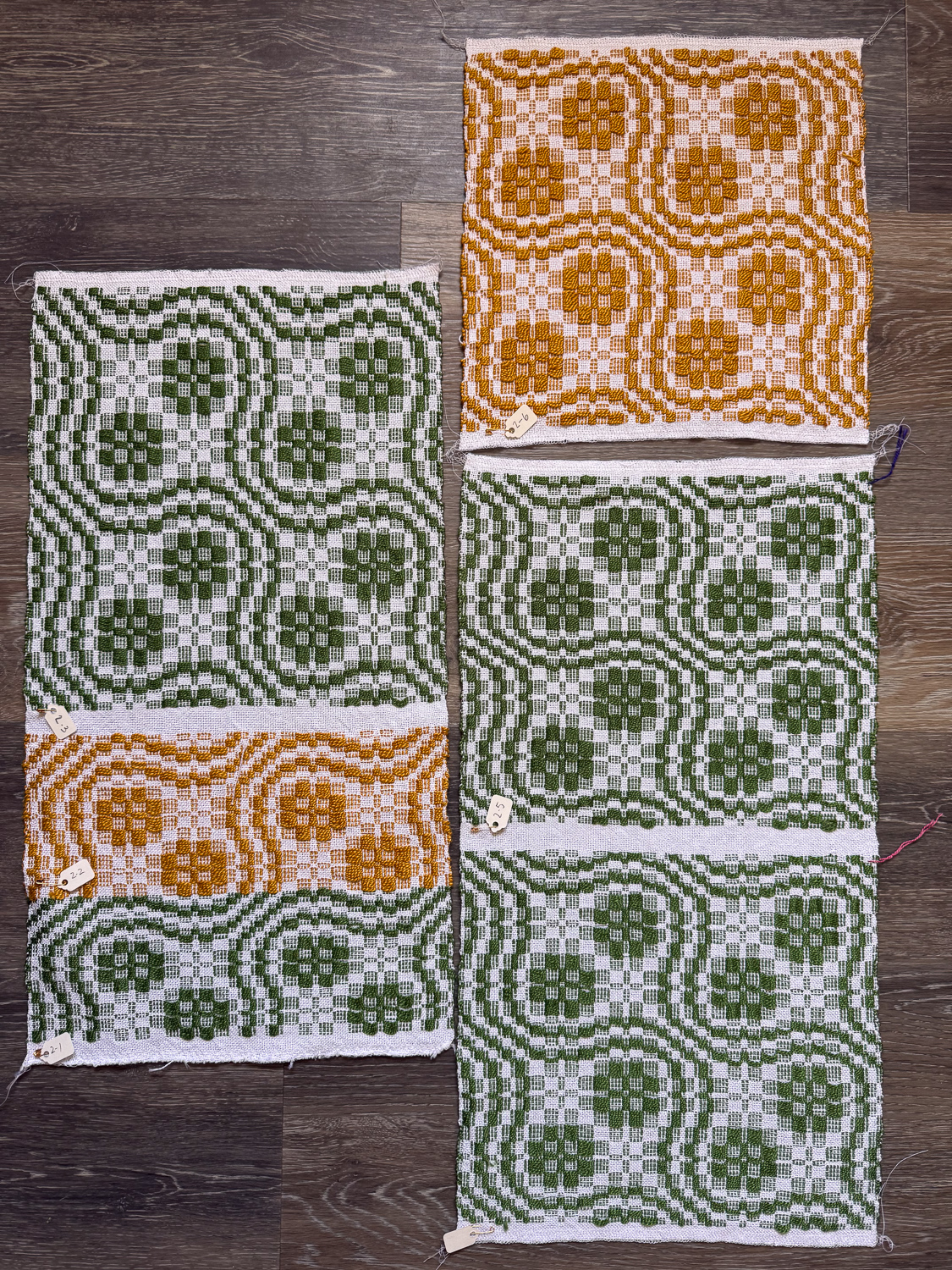
This is a workshop sampler for my Learn to Weave class. I taught this at the Conference of Northern California Handweavers (CNCH) in the spring and wanted new cotton samples. Students have the option of weaving wool or cotton in this class. You can’t tell from this view but every 6″ is a different treadling pattern. The green and white one gives four samples in one for each treadling by showing white on white, green on green, and the green/white blend.
Another sampler. This one is to experiment with color-and-weave using six colors. There will be an article featuring a project based on this in the Summer 2026 Handwoven magazine.
This is another scarf/shawl/wrap (which is it?) using Art Fiber Frenzy yarn. I have been intrigued by this yarn since I first discovered it a couple of years ago. I have also created a class to lead people through weaving a piece with so many fibers and textures.
I didn’t neglect my favorite fiber–wool. I wove several blankets and shawls during the year. This is one in a more traditional color-and-weave pattern with only two colors. The yarn is, of course, black and white Jacob wool.
This is a chenille scarf in shadow weave. It has sold but there may be a similar one at the Artery–I’ve lost track.
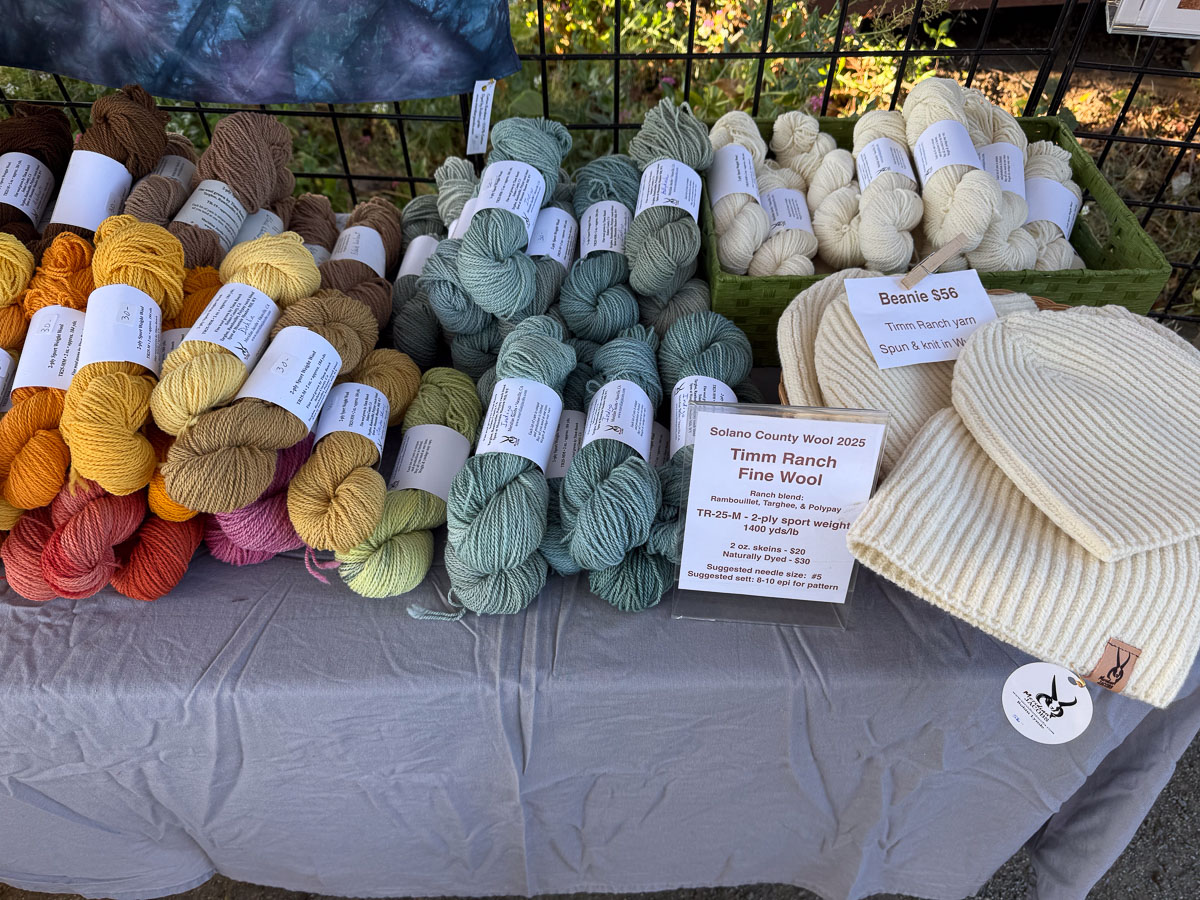
My new favorite wool (other than my Jacob and Timm Ranch yarns) is Brown Sheep Company Nature Spun. I’ll be introducing this for some of my classes this year. I wound some white v-shawl warps and space-dyed them. Then I needed to find weft colors.
Here is how the one on the right turned out.
Oh boy! A crazy thing I got into was triaxial weaving. I wove some pieces 15 years ago and now have resurrected the idea. I spent way more hours on the four pieces I finished than maybe they warranted. But now I’m ready for more. Two will be in a January show at The Artery.
This is a v-shawl using the Nature Spun yarn. This one and the samples below are ideas for other articles I may propose and for pieces that I will sell.
Log cabin on the left is another color-and-weave pattern that looks much more complicated than it is.
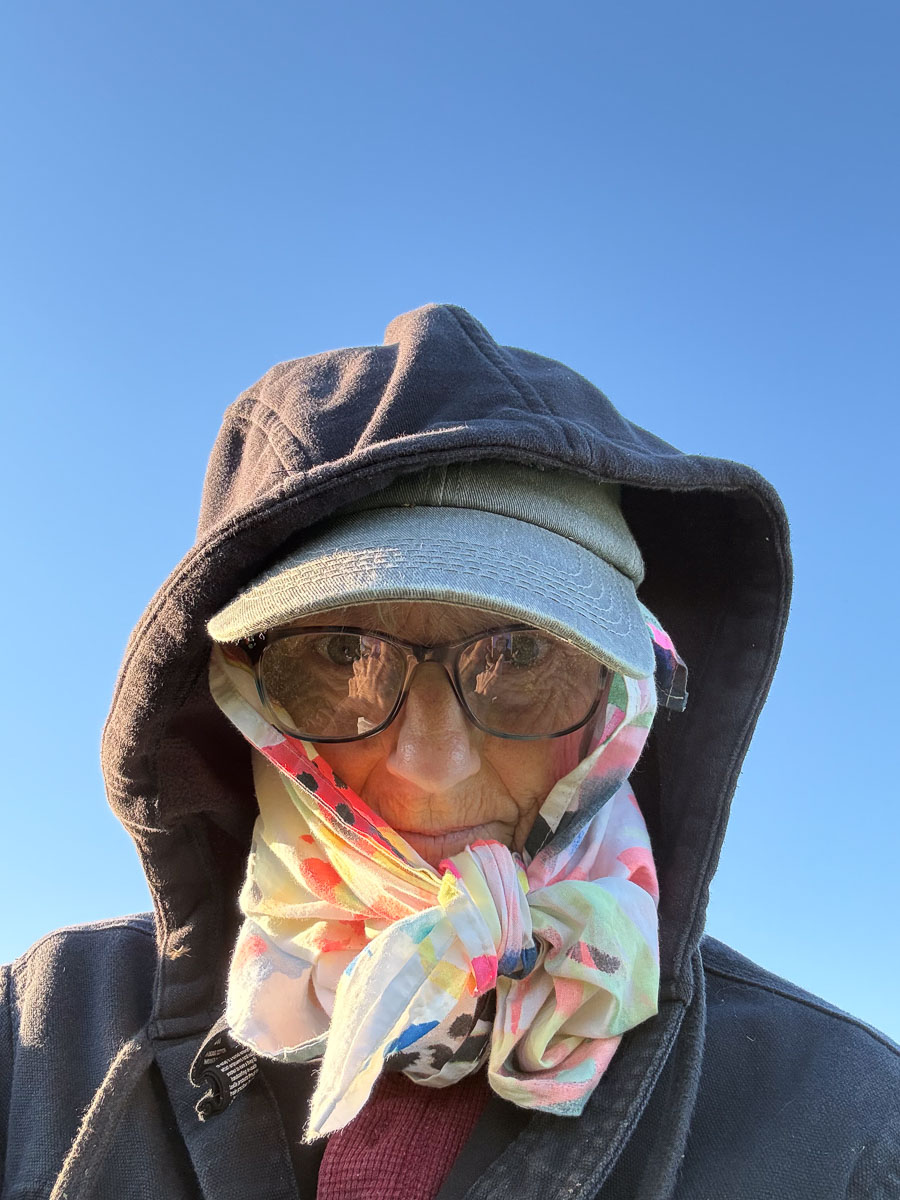
If you read this blog regularly you know that I’ve been complaining about the fog, except for the beautiful sunny day we had two days ago. That didn’t last. It’s foggy again and it’s supposed to rain later. The “shop” where I have my bigger looms is not insulated and I don’t even try to heat it up with space heaters. I will put the heater on right next to me but It won’t have much impact on the surroundings. I am trying to finish the baby blankets that have been on this loom since October. That may be another blog post when I actually finish.
I worked on this loom yesterday and plan to finish today. First I need to put some more layers on.