Free Range Chickens

The other day when I was feeding the chickens one of them walked out the door of the chicken house. I decided to leave the door open and let them all out. My chickens have lived in a chicken house for years because a neighbor complained about them tearing up her garden. Now I realize that this was many years ago which meant it was a completely different batch of chickens. (And that batch of chickens gave new meaning to the term free range–they had a lot of traveling to do to get to that neighbor’s place when I have a perfectly good barnyard full of bugs here.) Those chickens also used to roost on my feeders, making a big mess that I was not sorry to get rid of.  So that batch of chickens set the chicken-housing standard here….with one exception that I’ll get to later.

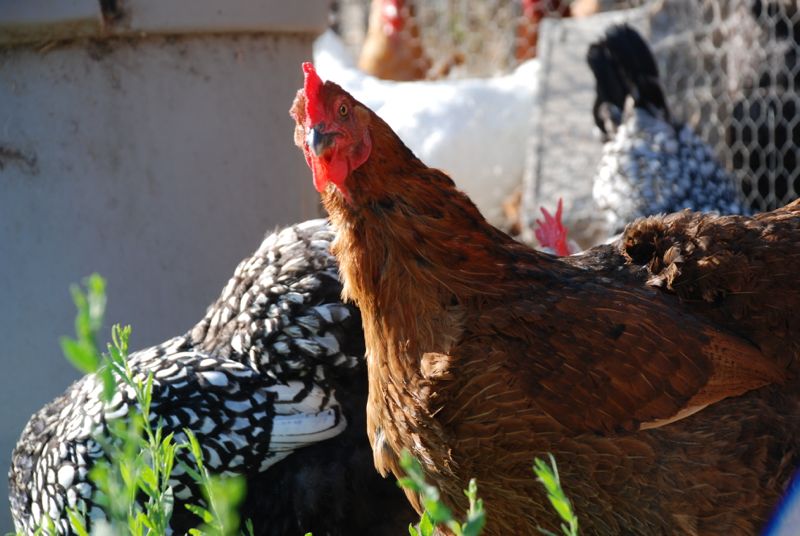
When Goldie (the tamest of the current batch and the only one with a name) walked out the door I had a revelation. If I could get them to go to the sheep part of the barn and eat bugs and maggots they would definitely earn a soft spot in my heart and I wouldn’t have to spend as much on chicken food.

Guess which one is Goldie?

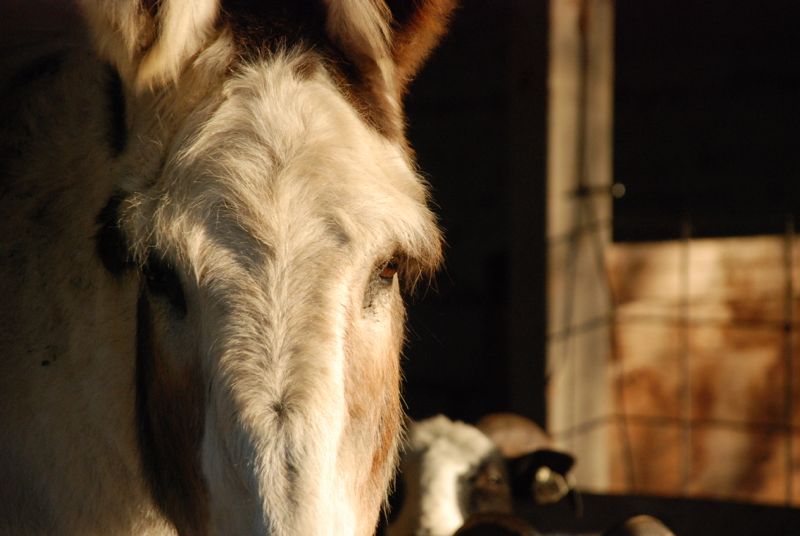
Somebody was not happy about this. Rusty was already having a tough morning with the hot air balloons overhead. Now the chickens were in the wrong place and he didn’t know what to do. Read Rusty’s blog for his opinion about this.

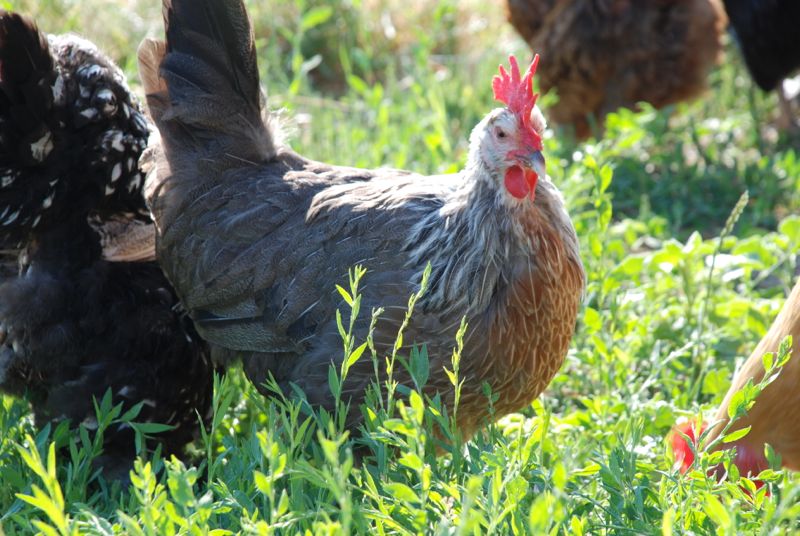
I wasn’t sure if the chickens had found their way under the gate into the barn. Yesterday I made sure to entice them that way with a few bits of grain. I did the same today and watched as they scratched into old hay and manure. I watched closely and was satisfied to see them go for the wiggly maggots under the straw. Good chickens.

I think that Rusty might be happier about the whole thing tonight. When I closed the door on the chicken house one chicken was missing. I saw her on the other side of a fence and she didn’t know how to get back.

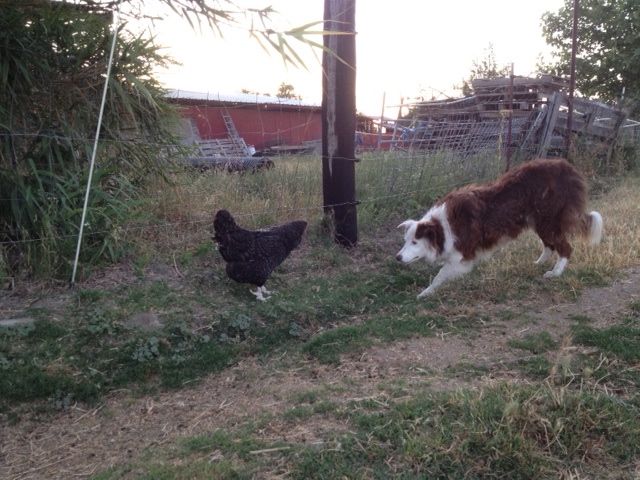
Feeling better about the whole thing now, Rusty?

I was just rereading this for errors and realized that I hadn’t yet explained the one exception to the chicken-house chickens. We used to have 2 banties who were loose in the barn. There is one left. This is an OLD chicken. She was around during the years when my daughter had her horses and cows here and she left for college in 2006. Every year she starts laying in the hay and I put her eggs in a rubber tub so that I can move her if I have to move the hay.

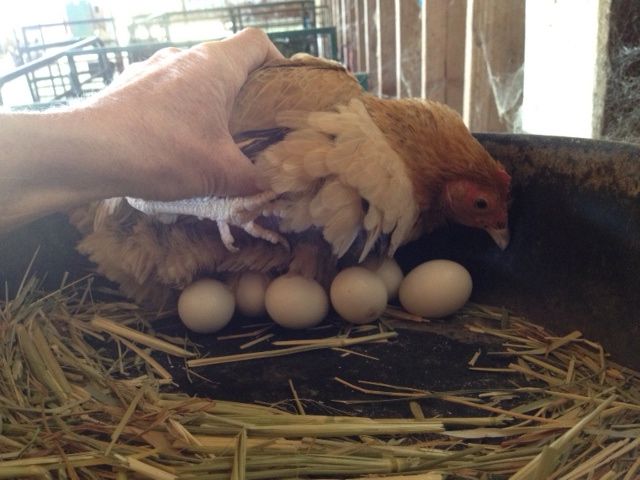
Don’t get excited about babies. There is no rooster.


Wool Handling School

Last weekend I attended a Wool Handling School presented by the American Sheep Industry. On Sunday we spent the day at Flying Mule Farm in Auburn where the flock was being shorn. It was fun to attend a shearing day and just be a spectator. Lots of photo ops. And lots of learning too.

We spent the day with instructor, Ron Cole, handling wool and learning how to class fleeces. Flying Mule Farm sells most of their wool through the commercial market and it was surprising to me how little skirting is actually done (none other than removing bellies and manure tags). Fleeces that measure in the low 20’s (microns) or less would be skirted more carefully, but there is still quite different from what I do. When large flocks are being shorn, the skirting and classing must keep up with the shearing so they have to be quick. No agonizing over every little bit of fleece and of course there is no sorting of color. If there are any black sheep they must be shorn last and that wool kept away from the white wool.

Different parts of the fleece are examined.

Check for strength.

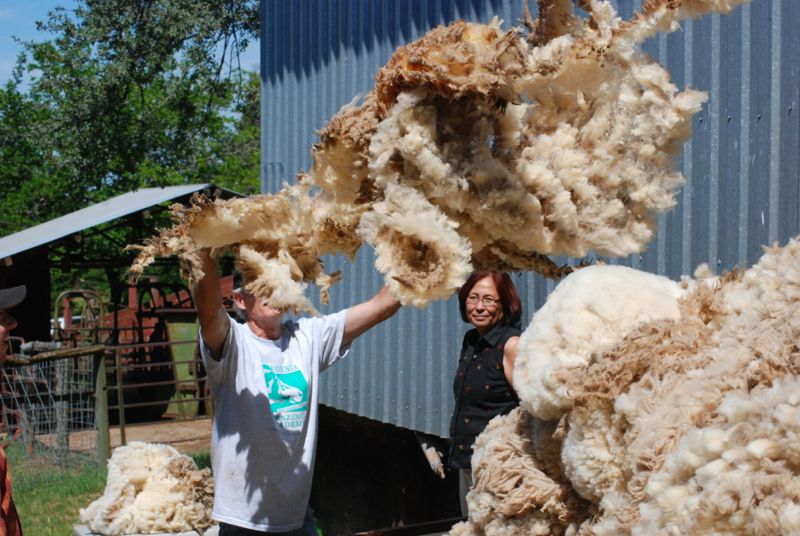
We learned how to throw a fleece. Normally you would pick it up right from the shearing floor and, using this method, throw the fleece on the skirting table.  The idea is for the fleece to land cut side down  already spread out for classing and/or skirting. In this case the fleeces were handed over the fence and then we all took turns learning to throw them.

I took videos of this as well and will post those when I have time.

Wool was packed into burlap sacks.

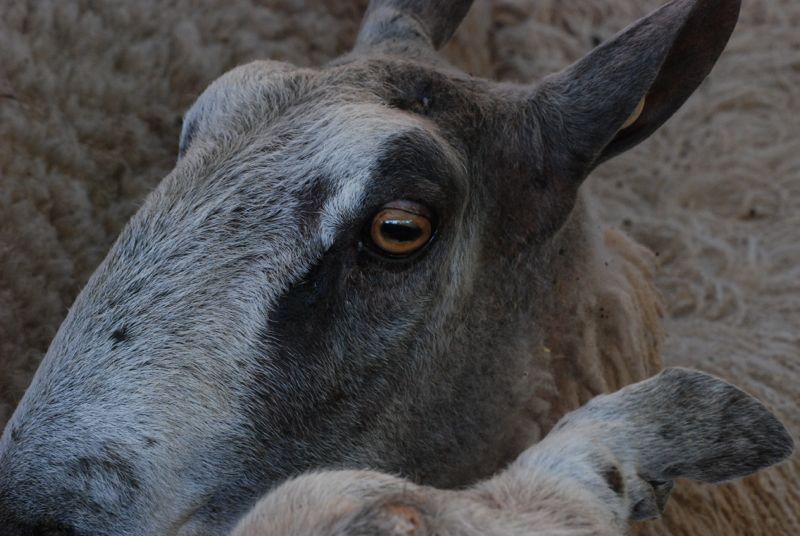
Blue-faced Leicester ram.

The attendees of this school were mostly new and/or small farmers and we spent some time at the end of the day discussing the differences in our perspective from that of larger producers. The focus of this school is how to improve quality and cleanliness of fleeces because all producers who send wool into the commercial market have an effect on the reputation (and therefore value) of U.S. wool in the world market. Farmers like me rely on niche marketing and we have direct contact with our customers.  I appreciated this opportunity to learn about other perspectives.

April Showers Bring….

Flannel bush, a native drought-tolerant CA species. I planted this behind the chicken house.

Yarrow, another drought-tolerant (read neglect-tolerant) species.

An incredibly fragrant rose. Hardy enough to have survived being dug up and replanted years ago and then suffer through seasons of aphids, little water, and pruning by someone who doesn’t know what she is doing.

I just planted this pink bottle-brush and will try to give it water during it’s first summer. After that it’s probably on it’s own, but the red variety I have near the barn has thrived with similar non-care. (Come to think of it, I think there is a leaky faucet near the red one.)

I love iris because they grow almost no matter what you do or don’t do to them. I have some fancy varieties that I got from my friend the iris farmer last year. I am embarrassed to say that I almost killed those by forgetting to plant them when I got them in the fall. They are in the ground and seem to be thriving but I was too late to expect them to bloom this year.
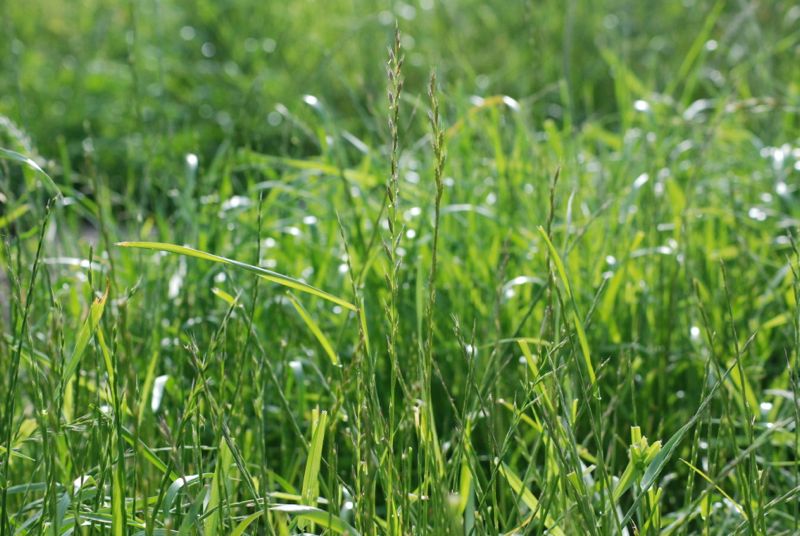
The clover is blooming now that it’s getting hot. In the foreground is one of the plants we just call foxtails. I think this one is Hare Barley but I’ll have to take my weed book to the pasture to know for sure.

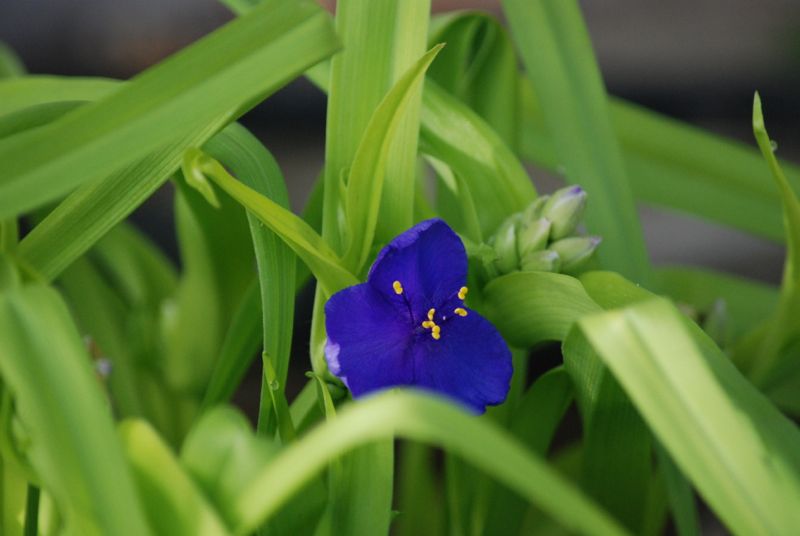
I can’t remember the name of this one but it’s in the box at the end of my shop. I always think the plant is not doing well because the leaves are almost yellow, but   whatever I am not doing to it seems to be working. It has a lot of flowers every year. (This box does get some water.)

This is a Verbasum, a new plant that I just planted in a barrel near the shop. I was assured that it could live in the environment of heat and neglect. I saw that it flowered yesterday. Last night the flowers looked as though they had shriveled up, but they are open again this morning. Good plant.

I planted Walker’s Low Catmint in another barrel. I just put a leave of it under Ozzie’s nose and he doesn’t seem to care.

Annual ryegrass, a much more desirable grass, than the annuals that we call foxtails.

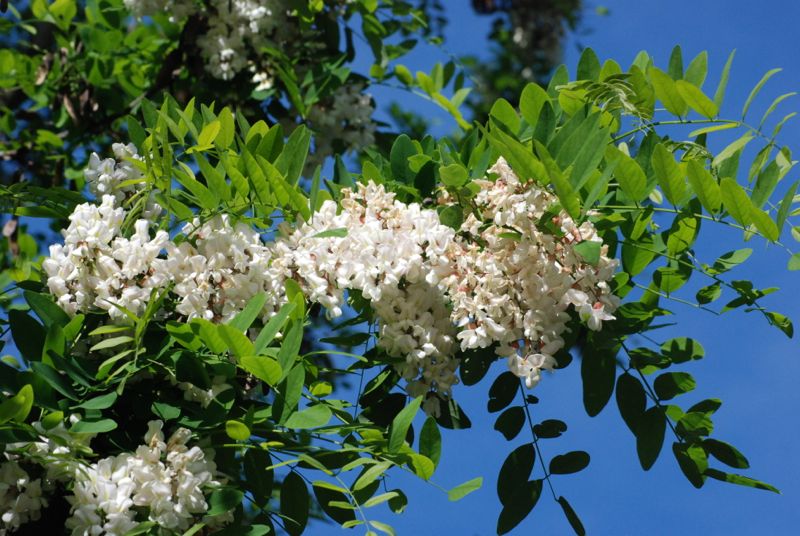
The locust tree is in full bloom and fills the air with its sweet fragrance.

Ouch!

I have been vigilant in trying to watch for mastitis in the ewes. It’s not easy to spot until you see a ewe that doesn’t want to get up or is lame. Lame? Yes, the infected side of the udder becomes extremely painful and the ewe doesn’t want any pressure against it so she limps. Have any of you women ever had a breast infection? Then you know what I’m talking about.

I am learning that mastitis in sheep can progress so quickly that you often don’t see any signs until it is too late. Prevention or early detection is the answer. (Do I sound like a health care ad?) I noticed a lopsided udder a couple of weeks ago. I caught the ewe and her lambs. It was obvious that the ewe was not letting the lambs nurse on one side. I found a scab at the top of the teat–maybe something that started from vigorous lambs with sharp teeth (nursing moms can relate to that too). I used an udder cream to help soften the scab and I milked her out. Fortunately the milk still looked good–not starting to get chunky or cheesy. I kept that ewe in for a few days, milking her some, but mainly making sure that she let the lambs nurse–which she did when I used the cream on her udder. She is fine now.

Today in the pasture I saw Athena from the rear and thought that she looked a little lopsided, but not too much. I was able to sneak up on her and feel the udder. Hard. Immediate response needed. I brought all the ewes in so I could catch her and her lambs. Here is what her teat looked like:

It is hard and inflexible. A normal teat is squishy so you can actually get milk out. The good news is that the milk is still OK and I can get milk out if I milk her by squeezing the lower part of the udder and the upper part of the teat. The bad news is that it is very painful for her and she will get mastitis if I can’t keep the milk flowing or unless I dry her off so that there is no milk production at all. You can’t stimulate milk production on one side and not the other.

Here is what her lambs look like right now:

They are 50 & 55 pounds. Although normally I would have let them continue to nurse, at that weight and 2 months old they can be weaned. So they are on their own now and Athena is in a stall with a wether (with whom she is extremely annoyed) on no feed or water for a little while to help with the drying off process (discouraging milk production). Her udder will continue to fill with milk, but that in itself inhibits milk production. I will give her banamine as a pain reliever and anti-inflammatory and LA 200 as a prophylactic aid to prevent infection (not normally done when drying off). Hopefully without the stimulus to produce more milk she won’t get mastitis and hopefully the teat will heal without damage that might inhibit next year’s milk production.  Athena is a really nice ewe and I’d hate to lose her for this.

It’s been a week since Meet the Sheep, our spring open house. My internet service has been sketchy and every time I started to add photos it was too slow and I gave up. I think technology has been upgraded and hopefully all is well with our internet tower. I can see that tower on the mountain several miles away (one of many–I don’t really know which it is–do you think they could put a ribbon on it so I can pick it out?) and if I can see it, shouldn’t the little thing on the roof be able to pick up the signal?

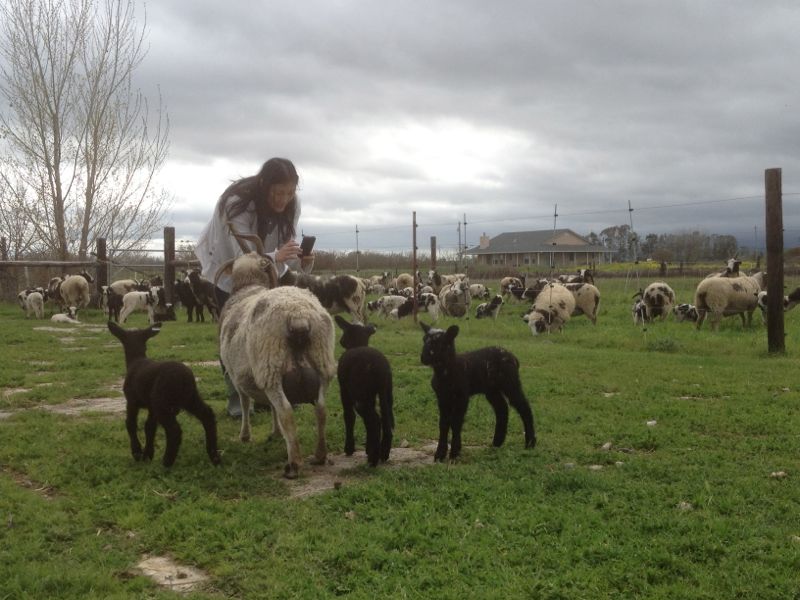
The Saturday of Meet the Sheep we had gorgeous weather and I know that was one reason we seemed to be so popular. Dozens of people came and enjoyed the sheep, the goats, fiber, fresh air, and a wonderfully sunny (dry) day. As always Farm Club members were a huge help.

 Image
Paulette always enjoys a good scratch.
Image
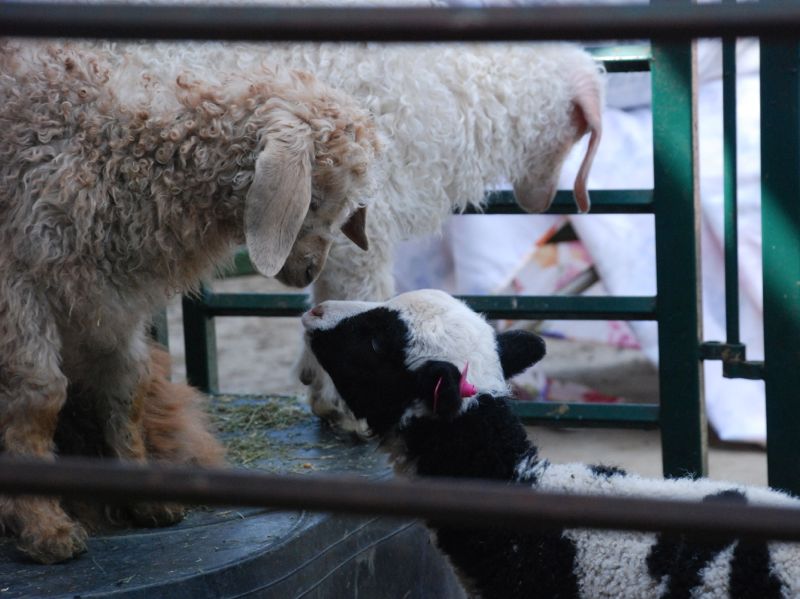
This is an Angora kid owned by my friend, Julie, of Black Oak Ranch.
Image
Julie brought kids and a bottle lamb, all of which were very popular.
 
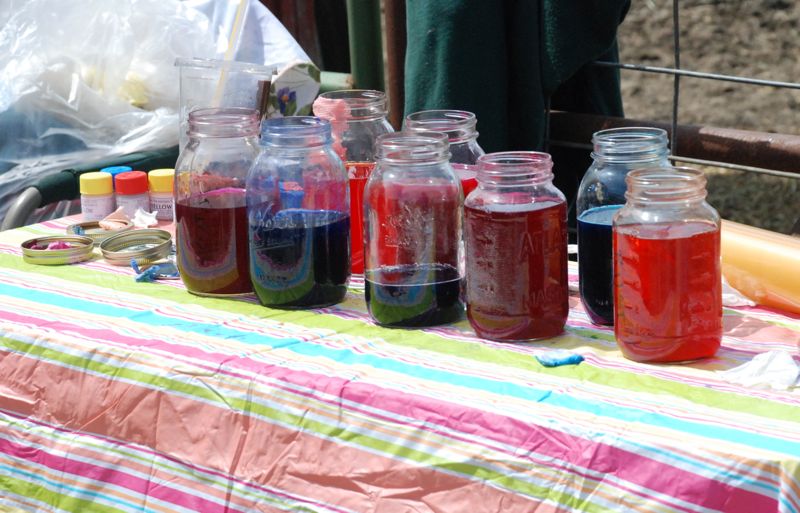
She also did a dying demonstration.
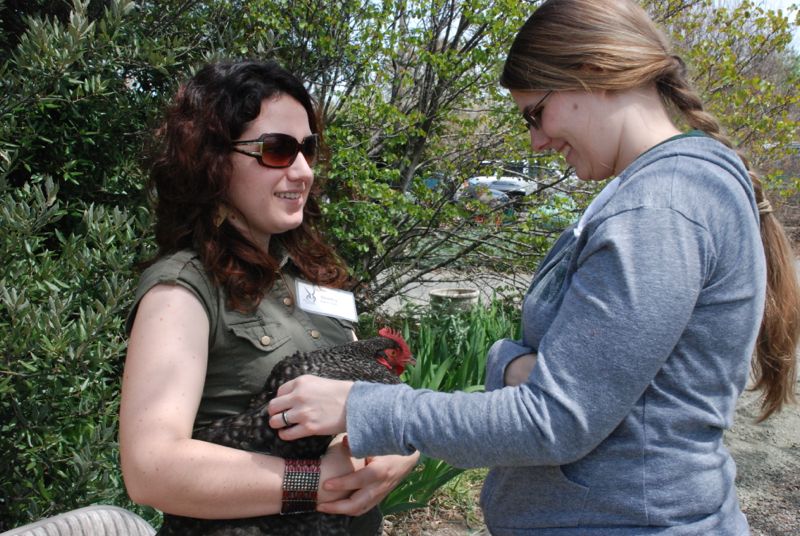
Shelby brought her tame chickens.
Jackie demonstrated carding and…
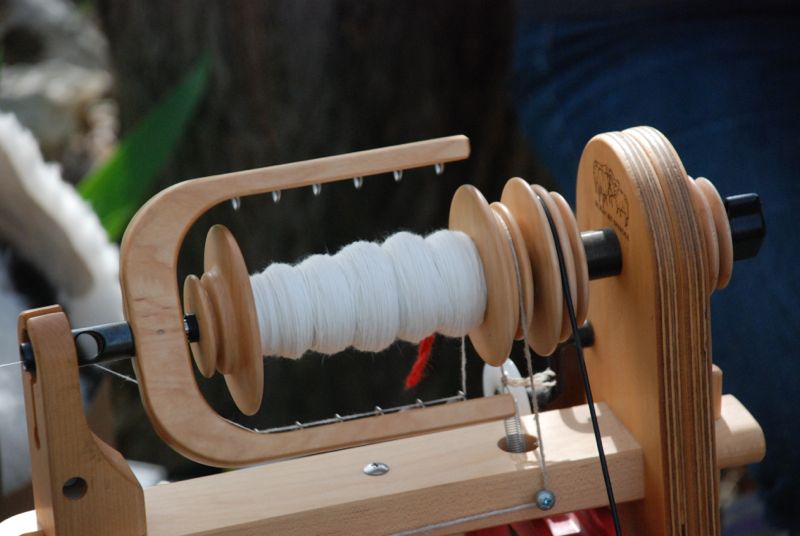
…Alison taught a visitors how to spin.
First handspun yarn.
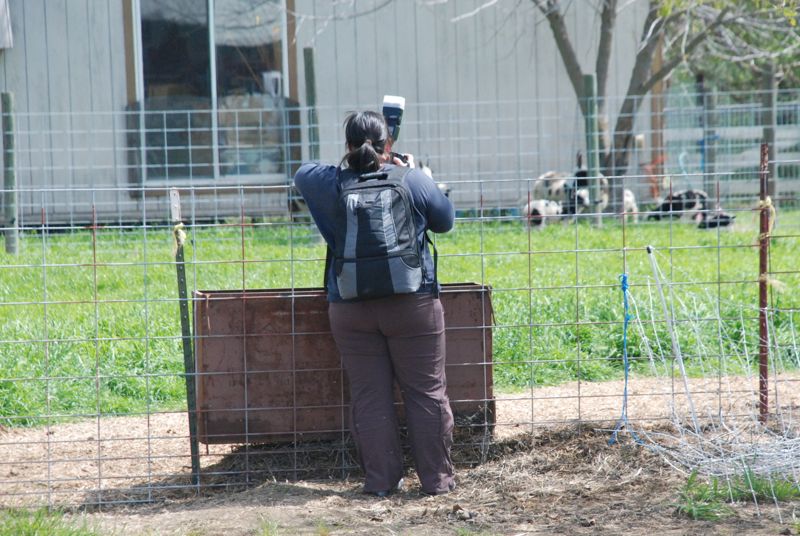
Photo opportunities
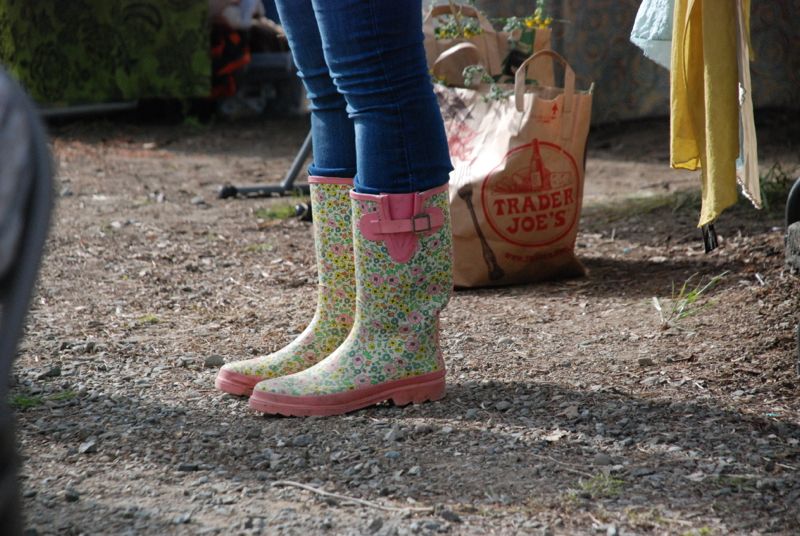
Fashion footwear
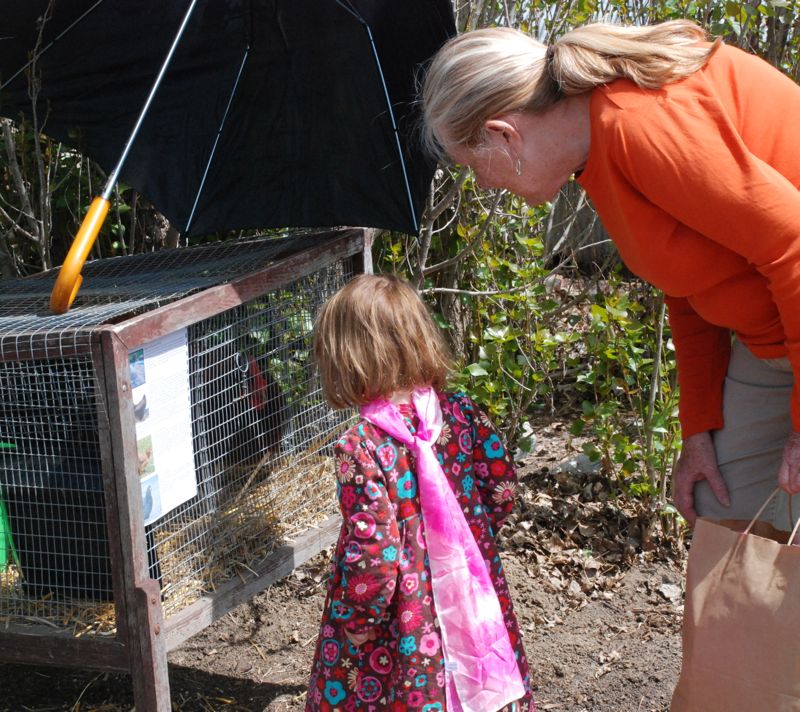
Checking out chickens
Fresh yarn
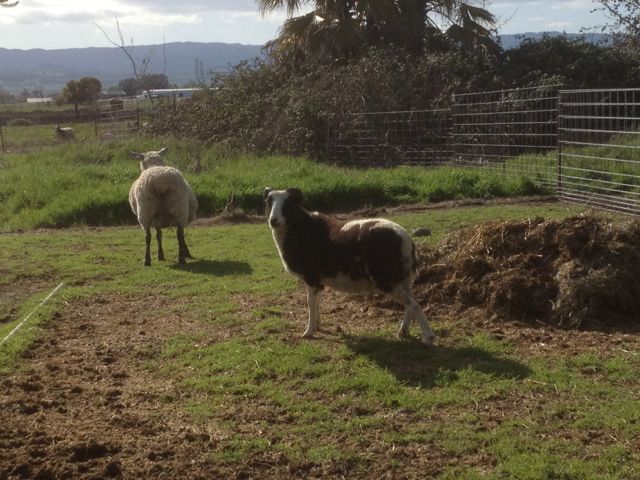
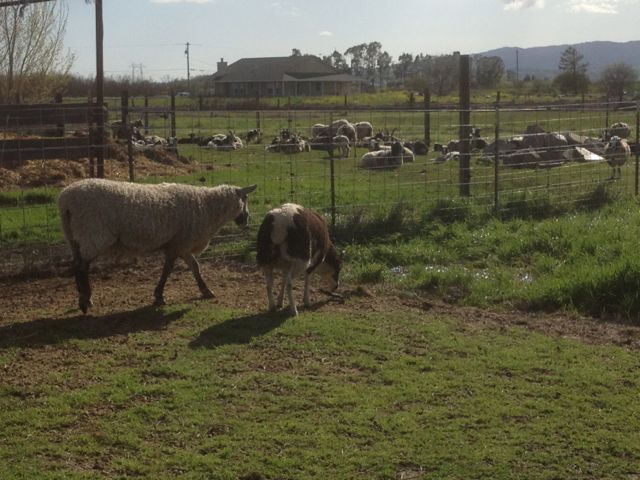
Of course it was all about Meeting the Sheep:

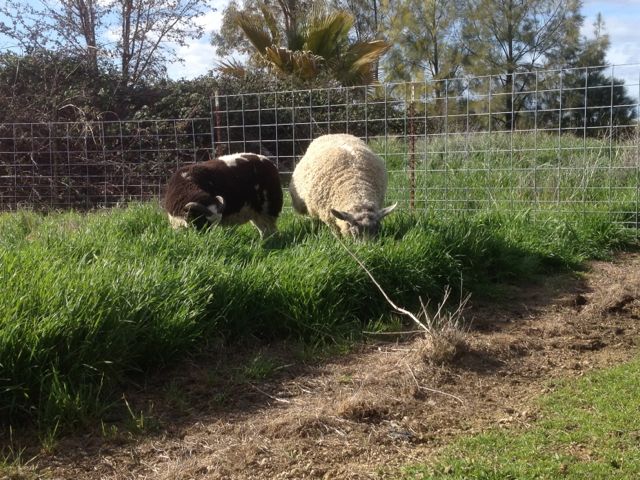
The grass really IS greener on the other side

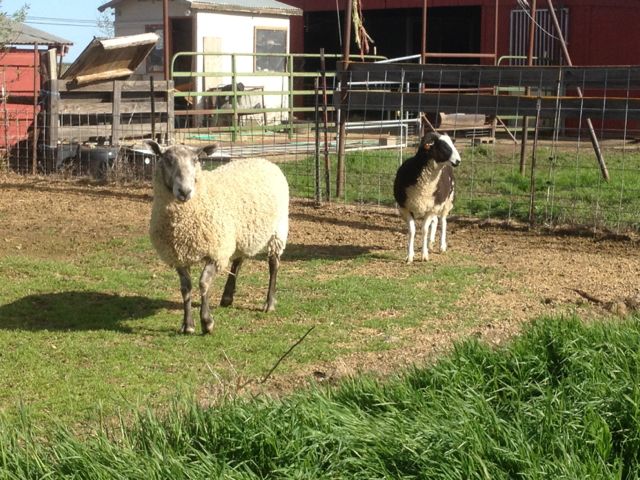
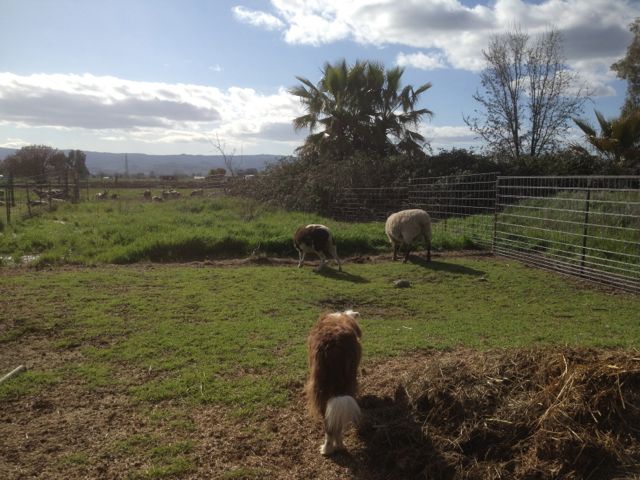
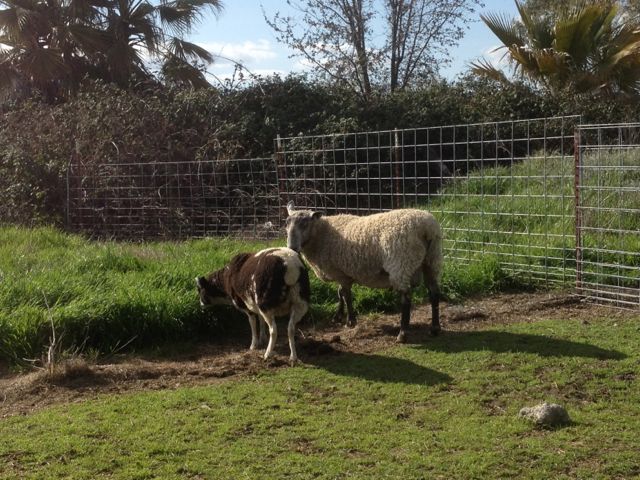
Faulkner, the BFL ram lives with his buddy, Jerry,  because I don’t want to put him up against the adult Jacob rams with horns. He lives in what used to be the pig pen back in our 4-H and FFA days. I have been meaning to expand his pen ever since last year and finally got to it (with the help of son, Chris) yesterday.

Hey, Jerry, where are those bars? I can't see them.

Jerry: Dude, I don't see them either. I think there is some invisible force-field though. I wouldn't go any further.

What do we do now?

Faulkner: There is that annoying dog. Let's pretend we don't notice him.

Jerry: Hey, dude, the dog's power corrupted the forcefield and now we can get through.

Happy Sheep.

Barn chores

Today I decided to clean the ram pen. Over the last few months the rams have broken a few bars out of the feeder. I didn’t realize until a few days ago that they had been pulling most of the hay through the broken area, so there was a big build up of wasted hay.

Rusty moved the rams to the back and I had him keep an eye on them while I worked. (You can read Rusty’s blog post about this.)

This shed that the rams have for shelter is an old concrete building that has barbed wire instead of rebar for reinforcement (there is a hole where you can see that). I have reinforced the end of this wall with wood and this is where the gate hangs. That is also where I throw the hay into the feeder and hadn’t noticed how it had built up. I was filling up the wheelbarrow and then I noticed this:

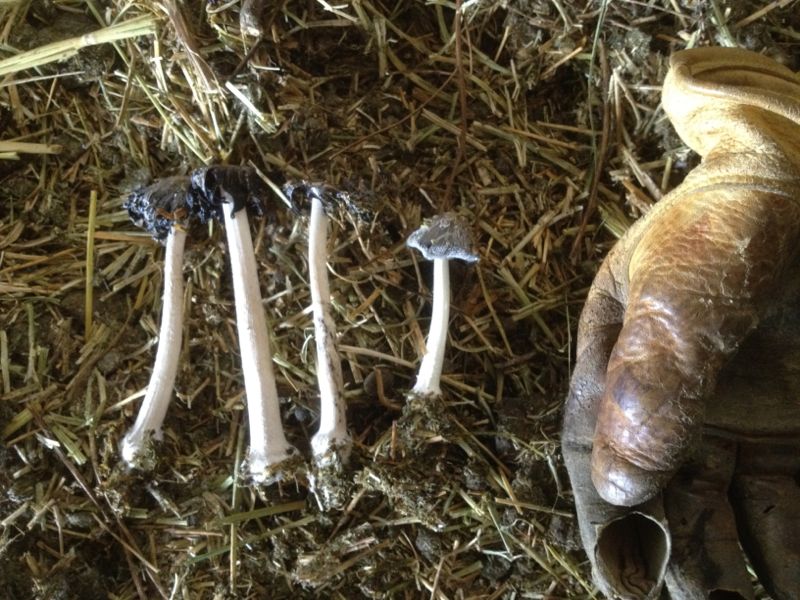
This pen had flooded a month or so ago and all that old straw was wet. Look at all those mushrooms. I was glad that my friend, Jackie, was coming over in a little while because I knew that she would be excited about mushrooms.

Jackie has been doing some natural dyeing so we scooped up a lot of these mushrooms and she is going to experiment with them.

Jackie’s daughter and her boyfriend are visiting from New York. While her daughter visited with the sheep, Jackie and Mark pitched in and helped me finish cleaning the ram pen. That’s my kind of visitors!

Farm Day

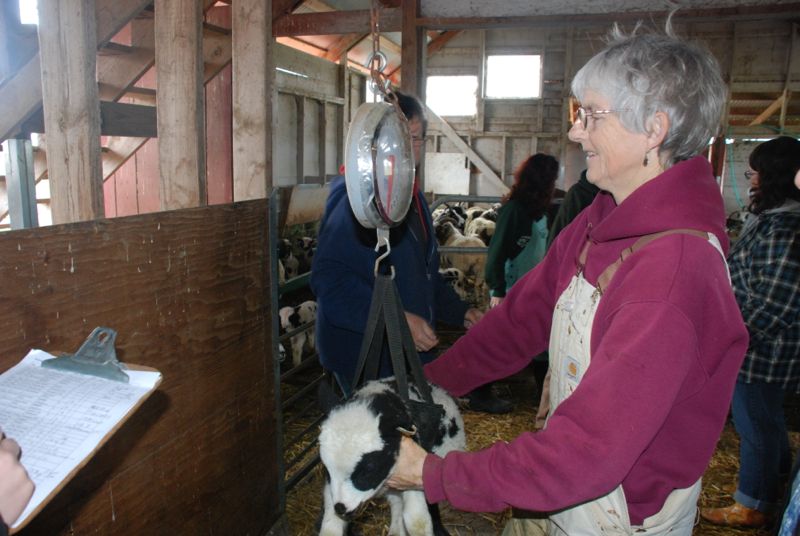
Last Saturday was Farm Day and 8 of the 10 Farm Club members were able to make it here. We caught all the lambs and checked for split eyelids (a condition that sometimes happens in 4-horn sheep) and number of horns.

With this many people here it went quickly. Everyone else caught sheep and I weighed them. I don’t usually weigh lambs as they grow, but I’m interested in finding out if my BLF cross lambs grow at a different rate than the Jacob lambs. I’ll report back on that.

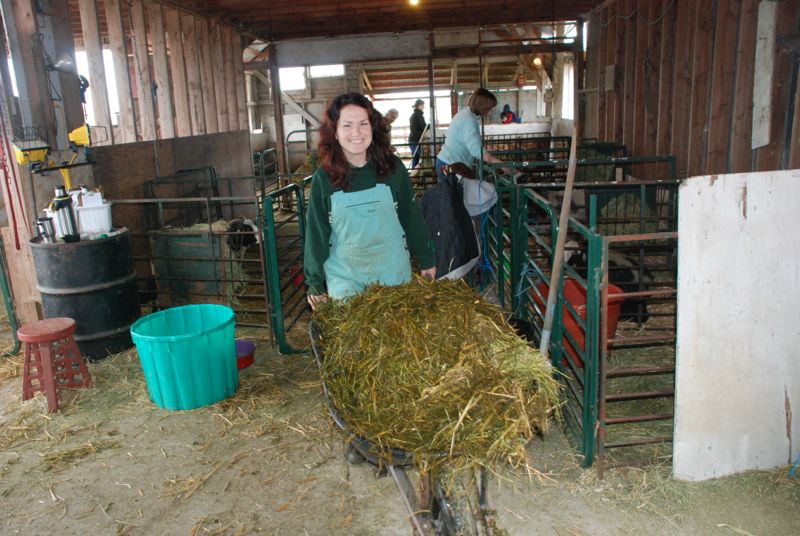
After working with the lambs everyone grabbed pitchforks and shovels and, with 3 wheelbarrows going, they made quick work of cleaning the barn.

What a great group of friends!

Summer is waiting

Summer is waiting, but that’s not the season. It’s Summer, the sheep.

This is Summer on January 5.

January 17.

This is today, February 5. I don’t have a breeding date for Summer but I don’t think she lost any time after I put Clint in with her group. About a week ago I started giving her a little grain at feeding time, along with Paulette, who I know is pregnant with triplets after an ultrasound.

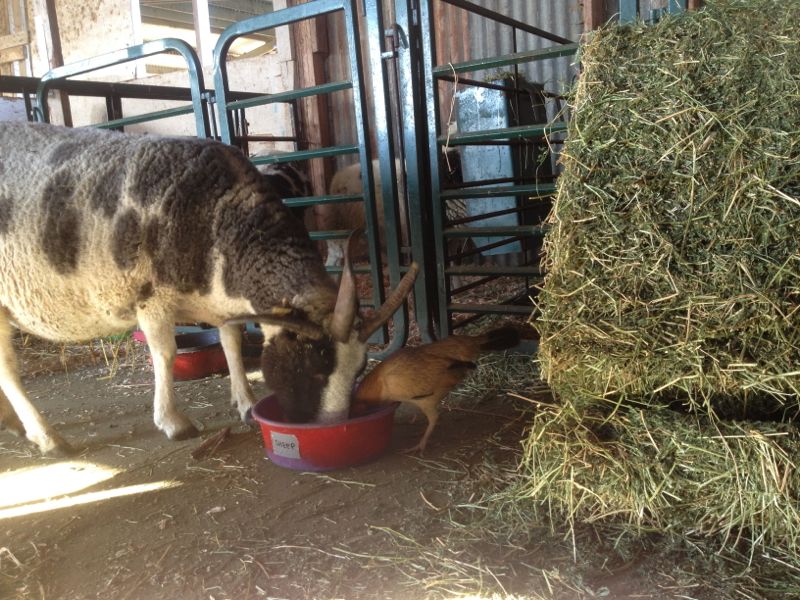
They both have to share their grain with the chicken who now comes running when she sees me get the grain bowls out.