Close to Home…Post #7 – Jacob Wool

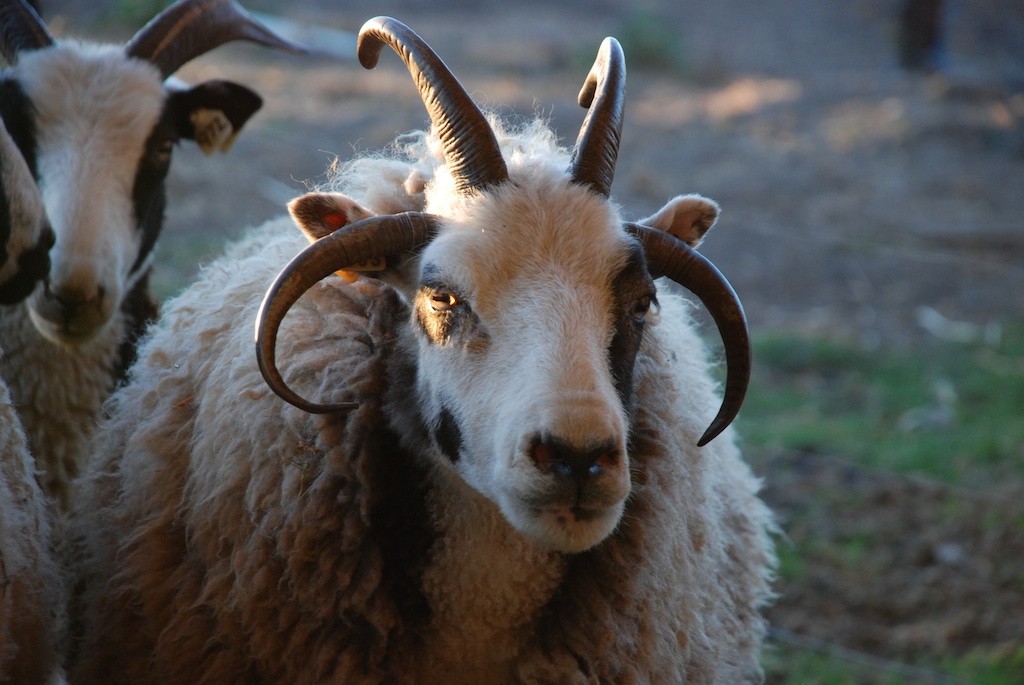
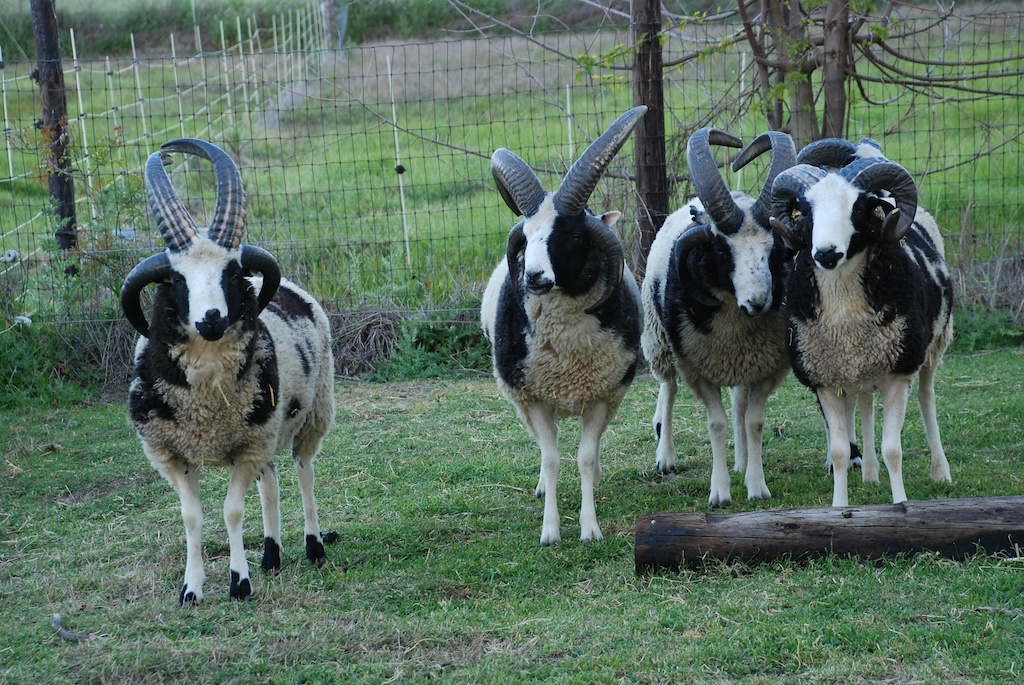
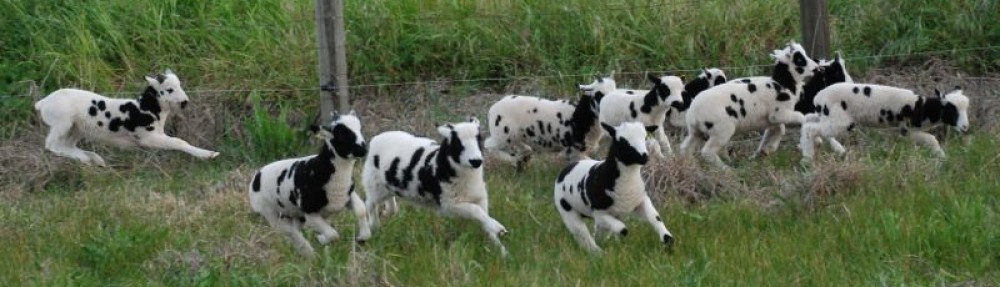
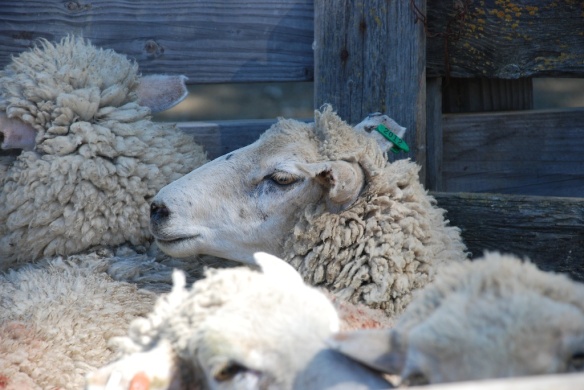
I’ve been writing about sources of wool from Solano and Marin Counties and from Oregon, but of course I used my own wool too for the Artery show. How to choose a representative photo of my sheep? I used more than one. I can do that because it’s my show.Fanny FannyLola Lolarams-frontRams.
Here is the story I wrote for the show:

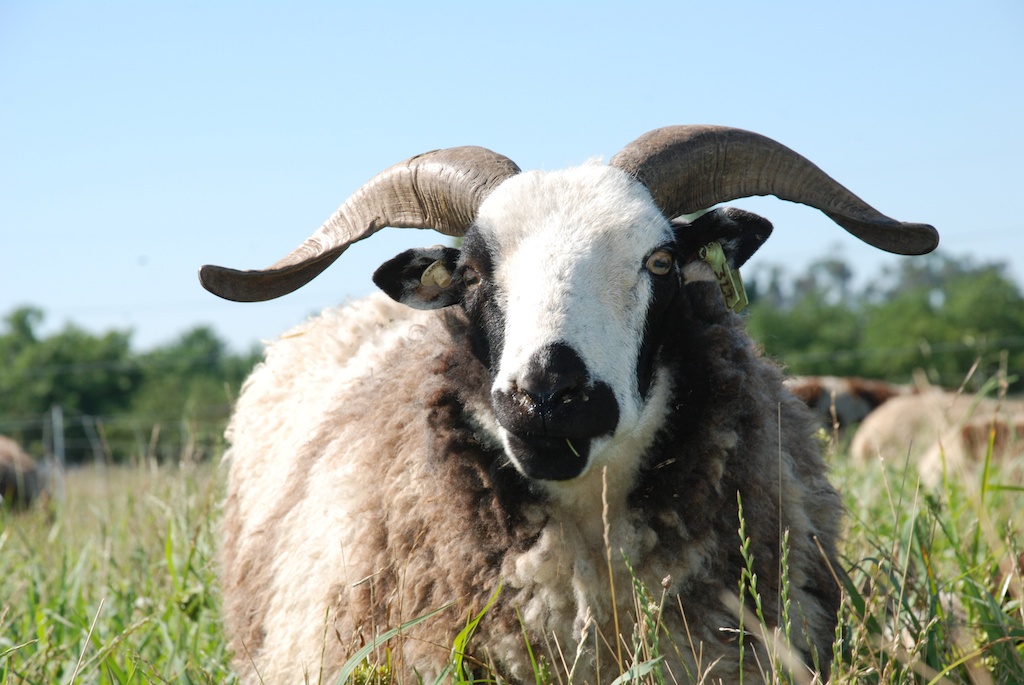
I developed Meridian Jacobs after my family moved to Meridian Road, north of Vacaville, in 1999 and I purchased Jacob sheep. The Jacob sheep is a rare breed that is hardy and well-adapted to low-input, sustainable farming practices. My flock of 65+ sheep grazes irrigated pasture much of the year and is supplemented with locally grown alfalfa during the winter.

The sheep provide me with unique wool and tasty lamb and are the core upon which I have built a multi-faceted business, selling fiber (from my sheep and other yarns featured in this show), teaching classes, and creating the Farm Club. Lambs for meat are sold to individuals and to Superior Farms in Dixon.

The Jacob sheep is striking in appearance with it’s spotted fleece and multiple horns. The sheep are shorn in the fall and yarn is spun at two California mills. My flock’s wool measures from 27 to 31 microns. By sorting fleeces by color and grade I produce a variety of natural shades and can use the softer fleeces for blankets and garments and coarser wool for felt items.

Meridian Jacobs evolved as I turned my passion for wool into a business.

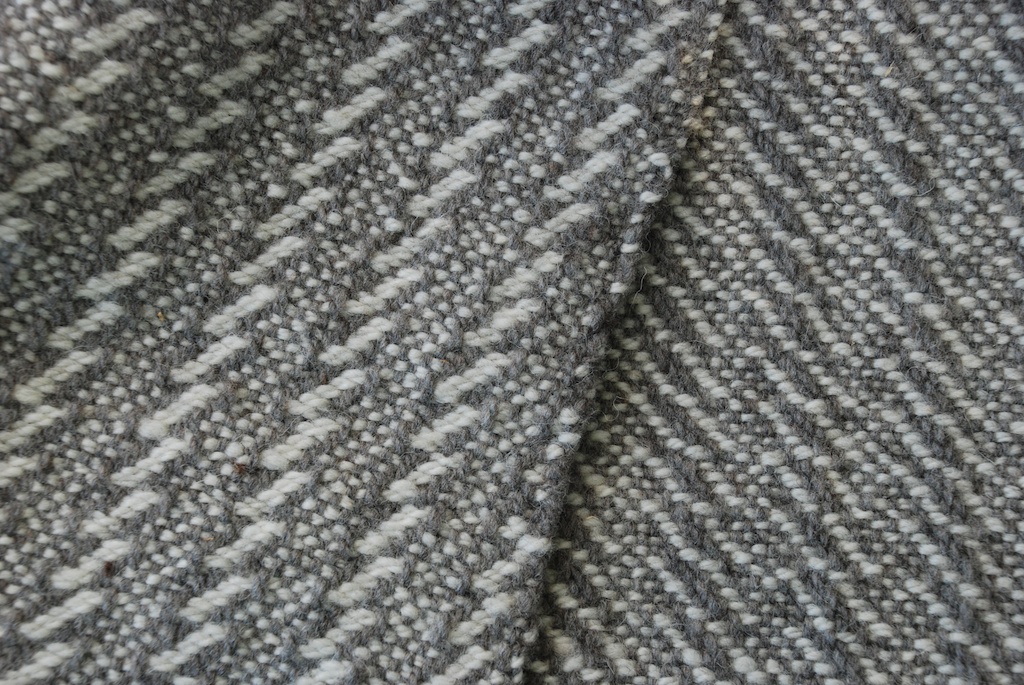
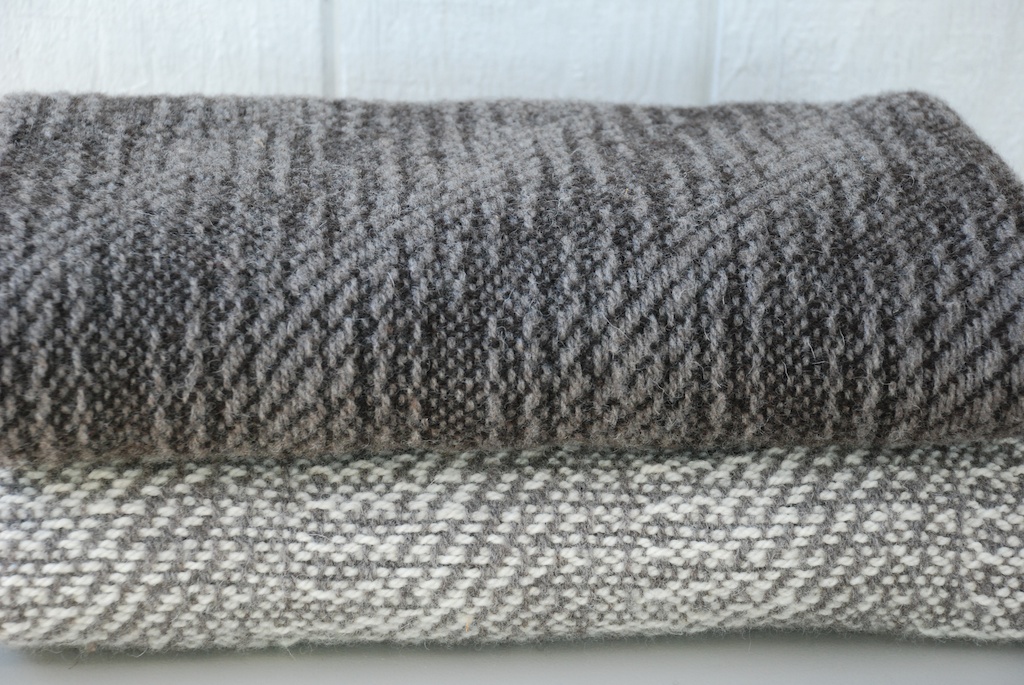
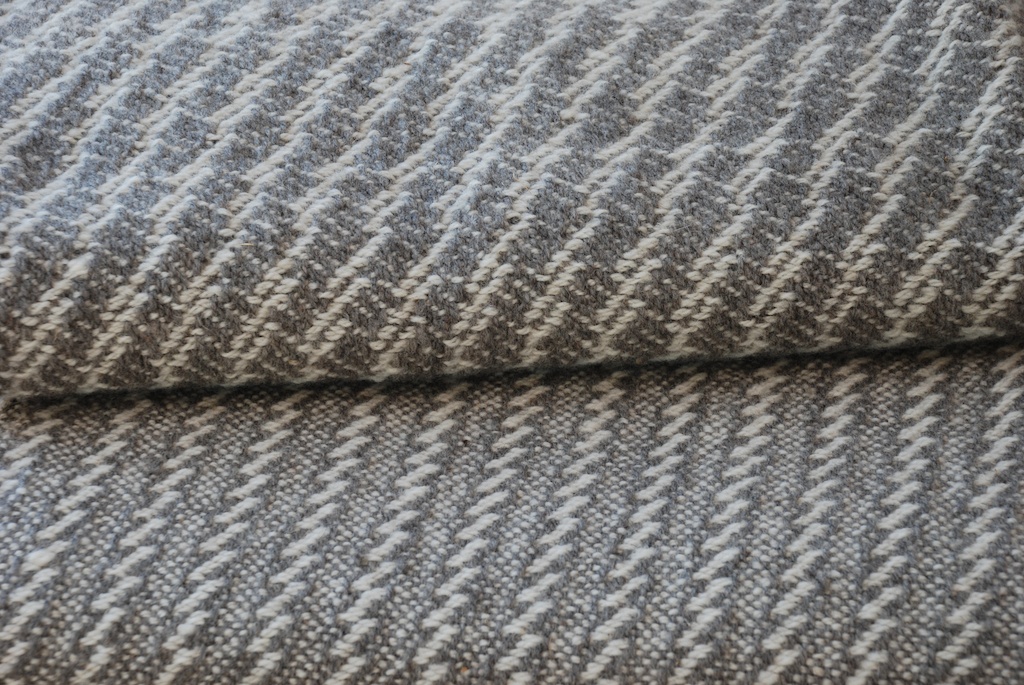
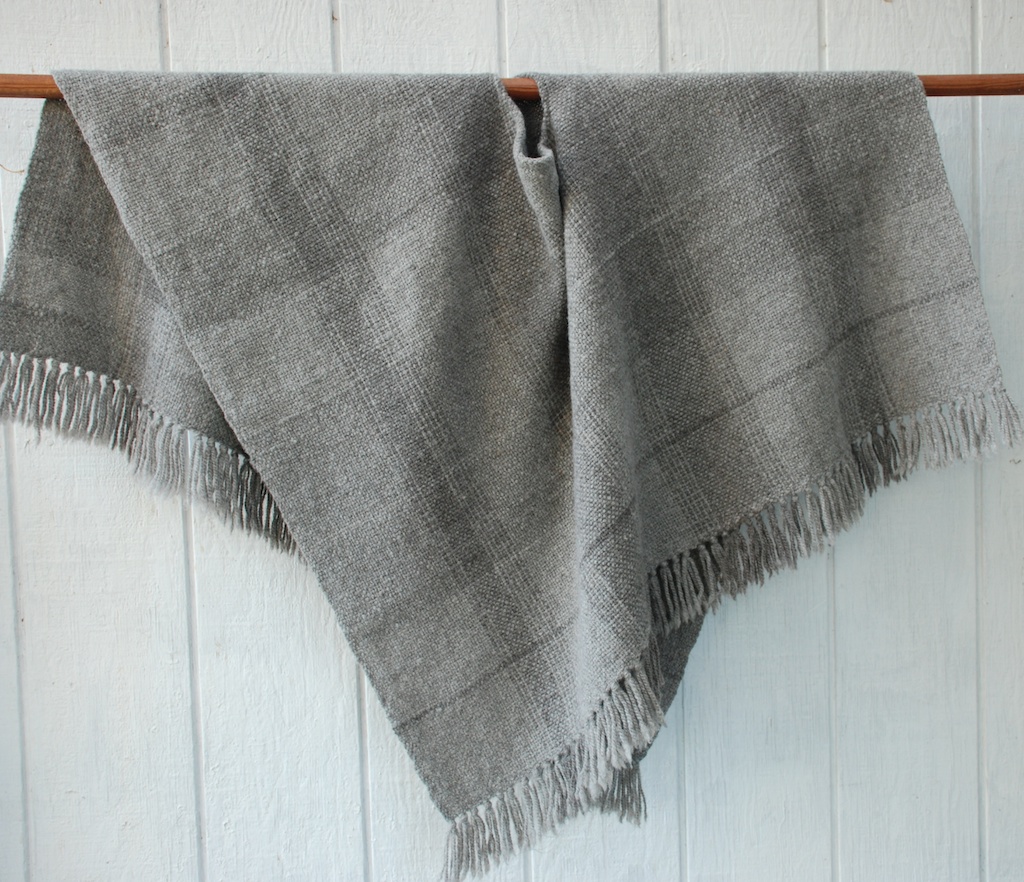
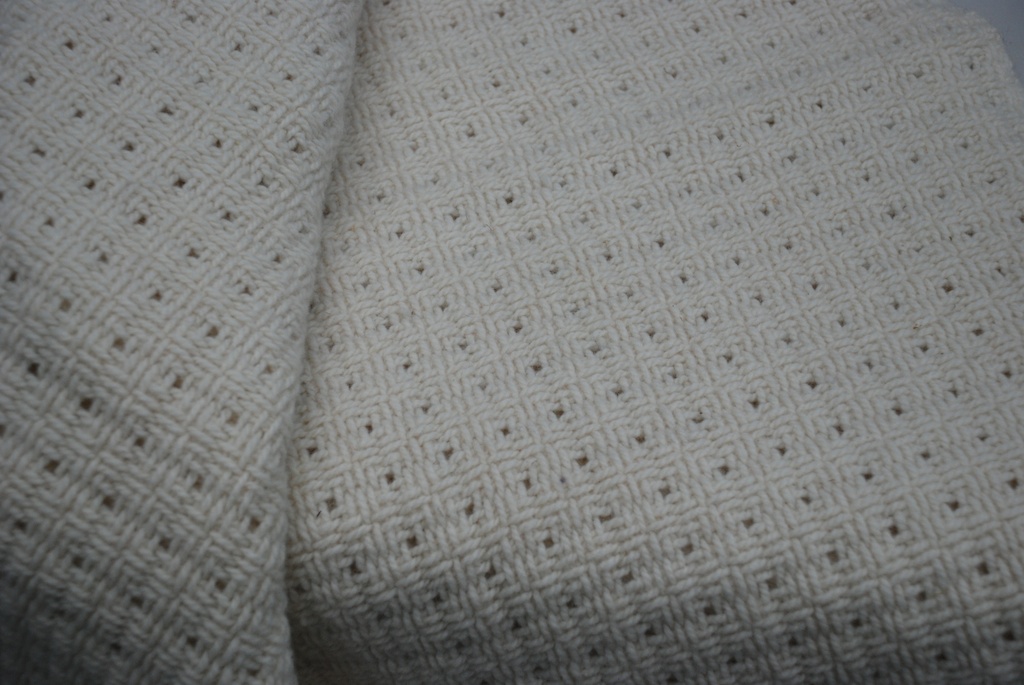
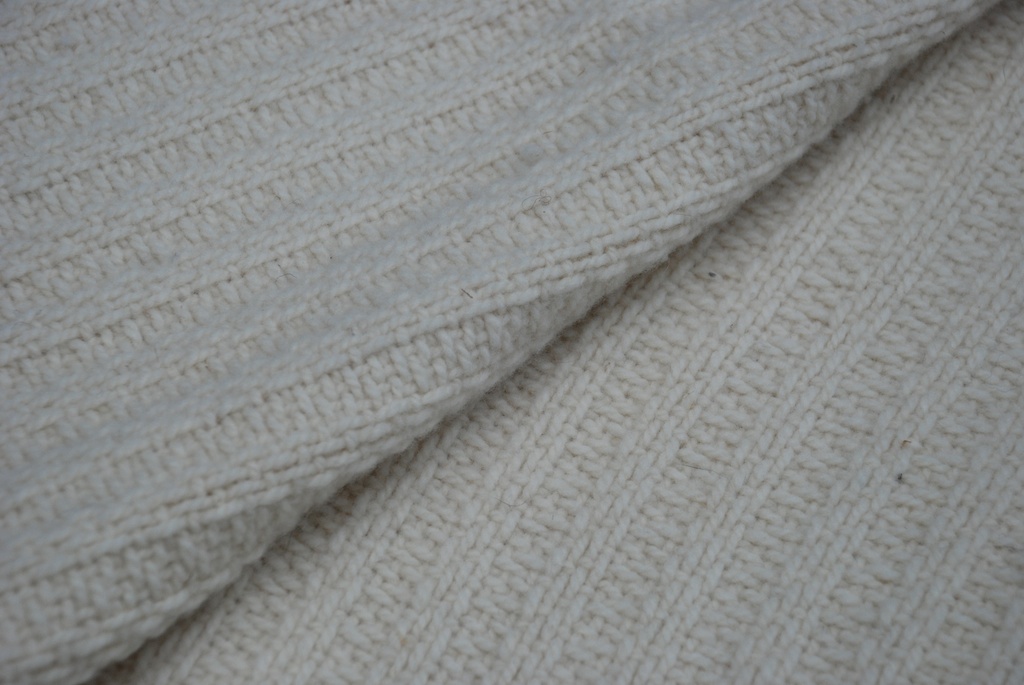
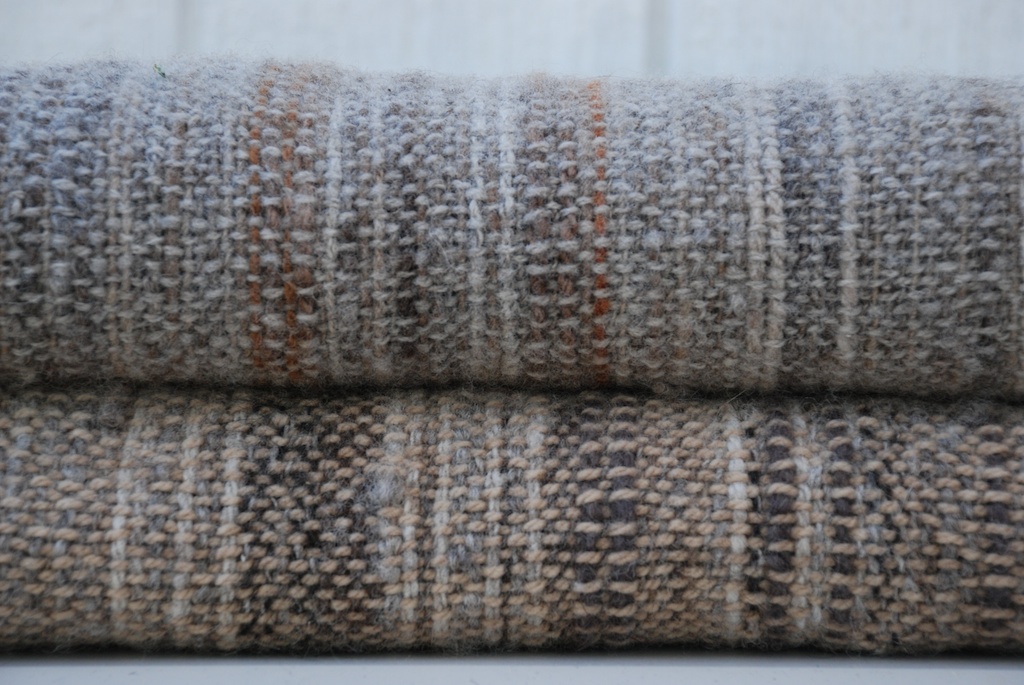
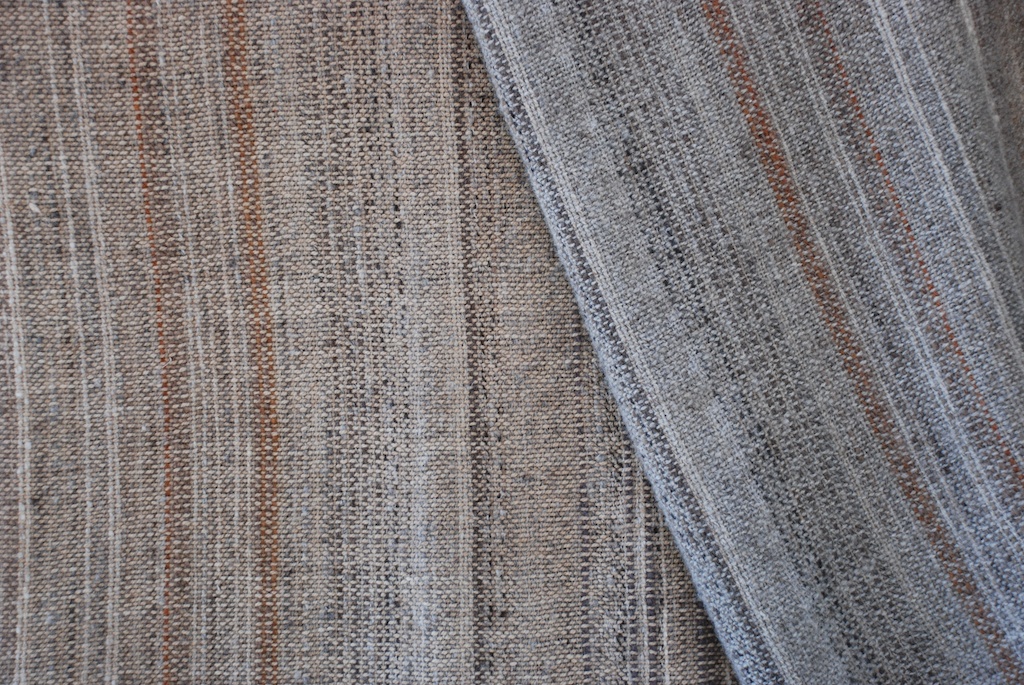
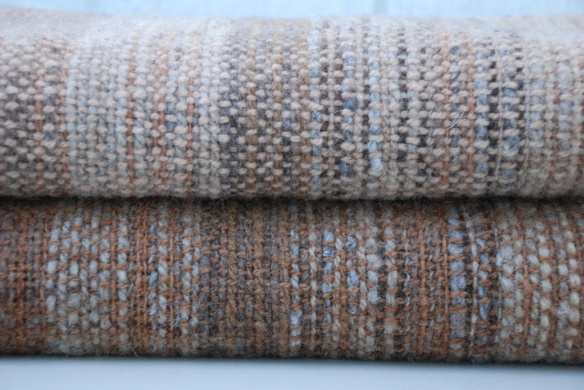
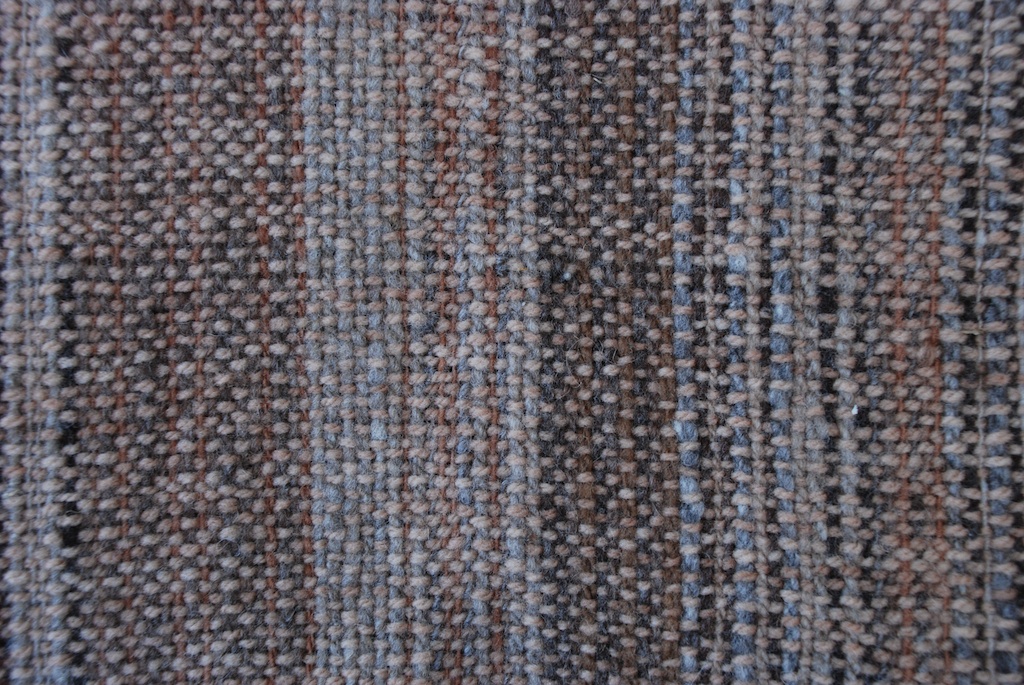
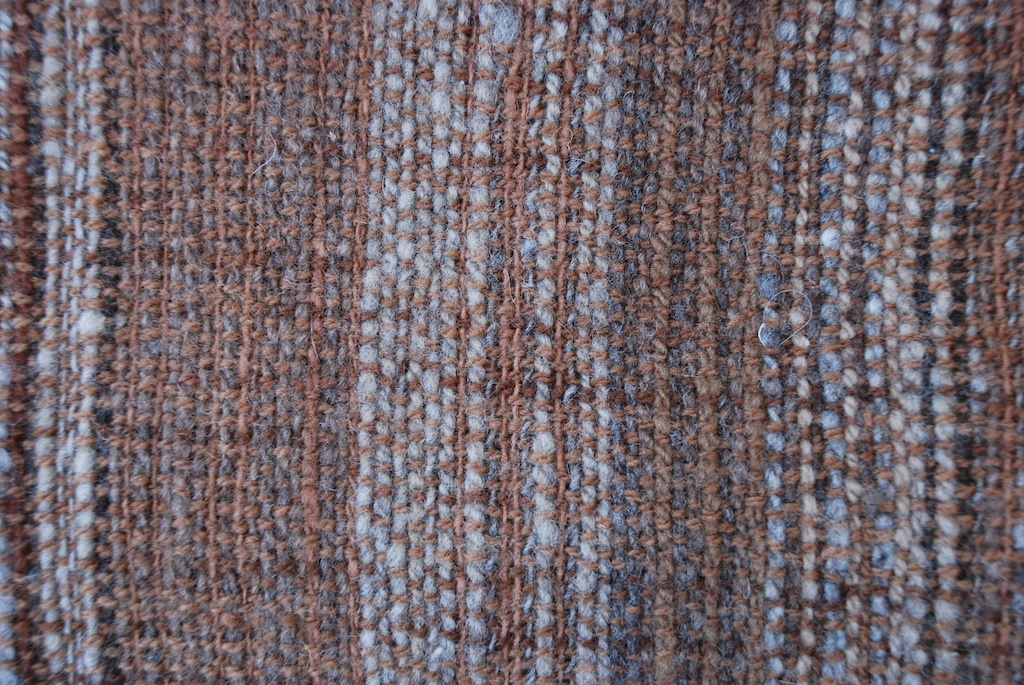
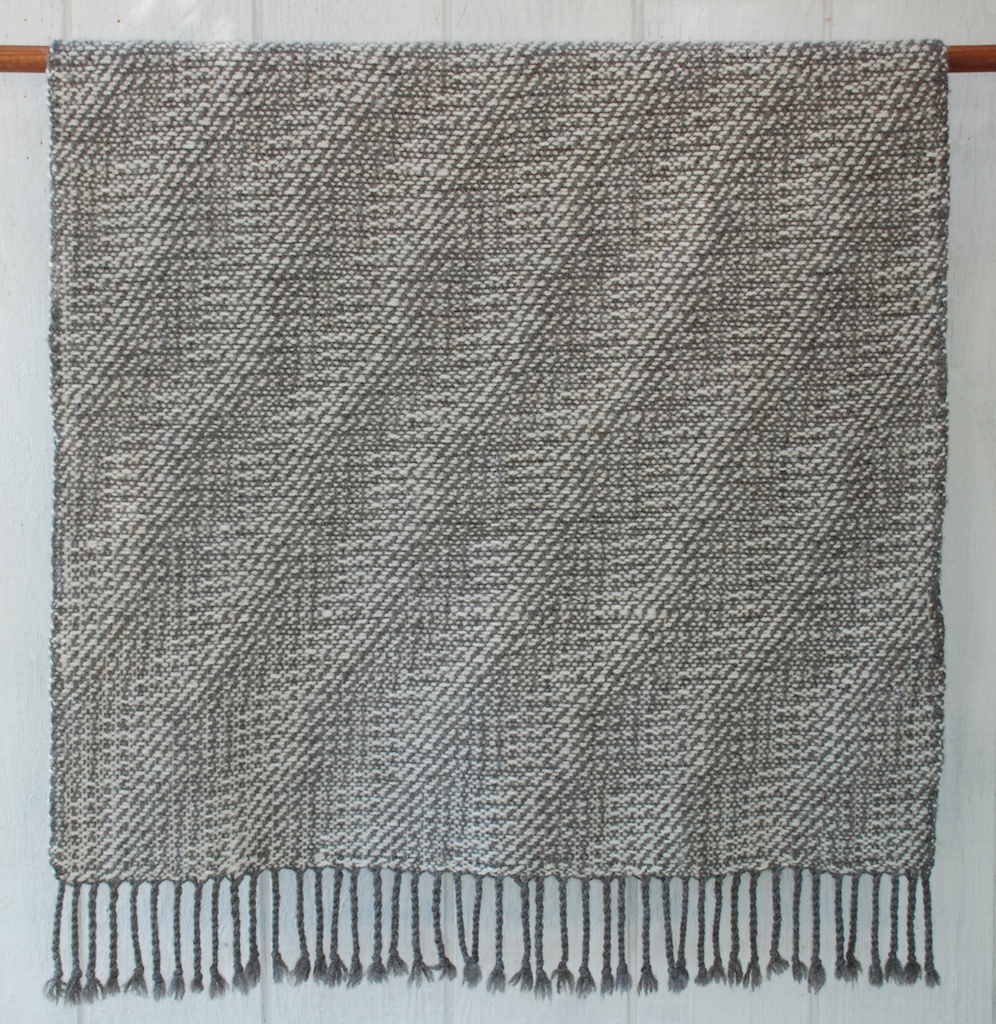
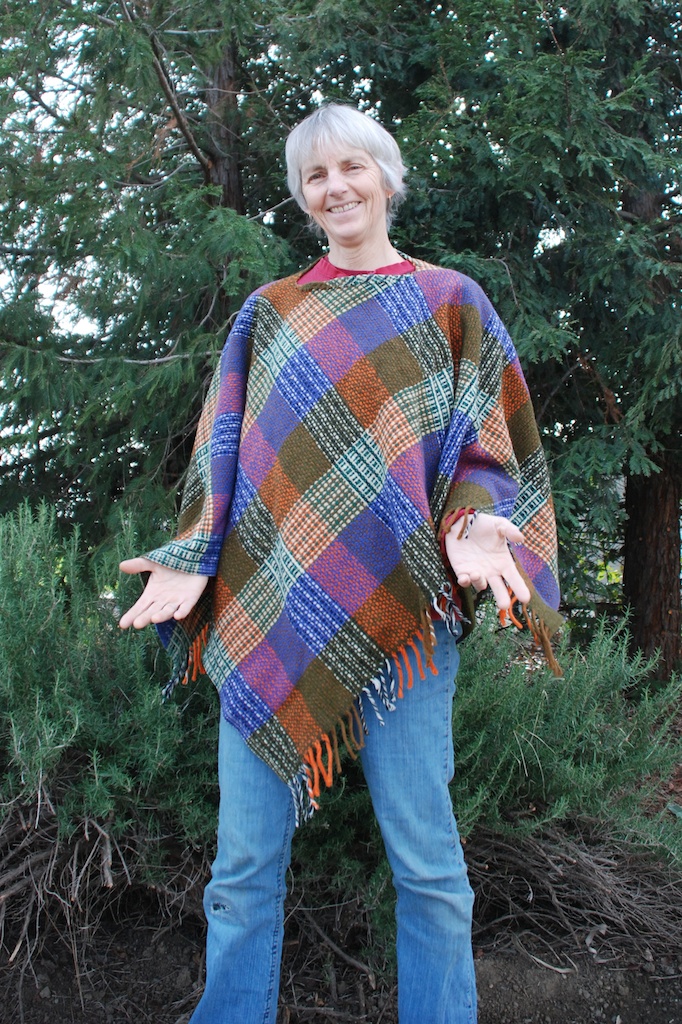
I had a limited amount of yarn from this year because I sold so many fleeces at shearing day. Some went to Farm Club members and I used most of the rest. It is beautiful yarn.Artery 2014 Jacob blanket Artery 2014 Artery 2014 These are all throw-sized blankets.Jacob blanketThe cool thing about Jacob wool is that you get all of these natural colors without dyeing. For this blanket I used odds and ends of the yarns that were left in warp and weft. It was going to be a poncho along with the other blanket on this warp. I have a poncho that I wore in high school:ponchoYes, I still have it because I always planned to use it for a pattern. (When I put it on it makes me look 17, right? Glasses are gone. With camera angle, you don’t see as many wrinkles. You can pretend that I bleached my hair back then.)Jacob wool 2014Anyway, the fabric in the first “poncho” photo was larger than the poncho that I wanted and it looked and felt so nice as a blanket that I didn’t cut a hole in it. (Good thing–it has sold to someone and it will be shipped to Australia.) This fabric was about the right size so I did turn it into a poncho. It can be purchased at the Artery (or from me after the show).887-4This is a scarf from more of the left-over yarn.
Close to Home…Post #6 – Anderson Ranch wool

Last March I watched some of the shearing on a large sheep ranch in southern Solano County and I brought home fleeces. Here is the blog post from that dayRio Vista shearingIn September I got the yarn back from the mill and used it for pieces in my show at the Artery.
Story that is part of the show:  Margaret and Ian Anderson farm land that Ian’s great grandfather settled in the late 19th century. While Ian’s great grandfather raised only sheep and grain the modern ranch is a diversified farming operation growing hay, grain, and cattle as well as sheep. The original sheep on the ranch were mostly Corriedale but today’s 3000 breeding ewes are a blend of Corriedale, Polypay, and Rambouillet breeding. The ewes are bred to Suffolk and Rambouillet rams to produce each year’s lambs. The lambs are raised in adherence to the strict animal handling and environmental sustainability protocols of Niman Ranch, where most of the lambs are marketed. Local sources of Anderson Ranch Lambs are Nature’s Bounty near Vacaville and Chuck’s Custom Slaughter in Dixon.

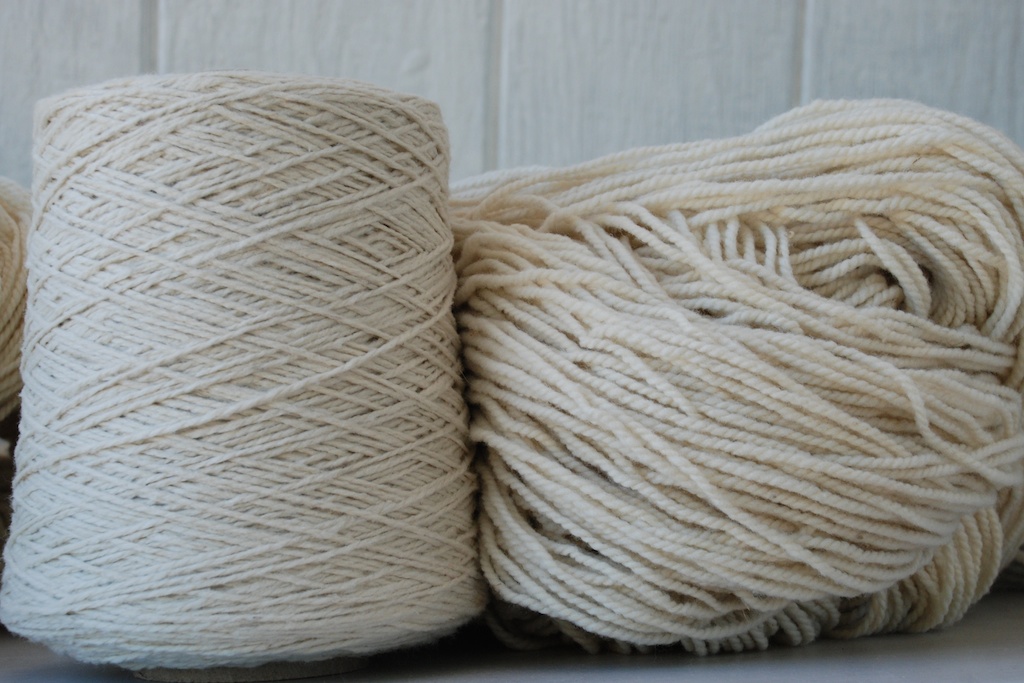
As in many U.S. sheep operations the Anderson Ranch wool is handled as a by-product and is usually baled and sold in bulk. Last spring I watched some of the shearing and brought home about a dozen fleeces. I sorted and pre-washed the wool and shipped 90 pounds to Zeilinger Wool Company in Michigan, one of the few mills in the U.S. that can adequately process fine wools in small quantities. The wool was spun into 54 pounds of 2-ply-sport weight yarn. The fiber averages 20.4 microns. Feel how soft it is for yourself!

Rio Vista yarn

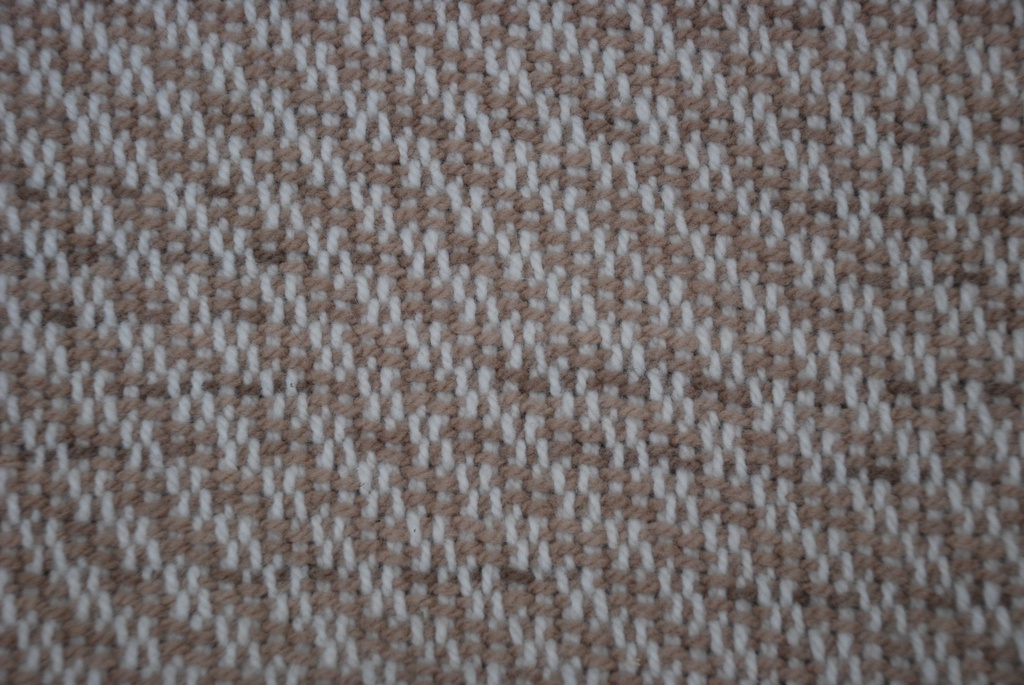
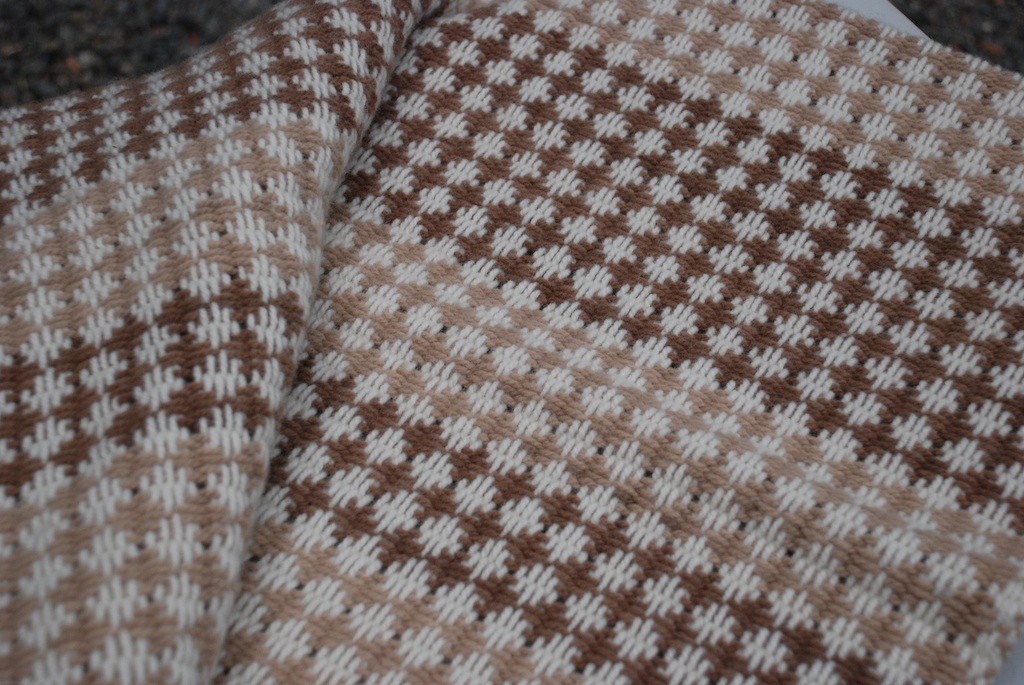
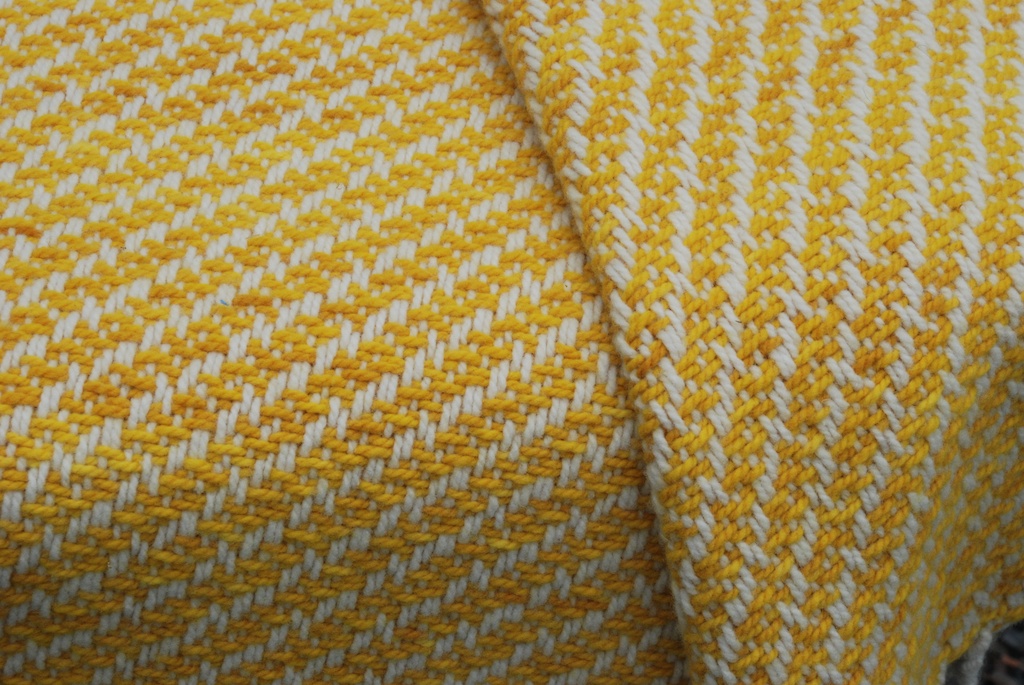
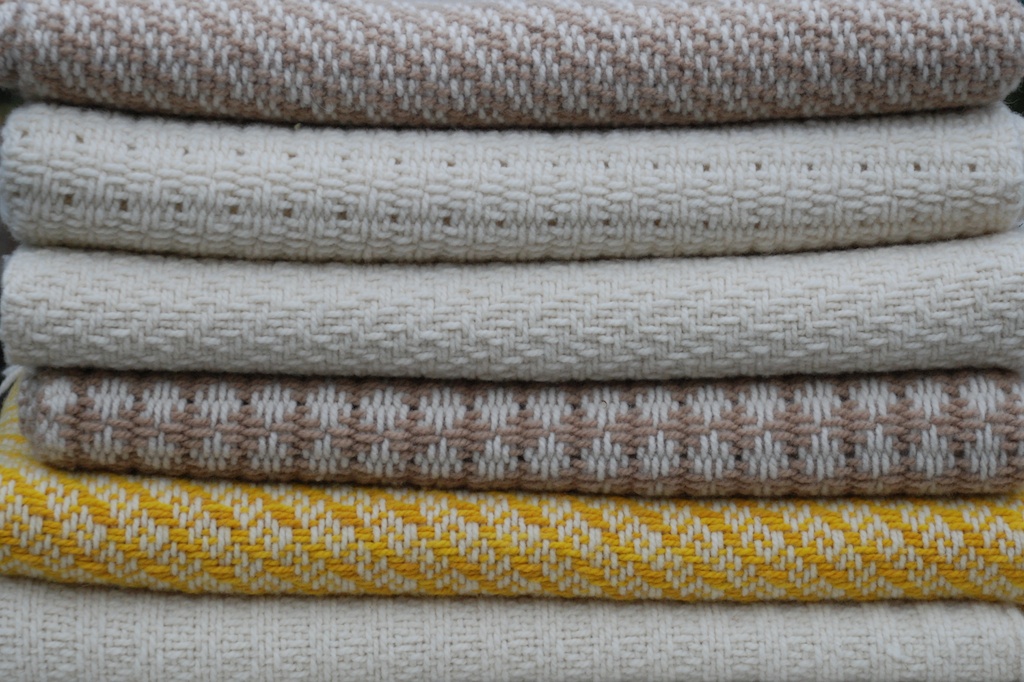
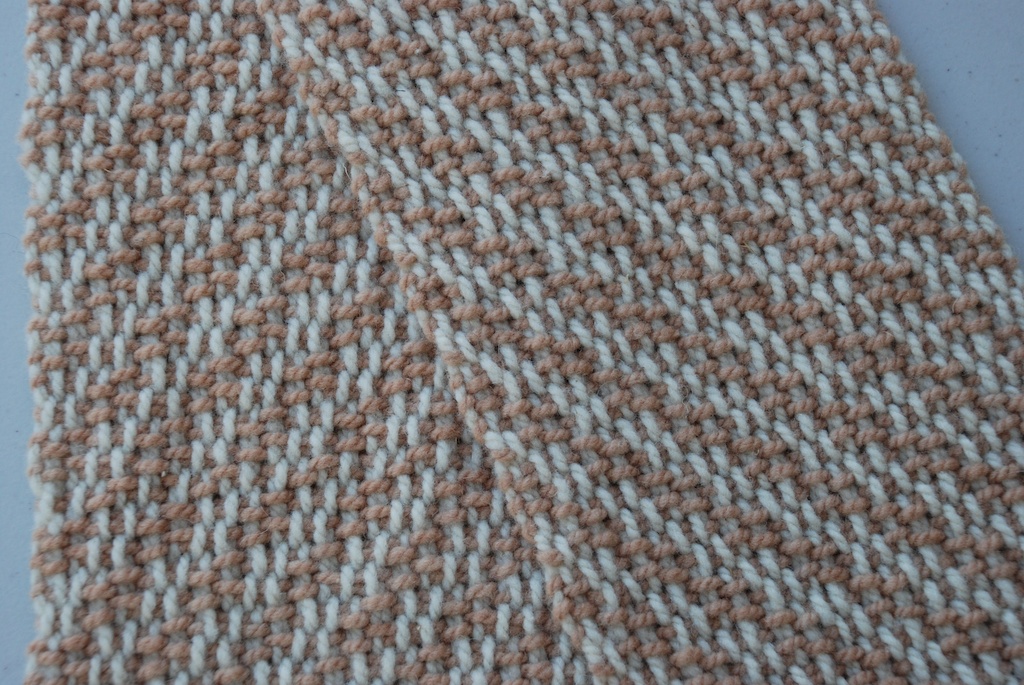
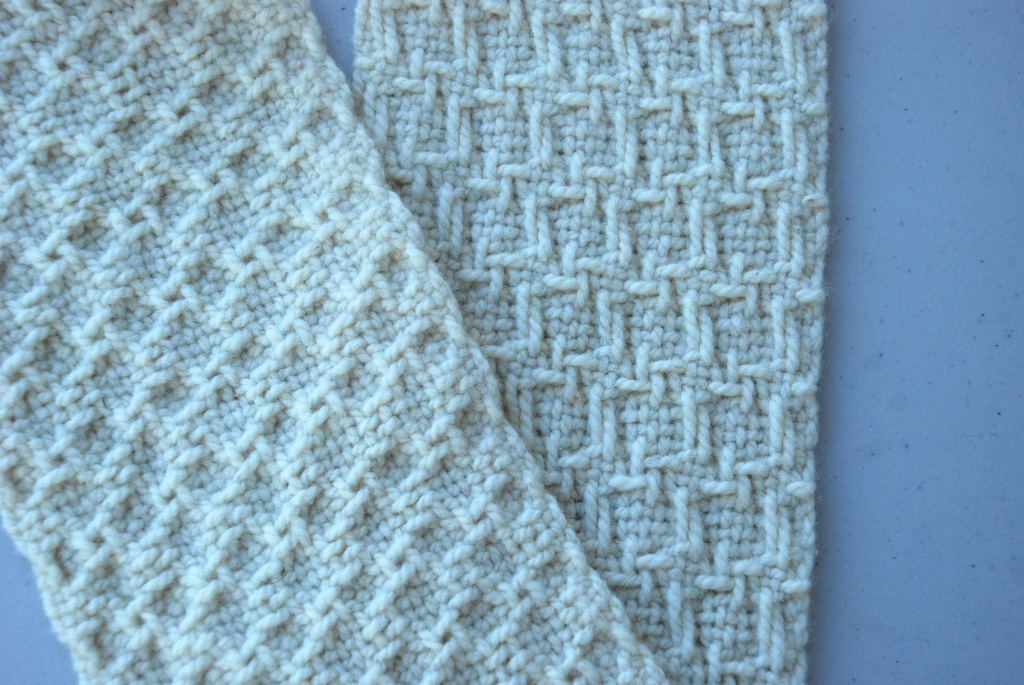
This yarn, like the yarn from the Timm Ranch and processed at Zeilinger’s, changes dramatically from it’s coned form to skeined yarn or finished piece. I will do another blog post about that because it’s so cool to see the changes. This would make a great knitting yarn as well (although I’d skein and wash it first) and it is on my website for sale now.Rio Vista yarn Anderson RV yarn Anderson RV yarn This blanket and the one above it are woven with the same weave structure, but they look different because one has dyed weft. The browns are dyed with black walnut.Anderson RV yarn Anderson RV yarn, osage orange dye This blanket has weft dyed with osage orange that grows across the road.Anderson RV yarnI also wove some scarves.Anderson wool, eucalyptus dye Anderson woolThis is beautiful yarn, very soft and would make great knitted scarves or caps. I look forward to weaving more projects with it. Maybe I’ll even be enticed to get out the knitting needles.

Close to Home…Post #5 – Mom’s Yarn

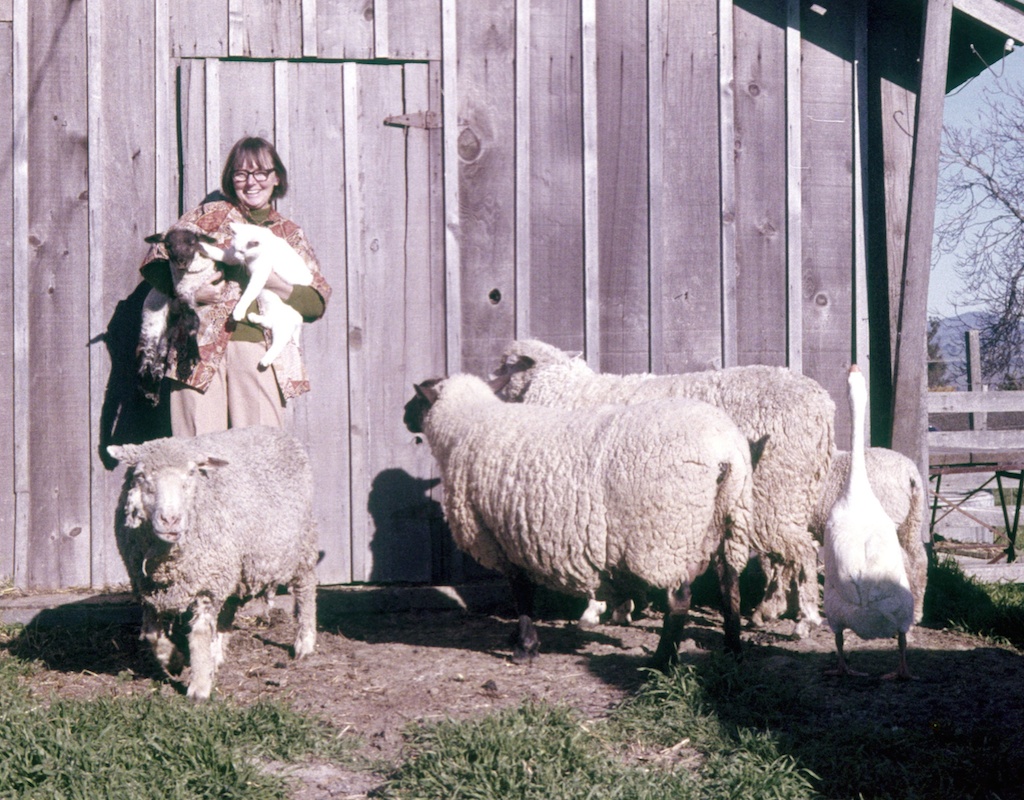
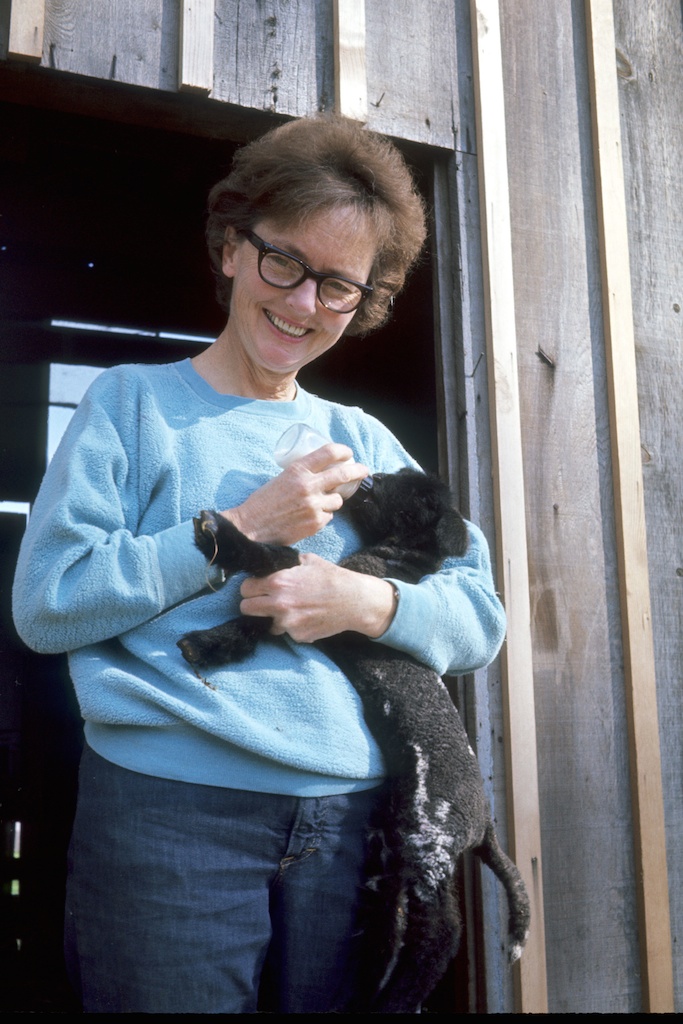
I’ve been writing posts about my show at The Artery in Davis. Here is a link to the first post  that explains the concept.Mom with sheepI used this photo in the show but had a hard time deciding between it and the one below both taken probably in the 1970’s at our place in Cotati, CA where I grew up. Mom and lambHere is the story:

Everyone I know who is a weaver has a yarn stash and I am no exception. My stash includes what I like to think of as “archival” yarns that were spun by my mom years ago. Over the years the odd ball of my own handspun yarn has ended up in the stash that I have accumulated.

Most of the yarn mom spun was from sheep that were the descendants of my brother’s  4-H project (I raised dairy cows and didn’t do anything with sheep back then) and many years later from my flock of sheep. Mom took up the hobby of spinning in the 1970’s as an adjunct to her expert knitting passion. These yarns reflect the lumpy, bumpy style of that era as that was the type of yarn she liked to use in her knitting and later in weaving.

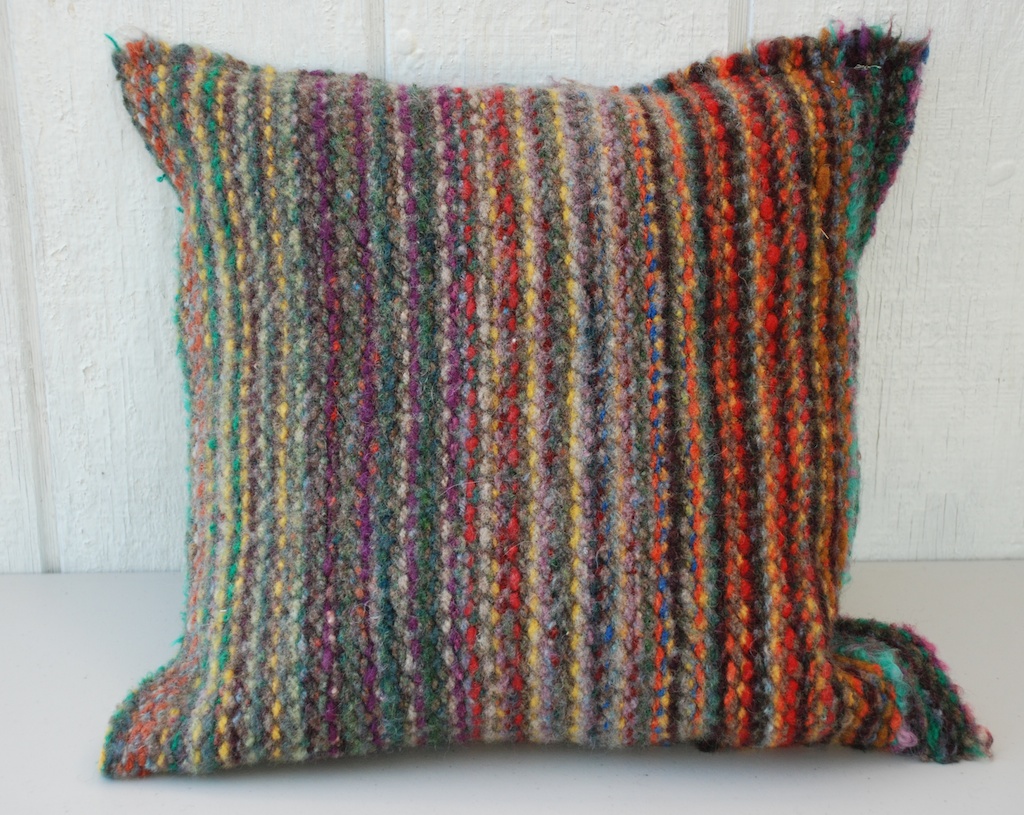
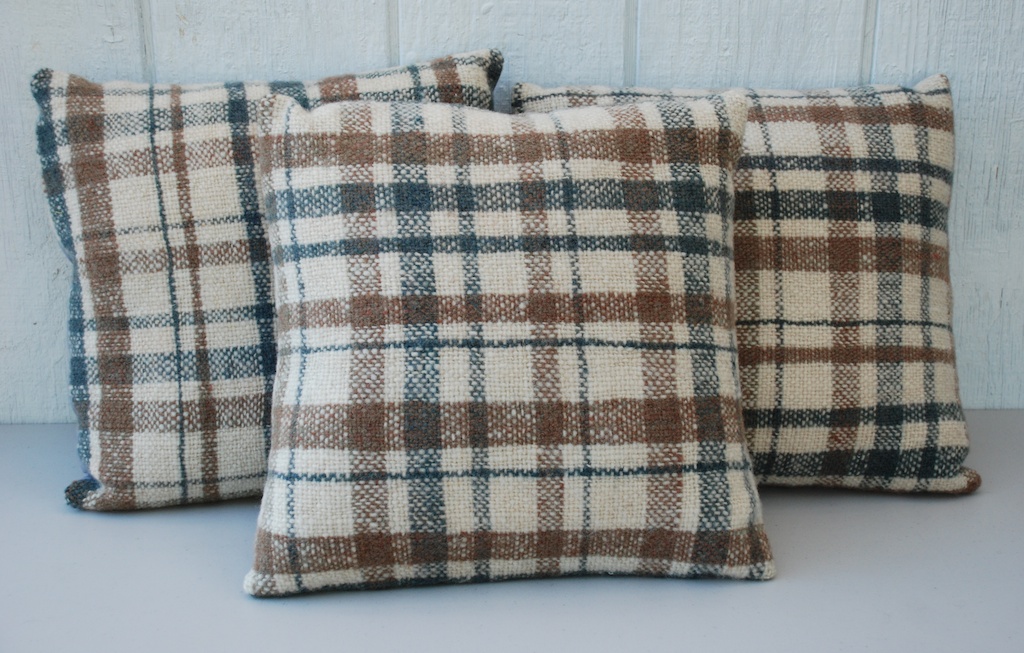
The blankets in this show that are labeled with yarn from “My Mom” are woven by me using these yarns for warp and one of my current yarns for the weft. Pillows and organizers labeled “My Mom” use her handwoven fabric scraps left over from constructing jackets, vests, or blankets.

Mom's yarn Two throws, above and below. All of these blankets have Mom’s yarn as the warp. The challenge with weaving something like this is that all the yarns are of different grist, amount of twist, and elasticity. That can cause waviness (or seersucker effect) in the woven piece. By using small amounts in each place instead of big bands I can minimize the effect, but it doesn’t all go away. There wasn’t enough of any one for weft so I used other yarn for the weft yarns–either my Jacob yarn or other yarn featured in the show.Mom's yarn

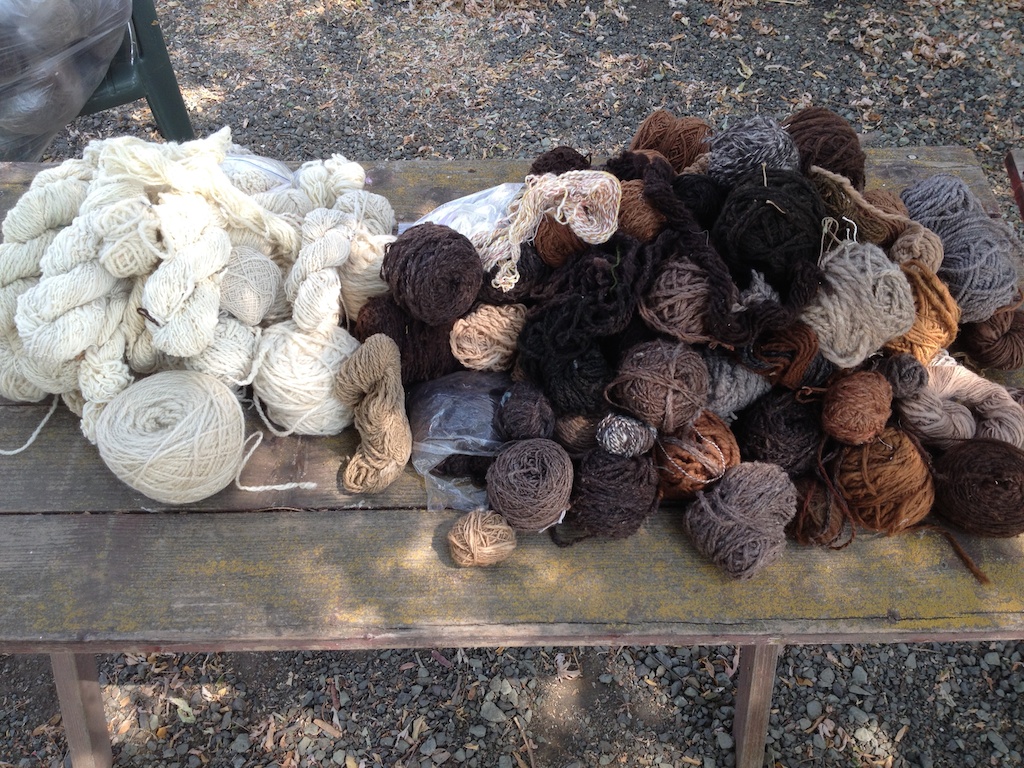
Mom's yarnThe next two blankets, above and below.Mom's yarn Mom's yarn Mom's yarn for blankets This is the batch of yarns from which I worked. Not that Mom didn’t spin in color, but for most of the pieces of the show I was trying to stick true to the “local” aspect of source of yarn and dye.Uses fabric leftover from weaving mom's yarn blanket This is a pillow in the show with Mom’s yarn in the warp. This fabric was leftover from a blanket I wove for Katie when she lived in VT. See this post for a photo of that blanket.Pillow with mom's handspun fabricMom also did some weaving. This is fabric that Mom wove of her handspun yarn and I think she used some for a vest for my brother or maybe my uncle.

There will be more blankets to come using more of this yarn.

Close to Home…Post #2

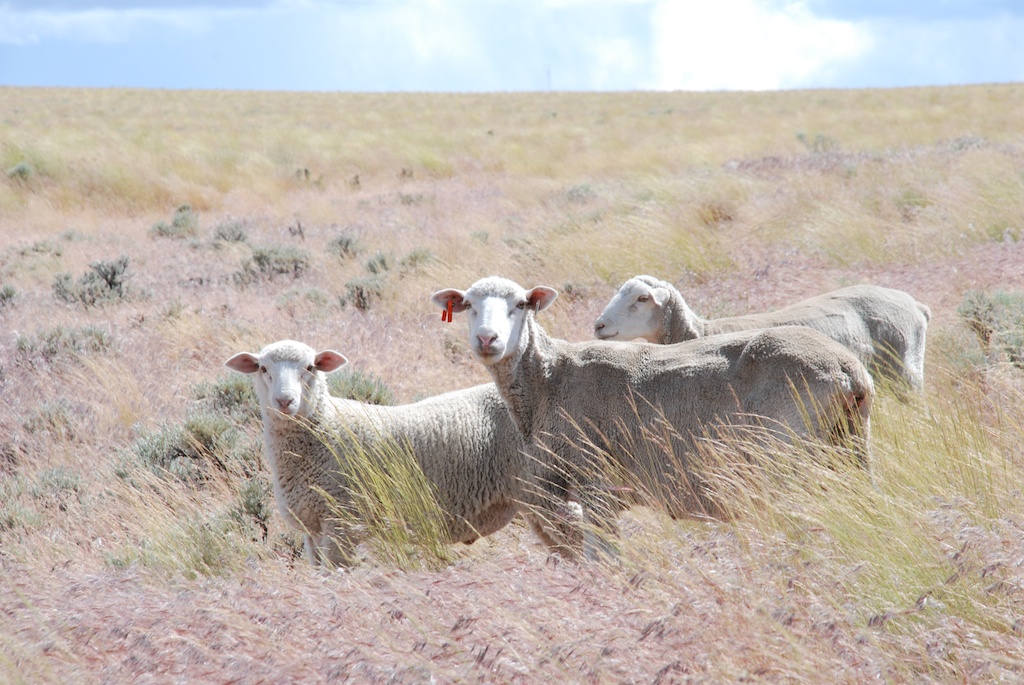
I explained the concept behind my Artery show in the last post. Here are some more photos. I’ll start as you walk in the gallery. I have a photo and a story for each ranch whose yarn I used.DSC_5209Columbia sheep at the Imperial Stock Ranch in Oregon.

The story: The Imperial Stock Ranch is located on 32,000 acres in Oregon’s high desert and is owned and operated by the Carver family, who raise sheep and cattle and produce grain and hay.

In the late 1990’s the U.S. processing and manufacturing industry drastically declined (moving overseas) and the ranch, like thousands of others, was unable to sell their wool through traditional commodity channels. If the Carvers were going to continue to raise the Columbia sheep that had grazed the ranch for a century they needed to find a way to market the wool. Jeanne Carver’s response was to create and sell premium wool yarns and the Imperial Yarn Company was born.

The Carvers were thrilled to find out that their home-grown “Erin” yarn was chosen by Ralph Lauren for the 2014 Olympics Opening Ceremony sweaters. I saw this yarn at a trade show and was awed by the rich colors. I knew I had to use this for a Stars and Stripes series of blankets.

The Columbia sheep was developed by the U.S.D.A. in the early 1900’s to create a true-breeding large ewe that would yield more pounds of lamb and wool than the randomly crossbred range sheep. The Columbia is a result of crossing Lincoln rams and Rambouillet ewes and is a very large breed that produces 10-16 pound fleeces that measure 24-31 microns.

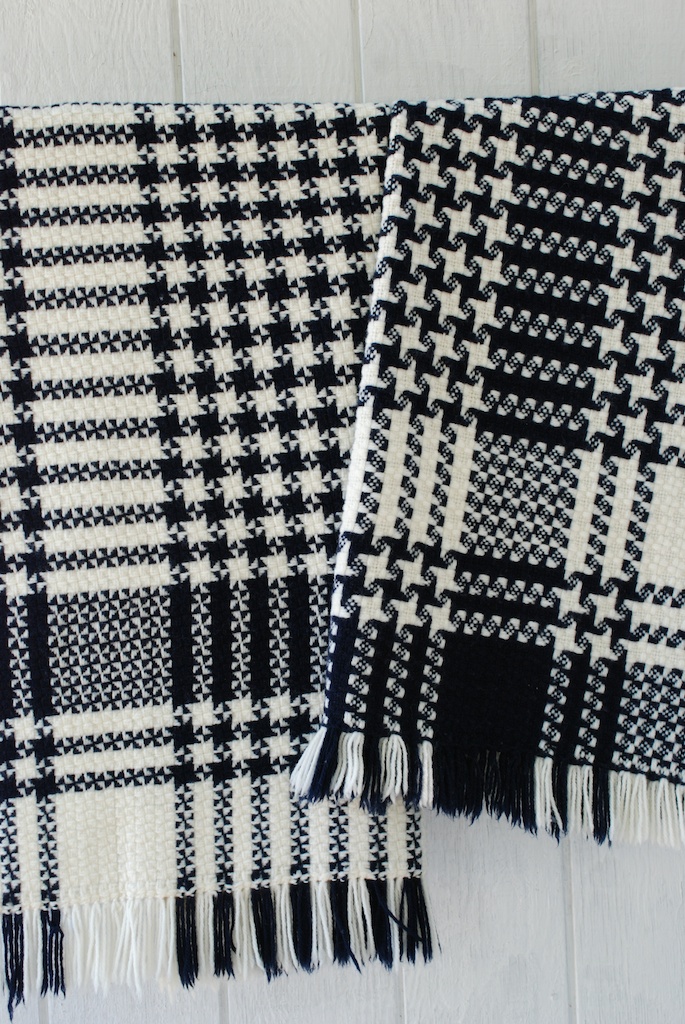
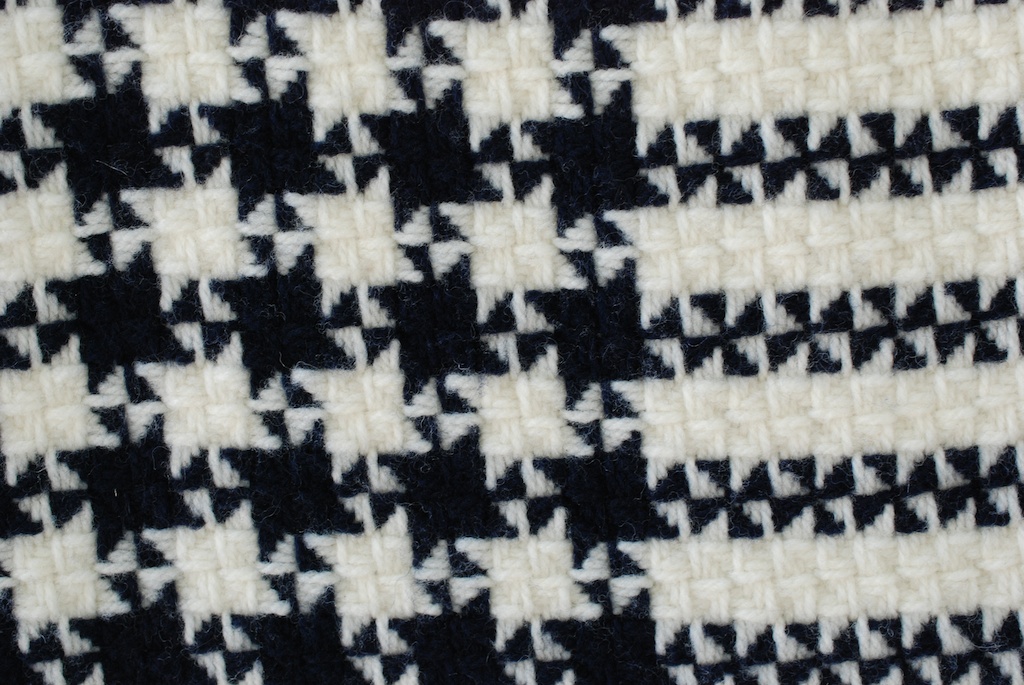
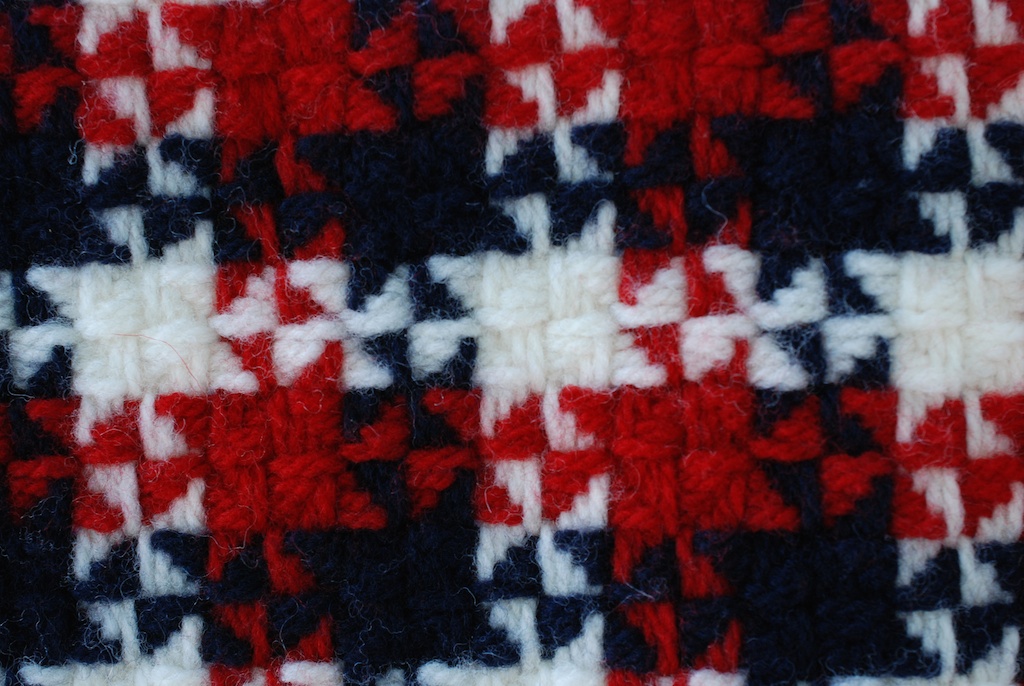
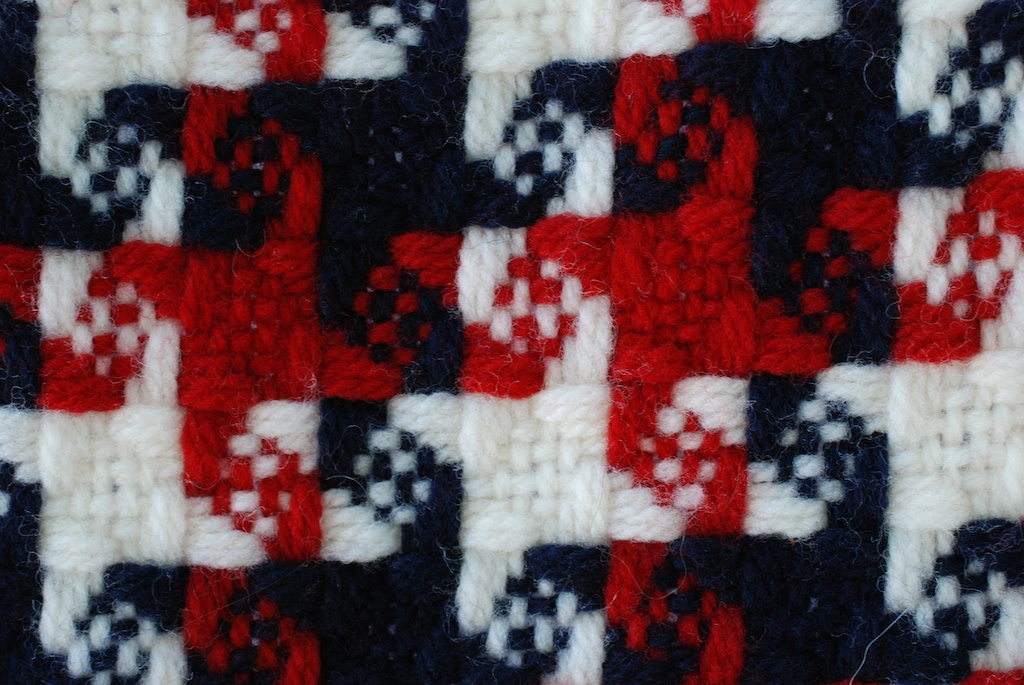
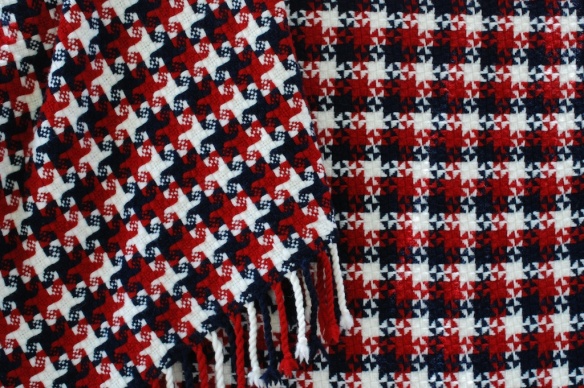
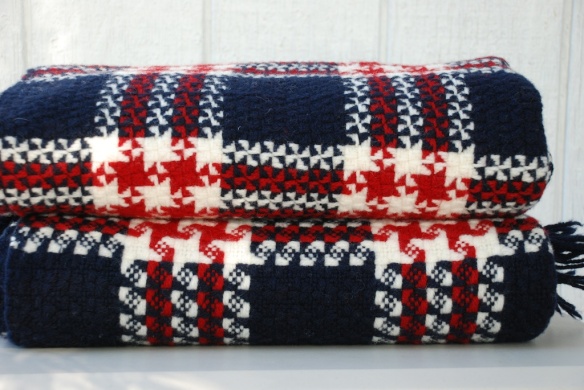
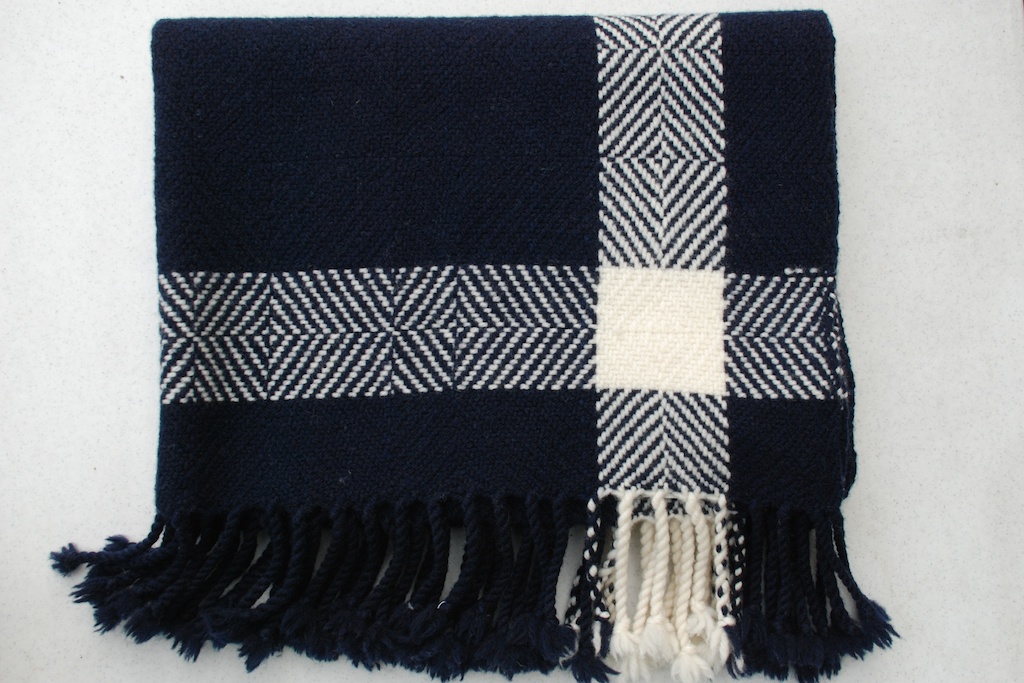
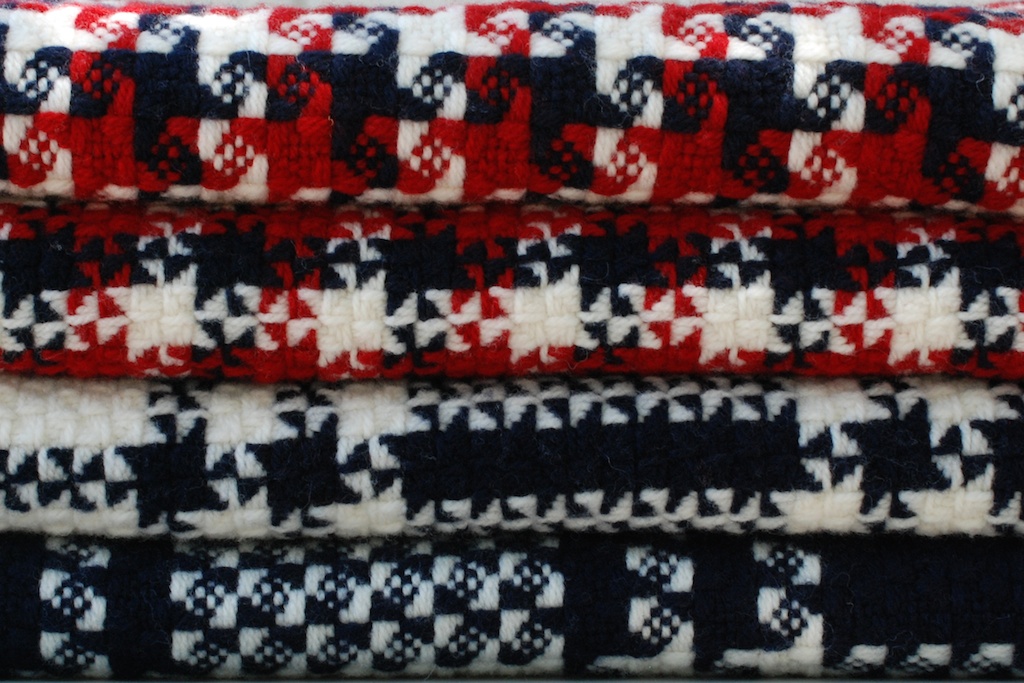
Here are some of the blankets that I wove. In another post I’ll explain the process of weaving these blankets. Also look for a later post of shawls using a fine wool yarn from the Imperial Yarn Company.DSC_5338The first blankets that I wove were in blue and white. All of these blankets except the mostly blue ones at the bottom are woven using “color and weave”. The weave structure is the same throughout the blanket but it is the color order of the threads (8 blue/8 white) in the warp and the weft that allow the pattern to show. Where there are solid areas of white or blue in warp and/or weft you don’t see the star pattern.870-2 For a true Stars and Stripes theme I needed to use some red.Artery 2014 871-2 These are the same weave structures as above but with 8 white/8 red/8 blue threads in the pattern area.Artery 2014In the first two red, white, and blue blankets I repeated the 8-thread sequence throughout.Blanket 885In the next two I designed blocks, sort of plaid like, where the star pattern would show up. Then I decided that there should be something in this collection that was more restful for the eye. IYC blanket  I thought about solid colors but had to throw in a bit of design.IYC blanketIn addition to being colorful this yarn is very soft and wonderful to work with for weaving or for knitting. I sell it at my shop and on the website.DSC_5378 - Version 2 Next up: Yarn from the Barinaga sheep dairy in Marin County.