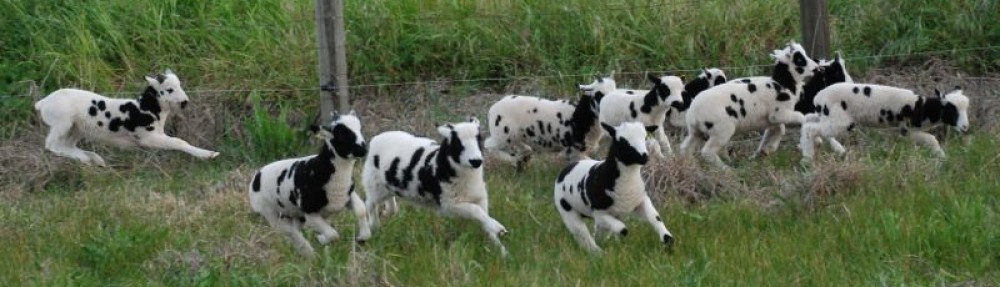
Can breeding season be over already? We put the rams out only 16 days ago and almost all ewes are marked! That makes sense because the sheep heat cycle is 16-17 days. Jacob sheep are seasonal breeders as are most breeds, and this is the season. Even though they may have all been bred we’ll keep the rams out at least another two to three weeks. I changed the marker color from green to orange. Now would be the time that I’d start to see orange on top of green if a ewe I thought was bred really was not. If there were several of those in one group that would mean that ram has a problem. Last year was the first time I had an infertility problem in the flock (one ram who got sick), and that extended lambing season as it was the clean-up ram that bred some of the ewes that were supposed to be bred earlier.
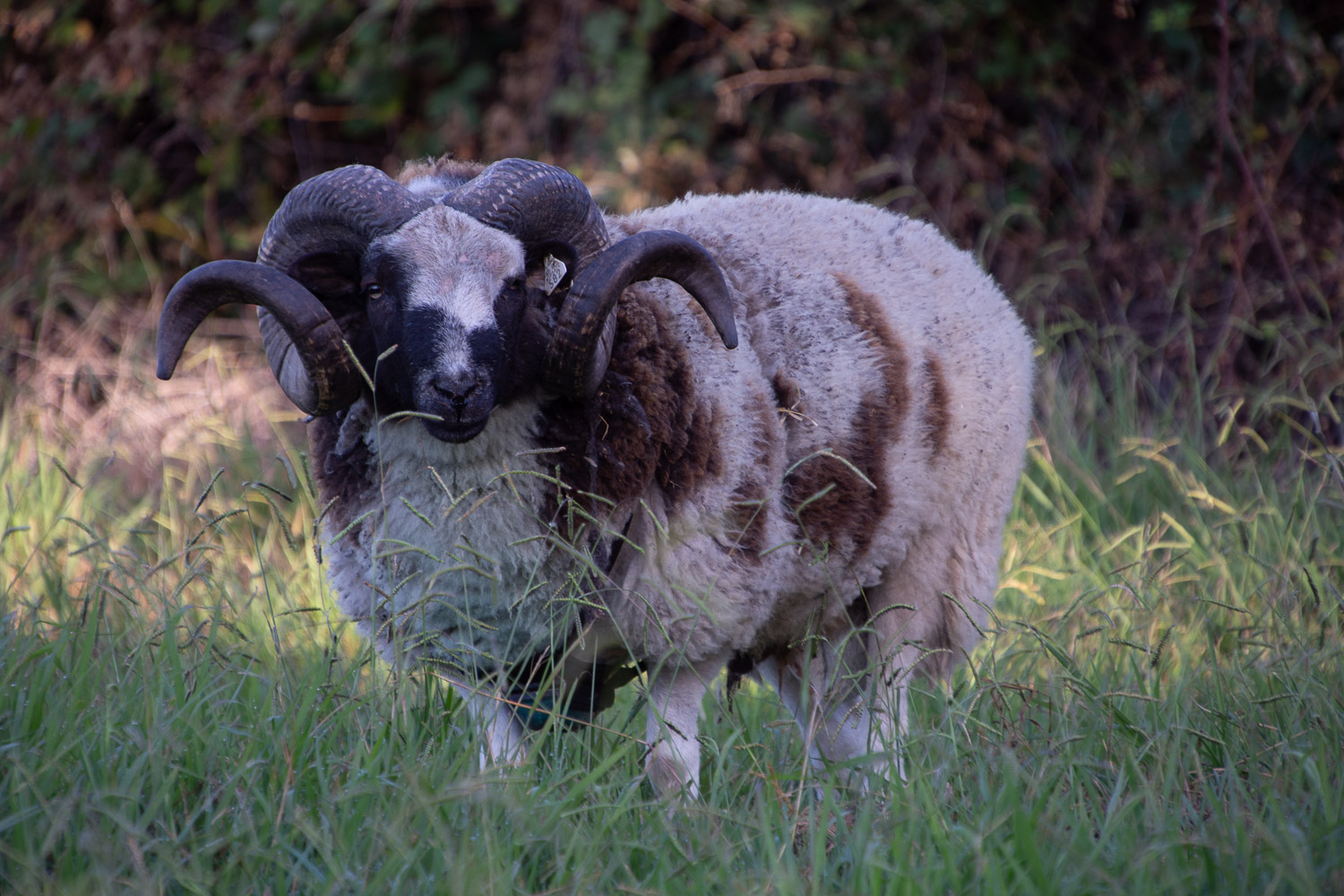
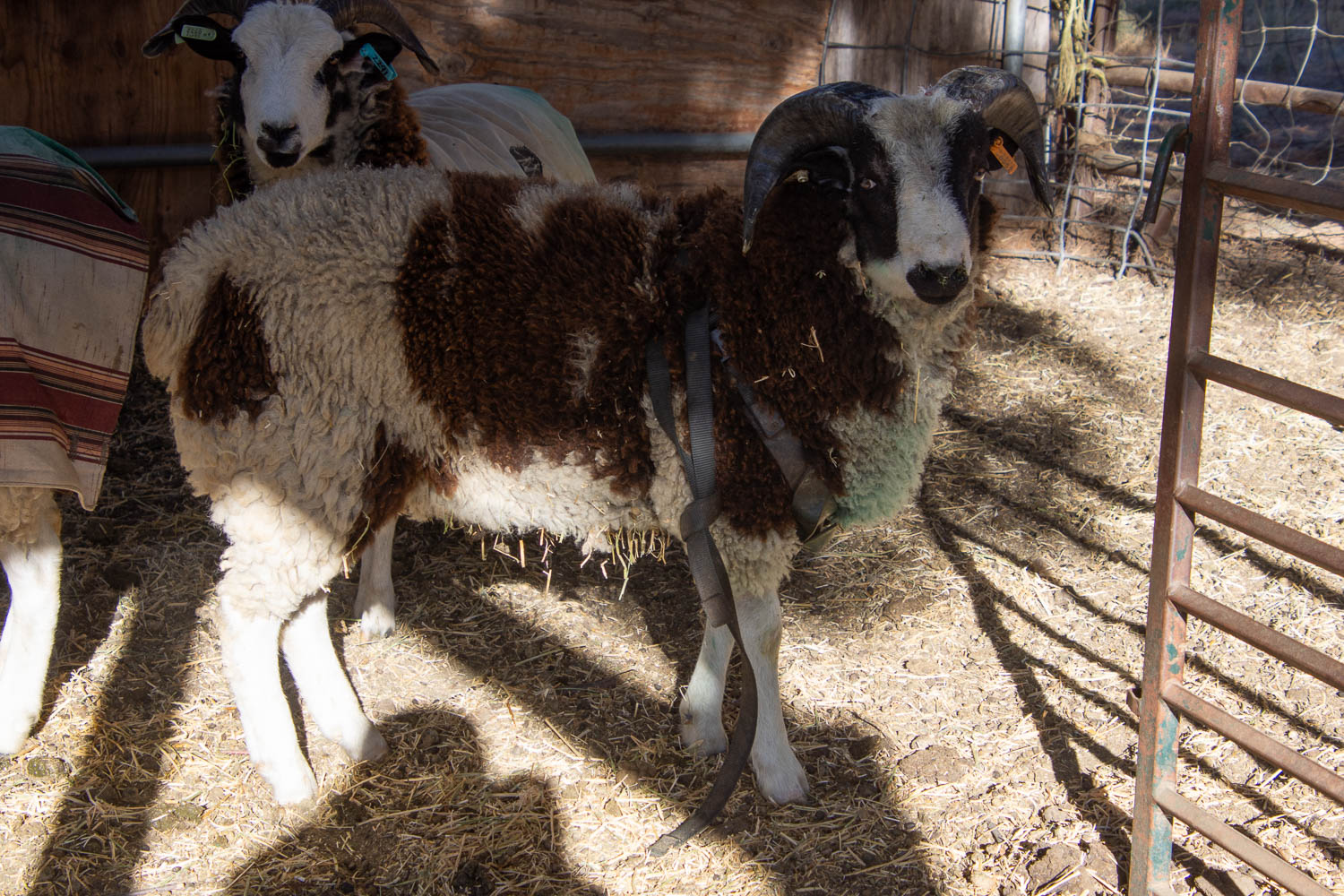
Hillside Gabby’s Barrett came from Hillside Farm in Michigan a couple of years ago. That’s an impressive set of horns for a ram that is just 2-1/2 years old. There are 13 ewes with him and all are marked as of today.
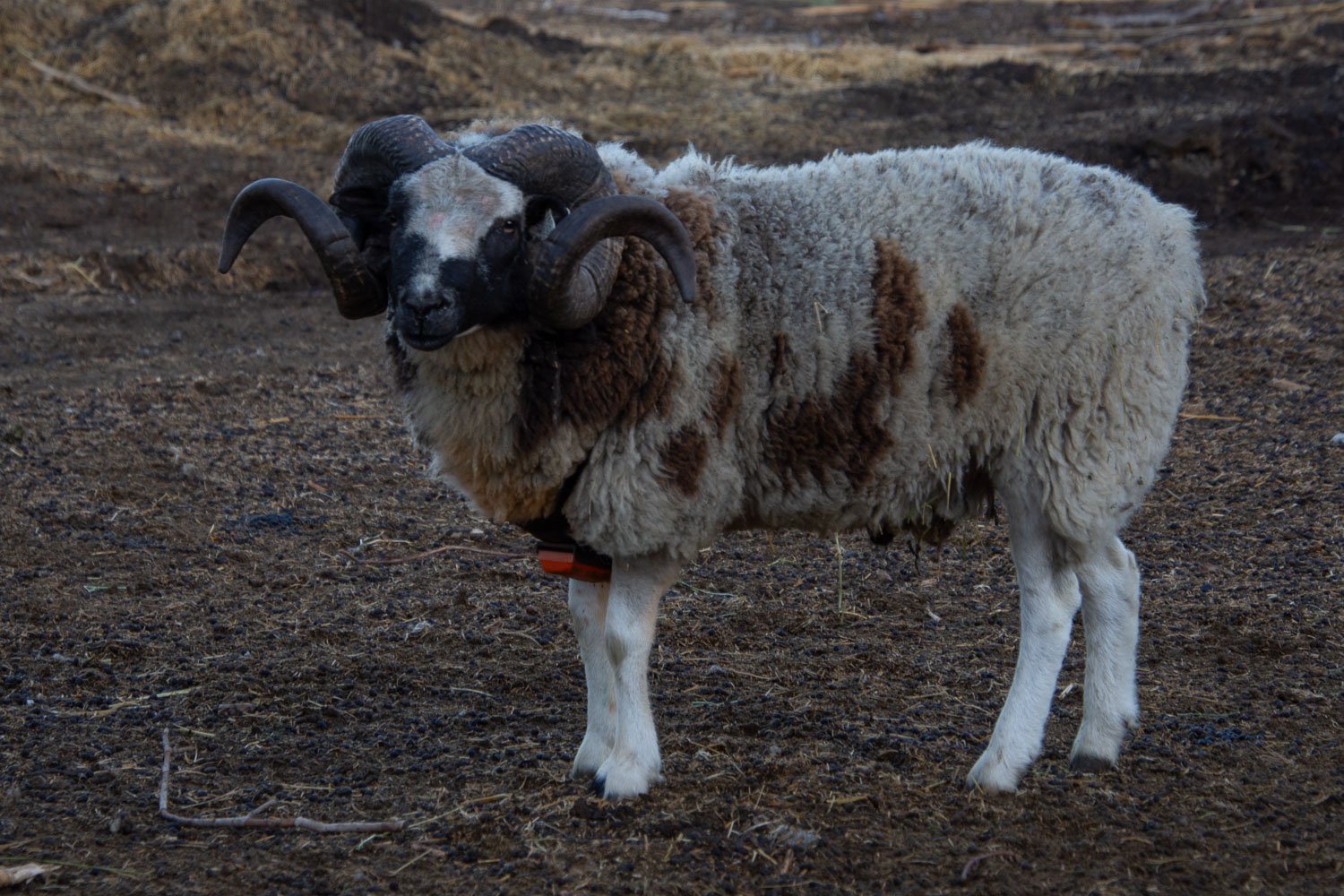
Barrett had a green marker in the first photo but I just changed to orange. The last two ewes were marked yesterday and today with orange.
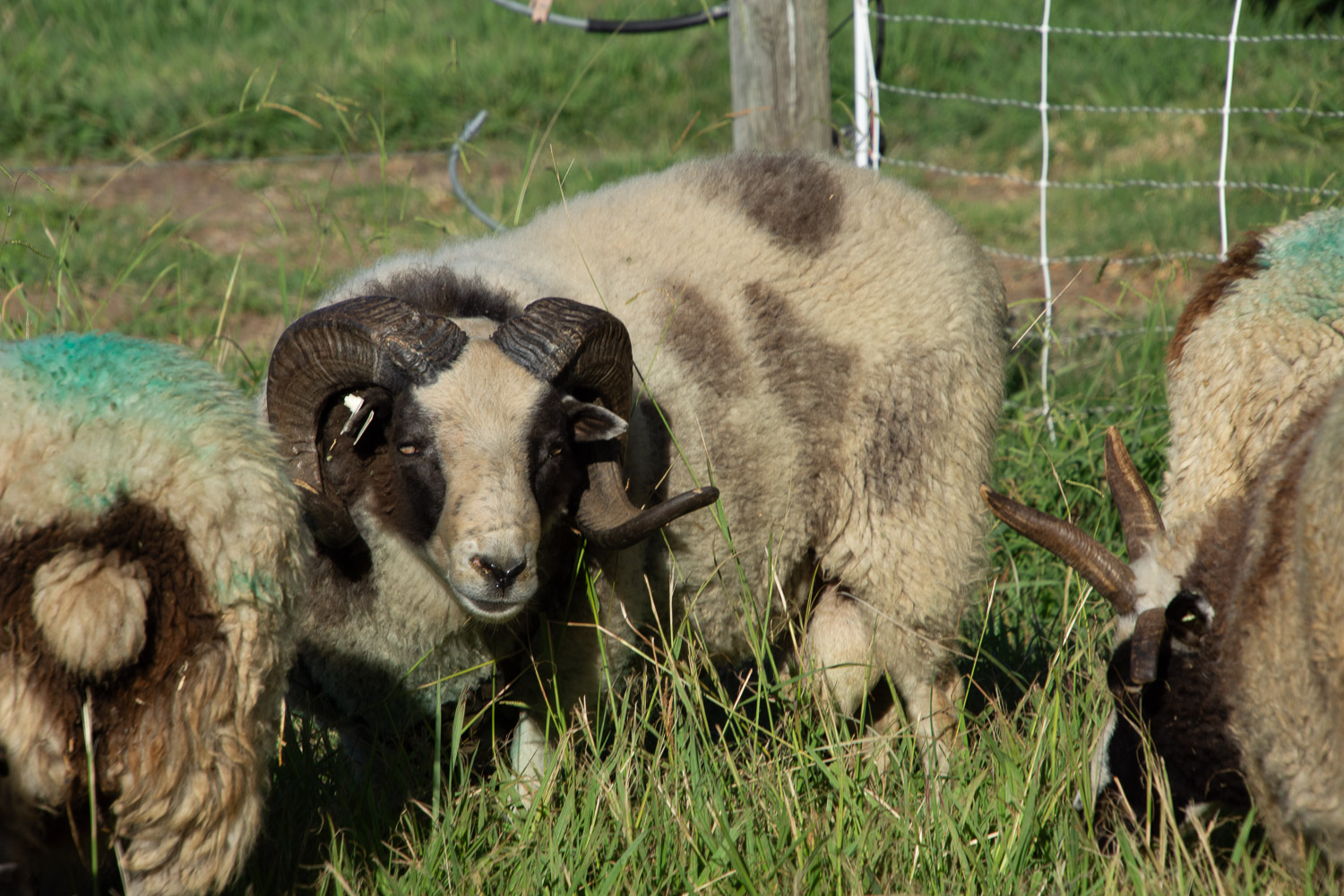
I brought Fair Adventure Horatio here from Colorado in June. He is also 2-1/2 years. He has 19 ewes with him.
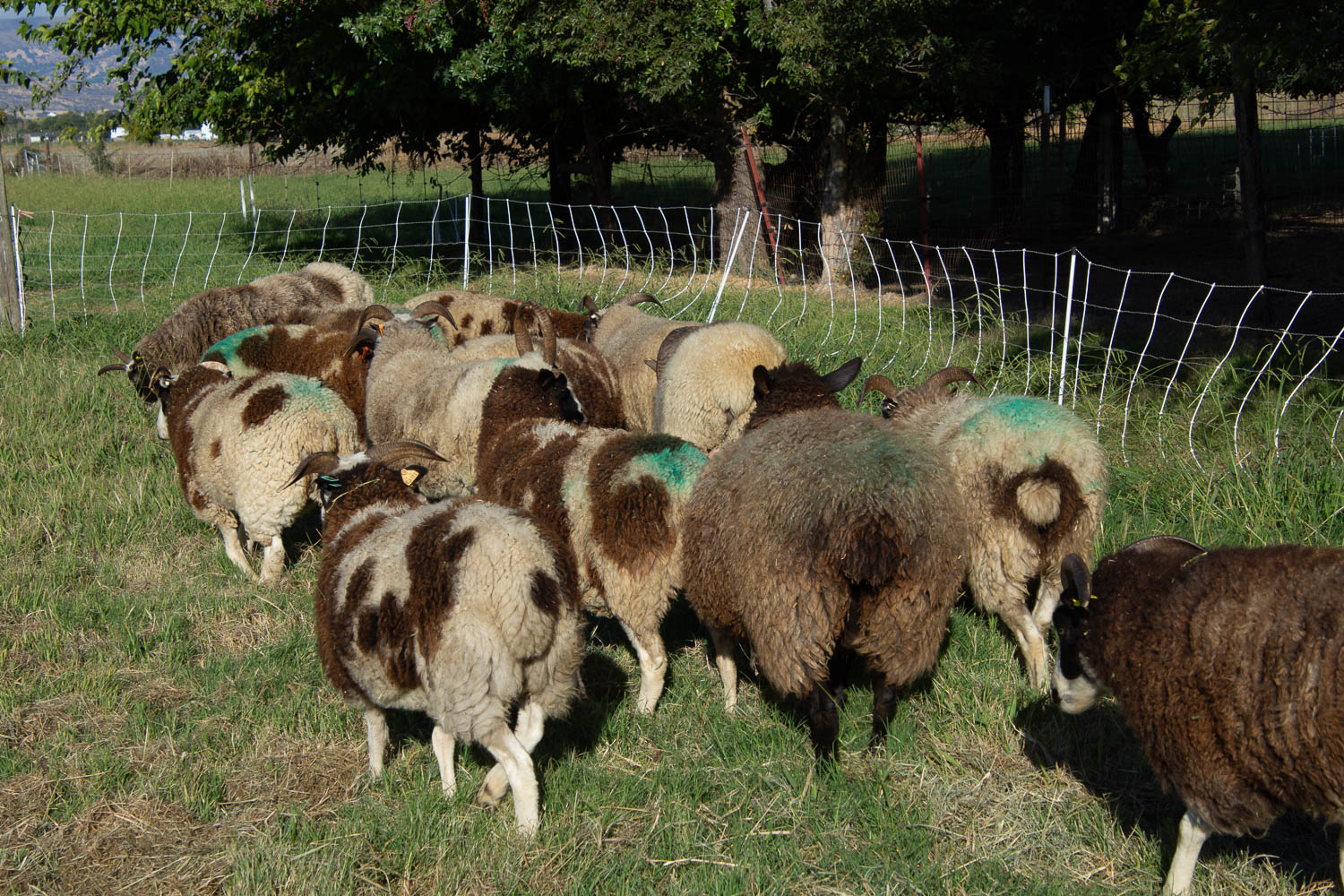
Horatio’s group walking out to pasture a couple of days ago.
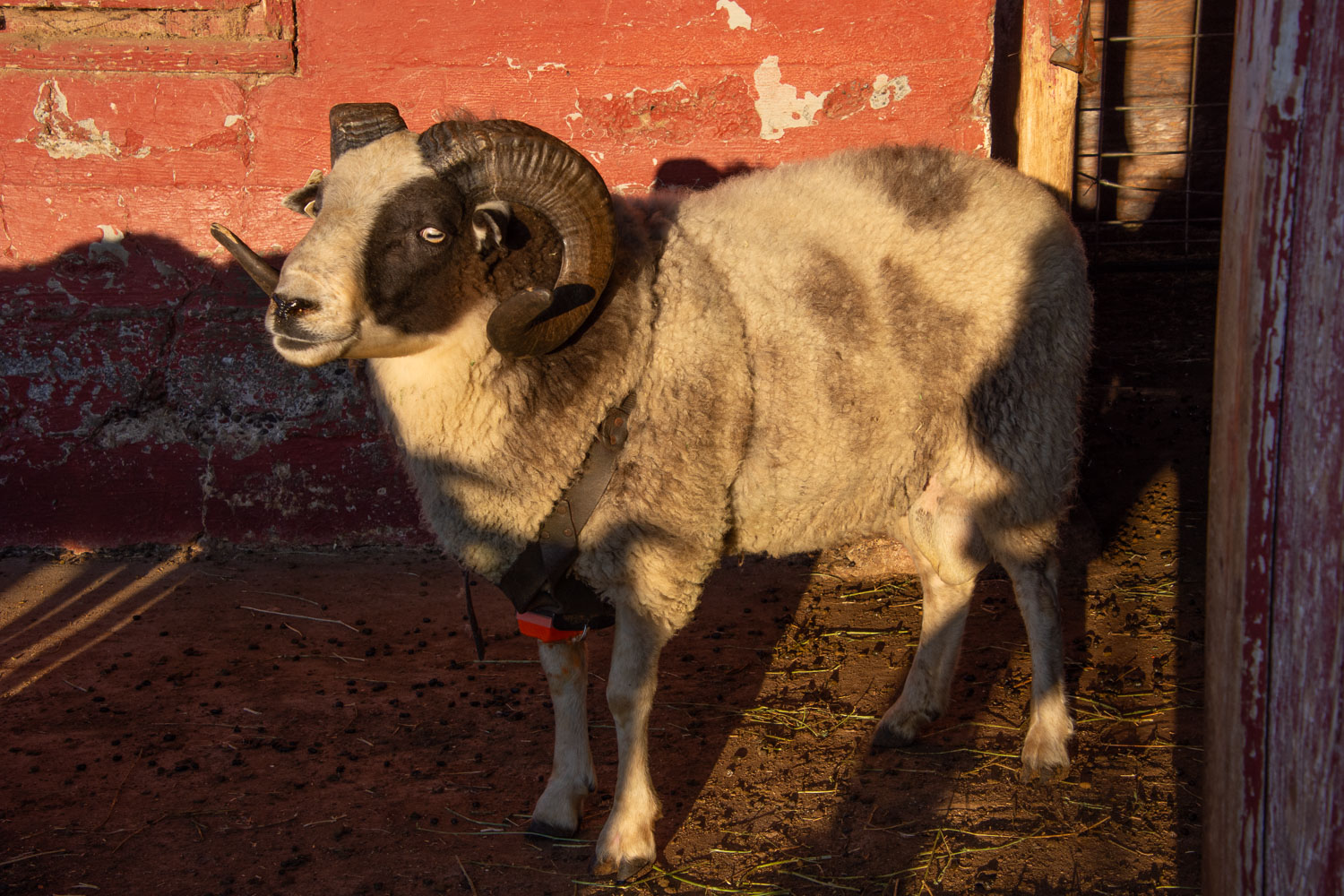
This is today’s photo.
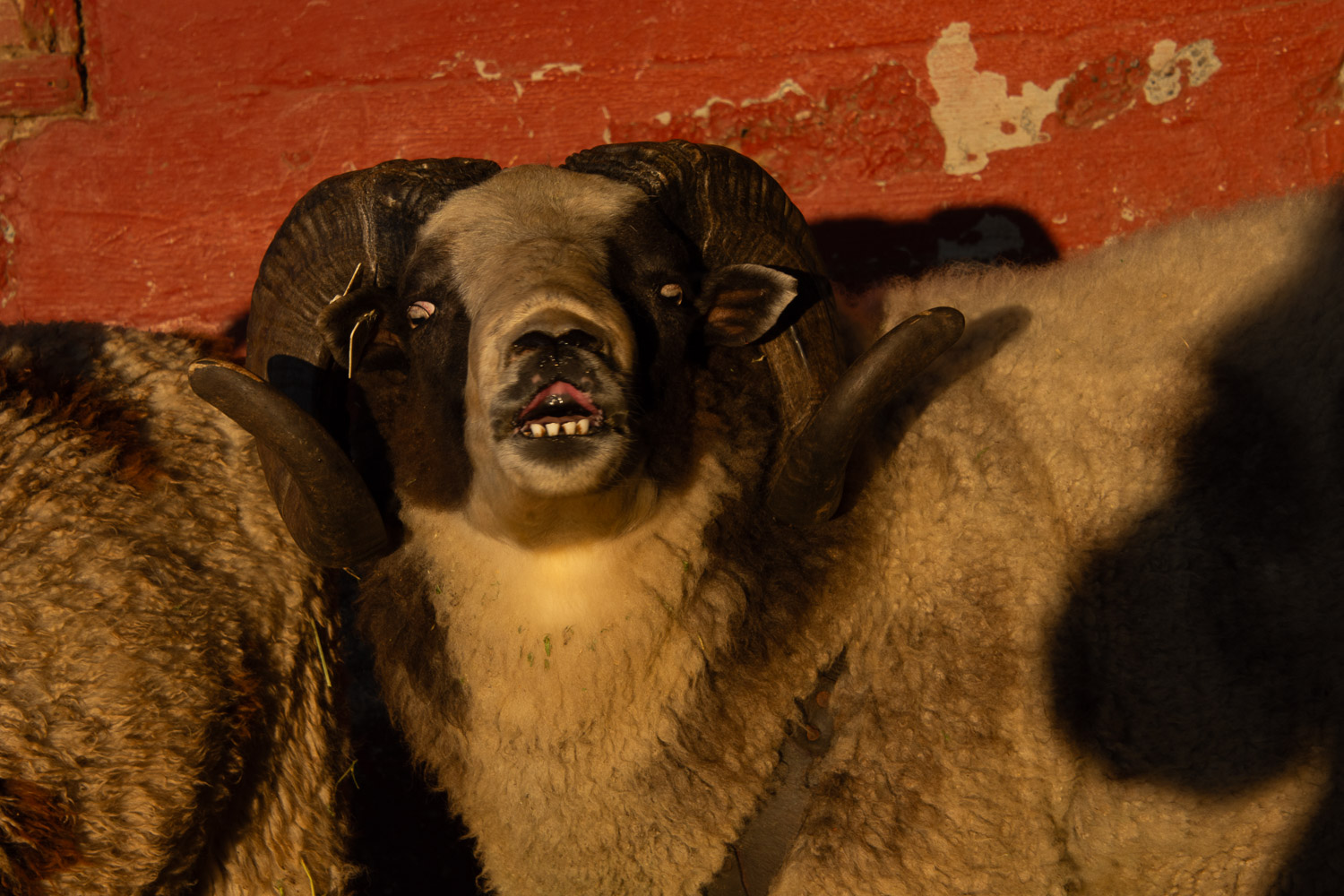
He has a bit of a demonic look here! Actually, this is common behavior for rams with ewes, and it is called Flehmen. From the linked website: “Flehmen is a behavior exhibited primarily by males, occasionally by females, in which the animal raises the nose into the air, with the mouth slightly open, to facilitate pheromone detection by an odor detection organ in the roof of the mouth.”
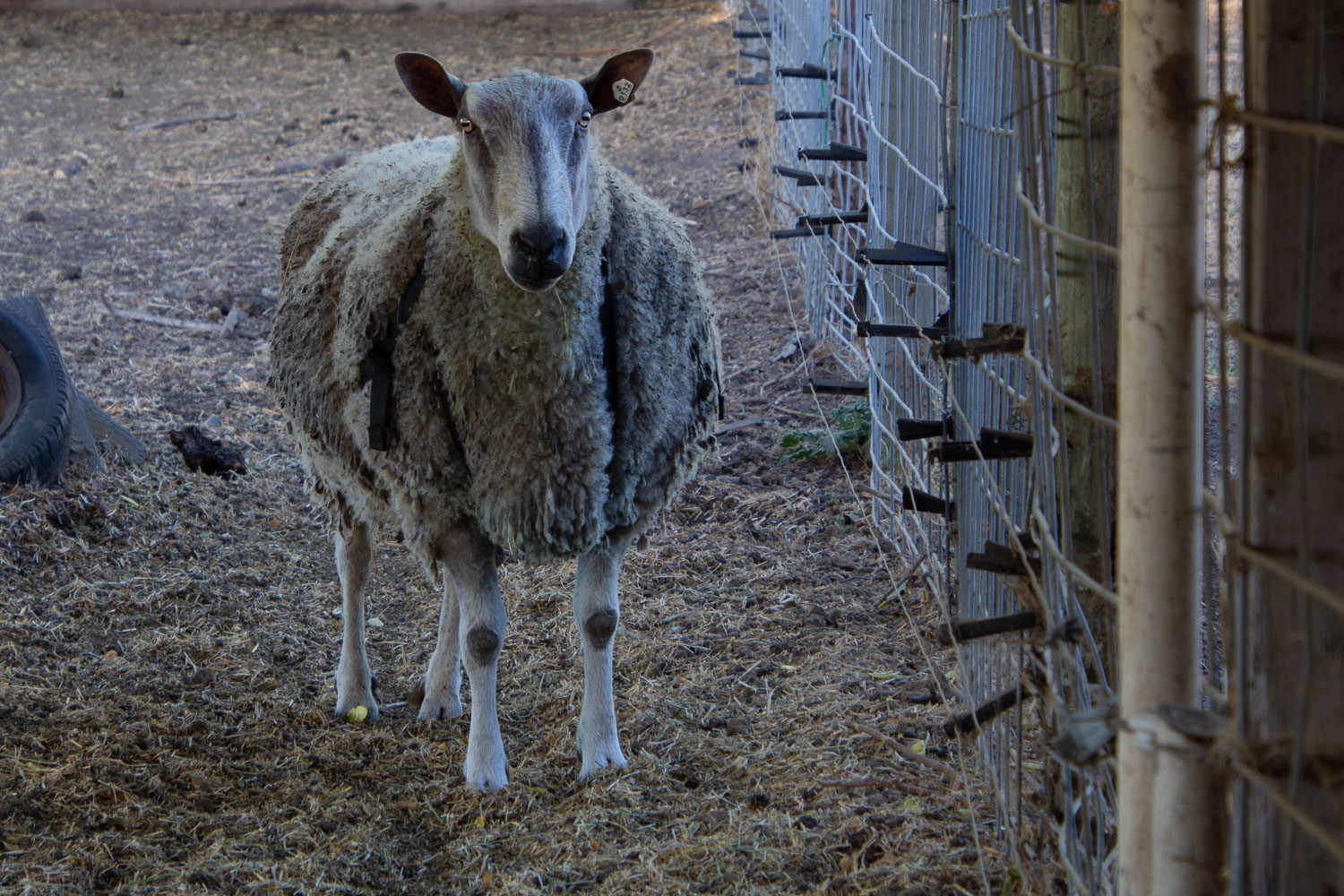
Peyton is a BFL (Bluefaced Leicester) ram and I breed him to a few of the ewes to get a few bigger lambs for the butcher market. The crossbred lambs are black.
Meridian Blizzard was born in March and he has three ewes with him. He will be shown at Lambtown this weekend along with two of the ewes in his pen.
So far these are all two-horn rams. I would normally have included a four-horn ram in the line-up.
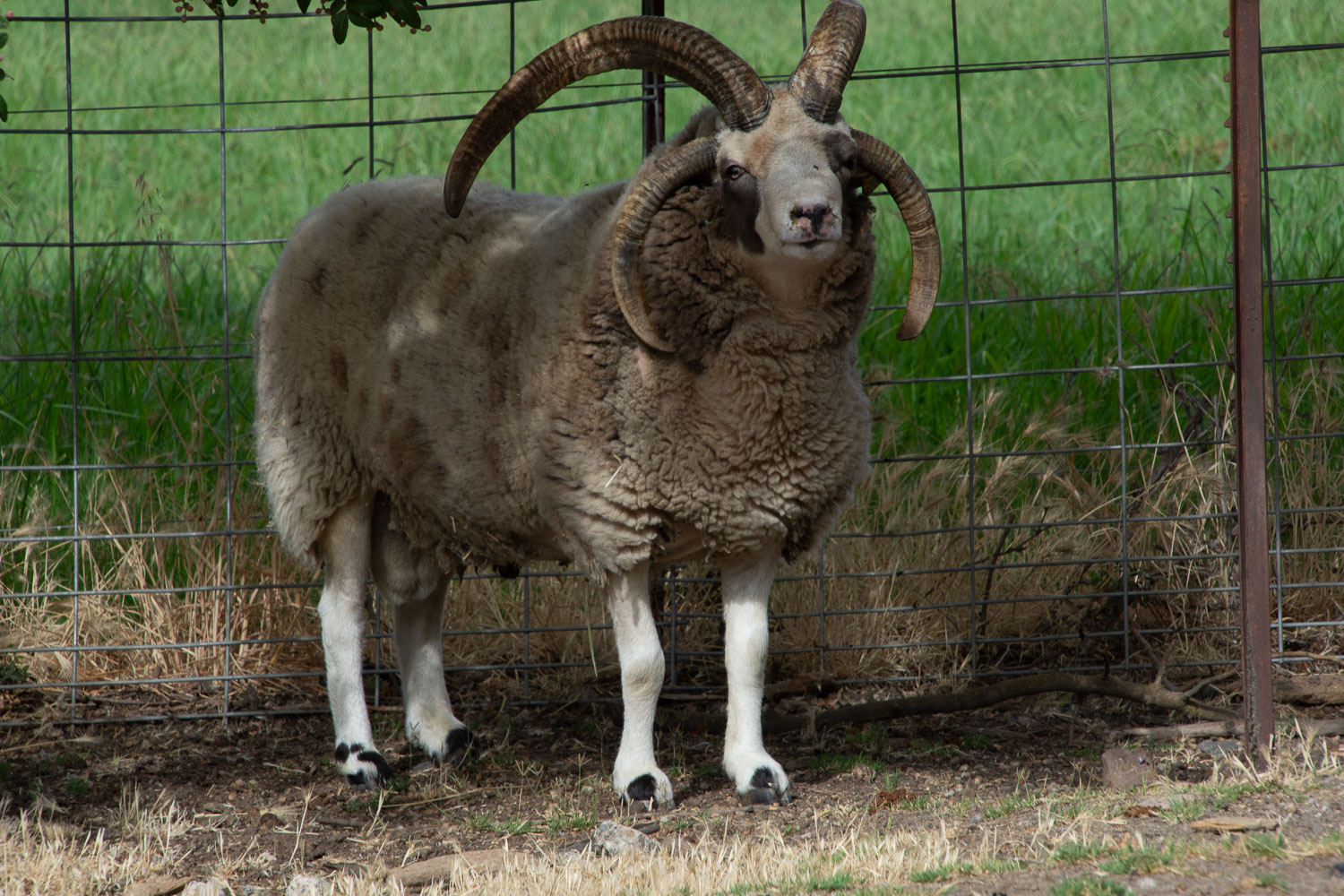
Patchwork Townes was going to be the main ram, as he was last year. About three weeks ago I found him dead. He liked to beat up the fence and he somehow hooked the tips of those upper horns in the welded wire fence at about a foot from the ground. When we found him the only way we could get him out was to cut the fence.
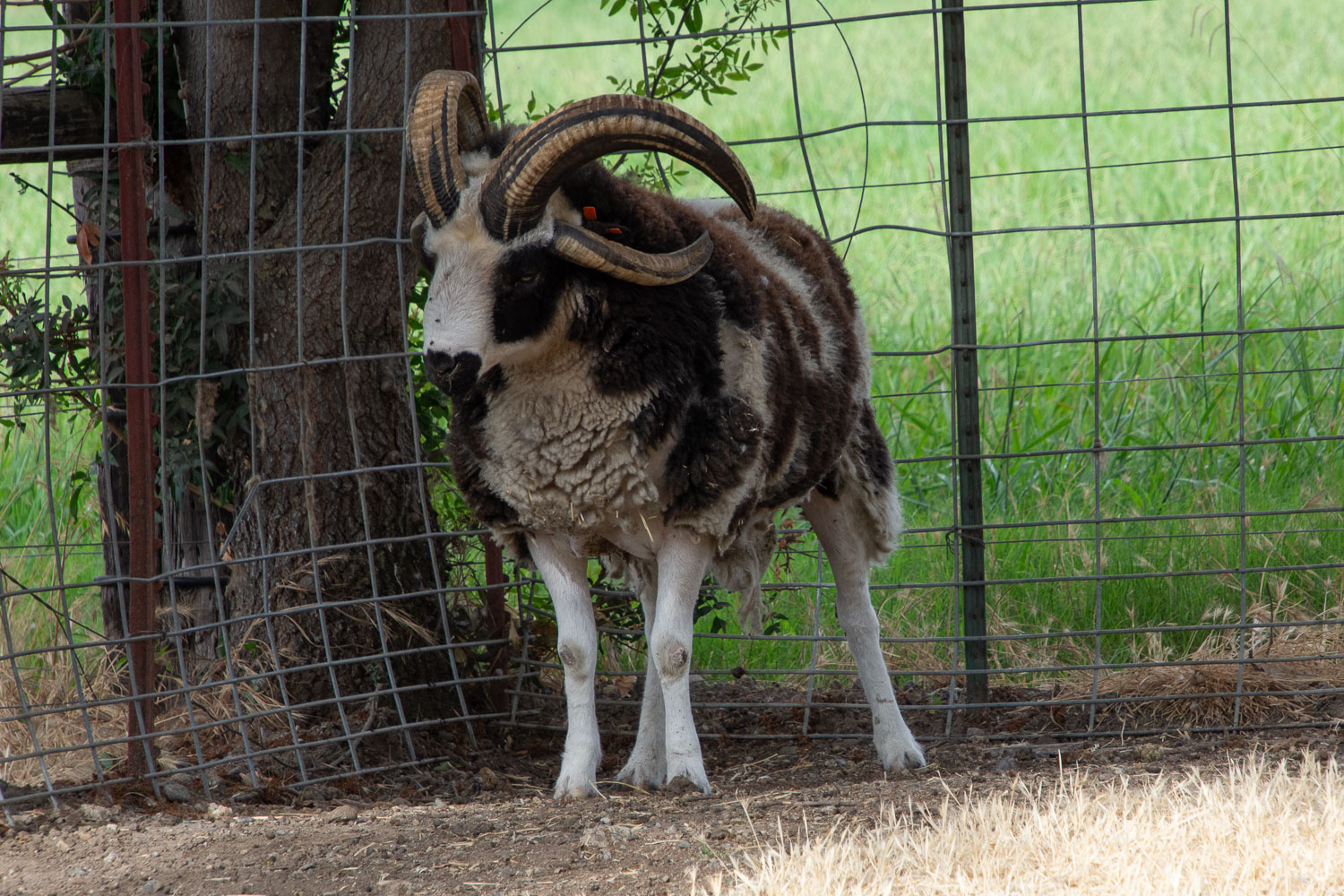
Meridian Silverado was the other four horn ram I could use. However I had him fertility tested because he was sick during the summer and he failed the test. I think it’s likely he had bluetongue, a virus carried by midges this time of year. It can cause infertility and I think that’s what happened to Barrett about half way through the season in 2022. Silverado is still here but not in the breeding line-up. Blizzard is his son.
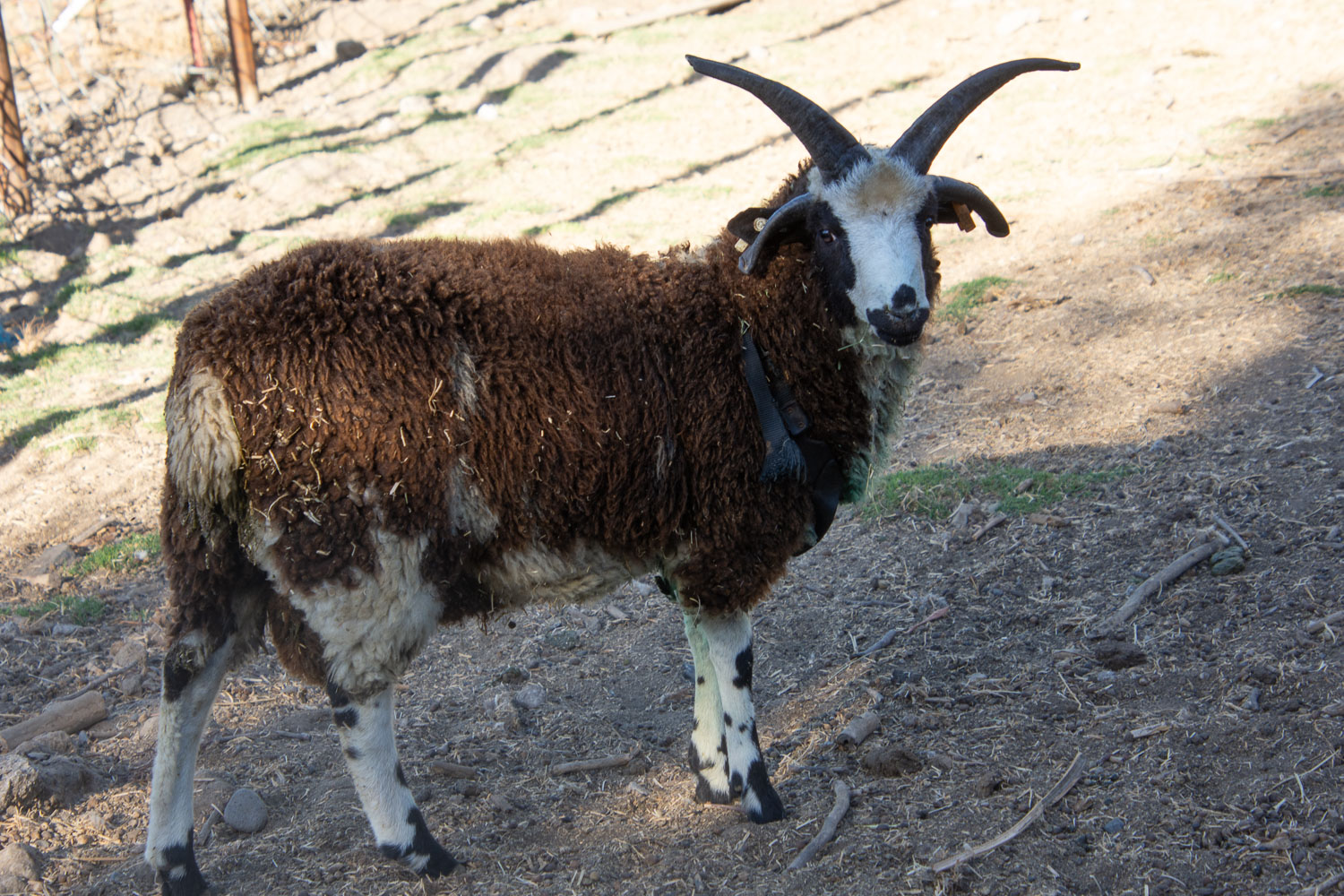
I wanted to use at least one four-horn ram and the one I had my eye on ended up with disappointing horns and will be culled. This one is Typhoon. He was almost sold this summer when I was going to Oregon. Right before that trip he broke both his lower horns and the buyer substituted another ram. I’m glad she did because Typhoon has gorgeous fleece and his horns look good now. We don’t recommend breeding to a ram lamb until after he is registered at 6 months. However I needed to breed before waiting another month for this guy to grow up. The breed standard for Jacob Sheep requires that sheep be no more than 85% black. This ram is close, but I looked at his baby photos.
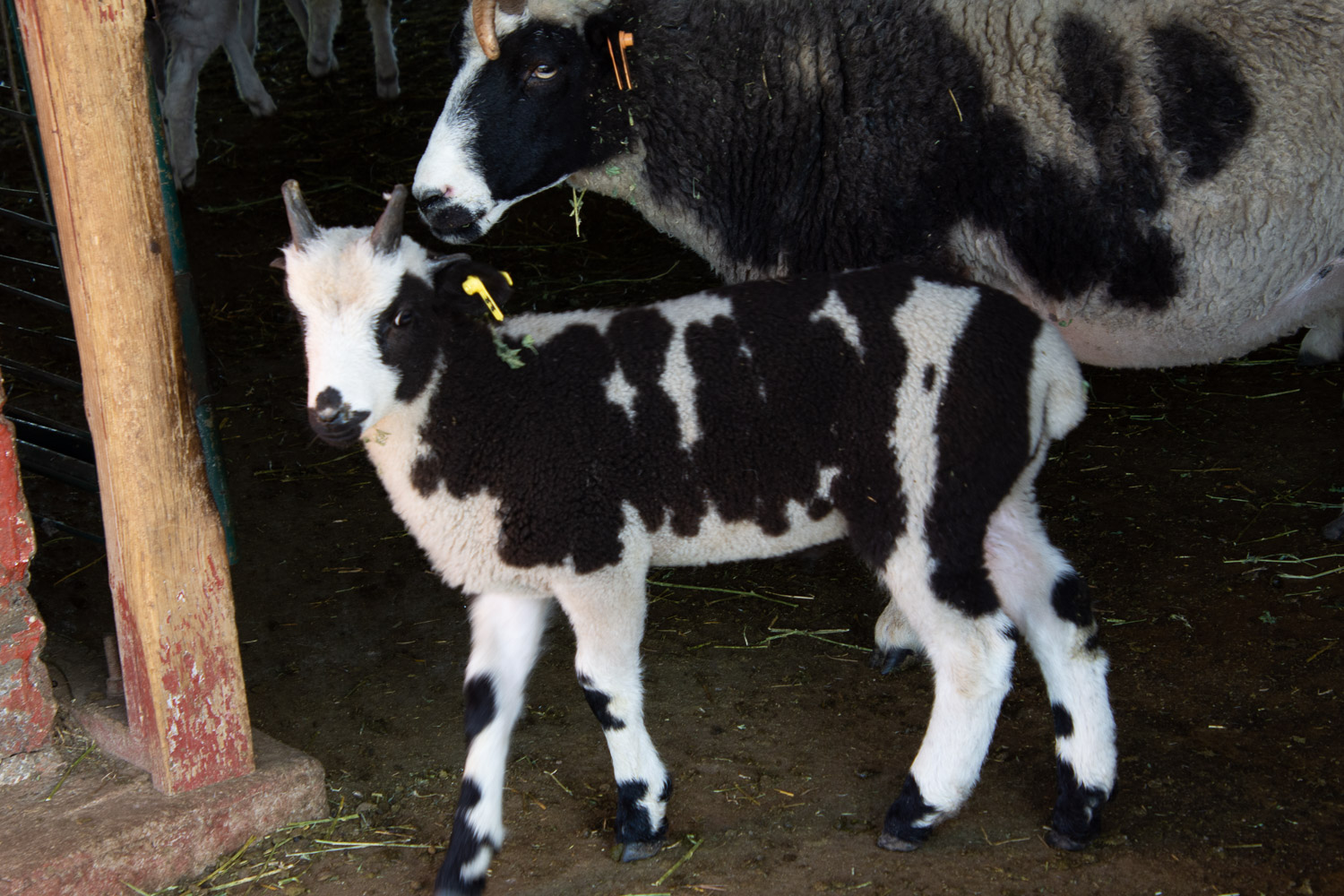
When you see Typhoon as a lamb you can see that he just makes that 85% limit. At least I think so. It’s often hard to know for sure when they are in full fleece.
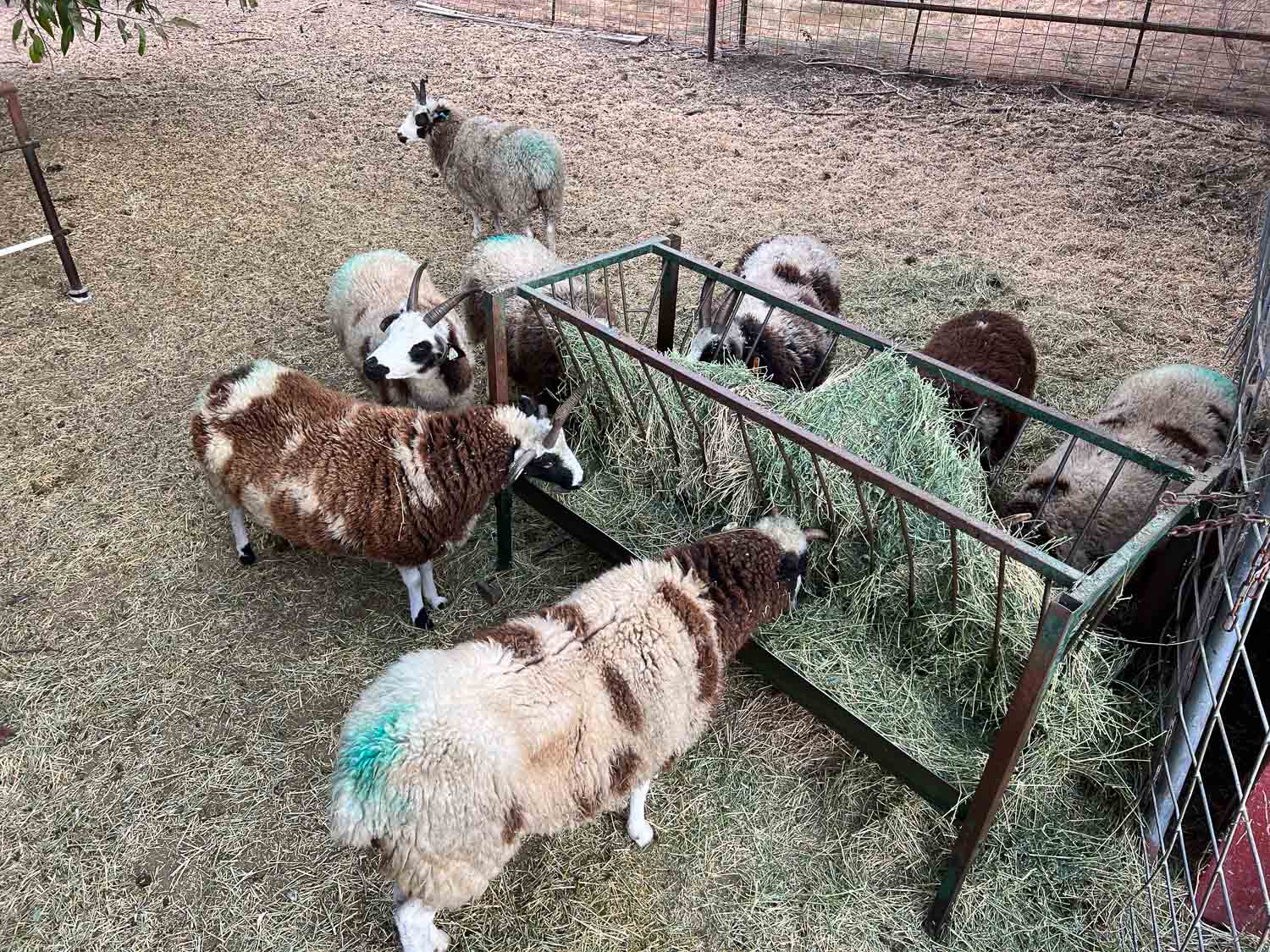
Typhoon has 7 ewes.
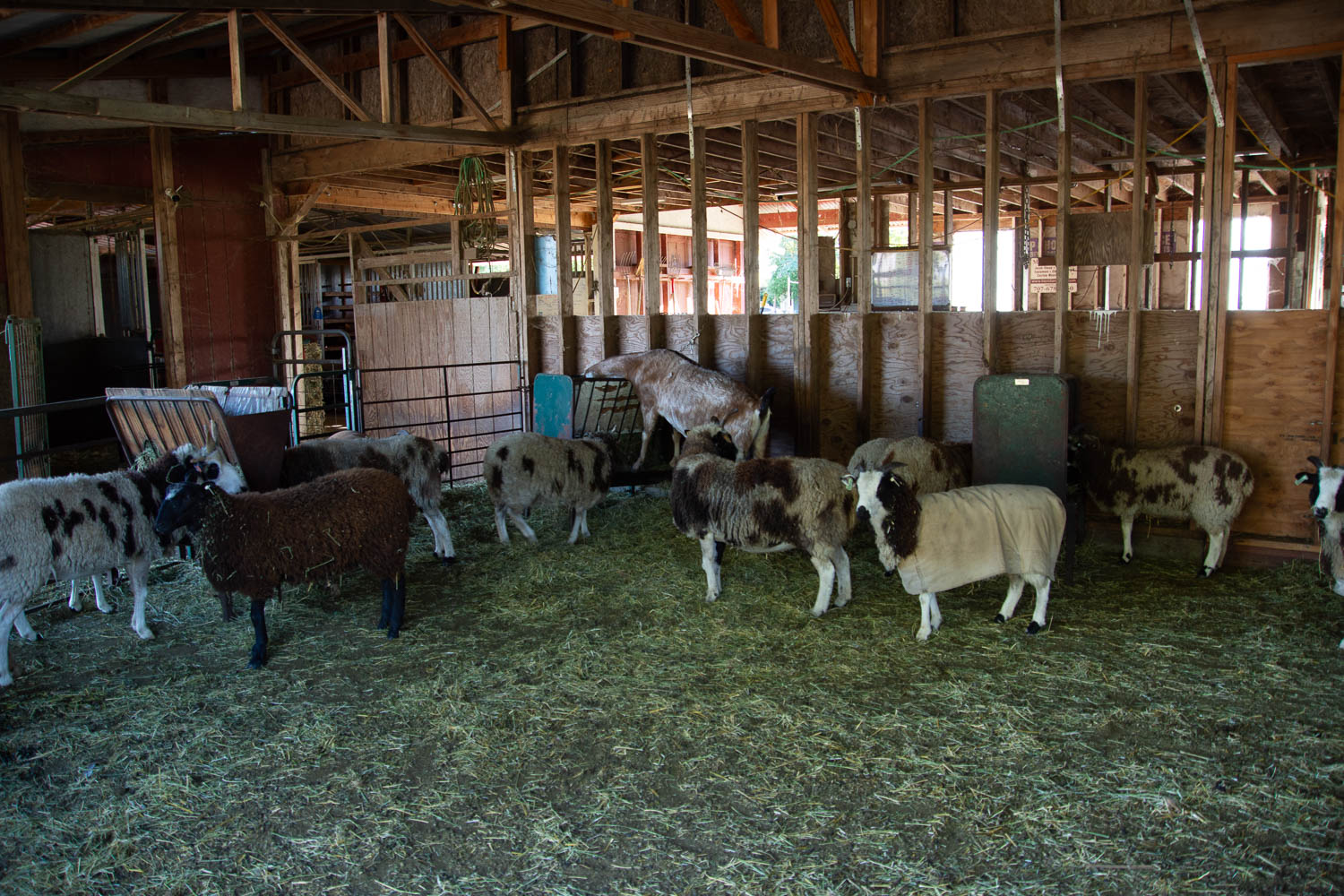
We decided to not breed the 2023 ewe lambs this year. We had too many lambs last year for the conditions (rain and more rain) and it was too crowded. So this group is not being bred. There are also a few cull ewes and a goat in here.
Looking forward to February 10, 2024!


 When I walked out there I saw that one electric fence wire was spiraled across the pen and Ringo wouldn’t cross it. I had been fixing the fence a couple times per week, tightening the wires, or replacing insulators, and once in awhile fixing a break.
 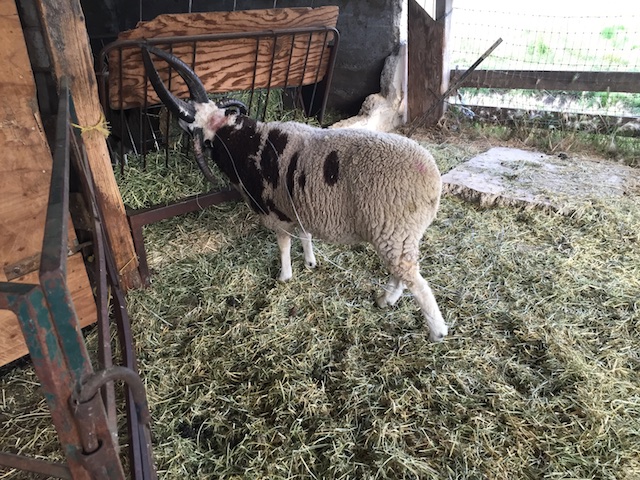 That evening I found this–Foley with wires wrapped all around his horns and his feet. It was worse than it looks in the photo. I had to cut the wraps of wire off of him. I knew that I had to do something better. The goal of this electric wire is to keep the sheep away from the field fence on the south side and the welded wire panels on the north side, both of which the rams can easily destroy. It works well for the ewes and it works for the rams to the extent that they don’t try to eat something on the other side or put their heads through the fence. But it is obvious that the charge is not felt through the horns. The rams actually spend time trying to scratch on the insulators and bash the tree that holds some of the fence. Then their horns catch on the wire and I think they like to fight with the wire just because it’s there.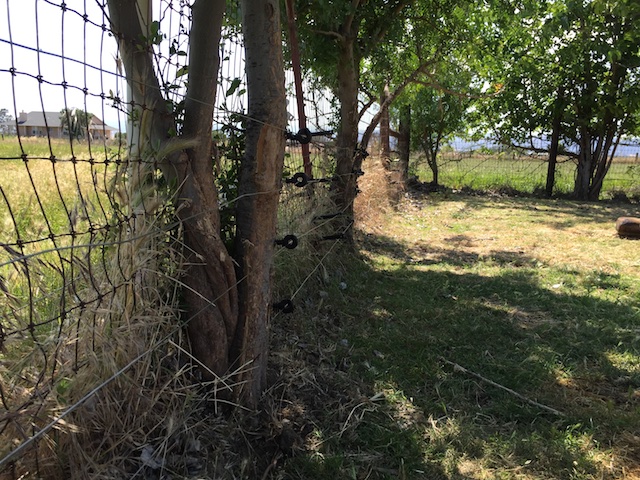


 Meridian Jacobs' Blog