Fixing a Big Mistake

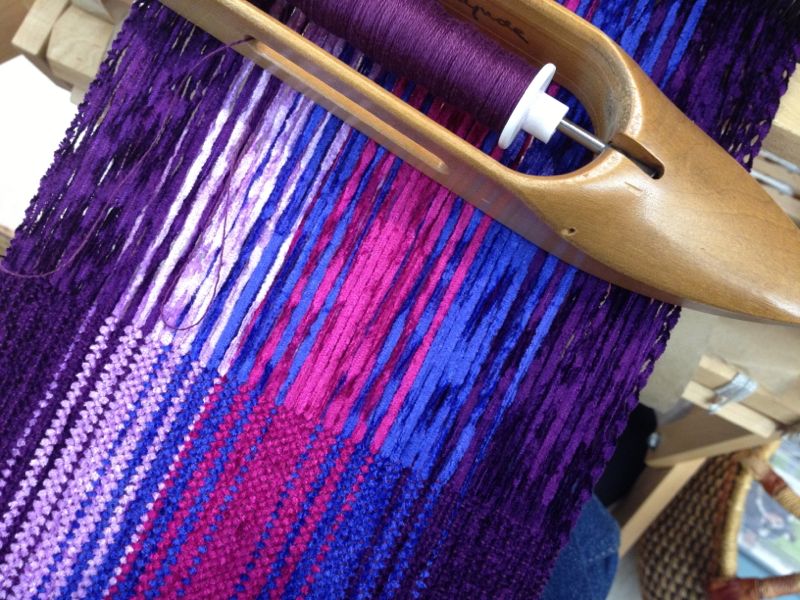
My largest loom is 60″ wide. A queen-size blanket is supposed to be about 90″ wide. When I weave a large blanket (full or queen size) I use double weave. This means that I weave two layers of cloth at the same time and they are connected on one side. When the blankets comes off the loom I open it up and it is double-width.

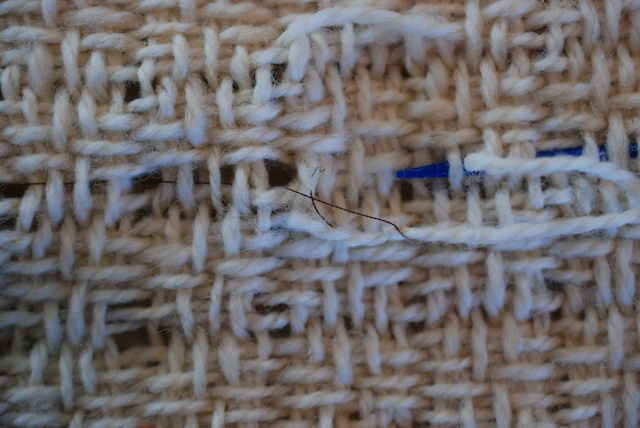
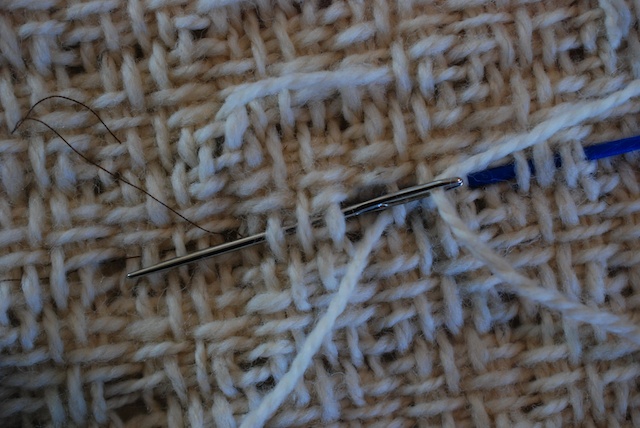
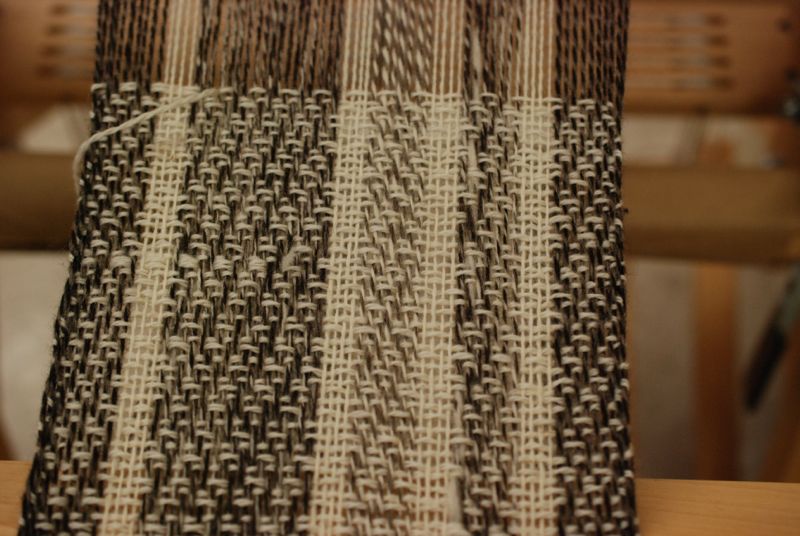
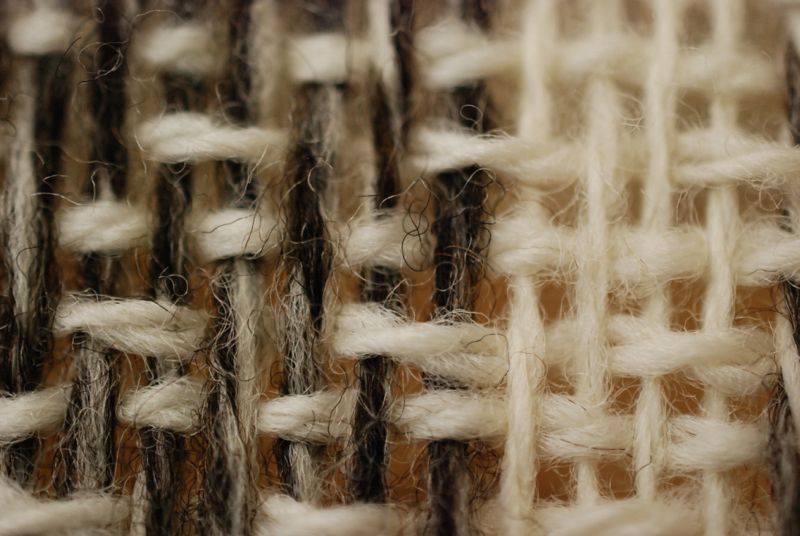
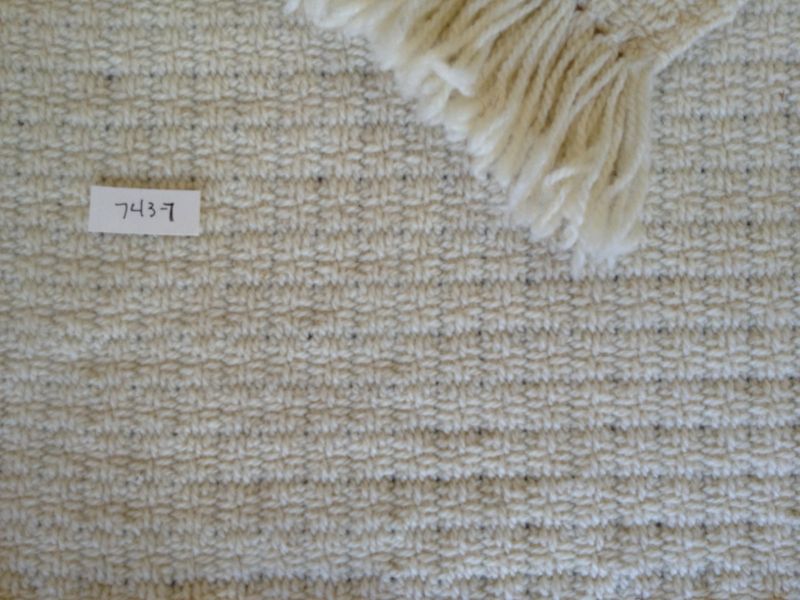
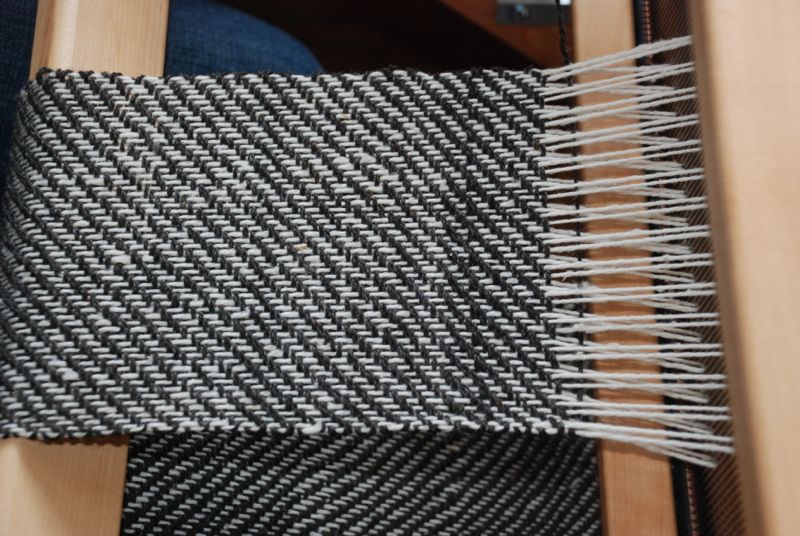
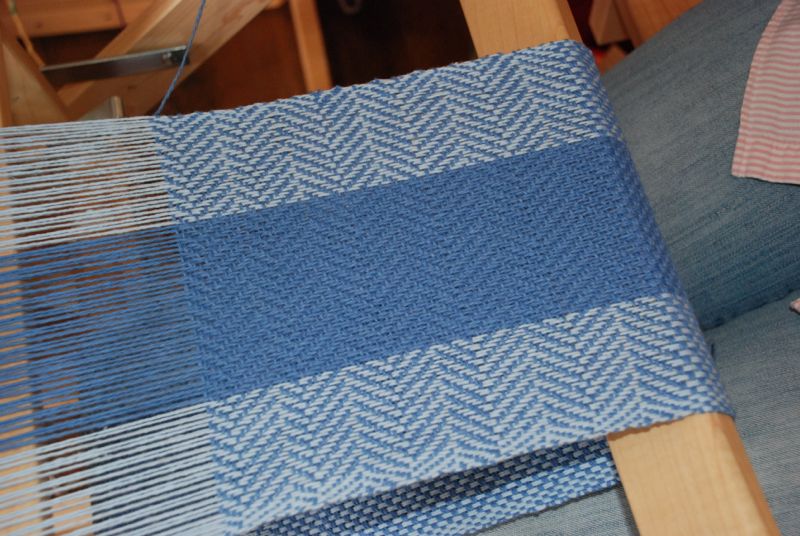
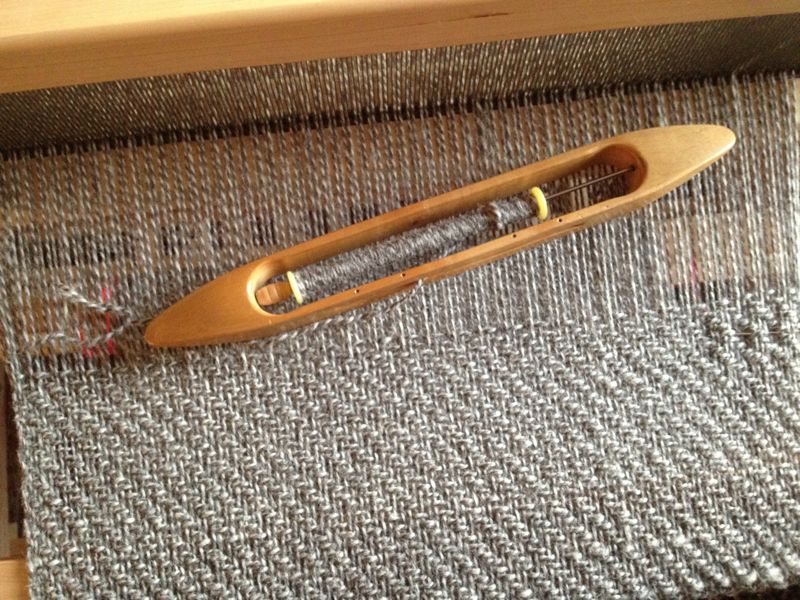
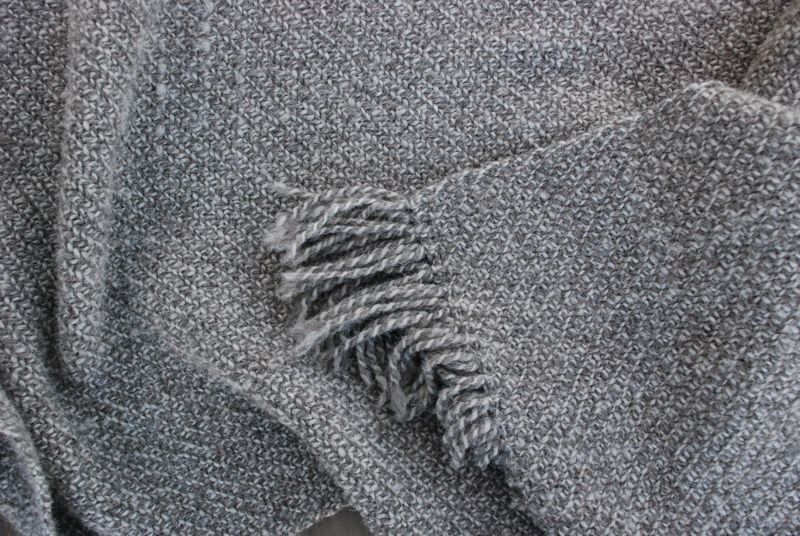
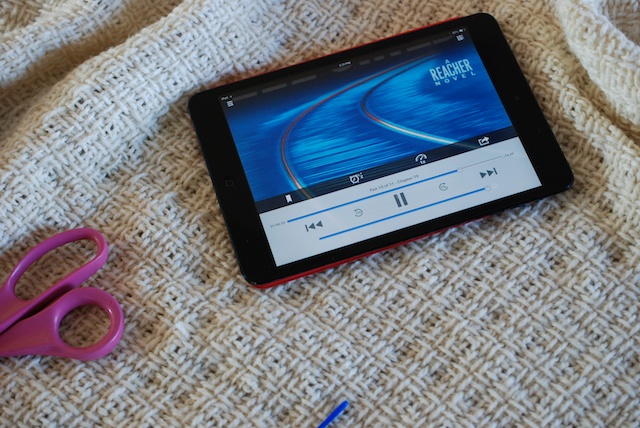
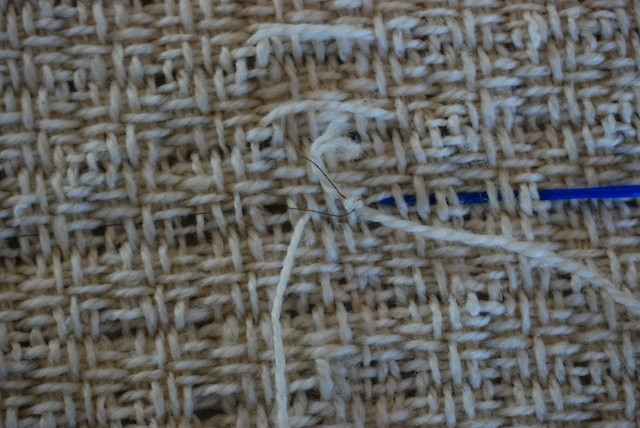
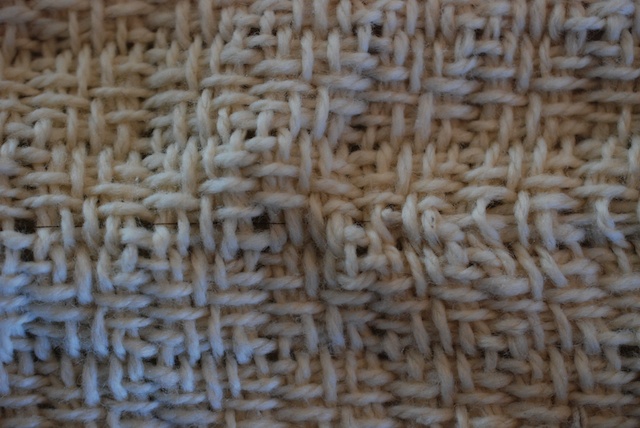
Sometimes things don’t go as planned. Here is an example:DSC_8050 That is a big OOPS on the underside. (And that wasn’t the only one on this warp of two blankets. In fact some of you might notice another error that was THROUGHOUT  the whole warp.) Both of these errors were fixable–it just takes time…and patience…DSC_8052 …and a good audio book. Here is how I fixed the most obvious error (all those skipped warp threads).DSC_8053 I knew that I could pull the warp threads out and needle weave them all the way back to the end of the warp (about 30″ I think). I found the correct path above the error and marked it with a needle. It’s not just a simple over-under. I think this pattern was under 2, over 1, under 1, over 1, under 1, over 2. I really didn’t want to have to do that pattern with a needle for all of those threads. So I tied a thin thread (brown) to the warp thread (wool yarn) that needed to be rewoven and as I pulled it out the brown thread held the place. DSC_8056DSC_8058DSC_8059 Then I untied the brown thread from the wool yarn. Using a tapestry needle I wove the wool yarn over and under the correct yarns in the area where there was a skip.  DSC_8061Then I tied the brown thread back to the wool yarn and pulled it all the way through to the end of the blanket….for all those threads.  After fixing other errors the blankets were washed and they are finally in the mail. Thacher blankets
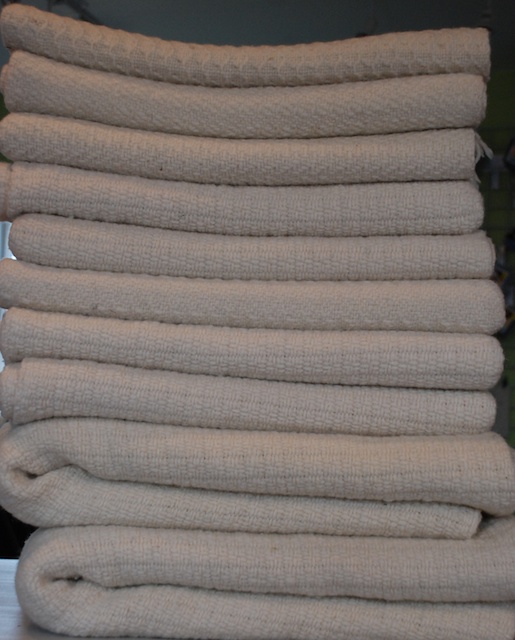
Here is the stack of blankets that I sent to the customer. There are 8 throws and 2 queen blankets (the ones on the bottom of the stack).
Weaving Love

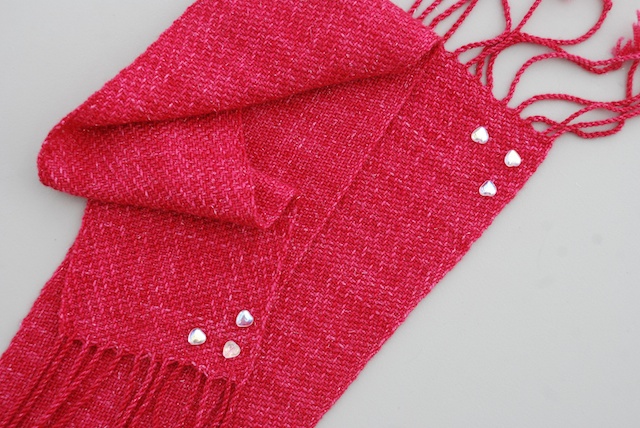
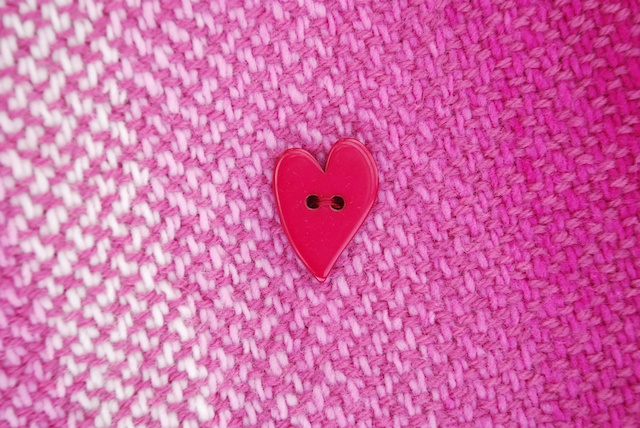
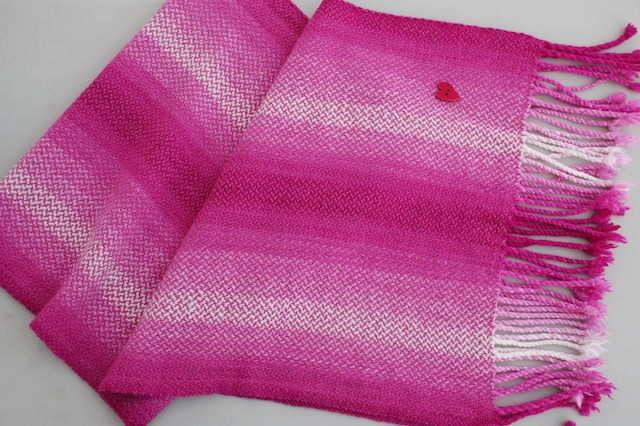
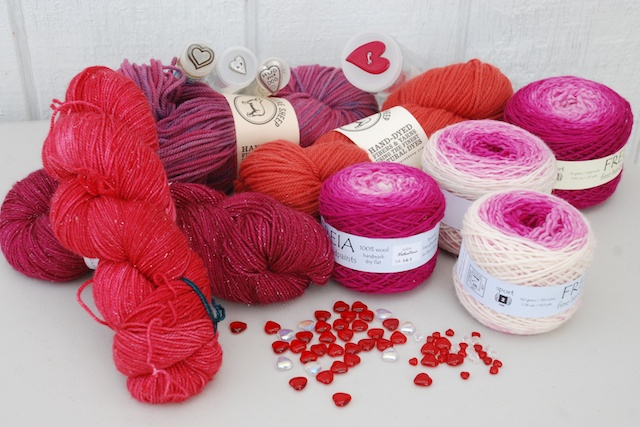
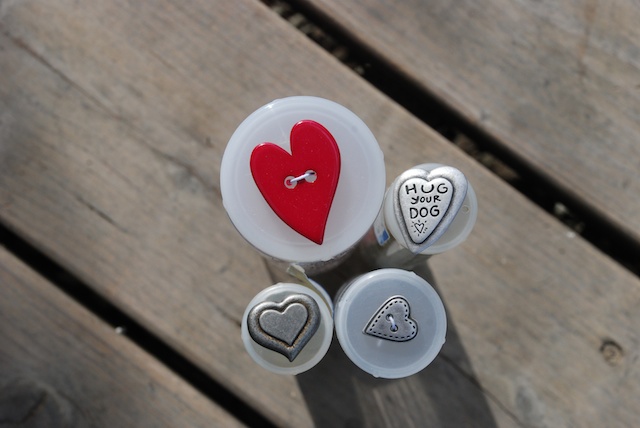
It’s the Artery‘s 40th year anniversary and we’re celebrating all year. There will be an all-member Gallery Show for part of February and, when we brainstormed ideas, we decided to call the show Forty Years of Love and to incorporate hearts into the pieces. Yarn and buttons with hearts Here are yarns that I picked up at TNNA with the idea of suing something new different for this project 004 And here are some buttons that I have in the shop.  008The first piece is woven with s soft super wash wool that sparkles with some metallic fibers. 007 This scarf is woven with Targhee wool dyed by Sincere Sheep. I’ll be carrying some of these yarns in the shop soon. 006This shawl was woven from yarns that were dyed in such a way that they they change color from one end of the ball to the other. Combing four balls gave me this warp: 005Luv ya!


Multiple Warp Twills-class with Sheila O’Hara

The sub-title of this workshop could be “I think my brain is about to explode”. At least that is how I felt at the end of the second day after I had woven only this much:DSC_5421 My friends consider me a prolific weaver, but this was a humbling experience. In my defense, I had a lot of distractions because the workshop was at my place. So I was looking for the right height benches, setting up lights, finding an umbrella (for the journey to the porta-potty in our first storm of the year), and I did my share of chatting with the other weavers.

It has been years since I have taken a workshop and I jumped at the chance to take this one from Sheila O’Hara, whose work I have long admired. I was glad to host the workshop because it meant that I could stay home and not drive to Sacramento three days in a row. In addition, Sheila stayed here so I had the chance to get to know her a little better. On the fourth day I did go to Sacramento where Sheila presented a great program to the Sacramento Weavers and Spinners Guild.

Our pre-class instructions were to wind two warps of different colors, using multiple colors in each warp and we were given the threading draft (order to thread the loom). We had seen photos of some of Sheila’s work using this method.IMG_7739These are Sheila’s scarves. Each scarf has two completely different sides but in some the yarns from one side show through to the other. Using a 16-shaft loom you can have 4 layers of color and the compu-dobby (computer interface that I have on my big loom) can aid in keeping track of where you are in the weaving. We used 8-shaft table looms for the class because a floor loom doesn’t have enough treadles to accommodate the treadling required for this.

Here are photos from the class:IMG_7713Thanks to my expanded space we were able to fit enough looms in the room.DSC_5425 Gathering around a loom to talk about this sample. We wove a series of sample treadlings that showed varying amounts of each of the two warp layers and then we learned pick-up, changing sheds (opening between threads) three times in each pick (row of weaving)… IMG_7726…where the lower layer showed up as a distinct design in the upper layer.IMG_7715Evening walks helped clear my head. This first rain of the season cleared the air and washed the dust away from everything. I welcome fall.   —   Back to weaving. IMG_7719 We spent some time with graph paper and colored pencils learning how to create other designs.IMG_7721  This task was to draw a design and, using 4 differently colored warps (horizontal in this photo), fill in the shapes using threads from the different layers. Yes, these designs could be woven on the same warp…if the brain can handle it.IMG_7728 We looked at everyone’s warps and discussed the weave structure and color interaction.IMG_7735 Weaving paparazzi? IMG_7736 IMG_7738More of Sheila’s weaving samples.DSC_5432She has recently woven images using photographs taken by Edward Curtis in the late 1800’s to easy 1900’s.  IMG_7741 These images are woven using a Jacquard loom in which each thread is individually controlled. Sheila used to rent time on one of these looms but now has her own. IMG_7745  Autumn in St. Helena.

Sheila has a wonderful sense of humor and incorporates it into her presentations as well as her weavings. Make sure to look at her weavings on her website. You can contact Sheila or me to purchase them.

I am glad to say that I added to my Sheila O’Hara collection. I already had the Spring Flockettes.FlockettesNow I have the Winter Flockettes as well.

Epilogue:IMG_7748Back home by myself I started weaving again. I think I have figured out how to do it right.


A Weaving Weekend

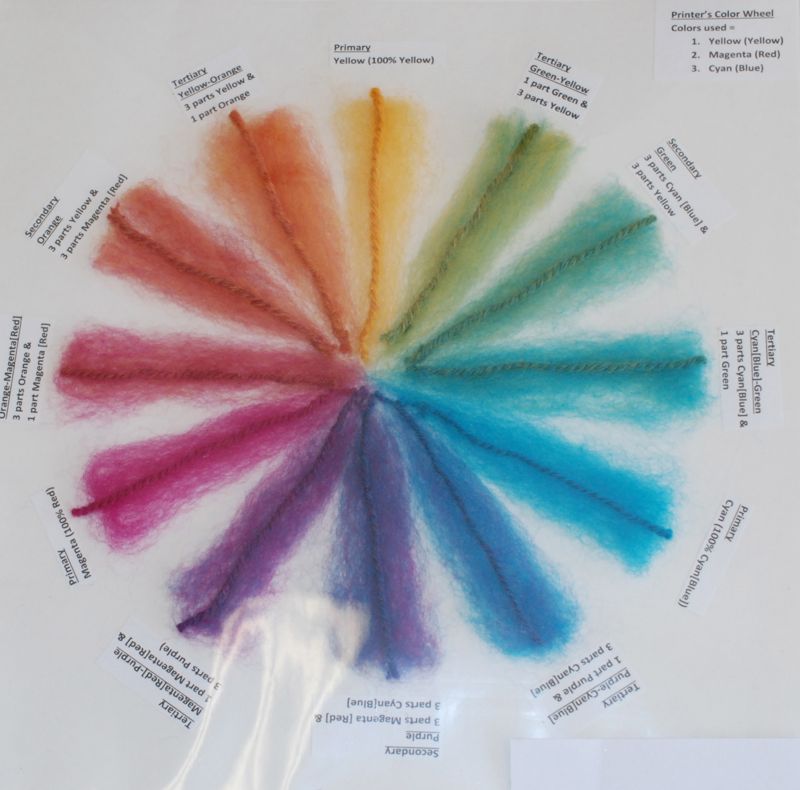
The Sacramento Weavers and Spinners Guild hosts an Open House in February. This year’s theme was Weavers Gone Wild. Here are a few photos.DSC_8535 One of the people in last summer’s Color Wheel class created this display from the fiber that she blended in class.

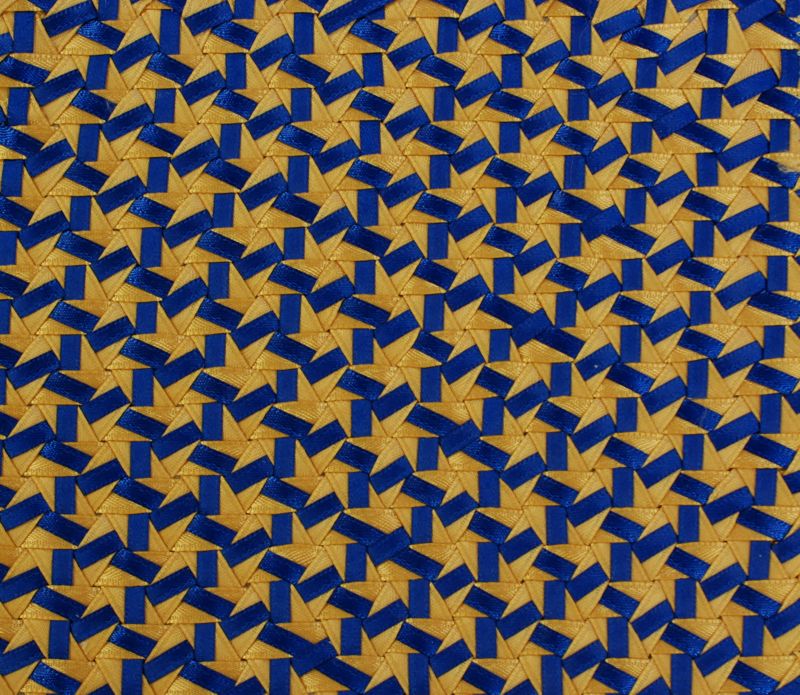
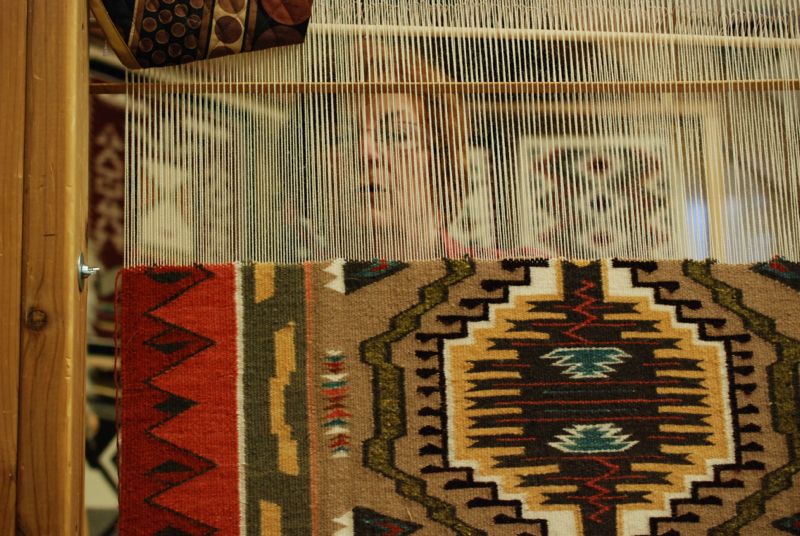
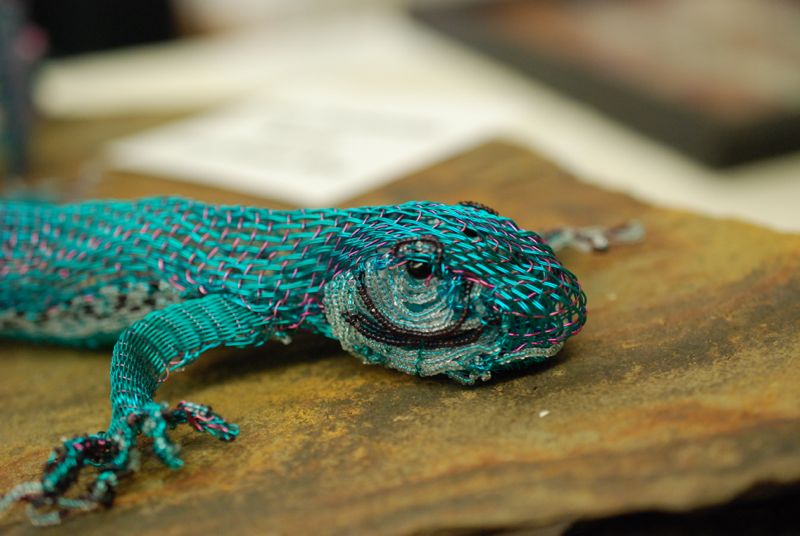
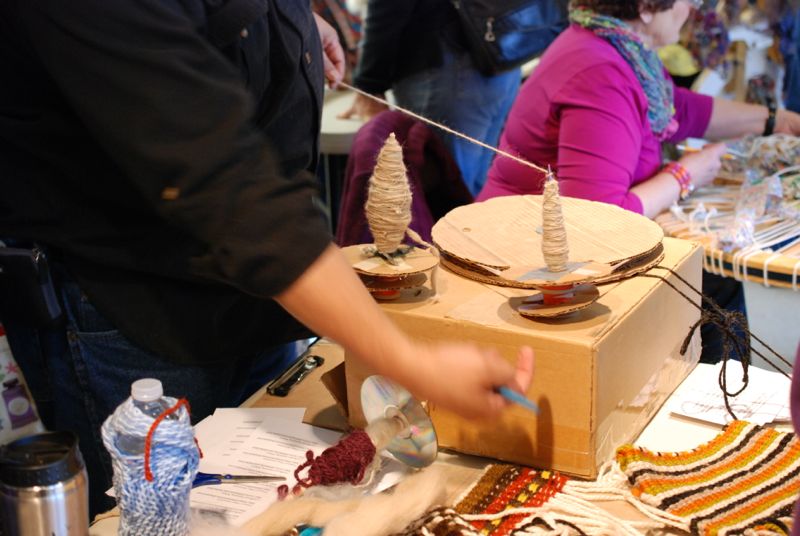
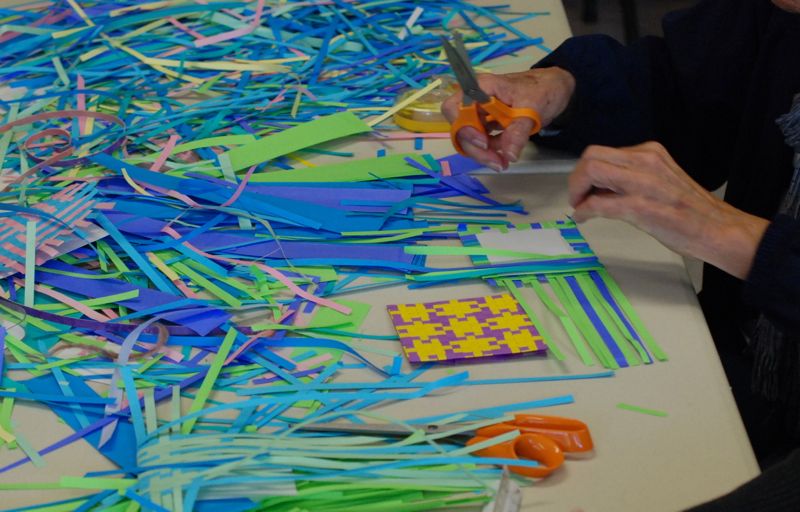
DSC_8545 Triaxial weaving.DSC_8552 Navajo weaving.DSC_8554 Weaving with wire.DSC_8561 Spinning om a cardboard “wheel”.DSC_8567 Paper weaving–a great “make it and take it” project.  IMG_5361 I demonstrated weaving all weekend. I wove 2 chenille scarves using the warp I wound at Thursday’s Art as Inspiration class.IMG_5366After I finished the chenille I put a Shetland wool warp on the loom and wove 4 scarves for a commission.DSC_8569The last warp was all Jacob. I wove one and will finish the other at home. Seven scarves in a weekend isn’t bad.DSC_8571This is a close-up of the last one just because I still have my new macro lens on the camera.

A Few of the Week’s Accomplishments in the Shop

DSC_8093 Baby blankets still on the loom.DSC_8172 Baby blankets off the loom and finished. I put on a 21 yard warp and wove 14 blankets. DSC_8207 I hemmed some this time instead of leaving short fringe. I’ll be interested in seeing what buyers like best. The rest are shown on this page.

I taught several classes this week.DSC_8170 This is WWW (Weekly Weaving Workshop), sometimes known as Wednesday Weavers Workshop, or Warped Women Weaving, or….It could go on. It is a drop-in class and we usually discuss any questions that people bring up about anything weaving and yarn related. (Some people come for a therapy session with friends.) Last week I said that I’d teach how to read weaving drafts. Those are the “recipes” for weaving patterns. This week we’ll look at drafts for “color and weave” effects.DSC_8238On Friday I taught a rigid heddle weaving class. This is Tanda with her beautiful new scarf woven of Jaggerspun Zephyr yarn on her rigid heddle loom.

On Saturday and Sunday I taught a spinning class. I can’t believe I didn’t take photos. That was followed by an interview about Fibershed for a well-known (in the fiber world) magazine. You’ll hear more about that when it’s published.

When I’m working in the shop or at the computer all day, instead of in the barn, I try to make sure I go for a walk or a bike ride with Rusty. That’s good for both of us. I’d probably get more exercise if I didn’t take my camera because I always get distracted by the view…DSC_7522 DSC_7528…whether it’s close-up or…DSC_8250…in the distance.


Color Everywhere I Look

It’s been awhile since I wrote a blog post–at least on paper…well, on on the computer. But you know what I mean. I write a lot of them in my head but they don’t always make it here. So I was looking at my latest photos to see which in-my-head blog post to put here and these are the things that caught my eye.

 The dye class that I taught last week.

The v-shawl class that I taught last week.

Socks that Jackie made for me but it hasn’t been the season to wear them.

The color wheel class that I taught at Lambtown on Sunday.

Georgia O’Keefe’s Purple Petunia which is now on the loom.

But when you think you’ve found the most fabulous colors of yarn, fiber, and dye, you walk outside  and see this:


A sunset from last week.


I think I need to find yarn in these colors.


Weaving blankets

Here is a blanket that has become one of my favorites to weave.

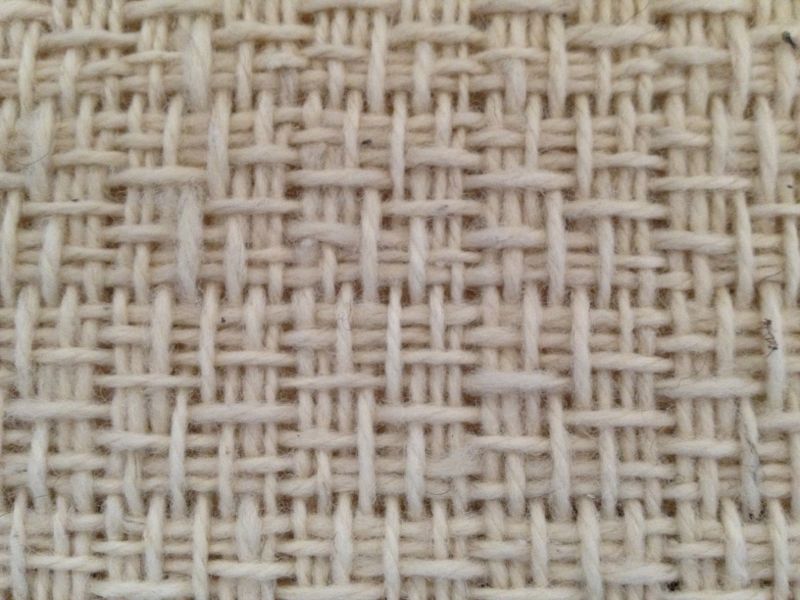
In the book where I saw this draft it is called Breaks & Recesses. I think I need to come up with a different name.

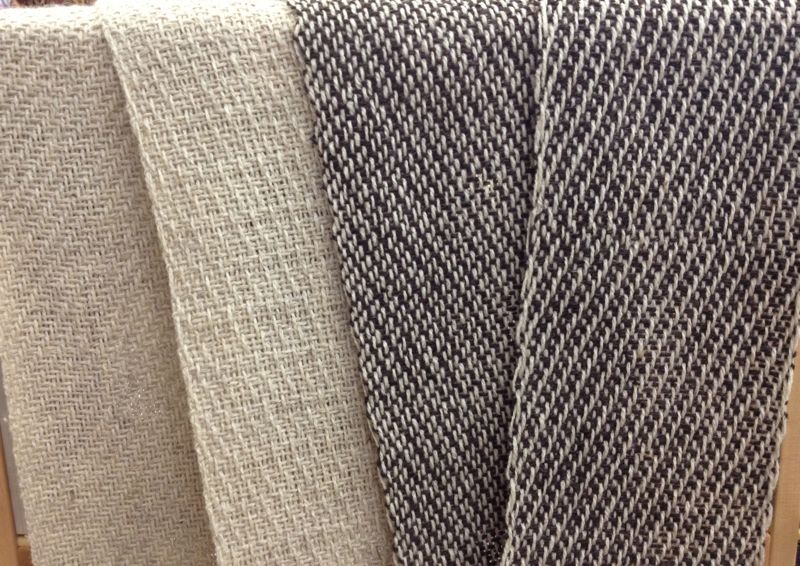
I have mentioned before how much a woven piece changes after it is has been properly finished. In the case of wool that means wet-finishing or some degree of fulling. When a piece is fulled the individual threads  become less distinct as the wool fibers catch on each other and the piece becomes cloth instead of  a bunch of separate threads. (Fulling is an irreversible process that needs to be controlled–picture a wool sweater that goes through the washing machine and dryer.)

This is a dramatic example. The blanket on the right is the same draft and using the same yarn, but it has not been finished yet. This yarn is one that was mill-spun of wool from sheep at the place where I used to go for sheepdog training. The yarn feels harsh and oily, but it softens beautifully when fulled.

A custom blanket customer saw a similar blanket and wanted me to weave her a queen size blanket using this pattern. “Sure”, I said. “No problem.”

I use double weave to weave a queen (84 x 90) blanket on a 60″ wide loom. That means that I weave two layers at a time with a fold on one side.  I have to allow for take-up and shrinkage (part of that is the fulling I described) so this blanket measured 54″ wide on the loom (double–opened up that would be 108″) and I planned to weave 100″ in length. A lot of this is educated guessing based on previous similar projects.

This pattern is woven on 8 shafts. To weave a double width blanket I used 16 shafts, 8 for each layer. First I had to figure out that part. None of this will make sense if you are not a weaver and I didn’t intend for this post to be an explanation of all the steps. One of these days maybe I’ll do that, but not now.

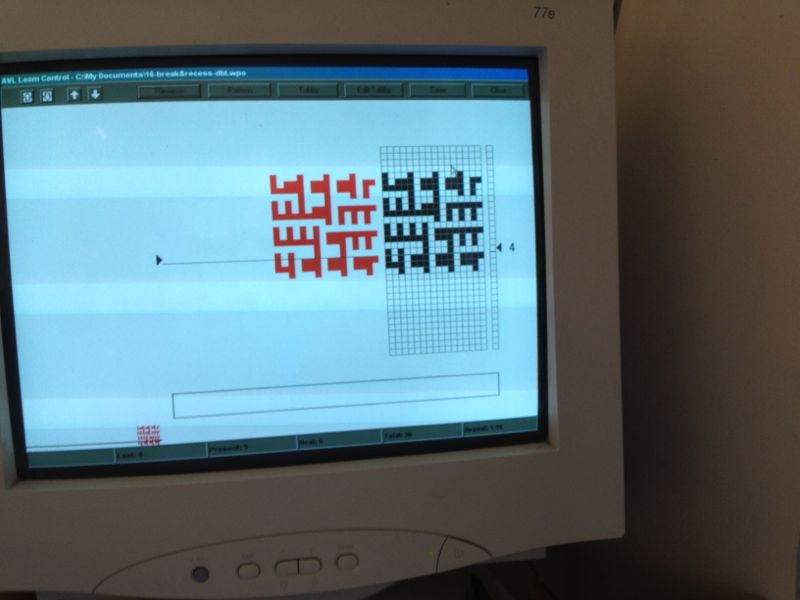
This looks nothing like the pattern in the finished blanket. That’s because in this draft every other horizontal and vertical line is the opposite layer (odd numbers are the top and even numbers are the bottom). When I buy new software it will be something that will show me the top and bottom layers.

When I finally started weaving the blanket I knew that something wasn’t right, but I had a hard time figuring out exactly what it was. I used a mirror to see the lower layer but I had to go back to the book and the computer to see that I had reversed some of the squares in the draft.

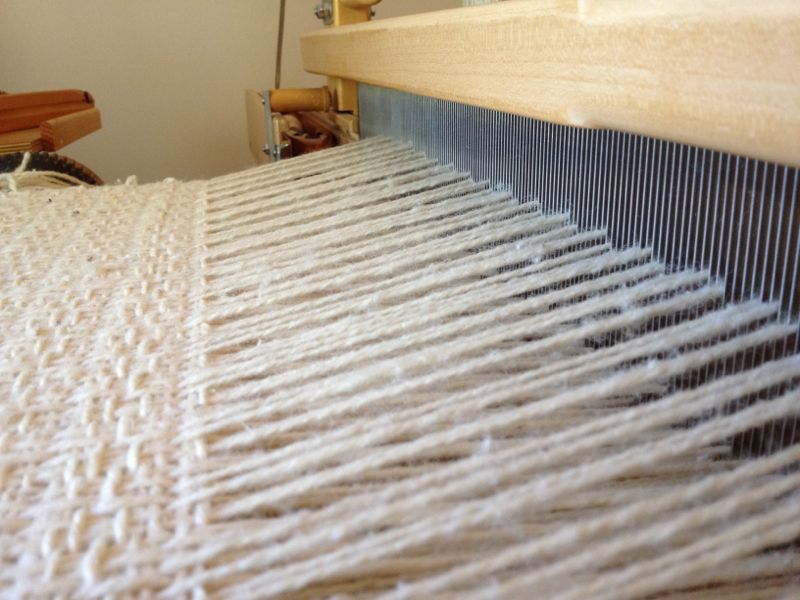
Here is a close-up of the top layer as I was weaving.

This is what the computer looks like as I am weaving. I have what is called a compu-dobby and the computer drives which shafts lift, although I do all the work.

See the shuttle at the other side of the loom?

As I step on the treadle certain shafts lift so that the shuttle can carry the yarn in between the threads.

This is after the shuttle has gone from left to right and is now on the other side.

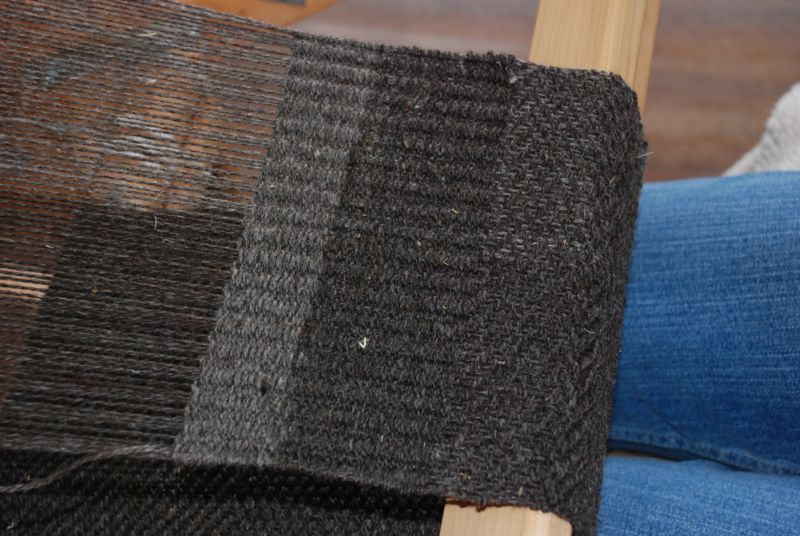
This is a view of the left side where I can separate the layers. The fold is on the right.

I finished weaving this blanket today and am working on correcting a few errors. Then I will have to crochet the edges before I full it. I should take photos of these processes and report back.


I finished 7 throws last week. Friends who saw them before washing tried to be polite but were un-impressed and maybe even shocked at how awful they looked. I used some yarn that had been spun several years ago at a mill that (I assume) uses a lot of spinning oil. The yarn on cones looks and feels like string that you would buy at the hardware store. The resulting blankets off the loom look and feel as though I wove them with string from the hardware store. Also, I wove them at a wide sett knowing that they would full.

See how open this is. You can easily stick a finger or a toe through this. And a cat would pull those threads and destroy it.

A trip through the washing machine to full (Not the way to wash a finished blanket–to do that see my instructions here)…

using Power Scour (normally for raw fleece, but this yarn was very greasy) changed that blanket into this:

Here is another before and after:

And another:

One of these blankets is a gift to the person from whom I got the wool several years ago. I’m sure she doesn’t see this blog so it will be a surprise until tomorrow when I take it to her. This blanket includes her dog hair that I washed and spun:

Here is one with Jacob weft:

All 7 blankets:


Using Yarn

There is a photoshoot next week for the Fibershed Marketplace and I have wanted to get some new items ready for it. I have boxes of yarn that I have intended to use and have just never got to. Now is the time. In fact, my goal is to use up all of these boxes by the end of the year.

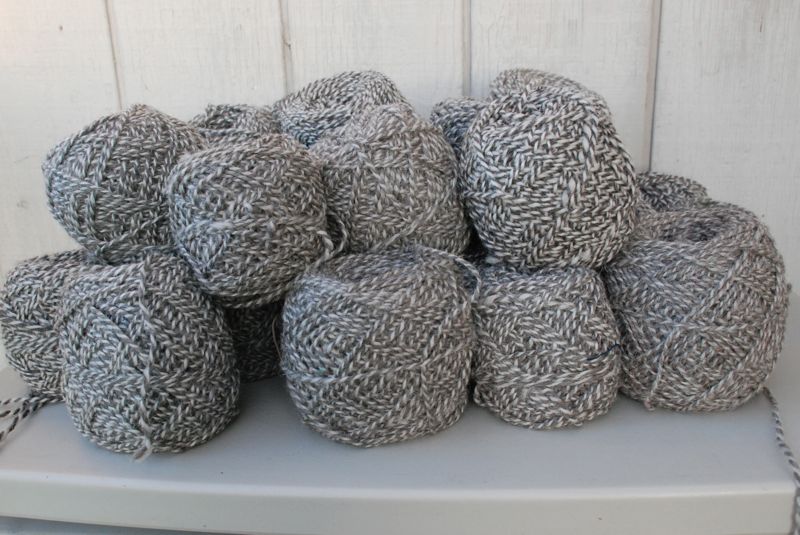
First box–Single ply Jacob yarn spun years ago at Yolo Wool Mill.

Three scarves in a plaited twill. They feel nice, but have a few issues. They curl at the edges because this is an unbalanced twill–warp emphasis on one side and weft emphasis on the other. Besides that the center stripe turned out to be something else. It probably has some llama fiber in it–it has less elasticity than the rest so it puckers. Are these design features? It serves me right for keeping yarn for so long that I don’t remember what it is.

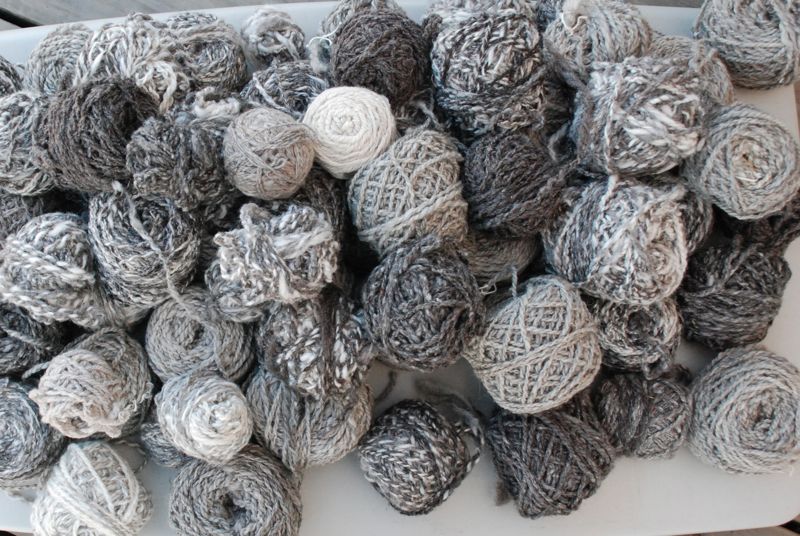
Second box. Full of funky, slubby, heavy handspun yarn, mostly spun by my mom–that means it was many years ago. It will make wonderful throws.

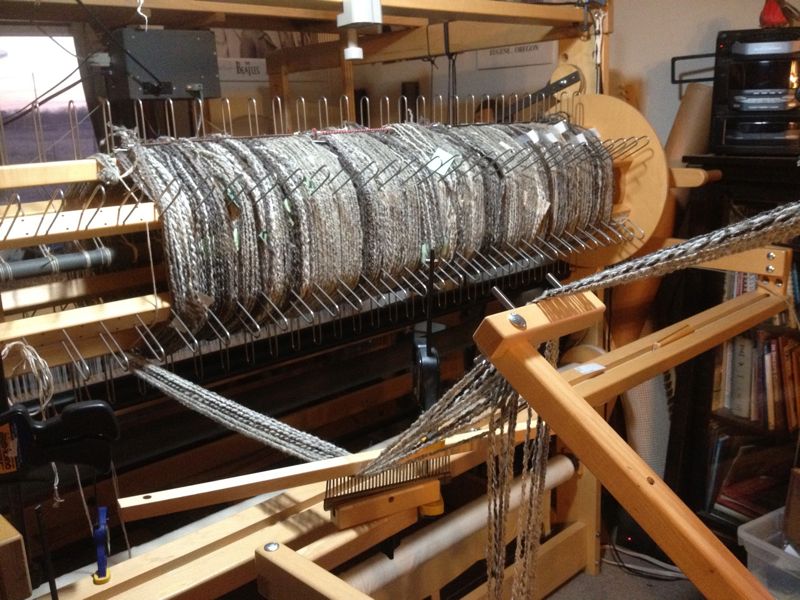
Here it is going on to the loom.

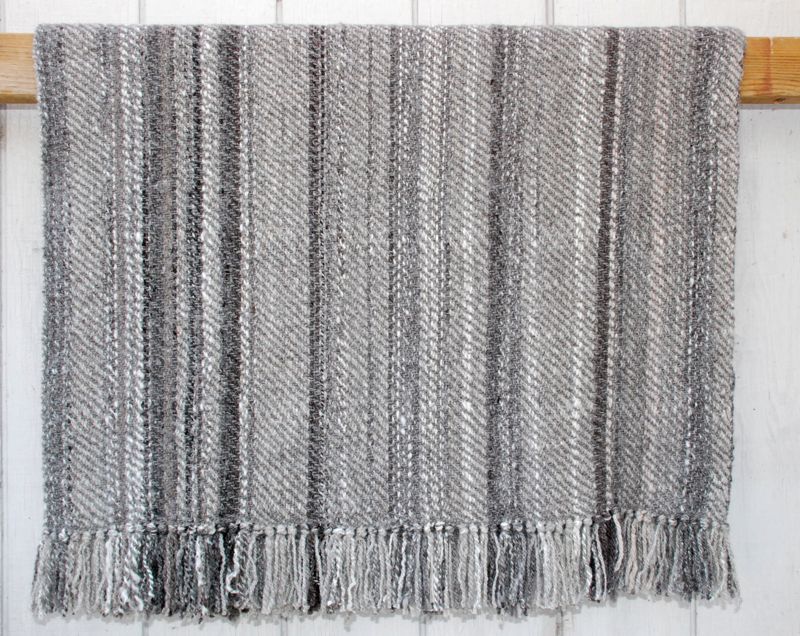
I wove two blankets using the handspun as warp and the finer singles yarn from the first box for weft. Handspun yarn has such a nice feel to it–I don’t think you can duplicate that with millspun yarn.

Third box–heavy 2-ply mill-spun Jacob yarn.

On the loom.

I was going to make ponchos, but I took this off the loom and decided that it was a great shawl (and if it was a shawl it was finished–no cutting and sewing). It is very soft with wonderful drape.

Three boxes started. I haven’t counted how many more to go.