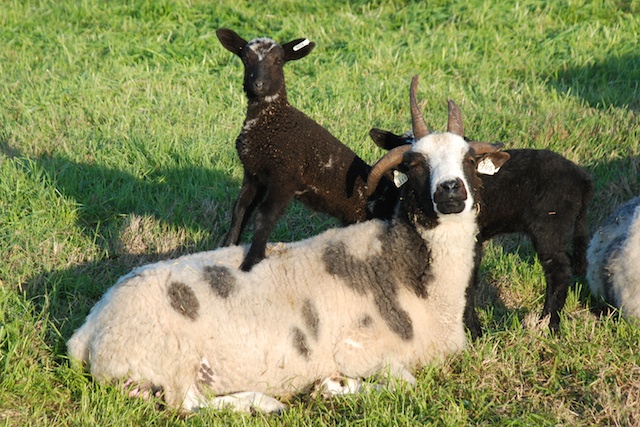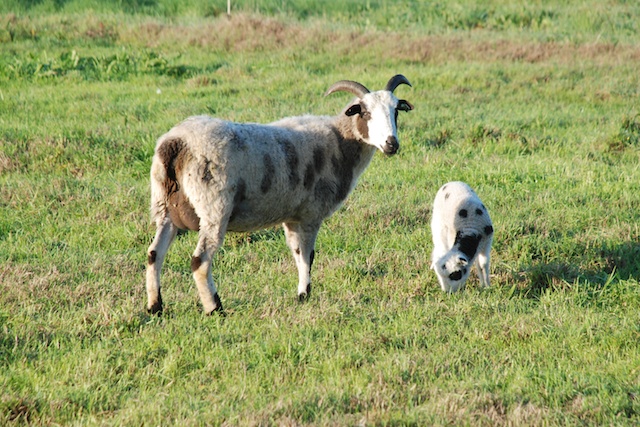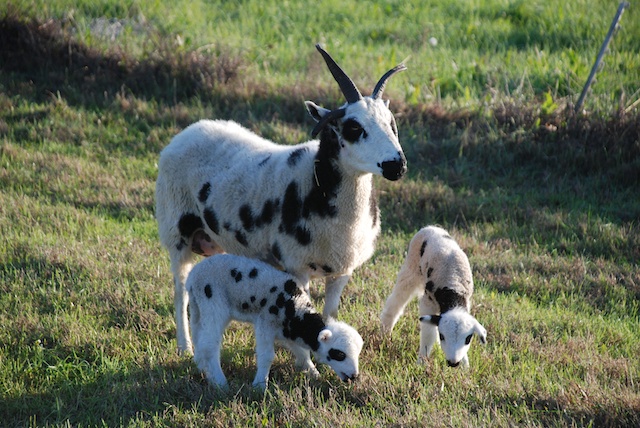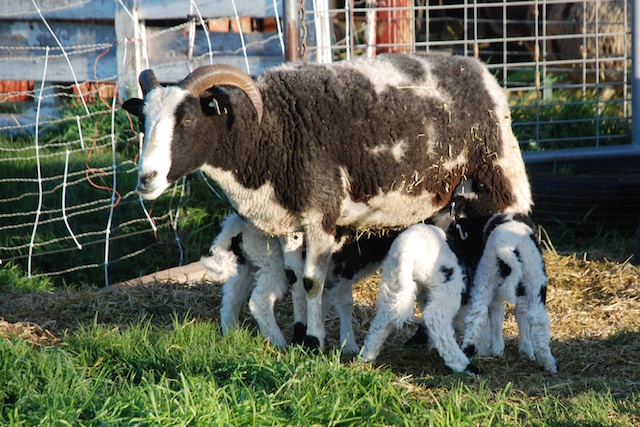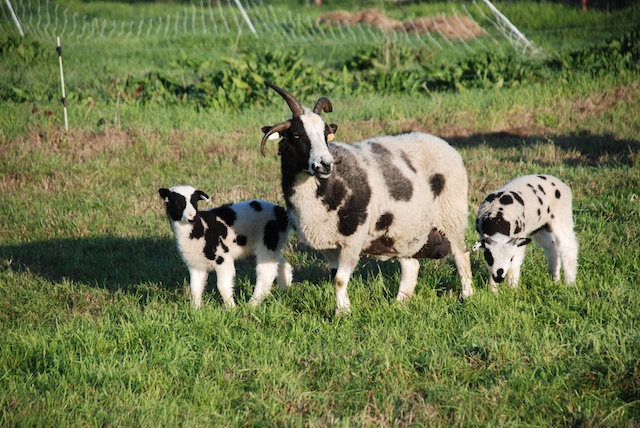
Meet the Sheep

Our annual spring open house on Saturday was a huge success. Putting up photo stationThis event couldn’t happen without the help of Farm Club members and, this year, the Davis Spinners’ Guild (DSG). Farm Club members were here on Friday for set-up and showed up early Saturday for last minute touches. Photo station (1)Alphabet blocks There are a variety of sheep related displays.sheep paintingsBut the biggest attractions are the animals and the demos.Julie with bunnies

Julie’s 3-week old Angora bunnies were very popular…Bunnies 

Mary and lamb…as were the lambs. FC member, Mary held lambs for people all day (and suggested that next year we use smaller lambs!).

JazzJazz, mom of the triplets that were out for people to pet, made herself just as popular, calling to people to come back and continue petting.

As popular as the animals, were the demonstrations scheduled throughout the day.Alison teaching about fermented suint vatThis is Farm Club (and DSG) member, Alison, showing her passion for…fermented suint vatcleaning fleece with a fermented suint vat.Vera with blending board   Vera, of the Davis Spinners’ Guild, demonstrated use of the blending board…

Vera spindling…and spindle spinning. Kathleen weaving

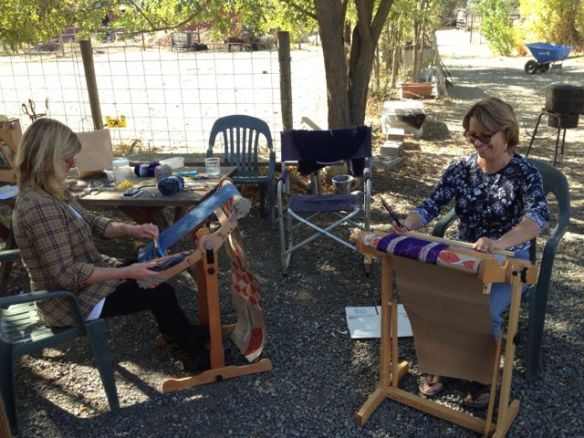
Kathleen, FC and DSC member wove with an audience all day.Spinner's circleMany people brought their wheels and spent the day spinning.Lisa and Amarayllis

FC member, Lisa, always has a carrot for Amaryllis. Lisa felting   She and Dona (who took some of these photos) demonstrated needle felting.

shoppingDona, Jackie,and Colleen offered items for sale.sheep in the shop   

Of course my shop was open and there were even sheep inside!Signs 

There was much more going on and many more people helping then I have in photos here. Thanks to all of them. There are no photos of Rusty in this post but he wrote his own and you can find out what he thought of the day here.
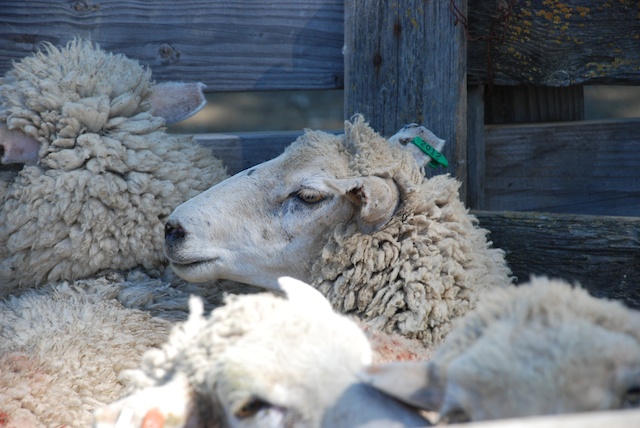
Spring Shearing in a Big Way

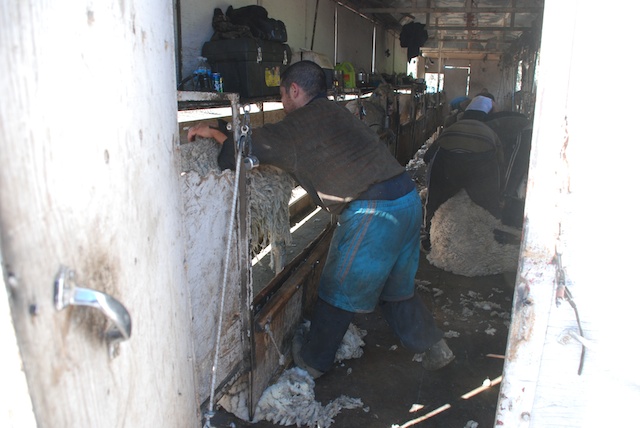
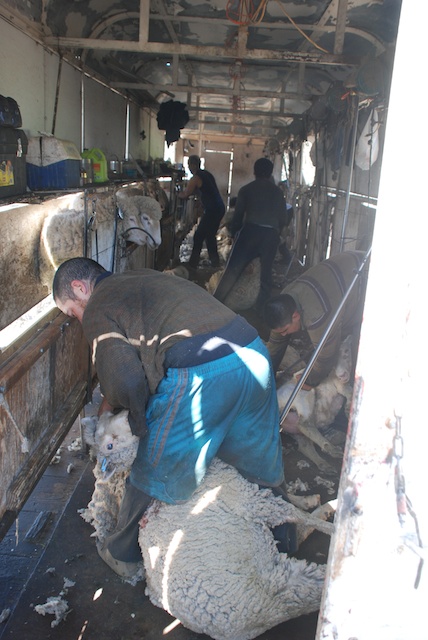
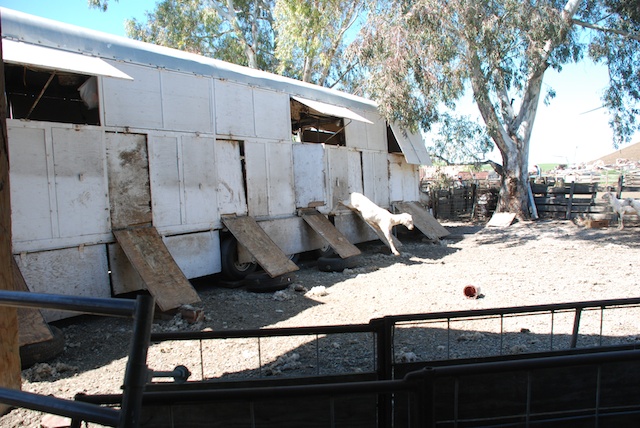
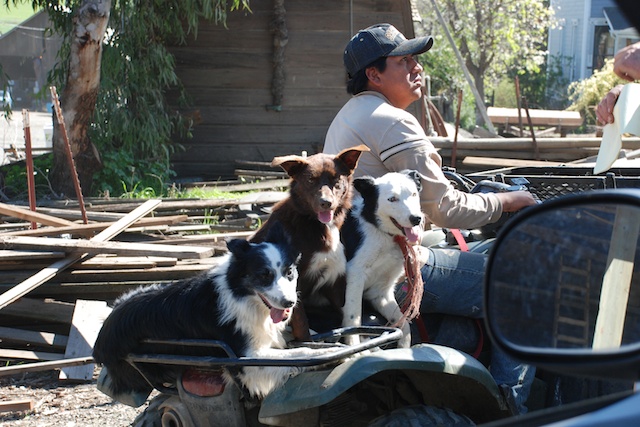
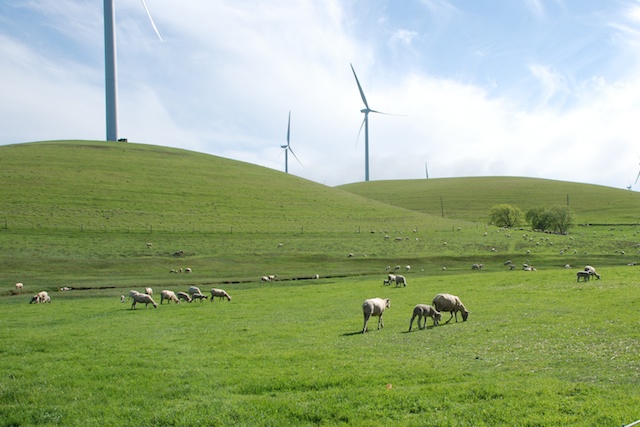
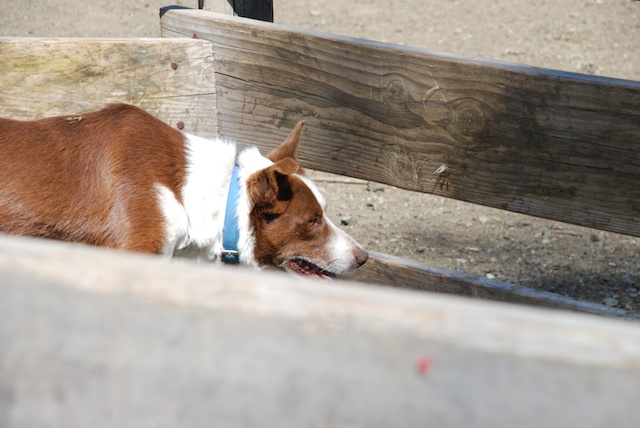
A couple of friends and I went to see shearing on a commercial sheep ranch about 30 miles south of here. We got there in just enough time to see the last part of shearing 3000 sheep in 2 1/2 days.DSC_0779The original flock was made up of Corriedale sheep and over the years was crossed with Targhee and other commercial white-faced sheep. Sheep going into shearing trailerThe sheep are gathered at the back of a trailer that is hauled from ranch to ranch with all the gear. They go up the chute with the encouragement of…Red border collie…Border Collies as well as people.DSC_0746Here is a view from the other end of the trailer. That sheep in front hangs out for awhile in that position because the other sheep are more likely to go forward if they see a sheep in front of them. Notice how the sheep walk on a raised alleyway while the freshly shorn fleeces are shoved out of the trailer below them.DSC_0802Here is a photo of the inside of the trailer. There are seven shearers at work. The sheep walk forward on the raised alley. Fleeces are pushed out beneath.DSC_0812When the shearer is ready for the next sheep he pulls the door down with his foot and flips the sheep off the alleyway into position for shearing.DSC_0794
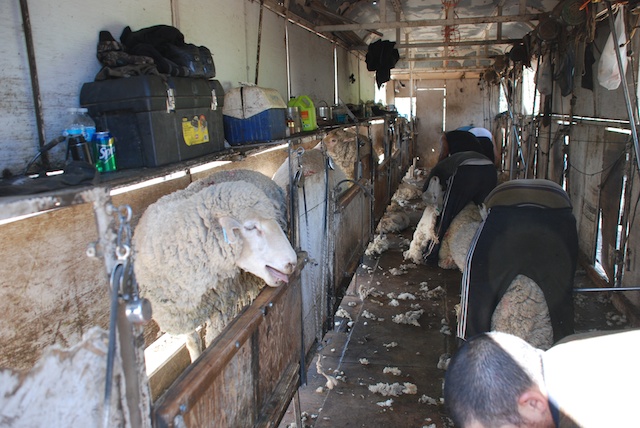
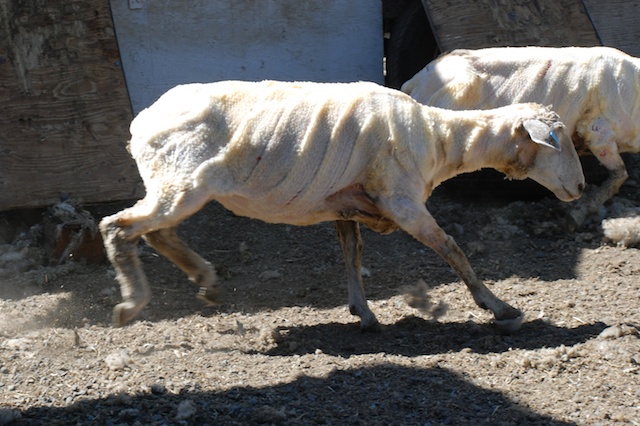
DSC_0752After the sheep are shorn they are sent out the doors on the other side of the trailer.Shorn sheep

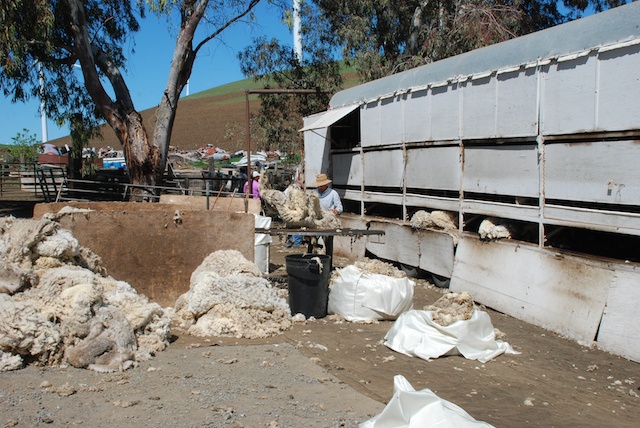
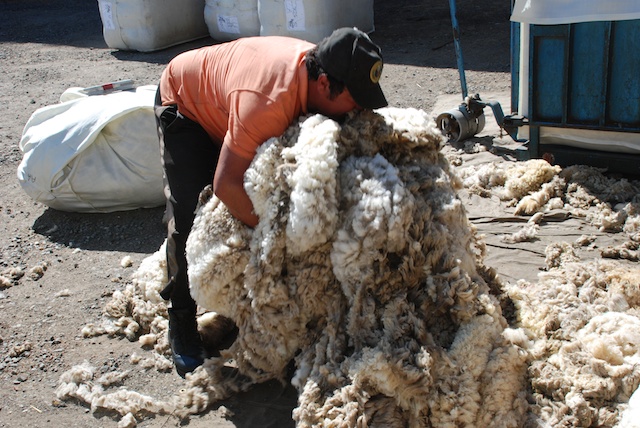
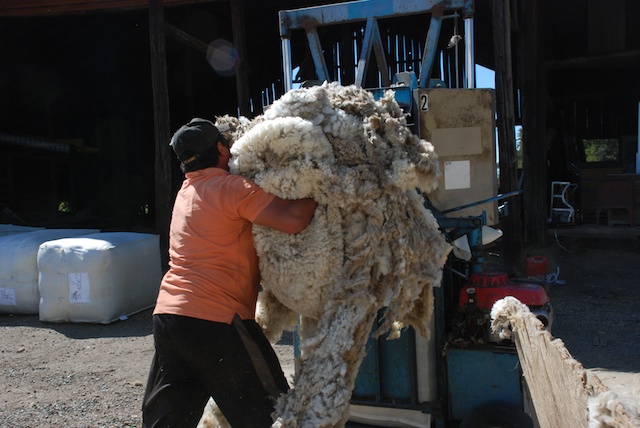
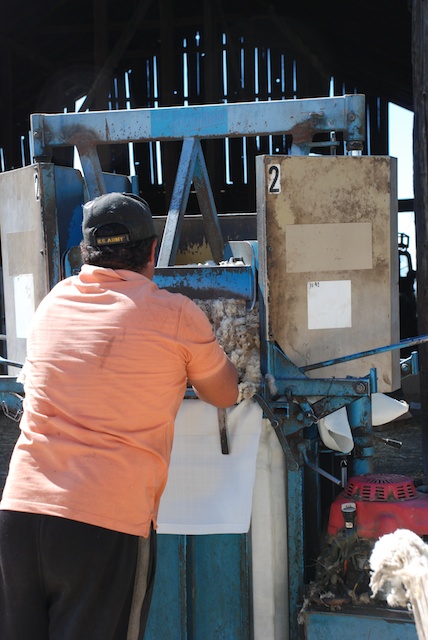
DSC_0737 The fleeces are scooped from the trailer and quickly examined by a sorter/classer who determines where they end up.Testing fleeceDSC_0738 The fleeces are thrown into the appropriate pile. My friends who owns the ranch had requested that the finer fleeces shorn on that day be put aside for us to look at. It turns out that even the not-so-fine fleeces seemed just as nice to us. Last year’s core samples indicated that most of this flock’s wool graded in the mid-20’s (microns) and the finer fleeces were in the low 20’s. For reference Jacob fleece ranges from about 25-35 microns and most of mine is probably about 28 to 29 microns. So all of this wool is finer than what I am used to using.DSC_0745 The fine fleece pile is the one nearest the table. The pile to the left are tender fleeces (fleeces that have a weak place usually due to nutritional stress or illness). The pile just barely visible behind the plywood is the “not as fine” pile. We chose our fleeces (all of the fine pile and a lot of the one behind the plywood) and the remaining wool was quickly baled.Picking up fleece for balingFleece going into baler  The wool is shoved into this wool press…DSC_0786

…and compacted…DSC_0820 …and sealed into bales that are marked with the pertinent information. I forgot to ask how much these weigh but on-line sources say they would hold 240 to 450 pounds each.DSC_0828 Before we left the shearing trailer was pulling out and everyone was getting ready to go to the next job.DSC_0832Freshly shorn sheep turned out to graze.

In about six months I hope to have blankets woven from this wool. They will be available at the Artery and the Fibershed Marketplace.

Farm Day – help with sheep chores

Our first Farm Day of the year was on Saturday and five Farm Club members helped me get ready for lambing. I forgot to take photos at the beginning but started with vaccinating all the ewes. In the meantime we kept an eye on the two ewes who were supposed to be bred that day so that they will lamb at the fair in July.DSC_8532There was no question about Miller and Donna, but ZZ left me wondering. He seemed more interested in his buddies in the adjacent pen than he was in Clover although she was doing her best to entice him. I decided that I’d better try another ram so Faulkner was the one. He knew just what to do.DSC_8508 While the rams were otherwise occupied and I had plenty of help it was time to clean the ram pen.DSC_8516Rusty usually keeps the rams away while I clean so he took his usual position although the rams weren’t there.  DSC_8523 The ewes watched through the gate while we moved wheelbarrow after wheelbarrow load. Those red marks are just from the marking crayon we used as we vaccinated.DSC_8524 After cleaning the ram pen it was donkey play time! Lisa discovered the bliss of brushing a donkey.IMG_9375Amaryllis had to hold still for me to measure her. She is about as svelte as she ever gets and I wanted to have a baseline measurement for her (670 pounds according to the tape, which is really meant for horses). By the way, I looked up svelte because I wasn’t sure how to spell it. Svelte, according to the Merriam-Webster Dictionary: thin in an attractive or graceful way; and a. slender, lithe. b : having clean lines : sleek. Hmmm. So maybe svelte isn’t quite the right word to describe a donkey.


Across the Road Close-up

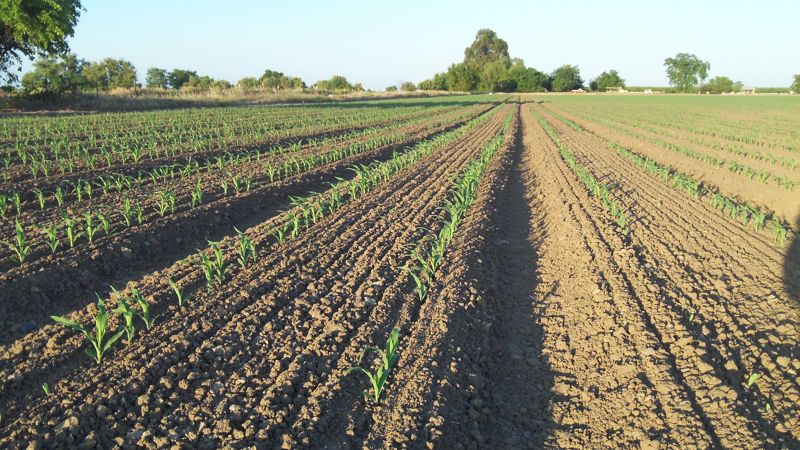
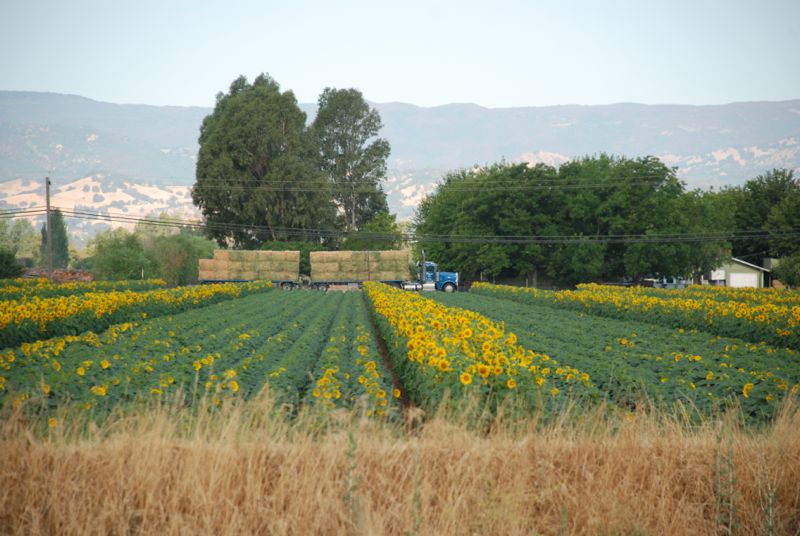
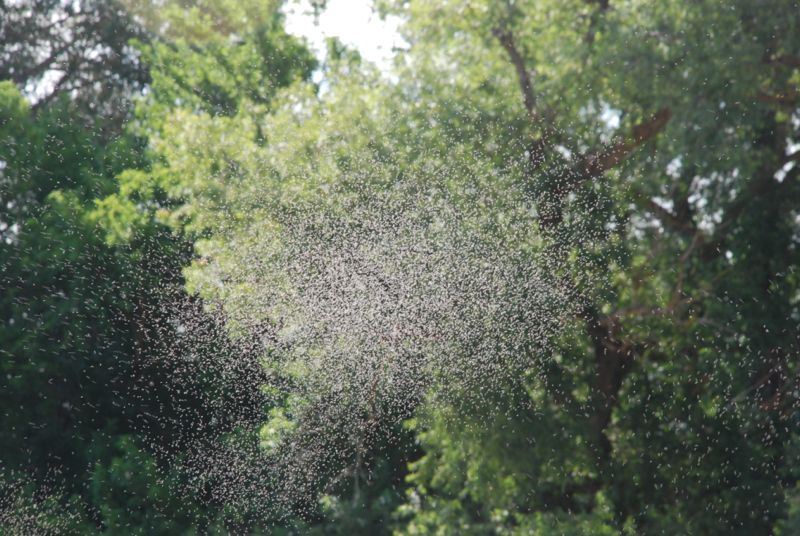
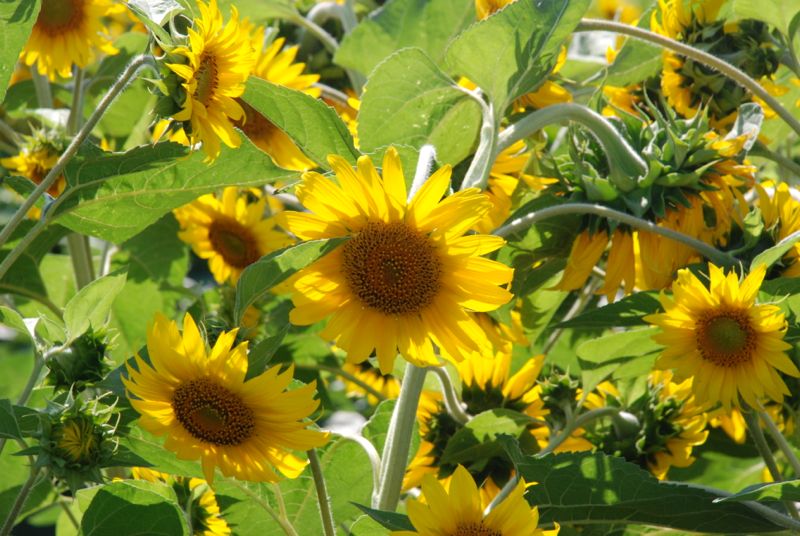
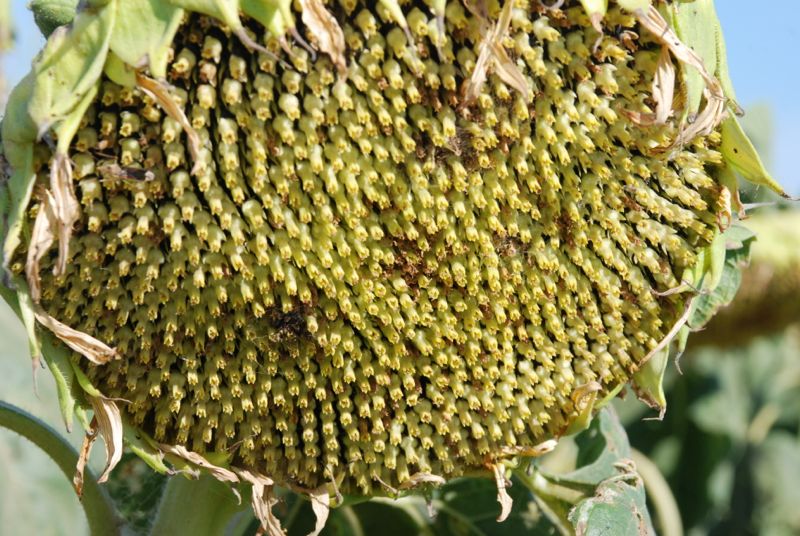
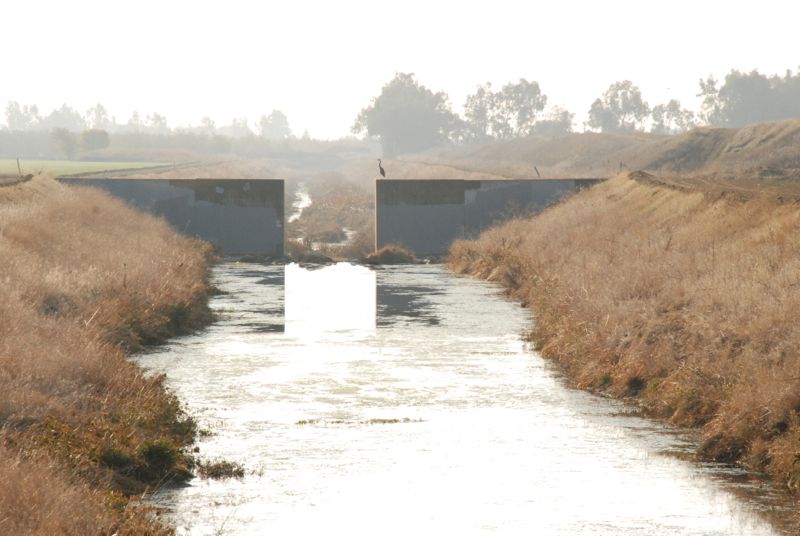
I just wrote a post using photos that I took Across the Road from our mailbox. I started that to document the changes in the field that we see from our house everyday. The photos themselves are kind of boring and not all that attractive. Here is some of what I see when I walk Across the Road. (And here is Rusty’s version.)100_0485 Last year the main crop was sunflowers but there is a corner of land owned by someone else. Last summer’s crop on that parcel was corn.DSC_2773 Hot dog.DSC_2777 Irrigating the sunflower field.DSC_3926 Pollenating the sunflowers.DSC_3929 Stickers in someone’s fur.DSC_3931 Sometimes our road seems like an alfalfa highway.DSC_3950 Swarm of bugs.DSC_3954DSC_3968 Another hot dog. DSC_3984 Irrigation water. This sure looks appealing when it is 100+ degrees.

DSC_4012DSC_4025DSC_4457DSC_4764 Signs that I’m not the only one Across the Road.  DSC_5755DSC_5771DSC_7395DSC_7769 Hope of the next harvest.

Last Year’s View Across the Road

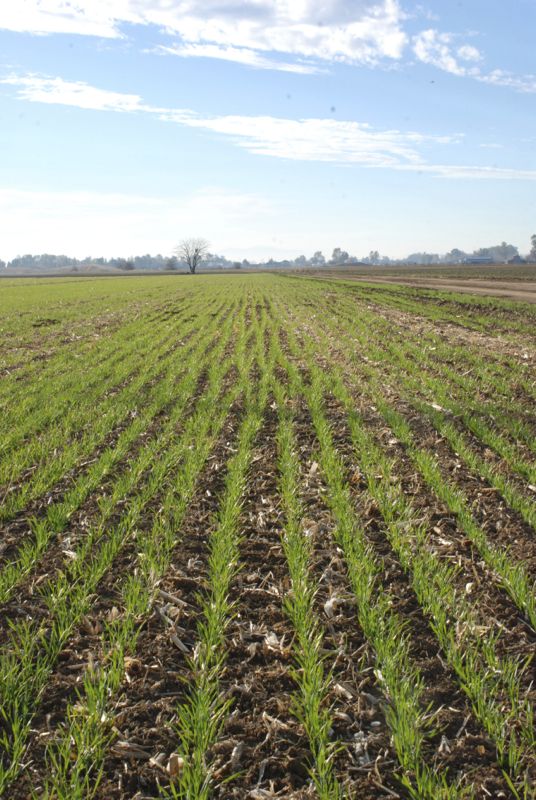
We don’t have very much acreage, but across the road is a much larger parcel. We appreciate living here and being able to walk, run the dogs, and just a enjoy the view across the road. In 2013 I planned to take photos from the same location, of the same view, and at the same time each week to document the changes through the year. You probably don’t mind that it didn’t work because who would want to see 52 photos of the same thing? This field has been planted to alfalfa for several years but in 2013 there were sunflowers. Here is the year Across the Road:

1-10 January 101-25 January 251-31 January 313-7 March 73-26 March 264-4 April 44-11 April 115-5 May 55-21 May 215-28 May 286-13 June 137-4 July 47-12July 128-8 August 89-30 September 3010-10October 1010-18October 1811-24 November 2412-31December 31

There you have it. I stood at the mailbox for each photo. But the photos are obviously now always the same view or even using the same camera.

The most striking thing in my mind is how dry it was last year. The Central Valley of CA enjoys a Mediterranean climate which means hot dry summers and cool wet winters. We rely on winter rainfall to replenish aquifers and reservoirs to provide the water that keeps the valley from being a desert in the summer. This link shows graphs of the average precipitation and temperature for our area. According to accuweather.com the average annual rainfall for Sacramento is 18.5″. We have had only 30% of that (5″ in all of 2013). The hills (and the field across the road) should be green right now with the growth of the annual grasses that germinate from fall rains. Grass started to grow with each of the two (only 2) rainy days that we had but has mostly dried up.

On the bright side, I’m not slogging through calf-deep mud when doing chores and we don’t have to run the sump pump to keep the the water heater in the basement from flooding.

Hoping for a wet 2014!

Early Morning Sheep Portraits

I usually have my i-phone (camera) with me but was glad I took the real camera to the barn this morning.Celeste 873That is Celeste in the doorway.Alison 11057 AlisonSummer 0899SummerRoxi 964RoxiVentura 11007Ventura and SonataLaura 706Laura is the third oldest ewe here. She is not really that old at almost 7 years.Phyllis 514Phyllis is an 8 year old lilac ewe.EarsThis is Ears, the second BFL-cross that I have kept.FaulknerHere is Faulkner, the BFL ram. He gets to be “clean-up” ram and is out with all the breeding flock now.DSC_6112    I used red the first two weeks of breeding (starting October 1) and green the second two weeks. Almost all the sheep are marked with red and maybe a 6 or 8 with green. Faulkner has been with them for about 5 days and there are 3 yellow marks so far. Marilyn 13007 left   Marilyn is my favorite of the lambs I’m keeping this year.AmaryllisAmaryllis


Odds & Ends…or what do I do all day?

I am always behind, but this year I feel more behind than ever in the weaving department. I read the blog of a production weaver I know and she commented that any weaving she does now through the end of the year is “extra”. Everything for this season’s sales is finished. What? I should have woven my scarves and blankets LAST January? I thought about it. I also thought about it in March and July and August and September. I knew that I’d get to it in October. What have I been doing when I should be weaving? Here are a few examples beside the obvious sheep farming, Lambtown, etc.field trip

Last week I hosted a field trip of middle school home-schooled kids and their families. We spent a couple of hours in the barn and at the shop. After lunch I guided them through a needlefelting project.DSC_6006  They all made up their own designs. This is one student’s work. Cute, huh?

I taught a Learn to Weave class a couple of weeks ago.IMG_8020

Here is the scarf woven by a brand new weaver. She used Zephyr Jaggerspun yarn and doubled it in warp and weft. It turned out great!weaving from classOne of the students couldn’t come back on the second day of the class and she finished her scarf today. This is a close-up. She used Jaggerspun Maine-Line yarn.IMG_8022 I taught three students in a Rigid Heddle Scarf class, which, by the way, I will offer again once in December. No more other classes until January. IMG_8039 This is the blackberry jungle growing (for those of you who know the farm) just north of Faulkner’s pen–in fact part of this IS the fence-line for Faulkner’s pen. There is an engineered septic system under those shorter blackberries that is supposed to be maintained and inspected every year. IMG_8045 This is what I did on Sunday after working another several hours on the final Lambtown reports and finances. There is still a lot of blackberry work to do but at least the septic guys can get to the valve covers.fd Farm Club was here all day on Saturday and helped with the list of chores on the clipboard. We didn’t get to all the barn cleaning, but did a lot of other stuff. Maybe I’ll ask Rusty to write a post about that since he hasn’t done much writing lately.pomIt’s the time of year that the pomegranates need to be picked or they will split (if we ever get any rain that is).

When I take the dogs for a run across the road I see all the black walnuts going to waste. Here is what to do with them.black walnuts Boiling black walnuts.DSC_5782 

Add white yarn.DSC_5931End up with brown yarn.

Maybe I’ll get to the loom tomorrow…after I take my kids to the airport.

What did I do to deserve such Good Friends?

Farm Club (and others) came through again. Expanding the shop has been an ordeal that started five months ago. The last step was to paint. Farm Club friends volunteered to help so I set a date. If they hadn’t offered I’d probably still be procrastinating.IMG_7533 I have been looking at these paint samples for months and finally chose one.IMG_7534 But first everything needed to be primed. This is where the new section joins the old. IMG_7535 This is part of the original  building. It’s actually an old mobile home, which hasn’t been mobile in decades. I painted it about a dozen years ago after we first moved here. IMG_7540This is at the south end. The window trim on the south end and much of the east side was rotten. The wood beneath was also rotten in some places. It has been very discouraging and overwhelming–trying to figure out how to deal with it. (Don’t look up dry rot on Google unless you want to get depressed.) Some of this still has to be fixed before the whole project is completed, but we moved on with what we could do. IMG_7537  It was extra nice that a couple of husbands also volunteered to help. The more the merrier!IMG_7542 IMG_7546 IMG_7547 I don’t know if Mary overcame her dislike of ladders, but she persevered anyway to paint the eaves.painting photo 1We worked all day yesterday with brushes to get that primer into the wood. Today I got out the new paint sprayer.

I don’t have photos yet of the completed job. There are still windows to fix and more trim to paint, but I am so grateful to my friends for their help that I wanted to write this now. In addition to giving up their weekend days, most of them had to drive an hour to get here.  I can’t thank them enough. There will be another post when the job is completely finished.

Things Learned While Moving a Hay Stack

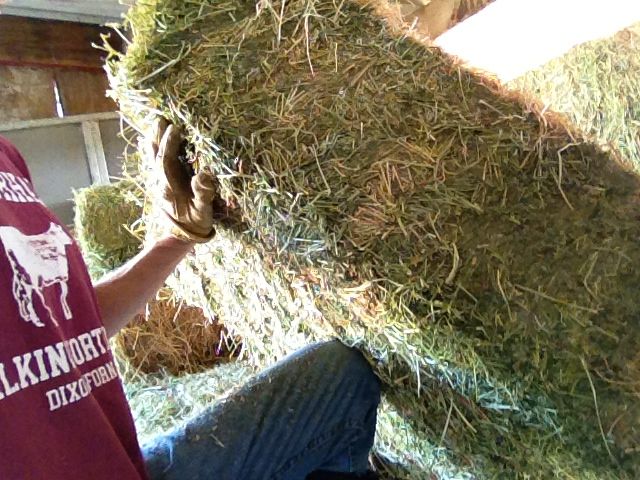
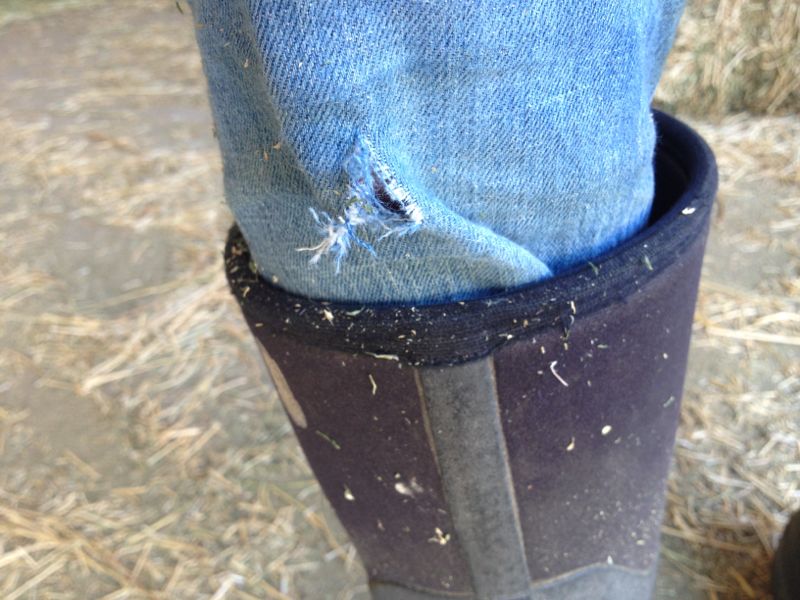
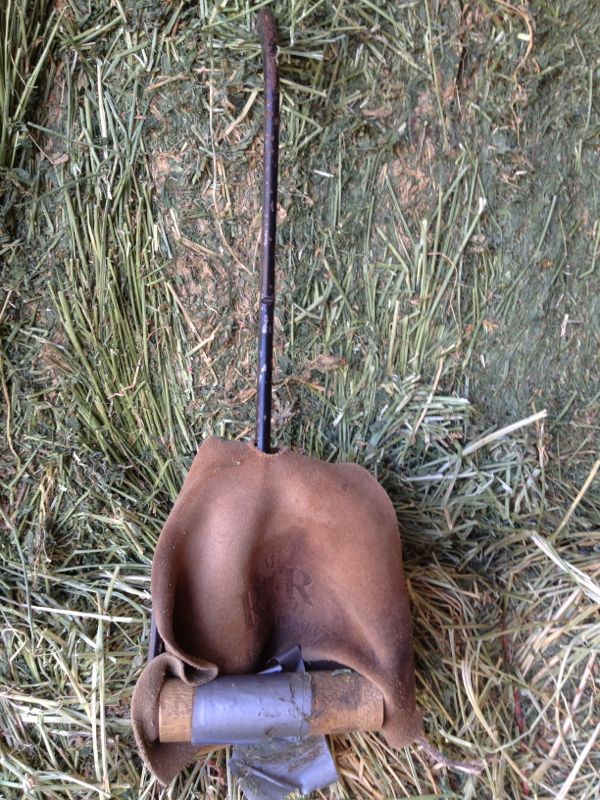
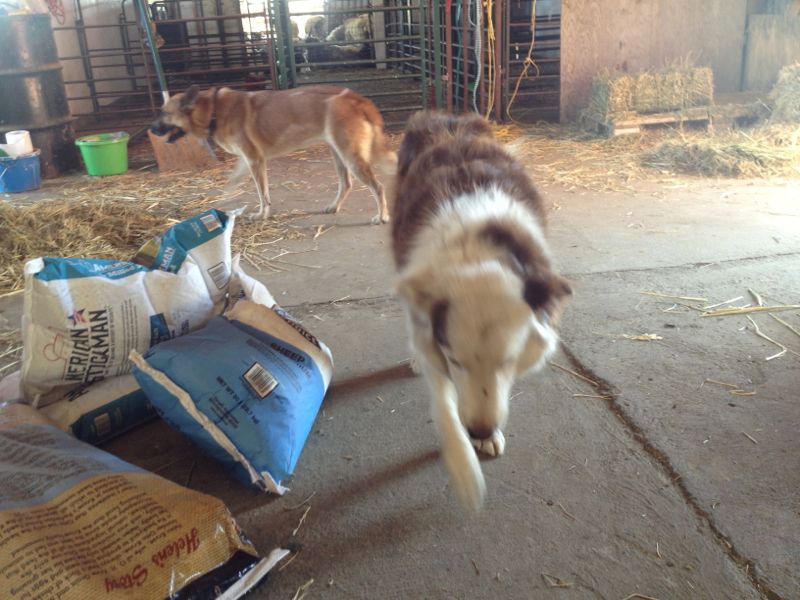
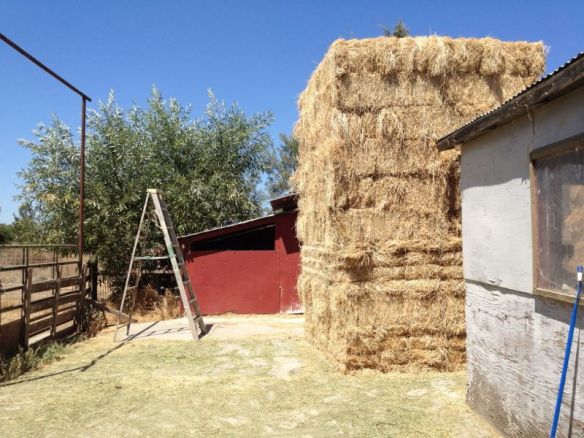
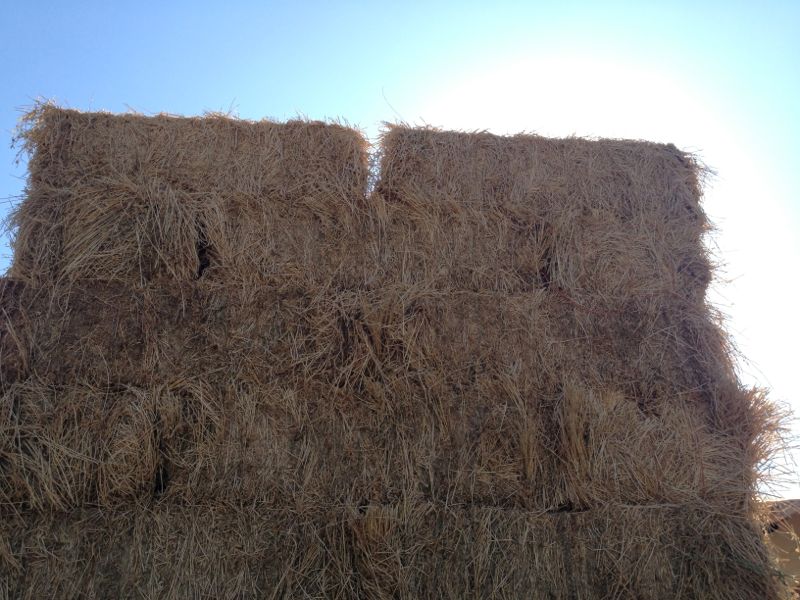
IMG_7478 The view from the top is interesting, but not always reality.IMG_7479Gravity is your friend…IMG_7486…but when that doesn’t work, use leverage. IMG_7481 Don’t wear your best jeans.    IMG_7492You get what you pay for. (Don’t be fooled by the duct tape. This is a great hay hook.)IMG_7480IMG_7488Be aware of your surroundings.IMG_7495 Dogs aren’t much help when moving hay.IMG_7490Use brains when you don’t have enough brawn.IMG_7496 That’s 80 bales of hay, about 100 pounds each. If you don’t use it, you lose it. But if you use it too much, go for the ibuprofen.IMG_7497One down, more to go.IMG_7482