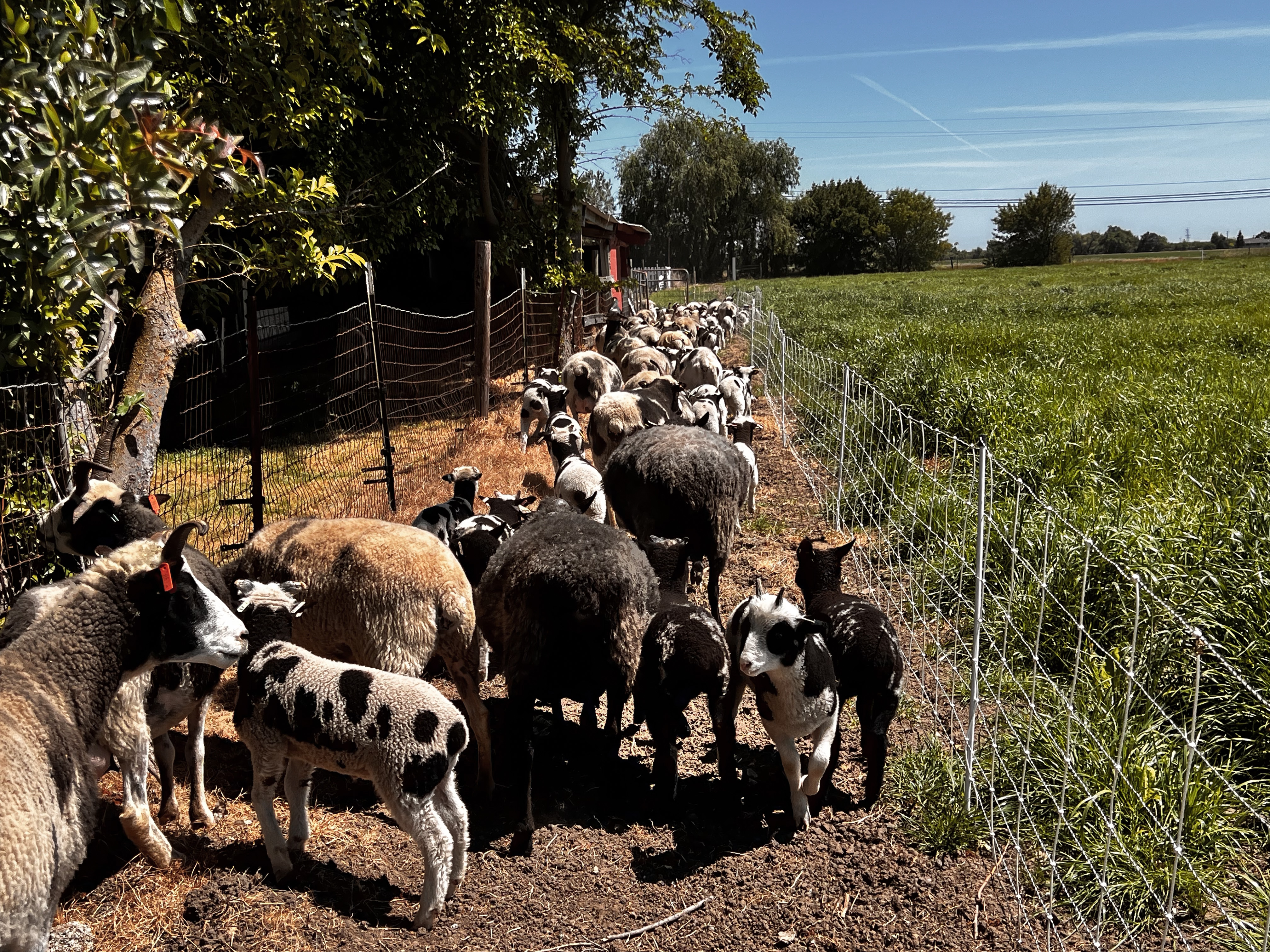
The previous post showed how this looked when the sheep went in. The growth of the annual rye was so fast at this time of year that we needed to move them through fairly quickly.
Here is another view of that same area (left) before removing the fence to graze the next section.
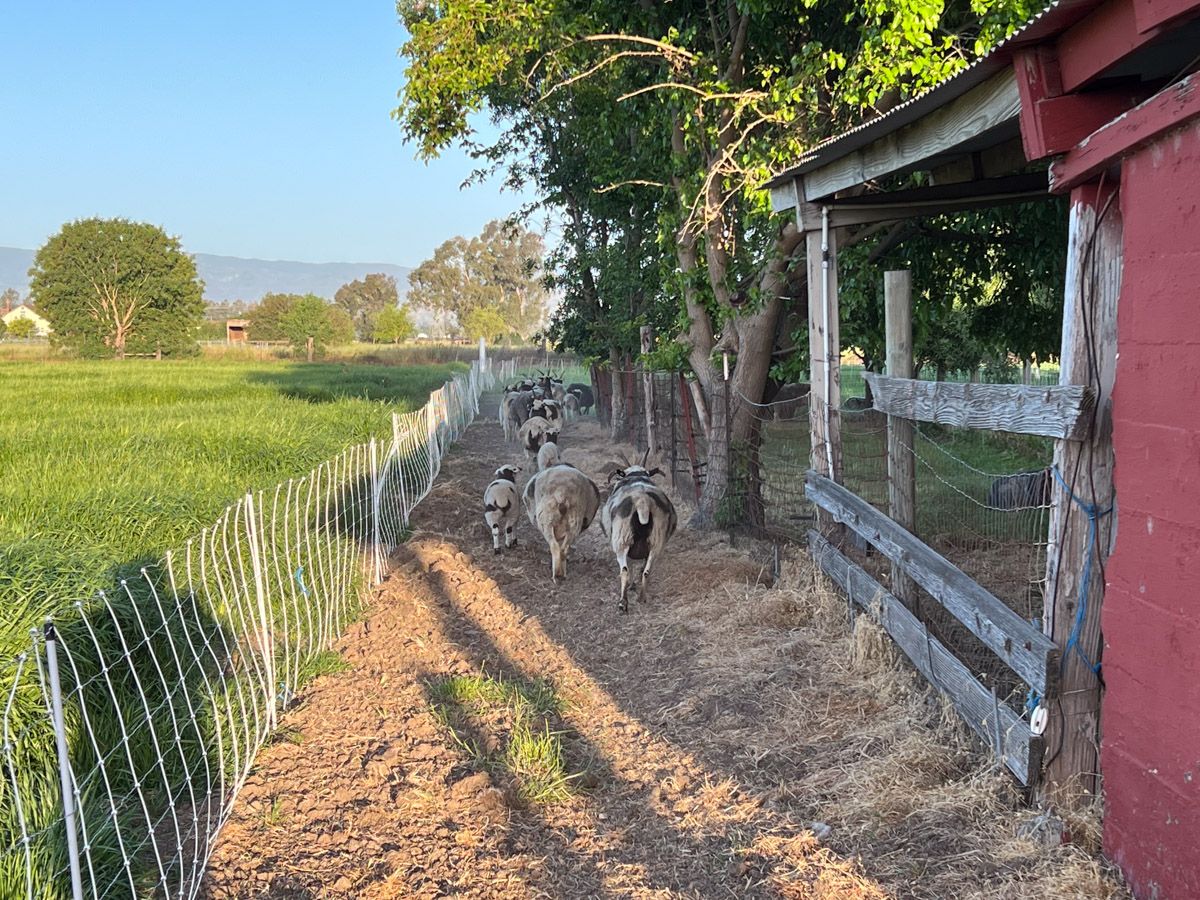
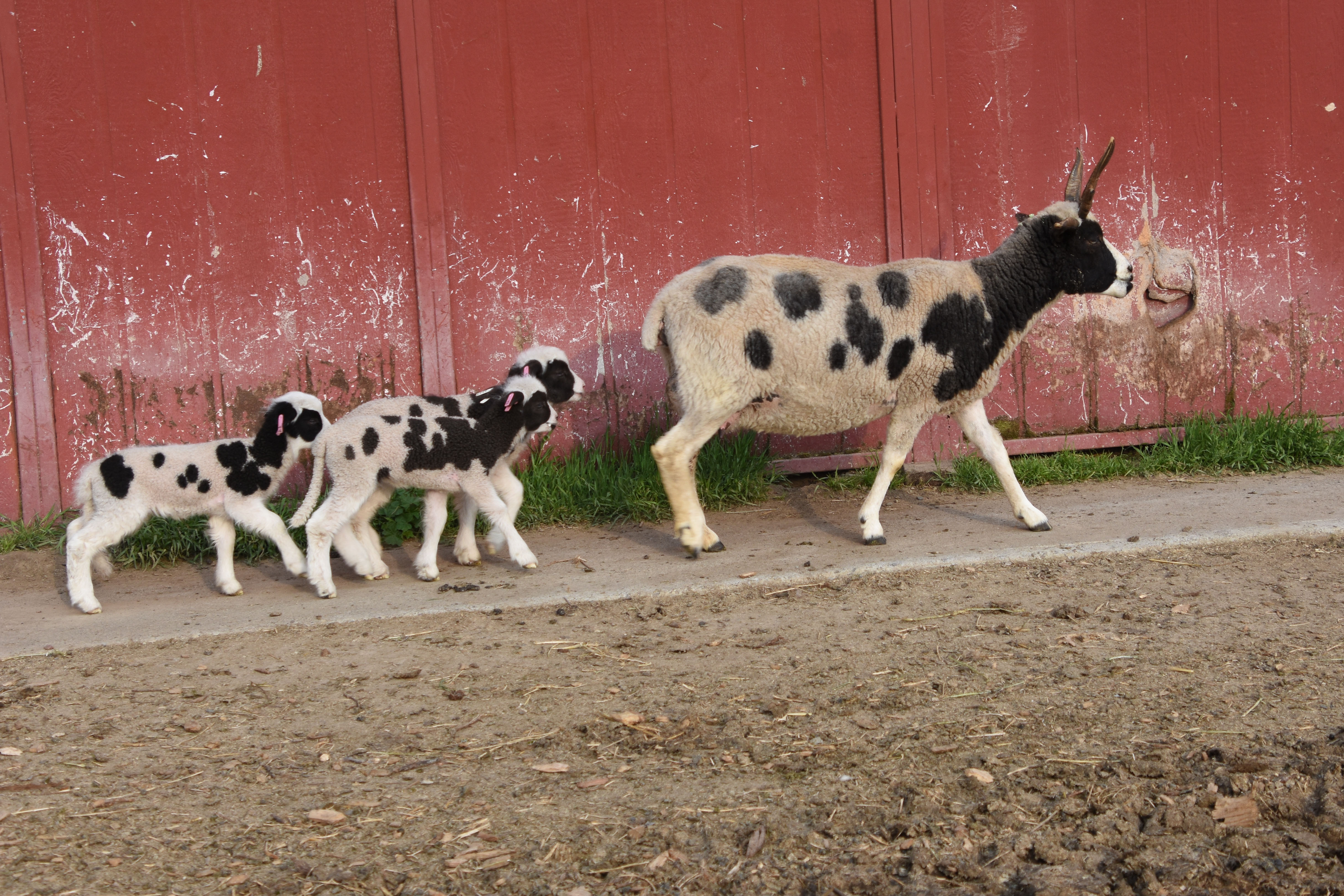
The sheep trail out from the barn to access that field.
It was a challenge to set up fence and graze this with the grass so tall. Thanks to my brother for coming to help set this up.
This was the last day before I had to be gone for four days. Dave came every day while I was gone to get the sheep out on new pasture.
Way back in January I wrote the 14th Pasture and Irrigation Renovation post. I like my posts to be in order, but now I have skipped some important updates. Too many photos. Too confusing. Too much other stuff going on–lambing, teaching, deadlines, etc. The whole point of this renovation was to feed sheep and make it easier and more efficient to do so. If you look back at that linked post you’ll see plants growing, but they are small and there is a lot of bare ground. Fast forward past winter rain, warming temps, and 3 months. I’ll change the name of this series to Grazing and Irrigation.
The original plan when we applied for funding was that we might not be grazing for a year. It was evident by April that the pasture needed to be grazed NOW. I was committed to a teaching gig at the end of April and was going to put off grazing until I got back. Dan was not able to work on this only two weeks after a knee replacement. My brother, Dave, knowing how important it was to get started with this, offered to help set up the grazing before I left and handle it while I was gone.
A major problem was that all the permanent interior fencing had been removed at the beginning of this project. We would have to rely on electric net fencing. We gathered all the lengths of net fence that were stored in the barn.
We spread these out to figure out what we had and in what condition it was.
Dave made a plan and laid out fence, beginning in the northwest pasture, the one we call the Horse Pasture. Grazing started April 20.
This gives an idea of how thick the grass was. The seed mix we used had three forbs (clover, birdsfoot trefoil, and chicory) and three perennial grasses. There is a lot of clover and a moderate amount of trefoil. I don’t identify any chicory and all the visible grass is annual rye.The seed already in the soil completely overwhelmed any perennial grasses that might have started to grow and was covering the clover as well. This is one reason we needed to get going on the grazing.
Dave made strips going north-south and we blocked the sheep into a portion of the first strip. The idea is to get them to eat one area down more thoroughly before moving them to the next.
With no fences left in the pasture Dave had to create a lane to direct the sheep from the barn to where we wanted them.
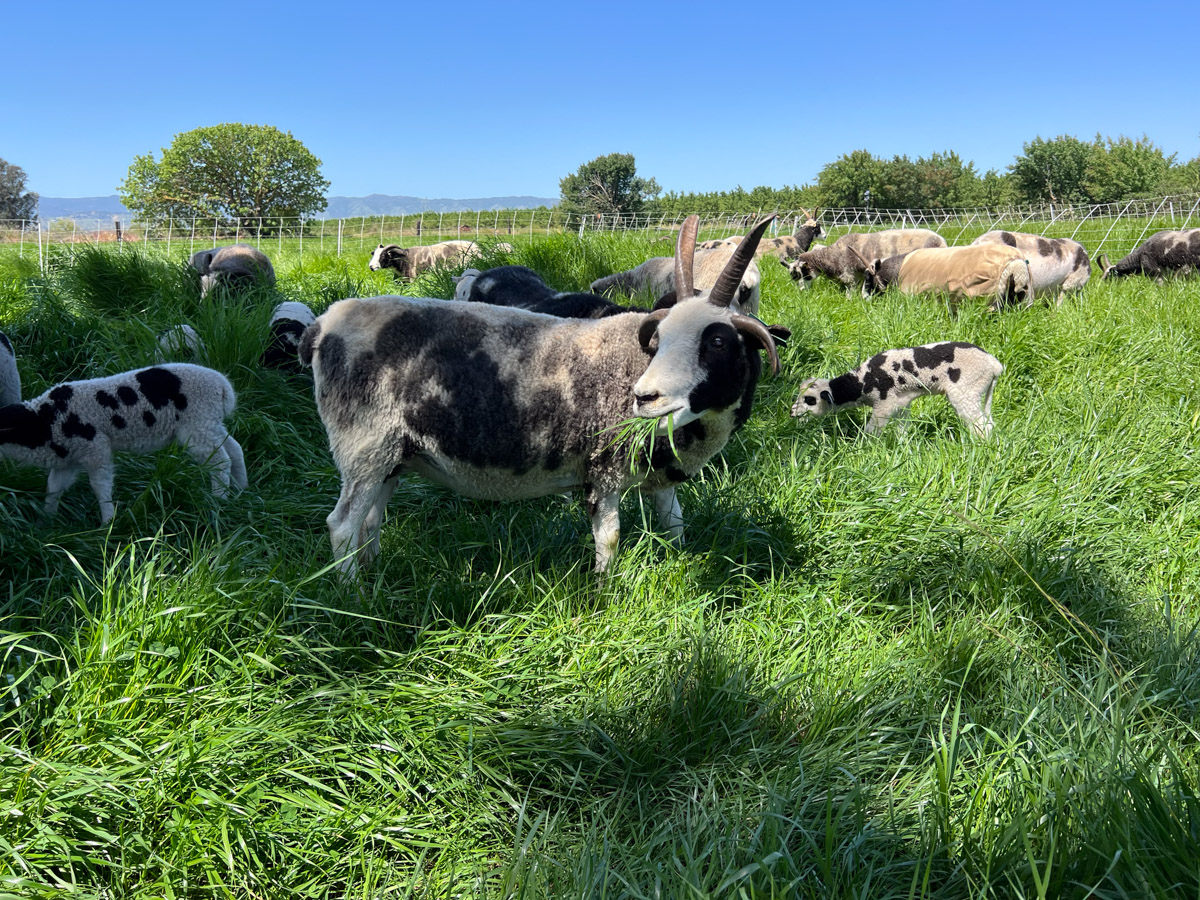
You can see in this photo how the tall grass is trampled more than eaten.
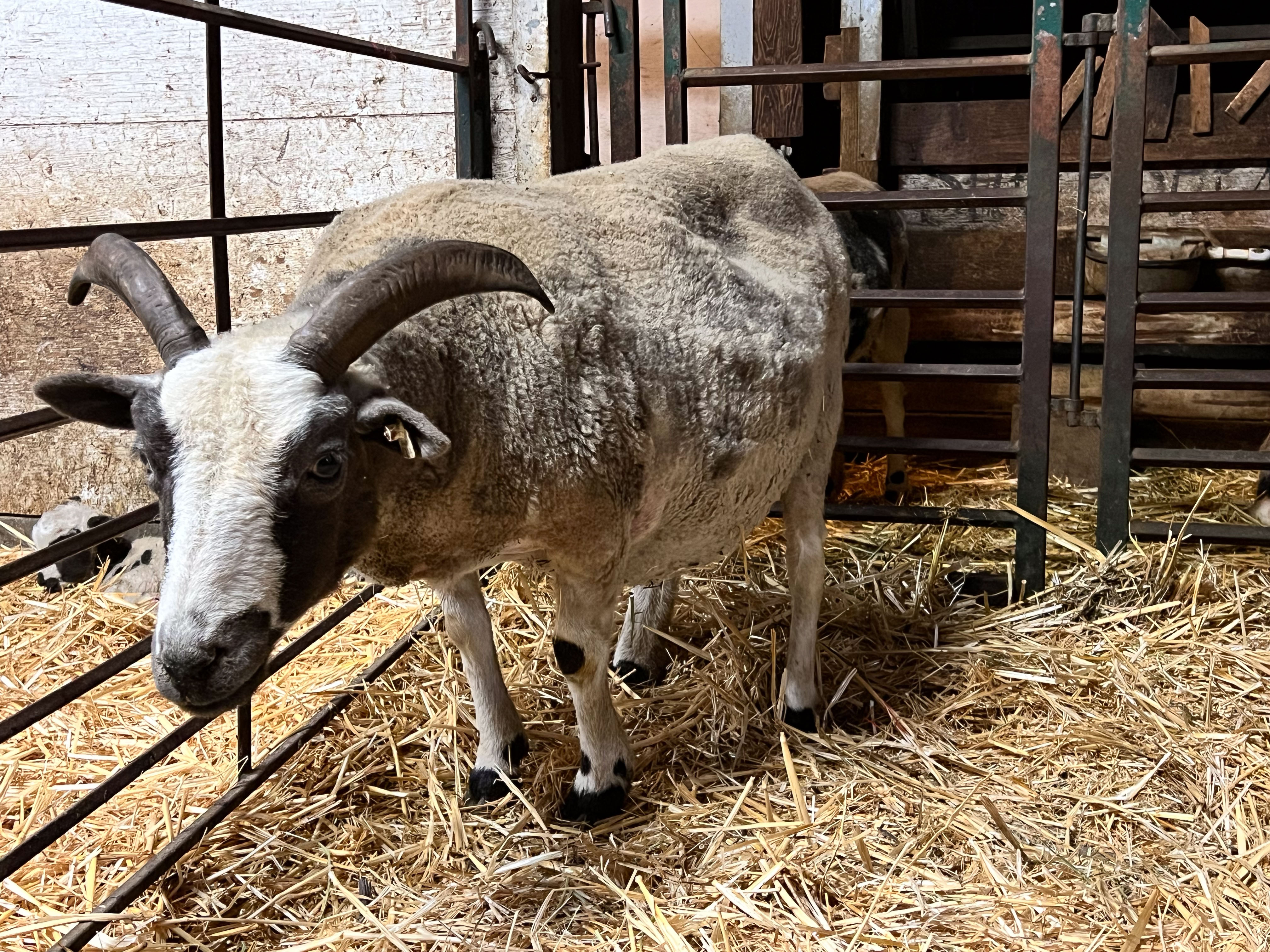
This ewe may have not got the message about eating the grass instead of wearing it.
There is no drinking water in the pasture so at some point the sheep go back to the barn for water. This is something we have to work on.
Most of the lambs came as planned during the month of March. There were some late lambs, also expected, but not originally planned. That is because I unexpectedly acquired a ram in late November.
Ginger Lynn’s Eli was sired by a Meridian ram that I sold a few years ago.The breeder of Eli sold him to someone who unexpectedly needed to re-home him due to a move, so we drove to the Redding area to pick him up. When I got him here I decided to put a few ewes with him. We hadn’t bred the whole flock this year because of the pasture renovation project that has been described in other posts. A 5-month gestation means lambs in late April or early May.
Here is Eli after shearing in January. He is not here anymore because I returned him to the breeder who wished she had not sold him to the other person. I hoped for some nice lambs.
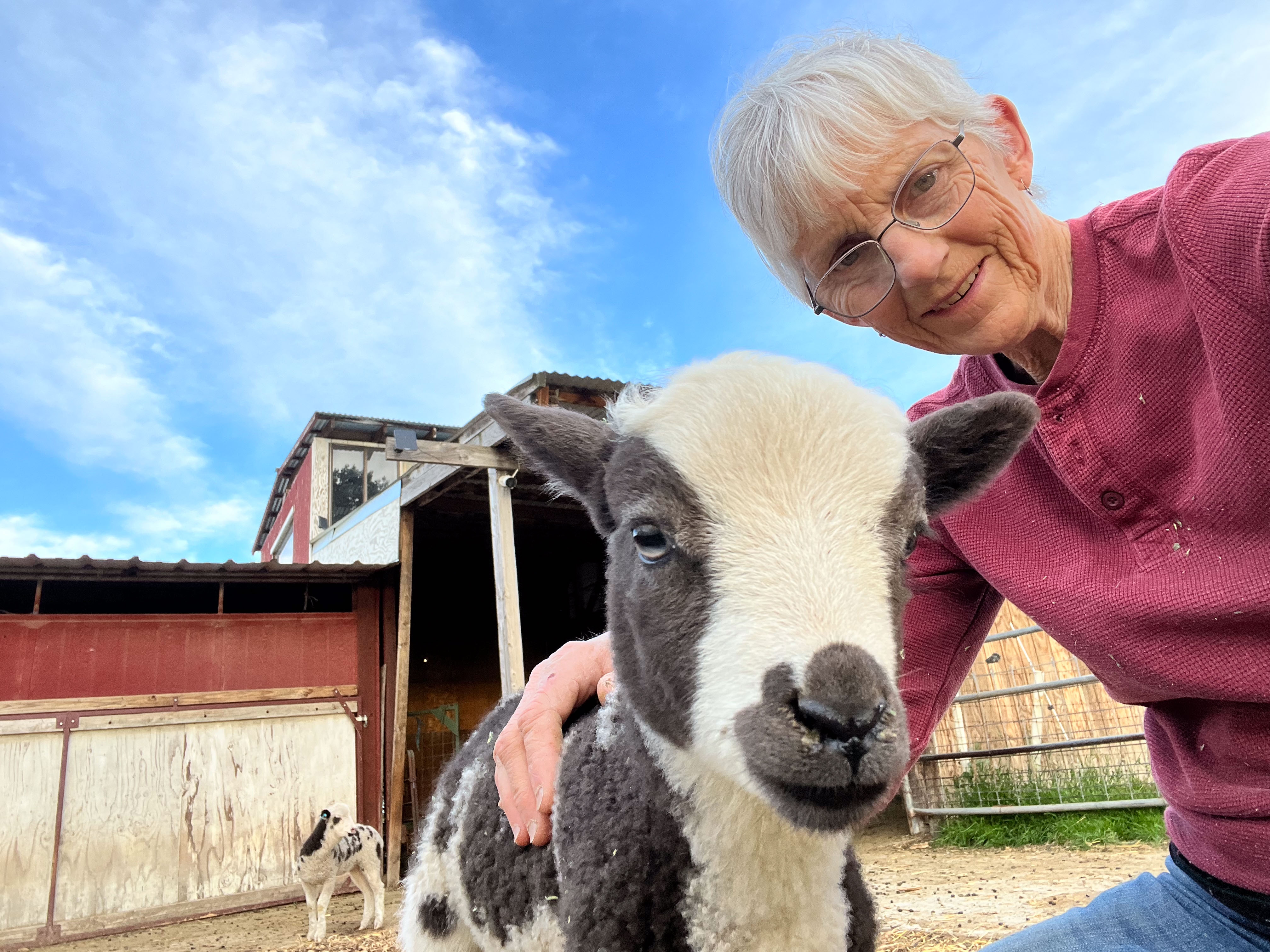
This is lamb # 2555 born April 27, the only ewe lamb from this group. Ginger Lynn’s Eli x Meridian Belle. Belle is my granddaughter’s sheep and this lamb is sure pretty, so she will stay and I’ll let Kirby think of a name.
Jasmine was next to lamb with a ram lamb but I can’t find a photo right now.
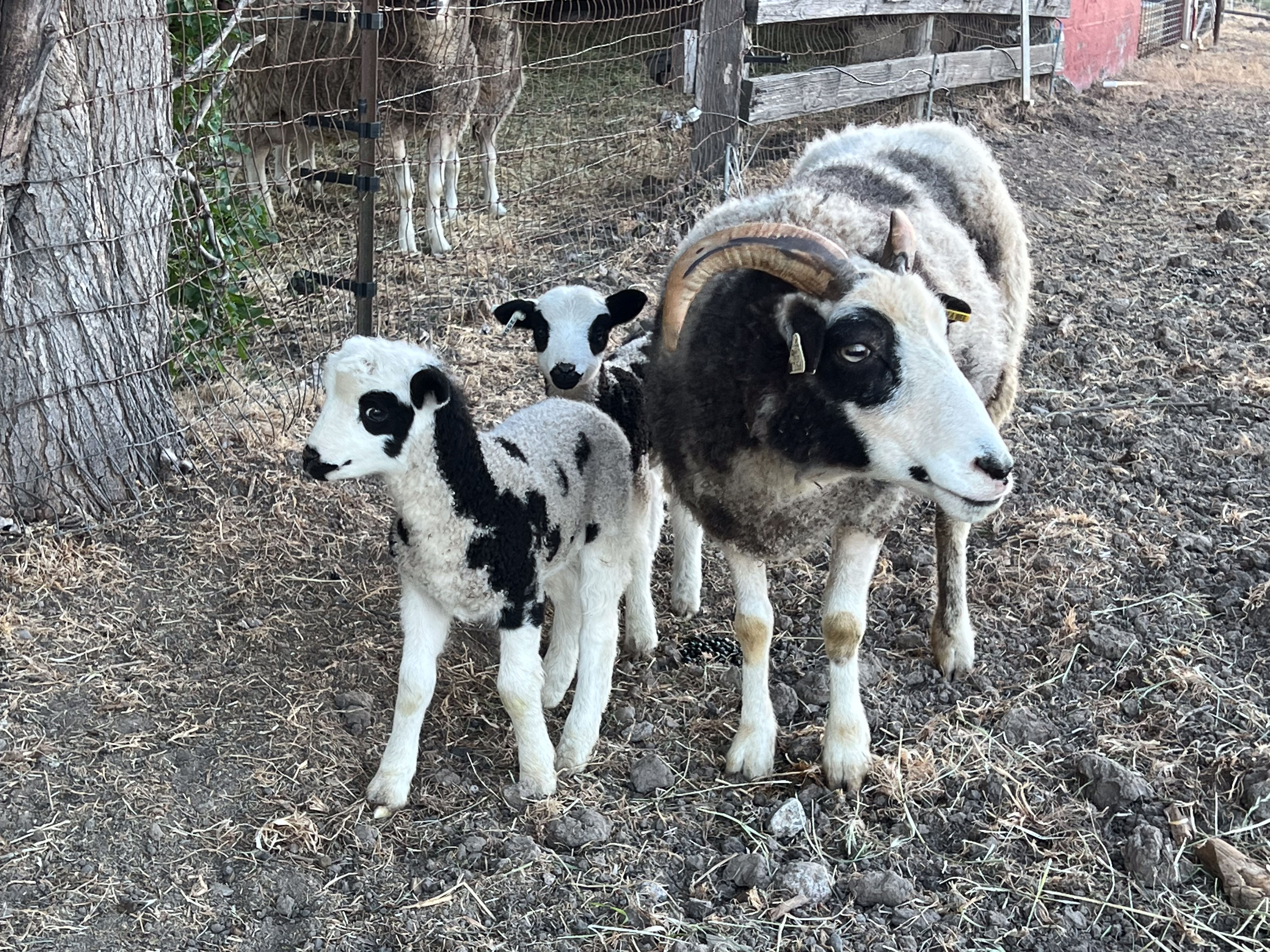
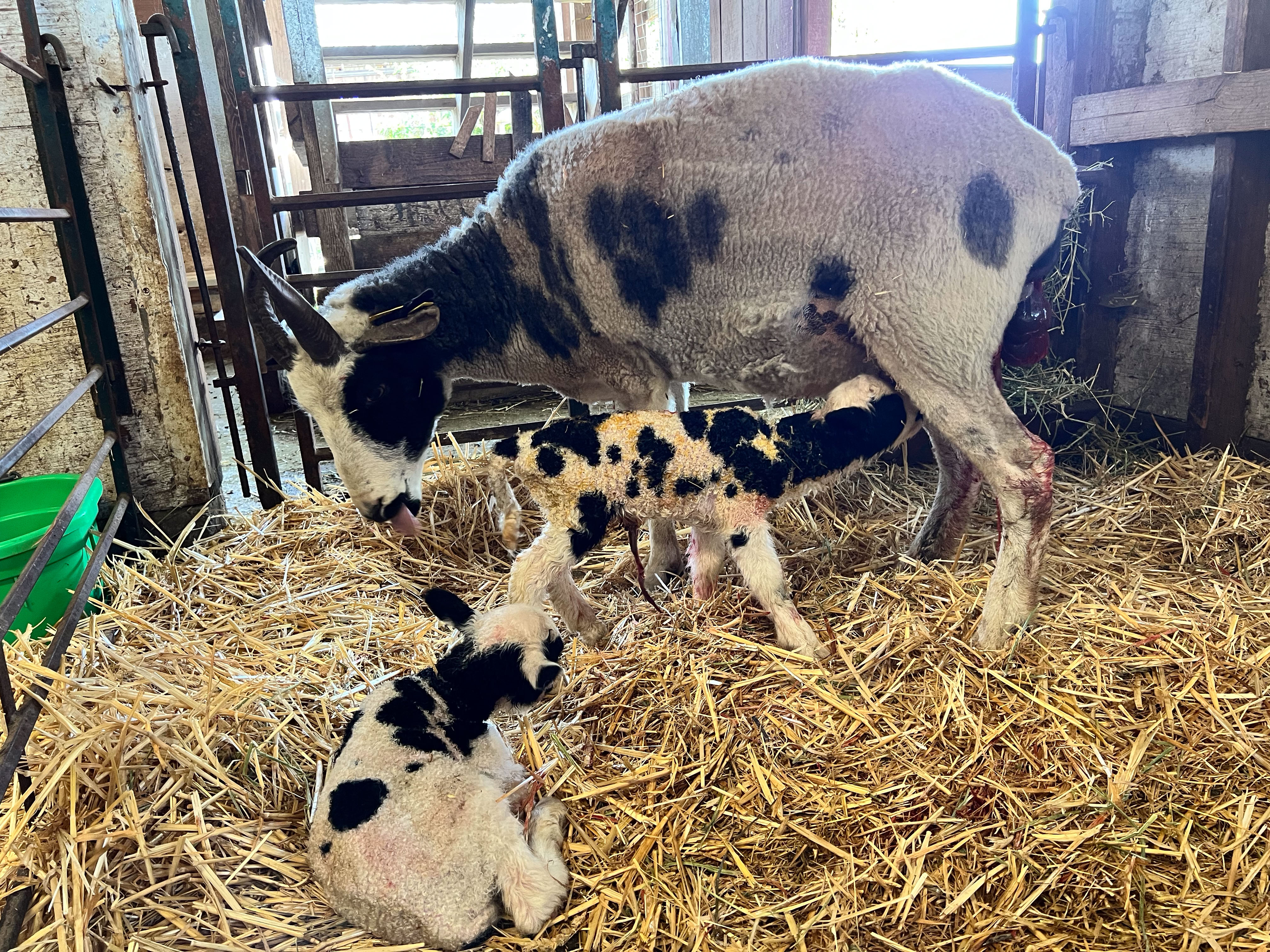
Bide a wee Hallie is ten years old and these will be her last lambs. These are two ram lambs, one with 4 horns and one with two.
Here are the last entries for the Lambing Board. Hallie’s lambs were 12 and 10 pounds!!
I’ve been trying to get the lamb pages on the website updated, so most of the photos I’ve been taking are of individual lambs…and trying to make sure I can read ear tag numbers. If I go out earlier in the morning I sometimes find lambs bedded down next to their moms. There were five sets of triplets this year.
This is Janna with her three lambs–two rams and a ewe.
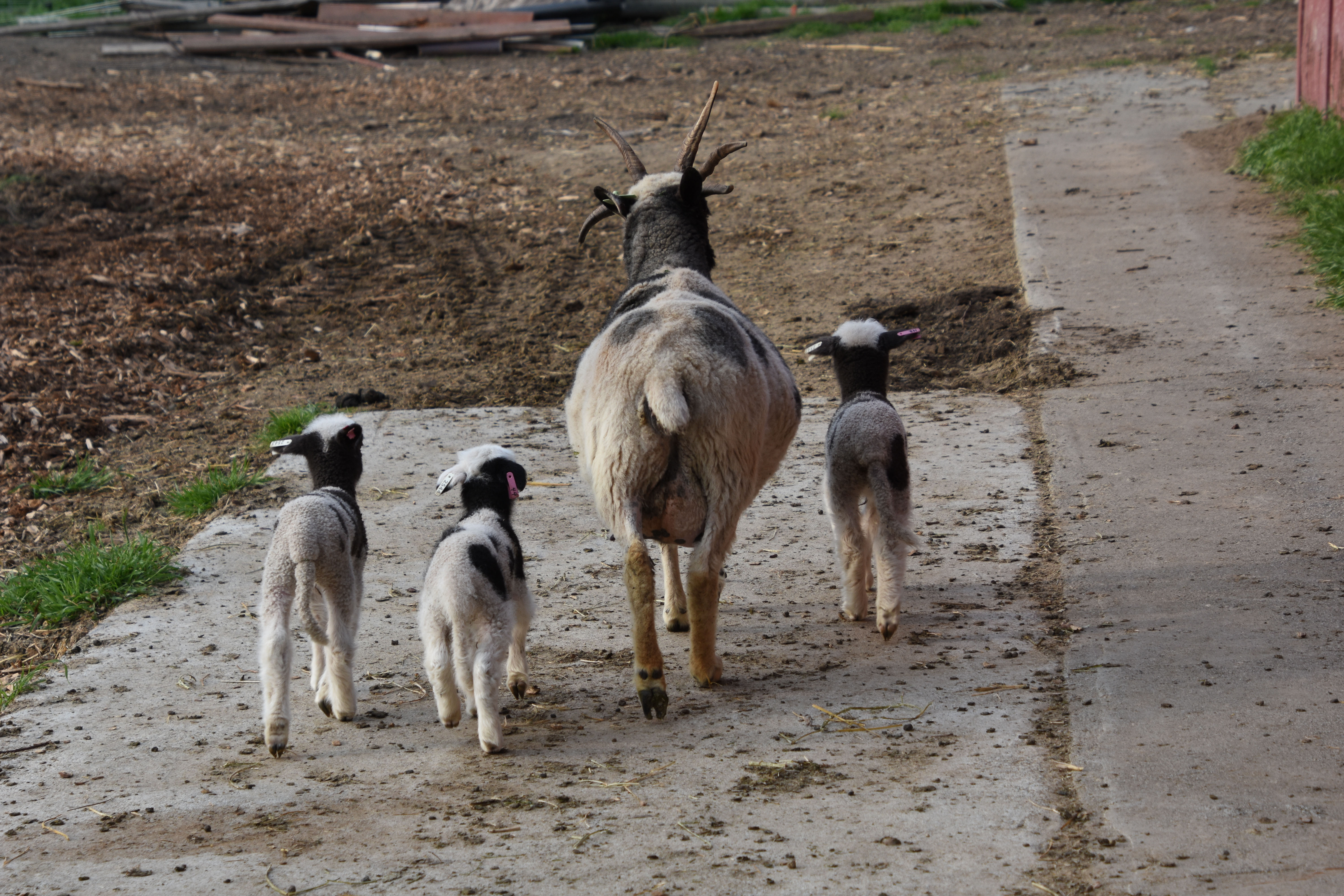
Bide a wee Trista also has two rams and a ewe. You can’t see the ewe very well–she is mostly black and behind the two spotted lambs.
Sweetgrass Tranquility with triplet ewe lambs.
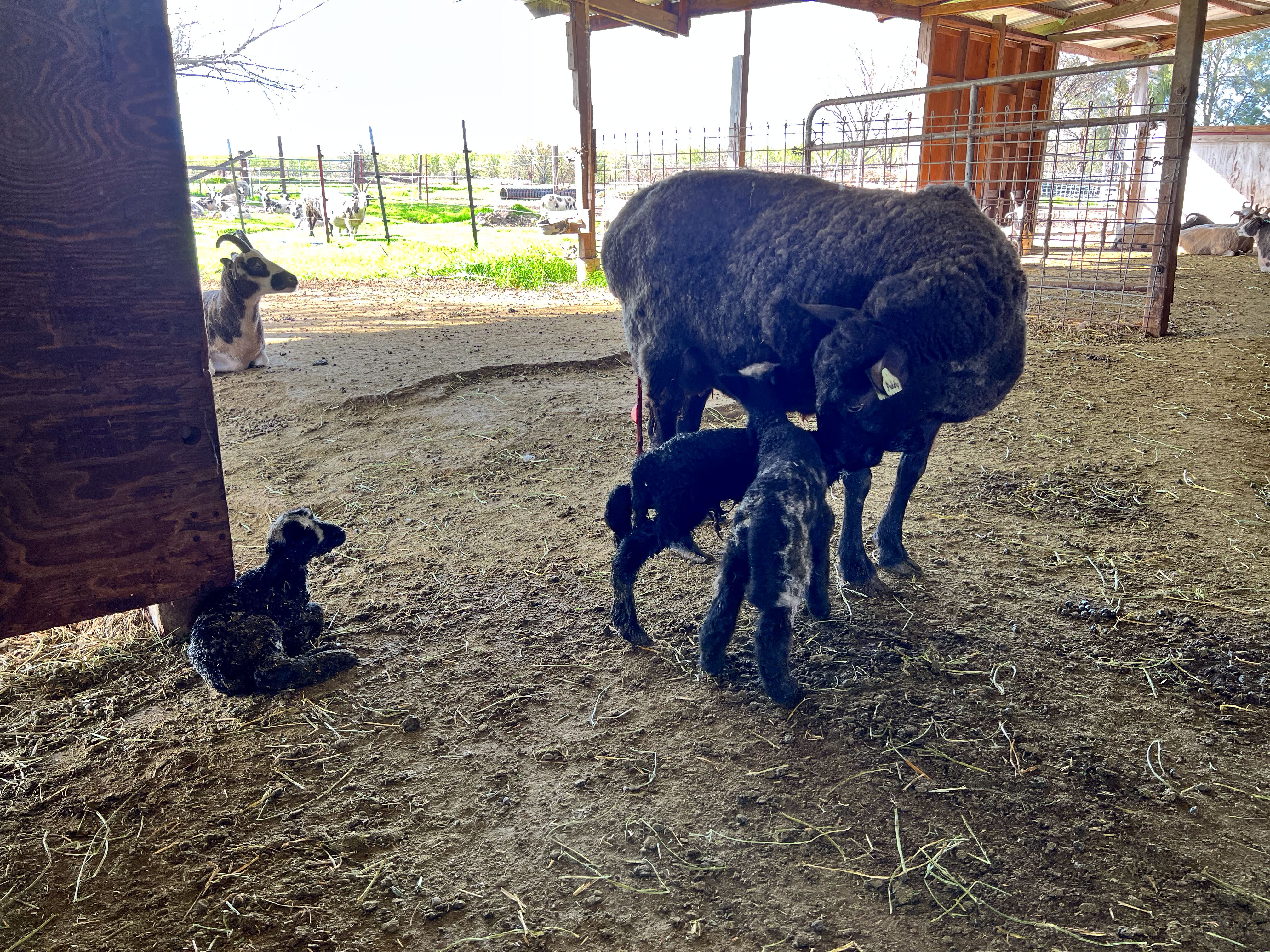
Addy with her lambs, the first of the season. Addy is a BFL/Jacob cross.
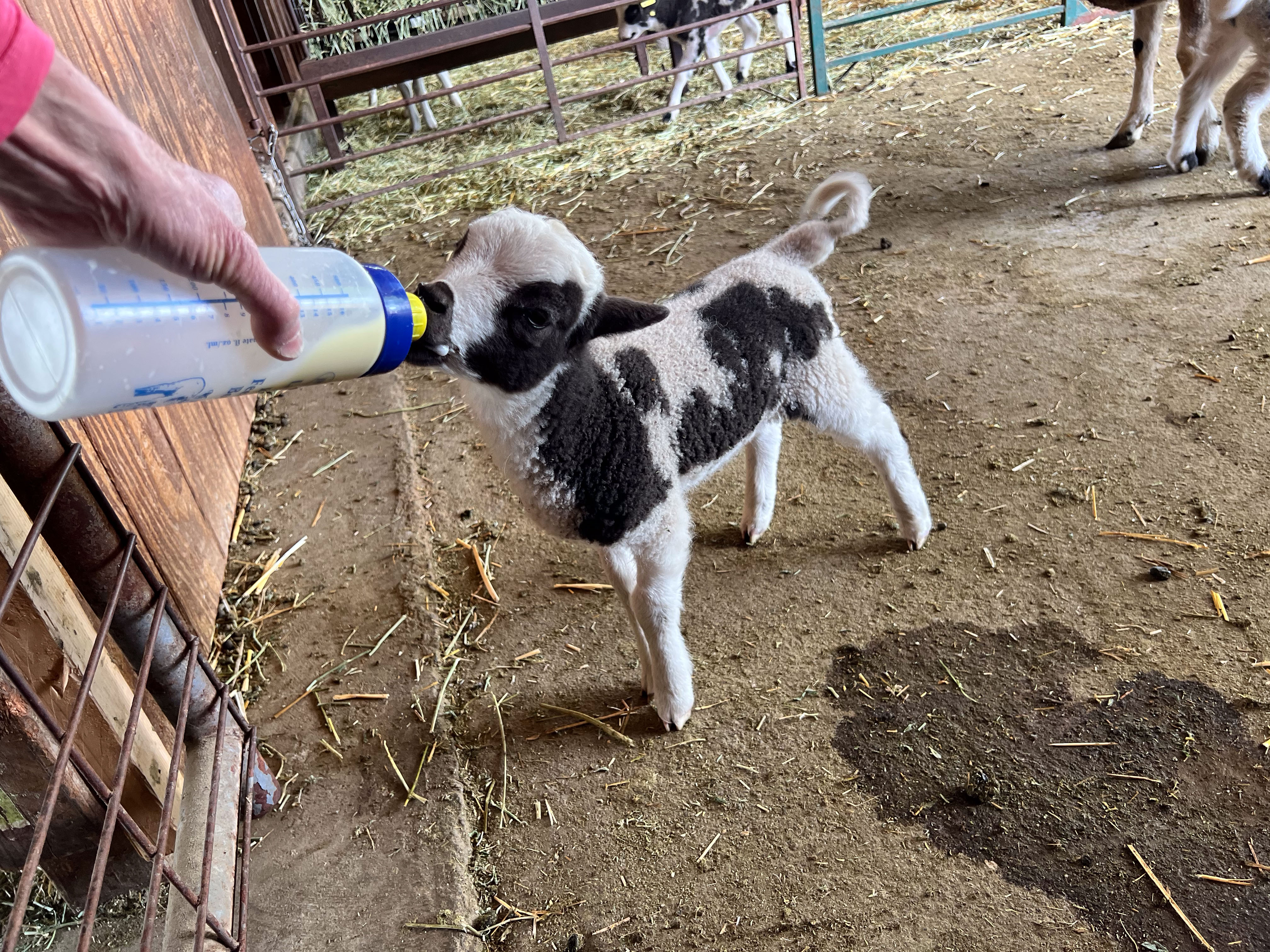
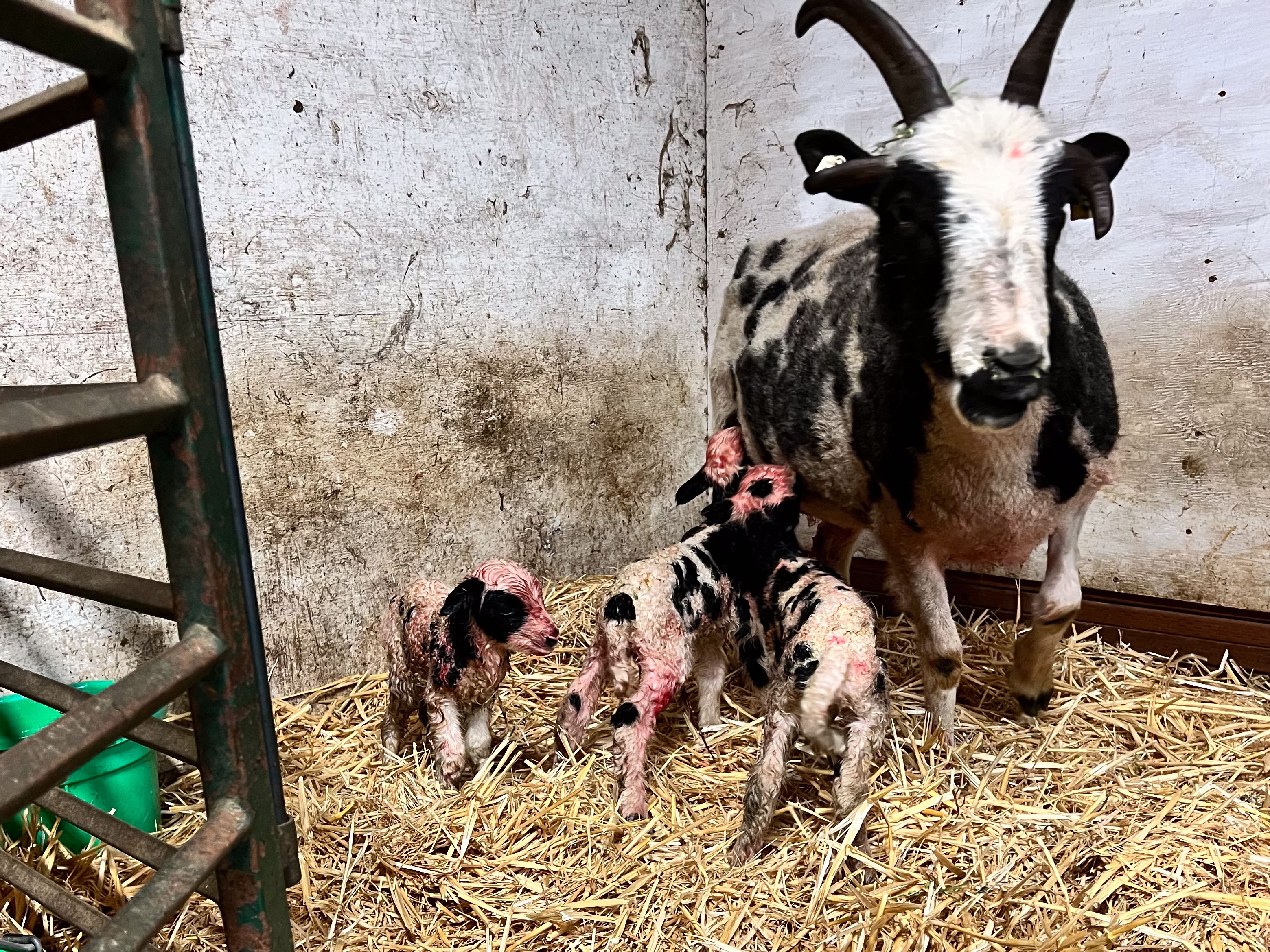
Patchwork Amara was the other ewe to have triplets, but Sparky required intervention and became a bottle lamb. Her story is here and she features in several of the posts since then. Her brothers are 2527 and 2528 on the ram lamb page.
I have lamb photos to share but not necessarily in order because I didn’t keep up as lambing progressed.
The last lambs of Lambing Season, Part 1, were born two days ago, March 31. Part 1? That’s another story, but there may be four ewes due to lamb at the end of April. This is Tamara with two ewe lambs, #2553 and 2554.
Bide a wee Trista lambed March 28 with triplets.
This photos was taken three days BEFORE lambing. Trista certainly carried that twenty pounds of lambs low. She is getting grain now to help her put some weight back on and supply enough milk.
This is lamb #2545 born to SilverRain March 21. Lambing had slowed down at that point.
The lambing board shows that there was a lot of action for about a week and then days between the later lambs. My granddaughter made the notes on the board before she left on March 25.
Sweetgrass Tranquility had triplet ewes March 19.
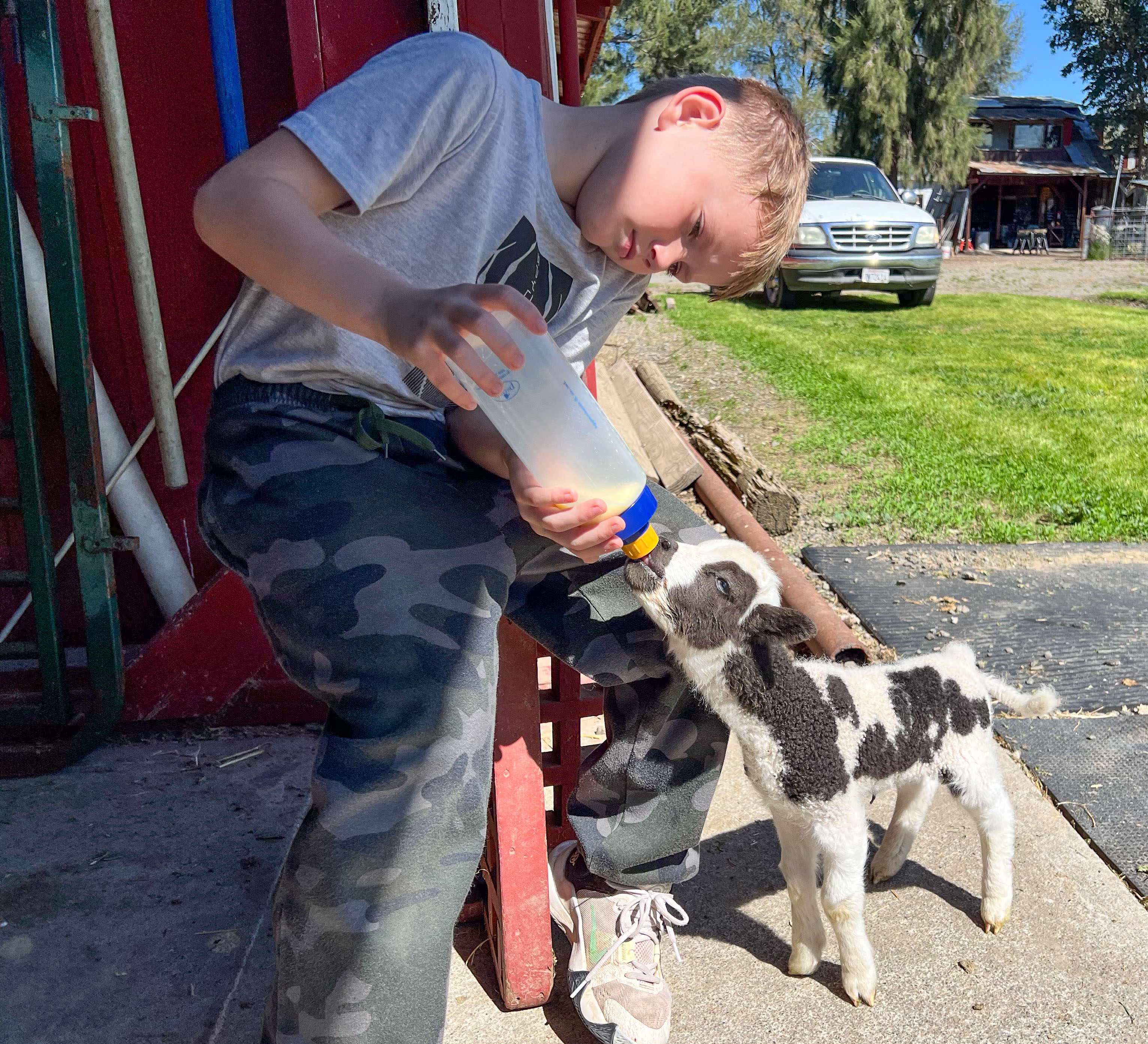
My grandkids were here for a week and shared bottle feeding Sparky. This is 8-year-old Kasen.
I was able to finish skirting and sorting the Jacob wool be the time lambing was over. This wool is now at the mill and hopefully I’ll have some of it back by the fall.
I’ve talked about this before–the seasons. Spring, Summer, Fall, Winter, and Lambing–right there between Winter and Spring. It’s a busy time. I wrote one blog post at the start and the one about Sparky two weeks into the season. It was an intense two weeks and now things have slowed down considerably. I’m waiting for three ewes to lamb by the end of the month.
March 9 three ewes had twins and one had triplets. This is Janna with triplets and Sandie and Beauty with twins.
The next day Juniper lambed with twins.
It was beginning to feel like the next new season–spring!
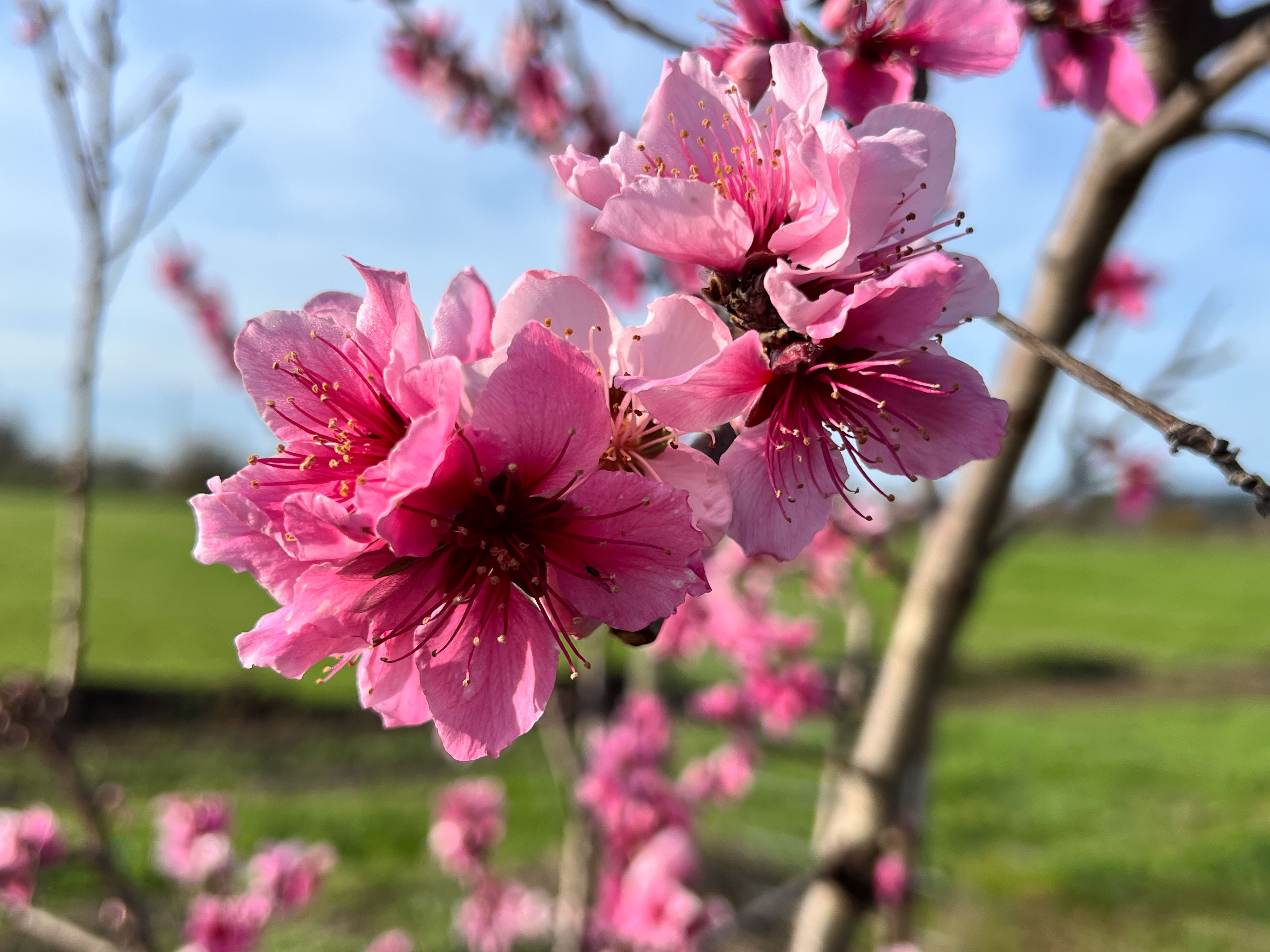
PeachWesterben RedbudDaffodial
Janna and lambs moved into a stall a couple after lambing. This gives the ewes and lambs more space to move around, but it’s easy to keep an eye on them for a few days before they go out with the other sheep. That’s Farm Club member, Lisa, holding the lamb.
More signs of spring.
Flannel Bush is one of my favorites.
Cindy lambed two days after Juniper.
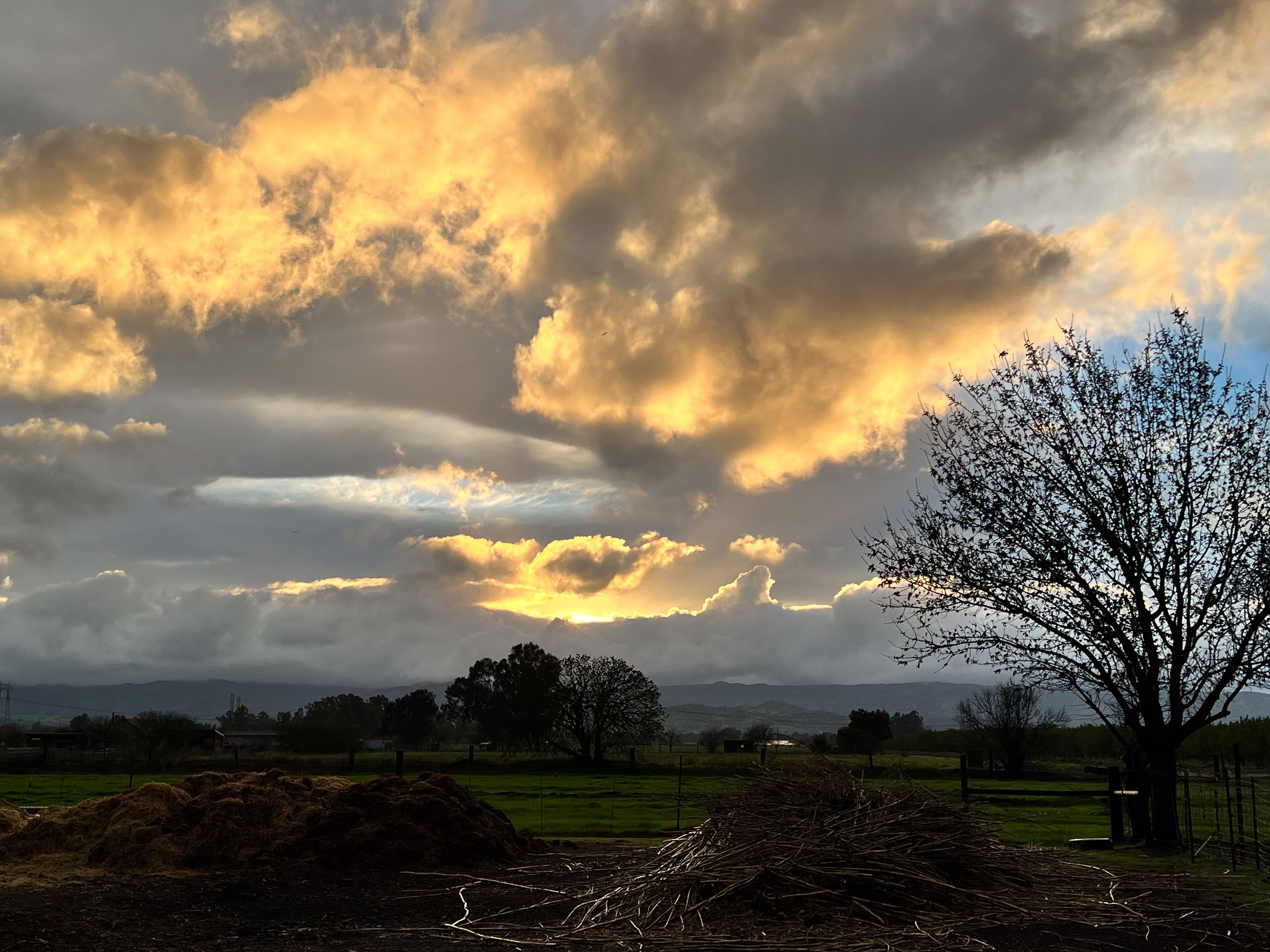
A cloudy sunset.
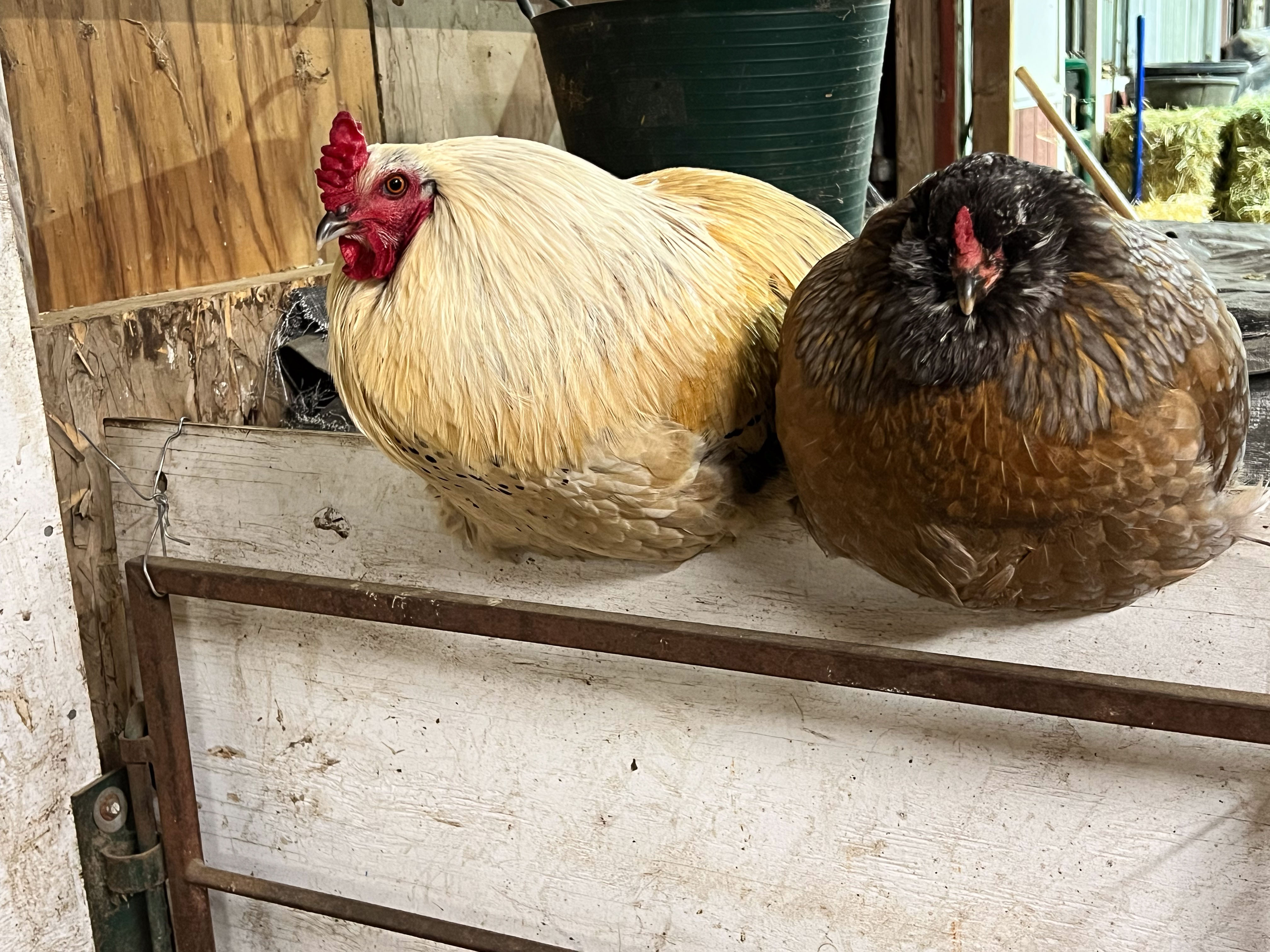
The rooster and one hen roost every night on this panel between the hay and the lambs.
Jazzie lambed that night with twins, lambs #22 and 23.
Amara seemed the most likely to lamb next and she went into the lambing area. That leads up to the post about Sparky.
I’m 9 days into lambing and haven’t had a chance to share any of it. Here is Day 1 on March 6.
There was a field trip from a Waldorf school in the morning. I had told them that I couldn’t promise lambs, but maybe there would be some. There were not. However, they had plenty of time to pet sheep. Notice Jade enjoying the attention.
I had a tax appointment after the kids left and when I got back I found Addy with triplets.
After I brought them into the barn the first order of business was to erase last year’s Lambing Board. This shows 88 lambs from January 25 through March 7 plus other notes squeezed in. So we ended lambing last year at the same time we’re starting this year. That was partly because we wanted to take a trip to Texas to see the grandkids and the eclipse in April. I didn’t want to have lambs coming if we were not here. This year I’m back to a more normal schedule.
Cashew lambed the following day. There were no lambs the day after that. A slow start.
Oxalis, also known as sour grass, wood sorrel and other names. It is considered a weed, but the flowers give a dye. Before Dan took the mower to these growing in the front yarn I picked flowers.
Dan started to fill in the low spot behind the barn.
First he re-stacked the compost pile and then moved dirt and ash from the burn pile that has accumulated over years.
Four rams posing. Left to right: Sterling and Griffin, both yearlings; Horatio and Blizzard, older.
We’re getting close to lambing. This is Tranquility and Eileen, due in the next ten days.
Roca
Trista, also due in the next 10 days.
Zoe is a 2024 lamb and is not pregnant, but I included here because I just skirted her fleece and saw something interesting. The locks below are from her fleece.
I have seen one other ewe’s fleece this year with a similar change in fleece color occurring part way through the year. I’m not sure of the cause.
Wool sorted and ready for the mill. I have more to finish before I can deliver this.
This was a catch-up day at the computer. I’m still not caught up, but accomplished a few things. Did you know there is a Meridian Jacobs YouTube channel?
I spent some time today editing videos.There is probably a way to embed them here, but I don’t know how. I’ll include links. Two are from shearing day. Shearing Jacob Rams and Shearing Two Jacob Ewes. The third is one I’ve been meaning to put together for quite awhile. I show how I Using A Warping Wheel to warp my big loom. This is a specialized piece of equipment that is hard to explain even to other weavers.
To make this post a little more interesting, here are some photos that relate to the videos.
This is one of the ewes that was shorn in the video. It’s not always possible to keep hay out of he wool!
This is Eli, one of the rams in the shearing video.
Here is the warp I was winding in the Warping Wheel video. These are the blankets just cut off the loom.
These six blankets are some from the previous photo after wet finishing. The yarn in the blue blankets is dyed with indigo I grew and the brown yarn is dyed with walnut hulls.
There is are cycles to farming. The sheep are shorn and starting to grow new wool. The ewes are pregnant and lambing season will start soon. These blankets are woven using wool I get from Timm Ranch and have spun into yarn. Timm Ranch shearing will be in March and I’ll skirt fleeces and buy wool for the 2025 yarn. I am still waiting on the 2024 Timm Ranch yarn. Due to unforeseen circumstances I will be combining the 2024 and 2025 wool for the next batch of yarn.
The dye garden has its own cycle. I won’t be ready to dye blue yarn until the indigo plants get big enough…and they aren’t even planted yet for this year. Fortunately I have some dried cosmos and hollyhock flowers that I can use, but that’s only if I have enough yarn left from previous years. The cycles don’t always overlap the way you want them too.




























 Meridian Jacobs' Blog