Shearing Day 2025 – Part 1

We were lucky on Shearing Day. It was cold in the early morning, but there was no threat of rain and the sun was out.

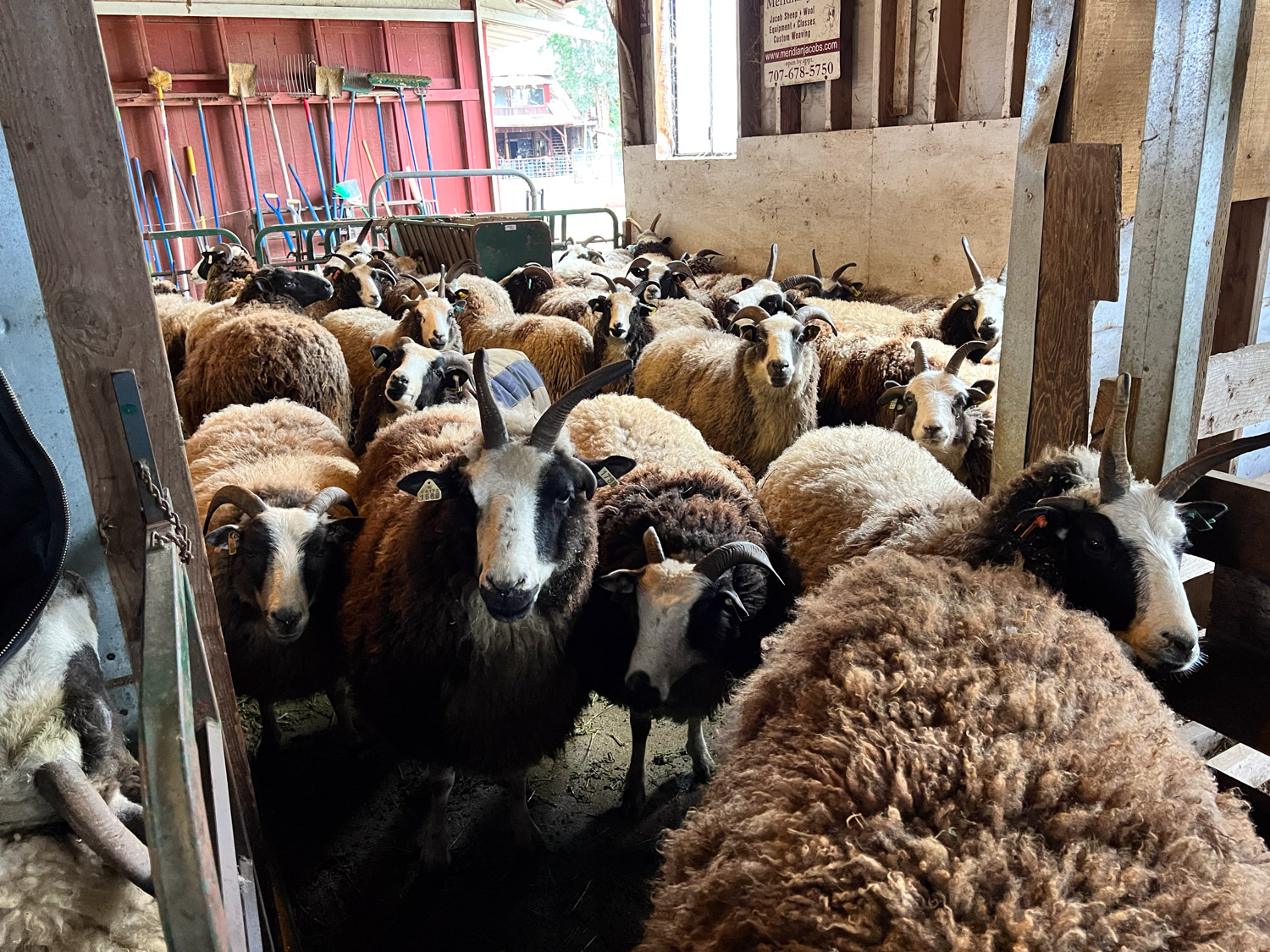
The day before we took our trailer to Trish’s farm a few miles away. We loaded 21 sheep to bring them to our place for shearing the next day. It turns out that one of the 21 was mine–I had forgotten about the ram lamb Trish borrowed in September to breed some of her ewes. So now I have 9 rams–that’s a few too many!

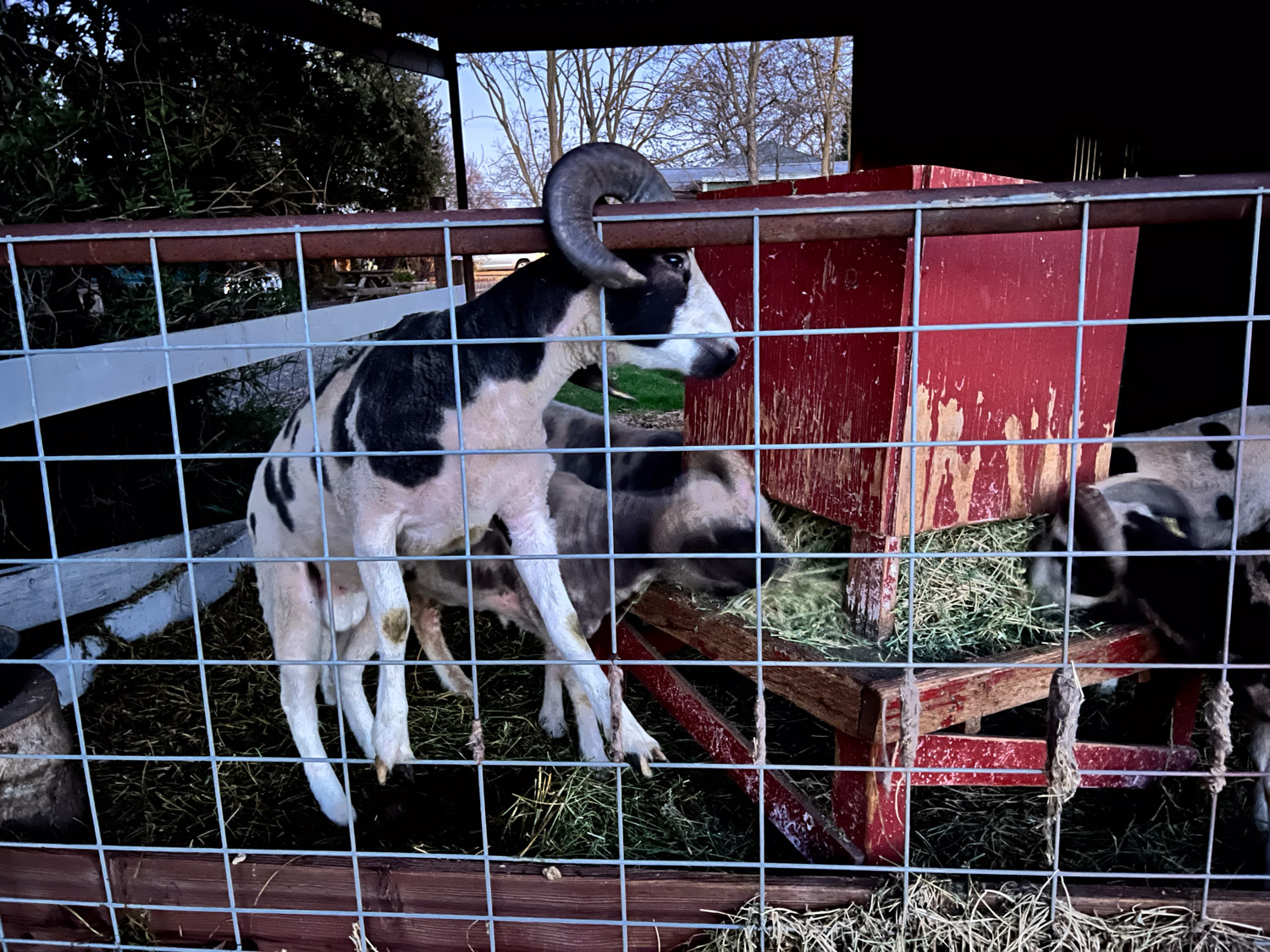
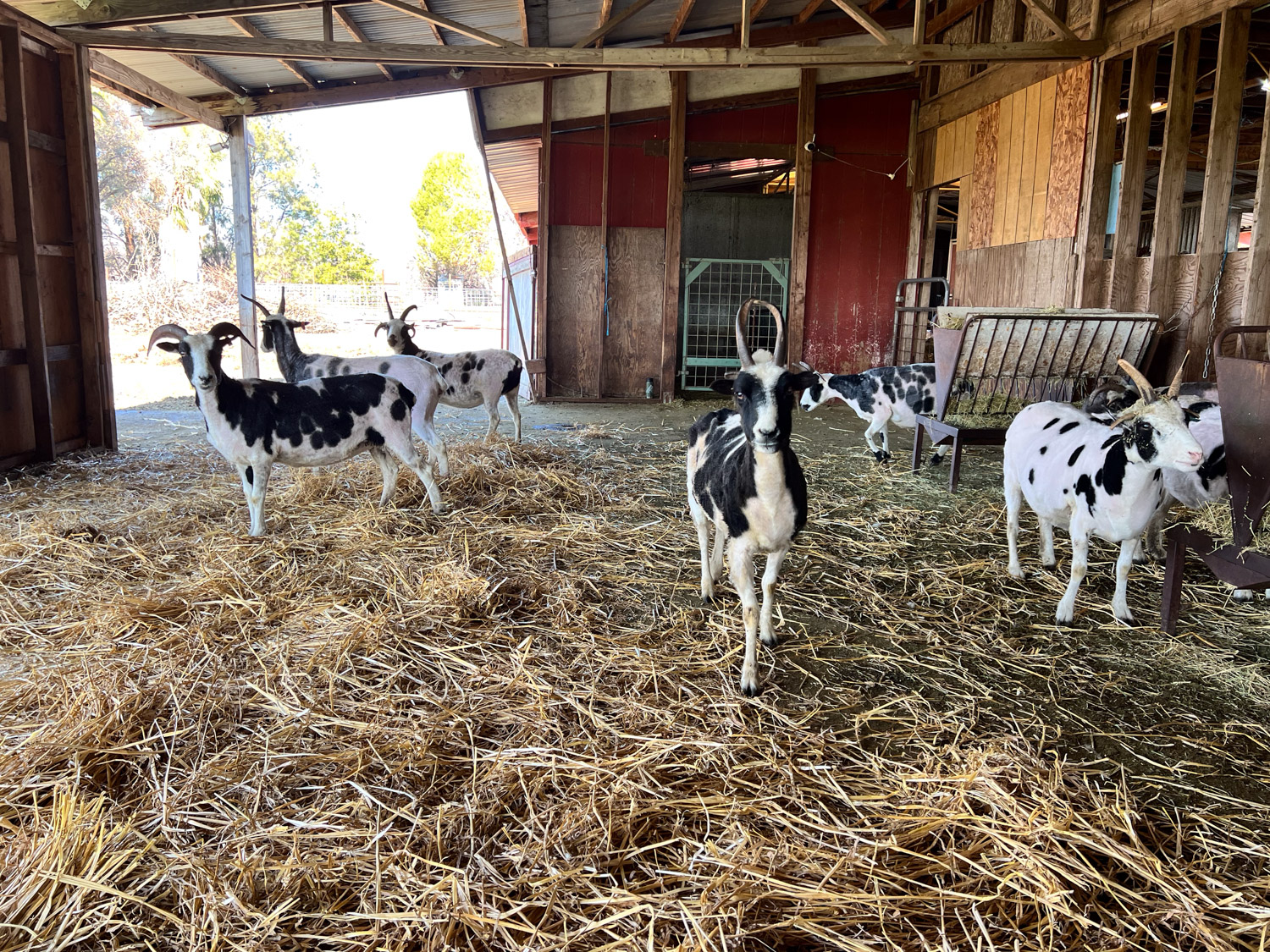
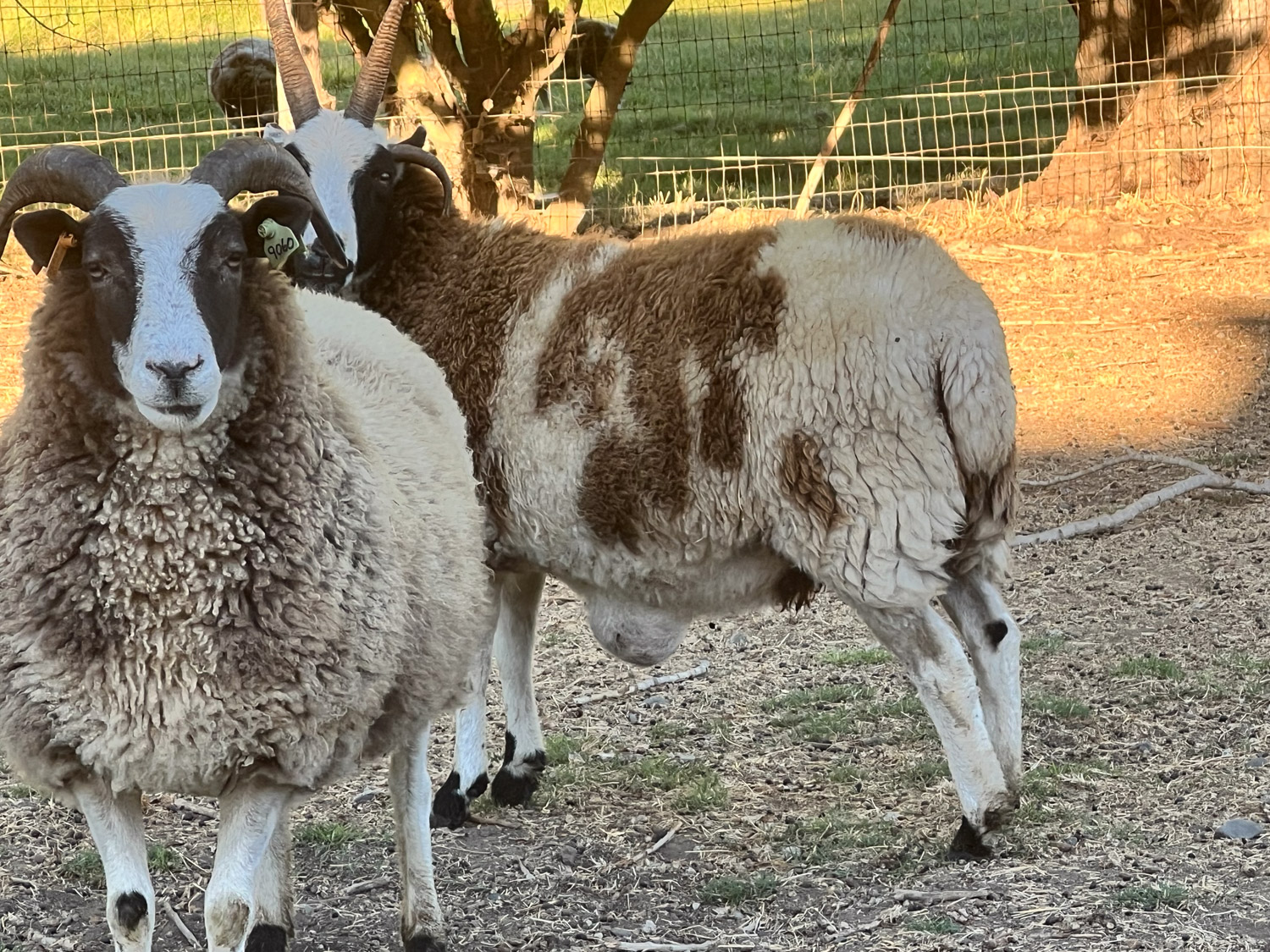
These are Trish’s sheep the next morning. I remember that ewe on the left from last year. See her photo below.

Her hair style makes her memorable.

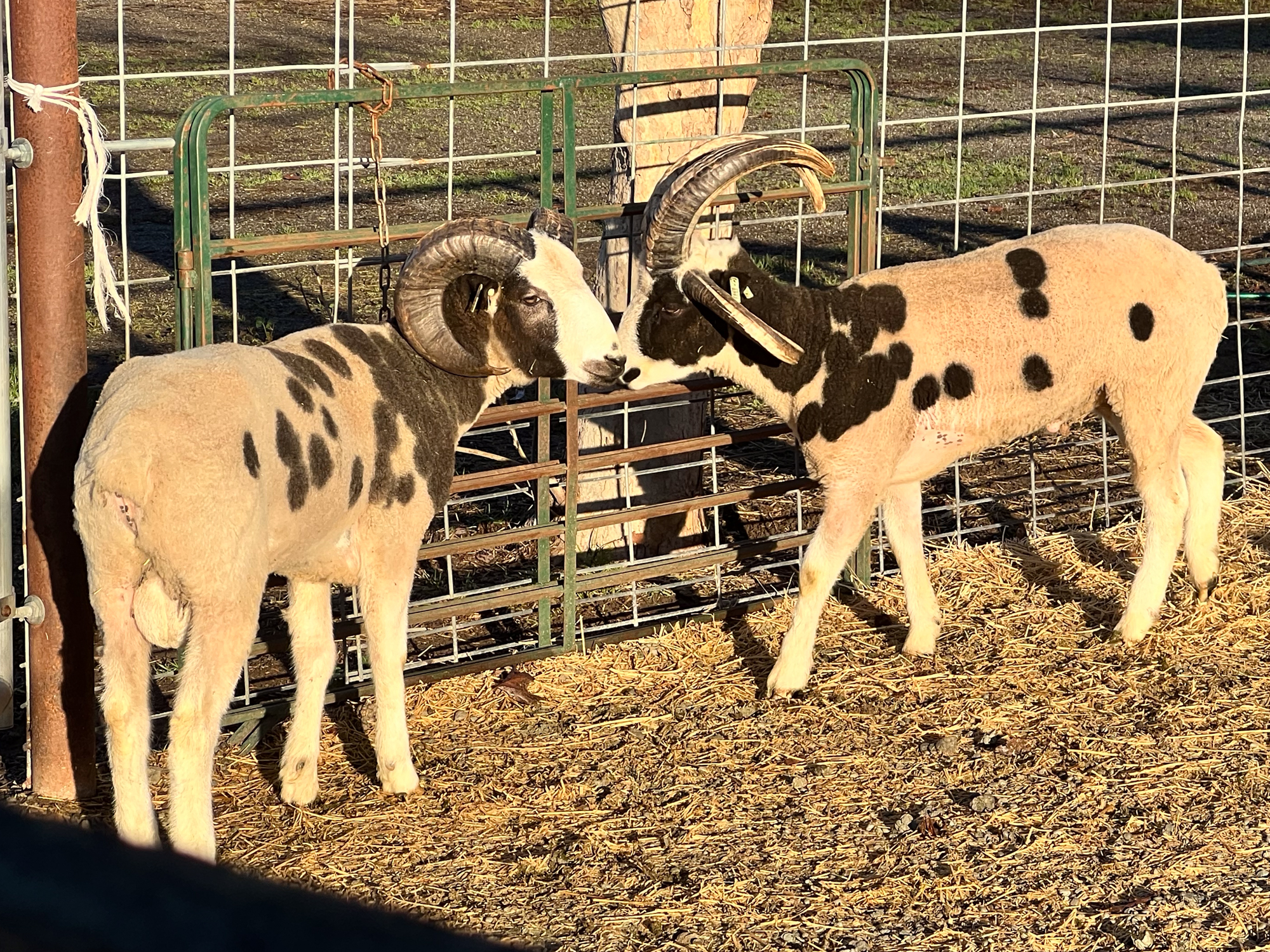
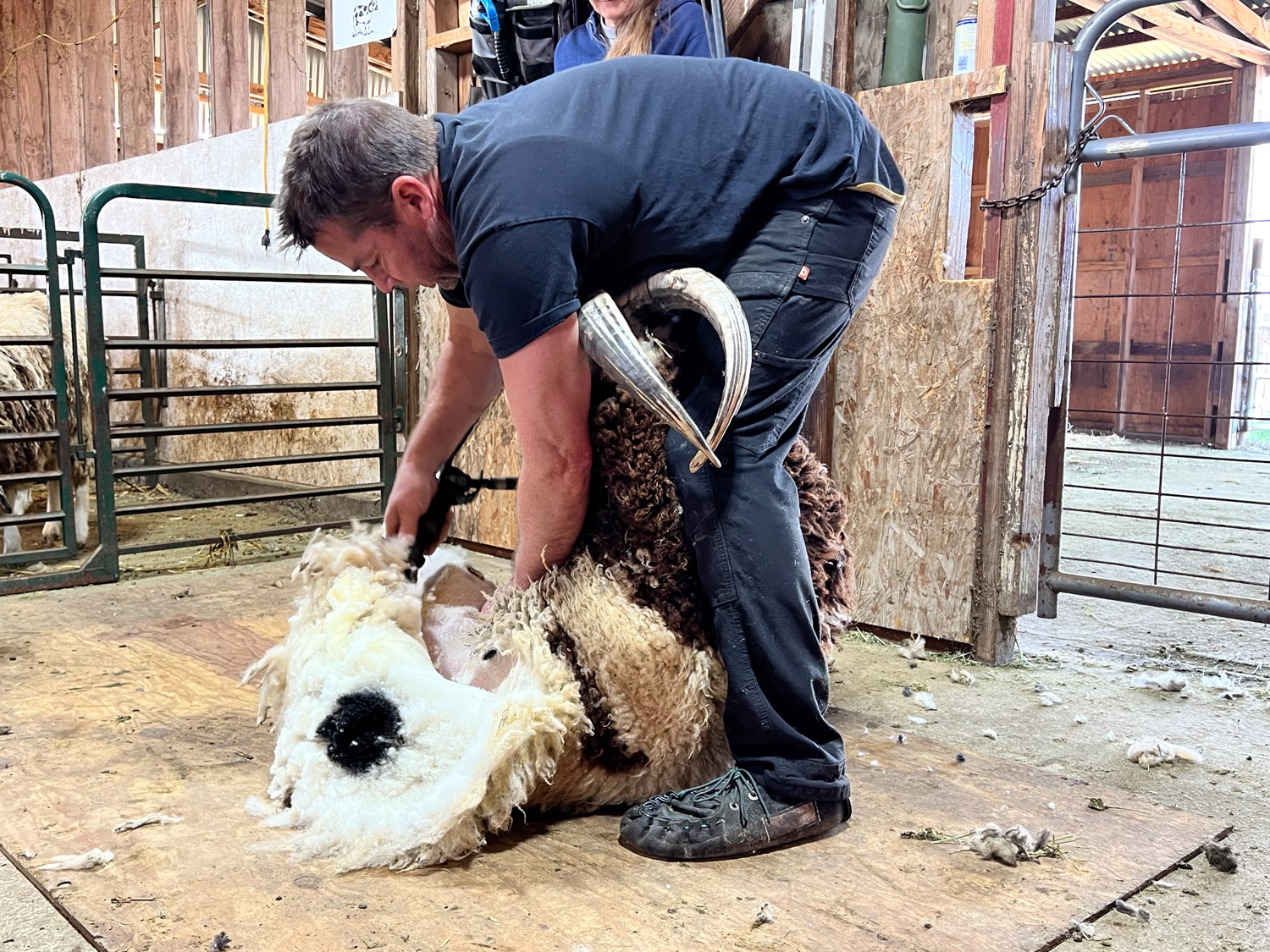
John got here at 9 and we started with Trish’s sheep. This ram is Starthist Goldhill, sired by one of my 2-horn rams who is no longer here.
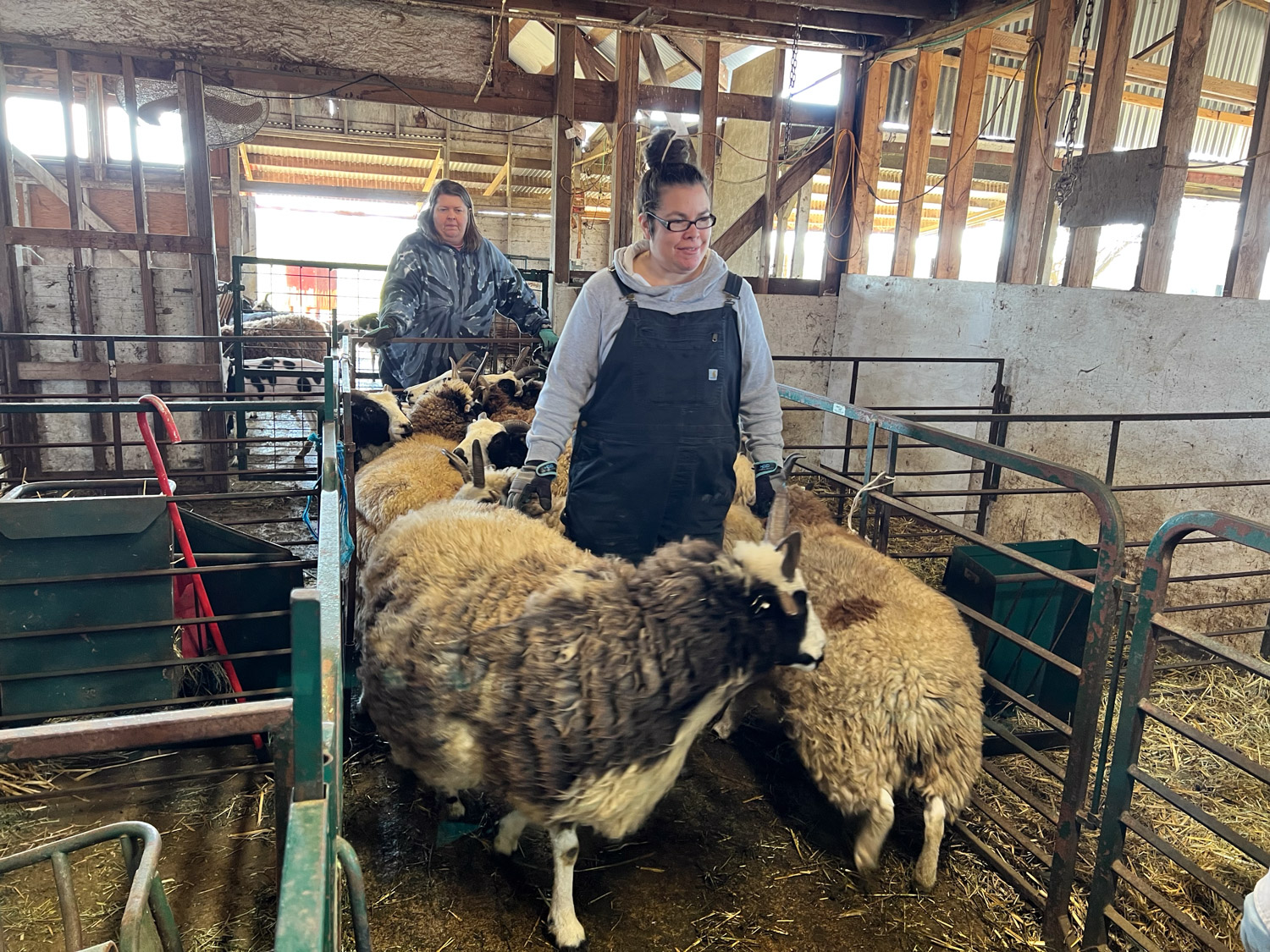
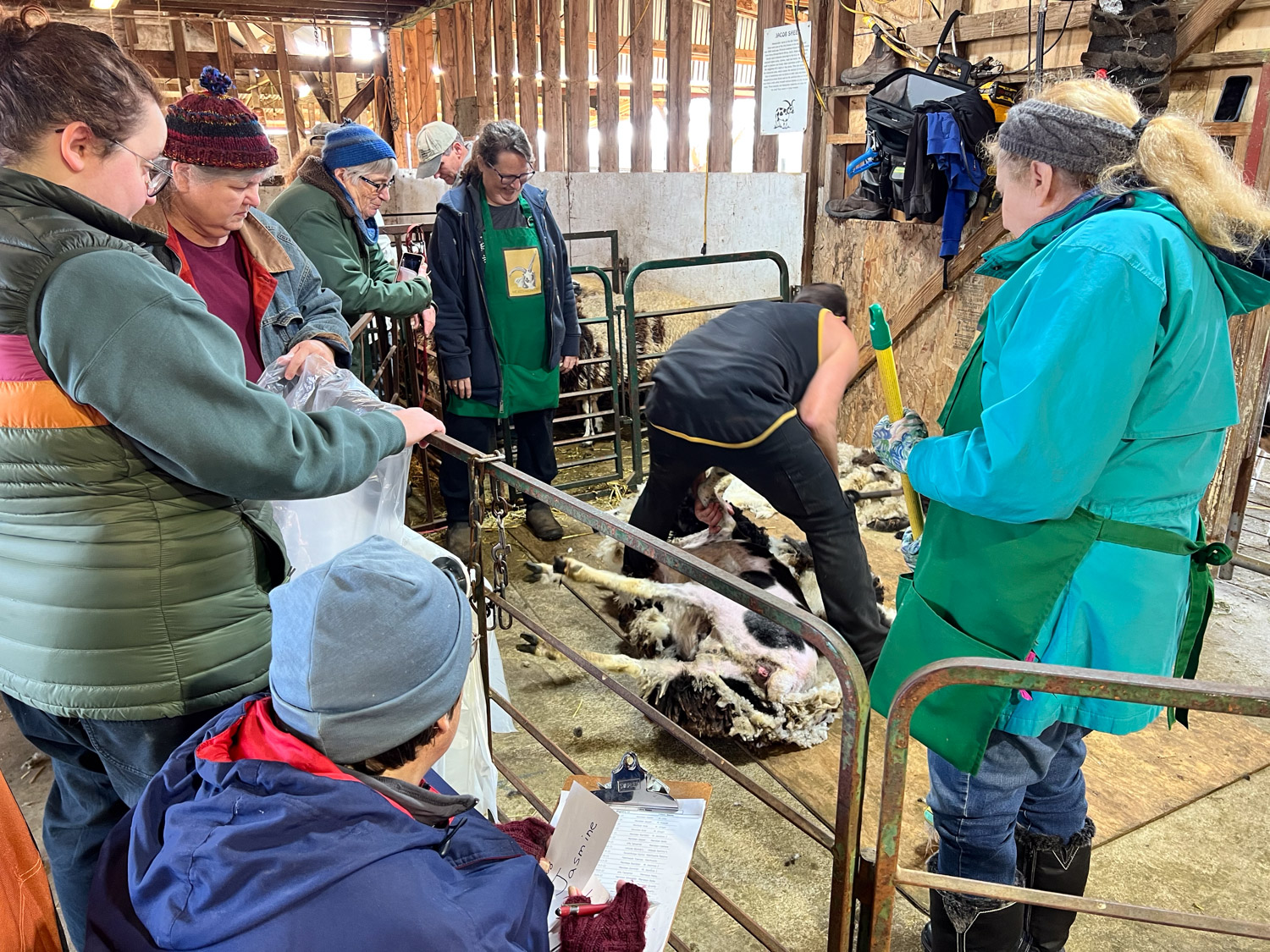
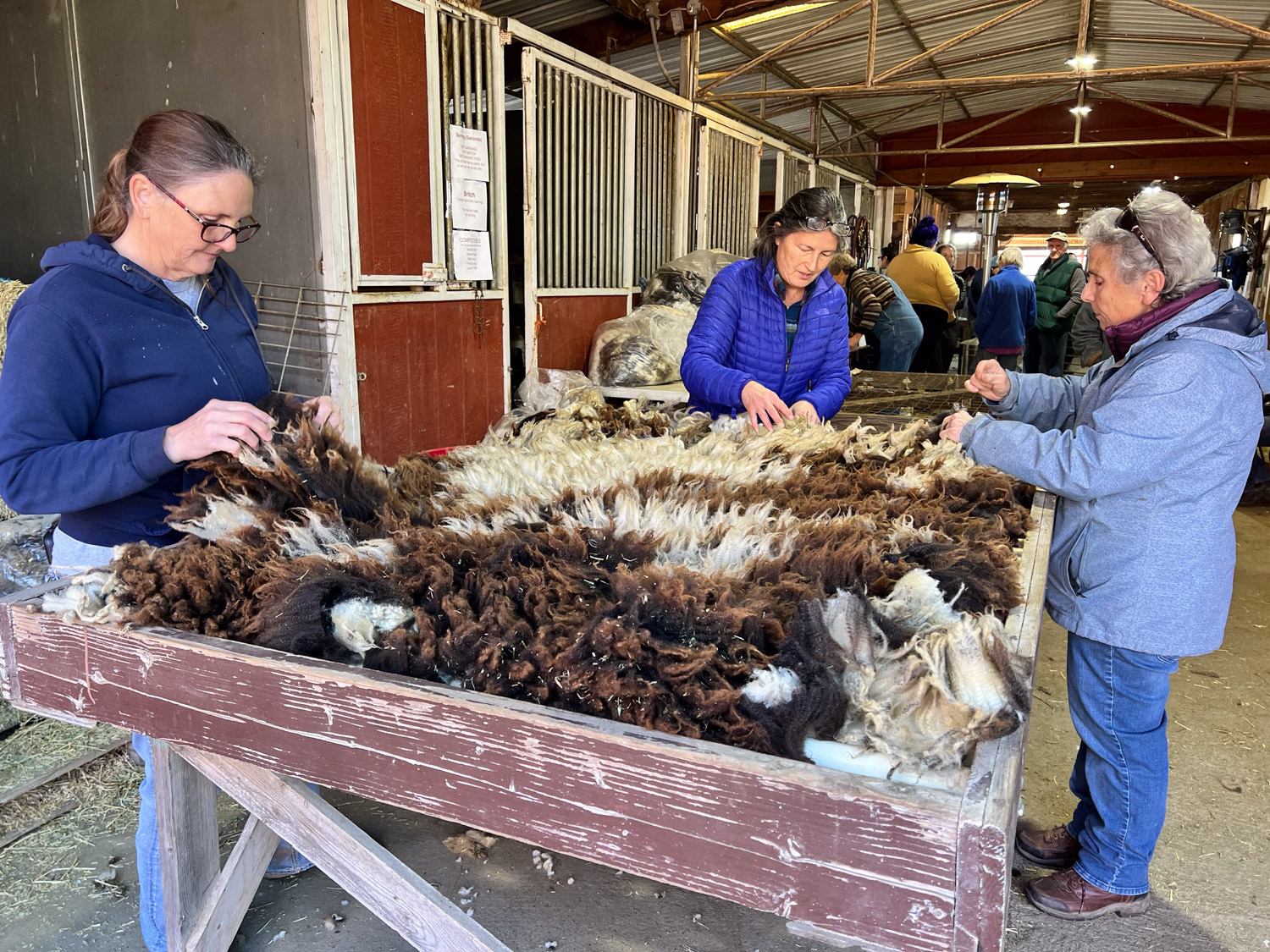
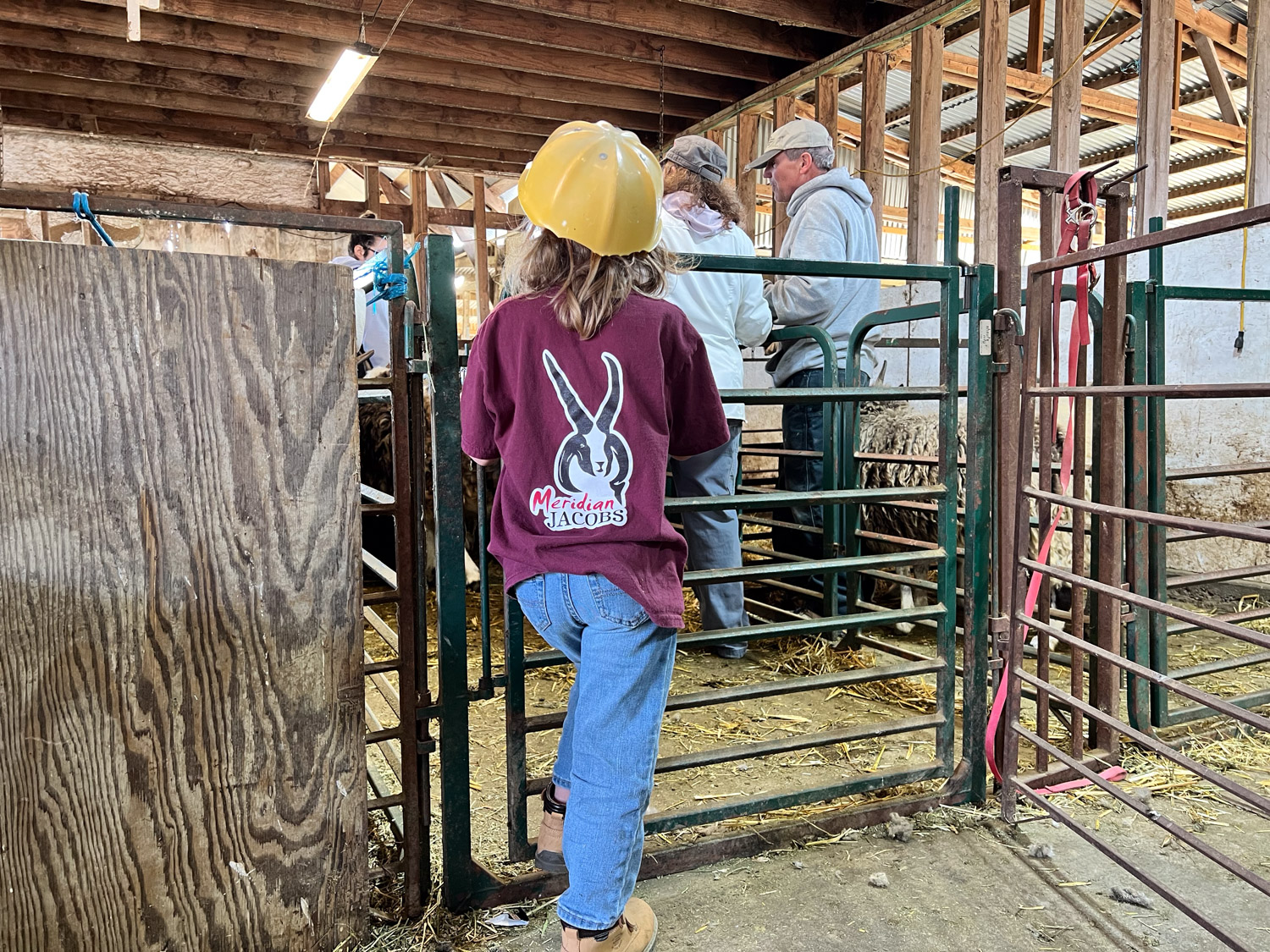
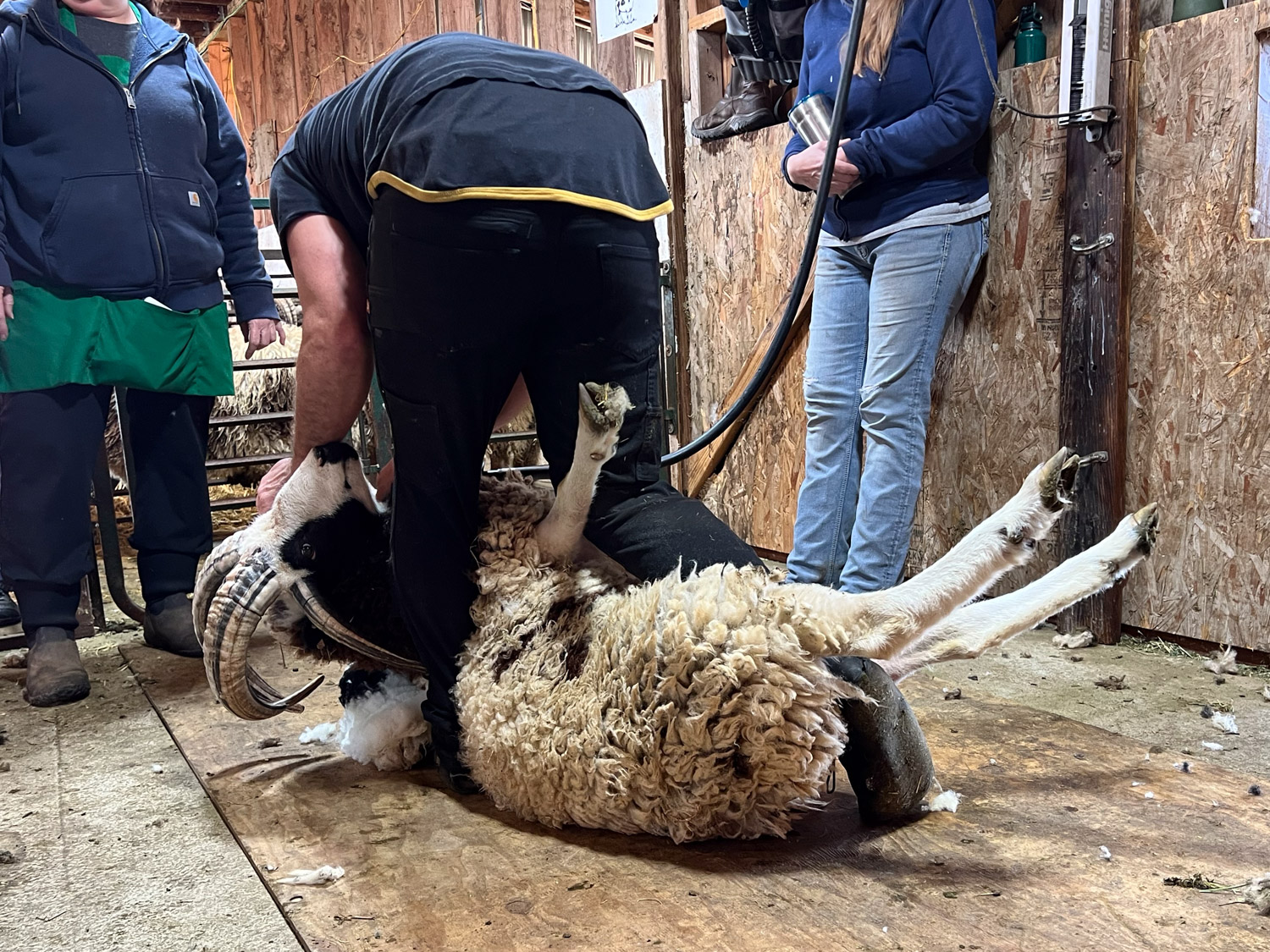
Farm Club members were on hand to help with all the jobs. They kept the shorn sheep out of John’s way while he worked.

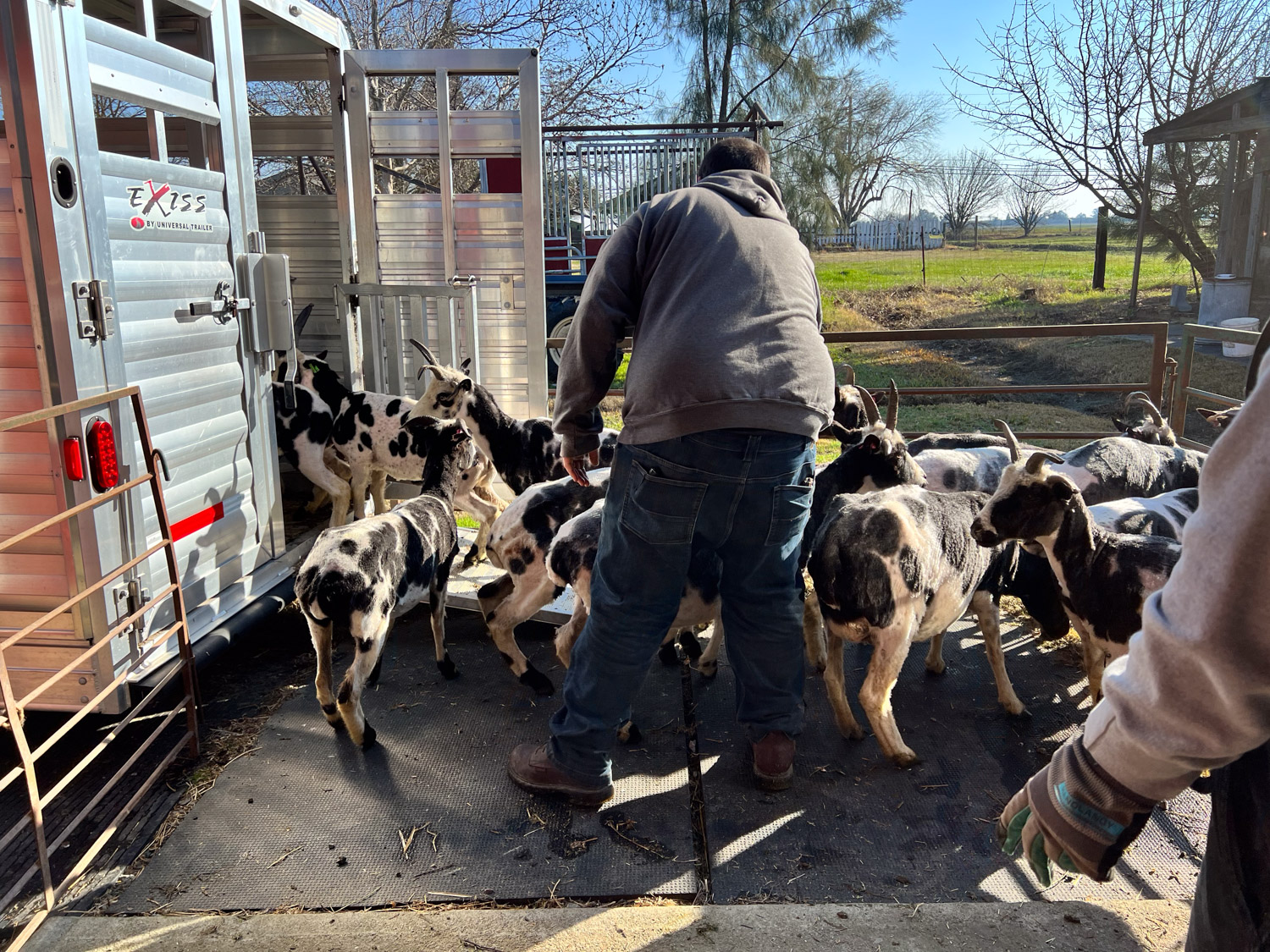
After all 20 of Trish’s sheep were shorn we moved panels around to load them back in the trailer.

They fit better after shearing.

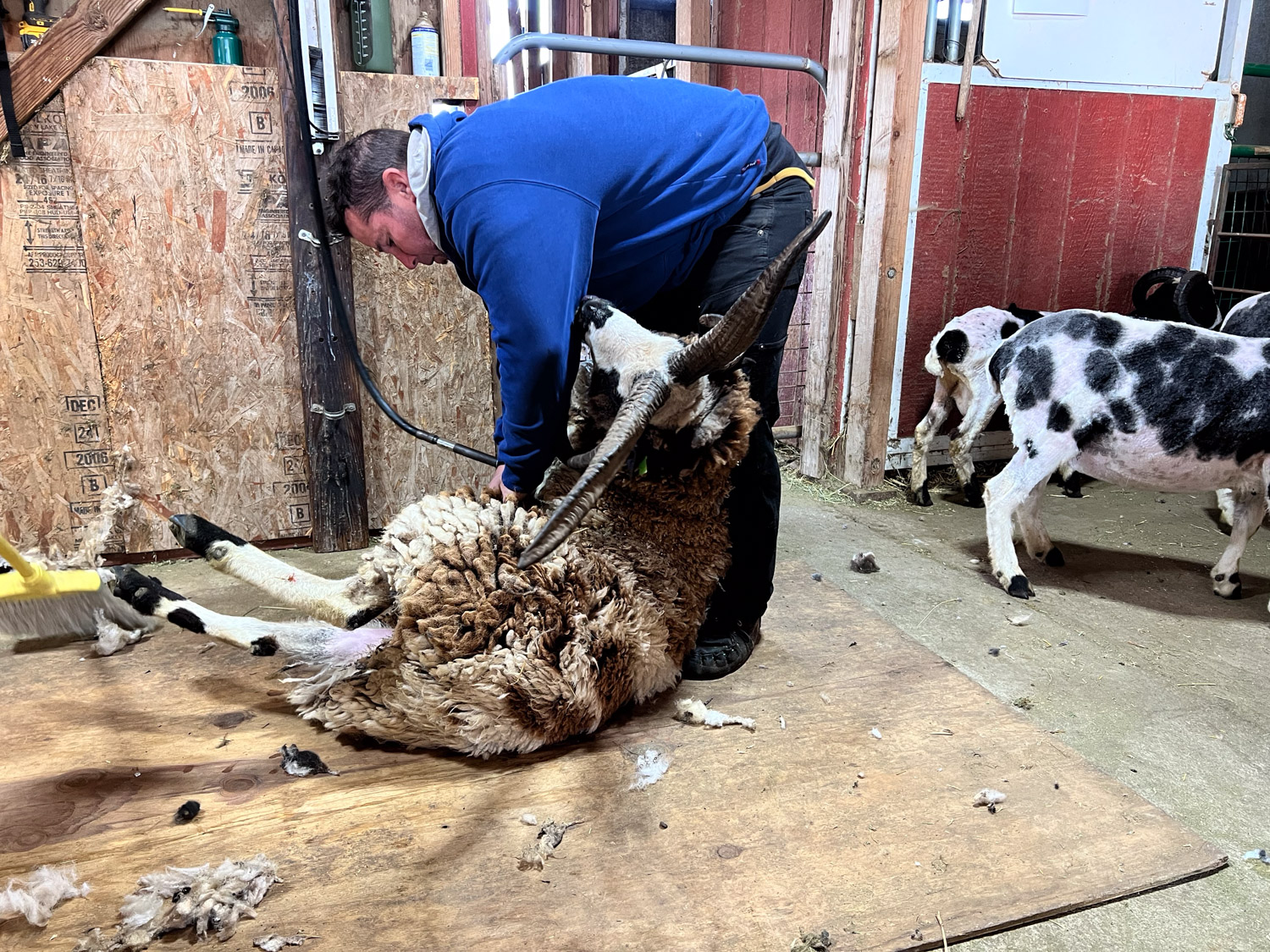
Then John started on my rams. This is Eli.

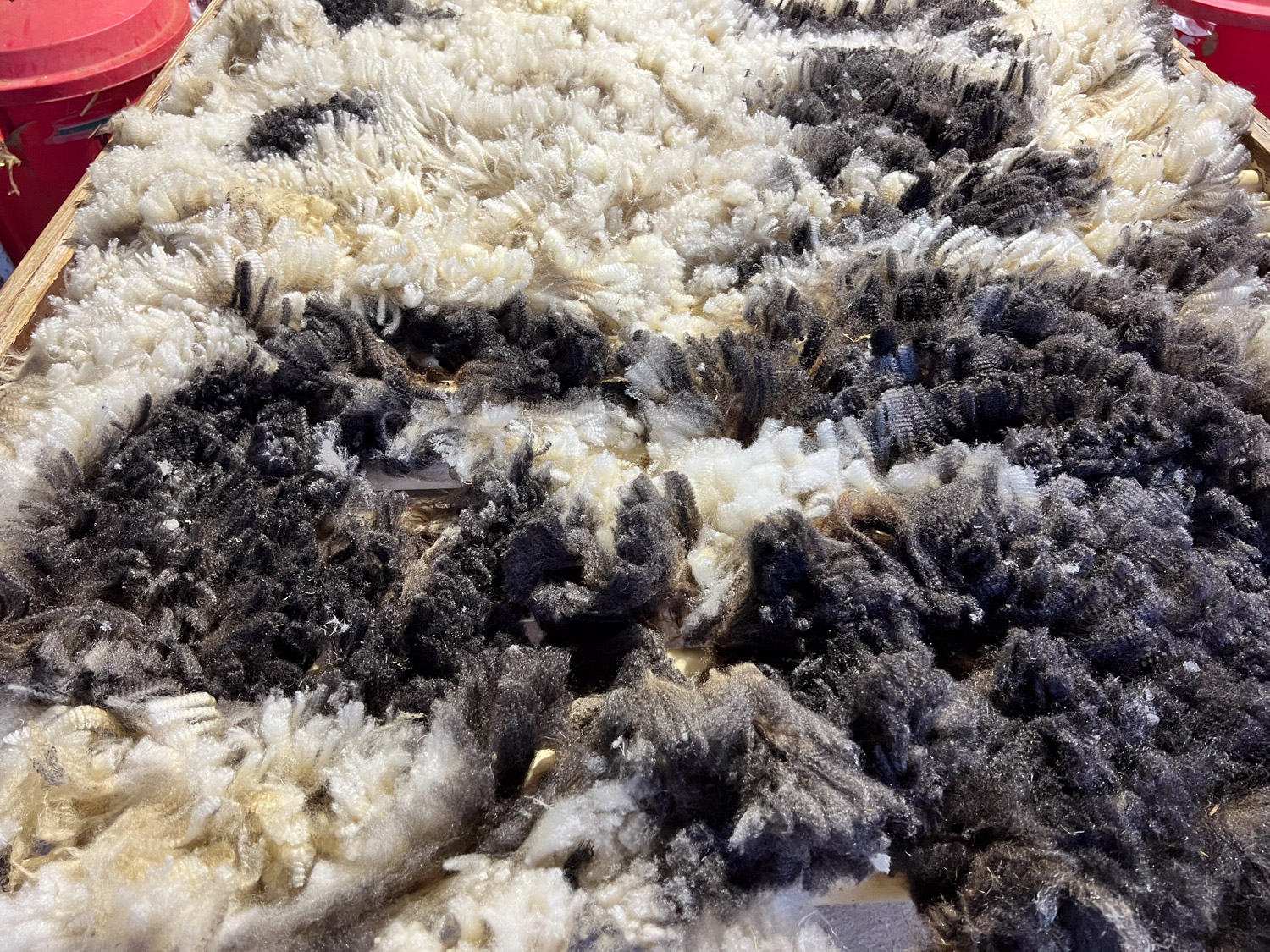
For those of you who may not have watched shearing, the shearer follows the same pattern on all the sheep.
I recorded video of shearing four or five sheep. I haven’t had time to edit and post those videos yet, but because of recording I know how long it took to shear those sheep. What do you think?

John is shearing each sheep in under 2-1/2 minutes. Some are close to 2 minutes!

More shearing photos in the next post.

Sheep and an Owl

I wandered out back with my camera–the real one–so I could take better photos of sheep. I like to update the sheep page on the website every year when the sheep are in full fleece. I did not update the website yet, but I took some photos with that in mind.

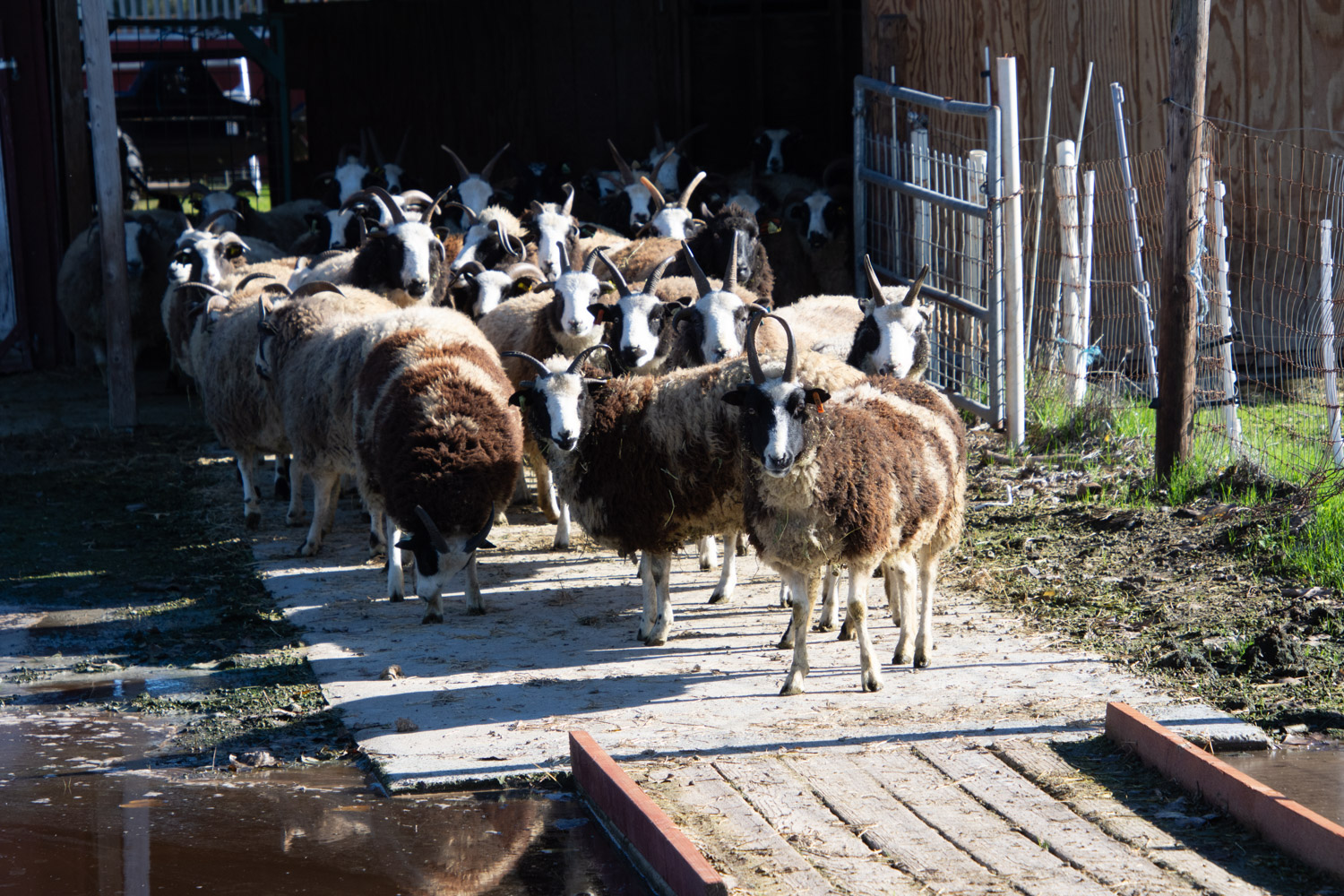
It’s wet behind the barn and we have a lot of piles of brush to burn (to the left out of the picture). The sheep can’t go on the newly seeded pasture so space is limited. There is a concrete pad and then a wooden bridge over the lowest spot.

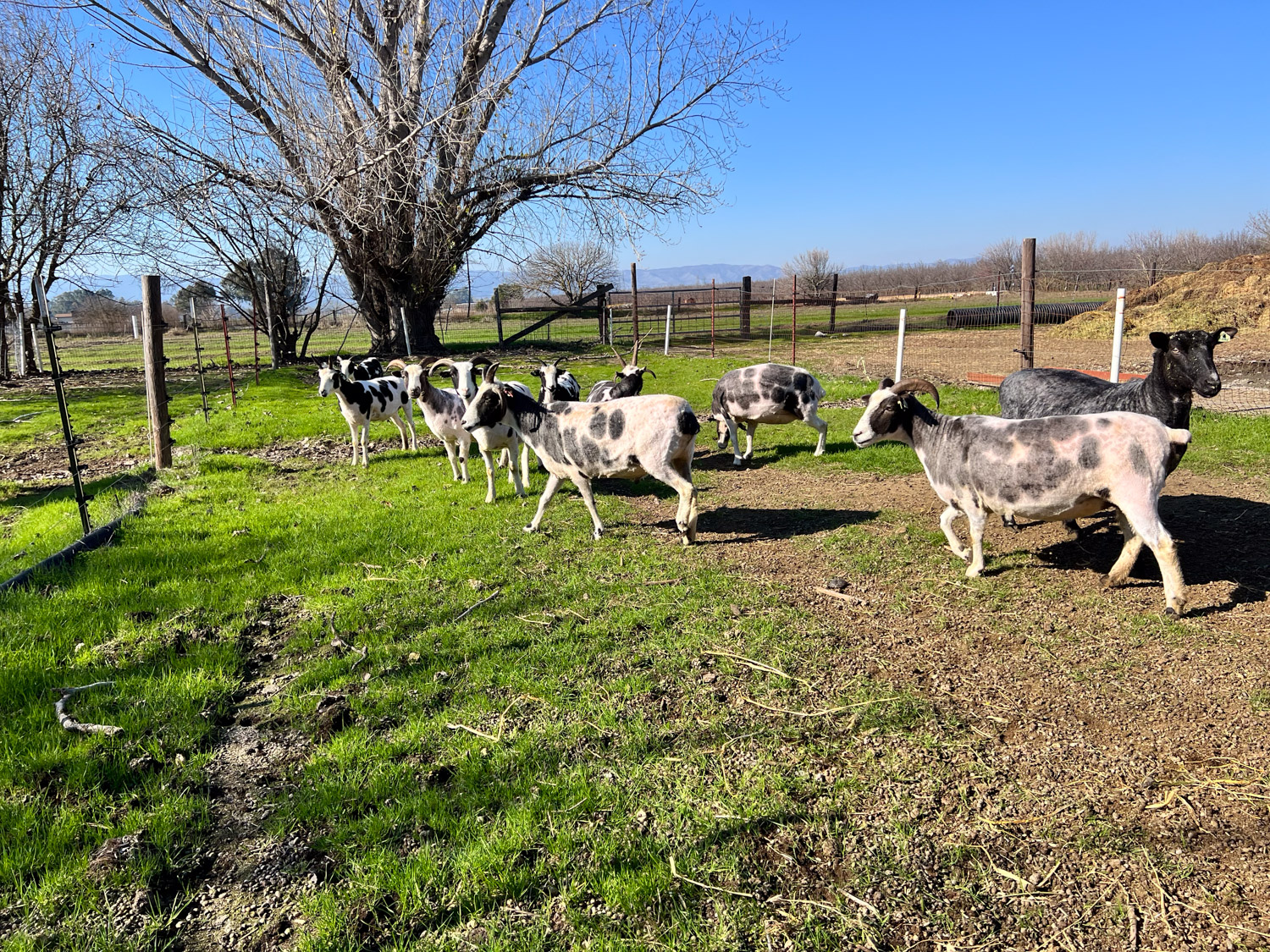
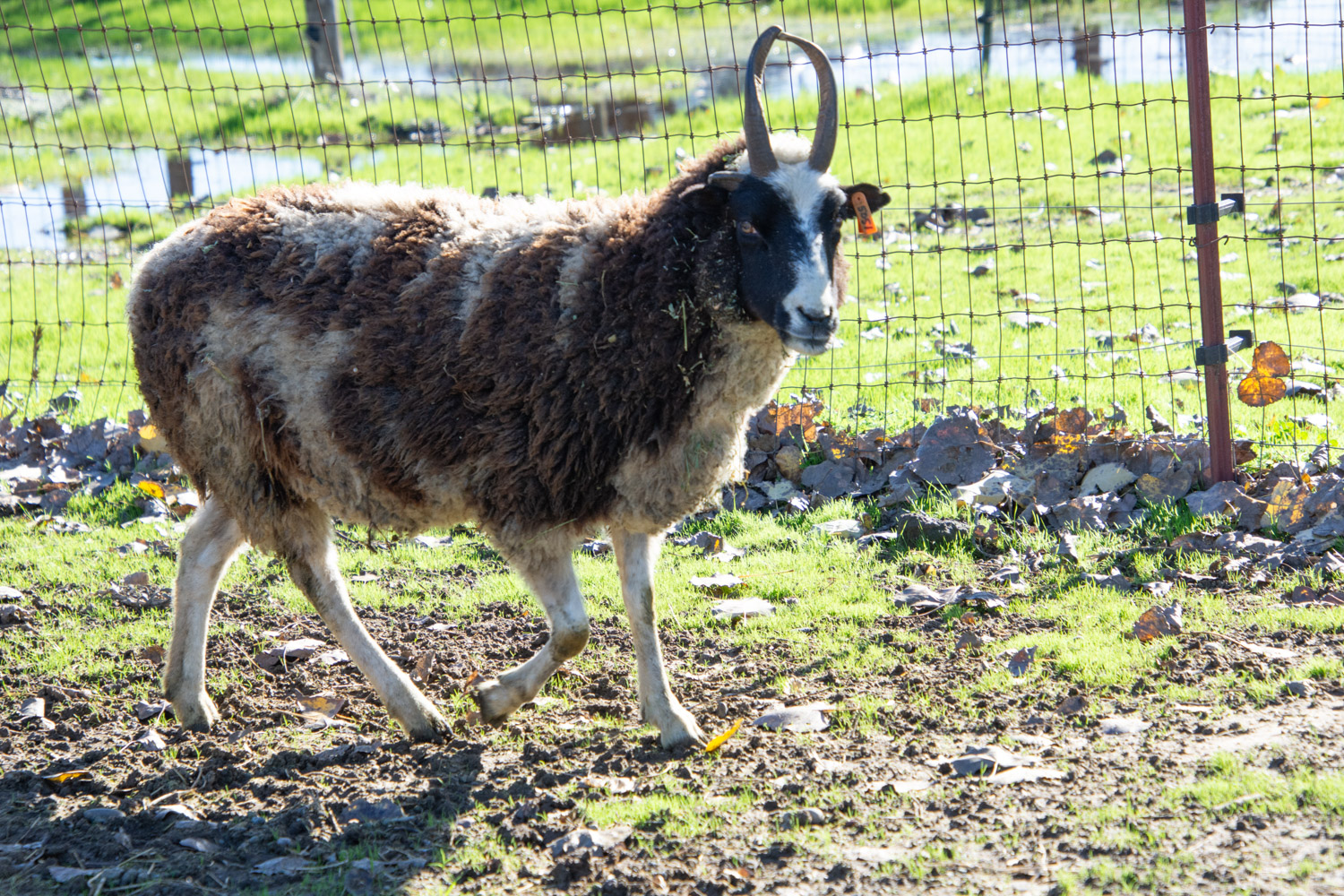
As I walked towards the pasture gate the sheep were hopeful that I’d open the gate. Jade led the way.

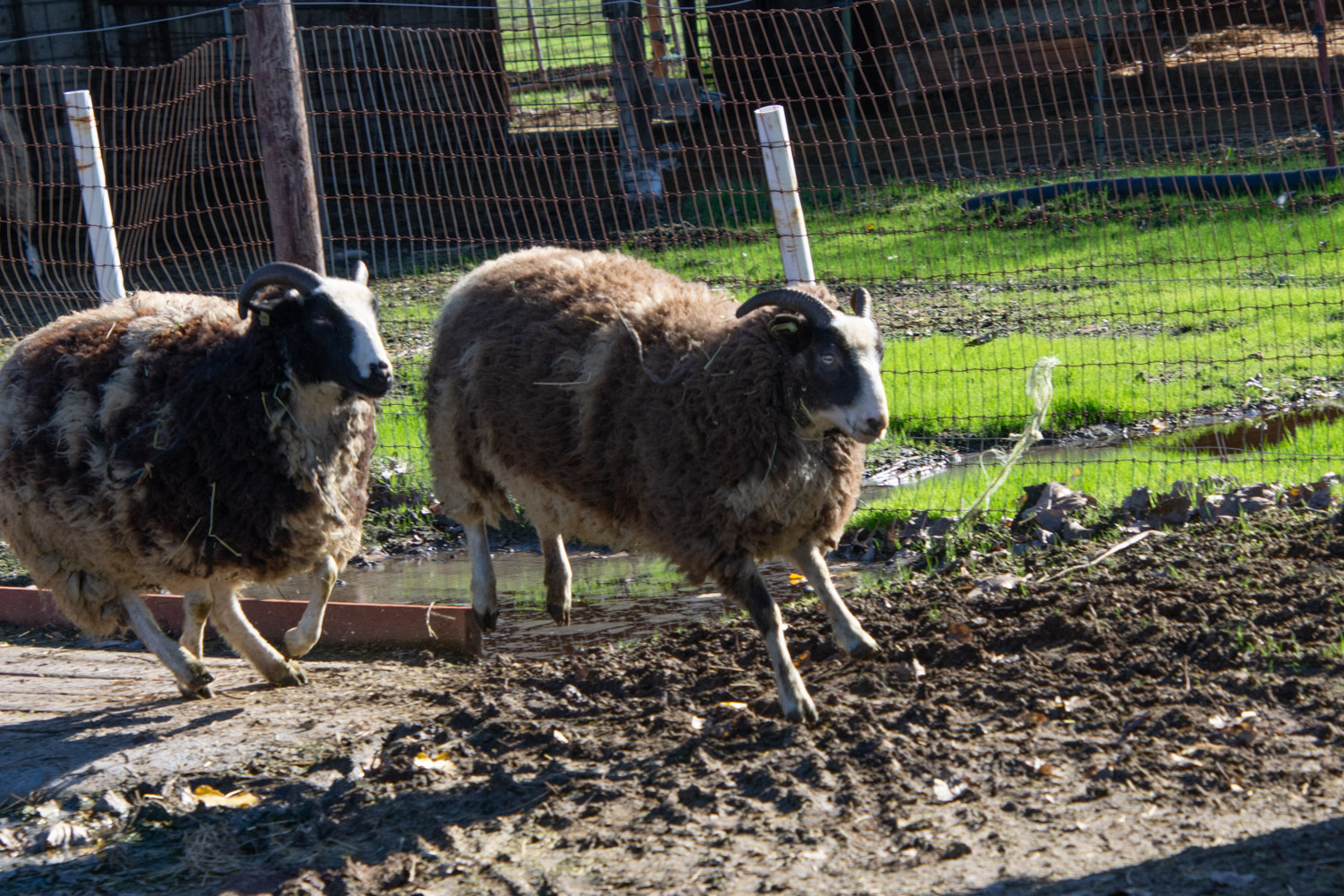
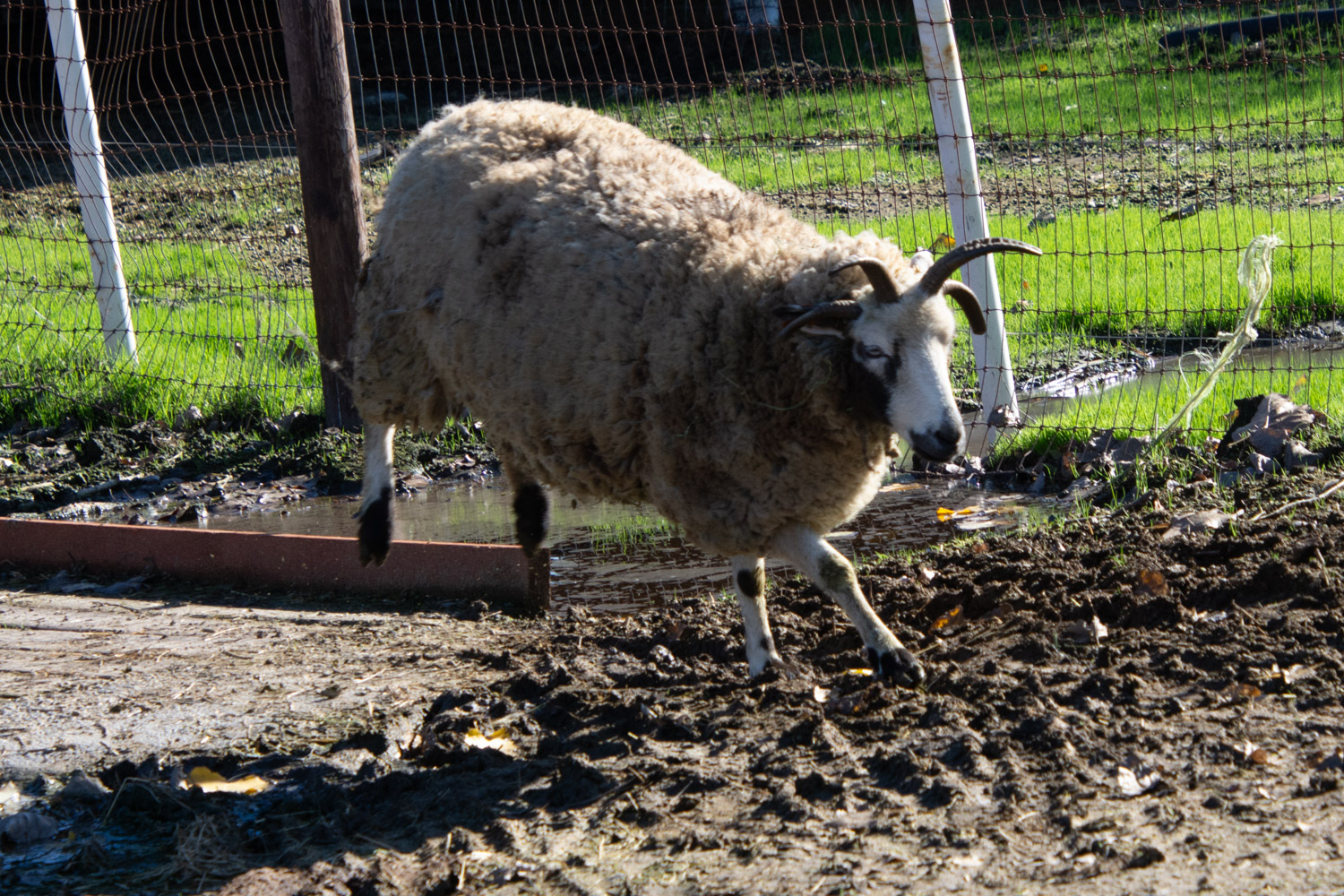
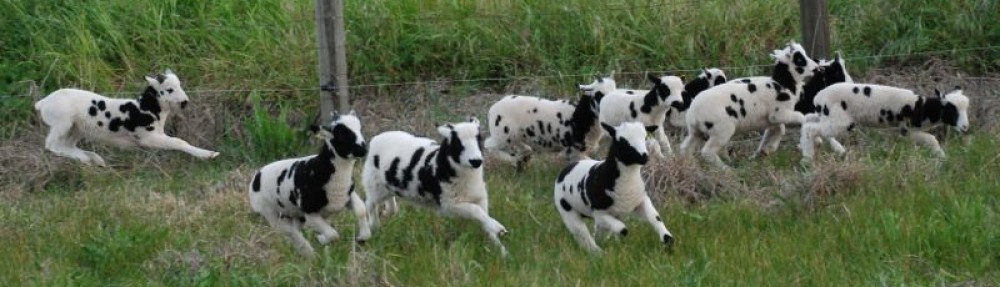
Many of the sheep weren’t happy about the mud just past the bridge and decided they had to jump it. These are two 2024 lambs and I can’t sort them out by name yet.

This ewe is Jannie.

Cindy.

This is Sandie…

…and her twin, Pecan.

Jade.

Patchwork Bettylou, the ewe that had hernia surgery in October.

Here are three of the 2024 lambs. Harmony, Zoe, and Lily.

I walked out behind the ram pen and stood under this palm tree wondering if the resident barn owl is still around. It’s impossible to find owl pellets because, even if pellets could drop through all the old dry palm leaves, the blackberries grow around the base of the tree.

While I was standing there the owl flew out of the palm tree into one of the sheoaks.

Who is Going to Lamb and When? Ultrasounds

For the last few years I’ve asked the UC Davis vets to come here and do ultrasounds. It is certainly useful to know ahead of time the ewes that are not pregnant and, hopefully, the number of lambs to expect from those that are.

I told the Dr. Smith the dates the ewes were with rams and December 20 was chosen as the optimal time for ultrasounds. (Never mind that a few ewes went in with the new ram, Eli, right at Thanksgiving. This ultrasound date was scheduled before Eli came here. It won’t be hard when the time comes to know if those few ewes will lamb.

I purposely did not breed as many ewes this year because of the limited space with our pasture being off limits for most, if not all, of the next grazing season. If you read this blog regularly then you know about the Pasture and Irrigation Renovation going on. Look back over the last few months for those blog posts.

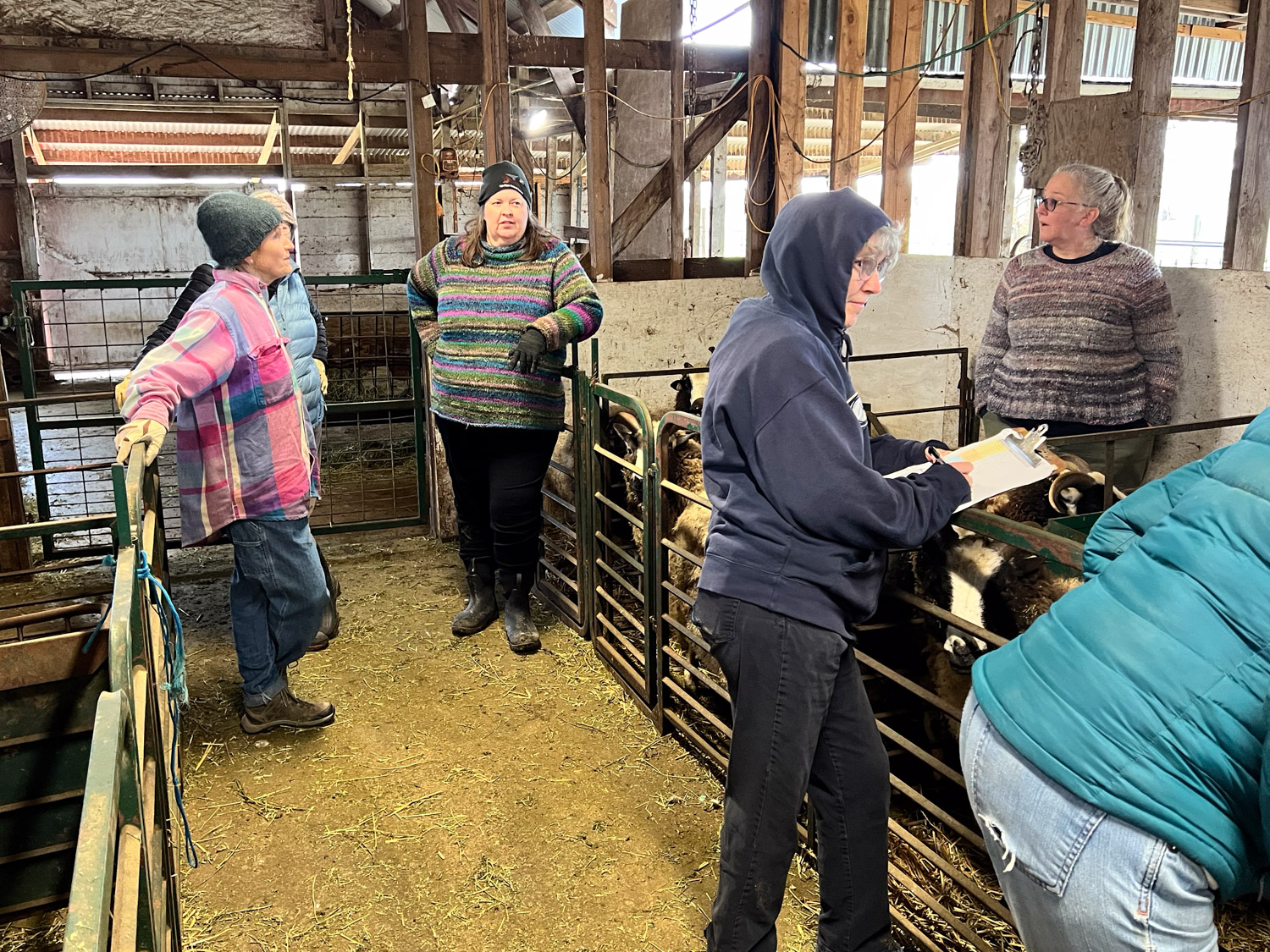
Farm Club members came and, since I was otherwise preoccupied with an overlapping visit by my son and DIL and Matt’s offer to help me with some loom/computer issues, they did all the work of getting the sheep organized and in pens, ready for the vets.

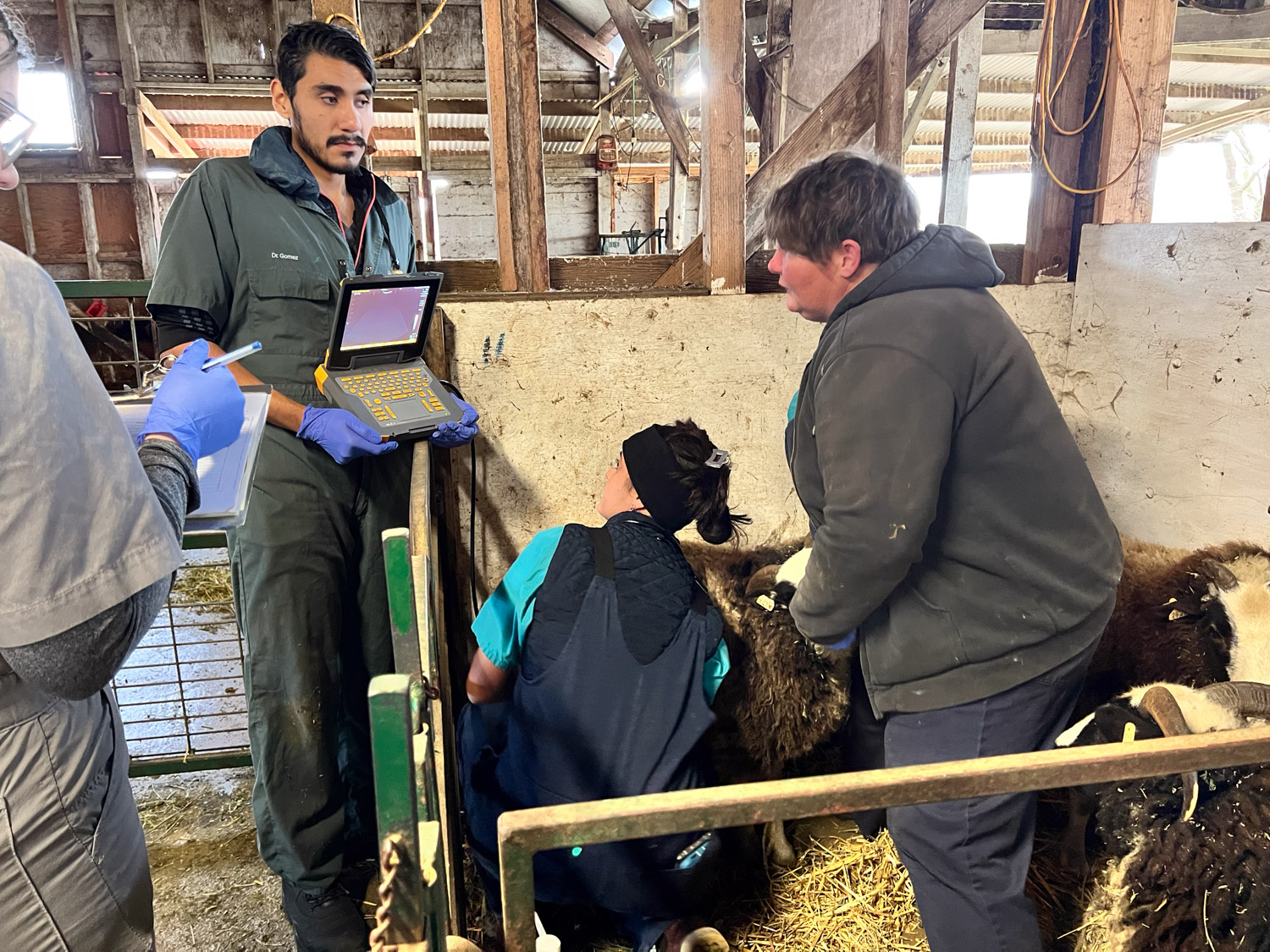
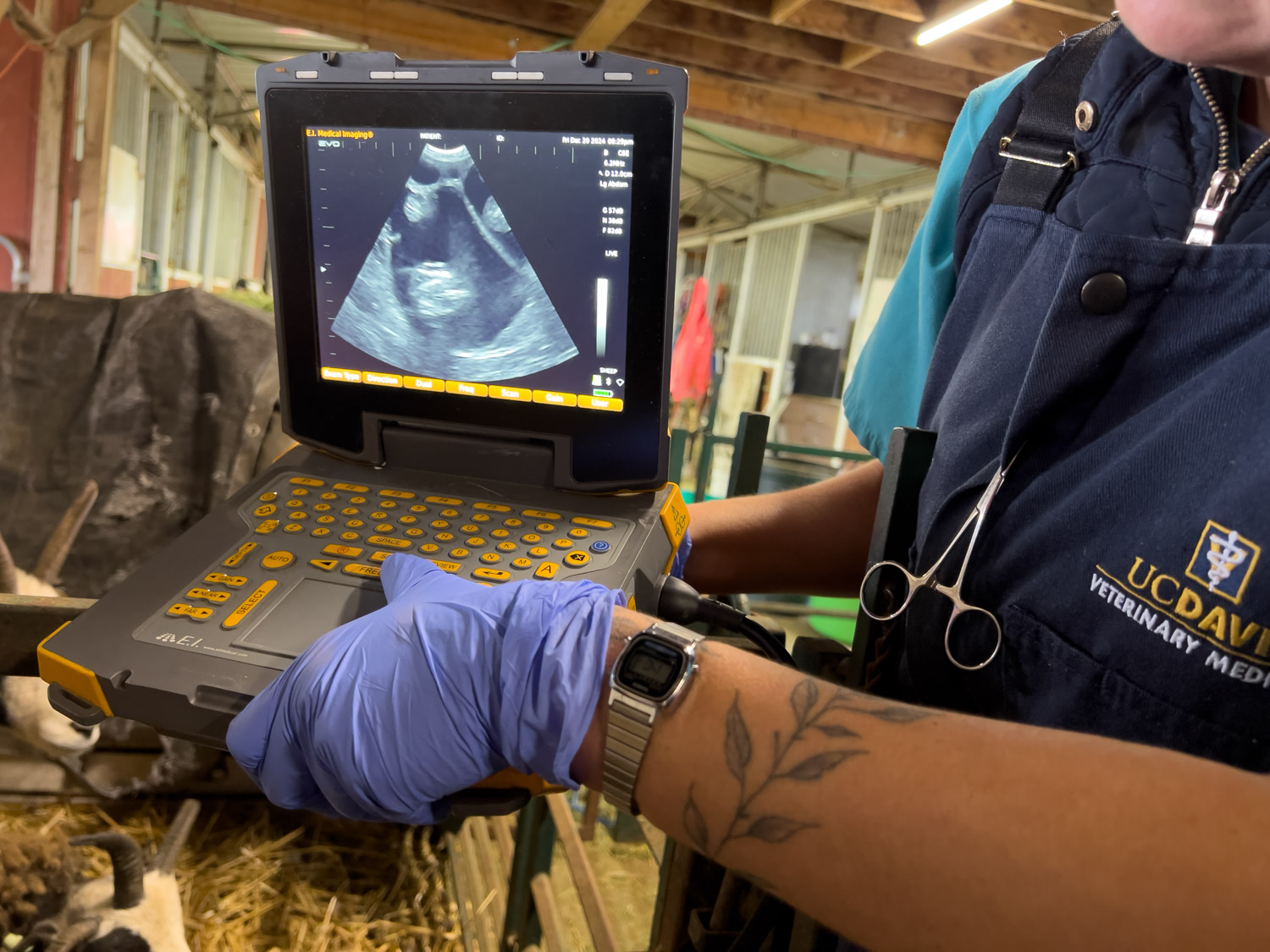
There were four from UC Davis. I lose track of the titles, but I think one person was an intern and/or student and maybe a couple were in residency. They took turns doing the scans and reading the results, with Dr. Smith overseeing it all.

Don’t ask me what we’re seeing. I’m good when I see a ribcage go by as they move the probe around, but I have a hard time with the rest of it unless it’s pointed out. They judge size of the lamb’s head and, therefore, its gestational age. Amount of fluid and relative position of the lambs are other factors they consider.

The next group of ewes waiting.

Trading places in scanning.

Meanwhile, one reason Matt came was to climb the weeping willow and cut a couple of large branches that had broken during the summer. FIY, he is using safety gear to prevent falling in case of slips.

It’s amazing how quickly this tree has grown. Matt cut the problem branches, but then cleaned out a lot more where it overhangs the pasture and the fence.

Back at the barn they are still scanning, but we could used last year’s lambing list on the white board (to be erased at the beginning of the next lambing) to pick out which ewes had triplets last year.

Here are the stats:
Fetuses counted: 51
Sets of triplets: 2
Sets of twins: 17
Singles: 5
Sets of 2+ (twins, but not ruling out a 3rd): 3
Ewes pregnant: 27
Ewes open who were with a ram: 3
Ewes maybe pregnant, bred late by Eli: 4
Ewes not with.a ram: 7
Ewe lambs not bred: 8

Stay tuned for March 9, the first due date based on when I put rams in with ewes.

Field Surgery for BettyLou

Field Surgery doesn’t necessarily refer to doing surgery in a field, but it means that it is not at the hospital or clinic. This surgery was in the barn.

Patchwork BettyLou is a sheep that I bought in 2021 from a well-respected flock in Georgia. She is only three years old and has several years ahead of her. I had a dilemma.

This is Bettylou in May of this year. The UCD Field Service vets were out here for something else and I brought her in for an exam. The recommendation was to take her to C-Barn (the vet school large animal hospital) for a further look. It was determined that she had an abscess. The abscess was lanced and drained and I was to flush the opening for ten days while it was healing. I did that and finally let her back out.

This is September. I had been watching this get larger over the last couple of months.. It didn’t feel like an abscess and it didn’t seem to bother Bettylou. She didn’t show any pain when I touched it and she was acting normal. I needed to do something though. I am trying to sell a few sheep to lighten the load while we go forward with the big pasture project. Bettylou is not one on the list of most likely to sell, but sometimes you have to cull sheep with problems that will make them less fit to stay in the flock. I couldn’t sell her like this and I didn’t want to sell her anyway, but I needed to do something. The first visit was about $350. I talked to one of the veterinarians on the phone and she asked if I could reduce the swelling. I had been hesitant to manipulate that more than to find out that Bettylou didn’t seem to be in pain and that it didn’t feel like an abscess. Sure enough, I could easily squeeze everything back through a hole in the body wall and feel the opening that was about the diameter of a golf ball. It was a hernia that could probably be fixed with surgery. I got estimates for surgery if I took her to C-Barn and for field surgery. I chose field surgery, the less expensive option. That call was three weeks ago and the hernia was definitely larger by the time we had this appointment.

How did Bettylou get first the abscess and then the hernia? It was not on the midline, but off center. Have you ever seen Jacob sheep at the feeder? Sometimes one will put her head down and butt the one next to her. You can imagine the damage those pointed top horns can do. That’s the only thing I can figure out–that she had a small wound that became infected. It turns out that an access can weaken the tissue around it so maybe that is why a hernia developed even though the original abscess was cleared up.

I hope I don’t get somehow blacklisted for showing the following photos. It’s real life and a happy ending. So what’s wrong with that?

The vets brought a cradle on wheels to hold the sheep in position. She was given anesthesia first and the wool on her belly was trimmed away. Notice how the protrusion is gone. Gravity helped with that as the intestine and fatty tissue dropped back inside the hole in her body wall.

Bettylou’s belly was thoroughly scrubbed and the vets injected lidocaine around the place where the wound would be.

This is the extra skin that had stretched as the tissue weighted it down from the inside.

The vets cut an ellipse in the skin around the area.

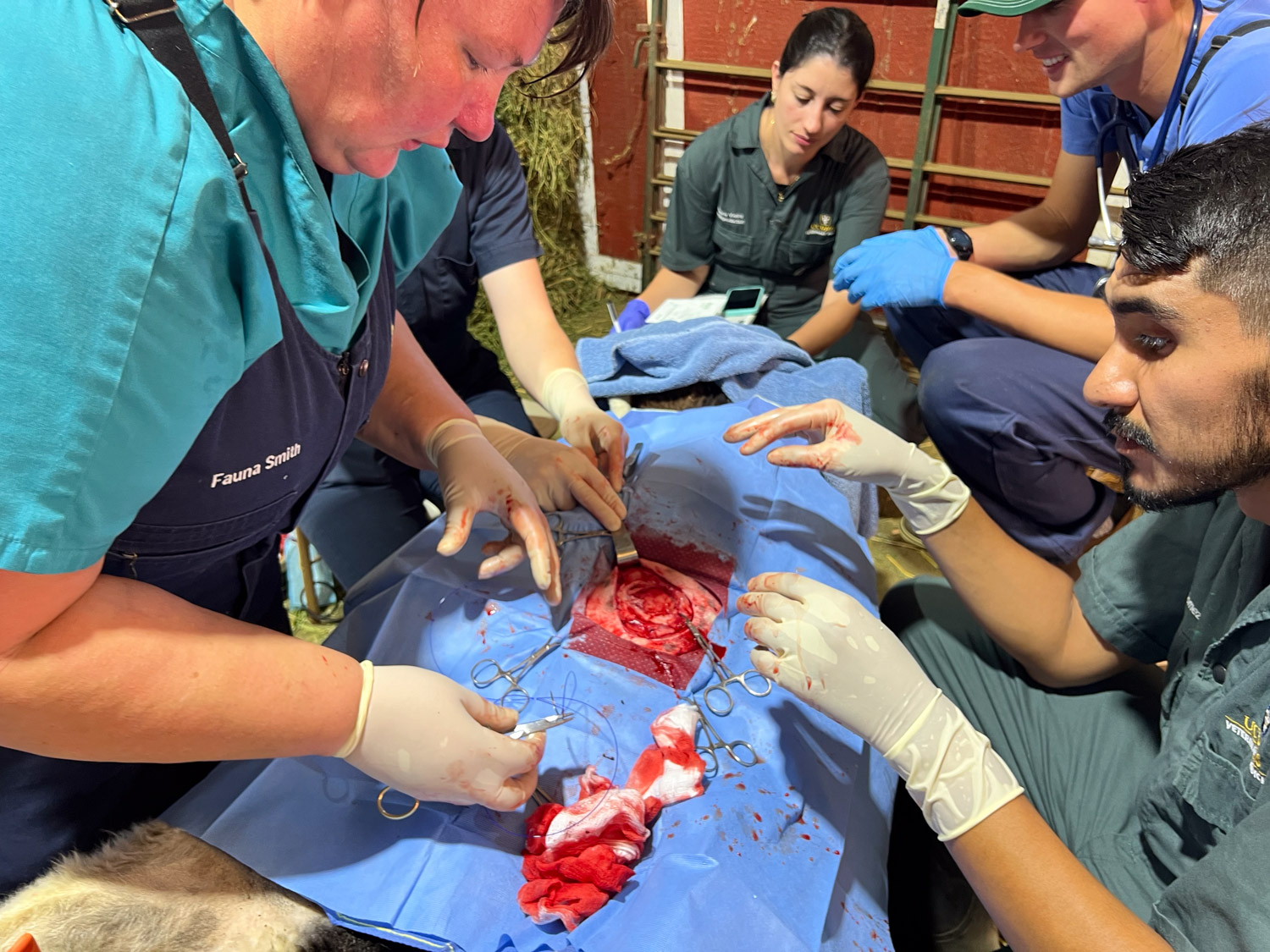
Once that skin and the next layer of tissue was removed you could see the ring through which the fat and intestines were dropping. The vets made sure that any adhesions were loosened before closing the wound.

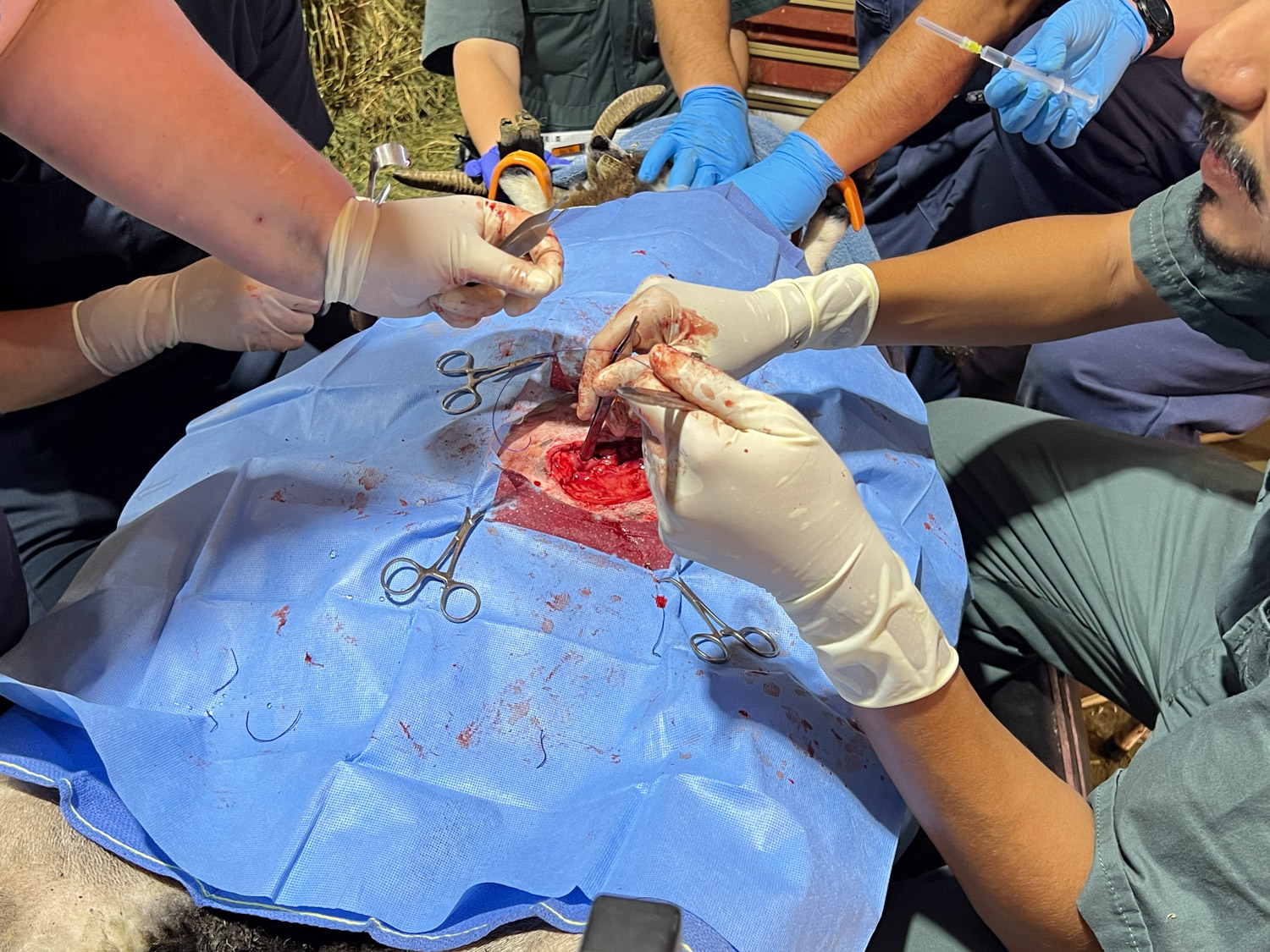
They stitched three layers. First they closed that hole and used what I think they said was a mattress stitch. The different stitches they used reminded me of teaching hemstitching in weaving classes. They closed another layer of membrane (or muscle?)

Then they closed the skin wound.

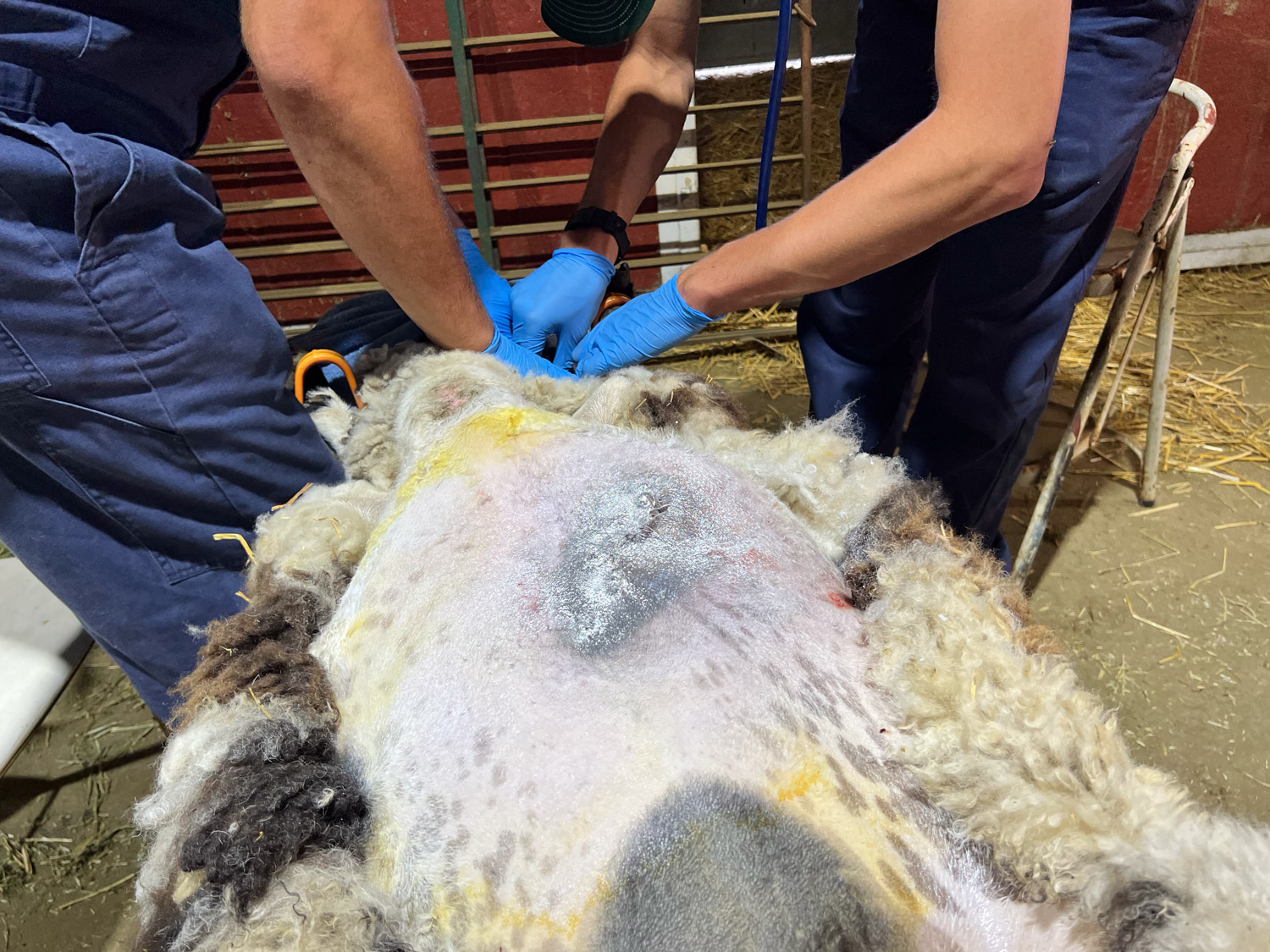
The final coating of an aluminum bandage spray.

Here is Bettylou on her feet…

…and back in a pen where she’ll stay for 2 weeks.

Bettylou won’t be bred this year but she’ll be ready to go for next year. I’m glad to have been able to keep her in the flock.

Granddaughter Visit – State Fair 1

A couple days after our Airbase Tour it was time for State Fair. We had worked with the lambs every day since Kirby got here nine days prior to the fair, but I didn’t get any photos then.–too busy. For the last couple of years Kirby has had a long enough visit to California to spend time working with the sheep and then going to the fair.

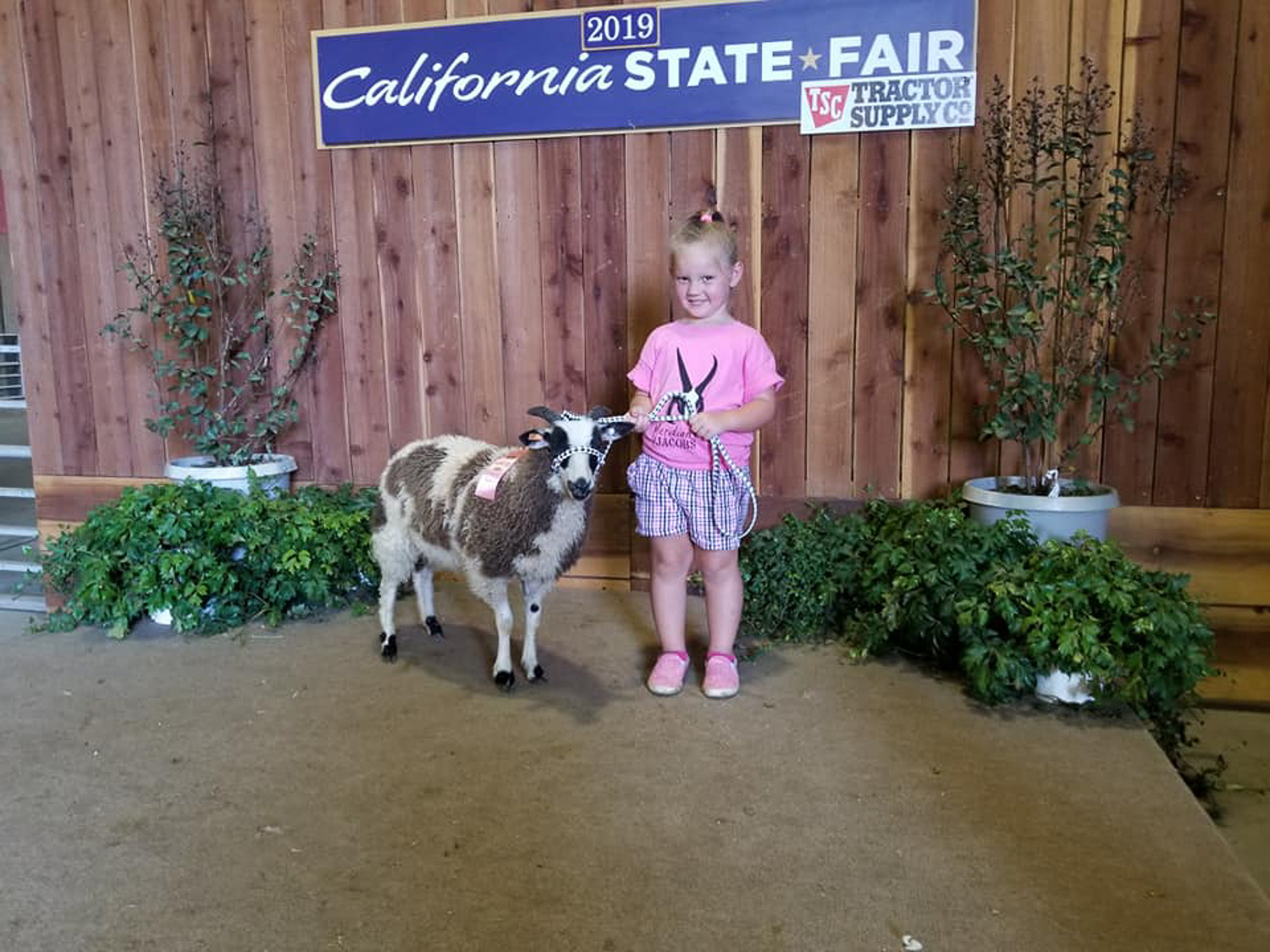
I gave Kirby her first lamb in 2019 and she showed at State Fair that year. There are photos in that blog post on my website, but the one below is one of my favorites.

This is Meridian Belle as a lamb in 2019. Kirby’s flock has grown to include Belle’s daughters, Beauty (2021), Rose (2022), Cindy (2023), and Jingle (2024) and their offspring. Beauty’s daughter is Belleza (2023) and Rose’s daughter is Lily (2024). There have been male offspring as well but I haven’t kept them. We may keep one of the rams this year. Kirby’s flock prefix is KJ Royalty.

The sheep arrive at the fair on Thursday of the third week.

I forgot to take a photo of the space before we unloaded sheep. First thing is getting sheep out of the trailer, vet check and then putting them in pens. We have a lot of other stuff to unload because of the display that I do. That will be another post.

Kirby enjoyed taking her sheep out to share with the public and so that they get calmer when being handled. This is KJ Royalty Jingle, Belle’s daughter.

We used to show dairy cattle at the State Fair and Katie (Kirby’s mom) was a little younger than Kirby is now. At that time people from the Livestock Office took visitors on barn tours. Katie would spend time at the end of the line-up of cattle and talk to people. I remember hearing one woman telling another “that little girl knows more than the tour guide”.

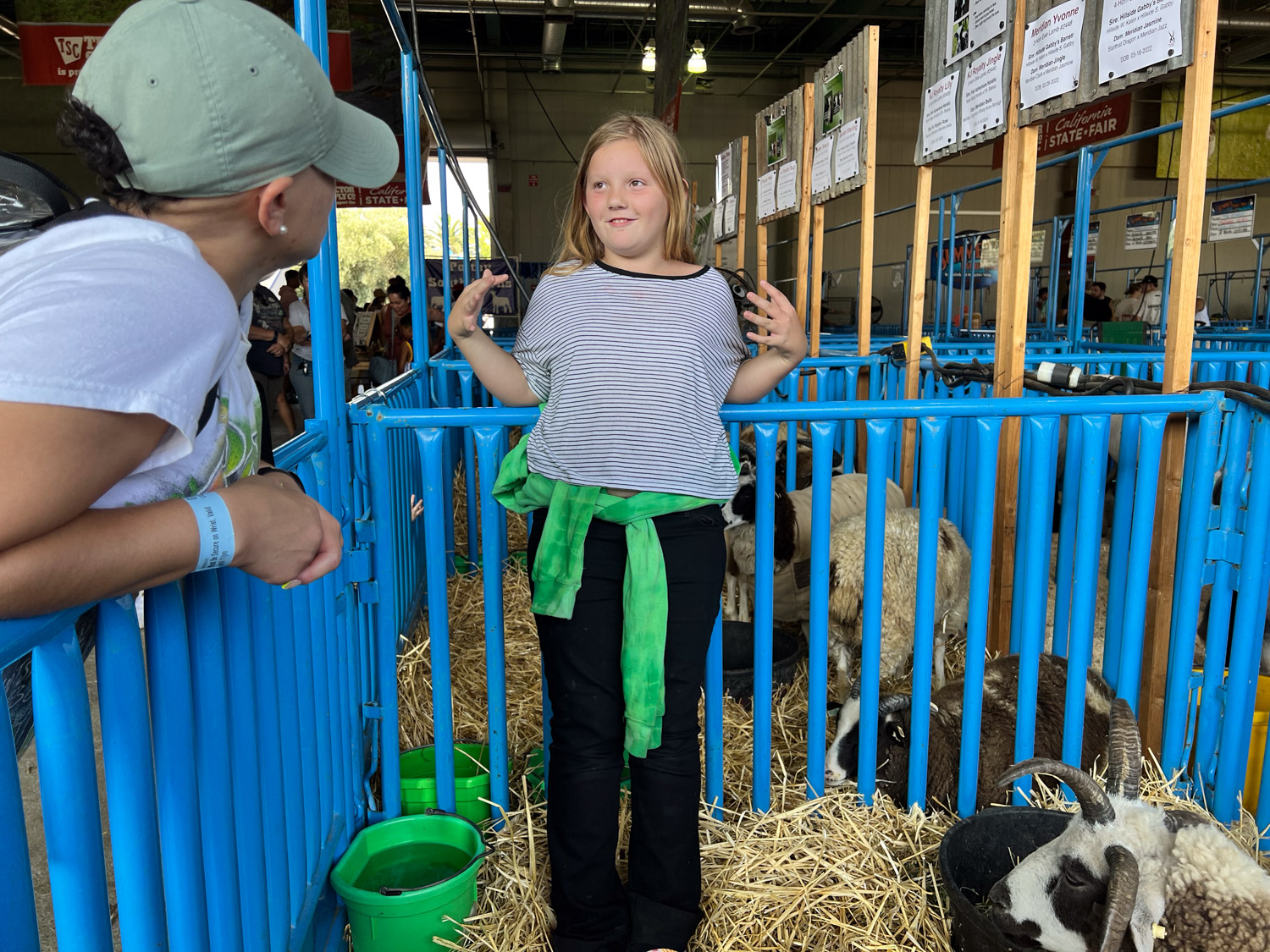
Kirby is also good at engaging visitors and answering questions.

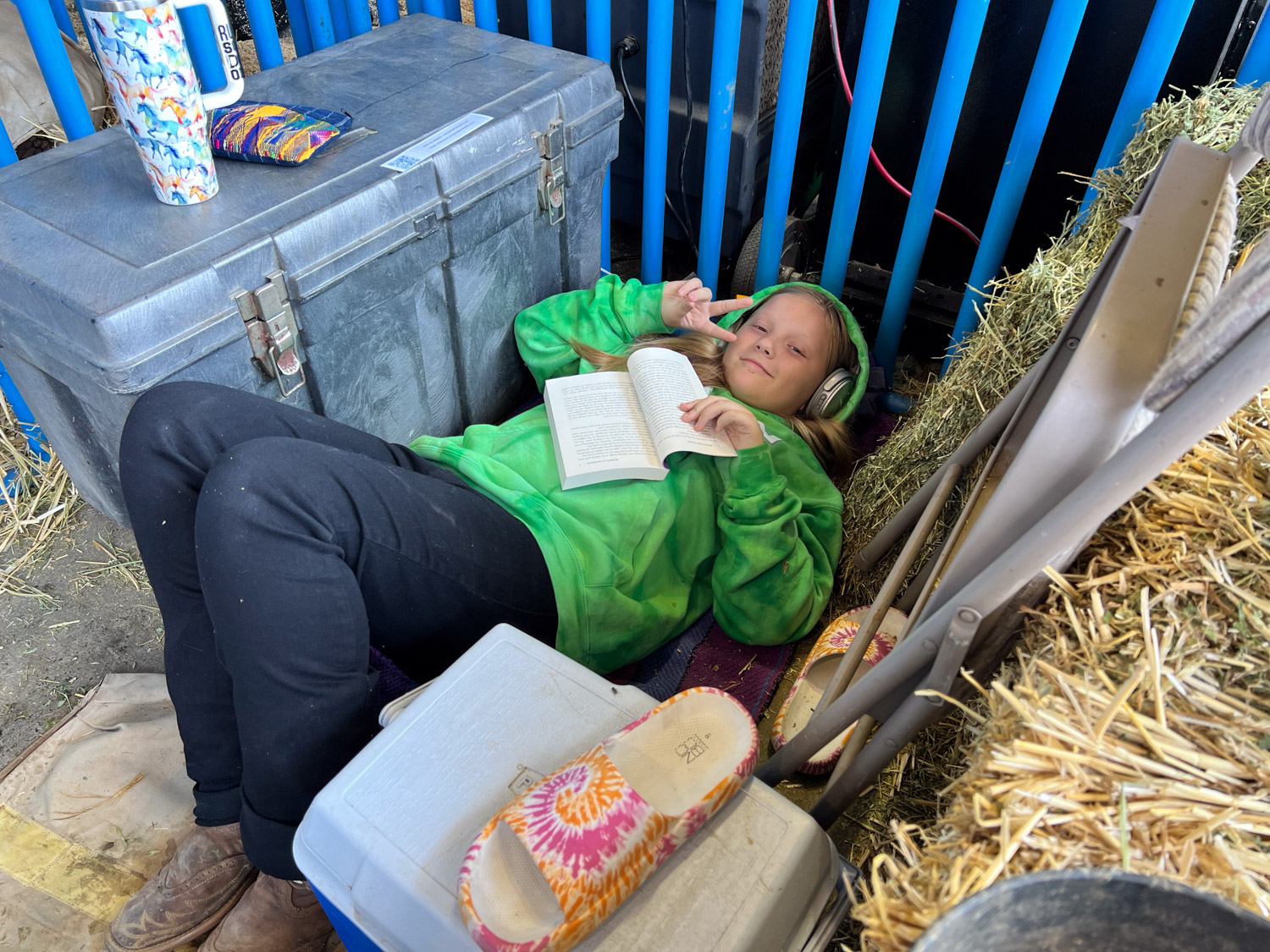
Sometimes you need a break from it all…

…and then maybe a nap.

After a break it’s time to go back to engaging the public.

KJ Royalty Lily, Rose’s lamb.

The signs over Kirby’s yearling pen.

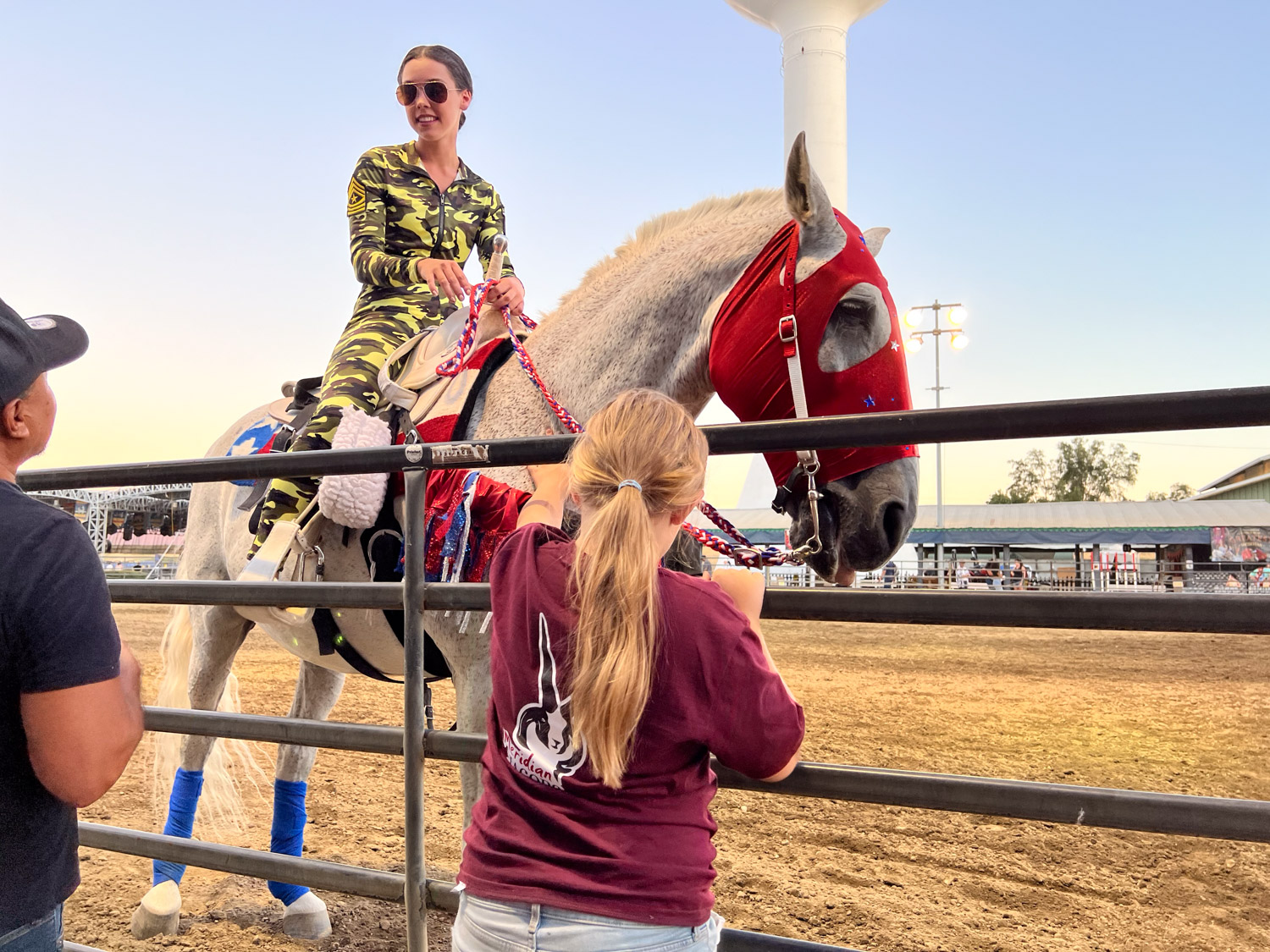
When friends were at the fair I was able to walk around with Kirby a bit. We spent a lot of time at the Cavalcade of Horses, where different horse performances happen every hour.

A display presented by the California pear industry.

Another Busy Day at the Farm

Yesterday was the first harvest day of the season. Some lambs are 4 months old now. The BFL cross lambs are bigger than the 100% Jacob lambs and some are ready for customers who like lighter lambs. I have a customer who likes the black lambs. I asked if he wanted both of these because they are twins. If they were 50:50 crosses they would both be black, but these are 3/4 Jacob. There are two 50:50 ewes here and when bred back to a Jacob you never know what you’ll get. One is black with very short horns and one is white with some Jacob markings and large horns.

While I was sorting and weighing sheep I heard Ginny barking at something at the other end of the barn. This is a fancy trap that I bought several years ago and sort of forgot about. It is a live trap where the animal drops in from the top. It was in the back of the barn on a woodpile. We caught a young opossum! The opossums aren’t a problem here. I took this one out to a brush pile and let it go out there.

After sorting all the sheep I let the rest out to the pasture. This is a view of the property from the south.

This yearling is KJ Royalty Cindy. KJ Royalty is the flock name of my granddaughter and her sheep are the progeny of the ewe lamb I gave her in 2019. Kirby will be here next month to work with the new lambs and show at State Fair. I’m glad that Cindy is getting more friendly.

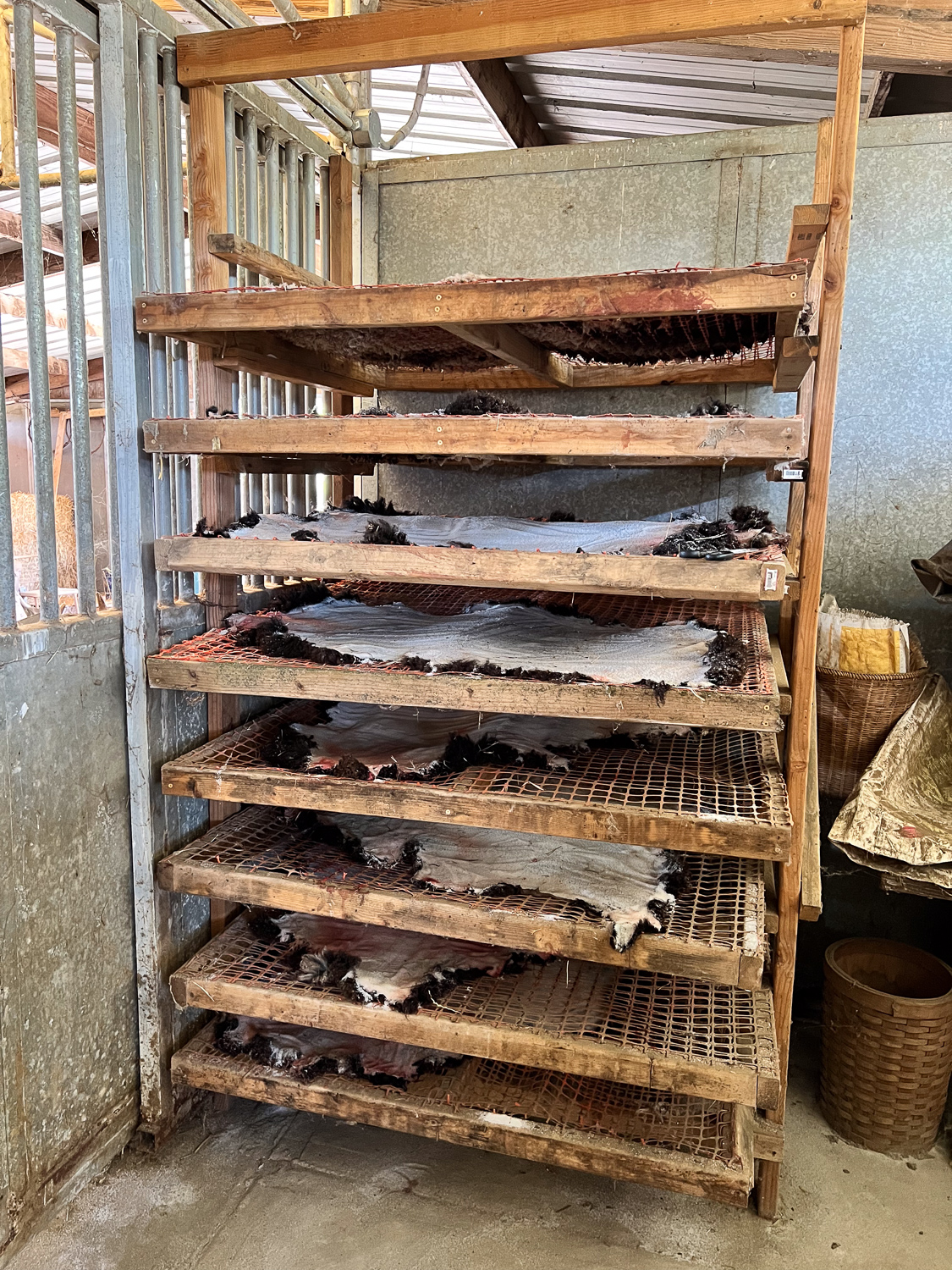
The person who harvests lambs is very fast and does a good job with the skins. I try to use all the parts of the sheep I can. I salted these hides and will ship them to a tannery when they are dry enough. The beautiful lambskins will be for sale when I get them back from the tannery–hopefully by early fall (but no guarantees). This page gives you an idea of what I will have for sale then, but these are all gone. I recently got back a dozen lambskins that were the first I sent off last year–a whole year ago. I haven’t had time to photograph and list them yet. Next week.

Harvest was over within two hours, but the rest of the day was busy with customers and computer stuff. Never ending computer deadlines. Late in the day we had a new kind of visitor.

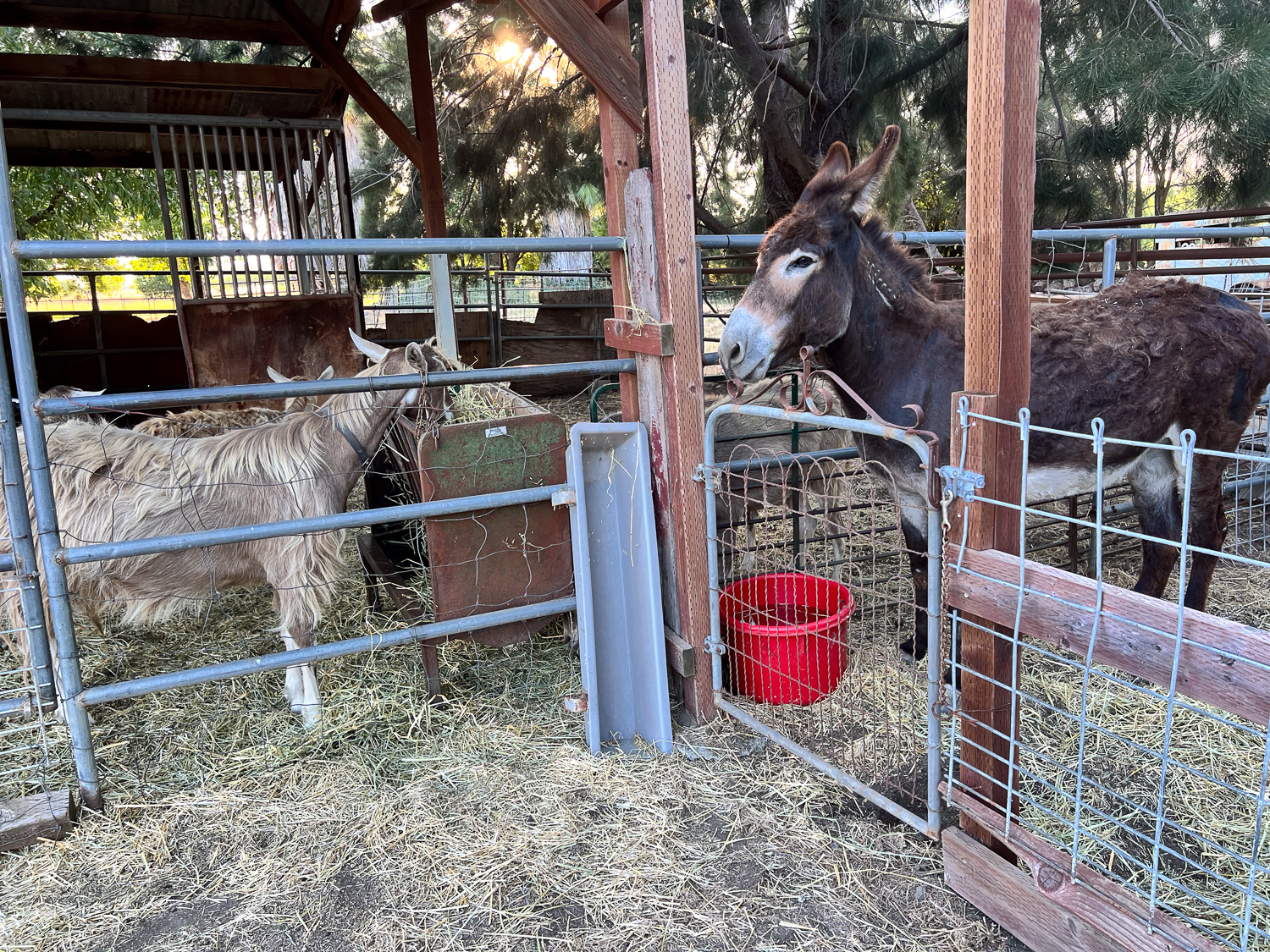
I am caring for these goats for a couple of weeks until their new property is ready for them. There are seven pet goats here and most of them originated from goats that my son Chris raised in his FFA project.

The goats came with a donkey! This makes me want a donkey again, but my irrigated pasture is not a good fit for a donkey. I can hear her braying right now even from the house!

Farm Views – Sheep and Hummingbirds

The title of this post implies a cool photo. Sorry. There are no photos of sheep and hummingbirds together. However I have some of each. This post was going to be about hummingbirds but then other photos caught my eye.

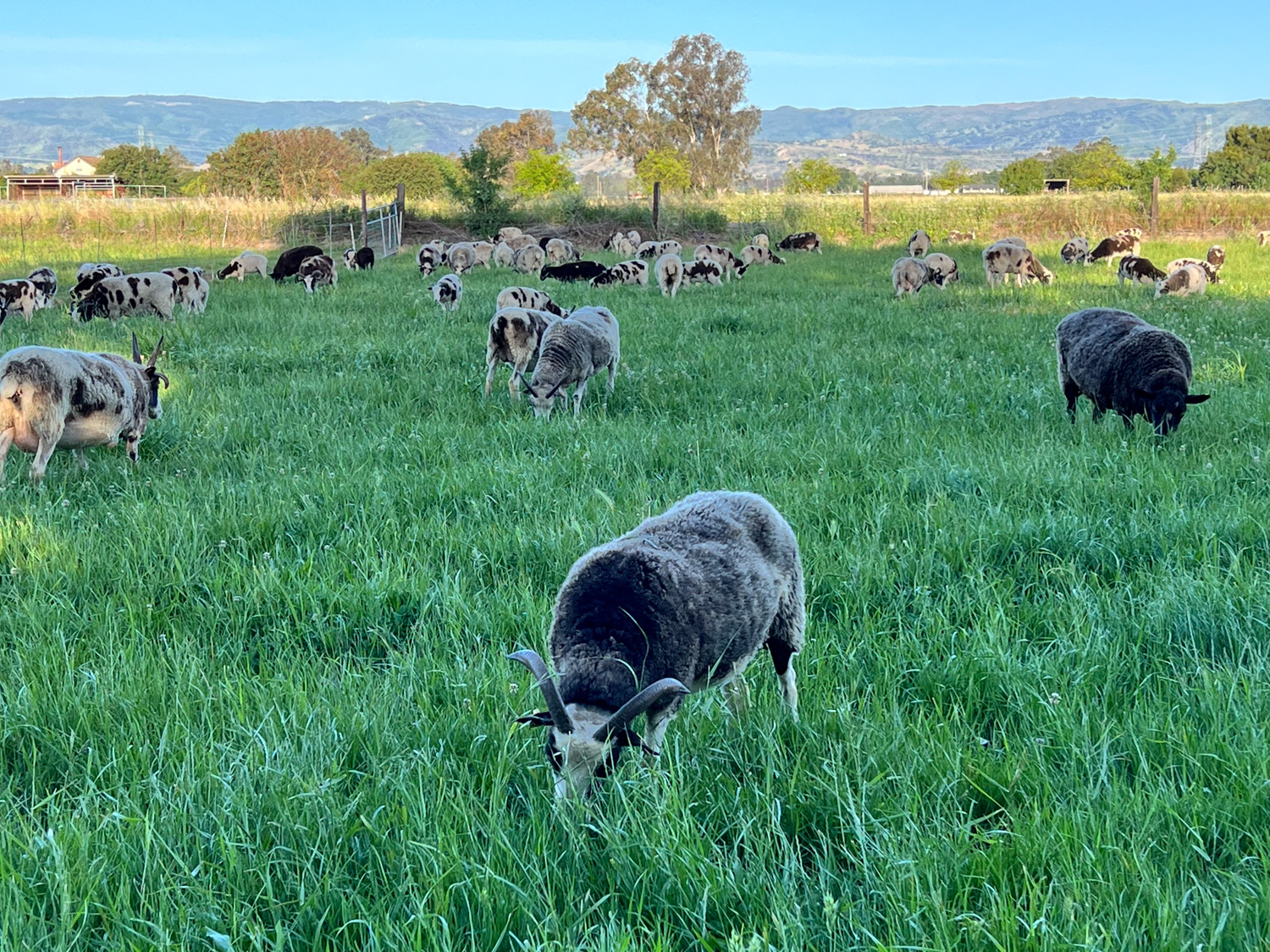
Sheep on fresh pasture.

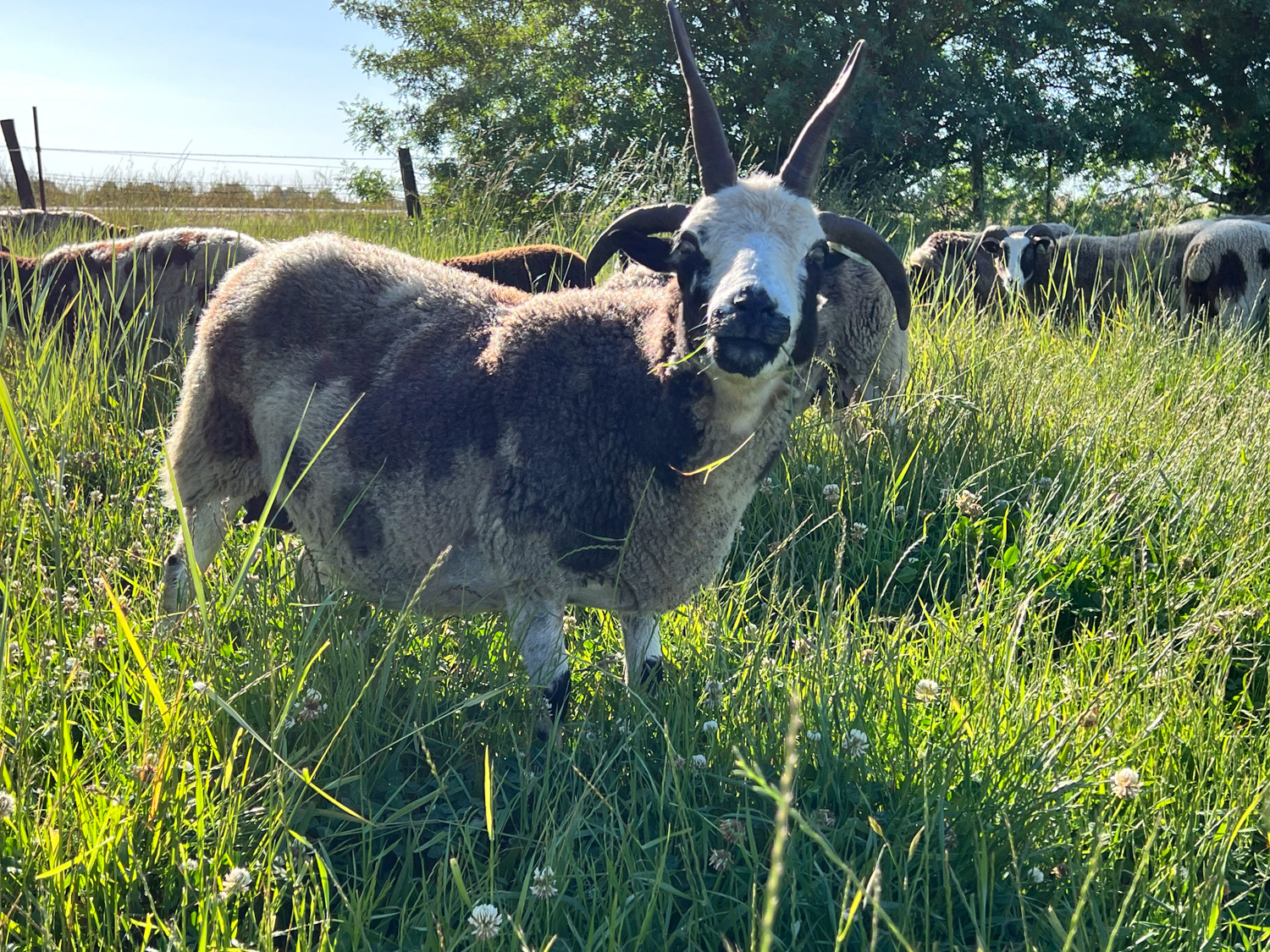
This is Sweetgrass Eileen.

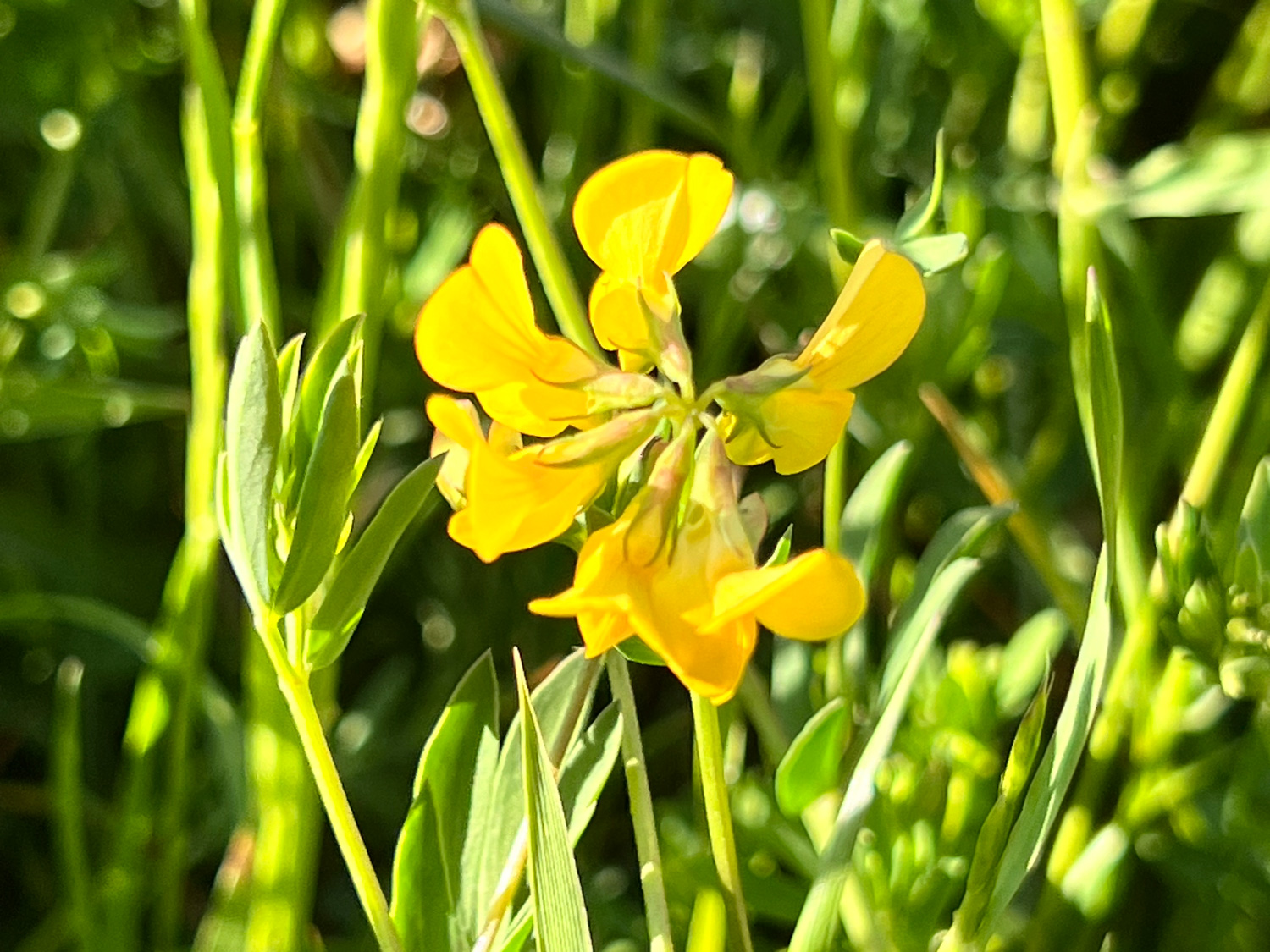
Birdsfoot trefoil flower.

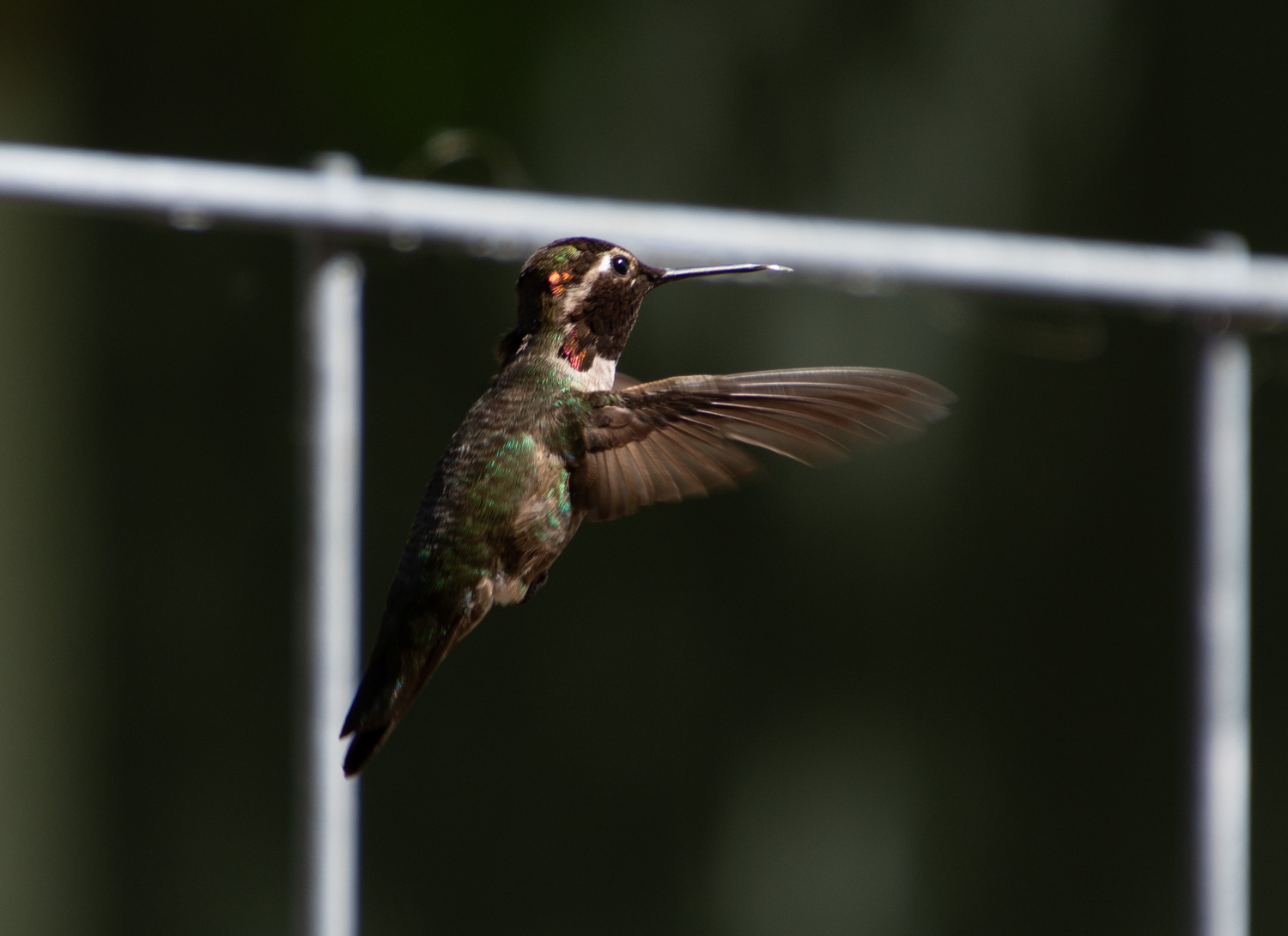
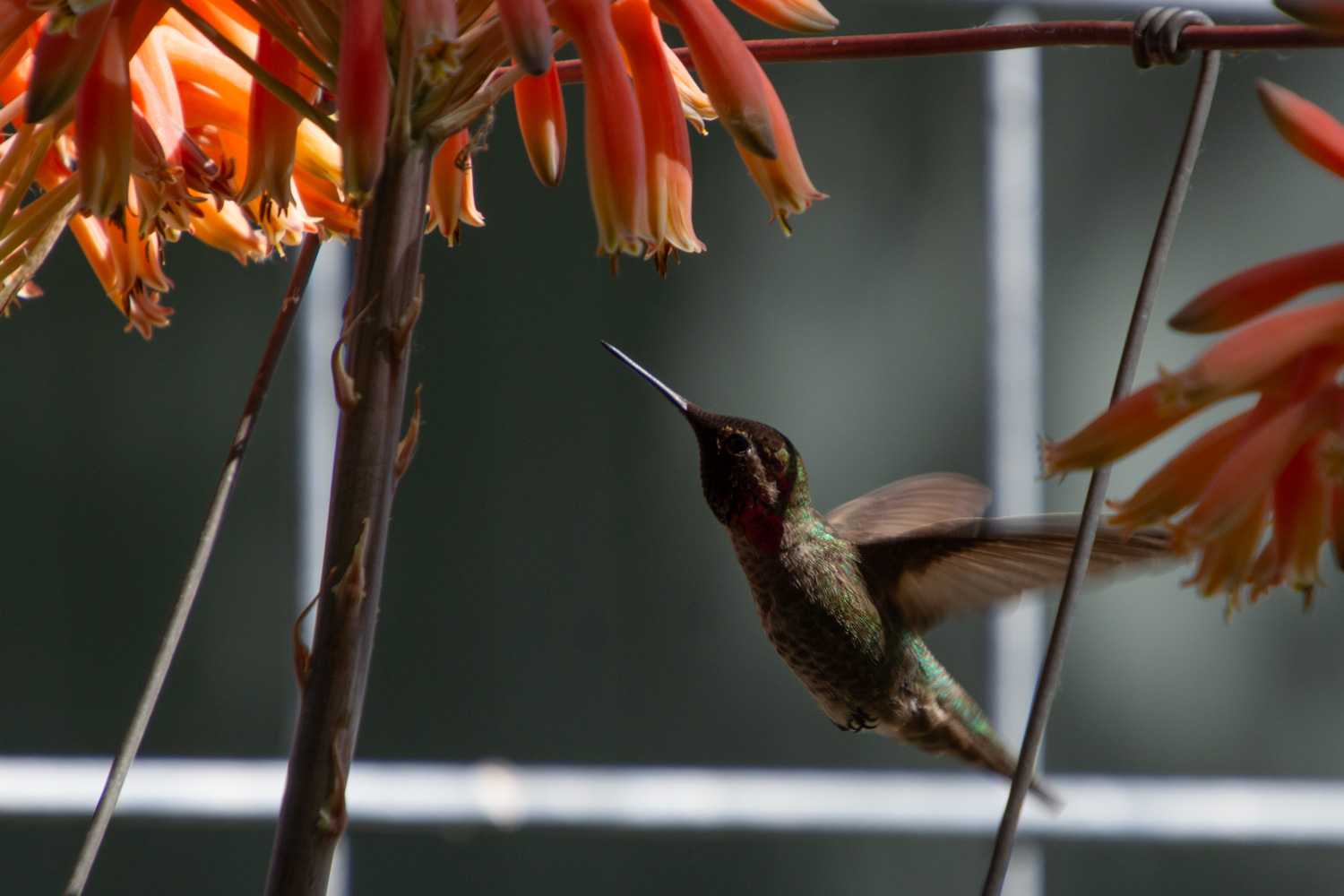
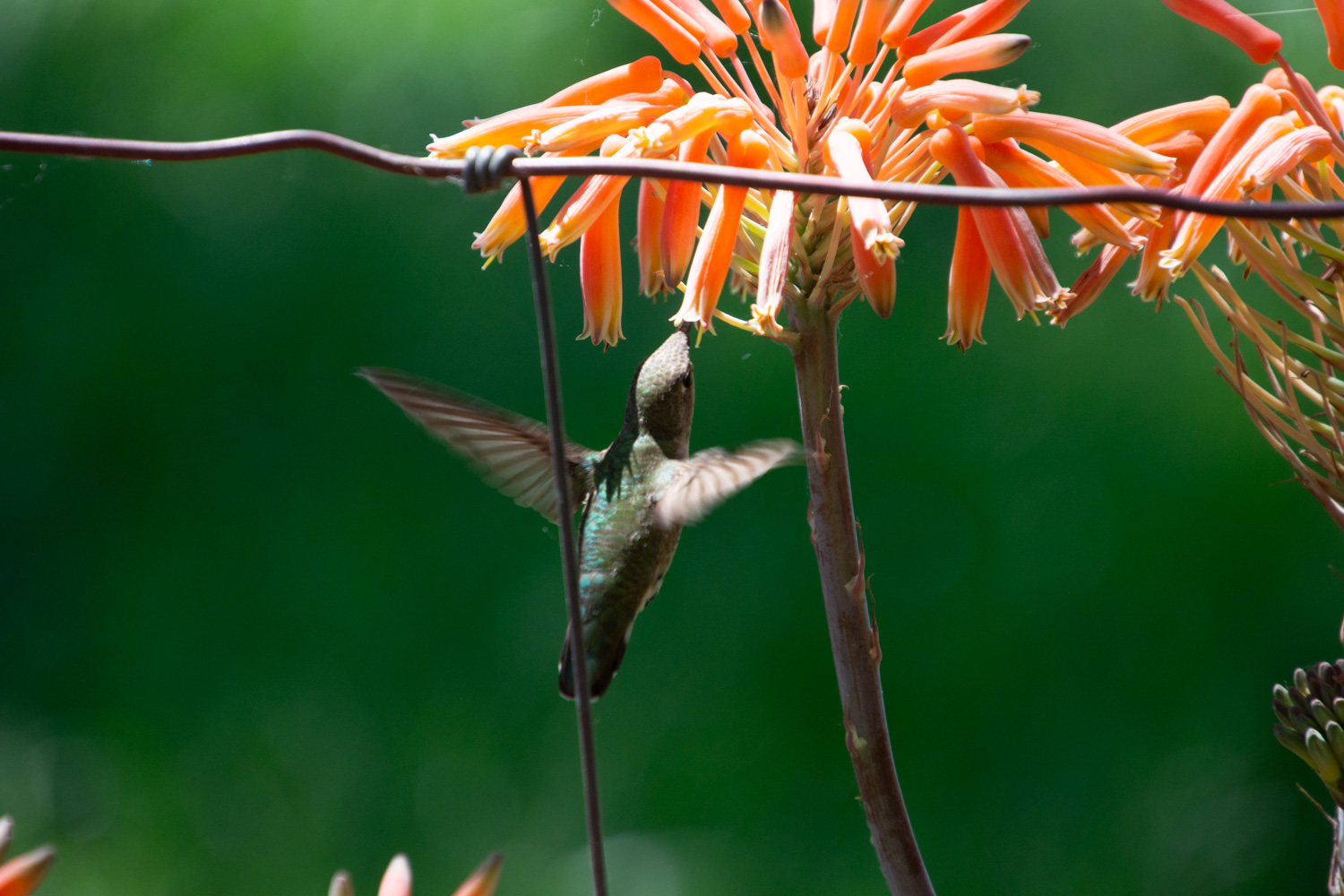
Now for the hummingbirds.

I had way too many photos but narrowed it down to these.

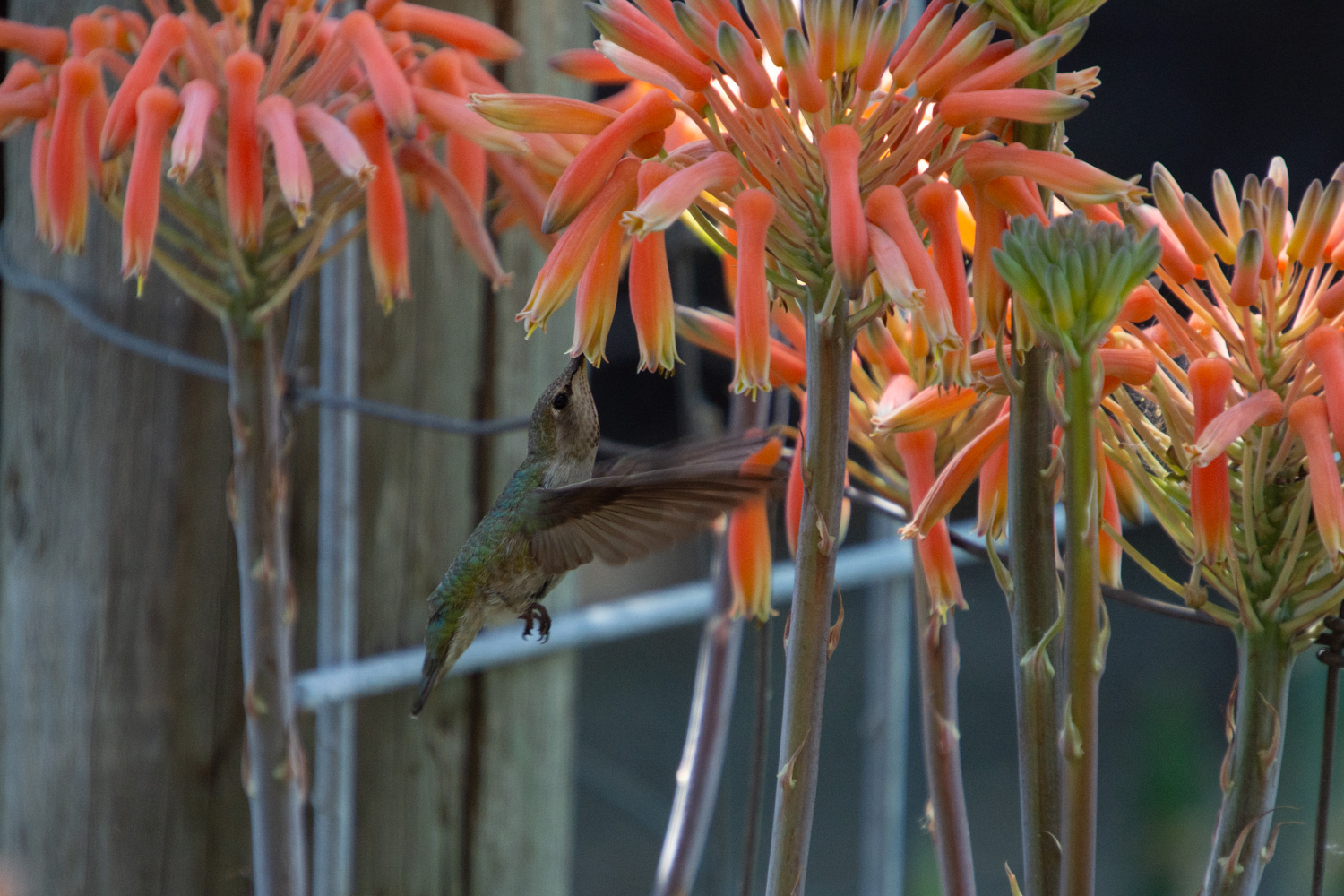
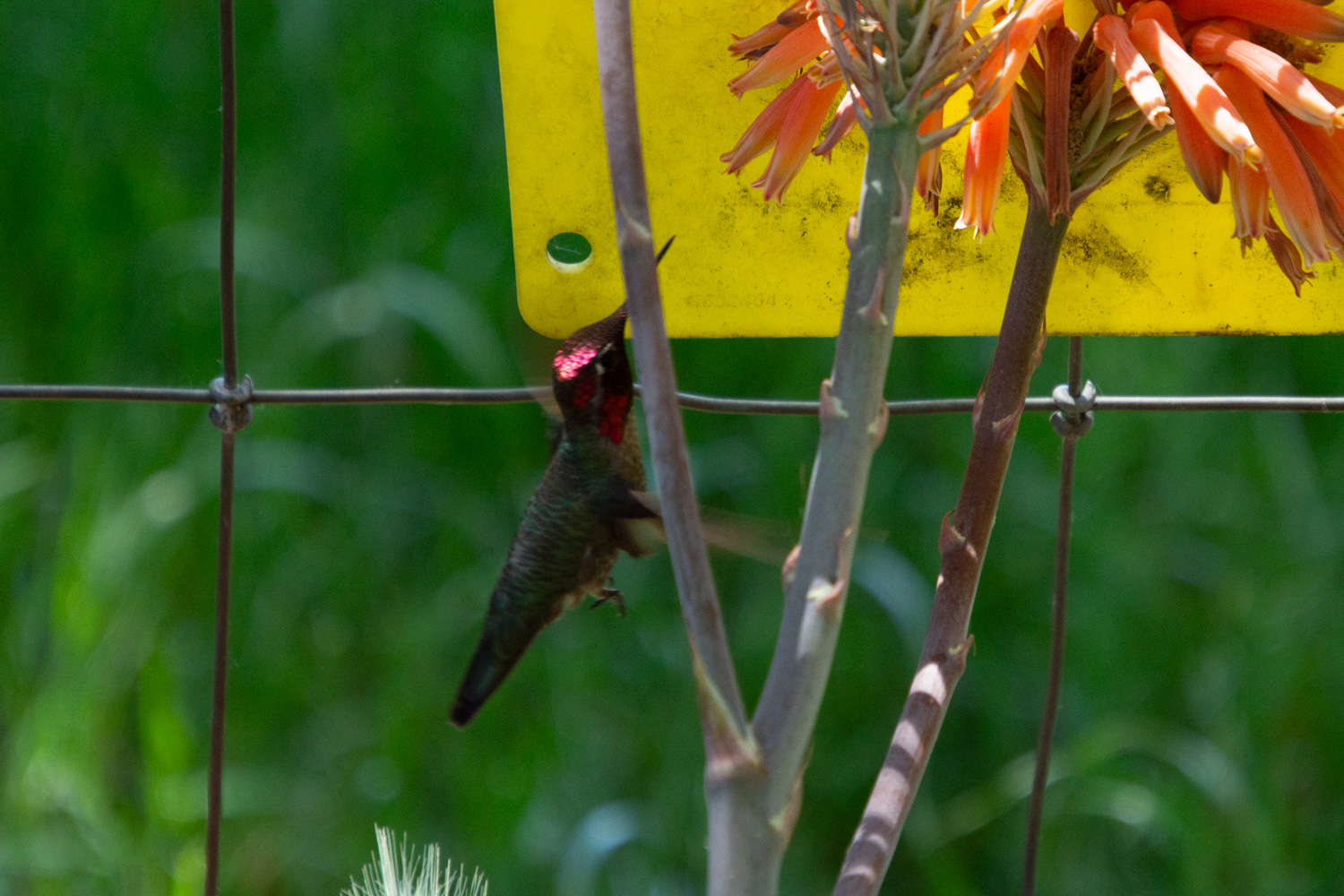
Now that the aloe is flowering I notice hummingbirds there frequently. Sometimes there are two or three at the same time.

This was easier to photograph than hummingbirds. I needed only one photo.

Lambing update

I just checked back to see when I wrote last. Wow! I’m so behind. It’s probably impossible to catch up with all the ideas I was going to share. Here’s an update about sheep and lambing season.

This is the lambing board where I record all the info as lambing progresses. This will stay up until the first lambs show up next year. The info shows date, ewe, lamb # (purple for ewes, blue for rams), and birth weight. The blue brackets are triplets.

Here is a summary:
Lambs born between January 25 and March 7, 2024
Single births: 3 = 3 live lambs
Twin births: 33 = 63 live lambs (3 died at birth)
Triplet births: 8 = 22 live lambs (2 died at birth)
Total live lambs = 88 ear tagged; 1 died at 1 day and 2 dead fetuses not counted.
44 ewe lambs / 42 ram lambs
Sires:
Horatio 36 lambs
Barrett 27 lambs
Typhoon 12 lambs
Blizzard 5 lambs
Peyton 5 lambs
Unknown 3 lambs
The Unknown are the first 3 lambs born, earlier than I expected, and due to the ram lambs getting into the pasture prior to breeding season. OOPS!

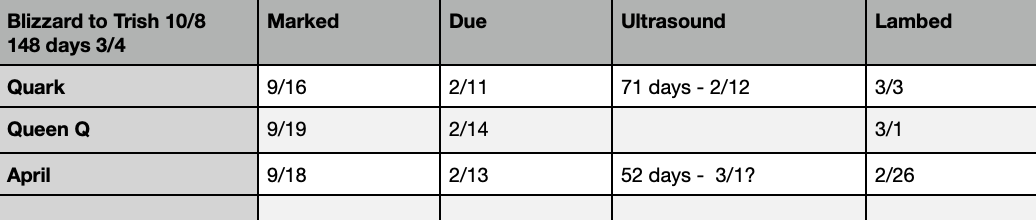
I also question if Blizzard is the sire of the five lambs born later than expected based on original breeding dates.

I made this chart to help work it out. If the lambs were born based on the original dates they would have ben born in mid-February. They are about 2 to 3 weeks later. A sheep heat cycle is 17 days and gestation is between 142-152 days (average 147 days or 21 weeks). Blizzard was with 3 ewes until Lambtown, October 6-8. If he bred them October 5 the due date would range from February 24 to March 5. I just looked back at last year’s Lambtown blog post and see that Queen Q and Quark were both at Lambtown also. They came back on October 8. IF they were bred October 8, 147 days would be March 3 (range February 27 to March 9). I’m pretty sure that April’s lambs are sired by Blizzard, but I’m still not sure about the others. I think they probably went in with Horatio when they came back here but I don’t remember. It would have been smart to leave them away from rams for another week or so. The lesson here: TAKE BETTER NOTES.

Thanks for “listening” while I try to work this out. Now, on to photos.

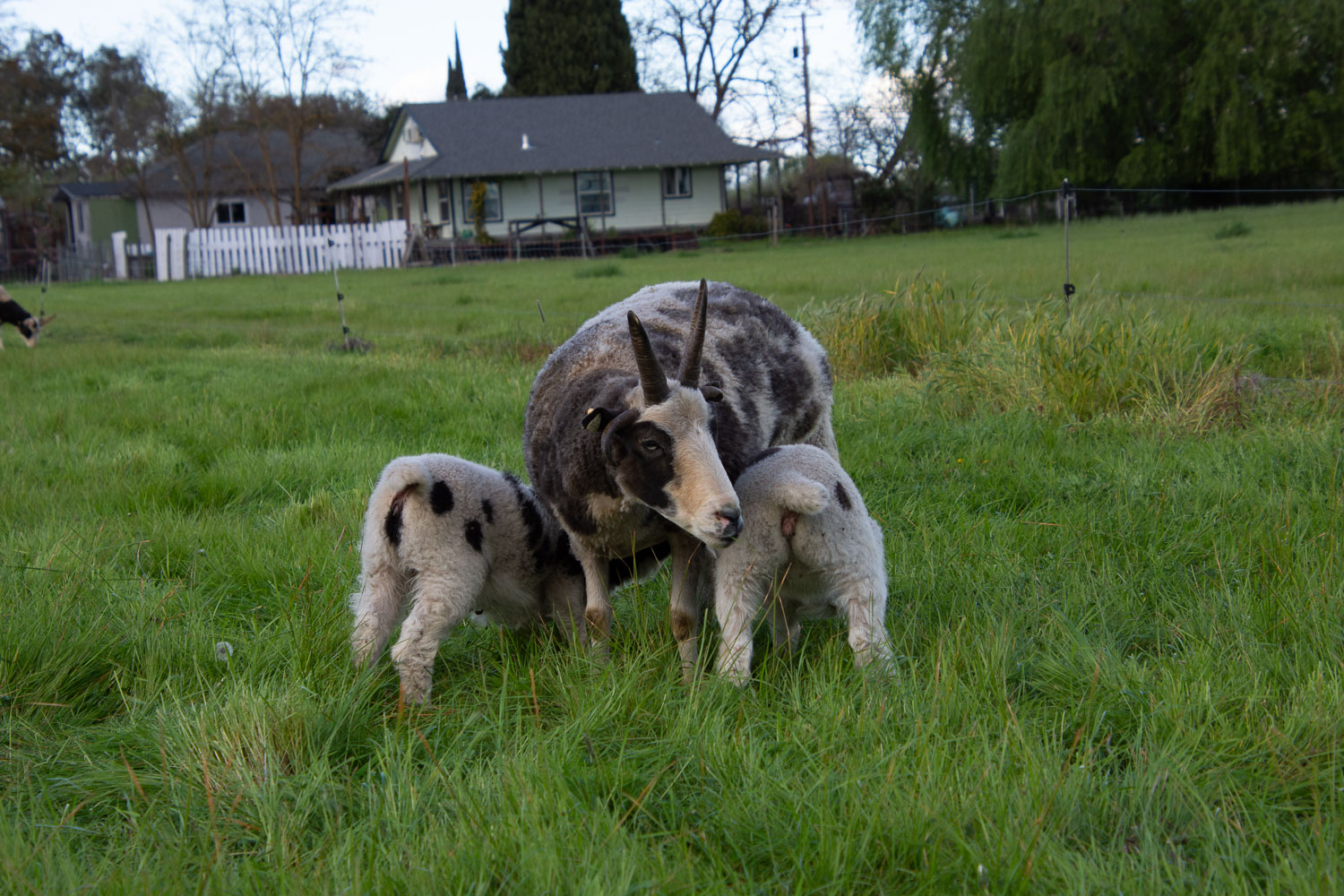
Lambs are getting big. This is Hailee, one of the few 2023 ewe lambs that I put with a ram. Her twins were born March 4, so they are only 3 weeks old. Really? It seems like that was so long ago now.

Here is a view of Hailee without lambs under her. I really like her horns!

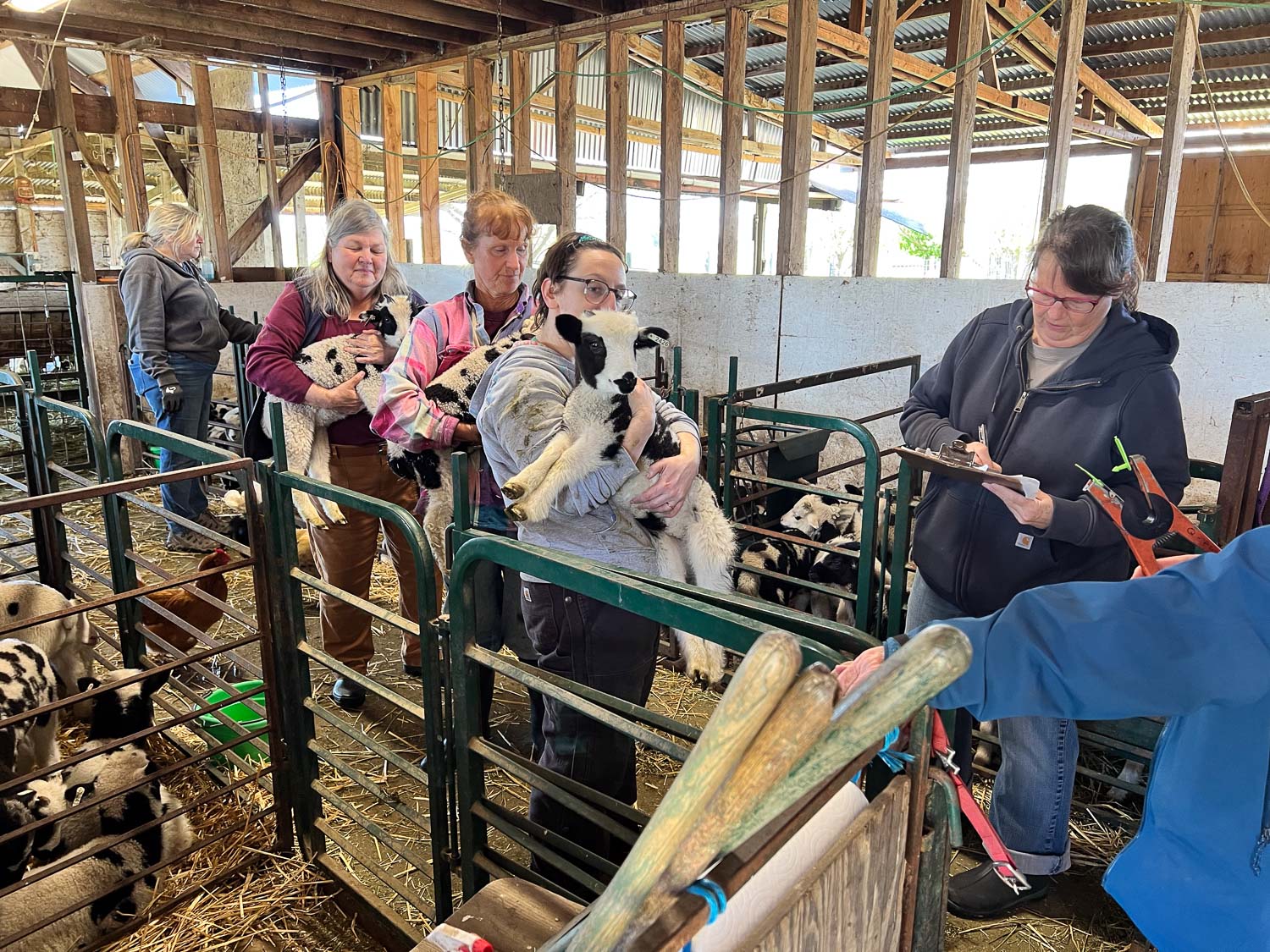
We had a Farm Day on Sunday and several members showed up to help take notes about lambs. I hadn’t taken time to record number of horns, color, etc and needed to be able to update the website. We caught all the lambs and then inspected each one. It’s easy to tell the number of horns on the rams when they are young, but not always on the ewes. This photo makes mer think of a line at the grocery store. Farm Club members caught lambs and waited while we all checked them out and then I ear tagged with a colored tag.

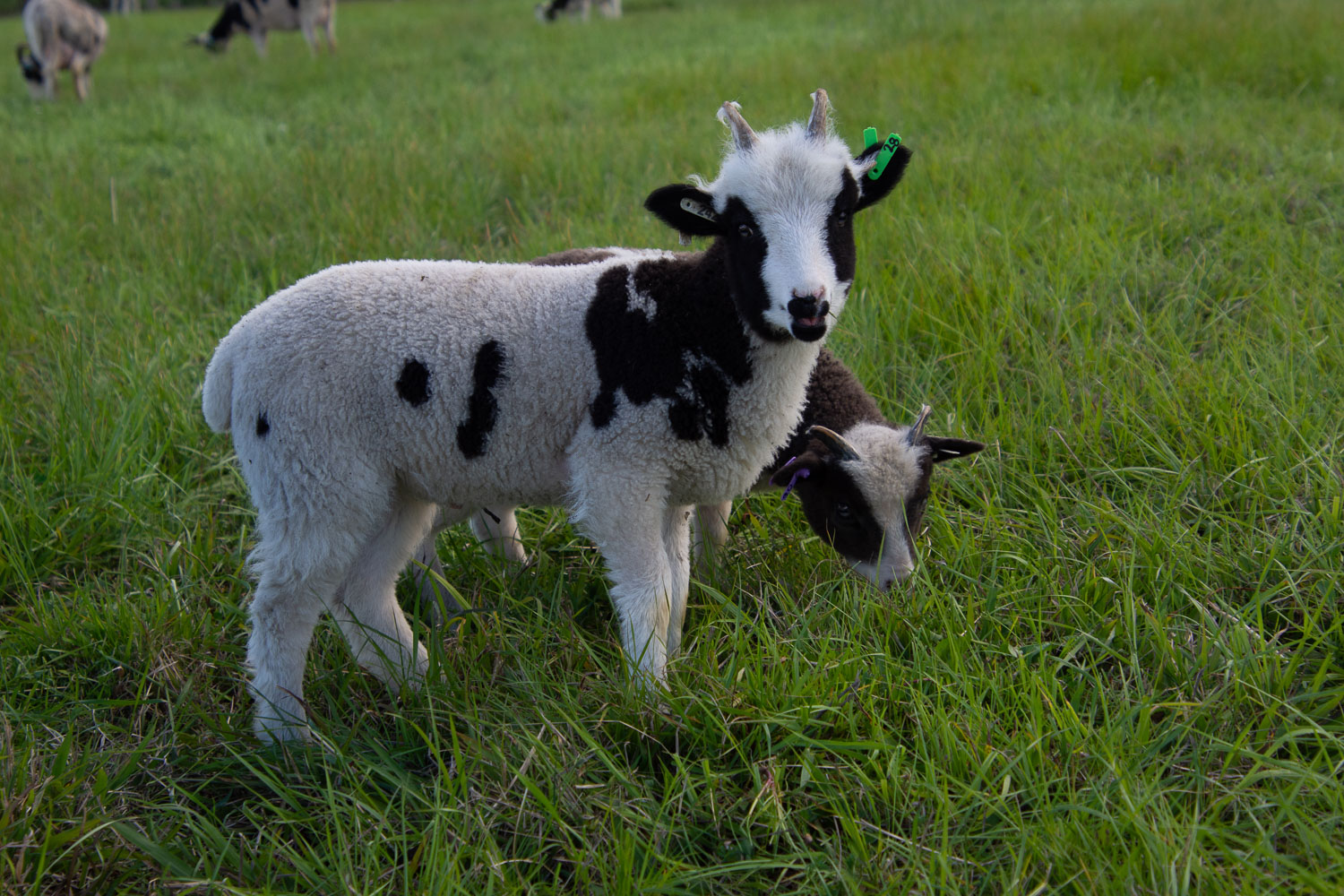
They all get white ear tags for ID shortly after they are born. The colored tags are useful as back up if the original ones are pulled out and to help find a particular lamb. When I’m looking for a specific number I have to look at all 80+ lambs and it’s much easier to narrow it down by color. It also helps when I’m taking photos that usually I’ll be able to identify the lamb later by at least one ear tag. We color code them by sire.

Barrett’s lambs got green tags.

Ewe lambs are tagged with the white ID tag in the left ear and the colored tag in the right ear. Ram lambs are the opposite, so that’s another way to help find a lamb.

Horatio’s lambs have a purple sire tag.

We tagged Typhoon’s lambs with yellow. I did not assign colors to lambs that are potentially Blizzard’s or the ones with an unknown sire. Now you can find most of these lambs on the website. Ewe lambs. Ram lambs. I’m not finished taking photos. Most are for sale.

Pecan and ewe lambs born February 19.

Triple Trouble

I wrote last time about Seeing Triple and all the triplets that have been born. Eilwen was the last one in that post, but early the next morning Honey had her lambs–more triplets.

When I went to the barn I saw the moon setting in the west…

…and the sun rising in the east.

Here is what I saw in the barn. I had put Honey in the night before because she was desperately trying to claim the lambs of the ewe that had just lambed when I was at the barn around midnight. Now she had her own brood. This is the sixth set of triplets. That’s too many, especially for this ewe who had mastitis last year. I thought it had been resolved enough for her to have lambs again. I was wrong.

The lambs had figured out that they were getting milk from only one side. A ewe can nurse a single lamb one one side, and maybe twins, but it’s asking way too much to raise triplets that way. Its important for the lambs to get colostrum during the first day, so I made sure that they all took turns nursing through the day, but I started to supplement that night.

Jannie lambed later that day with twins.

This is Coco with 10-day old twins. Yesterday I found Coco less responsive than normal. She is not one of the tame sheep and she wouldn’t get up when I wanted her to move. The lambs were trying to nurse while she was lying down. I discussed symptoms with one of the vets at the VMTH (UCDavis Vet Hospital).

No fever and, in fact, lower than normal body temperature, her behavior, and the yellow cast to the sclera led her to think copper toxicity. I have dealt with copper toxicity in the past but not for several years.

I took Coco to the VMTH as soon as I could. This story does not have a happy ending, but this is real life. Coco was euthanized. I know she looks like a normal sheep in this photo, but believe me, her body was shutting down. There is a lot more I could tell you about this — details about copper toxicity in sheep, decisions one has to make about animals whether they are considered livestock or pets, and more. That is what Farm Club is all about. Farm Club members get the behind-the-scenes stories in much more detail than works (or is appropriate for) a blog post. They have had daily updates from the beginning of lambing and have been invited out here to participate as well.

This was the bucket I took to the barn this morning. Two bottles for Coco’s lambs and two bottles for Honey’s lambs. As of the noon feeding I added a fifth bottle. I’ll be feeding four times/day for a couple of weeks I think.

Those are Coco’s lambs on the right. I took two of Honey’s lambs out of her pen this morning. The fact that she didn’t care means she doesn’t feel well. I left one with her but will supplement him.

On the positive side, Jazzie lambed this morning.

The lambing board so far.

Seeing Triple

Janna had the first set of triplets this year. That was February 9.

Next was Sonata on February 17. Unfortunately the third one died after birth. I thought she was finished with lambs after two. When I came back the third was there with membranes on its face. It may have been that Sonata didn’t even know she’d had another lamb while she was dealing with the first two.

Later that same day Juniper had triplets.

The following day, February 18, Jade had triplets. By this point lambing was intense. These pens were “overflow” in the alley of the barn. I think that Jade had been in labor since the morning–or at least the early stages–with no progress. In the meantime Quartz, Jade’s daughter in the pen next to her, lambed with her first. I decided to palpate Jade and find out what as going on. I found back legs with one bent at the hock. That lamb was blocking the progress of the others. I pulled that lamb and then a second. I found a third, but couldn’t quite figure out the right orientation and it was in pretty far. I left her alone to see if she would deliver that lamb on her own. Eventually I reached back in and pulled it. That was a difficult pull and I wasn’t sure if I had injured the lamb. It sure took a long time to get going. It eventually came around and now you can tell any difference in it although that night I wasn’t very hopeful. I milked colostrum from the three recent ewes and tube fed the lamb, feeding it three times by the end of the night.

Quartz was having her second lamb, but before she delivered I checked her udder as I always do. One half was hard and I sort of remembered a mastitis issue. There is scar tissue in the udder and the teat is not functional. A ewe could raise two lambs on one side of the udder but it is certainly not ideal. I was also worried about her developing a fresh case of mastitis.

Jasmine was lambing at the same time and the ultrasound had indicated a single lamb.I made the decision to give her one of Quartz’s lambs. The Quartz lamb was already up and had nursed, but was still under an hour old. I made sure that she was “slimed” by the lamb Jasmine had just delivered so that they both smelled the same and needed cleaning. It worked and Jasmine had no problem thinking that both were hers.

Then Jasmine lay down and had a second lamb, or is it a third? In any case, Jasmine is now nursing three lambs.

Jasmine in a stall with her brood a few days later.

Tonight there were more triplets. Eilwen had the first out in the drylot. I had suspected triplets because she was so huge, even though the ultrasound had shown two. This lamb was only 4.6 pounds compared to the average of about 7. That was the first confirmation that I was correct.

Lamb #2.

And a third.

Jade’s lambs look much nicer when all cleaned off.