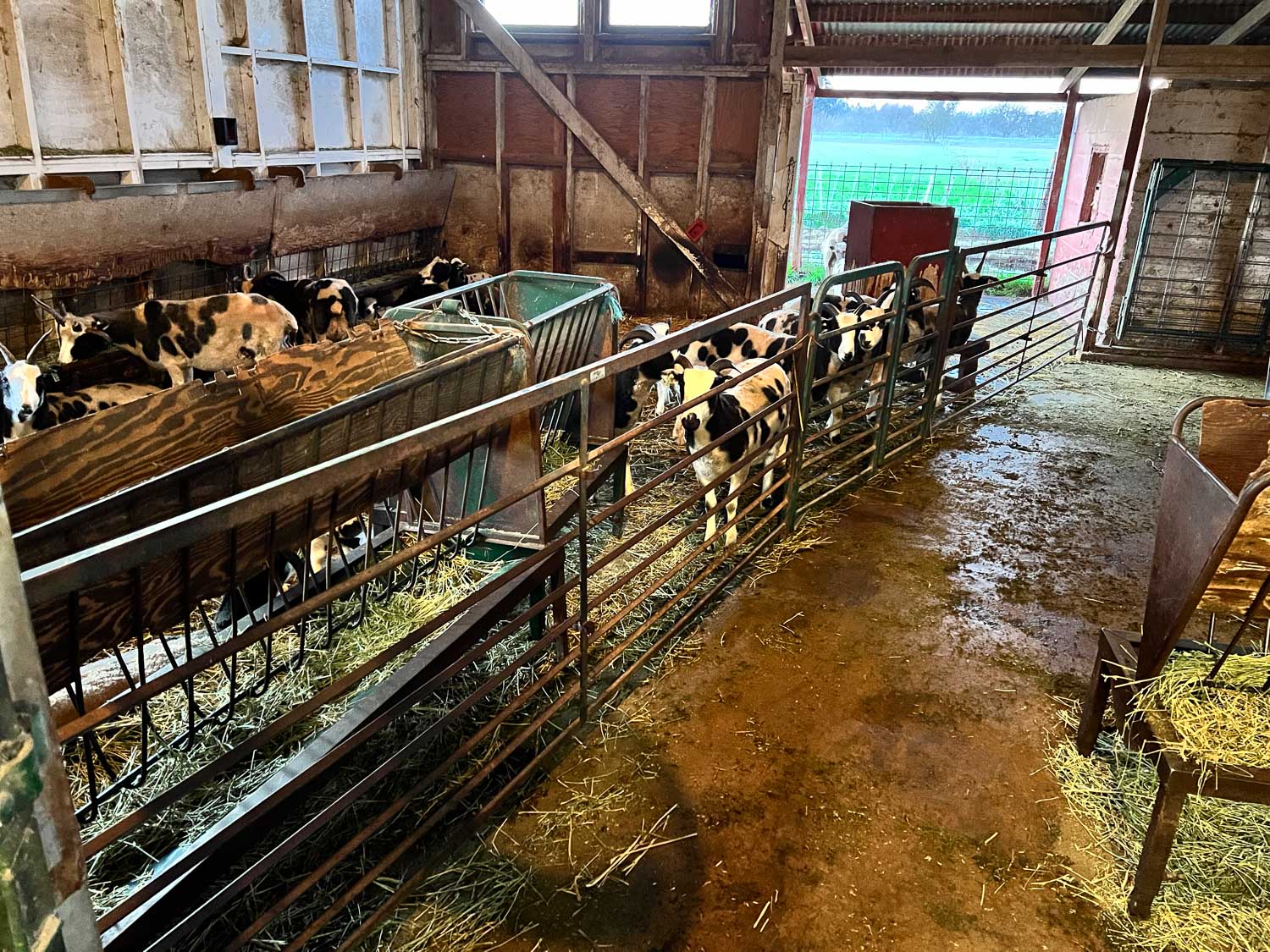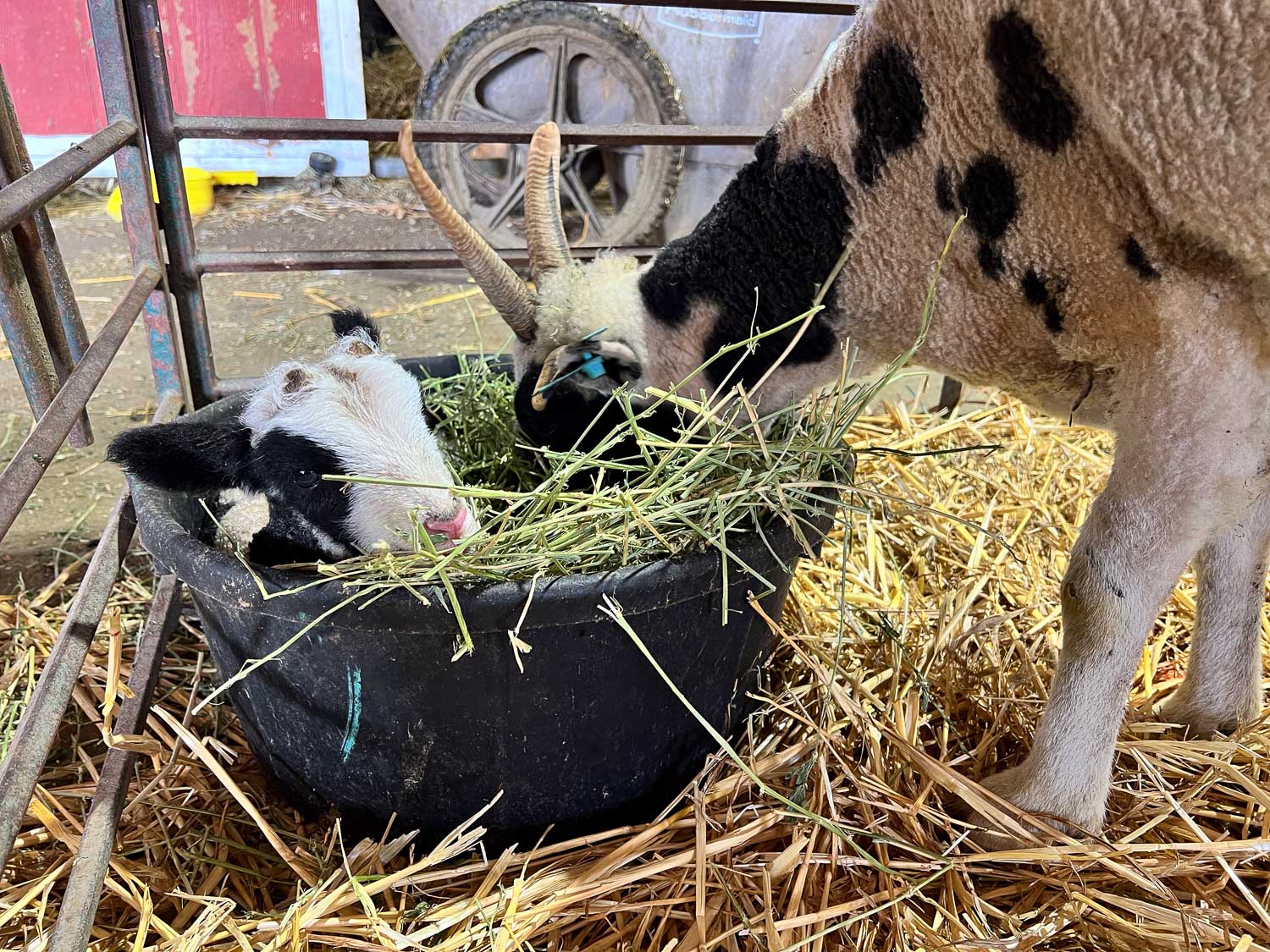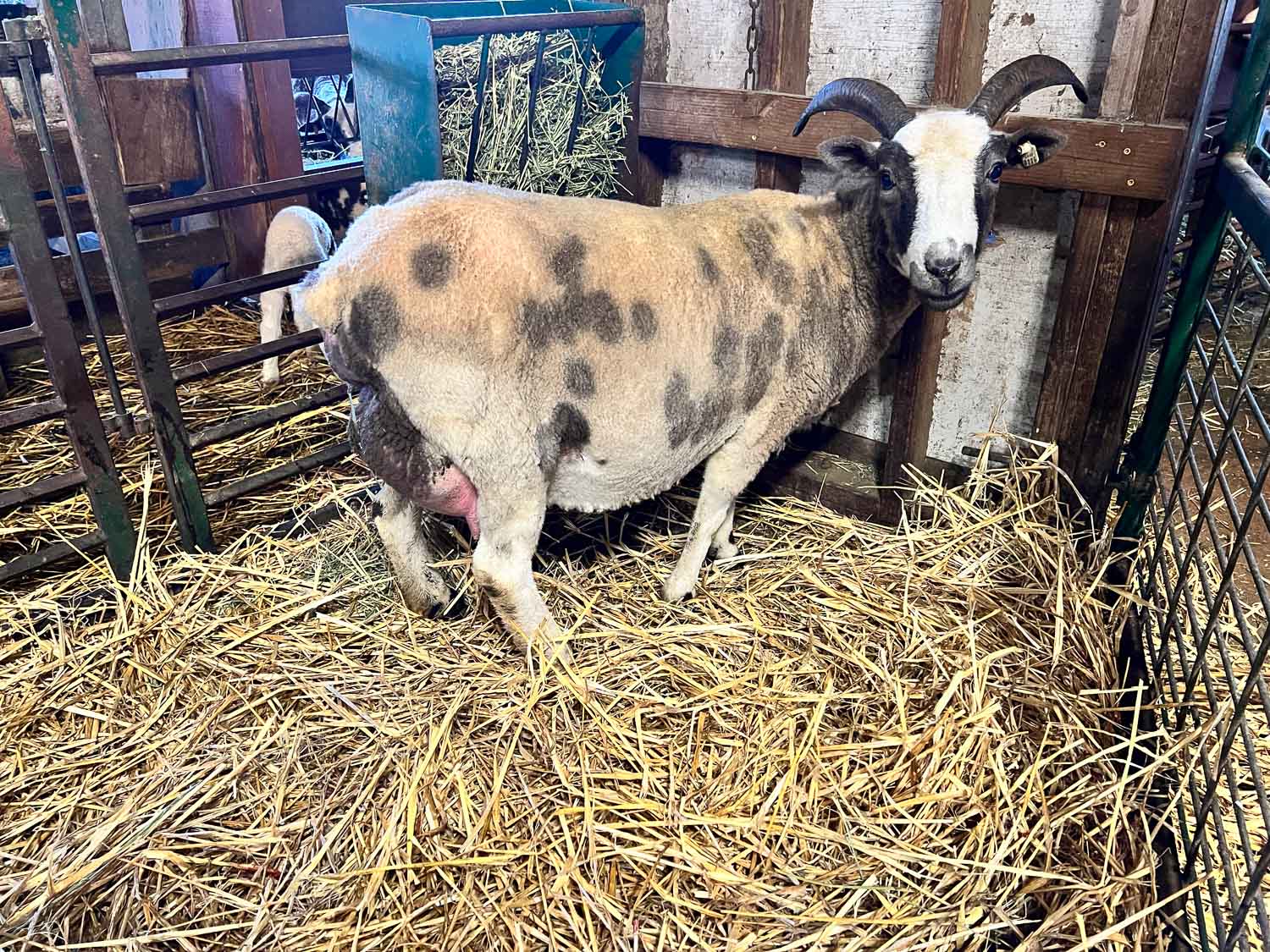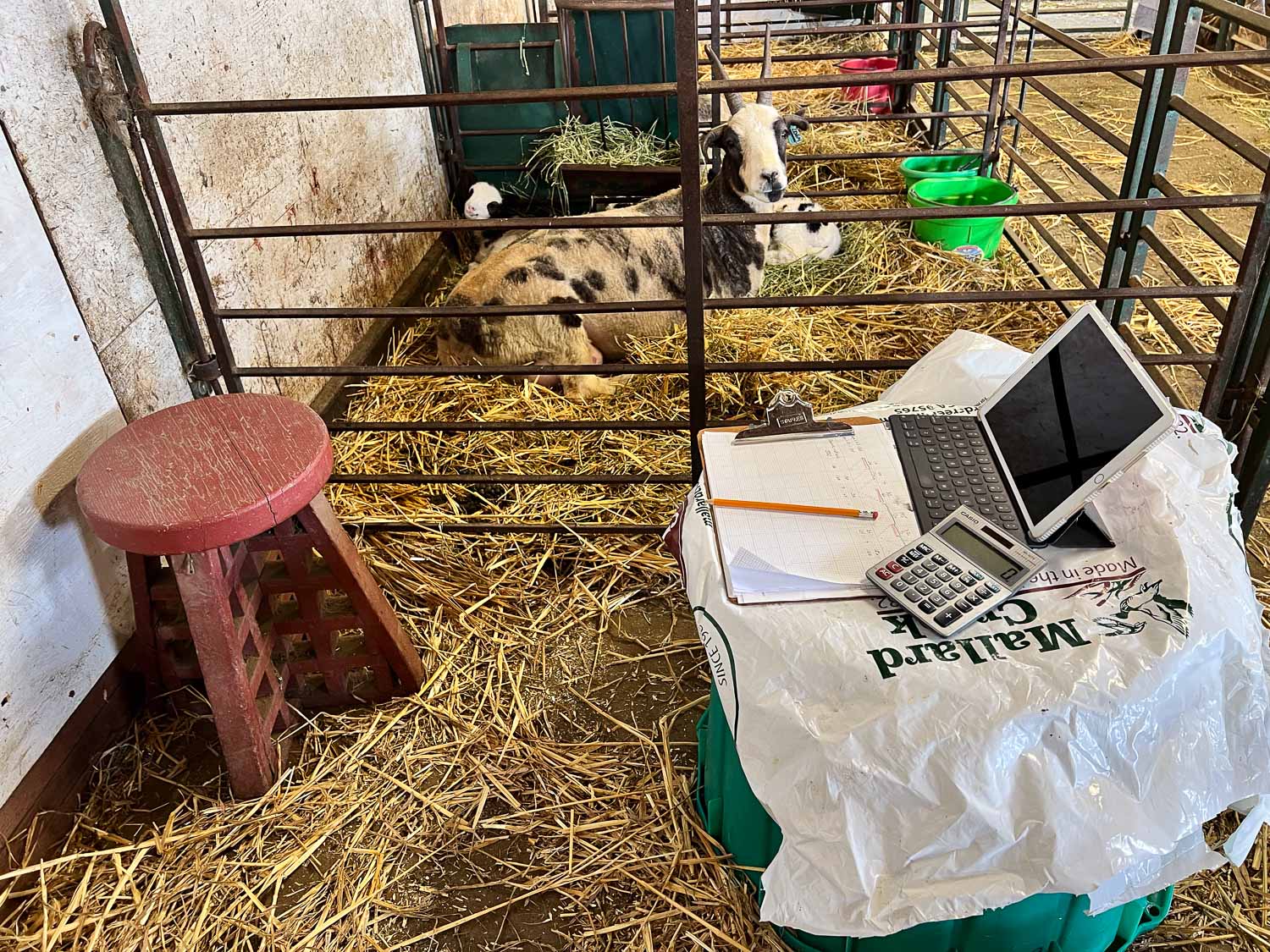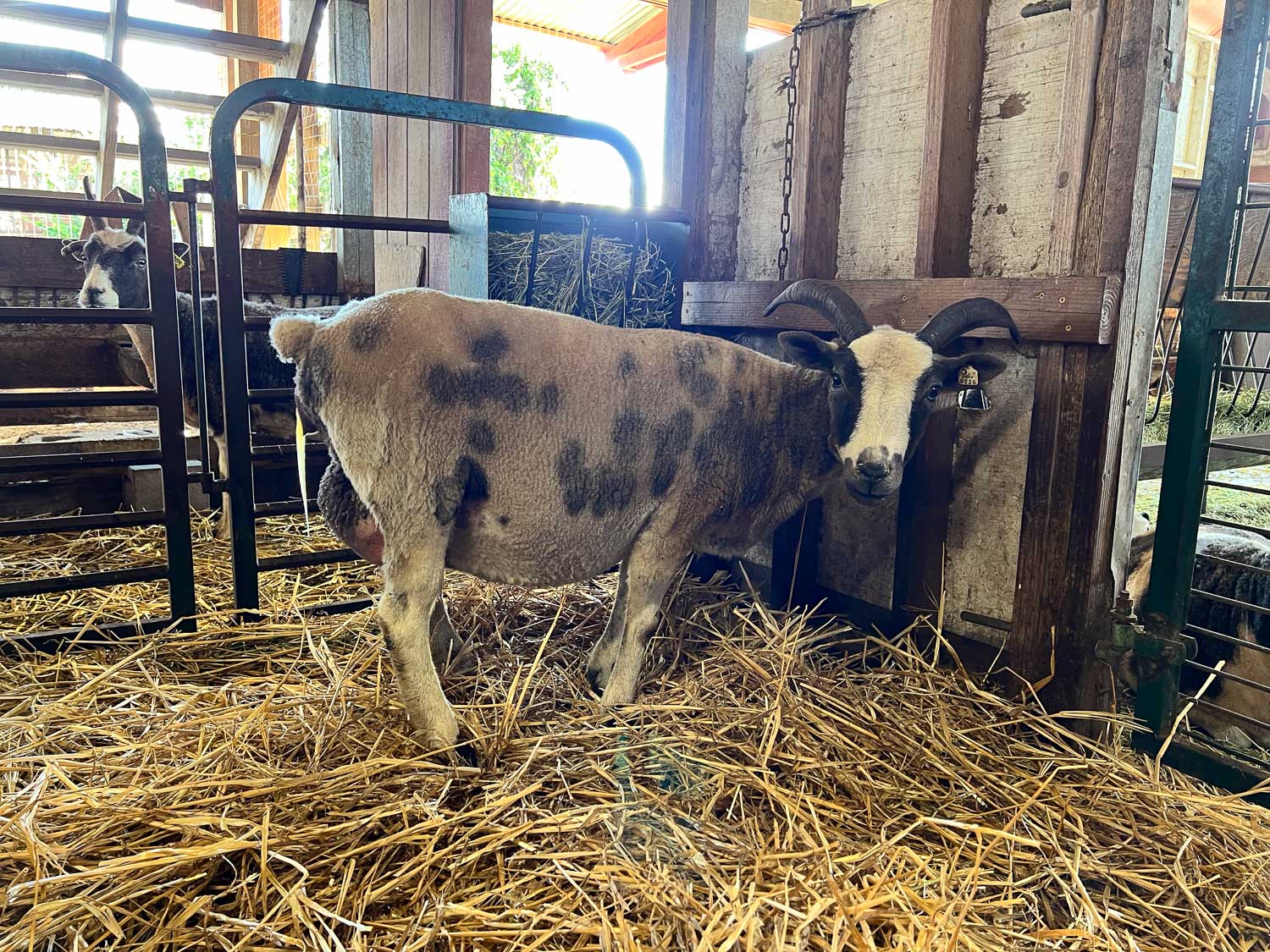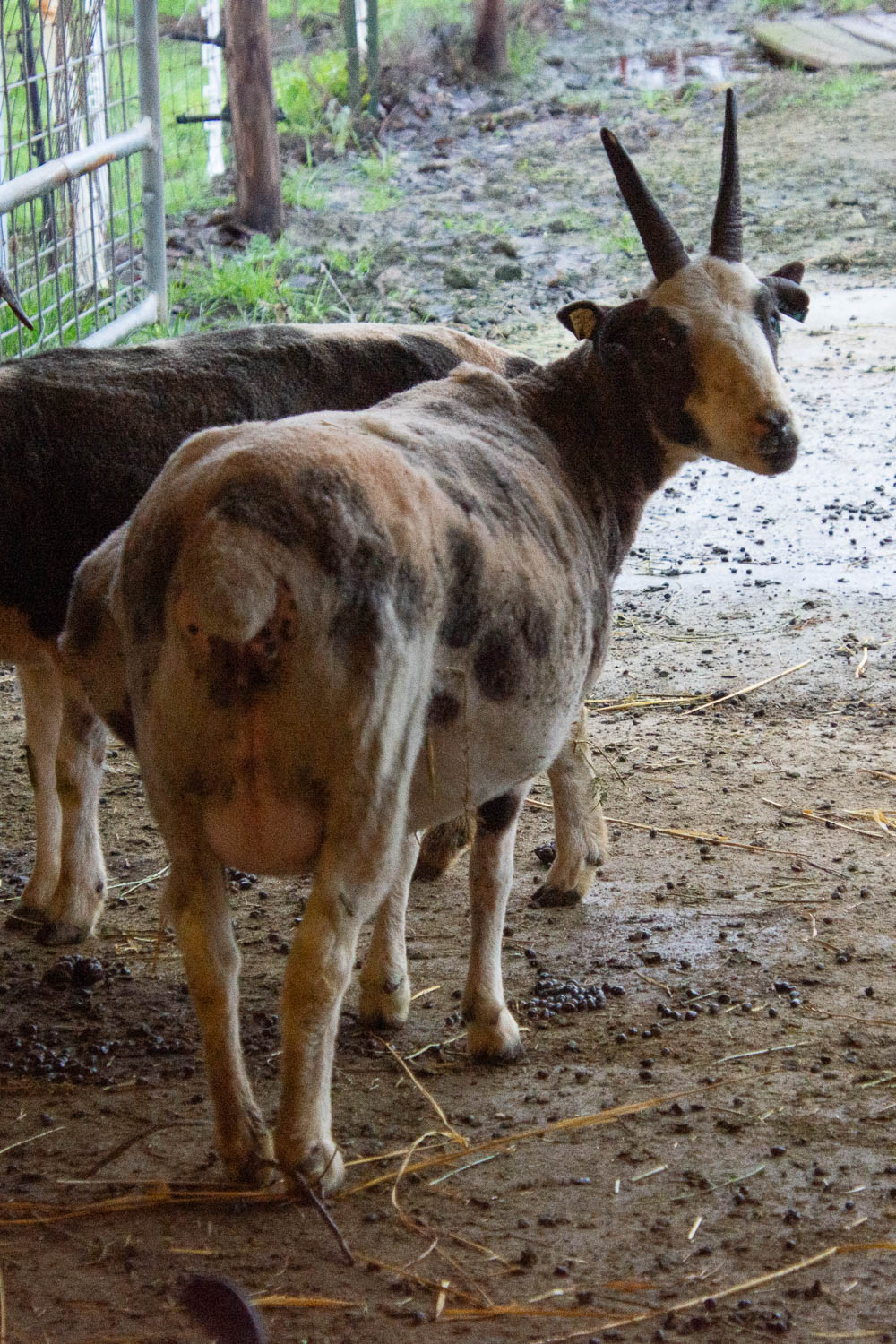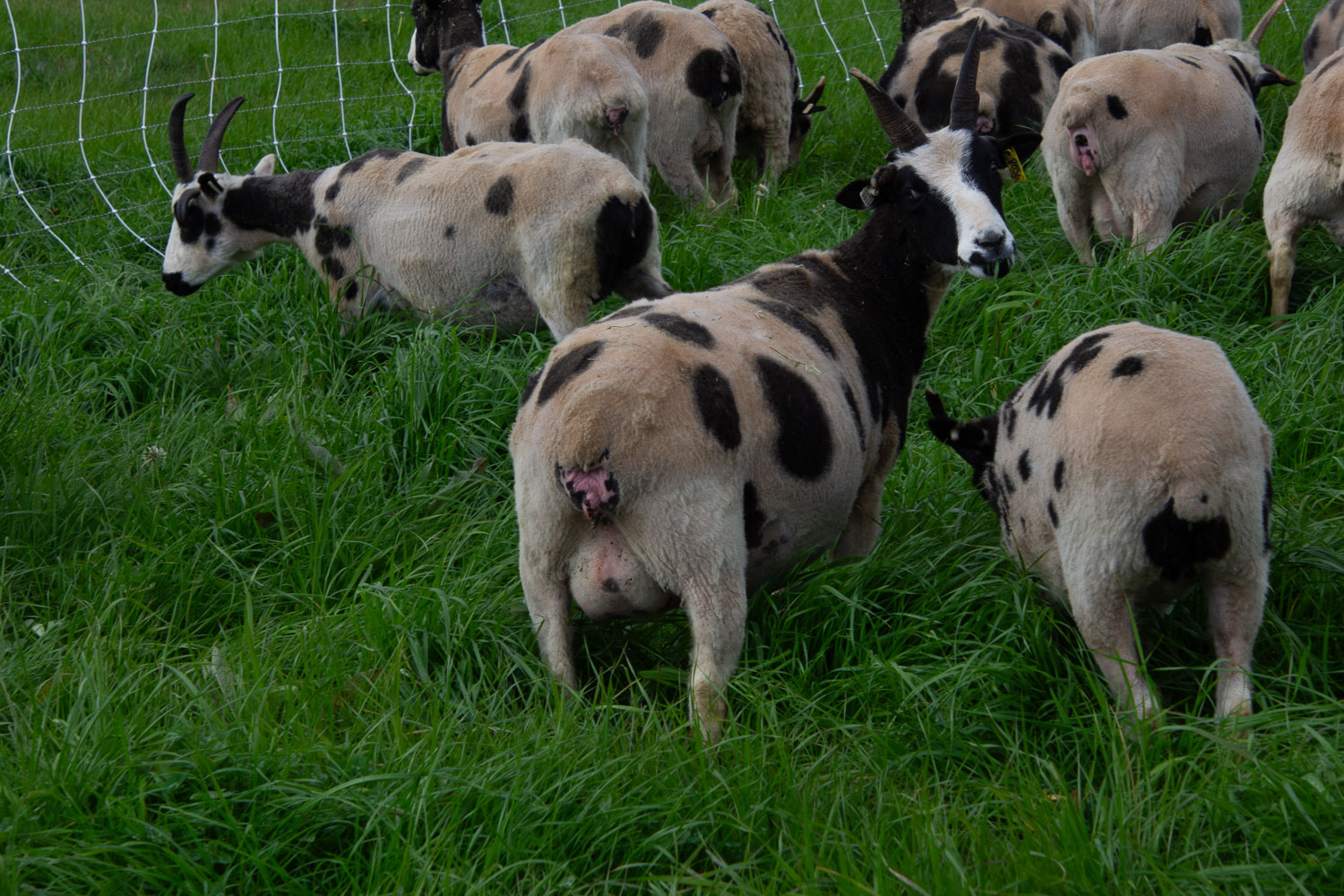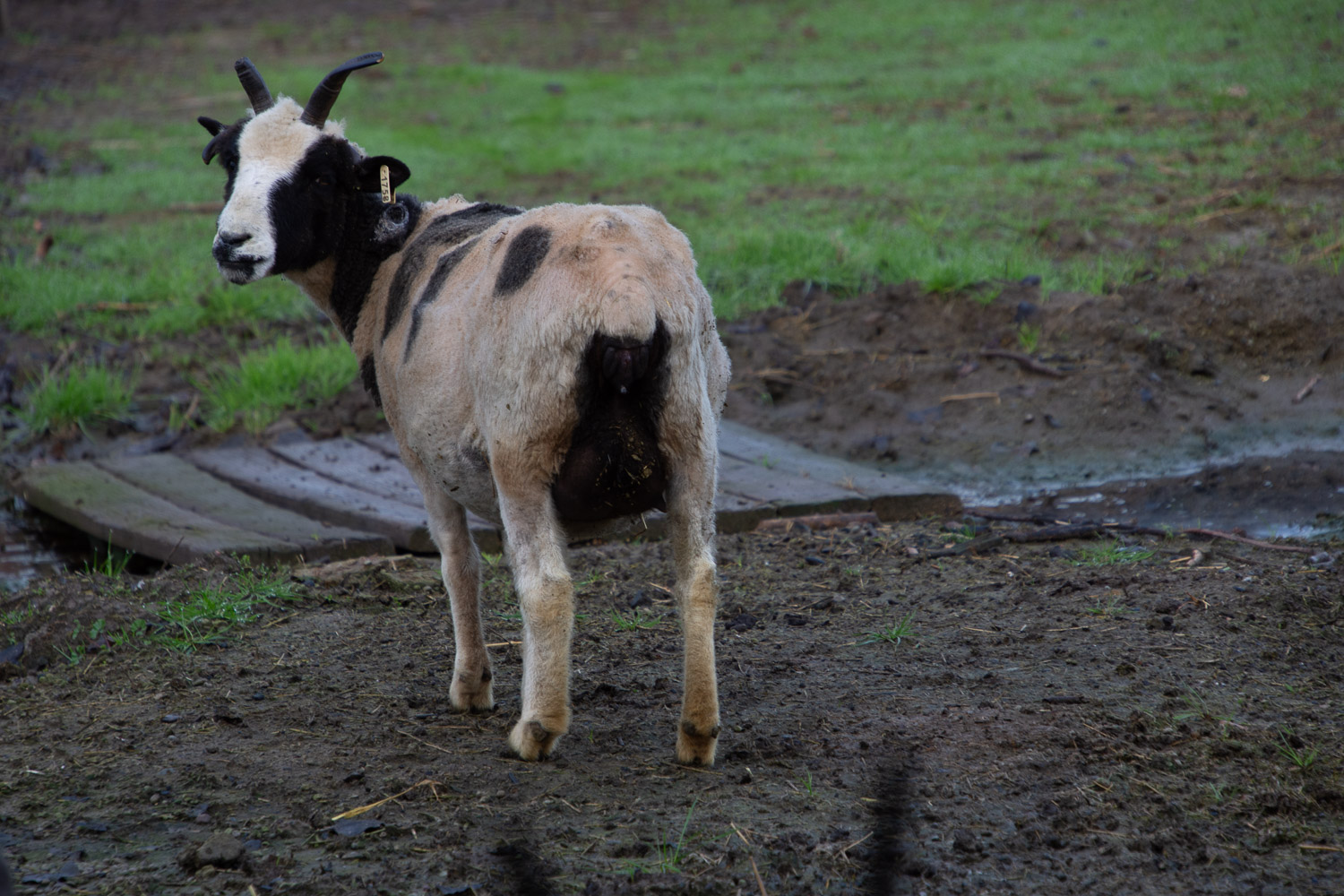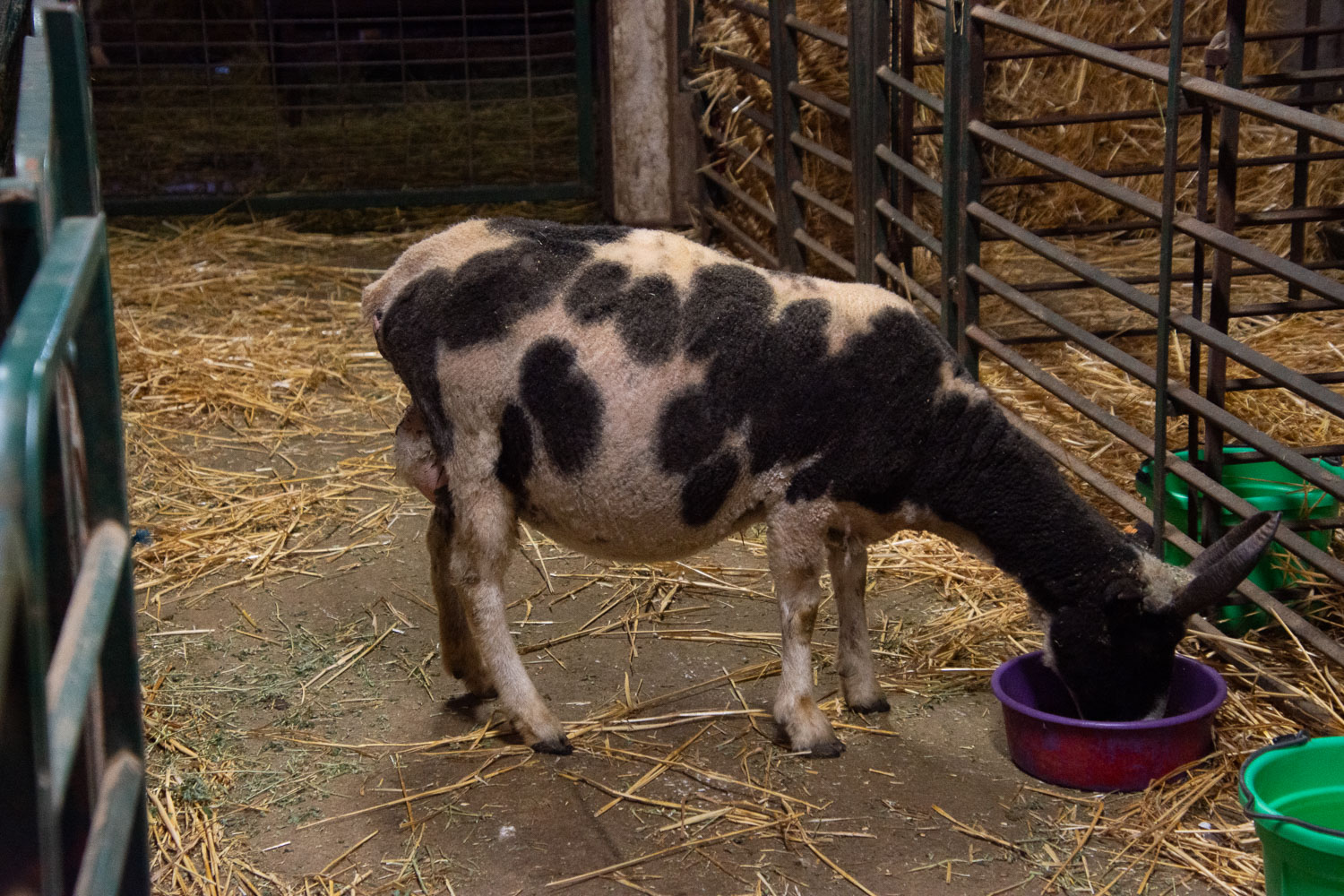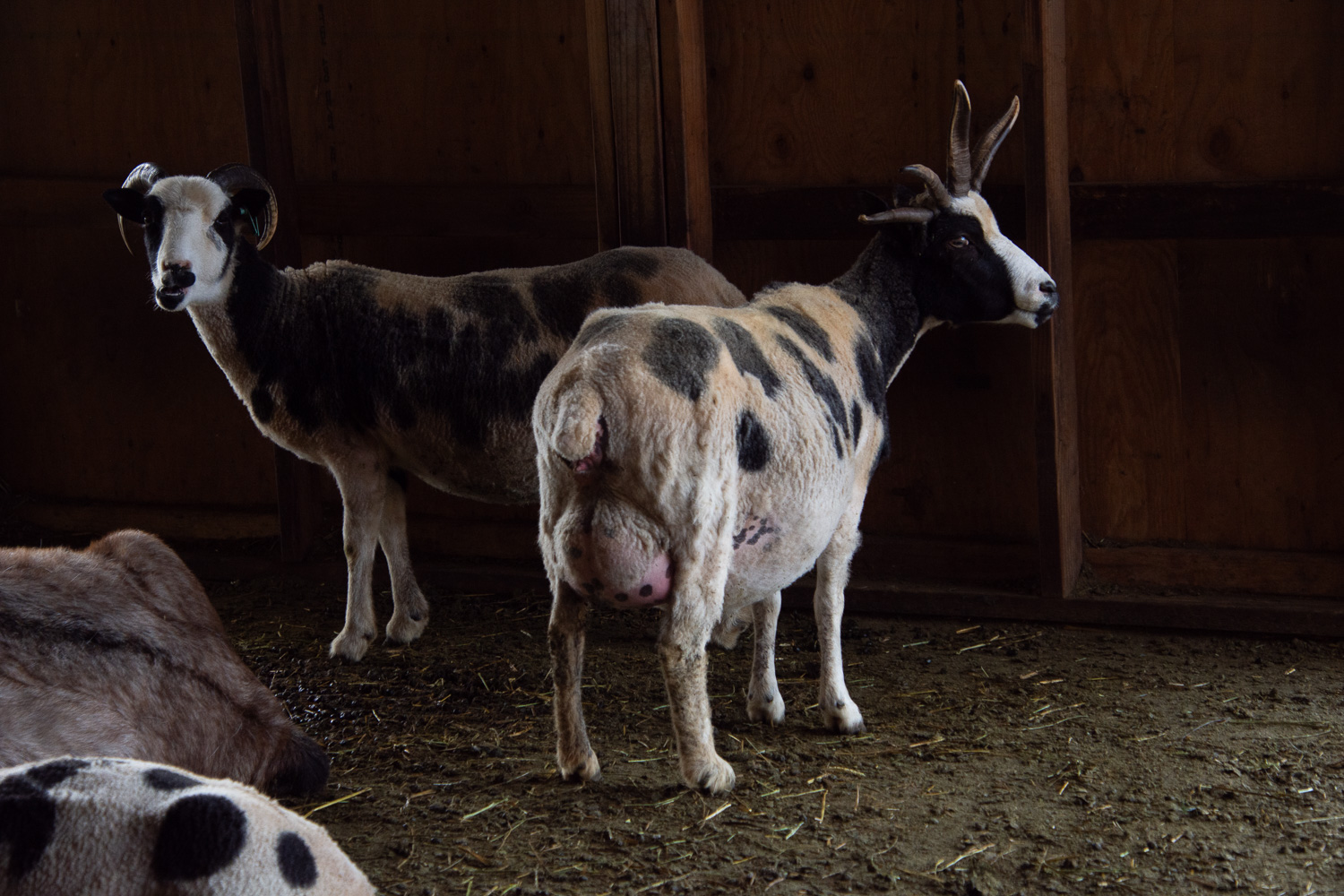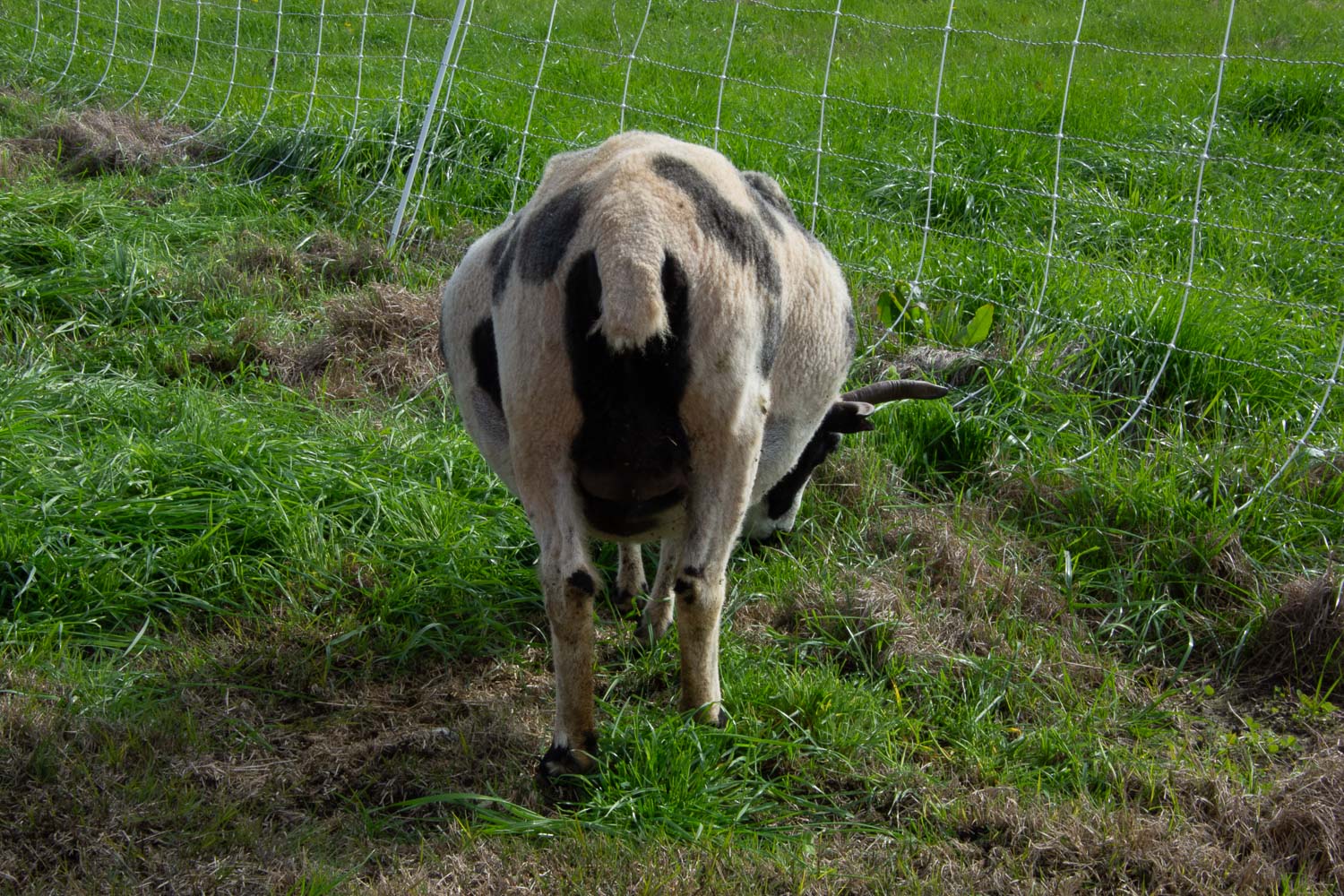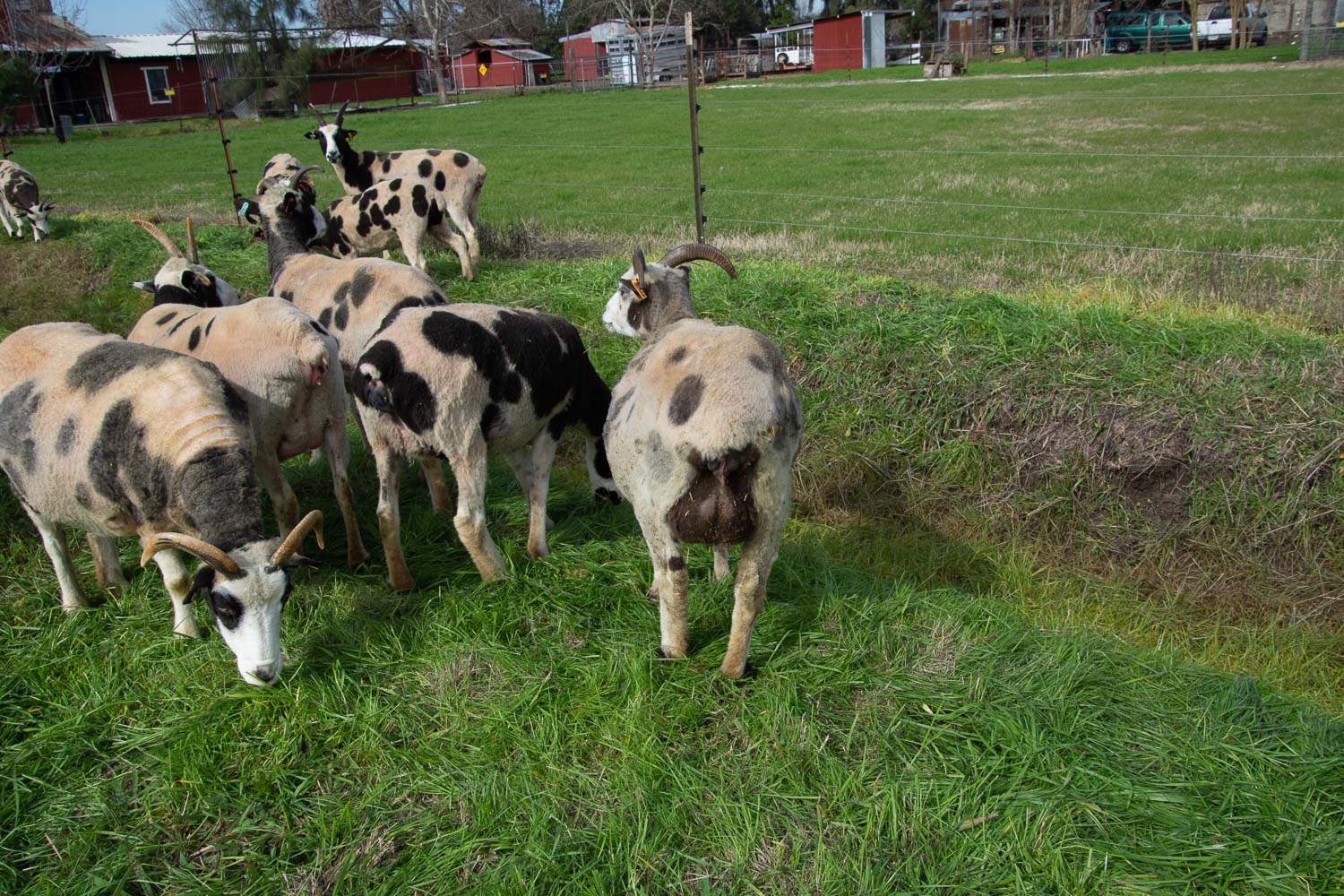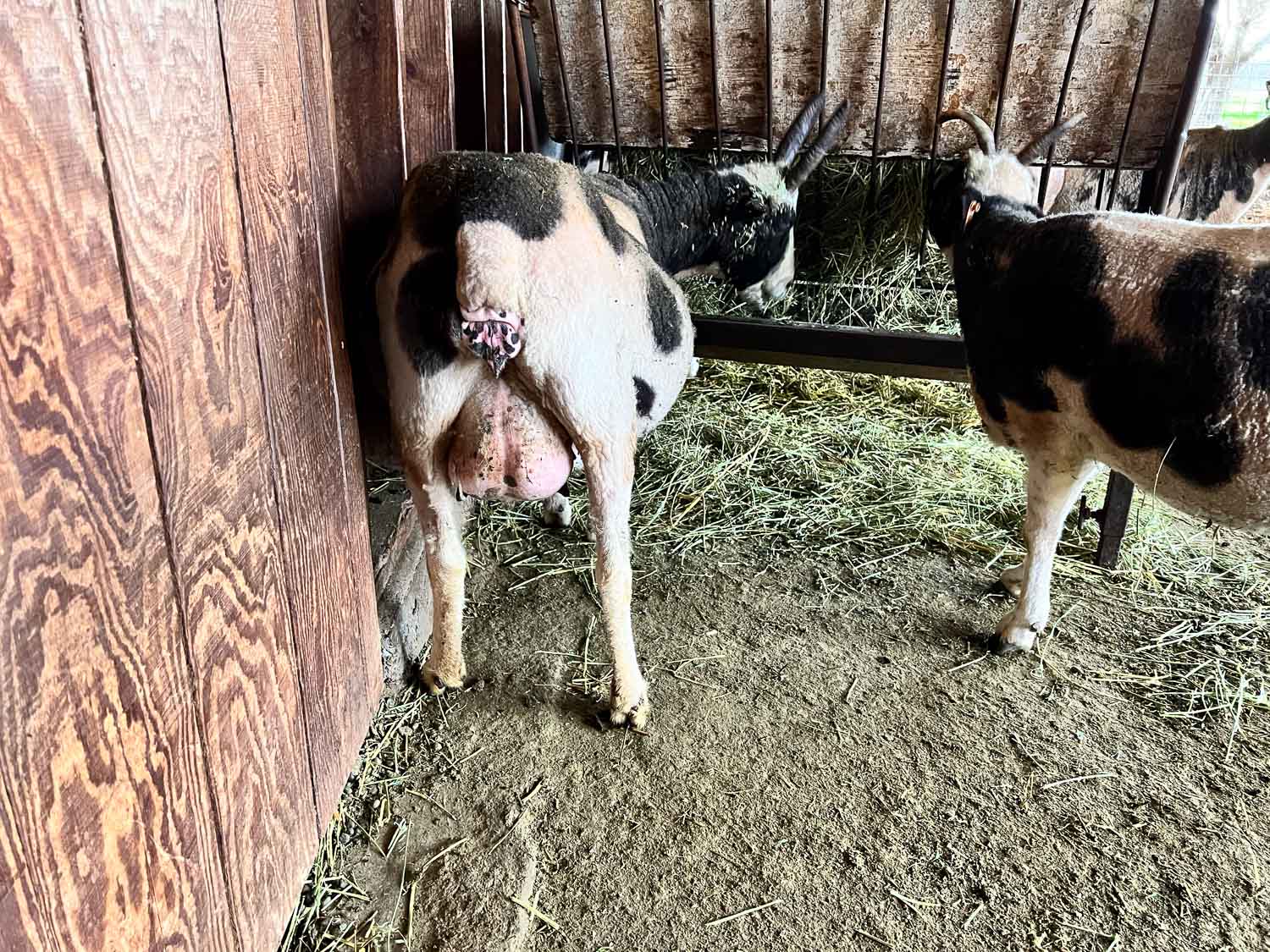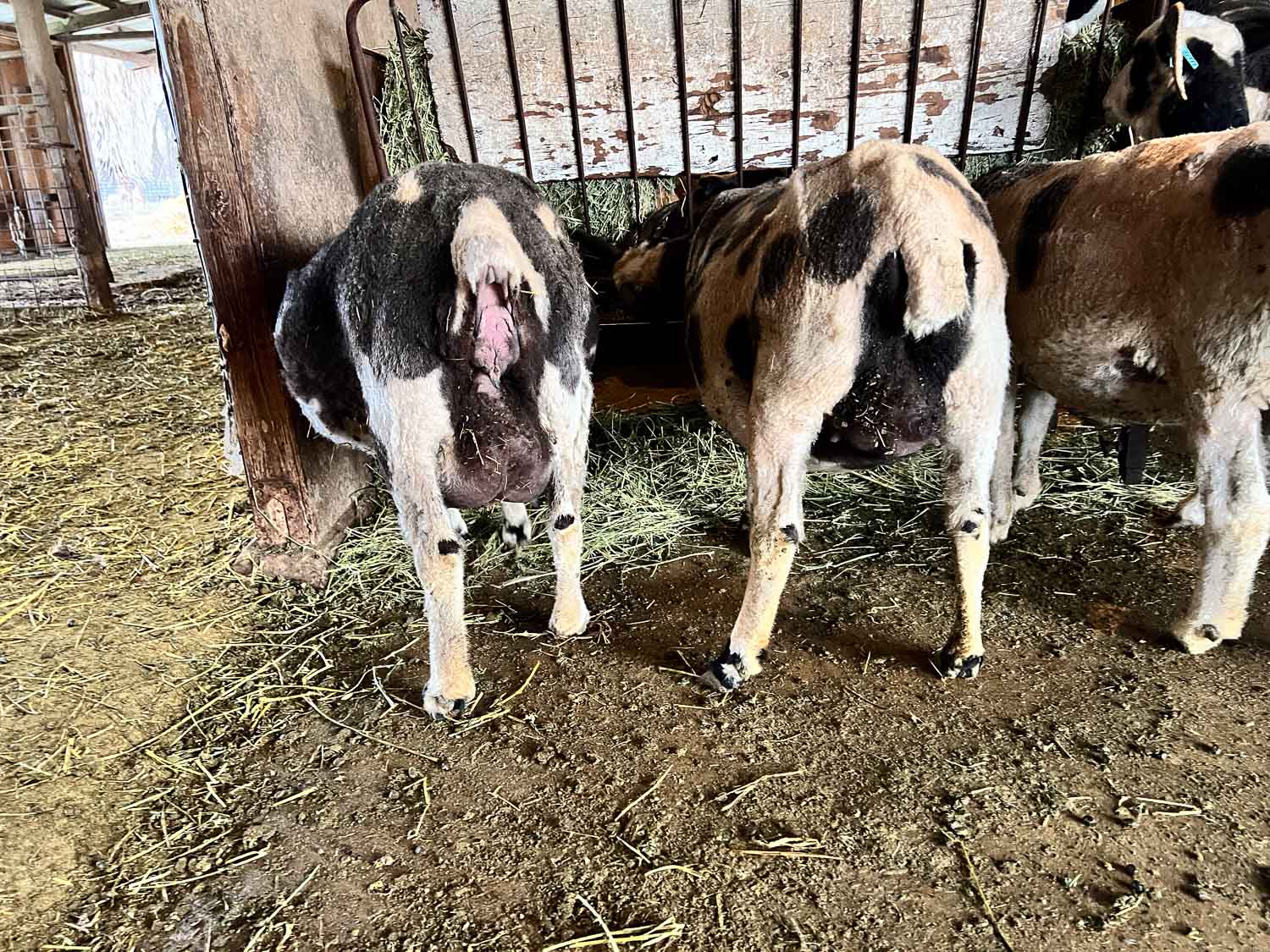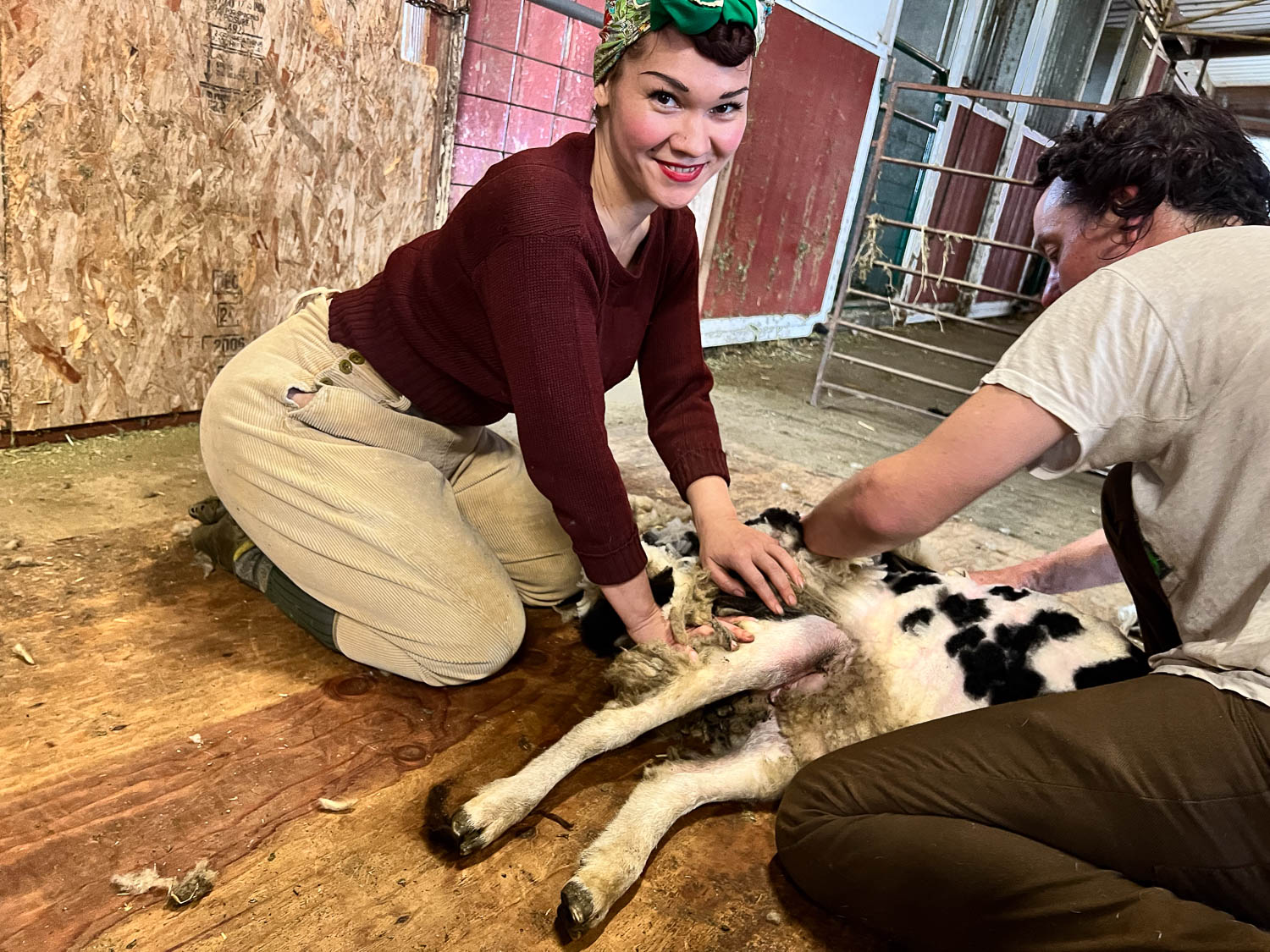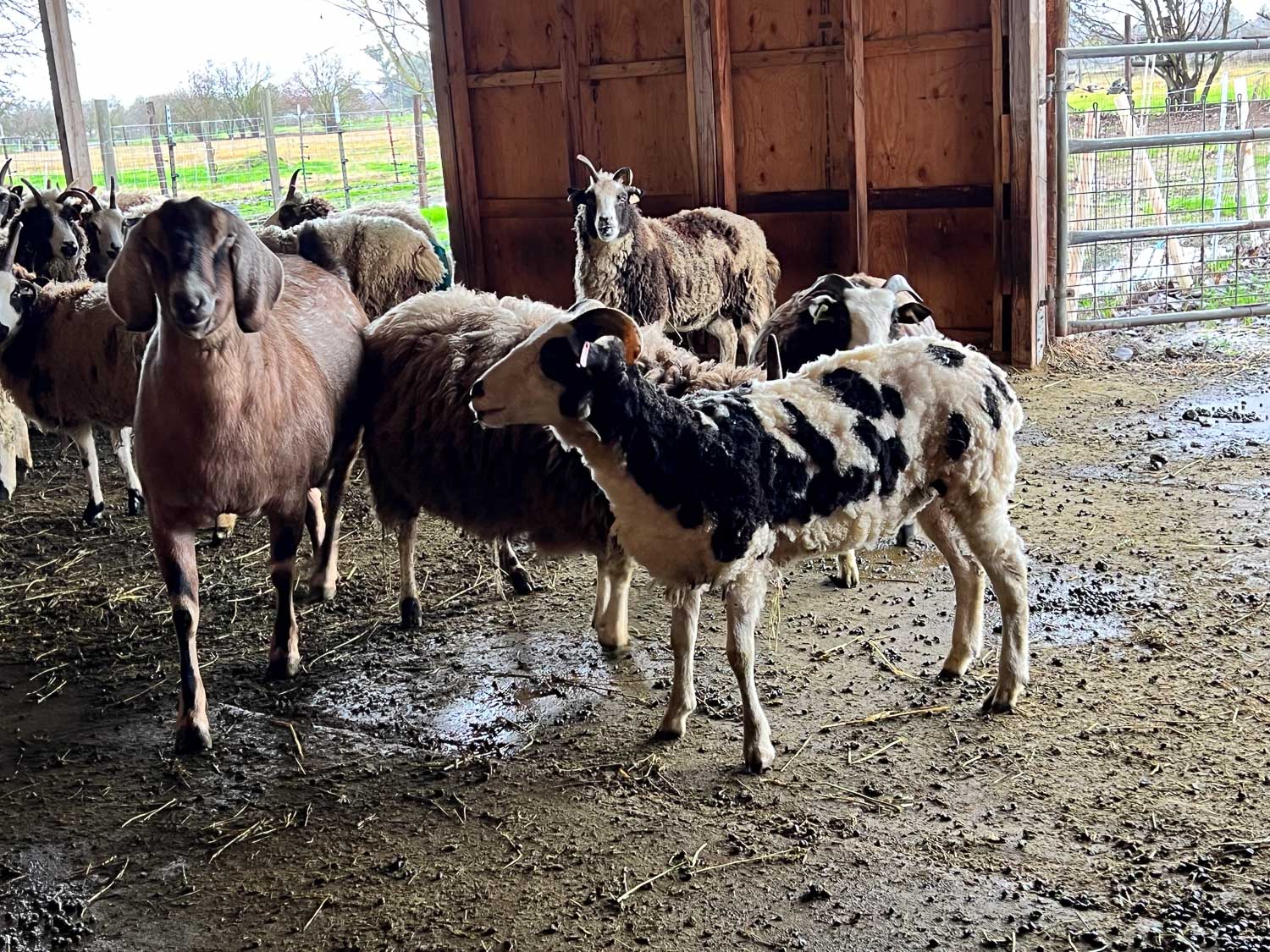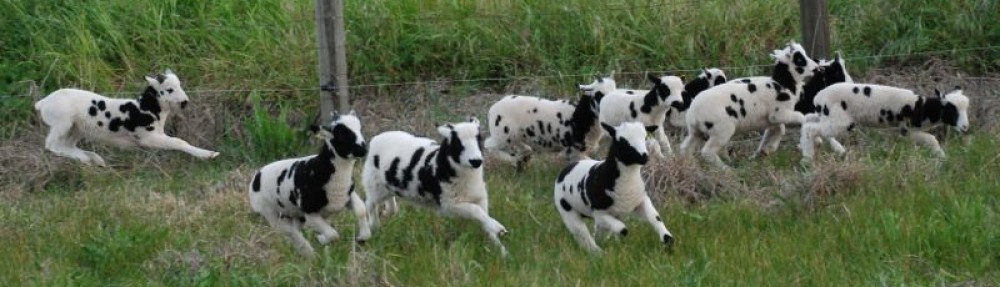
I was expecting the first lambs in about two weeks so it was a surprise when I saw a ewe who looked as though she was in labor tonight. I put her in a lambing pen and the more I watched the more I knew that she would lamb. I was a bit worried though because lambs can be considered premature and at risk if they are born even ten days before their due date. I put most ewes with rams on September 16 which makes first lambs due February 11. There were two ewes with a ram 6 days earlier which gives us a lambing date of February 5.
All is OK. I went to the house for dinner and pulled up the barn camera feed on my phone.The ewe was definitely in labor. By the time I went back to the barn the lamb was mostly out. The ewe was standing. One more push and the lamb was out.
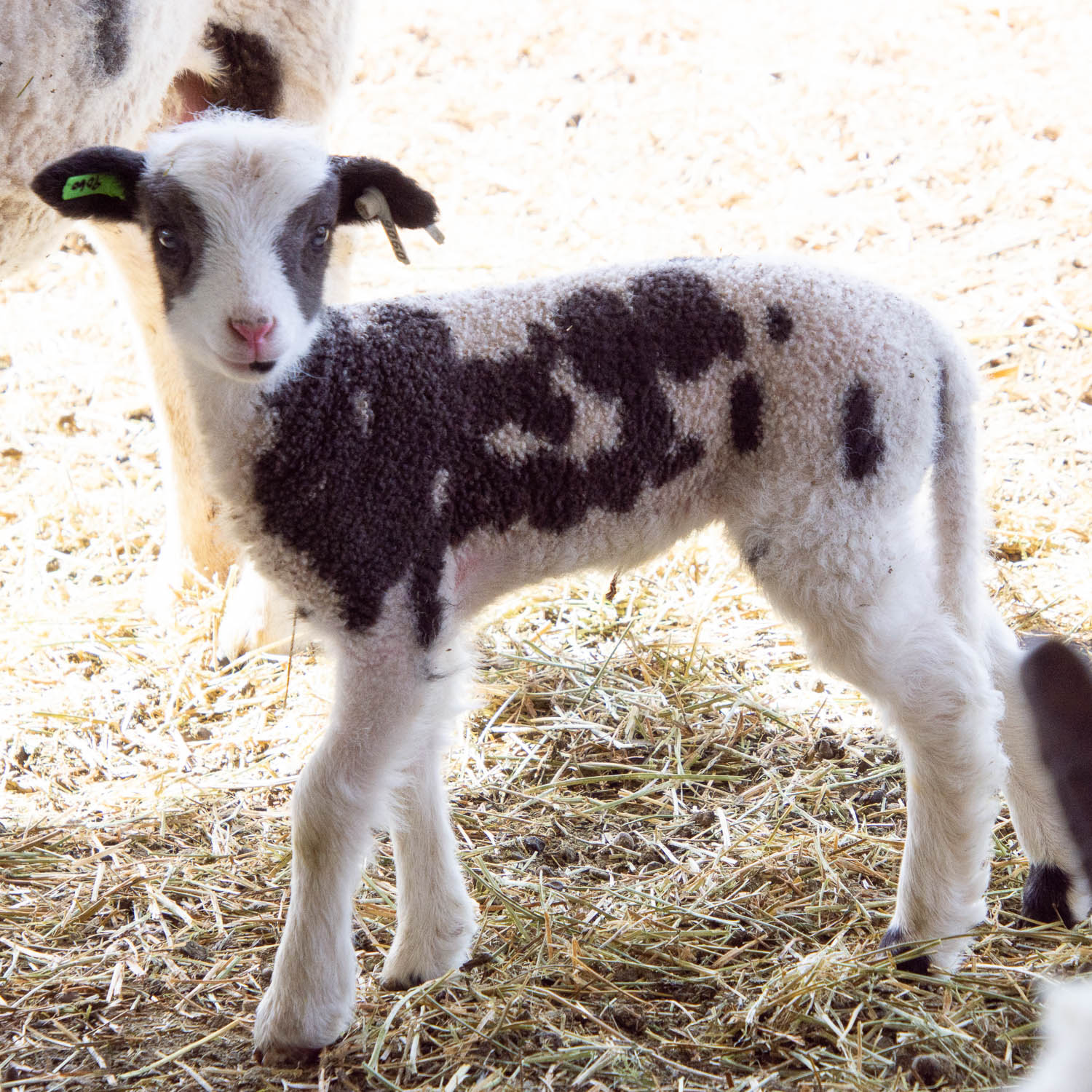
This is a single ewe lamb out of a 7-year-old ewe, Meridian Dilly.
She was on her feet in about 20 minutes…
…and nursing within a half hour.
So how did we get such a vigorous healthy lamb that much sooner than expected? I sent an email to Farm Club to announce the lamb. One of the members reminded me of an email I had sent in early September in which I said three ram lambs had gone through the fence to where the ewes were. That timing makes sense. One of those is the sire.
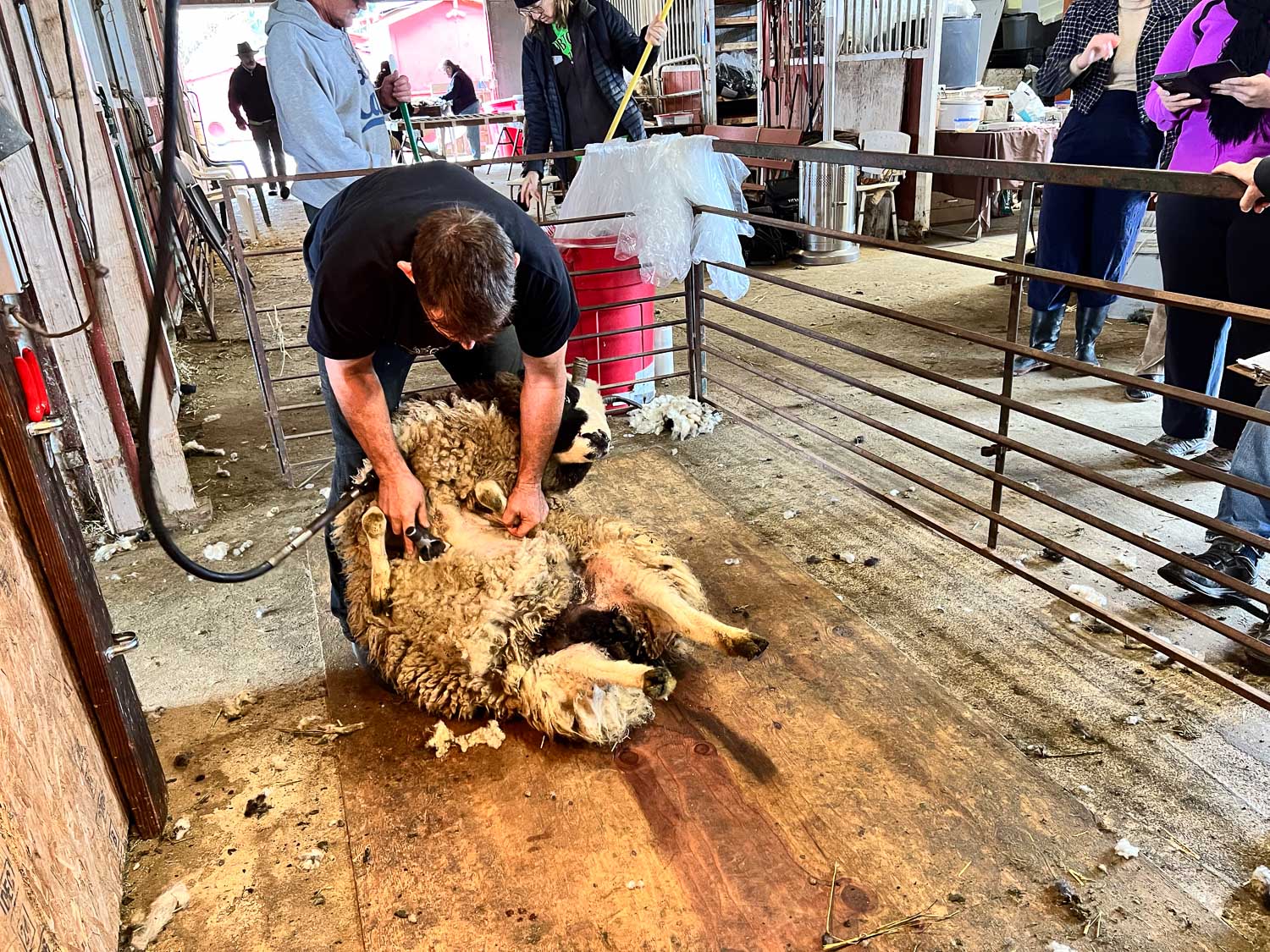
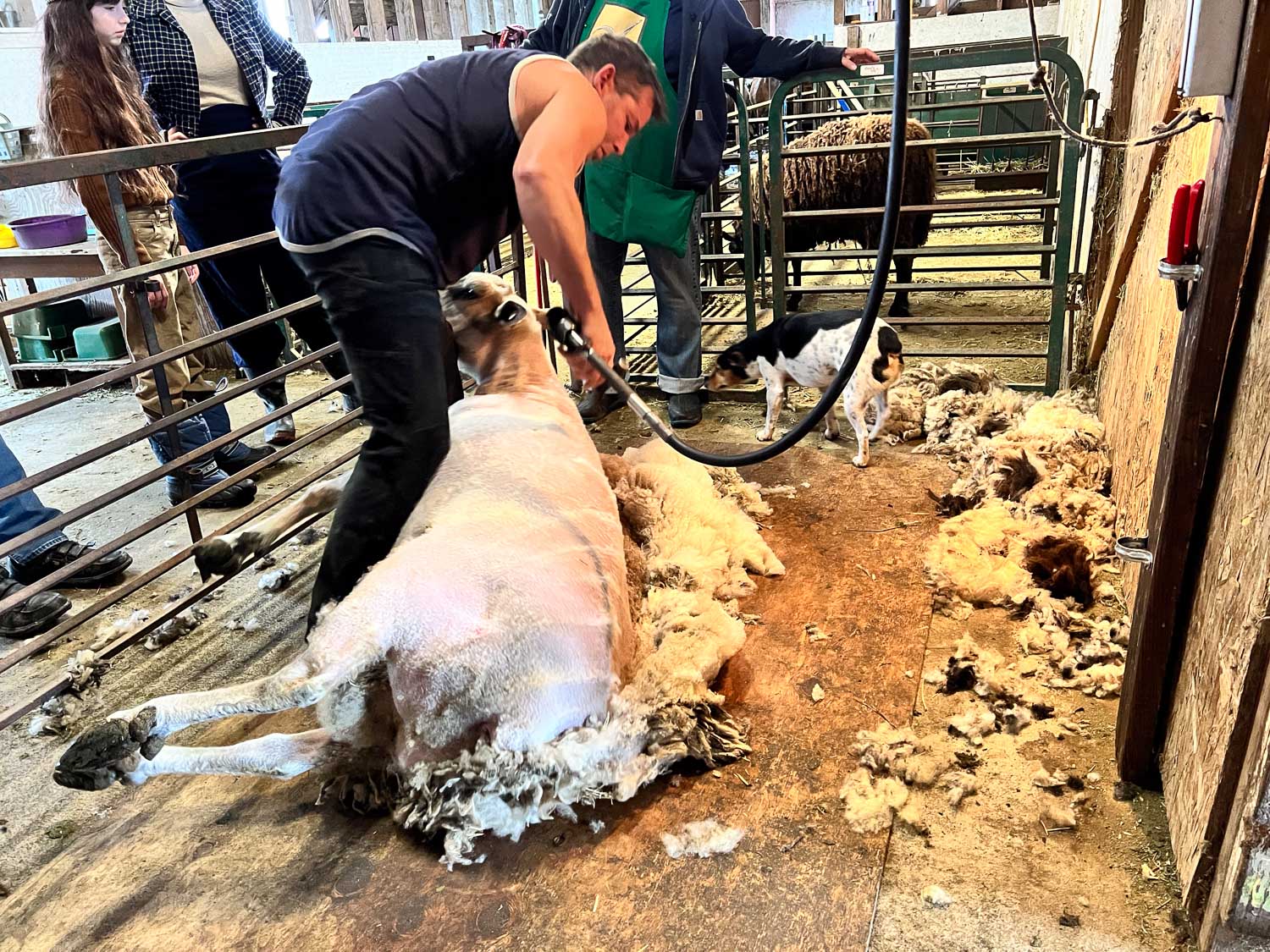
John has been shearing for us for years. He is an excellent shearer and a nice person.
I recorded some of the sheep being shorn which I’ll share when I have time. When I record I can pay attention to time. Some of them are right at 2 minutes or maybe even a little faster.
There is no blood. The sheep are in good shape and the fleeces look great! What more can you ask for?
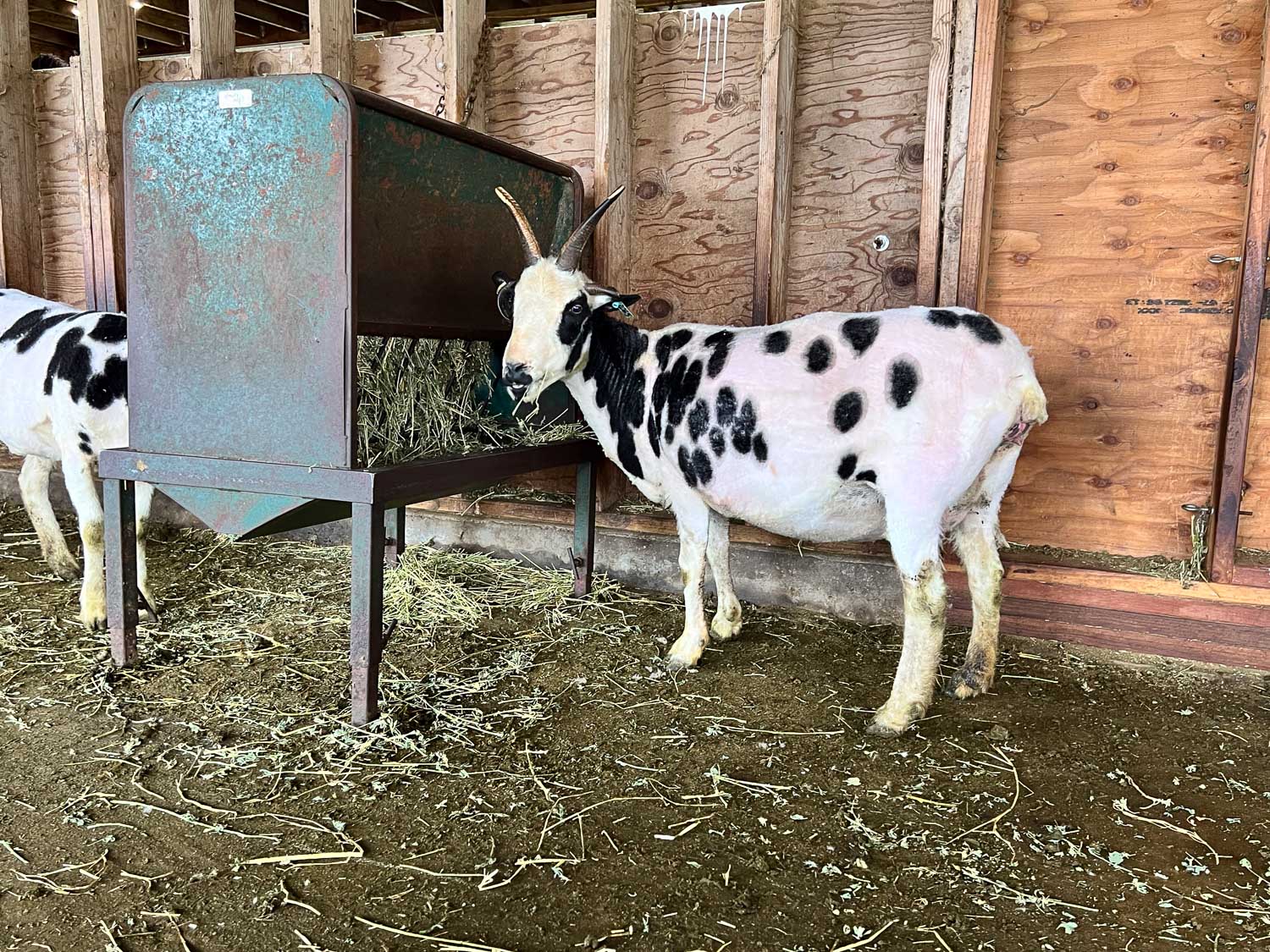
Farm Club members kept up with getting the sheep to John. I got outside and started to take photos of the sheep after shearing. This ewe is Sandie.
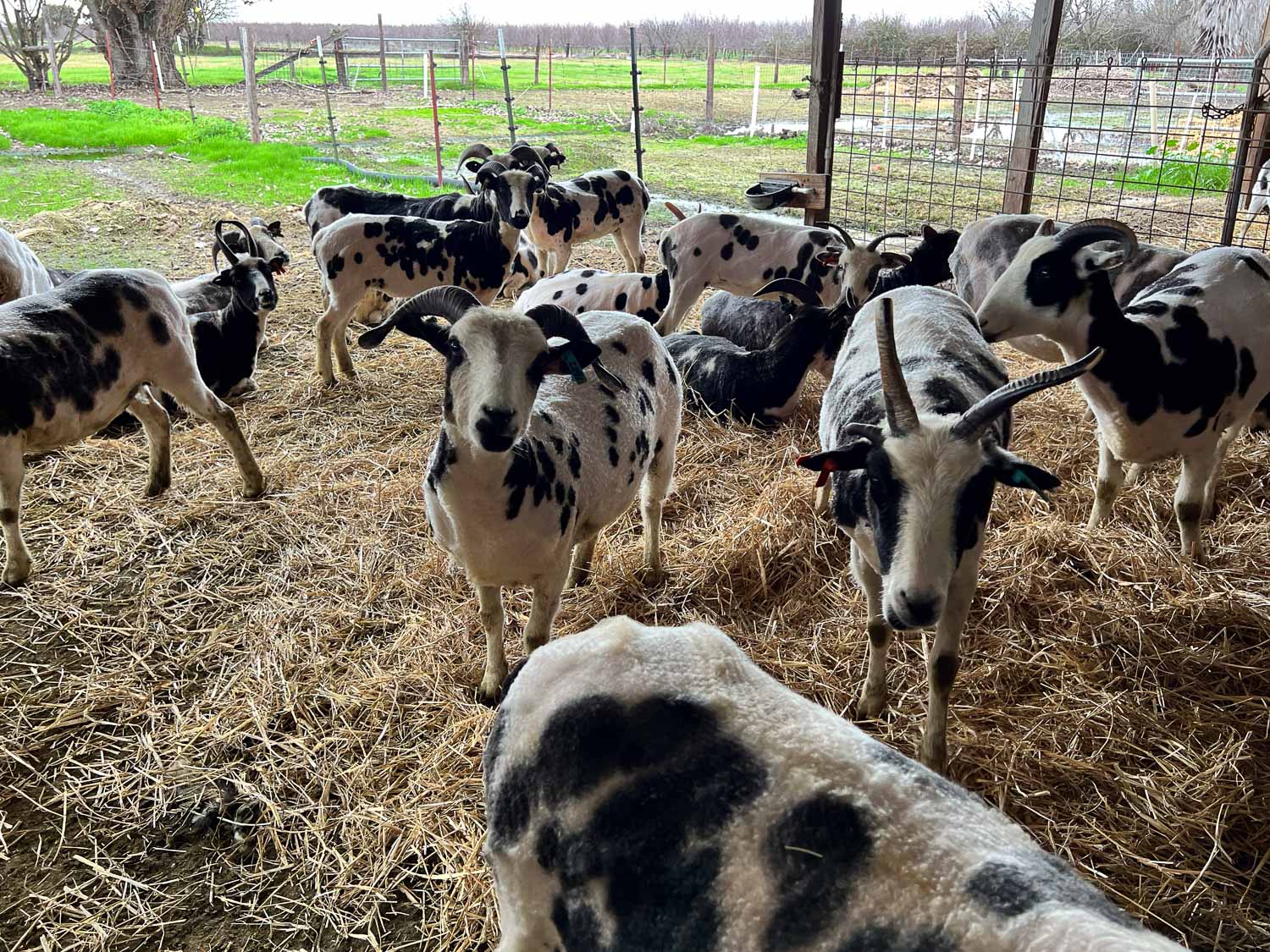
They sure look clean now! That won’t last.
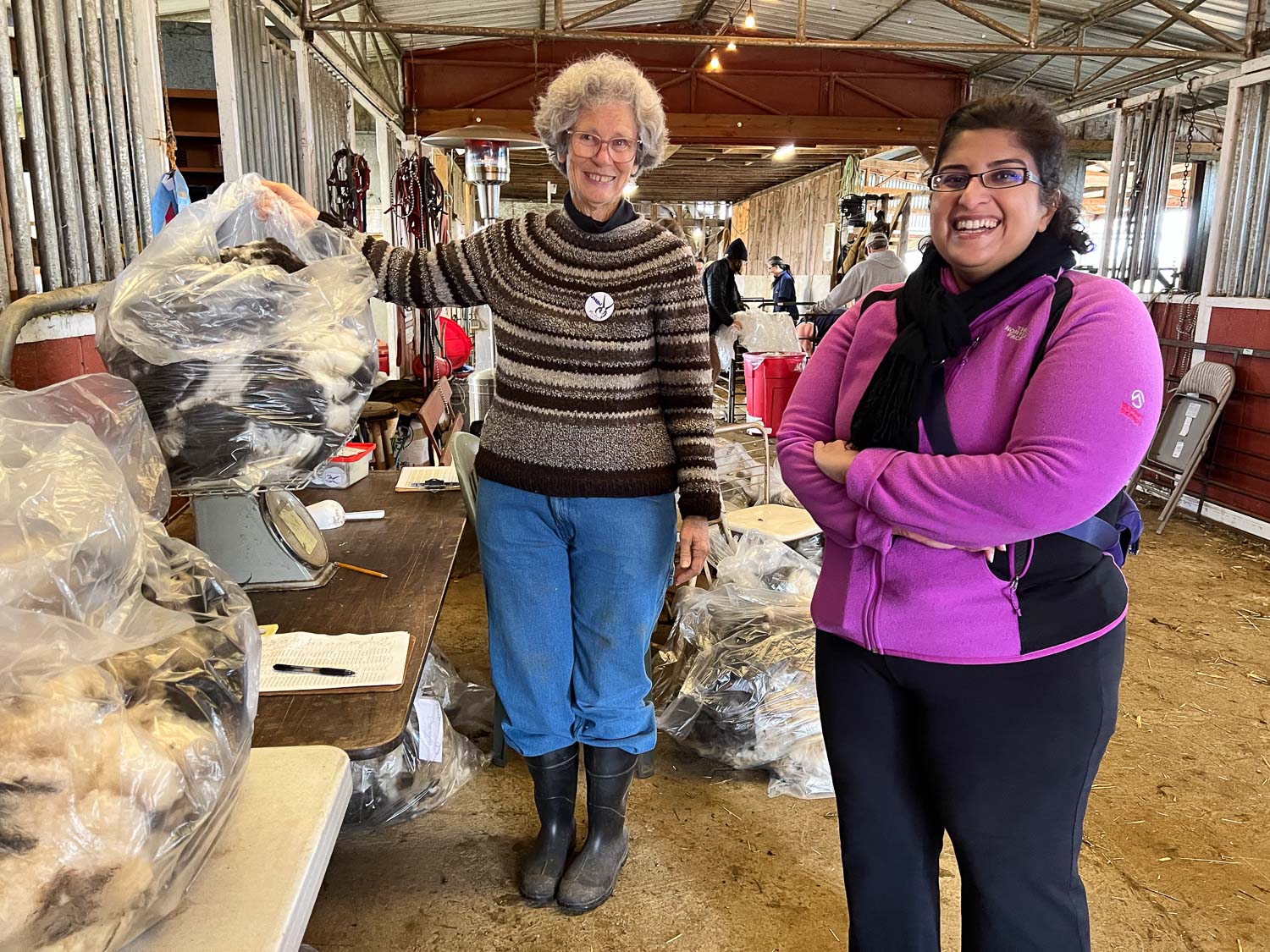
Kathleen weighed all the fleeces.
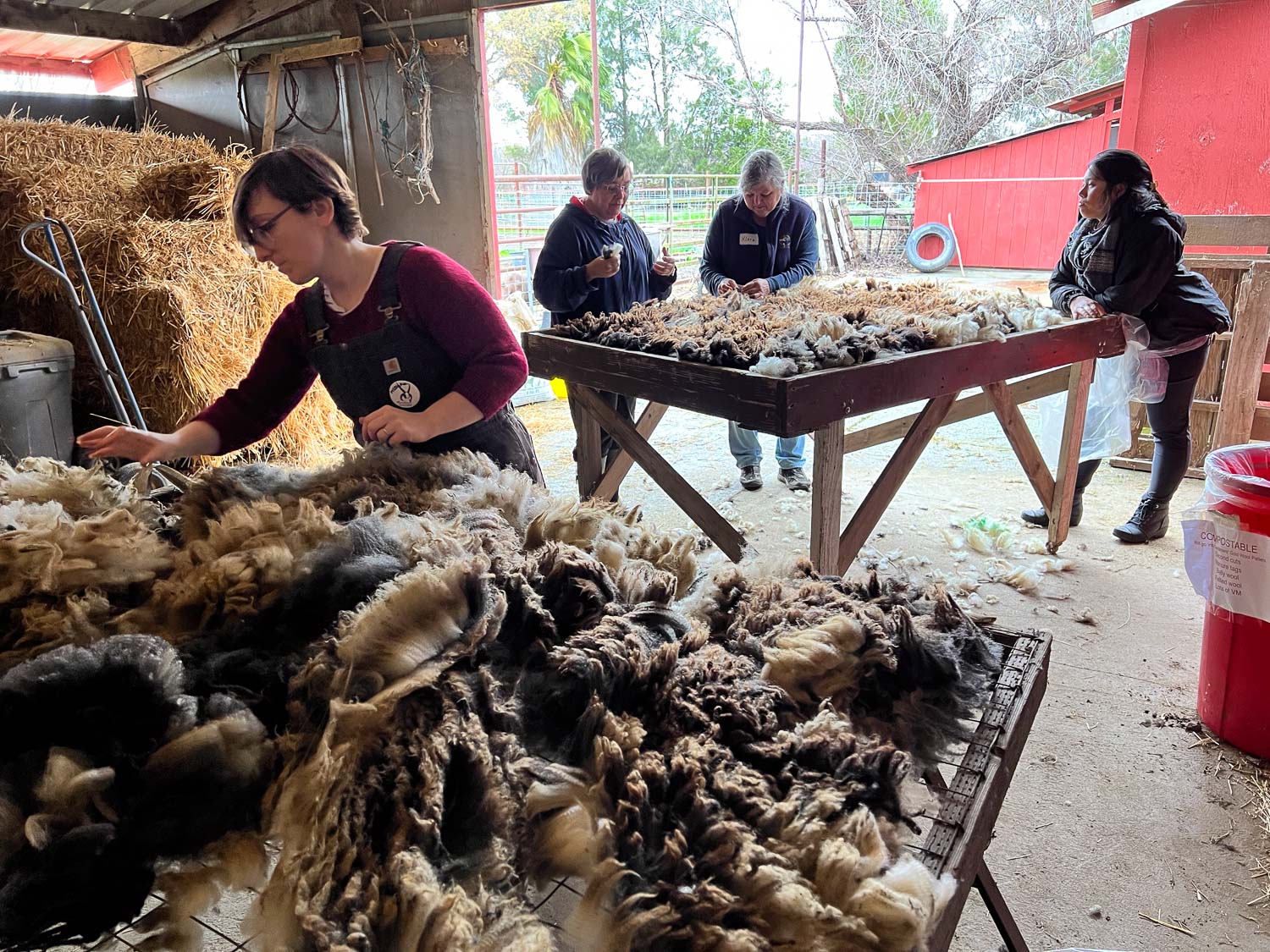
We had two skirting tables available so that fleeces could be skirted before purchase.
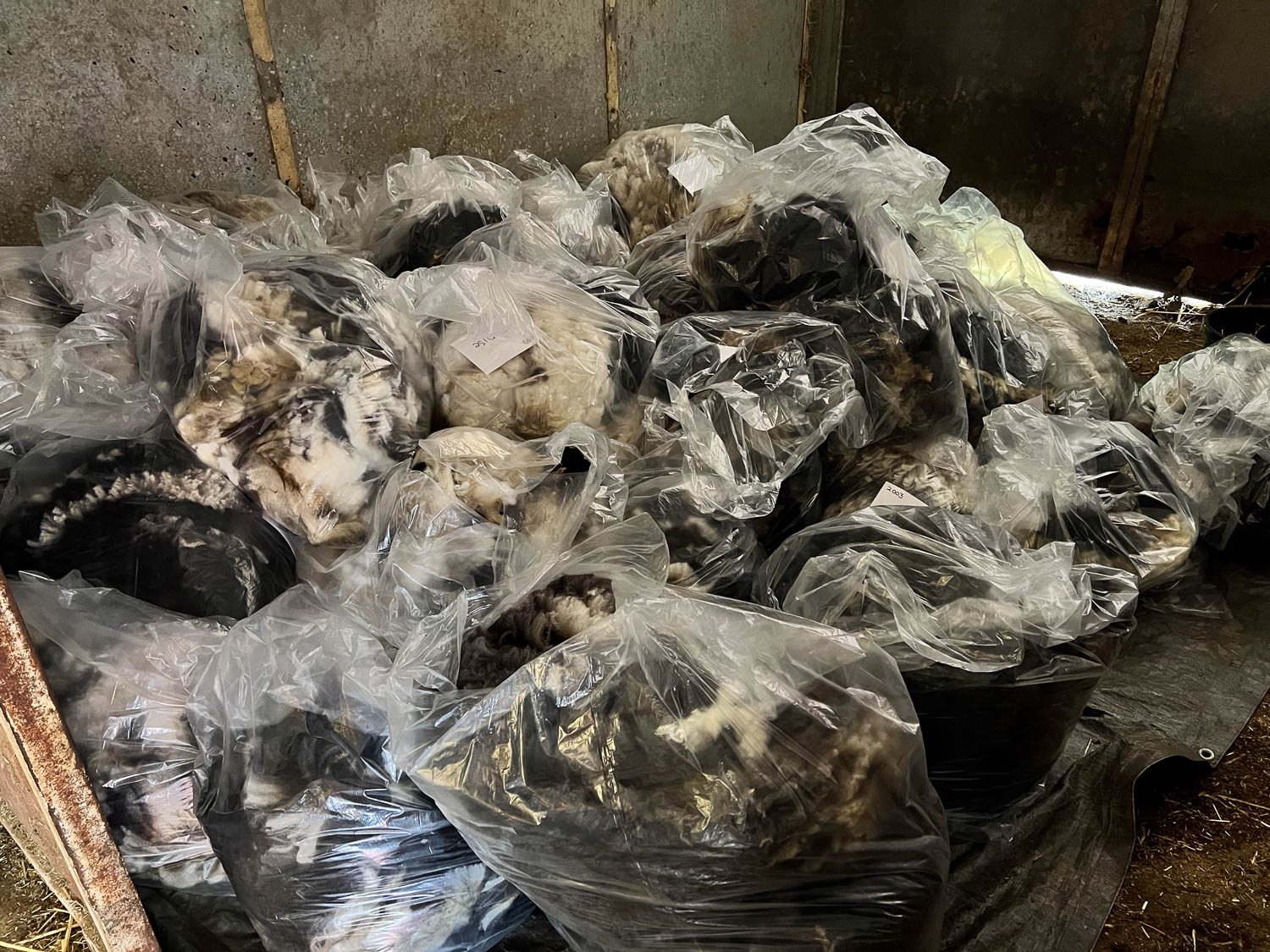
This is just a portion of the fleeces that I need to skirt and put out for sale. Give me a little time to get to that. The sooner the better though.
Distraction…there was a lamb born tonight! Surprise! I guess the next post will be about lambing.
Shearing Day was Sunday, January 21. Rain was predicted all weekend. We need to shear dry sheep. For several years I have used the wool from my friend’s Jacob sheep. It’s easier to shear them here and we can be sure they’ll be dry. So I pay for that shearing and we bring her sheep here the day before.
This year we brought them two days ahead of time due to the weather and because of my Saturday activities. I had two extra stalls there was plenty of room when we split the group.
There were 16 ewes and one ram lamb.
We sheared those sheep first. This is the ram, first sheep of the day to be shorn.
John’s dog, Oakley, found a comfy place to settle down.
As soon as the neighbor’s sheep were shorn we loaded them in the trailer and Dan drove them home. They fit in the trailer much better after shearing than before.
First up for me was Peyton, the BFL ram. The BFL’s seem to gain weight very easily. He and the two crossbred ewes I have are probably a bit too heavy.
The Jacob rams were next. This is the ram lamb (almost yearling) Typhoon.
Here is the lilac ram, Horatio. Look at all that luscious fiber!
Ewes followed. I took recorded lots of video but haven’t had time to do anything with it yet.
Shaggy looking sheep.
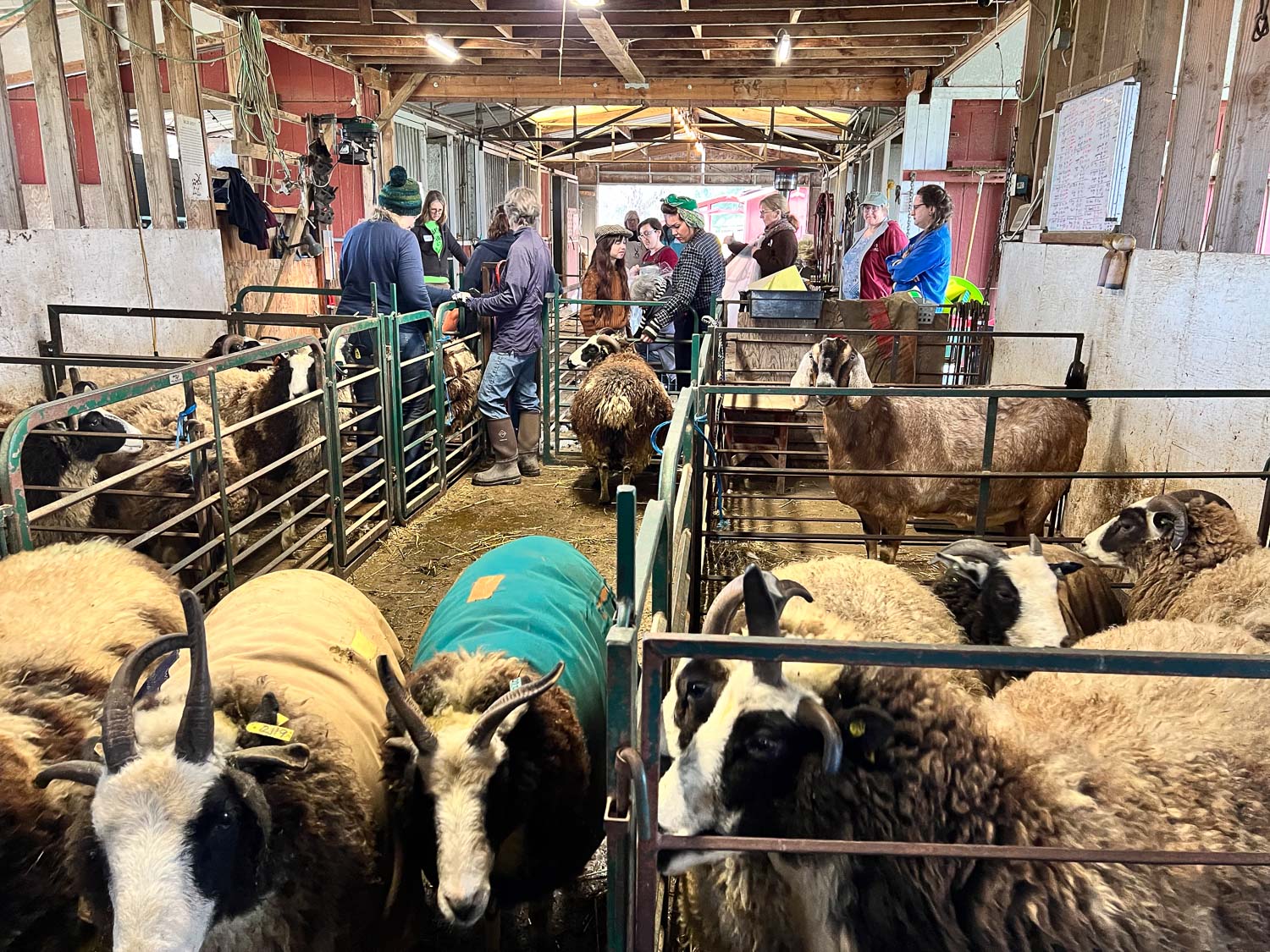
This is the view of the main sheep area looking into the lambing area where there are pens, and beyond to shearing.
Shearing Day wouldn’t go as smoothly without all the Farm Club help. We crowd the sheep into the main barn with panels and move them through to the shearing area.
I’m grateful that so many Farm Club members have been here enough that they can just jump in and take over. There were several new members as well who are well on their way to learning about sheep handling.
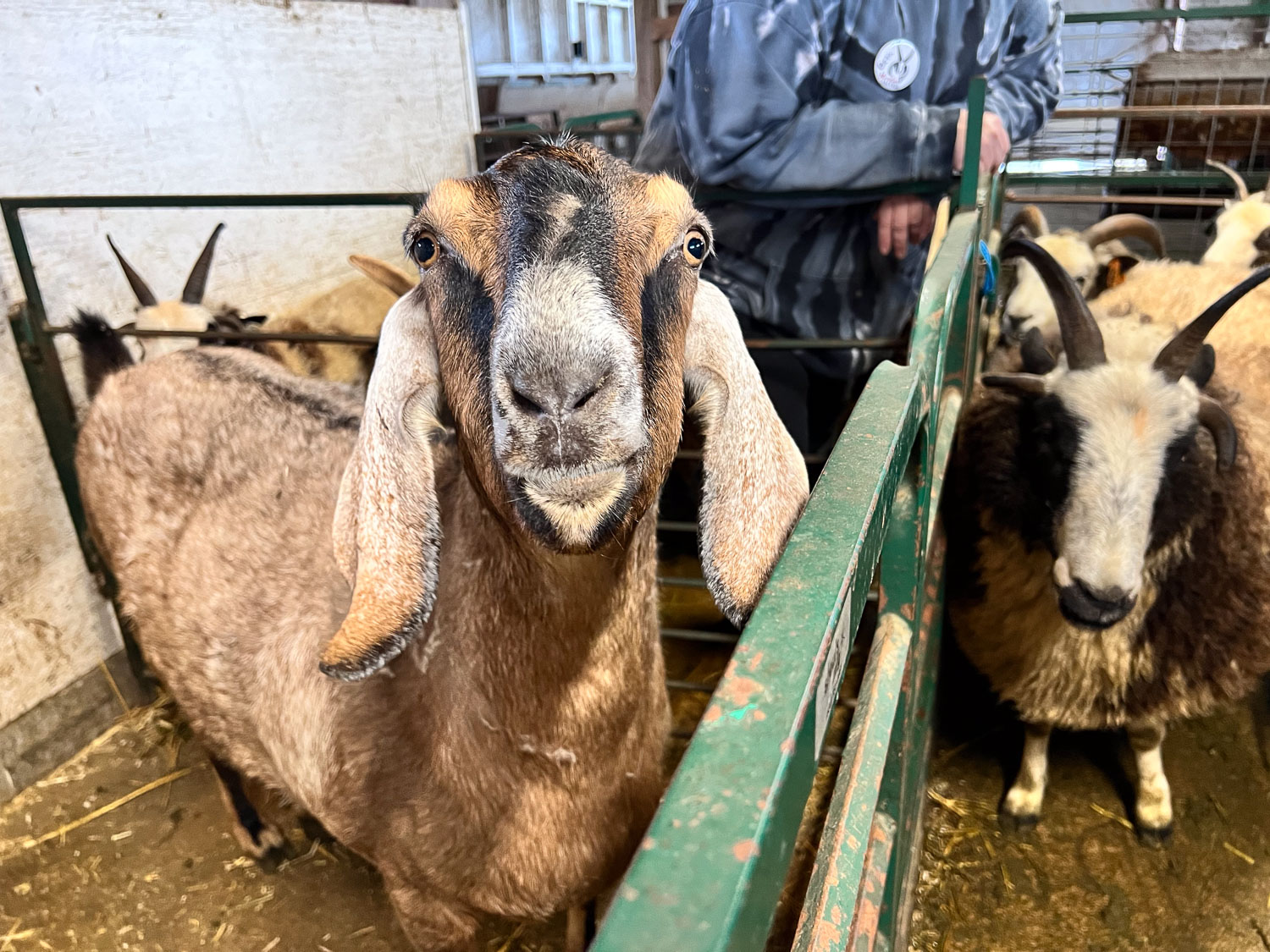
Sheep in the lambing area moving to the pen on the top left near the shearer. That’s a goat on the right. The goat has to go in a pen or she gets in the way.
She got plenty of attention there.
Two or three people bring a few sheep at a time into this pen where they are moved through the gate to John.
Kathleen took her regular job of weighing fleeces.
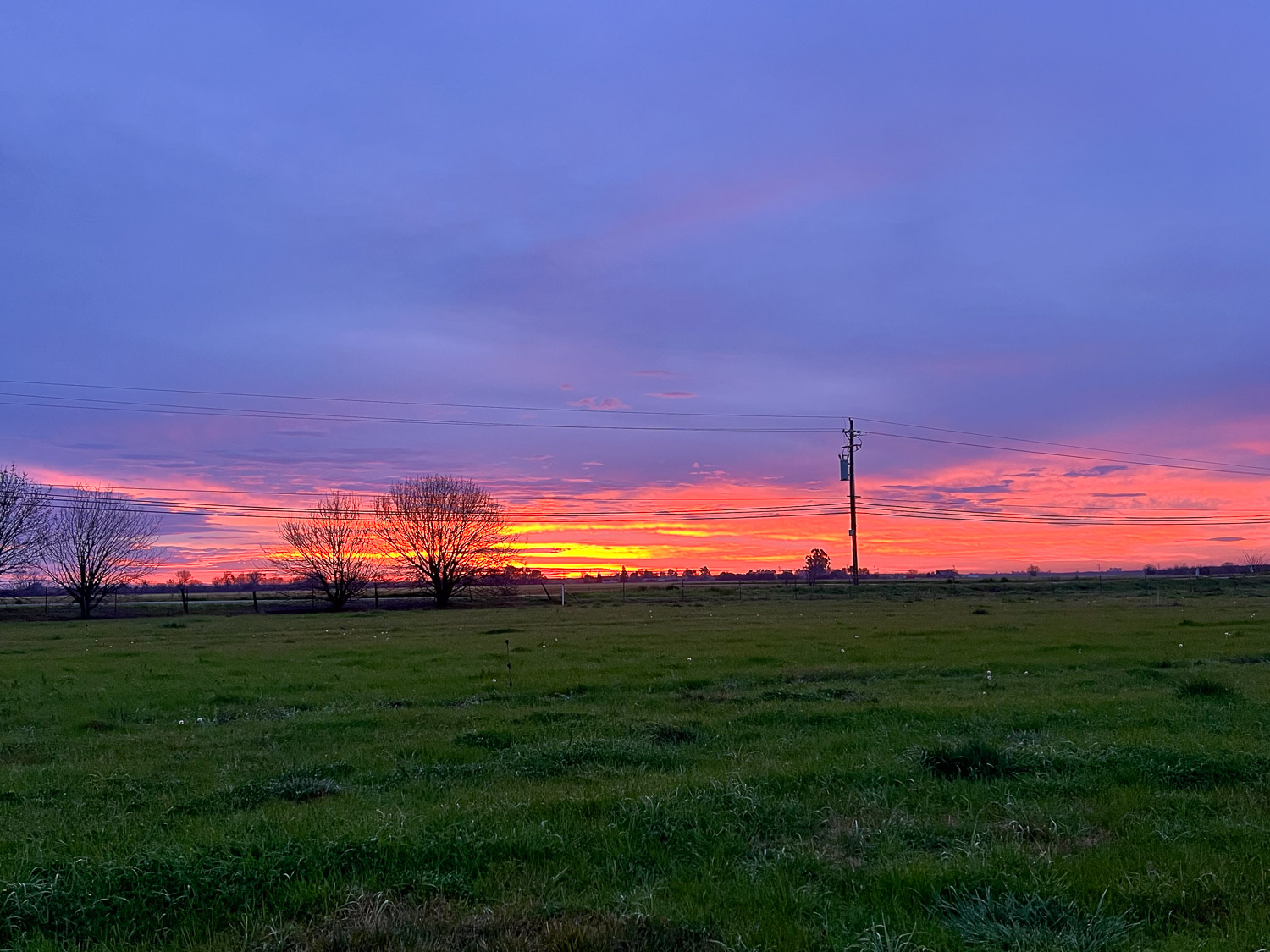
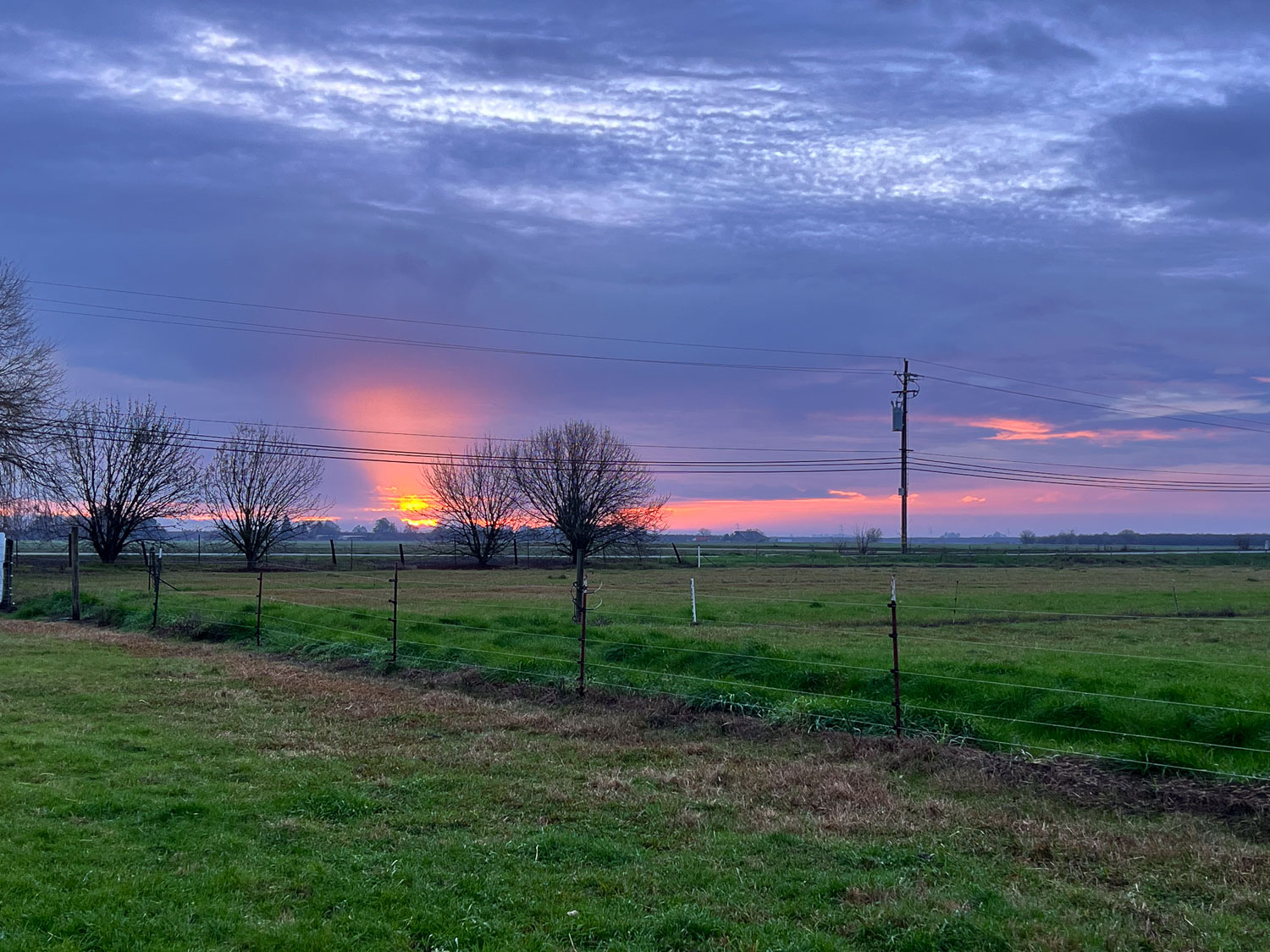
Shearing Day was scheduled for January 21, but this was the day before. I was up before sunrise again (necessary if you want to get enough done in the day in the winter) and it’s nice when there is color to go with it.
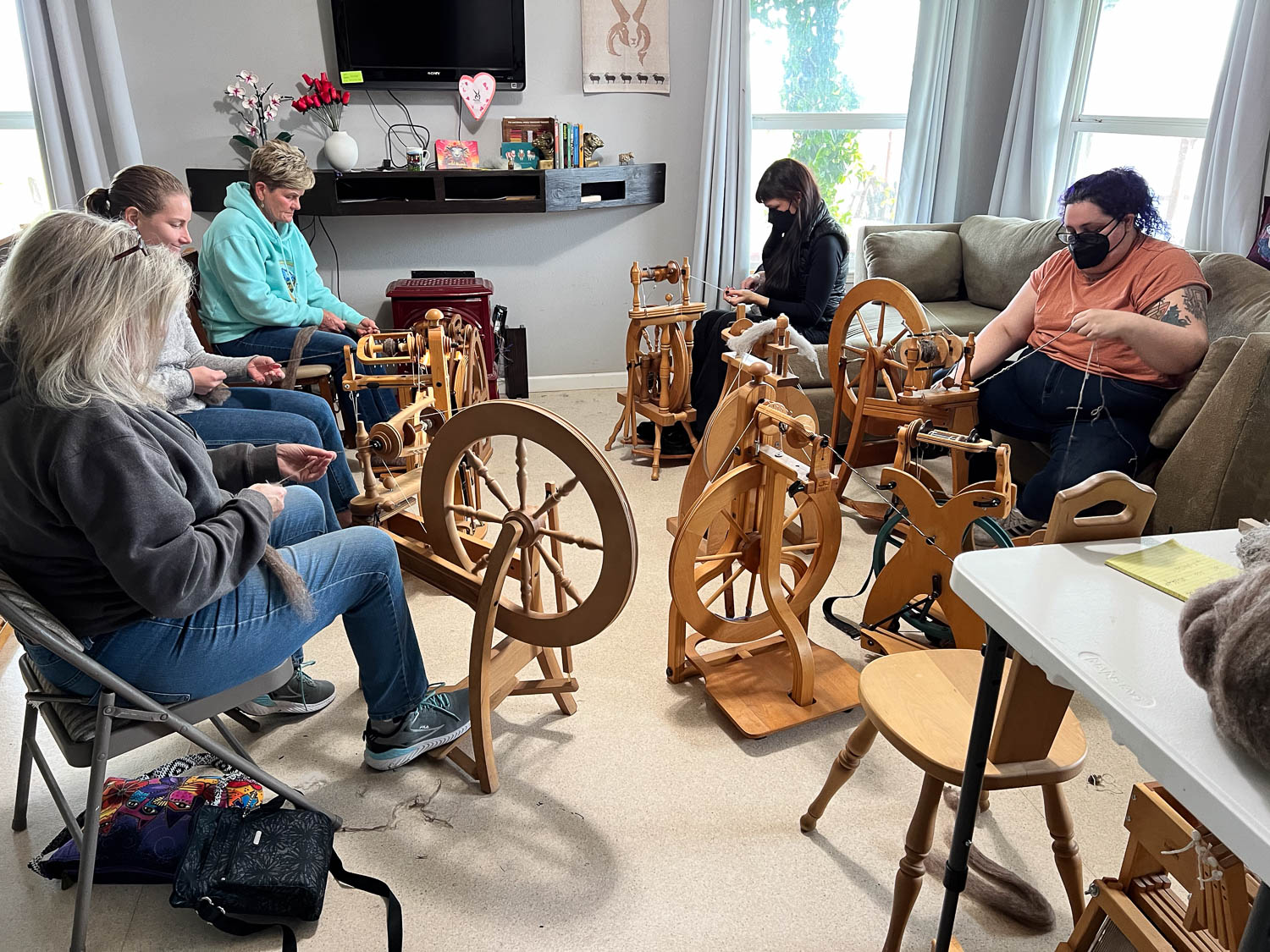
I had a spinning class scheduled for the morning. Five people from five different cities came to learn about spinning. Most had a little bit of experience or at least an introduction to spinning so we started right in after I explained the different wheels and some basic terminology. They all had a chance to ply their yarns by the time we finished a little after noon.
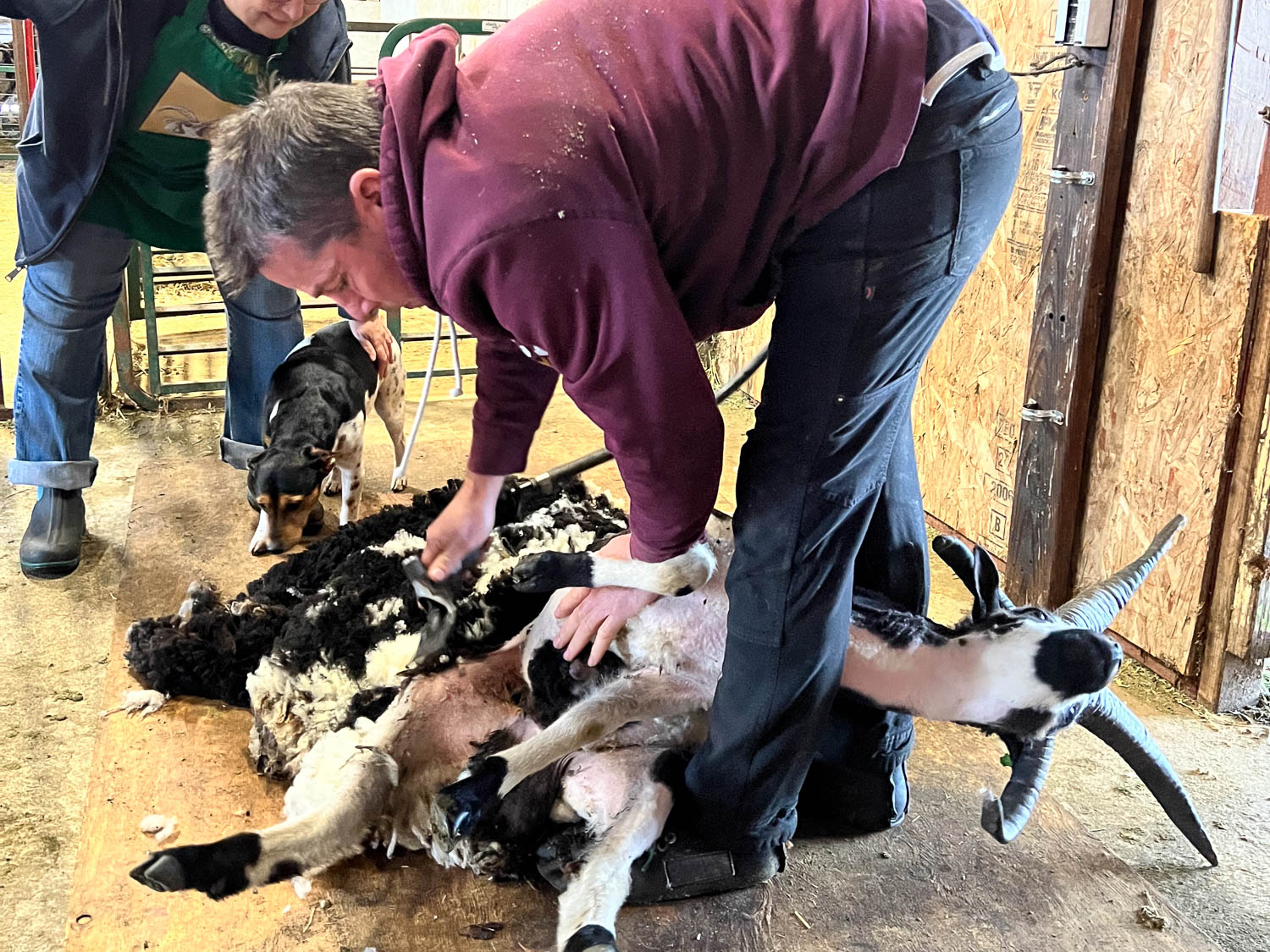
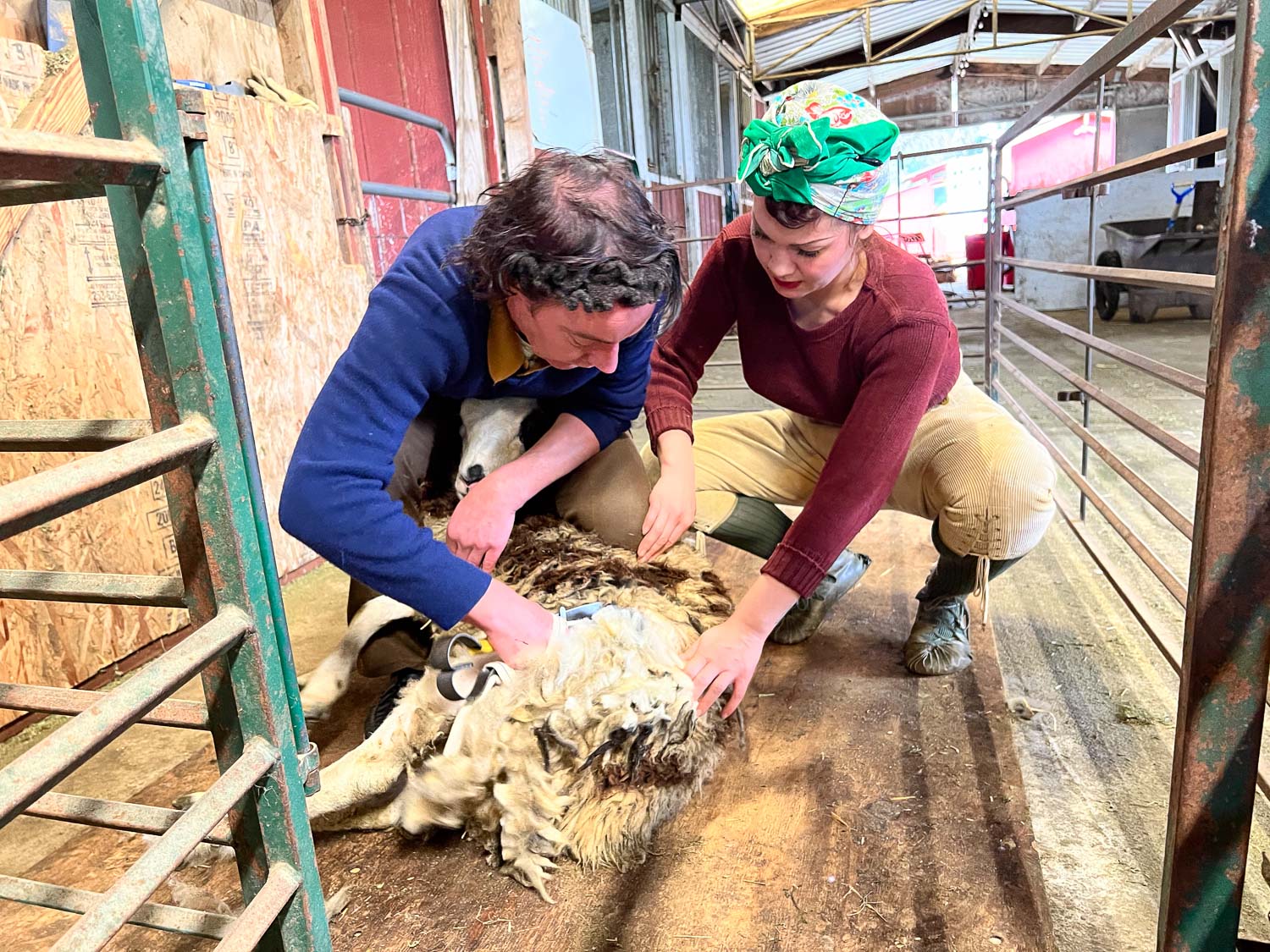
Just as we were finishing Siobhan and Ivar got here. Siobhan is a Farm Club member who has been here often, either teaching a class or to farm sit, besides our regular Farm Days. She and her husband spent a few weeks in England on a belated honeymoon last year. While there they took a lesson on blade shearing and bought hand shears. Siobhan asked if she could shear a sheep for her Farm Club fleece for this year. I said “sure”.
She chose Harry, the offspring of one of our pet sheep, Hazel, who died last year). I had wethered Harry because he had become such a pet to Siobhan and my granddaughter, Kirby. Ivar did the actual shearing while Siobhan helped with sheep control.
I can’t believe that I didn’t get photos between the start and the finish. I was doing some other barn clean up but also helping with a bit of sheep management. In fact I took this photo while Ivar was finishing his last strokes from the front of the sheep where I had one hand (or maybe my knee at this point) on Harry’s head. Siobhan however has a great time-lapse video of the whole process.
I’ll bet it felt like longer to Ivar, but when I looked at the time on my photos I saw that between the first and last photo there was about 55 minutes. I’d say that’s pretty good for your first sheep and doing it with handshears…and the sheep has horns, which only adds to the difficulty.
The fleece looks good too and I can’t wait to see what Siobhan does with it. Great job, Ivar and Siobhan!
The next day we sheared 77 sheep, but John uses electric shears! Stay tuned for another post.
I scheduled a Farm Day today to take care of some chores prior to shearing next week. The ewes were ready to be vaccinated to provide the highest level of antibodies in the colostrum. I wanted to clip fleece samples from the yearlings (their second fleeces) to send in for micron testing. We also made sure that the ear tags were clean enough to read and that the tags would match the cards that go with each fleece.
Some long-time Farm Club members were there as well as some people who are new to Farm Club. It all went very smoothly and it took only a couple of hours to work through all the sheep and take time to take a closer look at some of those fleeces.
Farm Club members get a chance to reserve a fleece at this Fleece Preview Farm Day.
Deborah took the photos from above and this is me remembering to take at least a few photos. Often we get so busy that I overlook that.
While most of us were in with the sheep Susan, Chris, and Nikki volunteered to clean behind the barn. That’s always a big chore. When they finished here they moved to the ram pen and cleaned the ram barn.
Mary checked off the list on the clip board and made sure the cards matched the ear tags. Susan drew up vaccine into syringes.
Marina and Katy caught sheep, marked faces, and cleaned ear tags.
Rachel and Siobhan also helped catch and mark sheep.
The photos below are what it is all about. I had been thinking that the sheep are looking a bit bedraggled, but when I got hands-on those fleeces I changed my mind. They are looking good.
April is a yearling ewe, almost 2 year old.
Queen Q is the same age. The photos below are an on-the-hoof look at the fleeces of the four rams I have here.
Meridian Blizzard (Meridian Silverado x Meridian Bessie), 10 month old ram.
Meridian Typhoon (Meridian Turbo x Meridian Rocha)
Fair Adventure Horatio, 3 year old ram, from Colorado.
Hillside Gabby’s Barrett, 3 year old ram, from Michigan.
Shearing Day is Sunday, January 21.* We’ll be shearing about 70 sheep. Fleeces are available on shearing day and for a month or two afterwards as I skirt them and post them on-line. If you live in the area you can come here to choose a fleece. Contact me.
*I just fixed this. A friend pointed out that I wrote June 21. Yikes!
After all the thoughts I had about keeping up with blog posts I see that the last post was the day after Christmas. I sure write a lot of blog posts in my head and even take the photos. Best laid plans and all…
We are shearing on January 21 and I like to take photos of the sheep in full fleece so I can update the website. I just updated the Ram page and the Ewe page. I moved the lambs that I kept in 2023 to these pages so that is a record of the whole flock now.
Shearing is only 11 days away. If you are a fiber fanatic and want to attend shearing day contact me. Or maybe if you’re part of a fiber guild you have already seen an announcement. First lambs are due two weeks later.
Zora is the first one due and is pregnant with twins. Due date is February 5. All the others will start a week later.
Bessie sure looks big enough to have multiples, but the ultrasound showed one. Is it all wool?
Sweetgrass Eilwen is due at the end of February and has twins.
This will be Rose’s first lambs. She is carrying triplets and is due February 11. Eight ewes are due that first weekend. That is why I will not be demonstrating at the Sacramento Weavers Open House that weekend.
Janna is also due on the February 11 with triplets.
Patchwork Amara is the third ewe that according to ultrasound is carrying triplets. Her due date is the 21st.
Bide a wee Trista is due the 17th. Ultrasound notes say 1+. That means that one lamb is confirmed, but they couldn’t say for sure that there isn’t a second.
Columbine has twins and is one of the 8 ewes due on February 11 or 12. Of course the due date is only a guideline. Lambs could be a few days before or after that date. I have to be paying attention. Looking at this photo, I remember that she had a wool break early in the year while nursing 2023 lambs. You can tell that some of her fleece is shorter than the rest. So this will not be a prime fleece. It’s possible that it can be salvaged. If not it will become part of next year’s Gardener’s Gold, a soil amendment for houseplants or the garden and made just down the road! It is available on line or here at the shop.
We have 45 ewes that will all lamb in February. The barn will be full!
This post is just what the title says. You may have seen some of these on Instagram if you happen to notice them among all the others that bombard you.
Ginny on her bed. She likes to take things out of the recycle bin on the back porch. That’s why the oil bottle is there. That moose has been a favorite inside toy since she was a puppy. Amazing that at age 9 the moose is still here with only a couple of repairs.
The rams that are still here after the last culling. Left to right: Meridian Blizzard, Meridian Typhoon (both born in March 2023), Hillside Gabby’s Barrett, and Fair Adventure Horatio (both born in 2021). There will be lambs sired by all of these rams in February.
Devil’s claw pods. I have these listed for craft or decorative use on the website. I had an order the other day so I thought I’d take more photos while I was gathering them. Not only do they get tangled up with each other, the points on those claws are very sharp. These are not a good plant to have around when you’re raising fiber animals. If I see them on the sheep side of the fence they are removed. I gather these from places where there are no sheep.
Across the Road with Ginny yesterday before the rain. There is hardly any water in the cement ditch now, but what is there is stagnant and slimy and muddy. Ginny was hot from chasing the ball and thought it was a good idea to lie down in that.
Border Collie focus.
This morning’s look at the rain gauge. It’s about time we started to get some real rain.
Most of the flock after feeding in the morning. I think I count 40 sheep here…and a goat.
There are eight sheep here so there must be a few at another feeder. The hardest question to answer is “how many sheep do you have?” I think there are 53 ewes, 2 wethers, and 5 rams now.
And 4 chickens. The rooster is a new addition.
I’ve been finishing up some weaving projects. I usually weave rayon chenille scarves, but decided to weave a series of shawls. These are two different shawls on the same warp with slightly different weft colors
This is on the same warp with a different color weft, but stitched together to create a poncho of sorts. I really like how it came out. Even though the sewing adds a bit of work, I think it takes far less time than twisting all those fringes. I hope that this style is popular because I’d like to make more of these.
I’ve been having the vets come for ultrasounds the last few years. I tell them the first and last day the rams were with the ewes and they tell me the best date to confirm pregnancy and be able to count fetuses.
I gathered all the ewes into the barn and while I was waiting thought I could get a photo of a sheep and me both in wool. The wool I’m wearing is all handspun and knitted. You know that I am not a knitter, but I did knit the hat. One friend spun and knit the sweater and another spun and knit the dickie (which I just pulled out of the drawer today since we are now getting into the 30s at night). COZY, COZY!
That’s Jade on the left, Patchwork Bettylou in the middle, and Betty on the right. Betty is the second oldest sheep here–she’ll be 10 when she lambs in the spring.
Four veterinarians were here. One held the sheep. She was also at the end to do a quick FAMACHA score and check teeth on the old ones. No problems to report. The person who is crouching has the probe and they are all looking at the monitor (about the size of an ipad). The fourth vet recorded results.
They used to bring a small TV-sized monitor that had to be on a table. That meant we had to bring the sheep to the monitor. Now they are using this portable one. We can load all the lambing pens with four or five sheep and the vets move from pen to pen. They looked at about 50 sheep in two hours.
I wonder how long it takes before you are good at interpreting this. All I know is that the black part is fluid. I don’t make out the lambs very well.
They confirmed the breeding dates I had written down and where I had a question mark or two dates they gave an estimate of the correct date.
Results: All ewes I expected to be pregnant are pregnant. Ewes were all bred between September 10 and October 6. Lambs are due from February 5 to March 5. There are 45 pregnant ewes predicted to have 82 lambs. There are six marked 1+. That means they confirmed one but didn’t rule out a second, so there could be more than 82. Last year we had 96 lambs and my goal was to have fewer this time. I guess I met the goal but not by much.
I kept one ewe back when we were finished because I hadn’t changed her coat when I changed the others last week. This is what her fleece looks like. It may be on the coarser side compared to some but it is sure long.
I started to name this Dress-Up Day for Sheep, but that is misleading and a little too cute. The title describes what I did yesterday.
I caught 7 of the 8 sheep that have coats. A coated fleece is often prized because it is free of VM (vegetable matter). In my situation that is mostly hay and grass seeds. My coated fleeces may not be as wonderful as some because I don’t usually coat the sheep from shearing day on. Most of these coats were put on either when the sheep traveled to Black Sheep Gathering in June or went to State Fair in July and Lambtown in October. So they may have been coated only part of the year. But that is less VM than if there was no coat. There was also the advantage that those sheep with coats won’t have as much marking crayon from the rams in their fleeces (note the green rear of the sheep on the right).
Why don’t I coat all of my sheep? 1. I’d rather see spotted sheep, not coats. 2. It’s a lot of work. Coats need to be changed periodically through the year as the wool grows and they get too tight. Then they will cause felting and may ruin the fleece. We may go through 4 coat changes in a year, especially for a younger ewe who is not only growing more wool, but she is getting larger too. If I put on a coat that is too large I risk having sheep get a leg through the neck hole or slip out of one of the back leg straps. Then you have a sheep that can be tangled up and/or cause damage to the coat. 3. It’s a lot of work to repair the coats that are torn. Horned sheep are tougher on the coats than those without horns. 4. Eventually coats need washing, especially before I take them to my sewing machine for repair.
I tied all the sheep in the lambing area and removed coats. I hung the coats on the fence near the sheep so I could find the next size without trial and error.
This photo shows another advantage of coating. The fleece under the coat does not have sunbleached tips so the color of the black yarn will look blacker than if those brown tips are mixed in. You can also see the amount of hay in the neck wool of this sheep.
These photos are some views of the fleece under the coats.
Some are cleaner than others because the sheep has worn a coat for longer.
This photo and the one below it are good examples of the different styles of Jacob fleece, at least as far as the crimp. Both fleeces are within breed standard.
Here they are all ready to have new coats.
This coat has a little more room for growth. Most of us probably don’t walk around with our clothes size showing, but it is helpful for me when keeping track of coats that may need changing. (The number 3 is above the shoulder.)
I have acquired coats from various sources although most came from Terri Mendenhall who is well-known for her award-winning sheep and fleeces. As the coats need repair they get a mix of patches.
They have been repaired by a Farm Club member who took some home, by me, and by my son who lives in Idaho and works as a smokejumper. Did you know that smokejumpers learn to sew so that they can make gear and handle all their own repairs? They use heavy duty sewing machines and fabric so Chris was able to make some repairs using fabric from the scrap pile.
Can breeding season be over already? We put the rams out only 16 days ago and almost all ewes are marked! That makes sense because the sheep heat cycle is 16-17 days. Jacob sheep are seasonal breeders as are most breeds, and this is the season. Even though they may have all been bred we’ll keep the rams out at least another two to three weeks. I changed the marker color from green to orange. Now would be the time that I’d start to see orange on top of green if a ewe I thought was bred really was not. If there were several of those in one group that would mean that ram has a problem. Last year was the first time I had an infertility problem in the flock (one ram who got sick), and that extended lambing season as it was the clean-up ram that bred some of the ewes that were supposed to be bred earlier.
Hillside Gabby’s Barrett came from Hillside Farm in Michigan a couple of years ago. That’s an impressive set of horns for a ram that is just 2-1/2 years old. There are 13 ewes with him and all are marked as of today.
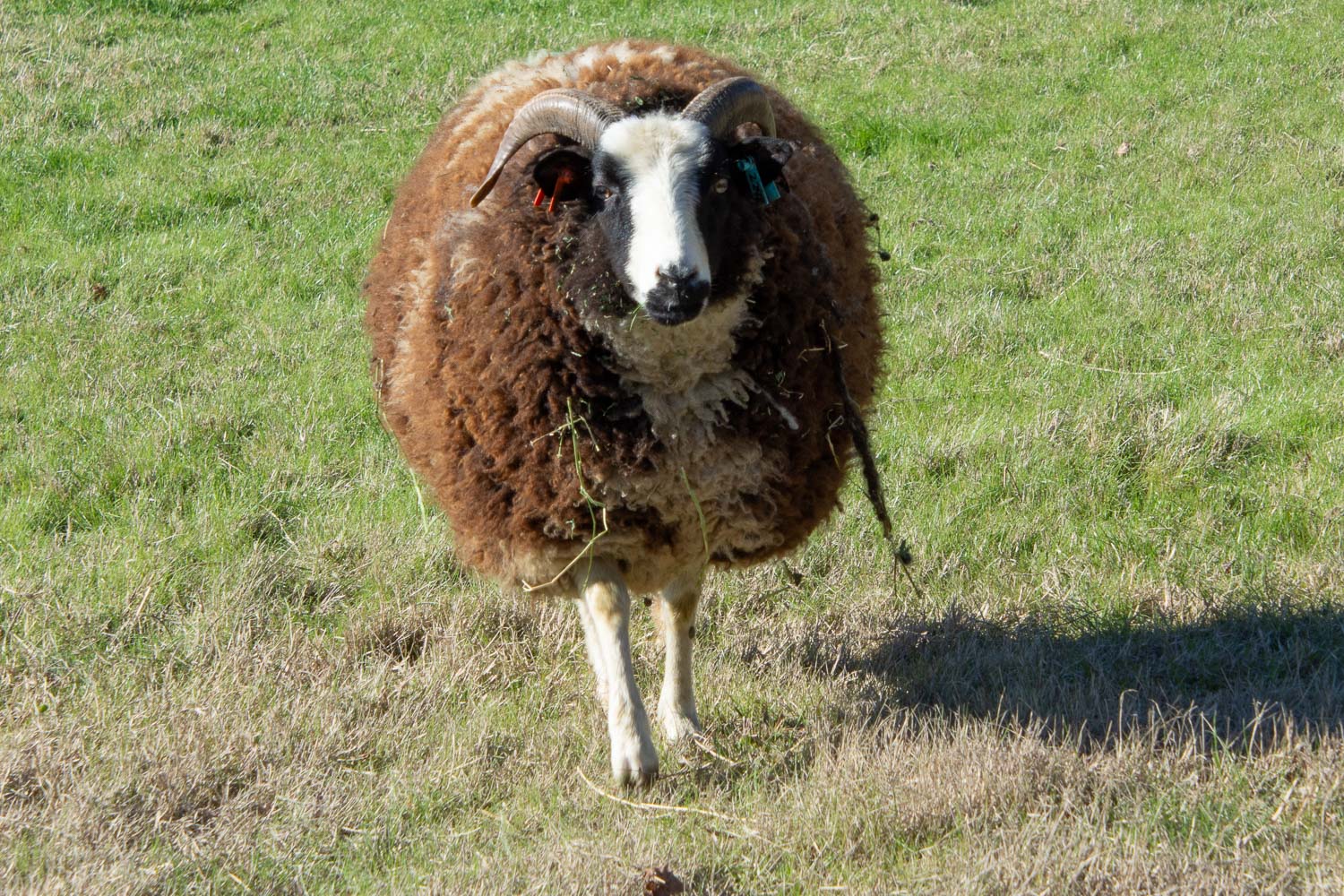
Barrett had a green marker in the first photo but I just changed to orange. The last two ewes were marked yesterday and today with orange.
I brought Fair Adventure Horatio here from Colorado in June. He is also 2-1/2 years. He has 19 ewes with him.
Horatio’s group walking out to pasture a couple of days ago.
This is today’s photo.
He has a bit of a demonic look here! Actually, this is common behavior for rams with ewes, and it is called Flehmen. From the linked website: “Flehmen is a behavior exhibited primarily by males, occasionally by females, in which the animal raises the nose into the air, with the mouth slightly open, to facilitate pheromone detection by an odor detection organ in the roof of the mouth.”
Peyton is a BFL (Bluefaced Leicester) ram and I breed him to a few of the ewes to get a few bigger lambs for the butcher market. The crossbred lambs are black.
Meridian Blizzard was born in March and he has three ewes with him. He will be shown at Lambtown this weekend along with two of the ewes in his pen.
So far these are all two-horn rams. I would normally have included a four-horn ram in the line-up.
Patchwork Townes was going to be the main ram, as he was last year. About three weeks ago I found him dead. He liked to beat up the fence and he somehow hooked the tips of those upper horns in the welded wire fence at about a foot from the ground. When we found him the only way we could get him out was to cut the fence.
Meridian Silverado was the other four horn ram I could use. However I had him fertility tested because he was sick during the summer and he failed the test. I think it’s likely he had bluetongue, a virus carried by midges this time of year. It can cause infertility and I think that’s what happened to Barrett about half way through the season in 2022. Silverado is still here but not in the breeding line-up. Blizzard is his son.
I wanted to use at least one four-horn ram and the one I had my eye on ended up with disappointing horns and will be culled. This one is Typhoon. He was almost sold this summer when I was going to Oregon. Right before that trip he broke both his lower horns and the buyer substituted another ram. I’m glad she did because Typhoon has gorgeous fleece and his horns look good now. We don’t recommend breeding to a ram lamb until after he is registered at 6 months. However I needed to breed before waiting another month for this guy to grow up. The breed standard for Jacob Sheep requires that sheep be no more than 85% black. This ram is close, but I looked at his baby photos.
When you see Typhoon as a lamb you can see that he just makes that 85% limit. At least I think so. It’s often hard to know for sure when they are in full fleece.
Typhoon has 7 ewes.
We decided to not breed the 2023 ewe lambs this year. We had too many lambs last year for the conditions (rain and more rain) and it was too crowded. So this group is not being bred. There are also a few cull ewes and a goat in here.