This morning I shared photos of our grazing set-up now that it’s one year after the big project began. I just looked back through my blog and found this post when we seeded. That was November 19, just hours before we had a lot of rain. A lot has happened in a year. This winter it feels like a whole new experience because prior to this project I would not have been grazing in late November and would be waiting for spring.
Yesterday about noon I walked out to check the fence. Some of the sheep were on their way in.
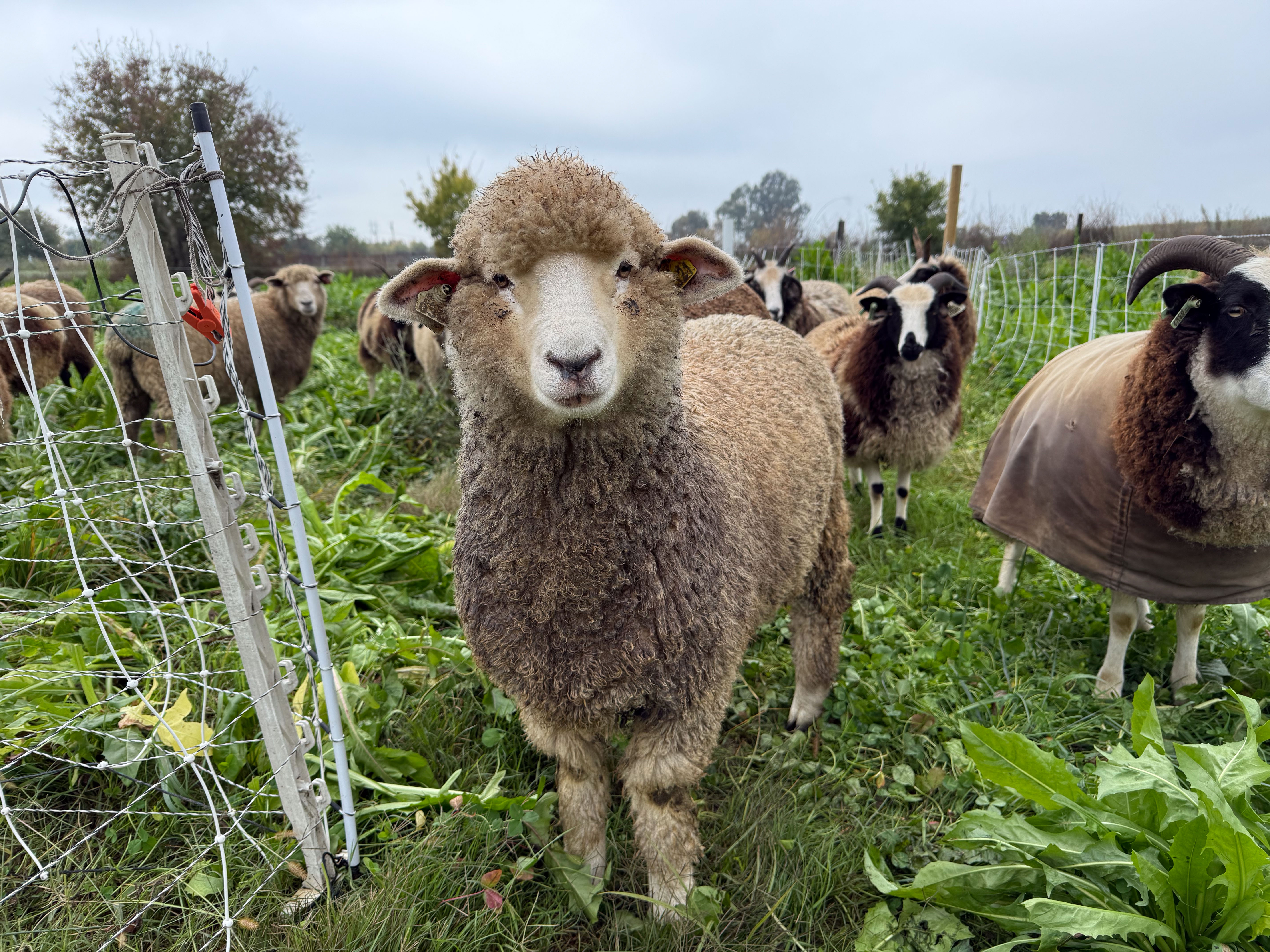
This is the corner of the new paddock I’d just set up. I think I mentioned something in previous posts about acquiring five new sheep. This is one of the three Corriedales, so far named Corri 1, Corri 2, and Corri 3. Yeah, not very creative. This is Corri 3…
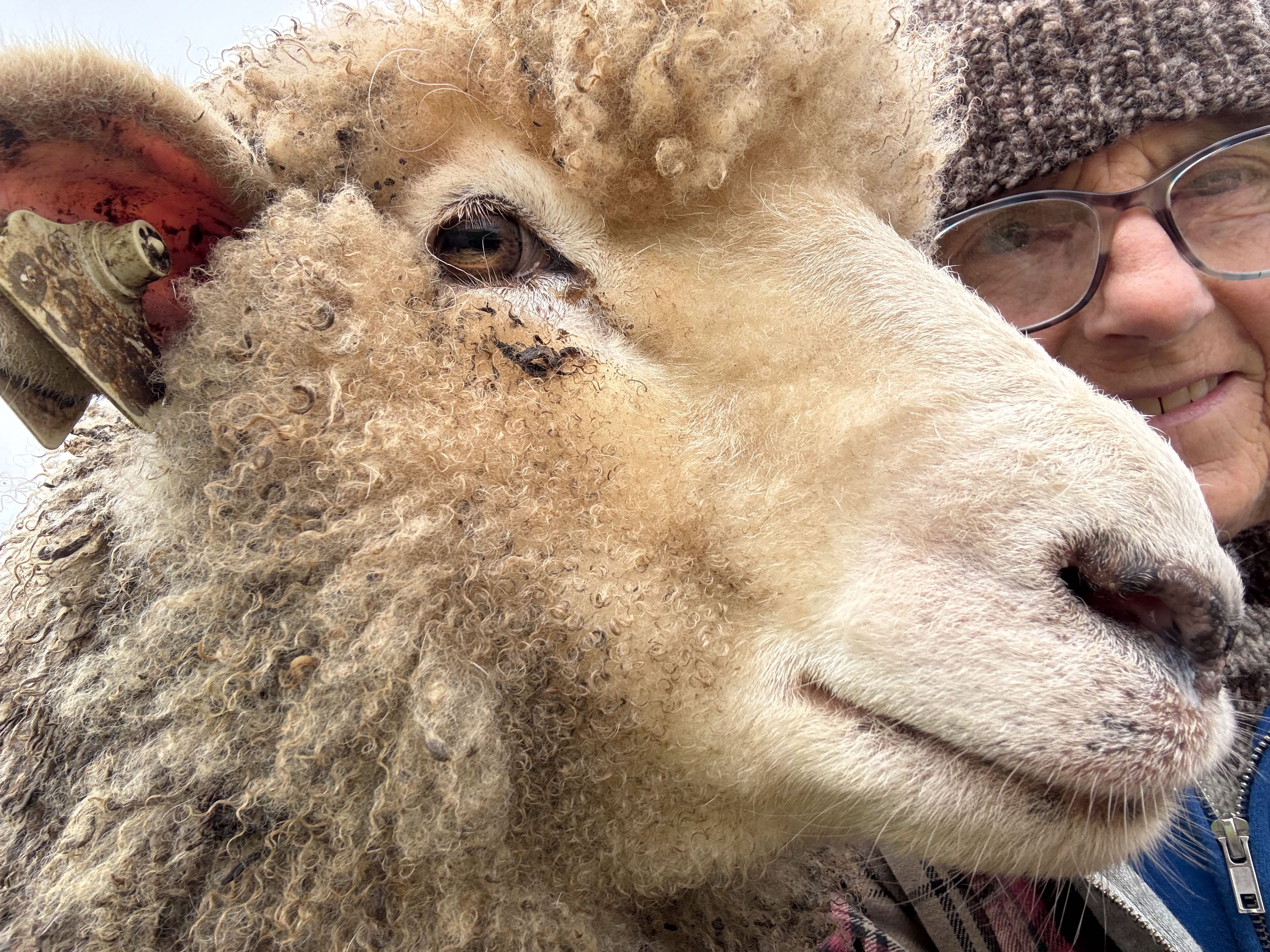
…and she is one of my best friends.
Sparky is another.
I have been taking photos of individual sheep to update the pages on the website. I have updated this page with the current ewes, but haven’t included all the new photos yet. The ewe in this photo is Ophelia, a yearling.
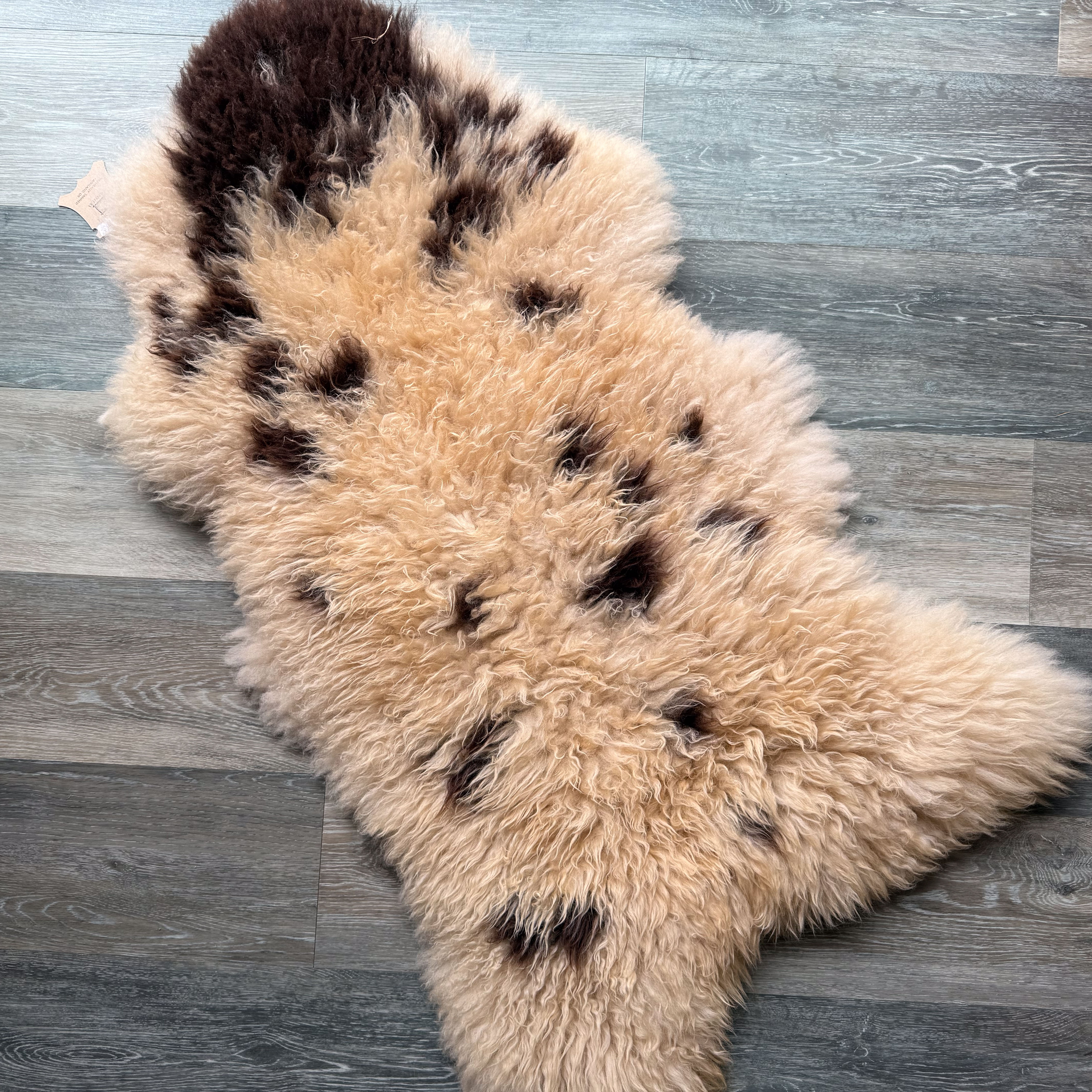
I also took photos of new lambskins yesterday. I stopped in the middle of writing this to list them here.
The hedgerow project wasn’t completely finished yesterday. I found more cardboard and cut it up for the remaining 19 plants and added more straw. We hadn’t got them all watered yesterday so I brought out a wagon to haul more water at one time.
I finished just as the sun went down.
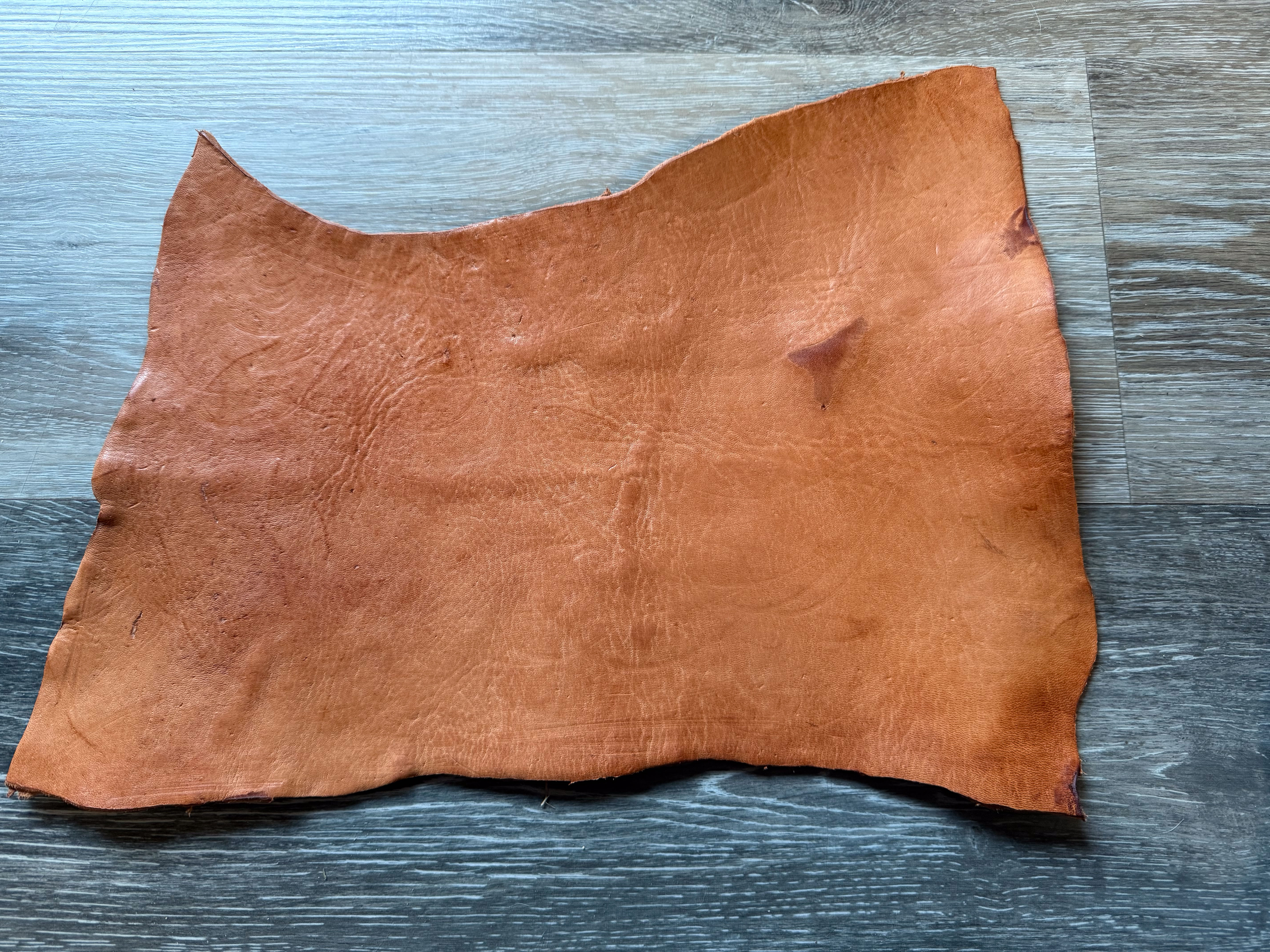
In the evening I jumped on Zoom for my final Basics of Bark Tan class presented by Traditional Tanners where I have had the latest sheepskins tanned. This is leather I made from deerskin! I highly recommend this class. It is very well presented and a lot of fun!
I started raising sheep because I wanted to produce wool. For me lamb meat (Gourmet Lamb on my website) is a by-product of my wool and fiber business, although for most sheep raisers wool may be the by-product. I make a point to use as much of the sheep as possible. Sheepskins are a major by-product of the lamb business. I thought I’d show what goes into producing a beautiful sheepskin.
I don’t have photos of the process of getting the sheepskin from the sheep. That is not something I should put here, but I will say that the person who harvests the sheep is very fast and does an excellent job of getting the skin off the carcass in good shape. My job is to cut off extra skin that came from the legs and salt the pelts as soon as possible to prevent them from decaying.
I ran into trouble this year getting the right salt. You need to use fine salt to cover the most surface area. The one on the left is what I usually use, but it was out of stock for part of the summer. You’d think that the one on the right would be OK since it’s labeled “fine”, however it is not nearly as fine as the “solar mixing salt”.
Dan built this rack a couple of years ago so the hides won’t take up as much room as if they were spread out. I have covered hide with a layer of salt, making sure that all parts of the hide are covered.
Even though I had the rack I had to spread some hides on pallets when there were too many to fit. It the middle of the summer they dry enough within a week to move to a stack. If the weather changes and there is moisture in the air sometimes the pelts still feel damp.
You’re not supposed to dry the pelts in the sun, but I after the initial drying and before shipping I may spread them out for a few hours. After the salt has done its job of drawing the moisture out of the skin it sometimes draws moisture from the air and I don’t want there to be extra moisture when I ship them to the tannery.
I flipped them over and dried both sides.
A stack of pelts. The next job is to find an adequate box. I sold a couple of looms this year and still had the boxes. I’m trying to remember now if I was able to fit ten pelts in a loom box.
I take photos of the hides before boxing them. With the two tanneries I am using now I don’t think I have to worry about this step. Over the last few years I have tried three other tanneries. One is now out of business. One is all the way across the country and takes a longer time. The other (in California) sent hides back that were definitely not mine. That’s what prompted me to start taking photos before shipping.
I am satisfied now with the two tanneries I will continue to use. Driftless Tannery is in Wisconsin. Living Sky is in Idaho and last year I was able to deliver hides when I visited my son and DIL in Boise. This year I shipped them all. Both tanneries use mimosa bark for their tanning process. This is a more environmentally friendly alternative than methods that some tanneries use. I also like the resulting leather–it is flexible, yet sturdy.
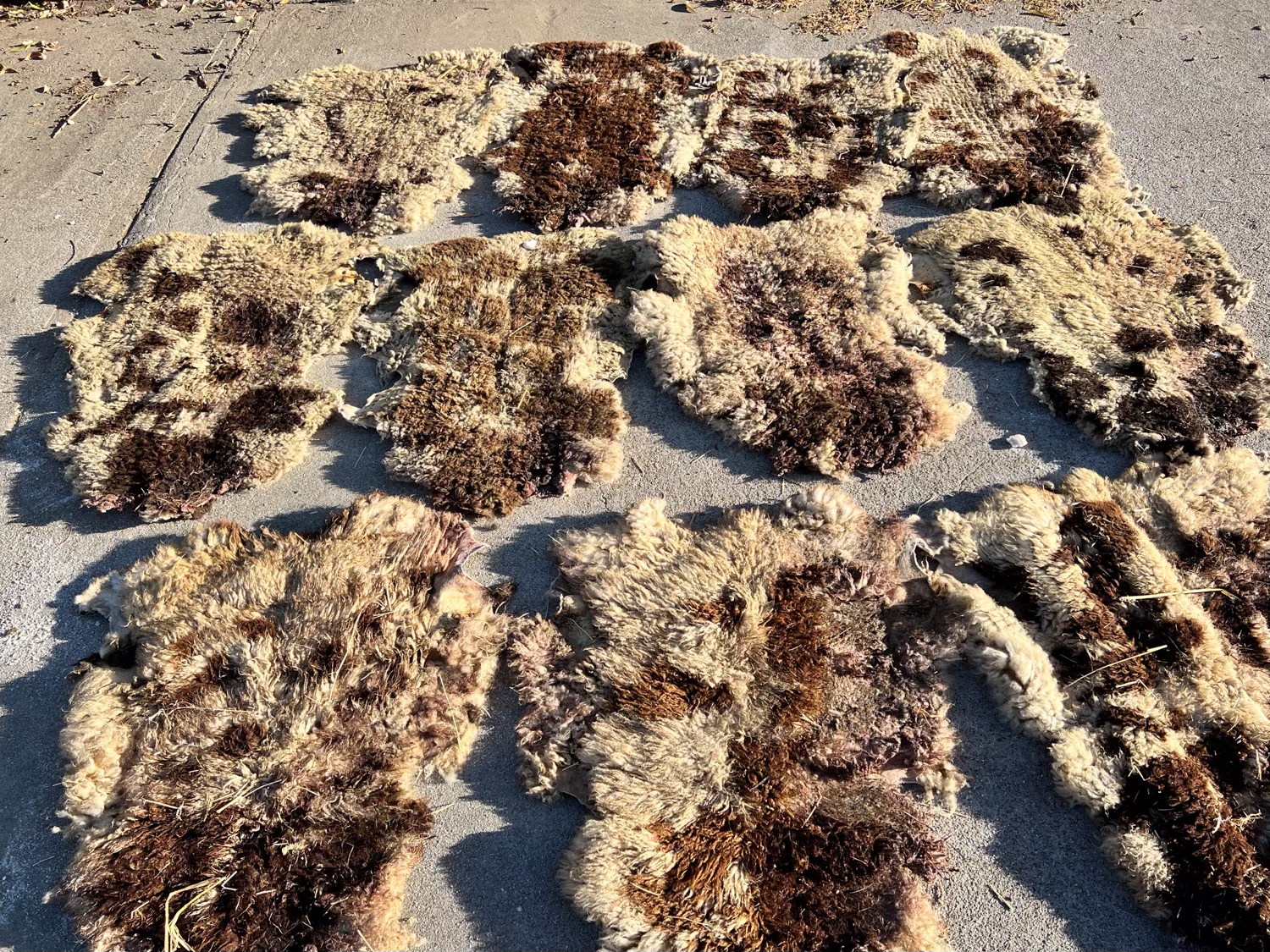
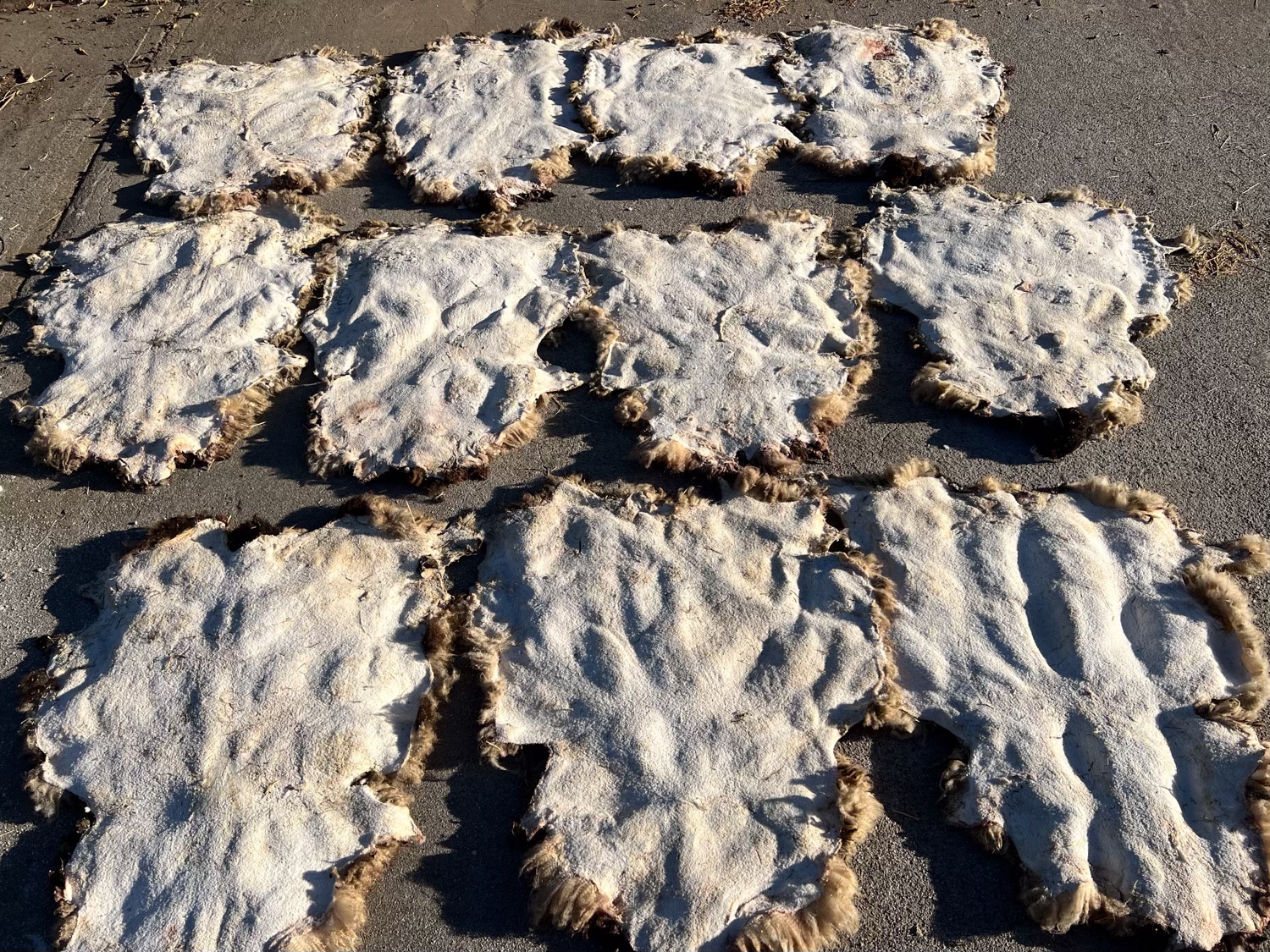
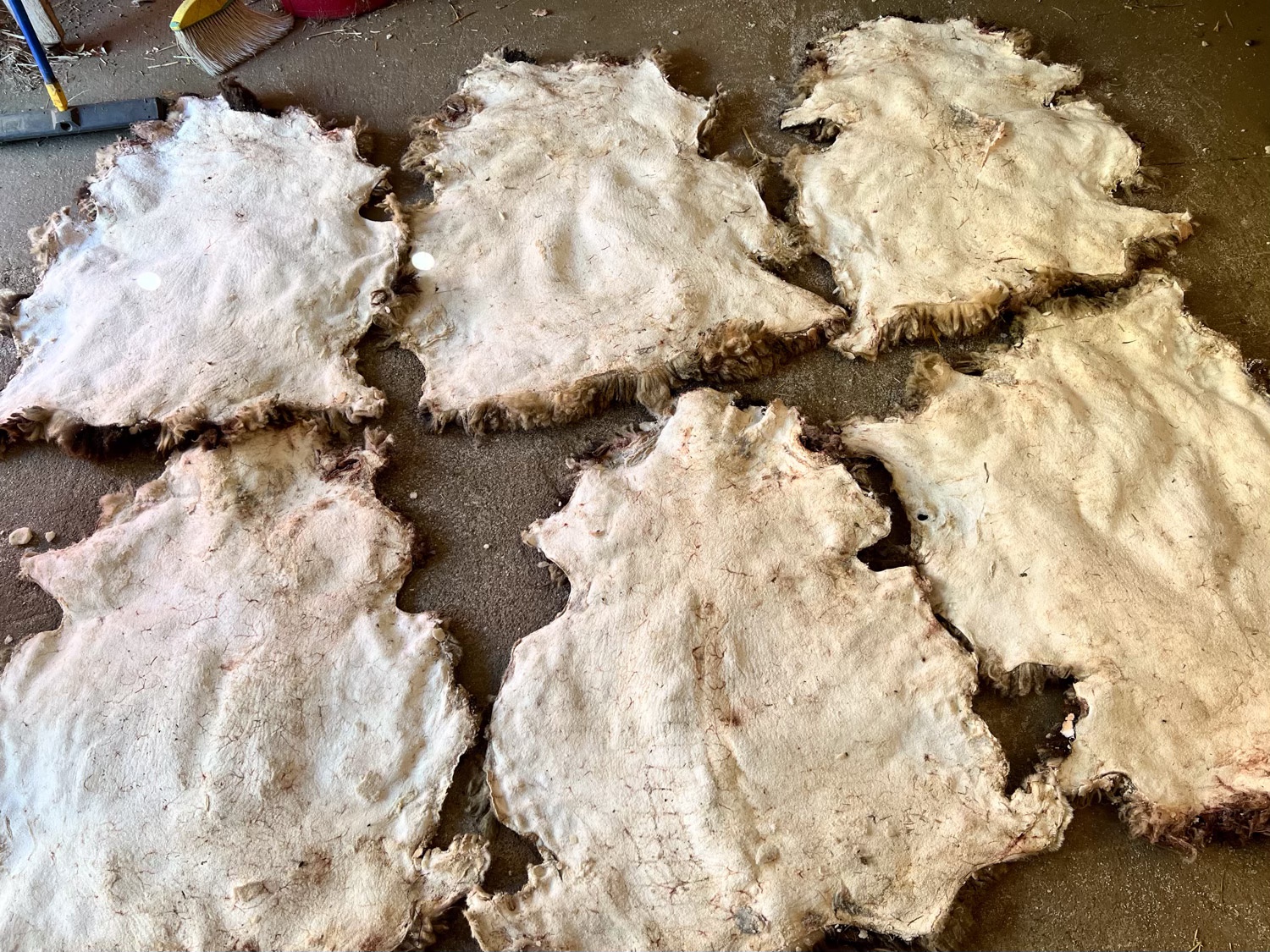
I have photos of the front and back of each hide. People ask me how the hides are tanned. My answer is that it is magic. The photos don’t show how bad these hides look when I ship them. They are stiff and the wool is dirty, including hay, grass, and blood. The tanneries work magic and the hides are returned clean and fluffy.
I went through my photos and found some that I could match up with the finished sheepskins.
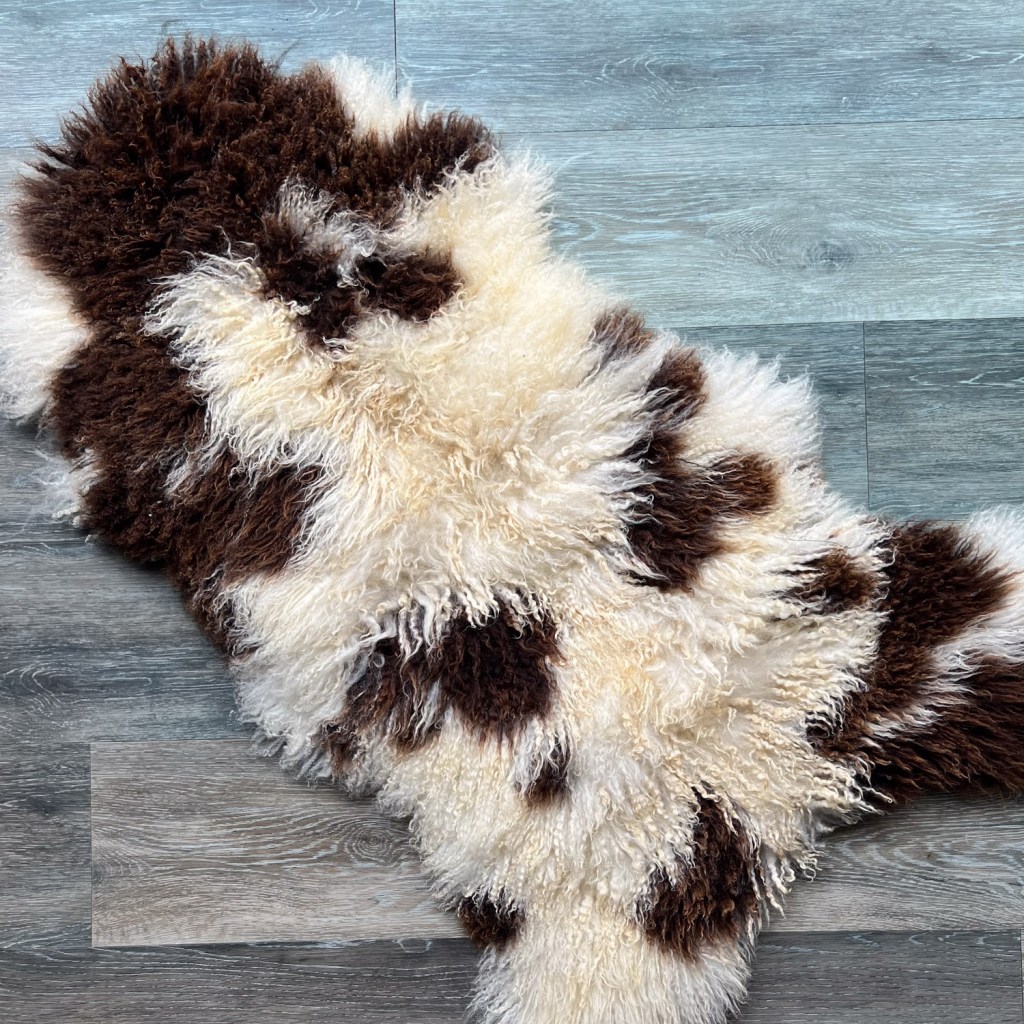
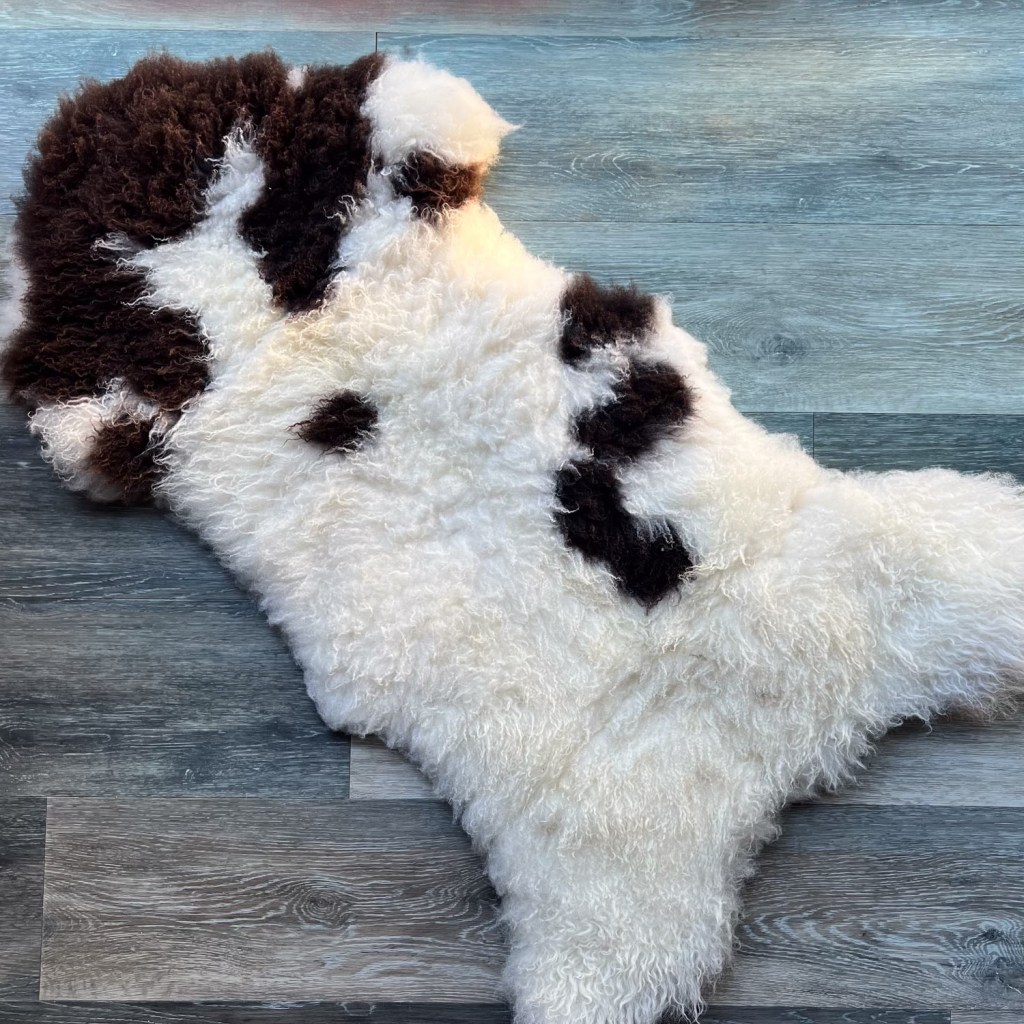
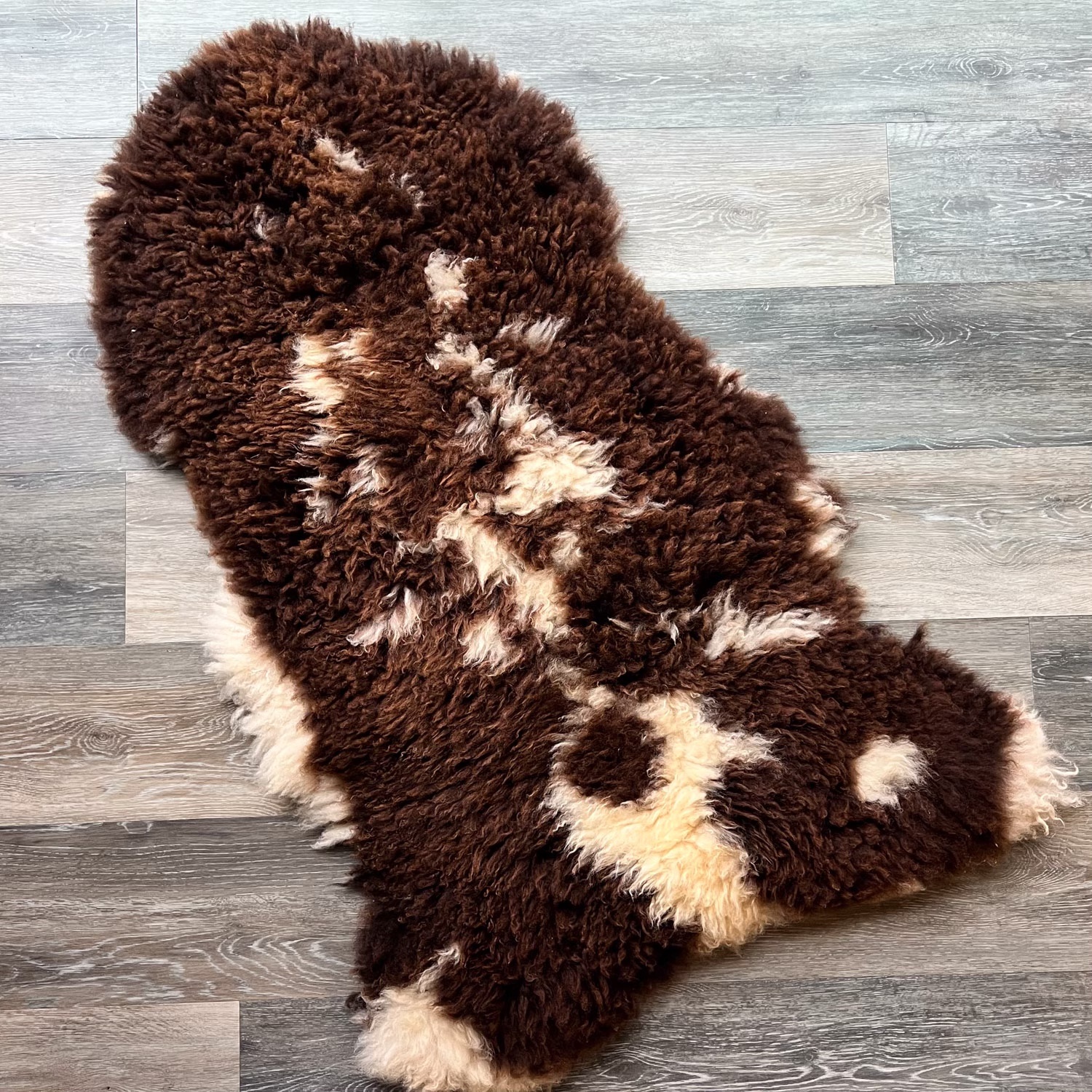
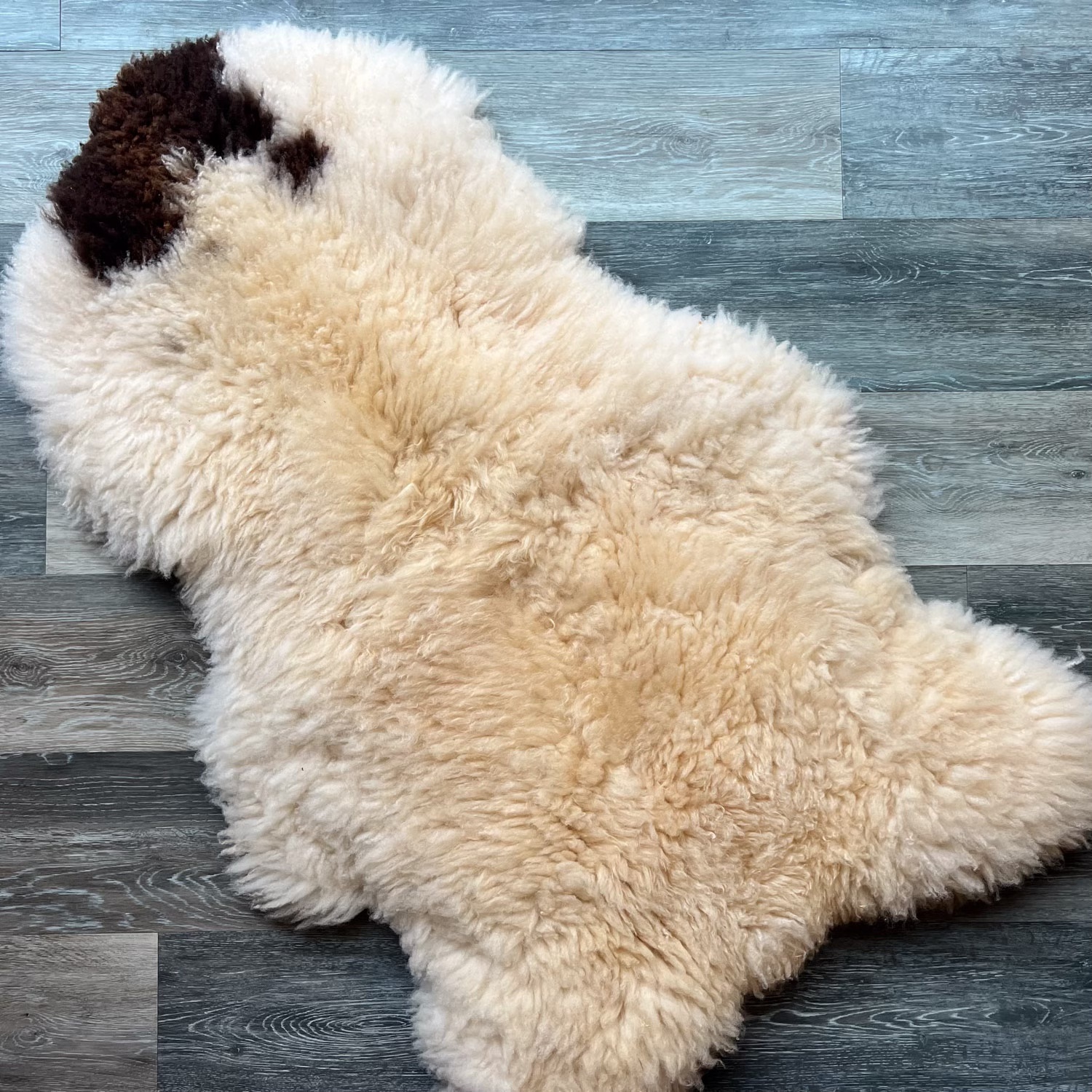
These are three of the hides that came back from Idaho. Can you match the first two up to the photo above? The middle sheepskin is the one on the top right in the photo above. I think the sheepskin on the left is the one in the lower left of the photo with six. Magic!
This is from the batch I sent to Wisconsin.
The sheepskin on the left is the middle one on the bottom row in the photo above. The middle sheepskin is middle, top row above. The one on the right is in the lower left corner above. More magic!
When I get the sheepskins back I need to measure and photograph each one so I can put them on the website. See this page for all that I have listed.













 Meridian Jacobs' Blog