Wedding Shawl Commission

Last month I posted the following photo that shows the array of yarns that were chosen by a friend for her daughter’s wedding shawl.

My friend originally planned to weave the shawl herself but then commissioned me to weave it.

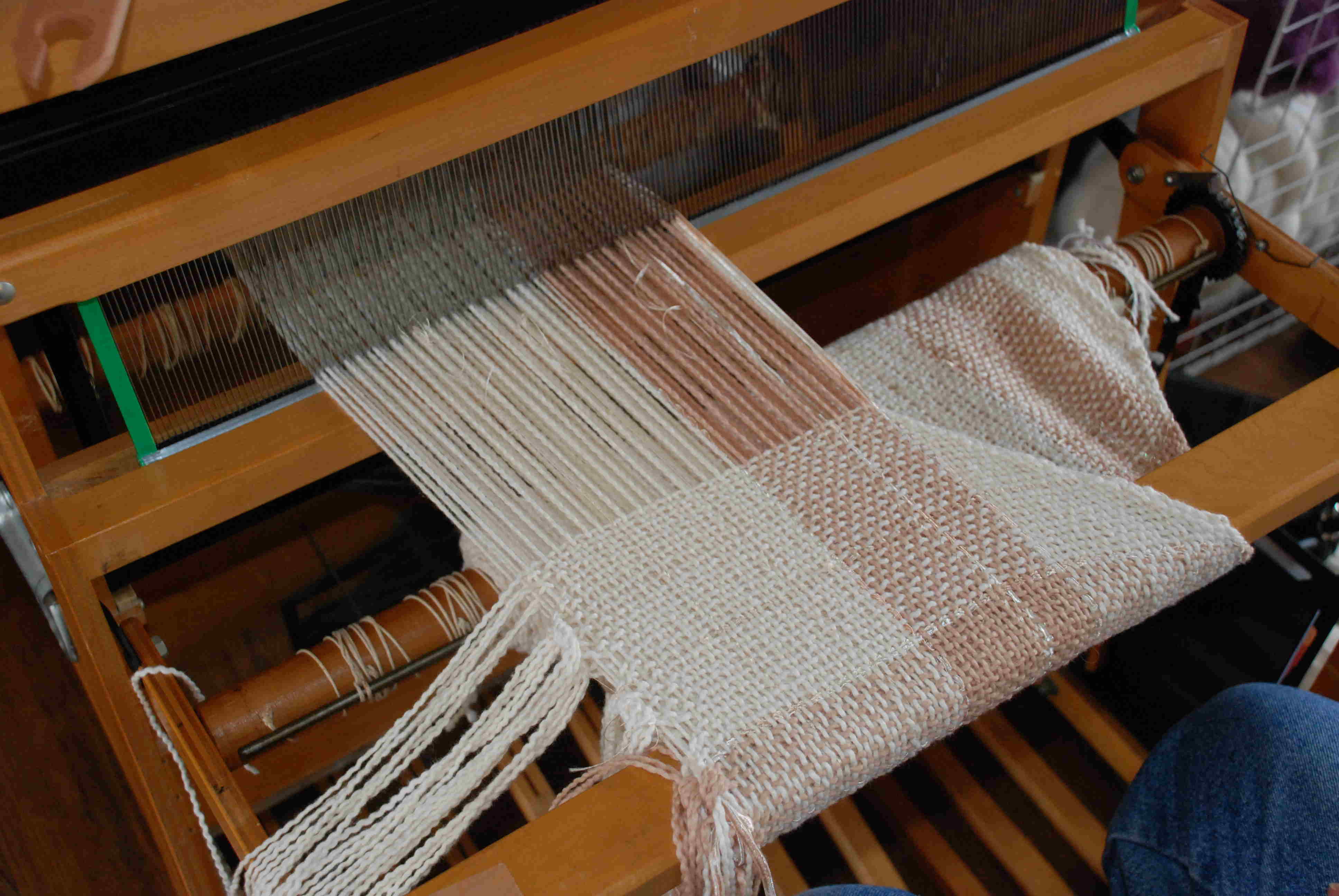
This is the warp on the loom. I was concerned that the white weft was going make the shawl too white. No need to worry. It came out just right.

In this close-up you can see the variety of yarns used in the warp. The weft is relatively fine with a regular slub that helps keep the yarns in place even though the shawl is loosely woven.

My favorite model just happened to be here before my friend was to pick up the shawl. (That’s my daughter visiting from VT.)

I got the report back from my friend: “My daughter loves her wedding shawl!! She says it’s the most beautiful shawl she has ever seen!!  That’s a compliment from my very fussy and stylish daughter!”

I am not a rug weaver.

A llama and alpaca owner  sent me his mill-spun yarn to weave blankets. The alpaca yarn was OK for blankets, but not the llama–way too much coarse fiber. I wove samples to send to him.

I used the alpaca yarn for the lower left sample. The other two are using llama yarn. I wove them weft-faced as you normally weave a rug. However I am not a rug weaver. There is a lot involved in weaving a firm, sturdy, even rug and, although I admire handwoven rugs greatly, I don’t plan to be a rug weaver. I struggled with this project. I wove the first rug a few months ago and wasn’t happy with it. I was determined to weave at least one rug in my life that was adequate.

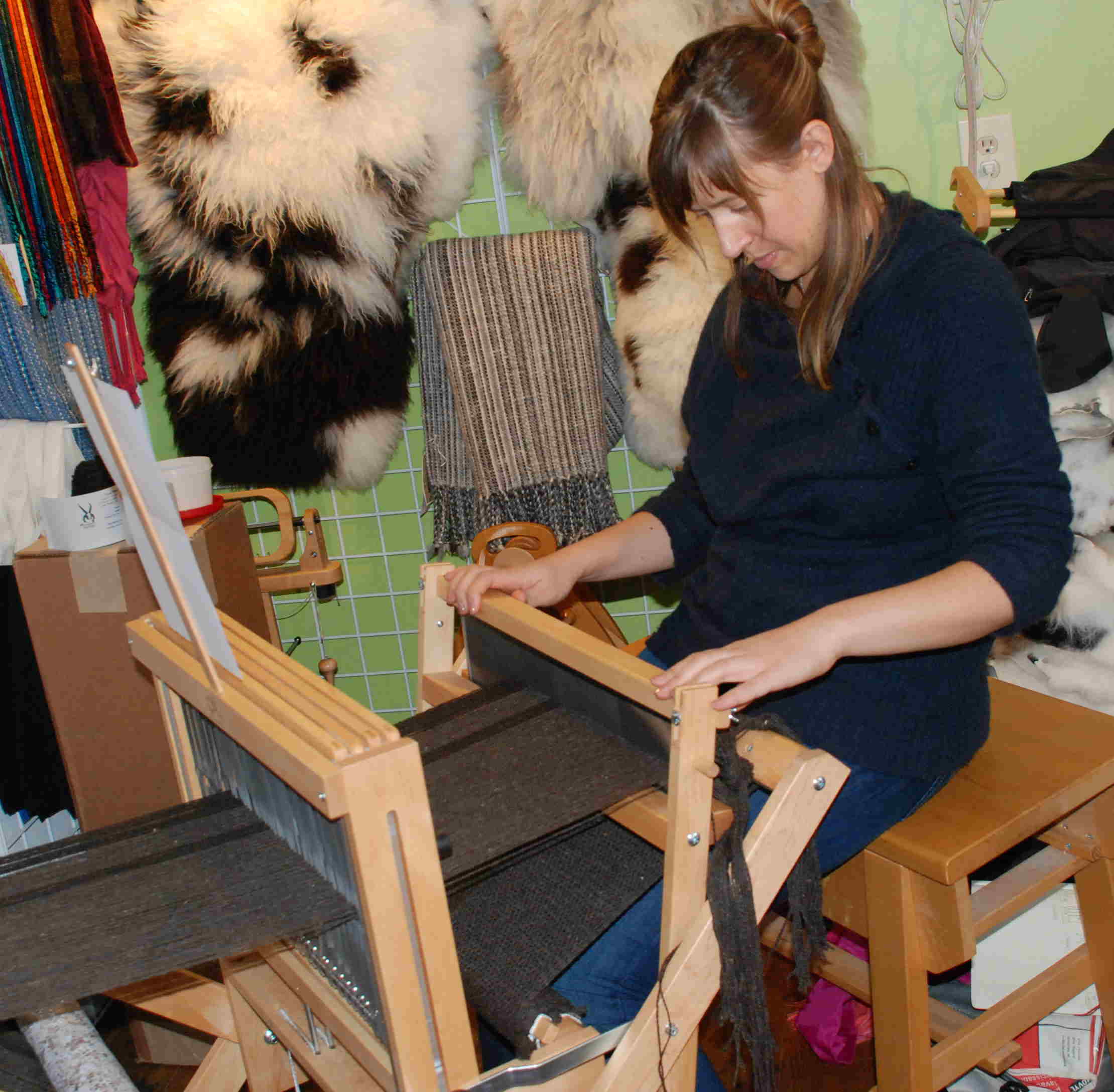
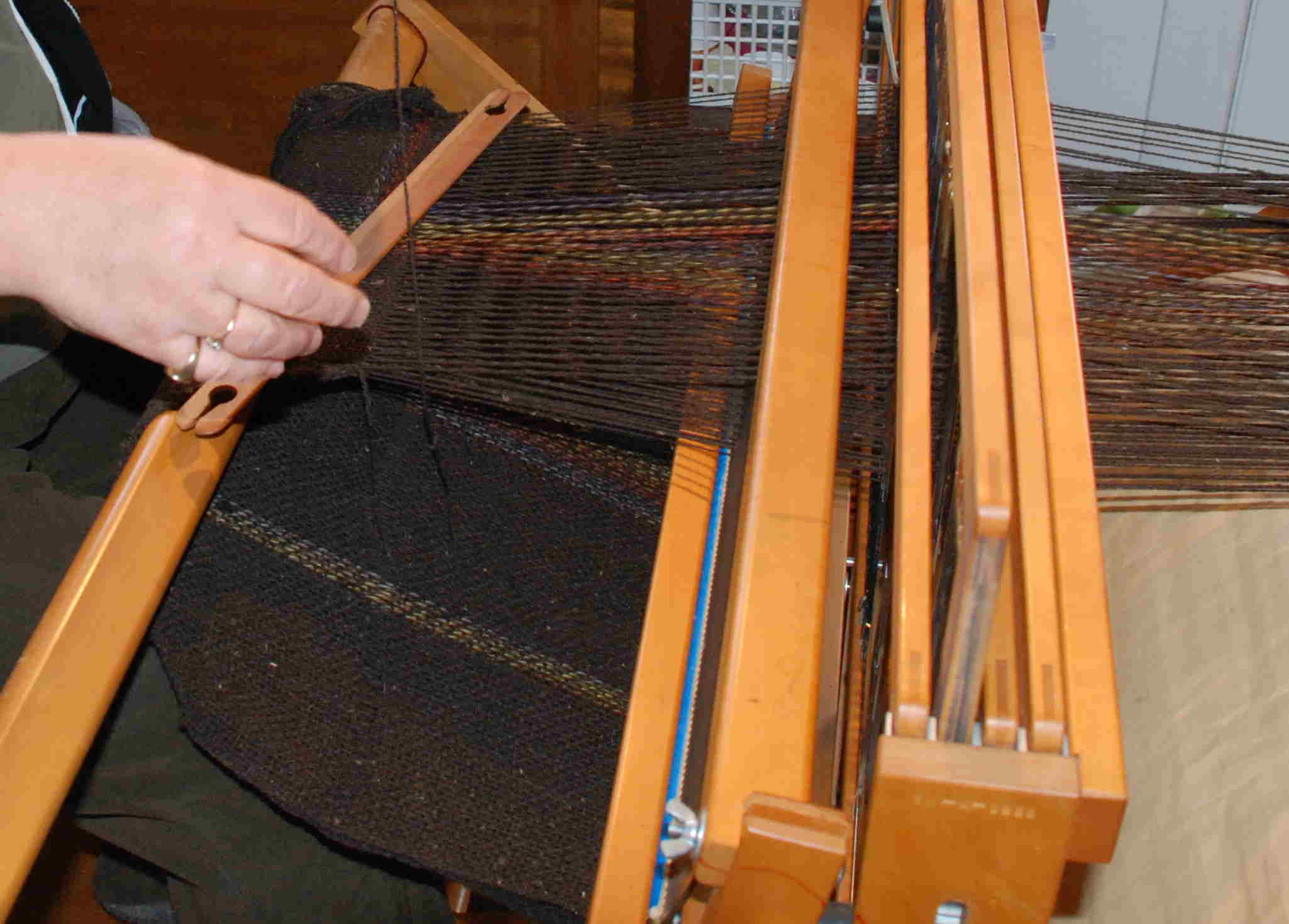
I have never used a temple  before but did for this project. The temple is that adjustable wooden bar. It has sharp teeth at the ends and you move it forward every inch or so to keep the weaving width the same throughout the piece. This is slow weaving in comparison to what I’m used to.

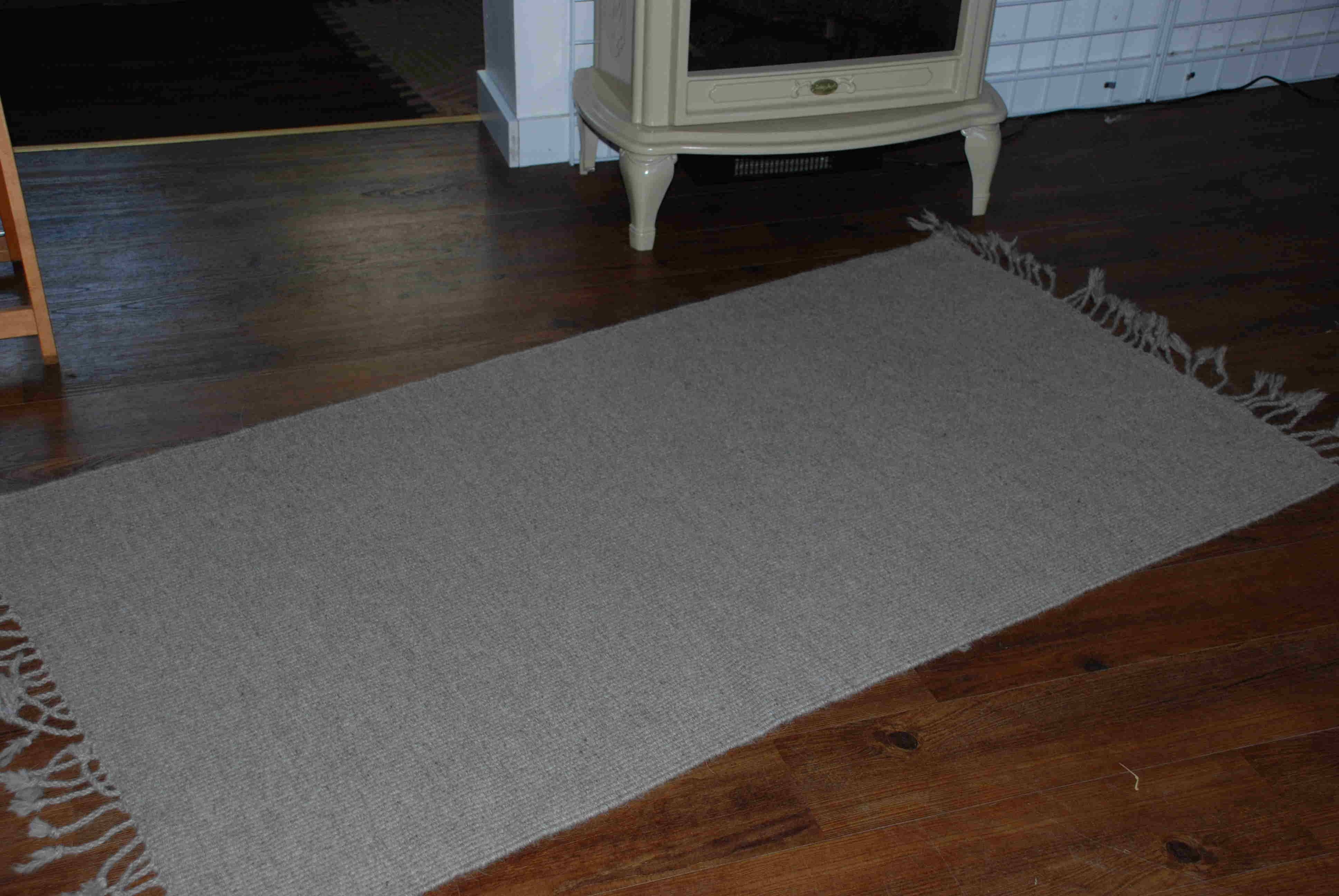
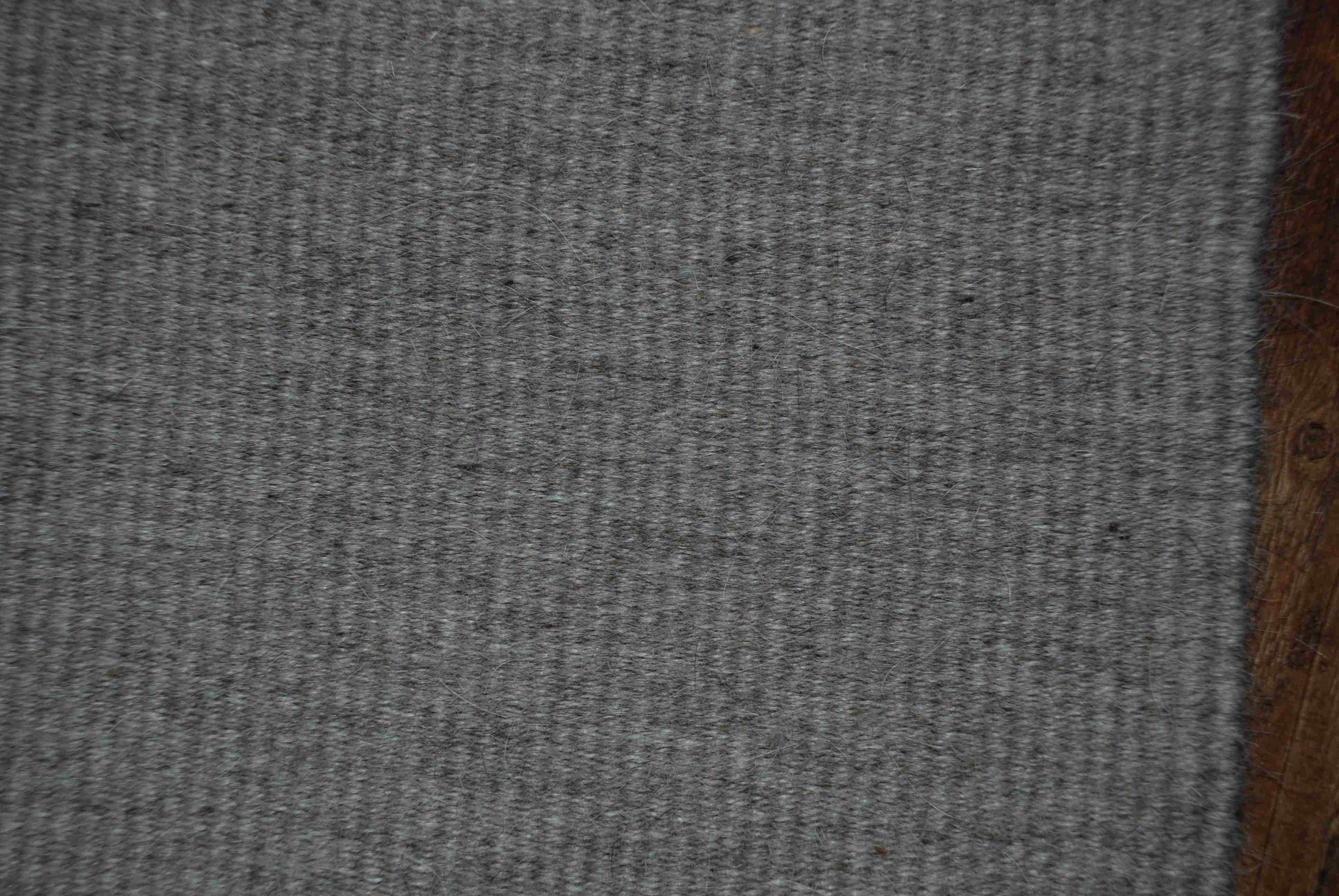
Here is the finished rug with a detail below.

New Weavers

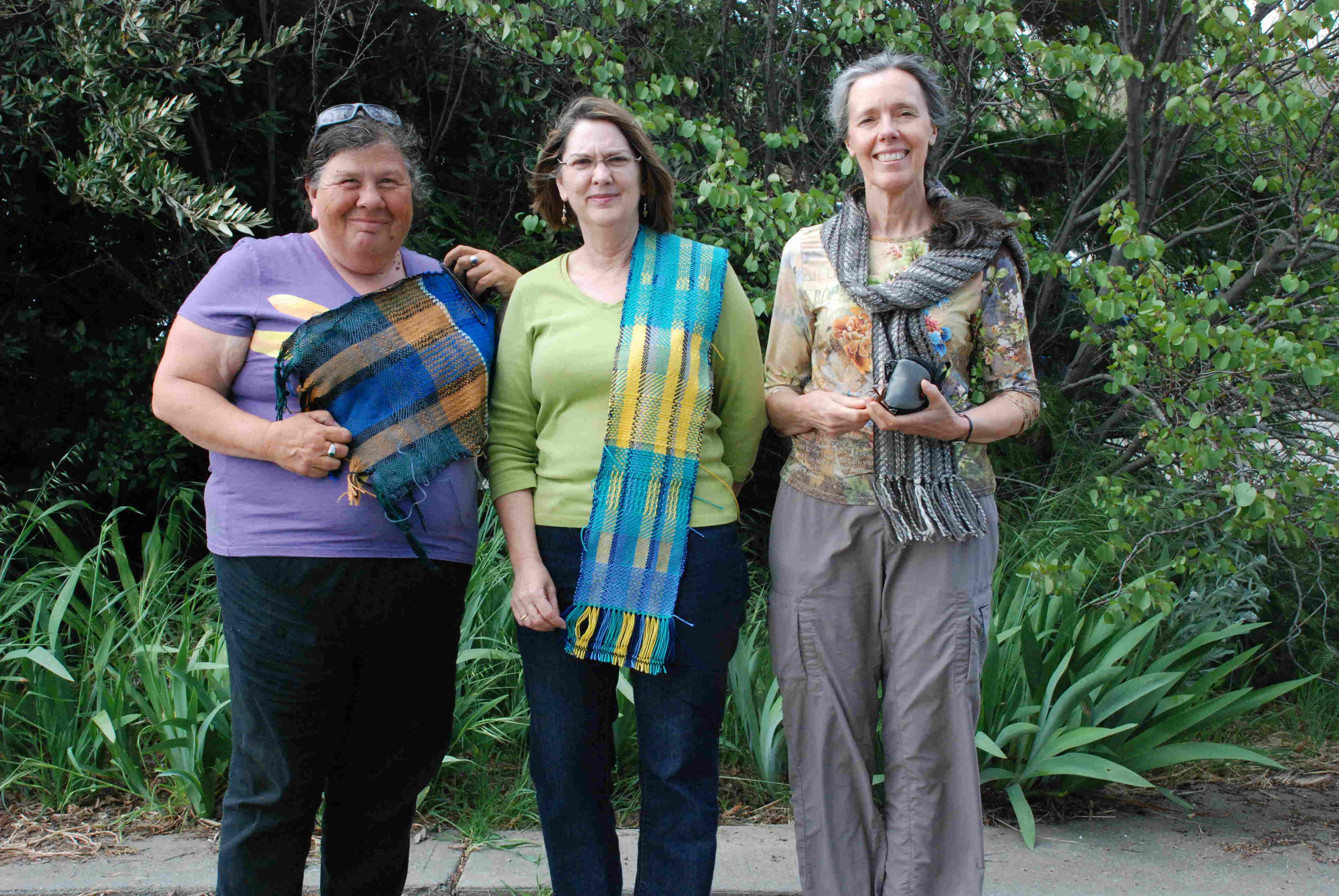
I taught a Learn To Weave class this weekend and we welcome 3 more weavers to the community!

I don’t make everyone use the same yarns. Kat used Jaggerspun MaineLine wool, Jan chose Jaggerspun Superlamb washable wool (as a sample for a baby blanket) and Sandy wove a scarf of Jacob wool. Great projects!

Meet the Sheep a Success

After a very wet winter, we welcomed fabulous weather (and our first dry weekend) for Meet the Sheep, our annual Open House. Even with the great weather it would not have been such a success without all my friends helping.

Julie set up a dying and drum carding demo area and also brought…

her cute Pygora goats.

Colleen skipped Saturday at he Farmer’s Market to bring her Fiber Confections booth here.

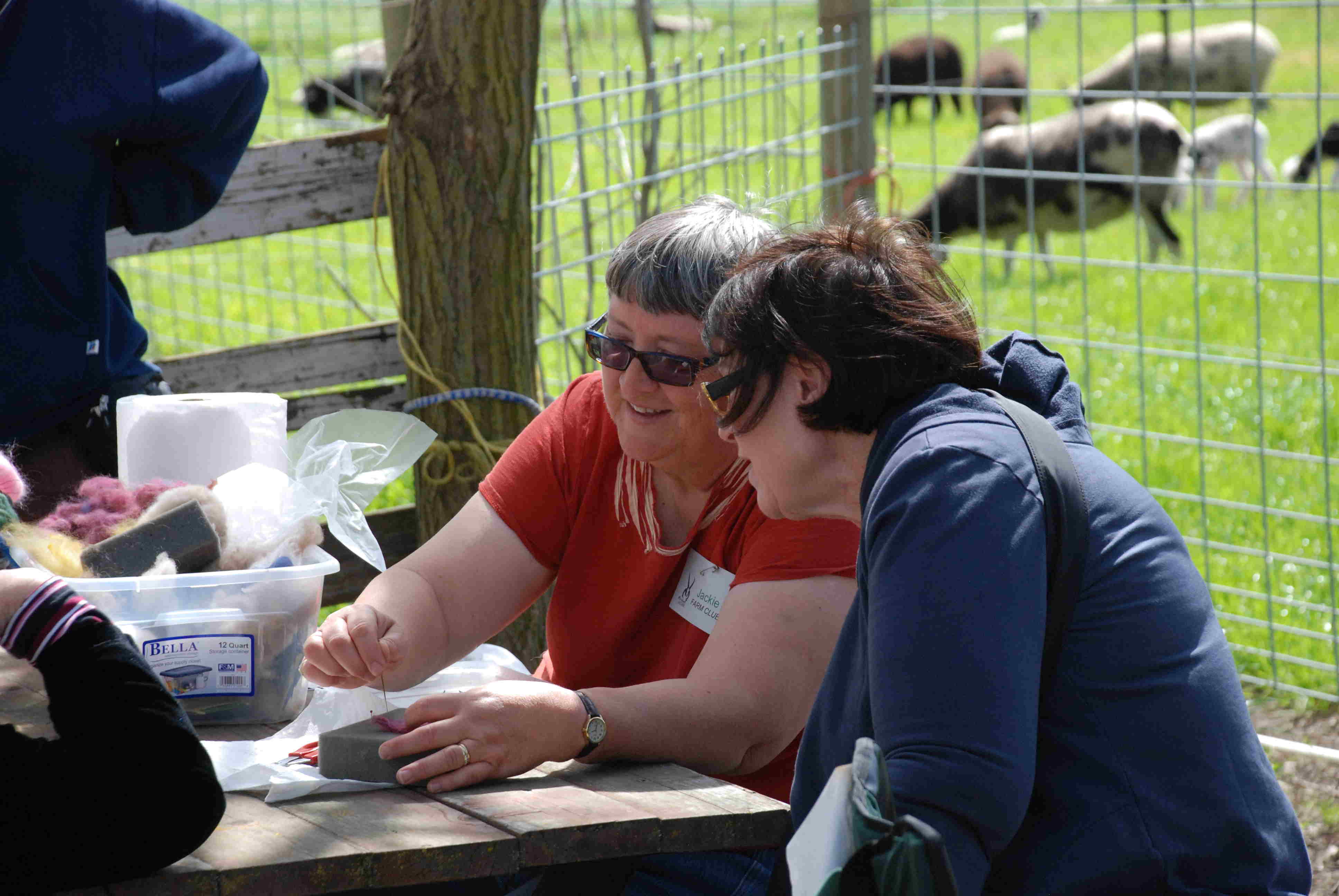
Jackie had her booth here and helped people learn to needle-felt.

I don’t have photos of everyone but I am grateful to Farm Club members for helping as well as to my friend Chris who worked in the shop.

There were a lot of visitors.

This is Marissa who modeled her first sweater made of handspun yarn, from Jacob wool of course.

New weavers enjoyed the weather, their wine, and a new weaving book.

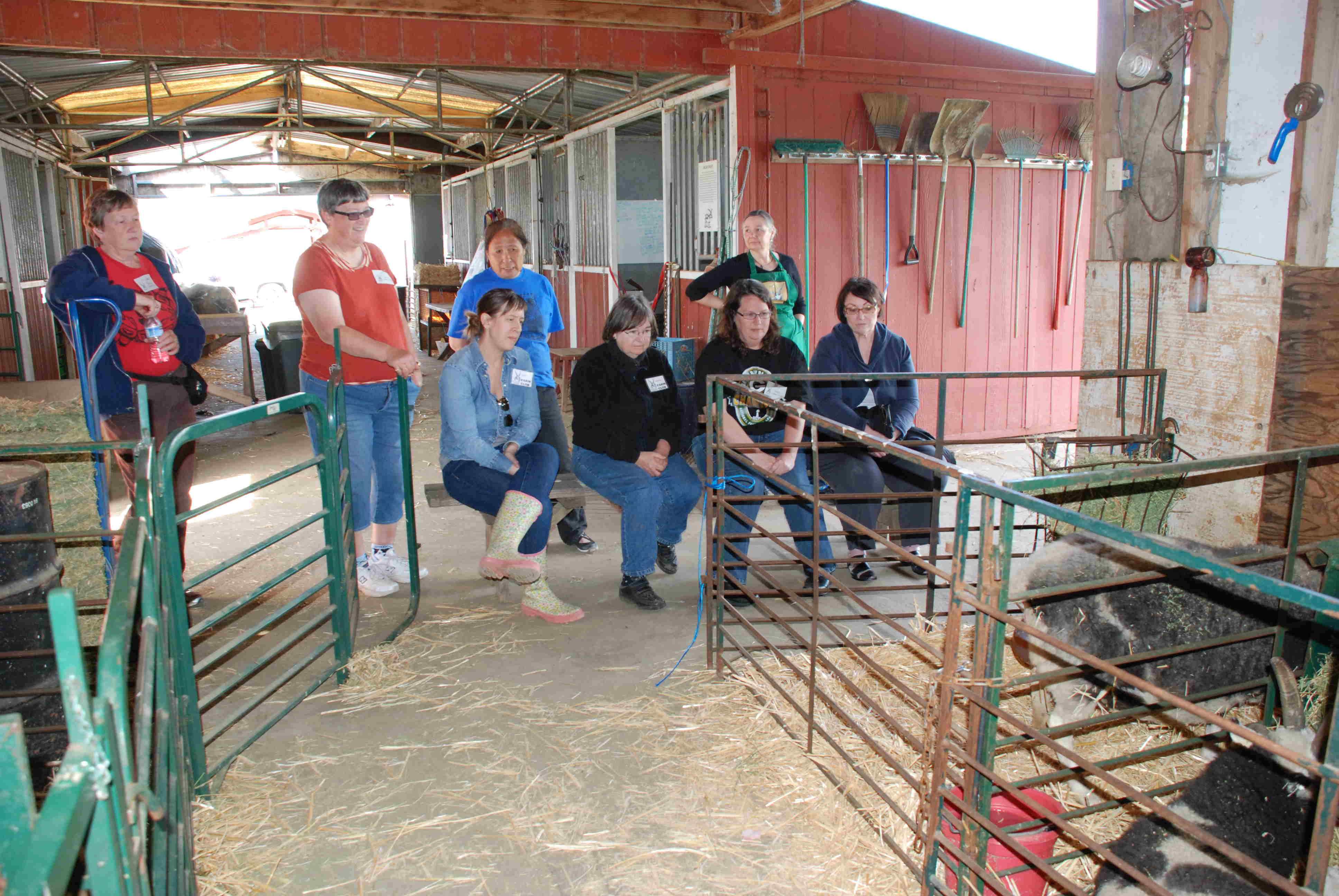
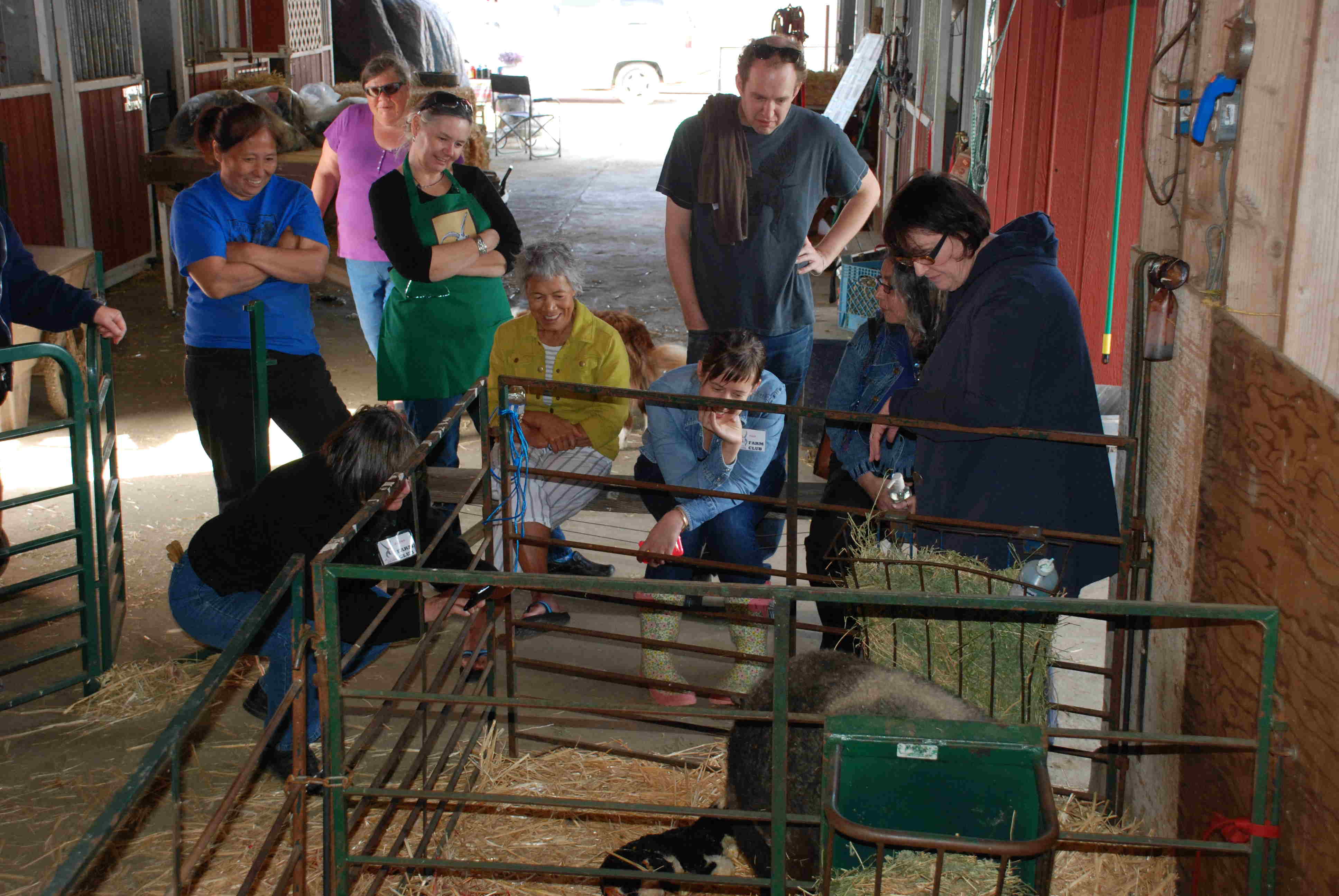
At the end of an exhausting day Laura finally decided it was time to lamb. Most of the Farm Club members were here watching.

There was relief after Laura delivered a healthy set of twins.

Learning a new Rigid Heddle Technique

My friend and business mentor, Irene of Cotton Clouds asked me to weave a scarf as a sample for the Coloring Contest for Weavers that is on her website. Usually I can whip up a scarf in a few hours, but with an “irene project”, as I fondly refer to our endeavors, there is always something that slows me down. This scarf was to be on the rigid heddle loom AND using a pick-up technique. I have been planning to teach myself those techniques, but have never quite got around to it. Well, now was the time.

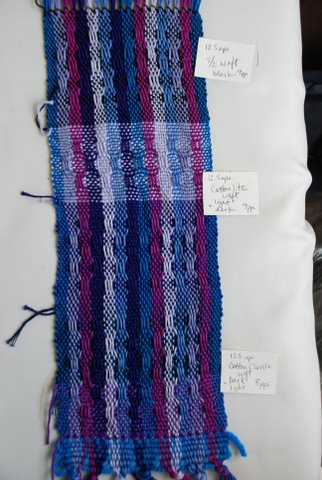
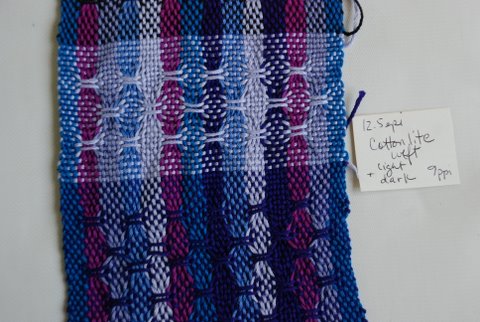
Irene sent me several colors of Cotton Classic and Cotton Classic Lite yarn and I started to play around with color order.  I chose a warp float pattern out of The Weaver’s Idea Book by Jane Patrick. The pattern unit is six threads so I wanted to make the color changes in 6 thread increments. I arranged the colors randomly with the exception of using the same color at each edge. Here is the sample I wove. I used the heavier Cotton Classic first (bottom of sample) in purple and navy, then the lighter Cotton Classic Lite in navy and then lavender, and then black 5/2 cotton.

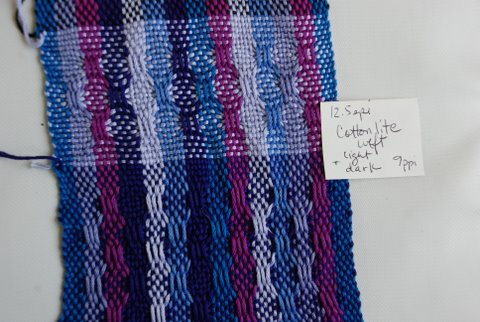
This is a detail of the middle part of the sampler. Notice the huge difference there is depending on the value of the yarn you use.  These two sections are the same pattern but the lighter yarn shows the pattern as circles. The darker weft accents the warp floats.

This is the back of the sample. Warp floats on one side mean weft floats on the other.

I like both effects but decided to use the darker yarn for the final scarf. I made other changes as well. When you look at the top photo what does your eye see? I first notice the light value stripes. I decided that was too distracting.  I also decided to vary the size of the stripes.  However I didn’t have enough yarn to wind another warp. So I removed the lightest value yarns from the warp and rearranged the other yarns in the rigid heddle, adding a few more warp ends as needed. Then I wove with purple. The result is below. Unfortunately the color of the photo below shows up differently than the photos above even though these are the same yarns. (But the trials and tribulations of photographing weaving are another story.)

Another bonus of this project–I love this pick-up technique. it’s not hard at all once you get used to the pattern. I can see more of these in my future.


Green scarves from blue and red jeans

I get tired of over-worked words to describe concepts which aren’t all that new. Maybe it’s good when more people start to understand the principles being described. Green is one of those words…and concepts. But I couldn’t pass up using it in the title of this post. I honestly don’t know how this yarn is processed but it is 100% recycled jeans and I wove the scarves with no energy except my own.

The yarn is called Riveting and is sold by Cotton Clouds . The scarves are woven on a Huck Lace threading.

Learn to Weave class

I had back-to-back classes last weekend. The day after my v-shawl class I taught a Learn to Weave class. Here are the projects on the looms:

Mary chose 4 bright colors of Jaggerspun Lambspun wool and wove a sampler that looks good enough to wear as a scarf.

Susan wove a twill scarf using natural colored wool.

Dona wanted to weave a wall hanging of green fields, spring flowers, and sheep. She was very creative in her choice and placement of weft yarns and weave structure to depict parts of the landscape. She will embellish the piece with a few flower buttons and wooden sheep.

A very successful class and a fun weekend!

V-Shawl Class

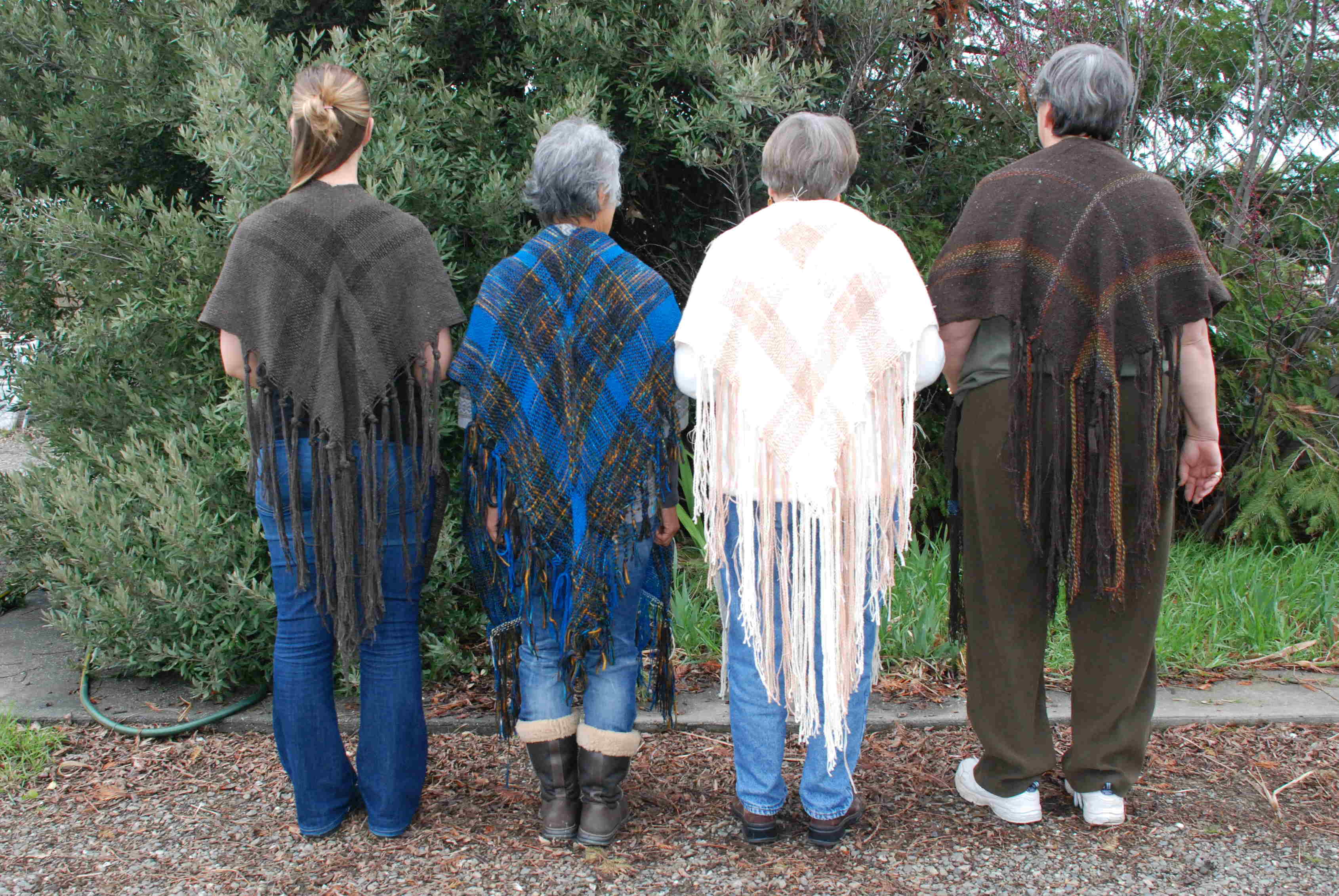
I taught a v-shawl class last week. It’s always fun to see the variety in these shawls. The v-shawl is warped for double weave. The fronts of the shawl are woven with two shuttles and the back is woven by cutting one pair of warp threads at a time and weaving them in as weft.

Tina chose natural colored Rambouillet and Jacob yarns.

Jackie used brown Rambouillet and a space-dyed yarn for accent.

Marilyn used softball cotton in natural and tan with accents of ribbon and a novelty yarn.

Yolanda has space-dyed wool yarn with a blue stripe.

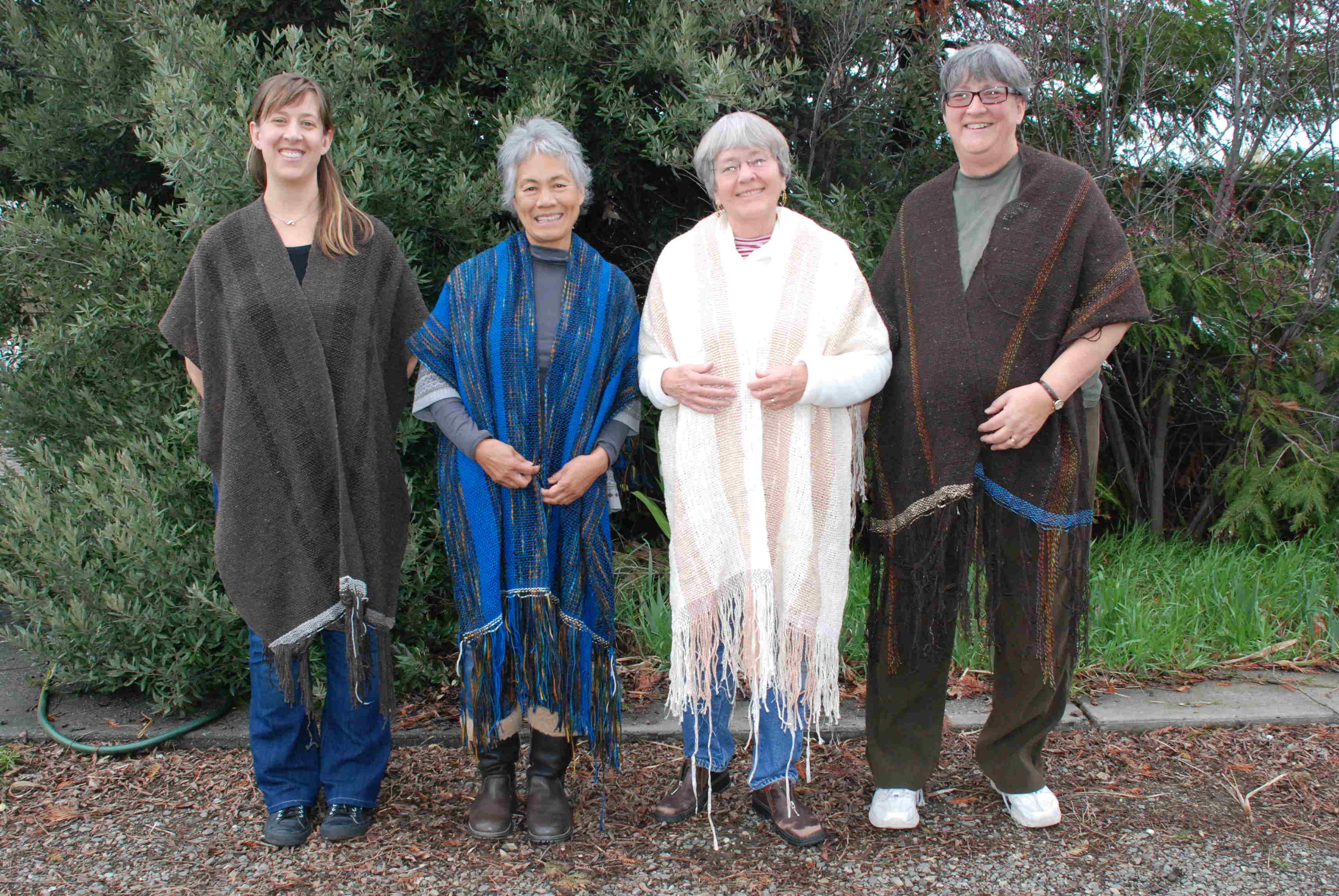
These are the shawls right off the loom so there has been no finishing of fringes.


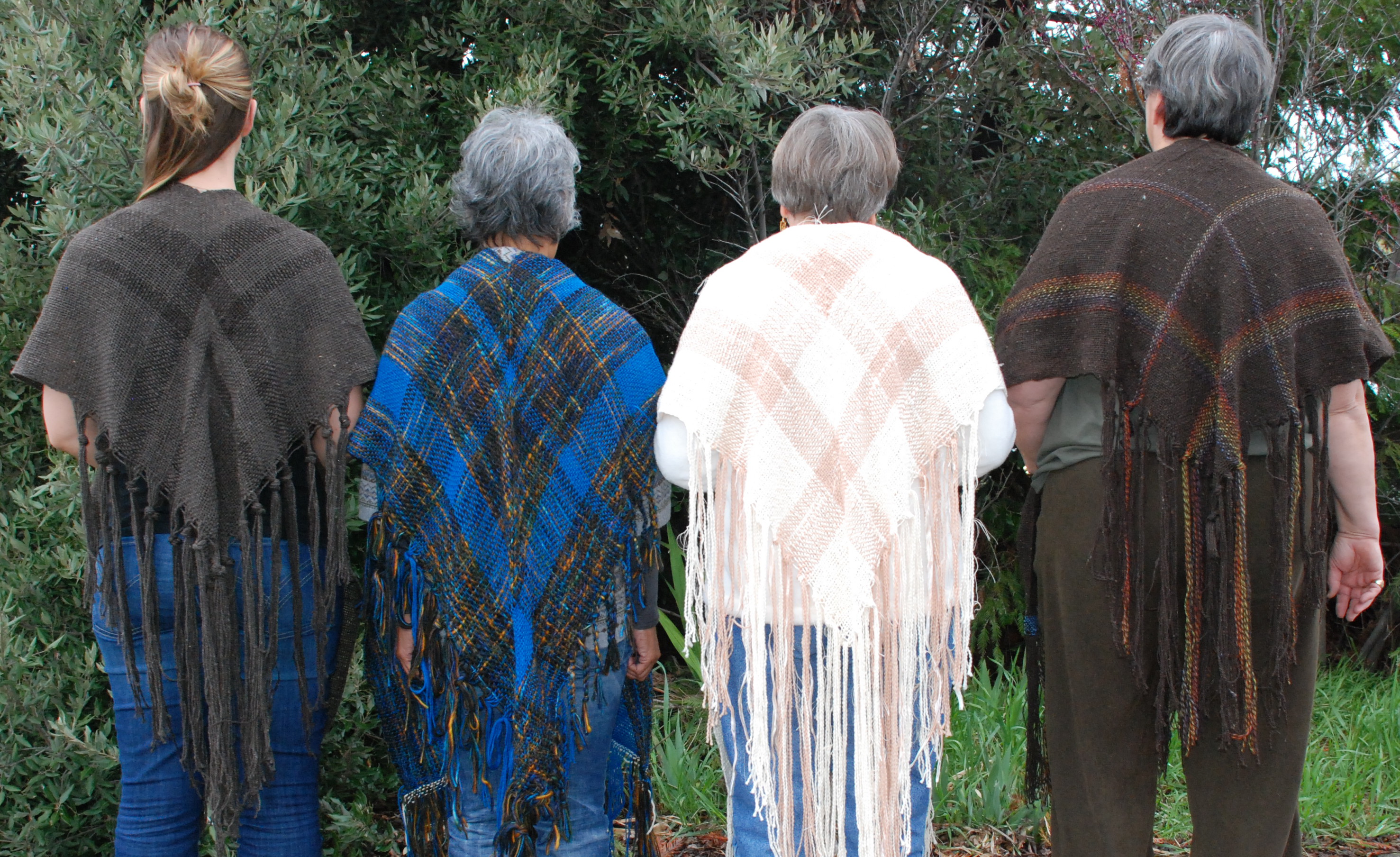
The back view shows the designs that you get from the warp stripes.

A Fiber Weekend

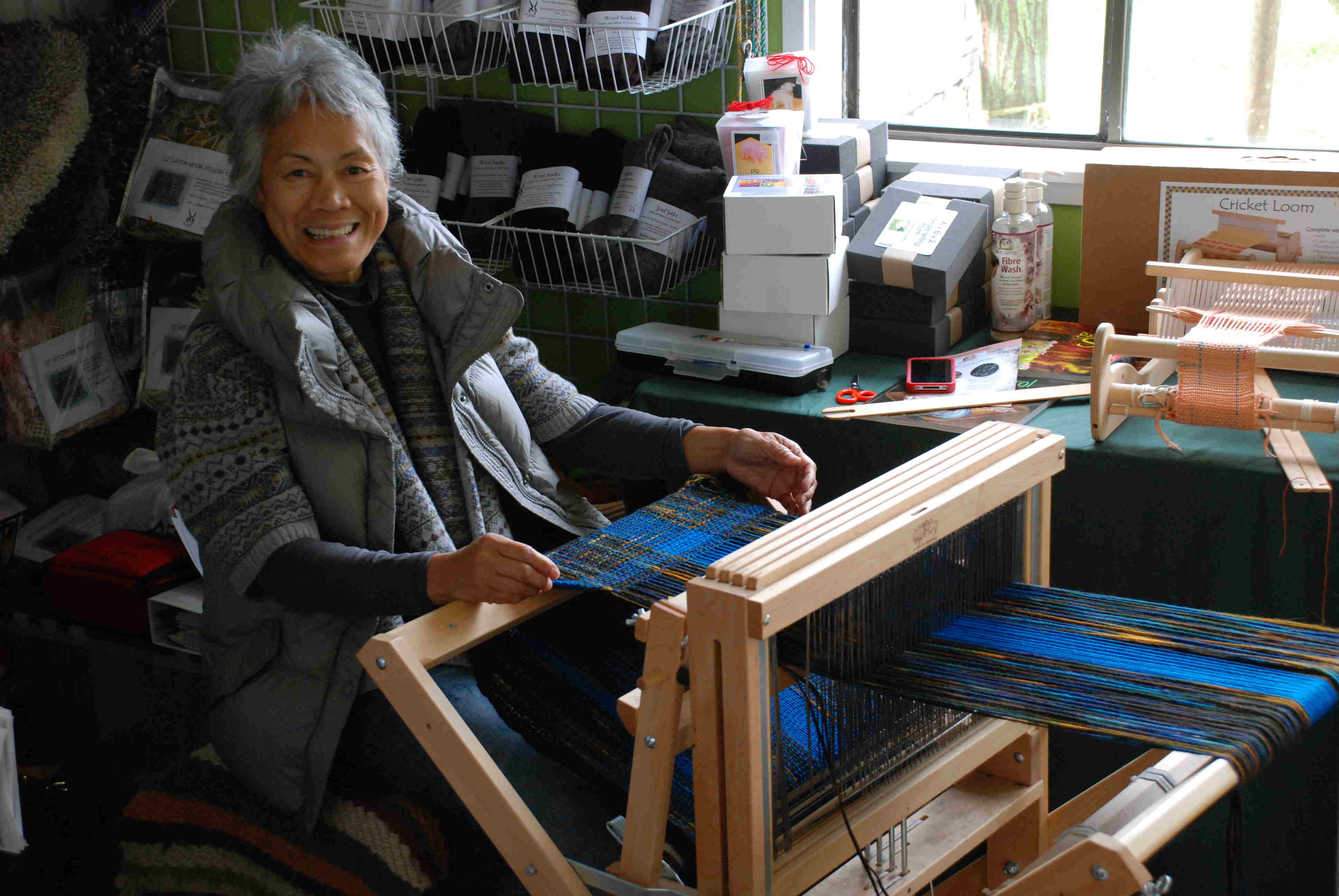
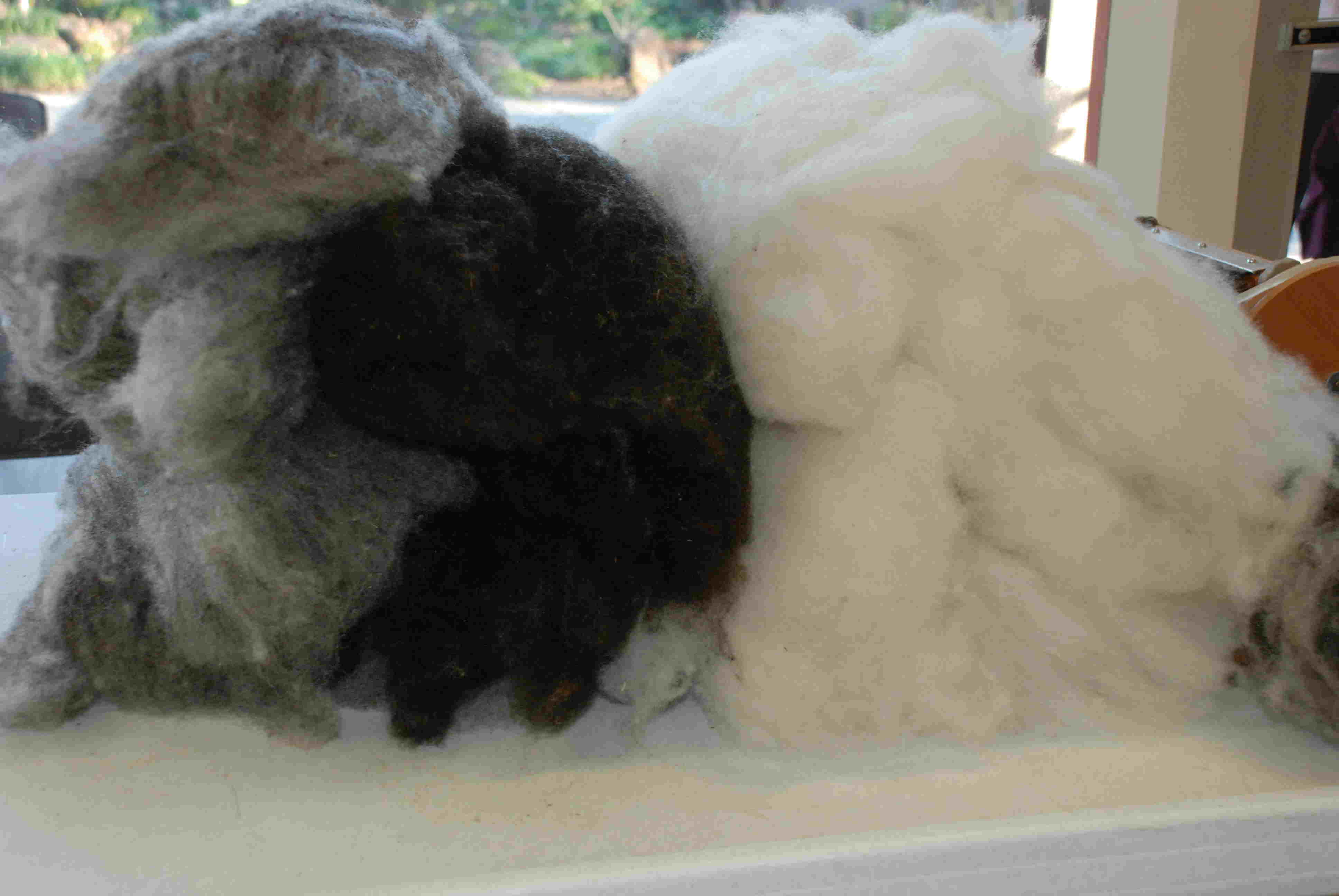
I spent the weekend at the Sacramento Weavers and Spinners Open House. When I wasn’t helping in the Sales Area I demonstrated carding with my Ashford drum carder.  I chose a fleece from the November shearing and washed it in two batches. I also wanted to experiment with my new Power Scour to find out how much I needed to get the wool clean.  The first 2 pounds of greasy wool weighed about 1 1/2 pounds when cleaned. I don’t think I got all of the lanolin out so I’ll probably increase the amount of Scour for the next batch. Even if there was still a bit of lanolin in the fiber it carded beautifully. I took this batch to the Open House on Saturday and here is what it looks like after carding.

That will provide a lot of spinning time. I was sure impressed with the drum carder. It breezed through that fiber.

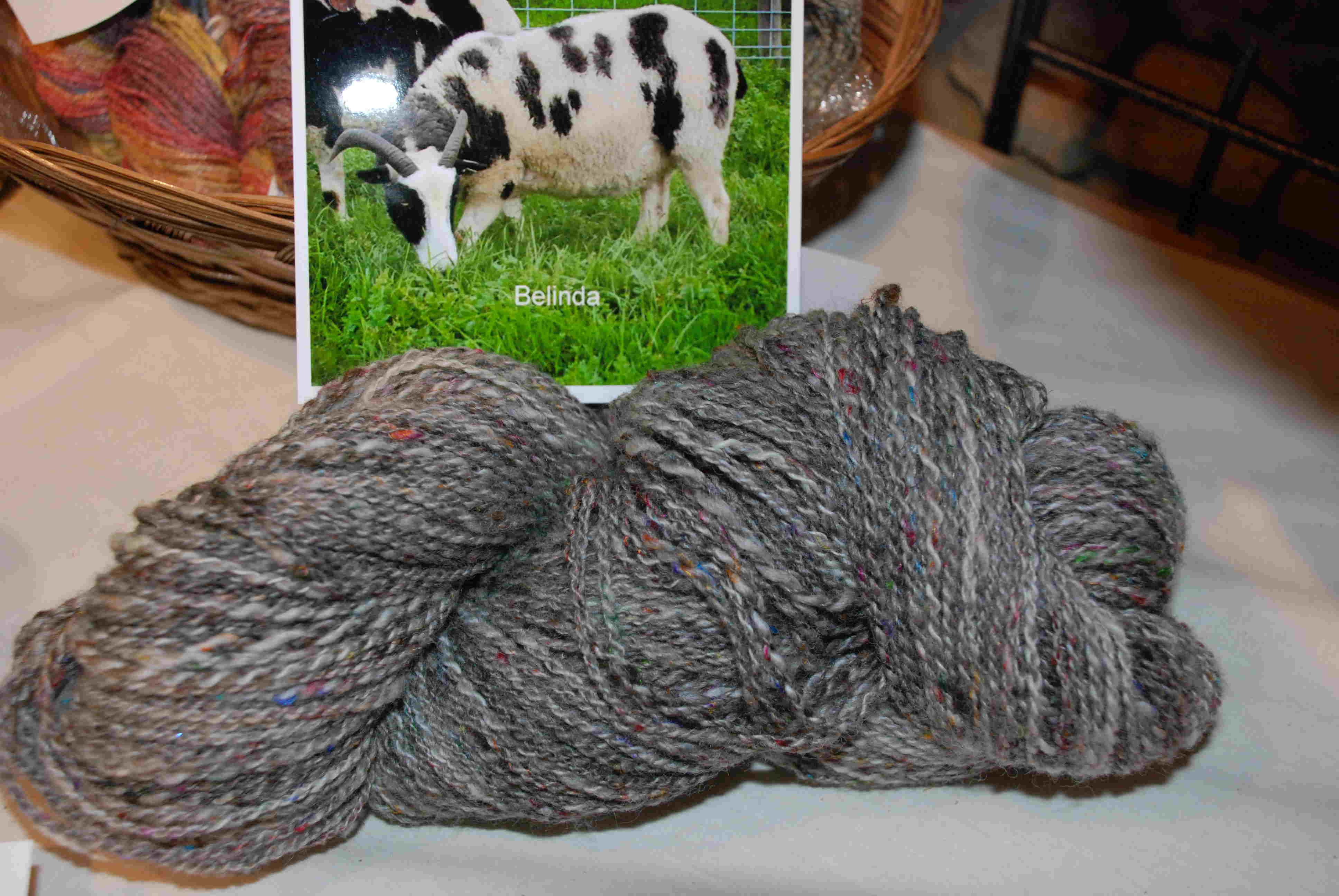
These are a couple of skeins spun by a friend of mine using fleeces she bought from me. Aren’t they lovely? The wool in the lower skein is blended with carded sari silk which adds beautiful flecks of color.

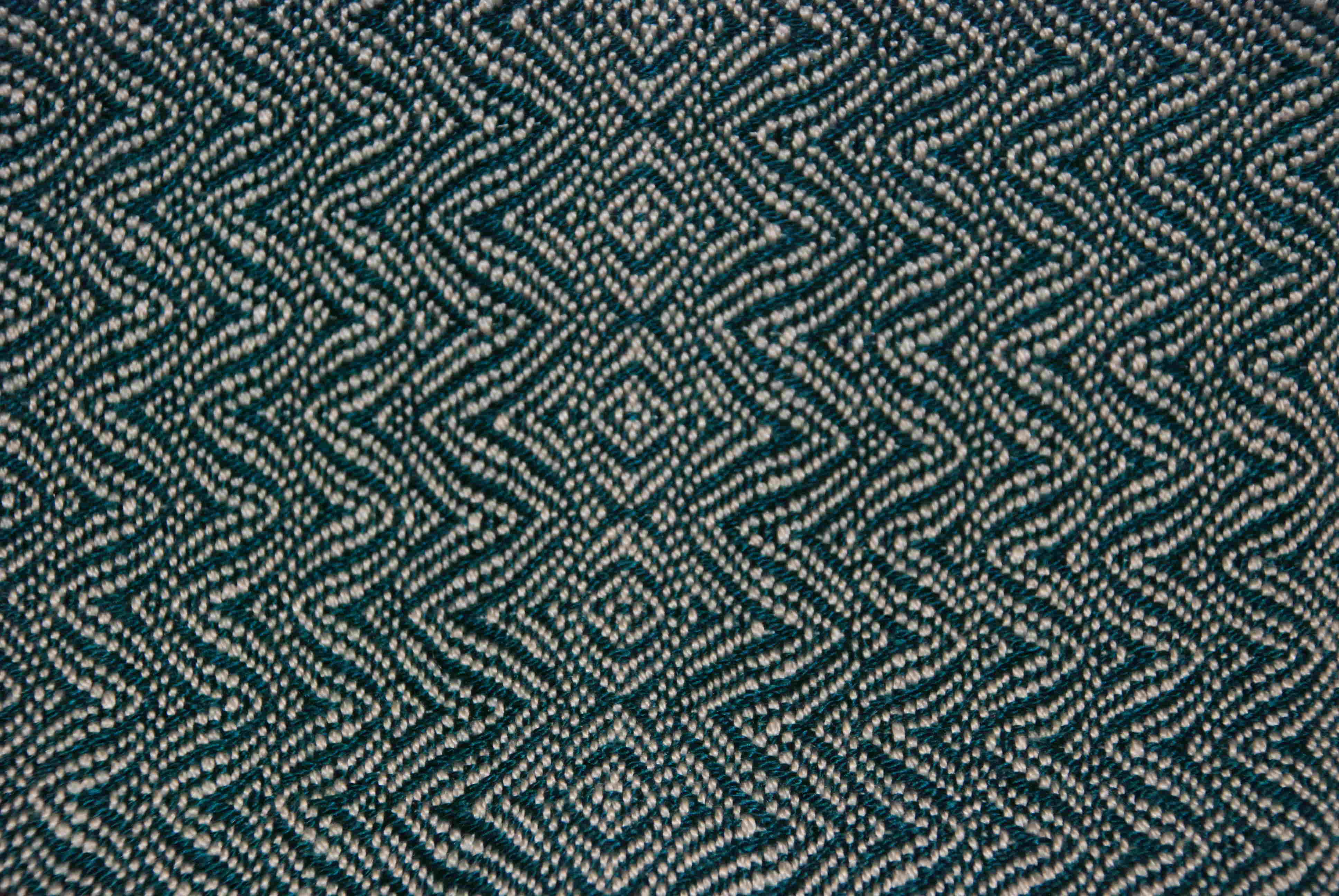
This is a close-up of one of the pieces I had at the show. It is a tencel scarf woven in undulating twill.

There are some very talented weavers in SWSG. Here are a couple of stunning pieces woven by members.

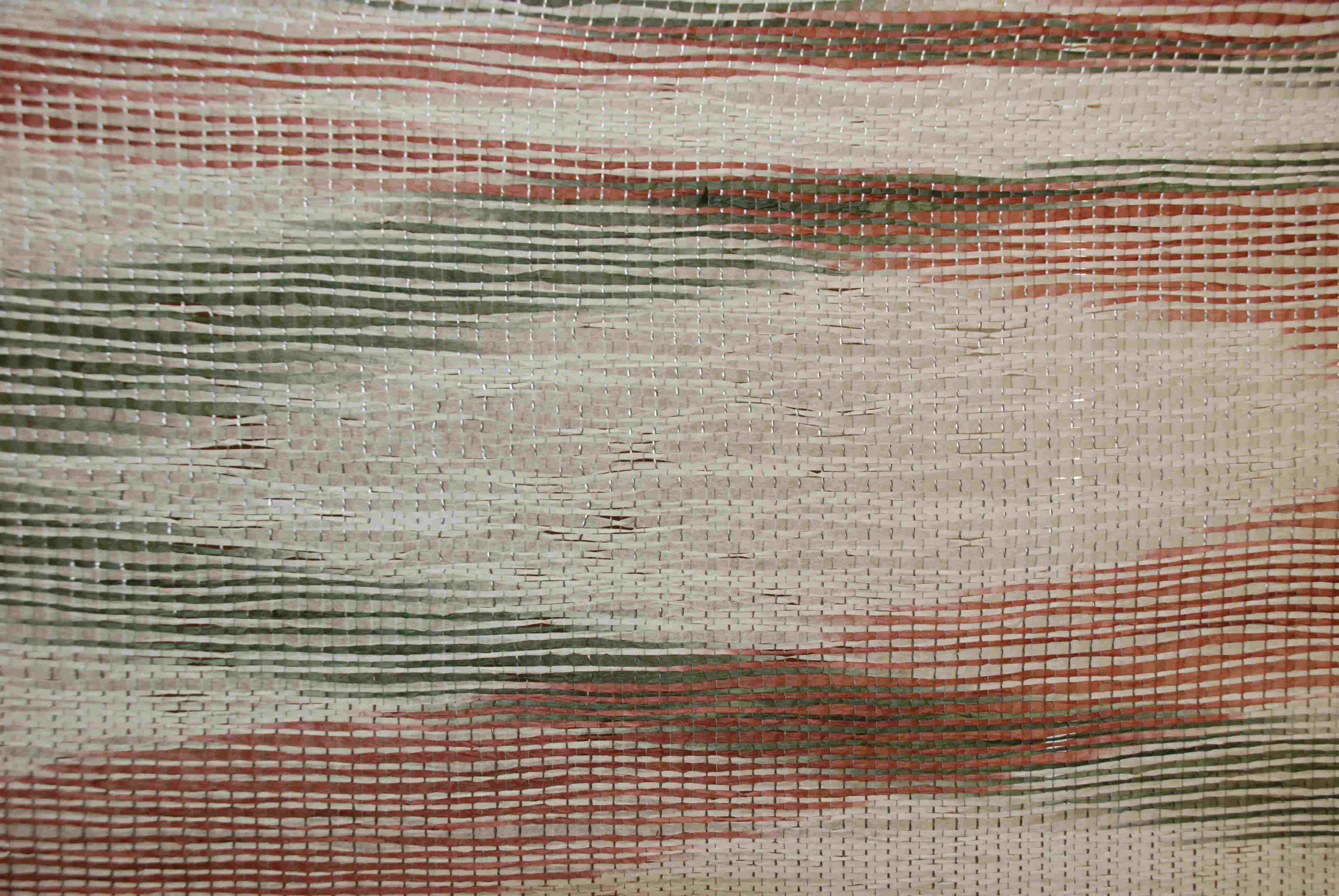
The warp for this screen is silk covered wire and it is woven with rice paper “yarn” if I remember correctly. (I thought that I’d remember from yesterday to today without taking a close up photo of the tag.)