Part 1 is here. I had too many photos to use for one post. I didn’t mention in that post that they sheared 900 sheep on this day. I don’t know the average time for all of the shearers, but the one I watched sheared his sheep in two minutes.
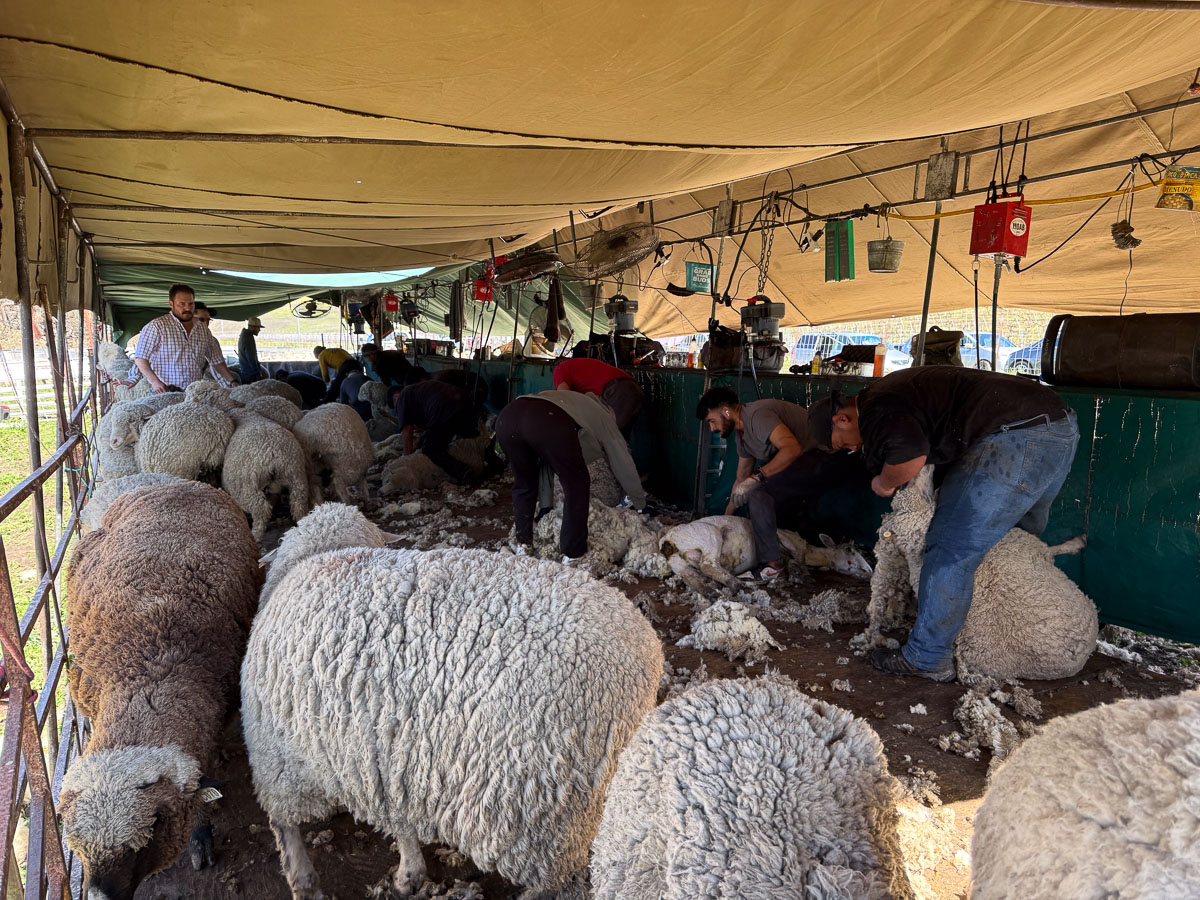
This is another photo inside the shearing shed. The shearers work through a group of sheep and then the next comes in.
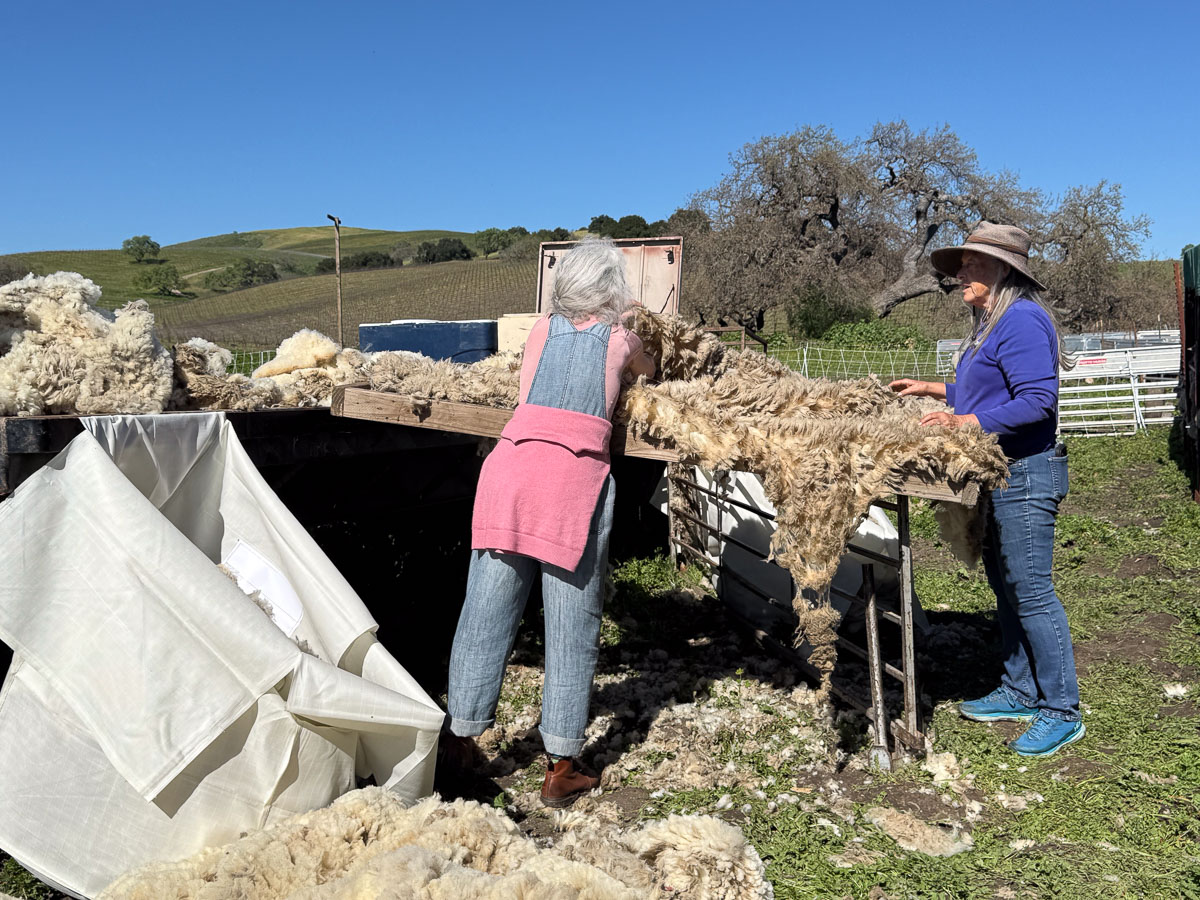
My goal was to get 250 to 300 pounds of wool, but I didn’t get that much for a variety of reasons. One is that there were only three of us working, one of whom had never worked with fleece. Another was our set-up. Notice that the skirting table that was available didn’t have legs. We rested one end on the flatbed truck and the other on a panel we tied to the trailer so it wouldn’t tip over. That made it awkward. The main problem was that we weren’t able to take an individual fleece from the shearing floor and toss it on the skirting table so it would land in sheep-shape. Instead most were picked up three or four at a time and pushed through a space at the end of the shed. They dropped onto a tarp and were picked up and pressed into a bale.
Cole, the sheep owner, was glad we were there and is excited for us to do something with his wool. He wanted to work with us to see our process, but he was moving sheep and dealing with other parts of the process the whole time. There would need to be some adaptations to make it realistic for a group like us to efficiently sort the wool. When I send wool to a small to moderate size mill it is up to me to send only the cleanest (regarding vegetable matter or VM) parts. I need to spread a fleece out so that we can properly skirt it, check for wool break or tenderness, and take only the best. The mills I use do not carbonize the wool. The following is from Woolmark.com and explains how most of the wool yarn that is sold on a large scale is handled
Carbonising is a continuous process which combines scouring to remove the wool grease and a chemical process which removes vegetable matter such as seeds, burs and grass. Carbonising occurs if the greasy wool contains a high percentage of vegetable matter (%VM), typically in excess of 2% to 3%.
Most of the VM contained in wool is cellulosic in nature, which is broken down into carbon, by firstly immersing in a strong solution (6% to 7% weight for volume) of Sulphuric acid (H2SO4) then followed by baking in a dryer set at 95oC to 120oC. After the VM has been turned into carbon the wool is passed through a series of heavy metal fluted rollers which crush the carbonised burs into dust.
I talked to the Cole’s partner, who also had sheep there. He sometimes send a few bales to the mill in Wyoming that I plan to use, although most of his also goes to a wool warehouse for sale. He said that when he bales the wool to be spun into locally sold yarn he has 4 skirting tables set up and a dozen people working to do exactly what we were trying to do. So I didn’t feel so bad about not being able to accomplish what I planned.
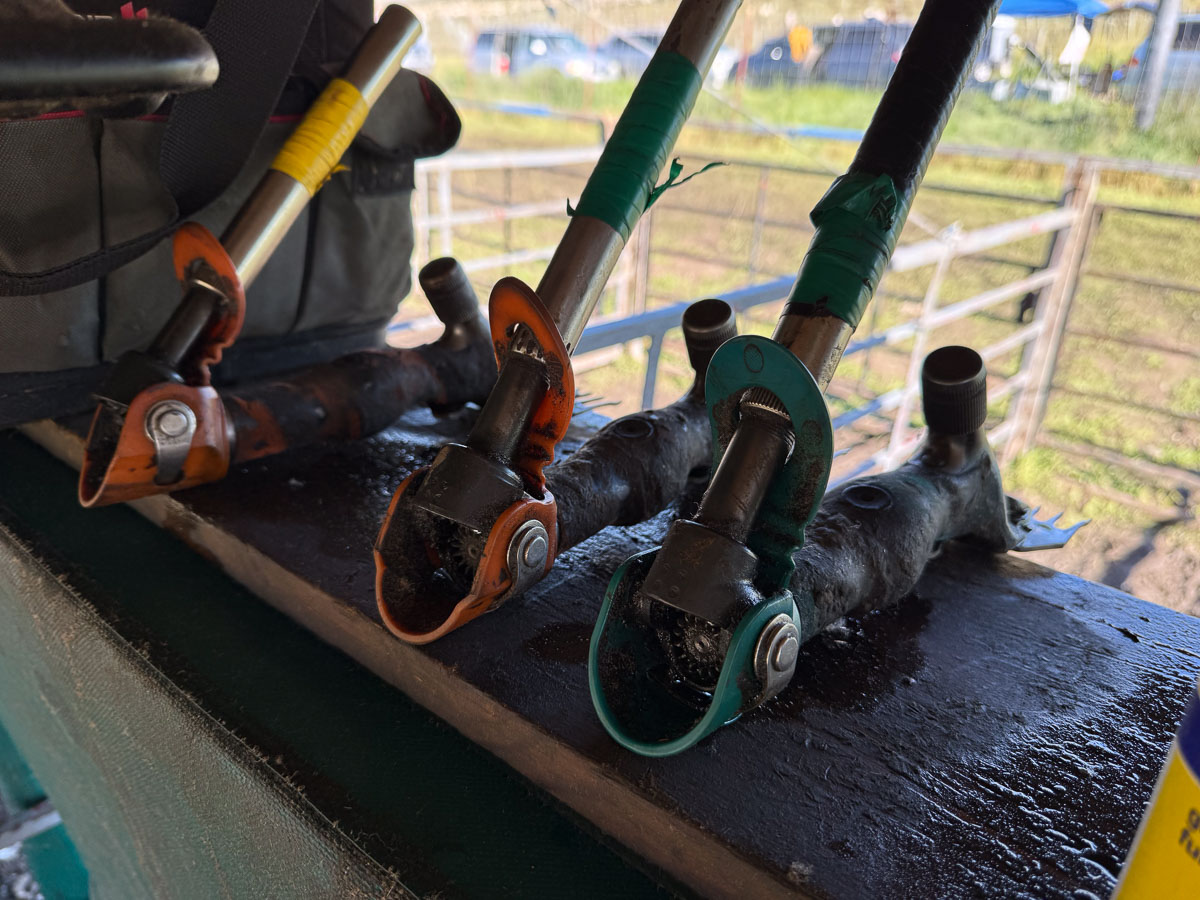
About 2 p.m. after the first 450 sheep were shorn, the shearers took a lunch break while the next group was being brought down from another hillside. I took photos of their gear.
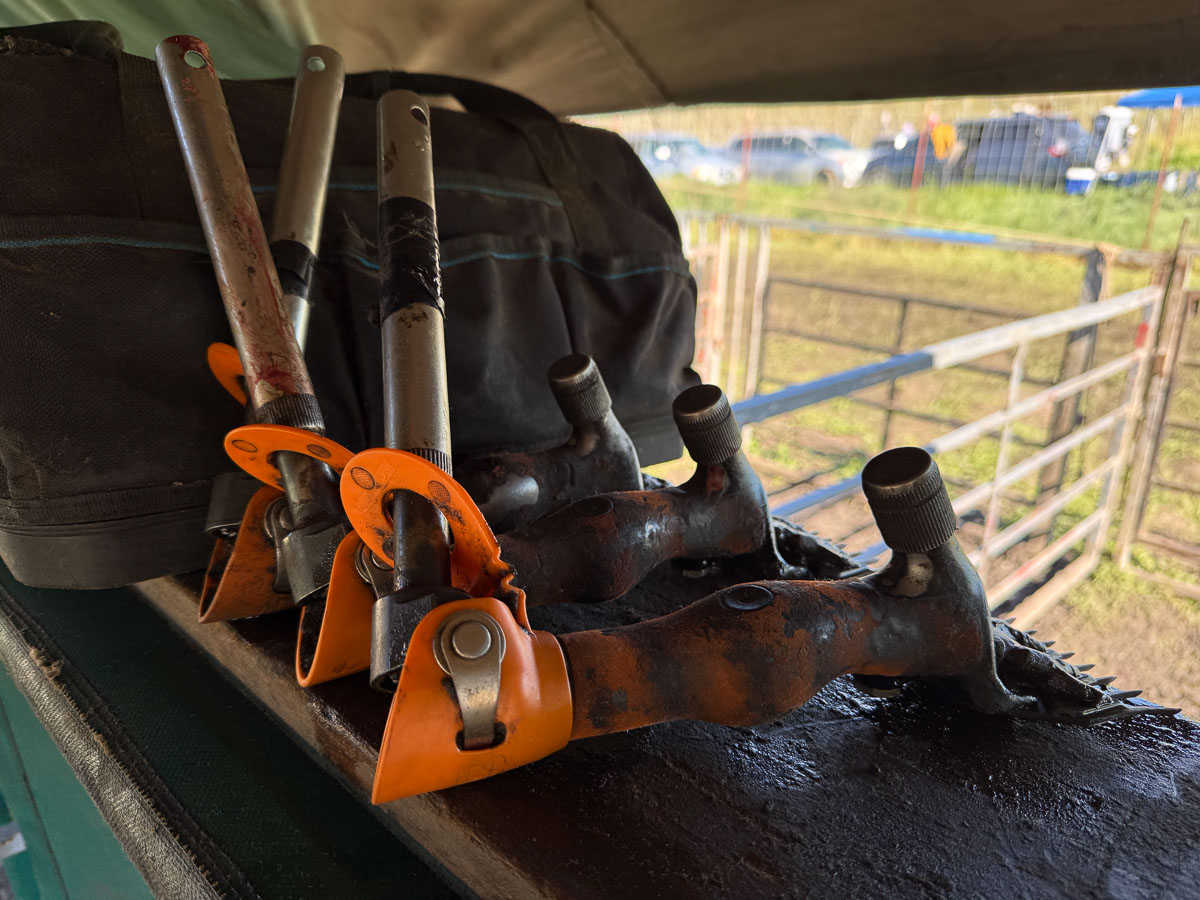
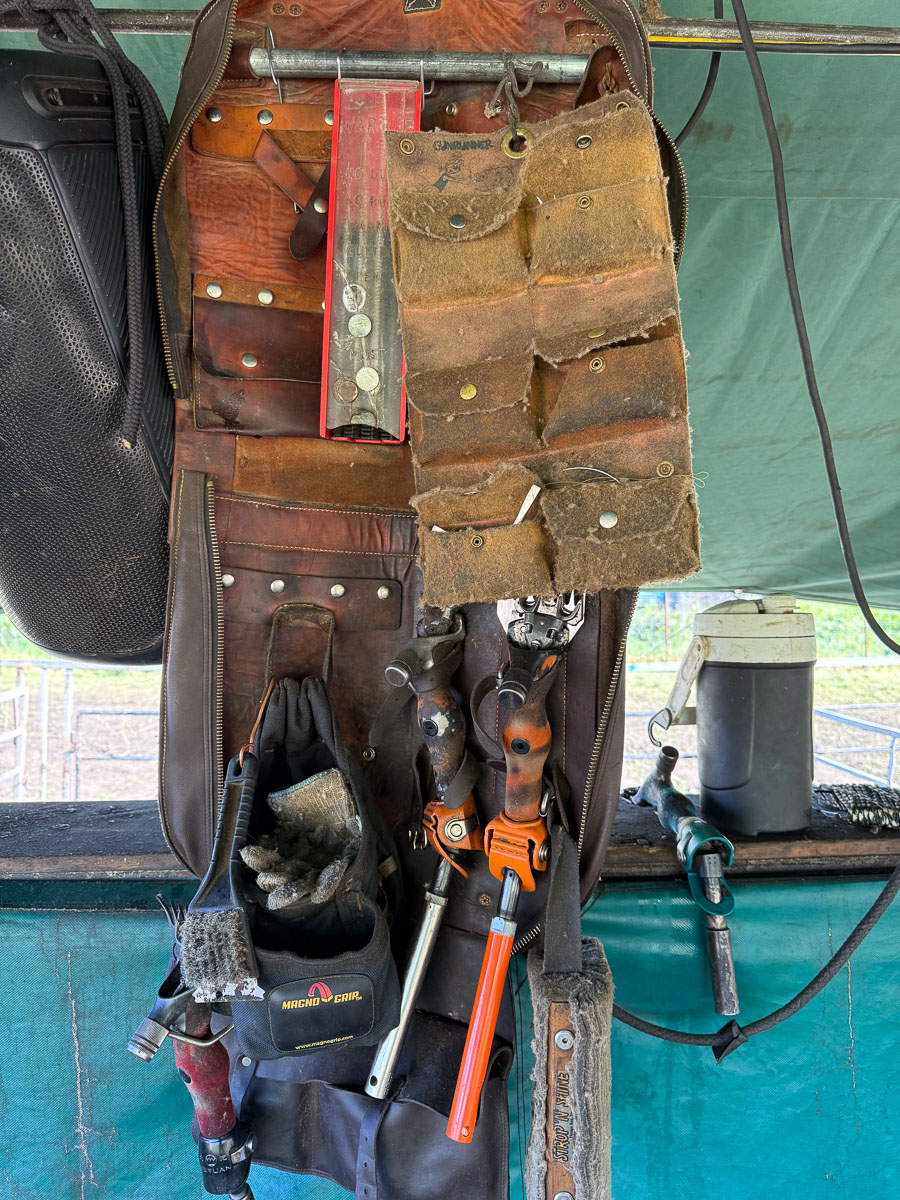
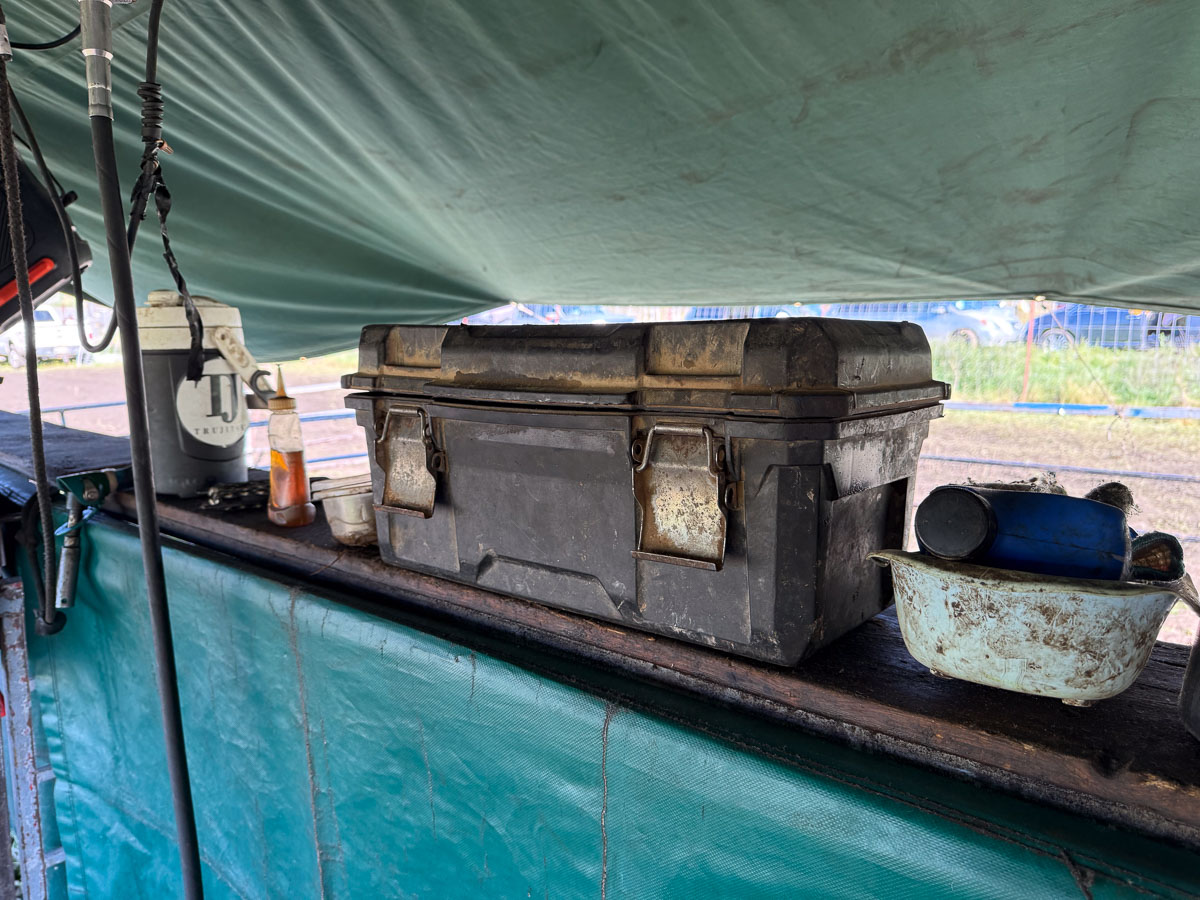
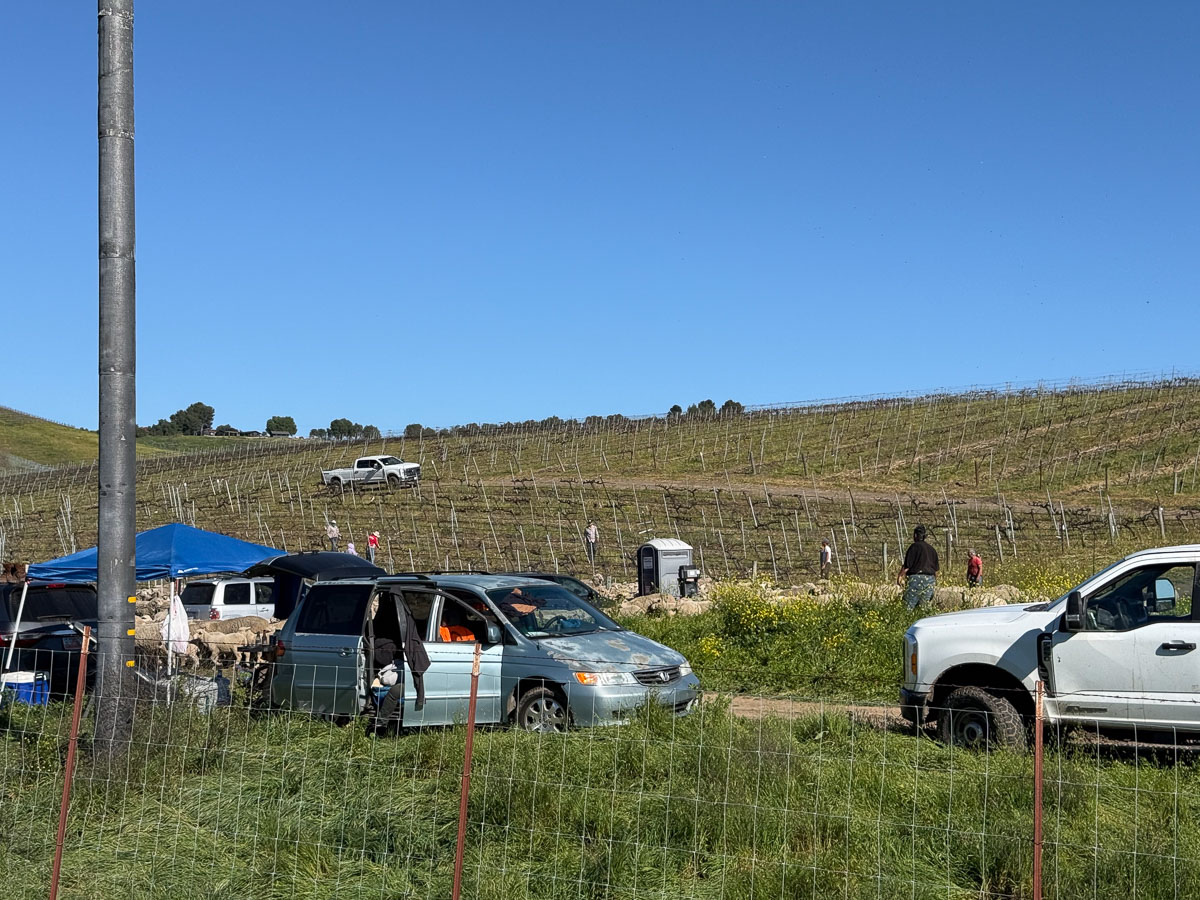
The shearers came in a variety of vehicles and put up the tarp where they had set up a kitchen of sorts. The sheep are below the vineyard and along the road, coming between the vehicles.
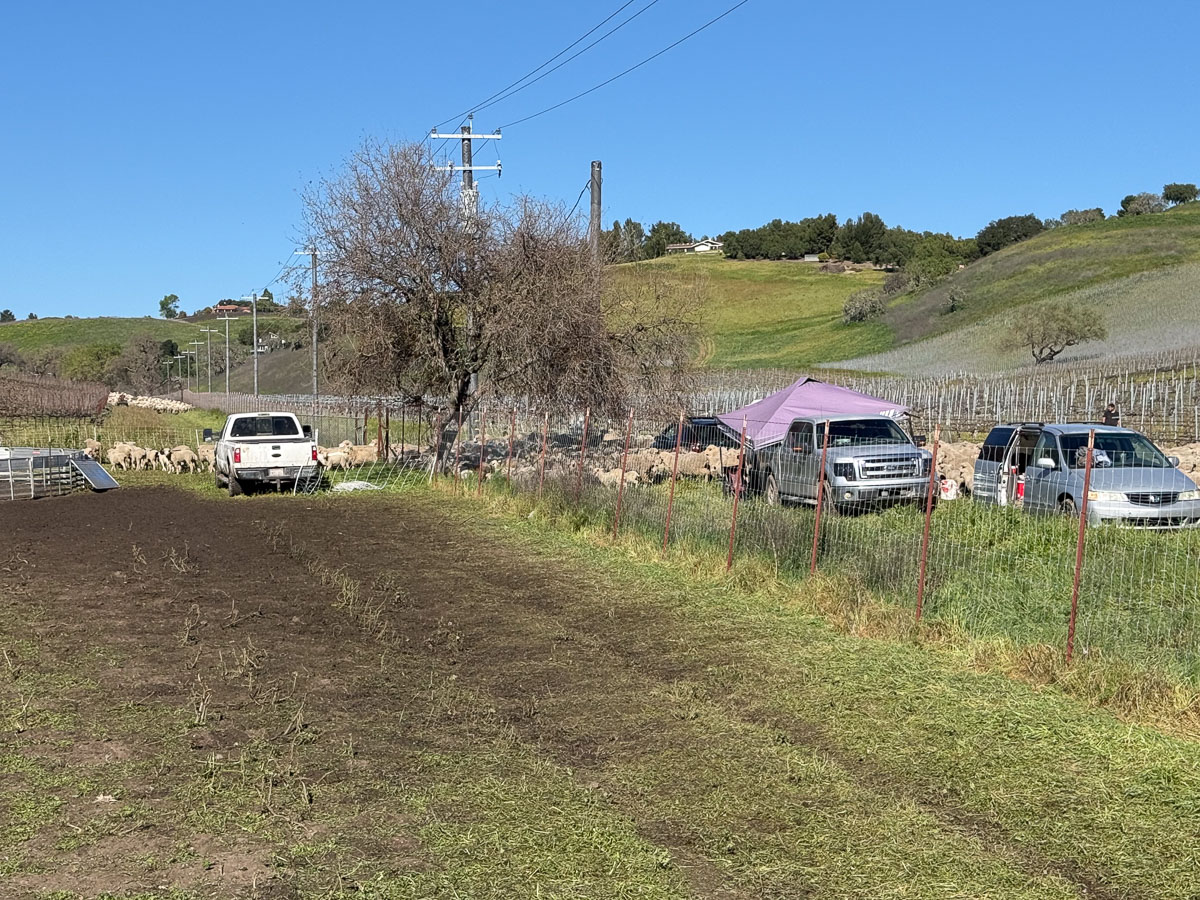
Another view as the sheep are moved into the corrals. The previous group is heading up the opposite hill with a 4-wheeler behind them.
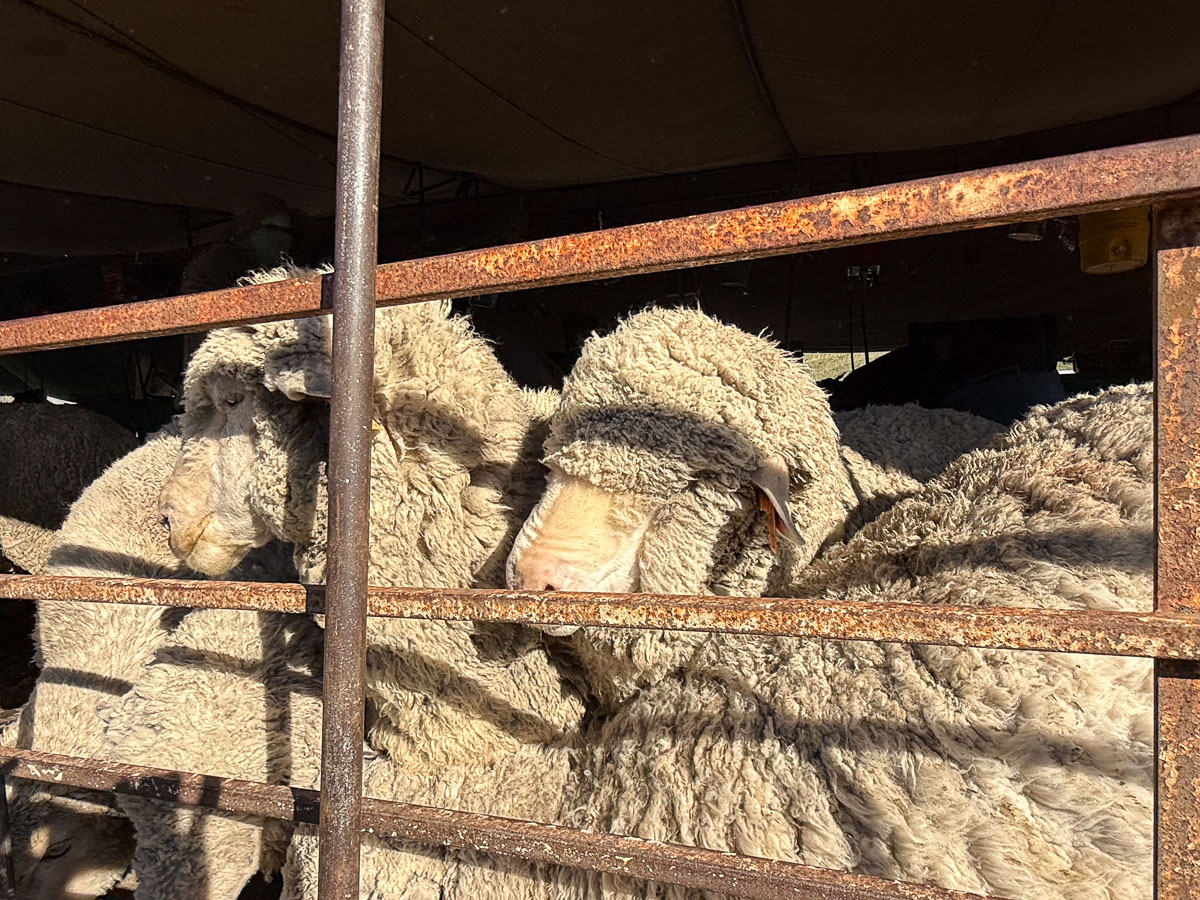
Sheep in the shearing shed.
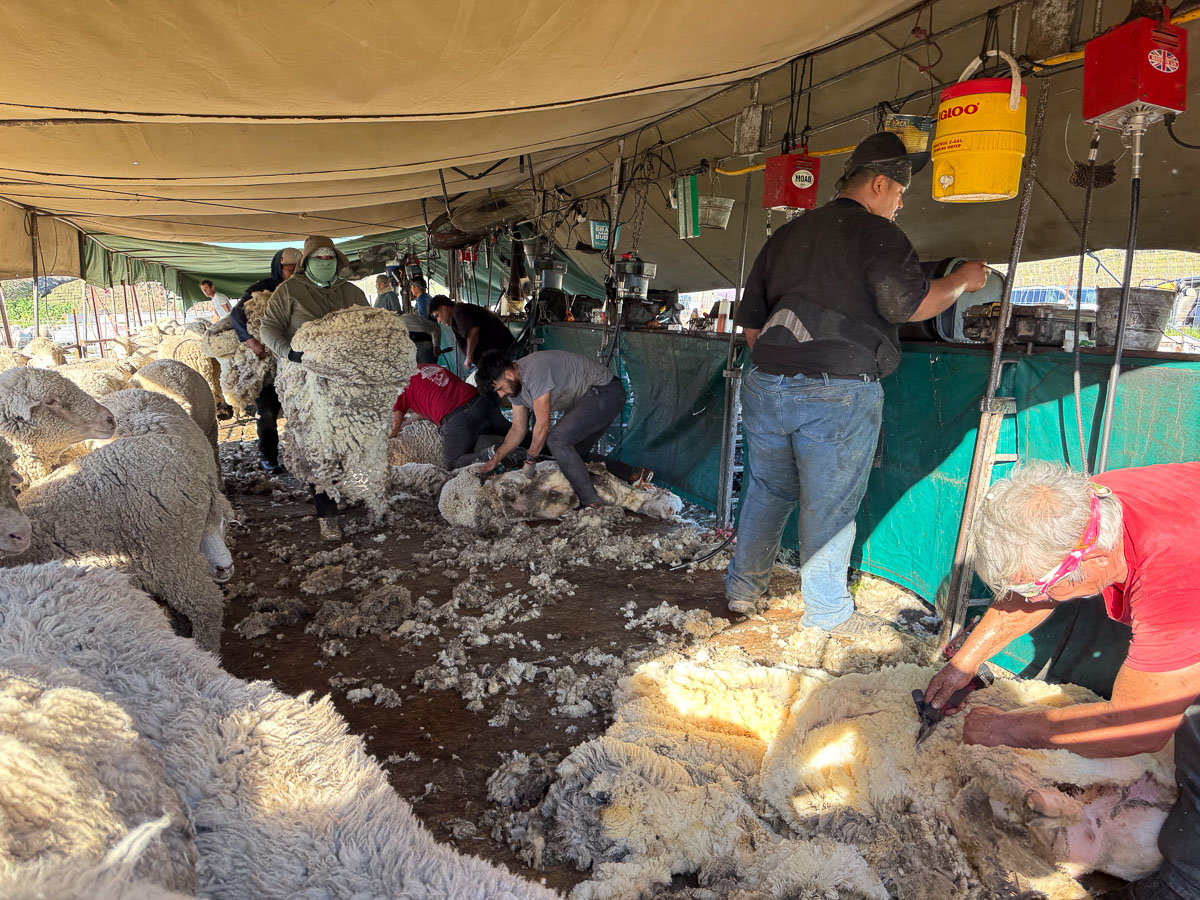
Another view inside.
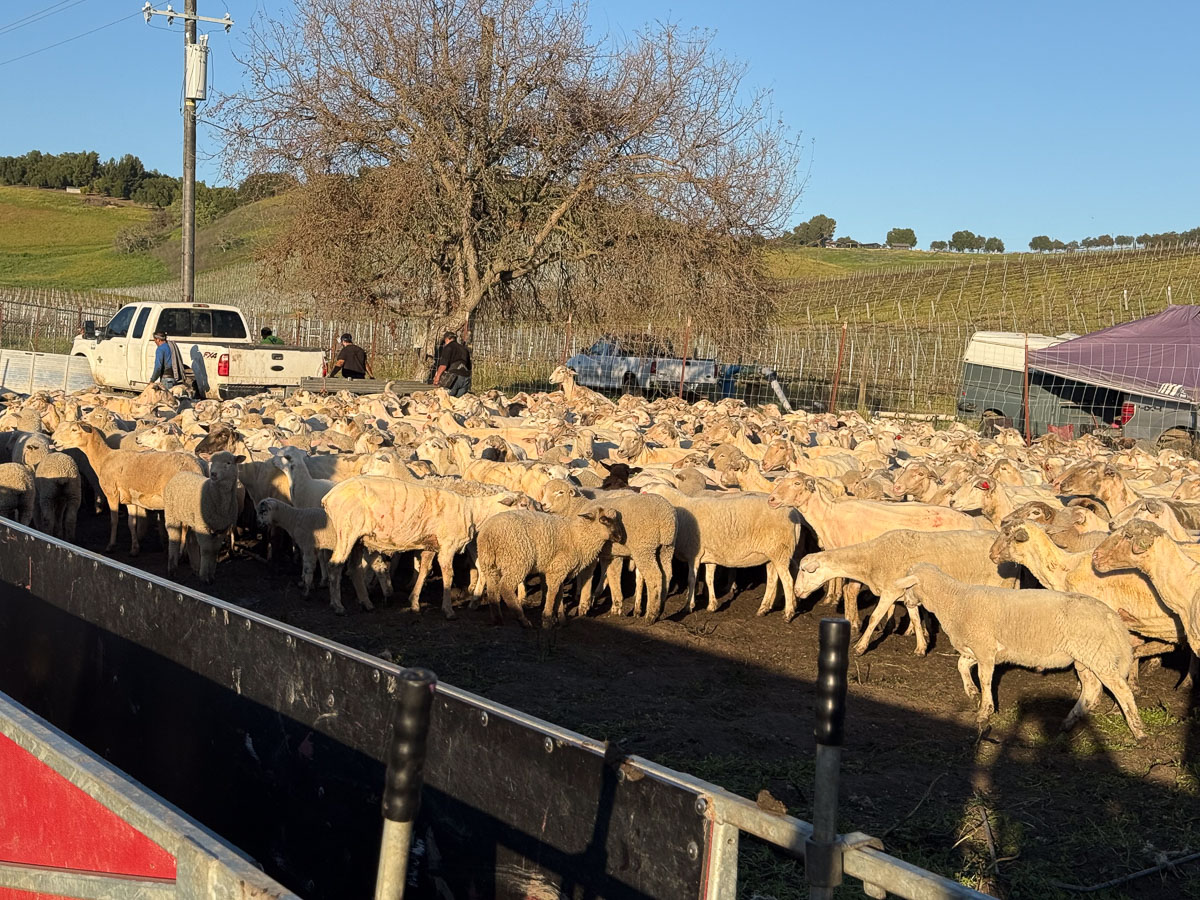
Shearing ended just before 5. Some of the shearers are heading back to their vehicles while others started to dismantle the shearing area.
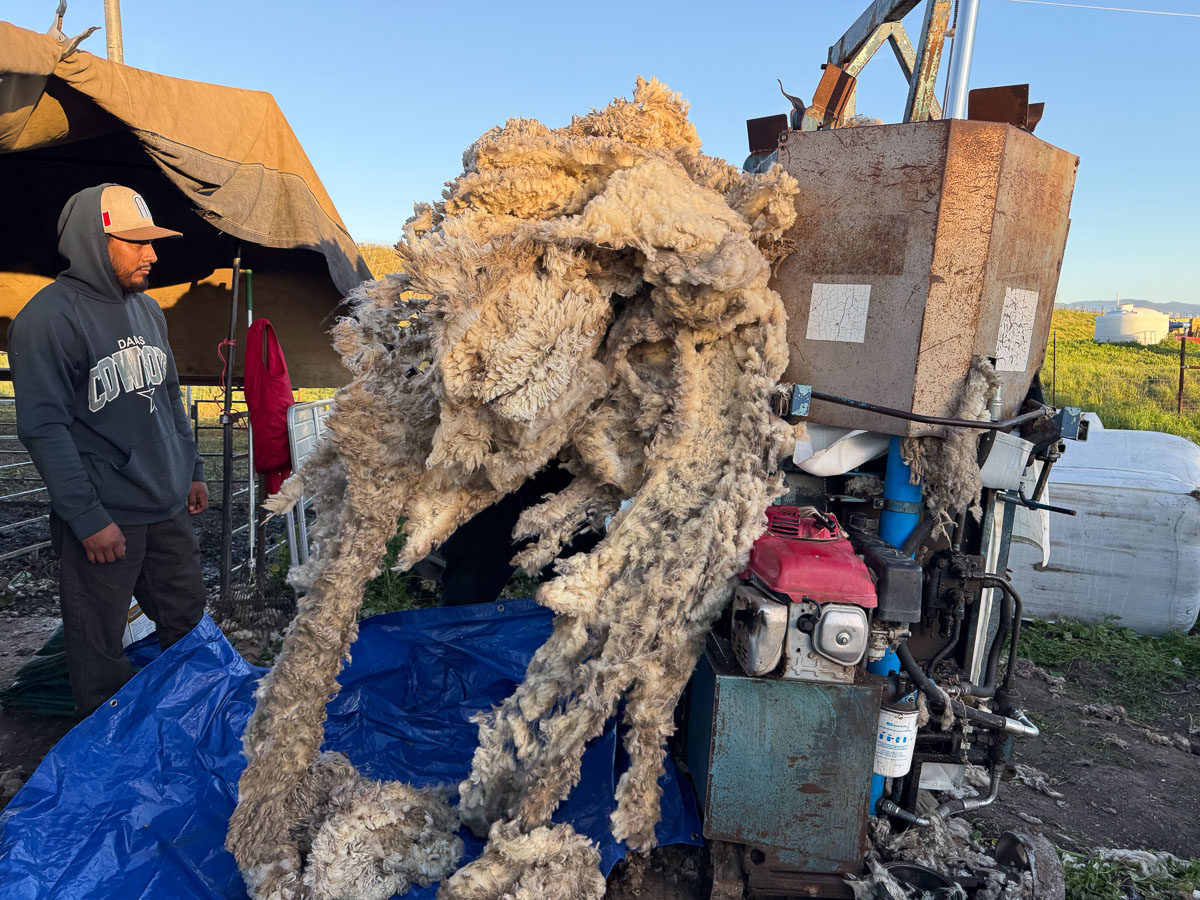
We waited until all the other wool was baled for our little amount to be pressed into a bale.
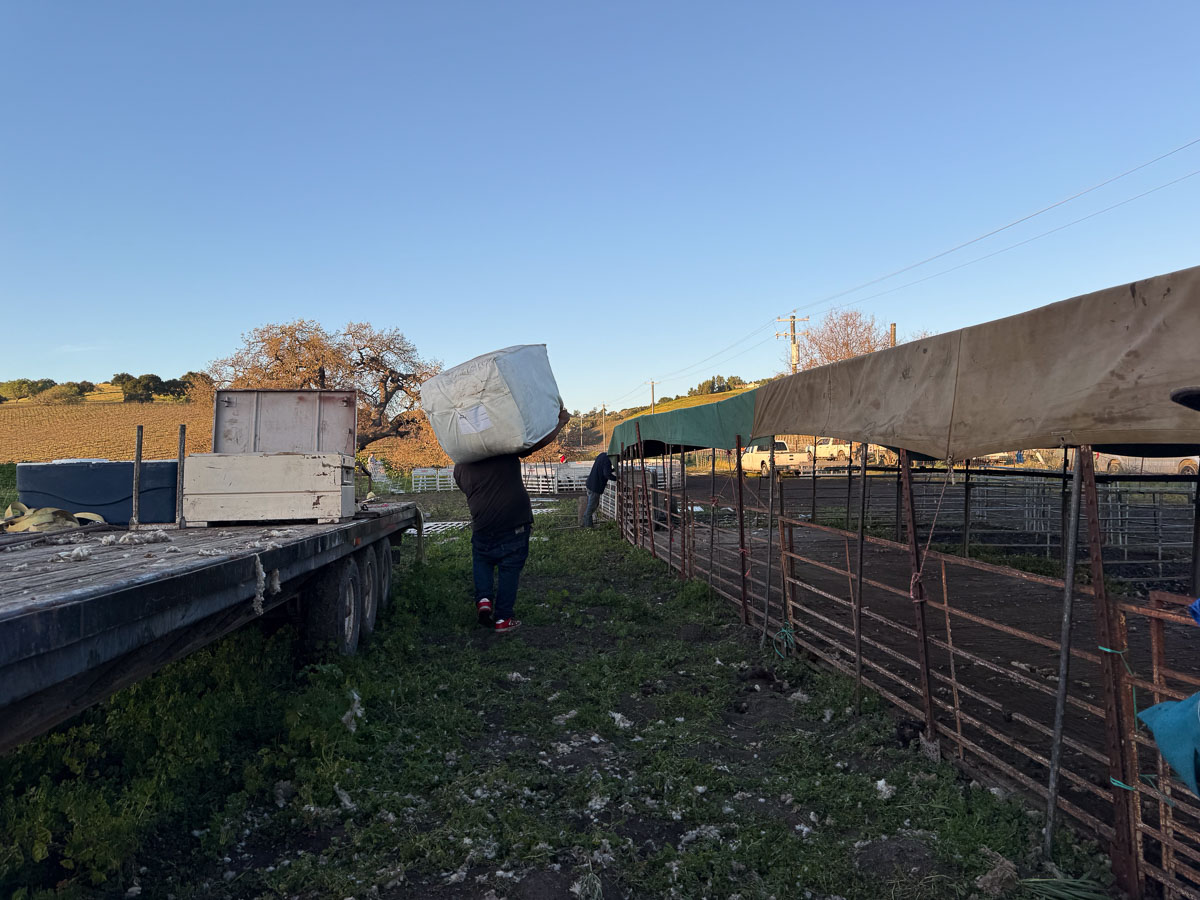
Bales are usually packed into a solid 400-500 pounds, but this one is only about 125 pounds and squishy. I wanted it baled, because I thought it would be the best way to ship it to Wyoming instead of trying to pack it into lots of boxes. At this point I will wait until after the Timm Ranch shearing day on March 22 and hope I can fit two bales on one pallet.
 Meridian Jacobs' Blog