Unknown's avatar

About Robin

Owner of Meridian Jacobs, farm and fiber shop. I raise Jacob sheep, teach fiber arts classes, weave handwovens for sale, and manage the store.

Artful Fibers

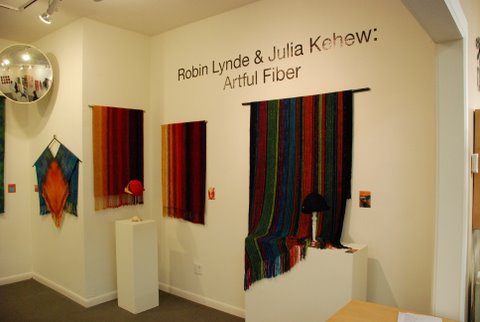
The show is up at the Artery. Here is a preview.  These photos aren’t as sharp as I like because I need to get a faster lens or bring a tripod.   After I take better photos I’ll post them on my website so you can visit the whole show.

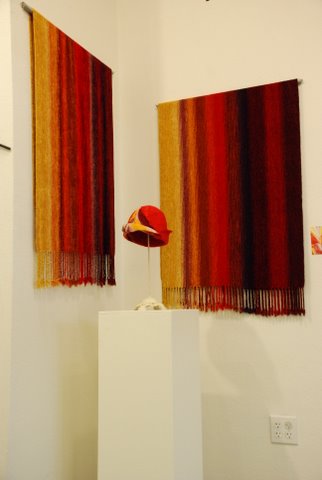
Red Canna in chenille with Julia’s felt hat.

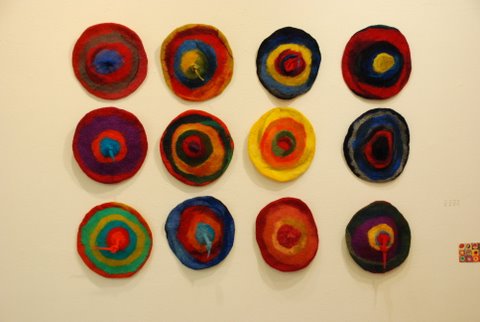
These are 12 felted berets by Julia. You can just see the photo of the Kandinsky painting they represent.

Ruffles in bamboo.

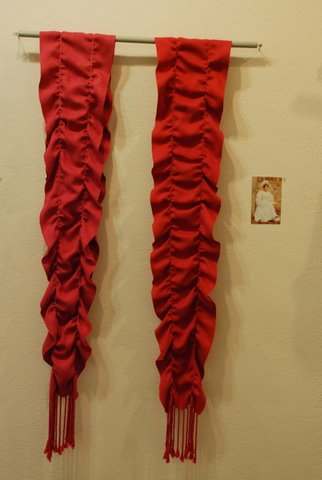
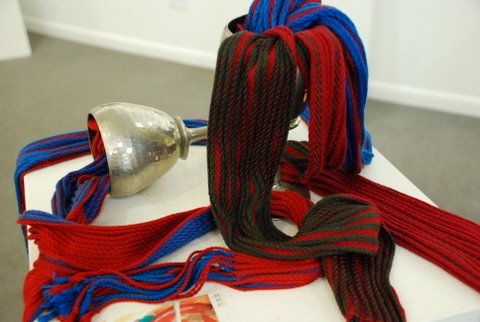
Pleated scarves.

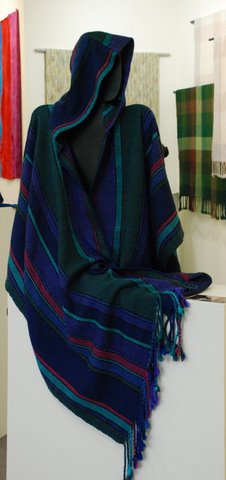
Hooded ruana in Zephyr wool/silk.

Tired of twisting

We’re setting up the Artery show on Thursday so instead of weaving all day I twisted fringe all day. I don’t particularly like twisting fringe, but I think that most of the things that I weave are best finished with a twisted fringe.

This is a shawl woven with fine bamboo yarn. If I leave the fringe loose it will get hopelessly tangled in use. Also, the bamboo yarn seems to separate into it’s plies fairly readily. So twist it is.

When I weave wool blankets I count on fulling them in the finishing process ( agitation in hot soapy water). The threads become somewhat attached to each other and the whole thing becomes a cohesive unit instead of a bunch of intertwined threads. That is not the process that you want for loose fringe. Twist again.

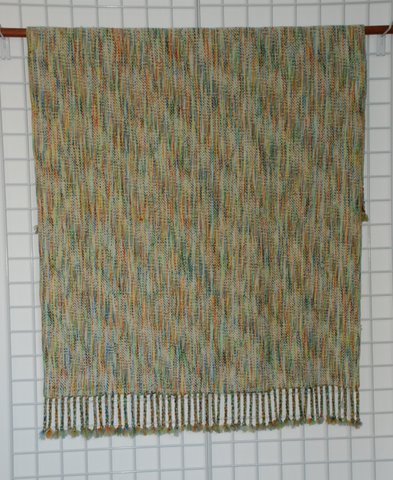
The green and brown blanket has already been washed. This light blanket (inspired by clouds in a painting of the Sierras while the green one represents the forest) has not been washed.

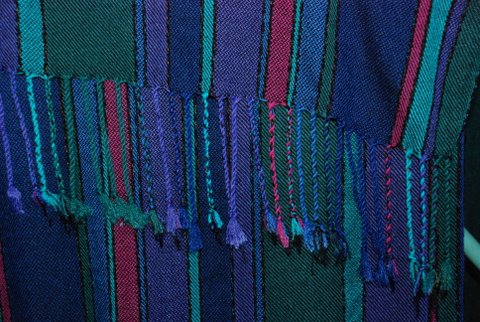
I wove this ruana fabric a few weeks ago but hadn’t twisted the fringe. Even though I had woven a lot of items I had hours ahead of fringing. Now I think I have just one shawl left and the scarf that I’ll finish tomorrow.


What season is this?

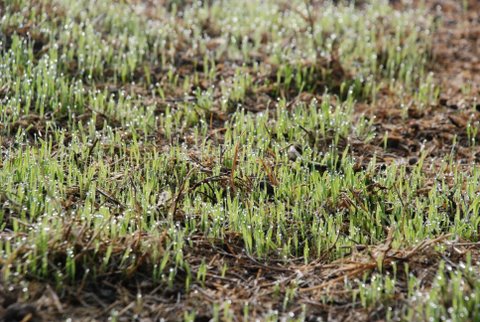
It was a beautiful day today in our part of  California. After a little morning fog the sun was out and it was warm. The ground is wet and there is new grass in the areas where it has been dry all summer. That means fall, but it felt like spring.

There were even a few new flowers.

It really is fall however and there are noxious weeds to show for it. I am vigilant about keeping the worst of these weeds out of my pastures,  but there is one area that is not regularly grazed and I wasn’t paying attention.

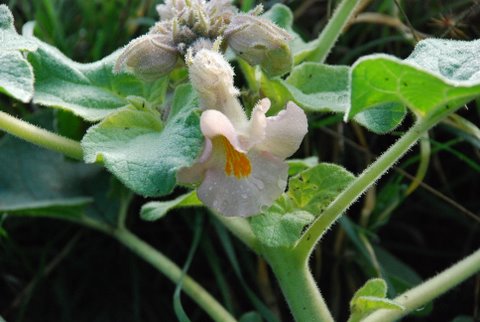
Pretty flower, but appropriate for a Halloween post, this is Devil’s Claw.

Here is the green seed pod.

This is what the seed pod looks like as it dries out. Those two pointed tips are very sharp. When they get stuck in wool you can’t get them out.

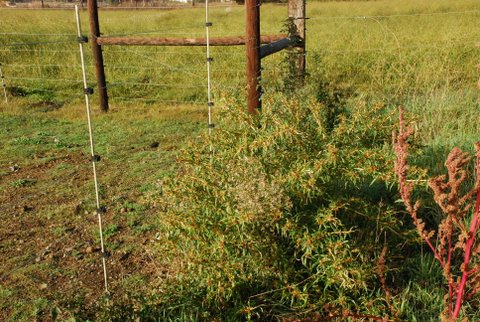
Fortunately this plant is very easy to get rid of. The stems aren’t tough and one chop with the shovel will take care of it. These are in the burn pile now.

I have done pretty well at getting rid of most of this spiny cocklebur, but missed the plants in this area. Why is it bad? Take a look at a close-up.

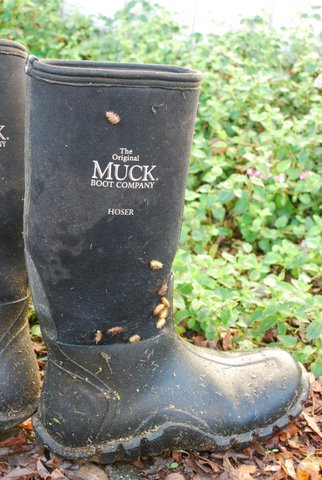
Not only is it spiny, but those burs stick to wool like velcro as well as having an extra sharp point on the end. In the summer I hoe all the small cockleburs that i see. Even though I chopped and will burn all of these plants today they left hundreds of cockleburs (seeds) behind on the ground.

Here is a lesson in seed dispersal.

O’Keefe and Courbet weaving

I wove these projects a few weeks ago but just got them finished–that is, I wet-finished them. When a weaving comes off the loom it is not considered finished until it has undergone some kind of treatment. That could be anything from gentle soaking in water and spreading out flat to dry to vigorous processing in the washing machine and dryer. Whatever finishing process is chosen it changes the character of the project, sometimes dramatically. The finishing method should be factored in to the planning of the project.

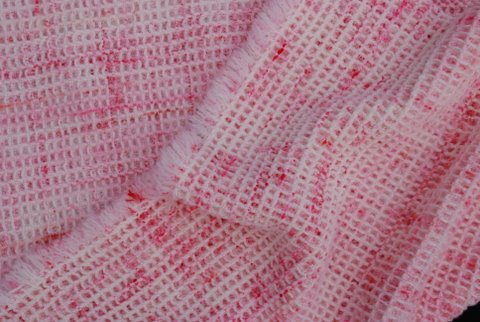
This is a waffle weave blanket woven in Jaggerspun Lambspun wool that I sell. It is machine washable and won’t felt with washing. It does change character however.

This is the same blanket after going through the washer and dryer.  The inspiration for this blanket is the following Georgia O’Keefe painting. I started with white yarn and sprinkled dye powder over the yarn to get the varigated shades.

I love the subtle colors of this painting, but I also love the vibrant ones in the next.

Seascape by Courbet. I used the same washable wool yarn for this project. I wound the warp and then dyed it. Here is the finished v-shawl.

Van Gogh blankets

After the ruana project (which still has not been sewn, fringed, or washed) it was a relief to do something easier. This project was inspired by this Van Gogh painting.

I dyed yarn. This is Jaggerspun Superlamb, a washable Merino yarn. I usually don’t leave white spaces in the space-dyed yarn, but there is a lot of white in the painting so I thought that I needed it here.

I warped the loom for two blankets in an advancing twill.

The color in the detail shot is more true. It’s a soft blanket with a nice drape.

Weaving day

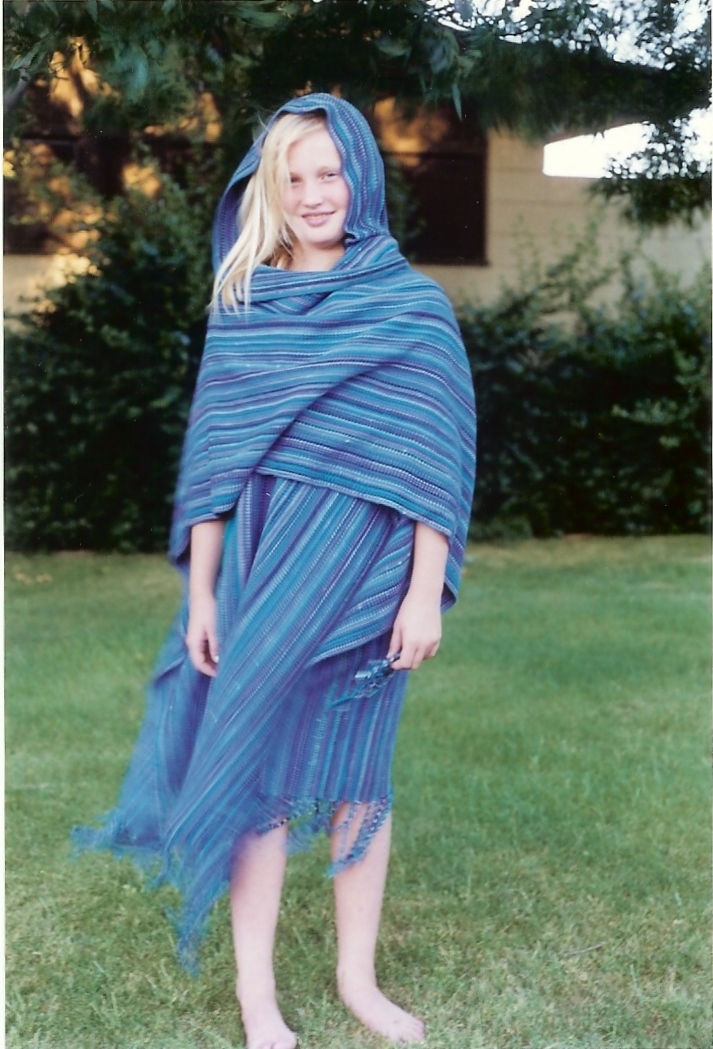
I spent most of the day at the loom weaving a project that it taking way longer than I expected. I planned to weave a ruana for the show coming up and I based the measurements on the ruana that my daughter wove way back when she was 11 years old.

When I took the measurements of this piece I assumed that we had warped this using double weave–to come up with a double width fabric in the back and two separate layers for the fronts. That was assumption #1 that was wrong. I planned colors of stripes to coincide with two twill patterns. As I was winding the bouts of warp I put them in the raddle for my AVL 8-shaft loom. It occurred to me part way through that I needed 16 shafts to weave the 2 layers that I planned. OK, no problem. Since I hadn’t yet wound the warp onto the beam I could move the warp to the 16-shaft AVL.   This was a tedious project to thread. With the help of the computer (and a lot of trial and error) I figured out how to thread this and then have the twill lines reverse on the bottom layer.

I also used the computer to figure out how avoid 3-thread floats between the transitions of the two patterns. This is one layer (shafts 1-8). I did another draft for the 2nd layer (shafts 9-16) and then interspersed the tie-up to create double width and again for two layers.

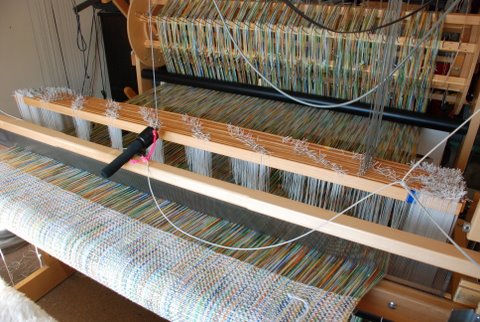
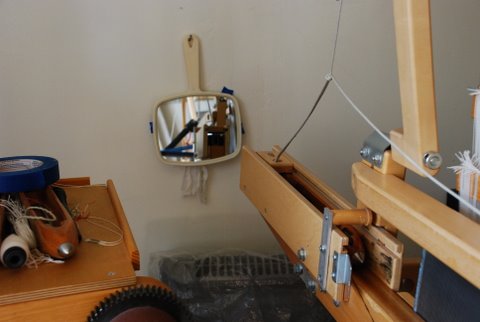
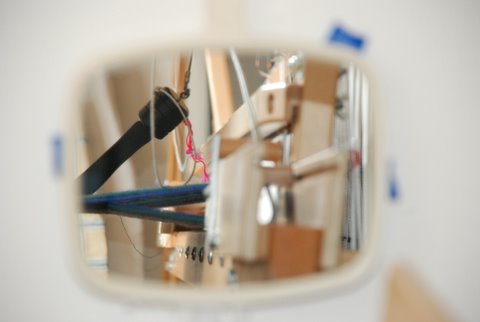
Here is the fabric on the loom. I am using the Zephyr 50% wool/50% silk yarn that I carry in my shop. The big mistake I made was planning this at double weave instead of just weaving one really long strip and sewing them up the back. My assumption about the original ruana was wrong–we did it just that way, not double weave. I’d have been finished a long time ago if I had woven one long strip. The double width isn’t so bad except that the yarn is so dense that I had to pay close attention to make sure that threads weren’t catching. Here is the system I rigged up for that.

A glance in the mirror each time I change sheds shows if it is clear or not.

The harder part is now that I’m weaving the two separate layers. Two shuttles is much slower than just half the speed of using one shuttle. I think I have another couple of hours tomorrow and then this warp will be finished and I can move on to other projects to finish in the next two weeks.

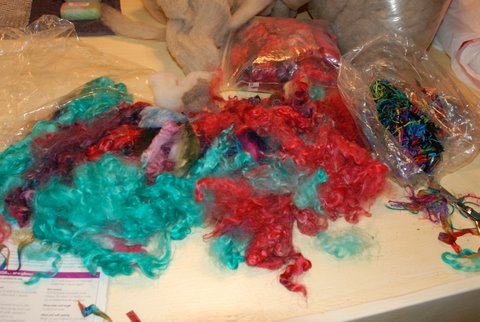
Here is a weaving project that is very different from the ruana. In a previous post I showed this pile of mohair and yarn scraps that was working on in Oregon:

This is what it turned into. Thanks to the ever willing Shelby for modeling. (Without a model it would probably not look much different than how the fiber looks piled on the table.)

A few days ago I wove another.

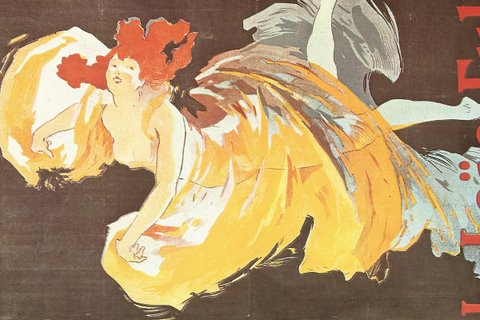
This will be in the Artful Fiber show at the Artery to accompany this painting:

There is something about this painting that makes me think of a fluffy boa.

Publicity photos

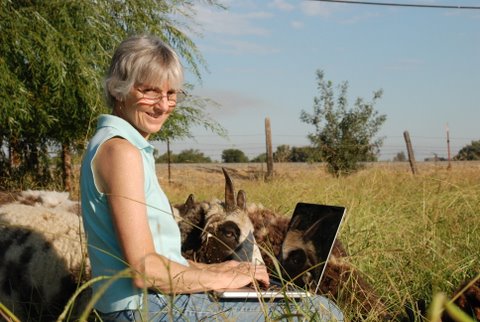
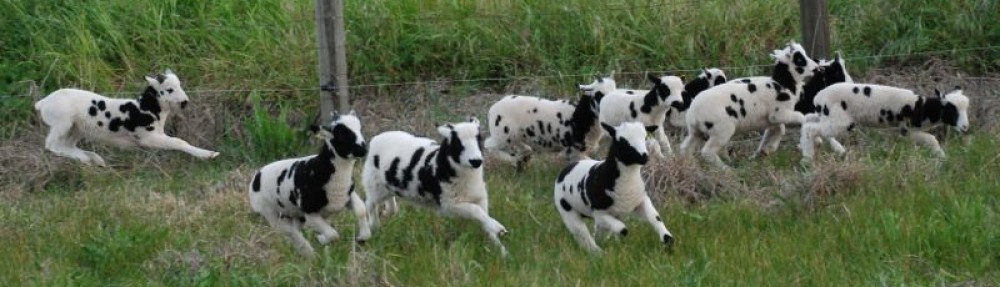
I have been asked to participate in an event at UC Davis on November 20 called New Media: Making Agricultural Marketing Personal. Chris was home so I asked him to take some photos. I had a vision of me sitting in the field with a laptop with sheep all around me. First I thought I’d use the ewe lambs that I’ve set aside for Rusty to use. They weren’t so insterested in just staying with me.

Then I tried the ewes in the pasture (and I bribed them with grain).

A fun weekend away


I spent the weekend with Shannon of Kenleigh Acres and Joan of Mud Ranch at Shannon’s place in Oregon. The original purpose of the visit was to pick up Clint, a ram lamb for this year’s breeding line-up.
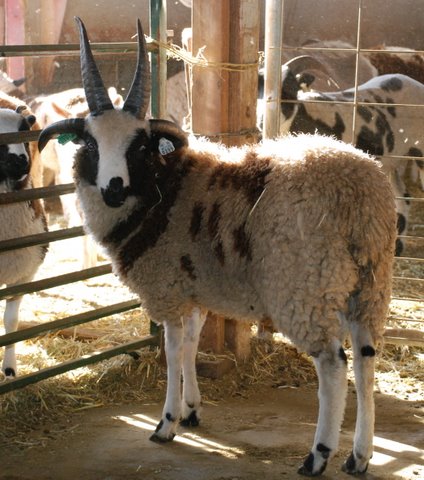
But Joan and Shannon and I turned it into a private retreat.   I taught Joan to spin. Joan gave me photography pointers. Shannon helped both of us with sheepdog issues.  I was trying to figure out what Shannon got out of this deal and I realized that it was Houseguests.
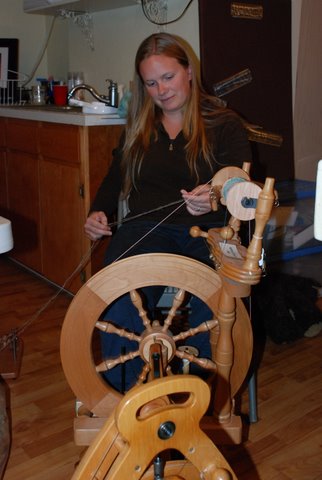
Here is Joan spinning away on the Ashford Travellor double treadle wheel, which worked really well for her.
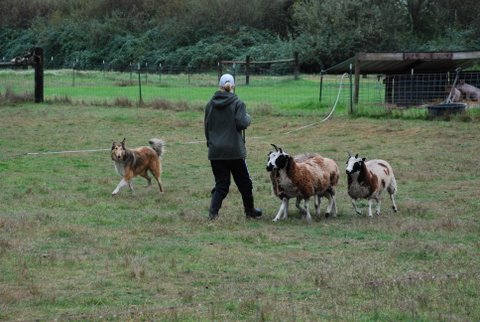
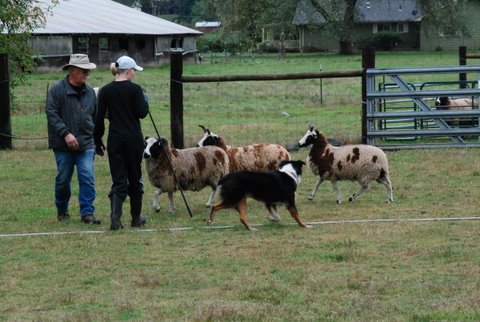
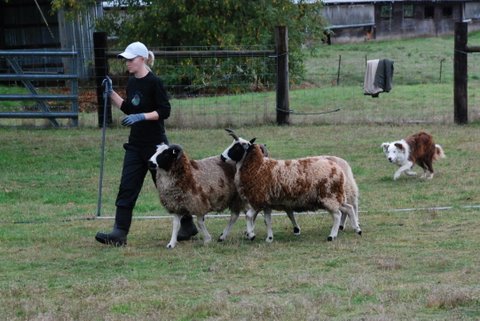
Shannon is giving Joan’s collie, Hank, his first lesson.

Joan’s Dad is getting pointers from Shannon on how to train his Australian Shepard, Harley.
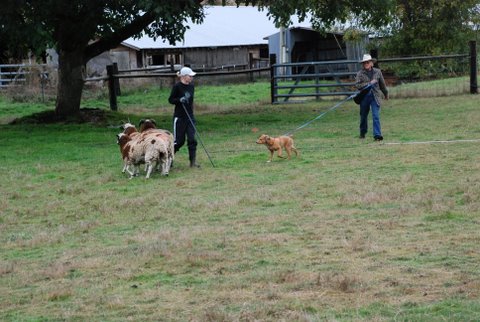
This is the English Sheepdog puppy, Tolo, at the end of a leash held by Joan’s mom.
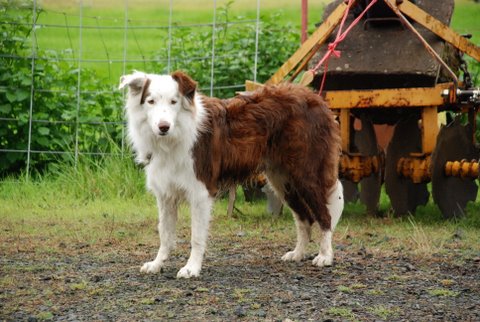
Rusty waited patiently for his turn.

Shannon put Rusty through his paces.
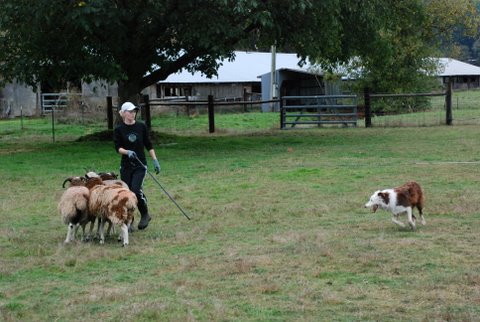
It could be said that Rusty is a little too enthusiastic. But more to the truth is that Rusty has been confused by his handler (that would be me). It was very helpful to work with Shannon because she saw things that I was doing that are counter-productive to the way I’d like Rusty to behave as a sheepdog.

I spent some time working on one of the many projects that I brought with me.
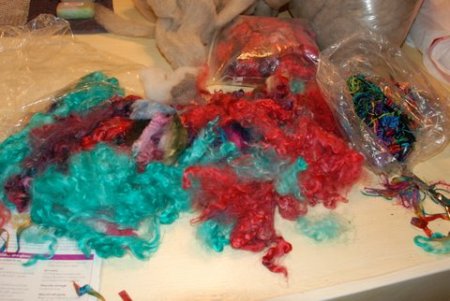
I’ll post photos tomorrow of what this became.
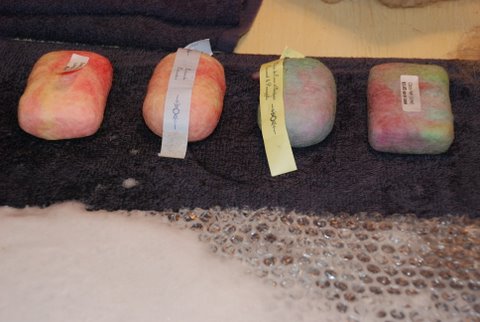
Shannon felted a bowl and several soaps while I worked on my fiber project.

It rained all weekend. After all, this is Oregon-what did we expect? The rain cleared on Saturday afternoon, but on Sunday it seemed continuous. The rain has its advantages however.
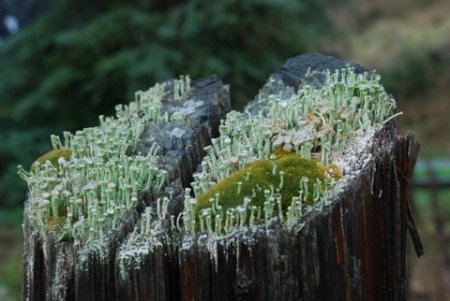
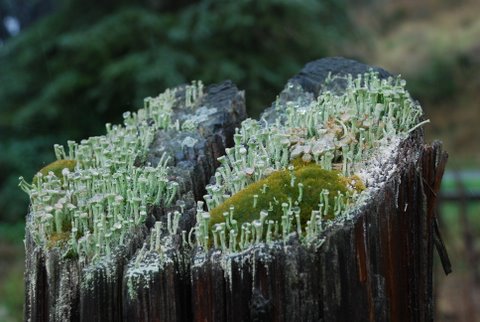
This fence post holds a whole ecosystem on it’s top.
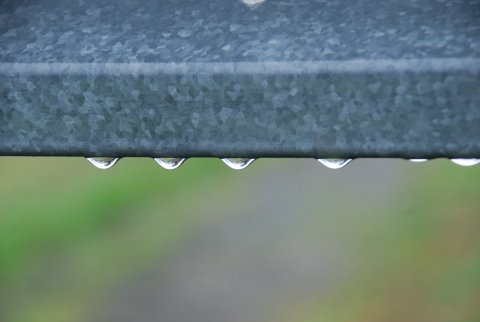
On the way home I felt as though I had changed seasons. After about 3 hours of driving in the rain I was back to California.
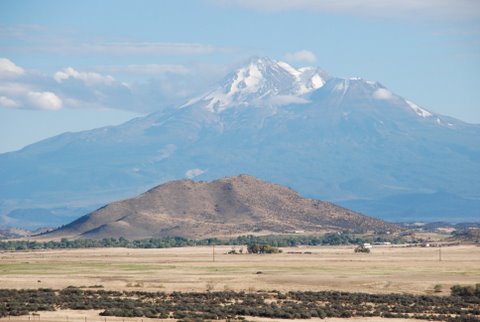
Mt. Shasta always is a spectacular scene.

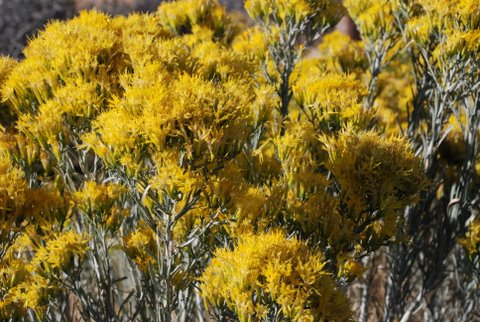
Rabbitbrush in bloom is a colorful contrast to everything else that is so dry and dusty right now.


Solano Grown debut

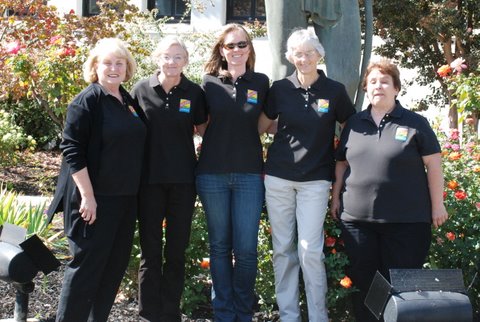
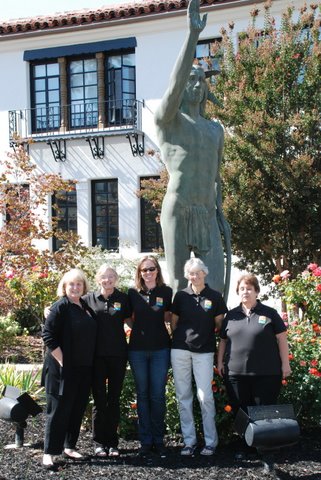
Here we are in our spiffy new shirts standing in front of Chief Solano after the Board of Supervisors meeting in which we presented Solano Grown. If you really want to see Chief Solano you need to see this photo.

Although the presentation was only about 5 minutes we were in Fairfield from 9:30 to about 1:30. We had to wait a few hours until it was our turn and then we worked on a few more things to be ironed out as far as logo use and membership guidelines.

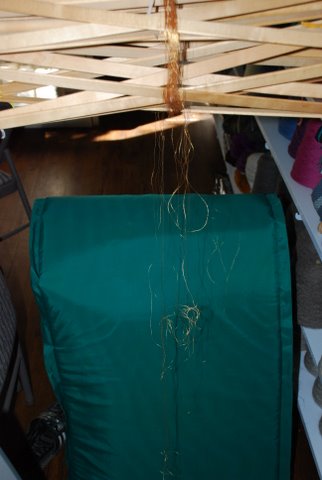
Finally back home, I worked on untangling the gold thread for the project on the loom now.

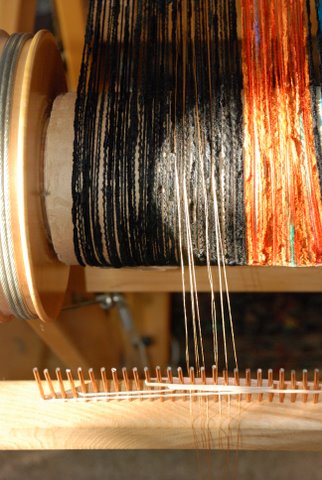
I have added the gold thread as a supplemental warp in part of the black border, but it doesn’t show up very well.

Lamb Festival

The Lamb Festival (used to be Lambtown) was last weekend. I was so busy that I didn’t get very many photos of the event. I have been on the Board and organized the classes for 3 of the last 4 years, but I have already given notice for next year. Someone else can have a turn…maybe someone that doesn’t have quite as many things going on as me.  I had a vendor booth, taught, a class, managed the registration table, and showed sheep all at the same time. How? Thanks to my good Farm Club friends and others. Jacki, Shelby, Kathy, Tina, and Anna all helped. Shelby showed the sheep with the help of my husband. Too bad we don’t have photos of that. Granite, the ram lamb that won Reserve Champion at Black Sheep Gathering received a Champion ribbon although I’m not quite sure how the divisions were set up.  Here are a few photos.

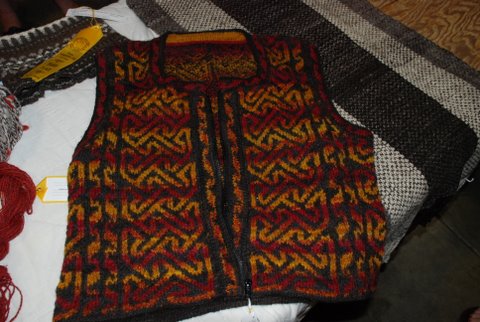
This knitted vest was awarded “Best Item of 100% Jacob wool”, sponsored by meridian Jacobs. Isn’t that gorgeous?

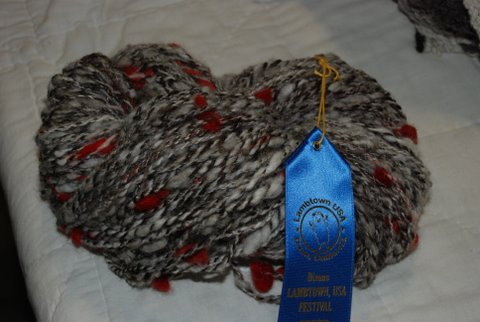
And here is some beautiful Jacob novelty yarn.

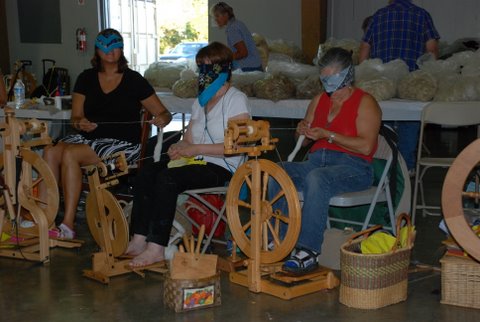
My friend, Nancy Jane Campbell, did a fantastic job of organizing the Sheep to Shawl contest and the Spinning Contests. One of those was a spinning triathlon which included blind-folded spinning as well as spinning with rubber gloves.

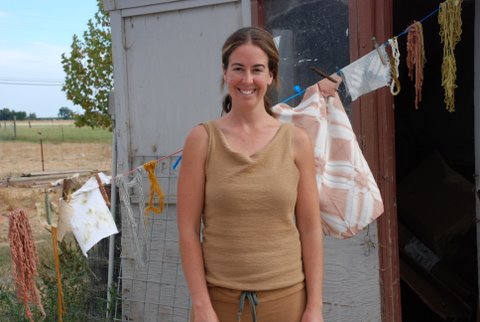
The Lamb Festival was on Saturday but we had addional classes on Sunday, three of which were held at my place. While I taught a weaving class and Nancy Campbell taught knitting at the shop, Rebecca Burgess set up in the barn and  taught Natural Dyeing. Here are some photos of the class samples.

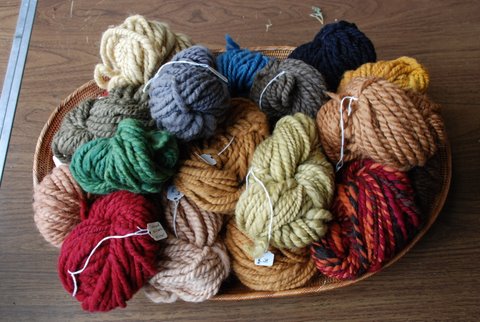
These are yarns that Rebecca brought with her. Rebecca has a fascinating message and you’ll hear about it in future posts. It’s too late now to explain more but if you google Fibershed you’ll find out about it.

And what was happening at home? I put these 4 ewes in with Savor before leaving for the Lamb Festival and when I came home they were all marked. I think my sheep are ready.