Unknown's avatar

About Robin

Owner of Meridian Jacobs, farm and fiber shop. I raise Jacob sheep, teach fiber arts classes, weave handwovens for sale, and manage the store.

Road Trip to Colorado-Day 1

VACAVILLE TO BODIE

We just completed our annual Road Trip. Last year it was to see my daughter and her family in Texas, exploring Arizona and New Mexico on the way. If you’re interested the blog posts about that trip start with this one. This year the goal was  to meet up with my husband’s brother and sister in Leadville, Colorado on July 9 and do some site-seeing and camping along the way.

IMG_2563

I do use my iPhone for maps and interesting info along the way, but it doesn’t do you much good when the phone says “no service”, which it did a lot on this trip. Besides we like to follow along with the detail in these map books as we’re driving. They are also invaluable at finding places to camp along the way.

DSC_0686

We started east on Hwy. 50. I always get a kick out of this sign when entering Sacramento.

IMG_2565

I’m glad that Dan likes to do most of the driving because it leaves me free to watch scenery and take photos from the truck. This was another journey for the old green truck.

DSC_0693

This is some of the evidence of last year’s fires in the Sierra Nevada Mountains.

East side of Sierras

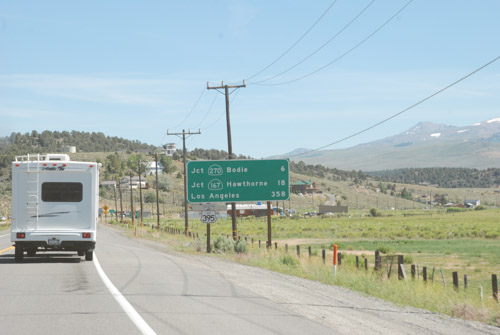
We joined up with 395 on the east side of the Sierras. Beautiful. Most of the country on the east side is considered the high desert, but the West Walker River is at the base of the mountains and other creeks flow out of the mountains that are east of the highway. The valley is lush and this is cattle country.
DSC_0696

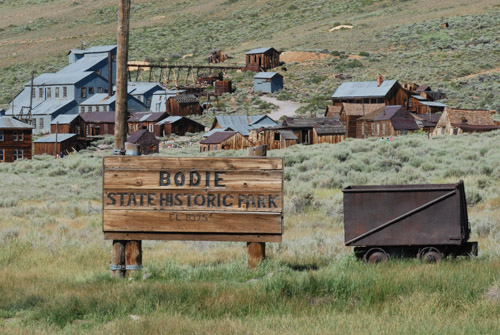
Our plan was to first visit Bodie, and old mining town in Mono County, California. Bodie had been a favorite haunt of Dan’s dad and he wanted to check it out.

Disclaimer: Let me say here that a lot of my travel photos are DBP (Drive-By-Photography). Some are from the open (or maybe not) side window and some are through the bug-splattered windshield.  I’d rather read (and write) blog posts that are more photos than text, so I’m using what I have. Even my good photos will never be National Geographic quality, but these posts are about the story. So here we go.

DSC_0706

We turned off of 395 onto Bodie Road (270). The country is mostly desert, but again, where there is water the desert is kept away. I was excited to see sheep on the way to Bodie. This was not a fiber trip, but sheep are always a good sign. I tried counting these from a photo and I think there are about 600 sheep with 4 guardian dogs and a herder. They were moving up this valley when we drove to Bodie. (The next post will  be about that.)

DSC_0745

When we left Bodie two hours later the sheep were back in the middle of the valley and had been going to water in an irrigation ditch at the right of the photo. They were moving away from the ditch and back into the valley. We stopped and watched awhile.

DSC_0750

When I enlarged the photos I could see about 17 black-faced rams in with the ewes.

DSC_0759

The band started moving up the valley on it’s own but that was obviously not the plan the herder had. He and his Border Collie walked out to the road and up in front to cut them off. The Border Collie turned them while the guardian dog in the center of the photo went to get a stray.

Near Bodie

But back to Bodie. Here is the landscape without water.
DSC_0715

Stay tuned for the next post.

Seen on the Farm

This one isn’t actually on OUR farm. I love this sunflower crop that is Across the Road.

Sunflower

I took the rest of these photos here.

Monarch caterpillar

Monarch caterpillar on narrow-leaf milkweed.

DSC_0589

Alfalfa butterfly. The caterpillars are considered pests in fields of alfalfa. They also consume other legumes (like clover and trefoil in my pasture).

DSC_0581

I still don’t know what this one is. Previously I tentatively identified one in a better photo as a forage looper moth. Maybe? Do you know how hard it is to chase a butterfly/moth that doesn’t want to be photographed?CA Red dragonfly

California Red Dragonfly. While we’re looking at insects here are nasty ones that supposedly the dragonflies eat.

DSC_0577

We were doing pretty well keeping the pasture mosquitoes at bay.  I guess it was the last irrigation followed by a heat wave that brought them on to this degree. This morning in the pasture I was covered head to foot–overalls and a hooded sweatshirt with the hood tied around my face. I could still hear them buzzing.

paper wasp-2

While on the subject of nasty buzzing things in the barn last year’s paper wasp nests are active again. I guess I need to find the wasp spray.

Black widow

Same subject. Different pest. This is another black widow on the hay. You have to be careful pulling bales of hay away from the wall or off the floor.

brewers blackbird nest

Also in the barn but no stings or bites (except maybe when the parents dive-bomb the dogs). This is another nest of Brewer’s blackbirds. This photo was taken a couple of weeks ago…

Brewer's blackbird nest

…and this one a little later. These birds have left the nest now.

DSC_0590

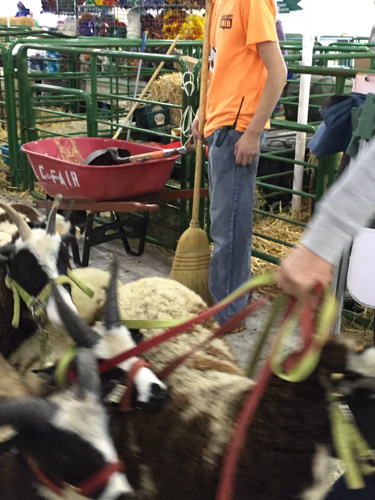
Sheep going to pasture in the morning.

DSC_0597

These are some of the new sheep. That’s Bronagh who seems to take the lead. They are out with the rest of the flock now and are as anxious to come to the fence for grain when I rattle the bucket as the other sheep.

New Faces on the Farm

The last few blog posts were about Black Sheep Gathering. One reason that I decided to go this year was that I could bring home some new sheep. Here they are:

Bronagh-4

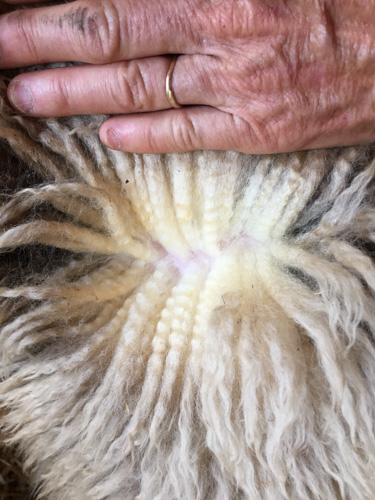
Windy Acres Bronagh, 3 years old, lilac (that’s a gray-brown color in Jacob sheep lingo).

Bronagh-fleece

This is her fleece…

Bronagh

…and here is another view.

Scout

Another sheep is 2-year old Hunter’s Glen Scout.

Scout-fleece

This is her fleece…

Scout-4

…and another view.

Hallie

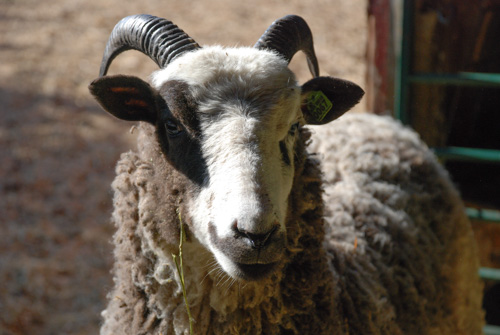
Bide a wee Hallie is a yearling with very pretty horns…

Hallie-fleece

…and a long, open fleece.

Shelby-head Shadow Mountain Shelby is a yearling…

Shelby-fleece

…with a fine crimpy fleece.Sheena-head-2

Kenleigh’s Sheena is the last yearling.Sheena,Shelby

Sheena-fleece

Trista

I brought home two lambs from bide a wee Farm. I just realized that I didn’t get a decent photo of the ram lamb, buster. This ewe lamb is Trista and I just love this little lamb. She is one of those sheep who seems to have a friendly nature and is taming herself.Trista-fleece

And look at her lovely fleece.

I can’t wait to see these fleeces next February and new lambs in March.

Miscellaneous Views at BSG

The last three blog posts have been about Black Sheep Gathering but, wait! There is more!

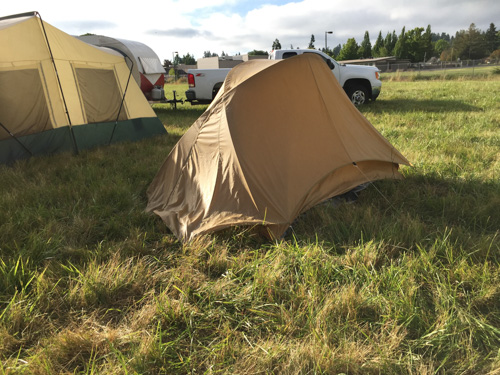
Camping-tent

My tent.I have had this tent for 35 years and wasn’t sure that the rainfly was waterproof. I don’t think I’d want to be in a major storm, but it was adequate for the light rain the first night of camping.

IMG_2193

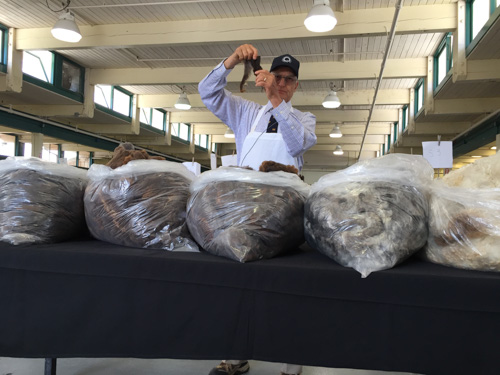
I spent some time on Friday afternoon and Saturday morning watching the wool show.Martin judging

Martin Dally  is entertaining as well as knowledgable. He explained what he was doing throughout the show and even let the audience come up to see and feel the fleeces after he finished with a class.

Merino fleece

Colored Merino fleece.

Merino fleece-2

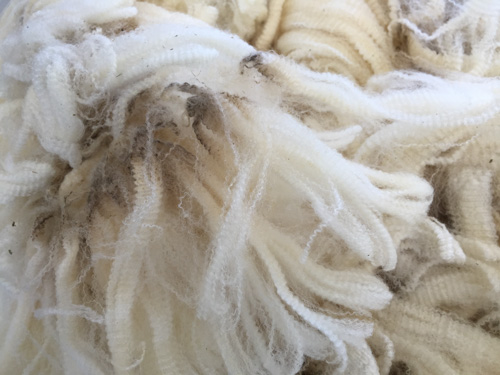
White Merino fleece.

Corriedale fleece

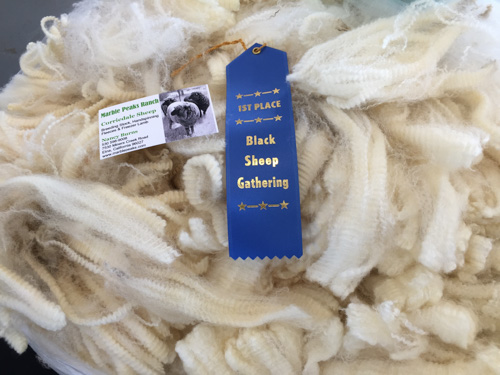
Corriedale fleece that won the overall best white fleece.

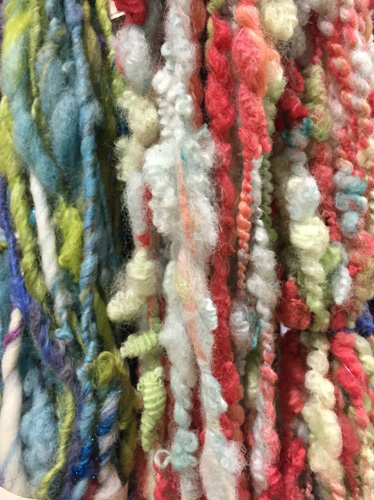
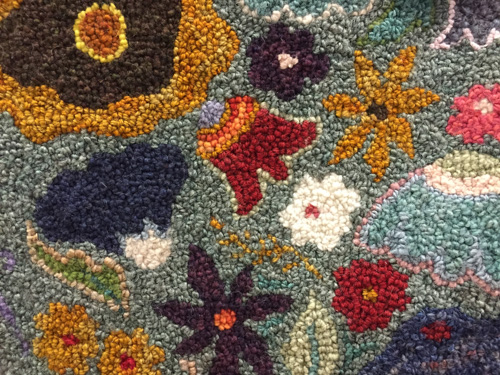
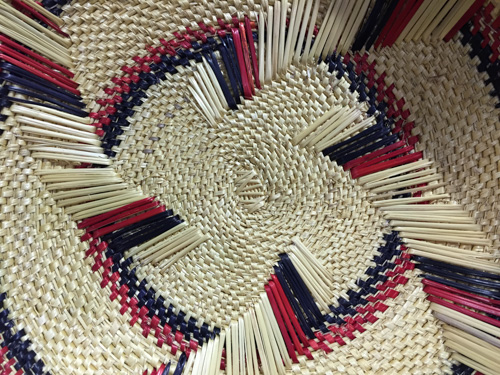
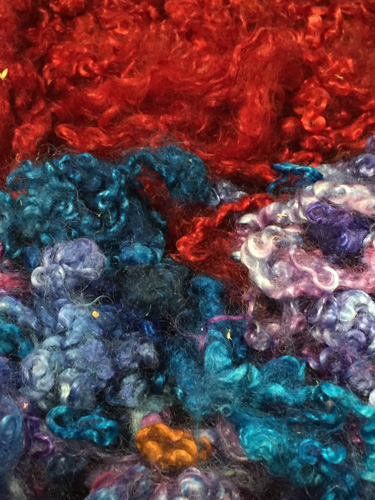
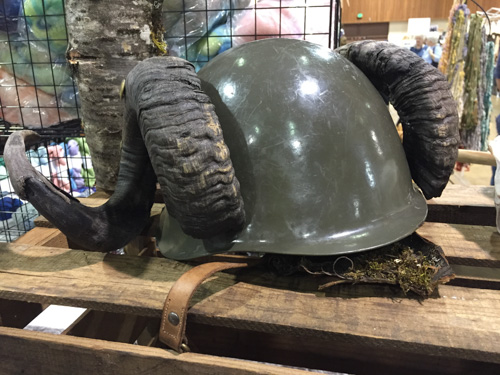
Then to the vendor hall where I took shots of color, texture, and other things that caught my eye.

Art yarn

Hooked rug

IMG_2233

Mohair locks

Horn helmet

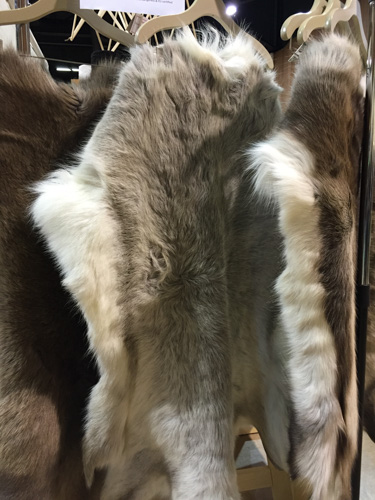
Reindeer pelt

These are reindeer hides.

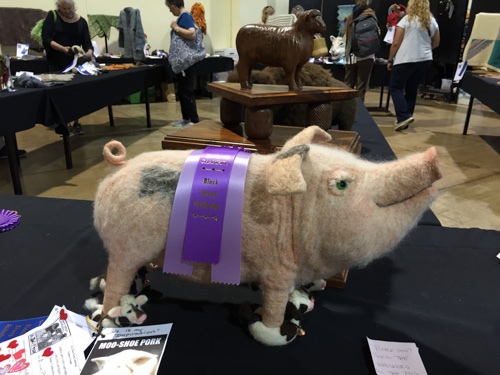
There is also a Fiber Arts contest.IMG_2227

Moo-shoe pork

This one is called Moo-Shoe Pork. Look closely at the feet.

IMG_2452

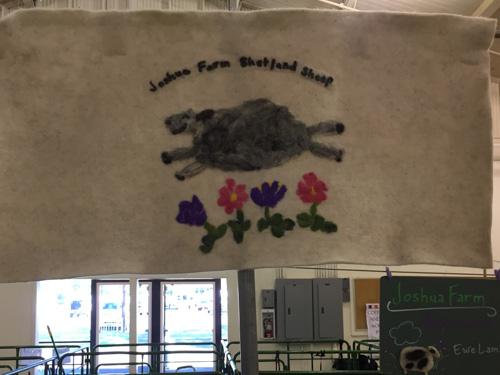
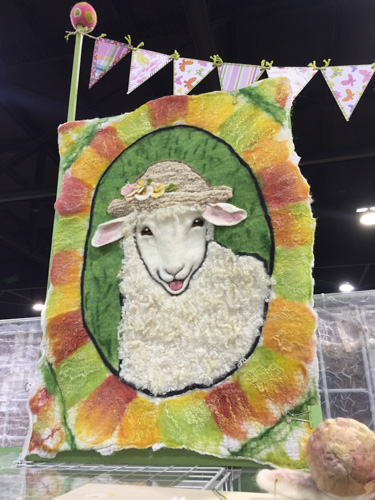
Back in the barn, this felted banner was made by Jackie, Farm Club member and friend who’s business is Sheep to Shop.

Mt-2

I got a late start home on Sunday (the next post) but made my ritual stop at the Mt. Shasta overlook just before dark. I love that mountain…and I love California.

Spinners’ Lead at BSG

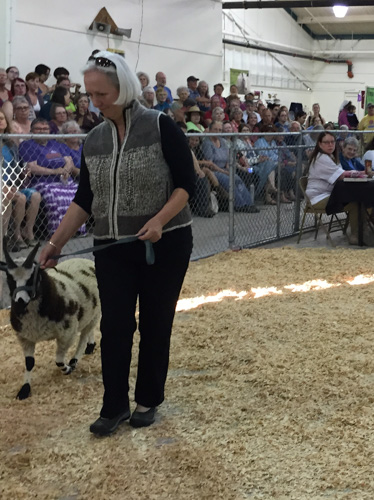
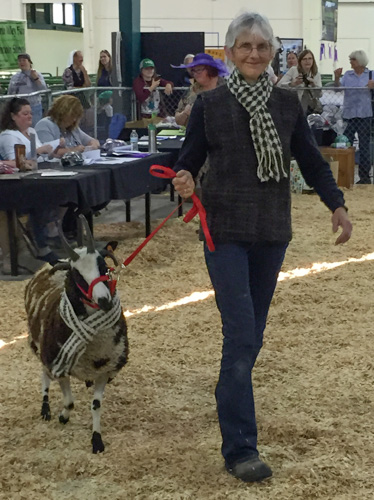
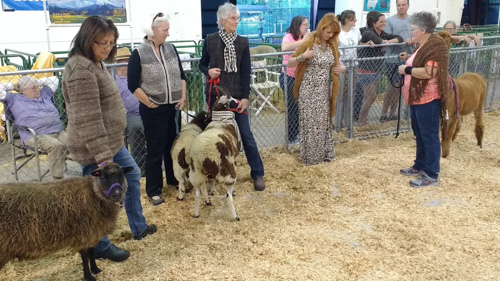
The Spinner’s Lead is one of the events I enjoy most at Black Sheep Gathering. It is a competition in which entrants show off their handspun or felted items and bring the animal that was the fiber source (or borrow a representative one from one of the animal exhibitors). There are two categories–one for Owner and one for Non-Owner.IMG_2291

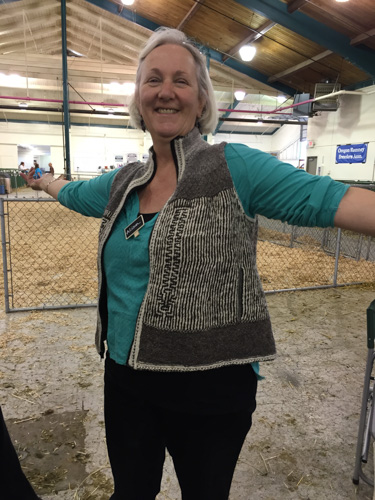
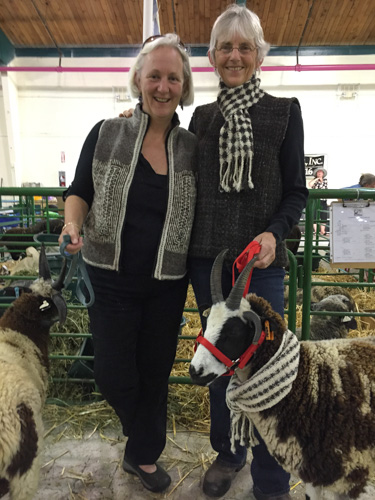
Alison and I both entered Jacob yarn vests. Alison’s vest is incredible. She started this project three or four years ago, spinning Jacob wool into 4-ply yarn. She knit the vest using twined knitting to create a fabric that is windproof but stretchy–a natural alternative to Polartech. At one point Alison had knit the vest almost to the top but was not happy with it and ripped it all the way back to the cast-on row! It features i-cord band, sewn in zipper, and pockets.

IMG_2310

I started working on my vest about four weeks before BSG, inspired when I figured out that the fleece of the sheep I was entering, was still in the barn and was a beautiful one. After spinning the yarn the fabric took two days to warp and weave and another to turn into a vest. On Tuesday of the BSG week I wove scarves using white and the leftover black yarn. Weaving is so much faster than knitting!

IMG_2292

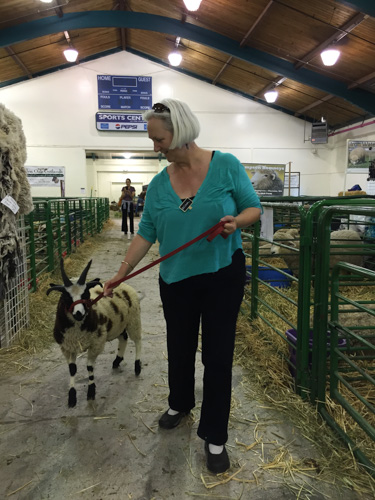
Honey was my selected sheep for the Spinners’ Lead because it was her fleece I used. I chose Marv for Alison because he seemed the best most compliant of the other sheep. She spent a little time practicing with him before the event.

IMG_2327

I handed my i-phone off to a friend who took most of these photos, and it’s not easy to get good photos standing at the outside of the show ring. (Thanks, Deb.)

IMG_2356

IMG_2365

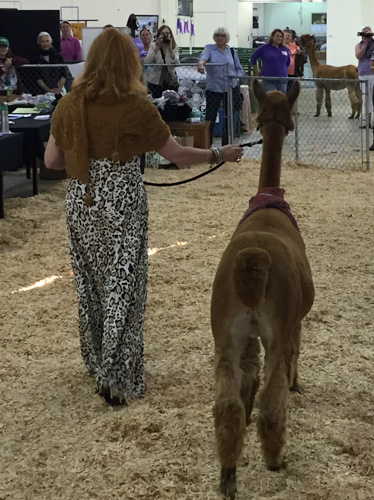
Alpaca shawl. Red hair, red shawl, red alpaca. (Honey did not like the alpaca when it showed up in the line near her.)

IMG_2394

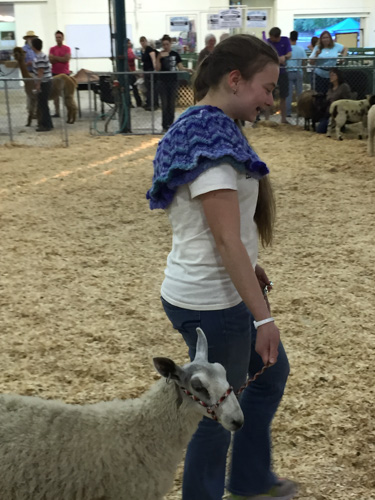
BFL sheep with her young owner. This one was the winner of the Owner category.

IMG_2404

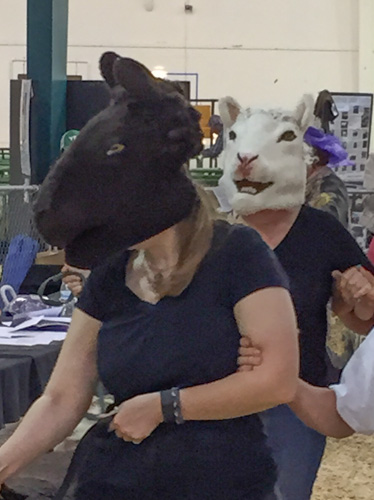
This was the most unusual entry this year–felted sheep masks. The wearers are leading sheep, but they needed to be guided as well.

IMG_2411

Sweater knitted from natural colored fleece.

IMG_20160625_203217339-1

Waiting to hear the results. Alison won the non-owner category! It was well-deserved.

More Sheep View at BSG

Sheep aren’t the only fiber animals at Black Sheep Gathering.Angora show

The Angora goat show was on Saturday. But it’s mostly about sheep.

Romney

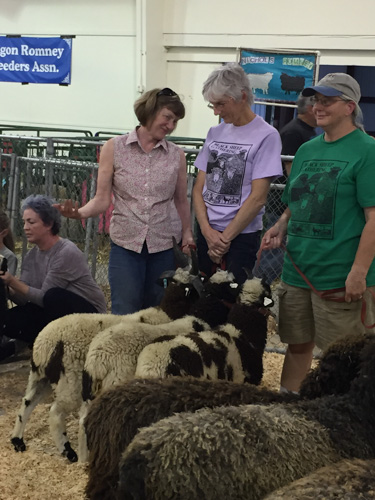
It’s not always easy to get a good photo of sheep when they are in small pens.

Shetland ram 2

This is a Shetland ram.

BFL-2

Blue-faced Leicester.

IMG_2223

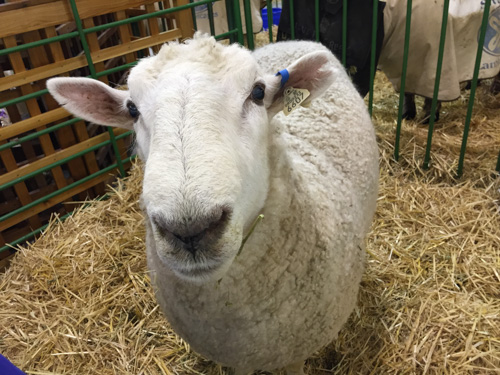
This sheep posed nicely.

IMG_2189

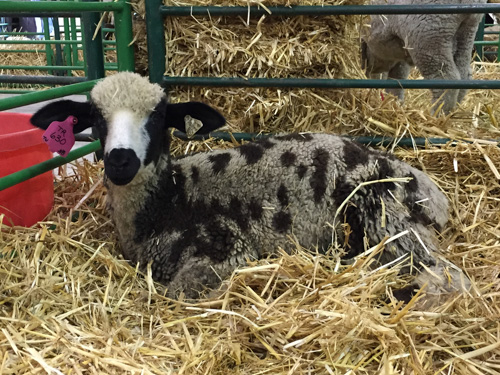
Here is a Jacob look-alike, at least from the spots. No Jacob has ears that big.

IMG_2261

The Young Flock competition is on Saturday at the end of all the other shows and there is a special prize for the best Young Flock of the whole show. A young flock is made up of two ewe lambs and one ram lamb from a single breeder.

IMG_2255

I had the Jacob young flock in the competition.

IMG_2466

Sheep seen in the vendor hall.

Navajo-churro wool

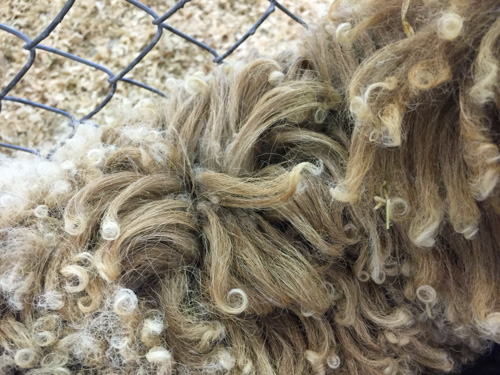
Look at these beautiful curls on a Navajo-churro lamb fleece.

Teeswater wool

Speaking of curls, this spectacular 12″ fleece is on this…

Teeswater

…Teeswater sheep.

Black Sheep Gathering 2016

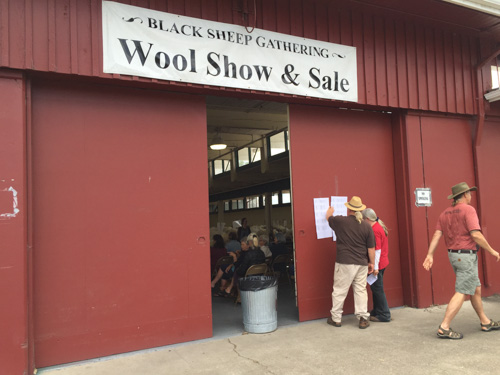
Black Sheep Gathering in Eugene, Oregon is an event I always look forward to. I don’t go as a vendor so it’s not work. It’s more like a road trip with sheep. Usually friends and Farm Club members (who are friends too) carpool but this year we were all on different schedules and instead we met up once we were in Oregon.

IMG_2018.jpg

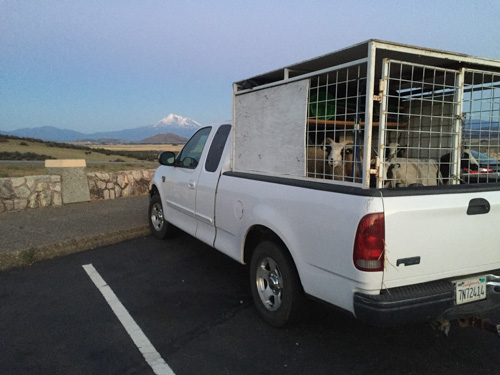
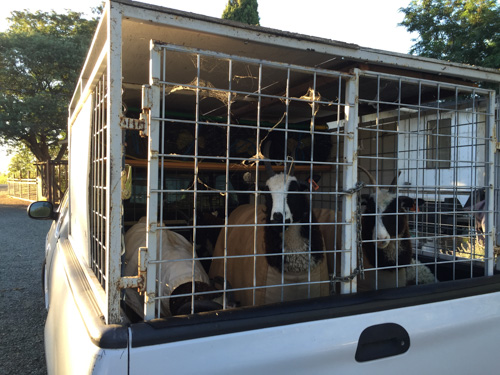
Loaded and ready to go. I took ten sheep, five of which were going to a new home. Fortunately only two were yearlings and the rest were lambs or I wouldn’t have had room. That was Thursday. It was a long day because I just couldn’t seem to stay awake for the drive. I left the house at 6:30 a.m. but stopped at several rest stops to take short naps and finally pulled into the fairgrounds about 4:30.

Black Sheep Gathering opened Friday morning with too many choices. What is a fiber fanatic to do? Watch the wool show? Watch the sheep show? Go to class? Shop?

IMG_2025

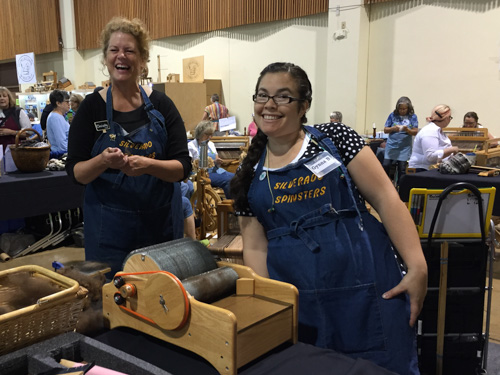
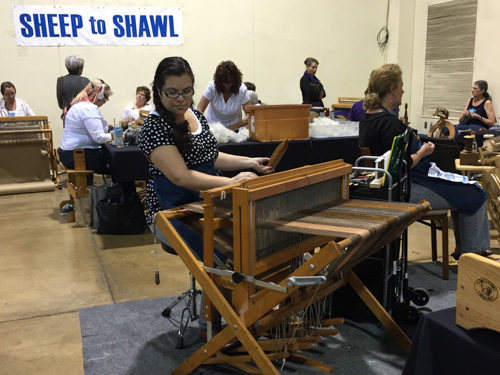
Several friends participated in the Sheep-to-Shawl competition on Friday in which teams have five hours to prep fiber, spin yarn, and weave a shawl.

IMG_2027

IMG_2030

They spent many hours prior to the event dyeing and spinning the warp yarn, warping the loom, and sampling…

IMG_2028

…to determine how they would use this beautiful fiber to spin the weft yarn.

IMG_2166

Weaver, Gynna, wove a beautiful shawl (but I didn’t get a photo when it was finished).

Walking back to the barn to get ready for the Jacob sheep show I saw…Shetland ram

…this Shetland ram displaying his ribbon.

IMG_2051

Time to take the sheep to the show ring. IMG_2073

Even though we had spent time working with the sheep they were not always cooperative. That is ram lambs, Marv and Meyer.

IMG_2063

A friend who lives in Davis helped me show. That’s the judge inspecting Meyer’s fleece.

IMG_2104

Checking Marv’s fleece.

IMG_2118

This is Lauren, one of the yearling ewes. I hadn’t planned to sell her but she stayed in Oregon as a trade for another yearling. (That will be another story.)IMG_2159

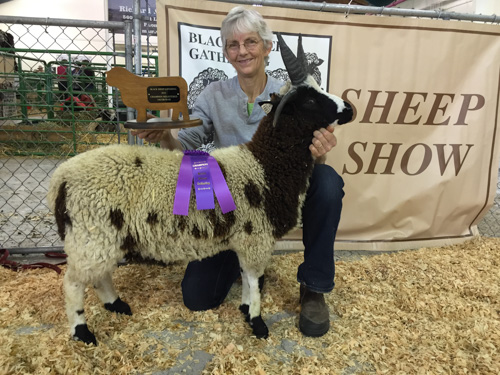
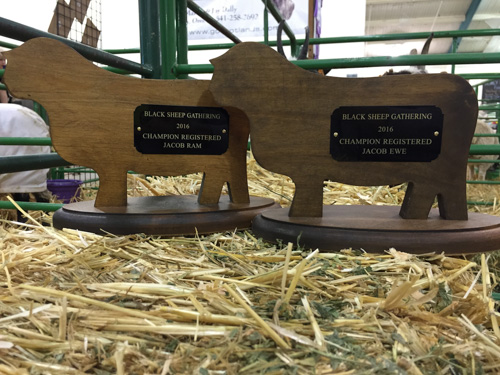
Meridian Marv (Meridian Rotor x Meridian Marilyn) won Champion Jacob Ram…15031 Honey-BSG

…and yearling, Meridian Honey (Meridian Alex x Meridian Hot Lips), was Champion Jacob Ewe.

IMG_2177

IMG_2171

It’s fun to win ribbons and trophies, but there were only two of us exhibiting sheep and I was the lucky one this year. In other years they have won the ribbons. The other breeder has beautiful sheep too and I  brought three of them home with me.

IMG_2192

This is one of them and she will be introduced formally in another post.

Sunday Morning in the Pasture

I switched lenses this morning to get a different view of What’s In The Pasture.DSC_0309

The sheep followed me to the horse pasture gate but I didn’t let them out there. DSC_0306

Instead I climbed on the gate to get a photo of the neighbor’s alfalfa being cut.hawk hunting

This hawk was flying over the field hopeful that breakfast would be flushed out from the alfalfa harvest.

Western kingbird

Western Kingbird on the powerline at the south end of the pasture.Swainson's hawk

Swainson’s hawk over our pasture.

Buckeye butterfly

Buckeye butterfly. I read that adults live for a little over a week and that plantain is one of the plants where they lay eggs. There is plenty of that in the pasture right now. I’ll have to go inspect those for eggs and caterpillars.

Forage looper moth-m

This might be a Forage Looper Moth–that is the closest ID I got from browsing the internet for look-alike moths and butterflies.

Johnson grass

Johnson grass. This grass is taller than me and is growing at the south end of the pasture. We try to get rid of it when we find it because it is very competitive and the sheep won’t eat the coarse leaves and stems. From the internet: “Under certain conditions, the leaves of johnsongrass (and sorghum) can produce toxic amounts of hydrocyanic acid, which can poison livestock when ingested.” Medusahead-dry

The medusahead is drying out. DSC_0303

I moved the fence and the sheep were ready to go out for breakfast.

More Pasture Plants

This is a continuation of What’s in the Pasture. I have a lot more plants to go.DSC_0113

I changed the fence to move the sheep from the south half of the Horse Pasture (no horses for a long time) to the north half. They came running.DSC_0117

They were ready for fresh feed…DSC_0119

…because this is what they left behind. I have moved the net fence a few inches off the fresh pasture. You can see what it looked like on the other side of the fence.

Orchardgrass-m

I think this is orchardgrass, but I’m not 100% sure.

Orchardgrass ligule

When you identify grasses it helps to look at more than just the seed head. This photo shows the ligule which this publication from the Wisconsin Cooperative Extension (which also has a good diagram of grass parts) describes for orchardgrass as “prominent; cuts or splits on whitish margin”.  Yeah, I can see that. This one from UCD is also a good resource.

Curly dock

Lately I have left my 40 mm lens on the camera and get a kick of of looking closely at things that I see better on my computer than through my glasses.This one is Curly Dock.

Curly dock-2

Here is the not-so-interesting photo of it.

Spiny cocklebur

I have made good progress at getting rid of Spiny Cocklebur, but it will never all be gone. I continue to chop any of these that I see. Obviously I haven’t dealt with these along the corral fence but need to take a shovel instead of a camera when I walk out here. Spiny cocklebur-close2

You can see why it is undesirable and the reason it thrives even where everything else has been eaten. Besides the thorns the flowers develop into nasty burs that stick in fleece and hurt fingers.

blackberry

Speaking of thorns and eating, I’ll deal with the thorns when the eating is this good. And I won’t complain that the bushes are completely covering the electric fence.  I had my first ripe blackberry this morning.

Sprout Yarn Scarf

Friends and customers told me that I should start carrying sock yarns so last winter I chose a few special yarns. One is Sprout, a fingering weight superwash Merino yarn that is dyed and marketed by The Fiber Seed, the business name of a delightful couple who live in Florida.

IMG_1769

This colorway is called Quicksilver and is  dyed in one of several dye patterns they use.DSC_0024

Chris saw me photographing this and commented that I was going to weave something to match my cell phone.

IMG_1771

Here is what it looks like after winding into a ball.

Too many people think that you can’t using “knitting yarns” for weaving and vice-versa. To me, yarn is yarn. This yarn is very stretchy and you need to plan for that from the start. I measured the warp on my warping frame under a light tension, also taking time to match up the color repeat. That way I have a warp where the colors don’t mix, but move from yellow to gray and repeat (which you will see in the finished piece). That may not work with every dye pattern or warp plan, but it worked perfectly for this one.

IMG_1775

Notice how open this is. I sett the warp at 12 epi (ends per inch) and wove it with a very light beat. Beginning weavers often BEAT, instead of beat press the weft in. In this case that would completely cover up the warp and not make fabric appropriate for a scarf. This yarn is under tension and when it comes off the loom a lot of those spaces will fill in.

I could have chosen to weave this with a solid color to maximize the effect of the color movement in the warp, but one of my goals is to show what can be done using just one skein. The color repeat in the skein means that when using this yarn for weft the color changes after about every fourth weft pick. Notice also how the color changes over-ride the pattern of the weave structure. This is one of my favorite weave structures, but in this piece I used it for the drape and texture it would give the piece and not because you’d see the design it makes when I use solid yarns.

971 Sprout scarf

I knew this wool wouldn’t “full” because the yarn is superwash, but wet finishing will still change the look of the piece. I soaked it in water, agitating as if I was fulling it. I should have taken a photo but it was late at night. After that process the scarf looked pretty awful. The yarn reverted from being lofty and squishy to long and stringy. The fringe looked bad. I laid the scarf out to dry as I usually do and it was very disappointing. Then I remembered–Superwash! I put the scarf in the dryer with a big towel. That was the answer!

This scarf is lofty, bouncy, and very soft.

Here are the stats:

On the loom: 7.25″ x 81″ measured under tension

Off the loom: 6″ x 68″ (Remember, I told you it was stretchy!)

Wet after washing: 6.25″ x 72″ (and not looking very good)

After drying in dryer: 5.25″ x 58″  Perfect!

IMG_1772

Another cool thing for you knitters is that each yarn comes with a QR code that links to a knitting pattern using the yarn.

I guess I need to get these yarns on my website, but there are so many color and dye pattern choices that will be difficult. I’ll work on it. In the meantime, if you are interested you can always ask me to send photos or come to the shop.