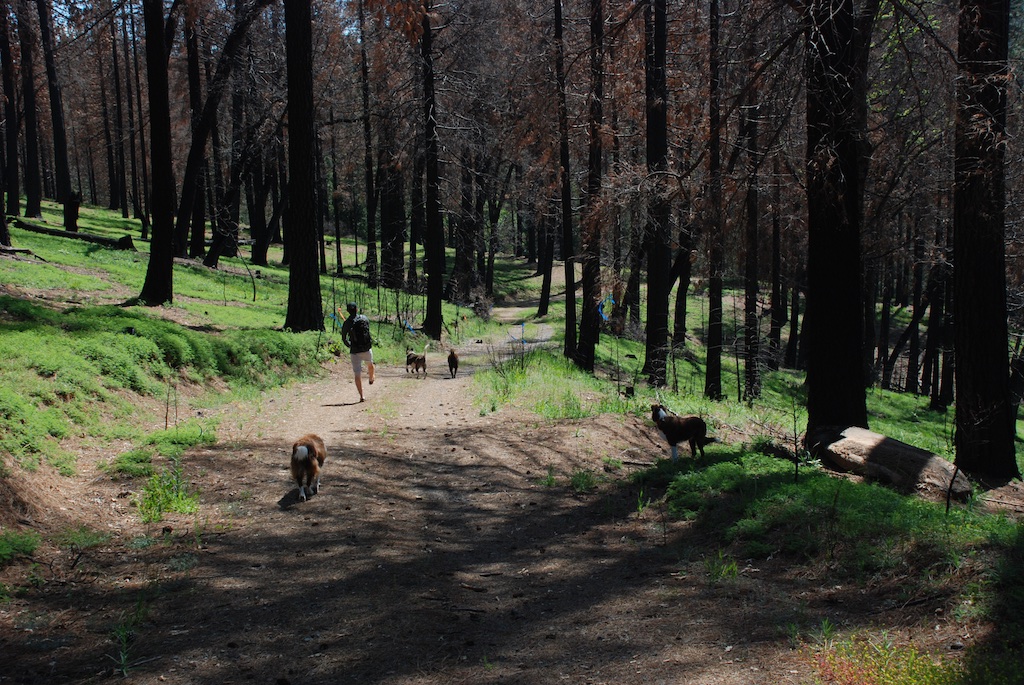
Yesterday the dogs and I drove to my son and DIL’s house to go on a hike. We drove up Ice House Road into part of the El Dorado National Forest that burned from last year’s massive King Fire, parked the truck, and started walking down one of the dirt roads. We found stunning beauty and tragic devastation at the same time. Eventually we made our way down to the South Fork of the American River, finding a new spot that M & K are putting on their personal favorite-place maps.
I have lots of landscape and flower photos. For dog fun you can check out Rusty’s blog–after I am finished and he can get on the computer.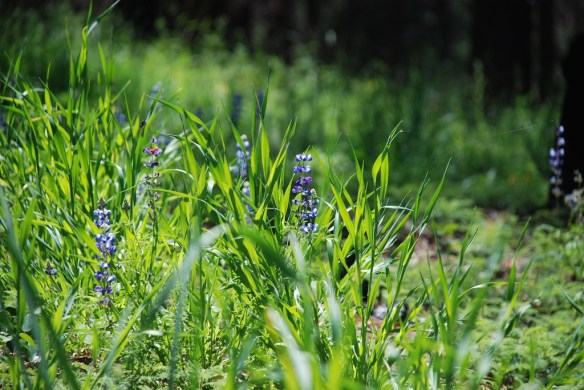 We stopped along the road in a beautiful park like landscape with lots of wildflowers…
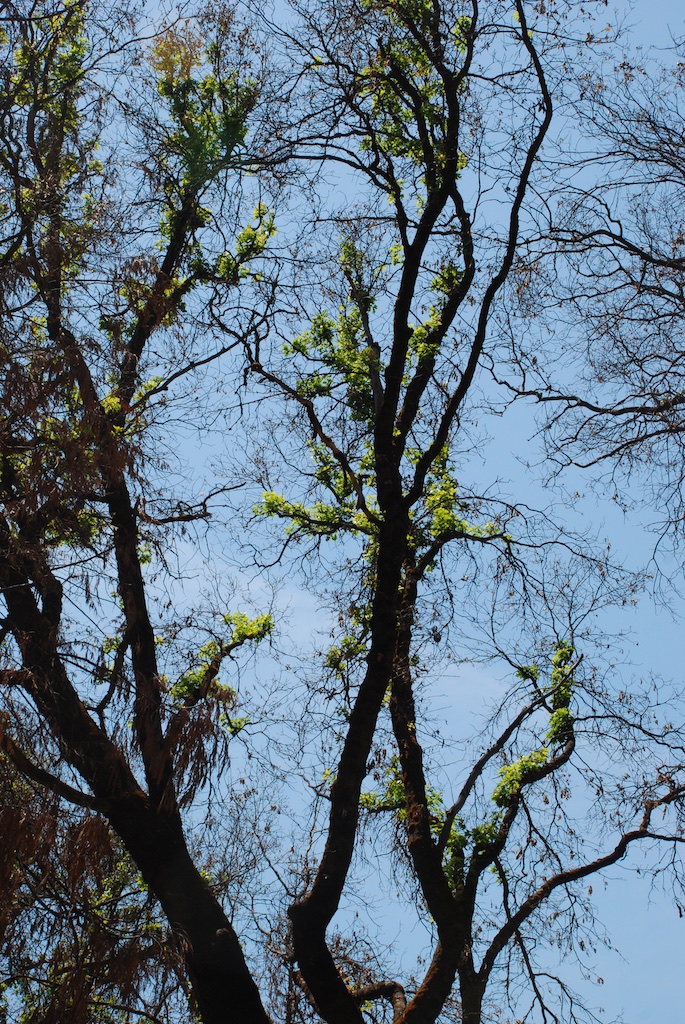
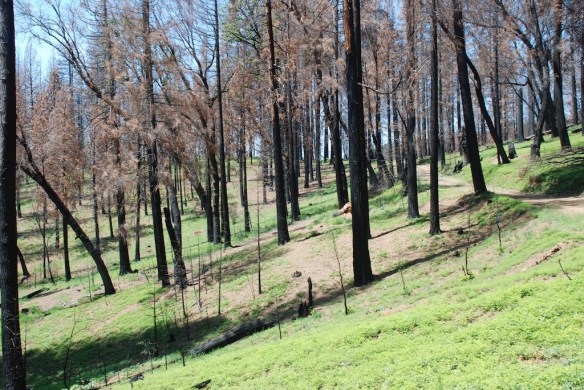 …but when you look up you realize that all the trees are dead.
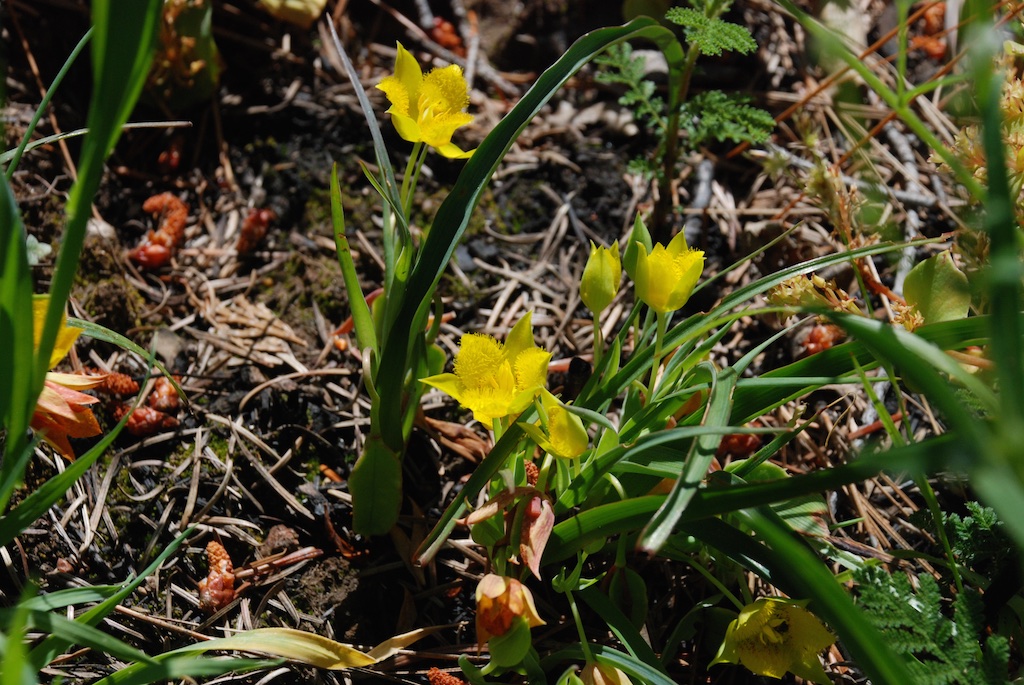
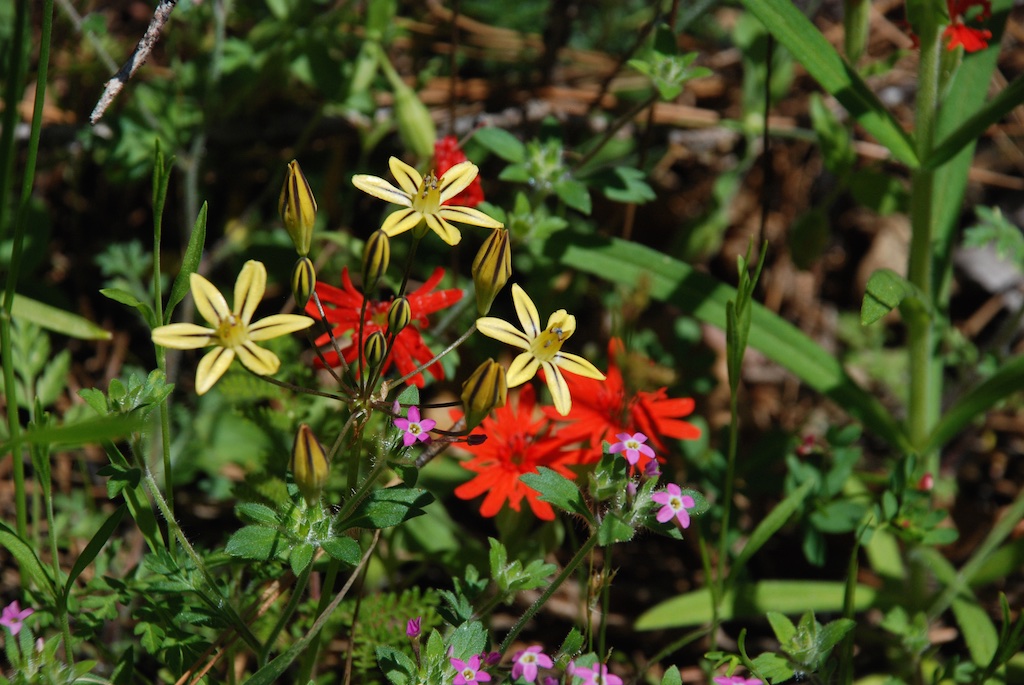
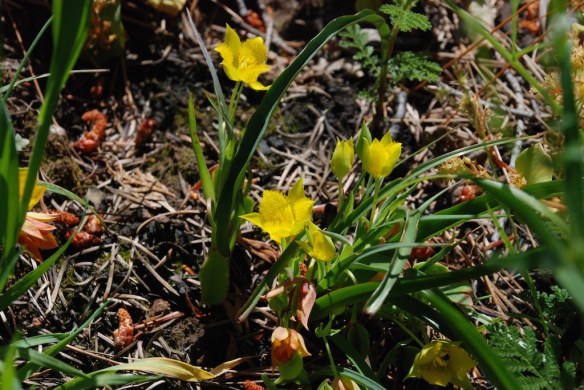 I ID’d some of the flowers. Yellow Star Tulip, Calochortus monophyllus.
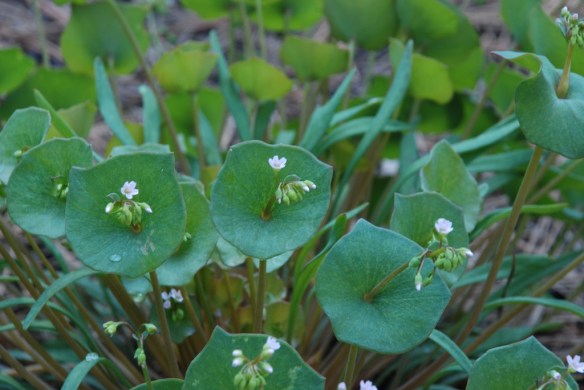
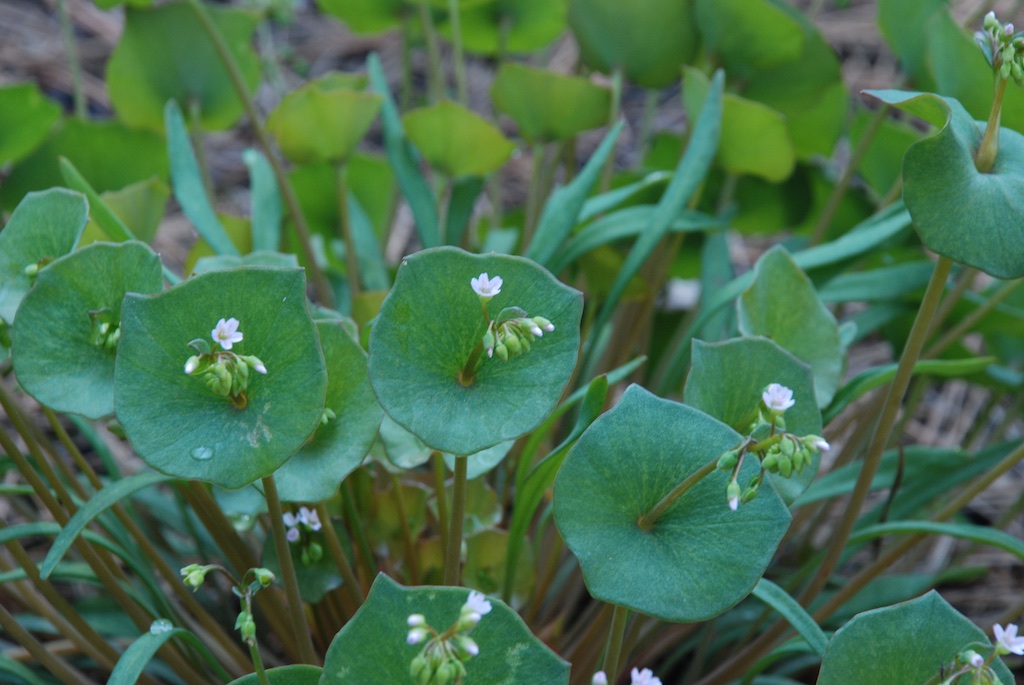
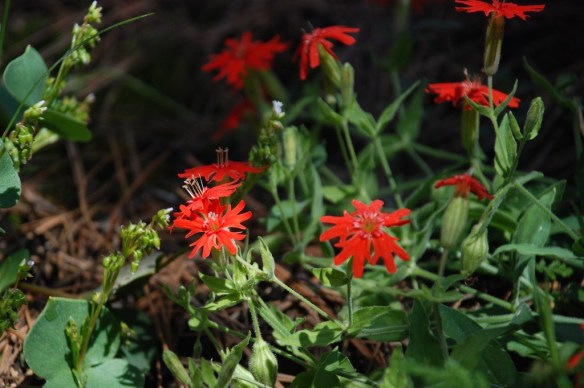 This one I don’t know and if I take time to try and find them all I’ll never get outside.
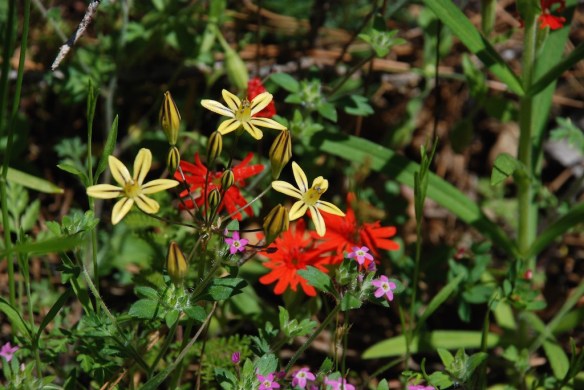 Pretty face, Triteleia ixioides.
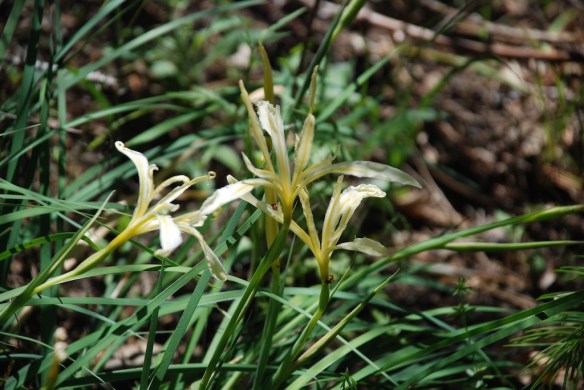
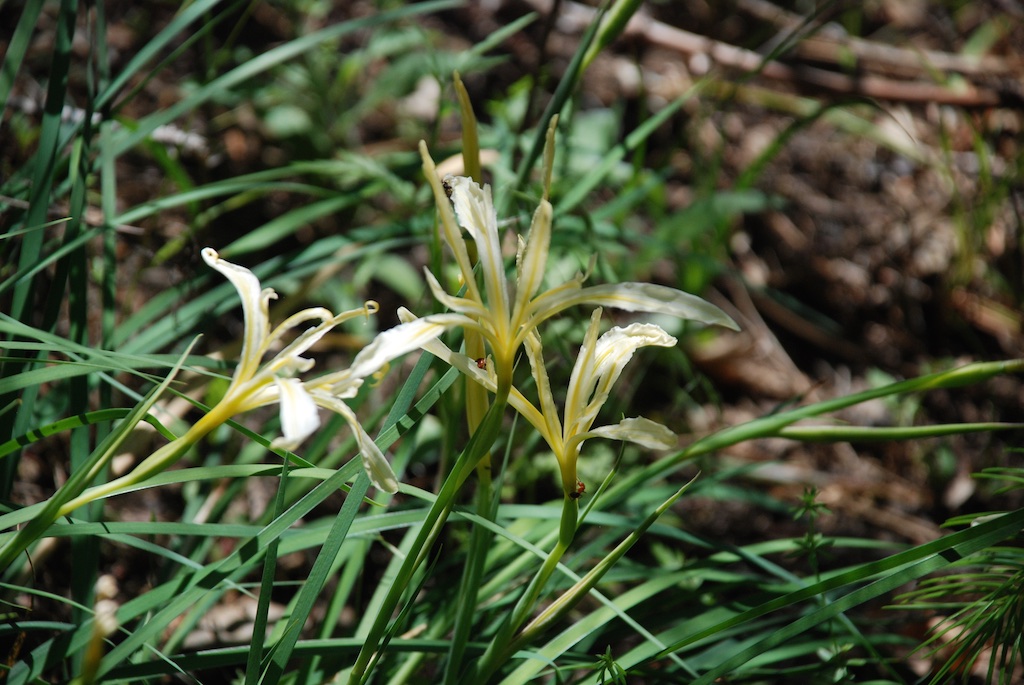
Some kind of iris.
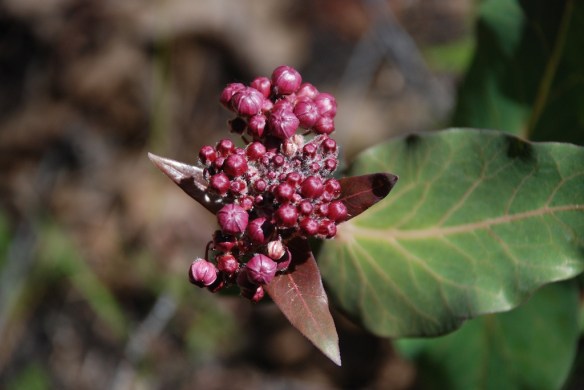
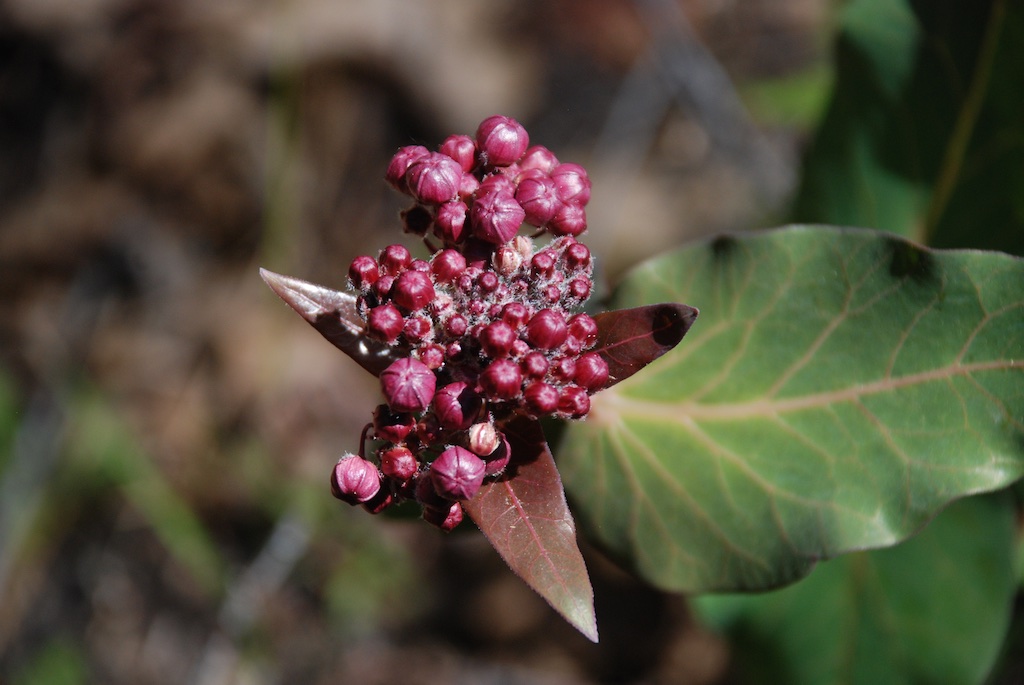
This looks like Sugarbush (Rhus species) when I looked it up but that is in S.CA so I don’t know which species this one is.
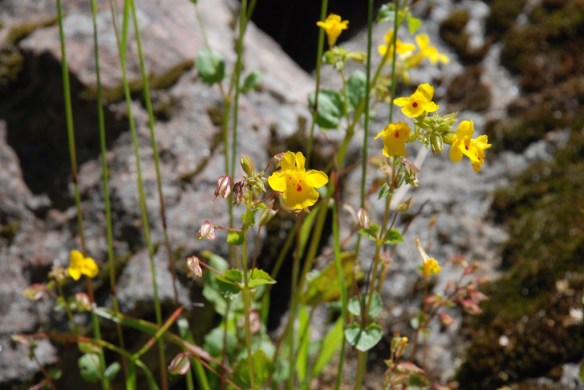
Monkey flower.
We saw all those flowers on the way to the river.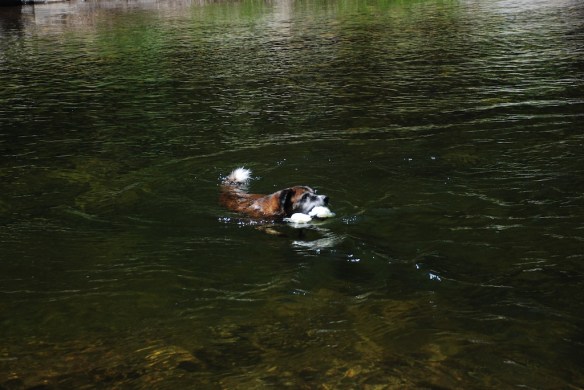 Sam and Kirin are strong swimmers and spent their time going after the toy that Matt kept throwing for them.
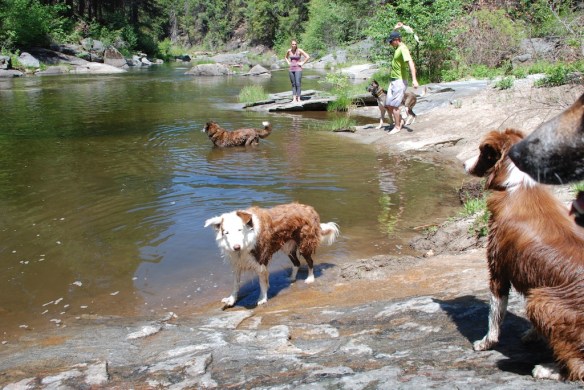 Notice where my dogs are. Rusty spent most of his time looking at sparkles in the rocks, Ginny went in the water but was intimidated by the big dogs and the deep water and Maggie lives in her own world (did you see her on the right?)
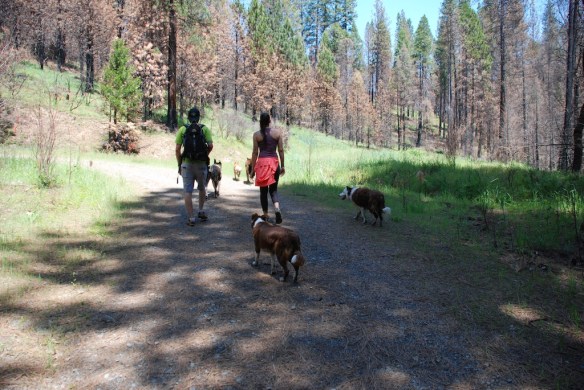 Walking back to the truck.
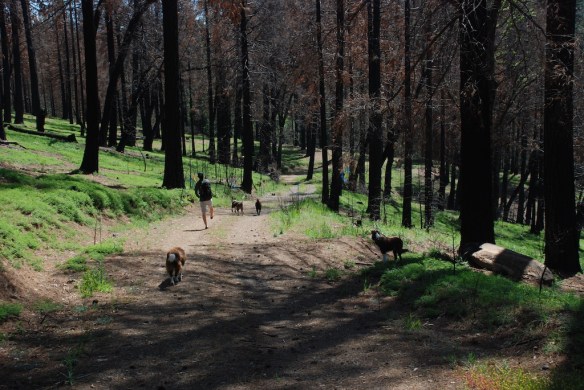 These trees are dead but this gives a glimpse of what the forest might have been like if periodic fires had been allowed to burn during the last century. When fire burns light brush and debris off the forest floor it opens the forest up to light and allows other vegetation to grow, at the same time preventing the fires from burning into the tops of the trees. Wouldn’t this be a beautiful site if this had been a much less damaging fire and the vegetation cycle was just starting all over without having killed the trees?
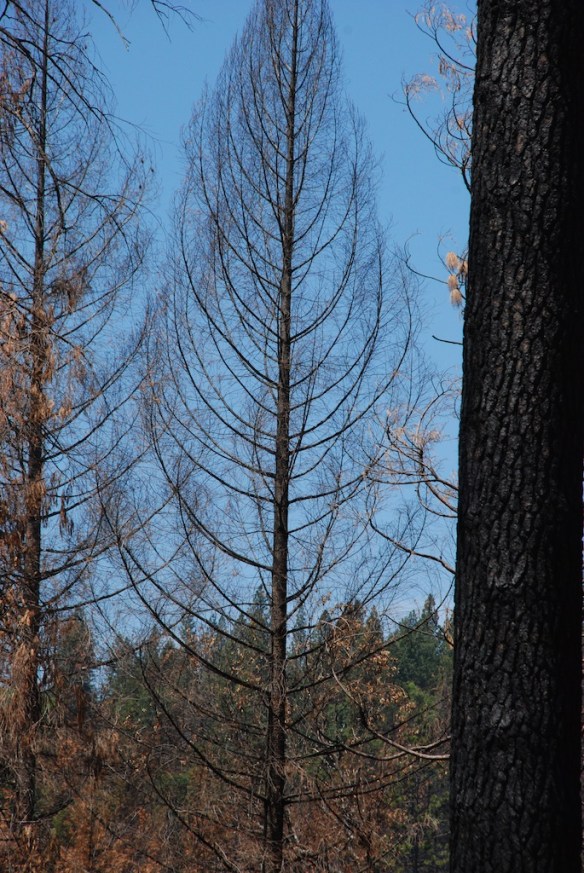 The King Fire that burned 97,000 acres was human set. It was not an accident. It was set on purpose. My son and DIL work for the US Forest Service and were directly involved with the suppression of this fire that burned only a few miles from their home.
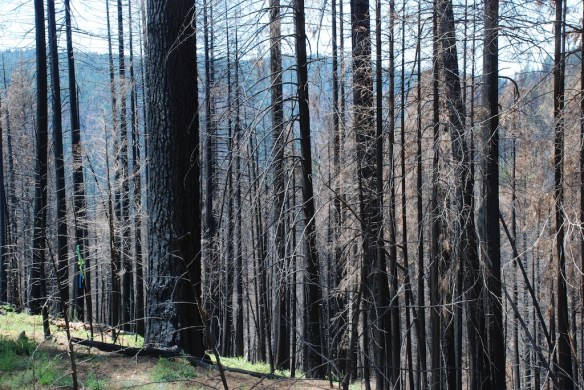 It had tragic consequences for people who lost their homes and was a devastating blow to the El Dorado National Forest. There were peripheral impacts as well to thousands of people who have nothing to do with actually working as fire fighters or who live in the forest. Think of it as a ripple effect. We were on one of those ripples. My other son took the summer off from his regular job on the El Dorado Hotshot crew so that he could compete in the Tahoe Ironman. He had trained to be at the top of his game. The event was cancelled just moments before it was to begin due to the horrible smoke in the Tahoe Basin. Here is the story I wrote then. This is one tiny example of how something impacts lives far removed from the actual horrific event. Imagine the number of weddings, vacations, jobs, etc that were impacted over the course of this fire activity. And all of those things pale in comparison to the direct consequences of the fire–the environmental impact, loss of property, etc.
Whew! I didn’t intend to go there with this post. Let’s move on.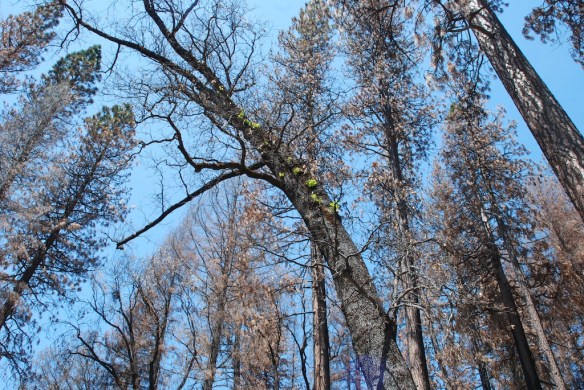 The oaks surprised me. The fire didn’t kill them.
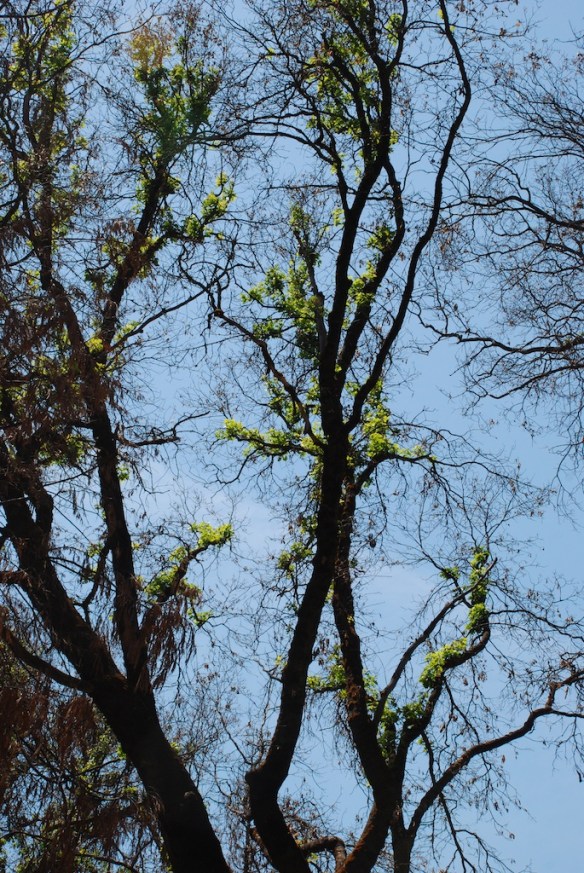 I’m curious to know if they will remain when (if?) this area is logged.
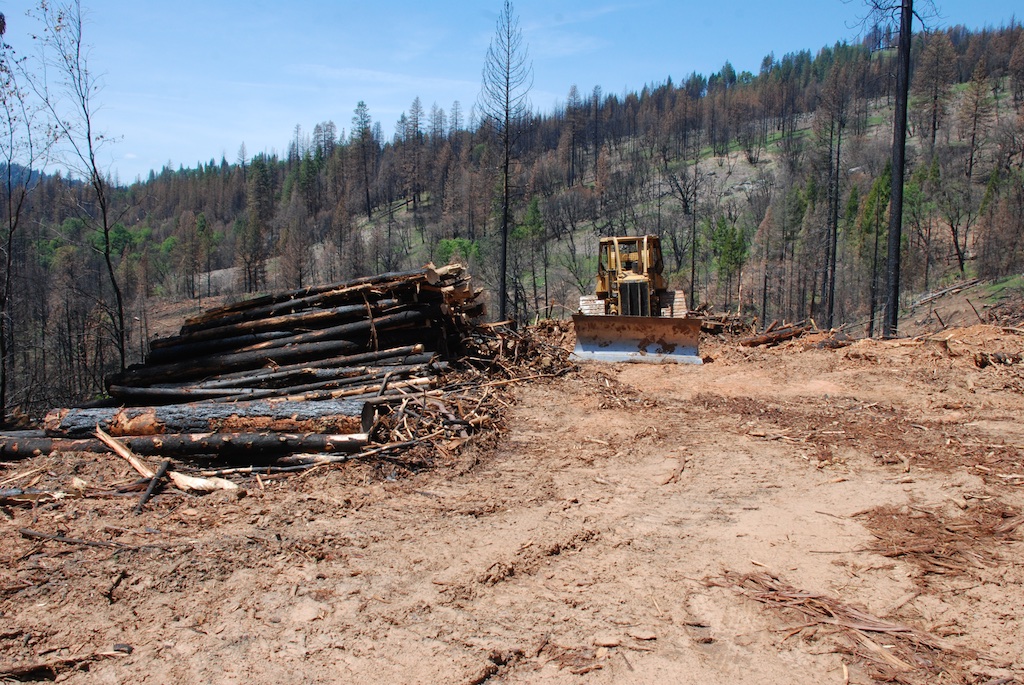
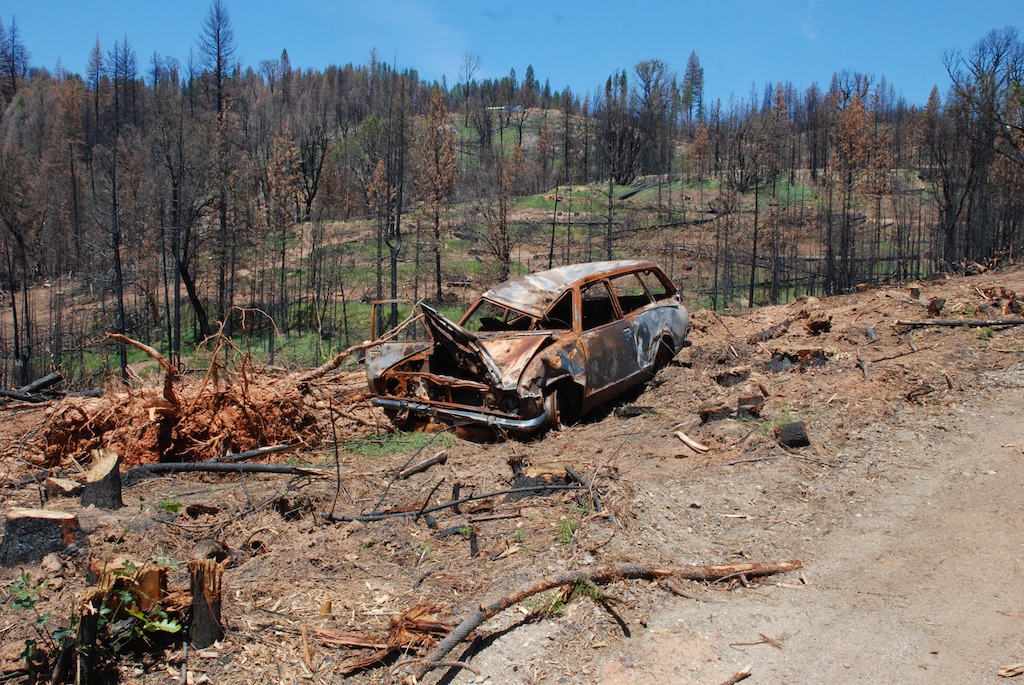
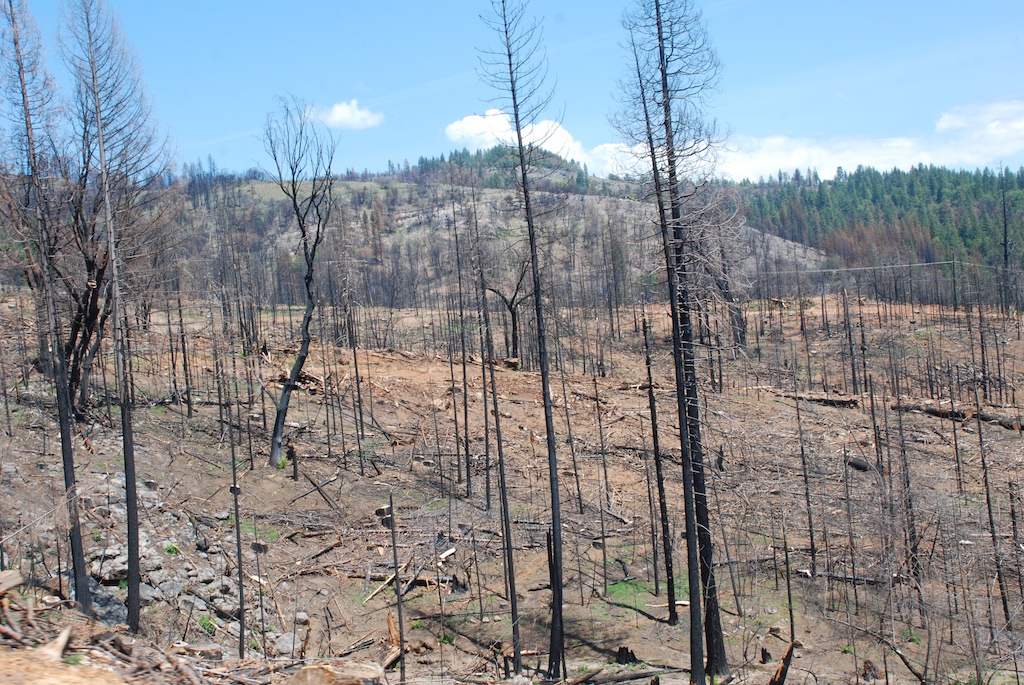
The next photos are the scene we drove through to get to where it looks much prettier.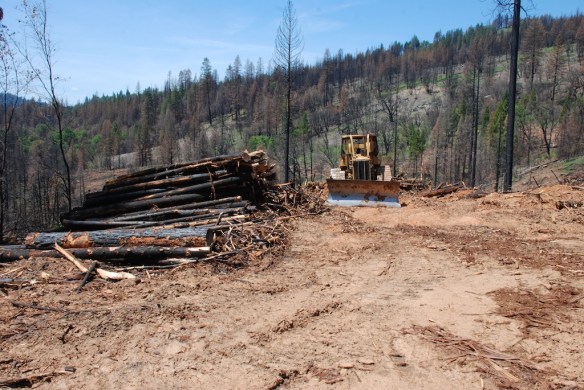 These areas are being logged to remove the dead trees while there is still value in the lumber. This is an interesting article about the post-fire logging and rehab.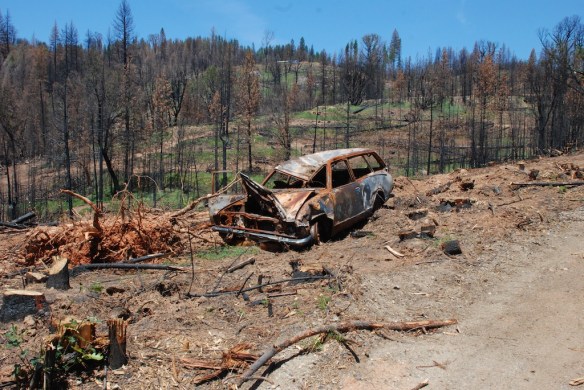
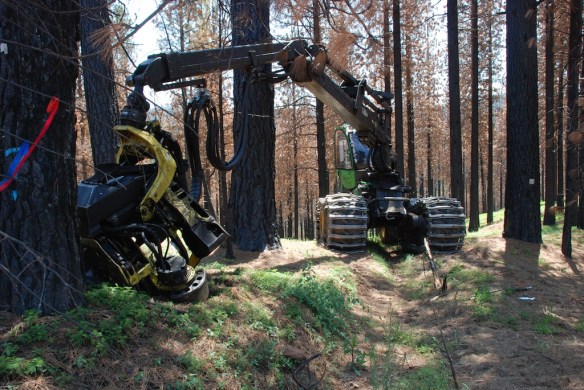 This is a demonic looking machine. At the end of this long arm there are claw-like grippers and a chain saw.
 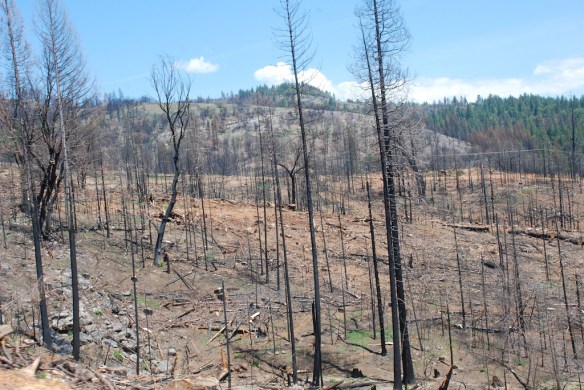 A sad landscape.
R

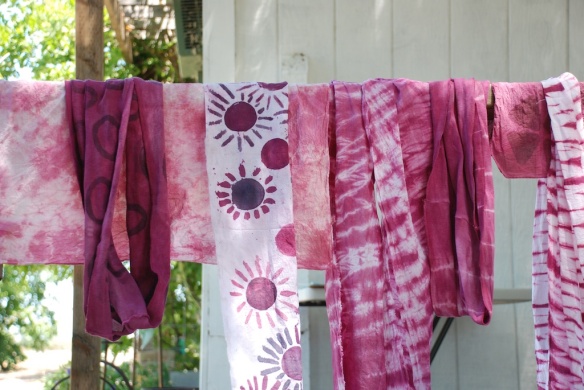
 These are scarves in 3/2 cotton (which I have in the shop but isn’t on my website). A pressing when I get home will give them a more finished look.
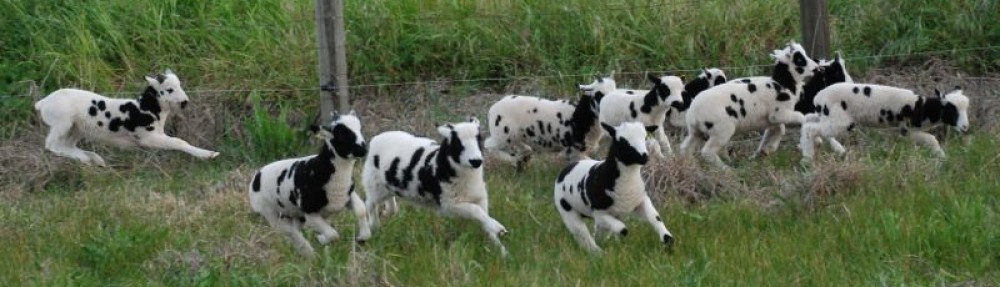
 Another warp of Jacob scarves.
 But first I used cotton–the same 3/2 cotton as the scarves in the first photo.
  Using the the last of the warp I experimented with different weaving order. I think its interesting that at different angles it looks as though I used other colors but all the yarn here is black and white. By the way, I know that checkerboards are traditionally red and black but, oh well…
 In this photo the checkers haven’t been finished.
 In other weaving, this is the latest issue of Handwoven with my Yarn Lab article in which I compared fulling and felting of Imperial Yarn Company’s Columbia and Erin yarns.


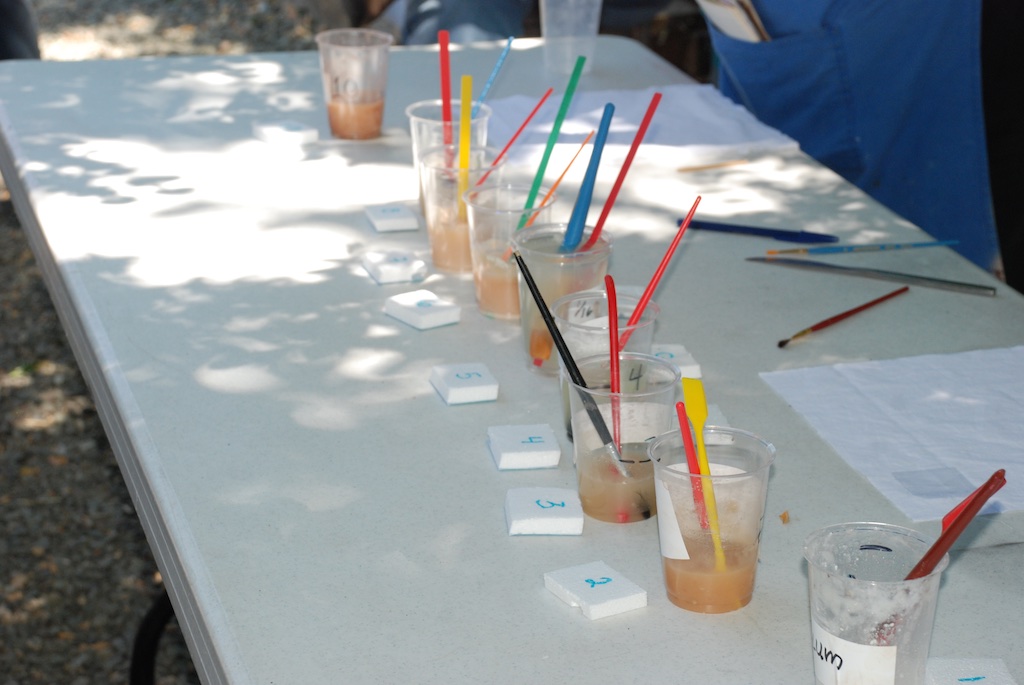
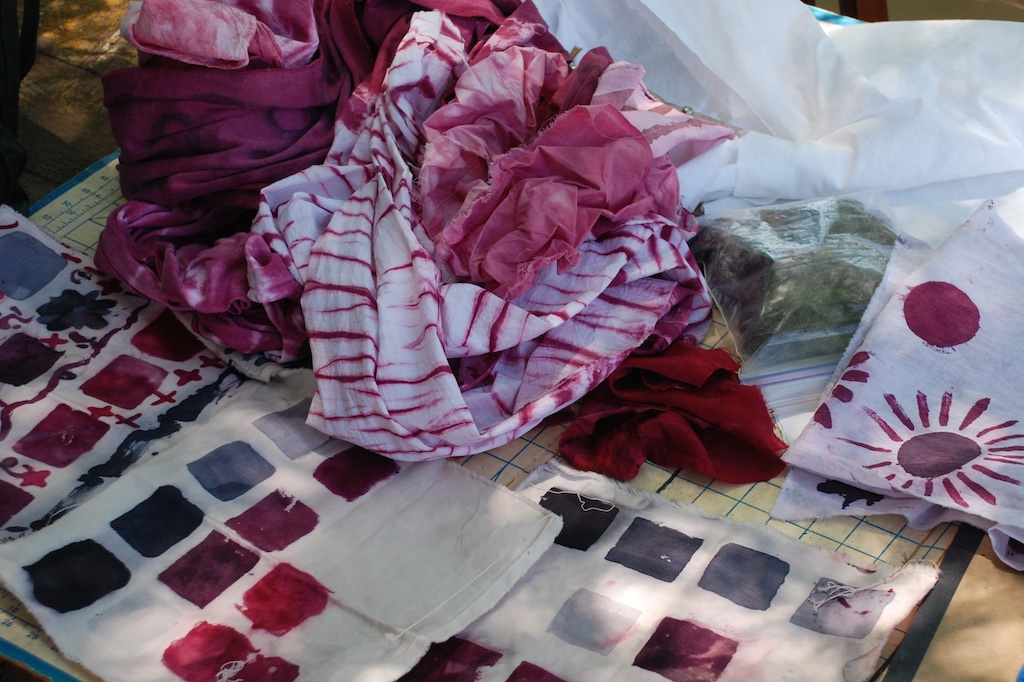
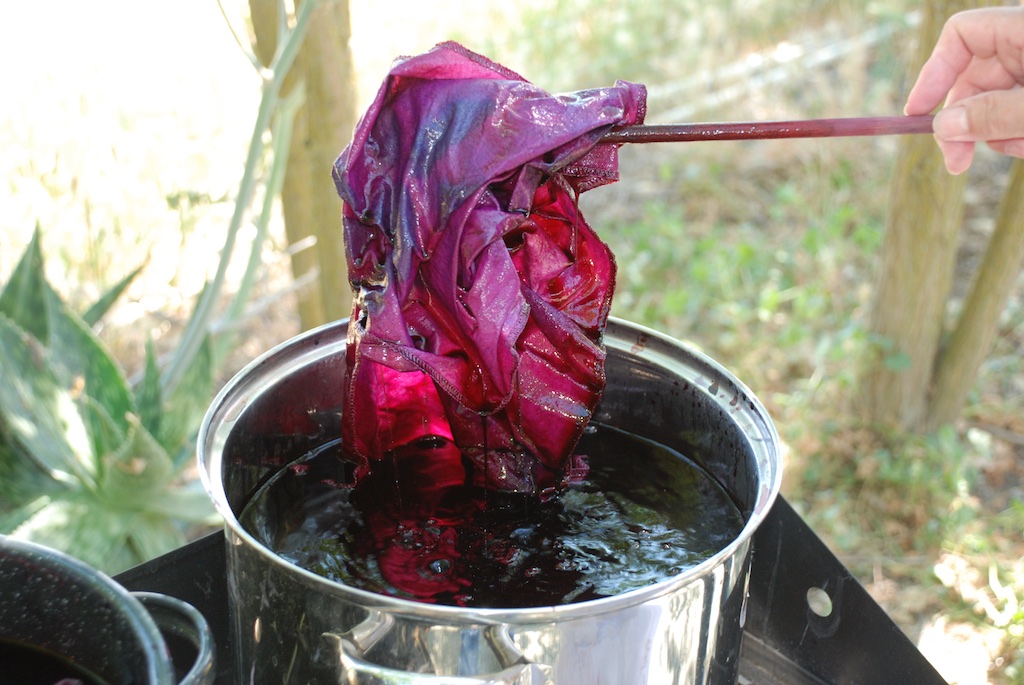
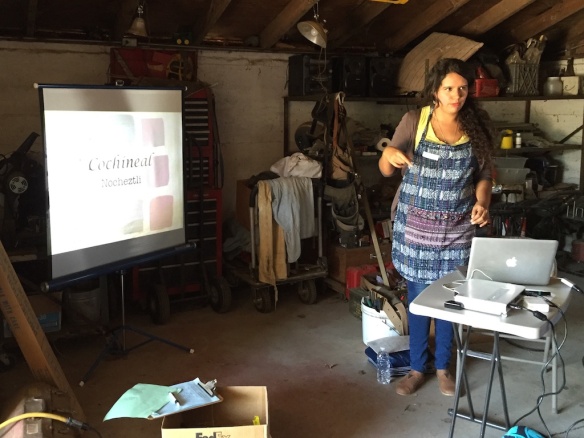 We started in the theater (aka garage) to watch a PowerPoint presentation about cochineal.










 I looked it up. Western Kingbird. I know my birder friends will tell me if I’m wrong.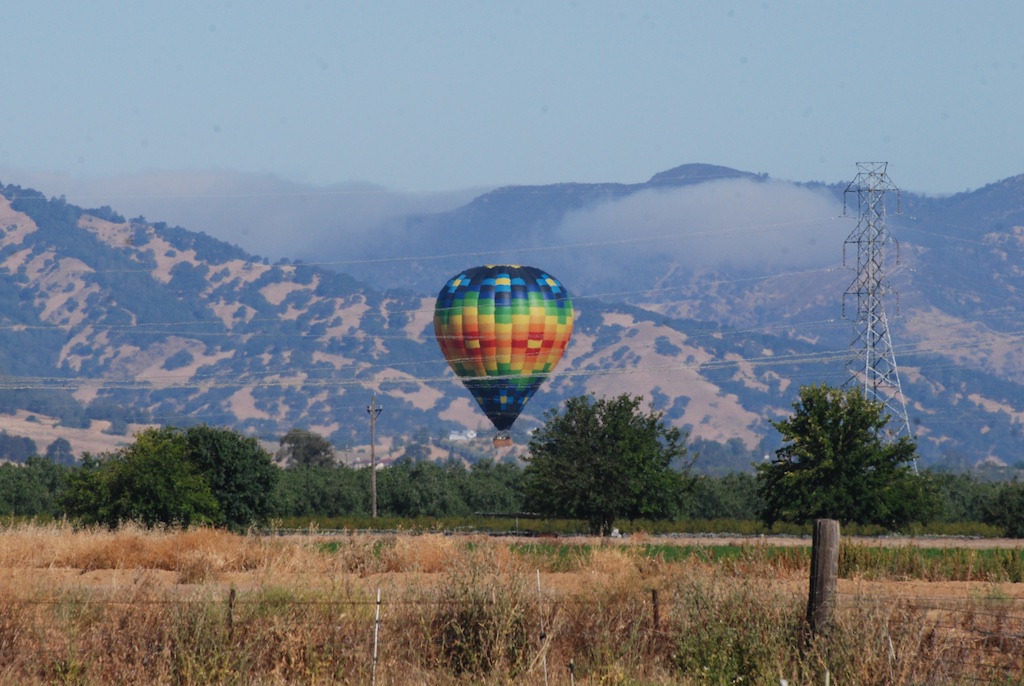
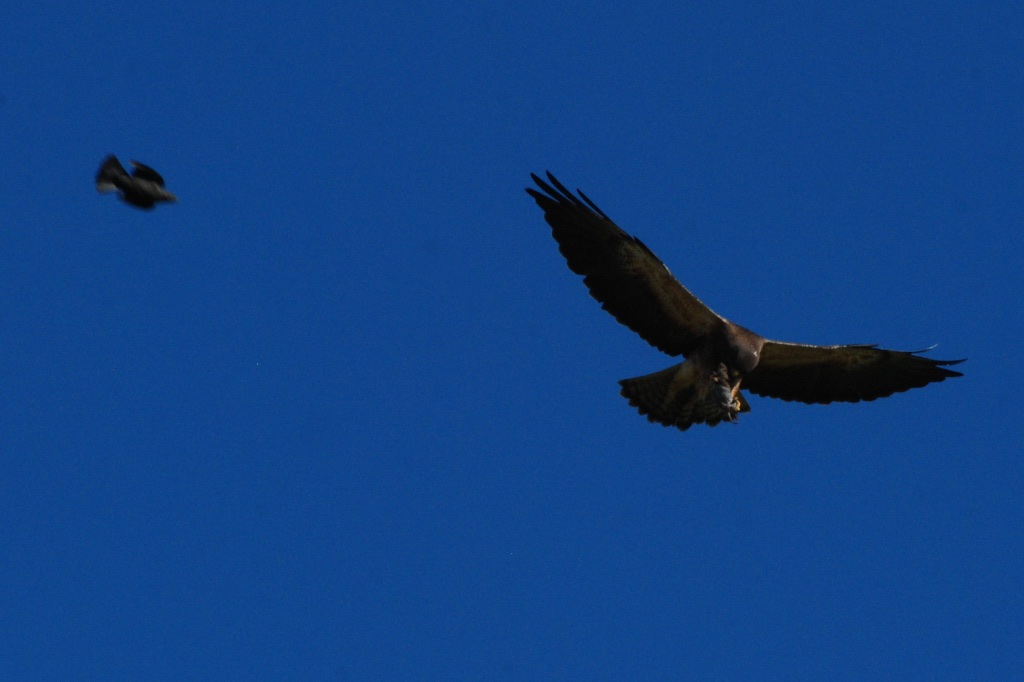
 …I saw this hawk being harassed by another bird.


 This is Jenkinson Lake. There camping areas all around it and lots of people on this Memorial Day weekend. I had Ginny on the leash and she had a lot of lessons in good behavior when meeting kids, bikes, etc. Matt had told me that it was about 10 miles from their house, around the lake, and back. When I was standing here I though that maybe I’d do that instead of just an out-and-back walk. I would continue to the left in this photo, go around the dam in the center of the photo and back to their place.
 After walking some more I came to this part of the lake and decided that maybe an around-the-lake walk wasn’t going to work for today. This is a finger of the lake that juts back up the valley and I would have to walk all the way around this part and the main part of the lake in the other photo. So I went a little further up the west side here and then turned around but took a higher trail back that avoided some of the crowds that were nearer the lake.
 This is Ginny sitting on the dock. She didn’t seem to care that the ground under her was rocking.
 That low growing shrub is mountain misery and here are some close-ups.
 Mountain misery is unique to the western slope of the Sierras and there is a lot of it. It has a pungent oily sap and can play a role in preventing erosion to hillsides in the years following major fires. On the other hand those same deep far-reaching roots use up a lot of moisture and may prevent other plants from becoming established.
  I don’t live in the mountains so don’t deal with it as a “weed” and I like the fragrance–it reminds me of the forest after a rain.
 I came across a small area of striking yellow on a south facing slope. I didn’t identify these flowers but in their midst I found some…
 …monkey flowers. At least I’m pretty sure they are Mimulus but I don’t know which species.What I noticed first about them were the seed pods.
 What I noticed first about them were the seed pods.


 Don’t tell Rusty and Maggie where we were. I feel guilty leaving them home. This was fun for Ginny and me and Ginny got about 6 miles of on-leash work on manners.







 We suspected after the soil was worked over and over and finally bedded and rolled smooth and flat like this.


 They struck me as interesting.
 Meridian Jacobs' Blog