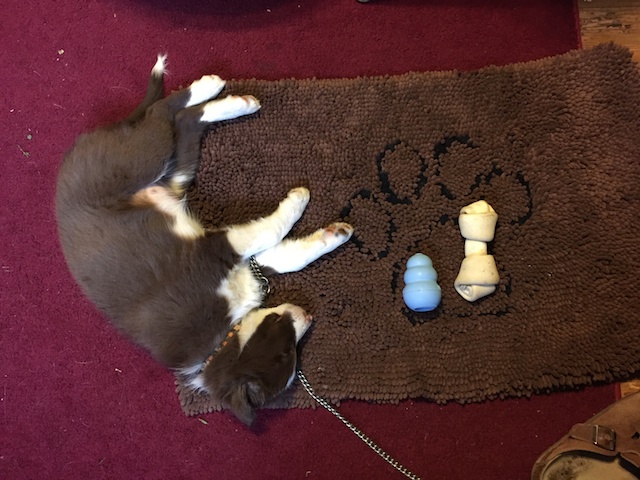
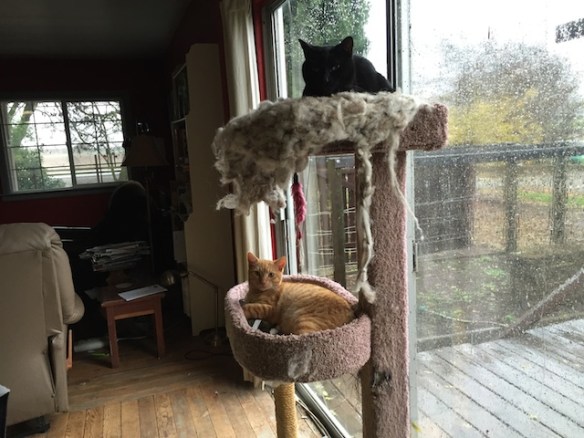
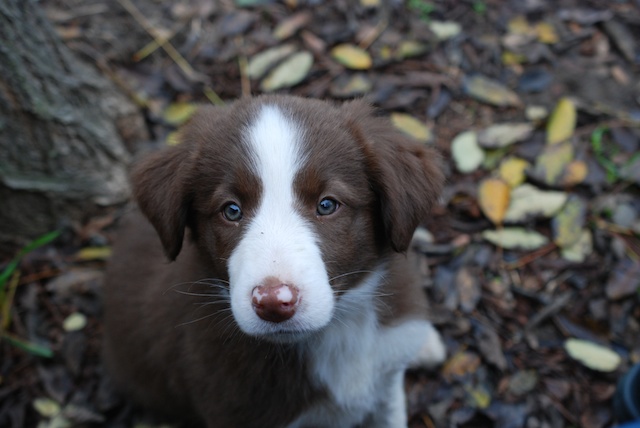
I sat at the computer most of the day while it rained. These are iPhone photos taken from my chair of Ginny in between chewing on toys, cuddling, and potty trips outside.
That’s a tired puppy.
Ozzie and Sunny on their perch.
Author Archives: Robin
Ginny
PuppyWorld. That’s the world I’ve been in for almost 36 hours now and it feels as intense as motherhood. (Maybe every decade of age adds to that.) Rusty has already blogged about his impressions on Day 1 and Day 2. Here’s Day 1 for me in photos.
On Wednesday I drove to Mendenhall Wool Ranch, where Rusty was born, to pick up Ginny who is 8-1/2 weeks old (born October 12). There were two litters of red Border Collie puppies born in the same week. This photo shows what it is like to walk around there.
Rusty’s blog shows photos of Ginny being introduced. This one just has cute puppy photos.
I was trying to get photos of Ginny but she was nervous and every time I squatted down for a photo she ran over and sat on my feet.
Eventually I moved over enough with my foot still in place that I could get some cute shots.
Notice that she is still sitting next to my foot.
.
I tried to get all three dogs in one photo but Maggie and Rusty didn’t want to cooperate.

Close to Home–Post #16 The End
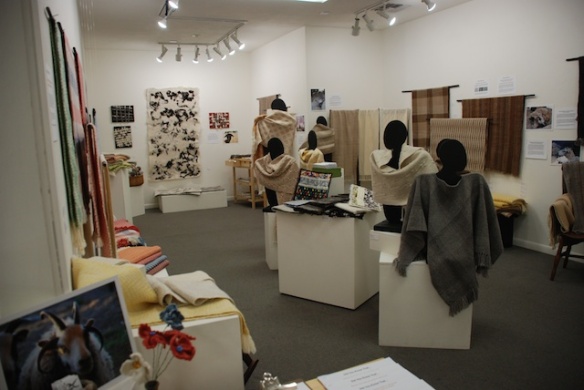
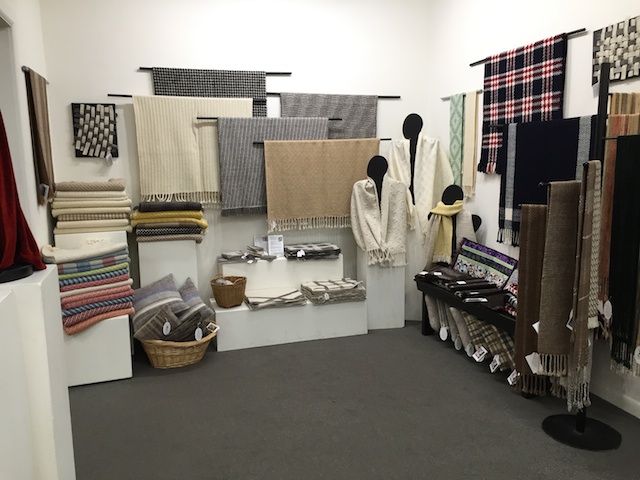
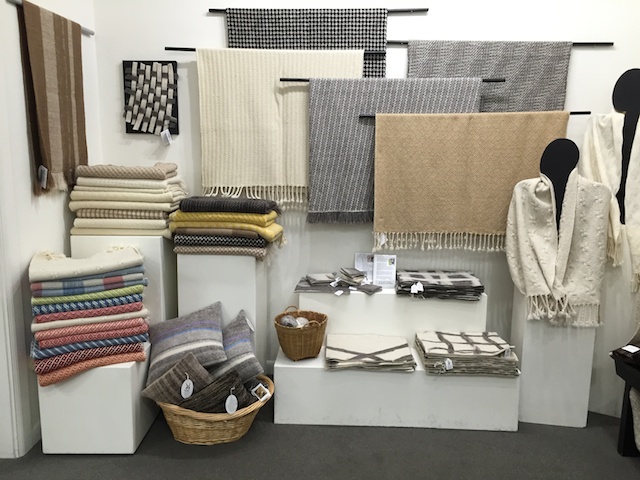
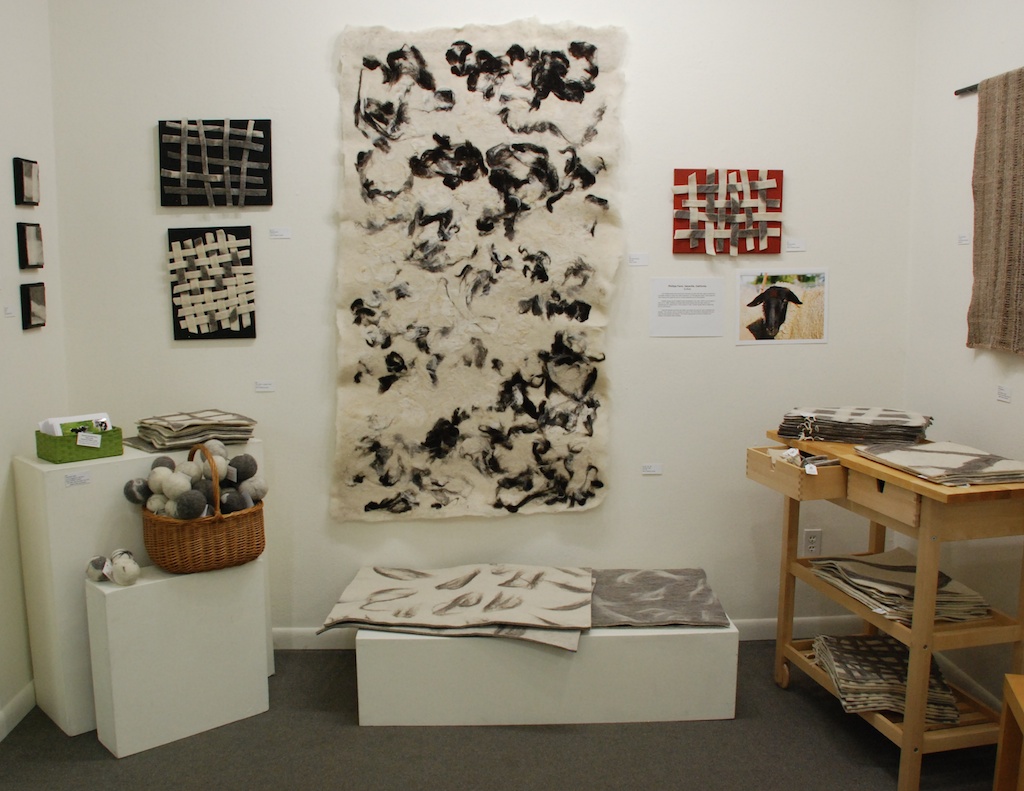
Monday I took down the show. Two dedicated and fabulous friends came to help. They tagged and wrote price labels for all the pieces and sorted sold from unsold. I took out nails, patched holes, got the museum putty that held signs off the walls, and figured out how to condense this whole gallery….
into the corner at the end of the room. I didn’t finish until the next day.
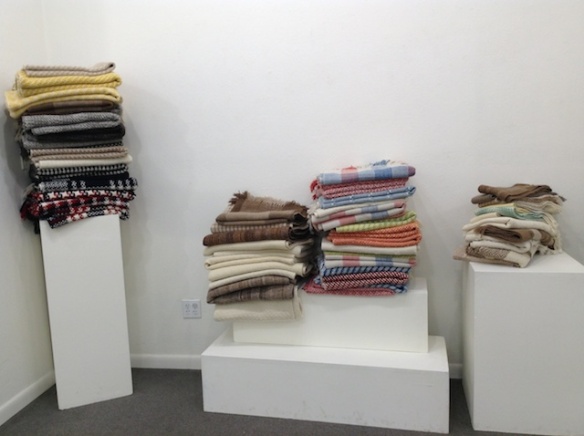
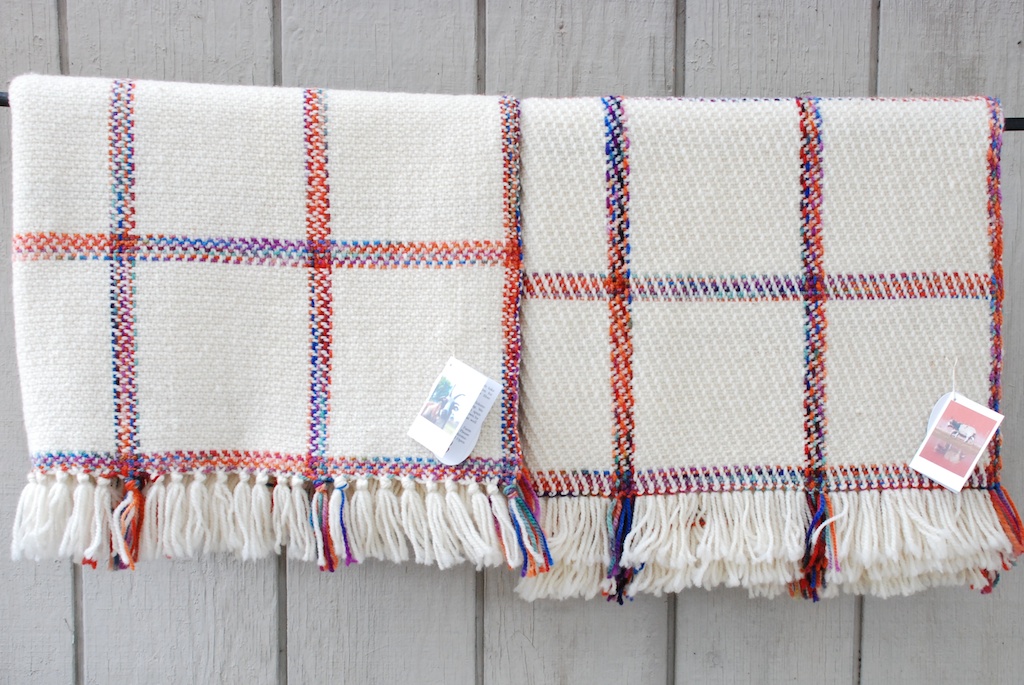
This is some of the blankets all tagged and ready to show again.
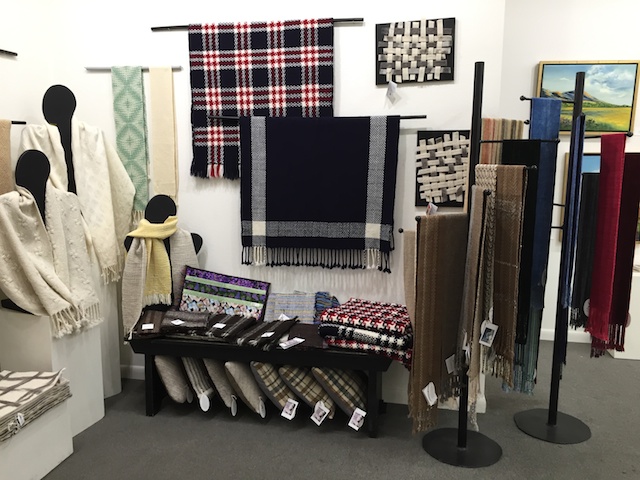
I was able to keep a lot of pieces there. I hope a lot sell because in January it will be someone else’s turn for a show in the gallery and my things will go back out to a smaller space in the main part of the store.
Here is what I did. The chenille scarves came back to the display, although baby blankets are still in the other room of the store.
One wall.
The other wall.
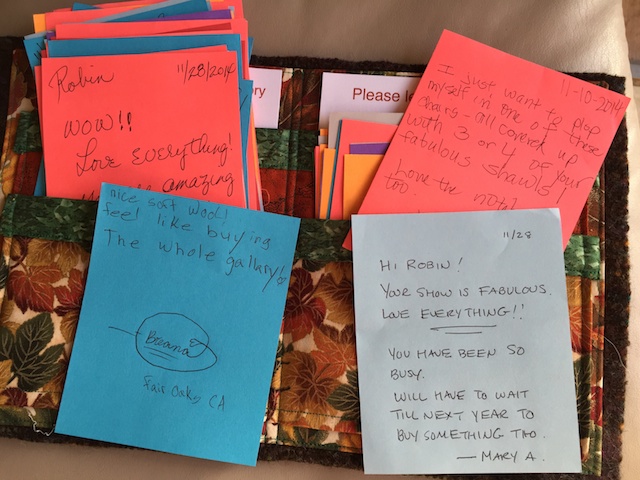
Remember this?
Now it’s full of wonderful comments. I like Breanna from Fair Oaks mindset, don’t you?
Thanks to everyone who came, who commented, and who bought, and supported the local sheep industry and your local weaver/farmer!!!!
Water and Fire and Water
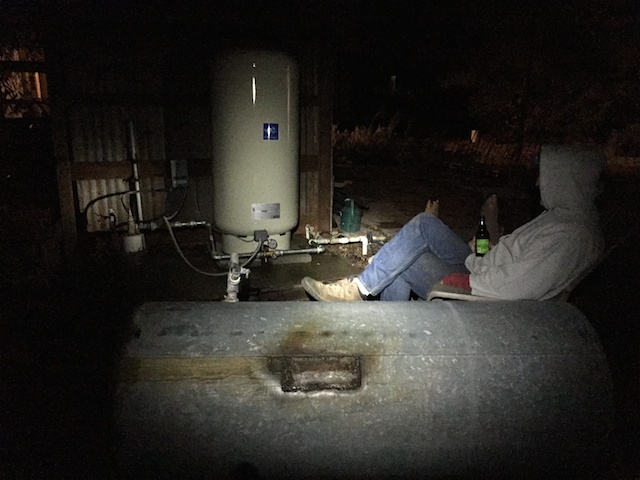
One of my friends was leaving at the last Spinners Night Out the Friday evening before Thanksgiving. She came back into the shop to say that she was sprayed in the face by water and asked if there a sprinkler on. I went out to look and found that the pressure tank for the well was spraying water from a rust hole. We turned the water off and the next day Dan welded a patch on the tank. That was enough to get us through the weekend (turning the water off at night because it was still leaking), but was not a permanent fix.
After the welded patch–better than before, but only a temporary fix.
I picked up a new tank in Sacramento. It’s nice to have a son-in-law who is in the well and pump business and could get me a good price on a tank. He wasn’t here for the installation but gave tech support on the phone.
That evening I came home from a meeting and found Dan watching to make sure there were no leaks.
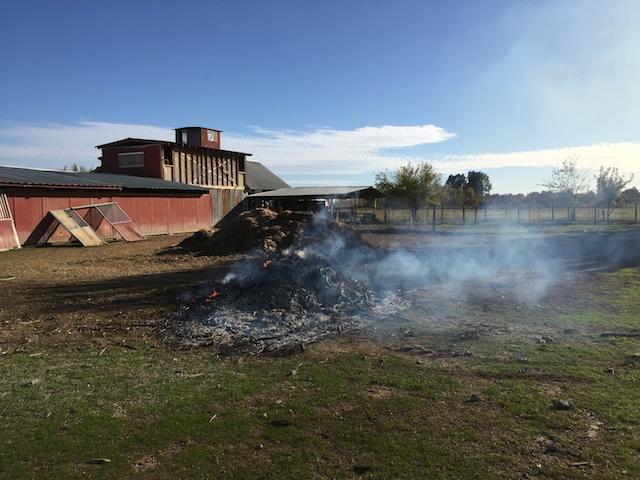
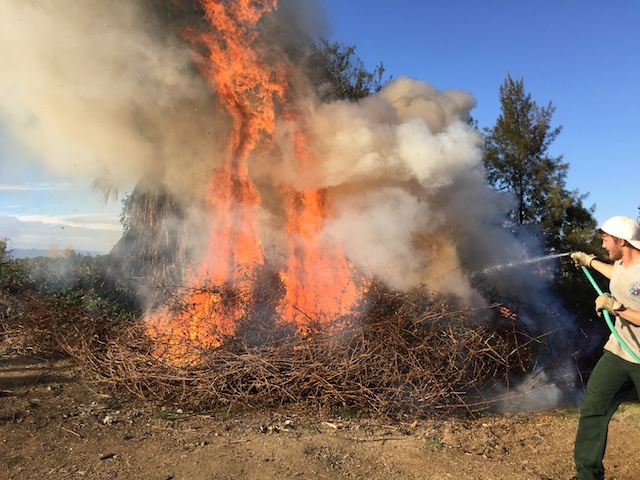
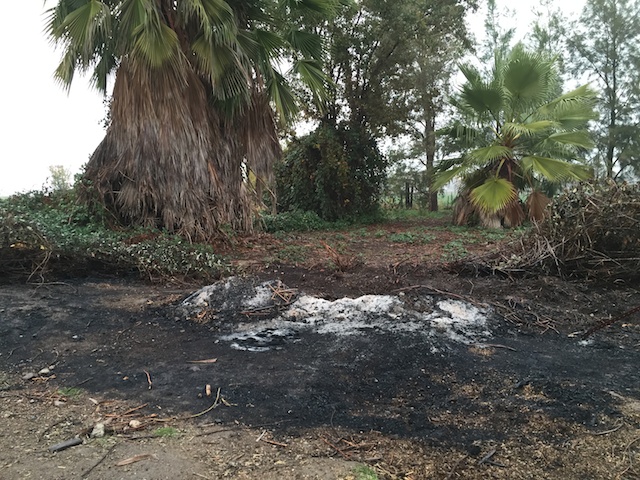
On the Friday after Thanksgiving conditions were right that we could burn the brush pile that had been getting bigger all summer and Chris came over to do that while I was busy with other things. It was too big to burn in place so we pushed it behind the barn where it was farther away from structures. This is the aftermath of that pile.
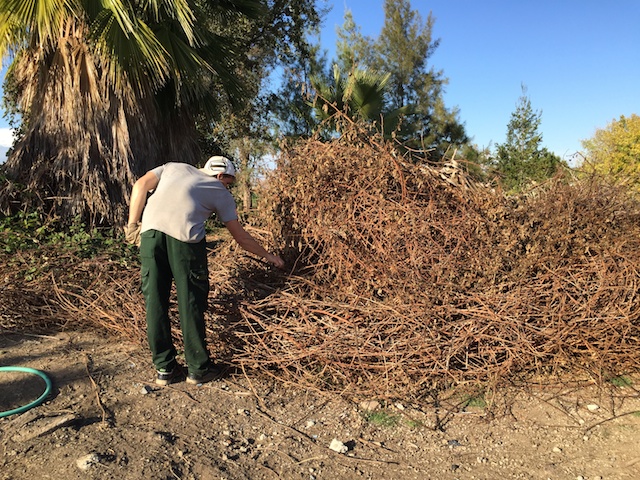
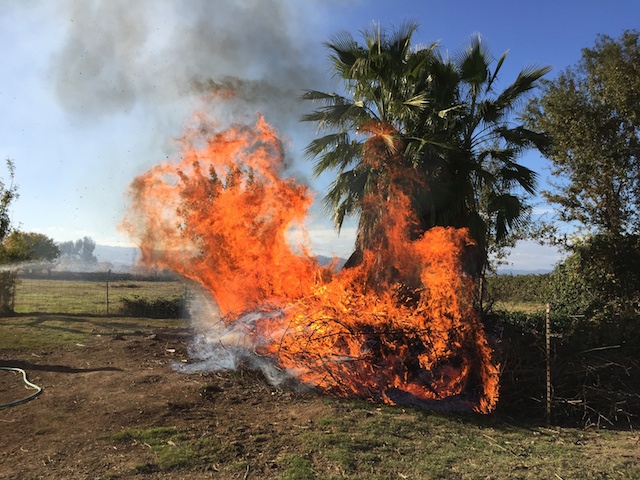
As that one was smoldering Chris set the blackberry pile on fire.
He lit a palm frond on fire to get the pile burning.
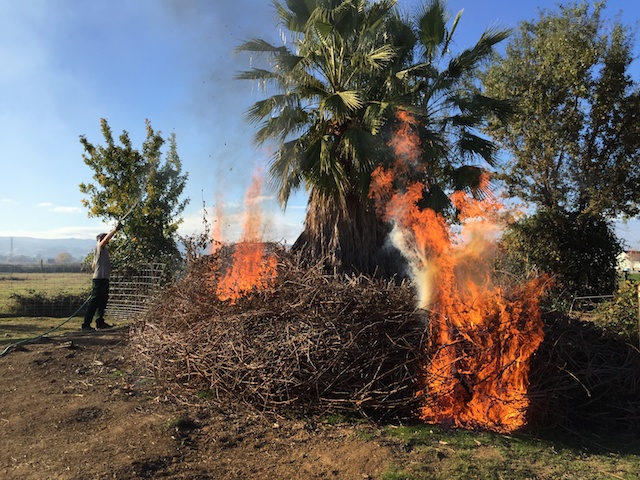
This one was getting a little scary. We really didn’t want that palm tree to catch fire. Good thing Chris is a professional.
This was a HOT fire. I wondered if our two garden hoses were enough to keep it in check.
It didn’t take long to get to this point.
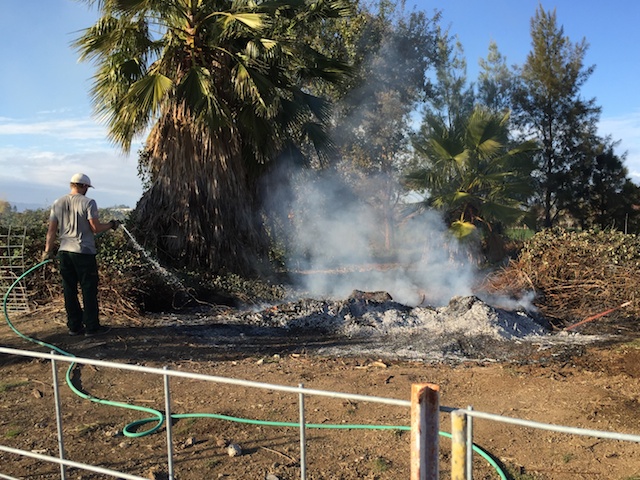
Chris dug a line around it and we let it smolder all night. This is the next morning. The other pile was smoking even two days later and after a light rain.
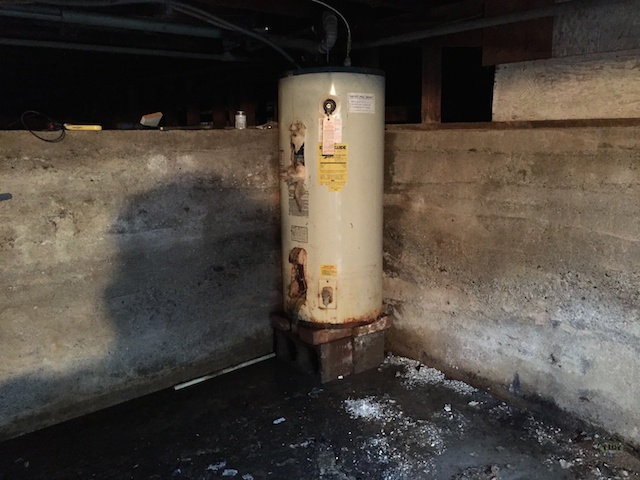
Saturday night I heard a leak in the cellar. (This is a low-ceiling room beneath the house with access from the outside. Before the drought years this basement would flood 3-4 feet in the winter and we had to keep a sump pump running so that the water would not flood the water heater.) It turns out that the old water heater was leaking, probably as a result of the higher pressure that our new pressure tank was providing to the house. I won’t show a photo of what this room looked like before I cleaned out all the junk that was along these walls because that is embarrassing. Believe me that it was not pretty considering what kind of critters spend time in basements and the fact that it has flooded periodically.
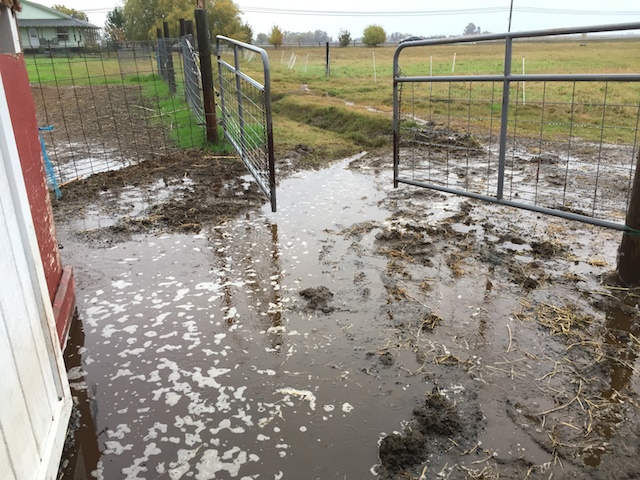
Fortunately this incident was on the weekend and Dan was able to install a new water heater on Sunday. This photo was taken this morning (Wednesday). Notice the water in the basement.
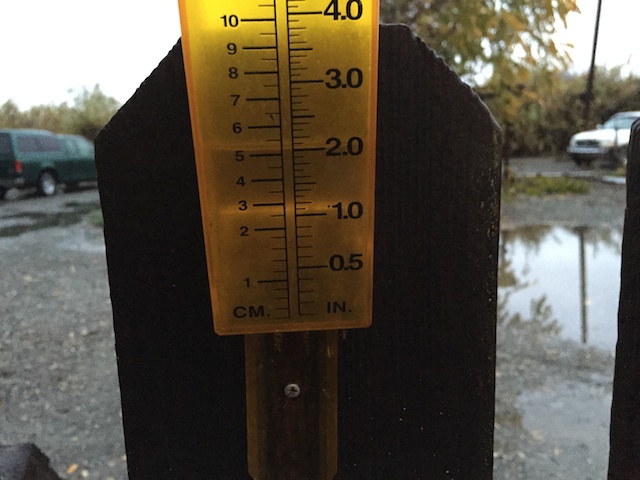
That is why we have to keep this pump set up in the winter. It wasn’t used the last couple of winters, but we woke up to this:
The water level was at 2.0 inches since the evening before. We haven’t seen that in a long time.
Close to Home…Post #15 Left-overs
My husband says that we are hoarders. When you’re a farmer you know that you’ll need that scrap of plywood, leftover fencing, rusty but still useable pipe, or roofing panel with only a few holes sometime, somewhere. So you keep it. What about the weaving studio? If there is warp left on the loom after finishing a project I weave it off and these pieces pile up. The Artery show gave me the incentive to finally use them.
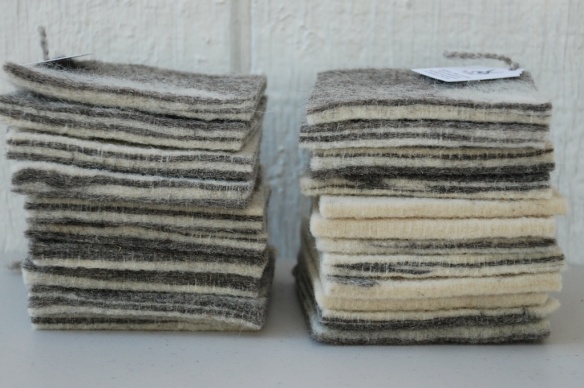
These are several photos of Before and After felting. The process of “fulling” deserves it’s own post. Fulling transforms weaving fresh off the loom into cohesive cloth by using a controlled amount of agitation in hot soapy water. Felting happens when you take this process further. I used the washing machine and sometimes the dryer to maximize the effect of shrinking wool fabric into something much denser. (Another method is needlefelting, described in this post.)
The four fabrics in this photo are the same as in the photo above it but after felting.
This is another pair of before and after photos.
The piece on the left is a blanket after fulling and the one on the right is the left-over piece of fabric after felting.
Why felt this fabric and not use it as is or with only fulling? Felting creates a very dense stable fabric, good for a variety of projects where you don’t need (or want) the fabric to drape. Also, the fibers are so entangled that you can cut this fabric without worrying about it coming apart or fraying.
I planned to use some of this fabric for pillows, but worried about staying true to the theme of locally produced fiber. I did use commercially available synthetic pillow forms (at least USA-made) for some of the pillows but for about half of them I made my own pillow forms using Suffolk wool from the Phillips Farm. I tracked down American Made Brand cotton fabric at two local quilt stores and used that for the covers and for the fabric backs of the pillows.
Fabric left over from blankets that I wove years ago.
Fabric left over from the Barinaga blankets.
Fabric I wove using Mom’s yarn several years ago.
These pillows use fabric spun and woven by my Mom.
Friends gave me another idea to use some of this felted fabric. In fact one friend helped sew some of the pillows and another dipped into her fabric stash and did the sewing in these organizers. There are about 20 organizers and they are all different. It may be hard to tell in these photos but there are fabric pockets of different sizes in each.
These two use handspun, woven fabric that Mom had basted into a jacket but never finished. After felting that fabric made 3 or 4 organizers.
The three photos above all use fabric leftover from Jacob blanket warps.
I still have left over fabric so there will be more of these to come.
Fall in the Forest
A couple of days ago we took advantage of the beautiful weather (although I would rather see snow and rain right now) to visit Matt and Kaleena in their backyard, the El Dorado National Forest.
We walked down to the American River at the spot that M & K call Rope to the River.
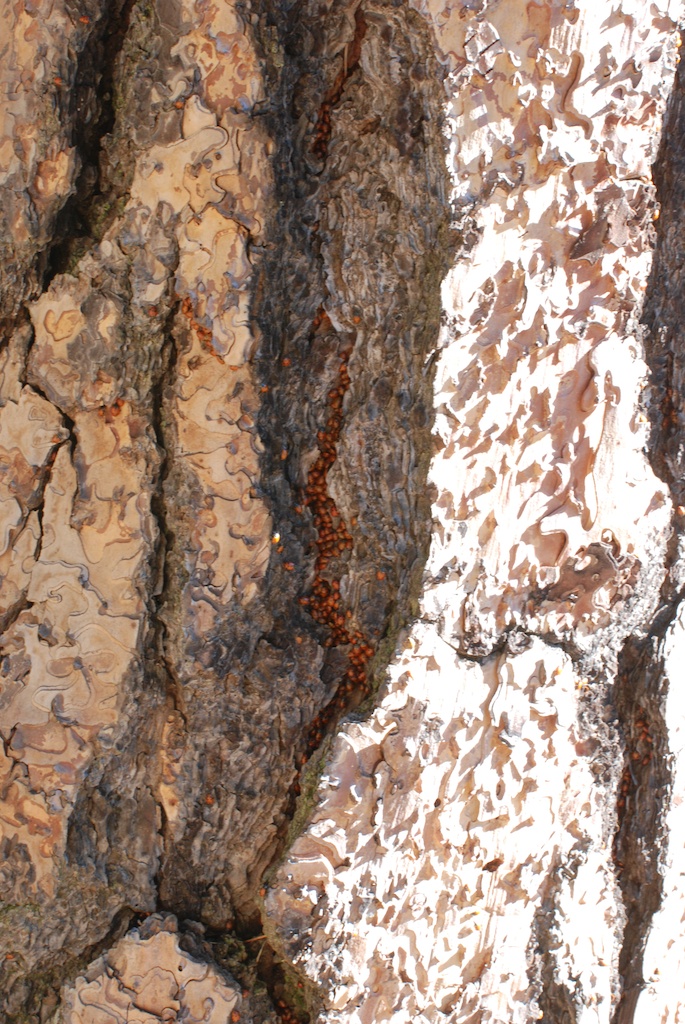
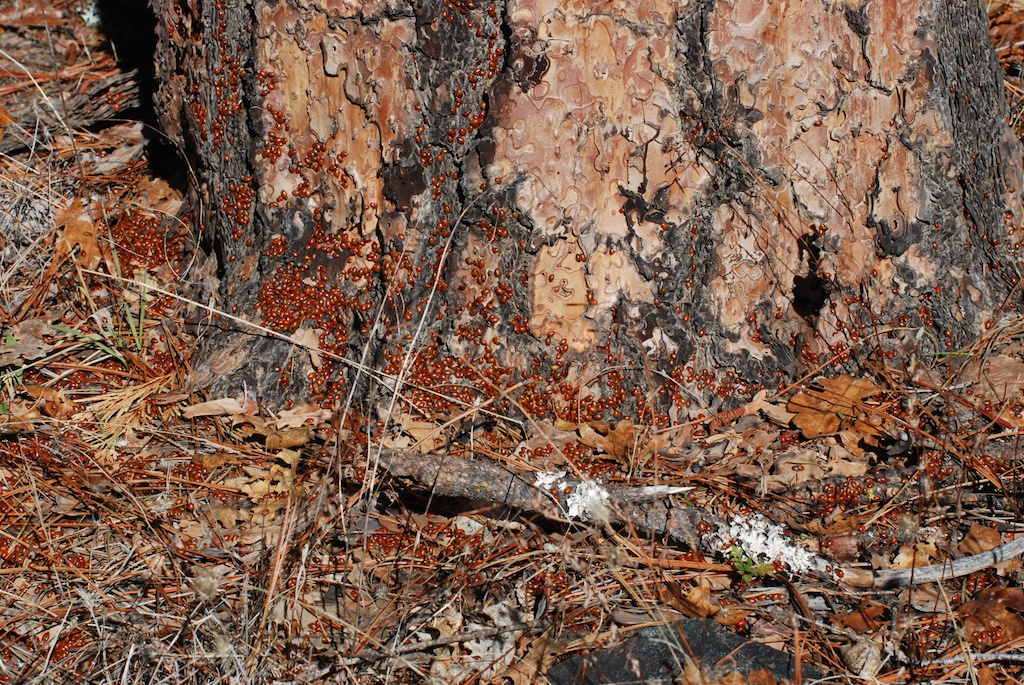
Look at what we found at the bottom.
I looked up ladybugs later and read that they hibernate this time of year and cluster together for warmth, finding any cracks that they can, even in houses. I think that I’d rather see them in the forest than in the house.
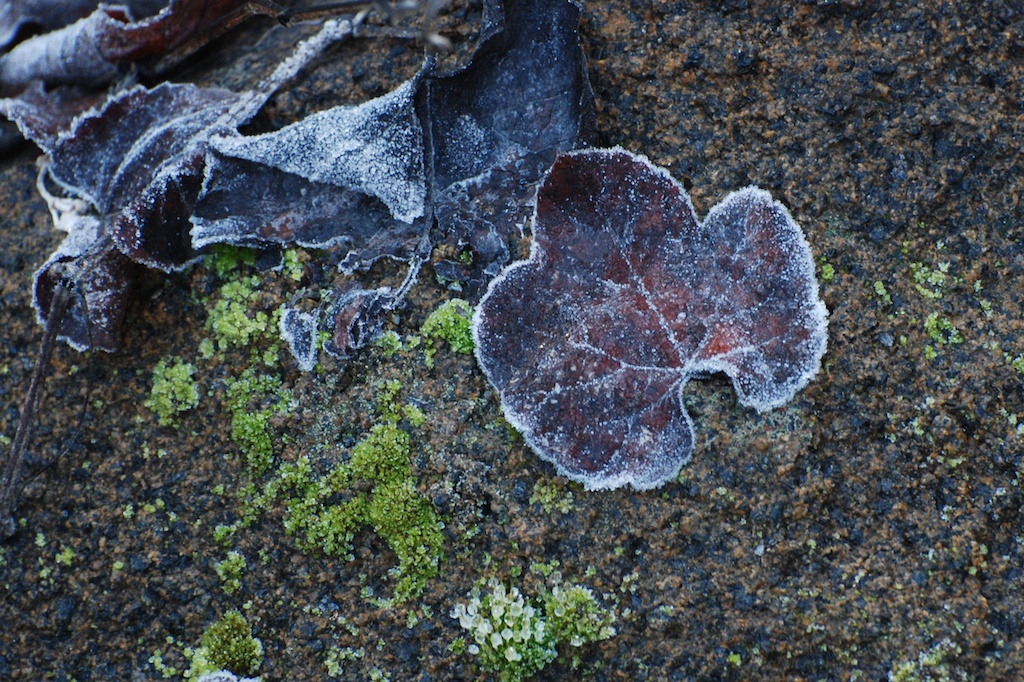
The day was warm, but In the shaded areas at the river where the sun is too low to hit now there was still frost.
Brilliant colors.
Looking across the American River. Highway 50 is just up the hill.
We drove to another favorite place of M & K’s to see a waterfall. Unfortunately Mill Creek is almost dry right now but we stopped along the way for the view.
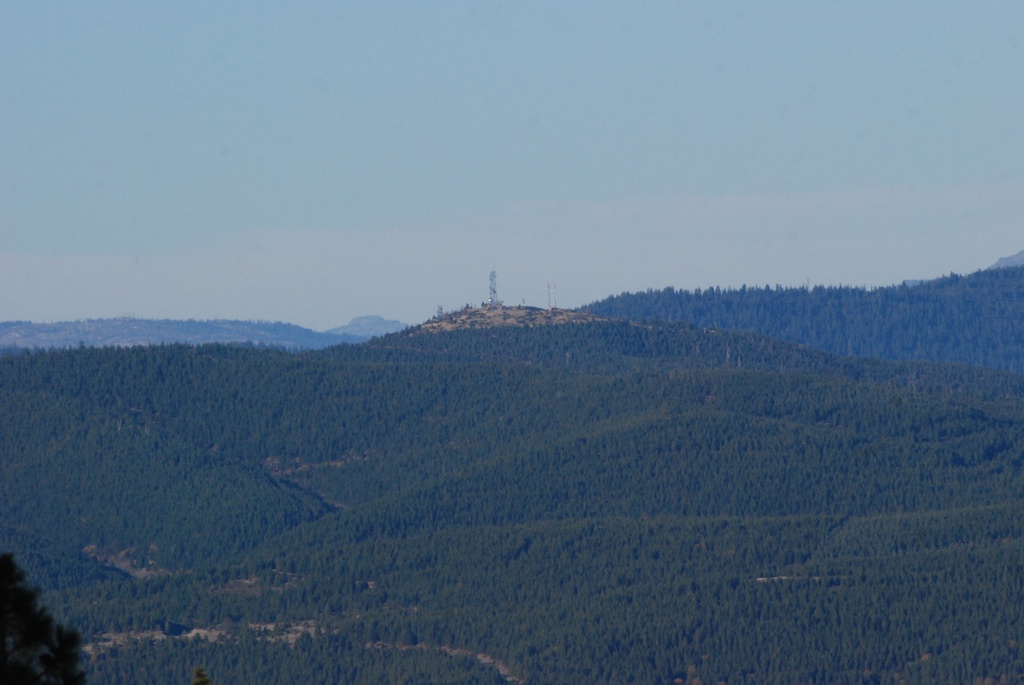
This is Big Hill, where Matt’s helicopter is based. (Well, he doesn’t own it, the USFS does, but he’ll be working there again in January.)
View of Pyramid Peak. It should be glistening with snow right now. Let’s hope that the storm coming in this weekend dumps a lot.
Close to Home…Post #13 Felt
In my fiber pursuits I consider myself first a weaver. That’s the predominant technique for the pieces in the show, Close to Home, at the Artery which, by the way is up through December 1. (If you’re just tuning in to this blog you can read here about the concept behind the show.) There are over 140 pieces in the show and most are woven. However, one end wall is devoted to felt.
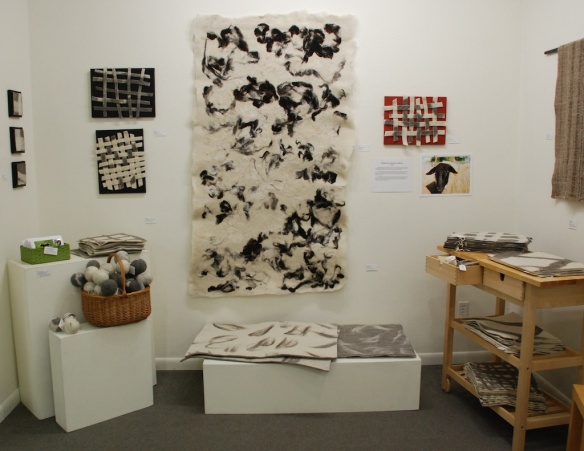
Felt, according to the dictionary, is a nonwoven fabric of wool, fur, or hair, matted together by heat, moisture, and great pressure. “Nonwoven fabric” is the key here. Most of the felt in the show is “matted together” by needle felting instead of the heat and moisture part.
Just in case you are picturing me with a felting needle and a pile of wool I want you to know that there is a shortcut–thanks to a friend of mine who has a felting “loom”. That’s what they call it.
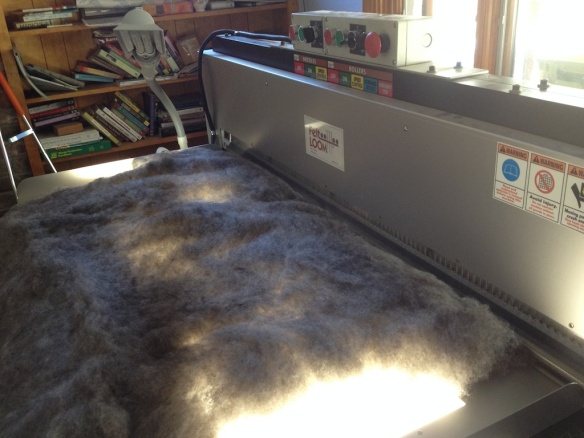
You feed a carded batt of wool in one side (over a light table)…
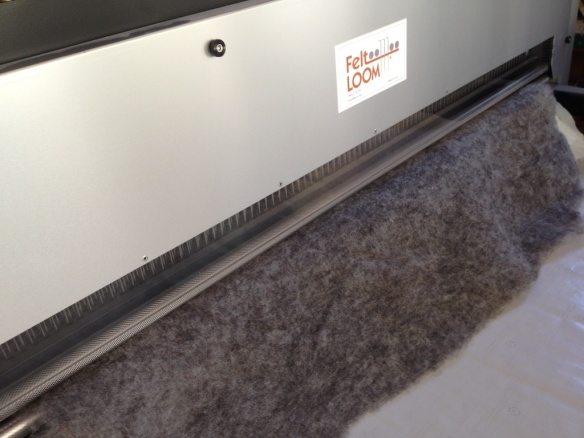
…and out the other. The action of hundreds of barbed needles turns the wool into felt.
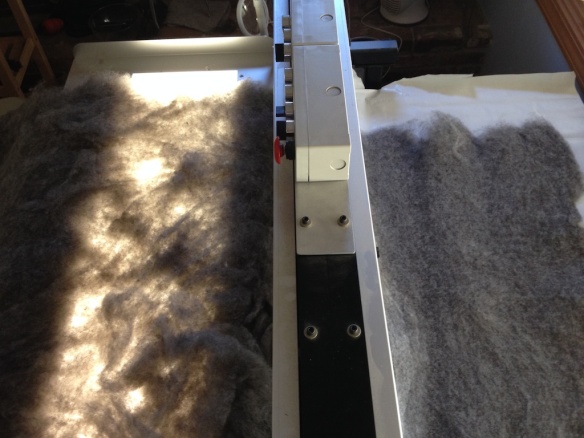
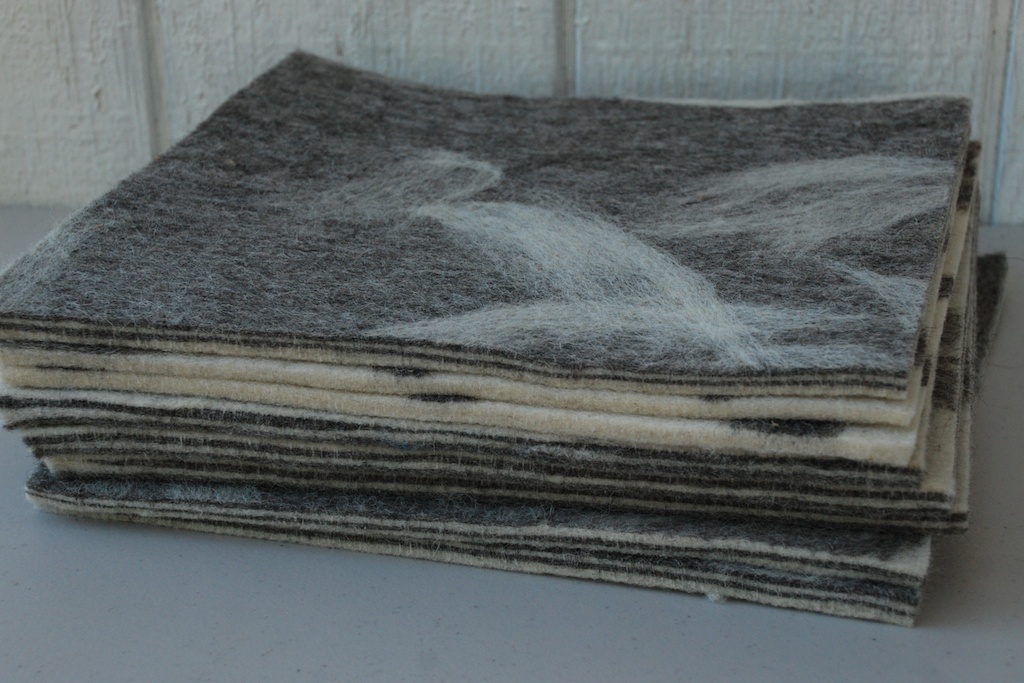
I fed each thin batt of wool in once and then layered them together to become a thicker piece.
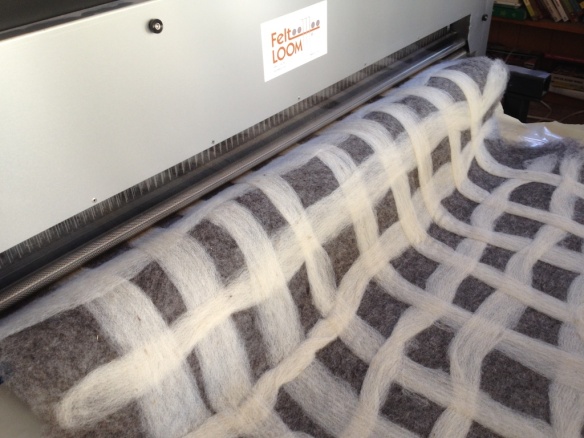
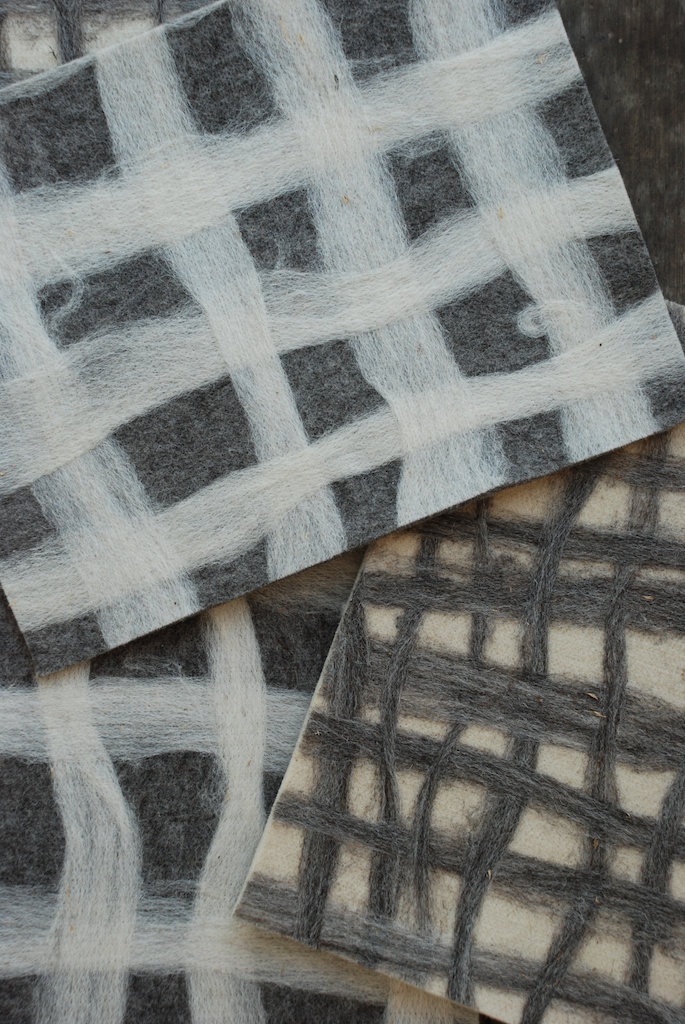
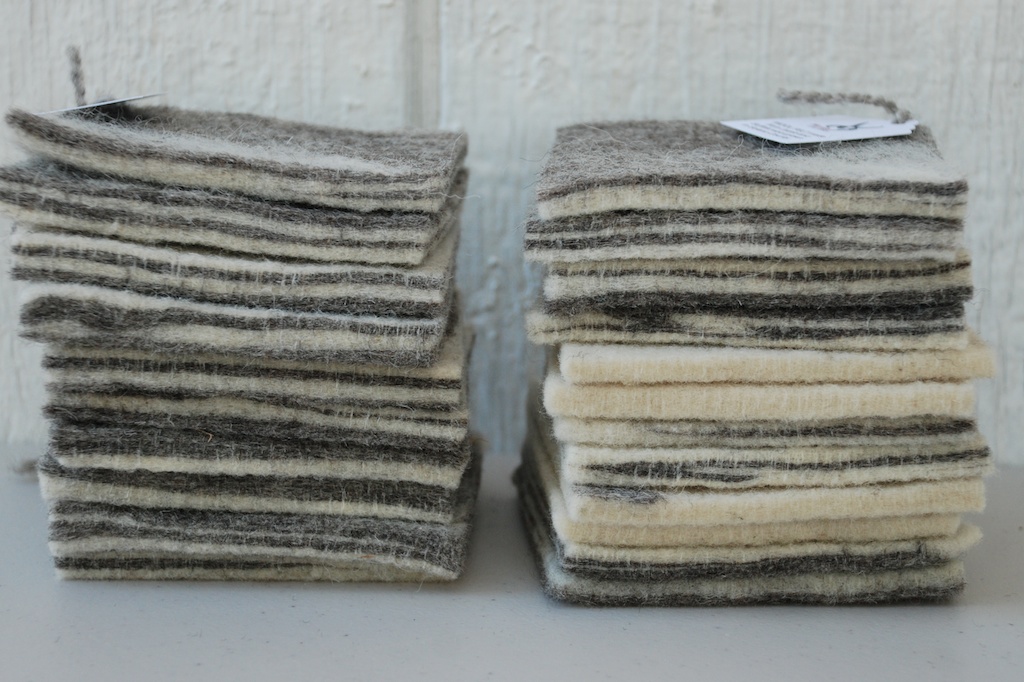
The final piece went through the needle loom about a dozen times. For several of my pieces I “wove” strips of roving and applied those to the felt part way through the process. I ended up with lots of placemats, trivets (the thick ones could double as stadium seats), and coasters.
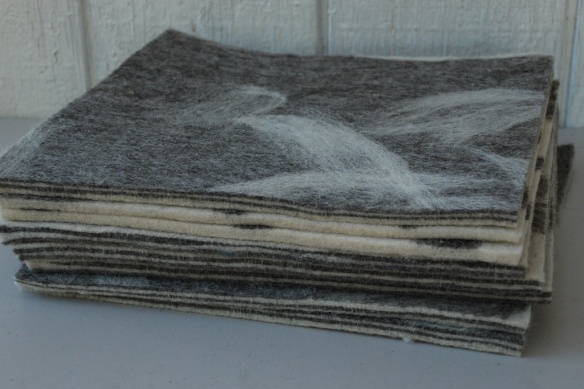
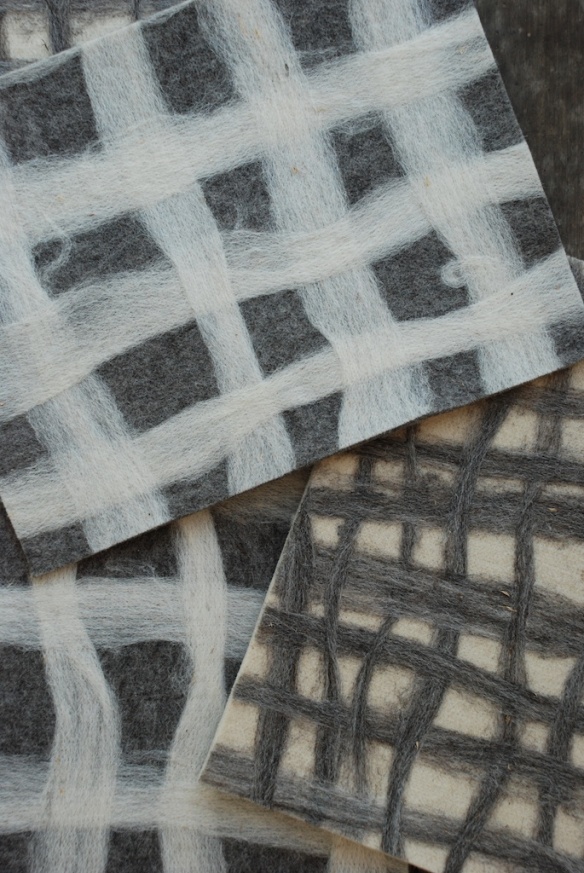
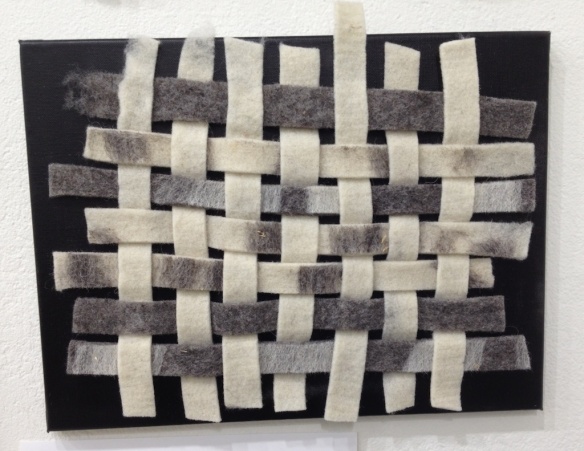
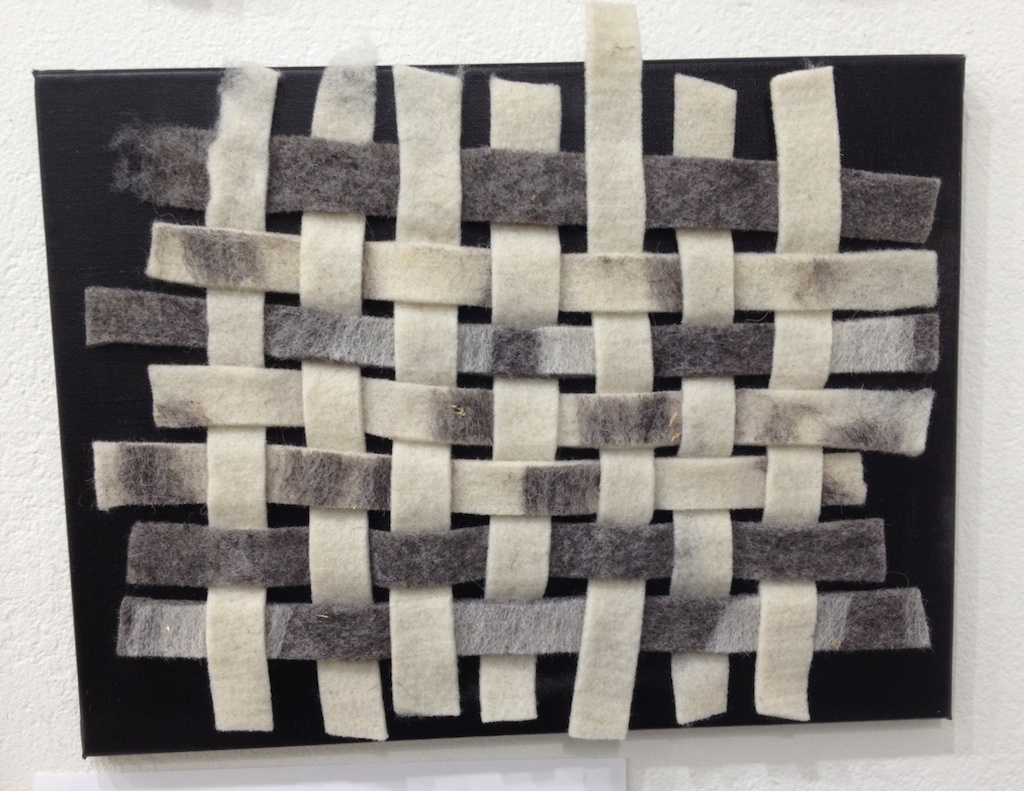
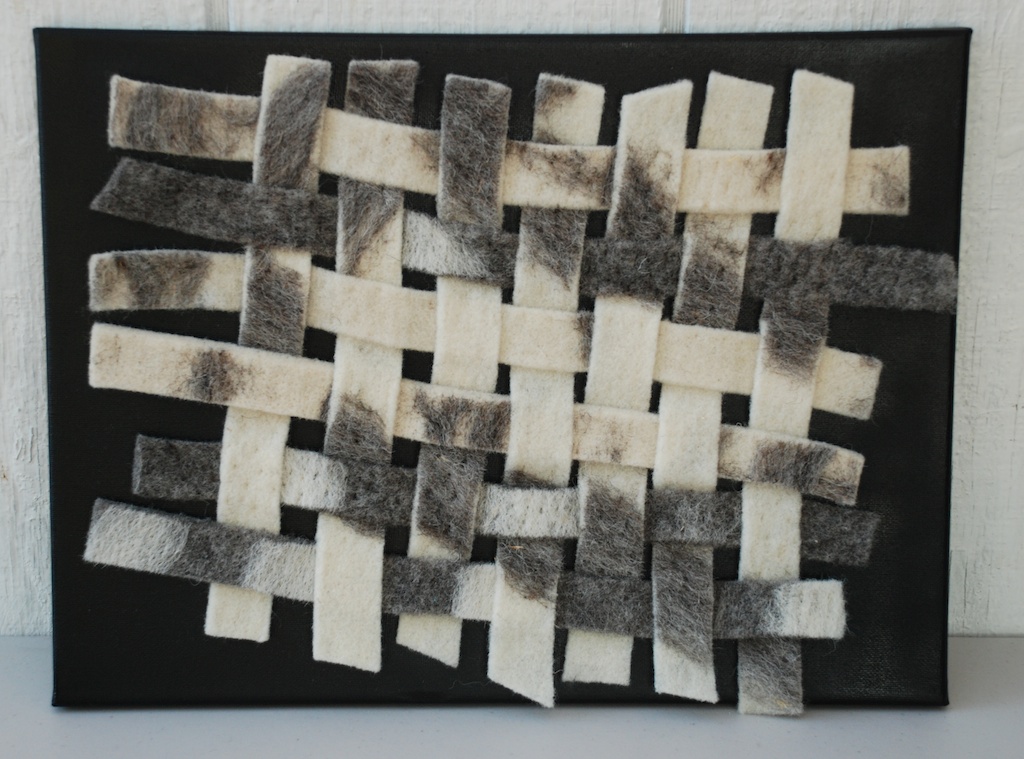
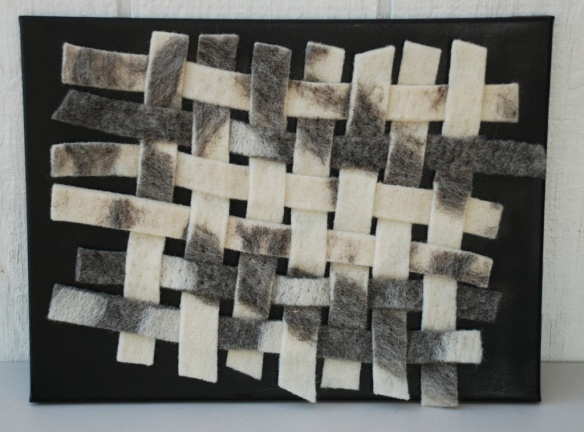
After cutting out the placemats and other items I had felt strips left over. I wove those into wall hangings.
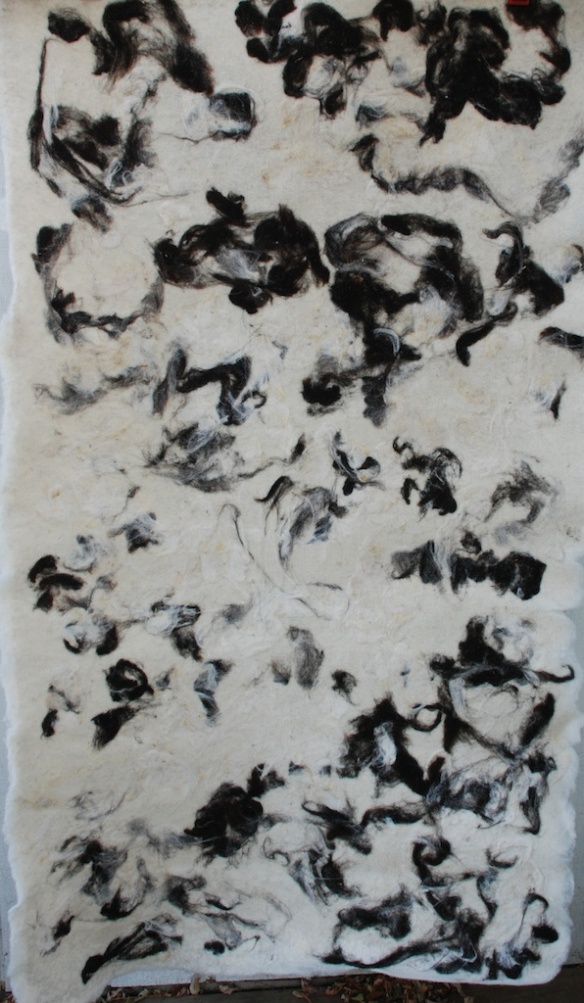
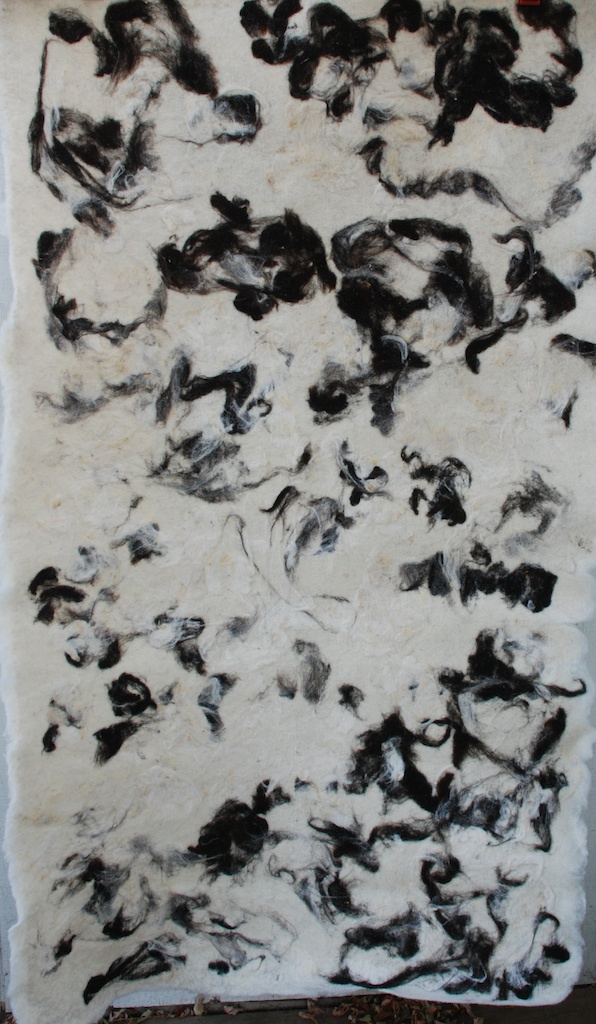
There was one piece of felt that my friends convinced me to leave alone and not cut up. I hung it on the wall at the Artery and it sold as a wall hanging.
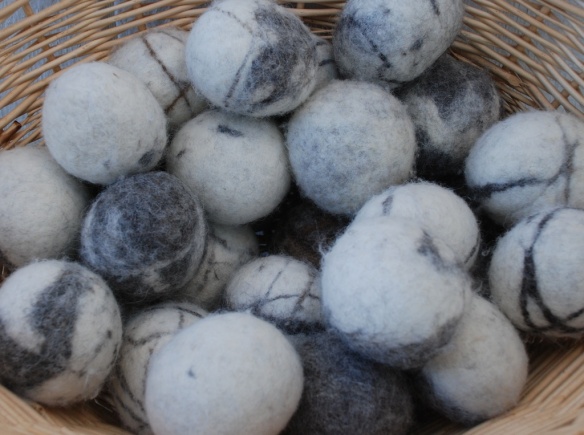
I did use the soap and hot water method in addition to needle felting to create these balls. They are sold as dryer balls (3 in the dryer help reduce drying time and soften clothes), or juggling balls, or cat toys, or therapeutic aids (at least that’s why one friend bought some).
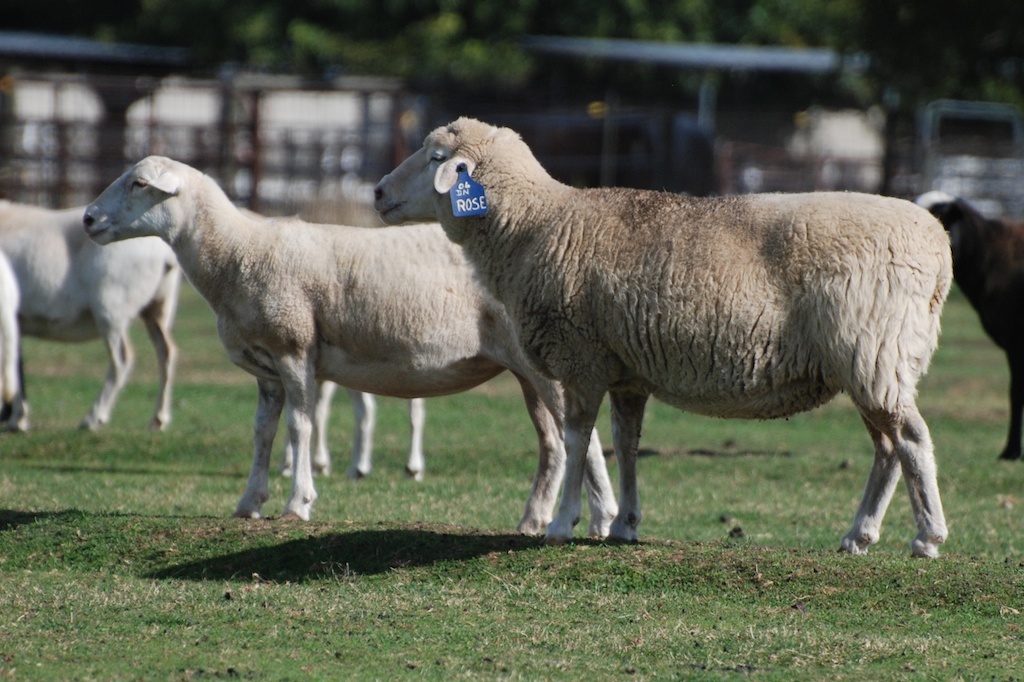
By the way, the wool for all of the felt items comes from either the Suffolk sheep on the Phillips Farm (see Blog Post #9) or the coarser britch wool of my own Jacob sheep.
Close to Home…Post #12 Wearables
The previous posts were all about the farms where I got the wool to use in my show, Close to Home…Yarn with a Story. Most of them featured blankets. I love weaving blankets. It doesn’t really matter what size they are, you can weave each in a different color and/or pattern, and who couldn’t use a warm blanket?
But I wove some wearables as well.
Above are shawls woven of the same style of yarn from Imperial Yarn Company as the Stars and Stripes blankets. The brown yarn was dyed with black walnut.
This is what the black walnuts look like after having soaked in a bucket for a couple of weeks and then been boiled for an hour.
These are pots of eucalyptus leaves and twigs on the stove…
…and yarn in the dye made after boiling those pots. Notice that there are two different weights of yarn in this post. That finer yarn, also from Imperial Yarn Company, is used in the shawls below.
The weft in this shawl uses the fine yarn dyed in eucalyptus. One batch turned out rust and another was gold.
You can see the two different sides of each shawl in this photo.
Here is a close-up.
Another shawl that uses natural dyed yarn (black walnut) is this one in huck lace woven using yarn from the Timm Ranch.
Here is another in un-dyed yarn.
By the way, here is what that shawl looks like while on the loom. I always have to convince new weavers to have faith that even if you see spaces when you’re weaving they will close up if you’re working with wool.
There are also several scarves in the show, some of which have been shown in earlier posts.
These scarves use yarn from Fiber Confections, Anderson Ranch, and Meridian Jacobs.
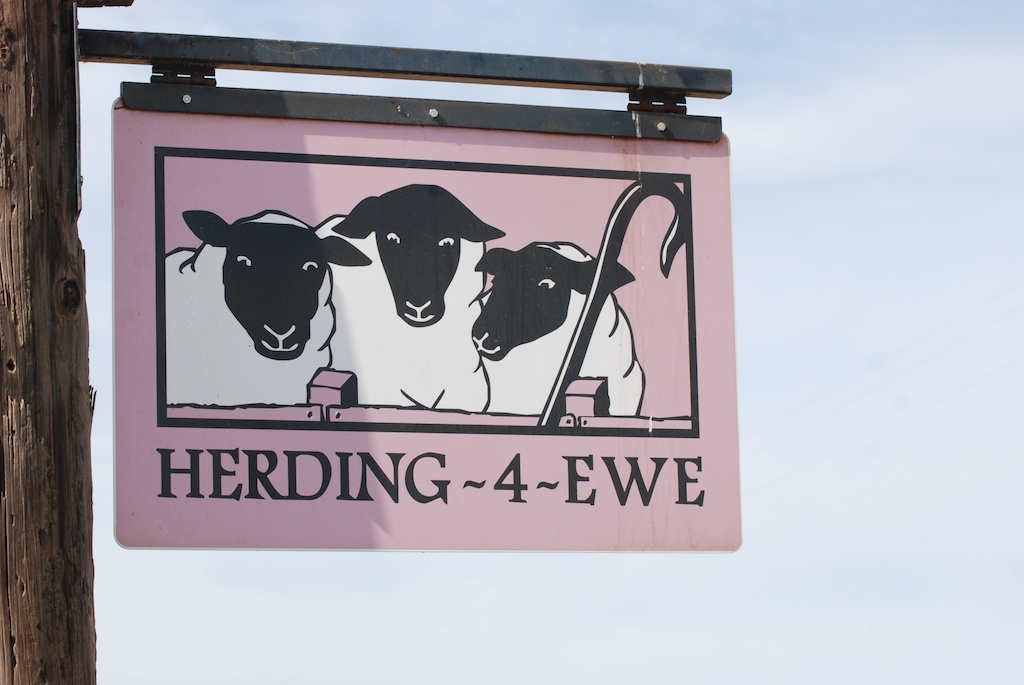
Close to Home…Post #11 – Herding-4-Ewe
Sometimes I wind a warp using a lot of different yarns and then realize that I don’t have enough of any one yarn for weft. This usually happens when I’m making a mixed warp to use up odds and ends of yarn that I have around. That happened with a couple of the pieces for Close to Home and I found some yarn left over from other projects that worked just fine.
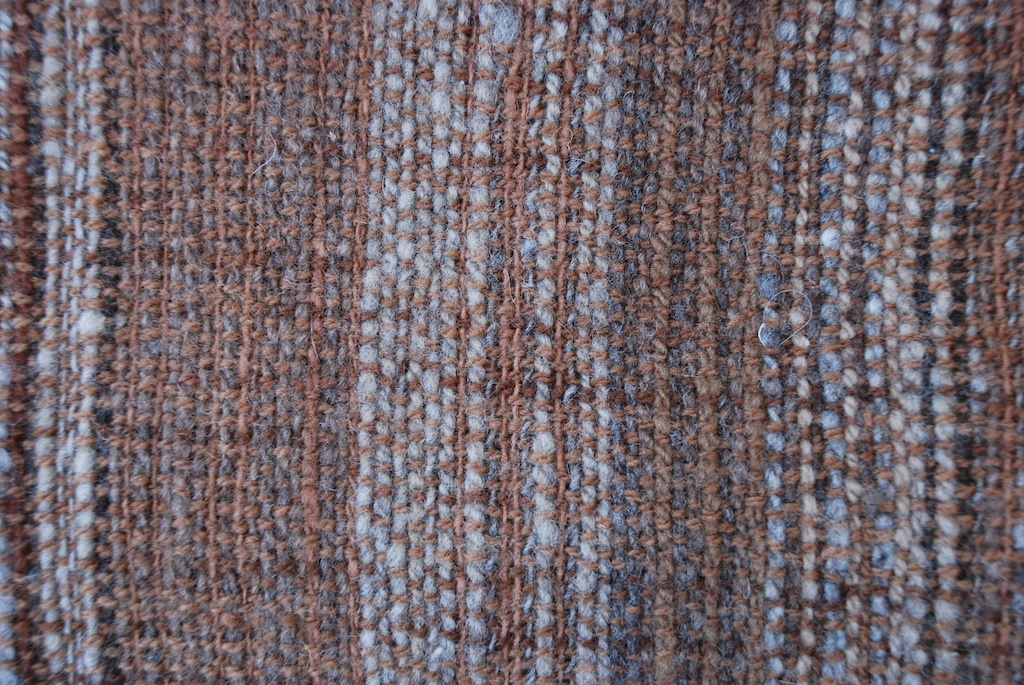
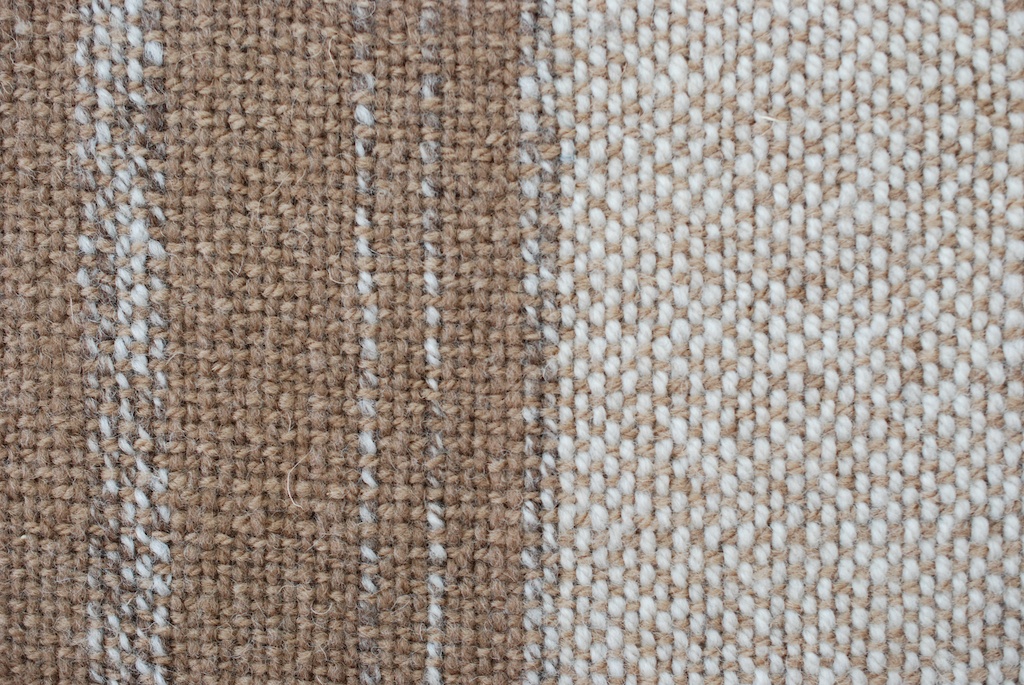
These blankets are not in the show but they use yarn that I had made from Herding-4-Ewe’s wool. I happen to still have some on the shelves.
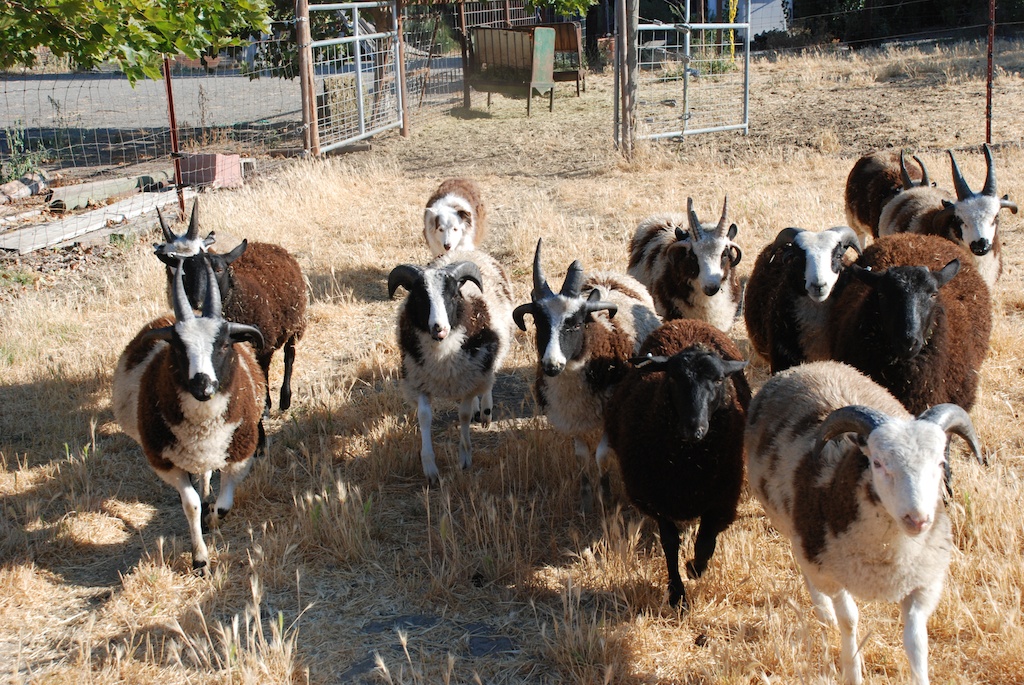
Story: Herding-4-Ewe is just around the corner from my farm. Debbie Pollard keeps a flock of mixed breed sheep to use in training dogs (and, just as important, dog owners) the art of herding. My Border Collie, Rusty, and I took lessons from Debbie for a few years.
Now most of the sheep Debbie uses are hair sheep, but at the time I was there she had many more woolly sheep and I acquired some of the fleeces. I skirted and washed the wool and had it spun at Yolo Wool Mill in Woodland. I have woven many blankets from this yarn (including one for Debbie in which I incorporated yarn I spun from the hair of her favorite dog) but have some of it left.

Here are a couple of the projects in which I needed to find some other yarn.
This blanket uses my Mom’s yarn in the warp and Herding-Ewe’s yarn, dyed with black walnut, in the weft.
This is a CVM shawl using the same yarn as above for weft.
I don’t have any photos taken while herding at Debbie’s but here is one of Rusty working at home:
Close to Home…Post #10 – Sincere Sheep
One of the first yarns I used when weaving for Close to Home was Targhee wool sold by Sincere Sheep.
Story: Brooke Sinnes of Napa began Sincere Sheep in 2003 and focused on natural dyeing yarn sourced from local wool. Since that time she has included other lines of yarn sourced farther from home.
Sincere Sheep’s Bannock yarn is a 3-ply worsted weight yarn that features 100% Targhee wool from Montana and the Dakotas that is milled in North Carolina and spun in Maine.
The Targhee sheep is named after the Targhee National Forest near where the breed was developed beginning in the 1920’s. The goal of the U.S. Sheep Experiment Station in Idaho was to develop sheep with uniformly heavy fleshing and high quality fine wool that was adapted to rugged conditions of the Western range. Developed by crossing Rambouillet, Corriedale, and Lincoln sheep at the Experiment Station, the Targhee breed was expanded by selection of “Targhee type” ewes from large bands of range ewes crossed with Targhee rams. The flock book was closed in 1966.
Targhee sheep produce 10-12 pound fleeces with very soft, bright white fiber that measures 21-25 microns. Sincere Sheep’s Bannock yarn was named for a Targhee Native American Chief.
This is one of only two yarns in this show that are not grown in Solano or Marin Counties but I included it because of the variety of colors, naturally dyed, and the quality of the yarn, and it is grown in the Pacific Northwest, which is Closer to Home than many places where wool is grown.
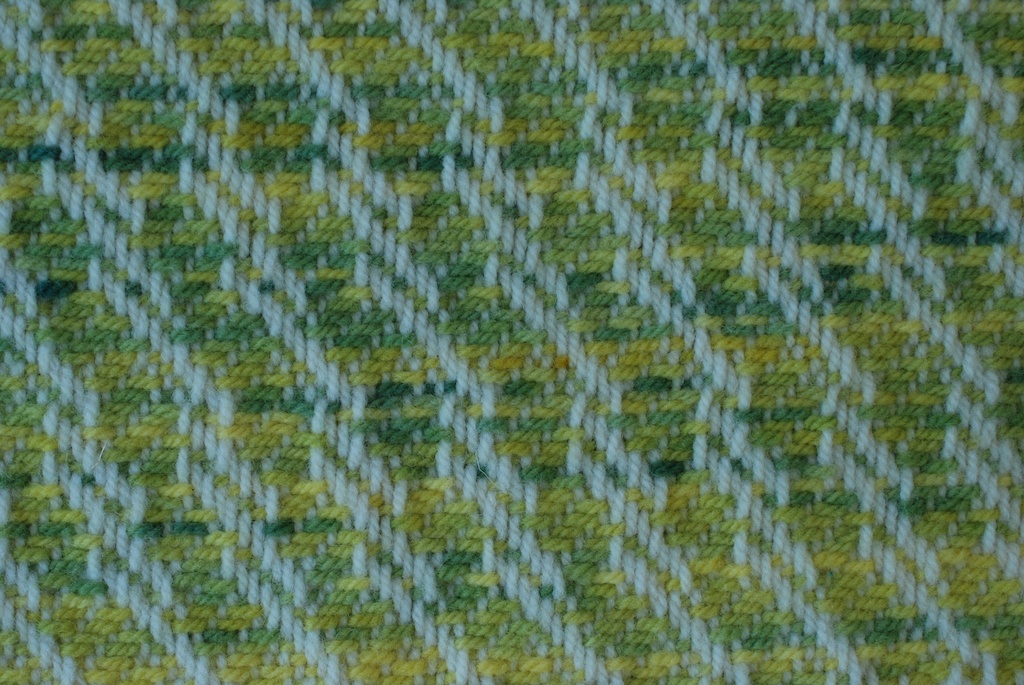
I love the color variation in this yarn…
…and the variety of designs that you can get on one warp.
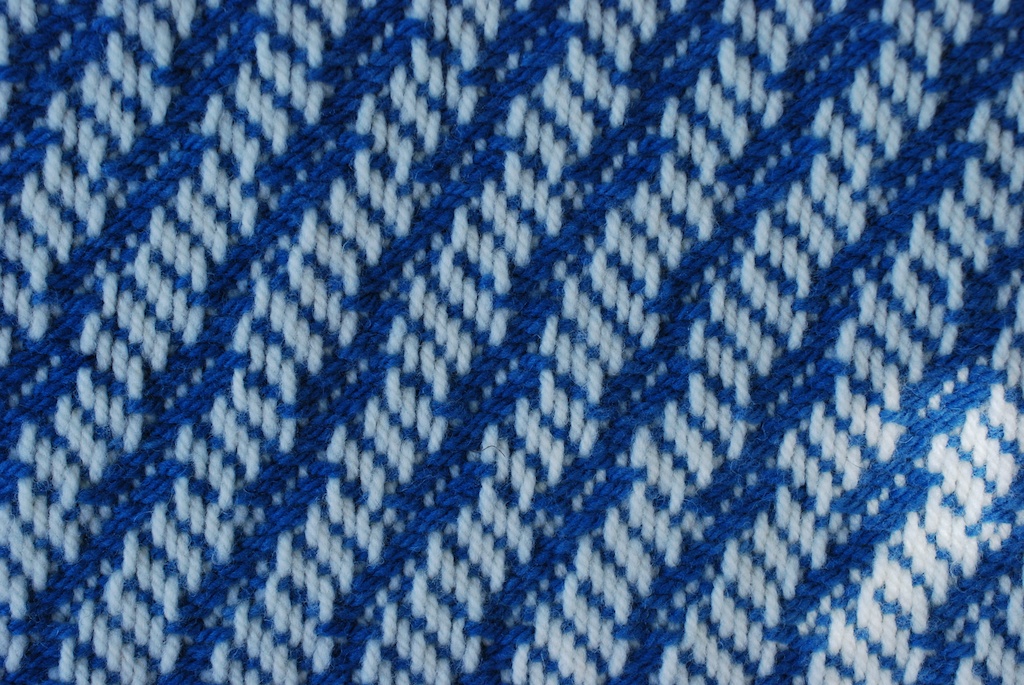
That means that each of the blankets above was woven on the same warp threading in white yarn, but the patterns change by varying the treading and, of course, the color of the weft.
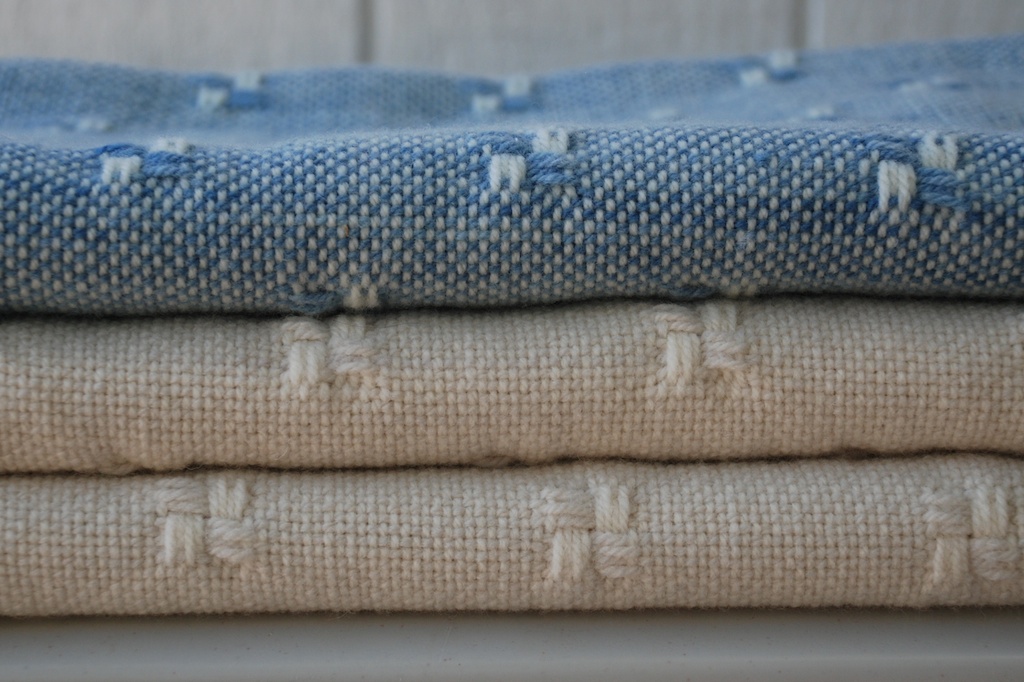
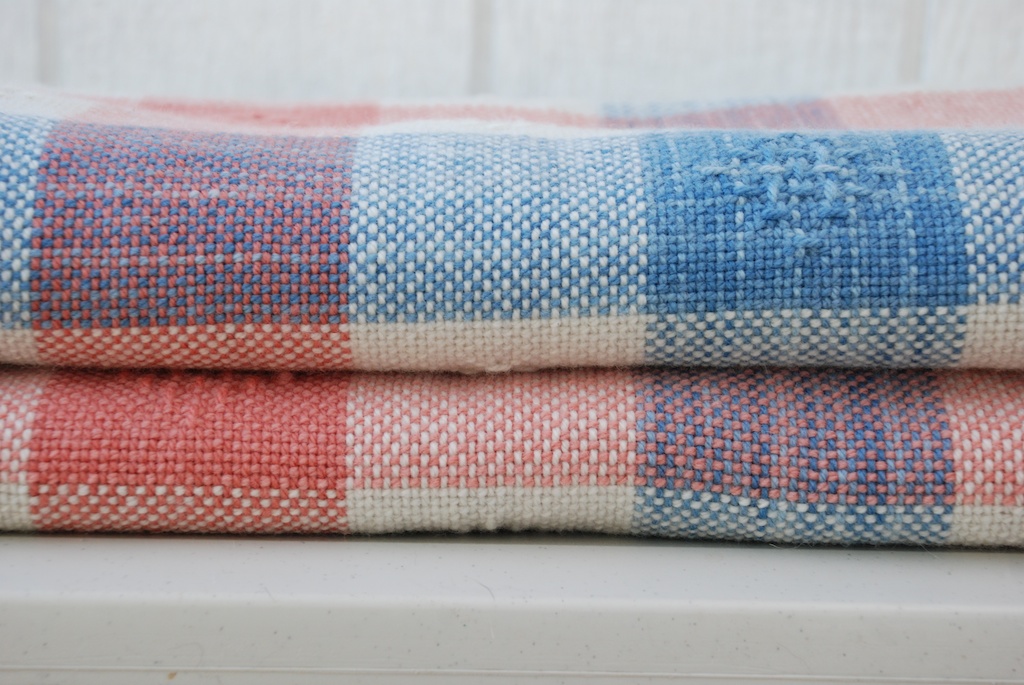
Another series of blankets.
And another.
At the end of the warp I just wove in white instead of making it plaid and then I felted the fabric. That made great fabric for pillows.
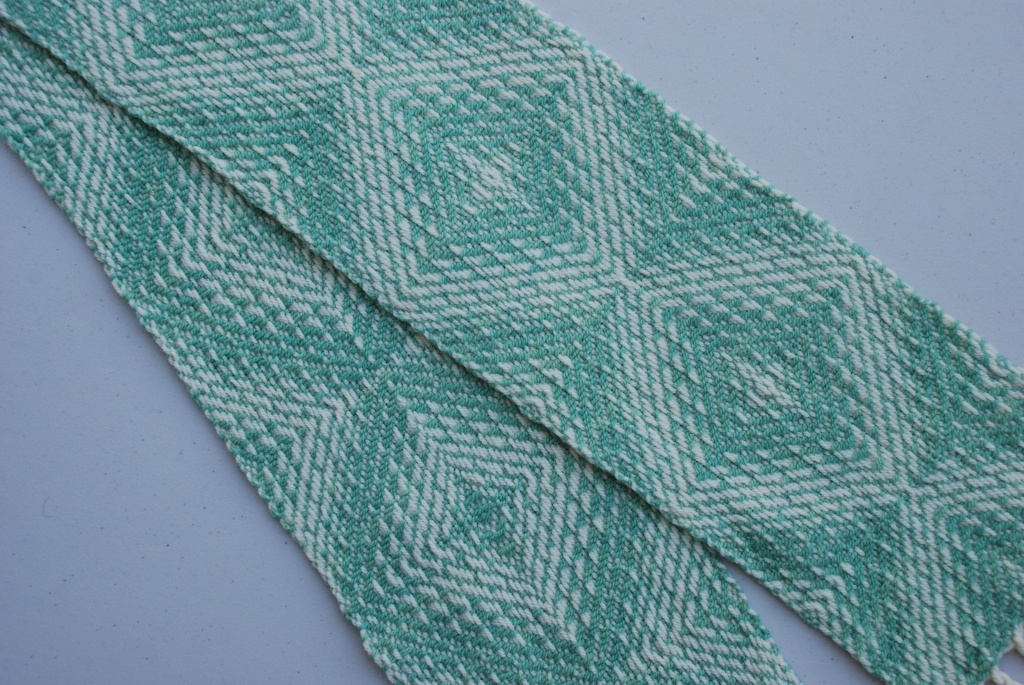
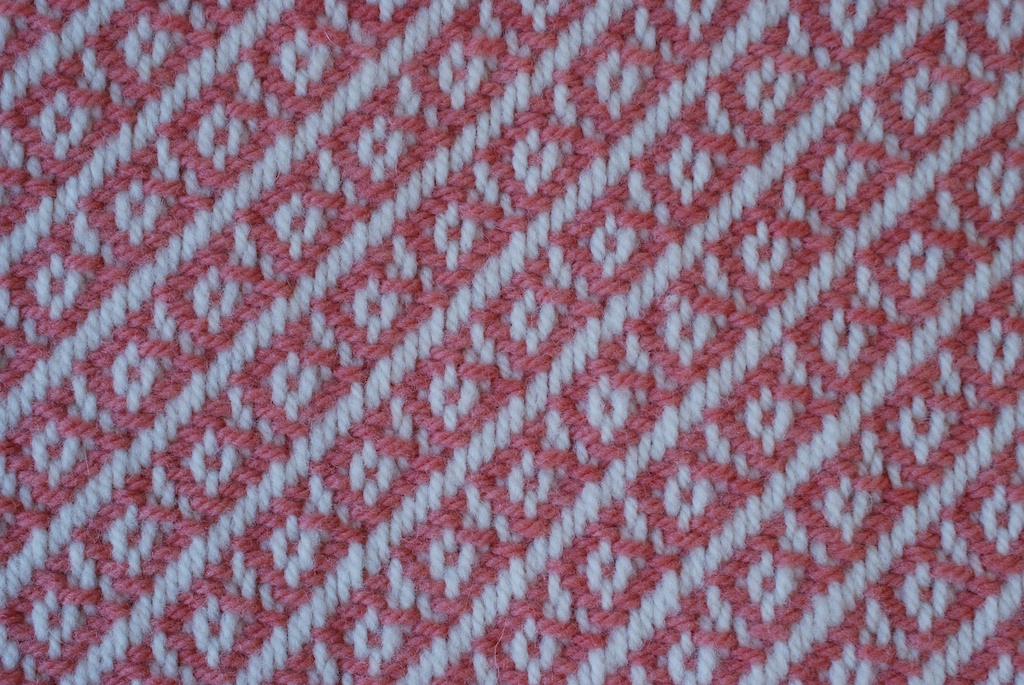
I also wove a series of blankets on a rusty red warp with a white weft
Targhee yarn is very soft and perfect for scarves as well. After the Artery show whatever items are left will be for sale on my website.