This lamb is missing his Jacob facial markings, but I still like these photos. He was on his feet and walking in less than 10 minutes. 


 The twin has all the right spots. You can watch their birth in this video.
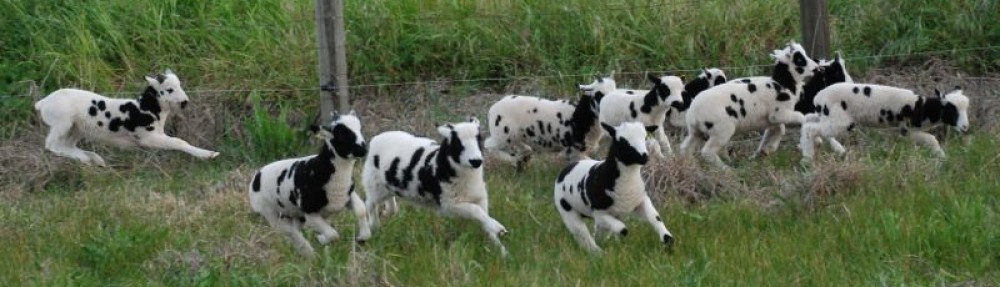

This lamb is missing his Jacob facial markings, but I still like these photos. He was on his feet and walking in less than 10 minutes. The twin has all the right spots. You can watch their birth in this video.
I have been anxiously awaiting lambs. Athena started us off early by lambing last week, but there has been nothing since. Mary was calling for lambs all morning and she finally got her wish.
 Others came to investigate.
 I moved Mary and her ewe lamb inside where she had her second lamb, a big ram.
  It will be a busy few weeks.
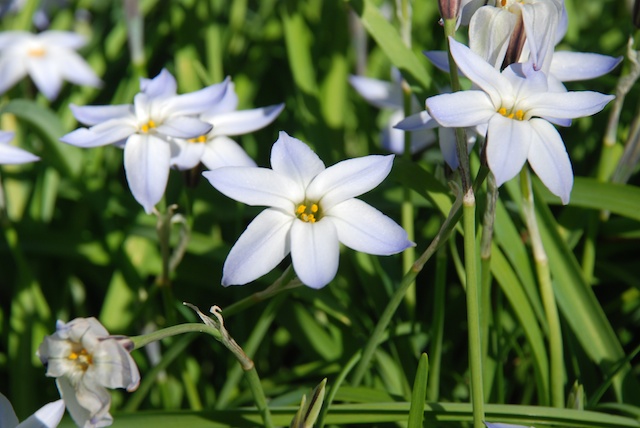
After I published the last post (a bunch of seemingly unrelated ugly photos) I thought it was pretty stupid. I do have something to tell about how they all relate, but that story will wait until I get around to it and in the meantime I have deleted it. This is a better bunch of photos that I took yesterday on the way to the barn.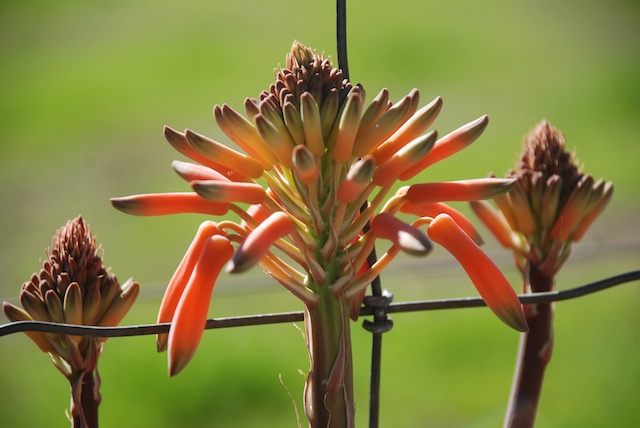


Athena lambed ahead of schedule. Unfortunately the biggest twin (12.2 lbs) was dead when I went out this morning. Although it looks as though it was born alive (or at least was full term) there was something wrong with it. It’s belly was full of fluid so I think there was probably a congenital problem with it and it never could have survived.
This lamb is 8 pounds.
 It’s obvious who the dad is:
Lambs are due in about a week. This is Sparkle.
 Sweetie
 Spring
 Jazz.
Jazz. Bella.
Our first Farm Day of the year was on Saturday and five Farm Club members helped me get ready for lambing. I forgot to take photos at the beginning but started with vaccinating all the ewes. In the meantime we kept an eye on the two ewes who were supposed to be bred that day so that they will lamb at the fair in July. There was no question about Miller and Donna, but ZZ left me wondering. He seemed more interested in his buddies in the adjacent pen than he was in Clover although she was doing her best to entice him. I decided that I’d better try another ram so Faulkner was the one. He knew just what to do.
 While the rams were otherwise occupied and I had plenty of help it was time to clean the ram pen.
 Rusty usually keeps the rams away while I clean so he took his usual position although the rams weren’t there.
  The ewes watched through the gate while we moved wheelbarrow after wheelbarrow load. Those red marks are just from the marking crayon we used as we vaccinated.
 After cleaning the ram pen it was donkey play time! Lisa discovered the bliss of brushing a donkey.
 Amaryllis had to hold still for me to measure her. She is about as svelte as she ever gets and I wanted to have a baseline measurement for her (670 pounds according to the tape, which is really meant for horses). By the way, I looked up svelte because I wasn’t sure how to spell it. Svelte, according to the Merriam-Webster Dictionary: thin in an attractive or graceful way; and a. slender, lithe. b : having clean lines : sleek. Hmmm. So maybe svelte isn’t quite the right word to describe a donkey.
I spent the weekend demonstrating weaving at the Sacramento Weavers and Spinner Guild annual Open House. I knew that if I was going to spend two days there I needed to get something useful done. I wove two more of the scarf warps from the Box of Chenille to end the weekend with six new scarves.  These are three from one warp.
 This is a bike that was parked outside the show.
 Back at the shop I have been trying to get caught up on weaving jobs. This is part of a baby blanket warp. I cut these off before I finished all of the warp because I had someone waiting for three of them.
  I finally finished these cotton blankets that were on the loom a long time. Some are baby blanket size and some are larger for throws.
  The next project to finish is a custom king-sized blanket woven of yarn that is a blend of llama and wool. I finished getting this on the sectional beam last night and started threading it today. I hope that I can finish it by next week and move on to the throws for this customer.
My largest loom is 60″ wide. A queen-size blanket is supposed to be about 90″ wide. When I weave a large blanket (full or queen size) I use double weave. This means that I weave two layers of cloth at the same time and they are connected on one side. When the blankets comes off the loom I open it up and it is double-width.
Sometimes things don’t go as planned. Here is an example: That is a big OOPS on the underside. (And that wasn’t the only one on this warp of two blankets. In fact some of you might notice another error that was THROUGHOUT the whole warp.) Both of these errors were fixable–it just takes time…and patience…
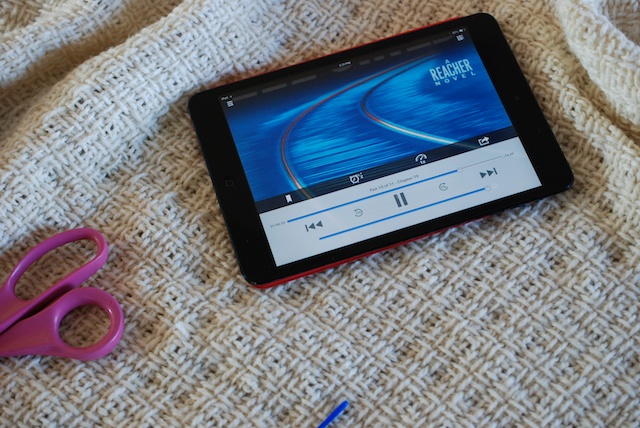 …and a good audio book. Here is how I fixed the most obvious error (all those skipped warp threads).
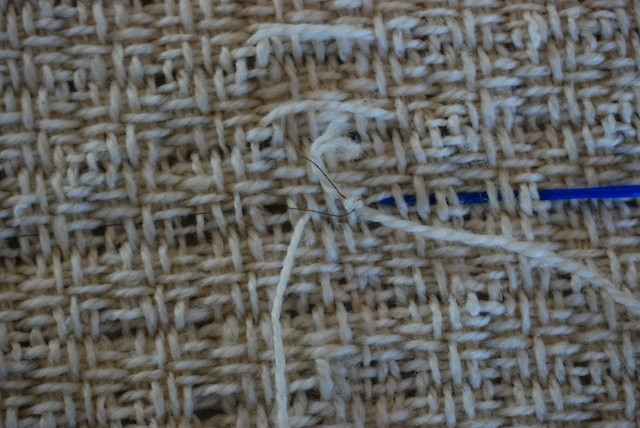 I knew that I could pull the warp threads out and needle weave them all the way back to the end of the warp (about 30″ I think). I found the correct path above the error and marked it with a needle. It’s not just a simple over-under. I think this pattern was under 2, over 1, under 1, over 1, under 1, over 2. I really didn’t want to have to do that pattern with a needle for all of those threads. So I tied a thin thread (brown) to the warp thread (wool yarn) that needed to be rewoven and as I pulled it out the brown thread held the place.
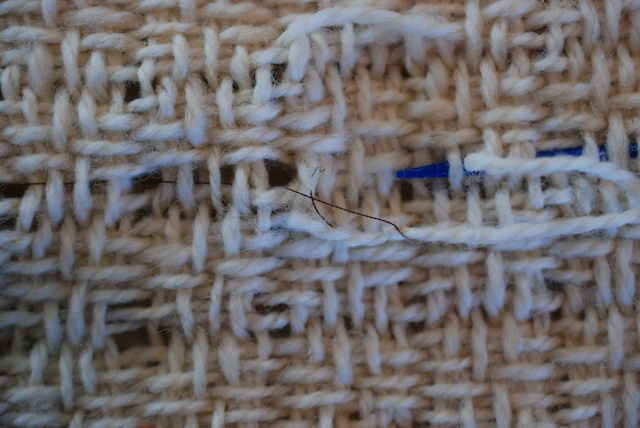
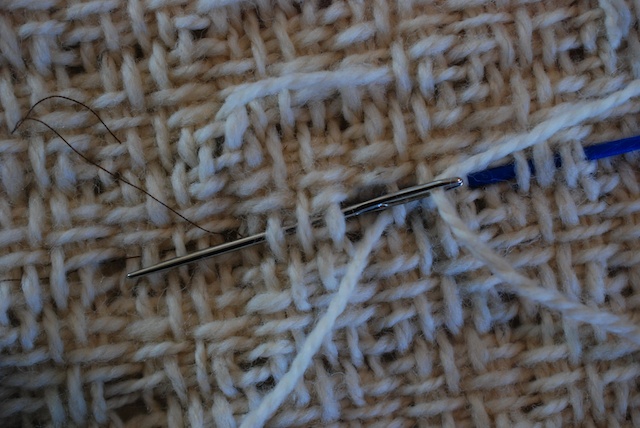 Then I untied the brown thread from the wool yarn. Using a tapestry needle I wove the wool yarn over and under the correct yarns in the area where there was a skip.
 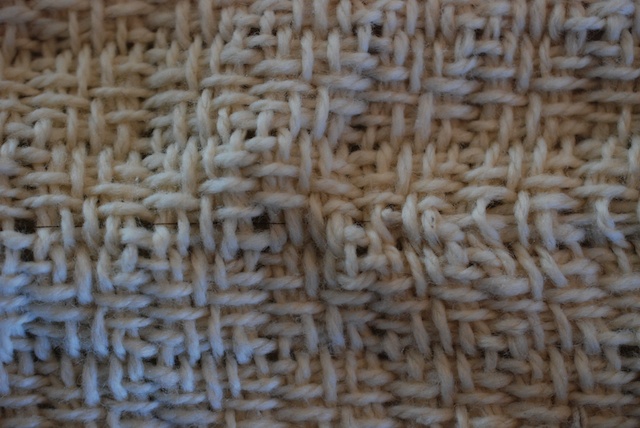 Then I tied the brown thread back to the wool yarn and pulled it all the way through to the end of the blanket….for all those threads. After fixing other errors the blankets were washed and they are finally in the mail.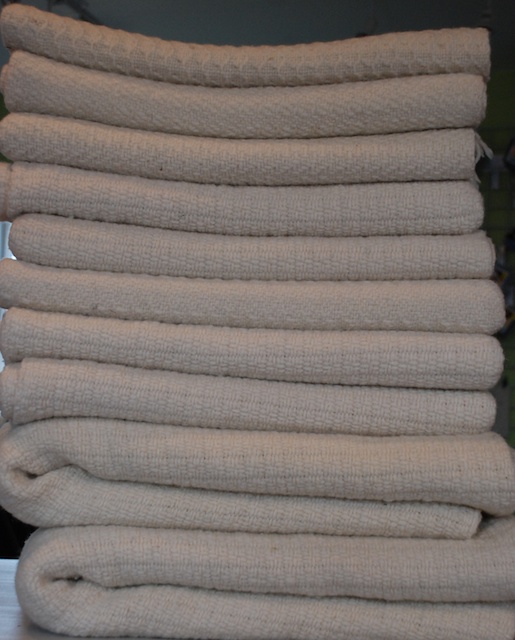
Here is the stack of blankets that I sent to the customer. There are 8 throws and 2 queen blankets (the ones on the bottom of the stack).
It’s the Artery‘s 40th year anniversary and we’re celebrating all year. There will be an all-member Gallery Show for part of February and, when we brainstormed ideas, we decided to call the show Forty Years of Love and to incorporate hearts into the pieces. 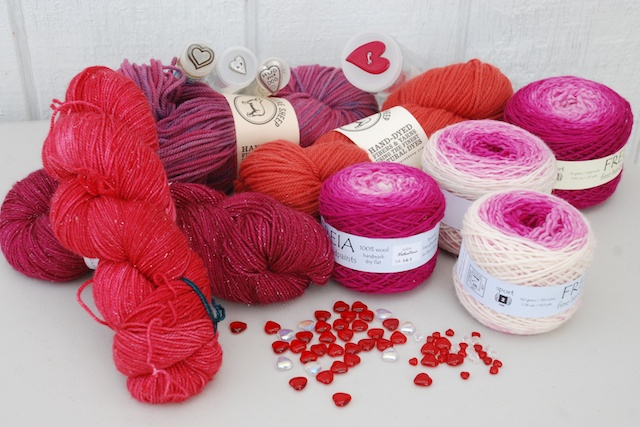 Here are yarns that I picked up at TNNA with the idea of suing something new different for this project
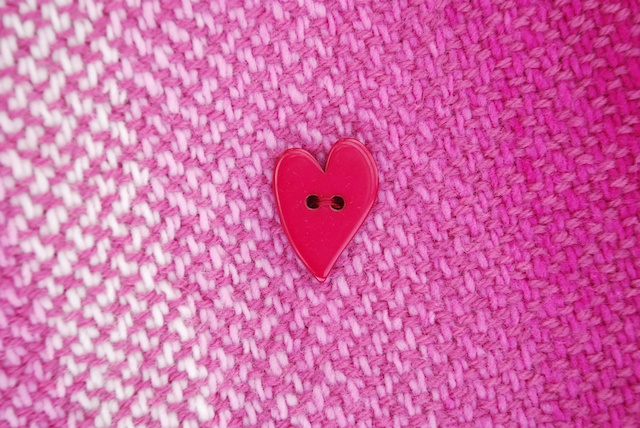
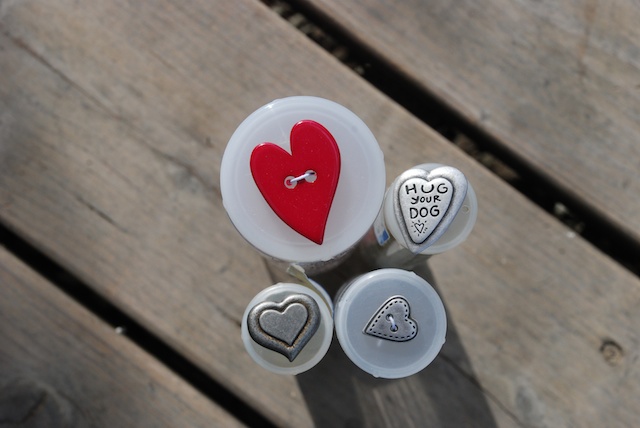 And here are some buttons that I have in the shop.
 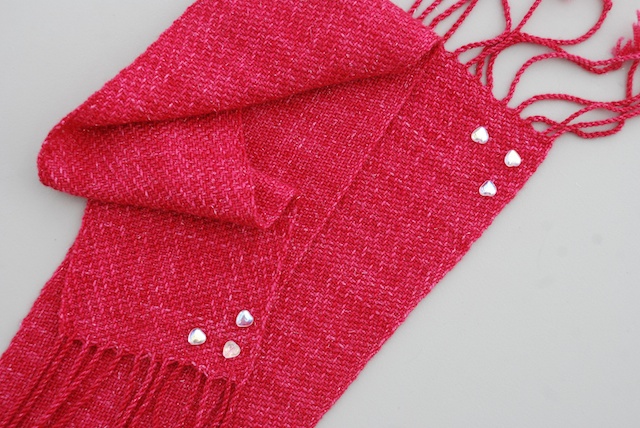 The first piece is woven with s soft super wash wool that sparkles with some metallic fibers.
 This scarf is woven with Targhee wool dyed by Sincere Sheep. I’ll be carrying some of these yarns in the shop soon.
 This shawl was woven from yarns that were dyed in such a way that they they change color from one end of the ball to the other. Combing four balls gave me this warp:
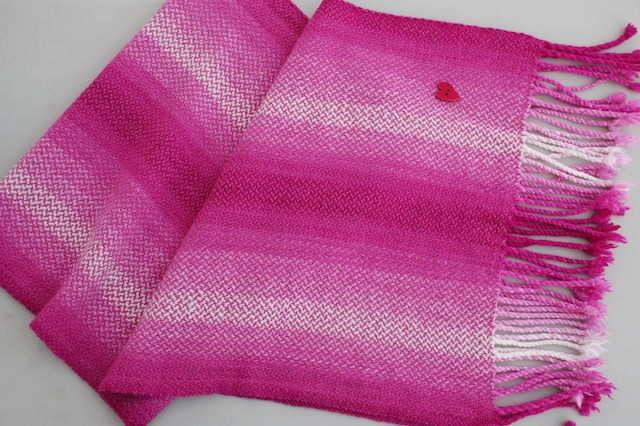 Luv ya!
Last week we had our annual Farm Club Retreat in San Francisco. Six of us were able to get away for 24 hours of camaraderie and relaxation (and one more member joined us for the evening). We started by visiting the Alemany Farm in southeast San Francisco and meeting two of the volunteers. The Farm’s website states: “Friends of Alemany Farm is a volunteer group that manages the horticulture, volunteer, and educational programs at Alemany Farm, a 3.5 acre organic farm ecosystem in southeast San Francisco.” The farm is on city property at the edge of a park and was formerly an eyesore. It has been developed and used by community groups in one way or another for about 20 years.


 It was certainly nice to see a bit of color since our drought landscape seems so dreary right now.

 Shelby tasted most of what we saw…
 …including the pineapple guavas…
 …which were sweet inside, but you really didn’t want to taste the outside part.
 A small community farm in the heart of the city.
After the farm tour we drove back to the NDGW Home where we met up with Lisa…
…and later Stephany, who had broken her ankle and wasn’t up for walking the hills of San Francisco. We had a splendid dinner at a Green Chili Kitchen just up the street from the Home. We spent the evening lounging in the parlor with our knitting, spinning wheels, and Mary’s wonderful cookies and pom-poms.
Unfortunately I somehow lost all the photos I took with my iPhone from the pjs and pom-pons in the parlor through the next day’s field trip. BUMMER. The next morning we enjoyed the now traditional Lemon Custard pie (from Green Chili’s)for breakfast and then five of us drove to Berkeley to visit Lacis, a shop filled with all kinds of cool gadgets and featuring a museum. The exhibit in the museum was a private collection of lace complete with the history of the development of lace and it’s impact on European history, as told by the owner of the collection and of Lacis. Fascinating.
I look forward to our next FC retreat in January, 2015.

