Unknown's avatar

About Robin

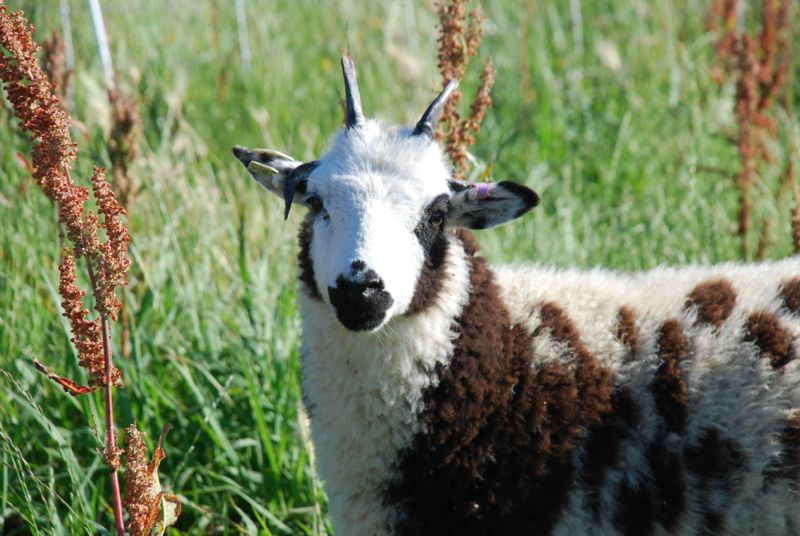
Owner of Meridian Jacobs, farm and fiber shop. I raise Jacob sheep, teach fiber arts classes, weave handwovens for sale, and manage the store.

Weaving blankets

Here is a blanket that has become one of my favorites to weave.
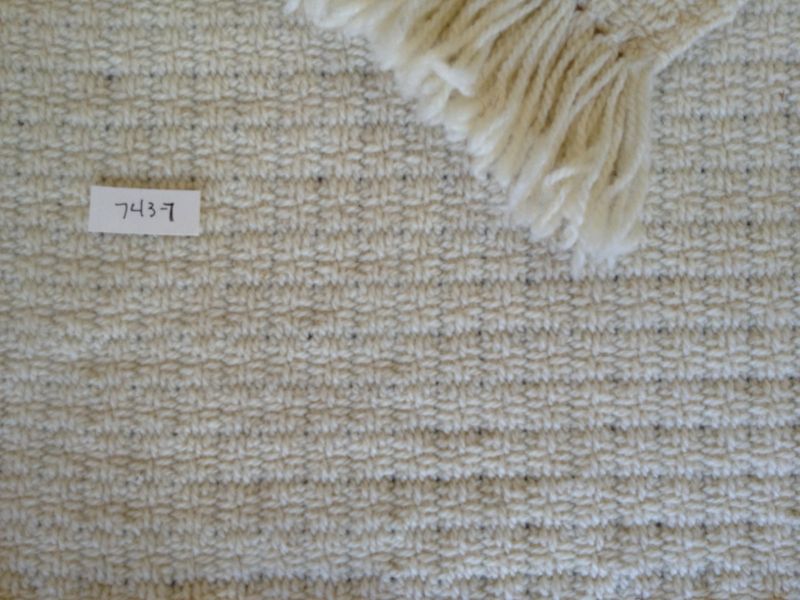
In the book where I saw this draft it is called Breaks & Recesses. I think I need to come up with a different name.

I have mentioned before how much a woven piece changes after it is has been properly finished. In the case of wool that means wet-finishing or some degree of fulling. When a piece is fulled the individual threads  become less distinct as the wool fibers catch on each other and the piece becomes cloth instead of  a bunch of separate threads. (Fulling is an irreversible process that needs to be controlled–picture a wool sweater that goes through the washing machine and dryer.)

This is a dramatic example. The blanket on the right is the same draft and using the same yarn, but it has not been finished yet. This yarn is one that was mill-spun of wool from sheep at the place where I used to go for sheepdog training. The yarn feels harsh and oily, but it softens beautifully when fulled.

A custom blanket customer saw a similar blanket and wanted me to weave her a queen size blanket using this pattern. “Sure”, I said. “No problem.”

I use double weave to weave a queen (84 x 90) blanket on a 60″ wide loom. That means that I weave two layers at a time with a fold on one side.  I have to allow for take-up and shrinkage (part of that is the fulling I described) so this blanket measured 54″ wide on the loom (double–opened up that would be 108″) and I planned to weave 100″ in length. A lot of this is educated guessing based on previous similar projects.

This pattern is woven on 8 shafts. To weave a double width blanket I used 16 shafts, 8 for each layer. First I had to figure out that part. None of this will make sense if you are not a weaver and I didn’t intend for this post to be an explanation of all the steps. One of these days maybe I’ll do that, but not now.

This looks nothing like the pattern in the finished blanket. That’s because in this draft every other horizontal and vertical line is the opposite layer (odd numbers are the top and even numbers are the bottom). When I buy new software it will be something that will show me the top and bottom layers.

When I finally started weaving the blanket I knew that something wasn’t right, but I had a hard time figuring out exactly what it was. I used a mirror to see the lower layer but I had to go back to the book and the computer to see that I had reversed some of the squares in the draft.
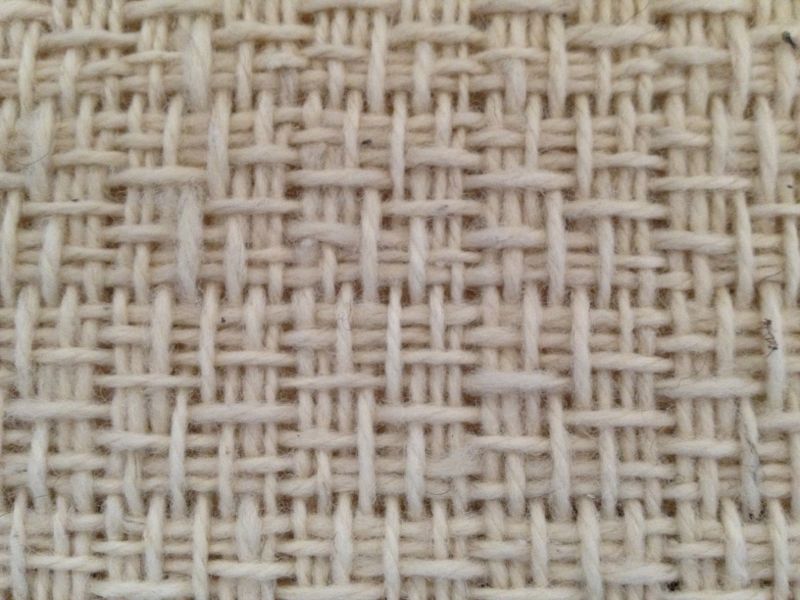
Here is a close-up of the top layer as I was weaving.
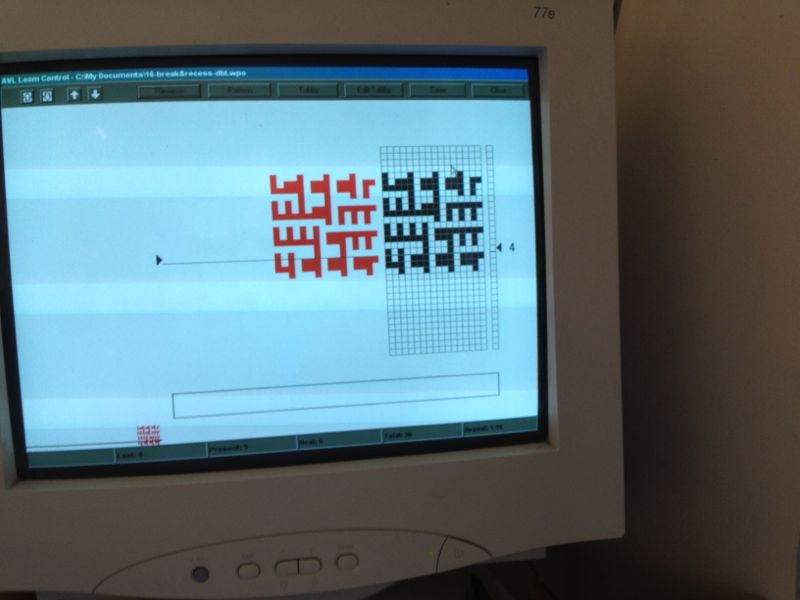
This is what the computer looks like as I am weaving. I have what is called a compu-dobby and the computer drives which shafts lift, although I do all the work.

See the shuttle at the other side of the loom?
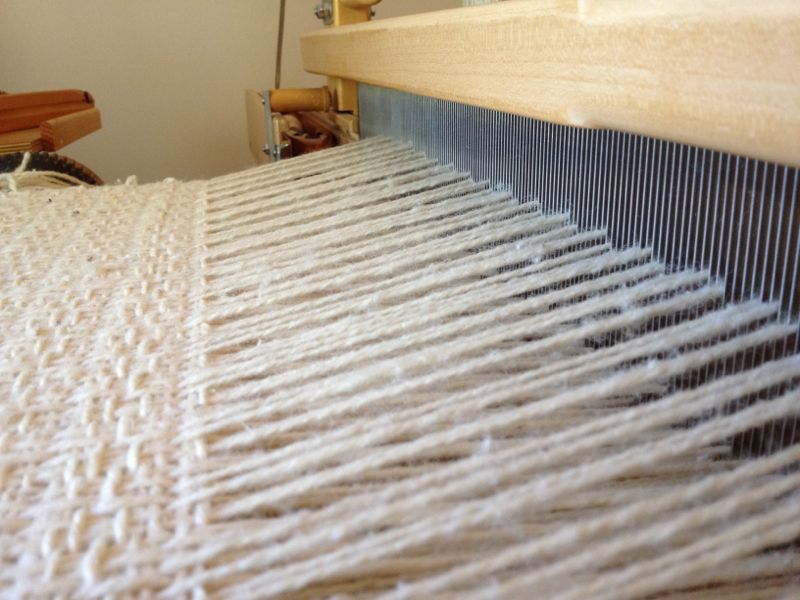
As I step on the treadle certain shafts lift so that the shuttle can carry the yarn in between the threads.

This is after the shuttle has gone from left to right and is now on the other side.

This is a view of the left side where I can separate the layers. The fold is on the right.

I finished weaving this blanket today and am working on correcting a few errors. Then I will have to crochet the edges before I full it. I should take photos of these processes and report back.
 

No Sheep in Paradise

We just came back from my first visit to Hawaii. We went to visit with my father-in-law who moved there with his wife last year. They don’t plan to come back here, so if we’re going to see them we need to get to Hawaii–not a bad place to “have” to go, but it’s not that easy to make the trip when you have animals to take care of.  Here are some photos of our visit.

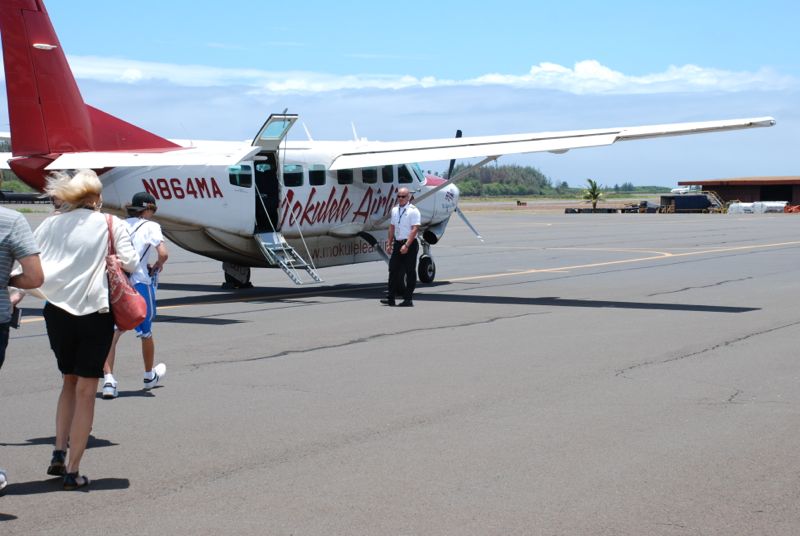
This is the little 10 (or 12?) seat plane that took us from Maui to the Big Island. We were skeptical, especially when we saw one of the pilots for another commuter plane who looked like he was about 12, but it actually gave us great views of the islands and the coastline.

Isn’t that water beautiful?

We were met by our relatives, leis in hand.

The first evening in Hawaii we got to the beach just as the sun was setting.

This photo was taken at Hawaii Volcanoes National Park. This is an incredible place to visit but you need a couple of days to be able to hike the trails and see it all. We drove down to where the road was blocked by a lava flow 10+ years ago. This is right on the coast and it would sure be something to watch the lava flow into the ocean.

That’s all lava as far as you can see.

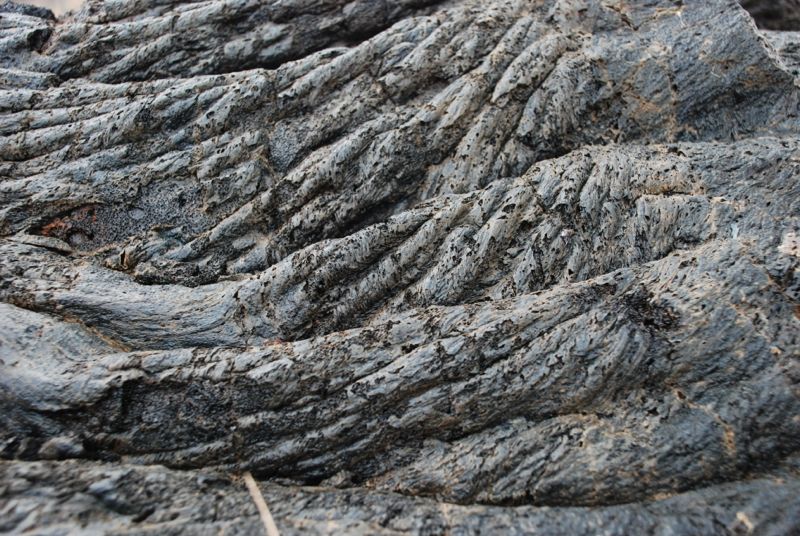
There are beautiful textures…

…all around…

…and color when you look more closely.

The landscape is immense.

We especially liked the message on this cap. Can you read it? (See next photo)

We did some touristy things:

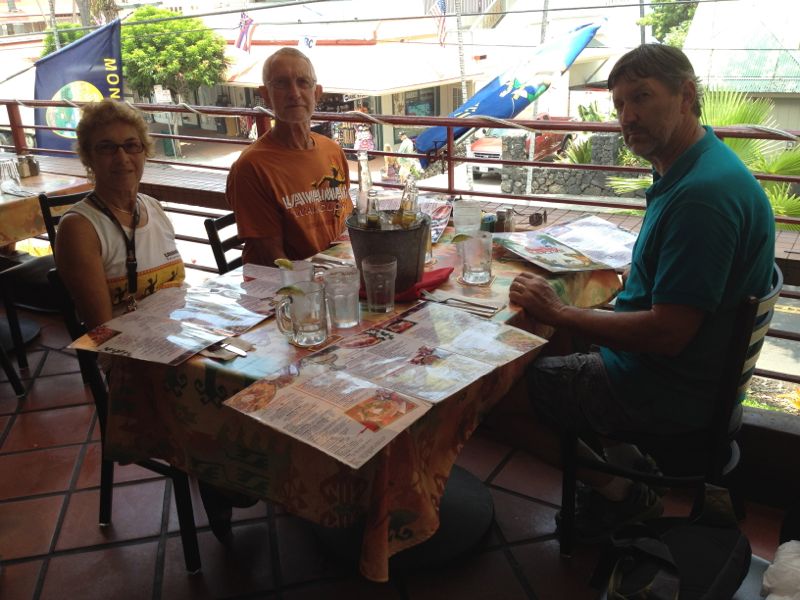
One day was spent in Kona shopping and eating. One thing it’s hard to get used to is that many of the buildings don’t have walls. As long as you can get under a roof you will be out of the rain, but it’s never cold enough to need the walls. I wonder what the CA Health Department would do if they saw birds walking around on the tables in a restaurant.

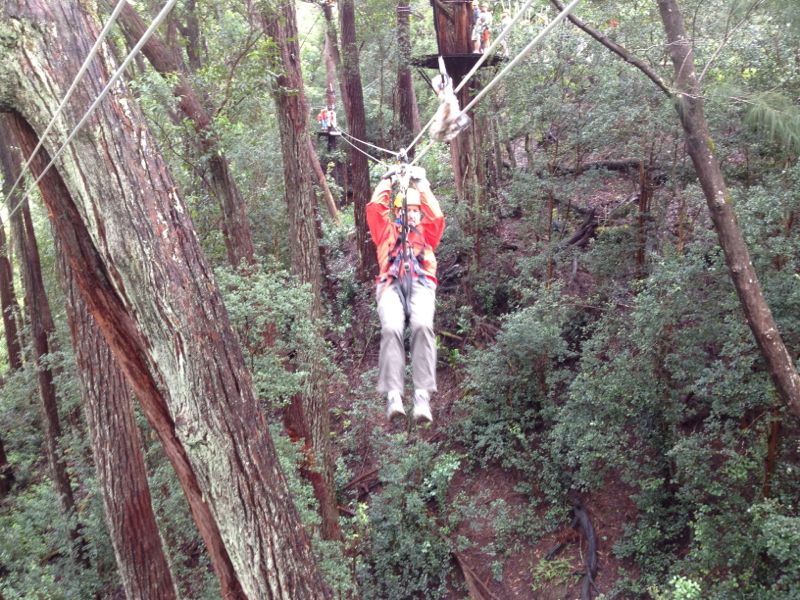
We spent one morning zip-lining through the trees. That is Dan and, yes, I did it too. I’ll have to get photos from Dan’s camera. The scariest part was the drive to and from the zip-line course.

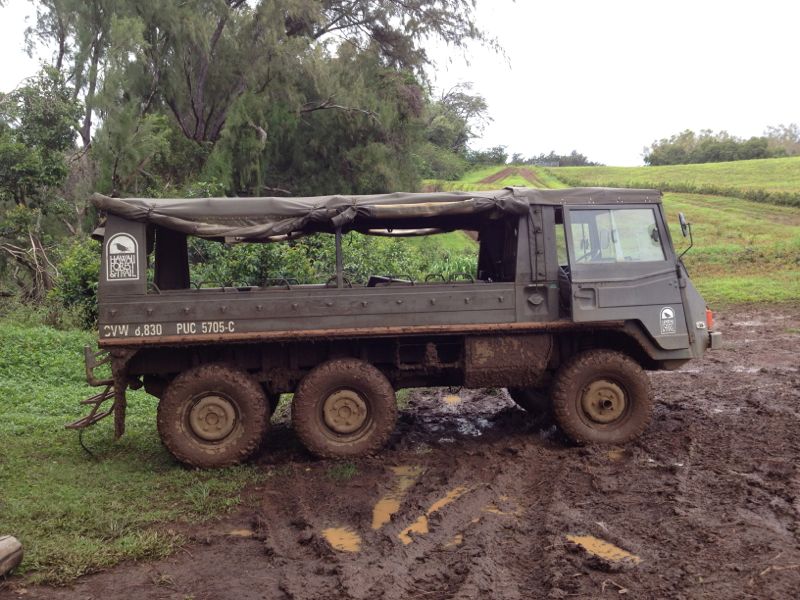
It took 6-wheel-drive to get up there and we were still slipping and sliding on the road.

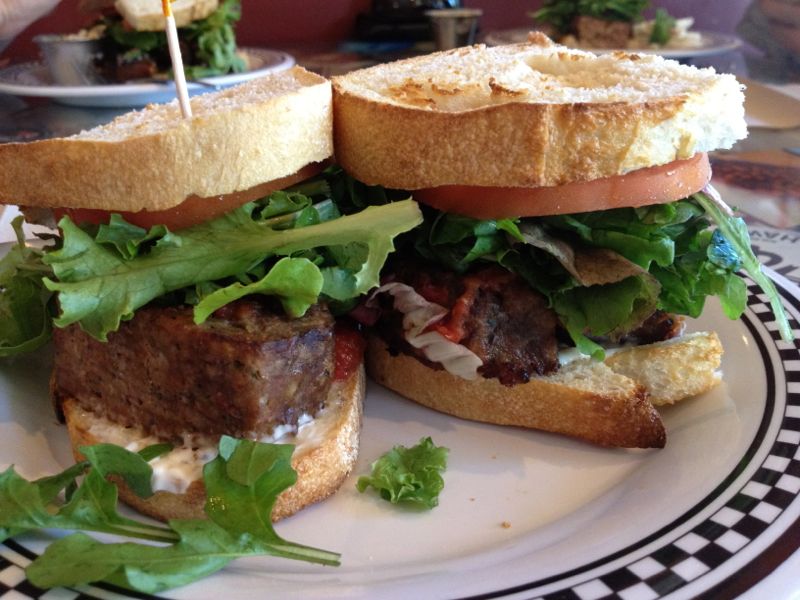
Food is an important part of any vacation and we tried a few of my in-laws favorite places. This is a meatloaf sandwich on homemade sourdough bread.

There wasn’t much beach time but we were there for a couple of hours before it started to rain.

Next time I’d definitely like to explore more beaches.

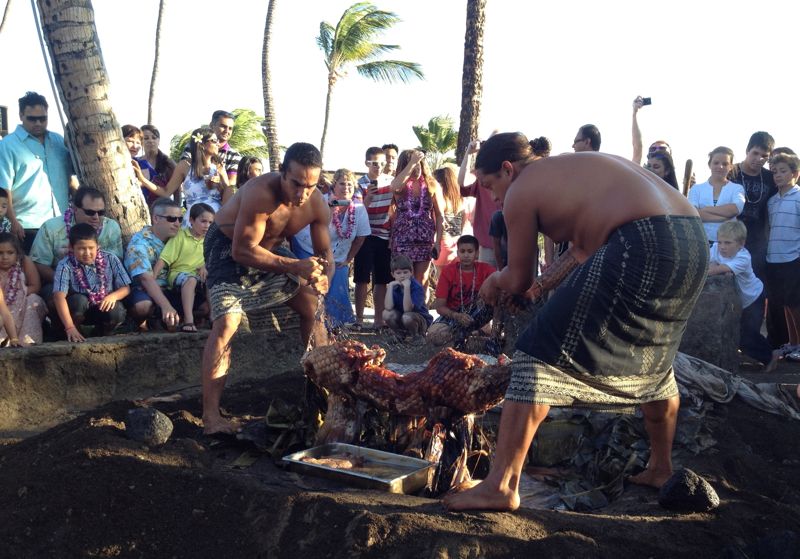
We feasted at a lu’au…

…and as the sun went down…

…we were entertained by the show. Since our goal was mainly to visit with family we spent a lot of time at the house–which is not on the beach or in the rainforest, but at Waikoloa, in the dry area of the Big Island.

I loved the bananas–a different taste from the ones at Safeway.

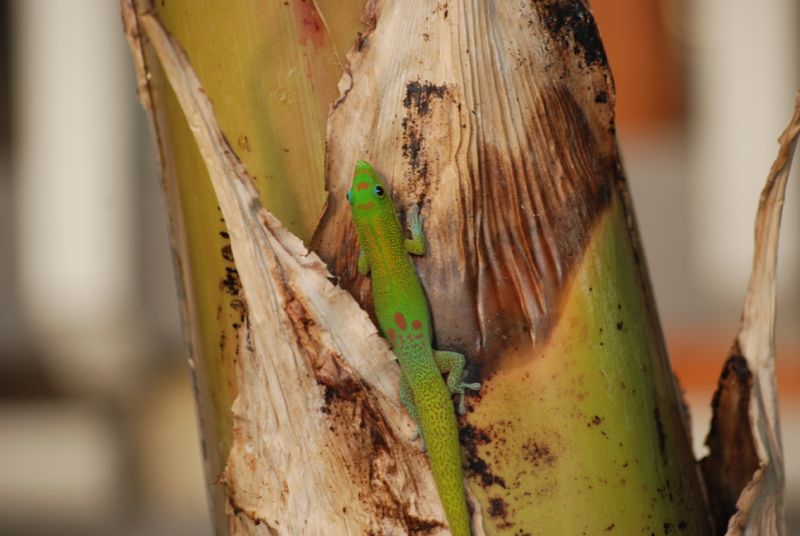
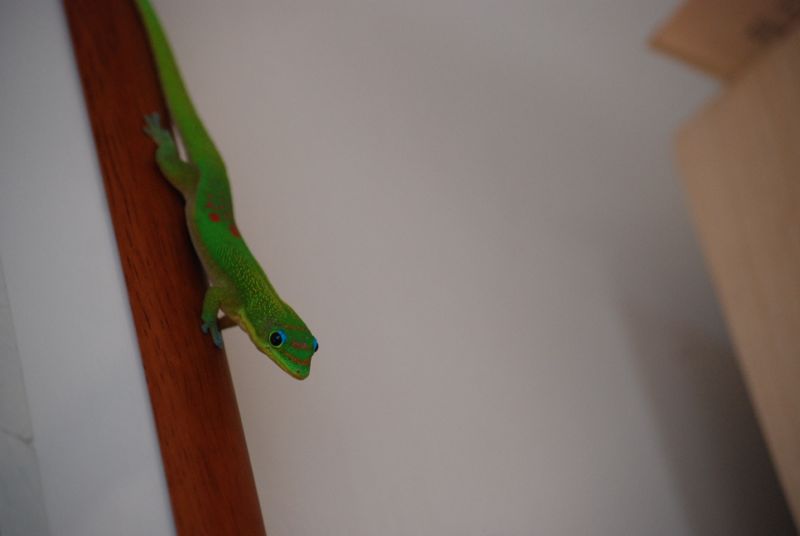
I was amused by the geckos…

…although it still seems strange to see them roaming around inside the house.

We were gone for 8 days and needed a day to recover when we got home. It’s fun to visit but good to be back home to sheep and yarn and chores…and, of course, Rusty. I was going to write a blog post about what it took for us to be gone this long, but I think I’ll ask Rusty to write that one. He has been waiting to use the computer because I had it with me. Check out Rusty’s blog a little later.

Hot Day and Other Random Thoughts

Higby’s Country Feed is my favorite store. There is always something there I want to buy. I told them that if they started carrying underwear, then between Higby’s and Ace Hardware, I wouldn’t have to shop anywhere else. Today Higby’s had an anniversary celebration of opening the new expanded store five years ago.

With the weather forecast of 104 degrees and north wind today I scoped out the most protected spot for the canopy and sheep pen. The winds didn’t materialize, but it was breezy enough to help with the heat. Thanks to Jackie who met me there and stuck it out for most of the day. We were well fed as Higby’s provided home-made scones and cinnamon rolls for breakfast, enchiladas for lunch and snacks and cold drinks all day.

I was impressed with the raised beds for the vegetable garden. (Since our tractor tires just shredded maybe I’ll be able to use this idea too.)

This morning I caught a couple of lambs that I think I’ll be keeping.I figured that I may as well bring sheep that I want to halter break. At the time I wasn’t thinking of a blog post so I didn’t take many photos. But here is one lamb that I brought:

She is the biggest lamb I have and she has a beautiful fleece. Does she look familiar?

Here is Dad:

By the way, he was sheared last week. The flock is shorn in November but some of the long-wool breeds can benefit from twice/year shearing. Faulkner’s fleece looked so lovely that I decided to have him shorn since a sheep shearer was in the area to buy lambs anyway.

Penny, the shearer, chose to shear Faulkner standing up. He was a perfect gentleman about the whole thing.

Penny’s son helped catch the locks as they came off. Ummm…don’t look too closely at Faulkner. Maybe he could benefit from wearing a sheep size grazing muzzle.

Here is a photo that I took after washing half of Faulkner’s fleece.

This is the site that greeted me inside the door of the shop this morning.

It’s 7:30 p.m. and I think it’s probably still in the 90’s. I’m sitting under the ceiling fan I hope that in another hour it will be cooler outside than inside so we can turn on the whole-house fan. How many people go to Hawaii to find cooler temps? (For those of you who think, “wow, that’s a random thought”, stay tuned. Or maybe it’s just heat stroke.)

Benny 1999 – 2012

Benny was found cowering in a rain storm under the shopping carts at Safeway by the daughter of my friend, Colleen. Colleen rescued him and got him healthy. We had just moved to our current location a few months before and decided that we could handle another dog since we had only Flash at the time. Colleen had said that Benny was probably a Border Collie mix. What I didn’t expect when I saw him was that his legs were only about half the length they should have been to match his body. Colleen raised Corgis–maybe Benny looked normal to her!

We’ll never know what trauma Benny had experienced before he was adopted. He was always loving to our kids and their friends, but was not trustworthy with adult strangers.

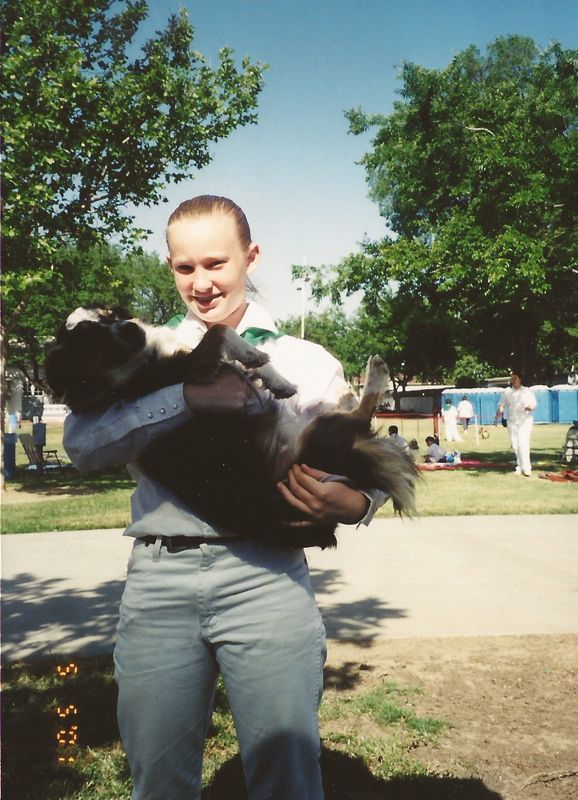
Katie took Benny in the obedience classes at the 4-H Dog Shows, but he was never given the Canine Good Citizen award because of his tendency to growl at a stranger who approached with a hand out (unless the hand was throwing treats).

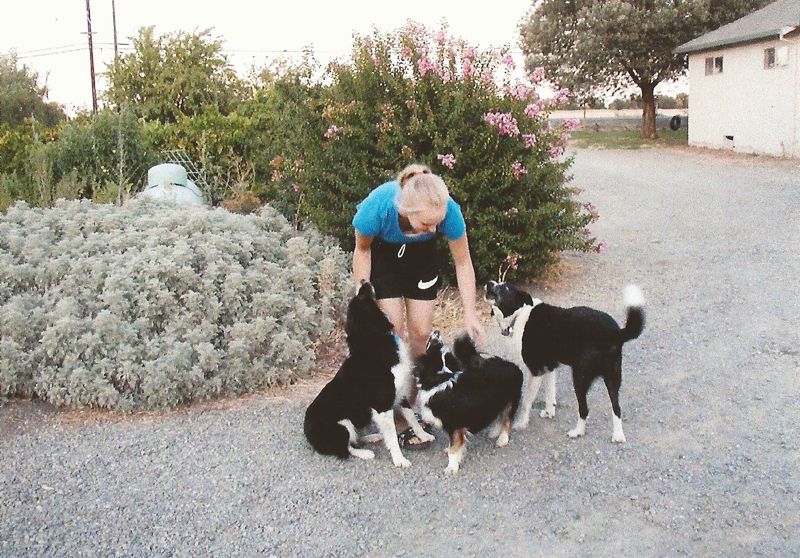
Flash (right) was also found in a parking lot as a puppy and I got him from my vet at the time. He was probably about 6 when we got Benny. Doc (left) was a wonderful dog who came to us later when the neighbors moved and they didn’t want to take him. Benny looks as though he fits in, except for those short legs. Flash and Doc are both long gone.

The next dogs were Rusty and Bonnie. Bonnie has since found a good home in Modoc County where she is a lot happier than she was here.

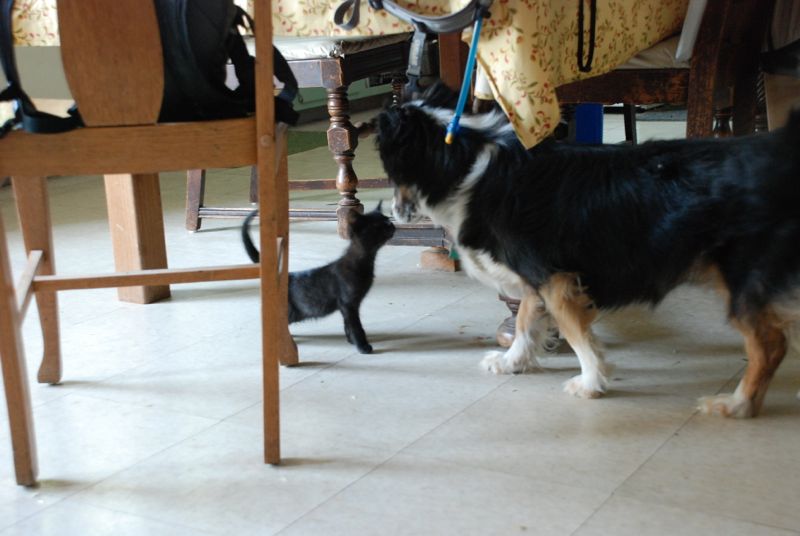
Benny greets Ozzie when he moved in two years ago. What is it with animals with no homes?

Investigating this spring’s temporary house-lamb.

Benny had congestive heart failure and kidney failure and is now buried under the trees here at his home.


Flash

Additions to the Flock

I drove to to Mud Ranch Jacobs today, west of Redding, to trade lambs. One lamb is going to Kenleigh Acres in Oregon and the other is staying at Mud Ranch. My Kenleigh lamb came a couple of weeks ago when she was able to hitch a ride south with a friend. Meet Kenleigh’s  Isadora:

She is the great-granddaughter of Fanny, a favorite ewe of mine.

Isn’t she a pretty girl?

The drive to Lewiston was over 3 1/2 hours one way, but it’s a pretty drive if you enjoy scenery and I was listening to a good book. (The book is set in modern times in England and, although it doesn’t have anything to do with the story-line, the family of the main character raises Herdwick sheep. There are interesting comments about the breed and how they relate to what we would call agritourism.) Anyway, that doesn’t have anything to do with my story but it did keep me awake on the drive both ways.

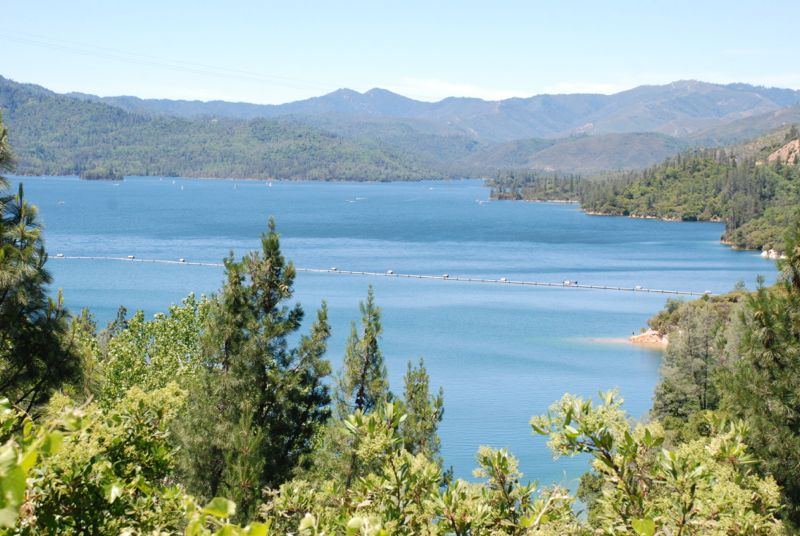
This is Whiskeytown Reservoir and I am amazed at how full it is. I am not a big fan of reservoirs but this is sure pretty (and looks very inviting).

Back to the sheep.

Joan had the lambs sorted out and the lamb for trade was easy to catch and put in the truck.

This is Mud Ranch’s Foxglove, a pretty lilac ewe.

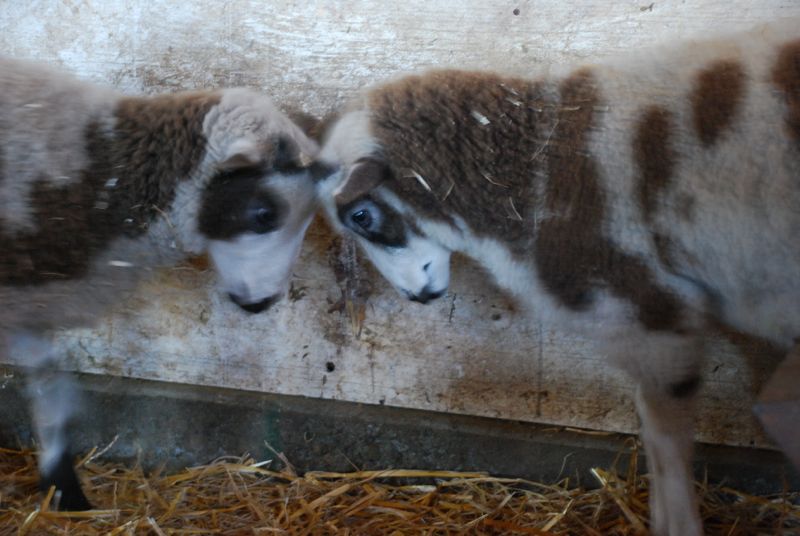
But what’s this? Is she looking in a mirror?

No, it seems that Foxglove couldn’t come without her friend, Ginseng.

Here are the sires of these two lambs:

Foxglove’s sire is Kenleigh’s Lancelot.

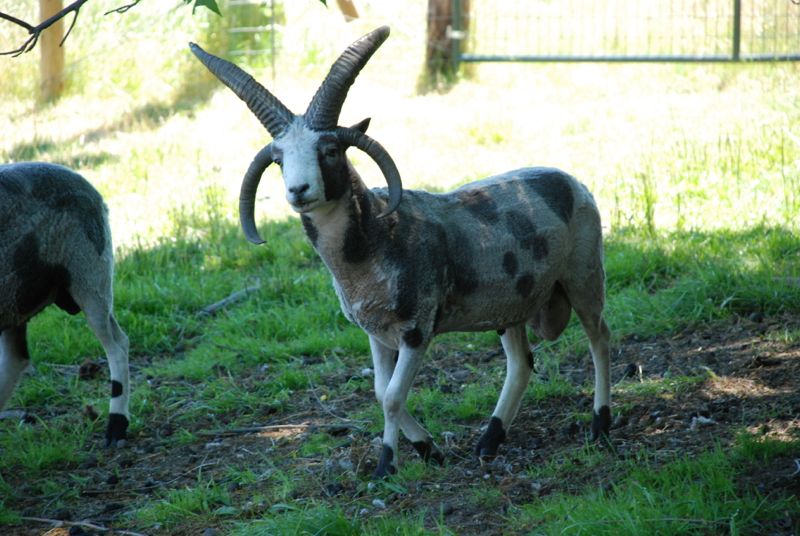
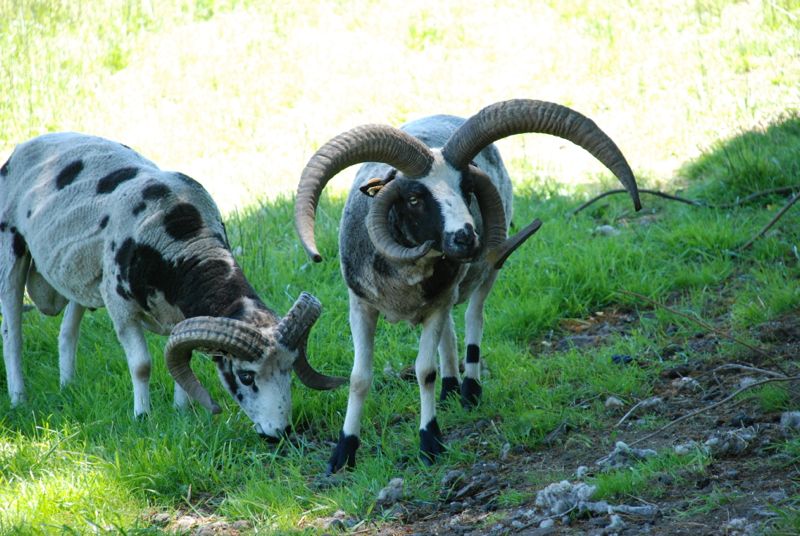
Ginseng’s sire is the 2-horn ram in this photo, Tristan.

Welcome to my 3 new lambs.

You Can’t Always Count on Genetics

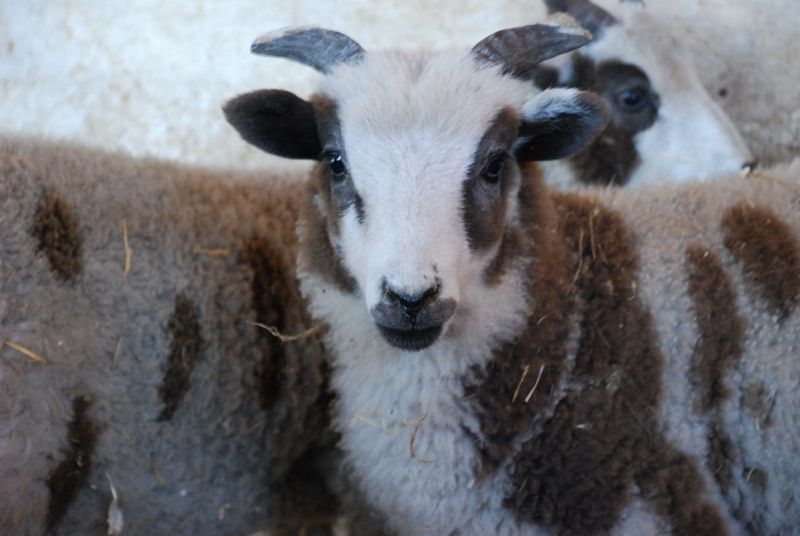
This is Ebony, a black and white Jacob ewe.

This is Hudson, a lilac Jacob ram.

Here is one of their lambs at almost 2 months old. He is lilac like Dad.

This is the other lamb at about a month old…

… and here he is at just over 2 months. He has been marked with a cull tag because of a severe split eyelid, but also, do you see how his horns are growing?

Both lambs today, at 3 1/2 months old:

I love the horns, the color, and the fleece on this lilac ram, but (as in the discussion over on Facebook) I sure wish that I could combine these lambs into one and keep just the parts I like. Look at those pretty blue eyes on the black and white ram…

…and he has nicely marked feet also.

Speaking of rams, here are a few more photos:

The photo above is of Meridian Clapton at about 6 months…

and here he is as a yearling.  Look at the photo below for horn detail on his right side.

The first thing that is unusual is how his horns go behind his neck instead of under, but there is also a fifth horn there.

Meet Puddleduck Sullivan, a 2-horn yearling ram. But is he really a 2-horned ram? I see a seam in those horns that could mean that he is a fused 4-horn. And he also has another horn on this side. People talk about 6-horn Jacob sheep, but I haven’t seen any in which the 5th and 6th horns weren’t scurs or some how compromised by the larger horns. After all, where would you put another full set of horns?

This is Meridian Fogerty, a another 2-horn yearling ram. I had so many rams last year that I didn’t use him, but he will be in this fall’s ram line-up. His horns are closer to his face than I’d like, but still OK.

One more ram. Sweetgrass Clint is Clapton’s sire and here he is (above) at 6 months old.

This is Clint last fall as an adult.

Bottom line–you don’t necessarily get the perfect lamb by breeding two “perfect” parents and you can’t predict how the lamb will look as an adult when you buy it at 4 months old.

For more photos of how rams’ horns change see my website photo gallery . By the way, Ebony, who is at the beginning of this post, stars in her own video over on YouTube. Click here  and find her video to see her having those ram lambs.

Free Range Chickens

The other day when I was feeding the chickens one of them walked out the door of the chicken house. I decided to leave the door open and let them all out. My chickens have lived in a chicken house for years because a neighbor complained about them tearing up her garden. Now I realize that this was many years ago which meant it was a completely different batch of chickens. (And that batch of chickens gave new meaning to the term free range–they had a lot of traveling to do to get to that neighbor’s place when I have a perfectly good barnyard full of bugs here.) Those chickens also used to roost on my feeders, making a big mess that I was not sorry to get rid of.  So that batch of chickens set the chicken-housing standard here….with one exception that I’ll get to later.

When Goldie (the tamest of the current batch and the only one with a name) walked out the door I had a revelation. If I could get them to go to the sheep part of the barn and eat bugs and maggots they would definitely earn a soft spot in my heart and I wouldn’t have to spend as much on chicken food.

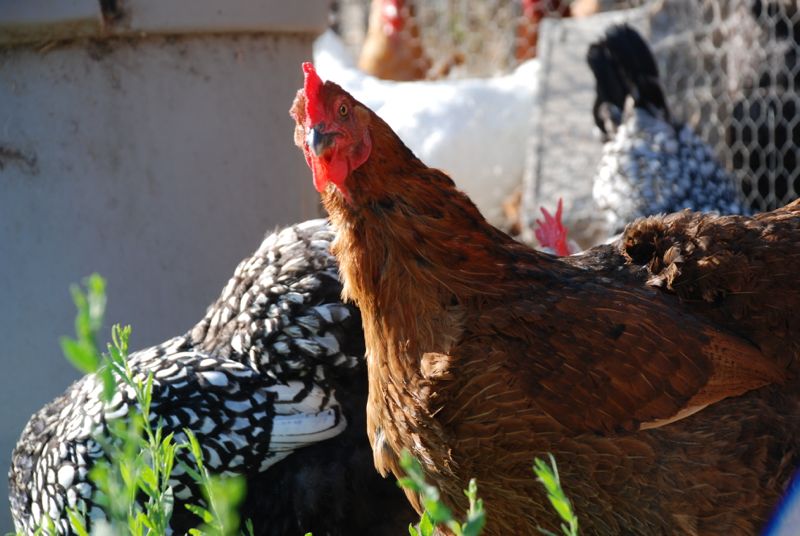
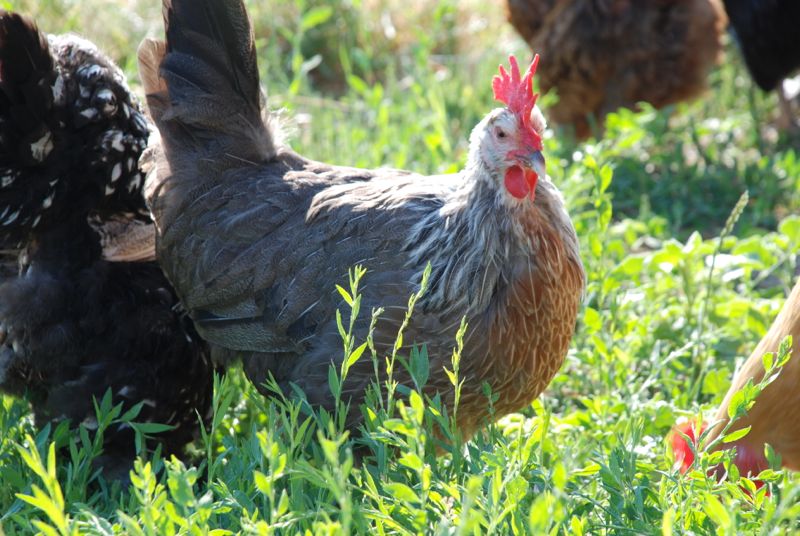
Guess which one is Goldie?

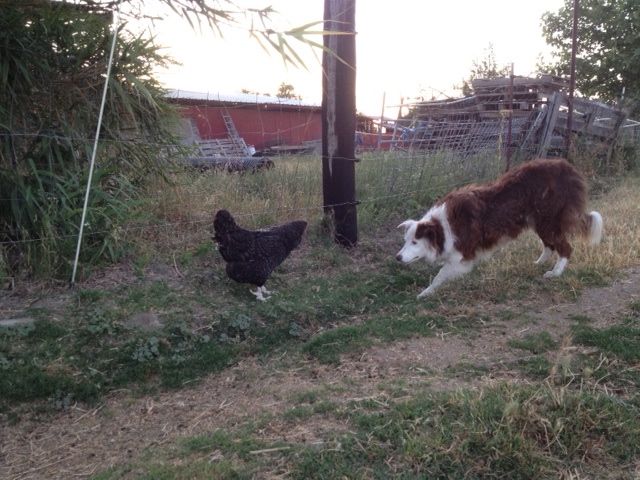
Somebody was not happy about this. Rusty was already having a tough morning with the hot air balloons overhead. Now the chickens were in the wrong place and he didn’t know what to do. Read Rusty’s blog for his opinion about this.

I wasn’t sure if the chickens had found their way under the gate into the barn. Yesterday I made sure to entice them that way with a few bits of grain. I did the same today and watched as they scratched into old hay and manure. I watched closely and was satisfied to see them go for the wiggly maggots under the straw. Good chickens.

I think that Rusty might be happier about the whole thing tonight. When I closed the door on the chicken house one chicken was missing. I saw her on the other side of a fence and she didn’t know how to get back.

Feeling better about the whole thing now, Rusty?

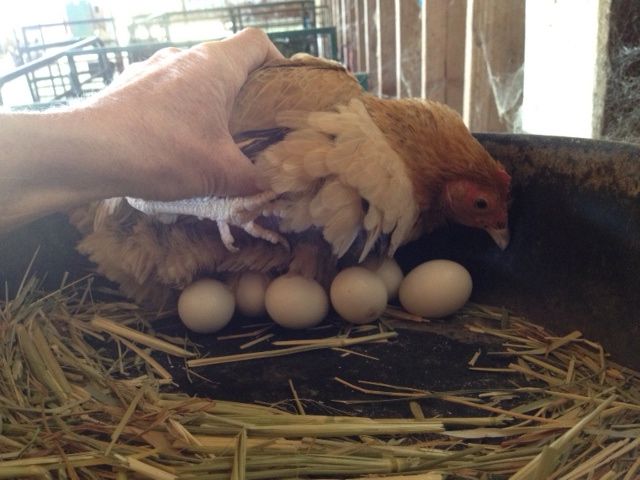
I was just rereading this for errors and realized that I hadn’t yet explained the one exception to the chicken-house chickens. We used to have 2 banties who were loose in the barn. There is one left. This is an OLD chicken. She was around during the years when my daughter had her horses and cows here and she left for college in 2006. Every year she starts laying in the hay and I put her eggs in a rubber tub so that I can move her if I have to move the hay.

Don’t get excited about babies. There is no rooster.


Farm Club Farewell

One of our “founding” members, Tina, is moving to Portland soon. Dona offered to have a farewell party at her house in Wilton. What a wonderful way to spend our Saturday. Food, fiber projects, animals, and most of all, good friends.

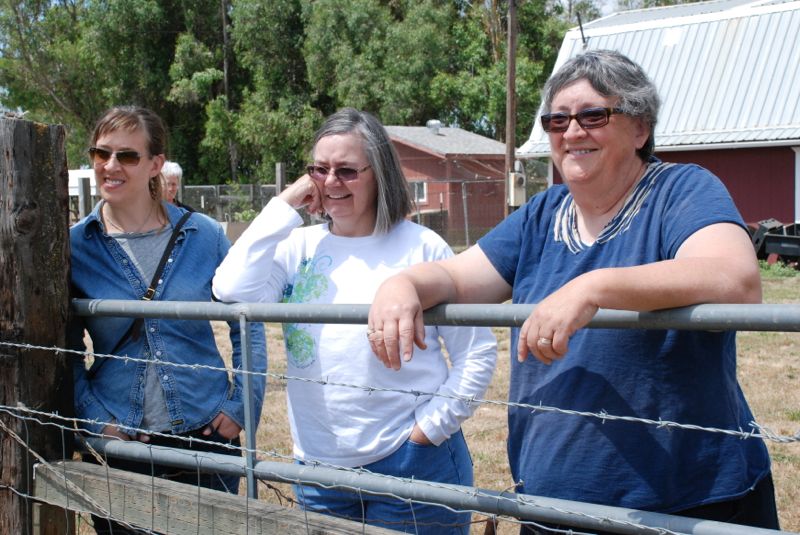
Tina, Chris, and Jackie watching Dona’s goats.

Shelby and two of Dona’s Boer goats.

Cracker treats for the lambs.

Some of us whip out our cameras at every opportunity but Alison always has a sketch book at hand. (And her sketches are wonderful.) By the way, that is Faulkner’s daughter on the right.

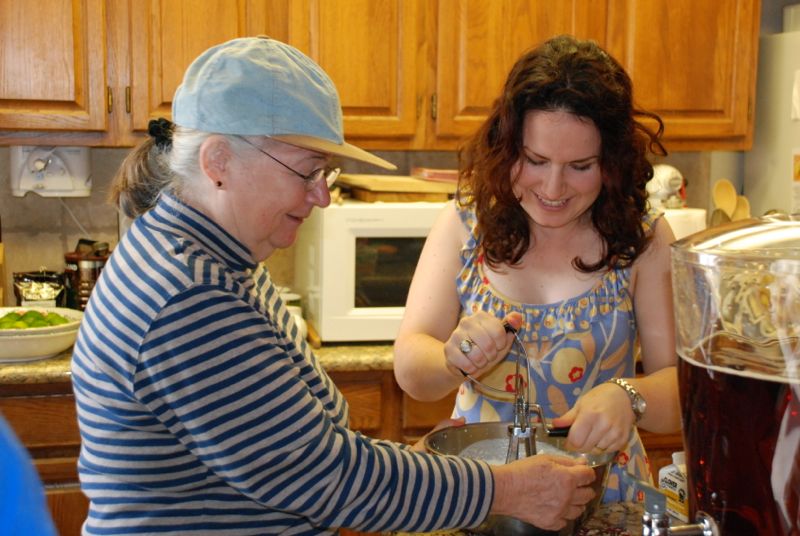
Last minute food prep as Shelby gets a lesson in whipping cream.

What a feast!

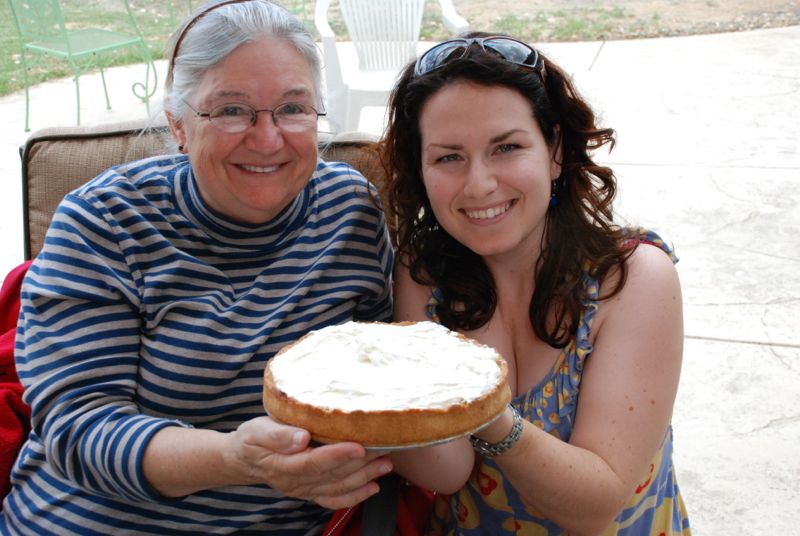
Kathy and Shelby present Shelby’s lemon tart with freshly whipped cream.

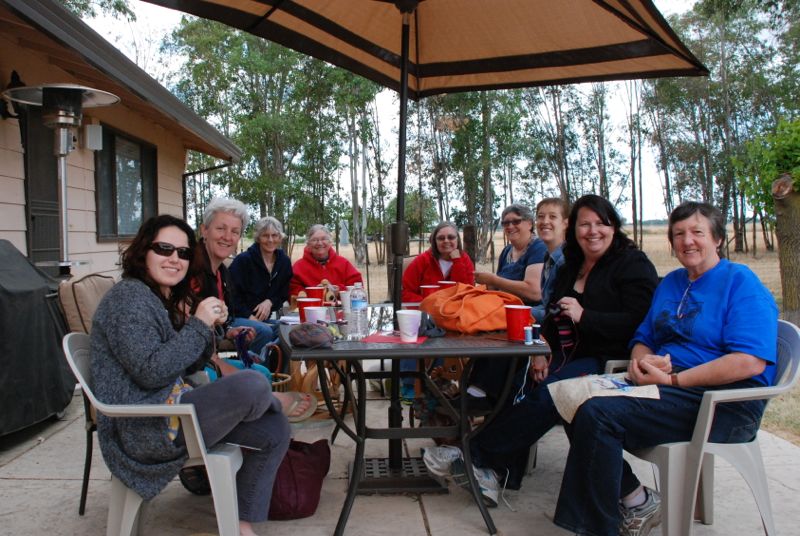
This is all of us who were able to make it to Dona’s sharing a wonderful afternoon.

Tina, if we don’t see you before then we’ll meet up with you at Black Sheep Gathering in 2013.


Wool Handling School

Last weekend I attended a Wool Handling School presented by the American Sheep Industry. On Sunday we spent the day at Flying Mule Farm in Auburn where the flock was being shorn. It was fun to attend a shearing day and just be a spectator. Lots of photo ops. And lots of learning too.

We spent the day with instructor, Ron Cole, handling wool and learning how to class fleeces. Flying Mule Farm sells most of their wool through the commercial market and it was surprising to me how little skirting is actually done (none other than removing bellies and manure tags). Fleeces that measure in the low 20’s (microns) or less would be skirted more carefully, but there is still quite different from what I do. When large flocks are being shorn, the skirting and classing must keep up with the shearing so they have to be quick. No agonizing over every little bit of fleece and of course there is no sorting of color. If there are any black sheep they must be shorn last and that wool kept away from the white wool.

Different parts of the fleece are examined.

Check for strength.

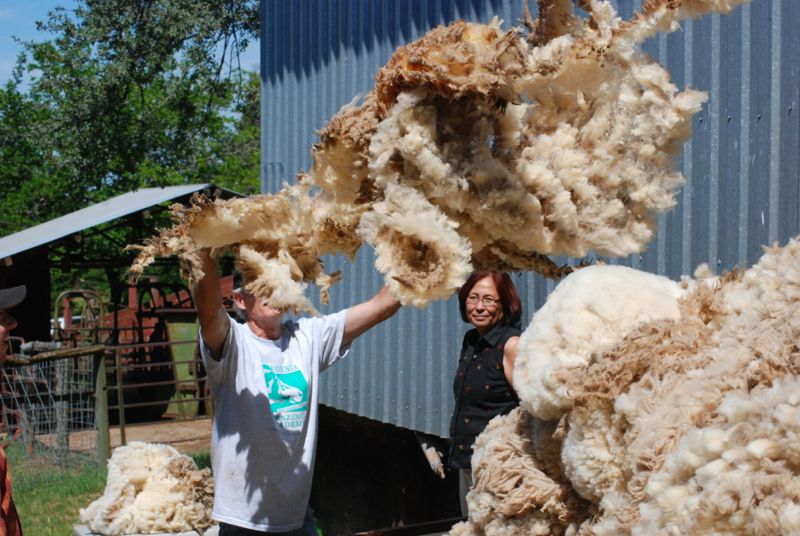
We learned how to throw a fleece. Normally you would pick it up right from the shearing floor and, using this method, throw the fleece on the skirting table.  The idea is for the fleece to land cut side down  already spread out for classing and/or skirting. In this case the fleeces were handed over the fence and then we all took turns learning to throw them.

I took videos of this as well and will post those when I have time.

Wool was packed into burlap sacks.

Blue-faced Leicester ram.

The attendees of this school were mostly new and/or small farmers and we spent some time at the end of the day discussing the differences in our perspective from that of larger producers. The focus of this school is how to improve quality and cleanliness of fleeces because all producers who send wool into the commercial market have an effect on the reputation (and therefore value) of U.S. wool in the world market. Farmers like me rely on niche marketing and we have direct contact with our customers.  I appreciated this opportunity to learn about other perspectives.

Moon Journey

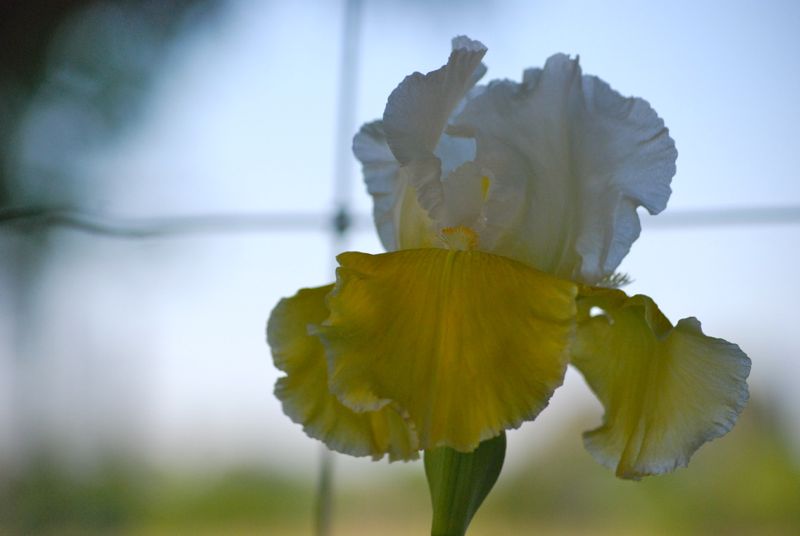
I was surprised to see this iris flower this morning. I bought four fancy iris plants from Pleasants Valley Iris Farm last year. You choose them in the spring when they are blooming (now) and then iris farmer, Mark, sends the rhizomes to you in the fall when they should be planted. I almost killed them by forgetting about them and leaving them in the box for…let’s just say…a long time.  I finally planted the rhizomes and have made sure they don’t get stepped on, eaten, etc. Today I was surprised to see the one called Moon Journey flowering! I don’t know if the others will produce flowers this year, but at least I am watching over them now. I can’t seem to turn Pleasants Valley Iris Farm into a link right now but go to http://irisfarmer.com