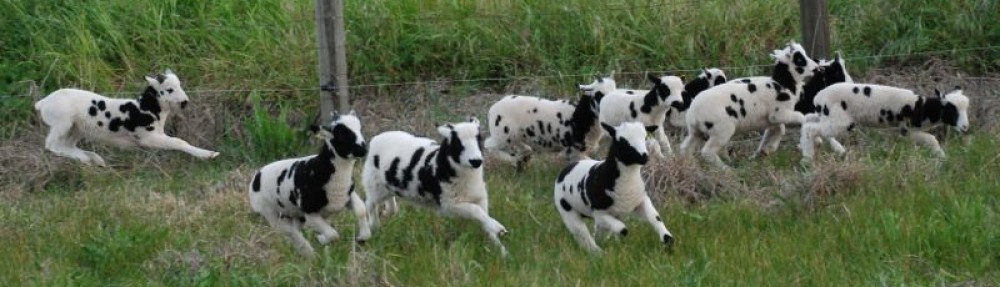
Last week it was impossible to go to town or walk Across the Road without running into butterflies. The orange sulphur butterfly (Colias eurytheme also known as the alfalfa butterfly and in its larval stages as the alfalfa caterpillar), I found out by googling, is widespread in North America and can be a significant alfalfa pest in high densities.
The alfalfa field just south of where I walk had been cut, the sunflowers harvested, and butterflies were doubling and tripling up on field bindweed flowers and any other weedy flowers they could find.


I thought that I’d be able to get photos of butterflies in flight. Do you know how hard that is? Not possible, at least by me.

But speaking of things that fly, I did get some bird photos. I don’t usually see great blue herons in the trees.

The snowy egret is dwared by two great egrets.

Great egret in flight.

On my way home I spotted these cattle egrets which I photographed from the road.
 This is one of several Brewer’s Blackbirds’ nests in the barn. This one is on a convenient shelf just over my lambing calendar. I’ve read that Brewer’s blackbirds eat seeds, grains, and insects.
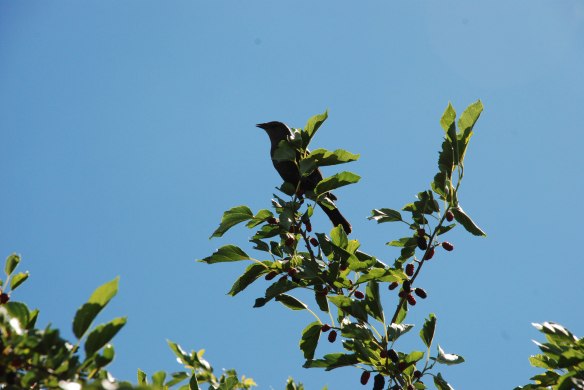 However, our blackbirds do quite well on the mulberry tree that overhangs the ram pen and is loaded with mulberries right now.
 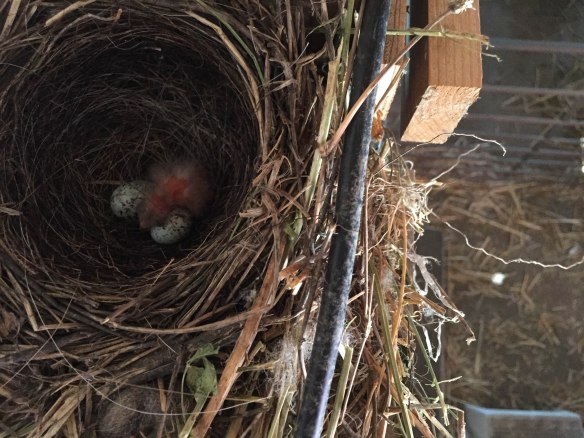 This bird hatched on April 30. Anytime we walk in the barn, the parents harass us relentlessly.
 This photo was taken two days later on May 2.
 May 6.
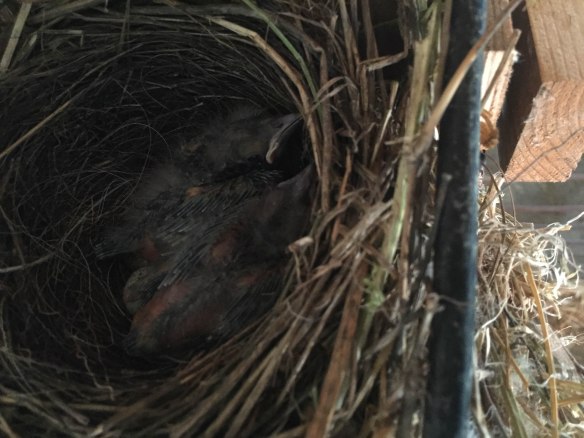 May 8. They grow quickly.
 This is May 9. The first baby is 9 days old.
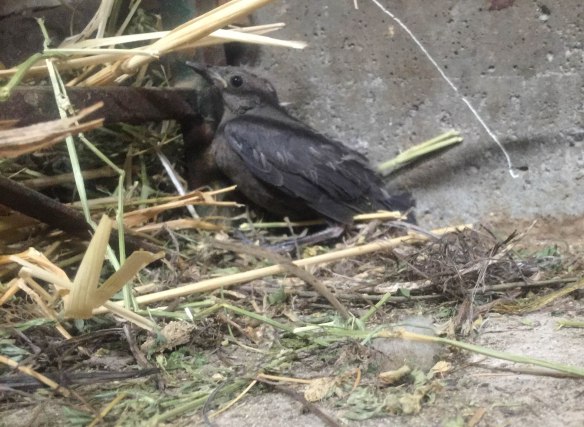 May 12. Out of the nest. There is a day or two when I find babies out of the nest. The parents are frantic. Maggie needs to be restrained because she is truly a varmint dog. She things that anything small and alive is fair game for her.
 Meridian Jacobs' Blog