Christmas Day

We had a Christmas Eve dinner with my brother and family, but Christmas Day was spent here on our own. The sun came out and felt wonderful after the days of fog and drizzle. I had been inspired by some visitors who came a couple of days ago (and are excellent wildlife photographers), to get my camera out and try for some real bird photos. So I went for a walk.

A view of the barn from and pasture the southwest. You don’t usually see if from this vantage point. I can’t walk very far west on this road because it is a private driveway.

I spotted a snowy egret, easy to identify with bright yellow feet.

I had not walked Across the Road for several days because it’s been so wet. I don’t want to leave big tracks on the road or carry five pounds of mud around on each boot. However, now that the grass has been growing in on the edge I can walk there without tearing up the road. Evidently, somebody tried too soon to drive on this road.

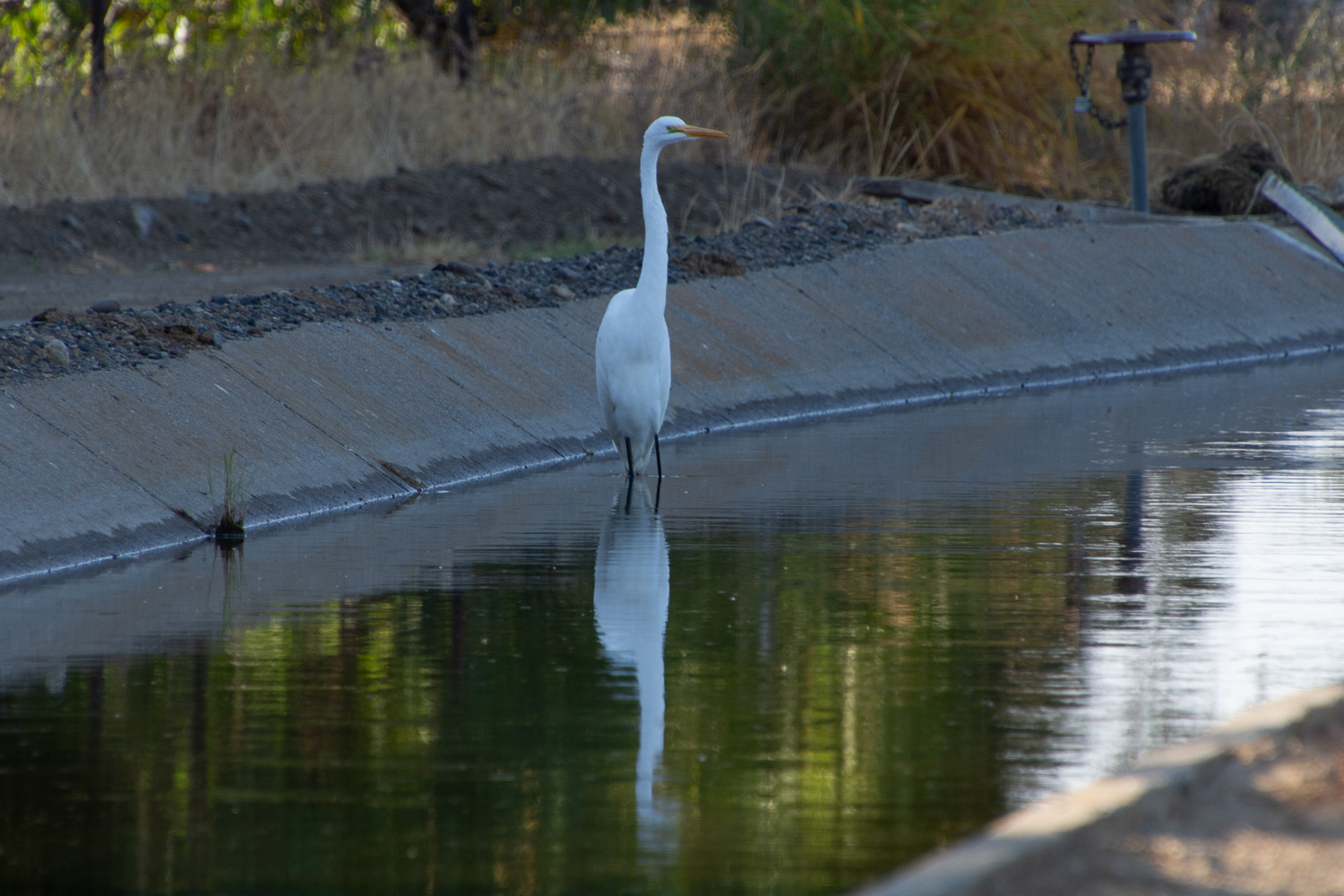
The greater egret is a larger bird and has a yellow beak and black feet.

Continuing to walk along the canal in the grass.

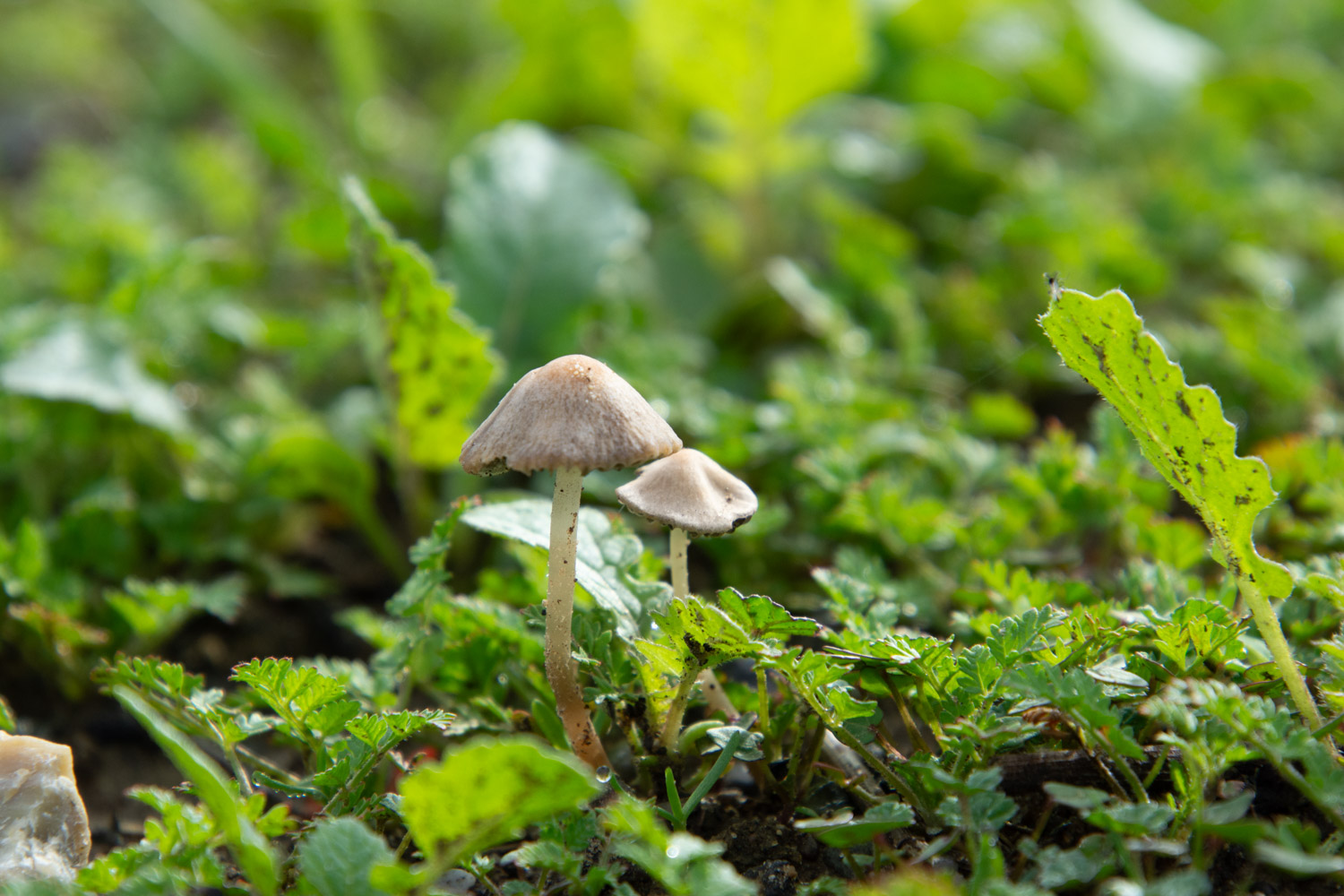
These mushrooms are under 3″ high.

Osage orange tree.

Osage orange fruit. It’s a strange looking fruit about the size of a grapefruit. Its easier to photograph plants than birds.

Wide-angle view of the farm from the road.

Lambing update

I just checked back to see when I wrote last. Wow! I’m so behind. It’s probably impossible to catch up with all the ideas I was going to share. Here’s an update about sheep and lambing season.

This is the lambing board where I record all the info as lambing progresses. This will stay up until the first lambs show up next year. The info shows date, ewe, lamb # (purple for ewes, blue for rams), and birth weight. The blue brackets are triplets.

Here is a summary:
Lambs born between January 25 and March 7, 2024
Single births: 3 = 3 live lambs
Twin births: 33 = 63 live lambs (3 died at birth)
Triplet births: 8 = 22 live lambs (2 died at birth)
Total live lambs = 88 ear tagged; 1 died at 1 day and 2 dead fetuses not counted.
44 ewe lambs / 42 ram lambs
Sires:
Horatio 36 lambs
Barrett 27 lambs
Typhoon 12 lambs
Blizzard 5 lambs
Peyton 5 lambs
Unknown 3 lambs
The Unknown are the first 3 lambs born, earlier than I expected, and due to the ram lambs getting into the pasture prior to breeding season. OOPS!

I also question if Blizzard is the sire of the five lambs born later than expected based on original breeding dates.

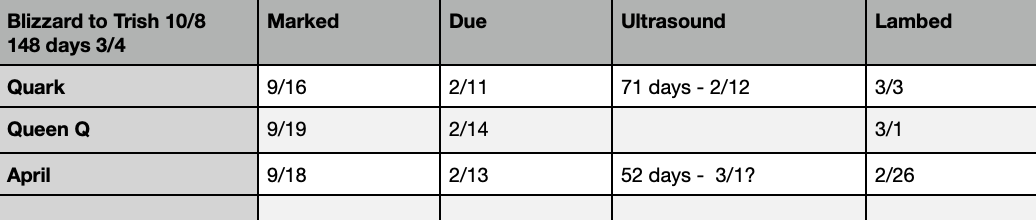
I made this chart to help work it out. If the lambs were born based on the original dates they would have ben born in mid-February. They are about 2 to 3 weeks later. A sheep heat cycle is 17 days and gestation is between 142-152 days (average 147 days or 21 weeks). Blizzard was with 3 ewes until Lambtown, October 6-8. If he bred them October 5 the due date would range from February 24 to March 5. I just looked back at last year’s Lambtown blog post and see that Queen Q and Quark were both at Lambtown also. They came back on October 8. IF they were bred October 8, 147 days would be March 3 (range February 27 to March 9). I’m pretty sure that April’s lambs are sired by Blizzard, but I’m still not sure about the others. I think they probably went in with Horatio when they came back here but I don’t remember. It would have been smart to leave them away from rams for another week or so. The lesson here: TAKE BETTER NOTES.

Thanks for “listening” while I try to work this out. Now, on to photos.

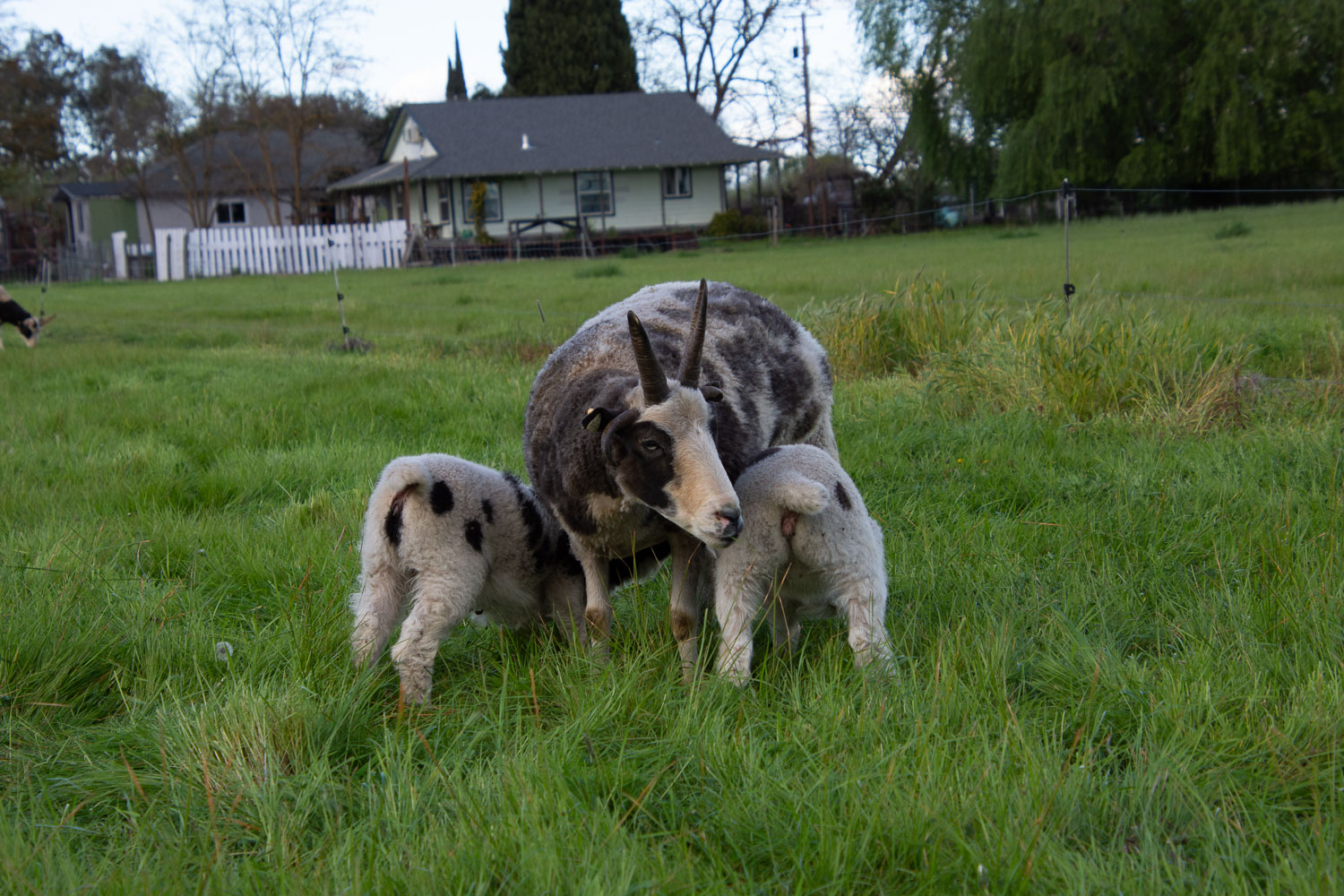
Lambs are getting big. This is Hailee, one of the few 2023 ewe lambs that I put with a ram. Her twins were born March 4, so they are only 3 weeks old. Really? It seems like that was so long ago now.

Here is a view of Hailee without lambs under her. I really like her horns!

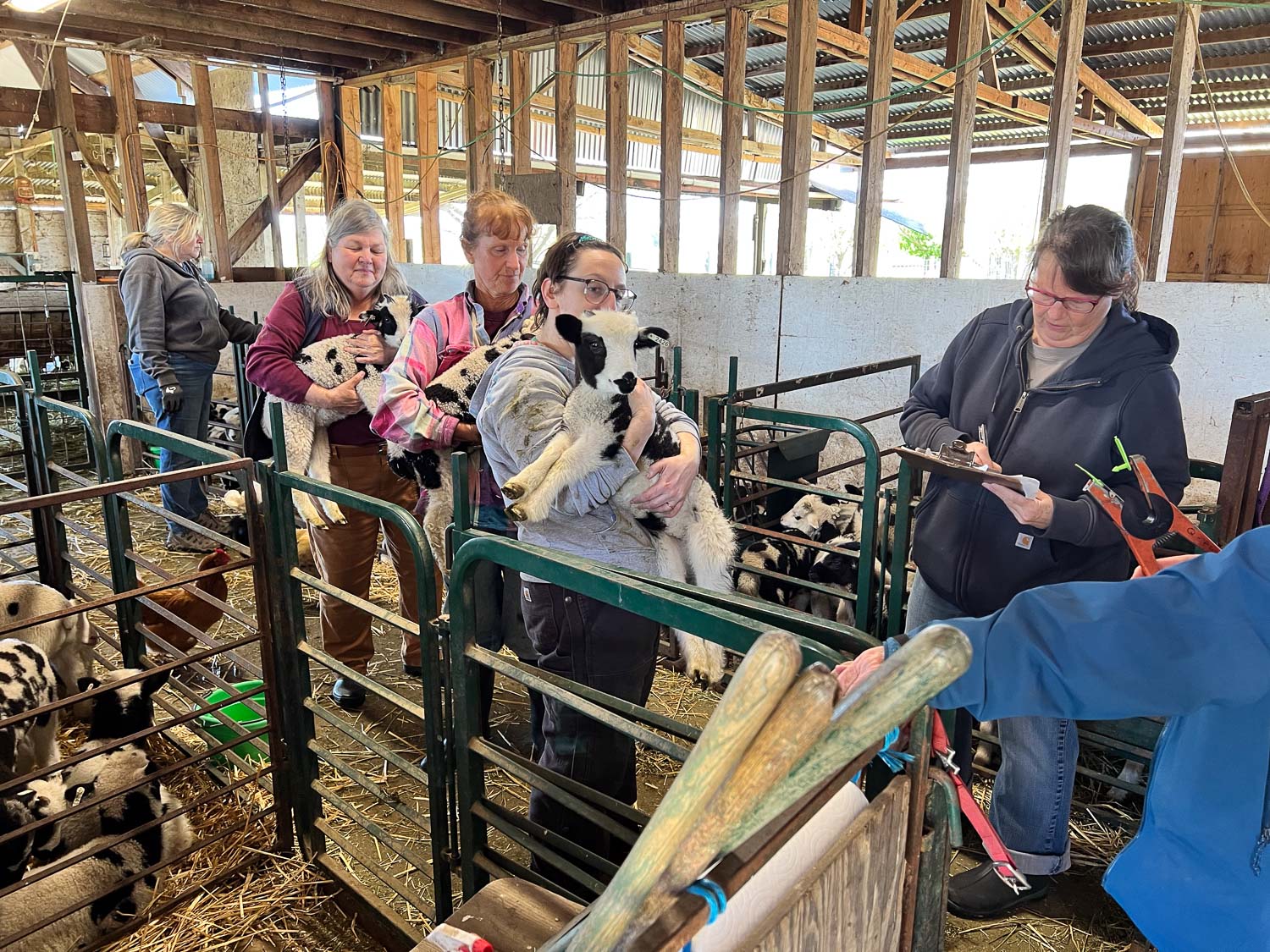
We had a Farm Day on Sunday and several members showed up to help take notes about lambs. I hadn’t taken time to record number of horns, color, etc and needed to be able to update the website. We caught all the lambs and then inspected each one. It’s easy to tell the number of horns on the rams when they are young, but not always on the ewes. This photo makes mer think of a line at the grocery store. Farm Club members caught lambs and waited while we all checked them out and then I ear tagged with a colored tag.

They all get white ear tags for ID shortly after they are born. The colored tags are useful as back up if the original ones are pulled out and to help find a particular lamb. When I’m looking for a specific number I have to look at all 80+ lambs and it’s much easier to narrow it down by color. It also helps when I’m taking photos that usually I’ll be able to identify the lamb later by at least one ear tag. We color code them by sire.

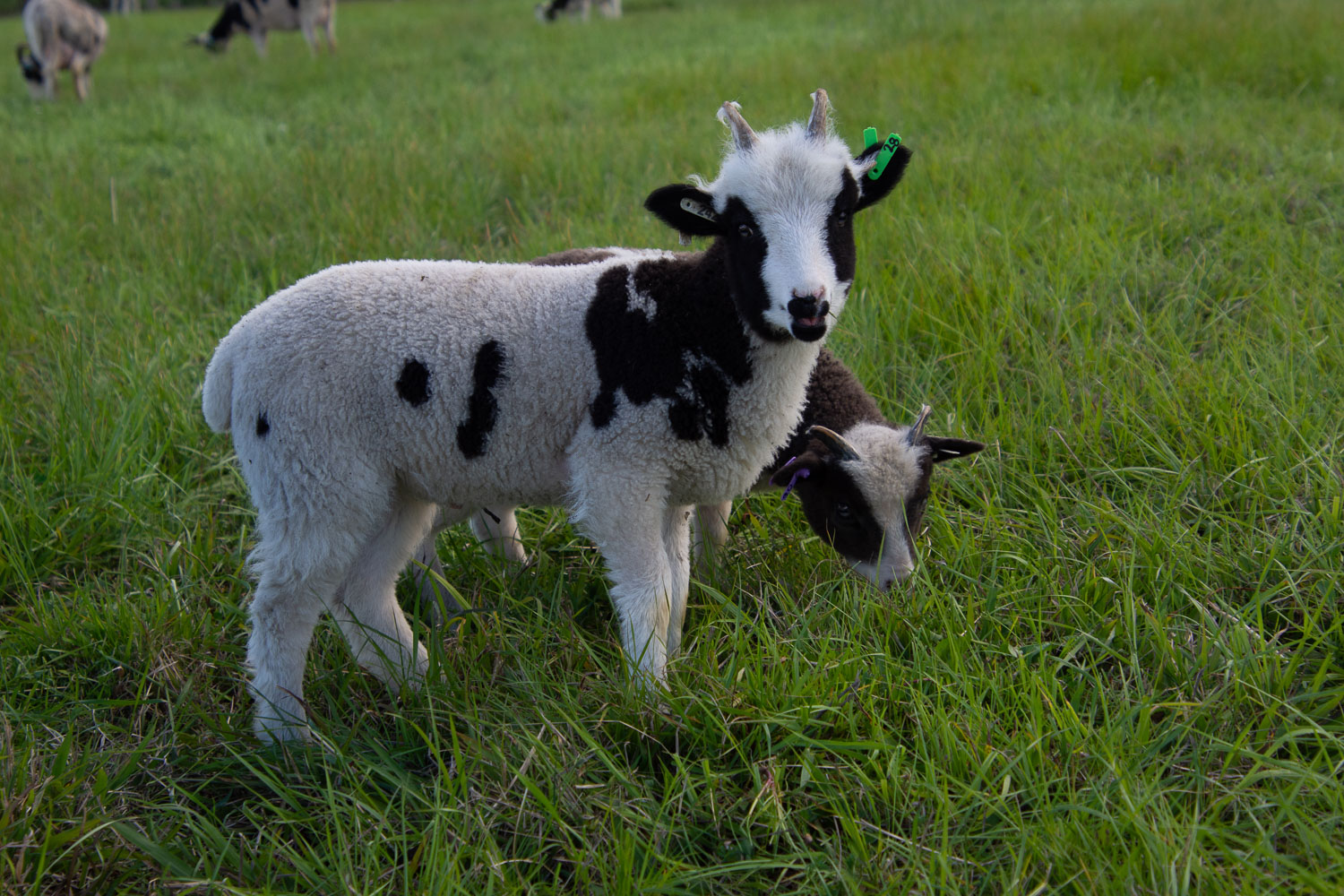
Barrett’s lambs got green tags.

Ewe lambs are tagged with the white ID tag in the left ear and the colored tag in the right ear. Ram lambs are the opposite, so that’s another way to help find a lamb.

Horatio’s lambs have a purple sire tag.

We tagged Typhoon’s lambs with yellow. I did not assign colors to lambs that are potentially Blizzard’s or the ones with an unknown sire. Now you can find most of these lambs on the website. Ewe lambs. Ram lambs. I’m not finished taking photos. Most are for sale.

Pecan and ewe lambs born February 19.

Tomato Harvest

The field across the road was planted in tomatoes back at the end of May. See this post. I have watched the progress of the crop since then. When I walk Across the Road with Ginny it’s these fields I walk around. I wrote this post September 26.

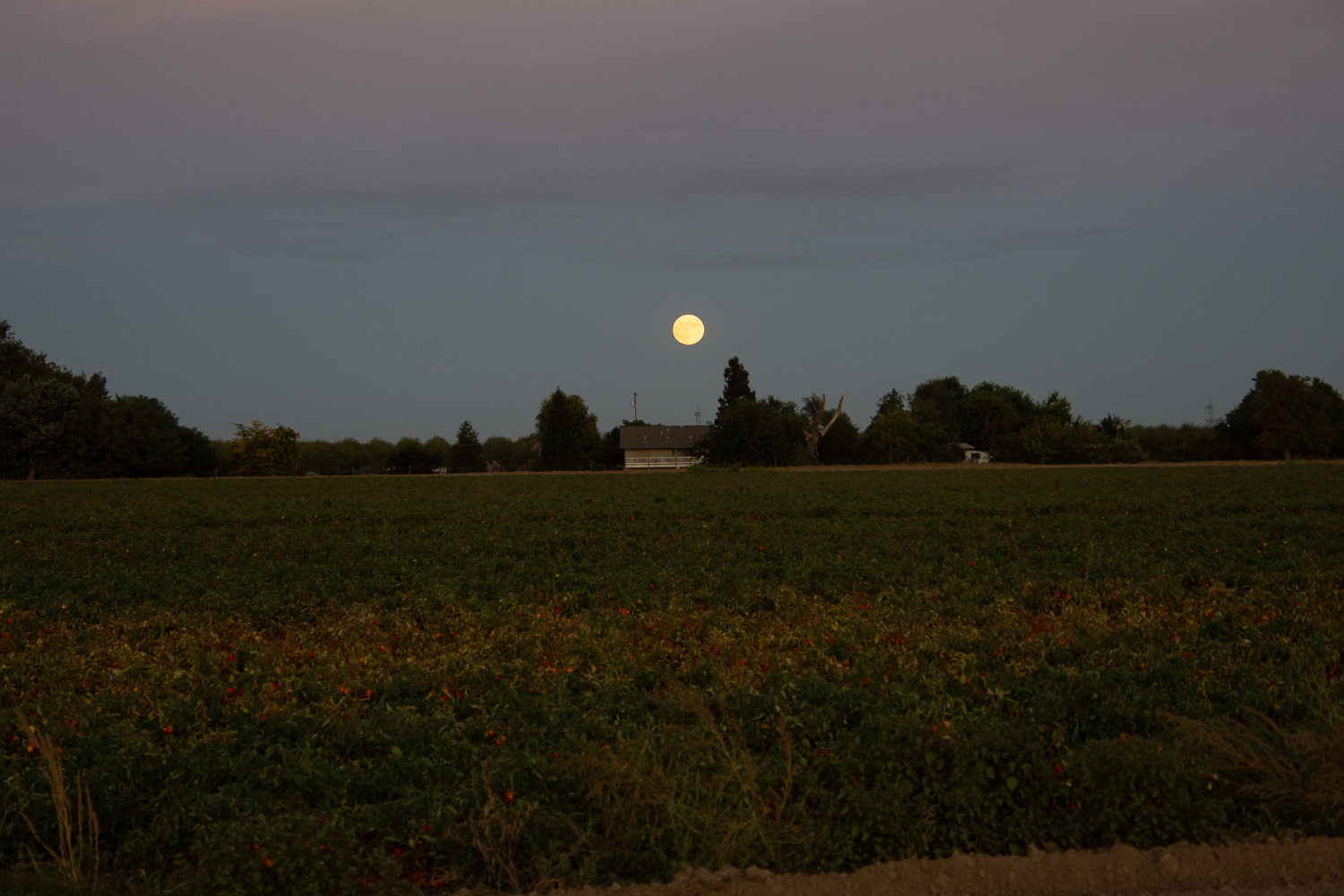
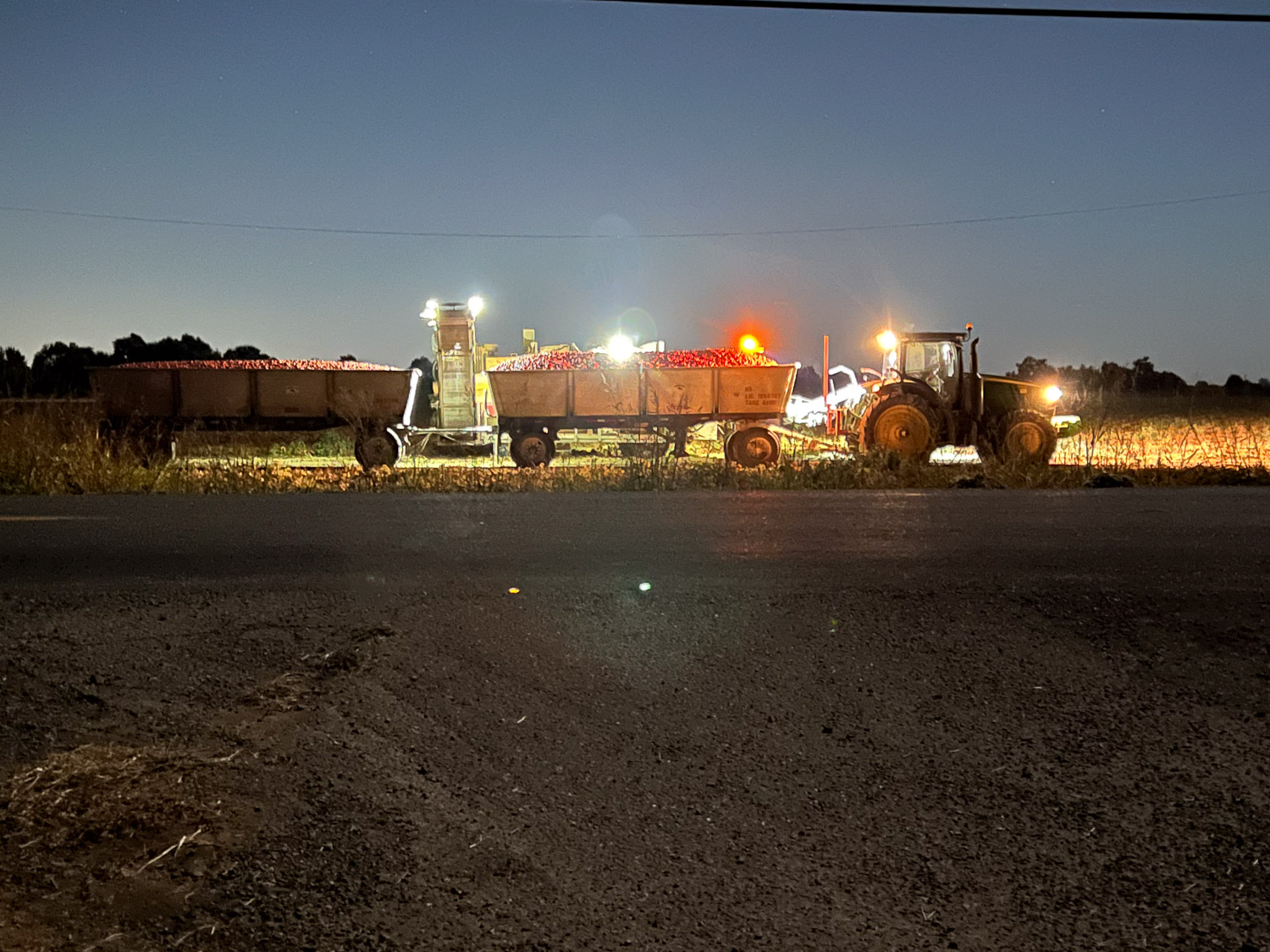
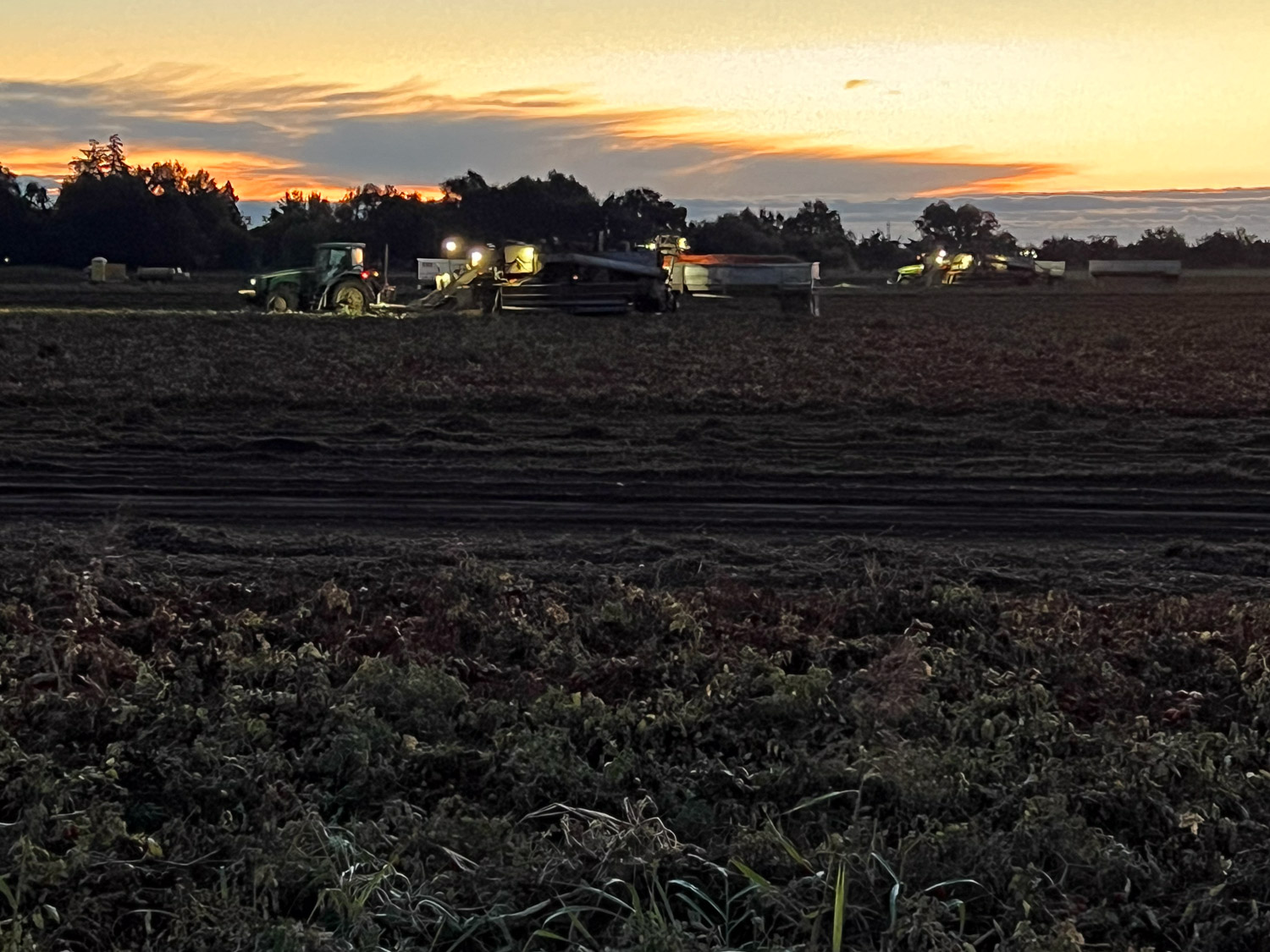
I took this photo at dusk Thursday, September 28 and heard activity over there just before midnight.

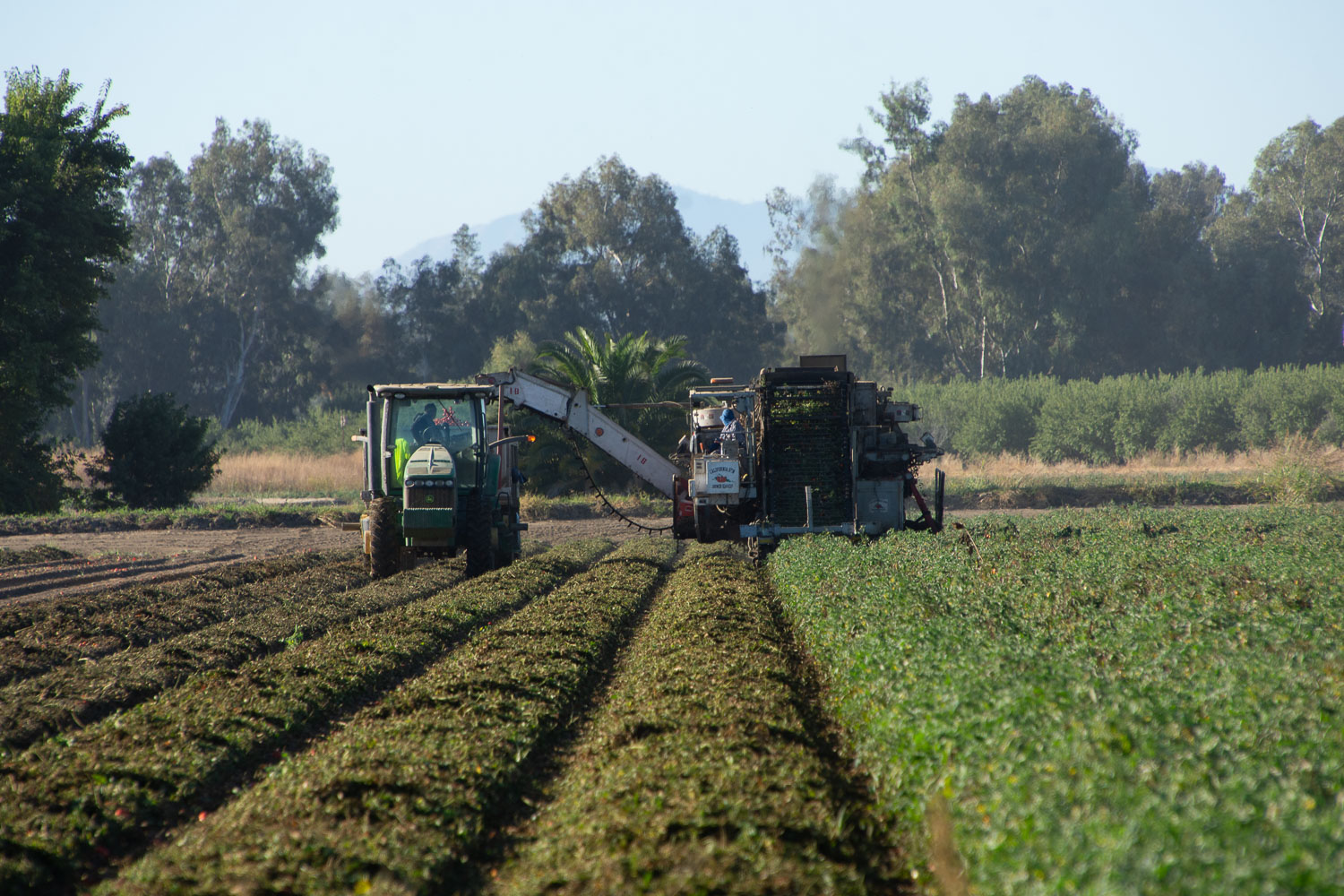
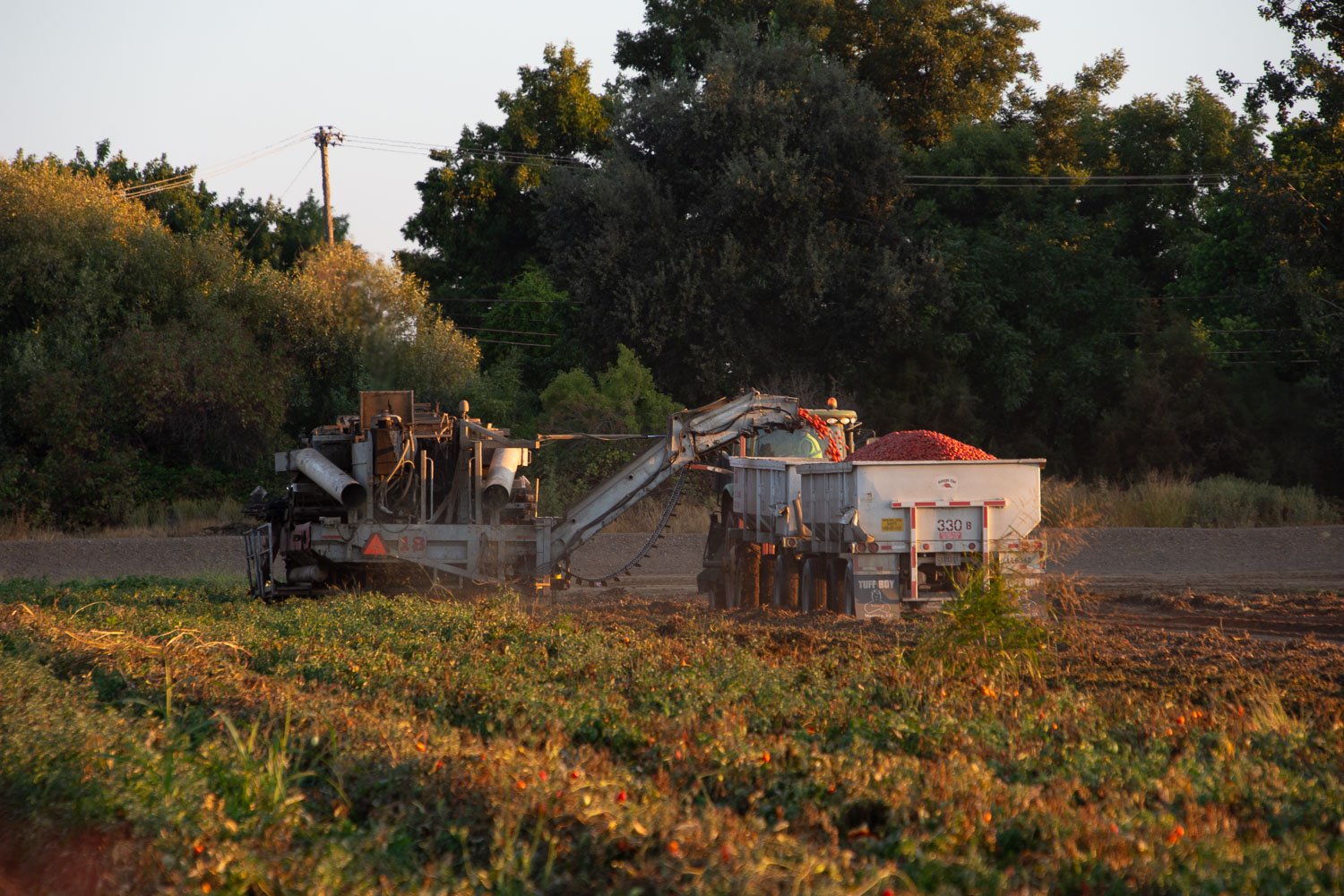
The harvest had started. I stood in our driveway and took photos. I didn’t want to miss it! I think I didn’t need to rush. I don’t know how many acres this field is, but it took about four days, working 24 hours/day. At first there was one harvester working, but later there were two.

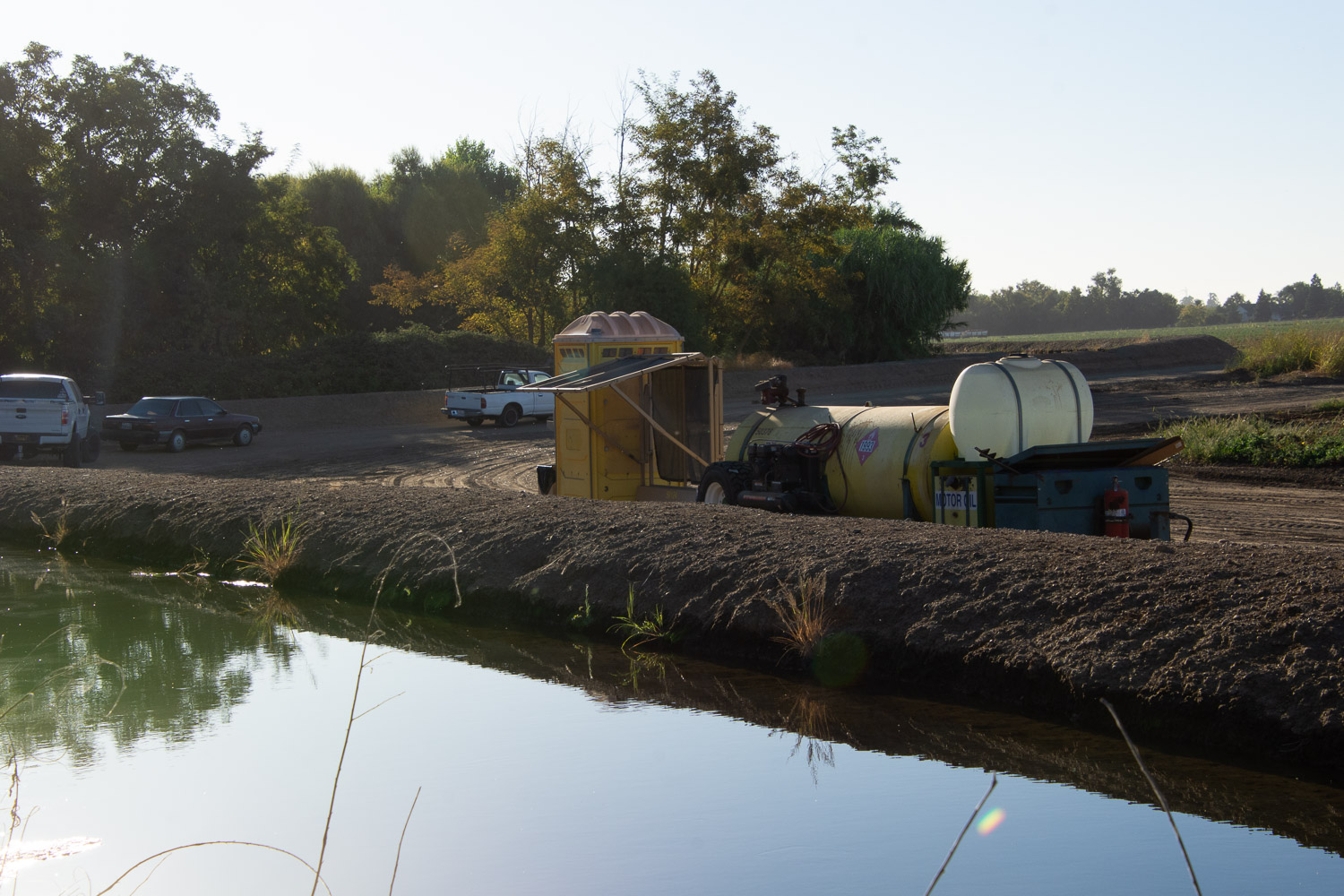
The first morning I took my usual walk, but walked on the other side of the main canal so that I wouldn’t get in anyone’s way. There is a lot of infrastructure involved. This is a water tank with a portable toilet and a place for shaded seating.

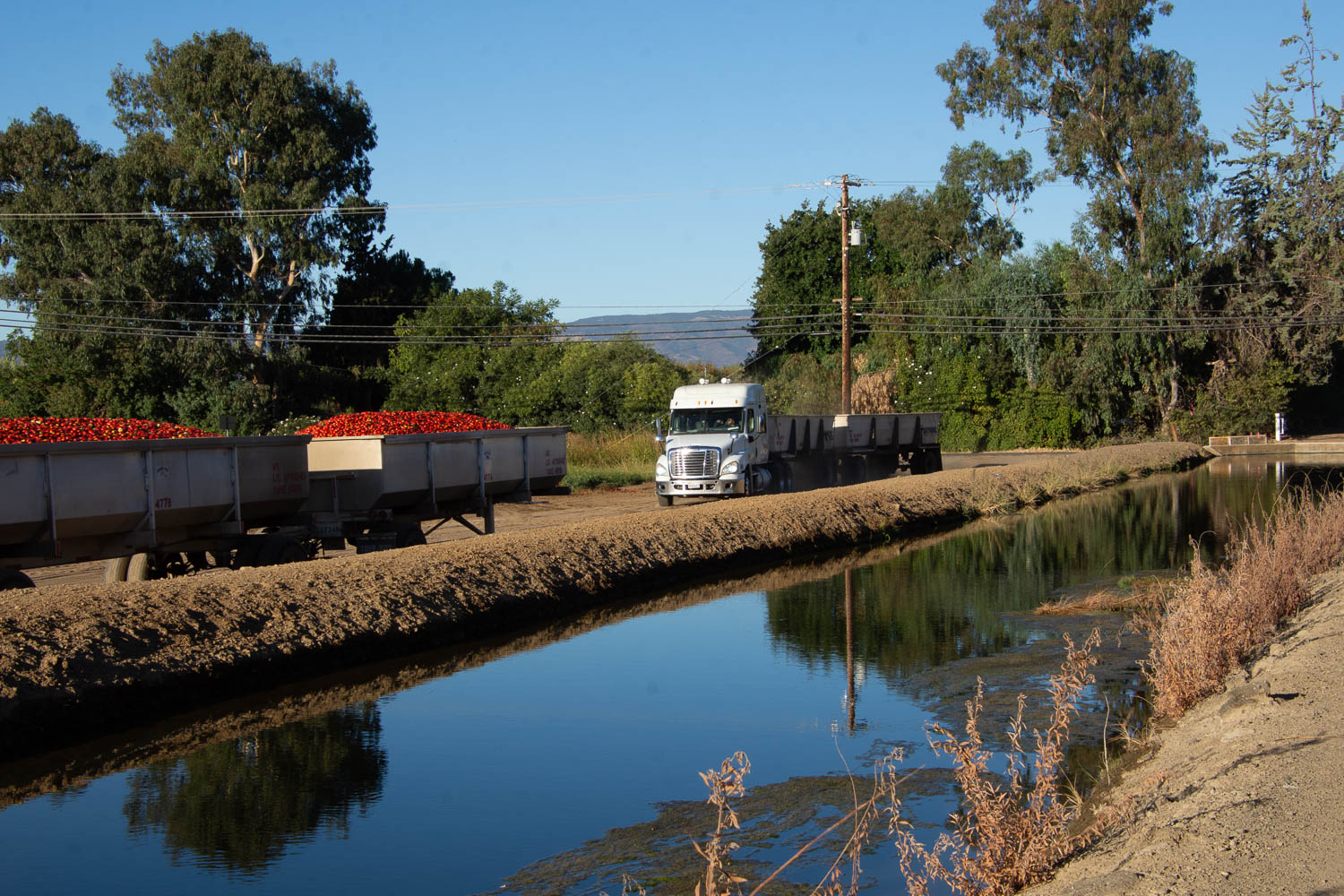
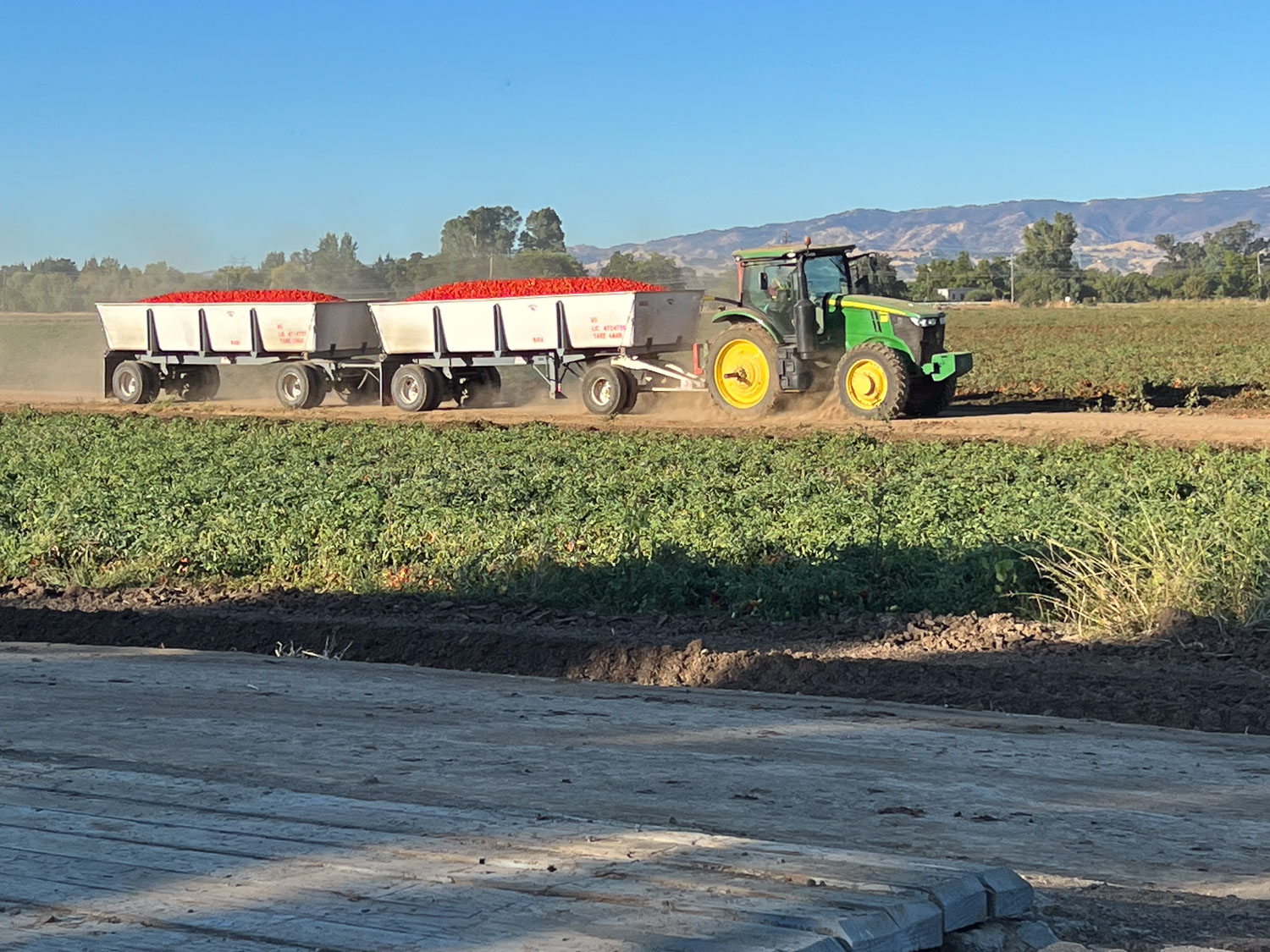
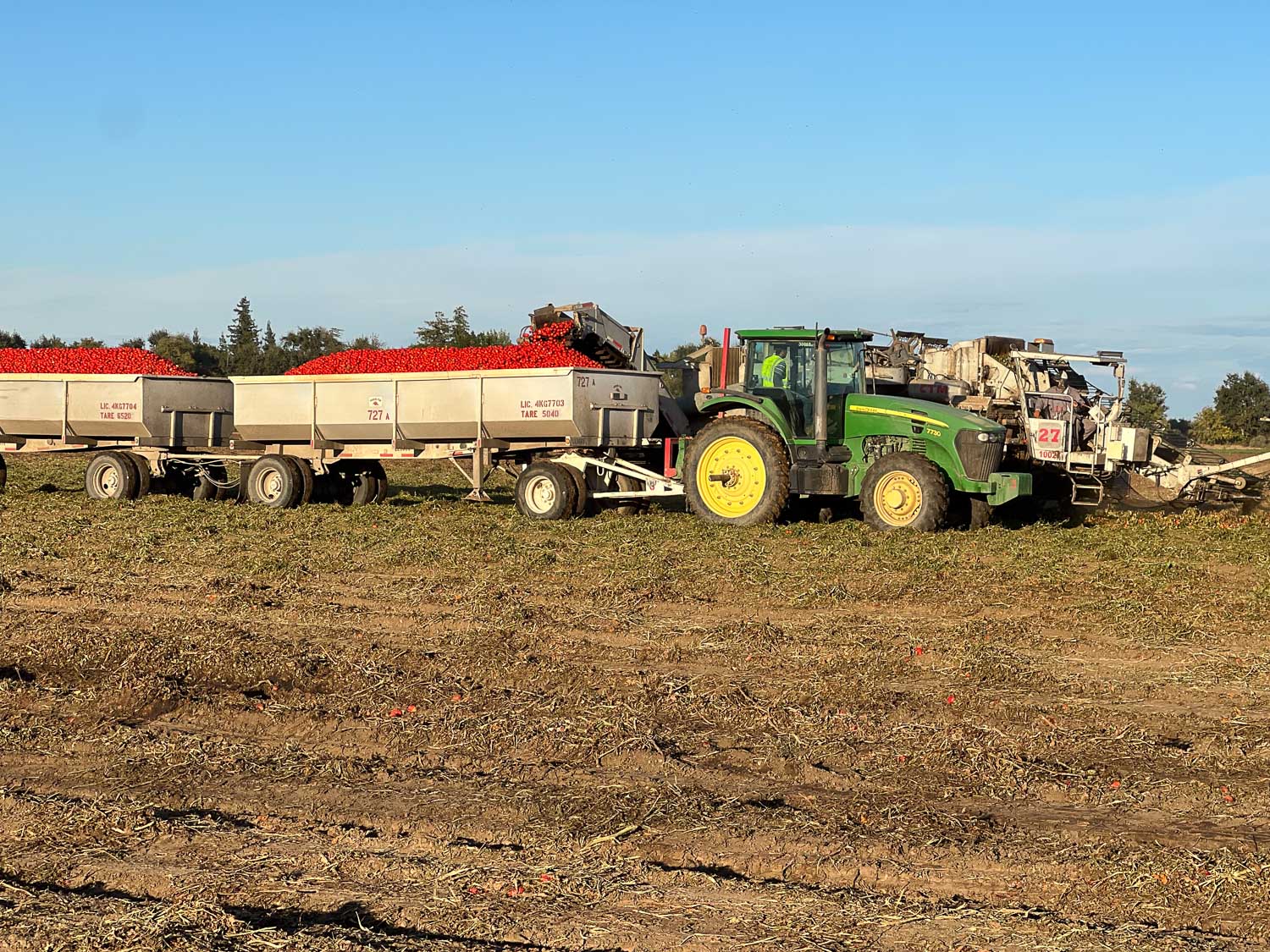
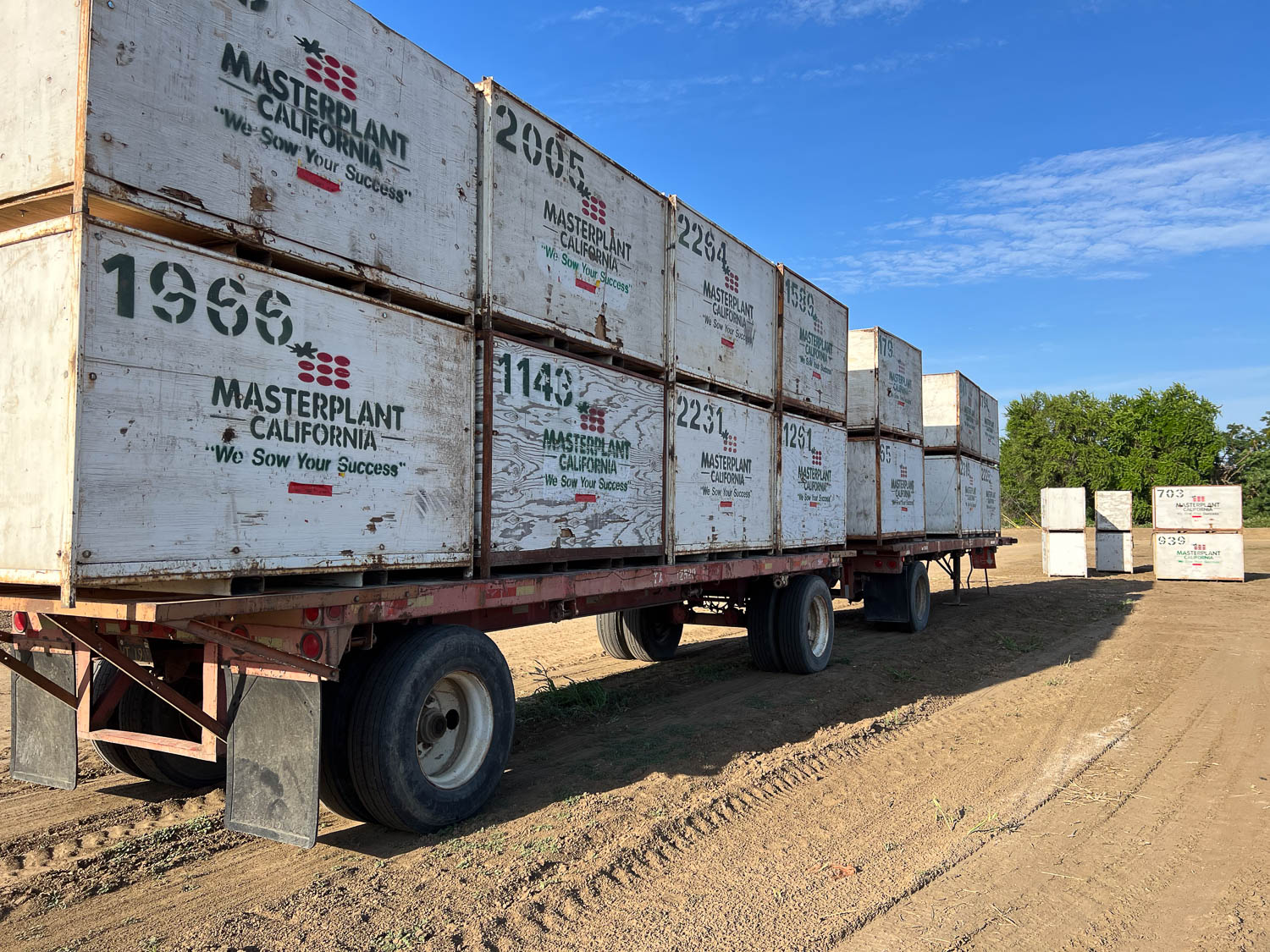
At times there were four or five sets of double trailers staged here. The tractor pulls them next the harvester as it works and then drops them here. Another tractor brings the next set of trailers to the harvester. The trucks come and go from here, taking full loads out and bringing back empty trailers.

I know nothing about tons/acre, or how many loads were harvested, etc. Maybe I’ll ask next time I talk to someone. I think the answer is A LOT.

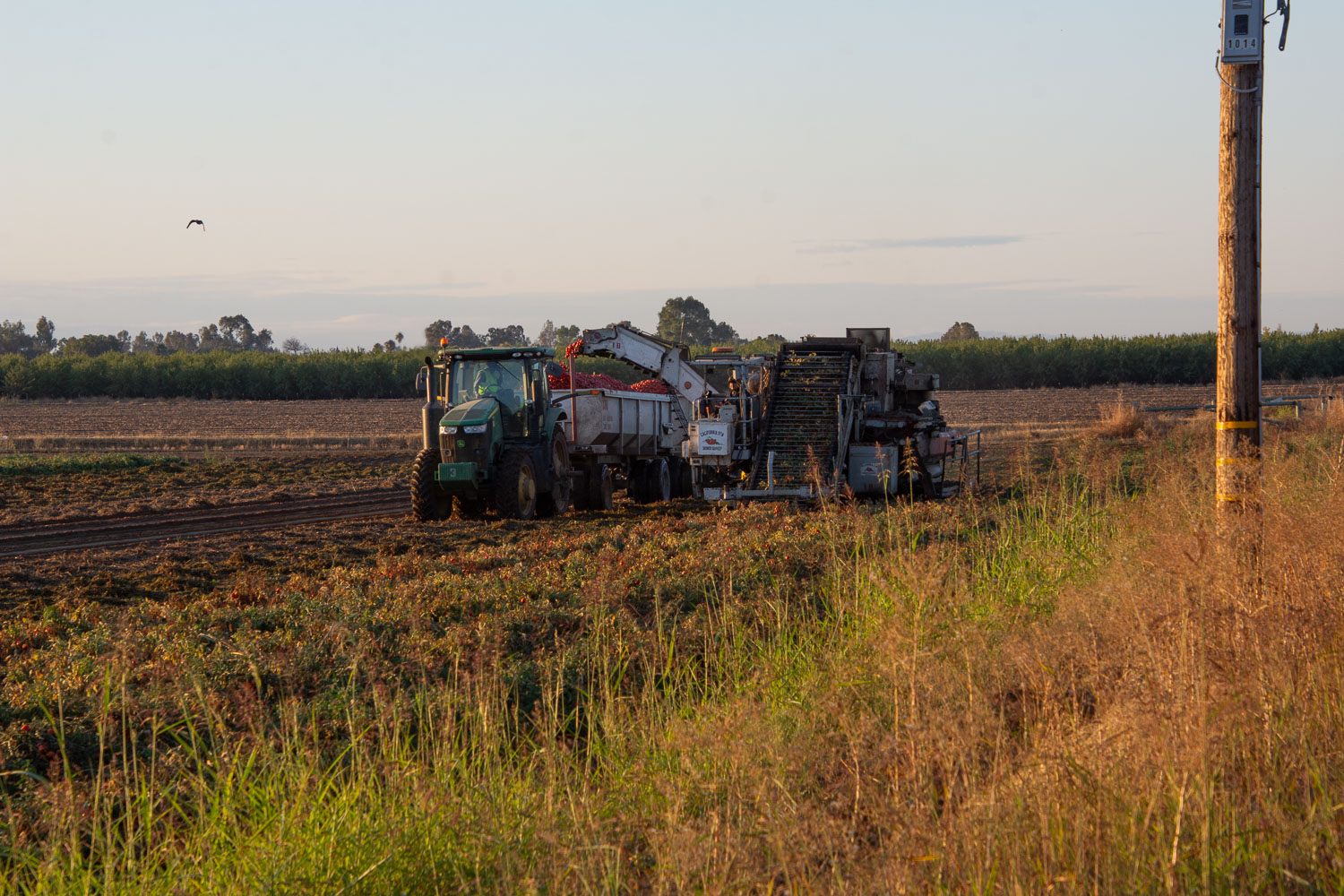
It is fascinating to watch the harvester at work. I have several short videos but I think I won’t try to load them here or I’ll never get this post written. I posted one on my YouTube channel but I’d like to do another showing more of the process. That one is good at showing what is going on with the harvester. The row of plants is cut and then lifted by the conveyor into the harvester. I haven’t seen inside but was told that lasers are used to sort the tomatoes and debris. Some debris goes out the back and some to the side while the tomatoes are being lifted into the trailers pulled by the tractor.

Here is a view from the other direction. The harvester fills the trailer in a back and forth motion while the tractor with the trailers pulls it forward as necessary to keep up with the harvester.

Taking two trailers back to the staging area.

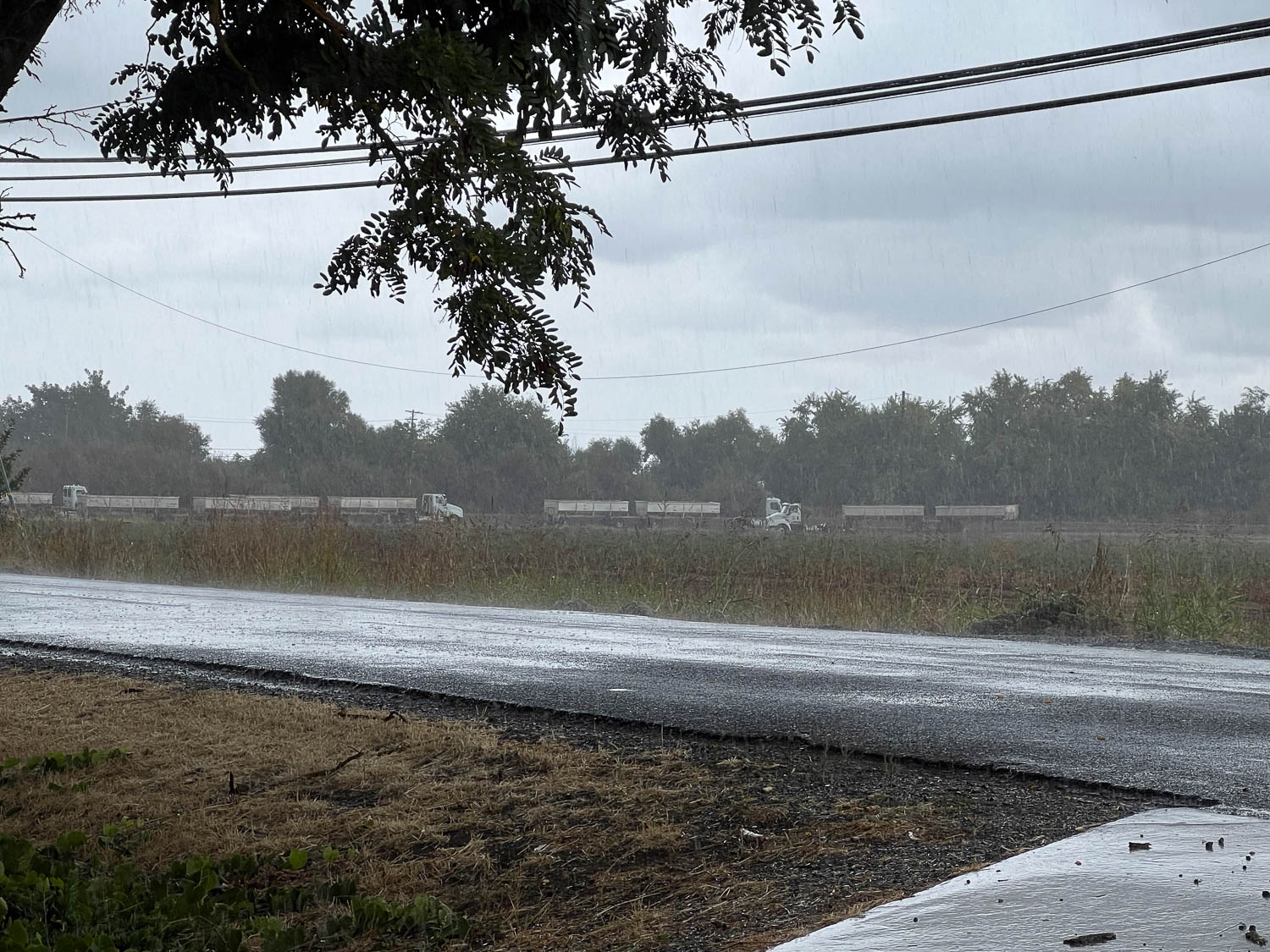
In the middle of the day on Saturday we had a brief, but heavy rain. We got 1/8 inch in less than 15 minutes. That’s a lot for us, especially when this was the first rain since spring. It’s dry enough here that it wasn’t enough to stop the harvest for long.

The harvesters worked all night and this was about 6:30 the next morning. By this time there were two harvesters at work with two tractors pulling trailers.

It was’t until Sunday that they finished the rows that were closest to the road.

I don’t remember if they finished Sunday evening or if that was just the last photo that I took of the harvest.

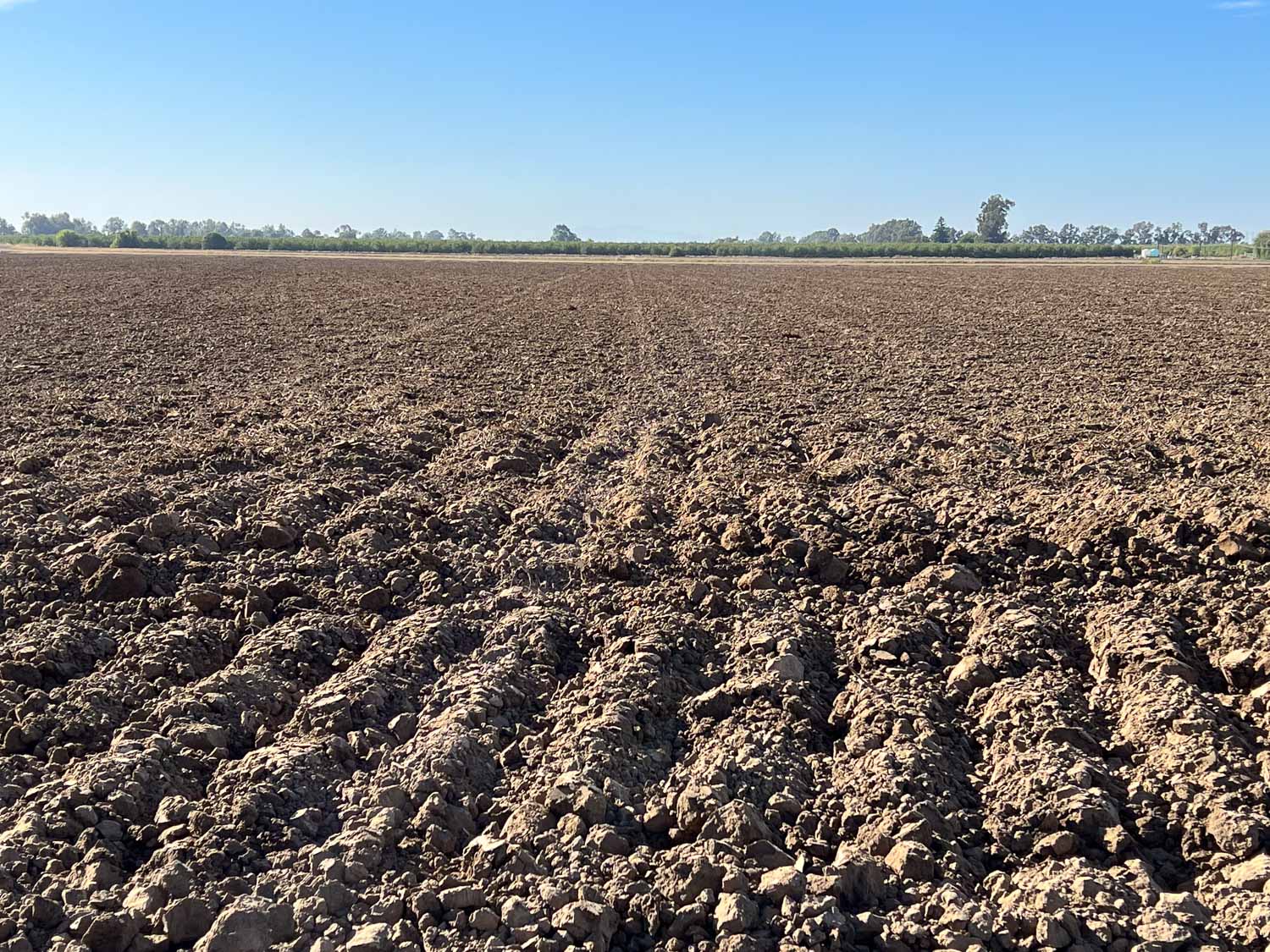
I have had a whirlwind of activity with Lambtown October 5-8 followed by a trip to Boise and now I’m getting ready for another adventure. So I missed all the steps that brought this field from one just harvested to this one that is ready for fall rain.

Across the Road – Tomatoes

The tomato plants Across the Road aren’t as striking as the sunflowers I showed in my last blog post, but it is still interesting to watch the progress of the crop, especially now as they get closer to harvest. I have heard that harvest time is problematic this year, mostly due to the prolonged rainy season this winter and spring. Fields didn’t dry out soon enough for farmers to work the fields and many planted 3 to 4 weeks later than normal. That means the tomatoes ripen 3 to 4 weeks later. Tomato farmers have contracts with the cannery that state when and how much they deliver. The cannery can only handle a certain amount at once and will turn away excess. Some farmers may risk harvesting while some tomatoes are still green. Others may have to wait until the cannery can take the load, but they risk over-ripe fruit or early rain. Farming isn’t as simple as it may seem.

If you’re interested in reading more about this situation in 2023 read this article in Ag Alert, published by the Farm Bureau.

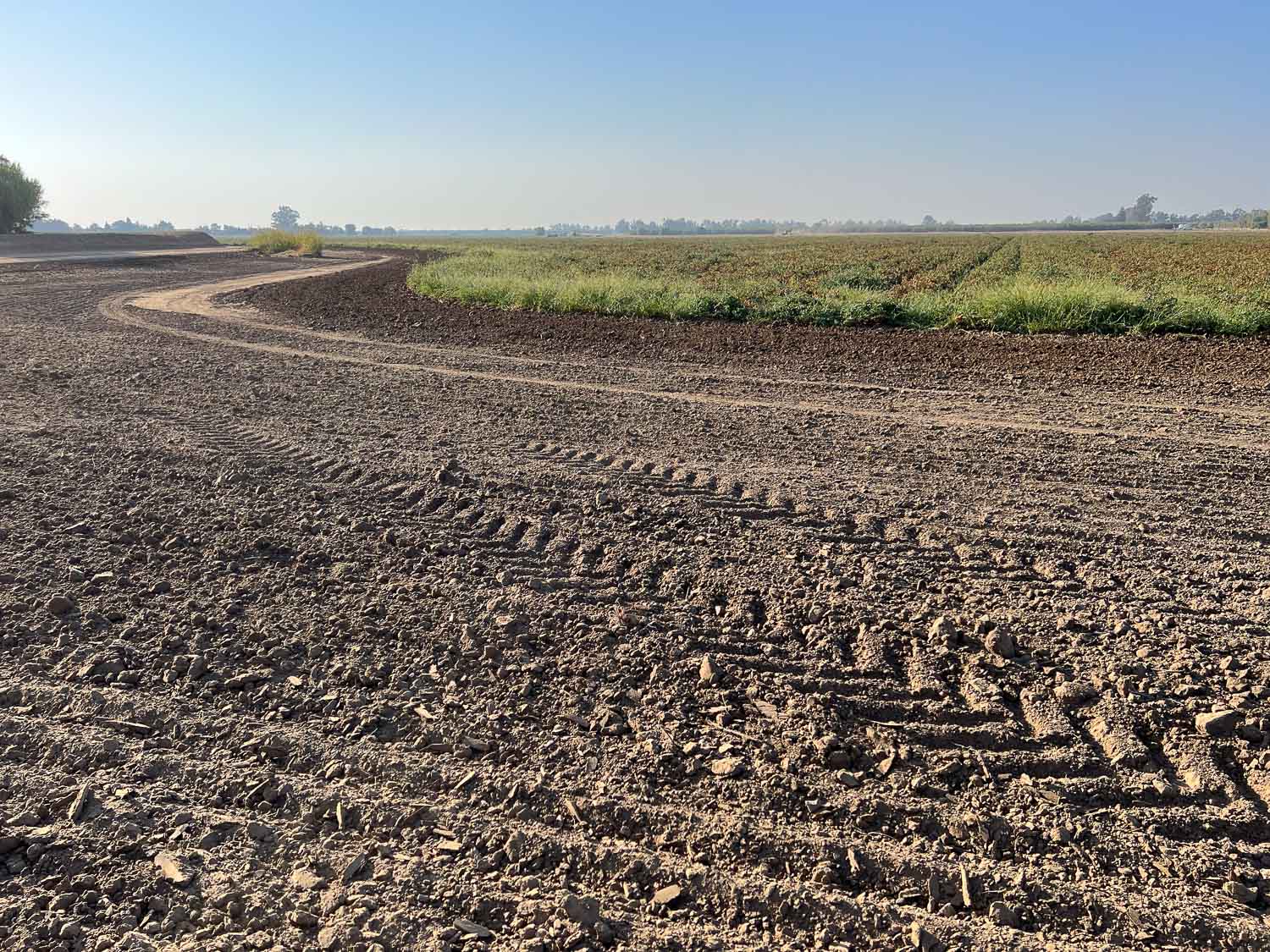
Here’s the tomato field I watch because it is right Across the Road. The latest ditch has been filled in and smoothed over. I assume there will be no more irrigation.

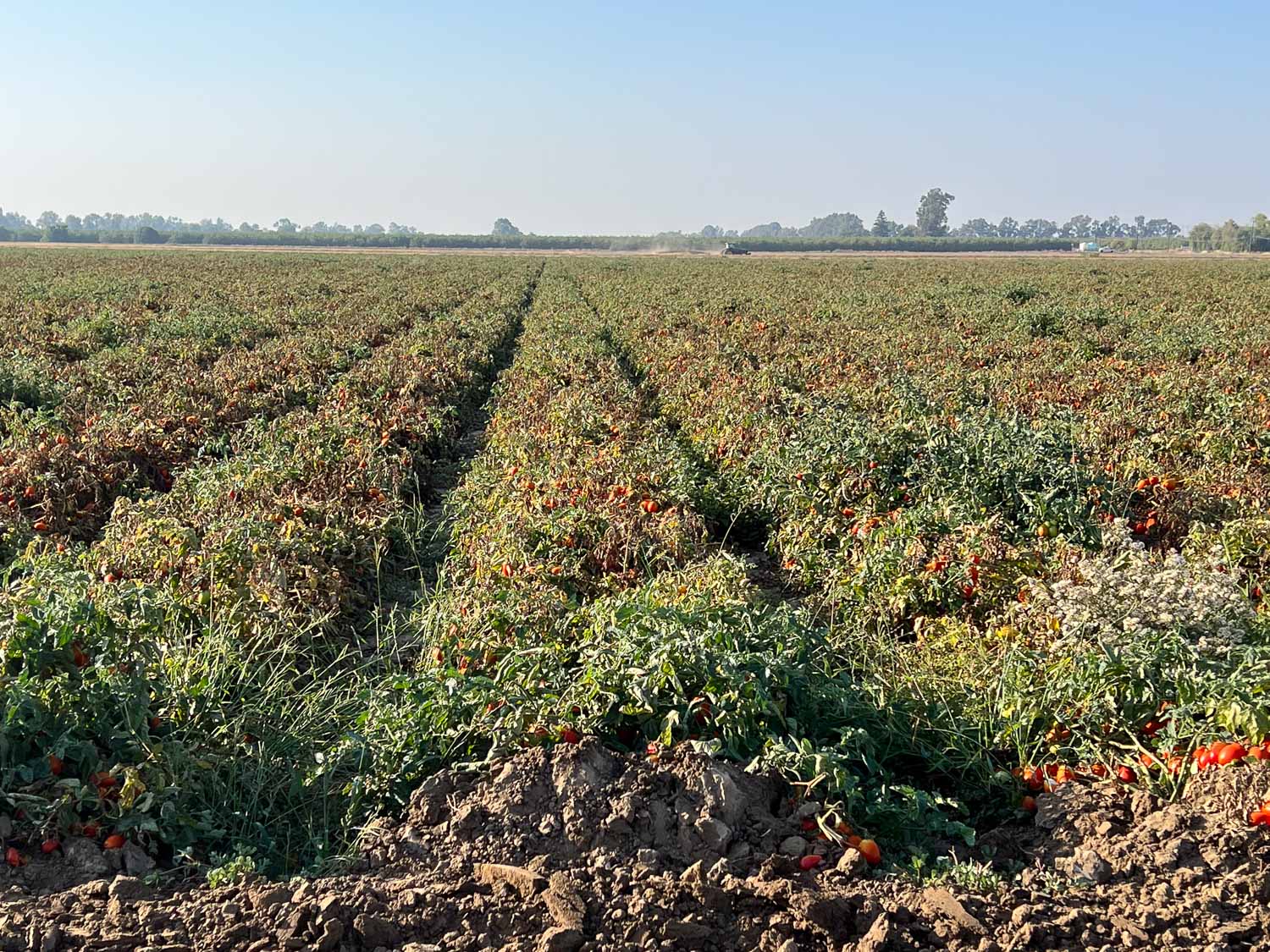
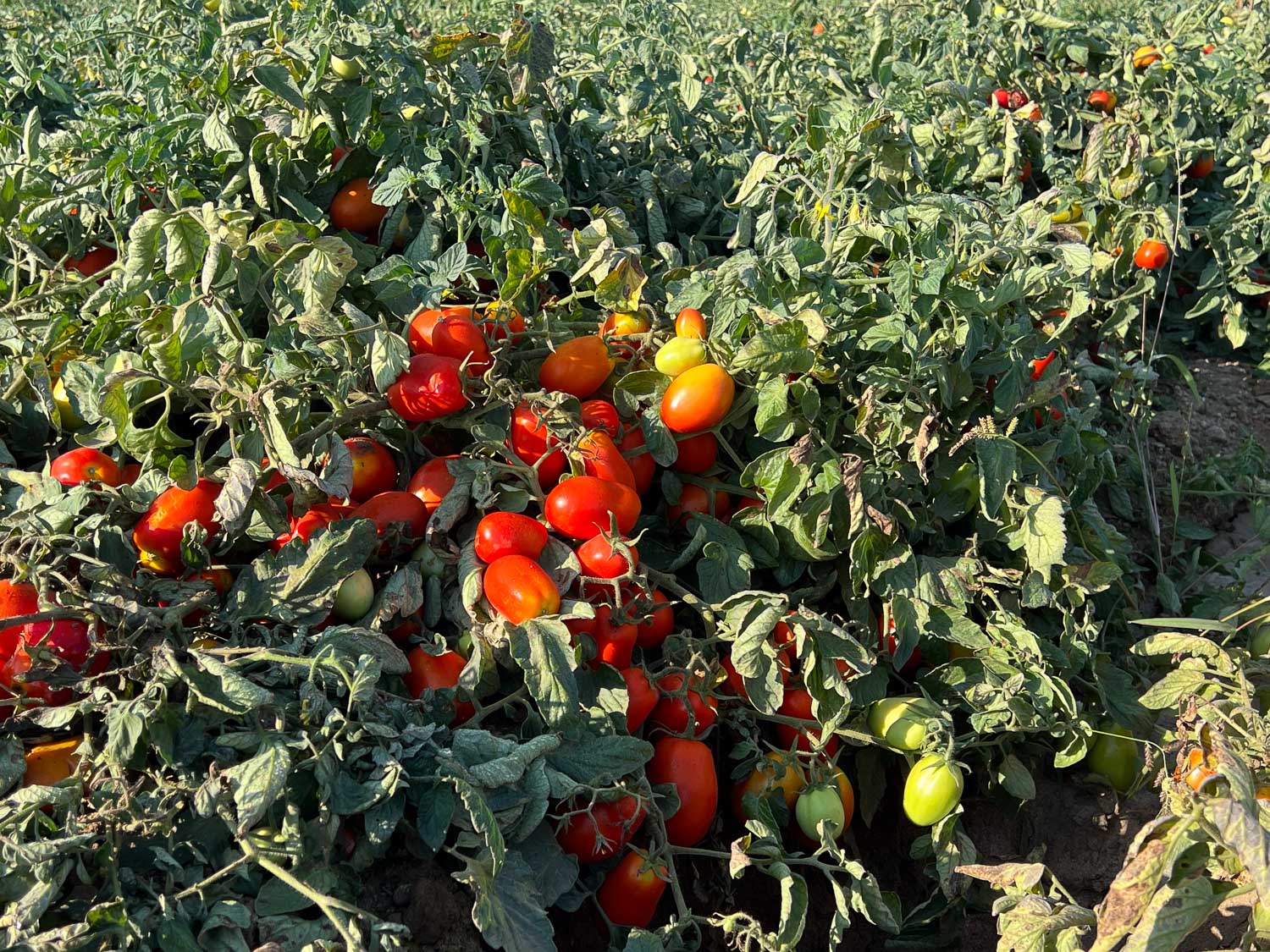
The plants are not that impressive when you look over the whole field.

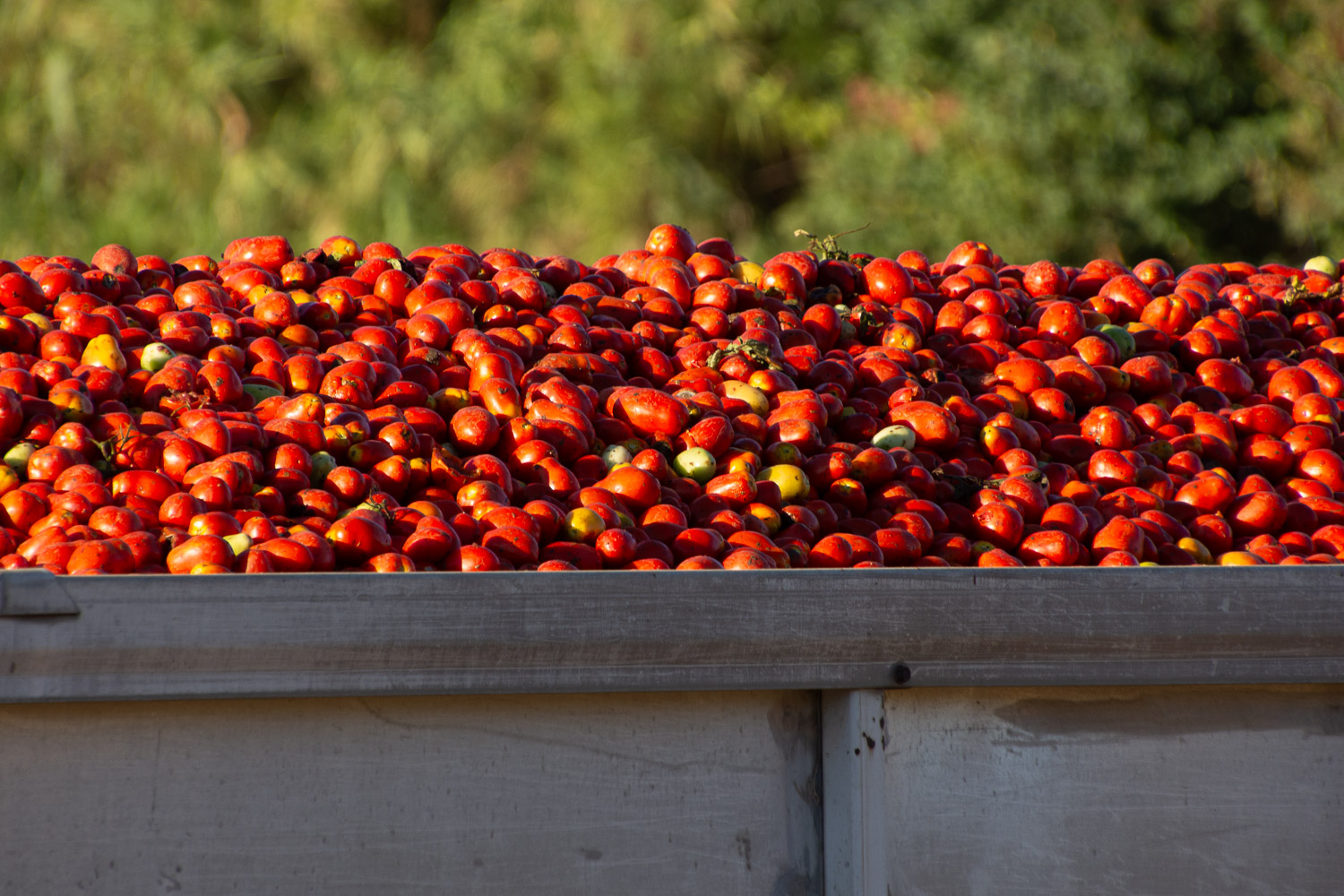
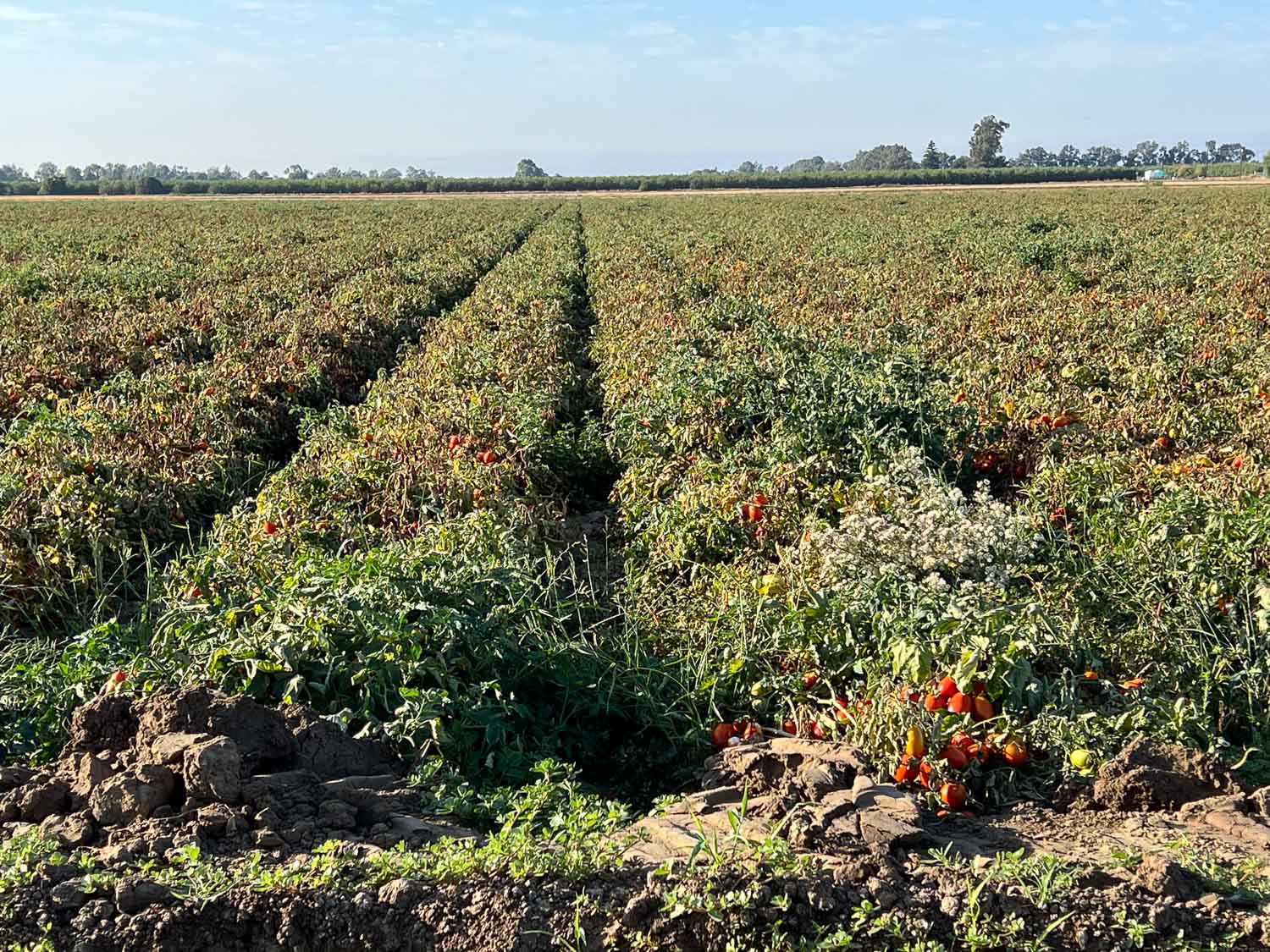
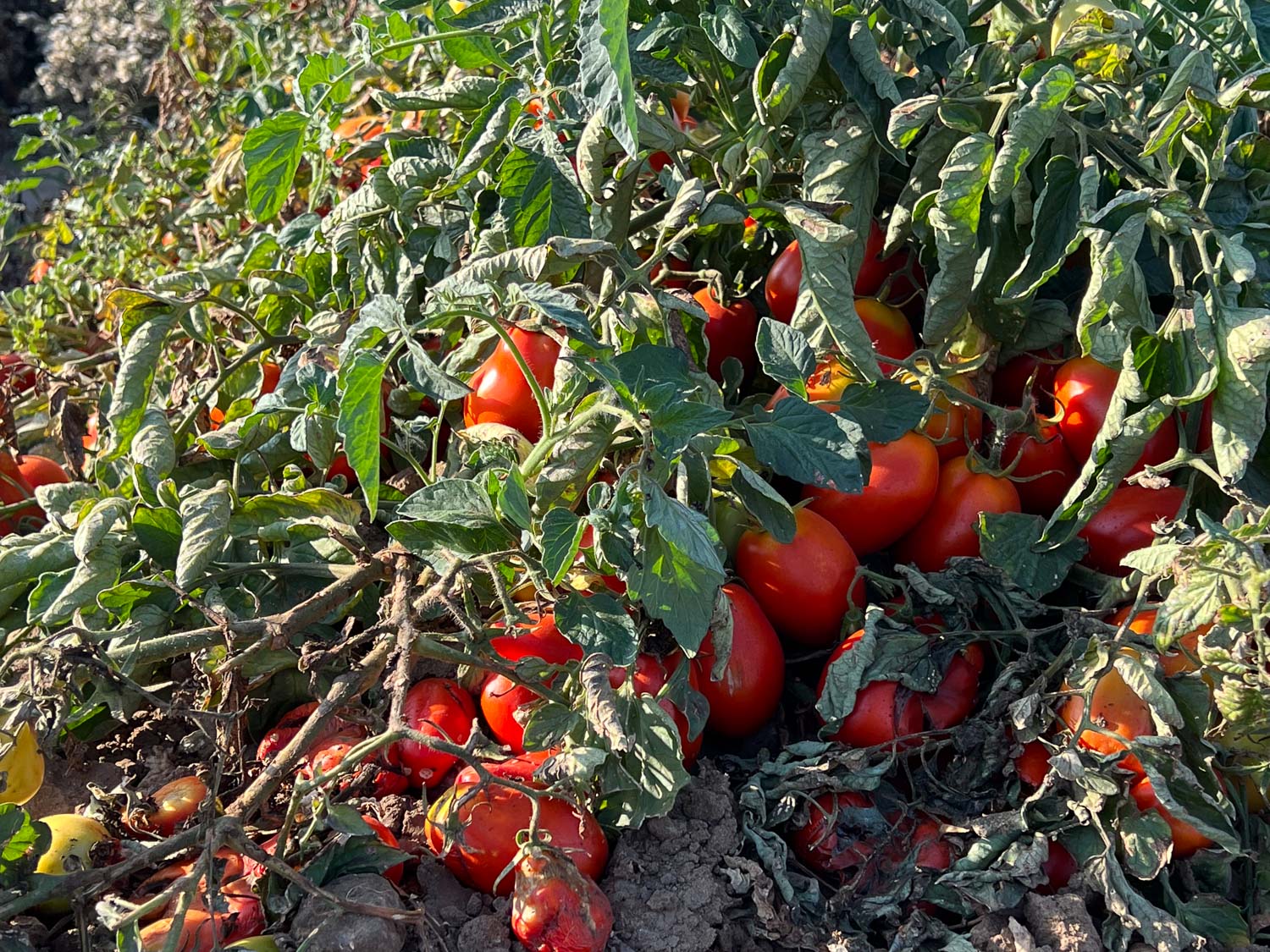
When you look up close you see the red tomatoes.

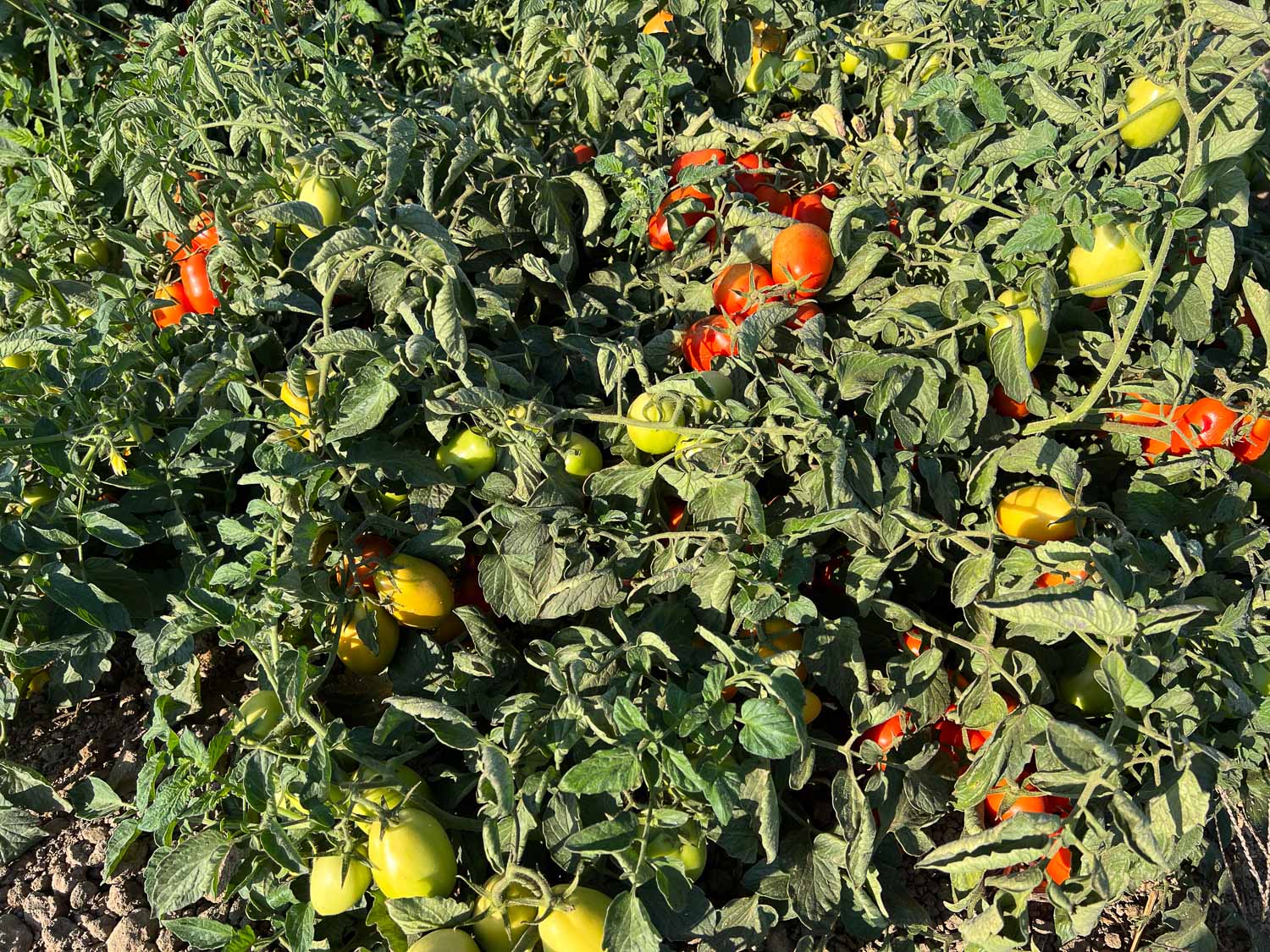
There are still a lot of green ones in some parts of the field.

My walks aren’t all about a study in agriculture. They are mainly to get some exercise to fight off the effects of aging and to get Ginny out. More views from Across the Road:

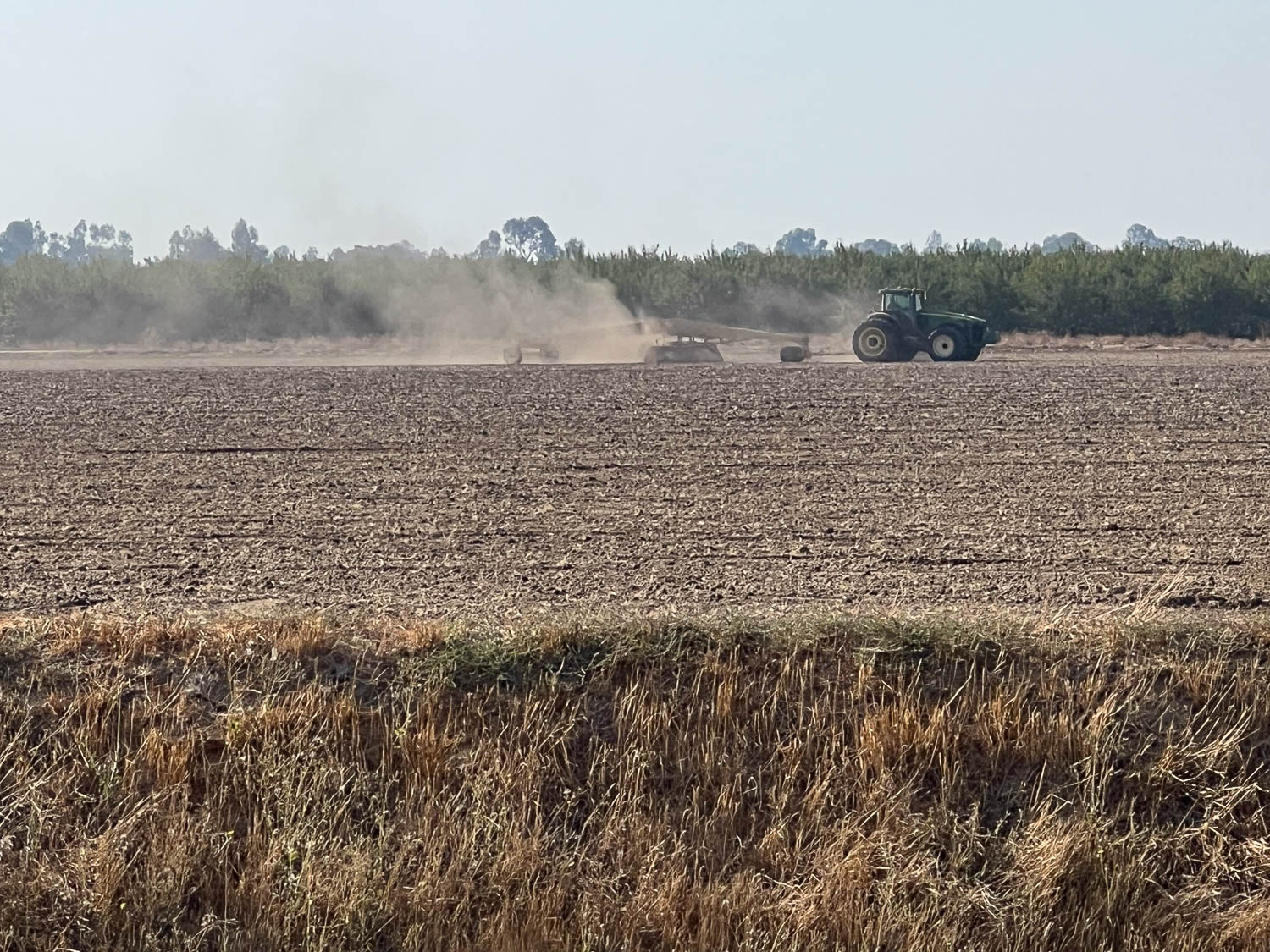
This field is across the canal from the tomato field. They just harvested hay and it will be interesting to see what goes in here next.

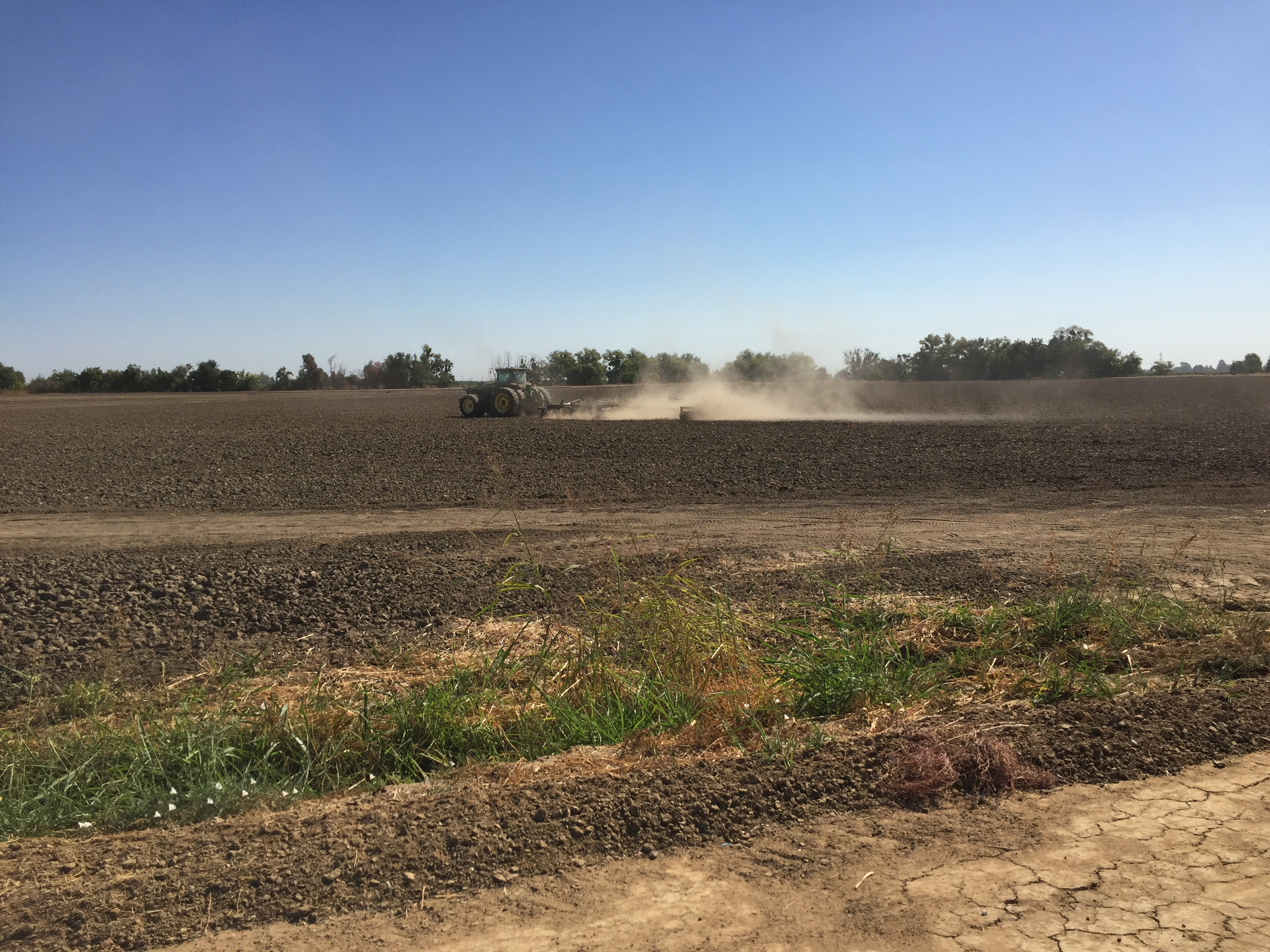
Another view of the field prep.

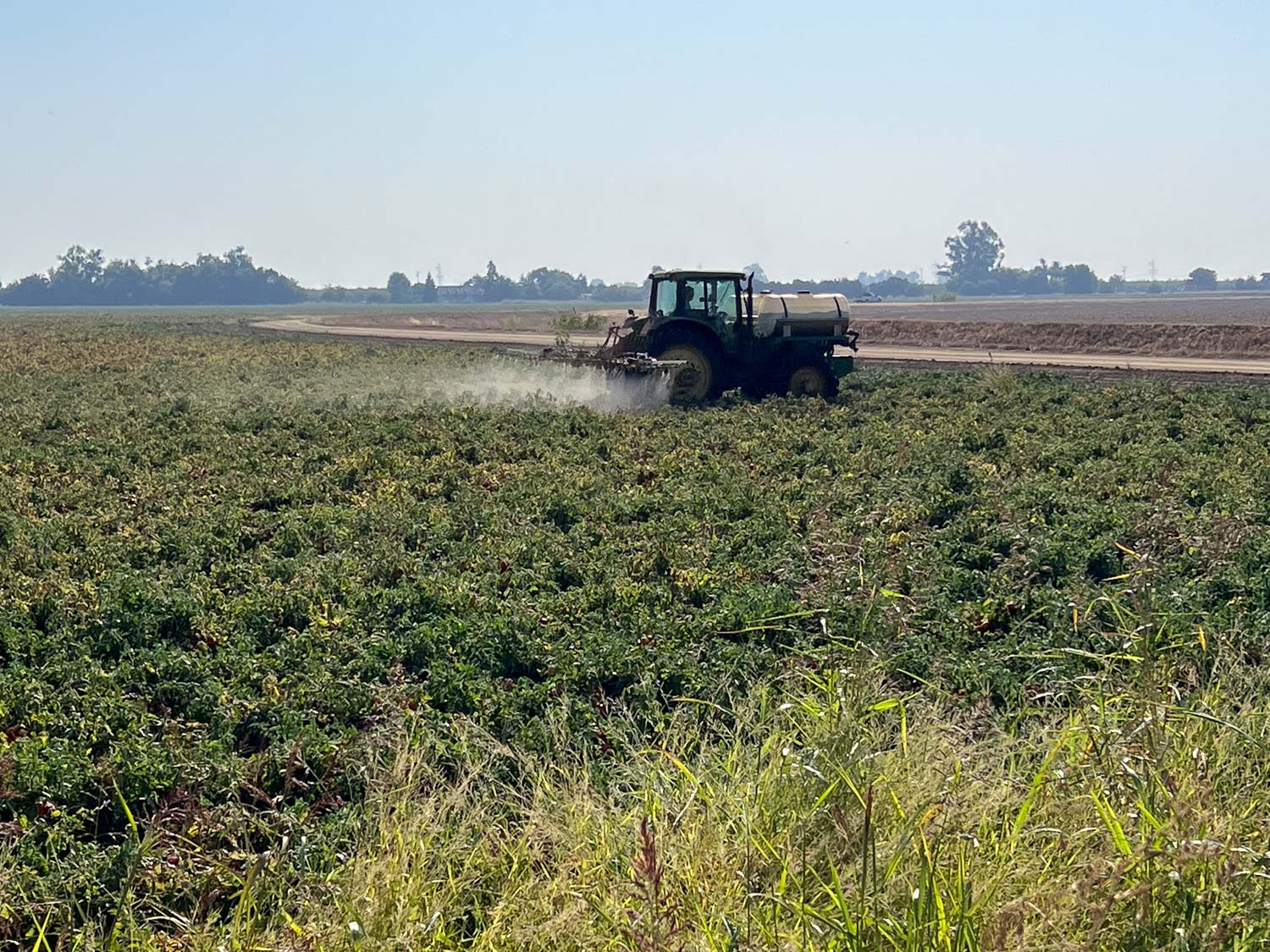
I usually don’t walk here when they are spraying, but this started just as I was getting back. I saw the label on the tank of spray. It’s a regularly used fungicide. The last time I saw spraying it was with a helicopter.

Sunflowers

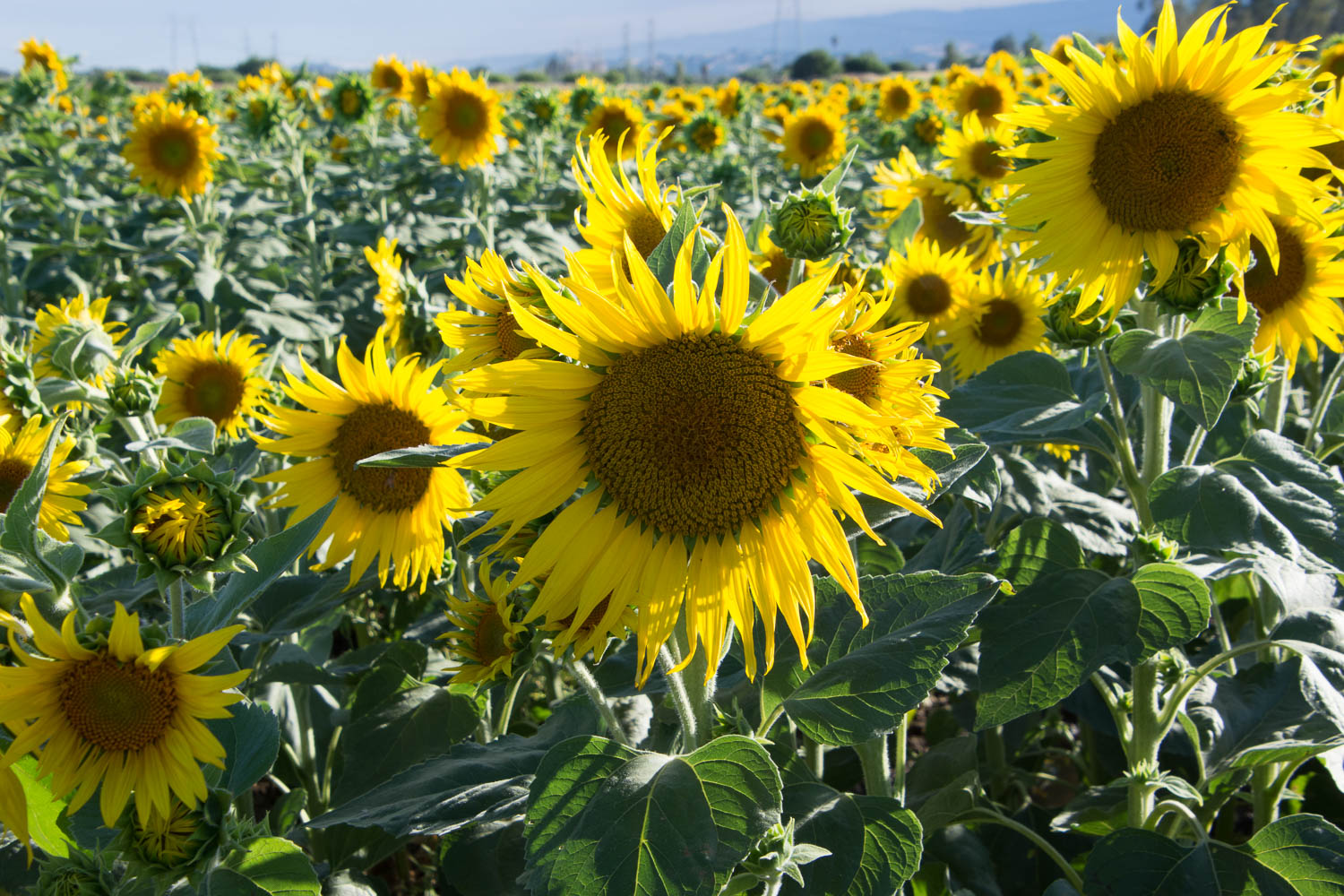
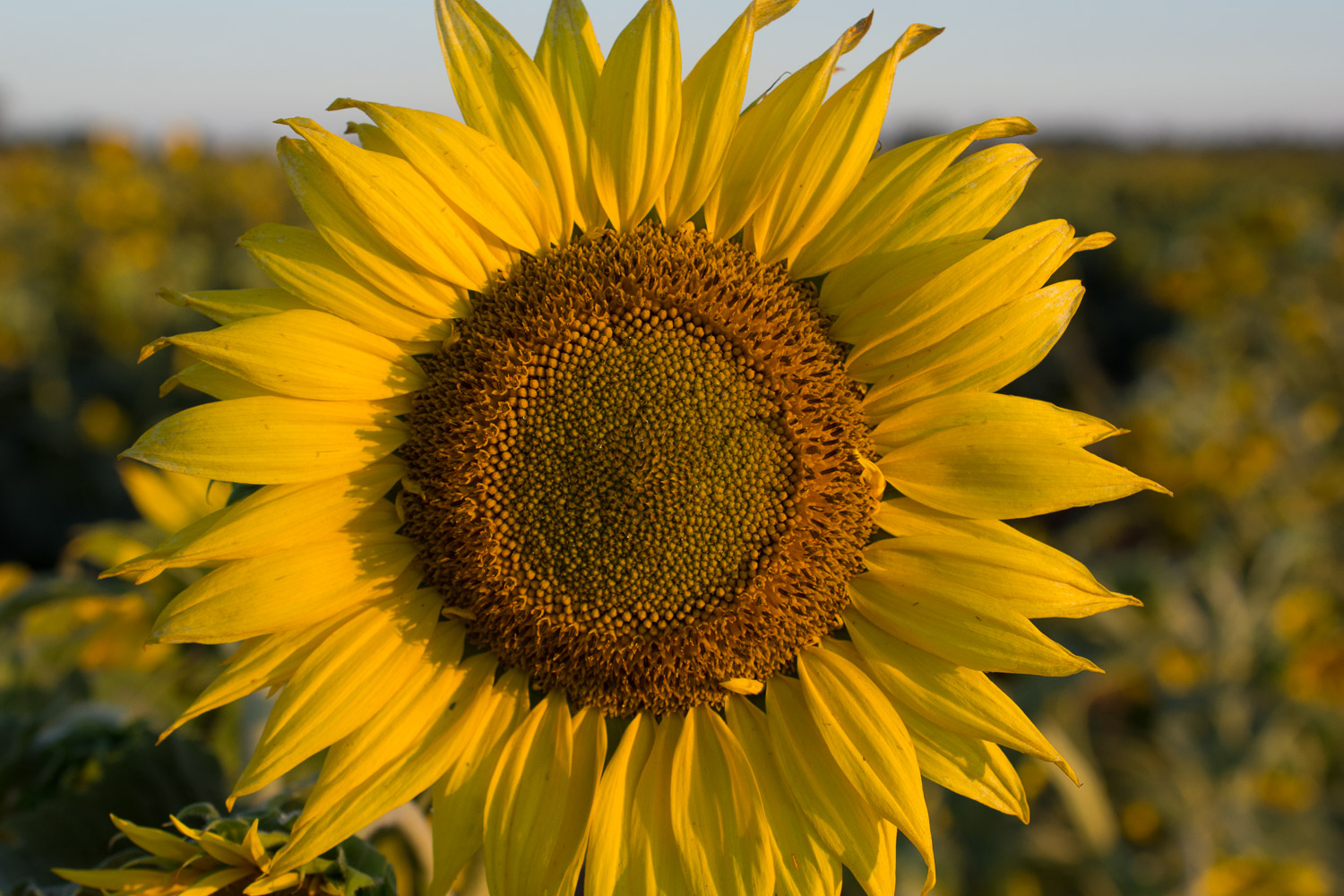
I’ve been moving my photos from my computer’s hard drive to an external hard drive because I’m running out of room. As I moved the Across the Road folder I saw yellow flashing by and I thought I’d share. The landowner Across the Road from me often grows alfalfa in those fields. That is usually a three or four year crop. So every fourth or fifth year there is something else there. This year it is tomatoes. Other years there have been sunflowers. I love sunflowers.

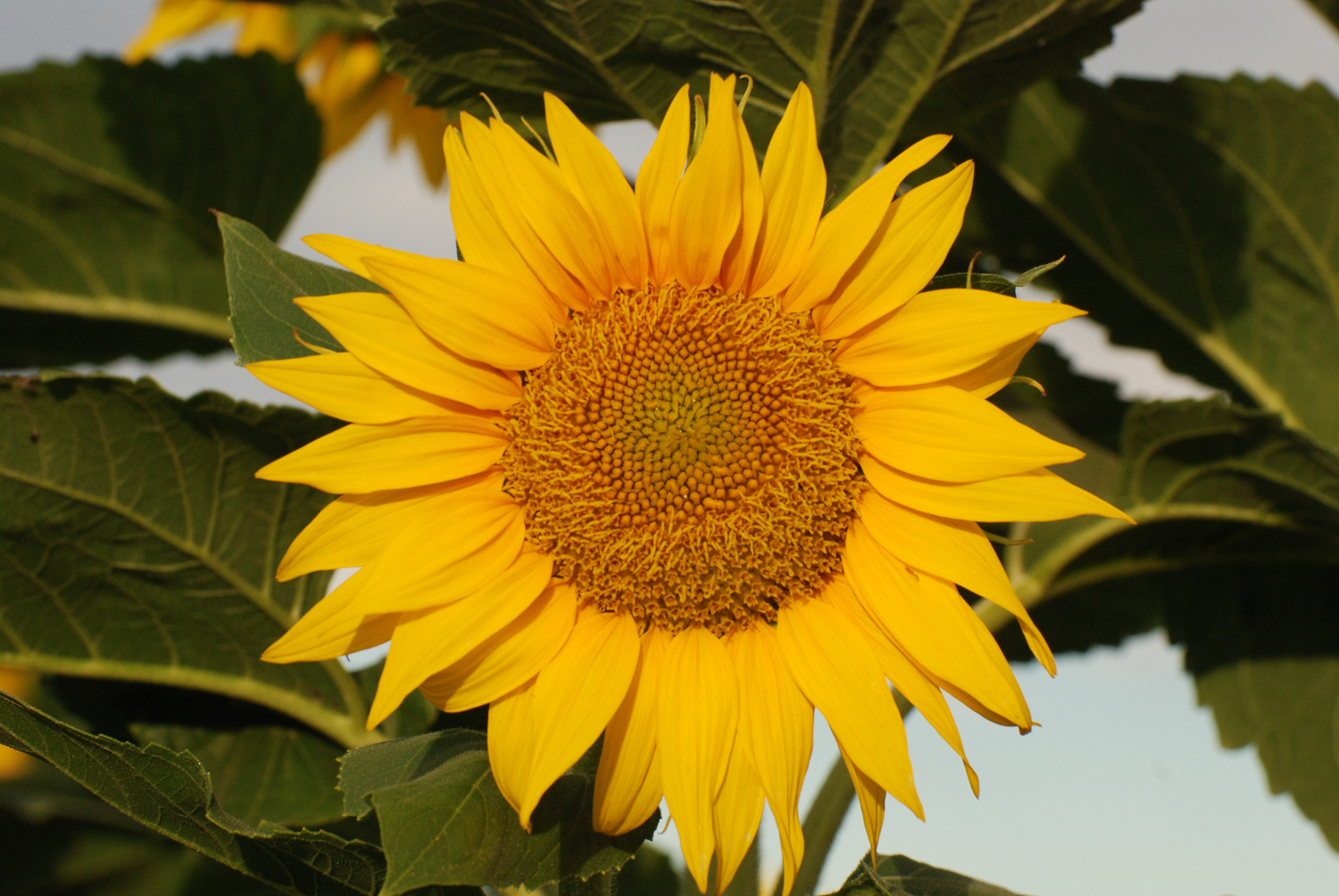
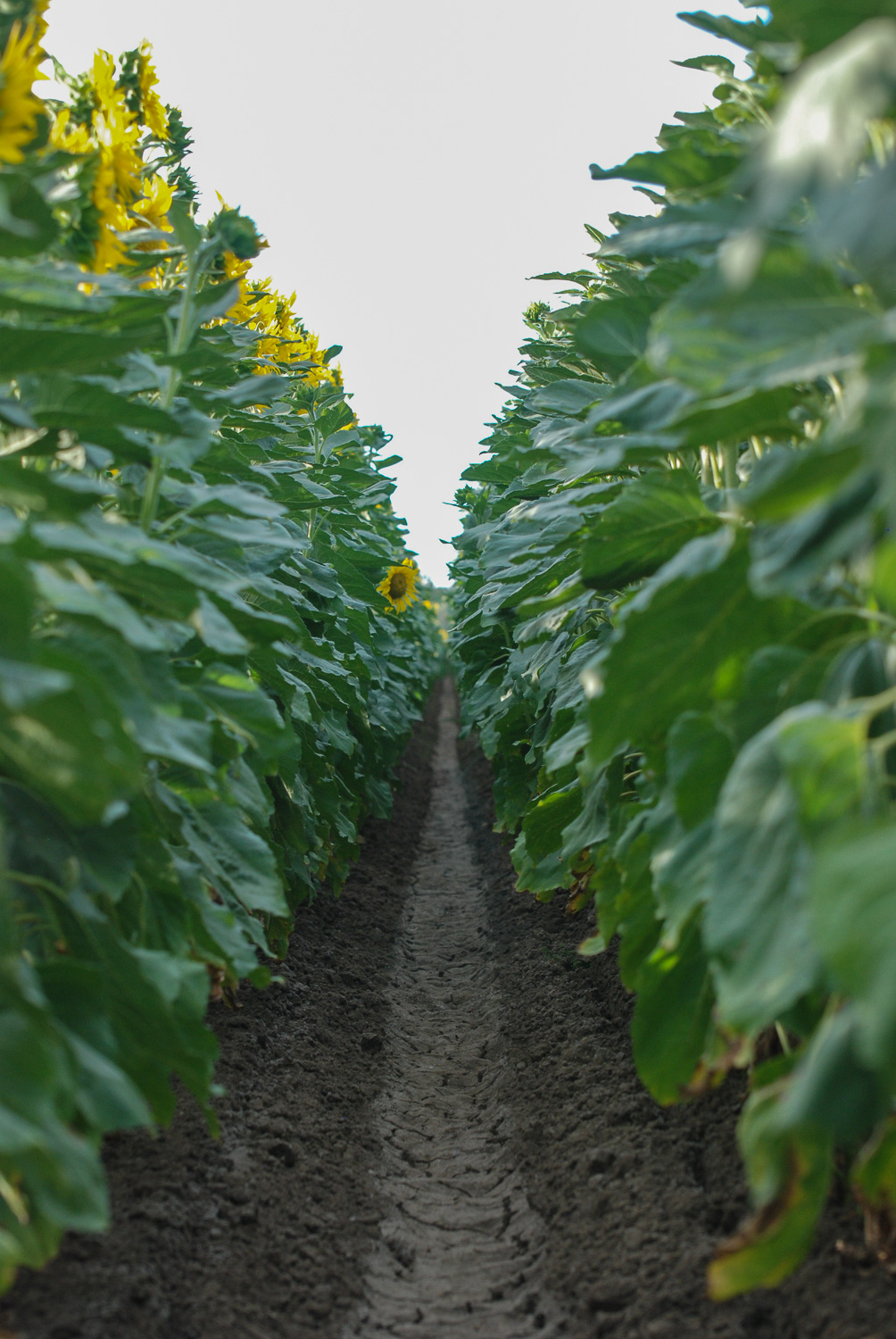
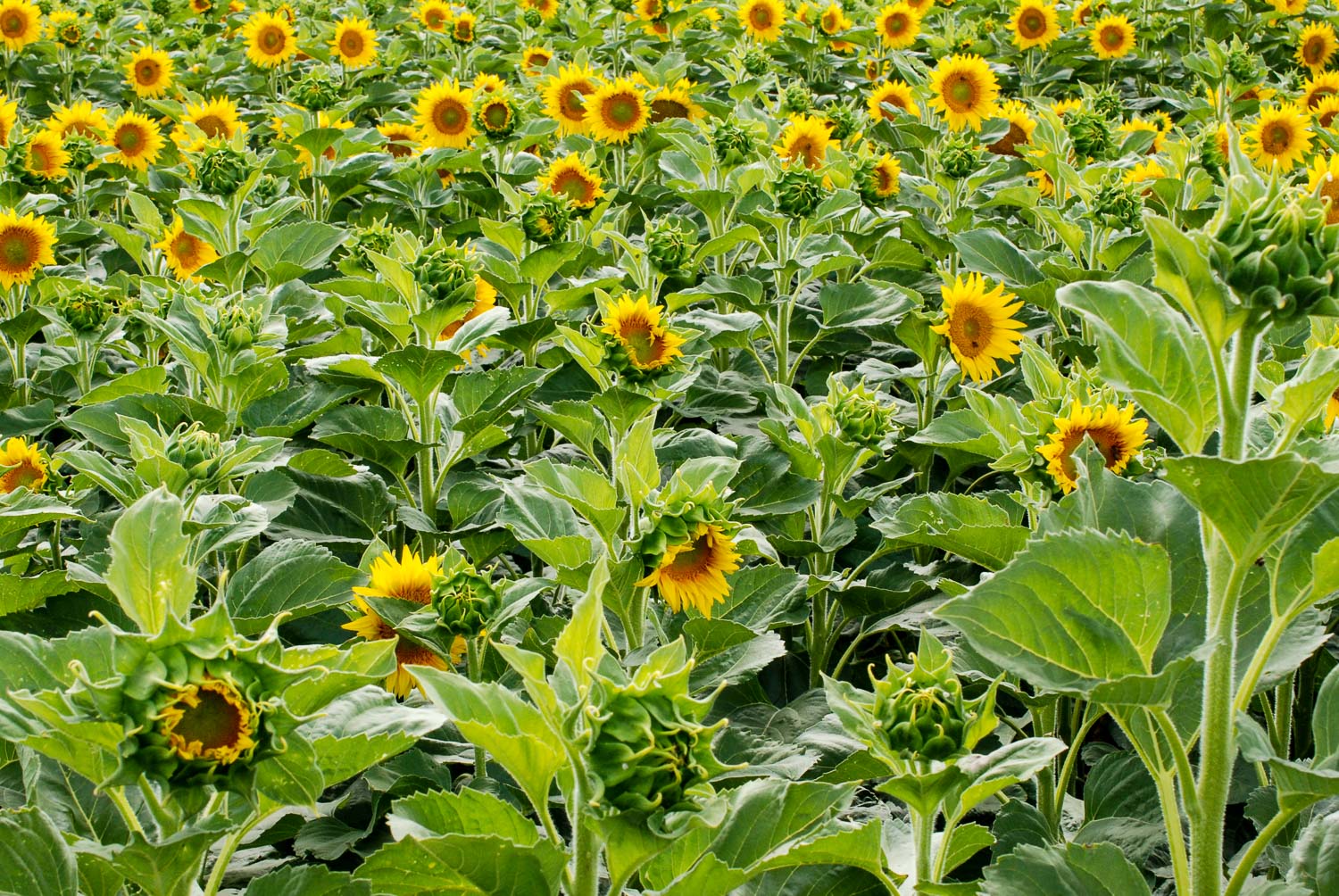
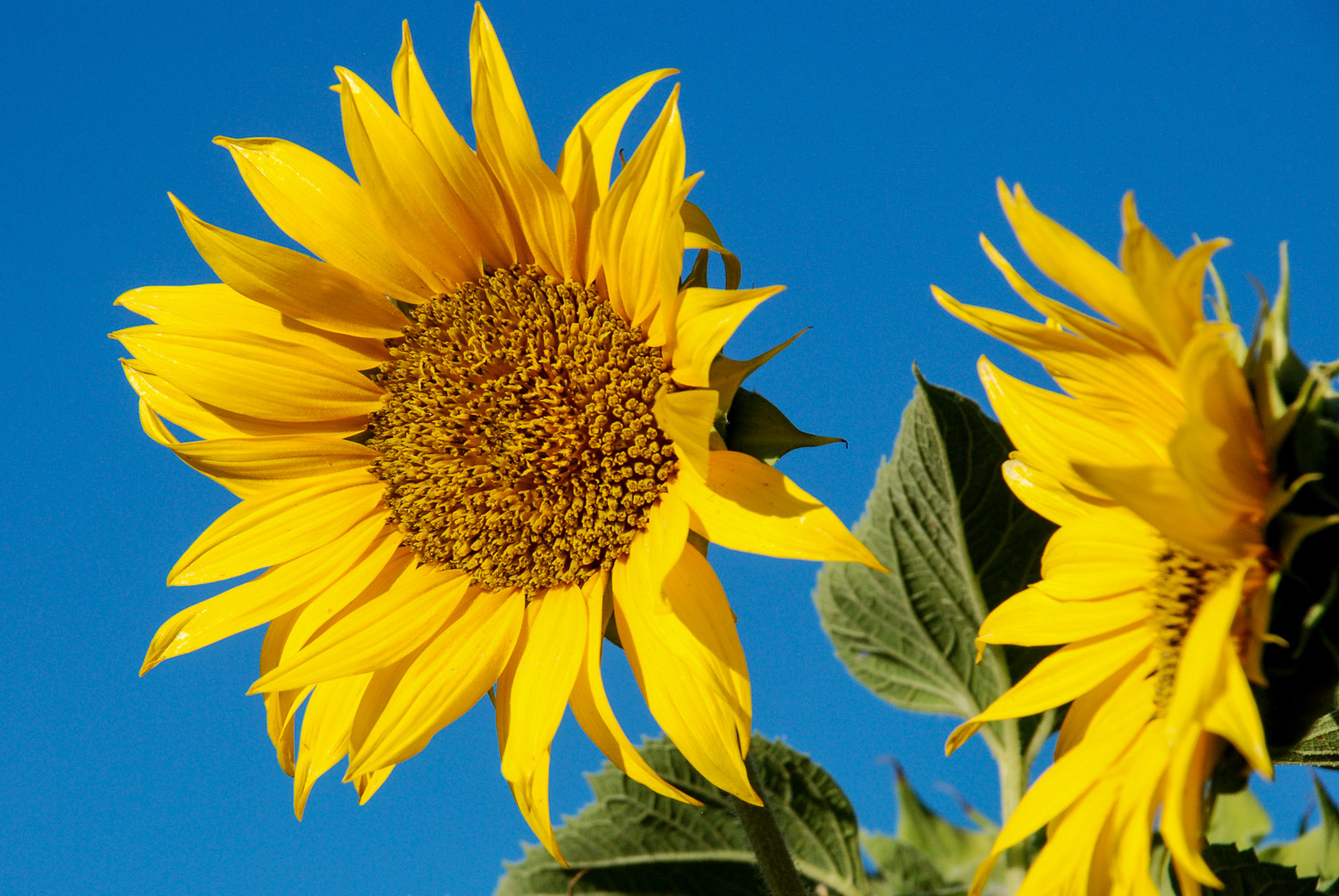
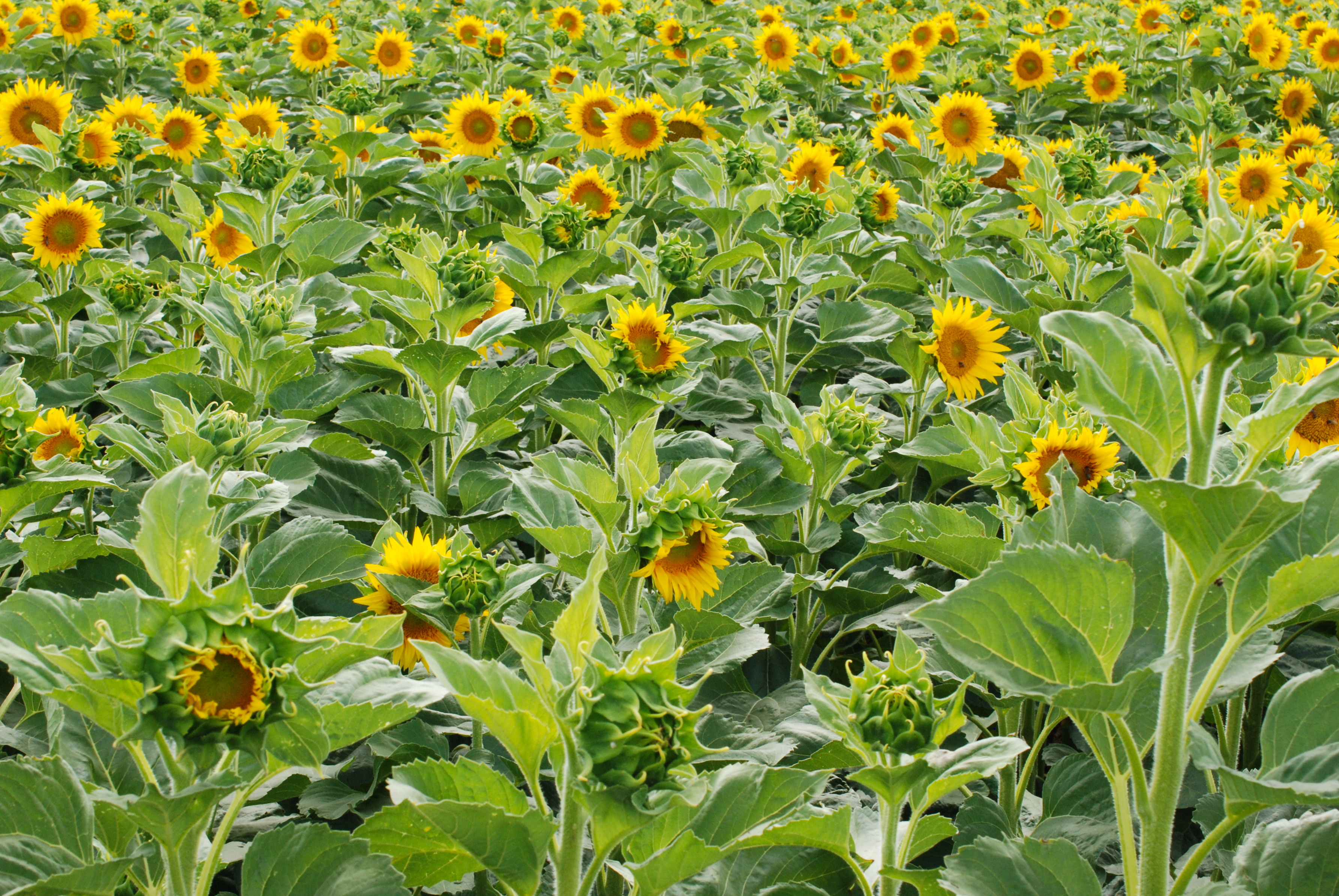
There isn’t a story here. I’m just sharing photos of sunflowers…and in no particular order. I just like seeing these flowers.

Planting Tomatoes

I didn’t plant tomatoes. They were planting across the road.

Here is the view this morning. It’s a big operation involving lots of people.

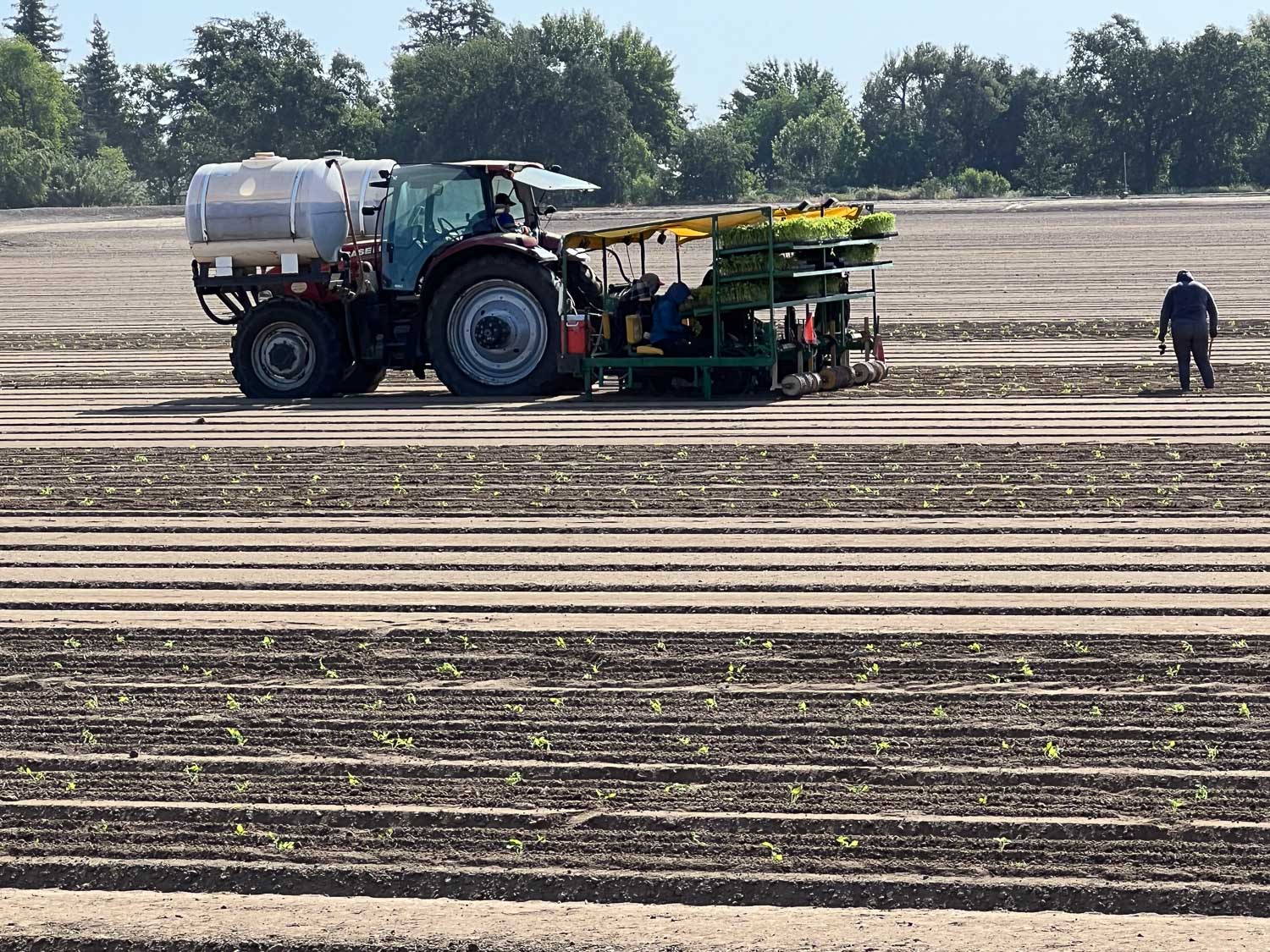
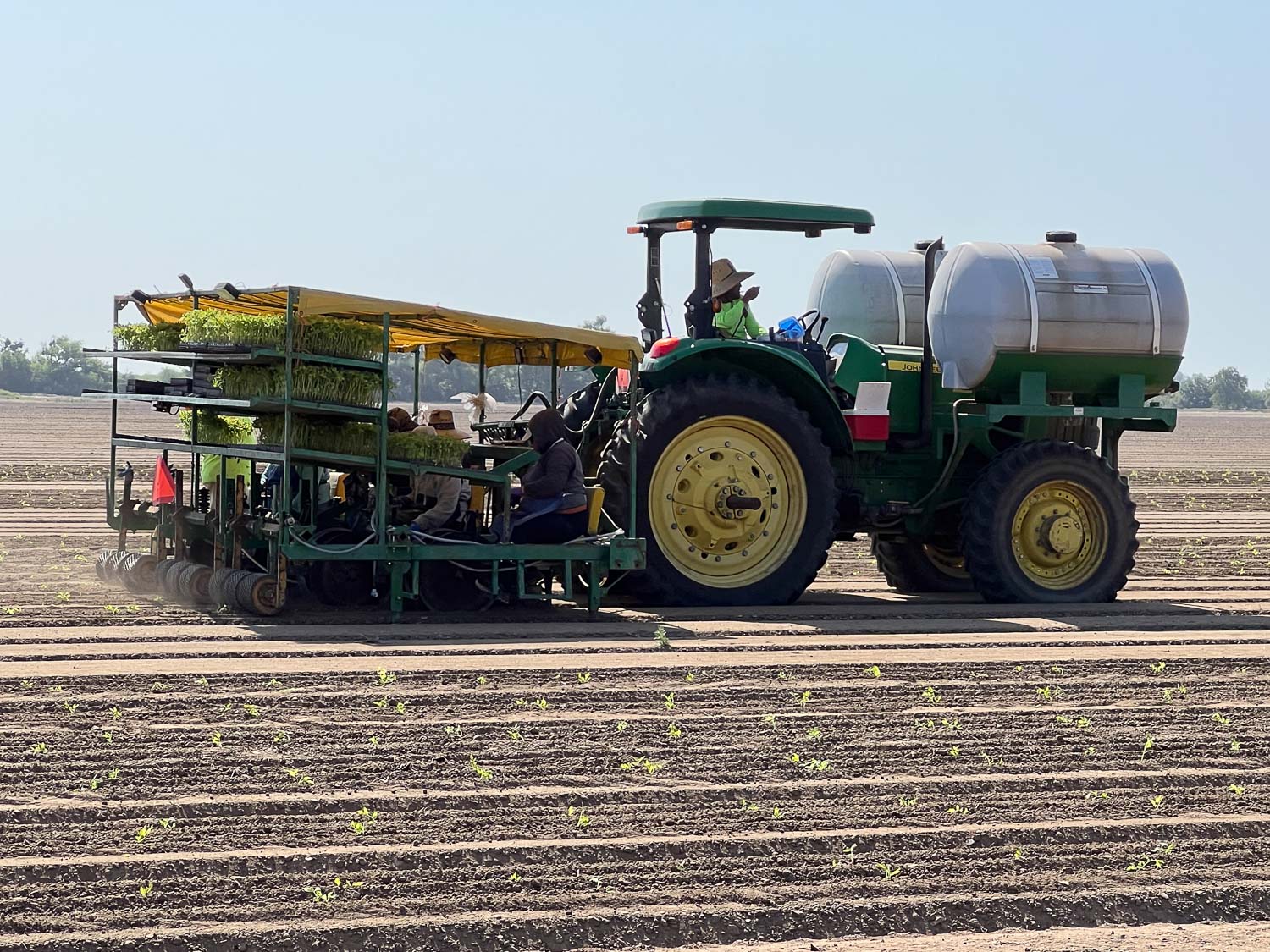
Each tomato planting machine is pulled by a tractor. There were four in this field today.

Tomato planting machine operated with a tractor.

There are six people sitting in the machine. Two other people were following. One of those moved the trays of seedlings, keeping up with the planters. The other seemed to be filling in spots where a tomato wasn’t planted. There is the tractor driver too. That is 9 people for each of these machines.

Close view of people sitting in tomato planting machine with trays of tomato seedlings.

Zoomed in view under the canopy.

I was amazed at how smoothly the beds were prepared a few days ago in preparation for this. Three beds are planted at a time, each with two rows of tomato plants.

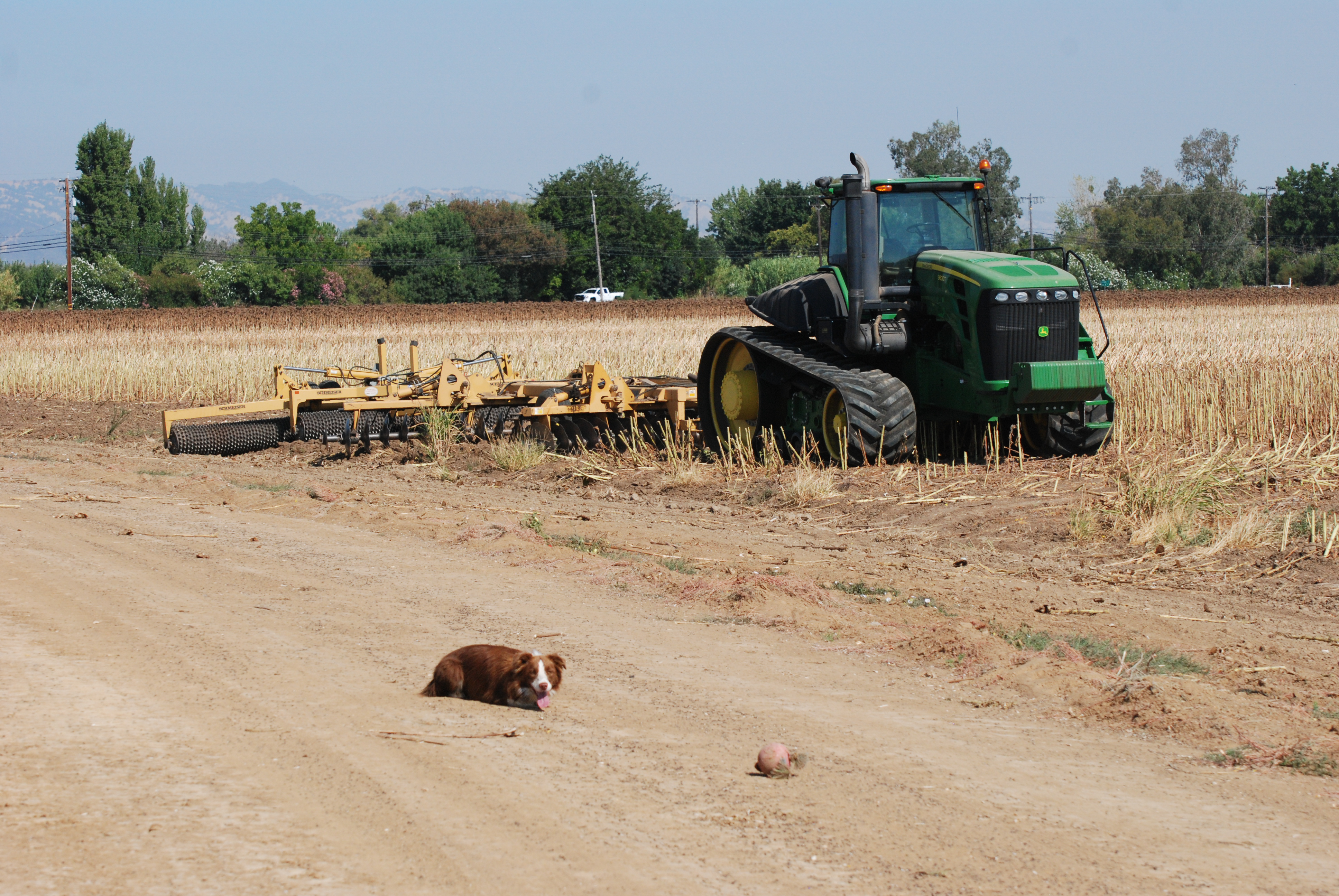
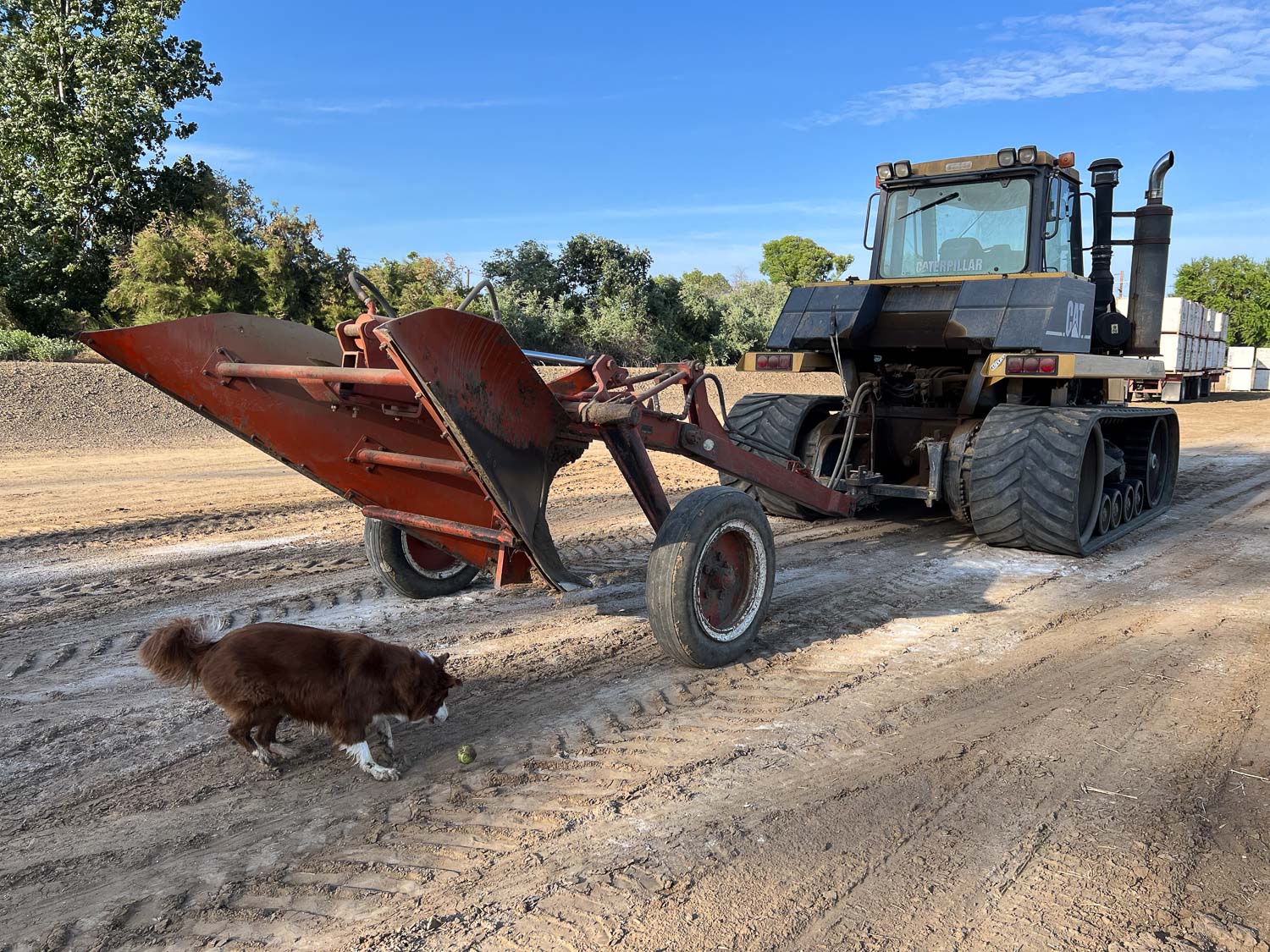
Caterpillar tractor with a ditcher behind.

I took Ginny for a walk in the evening after everyone had left for the day. The job was not finished. I was surprised to see how much more there is to go. I continue to marvel at the amount of people and equipment involved here. I’m sure that this tractor will pull the ditcher around the field as soon as the planting is finished.

These are the crates that hold the tomato seedlings.

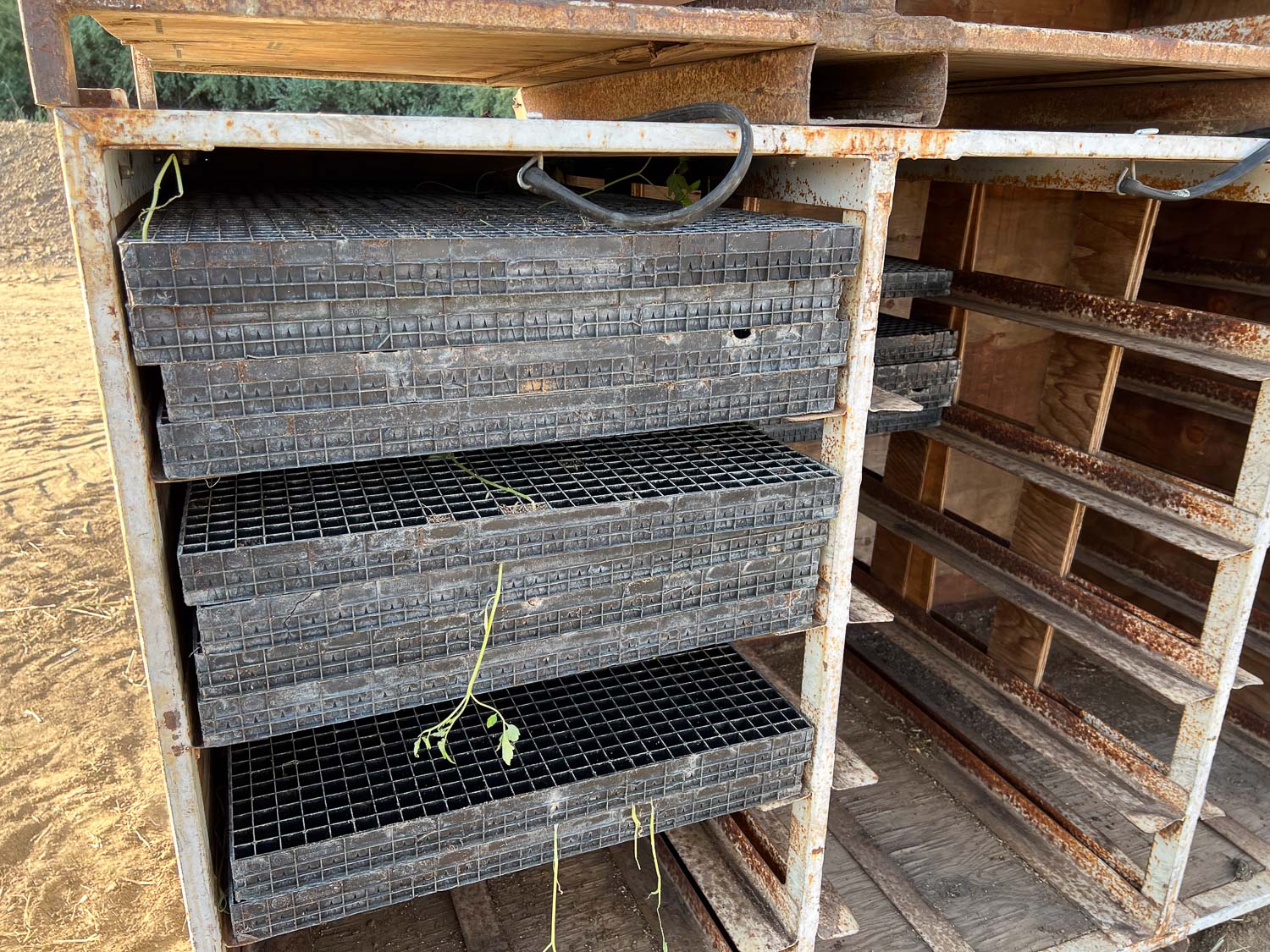
Empty trays that held tomato seedlings

These are stacks of the empty trays. I think I count 28 spaces in a row. These trays are square so that would be 784 seedlings in each tray.

Field of newly planted tomato seedlings.

This is a view of the field looking south to Mt. Diablo, just visible in the haze. Last year I took a photo from this same spot weekly and intended to have a post that followed the sunflower field from start to finish. I still have those photos but never had time to do that. I’ll try to continue with the tomatoes.

Table and benches with sunshade, on wheels for far workers to use.

There were two portable “comfort stations”. I just made that up–I don’t know what they are called. They have seating under a shade and toilets.

I’m not sure if these tanks supply water or fertilizer to the tractors pulling the planting machinery. About a week ago another machine was pulled through that I though injected something as they made the beds–maybe that was fertilizer. I think the seedlings are getting water now to keep them going until the whole job is finished and they can irrigate.

Here is what the planter looks like. There are six chairs facing back.

It’s really hard to describe how this works. I don’t understand it without having seen it in action close up. The seedling is put into that v-shaped thing in the middle. It is on a rotating disc and it gets put in the soil. Every pair of seats had one disc with three of the v-shaped slots and one with two. That means that the two rows of tomatoes in each bed are offset to give the plants more room.

View from where the people sit inside the tomato planting machine

This is the view from sitting in the seat next to this disc. I just found this video to show how one works. It’s not quite the same, but the same function.


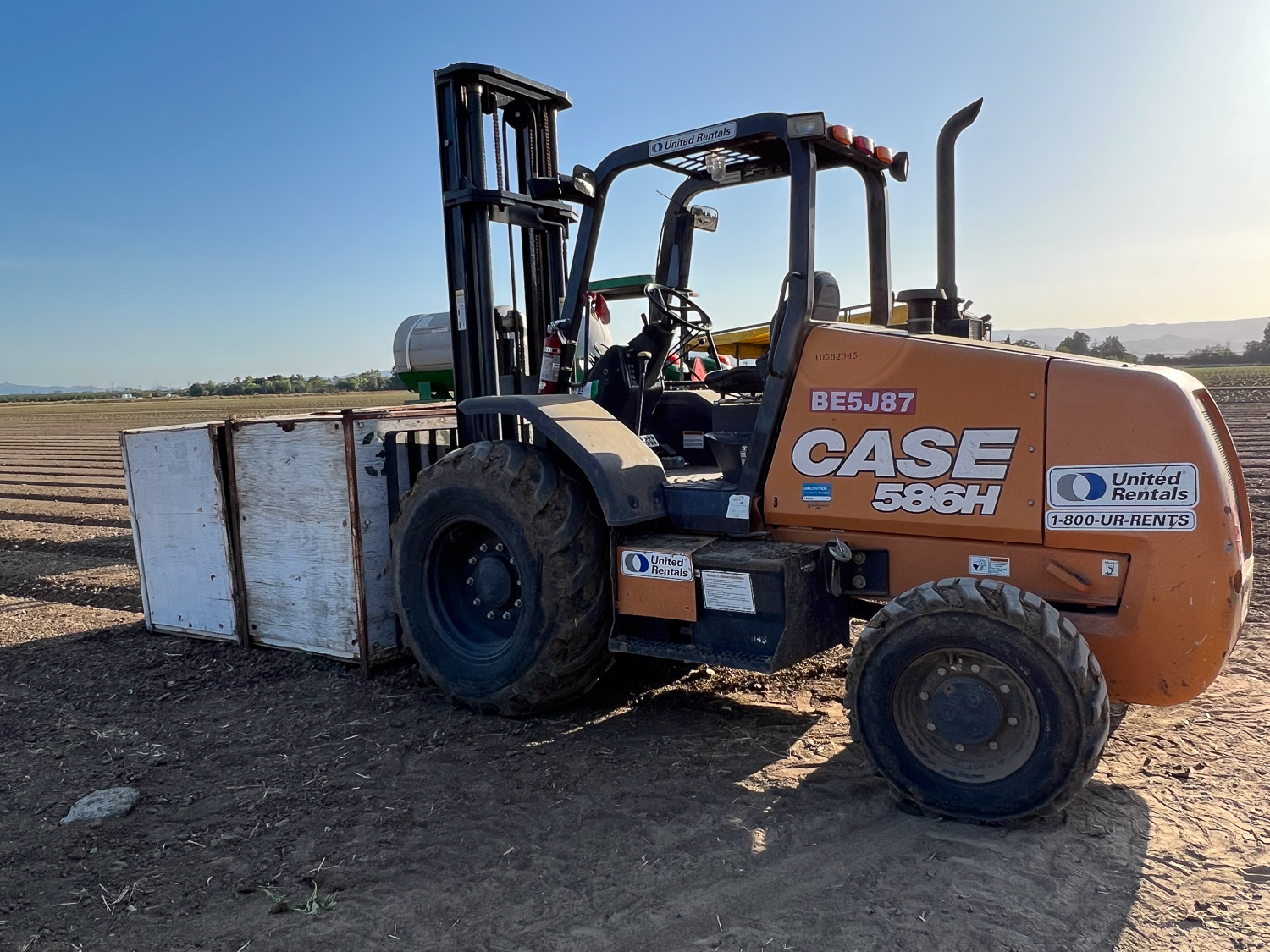
Forklift with large crates that hold tomato seedlings.

More infrastructure. There was a forklift to move the crates around.

Front view of tomato planting machinery with water tanks on front of the tractor.

The front view of the tractor with the tanks that I assume hold water. This part of the field is already planted so I think they just took it off the dirt road to park or maybe they needed to go back over this part for some reason.

Field partially planted with tomato seedlings. Planting machinery is in the field.

This shows the beds behind the tractor planted and beds in the foreground not planted yet.

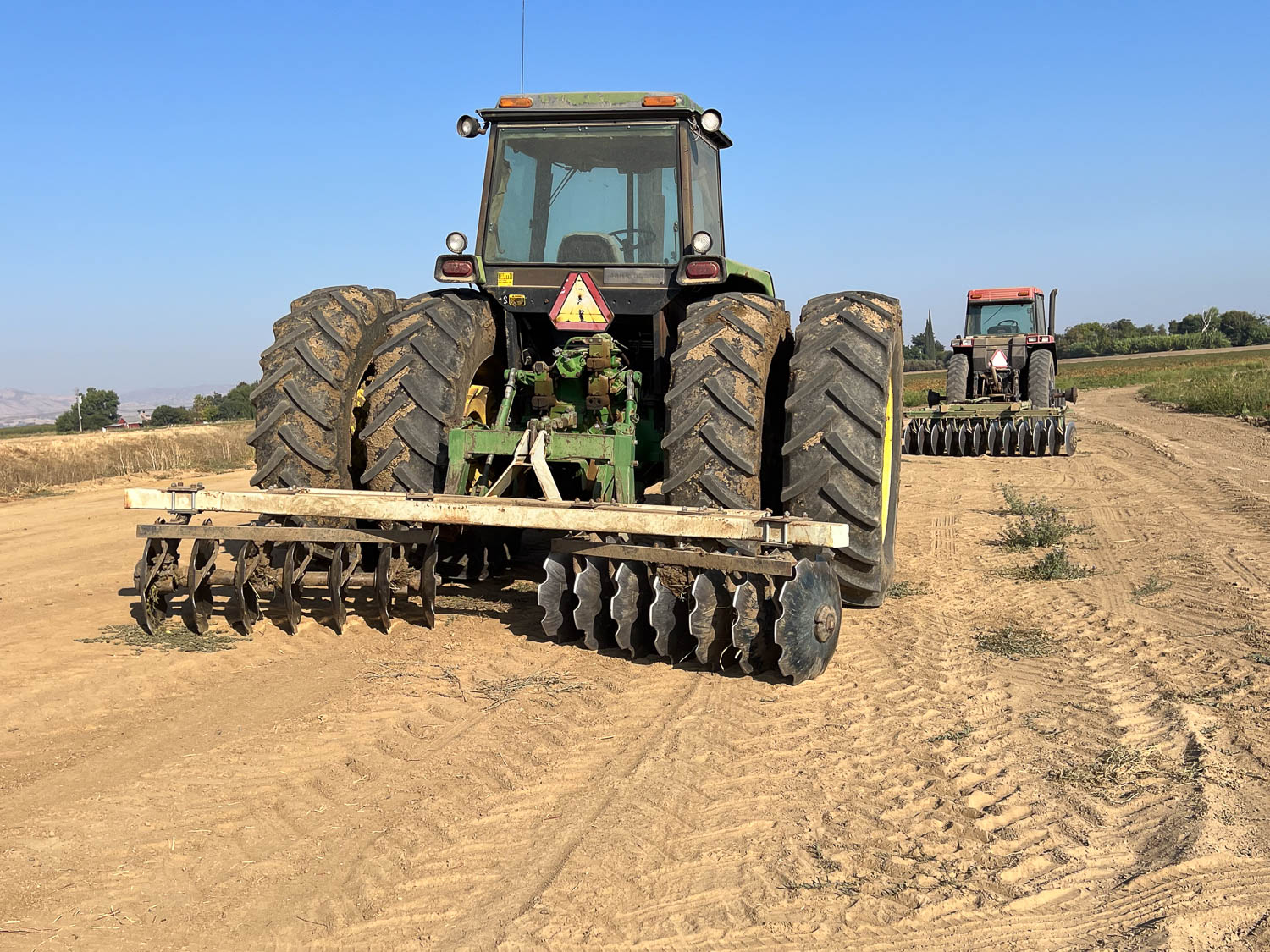
Disc and grader both attached to tractors on a dirt road.

Even more equipment. The disc had gone around the edge of the field followed by the grader to smooth it out. They are parked on the dirt road in this photo.

Rows of newly planted tomatoes.

View to the north.

Field with newly planted tomato seedlings.

Another view. That’s a lot of tomato plants. There are a lot more to plant. I don’t know if they will finish tomorrow. I’m sure they are under pressure to get those seedlings in the ground since those crates were delivered yesterday. At least it’s not very hot right now.

I hope I didn’t bore you with all these photos, but I’m fascinated by this.

Sunflowers – June Through August

I have too many sunflower photos for one post so I split them up into yesterday’s post and this one.

20160615-dsc_0222

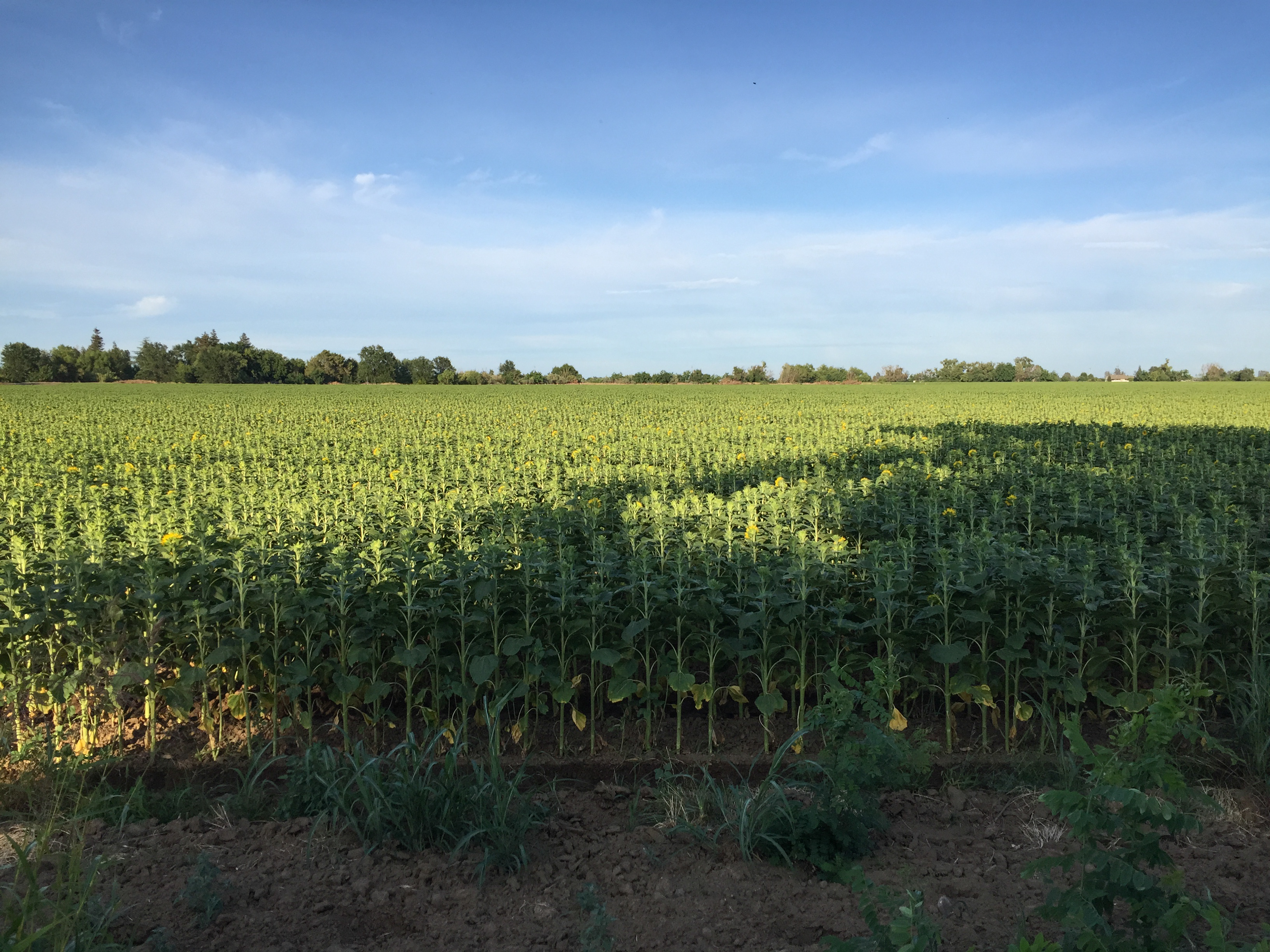
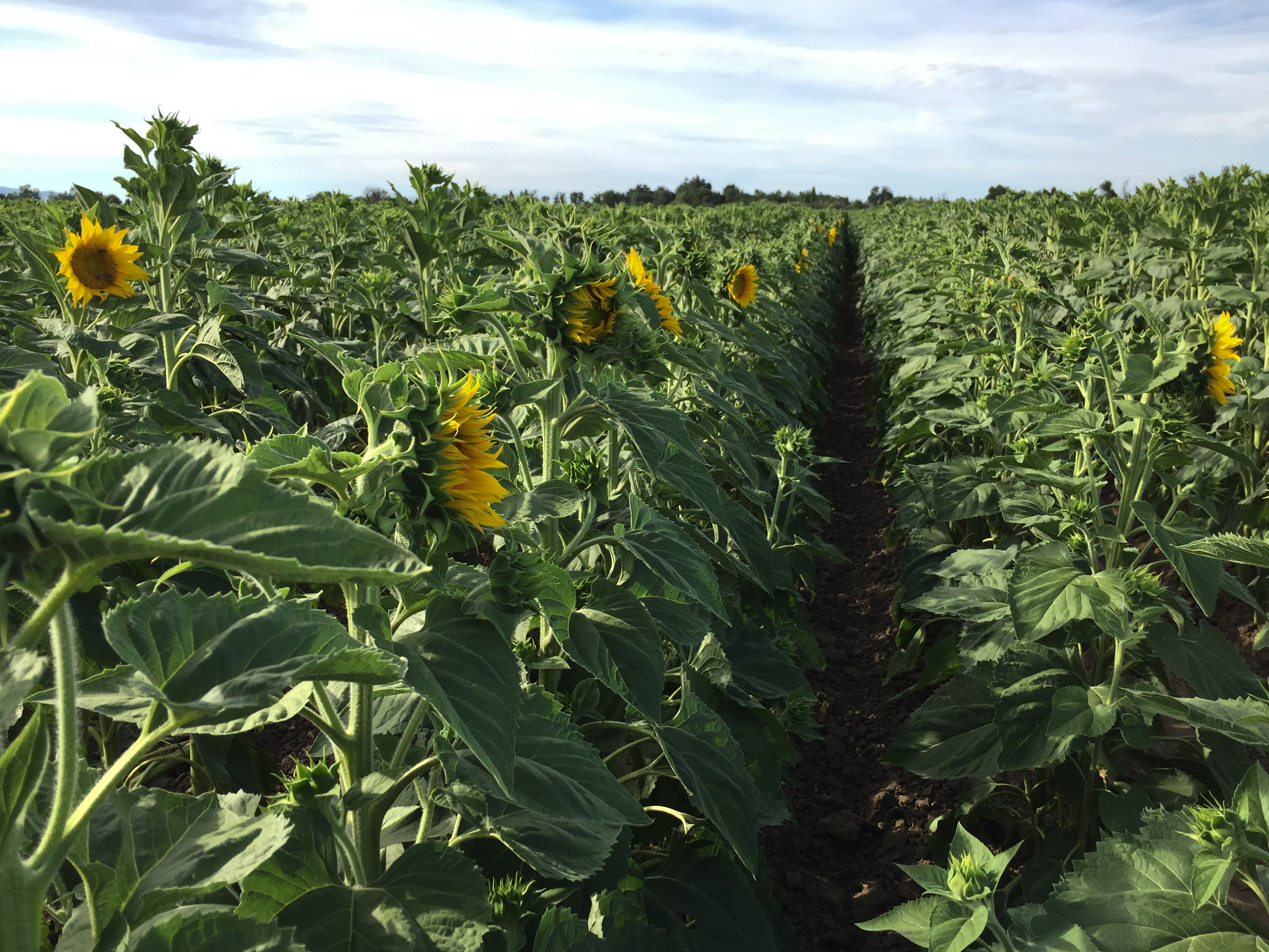
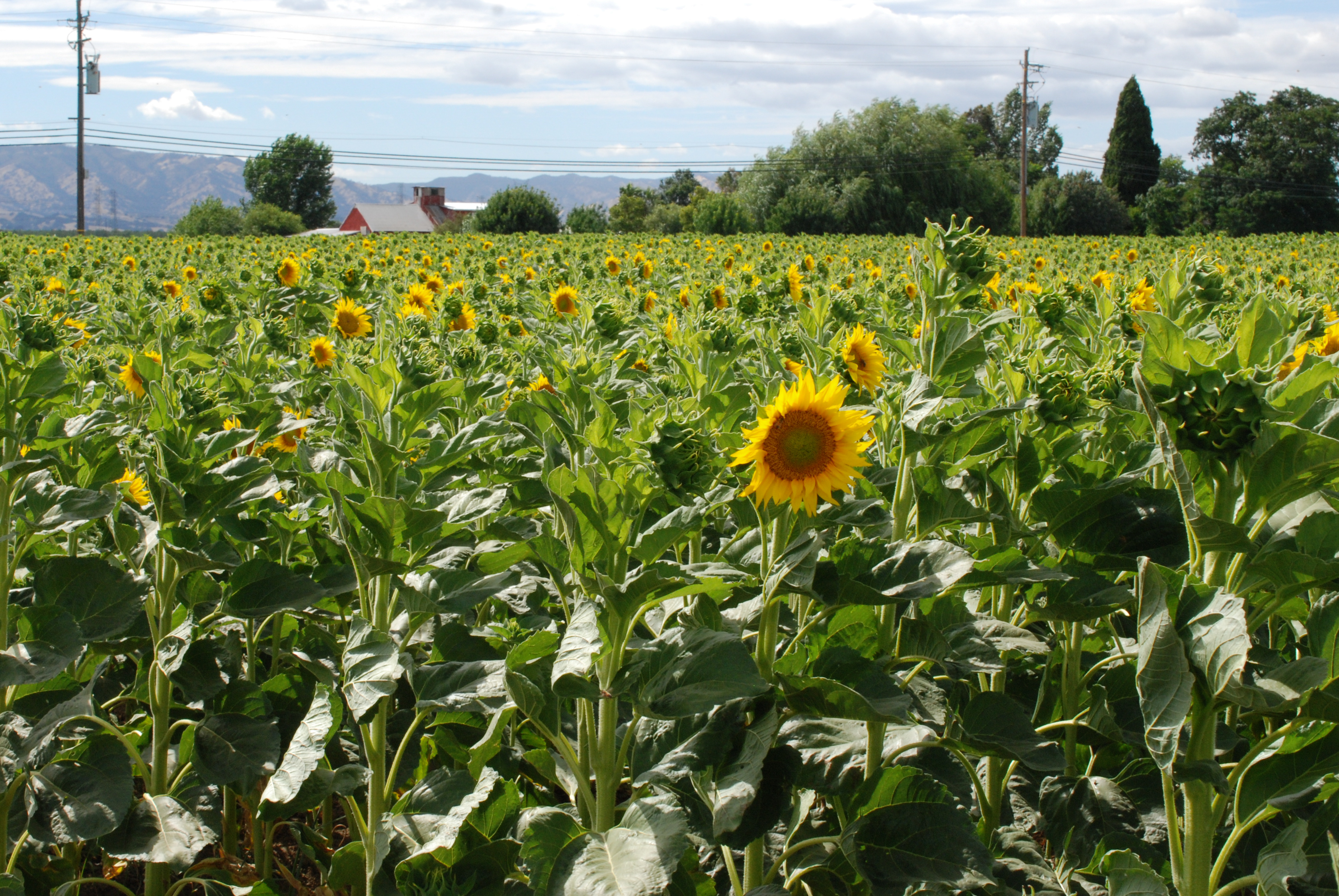
Do you see the flowering sunflowers in the center of the photo? If you count 10 rows to each side you’ll see (barely) that every 10th and 11th row there are flowers in bloom. The field was planted with two varieties of sunflowers, a smaller one that bloomed earlier and the larger variety. The following is from Wikipedia:

Typically, sunflowers tend to be self sterile. But for a sunflower to produce seeds, it needs pollen from a different sunflower. This is also known as cross-breeding, or in this case, cross-pollination. Occasionally, a sunflower can self-pollinate. Self-pollination produces an inbred line which, when bred with a separate inbred line, will result in a hybrid flower.”
20160620-dsc_0335

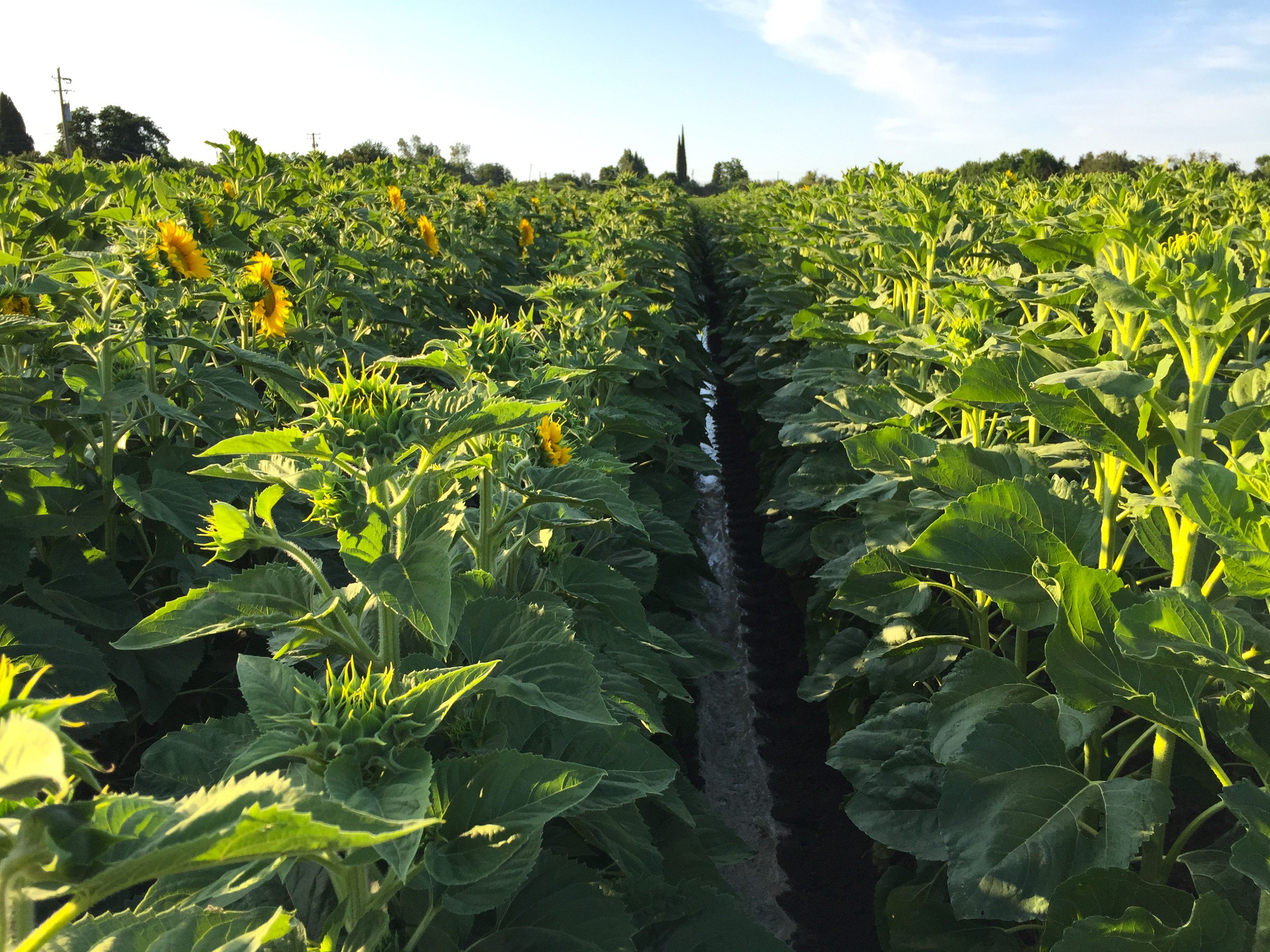
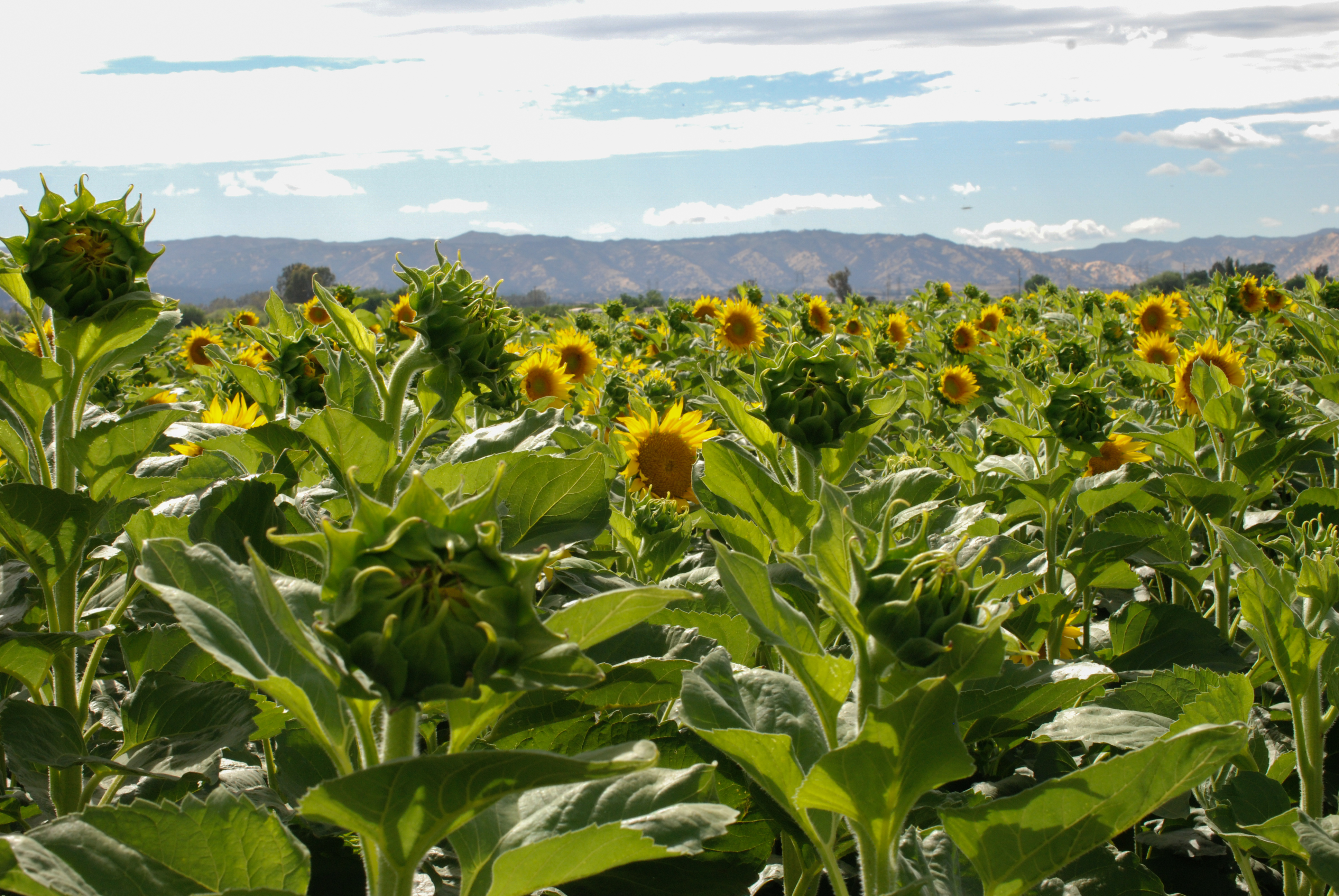
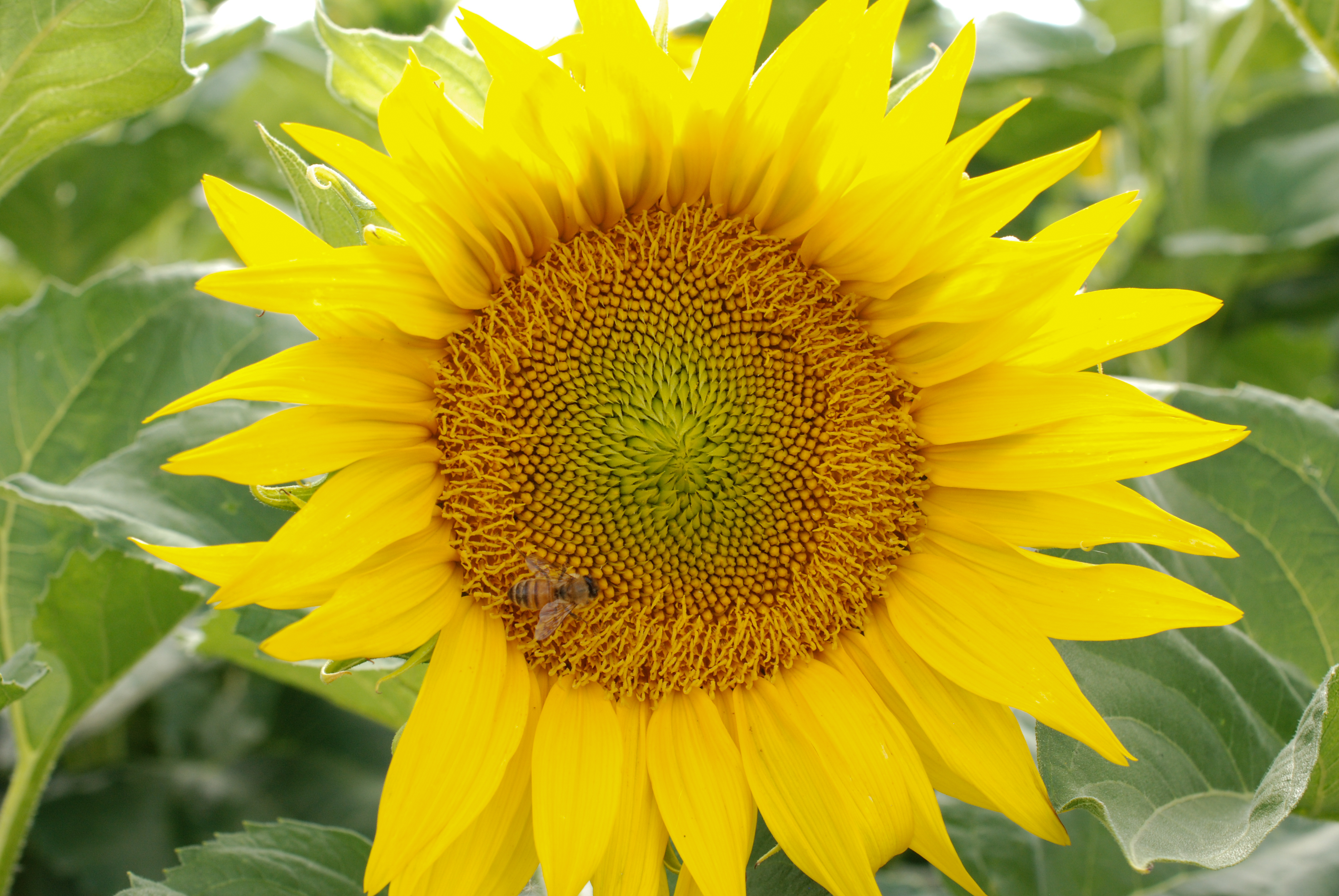
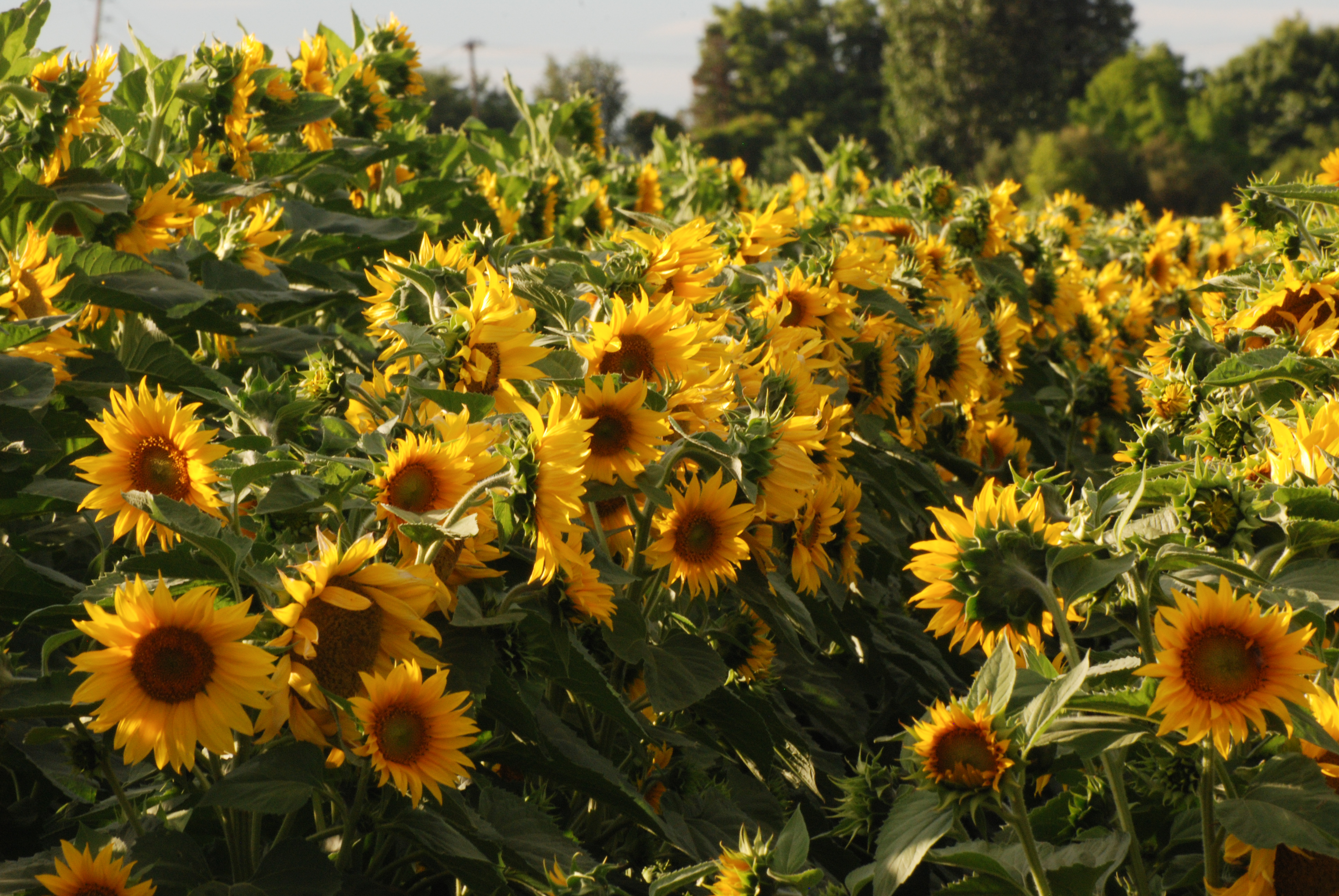
This is two of the shorter rows in full bloom. The taller sunflowers are also blooming. I assume that these are two varieties that (with probably a male-sterile flower on the larger plants) produce a hybrid seed. At harvest time I talked to a representative of the buyer who was out in the field and she said that this was a seed crop that was going to Europe to be planted for oil production.

20160616-img_1876

Sunflowers typically follow the sun, but when they get large the heads don’t move anymore. This was the view from my house –all the flowers facing east. If I wanted to see the pretty faces I had to walk around the field. Do you want to know more about this? Here is an article from the New York Times that explains why and how the sunflowers move to face the sun. This is an excerpt from it:

The answer was in their stems. Like those of other plants, the stems of young sunflowers grow more at night — but only on their west side, which is what allows their heads to bend eastward. During the day, the stems’ east side grows, and they bend west with the sun. Dr. Atamian collected samples of the opposite sides of stems from sunflowers periodically, and found that different genes, related to light detection and growth, appeared active on opposite sides of the stems.”

Isn’t that amazing? And isn’t it cool that there is so much to be learned about the seemingly most mundane things in our world? I’m all for promoting science to explore ideas and not just to solve a problem. But I digress…20160615-img_1868

20160620-dsc_0339

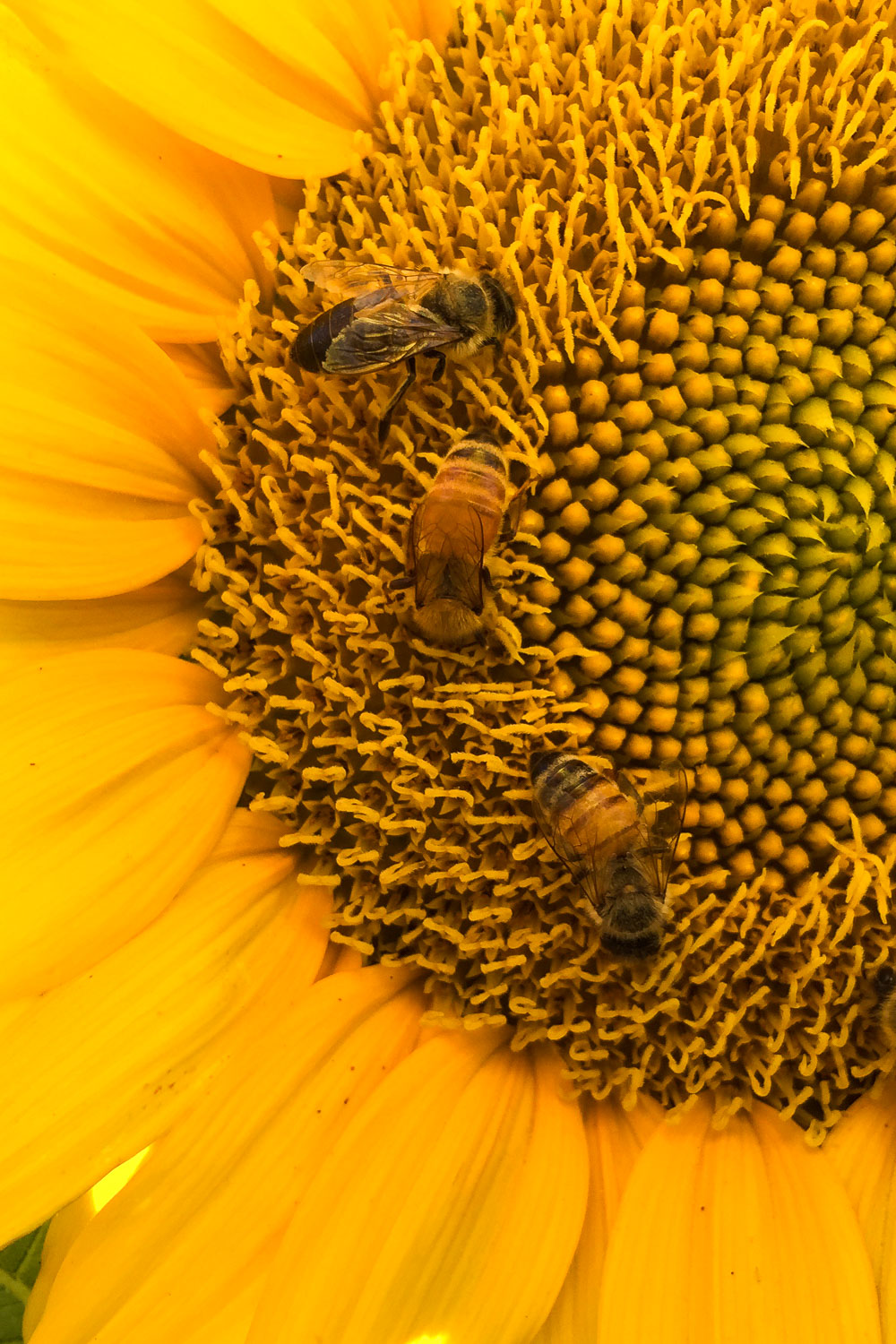
You saw bees on the sunflowers in the previous post.20160620-dsc_0370
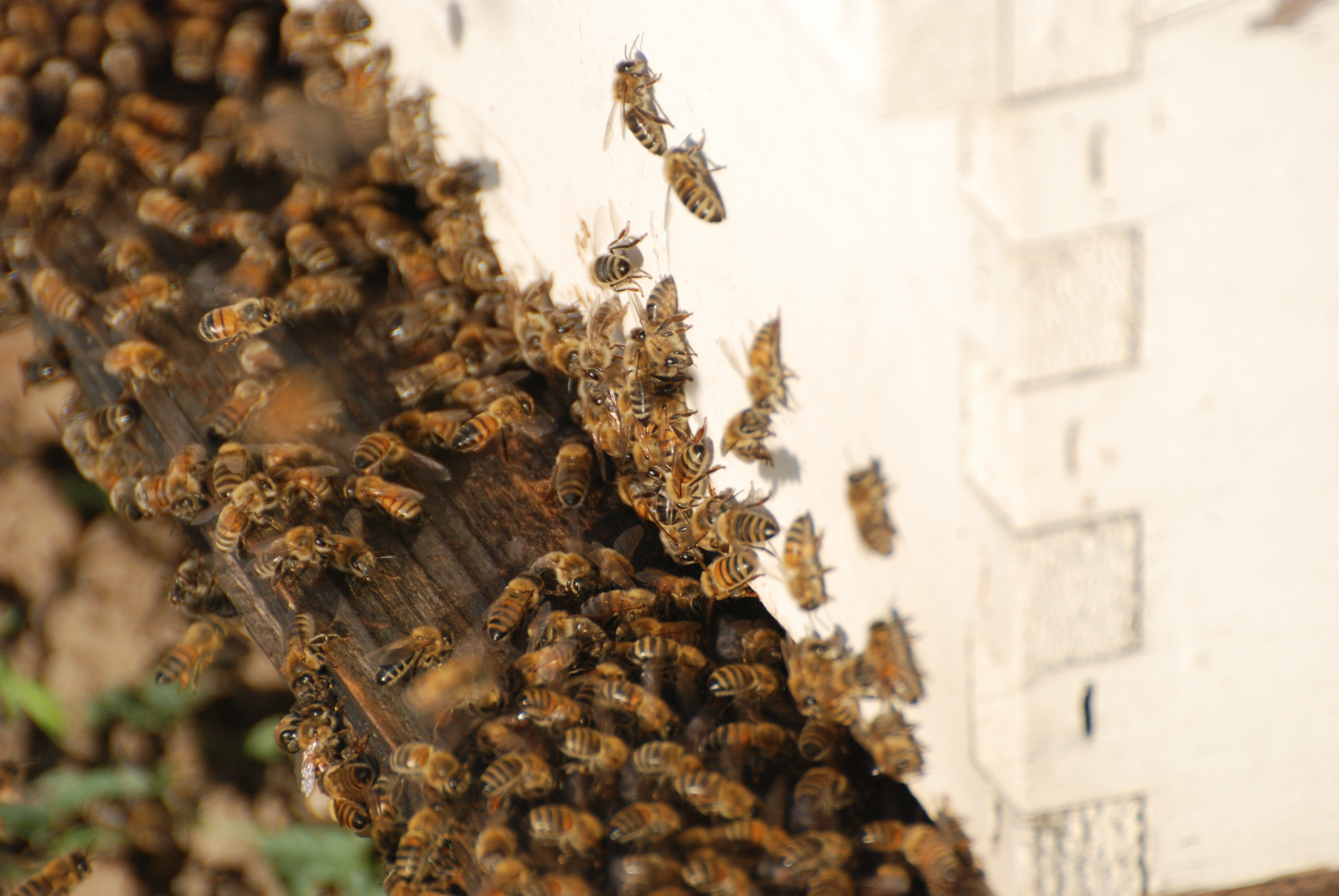
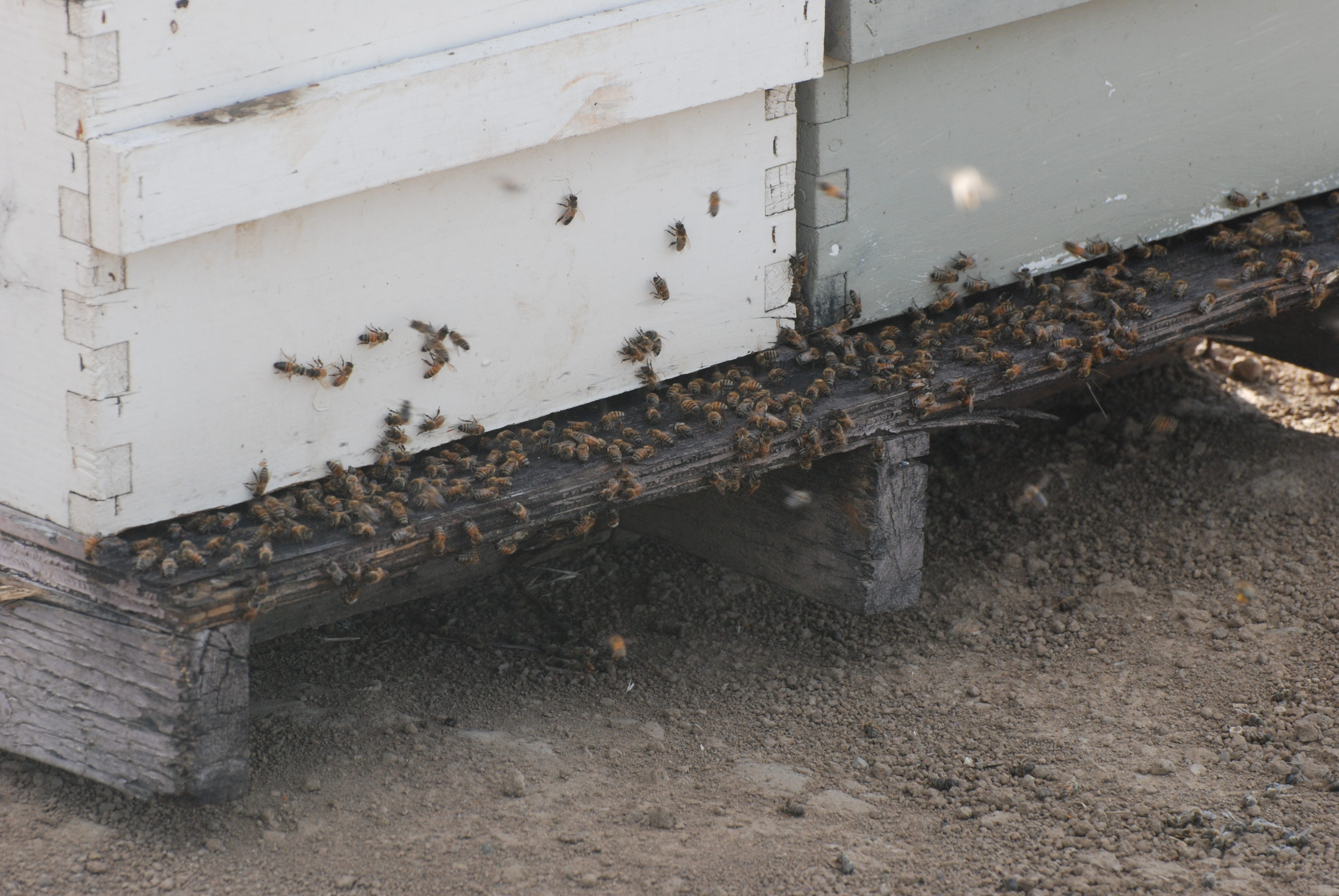
Here they are at their hives. Hives were placed all around the field.20160620-dsc_0390
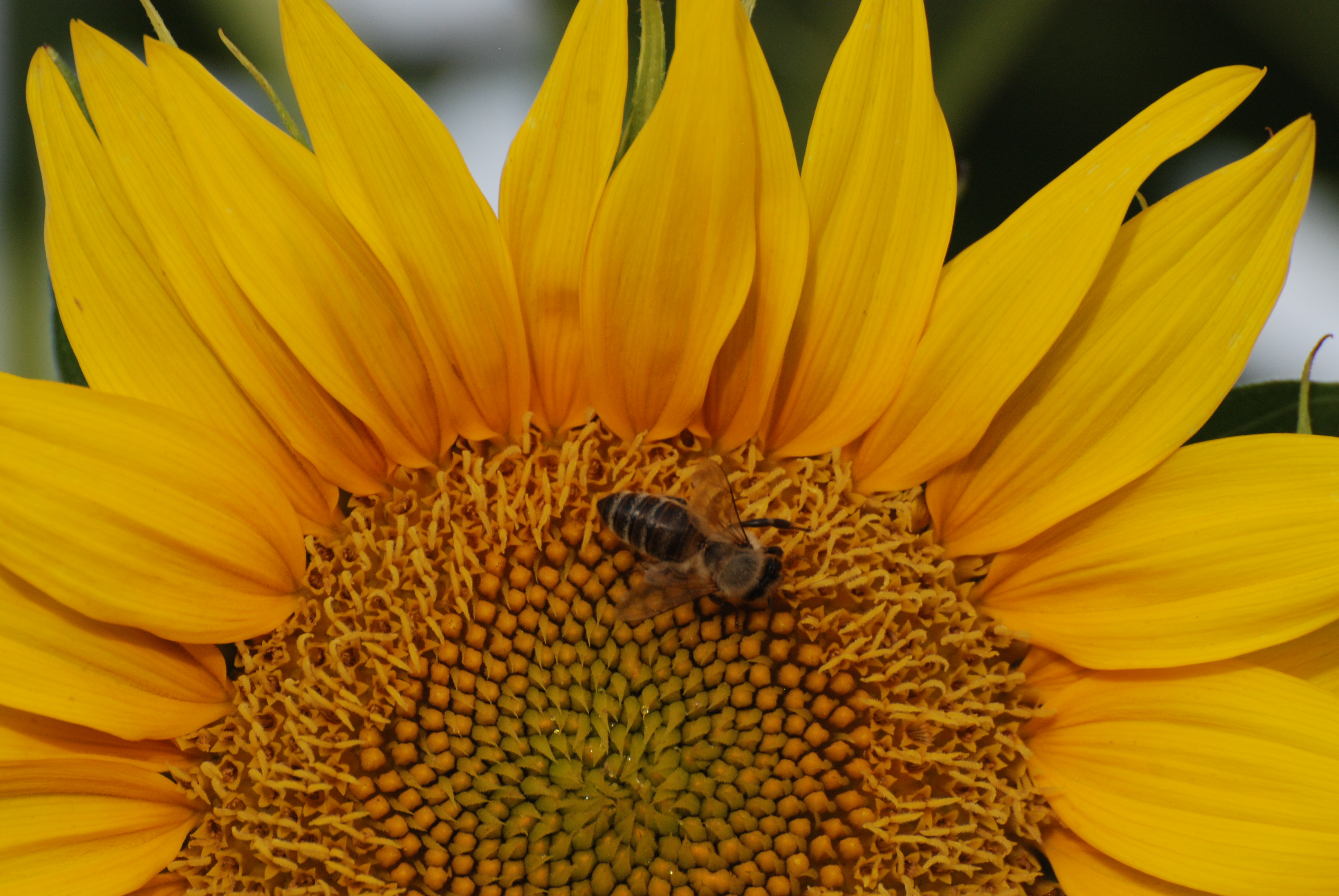
Here is another interesting article–this one about the bees that pollinate sunflowers. “In sunflower hybrid seed production, pollen from a male row of sunflowers must be moved by bees to a female (male-sterile) row. Growers typically use honey bees to accomplish this task. However, most honey bee workers specialize as either nectar or pollen foragers. Nectar foragers tend primarily to visit female rows, while pollen foragers visit male rows. If few bees cross between rows, growers can experience poor seed-set.” The article goes on to say that native bees  collect both pollen and nectar and by chasing the honeybees from row to row they make the whole process more efficient in terms of getting the 100% pollination. Therefore growers should encourage native bee populations.
20160629-dsc_0563

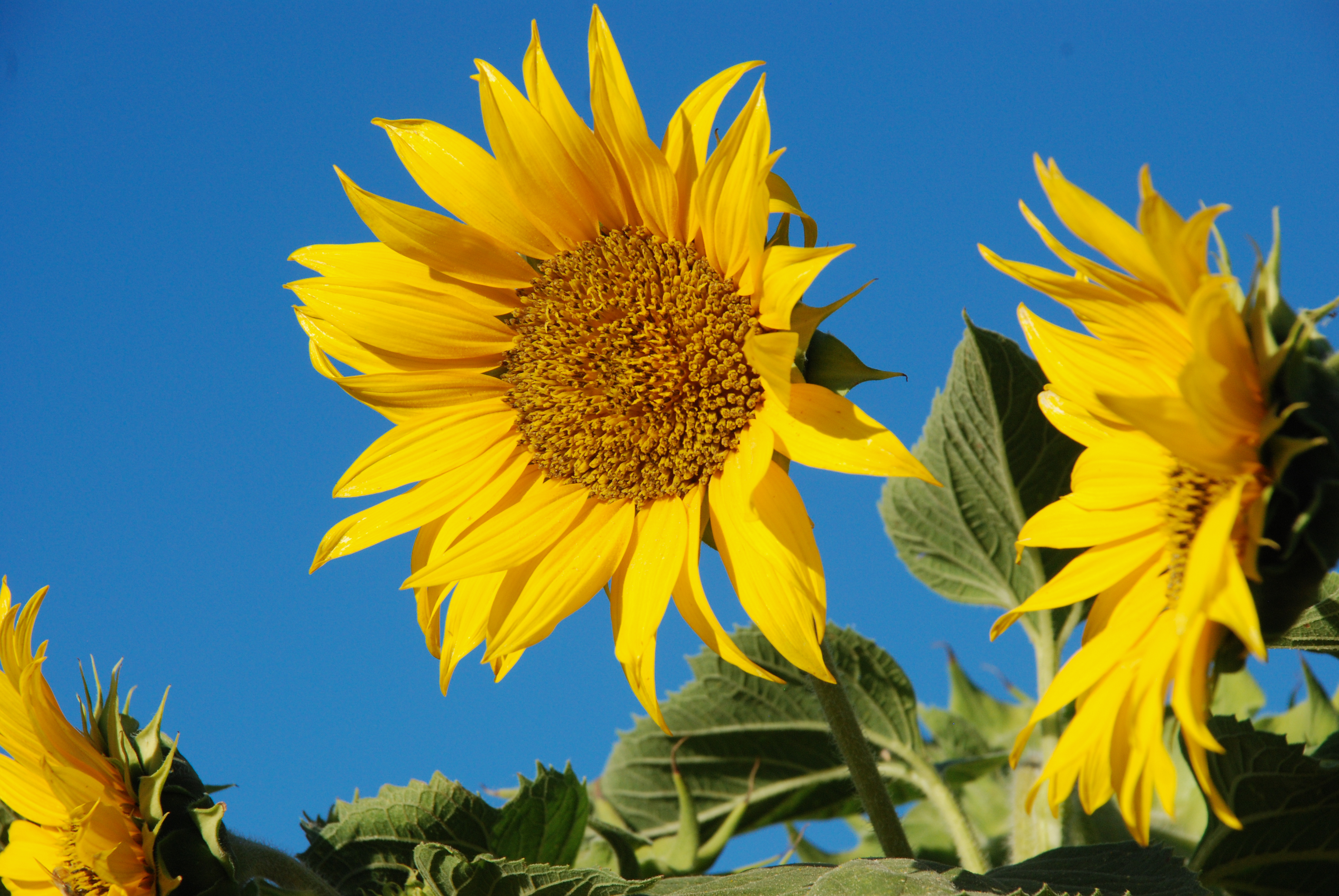
The photos above were all taken in June.
20160718-img_3086

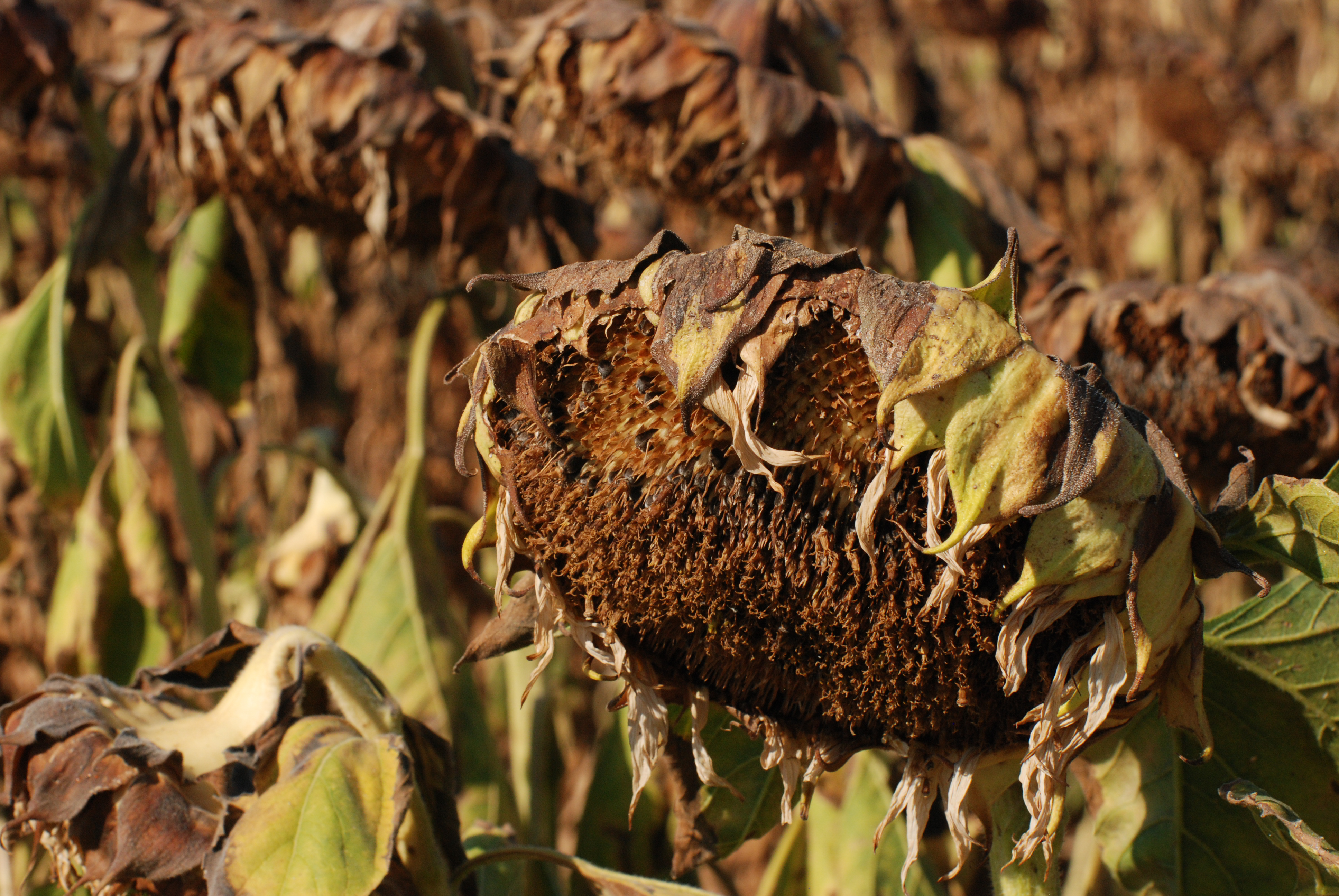
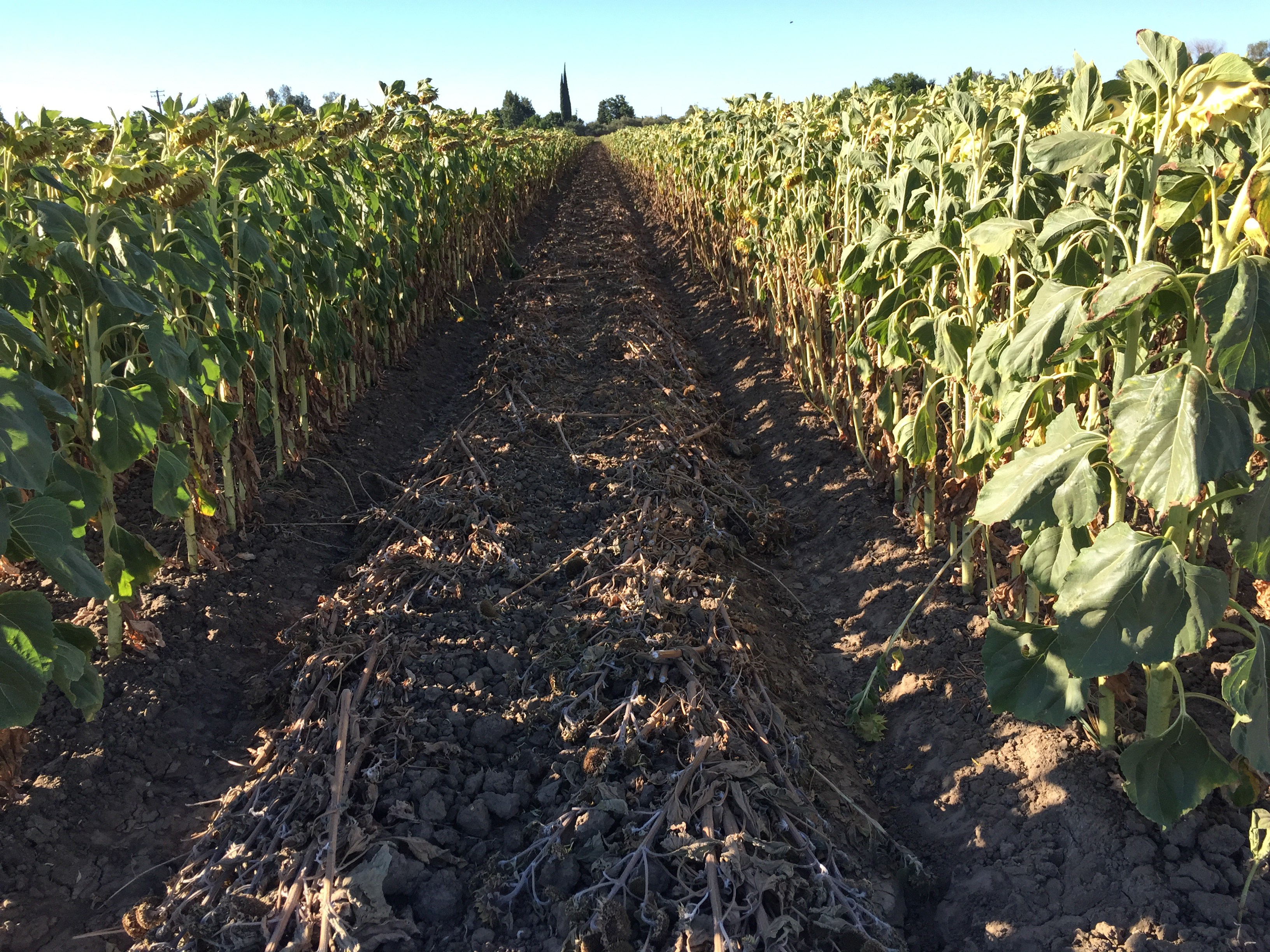
By mid-July the heads were drooping and the two rows of smaller plants were cut. The sole purpose of those sunflowers was to provide half of the genetics of the hybrid seed to be harvested from the larger plants.
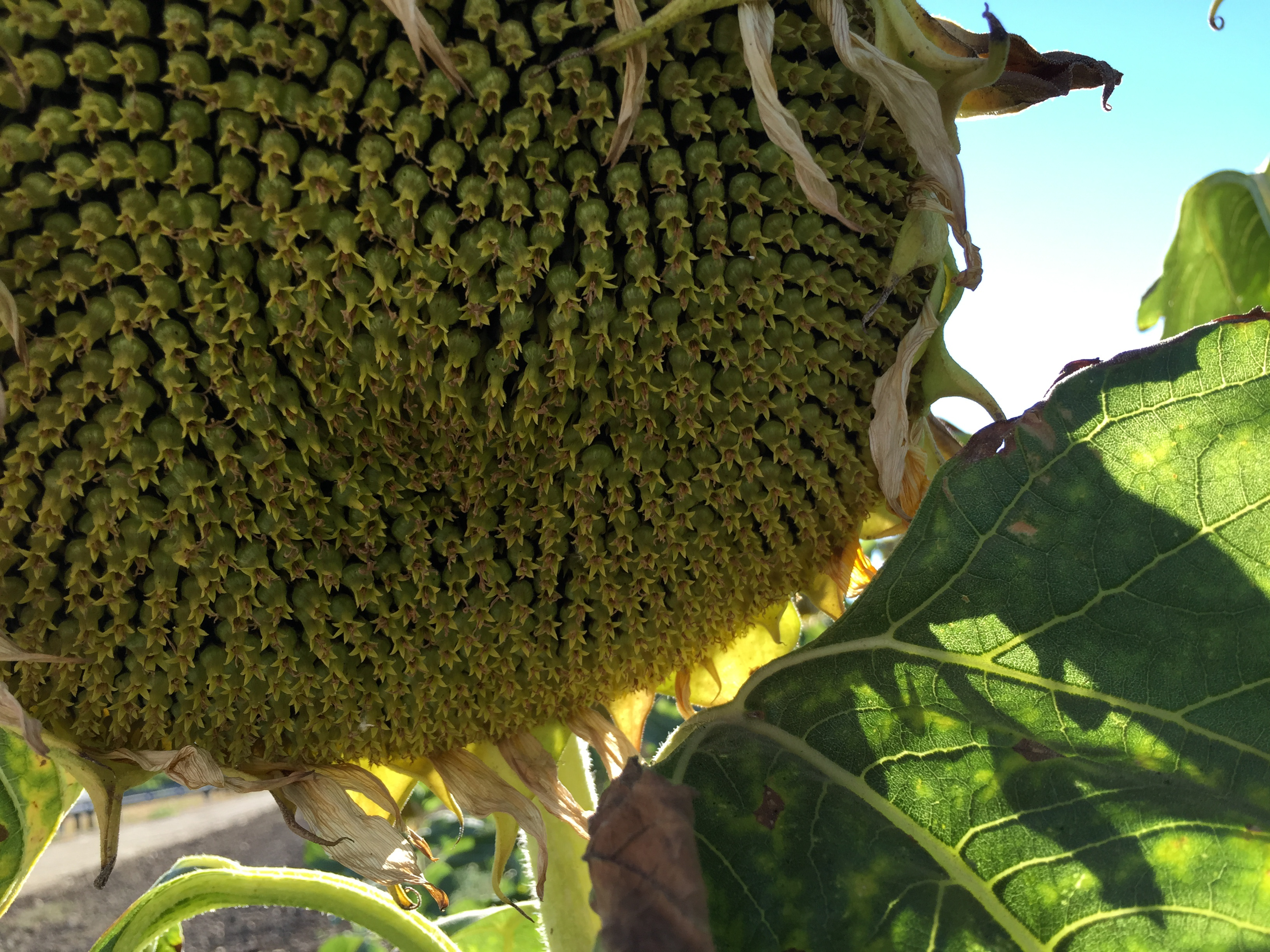
20160718-img_3087

20160812-dsc_2070

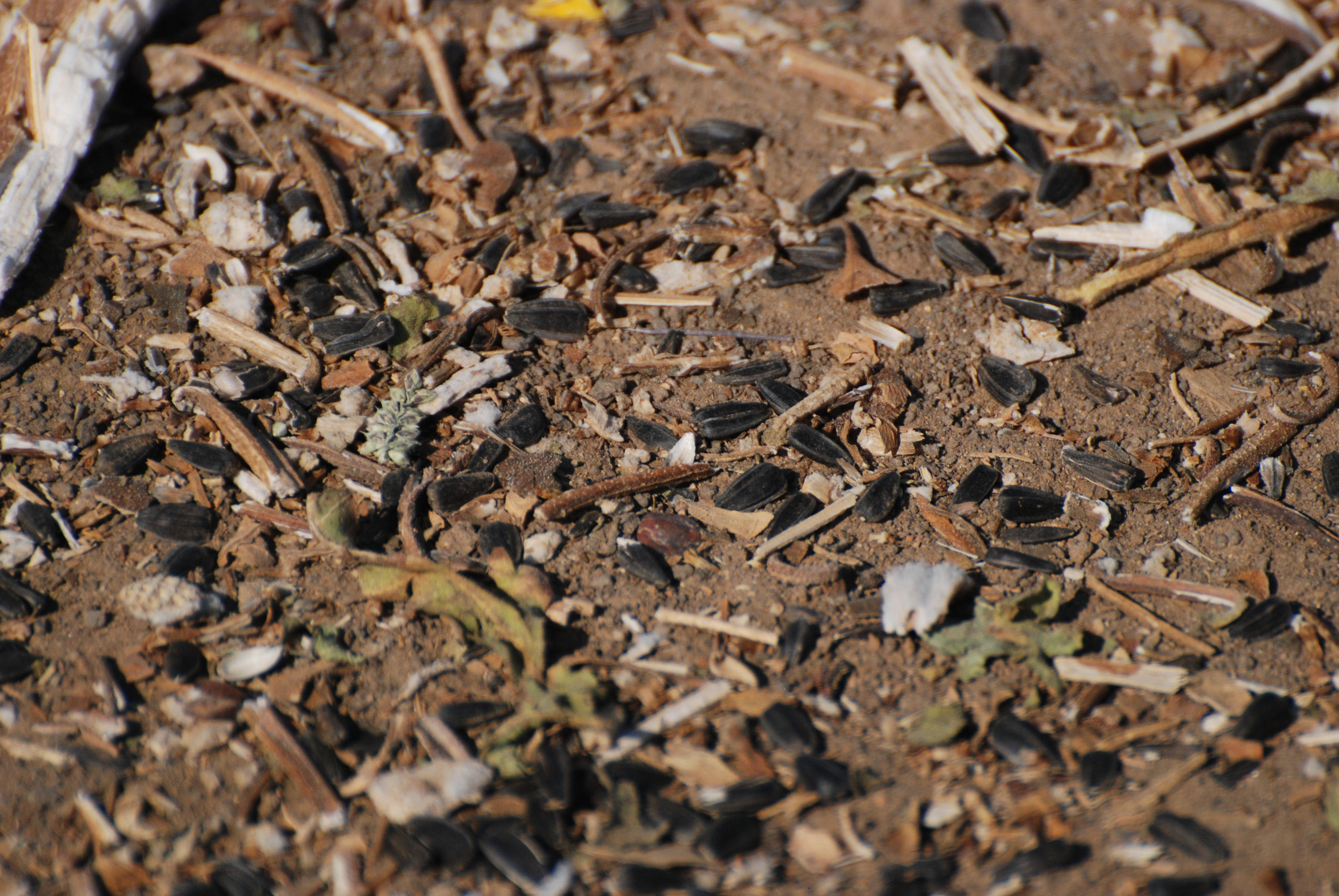
The seed was ready to harvest in mid-August.
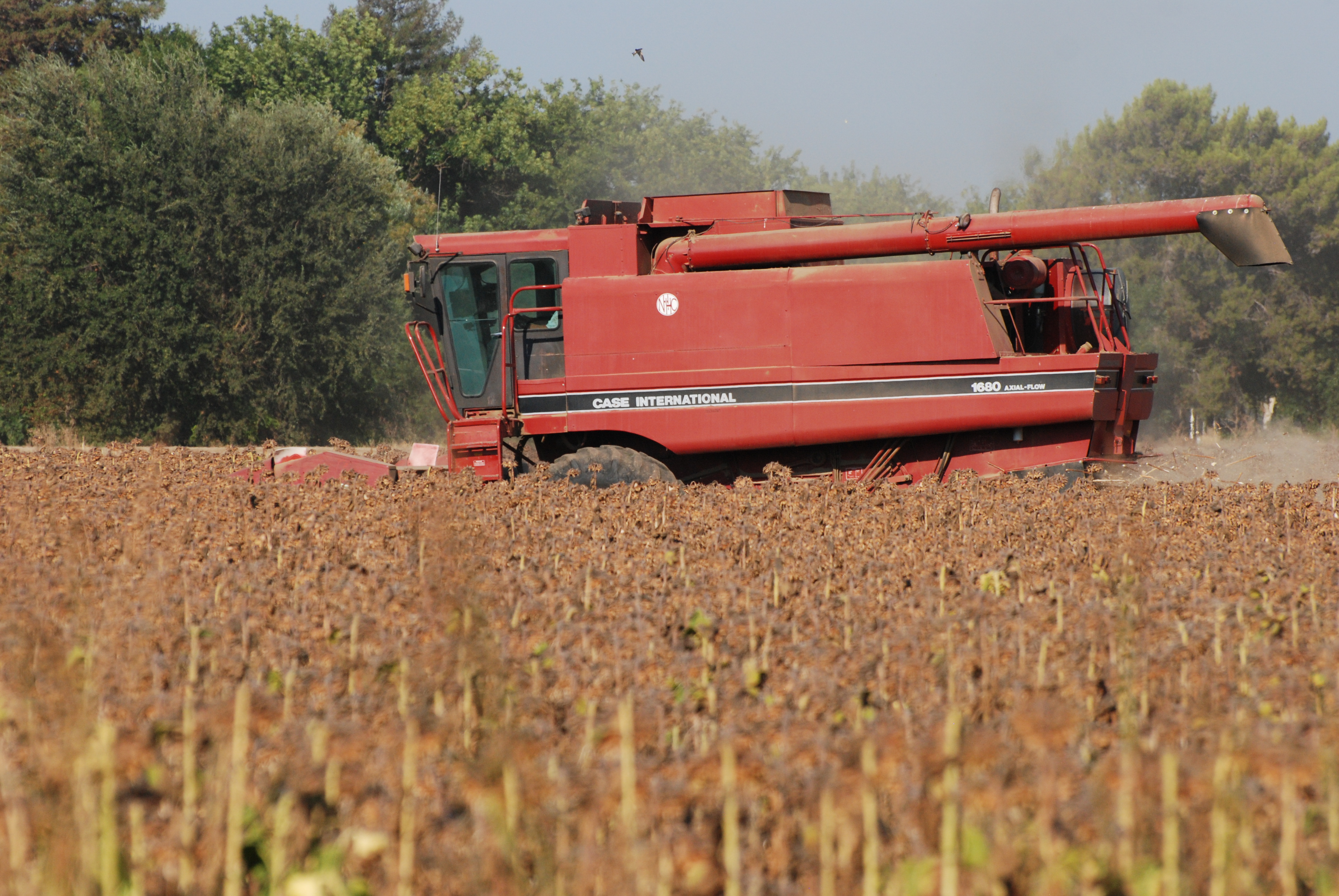
dsc_2054

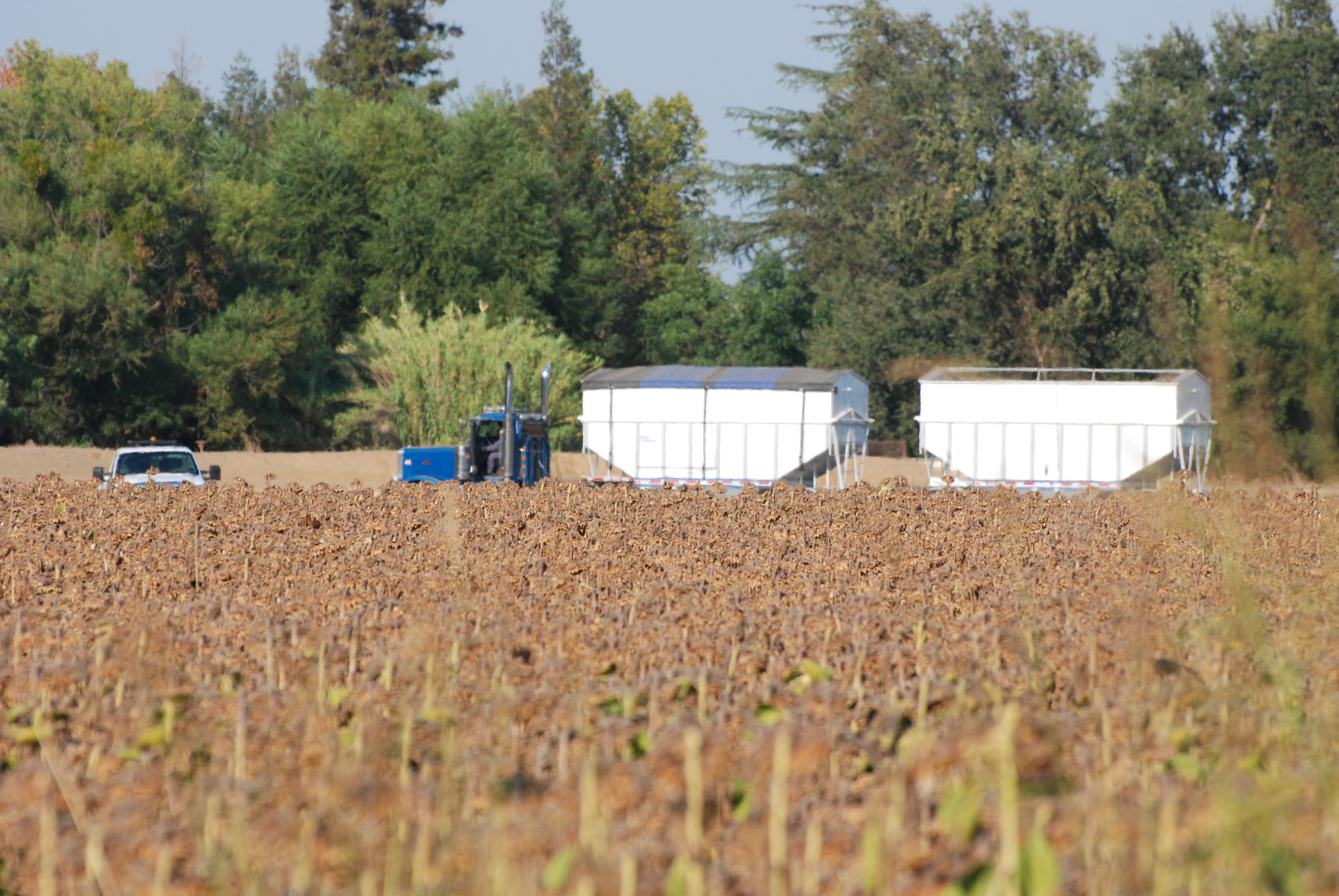
The harvester drove through the field, cutting the plants,…dsc_2061

…sorting out the waste,…dsc_2055

…and periodically dumping the seed into a waiting truck.
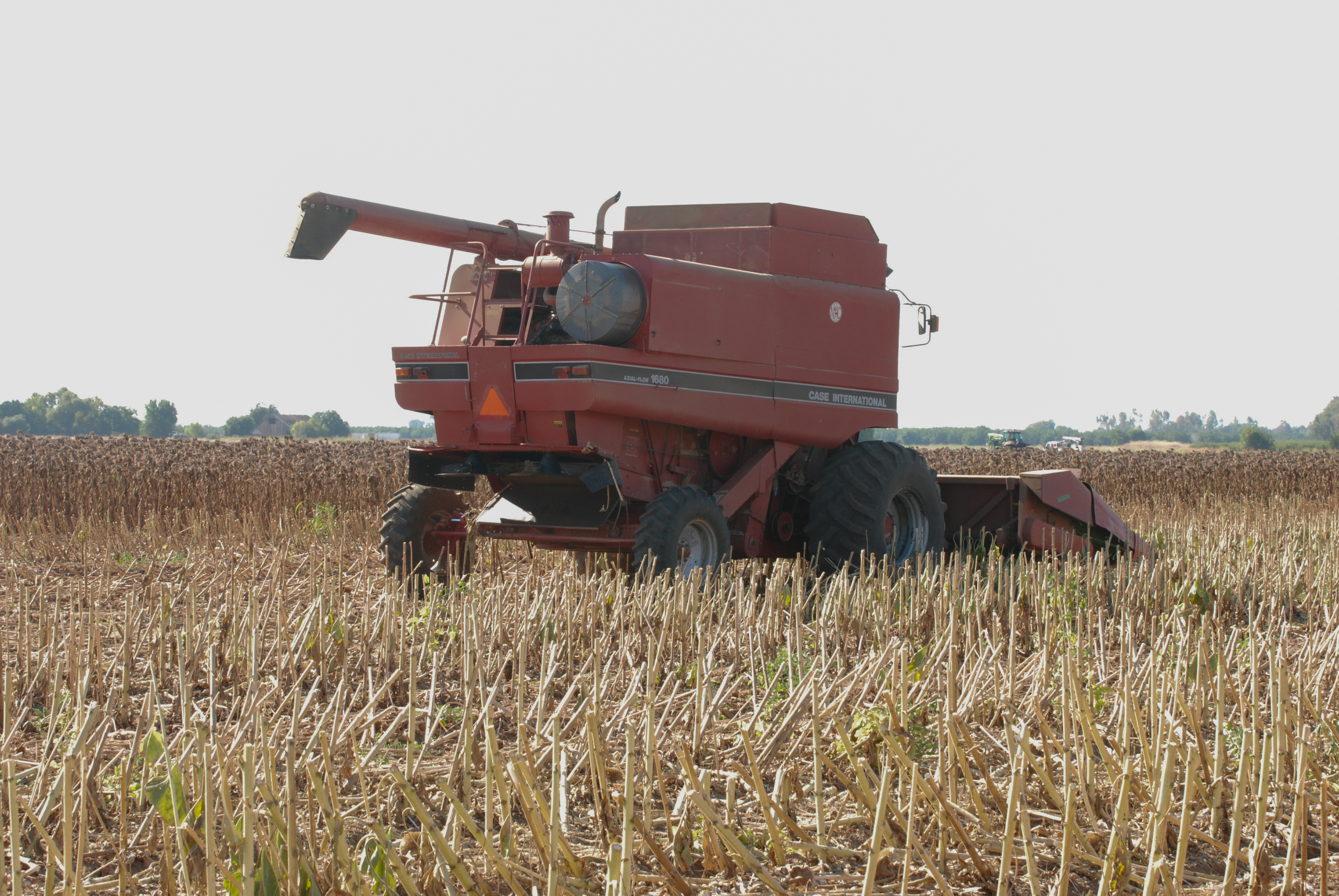
20160812-dsc_2071

20160812-dsc_2092

20160812-dsc_2135

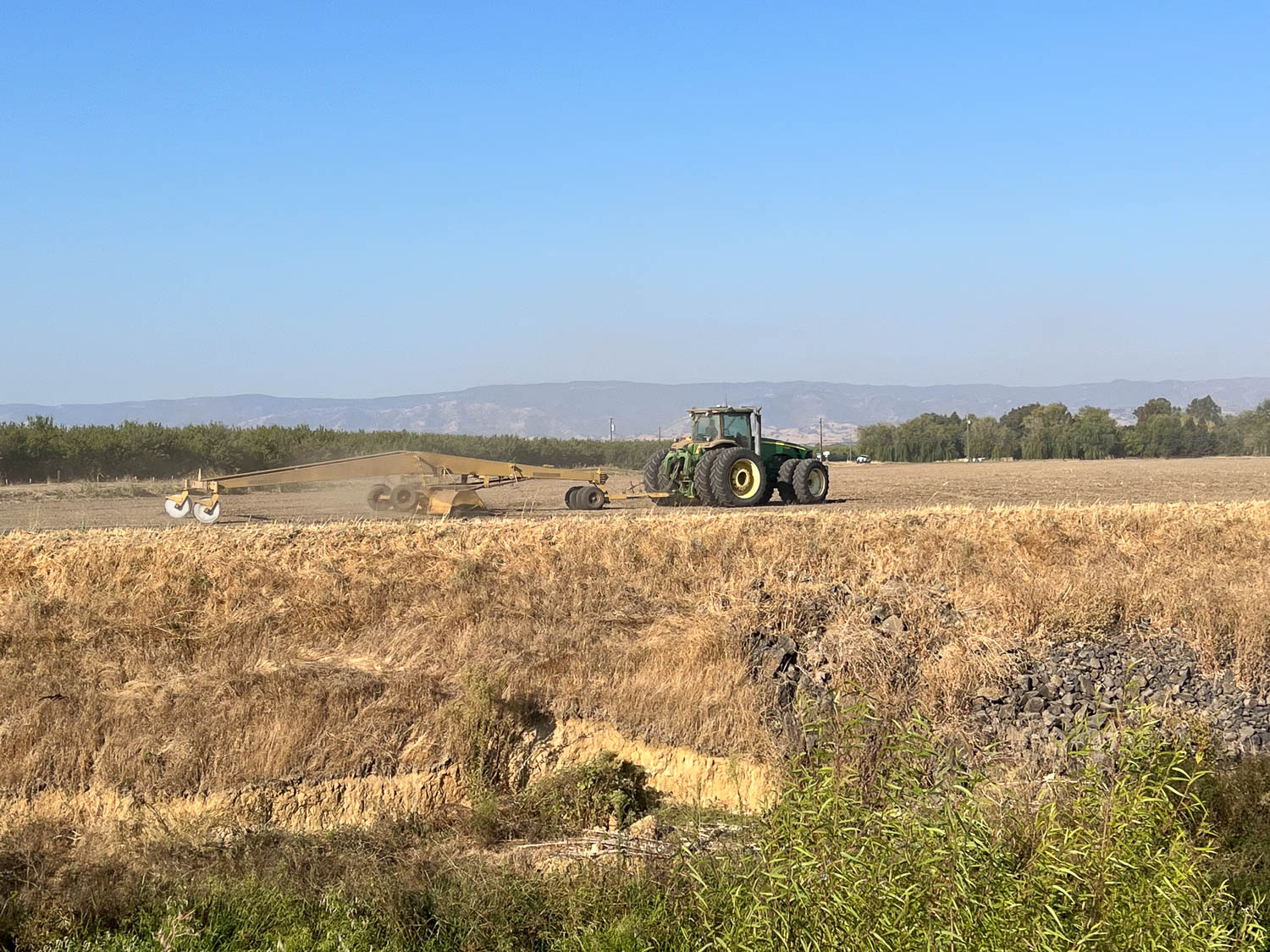
But the job isn’t over. While plants were being harvested in one part of the field the other part was being disked.
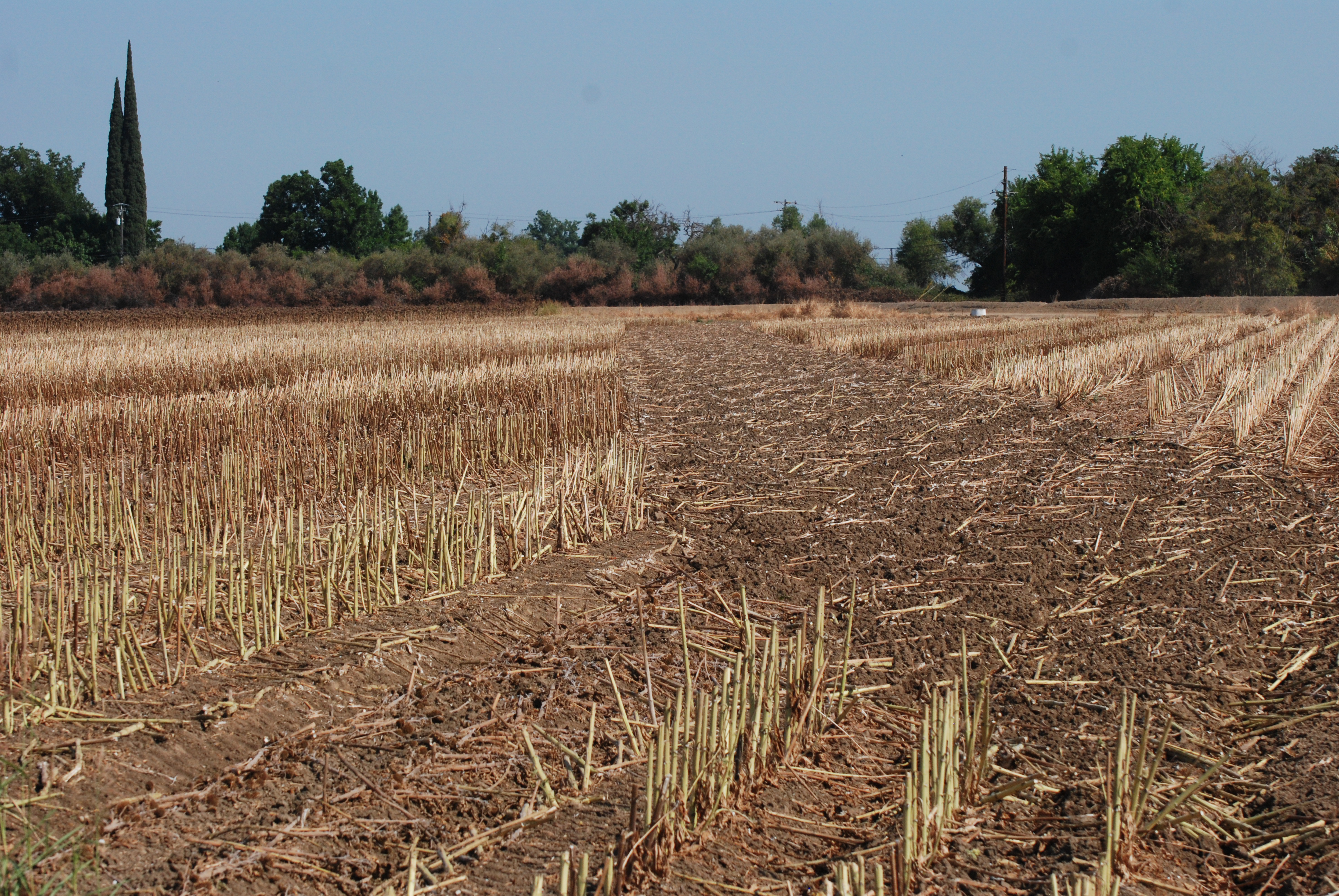
20160812-dsc_2136

20160825-img_3826

A month later the field is still being prepped to get ready for next year’s crop–tomatoes.
Sunflowers-April through June

We have only 10 acres here, but having the field Across the Road makes it seem as though we have much more. We are careful to be good neighbors and we are grateful that we have permission to spend time exploring that property. So I feel kind of like the crops grown there are mine although I have none of the work involved.  This summer’s crop was sunflowers–one of my favorites. I have way too many photos so I’ll break this into two posts.
img_0682

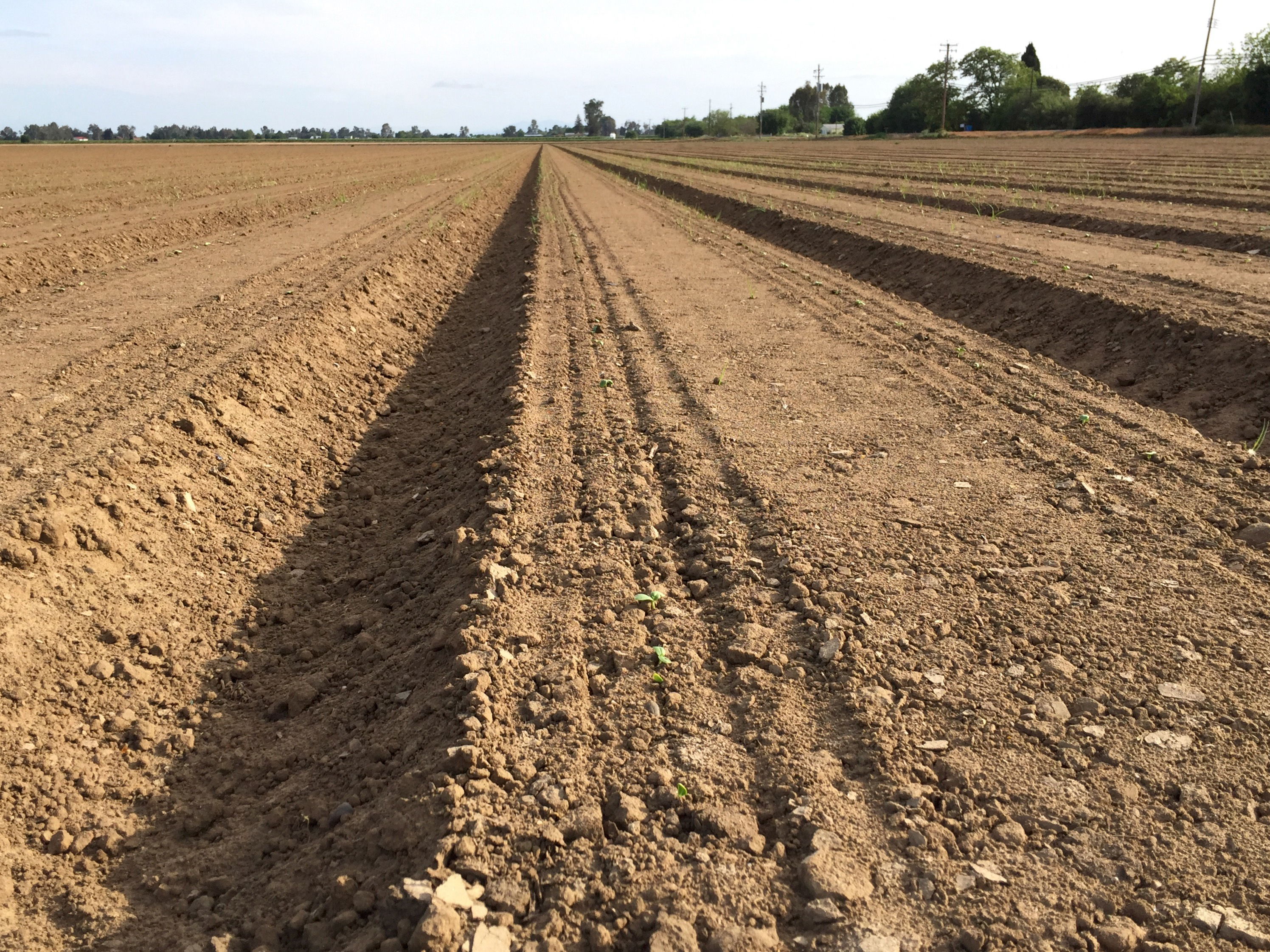
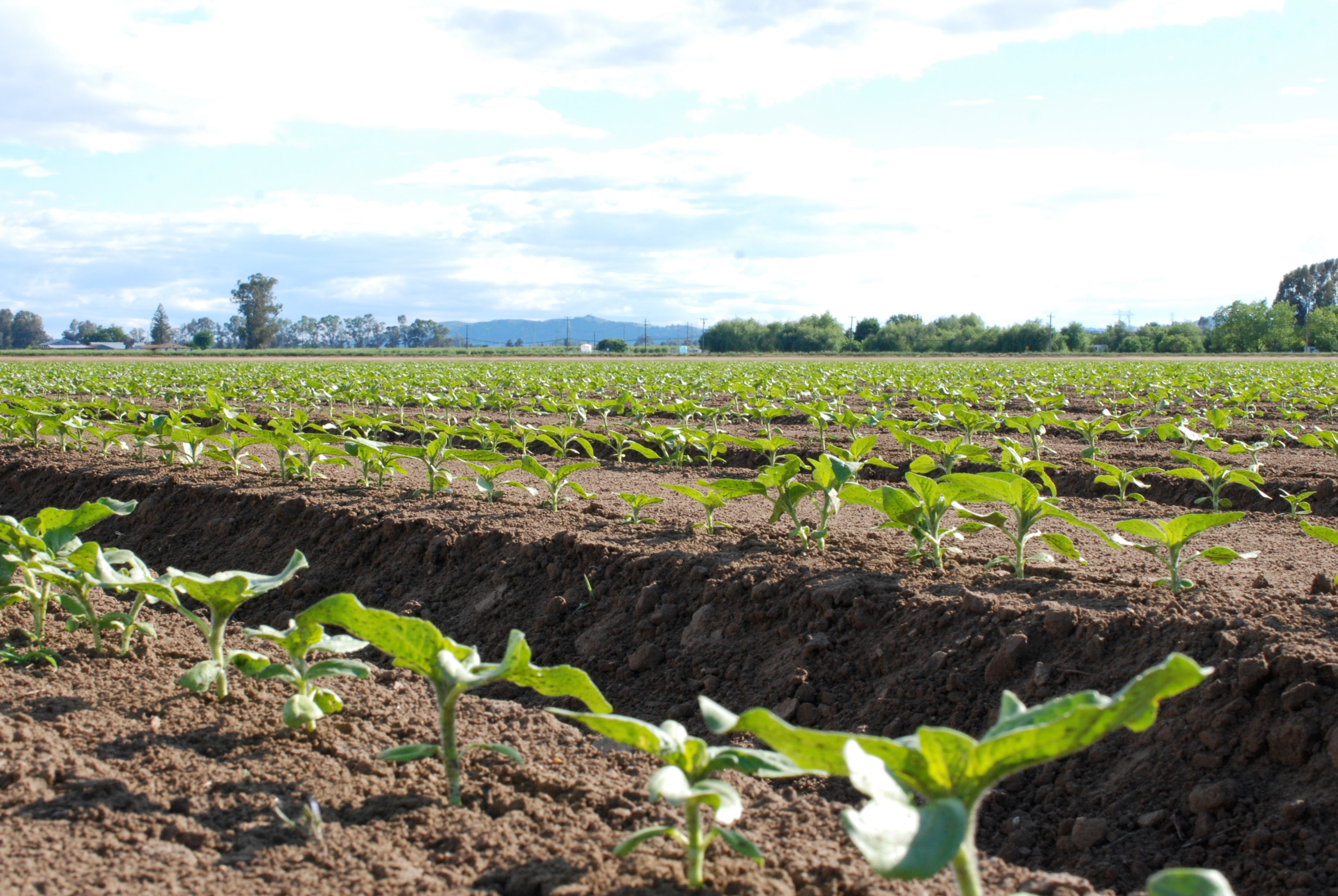
April 12. You can just see the tiny plants.
sunflowers-sprouting

dsc_8711

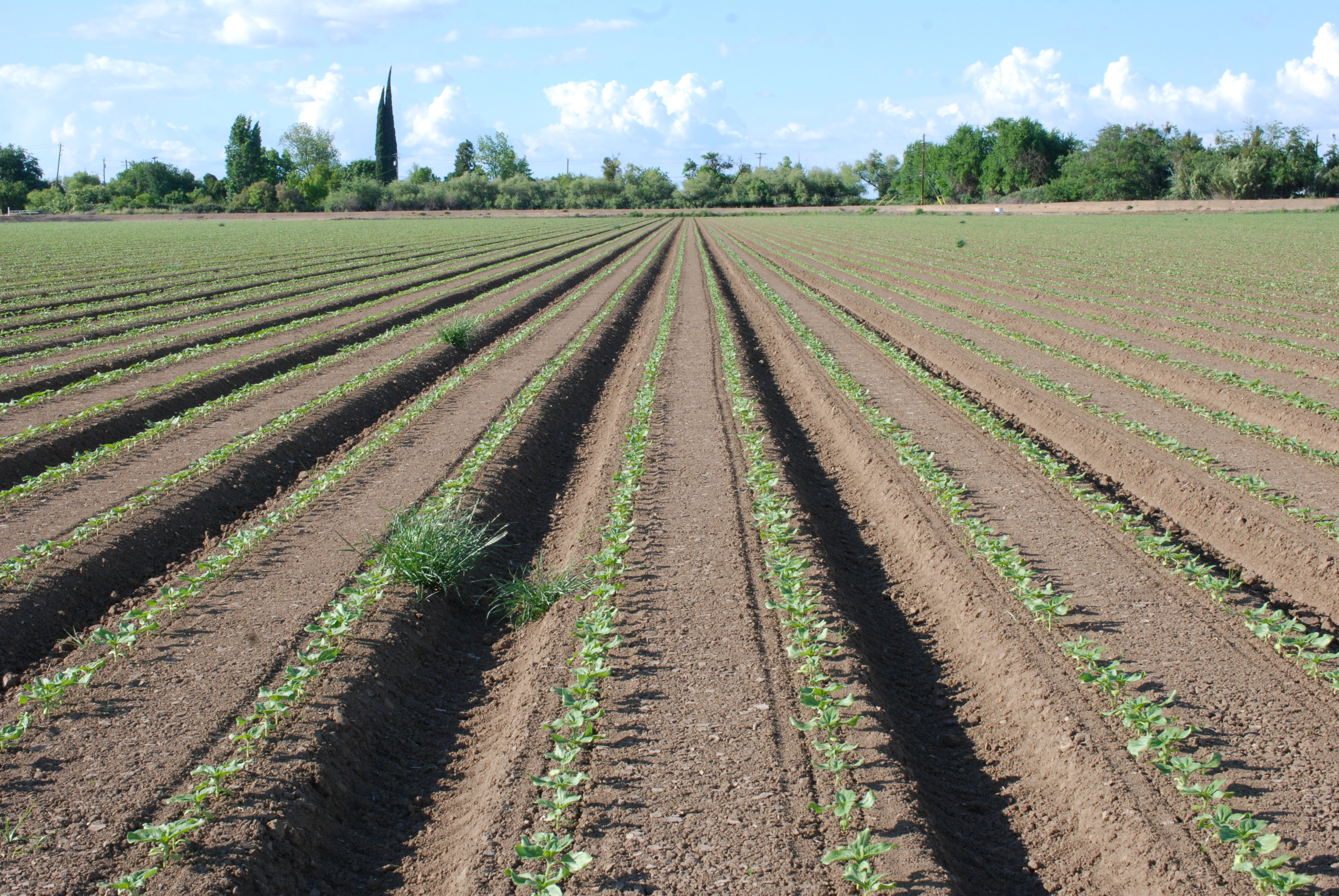
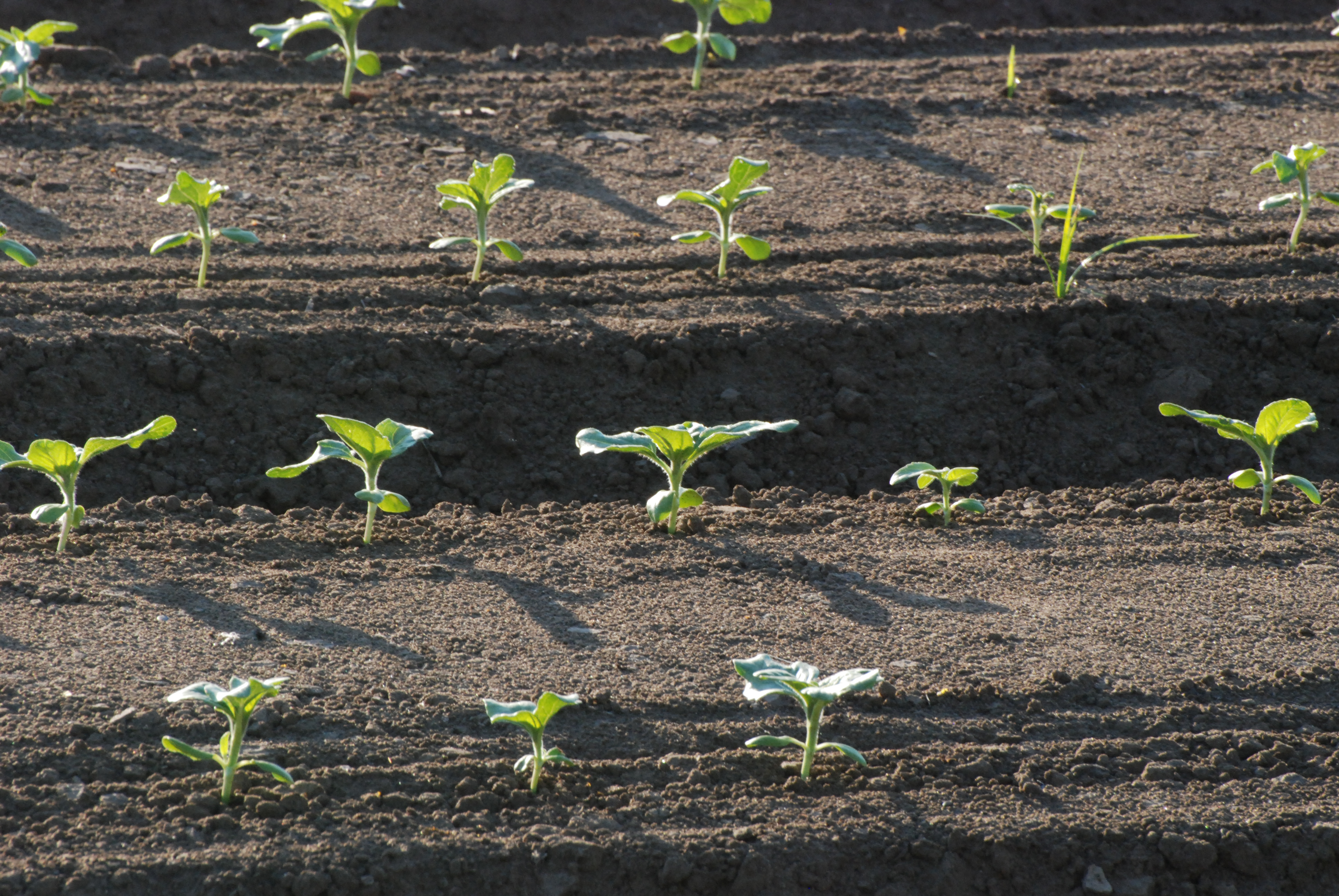
April 27

dsc_8423dsc_8669dsc_8674

20160502-img_1064

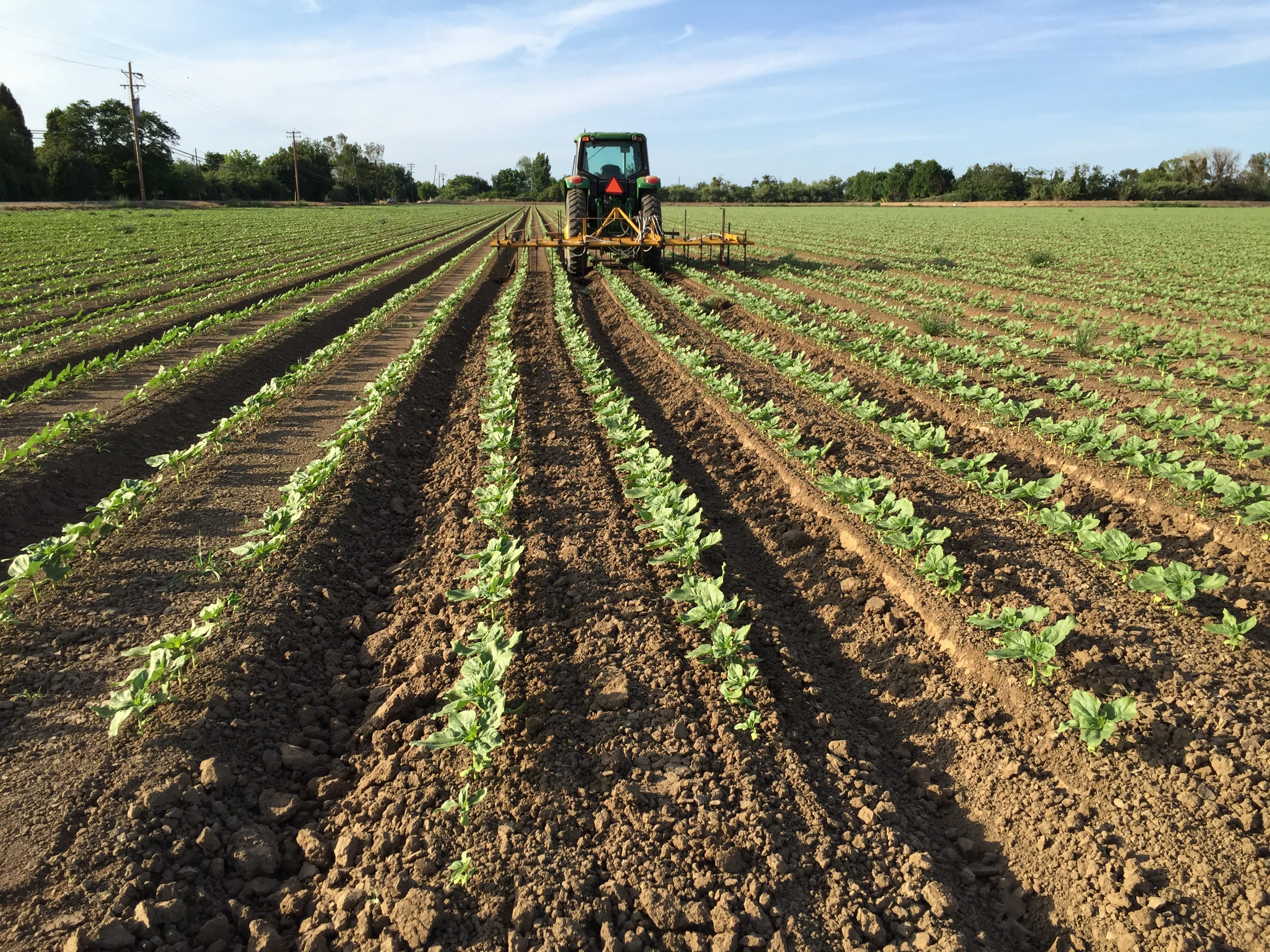
May 2. Cultivating.

20160611-img_1797

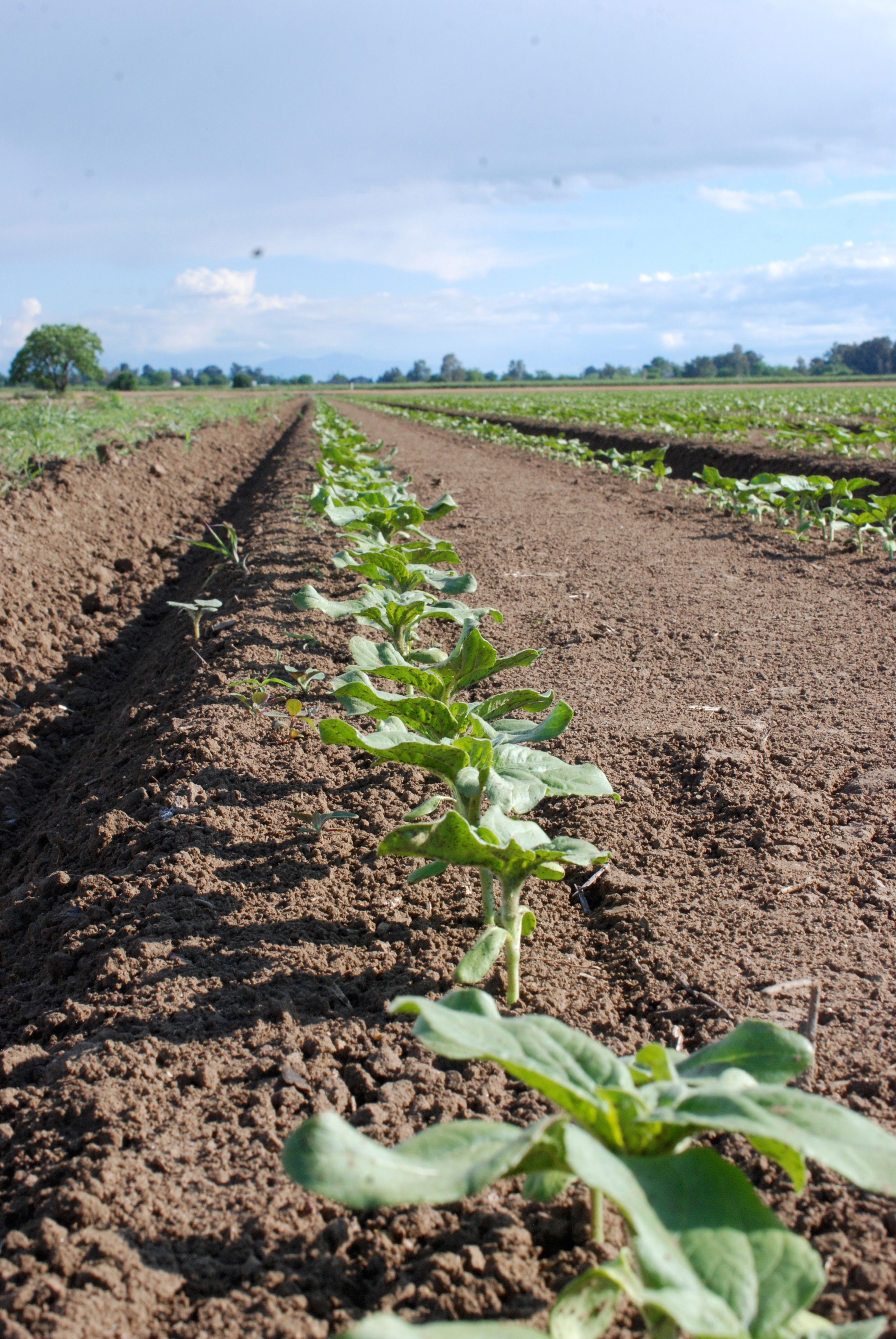
June 11. They’re growing up. I sound like a proud parent.

20160611-img_1799

The rest of the photos in this post were taken throughout June.

20160608-img_1758

20160615-dsc_0162

20160615-dsc_0193

20160615-dsc_0203

20160615-dsc_0206

20160615-dsc_0207

20160615-dsc_0208

20160611-img_1807

20160615-dsc_0209

20160615-dsc_0210

Across the Road in 2015

I thought I did a post like this for 2014, but I didn’t. You have to go back to this post to see what it was like Across the Road in 2013. My plan is to make a photo record of the changes that I see from standing at our mailbox. To do that correctly I’d need to do it on the same day each week (or month), with the same camera, using the same lens, and at the same time of day. FAIL. Here is what I have (and it’s probably more interesting this way).DSC_1949January 22, 2015. DSC_2242February 5.DSC_2247February. Almonds are blooming.

DCIM100GOPRO

April 11. An overview of Across the Road looking east. Our place is in the foreground. The dogs and I cross the road in near the houses in the middle of the photo and usually walk south until we can get on the dirt road that goes along the canal. If I take the usual route I walk along the big canal, turn left (going east) between the brown and the green, turn left again (north) between the brown and the trees, follow the tree line along the ditch until I get back to the main road, and turn south to home. That is 1.8 miles. If I don’t have much time I can take a short cut right where the main road curves and head north on a road that separates the two brown areas. If I want to vary it I can continue to follow the big canal south and there are more roads to follow that way.  

In this photo our pasture has started to green up because I irrigated in mid-March. Normally the irrigation district doesn’t provide water until April or May but due to the drought we have been getting water earlier. In 2014 we irrigated in January. The green in the background of the aerial photo is hay or  wheat or barley fields. DSC_5211April 26, 2015. The field has been bedded, ready for tomatoes.DSC_5459May 3, 2015IMG_4493June 9, 2015DSC_7884July 22, 2015DSC_8855August 9, 2015across the roadAugust 30, 2015cattle egretThis is a photo taken across the road, from Across the Road. (That is my pasture looking west.)DSC_0072The alfalfa field that is the green triangle in the upper right in the aerial photo.DSC_0089Beans that were planted after the wheat harvest in the are shown in the triangle that is the upper center of the aerial photo.DSC_0413September 5, 2015.DSC_0546September 9, 2015. It took 4 days, working 24 hours/day to finish harvesting this field.IMG_6564September 23, 2015. Back to the beans. The dry plants have been put into windrows waiting for harvest.waiting for lunar eclipseSeptember 27, 2015.DSC_1475October 6, 2015. Field disked and bedded waiting for the next planting. I’m told that it will be planted to sunflowers this spring.DSC_2793November 29, 2015. If we have regular rain I can’t walk across here because it gets too muddy. There have been very few days that we haven’t been able to walk. DSC_2913December 1, 2015. View of our place, looking west across the field. We need to see more green on those hills.

Sustainable Cotton Tour – Part 2

I thought that this would be a one blog post event but there was a lot going on. In the last blog post I wrote about our morning watching cotton being harvested and ginned.  After touring the gin we loaded the two buses and drove to the Cardella Winery in Mendota where we had a great catered lunch.cotton seed decoration I admired the table decorations. We listened to speakers after lunch. Steve Melanca spoke about the movement he created, “My Job Depends on Ag” to raise awareness of how important agriculture is to the California economy. More about this in a future blog post.DSC_2048Lydia Wendt of California Cloth Foundry spoke and showed products that are produced from Cleaner Cotton and natural dyes.DSC_2049Lynda Grose spoke more about bringing Cleaner Cotton into the supply chain of manufacturers and designers. DSC_2057We got back on the bus and stopped not far from the winery to listen to Dan Munk, a UC Cooperative Extension Farm Advisor discuss cotton production and water use of cotton and other crops. Cotton requires 28″ of water in a growing season. Nut and fruit trees require 48-52″ of water. The western side of the San Joaquin Valley is in a rain shadow created by the mountains and receives only about 12″ of rain annually. Surface water use has been curtailed or drastically reduced over the last few years of California’s drought so people are relying more on ground water.The most available ground water is salty, coming from what was an old sea bed so wells must go down 300-500 feet for clear water. This is not only very costly but now some areas are having to deal with subsidence–where the ground is actually sinking from the loss of ground water. This becomes a major issue when you consider the effects on that on concrete roadways and major water canals.DSC_2052 (2) No matter the water source, when drip systems are used filtration systems (shown in the two photos above) are vital to maintain the systems in working order. Back to the buses.DSC_2065 HedgerowThe last stop was at Frank Williams and Mark Fickett’s colored cotton field. We learned about the perennial hedgerow that was planted to increase biodiversity and beneficial insect activity. Unfortunately it hasn’t really been tested because since the hedgerow was planted there hasn’t been enough water to plant these fields. Hillary Sardinas also spoke about her passion and recent PhD thesis, the huge variety of native bees that are important components of the ecosystem and provide more complete pollination for cotton crops. She represents the Xerces Society for Invertebrate Conservation (think Audobon Society for insects) and was fun to listen too. I had no idea that we had all these native bees and that they mostly live in ground burrows.DSC_2069Plants along the half mile hedgerow had been labeled for our benefit.DSC_2071I got carried away walking up the hedgerow (right in this photo) and missed hearing the farmer speak about the patch of colored cotton on the other side. I think that it may have planted for our benefit because it is just a small area and it was filled with all varieties of cotton that have been parts of the breeding work that these farmers have been doing over the years. DSC_2073 brown cotton

DSC_2079 DSC_2084 Brown cotton 

brown cottonWe were given bags and were able to pick as much cotton as we wanted to.Dona and Robin

Dona and Robin on the busThis is Dona and me back on the bus. The tour ended about 5 and we drove home. This was a full day and I thoroughly enjoyed seeing this part of the valley up close and learning about the SCP and cotton farming in general.IMG_7101 (1)This is the cotton that was packed into my ziplock bag. My goal is to spin and weave it before the next tour.