Typical Jacob lamb: Blue-faced Leicester x Jacob lamb:


 Here is Dad, below. Do you see a resemblance?
 This is Onyx, one of last year’s BFL x Jacob ewes, all grown up:
 Of course, if you really want to see ears, look no farther than here:

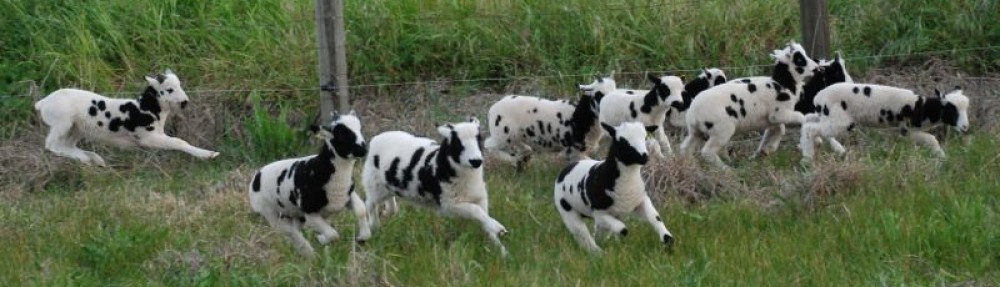
Typical Jacob lamb:Blue-faced Leicester x Jacob lamb:
Here is Dad, below. Do you see a resemblance?
This is Onyx, one of last year’s BFL x Jacob ewes, all grown up:Of course, if you really want to see ears, look no farther than here:
A couple of weeks ago I went to Auburn, about an hour away, to the Shepherd’s Picnic hosted by Dan Macon and Flying Mule Farm. I went as a visitor even though I brought a table with books and a few supplies. I did not set up a booth though, so I was free to enjoy the day at liberty. Dan had the day set up kind of like we did for Meet the Sheep, with activities scheduled every hour or so.
 Shearing was first.
 Dan does his own shearing.
 Here Dan throws a fleece onto the skirting table.
  Beautiful, clean wool.
 Next was a discussion of pasture management and flock management. Another friend, Farm Advisor, Roger Ingram, also helped out. I recorded some of what Dan and Roger talked about because I thought it would be great to share with Farm Club and others. One of these days I’ll get around to editing it so others can listen.
 One of Dan’s former interns brought one of her milking sheep so that she could demonstrate milking.
 After milking she shared previously pasteurized and cold sheep milk. That was my first taste of sheep milk and it was great!
 Dan’s co-workers are invaluable assets to his farm. Mo, Taff, and Ernie have starring roles in Dan’s blog as well.
 Dan, his daughter, and the dogs put on a herding demonstration.
 What a beautiful spring day in the Sierra foothills! This is gorgeous country, especially when it is so green this time of year. I will admit that during lunch I lay down in the grass and the warm sun and fell asleep. I don’t do that very often!
Here is a photo I took last September:
I was trying to figure out why I had no power on the electric fence and this was one of the areas that I had to check. Even though my charger will carry power through thick vegetation like these blackberries, the branches could be pushing the hot wire into the old fence and causing it to ground out. (Yes, is a strand of electric wire going through that mess.) I figured it was time to deal with it.
This is after I cut away blackberry branches. You can barely see the insulator that holds the electric wire near the bottom of the post. I cut those branches but left them between the ditch and the fence thinking that I would drag them away later to burn them. Yeah, right. (By the way, this was not the problem with the electric fence. It was grounding out elsewhere.)
 So only a few weeks later I knew that I needed to deal with the dallis grass along that same fence-line. This is the same area, but looking from the other direction. There is supposed to be an irrigation ditch in this photo.
 This is after weed-eating the ditch. You can see the blackberries that were cut a few weeks before that I never got around to moving and burning.
Fast forward to this spring.  This is the same view as the last photo. The blackberries are growing back through the old blackberries branches that were never moved AND through the mounds of dallis grass. This year I have a residential burn permit instead of an ag permit. If I don’t want to go get an ag permit then all my burning has to be done before May 1 (or maybe it’s the 30th). But in any case, I needed to get busy. I took a rake and the pruning shears and spent a couple of hours at it.
  This is what it looks like now with 2 piles ready to burn. Now hopefully the sheep will keep up with the regrowth of sprouts. When it is so thick with brush and coarse grass the sheep don’t even try to get through it.
  But there is more! This is the other fence-line–one that I did not deal with last year. See the two electric fence strands disappearing into it?
 Here it is from the other direction. Farm Club, where are you?
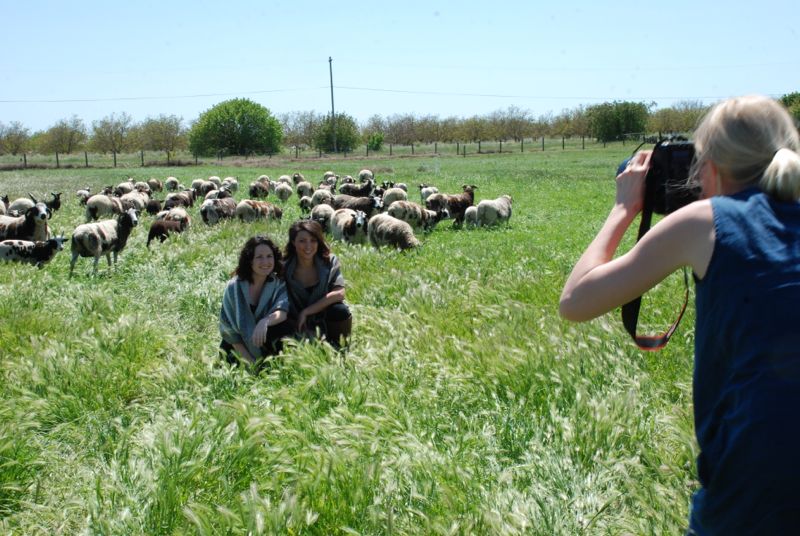
How does the Fibershed Marketplace get all those great photos? It takes a lot of work from everyone who is involved in the photoshoot but the photos are a credit to the skill of our wonderful photographer, Paige Green. I hosted the spring photoshoot and my friend, Jackie, organized everything. Here are some of my photos from the day.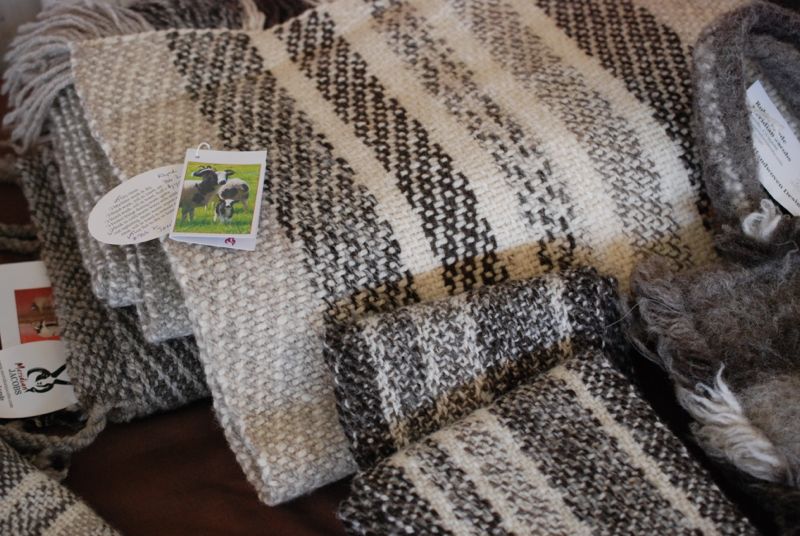 We arranged items that were to be photographed. These are my Jacob shawls and scarves.
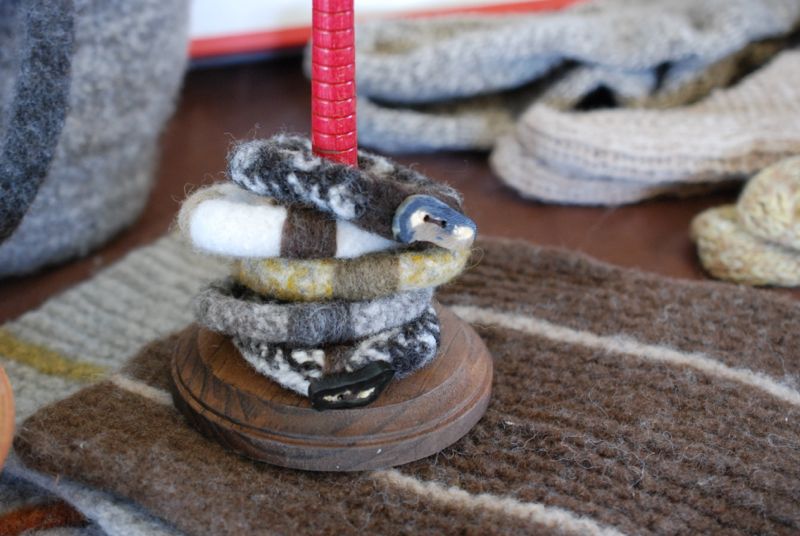 Jackie‘s hot pads and bangles.
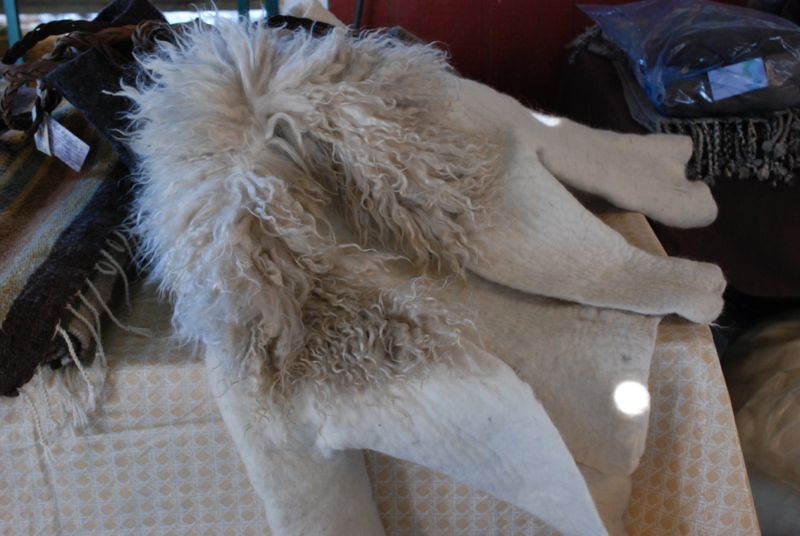 Katharine Jolda‘s felted jacket
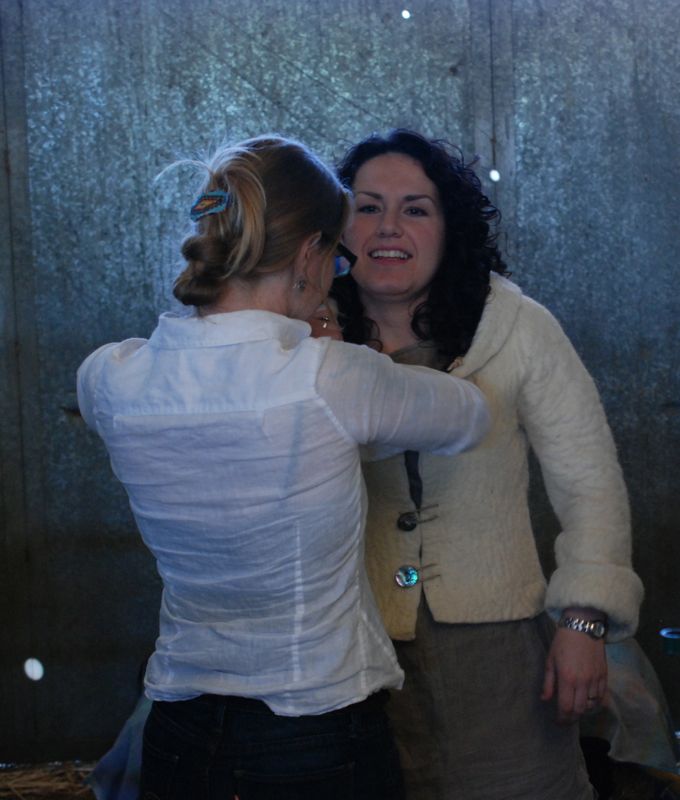 We turned one of my stalls into a dressing room. Shelby is a Farm Club member who consented to be one of our models.
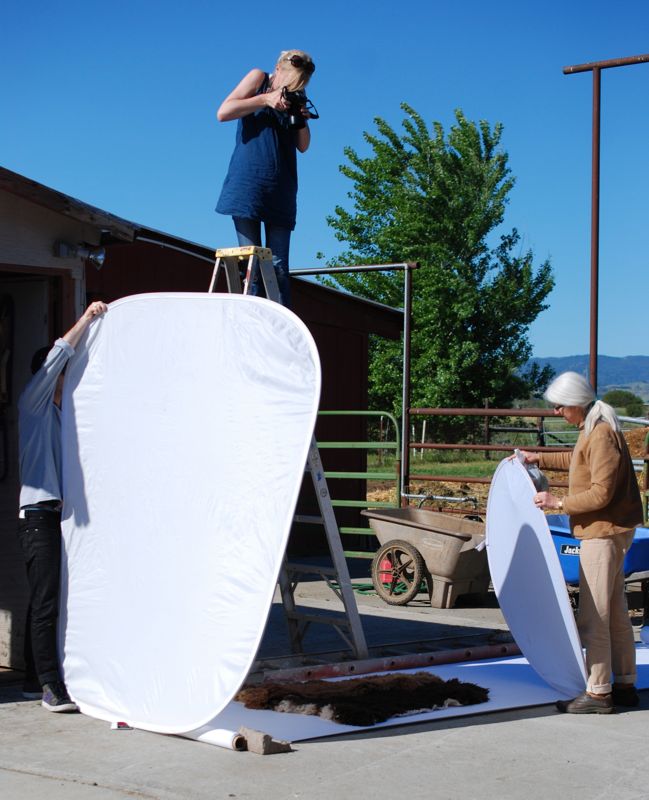 First photos of the day were Sally Fox’s sheepskins. There is a lot going on behind the scenes to create these photos.
 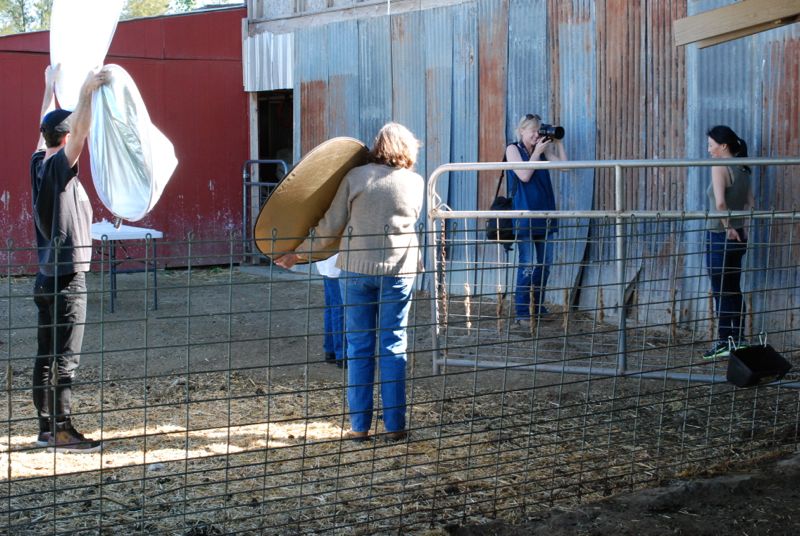 Alisa is Jackie’s daughter and she became one of the models. Her boyfriend, Mark, was indispensable in assisting Paige with her equipment all day.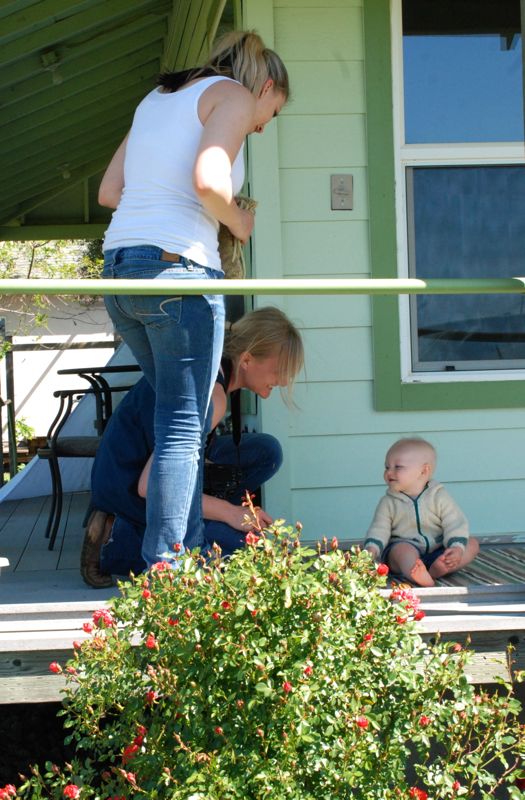
This is Brooklyn, our youngest model. She wore a hooded jacket and wool socks.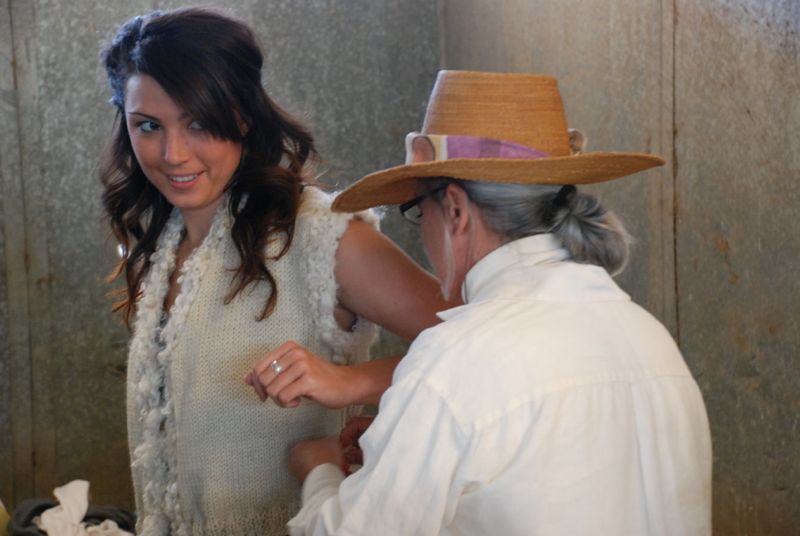 Meryl is being fitted by Marlie.
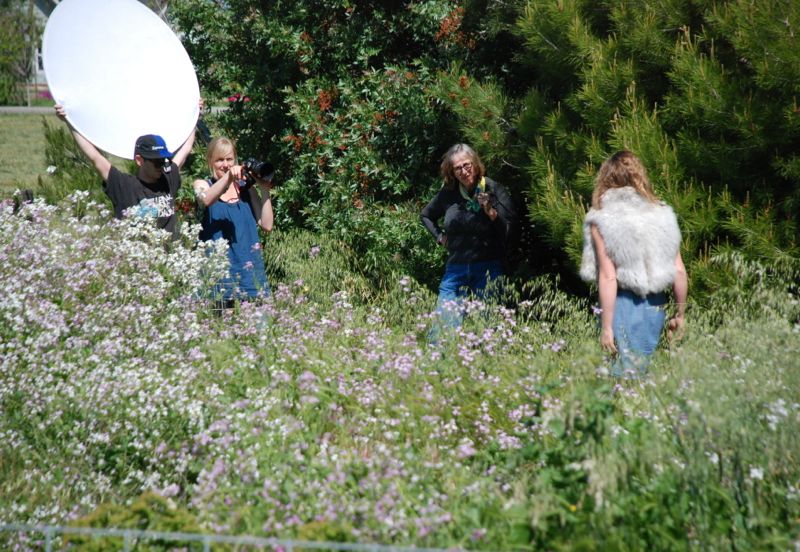 Paige used a variety of settings during the day. In this scene Allie modes her rabbit-skin vest.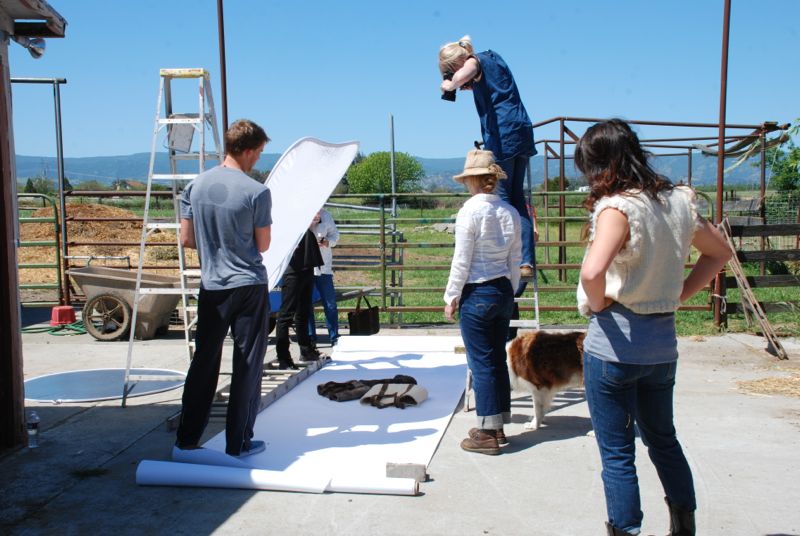
Rusty was involved in the activity all day. He will write his own blog post about his involvement. 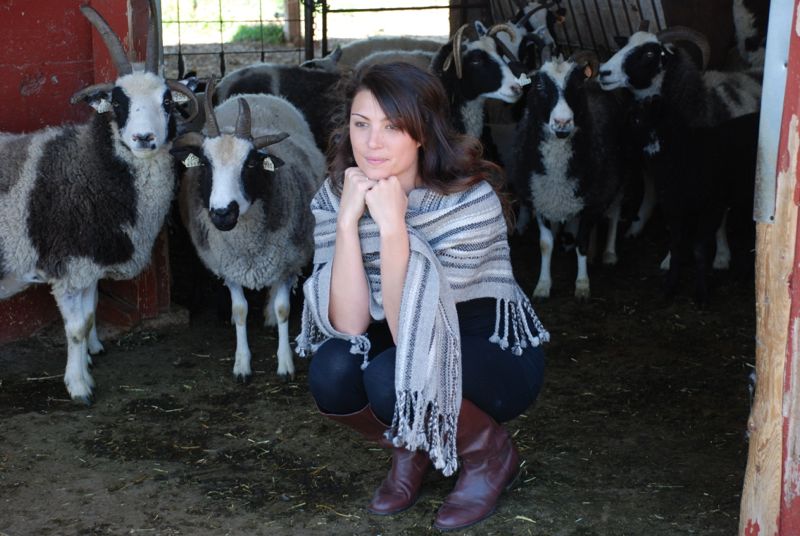 We used the sheep in the photos of my handwoven pieces.
 Meryl and Shelby modeled four shawls.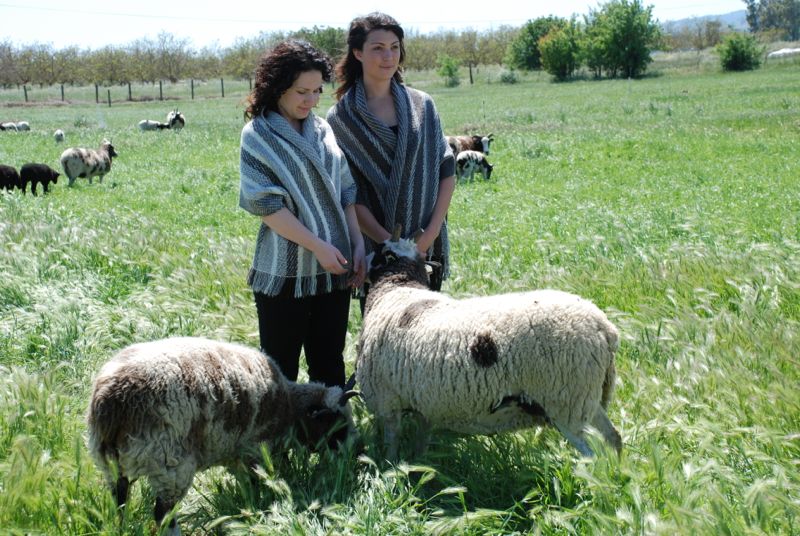
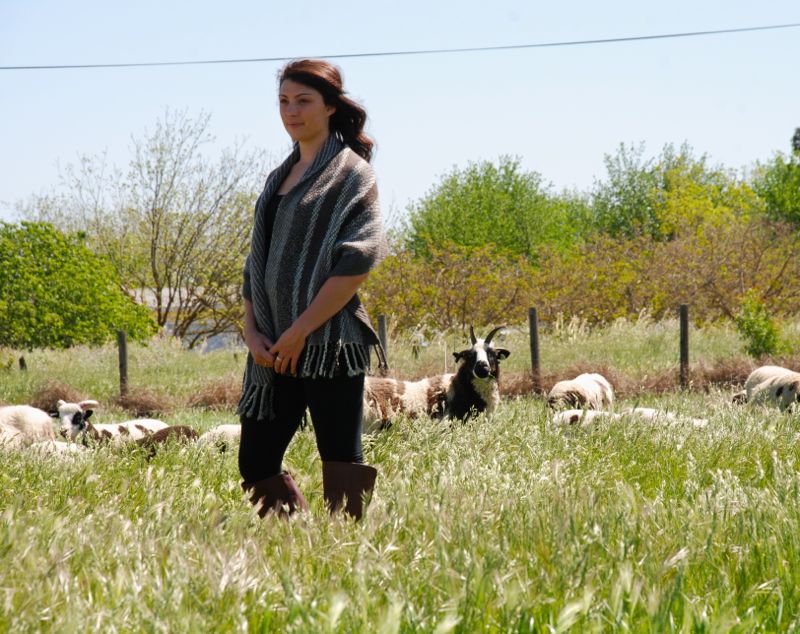
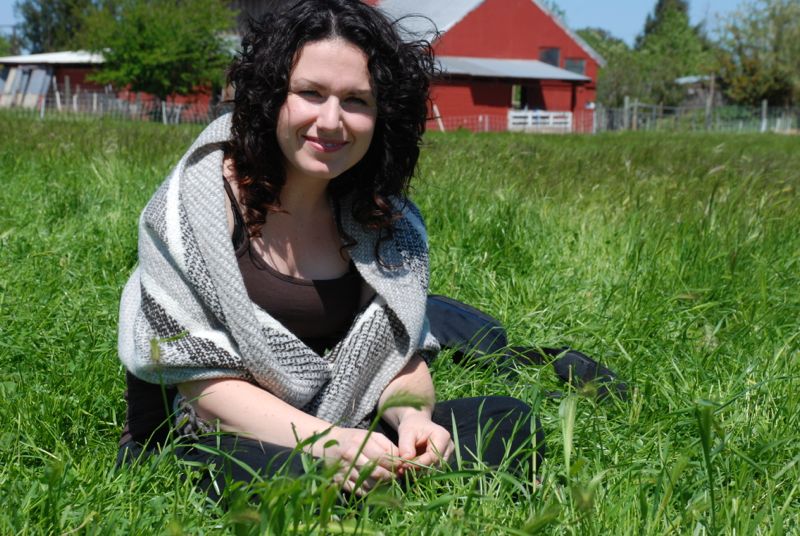 Give us a few weeks and you’ll see all of these items and more available on the Fibershed Marketplace website.
This was the weekend of Farm Club’s third annual retreat. Our destination was San Francisco because we have a wonderful place to spend the night. Three of us are now members of the NDGW (Native Daughters of the Golden West) and we (and our friends) have a fabulous place to stay in the city. Look here for some photos of the NDGW home.
We arrived in SF shortly after noon and began our retreat with an excursion to the Hayes Valley Farm. There is a fascinating story here. After the 1989 Loma Prieta earthquake collapsed some of the freeways in SF the sites were abandoned. This parcel of land holds what is left of the on-ramp and off-ramp to one of the collapsed freeways. A group of volunteers started this urban farm project a few years ago and turned the blighted landscape into fertile ground with unique collaborations and composting. (One fact I think I remember correctly is that Google supplied 15,000 tons of cardboard used to compost horse manure and wood chips on top of ivy that was growing there.) 
 We saw unique ways of using found materials to grow plants.
 This is the seed bank, outside…
 …and inside.
 There were other uniques structures…
 … built from unlikely materials.

 But the most remarkable thing is the landscape itself.
 Look at that soil and the vegetation. You almost don’t notice the city behind it until you look from another aspect:
 That’s the SF City Hall in the background.
 Yup, that’s part of the old onramp.
 This is a bittersweet time for the volunteers here. It turns out that this is the last week of activities here. The site is being used under some kind of temporary permit and the city is now going to build condos there. The person that we talked to said that even as the Hayes Valley Farm closes, it is providing a demonstration and lesson to all. There have been no protests, no marches, nobody chaining themselves to trees. They are dispersing all the plant materials, greenhouses, and compost throughout the city–some to schools who have developed urban ag programs, some to other urban farm sites in the city, and some to individuals. They feel that the program has been successful as a model of what can happen with the partnership of cities and volunteers and the benefits to everyone. (Celebrating Blue Tape as opposed to Red Tape.)
 I am inspired to try planting nasturtiums again as well as a garden with a bit more freedom from even rows.
Stay tuned for Part 2 of our adventure.
Another great day at the farm and another day that I’m so thankful to Farm Club and my other friends! Meet the Sheep is our annual spring Open House event. It is a big undertaking, but with the help of Farm Club and my family (and some luck with the weather) it went very well. Mary, Joy, and Gynna are three of the crew that arrived early to help with set up. Notice the threatening weather.
 Just before visitors were due to arrive I brought the sheep in from the pasture…
 …and moved them to the pasture near the shop so that they would be ready to Meet the People.
  Jackie set up a booth…
 …as did Colleen.
 I resurrected some displays from my Shear Delight days.
 Shelby and Dona tried out the new photo station that was created by Dona and Rick.
 The scheduled demonstrations were very popular.
  Alison demonstrated spinning.
 Colleen taught Solar Dyeing with Kool-aid…
 …and how to felt a bowl using a balloon.
  Julie brought baby chicks and bunnies and showed people how to handle the bunnies.
 I think she won in the Cuteness Category today…
 …although Mary’s triplets were popular as were the three bottle babies and the six newest lambs.
 Julie also talked about dyeing fiber.
 Janis made this cool poster using wool from a fleece she bought in November.
And that’s it for my photos although there was a lot more going on. We were so busy that I was in the shop the rest of the day! Good thing that Dona brought brownies for lunch!
I found a new Season. Field Trip Season. I’ve had 4 field trips here in the last couple of weeks. I don’t get very good photos during field trips because I’m the one who is leading the field trip, but I’ll use a few. Today I’ll share yesterday’s field trip because I got to be a participant (as opposed to leader) of part of it. Fibershed sponsored a field trip for representatives of Smartwool, Northface, Lucy (and maybe others) to learn about our end of textile production. Many (most?) people who purchase and use fabric, individually or commercially, don’t necessarily have a sense of where it comes from. The goal of this trip was to expand the awareness of fiber production–the animals, the farmers, the soil and plants–and the importance of supporting sustainable local farms, and the idea that there is plenty of wool grown in N. CA but not the infrastructure to turn it into cloth. That is a primary goal of Fibershed–to set in motion the creation of that infrastructure and to create thriving businesses that support farmers, designers, fiber processers, and consumers. Whew! Pretty lofty goals? I am always amazed at what Rebecca (creator of Fibershed) has coming up next. I really hope that you’ll spend some time on the Fibershed website because I think it’s one of the most important non-profit groups you’ll find.
On to the field trip. I expected 5-6 people. There was a busload! First stop for us was the pasture.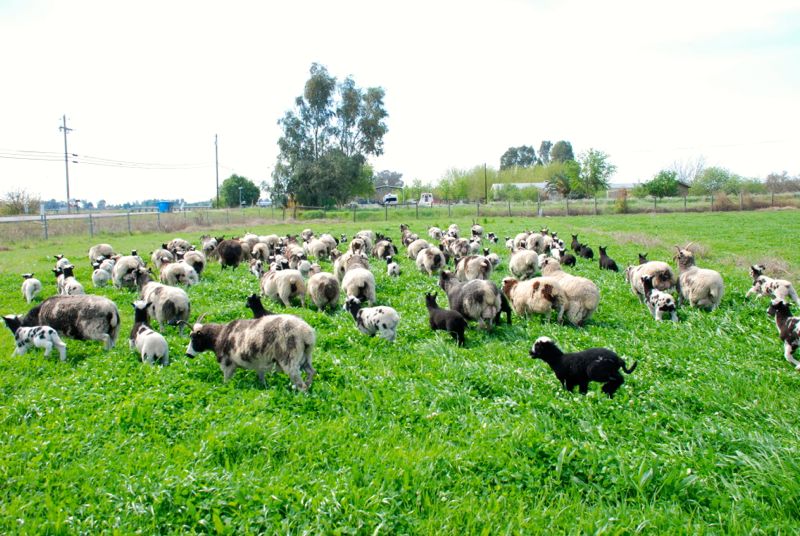 The sheep performed admirably. I had waited to move the fence for the day’s grazing until the field trip was here. The sheep rushed to the fresh pasture just like they always do.
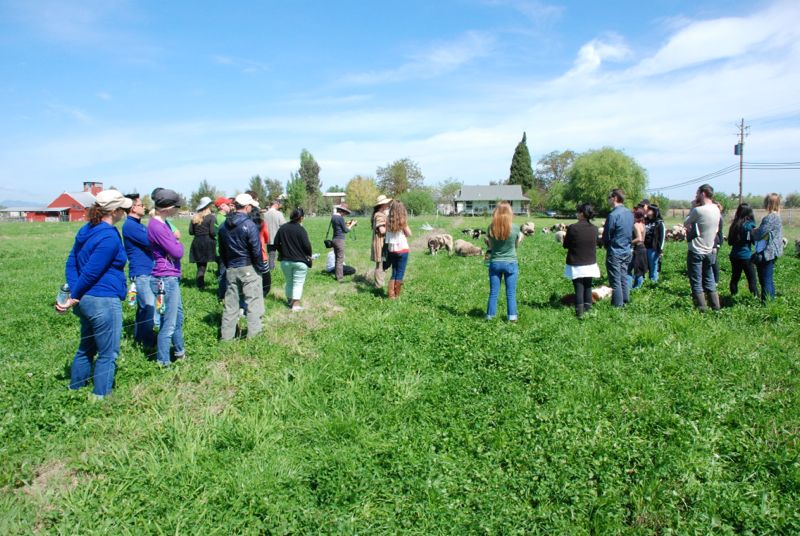 This is the group in the pasture. We spent a lot of time discussing pasture management, irrigation, choice of breed, wool types, etc.
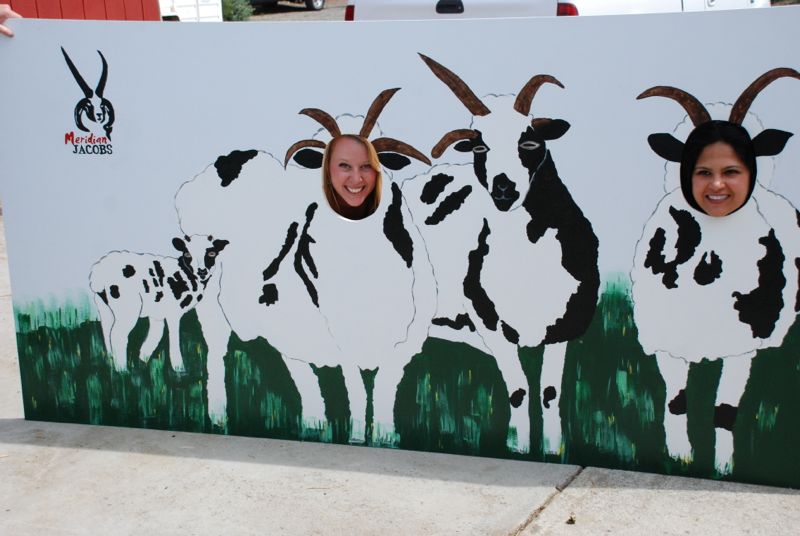 Friend, Dona, brought this board over, getting ready for Meet the Sheep on Saturday. Some of the braver visitors tried it out.
The second part of the tour was a trip to Mary Pettis-Sarley’s ranch in the hills west of Napa. 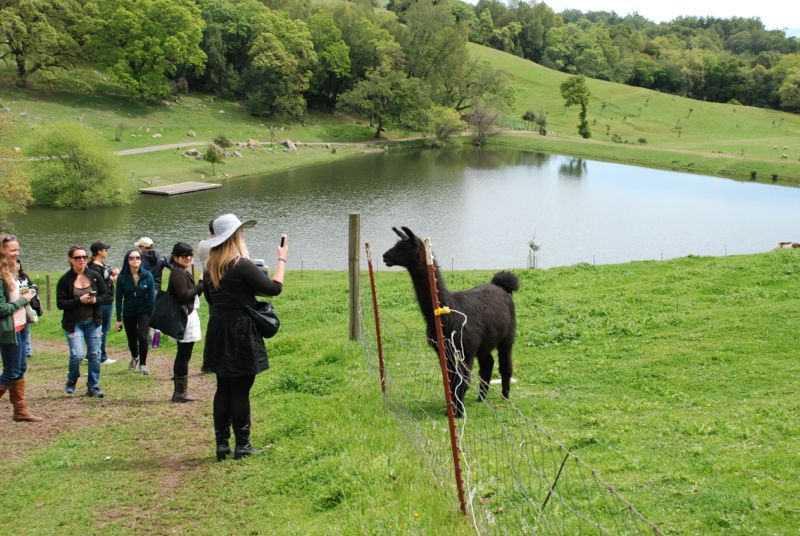 Mary has a variety of sheep, cattle, and alpacas who live in a beautiful setting.
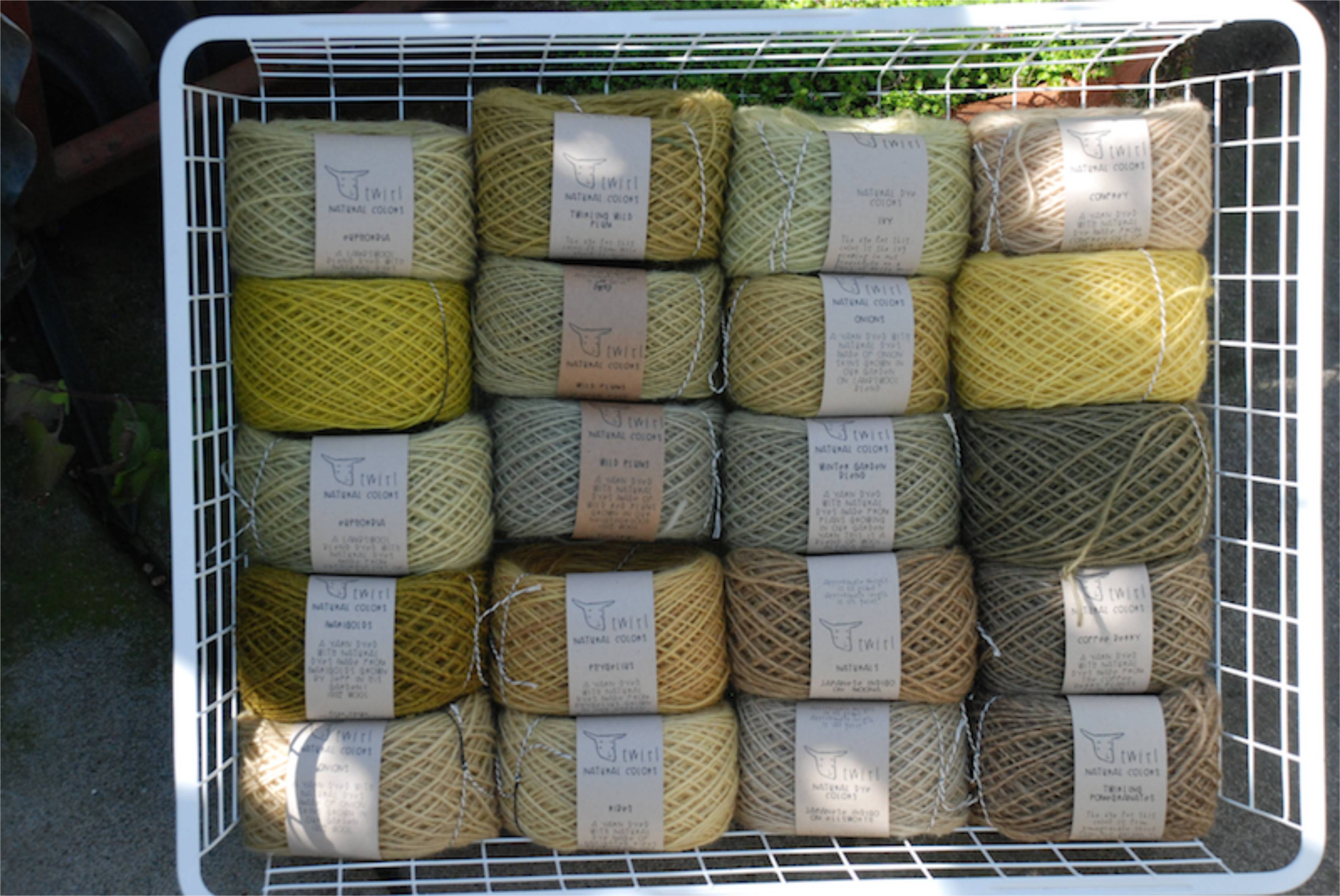 She creates Twirl yarn using unique blends of the fibers she grows.
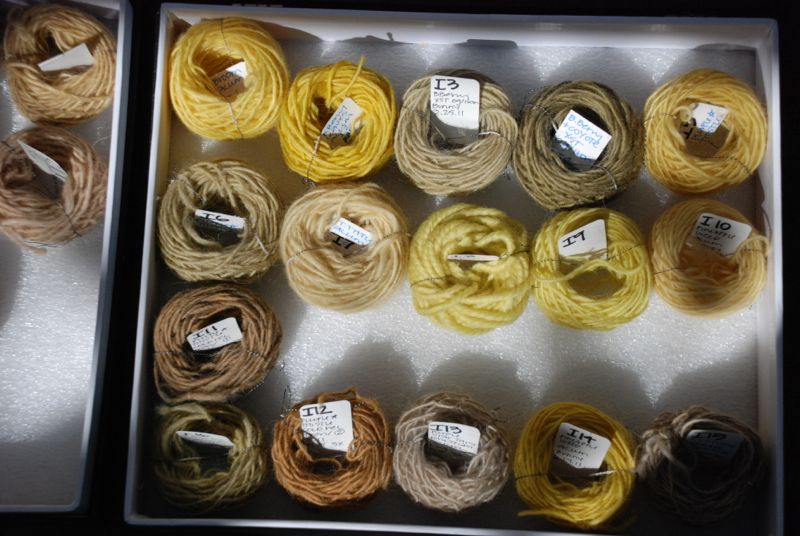 The yarns are all natural colored or dyed with natural dyes from plants that grow on the ranch. The “I” in these labels indicates that the dyeplants are invasive species.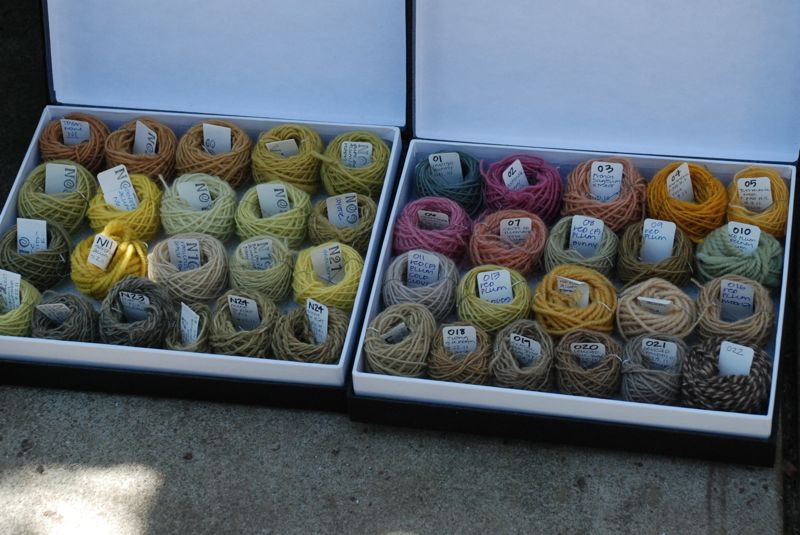
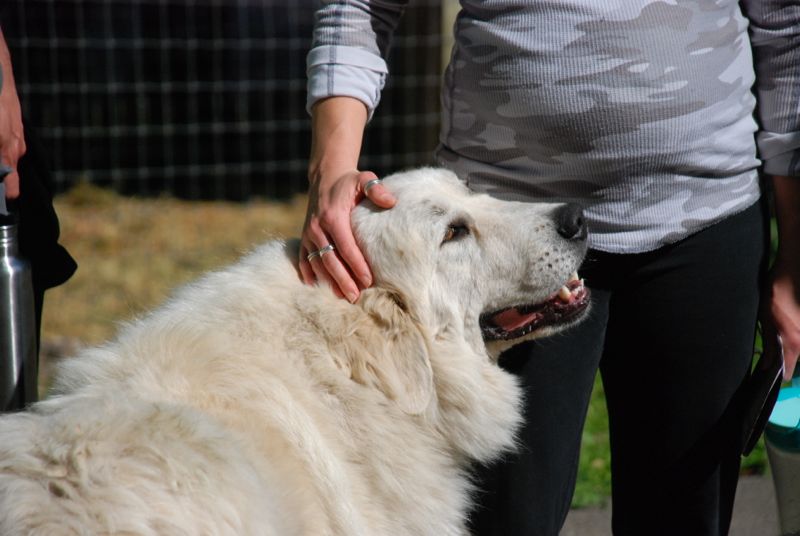 A major challenge of raising livestock in the hills is the predator problem. Mary has 17 dogs, most of whom are various breeds of livestock guardian dogs (LGD). They can be intimidating when you drive onto the property, but aren’t so scary once they know you’re on the approved list (or maybe that you’re not a 4-legged hungry visitor).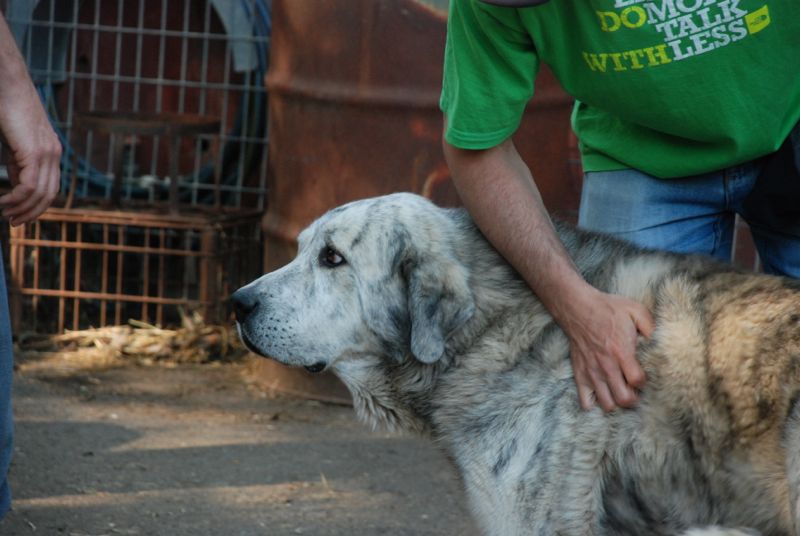
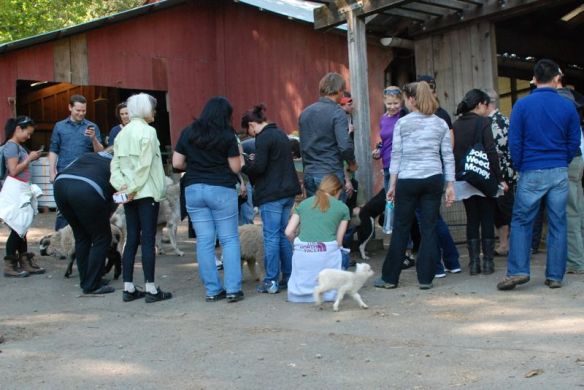 Mary let out the bottle babies…
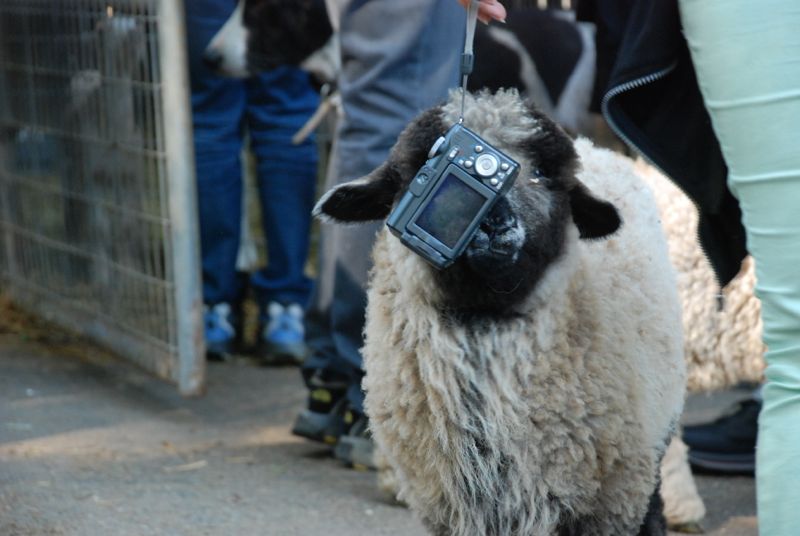 …and I think her part of the field trip won the Cuteness Factor award.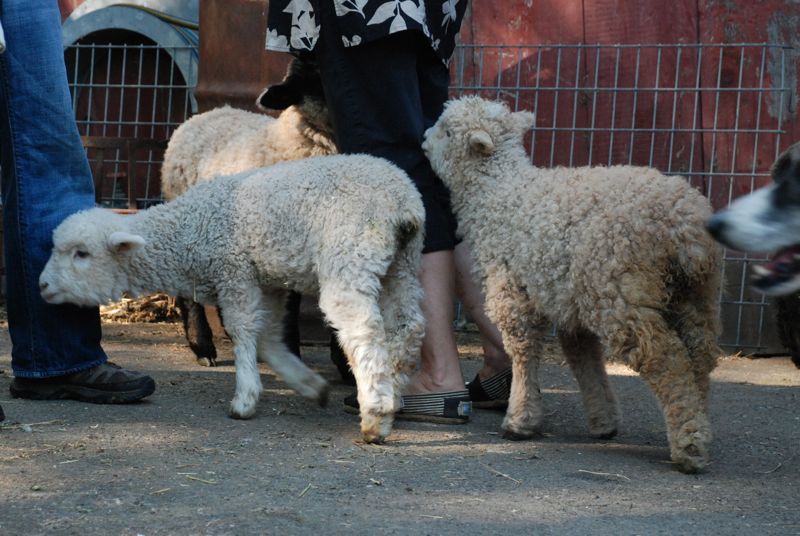
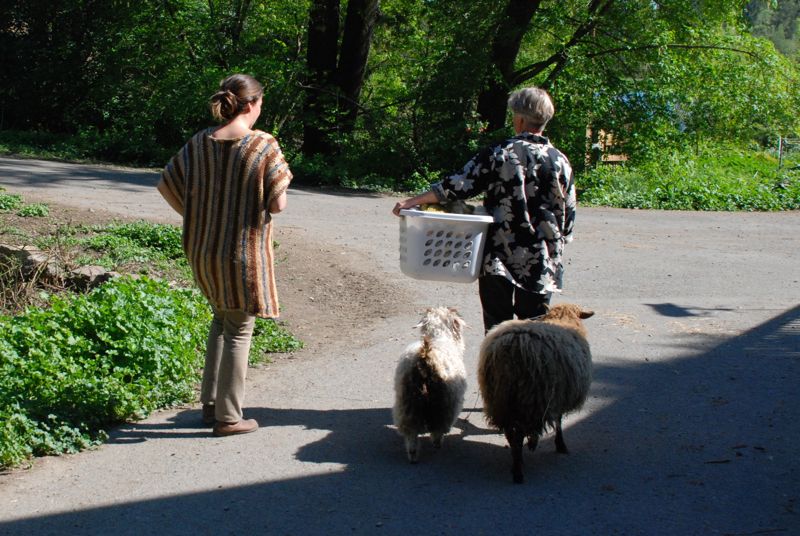 We were accompanied by two of the pets on the way to Mary’s wool washing station.
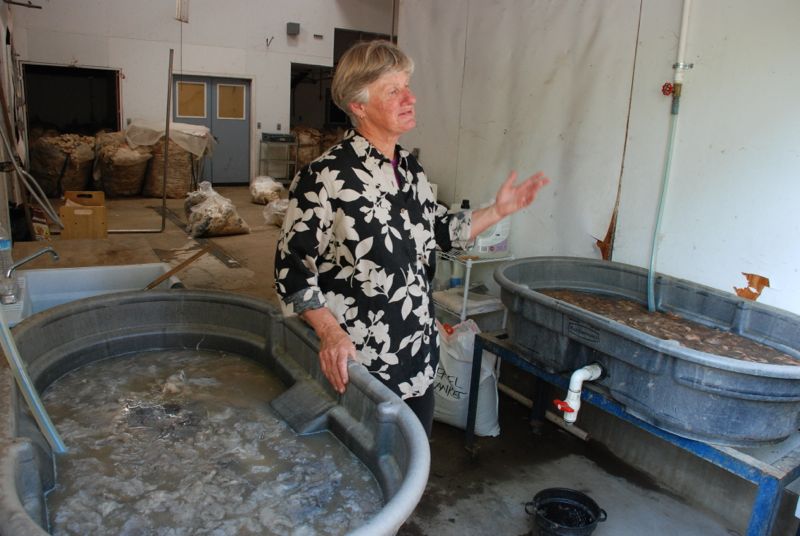 Now I’m jealous, not only of the property, but of this. Maybe I’d wash more of my own fleeces if I could figure out a set-up like this.
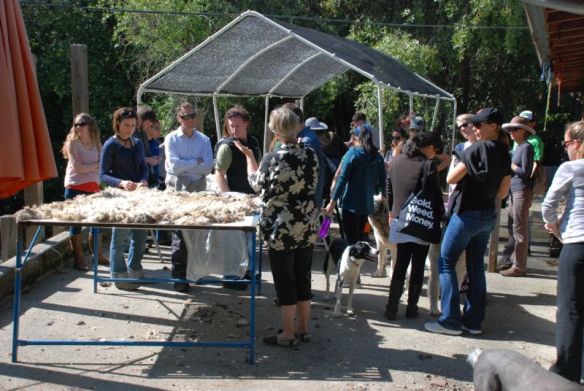 Here is where the fleeces are dried. Mary had several fleeces spread out so that the visitors could handle them and feel the characteristics that we’d been talking about all day.
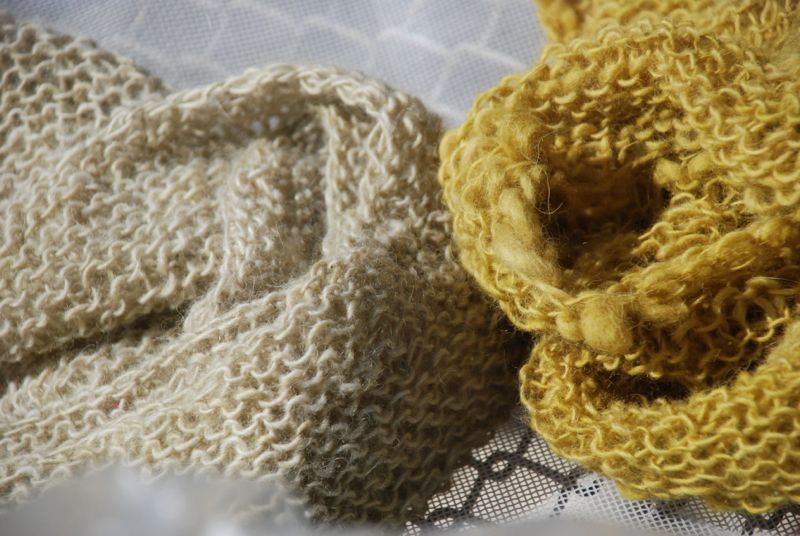 A couple of scarves knit with Mary’s yarn.
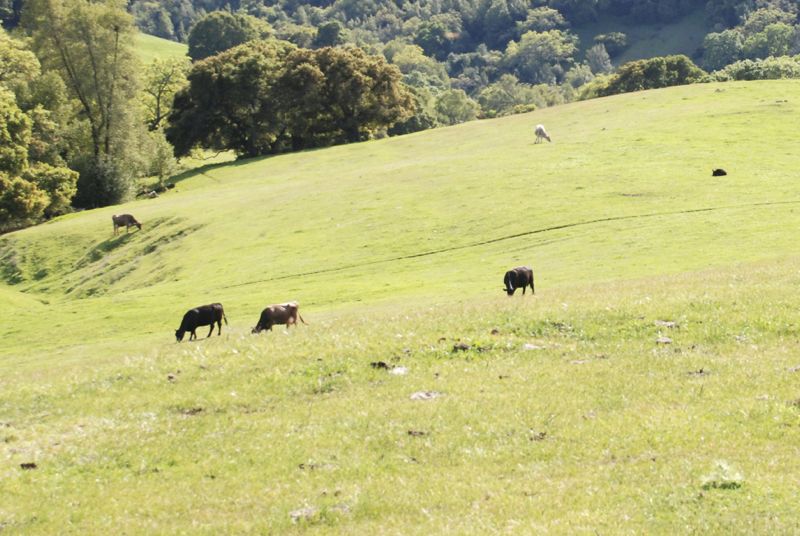 As I drove way I saw some of Mary’s cows. As it happens, these cows are the daughters and granddaughters of Jennie, a Brown Swiss cow that Mary got from us when we left our dairy life in 1998. Talk about happy CA cows. These truly have a happy life.
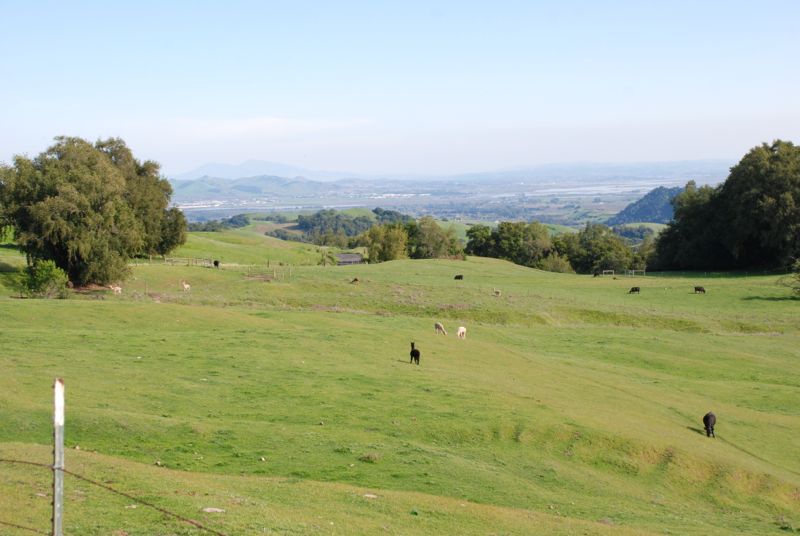 Look at their view of the Napa Valley if they choose to look up from all that grass. (Alpacas in this photo–they were right next to the cows.)
Today I hosted a field trip of 4-Hers led by Carol of Joshua Farm Shetlands. They came to talk about Jacob sheep, pasture management and the fiber business and to do a felting project. 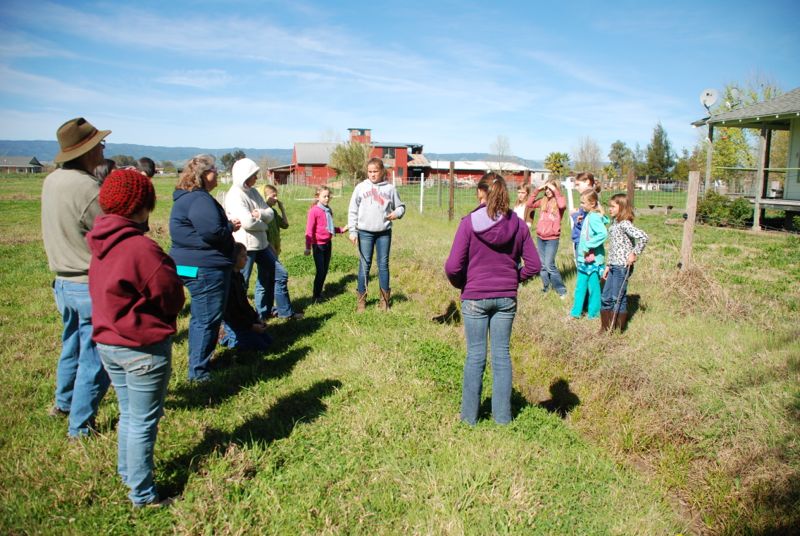 The morning started in the pasture. Most people that come to see the farm want to spend time with sheep, but it is very important to understand that we should think of ourselves as “grass farmers” first. I couldn’t possibly have the number of sheep that I do without irrigated pasture and intensive grazing management.
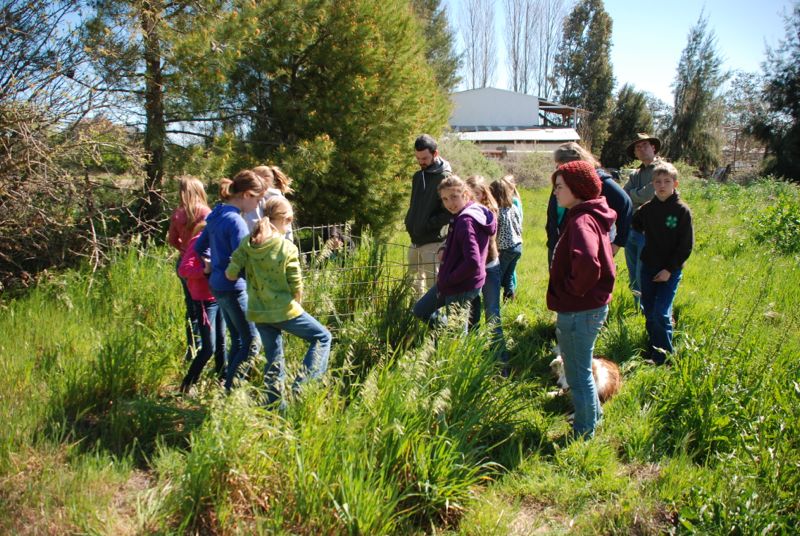 We discussed sheep, facilities and ended the livestock part of the tour by looking at the Dead Zone (I just thought of that name). There are ram skulls in that fence in various stages of decomposition. As we explained to the kids, we want to sell every part of the animal we can.
 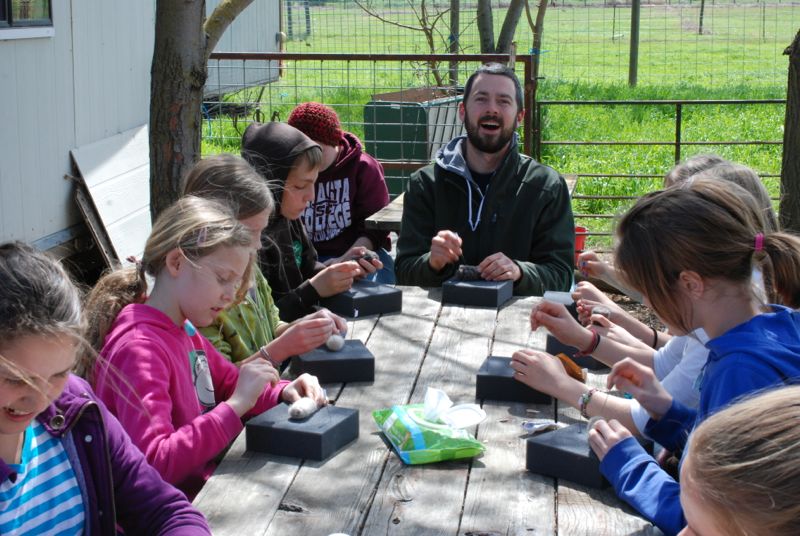 We came back to the shop for lunch and then a felting workshop. The idea was to felt a sheep.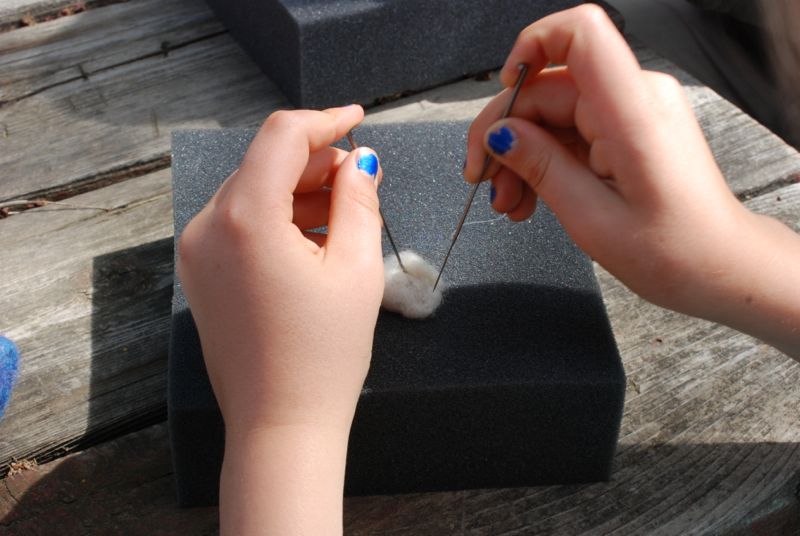
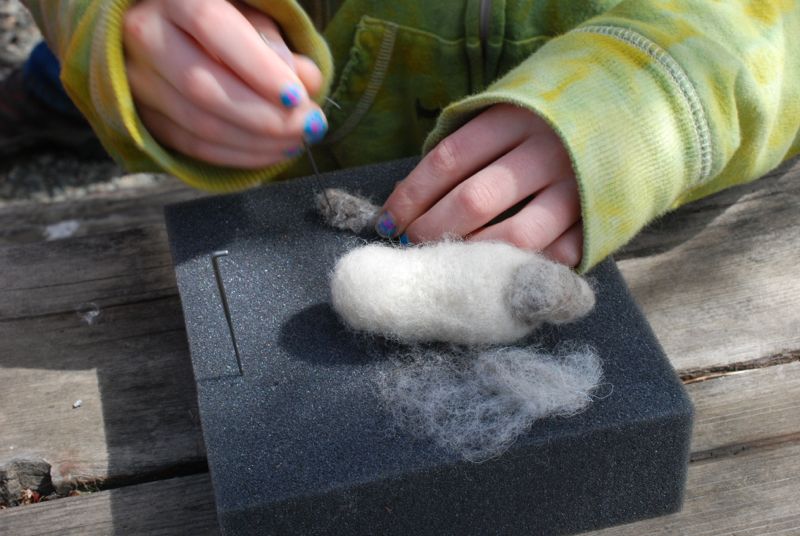 Some of the sheep had morphed significantly into other life forms:
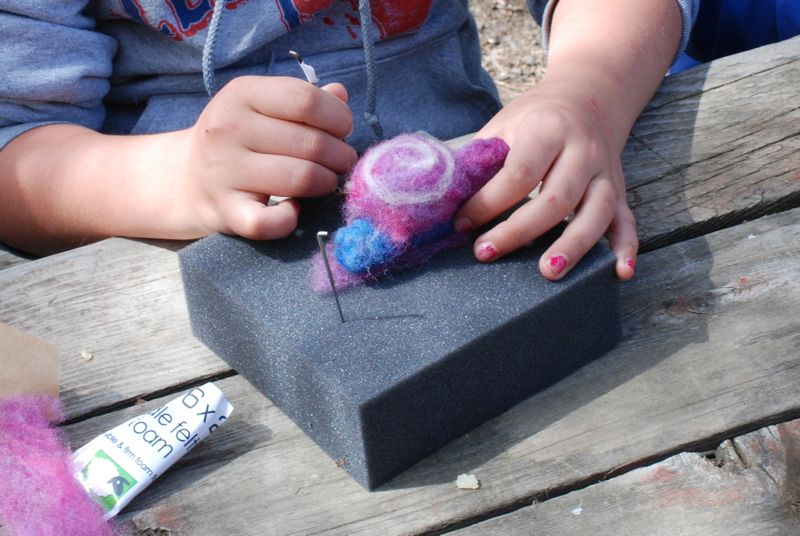 Snail.
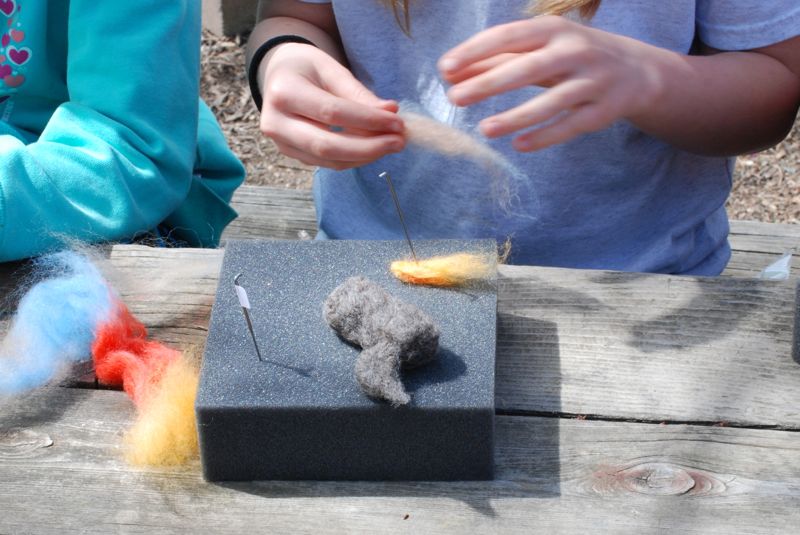 Duck.
Duck.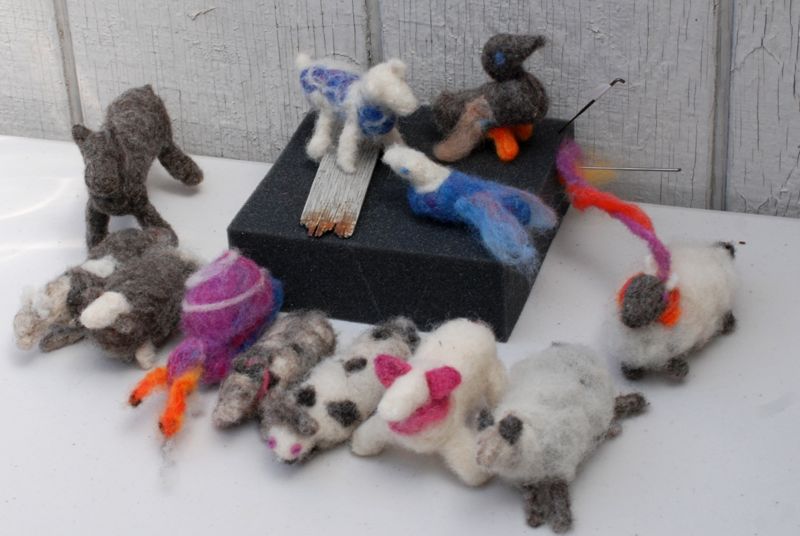 Aren’t these cool?
Before they left the 4-H group was gracious enough to help my son out with his photography assignment. He is supposed to submit an interpretation of Social Awareness and decided to stage a family picnic in which it is obvious that everyone is more involved in their electronic devices than each other.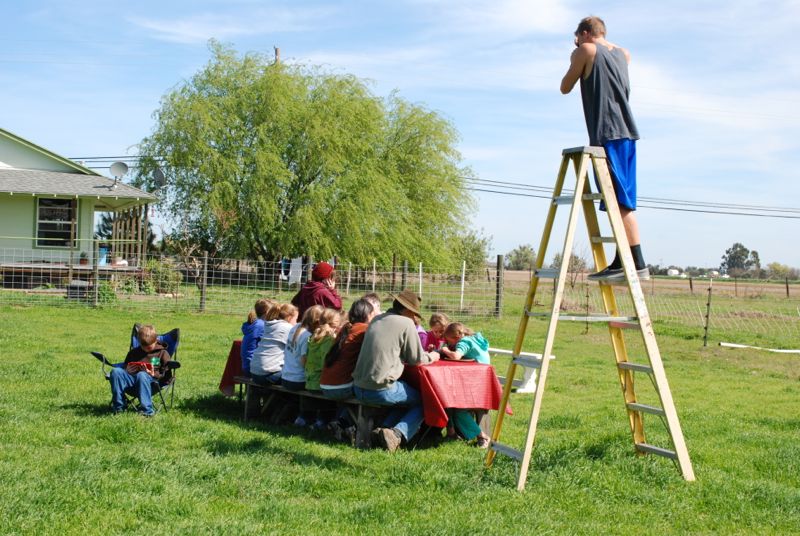
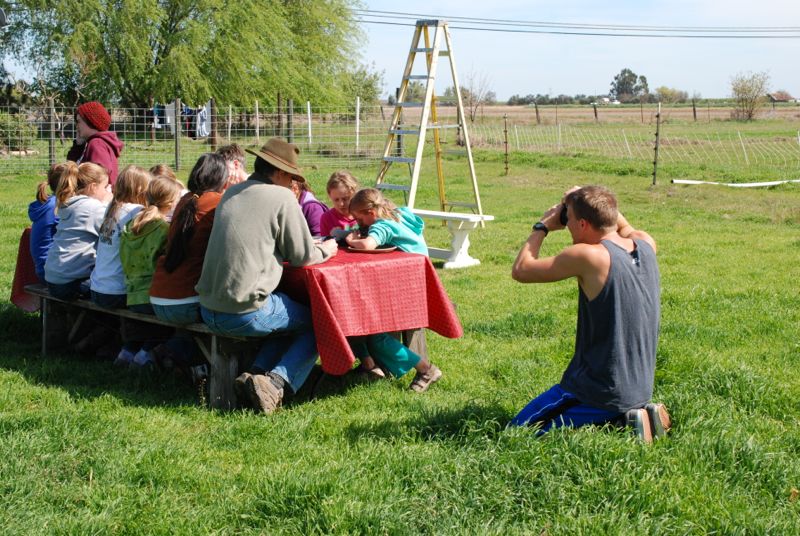 No one seemed to mind the time for this, but the girls crowded around the iPad kept asking for the password.
I’ve thought about titles for this post for a couple of days, but I’ve been too busy and/or too tired to write it. It Takes A Farm Club to Run a Farm. Or Farm Club Experiences Life and Death. FC met here on Saturday. I am so appreciative of everyone in FC. I know that they are getting experiences they wouldn’t otherwise, but I am benefiting tremendously as well. There was a lot going on that day.
My day started with a ewe that I though might have milk fever. I treated her with calcium gluconate and put her with her lambs in a pen so I could watch her. The first FC members arrived as another ewe, Onyx was lambing.
 Lambing pens …
 …and the rest of the barn were cleaned while we kept an eye on Onyx.
 Onyx is a BFL/Jacob cross bred to a Jacob. She had a black lamb and a Jacob-looking lamb while FC looked on. I’m glad that she lambed in the barn. If she had been in the field I would have been looking all over for a Jacob ewe missing a lamb.
 Look at the horns on that lamb. Ouch!
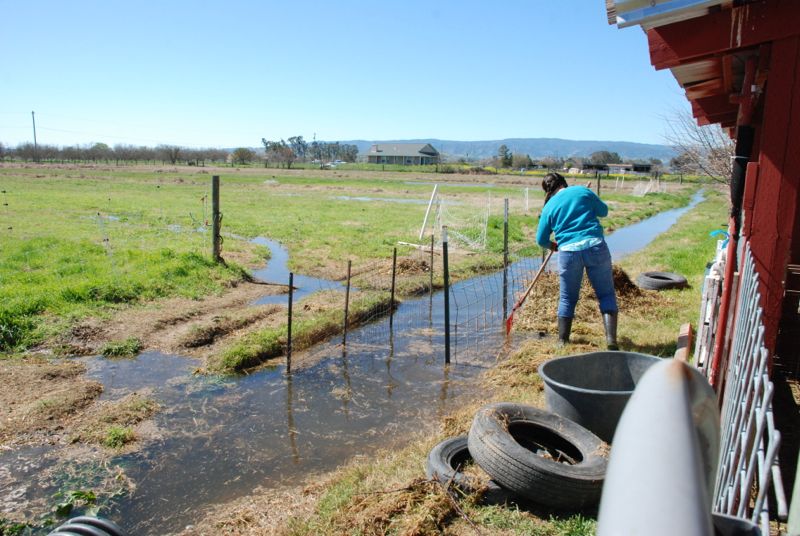 It’s unheard of to irrigate this early in the year, but we have had almost no rain since December. The irrigation district charged the ditches so I put in a call for water. Gynna and Lisa helped by clearing debris from the ditch.
 We checked this ewe lamb’s broken leg.
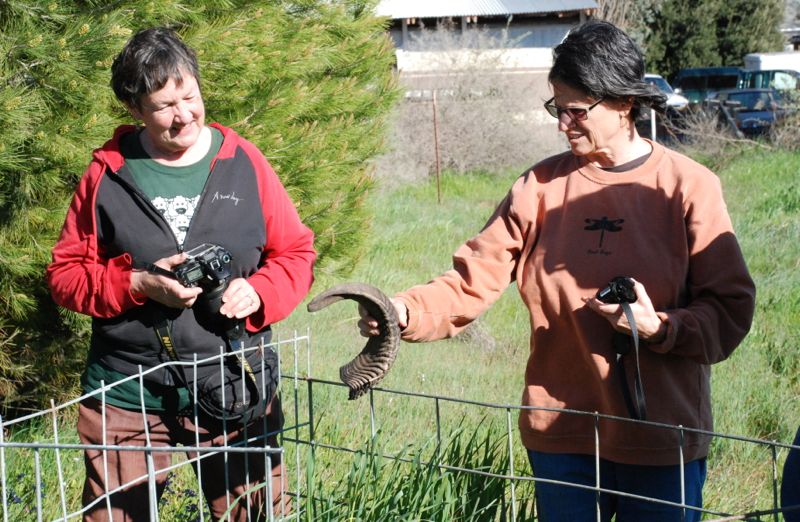 I showed FC members my bone-yard ( a pen where I put skulls that are in various stages of decomposition).
  Shelby sat with the ewe who later died (not of milk fever, but a metabolic problem similar to pregnancy toxemia, according to preliminary necropsy results).
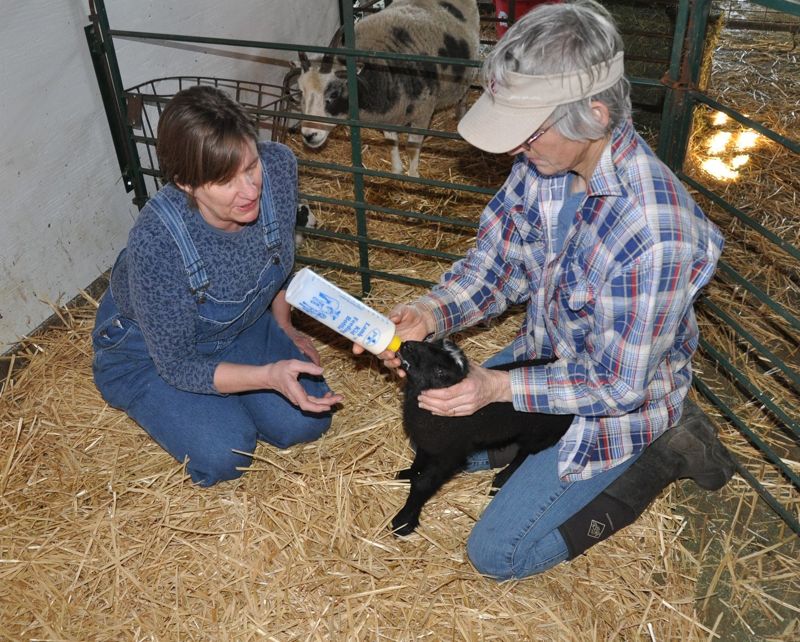 Then we had to bottle feed her lambs. (The day before I had just grafted the bottle baby I had onto a ewe. Now I have more bottle lambs.)
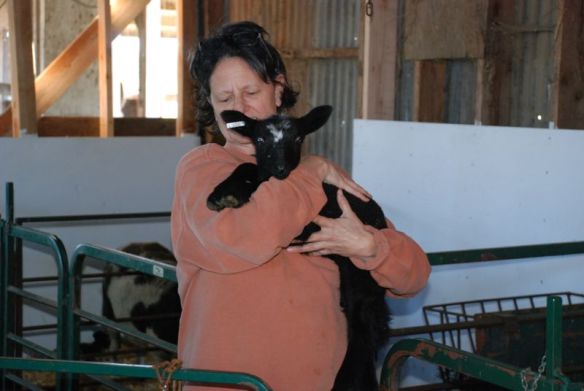 And there are always plenty of lambs to hold.
  We checked all 70 lambs for split eyelids and number of horns and I gave them all BOSE injections. I don’t have photos, but a guest of a FC member worked on my buttons–sanding buttons that I had cut out months ago.
  We can’t have Farm Day without Donna’s brownies…and now Lisa’s sheep cookies and Mary’s O’Henry bars.
 Thank you to everyone who came and helped and then shared the warm afternoon sun.
Here are some of the things that have filled this week: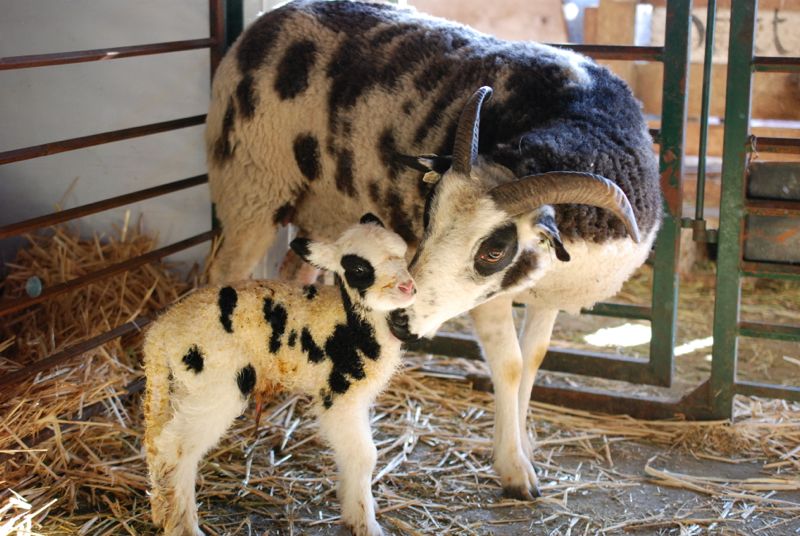

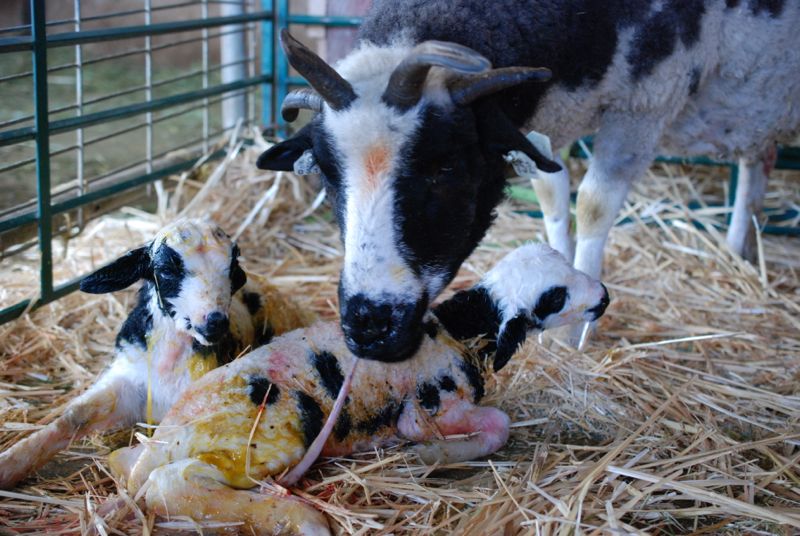 These are 8-9 pound triplets. The third was already up and nursing. I pulled these.
  This is the lamb list so far. Purple for ewes, blue for rams.
  I have a lot of new things for the shop, but haven’t had time to play with them or get them on the website. Electric carder, blending boards, and batt rollers (and other spinning gadgets) by Clemes and Clemes. I also have new DVD’s, books, felting kits, and gadgets.
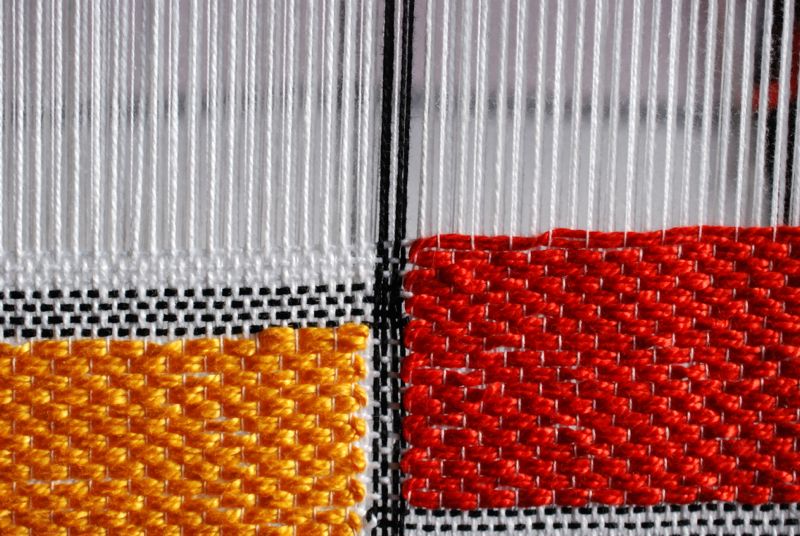 I had a big weaving deadline that coincided with the first week of lambing (which also coincided with my tax appointment). This is just a preview of an item that will be in an upcoming issue of Handwoven magazine.
 And a new dog added to the workload. You can read Rusty’s blog to learn more about Maggie.
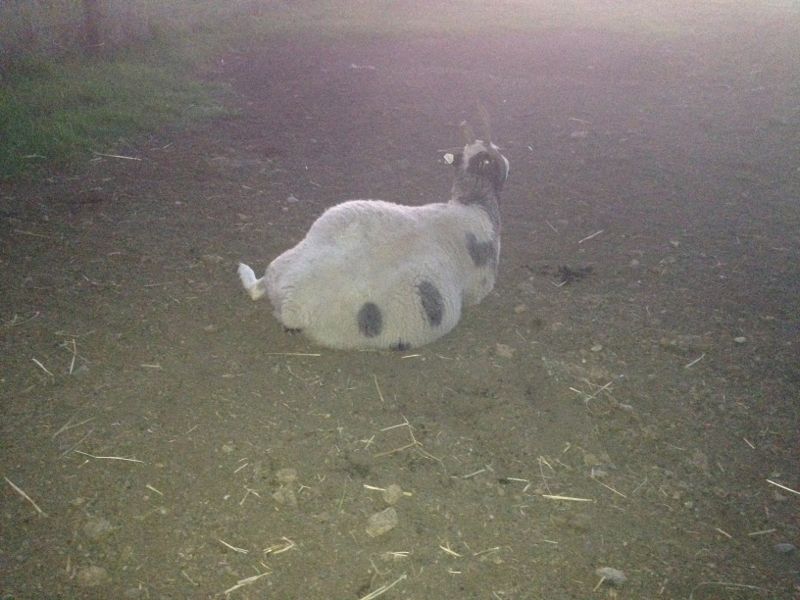 There are still more ewes to lamb. I’m on my way to the barn now for the last check tonight.
 Meridian Jacobs' Blog