This will be a multi-part story probably with other stories mixed in. This project began about 4 years ago when I taught a weaving class and we were talking about irrigation and field work. I was probably complaining about the difficulty of irrigating properly with our old worn out ditches and the uneven growth of the pasture. One of the students is an engineer with NRCS (Natural Resources Conservation Service) and she suggested that I ask for help (engineering and money) from NRCS because that is what they do.
NRCS personnel helped develop a plan to renovate the pasture and the irrigation. It doesn’t make sense to do one without the other. The proposal was submitted with high hopes that it would be selected. It was not. We tried the next year and just missed being included in that year’s funding. This spring our plan was approved, and is partially funded through EQIP (Environmental Quality Incentives Program).
Before work began there was a lot of preliminary work for us to do. That fell on Dan’s shoulders. First he took down all the internal fences.

Then he started mowing…and mowing…and mowing. That tall grass is mostly dallisgrass that has taken over a good part of the pasture. It can grow 5′ tall and the sheep can’t keep up with it once it takes off in the summer. The sheep can’t (won’t) eat it as it gets coarser through the growing season. It crowds out everything else and is dormant in the winter. Our tractor isn’t strong enough to mow it at ground level when it gets this tall. Dan has to go over each section at least a couple of times.

Another task was to make an opening in the fence along the road so the heavy equipment had access. That started with trimming back the tree here. The fence on the south half of field was built by the county when, in 1971 the canal was put in (or enlarged?), and Solano County was deeded the triangular sliver of land along the road. We weren’t going to take down that part of the fence.
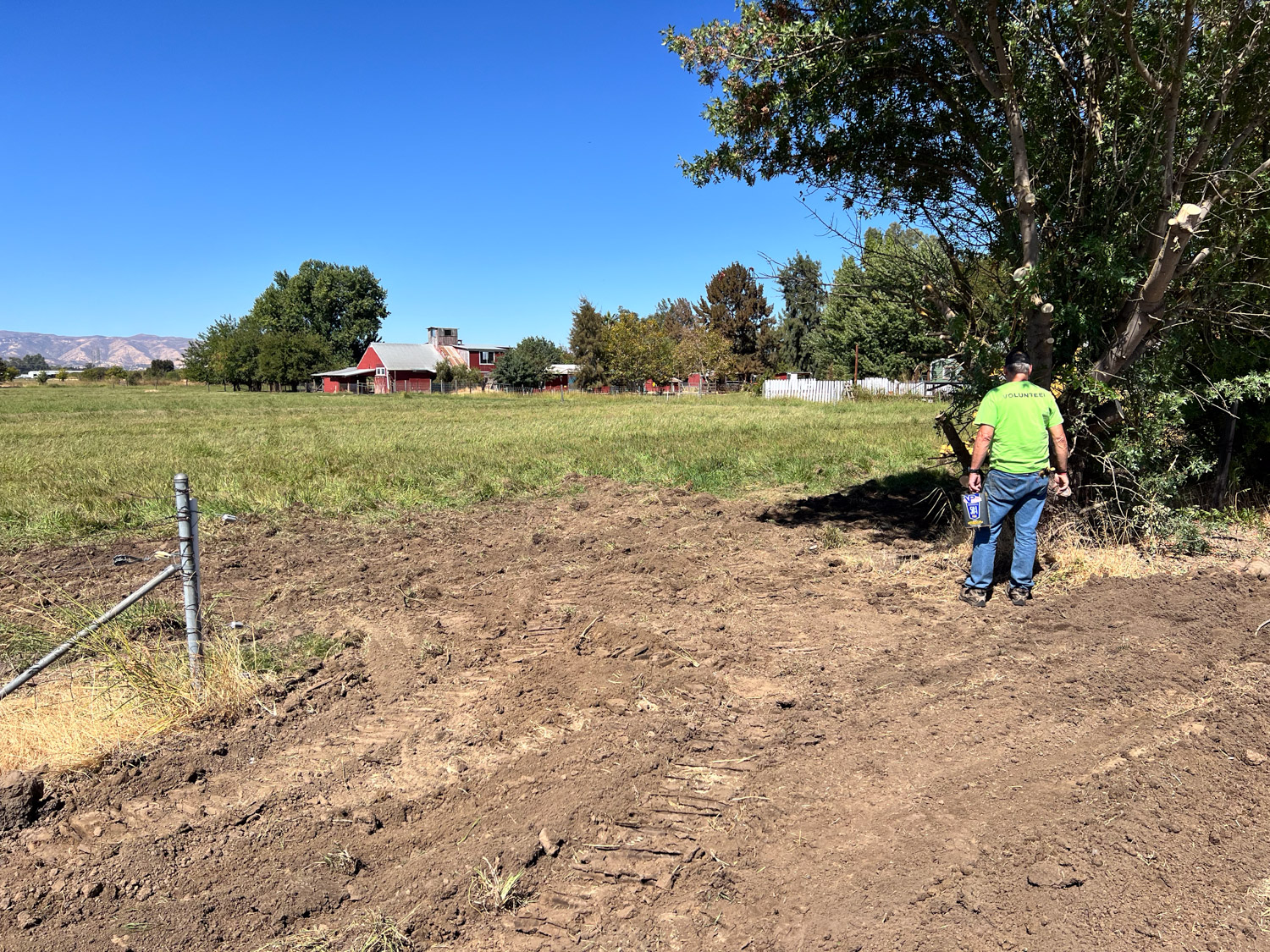
Looking into the pasture from the road. That post is the corner of the county owned sliver of land.

We don’t have a chainsaw large enough to take the whole tree down, so the larger job had to wait until we could borrow a chainsaw from Matt. In the meantime Dan had to be careful about the lower part of the tree branches because there was a lot of fence wire embedded where the tree had grown around it.
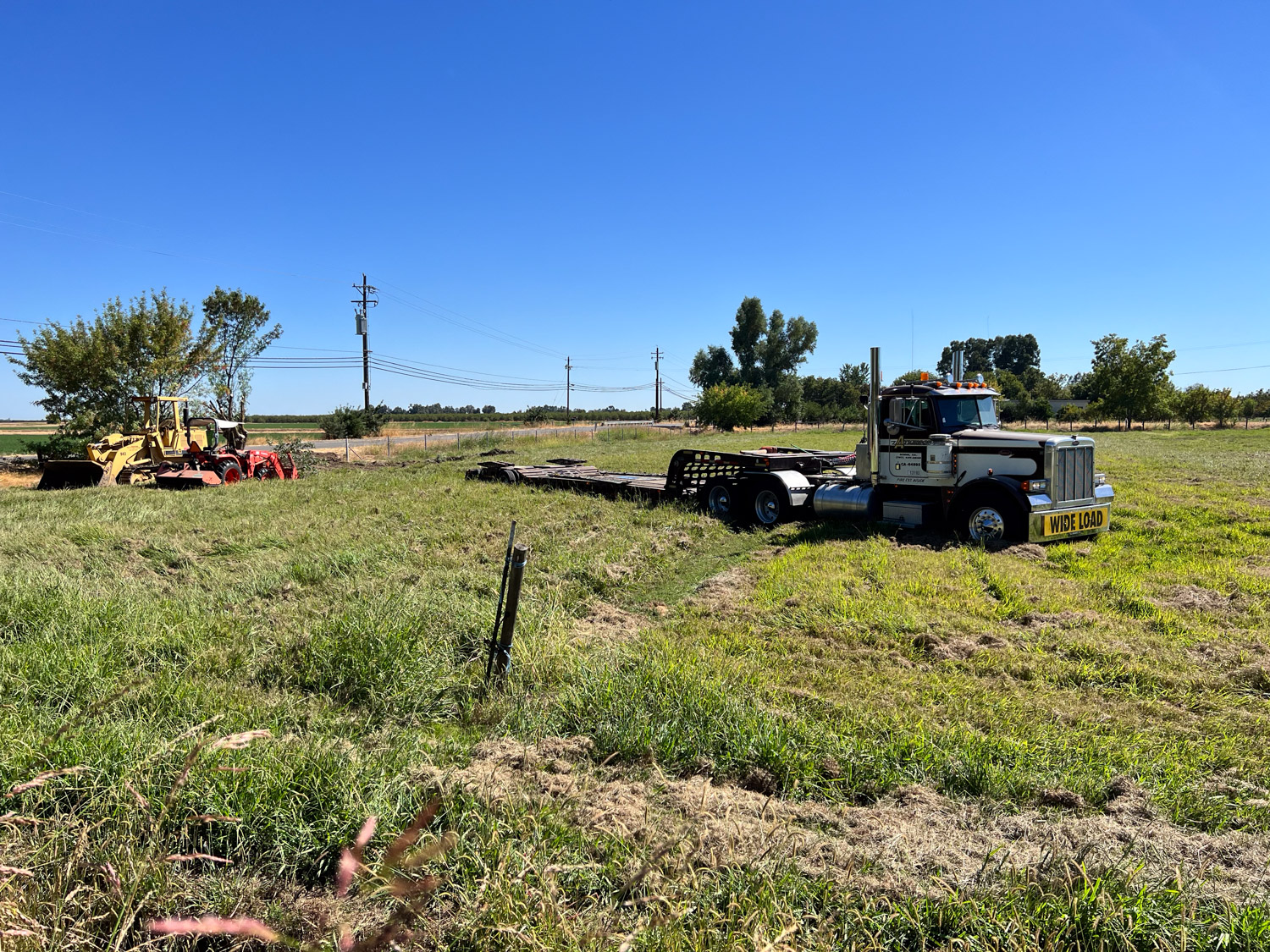
Brett, the contractor, was able to drive his truck in to start leaving equipment.

Our little Kubota tractor seemed dwarfed by some of the large equipment that eventually showed up.

Dan made a platform that fits on the front of the bucket so that he can carry more branches than he could without it. The tractor is hidden behind branches.
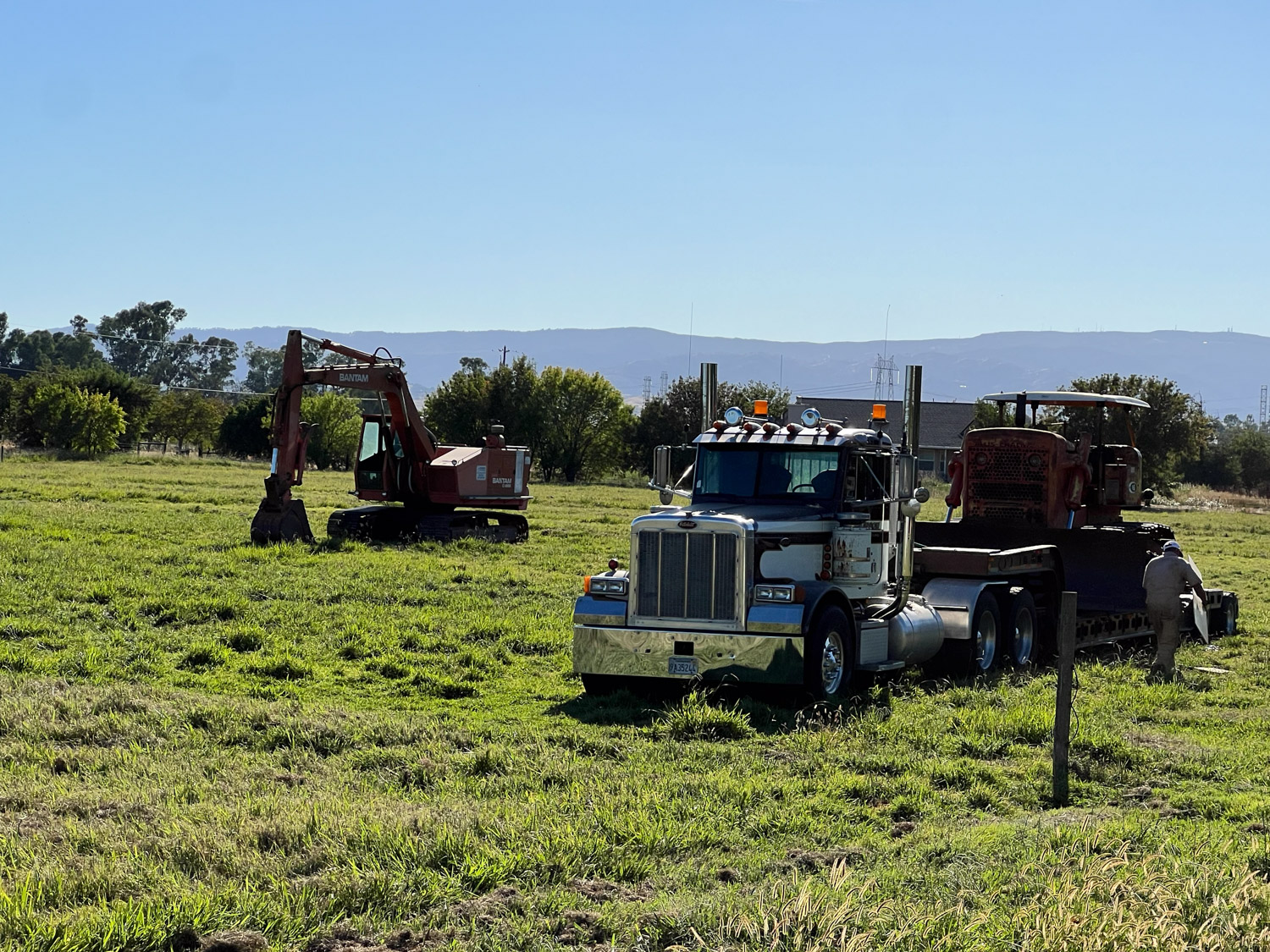
More equipment being delivered.

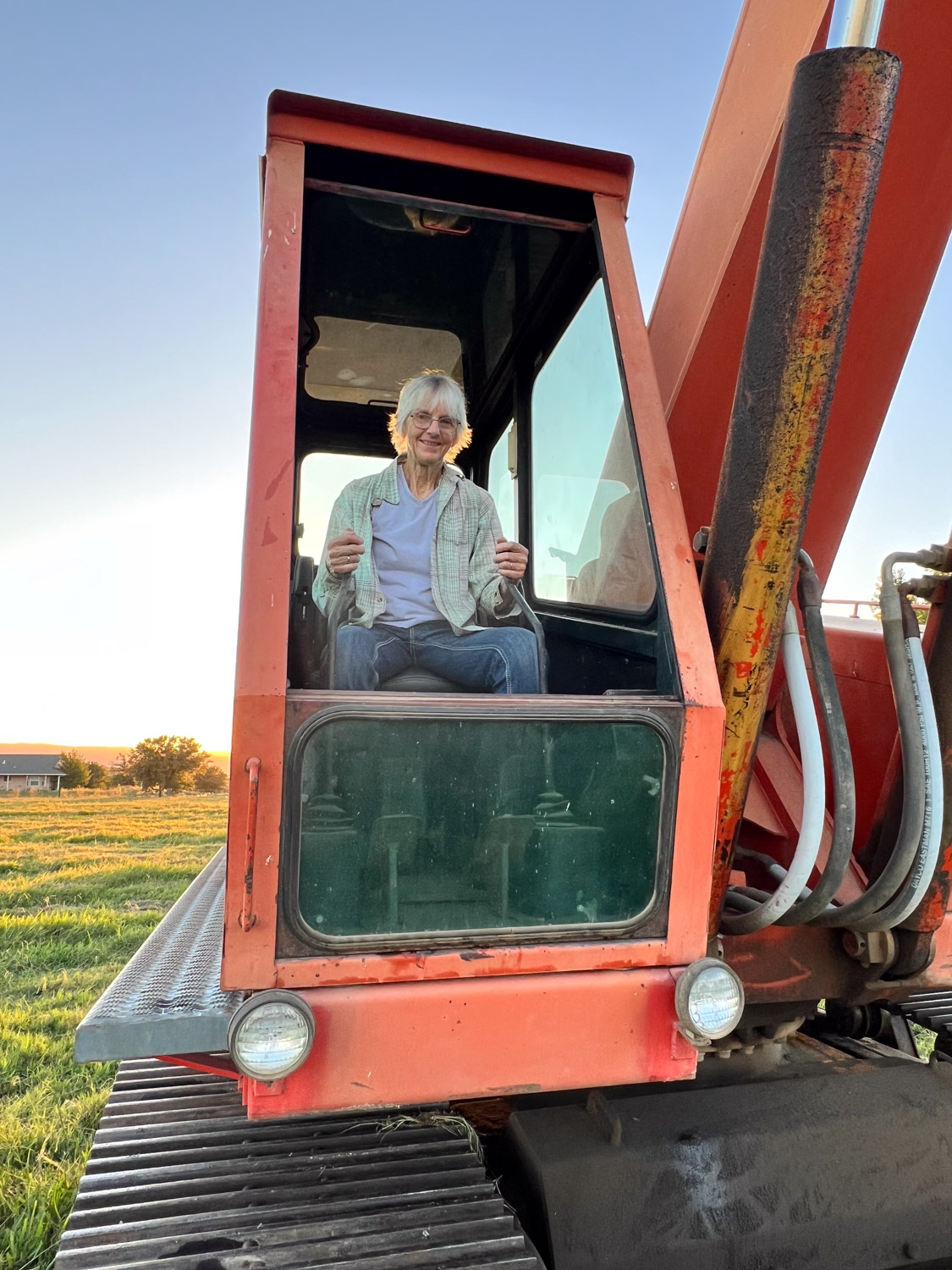
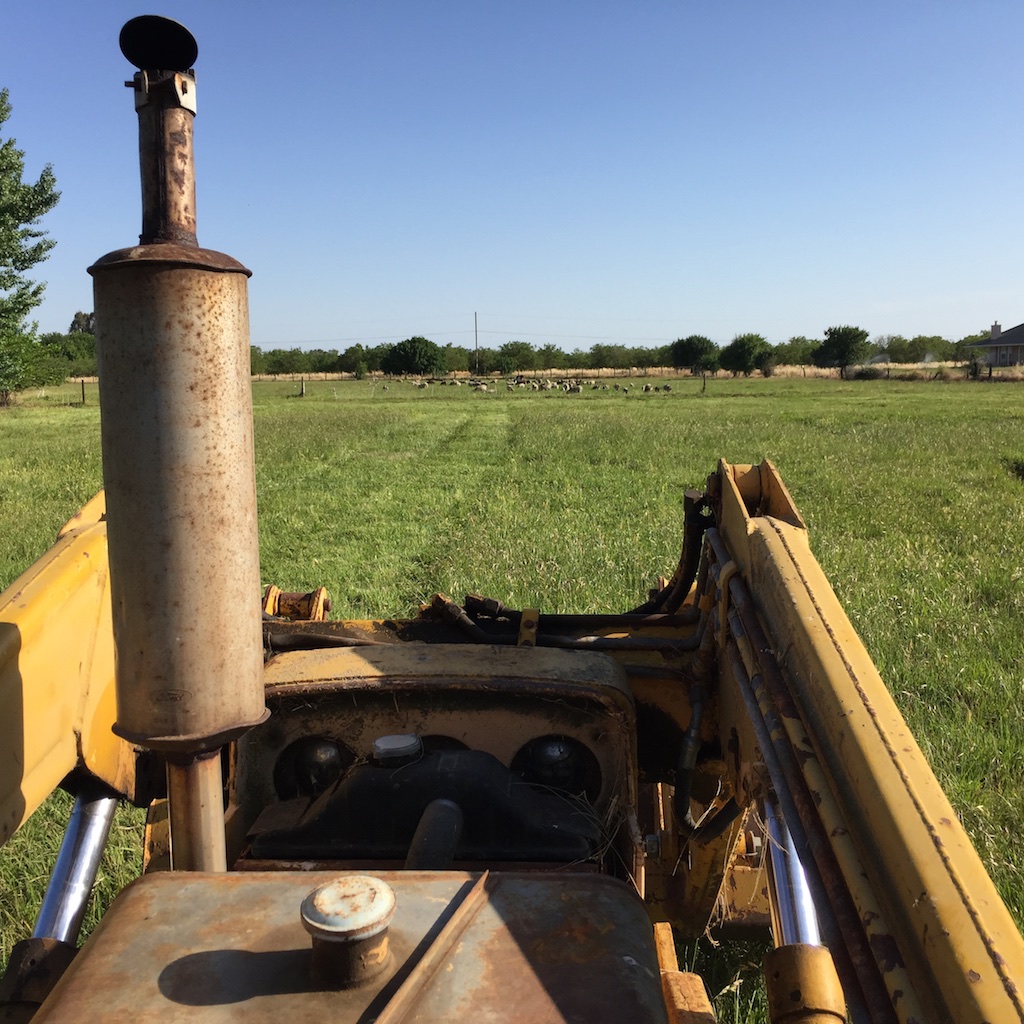
I thought I’d try out the equipment.
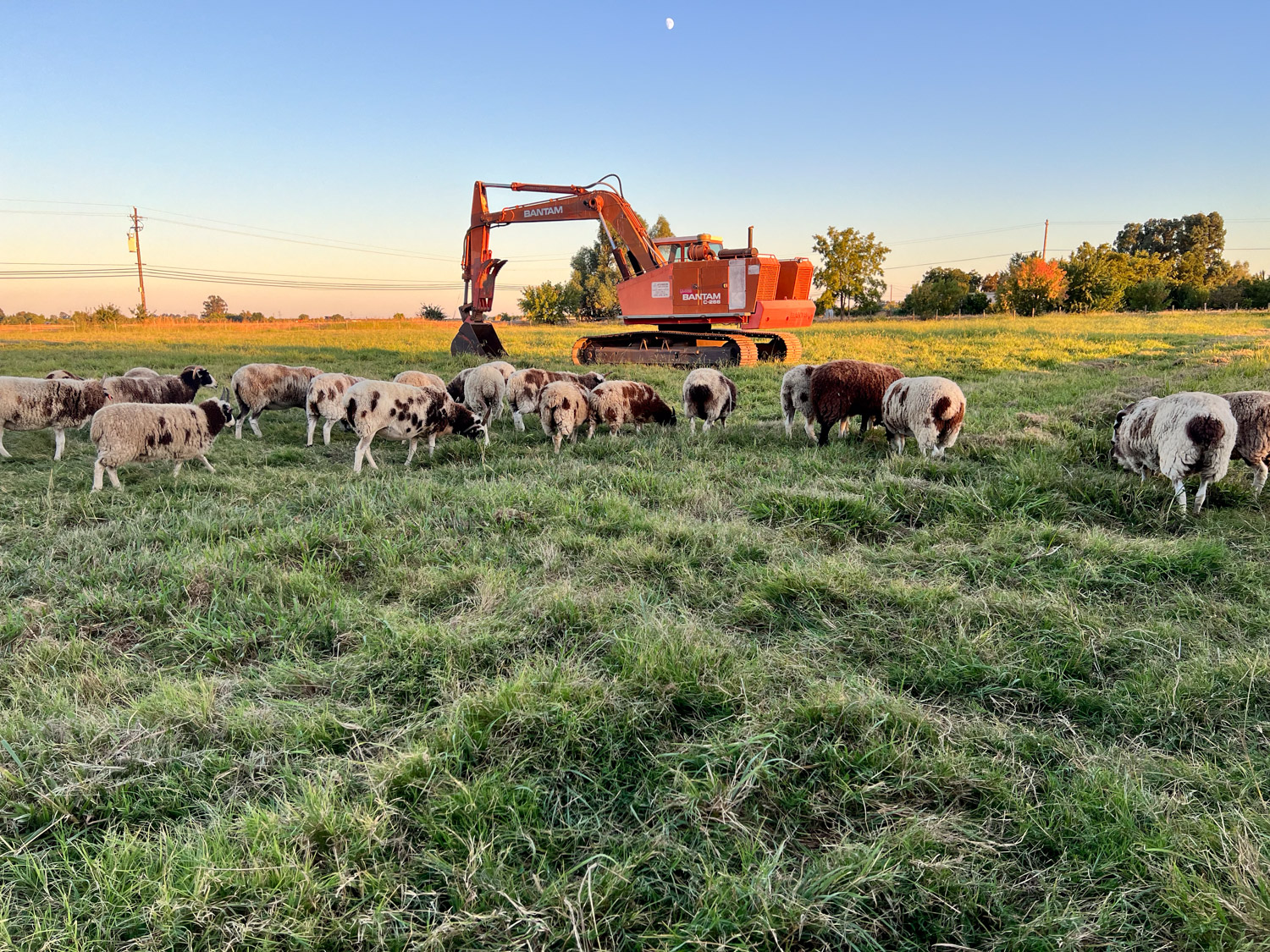
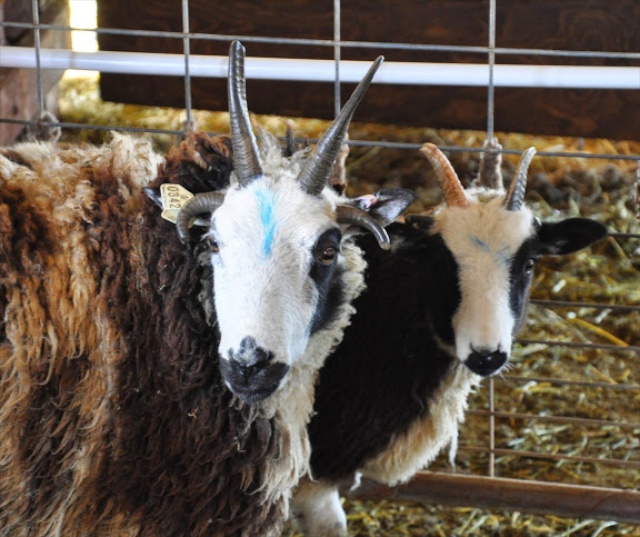
The equipment came in on a Friday and work would start Monday. We put panels where the fence was removed so we could let the sheep out for the weekend. Once work started the sheep would not have access to grazing for a very long time.
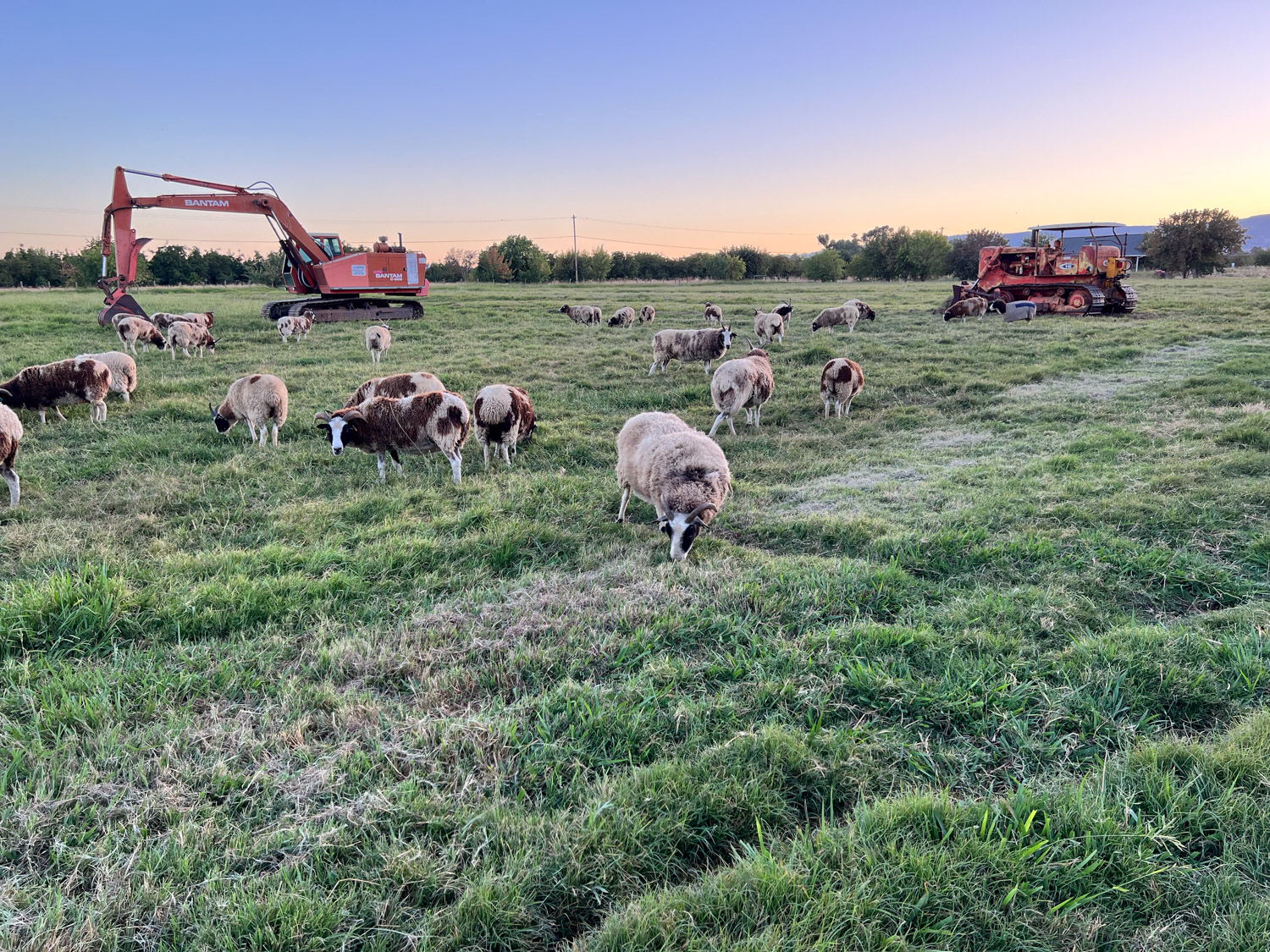
This was only three weeks ago and it seems like it’s been much longer. I have a lot of catching up to do for this blog.

 Two tractors run side-by-side. One pulls the bins that hold the tomatoes.
 The other pulls the harvester.
 The tomato plants are cut off and pulled up a conveyer where the tomatoes are sorted from the plant and sent through that yellow chute into the bins. Unwanted plant material, including smaller tomatoes come out over the roller towards the base of the harvester.


 Amaryllis following.
 Dallisgrass.


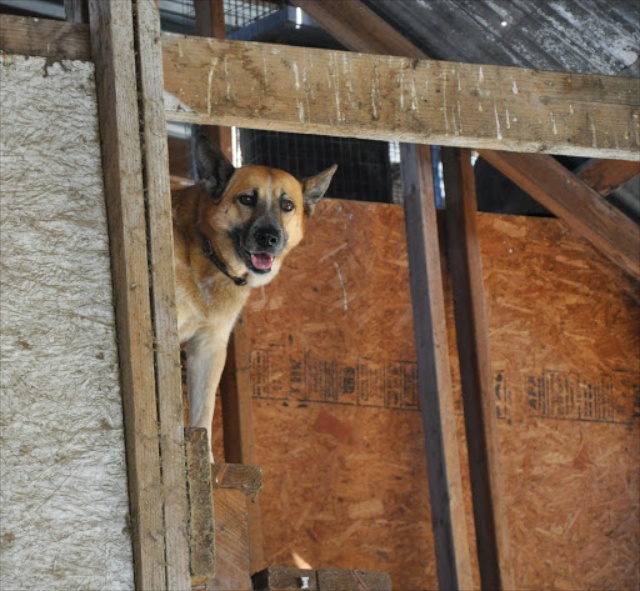
 Ginny in her watching the road spot. She likes to chase trucks from her side of the fence.




 This is how I felt at the end of the day.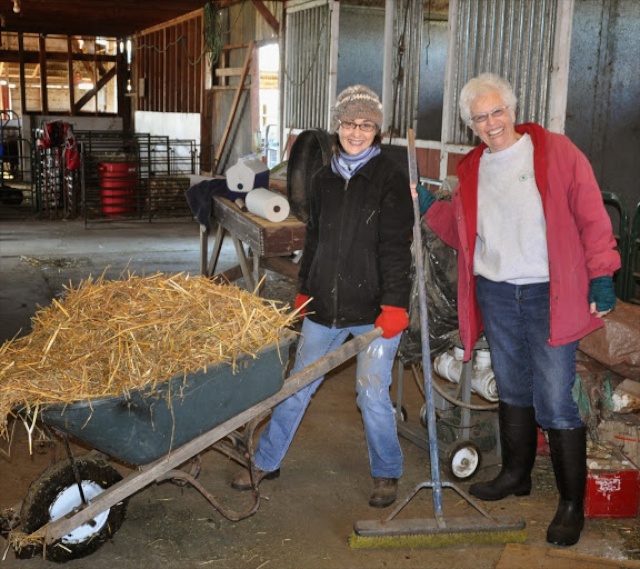
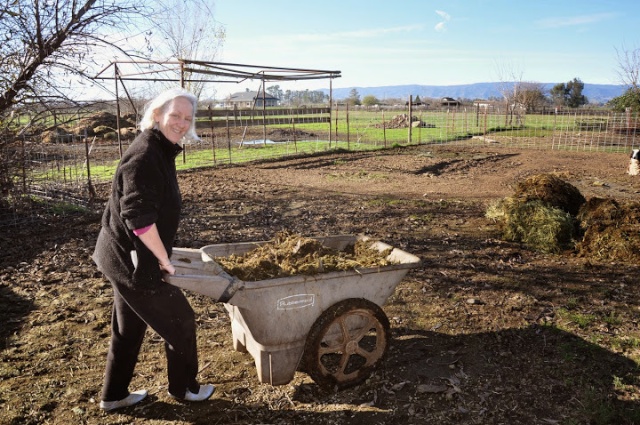
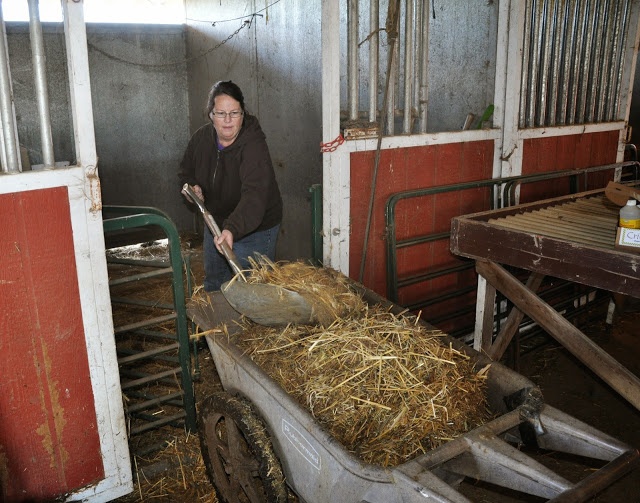
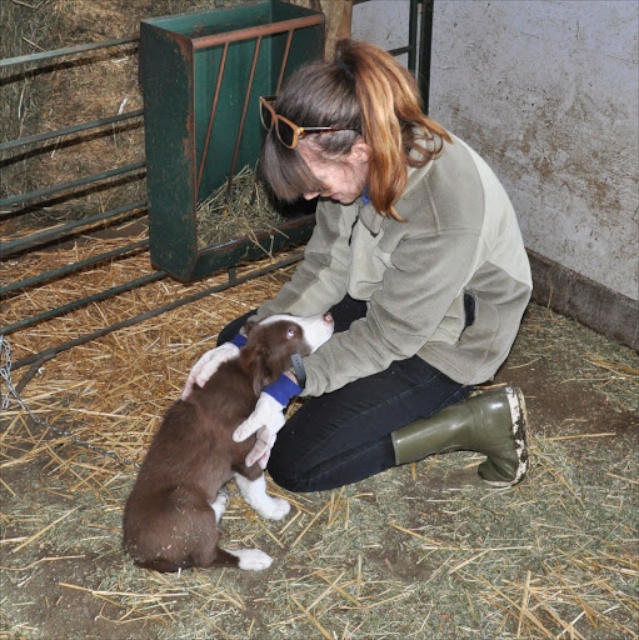


 The sheep don’t mind me working while they graze.
 Meridian Jacobs' Blog