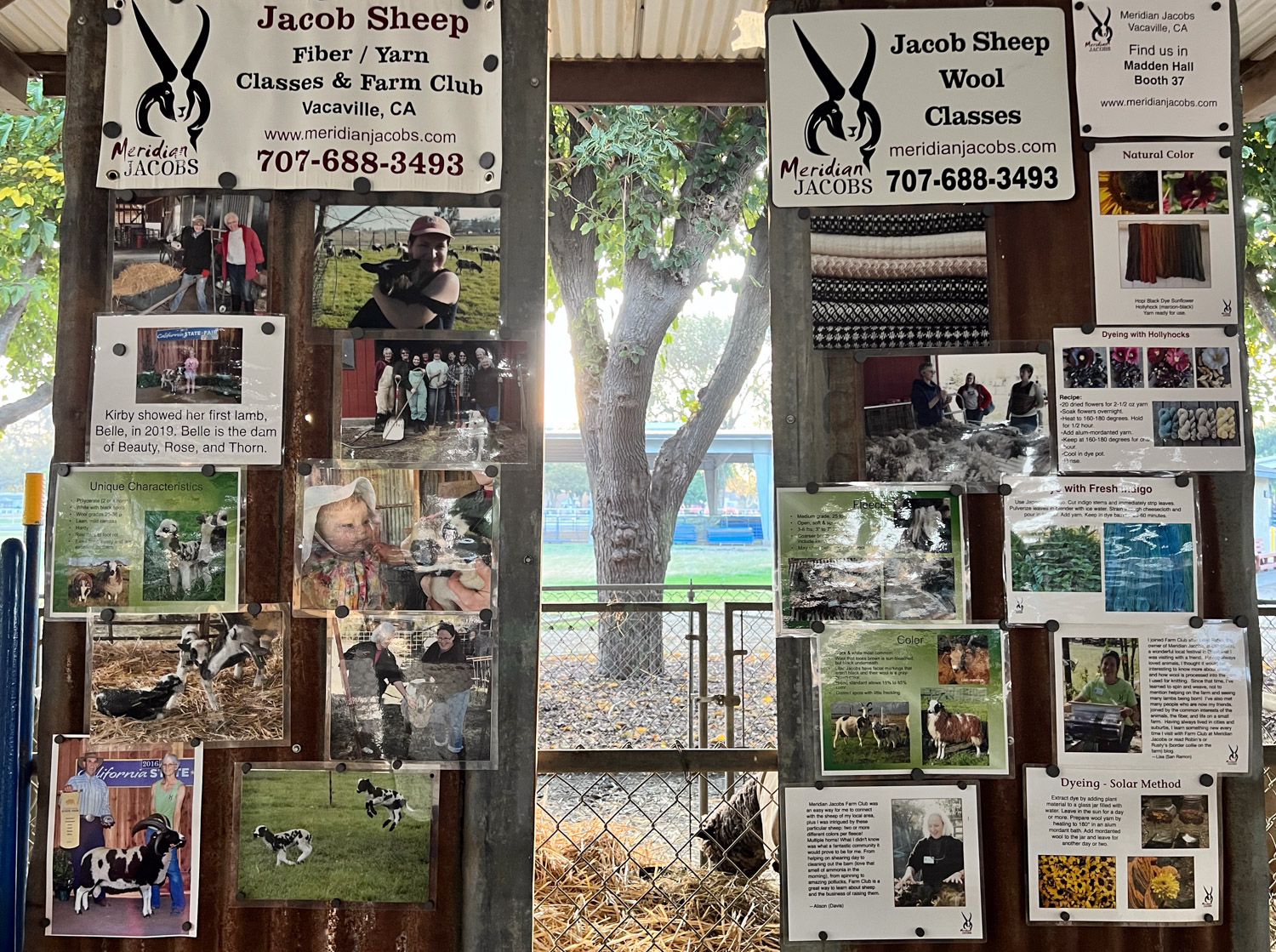
I went early on Saturday and Sunday to feed sheep. This is the display that Farm Club members put together for the barn.
The ram, Blizzard, started out in a different pen but he and the ram lambs were fighting through the fence during the night. Dan and Farm Club members switched pens for him and a couple of ewes so there wasn’t direct contact with the other rams.
Walking back to the vendor building I stopped at Woolly Adventures. This is quite an undertaking, but Gynna does a fabulous job.
There are over a dozen different activities for kids here. ..
…and she thinks up more each year.
I labeled more naturally dyed yarn Saturday night and had it at the booth on Sunday..
The sheep show was on Sunday. I had to be in the vendor hall so Farm Club members handled all the show details. Marina, Beth, Reba, and Nicki showed most of the sheep.
Dan helped out with the yearling ram.
Thanks to Deborah and Nicki for the photos of the sheep show.
Thanks to Doris for recording the show and the judge’s comments so I could watch it later at home! The sheep show didn’t end until after 4 when the vendor hall closed. Friends and I took the booth down quickly. Dan loaded sheep and drove them home. Then he came back with the other trailer for the booth.
He walked in with this new dolly with a note that said Happy Birthday (early for my November birthday)
All these years I have carried these grids in and out of buildings two at a time. Now it will be easier.
This is Day 2, when I taught the Clasped Warp class. I signed up for some sessions on Friday and Sunday.
I went out early on Friday morning to walk along the Arkansas River. There are paths on both sides.
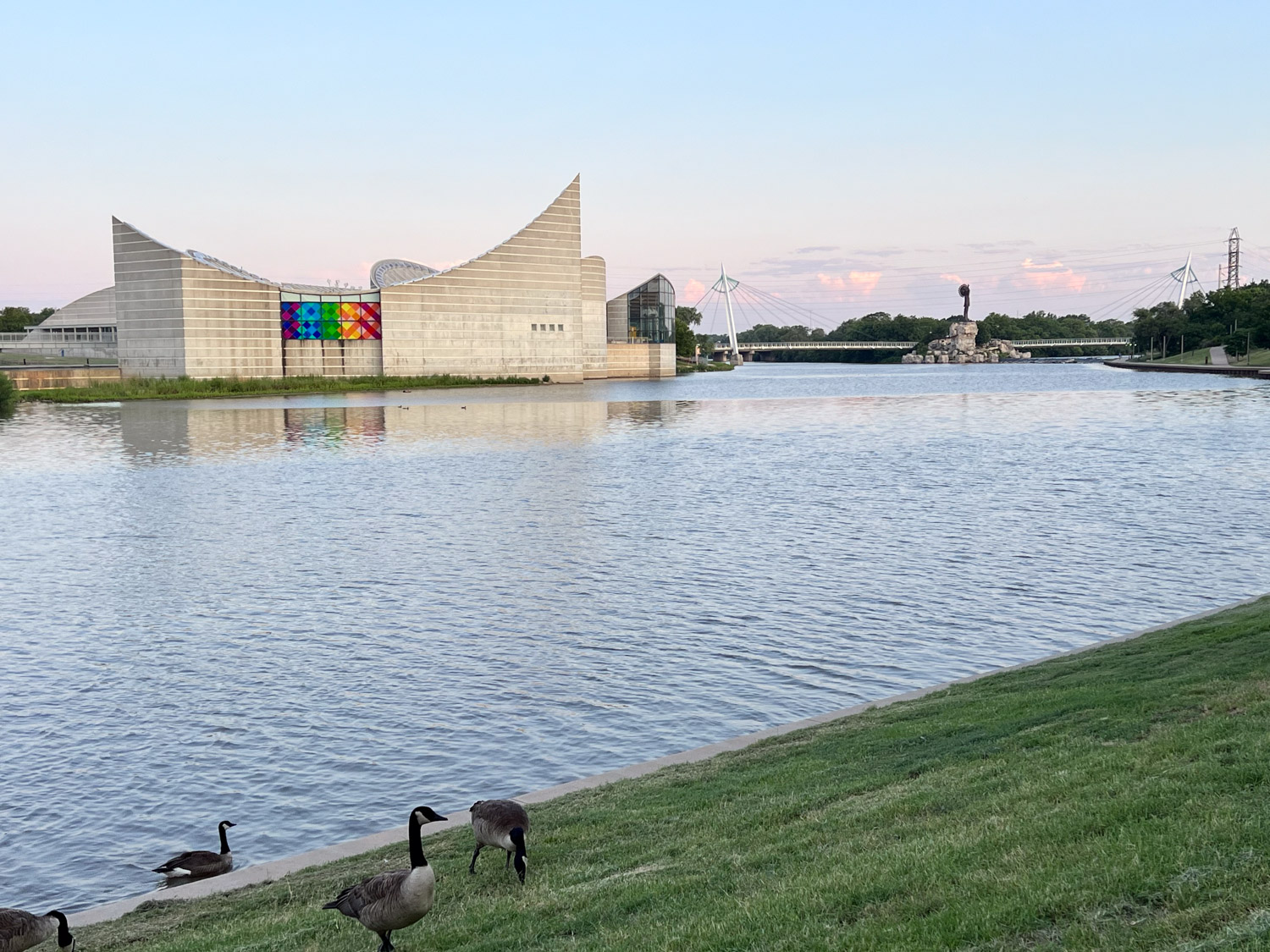
This is the Exploration Place. From a quilt on this side to a helicopter inside on the opposite wall it looks as though there is something for everyone here. The bridge that you see is a pedestrian bridge that crosses the Arkansas and Little Arkansas Rivers at the confluence.
This is another view of the statue you see in the distance in the first photo. It is known as the “Keeper of the Plains” and was donated to Wichita in 1974 by the Kiowa-Comanche artist, Blackbear Bosin.
There is a small pavilion behind the statue and where the rivers meet.There are several displays about Plains Indian culture and beliefs.
Back at the hotel, I took a morning class from Robyn Spady about cool things you can do weaving with four shafts.
In the afternoon I had a short session about ice dyeing with indigo. I did a lot of that last summer but never had all these colors. Since I’ve been home I tried to get purple and failed. I’ll try again.
After this session I wondered through the fiber arts exhibits and the vendor hall. I have a lot of photos but will include only a few here. As usual, I am frustrated that I will never have time to weave all the things I already have in my head and now there are more!
Great boots!
Beautiful wedge weave rug.
The following pieces are just a few that were in the previous day’s fashion show.
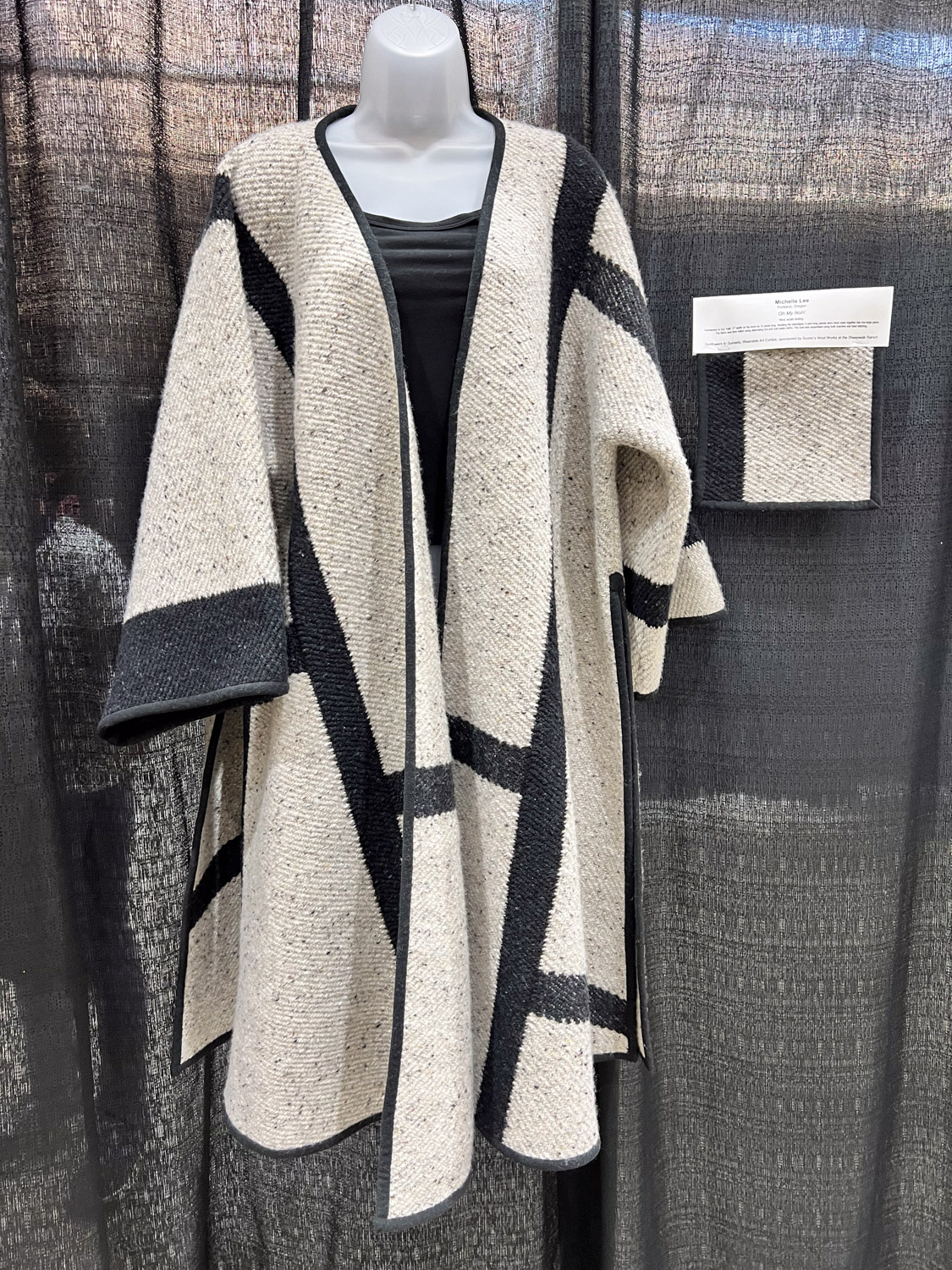
The Noh coat. This refers to a style of coat that I remember reading about a few years ago. It would be interesting to weave fabric for this. I’ll add it to my list.
Woven in tencel.
Cotton top with the gradients of color different for warp and weft.
Remaking a jeans jacket.
I spent some time in the vendor hall. Lunatic Fringe took the Kansas location to heart with the yellow brick table drape and the legs hanging from their banner. They also wore witch’s hats the first couple of days.
In the evening I walked with a friend back to the Keeper of the Plains where fire is lit for 15 minutes every evening at sunset.
I’m already on my next adventure, but need to catch up with the last one. After the quick trip to Idaho I decided against going to Black Sheep Gathering in Oregon the following weekend. I had not planned to take sheep this year and had not entered wool, fiber arts, etc. But half way through the week I changed my mind. Without entering any shows I didn’t have to be gone as many days, so I left Friday morning. I will admit that two hours into the drive I thought about turning around and coming home because I had so much to do at home before the next event (where I am now). However I had told a friend in Oregon that I’d visit along the way, so I kept going.
Here is where I stayed the three nights I was there. As I set up my tent I realized that I think I’ve had this tent and my sleeping bag since my college days or shortly after.
I took very few photos in the barn, but here is one–a Valais Blacknose. There was a new Jacob breeder there and I helped her show. Because she was the only person with Jacob sheep she had to show in the All Other Breeds class, as I did last year. Maybe I’ll enter again next year and we’ll have a Jacob show.
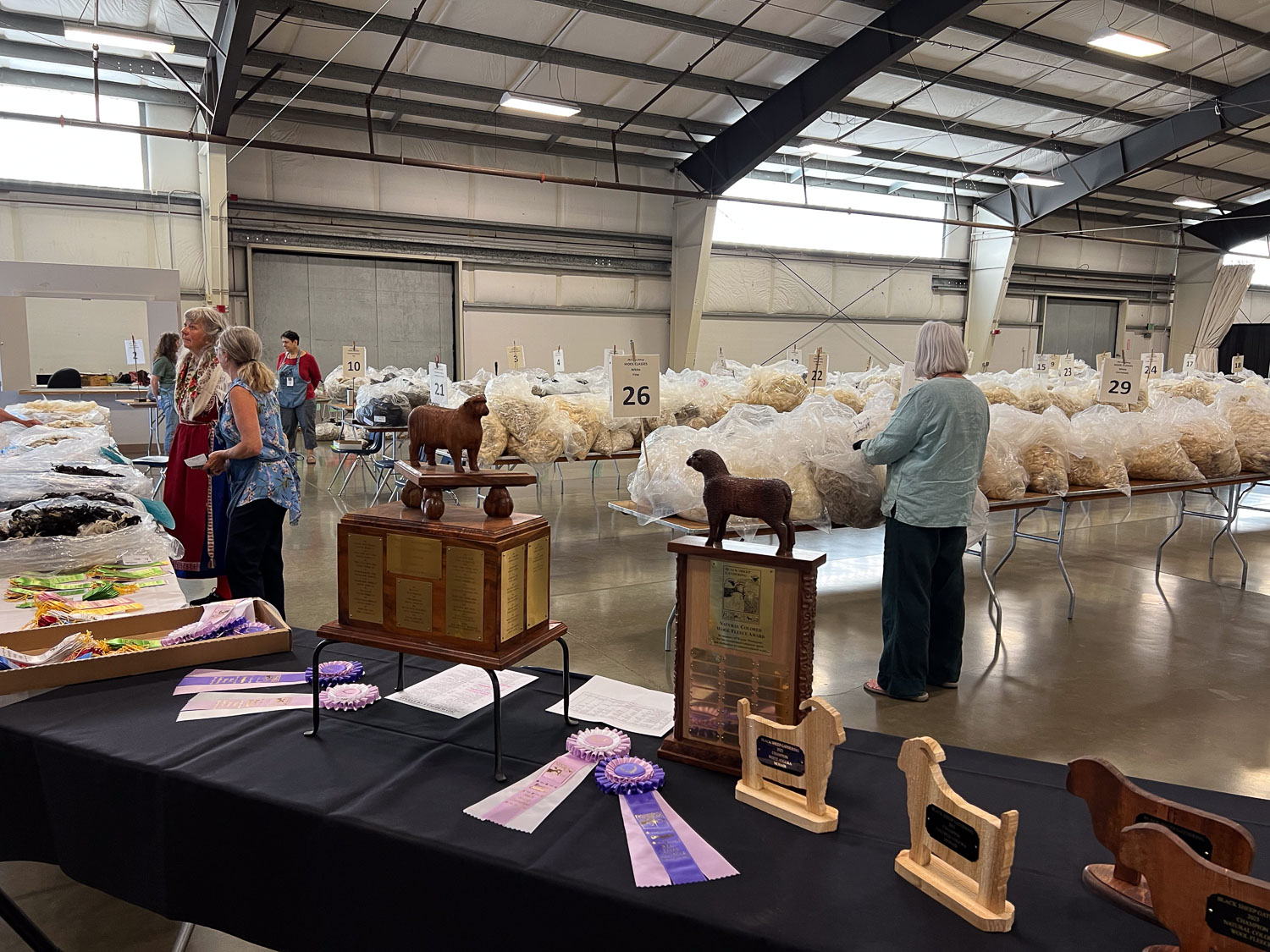
I took a few photos in the exhibit and vendor hall. These are the main award winners in the Fiber Arts Show.
I spent a lot of time with a few vendors and tried to make time to see the rest.
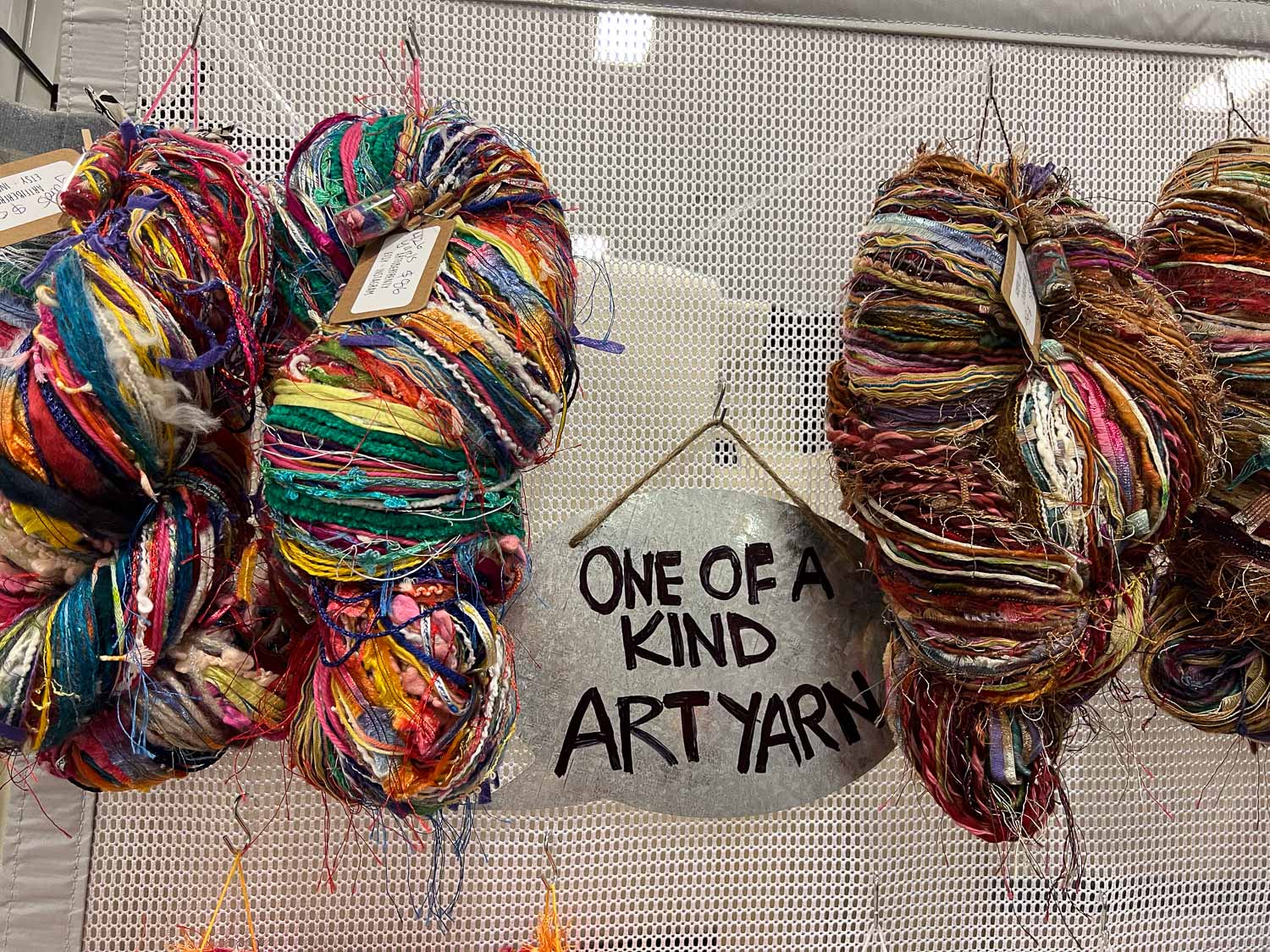
I met this vendor last year at this event. She lives in Sacramento and I encouraged her to sell at Lambtown last fall. Her booth was next to mine. Even though I specialize in locally grown wool, including my own, I was intrigued by her yarns, many of which are not natural fibers and are certainly not local. But they sure are fun! The larger skeins are all lengths of yarns that are tied together. I had bought a few of these crazy mixed fiber skeins and brought the scarf I had just finished to show how I had used the yarns. I plan to create a class using this idea.
I spent time with one other vendor, business name of Shuttle Creek. Annie is a weaver and was working on a loom in her booth, She sells her mostly cotton garments at local shows I think. I just looked at the website and there are some gorgeous items there but blog and Facebook activity seem to stop in 2021 and I was thinking that she said she doesn’t do much online. Anyway, after talking to her a long time she pulled this piece off a hangar and put on me. I bought it and that’s what wore all day at the weaving event where I’m teaching (next post). I need a button that “no, I didn’t weave it”.
I spent part of the day at the vendor hall, helped the other Jacob breeder show sheep, visited with friends (most of whom are from California), and watched Spinners’ Lead. I packed up fairly early on Sunday and started home.
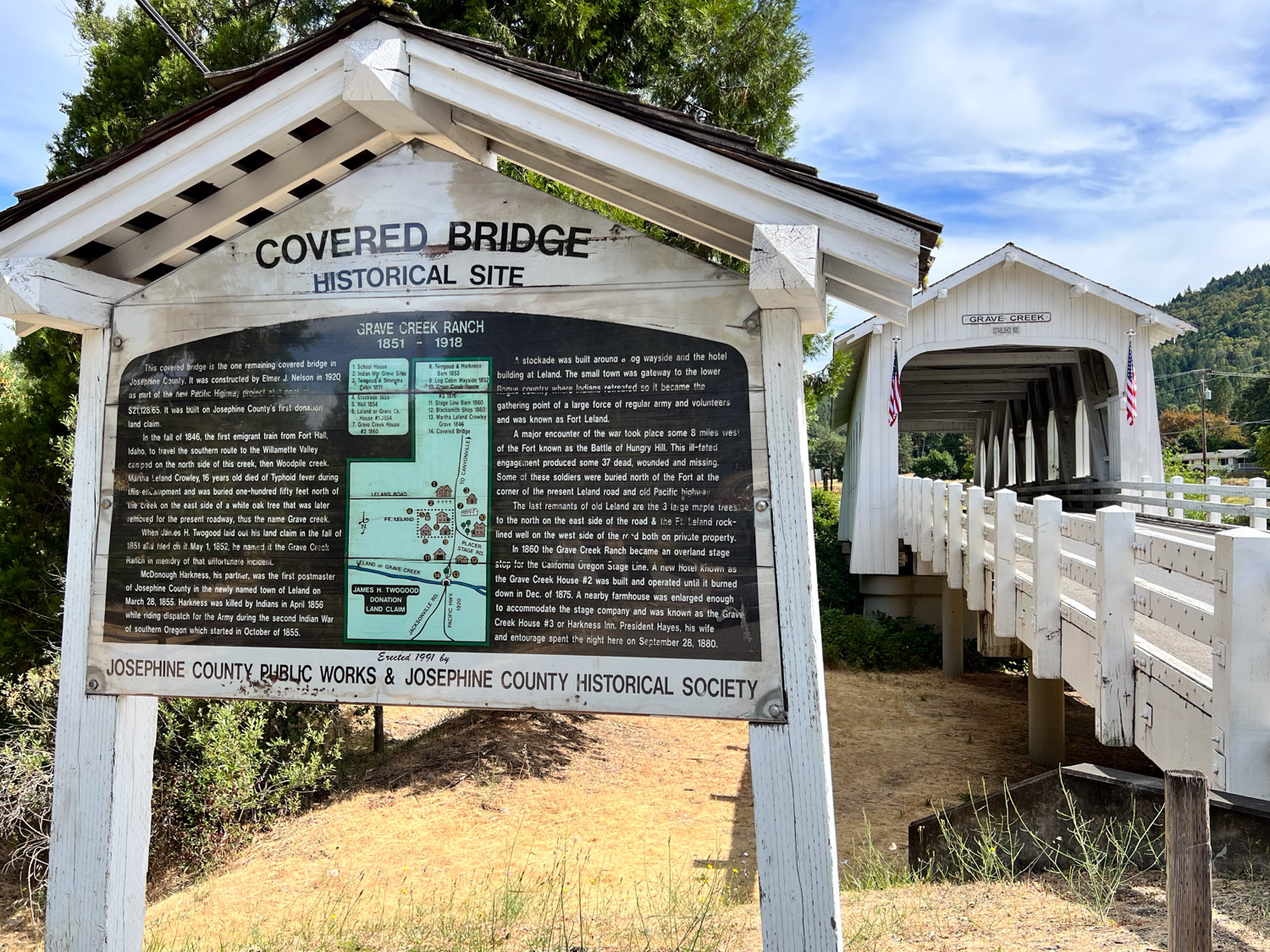
I’ve seen the sign for the covered bridge every time I’ve driven to Oregon but I’ve never stopped. It’s not far from the highway and an interesting site. There is a museum nearby but it wasn’t open on Sunday morning. The bridge was built in 1920 and the sign talks about the history of the area when white settlers came there in the 1840’s and 50’s.
This post is about Day 4 of our adventure, but Day 1 of the New York Sheep and Wool Festival. This was to be our last full day in New York and the second day of the festival. Even with spending all day Saturday at the festival I hadn’t seen it all.
I got in line right away to buy a t-shirt and the person behind me had a companion with her wearing his own Rhinebeck Sweater, knit by his friend. The t-shirt line was relatively short when I got there, and fortunately there was one 2023 t-shirt left and it fit me.
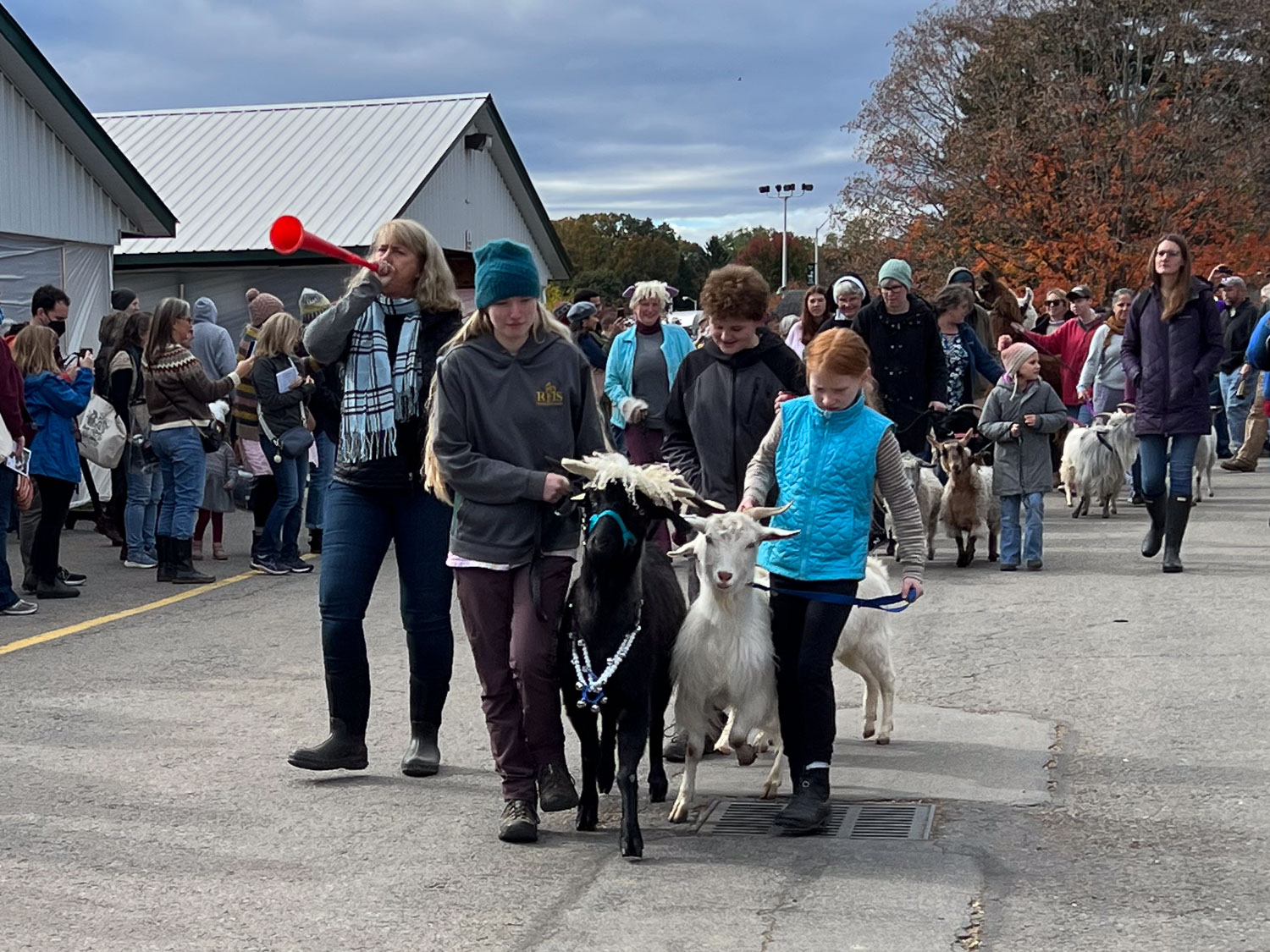
The camelid parade had turned into a goat parade on this day (with llamas in the back). They were announced by the trumpeter throughout the parade around the fairgrounds.
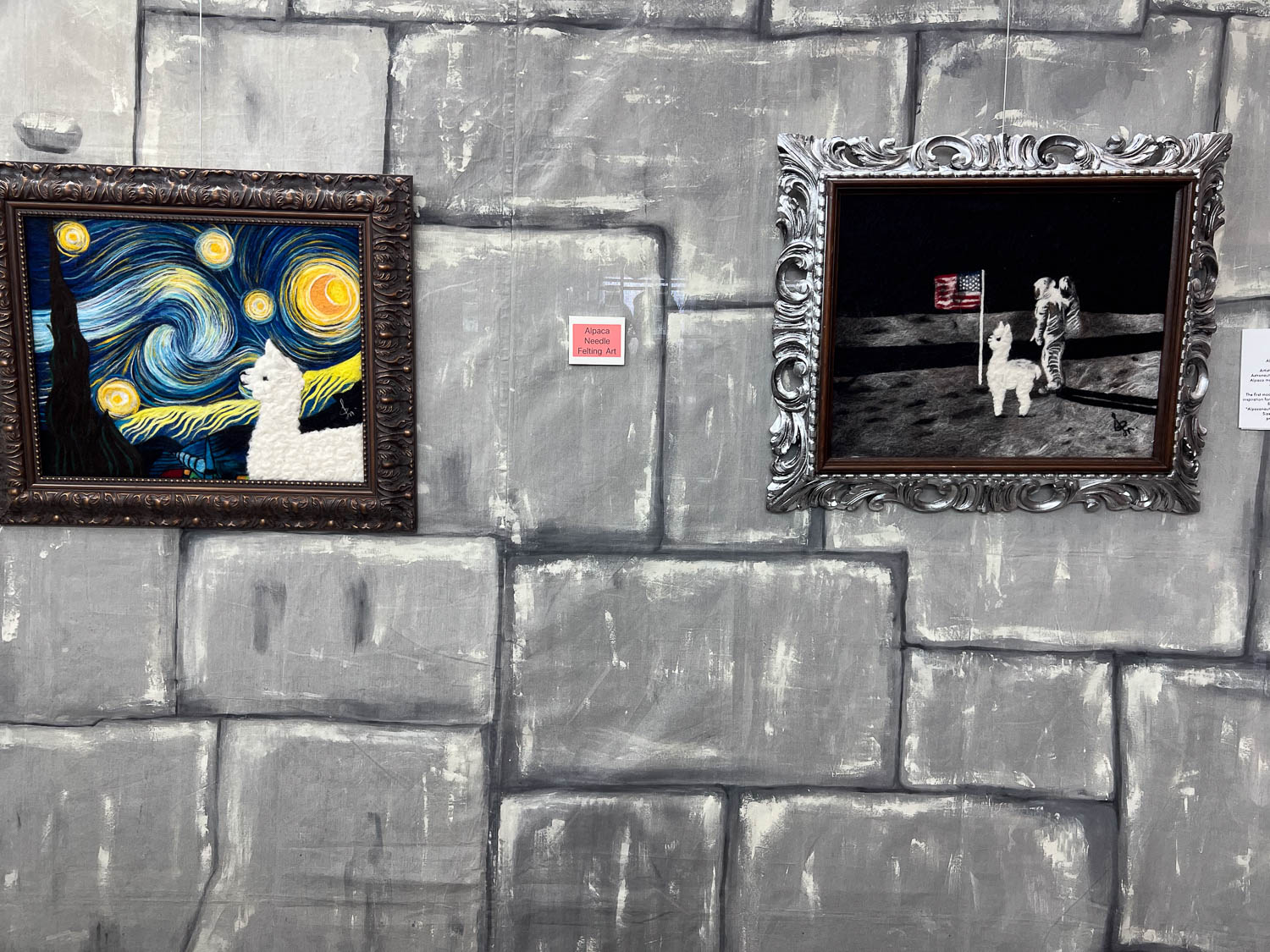
Back in the vendor halls there was no shortage of camelids, particularly alpacas. This booth had reproductions of several famous images and each included an alpaca.
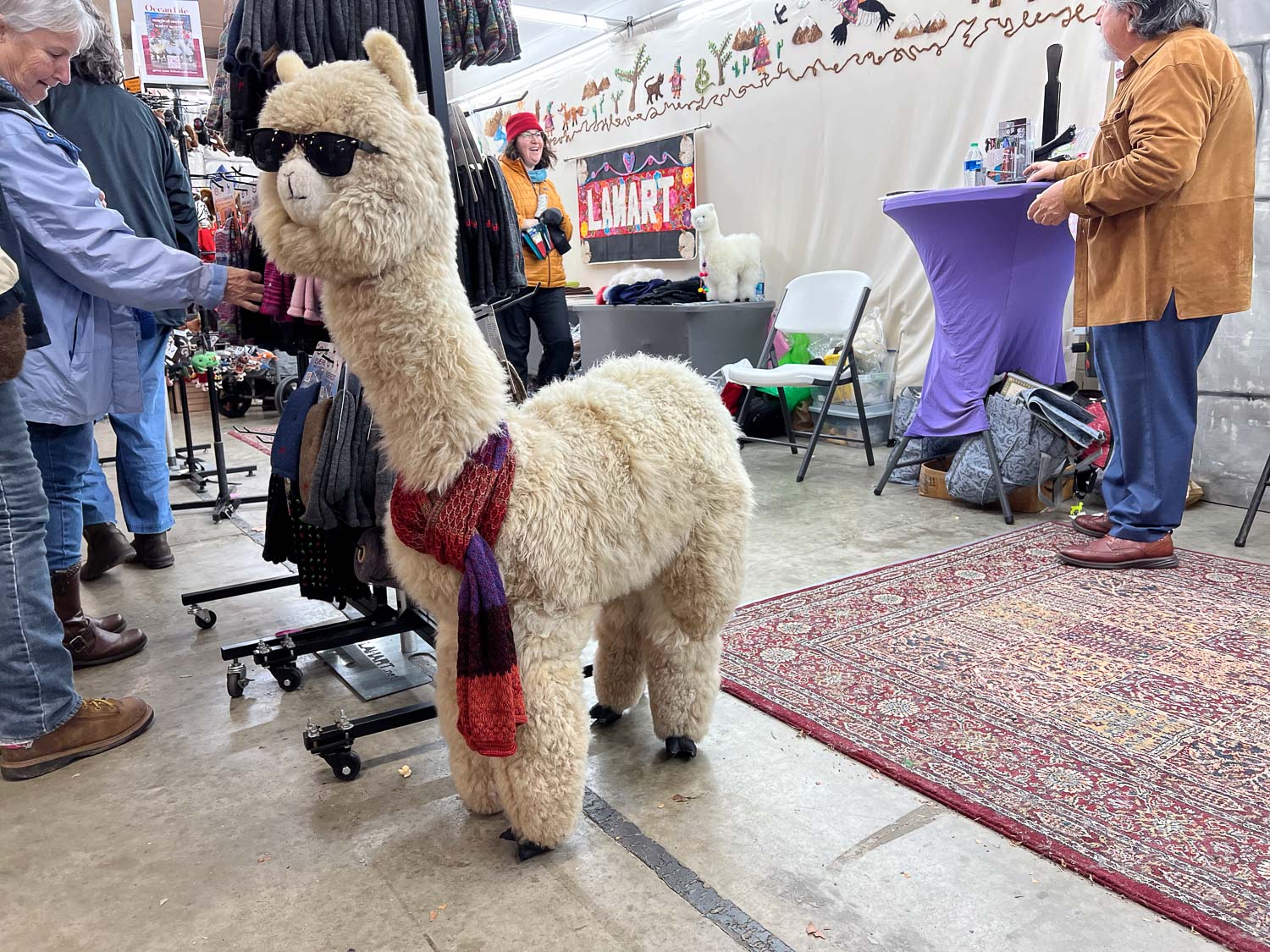
Here was a stylish alpaca.
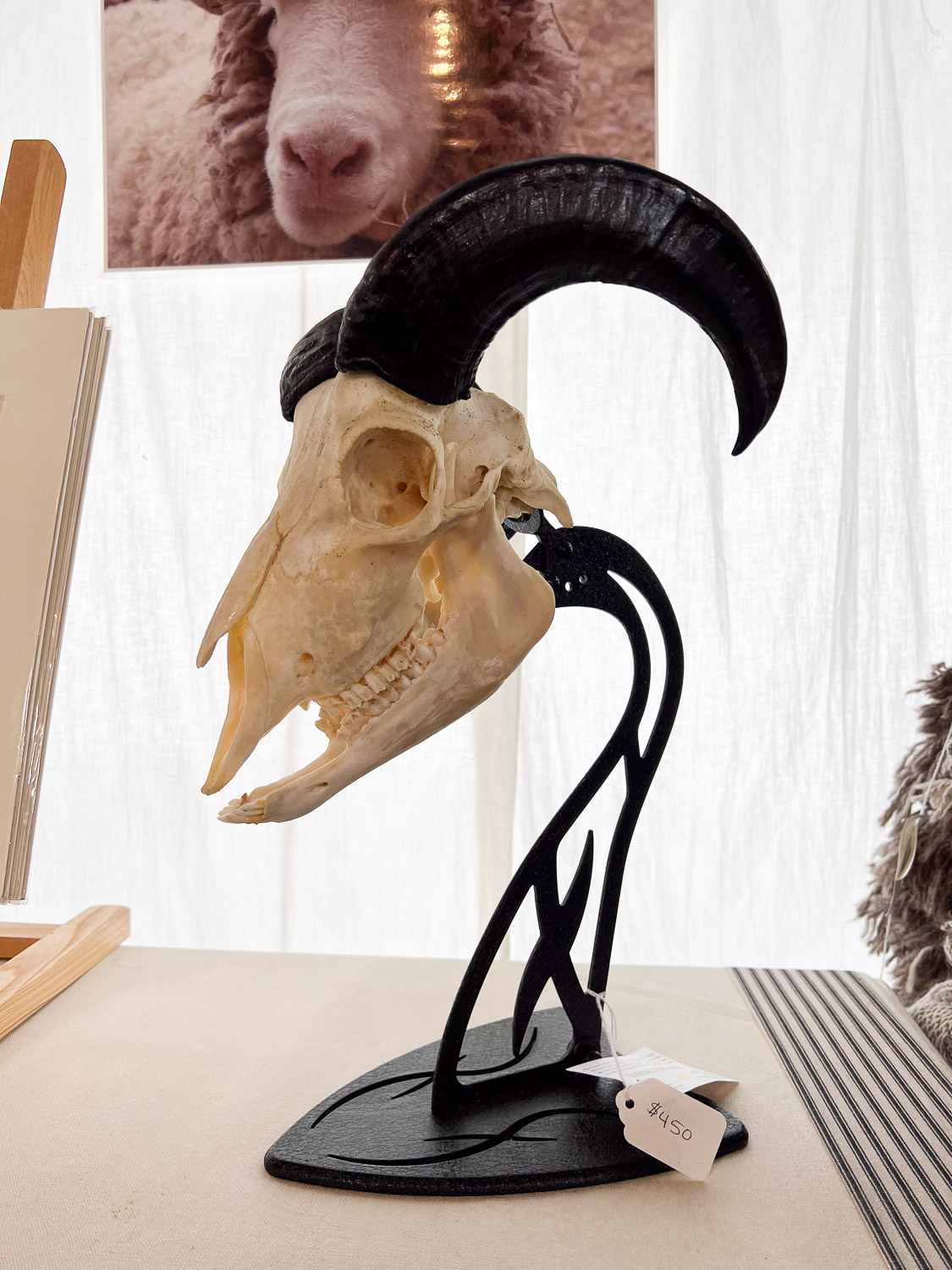
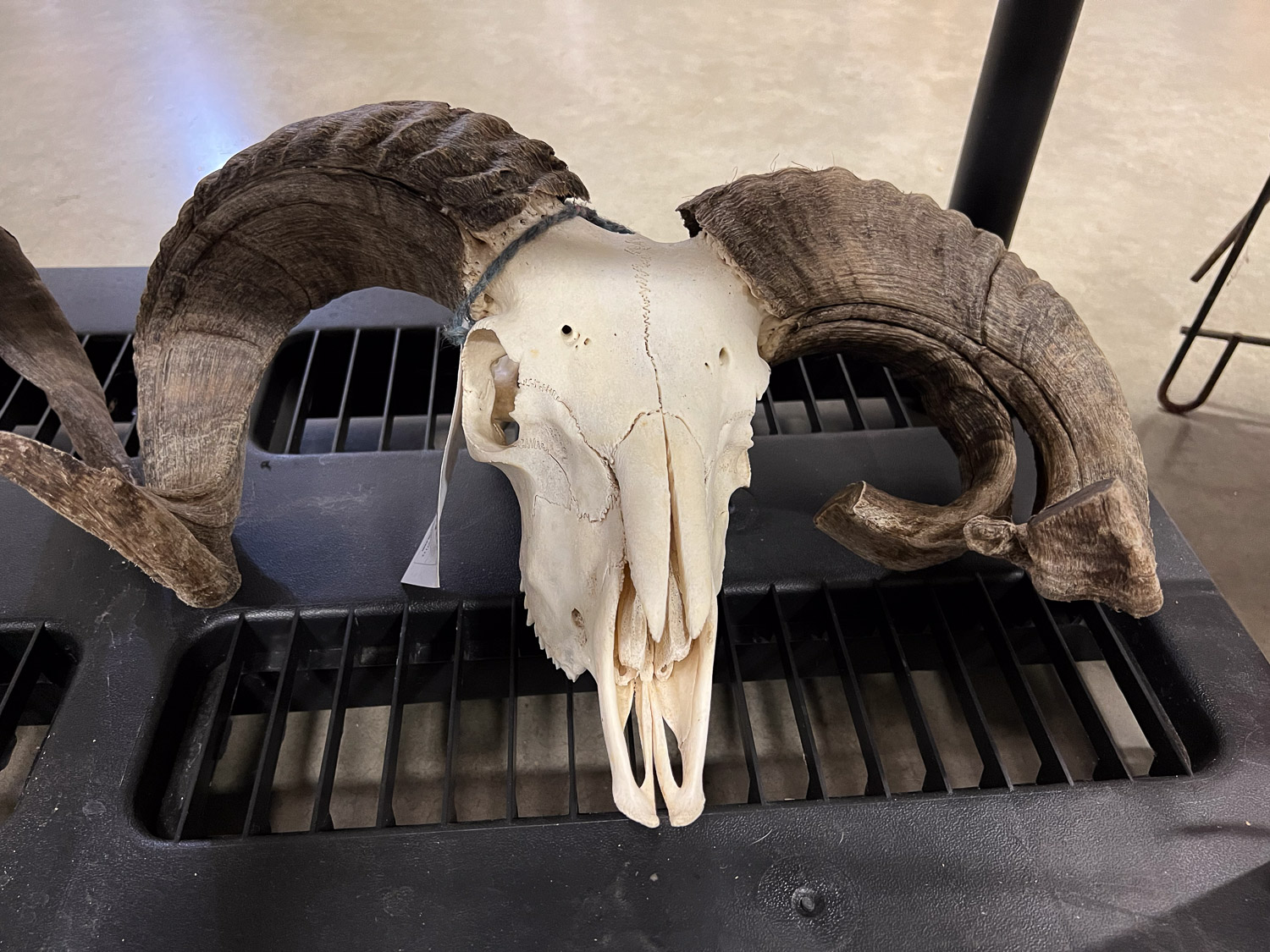
I had just sold four Jacob skulls at Lambtown, butfor a lot less than this one. However they weren’t nearly as clean, didn’t include the lower jawbone, and didn’t have a cool stand to hold them. You get what you pay for.
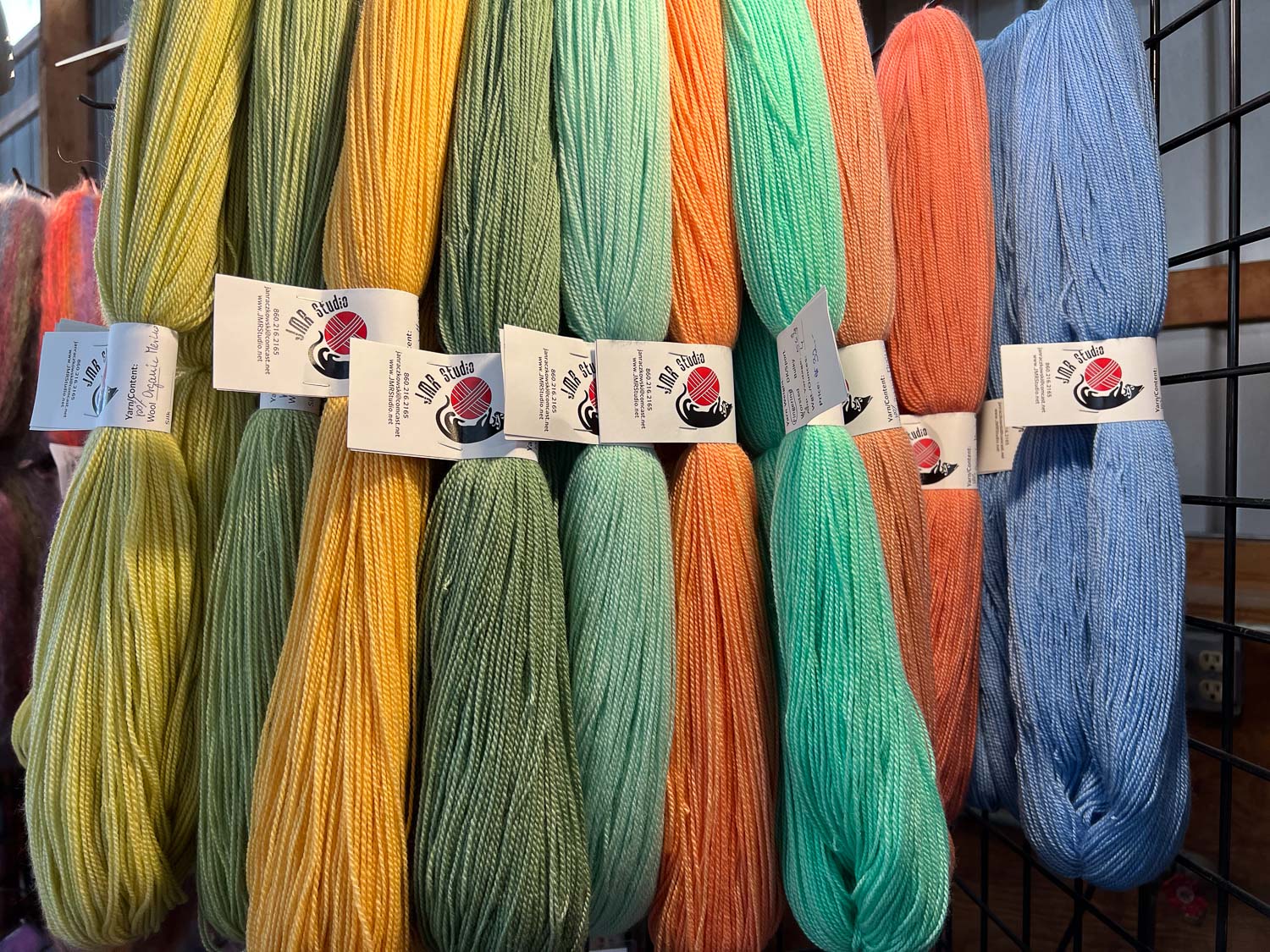
I considered these yarns to finish up the projects for my upcoming Handwoven article. As much as I liked them, I couldn’t see them in that project. That’s when I went back to the Harrisville Design yarn (yesterday’s post) and ended up with that yarn.
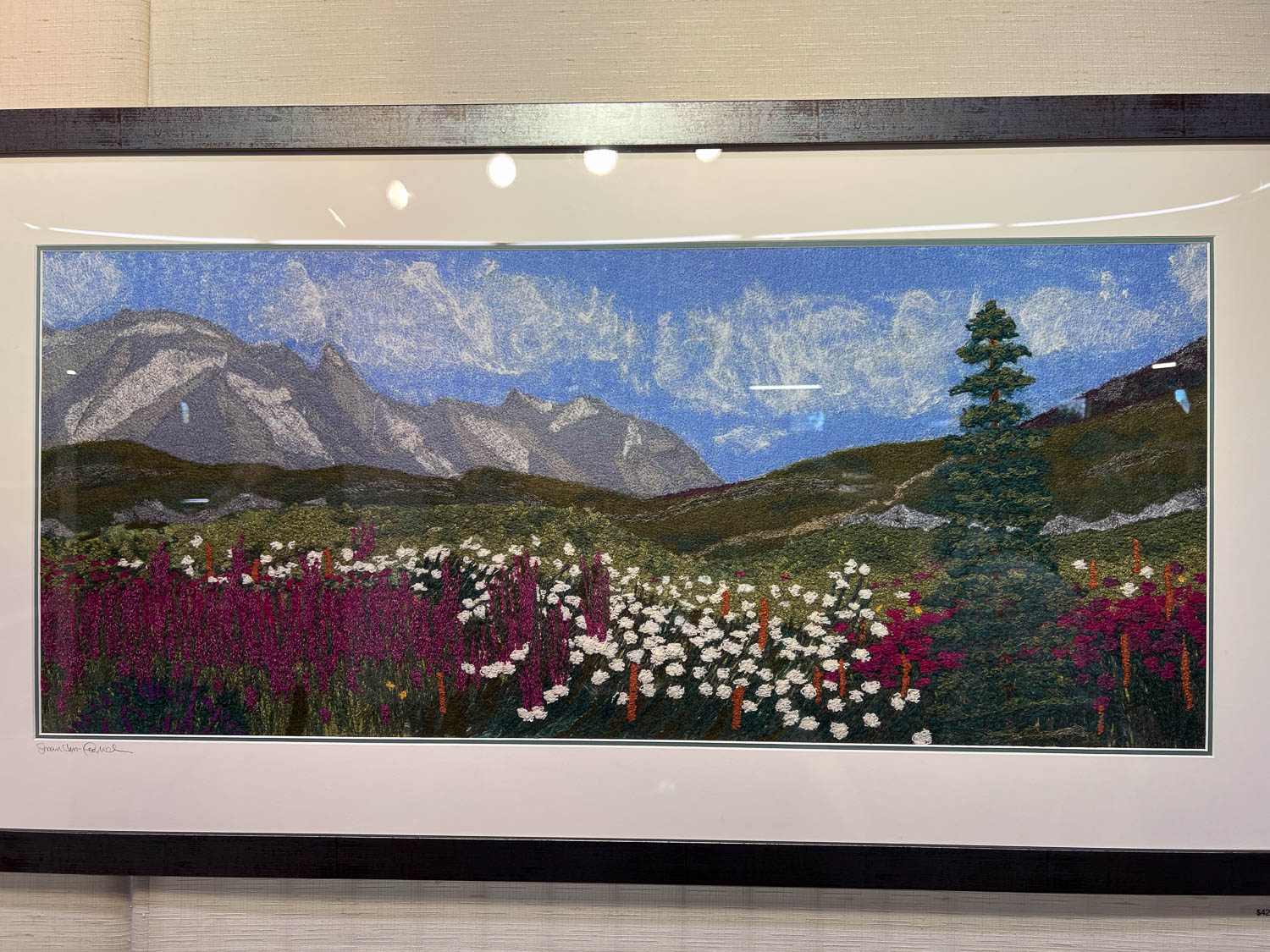
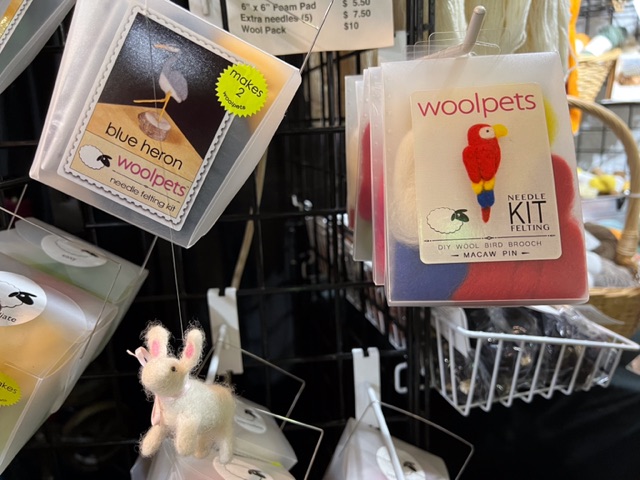
This booth had felted and needle-work embellished artwork.
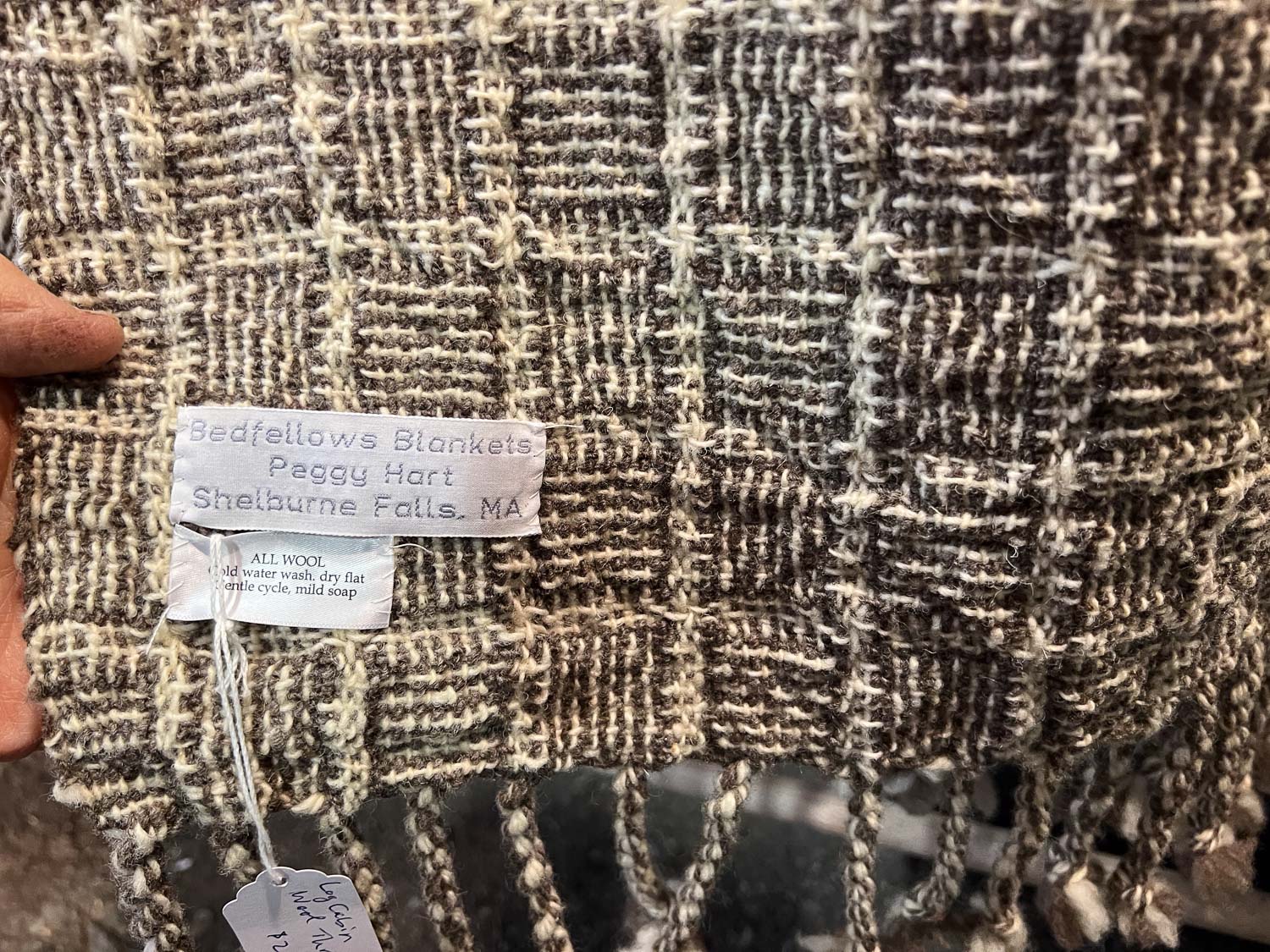
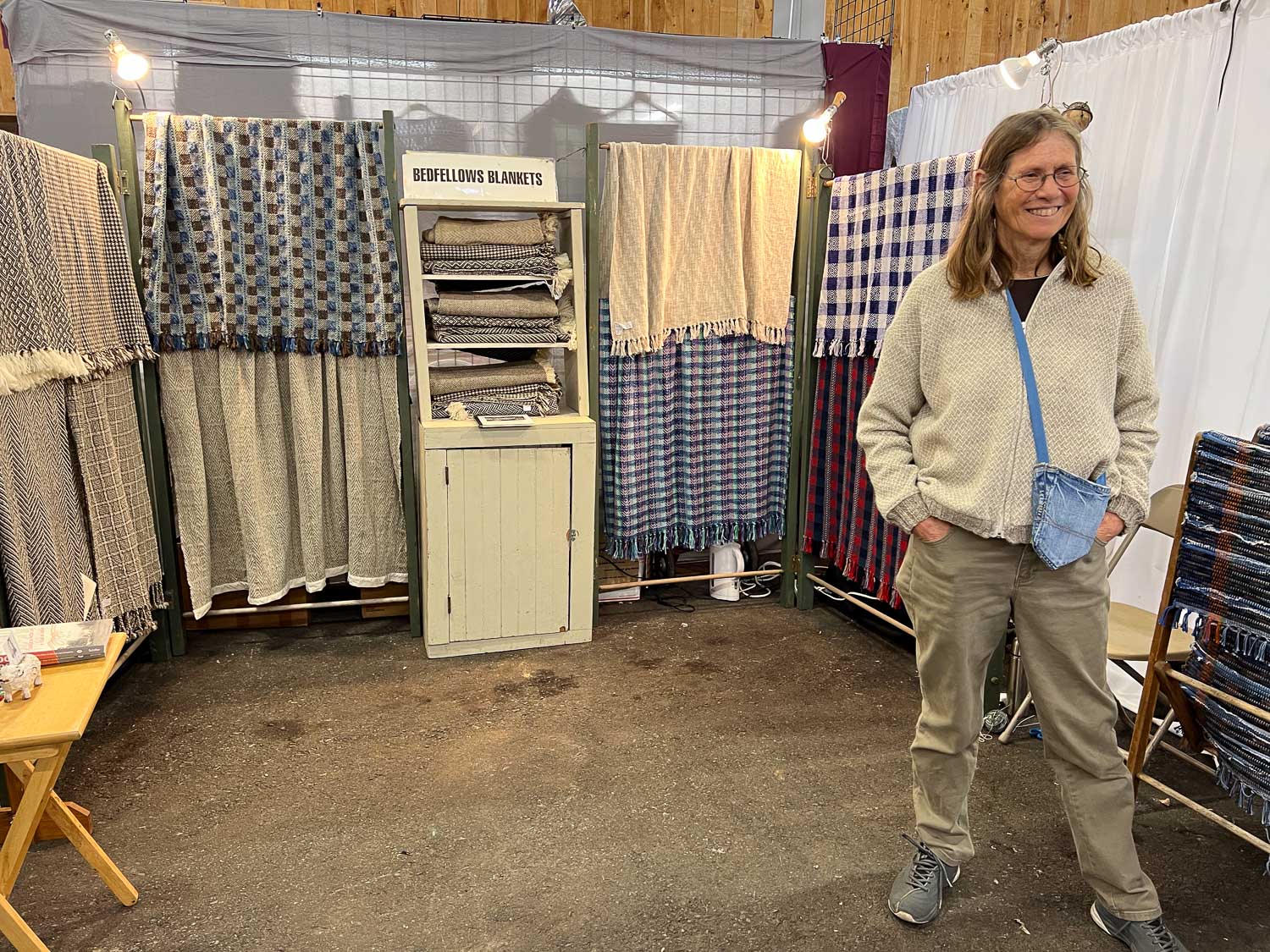
I had seen blankets in other booths that were woven using singles yarn and I noticed the same in this booth. I was thinking was about how different they look than what I weave. I think that each weaver has a style and these blankets looked like I had seen in other booths.
I talked to Peggy Hart, the weaver here, and she said that she had probably woven all those other blankets that I saw. She custom weaves for sheep owners who market their fiber and yarn, but don’t weave it themselves. I saw that she had also written a book about weaving and wool in America, and I bought a copy.
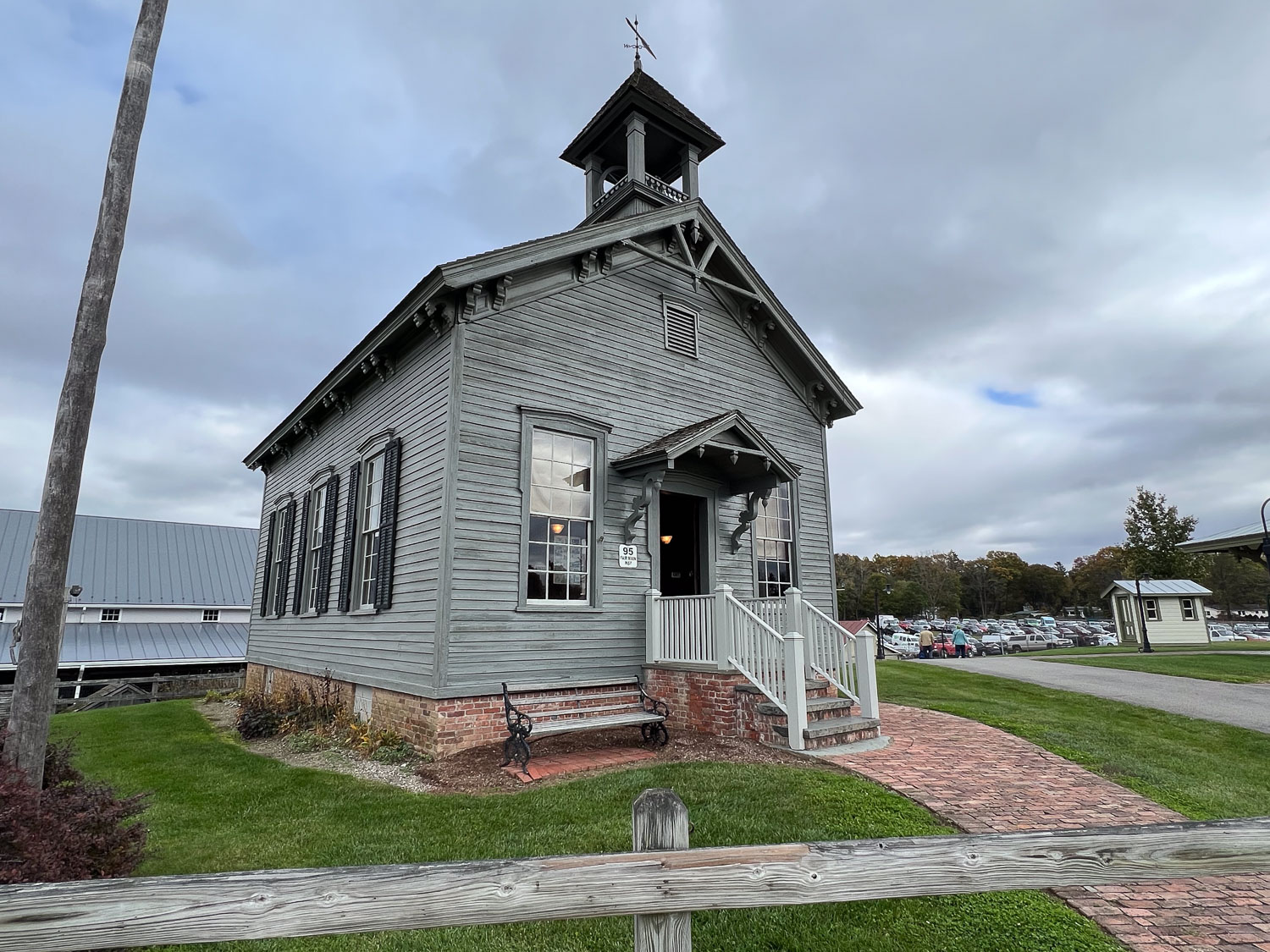
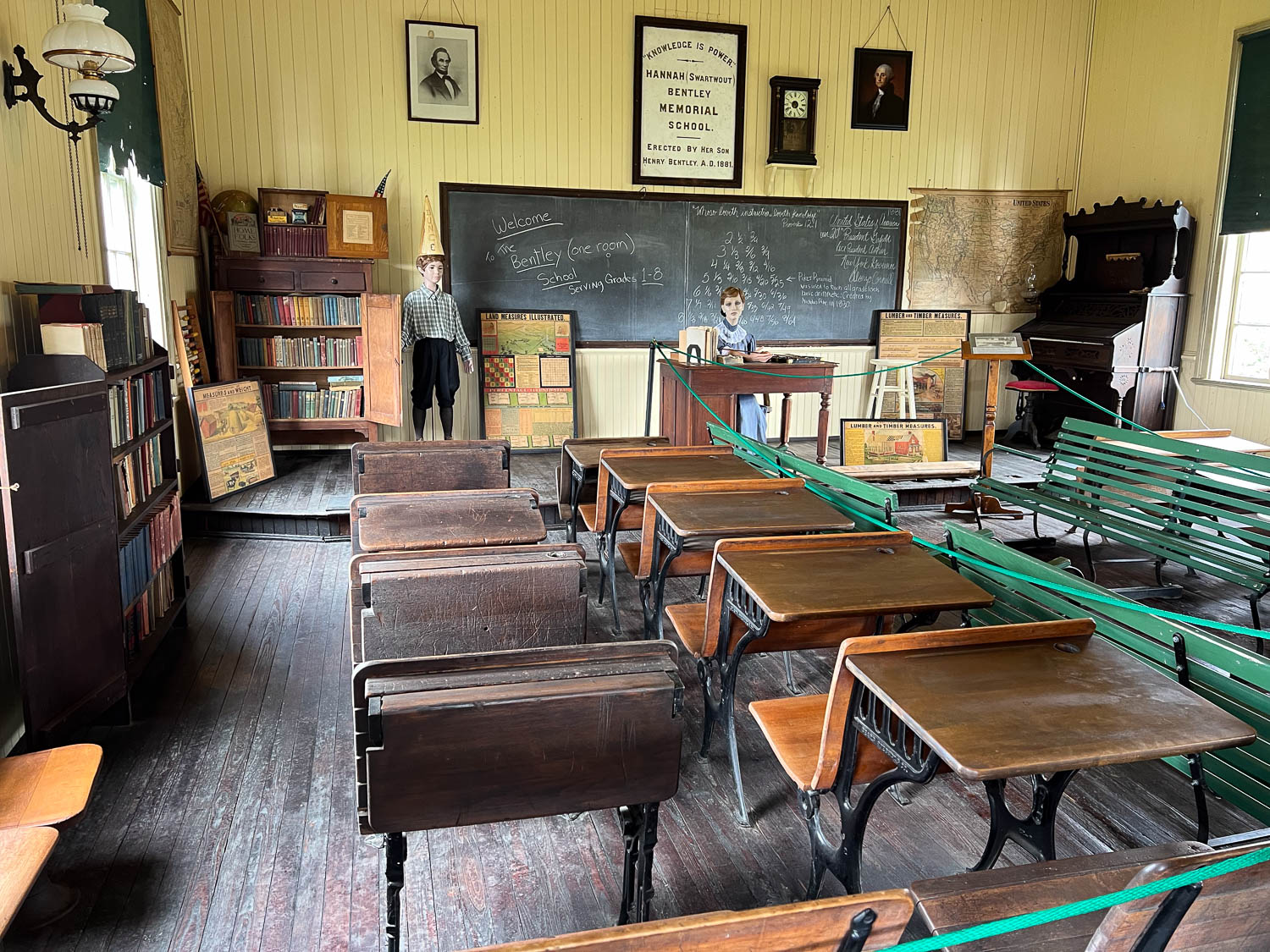
I had seen all the vendors and wandered over to some of the other buildings on the fairgrounds. This is the Bentley one-room schoolhouse, built in 1881, and relocated to the fairgrounds in 2003.
Many of the furnishings are original.
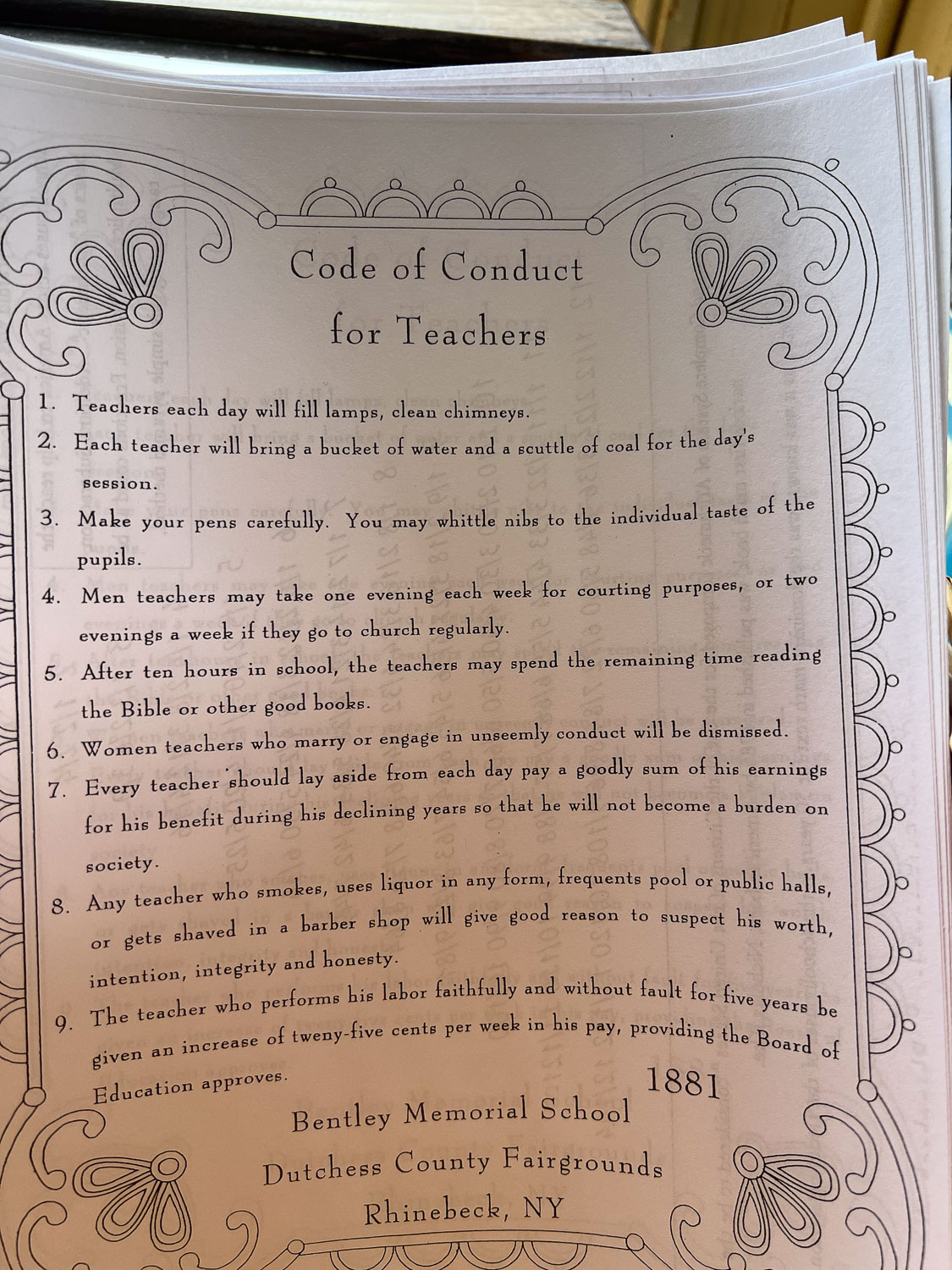
Teacher Code of Conduct.
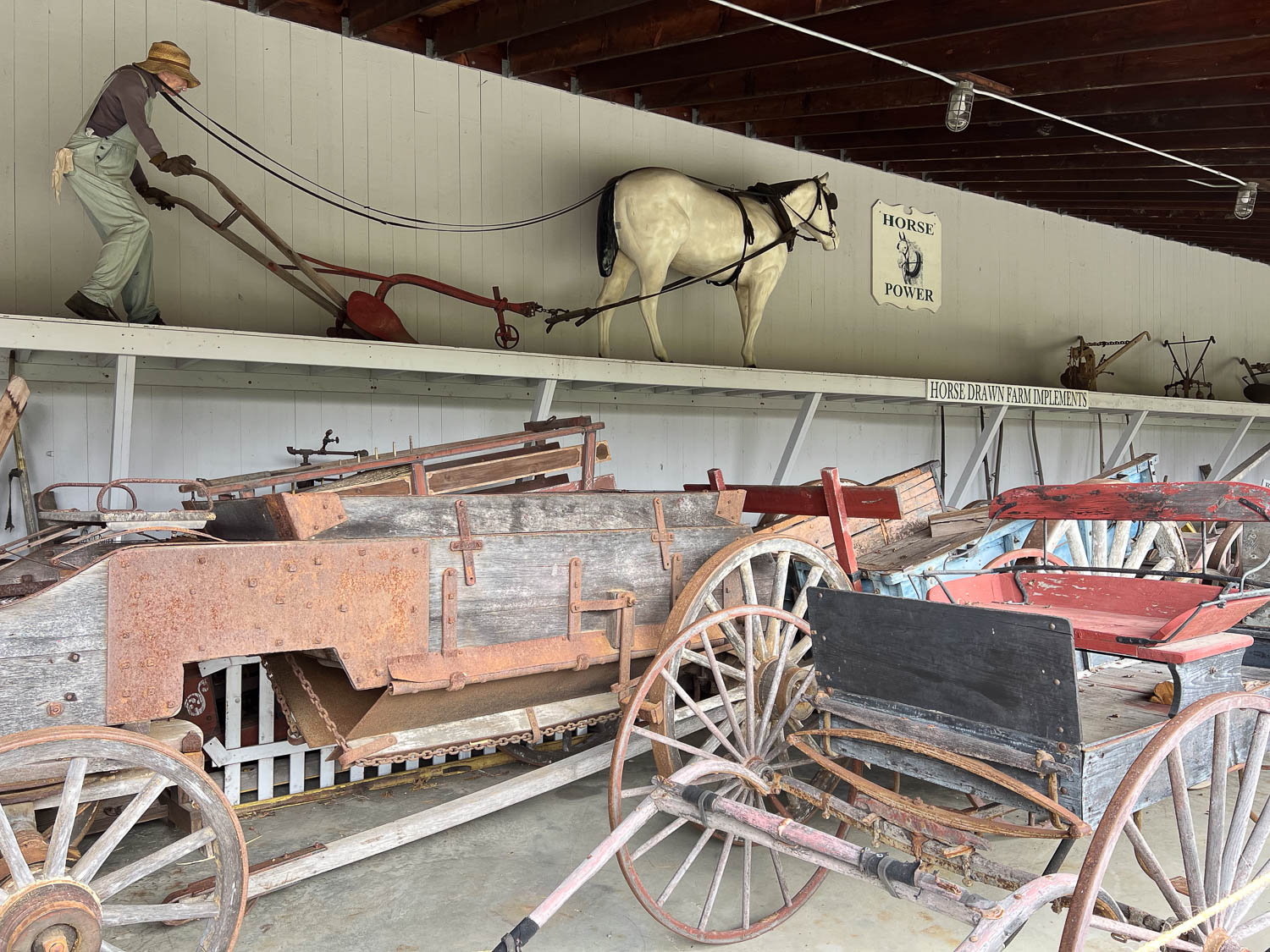
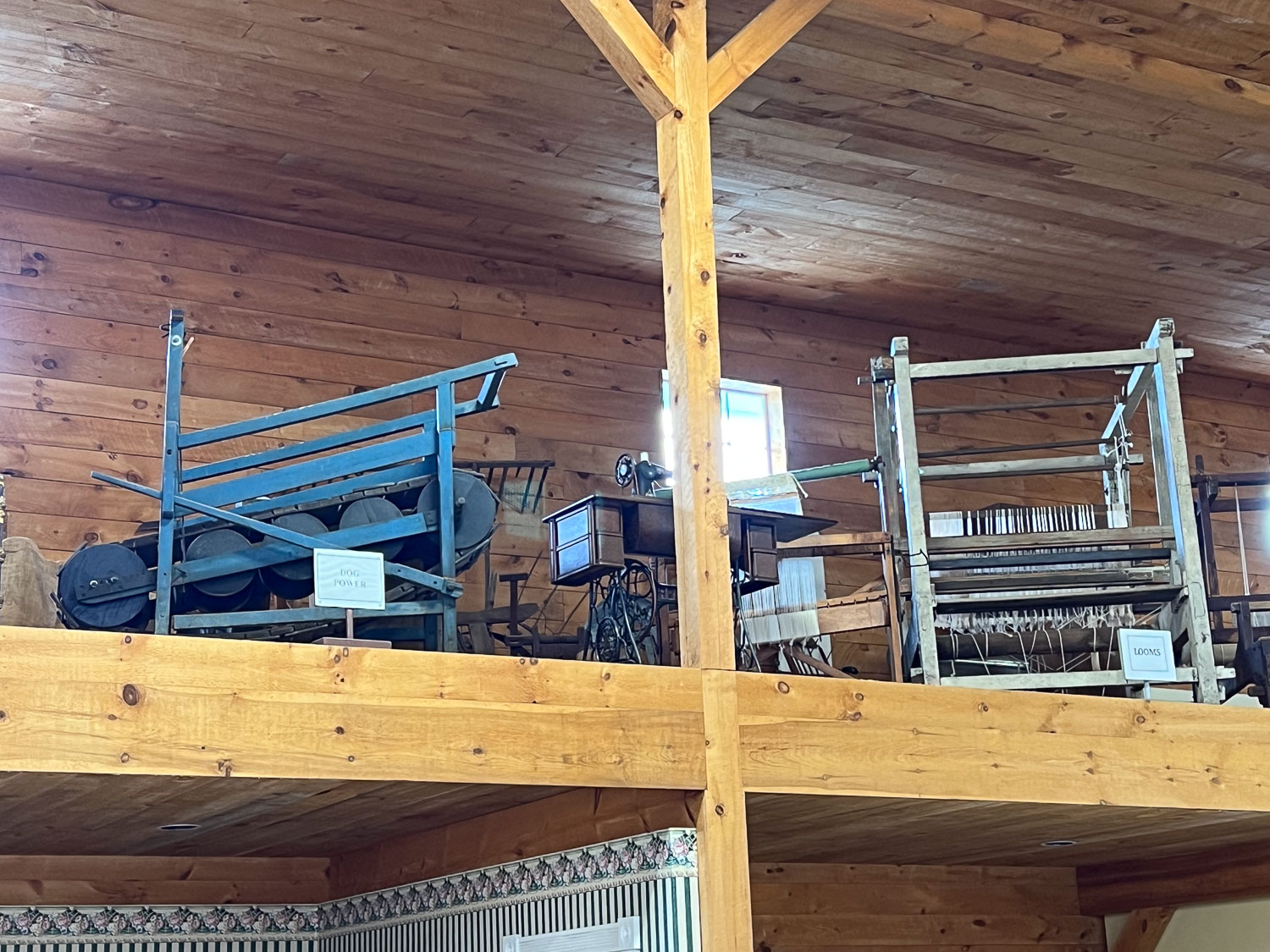
There is also a Century Museum, a large building filled with lots of displays of old equipment. There is a club that staffs this building during events at the fairgrounds and many were on hand to talk about their various areas of interest.
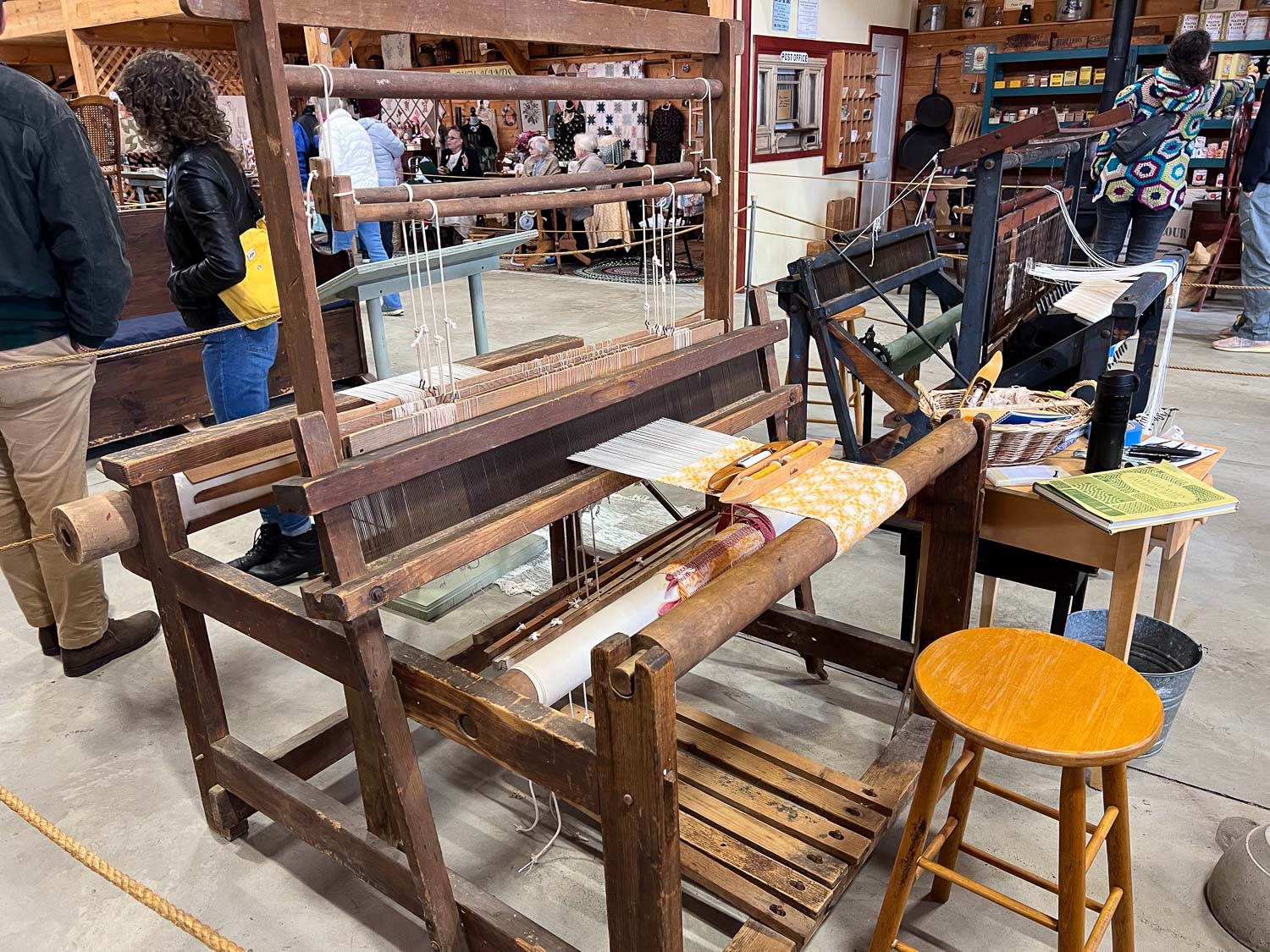
I talked to the weaver here about the action of the counter-balanced loom. I was amused to see a newer copy of the old Davison book that we all use.
The sign on that blue treadmill on the left says Dog Power. There was another with a huge stuffed dog in it. Notice several other looms and an old treadle sewing machine on this level.
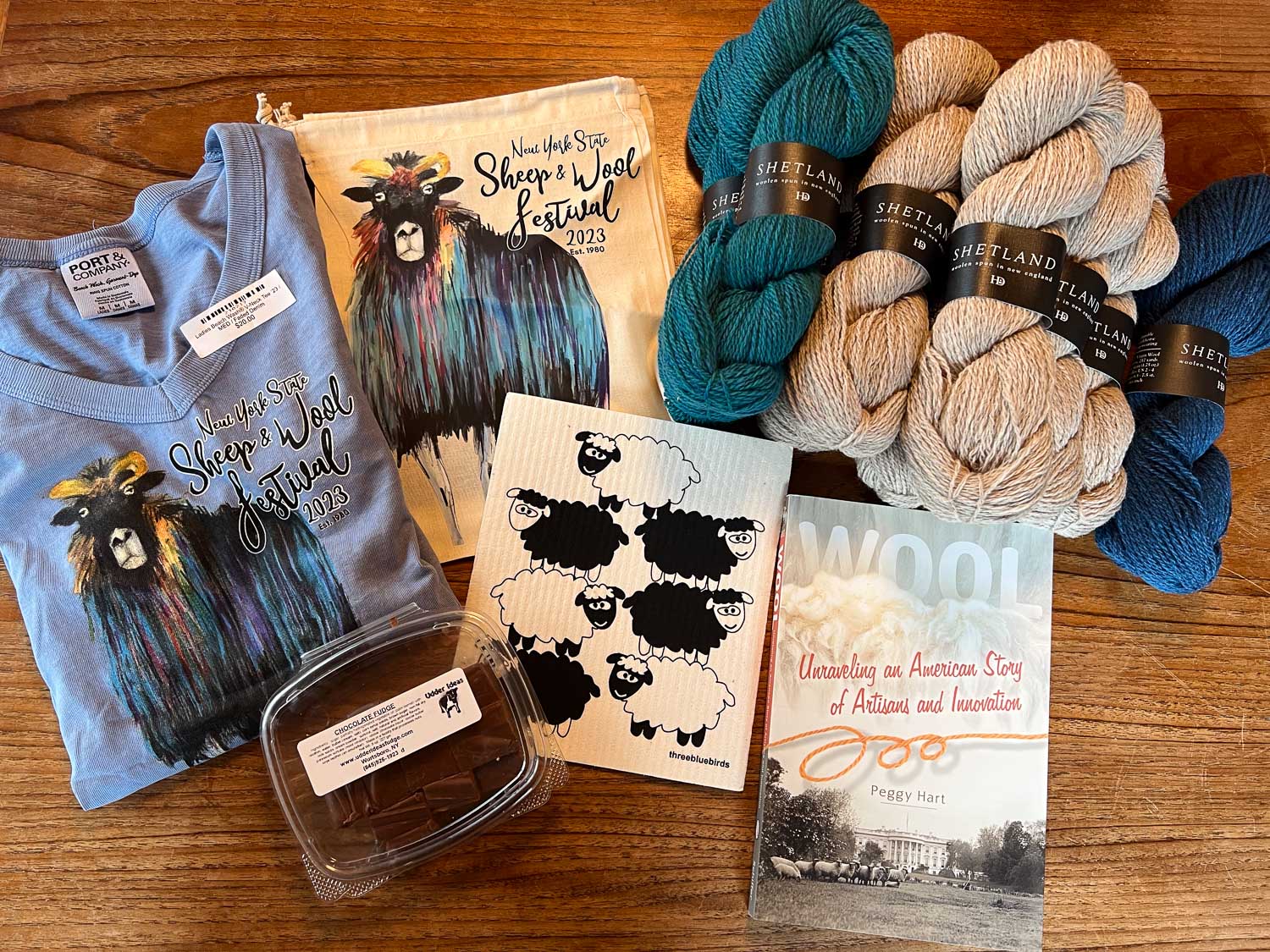
Back “home” we shared the day’s purchases.
One day left to this adventure, but it was a travel day.
I was thinking that I’d been back from our New York trip for a couple of weeks and I still haven’t finished my blog posts. I just checked the calendar and it’s been just over a week, so maybe I’m not that behind. The last post I wrote is here. Now it’s time for the main event. We made this trip to attend the event that everyone in the fiber world just refers to as Rhinebeck. The location is Rhinebeck but the event is the New York Sheep and Wool Festival. According to a 2022 source cited in Wikipedia the festival draws 30,000 visitors and has 300 vendors.
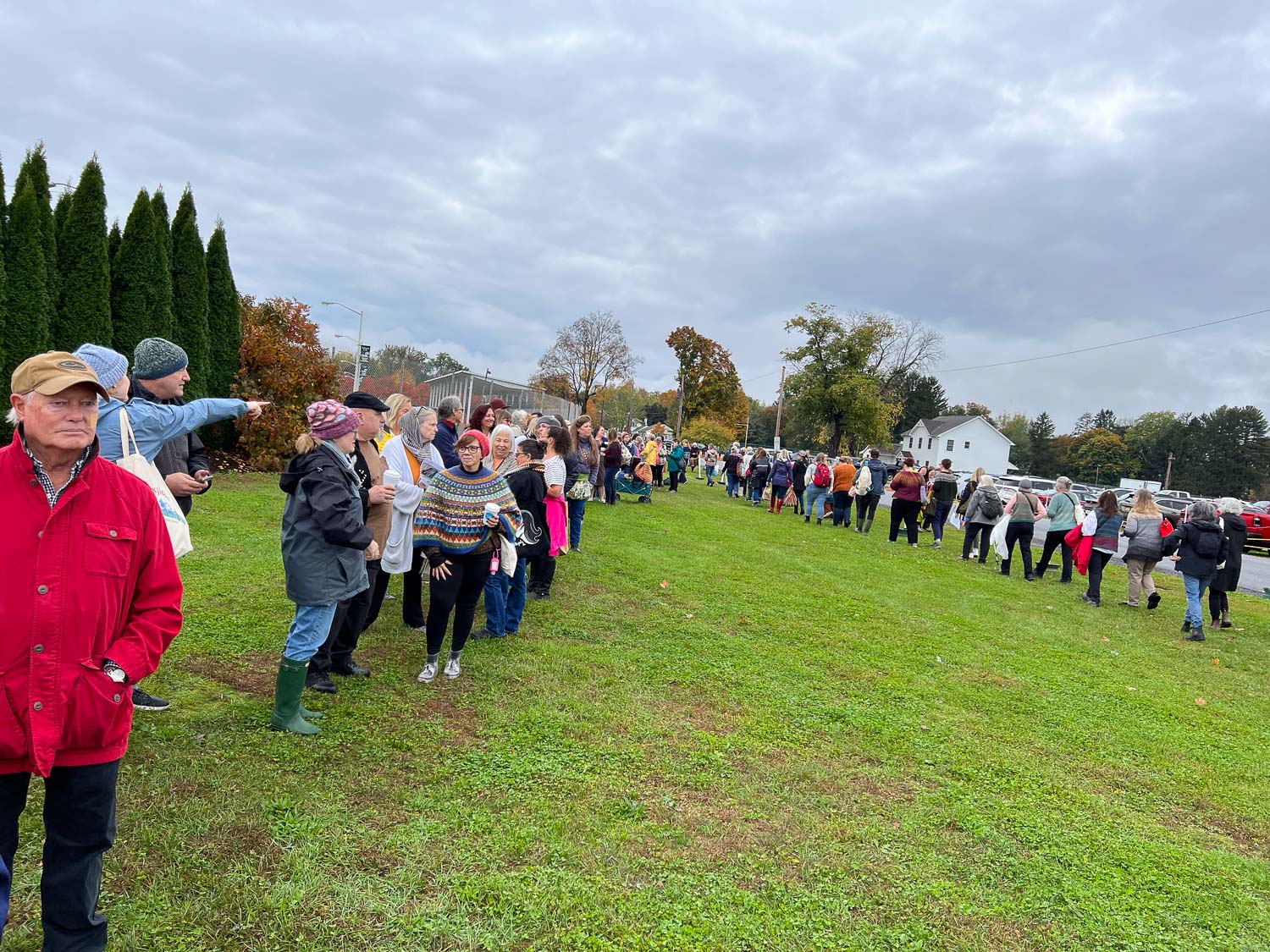
We had heard about the long lines of people and of traffic. Wanting to avoid lines we got there over an hour early. We thought we would wait in the car but people were lining up. We got in line near the front.
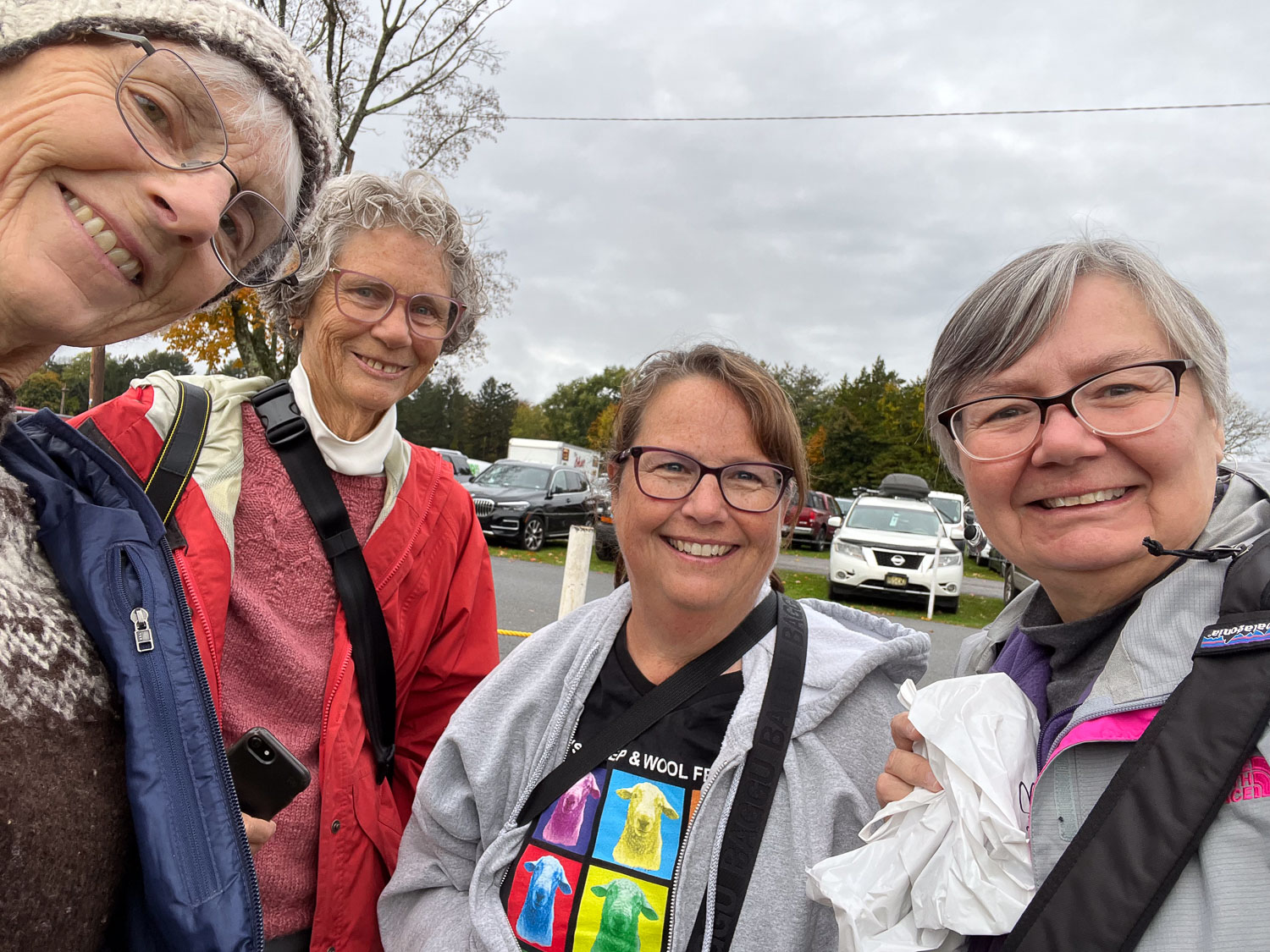
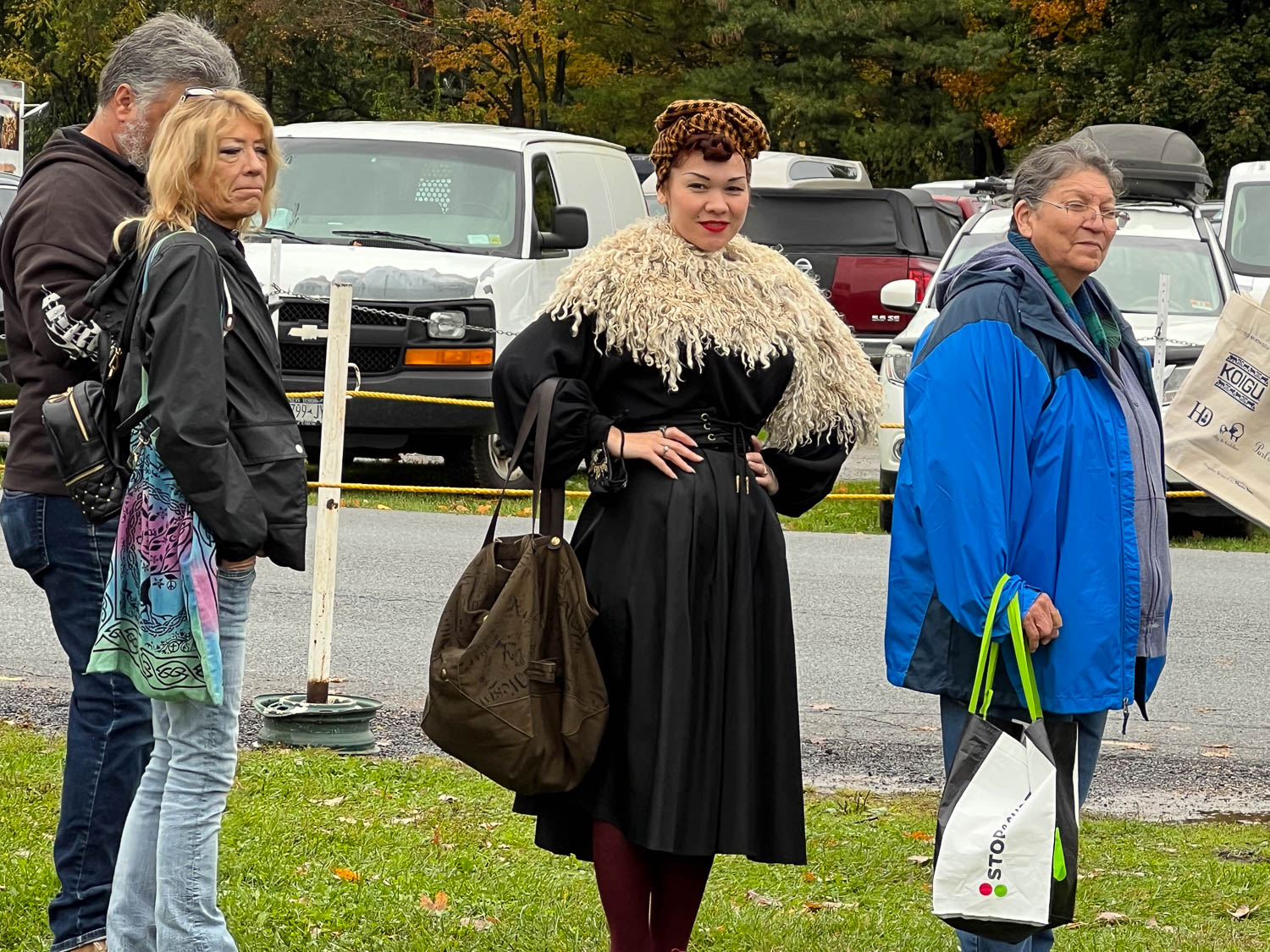
Here are the four of us. While in line we started talking to the people just behind us. They were three friends who meet here every year from various states. One has been to my shop as she used to live in Winters, just ten minutes away. It’s a small fiber world, even with 30,000 people in attendance.
Look who we saw in the line as it started to loop around. It’s Siobhan, one of our Farm Club members. It wasn’t a total surprise because we knew she’d be here and we had lunch with her the day before.
Things were pretty well organized at this gate. The security people came along the line to check tickets, stamp hands, and check bags. Then once the gates opened there was no more waiting.
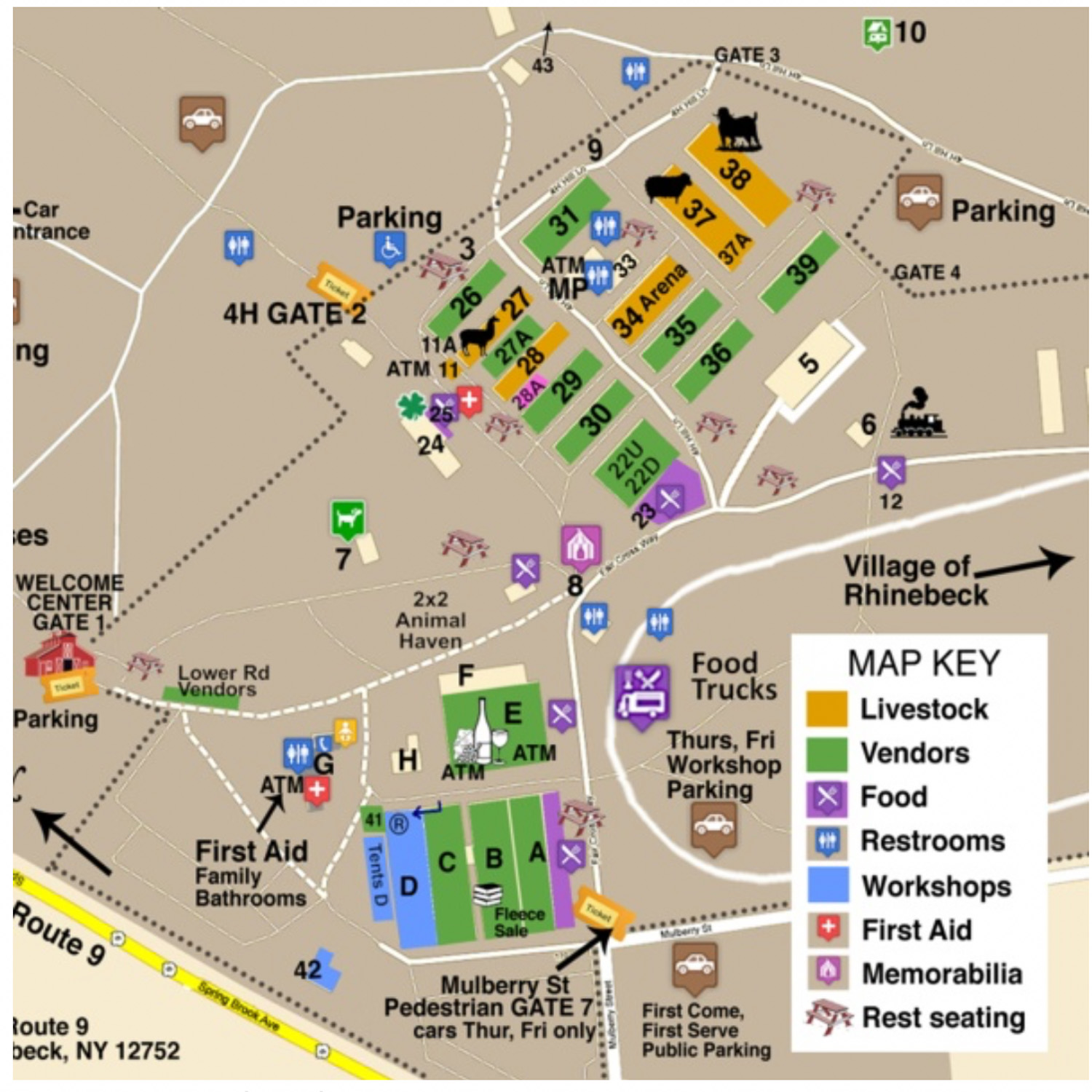
We entered at Gate 7 at the bottom of the map. The green blocks were full of vendors. There were a lot to see. In fact I was surprised that there wasn’t more livestock. I don’t know if there used to be, but you can see that a number of the barns are marked green indicating vendors. We first headed to Building E where Kathleen, Siobhan, and I had entered our woven pieces.
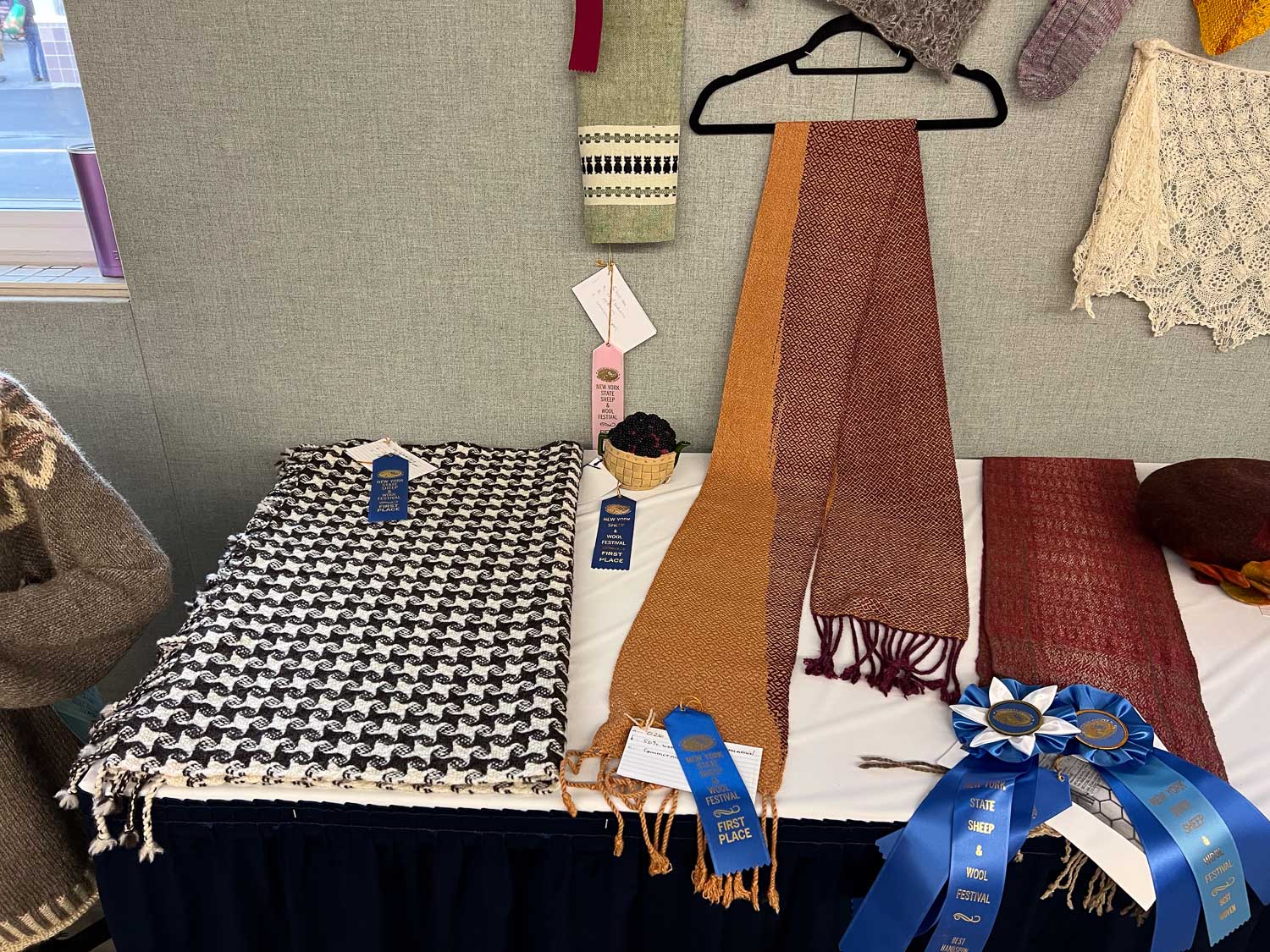
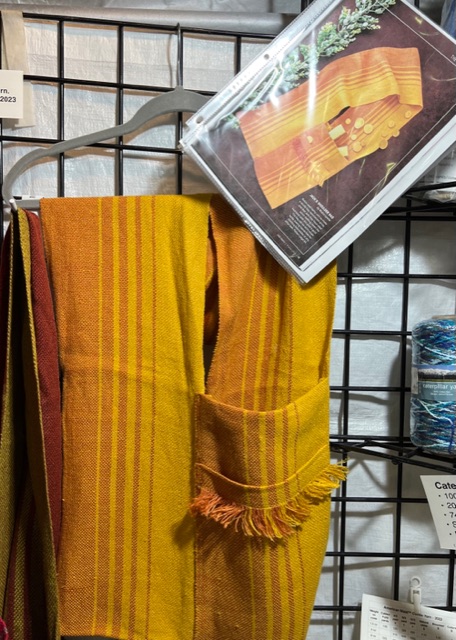
I entered six different classes and got first in four of them. My black and white pinwheel shawl was entered in a class that included all types of crafts but with the theme of Natural Color. The gold and red clasped warp scarf was entered in Handwoven, Small Item, Commercial yarn.
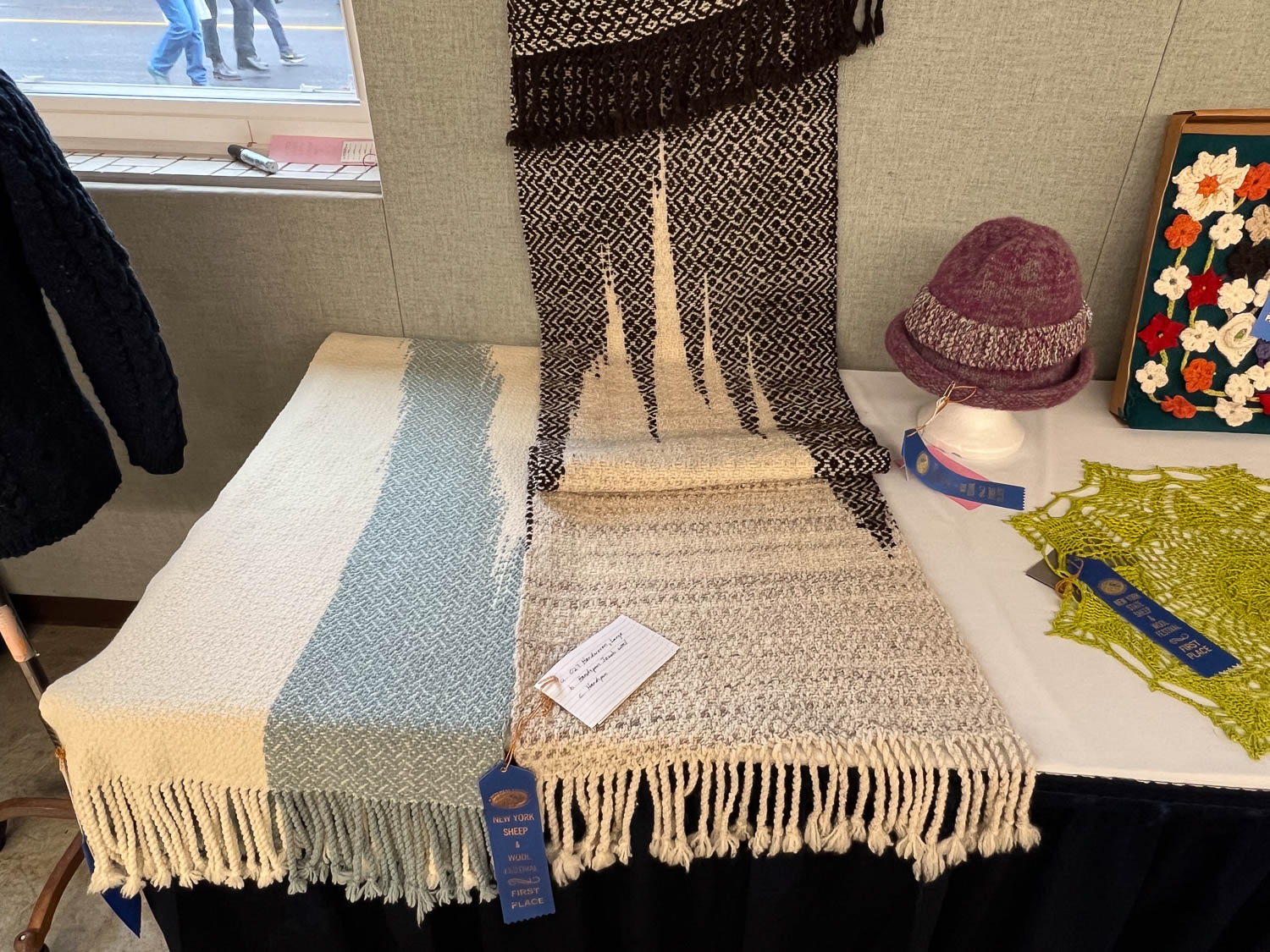
These two pieces are also clasped warp, because that is what I have been focused on lately, preparing an article for publication. The one on the left is locally grown wool, but commercially spun, that I dyed with indigo from the garden, and the one on the right is handspun yarn. So these pieces were entered in two different classes. I just sold the handspun one and the other is listed on the brand new Soil to Soil Market. This website is so new that there only two of us there right now, but it will eventually include Fibershed producers from all over the country.
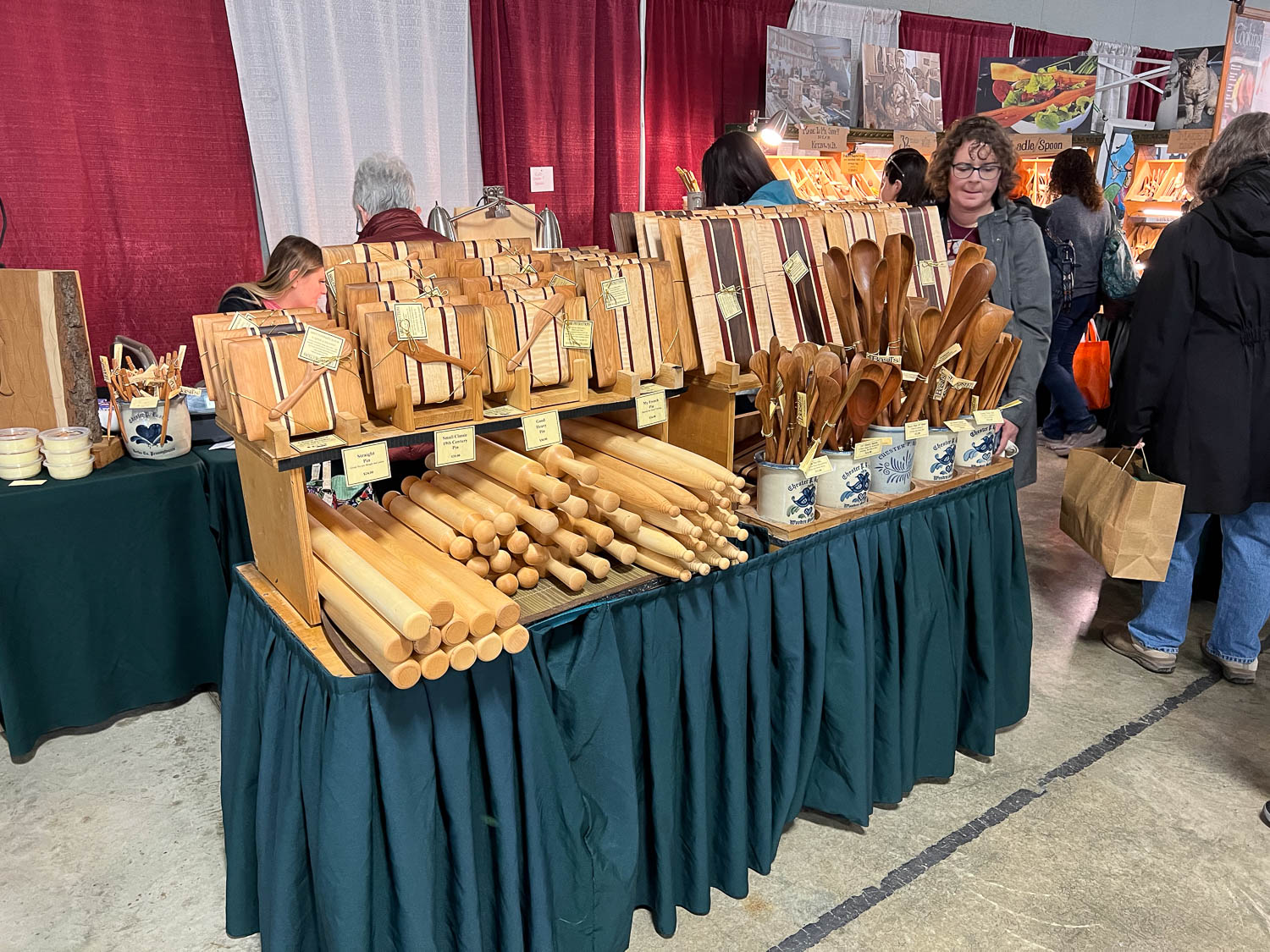
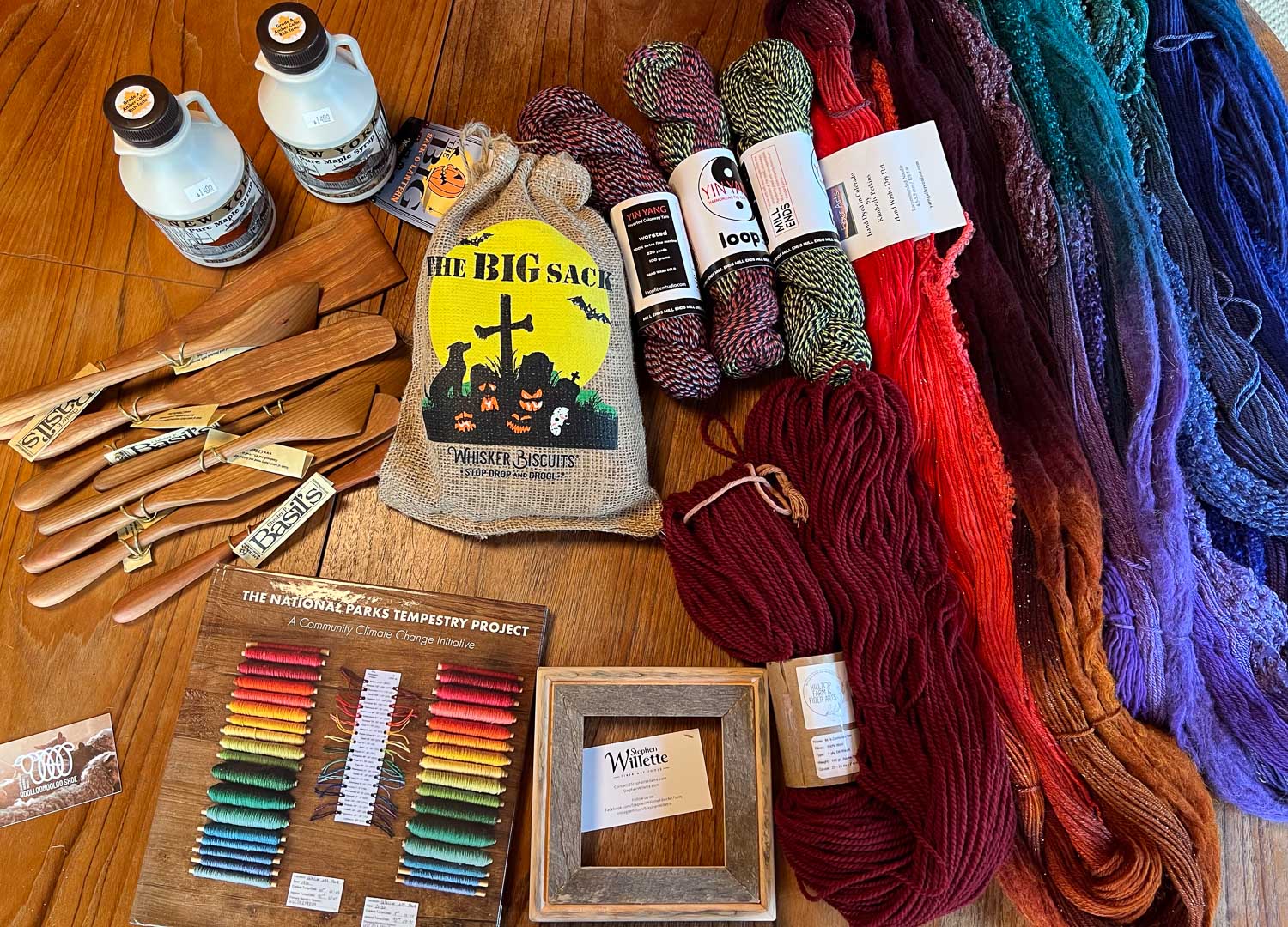
Building E not only housed the Fiber Arts competition, but had gourmet vendors. Mary wanted to start at the booth selling wooden utensils.
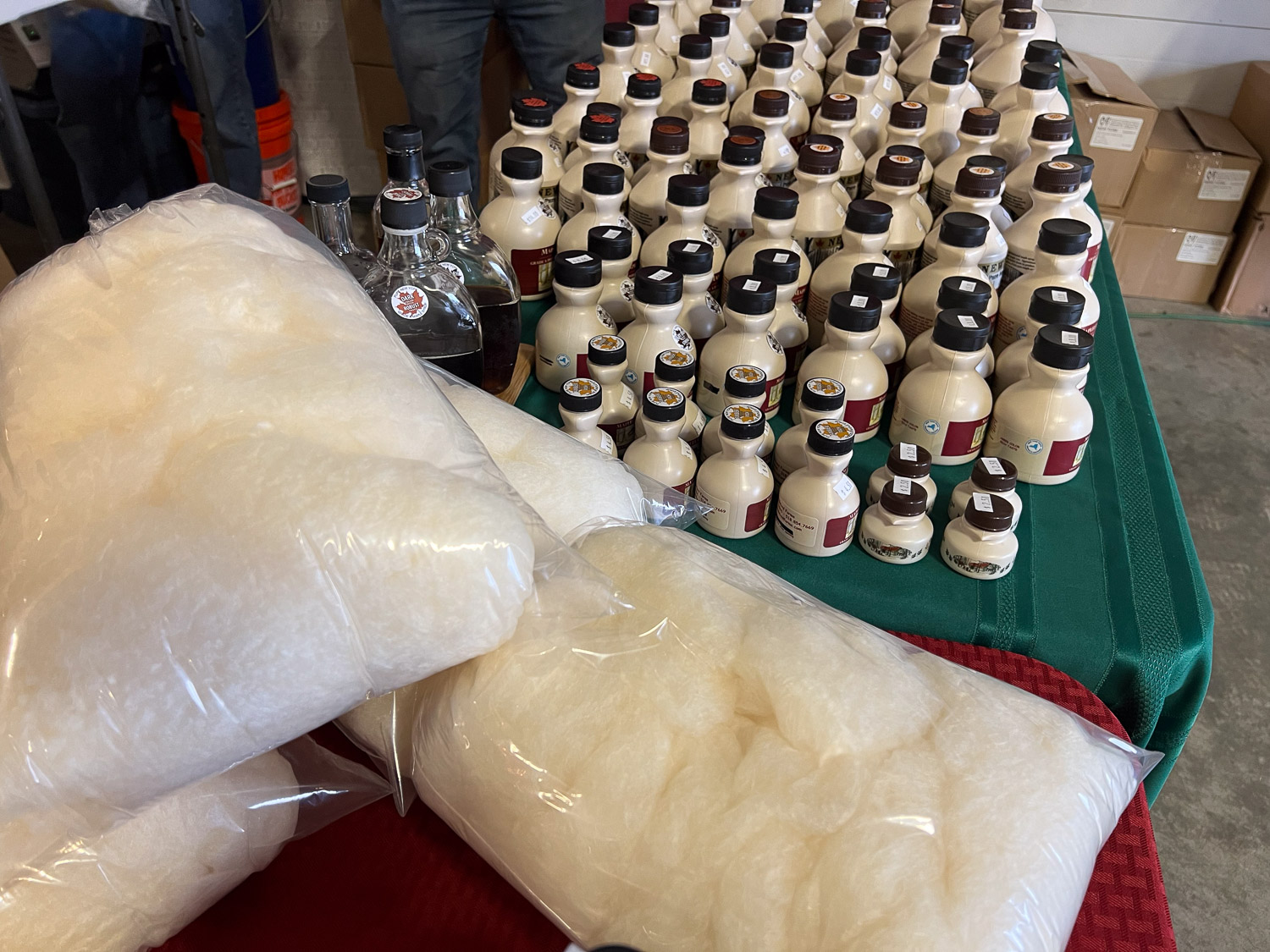
Next to him was a vendor with maple syrup and lots of other maple syrup products. So you think those bags are wool ready to spin? No. Maple sugar spun candy! It took me over an hour to move beyond these two vendors because I got talking to the maple syrup farmer and then a friend from Oregon showed up behind me and we chatted. There was a lot more to see and after I wandered through the other gourmet booths I went outside. I decided to be systematic so as to not miss anything. I was going to start at the far corner and work my way back, but I stalled out at some of these outside vendors.
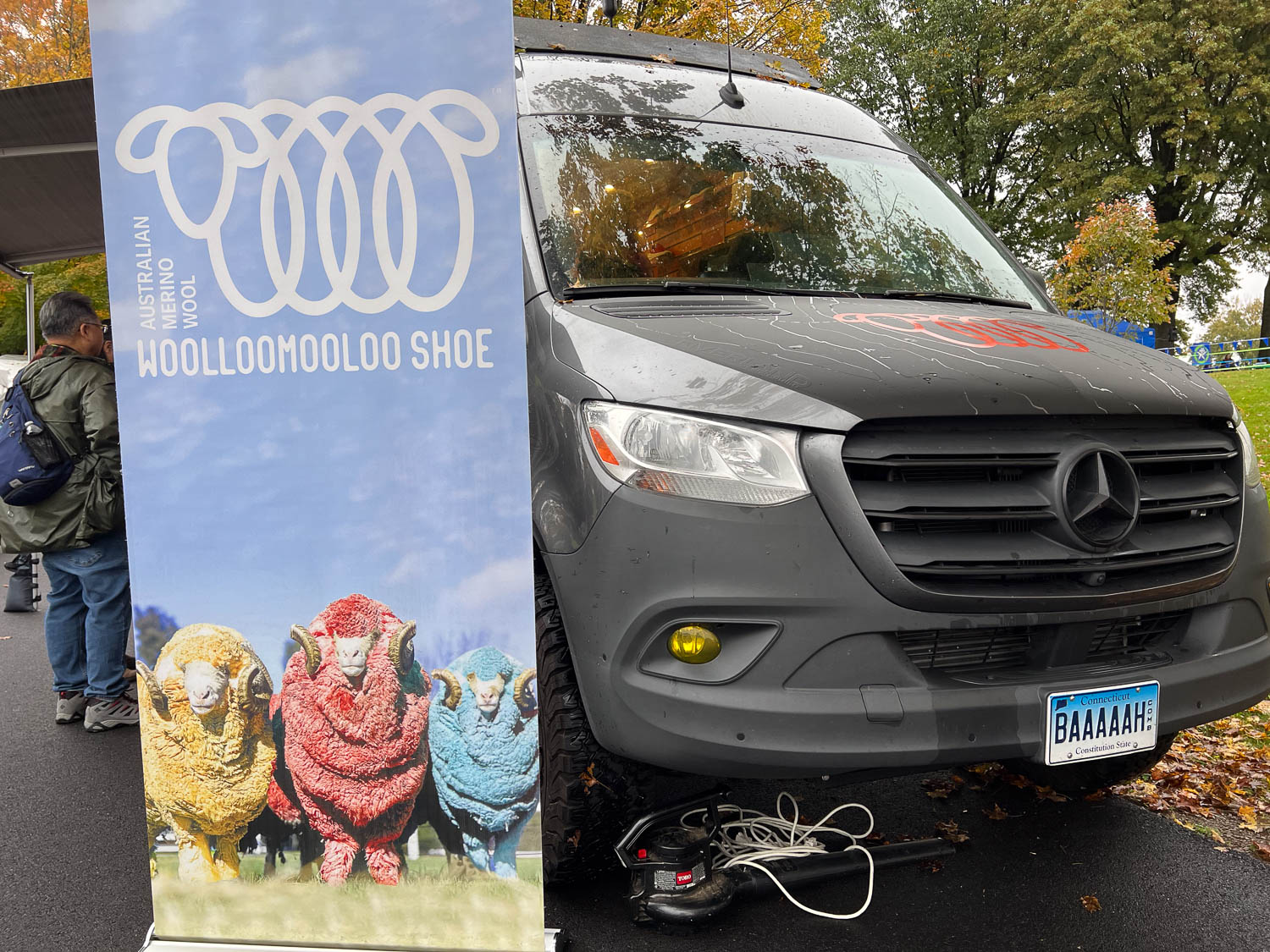
Notice the license plate of this van. They had a shoe shop set up. Shoes were in the van and there was a fitting area where you could try shoes of various styles and sizes outside the van.
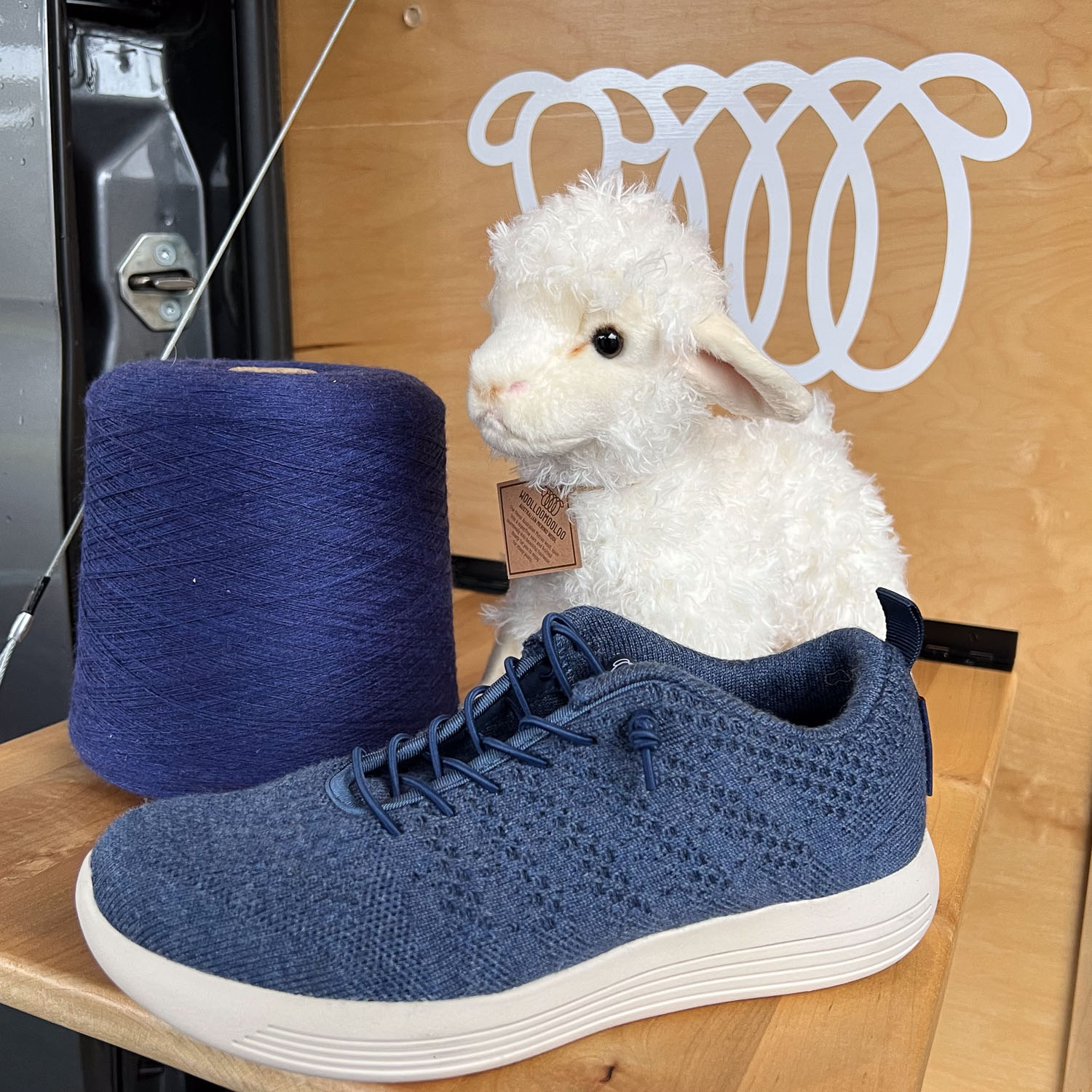
These are wool shoes and I bought a pair. They will be delivered soon.
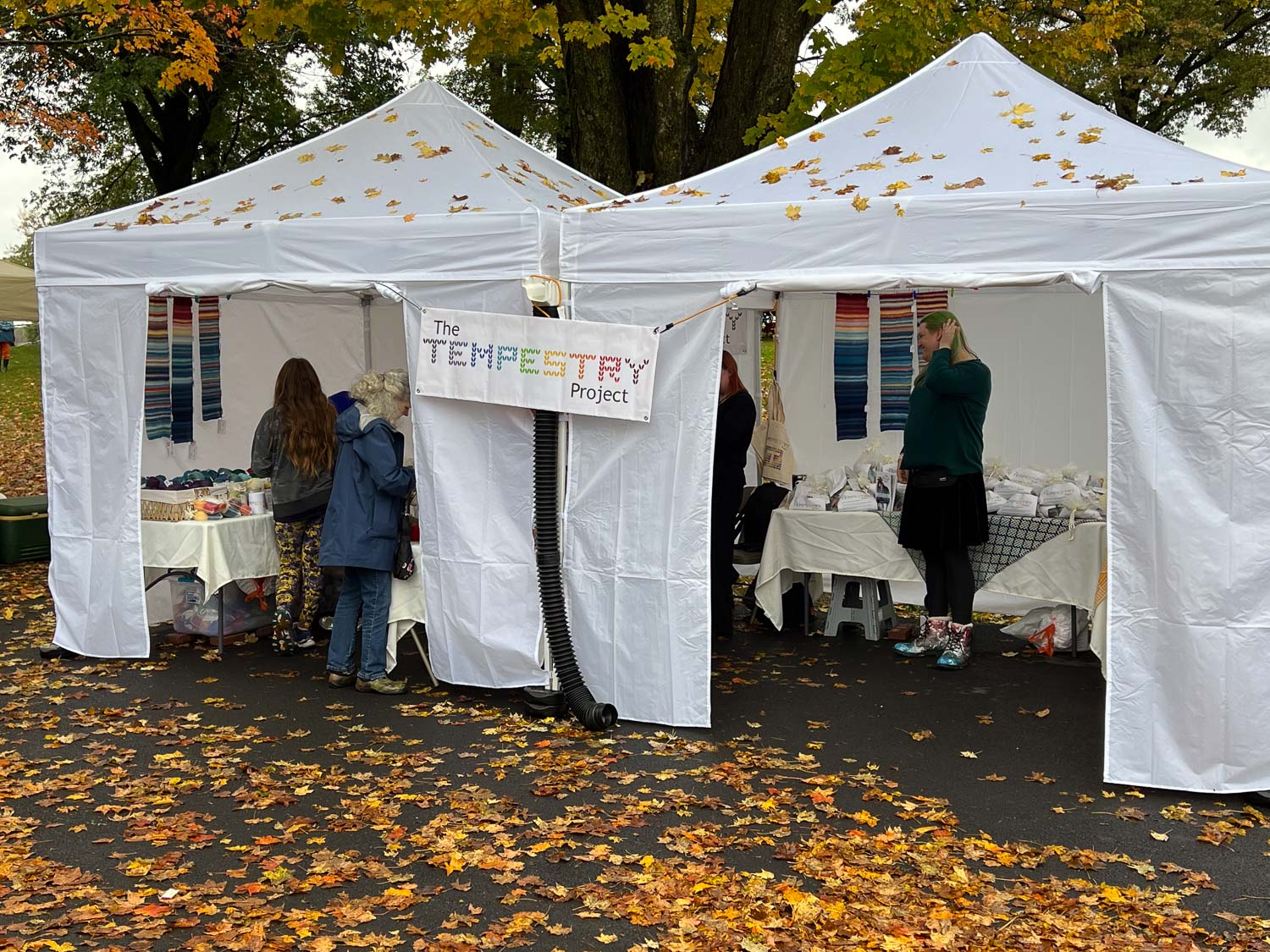
I got side-tracked here. The Tempestry project is focused on using fiber art to portray climate change by making “tempestries” to indicate high temperatures. This is partly how I got the idea of weaving my Year to Remember blankets. I found a book here that shows these pieces at National Parks all around the country, including one by my friend Lisa! So in the first two hours I had purchased items at four booths. Only about 250 booths to go!
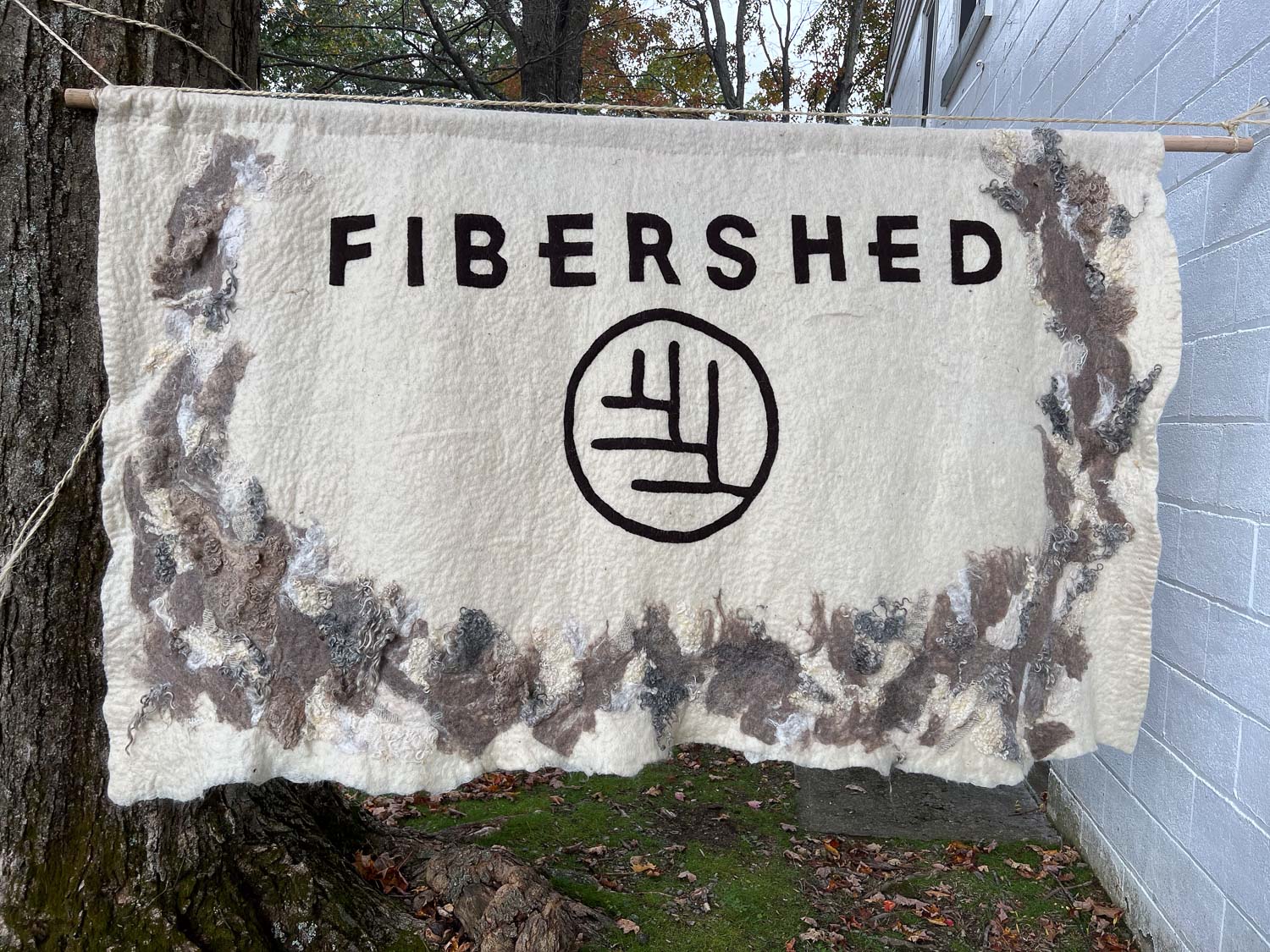
I found a Fibershed building. Our Northern California Fibershed was represented. I like to think of us as the Mothership. After all, this is where it started. There were also tables and displays from many east coast Fibersheds.
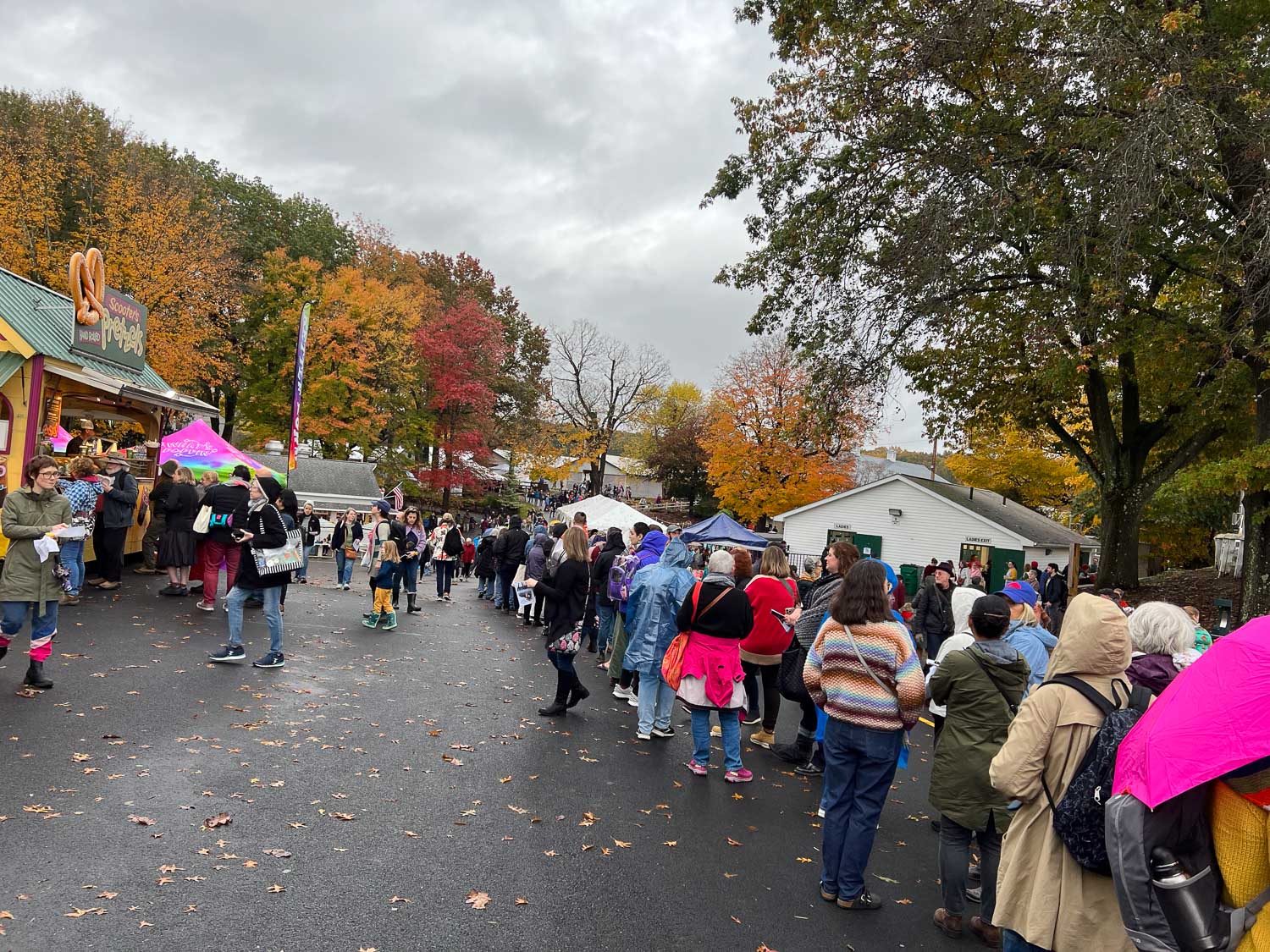
We had heard about lines, not just to get in, but to get popular items. That white tent in the middle of this photo is where the souvenir t-shirts and bags were and the line stretched even behind where I stood taking the photo. I didn’t try to get a t-shirt until the next day and almost all were sold out even early in the morning.
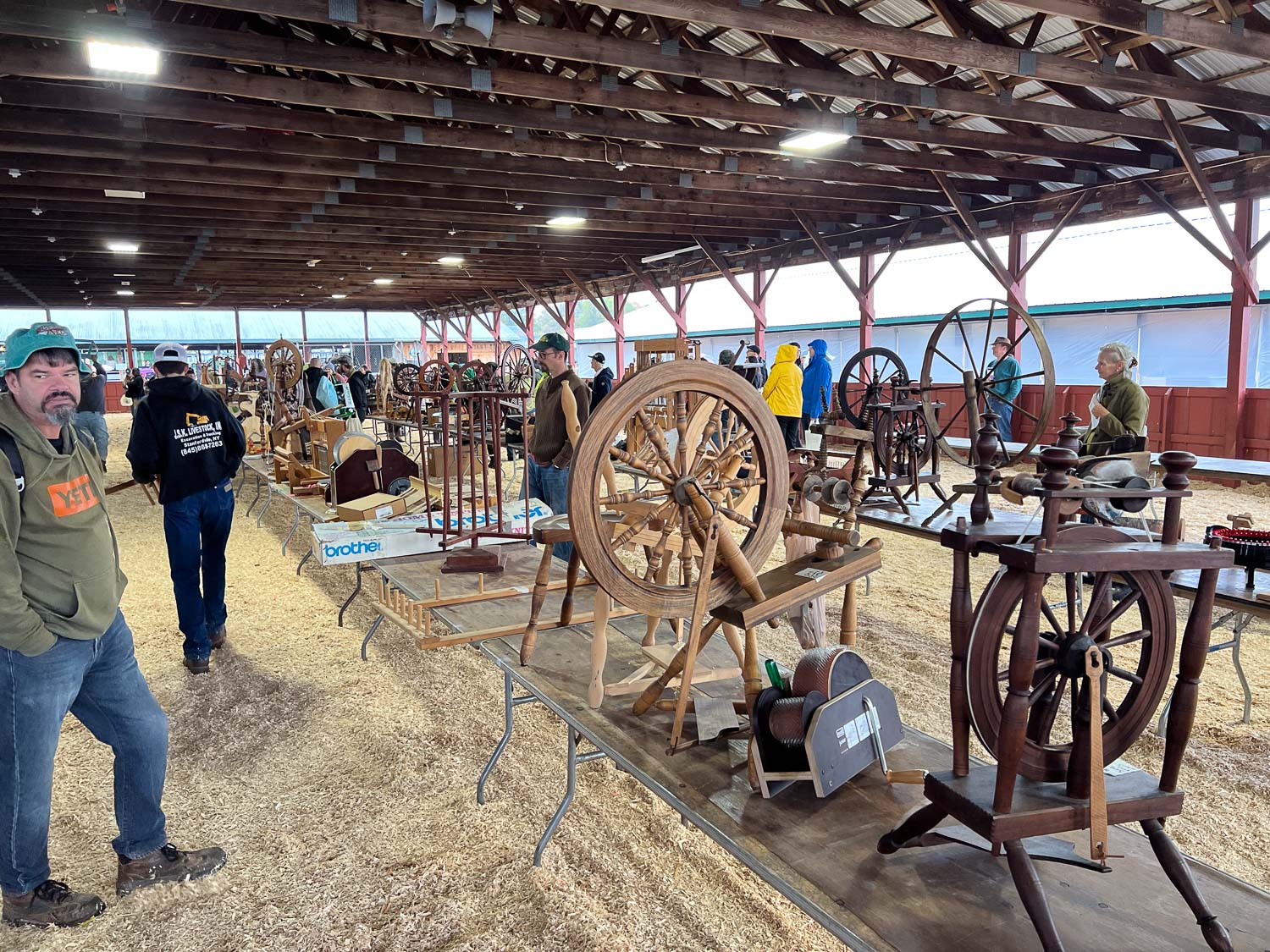
The used equipment auction was interesting. The auctioneer didn’t know what all the tools were, but the crowd helped him out.
I wandered through the barns.
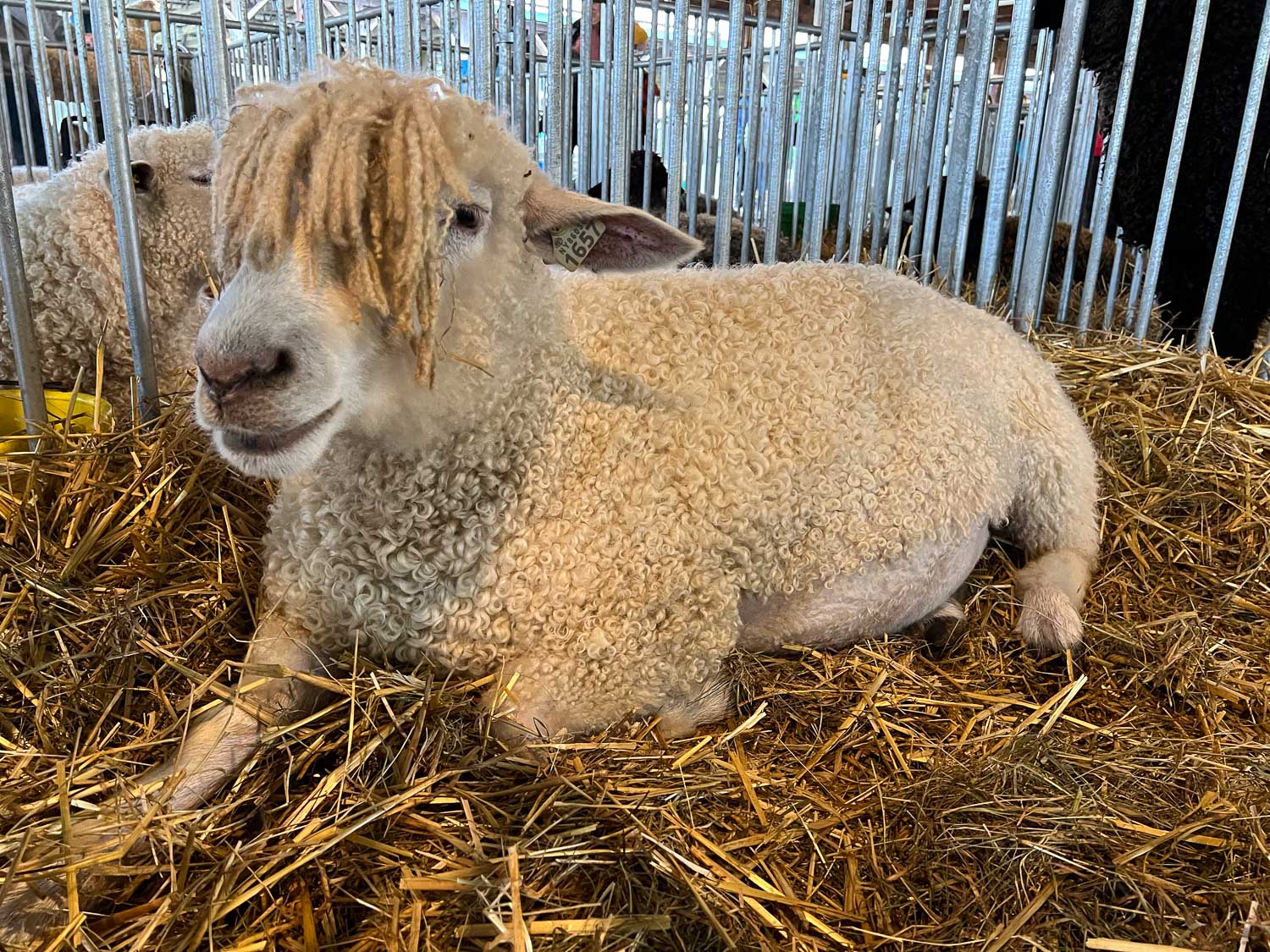
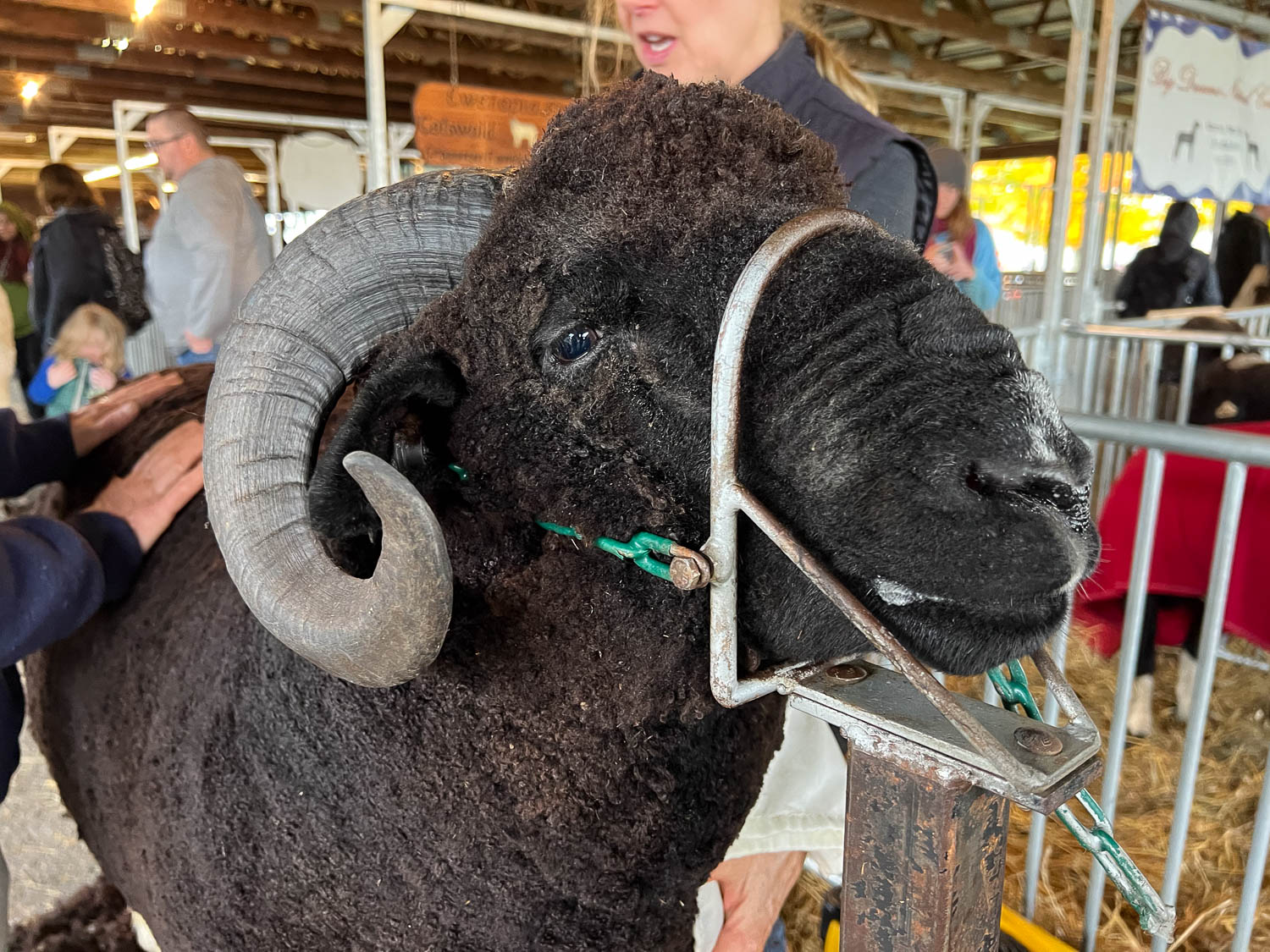
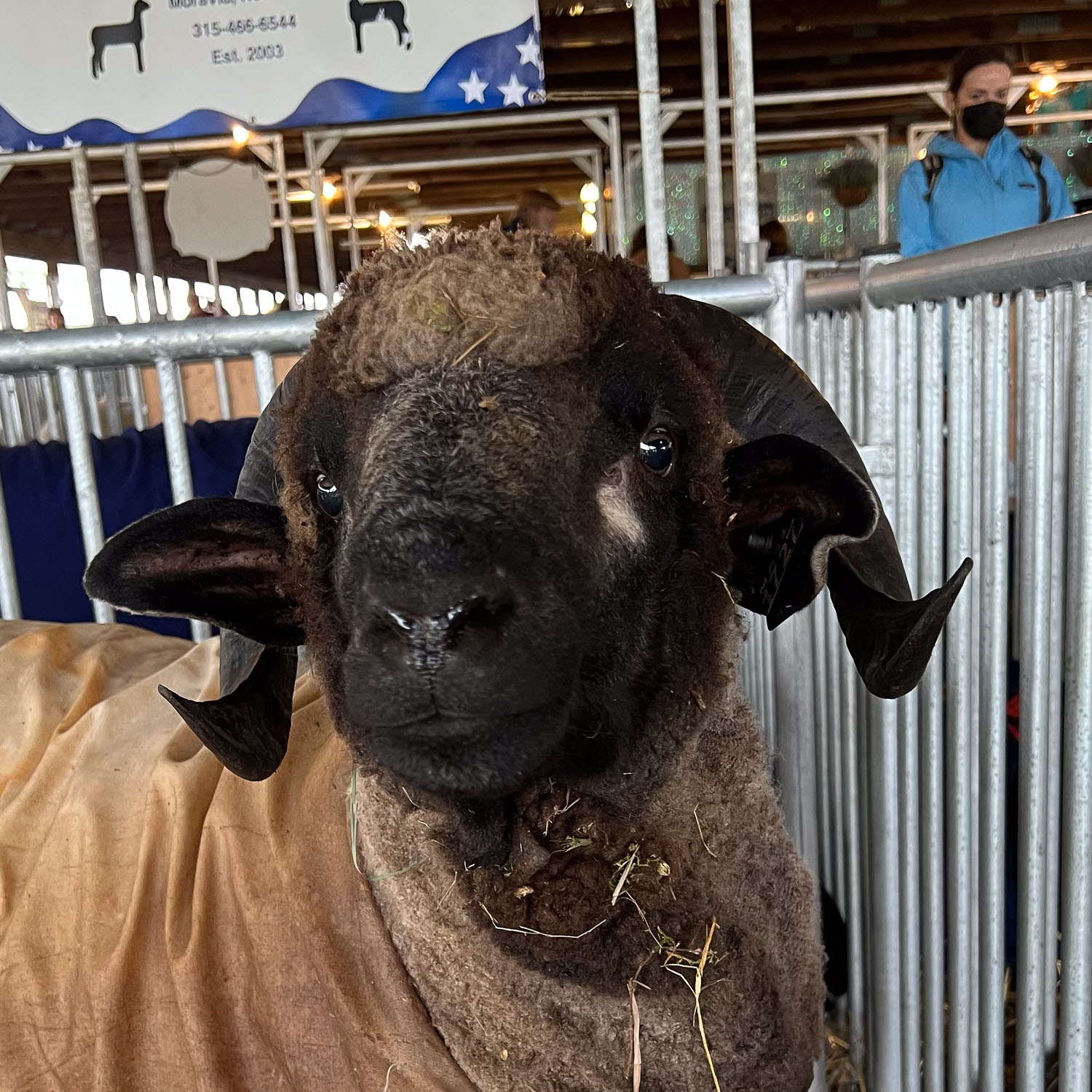
Sheep were being prepped for the show. I’m so glad that Jacob sheep are shown without all the fitting that goes on with many of the breeds.
I think this sheep and the one above showed in the Natural Colored Wool division.
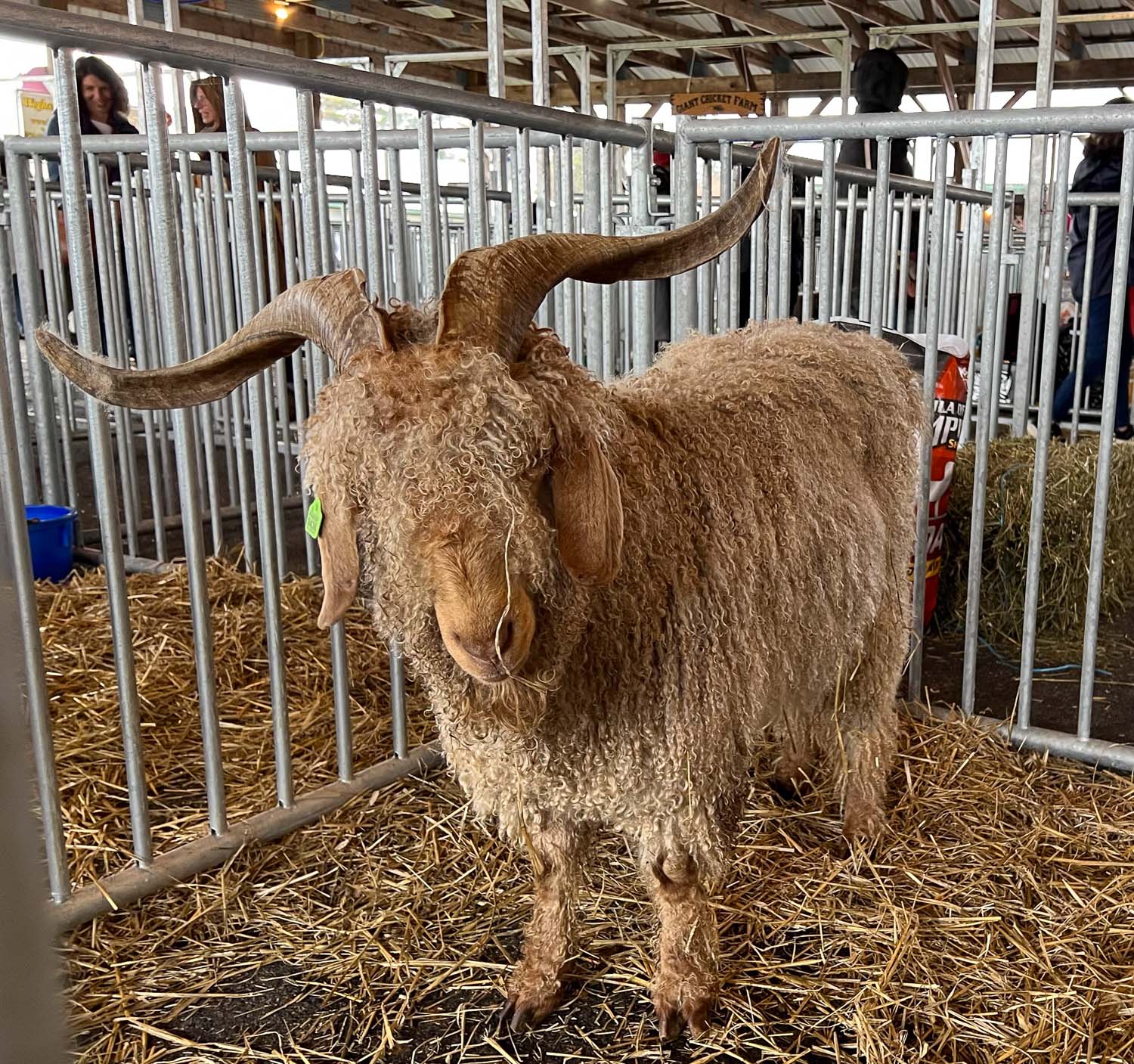
There were also some Angora goats at the show.
Now to wander the vendor halls. I have over 150 photos from these two days. I guess I won’t be able to share everything.
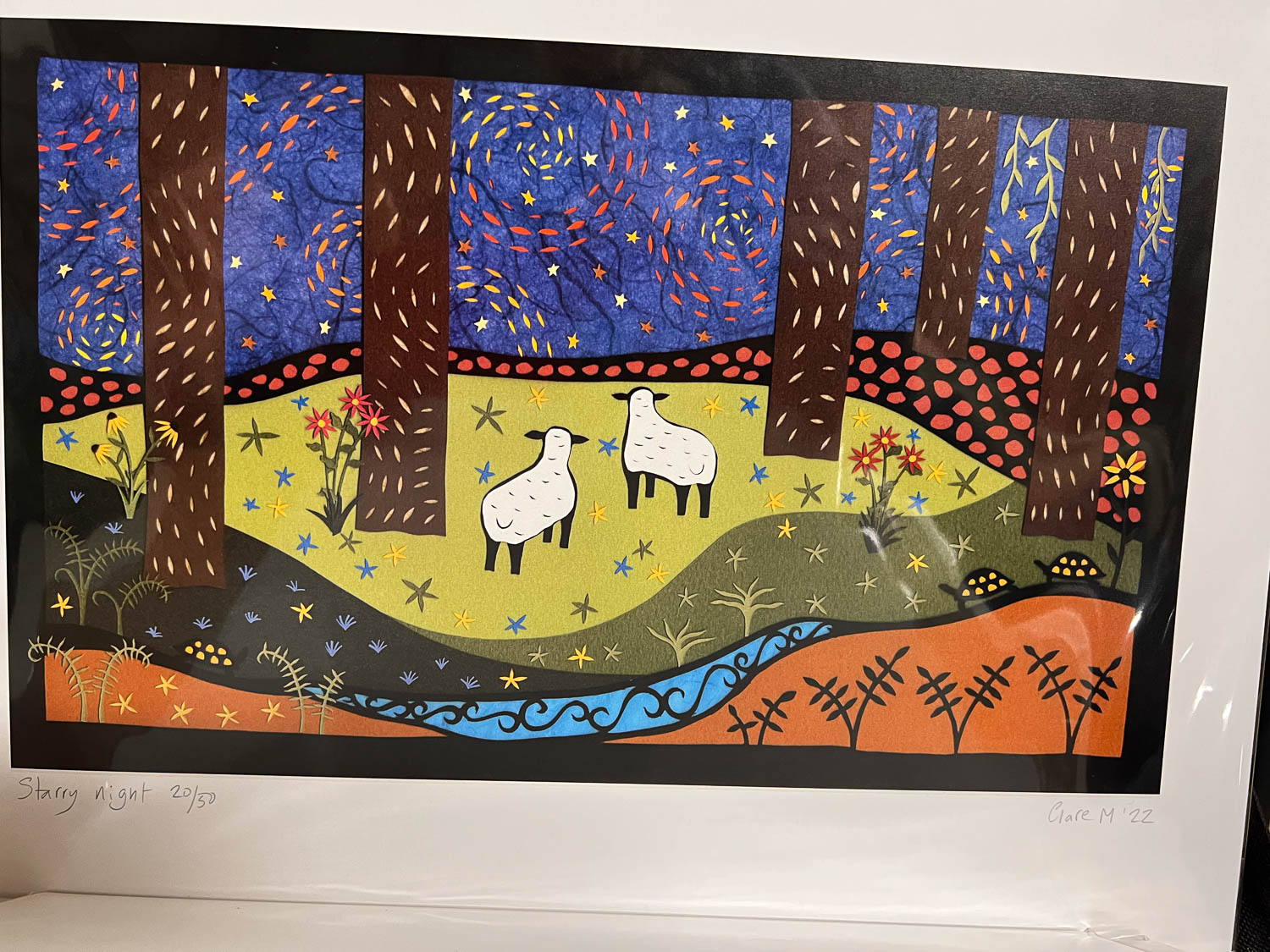
This is a print by Clare Margaret. She uses cut paper for her original artwork and then makes prints for the wall and cards. They are gorgeous.
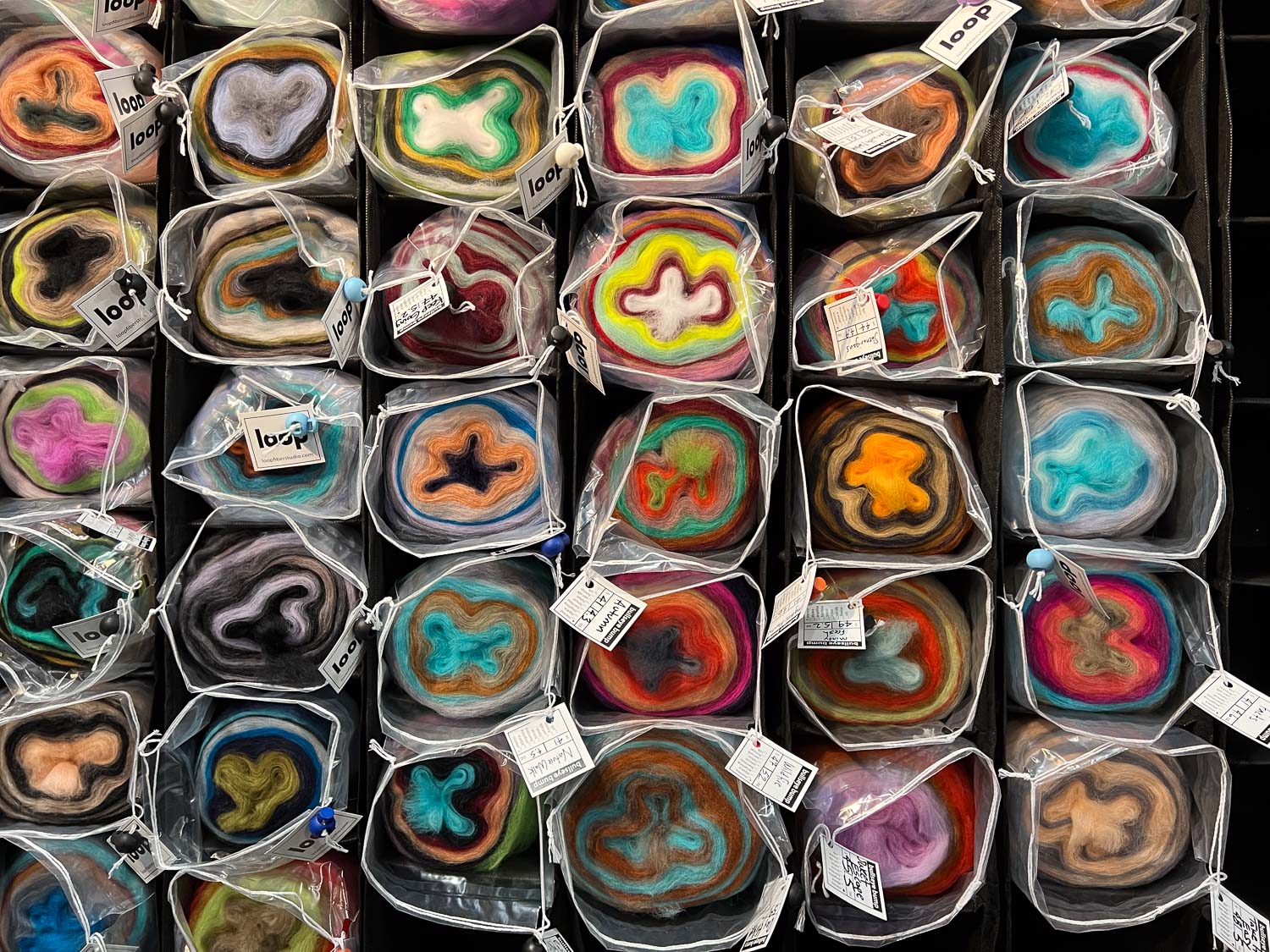
Fiber in fascinating colors and combinations.
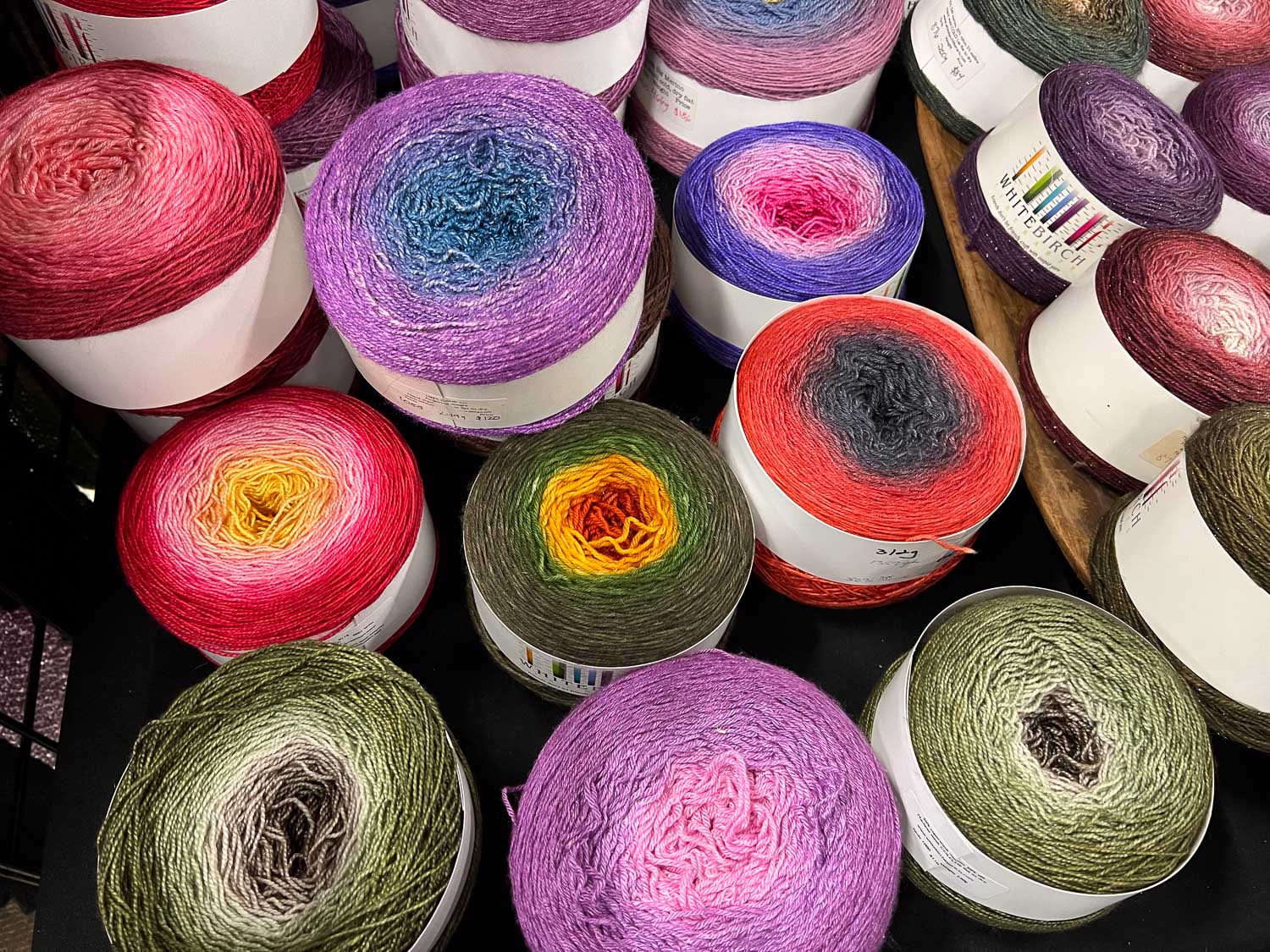
A similar idea but with yarn.
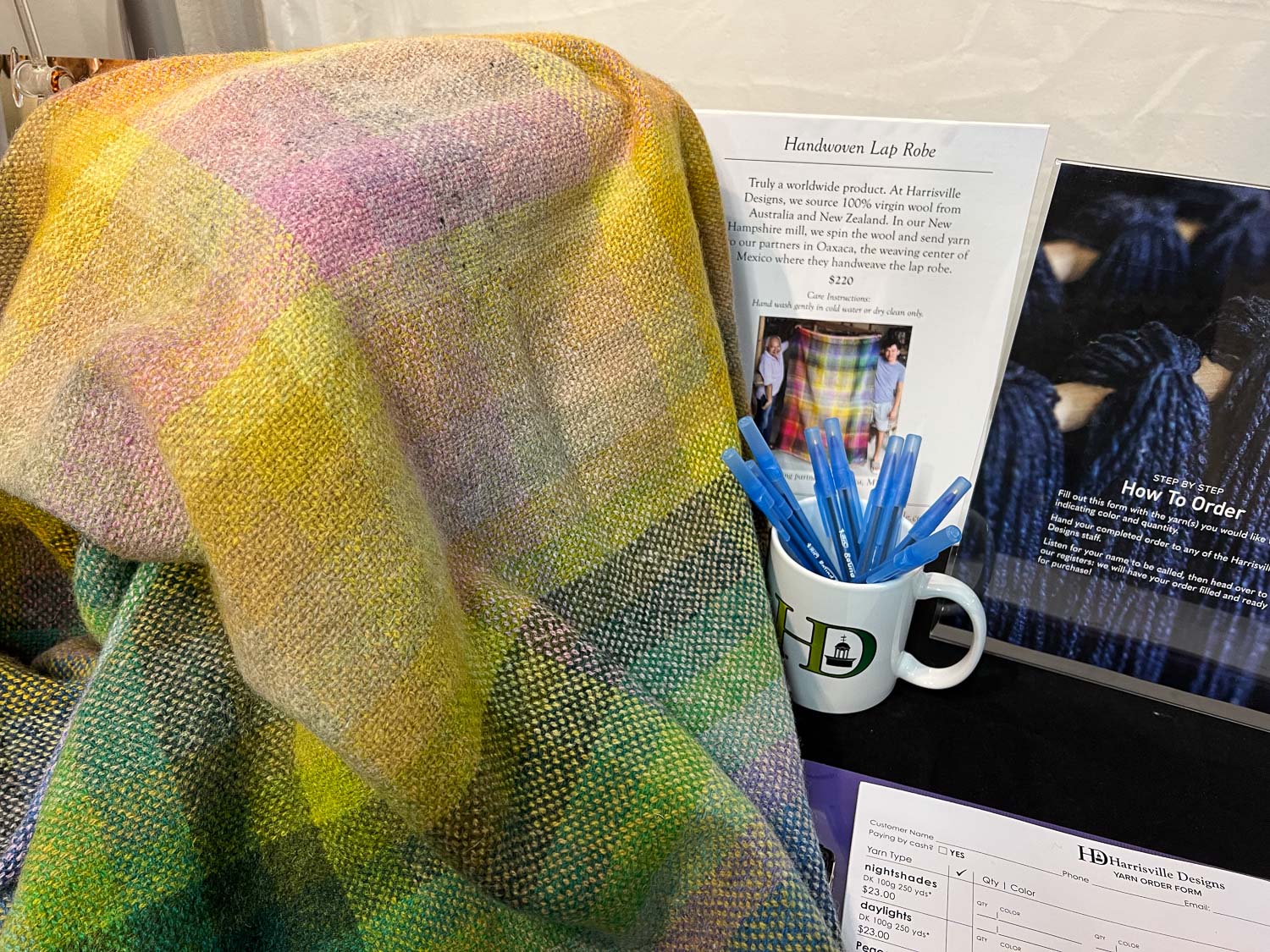
A blanket woven of Harrisville Designs Shetland yarn. I bought some of this and have woven a scarf. More to come later.
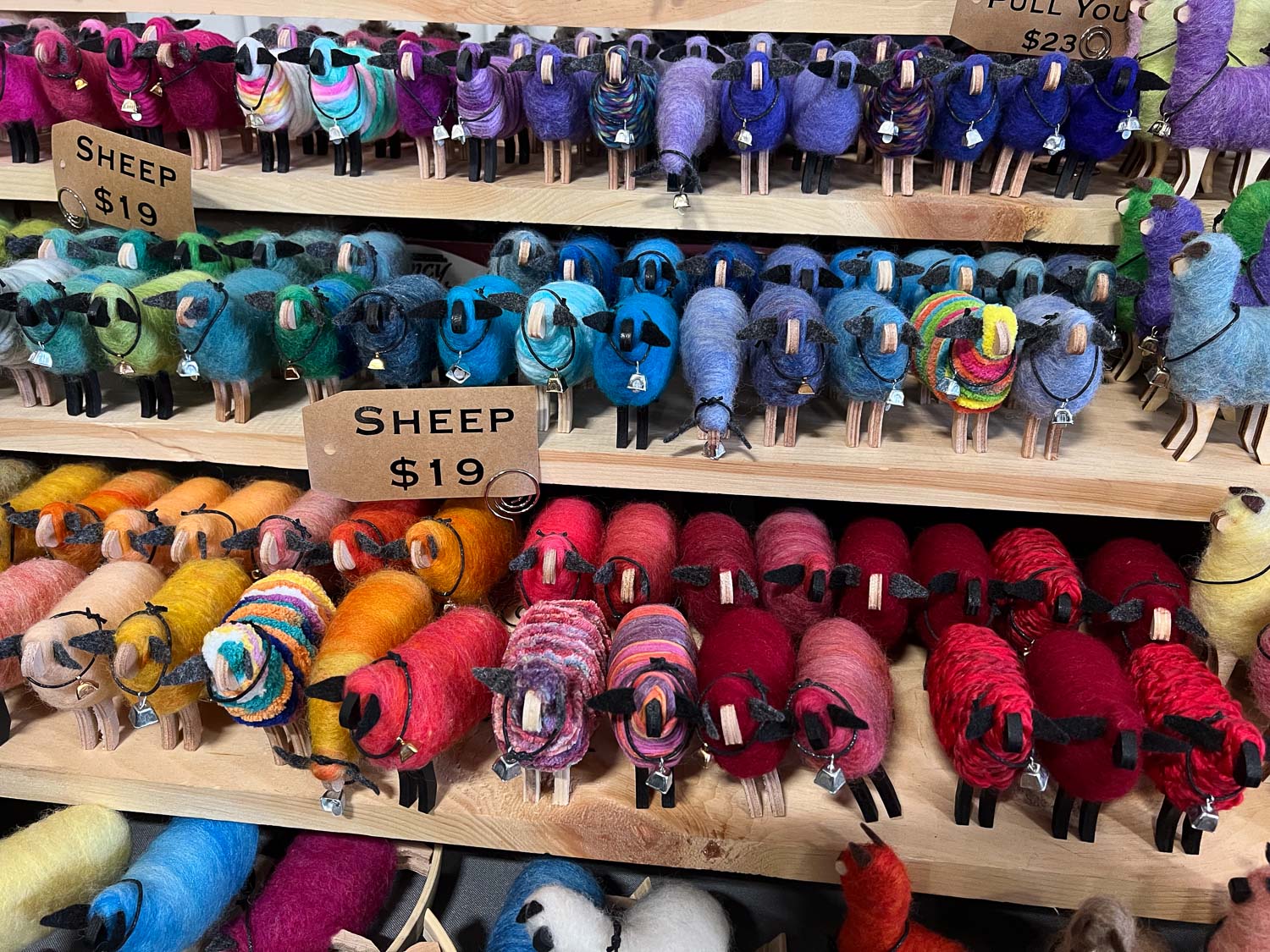
This booth sold the wooden pieces to make these yarn wrapped sheep and they also sold the sheep.
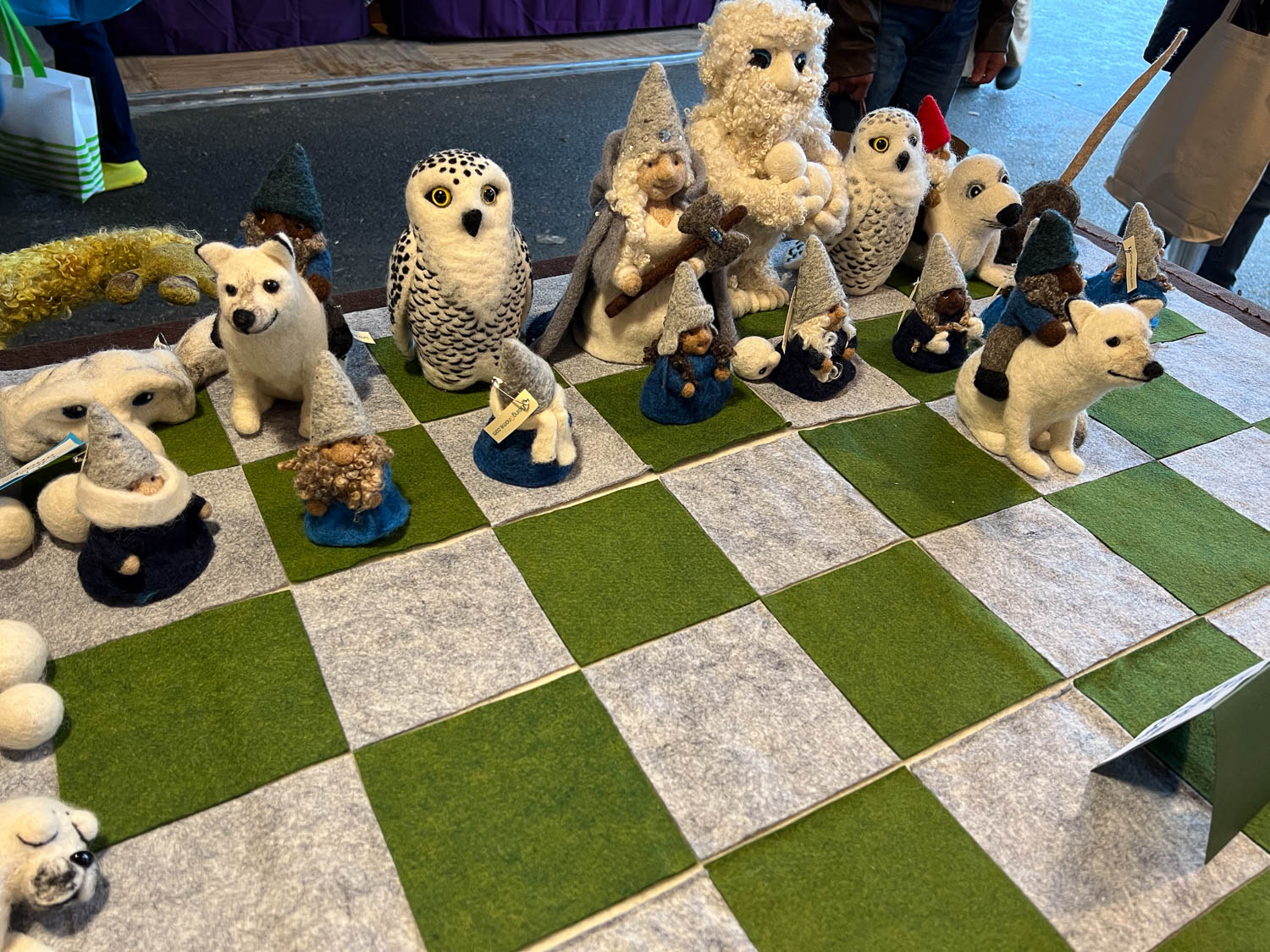
A chess set by a business called GoingGnome.com
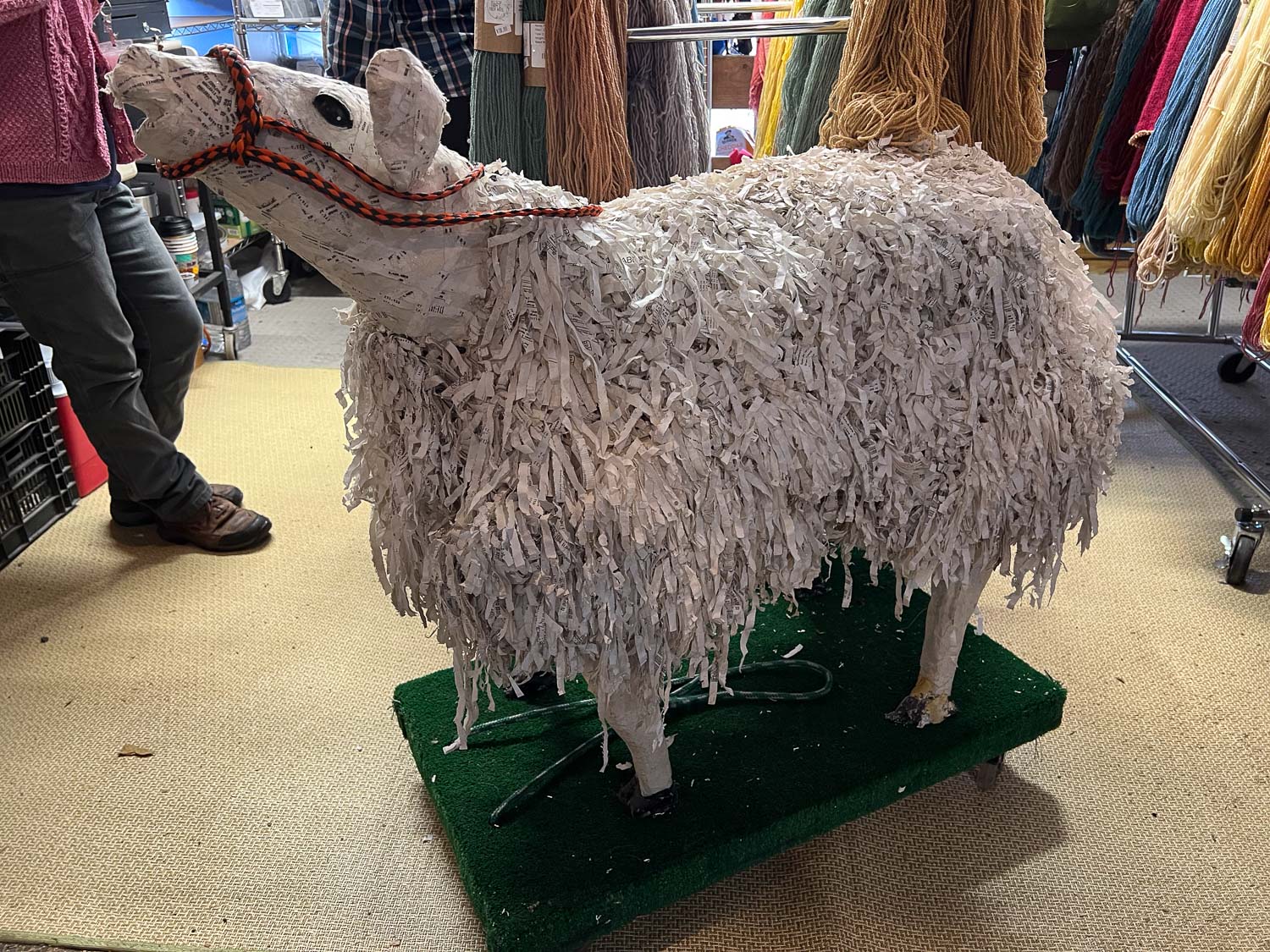
Hilltop Farm Fiber Arts had naturally dyed yarn, dried dye plants like I’m selling on my website and on the new Soil to Soil site, but with more variety. I liked this sheep at their booth.
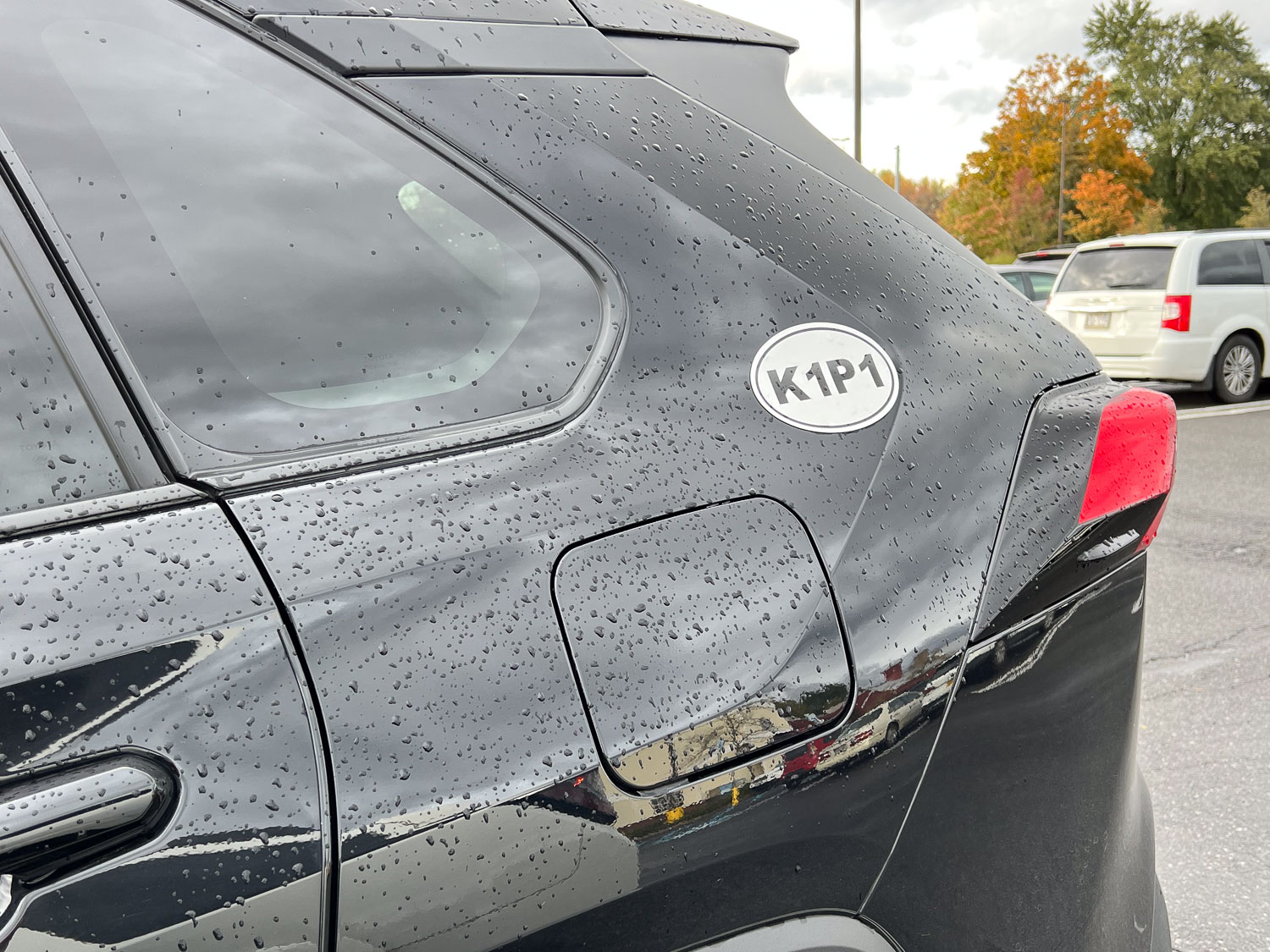
Seen at a grocery store on the way home that day. For you non-knitters, that stands for Knit 1, Purl 1, common language to fiber artists.
For not planning to buy anything I brought a lot home.
In the last post I wrote about the class I taught at Lambtown a couple of weeks ago. Now I want to share photos of my vendor booth and the sheep show.
I am still experimenting with posting from my iPad which isn’t as easy as from my computer. These photos are all entered as Medium size—that’s just a note to myself for when I review this later.
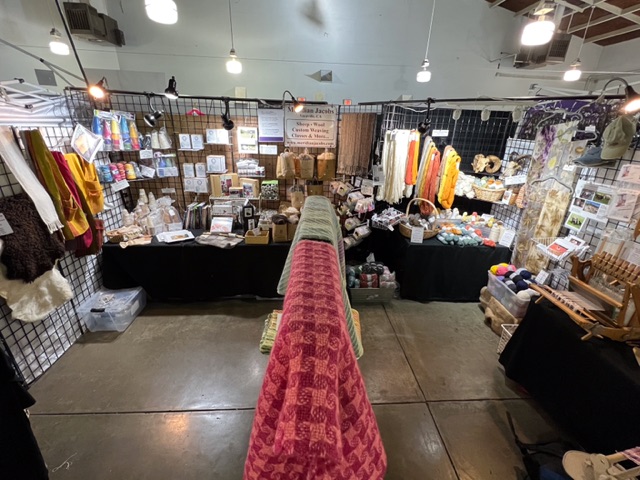
I ended up with a booth and a half space and now I’m spoiled. Will I ever want to go back to a single booth space? It’s hard to get a good feel for it from this photo. I used a rack in front to hold handwoven blankets. There wouldn’t not have been room in a single booth. There was plenty of room for people to wander in and really look at everything. There were so many people at Lambtown this year that I didn’t take this photo until after 4 on Saturday when I could finally step out of the booth. The following photos are some of the things I had in my booth.
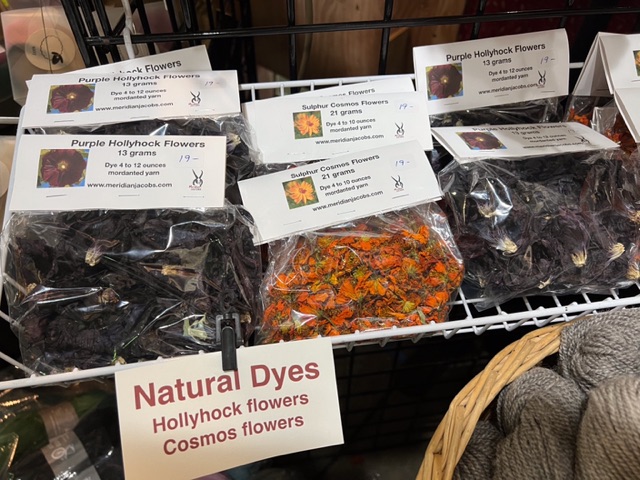
I spent a lot of time the last couple of weeks packaging the flowers I grew and used for my own dyeing this year.
I had forgotten I had these in my shop on the farm because there is always something in front of them.
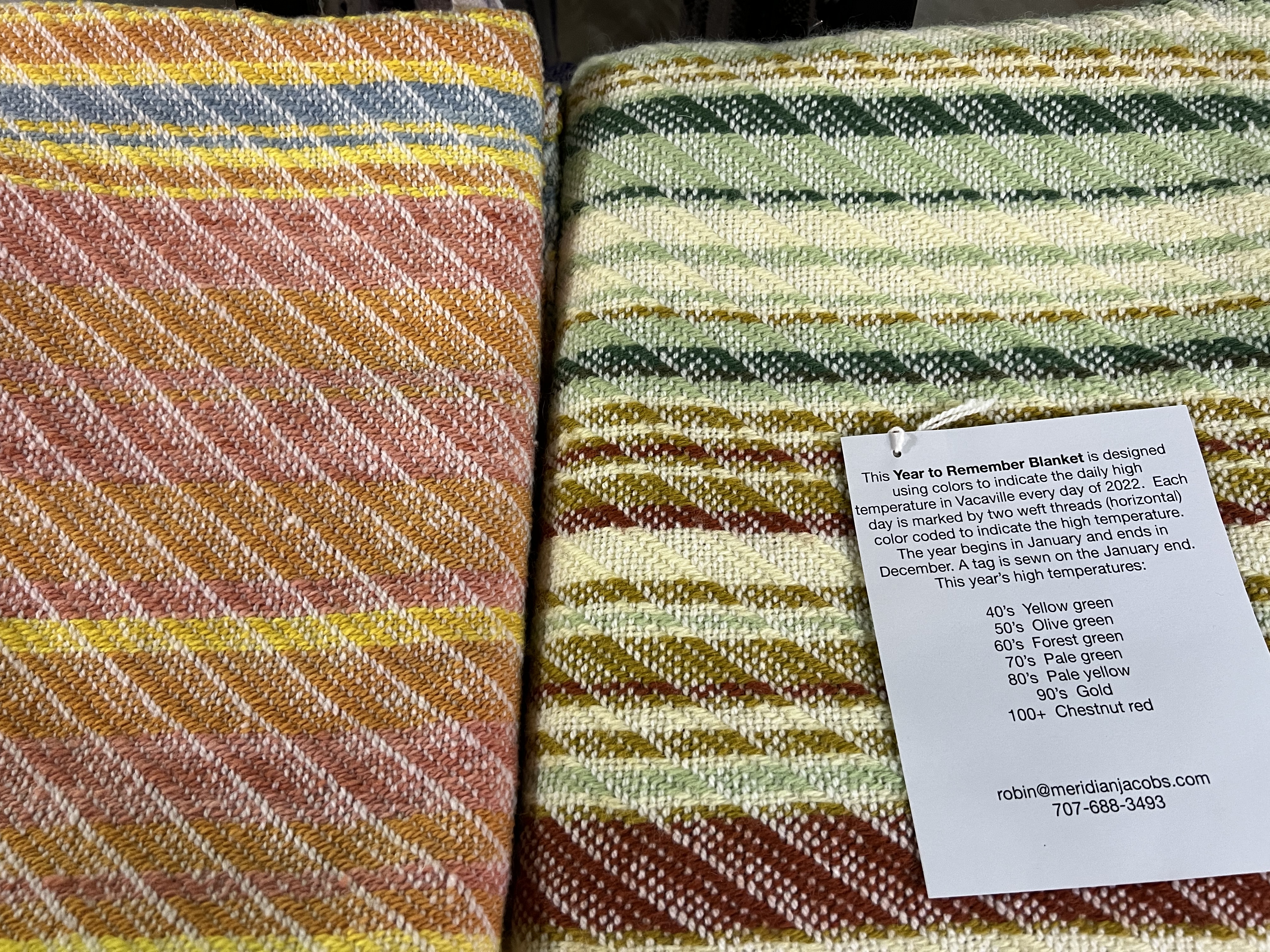
Year to Remember blankets, so called because I will custom weave these for people who want to commemorate a special year. These two use the same stripe pattern (although you can’t tell with them folded in this photo) but different colorways. The one on the left uses all naturally dyed yarns.
The hemp bag I made and wrote an article about for the most recent article of Little Looms.
The newest product in the shop and online.
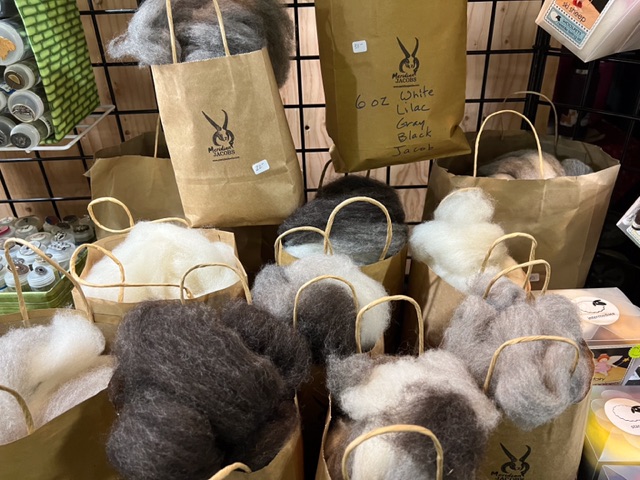
The 2023 wool I just got back from the mill. I haven’t had time to put this online yet.
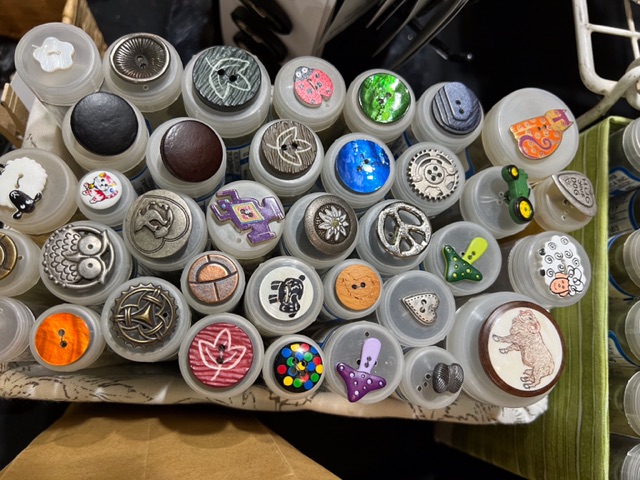
I have an odd variety of buttons in the shop and I brought these to Lambtown.
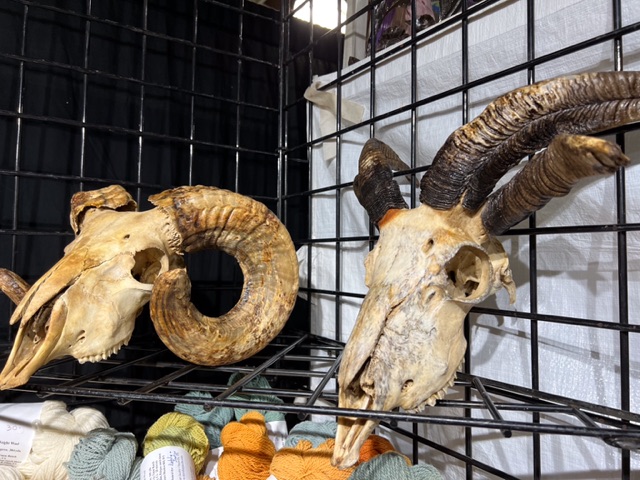
I brought four sheep skulls to Lambtown and sold them all. I have more at home I haven’t had time to finish.
Some of the silk scarves I’ve printed recently.
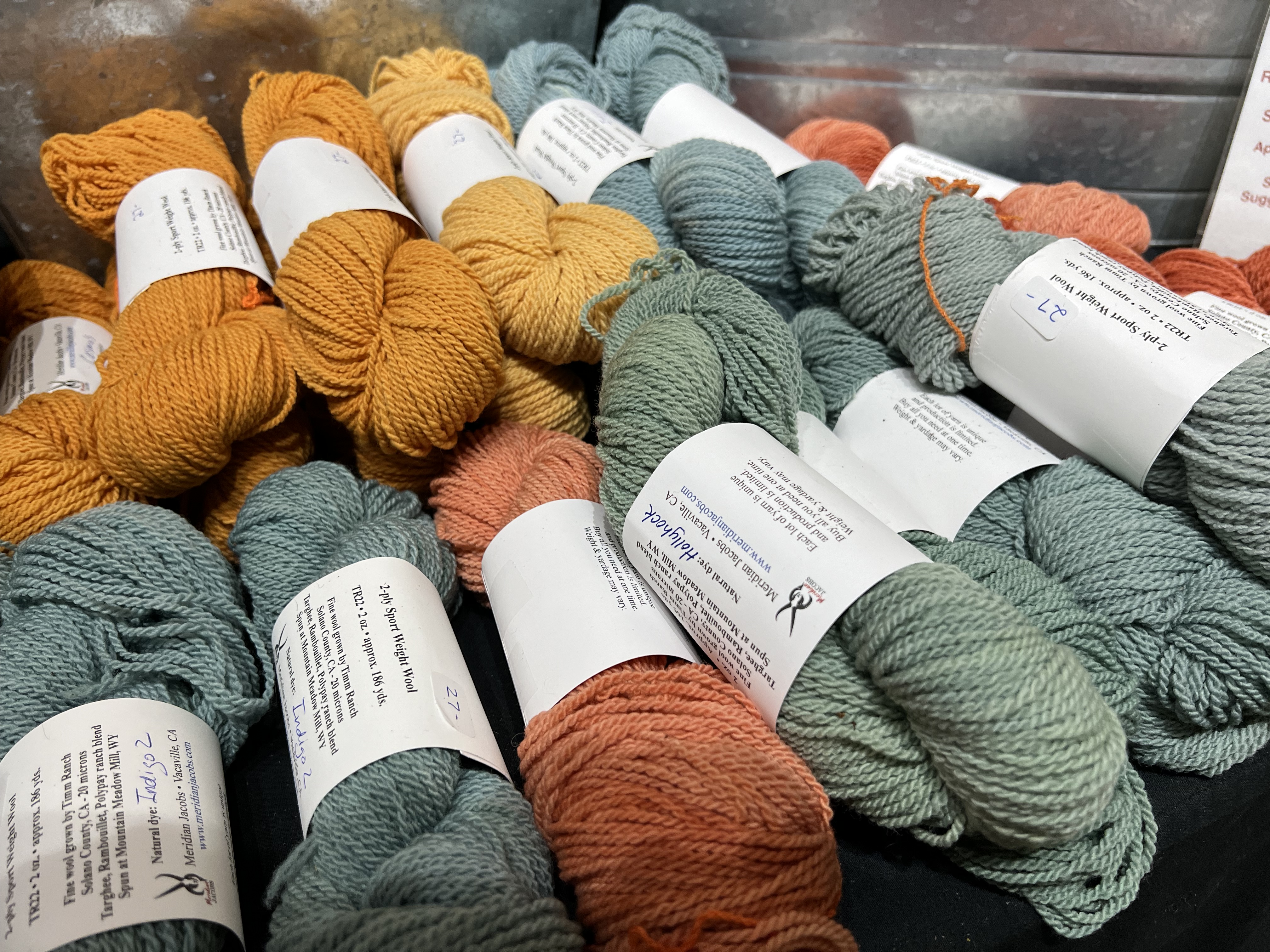
Timm Ranch yarn dyed with Indigo, hollyhock, madder, dahlia, and cosmos.
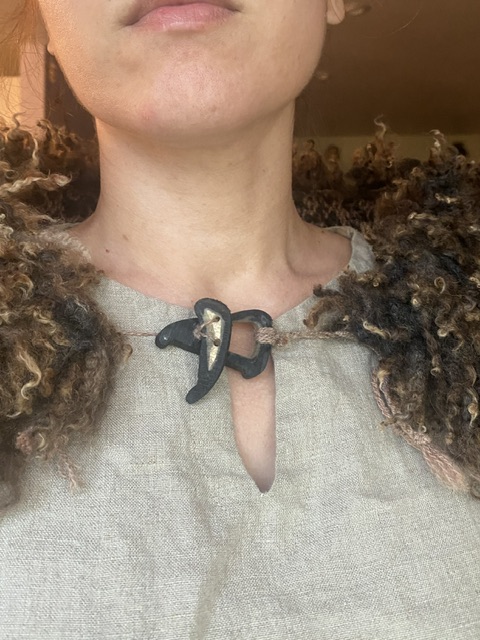
I had my own horn buttons with me and I love the way Siobhan used these two to create a closure for her woven piece.
That’s it for now. One more post for the sheep show.
I have already moved onto the next adventure, but I missed writing posts about the last few and I like my blog posts (scrapbook) to be in order. I usually use my computer but I’ll experiment with writing on my iPad. If it’s easy then maybe I can get caught up and move on to this week’s event.
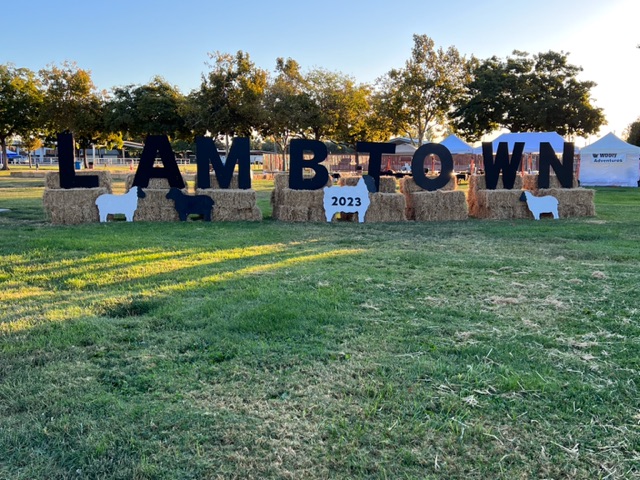
Lambtown Festival in Dixon, California (and only 10 minutes from the farm) is held the first weekend of October. The main event is on the weekend but classes were held for four days. I taught Clasped Warp on the Rigid Heddle Loom on Thursday. There were 9 students so 9 different warps.
NOTE. I have a way of exporting photos and uploading them on my computer that I know what to expect of the photos. I am experimenting here with sizes. The first one is uploaded “small”, the next one is “medium” and the third will be “large”.
With clasped warp you wind one yarn from one direction and one yarn from the other and they are joined (or clasped) in the middle. Direct warping is the only way that it makes sense to do this so working on a rigid heddle loom is great.
We could fit two people at each table working on opposite sides. I like how often people’s yarn choices match their clothing.
Once the looms are warped everyone sits at their own space to weave. In the past I have taught this as a half day class. Students learned the warping technique and started weaving but most of the weaving was done at home. This class was scheduled for morning and afternoon sessions.
Only a few finished weaving their projects, but that was OK because they all owned the looms. We took a class photo with warps mostly done but not off the looms yet.
Here are two that were finished and cut off the loom.
This was a fun class. I’ll be teaching it next summer at Convergence in Kansas as well as scheduling it at my place before then.
Usually we show on the Friday of Black Sheep Gathering. Unfortunately I was the only Jacob breeder this year so I was bumped into sort of an All Other Breeds class on Saturday. That meant that Friday was a free day. I had books and magazines and a crochet project with me. What did I accomplish? Nothing, because everywhere I turned there were people to talk to and things to see. Sometimes its the best thing to have a break from “accomplishing” something.
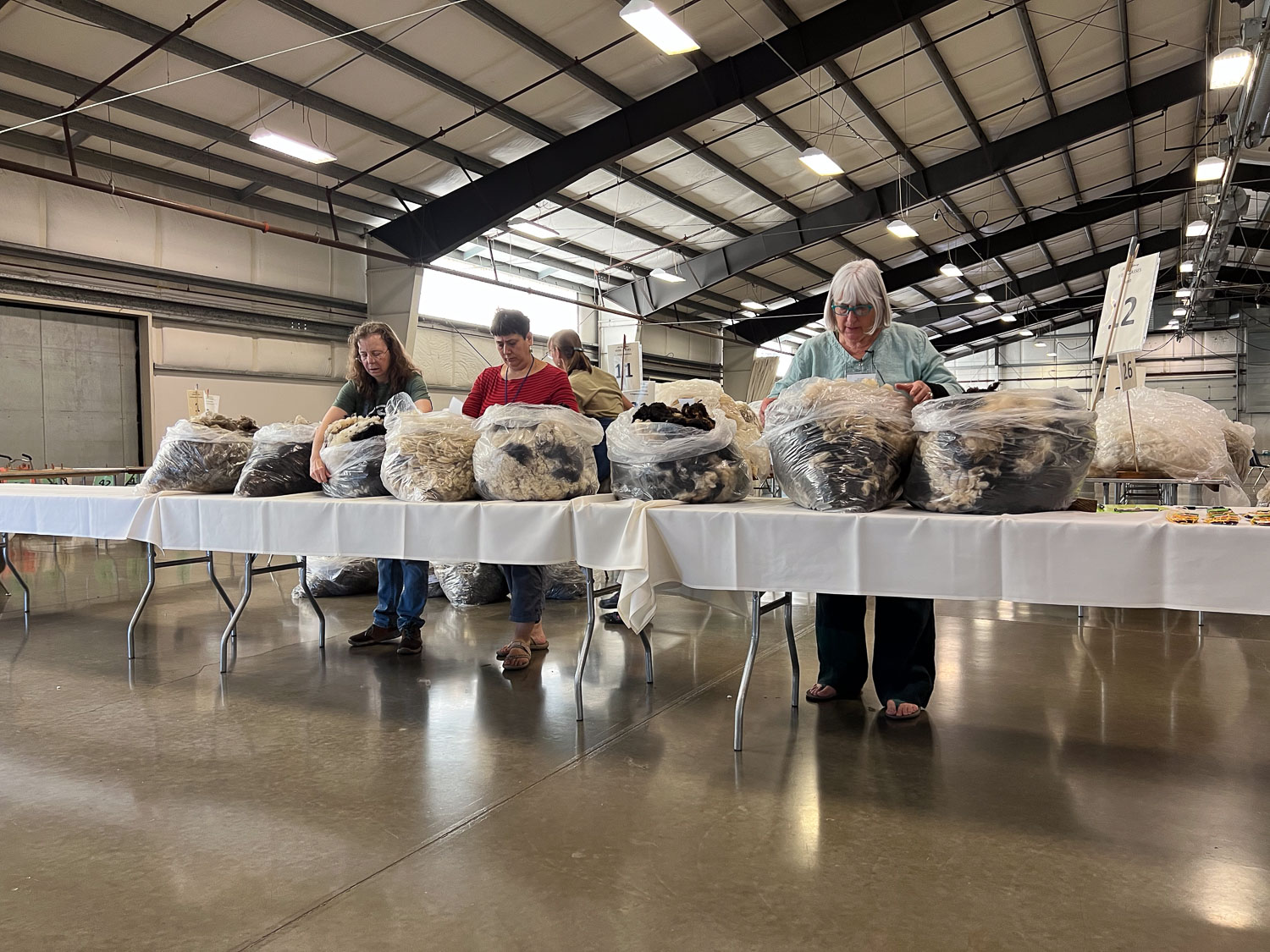
The morning activities began with the wool show. I listened for awhile because there is always something to learn. The Jacob class was #12 so I decided there was time to buy a BSG t-shirt before that started.
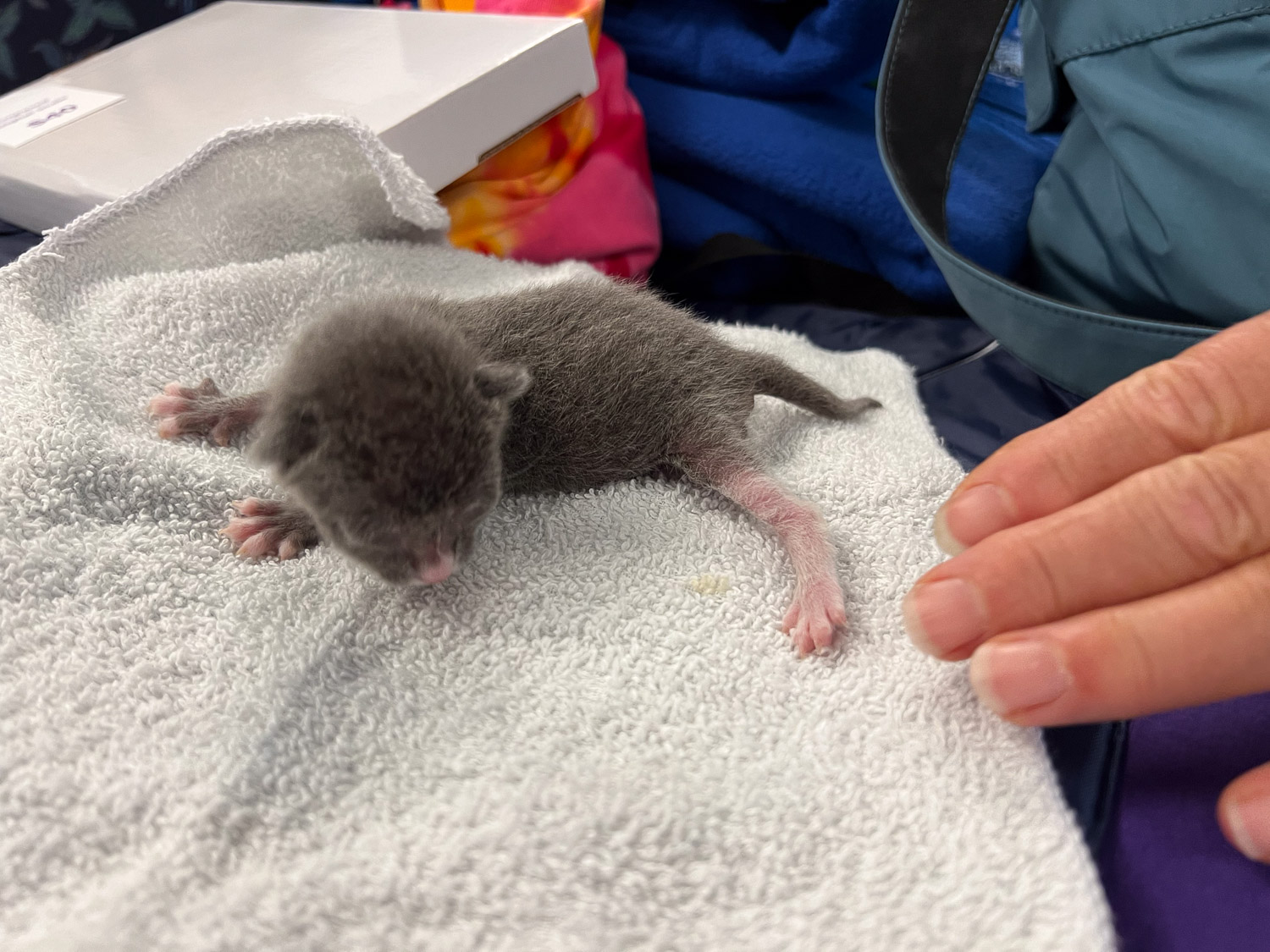
This has nothing to do with the t-shirts but it is what caught my eye at the t-shirt table. A women had an 8-day old kitten with her. She is feeding it every two hours.
Back in the barn, there were vendors as well.
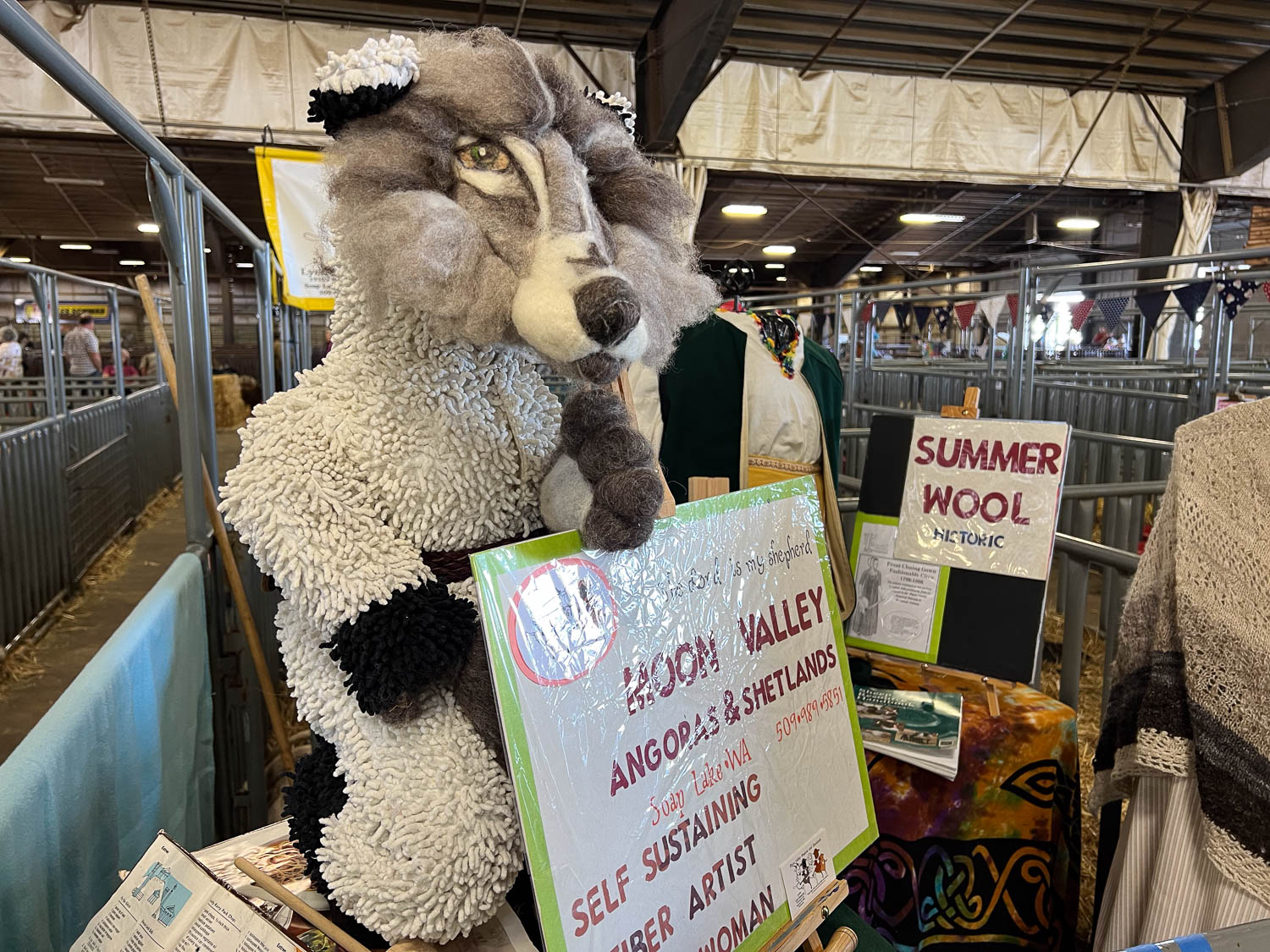
The barn vendors have their booths near their pens of show sheep. I have not been a vendor because that would mean there is more organization required, more things to take, and I’d be tied down to staying there the whole time. I was having fun wandering everywhere.
Back to the wool show. There were 8 fleeces in the Jacob class. Four were mine. I placed first with Brady (ram), 2nd with Janna (ewe), and fourth and sixth with two others. The first two sold there. I’ll have the other two on my website.
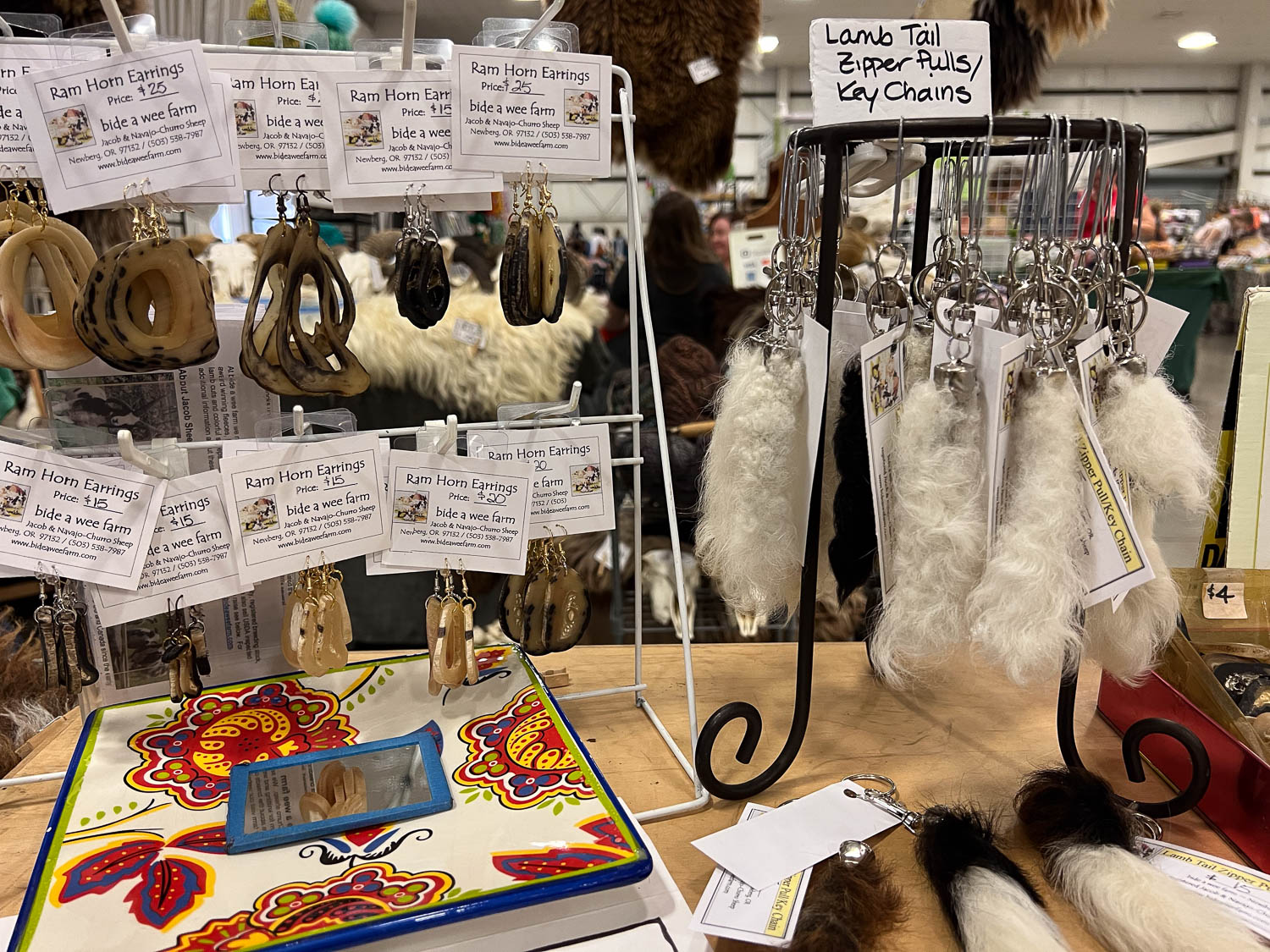
Wandering through the vendor hall I took photos of just a few things that caught my eye. My friend, Karen of Bide a Wee Farm, came up with unique products–lamb tail keychains and ram horn earrings!
She also does a much better job with ram skulls than I do. Mine are still brown and somewhat nasty looking.
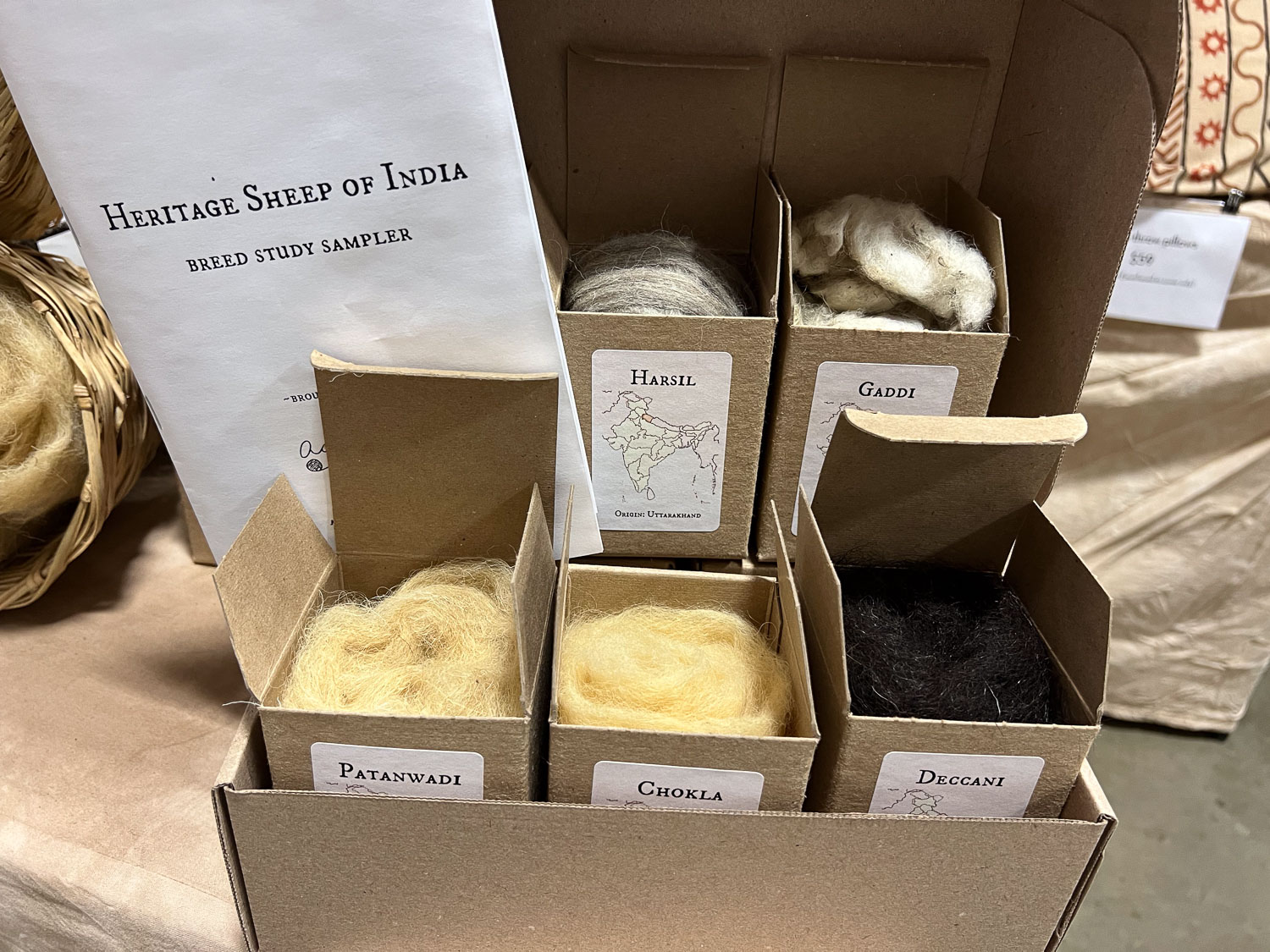
A friend from Davis is selling goods from India, including this box of wool samples from sheep I’ve never heard of.
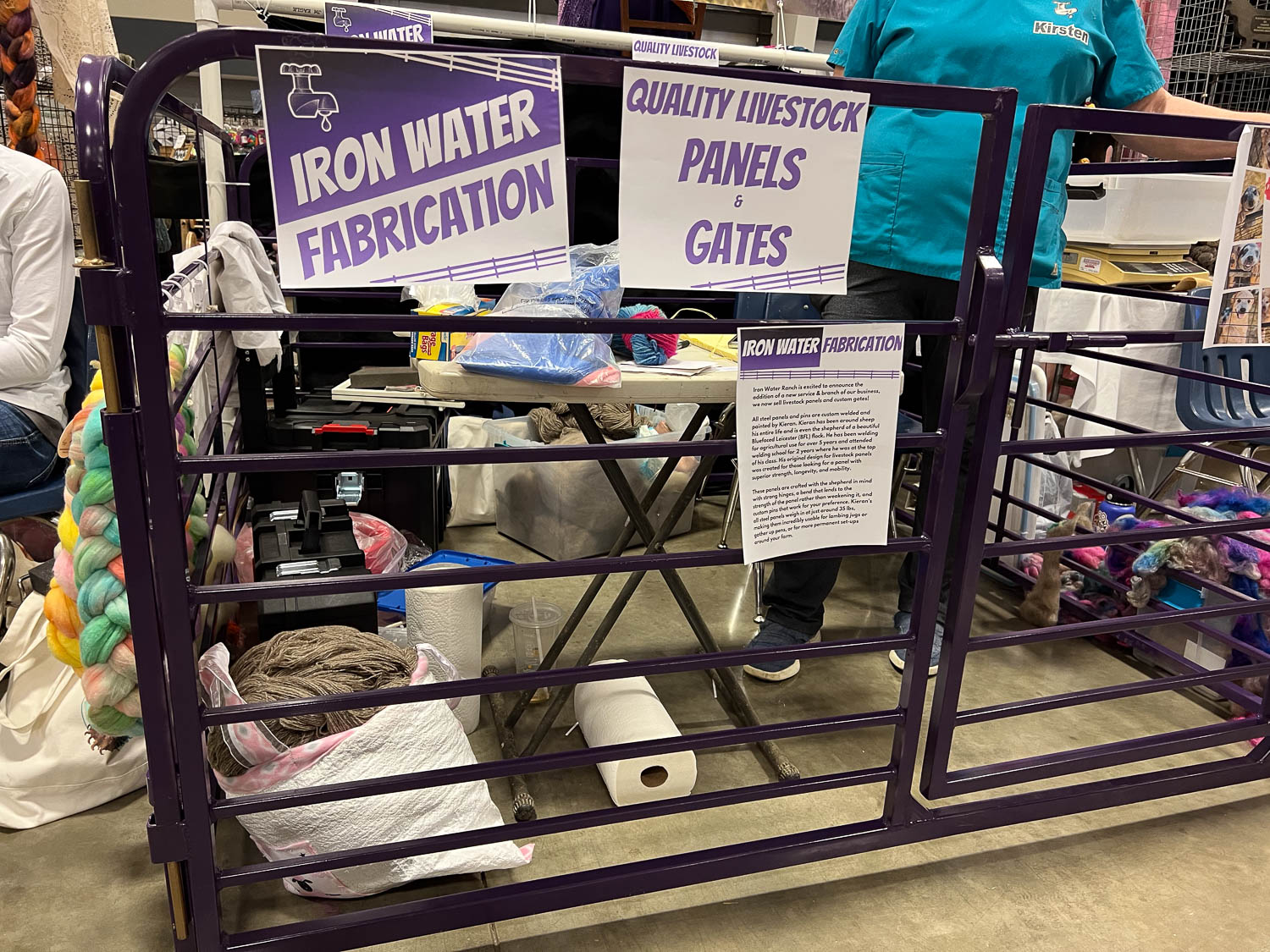
An Oregon sheep breeder has started producing panels for use with sheep.
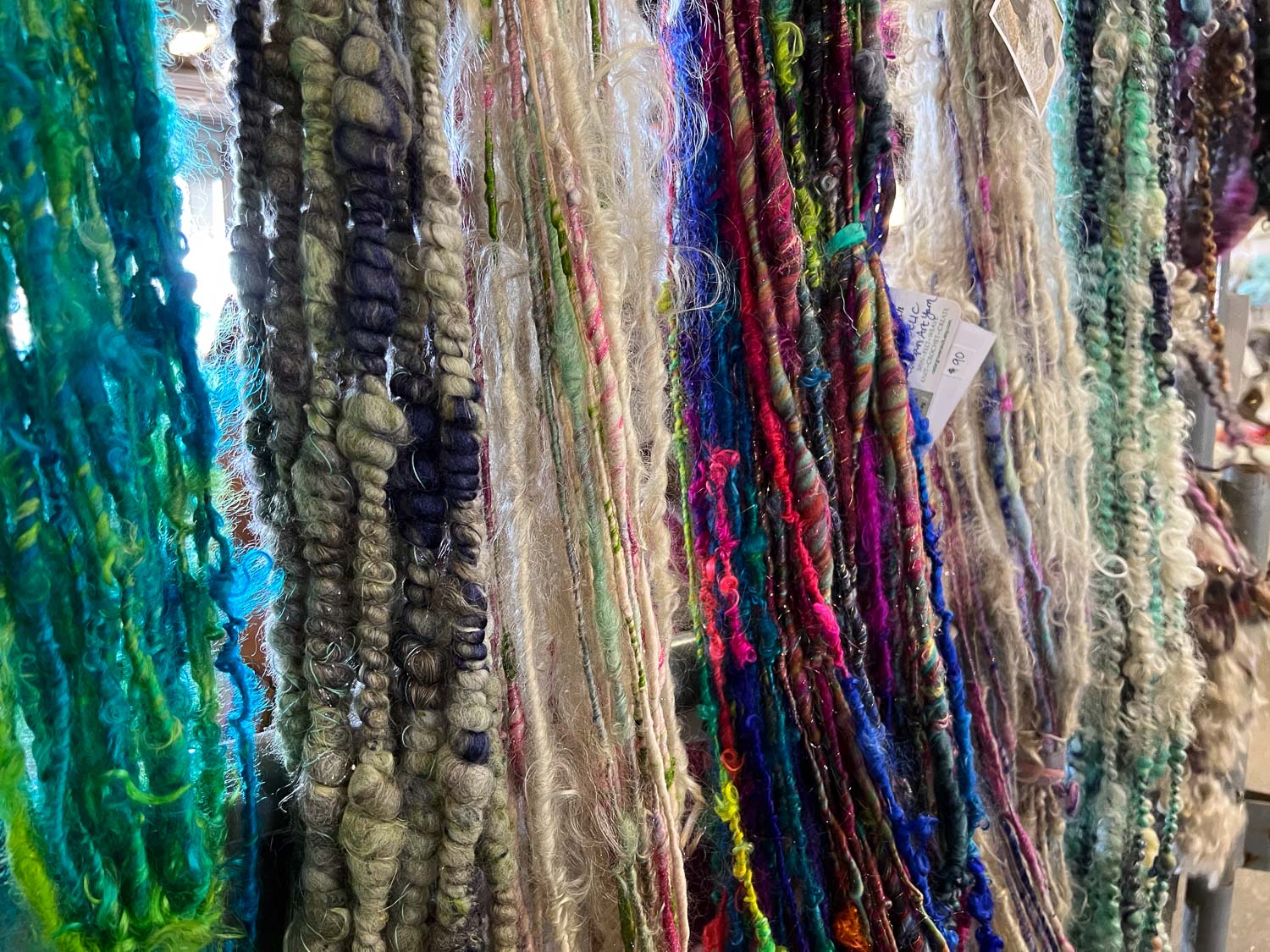
I met a new vendor from my area who creates art yarn from leftovers.
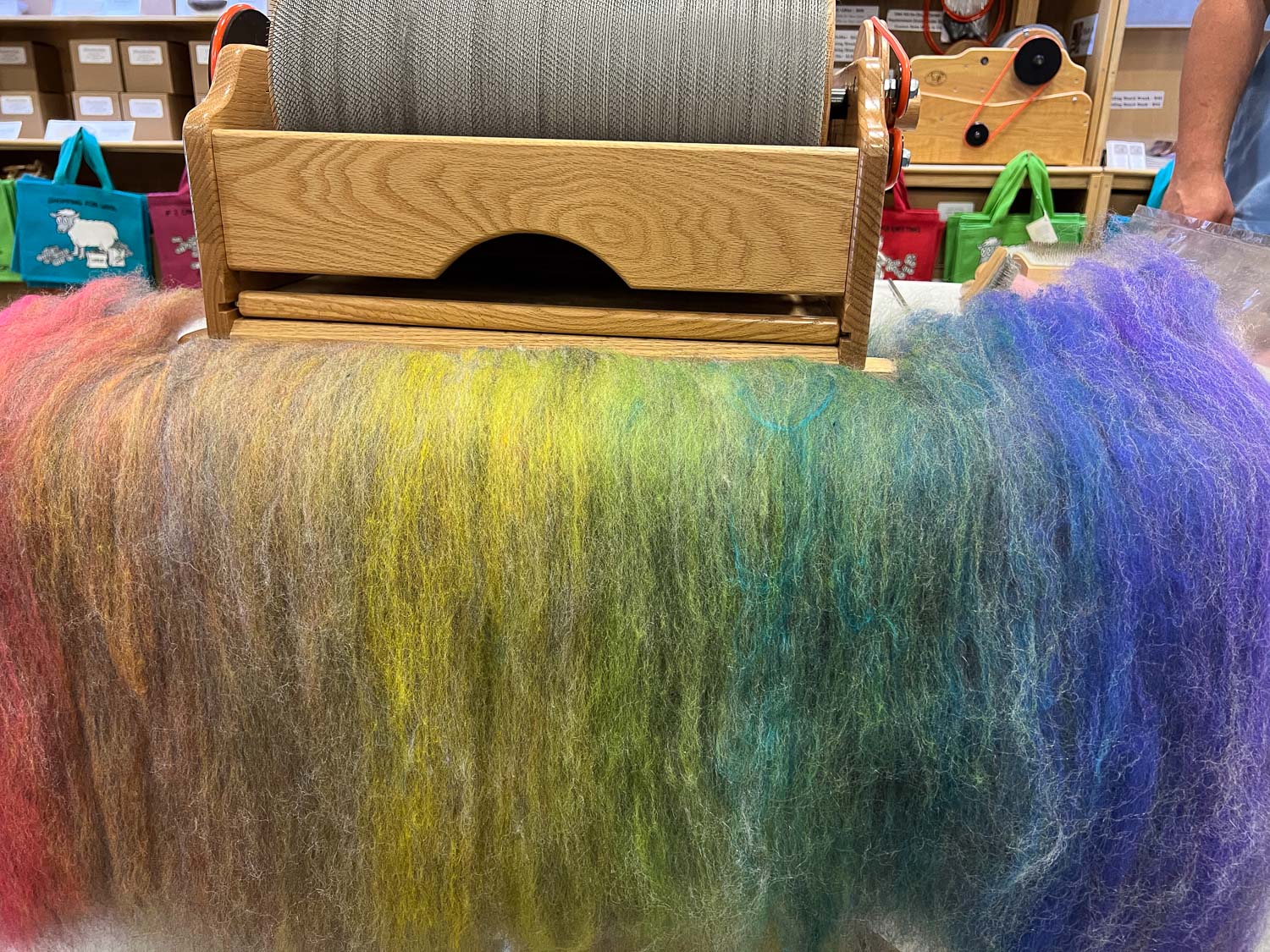
Last but not least, it’s a rainbow batt from my friends, Roy and Henry Clemes!










 Meridian Jacobs' Blog