HLCO Tour at Placerville Airport

We were invited by my son to visit his current workplace, the Placerville Airport. That is where the helicopter and pilot Matt works with are stationed right now, although that changes every few weeks or as fire activity changes. I wanted to describe his job and when I looked up HELCO I found Hawaiian Electric. When I added fire to the search words I read that HELCO “has frequently been associated with utility-related power line and transformer fires”. You never know what you might learn when you read my blog posts!

I finally found what I was really looking for: Matt is the Helicopter Coordinator (HLCO) who “coordinates helicopter mission(s) and incident airspace, manages incident air traffic, and is the link between ground personnel and incident aircraft. The HLCO is an airborne firefighter who coordinates, assigns, and evaluates the use of aerial resources in support of incident objectives.” In other words he is air traffic control over fires.
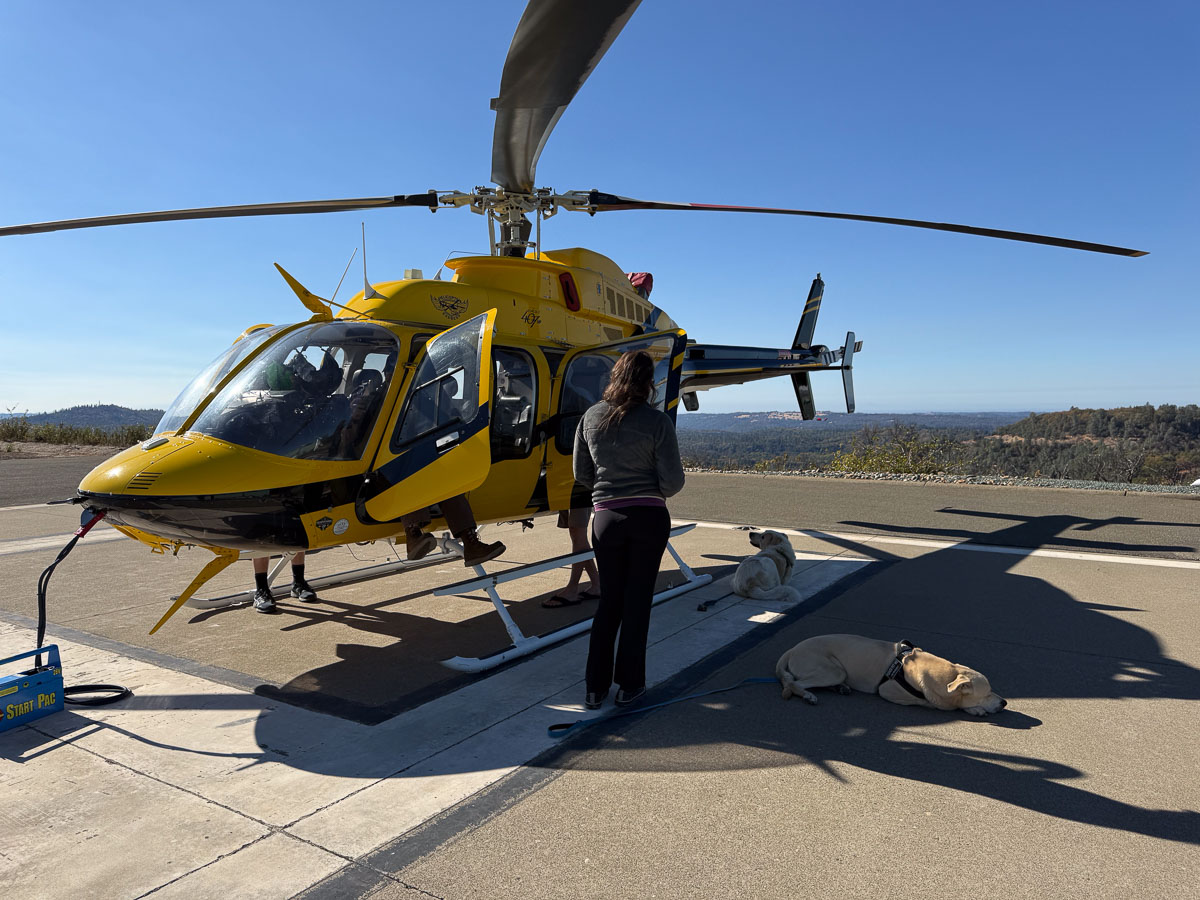
Yellow helicopter on the ground.

This is the helicopter Matt has been in lately. The dogs aren’t part of the crew, but they were extra visitors on this day. Ralston lives with Matt and Kaleena and is a qualified First Responder Therapy Dog. He has his own Instagram account @ralston.furriestresponder .
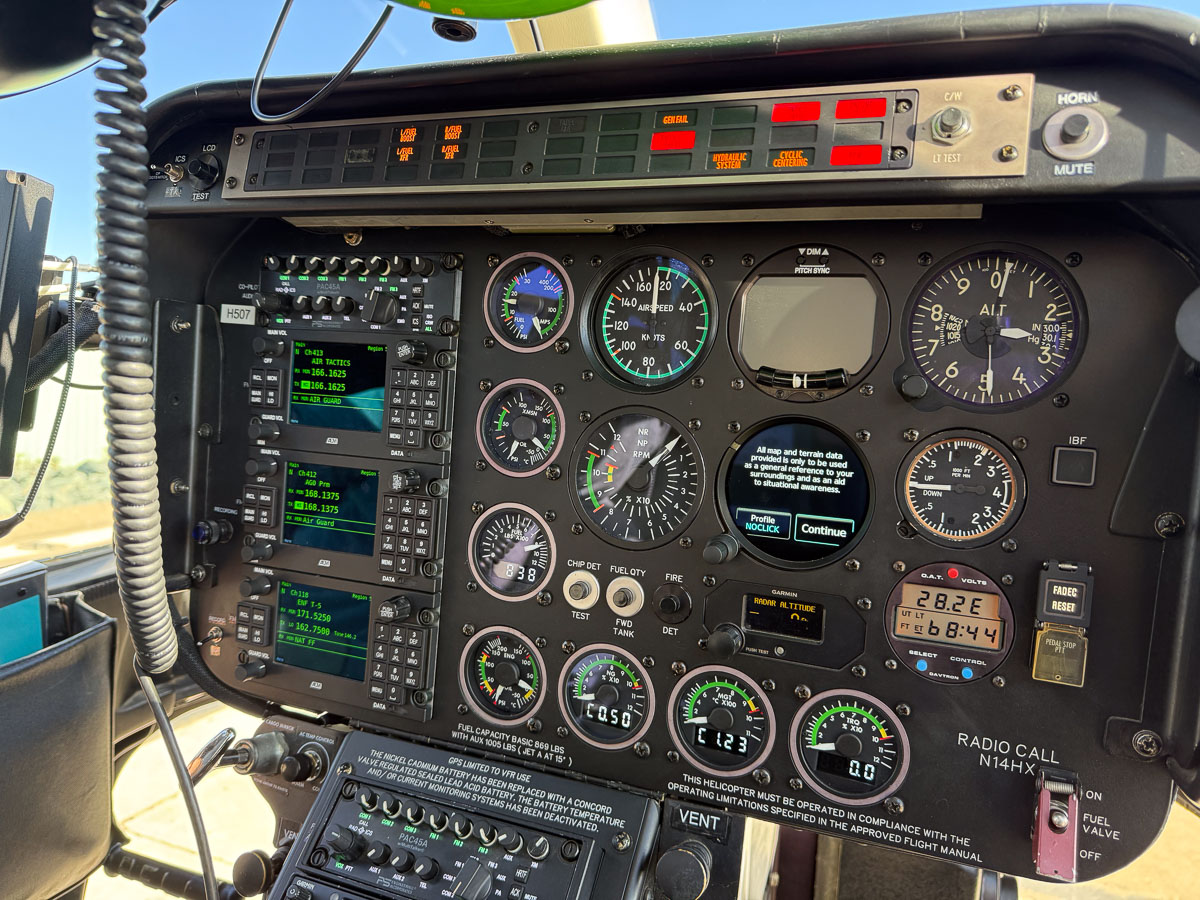
Control panel inside helicopter.

This is what Matt’s office looks like. He monitors six radio frequencies at a time as well as several different layers of maps on a screen. On this day he demonstrated the IR sensor that is used to find hot spots when in the air. On the ground we identified that the hottest spots on the dogs were their noses and mouths.
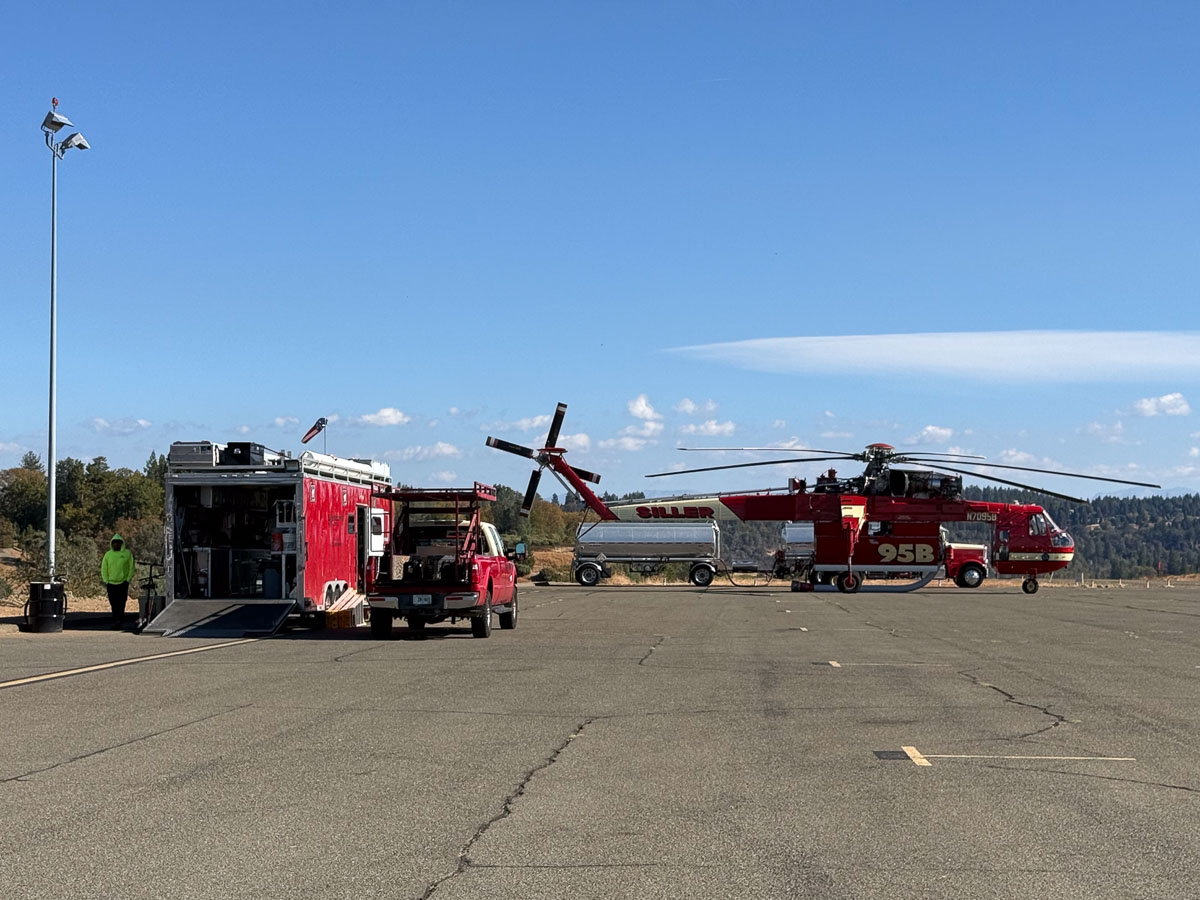
Sky-crane helicopter with its service vehicles nearby.

We walked across the airport to see the Sky Crane.
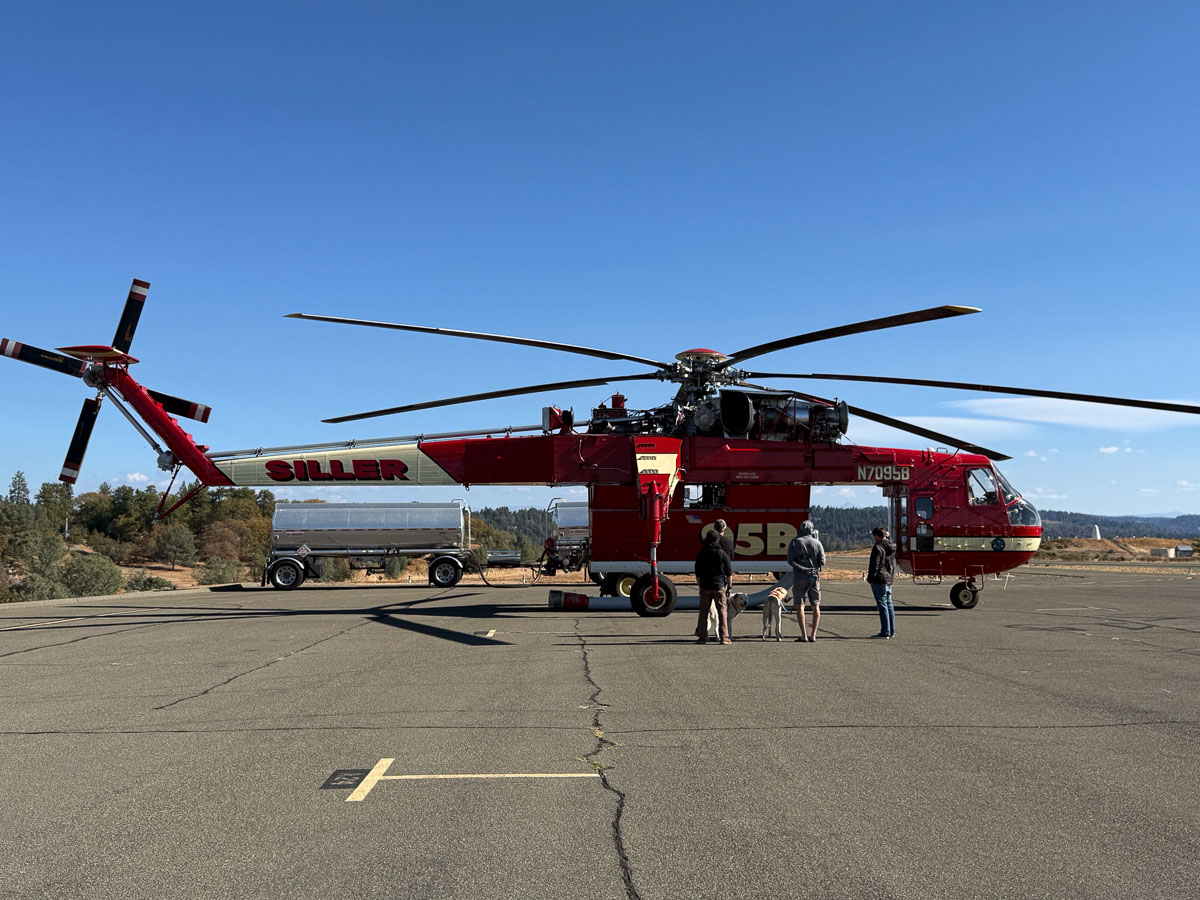
This is a huge helicopter. Notice the people in the foreground and fuel truck in the background for scale.
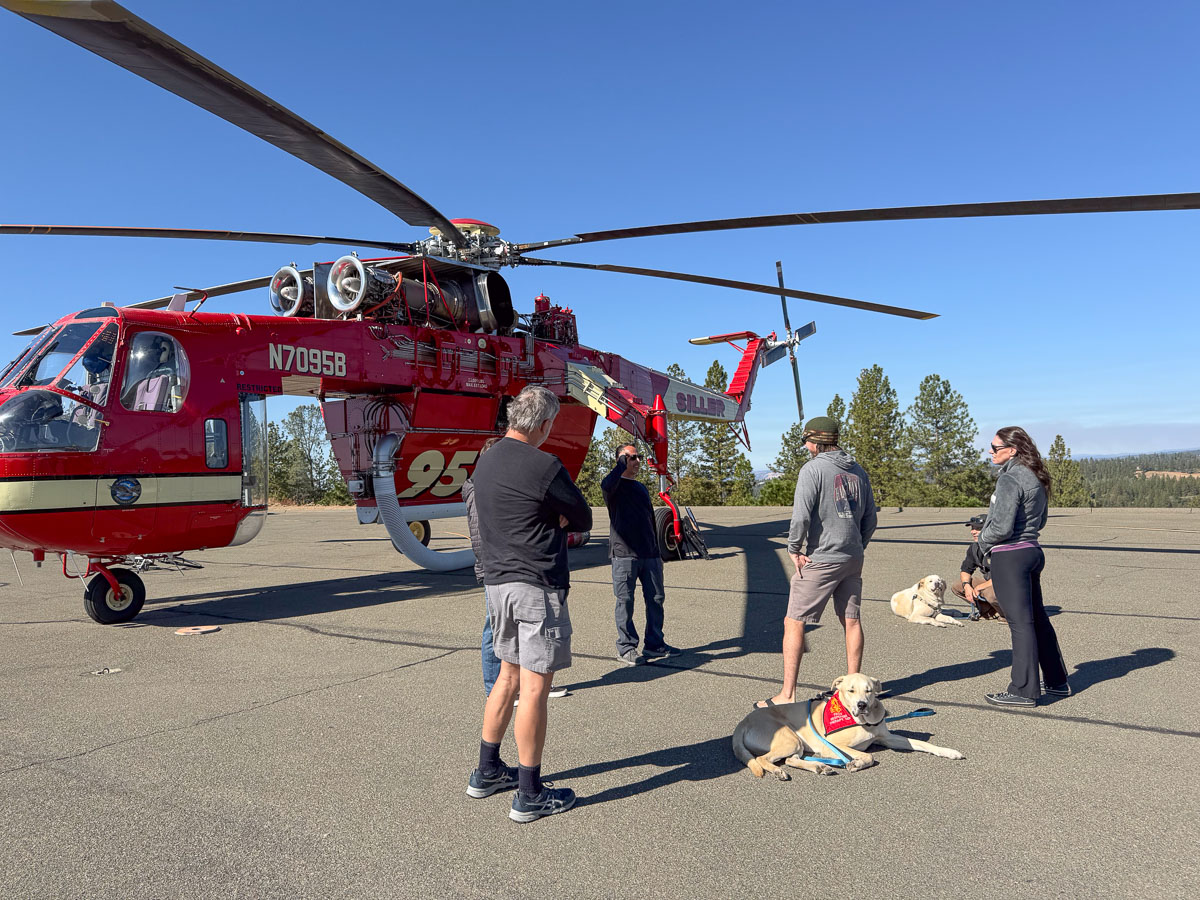
Sky crane helicopter with people and two dogs in front.

Looking up Sky Crane: “a twin-engine, heavy-lift helicopter famous for its distinctive, skeleton-like frame instead of a traditional enclosed cargo cabin…Built around a narrow central backbone for maximum strength and minimal weight.” Where ever this helicopter is stationed, the fuel truck and the maintenance trailer and truck (in the photo above this one) go with it. Three mechanics are part of the staff and one accompanies the two pilots on each flight. The water tank can carry 3000 gallons (I think).
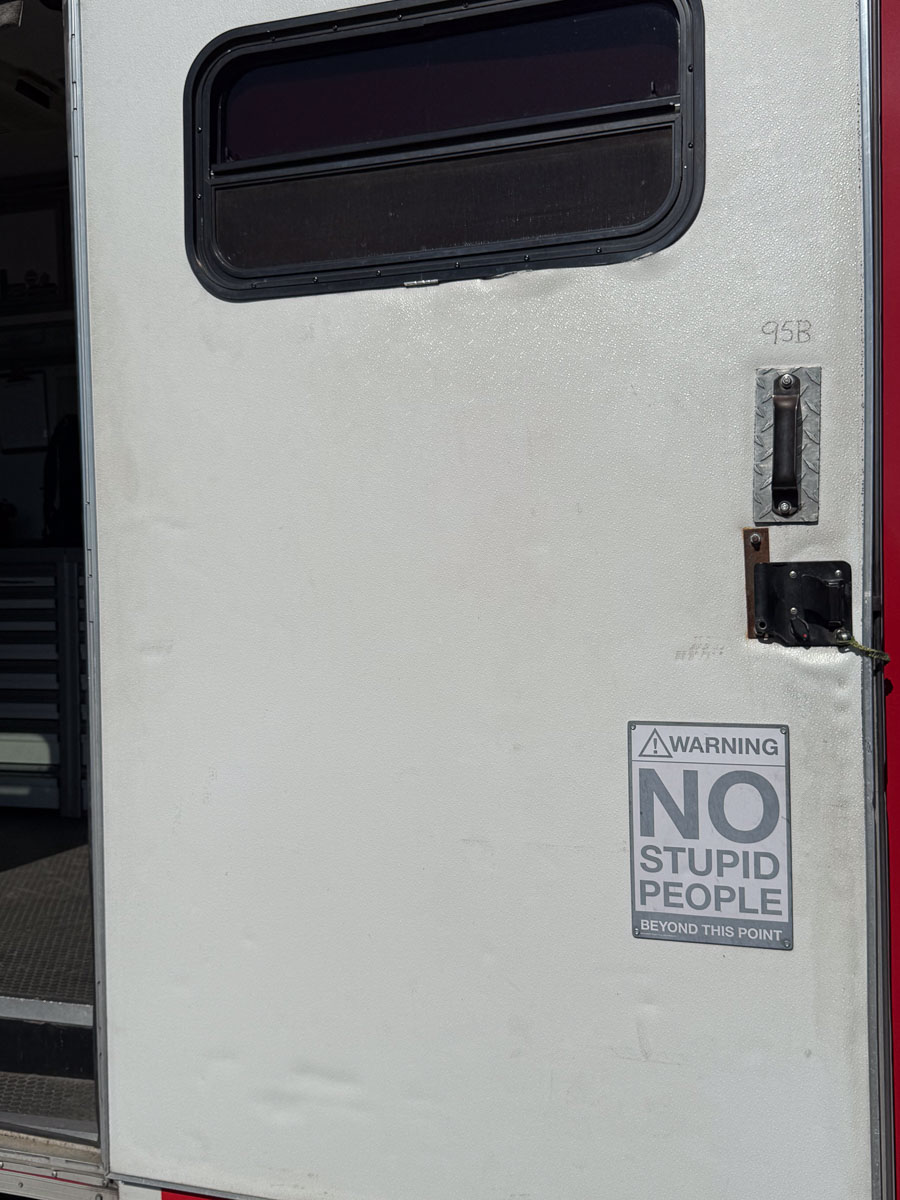
Door with sign that says "Warning. NO stupid people".

Sign on the door of the service trailer.
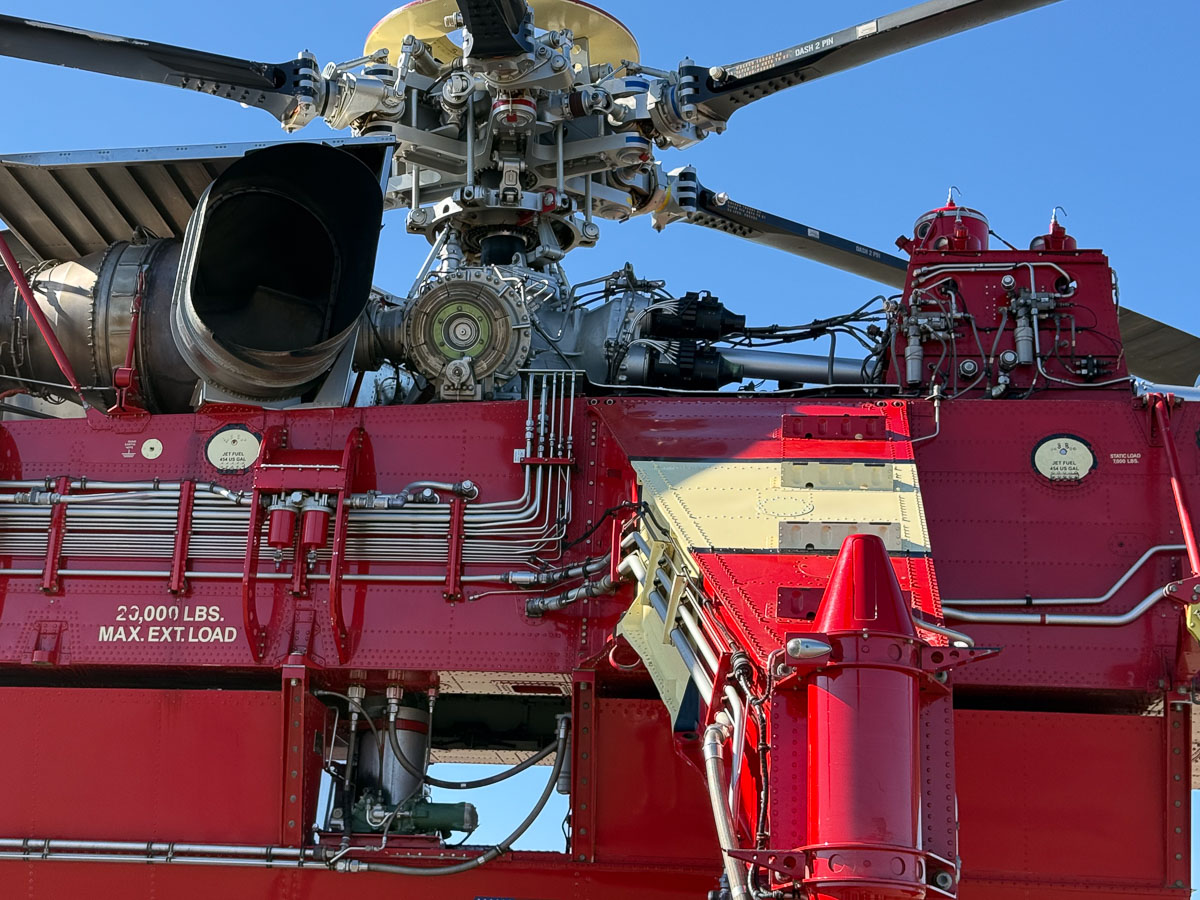
Mechanical parts of the sky-crane helicopter.

A close-up view. I don’t know what to call any of this, but I was fascinated by how complicated it all is…and this is just one small part of the whole system.
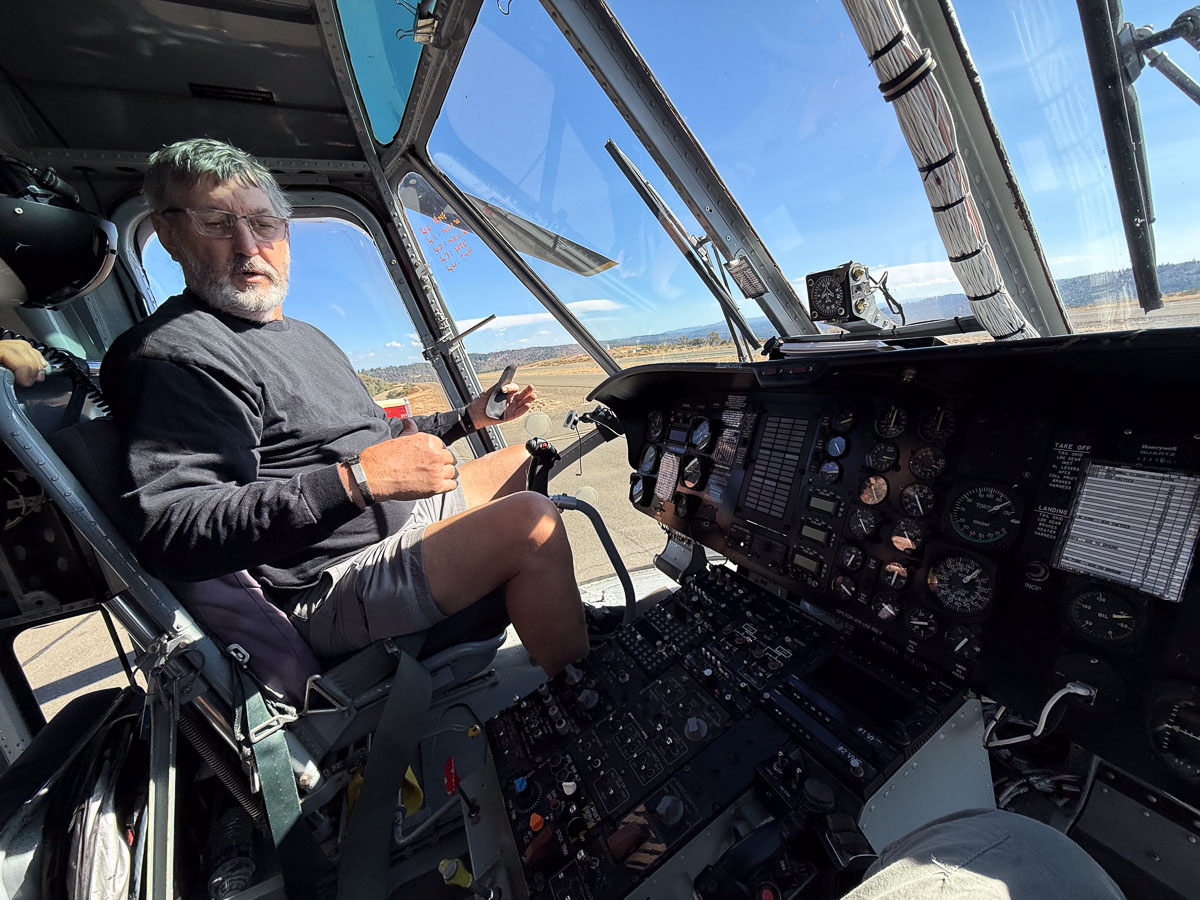
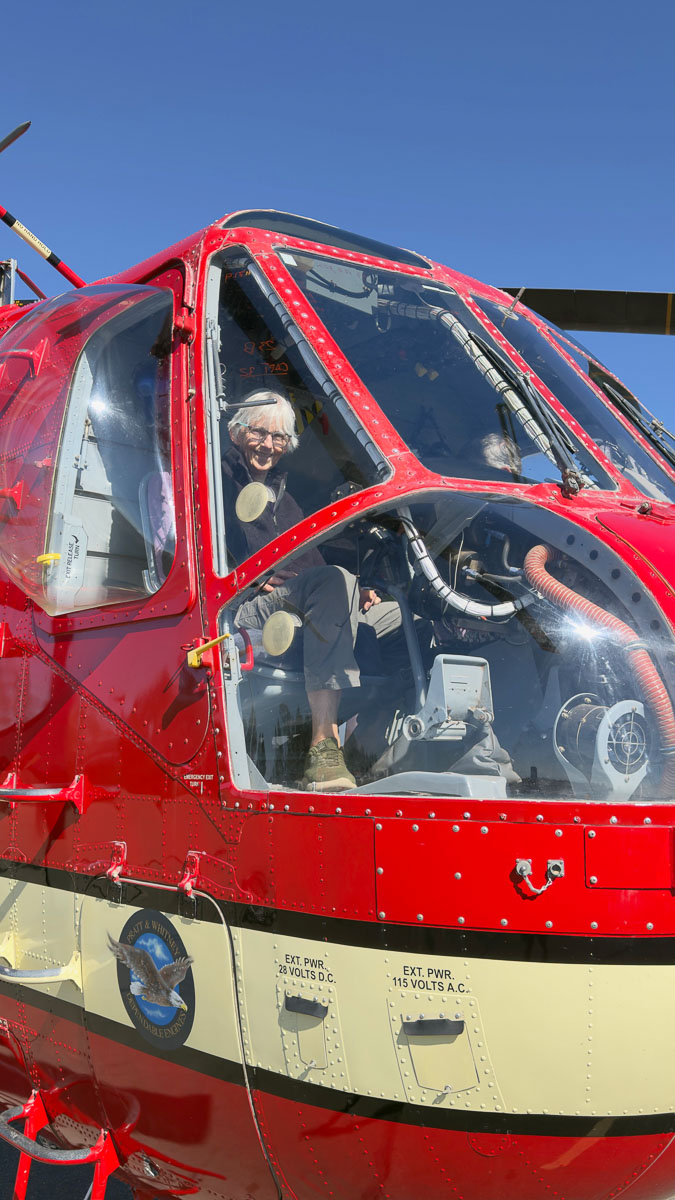
Dan sitting in the pilot seat of the sky-crane helicopter.

We were invited inside.

Robin in one of the sky-crane helicopter's seats.

There are seats for two pilots in the front and a third seat that faces backwards with a clear view of the ground to watch as while lifting or placing cargo.
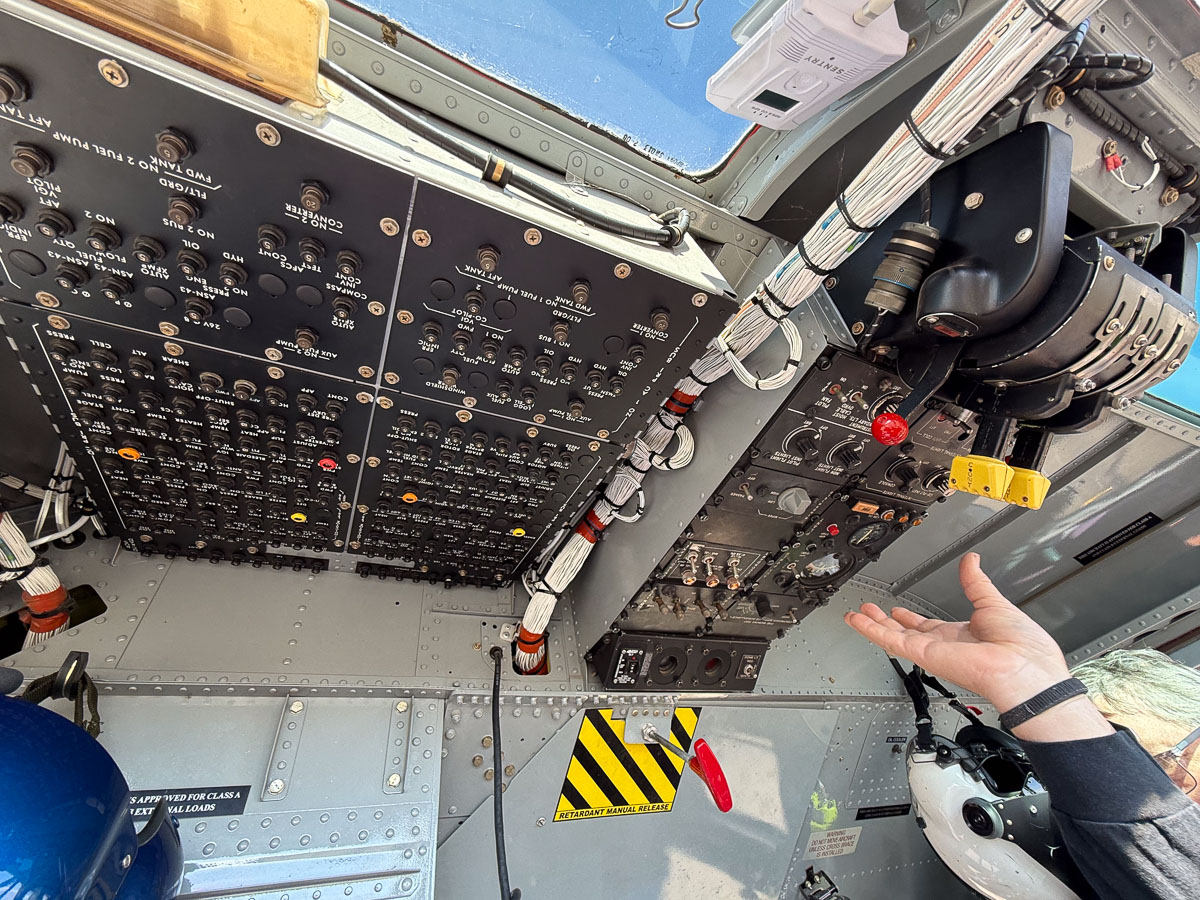
Overhead controls in the sky-crane helicopter.

Besides all the controls in front of the seats, look at what is above! Can you imagine learning to use all of this?
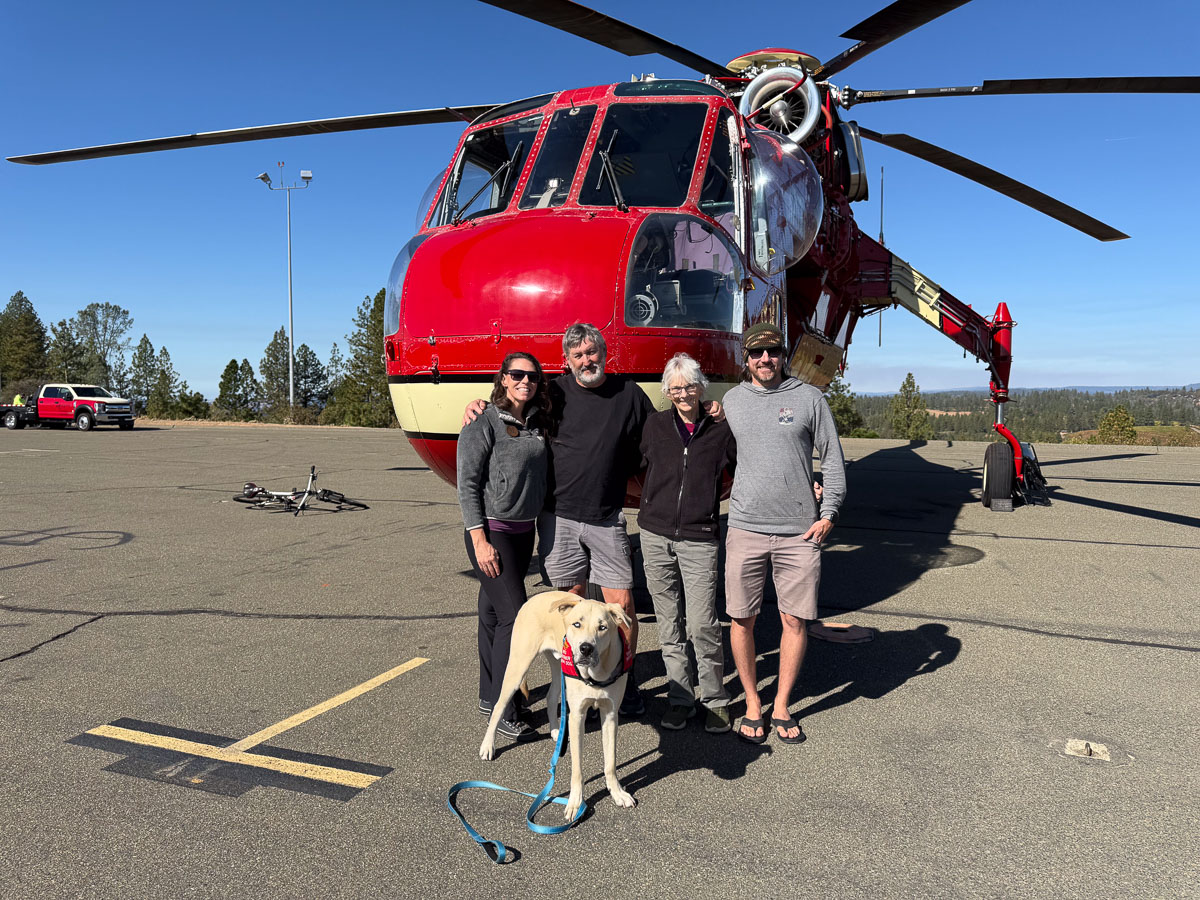
Family photo in front of the sky-crane helicopter.

A family photo.

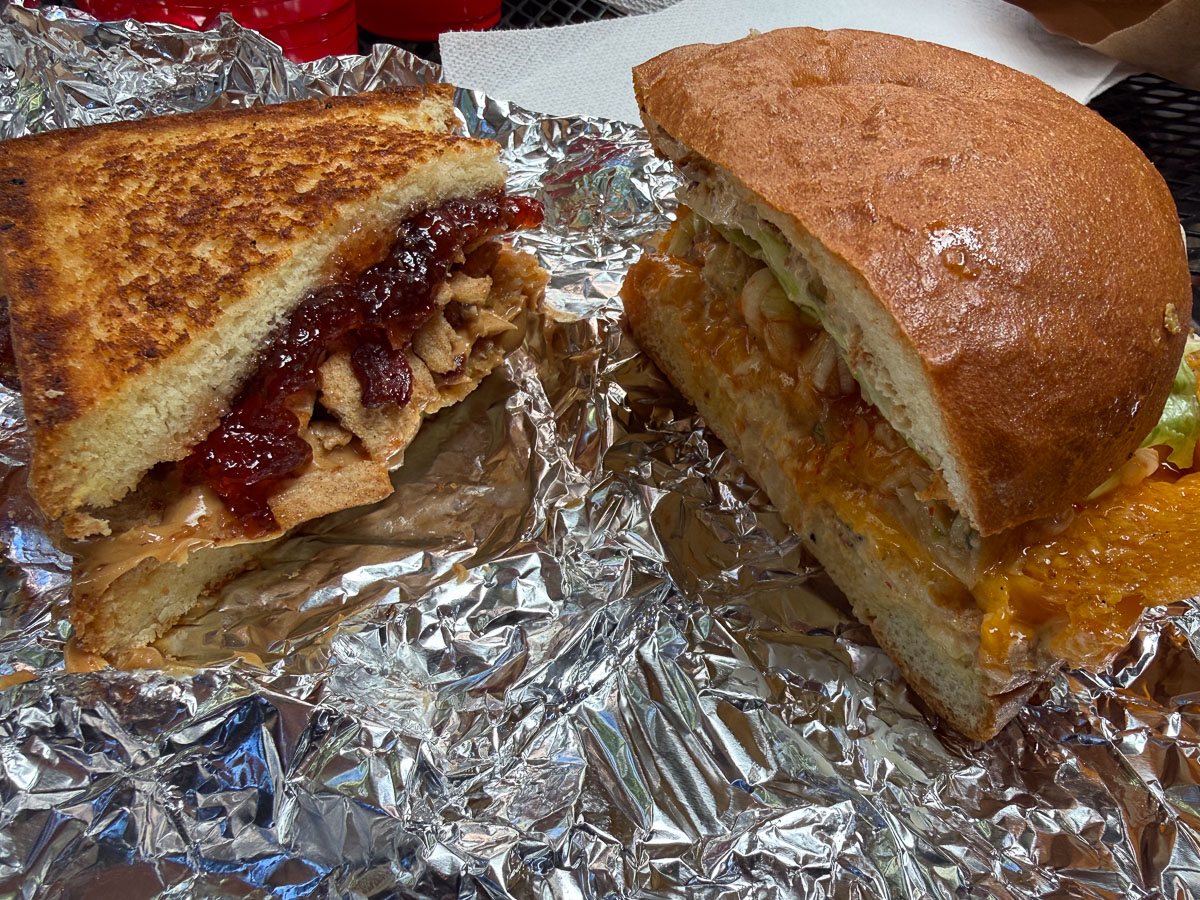
Two sandwich halves on aluminum foil.

This has nothing to do with HLCO, but Matt and Kaleena took us to lunch at Tommy’s Brown Bag in Placerville. Described on-line as a “quirky sandwich shop” and a “creative sandwich shop serving unique flavor combinations and generous portions”, both of those descriptions are correct. We each ordered a sandwich and traded halves. Mine is on the left. Guess the ingredients! See below:

PB&J&B&TP&CTC&HB!!!

  • PB&J
  • Peanut Butter
  • Strawberry Jelly
  • BACON
  • Toffee Peanuts
  • Cinnamon Toast Crunch
  • HONEY BUN!!!
  • on TEXAS TOAST BRIOCHE

Believe it or not, this was a fabulous sandwich. I would order it again, except that I think I should try some of the other quirky choices!
Granddaughter Visit – Airbase Tour

The previous two blog posts were about Kirby’s two-week visit in July. On Tuesday of the second week we drove to McClellan Air Force Base, no longer a military base, for a private tour by Matt. Dan’s sister and my brother joined us.

We started at the building used by the USFS for operations and training. I have a general idea of what Matt does at work, but it is sure different to see the details. He is a Helicopter Operations Specialist for the Pacific Southwest Region and spends time in the air managing helicopter operations and coordinating the air traffic over fires (water drops, retardant drops, keeping planes and helicopters from flying into each other). He has an office in this building as well.

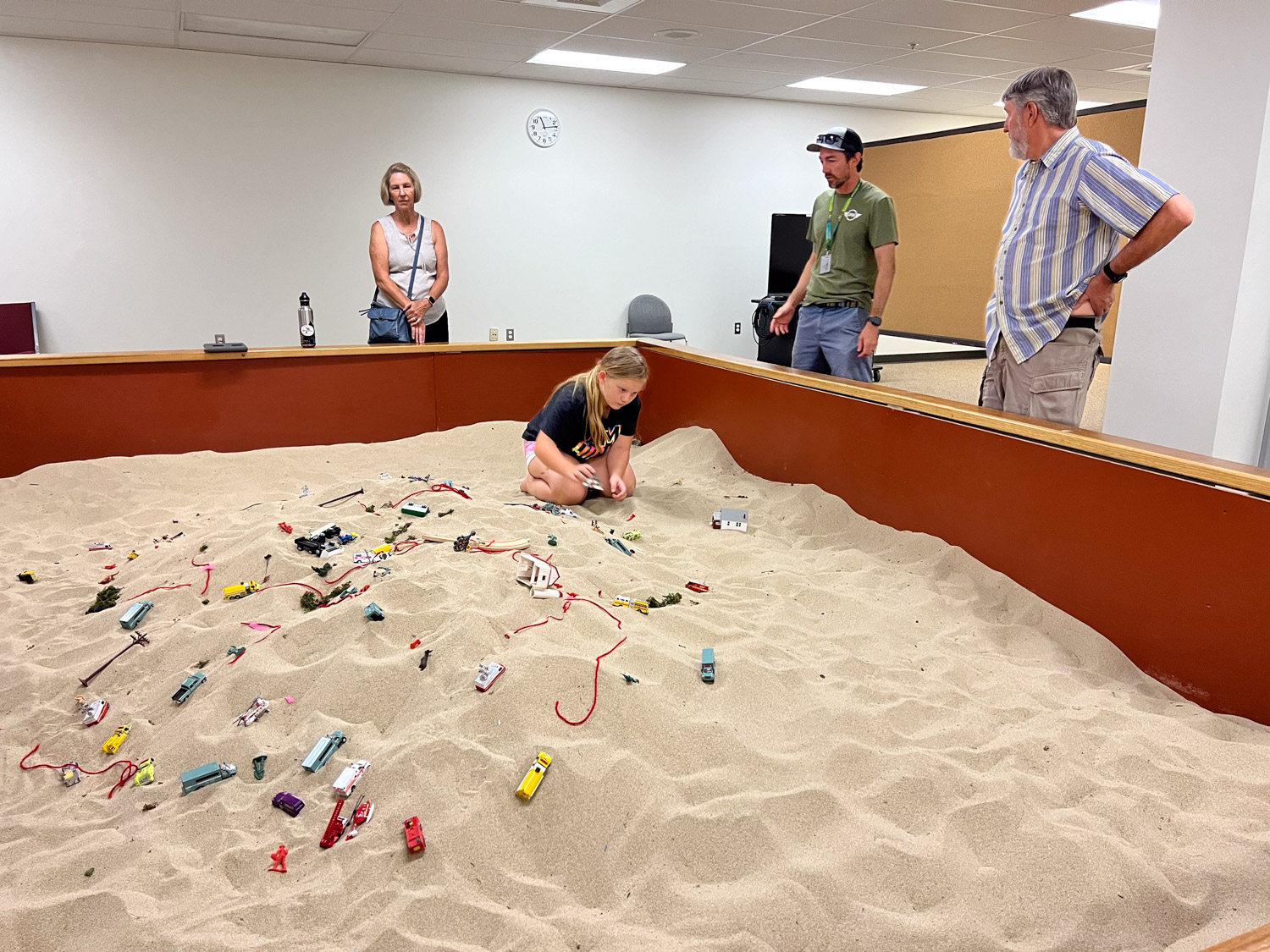
Since this tour I have heard reference to fire strategy training with the sandbox, but I would have had no idea what that meant before seeing this. There are at least two rooms with sandboxes of various sizes. They use red and black yarn to designate active fire and burned areas.

There are toy vehicles, buildings, trees, animals and more. When in use the sand can be moved to create geographic features so that firefighters can discuss fire behavior and fire fighting strategies.

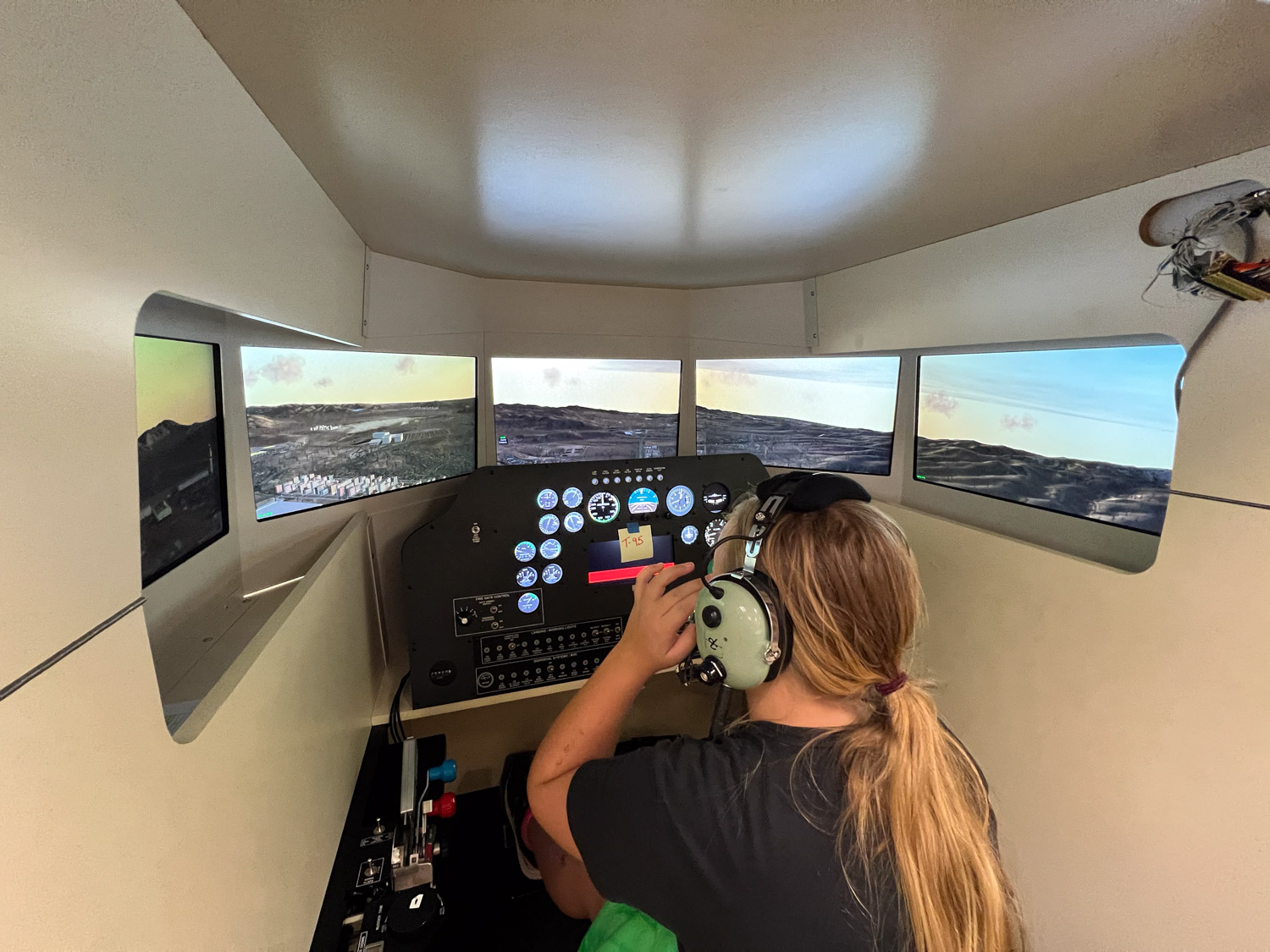
After looking at the sandbox rooms we went to the simulator room. There are probably a dozen simulators for airplanes and helicopters.

We all had a chance to try the simulator. It’s not easy.

Dan and Kirby were both in the airplane simulator here and my brother tried the helicopter. Most of us crashed numerous times and dropped retardant on unintended locations.

Interesting photos line the hallways of this building. After the tour of Matt’s building we went to the airfield and met up with a friend of Matt’s who is his counterpart working for CalFire.

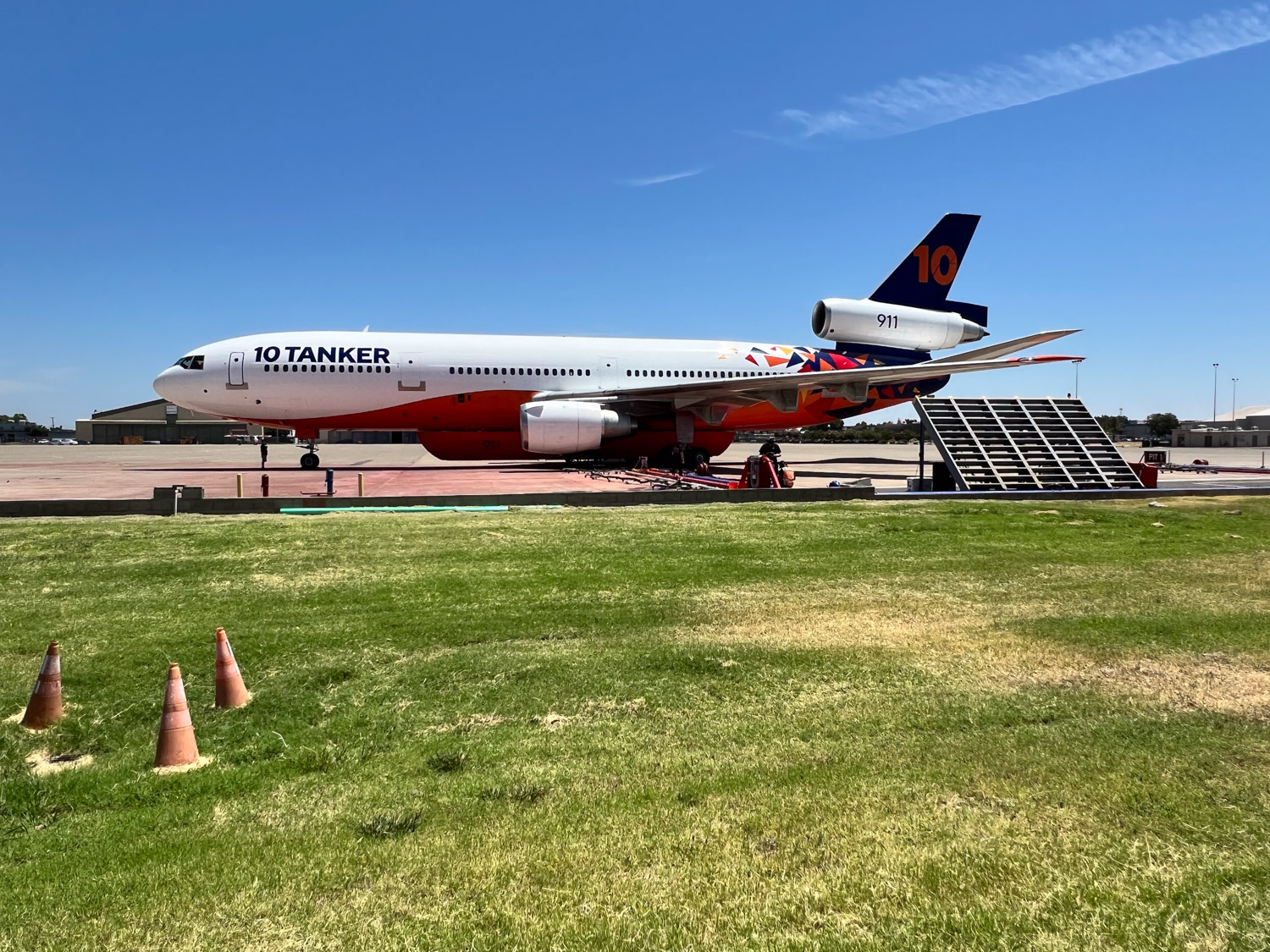
We watched this DC-10 land and taxi to where it would be filled with retardant.

It carries 9000 gallons but can be filled quickly.

The turn-around time was just under 30 minutes. This was a few days before the Park Fire began (arson) near Chico, CA. That fire is now over 400,000 acres and is still burning. On this day this plane was working the fires in northeastern California, where my daughter-in-law was also headed that afternoon. She is now on the Park Fire as a Public Information Officer.

Cal Fire’s C-130 also landed to refill. This plane doesn’t carry as much retardant but is more maneuverable for many situations. It can also land at many more airports than the DC-10s, which need longer runways.

Retardant (mostly fertilizer) in large bags is mixed into a slurry (85% water) and then piped to where the planes are loaded. This article describes the components of fire retardant and how it is used.

OV-10 – Spotter plane

This OV-10 is the favorite plane of Matt’s friend who was showing us around. These were originally military planes used in Vietnam with some being used more recently. This is used as a spotter plane and for directing air traffic as Matt does in the helicopter. This plane is fast enough to also be a lead plane for the retardant drops.

This is a narrow plane and reminded me of the Cobra helicopter Matt was in until they were retired a few years ago. The pilot is up front and the fire personnel sits in back.

We saw the hangars where CalFire houses and repairs aircraft. These are just a couple of the Bell helicopters. There were several hangars but I already have too many photos in this post.

This helicopter was called a Blackhawk when used by the military but is now set up for civilian use and CalFire calls it a Firehawik.

Our last stop was an old air traffic control tower, shown in the photos of the DC-10 taxiing and taking off, that Matt’s friend uses as his office. Here is his view.

This was an extraordinary tour and I appreciate the time spent by Matt and his CalFire friend in showing us around.