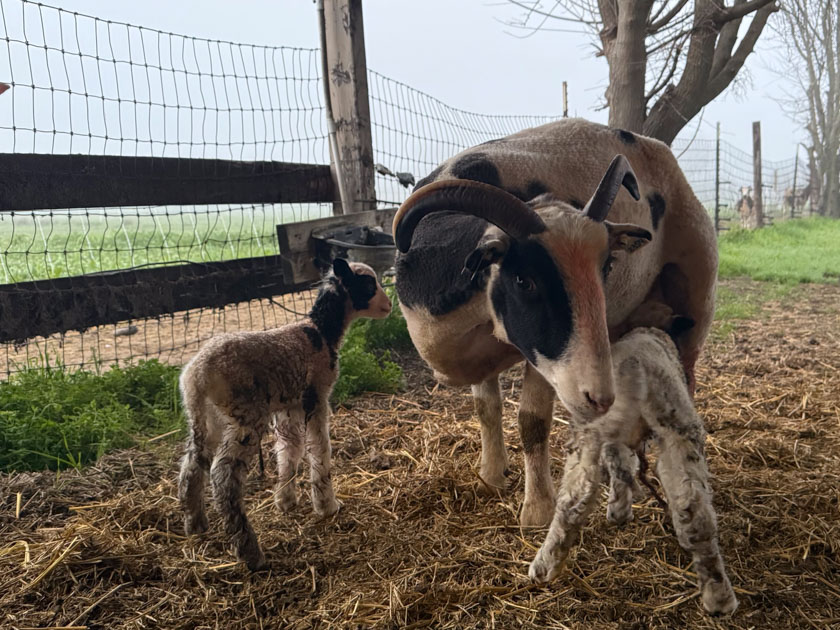
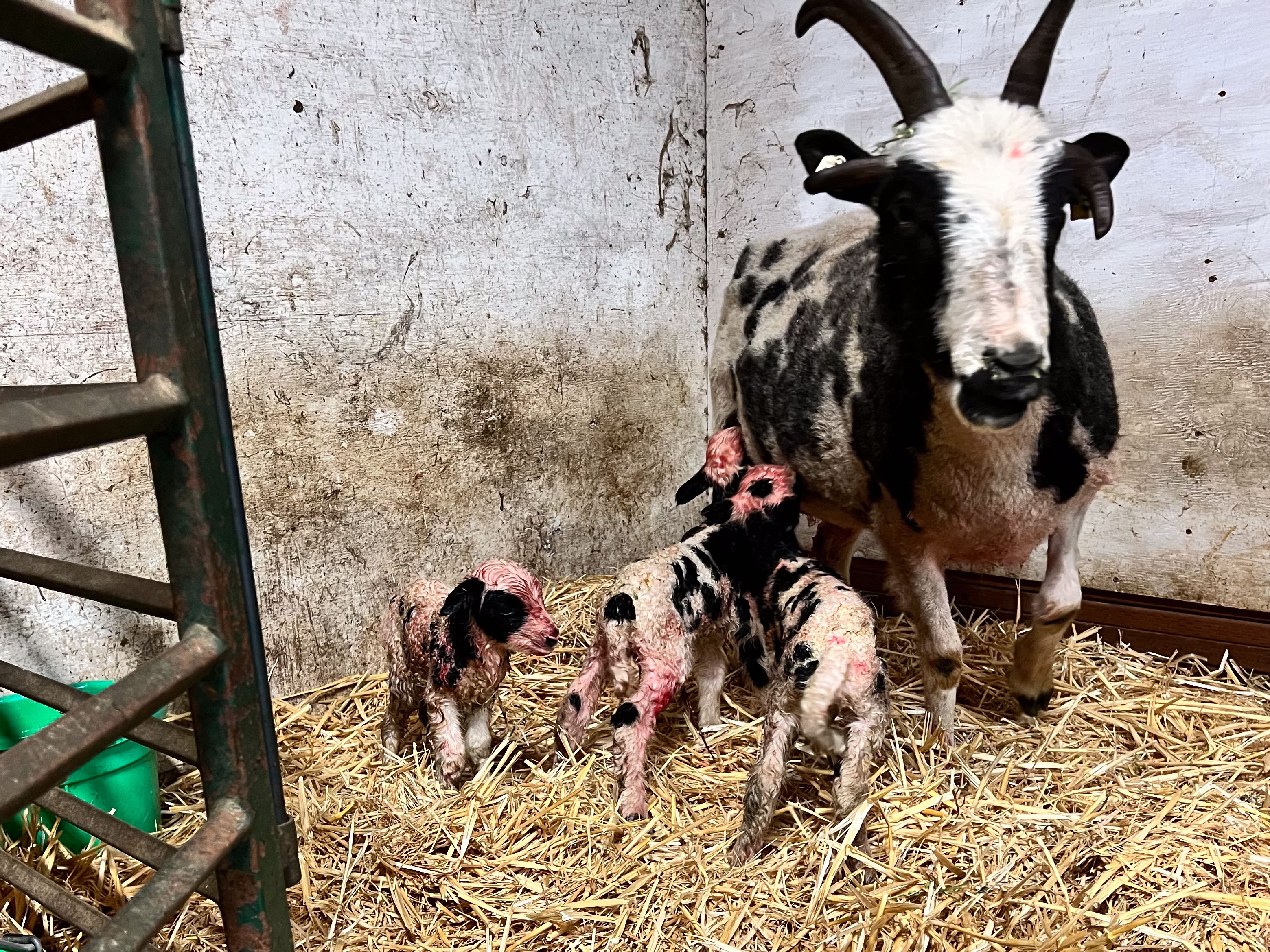
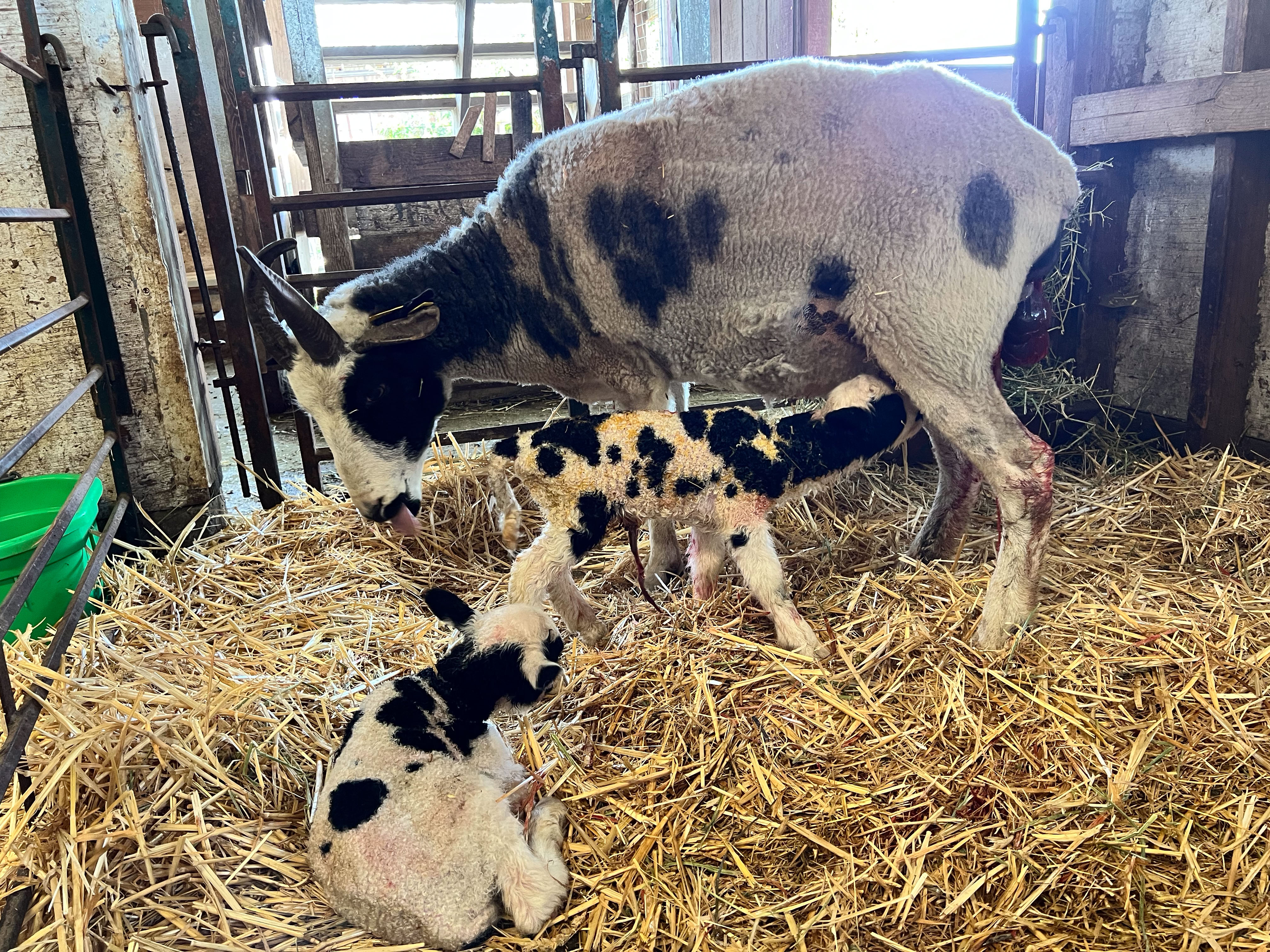
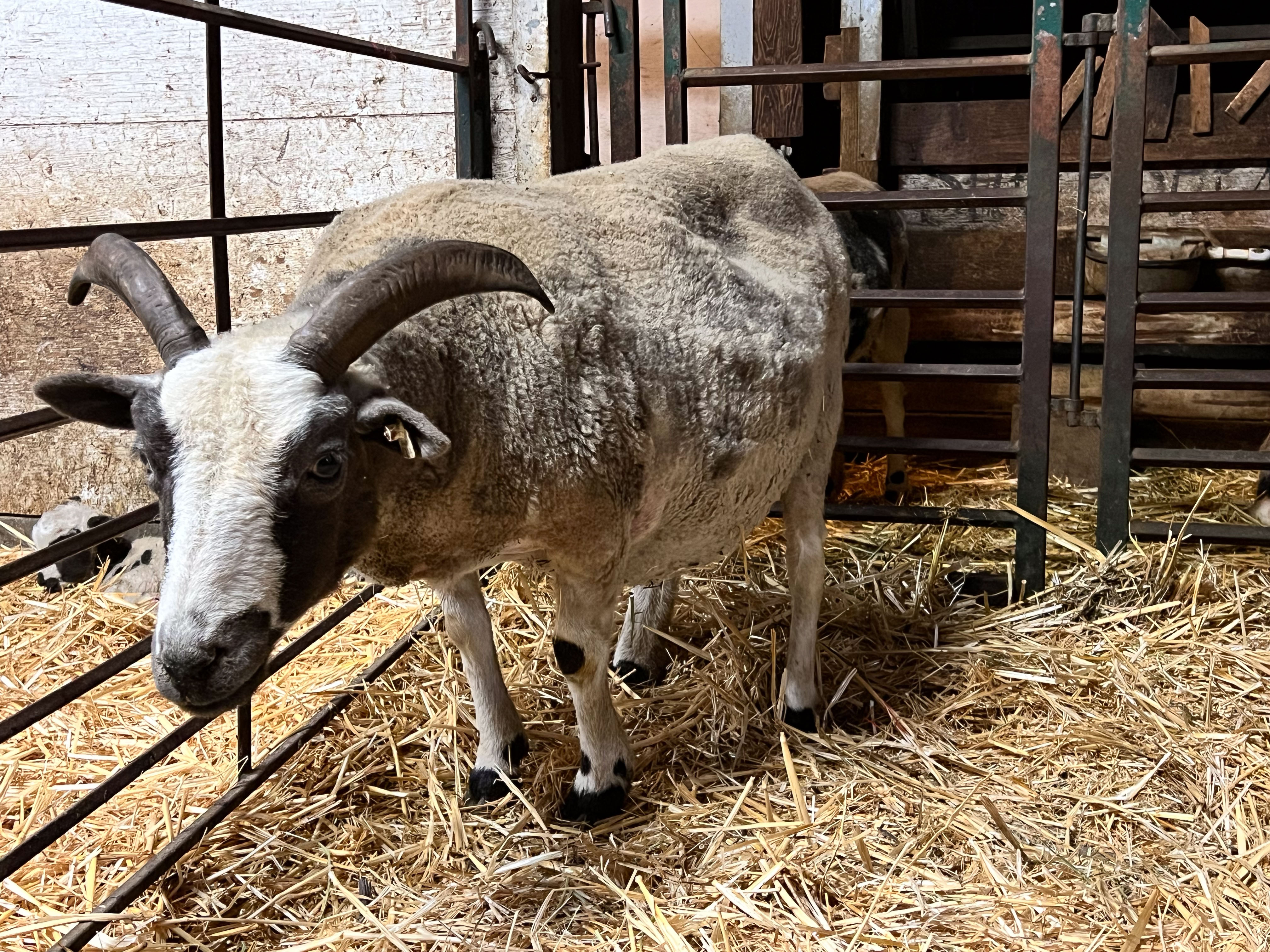
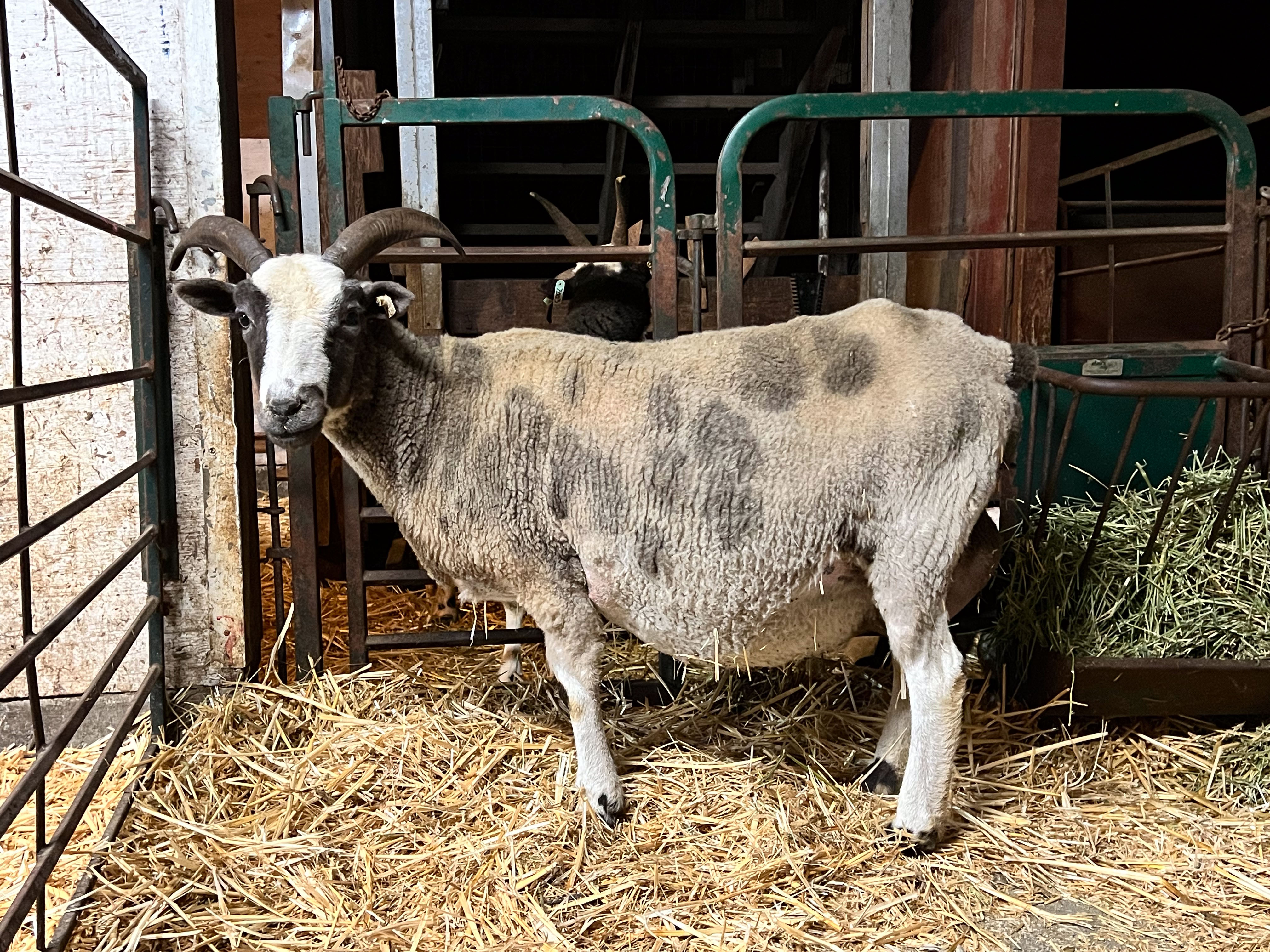
Two rams got in with the ewes on September 1. One ewe was cycling and was bred (as confirmed by the vets on ultrasound day. We knew that she would lamb in the week between Shearing Day and the Farm Club Retreat. I went to the barn the morning that we were going to leave and found lambs!
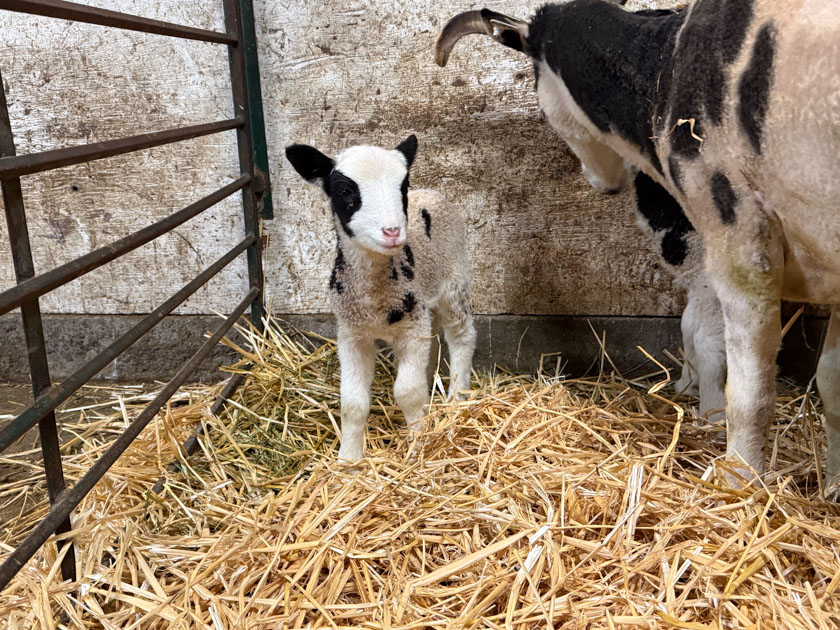
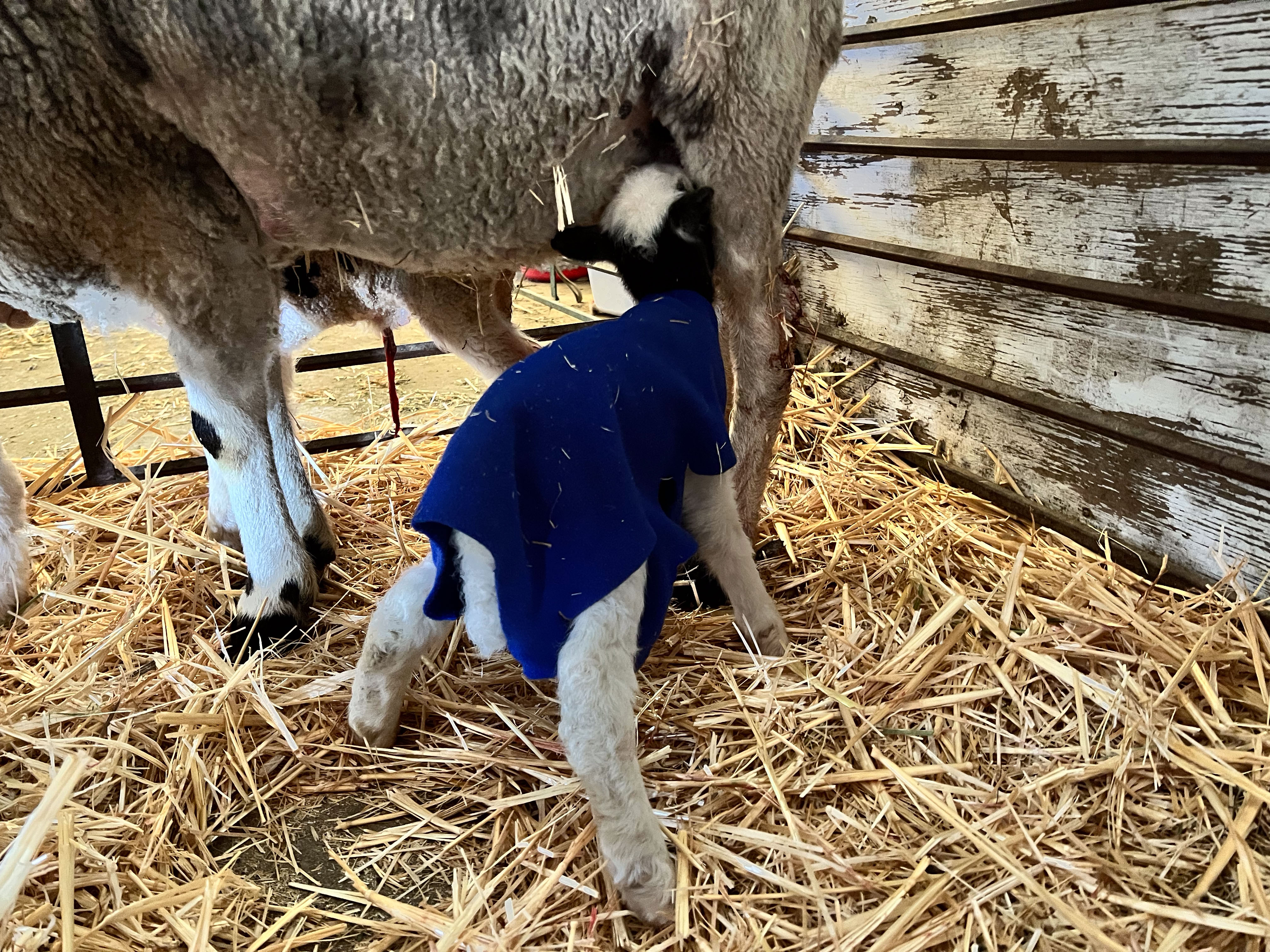
Lambs up and nursing, just the way I like to find them! Good job Hailee!
acobI brought the lambs and ewe to the barn. The ewe lamb weighed 8.3 pounds and the ram weighed 11.2 pounds. Dan was happy because he didn’t have to be on lamb watch while I was gone.
After I brought the ewe and lambs in went out to move the fence and let the sheep into a new paddock.
Even though the sun was up, the fog started to roll in again.
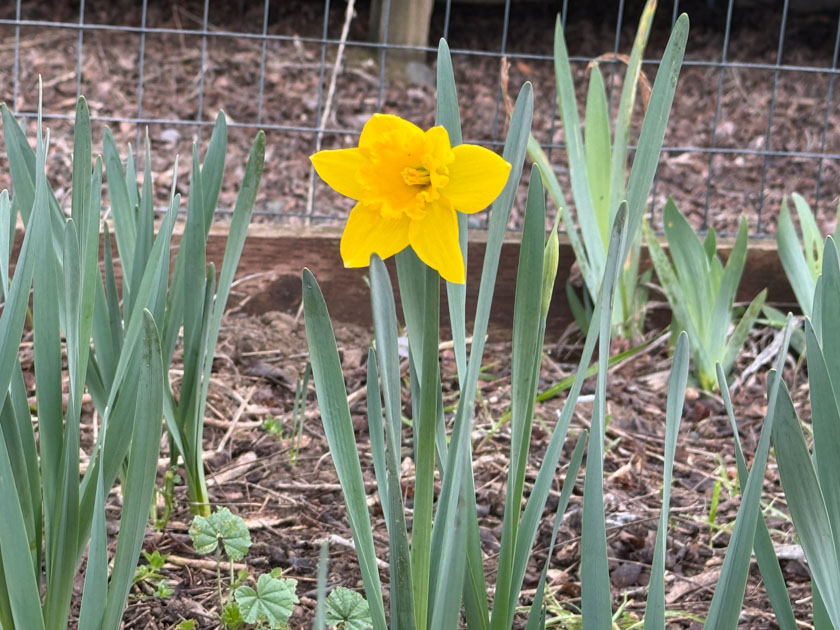
First daffodil, brightening up the gloom of fog!
I was gone from Friday through Sunday. I took this photo Sunday evening. The next lambs aren’t due for three weeks.
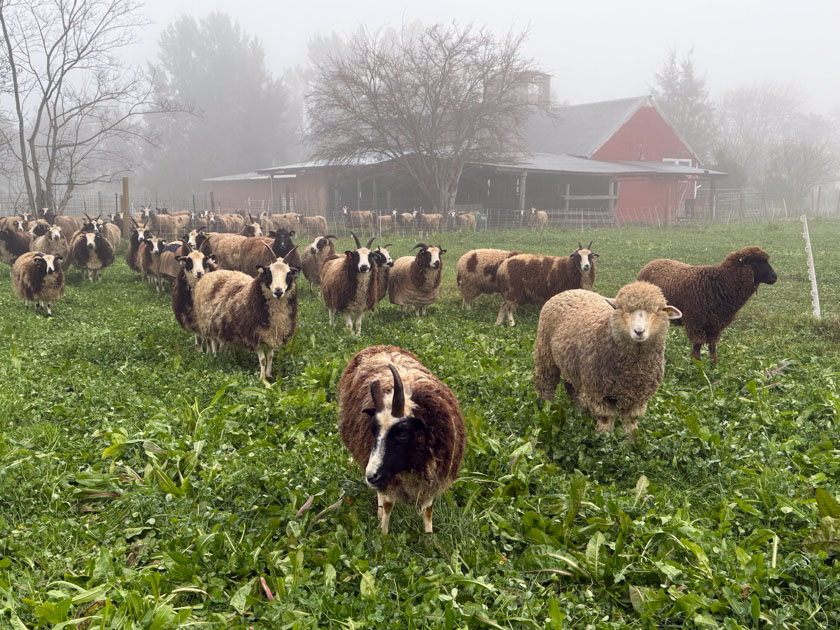
It was a foggy morning and the fog didn’t lift until mid-afternoon.
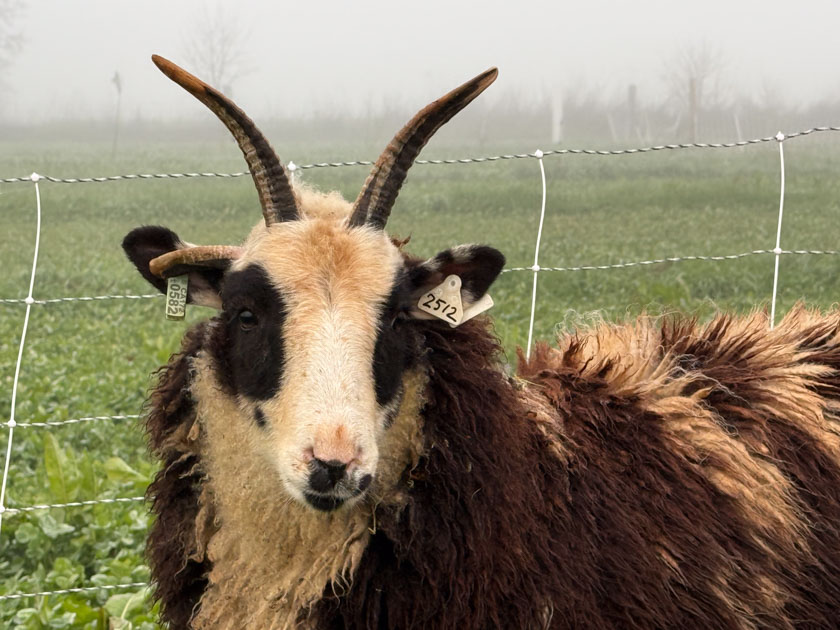
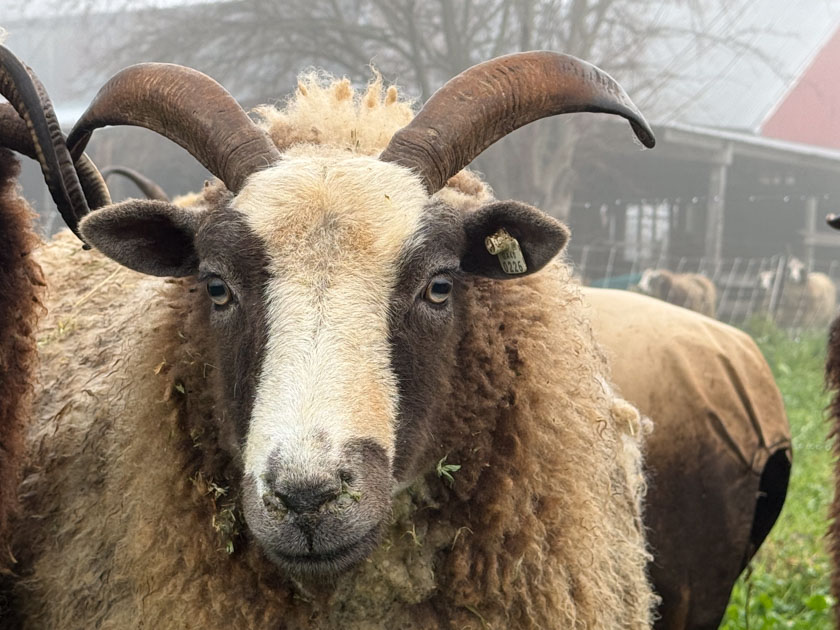
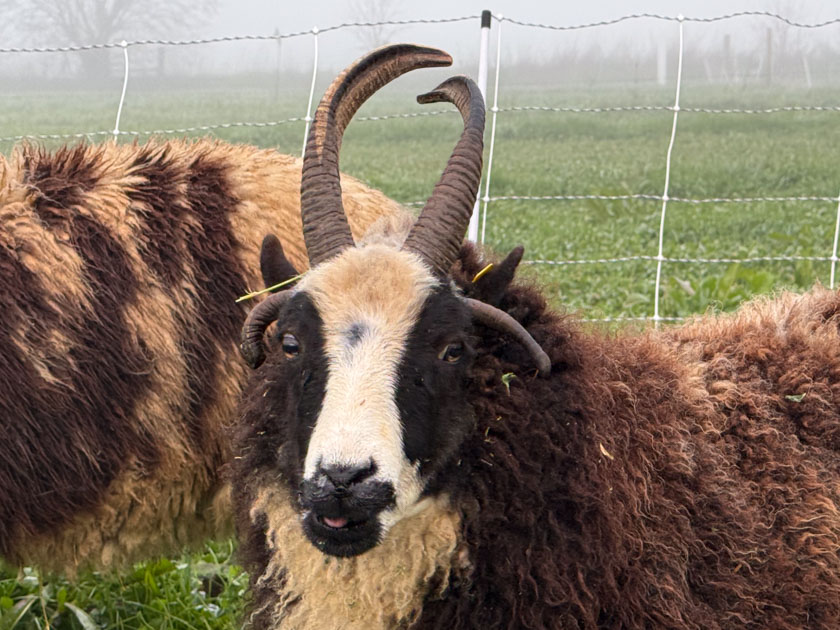
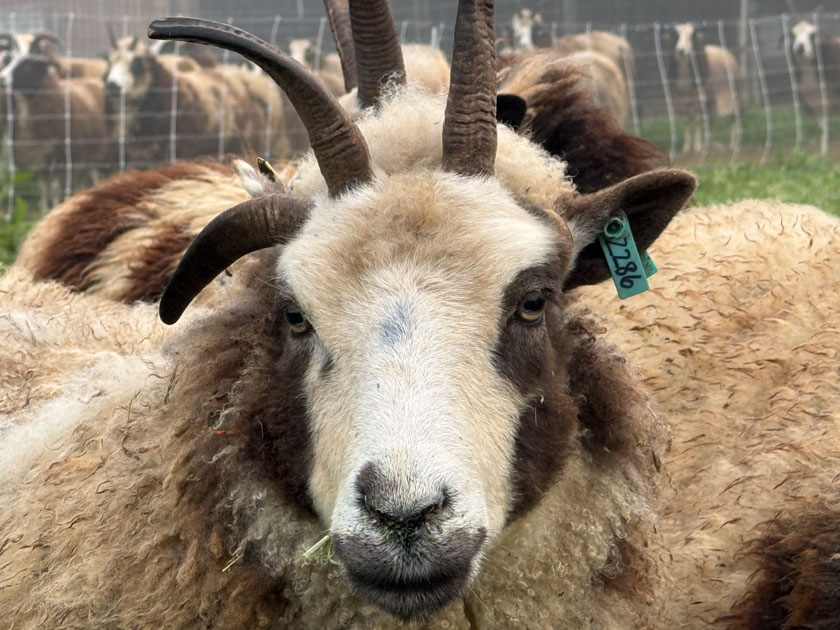
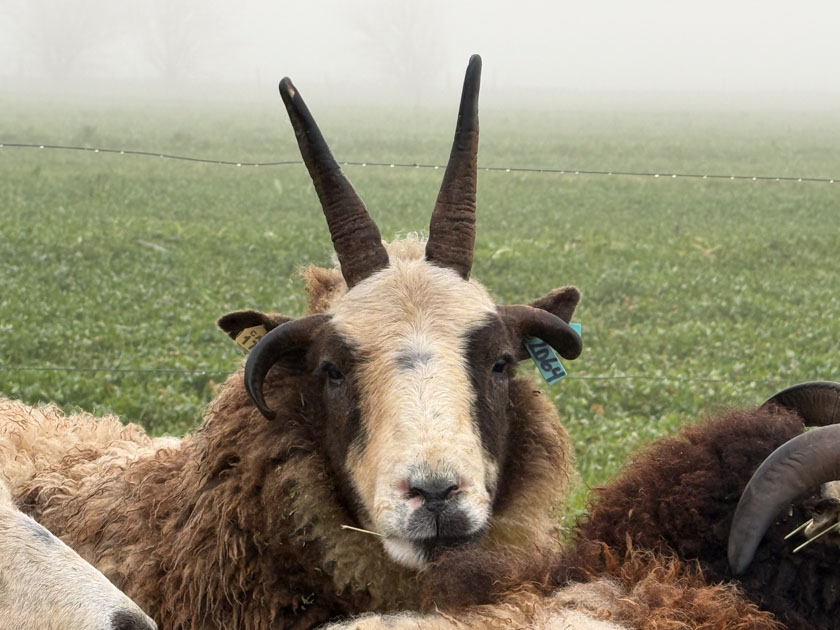
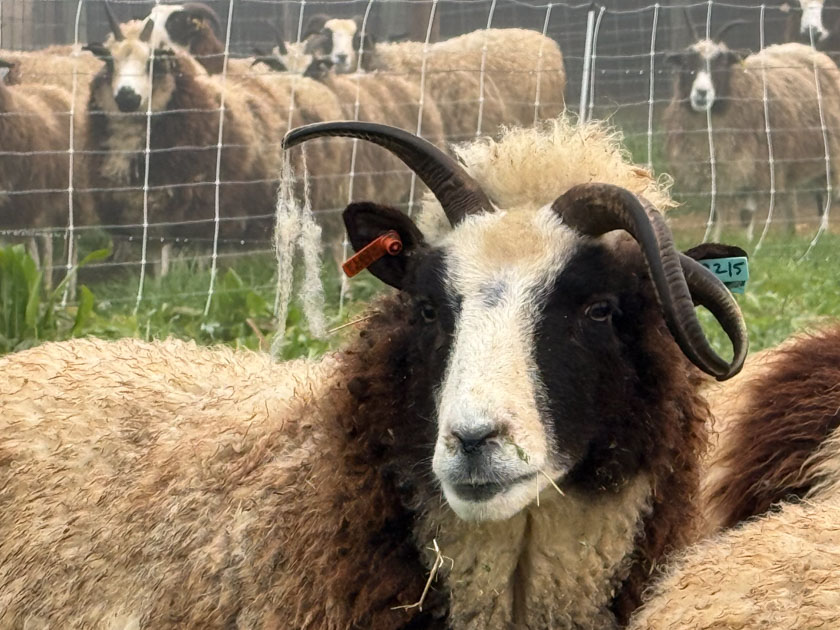
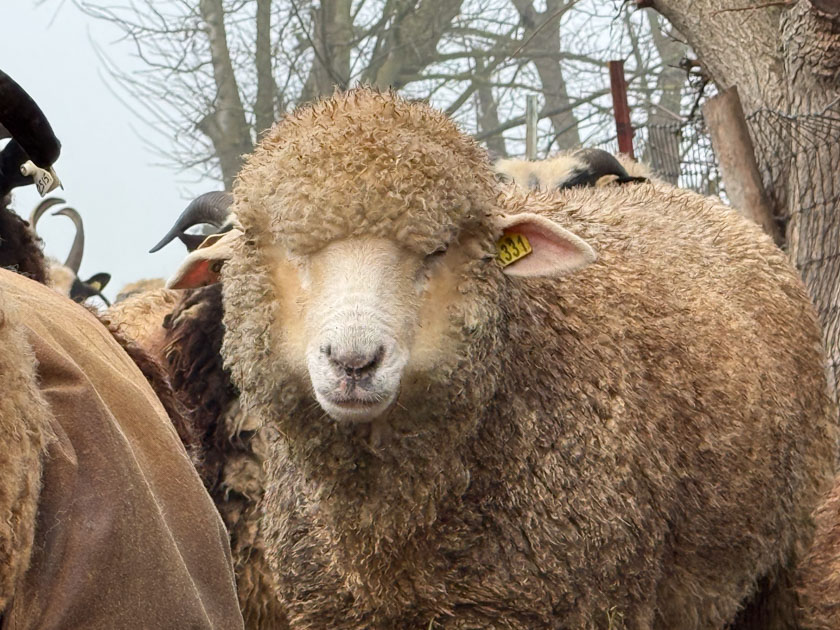
The sheep had already been out before I walked to the pasture so they didn’t bury their faces to start grazing immediately. It was a good opportunity to take sheep portraits.
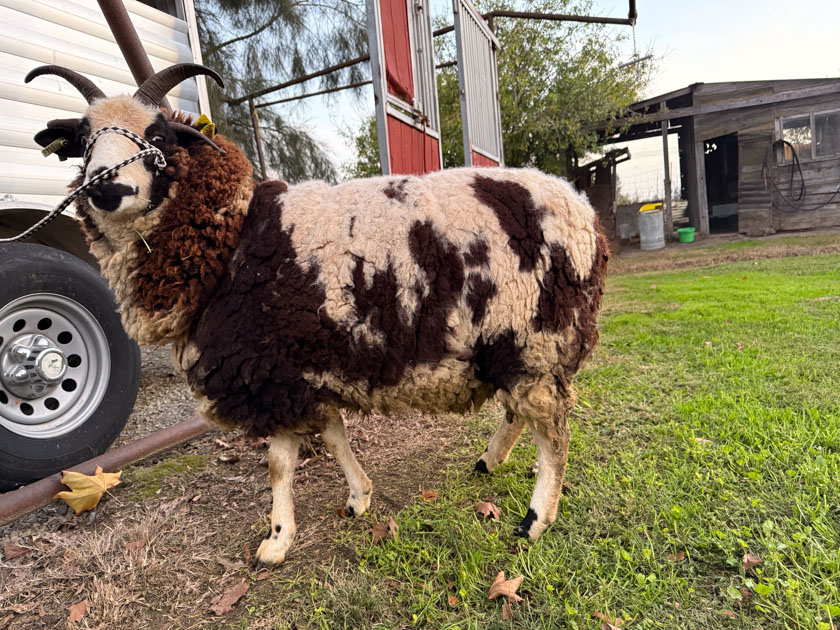
Yearling ewe, Meridian Zoe, a 4-horn lilac.
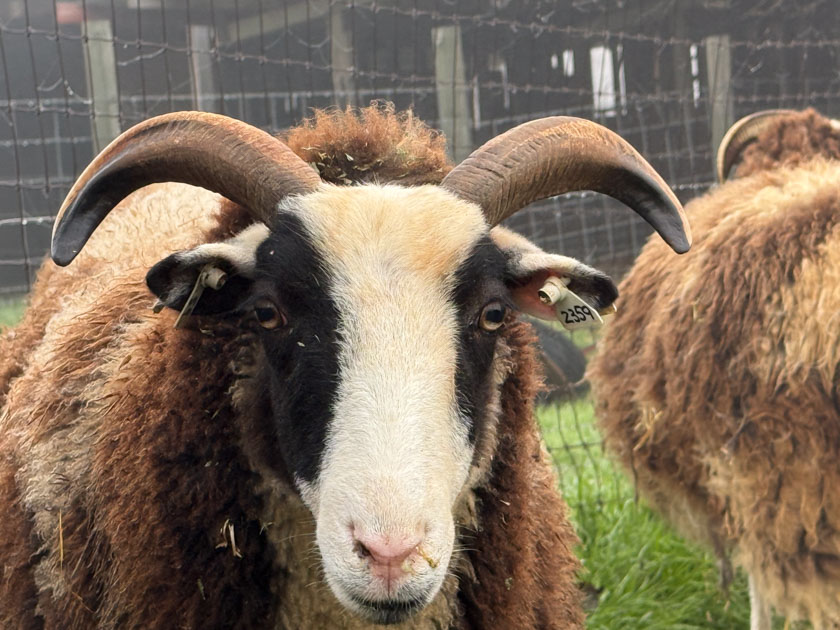
Meridian Hailee has a nice wide spread to her horns.
Meridian SallyR, a ewe lamb.
Patchwork Amara, a lilac ewe, who came from Patchwork Farm in Georgia.
This is yearling ewe, Bide a wee Bobbie Jo, one of two ewes I got last summer, originally from Oregon.
Meridian Lenore, another lilac ewe.
Meridian Pecan. The ewes born in 2020 didn’t get as much handling as in other years because that was after my accident and head injury. They were all a bit nutty and that’s why most of them have nut names.
Jannie, a ewe whose horns took an interesting twist.
Corri-3, one of the three Corriedale ewe lambs I got in September.
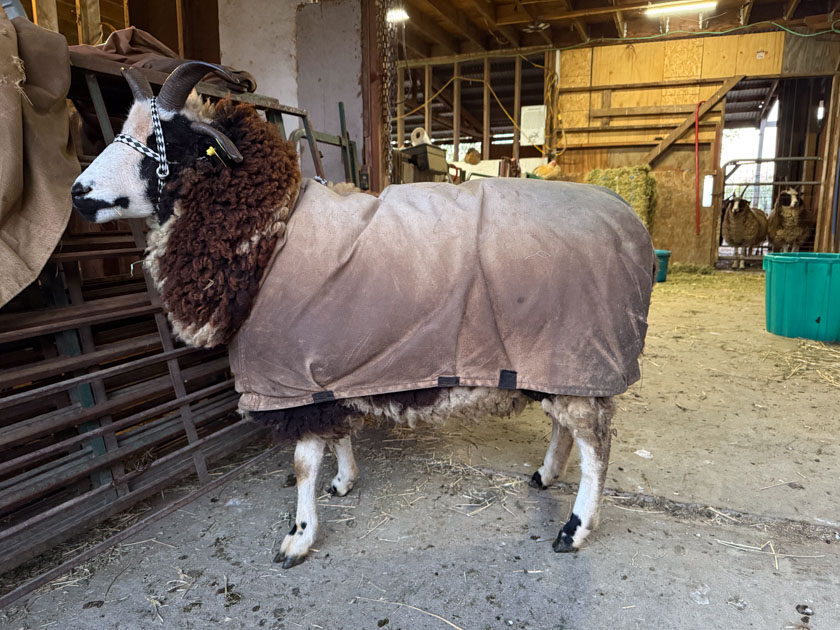
Every year I choose some sheep to coat–it’s usually those that are entered at a show. This year we took a trailer-full to Black Sheep Gathering (photos of the show). I coated most of those sheep because those who aren’t coated end up with straw buried in the fleeces. I kept coats on most of those afterwards so now there are nine sheep with coats.
Why coat? 1. The fleeces are free of VM (vegetable matter) which could be stickers, seed heads, etc from the pasture, but our pasture doesn’t have any of those. Alfalfa is our most likely VM, and is great to spin a fleece that is completely free of that. 2. The colored wool isn’t sunbleached. Why don’t I like coats? 1. I would rather see the sheep in the field without coats. 2. Coats need changing as the wool grows, at least four times each year, and maybe more. 3. Coats need repair, especially when worn by horned sheep. 4. Coats can cause felting or other damage to fleece if they aren’t changed at the right time. 5. At this time of year with 6-1/2 weeks to go before shearing I’m running out of the larger sizes. I changed coats last week and took photos of some.
This is Lily wearing a coat that looks snug. I changed this one but didn’t get a photo.
This is how Breeze looks with the coat removed. There is a bit of sun-bleaching because she didn’t wear the coat all year, but you can tell a difference from the neck wool that isn’t coated at all.
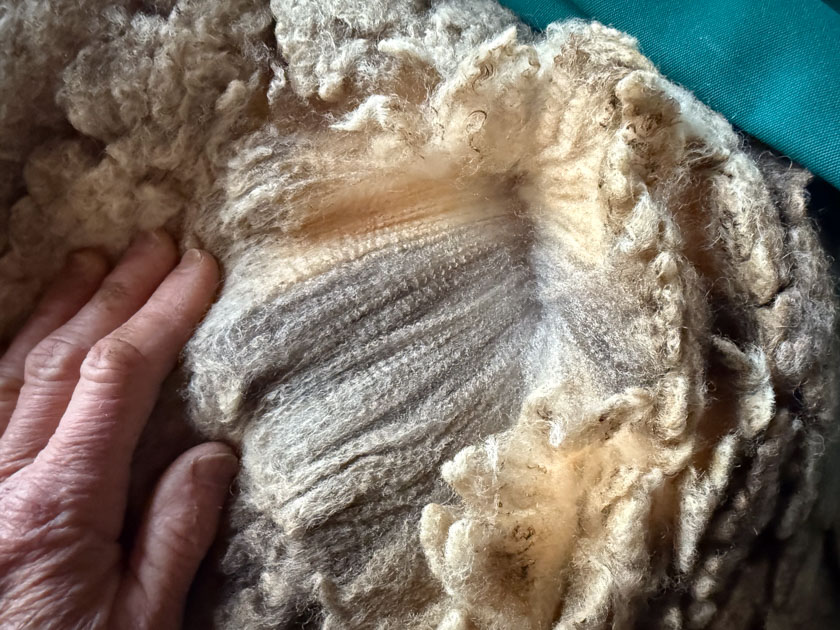
Breeze’s fleece.
Breeze with a larger coat.
I didn’t get a photo of Zoe, but here is one of her fleece. Gorgeous!
The previous post showed how this looked when the sheep went in. The growth of the annual rye was so fast at this time of year that we needed to move them through fairly quickly.
Here is another view of that same area (left) before removing the fence to graze the next section.
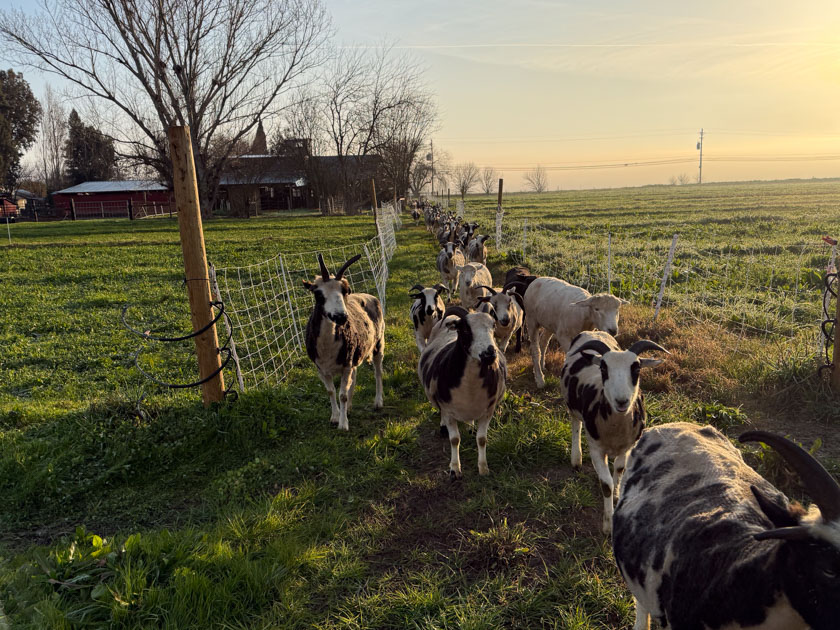
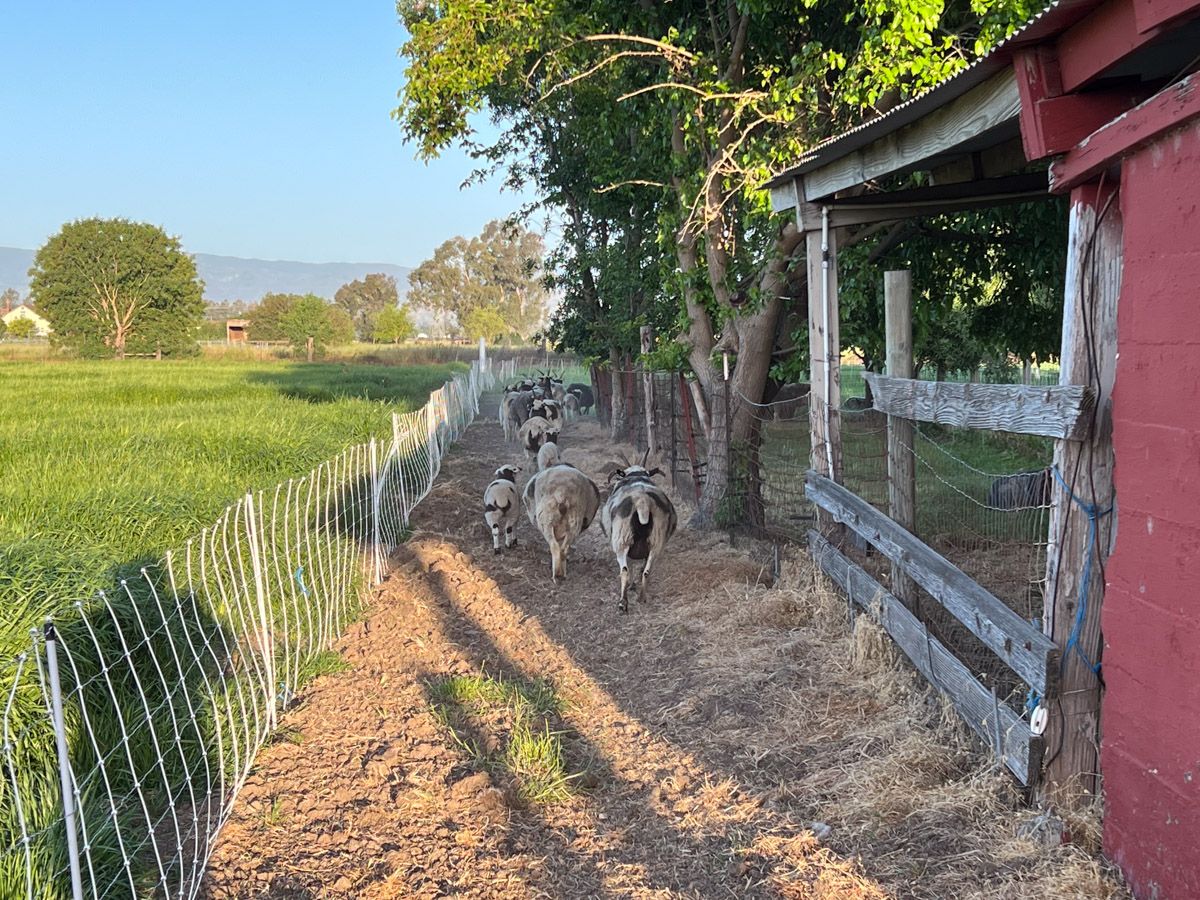
The sheep trail out from the barn to access that field.
It was a challenge to set up fence and graze this with the grass so tall. Thanks to my brother for coming to help set this up.
This was the last day before I had to be gone for four days. Dave came every day while I was gone to get the sheep out on new pasture.
Most of the lambs came as planned during the month of March. There were some late lambs, also expected, but not originally planned. That is because I unexpectedly acquired a ram in late November.
Ginger Lynn’s Eli was sired by a Meridian ram that I sold a few years ago.The breeder of Eli sold him to someone who unexpectedly needed to re-home him due to a move, so we drove to the Redding area to pick him up. When I got him here I decided to put a few ewes with him. We hadn’t bred the whole flock this year because of the pasture renovation project that has been described in other posts. A 5-month gestation means lambs in late April or early May.
Here is Eli after shearing in January. He is not here anymore because I returned him to the breeder who wished she had not sold him to the other person. I hoped for some nice lambs.
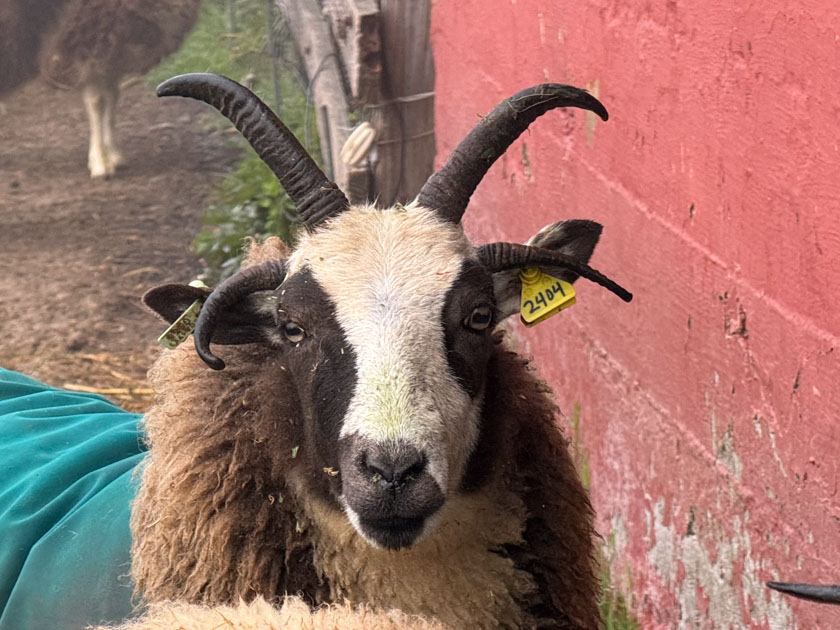
This is lamb # 2555 born April 27, the only ewe lamb from this group. Ginger Lynn’s Eli x Meridian Belle. Belle is my granddaughter’s sheep and this lamb is sure pretty, so she will stay and I’ll let Kirby think of a name.
Jasmine was next to lamb with a ram lamb but I can’t find a photo right now.
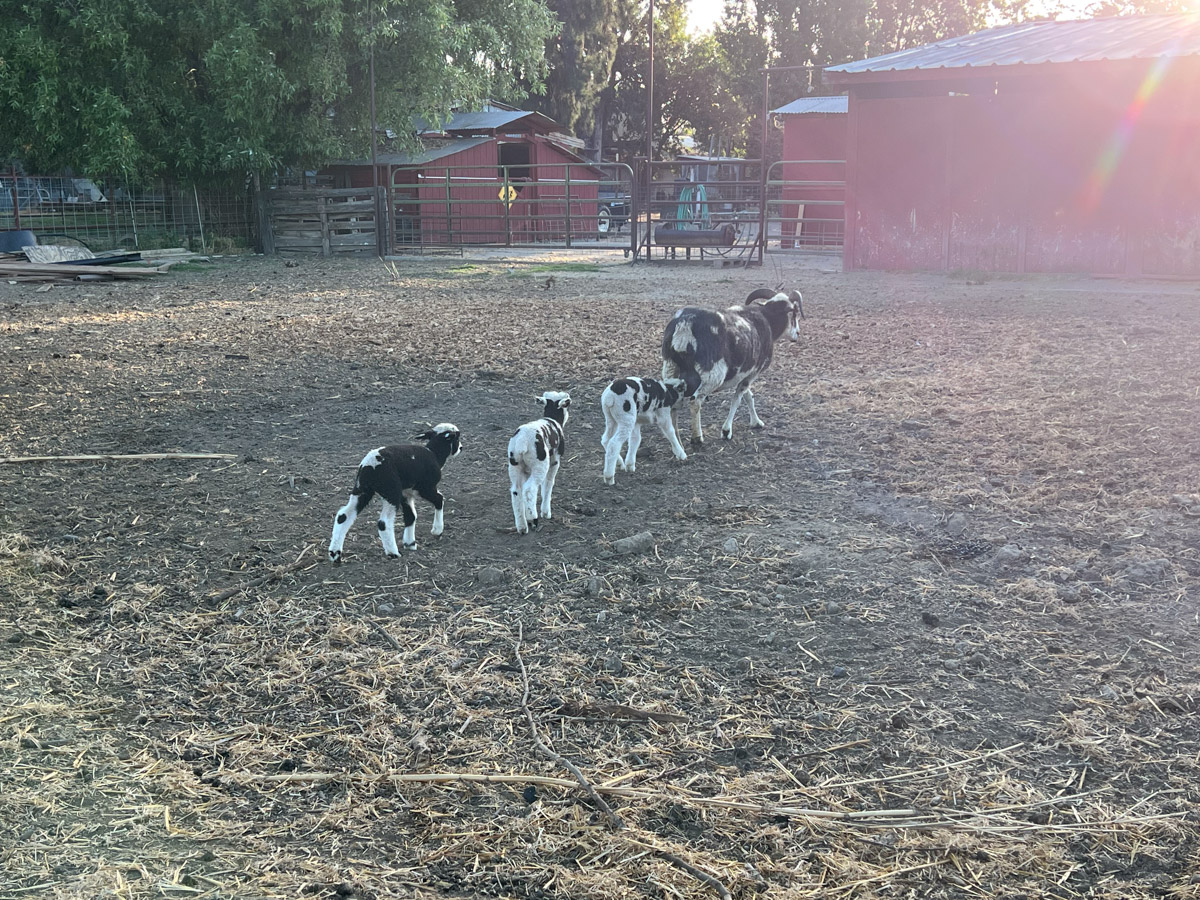
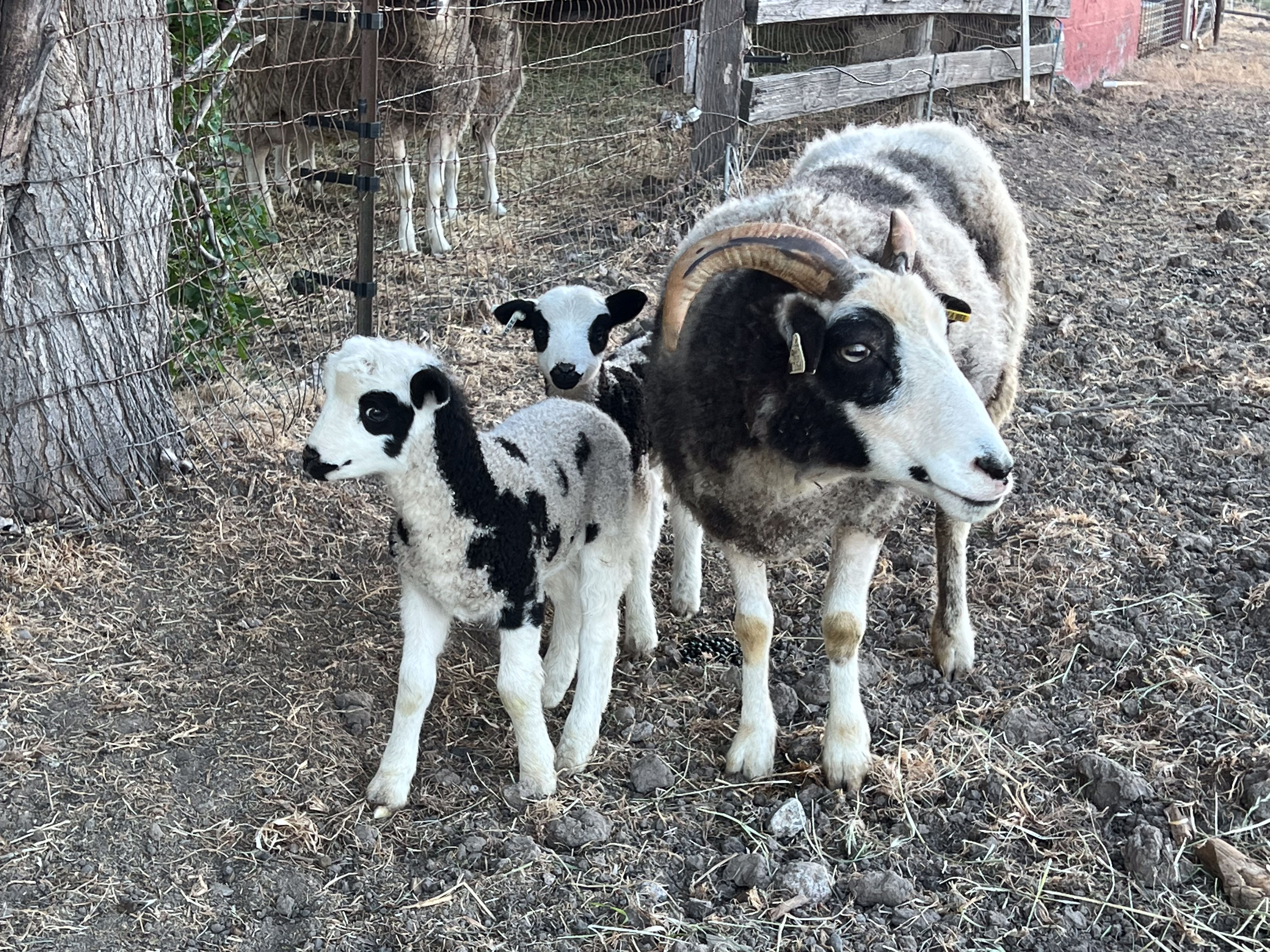
Bide a wee Hallie is ten years old and these will be her last lambs. These are two ram lambs, one with 4 horns and one with two.
Here are the last entries for the Lambing Board. Hallie’s lambs were 12 and 10 pounds!!
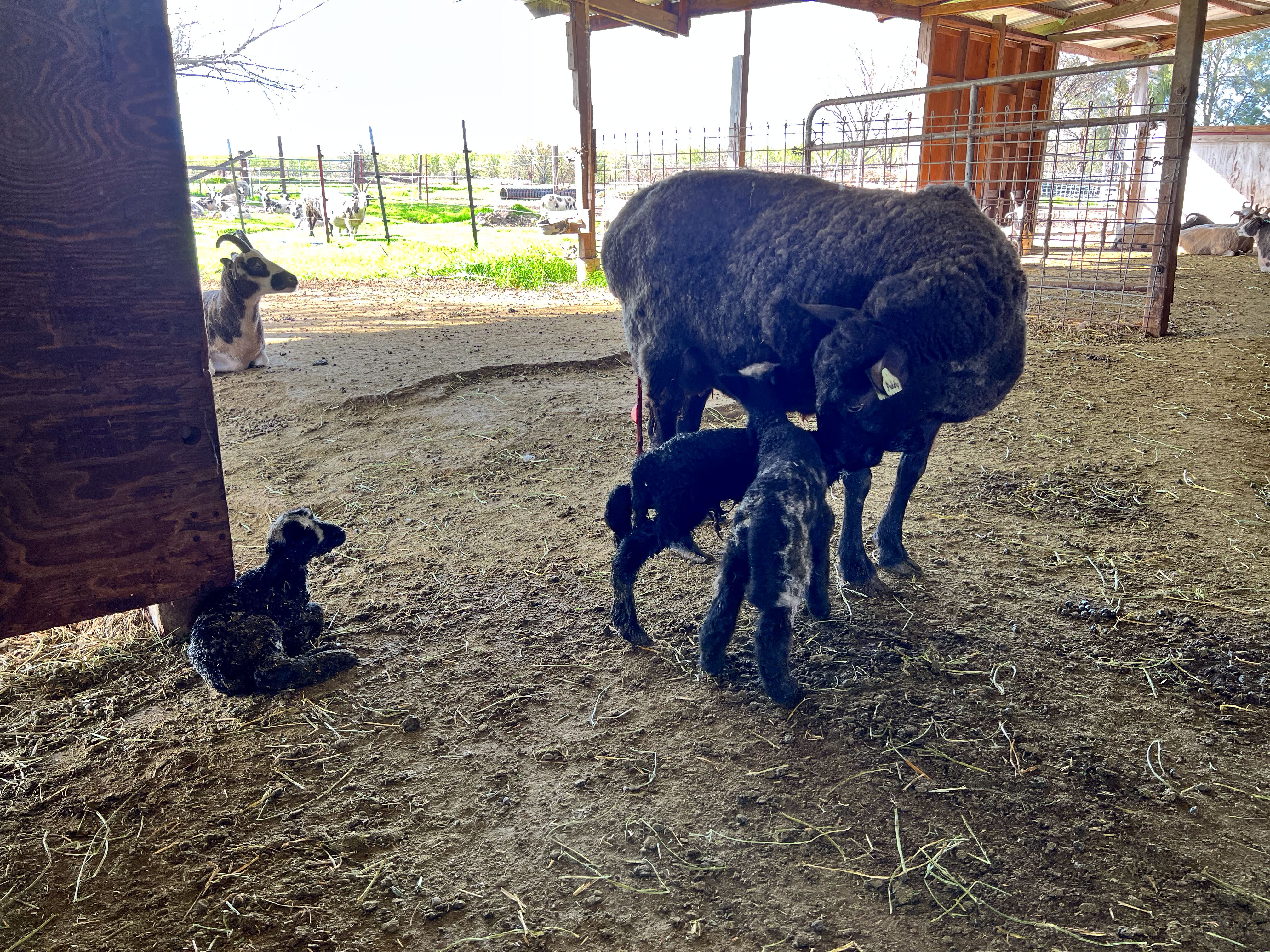
I’ve been trying to get the lamb pages on the website updated, so most of the photos I’ve been taking are of individual lambs…and trying to make sure I can read ear tag numbers. If I go out earlier in the morning I sometimes find lambs bedded down next to their moms. There were five sets of triplets this year.
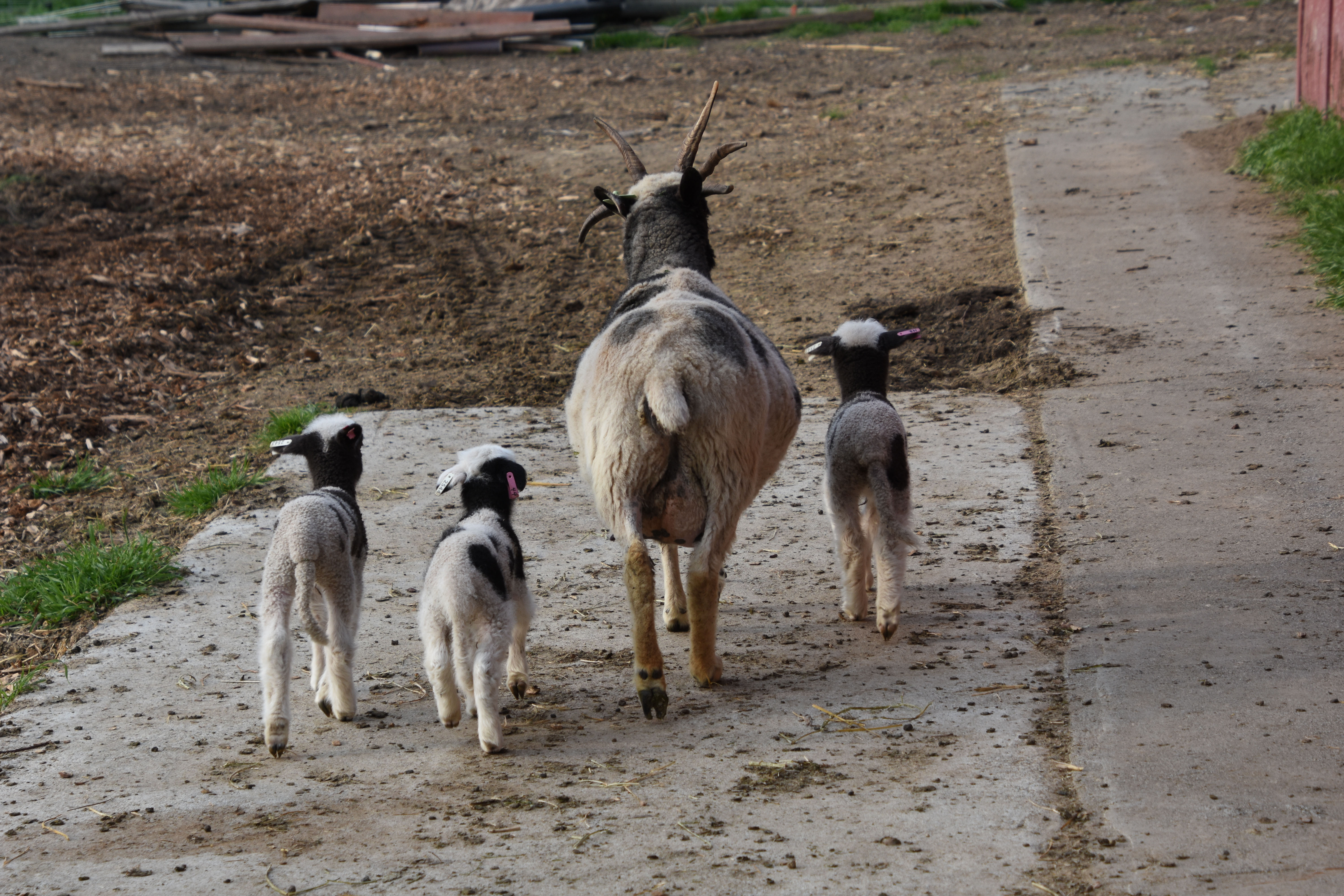
This is Janna with her three lambs–two rams and a ewe.
Bide a wee Trista also has two rams and a ewe. You can’t see the ewe very well–she is mostly black and behind the two spotted lambs.
Sweetgrass Tranquility with triplet ewe lambs.
Addy with her lambs, the first of the season. Addy is a BFL/Jacob cross.
Patchwork Amara was the other ewe to have triplets, but Sparky required intervention and became a bottle lamb. Her story is here and she features in several of the posts since then. Her brothers are 2527 and 2528 on the ram lamb page.
I’ve talked about this before–the seasons. Spring, Summer, Fall, Winter, and Lambing–right there between Winter and Spring. It’s a busy time. I wrote one blog post at the start and the one about Sparky two weeks into the season. It was an intense two weeks and now things have slowed down considerably. I’m waiting for three ewes to lamb by the end of the month.
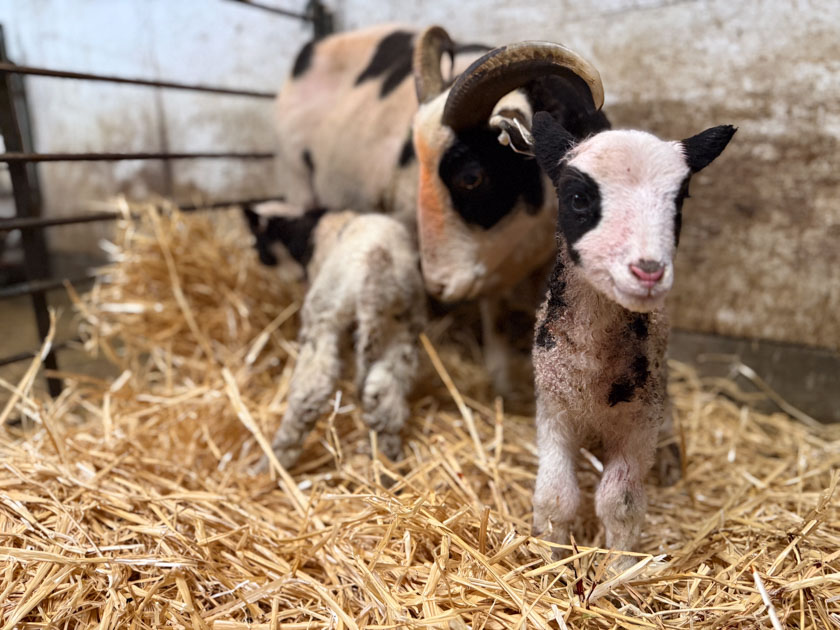
March 9 three ewes had twins and one had triplets. This is Janna with triplets and Sandie and Beauty with twins.
The next day Juniper lambed with twins.
It was beginning to feel like the next new season–spring!
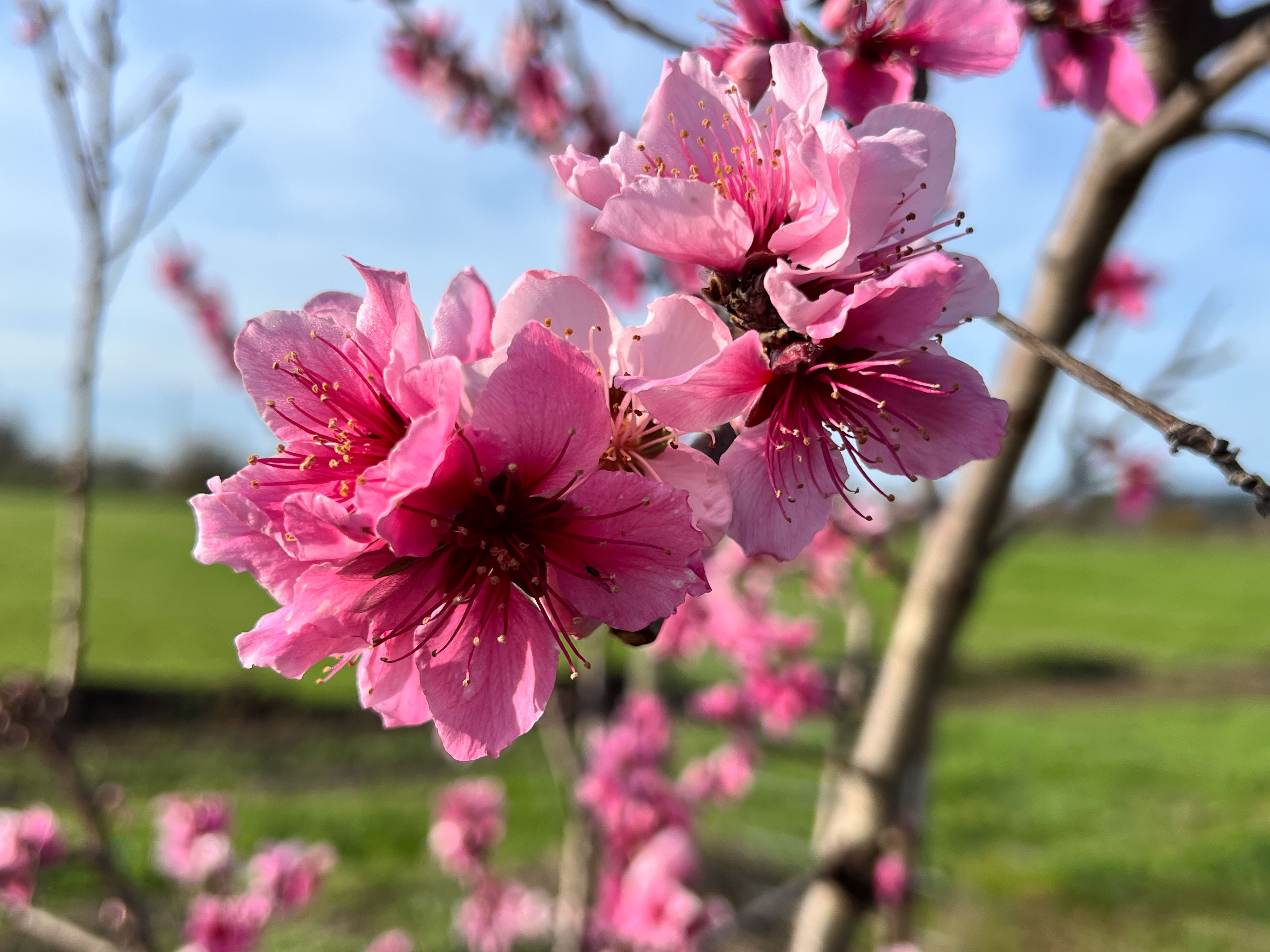
PeachWesterben RedbudDaffodial
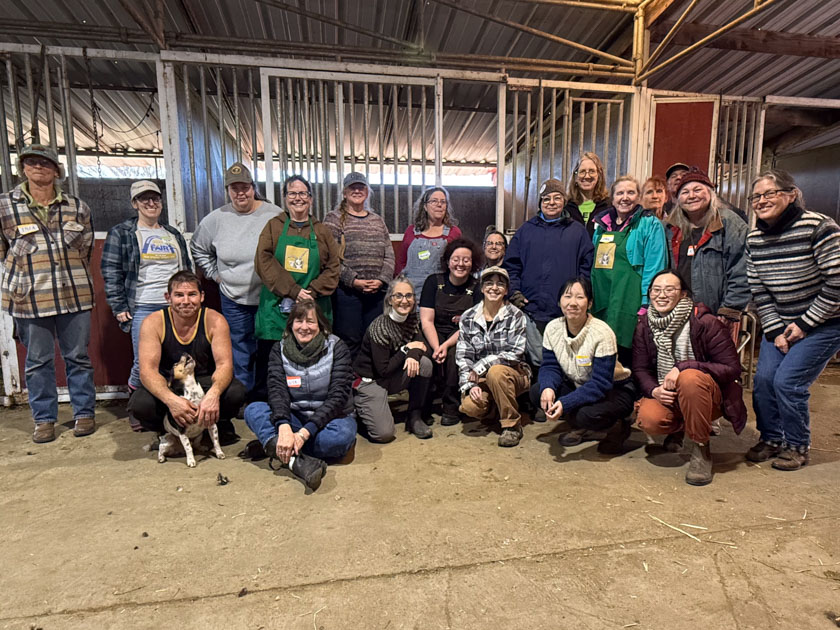
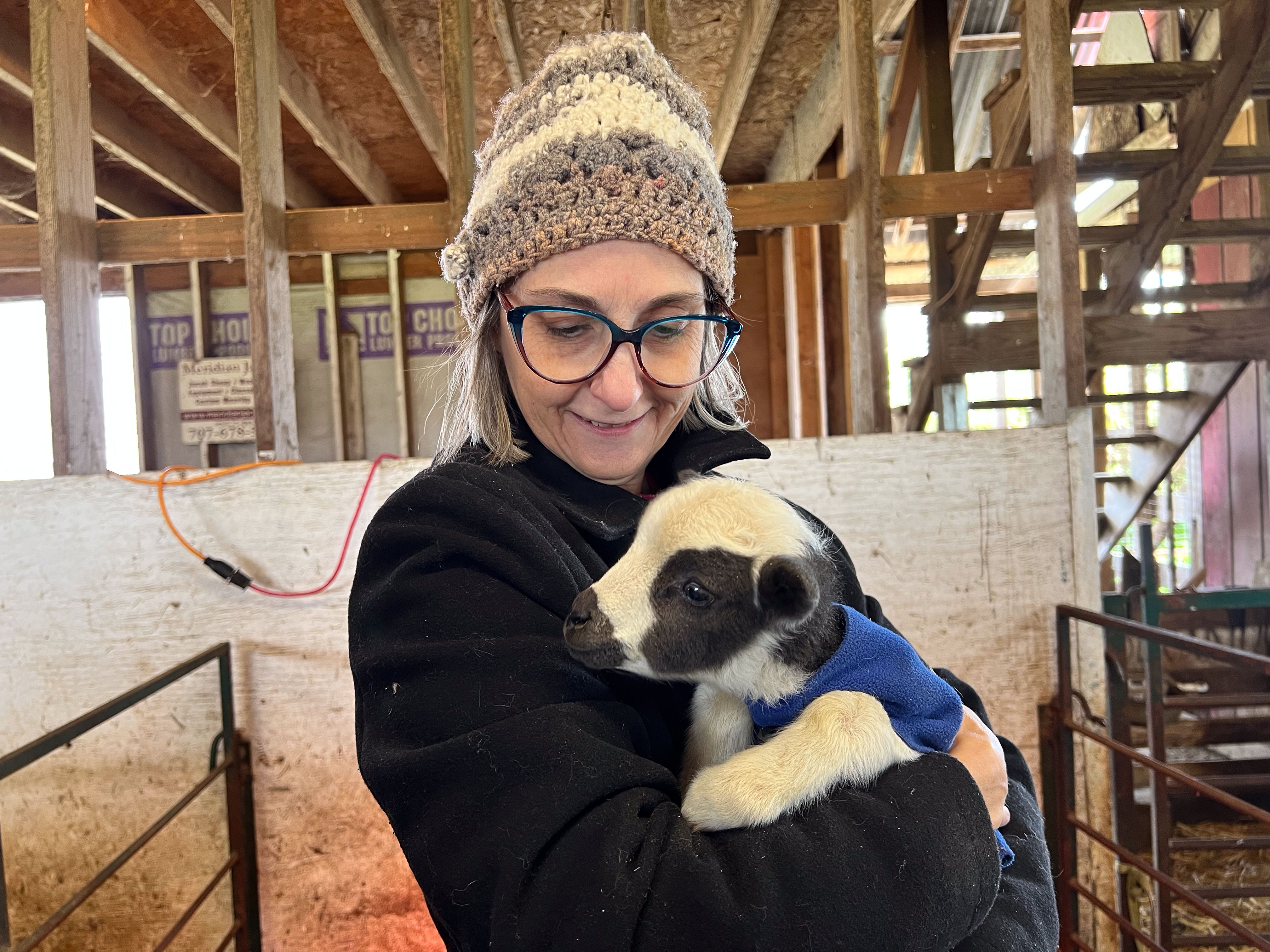
Janna and lambs moved into a stall a couple after lambing. This gives the ewes and lambs more space to move around, but it’s easy to keep an eye on them for a few days before they go out with the other sheep. That’s Farm Club member, Lisa, holding the lamb.
More signs of spring.
Flannel Bush is one of my favorites.
Cindy lambed two days after Juniper.
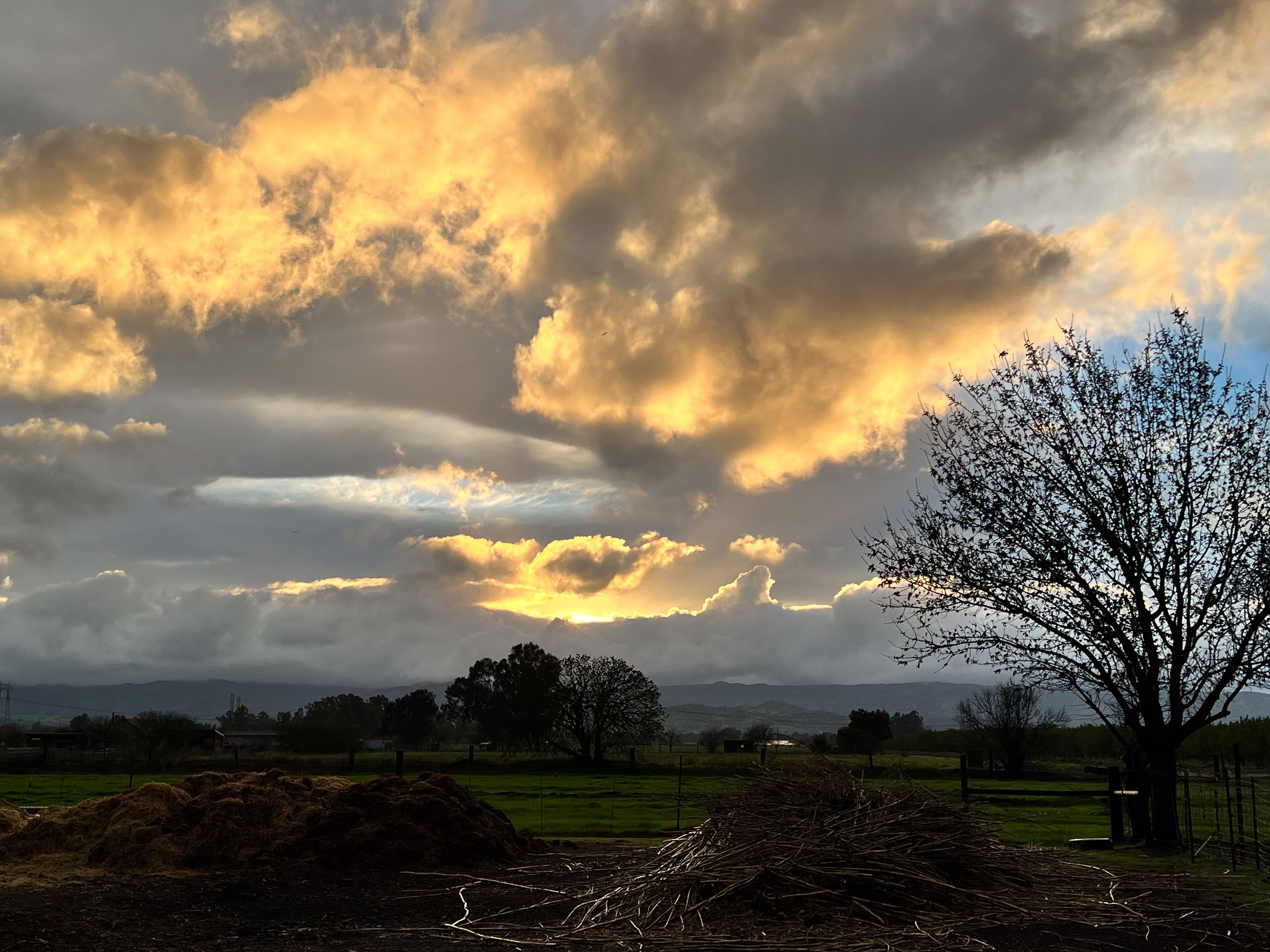
A cloudy sunset.
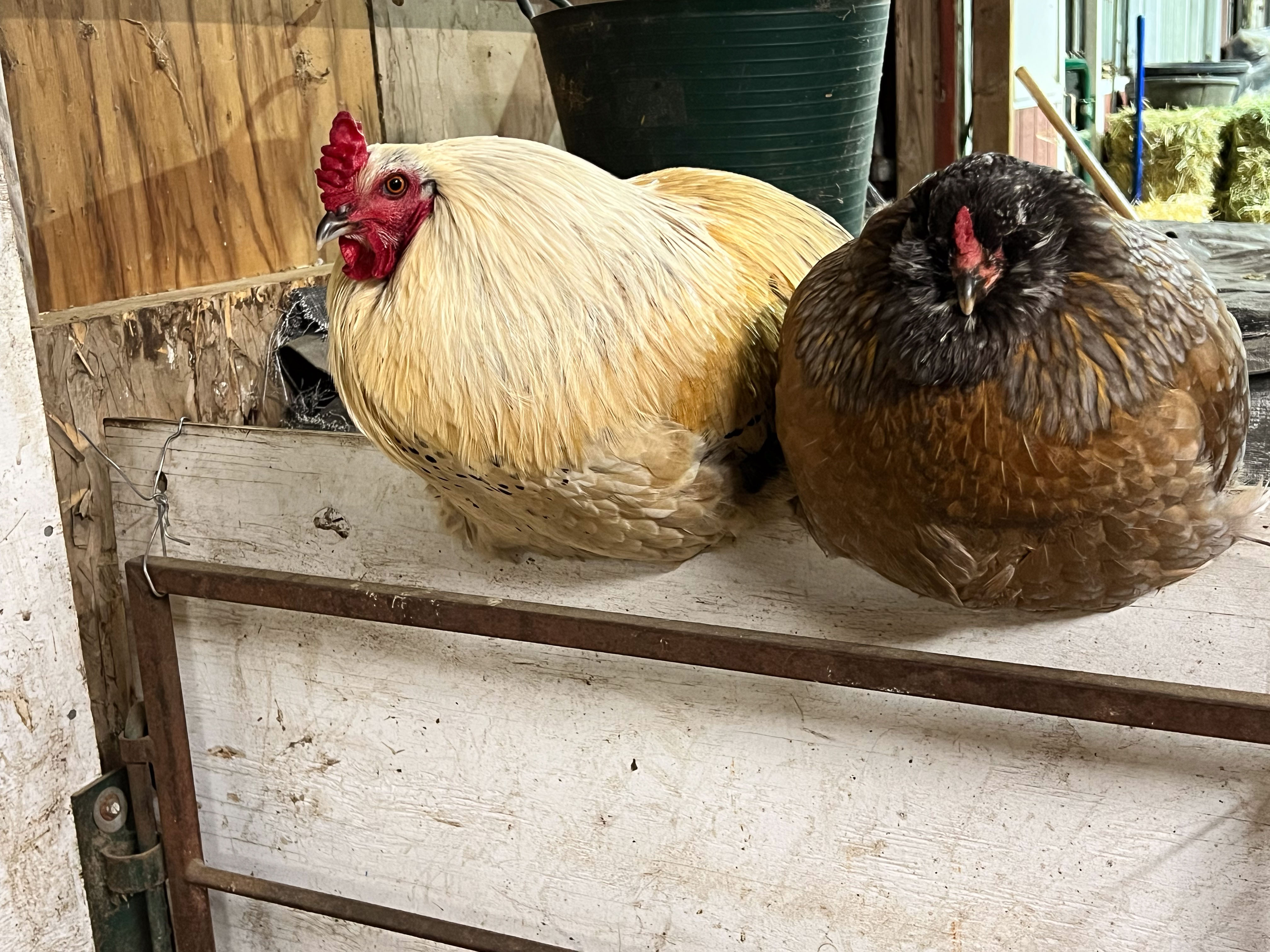
The rooster and one hen roost every night on this panel between the hay and the lambs.
Jazzie lambed that night with twins, lambs #22 and 23.
Amara seemed the most likely to lamb next and she went into the lambing area. That leads up to the post about Sparky.
Lambing started only two weeks ago but is almost over (except for the lambs that will come at the end of April due to acquiring a ram around Thanksgiving). I like to keep my blog posts in chronological order, but I’m giving up on that for now. I may share other lambing photos later, but for now I’ll write this story.
It was only a week ago (Thursday, March 13), that Patchwork Amara lambed. I had put her in the evening before and didn’t see anything when I checked the barn at 2 a.m. When I went back at 6:00 I found a big lamb in good shape and a small lamb that at first I thought was dead. When I picked her up she wasn’t completely flaccid like a dead lamb would be and I could see her take shallow breaths. She was very cold.
I brought the lamb to the house and put her in a dishpan of warm water. As her body warmed she started to move her legs. After I’d warmed her enough I wrapped her in a towel and went back to the barn. I set up a heat lamp and moved Amara and the big lamb to a clean pen. Lisa was helping for a few days and when she came to the barn I gave her lamb holding duty.
I milked colostrum from Amara and tube fed the lamb.
While we were feeding her we realized that Amara was having a third lamb.
Those big brothers were 9.2 and 8.6 pounds. Sparky, as Lisa named her when she showed a spark of life, was only 4 pounds.
I found a size Small coat for Sparky, It was way too big and eventually Lisa cut some off.
Sparky was spunky enough after the tube feeding to nurse on her own. Throughout the day we made sure that she was nursing.
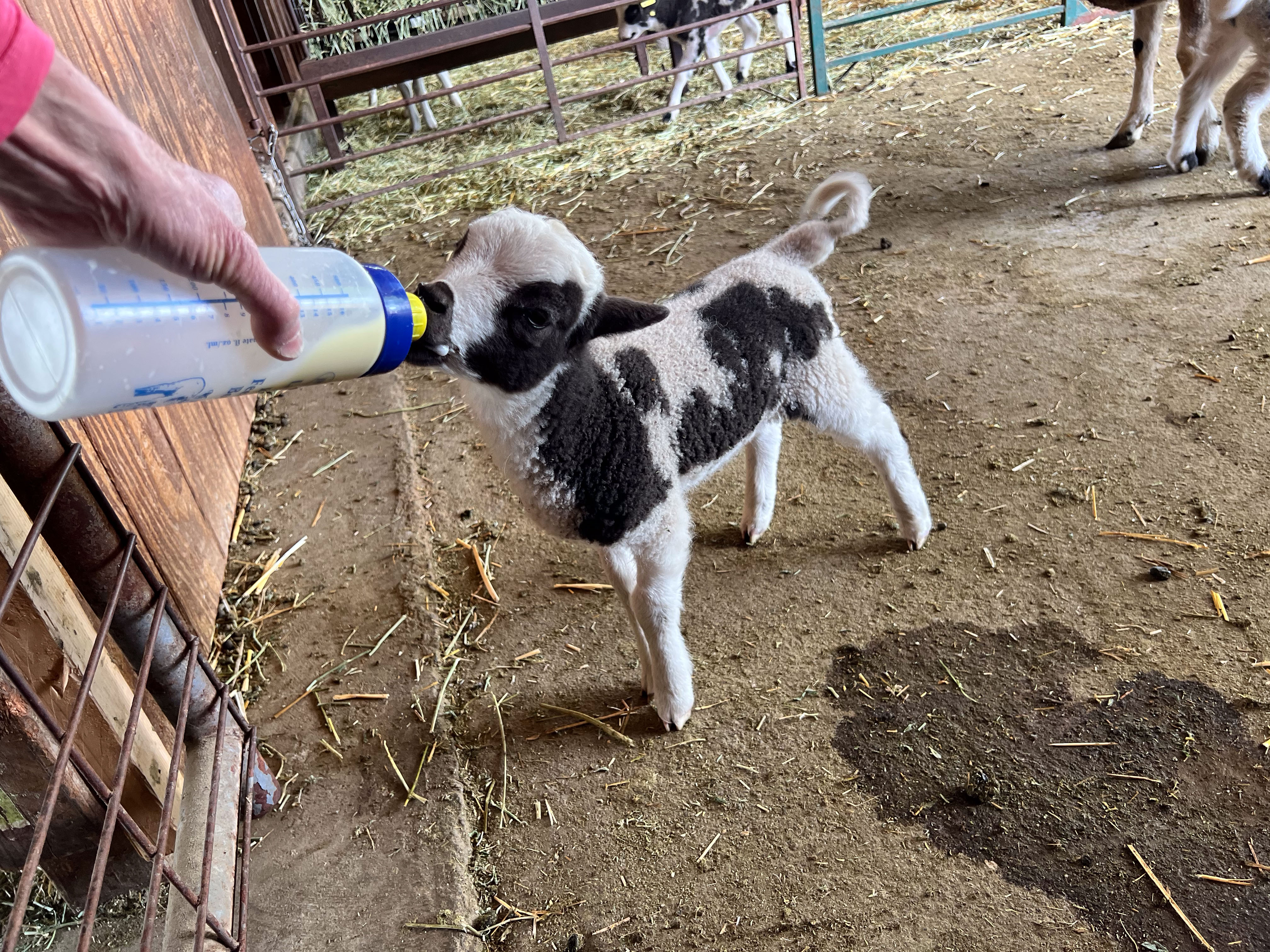
The next morning Amara was tired of having three lambs and was getting a bit aggressive towards Sparky. I didn’t feel comfortable leaving her there and decided that she would be a bottle lamb. That was 6 days ago.
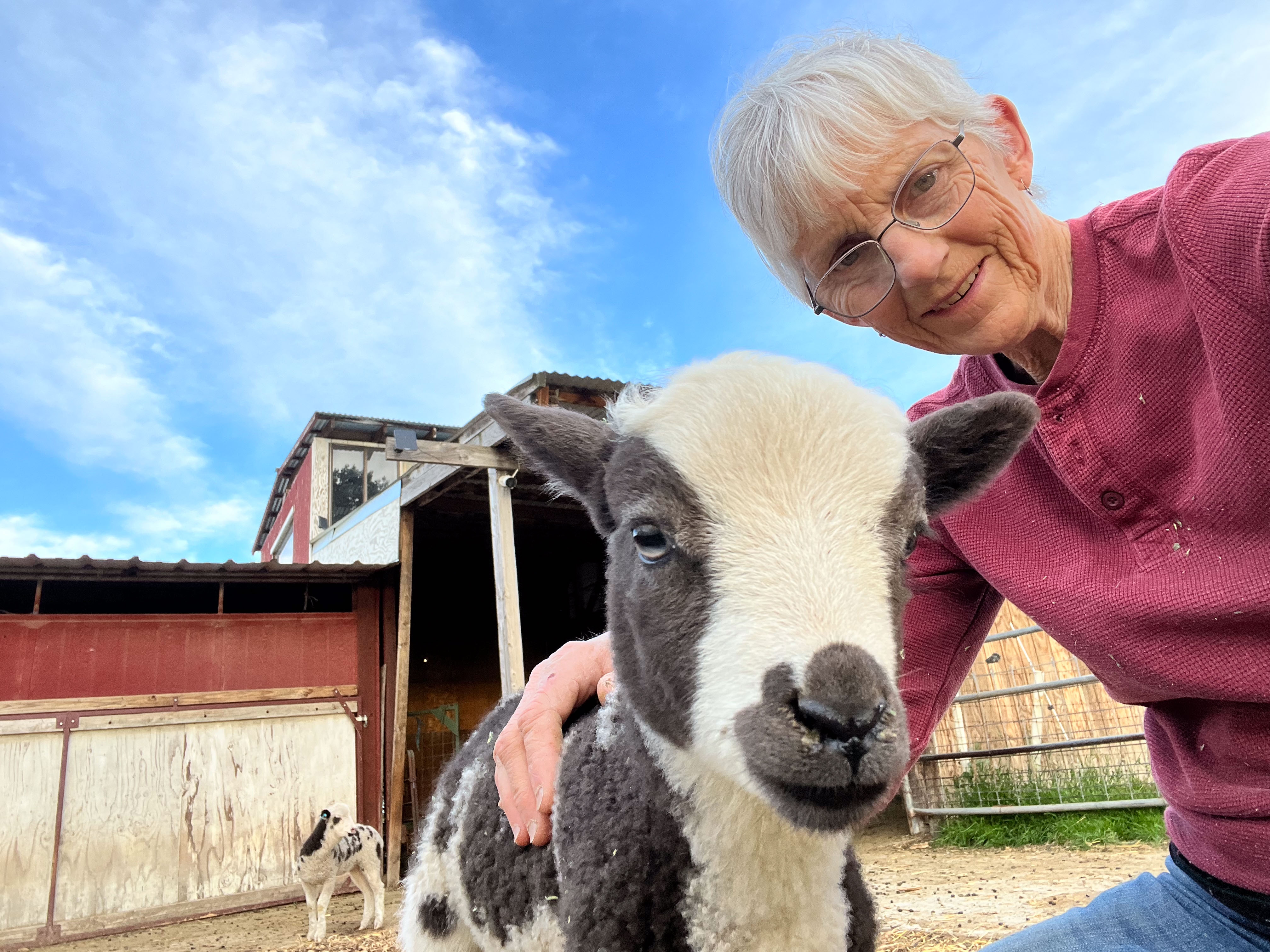
Farm Club members came on Saturday and Sparky was a favorite.
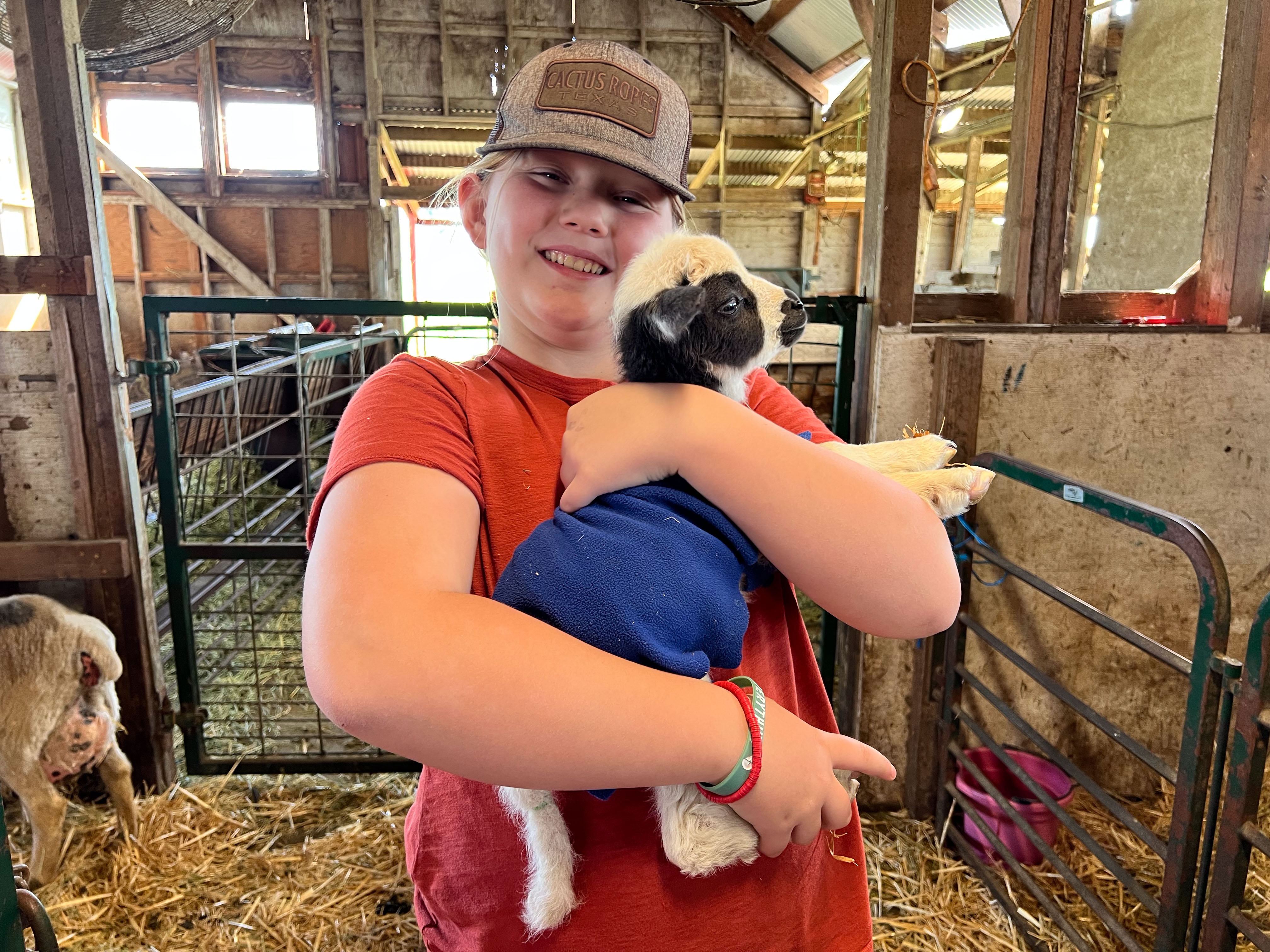
I picked up my grandkids at the airport yesterday and we went to the barn right after we got home. Ten-year-old Kirby.
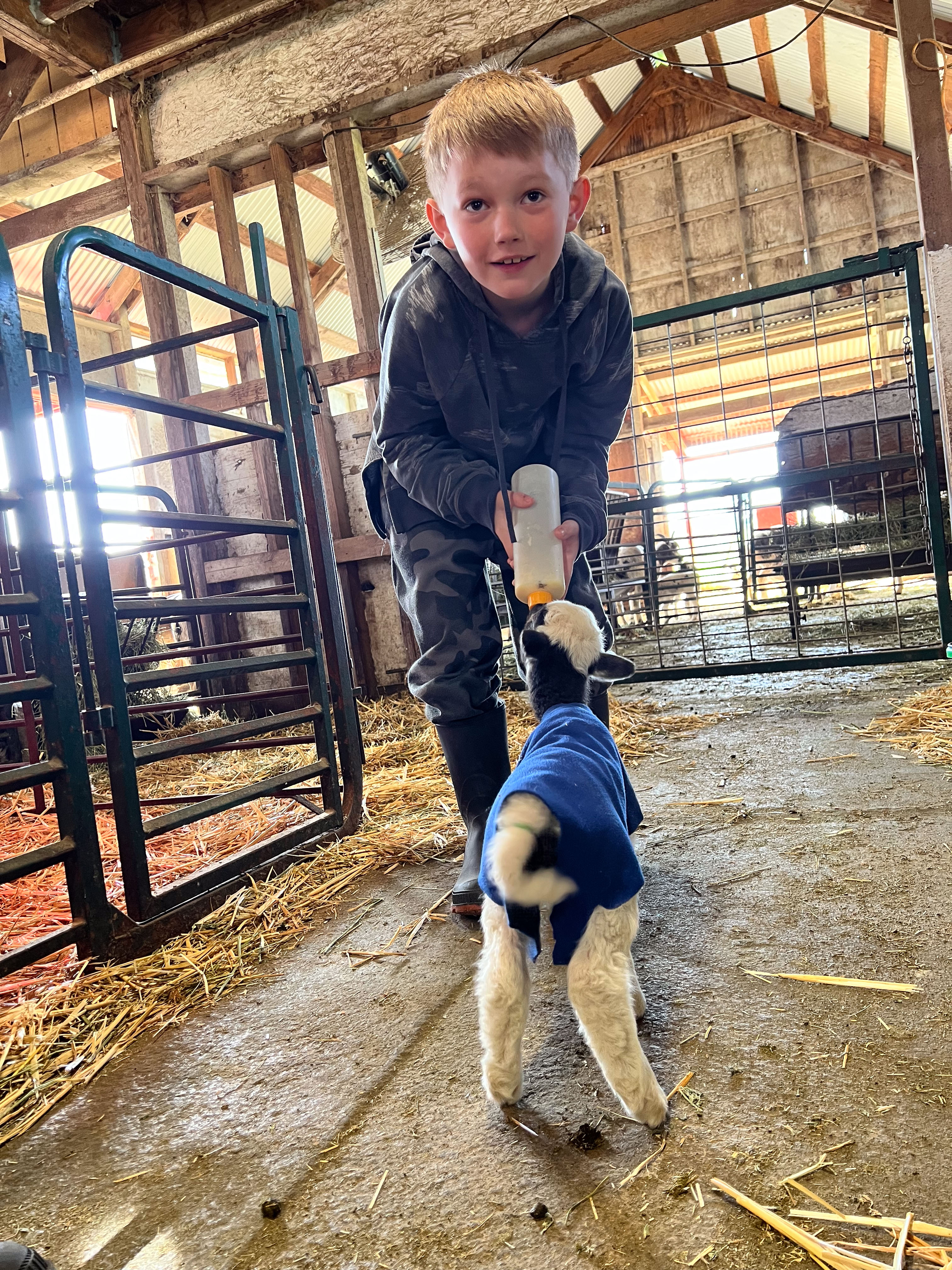
Eight-year old Kasen. The kids are taking turns bottle feeding, although the next feeding is in a few minutes (11:30 p.m.) and no one has volunteered for that one.
Sparky has had plenty of attention. The kids are taking her out of the barn and letting her run around in the grass. I tried to share a video here don’t know if I can make it work. Let’s try this YouTube link.
I’m 9 days into lambing and haven’t had a chance to share any of it. Here is Day 1 on March 6.
There was a field trip from a Waldorf school in the morning. I had told them that I couldn’t promise lambs, but maybe there would be some. There were not. However, they had plenty of time to pet sheep. Notice Jade enjoying the attention.
I had a tax appointment after the kids left and when I got back I found Addy with triplets.
After I brought them into the barn the first order of business was to erase last year’s Lambing Board. This shows 88 lambs from January 25 through March 7 plus other notes squeezed in. So we ended lambing last year at the same time we’re starting this year. That was partly because we wanted to take a trip to Texas to see the grandkids and the eclipse in April. I didn’t want to have lambs coming if we were not here. This year I’m back to a more normal schedule.
Cashew lambed the following day. There were no lambs the day after that. A slow start.























 Meridian Jacobs' Blog