Phyllis Returns Home

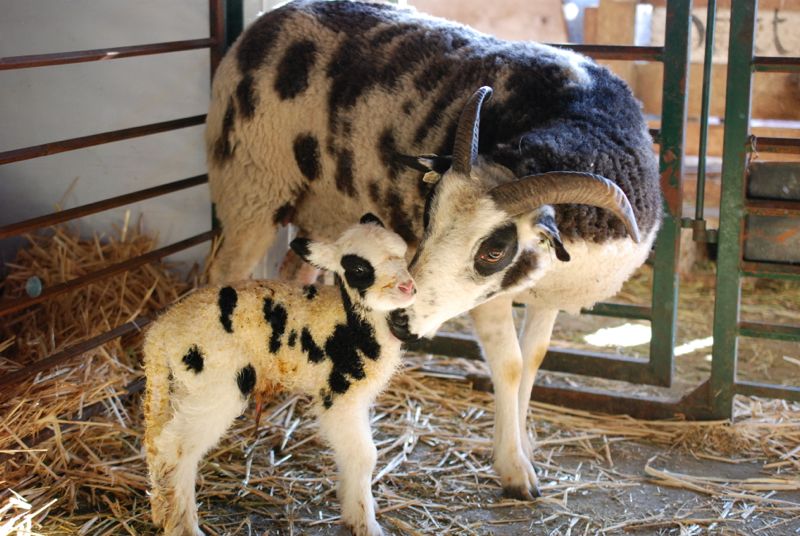
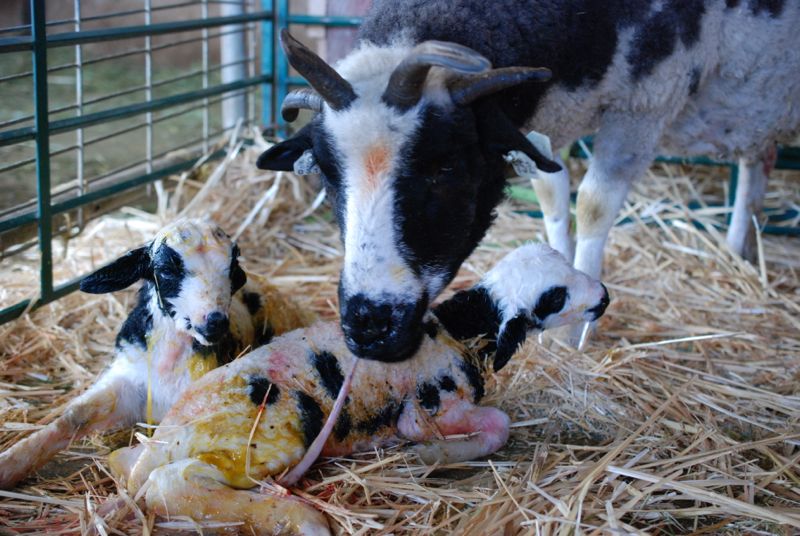
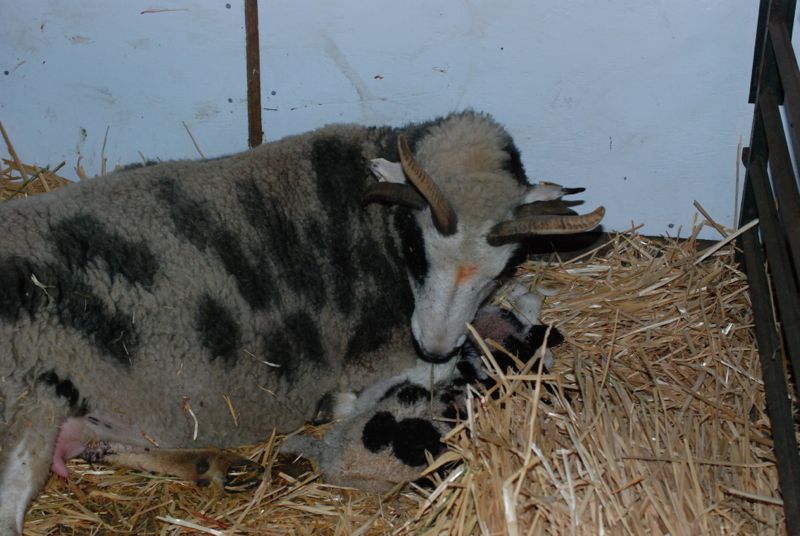
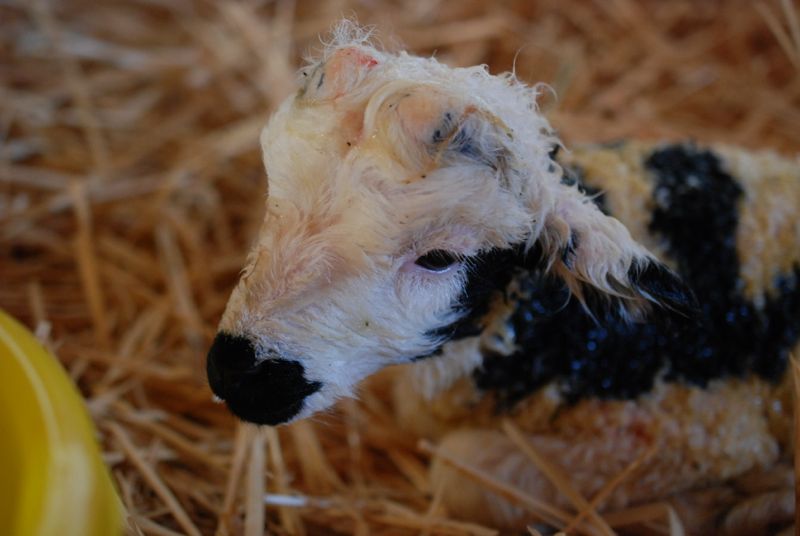
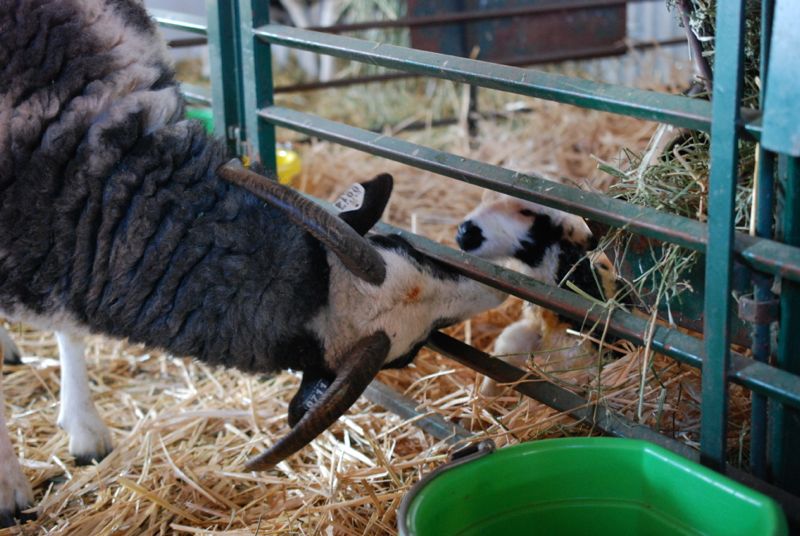
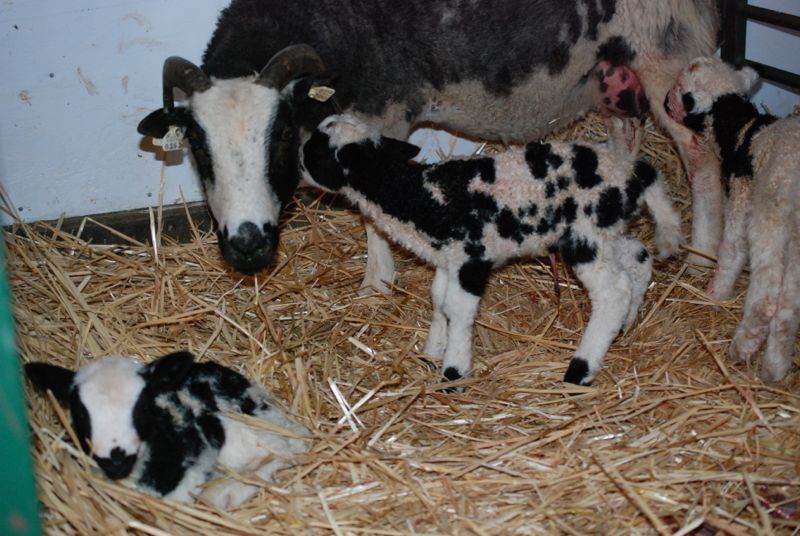
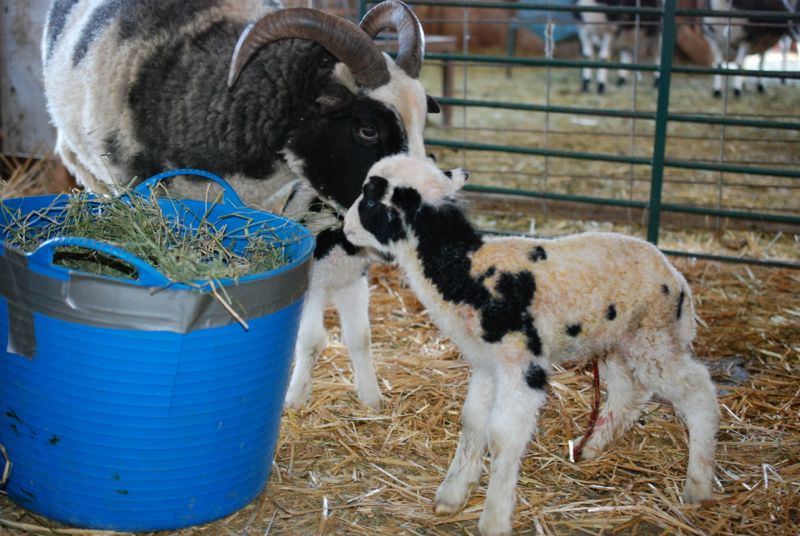
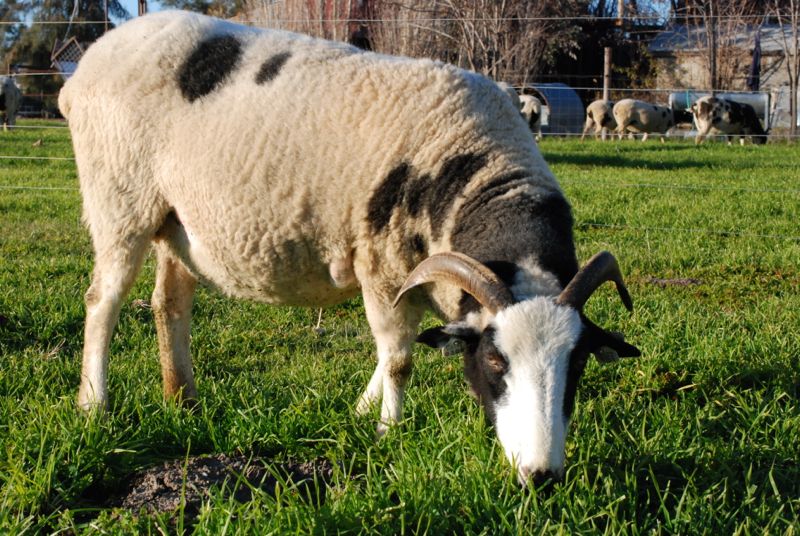
Phyllis is a lilac ewe who was born in 2005. She was sold as a lamb to someone who eventually got rid of her flock. Phyllis came home the first time in 2010 as the owner was on the way to the auction with her sheep. It was a surprise when she lambed in January, 2011 with two black lambs. It seems that she was bred during that last trailer ride.

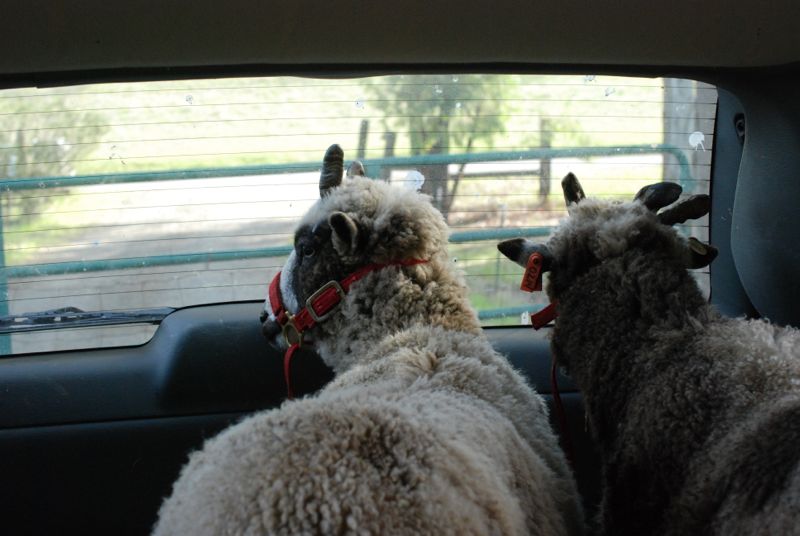
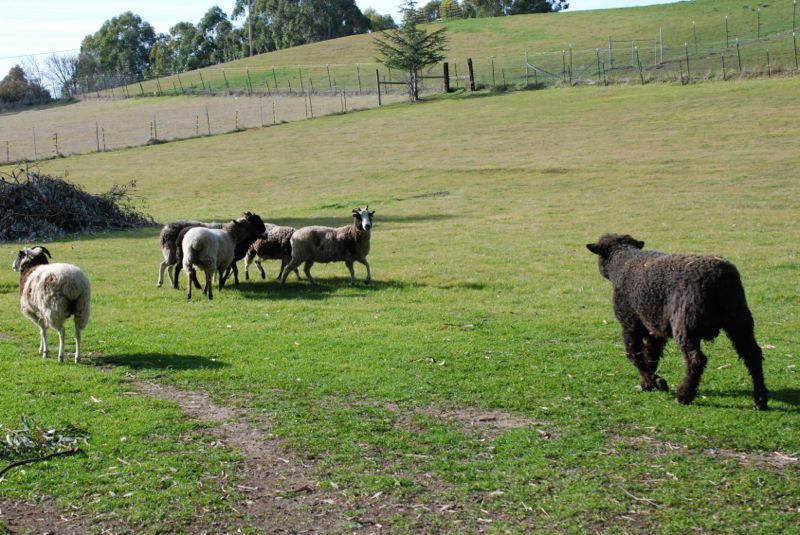
DSC_0232-phyllis-w Look at the size of those lambs at about 5 months old. This is what made me think about getting a ram to raise crossbred lambs for market. That’s how Faulkner’s story here began.  In 2011 Phyllis went to a nearby farm as a companion to Diamond, an elderly sheep (a Pensioner in Jackie’s story about this event). Due to the owner’s ill health the sheep needed to go, so Jackie and I picked them up yesterday. Diamond is living at Jackie’s and Phyllis came back here. DSC_8119  Phyllis and Diamond in the back of Jackie’s van.DSC_8125 Diamond at Jackie’s place.DSC_8132She’s in the front of the group here and that’s Marley going to greet her. DSC_8143 Here we are back at my place.DSC_8145 Phyllis has a very nice fleece. DSC_8159 She is right in the middle there–the one with more fleece.DSC_8162


DSC_8151Welcome home, Phyllis.

Sheep in the Sun

During the winter the sheep are mostly in the barn and corral area. The pasture doesn’t drain well and I don’t want it to be a trampled mess. I’m also waiting for there to be more growth there. It’s been dry enough the last few weeks that I opened the gate to the small paddocks near the barn. The sheep were thrilled to get out to that grass.

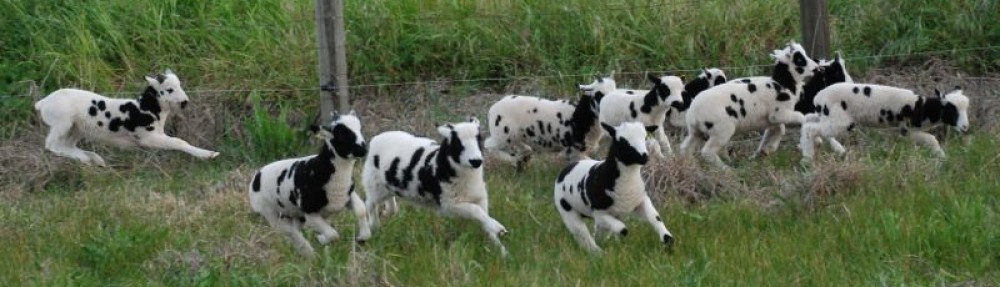
DSC_7922 This is Summer (the sheep, not the season). DSC_7925 This is Spring (also, not the season).DSC_7927 Here is Eliza. They are all looking a little heavy, but that is because they are due to lamb in about a month. DSC_7929 Stephanie, the old goat, is so stiff in the cold weather we’ve been having. I walked her out here to enjoy the grass.  Most of the sheep kept their heads down eating. But Kyra just wanted to play. DSC_7932 DSC_7937 DSC_7939  Happy sheep! DSC_7938I still have the new lens on the camera. It is a 40 mm lens and I wasn’t that close to the action. I’m surprised that I was able to crop the photos to this degree and still have them relatively sharp.DSC_7948

Fleeces Revisited

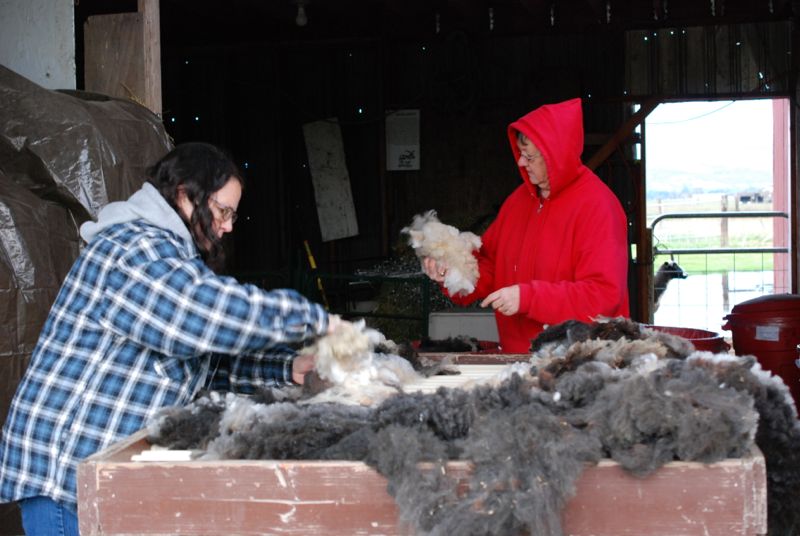
I haven’t finished getting the wool ready to send to the mill. Holidays get in the way. Now it’s COLD. Farm Club members have been helping and I think one more afternoon of skirting and sorting will do it. Sending wool off in January means I’m way ahead of my usual schedule.

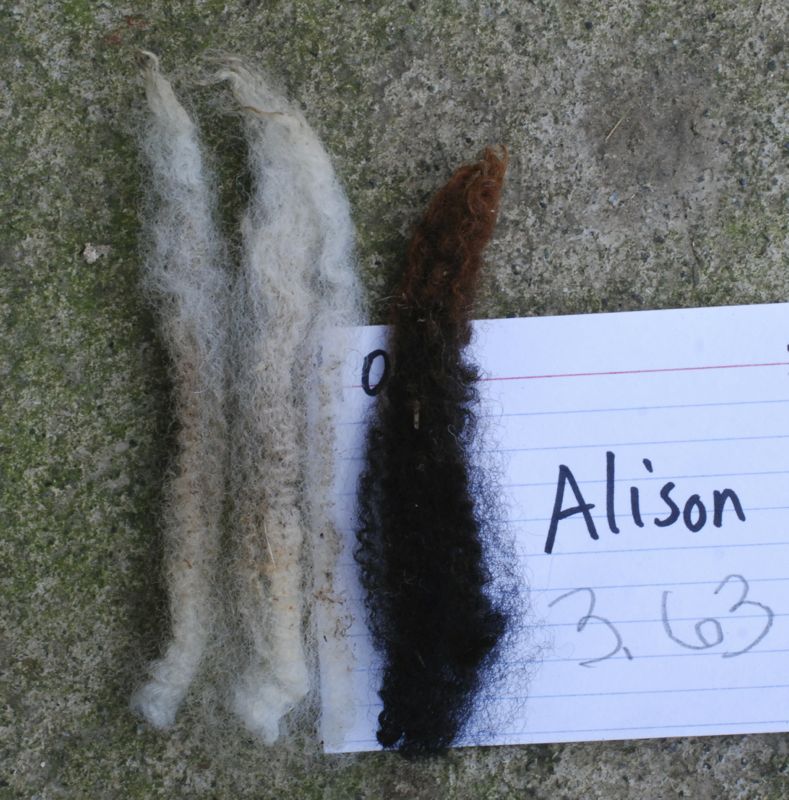
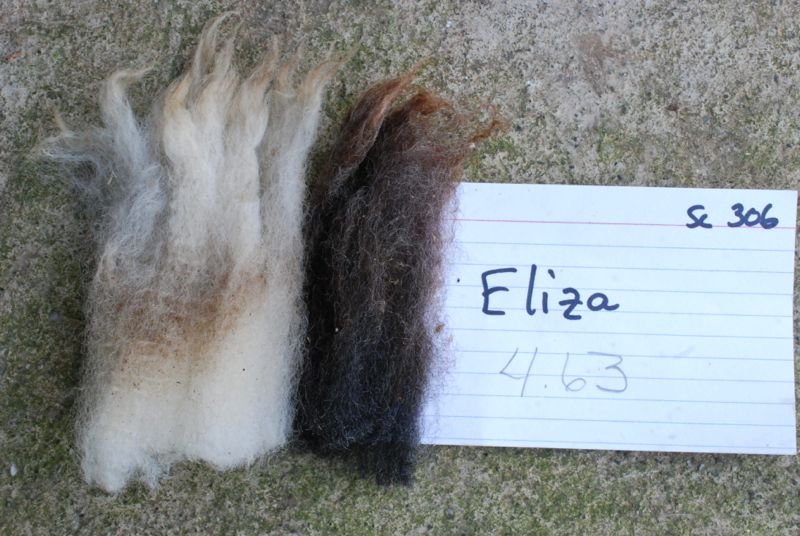
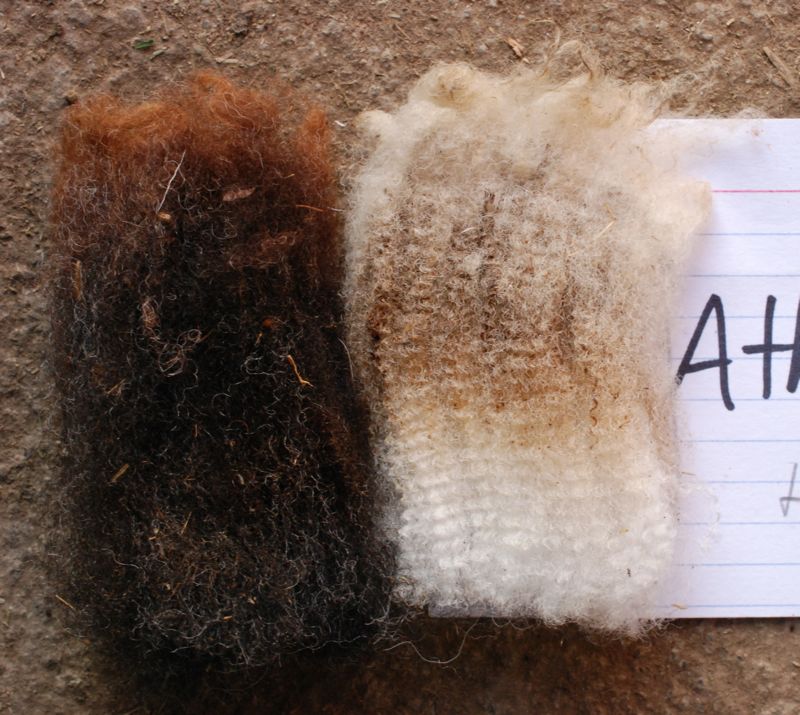
If you are not excited about wool these photos won’t be very interesting. But to me they are a precursor of beautiful yarn and blankets.DSC_7777Alison’s fleece. The 3 x 5 cards provide scale (as well as remind me of whose wool is whose).DSC_7782 Eliza’s fleece


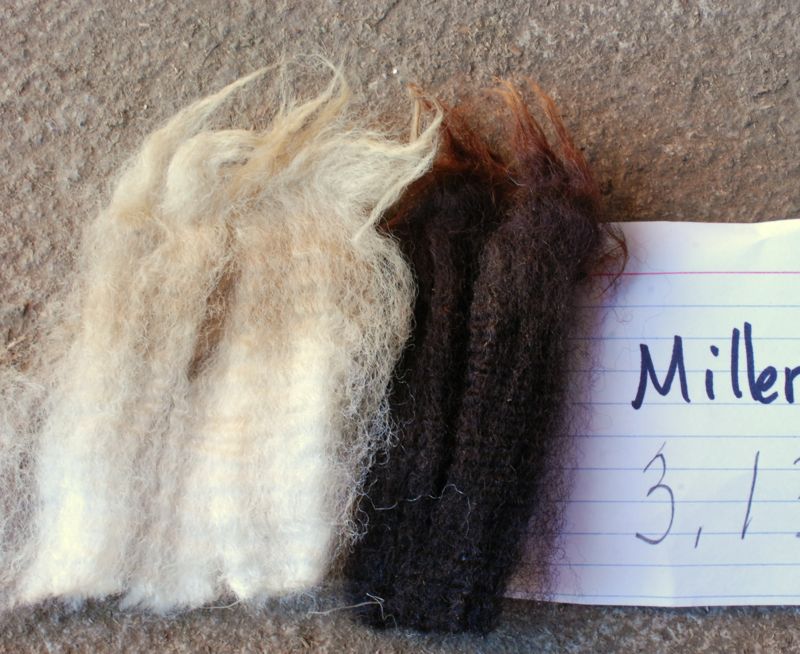
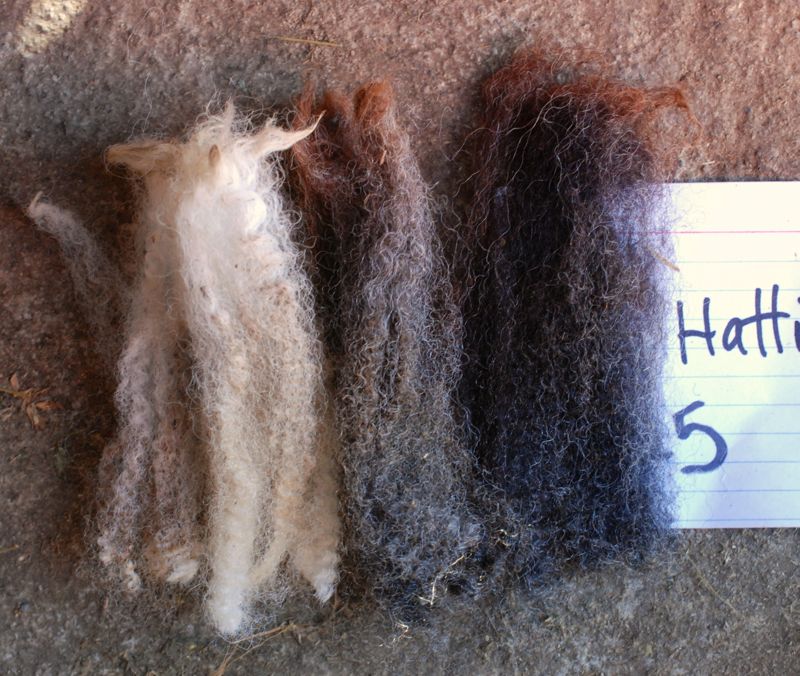
AthenaAthena’s fleece is a little shorter than the others, but very soft.  DSC_7798  Miller is a ram lamb born last March. This fleece is only 9 months growth. I can’t wait for next year’s.DSC_7816Hattie’s fleeceDSC_7793Did I say it was cold while we were working? Mary and Dona helped one day and Linda on another. DSC_7811Here was the best place to stand–a south-facing wall in the sun. We already finished with your fleece, Jazz.

Ultrasounds and other veterinary observations


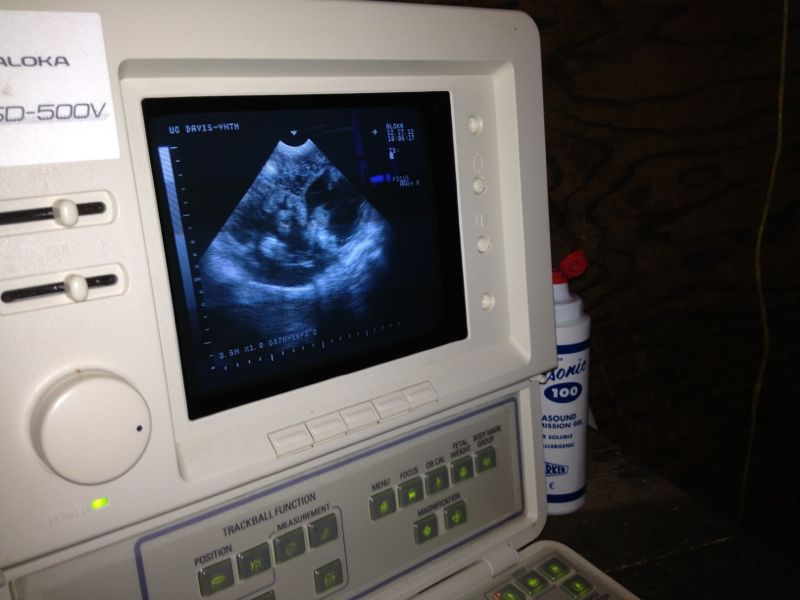
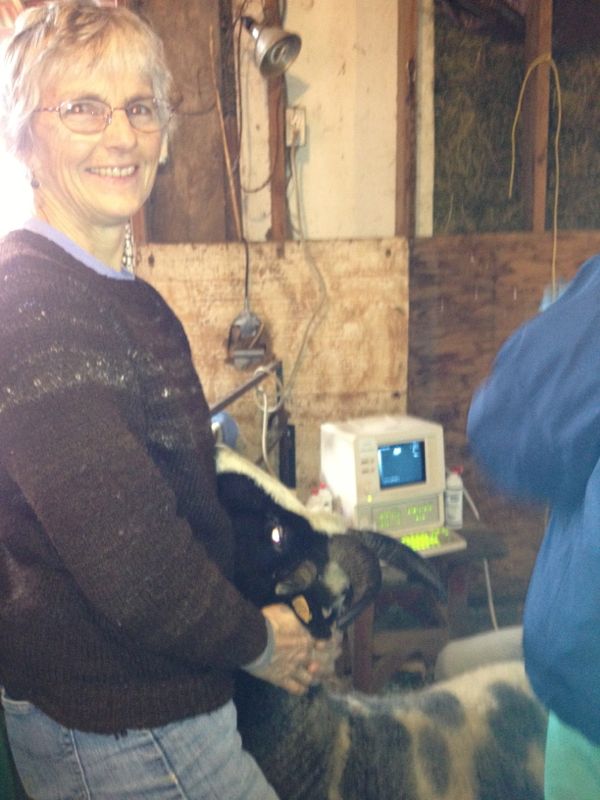
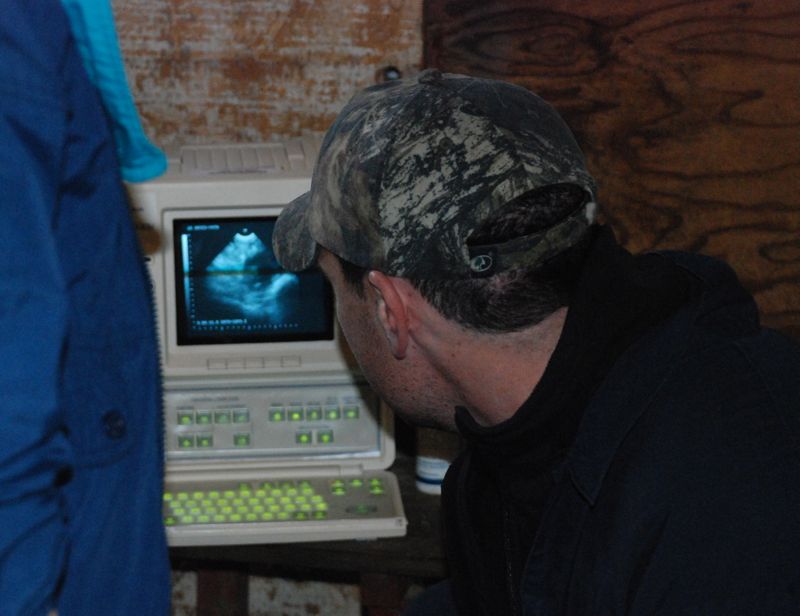
The veterinarians from UC Davis VMTH were here on Monday. The VMTH sponsors the State Fair Nursery so they will come here to ultrasound ewes. I will be breeding 3 or 4  ewes at the same time as all the others are lambing. This fall, while I was breeding ewes to 6 different rams I also had a non-breeding group. Unfortunately, one of the rams got in with that group on the last day of my breeding season. I gave the 2 ewes he bred the sheep equivalent of the morning-after pill, so Monday was the day to see if it had worked.

IMG_5006


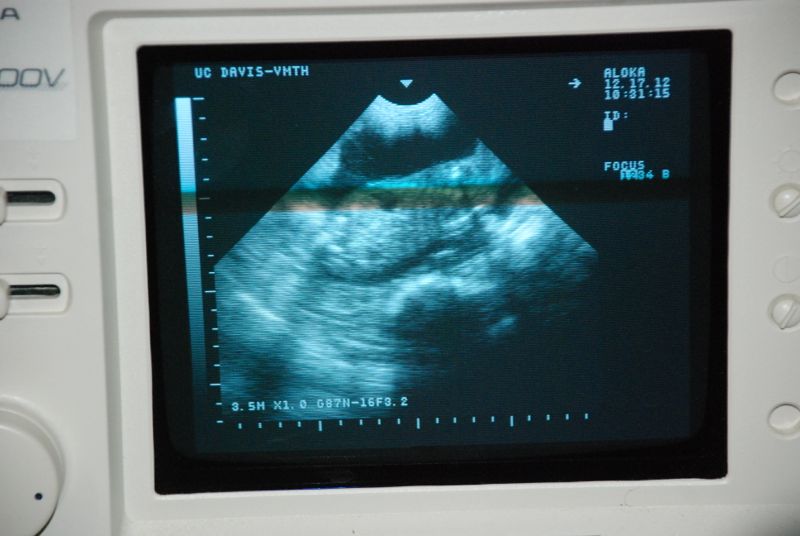
No! Shelby is pregnant with a single and Mary has triplets. I think this is the photo of triplets. (If you must know, I can’t always tell what I’m seeing in these.) By the way, a lamb at 42 days gestation is about the size of a gummy bear. That’s not something that you find in a veterinary text, but vet students have pointed out the relationship to their teachers.

IMG_5009


DSC_7081


DSC_7084

Here is one that I could see. There is a large (relatively) single lamb here in the middle just under that dark line. (It doesn’t show up in this photo as well as it did seeing it on the screen.)

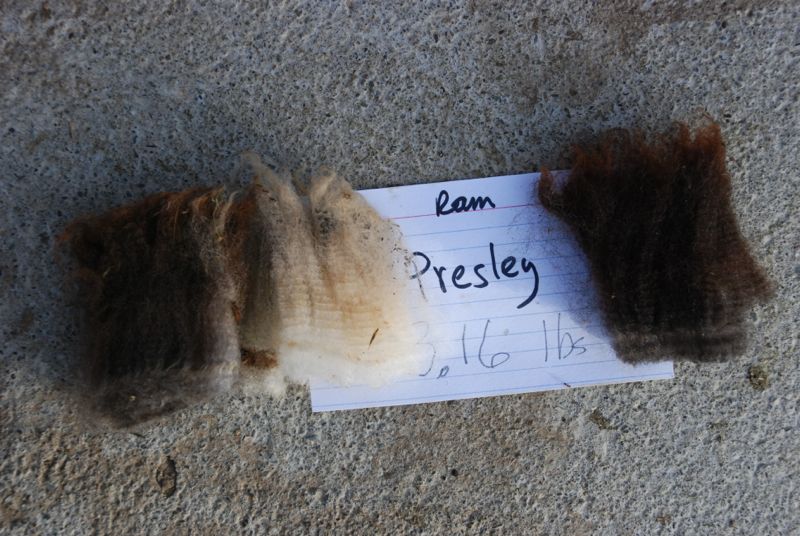
While the vets were here I showed them a wool sample from the fleece of a ram lamb, Presley.

DSC_6733It isn’t all that obvious in this photo, but can you see that distinct change in color and texture at the bottom of the locks? It is not weak at that point, but the fleece definitely changes color. That is the cut end, so the change occurred a couple of months before shearing. I thought that maybe this related to selenium deficiency or some other mineral issue. We looked at the ram.

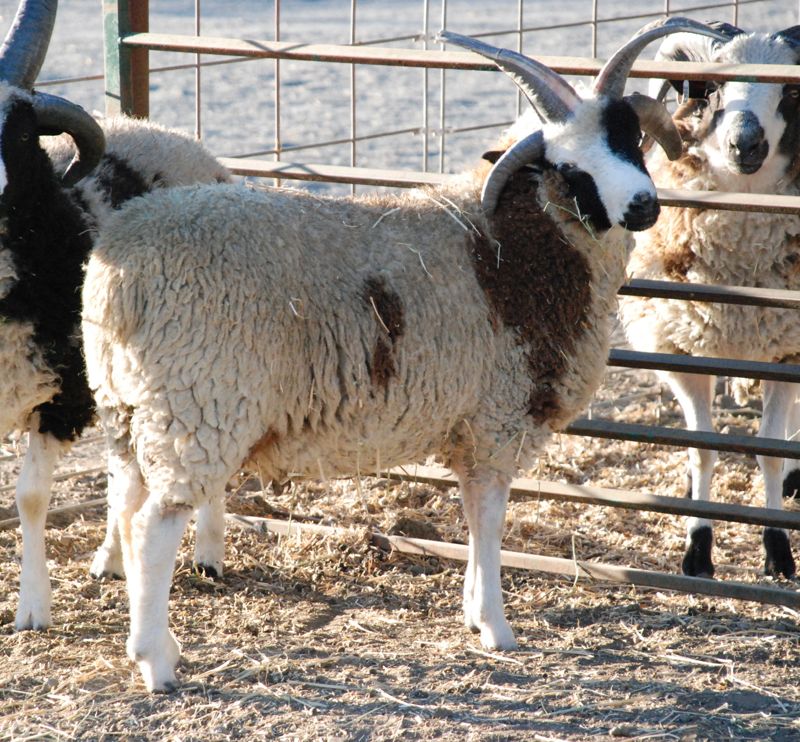
DSC_5119This is Presley, taken in mid-September. One observation of mine is that he won’t register as a lilac ram, but his fleece is the brown/gray of a lilac and definitely not black and white. (In this photo the dark wool just shows sun-bleaching, but when you look at the fleece sample you can see that is is not black.) However his facial markings look black. I think this is what some people are calling a chocolate lilac.DSC_7089 This is Presley now. Take a look at his horns.

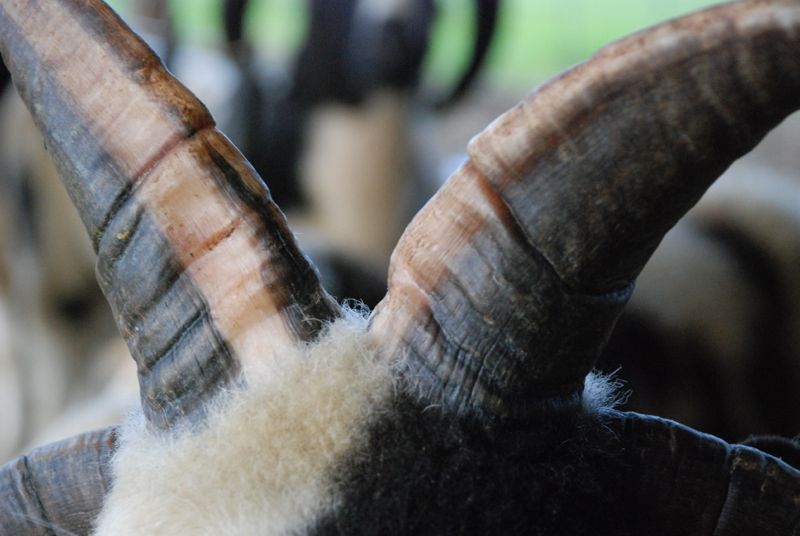
DSC_7091I hadn’t noticed before, but all 4 horns have a ridge in the same place and the vets wondered if this related to the same conditions that caused the change in the fleece sample. When you look back at the first photo of Presley from September 17 you see that his horns are smooth. I posted a video of Presley taken September 24 that shows what I think is one of the many possible symptoms of bluetongue. The last two photos were taken 3 months after that. Did the illness result in the change in horn growth and the fleece observations? It is not any matter of earth-shaking importance, but I find it an interesting idea. My simple question about the fleece has led to a lot of other inquiries.

We looked at the rest of the rams while the vets were here.

DSC_7098 This is Larry, who was breeding a friend’s flock and just came home. The friend told me that she thought Larry had blue tongue also. Note the ridges on his horns.

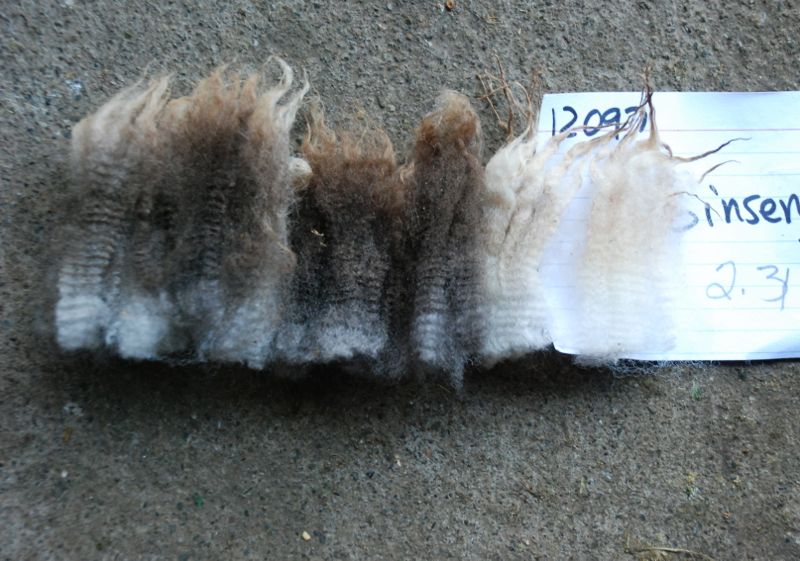
The reason that I asked the vets about Presley’s fleece is that I had remembered seeing another fleece with the same discoloration. I had taken a photo of it at the time.

DSC_6663 Ginseng is also a lilac lamb and her fleece shows the color change at the same place as does Presley’s.

I have no answers yet (except that Mary and Shelby won’t be going to the fair), but I’m going to examine the rest of the fleeces as I sort through them and I think I’ll pay more attention to horn growth after this. I’ll report back if the vets give me any answers.

A Riot of Rams

You’ve heard of a Flock of Sheep, a Herd of Horses, a Gaggle of Geese. How about a Riot of Rams as a subset of the Flock?

Larry came home yesterday. He is a ram born last February (still called a lamb up to his first birthday) and was with a nearby flock of ewes. Whenever rams that have reached sexual maturity (and that could be 5 to 6 months) are to be reunited there are apt to be fights until they have figured out the pecking order. The shepherd’s job is to prevent injury, death, and property damage. Most of the time that means putting all the rams together in a pen that is small enough that they can’t back up and put their whole body force into the inevitable ramming that occurs.

DSC_7019

This is Larry. He is a nice looking ram lamb. Since I was going to be moving all the rams I took the opportunity to trim all their feet.

12085This is one of the ram lambs born at the State Fair in July.

12085 wool He has nice wool, doesn’t he?

DSC_7009Here is Sullivan, a yearling ram. He was shorn along with the rest of the flock last month. Larry missed shearing so I’ll have to shear him by hand, and I didn’t shear those lambs that are going to be sold. Do you notice a swelling just under and behind the two spots on his shoulders?

DSC_7012 Here is what it is like close-up. I noticed it a few days ago and I think it is a hematoma, probably a result of rams tussling.

How do I put the rams in close quarters? I don’t want them near the ewes because that would be asking for trouble. I particularly don’t want any of these rams trying to get over or through the fence to get in with the ewes. So I use one of the stalls, but a 12′ x 12′ stall is way too big. I use panels to make a pen in the corner of a stall.

DSC_7024There is a feeder just out of this photo at the bottom of this photo. The two shorn rams at the feeder are the February lambs. The two rams with wool at the feeder and the one in the top corner are the July lambs. Sullivan is the 2-horn ram in the center and Larry is the 4-horn ram next to Sullivan. Small enough pen?

DSC_7035Evidently not. I tried to take video so I could share the real impact (pun intended) of this, but it was too dark in here. In this photo Larry goes for Sullivan.

DSC_7036Now it’s Sullivan’s turn. You can’t tell in these photos but there is real power behind these hits.

DSC_7039Larry’s turn again.

DSC_7041

DSC_7042

DSC_7044Another view. They are still fighting.


DSC_7048I collapsed the pen a bit more and they gave it up. Or maybe it took the fun out of the fight when they couldn’t back up to bash each other.

This morning all the rams were behaving so I gave them more space. Tomorrow they will go out to the ram pen and live happily ever after…

Dallisgrass revisited

I have  posted several times about dallisgrass in the pasture. It features in this post a few years ago, this this post about burning it, this post in August 2011 and this post in August 2012. Please ignore the fact that I have spelled it differently in several of this posts. It is dallisgrass and here is a definition: “a tall tufted tropical South American perennial grass (Paspalum dilatatum) introduced as a pasture and forage grass in the southern United States”.

This came up in an e-mail conversation last night. Why don’t I shear before breeding season to avoid the blue and red and green markings on the wool?

Good question and that is a discussion for another post. I was thinking about pros and cons of shearing before breeding–sometime in September. I was explaining that the dallisgrass grows so tall and develops seed heads in the late summer. At some point in the cycle the seed heads are very sticky and the sheep (and Rusty…

…and my pants) are covered with sticky goo that catches dirt and the seeds that come off of the grass. After a few weeks the sticky part goes away and then fall rains clean the sheep. I thought I’d look this up to see why the seed heads are so sticky. I was surprised to learn that the goo is actually the result of a fungus that is common on dallis grass and is toxic to cattle. Who would have thought? That doesn’t change anything, but I find it interesting. So this morning I wanted to see for myself.

This dallisgrass looks “clean”.

This one is infected.

The dry grass here is dallisgrass.

See how tall and thick it is? Some of the leaves are still green, but they are so coarse that the sheep will choose to eat the dallisgrass only after they have eaten all the grass and clover that they prefer.

A few sheep photos. This is Sierra.

This is Aurelia, the ewe I got from Kreutzer Farms  in Nebraska.

Onyx, the Jacob x BFL cross. Notice the ewe in the top right corner of the photo that is almost invisible in the tall grass.

And while I’m talking about fungus in the pasture, what about this one?

 It is huge.

Overheard in the Pasture After Shearing

Does this haircut make my rear look big?

Does this haircut make my head look big?

If I don’t move she won’t see me.

Where did all those freckles come from?


I can finally reach that itch.

Overheard in the Ram Pen, after weaning the ram lambs born at the State Fair in July:

MOM !

Does this haircut make my …uh…horns look big?


Shearing Day


Shearing Day was yesterday. What a wonderful time. Farm Club came through (as always) and handled all the various tasks of the day. (Except for Rusty’s job, which he describes in his blog so I am not duplicating his photos here). I am grateful to the great shearer who has come for the last few years. He does a wonderful job–the sheep look good and the fleeces look good. John is so fast that he finished with 64 sheep in about 2 1/2 hours.


One important job is making sure that the shearer always has a sheep to shear as soon as he finishes with the last one.

I took some videos too but it will take me awhile to get those edited. You can sign up on the Meridian Jacobs YouTube Channel and see them when they are ready.

This is the BFL/Jacob crossbred ewe. I probably could have started a bidding war on her fleece, but I’m keeping it.


A couple of people bagged fleeces after shearing and  then each fleece was weighed.

Alison and Linda helped many new Farm Club members and other visitors evaluate fleeces at the skirting table.


The warm afternoon sun was welcome after the cold morning.

Good friendships and sharing the work make a day like this extra fun.