There is a green glow everywhere.
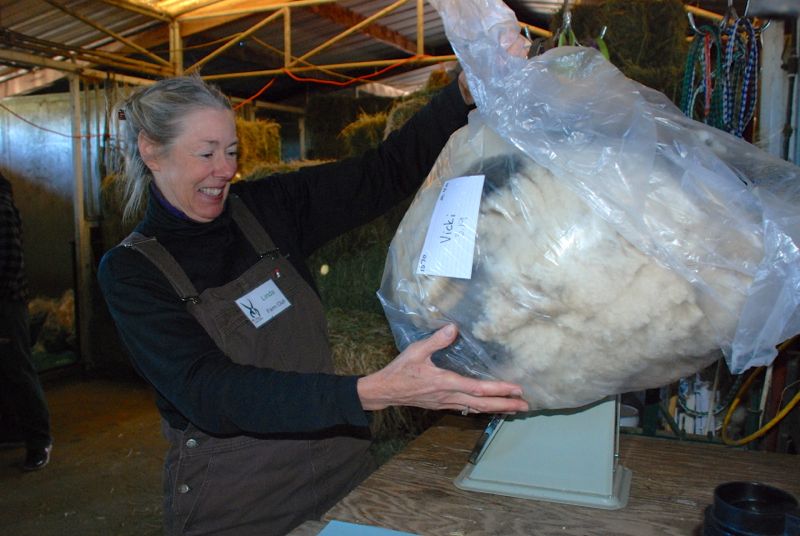
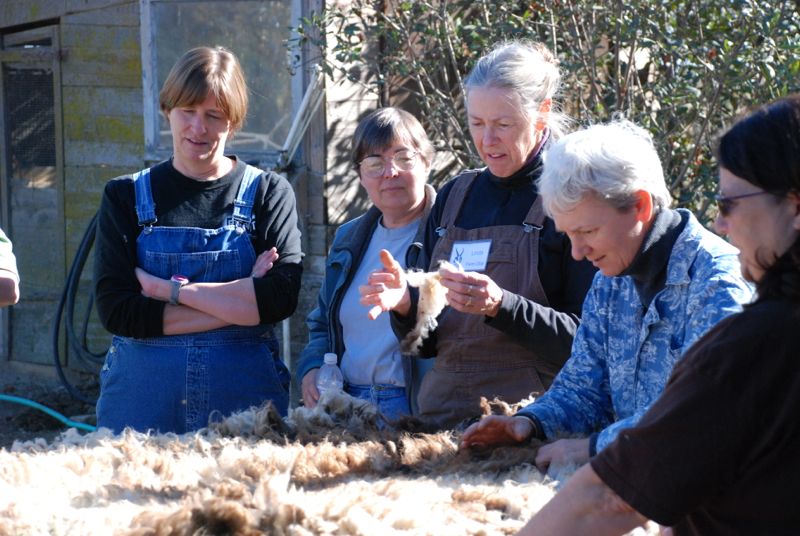
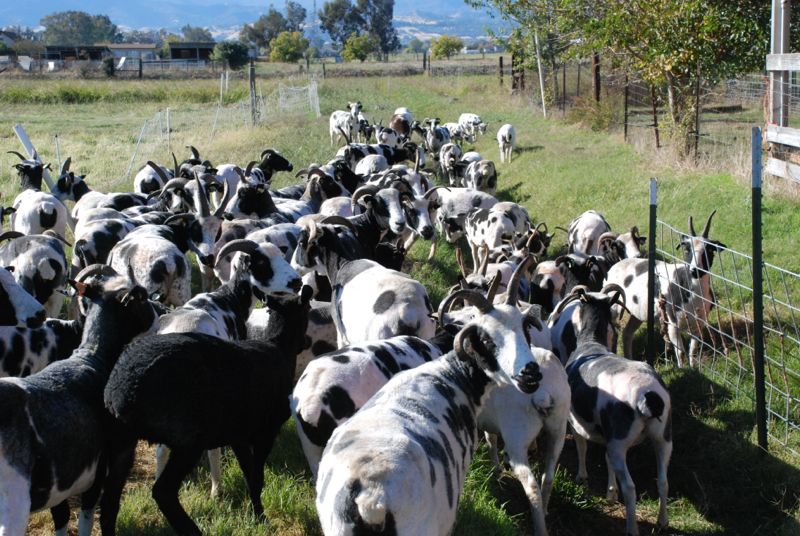
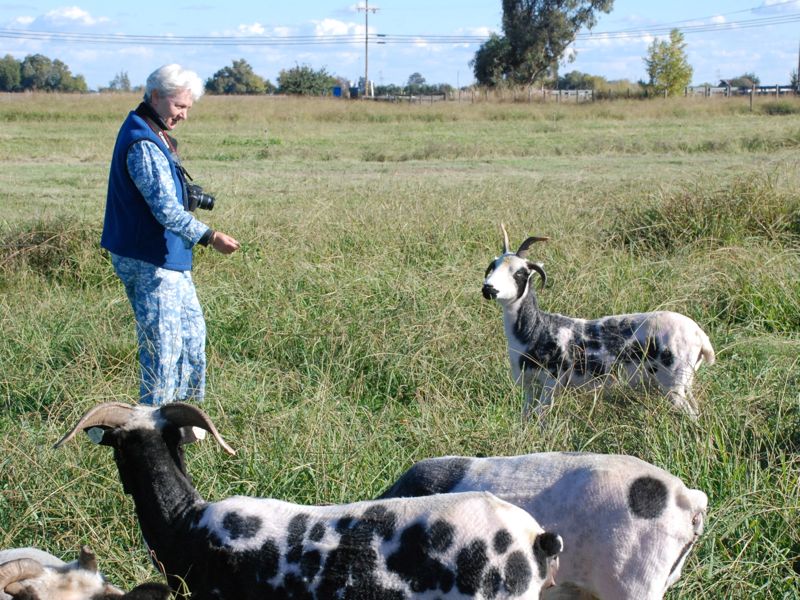
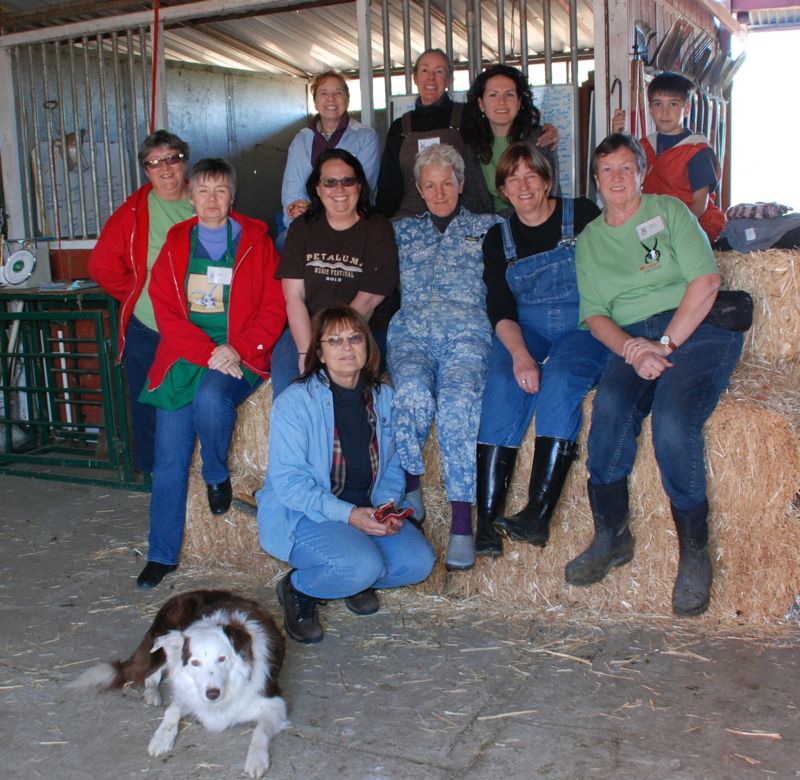
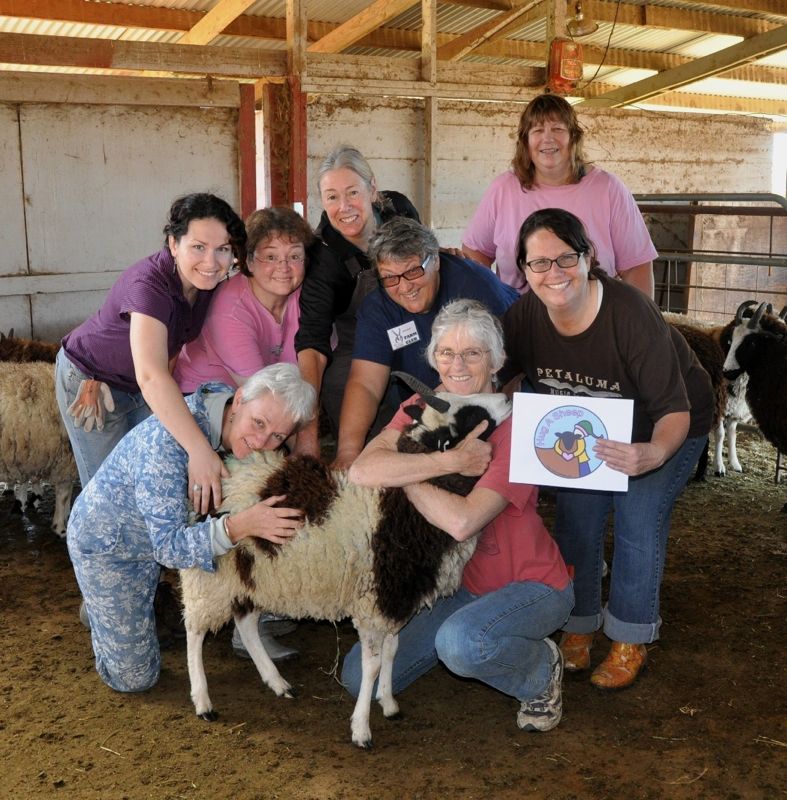
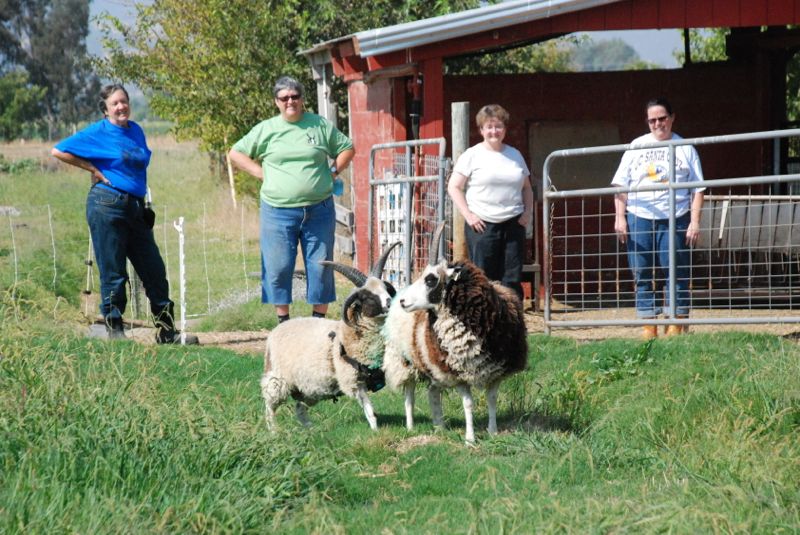
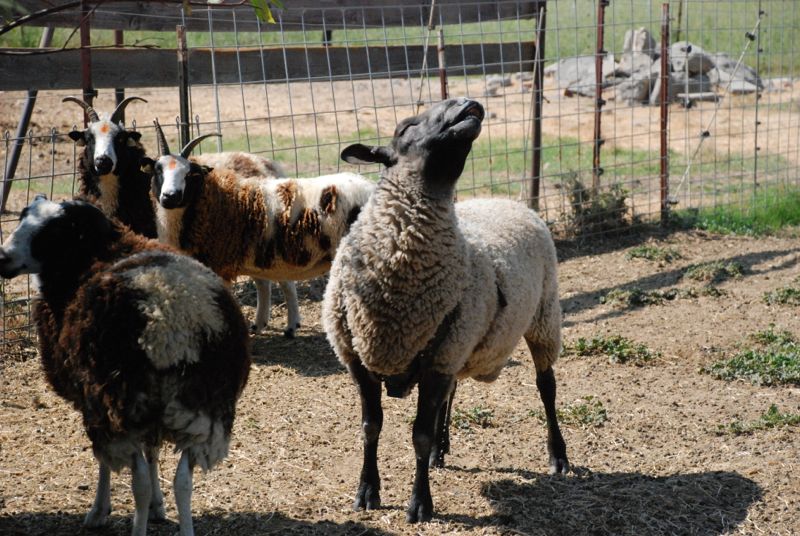
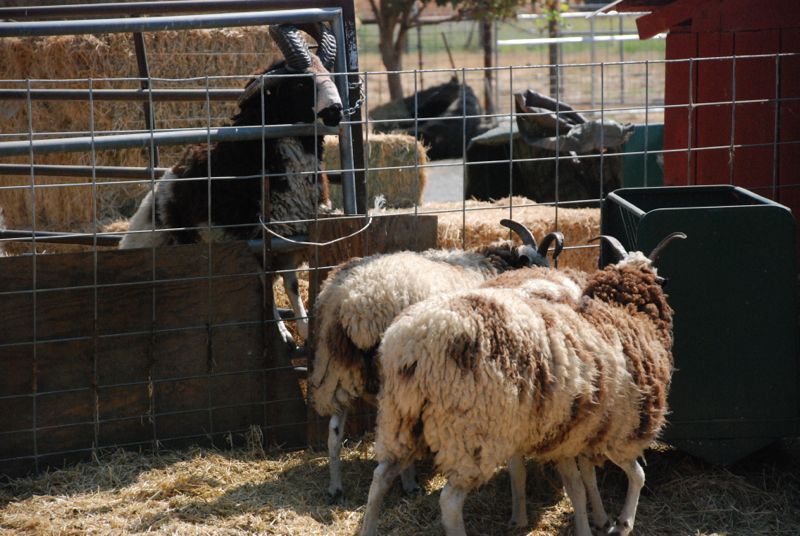
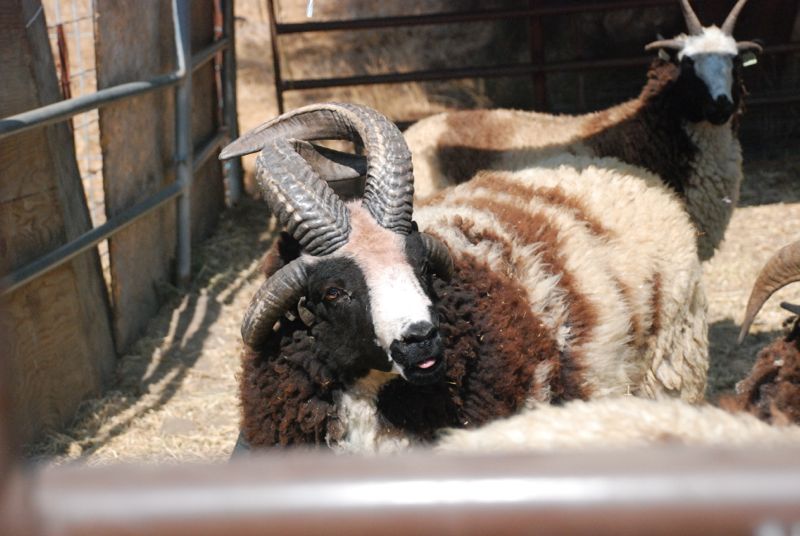
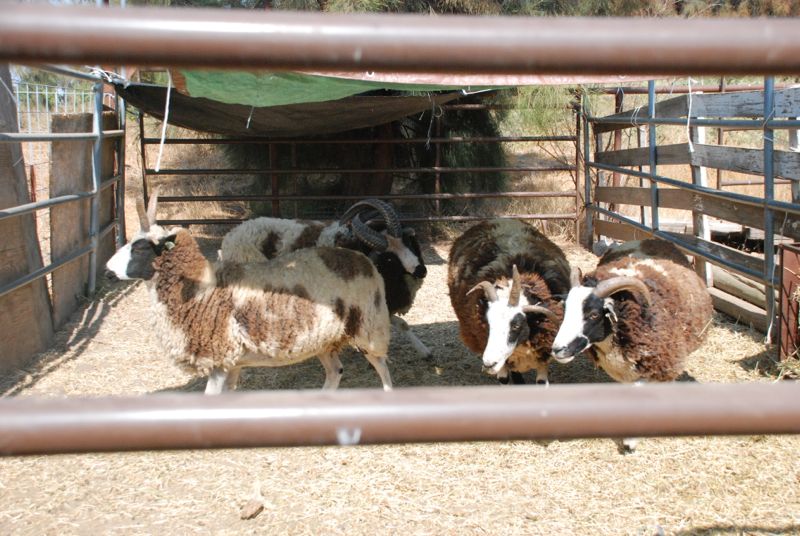
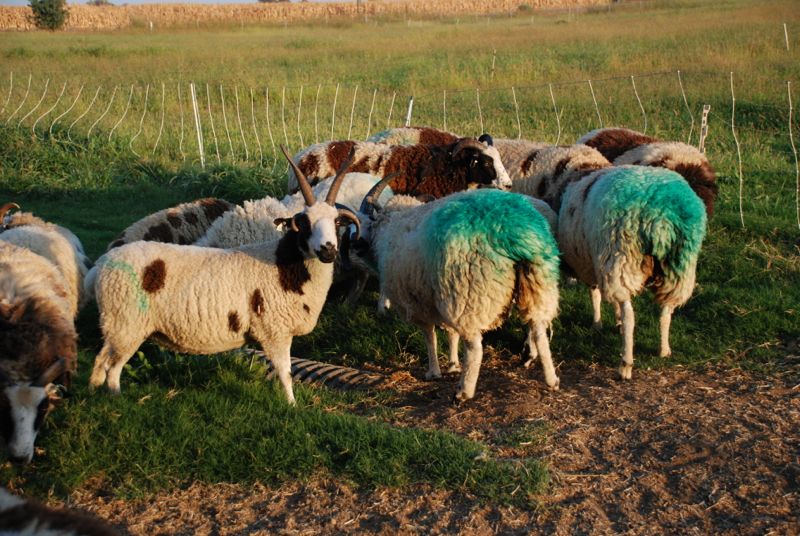
Four Farm Club members came today to help me sort out breeding groups. I told myself that using four rams was plenty but in the end I put ewes with six rams. I don’t have a very big place and by the time I save spaces for non-breeding rams (a few ram lambs left), non-breeding ewes (my State Fair ewes and lambs and a few ewe lambs that I don’t want to breed yet) and try to leave buffer spaces between breeding groups it gets tricky to find space for everyone.
Kenleigh’s Matrix, a ram lamb, was the first to go out with 14 ewes.
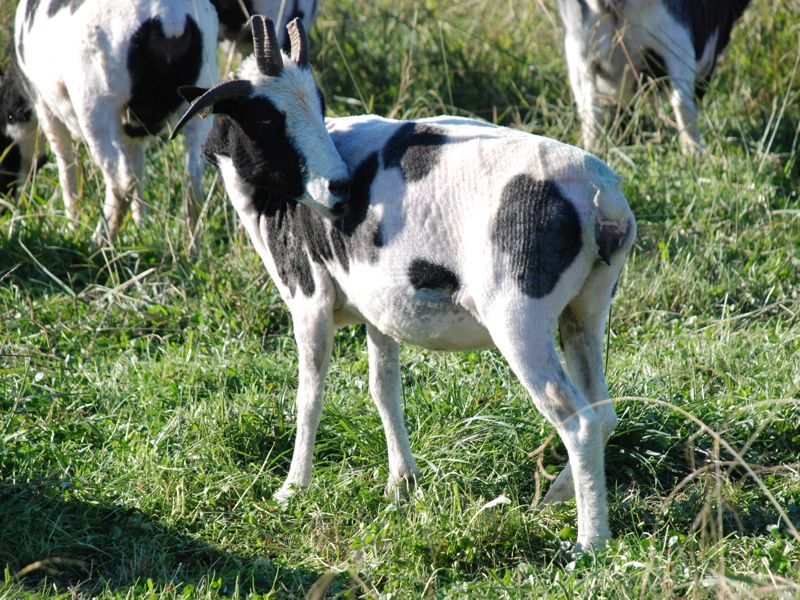
Meridian Loretta was obviously in heat, but we wondered if Matrix, smaller than the ewes, was going to manage the job.
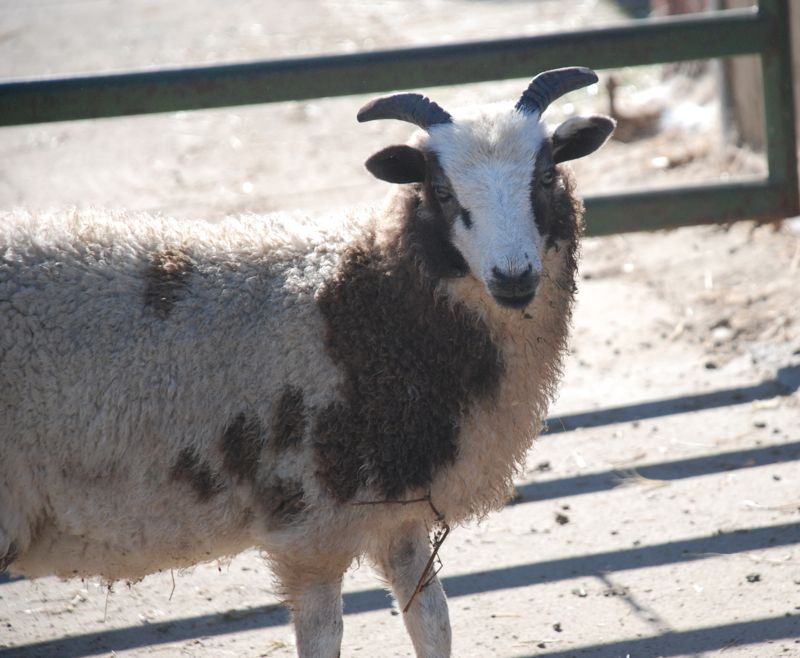
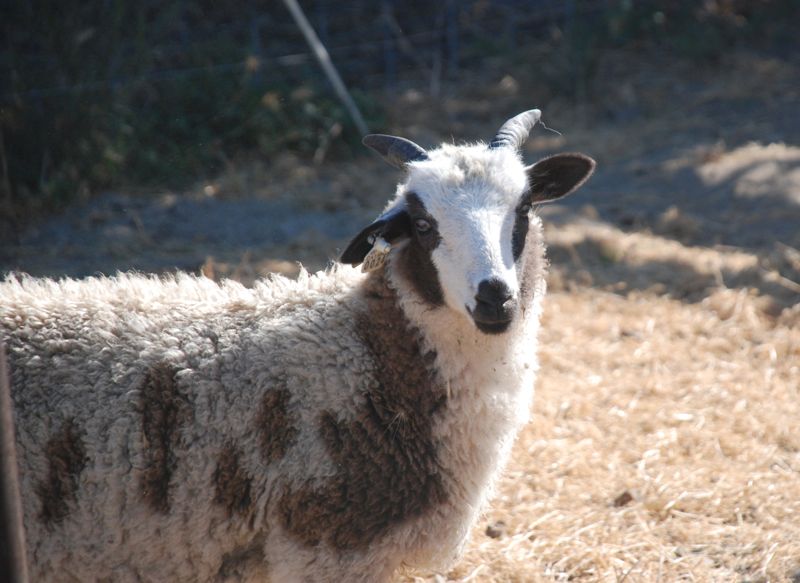
Meridian Fogerty, a yearling ram, was next. He has 8 ewes.
Faulkner was happy to be given eight ewes.
Meridian Clapton, the ram who has been behaving badly wanted some of the action.
Clapton is temporarily in a small pen so he has just three ewes.
Puddleduck Sullivan has ten ewes.
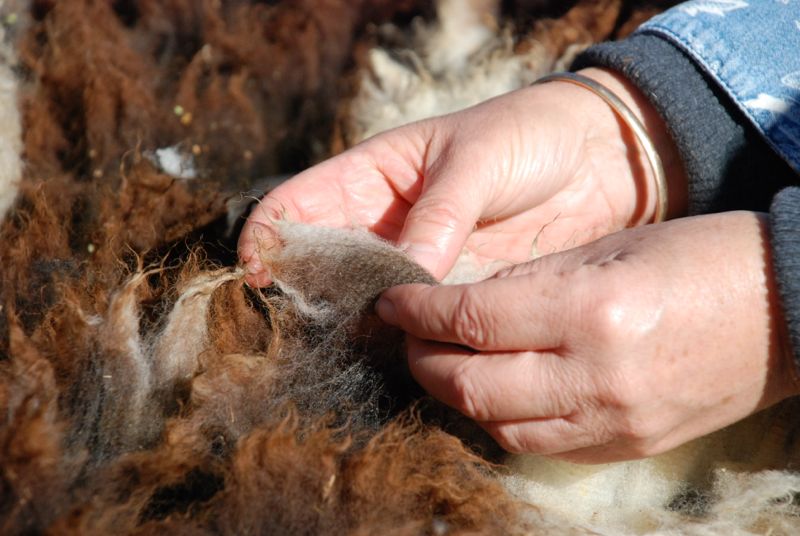
When you first put the rams with the ewes they get a little carried away trying to find a ewe in heat and you may see random marks on some of the ewes. One of the Farm Club members asked how you can tell if the marks from the ram harnesses are the “real thing”. I told her that you can tell.
This is in Fogerty’s pen later in the day.
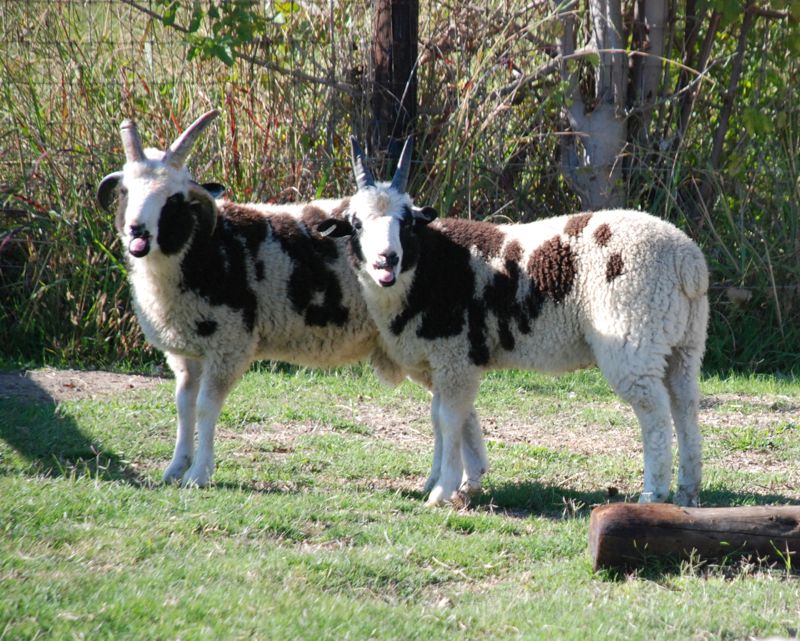
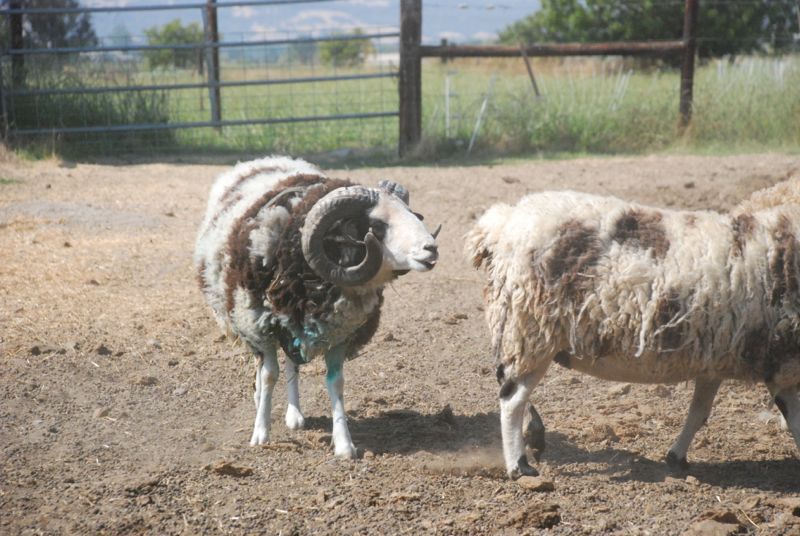
These are two of Matrix’s ewes. One is Loretta, the ewe in the first photo.
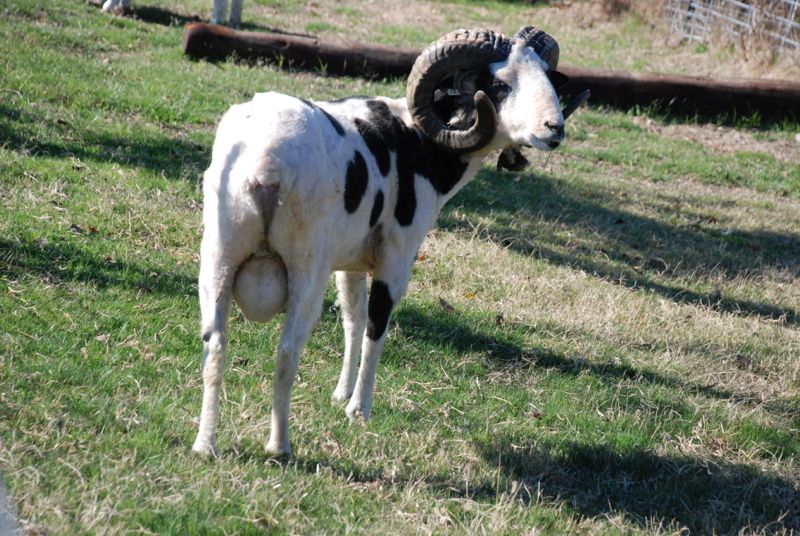
It wasn’t until the end of the day that I picked up the marker for the sixth ram harness so Meridian Miller (the ram lamb who was champion at the State Fair) didn’t get his 7 ewes until evening. He is in the pen right behind my shop.
You could say that the ewes were a bit stand-offish, but Miller didn’t let that deter him.
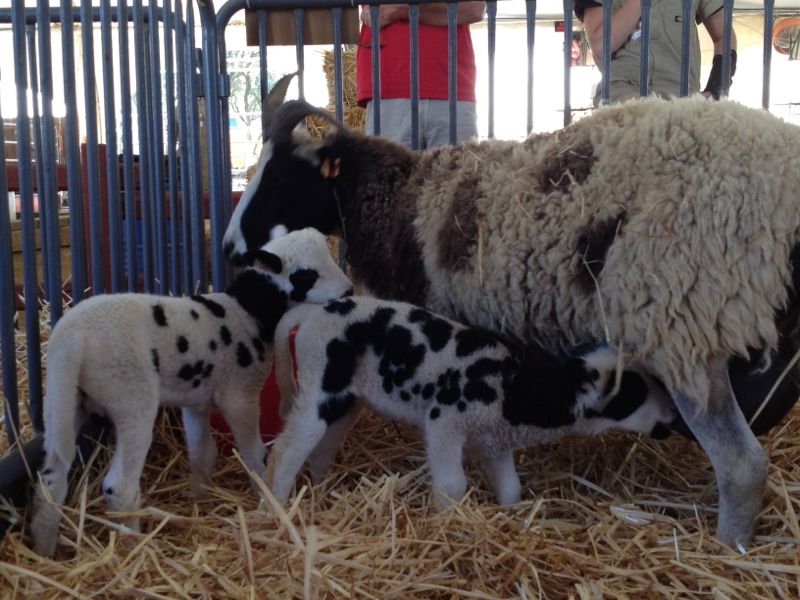
Where will you be February 21? I’ll be in the barn with new lambs.
The sheep show is during the last 4 days of the CA State Fair although my ewes with lambs were there for the whole three weeks.
Mary is a 5-time veteran of the Livestock Nursery.
My main focus of the sheep week is the award given for the Marketing Program. This is a stiff competition that is awarded for the display in the sheep barn. I didn’t change last year’s display very much but I tightened up some things that I wasn’t happy with last year. I also learned to make a DVD with several of the videos that I’ve been working on (some of which are on YouTube) so I had a 45 minute loop that included lambing, lambs playing, and Farm Club.
I wasn’t sure how people would react to the lambing video but it certainly caught their attention and most people were in awe.
My friends and I demonstrated spinning and drum carding and that meant that we had a crowd around the exhibit most of the time. In fact this year we were given an area where we could expand into the wide alley.
The real reason to be at the fair is the sheep show. I gave Fogerty to my husband to show because that ram is so strong and I didn’t want to risk him getting away from me. However, Sullivan didn’t cooperate too well. We switched places and Sullivan followed Fogerty without trouble. Fogerty placed 3rd in this class that included Shetlands and St. Croix sheep.
The best placing of the day was my young ram who placed first in his class…
…and then Champion Ram of the Primitive Breeds show.
The most exciting awards for me were presented at the end of the four days.
I finally won the 1st place Marketing Award (that’s one of the leather banners) and Best Educational Presentatation in the Sheep Show and overall for all the livestock divisions at the fair! Should I retire while I’m ahead?
But that’s not all there is to the fair. Here are some other photos I like:
Farm Club members, Mary and Dona, cutting up temporary tattoos for give away.
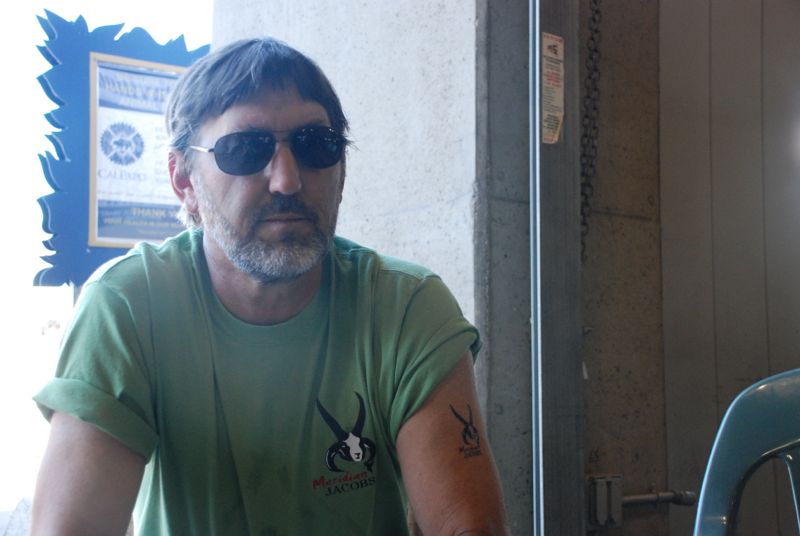
Here is how the tattoos look in use.
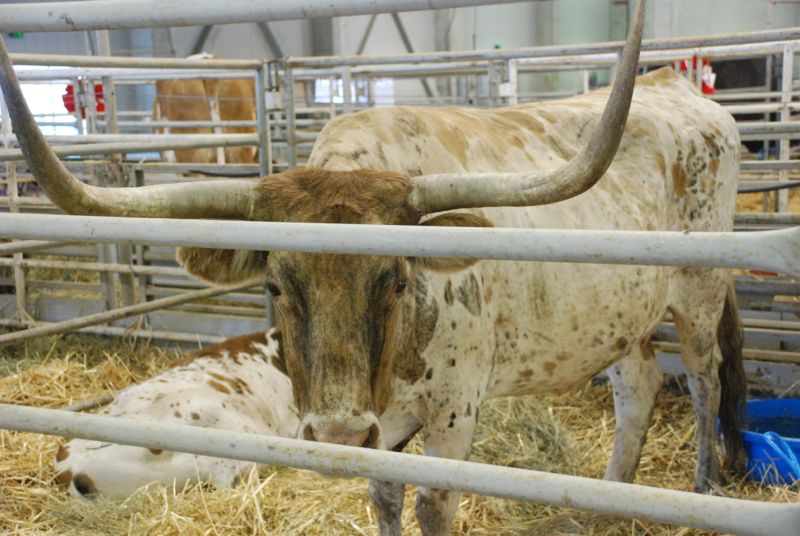
There were other animals with horns in the barn.
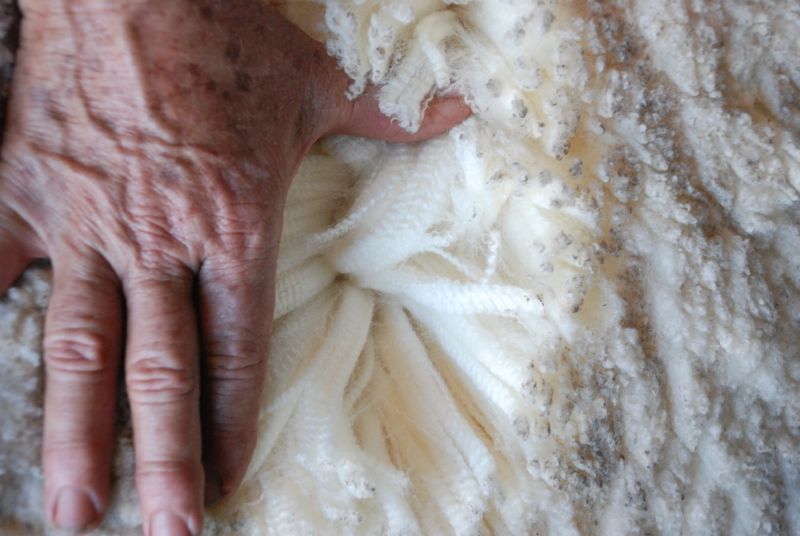
And other animals with nice fiber.
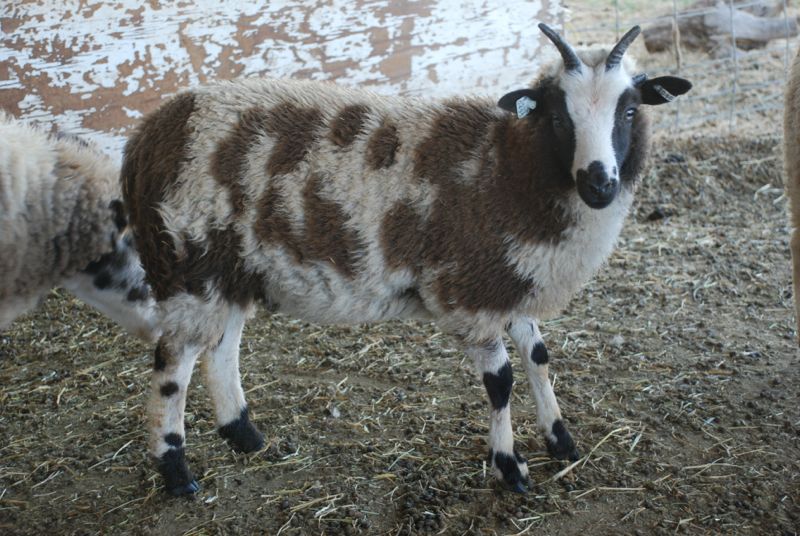
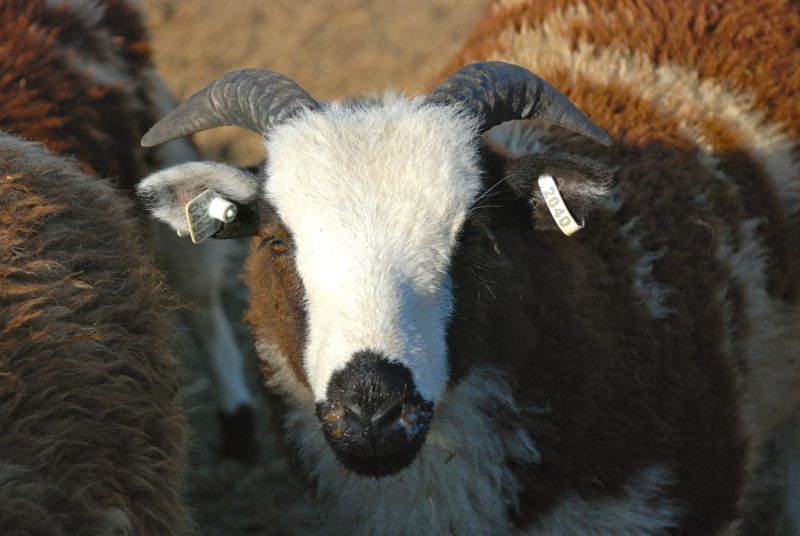
Animals that combined horns and fiber.
But look at the Supreme Champion Merino ram owned by Terry Mendanhall…
…and see his fantastic fleece.
It simple math. If I had 65 sheep last November and want 65 sheep next November, but 81 lambs were born, that means that I need to sell 81 sheep before November. So out of all the lambs that were born I need to be very selective about which ones I will keep. Here are the chosen lambs so far.
This is Sonata, daughter of Meridian Moon and Sweetgrass Clint.
Lila, a lilac ewe, daughter of Meridian Lola and Mud Ranch’s Hudson.
Fandangle, daughter of Meridian Fran and Sweetgrass Clint.
Kenleigh’s Isadora who came from Kenleigh’s Acres in Oregon.
Mud Ranch’s Foxglove and …
…Mud Ranch’s Ginseng, both lilac lambs from Mud Ranch in Lewiston, CA.
There are plenty of other pretty lambs, but most of them will need to find homes elsewhere. I have my eye on one appealing ram lamb:
Axle, son of Meridian Tina and Sweetgrass Clint.
I almost forgot someone:
Onyx, daughter of Sparkle and Faulkner.
This is Fogerty, a ram who was born last spring. He is one of the rams that I will use for breeding this fall. Here is another photo:
It’s that time of year again.
We’re off to the CA State Fair Livestock Nursery.
Mary is a veteran of the fair. This will be her fifth time lambing here. Don’t worry Mary. It’s just the camera angle that makes your rear look so big.
Mary brought novices with her. That’s a yearling ewe, Toffee, lying down and a three year old ewe, Shelby, standing. Shelby is one of the ewes that we “rescued” from a foreclosure last year. (Yes, it’s still camera angle, Shelby.)
The State Fair opens tomorrow and runs through the last weekend of July. That’s when I’ll have more sheep there for the sheep show. In the meantime these three ewes will be well taken care of by the staff and students of the UC Davis VMTH (Veterinary Medical Teaching Hospital). We look forward to lambs in the next couple of weeks.
I drove to to Mud Ranch Jacobs today, west of Redding, to trade lambs. One lamb is going to Kenleigh Acres in Oregon and the other is staying at Mud Ranch. My Kenleigh lamb came a couple of weeks ago when she was able to hitch a ride south with a friend. Meet Kenleigh’s Isadora:
She is the great-granddaughter of Fanny, a favorite ewe of mine.
Isn’t she a pretty girl?
The drive to Lewiston was over 3 1/2 hours one way, but it’s a pretty drive if you enjoy scenery and I was listening to a good book. (The book is set in modern times in England and, although it doesn’t have anything to do with the story-line, the family of the main character raises Herdwick sheep. There are interesting comments about the breed and how they relate to what we would call agritourism.) Anyway, that doesn’t have anything to do with my story but it did keep me awake on the drive both ways.
This is Whiskeytown Reservoir and I am amazed at how full it is. I am not a big fan of reservoirs but this is sure pretty (and looks very inviting).
Back to the sheep.
Joan had the lambs sorted out and the lamb for trade was easy to catch and put in the truck.
This is Mud Ranch’s Foxglove, a pretty lilac ewe.
But what’s this? Is she looking in a mirror?
No, it seems that Foxglove couldn’t come without her friend, Ginseng.
Here are the sires of these two lambs:
Foxglove’s sire is Kenleigh’s Lancelot.
Ginseng’s sire is the 2-horn ram in this photo, Tristan.
Welcome to my 3 new lambs.
This is Ebony, a black and white Jacob ewe.
This is Hudson, a lilac Jacob ram.
Here is one of their lambs at almost 2 months old. He is lilac like Dad.
This is the other lamb at about a month old…
… and here he is at just over 2 months. He has been marked with a cull tag because of a severe split eyelid, but also, do you see how his horns are growing?
Both lambs today, at 3 1/2 months old:
I love the horns, the color, and the fleece on this lilac ram, but (as in the discussion over on Facebook) I sure wish that I could combine these lambs into one and keep just the parts I like. Look at those pretty blue eyes on the black and white ram…
…and he has nicely marked feet also.
Speaking of rams, here are a few more photos:
The photo above is of Meridian Clapton at about 6 months…
and here he is as a yearling. Look at the photo below for horn detail on his right side.
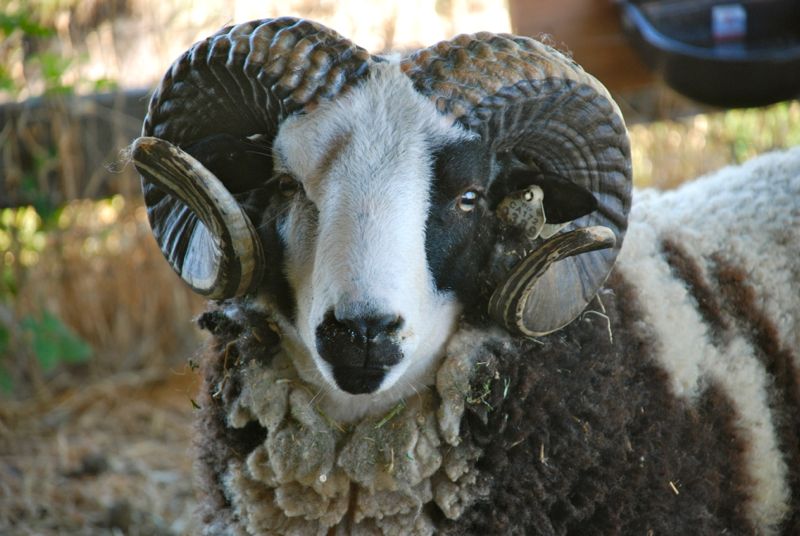
The first thing that is unusual is how his horns go behind his neck instead of under, but there is also a fifth horn there.
Meet Puddleduck Sullivan, a 2-horn yearling ram. But is he really a 2-horned ram? I see a seam in those horns that could mean that he is a fused 4-horn. And he also has another horn on this side. People talk about 6-horn Jacob sheep, but I haven’t seen any in which the 5th and 6th horns weren’t scurs or some how compromised by the larger horns. After all, where would you put another full set of horns?
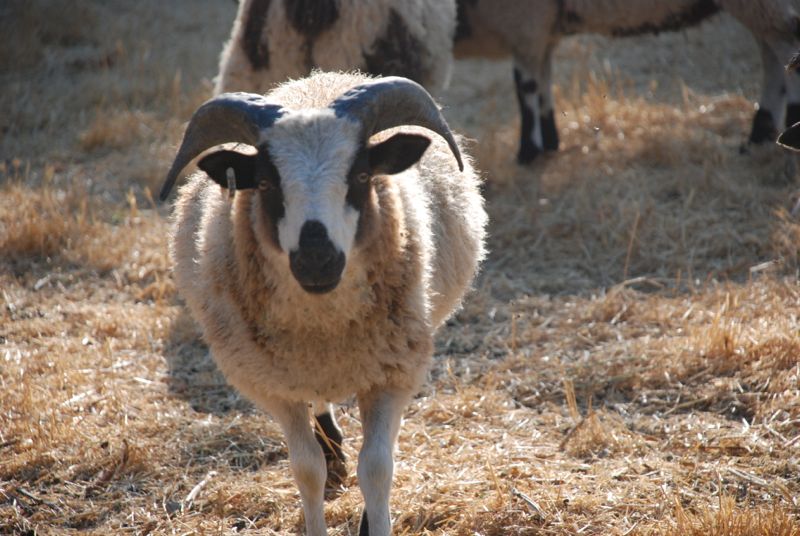
This is Meridian Fogerty, a another 2-horn yearling ram. I had so many rams last year that I didn’t use him, but he will be in this fall’s ram line-up. His horns are closer to his face than I’d like, but still OK.
One more ram. Sweetgrass Clint is Clapton’s sire and here he is (above) at 6 months old.
This is Clint last fall as an adult.
Bottom line–you don’t necessarily get the perfect lamb by breeding two “perfect” parents and you can’t predict how the lamb will look as an adult when you buy it at 4 months old.
For more photos of how rams’ horns change see my website photo gallery . By the way, Ebony, who is at the beginning of this post, stars in her own video over on YouTube. Click here and find her video to see her having those ram lambs.
I took a whole batch of photos yesterday morning before I went to two days of Nikon photography classes in Sacramento. I intended to write a blog post about ewes and their lambs and I took photos of family groups. After the class I’m looking at these photos and thinking…delete…delete…delete. I couldn’t bring myself to delete all of them, but I did delete most. And I’m tempted to go back through the last year i-photo and do a big cleansing.
So here are a few photos that I kept and some of them aren’t all that great but I like the sheep.
Summer and her triplets
Hot Lips and twins
Dazzle and twins
Lola and daughter
Faulkner
Ebony
Fogerty
I have been vigilant in trying to watch for mastitis in the ewes. It’s not easy to spot until you see a ewe that doesn’t want to get up or is lame. Lame? Yes, the infected side of the udder becomes extremely painful and the ewe doesn’t want any pressure against it so she limps. Have any of you women ever had a breast infection? Then you know what I’m talking about.
I am learning that mastitis in sheep can progress so quickly that you often don’t see any signs until it is too late. Prevention or early detection is the answer. (Do I sound like a health care ad?) I noticed a lopsided udder a couple of weeks ago. I caught the ewe and her lambs. It was obvious that the ewe was not letting the lambs nurse on one side. I found a scab at the top of the teat–maybe something that started from vigorous lambs with sharp teeth (nursing moms can relate to that too). I used an udder cream to help soften the scab and I milked her out. Fortunately the milk still looked good–not starting to get chunky or cheesy. I kept that ewe in for a few days, milking her some, but mainly making sure that she let the lambs nurse–which she did when I used the cream on her udder. She is fine now.
Today in the pasture I saw Athena from the rear and thought that she looked a little lopsided, but not too much. I was able to sneak up on her and feel the udder. Hard. Immediate response needed. I brought all the ewes in so I could catch her and her lambs. Here is what her teat looked like:
It is hard and inflexible. A normal teat is squishy so you can actually get milk out. The good news is that the milk is still OK and I can get milk out if I milk her by squeezing the lower part of the udder and the upper part of the teat. The bad news is that it is very painful for her and she will get mastitis if I can’t keep the milk flowing or unless I dry her off so that there is no milk production at all. You can’t stimulate milk production on one side and not the other.
Here is what her lambs look like right now:
They are 50 & 55 pounds. Although normally I would have let them continue to nurse, at that weight and 2 months old they can be weaned. So they are on their own now and Athena is in a stall with a wether (with whom she is extremely annoyed) on no feed or water for a little while to help with the drying off process (discouraging milk production). Her udder will continue to fill with milk, but that in itself inhibits milk production. I will give her banamine as a pain reliever and anti-inflammatory and LA 200 as a prophylactic aid to prevent infection (not normally done when drying off). Hopefully without the stimulus to produce more milk she won’t get mastitis and hopefully the teat will heal without damage that might inhibit next year’s milk production. Athena is a really nice ewe and I’d hate to lose her for this.