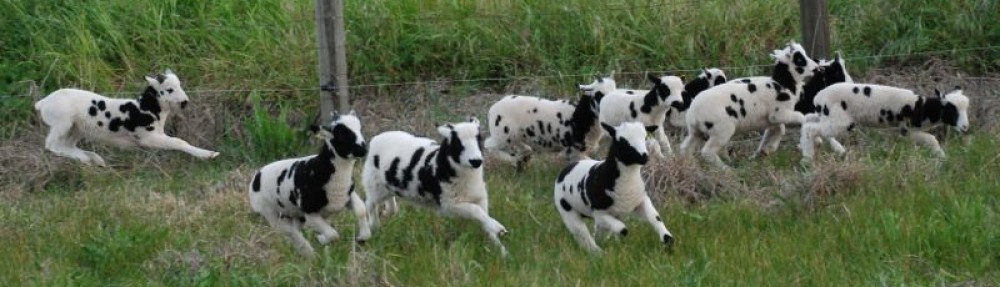
Farm Club members have spent time here during lambing and helped with cleaning, lamb ID, etc. And of course there is always lamb cuddling. Farm Club is a great way to learn about raising sheep before you invest in sheep or if you won’t ever have the lifestyle that lets you own a sheep.
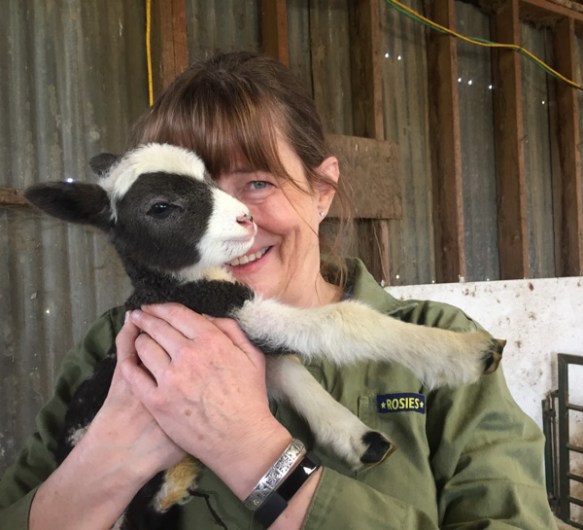 Zorra had plenty of cuddling while she was still in the lambing area with her mom. Lisa is a lamb cuddling Pro.
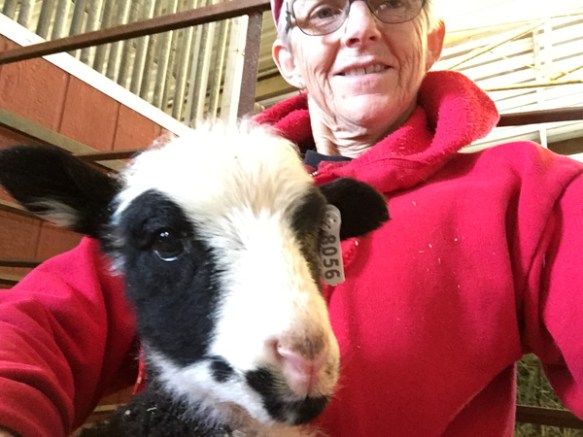 This is pet sheep Jade’s lamb (and me).
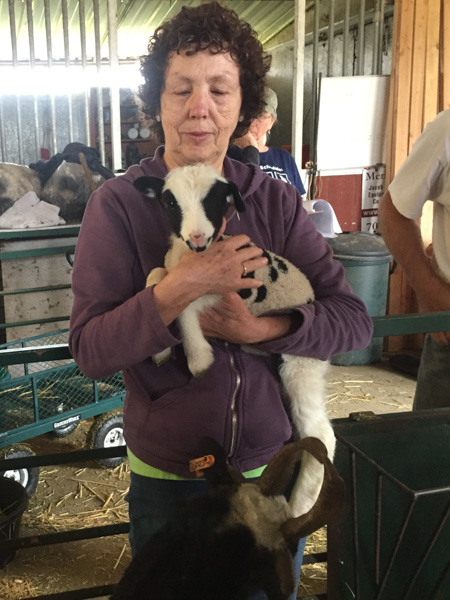 This is her again being held by Peggy. We’d really like her to be friendly too.
 This is Zorra again with Sumi.
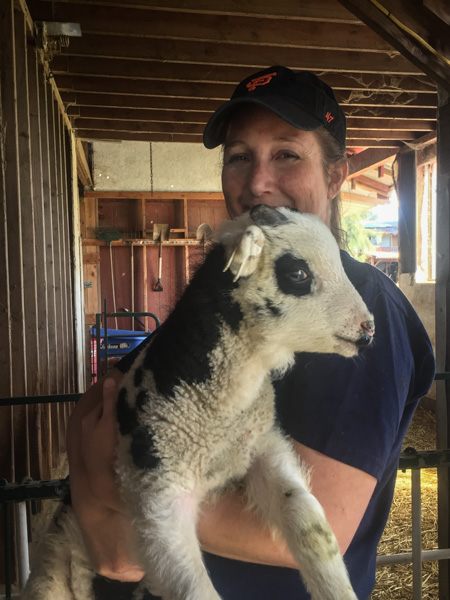 As the lambs get a little older we have other Farm Days. This was Betsy’s first day on the farm and she jumpred right in holding lambs as we ear tagged and castrated.
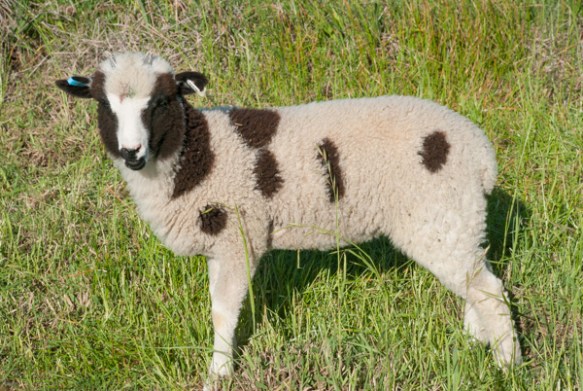
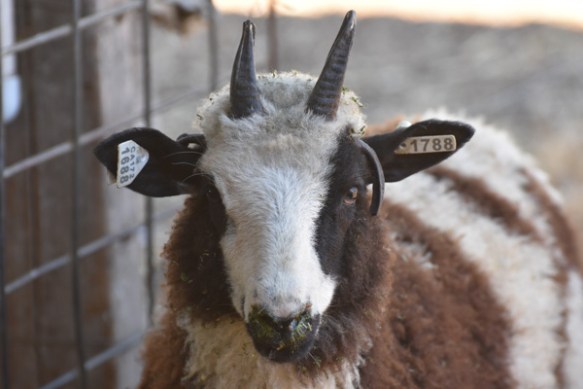
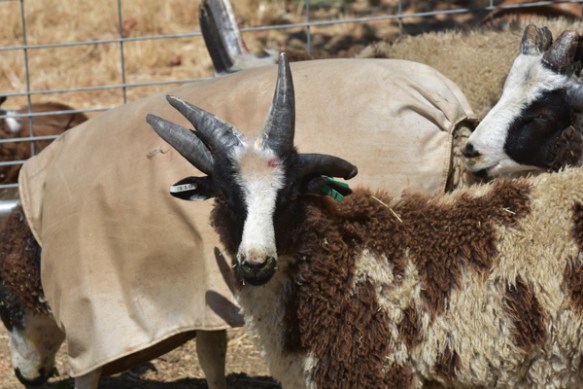
 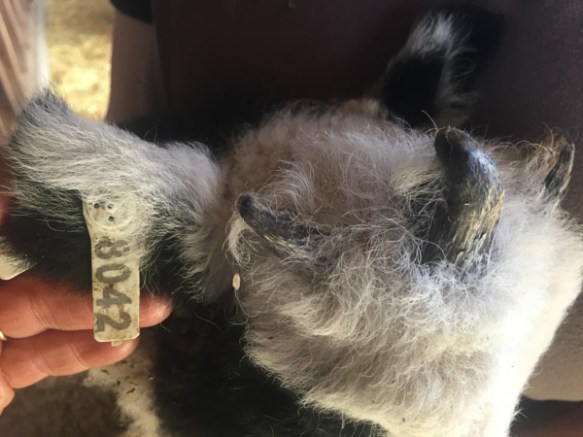 I don’t castrate many because it’s hard to know how they will grow out and which might be a great flock sire for someone. Some are easy though–too much or too little color to fit within the 15-85% breed standard. This one’s horns are already touching at the base under that hair. As the horns grow they will fuse and not grow well separately.
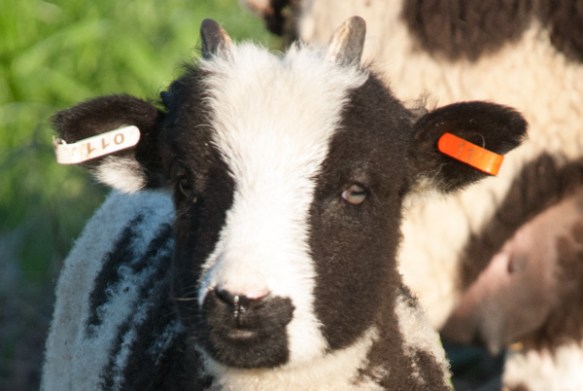
 Marina and Maggie (no photo) helped catch lambs too and Mary handled the clipboard. The lambs were all tagged with their white ID tags right after they were born but we put added a colored tag on Farm Day. I like to use a second tag for back-up ID if the first one falls out and also to color code the sire. It’s interesting to keep track of that and it also helps to find a lamb when you’re looking for one among 75. You can narrow it down some if you have a color to look for.
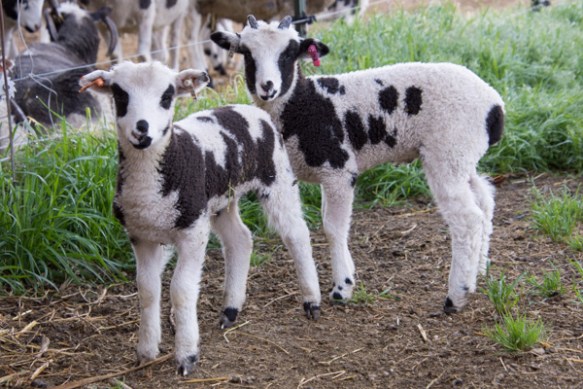 This year Cayenne’s lambs got orange tags. Pink tags go in all the lambs that have been castrated.
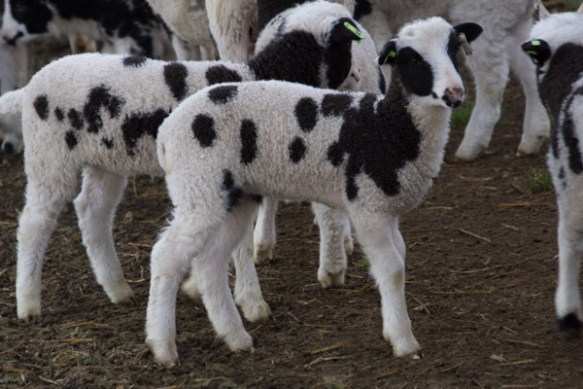 Green means these are Buster’s lambs.
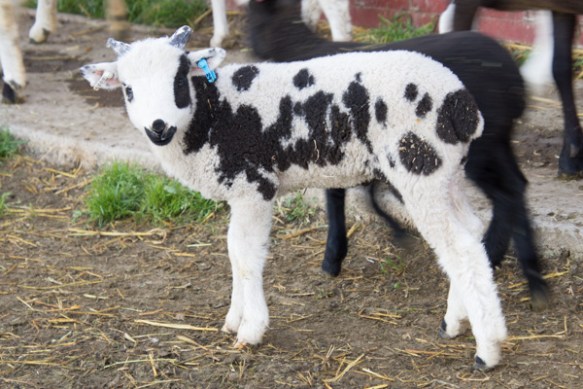 Blue was for Catalyst.
 Peyton’s lambs are obvious so don’t need an extra tag.
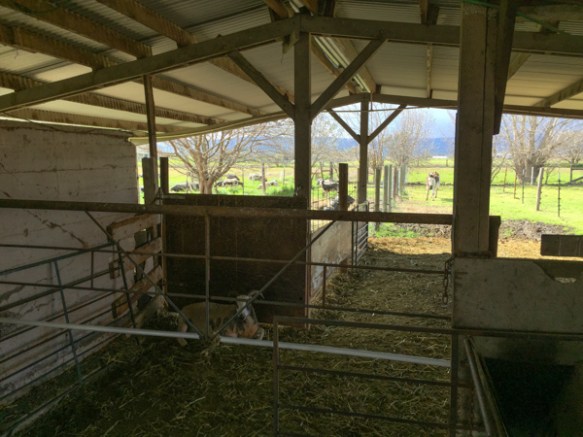
 After we tagged all the lambs Marina and Betsy stayed to help me set up the pasture for the sheep. I had put the sheep out for a few days but hadn’t cleaned and moved the water trough.
 We walked around the pasture and took stock of things. I always point out the issue that I have with the dallisgrass that is out of control. That’s what all that dry grass is. I’d much rather see green grass growing. The whole pasture was looking somewhat dismal from a growth standpoint. At this point we had just had March rain after two very dry and cold months. I wasn’t seeing much growth–at least not enough to feed 55 ewes and 75 lambs.
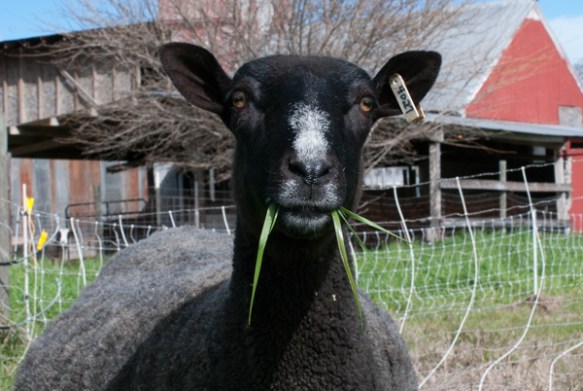
  We spotted this grass that I don’t recognize.
 I took photos to send to a friend of Marina’s who she think might recognize it.
Thanks Farm Club!
 During the discussion about other aspects of raising sheep we kept an eye on Zinnia, the ewe who was lambing. When she got more serious we watched.
 One thing of note was the presence of two bags, each a different color. A lot of time I just see membranes that have broken so I wouldn’t know if it were one or two, but it seemed unusual to see two distinct bags. I saw a bit of a small foot emerging but the whole thing seemed to be taking awhile so I thought I’d check. There was one foot and a head. Not very far back was another head. Both lambs were coming at the same time, and it was obvious from the two sacs that one had meconium staining, a sign of fetal distress. I pushed the second lamb back and was able to pull the first lamb with just the head and one foot. I could tell that it was very small. Usually it takes a little while for the second to come, but it was right there too. Weighing these later, they were 4.8 and 4.2 pounds.
 You can’t rush a lamb to be ready to nurse. I didn’t know if something was wrong with this one, but I knew that, even if it was normal, it needed a little more time. We went outside and looked at the fences and the pasture. When we came back in the first lamb was doing fine. The second still wasn’t able to stand but I could hold it up and get it to nurse.
 We kept checking back and eventually the second lamb was on it’s feet. This photo was taken later in the day.
 Later that afternoon a friend of mine came with another friend to take photos of the lambs. That’s Raquel with triplet ram lambs.


 Here is the tiny lamb from the morning.
 This was getting close to the end of lambing.
 Here are those two tiny lambs 12 days later and here is their
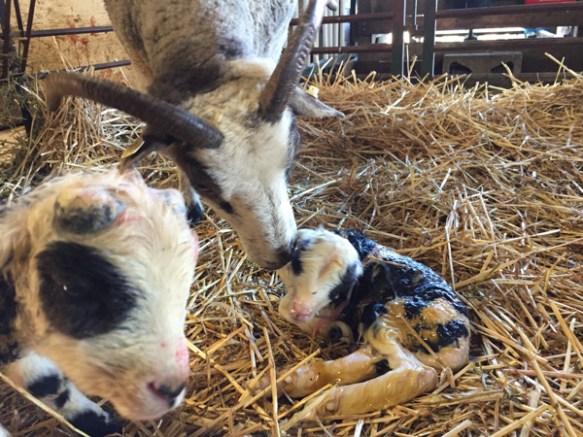
 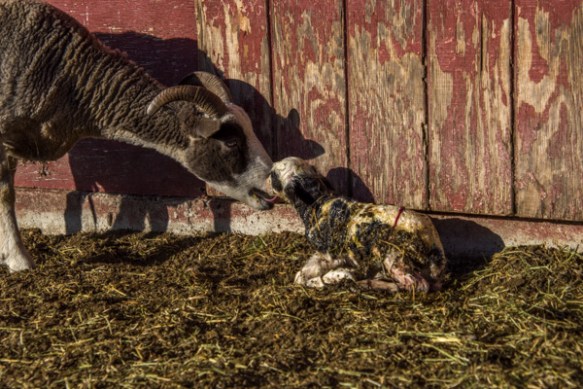 Lamb #1. These aren’t usually a pretty side when just born. Slime, dirt, blood.
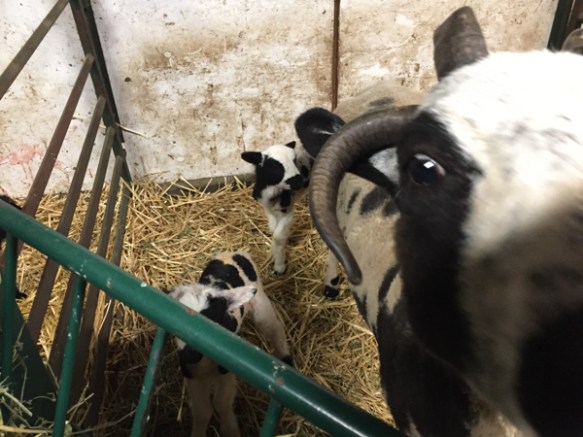
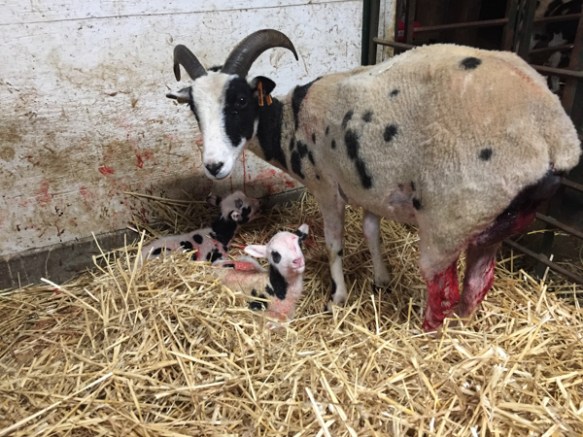
 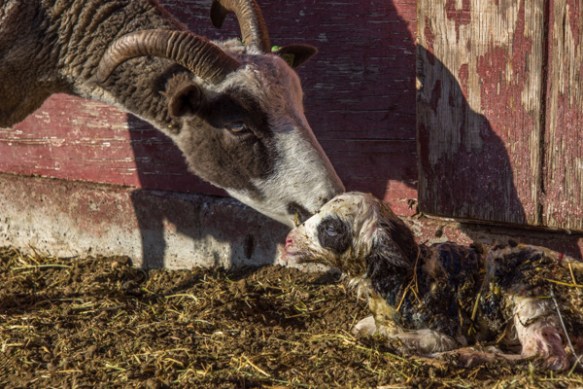 Jacob ewes are usually very good mothers and the lambs are vigorous. Shelby was cleaning up her baby…
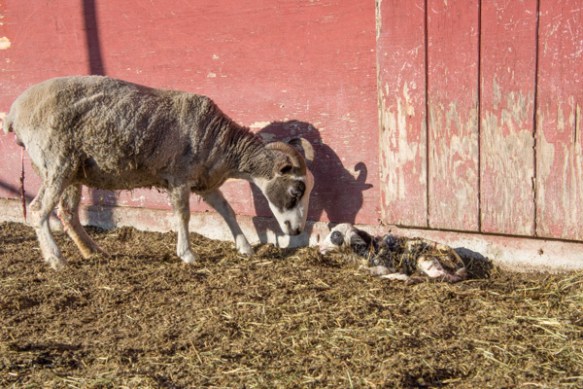 …even while pawing the ground and having contractions for the second.
 I got them inside the barn and the lamb got to its feet and started looking for milk.
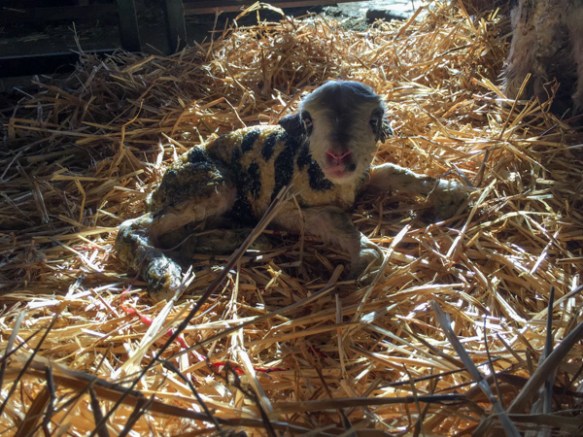 Lamb #2.
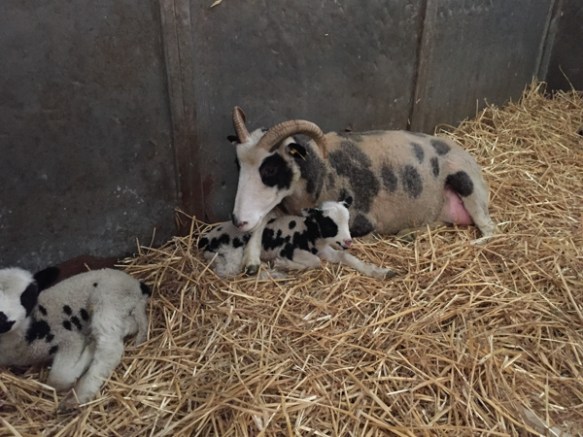
 The first lamb is nursing while Shelby cleans the second.
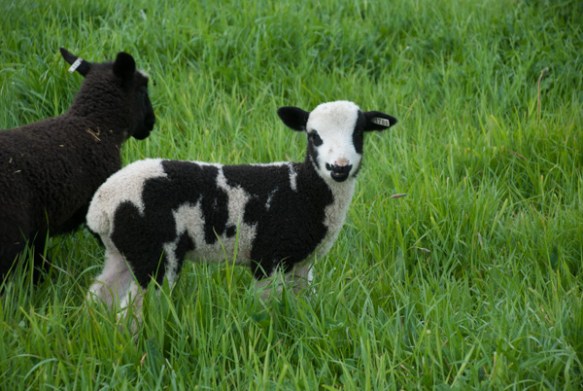
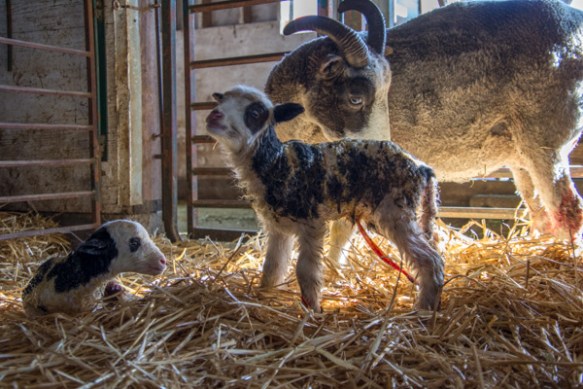 I love the look of this one. These are both lilac ewe lambs sired by Catalyst.
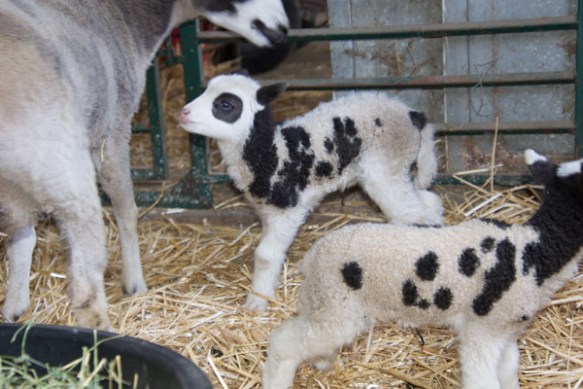 Here they are three days later.
 These lambs are listed on my



















 Meridian Jacobs' Blog