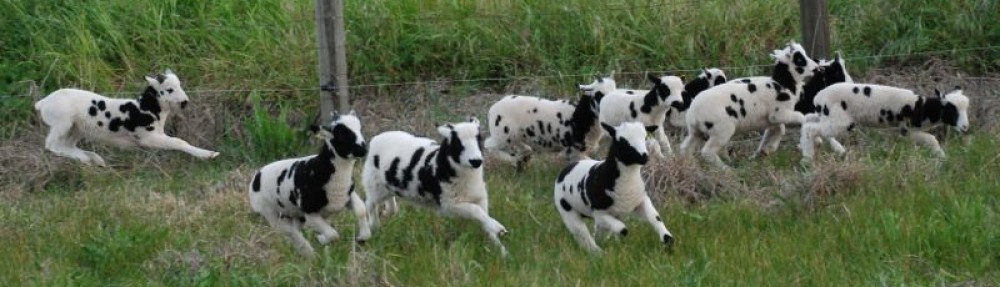
Two ewes have lambed early this year. The dates finally made sense when I realized (thanks to a Farm Club member who keeps track of these things) that some of the ram lambs got in with the ewes September 2. Those lambs would have been 4-1/2 to 6 months old at that time. As another friend said, “where there’s a ram, there’s a way!”
I saw one of the rams breed a ewe, but it wasn’t one of these two who have now lambed. Bessie lambed on Monday and in looking up some info, I thought I would feature her in a blog post.
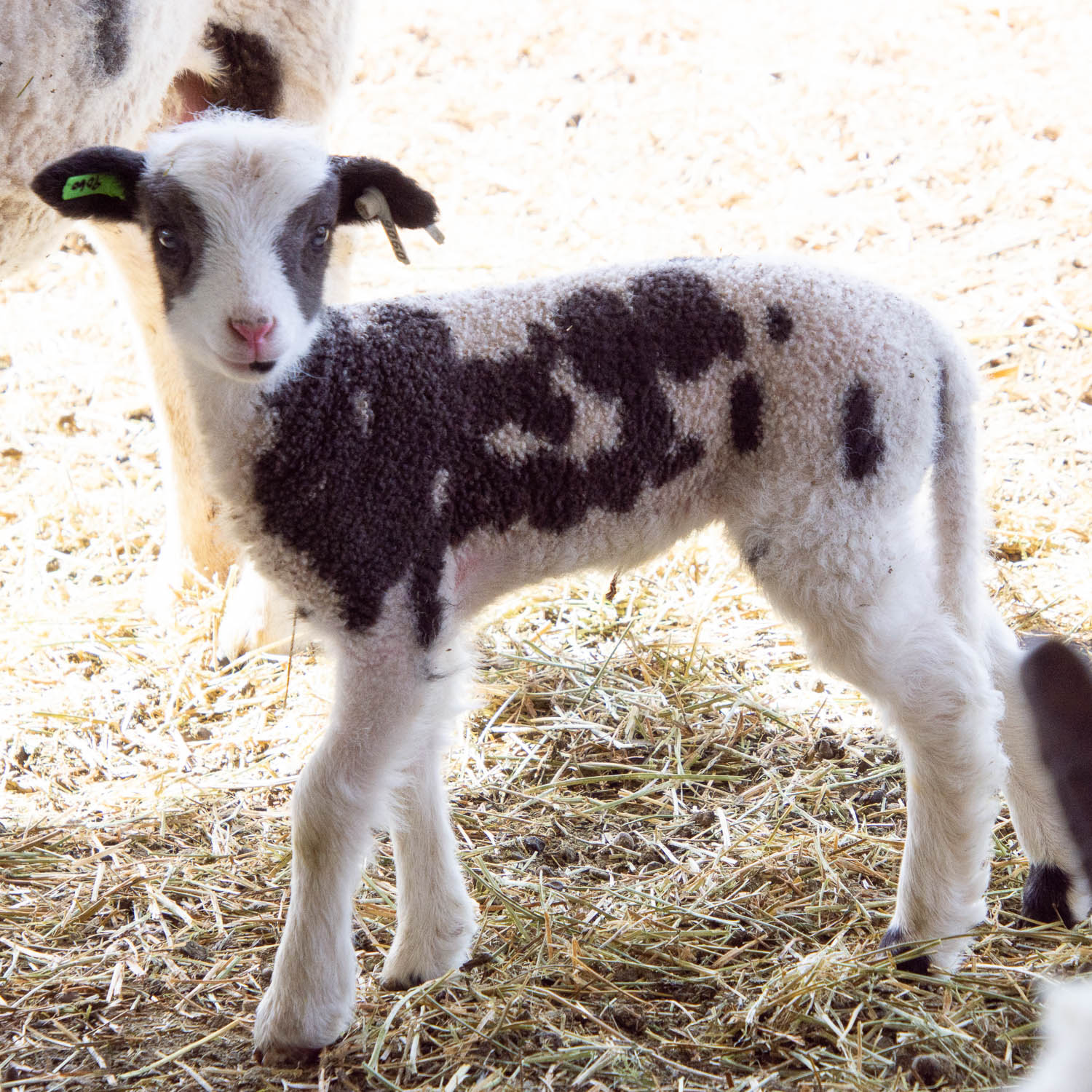
Bessie was born 3/10/2019. She was a week old when this photo was taken. You can see that she is a lilac–the facial markings are definitely gray, not black and the fleece color follows. I love to see a lamb fleece like this. It’s all tight little curls and, in my experience, a fleece like this will be very nice. Also notice the level of the britch wool. That is the coarser wool on the back leg. It doesn’t spread very far up the leg.

Here she is 10 days later.

This photo was taken at about 7 months old.

Here she is three years later.

In 2023 Bessie lambed with twin rams. I kept this one, now named Blizzard.

This is Bessie, not quite a month ago. She is in full fleece and full of lambs.

These two ewe lambs were born on Monday, 1/29. The one on the right is lilac like her mom. They have the same curly fleece and low britch wool that Bessie had in her lamb photo.
 During the discussion about other aspects of raising sheep we kept an eye on Zinnia, the ewe who was lambing. When she got more serious we watched.
 One thing of note was the presence of two bags, each a different color. A lot of time I just see membranes that have broken so I wouldn’t know if it were one or two, but it seemed unusual to see two distinct bags. I saw a bit of a small foot emerging but the whole thing seemed to be taking awhile so I thought I’d check. There was one foot and a head. Not very far back was another head. Both lambs were coming at the same time, and it was obvious from the two sacs that one had meconium staining, a sign of fetal distress. I pushed the second lamb back and was able to pull the first lamb with just the head and one foot. I could tell that it was very small. Usually it takes a little while for the second to come, but it was right there too. Weighing these later, they were 4.8 and 4.2 pounds.
 You can’t rush a lamb to be ready to nurse. I didn’t know if something was wrong with this one, but I knew that, even if it was normal, it needed a little more time. We went outside and looked at the fences and the pasture. When we came back in the first lamb was doing fine. The second still wasn’t able to stand but I could hold it up and get it to nurse.
 We kept checking back and eventually the second lamb was on it’s feet. This photo was taken later in the day.
 Later that afternoon a friend of mine came with another friend to take photos of the lambs. That’s Raquel with triplet ram lambs.


 Here is the tiny lamb from the morning.
 This was getting close to the end of lambing.
 Here are those two tiny lambs 12 days later and here is their


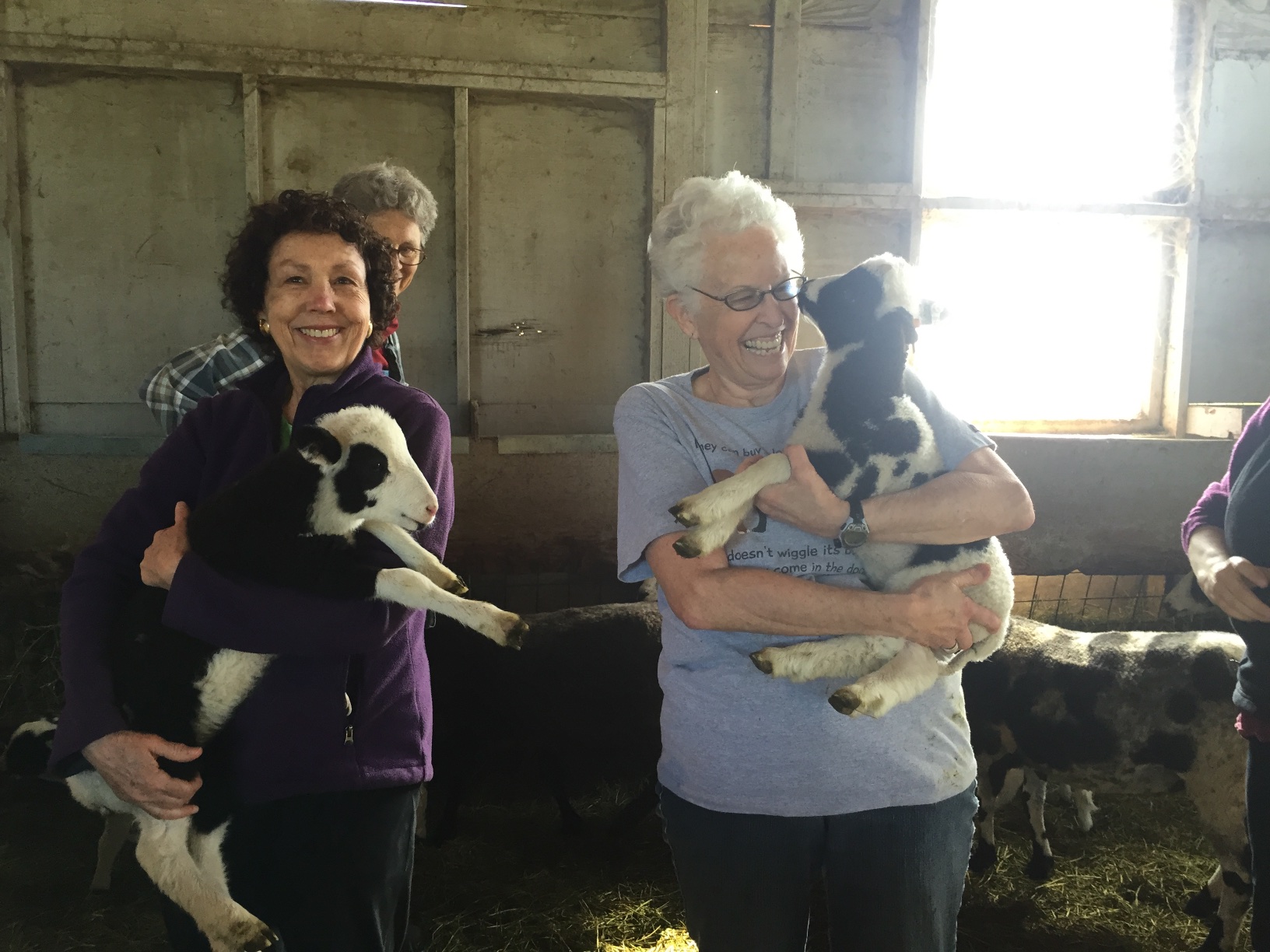 We caught all the lambs to check for number of horns and split eyelids (a trait that is sometimes seen in 4-horn lambs).
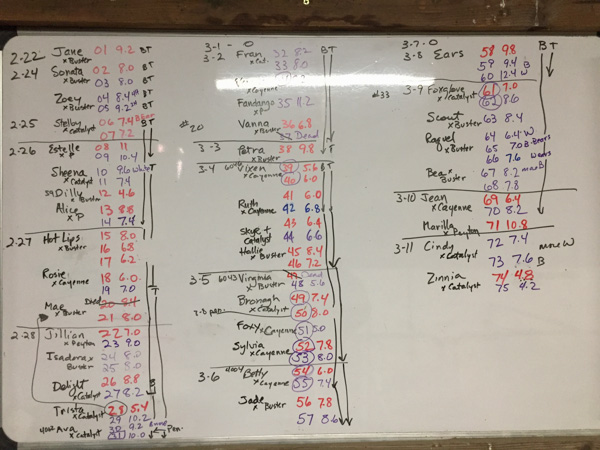
 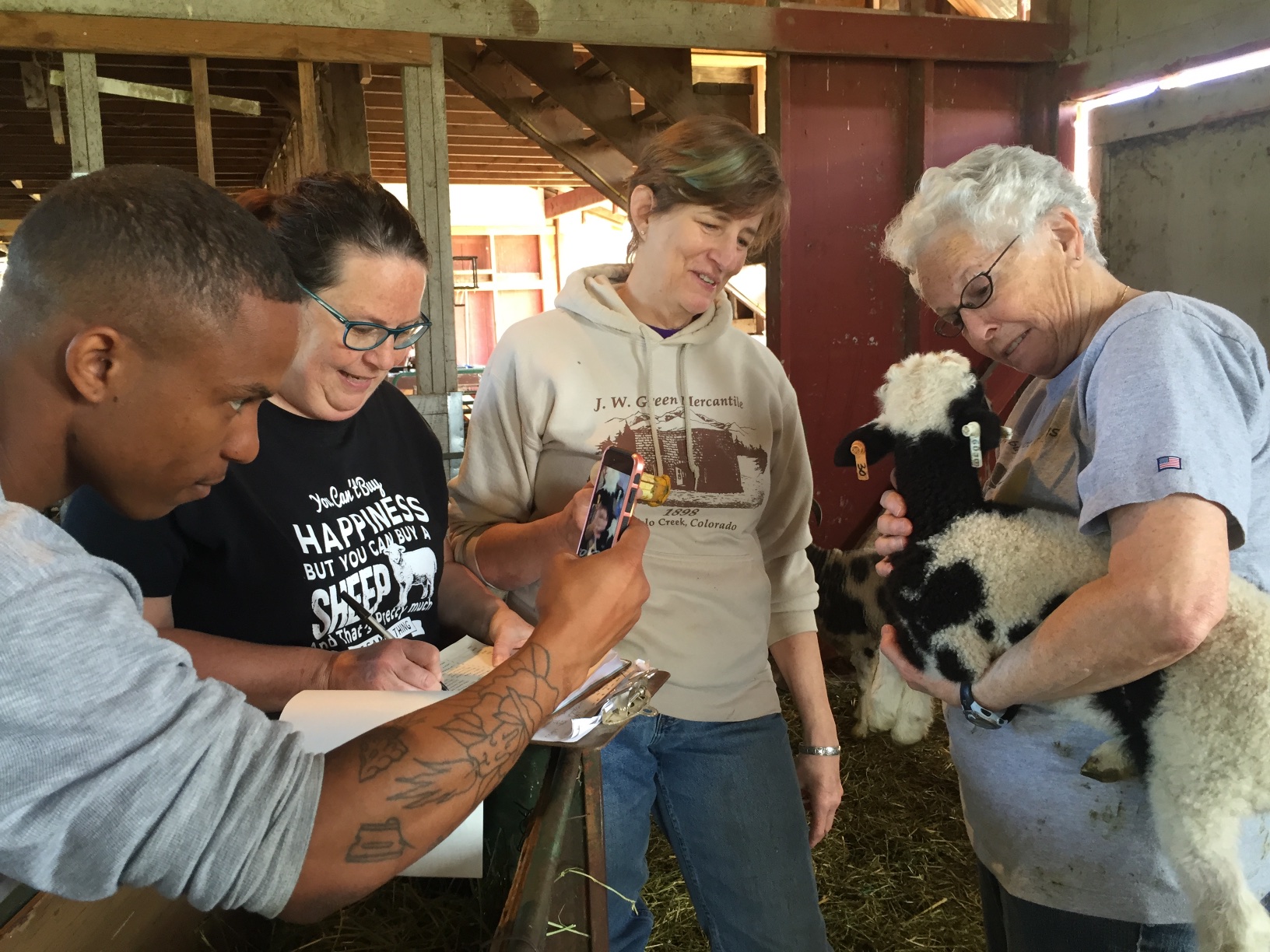 This was also a good time to check the paperwork and make sure that I had recorded the gender and sires correctly.
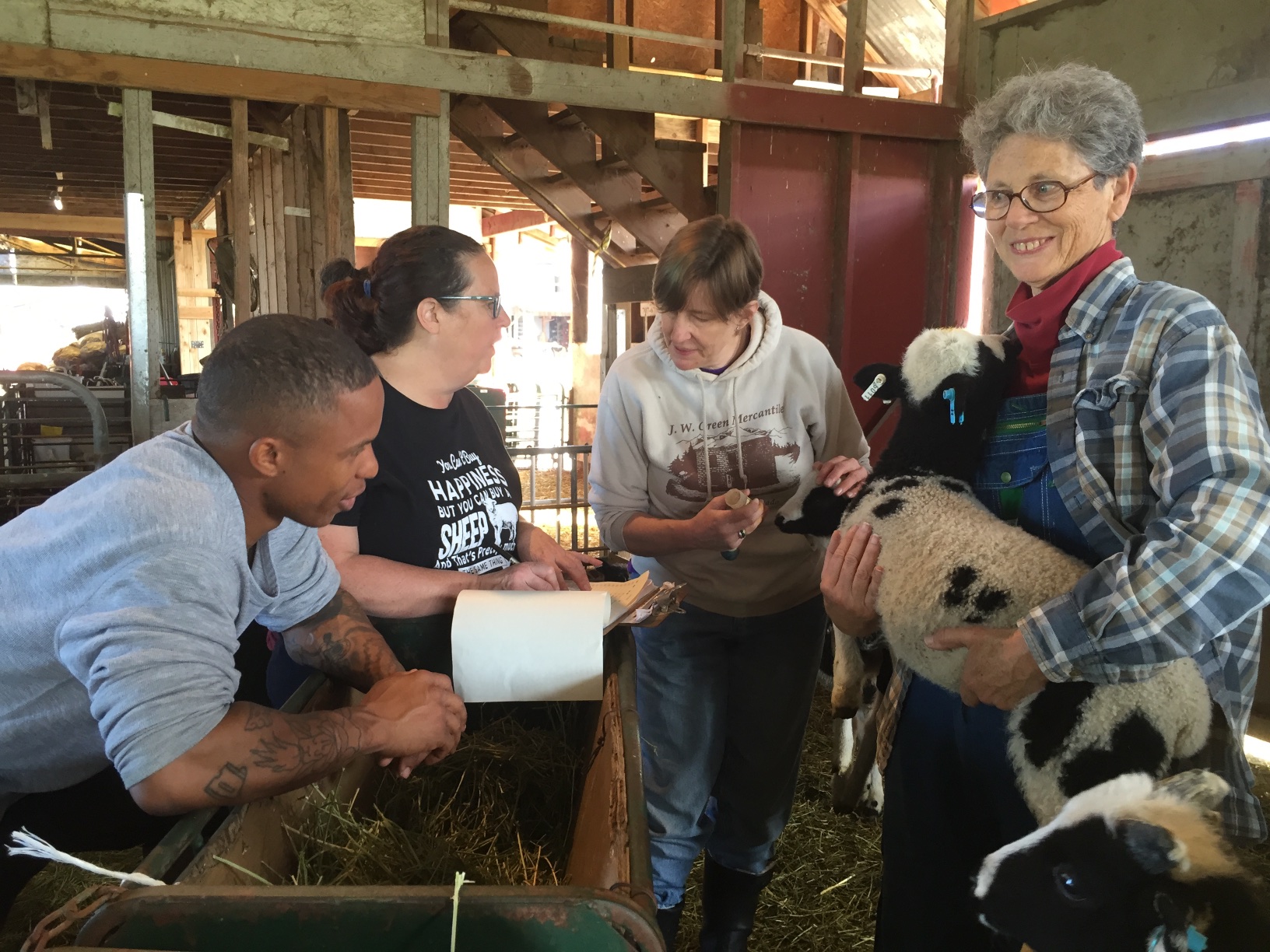 My neighbor who recently purchased sheep was here also to get some hands-on experience. He told me that a recently purchased goat had kidded that morning and he wasn’t sure the kid had nursed.
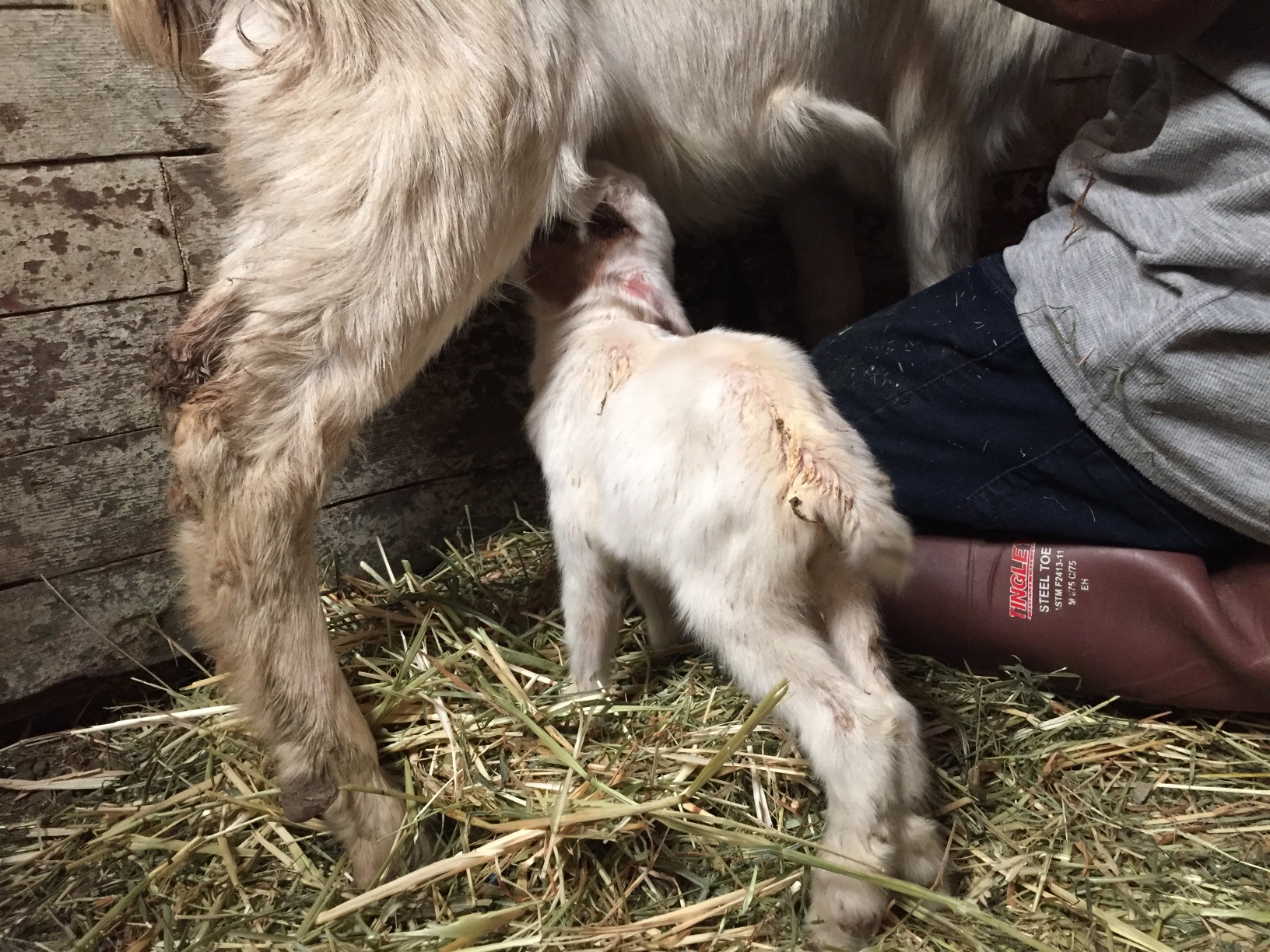 I went to his place at lunchtime to check on the kid and while he held the doe (very skittish) I got the kid nursing.
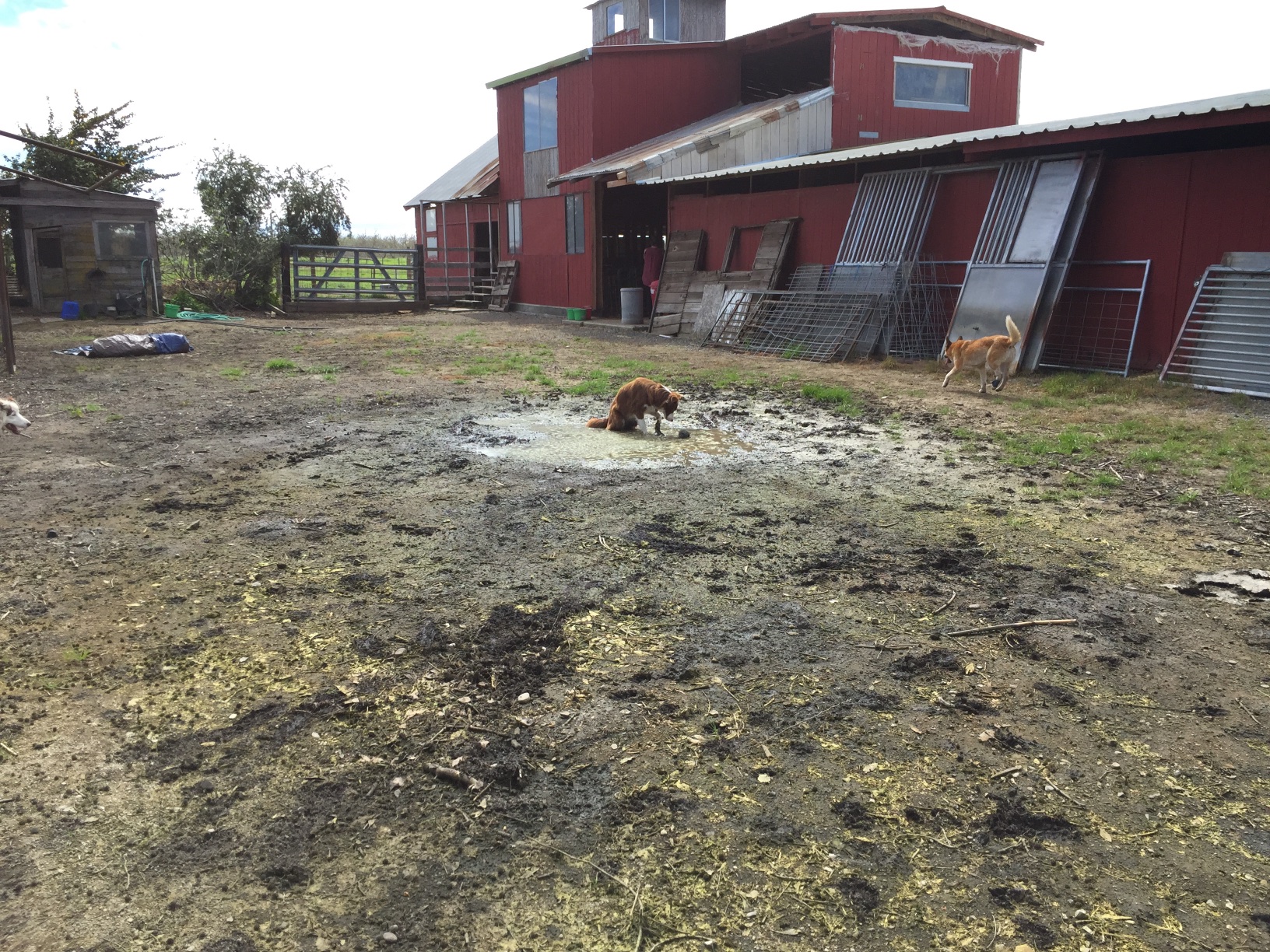 Back at our place, we finished moving sheep around. I moved “Ginny’s flock” of wethers and she was so hot when she was finished that she found the only accessible mud puddle to sit in.
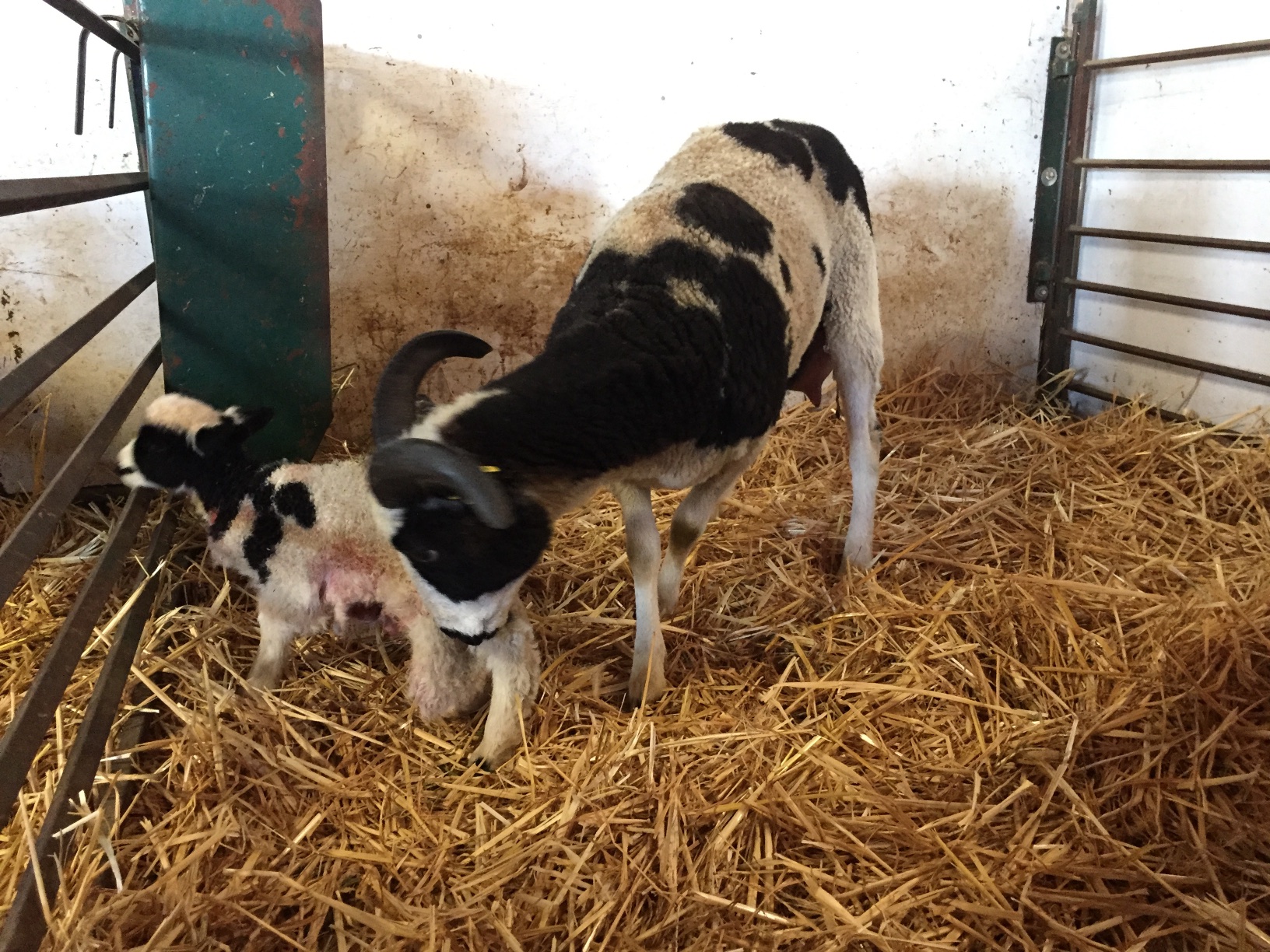 Last in the afternoon we decided to try grafting a lamb onto a ewe whose lamb had been killed the day before. I had debated it that day and at the time didn’t want to deal with it. But I had some new twins and though it was worth a try. This method of grafting is not as pleasant or as satisfying as “slime” grafting where you just cover the adopted baby in the birth fluids so that the mom will think the lamb is hers. With this method there is a dead lamb and you need to use it’s skin to cover the adoptive lamb to trick the mom into thinking it’s hers. That photo above is the lamb in the skin before I cut it to fit better. Bea, the young ewe, was unsure. The scent of her lamb was there but the sound wasn’t right. The lamb didn’t want to nurse at first and when it did Bea wasn’t happy about it.
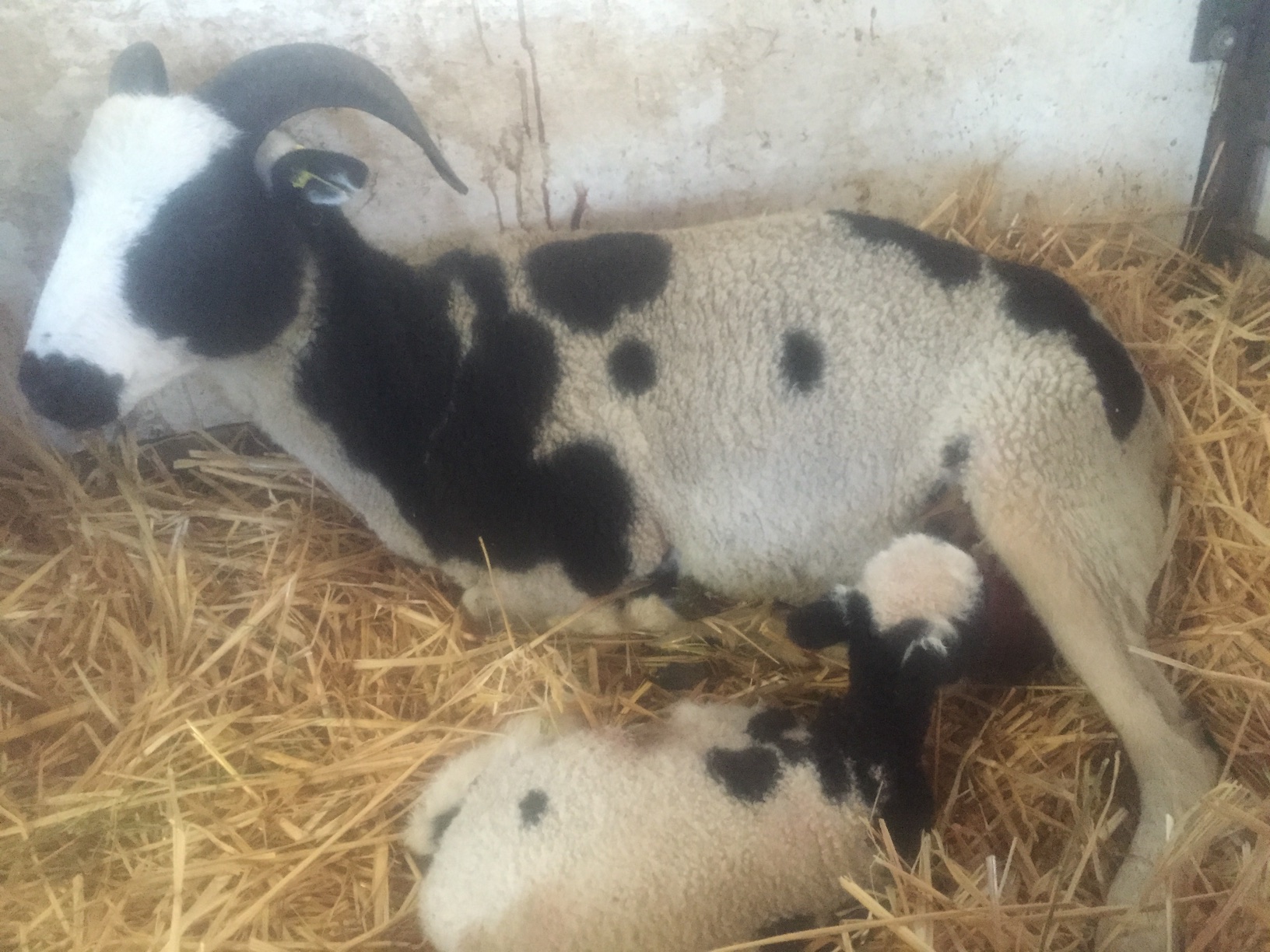 This photo is blurry because I must have smeared my iPhone lens while working with the lamb. When Bea finally lay down while trying to avoid me attaching the lamb to her teat I was able to get the lamb to nurse on the engorged udder. For a day or two I needed to halter her or just stand there.
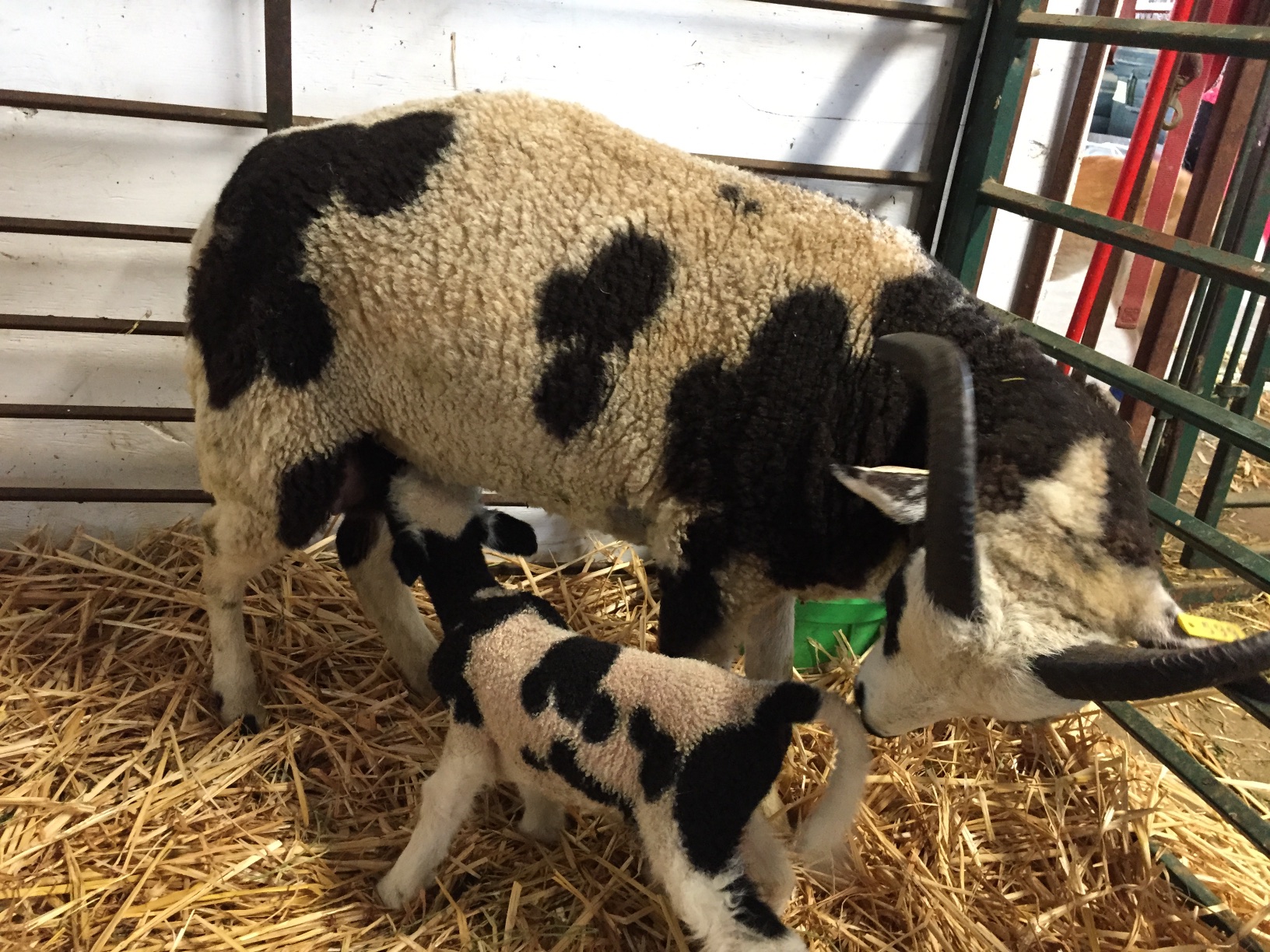 At this point Bea has completely claimed the lamb as her own. (The dead lamb’s skin is gone in this photo–I took it off the next morning.)
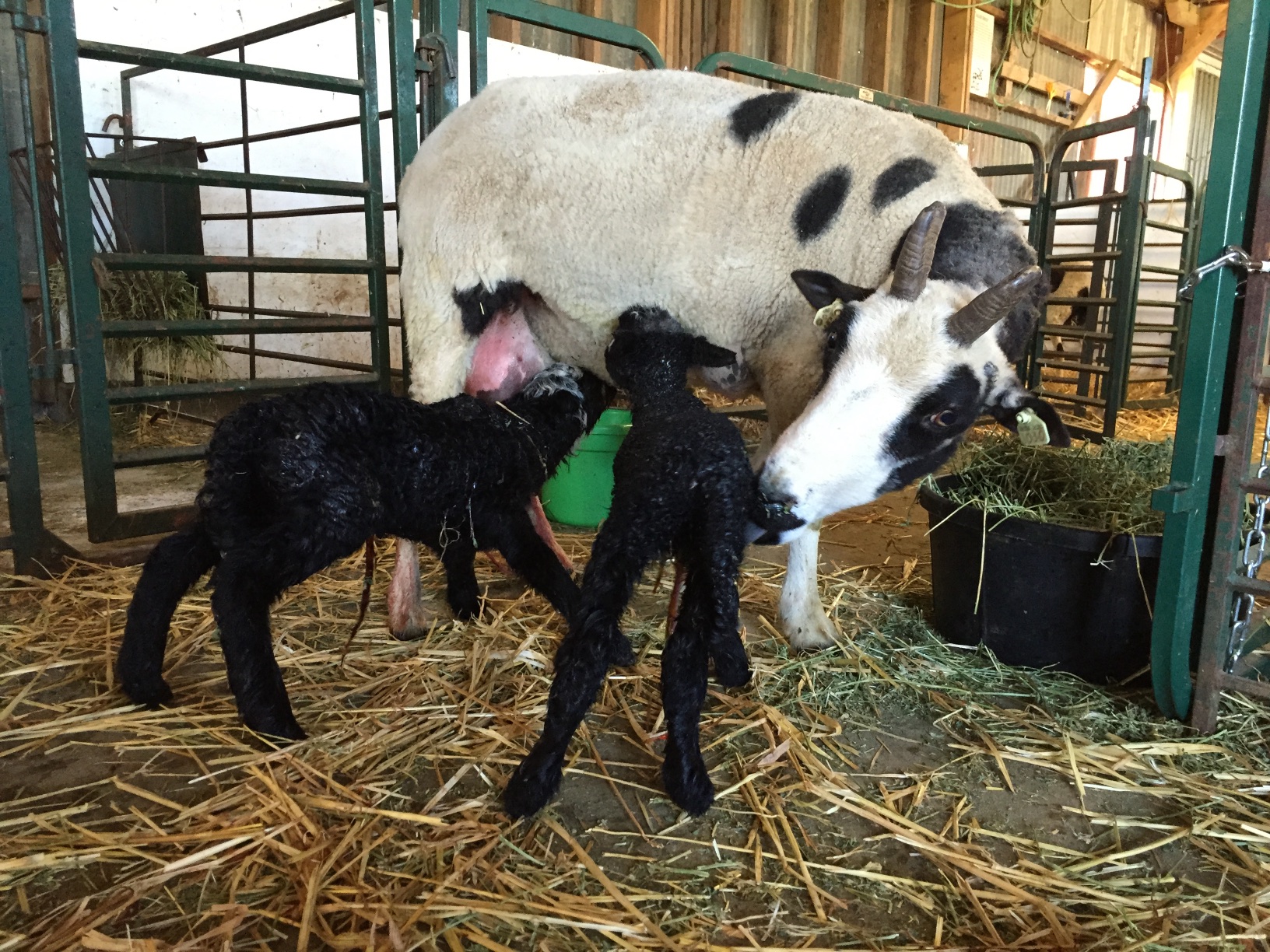 We were impatiently waiting for Jazz to lamb. I was sure that she would have triplets because she was so huge. She surprised me with twins the day after Farm Day. They are 9.6 and 12 pounds. At that size it’s good there were only two of them.
 This is Delight with her twins.
  This is Dazzle with her single lamb. One of the problems I have photographing Jacob sheep is the fact that they have black markings around their eyes. I find that it is hard to expose the photo properly and also be able to see the faces. I edited this lower photo to where I could see the lamb’s eyes, although they aren’t showing up here very well and the photo looks washed out compared to the top one.

 Here is another pair of photos. Which is better? Top or bottom?
 At least I have CUTE going for me.

 Speaking of cute, can you tell the difference in these two photos? It’s not in editing. Try the focus…Ginny’s focus, that is.


 Meridian Jacobs' Blog