Pasture and Irrigation Renovation – Part 3

Phase 1 of this project was Obstruction Removal which I described in the last post.

You’ve probably heard about “Call before you dig” There is a number to call to make sure that there is nothing underground to worry about–gas, power, phone, water lines. You are supposed to allow a couple of days for the various companies or utilities to give you the all clear. Brett took care of this and marked the corer of the property as directed.

He felt comfortable going ahead with the concrete removal before this approval because that concrete had been there for so long. Brett started to disc with the stubble disc (large blades farther apart), but found that the dallisgrass made it a challenge. He came back with a skid steer tractor with a mower. Dan had been mowing but Brett’s mower set up went a lot faster than what we have. Then he was ready to continue discing after a bit more prep.
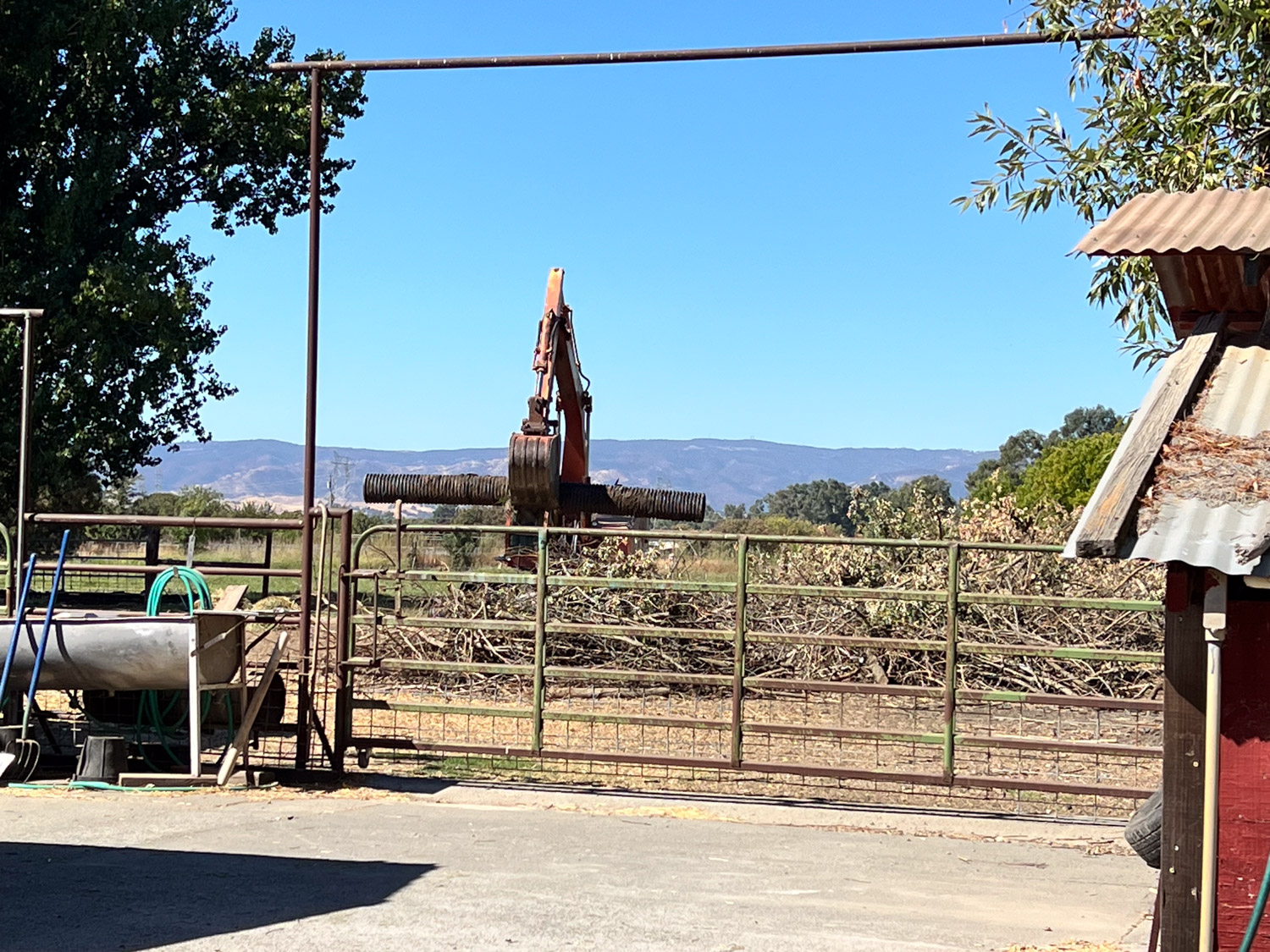
Brett used the excavator to drop the culvert from the south end of the barn over the fence and away from the field where he would be working.

Dan and Brett used their respective tractors to work on the ditch at the north end of the property.

Dan pulled out the structures he had made to block and direct water while Brett broke down the berm and filled in the ditch.

Then Brett continued discing with the stubble disc.

After that he ripped going in a north-south direction.
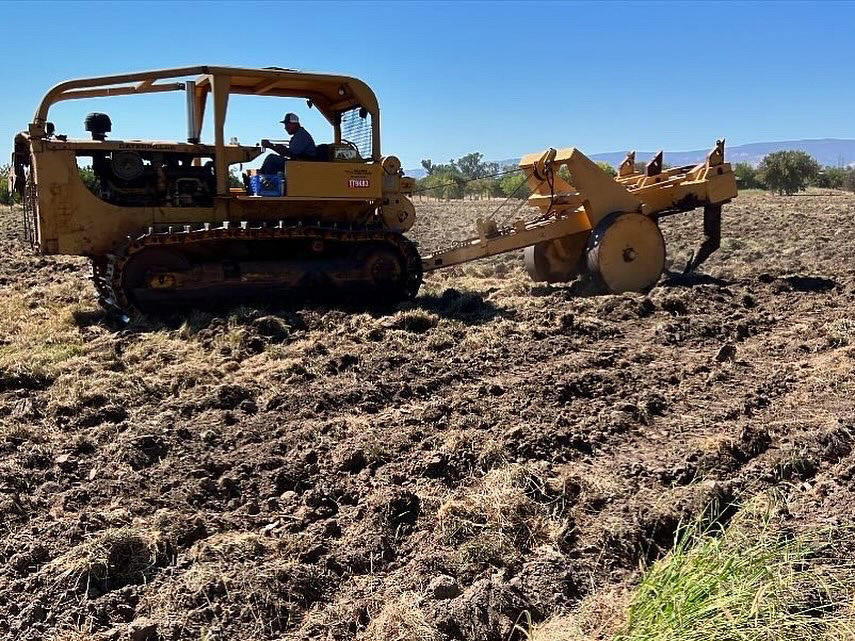
The ripper has three stout teeth that are buried in the earth when they are lowered.

This is how the field looked after discing and ripping.

Dan had more tree work to do so that Brett could get his equipment close enough to the fenceline.
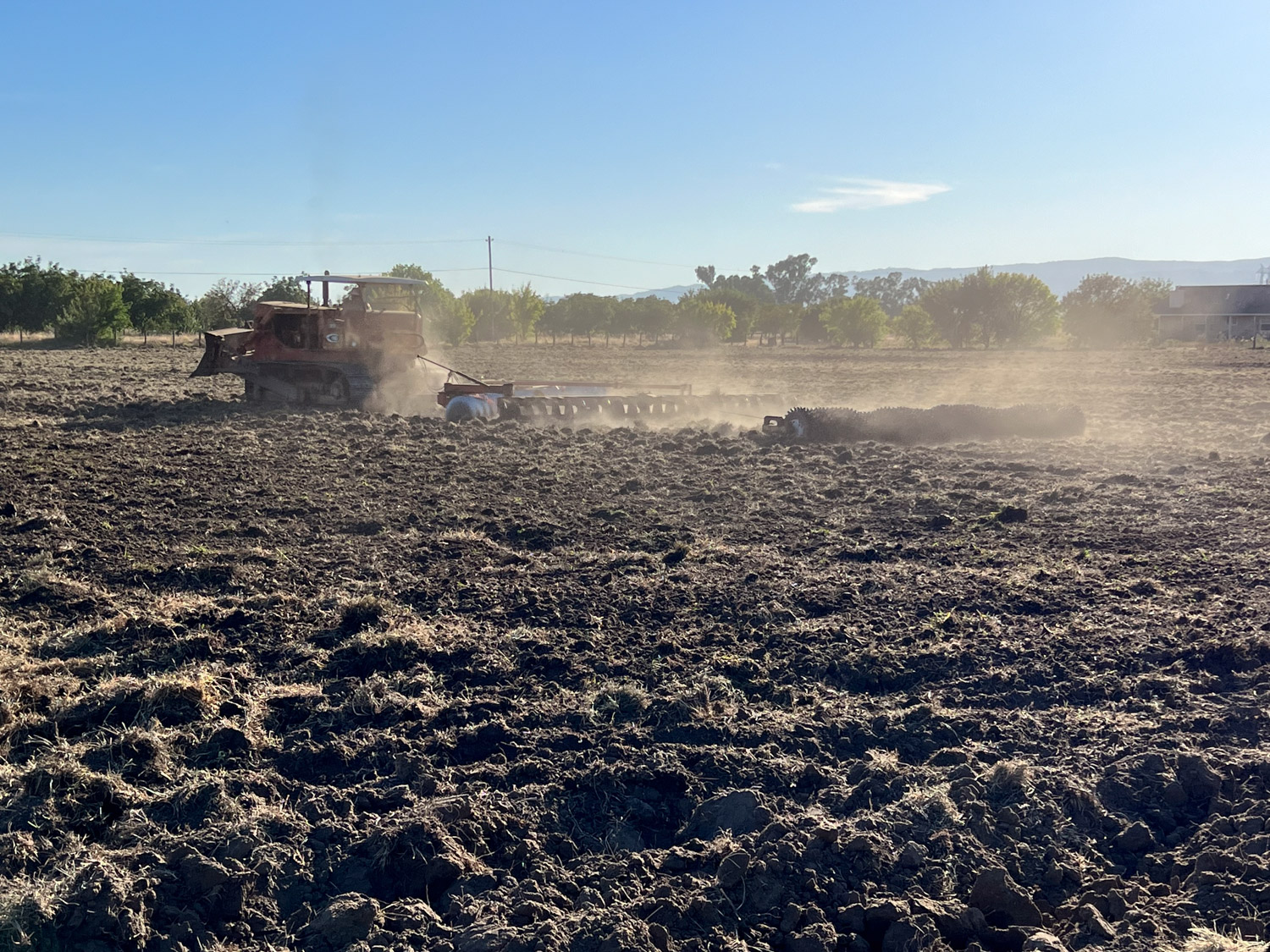
After ripping Brett brought the smaller disc with ring rollers.
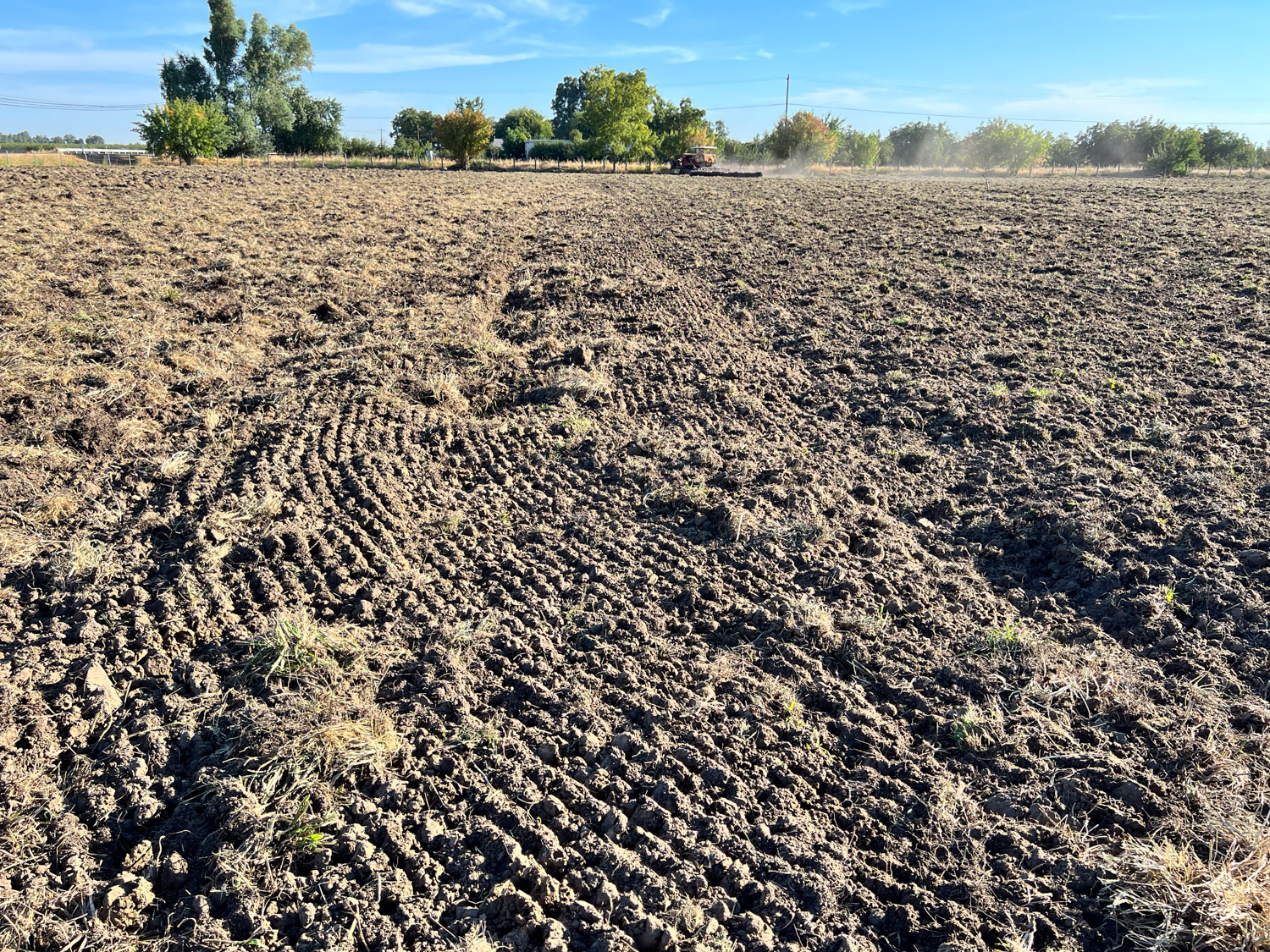
It makes the field a lot smoother.
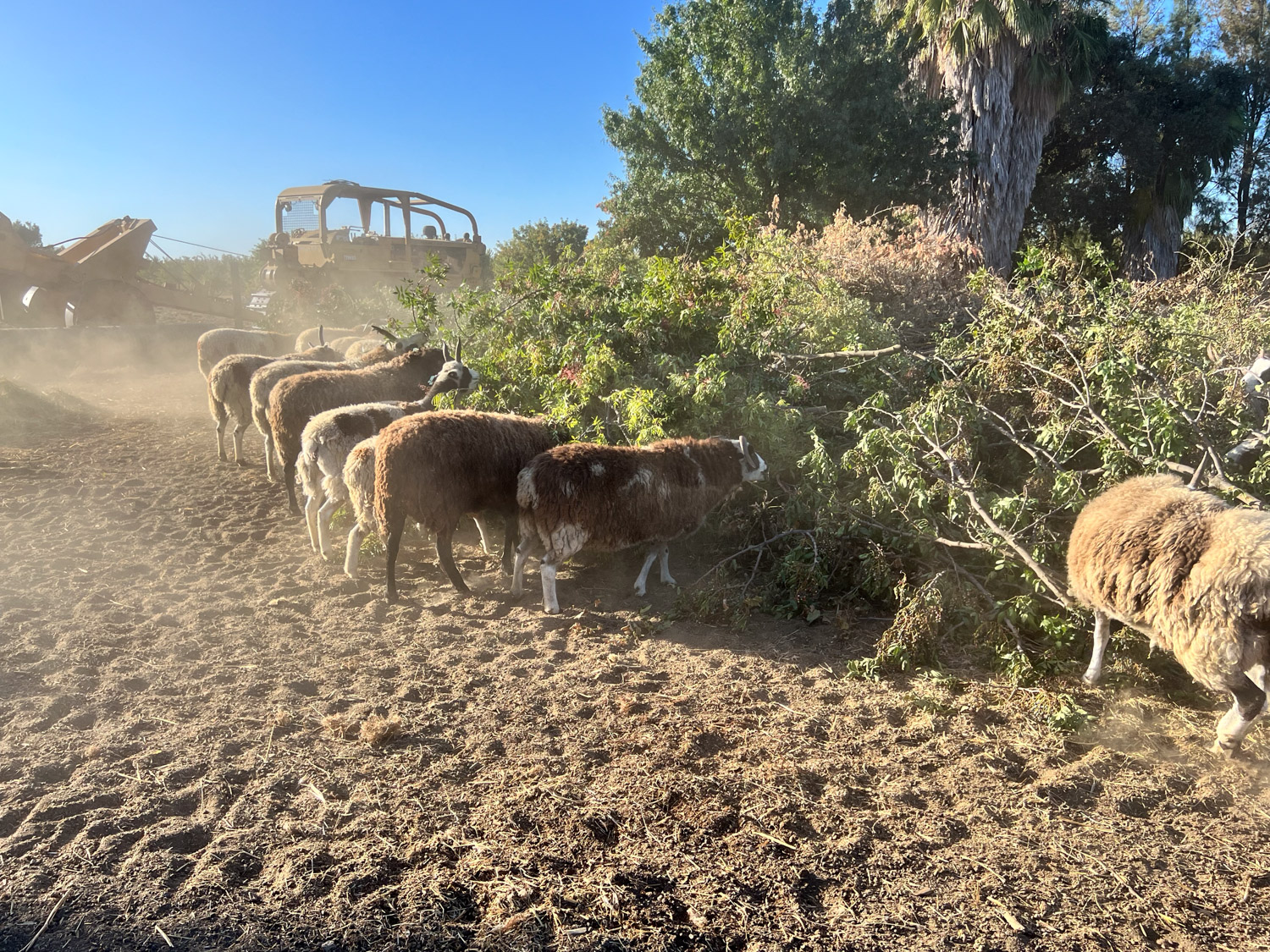
The sheep have been locked out of the pasture, They were happy to get a continued supply of green leaves as long as Dan was still trimming trees.
Pasture and Irrigation Renovation – Part 2

A few weeks ago I wrote Part 1 of Pasture and Irrigation Renovation. I ended that post with the sheep coming in from the pasture for the last time and a lot of heavy equipment in their place. A lot went on for a couple of weeks and then there was a lull. I have to go back and find the photos I took at each step.

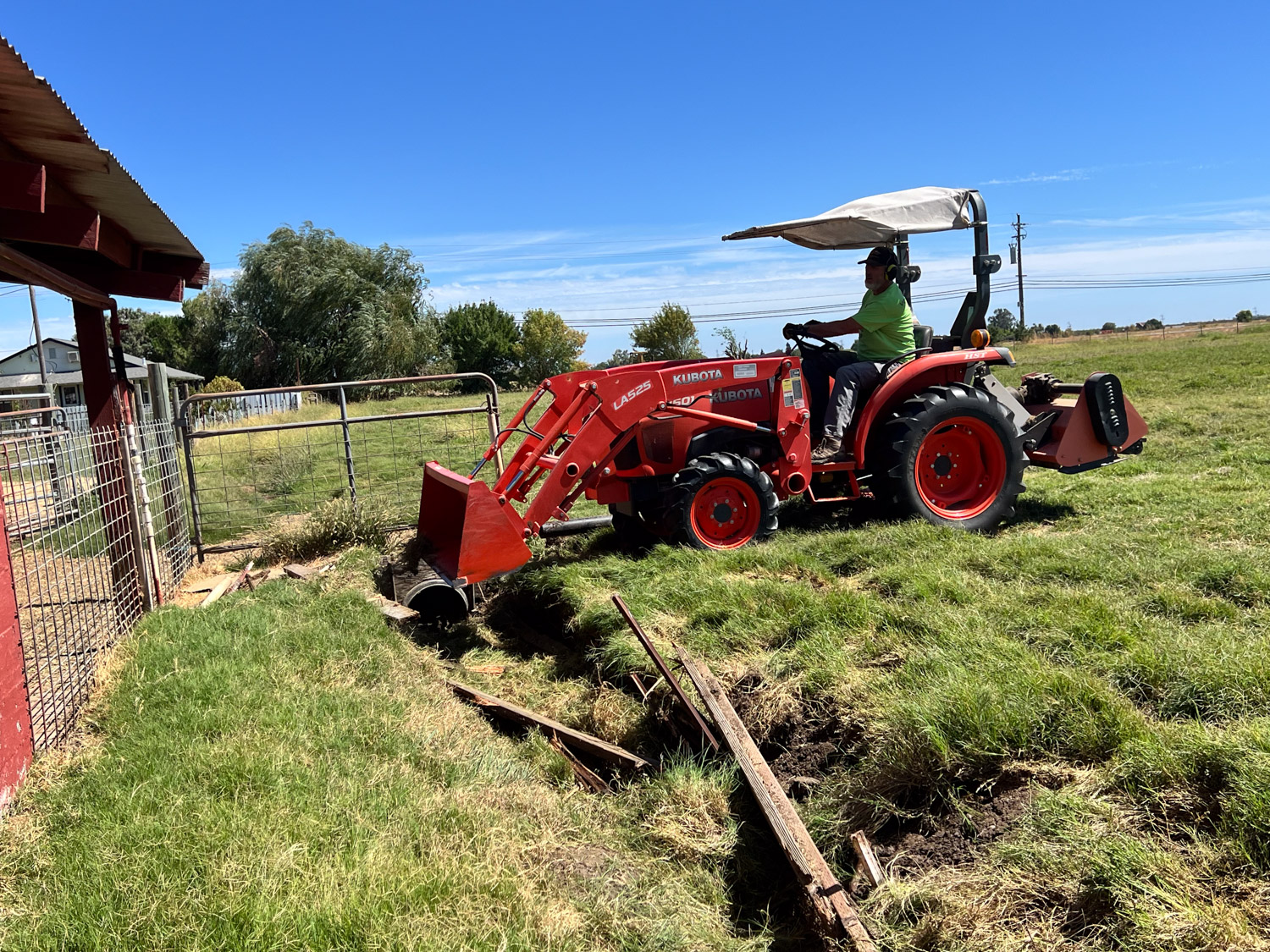
There was still more work for us (Dan) to do. Here he is removing the wood and stakes we had used to make the ditch more functional near the barn and taking out the culvert.

Before work began we were asked to hold a meeting with the contractors where we could all listen to a representative of the tribal people who used to live in the area. He showed photos of the cultural items that one might find when soil is disturbed and talked about procedures if something was found.

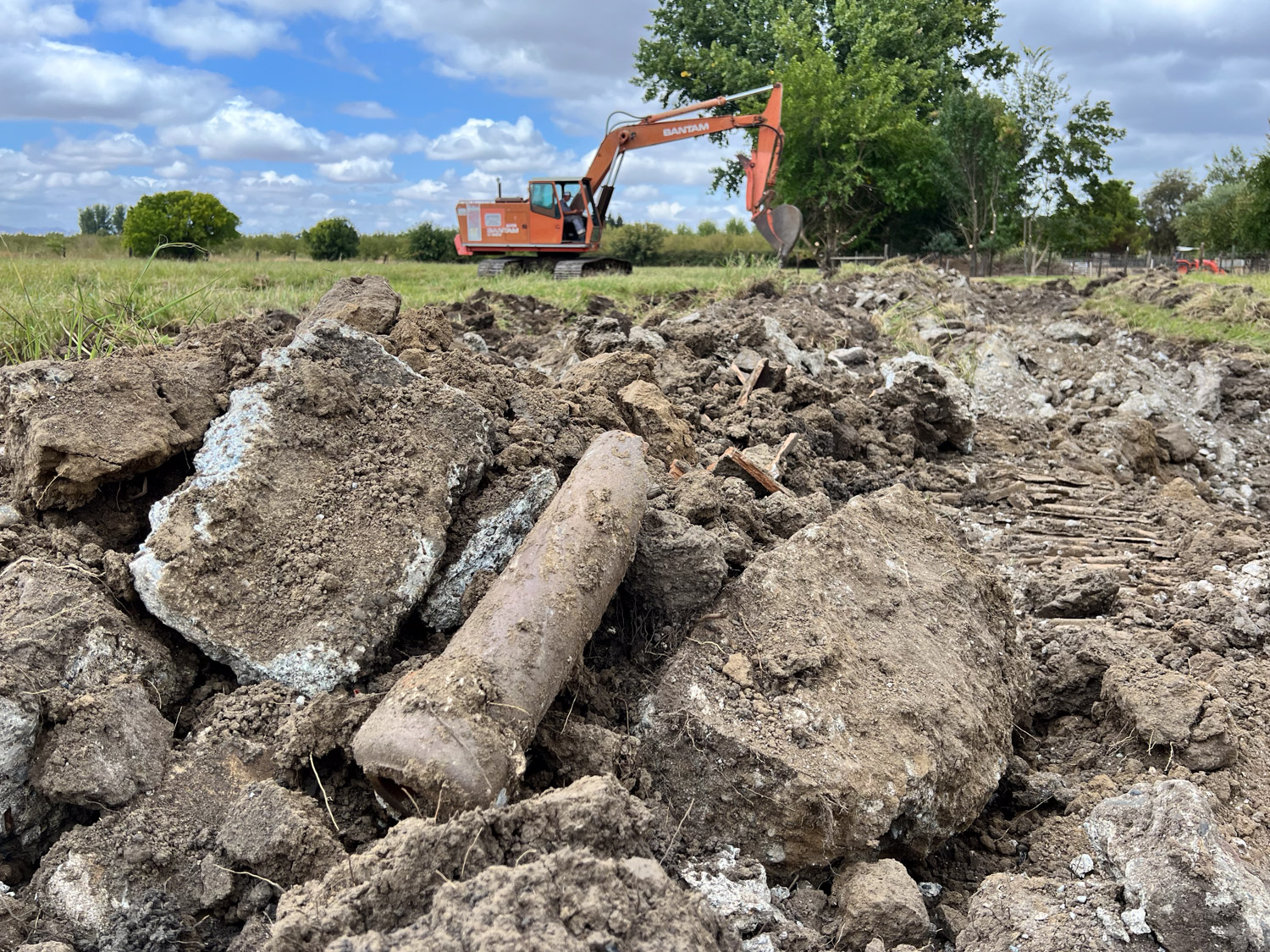
The first job was to remove the old cement foundation that ran north to south over 3/4 of our property. We suspect it was the floor of an old barn–I don’t know what else it would have been. That would have been a big barn and maybe someday I’ll be able to talk to a local history buff who knows what this was. It doesn’t really matter–it’s just that we have always had to work around it. Part of it was broken apart to put the original irrigation ditch through and, even though grass will grow on top in the winter, it dries out in summer and the desirable pasture plants don’t grow there. NRCS calls this job “obstruction removal”.

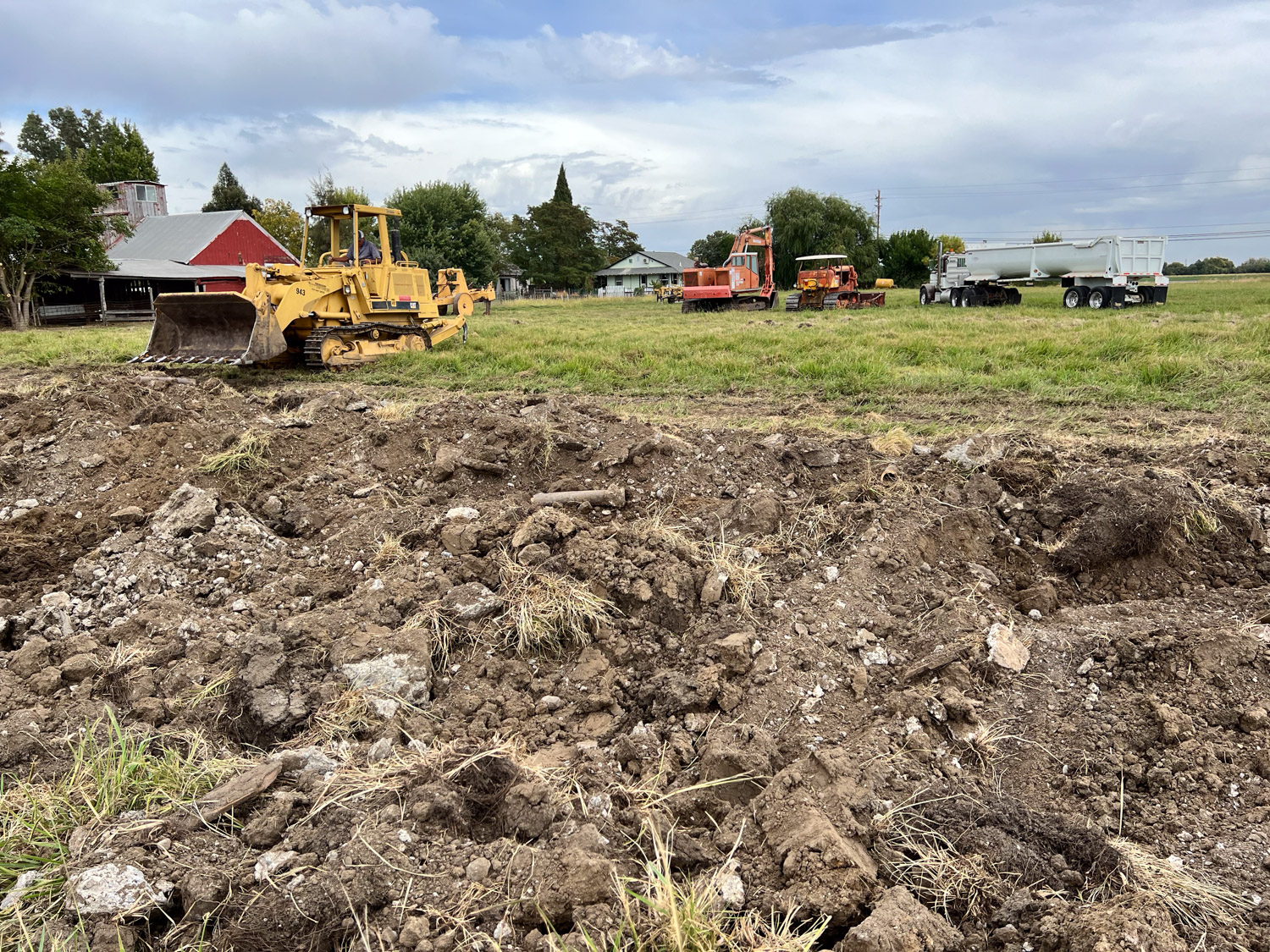
Brett is the contractor with the heavy equipment. He first scraped the layer of dirt and grass off the top of the cement. Most of the concrete was only 2″ to 3″ inches thick and a lot of it broke into smaller crumbly pieces . The borders were a lot larger however.

Brett used the excavator to scoop up chunks of broken concrete.

We found that a clay pipe ran the length of the concrete.

Brett used the teeth on the track loader to rake through the dirt and find the concrete chunks.

The chunks were loaded into a truck for removal to a place where they’d get broken up even more for use in road bed material.

Eventually the pile of dirt that was scraped off the top was incorporated back into the area where it had been.

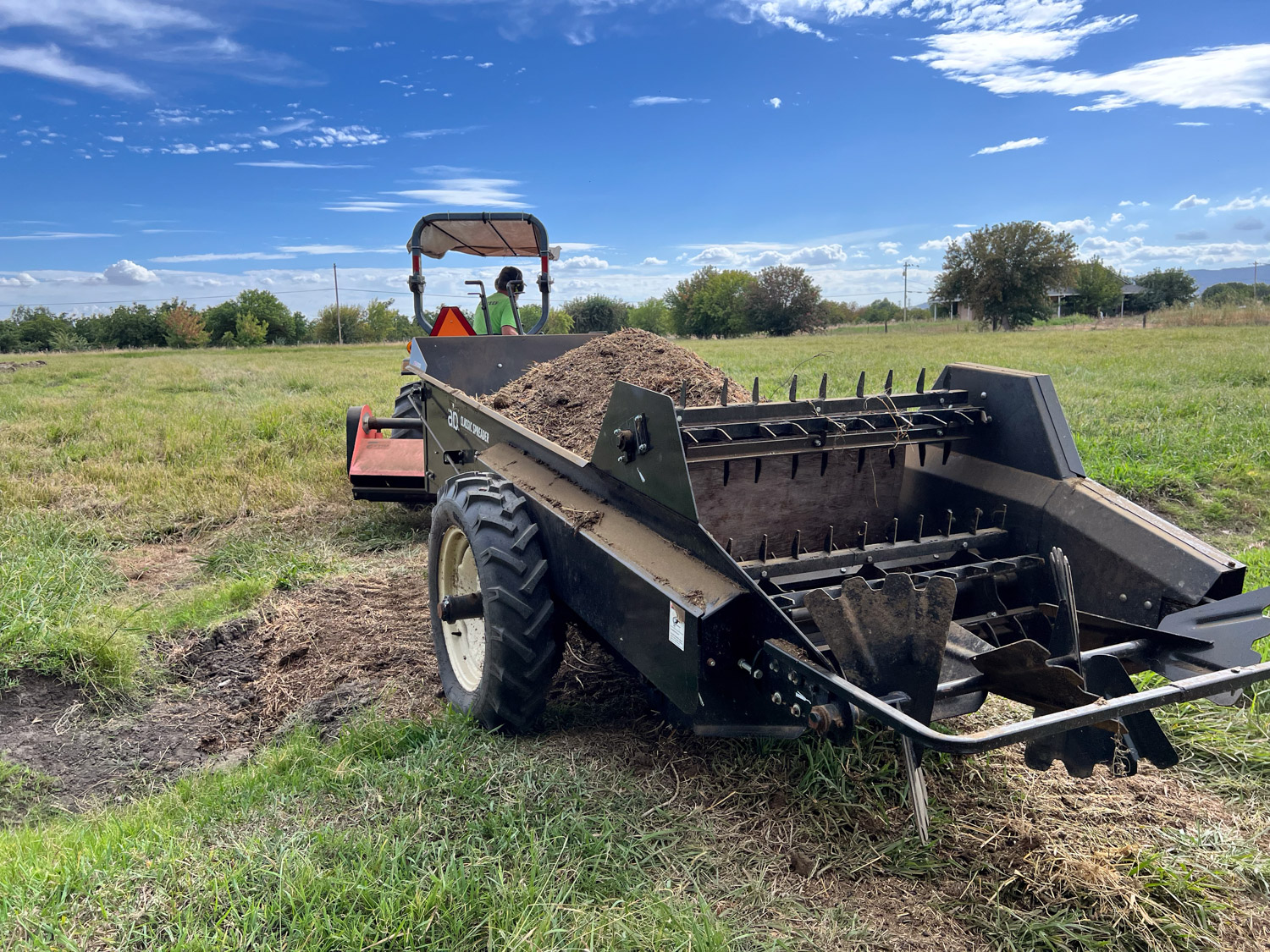
Manure spreader driving into green field.

While Brett was working on this part, Dan spread the rest of the composted manure pile.

Manure spreader working in green field under cloudy blue sky.

This part of the job took about three days using all this equipment.