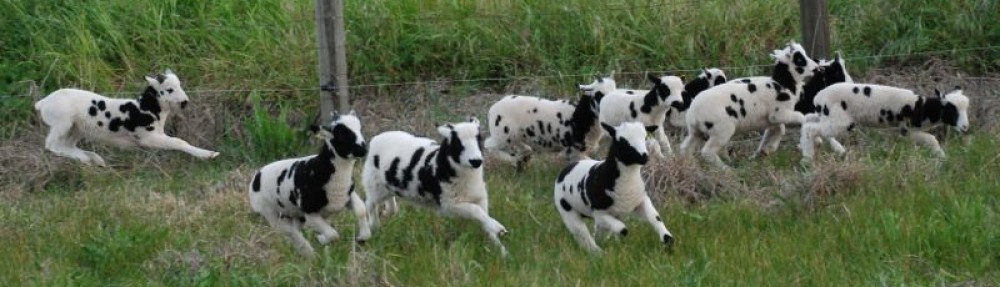
A couple of friends and I went to see shearing on a commercial sheep ranch about 30 miles south of here. We got there in just enough time to see the last part of shearing 3000 sheep in 2 1/2 days.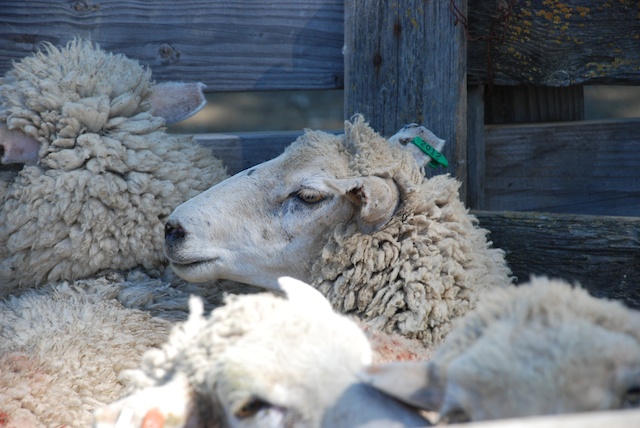 The original flock was made up of Corriedale sheep and over the years was crossed with Targhee and other commercial white-faced sheep.
  The sheep are gathered at the back of a trailer that is hauled from ranch to ranch with all the gear. They go up the chute with the encouragement of…
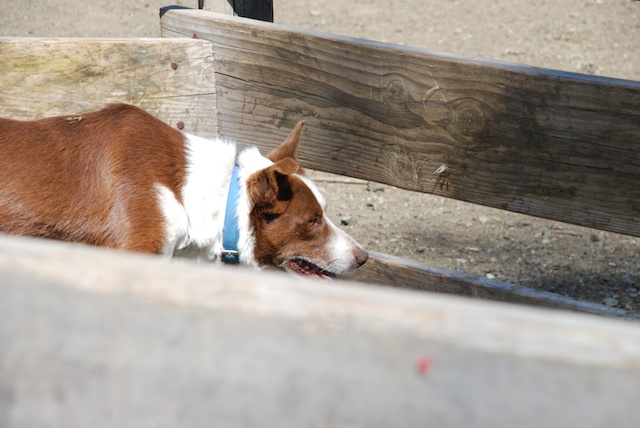 …Border Collies as well as people.
 Here is a view from the other end of the trailer. That sheep in front hangs out for awhile in that position because the other sheep are more likely to go forward if they see a sheep in front of them. Notice how the sheep walk on a raised alleyway while the freshly shorn fleeces are shoved out of the trailer below them.
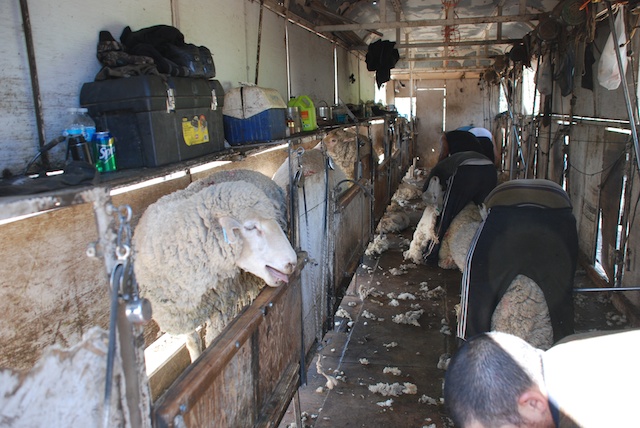 Here is a photo of the inside of the trailer. There are seven shearers at work. The sheep walk forward on the raised alley. Fleeces are pushed out beneath.
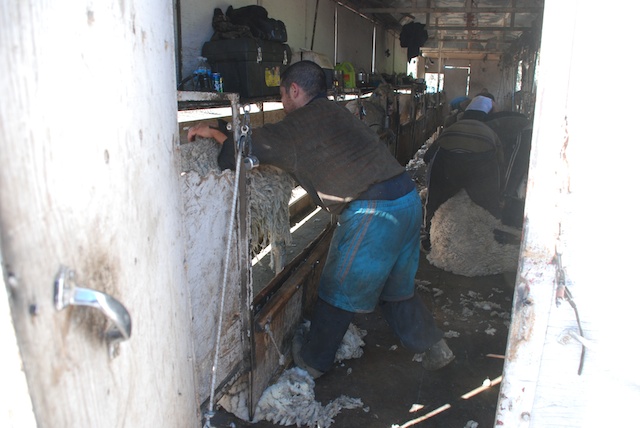 When the shearer is ready for the next sheep he pulls the door down with his foot and flips the sheep off the alleyway into position for shearing.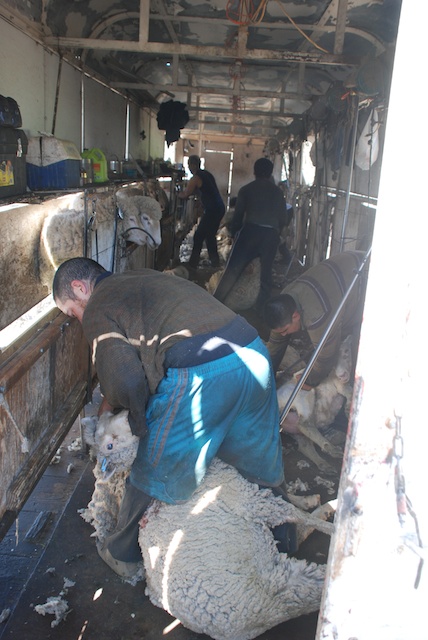
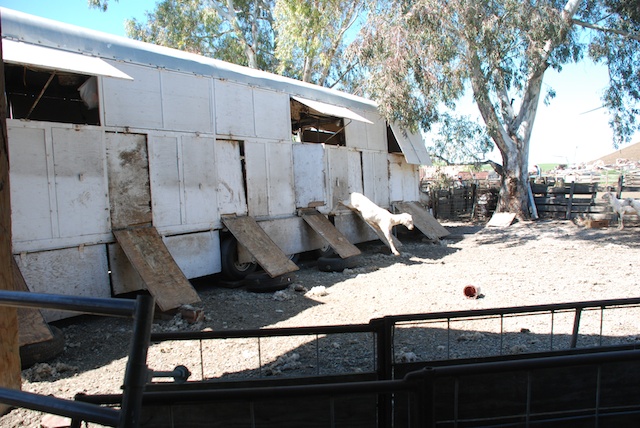 After the sheep are shorn they are sent out the doors on the other side of the trailer.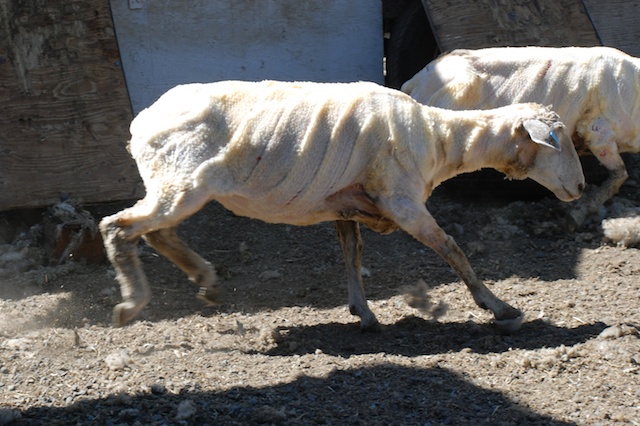
 The fleeces are scooped from the trailer and quickly examined by a sorter/classer who determines where they end up.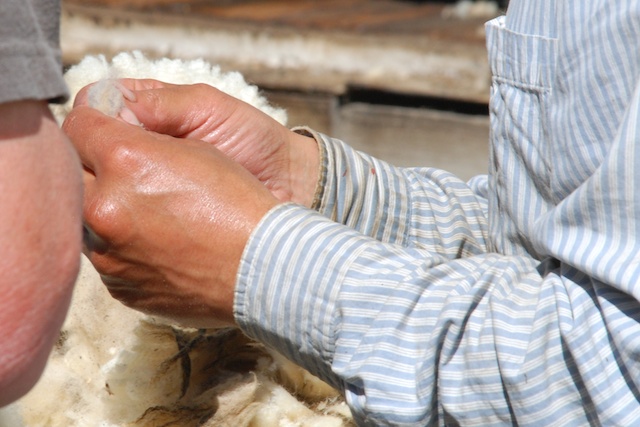
 The fleeces are thrown into the appropriate pile. My friends who owns the ranch had requested that the finer fleeces shorn on that day be put aside for us to look at. It turns out that even the not-so-fine fleeces seemed just as nice to us. Last year’s core samples indicated that most of this flock’s wool graded in the mid-20’s (microns) and the finer fleeces were in the low 20’s. For reference Jacob fleece ranges from about 25-35 microns and most of mine is probably about 28 to 29 microns. So all of this wool is finer than what I am used to using.
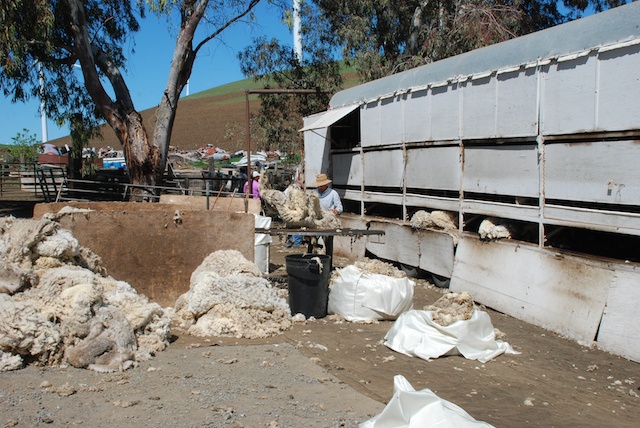 The fine fleece pile is the one nearest the table. The pile to the left are tender fleeces (fleeces that have a weak place usually due to nutritional stress or illness). The pile just barely visible behind the plywood is the “not as fine” pile. We chose our fleeces (all of the fine pile and a lot of the one behind the plywood) and the remaining wool was quickly baled.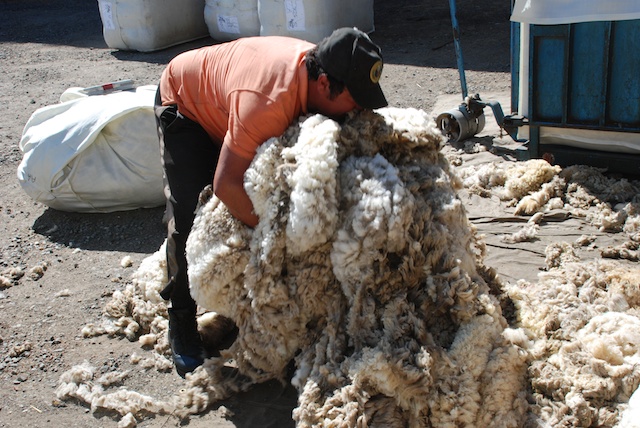
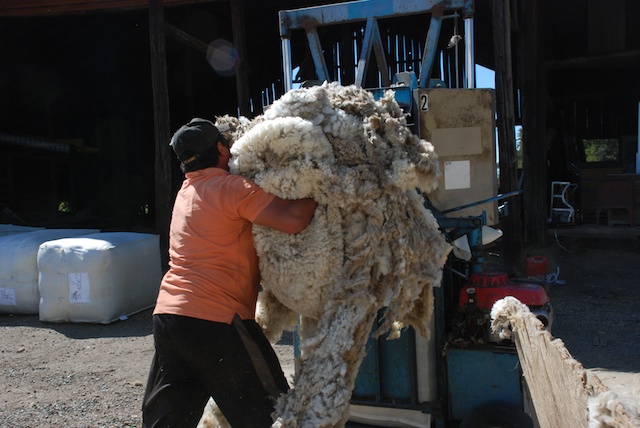 The wool is shoved into this wool press…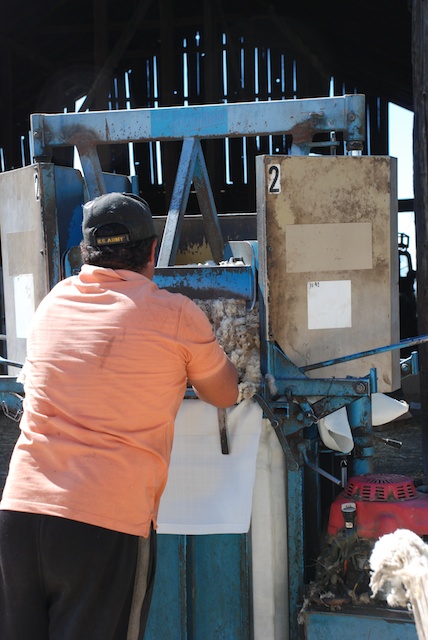
…and compacted… …and sealed into bales that are marked with the pertinent information. I forgot to ask how much these weigh but on-line sources say they would hold 240 to 450 pounds each.
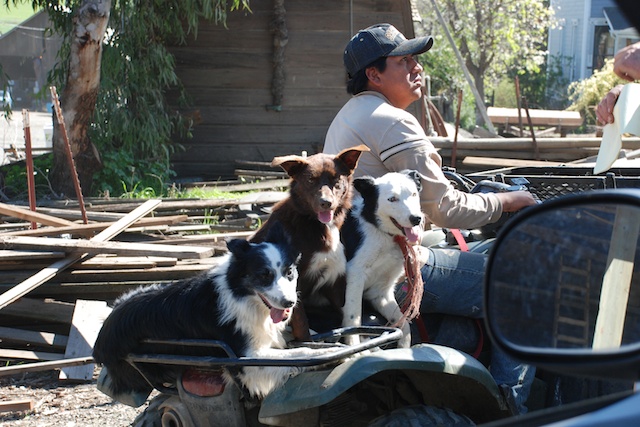 Before we left the shearing trailer was pulling out and everyone was getting ready to go to the next job.
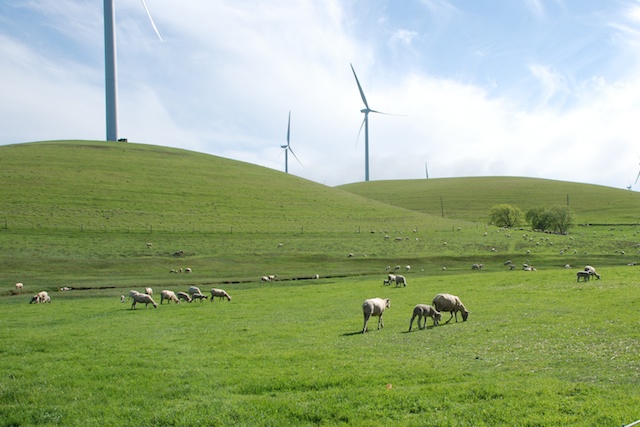 Freshly shorn sheep turned out to graze.
In about six months I hope to have blankets woven from this wool. They will be available at the Artery and the Fibershed Marketplace.


 This photo shows that they are making progress. Now I can actually see a ditch and the sheep can get through it to the side with the blackberries.


 I wanted to use one of this year’s ram lambs for the fourth group of ewes. I had a hard time choosing among the rams I have saved. My first choice was a four-horn ram lamb who I think has promise and also placed well at the summer shows. Unfortunately, he was very sick with bluetongue (insect transmitted virus common in the fall) a few weeks ago. He pulled through (I lost two others) but with the 106+ temperature I can not be sure that he is fertile. He may have his chance next year, but this year I needed to find another ram.


 He weighs less than all these ewes but that doesn’t seem to bother him (or the ewes).


 Meridian Jacobs' Blog