Breeding Season

This week it was time to separate sheep into breeding groups. After much debate and deliberation I ended up using five rams this year. I don’t NEED five rams for the number of ewes I have but it’s always fun to find out how each ram will match with the flock…and there is also a bit of “not putting all one’s eggs in one basket”.

There are a lot of criteria in selecting a ram to buy or a ram lamb to keep in the flock.

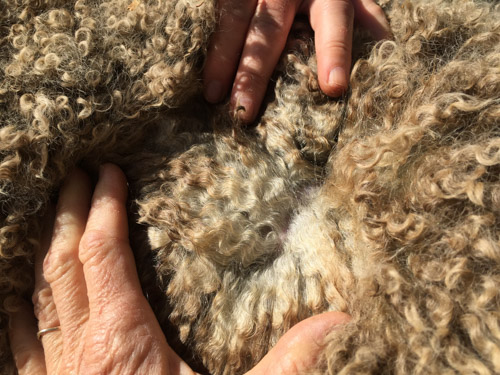
Fleece is the most important characteristic for me. If I don’t like a ram’s fleece then I don’t want to use him no matter how great he looks otherwise. I want to stay within the Jacob breed standards but consider fleece weight, fiber diameter (determines if a fleece is soft or scratchy), crimp, and freckling. One problem with making decisions about young rams is that you’re better off waiting until 18 months to fully evaluate fleeces. That is a long time to hang onto a ram and then decide he stays or goes. With my small acreage I just can’t hang onto several rams to evaluate a year later. I need to make my best guess at about six months old.

16044 fleece

Here is an example of a ram lamb from this year who lucked out. I love his fleece but he is freckled. He’s castrated and is the donkey companion for now.

Horns. You can have the best ram from all the other standpoints, but if the horns grow into the face he will have to go. Here is a blog post with examples of two-horn rams.

Color. The Jacob Breed Standard states that registered sheep must have 15-85% color. That’s a broad range, but not all sheep fit that category.
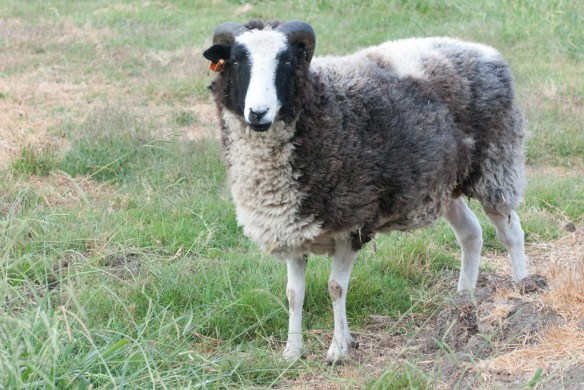
11080-jerry

Jerry is a 5-year-old wether who won the sheep-lottery by having a beautiful fleece, but with too much color to be kept as a breeding ram. He was castrated as a lamb and was kept to be a buddy to any sheep who had to be separated from the flock. He lives permanently with Faulkner, the BFL ram. Also note how narrow his horns are. If he had not been castrated those horns would have grown tight onto his neck or face.

There is more, but this was going to be a post about the rams I am using this year, not a how-to-choose-your-flock-sire post. However other traits to consider are personality (yes, really), conformation, size, birth weight, gain, and is he a single/twin/triplet.

16063-joker-3

I hadn’t planned on keeping Meridian Joker, but as I looked at lamb weights over the last few months he stood out as one of the heavier ones. I sell at least half the lambs for butcher and the sooner they can be sold the better. So rate of gain is important. His horns don’t have a huge spread, but hopefully they will be all right as he grows.

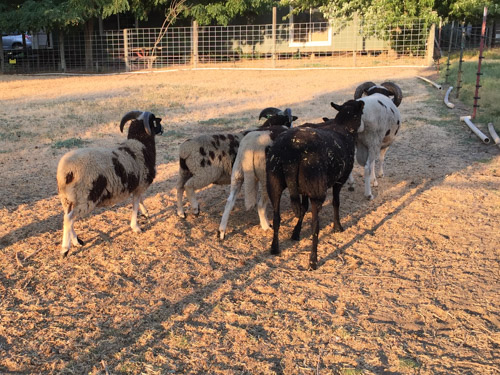
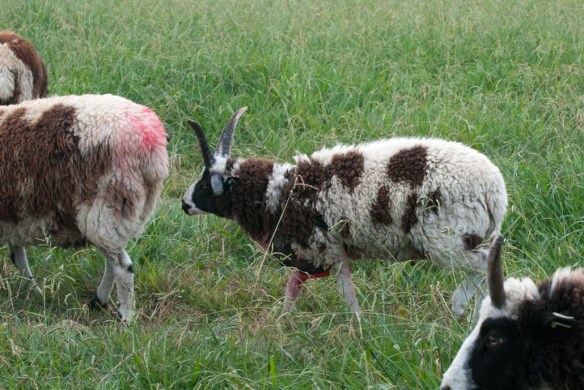
By the way all the rams in these photos are wearing marking harnesses with red crayons. That’s what all the color is.

dragonStarthist Dragon is on loan from a friend. When I evaluated his lamb fleece a couple of years ago I was impressed and Trish remembered that so offered him for the season.busterBide a wee Buster came here from Oregon last June. He was so small I had my doubts about him being up for the task this month, but I should have had faith.dsc_3257

Meridian Catalyst is a ram who was born at the 2015 State Fair Nursery. He is a lilac ram with nice fleece and markings. That’s him in the middle of the ewes on the second day of breeding season.dsc_3239Faulker is ram #5. He is a Bluefaced Leicester (BFL) and sires the black (brown) lambs. He is the big guy in the center of the photos. His lambs are larger than the 100% Jacob lambs and are mostly sold for meat although they have very pretty fleeces and also wind up in some spinners’ flocks.dsc_3267Faulkner enjoying some time with the ladies.isabelleIsabelle, marked by Joker.15071-skyeSkye is in Catalyst’s group.15050-jillianJillian is with Faulkner.16063-joker-2Joker looks a little disheveled after a few days.buster-2Buster has his work cut out for him to reach those big ewes…buster-3…and needed a nap after the first morning out.
For any of you who pay attention to this stuff and may be wondering about the other Jacob ram I bought this summer…I discovered a few weeks ago that he must have been injured by another ram and his horn had changed position so that it was growing right up against his jaw. I found that the point of attachment was movable (I don’t know if went all the way to the skull which means that it would have been fractured). I tried to give his face a little more space by using wire and duct tape but that didn’t work. This is not a sustainable situation so he is no longer with us.

Lambtown, then Spinzilla

I haven’t posted since I was in Texas over a week ago. I had a great time with my granddaughter but what did I bring home? Not a puppy. Not a longhorn. A cold. So I felt pretty awful for several days, but I’m back and trying to catch up with things. (Although I’m catching up on computer stuff early in the morning because the cough kept me from going back to sleep.)

Lambtown, the annual sheep/wool festival in Dixon was last weekend. It’s only 15 minutes from home so it really couldn’t be easier. But being a vendor at a fiber festival is never easy.

img_4401

It is always a challenge to decide what to bring and how to fit it in a 10’x10′ space (which really wasn’t this year, especially when you subtract the space with the post in the back corner). This year I focused on products that no one else would have.

img_4402I brought my brand new lambskins (incredibly soft and fluffy), brand new handwoven ponchos, and Jacob fiber and yarn and buttons.img_4403I brought my new farm photos in 2 sizes and as notecards. There were also my new calendars. (As I’m writing this I realize that there are a lot of new things to get listed on the website.) I also brought rigid heddle looms and weaving equipment.marv-and-honey

In addition I brought sheep. I had chosen to not bring sheep because it’s just too much work to have a vendor booth and sheep in the barn, but the show organizer asked me to bring my sheep. With the help of Farm Club it all worked out. The Primitive Breeds Sheep Show wasn’t very big but there was some Shetland competition. Honey and Marv were awarded Champion Ewe and Champion Ram in the division. They make a nice looking pair.

As Lambtown ended, Spinzilla week began. From the website: “Spinzilla is a global event where teams and individuals compete in a friendly challenge to see who can spin the most yarn in a week!” This is the fourth year that I have hosted a team for this program that raises money for youth needlearts mentoring programs all over the country.img_4426Not all of our spinners are local, but some who are showed up here Monday morning.img_4427

img_4424We had to take a puppy break at one point when my sister-in-law visited with her new 2-month old Queensland heeler.image_medium

Spinners are continuing to spin at home all week, but on Wednesday several showed up here again. The weather was nice enough to be outside. Notice the wheel in the background.

img_4388

I had seen this on the way to the bank in Dixon on Thursday evening. All it needed was a drive band and a cotter pin to hold the wheel in place.

IMG_4447.jpg

Alison and I got it going. I had figured that I’d resell it because I just don’t have room in the shop or the house. But it is way too cool. I’ll have to hang onto it for awhile at least.


Up and Down the Road in Texas

At home I write a lot of blogs about my walks Across the Road. Here at my daughter’s place in the Texas Hill Country my walks are Up the Road or Down the Road. These are photos taken from walks in both directions.

img_4258

This was Up the Road the first morning I was here. It had rained heavily during the night.

img_4267

I tried to clean my glasses a couple of times thinking that I must have rubbed greasy fingers on them. Then I realized that the glasses were fogging up due to the humidity and temperature. Well, that’s annoying.

img_4259

Juniper berries, although everyone in the west calls these “cedar trees”.

img_4262

I have identified this plant as either Snow-on-the-Mountain or Snow-on-the-Prairie, a Euphorbia species. I read that it is an annual that is poisonous to livestock. Here is an excerpt from Texas A&M Extension:  “The white sap of these plants has long been used to blister the skin or as an intestinal purgative. In most cases, livestock are poisoned by an acrid principle that severely irritates the mouth and gastrointestinal tract. This plant rarely causes death. Experimental feedings of this plant in Texas have shown that 100 ounces produces severe scours and weight loss in cattle, the latter persisting for several months.”img_4268

Gorgeous oak trees are seen where the juniper (cedar) has been cleared.

dsc_3166

I have not tried to ID the rest of these flowers. I’m just enjoying them.dsc_3164

black-swallowtail

My granddaughter and I saw many of these large  Black Swallowtails  this morning.

dsc_3177

Visiting Texas

I haven’t been to Texas since last year, but that’s because we saw my granddaughter several times last winter and spring in California. It was time for me to see her again and to do that I had to travel east. She is now two.

dsc_3077-2

While Mommy painted the shed we went for a walk.

dsc_3084-2

img_4229-2

Time to take off the shoes.

dsc_3100-2

The low water crossing on the road.

dsc_3110-2

What better place to play on a hot day.

img_4250-2

Hugging Colby.

img_4274-2

Yesterday we went to the Comal County Fair.

img_4314-2

This morning I said that we’d go for a walk in the rain. Kirby started to pack. You never know when you’ll need a stuffed llama, a cup of milk, or a bunch of books.

img_4319-2

It had rained enough during the early morning hours that the water had risen too high for playing.

img_4329-2

We turned and walked up the road the other way.

img_4317-2

Well, one of us walked and the other rode most of the way.

Sunflowers – June Through August

I have too many sunflower photos for one post so I split them up into yesterday’s post and this one.

20160615-dsc_0222

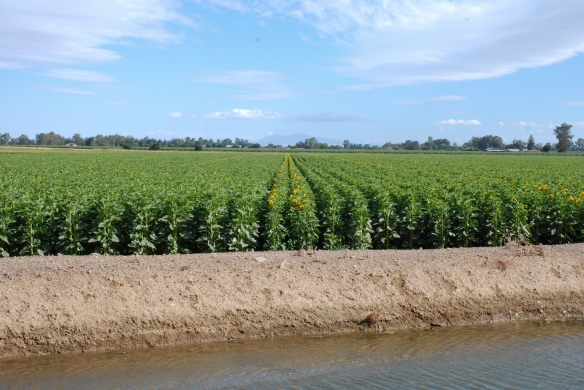
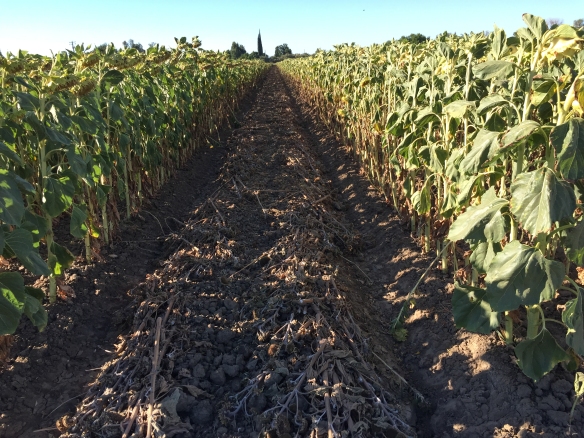
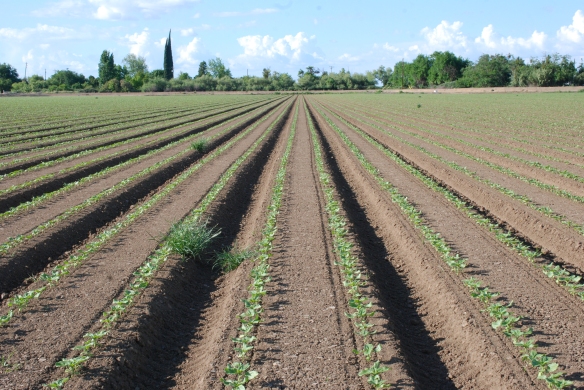
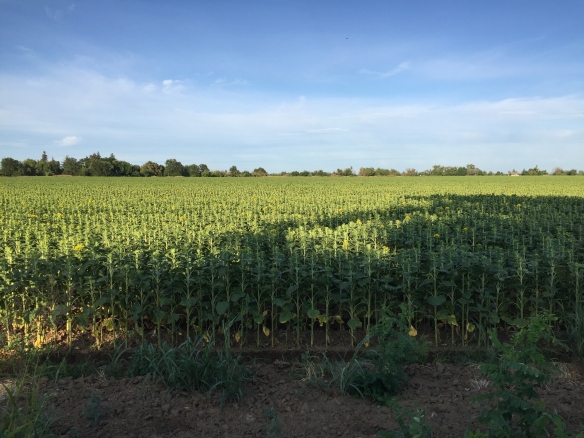
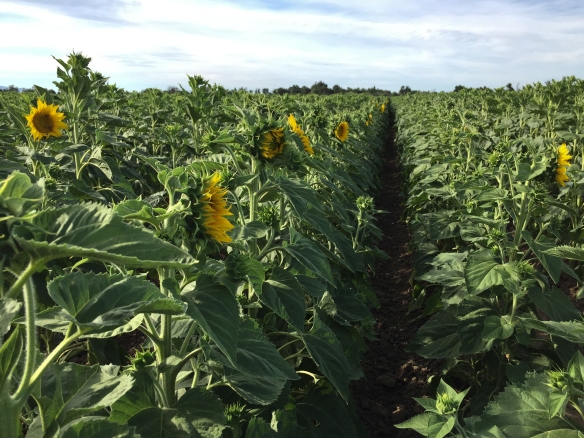
Do you see the flowering sunflowers in the center of the photo? If you count 10 rows to each side you’ll see (barely) that every 10th and 11th row there are flowers in bloom. The field was planted with two varieties of sunflowers, a smaller one that bloomed earlier and the larger variety. The following is from Wikipedia:

Typically, sunflowers tend to be self sterile. But for a sunflower to produce seeds, it needs pollen from a different sunflower. This is also known as cross-breeding, or in this case, cross-pollination. Occasionally, a sunflower can self-pollinate. Self-pollination produces an inbred line which, when bred with a separate inbred line, will result in a hybrid flower.”
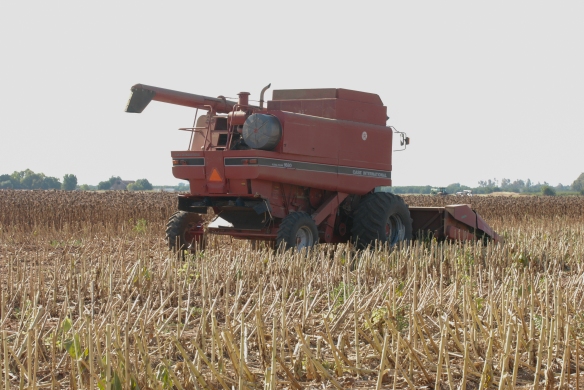
20160620-dsc_0335

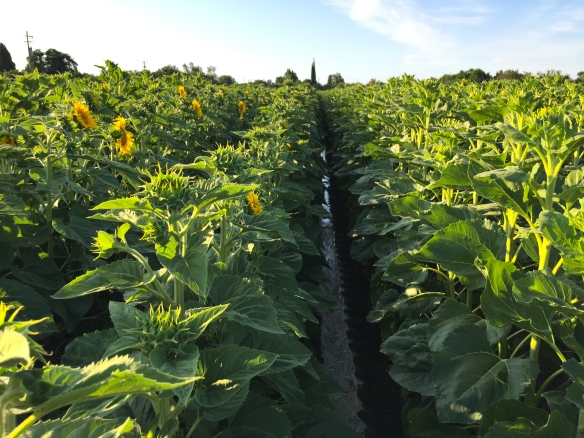
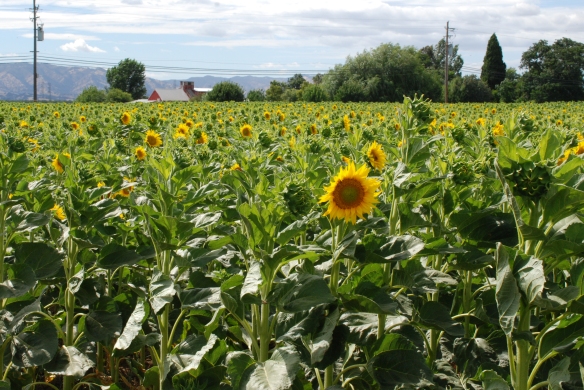
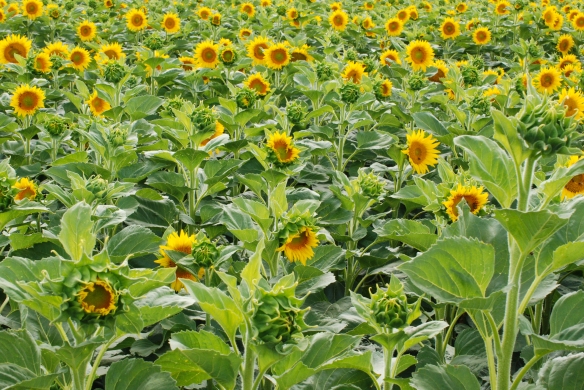
This is two of the shorter rows in full bloom. The taller sunflowers are also blooming. I assume that these are two varieties that (with probably a male-sterile flower on the larger plants) produce a hybrid seed. At harvest time I talked to a representative of the buyer who was out in the field and she said that this was a seed crop that was going to Europe to be planted for oil production.

20160616-img_1876

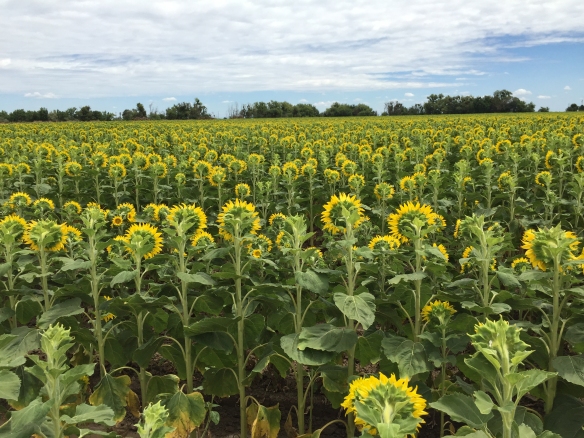
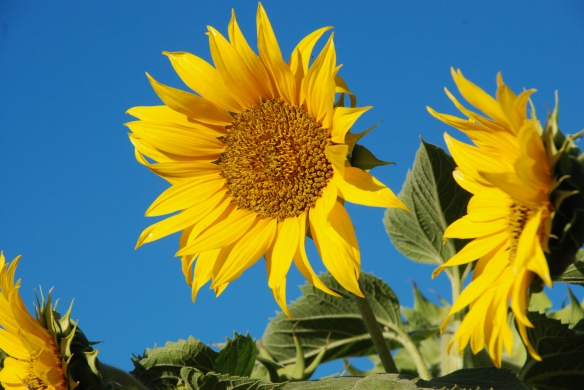
Sunflowers typically follow the sun, but when they get large the heads don’t move anymore. This was the view from my house –all the flowers facing east. If I wanted to see the pretty faces I had to walk around the field. Do you want to know more about this? Here is an article from the New York Times that explains why and how the sunflowers move to face the sun. This is an excerpt from it:

The answer was in their stems. Like those of other plants, the stems of young sunflowers grow more at night — but only on their west side, which is what allows their heads to bend eastward. During the day, the stems’ east side grows, and they bend west with the sun. Dr. Atamian collected samples of the opposite sides of stems from sunflowers periodically, and found that different genes, related to light detection and growth, appeared active on opposite sides of the stems.”
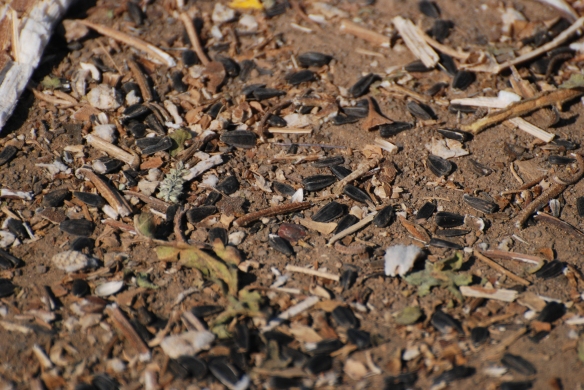
Isn’t that amazing? And isn’t it cool that there is so much to be learned about the seemingly most mundane things in our world? I’m all for promoting science to explore ideas and not just to solve a problem. But I digress…20160615-img_1868
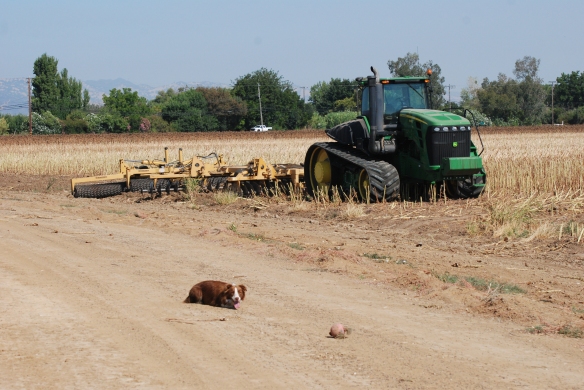
20160620-dsc_0339

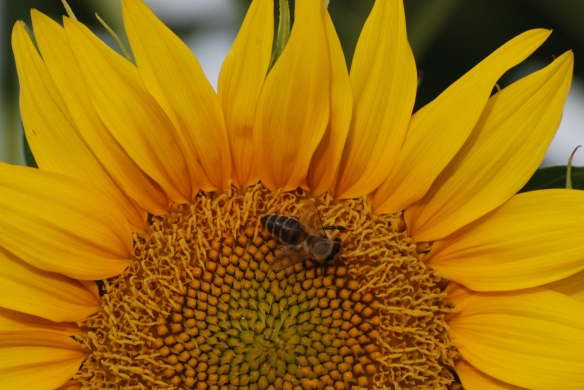
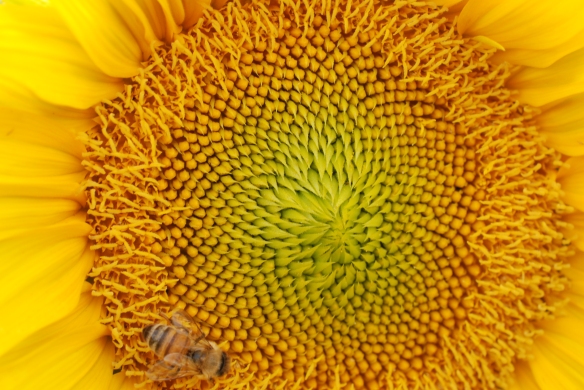
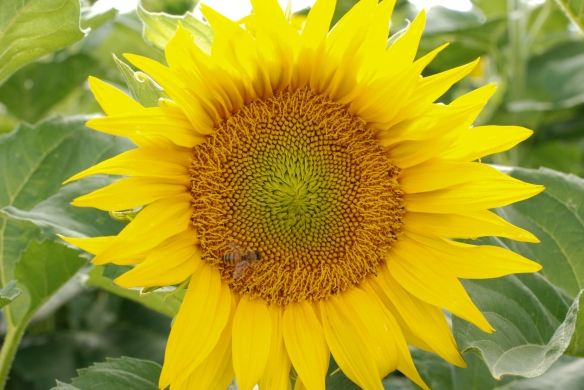
You saw bees on the sunflowers in the previous post.20160620-dsc_0370

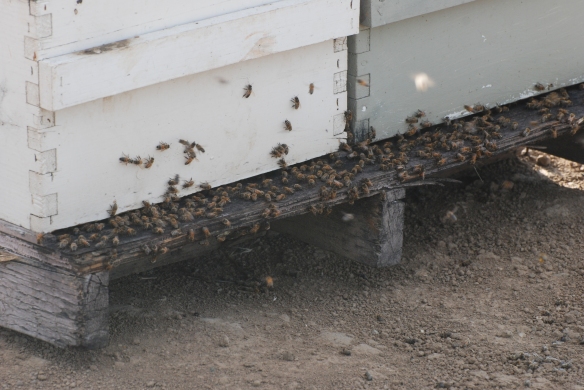
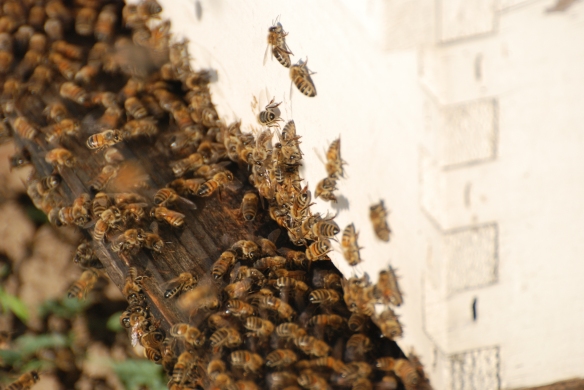
Here they are at their hives. Hives were placed all around the field.20160620-dsc_0390

Here is another interesting article–this one about the bees that pollinate sunflowers. “In sunflower hybrid seed production, pollen from a male row of sunflowers must be moved by bees to a female (male-sterile) row. Growers typically use honey bees to accomplish this task. However, most honey bee workers specialize as either nectar or pollen foragers. Nectar foragers tend primarily to visit female rows, while pollen foragers visit male rows. If few bees cross between rows, growers can experience poor seed-set.” The article goes on to say that native bees  collect both pollen and nectar and by chasing the honeybees from row to row they make the whole process more efficient in terms of getting the 100% pollination. Therefore growers should encourage native bee populations.

20160629-dsc_0563

The photos above were all taken in June.

20160718-img_3086

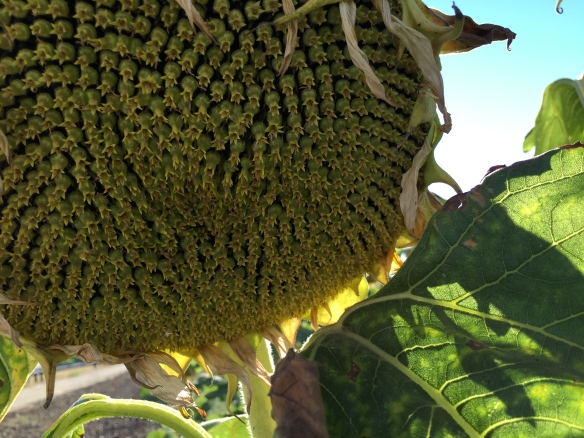
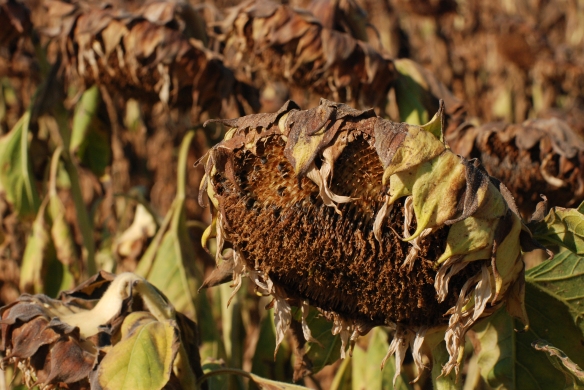
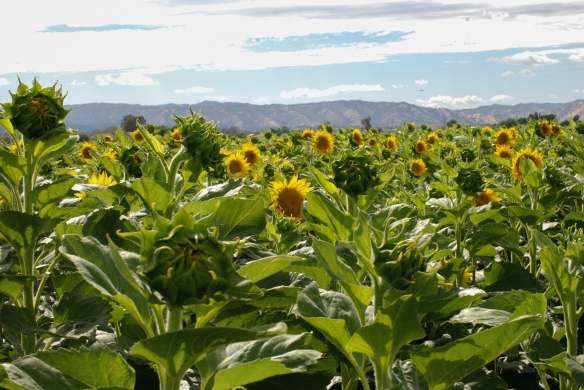
By mid-July the heads were drooping and the two rows of smaller plants were cut. The sole purpose of those sunflowers was to provide half of the genetics of the hybrid seed to be harvested from the larger plants.

20160718-img_3087

20160812-dsc_2070

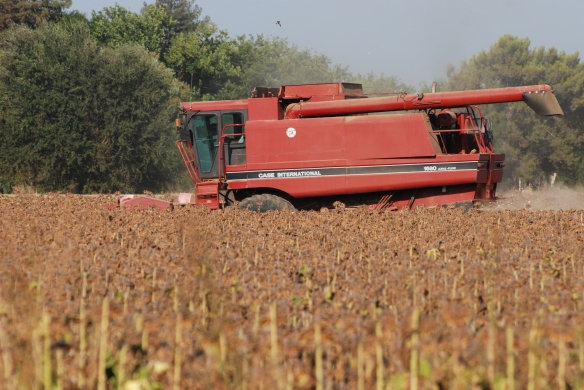
The seed was ready to harvest in mid-August.

dsc_2054

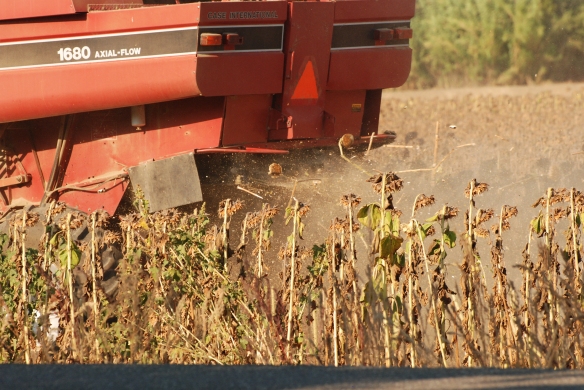
The harvester drove through the field, cutting the plants,…dsc_2061

…sorting out the waste,…dsc_2055

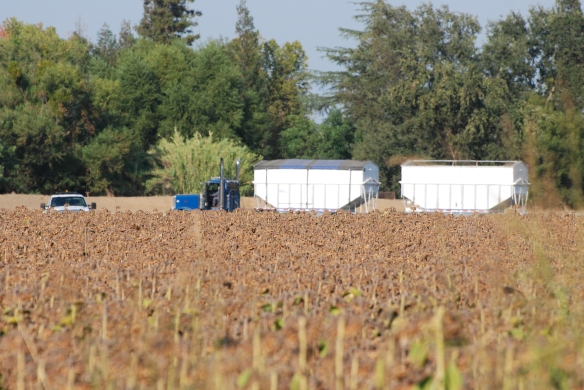
…and periodically dumping the seed into a waiting truck.

20160812-dsc_2071

20160812-dsc_2092

20160812-dsc_2135

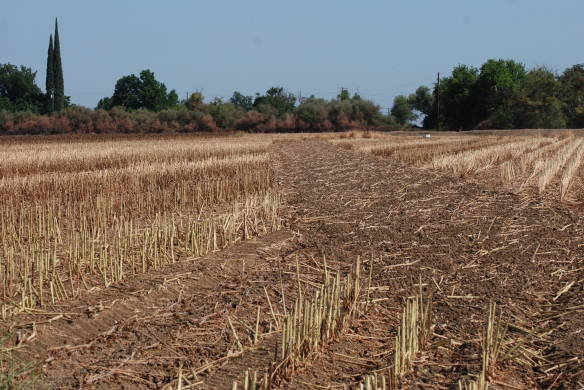
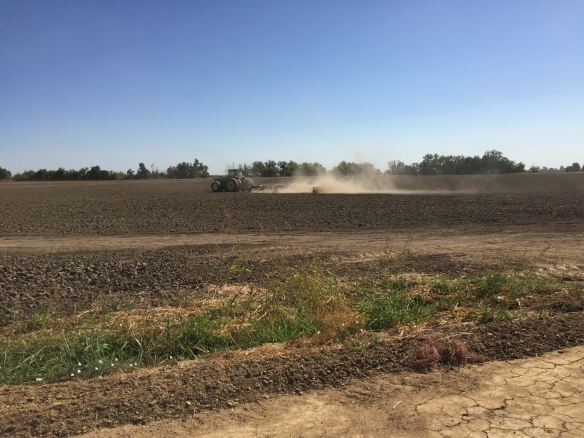
But the job isn’t over. While plants were being harvested in one part of the field the other part was being disked.

20160812-dsc_2136

20160825-img_3826

A month later the field is still being prepped to get ready for next year’s crop–tomatoes.

Sunflowers-April through June

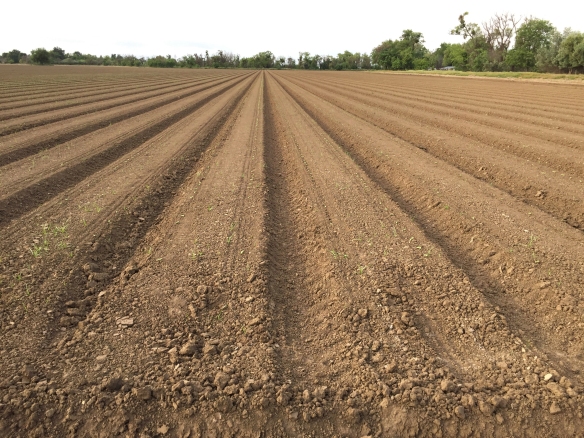
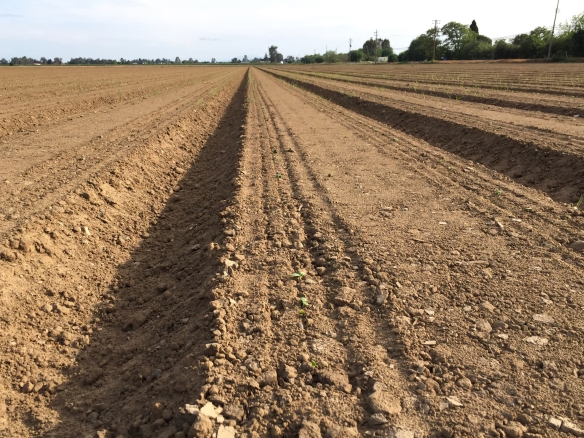
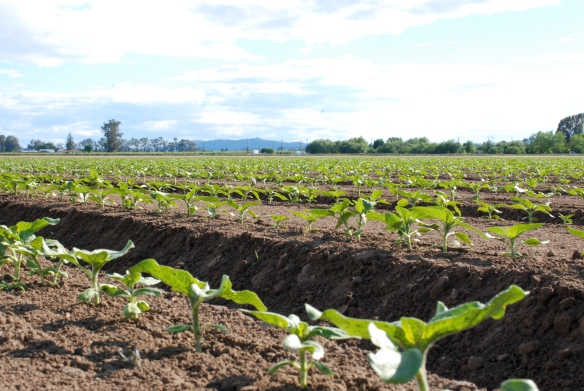
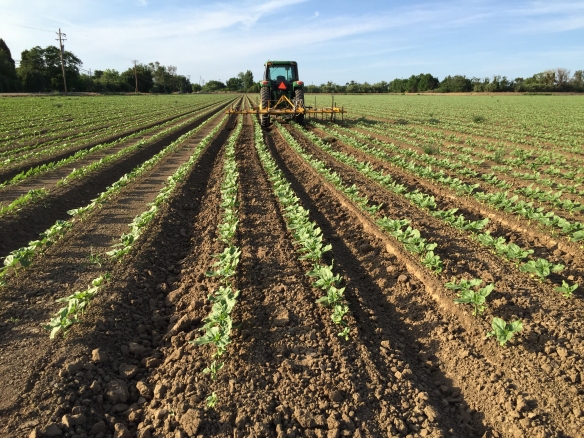
We have only 10 acres here, but having the field Across the Road makes it seem as though we have much more. We are careful to be good neighbors and we are grateful that we have permission to spend time exploring that property. So I feel kind of like the crops grown there are mine although I have none of the work involved.  This summer’s crop was sunflowers–one of my favorites. I have way too many photos so I’ll break this into two posts.

img_0682

April 12. You can just see the tiny plants.

sunflowers-sprouting

dsc_8711

April 27

dsc_8423dsc_8669dsc_8674

20160502-img_1064

May 2. Cultivating.

20160611-img_1797

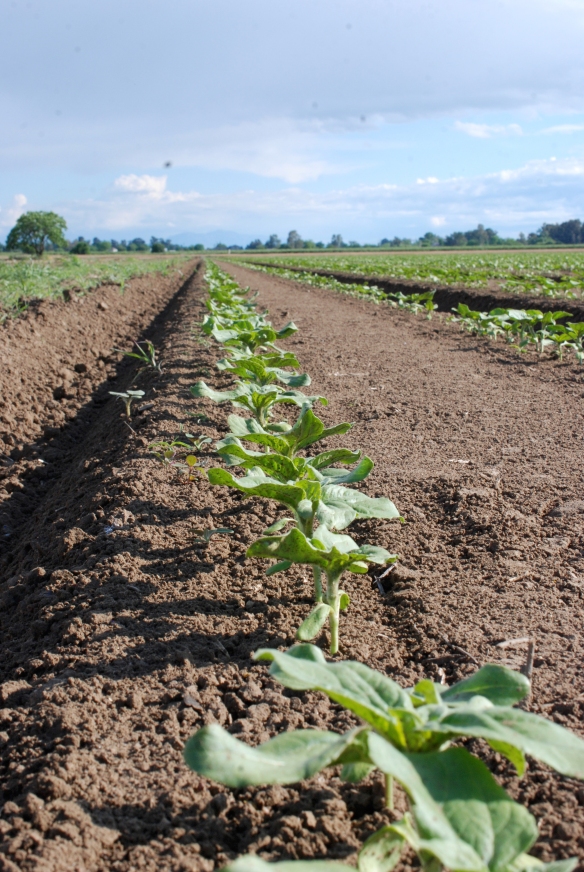
June 11. They’re growing up. I sound like a proud parent.

20160611-img_1799

The rest of the photos in this post were taken throughout June.

20160608-img_1758

20160615-dsc_0162

20160615-dsc_0193

20160615-dsc_0203

20160615-dsc_0206

20160615-dsc_0207

20160615-dsc_0208

20160611-img_1807

20160615-dsc_0209

20160615-dsc_0210

Life and Death on a Milkweed Plant

While mowing the pasture the other day I saw a fluttering monarch butterfly.

IMG_3453

I thought, “Cool, I’m watching this butterfly emerge from the chrysalis.” However, as I watched I realized that for some reason the butterfly had been stuck in this position and now was hopelessly damaged. I helped it out of the chrysalis but its wings were damaged and all it could do was flutter, but not fly.IMG_3460

I continued mowing.

IMG_3468There were plenty more milkweed plants that were teeming with life. That’s the Common Buckeye Butterfly and the Alfalfa Butterfly (see my last post).

IMG_3462

Here is what the seed pods have inside when they are ripe. (Spinning, anyone?)

IMG_3476I identified this one in Bug Guide.net  as the Small Milkweed Bug (also the Common Milkweed Bug, Lygaeus kalmii). It’s surprising how many similar looking bugs you find when you google “red and black bug in CA”.

Small milkweed bug or Common milkweed bug, Lygaeus kalmii

I had to look closely to see the identifying markings. The Guide says: “Adults suck nectar from flowers of various herbaceous plants, and also feed on milkweed seeds(?). Also reported to be scavengers and predators, especially in spring when milkweed seeds are scarce. They have been reported feeding on honey bees, monarch caterpillars and pupae, and dogbane beetles, among others.”

IMG_3479

Here is more life, but I’m not going to try and specifically ID this one.

And the circle continues…

Monarch caterpillar on milkweed

The other photos were from a couple of weeks ago and I just saw this monarch caterpillar a few days ago on another milkweed.

Birds and Butterflies

Last week it was impossible to go to town or walk Across the Road without running into butterflies. The orange sulphur butterfly (Colias eurytheme also known as the alfalfa butterfly and in its larval stages as the alfalfa caterpillar), I found out by googling, is widespread in North America and can be a significant alfalfa pest in high densities.

The alfalfa field just south of where I walk had been cut, the sunflowers harvested, and butterflies were doubling and tripling up on field bindweed flowers and any other weedy flowers they could find.

DSC_2177

DSC_2158

DSC_2160

DSC_2176

I thought that I’d be able to get photos of butterflies in flight. Do you know how hard that is? Not possible, at least by me.

DSC_2167

But speaking of things that fly, I did get some bird photos. I don’t usually see great blue herons in the trees.

DSC_2227

The snowy egret is dwared by two great egrets.

DSC_2222

Great egret in flight.

DSC_2233

On my way home I spotted these cattle egrets which I photographed from the road.


A Sheep Adventure – Part 2

I forgot to put a couple of photos in the last post. Besides the BearFest that was going on through the summer in Grants Pass, there was also a Fifties celebration the week we were there. There was a car show that evening and here are some cars that we saw in the motel parking lot.

IMG_3258

I have no idea what they are but I took these photos to show my husband.

IMG_3260

IMG_3261

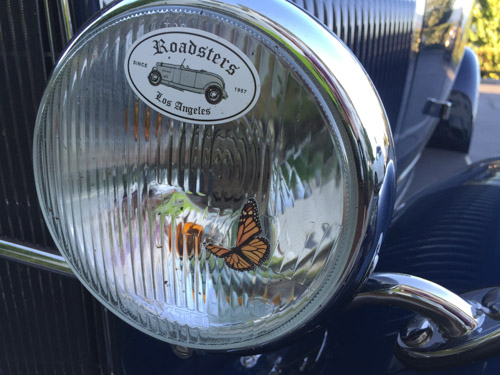
This is not how butterflies normally look on my headlights.

We got on the road about 7:30 and drove to Selma, Oregon where Jackie’s sheep had been delivered the day before. She was picking up two English Leicesters that came from Michigan.

IMG_3266

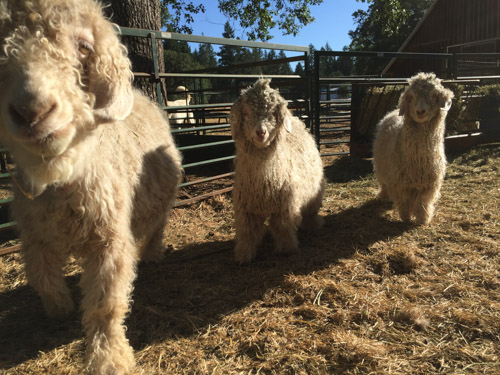
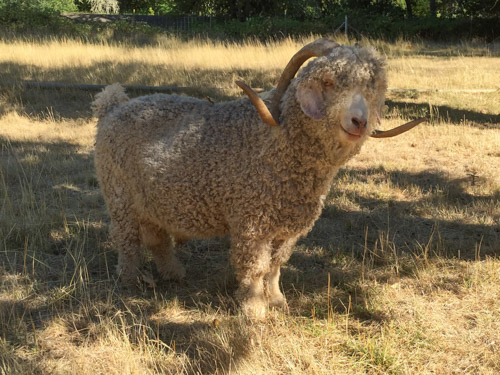
Carol Ronan graciously took time to give us a tour of her beautiful farm. She raises Angora goats (above) and Gotland sheep (below). Information about her sheep and goats (and the beautiful farm which is for sale) is at this link.

IMG_3276

IMG_3278

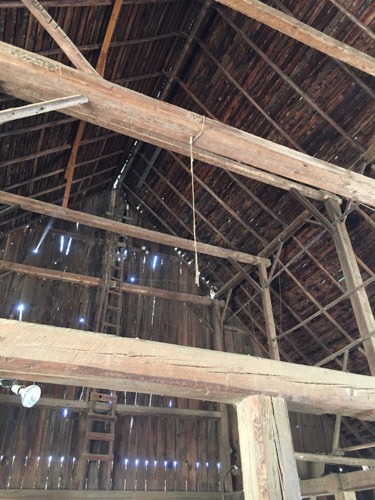
The animals have access to this 100+ year old barn that has been reinforced and given a new roof (which will probably give it another 100 years).

IMG_3281

I don’t remember the dogs names but this was an older one who put up with the nosy sheep.

IMG_3284

I took this photo because I wanted to remember this oh-so-simple feeder idea. That welded wire panel is not a fence. There are two panels attached to a 2×6 at the bottom and to posts with slightly tapered pieces of wood on the sides. Perfect for dropping in a flake of hay and feeding on both sides.

IMG_3290

We walked to the field with the bucks…IMG_3292

…and examined fleeces.

IMG_3295

IMG_3297

IMG_3298

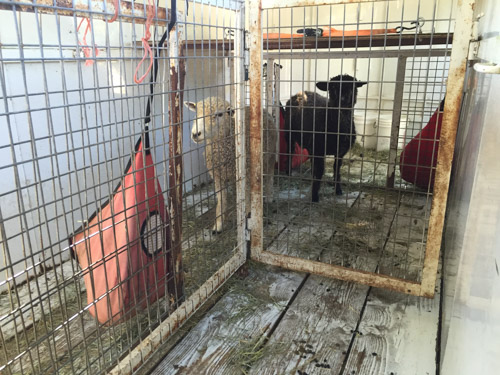
Here are Jackie’s new sheep who had been housed in the trailer overnight.IMG_3299

They were easily switched to my truck and we got on the road. There are not too many photos of the part of the trip that became more of an adventure. I didn’t want to backtrack to Grant’s Pass and I-5. BORING. If you take Hwy. 199 south from Selma you can turn off onto a road that winds its way through the rugged Siskiyou Mountains to Happy Camp. It wasn’t a good idea for me to be taking photos while driving on this road that was full of switchbacks and Jackie probably would have thrown my camera out the window. We didn’t stop because we had spent a lot of time at Carol’s and had planned to make the next stop by mid-morning (weren’t going to make that) and get home in the afternoon, trying to avoid being on I-5 through Redding at the hottest part of the day.
IMG_3307

At Happy Camp we turned east onto Highway 96 and watched for landmarks until we got to this sign and across the road…

IMG_3306

…this bridge where we crossed Horse Creek and drove north along hillside edging a green valley . We were supposed to go 2 miles and find the correct street address for the farm where my ram would be. We saw a few numbers on mailboxes, passed what should have been the right place, found a place to turn around and chose a driveway that seemed to be in the right place. We drove in past barns and farm equipment but didn’t see a house, sheep, or any signs of someone looking for sheep buyers who were late. We drove out of the driveway, down the road and chose another driveway with the number that would be the neighbors to the place we were looking for.

As I drove down the steep driveway, several large dogs ran out barking. However I saw someone looking through a window and waited for him to come out. He wasn’t happy about seeing us and told us to go back up the road and take the driveway with “the lifetime gate”. “Can I drive forward and turn around down there?”, I asked. “No” was the answer. OK then. I’ll back up the steep rocky driveway that has a sharp turn onto the road and a steep drop-off to the side, while trying to see the end of my truck through the plywood sheep crate on my truck. I did that with several back and forths and only one minor mishap.

IMG_3302

Finally backing into the road in the wrong direction we drove down it again, passing this sing, turned around and came back. (Note: When my sons have fought fires in these mountains they have been turned away from entering access roads to the forest by surly land-owners. The firefighters are warned by their supervisors to be careful in or avoid areas where they have spotted marijuana or equipment for growing or harvesting.)

So we took the same driveway we had before with the barns and cattle equipment. Steep-Driveway-And-Big-Dogs-Guy was there to meet us, having gone from his house, across the creek, through the barns, to this upper driveway. He pointed and said “no, go back to the lifetime gate”. Lifetime gate? When we looked more closely there was a closed gate down a dirt road that branched off to the right of this main driveway. Jackie opened the gate and we drove into what looked like a little used driveway that stopped before you got to a house where I could hear children. So at least someone was home.

IMG_3303

I found the sheep owner who strapped her baby on her back and we walked out to the barn with other kids running beside us. We arranged bales of hay to create a step up into the truck and loaded the ram. She pointed us out a dirt road that  ends up on a different paved road which seems to be their main access and is “easier”.

IMG_3305

This is the field (sheep in the distance) that Kenleigh’s Legolas left behind.

IMG_3308

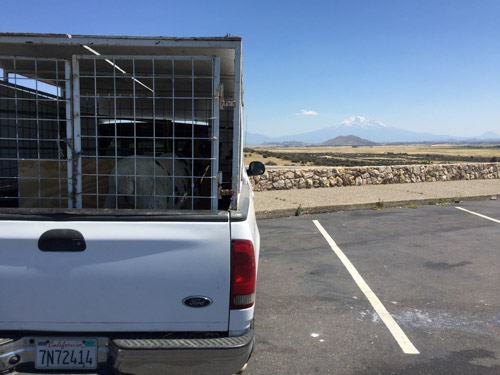
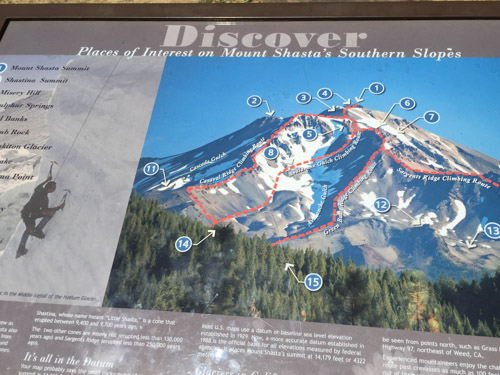
We drove east through Yreka to I-5 and headed for home. I always stop for a photo at this overview of Mt. Shasta. We stopped several times to check on the sheep. There was really nothing we could do about the heat but the truck thermometer was showing 108 (or was it 109?) through Redding. It was in the 100’s for most of the trip, but the sheep survived. I didn’t dawdle, wanting to get them out of the truck as quickly as we could.

IMG_3311

I put Legolas in with the young rams and a wether. They followed him around for awhile.

DSC_1605

There was fighting among themselves, but not with Legolas, because it was obvious that he would be the dominant ram of the bunch.

DSC_1606

This will be the first year that I will breed the bulk of the flock to 2-horned rams. There is Kenleigh’s Legolas (Lego for short), Meridian Catalyst, a 2-horned lilac ram, and bide a wee Buster, the younger ram with 4 horns.

A Sheep Adventure – Part 1

It took me almost a month to finish the blog posts about our road trip partly because I interspersed other stories into those posts. I’m still catching up on the things I wanted to share. One of those is  another adventure on the road, this time involving sheep.

Just after I came home from Black Sheep Gathering I found out about a ram for sale in northern California. I had just purchased a ram lamb at BSG but, after selling rams this summer, I would still have only two rams here for breeding in October  (except for whatever of my own ram lambs I might keep). The new one was small and I wasn’t sure that he’d be up for the job on October 1. The one for sale was an adult so he would definitely be ready for breeding.

I planned a day trip to the Klamath River area west of Yreka, but in the meantime my friend, Jackie, had purchased a couple of sheep that were to be delivered to Selma, Oregon that same week. We decided to combine the two sheep pick-ups, but that turned the trip into a two-day Sheep Adventure.

The drive north on I-5 gets more interesting once you leave the valley and get into the mountains.

IMG_3226

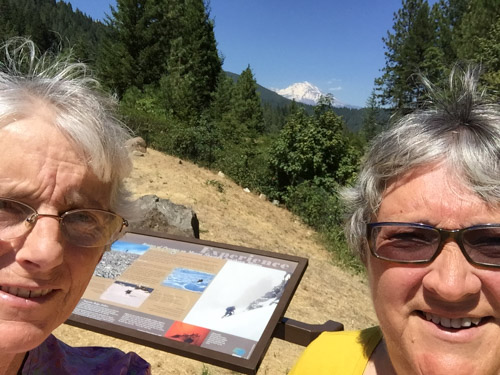
Mt. Shasta, at 14,179′, is in view for many miles. I had never stopped at this vista point. I made Jackie take a photo with me.

IMG_3225

I love this mountain and, although I have never climbed it, I spent a couple of summers working in the Klamath National Forest where it was always a presence. My husband has been at the top, but that is another story.

IMG_3227

There were bear tracks in the cement walkways.

It turns out that bears became the theme for the day. We planned to spent the night in Grants Pass, Oregon and pick up the sheep the next day. It just happened that Grants Pass was celebrating Bear Fest, “a hands-on touchable art event, proving that art doesn’t have to be “serious” to be great. Local artists decorated, embellished, bejeweled and painted larger than life size bears” which were on display through the summer.

IMG_3228

Our motel had bear themed furniture…

IMG_3229

…and bear art over the fireplace in the lobby.

IMG_3232

This bear was outside the motel. We drove downtown and parked. We took our Bearfest Map and found some of the fifty bears that were displayed around town.

IMG_3234

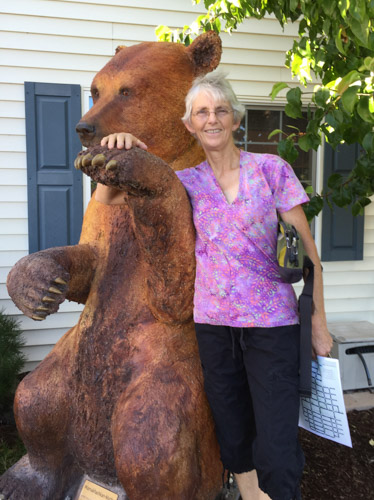
Marge and Rockabilly Bear (with Jackie photographing from another view).

IMG_3242

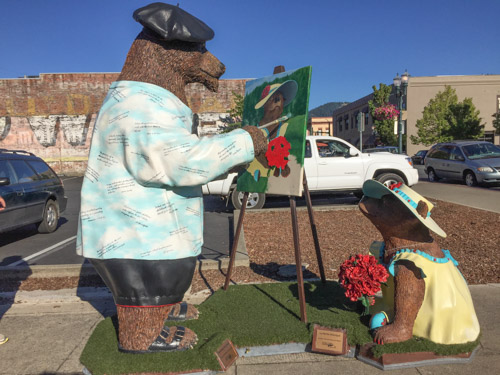
Pierre Bear the Arteest and La Petite Monique.

IMG_3243

Not a bear, but keeping (loosely) in the theme of our trip, it seemed that we should eat at this restaurant.

IMG_3244

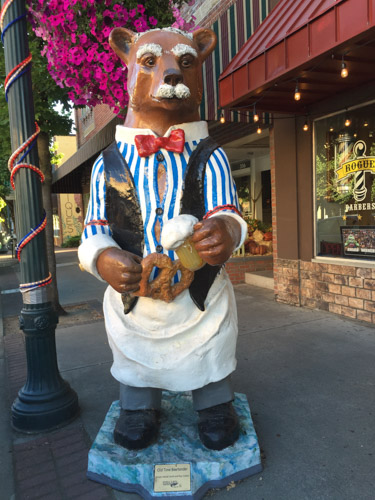
Old Time Beartender.

IMG_3246

Boss Henry the Logger Bear.

IMG_3247

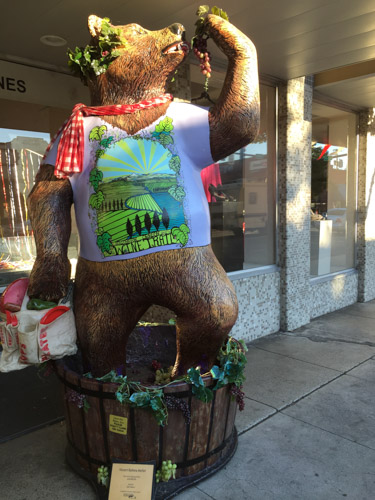
Vincent Barbera Merlot

IMG_3248

Carmen Bearanda

IMG_3250

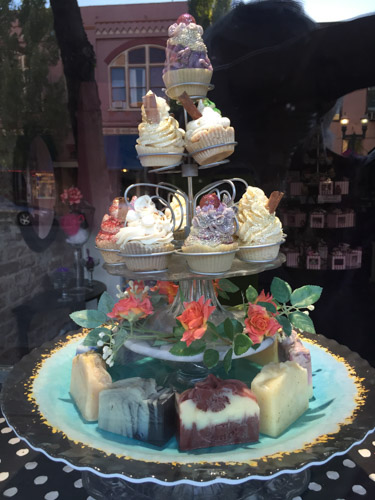
Also seen on the streets of Grants Pass. We had skipped dessert at the restaurant…

IMG_3251

…but didn’t stop here…

IMG_3252-2

…because these wern’t edible!

More in the next post…