The sub-title of this workshop could be “I think my brain is about to explode”. At least that is how I felt at the end of the second day after I had woven only this much: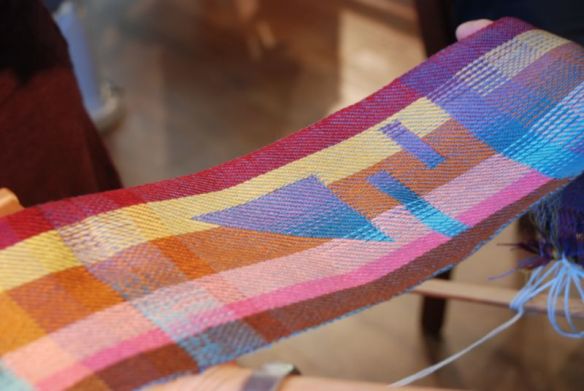 My friends consider me a prolific weaver, but this was a humbling experience. In my defense, I had a lot of distractions because the workshop was at my place. So I was looking for the right height benches, setting up lights, finding an umbrella (for the journey to the porta-potty in our first storm of the year), and I did my share of chatting with the other weavers.
It has been years since I have taken a workshop and I jumped at the chance to take this one from Sheila O’Hara, whose work I have long admired. I was glad to host the workshop because it meant that I could stay home and not drive to Sacramento three days in a row. In addition, Sheila stayed here so I had the chance to get to know her a little better. On the fourth day I did go to Sacramento where Sheila presented a great program to the Sacramento Weavers and Spinners Guild.
Our pre-class instructions were to wind two warps of different colors, using multiple colors in each warp and we were given the threading draft (order to thread the loom). We had seen photos of some of Sheila’s work using this method. These are Sheila’s scarves. Each scarf has two completely different sides but in some the yarns from one side show through to the other. Using a 16-shaft loom you can have 4 layers of color and the compu-dobby (computer interface that I have on my big loom) can aid in keeping track of where you are in the weaving. We used 8-shaft table looms for the class because a floor loom doesn’t have enough treadles to accommodate the treadling required for this.
Here are photos from the class: Thanks to my expanded space we were able to fit enough looms in the room.
 Gathering around a loom to talk about this sample. We wove a series of sample treadlings that showed varying amounts of each of the two warp layers and then we learned pick-up, changing sheds (opening between threads) three times in each pick (row of weaving)…
  …where the lower layer showed up as a distinct design in the upper layer.
 Evening walks helped clear my head. This first rain of the season cleared the air and washed the dust away from everything. I welcome fall. — Back to weaving.
 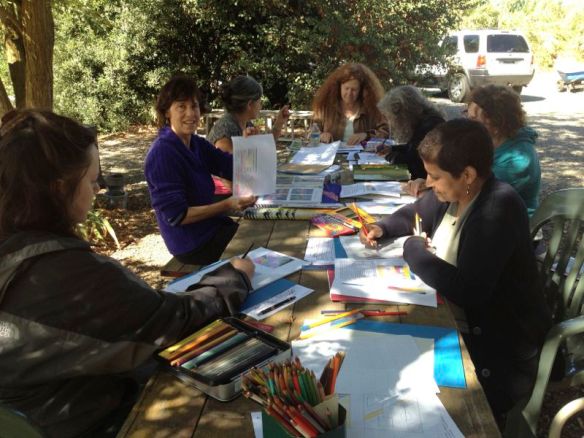 We spent some time with graph paper and colored pencils learning how to create other designs.
 This task was to draw a design and, using 4 differently colored warps (horizontal in this photo), fill in the shapes using threads from the different layers. Yes, these designs could be woven on the same warp…if the brain can handle it.
 We looked at everyone’s warps and discussed the weave structure and color interaction.
 Weaving paparazzi?
 More of Sheila’s weaving samples.
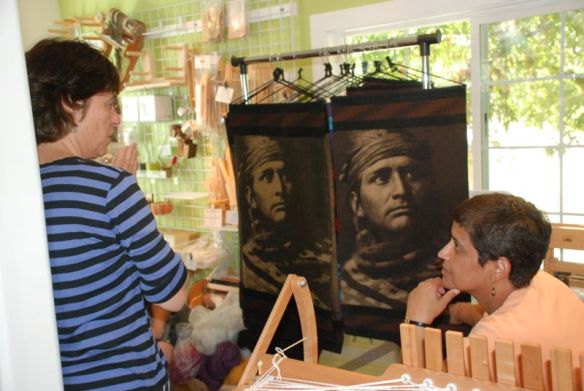 She has recently woven images using photographs taken by Edward Curtis in the late 1800’s to easy 1900’s.
  These images are woven using a Jacquard loom in which each thread is individually controlled. Sheila used to rent time on one of these looms but now has her own.
  Autumn in St. Helena.
Sheila has a wonderful sense of humor and incorporates it into her presentations as well as her weavings. Make sure to look at her weavings on her website. You can contact Sheila or me to purchase them.
I am glad to say that I added to my Sheila O’Hara collection. I already had the Spring Flockettes. Now I have the Winter Flockettes as well.
Epilogue: Back home by myself I started weaving again. I think I have figured out how to do it right.
 Here are better photos.


 I think I have a new audience for my buttons….
 …How about using them for sorting practice for little kids? You can sort by shape, color, and size. You can arrange them in order of size. So they’re not just for sweaters anymore! But at $6/button this would be a pricey sorting kit.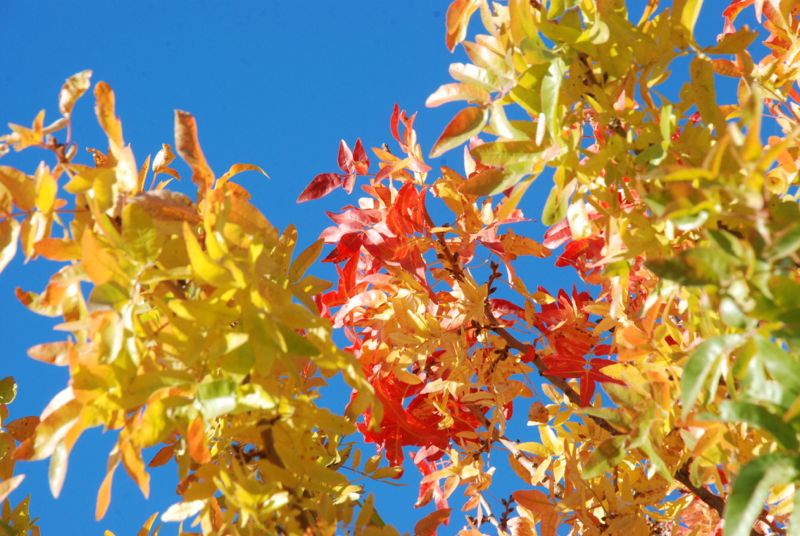


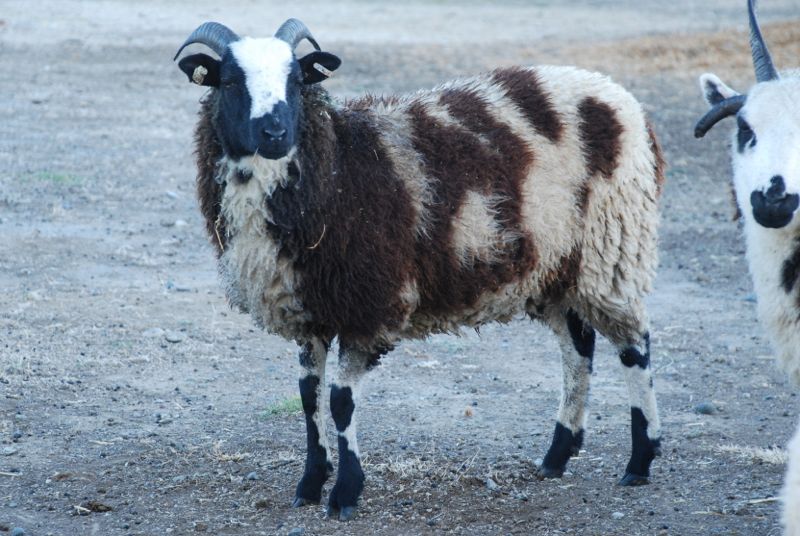


 Roxi
Roxi
 Laura is the third oldest ewe here. She is not really that old at almost 7 years.


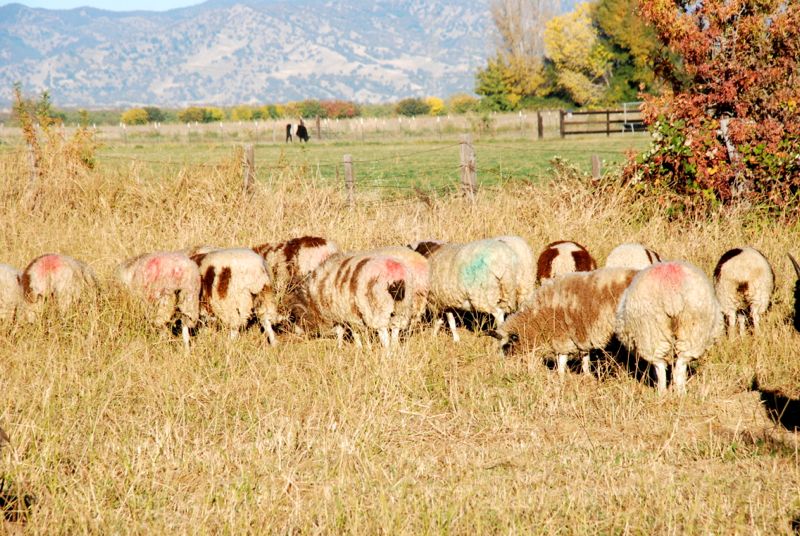
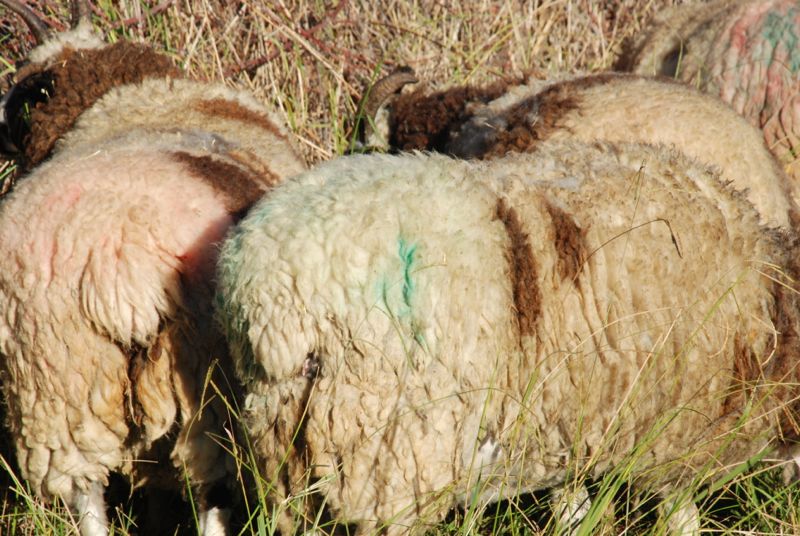
 I used red the first two weeks of breeding (starting October 1) and green the second two weeks. Almost all the sheep are marked with red and maybe a 6 or 8 with green. Faulkner has been with them for about 5 days and there are 3 yellow marks so far.


 They all made up their own designs. This is one student’s work. Cute, huh?

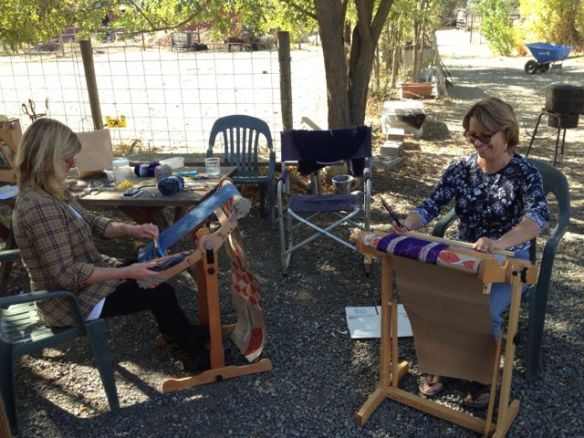 I taught three students in a


 This photo shows that they are making progress. Now I can actually see a ditch and the sheep can get through it to the side with the blackberries.


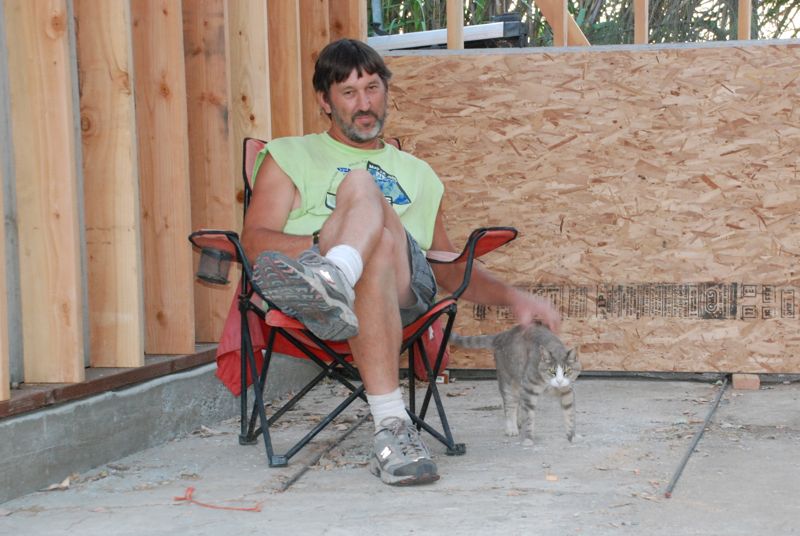
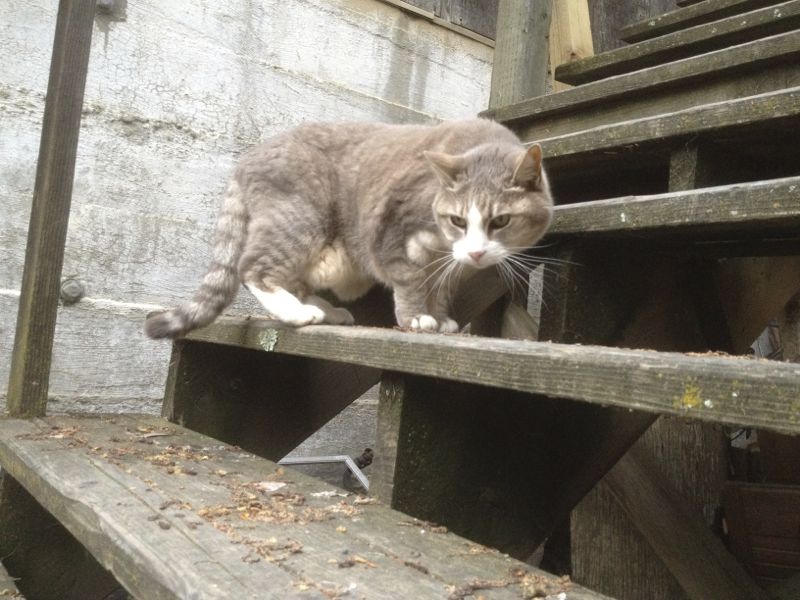
 Molly lived a good life for 19 years, but a couple of weeks ago it was time to say that final goodbye.


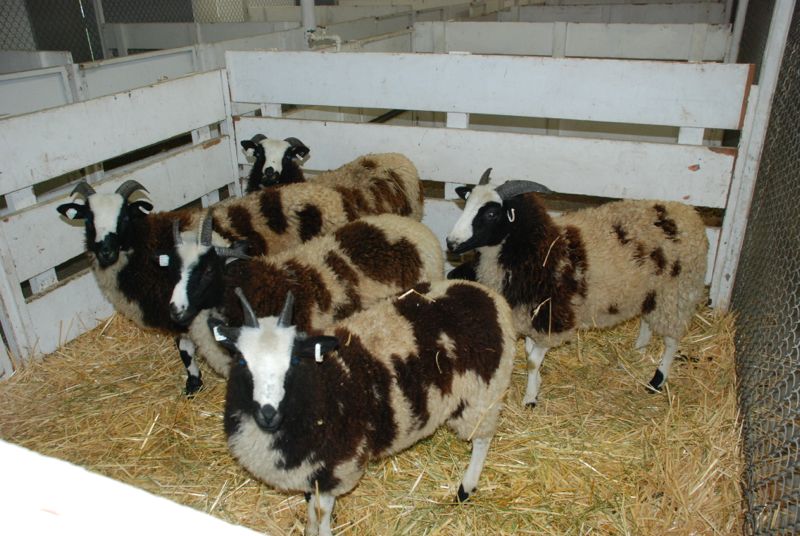
 I wanted to use one of this year’s ram lambs for the fourth group of ewes. I had a hard time choosing among the rams I have saved. My first choice was a four-horn ram lamb who I think has promise and also placed well at the summer shows. Unfortunately, he was very sick with bluetongue (insect transmitted virus common in the fall) a few weeks ago. He pulled through (I lost two others) but with the 106+ temperature I can not be sure that he is fertile. He may have his chance next year, but this year I needed to find another ram.


 He weighs less than all these ewes but that doesn’t seem to bother him (or the ewes).




 Vertical gardens.