The previous two blog posts were about Kirby’s two-week visit in July. On Tuesday of the second week we drove to McClellan Air Force Base, no longer a military base, for a private tour by Matt. Dan’s sister and my brother joined us.
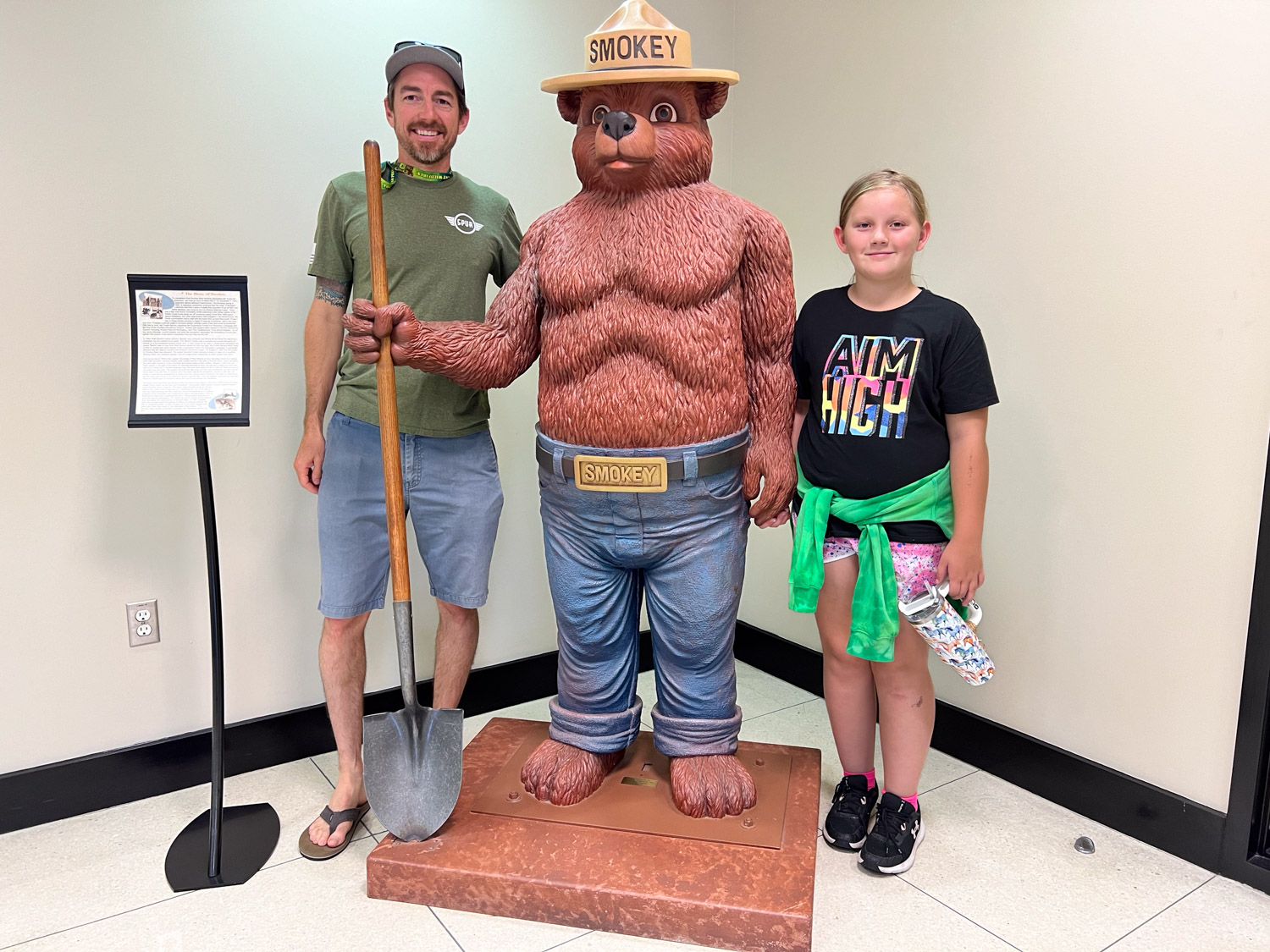
We started at the building used by the USFS for operations and training. I have a general idea of what Matt does at work, but it is sure different to see the details. He is a Helicopter Operations Specialist for the Pacific Southwest Region and spends time in the air managing helicopter operations and coordinating the air traffic over fires (water drops, retardant drops, keeping planes and helicopters from flying into each other). He has an office in this building as well.

Since this tour I have heard reference to fire strategy training with the sandbox, but I would have had no idea what that meant before seeing this. There are at least two rooms with sandboxes of various sizes. They use red and black yarn to designate active fire and burned areas.
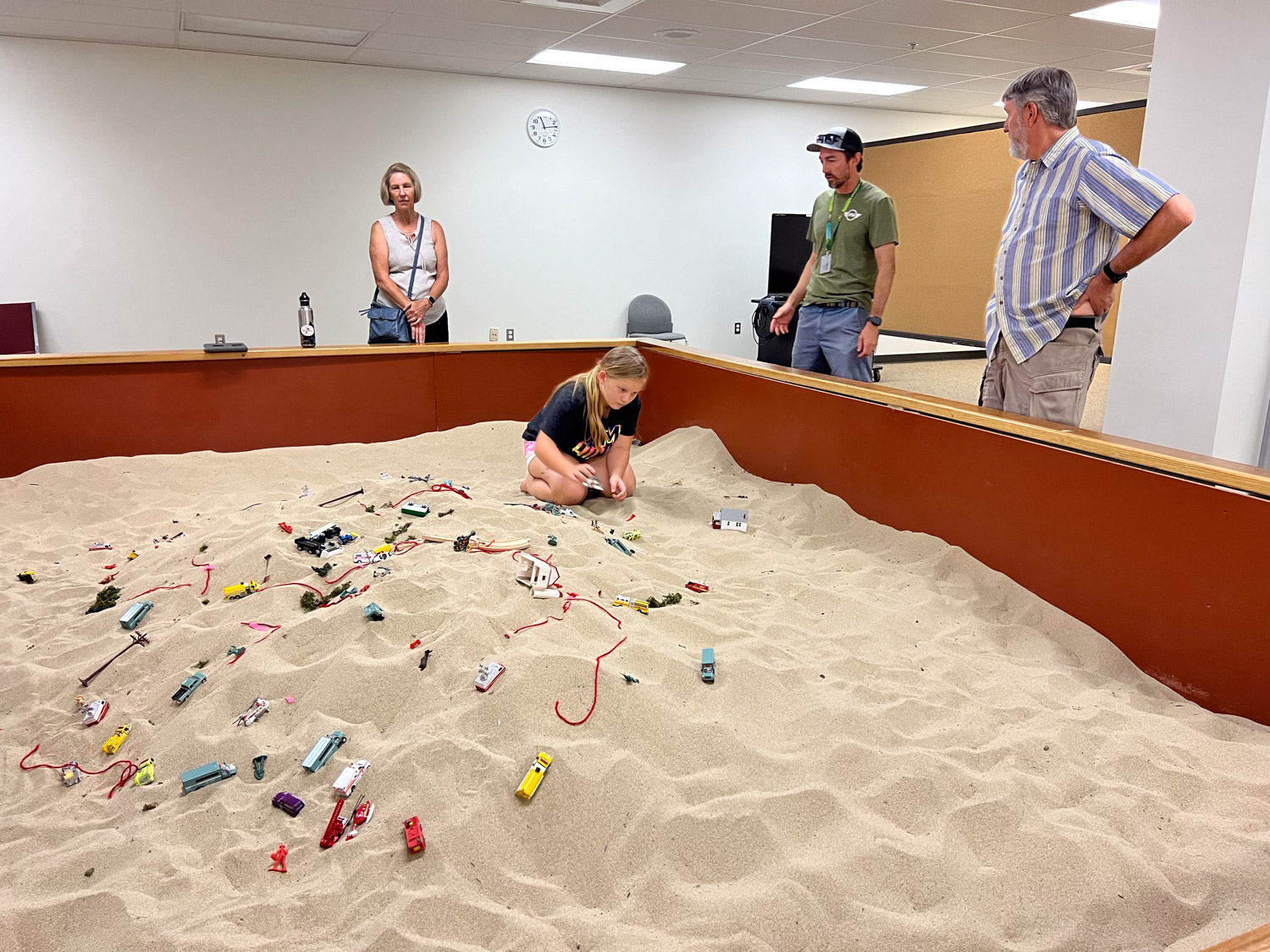
There are toy vehicles, buildings, trees, animals and more. When in use the sand can be moved to create geographic features so that firefighters can discuss fire behavior and fire fighting strategies.

After looking at the sandbox rooms we went to the simulator room. There are probably a dozen simulators for airplanes and helicopters.
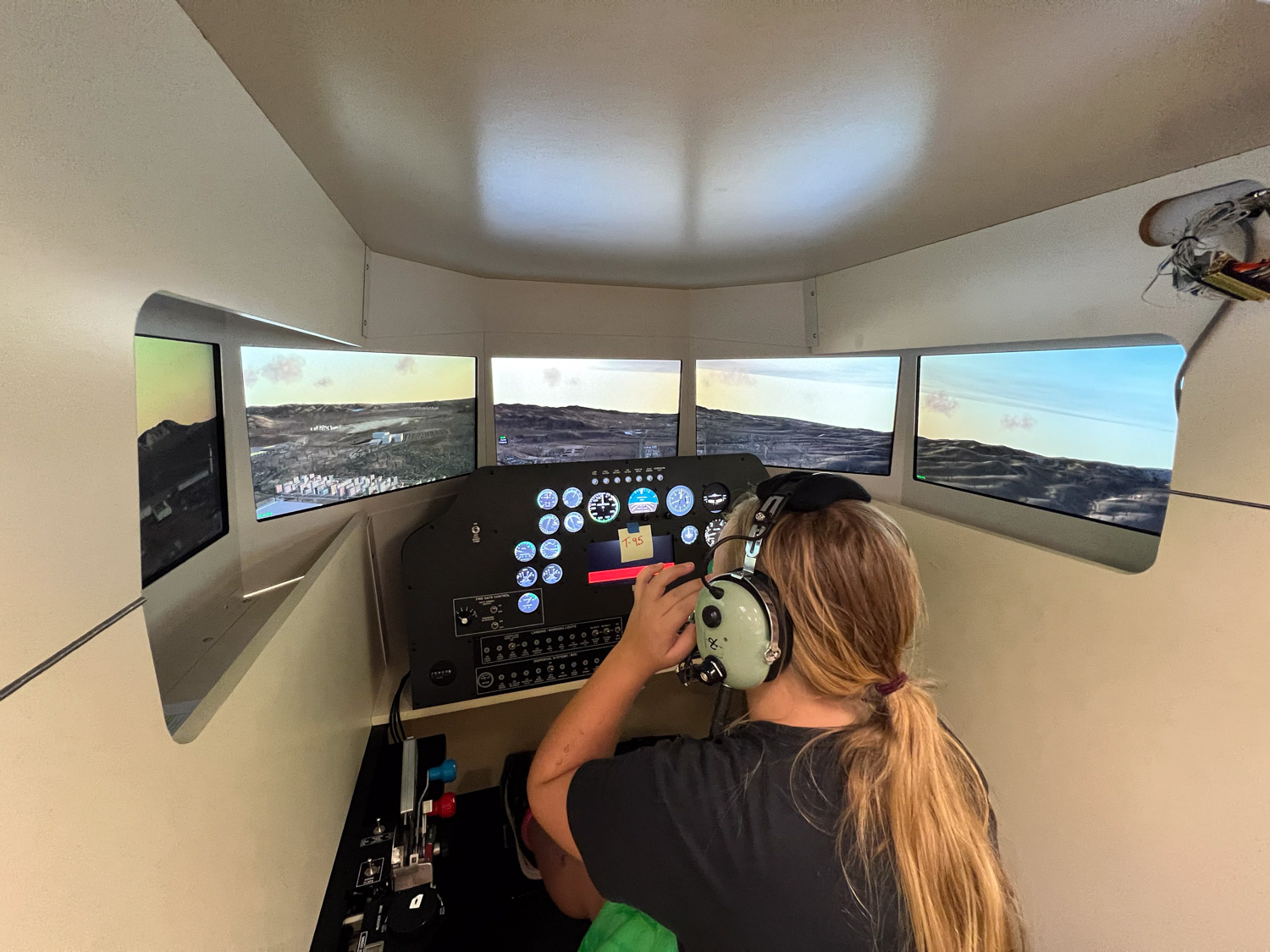
We all had a chance to try the simulator. It’s not easy.

Dan and Kirby were both in the airplane simulator here and my brother tried the helicopter. Most of us crashed numerous times and dropped retardant on unintended locations.

Interesting photos line the hallways of this building. After the tour of Matt’s building we went to the airfield and met up with a friend of Matt’s who is his counterpart working for CalFire.

We watched this DC-10 land and taxi to where it would be filled with retardant.
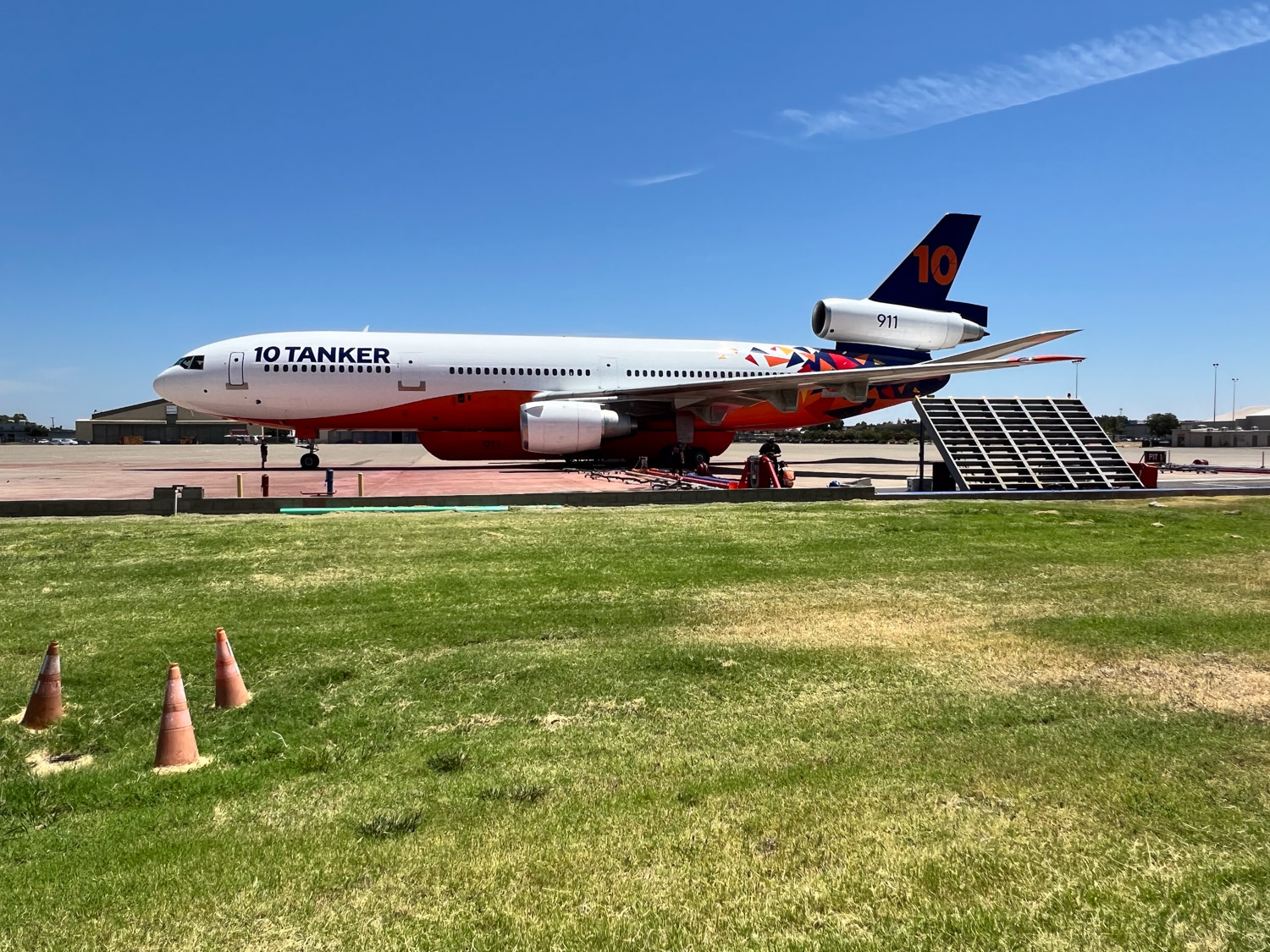
It carries 9000 gallons but can be filled quickly.

The turn-around time was just under 30 minutes. This was a few days before the Park Fire began (arson) near Chico, CA. That fire is now over 400,000 acres and is still burning. On this day this plane was working the fires in northeastern California, where my daughter-in-law was also headed that afternoon. She is now on the Park Fire as a Public Information Officer.

Cal Fire’s C-130 also landed to refill. This plane doesn’t carry as much retardant but is more maneuverable for many situations. It can also land at many more airports than the DC-10s, which need longer runways.

Retardant (mostly fertilizer) in large bags is mixed into a slurry (85% water) and then piped to where the planes are loaded. This article describes the components of fire retardant and how it is used.

This OV-10 is the favorite plane of Matt’s friend who was showing us around. These were originally military planes used in Vietnam with some being used more recently. This is used as a spotter plane and for directing air traffic as Matt does in the helicopter. This plane is fast enough to also be a lead plane for the retardant drops.

This is a narrow plane and reminded me of the Cobra helicopter Matt was in until they were retired a few years ago. The pilot is up front and the fire personnel sits in back.

We saw the hangars where CalFire houses and repairs aircraft. These are just a couple of the Bell helicopters. There were several hangars but I already have too many photos in this post.

This helicopter was called a Blackhawk when used by the military but is now set up for civilian use and CalFire calls it a Firehawik.

Our last stop was an old air traffic control tower, shown in the photos of the DC-10 taxiing and taking off, that Matt’s friend uses as his office. Here is his view.
This was an extraordinary tour and I appreciate the time spent by Matt and his CalFire friend in showing us around.
 Meridian Jacobs' Blog