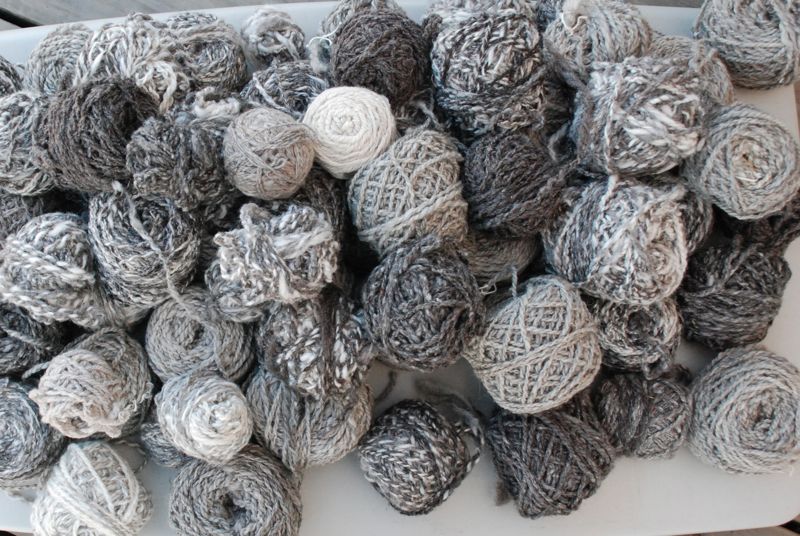
Did a box of yarn explode in here?


You may have seen this photo on Facebook (by the way if you didn’t see it on FB you can “like” Meridian Jacobs), but you didn’t see the rest.DSC_2795This is a stack of 19 blankets that I just finished. There is still warp on the loom, but I needed to get these off the loom (and I needed to give my shoulder a break–now it’s the right one giving me trouble). My daughter will choose one when she is here this week and the rest will go to The Artery for sale.  They are also on my website.

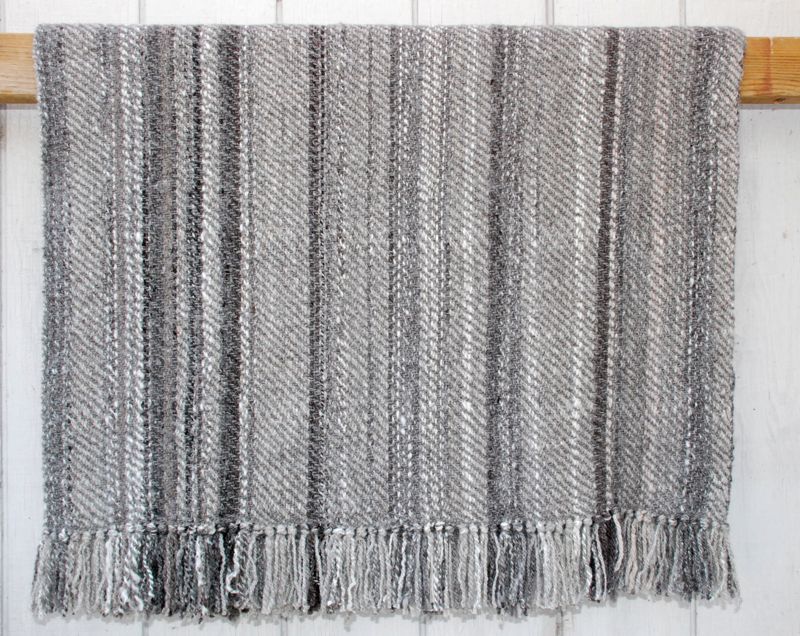
So here is what some of them look like:861-6 861-7 (1) 861-8 (1) 861-9 (1) Camo anyone?861-13 (1)baby blankets on loom

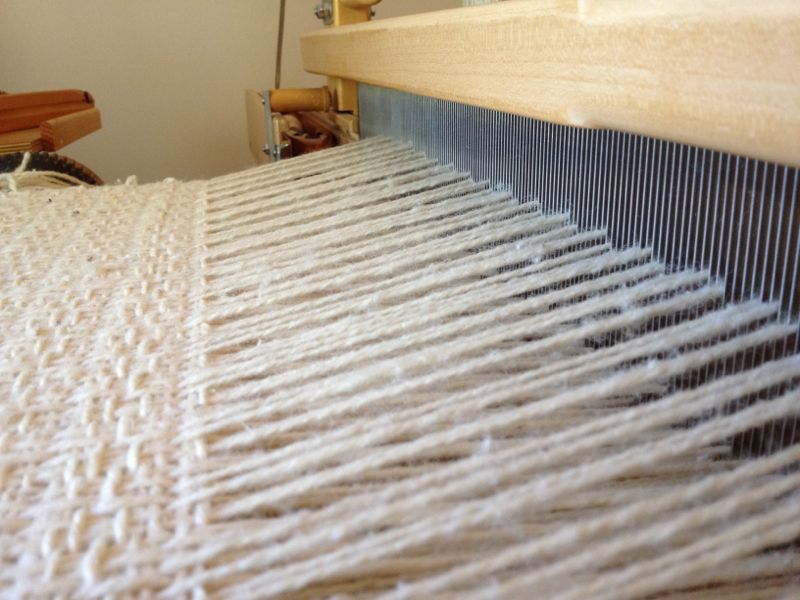
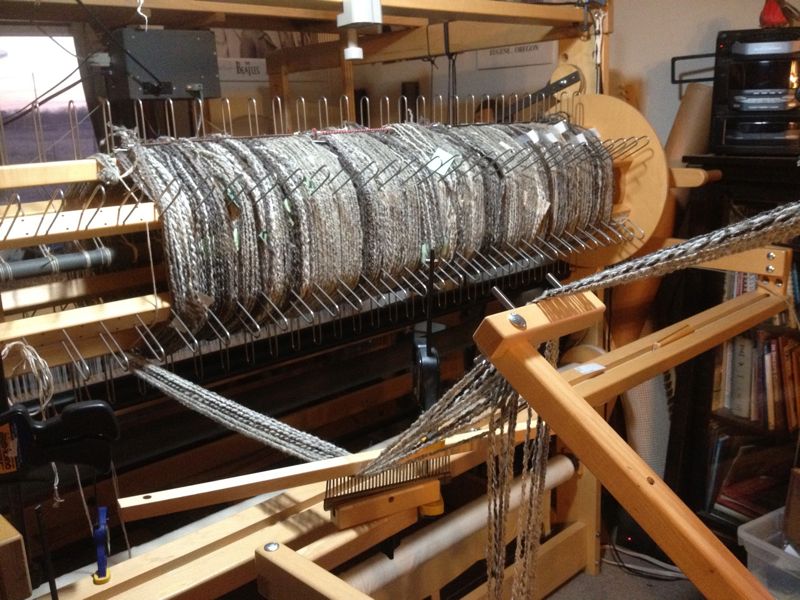
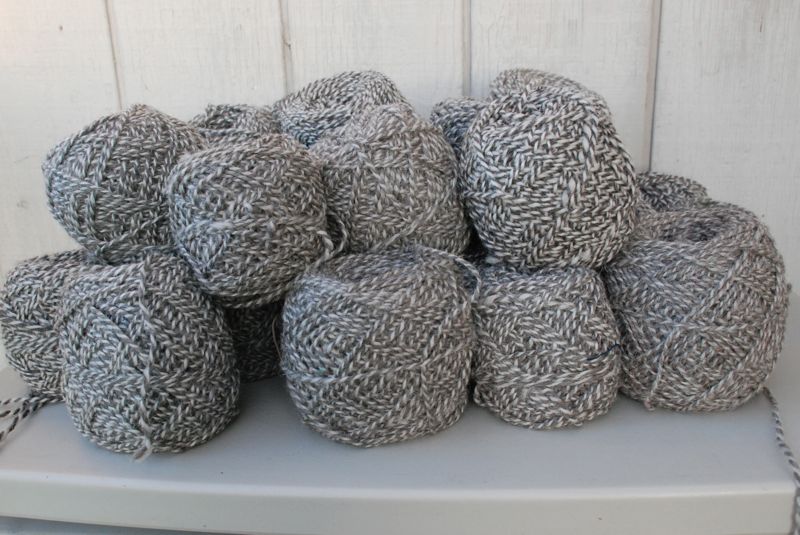
This is what the cloth beam looks like while I’m weaving.Baby blanket yarnAnd here is the floor behind the loom.

At the Loom

It hasn’t been all hiking and lambing. I’ve been at the loom too.King size blanket This is a king-size blanket I wove for a customer who had their llama/wool yarn spun at Yolo Wool Mill. I also wove 2 throws for this person. 859-1, 859-4These are two lap blankets woven of wool from sheep at the Barinaga Ranch, a sheep dairy in Marin County.859 Lap blankets-AWBThis is a close up of all four blankets on that warp. The brown weft is Jacob wool dyed with black walnut. I’m always trying to get better photos. The photo above is shot on AWB (auto white balance). The one below, shot on the cloudy setting, isn’t that much different, although on my computer the AWB photo has more of a bluish cast.859 Lap blankets-cloudy

But look at the next one.859 Lap blankets-shade  The white balance was set to “shade” which is where I took the photo. What is reality? I think it’s closer to the top two.860-2, 860-3-AWB I just finished a warp for three shawls. This is CVM yarn in the warp with different locally produced weft yarns.  860-2, 860-3-cloudy Same shawls with white balance set to “shade”.Shawl detail Detail of shawl on the left.


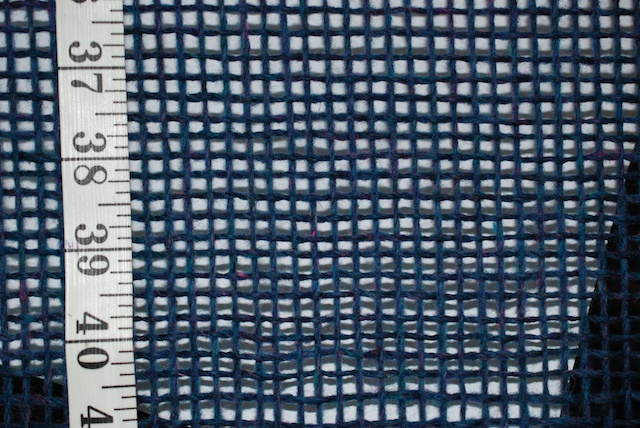
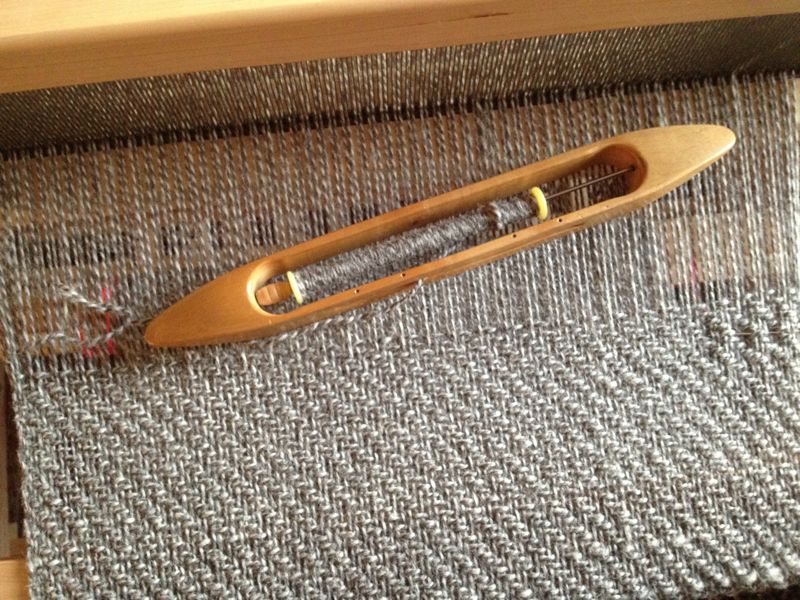
Imperial yarn, Columbia This is on the loom now. An experiment. Hopefully all those holes will fill in when it is finished.

The pieces above will be for sale on my website and at the Fibershed Marketplace after our photoshoot that is in a few weeks.

Catching up in the Shop

I spent the weekend demonstrating weaving at the Sacramento Weavers and Spinner Guild annual Open House. I knew that if I was going to spend two days there I needed to get something useful done. I wove two more of the scarf warps from the Box of Chenille to end the weekend with six new scarves. Chenille 855These are three from one warp.yarn-bombed bike at SWSGThis is a bike that was parked outside the show.Baby blankets 849 Back at the shop I have been trying to get caught up on weaving jobs. This is part of a baby blanket warp. I cut these off before I finished all of the warp because I had someone waiting for three of them. DSC_8454  I finally finished these cotton blankets that were on the loom a long time. Some are baby blanket size and some are larger for throws.  IMG_8902The next project to finish is a custom king-sized blanket woven of yarn that is a blend of llama and wool. I finished getting this on the sectional beam last night  and started threading it today. I hope that I can finish it by next week and move on to the throws for this customer.


Fixing a Big Mistake

My largest loom is 60″ wide. A queen-size blanket is supposed to be about 90″ wide. When I weave a large blanket (full or queen size) I use double weave. This means that I weave two layers of cloth at the same time and they are connected on one side. When the blankets comes off the loom I open it up and it is double-width.

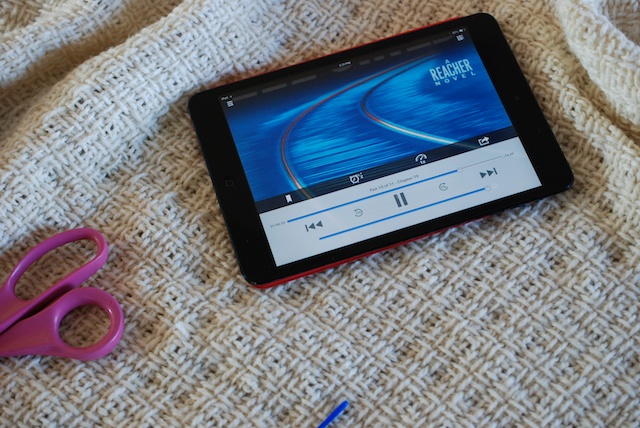
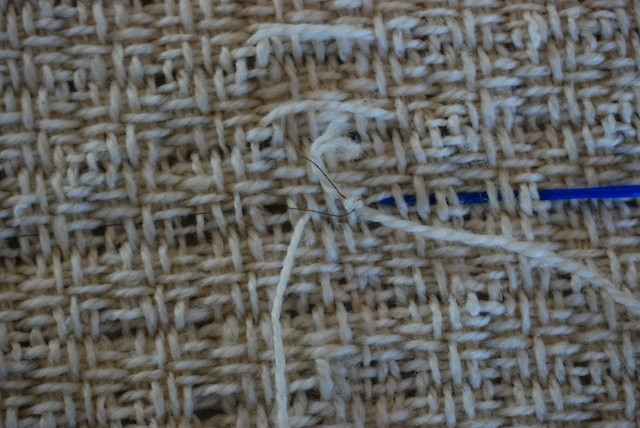
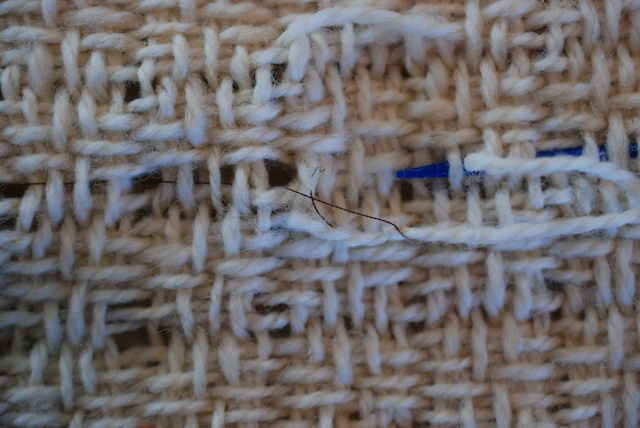
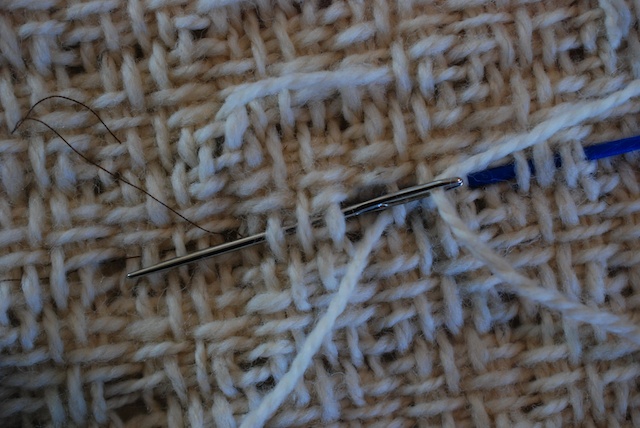
Sometimes things don’t go as planned. Here is an example:DSC_8050 That is a big OOPS on the underside. (And that wasn’t the only one on this warp of two blankets. In fact some of you might notice another error that was THROUGHOUT  the whole warp.) Both of these errors were fixable–it just takes time…and patience…DSC_8052 …and a good audio book. Here is how I fixed the most obvious error (all those skipped warp threads).DSC_8053 I knew that I could pull the warp threads out and needle weave them all the way back to the end of the warp (about 30″ I think). I found the correct path above the error and marked it with a needle. It’s not just a simple over-under. I think this pattern was under 2, over 1, under 1, over 1, under 1, over 2. I really didn’t want to have to do that pattern with a needle for all of those threads. So I tied a thin thread (brown) to the warp thread (wool yarn) that needed to be rewoven and as I pulled it out the brown thread held the place. DSC_8056DSC_8058DSC_8059 Then I untied the brown thread from the wool yarn. Using a tapestry needle I wove the wool yarn over and under the correct yarns in the area where there was a skip.  DSC_8061Then I tied the brown thread back to the wool yarn and pulled it all the way through to the end of the blanket….for all those threads.  After fixing other errors the blankets were washed and they are finally in the mail. Thacher blankets

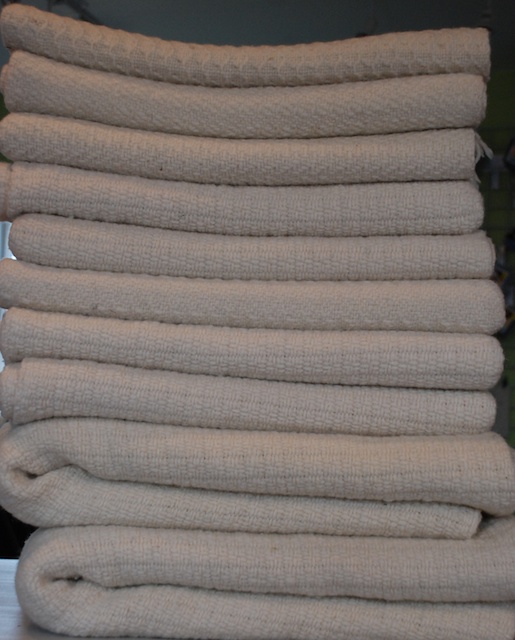
Here is the stack of blankets that I sent to the customer. There are 8 throws and 2 queen blankets (the ones on the bottom of the stack).

Weaving blankets

Here is a blanket that has become one of my favorites to weave.

In the book where I saw this draft it is called Breaks & Recesses. I think I need to come up with a different name.

I have mentioned before how much a woven piece changes after it is has been properly finished. In the case of wool that means wet-finishing or some degree of fulling. When a piece is fulled the individual threads  become less distinct as the wool fibers catch on each other and the piece becomes cloth instead of  a bunch of separate threads. (Fulling is an irreversible process that needs to be controlled–picture a wool sweater that goes through the washing machine and dryer.)
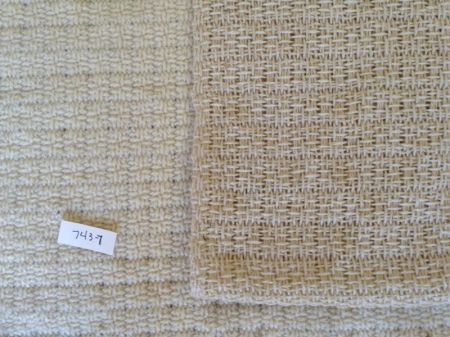
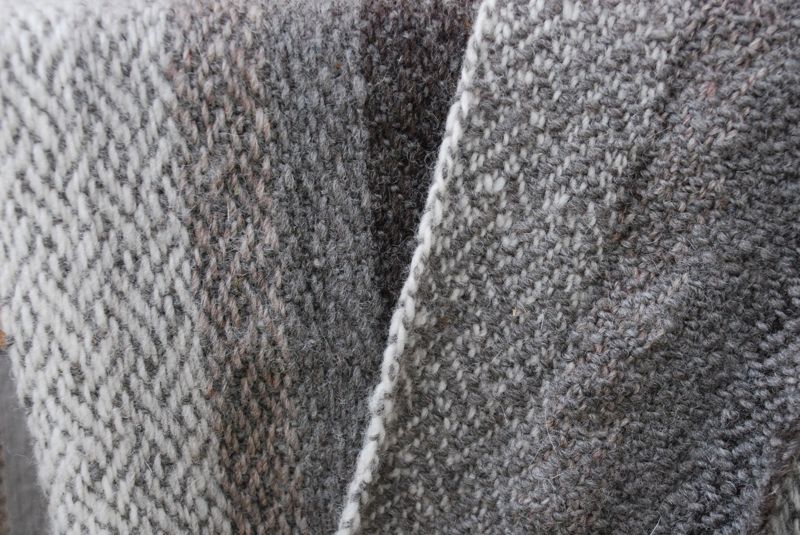
This is a dramatic example. The blanket on the right is the same draft and using the same yarn, but it has not been finished yet. This yarn is one that was mill-spun of wool from sheep at the place where I used to go for sheepdog training. The yarn feels harsh and oily, but it softens beautifully when fulled.

A custom blanket customer saw a similar blanket and wanted me to weave her a queen size blanket using this pattern. “Sure”, I said. “No problem.”

I use double weave to weave a queen (84 x 90) blanket on a 60″ wide loom. That means that I weave two layers at a time with a fold on one side.  I have to allow for take-up and shrinkage (part of that is the fulling I described) so this blanket measured 54″ wide on the loom (double–opened up that would be 108″) and I planned to weave 100″ in length. A lot of this is educated guessing based on previous similar projects.

This pattern is woven on 8 shafts. To weave a double width blanket I used 16 shafts, 8 for each layer. First I had to figure out that part. None of this will make sense if you are not a weaver and I didn’t intend for this post to be an explanation of all the steps. One of these days maybe I’ll do that, but not now.

This looks nothing like the pattern in the finished blanket. That’s because in this draft every other horizontal and vertical line is the opposite layer (odd numbers are the top and even numbers are the bottom). When I buy new software it will be something that will show me the top and bottom layers.

When I finally started weaving the blanket I knew that something wasn’t right, but I had a hard time figuring out exactly what it was. I used a mirror to see the lower layer but I had to go back to the book and the computer to see that I had reversed some of the squares in the draft.
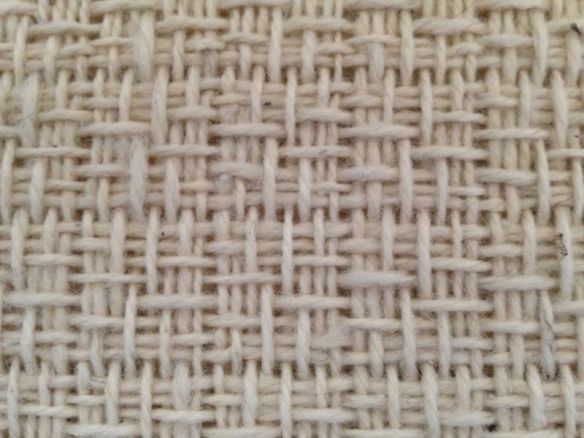
Here is a close-up of the top layer as I was weaving.

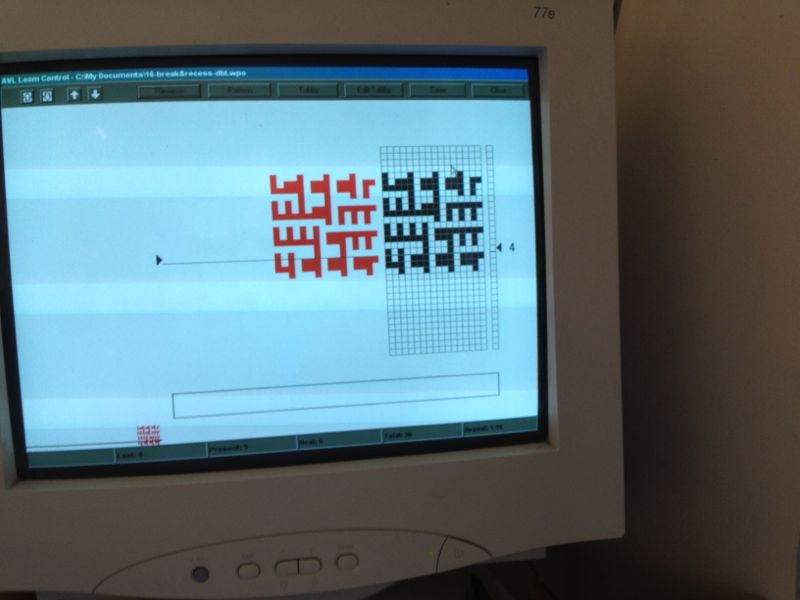
This is what the computer looks like as I am weaving. I have what is called a compu-dobby and the computer drives which shafts lift, although I do all the work.
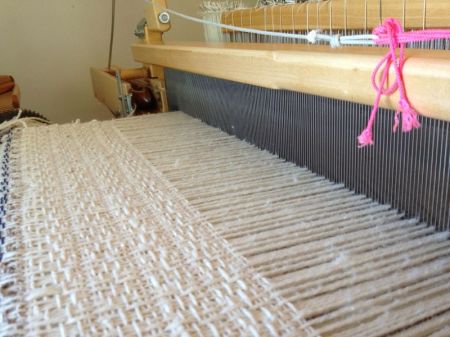
See the shuttle at the other side of the loom?

As I step on the treadle certain shafts lift so that the shuttle can carry the yarn in between the threads.
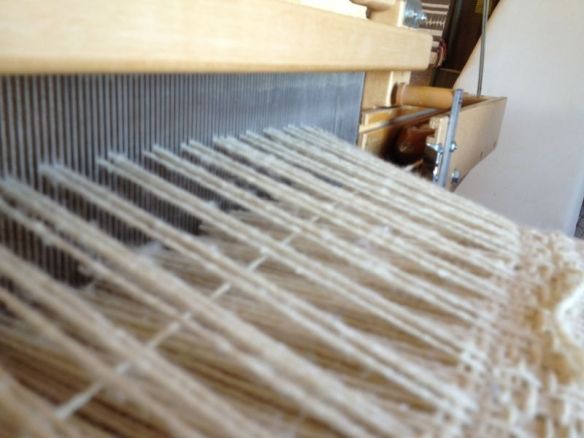
This is after the shuttle has gone from left to right and is now on the other side.
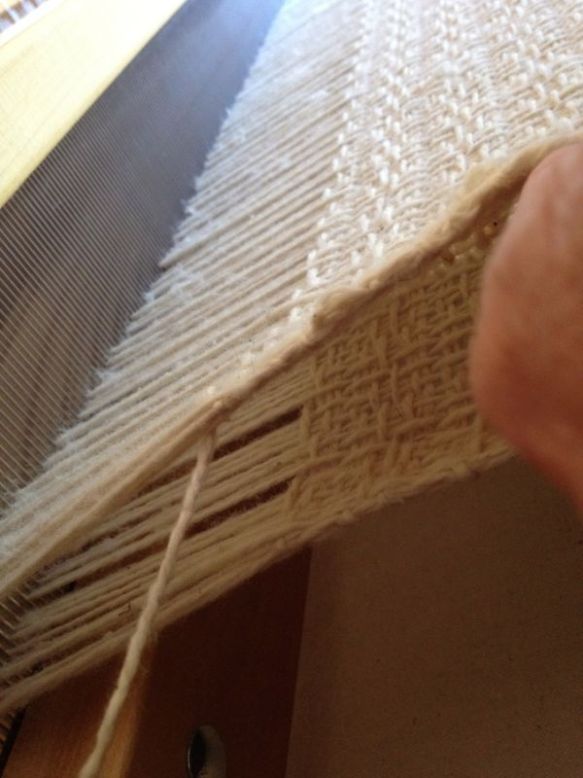
This is a view of the left side where I can separate the layers. The fold is on the right.

I finished weaving this blanket today and am working on correcting a few errors. Then I will have to crochet the edges before I full it. I should take photos of these processes and report back.
 

I finished 7 throws last week. Friends who saw them before washing tried to be polite but were un-impressed and maybe even shocked at how awful they looked. I used some yarn that had been spun several years ago at a mill that (I assume) uses a lot of spinning oil. The yarn on cones looks and feels like string that you would buy at the hardware store. The resulting blankets off the loom look and feel as though I wove them with string from the hardware store. Also, I wove them at a wide sett knowing that they would full.

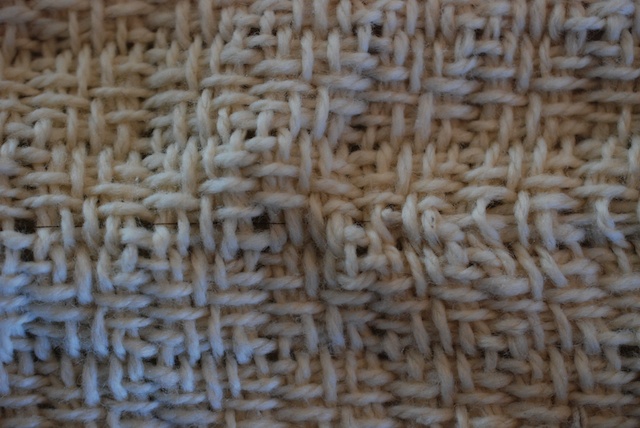
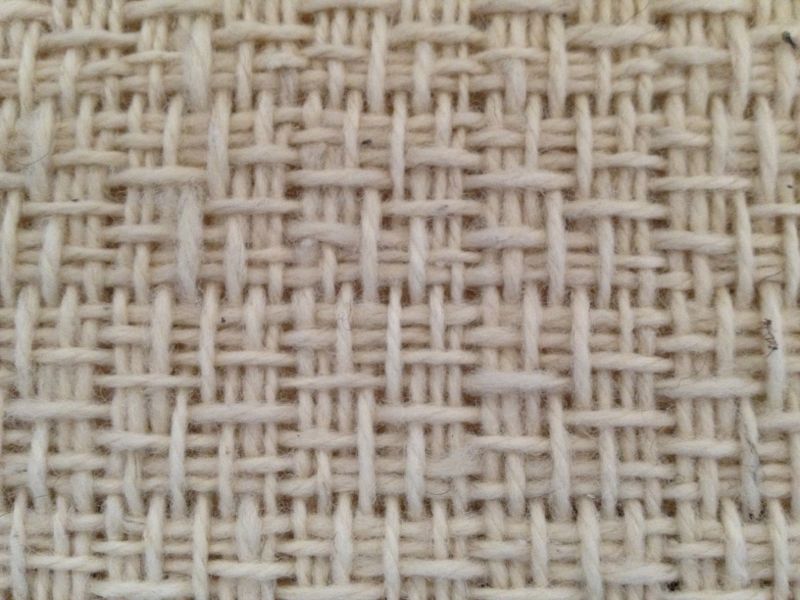
See how open this is. You can easily stick a finger or a toe through this. And a cat would pull those threads and destroy it.

A trip through the washing machine to full (Not the way to wash a finished blanket–to do that see my instructions here)…

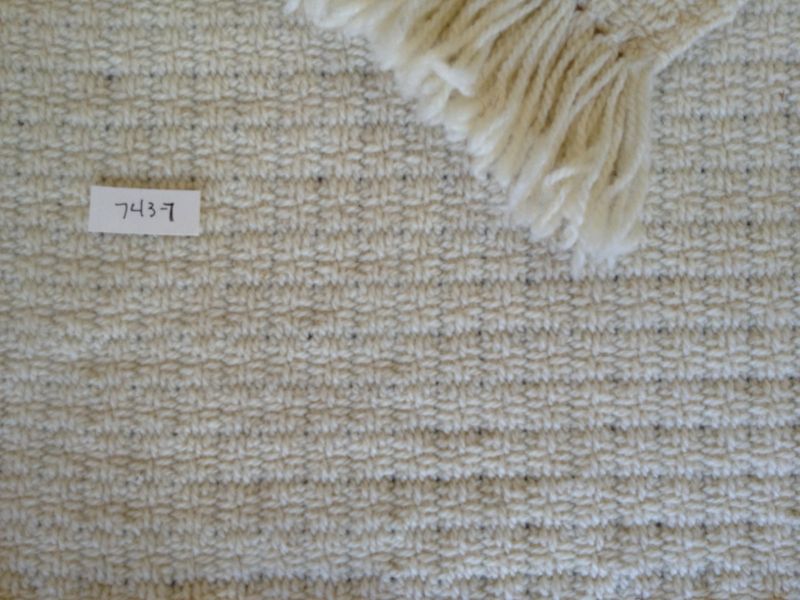
using Power Scour (normally for raw fleece, but this yarn was very greasy) changed that blanket into this:

Here is another before and after:

And another:

One of these blankets is a gift to the person from whom I got the wool several years ago. I’m sure she doesn’t see this blog so it will be a surprise until tomorrow when I take it to her. This blanket includes her dog hair that I washed and spun:

Here is one with Jacob weft:

All 7 blankets:


Using Yarn

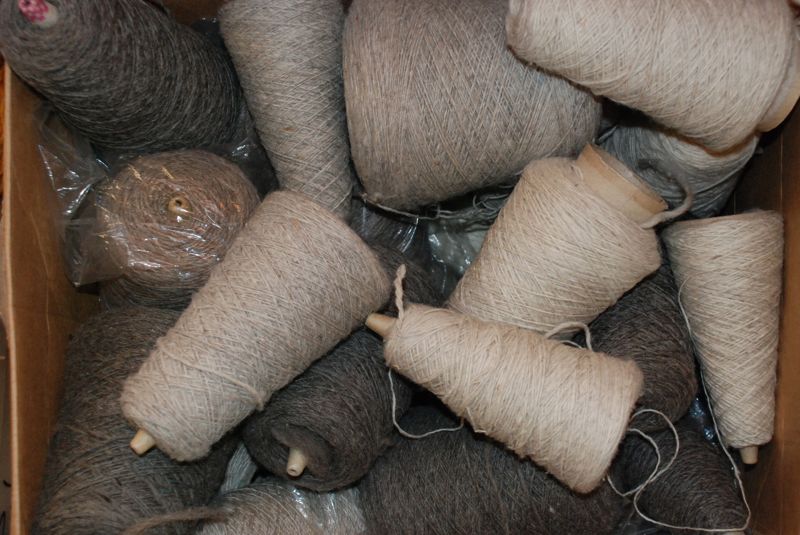
There is a photoshoot next week for the Fibershed Marketplace and I have wanted to get some new items ready for it. I have boxes of yarn that I have intended to use and have just never got to. Now is the time. In fact, my goal is to use up all of these boxes by the end of the year.

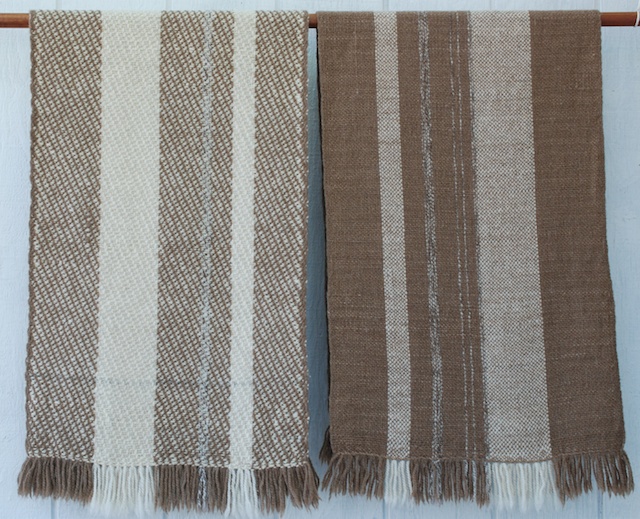
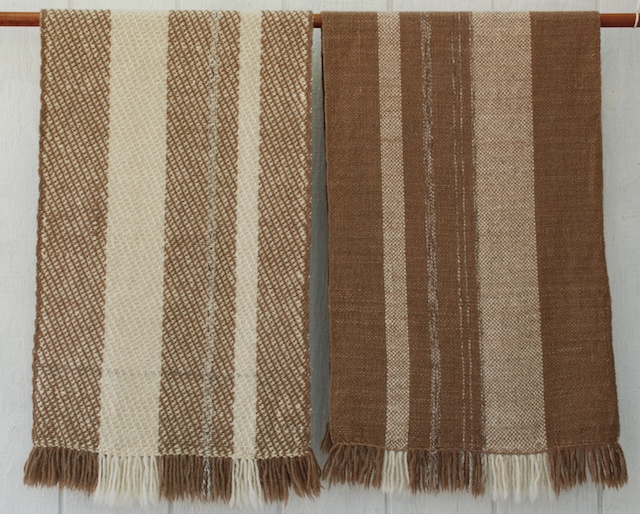
First box–Single ply Jacob yarn spun years ago at Yolo Wool Mill.

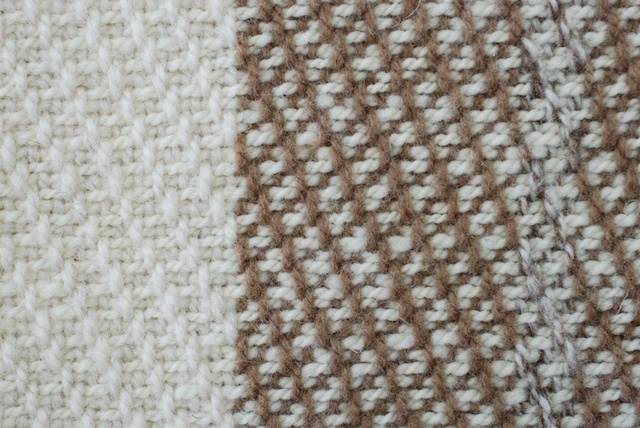
Three scarves in a plaited twill. They feel nice, but have a few issues. They curl at the edges because this is an unbalanced twill–warp emphasis on one side and weft emphasis on the other. Besides that the center stripe turned out to be something else. It probably has some llama fiber in it–it has less elasticity than the rest so it puckers. Are these design features? It serves me right for keeping yarn for so long that I don’t remember what it is.

Second box. Full of funky, slubby, heavy handspun yarn, mostly spun by my mom–that means it was many years ago. It will make wonderful throws.

Here it is going on to the loom.

I wove two blankets using the handspun as warp and the finer singles yarn from the first box for weft. Handspun yarn has such a nice feel to it–I don’t think you can duplicate that with millspun yarn.

Third box–heavy 2-ply mill-spun Jacob yarn.

On the loom.

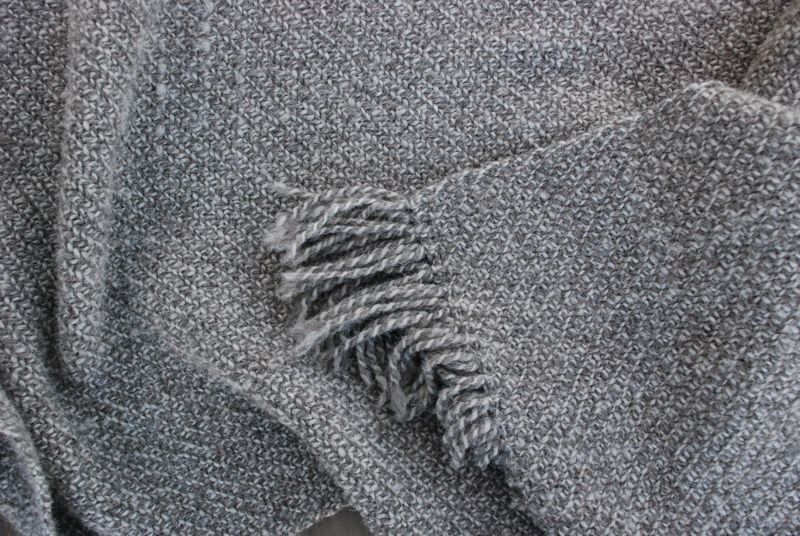
I was going to make ponchos, but I took this off the loom and decided that it was a great shawl (and if it was a shawl it was finished–no cutting and sewing). It is very soft with wonderful drape.

Three boxes started. I haven’t counted how many more to go.


Custom weaving projects

Here’s a look at what I am doing in the weaving studio.

These are the yarns for a wedding shawl for a friend’s daughter. This will be a random mixed warp in a lacy light weight shawl.

My son’s girlfriend chose these colors for her chenille scarf.

Llama rug that I finally got off the loom awhile ago. I think that most people don’t usually wash rugs, but it still has a llama smell so I plan to wash it. I’ve been waiting for a hot day so it will dry outside.

This is the roll of 3 full-sized blankets woven in double width broken twill. I have cut them off the loom and now need to crochet edges on all of them.

Tired of twisting

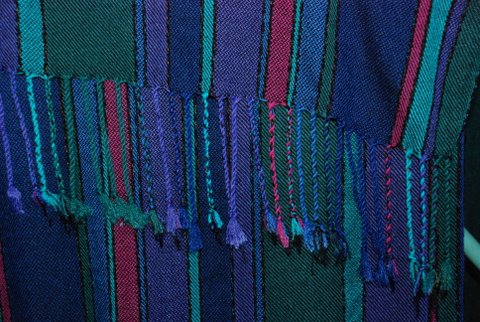
We’re setting up the Artery show on Thursday so instead of weaving all day I twisted fringe all day. I don’t particularly like twisting fringe, but I think that most of the things that I weave are best finished with a twisted fringe.

This is a shawl woven with fine bamboo yarn. If I leave the fringe loose it will get hopelessly tangled in use. Also, the bamboo yarn seems to separate into it’s plies fairly readily. So twist it is.

When I weave wool blankets I count on fulling them in the finishing process ( agitation in hot soapy water). The threads become somewhat attached to each other and the whole thing becomes a cohesive unit instead of a bunch of intertwined threads. That is not the process that you want for loose fringe. Twist again.

The green and brown blanket has already been washed. This light blanket (inspired by clouds in a painting of the Sierras while the green one represents the forest) has not been washed.

I wove this ruana fabric a few weeks ago but hadn’t twisted the fringe. Even though I had woven a lot of items I had hours ahead of fringing. Now I think I have just one shawl left and the scarf that I’ll finish tomorrow.


Still weaving

I haven’t written about weaving lately, but I’m still working at the loom. I have orders from 3 regular customers for 9 baby blankets. I just finished a warp with 10 blankets.

Last week I finished an order for wool throws. This customer had her yarn spun at Yolo Wool Mill and wanted 5 different blankets. Sometimes it is necessary to add a lot of spinning oil to the wool during processing. The yarn isn’t very appealing in that state, but woven blankets aren’t truly finished until they are ‘wet finished’. In wet finishing  the  oil is removed and the blanket is fulled. Take a look at the before and after photos of these blankets.

I calculated a sett of 5.5 epi. I used a 6-dent reed and left every 12th dent open. After I started weaving I worried that you would see that empty space in all 5 blankets and that would distract from the woven pattern. I didn’t need to worry.  In the photo below you can sort of see that line, but when you see the blanket you focus on the diagonal twill and don’t even notice the vertical line.

Above is the before and after of another twill blanket.

Plain weave. Before fulling is above and after fulling is below.

This is one of my favorite weave structures. I was concerned about the finishing of this blanket. The yarn that I got from the mill was on cones and in skeins. The skeined yarn was so much oilier than the coned yarn  it almost seemed to be a different batch. You can see the difference in the photo. In fact, there was so much tacky grease that I had to pull a length of yarn out of the shuttle with every pass or my end-feed shuttle would go flying off the loom (guess that’s because I have a fly-shuttle loom!) because the yarn wouldn’t feed out properly. I was relieved after I washed the blanket that there was no difference in the fulling of the two yarns.