Grazing in December

The title is significant. I don’t know that we have ever grazed into December. There wasn’t enough feed and the ground was too soggy. Now we have lots of green feed and need to keep the sheep eating it. The downside is that the rain seems to have stopped and we will need more.
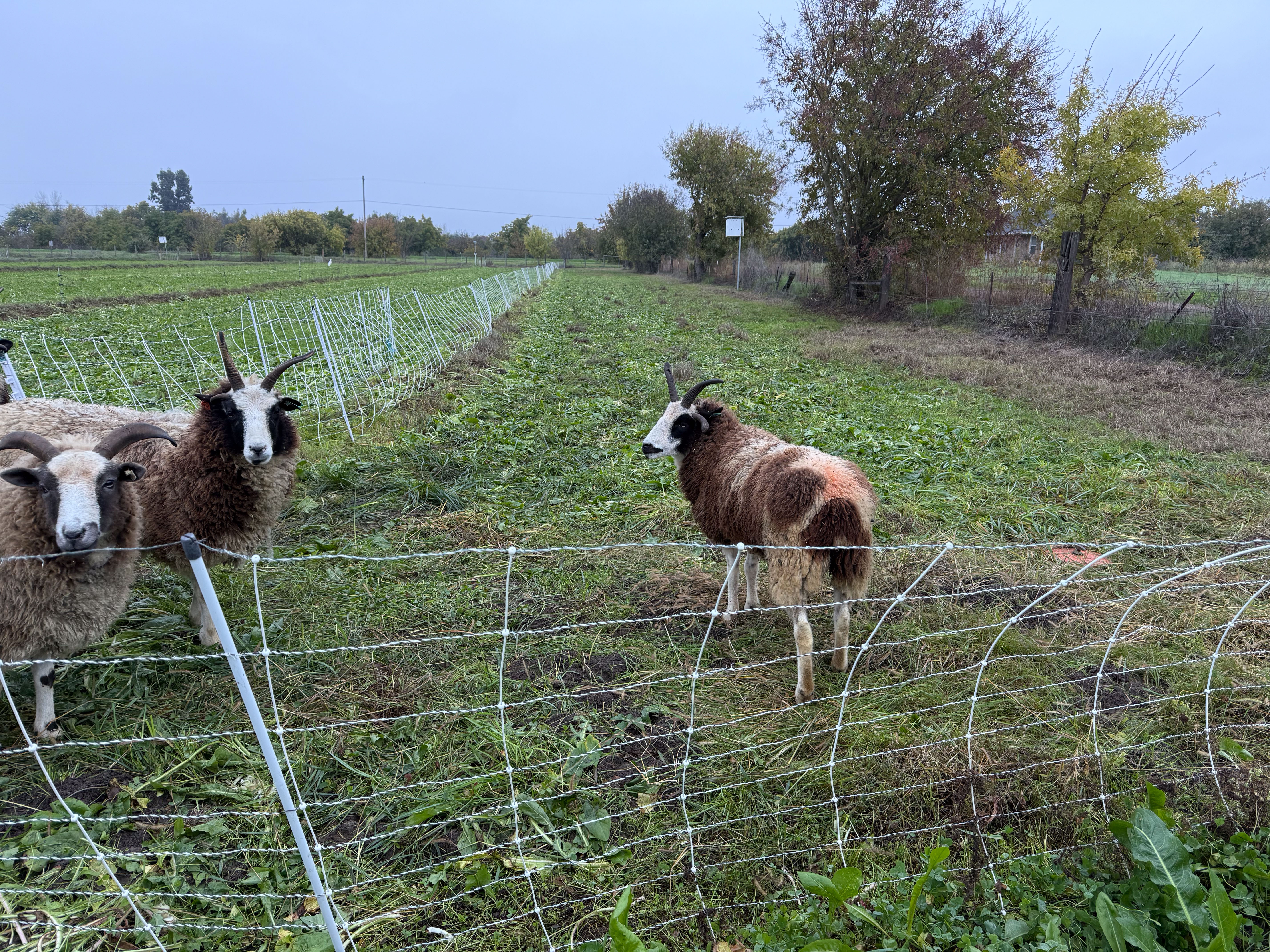
Three Jacob sheep standing in grazed field with net fence as the border.

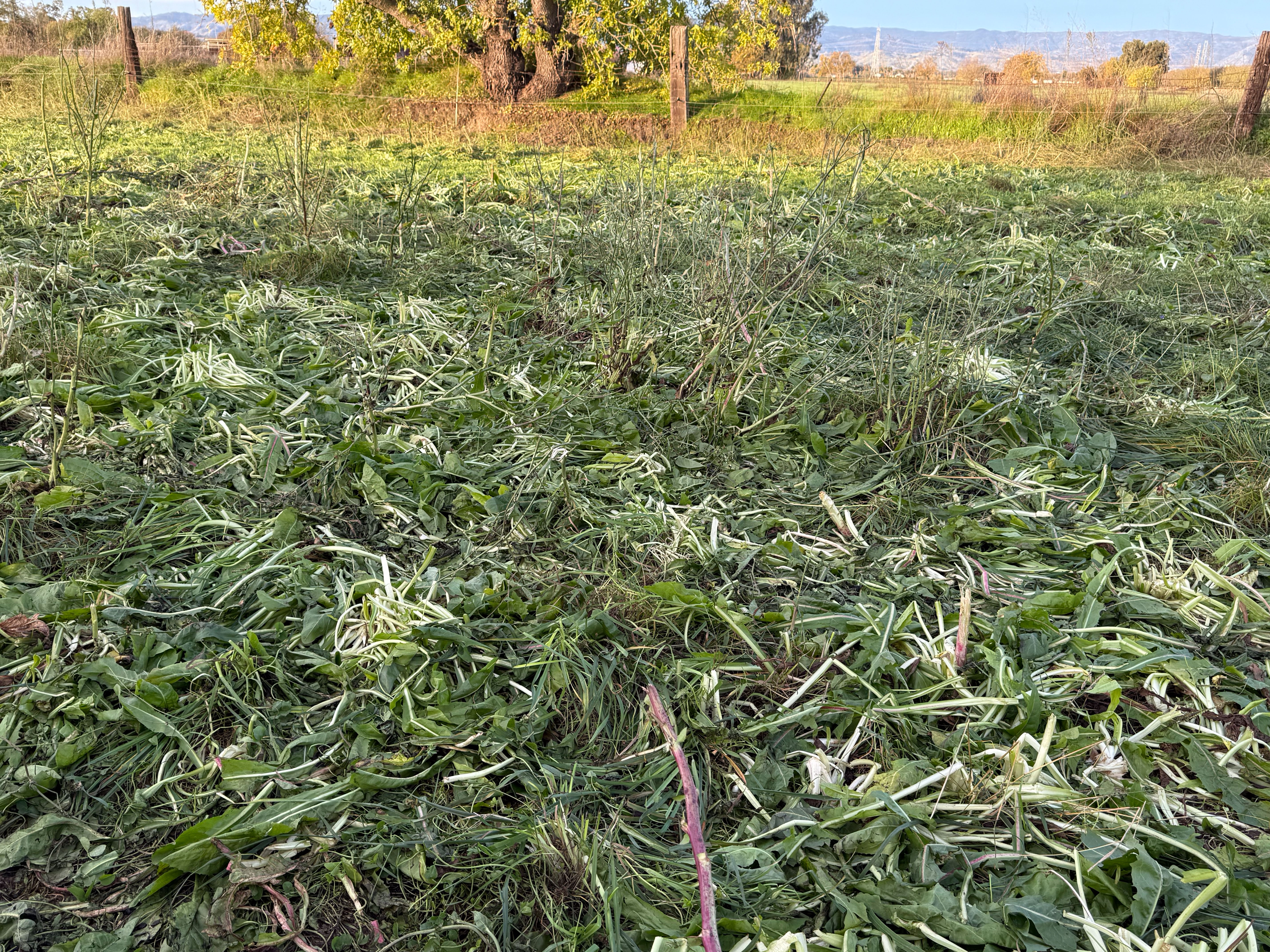
This is Paddock #1 (west property line) after two days of grazing.
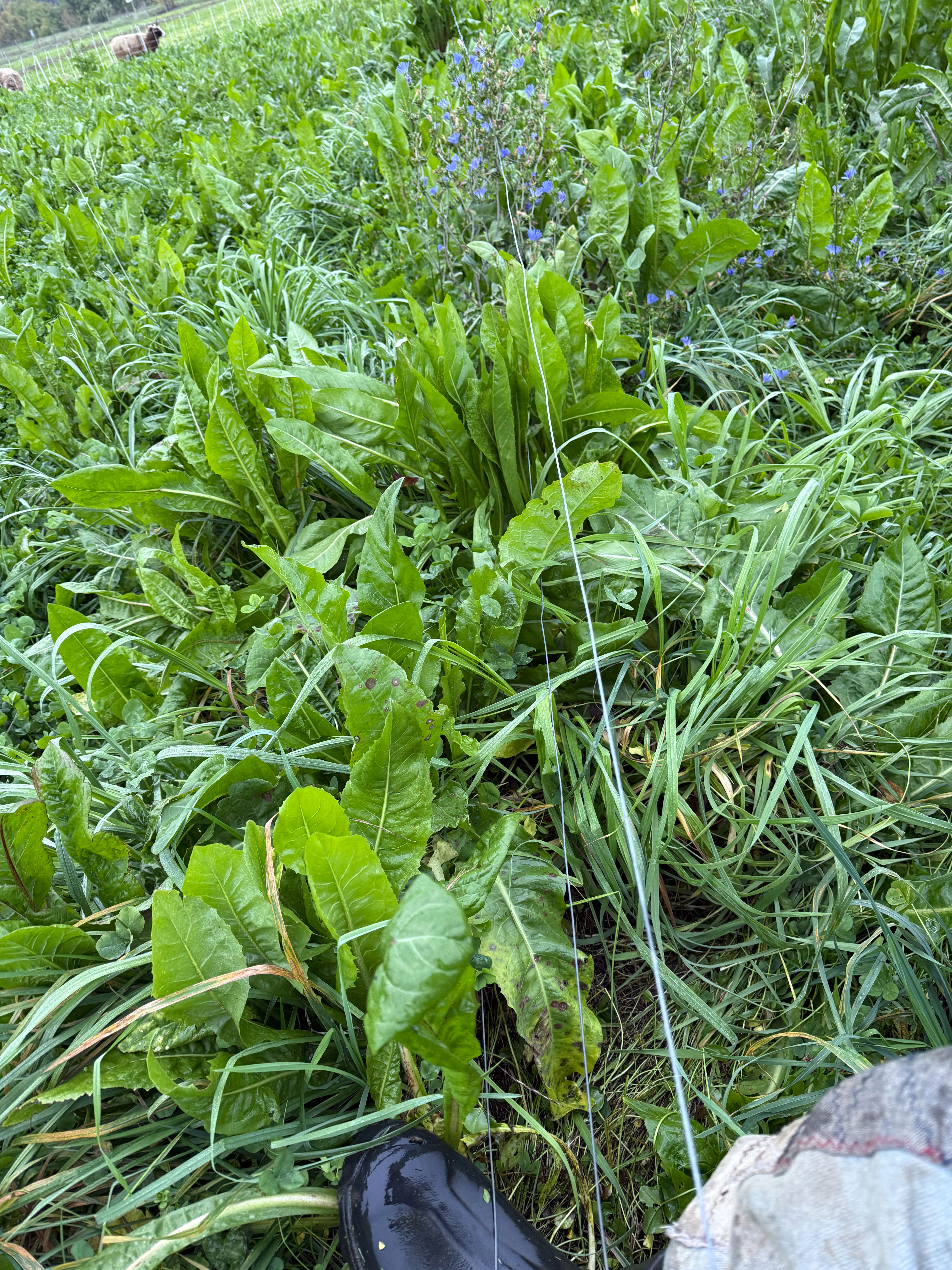
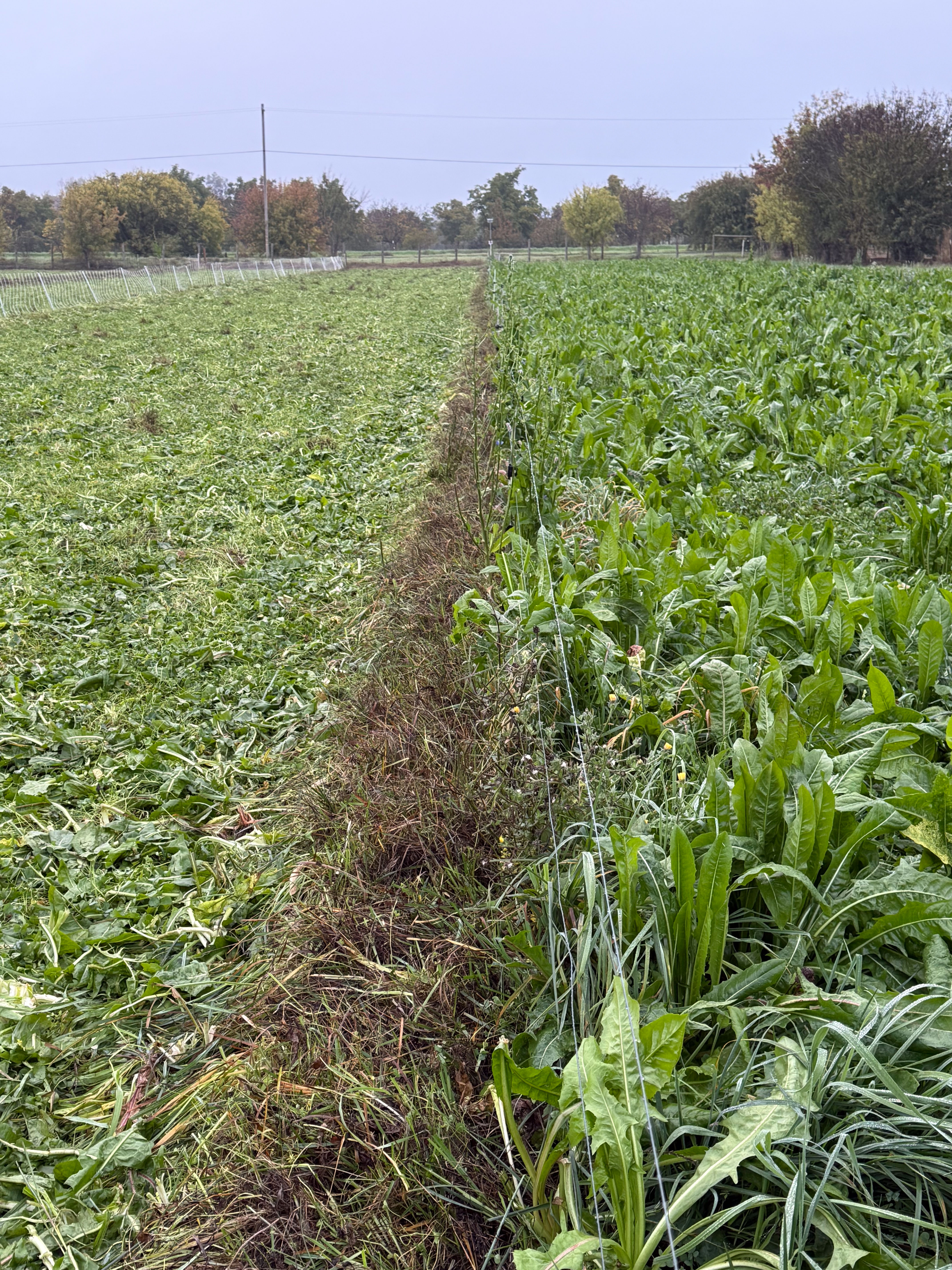
Thick tall chicory and grass covering the bottom wire of a 3-wire fence.

This is Paddock #1 North, just across that fence. Notice that my boot is under the bottom wire, but it’s pretty well buried in foliage. I walked along this stretch of fence to clear that bottom wire.

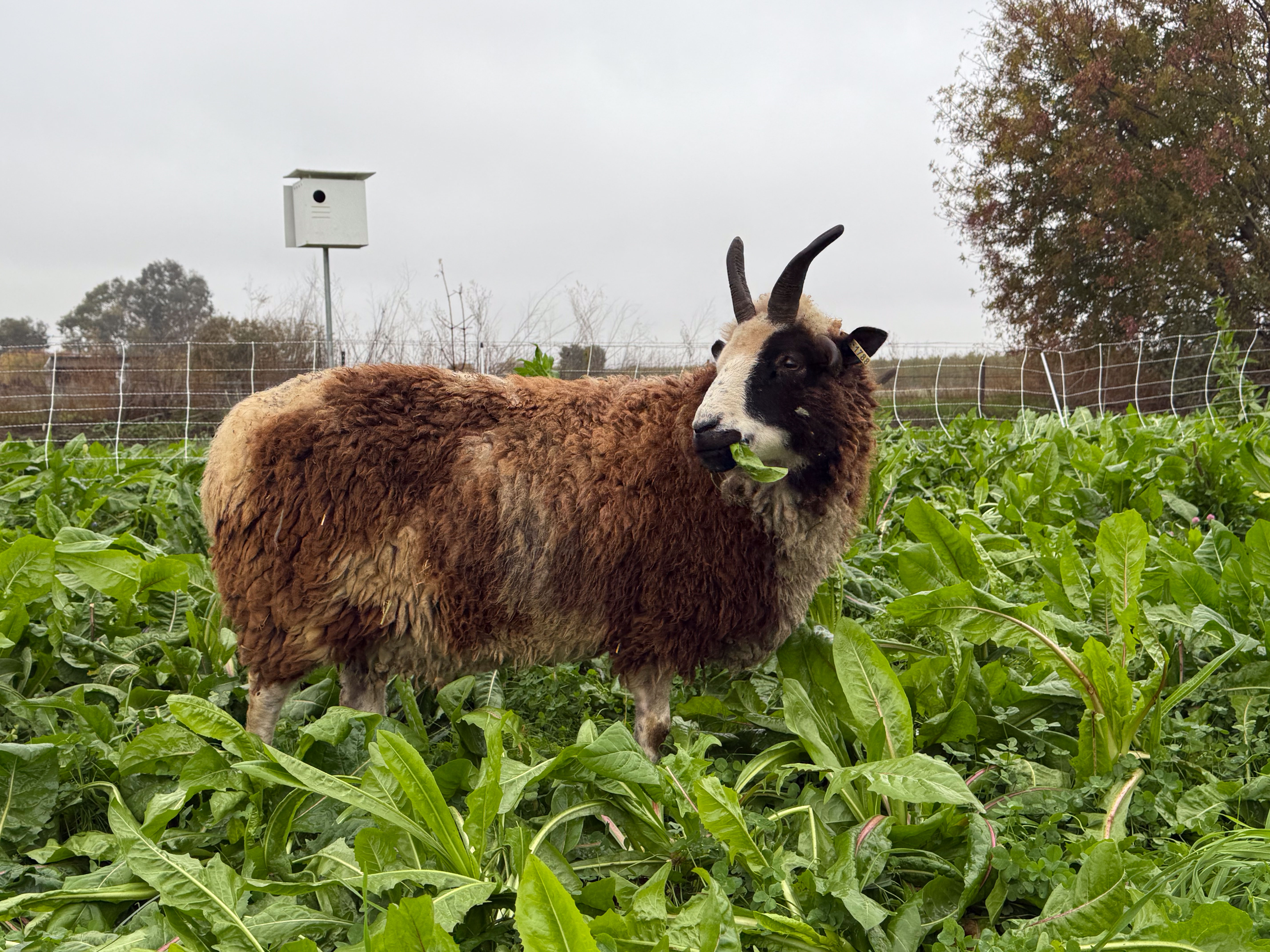
Jacob sheep eating leaves of chicory in green pasture.

Happy sheep.

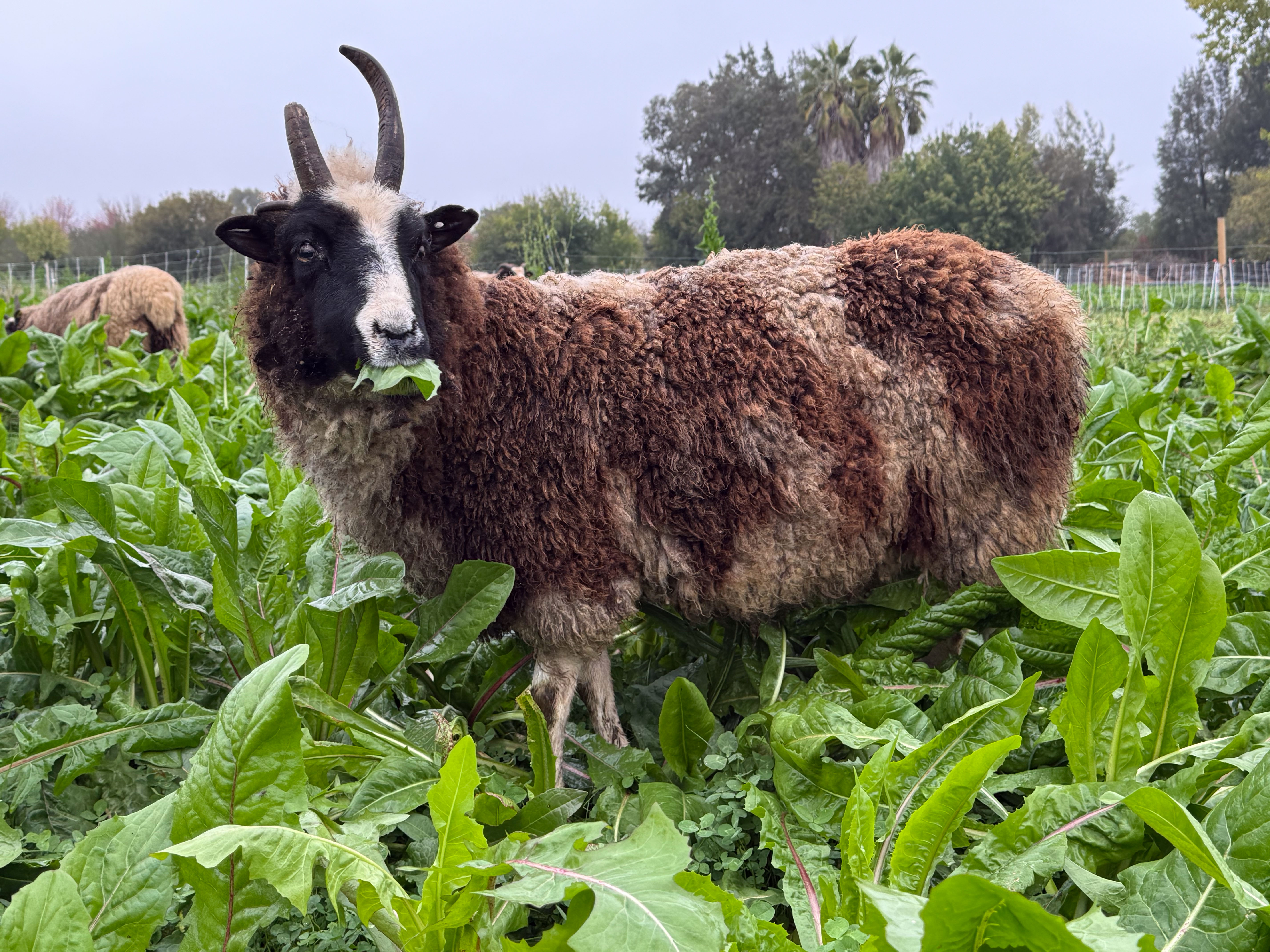
More happy sheep. The last time we grazed this paddock was three months ago on September 1.
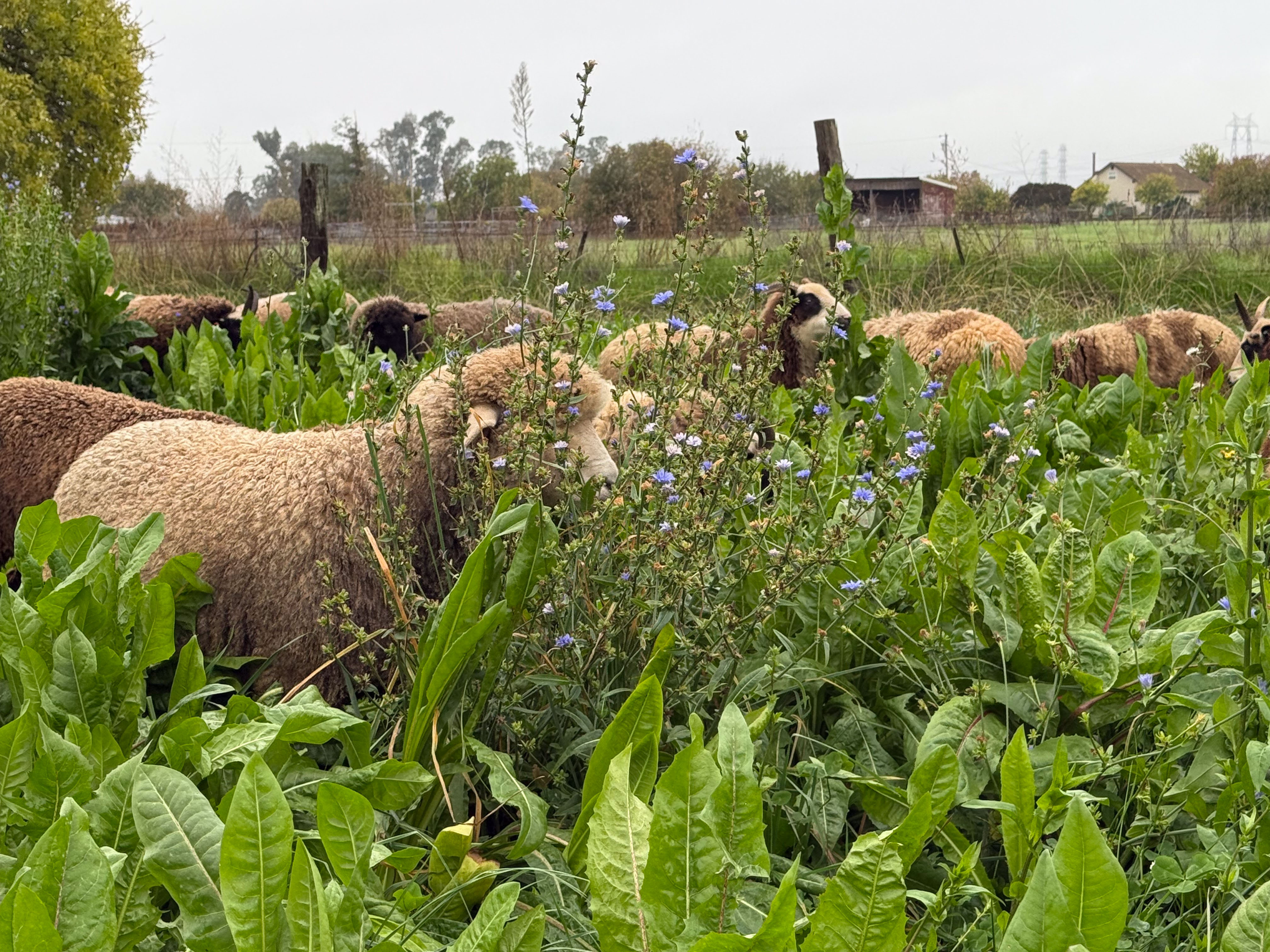
Sheep eating chicory leaves in thick pasture.

The big leafy plant is chicory and so is the one with blue flowers. It took me a long time to accept that they are the same plant.

After looking it up online I found:
“Forage Chicory: Perennial broadleaf. Up to 18” (flower stalks up to 6′). Tap-rooted broadleaf perennial with bright blue flowers suited to well-drained moderately acidic soils. As annual or perennial forage: well-managed stands may persist 5 years or longer, but also valuable in annual stands for pasture or green chop. Very high digestibility and protein levels up to 50% higher than alfalfa. Digestibility is reduced if plants are allowed to bolt, but the flowers are very attractive! Research shows reduced parasite loads in animals fed or pastured on chicory.

Green pasture plants after a day of grazing and trampling.

This photo is after grazing Paddock 1N for three days. A lot is trampled, but they were still eating out here this morning.

View down the fence line of a grazed field on the left and not grazed field on the right. Sheep were just turned into the right field.

I opened the fence to let them into the next paddock. I have video and I just spent time on iMovie after not using it for a long time. Let’s see if I can share this on YouTube. Here is the link.

Two four-horned Jaco sheep in tall grass and clover with blue sky behind.

Back to regular blogging. More happy sheep.
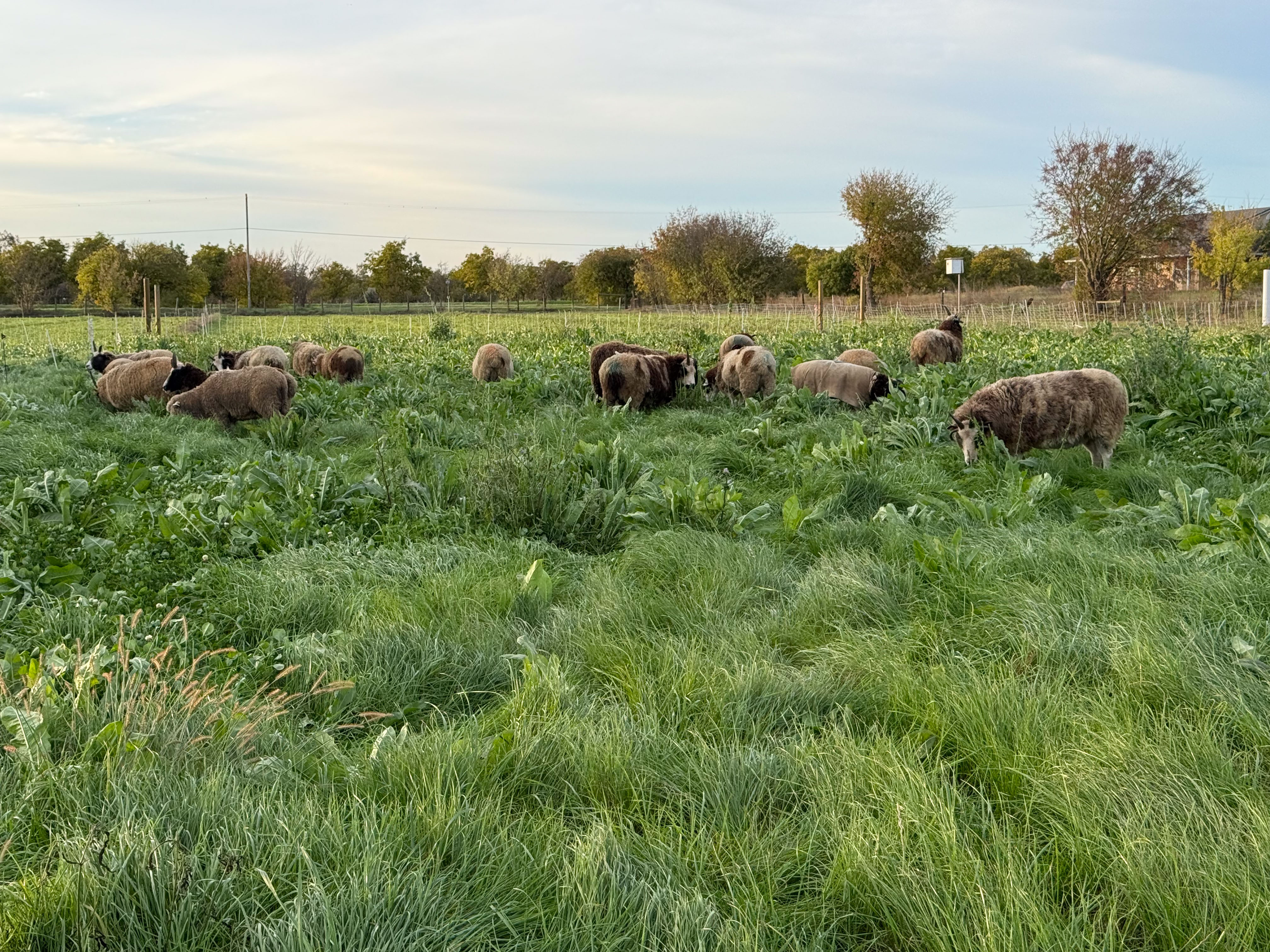
Jacob sheep grazing field full of green grass.

This view is interesting to me because this is the area where ryegrass completely overwhelmed the clover last spring. This post is one of several I wrote about that situation. If you pursue the Grazing posts you’ll see the whole story. This is good feed here, but it is patchy, more so than in the rest of the paddocks.
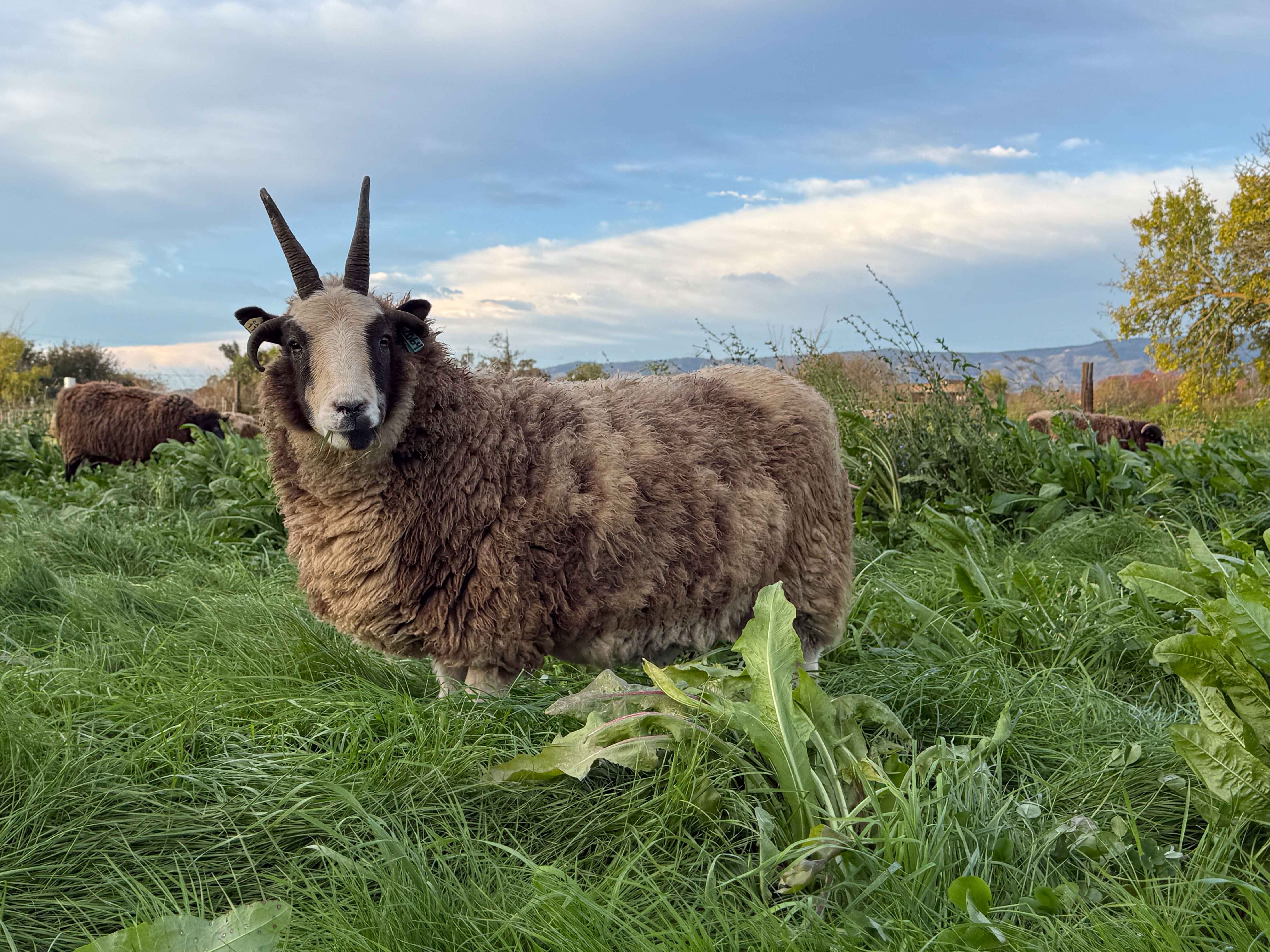
Four horned Jacob ewe in green pasture with blue sky behind.

This ewe, Meridian Pecan, isn’t bothered by any of those details. She’s happy to have fresh green feed.
Grazing – Gray Fog but Green Pasture

We’re almost to the last check in the south pasture. Well, we are at it but that is today and this blog post is about yesterday.

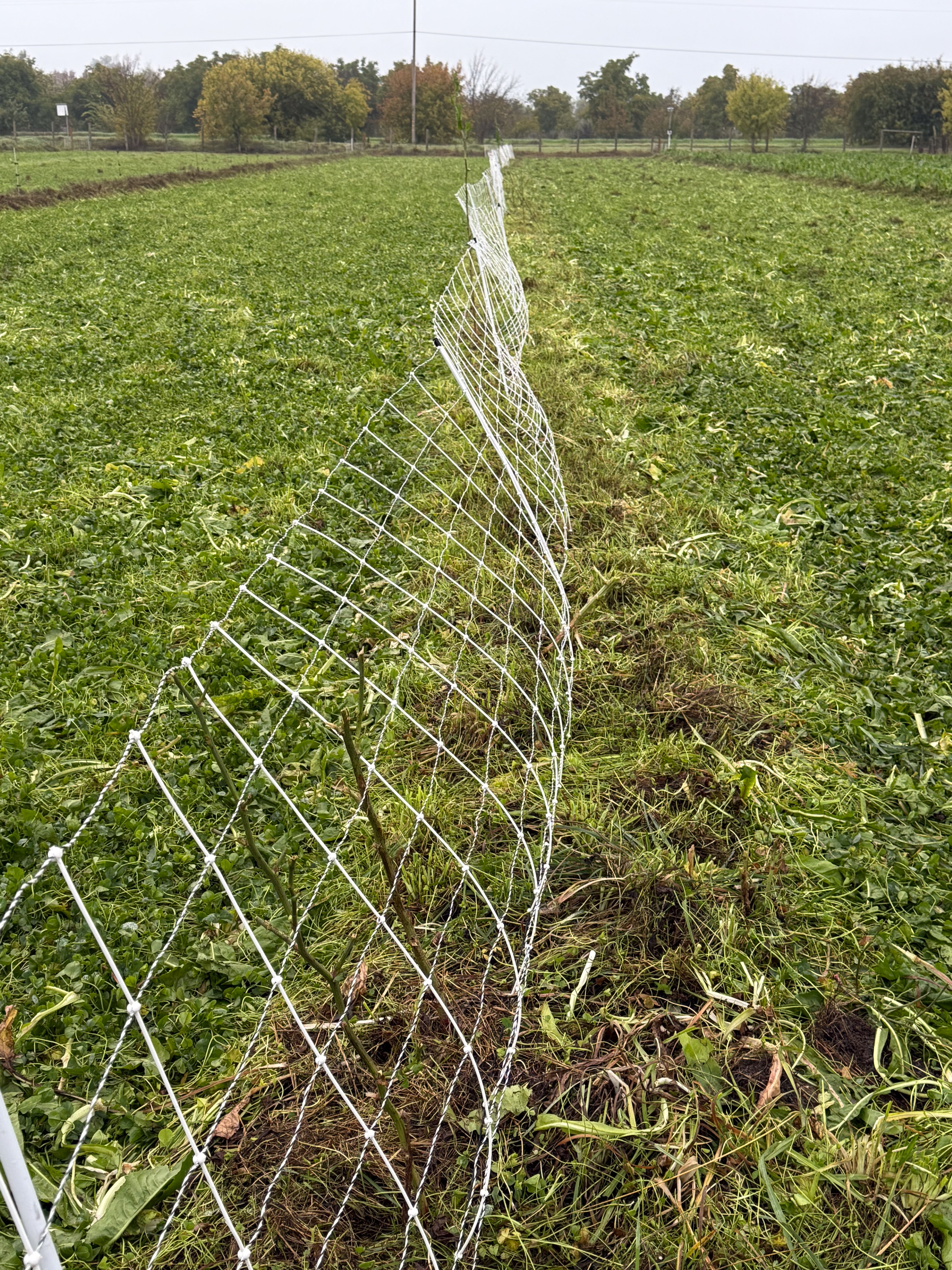
This is looking south and Paddock 2 on the right. That is the one the sheep were just grazing for two days, after grazing Paddock 3 (left) for two days. You can see how this looked two days ago here.

Anther view of that same fence line.

Moving west, this is the fenceline between #3 and #2. I had to move that net fence from the division between #3 and 4 to the division between #2 and 1.

The fence line between #’s 2 and 1, neither yet grazed

The sheep grazing #2 on the first day (yesterday)

Jasmine.

Rose.

Jade.

Grazing – Foggy Morning and Moving to Fresh Pasture

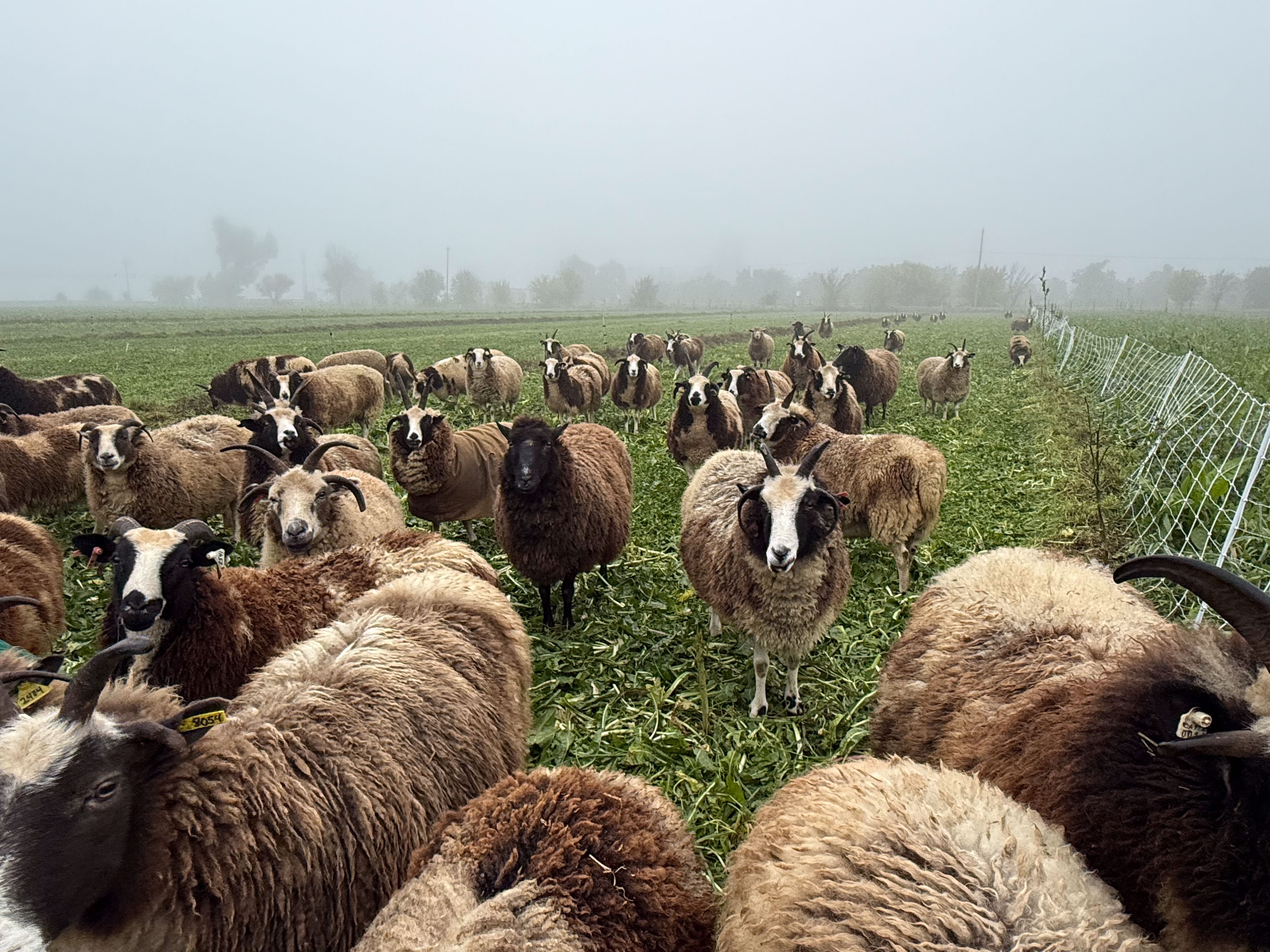
Jacob sheep on pasture grazed and trampled. A foggy morning.

The sheep were out when I went to the barn yesterday morning. The paddocks are numbered from west to east, 1 to 21. Every other check has a permanent 3-wire fence, visible in this photo on the left. In the summer I grazed two at a time and 4 days seemed about right. After we got measurable rain I noticed significant trailing down the border check between the two paddocks they were grazing. The check is a raised strip running north to south that guides the water when we irrigate. I thought I’d better put a fence along that check so that they wouldn’t impact it as much. So that’s the way I’ve been grazing for the last few weeks. When Farm Club helped to measured net fences to make sure I had the correct fences where I needed them (blog post here) I had left 3 lengths of e-net that we measured to be the correct length for just this need. You can see the net fence on the right of this photo.

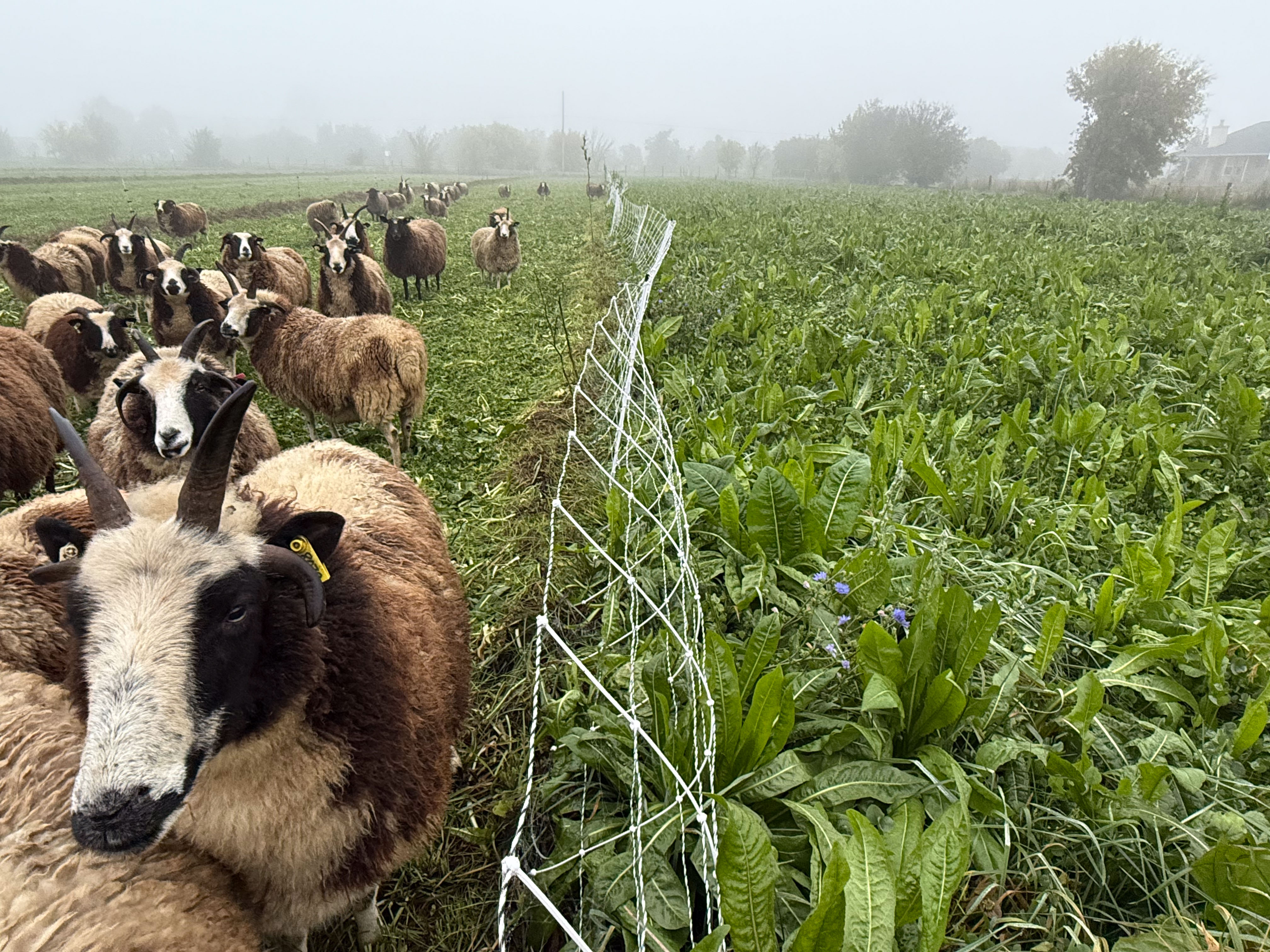
Jacob sheep in pasture that has just been grazed while there are lush plants on the other side of the white e-net fence.

The sheep grazed this paddock (#4) for two days. This is the third morning and they need to move to #3. The fence is on the border check and you can see how they have grazed right up to it. The fence is purposely tipped away from the grazed paddock because I think the 4-horned sheep are less likely to get horns caught when they graze near the fence.

Jacob sheep walking towards me to move to a new pasture.

The sheep were anxious to get to fresh feed.

White electric net fence with sheep on the left and fresh pasture on the right.

I was able to move the fence that was blocking access to the next paddock and they all came around the end.

Fresh pasture on the right with sheep grazing. White e-net fence down the middle and grazed pasture on the left.

This is the view before I reset the net fence. I find it interesting to see how the sheep ate the leaves as far as they could reach on the chicory. By the way, the leafy plant that looks like we’re growing a crop of lettuce or chard is chicory. That was one of the three forbs in the seed mix we planted last fall. It didn’t grow as much as the clover until later in the summer, but it is sure evident now.

Close up of grazed leafless stalks of chicory with sheep on the other side of the fence in fresh pasture.

Another view of the fence before I moved it, and more chicory stalks.

Sheep grazing chicory and clover on a foggy morning.

The sheep are happy on this new paddock. This is quite a contrast from the one grazed for only two days.

White net fence in the middle with grazed field on the right and not grazed on the left.

View to the north after re-setting most of the net fence.

Foggy view.

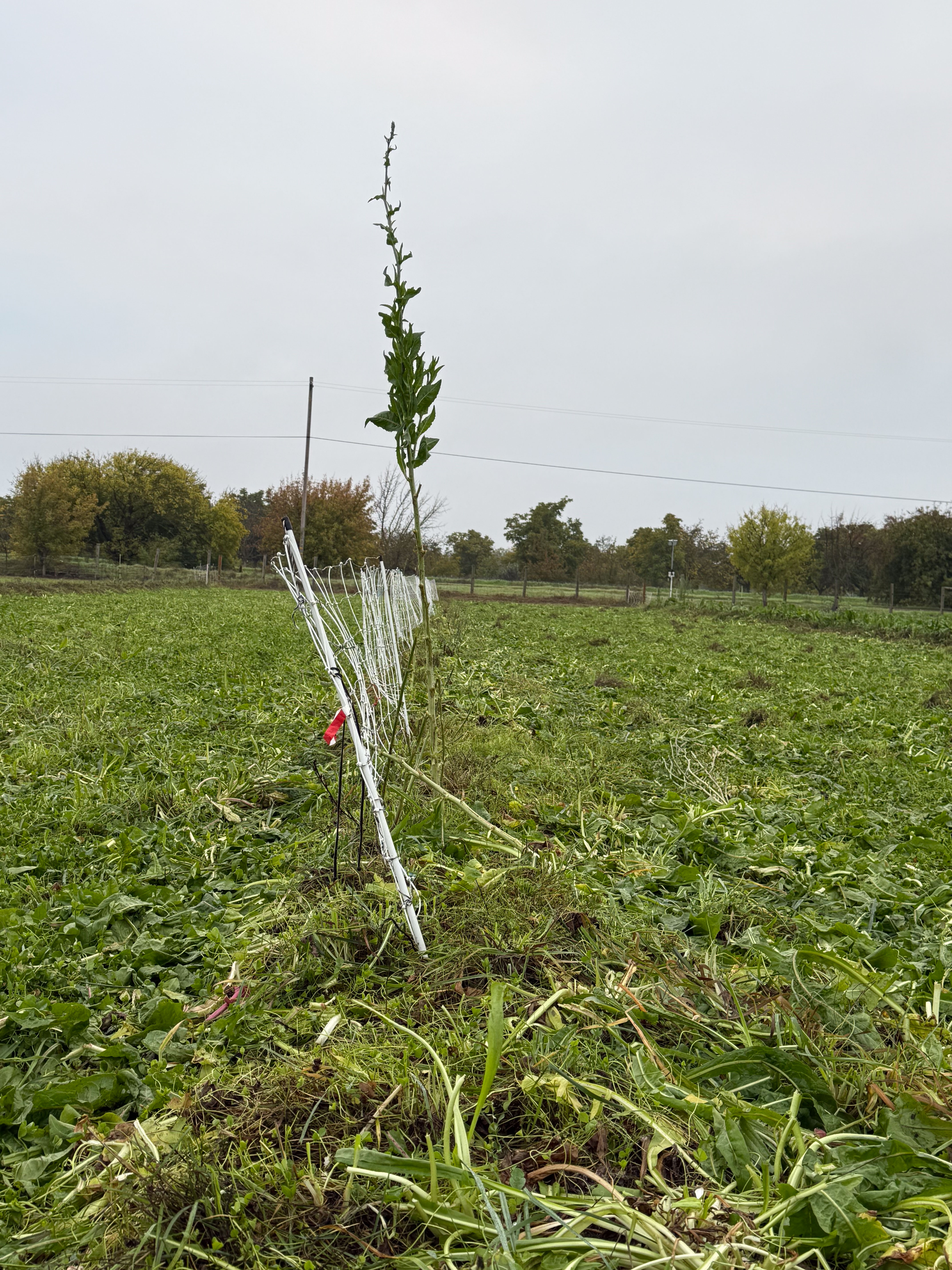
Chicory flower at the end of the season.