For the best explanation of the question in the title listen to Life With Fire podcast featuring my son, Matt, who explains Air Attack and discusses the expectations and reality for use of aircraft in wildland firefighting. This is what you will hear. I think it’s a great podcast, even if I am a little biased.

I wrote this blog post when Kirby was here and we visited Matt’s office at the USFS Wildland Fire Training and Conference Center at the old McClellan Air Force Base, now the McClellan Business Park. Matt is hardly ever at his office, at least not during this season. Right now he is near San Bernardino on the Line Fire.
This is from this morning’s (9-15-2024) CBS News online: “Firefighters continued to gain ground in their firefight against the 38,421-acre Line Fire, which was burning in San Bernardino County. The fire, believed to be the result of arson, was 36% contained, the California Department of Forestry and Fire Protection (Cal Fire) reported Sunday. .. Over 4000 personnel are assigned to the fire across multiple fire agencies…”
Last month I picked Matt up in Placerville after he returned a rental car he was using on his last fire assignment. We stopped at the Placerville Airport where helicopters had been staged for some of the recent fires in Northern California.

This is the helicopter Matt is usually in. He is in touch with the other aircraft and ground personnel and helps direct the air attack where it is needed.

Another view of Matt’s helicopter with the pilot waiting for action.
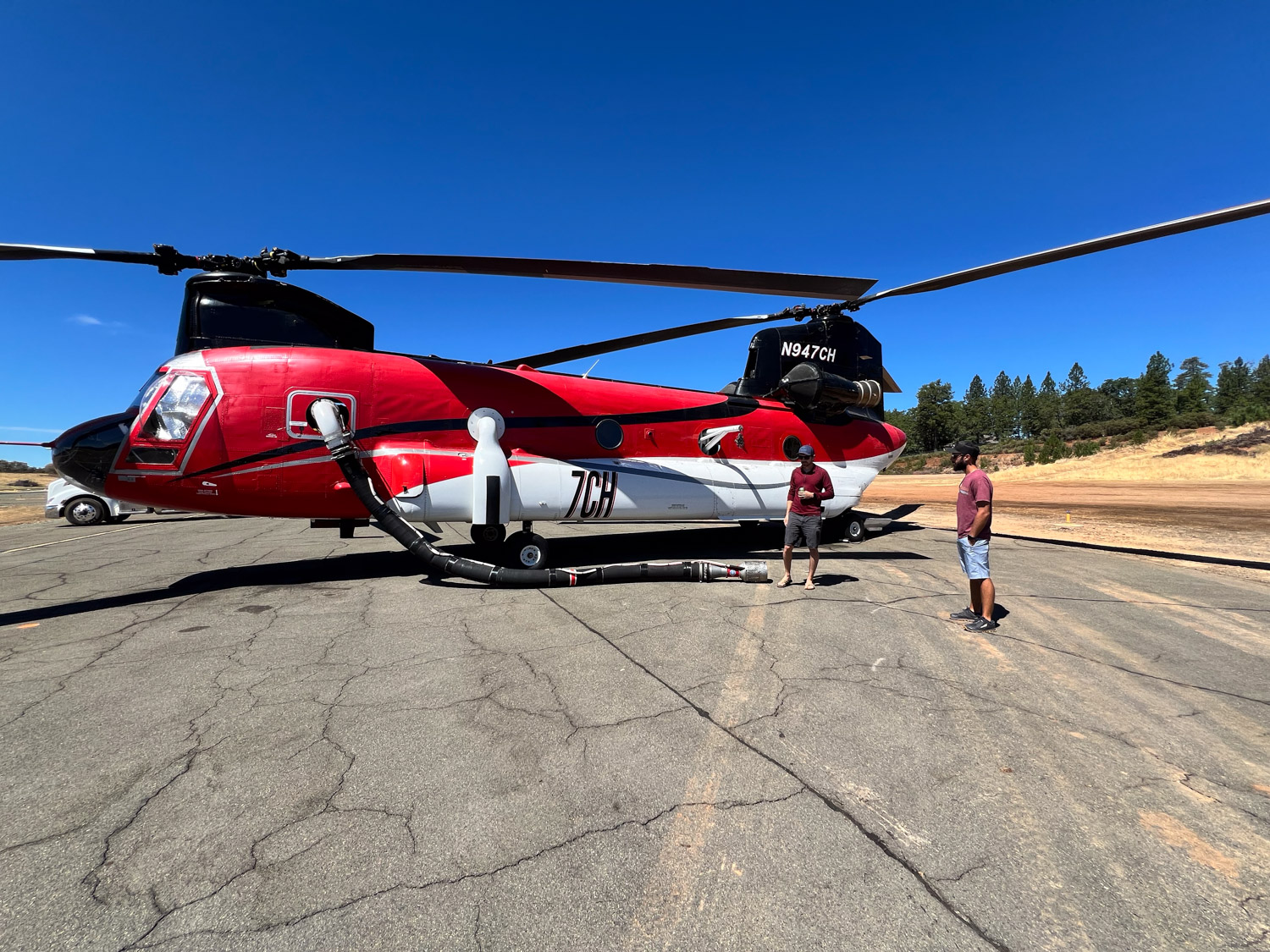
This Chinook helicopter is huge. I can’t remember the details now. I think it can carry 2000 gallons of water. (I may have pulled that number out of the air and I can’t ask Matt right now. I just asked Mr. Google and see that Chinooks of various configurations may carry 2500 to 3000 gallons and fill at a rate of 4000 gallons/minute.)

The Chinook fills with a retractable snorkel. There are windows down low in the front to give a better view of the ground.
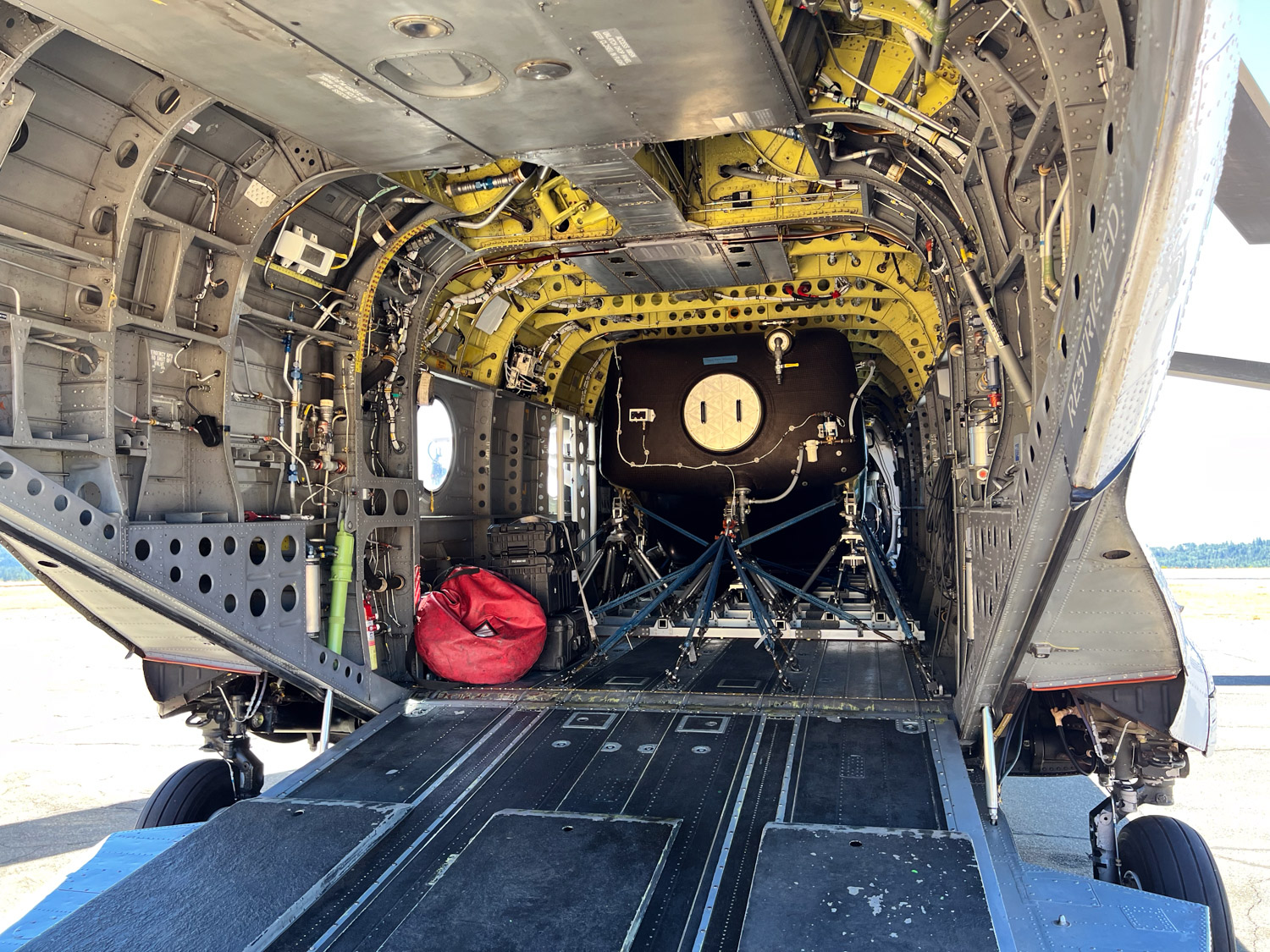
This is the cargo area.

If the Chinook is called into action this whole crew goes with it. There is a fuel truck, and a maintenance/mechanic truck and trailer. I think Matt said that two mechanics are with the team at all times.

After seeing the helicopters we drove to Matt’s house outside Pollock Pines and shared a firefighter lunch he had brought with him. There are a lot of calories there–needed when on the fire line.

Then we drove up the mountain to take Ralston for a swim.
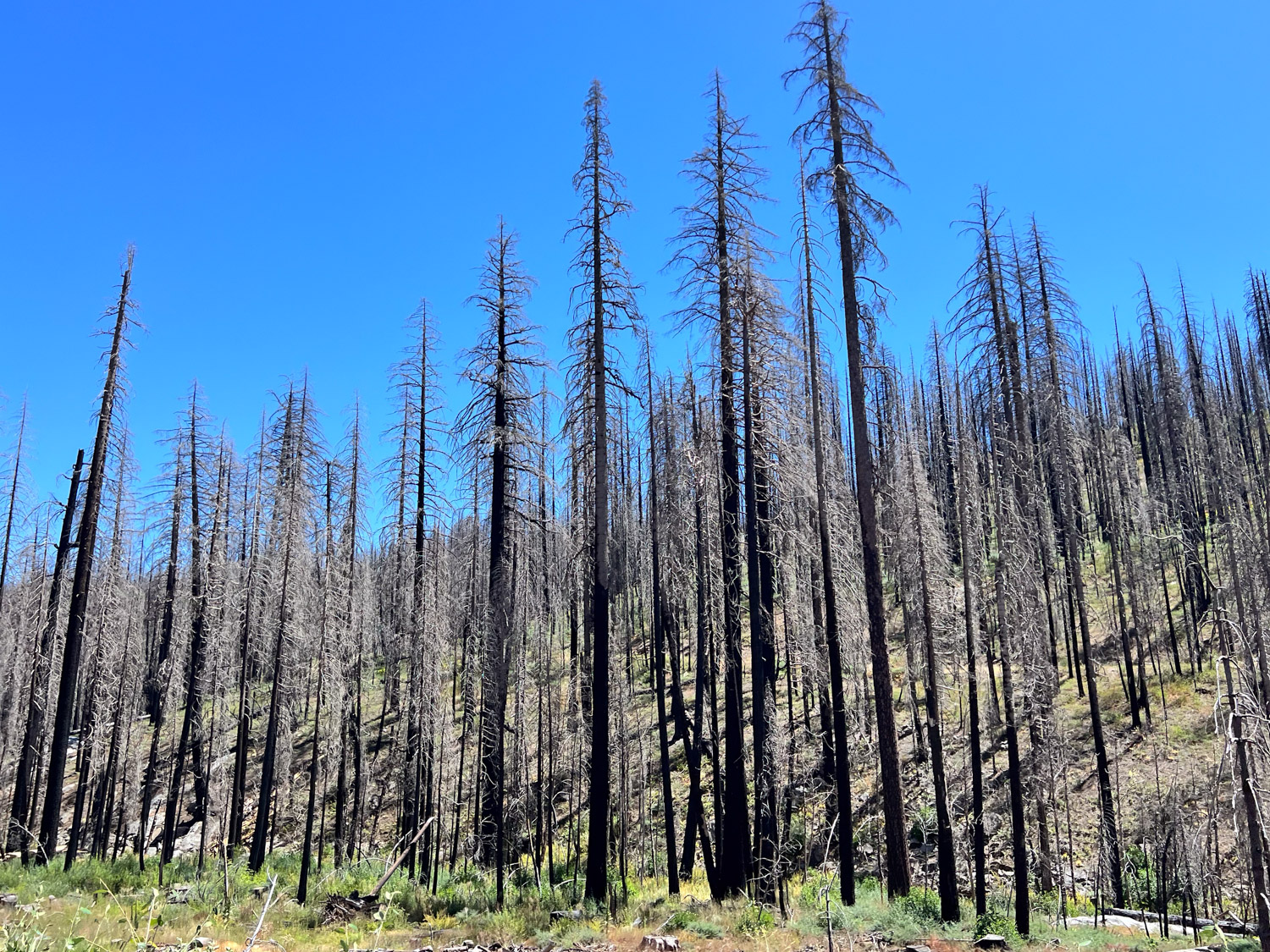
The destruction of the Caldor Fire in 2021 is obvious.

On lands that are privately owned much of the burned timber was harvested while it could still be used for lumber. Trees have been replanted, but I won’t see the return of this forest in my lifetime.







 Meridian Jacobs' Blog