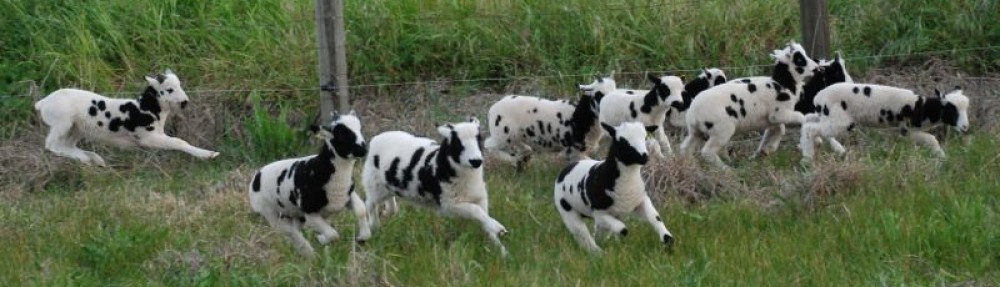
Leaving the Farm for a Week – Prequel to a Road Trip

It’s not easy to leave when you have animals to care for. I am fortunate that there are long-time Farm Club members who have become good friends, and they are willing and able to spend a few days at the farm. Three friends organized the dates to suit their schedules so I know the animals are in good hands.

Anytime Dan and I will both be gone I spend at least a day getting organized. I needed to get the pasture set up to make it easier to graze. This has been “on the list” whether I was leaving or not. So Farm Club members came Saturday to help with that project and I shared that here.

Metal panel secured to red shed wall to cover big holes.

This is on the list of things to fix, but there was no time to do it right before we left. This is the ram pen shelter and they have been enlarging the holes in the plywood. There is a 2×6 board on the inside so I haven’t been worried about the rams getting out, but do I want to take a chance when I’m gone? So I tied a metal panel to the outside.

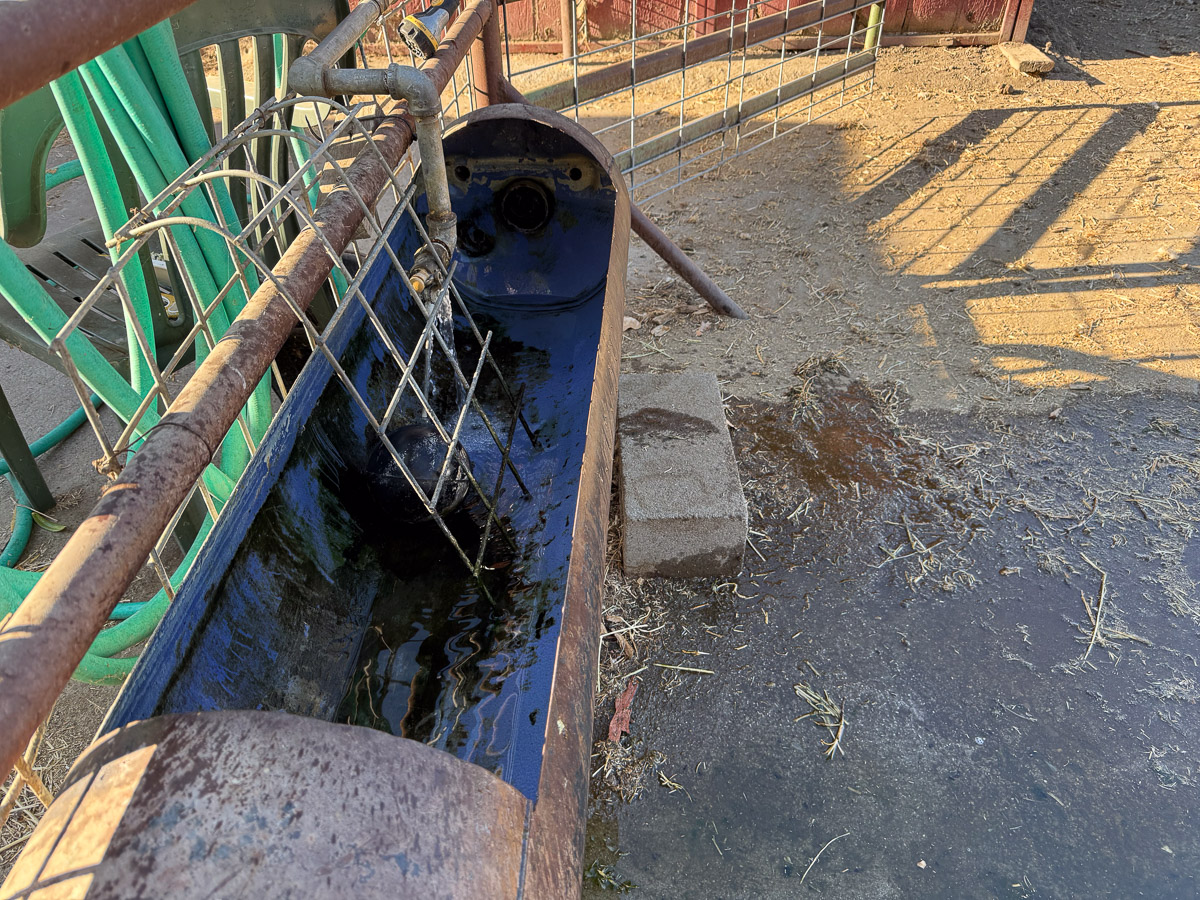
Metal water trough that has been drained for cleaning.

The water trough needs cleaning at least weekly in the summer because it gets full of algae.

Bright orange cosmos flowers with green foliage.

I needed to finish a proposal for an article for one of next year’s Handwoven magazines. That was due August 1. This is a photo to accompany that proposal.

Orange cosmos flowers and pink dahlia flowers on trays in the sun.

After photographing the cosmos flowers I harvested this batch to dry. I pick them every few days so they will continue to bloom and to save them for dyeing later. The pink flowers are dahlias.

White pick up truck with alfalfa in the bed and Dan unloading it.

We were down to only six bales of alfalfa in the barn. Although the ewes would be on the pasture while we were gone, all the rams need to be fed hay. Since Dan’s knee replacement we have bought hay by the stack so it would be delivered. This is the first batch of ten bales that Dan has loaded himself since the surgery.

View of back of the house with a pile of trimmings from the rosebushes.

This job was not a priority but I continue to be distracted by gardening chores. I know this is not the time of year to prune roses, but I was tired of being attacked by rose branches every time I walked on that path or the deck at the Weaving House.

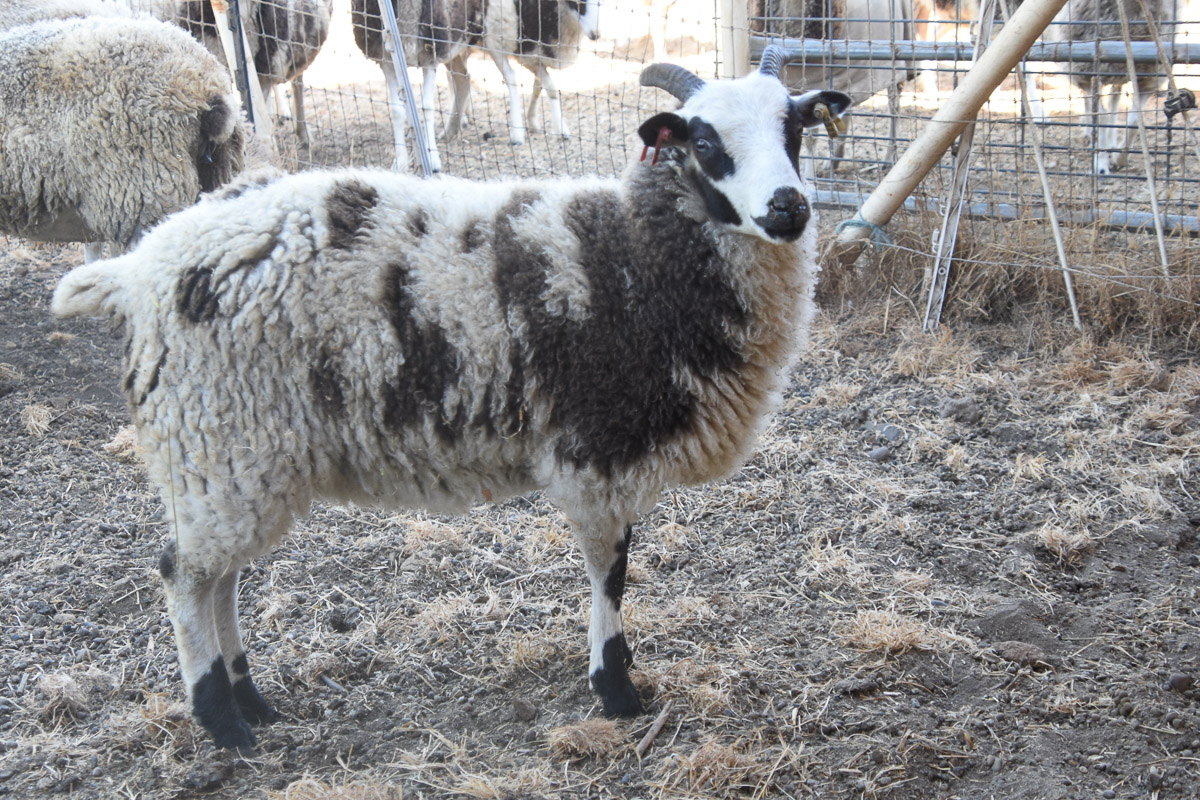
Jacob ewe lamb with two horns.

The lamb page of the website has not been updated for quite awhile and I needed current photos. The last photos are from mid-May and those lambs have changed a lot since then. I took these photos a couple of days before our trip but have not yet updated the site. Maybe by the time you read this post I will have added some of these. I will need to take more photos when I’m home.

The Artery gallery emptied for a two week renovation.

A couple of days before leaving I was at the Artery to remove all of my pieces there. The Artery will be closed for two weeks while the floors are completely refinished. The old carpet and tile will be removed and the floor will be refinished. We found that there would have to be the added job of asbestos removal. The Artery will reopen August 11 so I’ll be returning my pieces the day before.

Skeins and a cone of yarn and a beanie on a brown surface.

I got my Timm Ranch wool back from the mill right before we left. I had time only to open the boxes. I will list it on the website when I’m back.

Stay tuned for photos of our trip. We camped the first couple of nights but I’m in a hotel room right now and finally got my computer out. Now to try and make some updates to the sheep pages. Or maybe I should review 5 days of emails…

Shearing Day 2025 – Part 1

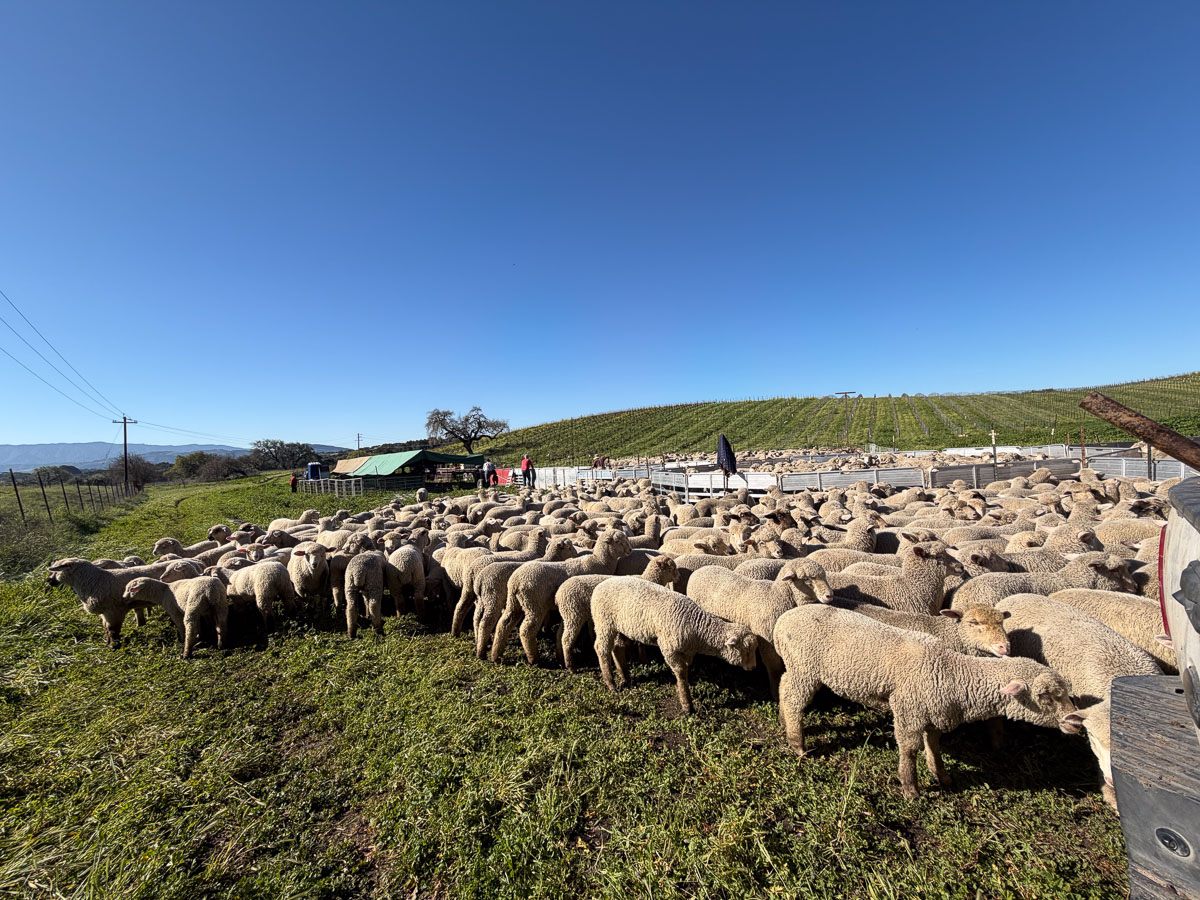
We were lucky on Shearing Day. It was cold in the early morning, but there was no threat of rain and the sun was out.

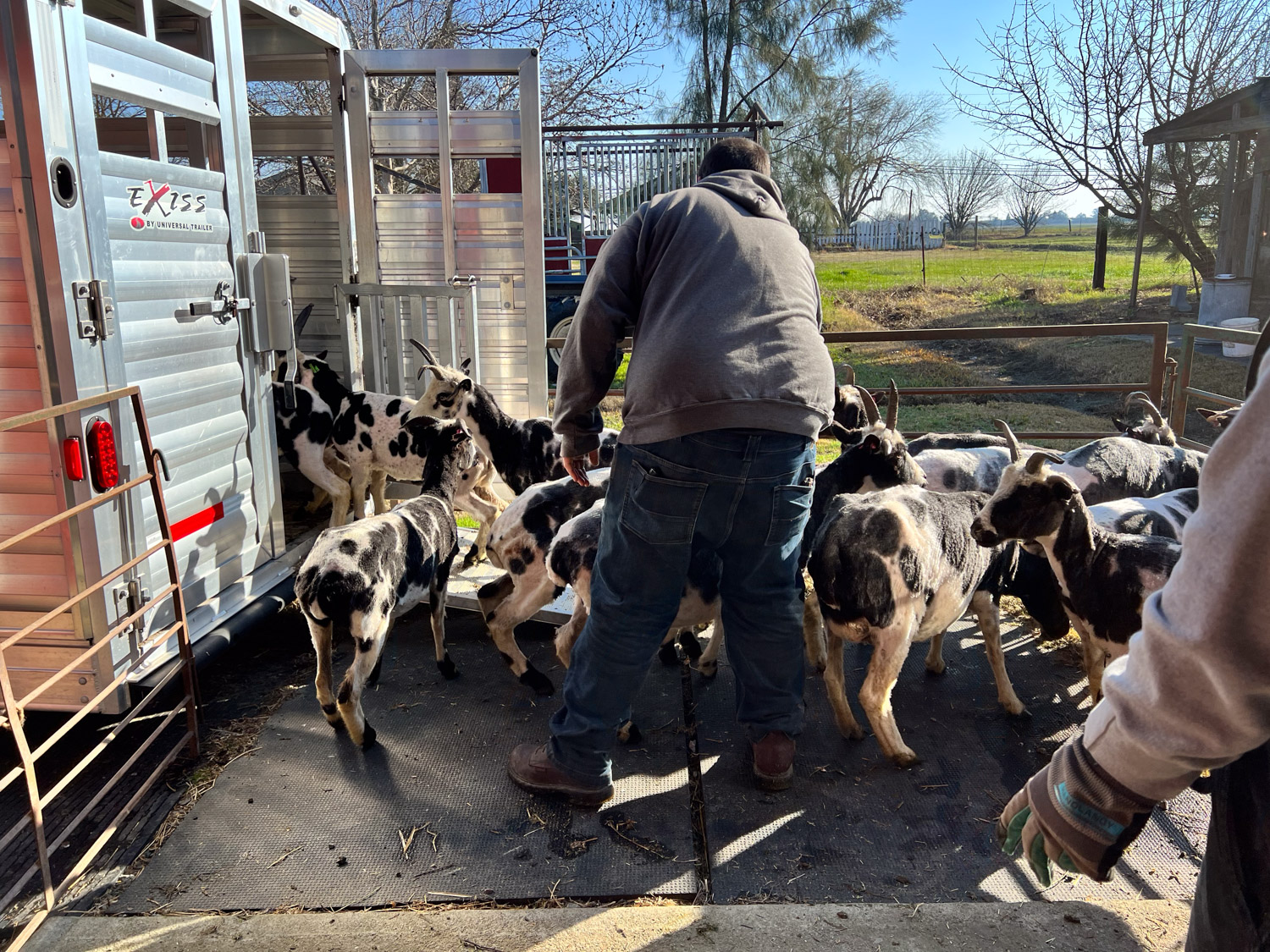
The day before we took our trailer to Trish’s farm a few miles away. We loaded 21 sheep to bring them to our place for shearing the next day. It turns out that one of the 21 was mine–I had forgotten about the ram lamb Trish borrowed in September to breed some of her ewes. So now I have 9 rams–that’s a few too many!

These are Trish’s sheep the next morning. I remember that ewe on the left from last year. See her photo below.

Her hair style makes her memorable.

John got here at 9 and we started with Trish’s sheep. This ram is Starthist Goldhill, sired by one of my 2-horn rams who is no longer here.

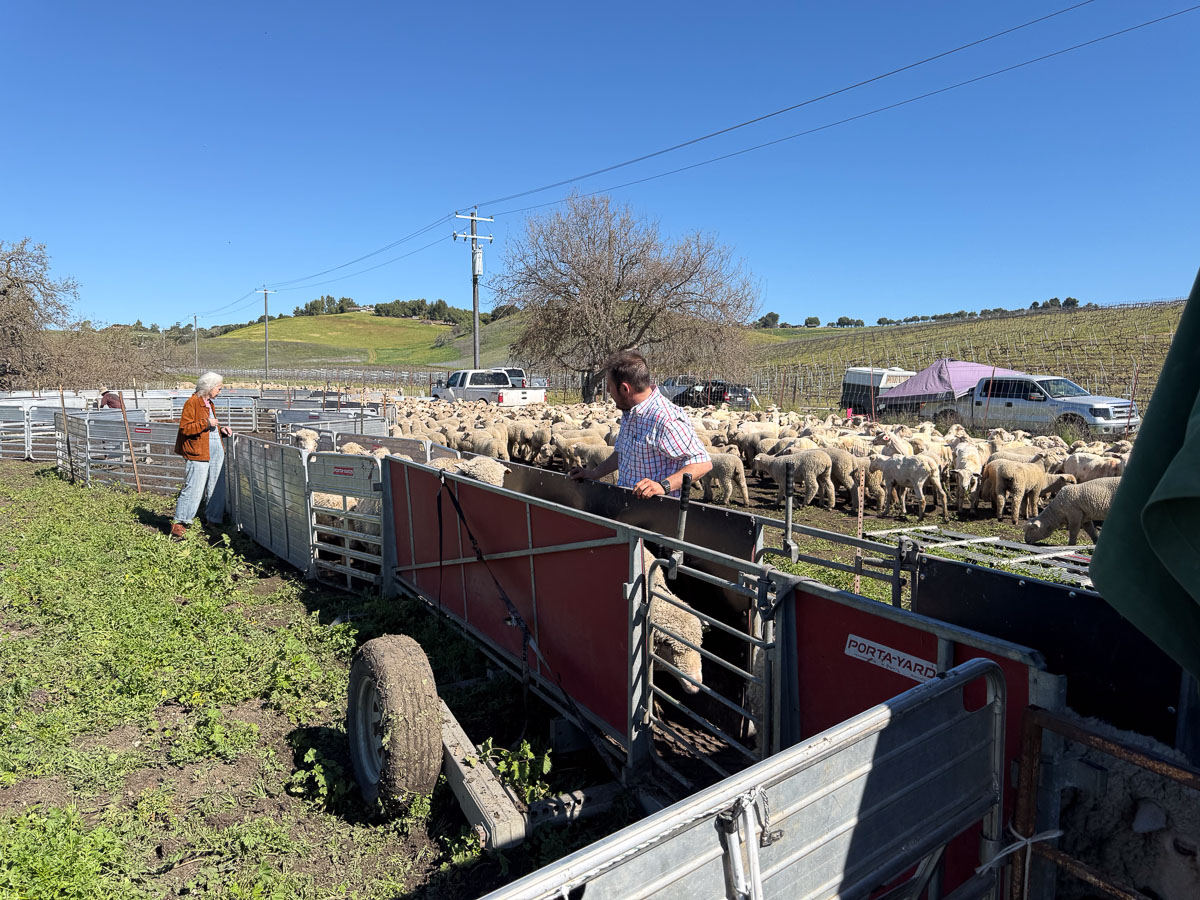
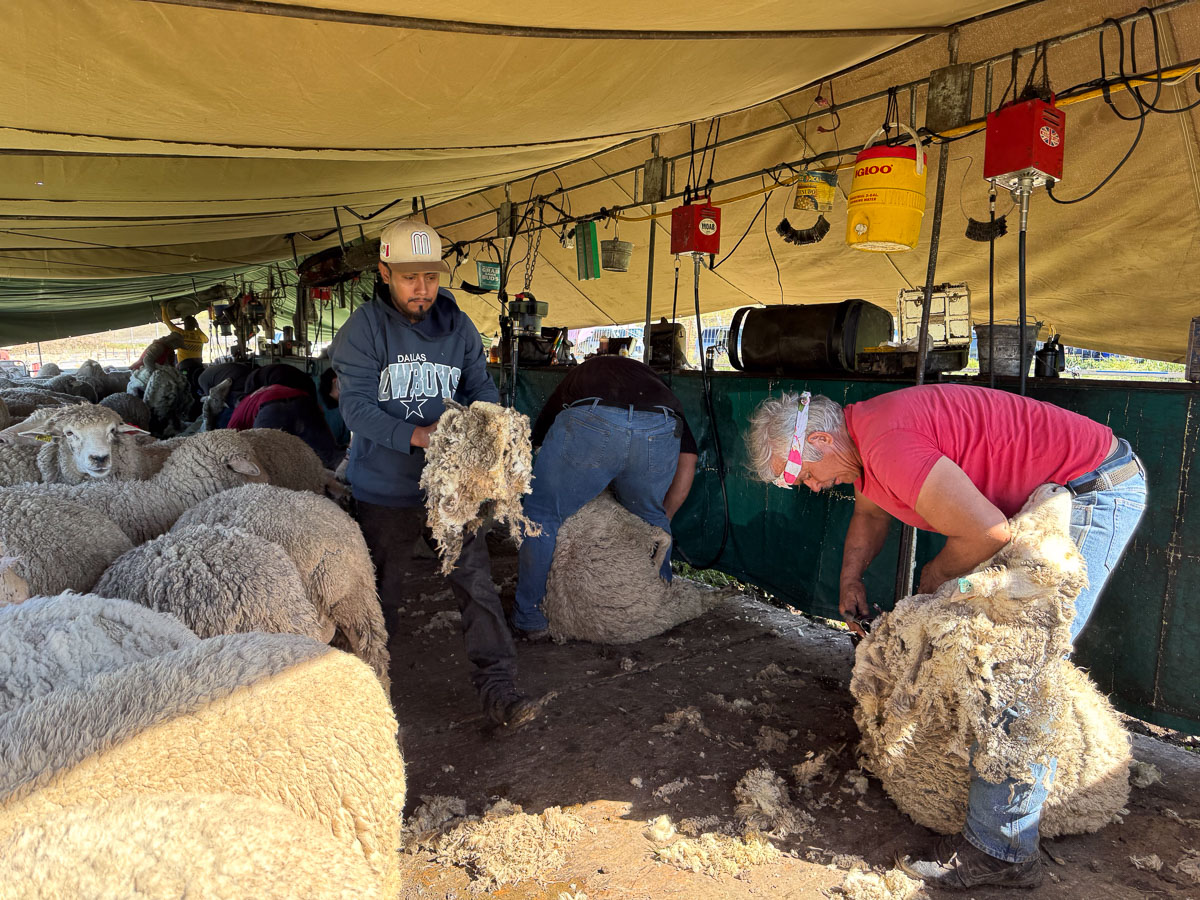
Farm Club members were on hand to help with all the jobs. They kept the shorn sheep out of John’s way while he worked.

After all 20 of Trish’s sheep were shorn we moved panels around to load them back in the trailer.

They fit better after shearing.

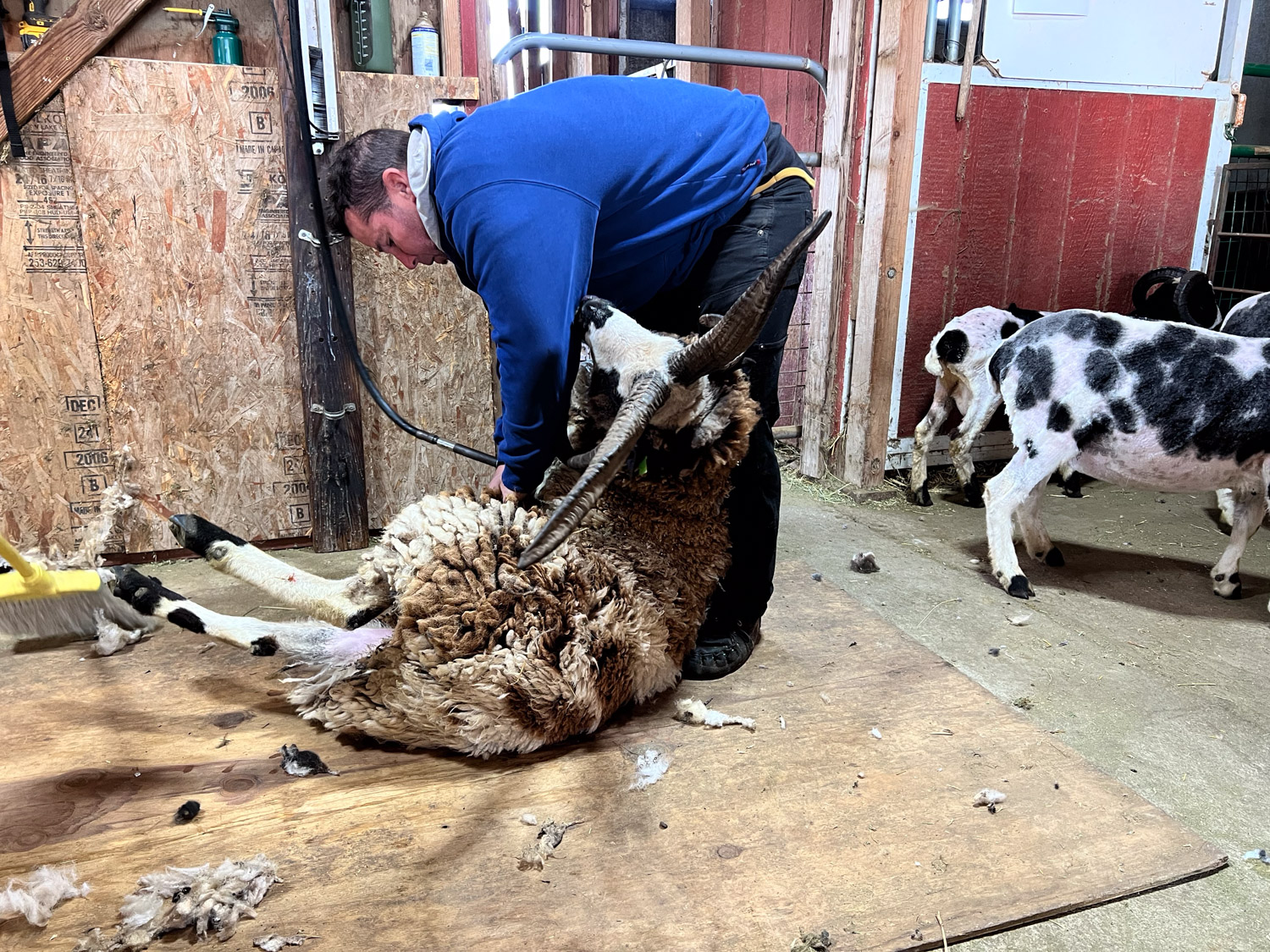
Then John started on my rams. This is Eli.

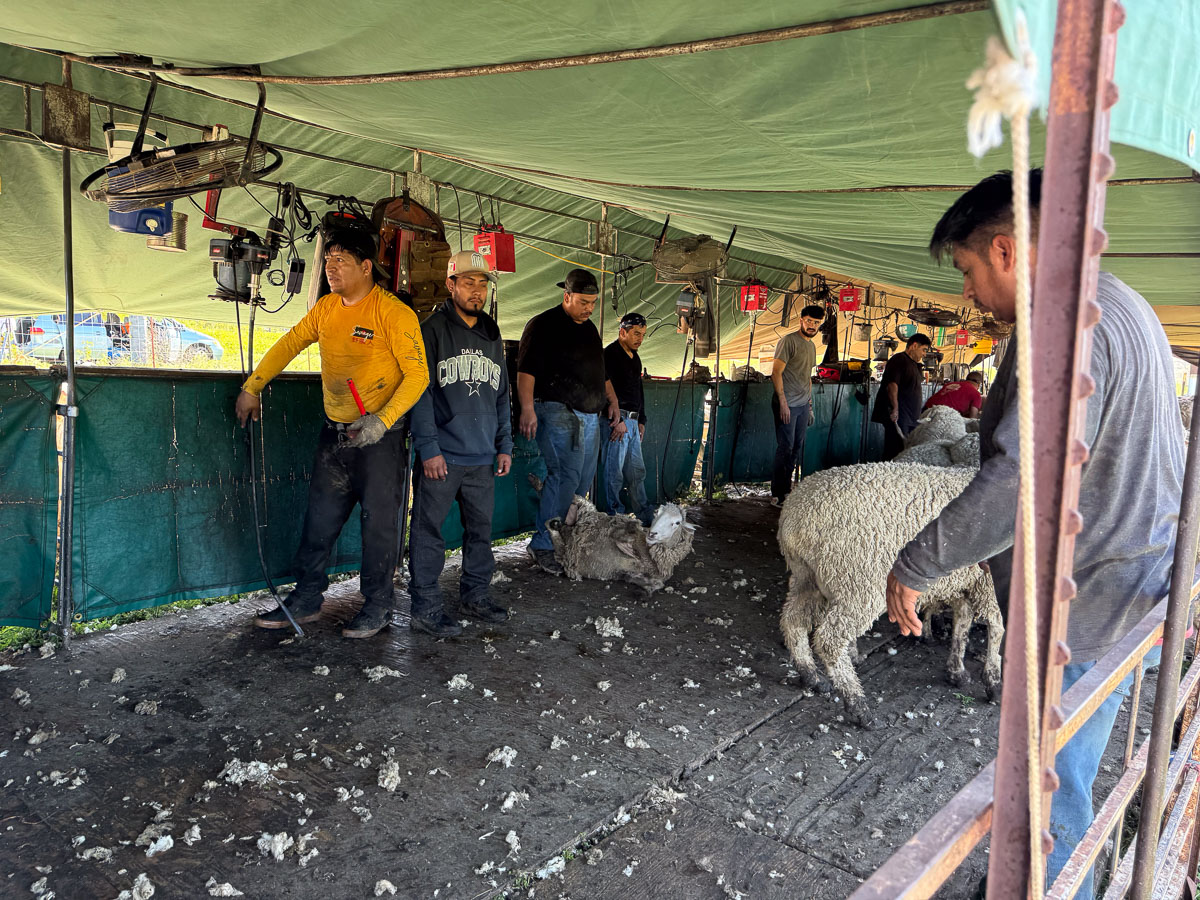
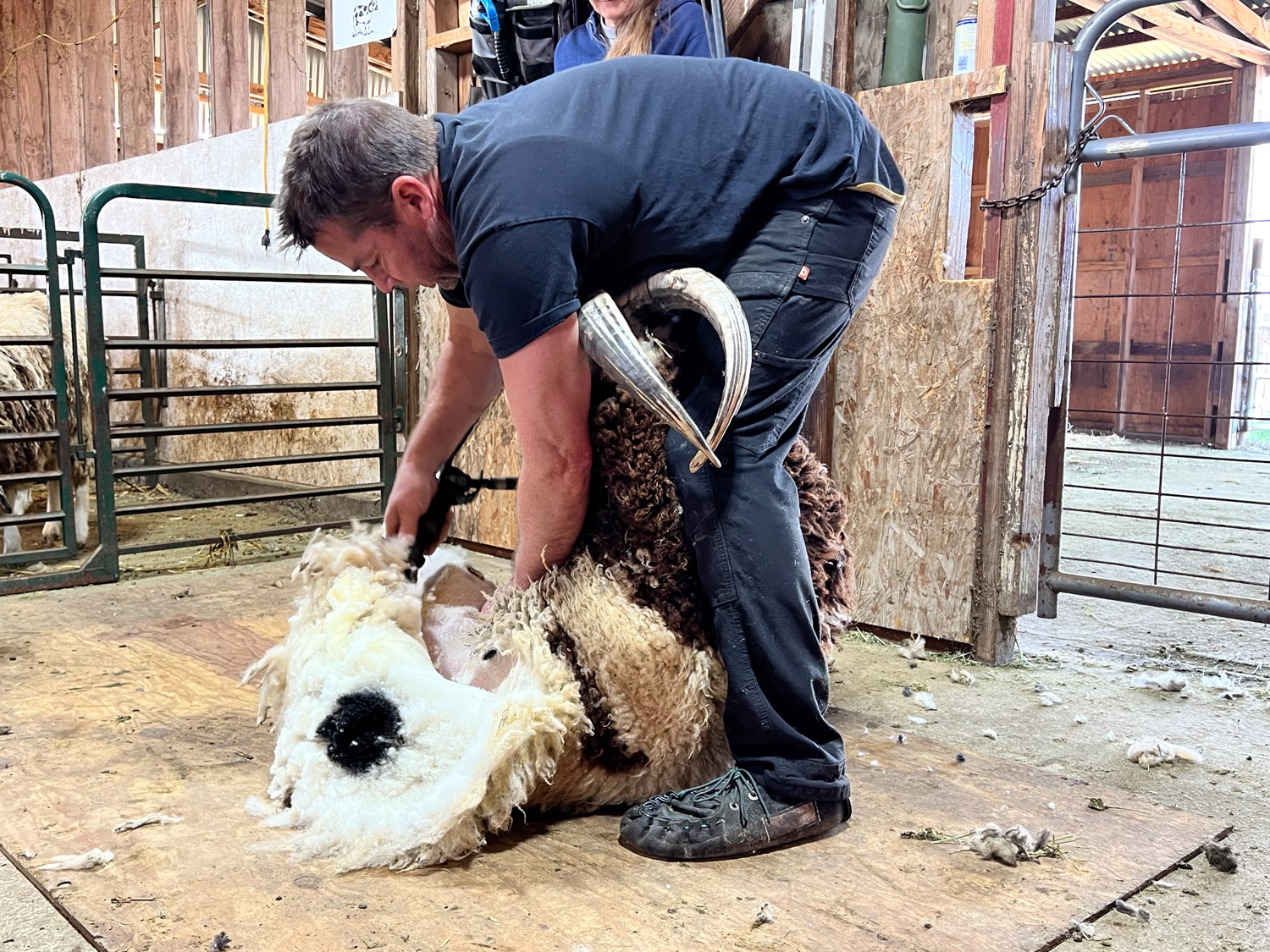
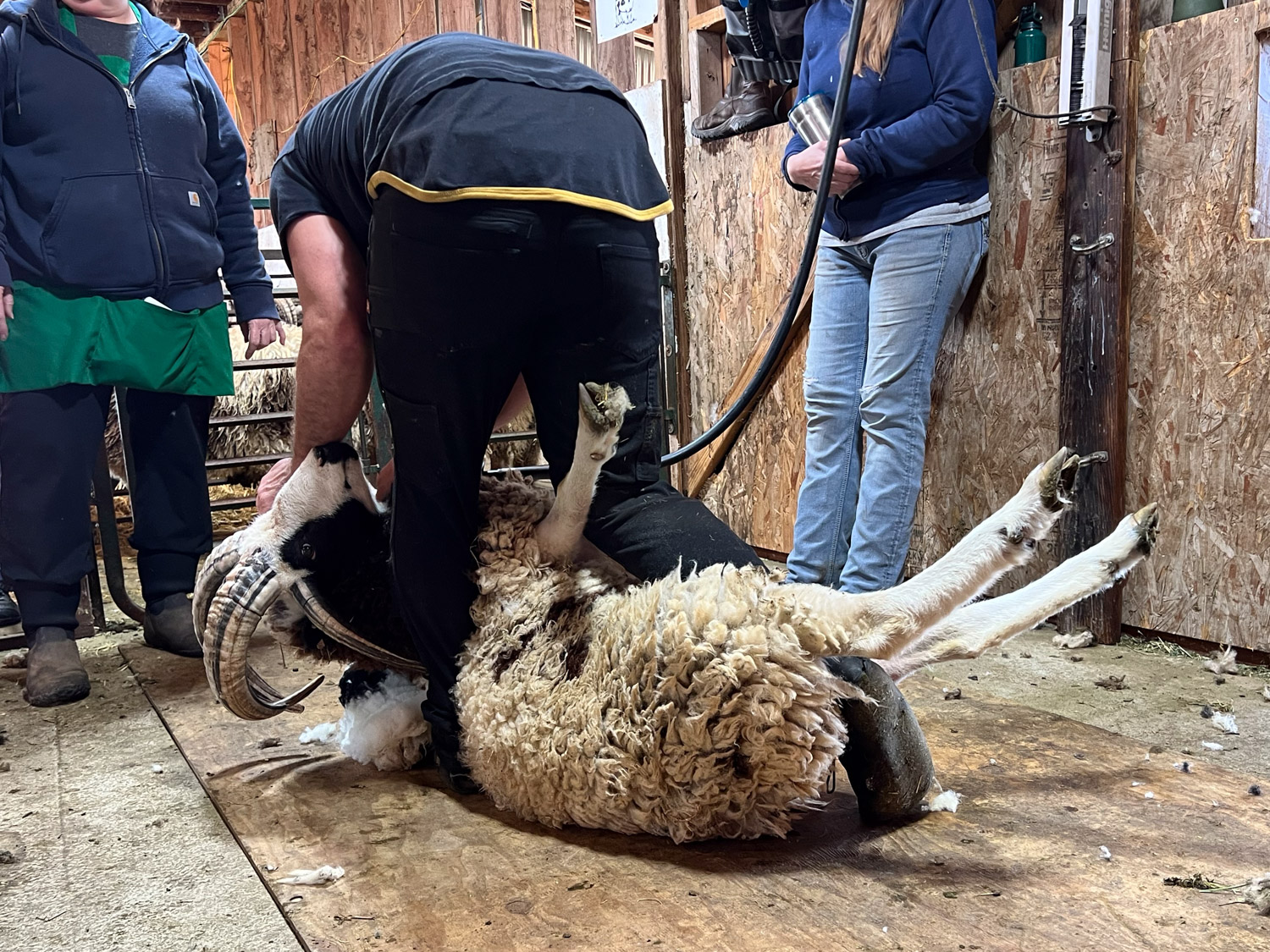
For those of you who may not have watched shearing, the shearer follows the same pattern on all the sheep.

I recorded video of shearing four or five sheep. I haven’t had time to edit and post those videos yet, but because of recording I know how long it took to shear those sheep. What do you think?

John is shearing each sheep in under 2-1/2 minutes. Some are close to 2 minutes!

More shearing photos in the next post.

Who is Going to Lamb and When? Ultrasounds

For the last few years I’ve asked the UC Davis vets to come here and do ultrasounds. It is certainly useful to know ahead of time the ewes that are not pregnant and, hopefully, the number of lambs to expect from those that are.

I told the Dr. Smith the dates the ewes were with rams and December 20 was chosen as the optimal time for ultrasounds. (Never mind that a few ewes went in with the new ram, Eli, right at Thanksgiving. This ultrasound date was scheduled before Eli came here. It won’t be hard when the time comes to know if those few ewes will lamb.

I purposely did not breed as many ewes this year because of the limited space with our pasture being off limits for most, if not all, of the next grazing season. If you read this blog regularly then you know about the Pasture and Irrigation Renovation going on. Look back over the last few months for those blog posts.

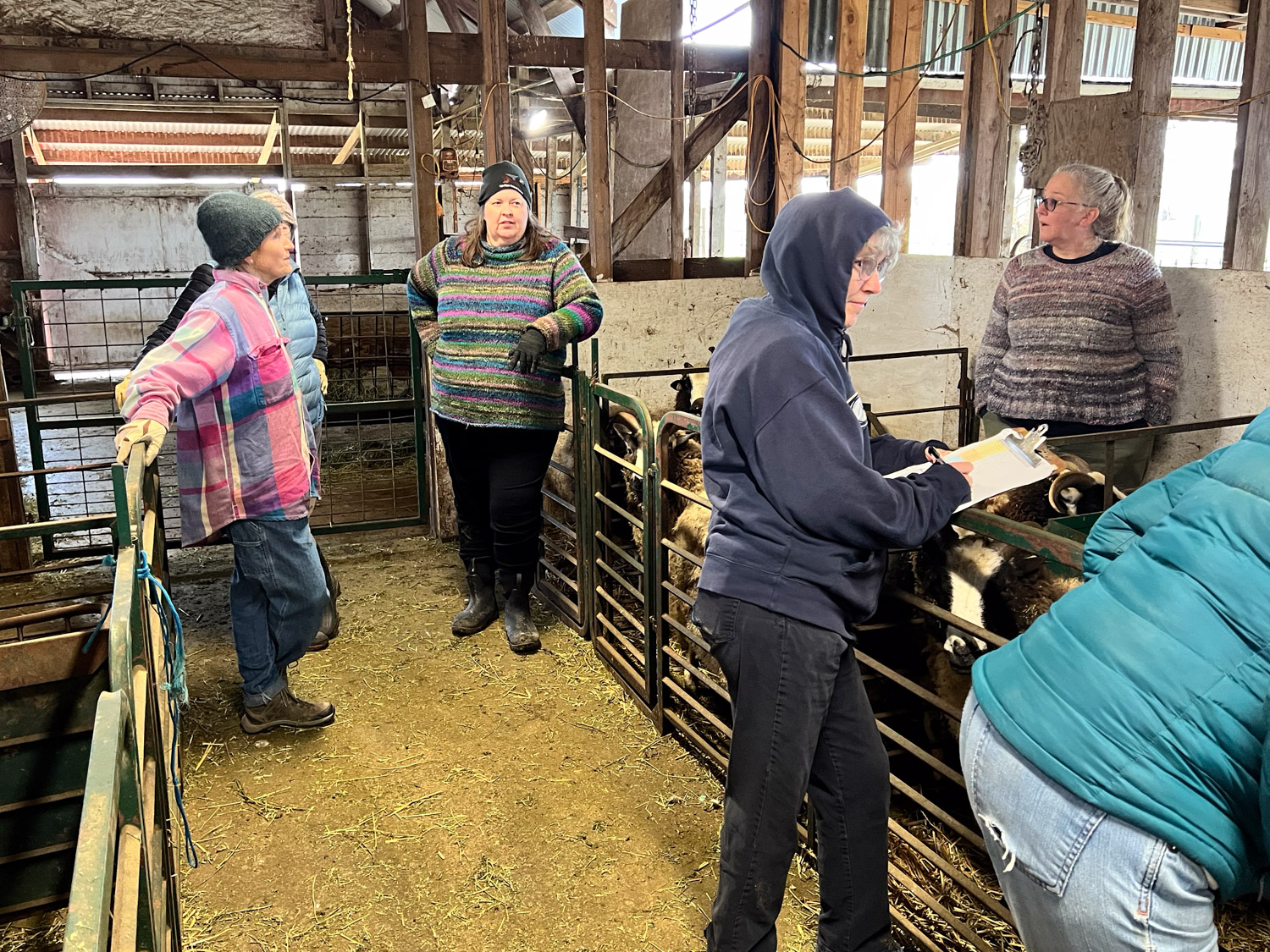
Farm Club members came and, since I was otherwise preoccupied with an overlapping visit by my son and DIL and Matt’s offer to help me with some loom/computer issues, they did all the work of getting the sheep organized and in pens, ready for the vets.

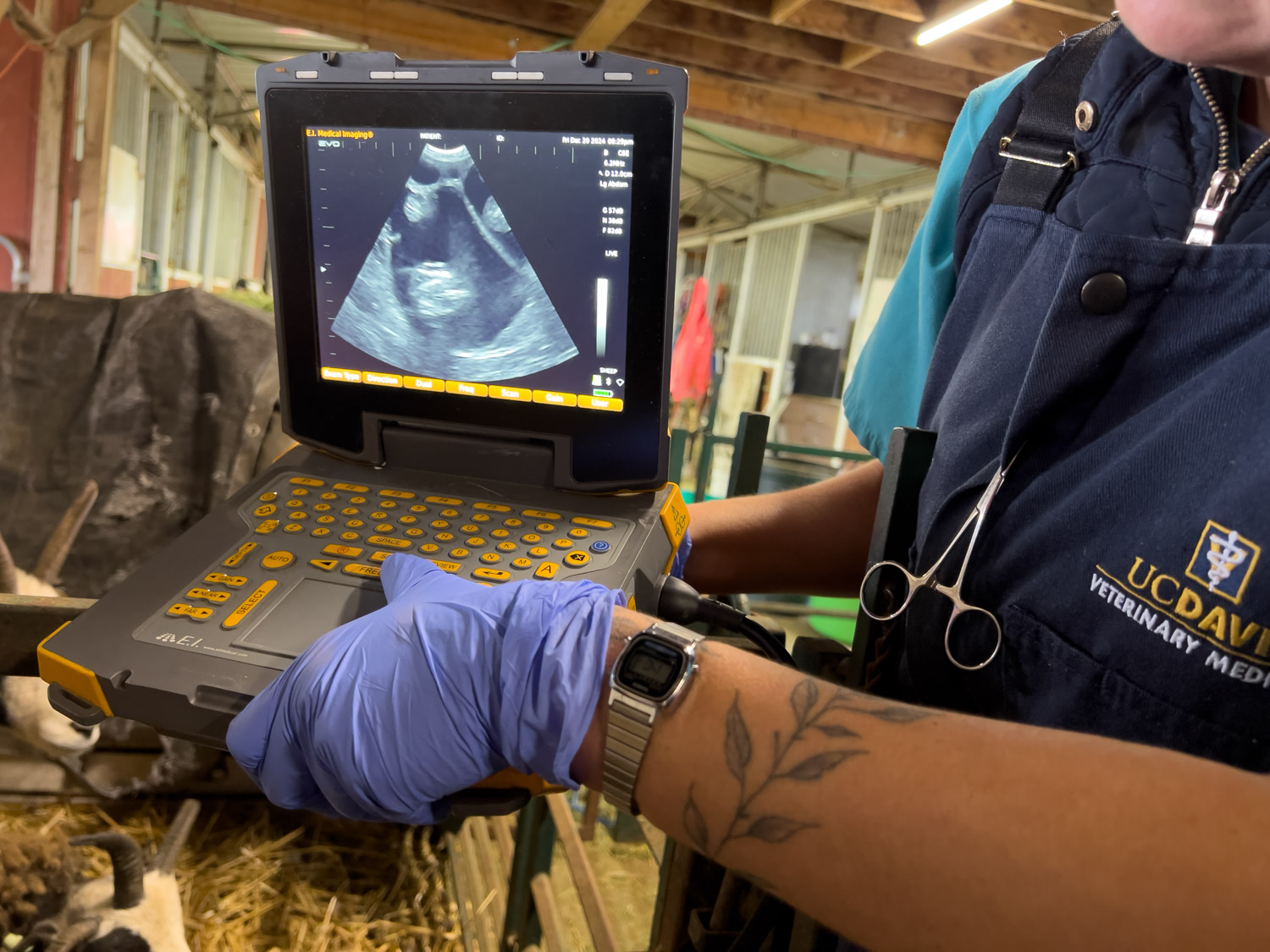
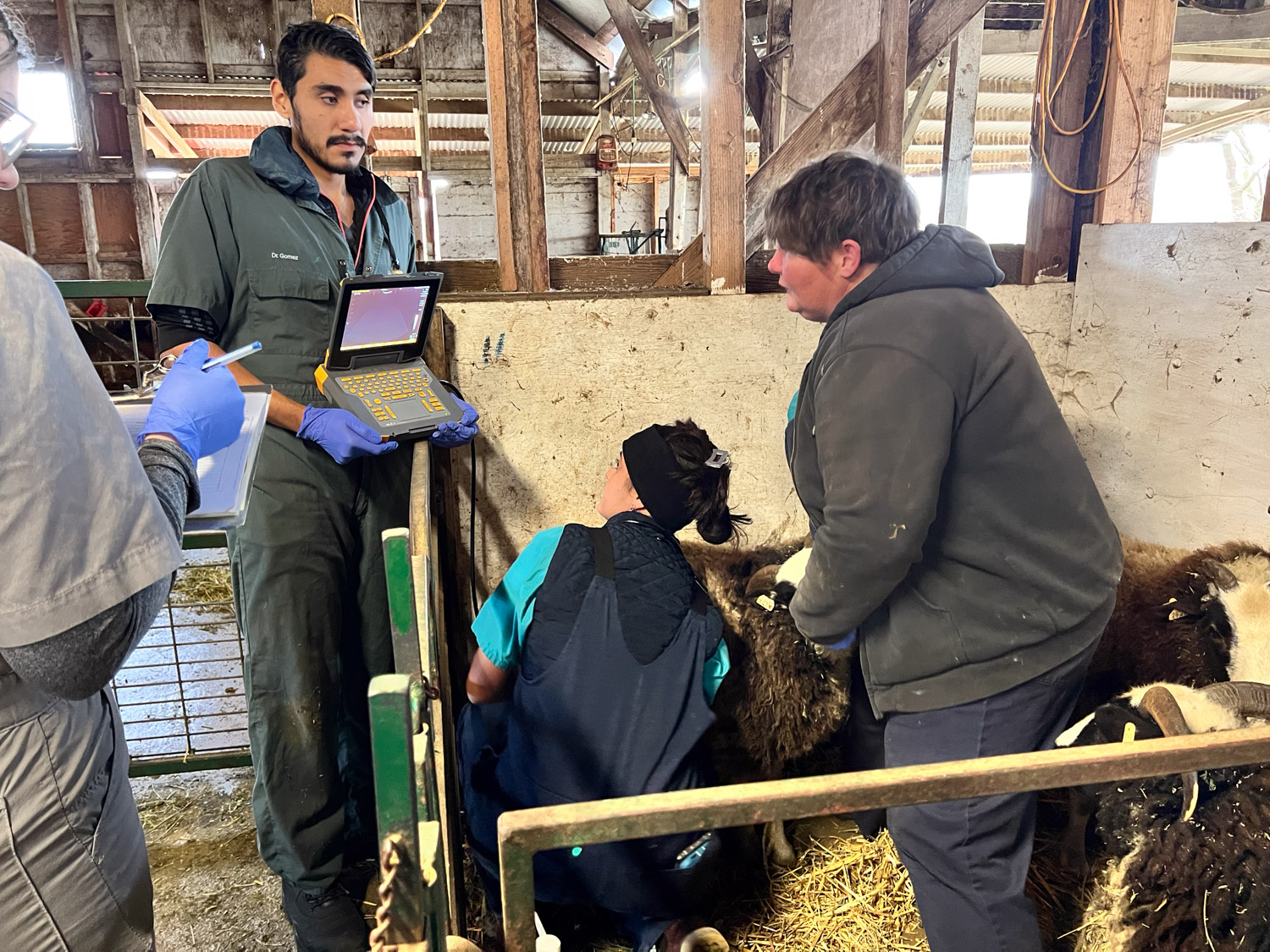
There were four from UC Davis. I lose track of the titles, but I think one person was an intern and/or student and maybe a couple were in residency. They took turns doing the scans and reading the results, with Dr. Smith overseeing it all.

Don’t ask me what we’re seeing. I’m good when I see a ribcage go by as they move the probe around, but I have a hard time with the rest of it unless it’s pointed out. They judge size of the lamb’s head and, therefore, its gestational age. Amount of fluid and relative position of the lambs are other factors they consider.

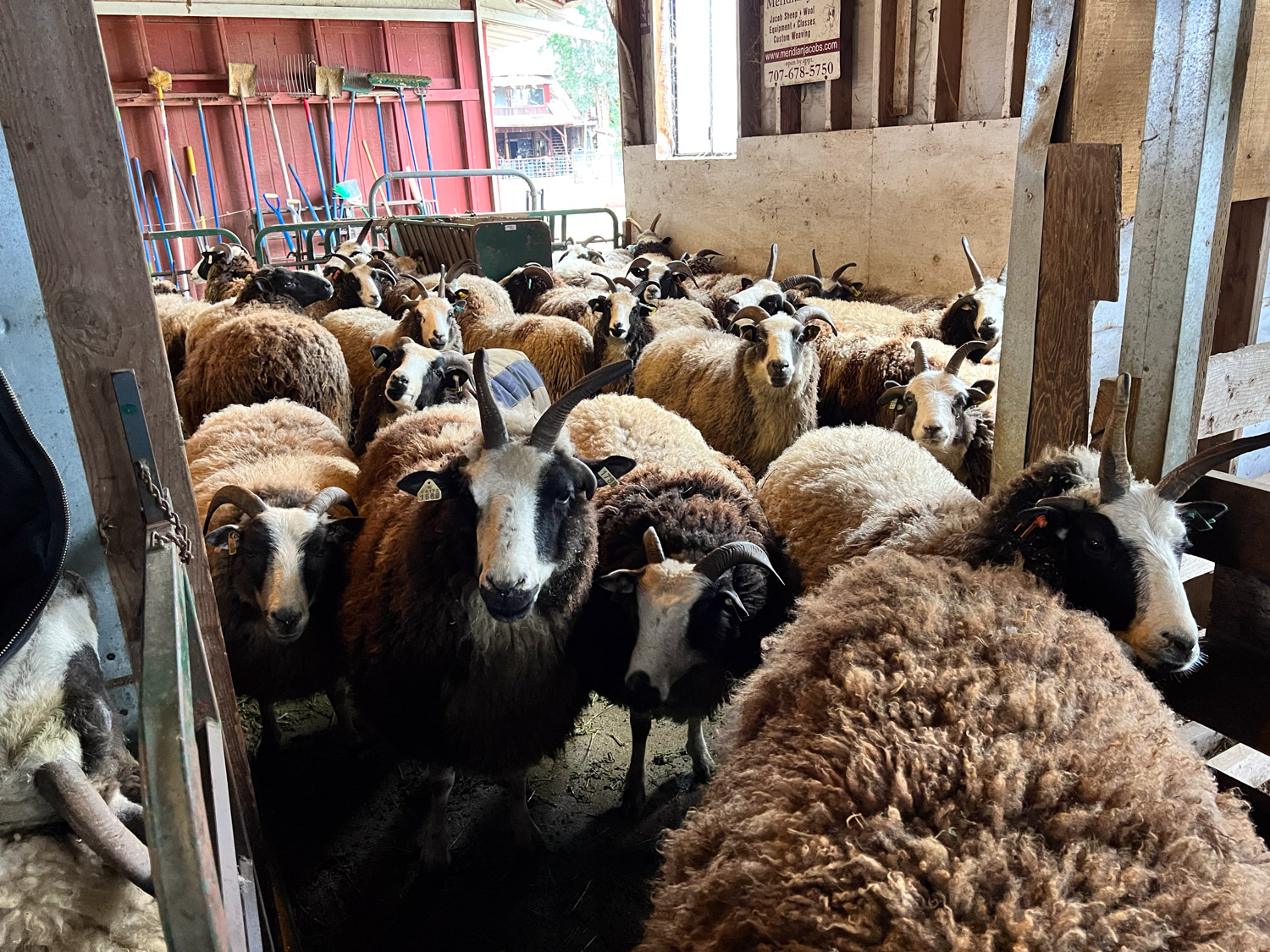
The next group of ewes waiting.

Trading places in scanning.

Meanwhile, one reason Matt came was to climb the weeping willow and cut a couple of large branches that had broken during the summer. FIY, he is using safety gear to prevent falling in case of slips.

It’s amazing how quickly this tree has grown. Matt cut the problem branches, but then cleaned out a lot more where it overhangs the pasture and the fence.

Back at the barn they are still scanning, but we could used last year’s lambing list on the white board (to be erased at the beginning of the next lambing) to pick out which ewes had triplets last year.

Here are the stats:
Fetuses counted: 51
Sets of triplets: 2
Sets of twins: 17
Singles: 5
Sets of 2+ (twins, but not ruling out a 3rd): 3
Ewes pregnant: 27
Ewes open who were with a ram: 3
Ewes maybe pregnant, bred late by Eli: 4
Ewes not with.a ram: 7
Ewe lambs not bred: 8

Stay tuned for March 9, the first due date based on when I put rams in with ewes.

Pasture and Irrigation Renovation – Part 2

A few weeks ago I wrote Part 1 of Pasture and Irrigation Renovation. I ended that post with the sheep coming in from the pasture for the last time and a lot of heavy equipment in their place. A lot went on for a couple of weeks and then there was a lull. I have to go back and find the photos I took at each step.

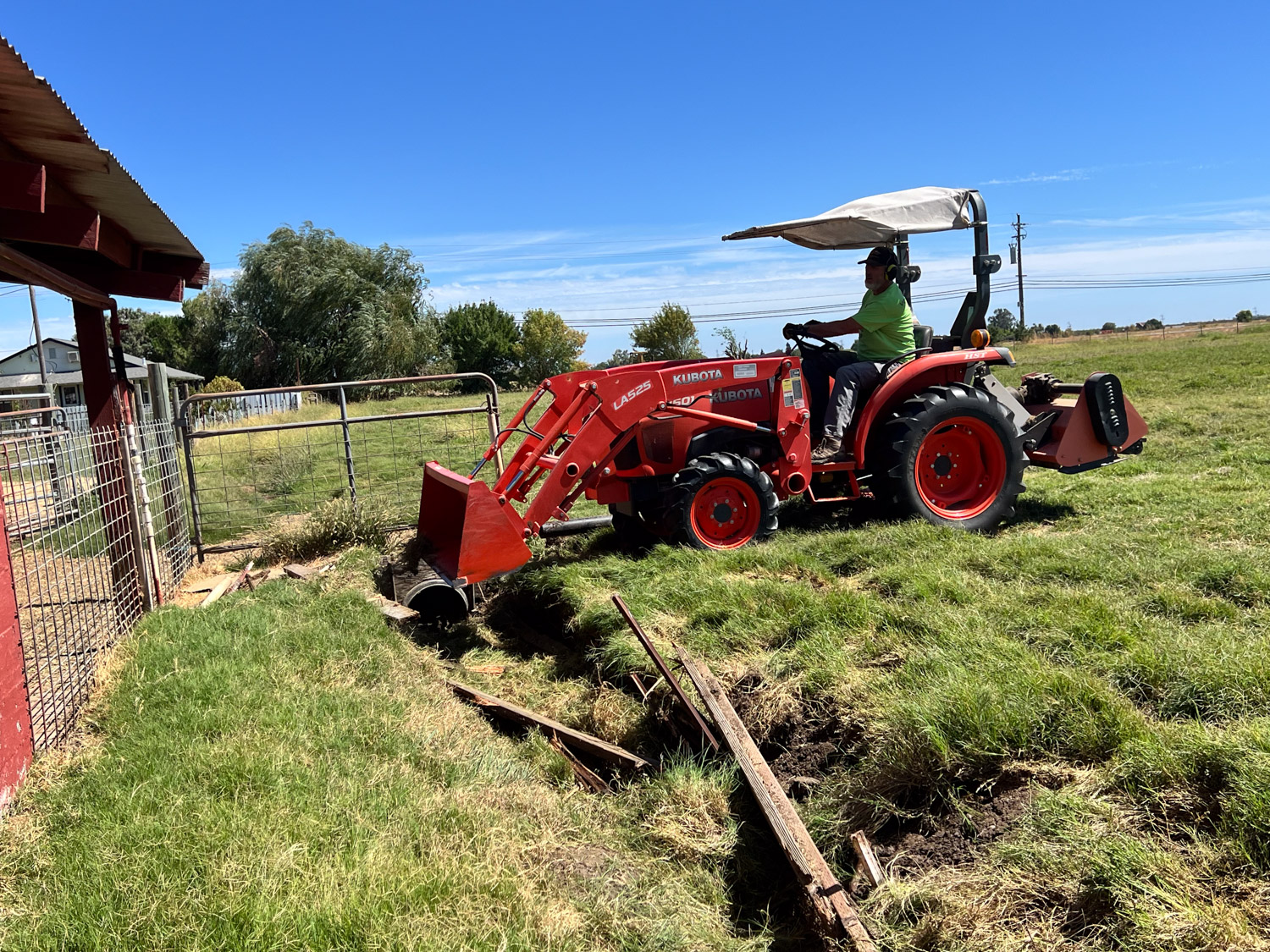
There was still more work for us (Dan) to do. Here he is removing the wood and stakes we had used to make the ditch more functional near the barn and taking out the culvert.

Before work began we were asked to hold a meeting with the contractors where we could all listen to a representative of the tribal people who used to live in the area. He showed photos of the cultural items that one might find when soil is disturbed and talked about procedures if something was found.

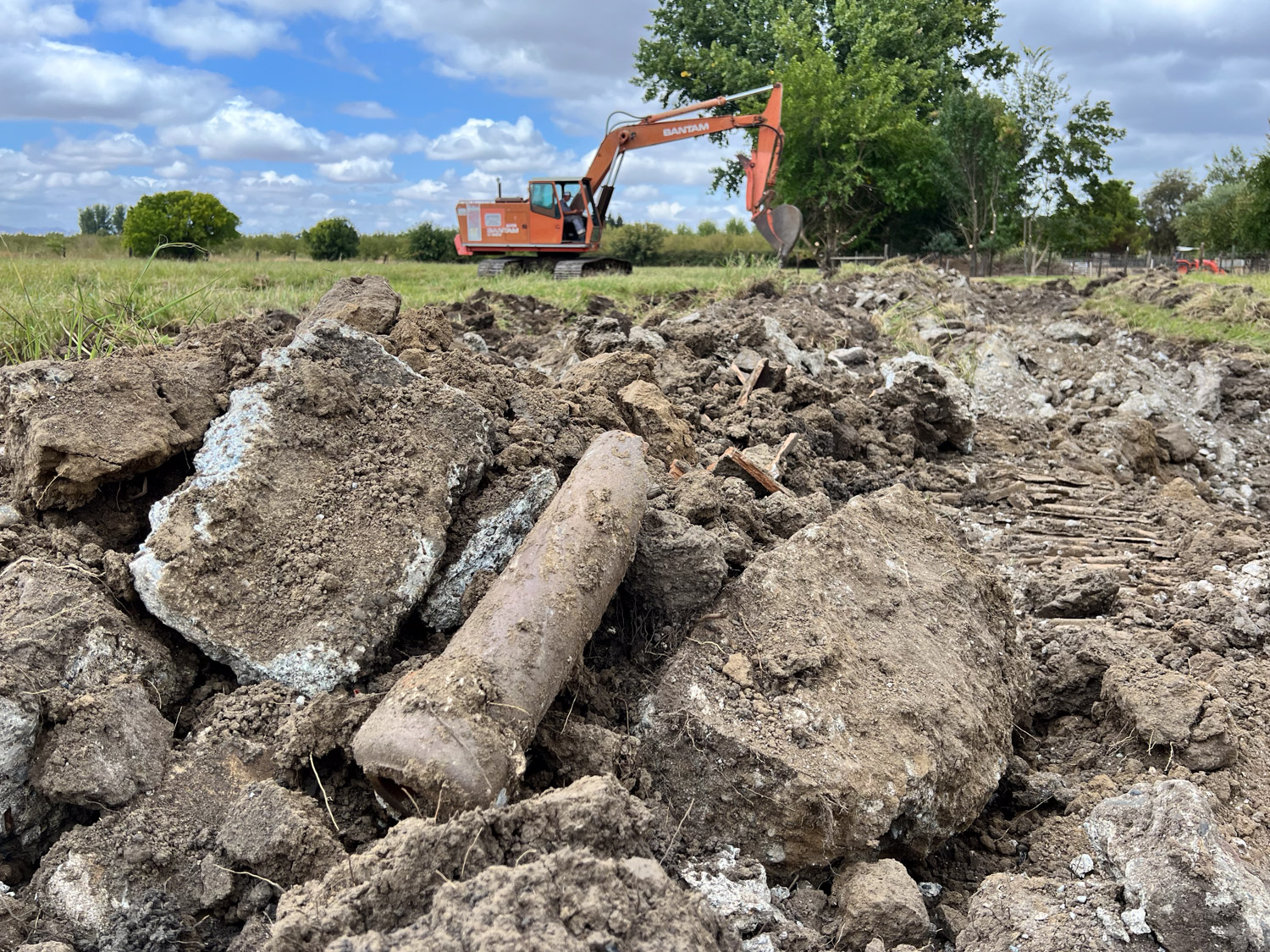
The first job was to remove the old cement foundation that ran north to south over 3/4 of our property. We suspect it was the floor of an old barn–I don’t know what else it would have been. That would have been a big barn and maybe someday I’ll be able to talk to a local history buff who knows what this was. It doesn’t really matter–it’s just that we have always had to work around it. Part of it was broken apart to put the original irrigation ditch through and, even though grass will grow on top in the winter, it dries out in summer and the desirable pasture plants don’t grow there. NRCS calls this job “obstruction removal”.

Brett is the contractor with the heavy equipment. He first scraped the layer of dirt and grass off the top of the cement. Most of the concrete was only 2″ to 3″ inches thick and a lot of it broke into smaller crumbly pieces . The borders were a lot larger however.

Brett used the excavator to scoop up chunks of broken concrete.

We found that a clay pipe ran the length of the concrete.

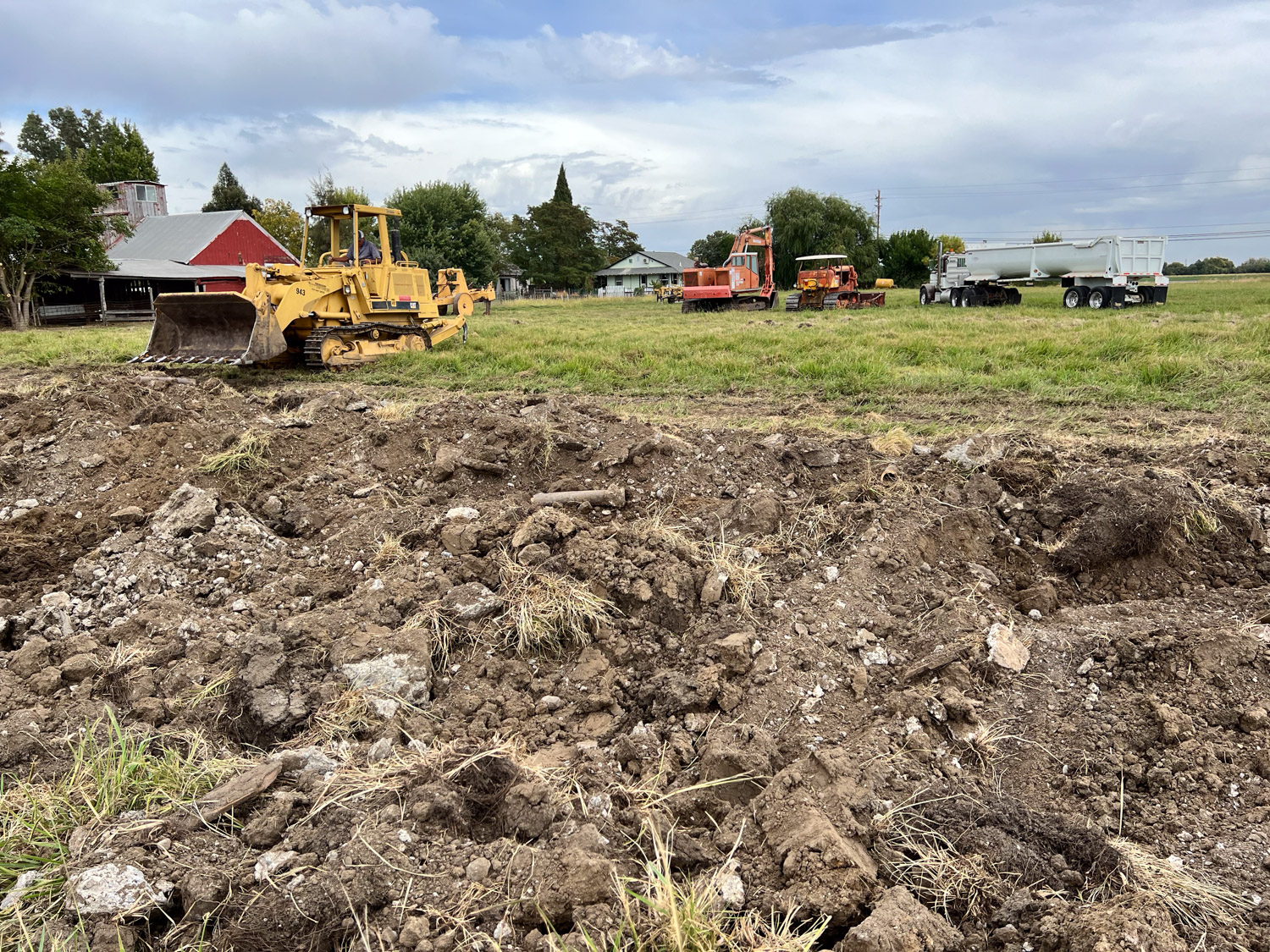
Brett used the teeth on the track loader to rake through the dirt and find the concrete chunks.

The chunks were loaded into a truck for removal to a place where they’d get broken up even more for use in road bed material.

Eventually the pile of dirt that was scraped off the top was incorporated back into the area where it had been.

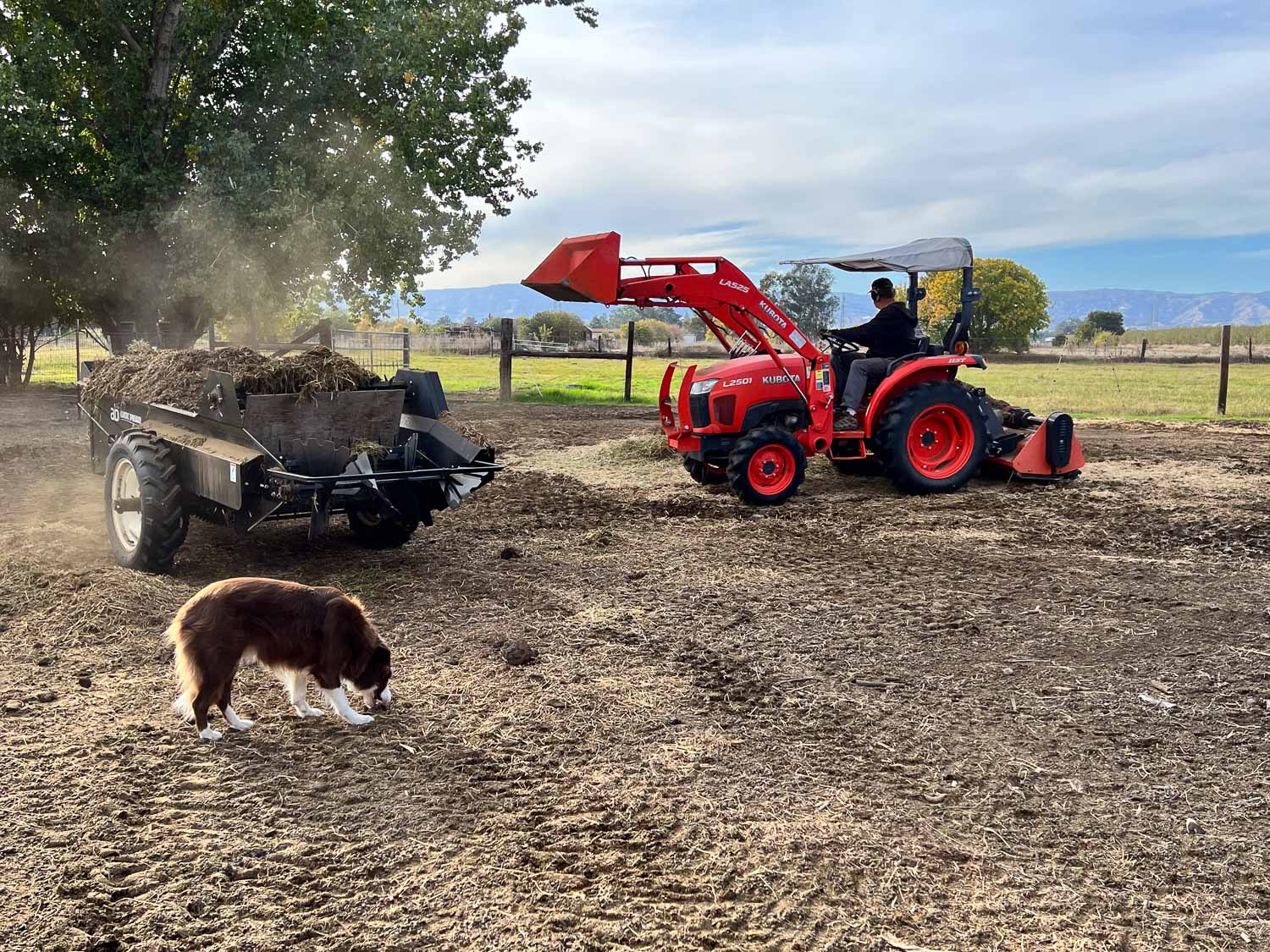
Manure spreader driving into green field.

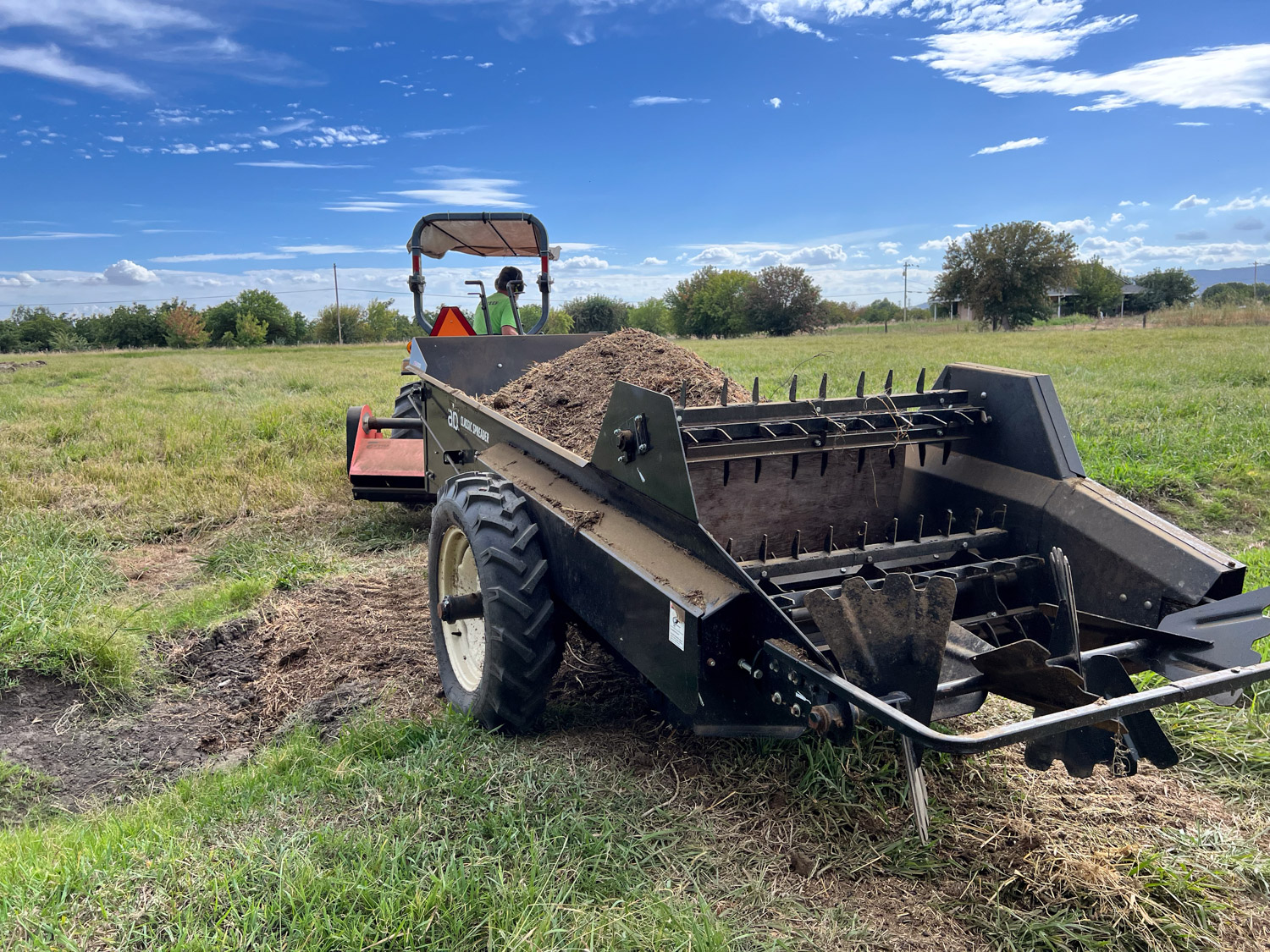
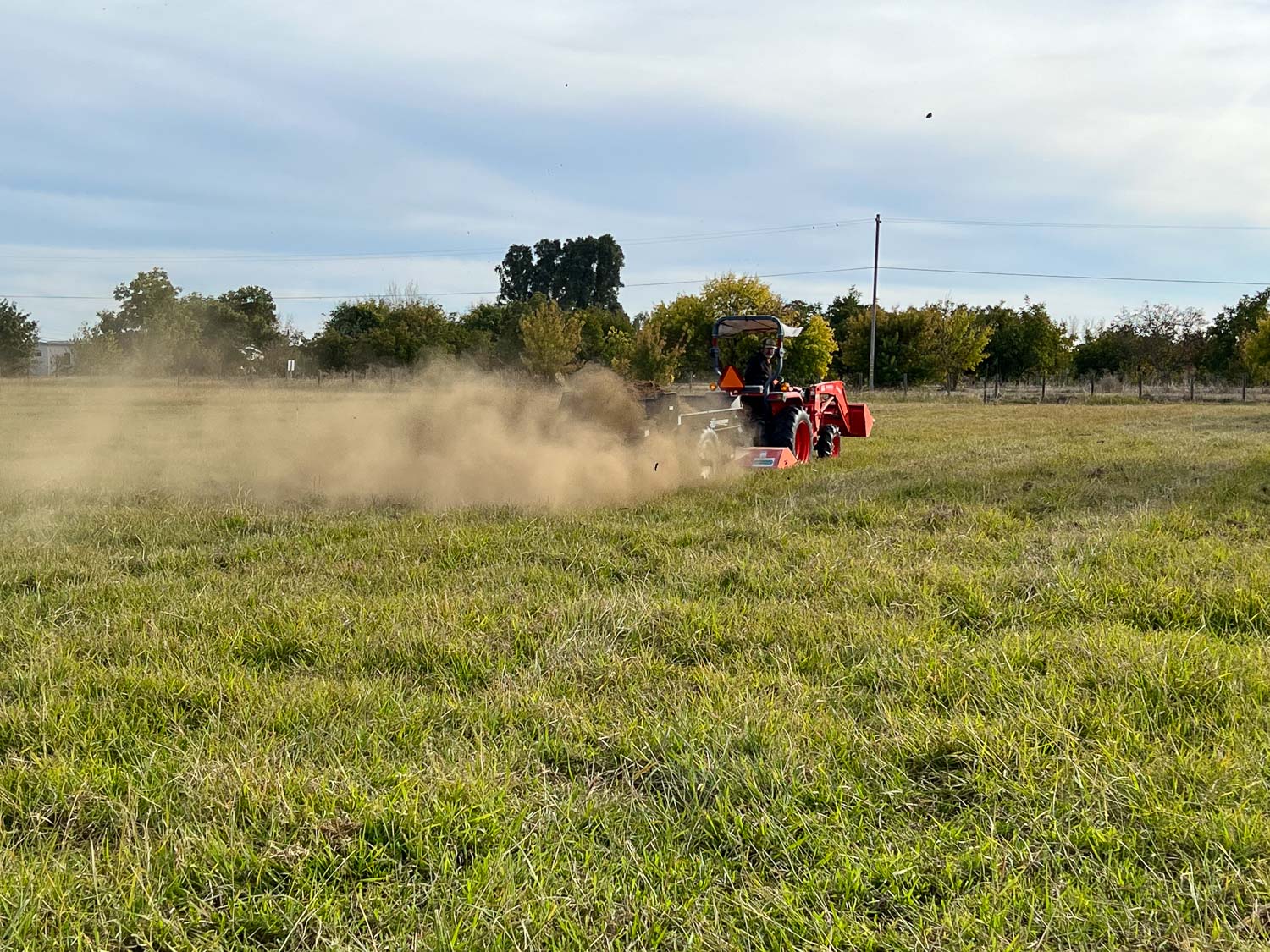
While Brett was working on this part, Dan spread the rest of the composted manure pile.

Manure spreader working in green field under cloudy blue sky.

This part of the job took about three days using all this equipment.

Today on the Farm – February 16

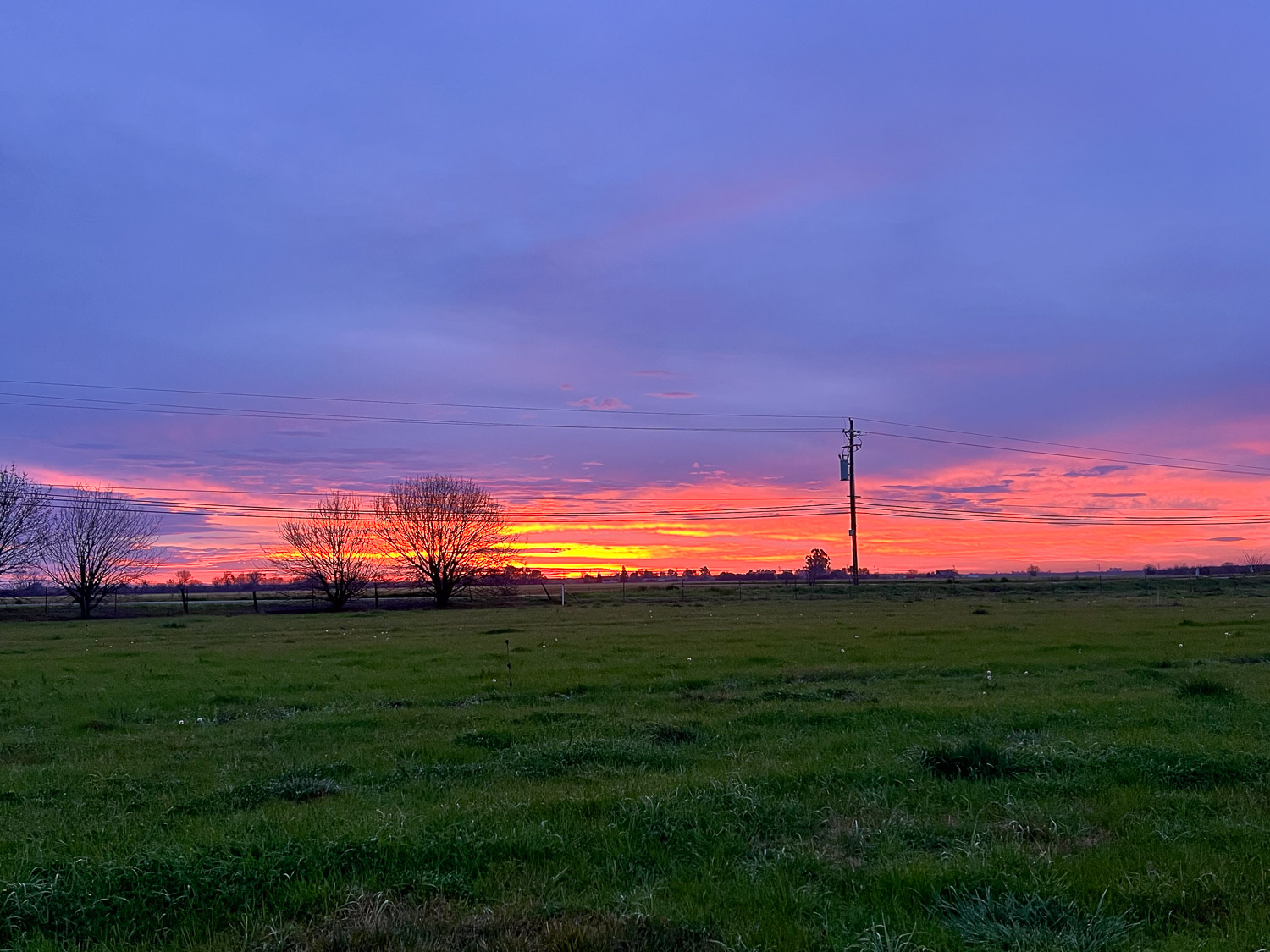
Sunrise while I was in the pasture.

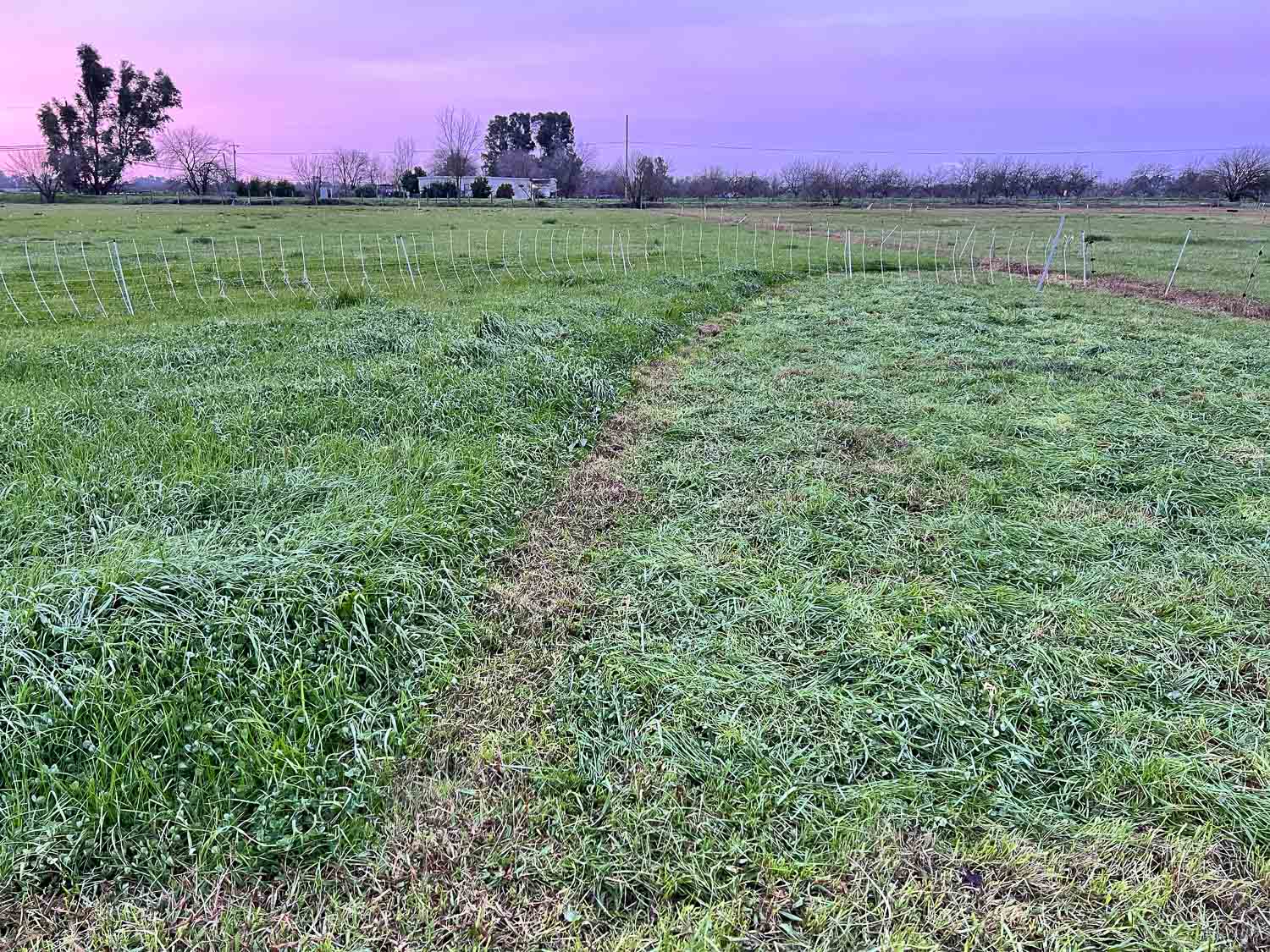
This is the opposite view. It looks as though there is a lot of grass but we have to be strategic about grazing right now. The ground is wet and I don’t want to cause compaction. And much of the pasture is not fresh grass, but still-dormant dallisgrass with only a little annual grass growing through. The bulk of the green grass right now is annual, not perennial. There are clovers in here too and we want to maximize their vigor by not overgrazing them.

We first set the net fence up along the lane so the sheep could graze that down before it became so tall all they would do is trample it. The grazed part is where I had the sheep yesterday using a short bit of net fence. This morning I switched to a longer section of net fence and gave them a bit more of the grass.

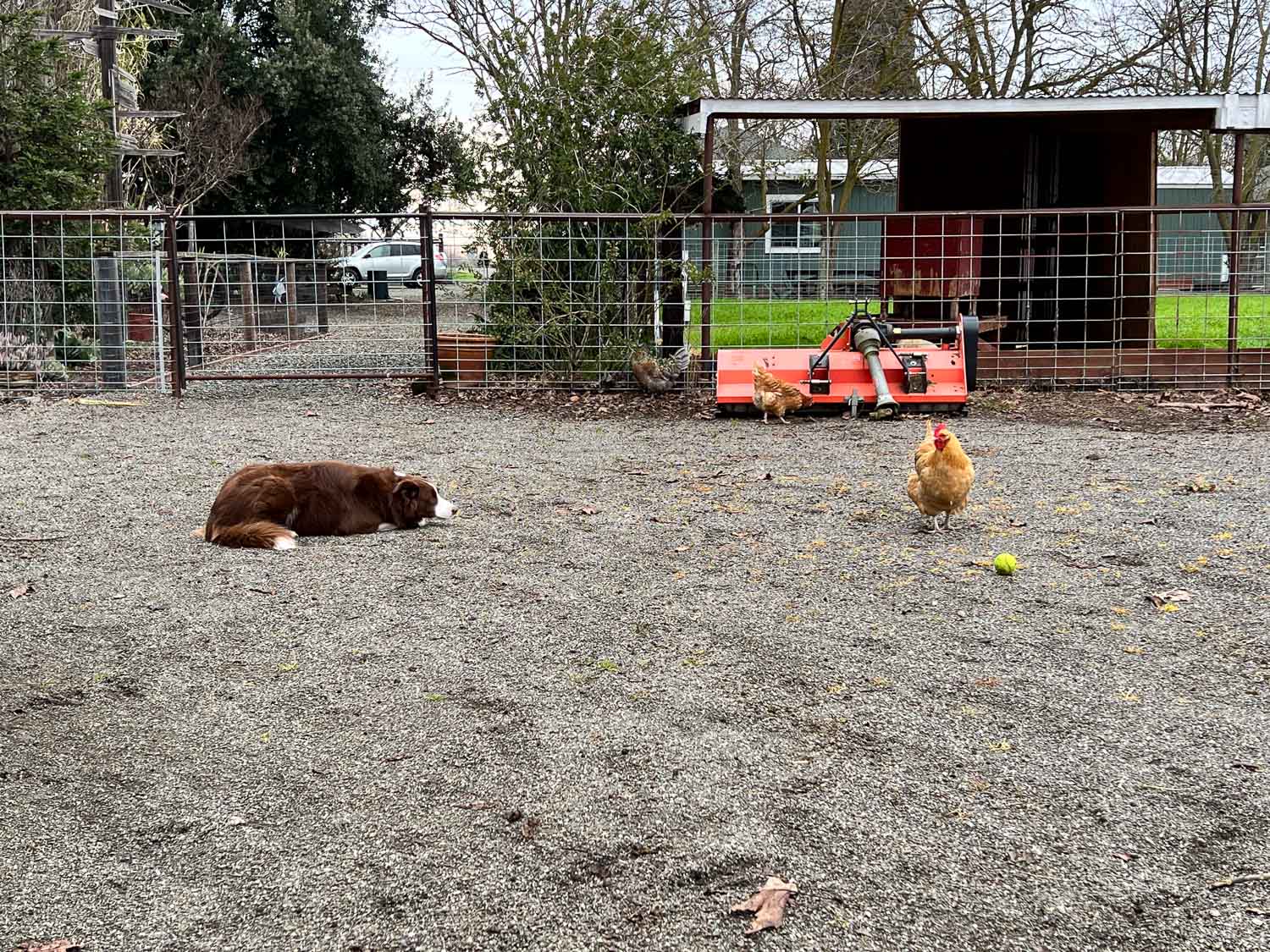
Ginny came to the barn eventually with a ball. Whose ball is this? Chicken or dog?

Trista was in last night because I thought she was next to lamb. I was right, but she sure took her time with it. It was a long time before this labor became anything that was visible.

Back at the Weaving House, one of the things on the list was to photograph the latest v-shawls to promote the class that I will teach at CNCH in April. There is still room!

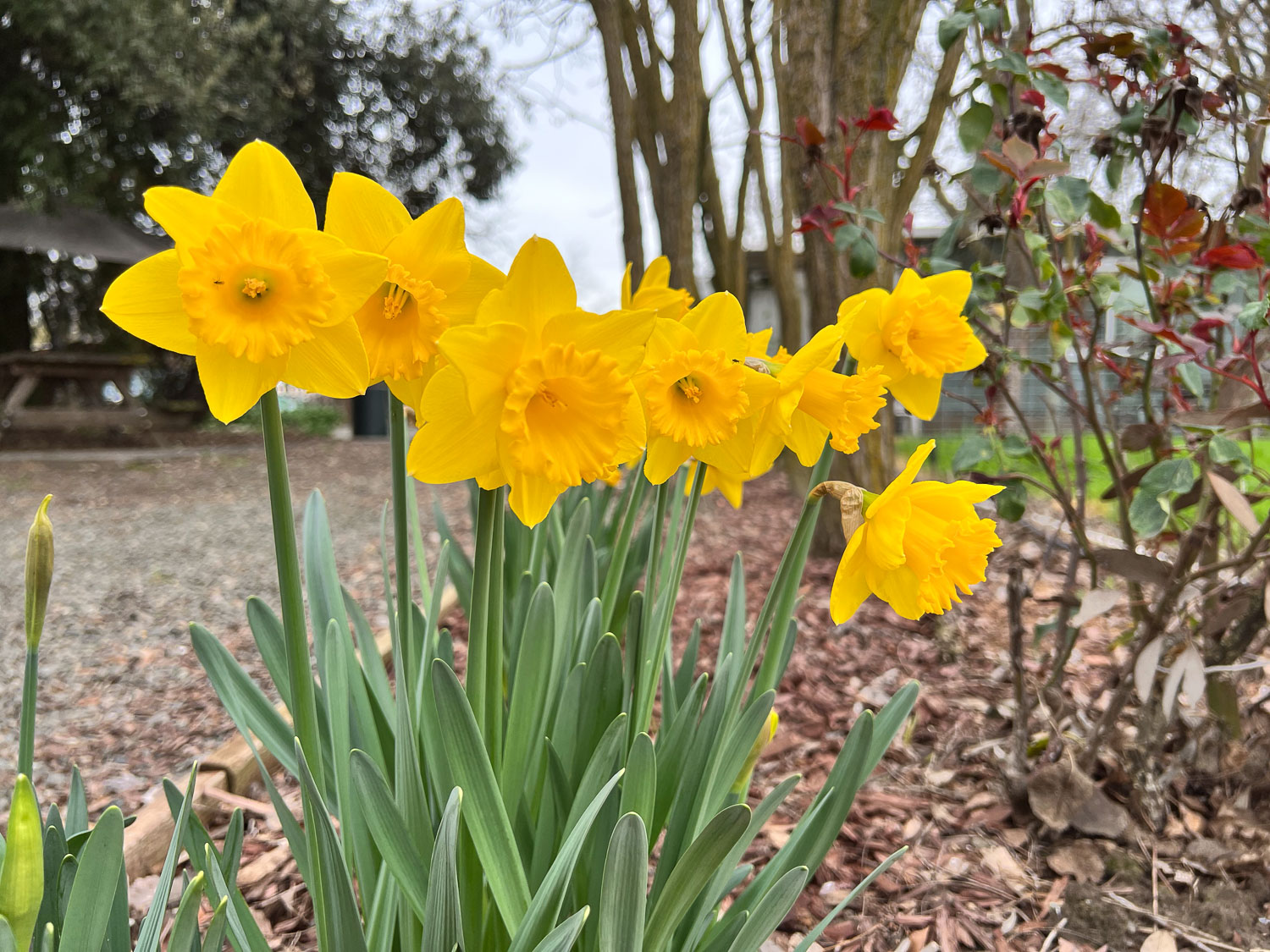
On my many trips back and forth between the barn and the house I always admire my daffodils.

It was about 1 p.m. that Trista finally lambed. It took another hour before she had the seccond lamb. Look at the horns on this ram!

Back at the Weaving House. Jacob shawls are on the loom now. I hope to finish these tomorrow.

We have seen a skunk twice in the last week around the shop. It seems to be living under the shop. Ginny has confronted it. I There is a distinct “eau de skunk” in the air, even in the shop. There are many reasons why it’s not a good idea to have a skunk around. Fortunately it was not under the shop tonight we we could deal with it.

Back to the barn. This is Coco with the first of twins.

Jade came in tonight because…well, because she is Jade. She doesn’t look particularly ready but she sure looks as though she should be. She was due yesterday I think.

Random Farm Photos

Once again I had several great blog ideas to share, but other things happen. So here are random photos that were going to be in some of those post.

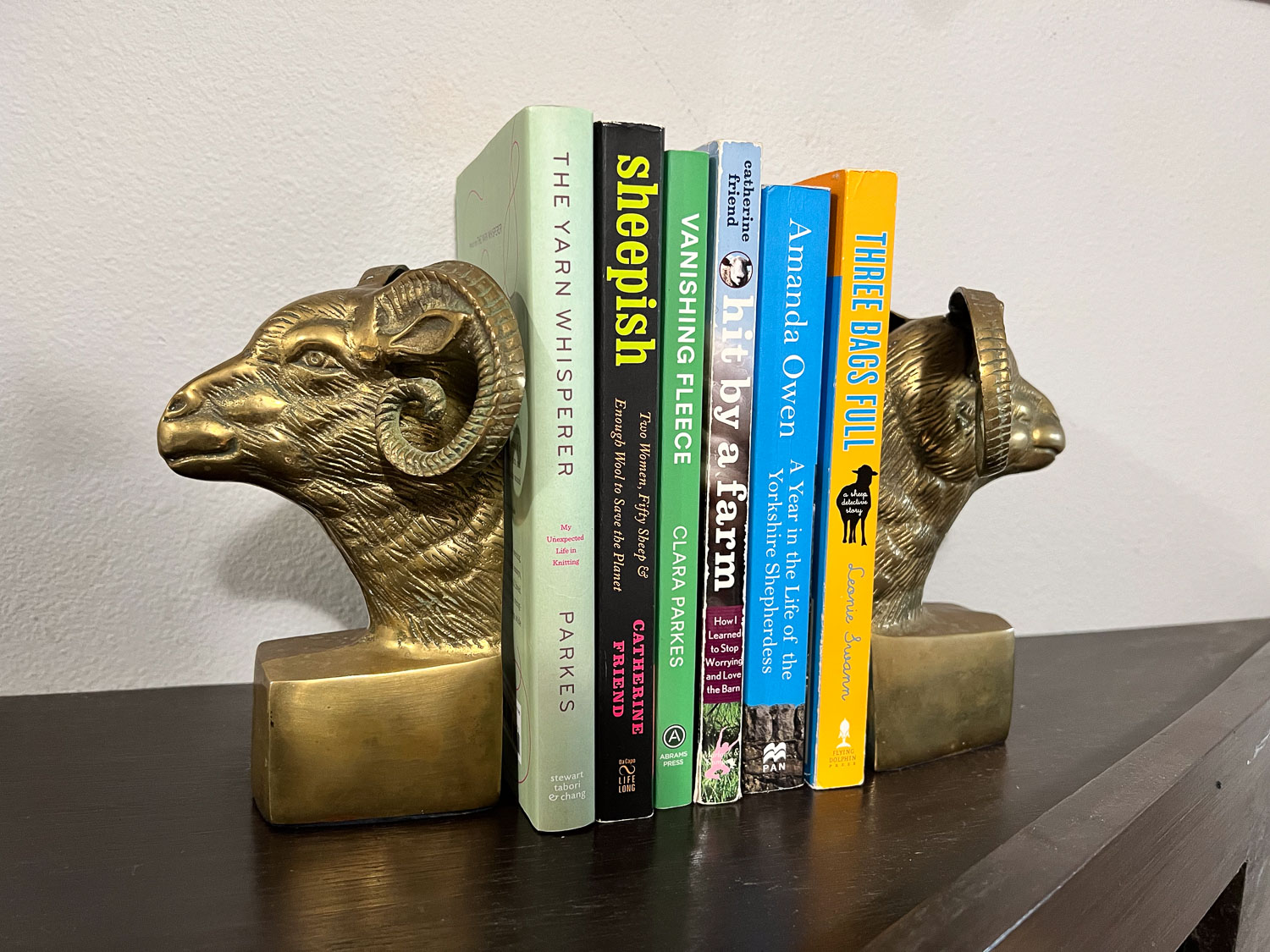
I have friends who talk about what they see on the Next Door website (or is it an app?) and I didn’t get around to exploring that until recently. I still haven’t spent much time on it, but right after I signed up I got an email about For Sale and Free stuff. I saw these bookends ($25) and knew I needed them. The person who had them was going to be driving near my place the next day and offered to deliver. Aren’t they great?

That’s random. What else?

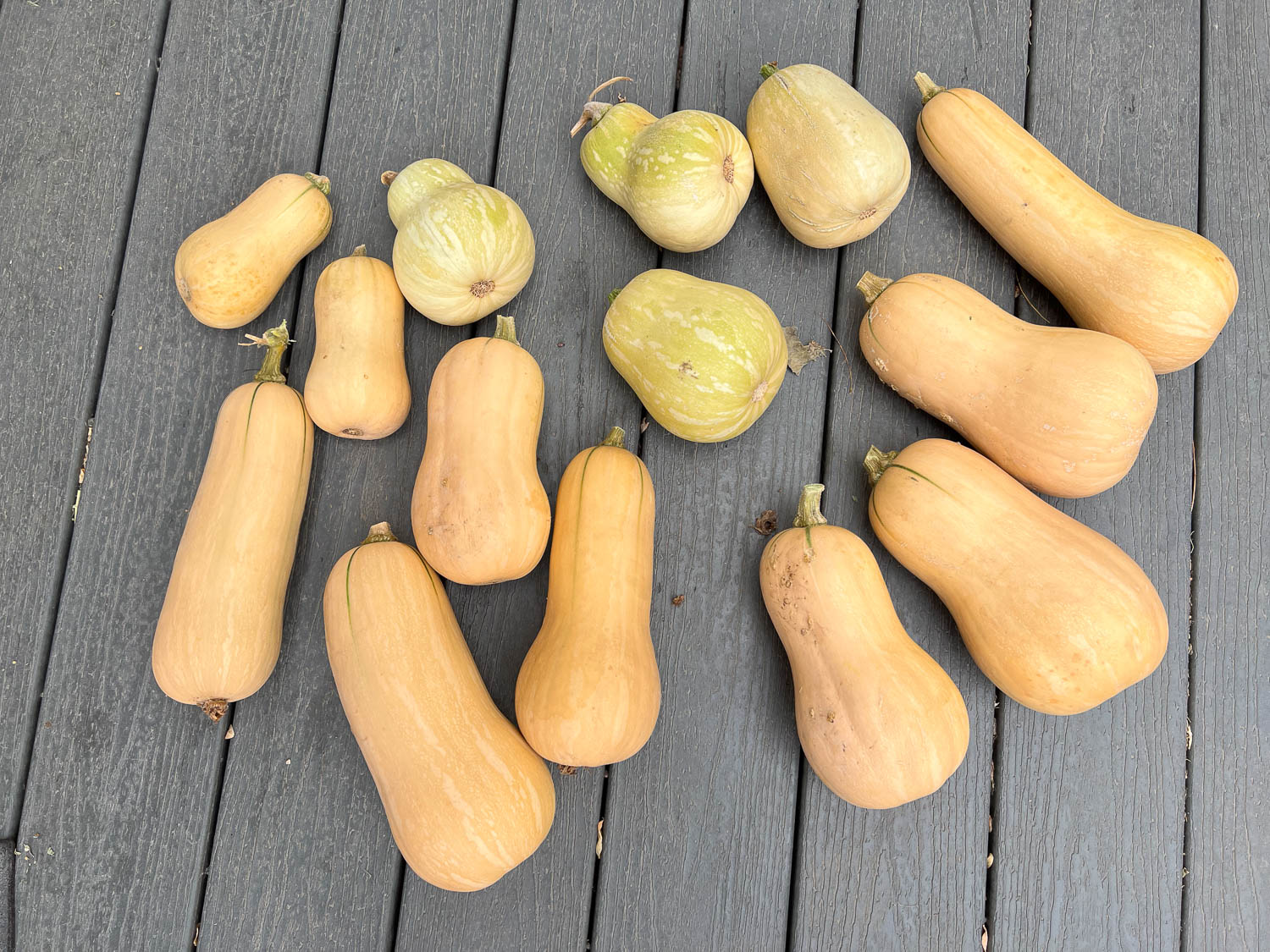
Butternut squash on a gray plank deck.

Butternut squash harvested from my garden. I made “pumpkin” pies from these for Thanksgiving. They turned out great! The three little ones at the top are too green but I thought I’d try them. Not ripe.

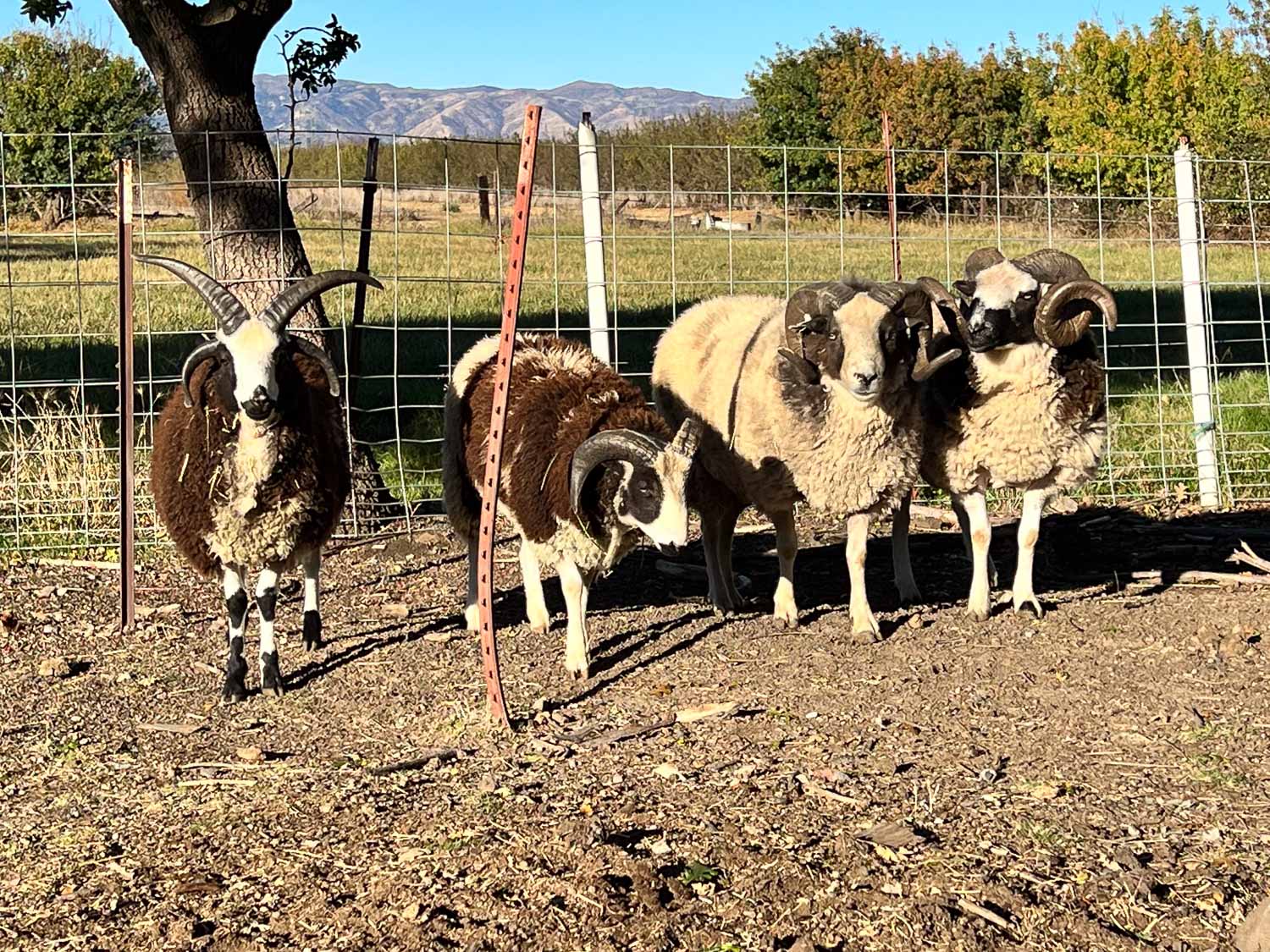
Here are the rams I’m keeping through the winter. The two on the left are this year’s lambs. The four horn ram is Typhoon and the two horn is Blizzard, both born here. The two two-horn rams on the right were born in 2021. That’s Hillside Gabby’s Barrett from Michigan on the right and Fair Adventure Horatio from Colorado on the left. I would have used another 4-horn ram for breeding but Townes died in a freak accident when he caught his horns in a fence panel. After a fertility issue last year I had the vets do some fertility testing and Silverado was found to be not fertile at the time of the test.

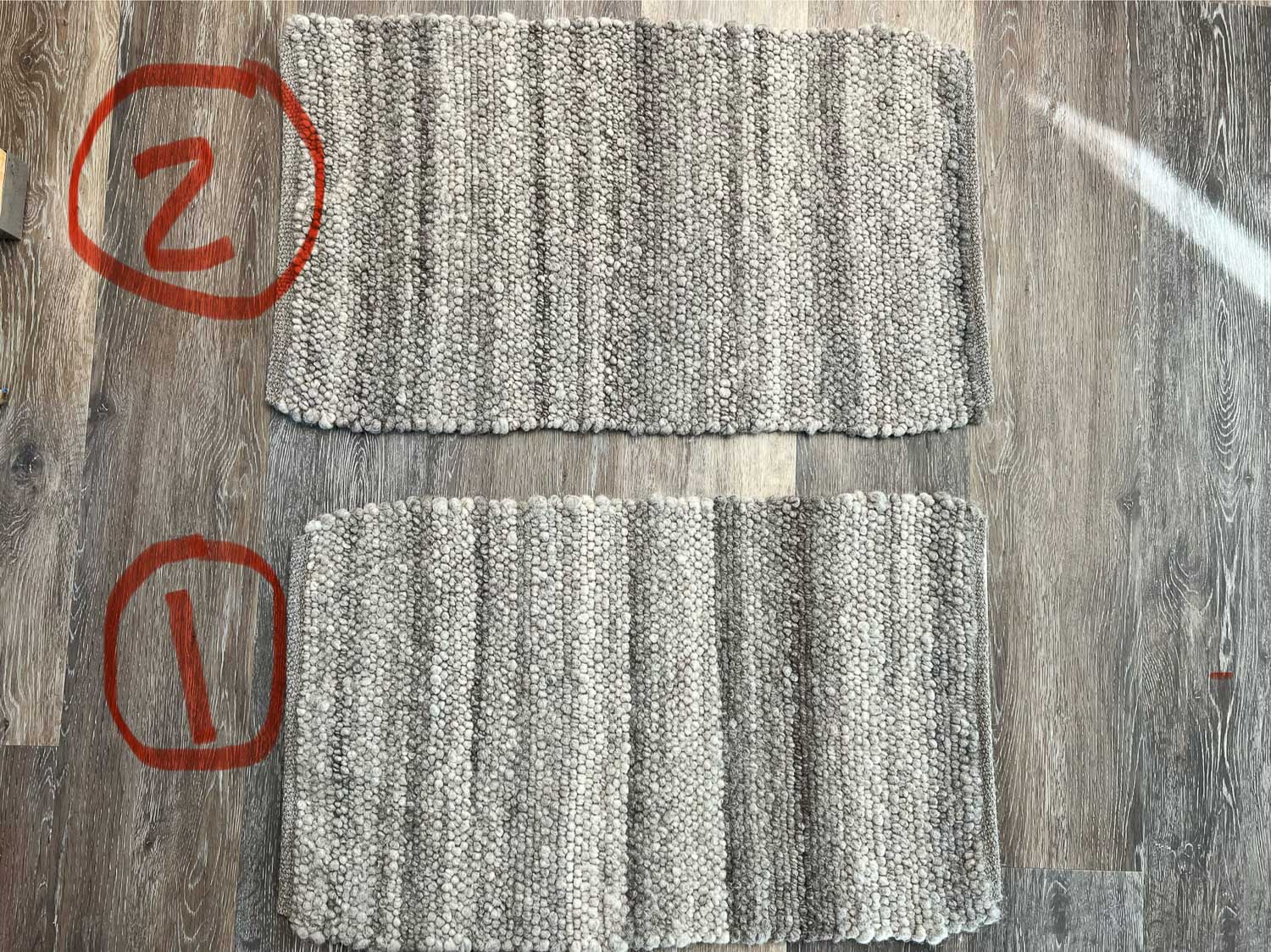
I have finally been spending time at the loom. These rugs are woven from corespun yarn that is spun from the coarser britch wool that I have sorted away from the rest of the fleece.

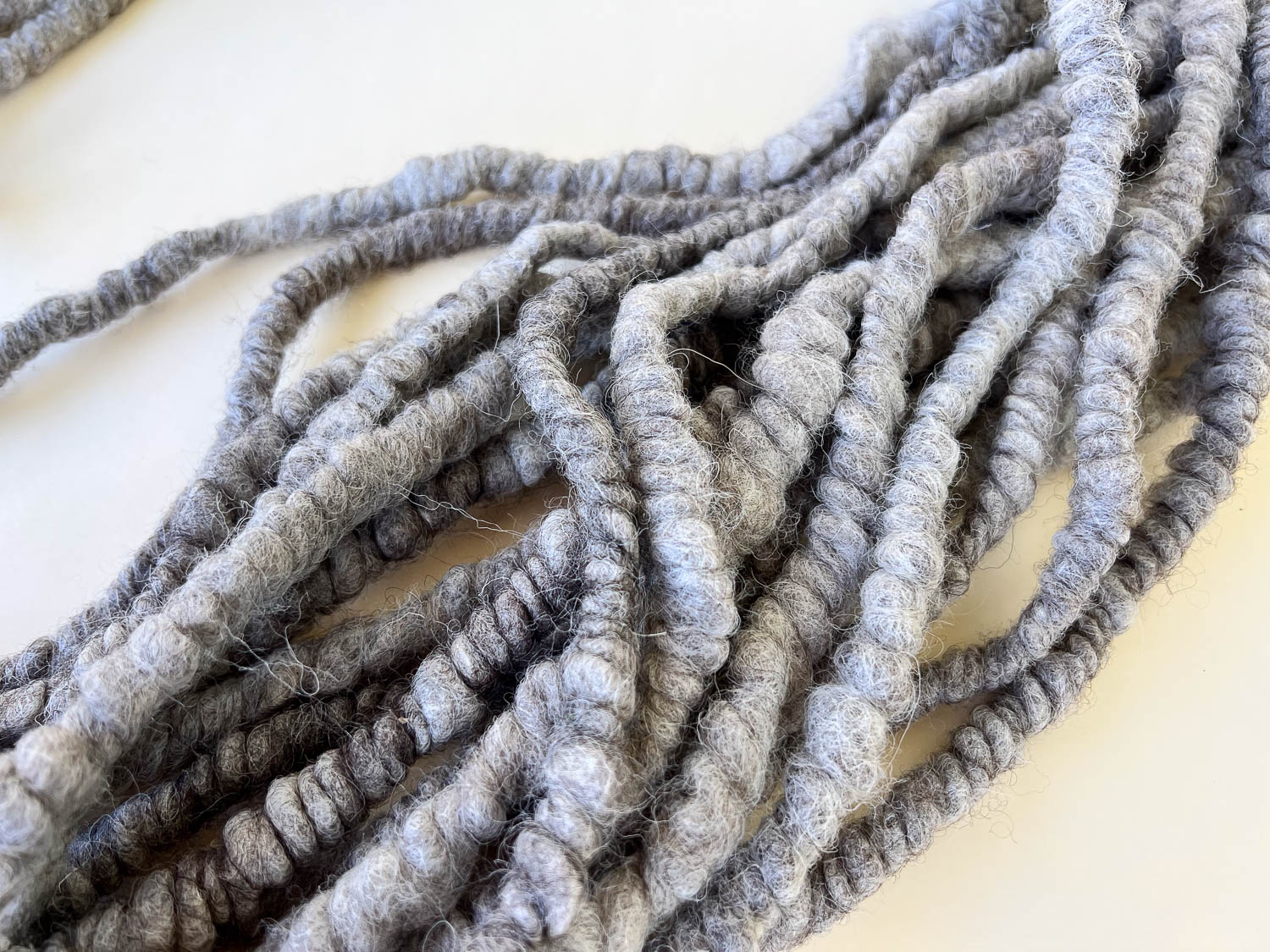
This is a close up of the corespun yarn that is the weft for those rugs. It is listed here on my website. The rugs are here and now I have two more to post.

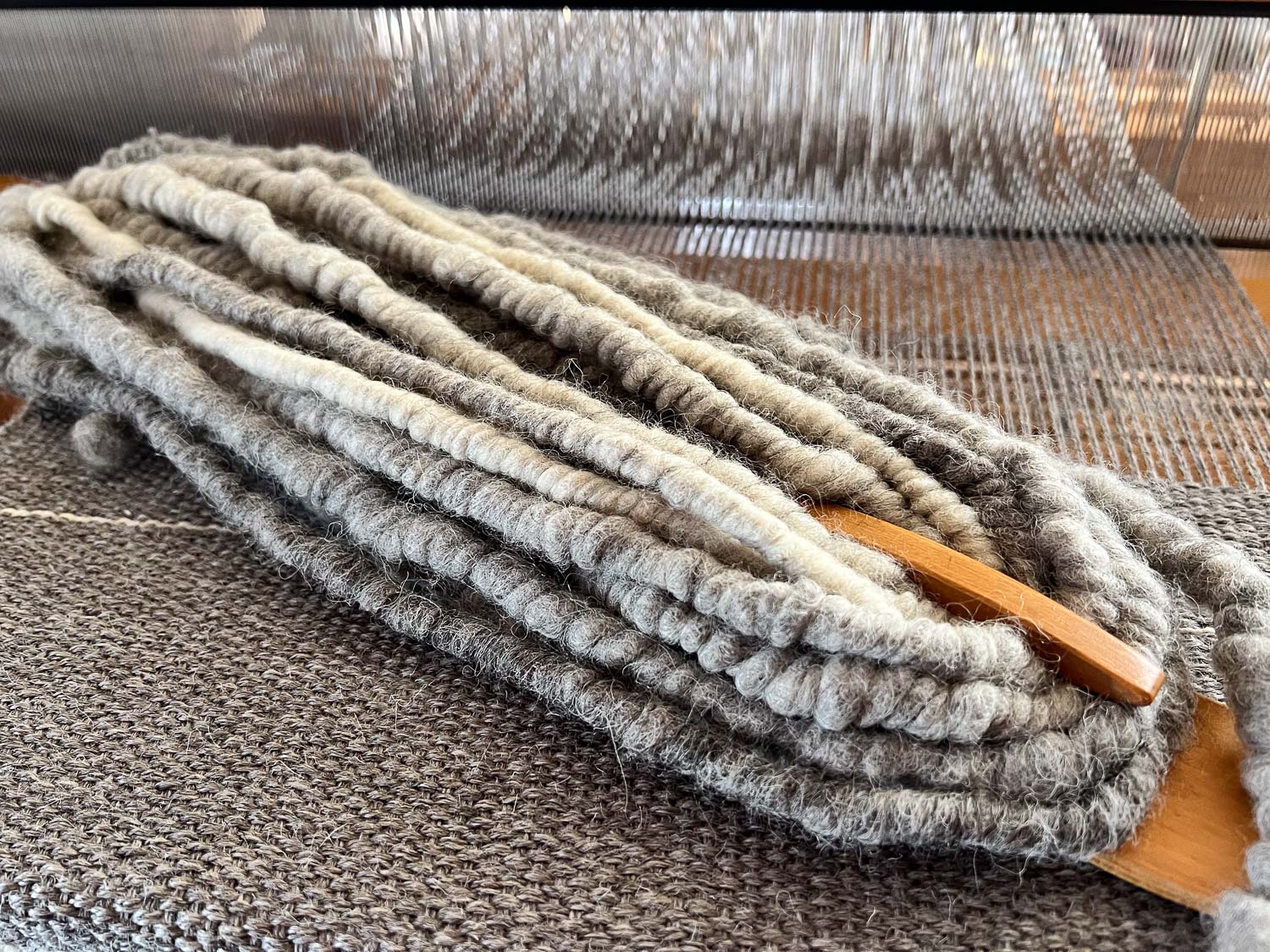
I use a big ski shuttle to weave with this yarn. What you see on the loom in this photo is the part that will be the hem and I’m ready to weave with the corespun yarn.

Speaking of weaving, these are some of the shawls that just came off the loom. I wove some holiday colors so that they would have a place in this room at The Artery in Davis. Everyone has an opportunity to bring more work in for the month of December.

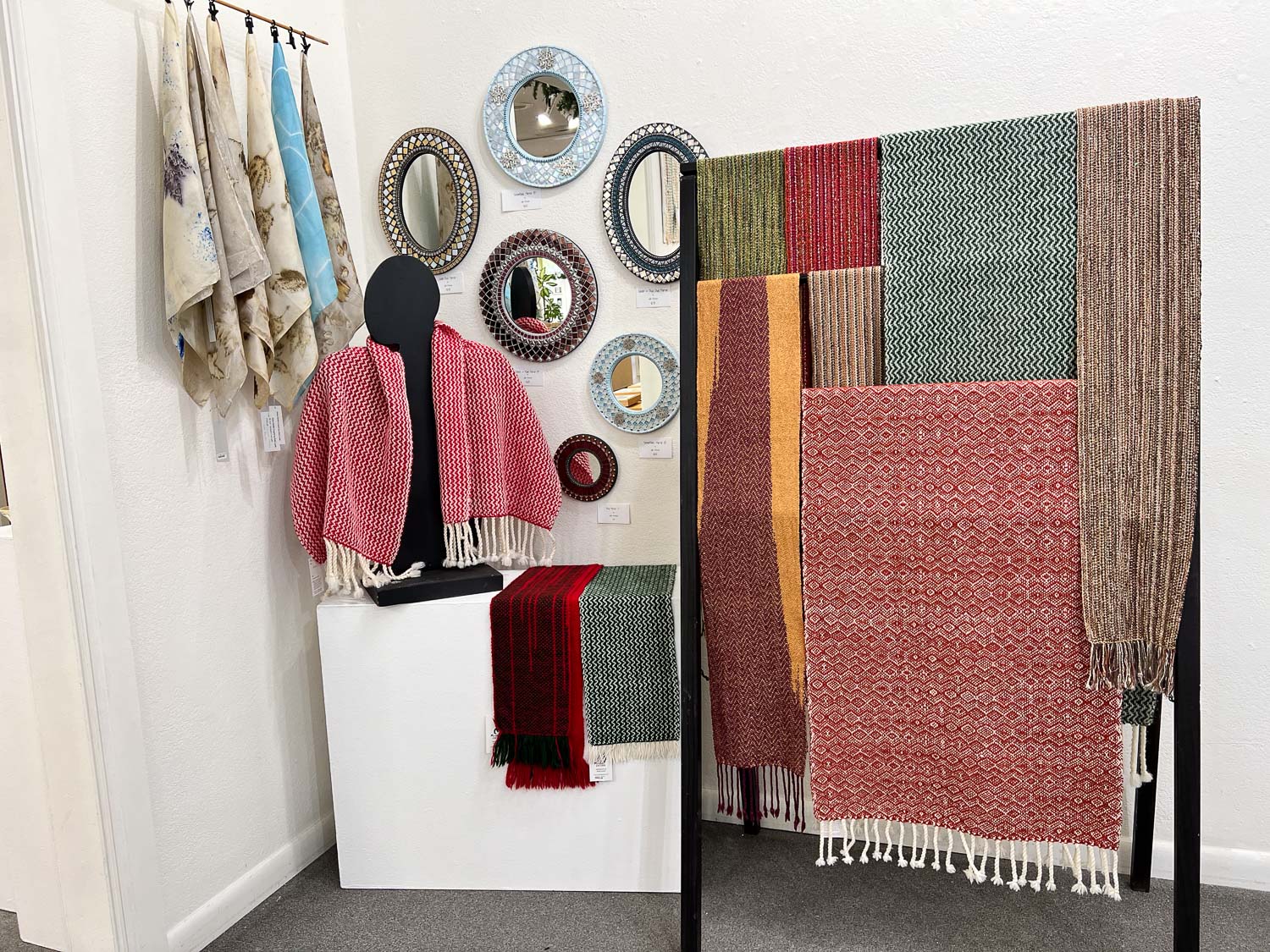
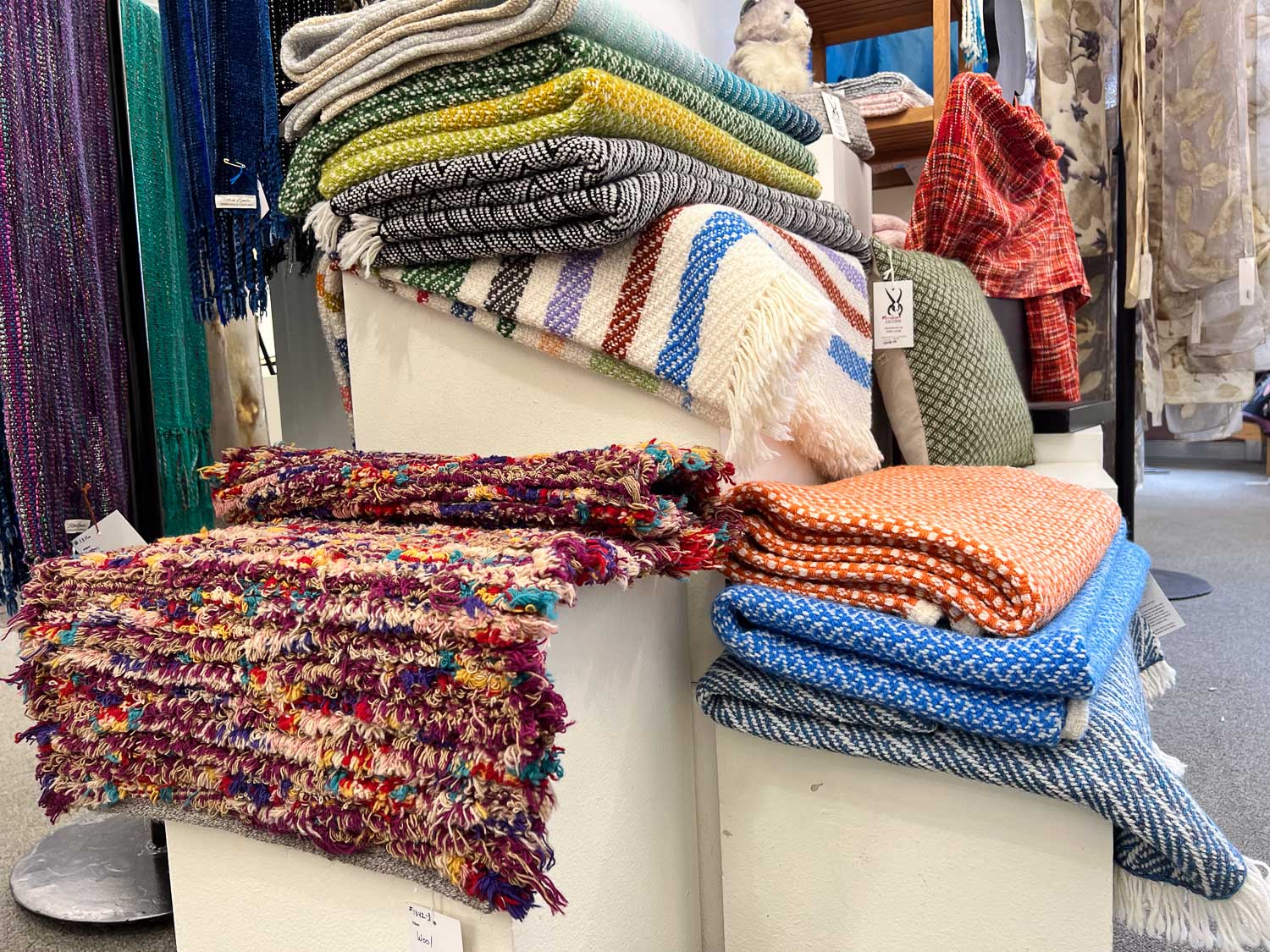
These items are in the main display area of The Artery. That colorful piece on the left is a rug I wove at the same time as I wove the corespun rugs. I have two more of these here at the shop. Most of these items are not on my website because it is risky to have them listed on-line but not know if they might have sold here at the Artery. The pieces in the middle are blankets.

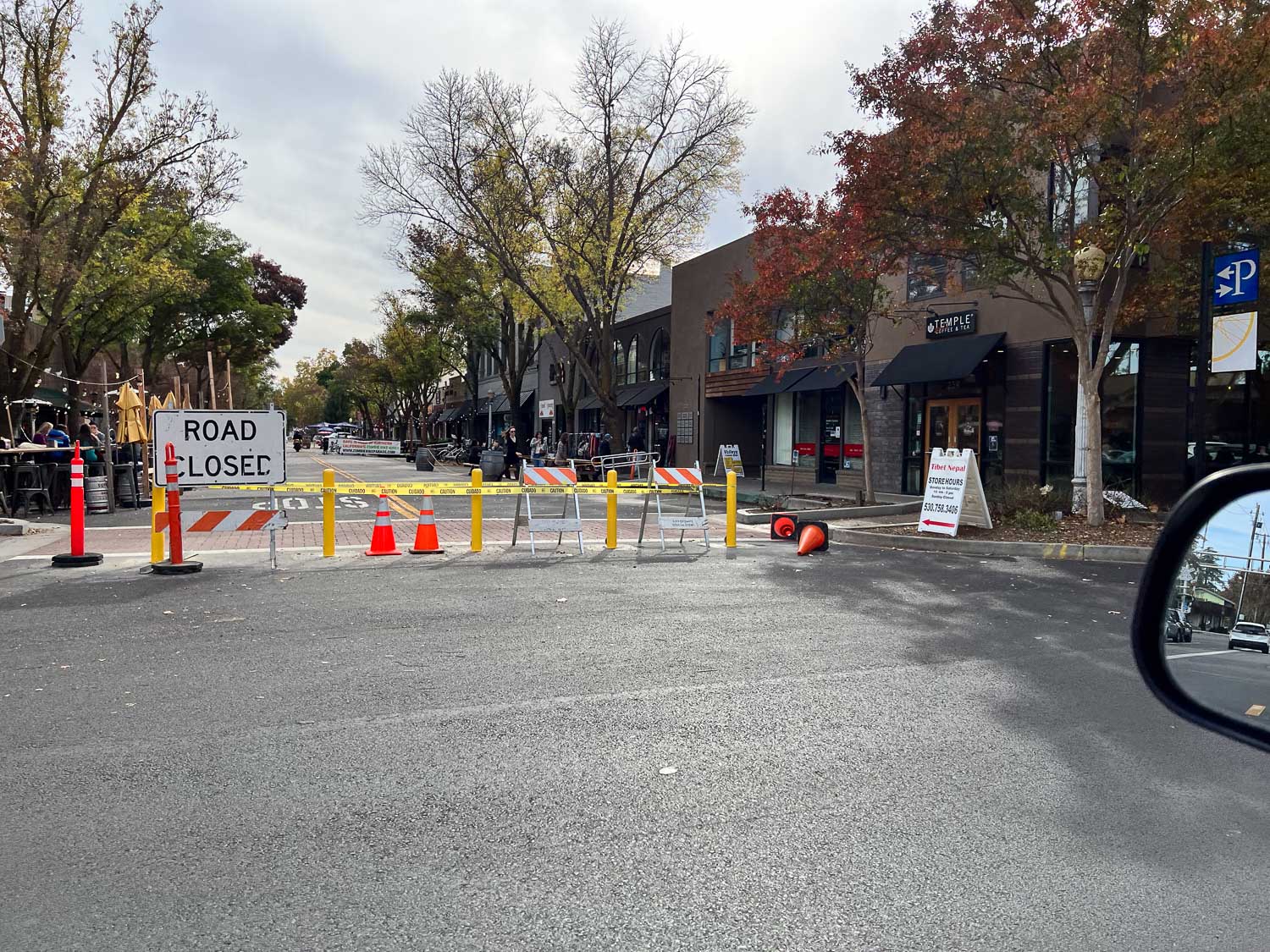
I took this photo out the window when I was leaving The Artery this week. The Artery is located at the other end of this block. At the beginning of the pandemic the bars and restaurants on this part of G Street were given permission to block off the street and have outdoor seating. The street is blocked at that the other end just past our store, so there is still access to the sidewalk and a small amount of parking, but it’s not exactly inviting when you look down the street and it looks like it is a crime scene or a medical emergency. Those of us at The Artery have tried to have the street reopened but The City is not interested. They have ideas about making G Street a destination venue of some kind. Where there used to be other retail shops, now mosts of the businesses here are bars and restaurants. So the street was closed off in 2020 or early 2021, and it still looks like this.

That was random too.

When I got home I saw that Dan was using our new (last year’s purchase) manure spreader to spread the composted pile on the pasture.

It is so much faster and more effective than the old way of taking the manure out one scoop at a time and then kicking it around to try and spread it.

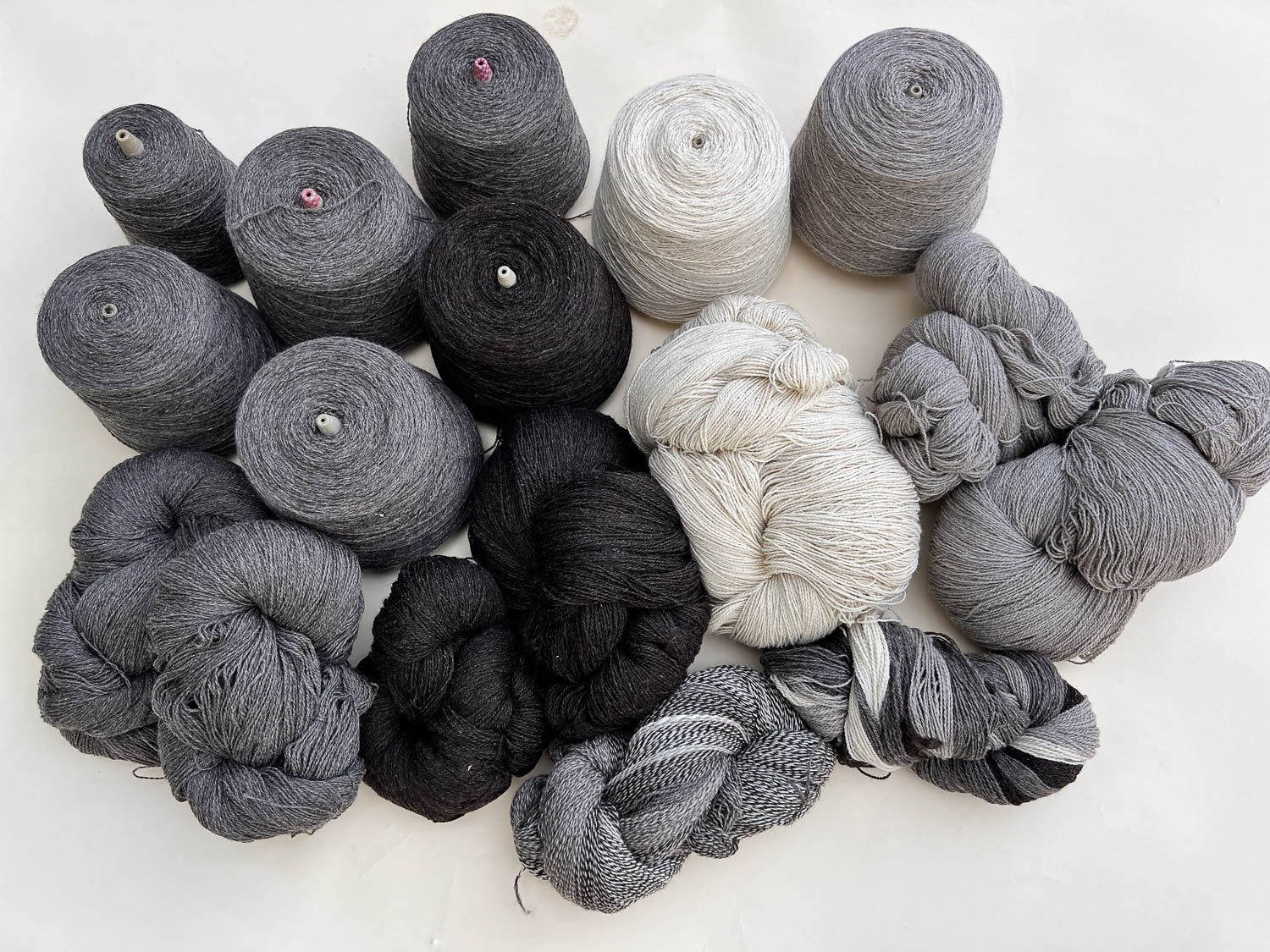
Last random photo. This is the Jacob yarn that I just picked up from Valley Oak Mill on Tuesday. This will deserve it’s own post soon. I am weaving scarves with it now.

Cows, Not Sheep

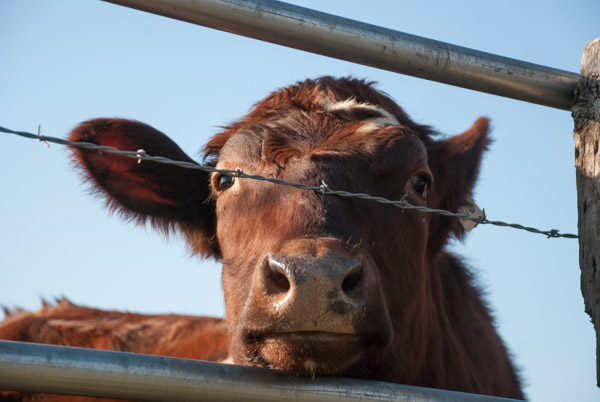
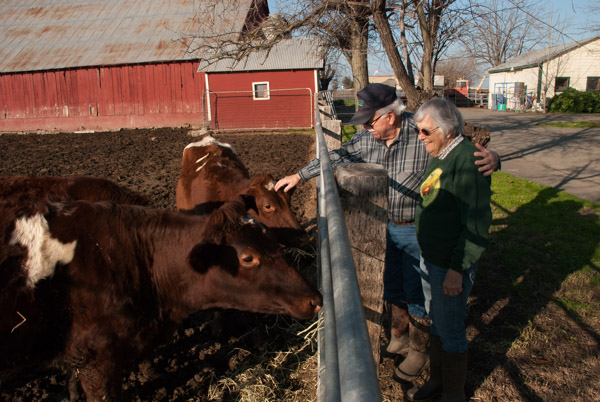
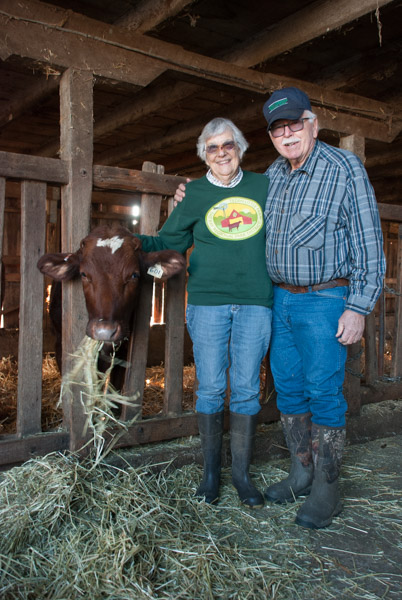
In a previous life I raised cows. When I married Dan he was a partner in a family-owned dairy. My daughter recently asked for photos of Grandma and Grandpa, preferably with cows, so that my 2-1/2 year old granddaughter would have an association with something memorable she looks at pictures of her extended family.

dsc_5728-2

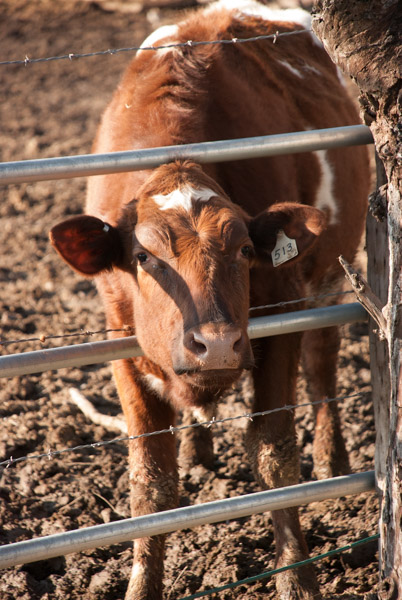
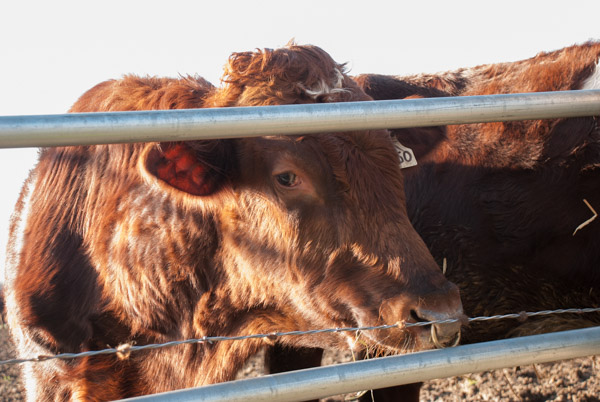
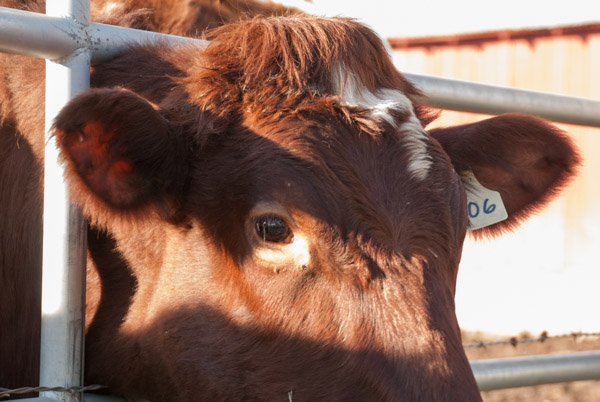
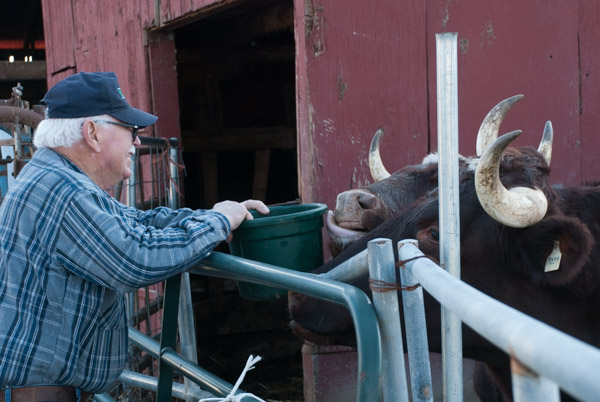
The dairy we worked on was sold several years ago and the cows were moved to Orland. That dairy was sold recently and the milk cows are all gone. There is some young stock left at the home place. These are Milking Shorthorns.

dsc_5809-2

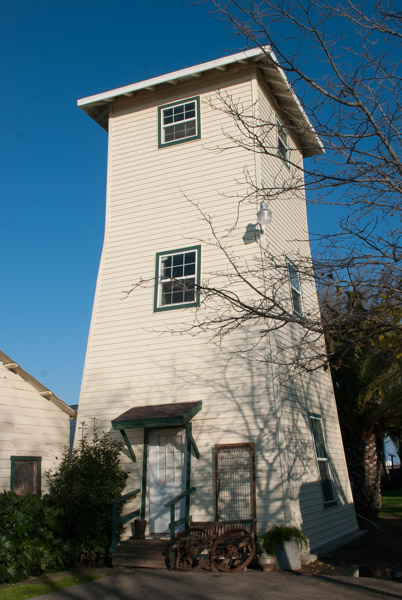
I have always loved this tankhouse. This one has been recently rennovated.

dsc_5779-2

A young bull.

dsc_5781-2

dsc_5788-2

dsc_5762-2

dsc_5731-2

dsc_5793-2

Stuart kept a couple of steers to be trained as oxen. This photo doesn’t show their size because they are standing lower than Stuart. They are huge as were the steers that I had when we first moved here.

dsc_5810-2

Random Thoughts in Photos

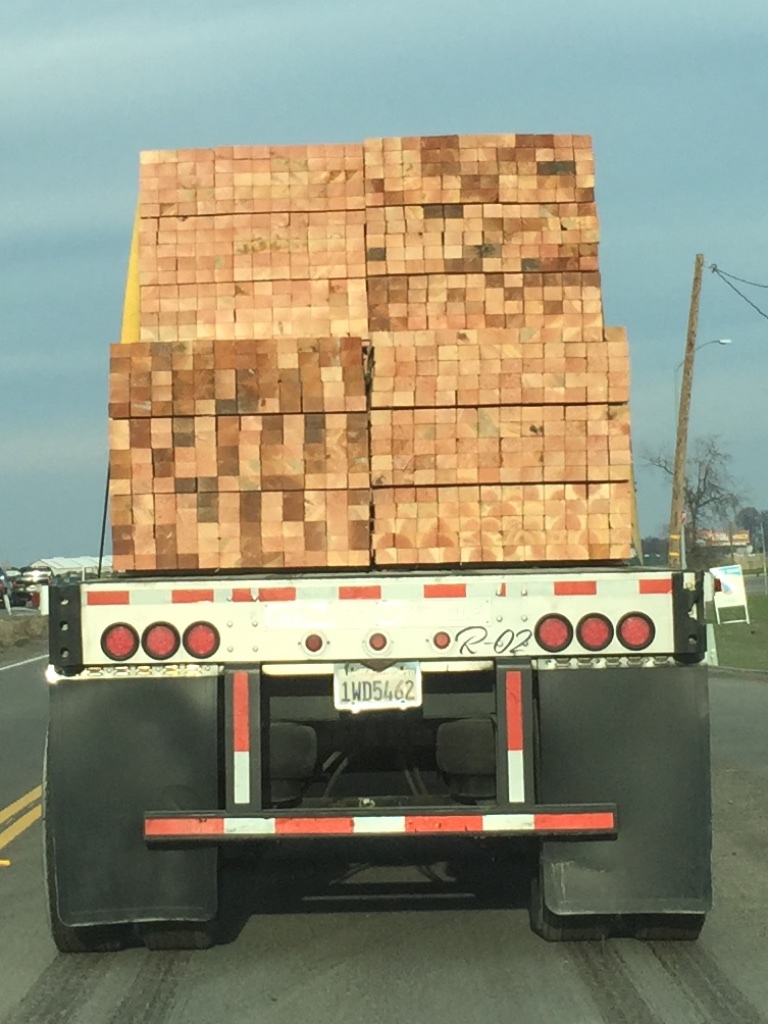
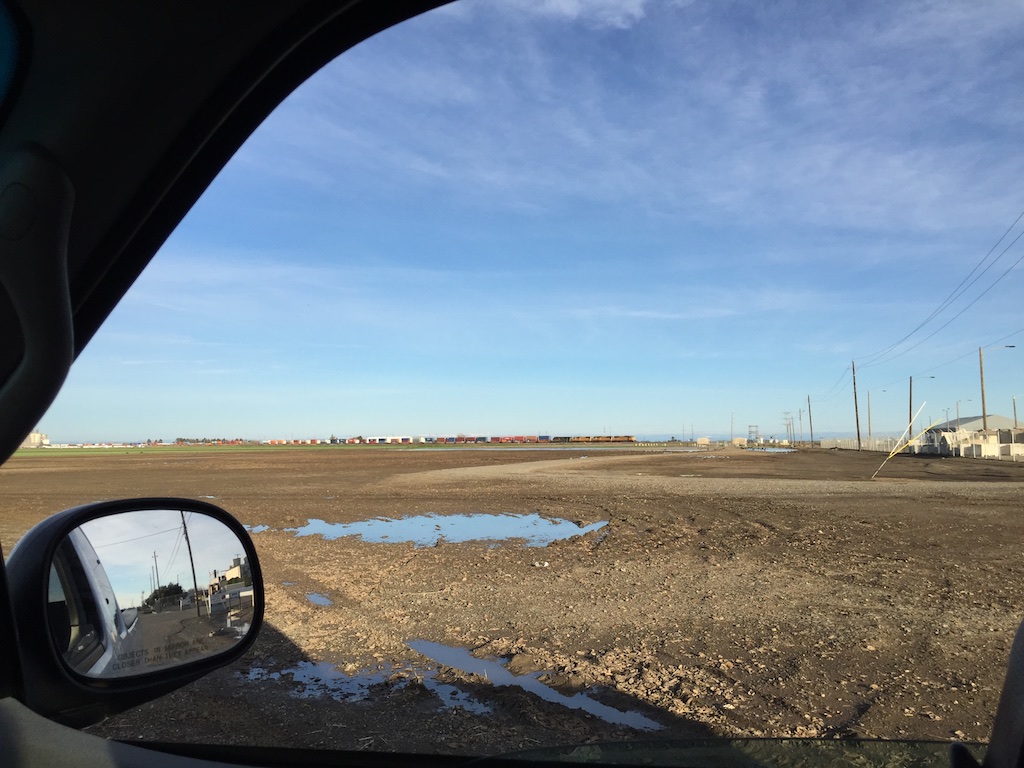
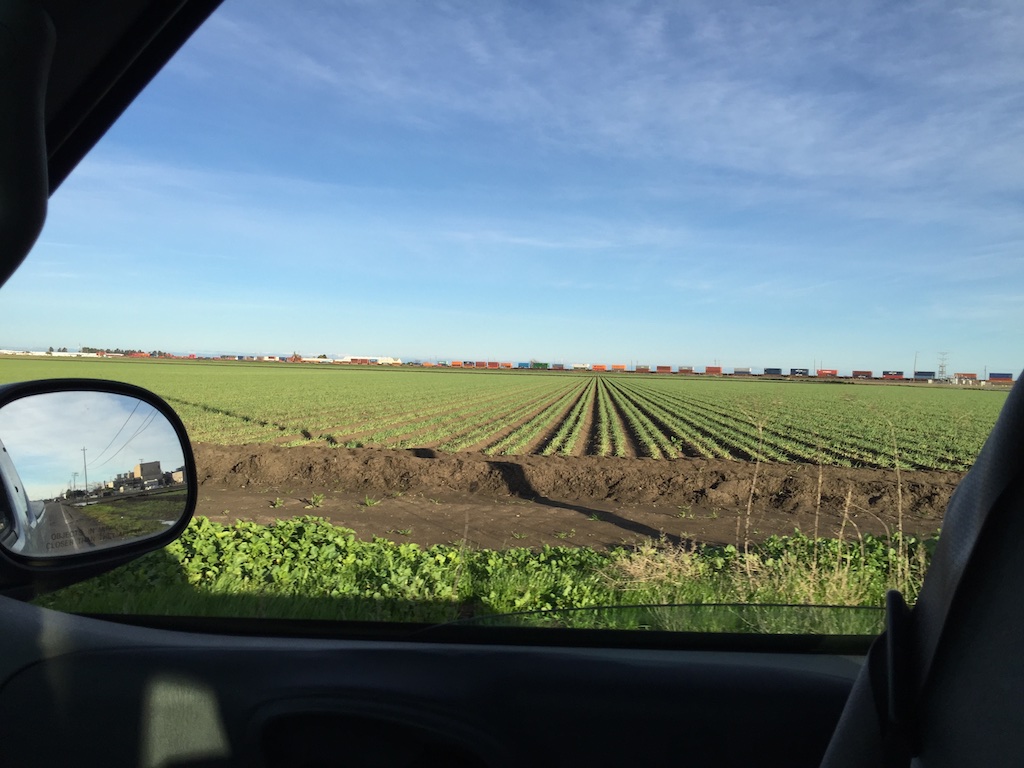
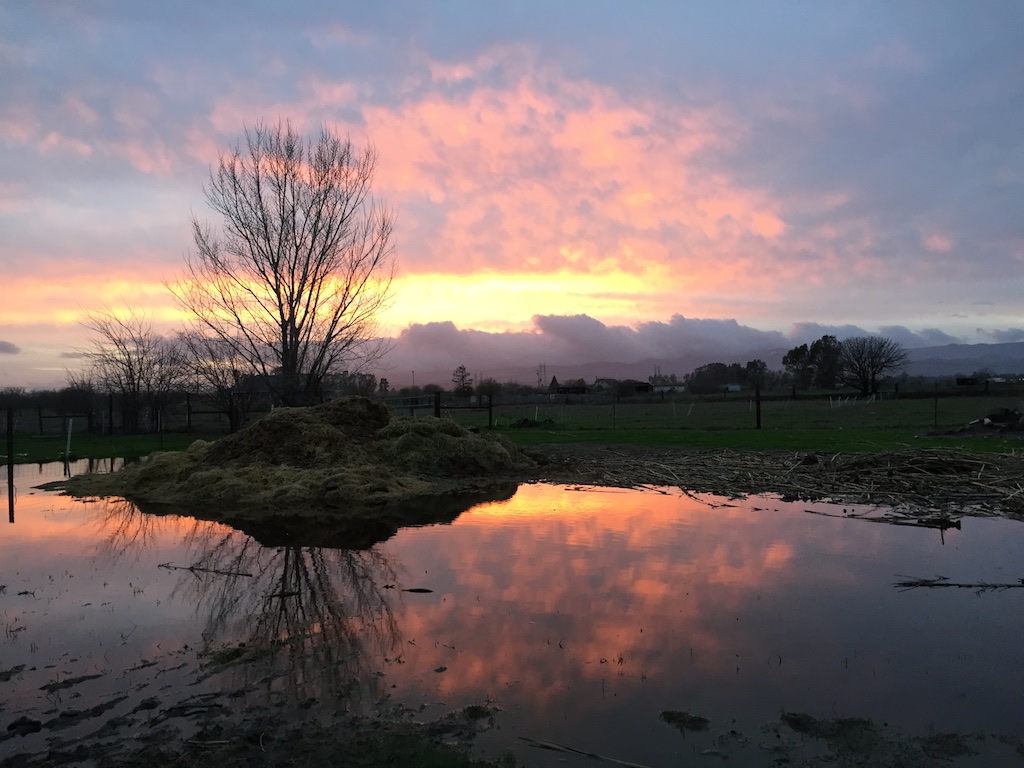
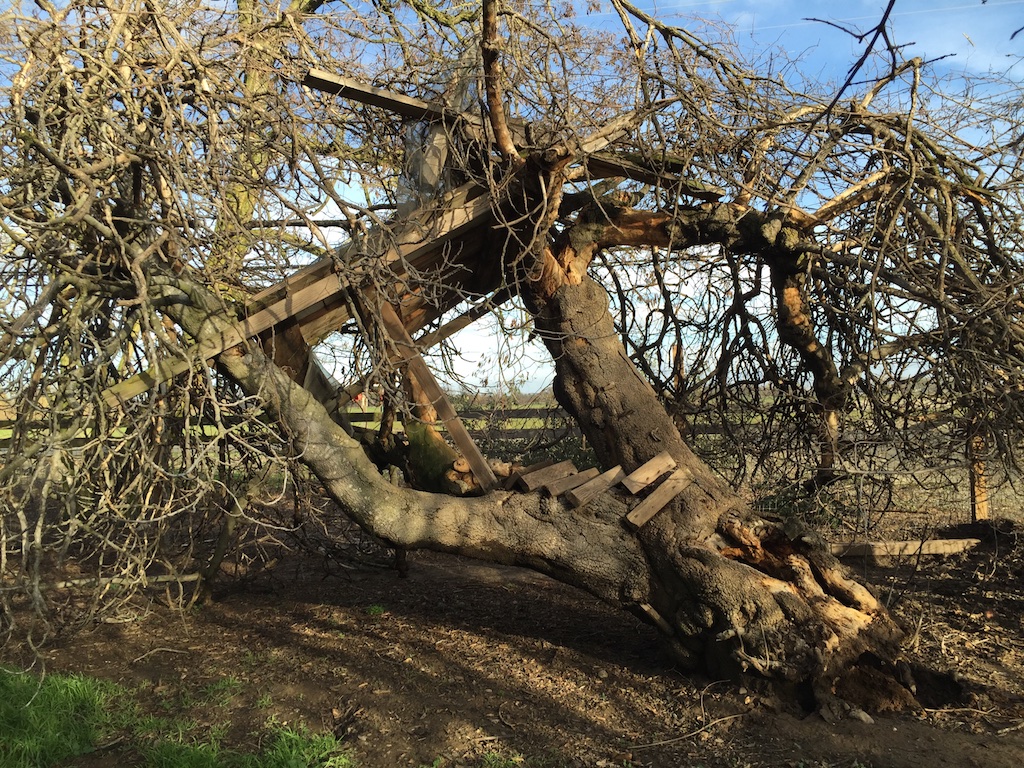
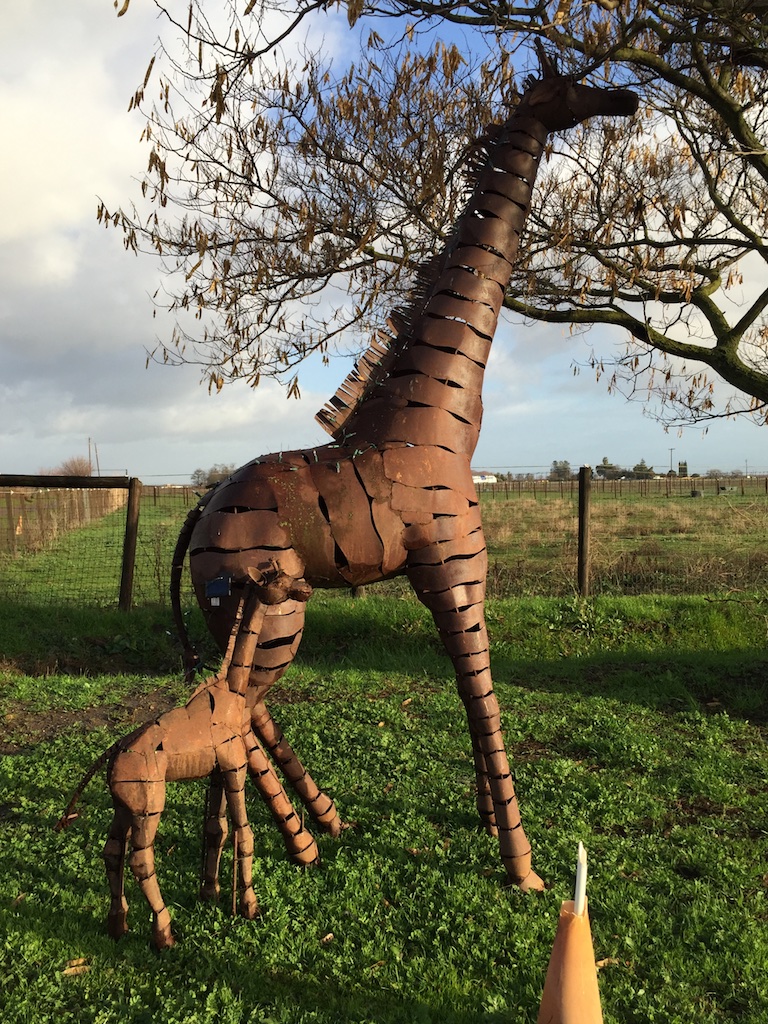
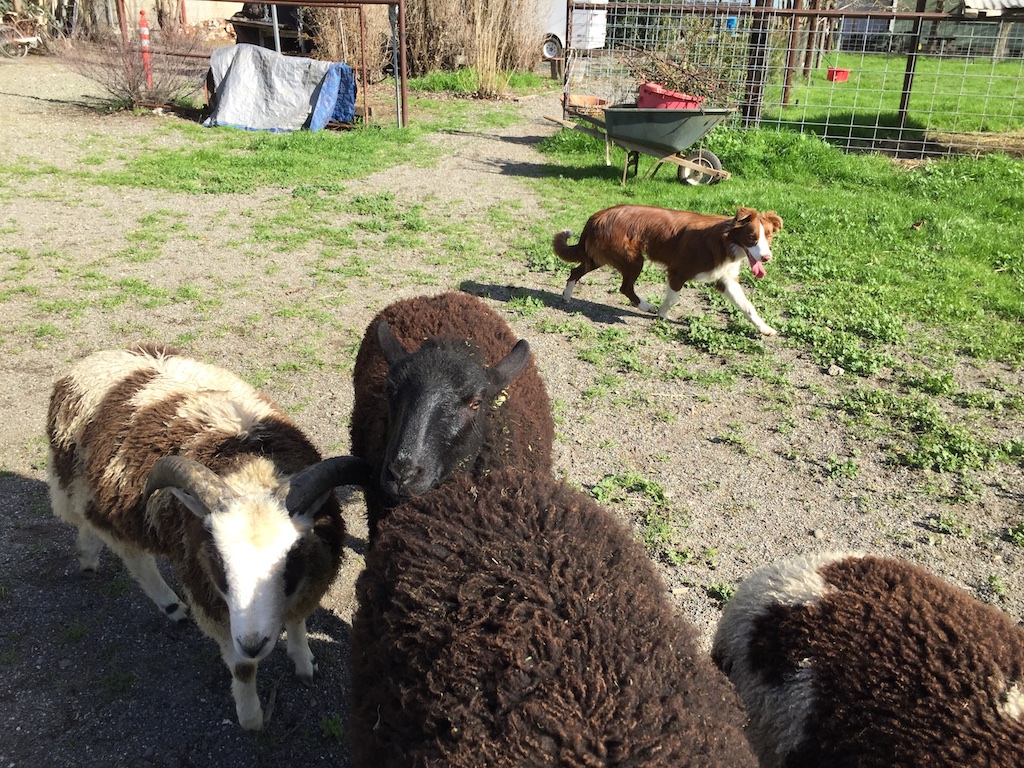
Seen while driving in town the other day…lumber patternI liked the patterns of the wood. I especially noticed the part that doesn’t show up very well here but the bottom right where the heartwood (I think) makes the half circles. Weaving ideas.IMG_8433Also while driving. I was on Pedrick Road east of Dixon. I really wanted a photo of the snow-covered Sierras. It’s been awhile since we’ve had that view. The lens on the phone makes the mountains too far away for that shot, but I like seeing the train.IMG_8434In this shot too.IMG_8337I may have shown this photo before, but I like this sunset view. It makes the mud and swampy “lake” worthwhile.IMG_8329And speaking of lots of water, this was a result of the last storm that came through. This is a very old fig tree that the kids used to play in a long time ago. Note the steps and the treehouse platform. The roots of this tree have been rotten for some time and the dogs often found something to bark at in the hole in the trunk. giraffe sculptureI’ll bet you didn’t know that we had giraffes in Solano County. These two are about a mile from here where I take Ginny to herding lessons.IMG_8407And while we’re talking about herding, this is Ginny working “her flock” at home.