Two rams got in with the ewes on September 1. One ewe was cycling and was bred (as confirmed by the vets on ultrasound day. We knew that she would lamb in the week between Shearing Day and the Farm Club Retreat. I went to the barn the morning that we were going to leave and found lambs!
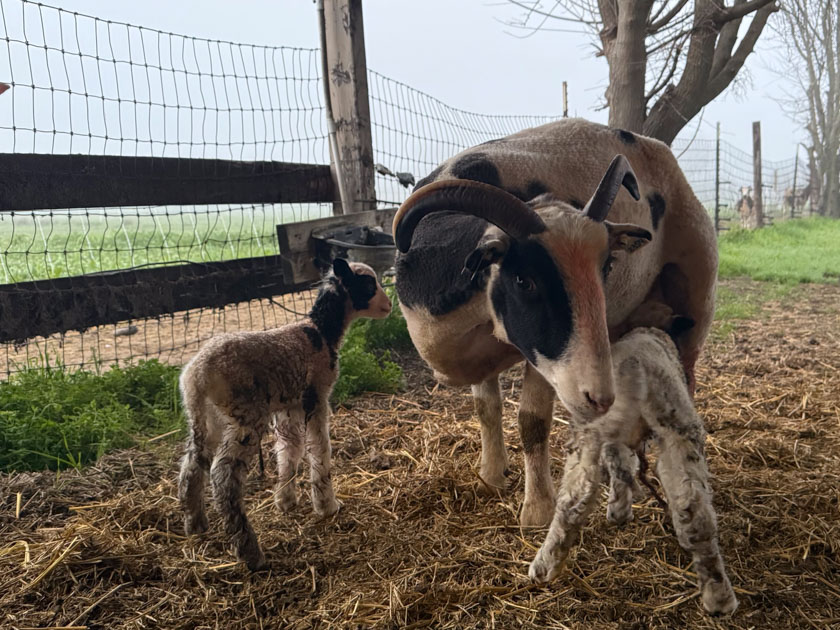
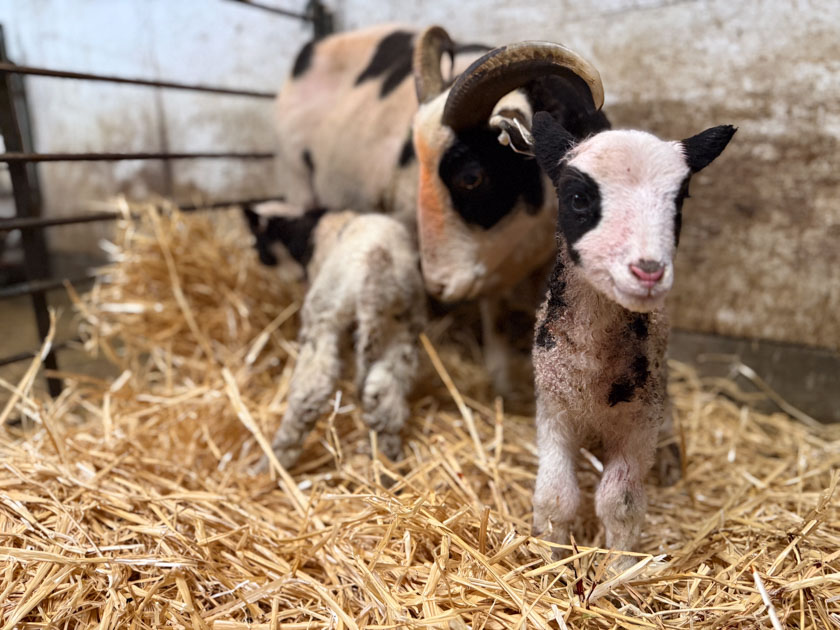
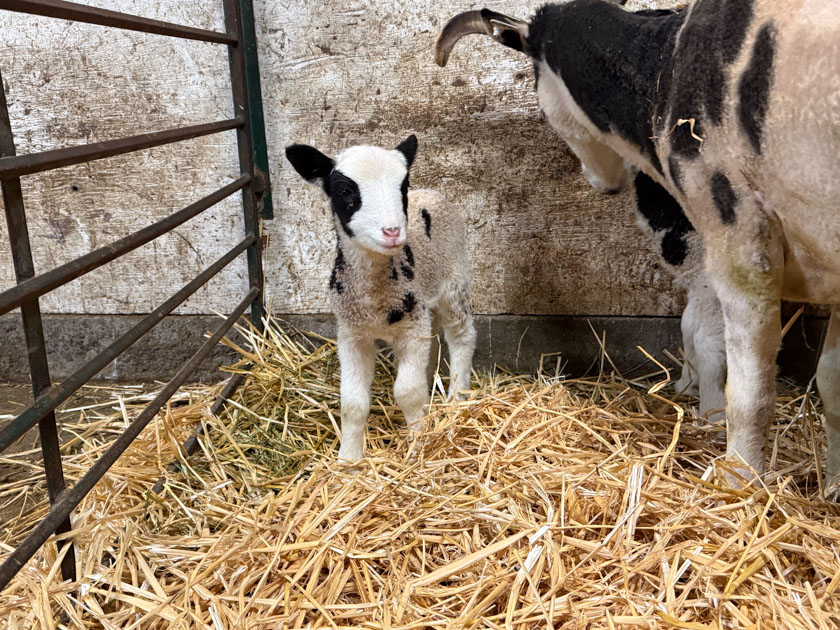
Lambs up and nursing, just the way I like to find them! Good job Hailee!
acobI brought the lambs and ewe to the barn. The ewe lamb weighed 8.3 pounds and the ram weighed 11.2 pounds. Dan was happy because he didn’t have to be on lamb watch while I was gone.
After I brought the ewe and lambs in went out to move the fence and let the sheep into a new paddock.
Even though the sun was up, the fog started to roll in again.
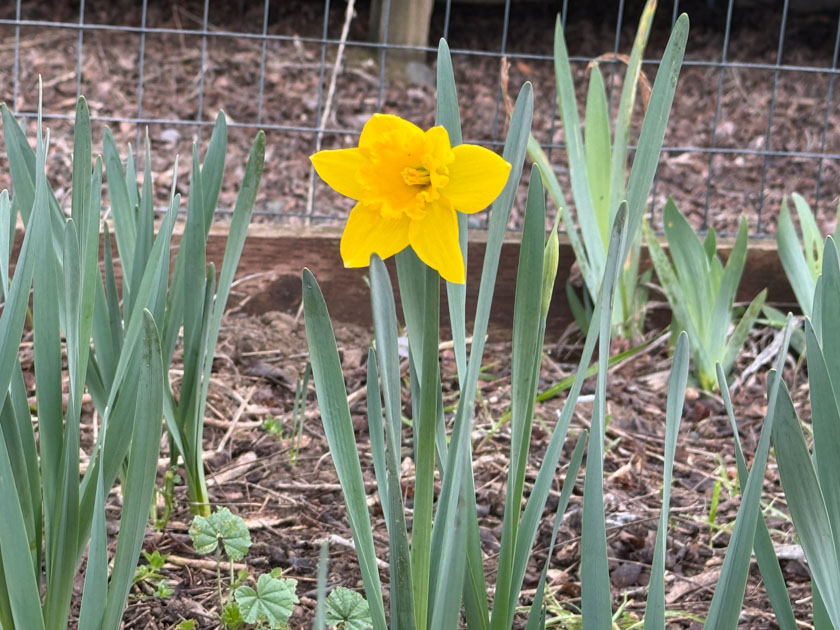
First daffodil, brightening up the gloom of fog!
I was gone from Friday through Sunday. I took this photo Sunday evening. The next lambs aren’t due for three weeks.
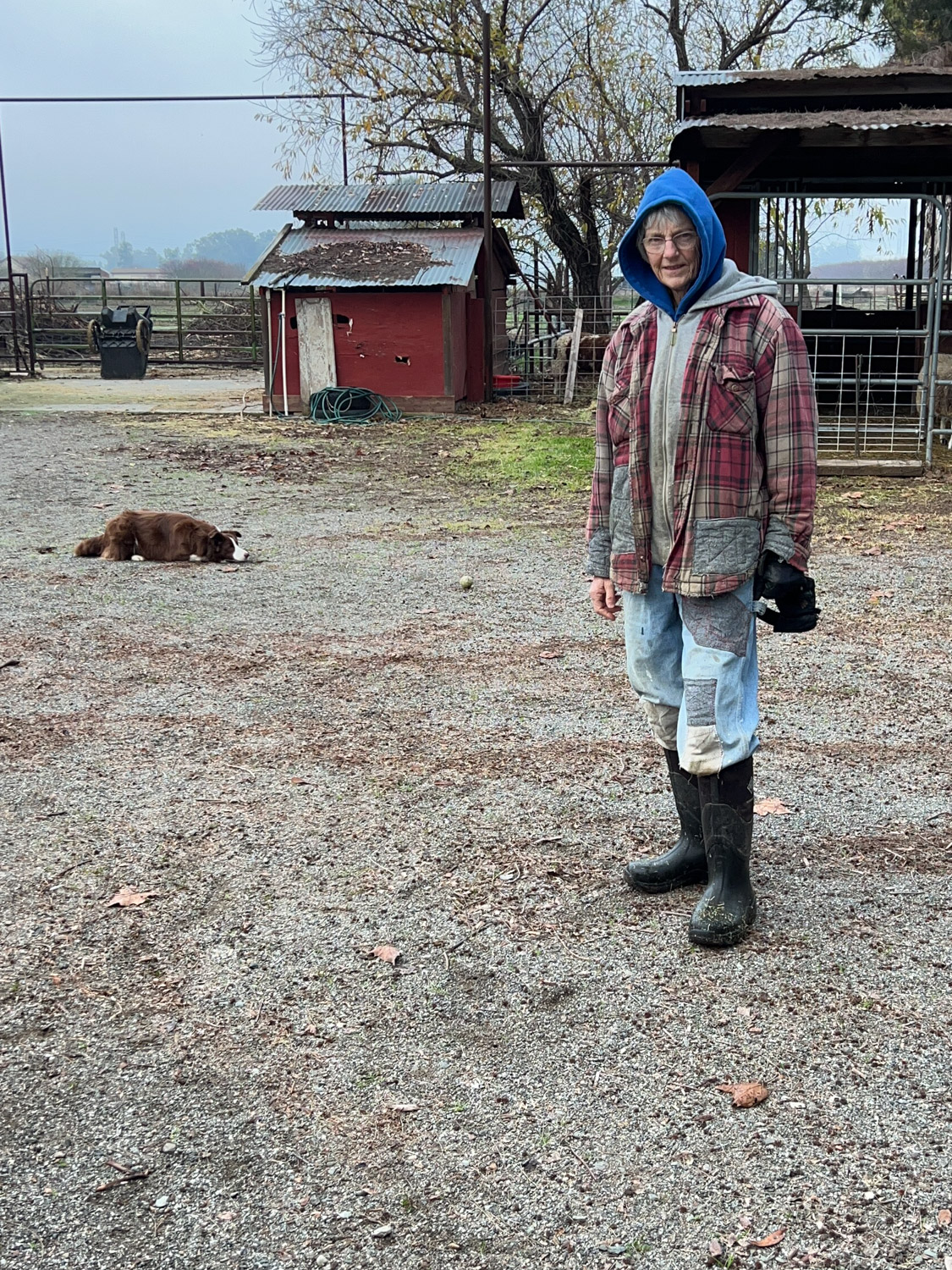
The day began and ended very differently as far as weather. This is how I was dressed for morning chores, just has I have been for the last few weeks with the drizzly fog. The vets arrived at 9 and we got to work.
It’s worth it for me to be have confirmation of pregnancy, confirmation of due dates, and idea of how many lambs to expect. It’s not an exact science. I remember a couple of years ago when the prediction was two sets of triplets and there were eight! Some of it is about the timing of the ultrasound. Breeding season this year was from September 27 to November 11. We scheduled ultrasound day so that the timing would be right to confirm pregnancy for the sheep bred the latest. For those bred at the beginning of breeding season, the vets can certainly confirm pregnant or not, but may not be able to get an accurate count of the number of lambs because of the size of them at that point.
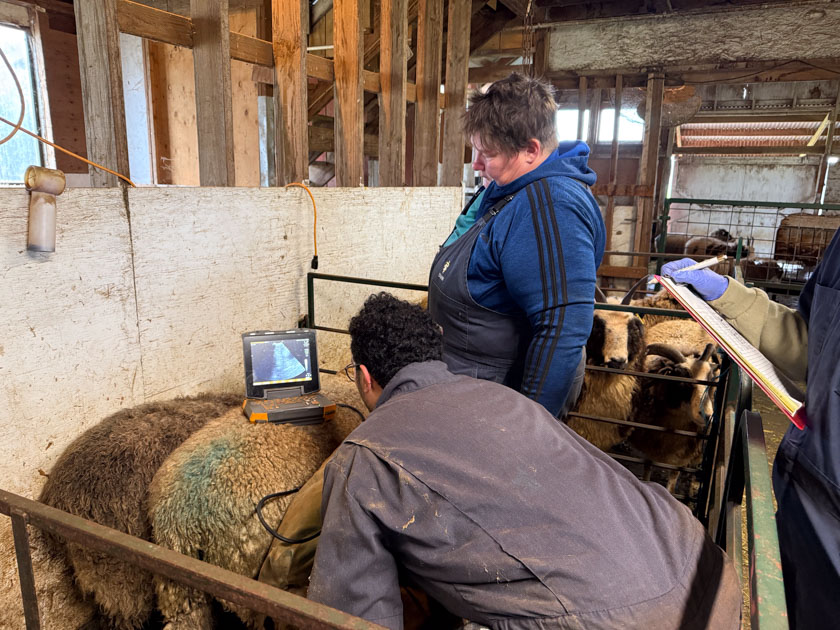
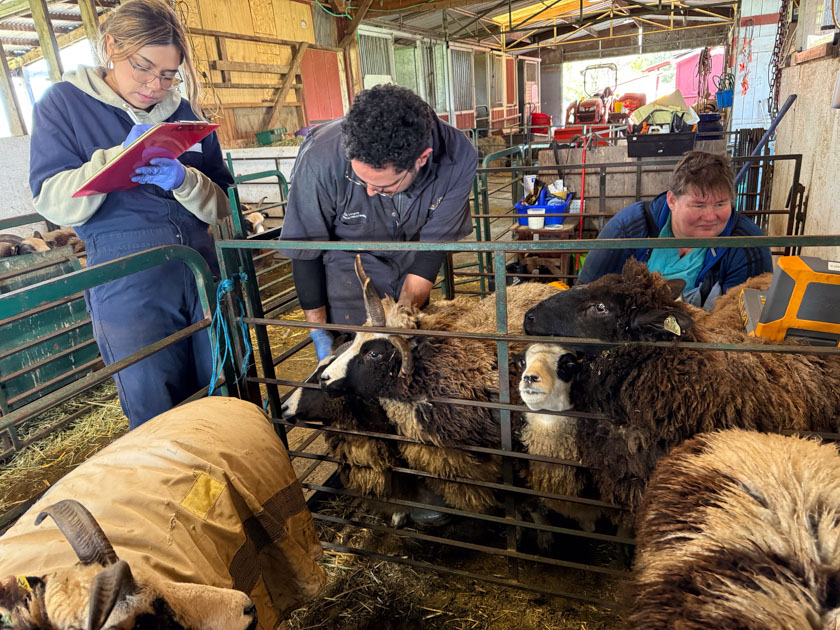
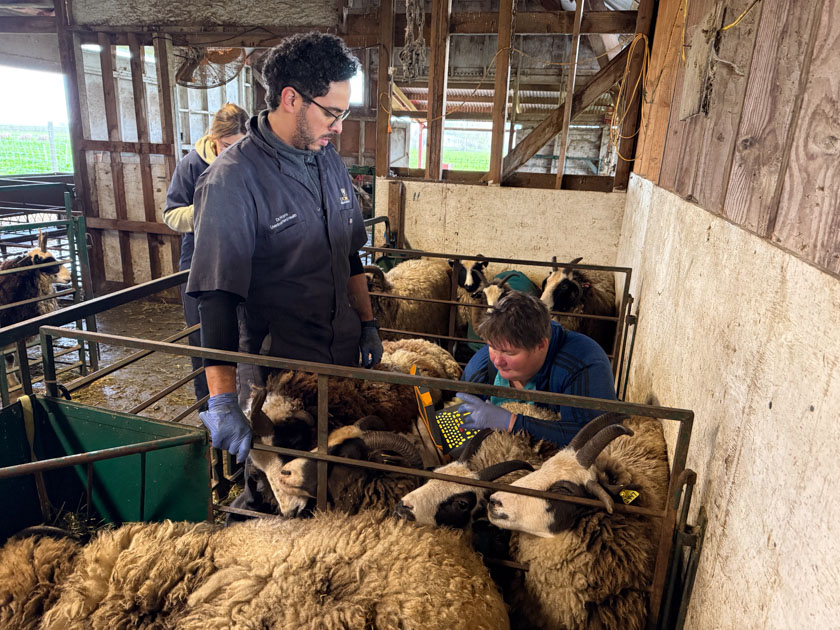
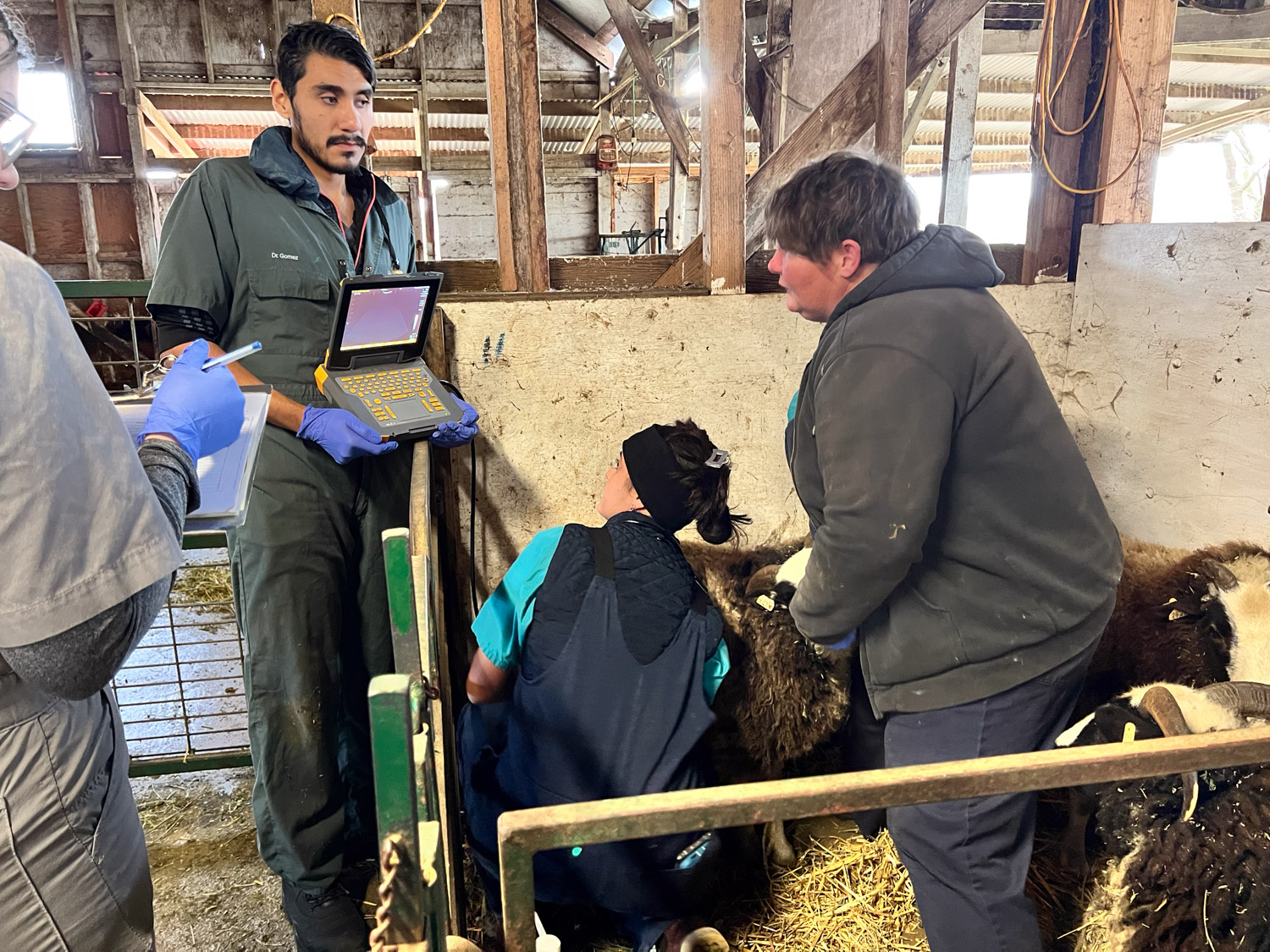
I gathered all the sheep in the barn and we put three or four in each lambing pen. When they are lined up four across it’s easier to keep them in one place, with the added advantage of a place to put the ultrasound unit.
One of the vets is a resident, having earned his DVM, but getting additional experience and training. So the visit probably took longer because he was getting help from Dr. Smith and then she also double checked some of the sheep.
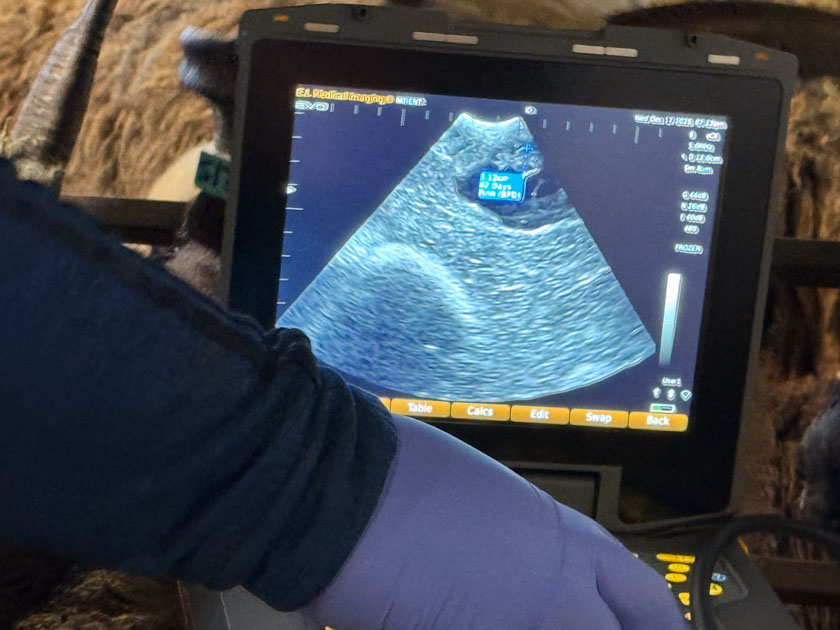
I took a few photos, but I sure can’t make out what is what. Whatever is important in this one is up in that top right part of the image.
It’s what is in the upper part of this image that is significant but I can’t tell you about this either…
…or this one…
…or this one.
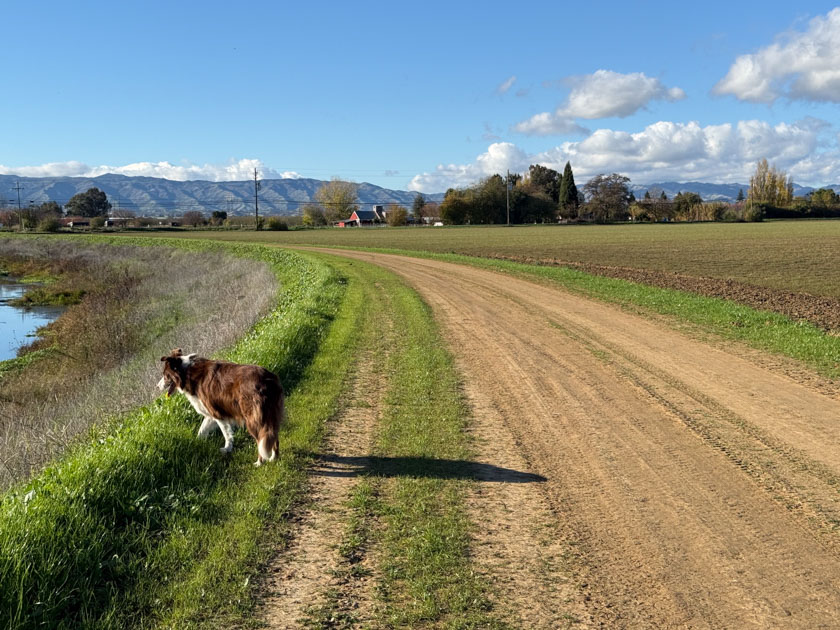
The sun came out–this was significant since it had been 23 days or so since we’d seen it! After the vets had left and I cleaned the barn I had to get out for a walk. The sheep that were Across the Road were moved a couple of days ago, but that is another story when I can get to it.
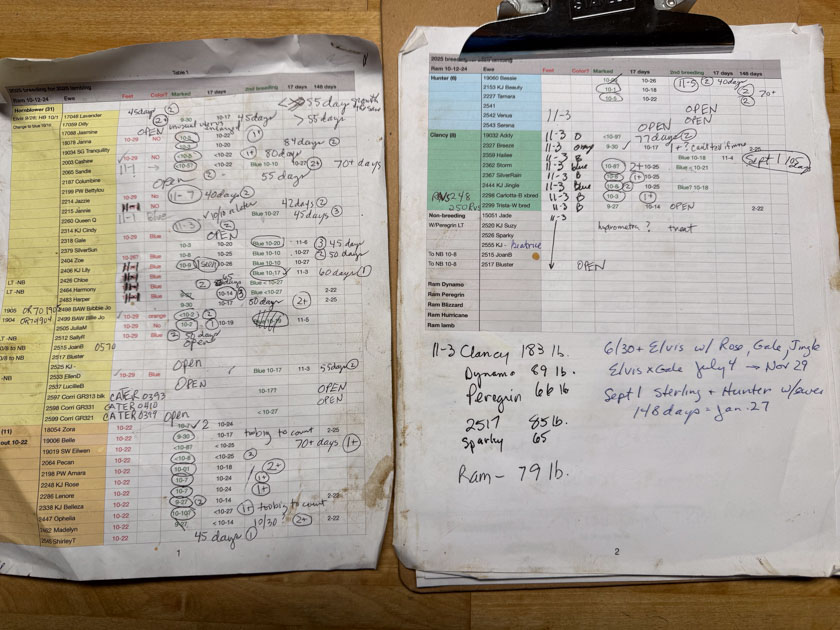
The vet tech wrote notes while they were working but this is how my spreadsheet looked when we were finished. Those people in Farm Club would recognize this as my breeding chart. Breeding groups are color coded on the left and dates are recorded as we go. (In case you’re getting a close-up look the dates on the left are hoof trimming, not breeding.) But all those circles and other notes are how I transcribed what the vets were saying. Fortunately I was able to take the vet tech’s notes and redo this spreadsheet, putting the rows into order of due date. That’s what we’ll refer to when breeding season starts.
One important item–when the rams got in with the ewes on September 1 at least one sheep was bred. The first due date is at the end of January while all the rest are due towards the end of February.
Checking the pasture this morning. The fog was so dense it seemed dark for longer this morning and I didn’t go out right away. The sheep had already been out eating.
This is Day 3 of grazing this paddock but it looks as though there is still plenty of forage.
When I walked outside this morning I heard a lamb and I wondered if one of my ewes had an “oops” lamb from when the rams got out (or in with the ewes) but it still wasn’t the right timing. The sheep grazing Across the Road have now been moved to right across from our house.
There is one black lamb in this flock.
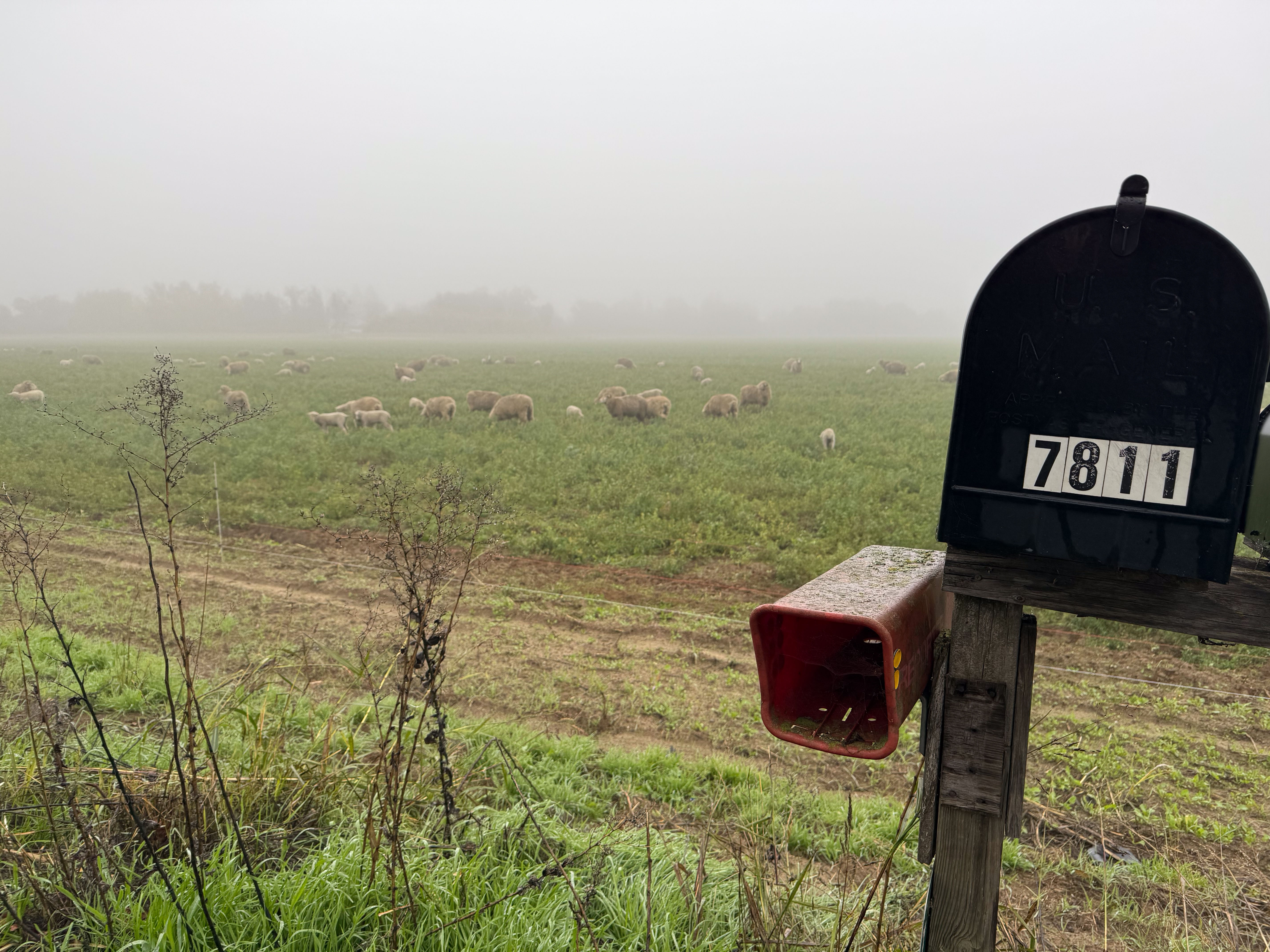
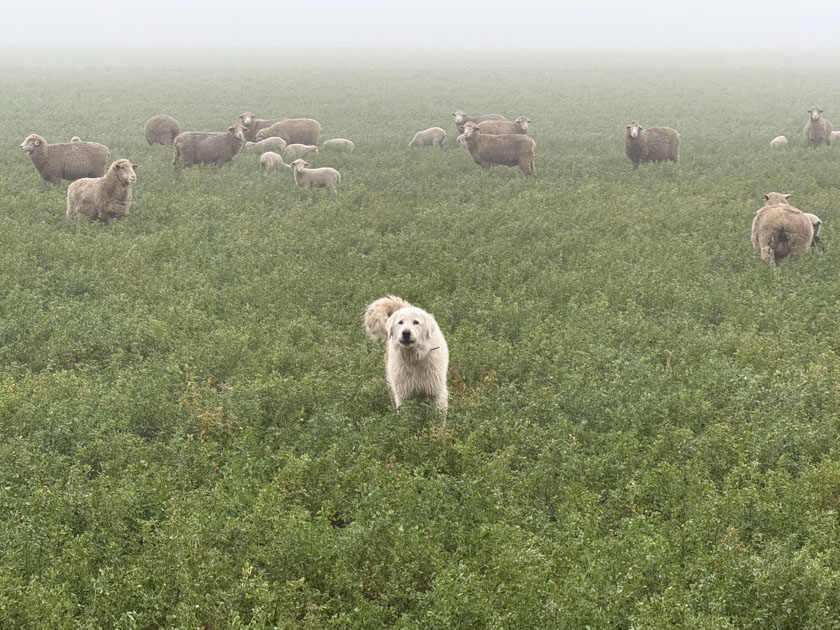
There are two guardian dogs and this one noticed me standing at the mailbox. He barked until I retreated.
Tanning is ongoing. Last night was the second session of the “hair-on” class. These will stay in the barrels for a week. They are tanning in mimosa.
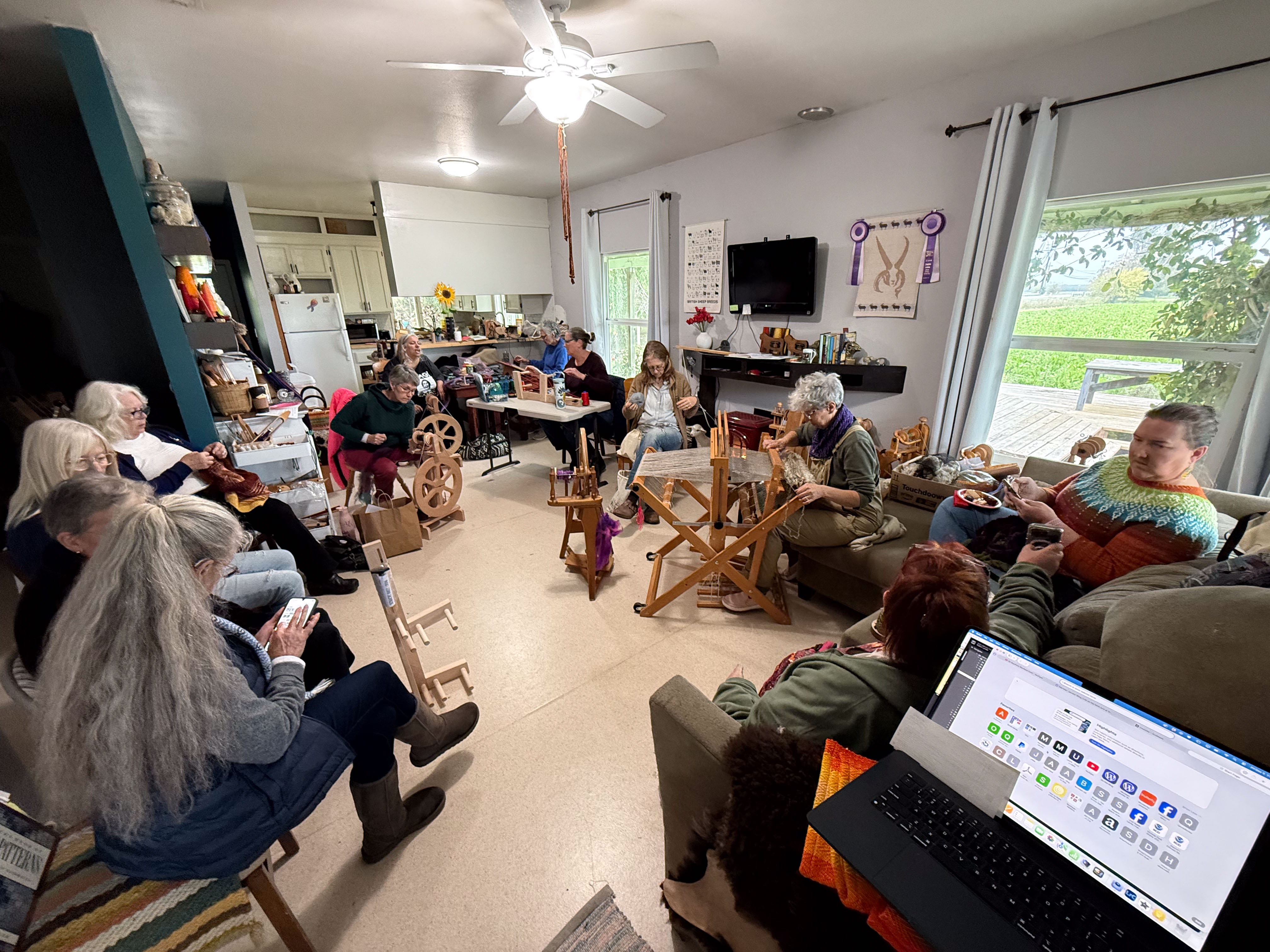
About a dozen people came for Spinners’ Day Out today. I think that today two people were spinning, one inkle weaving, one floor loom weaving, four knitting, one using a blending board, and everyone enjoying the conversation and great snacks.
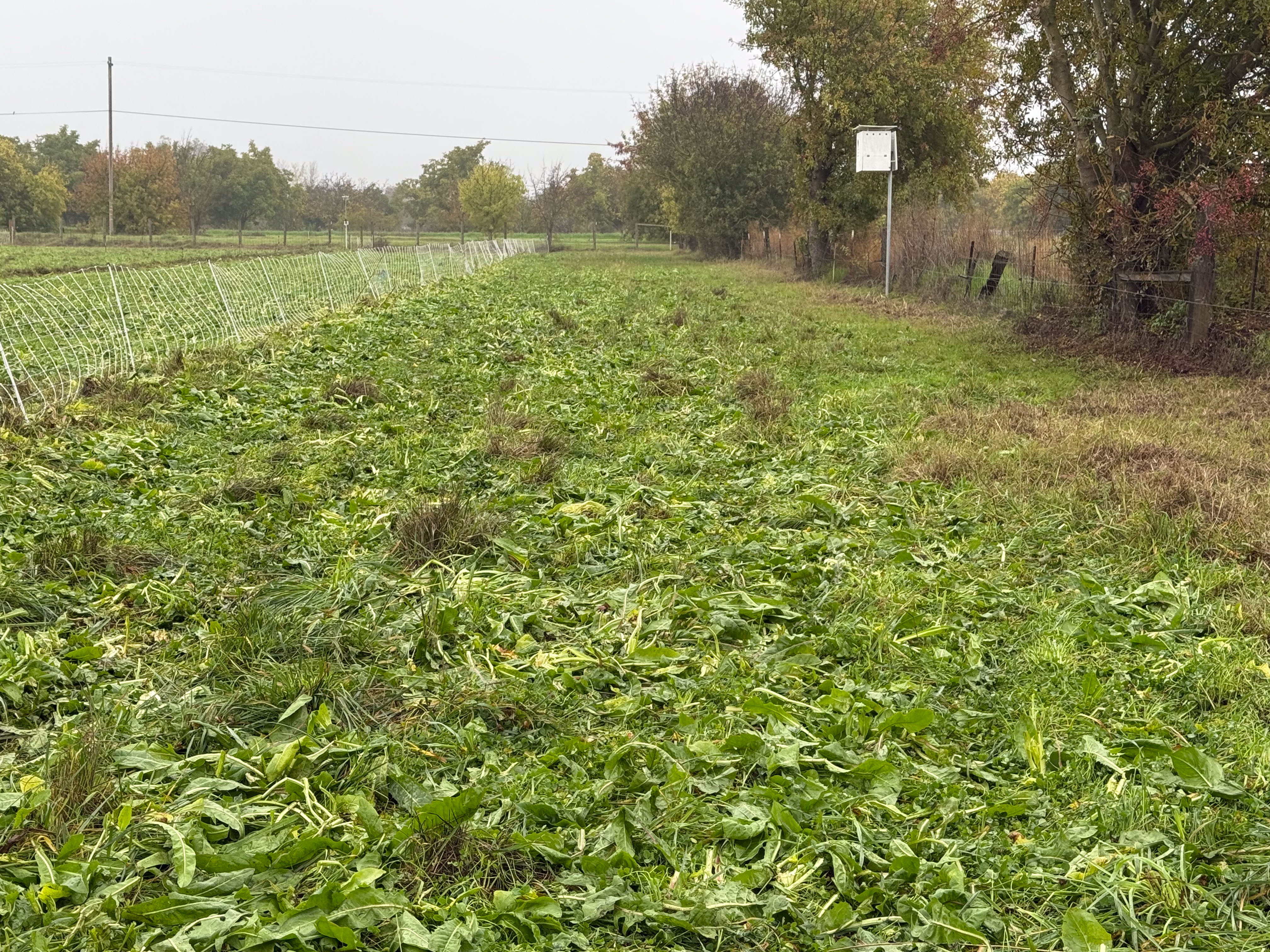
Paddock 1 after the first day of grazing. These are yesterday’s photos and this morning the sheep were moved to Paddock 1-N. That is the one just north of this one.
This is 1-N before I moved the fence.
Did you notice the owl box in the first photo? I can’t look in but I can just reach the latch, open the door, and snap a photo with my phone. It’s obvious that it has been used, but I don’t know if the owls have raised babies or not.
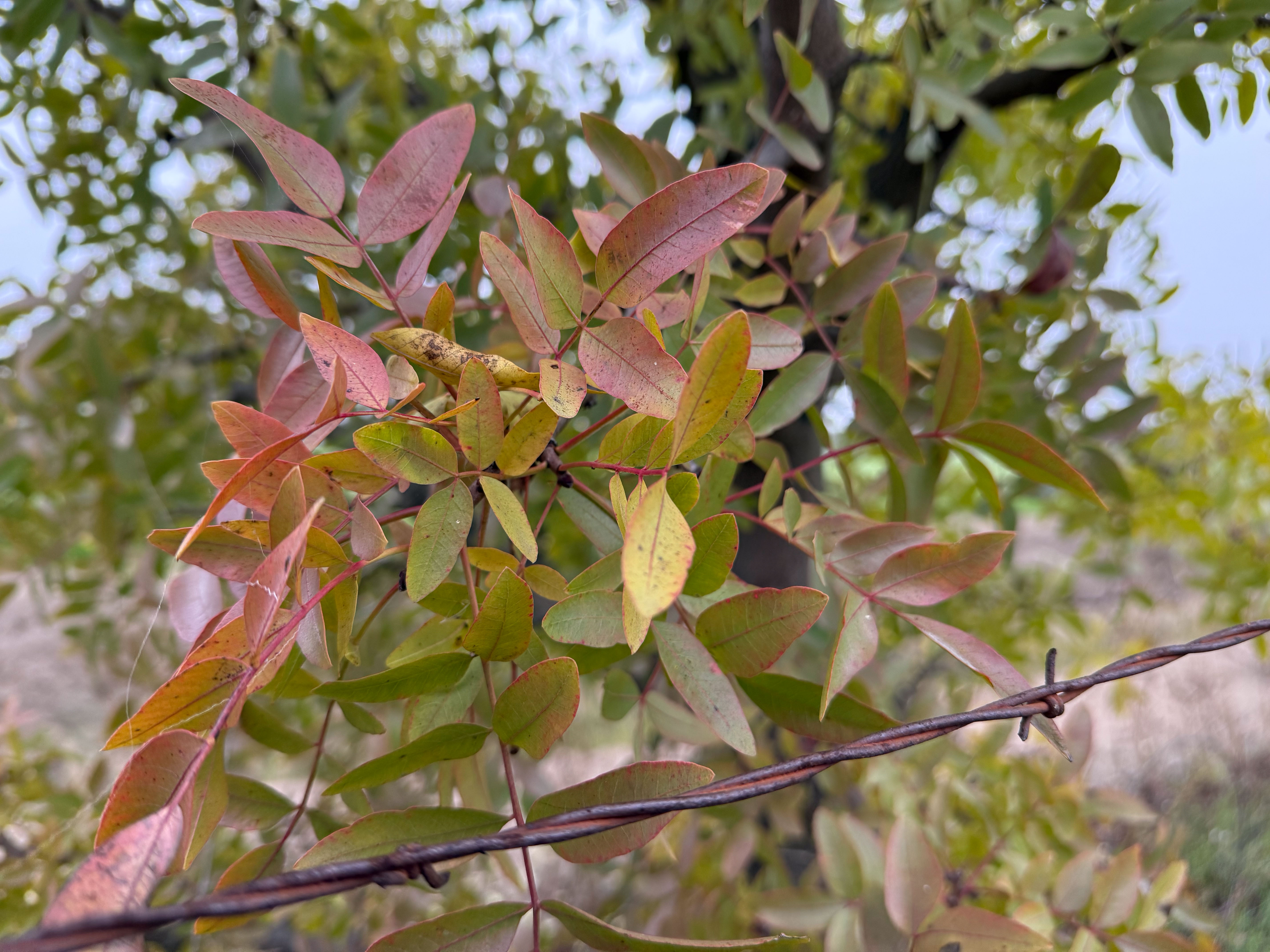
Leaves at the edge of the pasture.
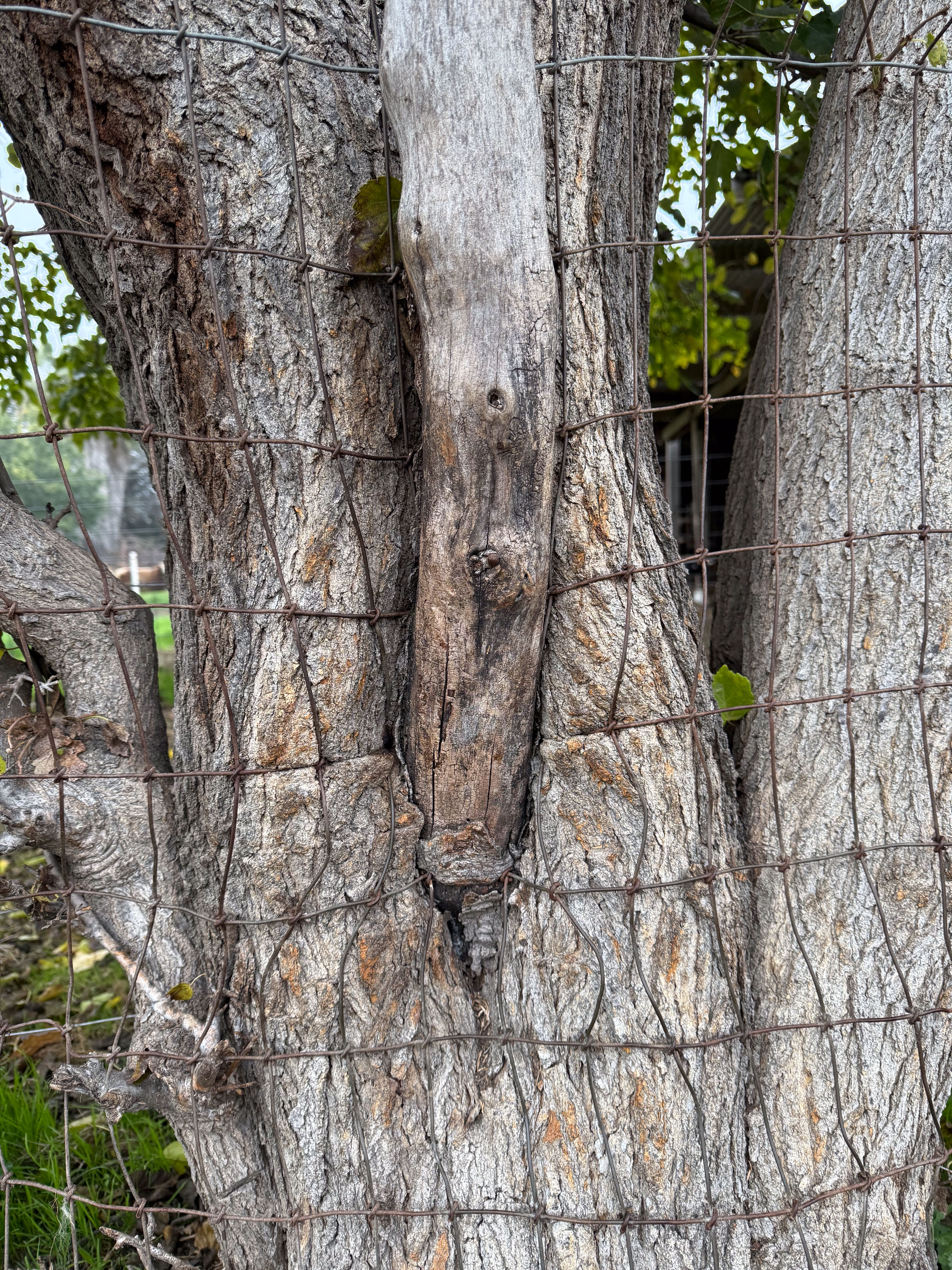
The tenacity of trees to grow however they can.
A view of some of the sheep Across the Road. They are grazing the alfalfa and being moved strip by strip.
I woke up at 5 and thought of things that need to be done. No point in staying in bed.
Rewrite minutes from Tuesday evening’s Artery Board meeting. ✓ Make one more 15′ length of e-net fence so I can switch sheep to another paddock. ✓ Walk across the road with Ginny. ✓ Do a fresh-leaf indigo dye bath to over dye the weld-dyed yellow yarn. ✓ Here are the photos to accompany that check list:
There are 3-wire electric fences every 60 feet in the south pasture. These are charged by attaching to a hot wire at the south border fence. I need to connect a 15′ net fence from that hot wire to these north-south fences. My goal was to have all electric net fences for blocking off the 60′ spaces and the 15′ connection fences in place and not have to move those lengths of fence every time I switch to a new paddock. I have finally accomplished that goal with this morning’s 15′ fence! (I think–maybe I need one more.)
Another accomplishment is to organize and label what’s left. There are three fences that will make up one long north-south fence if I decide to split the 60′ paddock in half lengthwise. The other two bags are leftover but still useable portions of net fence.
Time for a walk Across the Road. This is for Ginny’s mental benefit and for mine. If I go in the morning then all day I can remember that I got at least a little exercise.
This tractor was parked near the hayfield. That tire is taller than I am!
A view of the new paddock from the main road coming back from our walk.
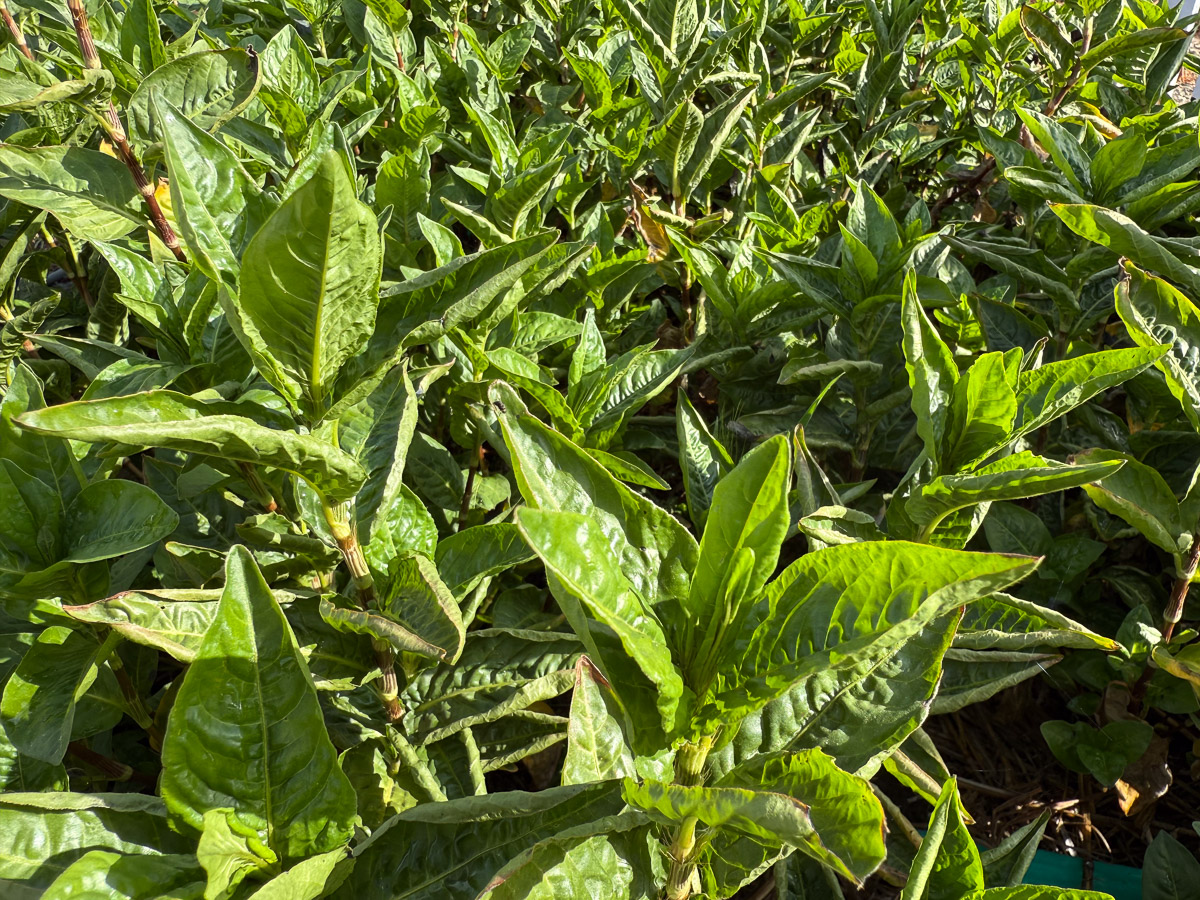
Indigo in the garden.
I harvested about a pound of leaves to overdye the yellow yarn I dyed with weld the day before. I dye with fresh leaves using ice water and a blender. After that dye bath was in place I could move on to something else.
What is the plan for the afternoon? Make more horn buttons ✓ Thread the hemp warp that is on one of the looms. ✓ Photograph all the unfinished pieces for yesterday’s blog post. ✓
I cut more buttons. The next step is to drill holes and then sand. I found some that already had holes but I had not sanded them. Those are in the three cups at the bottom. I keep track of buttons that will match by keeping all from one horn together through the process. I sanded all those that already had holes in them, but still need to drill the others.
While I was working in the barn on buttons we had a hay delivery. This is 88 bales that need to go in the barn.
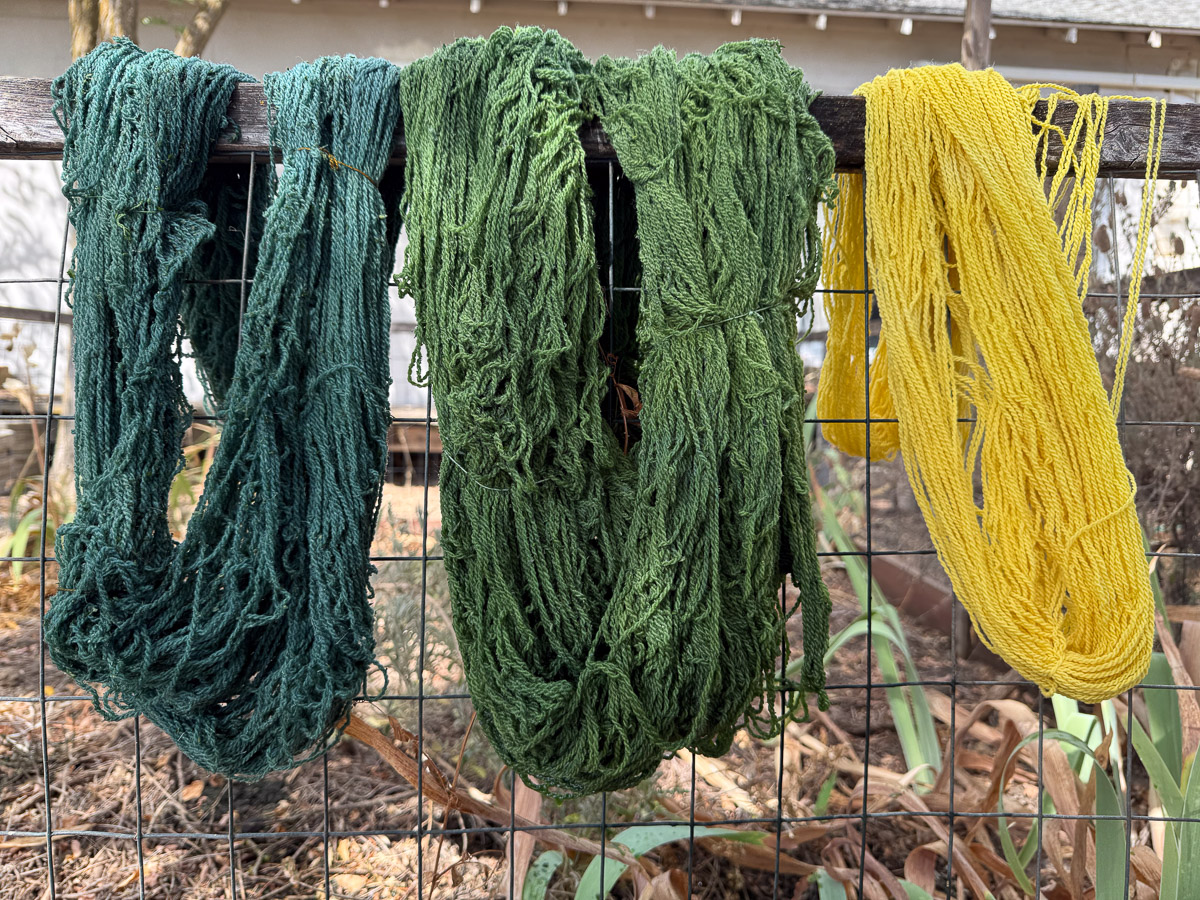
I took the indigo-dyed yarn out of the bucket and hung it up to drip. When I’m finished here I’ll cut apart the bundled skeins so they can dry better. The yellow one is what the green ones looked like before putting in the indigo. The blue yarn was white yarn in the same bucket.
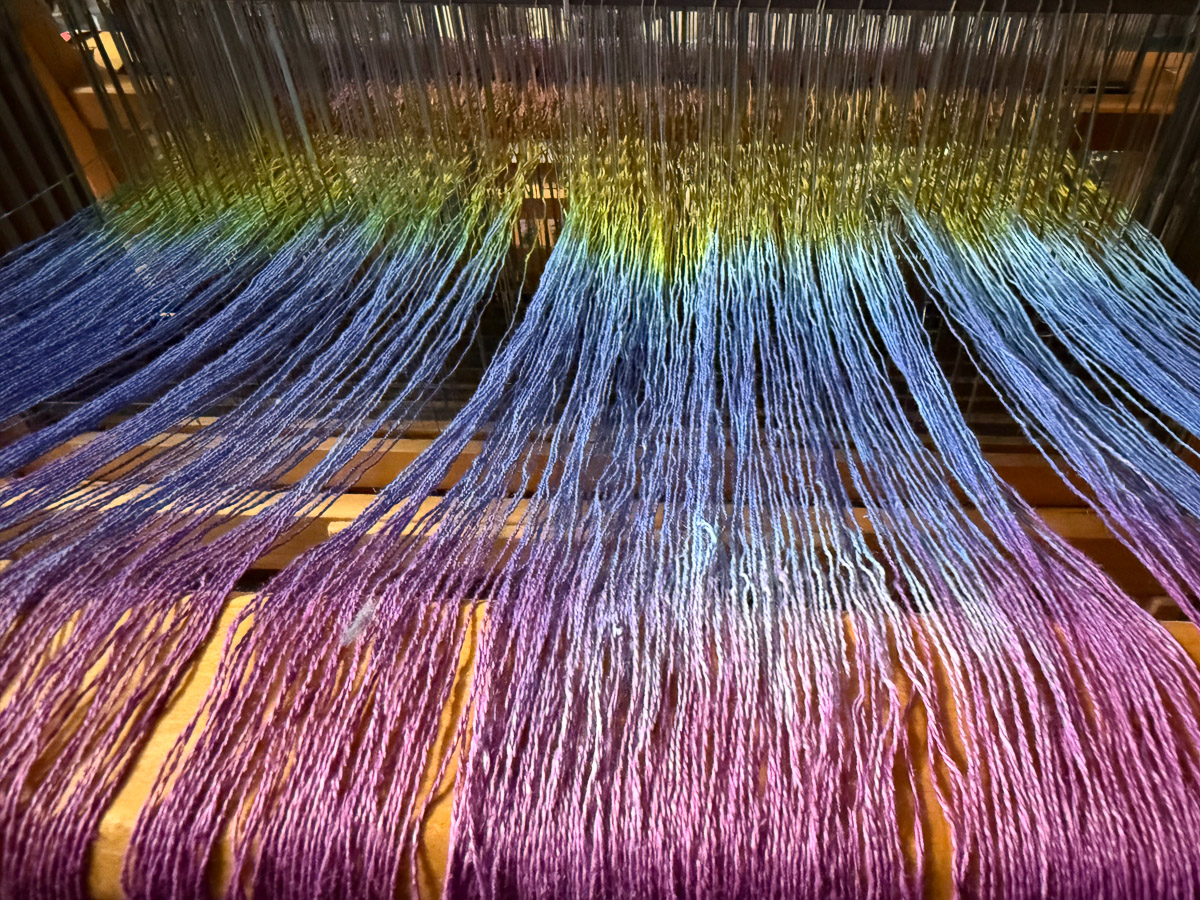
I went to one of the looms in the shop to thread my space-dyed hemp yarn and finished about chore time. Now it’s ready to weave. That is on today’s list, along with sanding those buttons.
It’s not easy to leave when you have animals to care for. I am fortunate that there are long-time Farm Club members who have become good friends, and they are willing and able to spend a few days at the farm. Three friends organized the dates to suit their schedules so I know the animals are in good hands.
Anytime Dan and I will both be gone I spend at least a day getting organized. I needed to get the pasture set up to make it easier to graze. This has been “on the list” whether I was leaving or not. So Farm Club members came Saturday to help with that project and I shared that here.
This is on the list of things to fix, but there was no time to do it right before we left. This is the ram pen shelter and they have been enlarging the holes in the plywood. There is a 2×6 board on the inside so I haven’t been worried about the rams getting out, but do I want to take a chance when I’m gone? So I tied a metal panel to the outside.
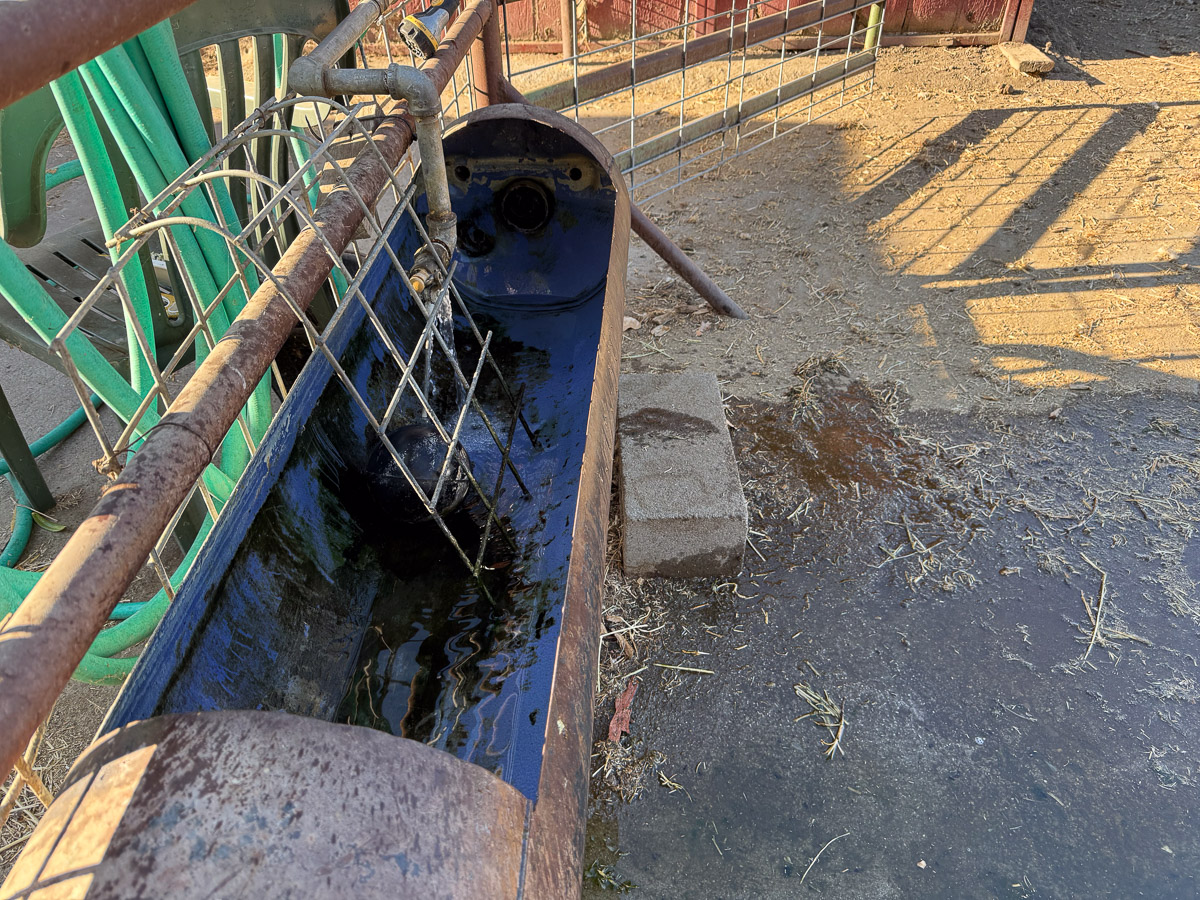
The water trough needs cleaning at least weekly in the summer because it gets full of algae.
I needed to finish a proposal for an article for one of next year’s Handwoven magazines. That was due August 1. This is a photo to accompany that proposal.
After photographing the cosmos flowers I harvested this batch to dry. I pick them every few days so they will continue to bloom and to save them for dyeing later. The pink flowers are dahlias.
We were down to only six bales of alfalfa in the barn. Although the ewes would be on the pasture while we were gone, all the rams need to be fed hay. Since Dan’s knee replacement we have bought hay by the stack so it would be delivered. This is the first batch of ten bales that Dan has loaded himself since the surgery.
This job was not a priority but I continue to be distracted by gardening chores. I know this is not the time of year to prune roses, but I was tired of being attacked by rose branches every time I walked on that path or the deck at the Weaving House.
The lamb page of the website has not been updated for quite awhile and I needed current photos. The last photos are from mid-May and those lambs have changed a lot since then. I took these photos a couple of days before our trip but have not yet updated the site. Maybe by the time you read this post I will have added some of these. I will need to take more photos when I’m home.
A couple of days before leaving I was at the Artery to remove all of my pieces there. The Artery will be closed for two weeks while the floors are completely refinished. The old carpet and tile will be removed and the floor will be refinished. We found that there would have to be the added job of asbestos removal. The Artery will reopen August 11 so I’ll be returning my pieces the day before.
I got my Timm Ranch wool back from the mill right before we left. I had time only to open the boxes. I will list it on the website when I’m back.
Stay tuned for photos of our trip. We camped the first couple of nights but I’m in a hotel room right now and finally got my computer out. Now to try and make some updates to the sheep pages. Or maybe I should review 5 days of emails…
I’ll start with a random photo. This is the newest animal here, if he/she (?) is still here. Every morning we feed the two Garage Cats in, well, the garage. For a couple of weeks we have seen a third cat off and on. It (haven’t identified gender yet) has started to come in while I’m still there if I don’t make any fast moves. We don’t know where it came from–a neighboring property or dumped. The local newspaper had an article this week about the overwhelming number of dogs and cats that are abandoned. So we’ll never know about this one. I put out a live trap a few days ago but one of the other cats went in for the food. We’re going to be gone for a week so this is not the time to catch this kitten anyway. I did not see it the last two days so I don’t know if it is gone or just being more cautious. I’ve name it Smudge.
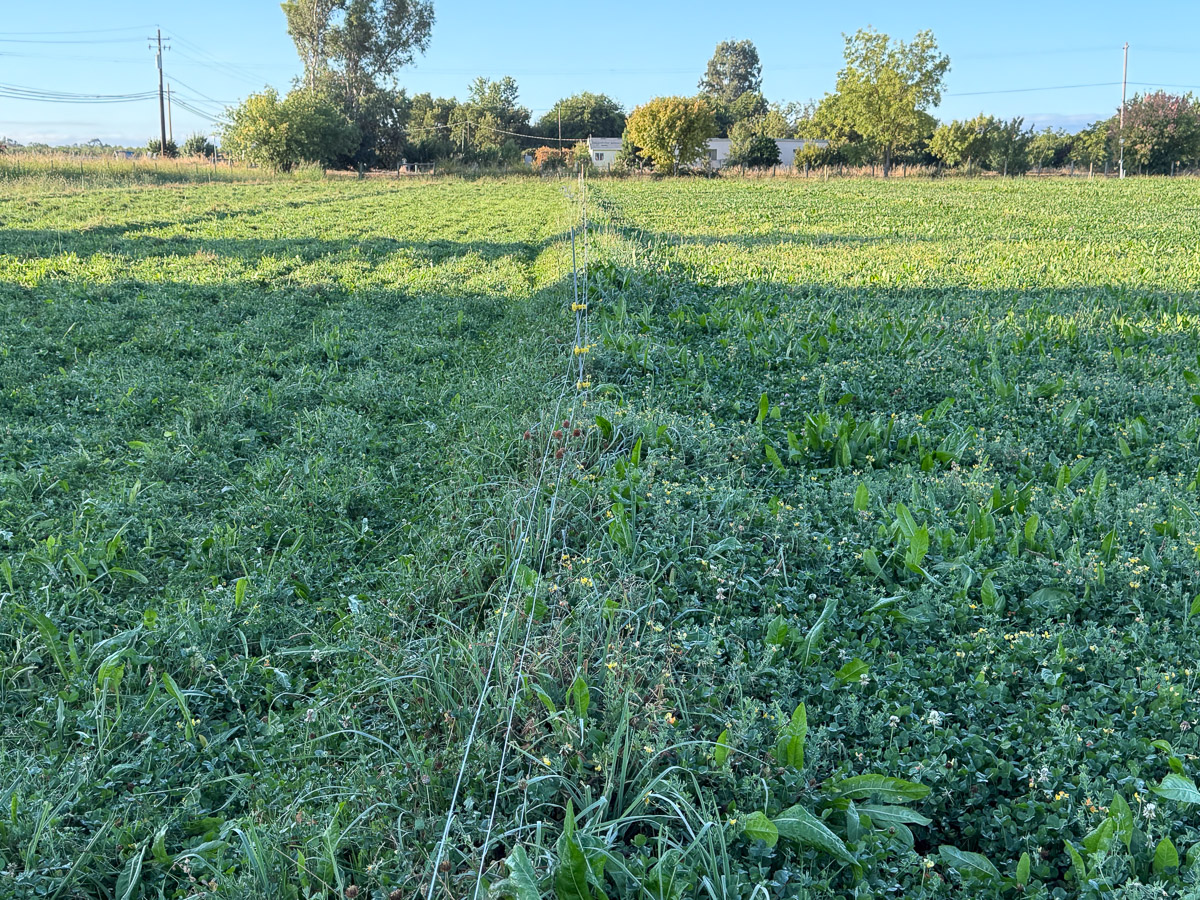
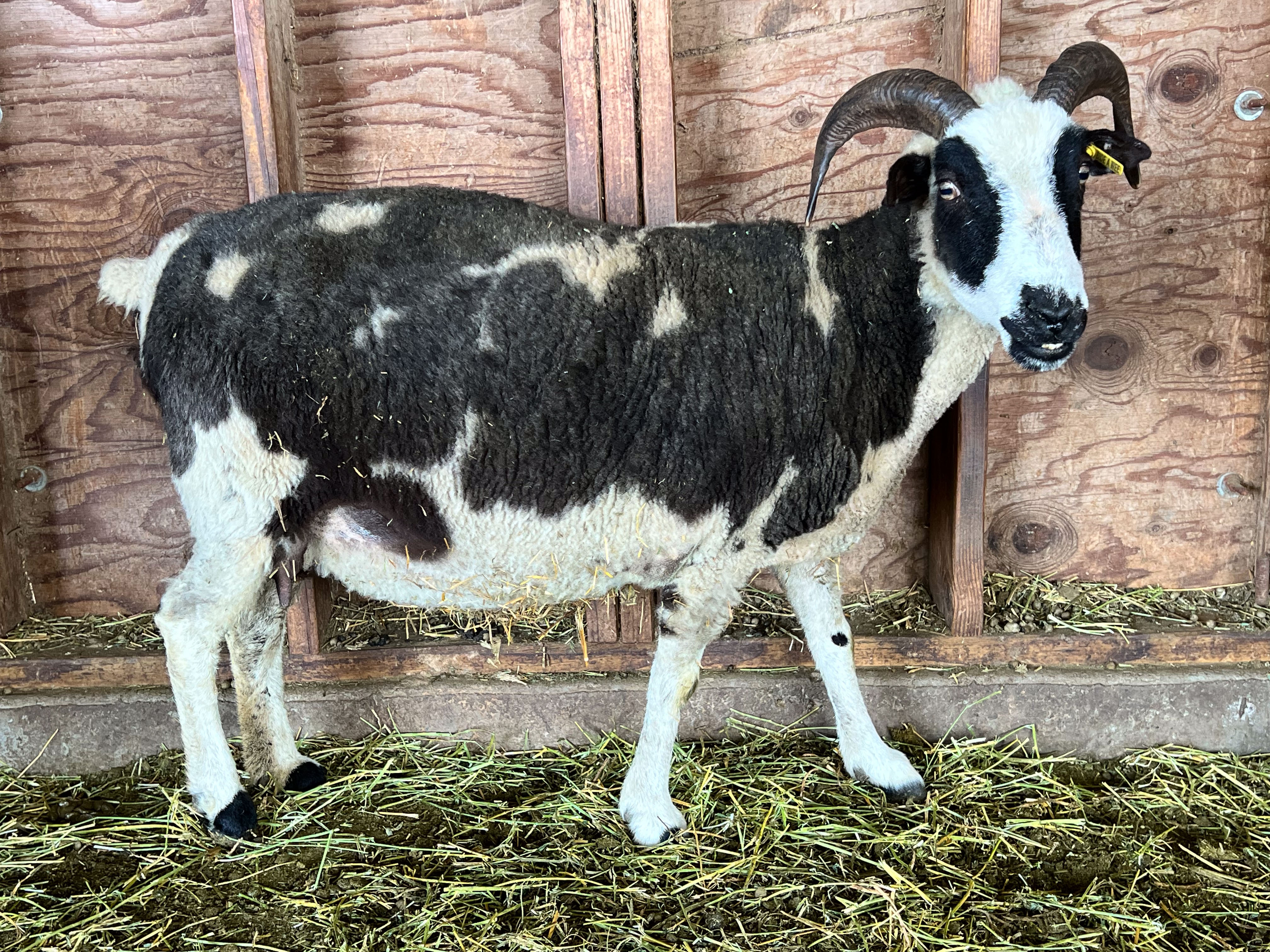
Back to sheep things. This is Patchwork Amara. You can glimpse the beautiful clover and trefoil in the background. This is what the sheep are grazing and that’s what this post is about.
Farm Club members came Saturday to help with a fencing project. We finally have all the permanent fencing back in the pasture. Dan has been working on that a bit at a time while trying to let his knee fully recover after knee replacement in April. Since last fall I have written a lot of blog posts about the pasture renovation and irrigation improvement. Grazing properly this spring was a challenge when I had to set up electric net fence for the whole paddock. Now we have 3-wire electric fence going north-south along every other check. That’s every 60 feet. Initially I was grazing each 30 foot width separately. Now it seems to work to graze the 60 foot width for four days. I think they are grazing it evenly enough.
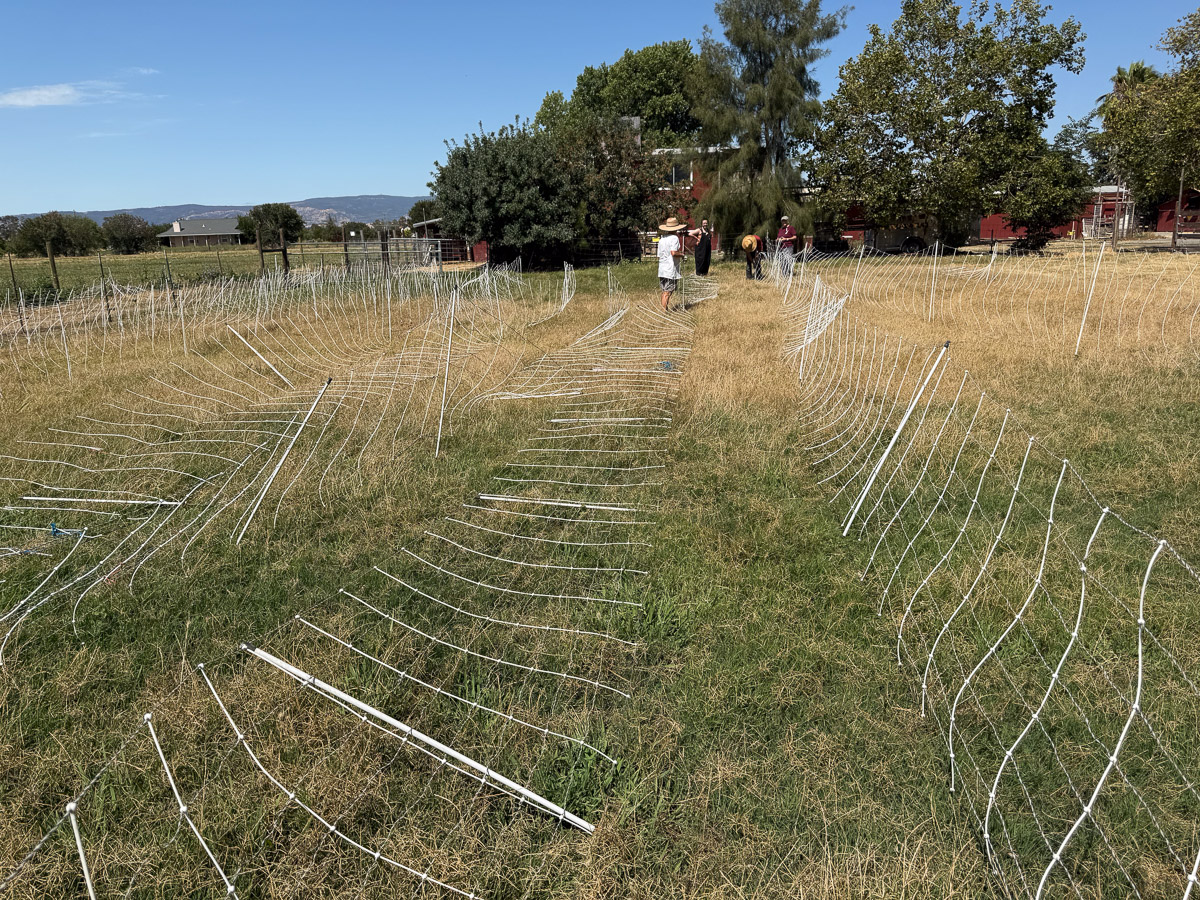
I still need to use the electric net fence though. The posts for the permanent fencing are about 15 feet from the south perimeter fence so that we can drive a tractor there. We use net fences to block that 15 foot gap. That net fence is also important because it is how the charge is carried from the perimeter fence to the north-south paddock fence. In the past I have moved those fences from one end to the other as we moved the sheep. Wouldn’t it be nice to have enough of the 15′ fences to have them always in place and ready to go? I also wanted one fence to span the whole north-south distance in case I wanted to split those 60′ paddocks into two for grazing when we have fewer sheep out there. Another need is 60′ fences to block off the north end of those paddocks. That’s where Farm Club comes in.
I have been putting this off (not like I’m sitting around doing nothing) and thought that it would be a good task for Farm Club. Also if Farm Club members came to do it, I wouldn’t be able to procrastinate and move it to the “deal with it later” list.
First we measured all the spaces in the pasture where I needed net fences. North-south lane fences need to be about 15 feet. The north-south fence to split the 60 foot paddock is 368 feet.
Then we gathered up all the fences that I’ve been using to create paddocks.We measured them and checked for damage.
We used bright red labels provided by Susan so that we could easily find the label. This is Rachel marking these.
Rachel made a list so we could match the needed fences with what was available. I found two 162 foot lengths and a 40+ foot length to use for the long fence I wanted. Then we started to cut the other fences and make sure the wires were attached at each end to carry the charge. I used to use 75+ foot fences to close the gaps in the old system. We could cut those into 60 and 15 foot fences or make multiple 15 foot fences, especially if there were bad spots to avoid. We did not finish the project, but made good headway. Now that all the fences are labeled we’ll have another Farm Day to finish the project. I have enough fences now so that the paddocks are set up for the week I’ll be gone and Farm Club members will be supervising.
Back to random photos.
Those are all mine. The green and blue shoes are wool and I like them best in the summer because they don’t get so hot.
Young pigeons. A couple of months ago I realized that a pigeon had made a shallow nest at the top of the stairs in the barn. I should have tossed it out then. Last year Dan spent days cleaning out years of accumulated pigeon droppings in the second story. He blocked off all the access points, but one pigeon figured out how to fly over the top of the door at the stairway. There were two eggs I think. I took a photo of the baby pigeons on June 30 and I think they were only a few days old. I’m surprised that they didn’t try to fly when I walked up here. They look like they are old enough. I wonder if they haven’t figured out how to fly through the gap where the mother pigeon enters this space.
And there are two more eggs. I don’t remember if I had seen four eggs and only two hatched, or if this is another generation. I have tossed these eggs. As soon as we get back from our upcoming trip I will move these pigeons out and clean this area. We don’t want to start another pigeon rookery.
Oxalis, also known as sour grass, wood sorrel and other names. It is considered a weed, but the flowers give a dye. Before Dan took the mower to these growing in the front yarn I picked flowers.
Dan started to fill in the low spot behind the barn.
First he re-stacked the compost pile and then moved dirt and ash from the burn pile that has accumulated over years.
Four rams posing. Left to right: Sterling and Griffin, both yearlings; Horatio and Blizzard, older.
We’re getting close to lambing. This is Tranquility and Eileen, due in the next ten days.
Roca
Trista, also due in the next 10 days.
Zoe is a 2024 lamb and is not pregnant, but I included here because I just skirted her fleece and saw something interesting. The locks below are from her fleece.
I have seen one other ewe’s fleece this year with a similar change in fleece color occurring part way through the year. I’m not sure of the cause.
Wool sorted and ready for the mill. I have more to finish before I can deliver this.
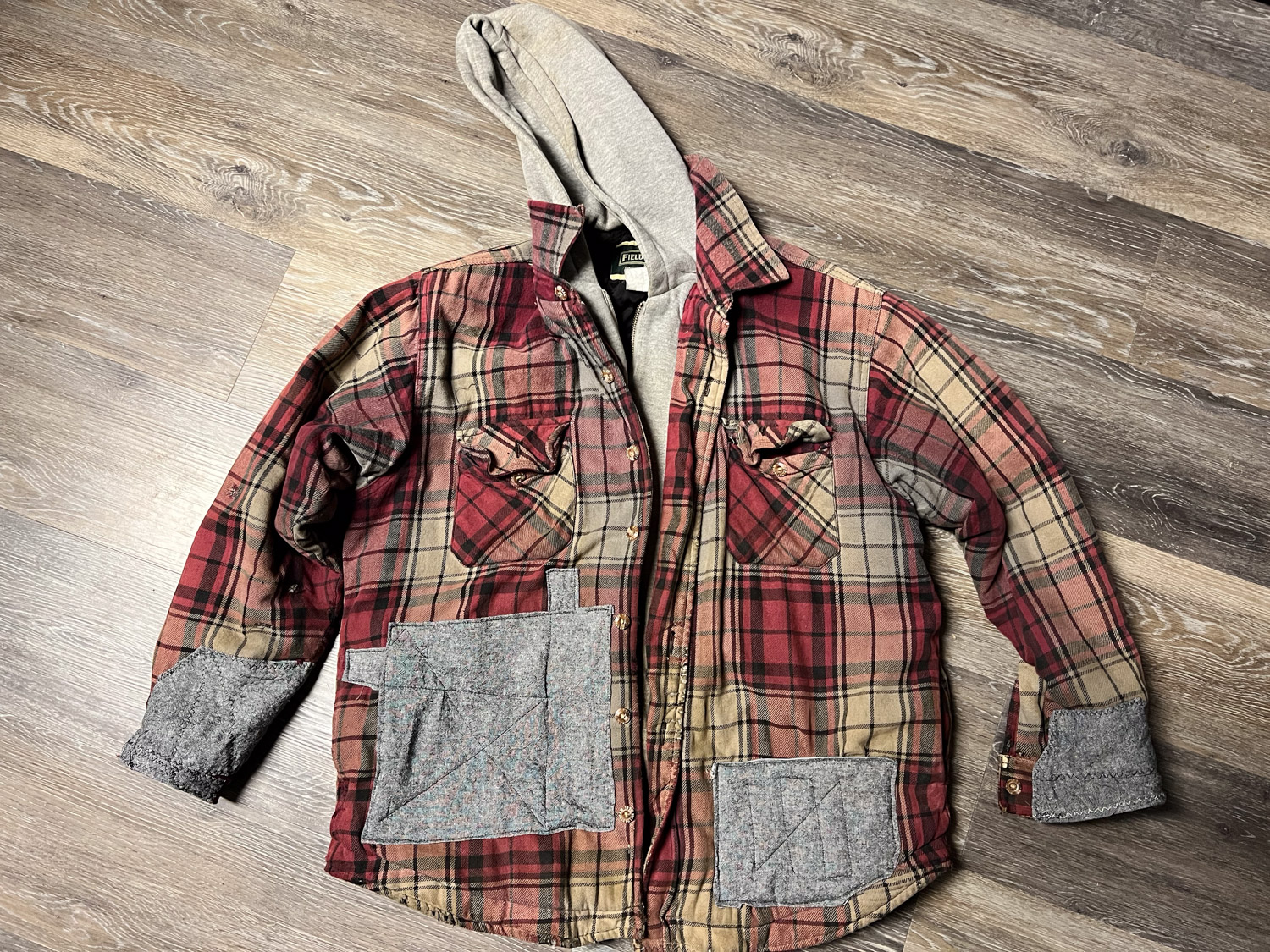
I shared some photos on Instagram a month or so ago about a jacket that I finally mended.
The only thing wrong with this jacket is that I kept catching it on gates and the inner parts of it were getting filled with hay. The top half and the whole back still kept me warm. Why would I throw it away?
I finally fixed it. It’s a relief to not have to worry about getting caught on the gates as I walk through.
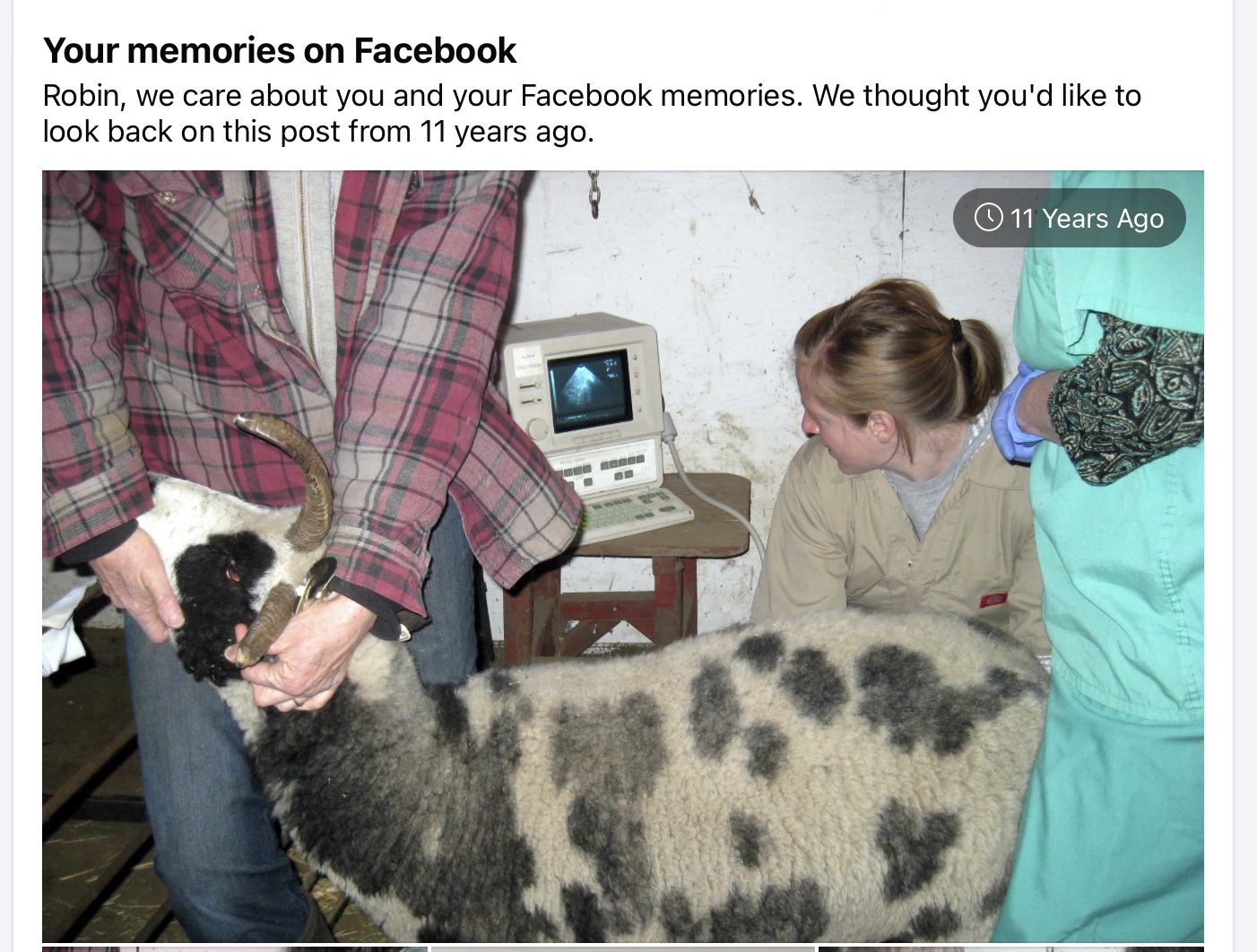
Then I decided it was time to mend the overalls. The following post popped on Facebook a couple of weeks ago. Same jacket. I guess no one can accuse me of being part of the fast fashion problem.
For the last few years I’ve asked the UC Davis vets to come here and do ultrasounds. It is certainly useful to know ahead of time the ewes that are not pregnant and, hopefully, the number of lambs to expect from those that are.
I told the Dr. Smith the dates the ewes were with rams and December 20 was chosen as the optimal time for ultrasounds. (Never mind that a few ewes went in with the new ram, Eli, right at Thanksgiving. This ultrasound date was scheduled before Eli came here. It won’t be hard when the time comes to know if those few ewes will lamb.
I purposely did not breed as many ewes this year because of the limited space with our pasture being off limits for most, if not all, of the next grazing season. If you read this blog regularly then you know about the Pasture and Irrigation Renovation going on. Look back over the last few months for those blog posts.
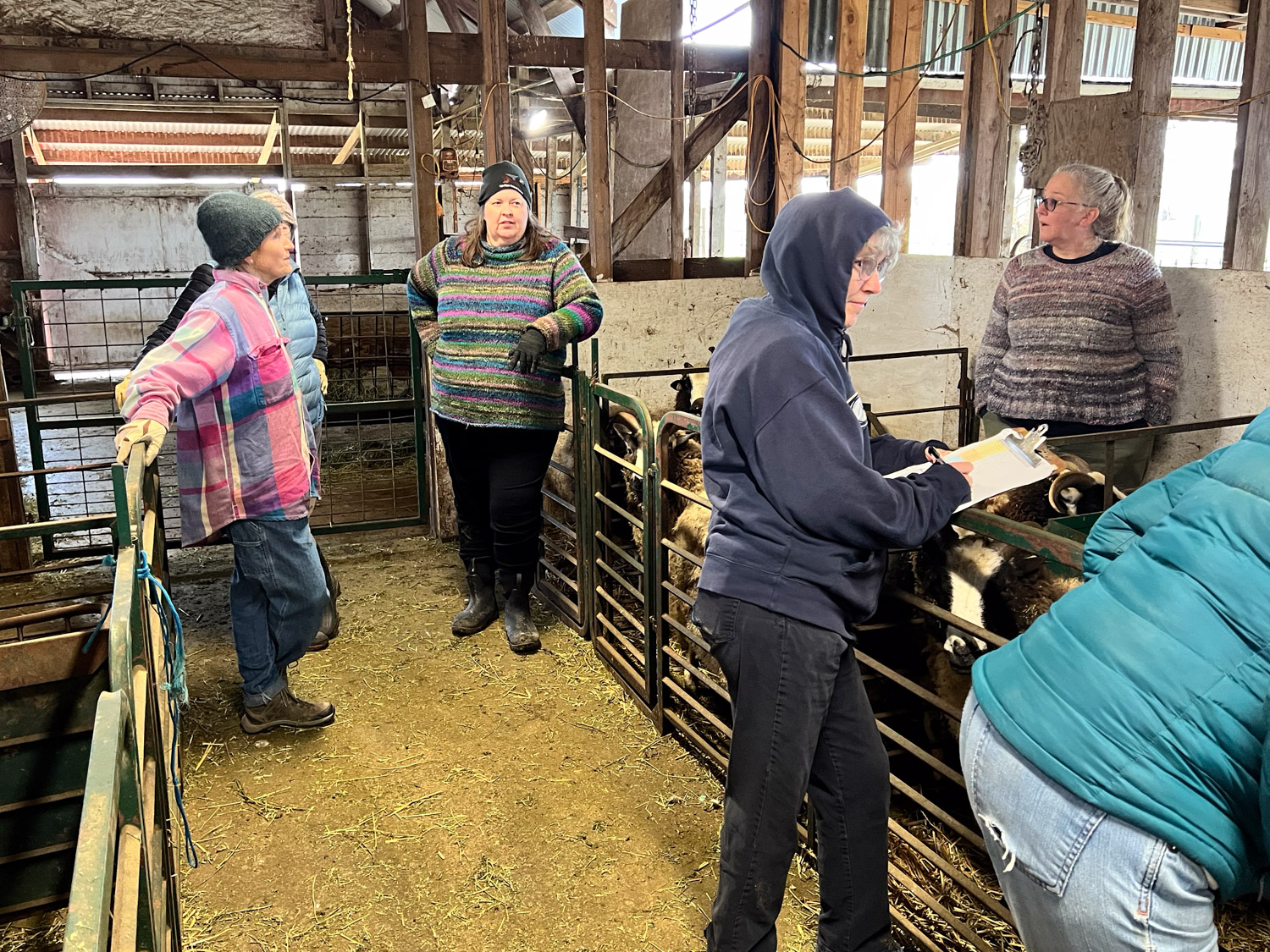
Farm Club members came and, since I was otherwise preoccupied with an overlapping visit by my son and DIL and Matt’s offer to help me with some loom/computer issues, they did all the work of getting the sheep organized and in pens, ready for the vets.
There were four from UC Davis. I lose track of the titles, but I think one person was an intern and/or student and maybe a couple were in residency. They took turns doing the scans and reading the results, with Dr. Smith overseeing it all.
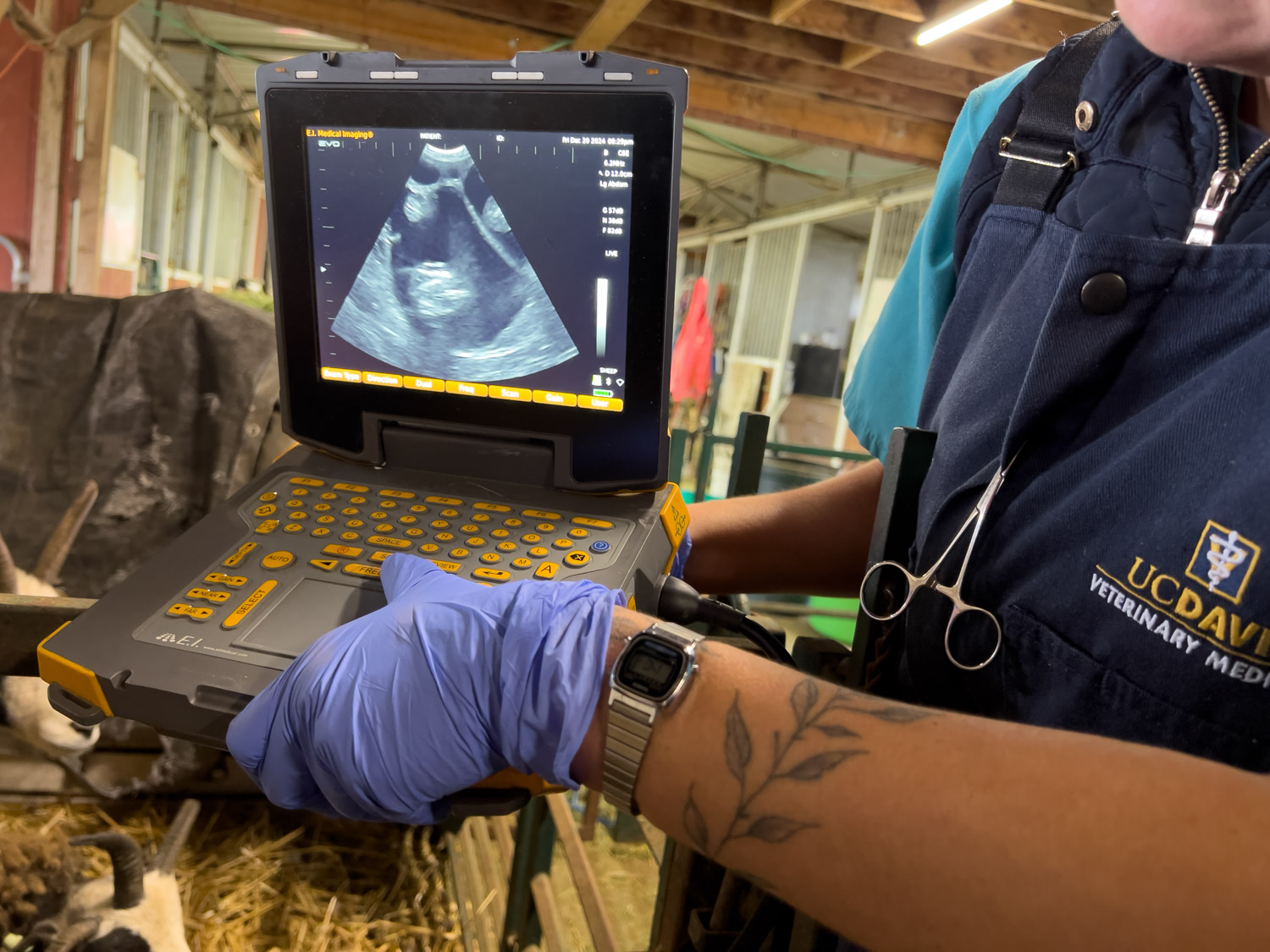
Don’t ask me what we’re seeing. I’m good when I see a ribcage go by as they move the probe around, but I have a hard time with the rest of it unless it’s pointed out. They judge size of the lamb’s head and, therefore, its gestational age. Amount of fluid and relative position of the lambs are other factors they consider.
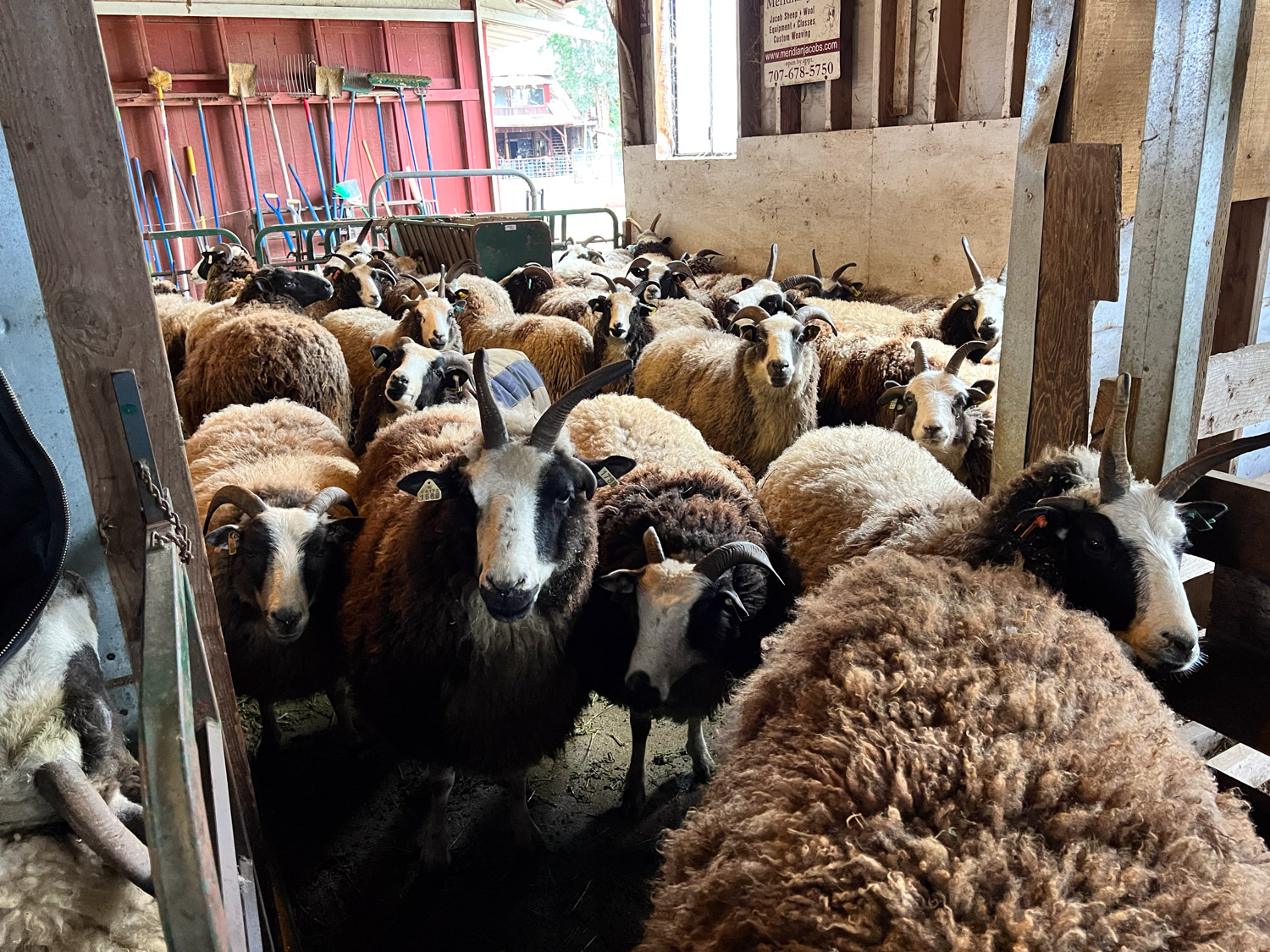
The next group of ewes waiting.
Trading places in scanning.
Meanwhile, one reason Matt came was to climb the weeping willow and cut a couple of large branches that had broken during the summer. FIY, he is using safety gear to prevent falling in case of slips.
It’s amazing how quickly this tree has grown. Matt cut the problem branches, but then cleaned out a lot more where it overhangs the pasture and the fence.
Back at the barn they are still scanning, but we could used last year’s lambing list on the white board (to be erased at the beginning of the next lambing) to pick out which ewes had triplets last year.
Here are the stats: Fetuses counted: 51 Sets of triplets: 2 Sets of twins: 17 Singles: 5 Sets of 2+ (twins, but not ruling out a 3rd): 3 Ewes pregnant: 27 Ewes open who were with a ram: 3 Ewes maybe pregnant, bred late by Eli: 4 Ewes not with.a ram: 7 Ewe lambs not bred: 8
Stay tuned for March 9, the first due date based on when I put rams in with ewes.





























 Meridian Jacobs' Blog