Views of the Farm

As much as I love to read, when I look at blogs I’d rather see photos…especially good photos. That is one reason I like Celi’s blog, thekitchensgarden . I don’t know how Celi finds the time, but she writes a daily post and it’s fun to keep up with what is going on at her farm. Celi recently posted a request to see the views from her readers’ back porches.

My back porch view isn’t too exciting:back porch 1 The back porch looks directly at  the back door of my on-farm shop where I teach classes and sell fiber and yarn and related equipment. It’s less appealing right now because we have been remodeling it and it’s essentially a construction zone for the time being. Nevertheless, Farm Club members enthusiastically encouraged me to send Celi a photo.

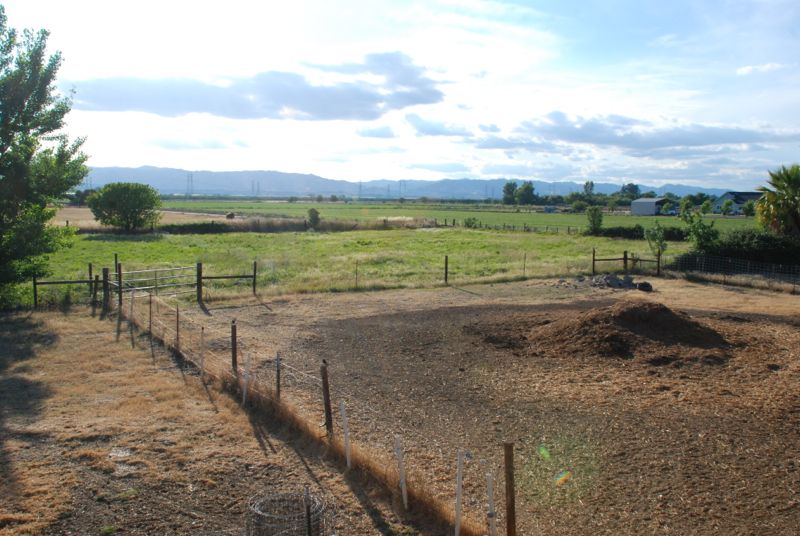
Celi’s idea made me think of other views that I thought I’d share. How about the views from the barn? barn view ne From the second story of the barn looking northeast. That’s G-2 (Dan’s hide-out) on the left, and G-1 is hidden in the trees. My shop is barely visible in the break in the trees on the right and the house is behind that. By the way, none of those trees were here when we moved here in 1999. I’ll have to post before and after photos some day.barn view south View from the barn looking south. I irrigated yesterday so the sheep are all locked in to the barn area. Normally they would be in the pasture, which is strip grazed using electric fence.barn view west View from the second story of the barn looking northwest. We are on the western edge of the Sacramento Valley and those hills are the easternmost part of the Coast Range. The mound in right foreground is the all important manure compost pile which features prominently in several  Lamb Game Videos.

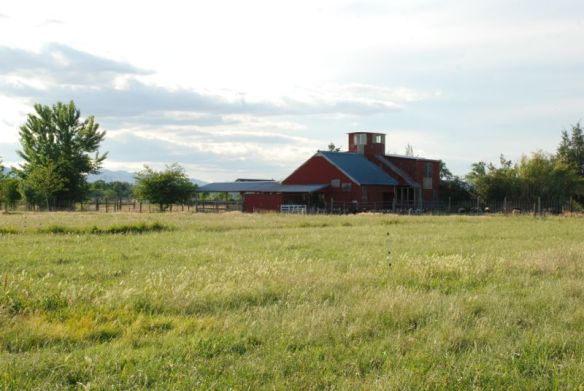
What about a view OF the barn?pasture view eastHere is a view of the barn looking west. The sheep are on the non-irrigated side of the fence since the pasture will have to drain for a few days before they go back out. The house and the shop are to my right in this photo.pasture view to barnThis is from the pasture looking north. pasture view northAnd if I turn slightly and look more north I see the end of the shop and the house that my mom used to live in. Our house is right behind that one.
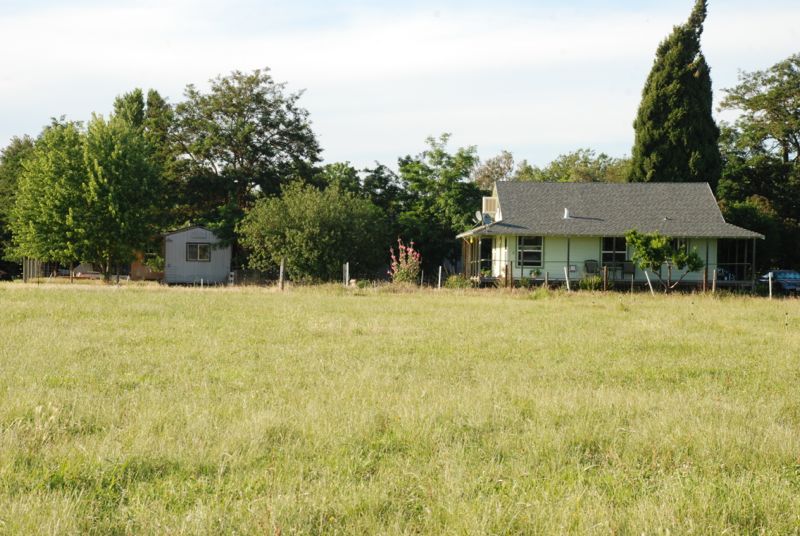
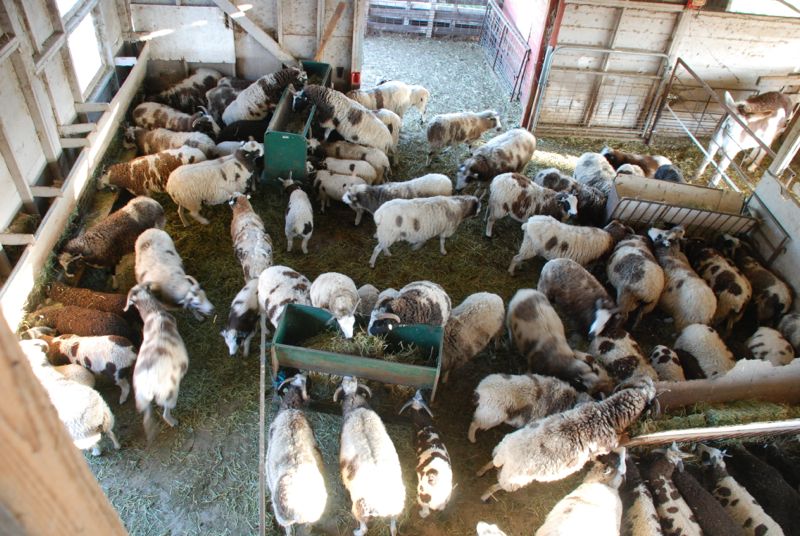
What about a view INSIDE the barn?view inside barnThis isn’t all the sheep. There are about 60 adults, counting rams, and 80+ lambs. There is Amaryllis in the upper right. The sheep can go under that fence, but Amaryllis has to stay on the other side so that she doesn’t get the alfalfa I feed to the sheep.

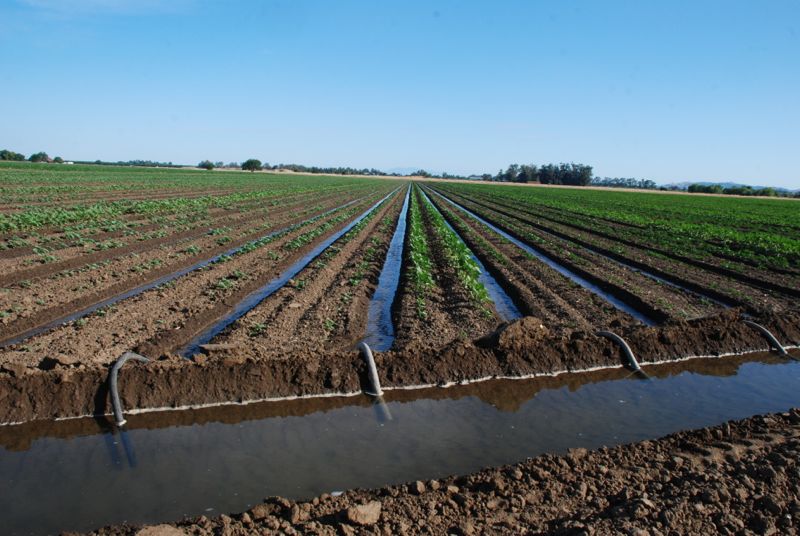
There is another view that is important to me. We have only 10 acres, but it feels like much more because we are fortunate to live across the road from much larger farmland. This year’s crop is sunflowers. It doesn’t look like much now, but in a couple of months I know I won’t be able to put my camera down when I walk over there.DSC_2746 This is the view of the field from my mailbox. I have been taking a photo of this same view once a week since January with the idea that it will be interesting to see at the end of the year.DSC_2752 DSC_2777  Remember, without irrigation the Sacramento Valley would be a desert all summer.

Meet the Sheep 2013

Another great day at the farm and another day that I’m so thankful to Farm Club and my other friends! Meet the Sheep is our annual spring Open House event. It is a big undertaking, but with the help of Farm Club and my family (and some luck with the weather) it went very well.DSC_0626 Mary, Joy, and Gynna are three of the crew that arrived early to help with set up. Notice the threatening weather.DSC_0629 Just before visitors were due to arrive I brought the sheep in from the pasture…DSC_0633 …and moved them to the pasture near the shop so that they would be ready to Meet the People. DSC_0649 Jackie set up a booth…DSC_0650 …as did Colleen.DSC_0653 I resurrected some displays from my Shear Delight days.DSC_0665Shelby and Dona tried out the new photo station that was created by Dona and Rick.DSC_0647The scheduled demonstrations were very popular. DSC_0656 Alison demonstrated spinning.DSC_0659 Colleen taught Solar Dyeing with Kool-aid…DSC_0687…and how to felt a bowl using a balloon.  DSC_0667 Julie brought baby chicks and bunnies and showed people how to handle the bunnies.DSC_0673 I think she won in the Cuteness Category today…DSC_0679 …although Mary’s triplets were popular as were the three bottle babies and the six newest lambs.DSC_0682  Julie also talked about dyeing fiber.DSC_0696Janis made this cool poster using wool from a fleece she bought in November.

And that’s it for my photos although there was a lot more going on. We were so busy that I was in the shop the rest of the day!DSC_0654Good thing that Dona brought brownies for lunch!


Field Trip Season

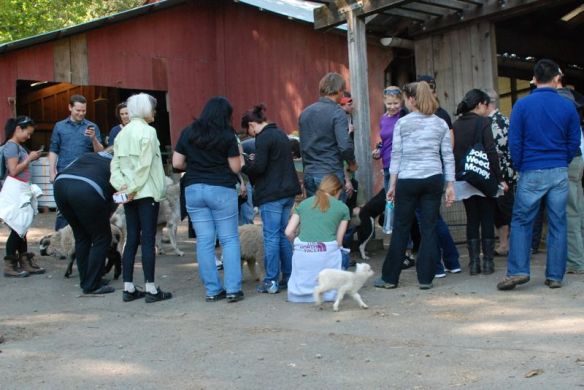
I found a new Season. Field Trip Season. I’ve had 4 field trips here in the last couple of weeks. I don’t get very good photos during field trips because I’m the one who is leading the field trip, but I’ll use a few. Today I’ll share yesterday’s field trip because I got to be a participant (as opposed to leader) of part of it.DSC_0412Fibershed sponsored a field trip for representatives of Smartwool, Northface, Lucy (and maybe others) to learn about our end of textile production. Many (most?) people who purchase and use fabric, individually or commercially, don’t necessarily have a sense of where it comes from. The goal of this trip was to expand the awareness of fiber production–the animals, the farmers, the soil and plants–and the importance of supporting sustainable local farms, and the idea that there is plenty of wool grown in N. CA but not the infrastructure to turn it into cloth. That is a primary goal of Fibershed–to set in motion the creation of that infrastructure and to create thriving businesses that support farmers, designers, fiber processers, and consumers. Whew! Pretty lofty goals? I am always amazed at what Rebecca (creator of Fibershed) has coming up next. I really hope that you’ll spend some time on the Fibershed website  because I think it’s one of the most important non-profit groups you’ll find.

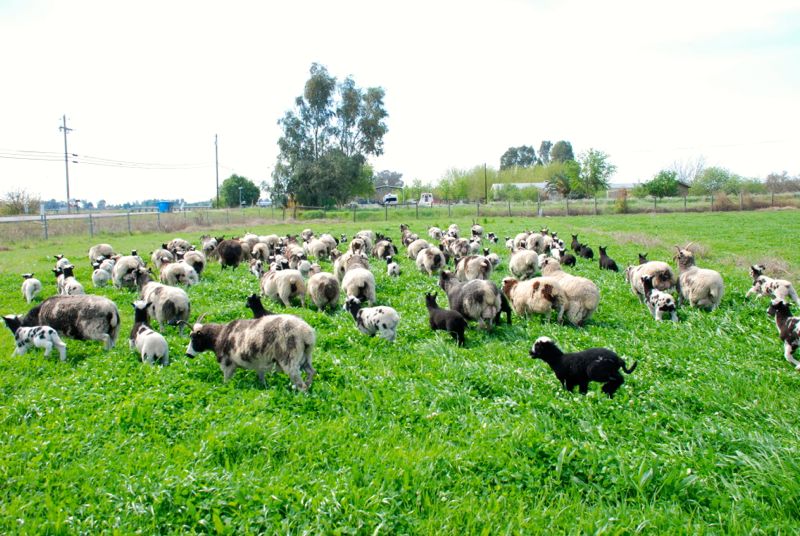
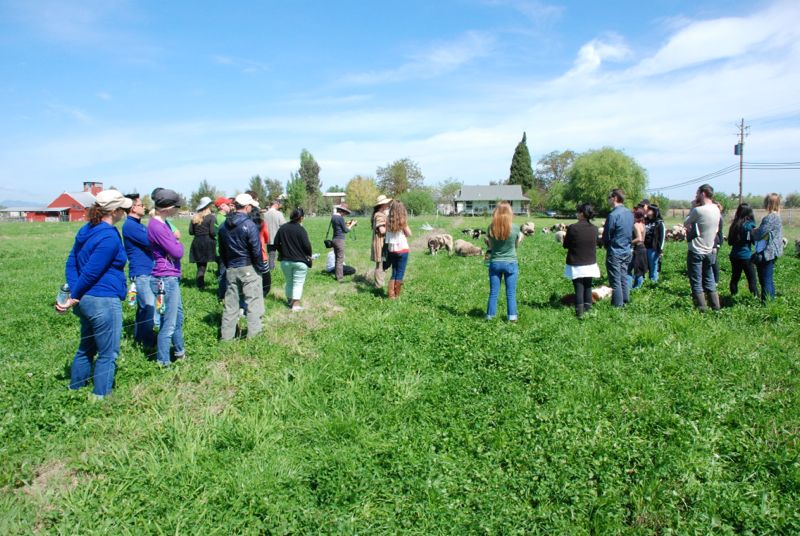
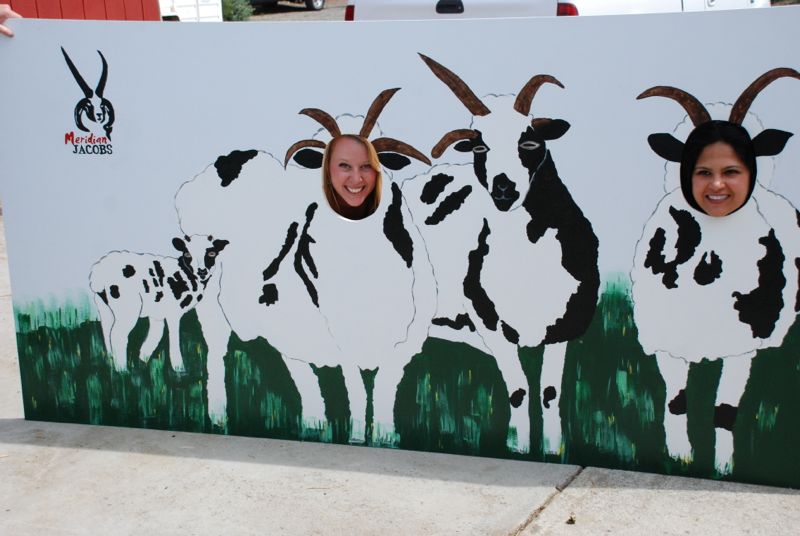
On to the field trip. I expected 5-6 people. There was a busload! First stop for us was the pasture.DSC_0388 The sheep performed admirably. I had waited to move the fence for the day’s grazing until the field trip was here. The sheep rushed to the fresh pasture just like they always do.DSC_0394 This is the group in the pasture. We spent a lot of time discussing pasture management, irrigation, choice of breed, wool types, etc.DSC_0401 Friend, Dona, brought this board over, getting ready for Meet the Sheep on Saturday. Some of the braver visitors tried it out.

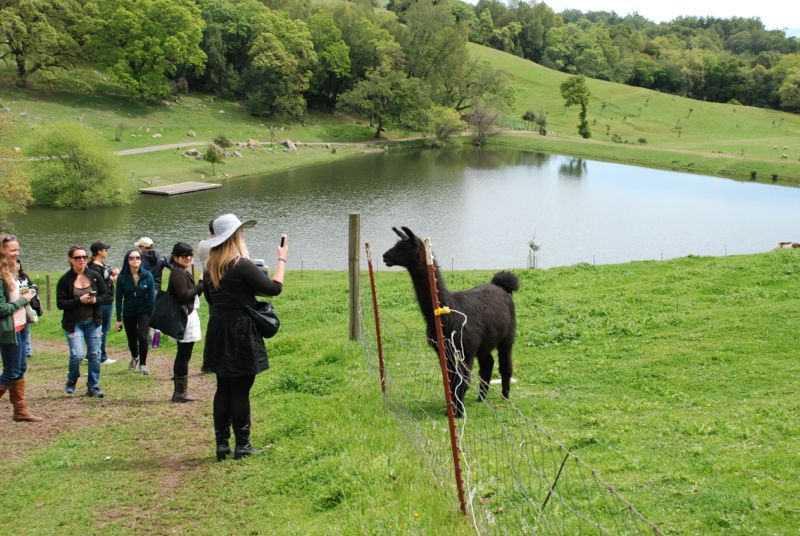
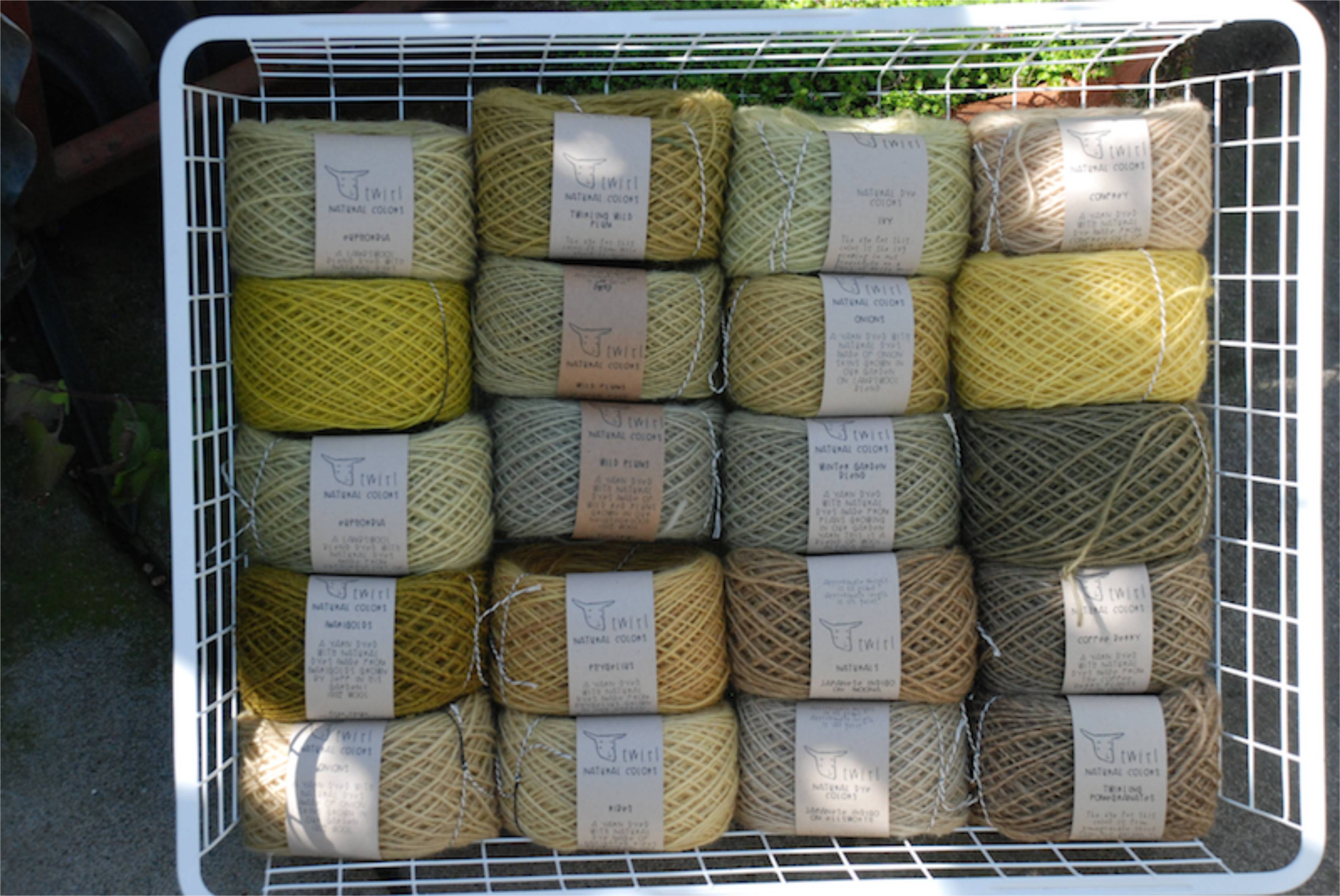
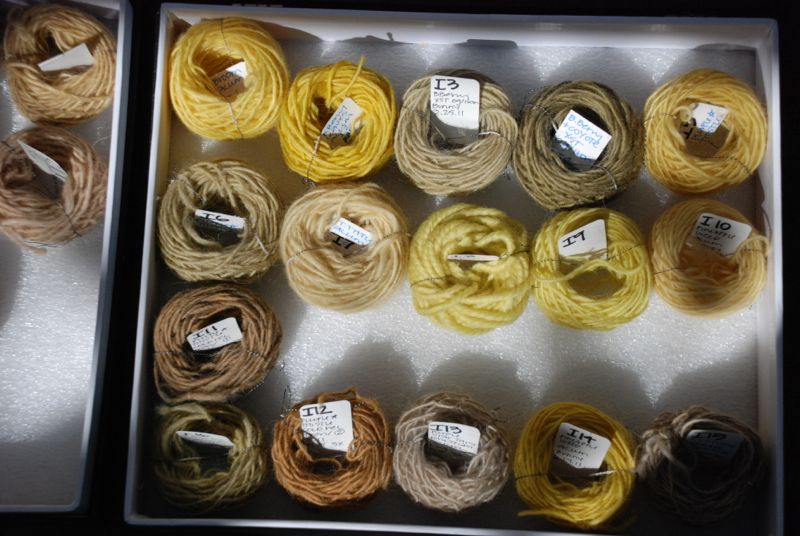
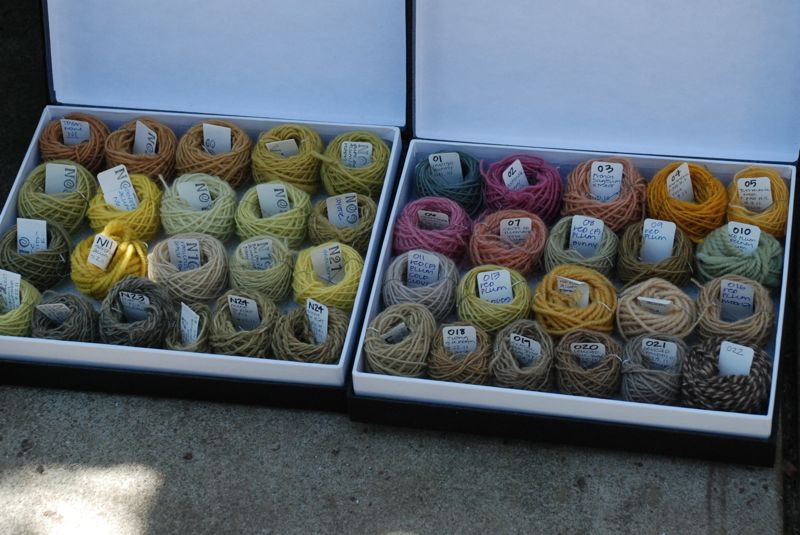
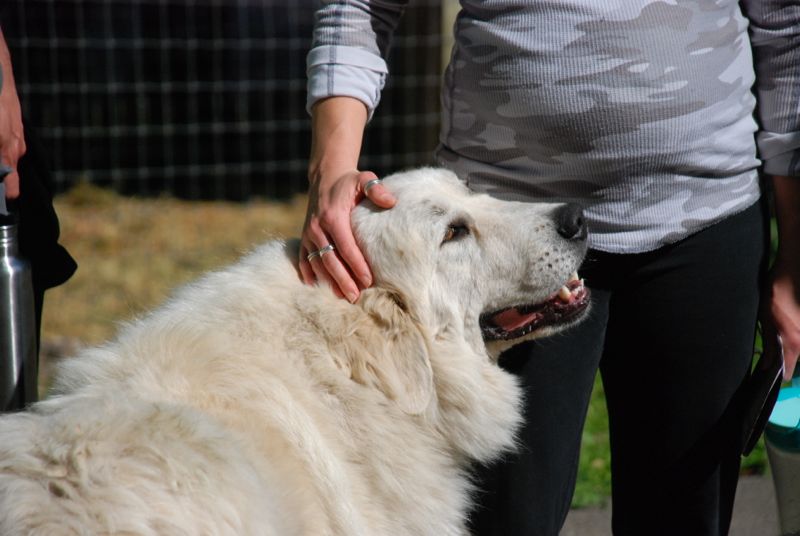
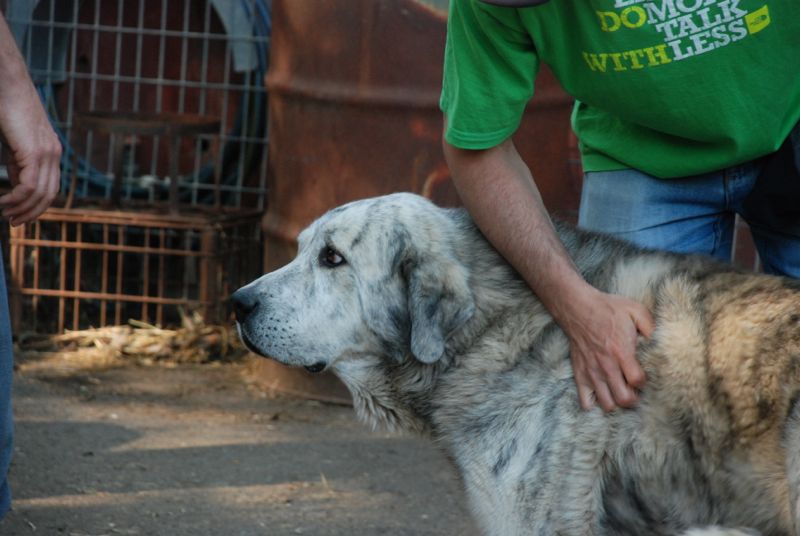
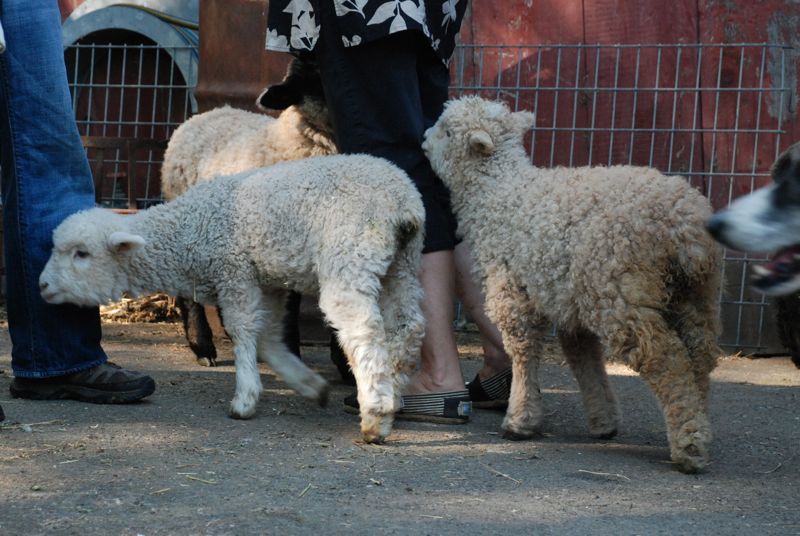
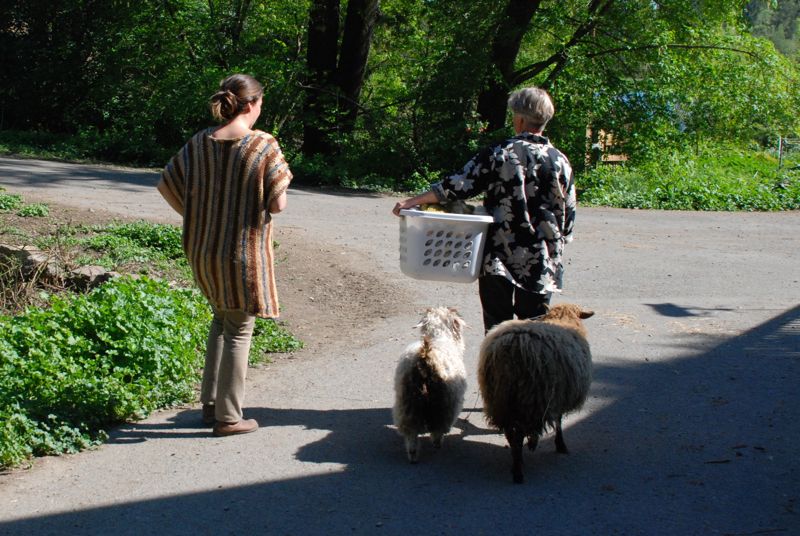
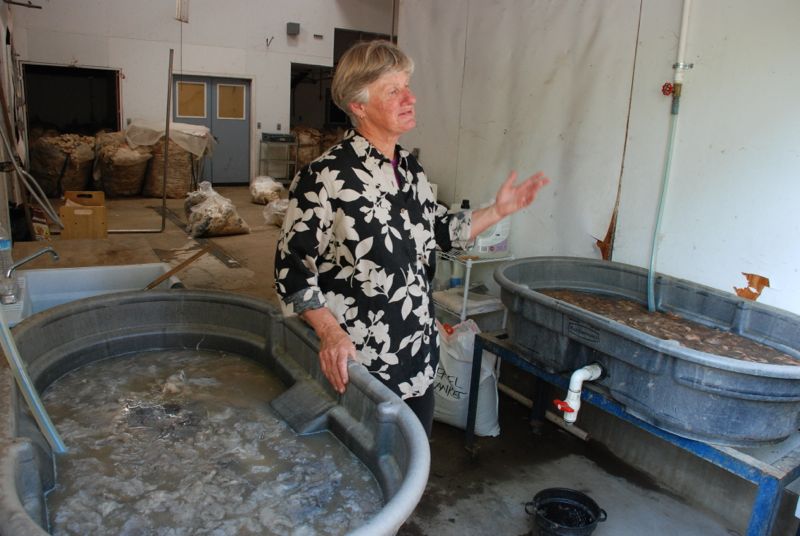
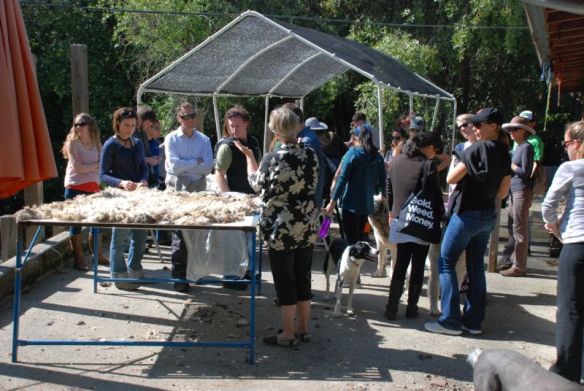
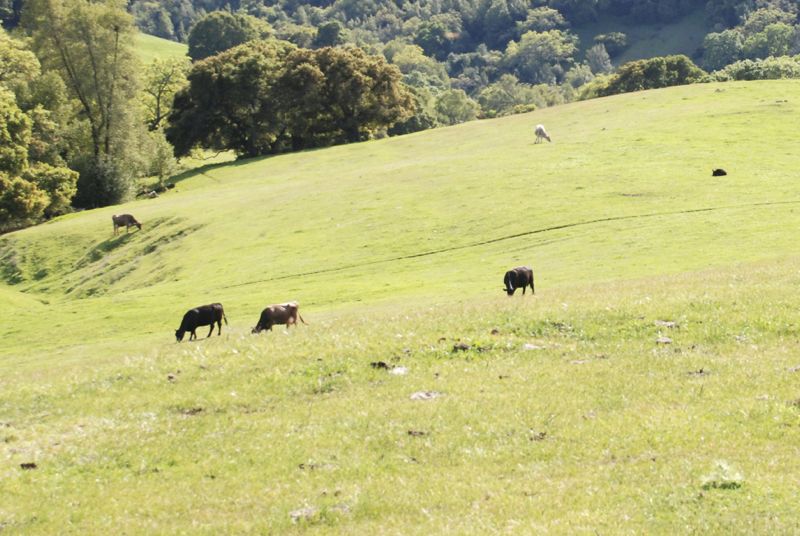
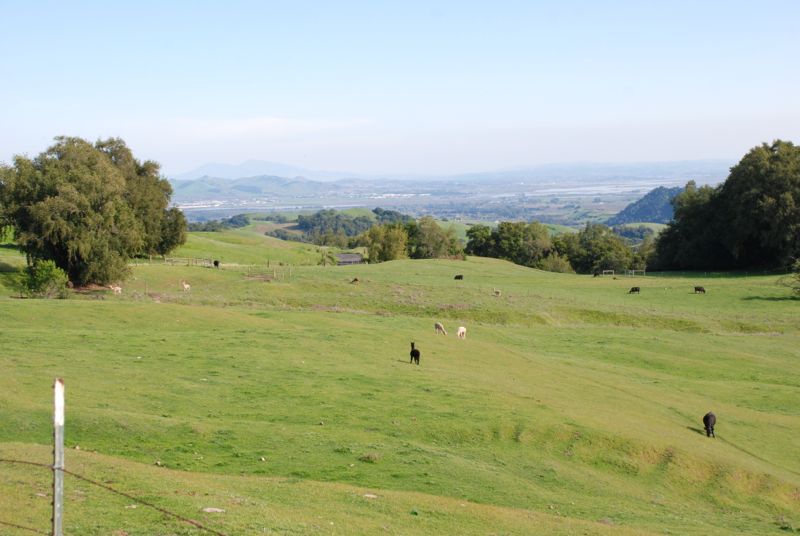
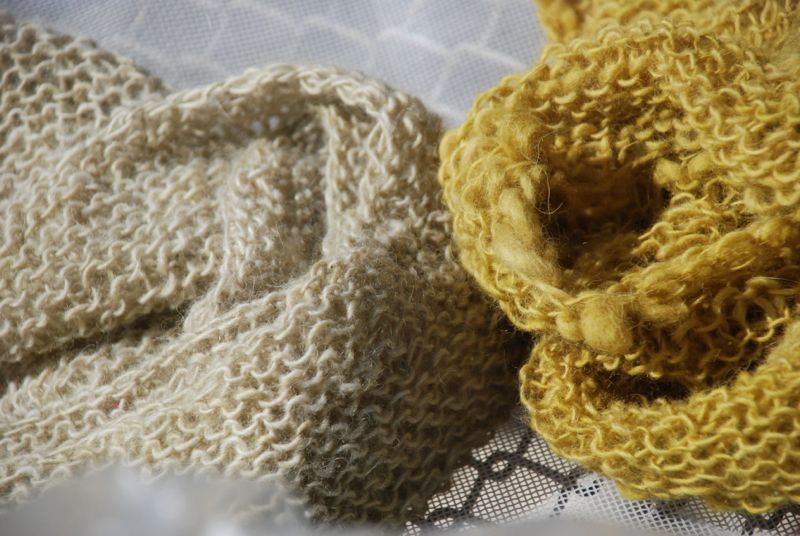
The second part of the tour was a trip to Mary Pettis-Sarley’s ranch in the hills west of Napa. DSC_0411  Mary has a variety of sheep, cattle, and alpacas who live in a beautiful setting.DSC_0420 She creates Twirl yarn using unique blends of the fibers she grows.DSC_0421 The yarns are all natural colored or dyed with natural dyes from plants that grow on the ranch. The “I” in these labels indicates that the dyeplants are invasive species.DSC_0423 DSC_0432 A major challenge of raising livestock in the hills is the predator problem. Mary has 17 dogs, most of whom are various breeds of livestock guardian dogs (LGD). They can be intimidating when you drive onto the property, but aren’t so scary once they know you’re on the approved list (or maybe that you’re not a 4-legged hungry visitor).DSC_0442DSC_0437 Mary let out the bottle babies…DSC_0446 …and I think her part of the field trip won the Cuteness Factor award.DSC_0450 DSC_0455 We were accompanied by two of the pets on the way to Mary’s wool washing station.DSC_0468Now I’m jealous, not only of the property, but of this. Maybe I’d wash more of my own fleeces if I could figure out a set-up like this.DSC_0462 Here is where the fleeces are dried. Mary had several fleeces spread out so that the visitors could handle them and feel the characteristics that we’d been talking about all day.DSC_0465  A couple of scarves knit with Mary’s yarn.DSC_0483 As I drove way I saw some of Mary’s cows. As it happens, these cows are the daughters and granddaughters of Jennie, a Brown Swiss cow that Mary got from us when we left our dairy life in 1998. Talk about happy CA cows. These truly have a happy life.DSC_0489Look at their view of the Napa Valley if they choose to look up from all that grass. (Alpacas in this photo–they were right next to the cows.)
Felting Field Trip

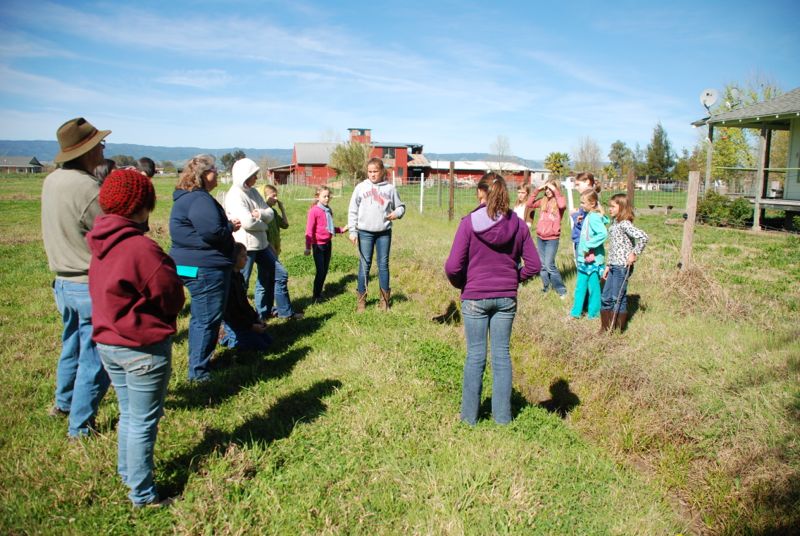
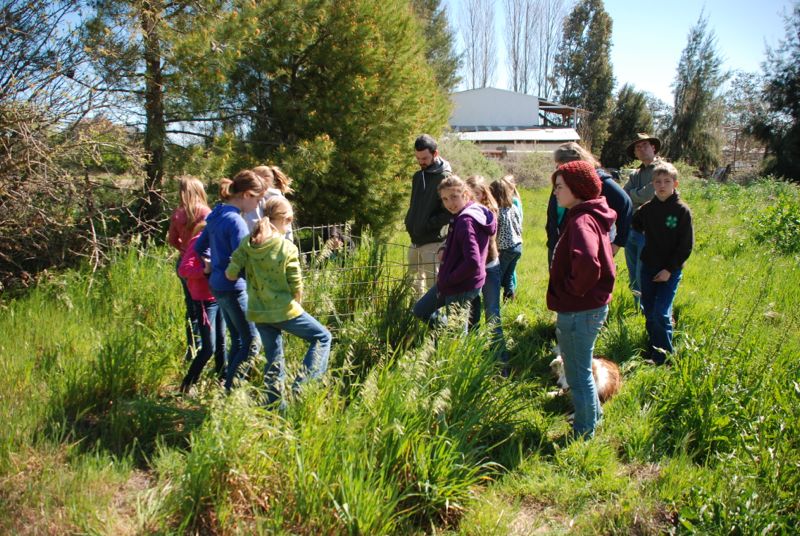
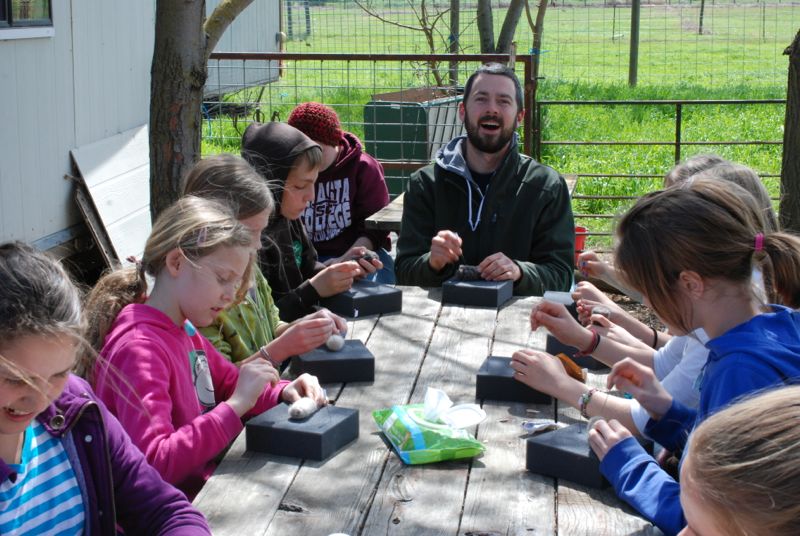
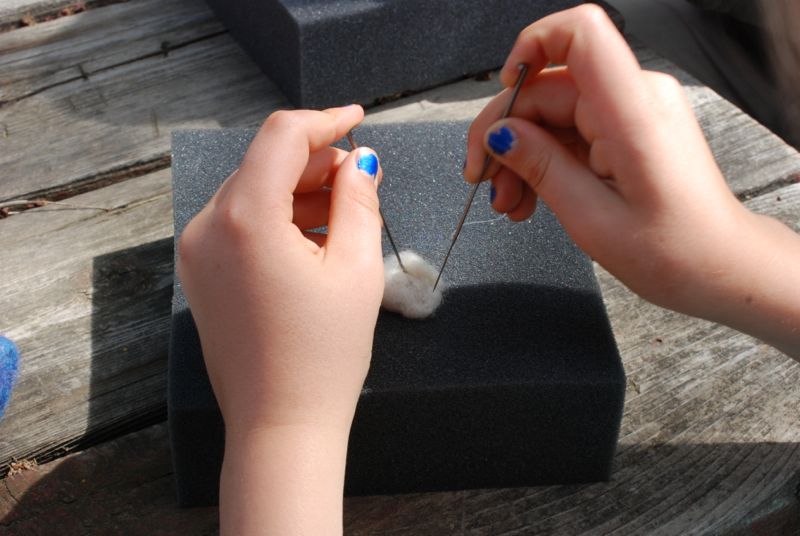
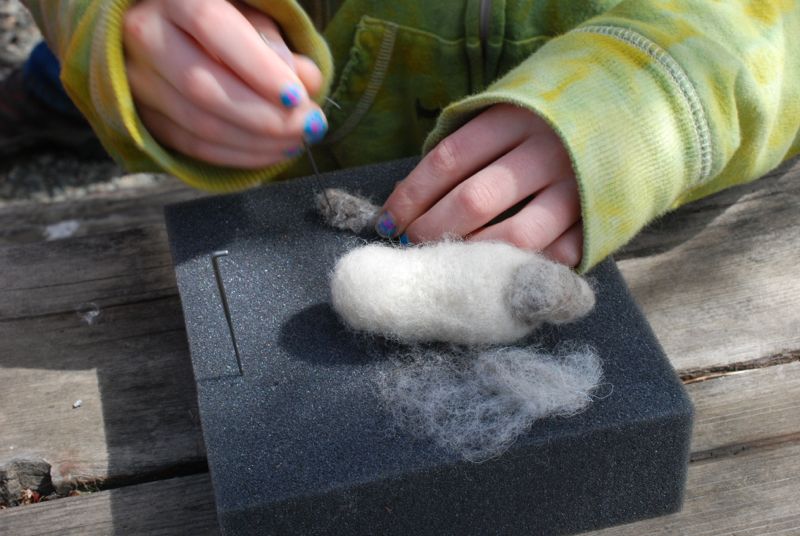
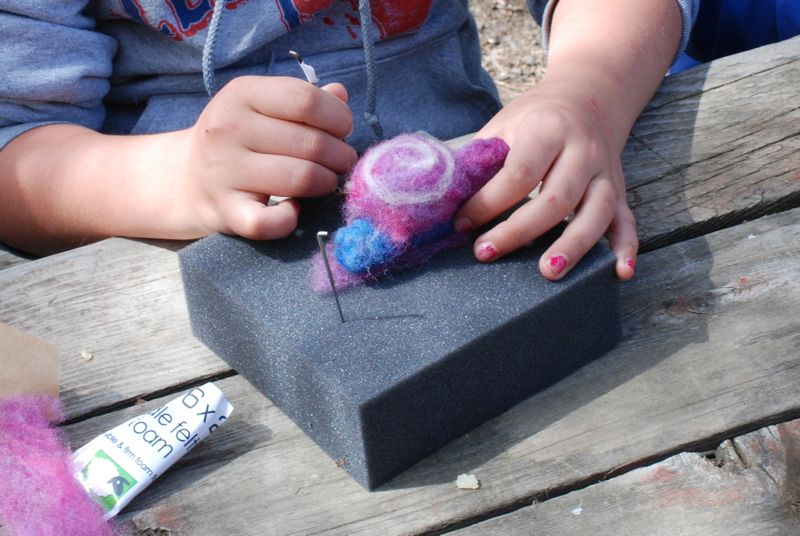
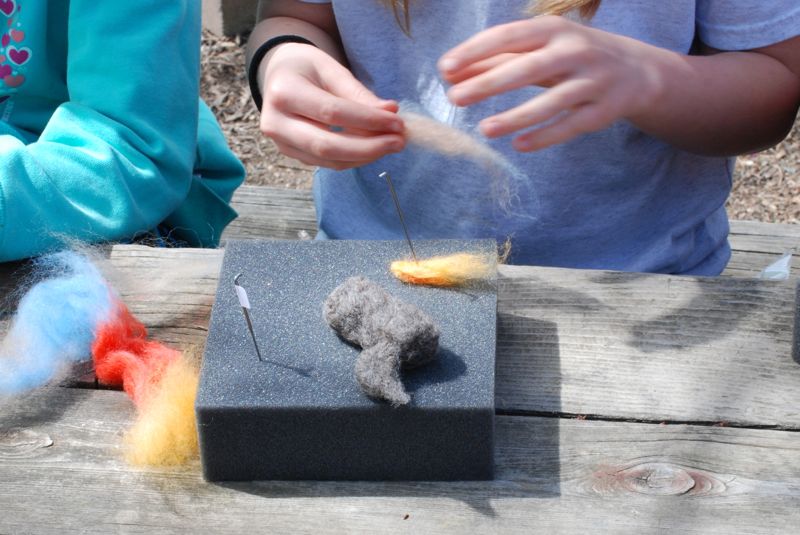
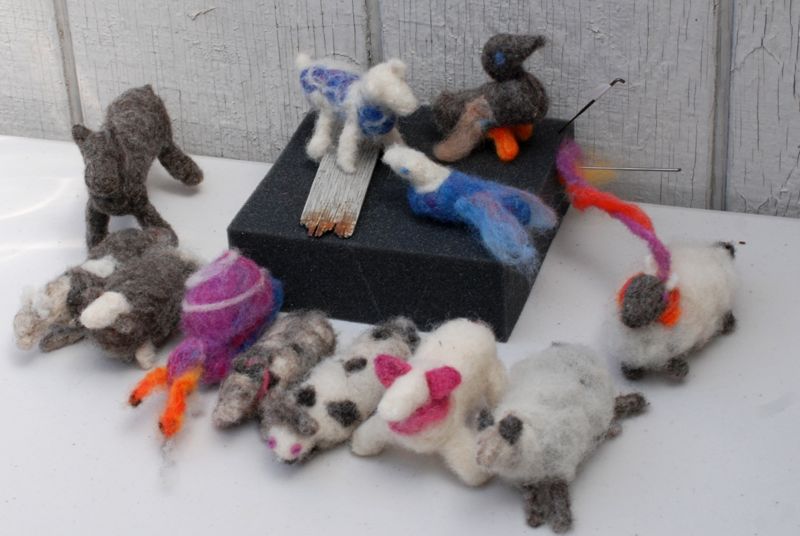
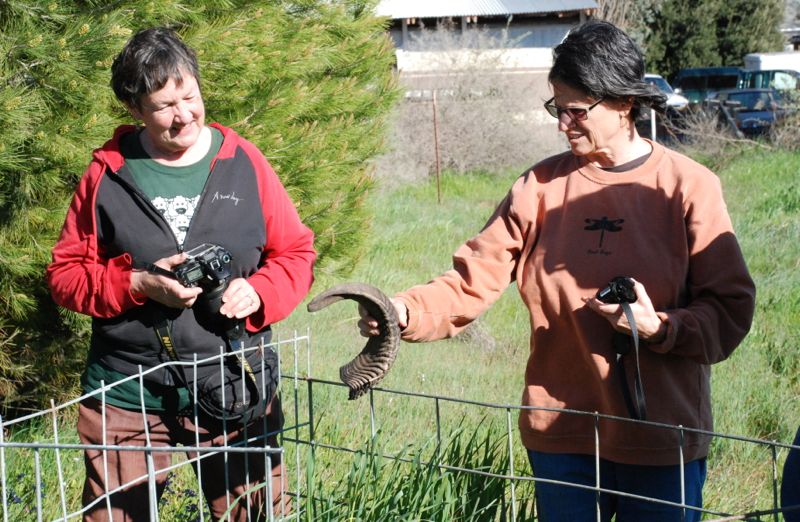
Today I hosted a field trip of 4-Hers led by Carol of Joshua Farm Shetlands. They came to talk about Jacob sheep, pasture management and the fiber business and to do a felting project. DSC_9952 The morning started in the pasture. Most people that come to see the farm want to spend time with sheep, but it is very important to understand that we should think of ourselves as “grass farmers” first. I couldn’t possibly have the number of sheep that I do without irrigated pasture and intensive grazing management.DSC_9957We discussed sheep, facilities and ended the livestock part of the tour by looking at the Dead Zone (I just thought of that name). There are ram skulls in that fence in various stages of decomposition. As we explained to the kids, we want to sell every part of the animal we can. DSC_9964 We came back to the shop for lunch and then a felting workshop. The idea was to felt a sheep.DSC_9968 DSC_9972 Some of the sheep had morphed significantly into other life forms:DSC_9975 Snail.DSC_9976 Duck.DSC_9986Aren’t these cool?

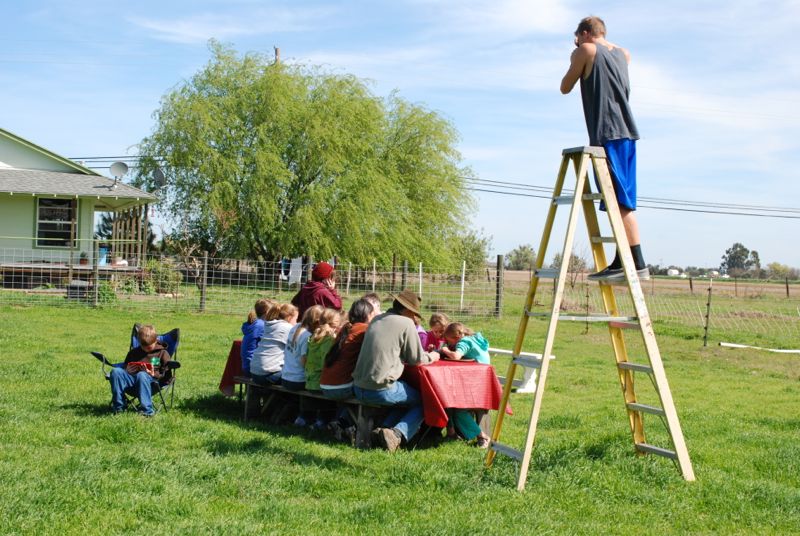
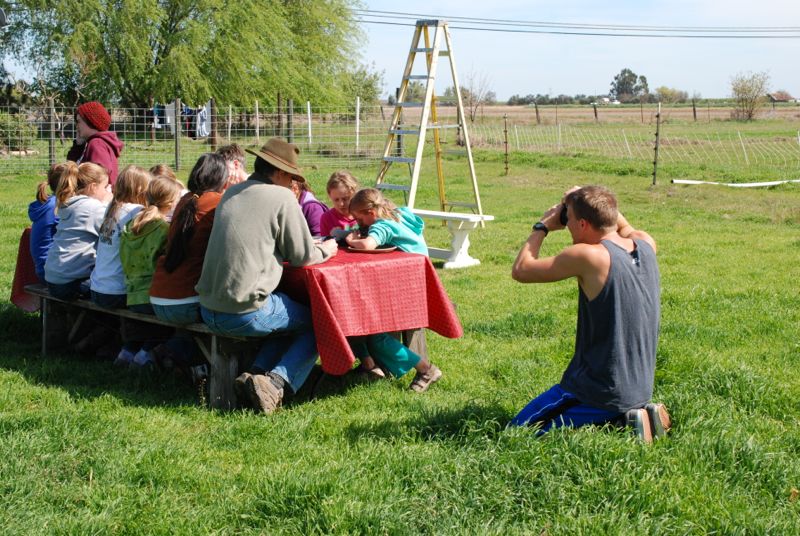
Before they left the 4-H group was gracious enough to help my son out with his photography assignment. He is supposed to submit an interpretation of Social Awareness and decided to stage a family picnic in which it is obvious that everyone is more involved in their electronic devices than each other.DSC_9995

DSC_0003No one seemed to mind the time for this, but the girls crowded around the iPad kept asking for the password.

It Takes A Farm Club …

I’ve thought about titles for this post for a couple of days, but I’ve been too busy and/or too tired to write it. It Takes A Farm Club to Run a Farm. Or Farm Club Experiences Life and Death. FC met here on Saturday. I am so appreciative of everyone in FC. I know that they are getting experiences they wouldn’t otherwise, but I am benefiting tremendously as well. There was a lot going on that day.

My day started with a ewe that I though might have milk fever. I treated her with calcium gluconate and put her with her lambs in a pen so I could watch her. The first FC members arrived as another ewe, Onyx was lambing.
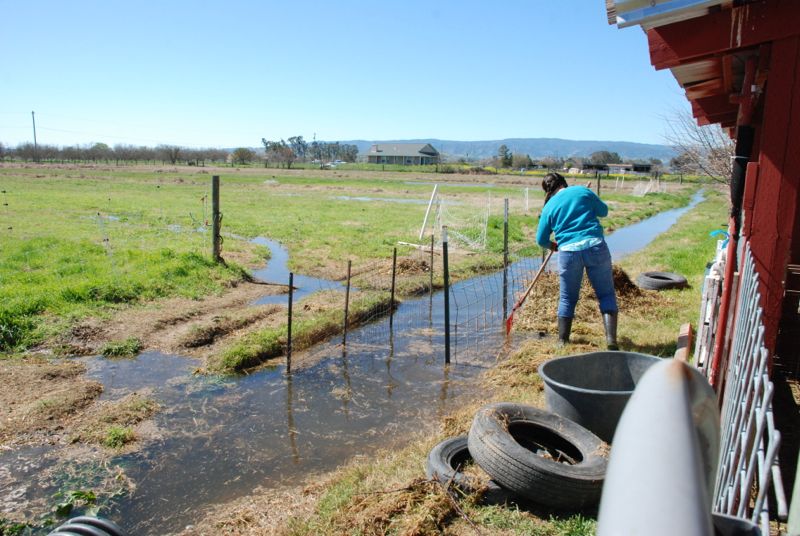
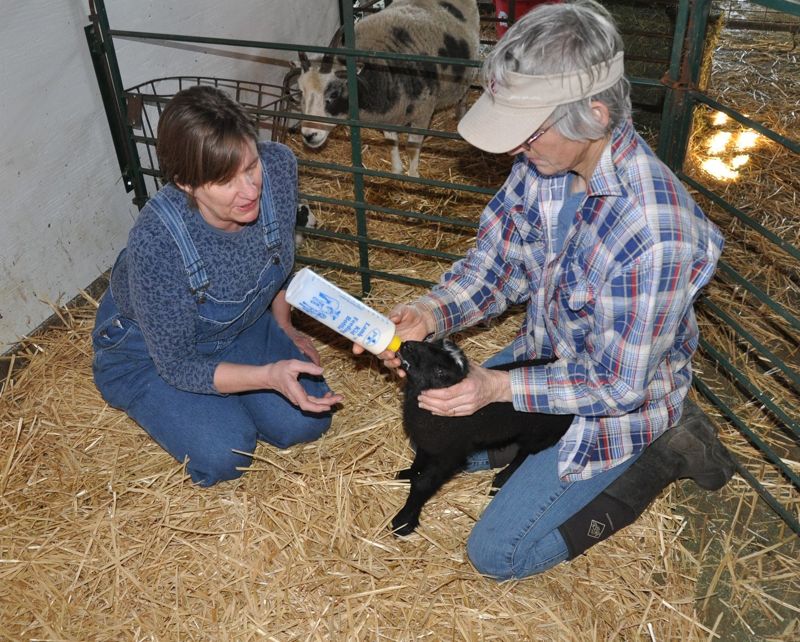
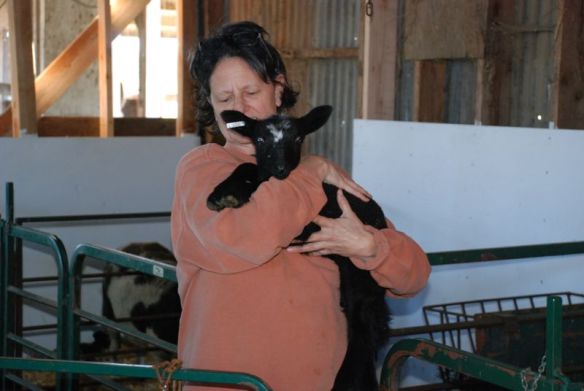
DSC_9422Lambing pens …DSC_9420…and the rest of the barn were cleaned while we kept an eye on Onyx.DSC_9416 Onyx is a BFL/Jacob cross bred to a Jacob. She had a black lamb and a Jacob-looking lamb while FC looked on. I’m glad that she lambed in the barn. If she had been in the field I would have been looking all over for a Jacob ewe missing a lamb.DSC_9451Look at the horns on that lamb. Ouch!DSC_9418 It’s unheard of to irrigate this early in the year, but we have had almost no rain since December. The irrigation district charged the ditches so I put in a call for water. Gynna and Lisa helped by clearing debris from the ditch.1-DSC_6566 We checked this ewe lamb’s broken leg.DSC_9434 I showed FC members my bone-yard ( a pen where I put skulls that are in various stages of decomposition). DSC_9414Shelby sat with the ewe who later died (not of milk fever, but  a metabolic problem similar to pregnancy toxemia, according to preliminary necropsy results).1-DSC_6540Then we had to bottle feed her lambs. (The day before I had just grafted the bottle baby I had onto a ewe. Now I have more bottle lambs.)DSC_9423 And there are always plenty of lambs to hold. DSC_9413We checked all 70 lambs for split eyelids and number of horns and I gave them all BOSE injections. I don’t have photos, but a guest of a FC member worked on my buttons–sanding buttons that I had cut out months ago. DSC_9552 We can’t have Farm Day without Donna’s brownies…and now Lisa’s sheep cookies and  Mary’s O’Henry bars.DSC_9507  Thank you to everyone who came and helped and then shared the warm afternoon sun.


Lambs are Here!

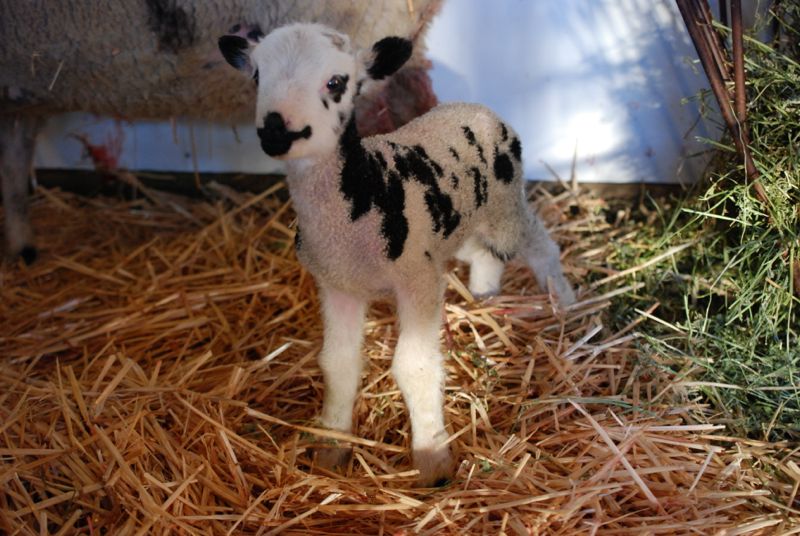
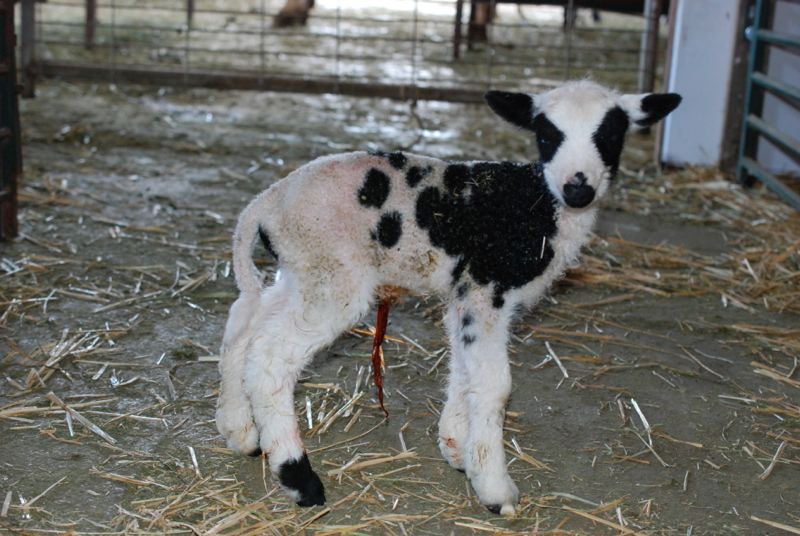
Lambs were due on Thursday, 148 days after the first breeding date. I’ve started watching for early arrivals. Last night I went out at about 12:30 a.m. (after finishing bookkeeping for the night) and found two ewes with four lambs. I brought them into the lambing pen area and tried to sort out moms and babies. I finally assigned two lambs to each ewe and they all seemed happy. In the light of day I realize that the sets of twins are split up. But that’s OK as long as each lamb has a happy mom.DSC_8709 This is a beautifully marked ram lamb. Meridian Celeste x Kenleigh’s Matrix. The two parents are both lilac (the color of this lamb) and they should have lilac offspring. DSC_8716 This is his adopted twin, but he is black so I think belongs to the other mom. (Meridian Zoey x Meridian Fogerty)DSC_8721 Here is a lilac ewe lamb (although in the photo she looks black) so this is the twin to the first one. DSC_8775 Meridian Loretta lambed with twins in the middle of the day. I put Loretta in a pen and came back an hour later. No muss, no fuss. Twins clean and nursing. This is a ewe lamb. Meridian Loretta x Kenleigh’s Matrix.DSC_8789 Here is that first lamb again. I usually just number the lambs and let buyers give them names.  This lamb is tempting me to name all my lambs. I don’t have his name yet, but I’ll think of one. DSC_8792Lambing season has started.


Phyllis Returns Home

Phyllis is a lilac ewe who was born in 2005. She was sold as a lamb to someone who eventually got rid of her flock. Phyllis came home the first time in 2010 as the owner was on the way to the auction with her sheep. It was a surprise when she lambed in January, 2011 with two black lambs. It seems that she was bred during that last trailer ride.

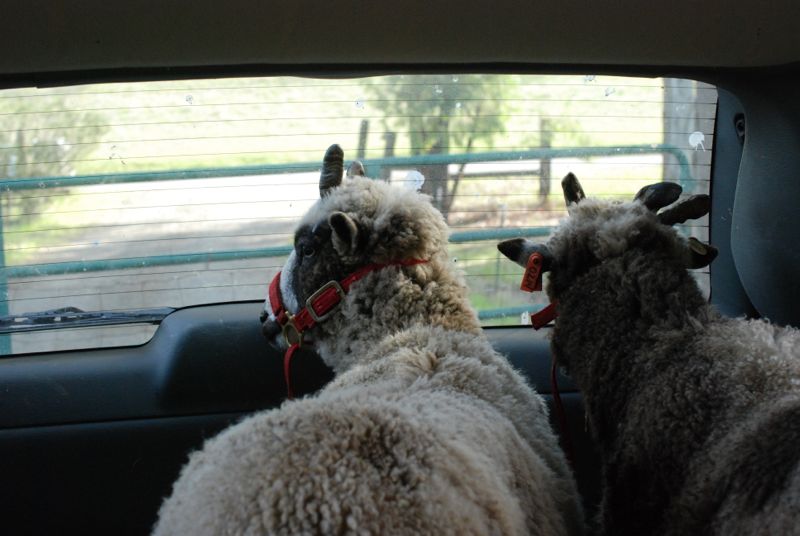
DSC_0232-phyllis-w Look at the size of those lambs at about 5 months old. This is what made me think about getting a ram to raise crossbred lambs for market. That’s how Faulkner’s story here began.  In 2011 Phyllis went to a nearby farm as a companion to Diamond, an elderly sheep (a Pensioner in Jackie’s story about this event). Due to the owner’s ill health the sheep needed to go, so Jackie and I picked them up yesterday. Diamond is living at Jackie’s and Phyllis came back here. DSC_8119  Phyllis and Diamond in the back of Jackie’s van.DSC_8125 Diamond at Jackie’s place.DSC_8132She’s in the front of the group here and that’s Marley going to greet her. DSC_8143 Here we are back at my place.DSC_8145 Phyllis has a very nice fleece. DSC_8159 She is right in the middle there–the one with more fleece.DSC_8162


DSC_8151Welcome home, Phyllis.

Color Everywhere I Look

It’s been awhile since I wrote a blog post–at least on paper…well, on on the computer. But you know what I mean. I write a lot of them in my head but they don’t always make it here. So I was looking at my latest photos to see which in-my-head blog post to put here and these are the things that caught my eye.

 The dye class that I taught last week.

The v-shawl class that I taught last week.

Socks that Jackie made for me but it hasn’t been the season to wear them.

The color wheel class that I taught at Lambtown on Sunday.

Georgia O’Keefe’s Purple Petunia which is now on the loom.

But when you think you’ve found the most fabulous colors of yarn, fiber, and dye, you walk outside  and see this:


A sunset from last week.


I think I need to find yarn in these colors.


Green Pasture

You have all seen photos of my green pasture.

This does not happen naturally here in California’s Central Valley . We have what is known as a Mediterranean climate. I thought I’d give you a definition but what I found when I did a google search is more interesting:

There are not many places in the world that have our hot, dry summers and cool, wet winters. So how do we grow all that clover and grass in a hot, dry summer? Irrigation, of course. But irrigation water has to come from somewhere if it’s not coming out of the sky this time of year.

Our irrigation water is provided (sold) by Solano Irrigation District and comes from Lake Berryessa which fills from winter rainfall. Here is how our irrigation water is delivered.

Do you see that low spot in the mountains on the right side of the photo? Lake Berryessa is behind there. The water is carried down Putah Creek. Eventually it works it’s way into a system of canals. When I call for water the SID person opens a gate at the end of this ditch that is normally dry. The water flows to another gate at the northwest corner of my property (that cement box on the other side of the fence). When that gate is open the water flows under the fence into the standpipe in the foreground.

That black circle is the pipe carrying the water into the standpipe. It flows out the hole on the south side of the standpipe (at the top of the photo).

This is a close-up of that rushing cool water. It’s not a rushing mountain stream but it sure looked appealing this afternoon when I was outside working.

Here is where the water flows out of the standpipe into the pasture.

There is a ditch at the north end of each pasture. The water is just starting to fill the ditch.

I have to dig cut-outs in the ditch to get the water to flow where I want it. It’s not a perfect system because our ditches are worn out and trampled by sheep and the pastures aren’t level, but I can usually make it work. I have the water on for 24 to 36 hours to irrigate everything.

This is the last pasture the sheep were on yesterday and I finished mowing it (a story for another day)  just before irrigating.

This is what we’d have in the summer if we didn’t irrigate. (This is a small pen behind the barn.)

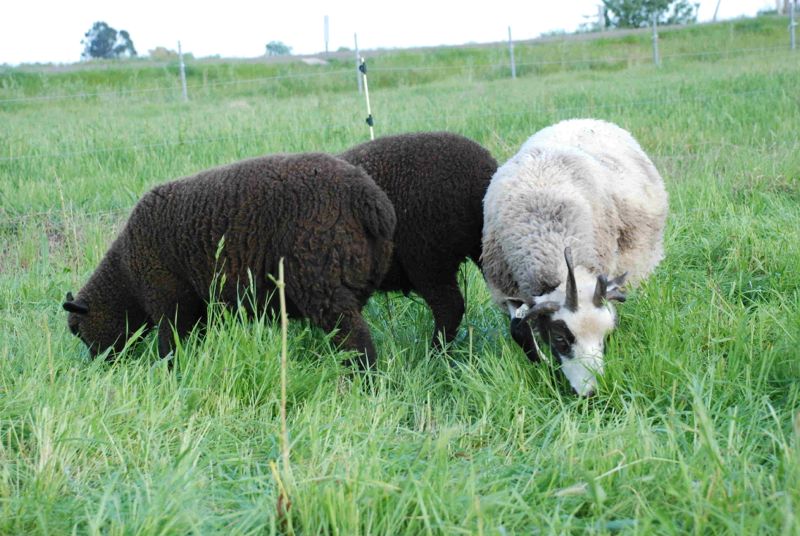
Here is what irrigation gives us.