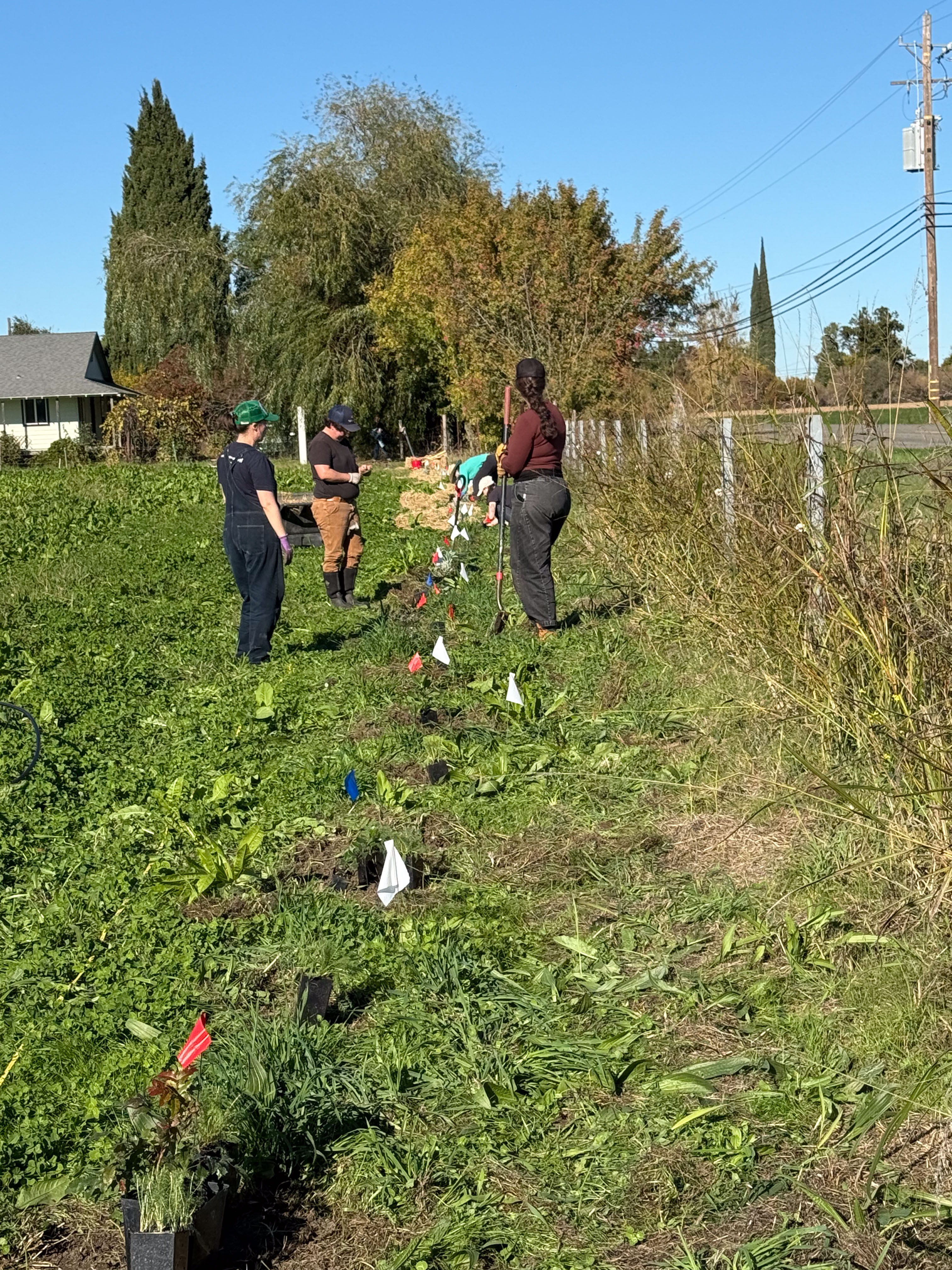
I introduced our hedgerow project in the previous post. That was Friday. Today, Sunday, one of the Farm Club members who had helped on Friday had offered to come back to help with the project. Even though the ground is moist from recent rains, the new plants would benefit from water right after planting. Also, we needed to add a cardboard layer to the mulch. Cardboard, covered by straw or other material would provide more of a light barrier which will help prevent or at least slow weed growth.
Raquel brought a barrel that she uses to catch rain water. There is a spigot on the bottom to fill containers. She thought it would be a good idea to fill this so that if more people came to help we wouldn’t all be waiting to fill buckets at one hose. It turned out to be just the two of us but her barrel idea was still helpful. We brought a hose from the other side of the fence to fill the barrel and could then work from that. Raquel’s idea was to use gallon milk jugs so they could be tipped over at each plant and direct the water to the base, while we were also working on the cardboard part.

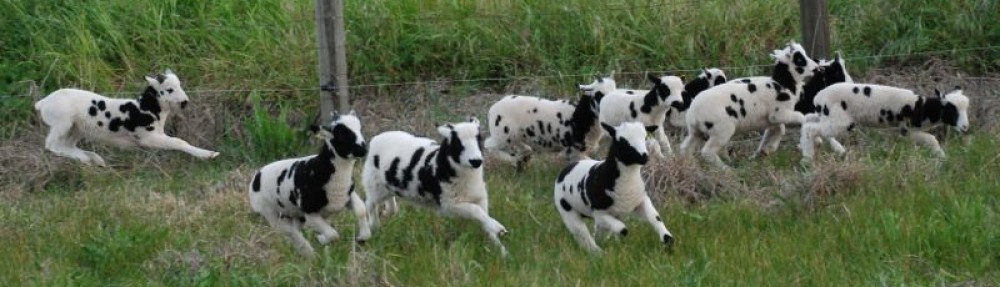
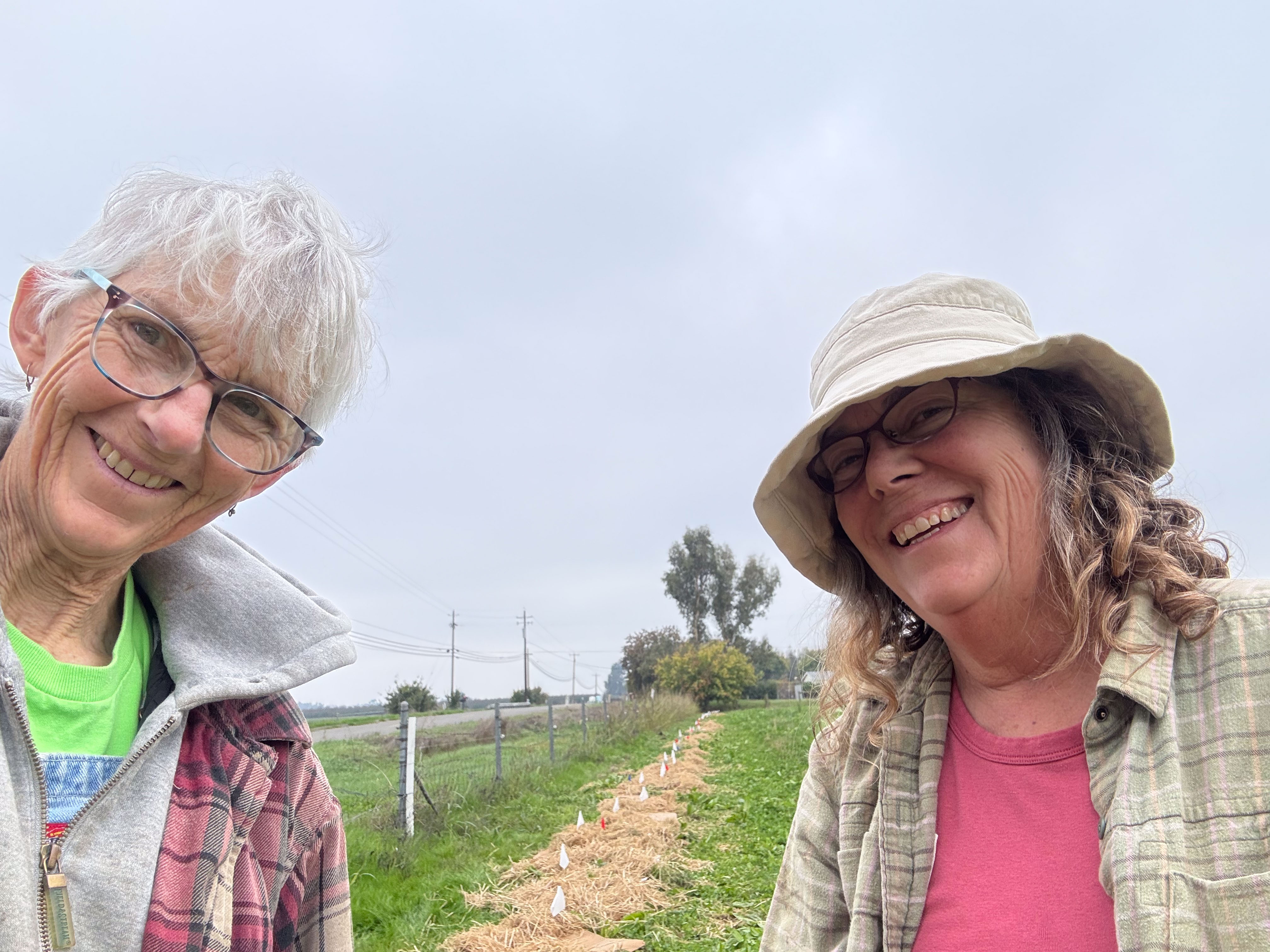
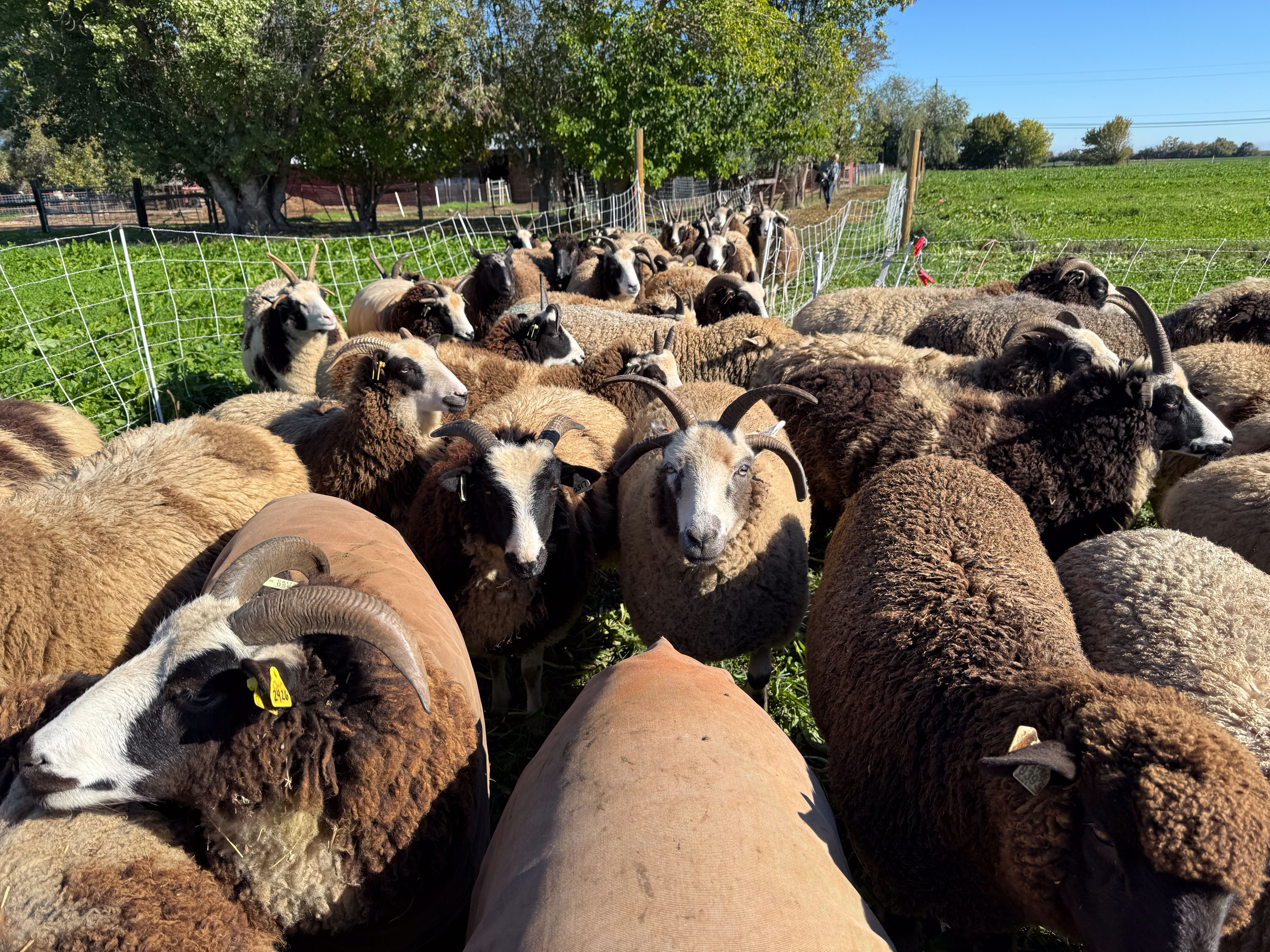
This morning started out super foggy. This is a view of the paddock that I opened for the sheep yesterday. They have eaten or trampled most but will have one more day here.
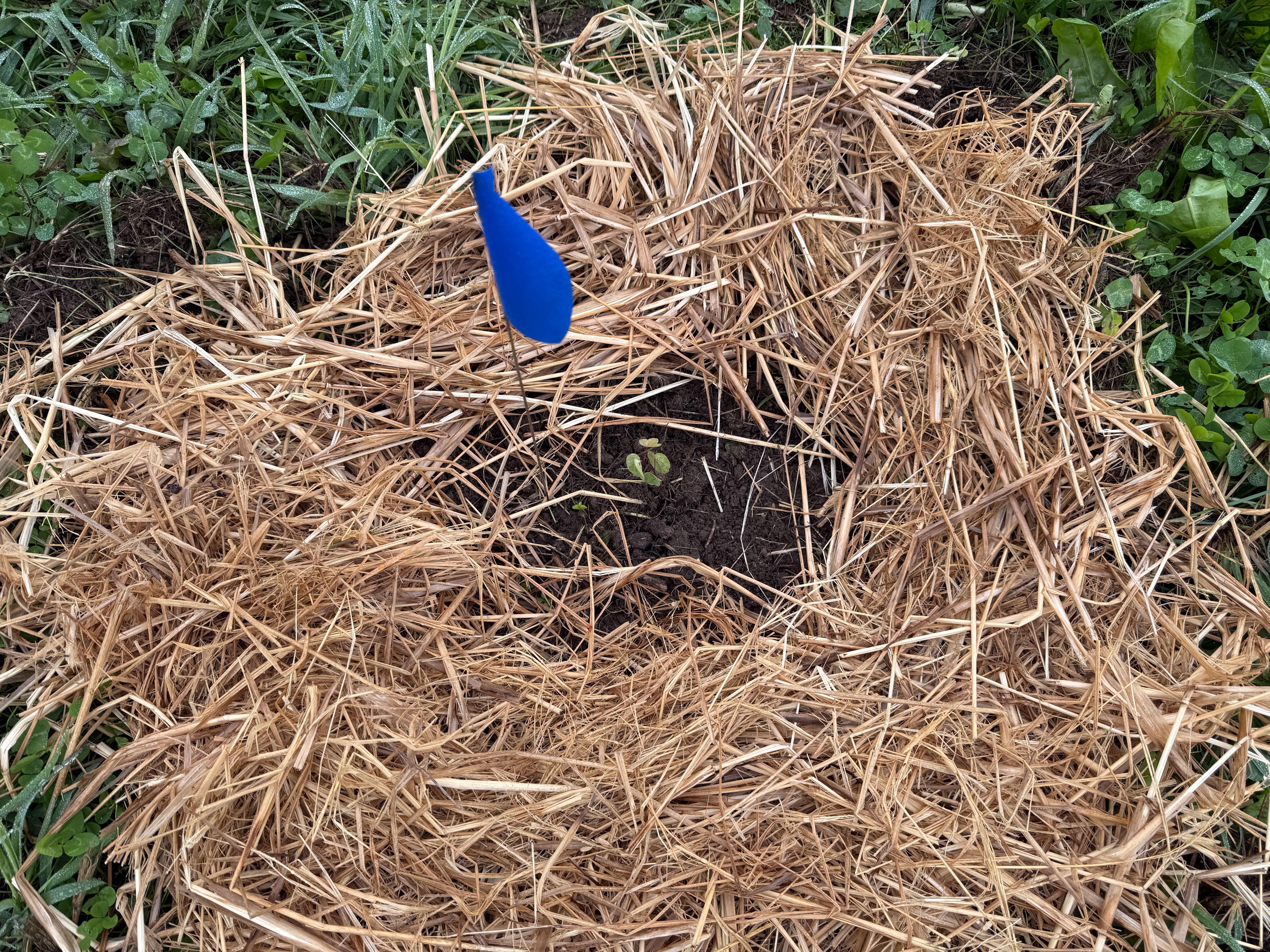
This is one of smallest plants we put in Friday. It is a Western Redbud, which is not a small plant when it has grown up, but right now it’s only a couple of inches.

This is another redbud, marked with the blue flag, yarrow, and deer grass.
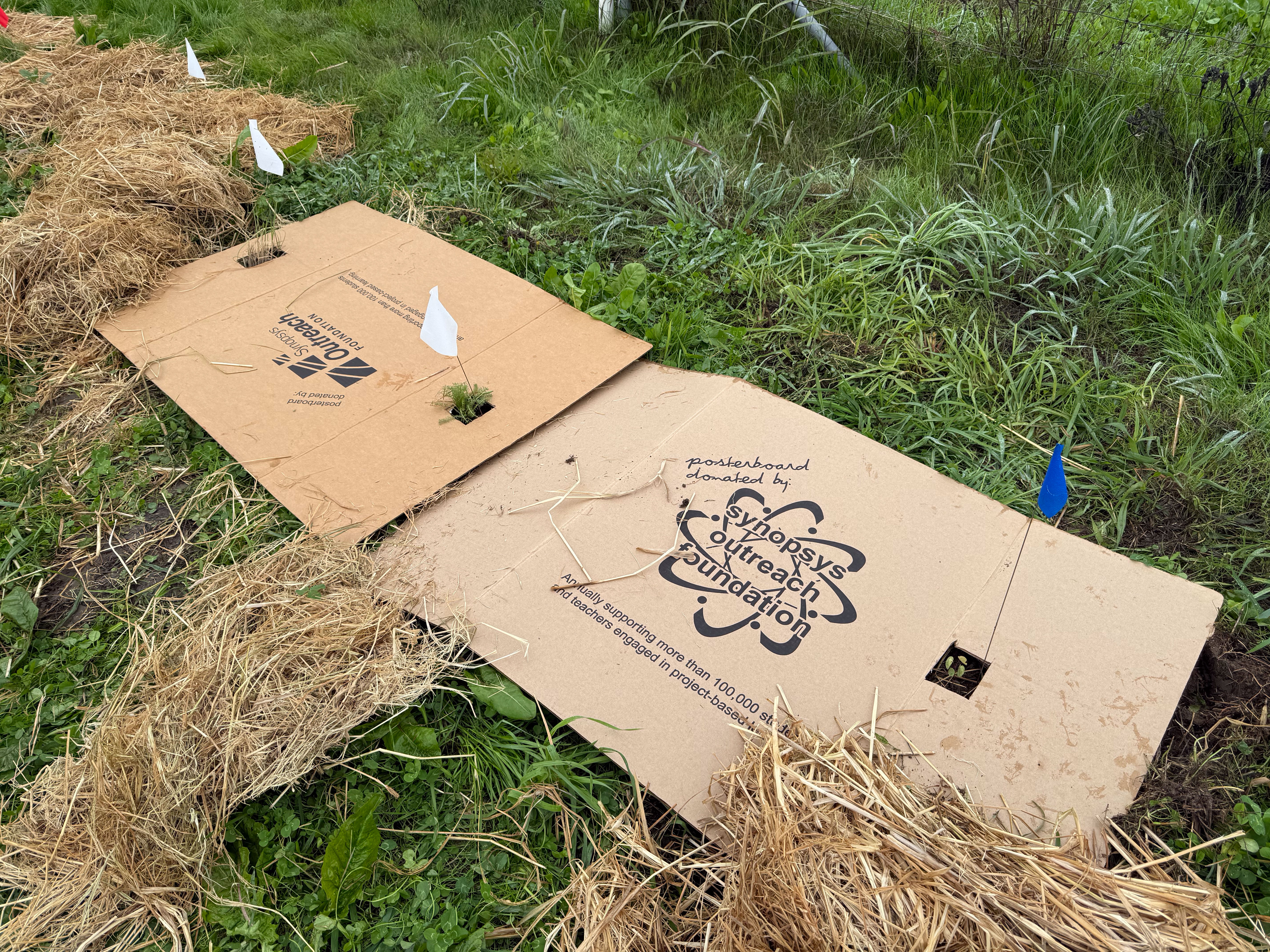
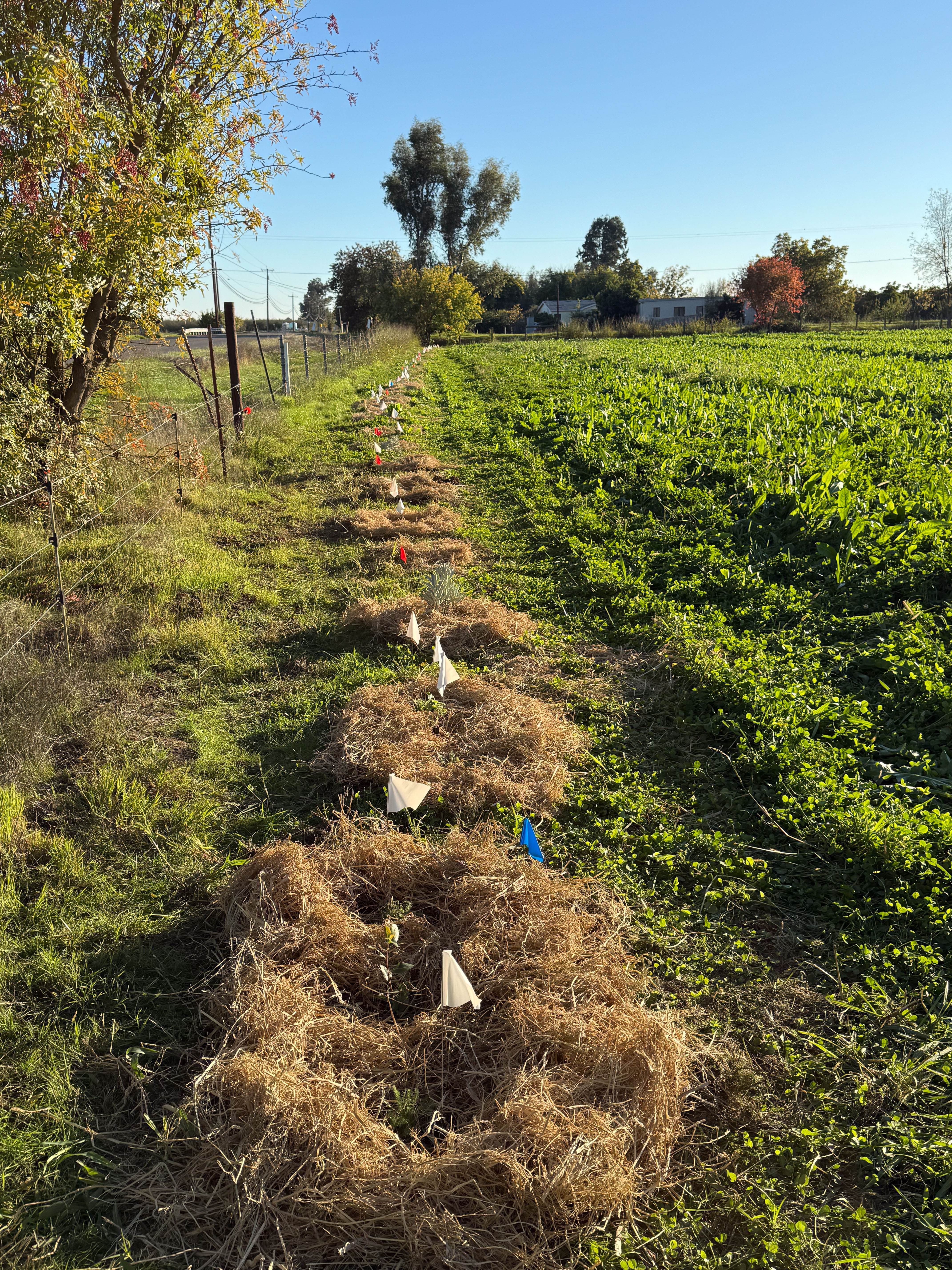
Some of the cardboard was cut in strips and positioned in a triangle around individual plants. These three were close enough that I cut holes in two larger pieces to provide the first layer of mulch. We had put straw around all the plants on Friday, but today we moved that to add the cardboard.
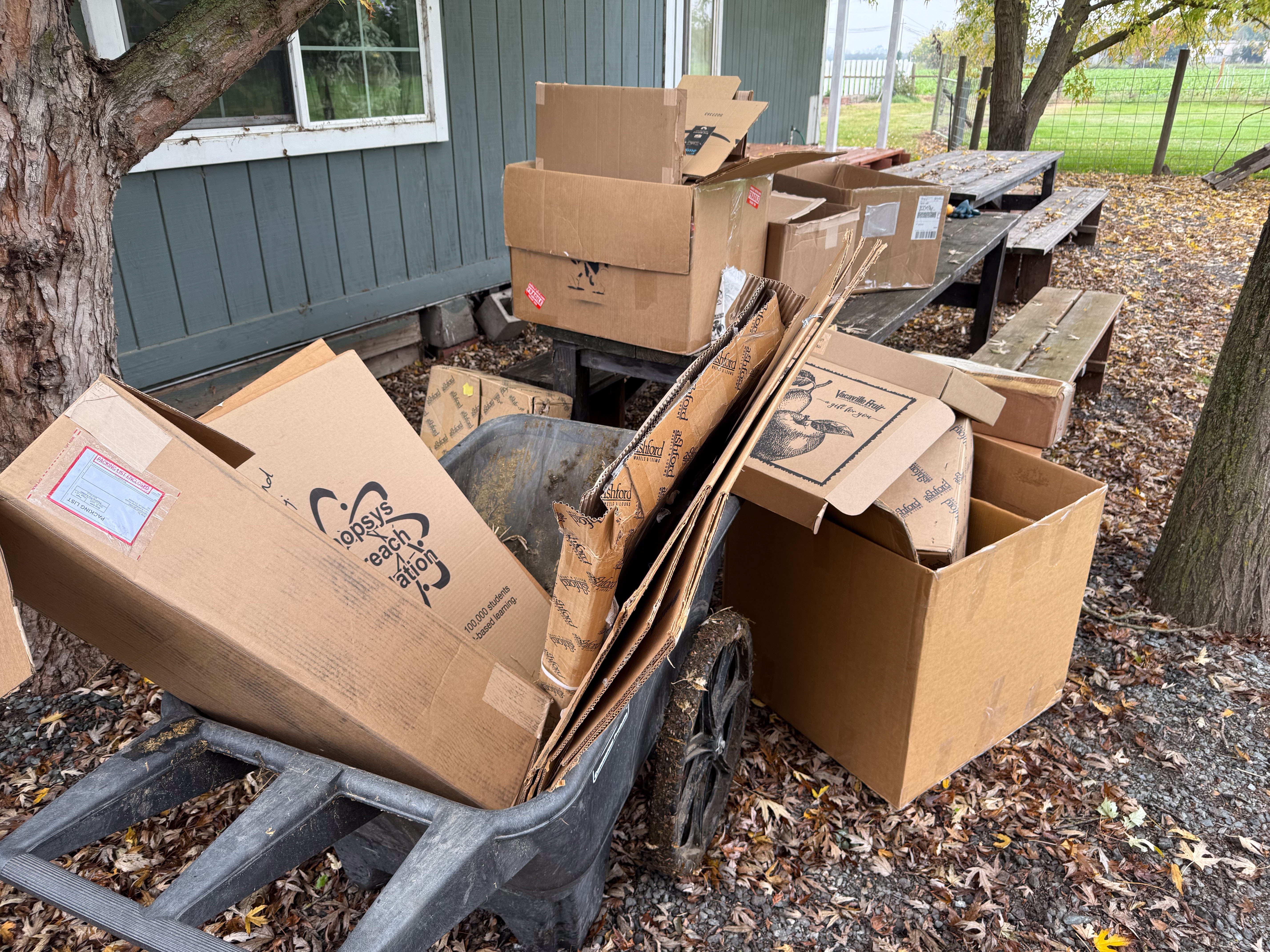
Where did we find enough cardboard? I thought that I might have to buy some. There was a box of science fair boards left over from Dan’s years teaching seventh grade science. And there are a lot of boxes I have saved because you never know when you’ll need a box! I do use a lot of boxes for shipping wool, etc, but I don’t think I’ll need any of these larger boxes or odd shaped ones for the rest of the year. Raquel and I cut them apart and stripped off all the tape and plastic labels.

We used the cardboard strips around the plants or cut holes in larger pieces. That blue barrel is what we filled with water from the hose near the house.

Raquel made trips with jugs of water. We let them drip while we continued with cardboard.
Almost finished!

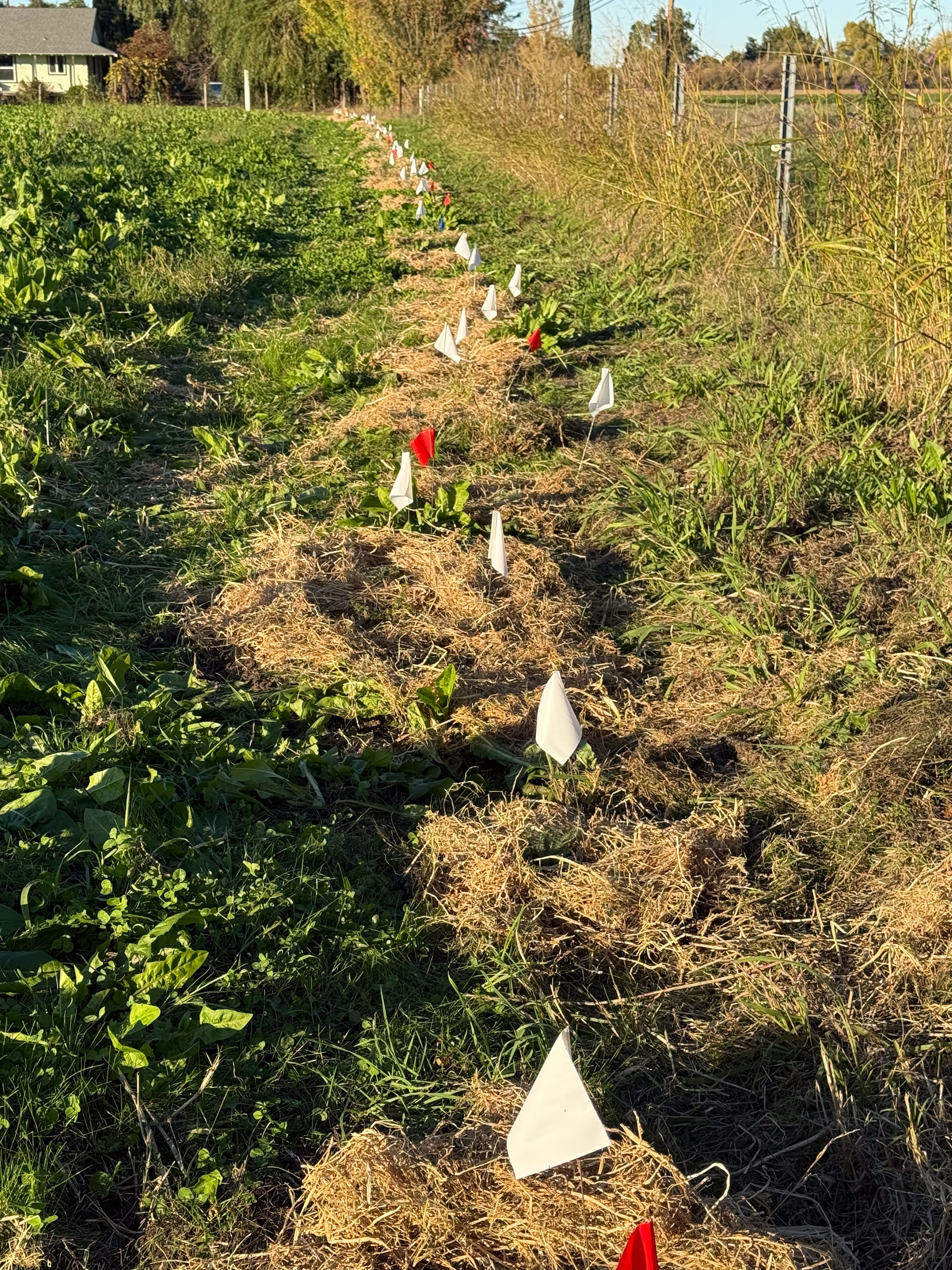
We covered all the cardboard with more straw. The project is still not finished. You can’t tell from the photo but there are 19 plants without cardboard and about that many that didn’t get water today. That will be tomorrow’s project for me.



 Meridian Jacobs' Blog