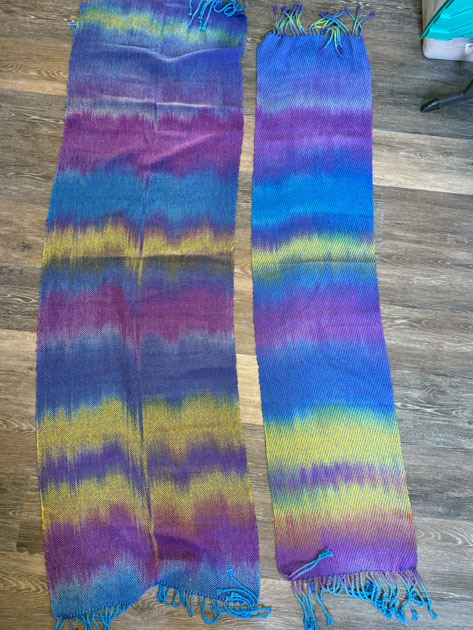
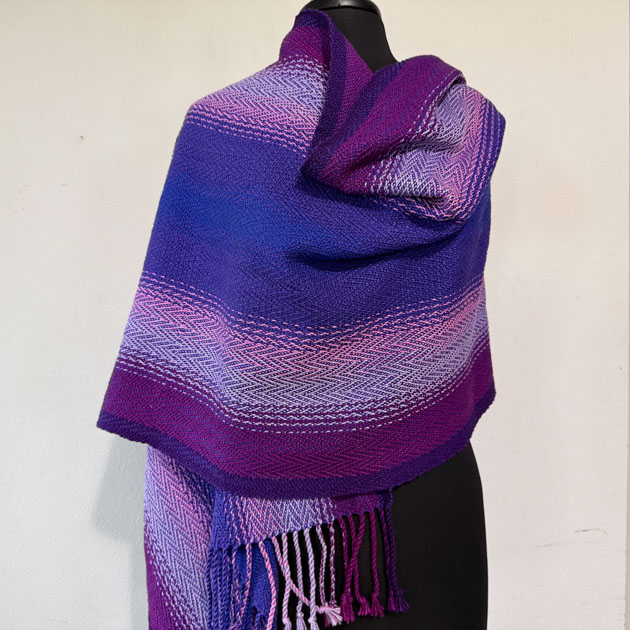
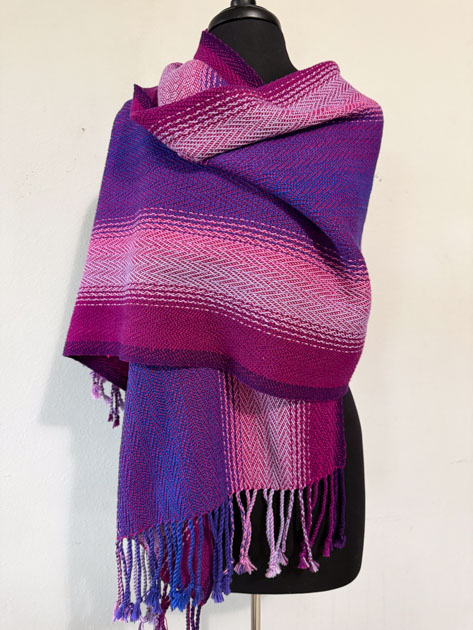
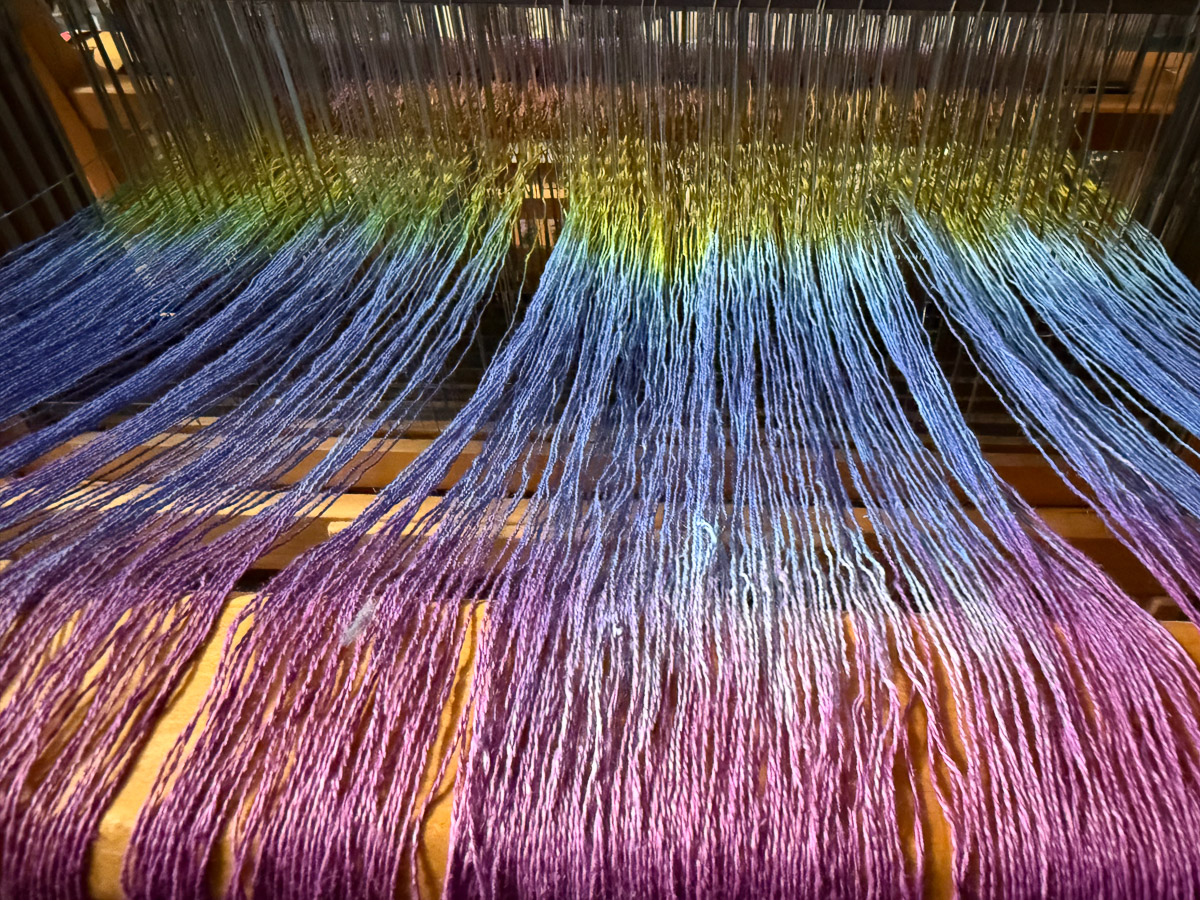
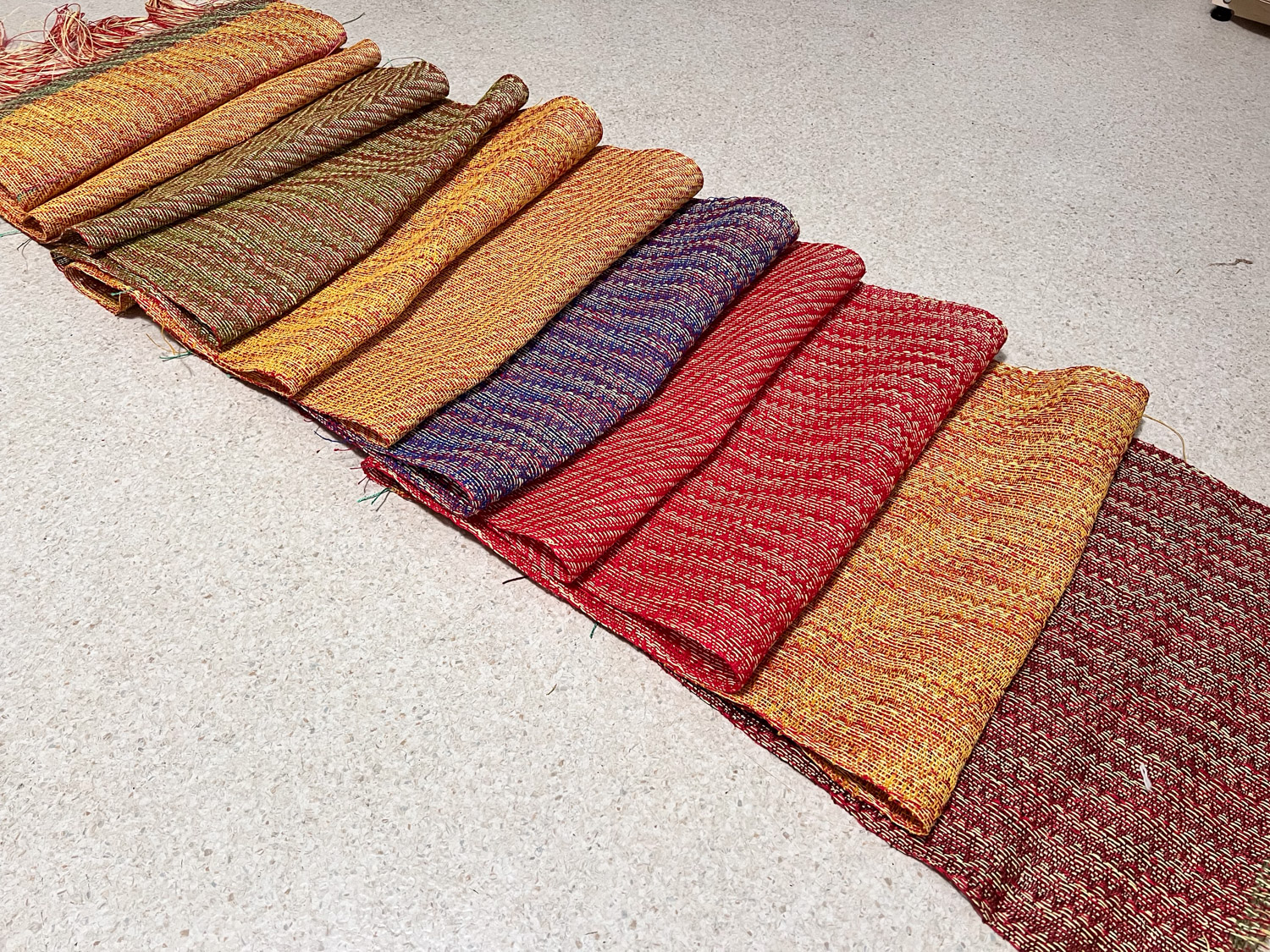
I wove these recently but they are from a warp I dyed several months ago. Can you tell that the warp was folded in half while I applied dye? Each half became a scarf.
These are the two pieces just off the loom before wet finishing.
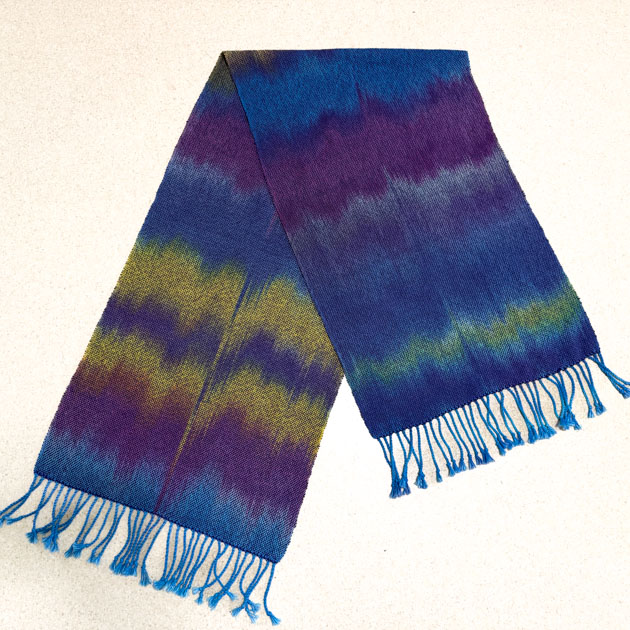
These cotton shawls are also woven on the same warp. I used a lighter weight cotton weft for one.
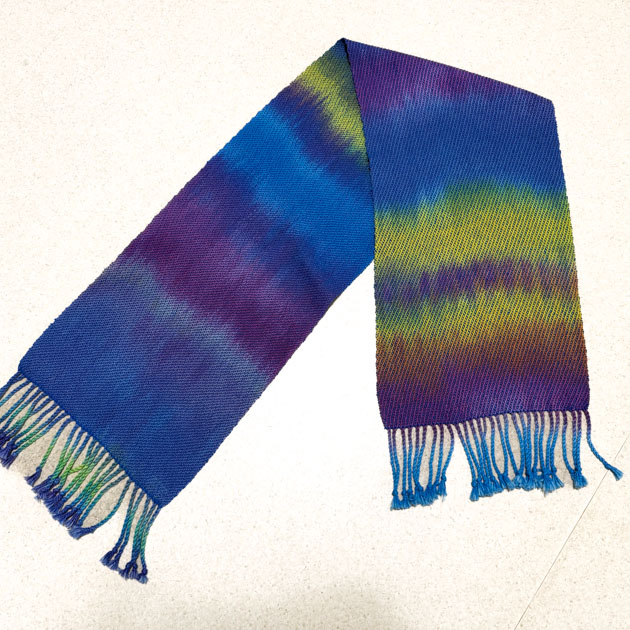
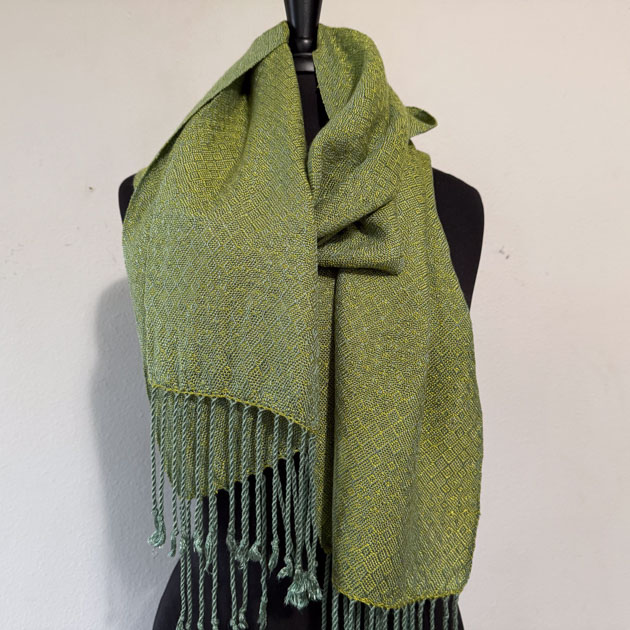
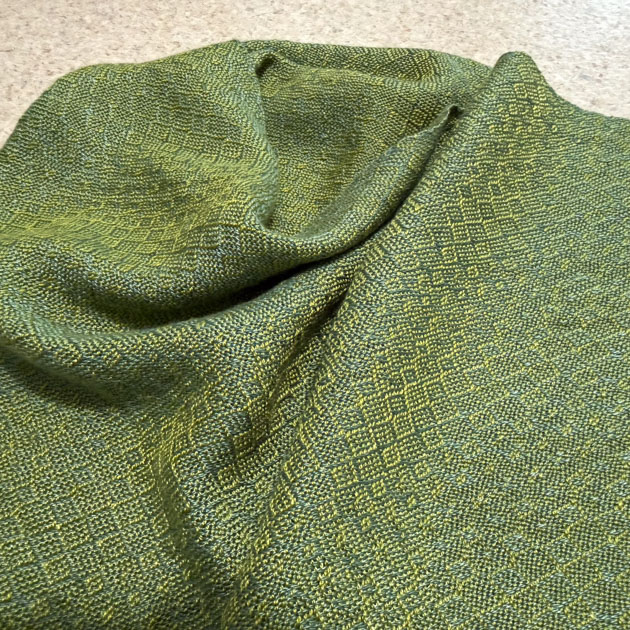
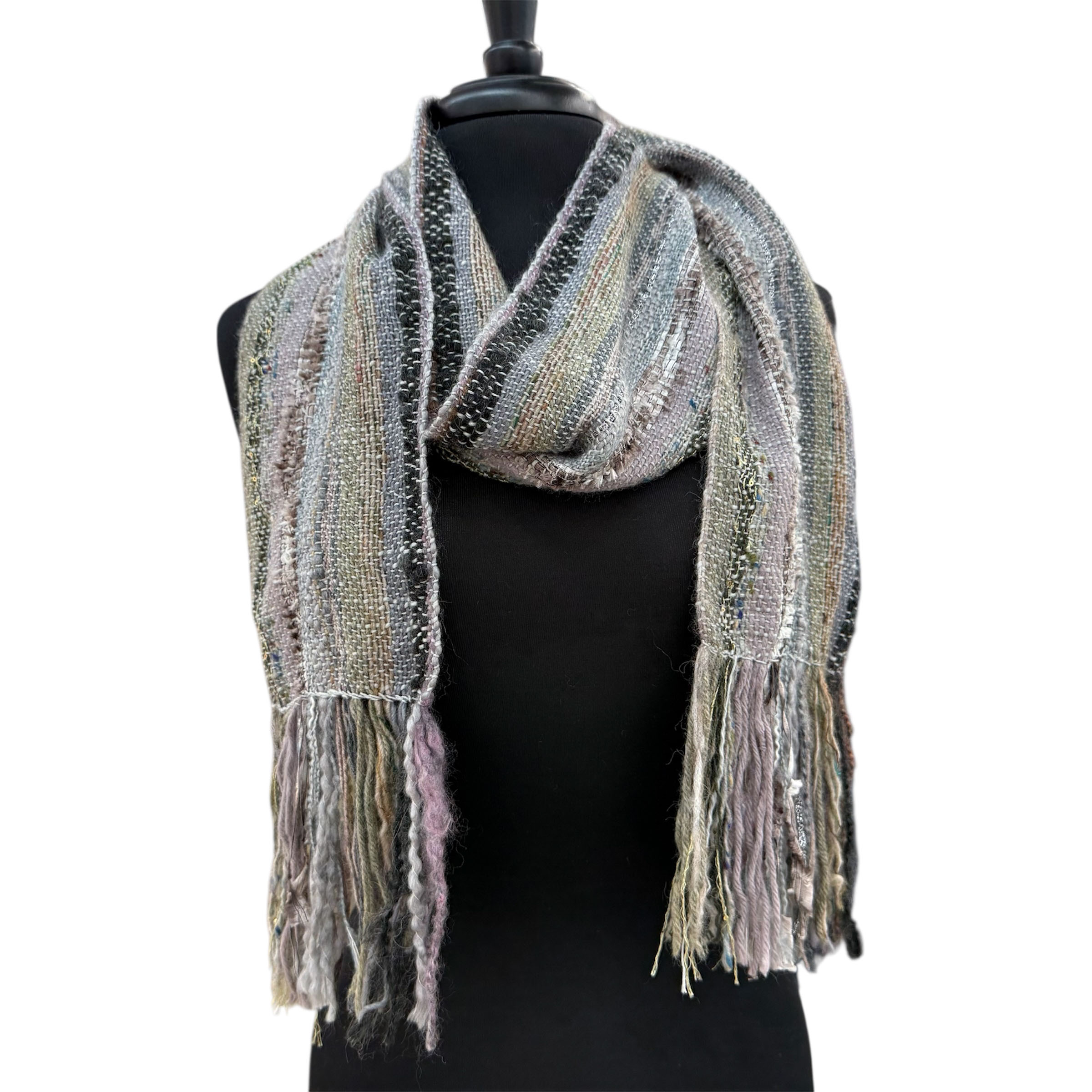
This is a tencel scarf. There is another but I haven’t finished the fringe yet. The photo below gives a somewhat better idea of the iridescence to the pieces.
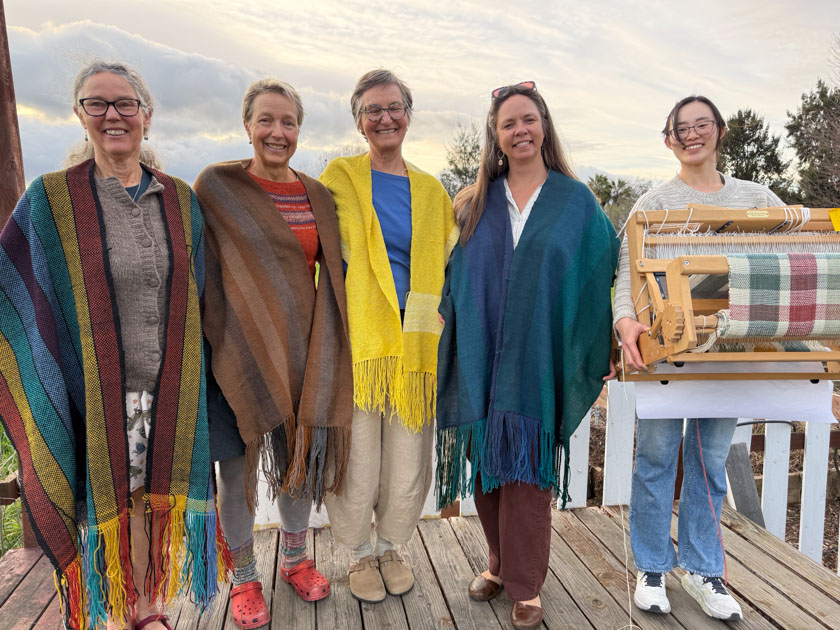
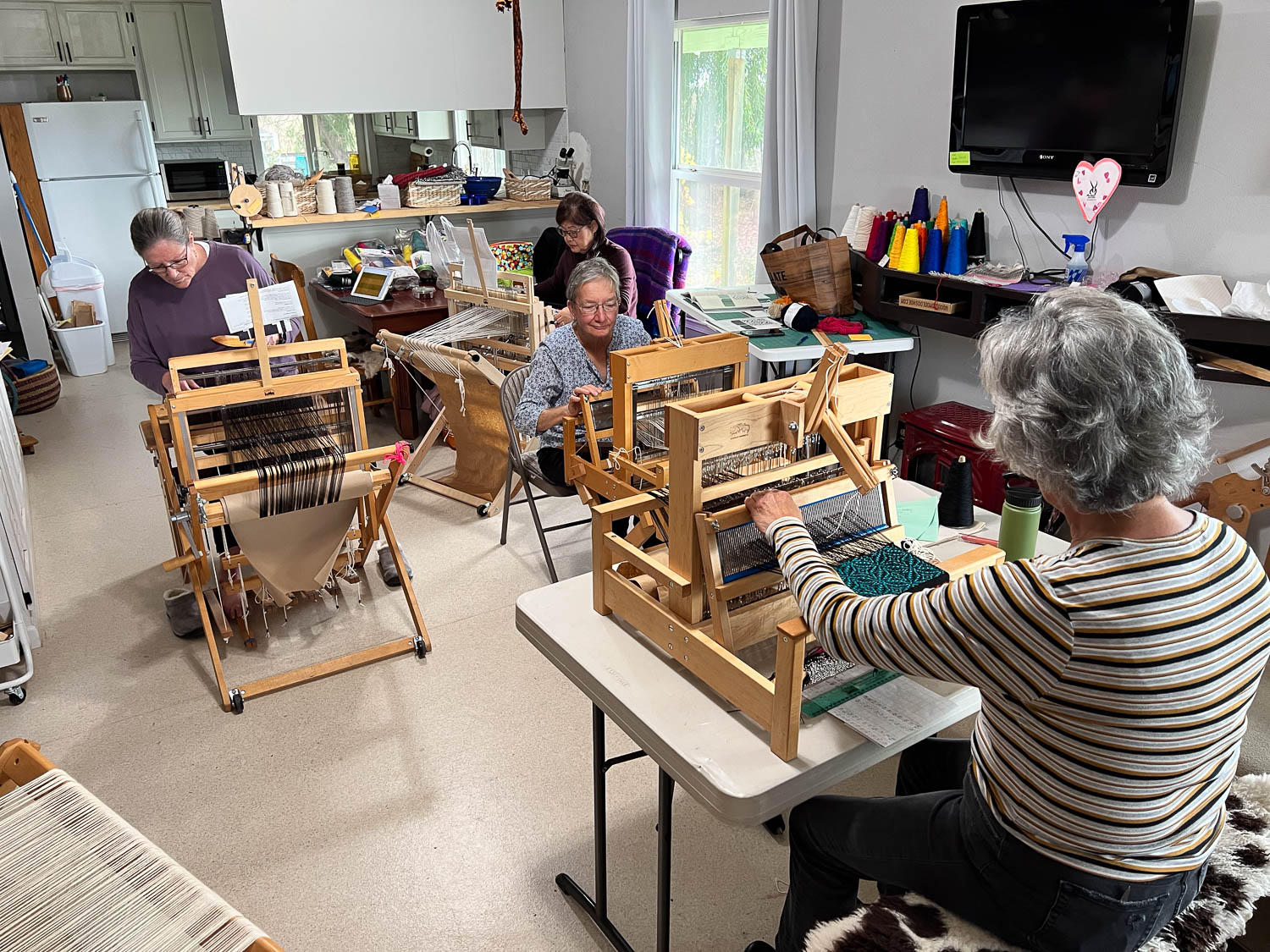
These are weavers at the end of the V-Shawl class I taught last weekend.
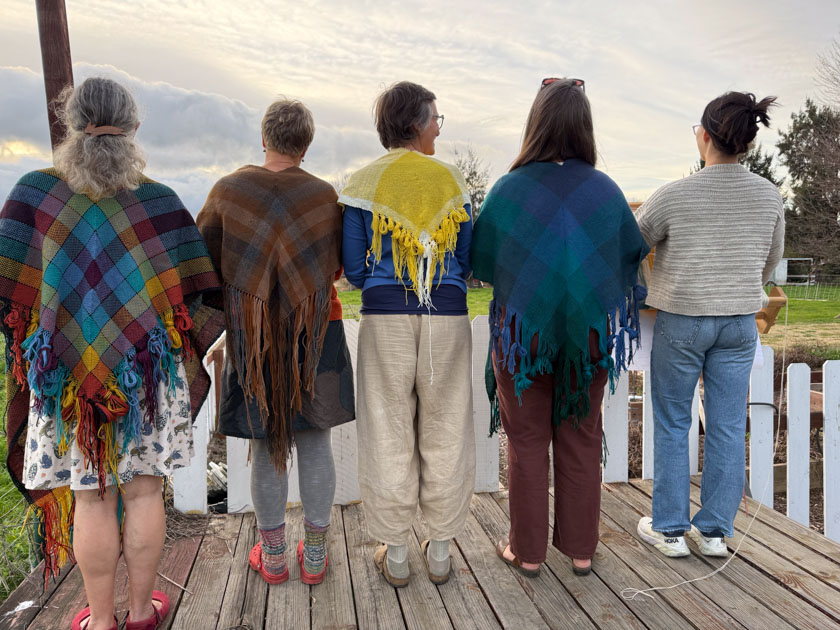
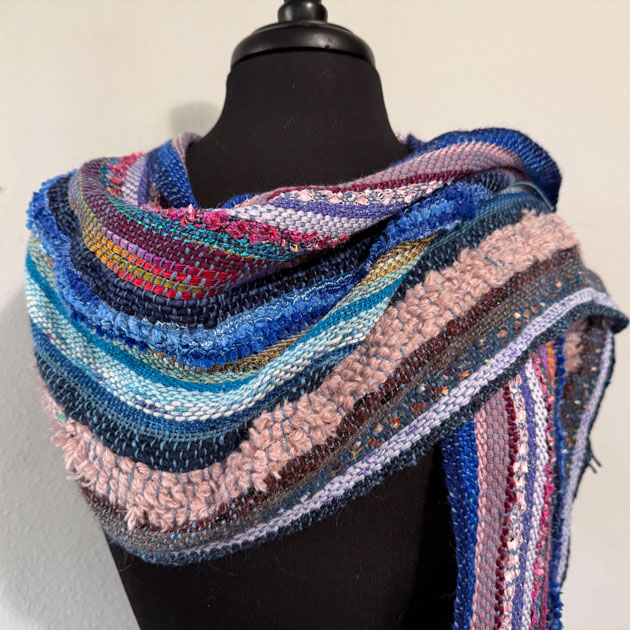
The exciting part of this shawl is the back so we always have to have that view. Fringes were left to finish at home. The shawl that is still on the loom in the photos is finished now! These are beautiful pieces.
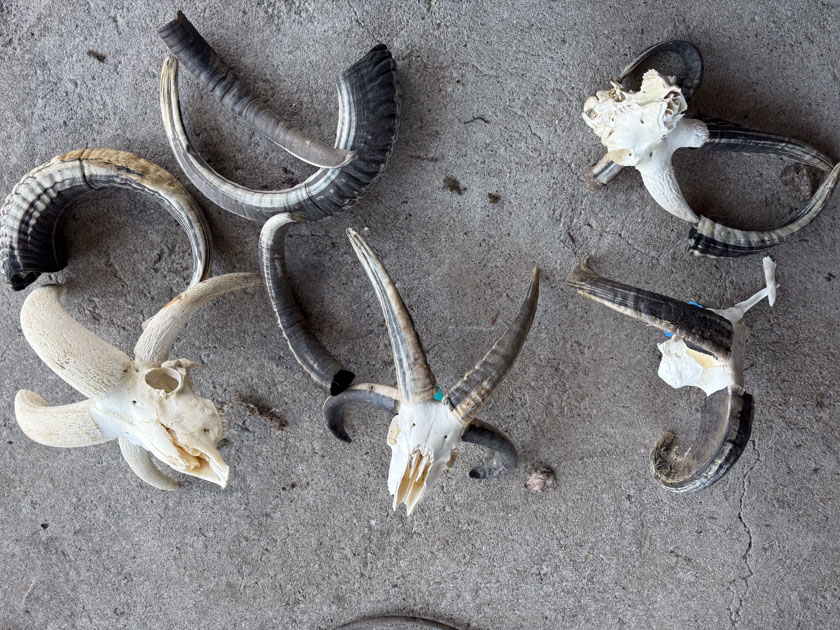
Shearing Day is Saturday and I decided to try and have the skulls ready to put out for sale. This is a work in progress. Others will be offered for sale as DIY projects because they are not as clean.
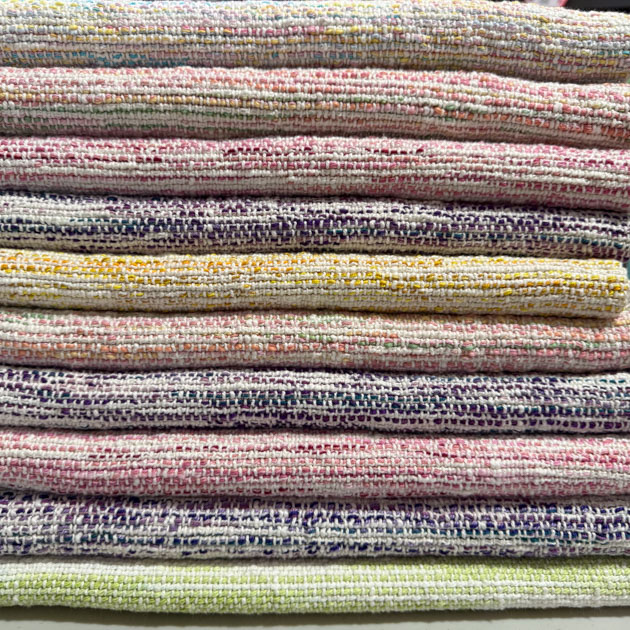
I just finished a warp with ten baby blankets. My niece will get first choice of these, because she wants a gift for a friend. Then they will be offered for sale.
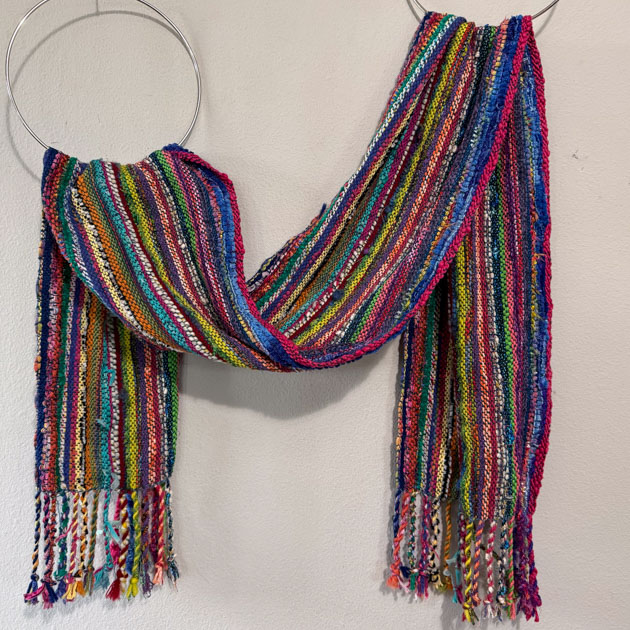
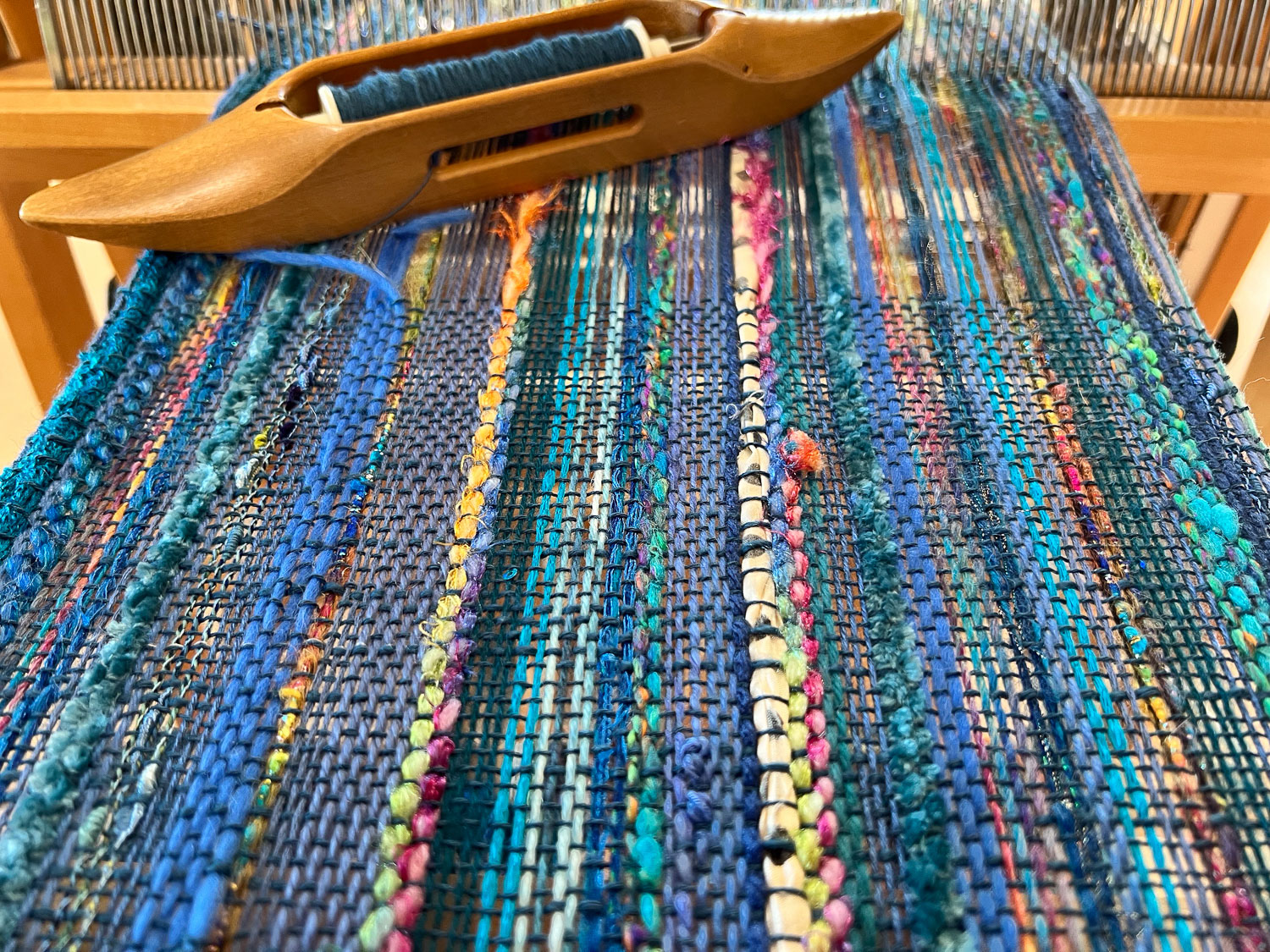
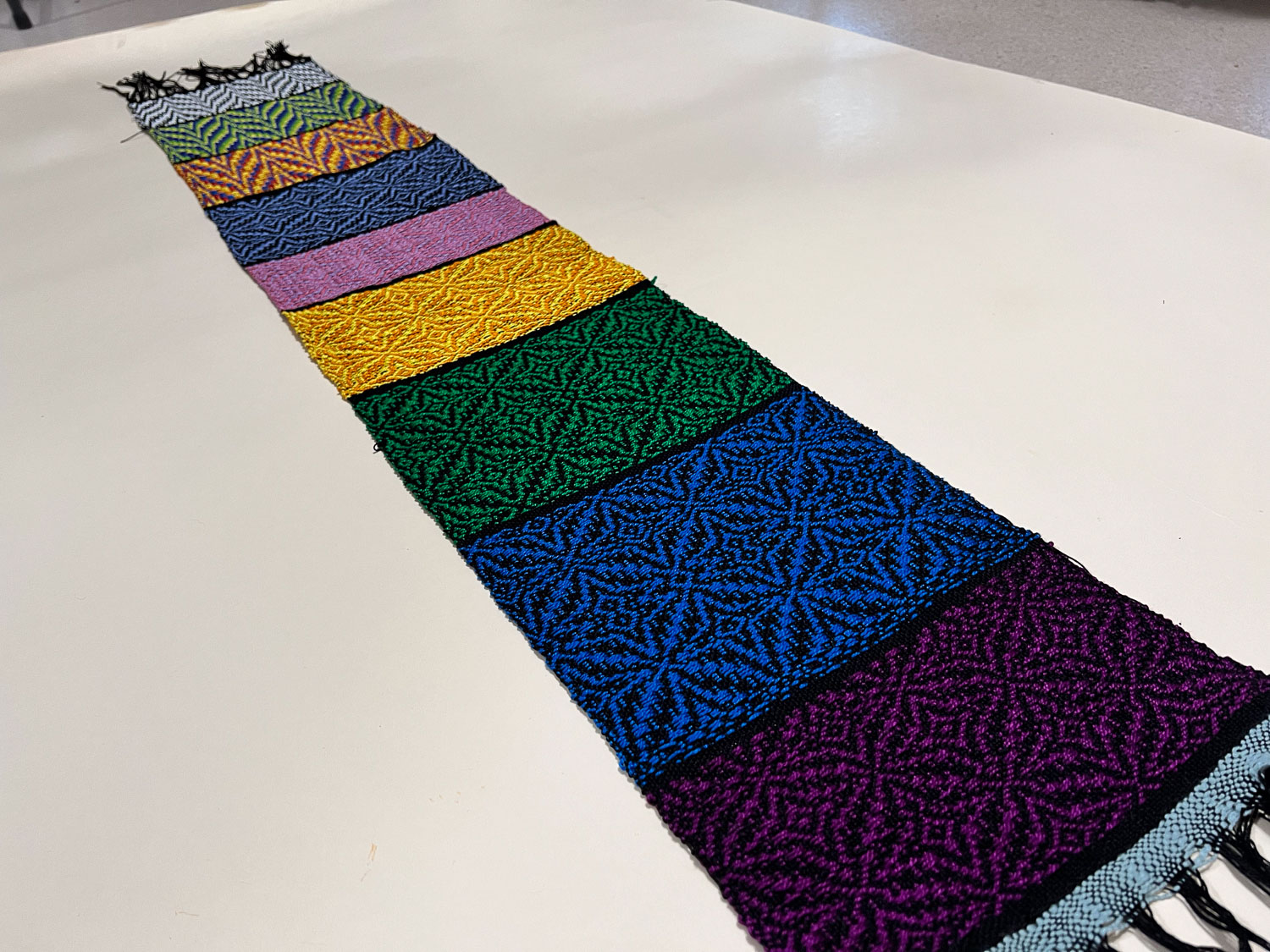
Speaking of weaving, I finished these scarves last week. These are woven using Art Fiber Frenzy yarn, in the style of the class I teach, Wild and Craze Weaving–Breaking the Rules.
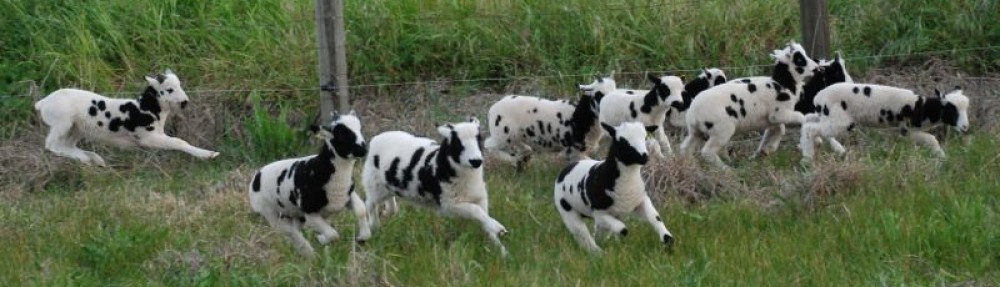
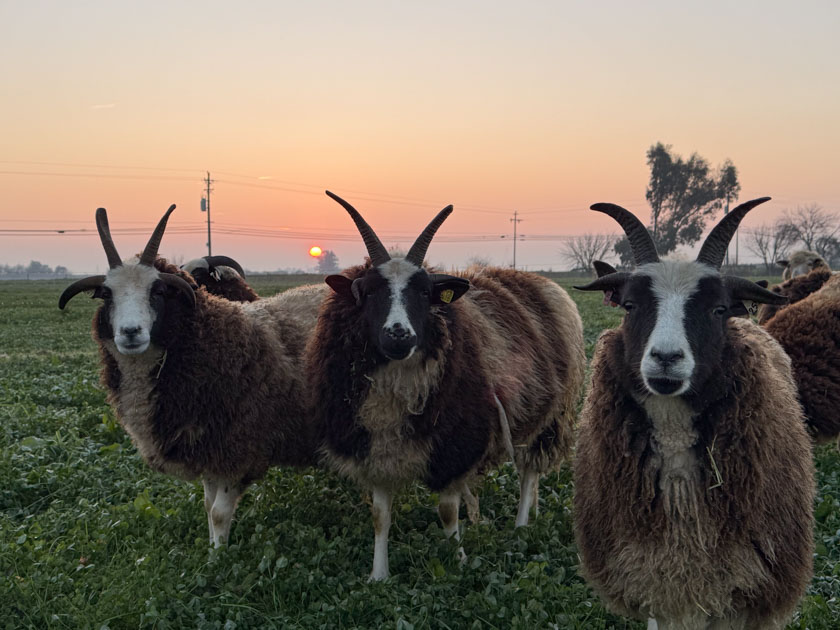
Sheep at sunrise.
I entered a photo on the last day the Farm Bureau called for entries. Mine was selected! You can probably figure out which is mine.
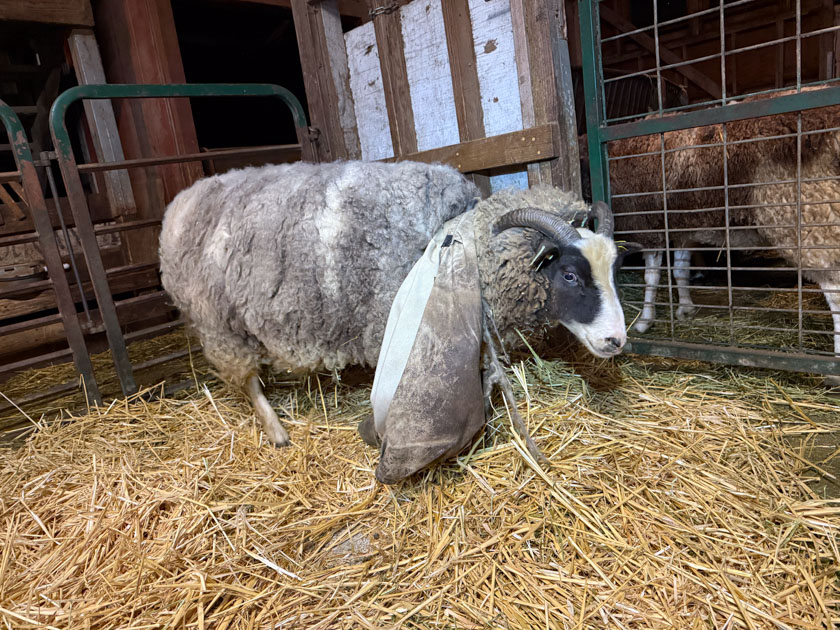
This photo shows one reason coated fleeces are priced higher. Not only do they need changing at 4 to 5 times each year, they also require constant vigilance. I took this photo a few nights ago when doing chores.
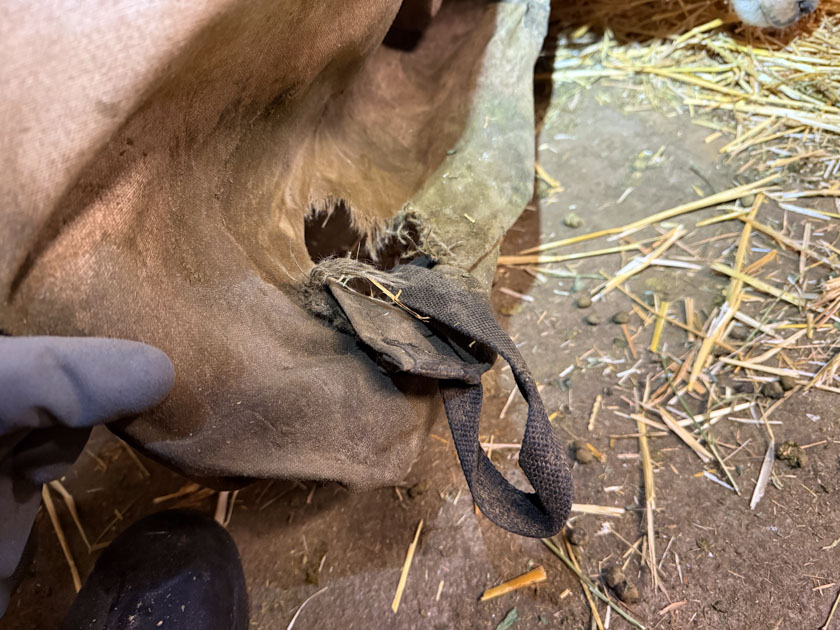
I don’t know how the leg strap got through this hole.
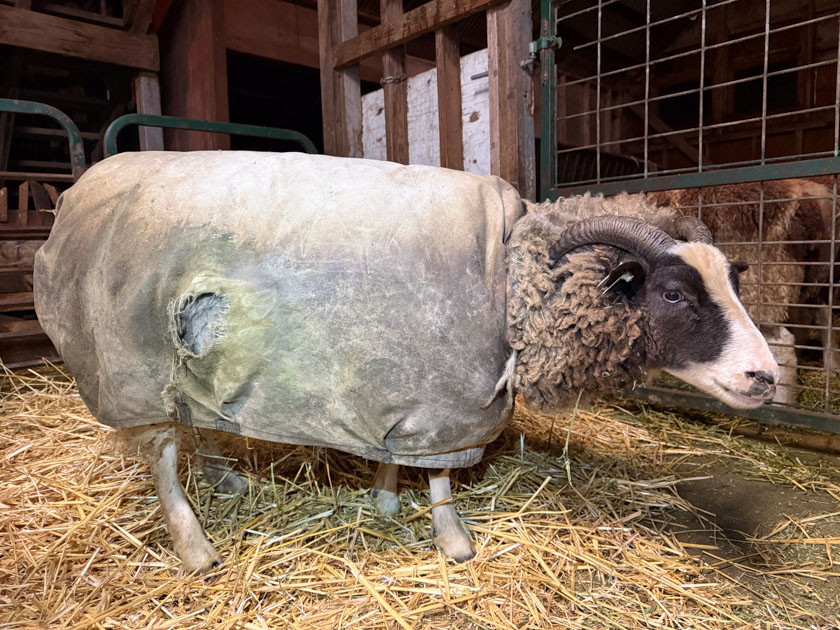
Fortunately the ewe wasn’t injured and this hole won’t be too difficult to fix. I had to just get through four more days until shearing.
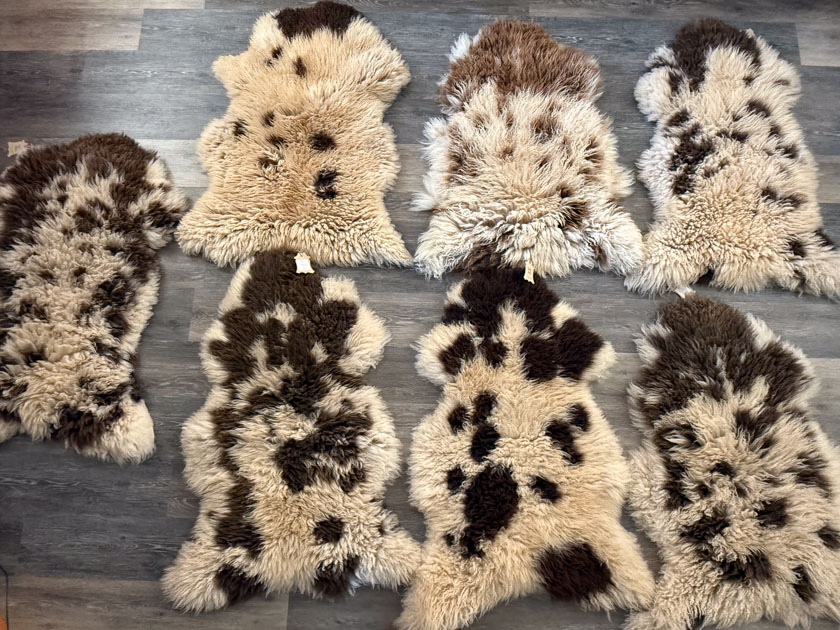
The last batch of sheepskins came back. These are available in the shop and are listed on the website.
I was ready to write another Random Farm Photos blog post but then thought that maybe, since this is the last day of the year, there should be some sort of retrospective. Most of my blog posts this year have been about the sheep and the pasture, but I am also a weaver. I have neglected that.
I keep a notebook with all my weaving info. The warps are numbered. I looked for the first one of 2025 and couldn’t find a photo. I sorted my photos into date order and found 275 photos in the weaving collection. Yikes! That doesn’t mean I wove that many pieces–not even close. But they all are part of various stories, none of which I shared in my blog. Maybe forget the sheep for a while and focus on yarn?
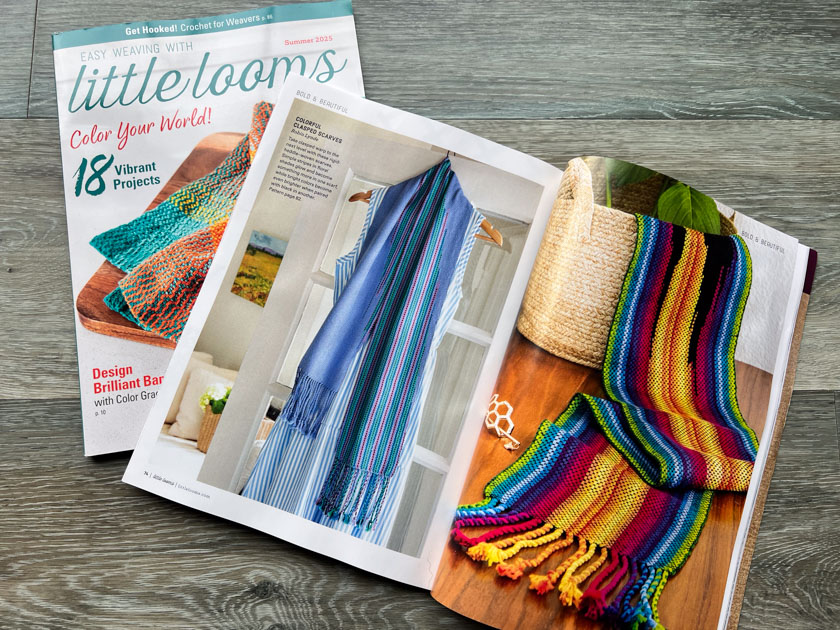
This is the issue of Little Looms, Summer 2025, with my clasped warp scarves in cotton. They were woven the previous year, but the magazine was published this year.
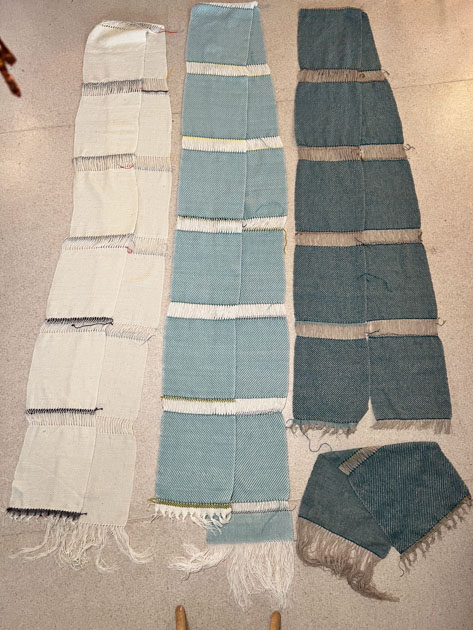
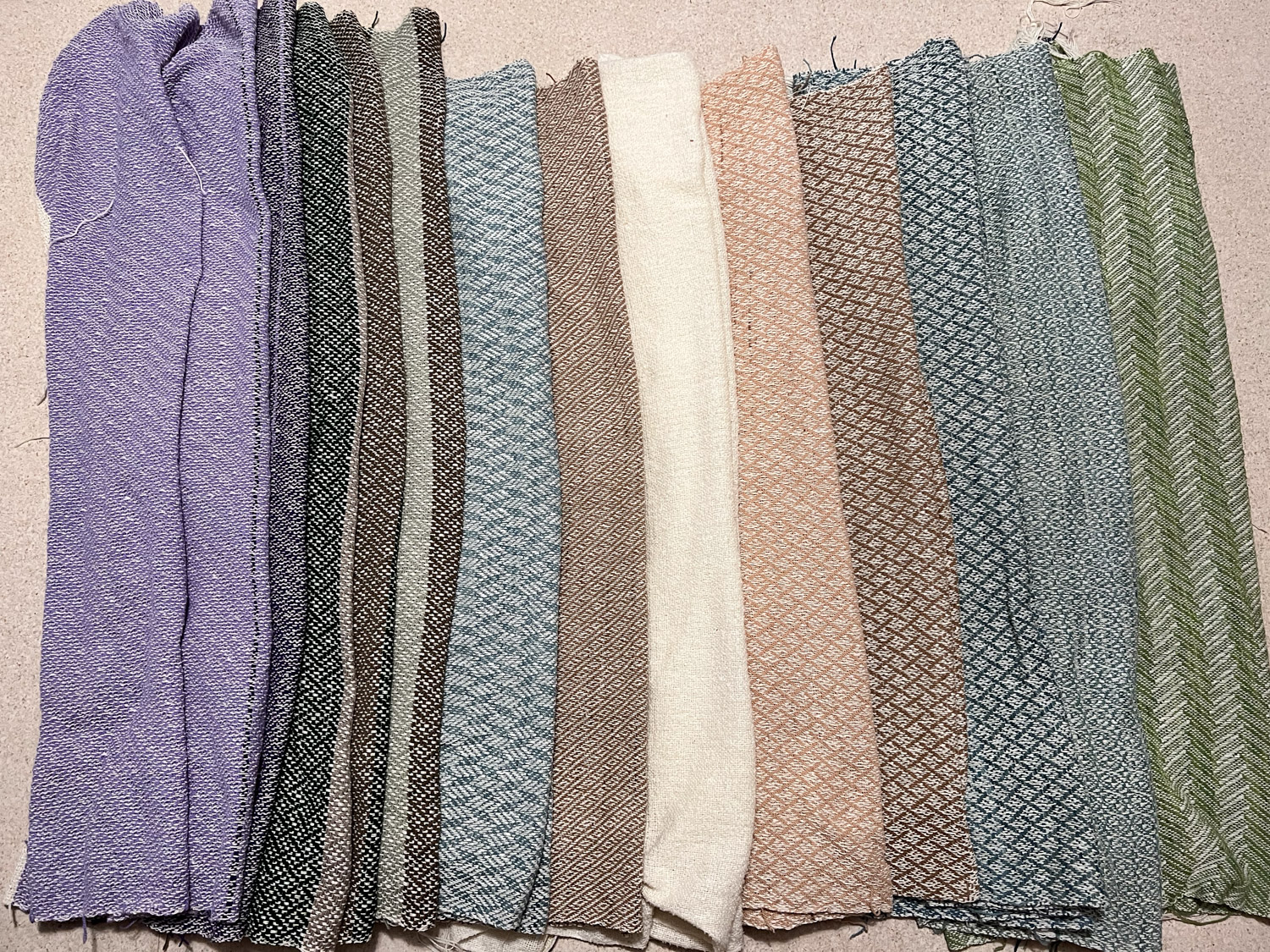
These are samples, all woven the same size in three different wool yarns. This is the photo after I took them off the loom but before any finishing. Wet finishing is the topic of an article in an upcoming issue of WEFT magazine. There were some surprises but you will have to wait for the magazine to be published to find out!
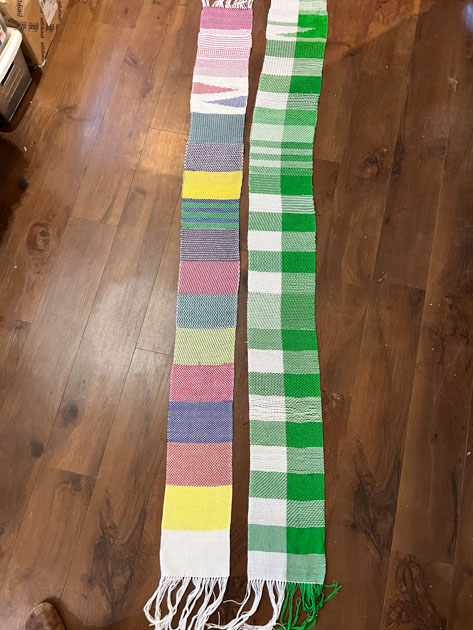
This is a workshop sampler for my Learn to Weave class. I taught this at the Conference of Northern California Handweavers (CNCH) in the spring and wanted new cotton samples. Students have the option of weaving wool or cotton in this class. You can’t tell from this view but every 6″ is a different treadling pattern. The green and white one gives four samples in one for each treadling by showing white on white, green on green, and the green/white blend.
Another sampler. This one is to experiment with color-and-weave using six colors. There will be an article featuring a project based on this in the Summer 2026 Handwoven magazine.
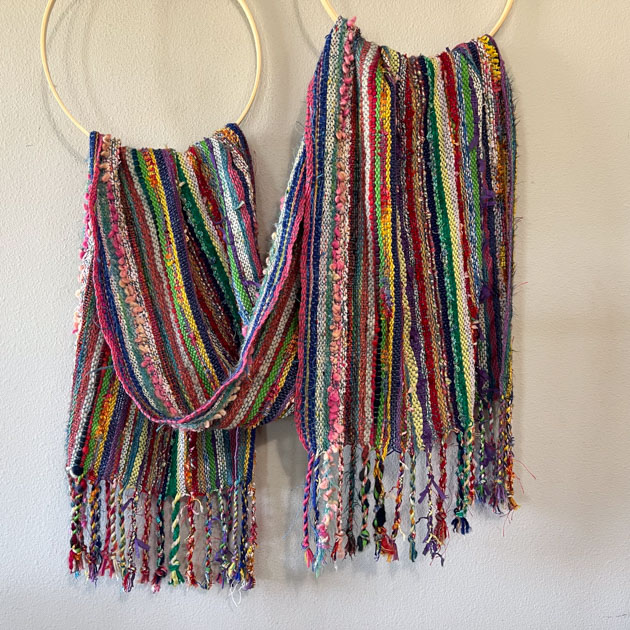
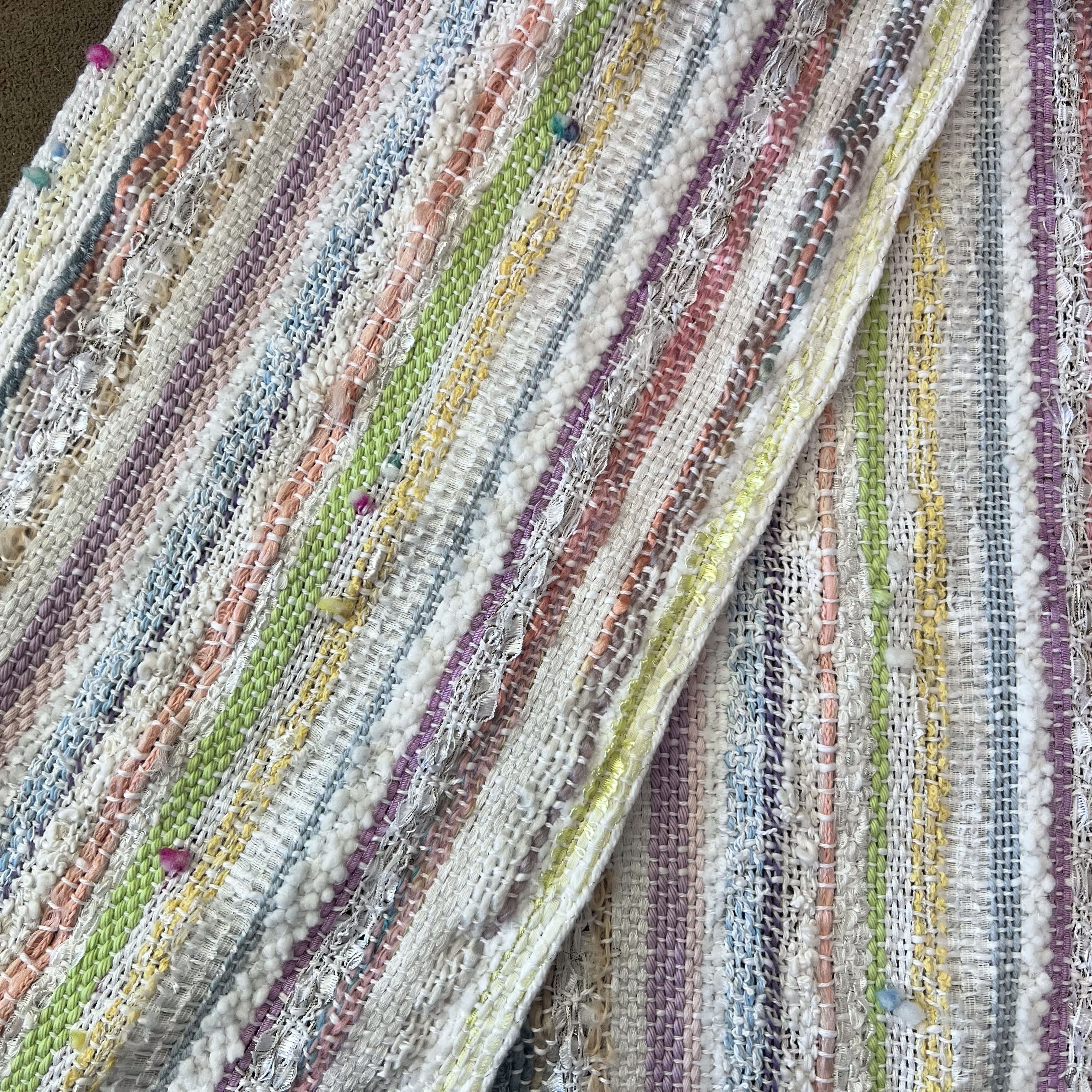
This is another scarf/shawl/wrap (which is it?) using Art Fiber Frenzy yarn. I have been intrigued by this yarn since I first discovered it a couple of years ago. I have also created a class to lead people through weaving a piece with so many fibers and textures.
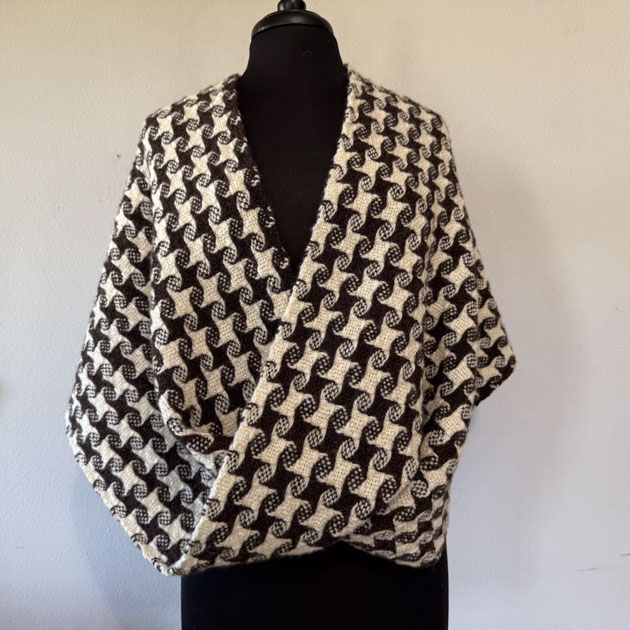
I didn’t neglect my favorite fiber–wool. I wove several blankets and shawls during the year. This is one in a more traditional color-and-weave pattern with only two colors. The yarn is, of course, black and white Jacob wool.
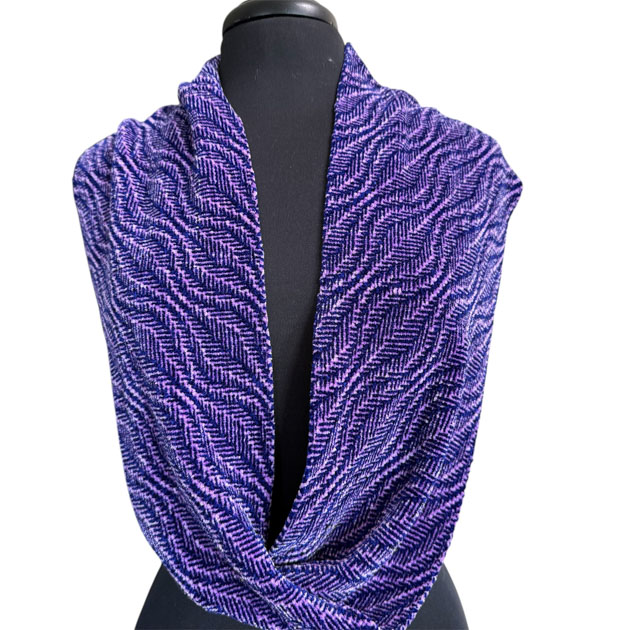
This is a chenille scarf in shadow weave. It has sold but there may be a similar one at the Artery–I’ve lost track.
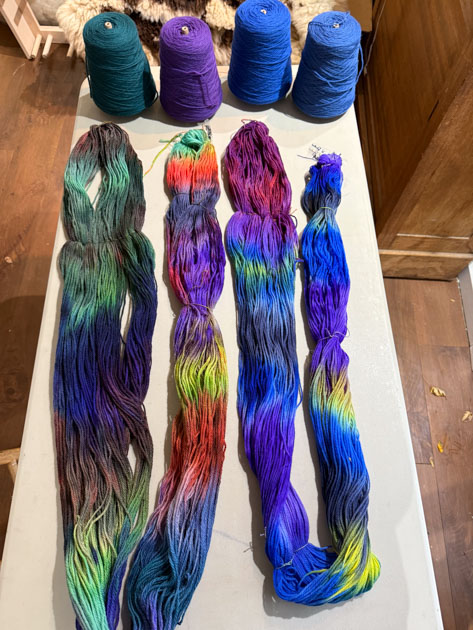
My new favorite wool (other than my Jacob and Timm Ranch yarns) is Brown Sheep Company Nature Spun. I’ll be introducing this for some of my classes this year. I wound some white v-shawl warps and space-dyed them. Then I needed to find weft colors.
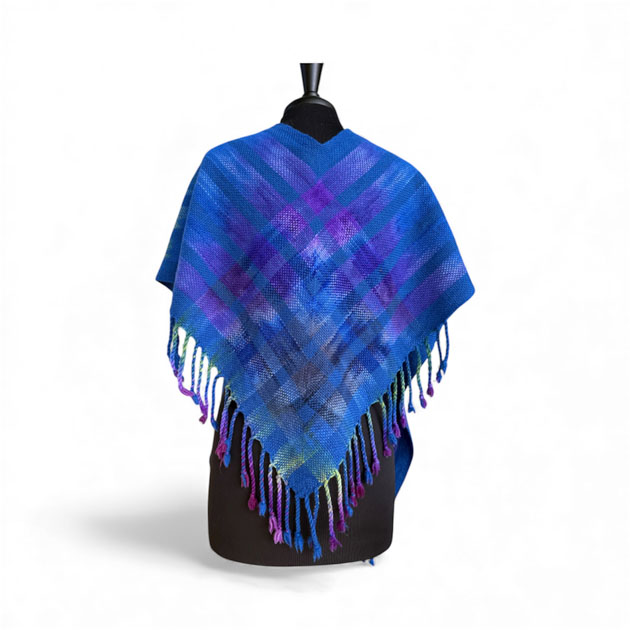
Here is how the one on the right turned out.
Oh boy! A crazy thing I got into was triaxial weaving. I wove some pieces 15 years ago and now have resurrected the idea. I spent way more hours on the four pieces I finished than maybe they warranted. But now I’m ready for more. Two will be in a January show at The Artery.
This is a v-shawl using the Nature Spun yarn. This one and the samples below are ideas for other articles I may propose and for pieces that I will sell.
Log cabin on the left is another color-and-weave pattern that looks much more complicated than it is.
If you read this blog regularly you know that I’ve been complaining about the fog, except for the beautiful sunny day we had two days ago. That didn’t last. It’s foggy again and it’s supposed to rain later. The “shop” where I have my bigger looms is not insulated and I don’t even try to heat it up with space heaters. I will put the heater on right next to me but It won’t have much impact on the surroundings. I am trying to finish the baby blankets that have been on this loom since October. That may be another blog post when I actually finish.
I worked on this loom yesterday and plan to finish today. First I need to put some more layers on.
I just listed the Wild and Crazy Weaving class on my website. I’ve been thinking about this awhile, but finally got it done just in time to advertise it at Lambtown coming up October 4-5. I met the creator of Art Fiber Frenzy yarns a couple of years ago at Black Sheep Gathering in Oregon. It turns out that she lives in Sacramento, not far from me, and she will be at Lambtown again this year.
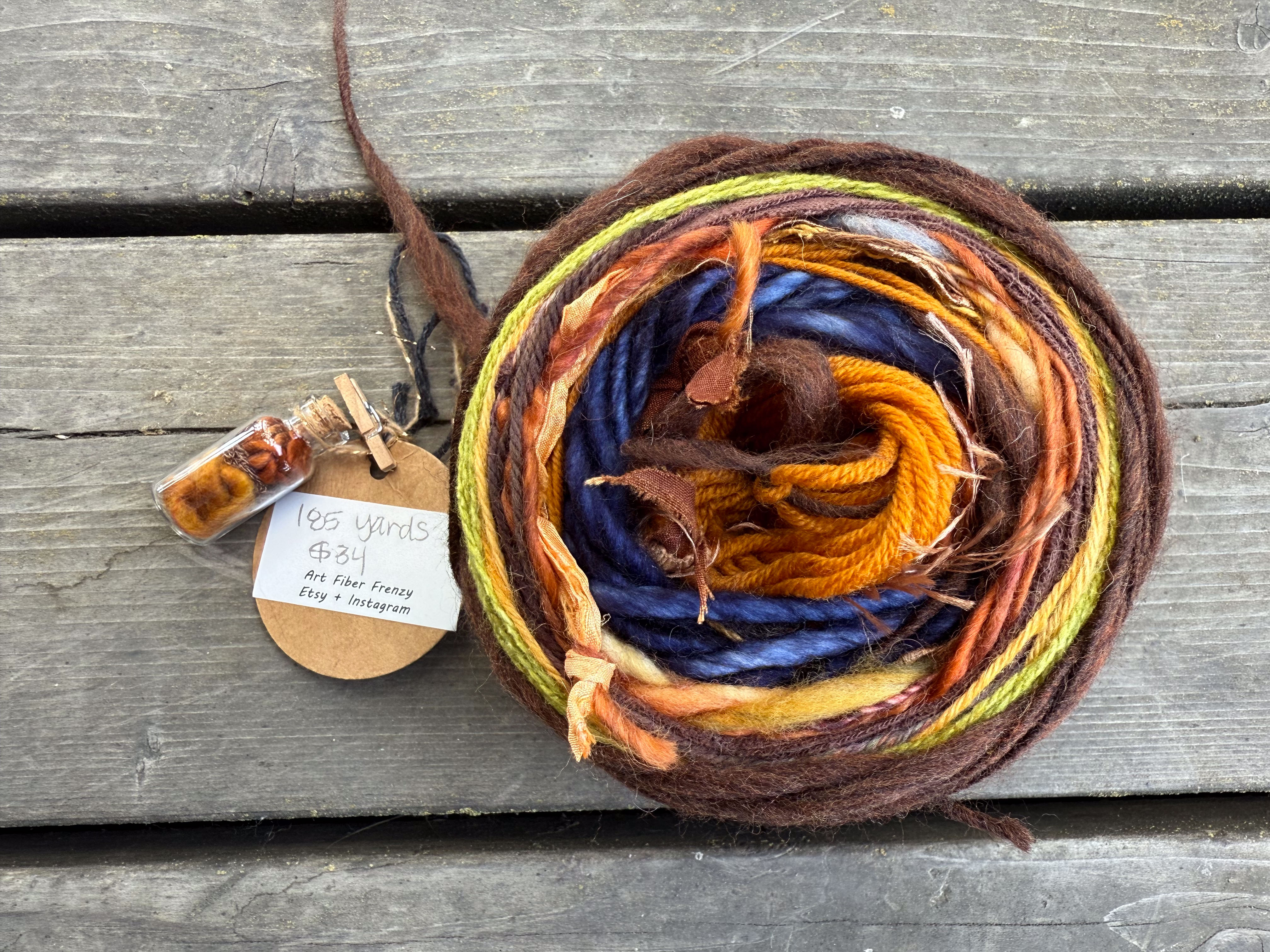
When you closely at this yarn you will see that the random lengths of yarn are tied together. I don’t think the intent was to use this for warp, but that is all that I see. I have figured out the method to turn this into a warp.
The first step is to wind a ball.
This is a step where you don’t want to be sloppy. It was manageable, but not as fun to work with this yarn after my ball turned into many connected balls.
It’s the step of winding warp for which I have developed the best way to deal with the yarn–not just the knots, but all the yarns of different character.
And there is the consideration of sett and weft yarn.
Purchase a skein of yarn from Art Fiber Frenzy and sign up for my class to learn how to weave with it. I have listed one class to teach about a month after Lambtown but plan to teach other sessions of this next year.
I should catch my blog up on the weaving side of life. I am always trying to squeeze weaving into the day. There are a lot of ongoing projects and many that are off the loom but not finished. There is a saying “It’s not finished until it’s wet finished.” Wet finishing is an important part of the process, but there are often other steps between taking the piece off the loom and wet finishing. Here’s a round-up of all the projects that are waiting around to be finished.
These three wool blankets have been off the loom awhile. The one in the middle is ready for wet finishing. So is the one on the right…or maybe not. I am going to sew a hem. I have to decide if I’ll finish the hem before or after wet finishing this time. I usually do it after. The blanket on the left has a warp error the whole length of the blanket that needs to be fixed. I didn’t see that until the blanket was cut off the loom.
These chenille scarves have been off the loom a long time. They need fringes twisted before washing.
Two cotton shawls that need twisted fringe and then washing.
Jacob shawls woven in black and white pinwheels. I think that the pinwheels will square up with wet finishing. They are a bit elongated now. I have twisted the fringe on one of these but need to do that on the upper left. Bottom left doesn’t have fringe and the ends will be sewn together. to create a mobs wrap.
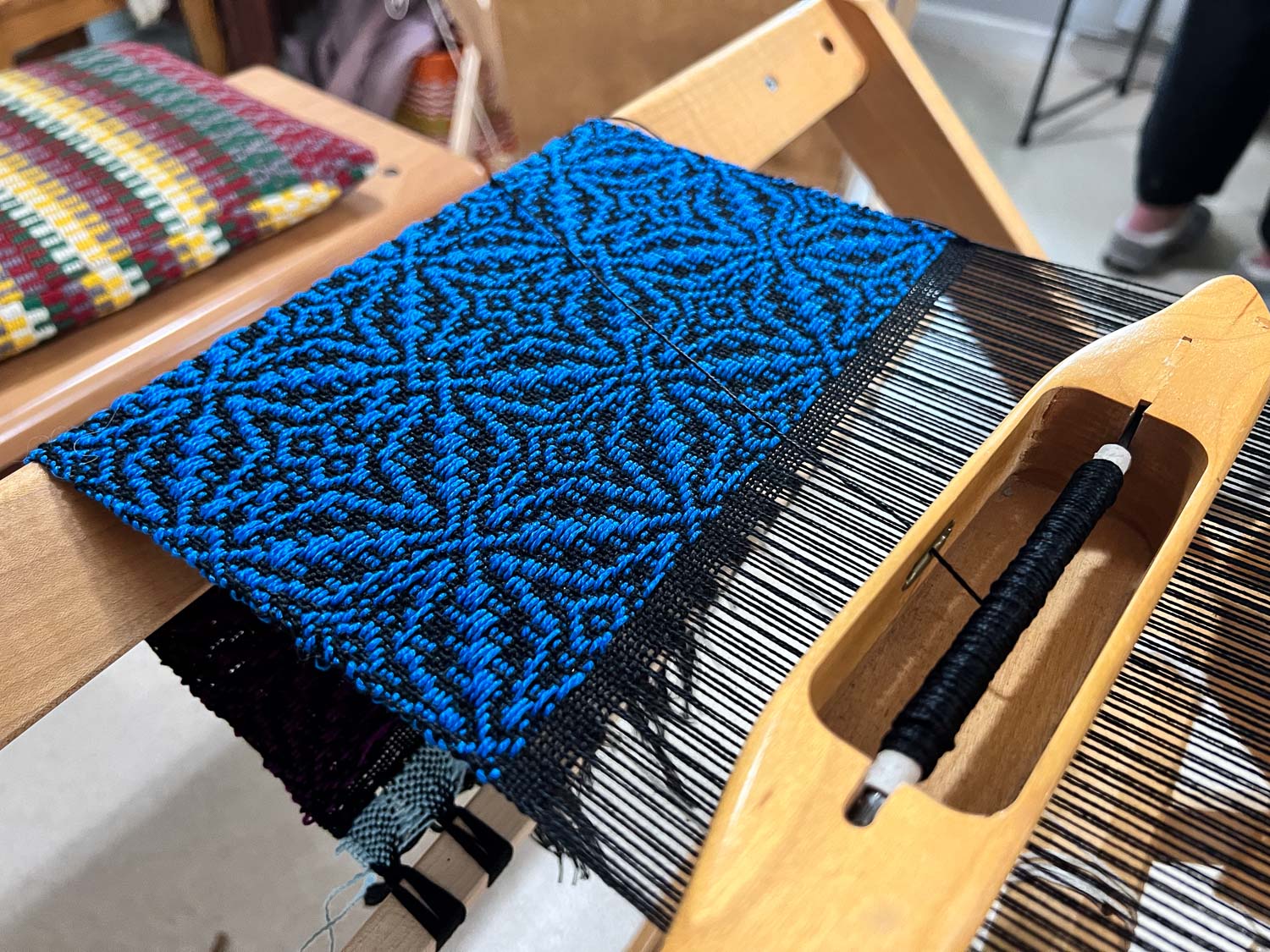
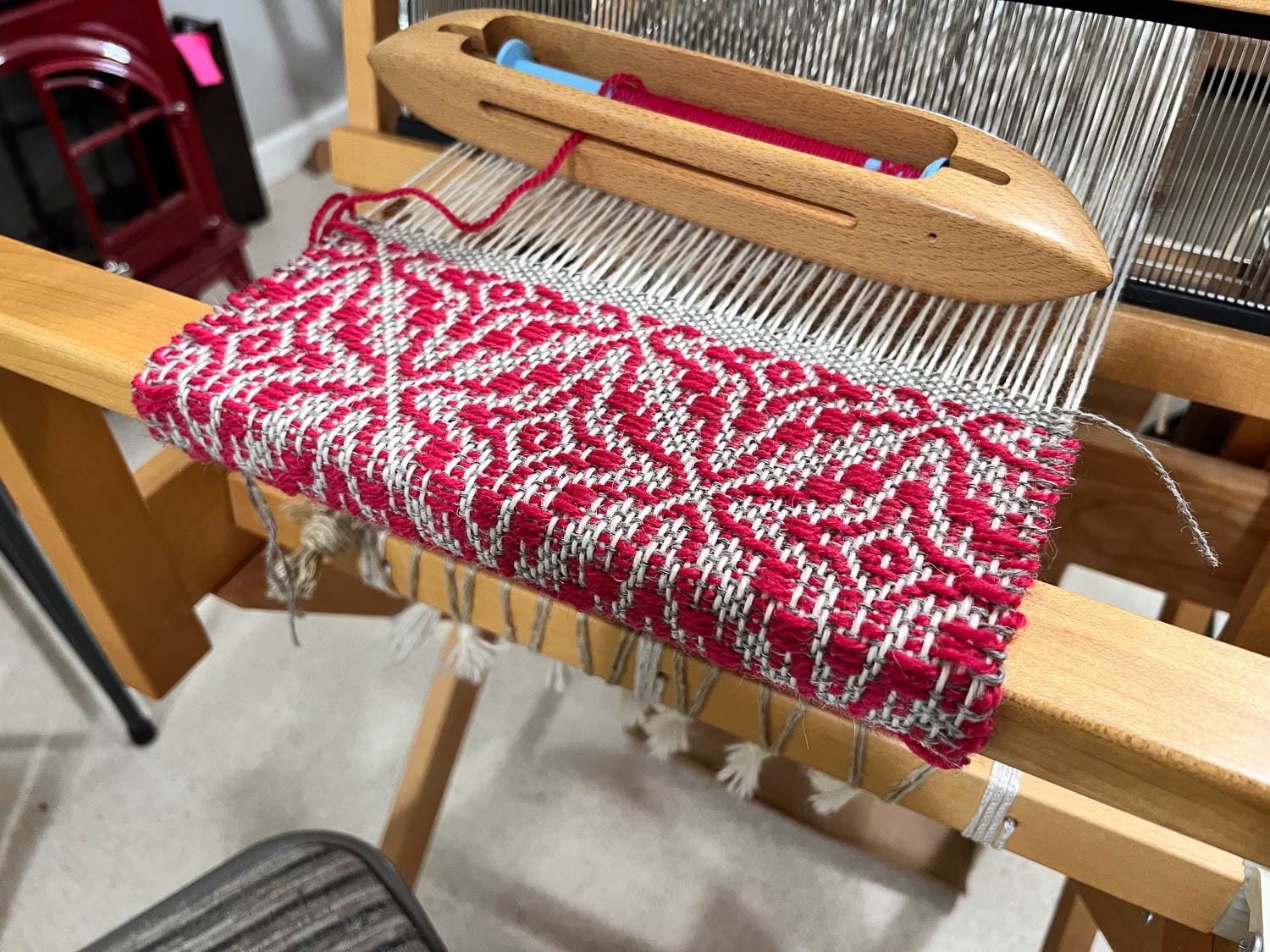
These are just off the loom. I wove the piece on the right first. I dyed the warp last week. This piece has twisted fringe and needs to be washed. I’ll wait until the fringe is finished on the other and run them through the washing machine together. These were on the same warp. The scarf on the right was sett at 10 epi, the sett that I usually use for this Ashford “caterpillar cotton” . Weft is 3/2 cotton. The scarf on the left is sett at 15 epi and weft will be 5/2 cotton.
Now for projects that are on the loom:
I dyed this yarn last week, along with the warp above. This one is hemp and will be dishtowels. I had to fix a threading error today and will have this ready to weaving tomorrow.
Baby blankets underway.
Wool blankets underway. I really want to finish these blankets this week.
A warp ofj mixed yarns, sourced from Art Fiber Frenzy.
I number all my warps (except for the ones I forget to put in my notebook like some of the rigid heddle projects). Someday I’ll have to look for the notebook with #1, although that wouldn’t be truly #1–it would be the first one I recorded. I think that notebook is here somewhere.
The first one this year was #1351. The notebook page says 12-26-2023, but that would be when I started winding warp. I wove most of the ten blankets in 2024. This photo is two Year to Remember blankets. The one on the left was a custom blanket, commemorating the recipient’s wedding anniversary.
This Year to Remember blanket (Vacaville, 2023) is woven with yarn I dyed using plant material growing here. It is still available on the website.
One of my favorite patterns, also woven on this warp using gray Jacob yarn for weft.
I wove several v-shawls in 2024. The one on the left is still for sale here.
Warp #1387 went on the loom in July, but I didn’t finish the last blanket until December. I get distracted by weaving on other looms and the rest of life going on around me. This photo shows how each weft yarn may behave differently. Some yarns have more elasticity than others, either due to the type of wool or whether or not they have been naturally dyed. The warp and all the naturally dyed yarns are Timm Ranch wool from various years.
Here is that warp off the loom. The blue weft yarn was naturally dyed with my home-grown indigo. The brown yarns are mostly dyed with walnut hulls. Yarns on the left are Ashford DK.
Finished indigo and walnut hull blankets.
The last warp of the year was #1404, a warp for three chenille shawls. This is the first piece off the loom in the process of twisting fringe. This warp is still on the loom with two more shawls to weave. I had wanted to get at least one off to get it to the Artery before the last couple of shopping days before Christmas.
Warp # 1403 went on the loom before the chenille warp, and I finished it just in time for our family Christmas on the 27th. There are ten hemp towels.
There are two colors in the warp and a different weft color in most of the towels.
Another favorite this year was a chenille warp. I wove two rectangular shawls and this piece that is sewn to leave a neck hole and be worn over the shoulders sort of like a poncho. I will put this on the website soon.
I’m already on my next adventure, but need to catch up with the last one. After the quick trip to Idaho I decided against going to Black Sheep Gathering in Oregon the following weekend. I had not planned to take sheep this year and had not entered wool, fiber arts, etc. But half way through the week I changed my mind. Without entering any shows I didn’t have to be gone as many days, so I left Friday morning. I will admit that two hours into the drive I thought about turning around and coming home because I had so much to do at home before the next event (where I am now). However I had told a friend in Oregon that I’d visit along the way, so I kept going.
Here is where I stayed the three nights I was there. As I set up my tent I realized that I think I’ve had this tent and my sleeping bag since my college days or shortly after.
I took very few photos in the barn, but here is one–a Valais Blacknose. There was a new Jacob breeder there and I helped her show. Because she was the only person with Jacob sheep she had to show in the All Other Breeds class, as I did last year. Maybe I’ll enter again next year and we’ll have a Jacob show.
I took a few photos in the exhibit and vendor hall. These are the main award winners in the Fiber Arts Show.
I spent a lot of time with a few vendors and tried to make time to see the rest.
I met this vendor last year at this event. She lives in Sacramento and I encouraged her to sell at Lambtown last fall. Her booth was next to mine. Even though I specialize in locally grown wool, including my own, I was intrigued by her yarns, many of which are not natural fibers and are certainly not local. But they sure are fun! The larger skeins are all lengths of yarns that are tied together. I had bought a few of these crazy mixed fiber skeins and brought the scarf I had just finished to show how I had used the yarns. I plan to create a class using this idea.
I spent time with one other vendor, business name of Shuttle Creek. Annie is a weaver and was working on a loom in her booth, She sells her mostly cotton garments at local shows I think. I just looked at the website and there are some gorgeous items there but blog and Facebook activity seem to stop in 2021 and I was thinking that she said she doesn’t do much online. Anyway, after talking to her a long time she pulled this piece off a hangar and put on me. I bought it and that’s what wore all day at the weaving event where I’m teaching (next post). I need a button that “no, I didn’t weave it”.
I spent part of the day at the vendor hall, helped the other Jacob breeder show sheep, visited with friends (most of whom are from California), and watched Spinners’ Lead. I packed up fairly early on Sunday and started home.
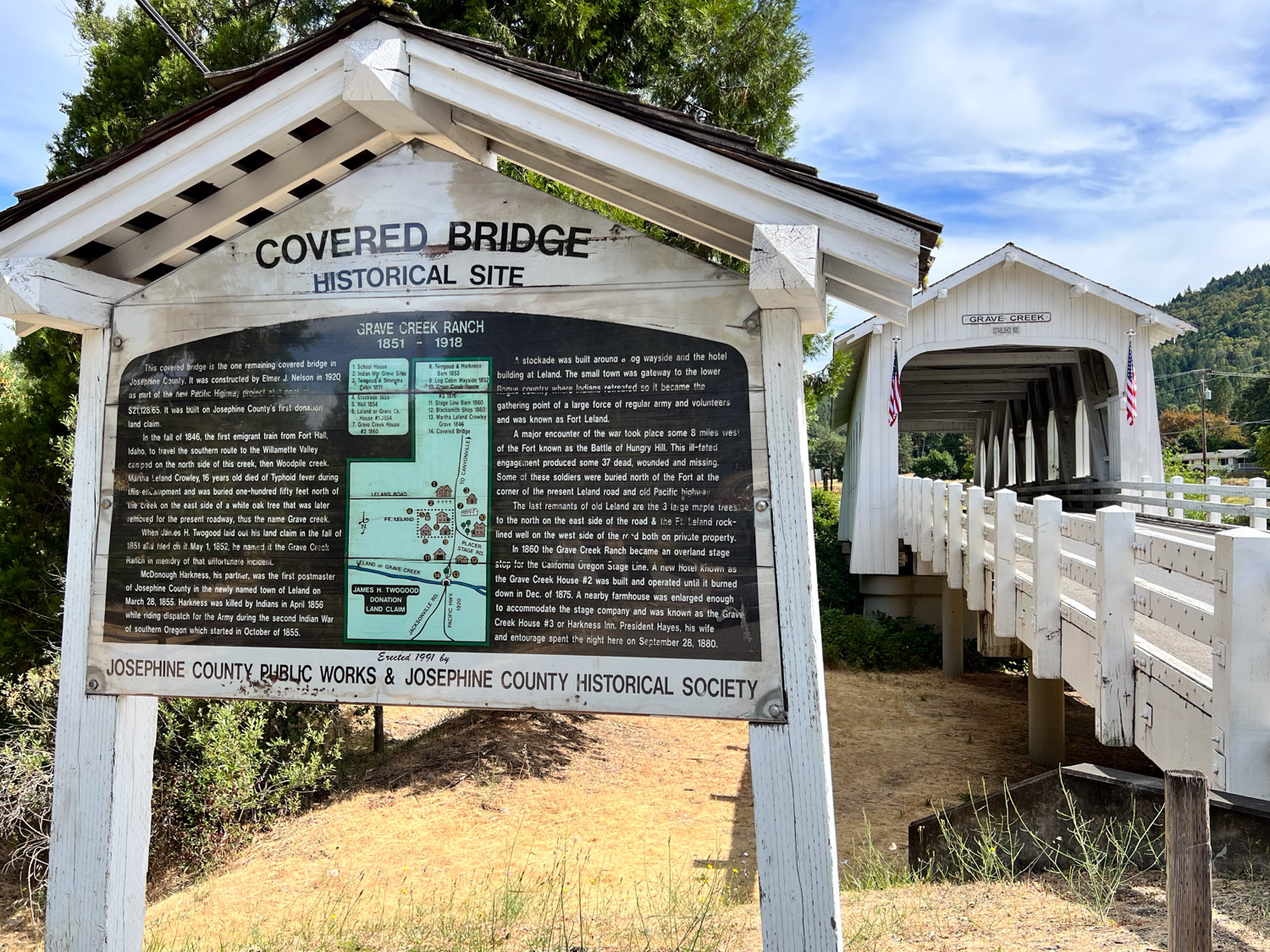
I’ve seen the sign for the covered bridge every time I’ve driven to Oregon but I’ve never stopped. It’s not far from the highway and an interesting site. There is a museum nearby but it wasn’t open on Sunday morning. The bridge was built in 1920 and the sign talks about the history of the area when white settlers came there in the 1840’s and 50’s.
I tried a new class last week. I used overshot as a way to guide weavers through exciting discoveries of sampling treadling techniques, choosing colors, and changing yarn sizes.
Two weavers came on Thursday to warp their looms. On Friday they were joined by two more weavers and they all wove overshot samplers.
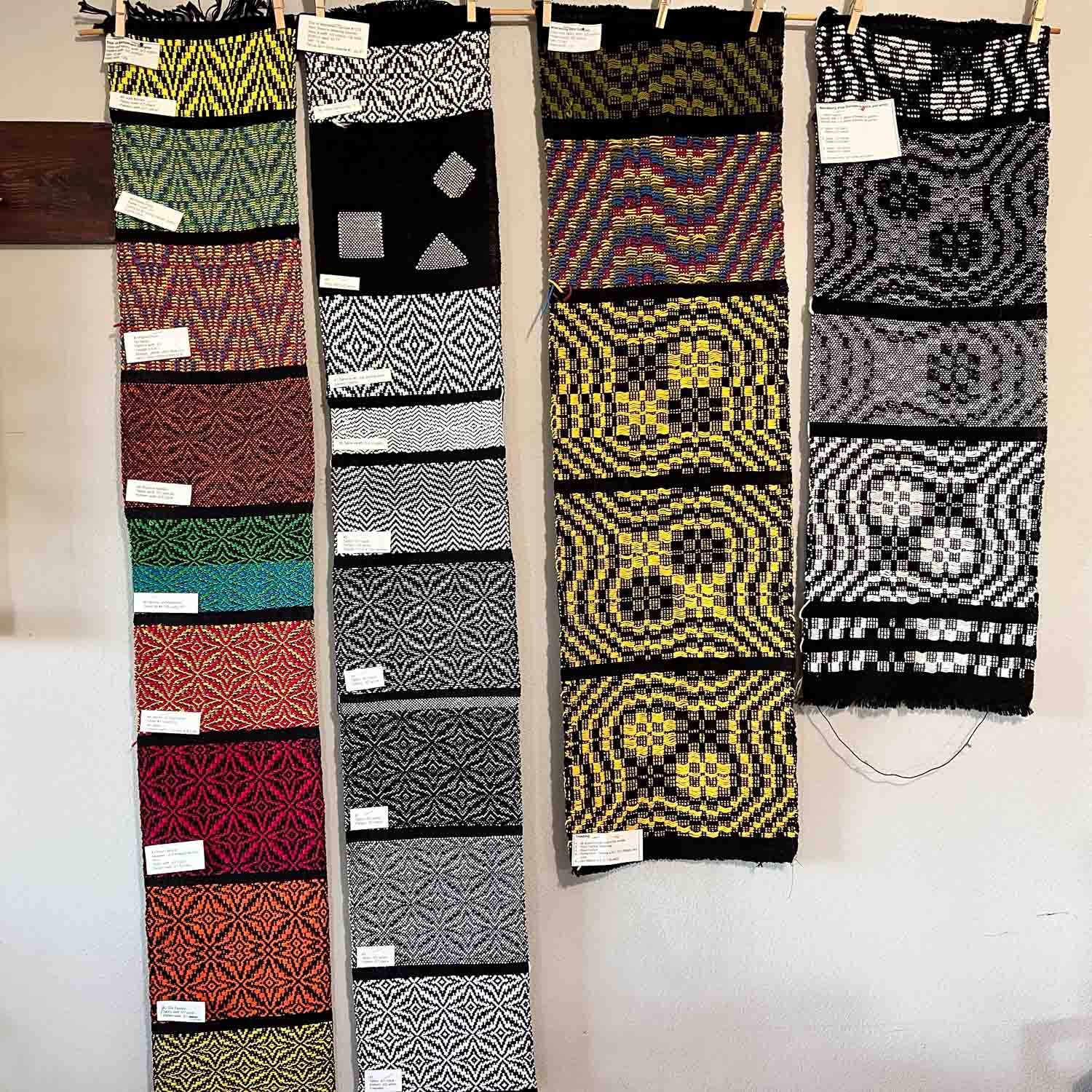
This is the Sample Wall with examples of the drafts and the variables they could try.
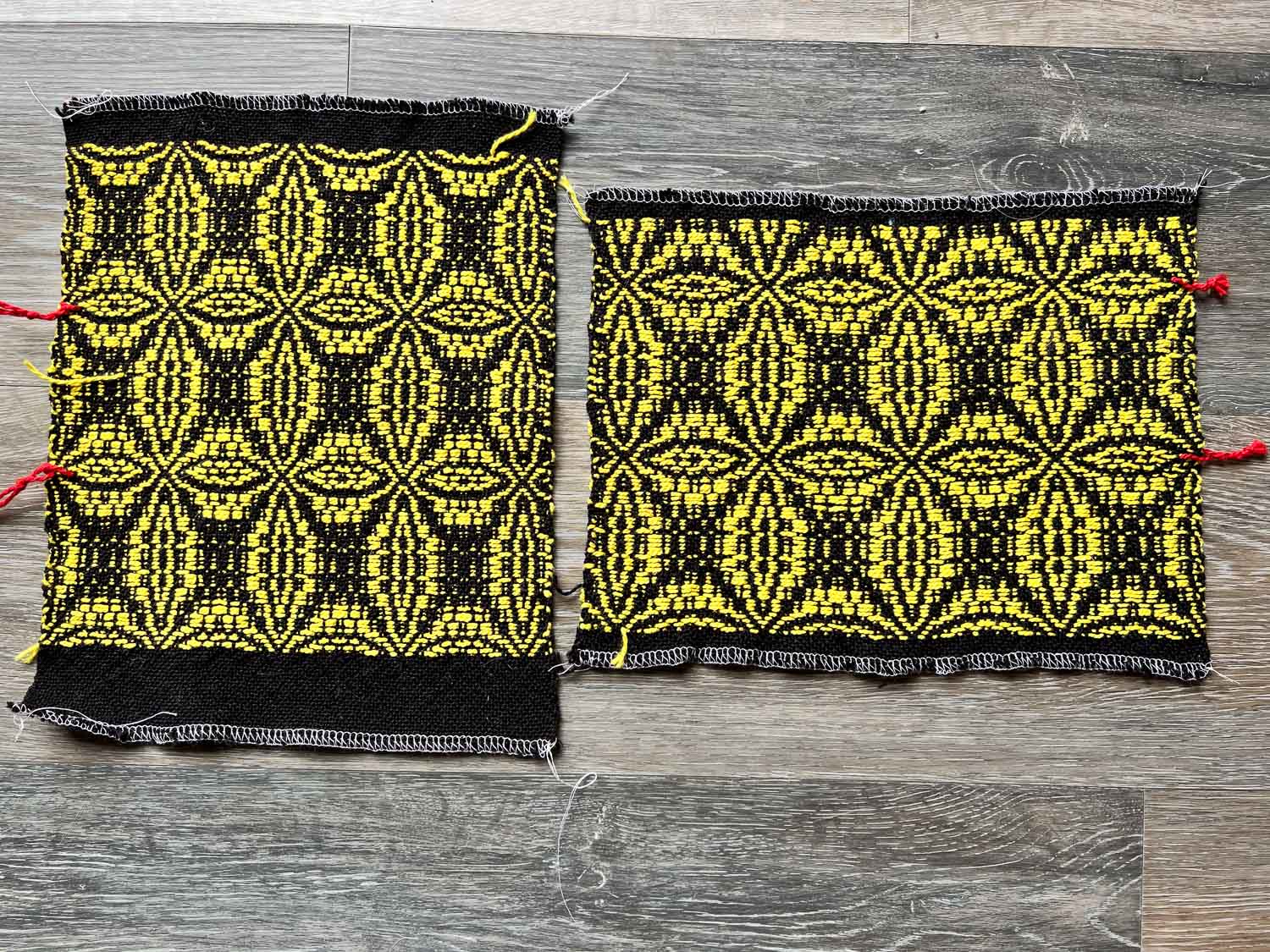
I didn’t hang the “orange peel” sample but had it available. This is a good example of the effect of sett on the appearance of a piece. These are woven on the same warp of 5/2 cotton. The one on the right is sett at 12 epi (ends per inch) and the one on the left is sett at 15 epi. With the warp threads that much closer together the orange peel pattern is elongated and the circle becomes an oval.
The next photos are some of the weavers’ work on the looms near the beginning of class.
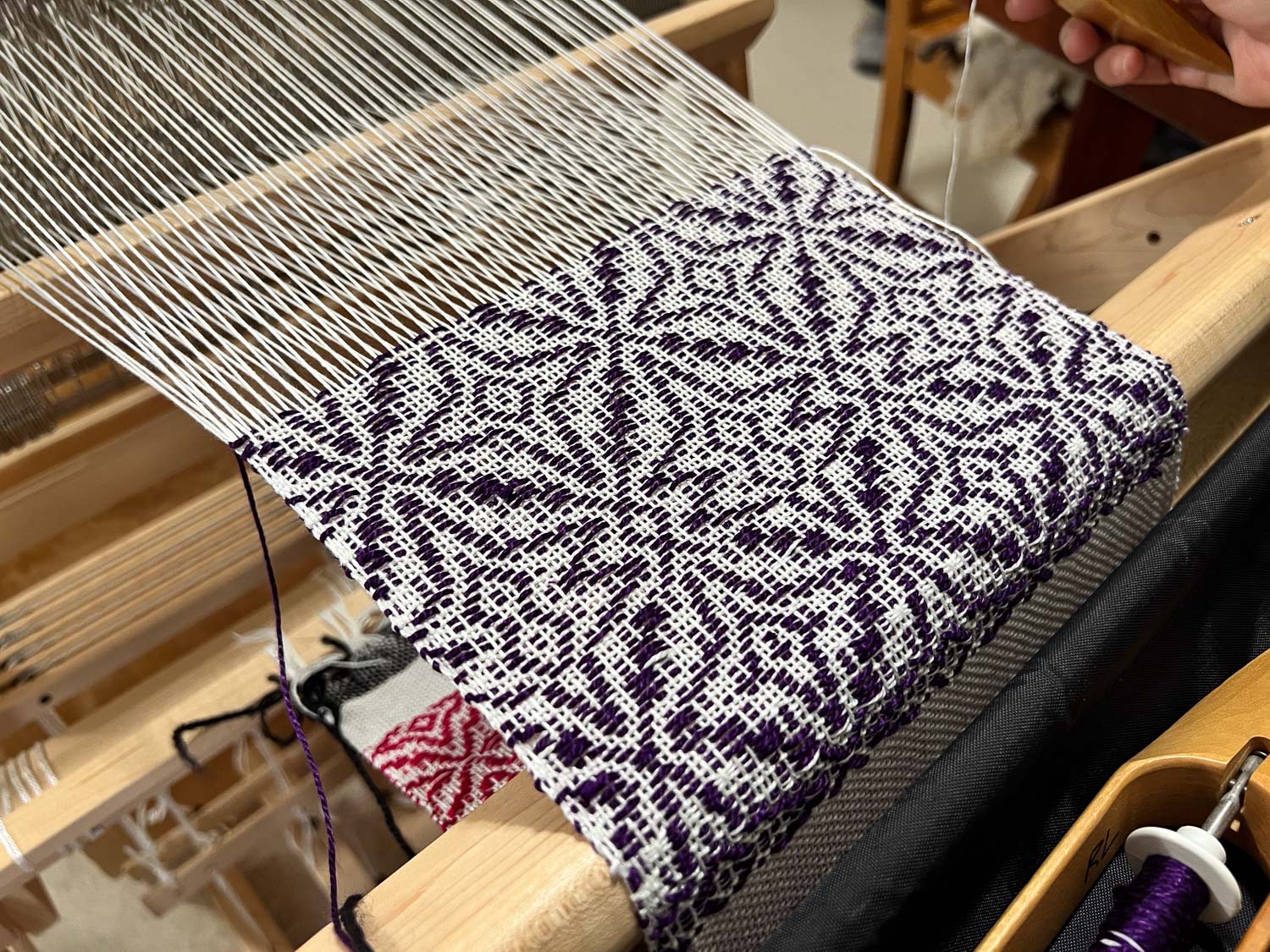
Two weavers chose black warp as in the samples. One weaver used white warp. Those are all cotton but the bottom one is wool because I already had that on a loom. That is white wool warp with gray tabby weft. It is so interesting to see the differences.
This was the first time for this class so I over-estimated how much warp would be woven. Two people have come back to continue work. Here is the sampler one of the students finished the next day. I will wait to see what others finished at home.
I hope to offer this class again but its not scheduled right now. Look for Overshot Explorations.
It’s the season for selling when you’re in the business of making. Now I seem to spend extra time taking photos and then trying to keep track if the items are at The Artery or here, listed on the my website or on the Fibershed Marketplace site . Ideally there were would be three batches–some at the Artery and not on the website, some here and just on my website, and some here and just on the Fibershed site. The goal would be to have everything sold by Christmas and to not double-sell anything…but those lines are crossing. I have to be vigilante. Here are a few examples of what I’ve been weaving.
Chenille scarf using clasped weft.Local yarns dyed with coreopsis and dahlia flowers.More local yarns dyed with mushroom and black walnut.This is the stack of ponchos that I finished in early November just before the Fibershed Wool Symposium. This is how the loom looks from where I sit. The rainbow colors are a result of a prism that hangs in the window behind me. After my mom died a friend gave me the prism and said that it was to remind me of my mom. And it does, as it reminds me of the friend, Sylvia.Coreopsis dyed yarn.The computer that holds the “brains” of the loom. This loom does not weave without me doing everything (for those people who think that having a computer hooked up means I’m not really weaving). It only keeps track of the pattern that I have put in.This is what that pattern looks like. It will be completely different after fulling.A look down through the warp threads to the cloth below.OOPS! I think I have this in an earlier photo and I haven’t told the story yet of what I did about it. That will still come.Some of the finished ponchos.
Talk about a versatile garment. I have grown to love the poncho. It’s really just a blanket with a hole in the middle for your head. Whether you’re at the computer late at night (gee, does that ever happen?), in the car, or trying to stay warm while reading in bed it’s an easy garment to throw on. And it also makes you look young and pretty! Just look at those photos! (Disclaimer–that’s really not me.)
I’ve been neglecting my blog. All my computer time has been spent at other things–mostly trying to stay caught up with email, working on my website, and trying to organize and edit photos for items listed on the Fibershed Marketplace and on my website (each of which need differently formatted photos). I’m also trying to figure out the best way to keep track of what is listed where and which items go to the Artery. I really don’t want to take the chance on selling something on the website and find out that I already sold it at the Artery.
The website is up now and, although I haven’t listed a lot of products yet, I’m happy with it. I hope you’ll explore it a bit. I’ve worked most at getting some weaving classes scheduled for January-March and in getting handwoven items listed.
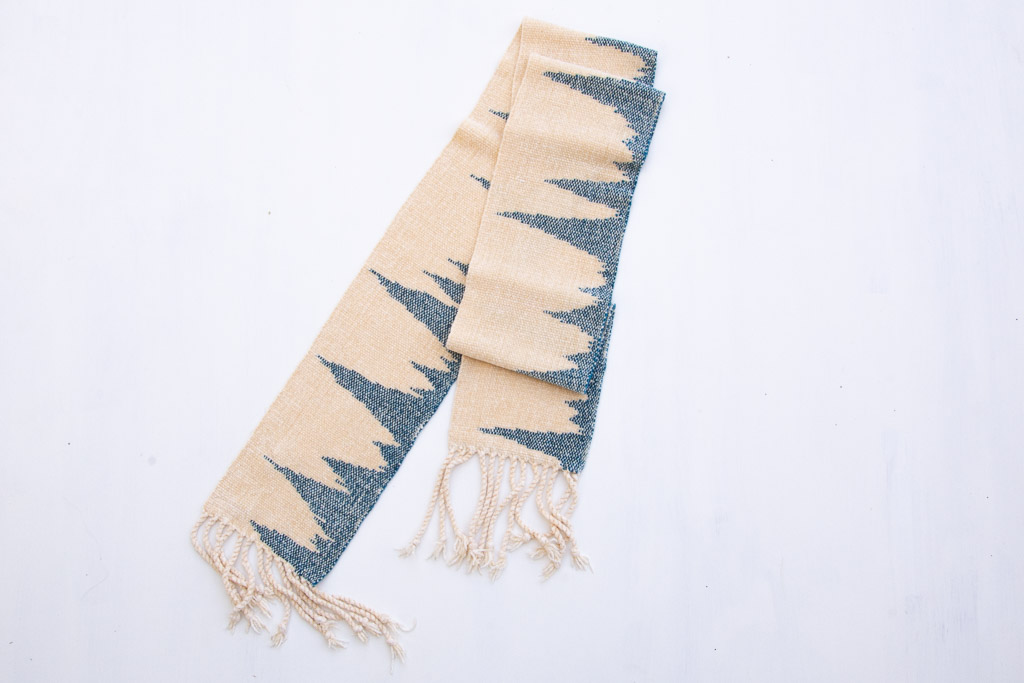
Here are some of the items that I have listed. Don’t judge my photos. I struggle with trying to get decent product shots.
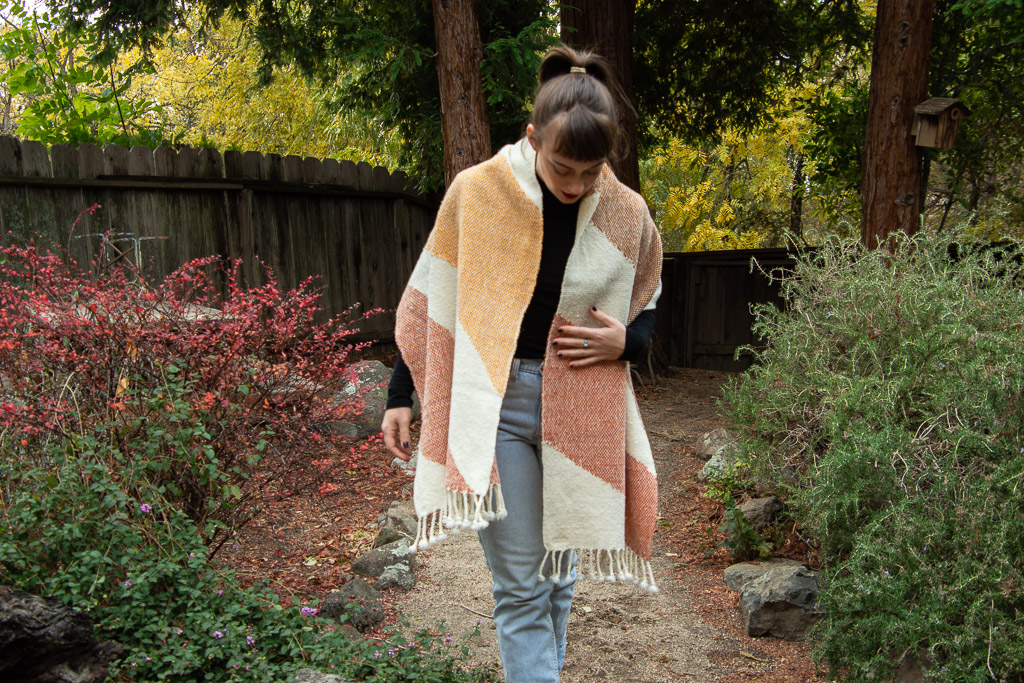
I didn’t list this one because right now I can’t find it. That may mean it is at the Artery. Or did I sell it? This is what I mean be trying to keep track. I’m not doing very well with that.
My niece was nice enough to model for me at Thanksgiving.
Photobombing brother. These are yarns from Lunatic Fringe and all appear in the latest scarf I wove. Hopefully I’ll get to that blog before too long.

















 Chenille scarf using clasped weft.
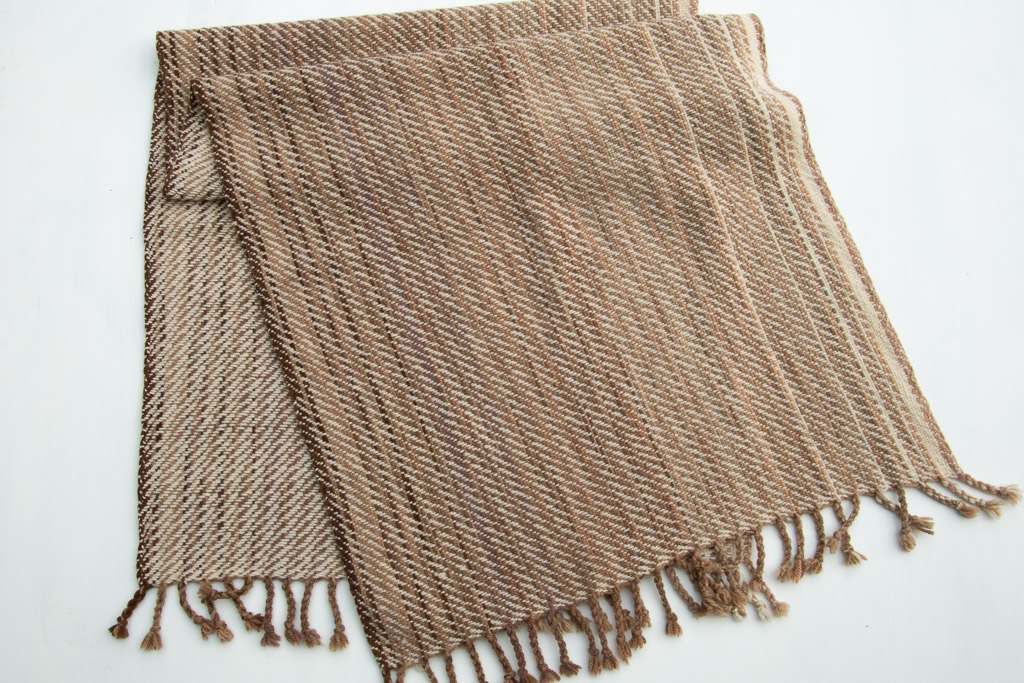
 Local yarns dyed with coreopsis and dahlia flowers.
 More local yarns dyed with mushroom and black walnut.
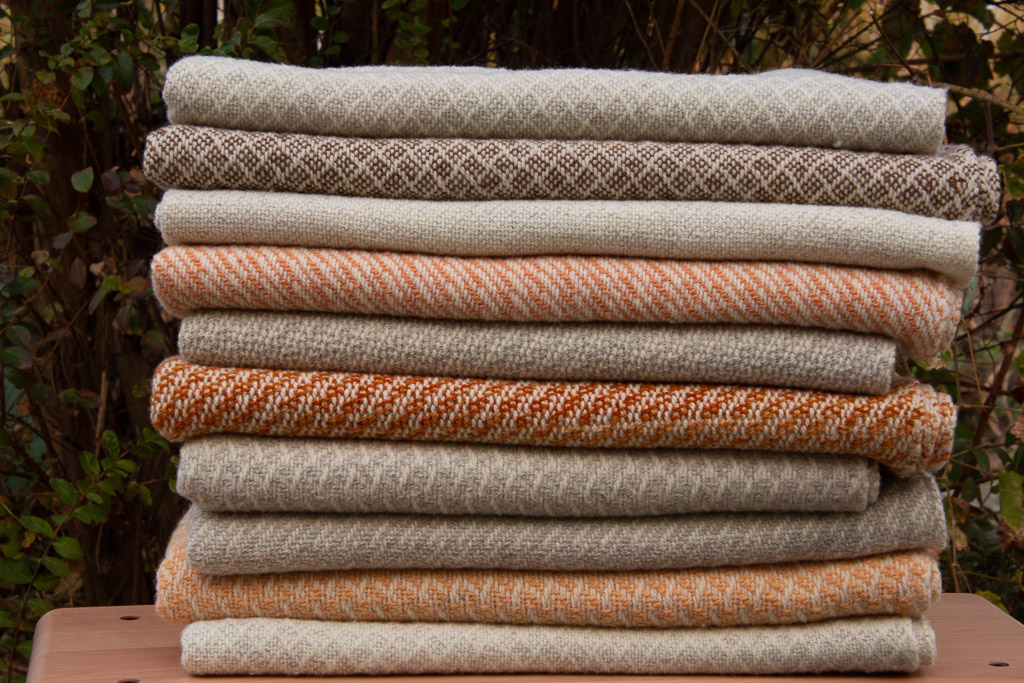 This is the stack of ponchos that I finished in early November just before the Fibershed Wool Symposium.
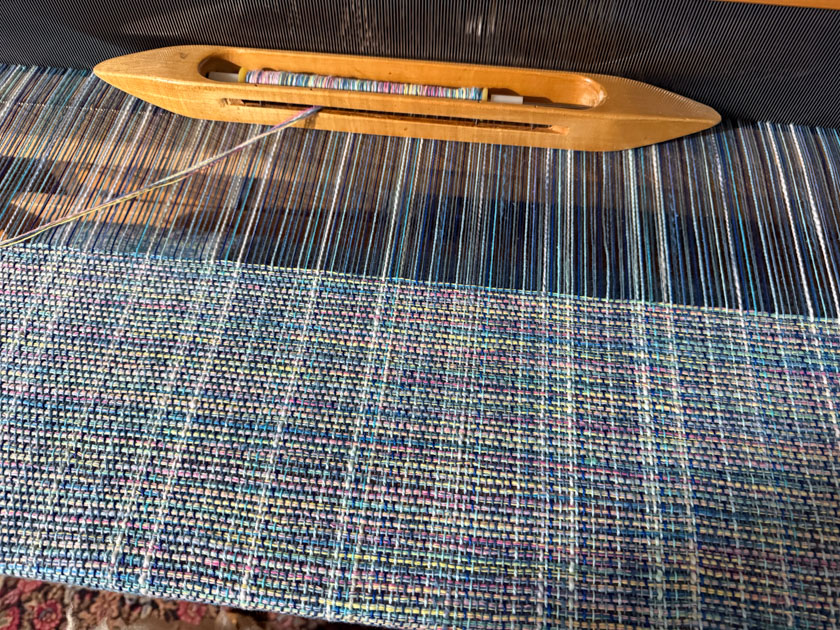
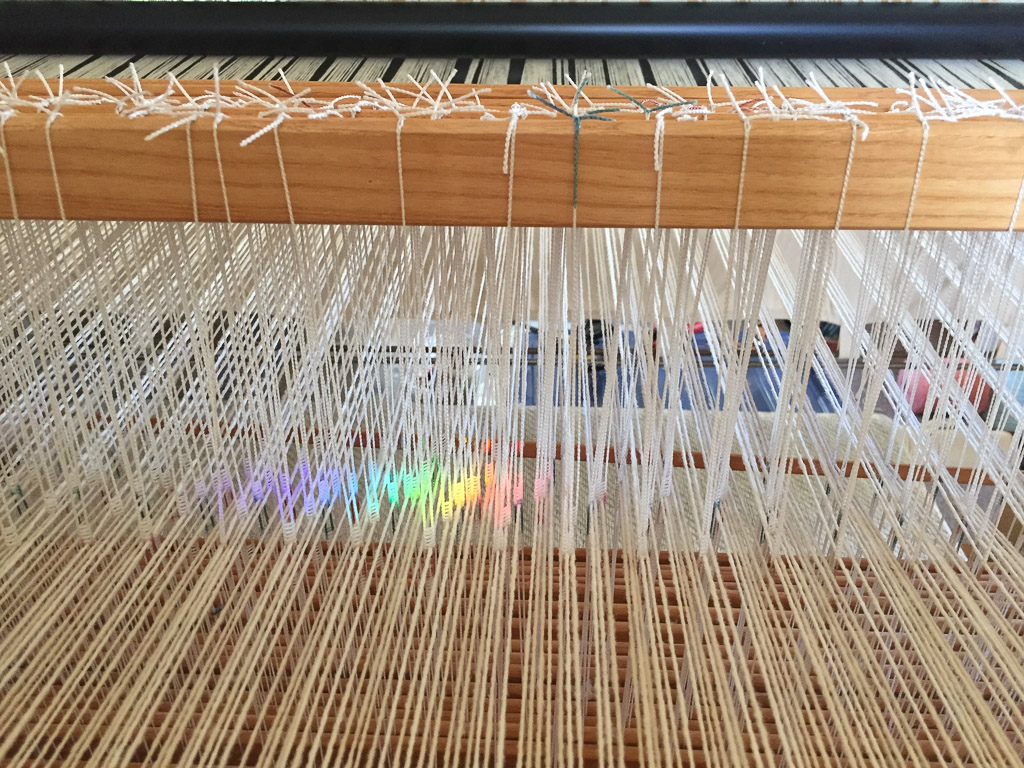 This is how the loom looks from where I sit.
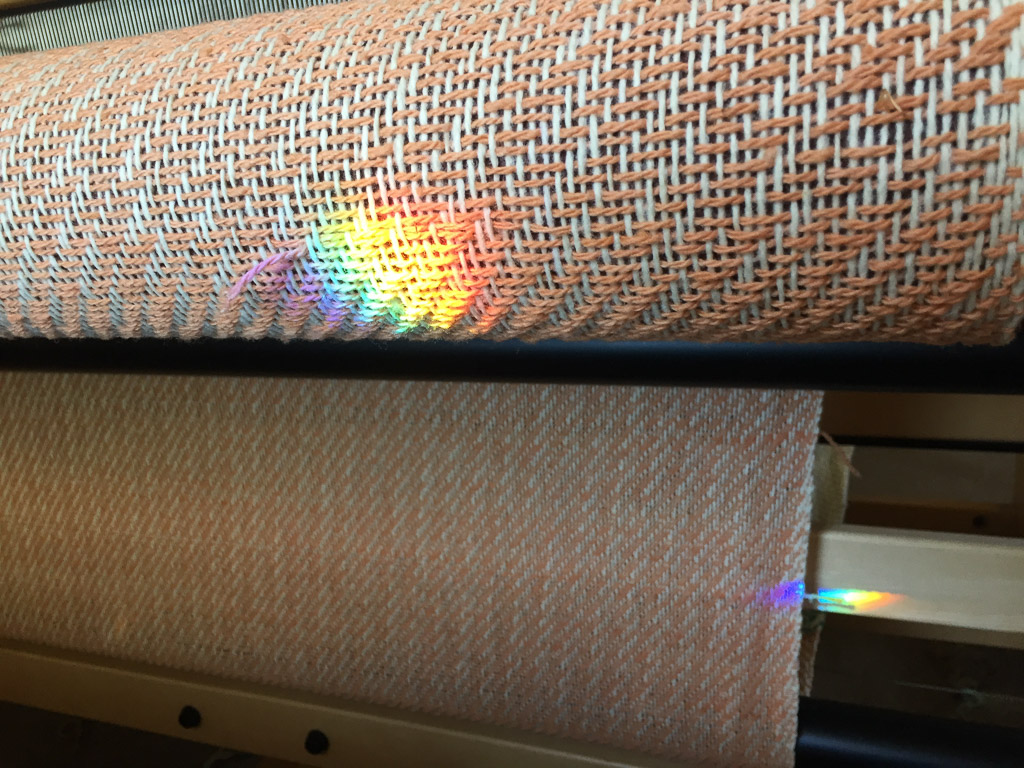 The rainbow colors are a result of a prism that hangs in the window behind me. After my mom died a friend gave me the prism and said that it was to remind me of my mom. And it does, as it reminds me of the friend, Sylvia.
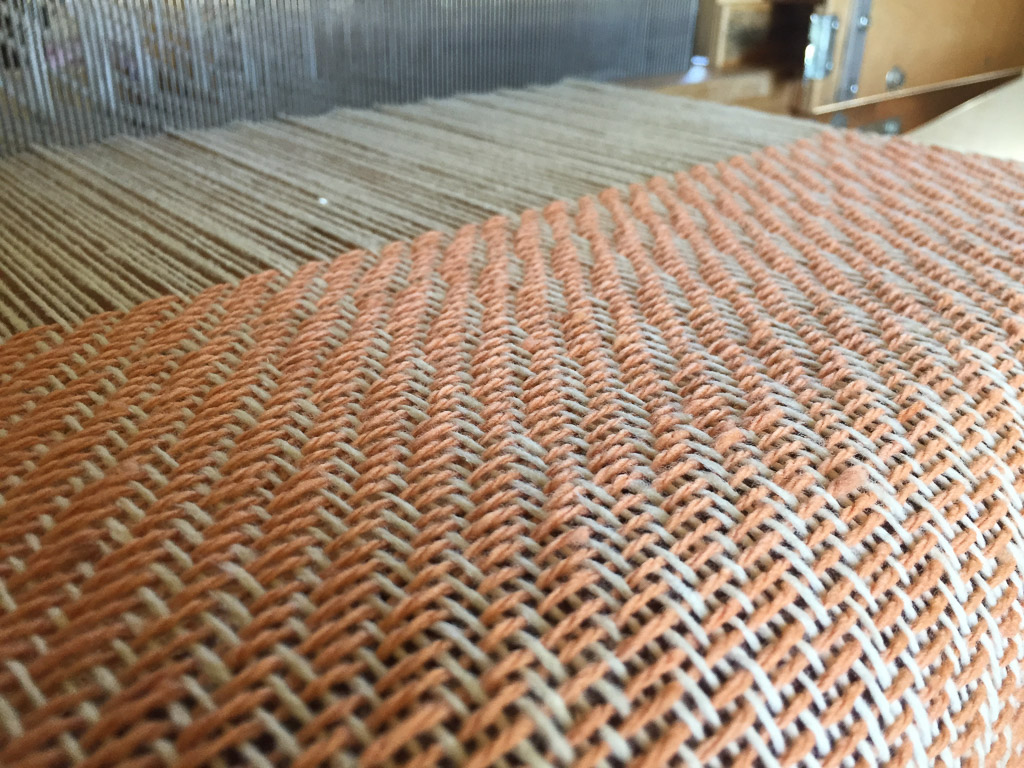 Coreopsis dyed yarn.
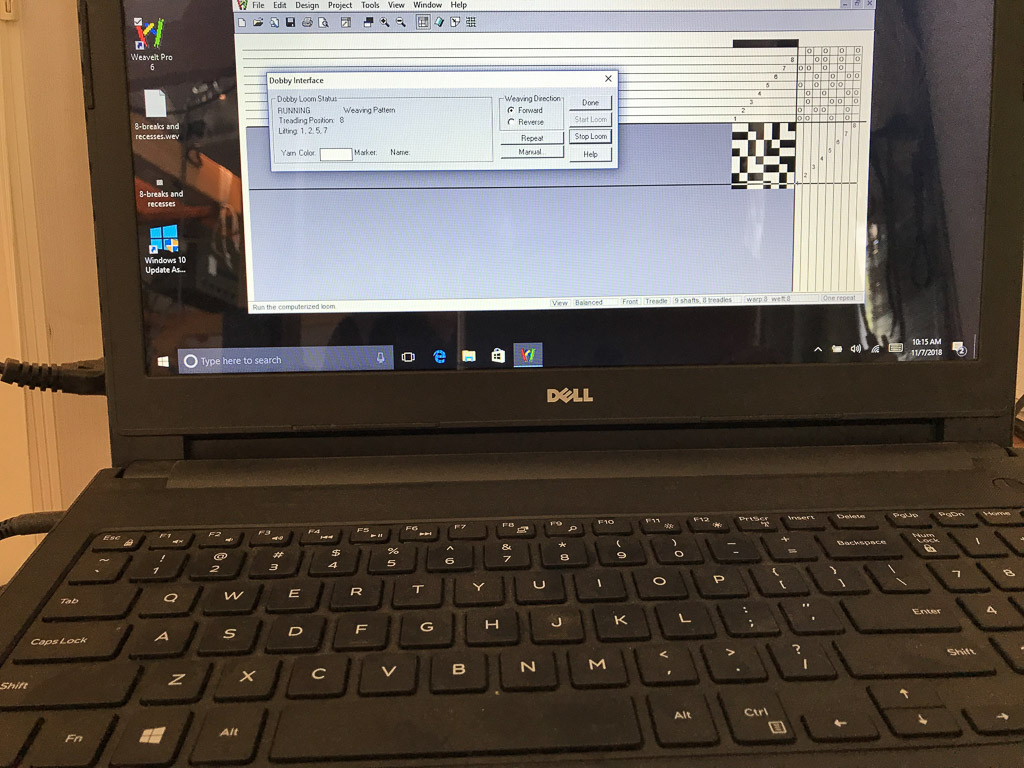 The computer that holds the “brains” of the loom. This loom does not weave without me doing everything (for those people who think that having a computer hooked up means I’m not really weaving). It only keeps track of the pattern that I have put in.
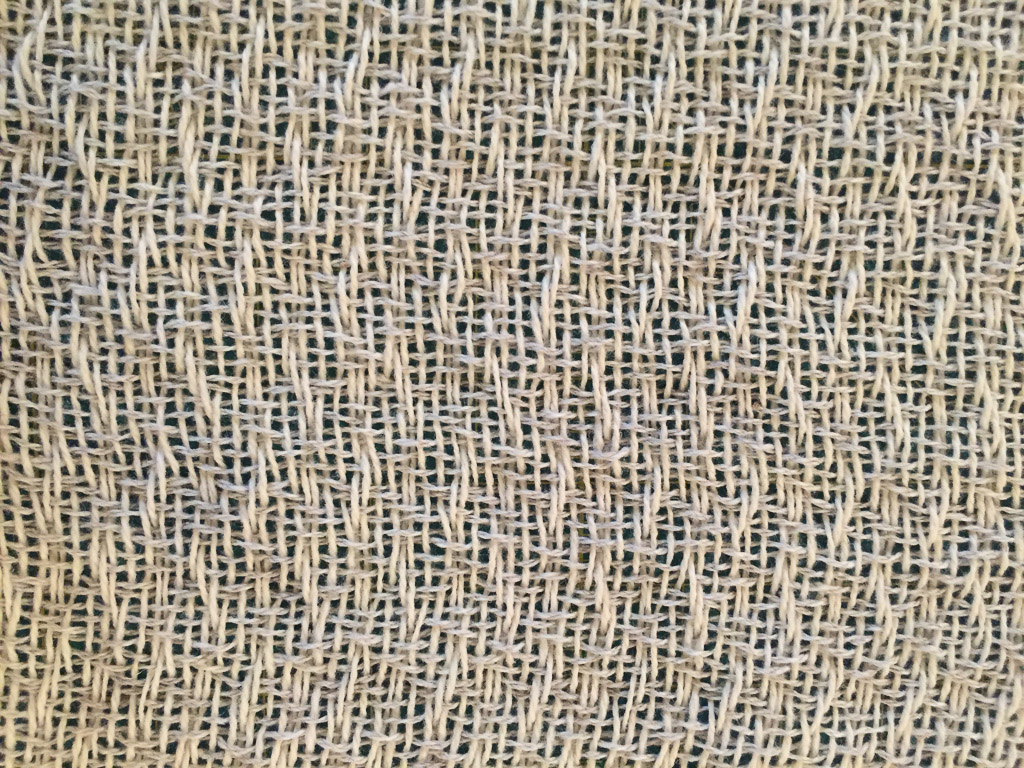 This is what that pattern looks like. It will be completely different after fulling.
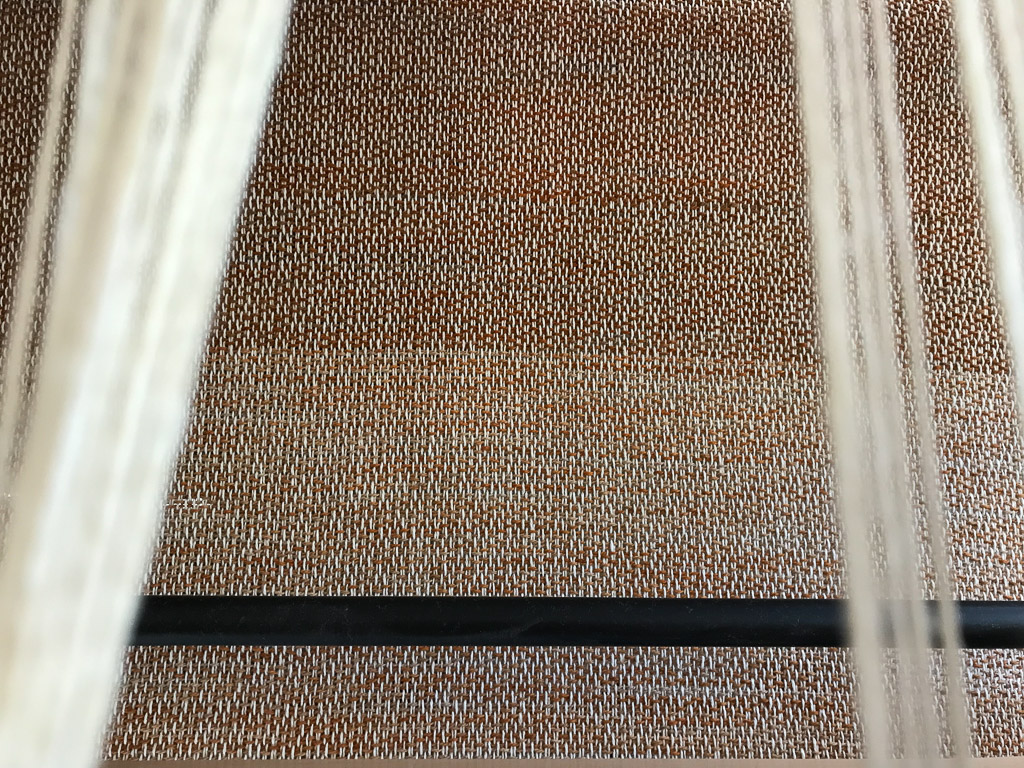 A look down through the warp threads to the cloth below.
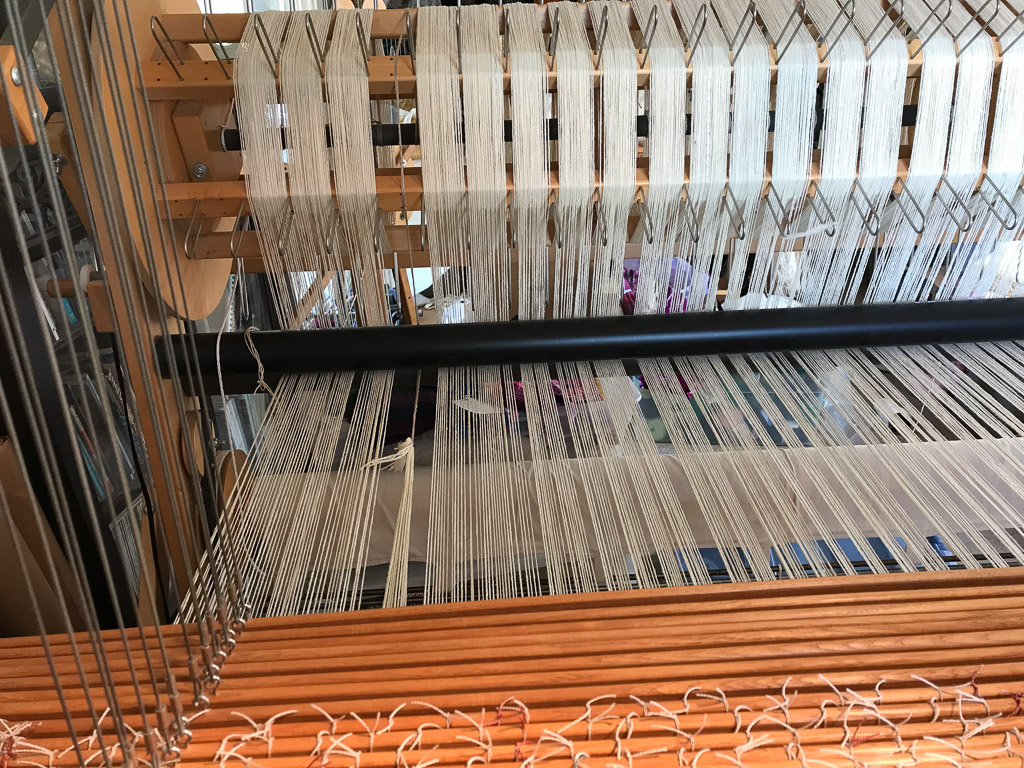 OOPS! I think I have this in an earlier photo and I haven’t told the story yet of what I did about it. That will still come.
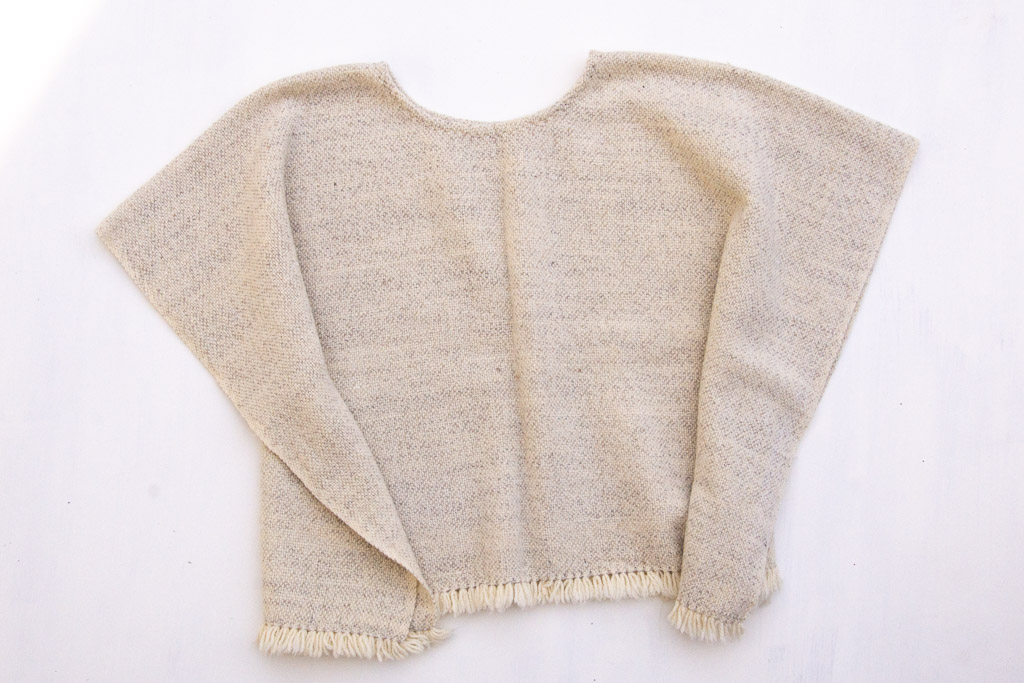 Some of the finished ponchos.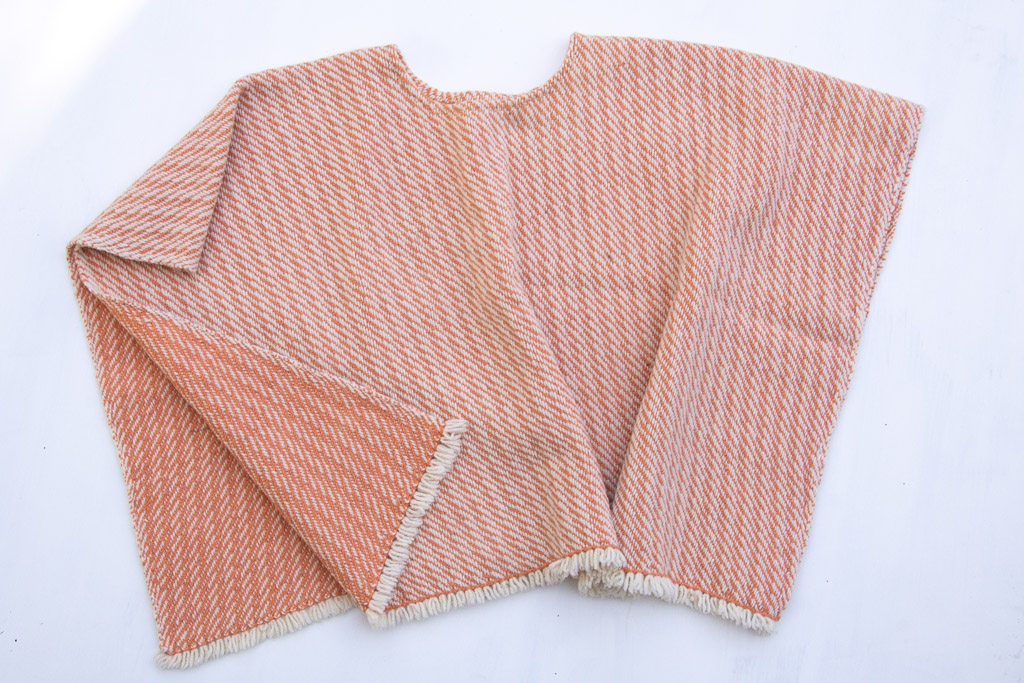
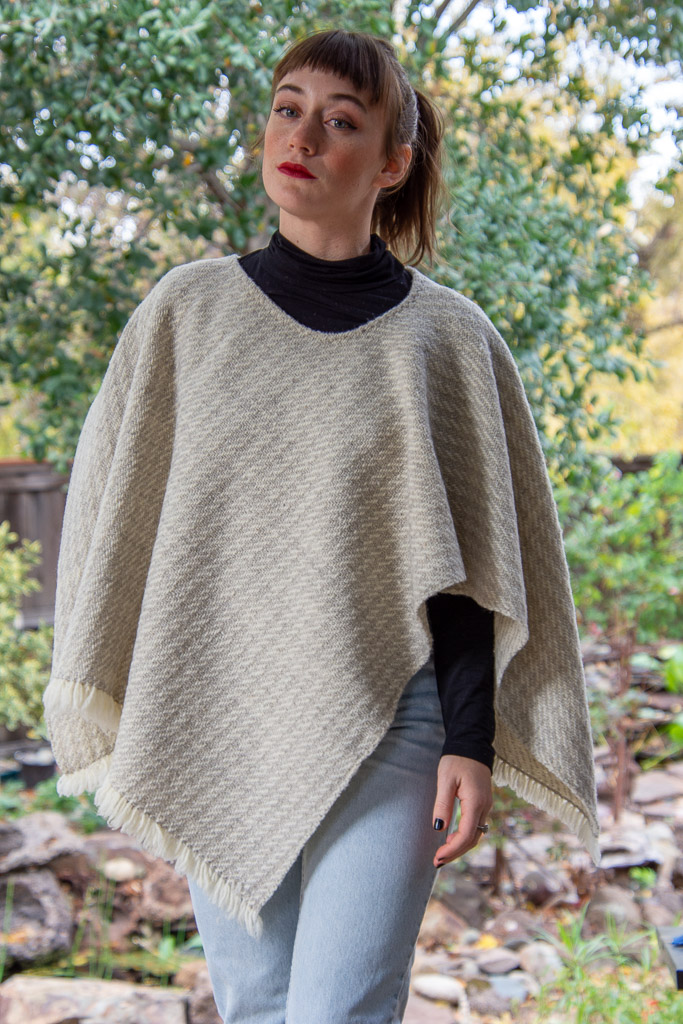
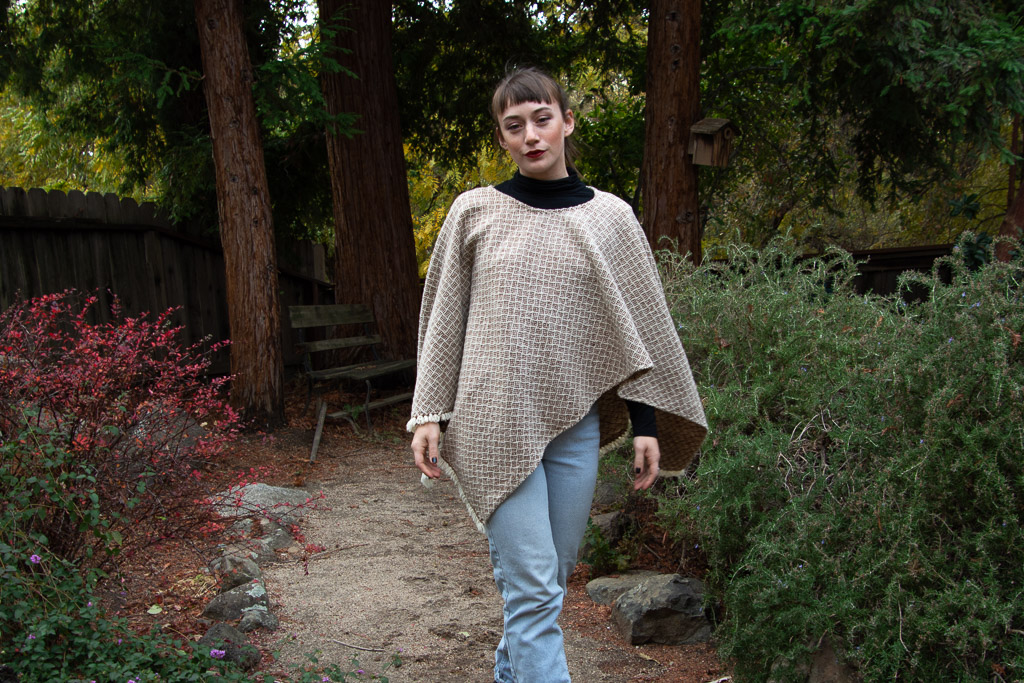 Talk about a versatile garment. I have grown to love the poncho. It’s really just a blanket with a hole in the middle for your head. Whether you’re at the computer late at night (gee, does that ever happen?), in the car, or trying to stay warm while reading in bed it’s an easy garment to throw on. And it also makes you look young and pretty! Just look at those photos! (Disclaimer–that’s really not me.)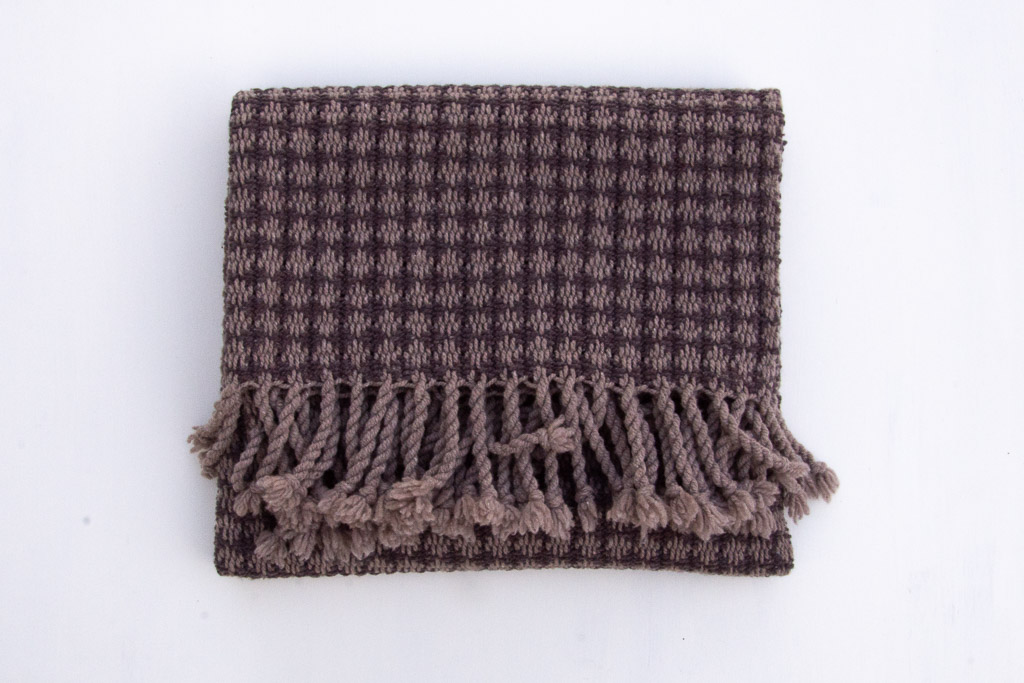
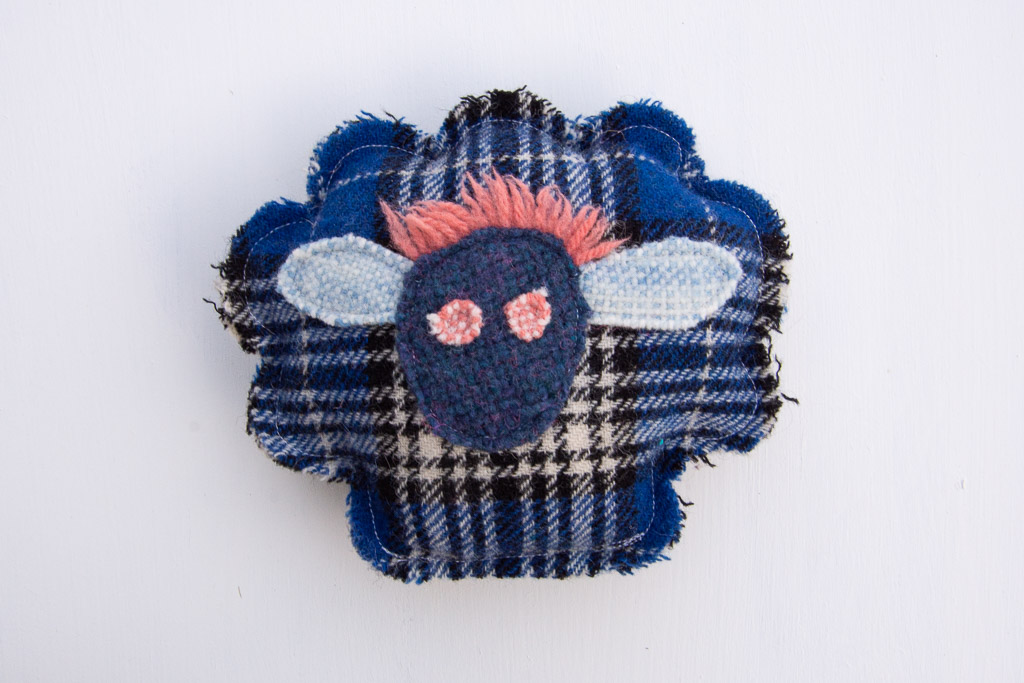
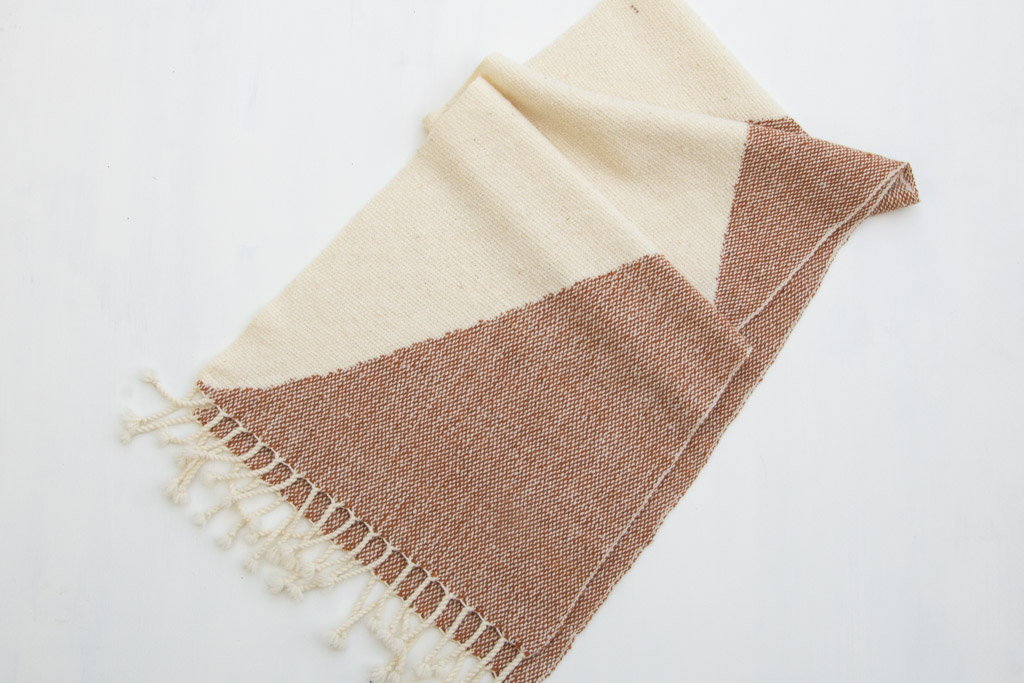 I didn’t list this one because right now I can’t find it. That may mean it is at the Artery. Or did I sell it? This is what I mean be trying to keep track. I’m not doing very well with that.
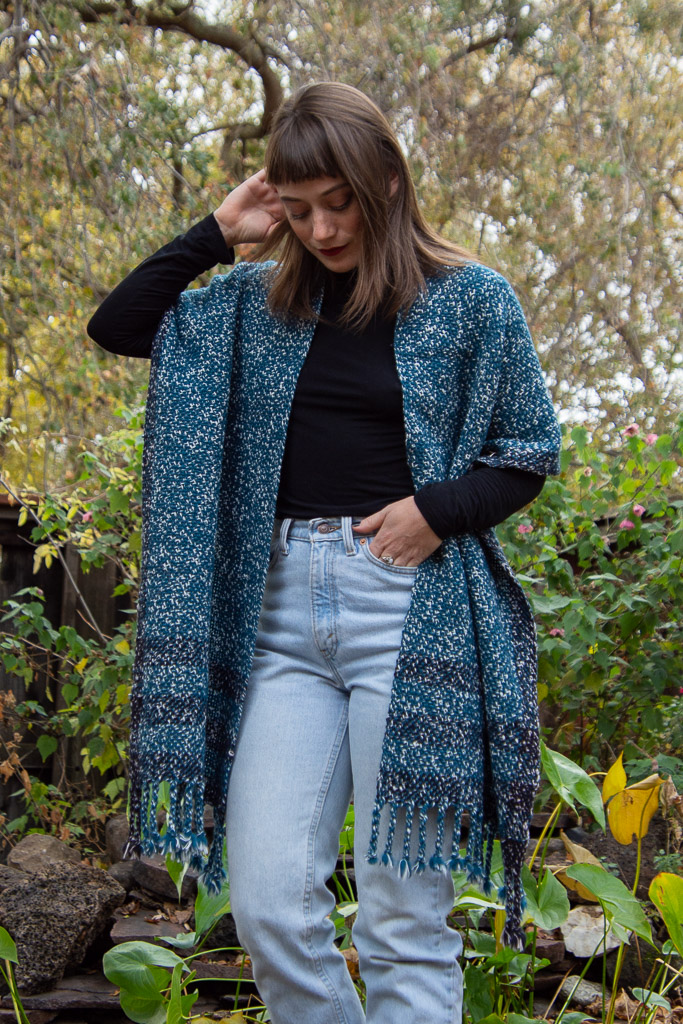 My niece was nice enough to model for me at Thanksgiving.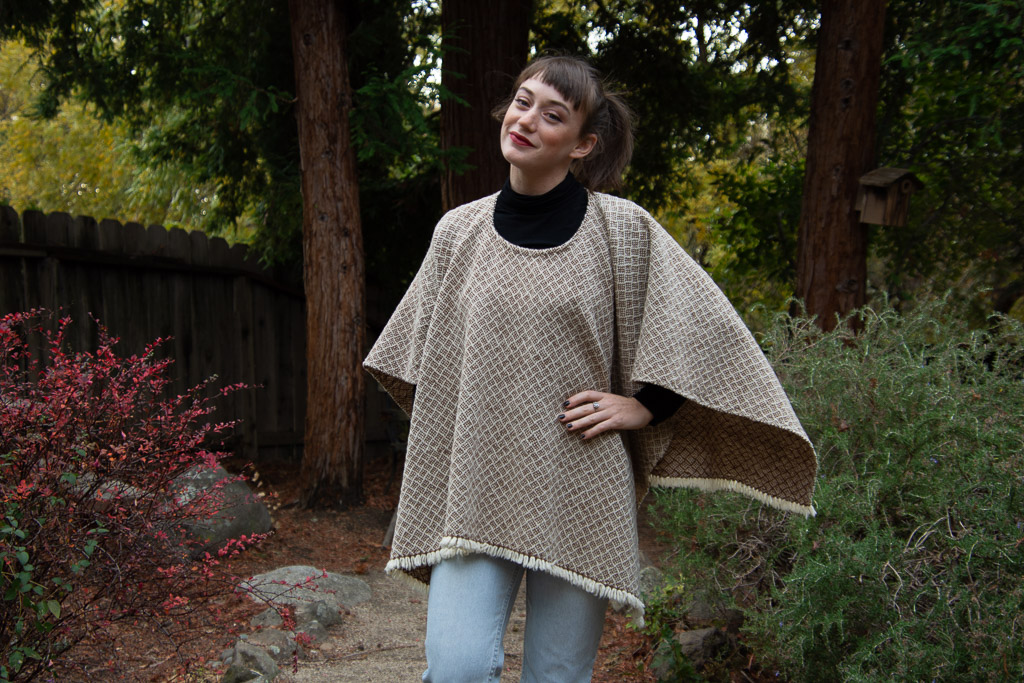
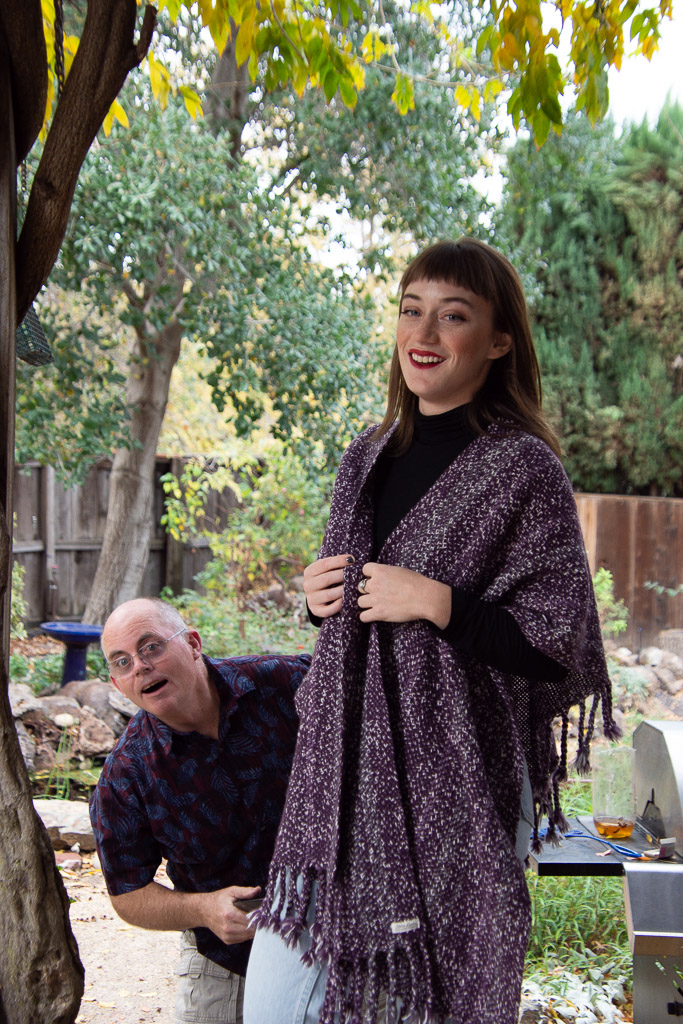 Photobombing brother.
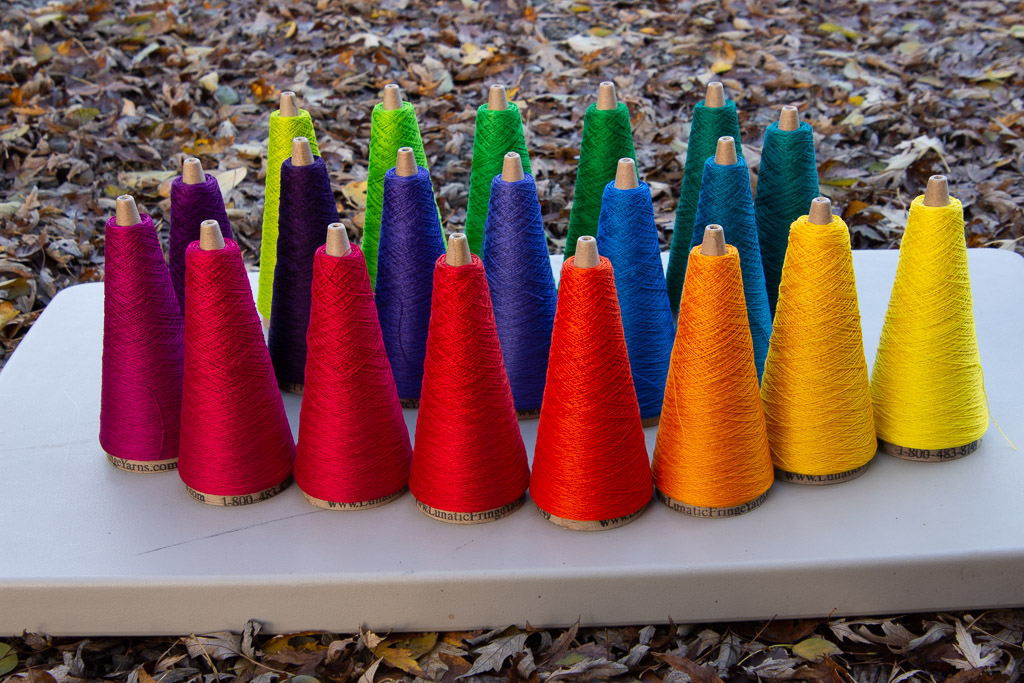 These are yarns from Lunatic Fringe and all appear in the latest scarf I wove. Hopefully I’ll get to that blog before too long.
 Meridian Jacobs' Blog