Hedgerow, Grazing, and Citrus

We’re still in the gray gloom of drizzly fog, but we accomplished some outdoor tasks that make me feel as through I accomplished something.
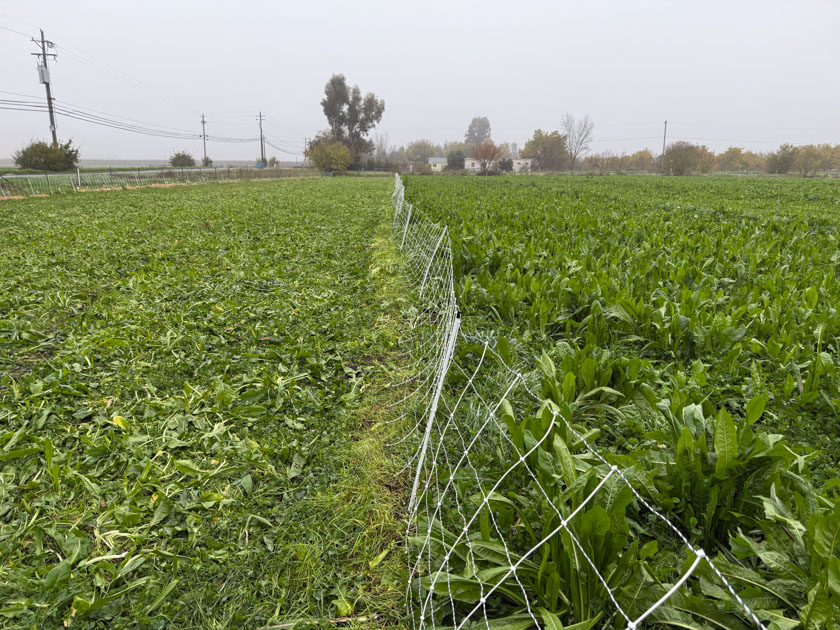
Green pasture with net fence separating two paddocks.

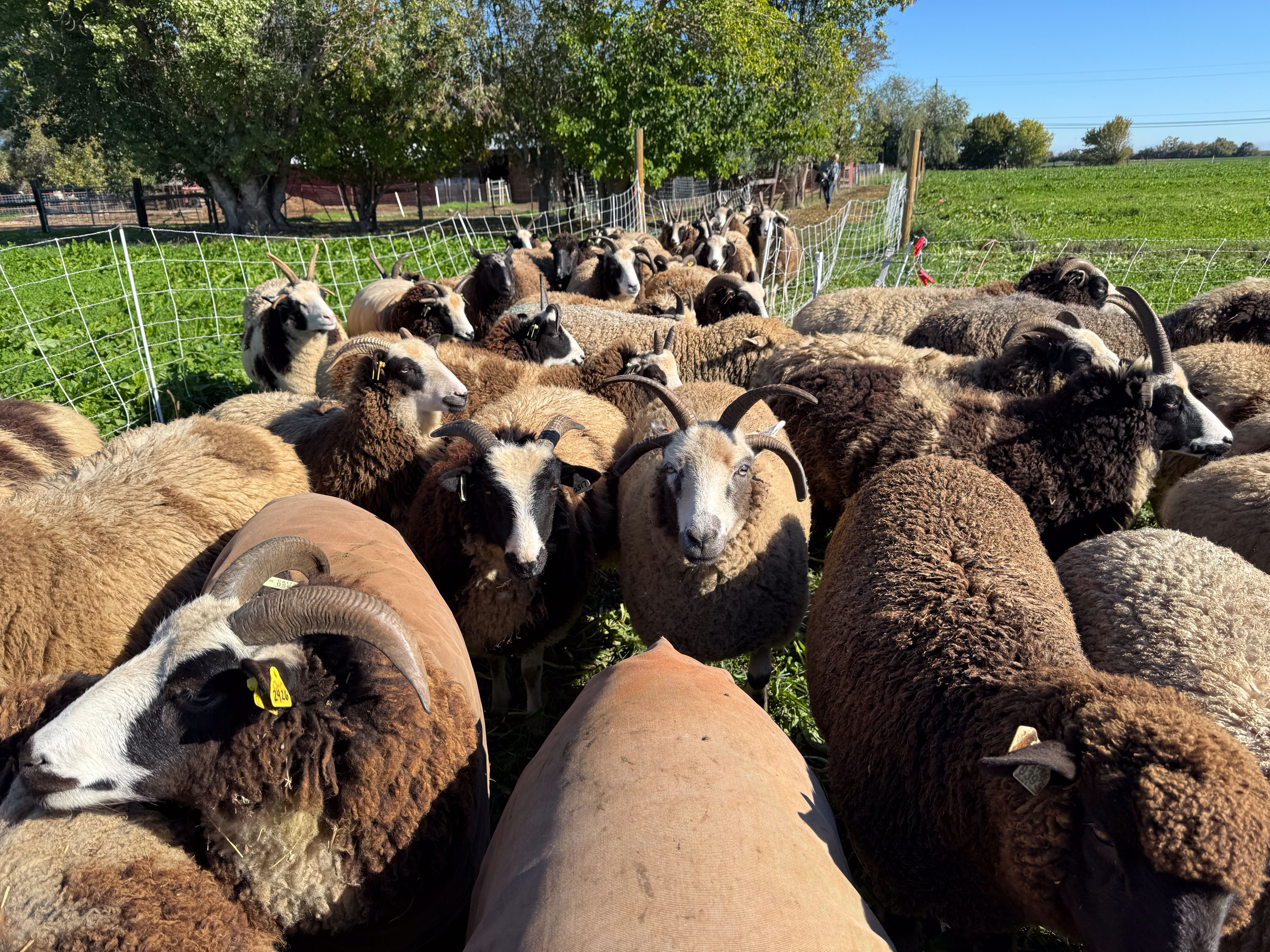
These photos were taken on Wednesday, and on Monday I had moved the sheep from the northwest paddocks to the southeast along the road. This is Paddock 20-21 (numbers assigned to indicate the irrigation valves and checks). I had just fenced off the hedgerow we planted two weeks ago (blog post).

Green pasture with white net fence separating it in half. Sheep are grazing on the left.

This that same fence but from the south. You might notice that it looks as though the fence is leaning the same direction but this is the opposite view. I have developed the habit of leaning my net fence away from the field the sheep will be in. It is rare that a sheep gets tangled in the net fence, but if that happens there is often a bad outcome. I think it is less likely for those upright horns to snag the fence and cause the sheep to panic if the fence is tipped slightly away when the sheep may be grazing close to the fence, as in a field with this much growth. (The previous photo shows how closely the sheep were grazing to the fence on the other side.) It’s also more likely when the charge on the fence is on the low end, and we need to do some troubleshooting on the connections in this field. So I always tip the fence.
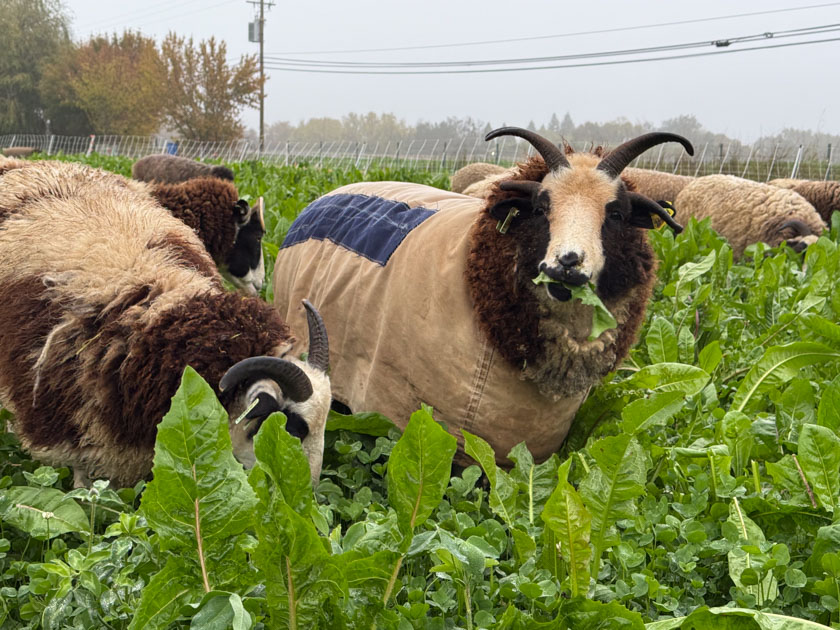
Harmony, one of the ewes whose coat was changed recently (last post).

You all know Jade, the oldest sheep here, and a big pet. The plants you’re seeing are chicory and clover.

Orange tree growing through a wooden fence.

After morning chores I was looking for the wheelbarrow to use in the later project of working on the hedgerow. It was near the shop where I had been raking leaves, and I thought that, since it was here. I should rake up fallen lemons before I took the wheelbarrow away.

This tree has been here since we moved to this property in1999. I don’t know anything about growing citrus, but I think the tree may have been a combination of a few different citrus on a common rootstock. Maybe it’s always been just one variety, but I got confused with the different looks that seem to show up at other seasons. In any case, I was paying attention this month when we had loads of fruit on the ground. They sure looked like lemons, but were nothing I wanted to use. Lemons are not supposed to be sweet but I would describe these lemons as nasty. You can see a lot of fruit on the tree now, but it is not nearly ripe, and I know those are oranges. I just looked up lemon rootstock for orange trees and found this video about pruning out those rootstock suckers, which in this case had grown taller than the tree. I was right. The branches that had started as suckers but we hadn’t trimmed were taller than the tree. Do you see that empty spot on top and the one on the right? That is where branches had reached through the rest of the tree and were producing fruit. It was quite a job to cut those away as the branches had grown through other branches and they are very thorny. It took me a couple of hours to finish that job and by then it was about time for Raquel to come.
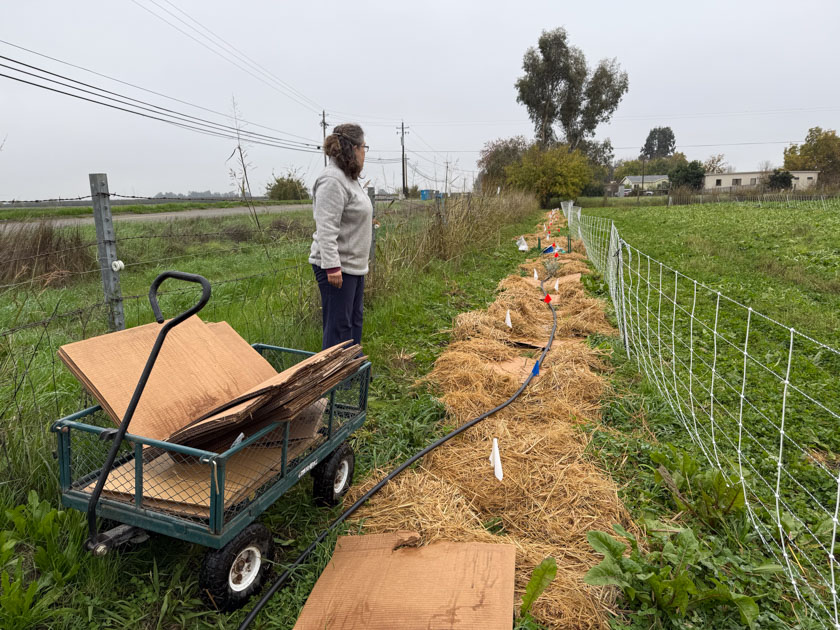
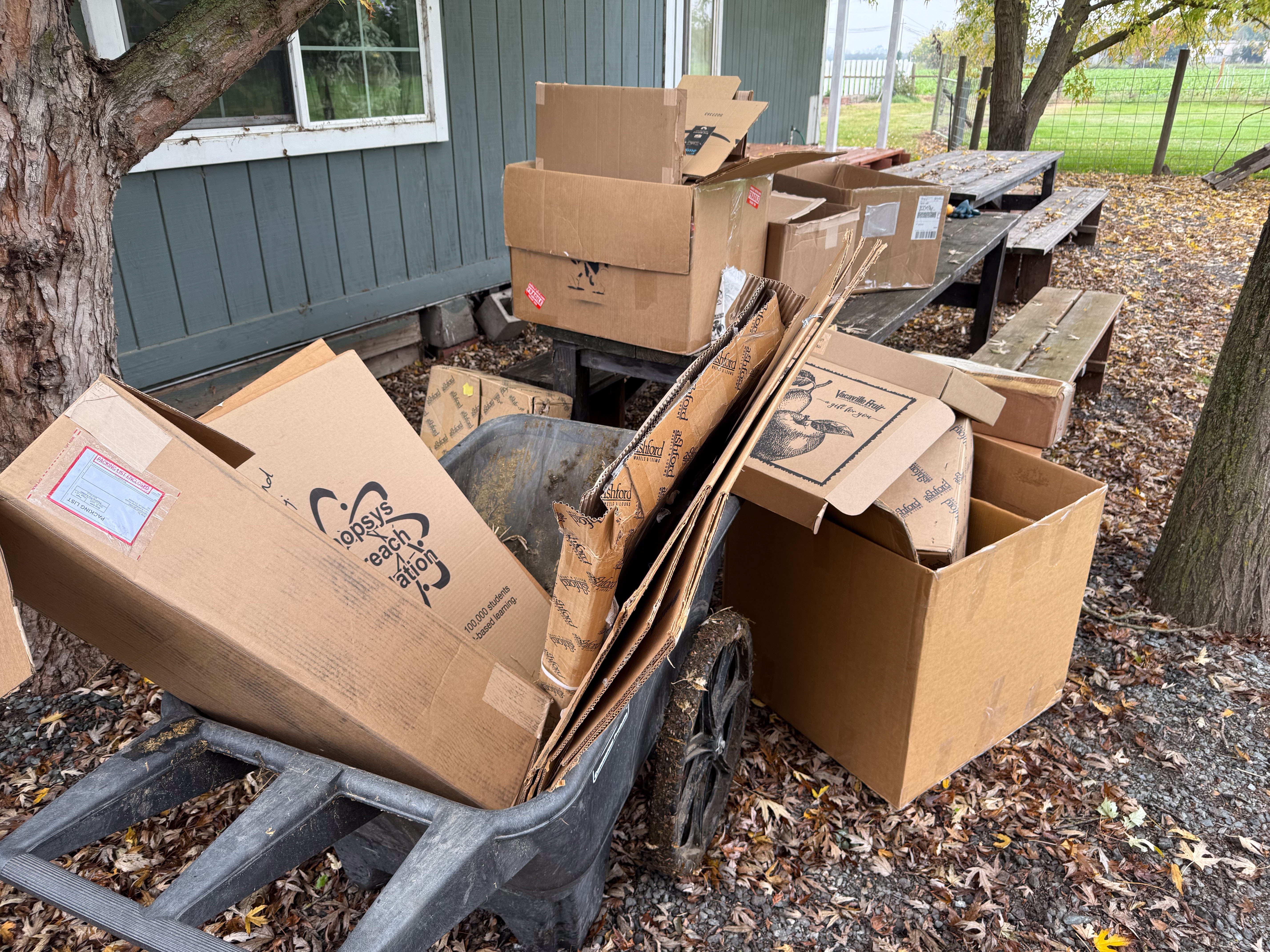
Raquel is a Farm Club member who went out of her way to help figure out how to order what was needed to install a drip system to irrigate our newly planted hedgerow. I had also picked up more cardboard from a friend so we could continue the mulching that we started. We rolled out 250′ of 3/4″ tubing and secured it with u-shaped wires.
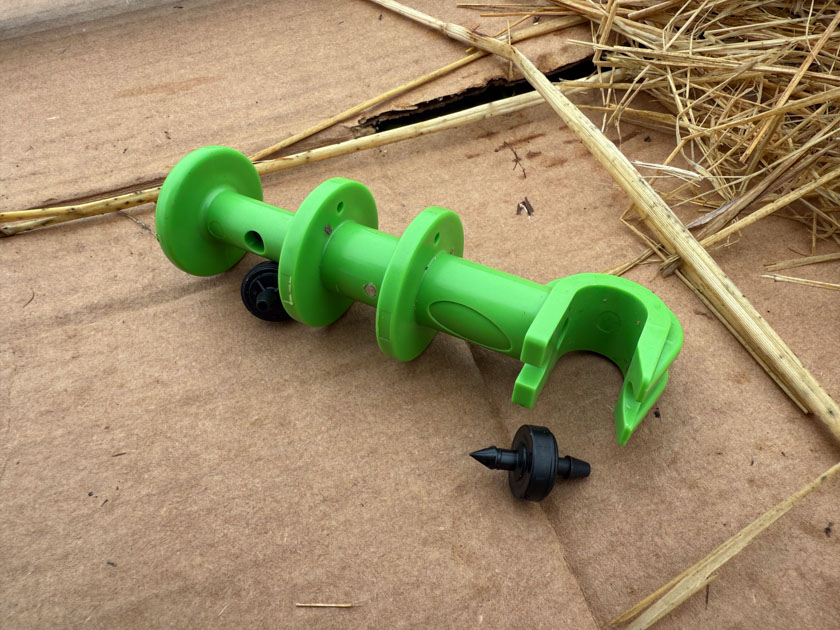
This is the tool that is used to poke holes at the appropriate places in the tube and then insert the emitters.

We had cardboard and straw mulch around the plants, but with the new cardboard we were able to cover space between the plants.

We finished the job…sort of. We used all the 250′ I had ordered. Someone (that would be me) had not measured correctly–a fact which I realized when I installed the new electric net fence for this strip. I thought we had a 250′ hedgerow, but it turns out I was 40′ short of fence. So we knew when we started on this yesterday we would run out of the main tube. We wanted to get as much done as we could though. I have ordered more tubing and all we have to do is connect it to this one and install more emitters and we’ll be good to go. It’s so damp and drizzly now that I don’t have to worry about more water on these plants right away.

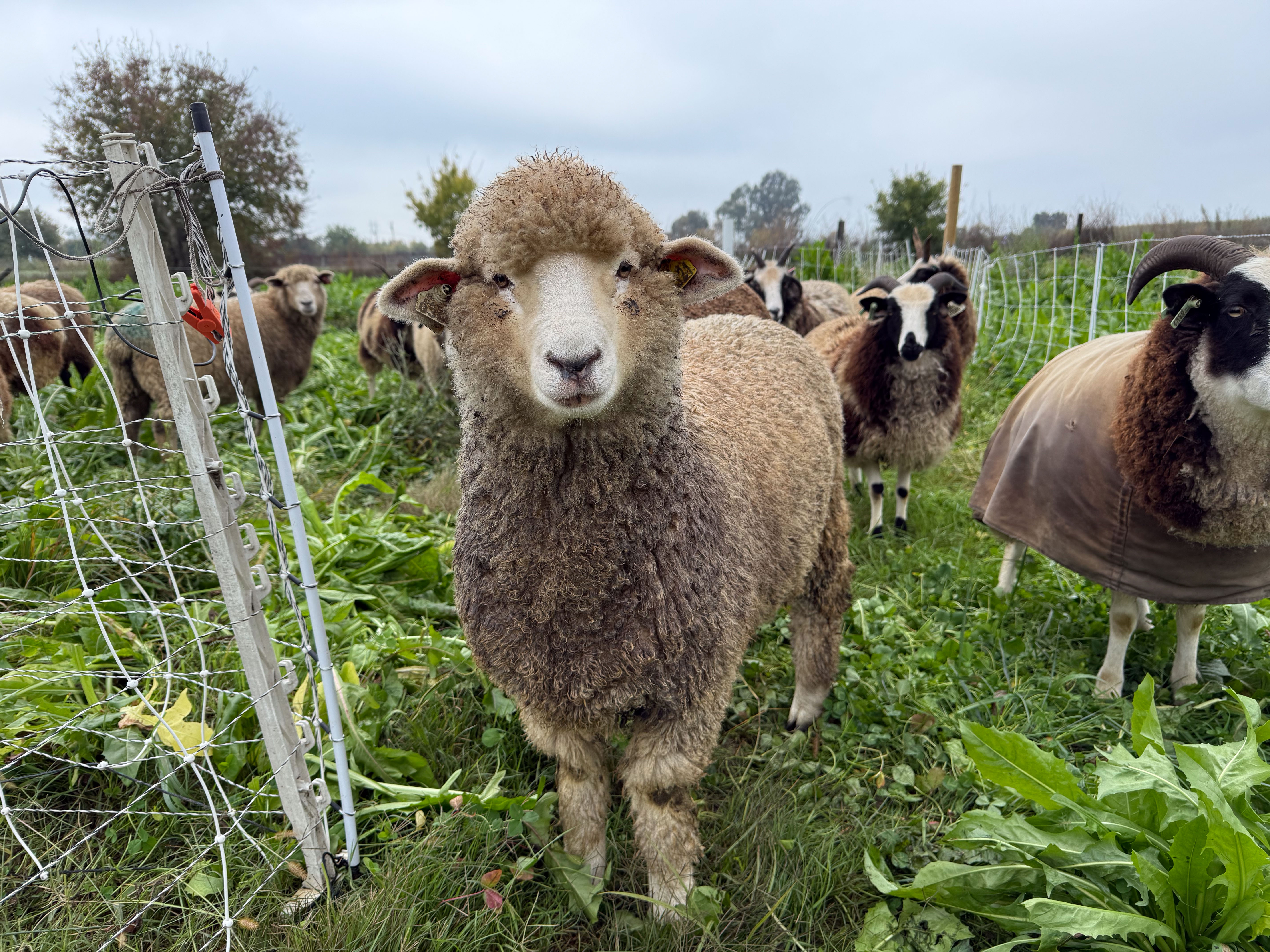
Random Farm Photos – Yesterday

This morning I shared photos of our grazing set-up now that it’s one year after the big project began. I just looked back through my blog and found this post when we seeded. That was November 19, just hours before we had a lot of rain. A lot has happened in a year. This winter it feels like a whole new experience because prior to this project I would not have been grazing in late November and would be waiting for spring.

Yesterday about noon I walked out to check the fence. Some of the sheep were on their way in.

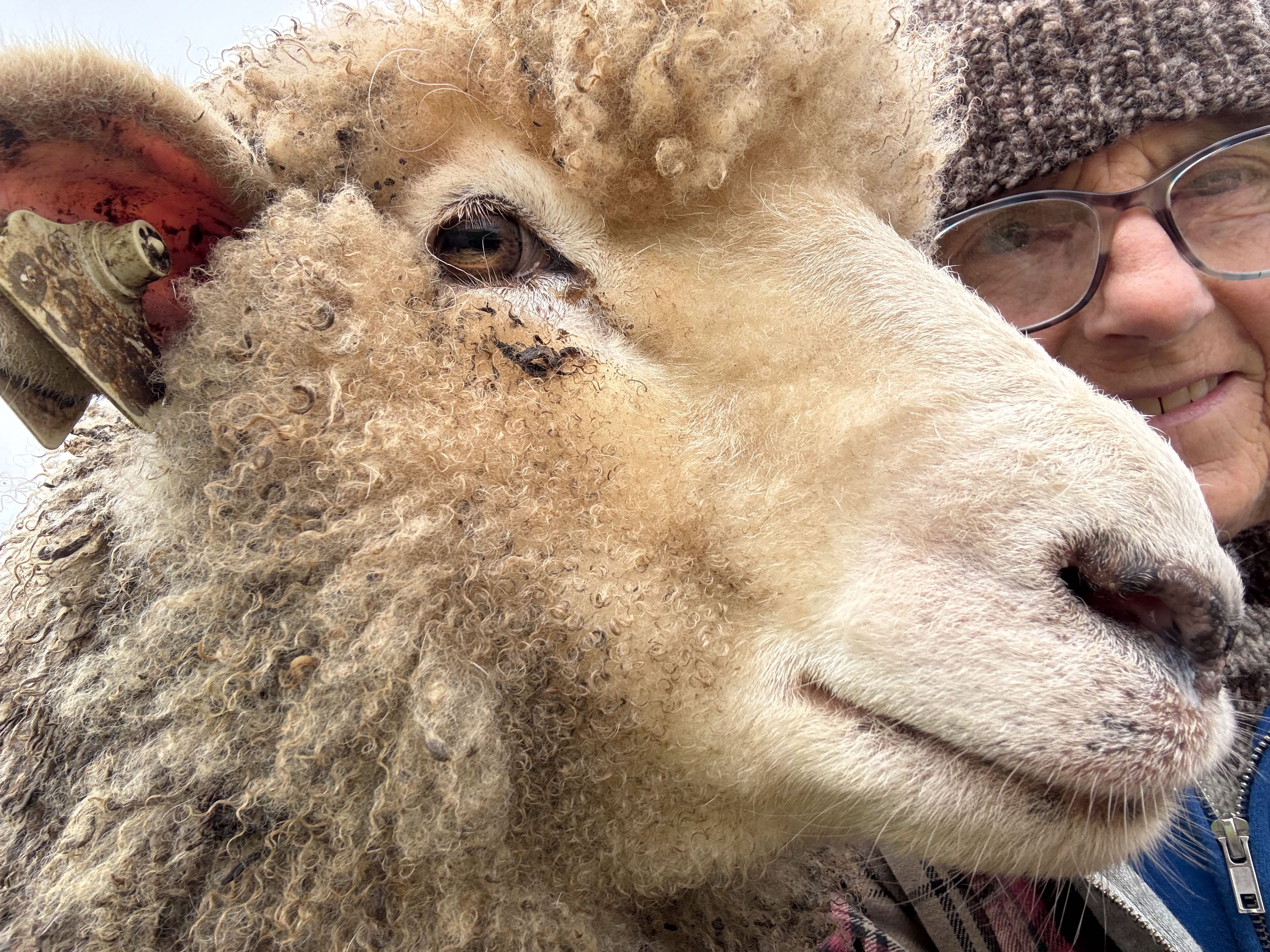
This is the corner of the new paddock I’d just set up. I think I mentioned something in previous posts about acquiring five new sheep. This is one of the three Corriedales, so far named Corri 1, Corri 2, and Corri 3. Yeah, not very creative. This is Corri 3…

…and she is one of my best friends.

Sparky is another.

I have been taking photos of individual sheep to update the pages on the website. I have updated this page with the current ewes, but haven’t included all the new photos yet. The ewe in this photo is Ophelia, a yearling.

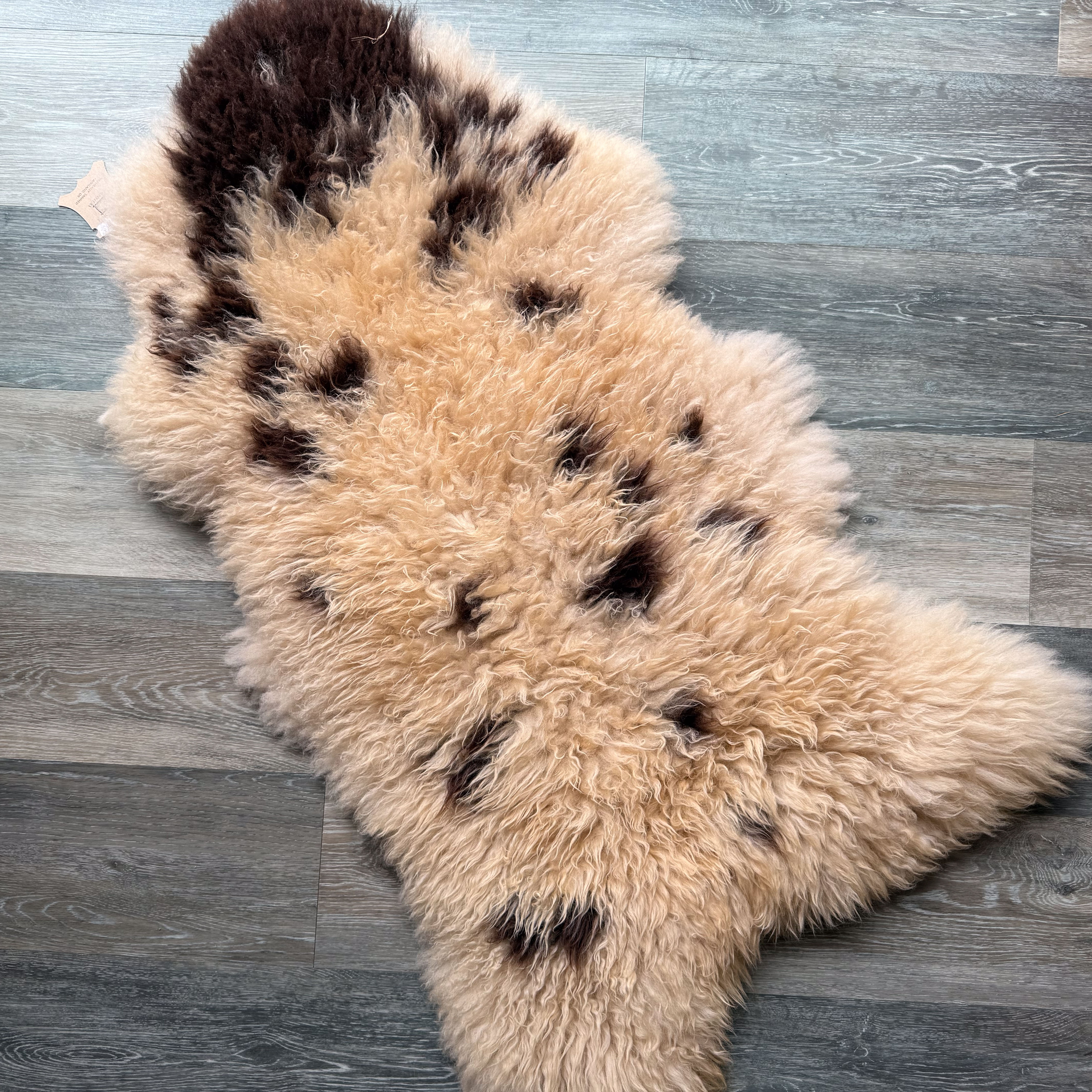
I also took photos of new lambskins yesterday. I stopped in the middle of writing this to list them here.

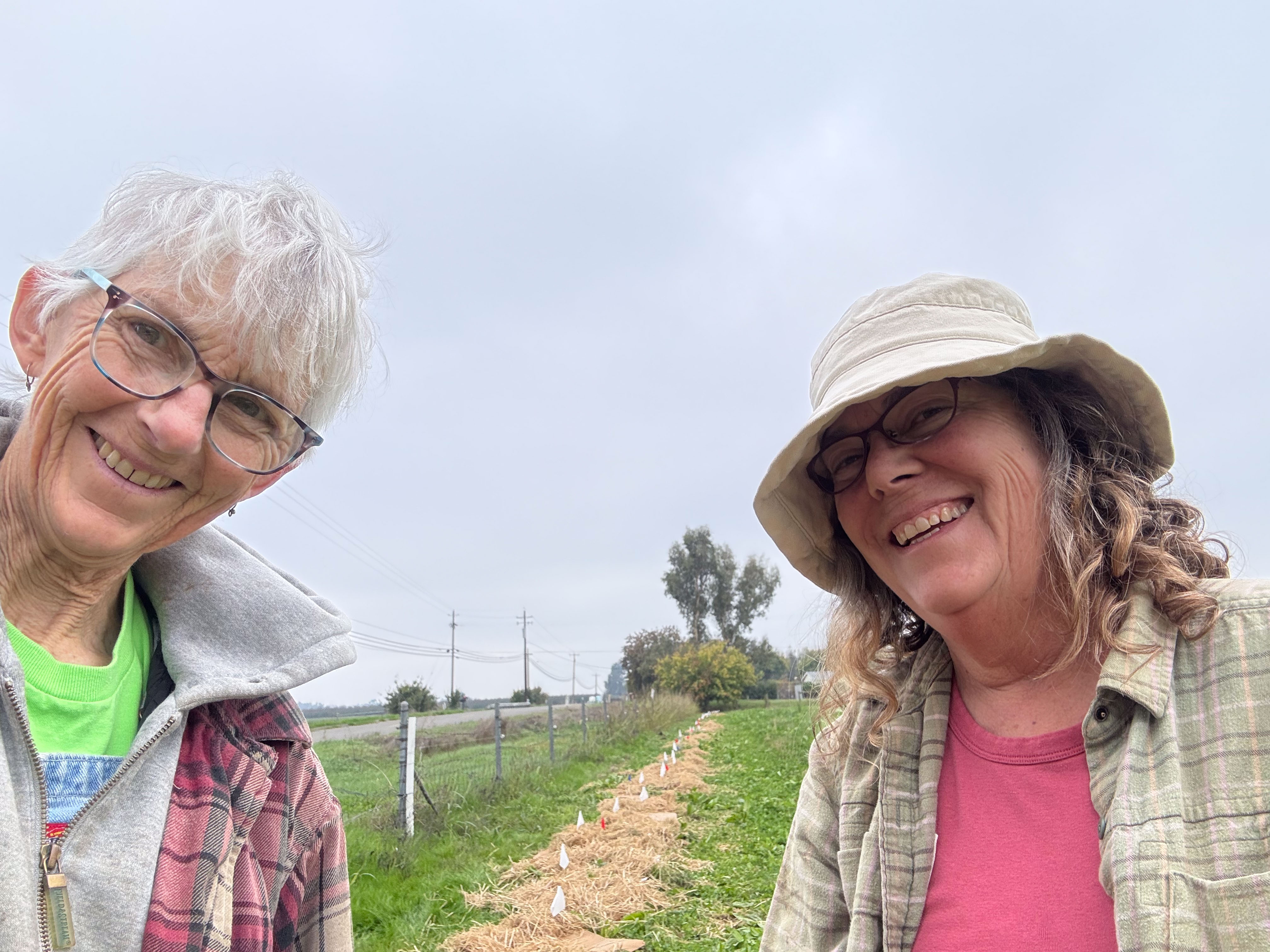
The hedgerow project wasn’t completely finished yesterday. I found more cardboard and cut it up for the remaining 19 plants and added more straw. We hadn’t got them all watered yesterday so I brought out a wagon to haul more water at one time.

I finished just as the sun went down.

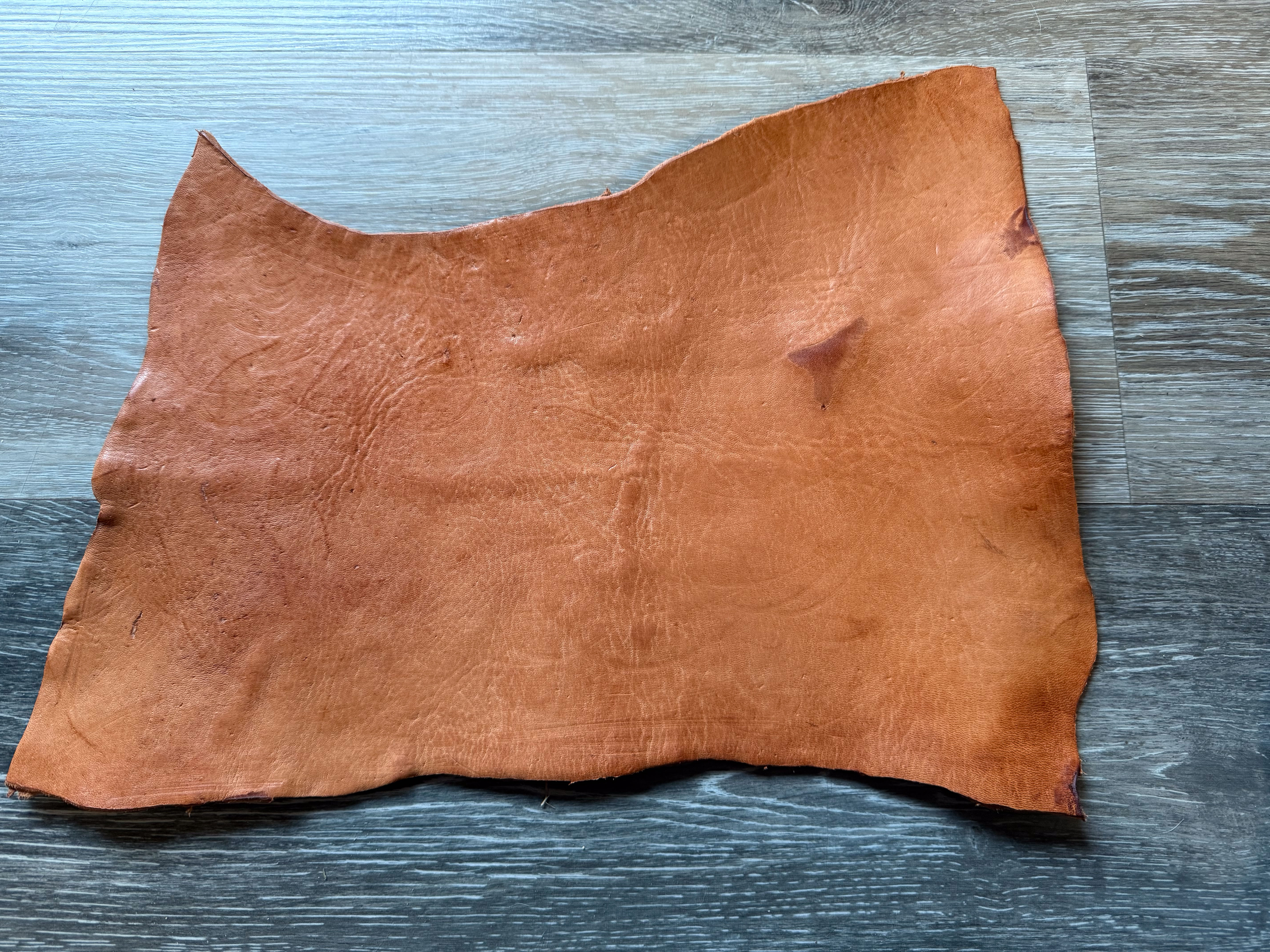
In the evening I jumped on Zoom for my final Basics of Bark Tan class presented by Traditional Tanners where I have had the latest sheepskins tanned. This is leather I made from deerskin! I highly recommend this class. It is very well presented and a lot of fun!

Creating a Hedgerow, Part 2

I introduced our hedgerow project in the previous post. That was Friday. Today, Sunday, one of the Farm Club members who had helped on Friday had offered to come back to help with the project. Even though the ground is moist from recent rains, the new plants would benefit from water right after planting. Also, we needed to add a cardboard layer to the mulch. Cardboard, covered by straw or other material would provide more of a light barrier which will help prevent or at least slow weed growth.

Raquel brought a barrel that she uses to catch rain water. There is a spigot on the bottom to fill containers. She thought it would be a good idea to fill this so that if more people came to help we wouldn’t all be waiting to fill buckets at one hose. It turned out to be just the two of us but her barrel idea was still helpful. We brought a hose from the other side of the fence to fill the barrel and could then work from that. Raquel’s idea was to use gallon milk jugs so they could be tipped over at each plant and direct the water to the base, while we were also working on the cardboard part.

This morning started out super foggy. This is a view of the paddock that I opened for the sheep yesterday. They have eaten or trampled most but will have one more day here.

This is one of smallest plants we put in Friday. It is a Western Redbud, which is not a small plant when it has grown up, but right now it’s only a couple of inches.

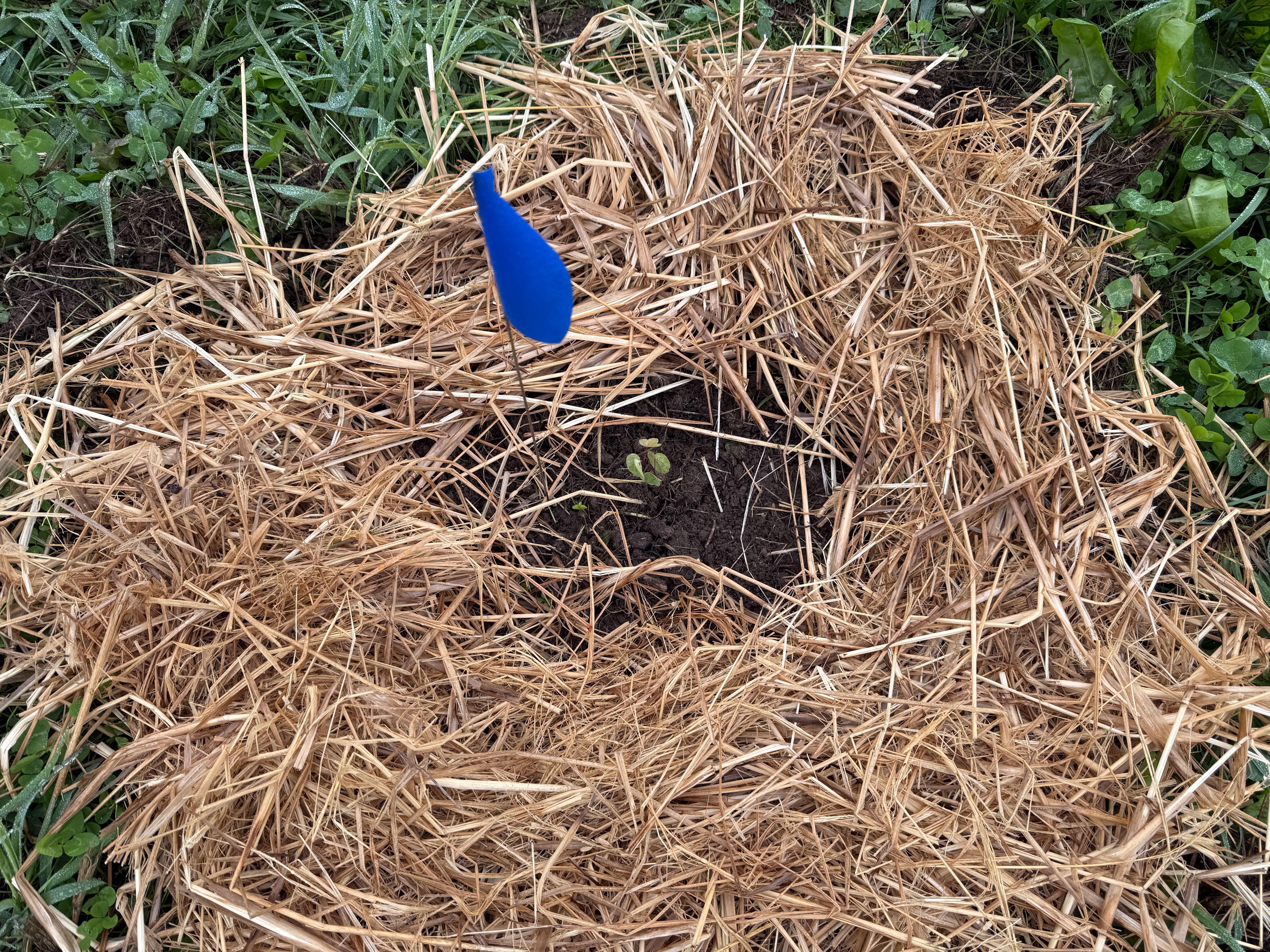
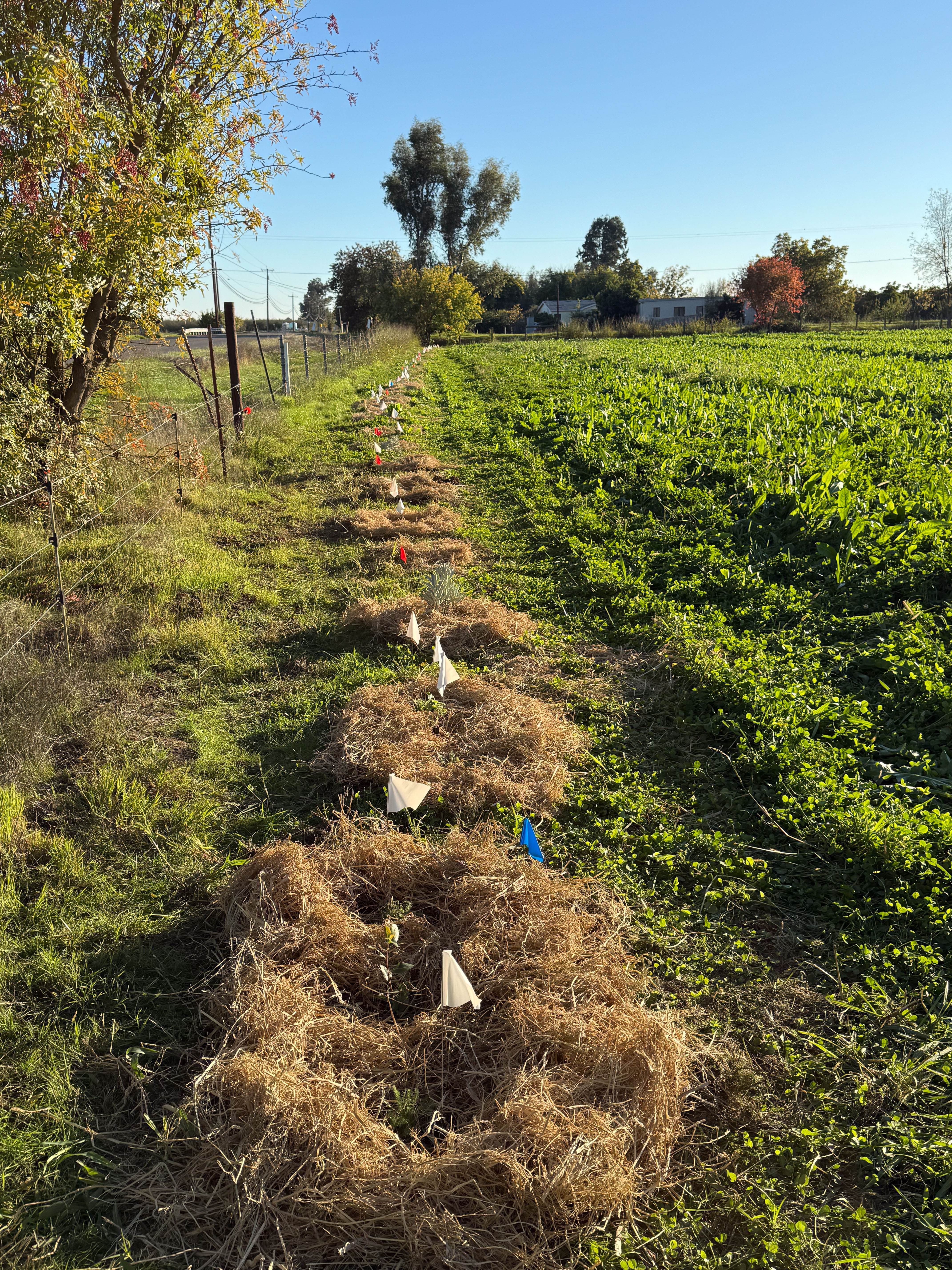
This is another redbud, marked with the blue flag, yarrow, and deer grass.

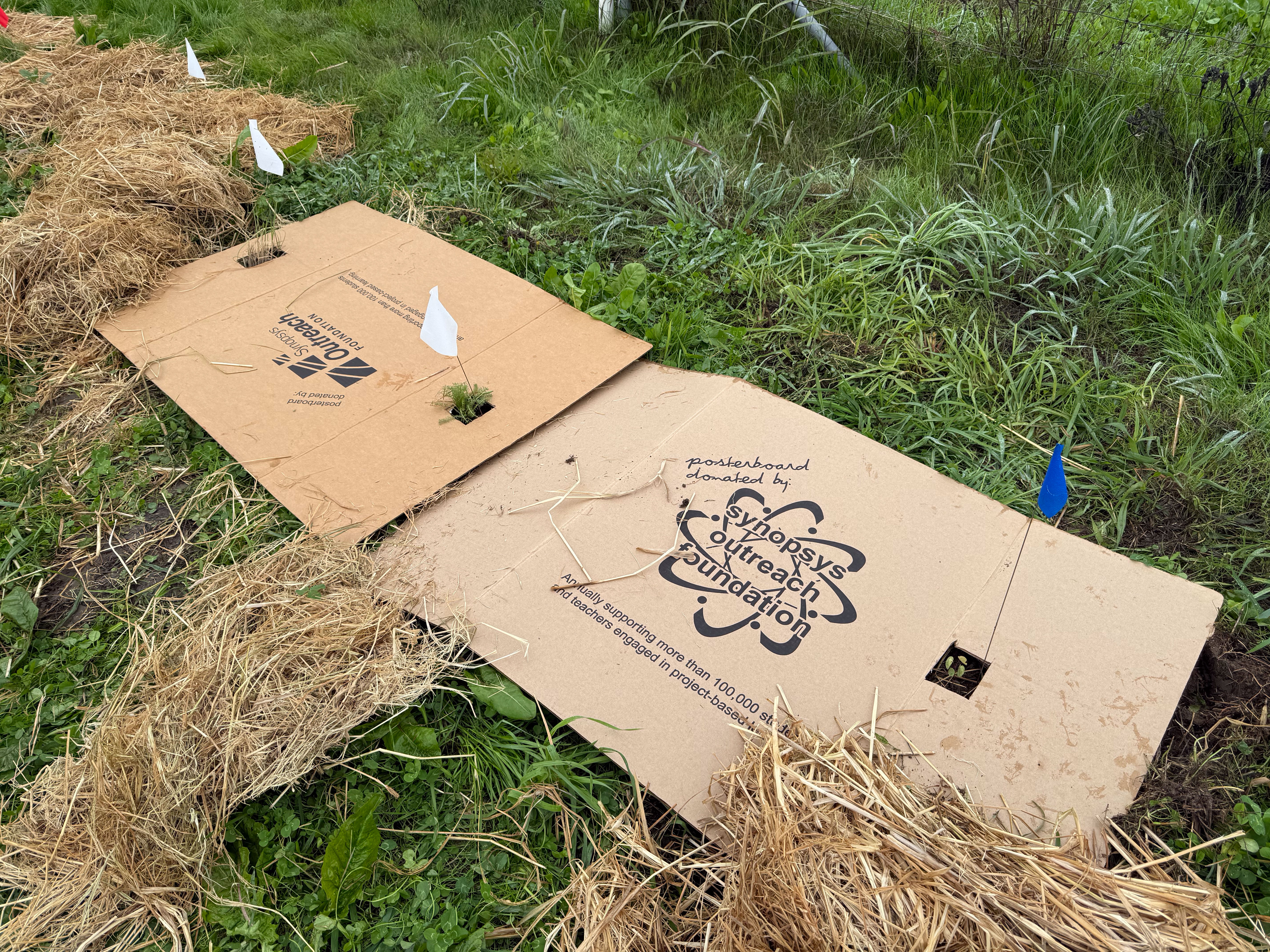
Some of the cardboard was cut in strips and positioned in a triangle around individual plants. These three were close enough that I cut holes in two larger pieces to provide the first layer of mulch. We had put straw around all the plants on Friday, but today we moved that to add the cardboard.

Where did we find enough cardboard? I thought that I might have to buy some. There was a box of science fair boards left over from Dan’s years teaching seventh grade science. And there are a lot of boxes I have saved because you never know when you’ll need a box! I do use a lot of boxes for shipping wool, etc, but I don’t think I’ll need any of these larger boxes or odd shaped ones for the rest of the year. Raquel and I cut them apart and stripped off all the tape and plastic labels.

We used the cardboard strips around the plants or cut holes in larger pieces. That blue barrel is what we filled with water from the hose near the house.

Raquel made trips with jugs of water. We let them drip while we continued with cardboard.

Almost finished!

We covered all the cardboard with more straw. The project is still not finished. You can’t tell from the photo but there are 19 plants without cardboard and about that many that didn’t get water today. That will be tomorrow’s project for me.

Creating a Hedgerow

Our pasture and irrigation project that began last fall included a plan for a hedgerow. This project was included in a block grant from CDFA administered by Fibershed. So when the time came to implement the hedgerow plan, people from Fibershed volunteered their time to help make it happen, along with the RCD (Resource Conservation District) representatives.

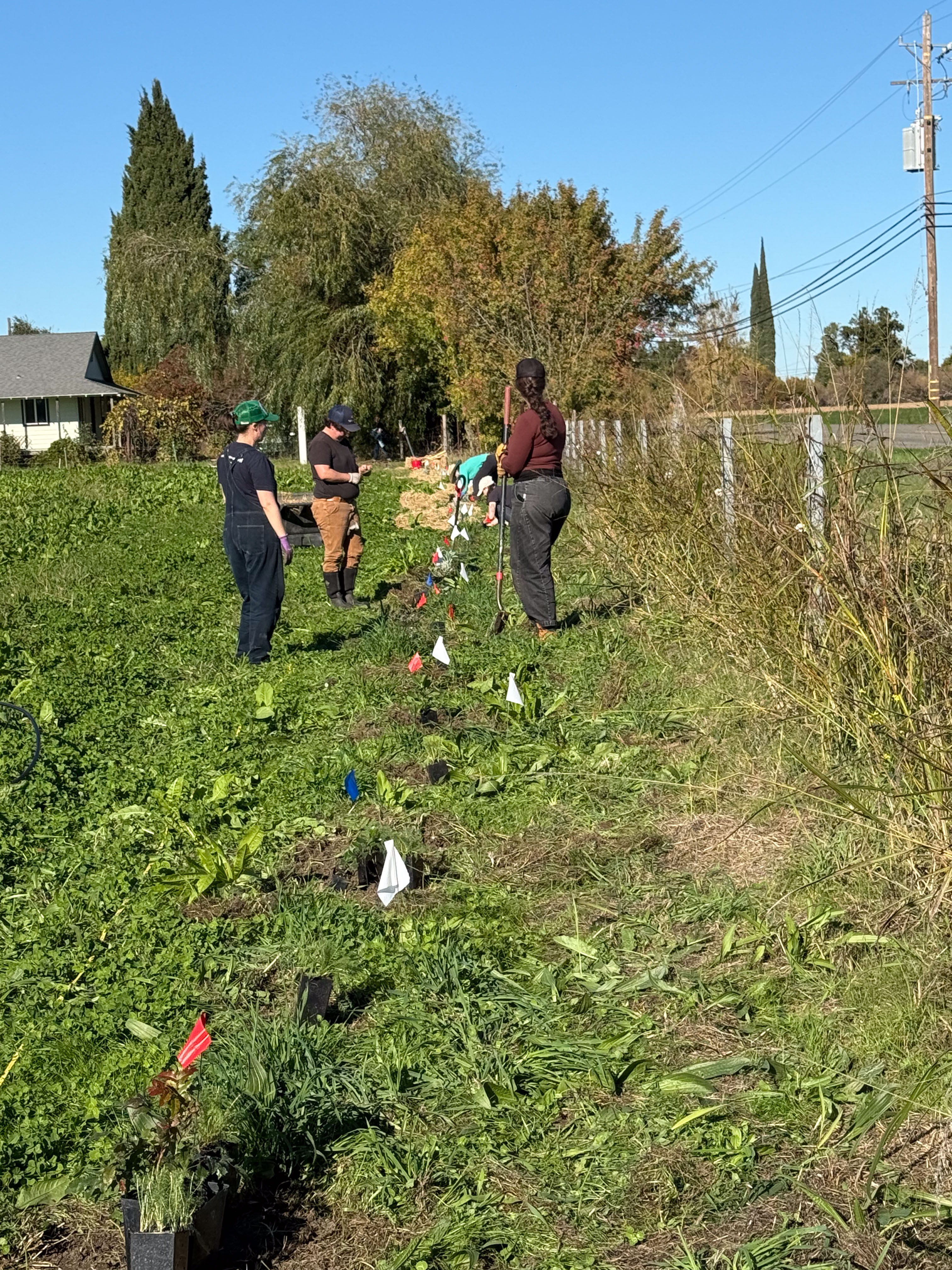
The hedgerow was to be planted inside the east fence of the pasture. RCD experts had come the day before with most of the plants. We placed them approximately where we thought they should be planted and marked them with flags. Some are small and if we hadn’t flagged them it would have been like an Easter egg hunt to find them all.

After a foggy start to Thursday we had warned everyone to wear rubber boots. Friday was sunny and dry! The first task was to clear space where each plant was to go in the ground. The biggest impediment to getting a good start will be the amount of competition and shading from all the other vigorously growing plants. Even a plant we like (clover for example) will be considered undesirable in the root zone of the new plants. I remember from somewhere, “A weed is a plant out of place.”

This was quite an undertaking. We planted 80 California natives in the 250′ row.

The plants include three to five each of Coyote Bush, Oregon Grape, CA Lilac, Western Redbud, Golden Current, Deergrass, St. Catherine’s Lace, Toyon, White Sage, CA Fuchsia,and 50 Yarrow.

The pasture has been growing well, the soil looks healthy, and everywhere you dig there are earthworms. We have had recent rain so it’s moist, but we will have to make sure that we irrigate these new plants. That’s a project for a couple of days later.

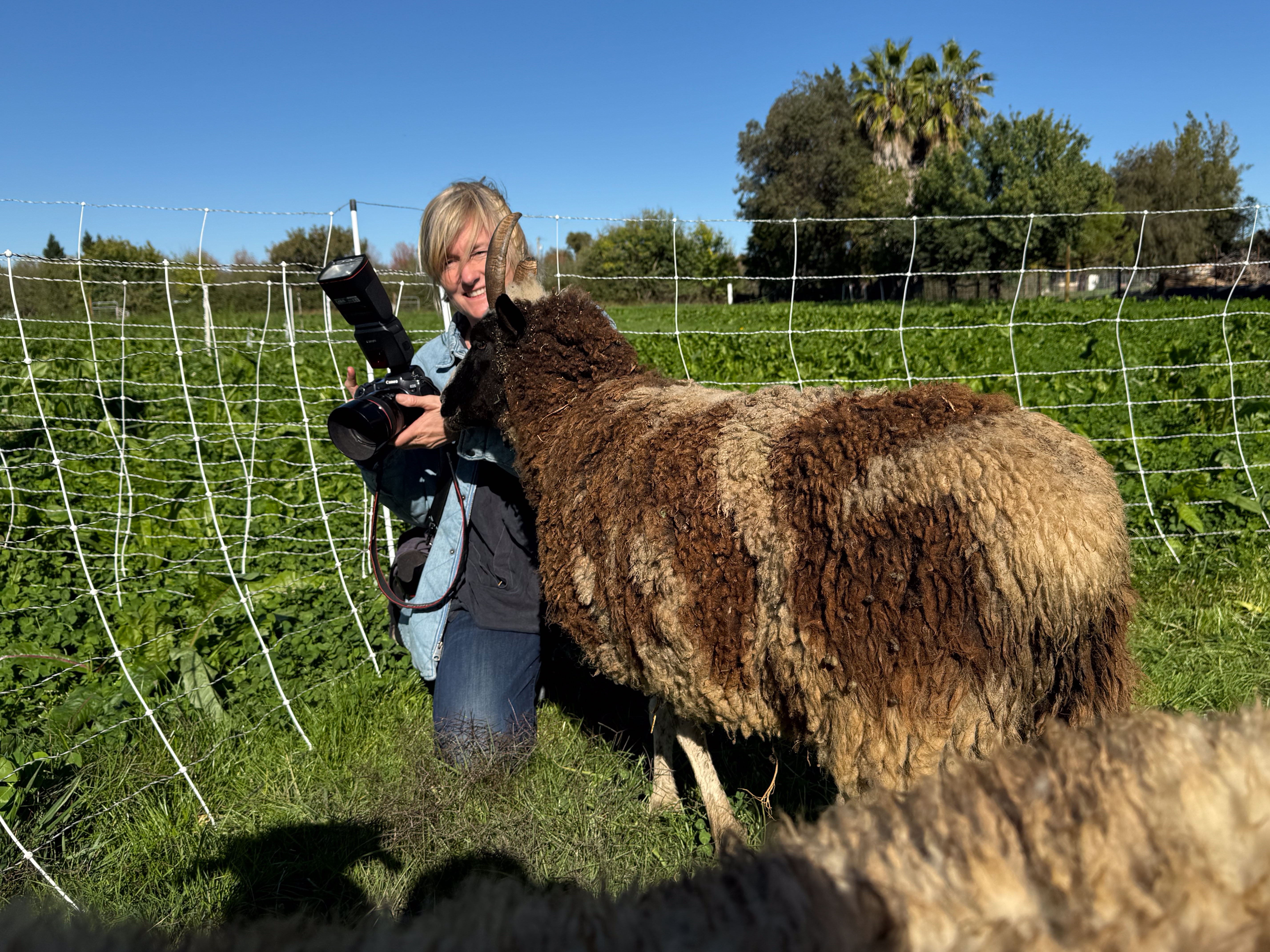
The photographer who has been with Fibershed since the beginning, Paige Green, and I wandered out to visit the sheep and take photos.

Jade provided Paige with the perfect cover for getting photos of sheep that might otherwise be wary of an unfamiliar person.

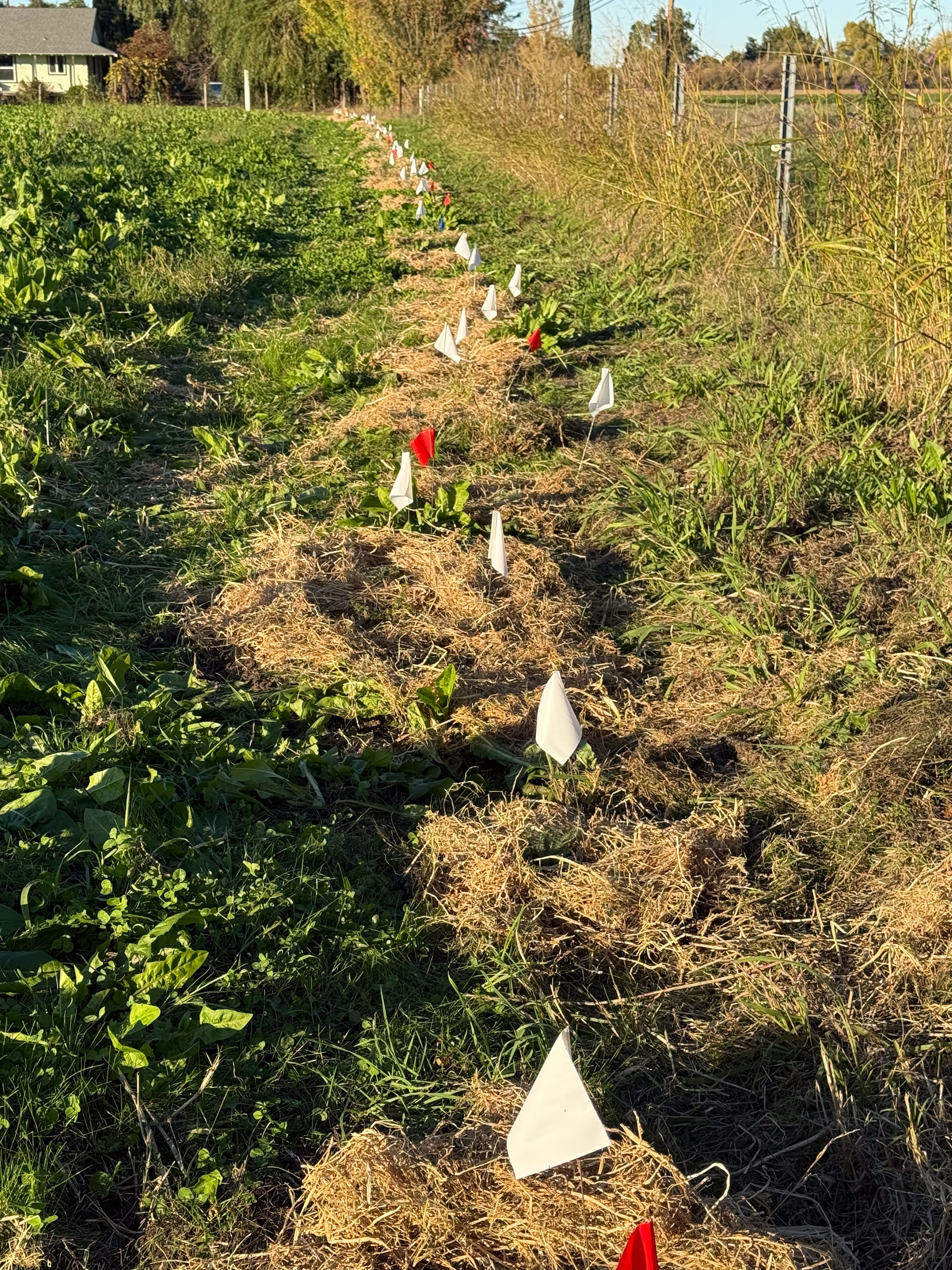
Back to the hedgerow. View to the south when we were finished.

View to the north. Each plant was surrounded by rice straw to provide mulch with the intent to prevent weed growth. There is more to that story…to be continued in the next post.