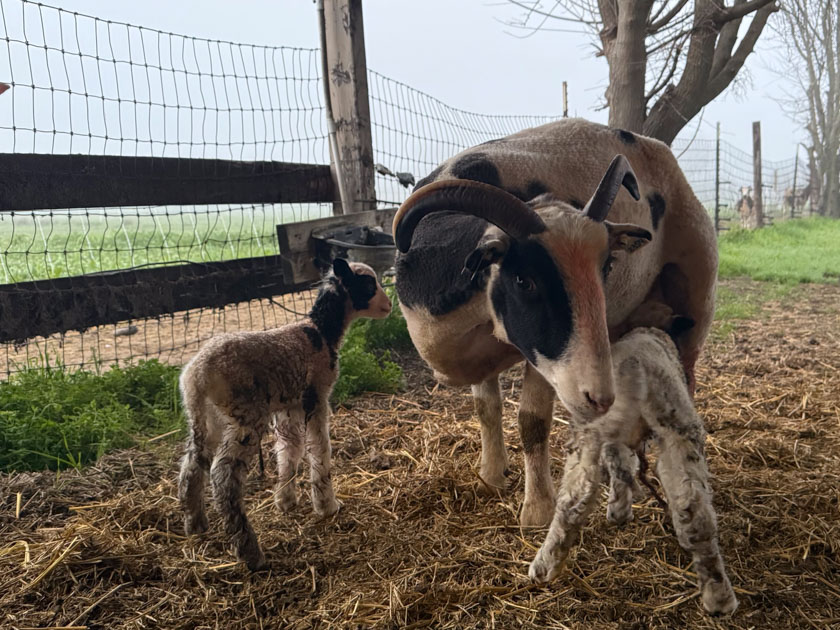
Two rams got in with the ewes on September 1. One ewe was cycling and was bred (as confirmed by the vets on ultrasound day. We knew that she would lamb in the week between Shearing Day and the Farm Club Retreat. I went to the barn the morning that we were going to leave and found lambs!
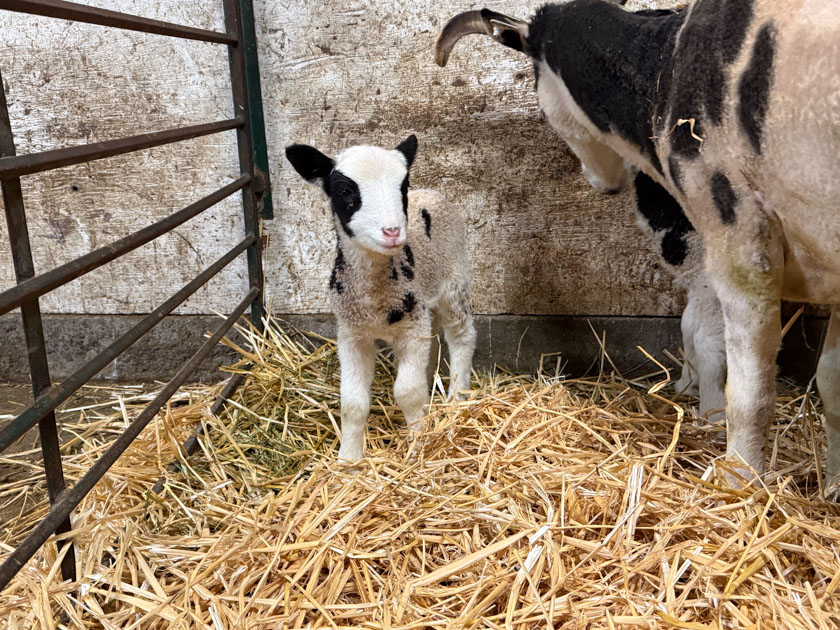
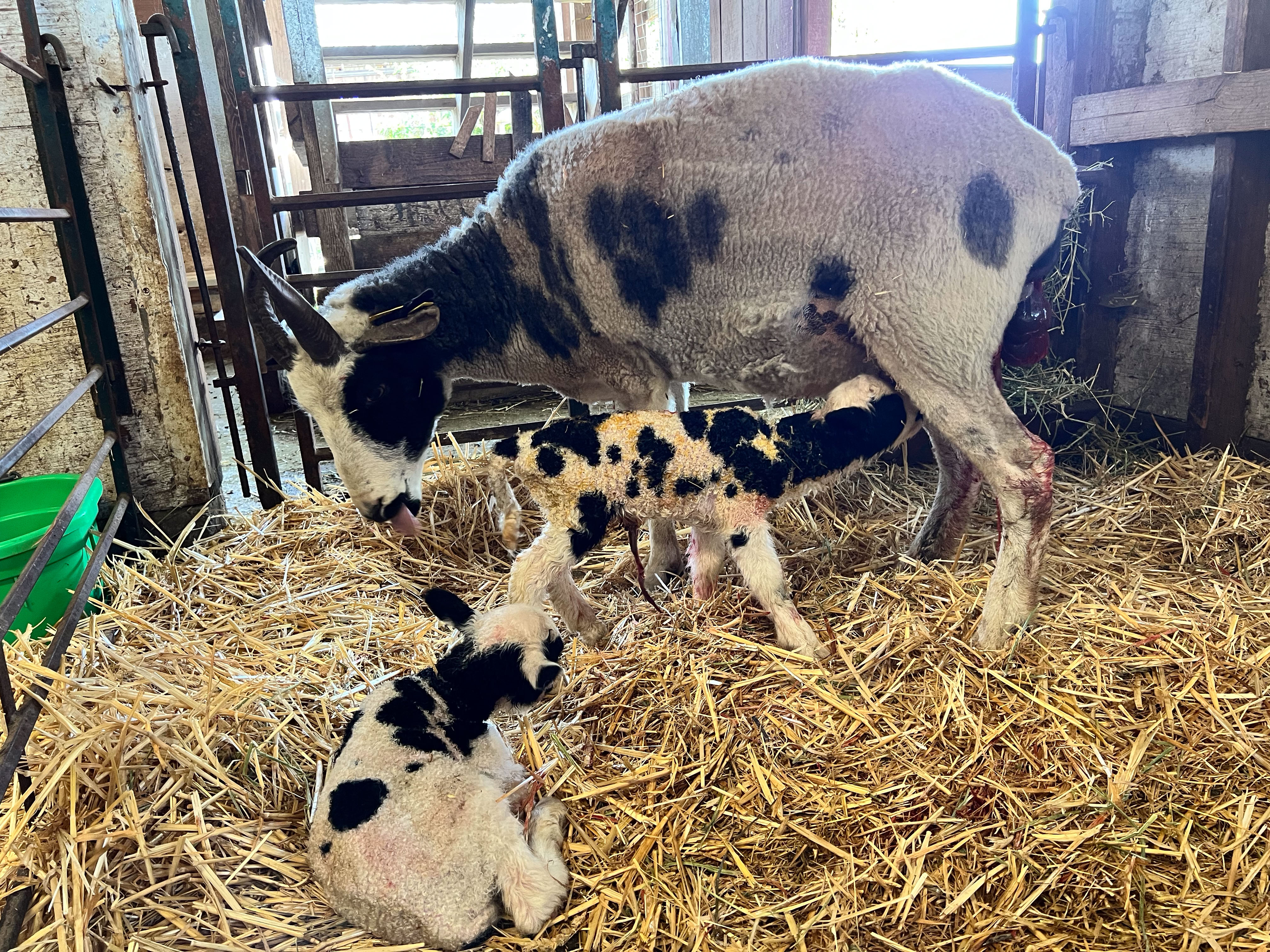
Lambs up and nursing, just the way I like to find them! Good job Hailee!
acobI brought the lambs and ewe to the barn. The ewe lamb weighed 8.3 pounds and the ram weighed 11.2 pounds. Dan was happy because he didn’t have to be on lamb watch while I was gone.
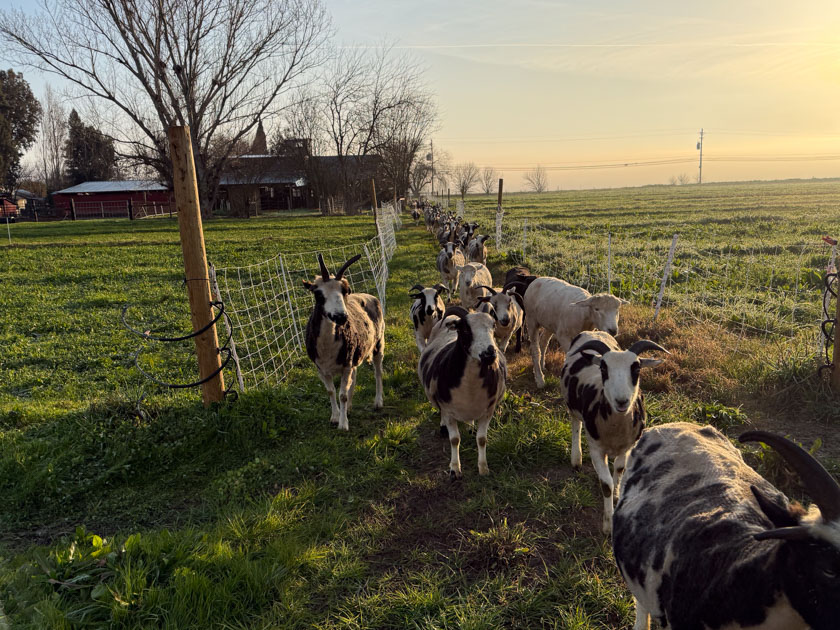
After I brought the ewe and lambs in went out to move the fence and let the sheep into a new paddock.
Even though the sun was up, the fog started to roll in again.
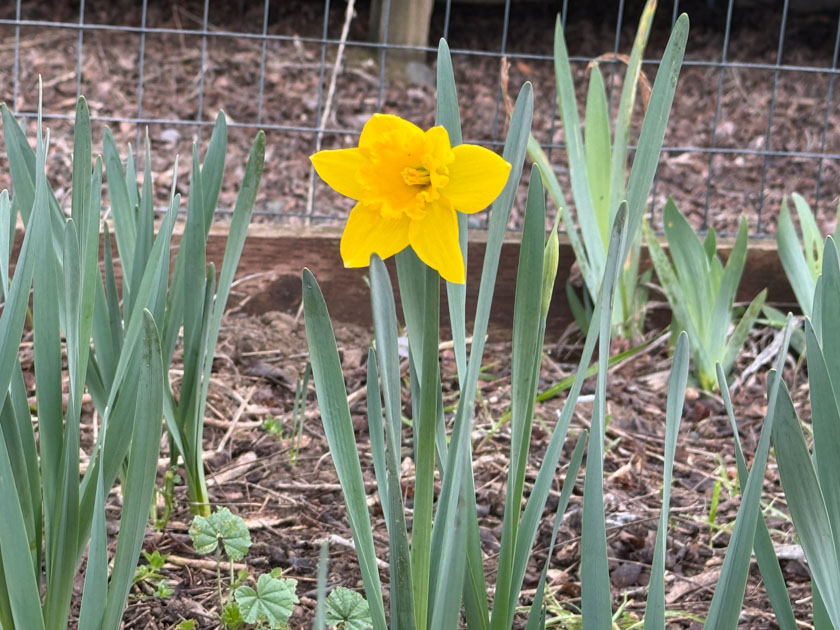
First daffodil, brightening up the gloom of fog!
I was gone from Friday through Sunday. I took this photo Sunday evening. The next lambs aren’t due for three weeks.
Most of the lambs came as planned during the month of March. There were some late lambs, also expected, but not originally planned. That is because I unexpectedly acquired a ram in late November.
Ginger Lynn’s Eli was sired by a Meridian ram that I sold a few years ago.The breeder of Eli sold him to someone who unexpectedly needed to re-home him due to a move, so we drove to the Redding area to pick him up. When I got him here I decided to put a few ewes with him. We hadn’t bred the whole flock this year because of the pasture renovation project that has been described in other posts. A 5-month gestation means lambs in late April or early May.
Here is Eli after shearing in January. He is not here anymore because I returned him to the breeder who wished she had not sold him to the other person. I hoped for some nice lambs.
This is lamb # 2555 born April 27, the only ewe lamb from this group. Ginger Lynn’s Eli x Meridian Belle. Belle is my granddaughter’s sheep and this lamb is sure pretty, so she will stay and I’ll let Kirby think of a name.
Jasmine was next to lamb with a ram lamb but I can’t find a photo right now.
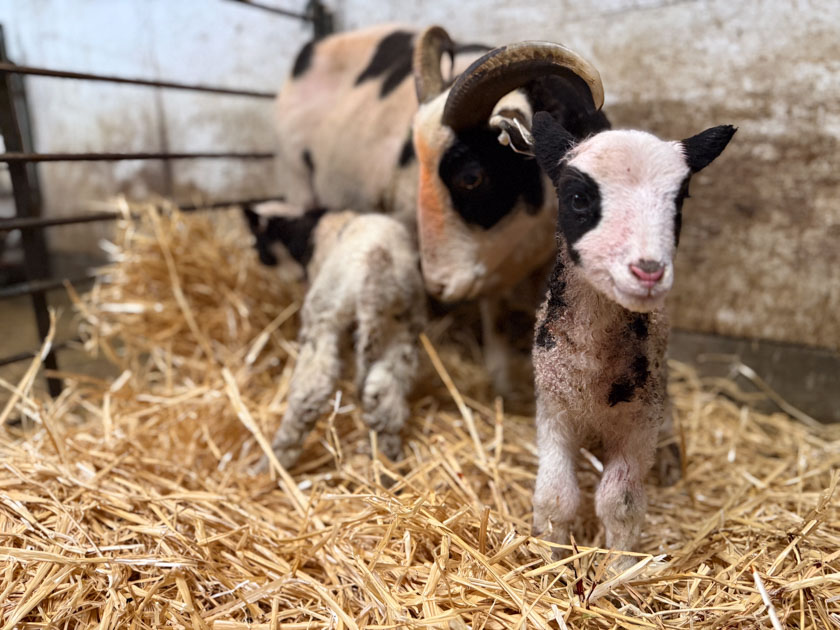
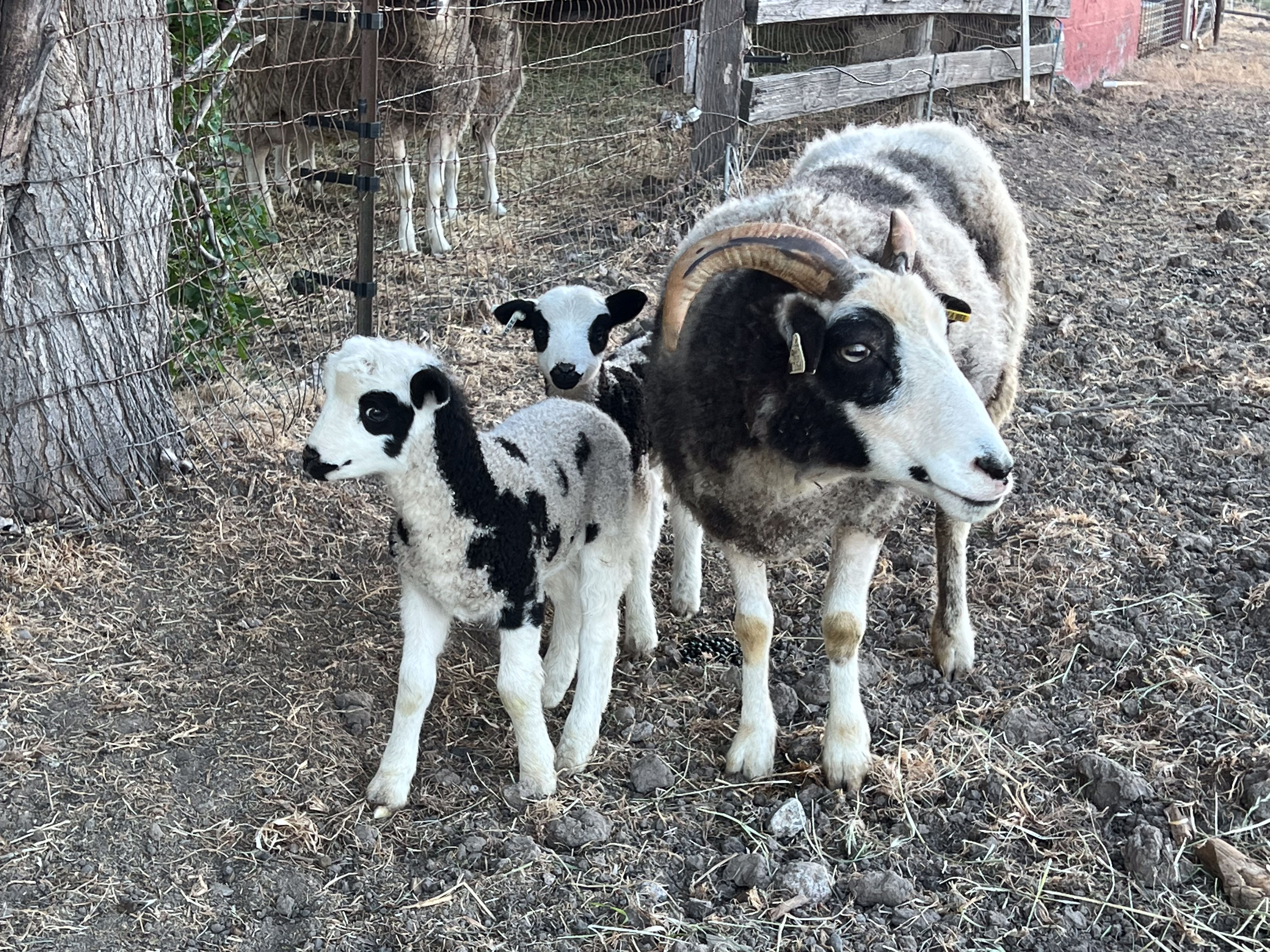
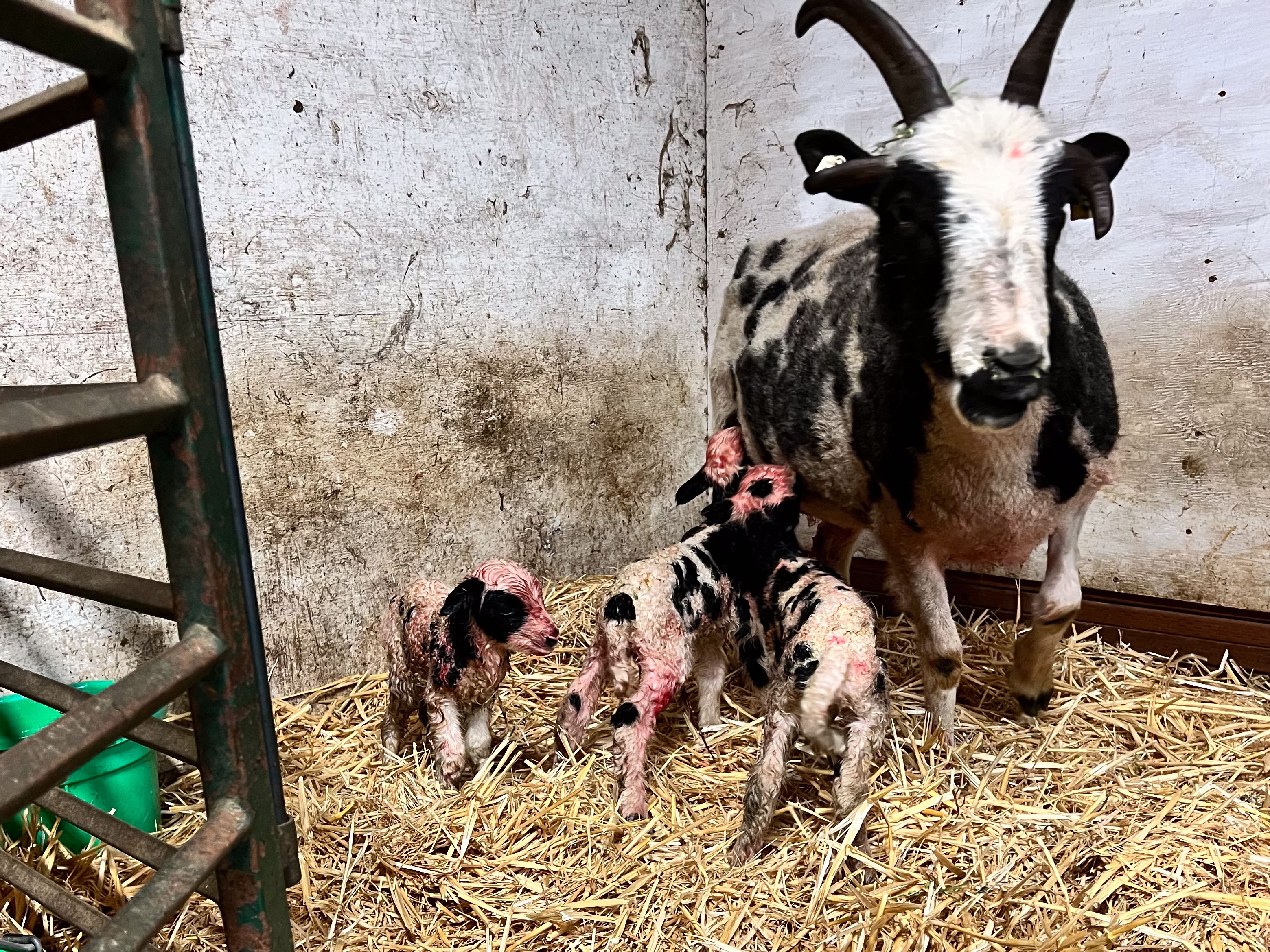
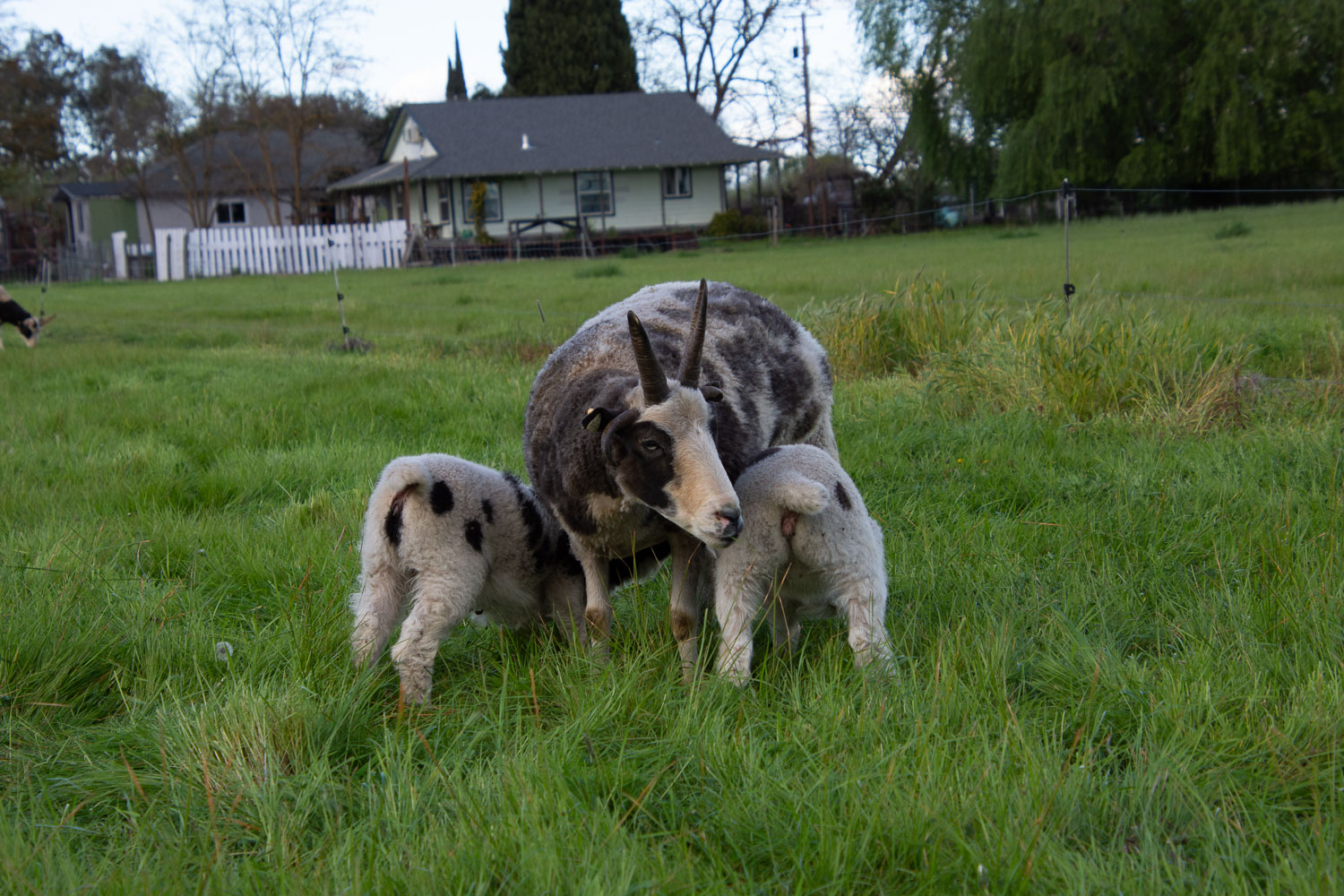
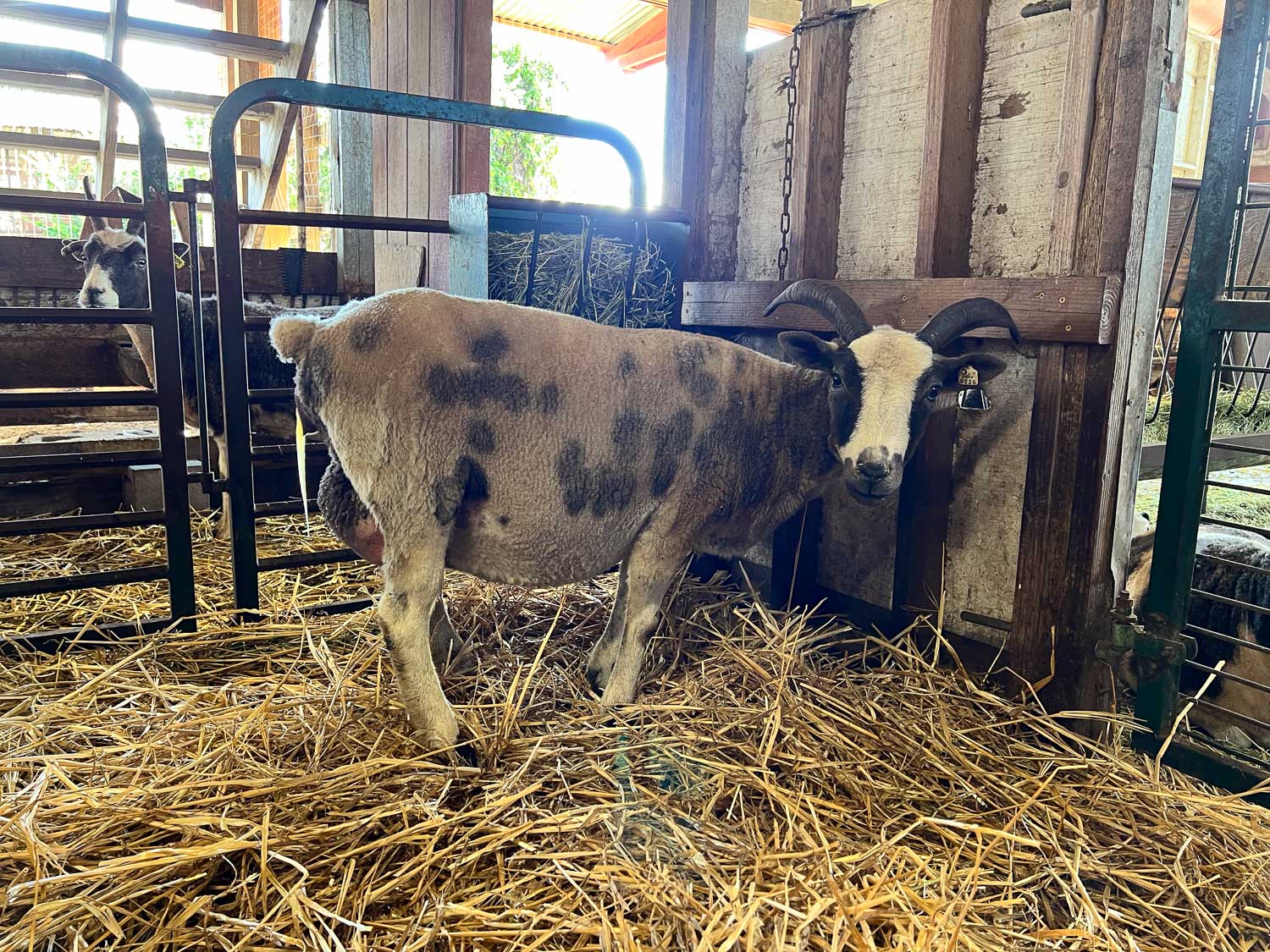
Bide a wee Hallie is ten years old and these will be her last lambs. These are two ram lambs, one with 4 horns and one with two.
Here are the last entries for the Lambing Board. Hallie’s lambs were 12 and 10 pounds!!
I took photos the first day the grandkids were here and shared them in this post. The focus for the next few days was the barn and lambs.
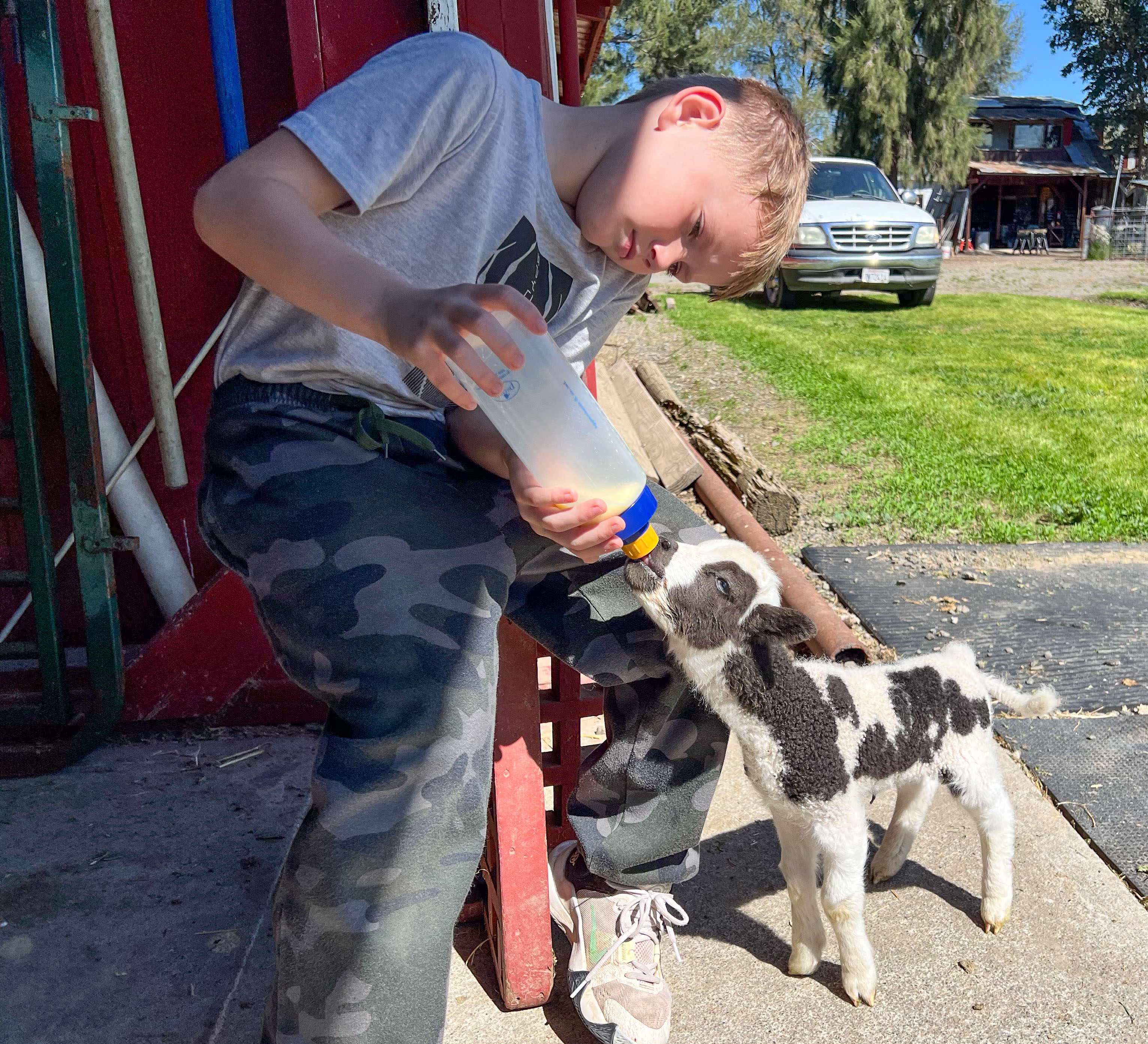
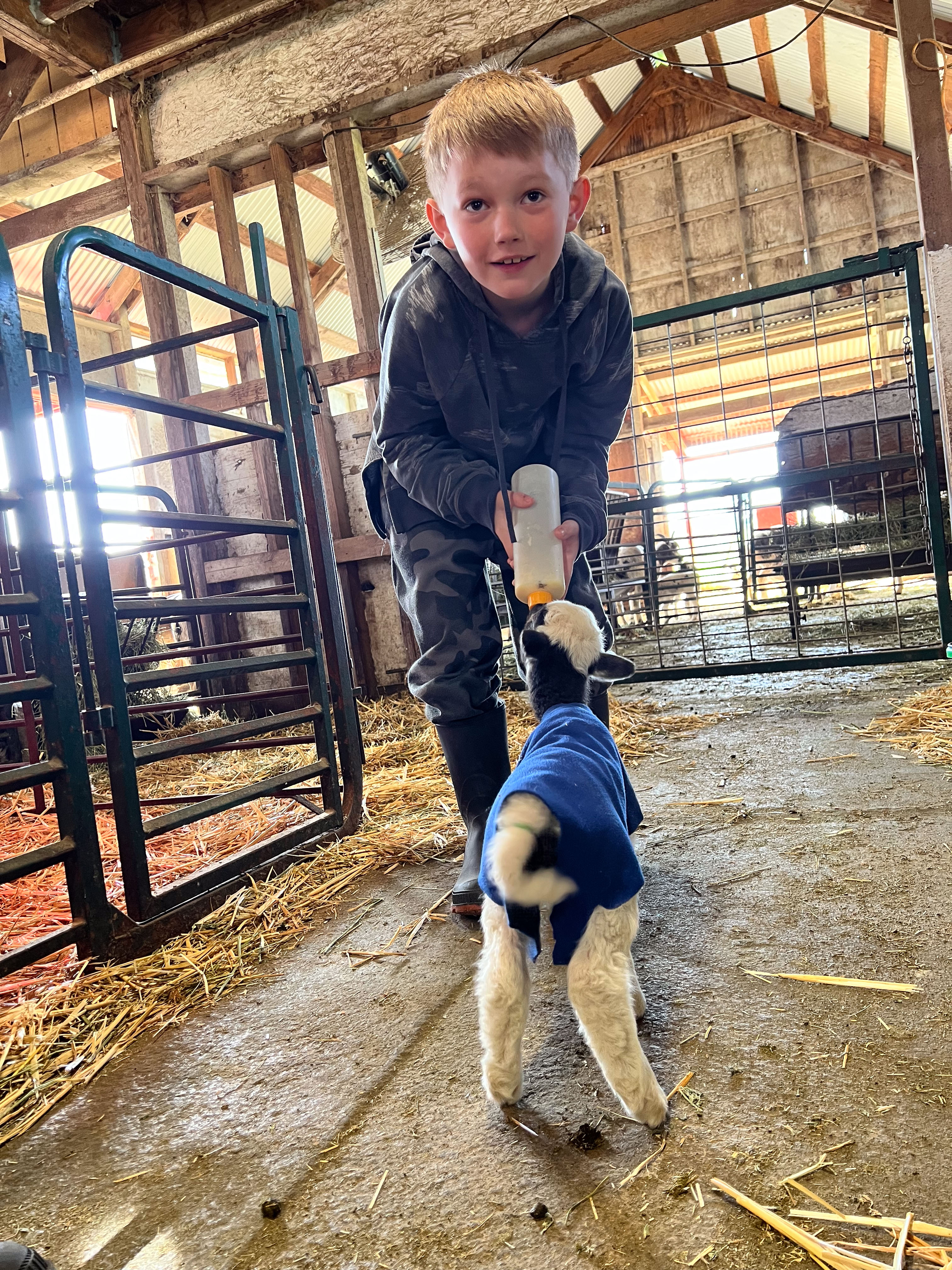
The kids traded off feeding times for Sparky–at least the two mid-day feedings.
No one volunteered for early morning or late night.
We went to Fairfield to have lunch with by brother and sister-in-law. Dave makes sure the GREAT part of Great-Uncle Dave is not forgotten.
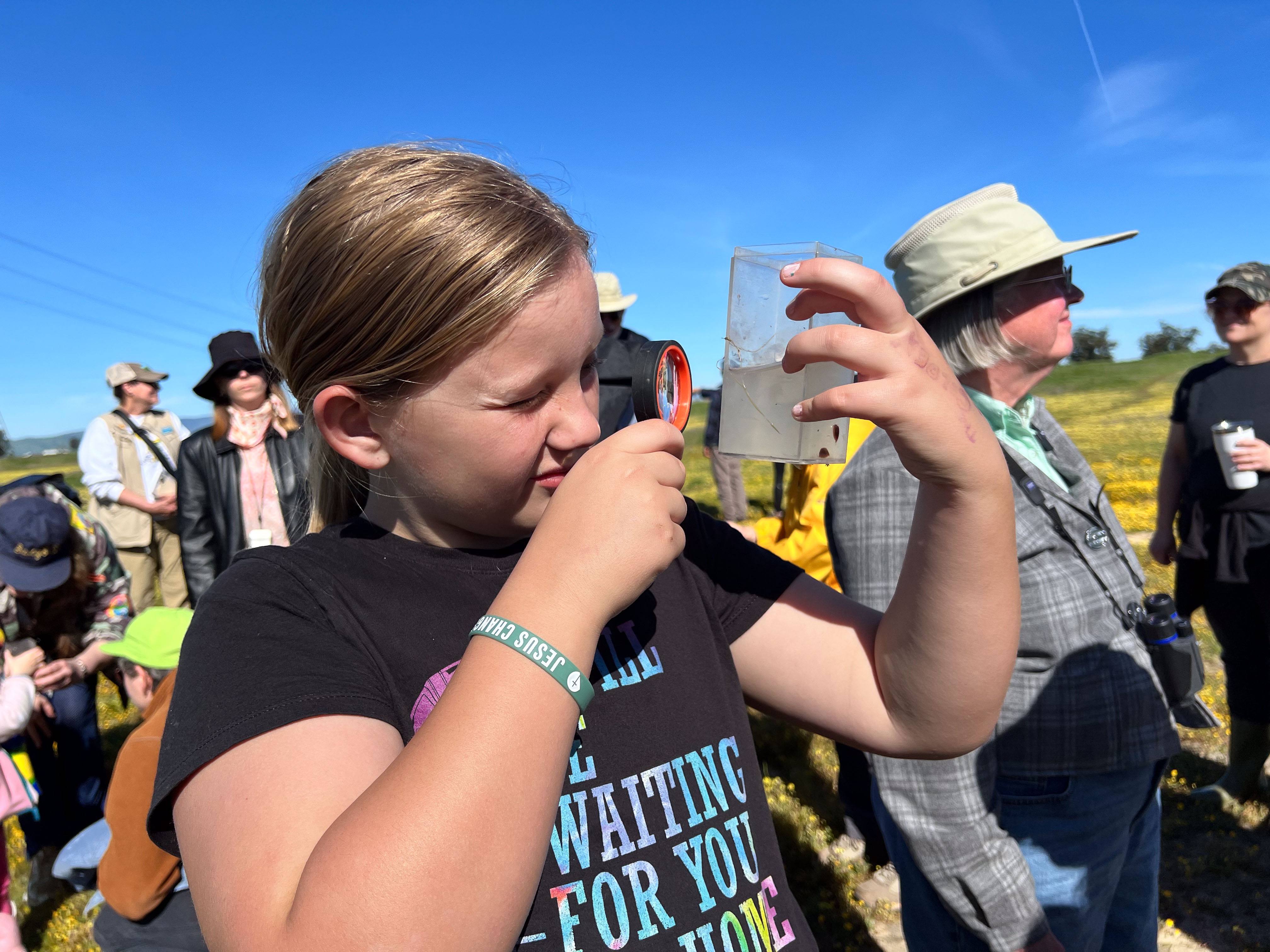
On the Sunday of the kids’ visit we went to Jepson Prairie for a docent-led walk through the reserve. The docents scoop aquatic creatures from Olcott Lake prior to the tours and share the containers with the public.
Kasen is looking at a Pacific Chorus Frog.
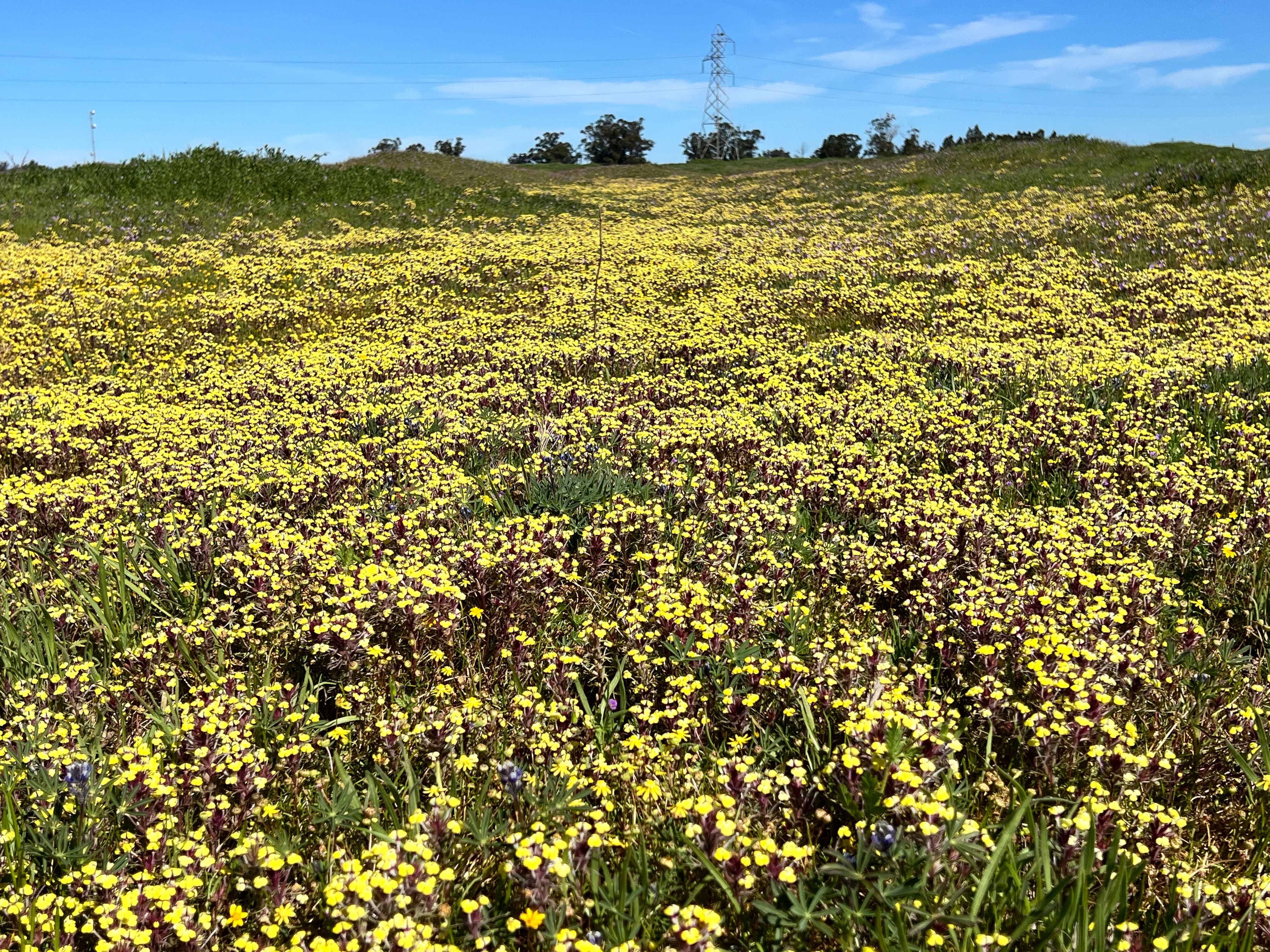
The view is filled with a flower called Butter and Eggs .
The view to the south shows Mt. Diablo which features prominently is my photos take Across the Road. The clumps of flowers are California Golden Violet.
It is notable that the grass and other plants don’t grow as tall as at other sites. This area dries out quickly and plants have adapted to a short season.
Back at home some of the cousins from Sacramento came to visit.
The weather was nice enough for a snack on the deck.
More lamb feeding.
This photo features Jade and Sparky. I can tell that Sparky will someday replace Jade as the farm’s most friendly sheep.
I have lamb photos to share but not necessarily in order because I didn’t keep up as lambing progressed.
The last lambs of Lambing Season, Part 1, were born two days ago, March 31. Part 1? That’s another story, but there may be four ewes due to lamb at the end of April. This is Tamara with two ewe lambs, #2553 and 2554.
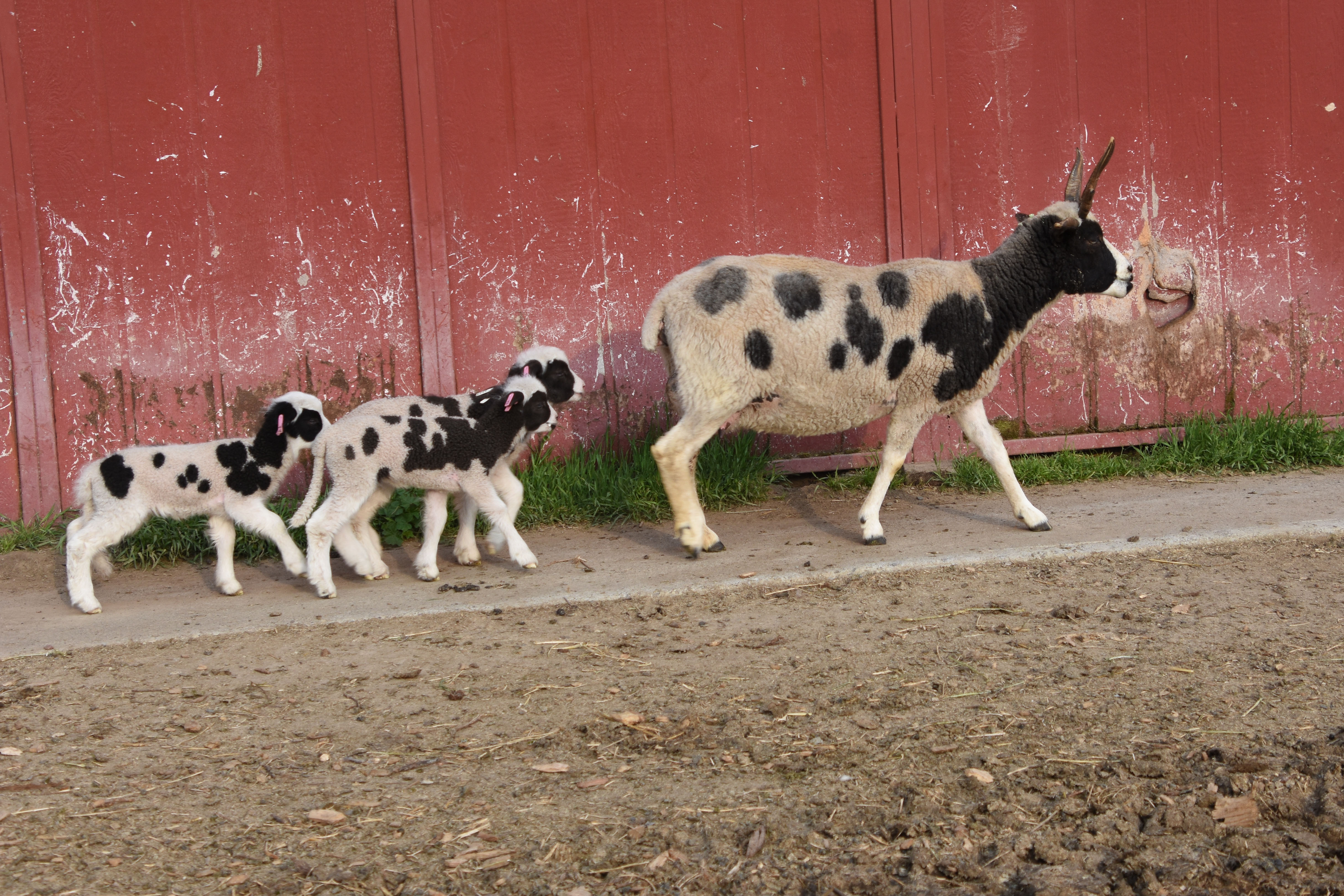
Bide a wee Trista lambed March 28 with triplets.
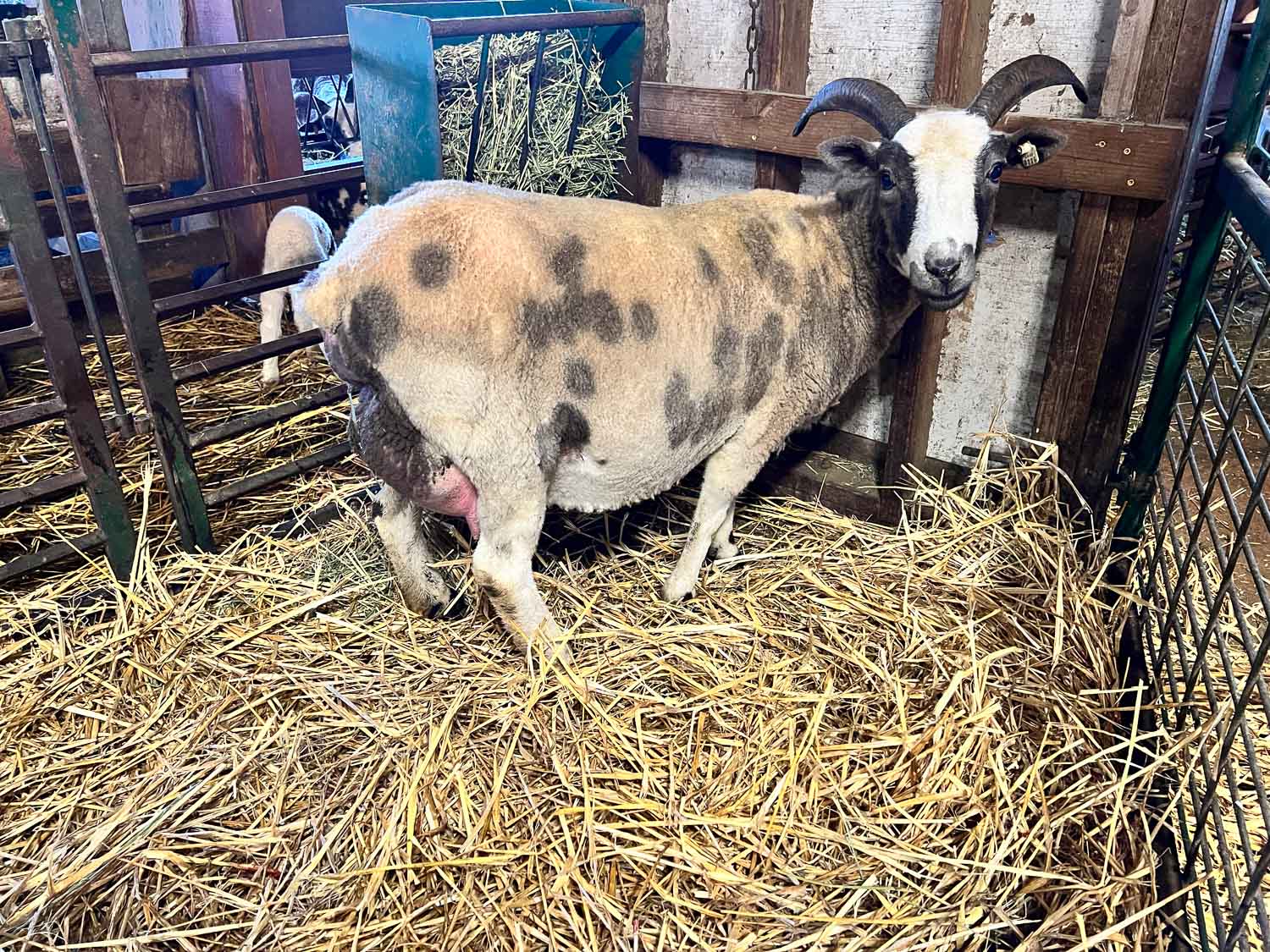
This photos was taken three days BEFORE lambing. Trista certainly carried that twenty pounds of lambs low. She is getting grain now to help her put some weight back on and supply enough milk.
This is lamb #2545 born to SilverRain March 21. Lambing had slowed down at that point.
The lambing board shows that there was a lot of action for about a week and then days between the later lambs. My granddaughter made the notes on the board before she left on March 25.
Sweetgrass Tranquility had triplet ewes March 19.
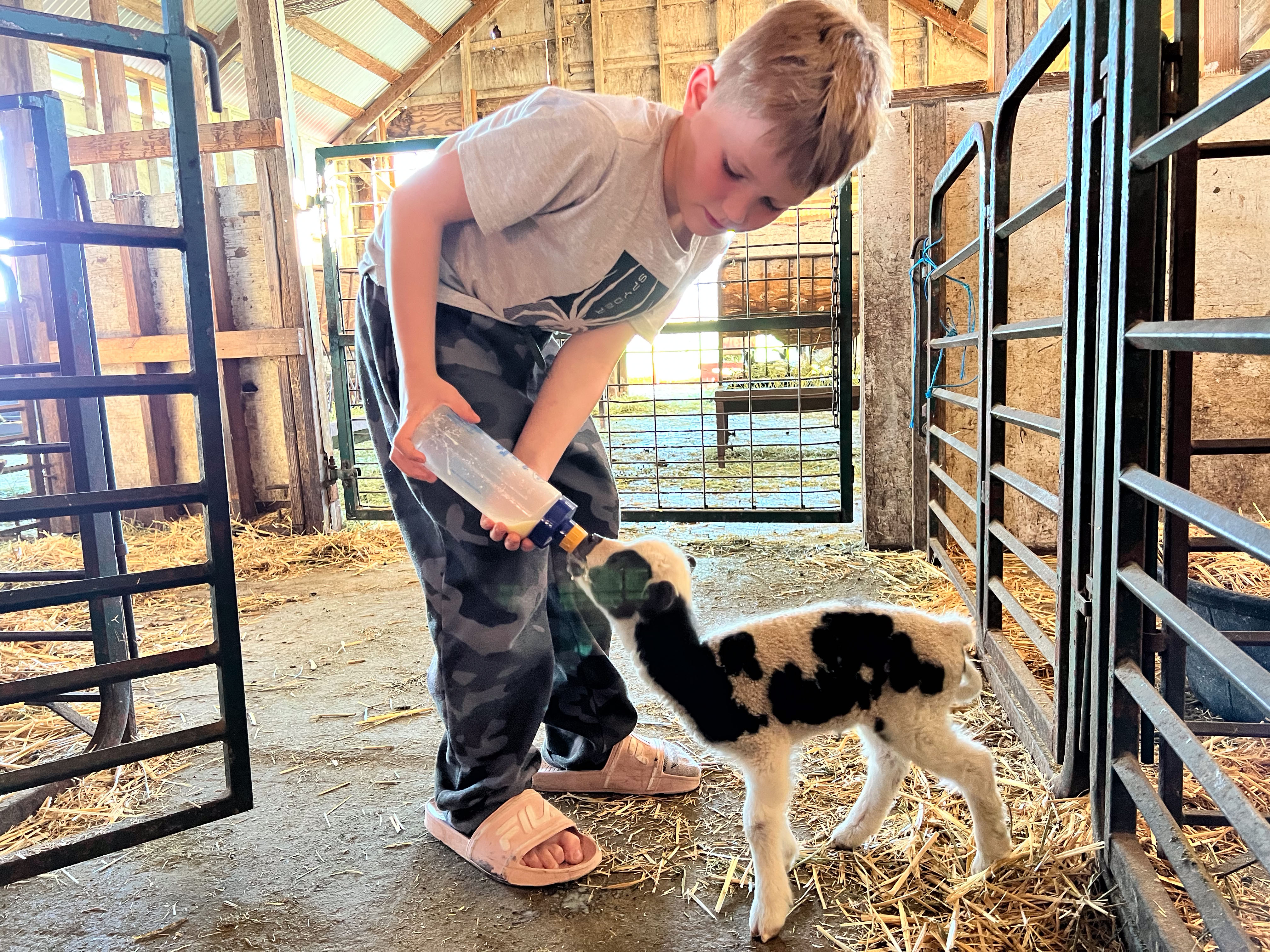
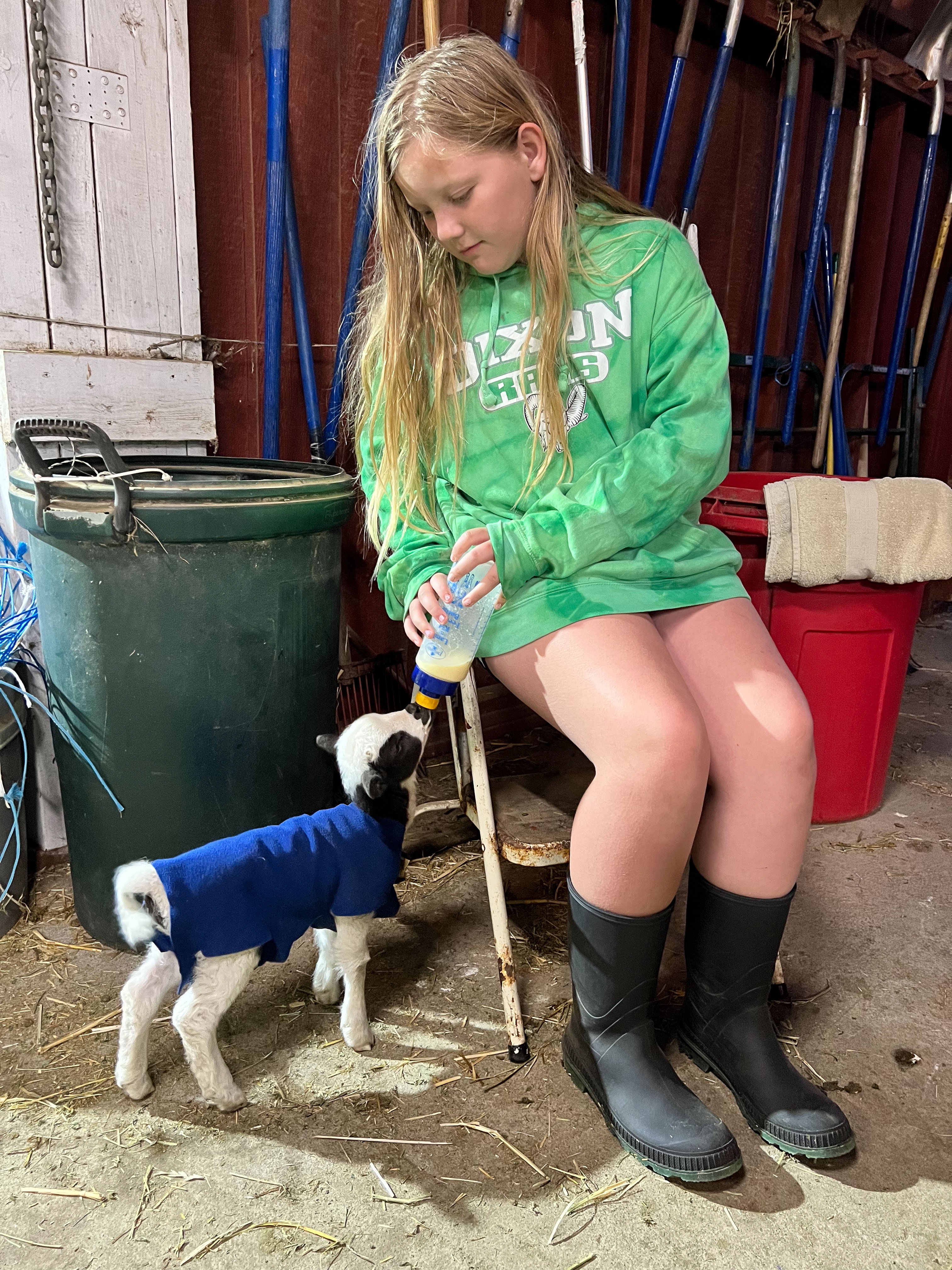
My grandkids were here for a week and shared bottle feeding Sparky. This is 8-year-old Kasen.
I was able to finish skirting and sorting the Jacob wool be the time lambing was over. This wool is now at the mill and hopefully I’ll have some of it back by the fall.
I’ve talked about this before–the seasons. Spring, Summer, Fall, Winter, and Lambing–right there between Winter and Spring. It’s a busy time. I wrote one blog post at the start and the one about Sparky two weeks into the season. It was an intense two weeks and now things have slowed down considerably. I’m waiting for three ewes to lamb by the end of the month.
March 9 three ewes had twins and one had triplets. This is Janna with triplets and Sandie and Beauty with twins.
The next day Juniper lambed with twins.
It was beginning to feel like the next new season–spring!
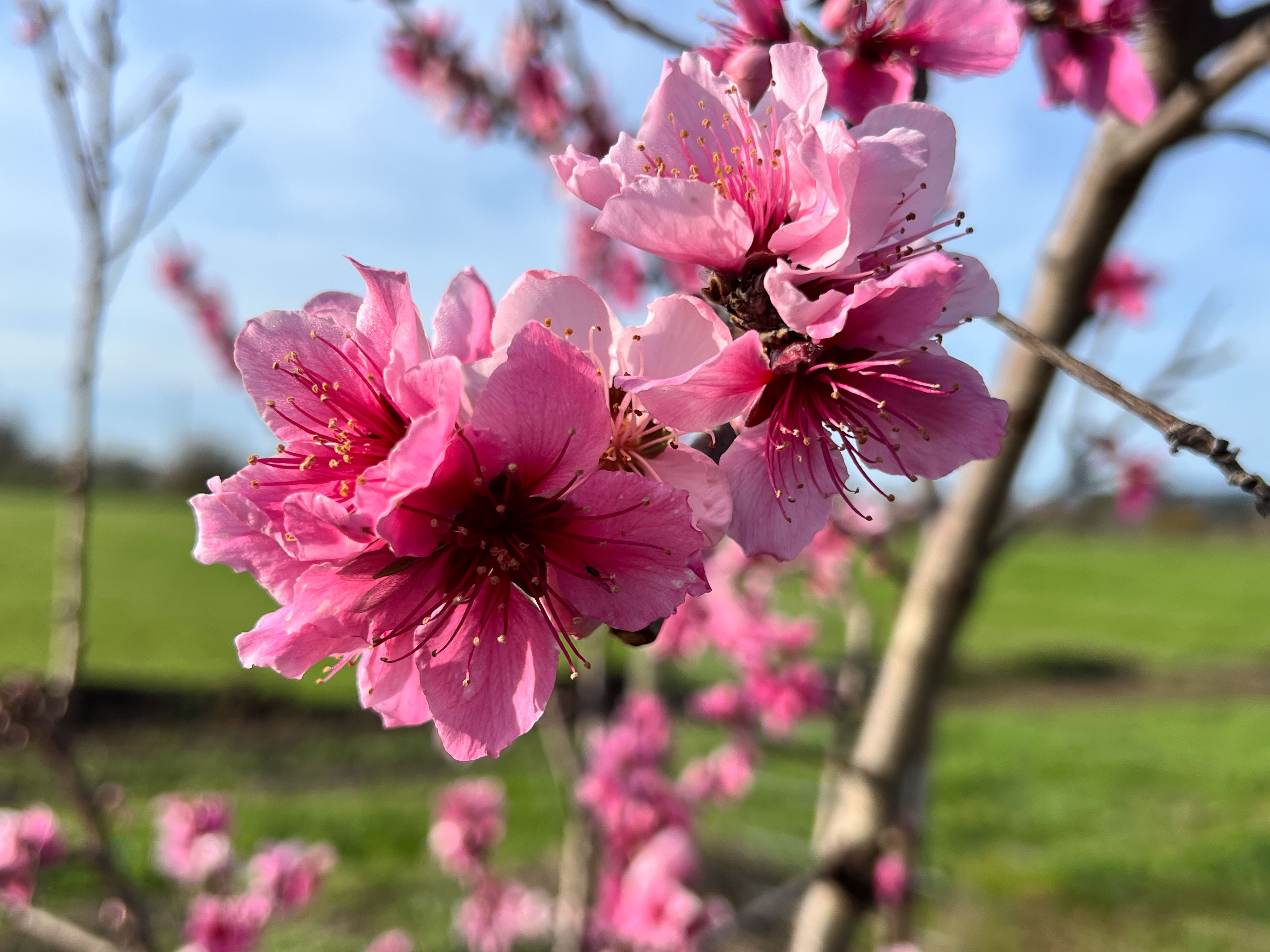
PeachWesterben RedbudDaffodial
Janna and lambs moved into a stall a couple after lambing. This gives the ewes and lambs more space to move around, but it’s easy to keep an eye on them for a few days before they go out with the other sheep. That’s Farm Club member, Lisa, holding the lamb.
More signs of spring.
Flannel Bush is one of my favorites.
Cindy lambed two days after Juniper.
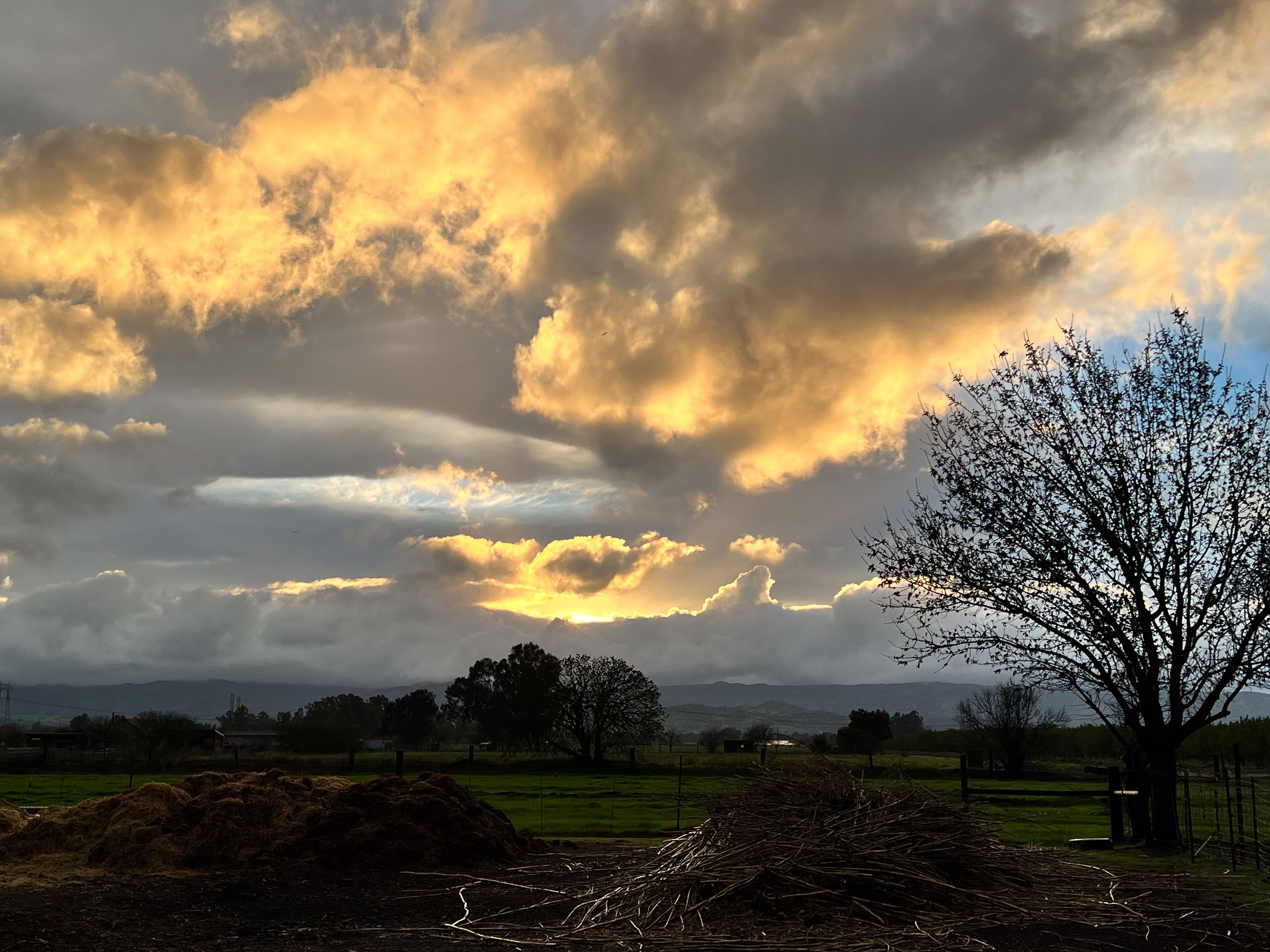
A cloudy sunset.
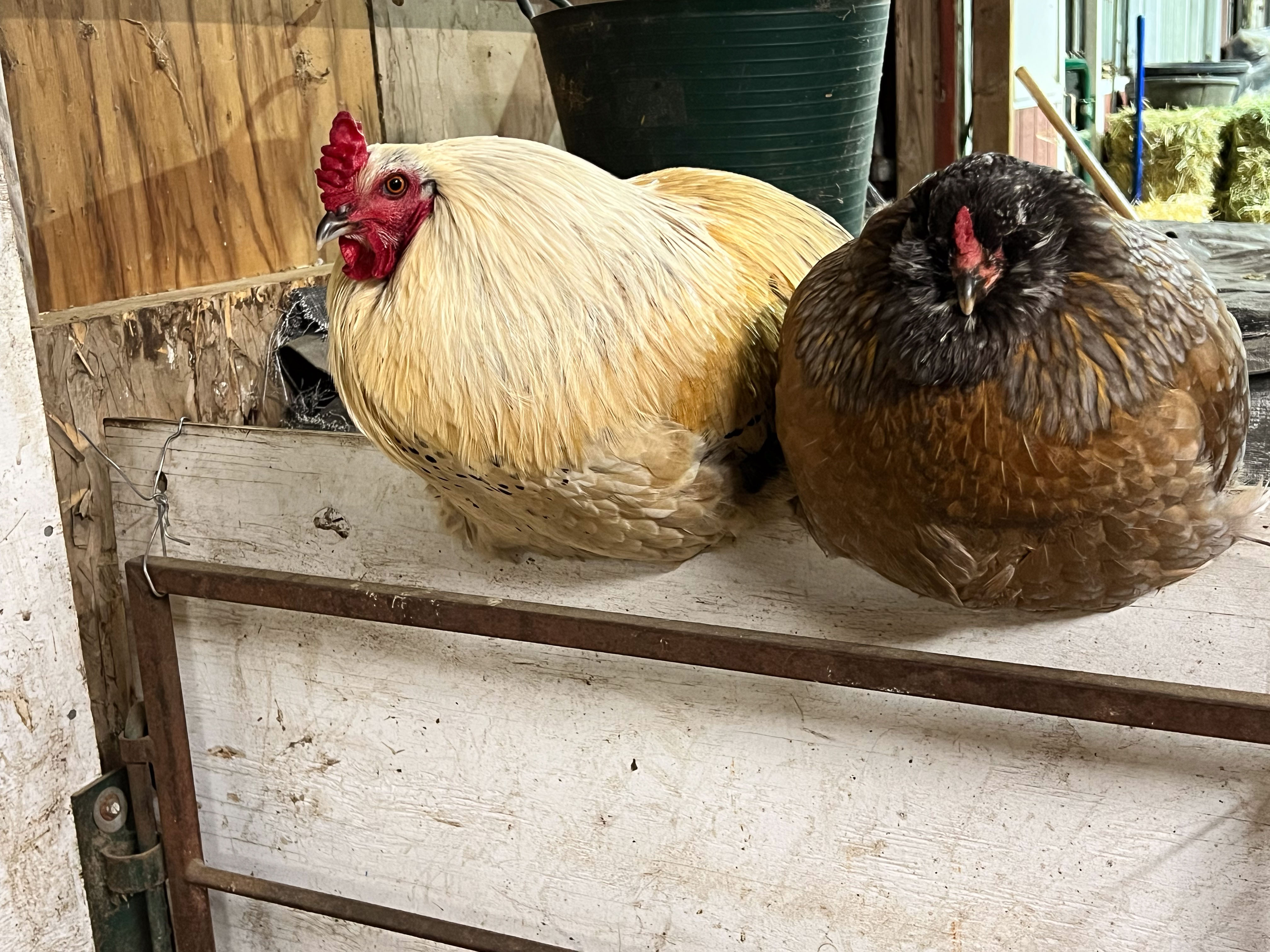
The rooster and one hen roost every night on this panel between the hay and the lambs.
Jazzie lambed that night with twins, lambs #22 and 23.
Amara seemed the most likely to lamb next and she went into the lambing area. That leads up to the post about Sparky.
Lambing started only two weeks ago but is almost over (except for the lambs that will come at the end of April due to acquiring a ram around Thanksgiving). I like to keep my blog posts in chronological order, but I’m giving up on that for now. I may share other lambing photos later, but for now I’ll write this story.
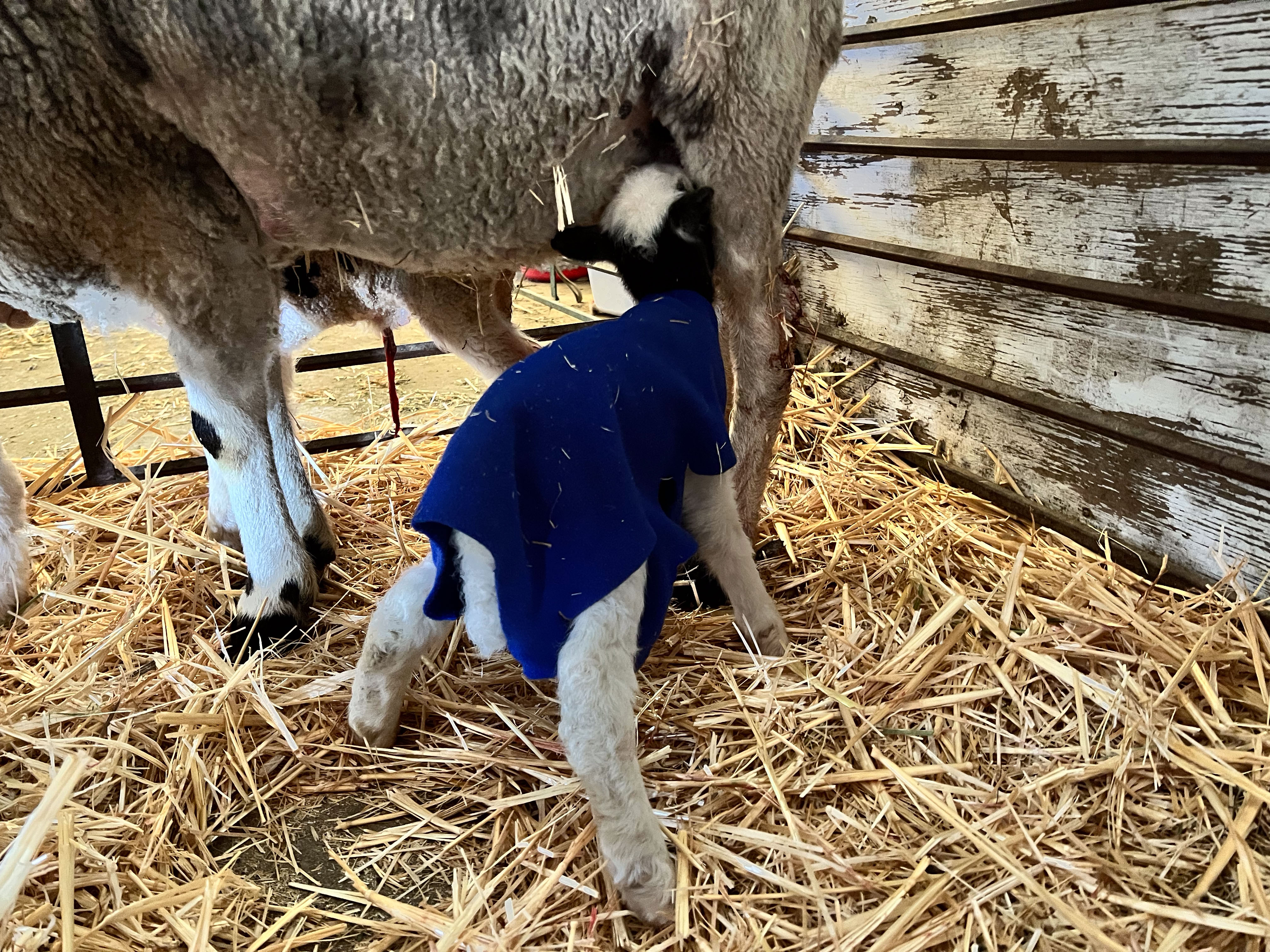
It was only a week ago (Thursday, March 13), that Patchwork Amara lambed. I had put her in the evening before and didn’t see anything when I checked the barn at 2 a.m. When I went back at 6:00 I found a big lamb in good shape and a small lamb that at first I thought was dead. When I picked her up she wasn’t completely flaccid like a dead lamb would be and I could see her take shallow breaths. She was very cold.
I brought the lamb to the house and put her in a dishpan of warm water. As her body warmed she started to move her legs. After I’d warmed her enough I wrapped her in a towel and went back to the barn. I set up a heat lamp and moved Amara and the big lamb to a clean pen. Lisa was helping for a few days and when she came to the barn I gave her lamb holding duty.
I milked colostrum from Amara and tube fed the lamb.
While we were feeding her we realized that Amara was having a third lamb.
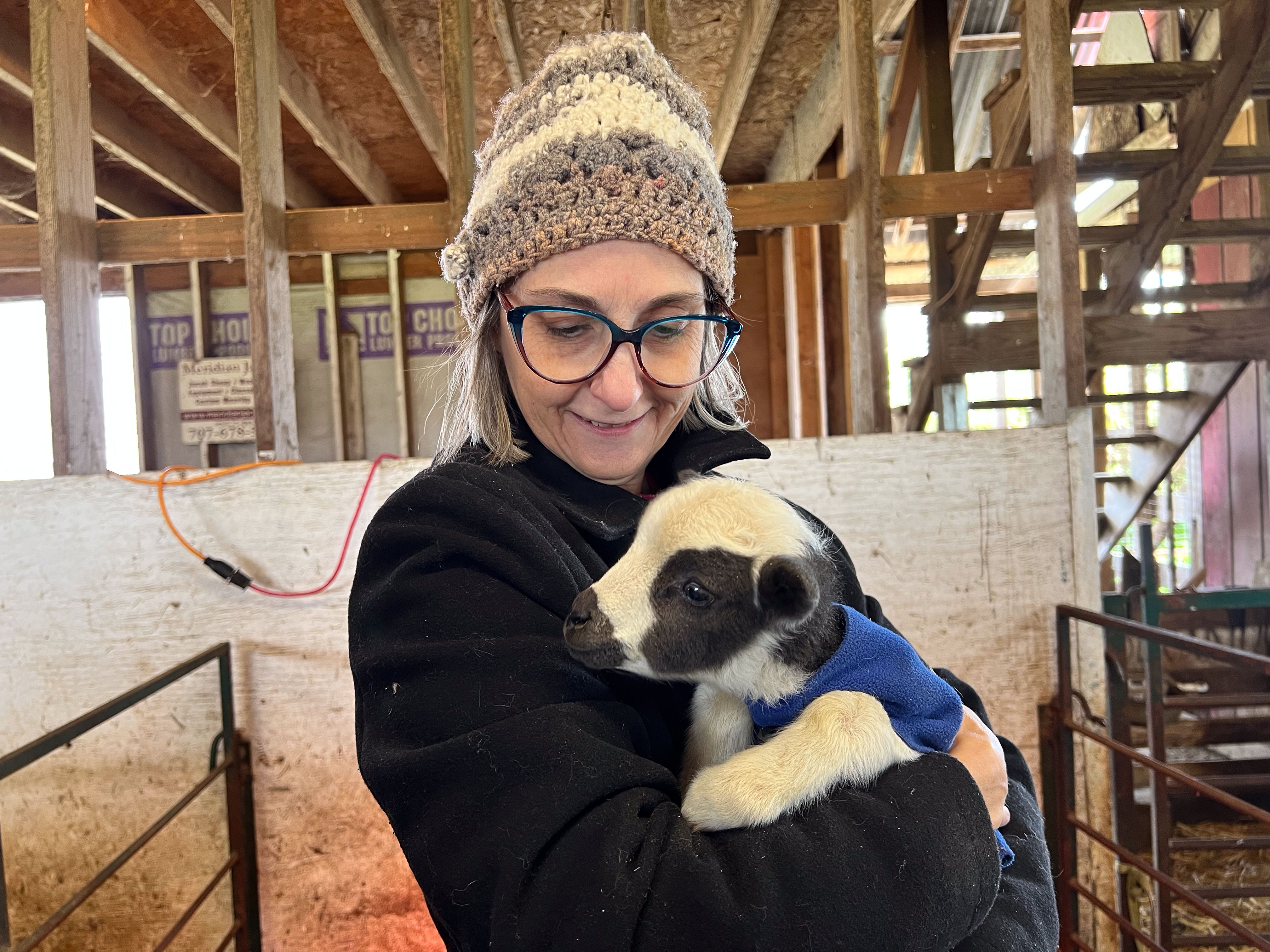
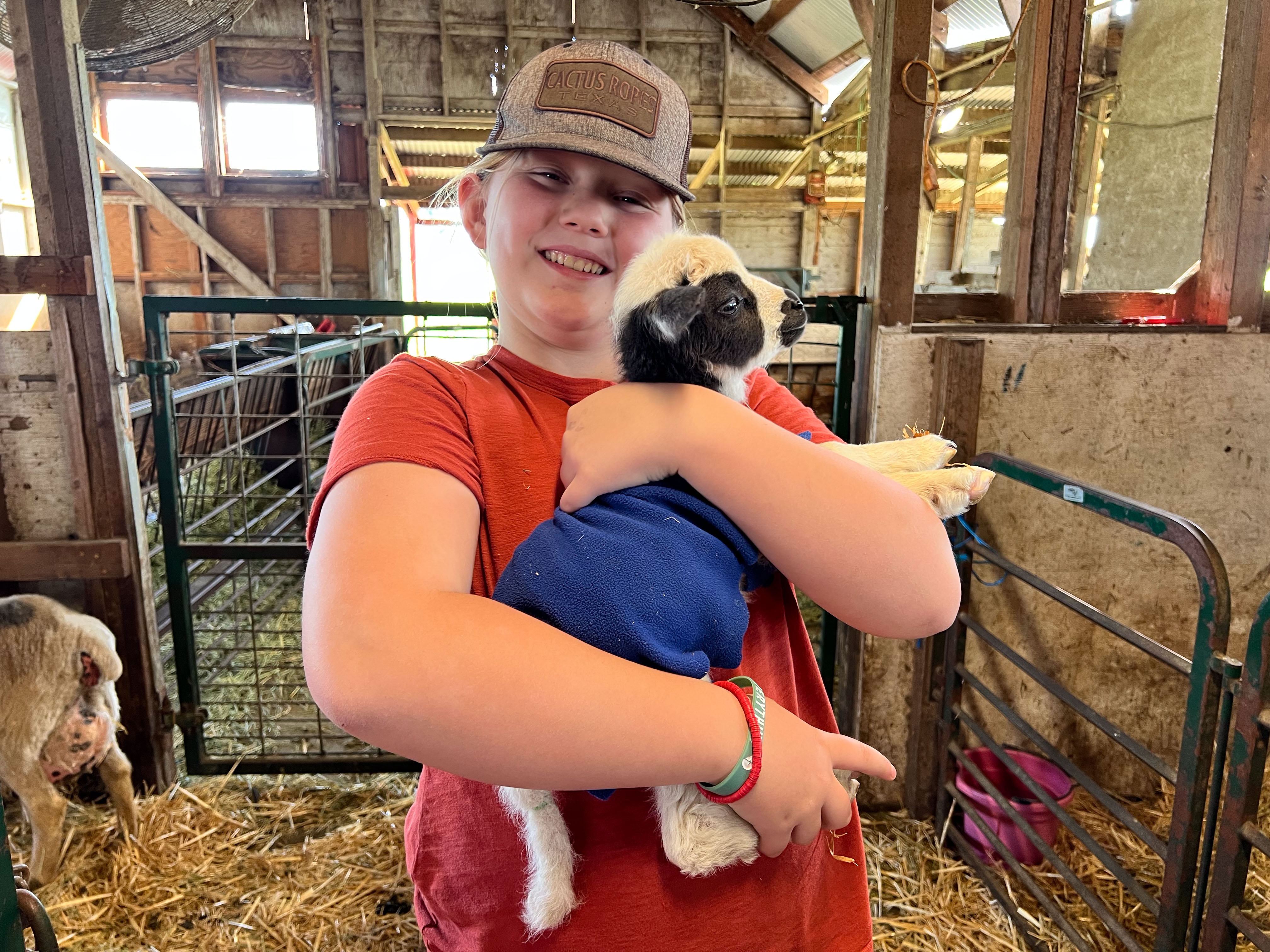
Those big brothers were 9.2 and 8.6 pounds. Sparky, as Lisa named her when she showed a spark of life, was only 4 pounds.
I found a size Small coat for Sparky, It was way too big and eventually Lisa cut some off.
Sparky was spunky enough after the tube feeding to nurse on her own. Throughout the day we made sure that she was nursing.
The next morning Amara was tired of having three lambs and was getting a bit aggressive towards Sparky. I didn’t feel comfortable leaving her there and decided that she would be a bottle lamb. That was 6 days ago.
Farm Club members came on Saturday and Sparky was a favorite.
I picked up my grandkids at the airport yesterday and we went to the barn right after we got home. Ten-year-old Kirby.
Eight-year old Kasen. The kids are taking turns bottle feeding, although the next feeding is in a few minutes (11:30 p.m.) and no one has volunteered for that one.
Sparky has had plenty of attention. The kids are taking her out of the barn and letting her run around in the grass. I tried to share a video here don’t know if I can make it work. Let’s try this YouTube link.
I just checked back to see when I wrote last. Wow! I’m so behind. It’s probably impossible to catch up with all the ideas I was going to share. Here’s an update about sheep and lambing season.
This is the lambing board where I record all the info as lambing progresses. This will stay up until the first lambs show up next year. The info shows date, ewe, lamb # (purple for ewes, blue for rams), and birth weight. The blue brackets are triplets.
Here is a summary: Lambs born between January 25 and March 7, 2024 Single births: 3 = 3 live lambs Twin births: 33 = 63 live lambs (3 died at birth) Triplet births: 8 = 22 live lambs (2 died at birth) Total live lambs = 88 ear tagged; 1 died at 1 day and 2 dead fetuses not counted. 44 ewe lambs / 42 ram lambs Sires: Horatio 36 lambs Barrett 27 lambs Typhoon 12 lambs Blizzard 5 lambs Peyton 5 lambs Unknown 3 lambs The Unknown are the first 3 lambs born, earlier than I expected, and due to the ram lambs getting into the pasture prior to breeding season. OOPS!
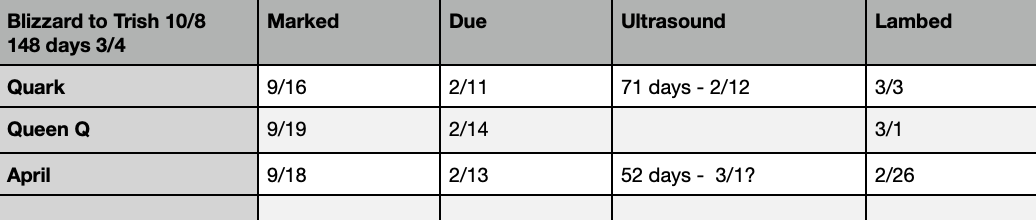
I also question if Blizzard is the sire of the five lambs born later than expected based on original breeding dates.
I made this chart to help work it out. If the lambs were born based on the original dates they would have ben born in mid-February. They are about 2 to 3 weeks later. A sheep heat cycle is 17 days and gestation is between 142-152 days (average 147 days or 21 weeks). Blizzard was with 3 ewes until Lambtown, October 6-8. If he bred them October 5 the due date would range from February 24 to March 5. I just looked back at last year’s Lambtown blog post and see that Queen Q and Quark were both at Lambtown also. They came back on October 8. IF they were bred October 8, 147 days would be March 3 (range February 27 to March 9). I’m pretty sure that April’s lambs are sired by Blizzard, but I’m still not sure about the others. I think they probably went in with Horatio when they came back here but I don’t remember. It would have been smart to leave them away from rams for another week or so. The lesson here: TAKE BETTER NOTES.
Thanks for “listening” while I try to work this out. Now, on to photos.
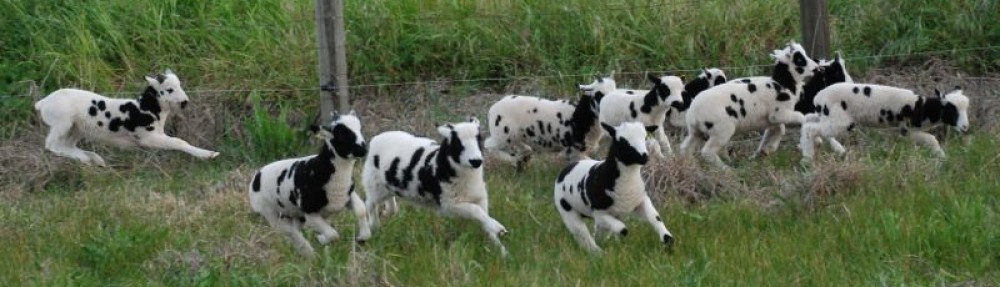
Lambs are getting big. This is Hailee, one of the few 2023 ewe lambs that I put with a ram. Her twins were born March 4, so they are only 3 weeks old. Really? It seems like that was so long ago now.
Here is a view of Hailee without lambs under her. I really like her horns!
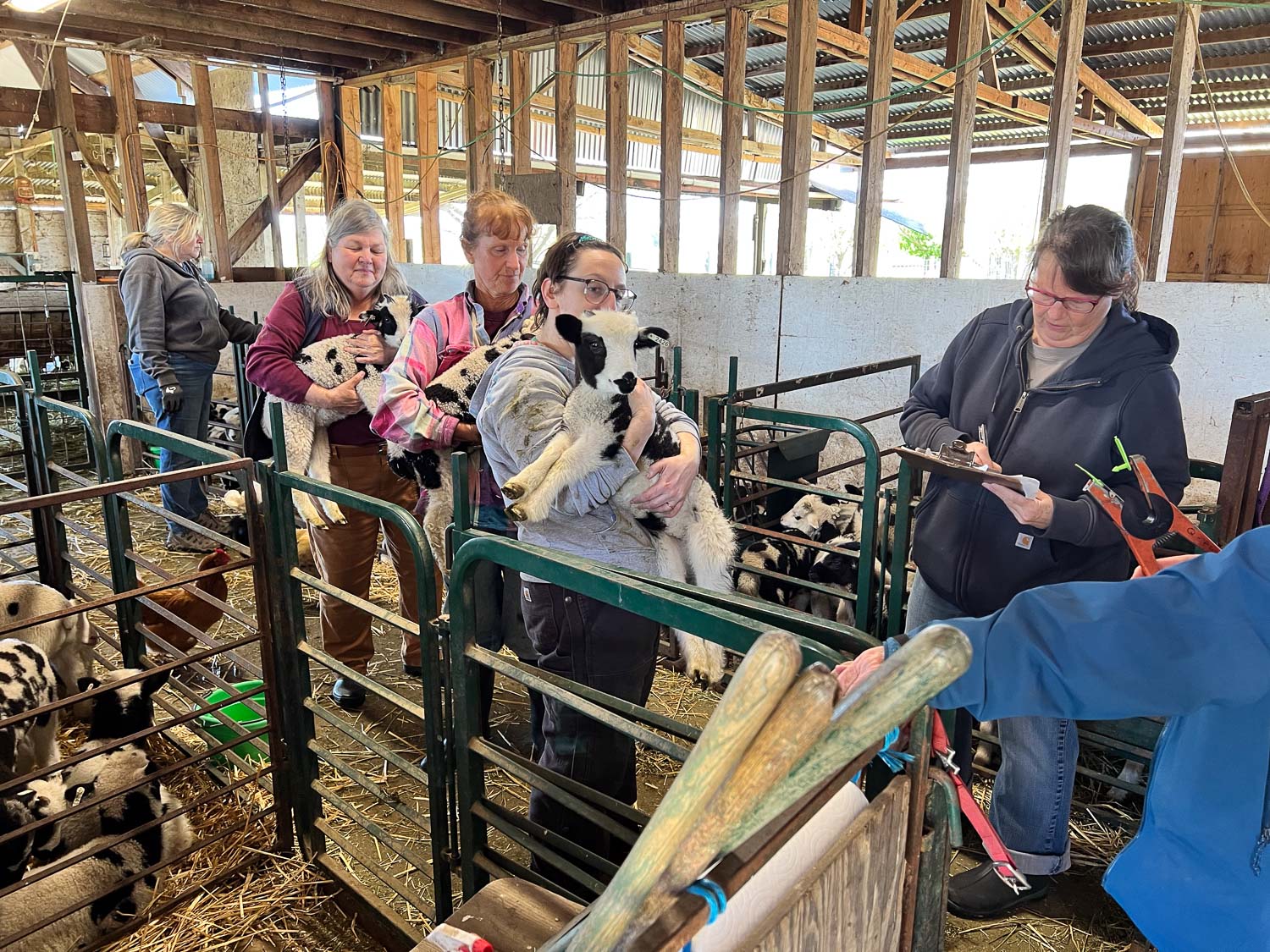
We had a Farm Day on Sunday and several members showed up to help take notes about lambs. I hadn’t taken time to record number of horns, color, etc and needed to be able to update the website. We caught all the lambs and then inspected each one. It’s easy to tell the number of horns on the rams when they are young, but not always on the ewes. This photo makes mer think of a line at the grocery store. Farm Club members caught lambs and waited while we all checked them out and then I ear tagged with a colored tag.
They all get white ear tags for ID shortly after they are born. The colored tags are useful as back up if the original ones are pulled out and to help find a particular lamb. When I’m looking for a specific number I have to look at all 80+ lambs and it’s much easier to narrow it down by color. It also helps when I’m taking photos that usually I’ll be able to identify the lamb later by at least one ear tag. We color code them by sire.
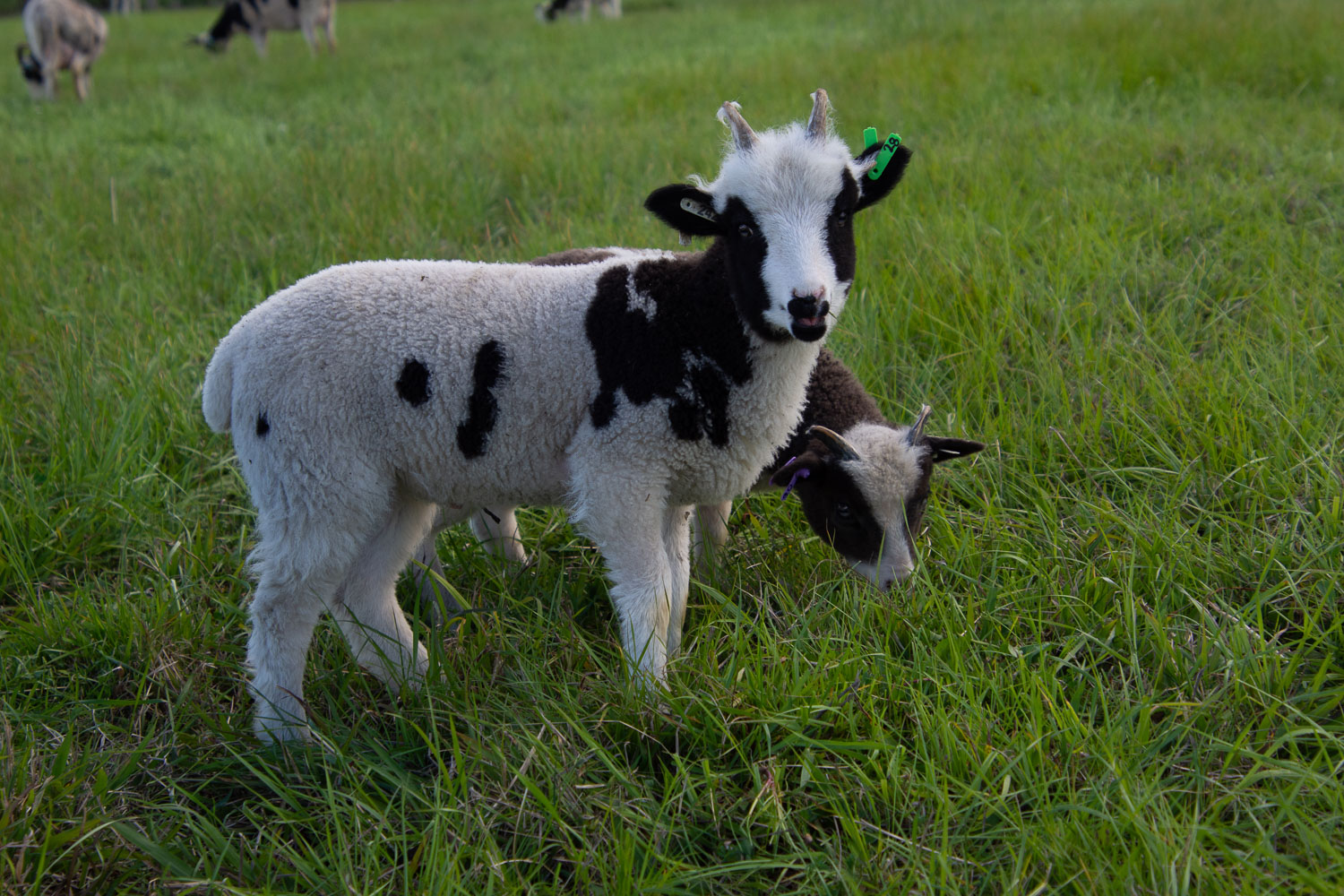
Barrett’s lambs got green tags.
Ewe lambs are tagged with the white ID tag in the left ear and the colored tag in the right ear. Ram lambs are the opposite, so that’s another way to help find a lamb.
Horatio’s lambs have a purple sire tag.
We tagged Typhoon’s lambs with yellow. I did not assign colors to lambs that are potentially Blizzard’s or the ones with an unknown sire. Now you can find most of these lambs on the website. Ewe lambs.Ram lambs. I’m not finished taking photos. Most are for sale.
I know it will make me crazy to go back and do other photos out of order, but I’m ready now for today. So I’ll do it this way and include a couple from yesterday as well. Maybe I’ll get to others later because there are stories.
Yesterday Dan decided to take out part of the tree that we think used to stand straight. Ever since that super strong wind last week this tree has looked like it’s tipping more and we’ve known that part of it looks dead. If it went down it could not only take a person with it but it would lift up the corner of the fence. It’s easier to cut down a tree than to replace the fence.
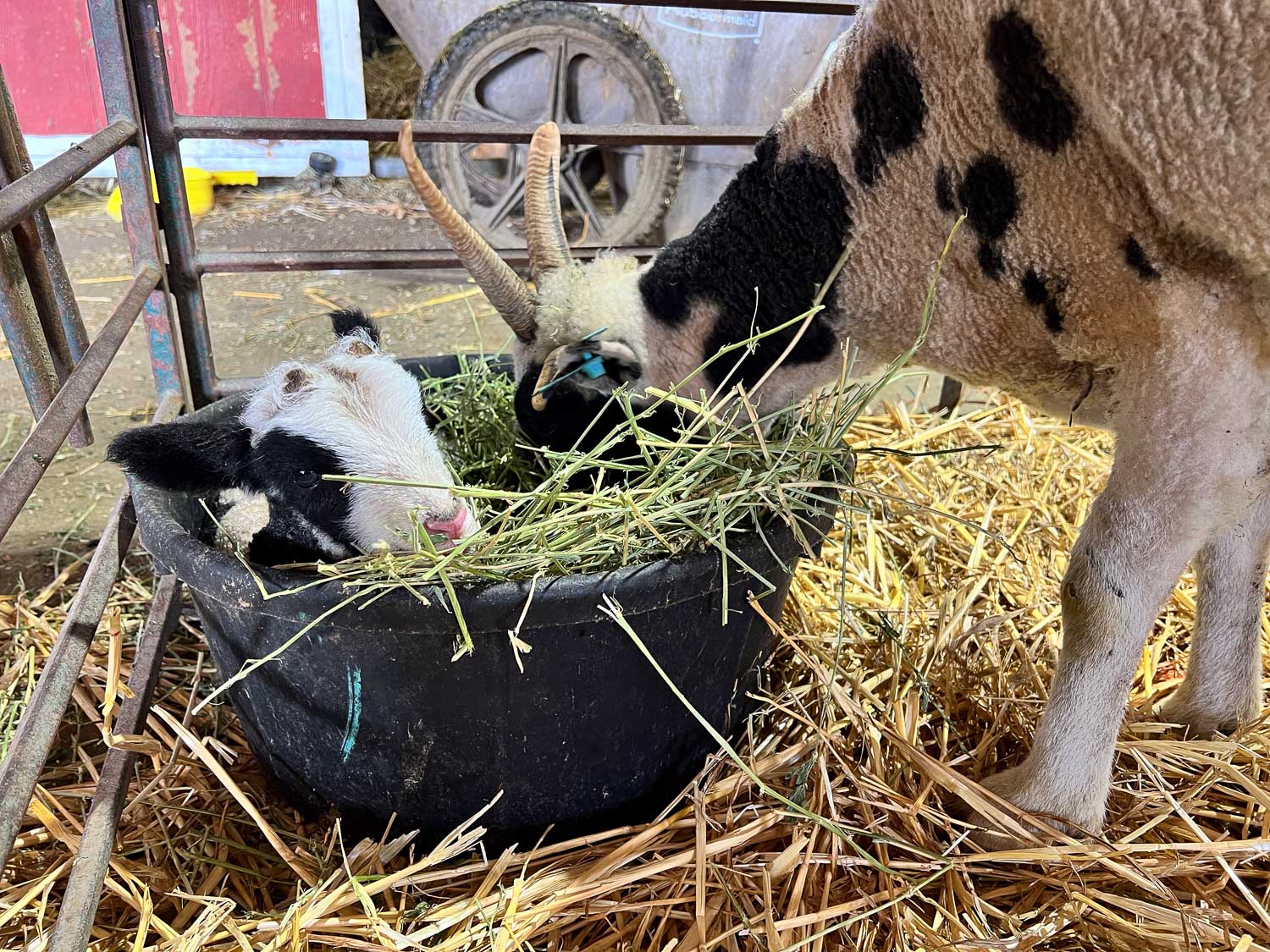
This is one of Trista’s twins born five days ago. The first time he nursed he did it while lying down. Maybe he has decided that is just the way you do things. It works when the sheep has a low hanging udder.
I was in the barn a good part of the day yesterday. I skirted fleeces in between watching ewes lamb. I’ll try to get time to post these.
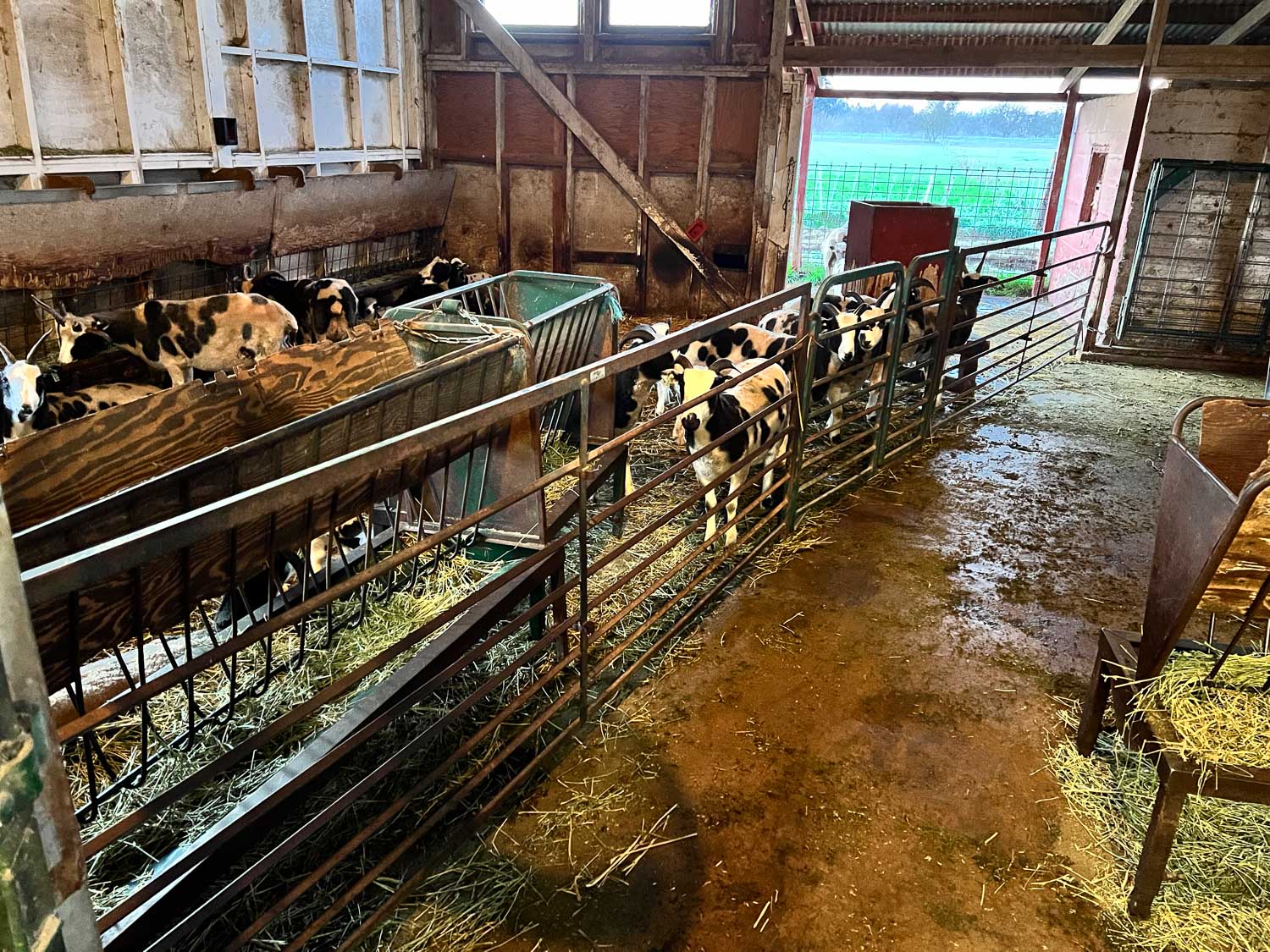
This morning I knew it was time to rearrange the furniture. As the ewes lamb and I move more ewe/lamb groups out of pens they go on one side. The pregnant ewes stay on the other. It’s the only way I can keep track of who’s next and who may be in labor. There were way too many sheep on one side. It’s mud on the outside of the barn and the pasture has standing water. Until we get some dry days and some more growth they won’t go out there.
Now the ewes and lambs have a much larger space in the barn and outside to the west.
The pregnant ewes (not in this photo) have the space to the left.
In the barn. I ran out of feeders that hang on the panels so Tamara has to share her meal as bedding.
The hens looked like they were dying, but I knew that they were just happy to spread out in the sun.
I moved Amara in last night thinking that she might lamb during the night. Today was the day.
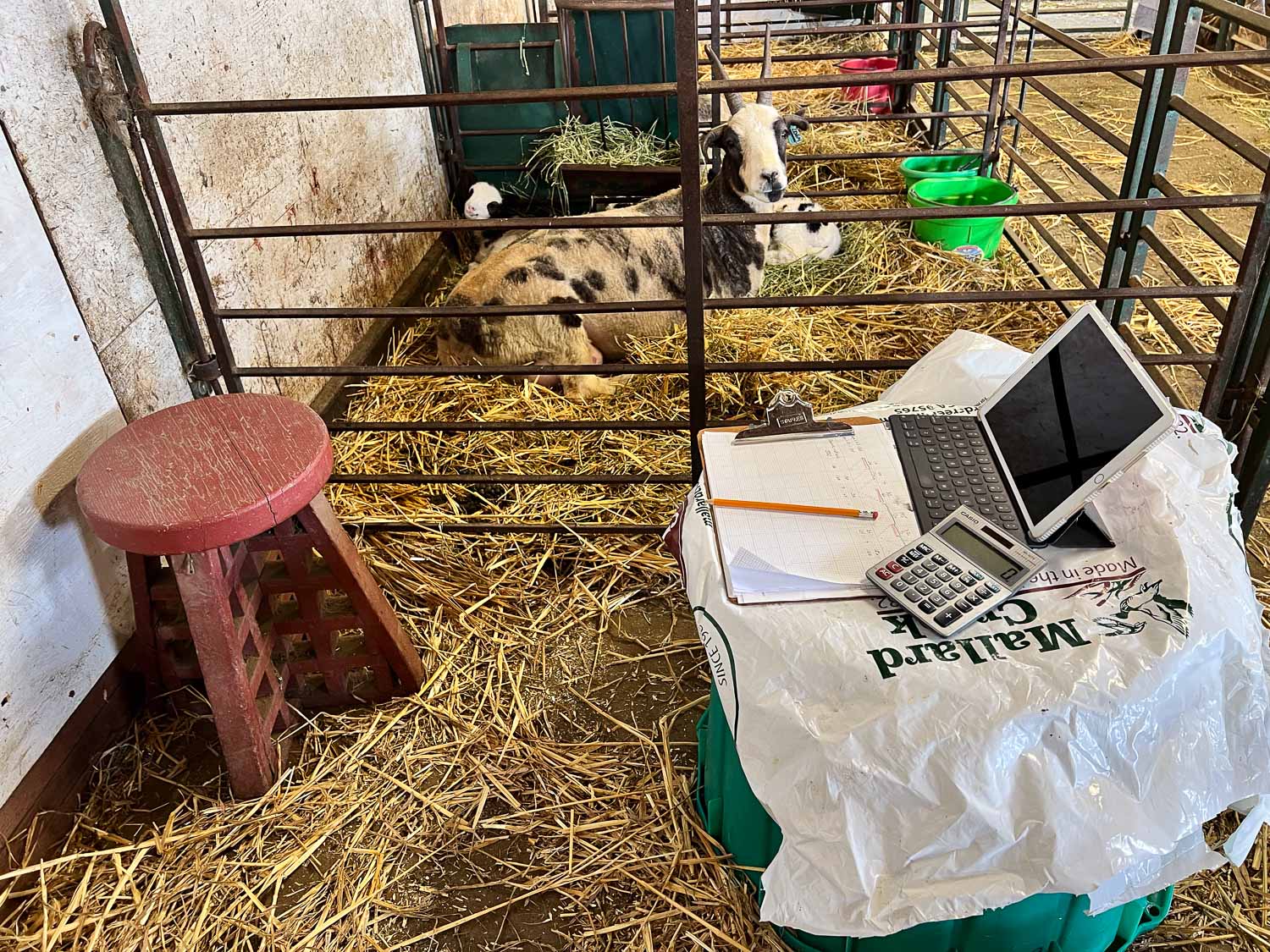
I went to the house for breakfast and to get supplies so that I could work from the barn. I had to prepare for a Zoom meeting for which I didn’t have time last night. This is one of my favorite cups. I bought it at Black Sheep Gathering last year.
My new office set up.
My view from the office.
The result. The second was one of those that may have been just fine if I wasn’t there, but I don’t know. There have been plenty of lambs born with no one around and they are up and nursing when I find them. But so far there have been two that I found dead and had the membranes over the face, one of which was still half in the ewe. This one was born while the ewe was standing and paying attention to the first. It slipped out and landed with the body flopped over the head and fluid all around. I straightened it out and it came to life. I don’t know if it would have before the ewe discovered she had a second.
That’s the day so far. We have 54 lambs and I think I counted 19 ewes to go.
I’ve been updating the Sheep for Sale part of the website. Here are some sheep photos. This is the yearling ram, Cayenne. He is not for sale. Yearling ram, Gotham, is for sale. Ewe lamb (Meridian Catalyst x Shadow Mountain Shelby). Ewe lamb (Meridian Catalyst x Meridian Delight). Ewe lamb (bide a wee Buster x bide a wee Hallie). Ram lamb (Meridian Catalyst x Meridian Ava). Six-horn ewe lamb not for sale (bide a wee Buster x Meridian Jade). Four-horn ewe lamb, Janna, not for sale (bide a wee Buster x Meridian Janis) Oops! For sale, but not for breeding. Ugly-horned ram lamb. If you’re interested in lambs for meat see this link.
We had 81 lambs this year. I’d like to keep…well I’d like to keep a lot but realistically I should keep only about five. In fact since the JSBA AGM is here in August I should allow myself enough space to buy/trade from other people. So I have to narrow down my choices. I also have to figure out which lambs will be sold to other breeders and which may go to market. It would be nice to wait until they are all six months old or more to evaluate them but that is not realistic either. I am weaning the oldest lambs now and buyers want to take them home. (And I need to get them away from here because they are getting bigger and eating more.)
I take lots of photos of lambs as they grow to put on the Sheep for Sale part of the website, but sometimes I need to gather the whole batch to be able to make real comparisons. I did this about a month ago. First I sort and start narrowing down choices. This is two-horn rams. More two-horn rams. Four-horn rams (except for the one I liked best who broke his horn this morning and I put him out so he would hopefully not keep knocking it on others). I bred to two two-horn rams and one four-horn ram last year. There are more two horn lambs than four. Some ram lambs are missing from these groups because I had already castrated those that I knew right away would not be candidates for registration (too much or too little color or horns that were too close). Time to narrow these into groups. These are rams who will be on the cull list. It doesn’t take much for a ram to be moved to that list. In this case two of these lambs (on the right) have wide spacing between the upper and lower horns. That seems like it would be a good thing, but usually those upper horns tip forward and sometimes there are other issues with them. I’ll report back with more photos as they keep growing. The lamb facing the photo on the left doesn’t have enough spacing between horns. His right side horns are already touching at the base leaving no room for growth. The other two both have a lot of freckling, although it’s hard to see without parting the fleece and one is scrawny.
Three of the potential 4-horn breeding rams. Nice horn spacing and shape so far. No sign of freckling. Color % OK. Nice looking fleeces. Britch wool not too high on back leg. Out of two pens of ram lambs I pulled these four out as potential at this point. That is mostly due to the wide horn growth. There may be others in the pens but I won’t guarantee the horn spread yet. Of course, they all have to meet the other criteria mentioned above as well. Here they are from the rear. Another from the front showing the ram with the best horn spread so far.
On to the ewe lambs. These are the 4-horn ewes. I will be less picky about the ewe lambs than the rams. The breed standard isn’t so stringent and each ewe doesn’t play as large a part in the flock as the ram. Keeping a variety of ewe lambs is a good way to maintain some genetic diversity (although that is a good reason to buy some lambs from other people in August). The 2-horn ewe lambs. Another view of the pen on the right. Notice the two lambs (sisters) in the upper left corner. Compare their horn growth to the others. All these lambs are about the same age. Those two are showing minimal horn growth compared to the rest. I don’t know if that is temporary and their horns will be just fine when they are mature or if those are scurs. This is another reason to look at the lambs in a group. All of the rest of these lambs look fine to me so it will be hard to narrow this down to only a few to keep. These are some of my 4-horn choices. Preliminary selection is based on wool and lack of freckling in the lamb and the dam. The same group from the rear. I don’t fault the sheep for their rear leg position, but from this photo it would be the lamb on the left that I’d take to a show. Two horn lambs that I like. From the rear.
Uh oh. I have selected a few more than my original five or fewer. There will be more selection work ahead.















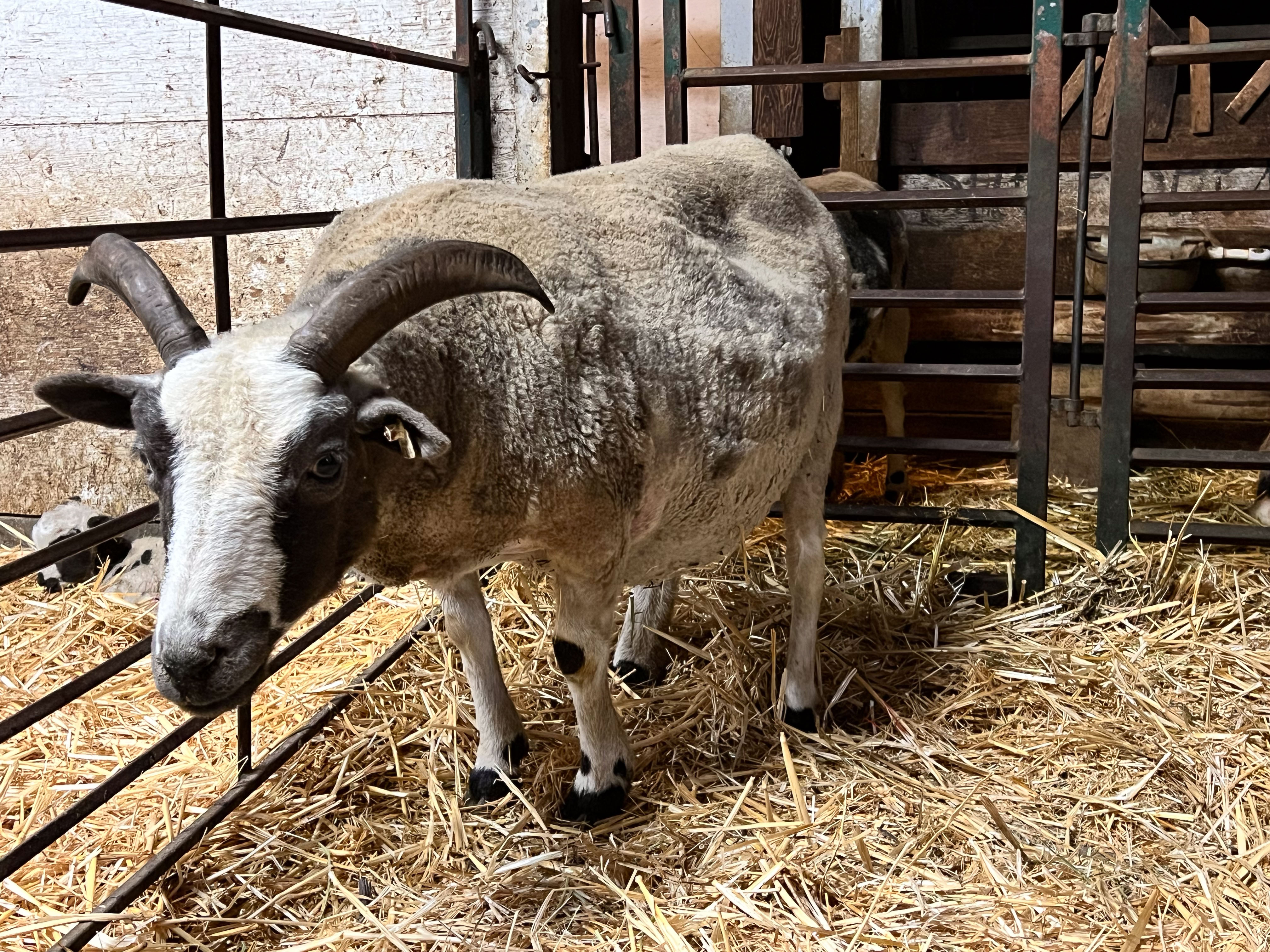
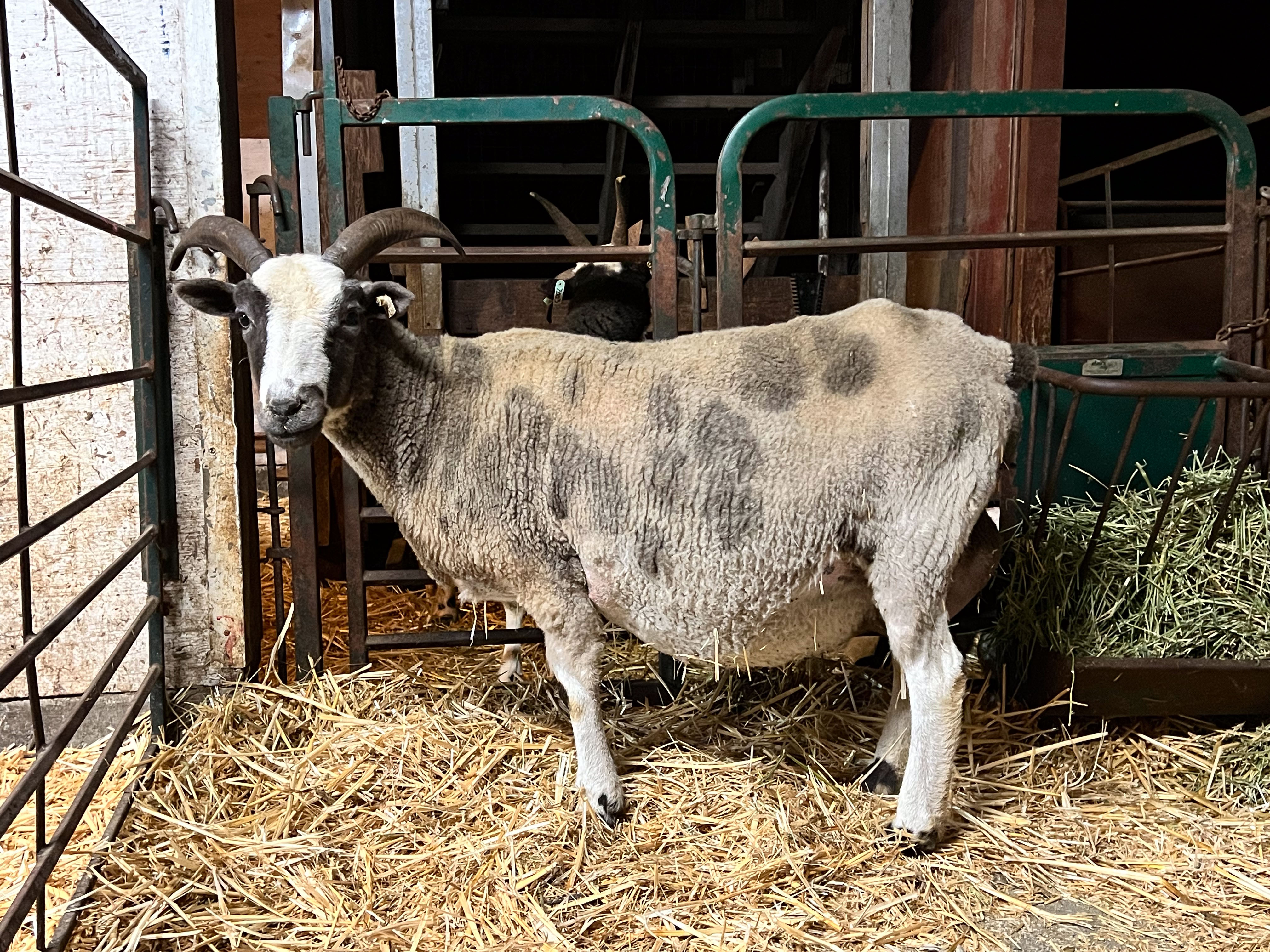

















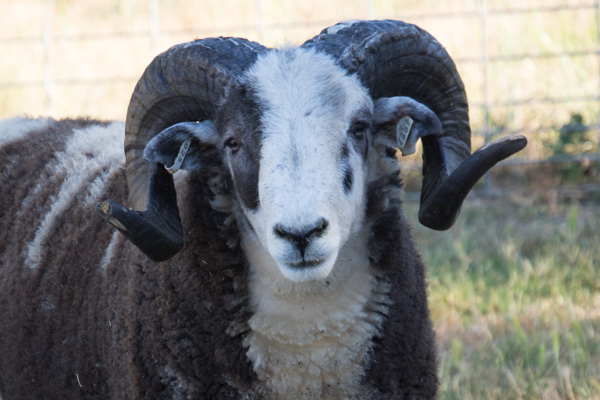 This is the yearling ram, Cayenne. He is not for sale.
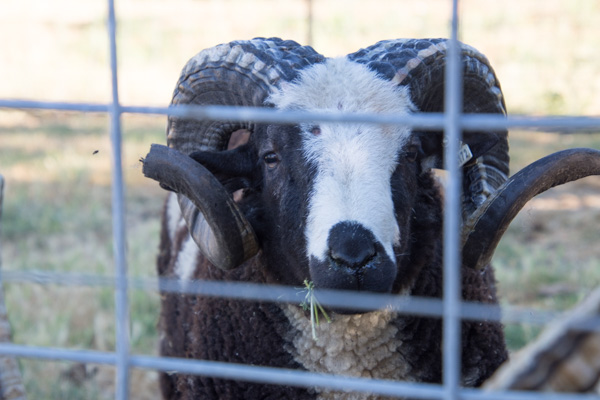 Yearling ram, Gotham, is for sale.
 Ewe lamb (Meridian Catalyst x Shadow Mountain Shelby).
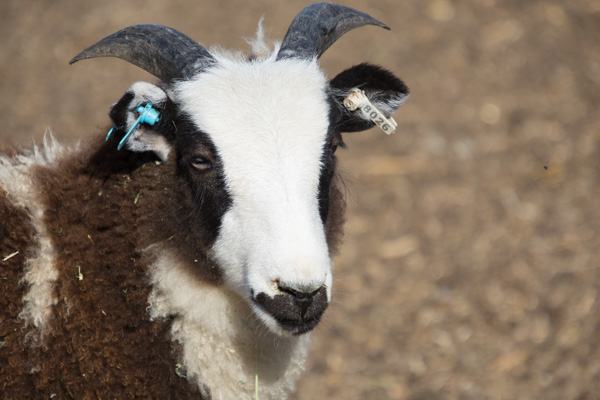 Ewe lamb (Meridian Catalyst x Meridian Delight).
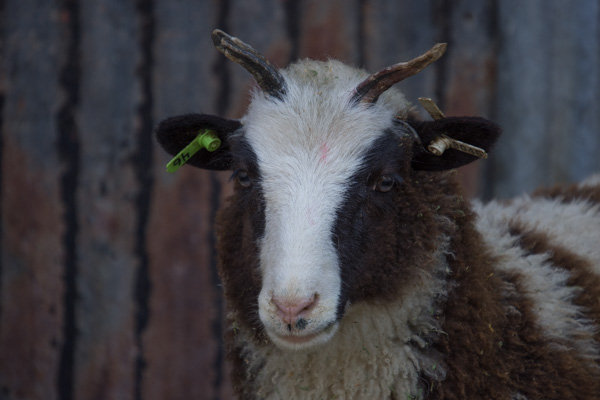 Ewe lamb (bide a wee Buster x bide a wee Hallie).
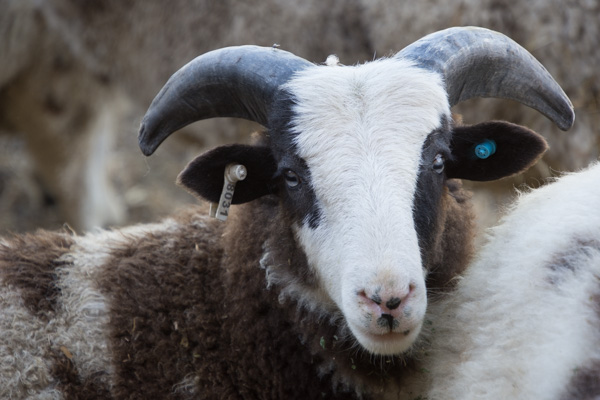 Ram lamb (Meridian Catalyst x Meridian Ava).
 Six-horn ewe lamb not for sale (bide a wee Buster x Meridian Jade).
  Four-horn ewe lamb, Janna, not for sale (bide a wee Buster x Meridian Janis)
 Oops! For sale, but not for breeding. Ugly-horned ram lamb. If you’re interested in lambs for meat see


 First I sort and start narrowing down choices. This is two-horn rams.
 More two-horn rams.
 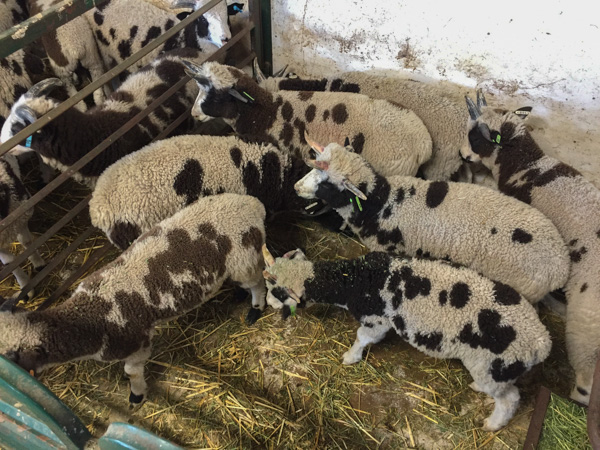 Four-horn rams (except for the one I liked best who broke his horn this morning and I put him out so he would hopefully not keep knocking it on others). I bred to two two-horn rams and one four-horn ram last year. There are more two horn lambs than four. Some ram lambs are missing from these groups because I had already castrated those that I knew right away would not be candidates for registration (too much or too little color or horns that were too close). Time to narrow these into groups.
 These are rams who will be on the cull list. It doesn’t take much for a ram to be moved to that list. In this case two of these lambs (on the right) have wide spacing between the upper and lower horns. That seems like it would be a good thing, but usually those upper horns tip forward and sometimes there are other issues with them. I’ll report back with more photos as they keep growing. The lamb facing the photo on the left doesn’t have enough spacing between horns. His right side horns are already touching at the base leaving no room for growth. The other two both have a lot of freckling, although it’s hard to see without parting the fleece and one is scrawny.
 Three of the potential 4-horn breeding rams. Nice horn spacing and shape so far. No sign of freckling. Color % OK. Nice looking fleeces. Britch wool not too high on back leg.
  Out of two pens of ram lambs I pulled these four out as potential at this point. That is mostly due to the wide horn growth. There may be others in the pens but I won’t guarantee the horn spread yet. Of course, they all have to meet the other criteria mentioned above as well.
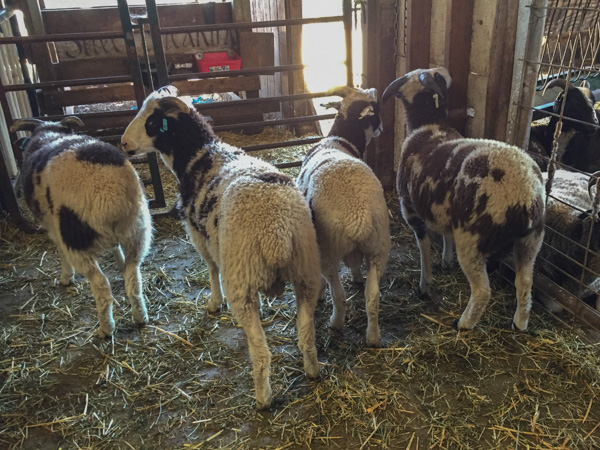 Here they are from the rear.
 Another from the front showing the ram with the best horn spread so far.
 These are the 4-horn ewes. I will be less picky about the ewe lambs than the rams. The breed standard isn’t so stringent and each ewe doesn’t play as large a part in the flock as the ram. Keeping a variety of ewe lambs is a good way to maintain some genetic diversity (although that is a good reason to buy some lambs from other people in August).
 The 2-horn ewe lambs.
 Another view of the pen on the right. Notice the two lambs (sisters) in the upper left corner. Compare their horn growth to the others. All these lambs are about the same age. Those two are showing minimal horn growth compared to the rest. I don’t know if that is temporary and their horns will be just fine when they are mature or if those are scurs. This is another reason to look at the lambs in a group. All of the rest of these lambs look fine to me so it will be hard to narrow this down to only a few to keep.
 These are some of my 4-horn choices. Preliminary selection is based on wool and lack of freckling in the lamb and the dam.
 The same group from the rear. I don’t fault the sheep for their rear leg position, but from this photo it would be the lamb on the left that I’d take to a show.
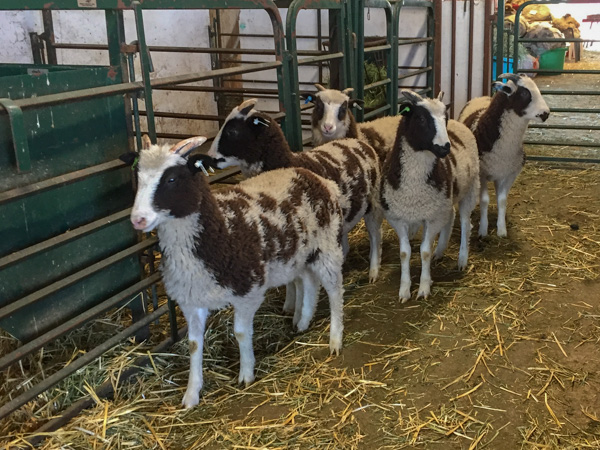 Two horn lambs that I like.
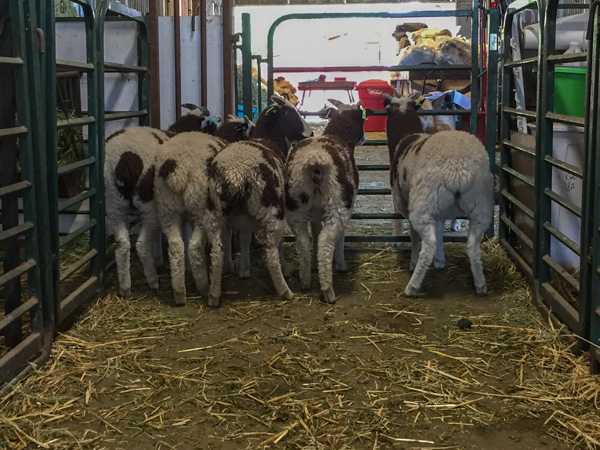 From the rear.
 Meridian Jacobs' Blog