Are we getting tired of lambing posts? It only happens this time of year.
 Do you remember this lamb from a couple of posts back? Trista had a 10+ pound lamb and then almost two hours later a 5 pound lamb. She didn’t want the little one and I struggled to get it to nurse. I ended up milking Trista and tube feeding the lamb colostrum. I left the lamb with Trista but she became increasingly less happy to have it around and more hostile.
The lamb wouldn’t suck on a bottle and I was getting very frustrated. It’s one thing to have to feed a lamb every four hours, but then when it doesn’t suck it’s maddening. You get the nipple in the mouth, the tongue hangs out the side and the precious colostrum goes everywhere. (This brings back frustration of trying to get Brown Swiss calves on a bottle. The Milking Shorthorns were fine, the Brown Swiss were not.)
A solution presented itself the next day.
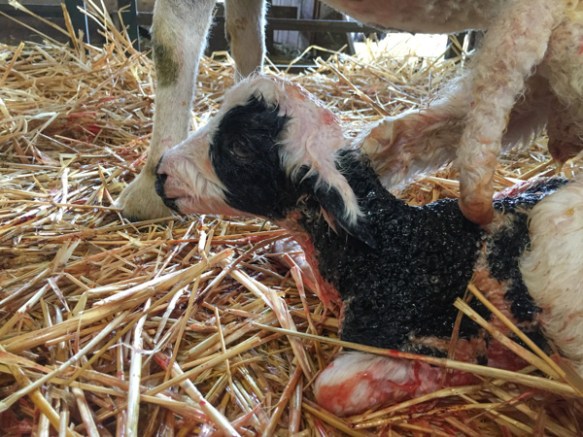
 I saw this in the barn. This lamb was standing hunched up like a lamb does when it doesn’t feel good. This view from the top down shows how large it’s belly is and it was tight as a drum. From previous experience I suspected intestinal atresia, a malformation of the digestive tract where the intestine is not complete. The lamb eats normally at first and then there is no where for the milk to go and this lamb was already over 24 hours old–it didn’t have long to live and was in great discomfort.
When a lamb dies if you put the fresh skin on an orphan lamb sometimes you can trick the mother into thinking that it is her baby. I went to the house for my new knife (purchased for when I need to necropsy or skin something and the sharpest thing in the house has been a pocket knife). By the time I came back to the barn the lamb was dead. In addition the lamb had stopped nursing so the ewe was at risk of mastitis as her udder filled, even though there was a remaining twin. One side had started to fill more and become uncomfortable. That starts a vicious cycle where the ewe won’t let the lamb nurse and that side of the udder gets worse and worse. This is a photo of milk from Trista, the orphan’s mom. I got over two cups of milk from the ewe with the baby who died.
The trick was going to be to get this lamb who had never nursed on her mom to nurse on this mom.
 I made a little lamb jacket out of the skin by cutting a neck hole and leg holes. It’s kind of hard to tell if you don’t know that’s what you’re looking at.
  The new lamb was smaller than the one that died so this jacket was a little large. The mom wasn’t convinced at first that it was her baby, but she didn’t outright reject it. The lamb had eaten (been tube fed) just two hours before so it wasn’t hungry. But later that night it was hungry. It was on it’s feet and when I held the ewe still it nursed!
  The next day the jacket was beginning to smell. The idea is that at first the mom smells her baby and eventually gets used to the new lamb smell. So our transition was original lamb smell mingled with new lamb smell, new lamb smell mingled with dead smell, all new lamb smell. I had cut a portion of the skin off to get more of the new lamb smell and because I wanted the lamb to be able to adjust to the cold when the second skin came off. But this skin jacket was so big that at that point it got tangled up and I took it off.
I kept the ewe and the lambs in a pen for several days so that I could watch. The ewe slept with her lamb and not the new one. She would stomp when the lamb tried to nurse but if I went in the pen she resigned herself to it (almost rolling her eyes) and stood there.
 We have success. I haven’t had to hold the ewe for a few days while they have been in a group pen. They will go out tomorrow and I’ll keep an eye on them. But I think the baby has a new mama.
 Farm Cub members are invited to be vendors. This is Jackie with Sheep to Shop.
 These are some of her handspun, handknit pillows.
 Colleen has Fiber Confections.
 She usually sells at the Davis Farmers’ Market.
 Gynna makes socks.
 Here are some of her socks knit from my Anderson Ranch yarn and Timm/Jacob yarn.
 Joy sells dye plants…
 …ready to use for dyeing and ready to grow. Her butterfly is made from a Zoom Loom square.


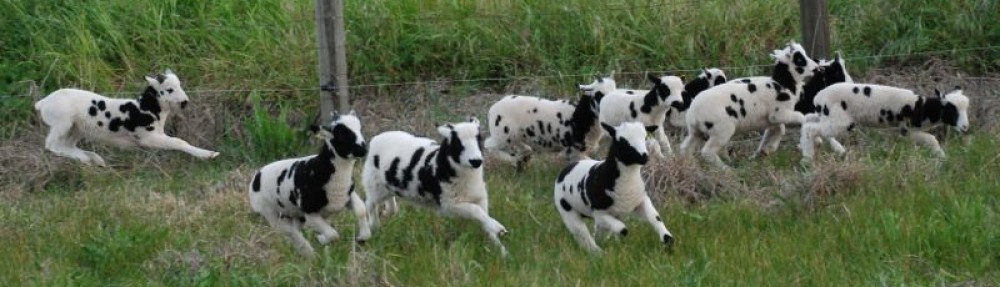
 Of course, it’s all about the animals, especially the lambs.
 Betsy, Mary, Sue, and Marina helped children pet lambs.
 My little goats were an added attraction this year since Julie, who usually brings goats and bunnies, couldn’t be here.
  This fence helped keep the kids in one place. Moms could relax temporarily.
 I saved the small field behind the shop so that the sheep would be enticed to come to fresh pasture for the weekend.

 Here she is the previous day, looking rather uncomfortable.


 Here is how the barn list looked at the end of the day.
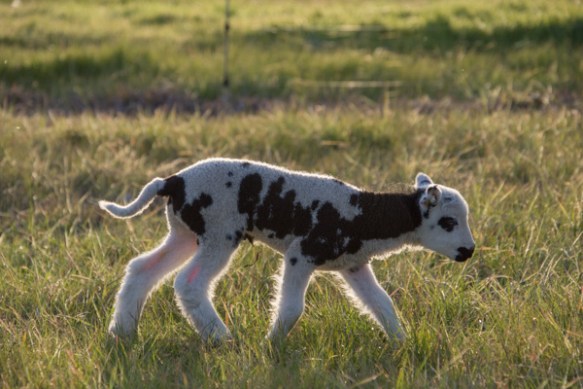
 Meanwhile , in the pasture the lambs were playing.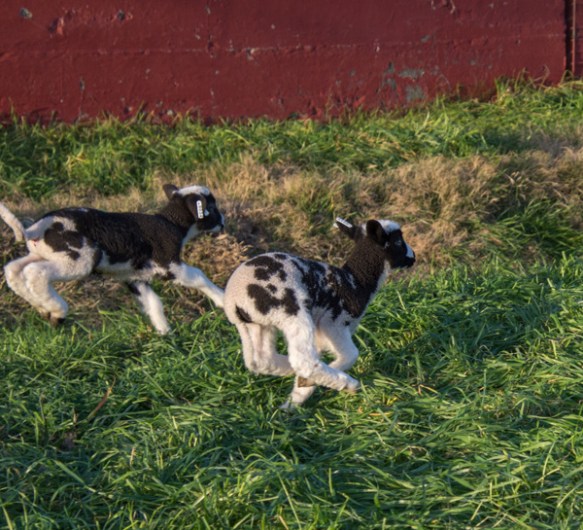


 That is Foxy lying down in the back.
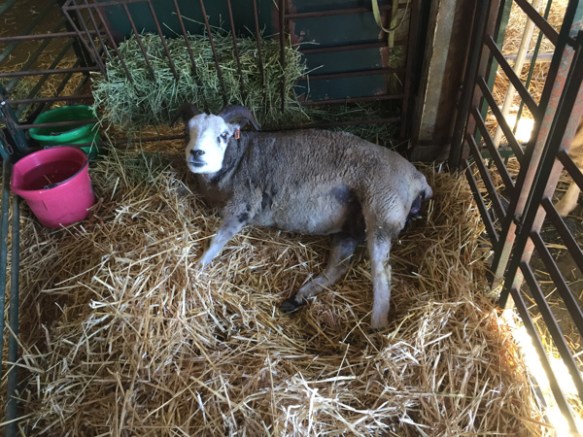 I brought her into the barn about an hour after I first noticed her.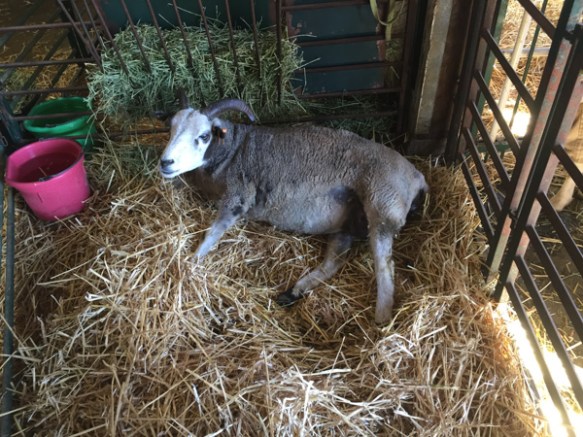


 She lambed about an hour later.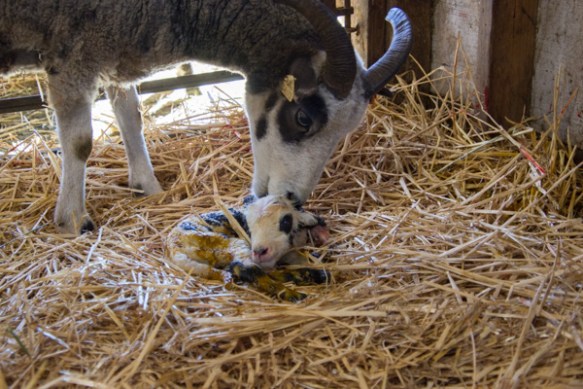


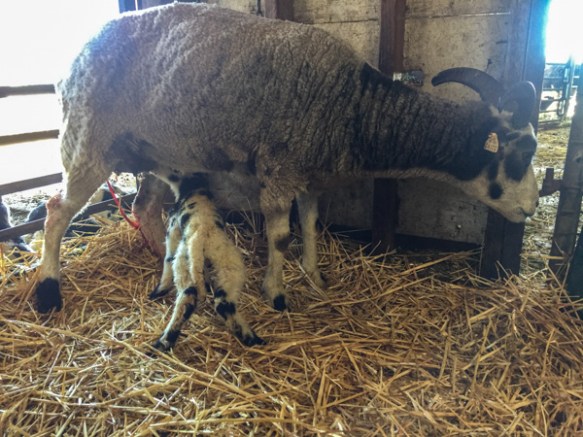
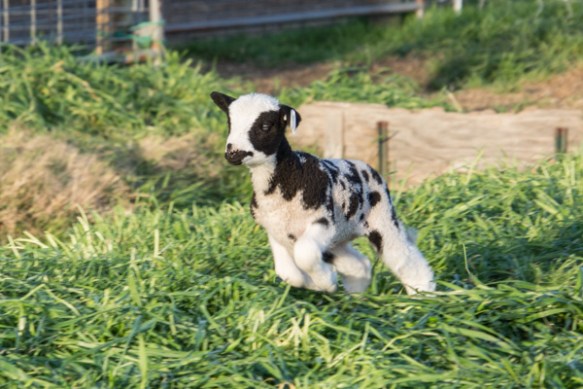
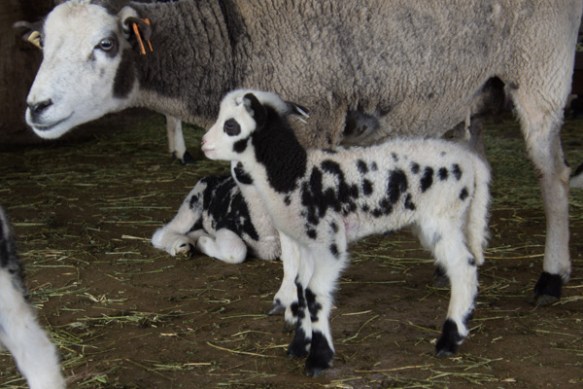 This is Foxy’s lamb at 6 days old.
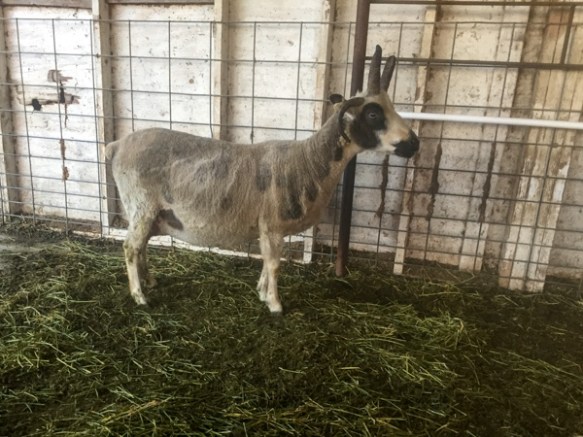 I saw her at about 7 a.m. and knew that she was in labor. The first sign of labor is often just behavior. You have to know what normal behavior looks like to know when something is different. I spend a lot of time looking at my sheep.
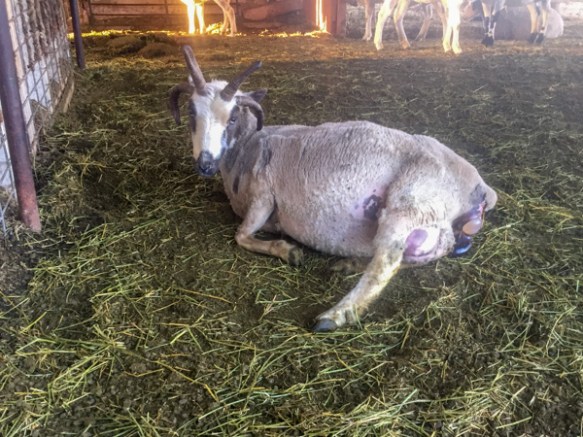 A more obvious sign is seeing the sac emerge when the ewe has contractions.
  The first lamb was born about 7:20 and I brought the lamb inside the barn.
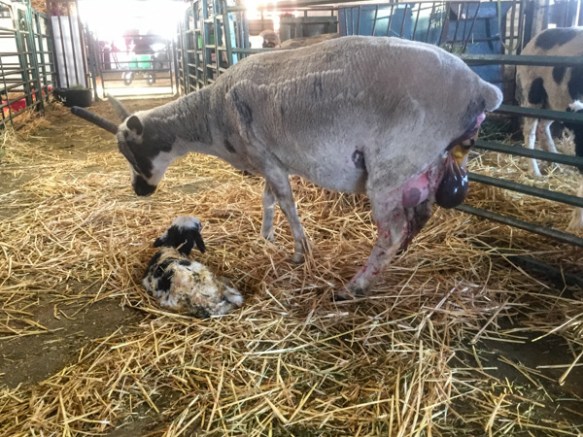 It sometimes takes much longer before the second lamb is born, but this one was coming within five minutes.
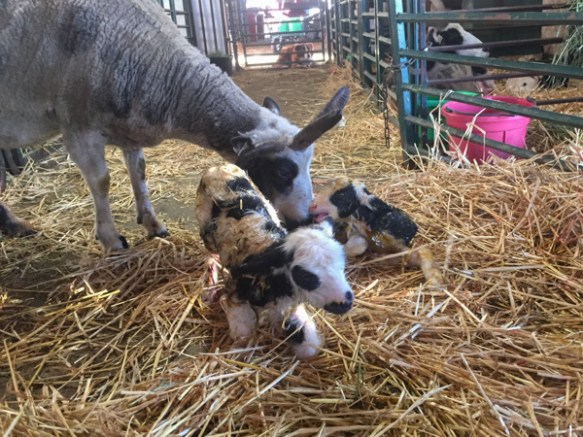 That’s the first lamb getting up within ten minutes of birth.

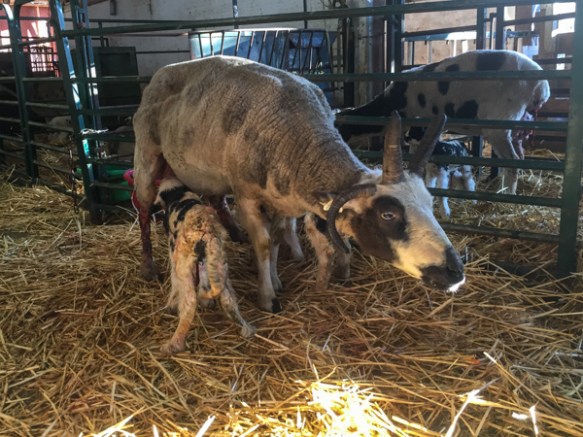 Both lambs were nursing within a half hour.
 This is the lamb board. These lambs were #49 and 50.
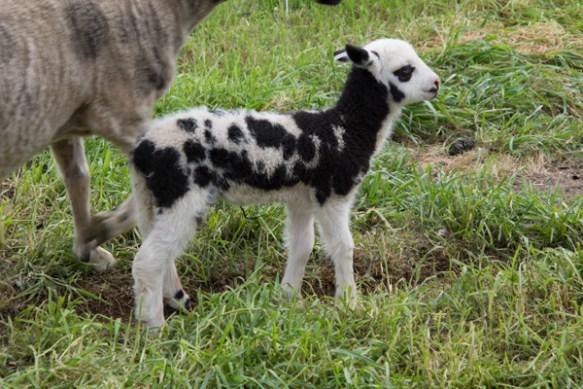 This is one of the lambs one week later.
 This is Cayenne…
 …and this is Serrano. Yearling rams trying to figure out who is boss. I think most of the blood came from a fifth horn that was behind Serrano’s lower horn–that horn is gone now. I’m not sure who won. Neither of them seemed to be feeling very good for a day or two.


 The
The  Estelle and lambs.
 Ht Lips and her triplets plus an extra.
 Back in the barn lambing has continued at quite a clip. This is Fandango and her BFL-cross lamb.
 Vixen’s twins.
 There are plenty of lambs to cuddle.

 Here is the lambing count a week ago.
  My bike set up on a trainer in the house. The only use it is getting right now is as a sock drying rack right.
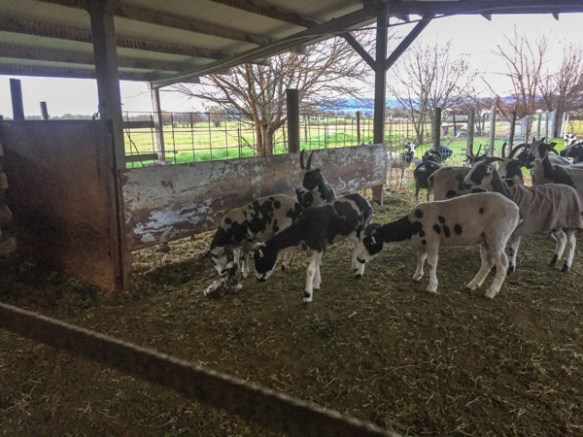 So I looked over the barn wall where I spy on the ewes and saw this. Yearlings aren’t always sure about what to do with a lamb and need a little time to let their instinct kick in. It is important that a young ewe has a chance to figure out that the lamb is hers and that she really does want it. You don’t want to interrupt that bonding time. However she can also be bullied or distracted by other ewes who are curious or close to lambing and will start to mother the lamb themselves.
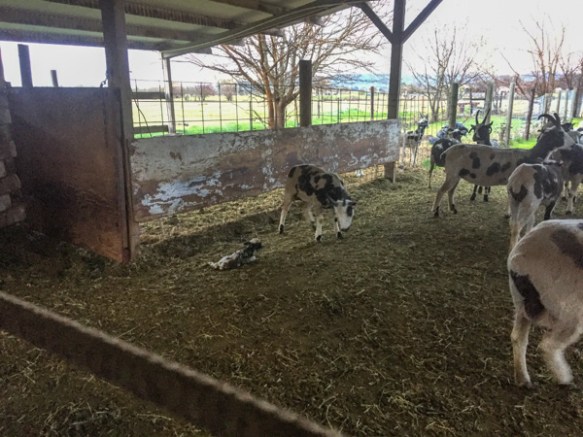 I walked around the gate briefly to push the other ewes away and then backed off so that Dilly would approach her lamb again.
 I gave her some time and then slowly picked up the lamb and got her to follow it into the barn.
 This lamb was only 4.6 pounds. The other Jacob lambs are more often 7 to 8 pounds or even more.
 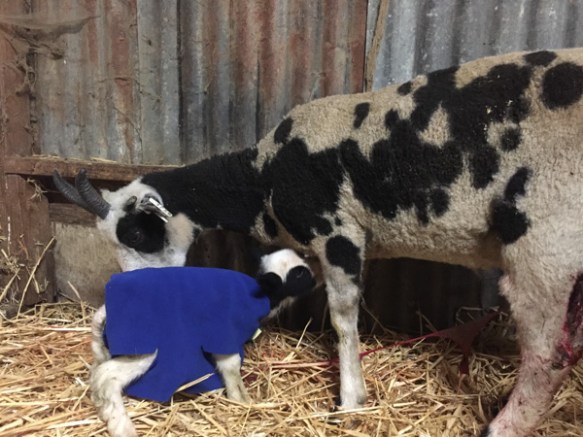 It was stormy and cold so I put this little lamb coat on it for the night. However the coat was too big and got wet. By morning I took it off.
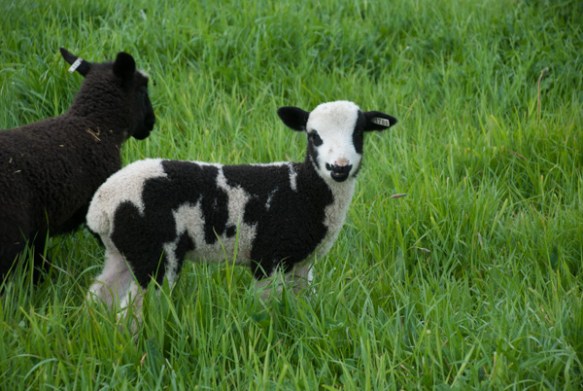
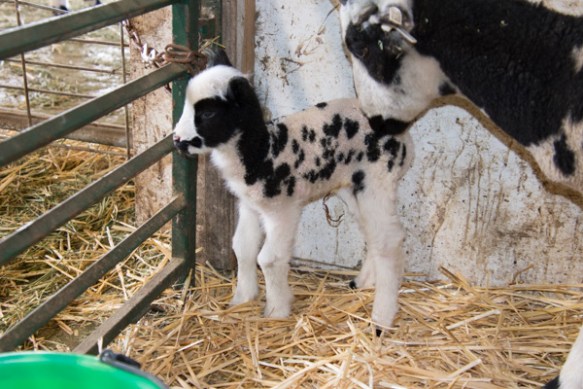 Dilly’s lamb at 2 days old.
 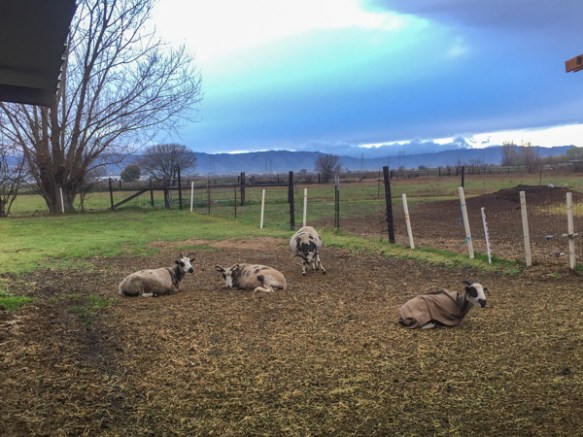 That is her pawing and looking restless during morning chores.
 When she looked more as though she were in active labor I brought her into the barn. That was about 10:15.
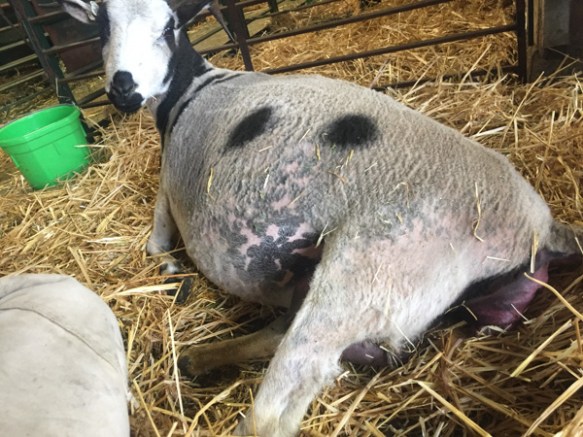 At about noon the sac was visible.
 This view, taken about 2:00 shows how, as labor progresses, the sides are sunken in front of the hips. I had been waiting for Sheena to have her lambs before I went to town, but I finally decided to make a quick trip. When I came back at 3:00 she was lying down and pushing but I saw only the nose, which at that point looked somewhat swollen. When I felt for the lamb position, the feet were at about a 2:00 position instead of below the head and out in front. I pushed the lamb back so that I could make sure that the feet matched up to the right lamb, brought them around to the 6:00 position and then pulled the lamb easily.
 As soon as the lamb was out Sheena went to work.
 The sac for the next lamb showed within a few minutes.
  Lamb #1 was on his feet within 8 minutes.
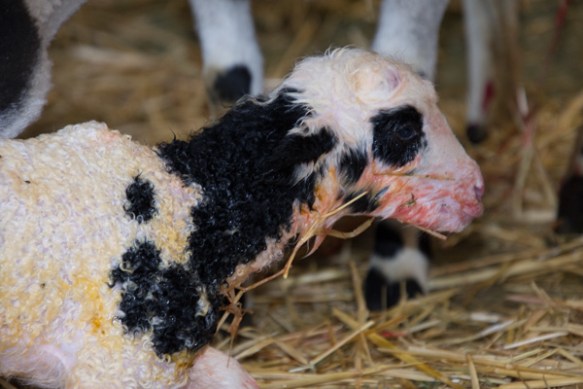 You can see this ram lamb’s horn buds.
 Sheena barely noticed as she pushed out the second lamb about 15 minutes later.
 Lamb #1 is mostly white.
 Lamb #2 has a lot of color and has lilac markings. Catalyst is the sire.
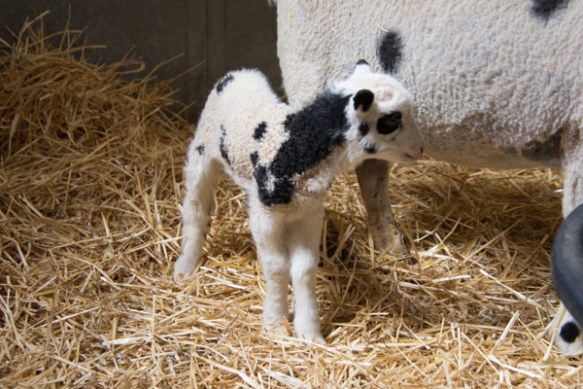 This is the first lamb two days later.
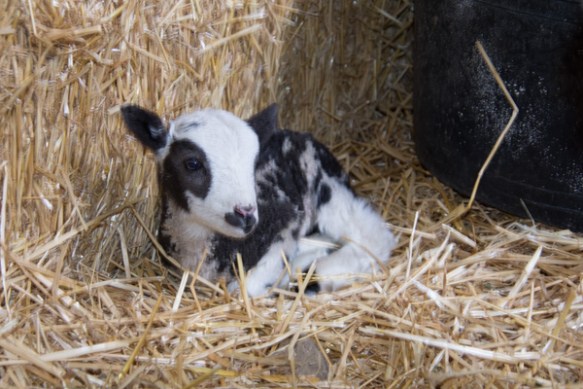 Here is the second lamb.





 Meridian Jacobs' Blog