As the title indicates, I have already written one blog post about lambing. That described that lambing began on February 22. That’s nine days ago now, and a lot has happened. I started this post yesterday and it’s already outdated. However, I’m going to go with it because these photos are already loaded. Just play along and pretend it’s Monday. I was sharing photos in reverse order. Now I just need to add the text.
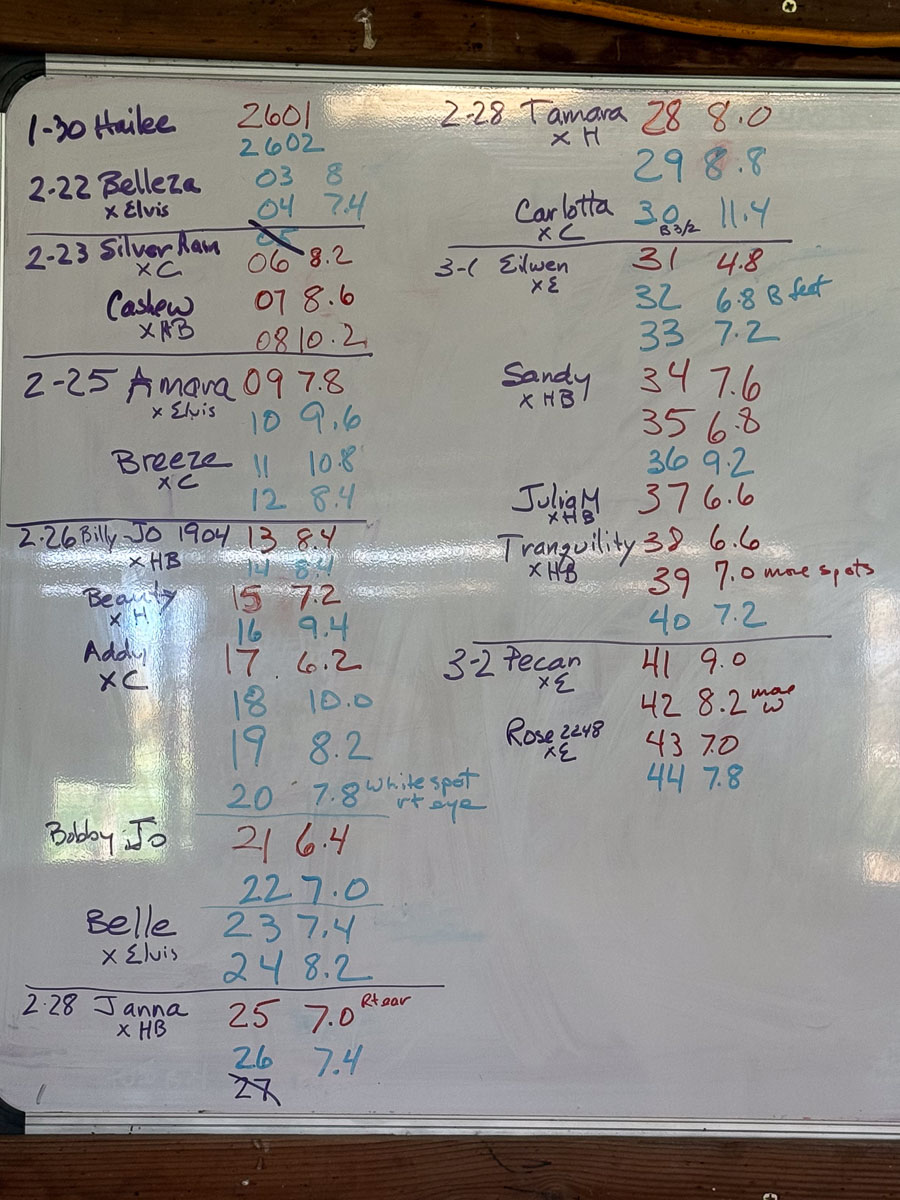
This is how I keep track of all the details. The numbers are the lamb ID, each with a 26 in front. Red ones are ewe lambs and blue are ram lambs. The next column is birth weight. The X _ indicates the sire: Hornblower, Clancy (BFL), Elvis, and Hunter.
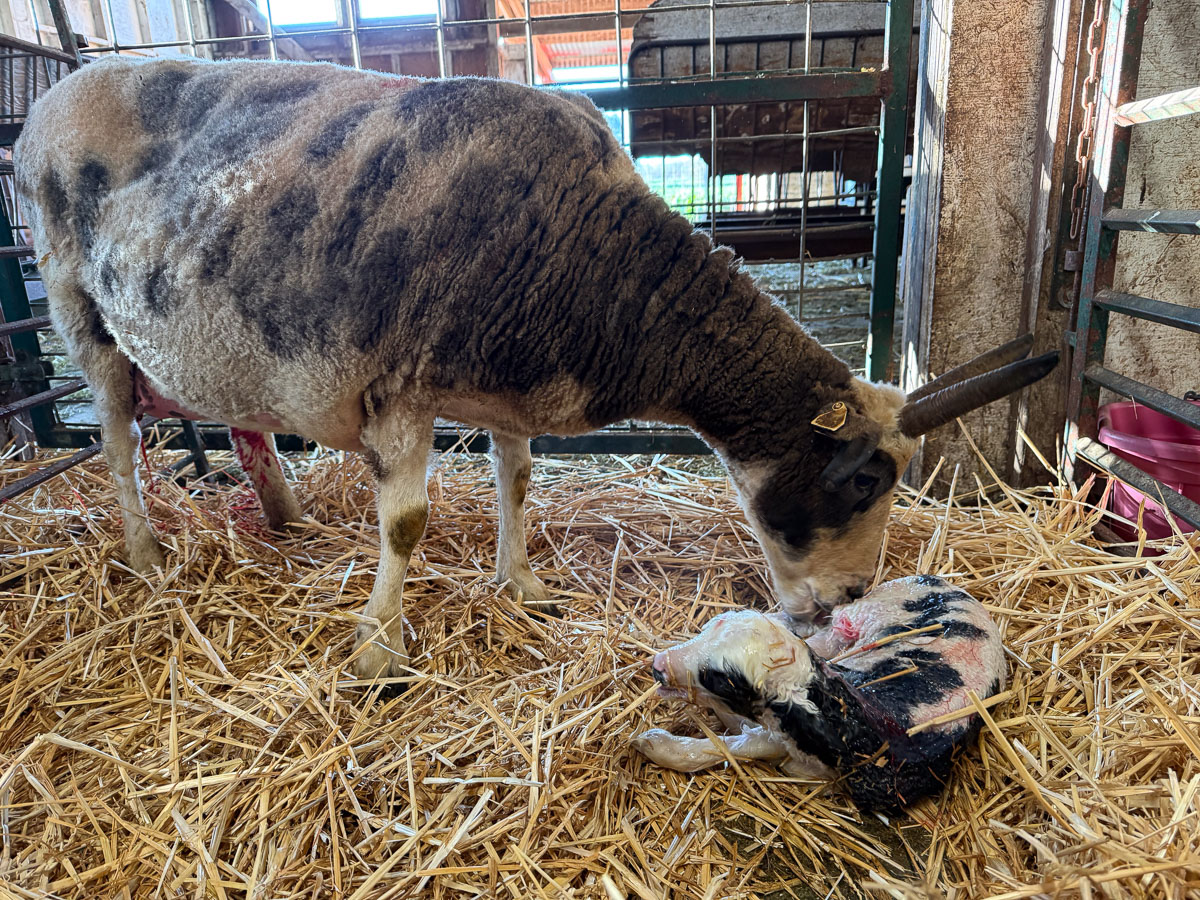
The last one on the board is Rose with twins. I usually try to have them in the lambing pen area when they are in labor but I missed this one.
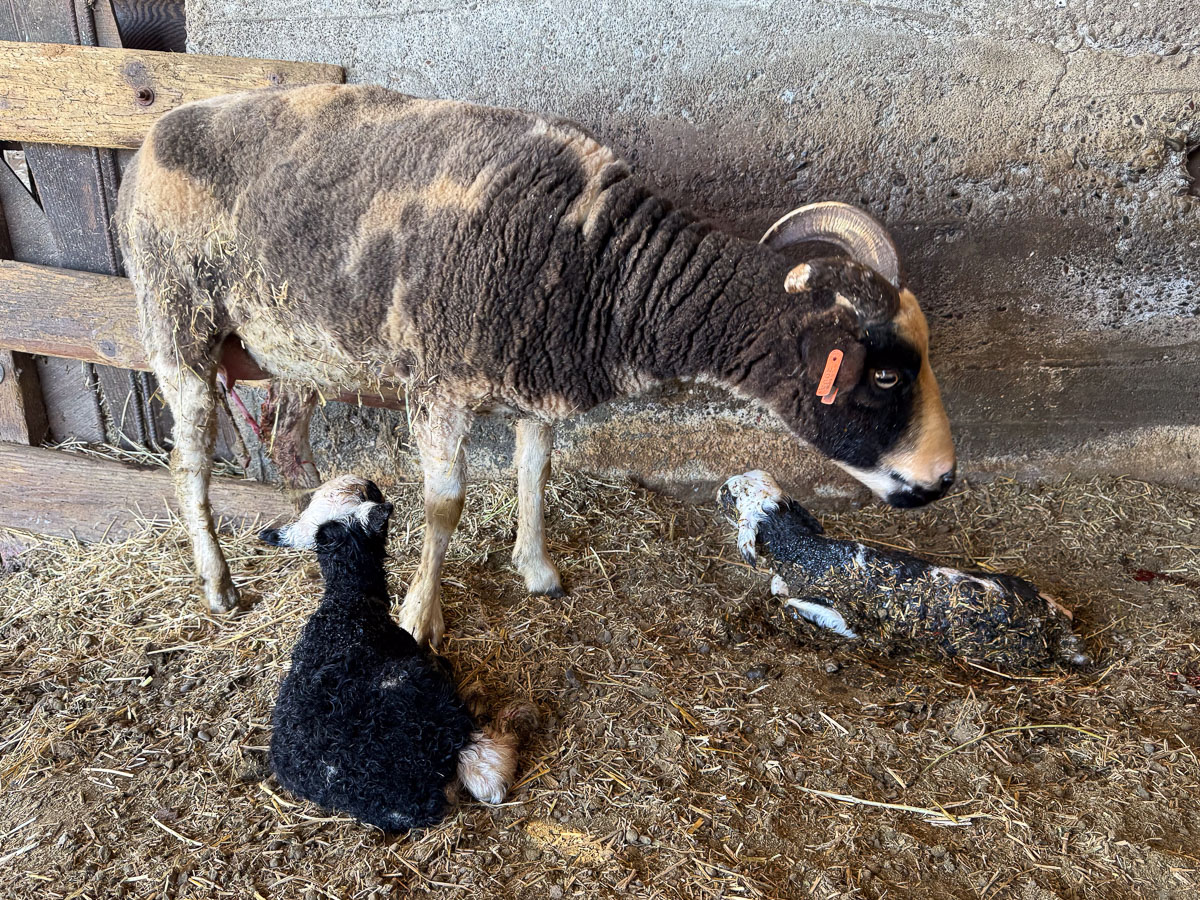
Pecan was just before Rose with twins.
Tranquility lambed the night before with triplets.
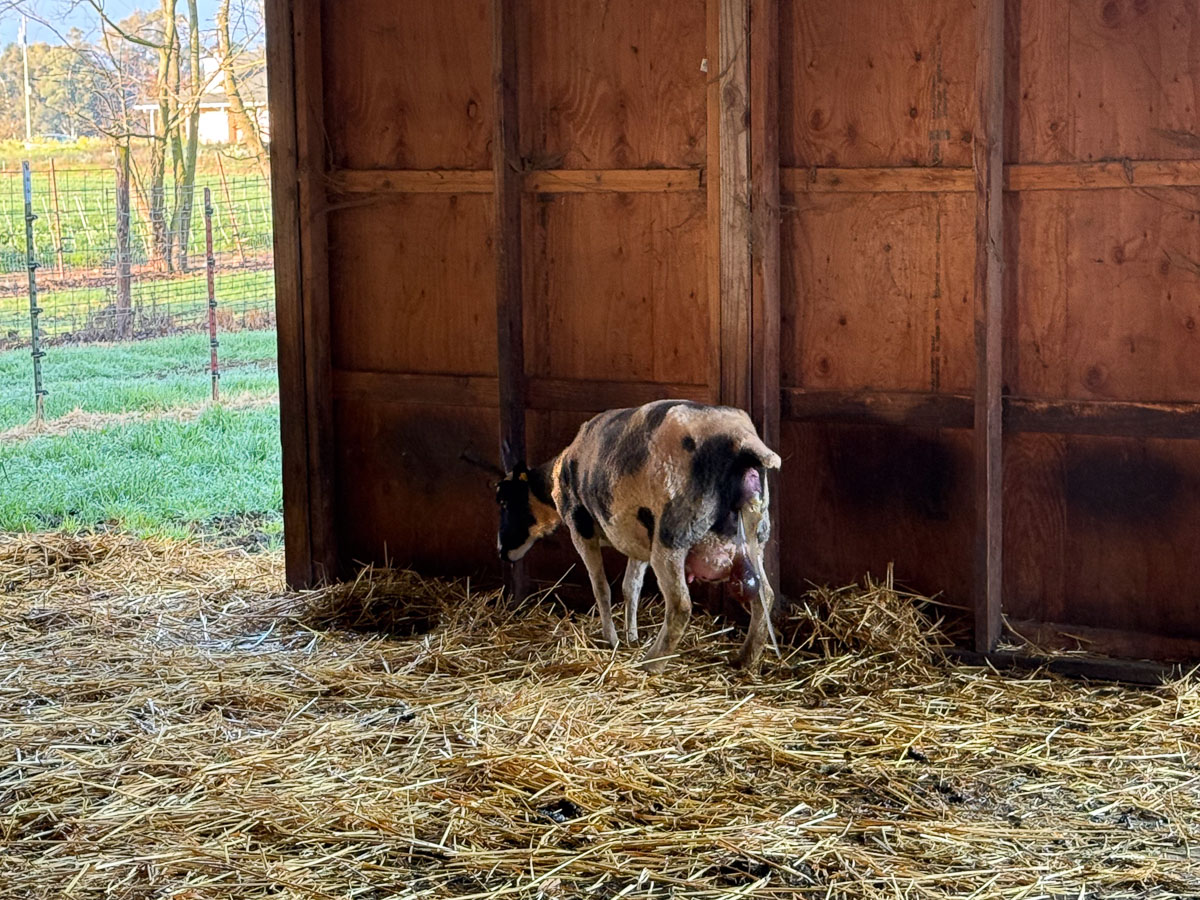
This is how Tranquility looked earlier in the day. When a ewe gets that sunken look in front of the hips that is a sign that the lambing is imminent. Maybe imminent isn’t the right word because I put her in the lambing area earlier in the day and she didn’t deliver until about 10:30 p.m.
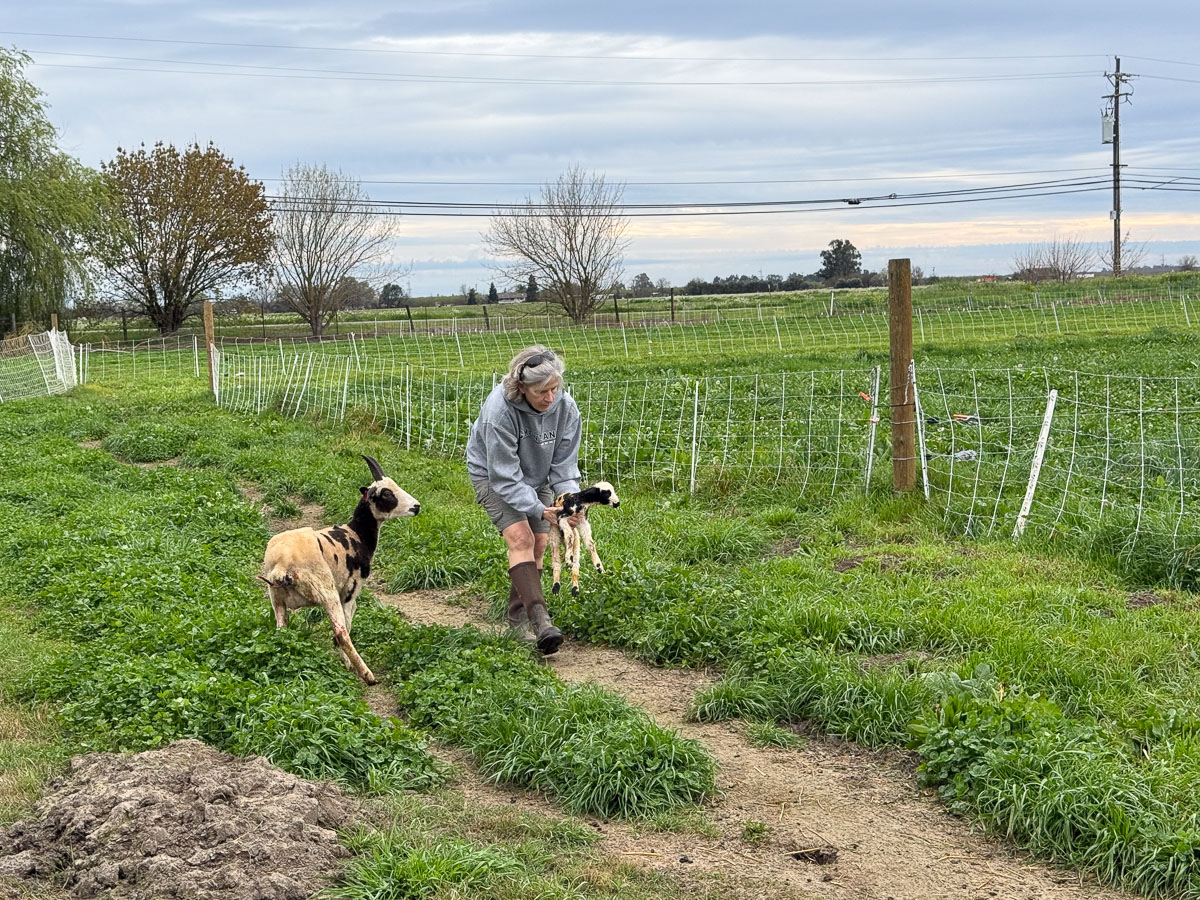
Julia is a yearling who lambed in the pasture. One of the Farm Club members who was here brought her lamb to the barn, carrying it low so the ewe would follow.
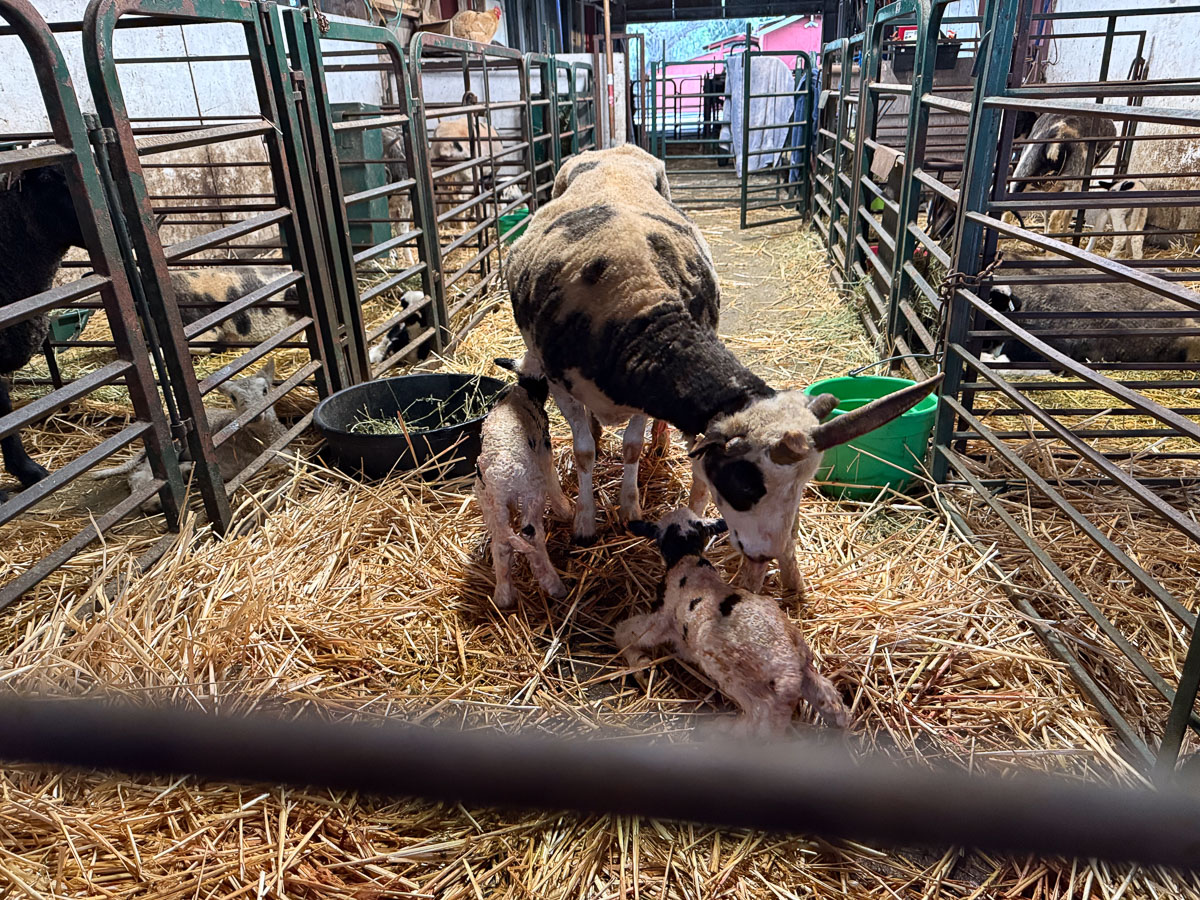
Sandy had lambed earlier in the morning with triplets. I set up panels to separate Sandy from Eilwen (next photo). This is like having hospital beds in the hall. The lambing pens were full and I already had overflow pens in the alley of the barn.
Eilwen with triplets around 2 a.m.
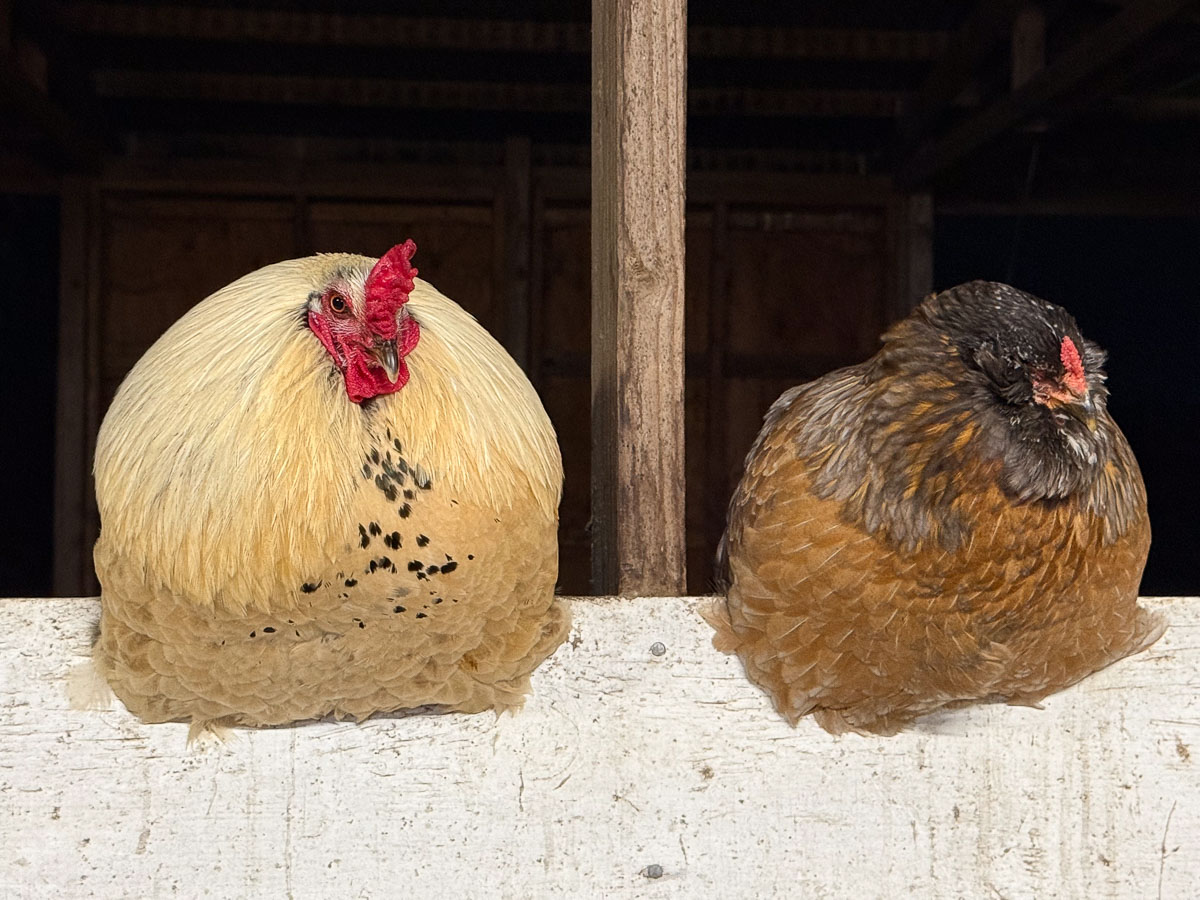
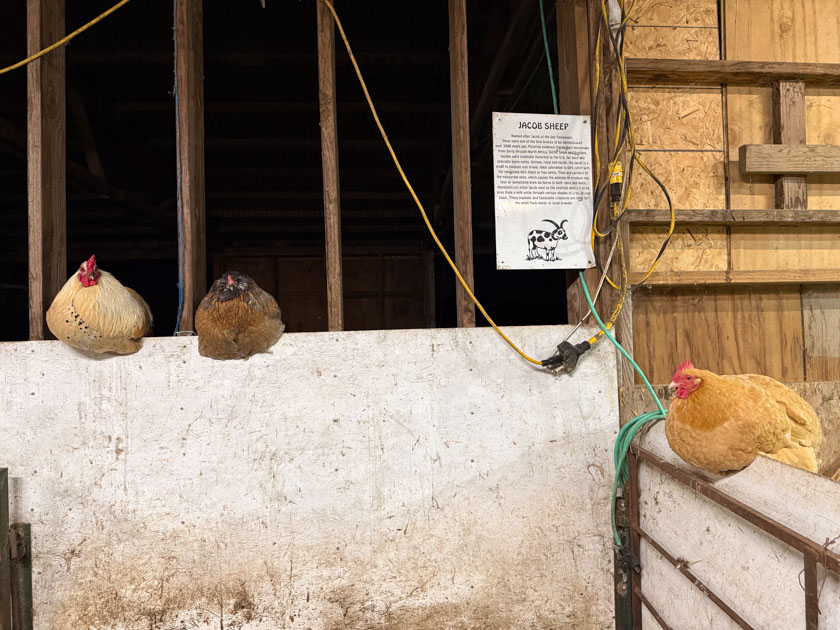
At night the chickens roost on the wall behind the lambing pens.
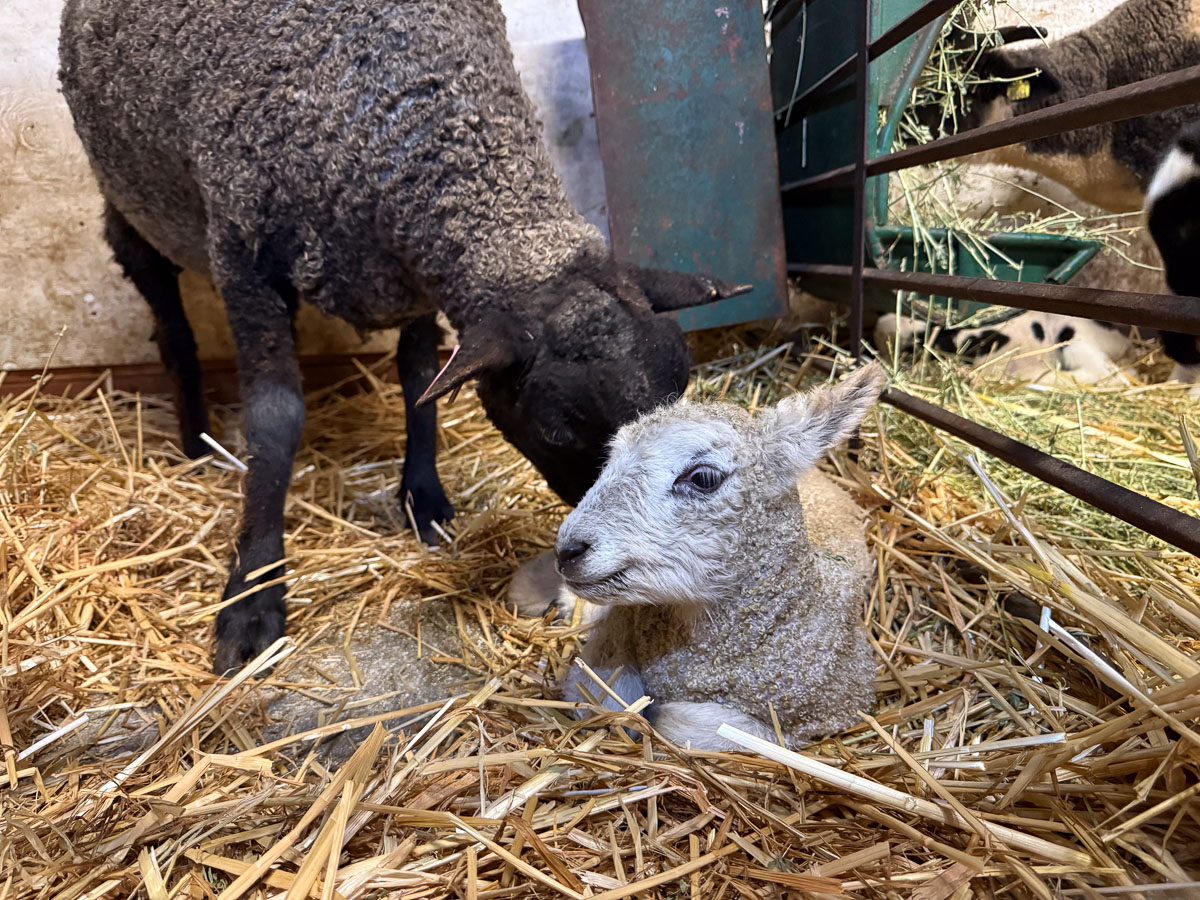
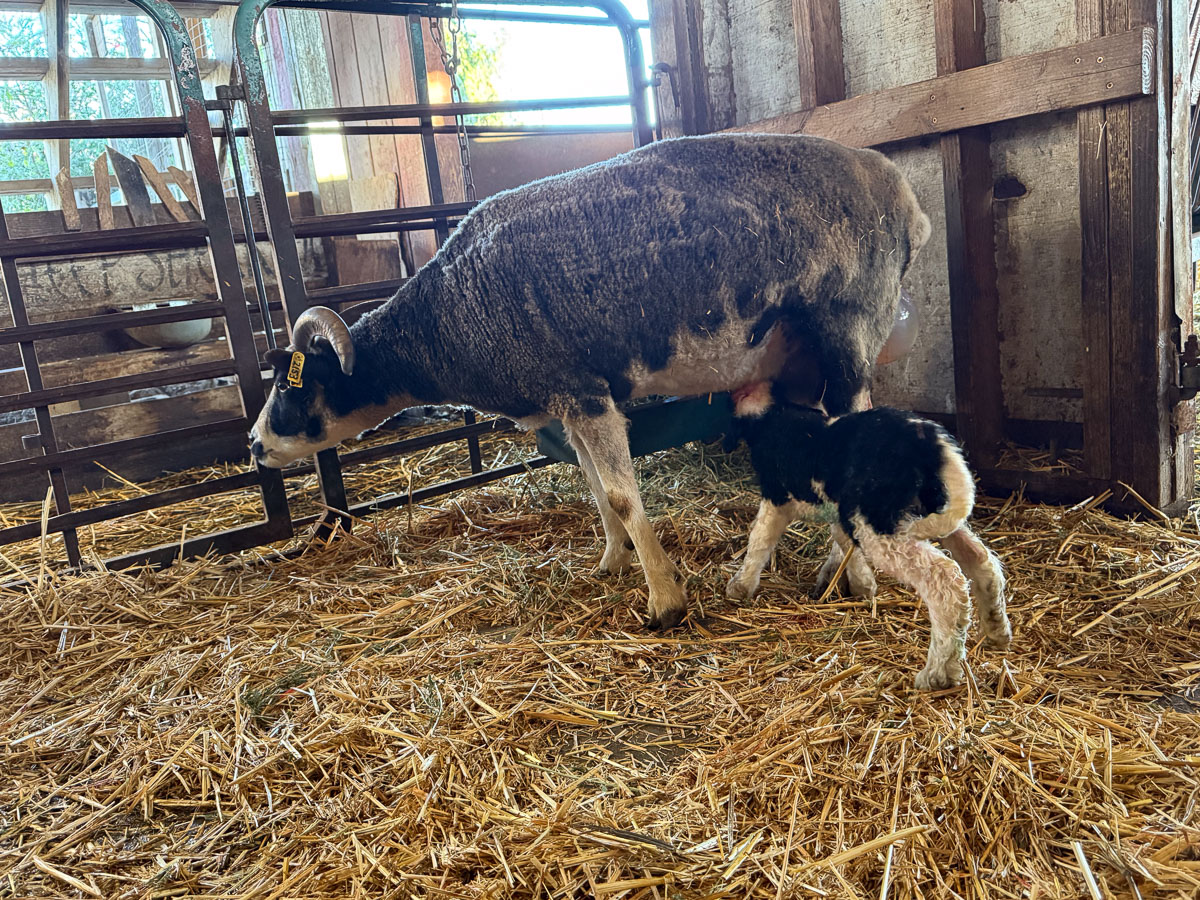
This is Carlotta from the previous day. She is a Romney/Lincoln/Corriedale cross. The lamb’s sire is Clancy, the BFL.
Lambing began Sunday night. The first ewe to lamb had twins, up and nursing when I got to the barn. That is how it is supposed to be. The second was a different story, but maybe that will be a post later. After that it has seemed slow, until yesterday.
This is the first ewe who lambed yesterday, Bideawee Billie Jo.
Twins.
Nothing in the middle of the day but in late afternoon, Beauty started. She ended up with twins, but it took awhile for the second and there was another ewe lambing in between.
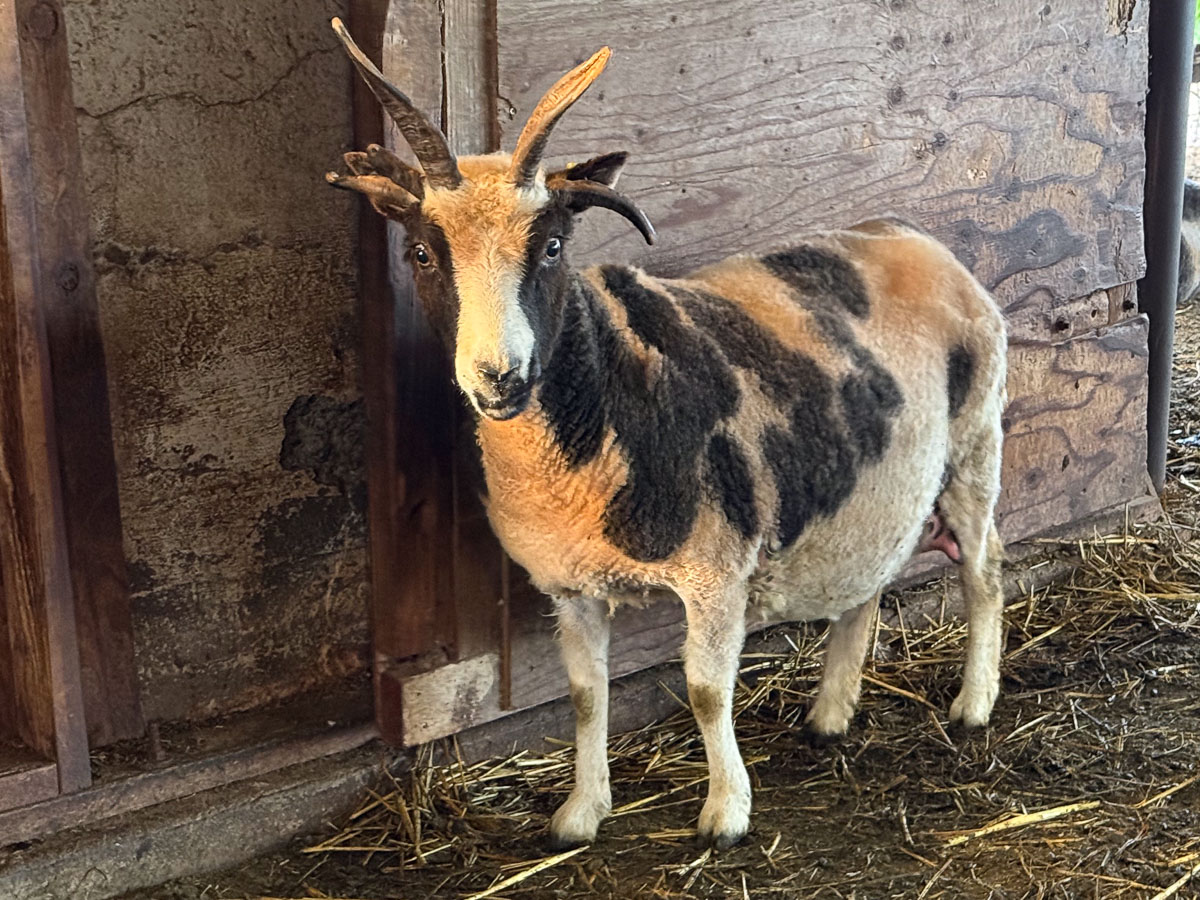
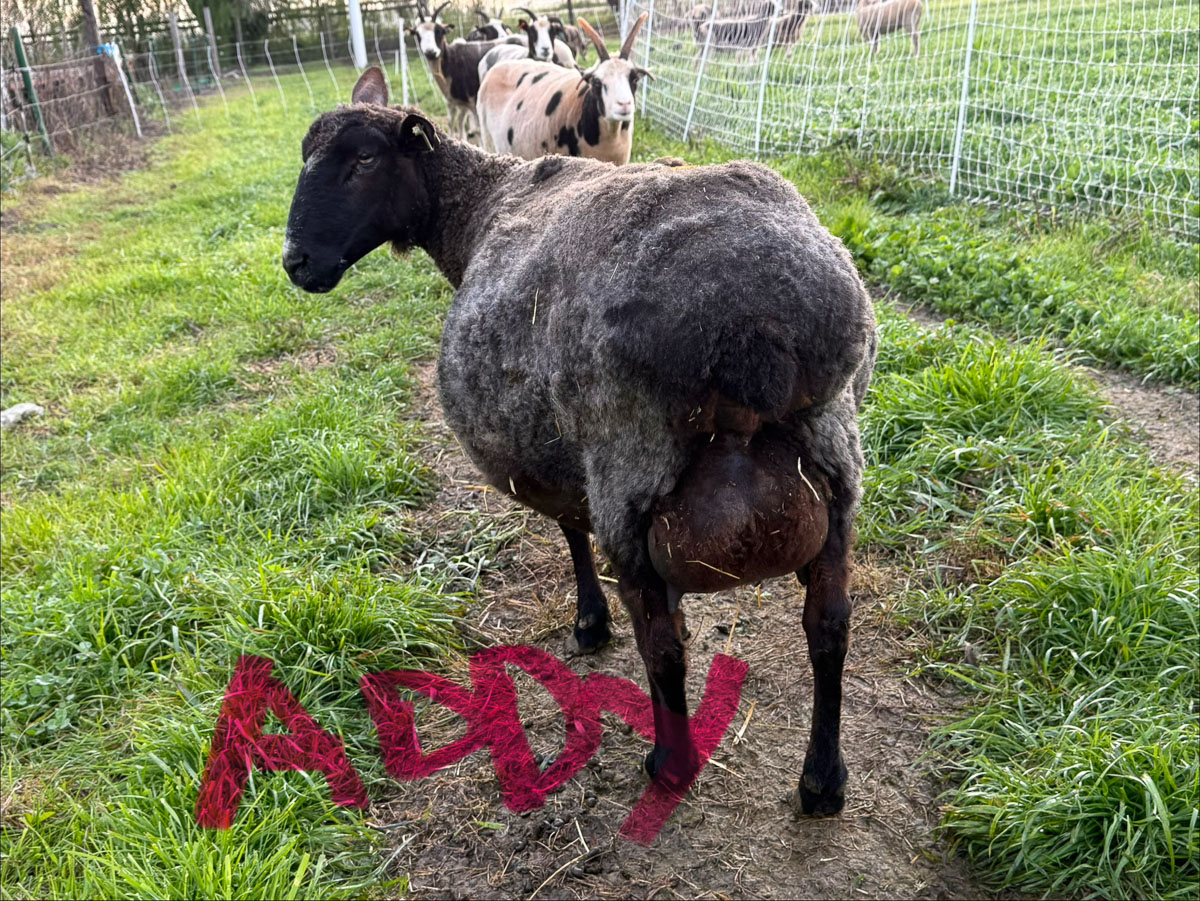
Addy is a Jacob-BFL (Bleufaced Leicester) cross. This photo was taken four days ago.
This is not a post-lambing photo. It was taken about three hours before she had the first lamb. Those sunken sides are a sign that the lambs have “dropped” and we’re getting ready for lambing.
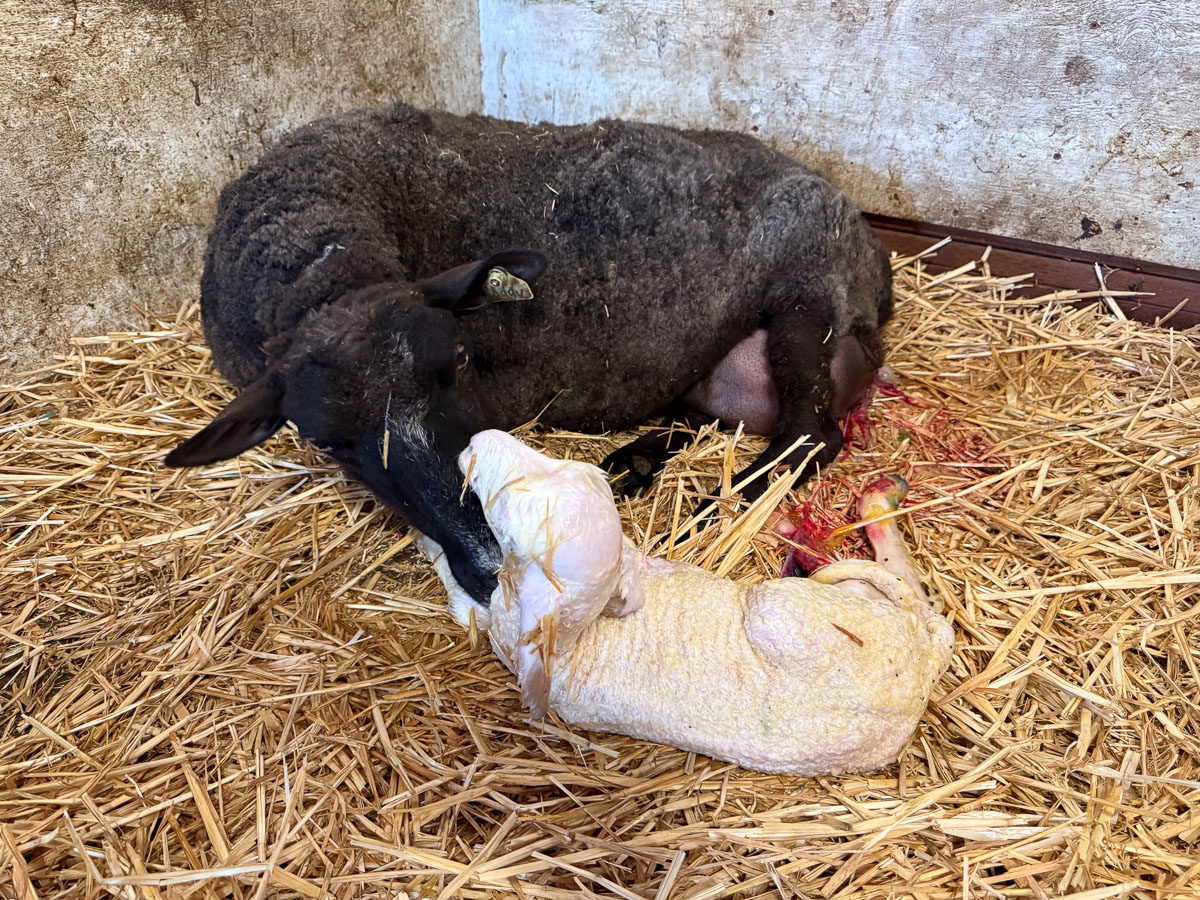
Just after Beauty had her first lamb I looked over the fence and saw that Addy had one lamb. It’s not visible in this photo because it’s behind her. It’s black. Jacob sheep are colored sheep with a spotting pattern. When you breed them to most other breeds you get black lambs because the sire doesn’t have that spotting pattern. Addy is a crossbred, bred to another BFL. So genetics are interesting.
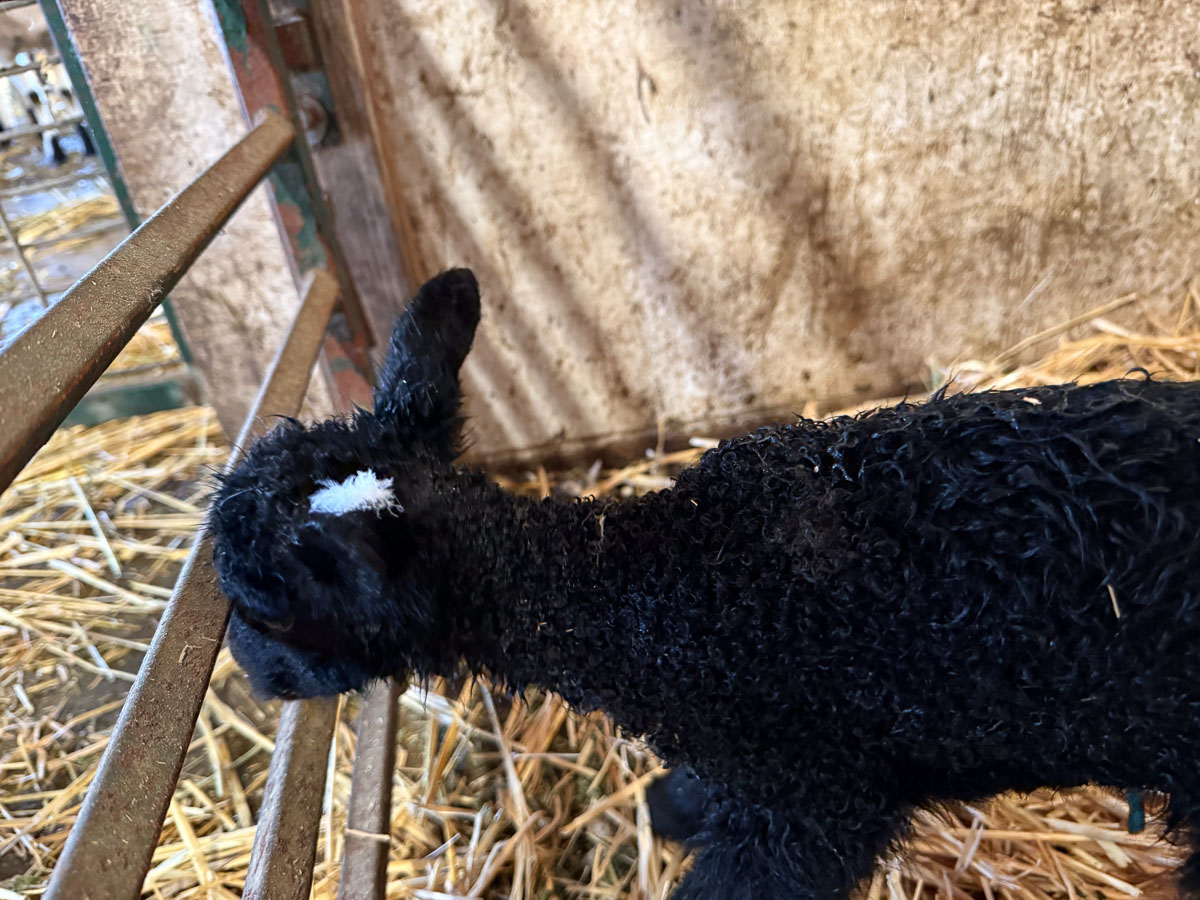
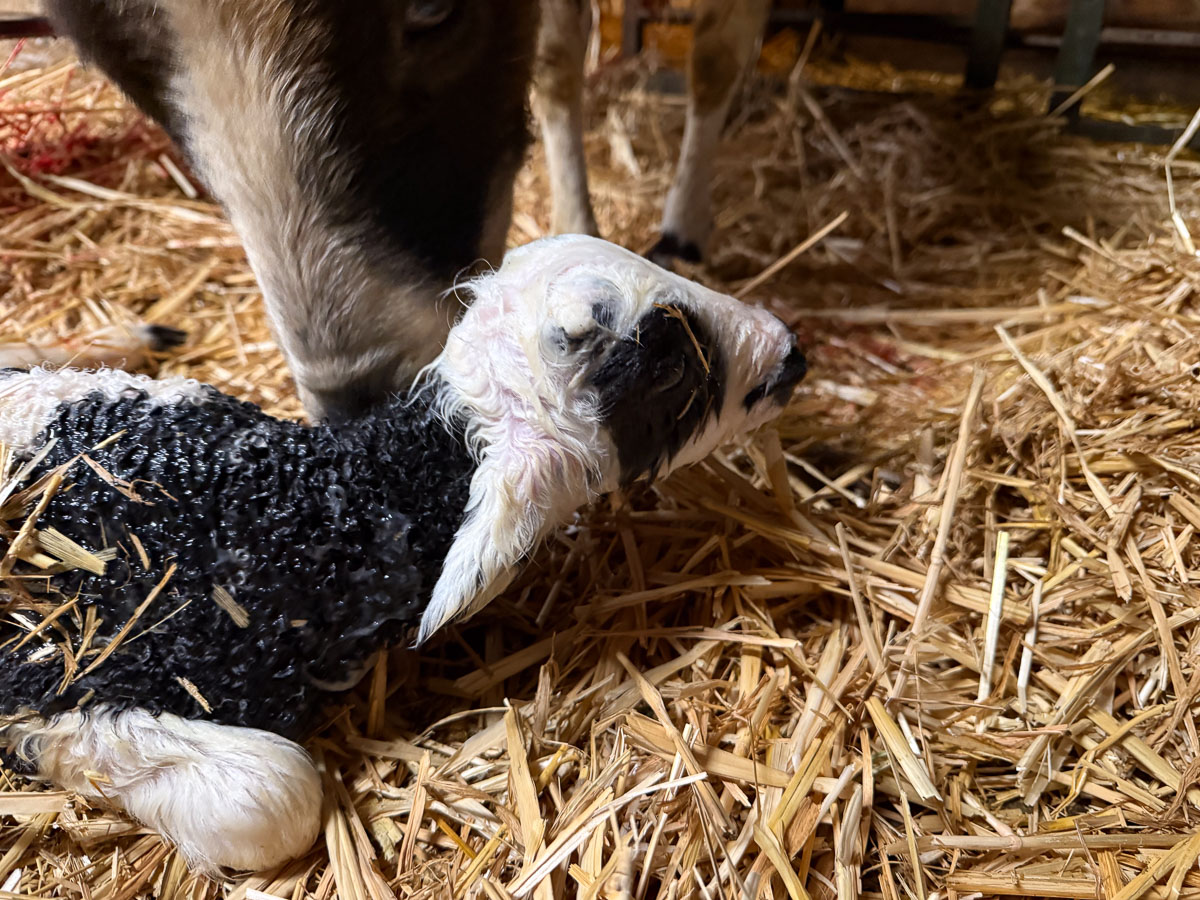
Here’s the first lamb adorned with a white feather that looks like a spot.
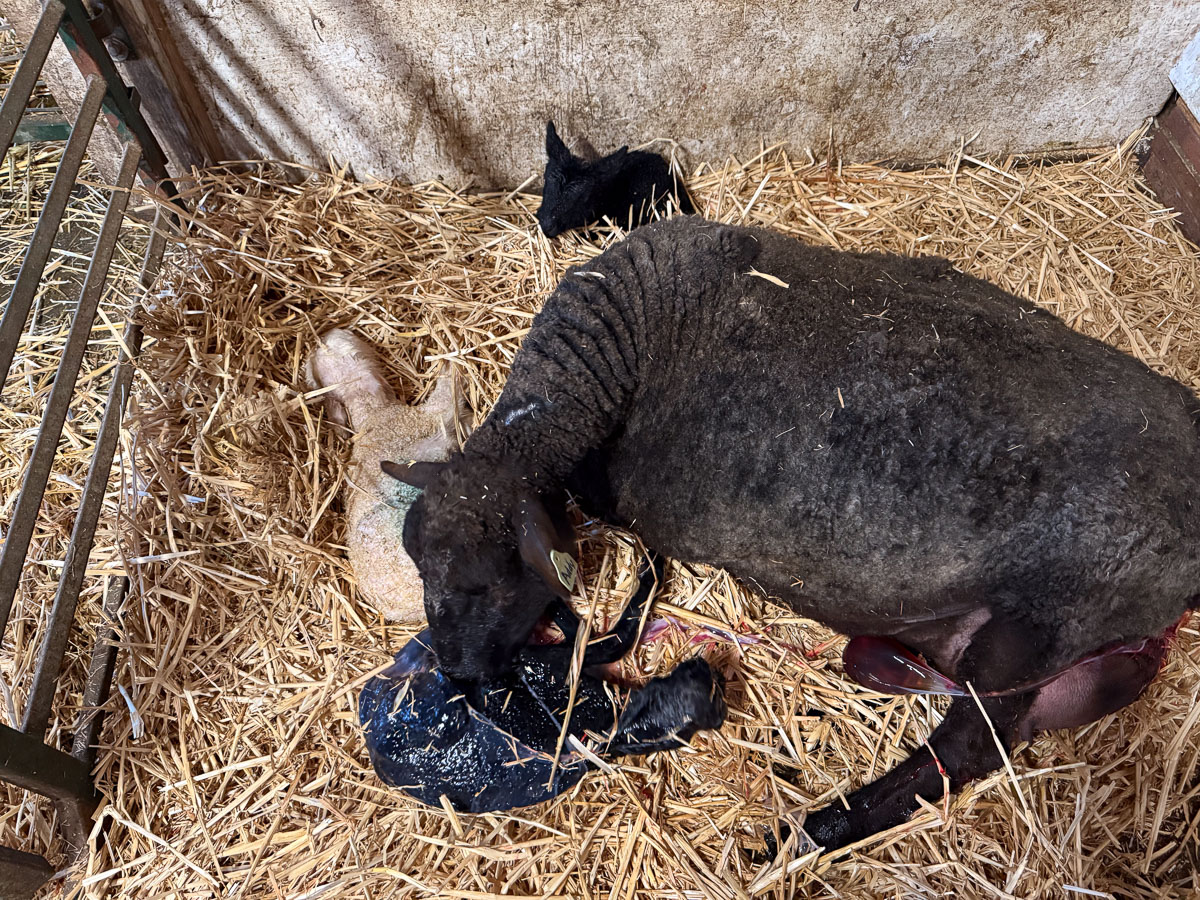
But there is more! Ultrasound showed twins. I thought that maybe there was another and, sure enough, there was. This one was born hind feet first.
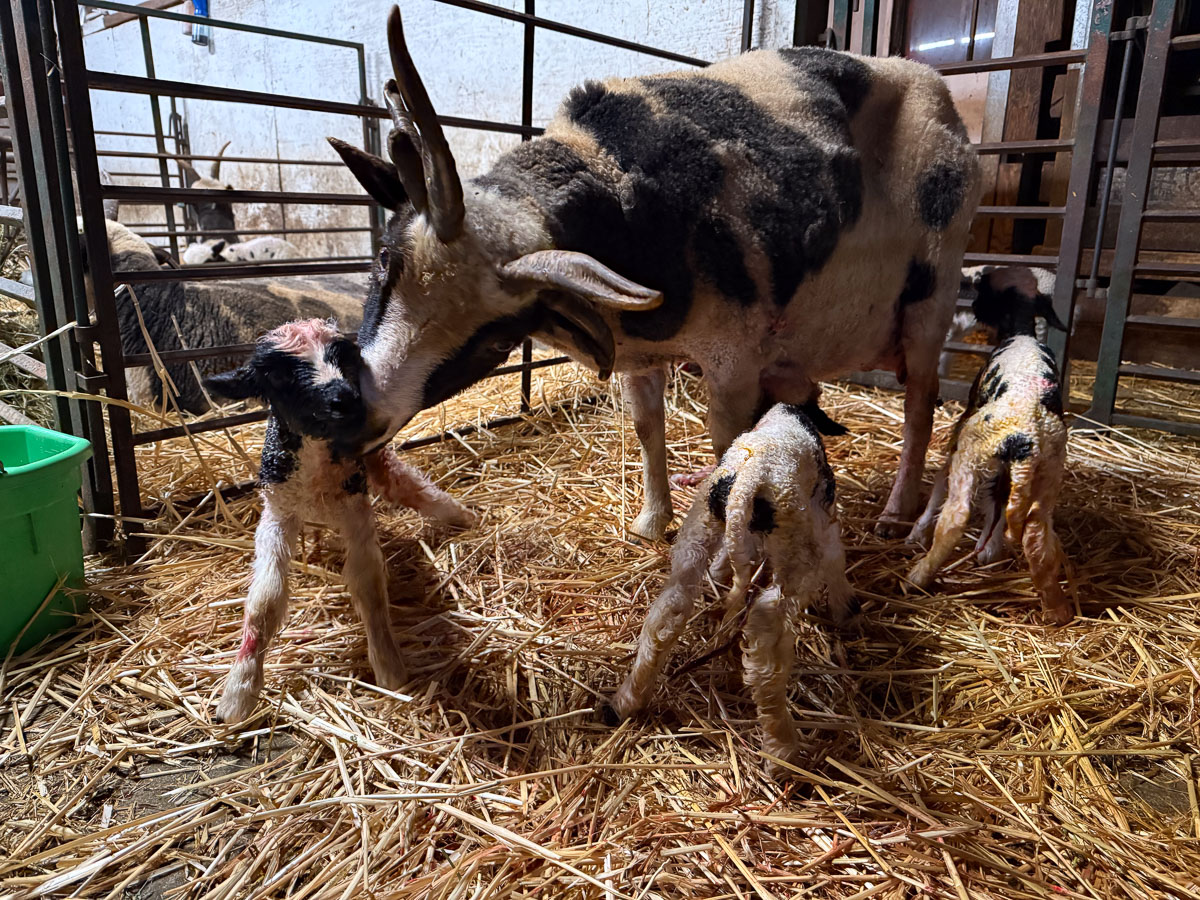
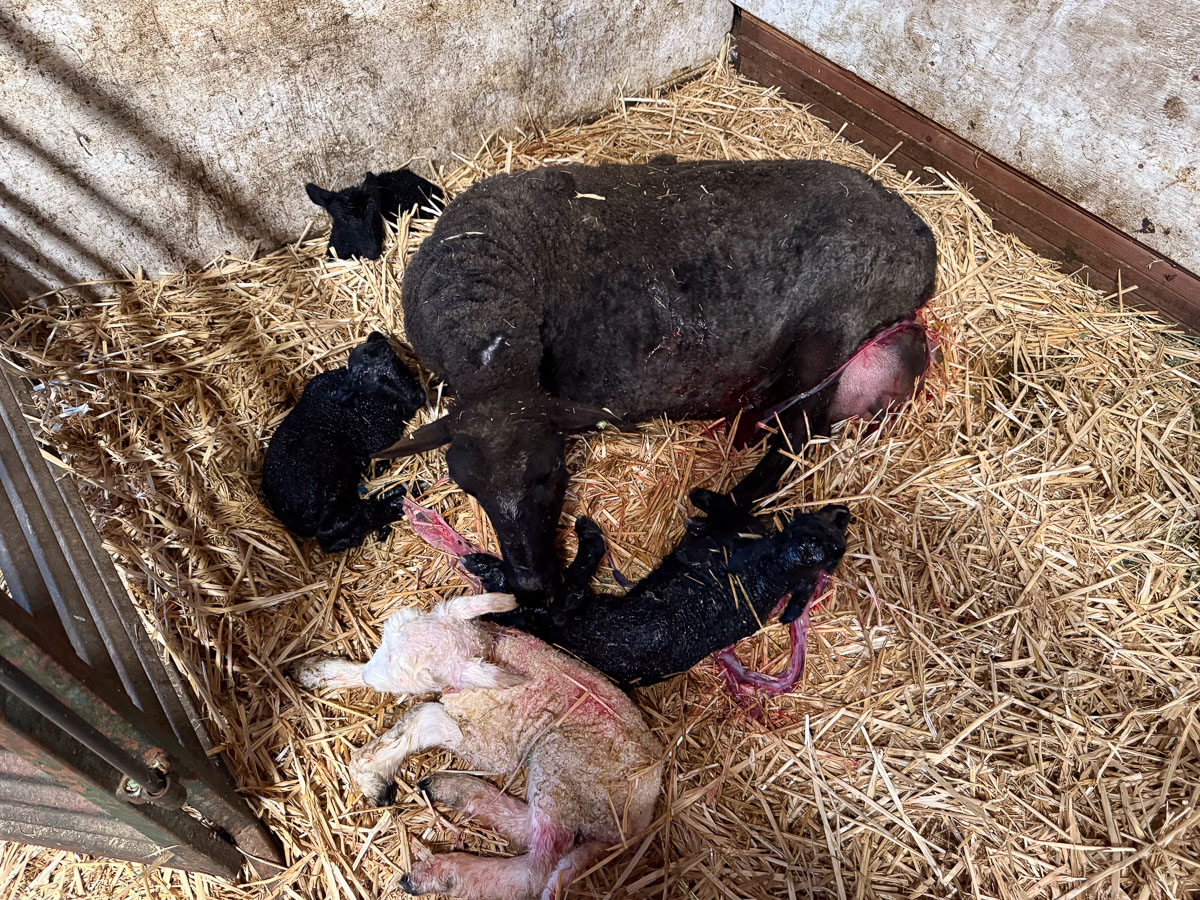
But wait! There’s more! Another hind-feet first delivery. These lambs total 32 pounds!
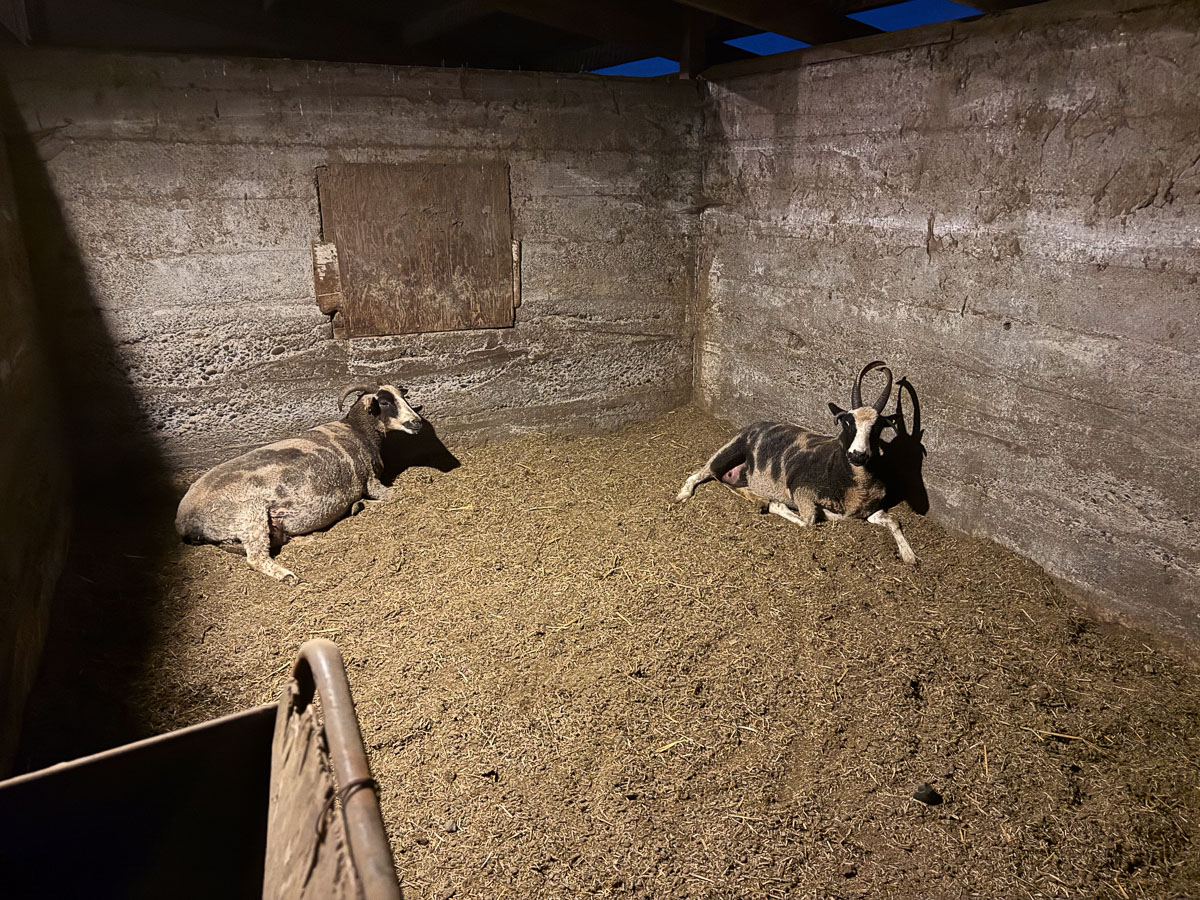
After I’d made sure that all those lambs had nursed I checked in back before I went to the house for dinner with guests. These two I thought required checking again later. This is part of the pen where I used to keep another ram. I have opened this area to the ewes because I have too many sheep for the barn space. Now it’s another space I need to check.
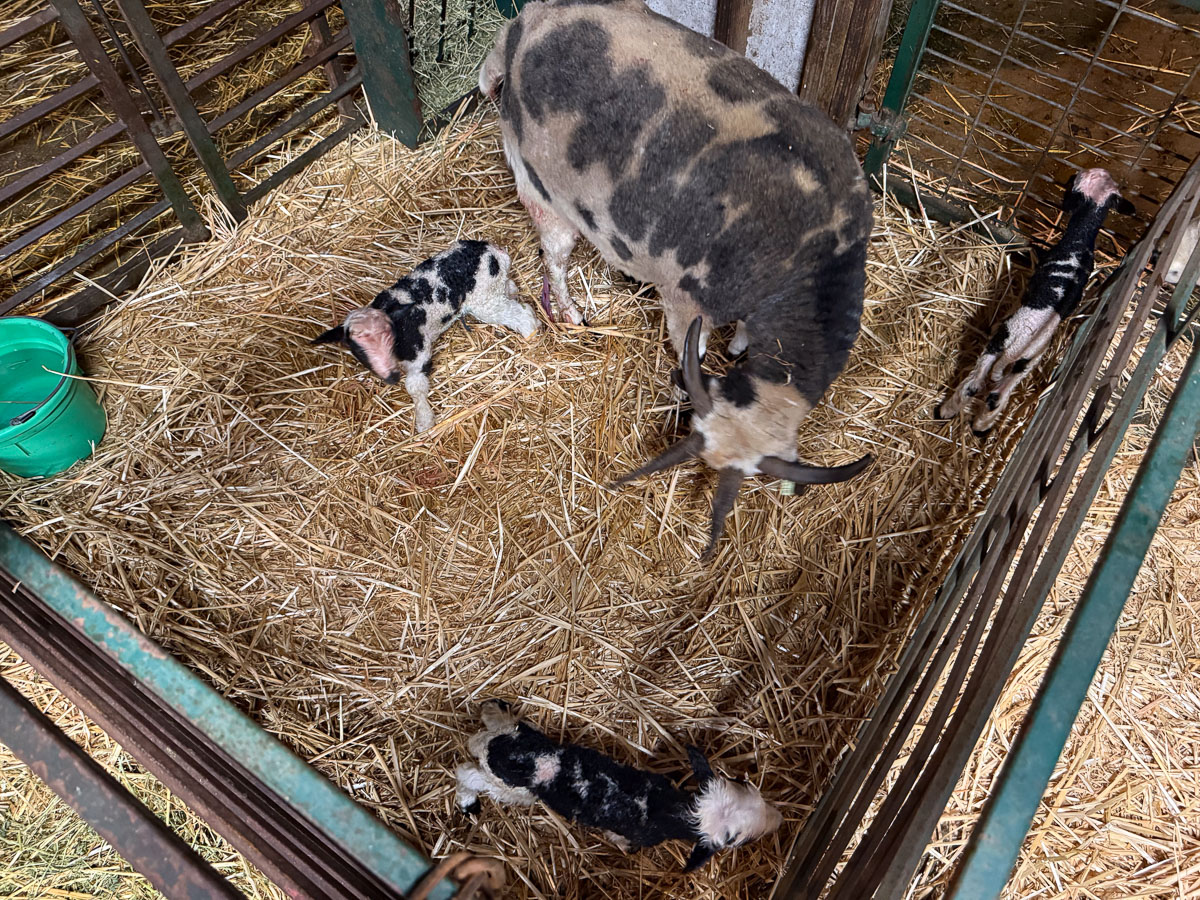
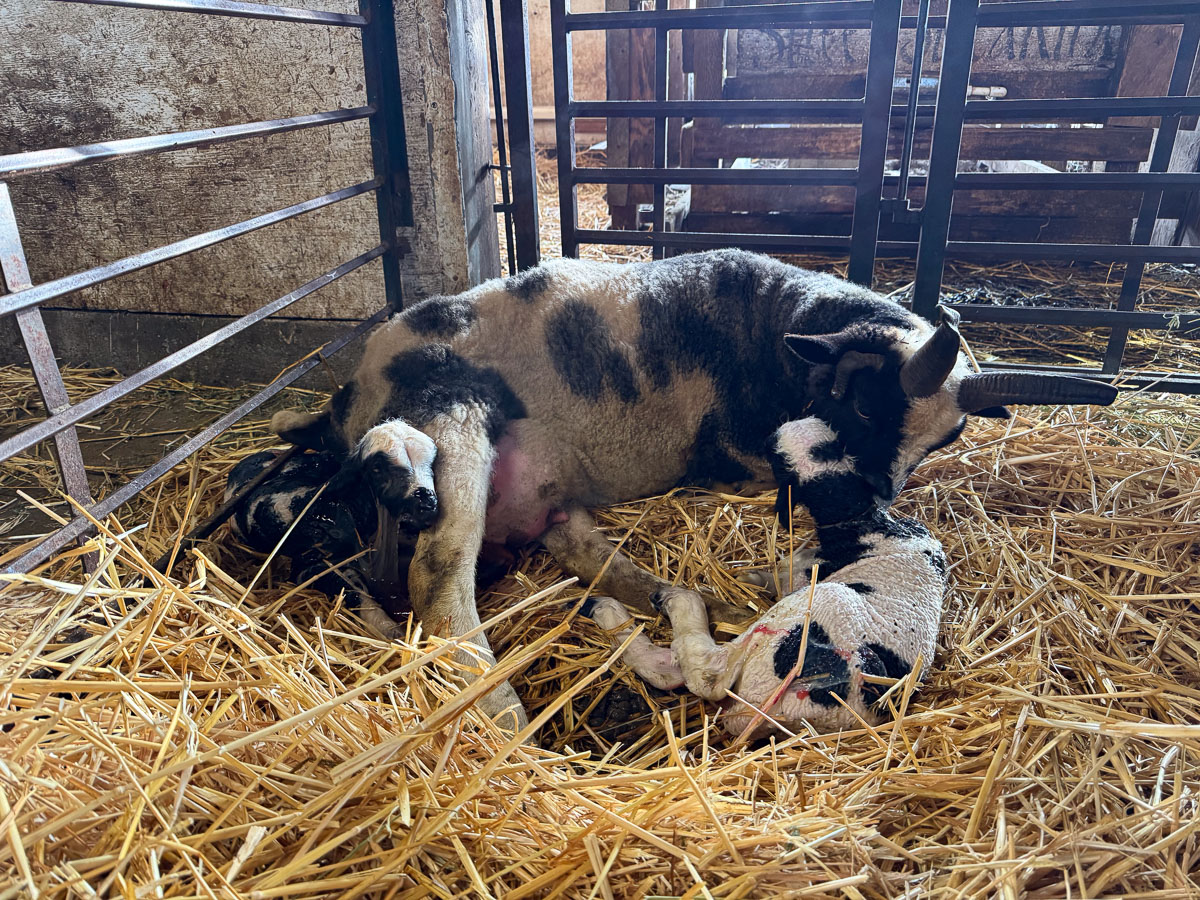
I did not take photos of these ewes and lambs other than this one that shows why sometimes those ram lambs aren’t delivered quite as easily as the ewe lambs. They end up OK but the ewe may have to do a little more work to deliver one with horn buds like this. Those two ewes had a set of twins each and now I have the lambing pens full and one in overflow pens in the barn alley.
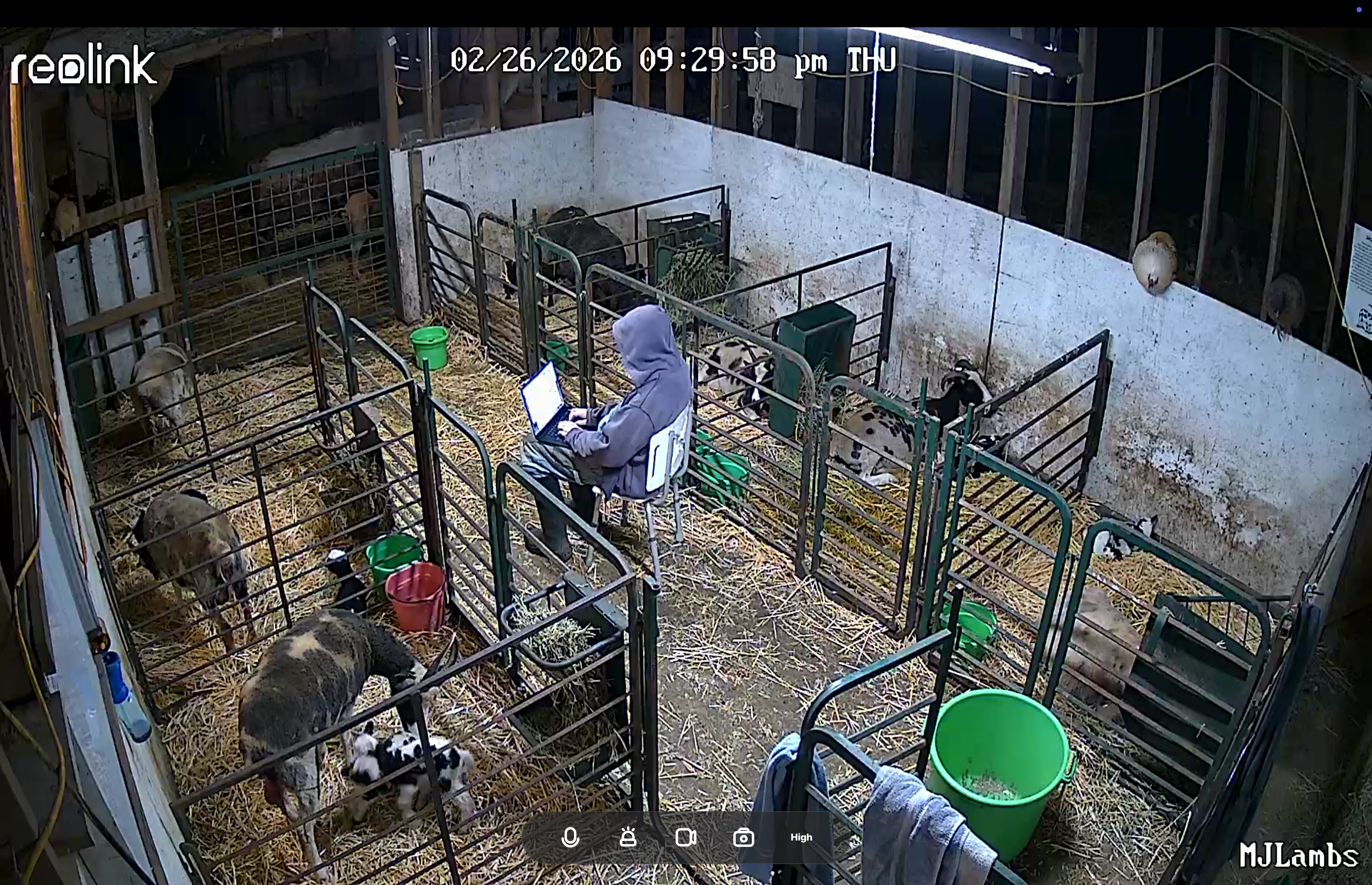
A Farm Club member took a screenshot of her view of my barn camera. I knew I had to spend some time at the computer and figured I’d do it in the barn while waiting for lambs. These are all twins except for Addy at the top corner. It was not a cold day but the bugs were bugging me; therefore, the hood.
Check out the previous two posts for Shearing Day photos and info. Here is one more post.
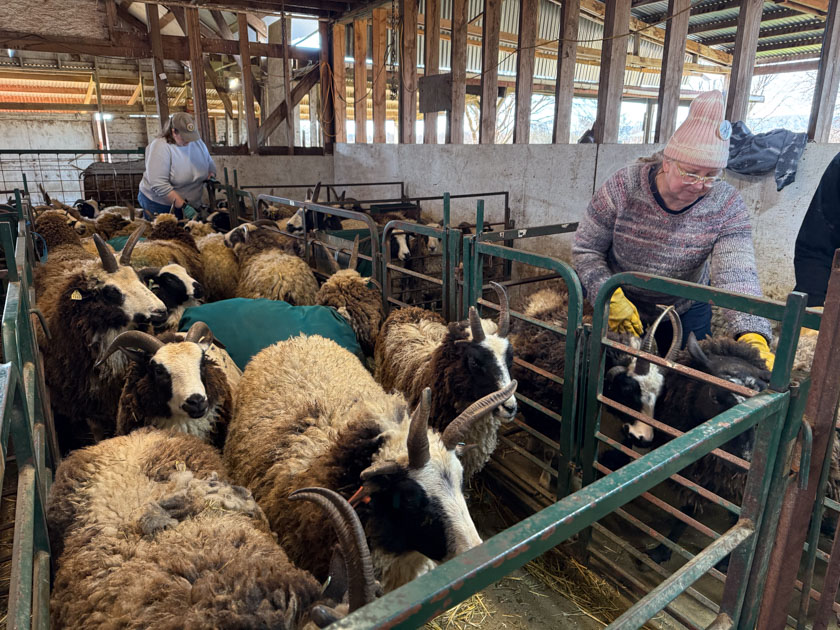
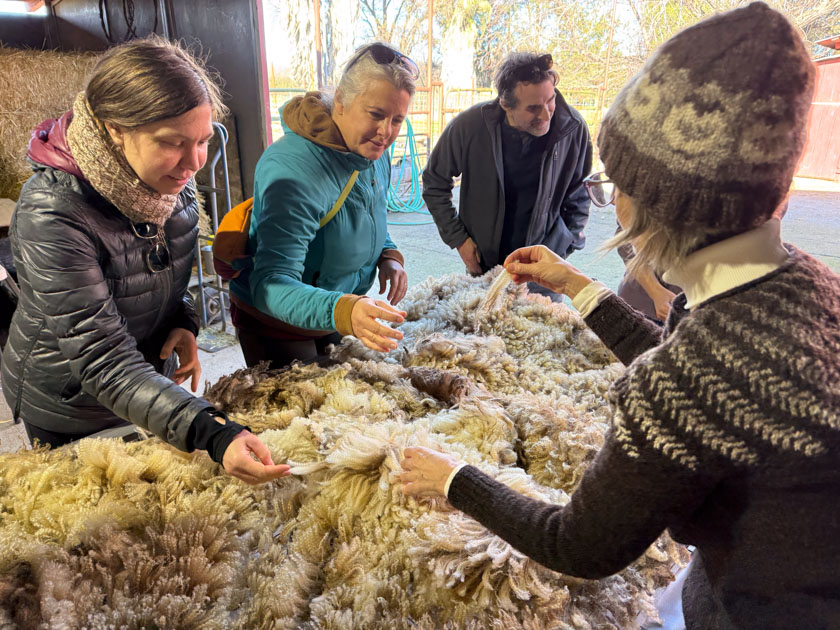
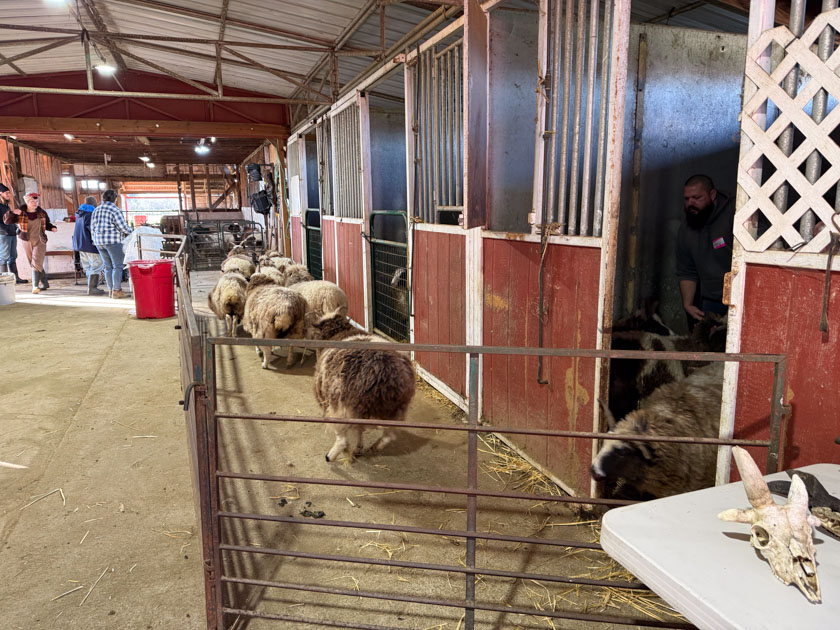
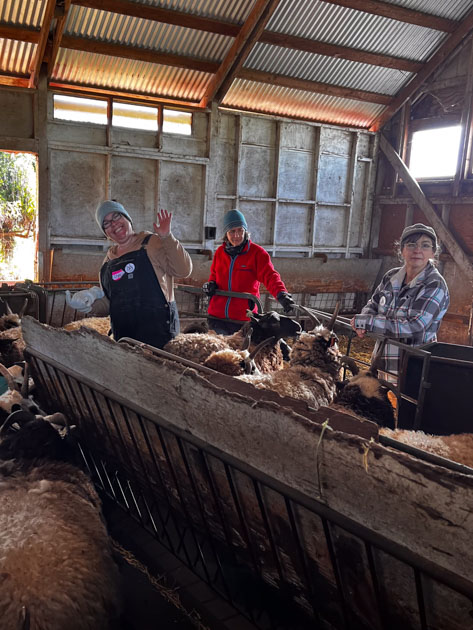
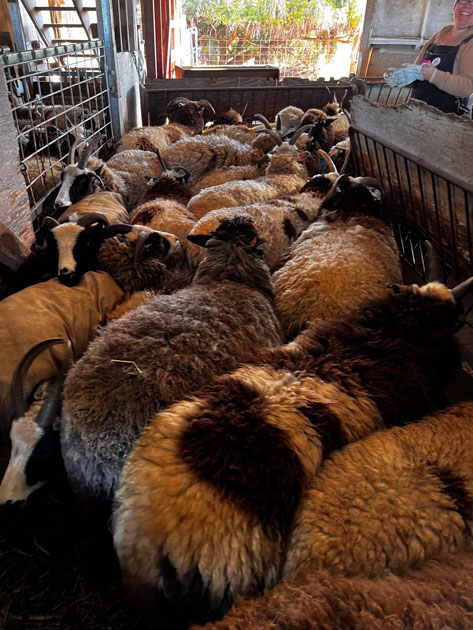
The last group of sheep is gathered waiting for shearing. Farm Club members did all the work of gathering sheep and passing them off to the shearer.
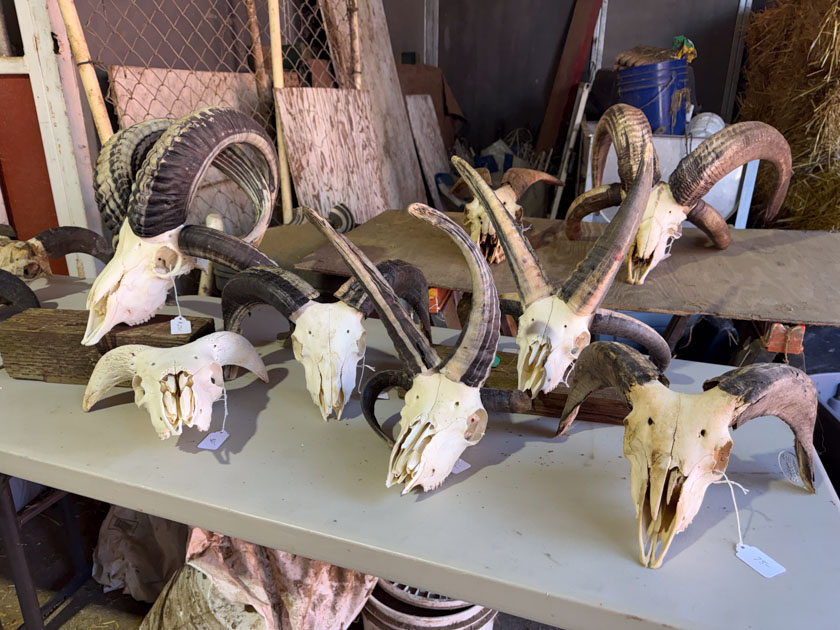
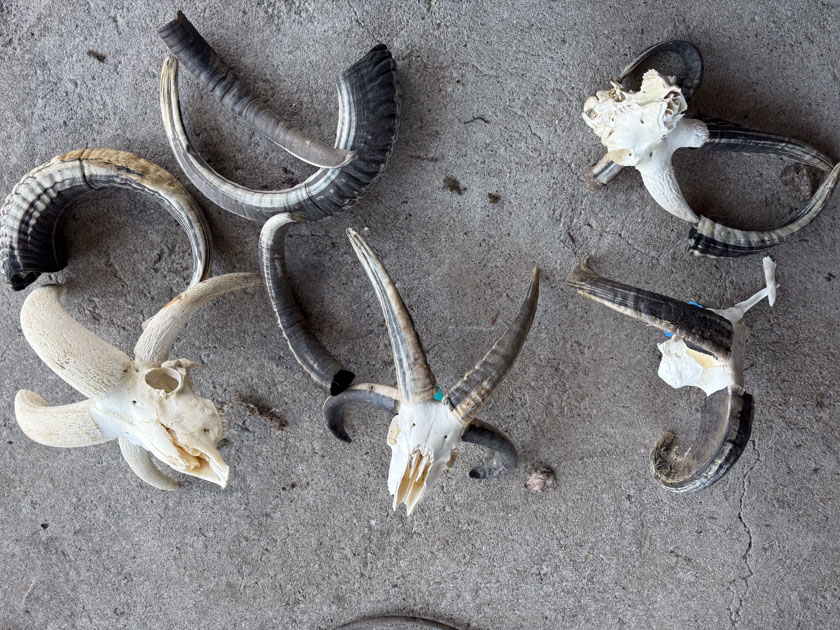
I had spent a lot of time cleaning skulls so that I could offer them for sale. Most of these will be in the shop and/or on the website.
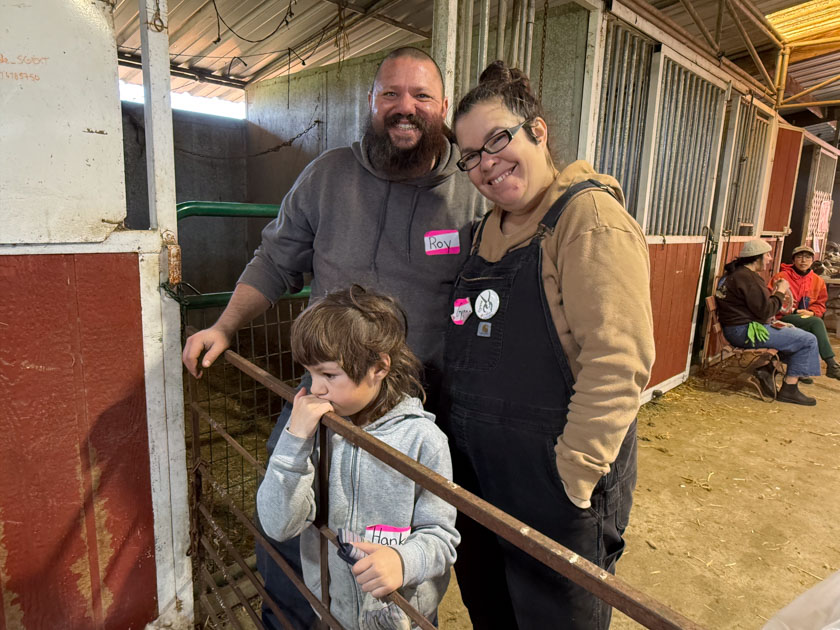
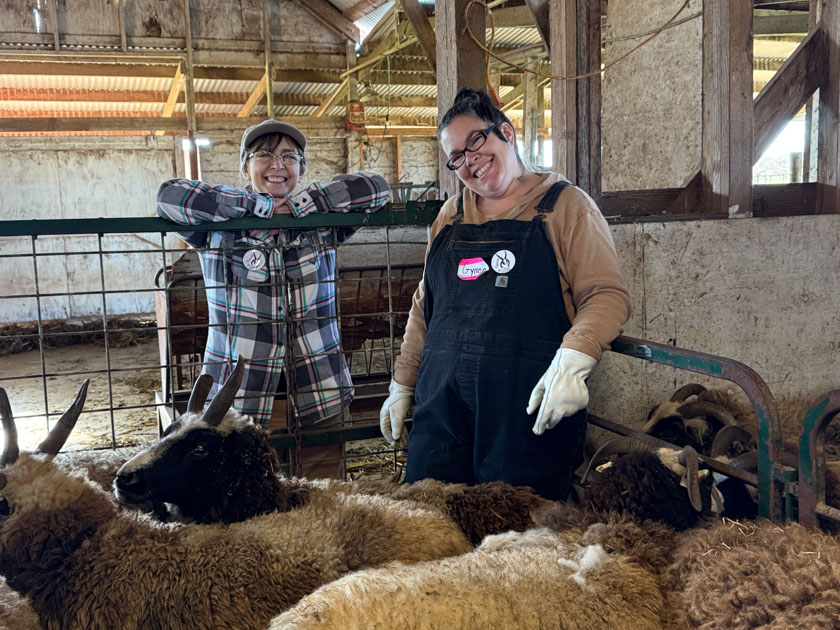
Roy, Hank, and Gynna help every year at shearing.
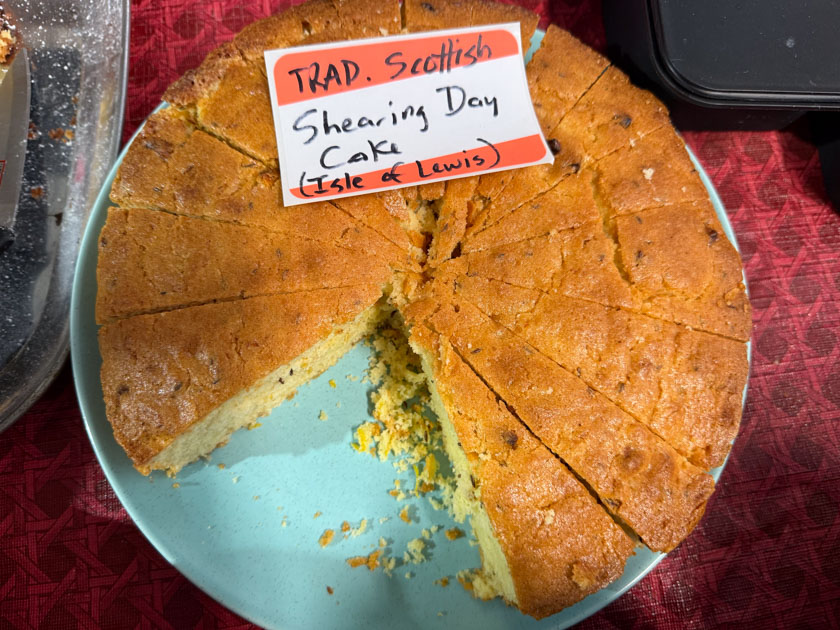
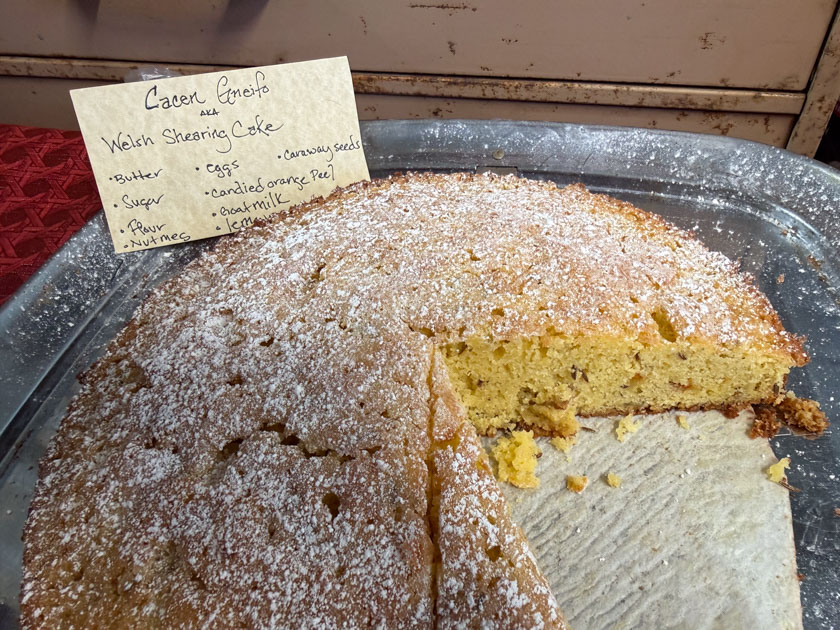
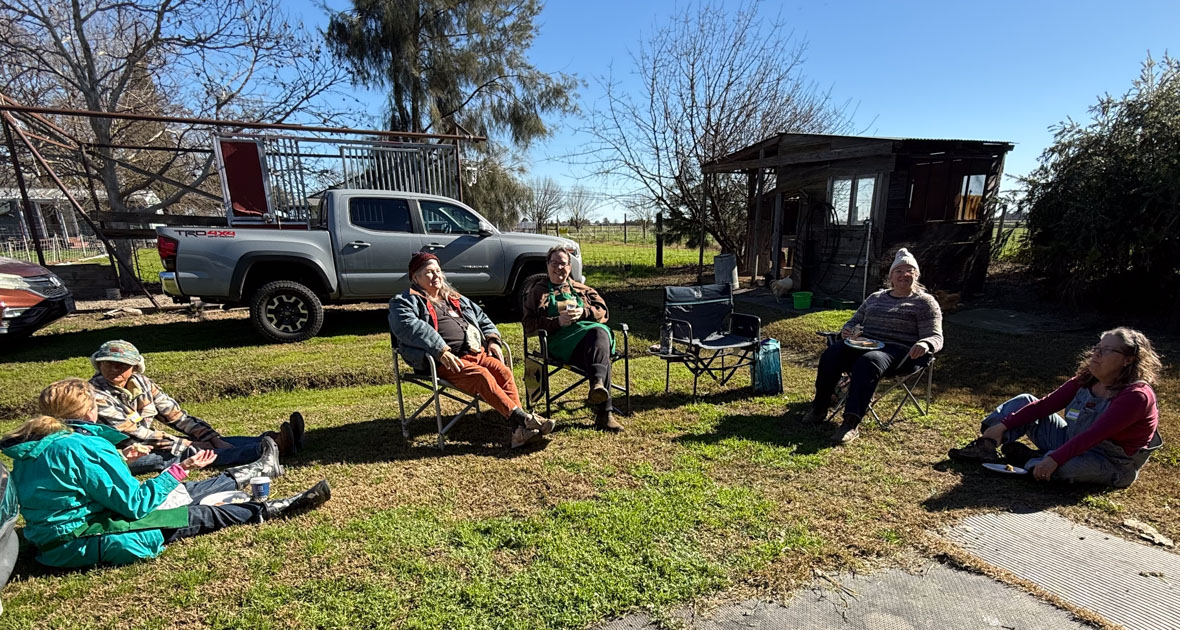
Two people brought Shearing Day Cake! Both were excellent. Maybe this has started a tradition.
We work on shearer time. When John called for a lunch break everyone was willing. We’ve seen so little sun this winter that this was a real treat.
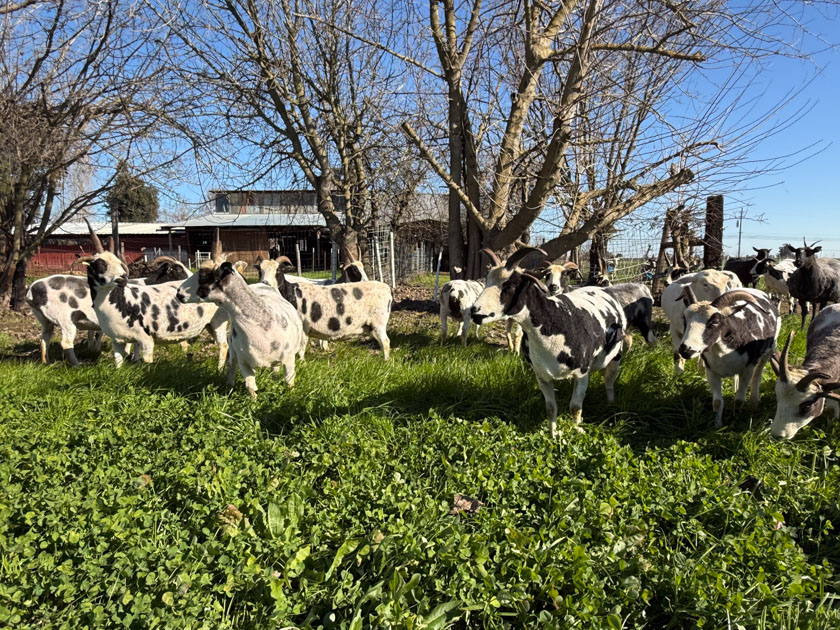
I think the sheep also enjoyed the sun.
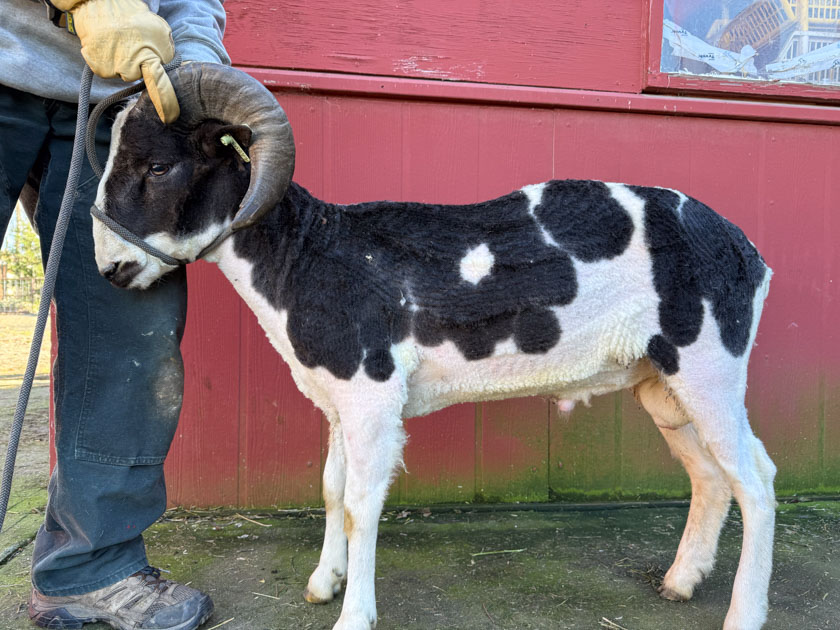
Meridian Hunter, officially still a lamb since he was born last March.
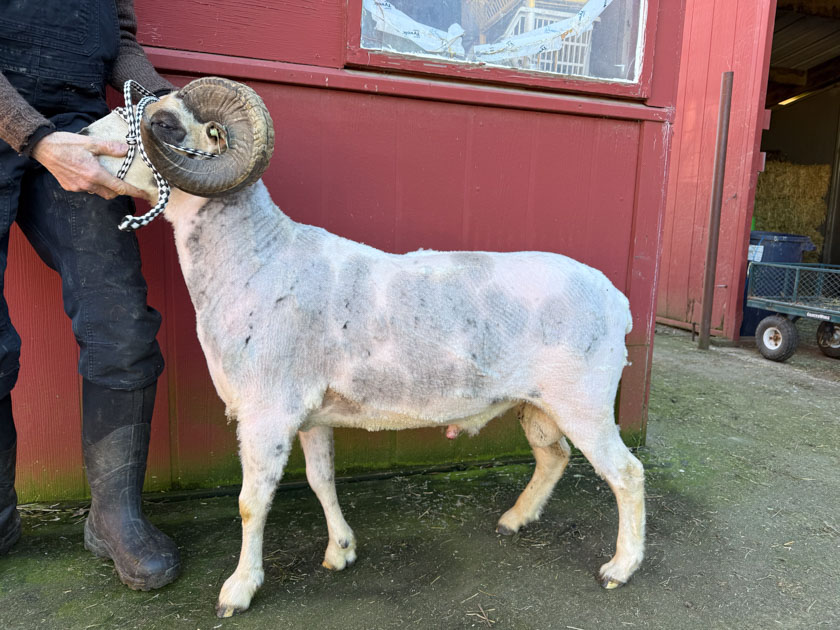
Meridian Elvis is a yearling. He is a light lilac. “Lilac” is the term Jacob breeders use to describe a sheep that has grayish markings on the face instead of black. That coloration is also in the wool.
We work up the next morning to thick fog.
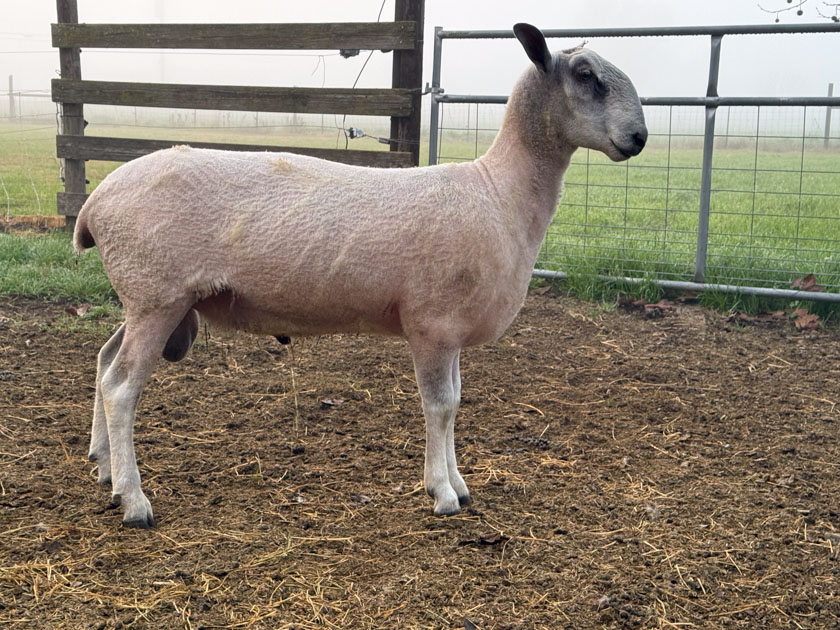
The new BFL ram that we call Clancy (although he is registered under another name).
Shearing Day was yesterday. I have far too many photos for one blog post. Starting with the beginning, the night before.
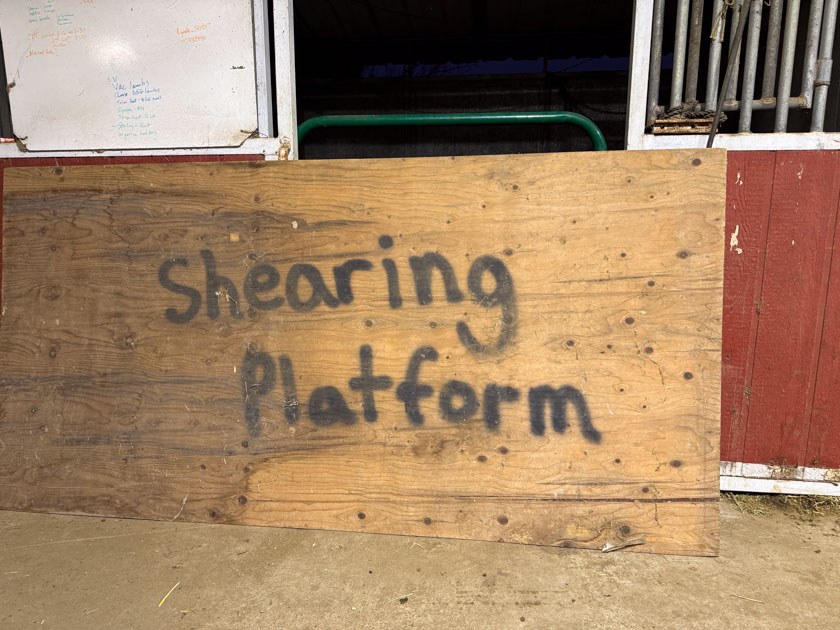
Lots of barn cleaning and organizing. One of the last things to set up is the shearing corner. This board has been in use for many years, labeled so that it never is cut up to use for something else.
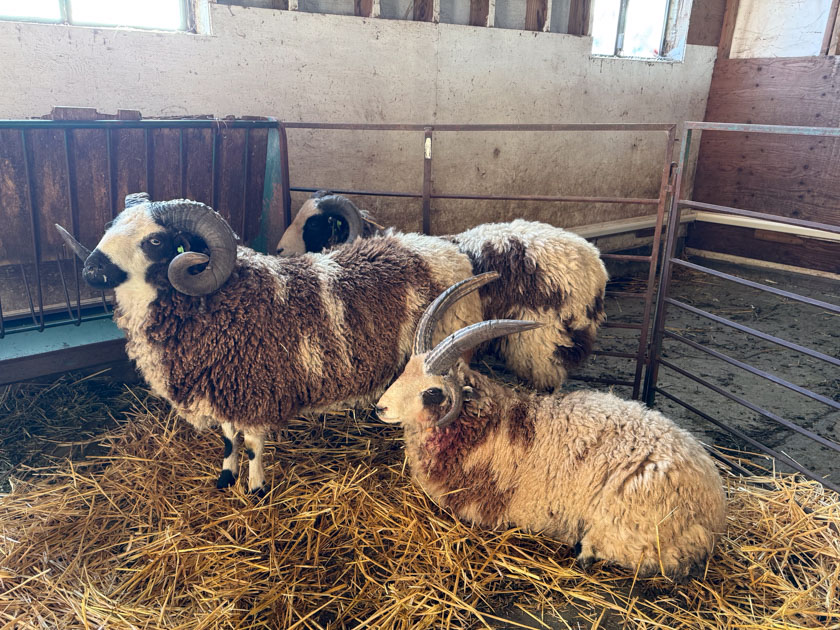
The evening before shearing Dan and I went to Trish’s farm, a few miles away, to pick up her 24 Jacob sheep. With sheep in full fleece it took two trailer loads. After shearing they all fit in the trailer with room to spare. These are Trish’s three rams.
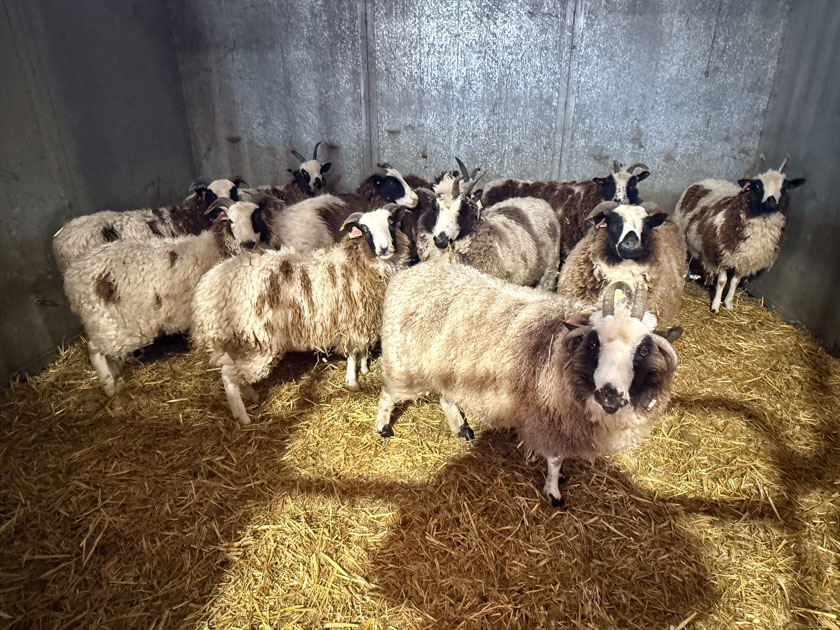
I put 10 or 11 ewes in each of two stalls for the night.
I recognize this ewe’s hairdo from when she was here last year.
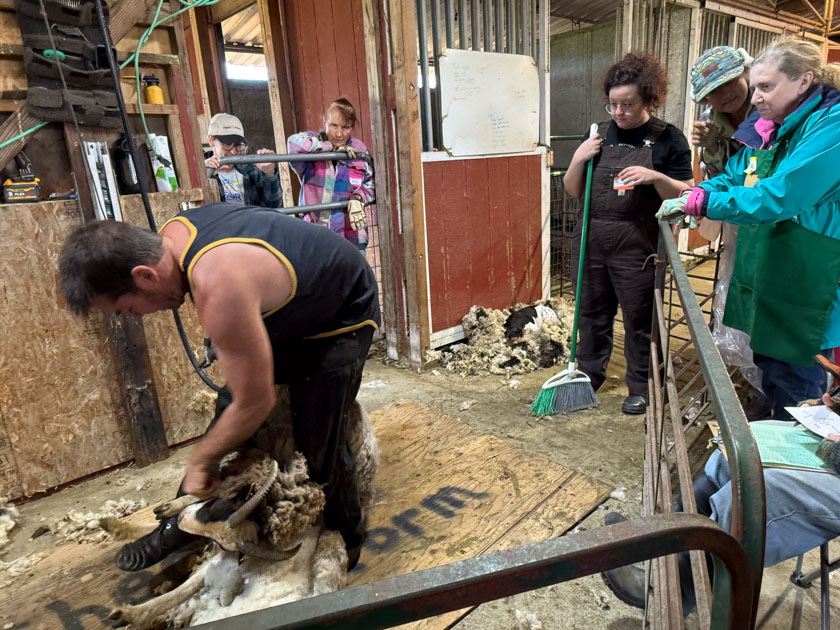
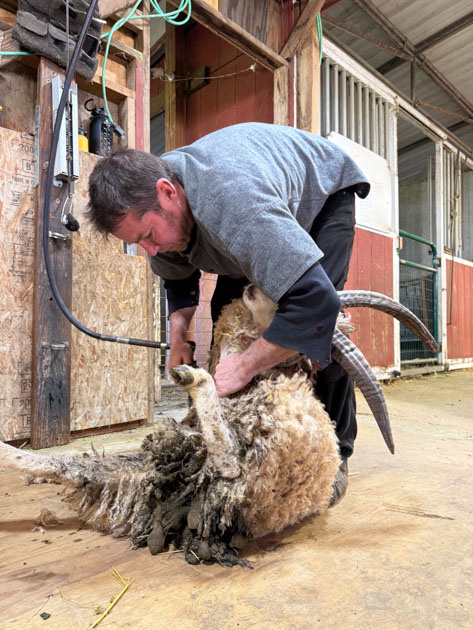
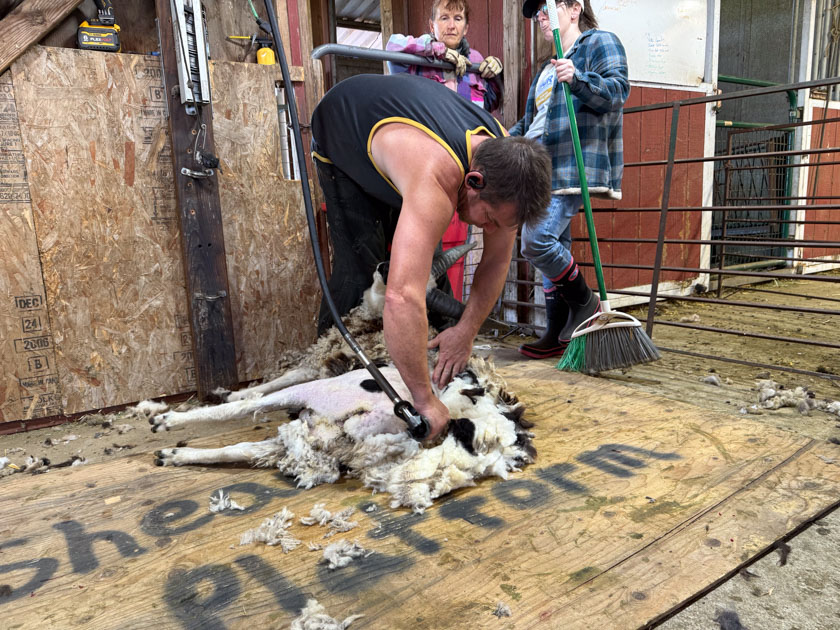
John began with Trish’s rams.
As John was shearing the three rams we moved the ewes from a stall to the shearing corner. The shearer doesn’t want to stop once he starts, so we do our best to always have the next sheep ready.
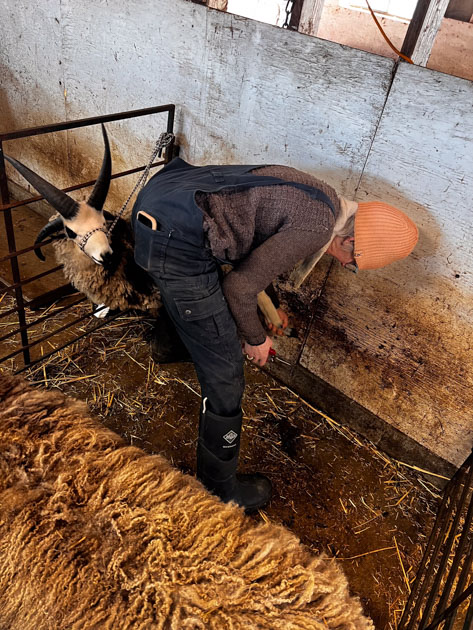
I woke up early on Shearing Day so I could finish the prep for the day. One of the jobs was to get all of our rams into the shearing area before people got here. While John was shearing Trish’s sheep I worked on the rams, vaccinated and trimming hooves on all. That way I didn’t have to think about catching them later to deal with that.
After Trish’s sheep were loaded back into the trailer John started on our six rams and the wether.
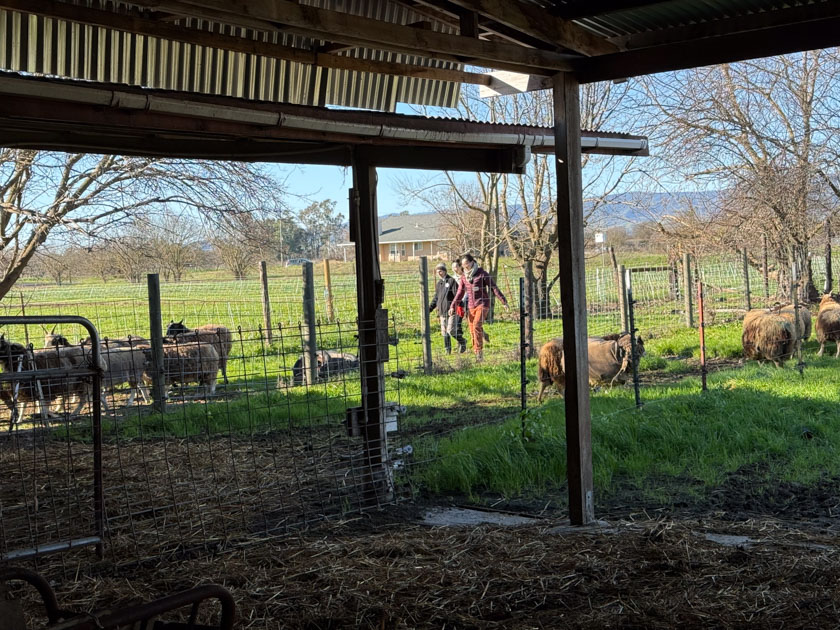
In the meantime Farm club members started gathering our ewes. This photo shows what a fabulous day it was, after so many days of thick fog. We were really lucky, because that drippy wet fog was back today.
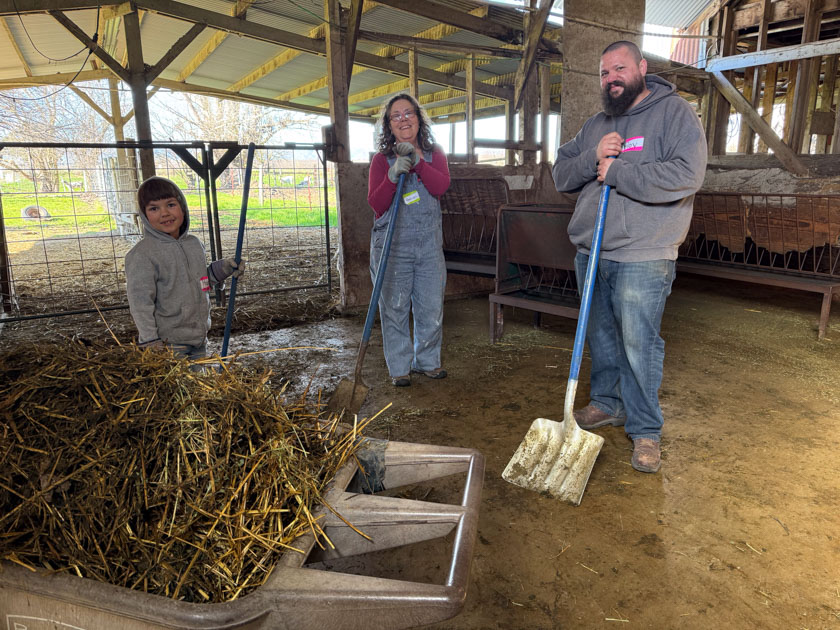
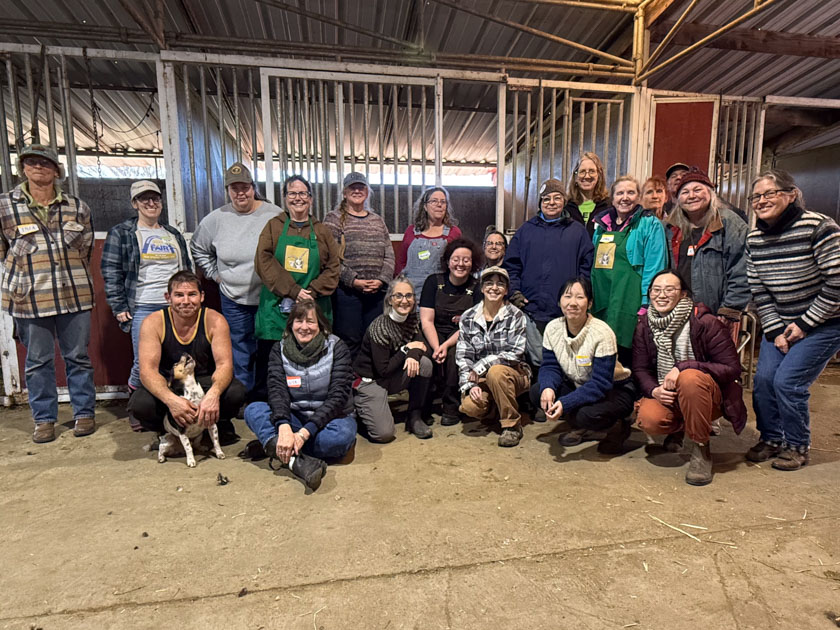
I am fortunate that I have such a willing and capable team of people.
Sheep are in the lambing area and this will be the next group to move in.
Thanks to Roy Clemes for sharing some of the photos I used here.
Shearing Day is Saturday and I decided to try and have the skulls ready to put out for sale. This is a work in progress. Others will be offered for sale as DIY projects because they are not as clean.
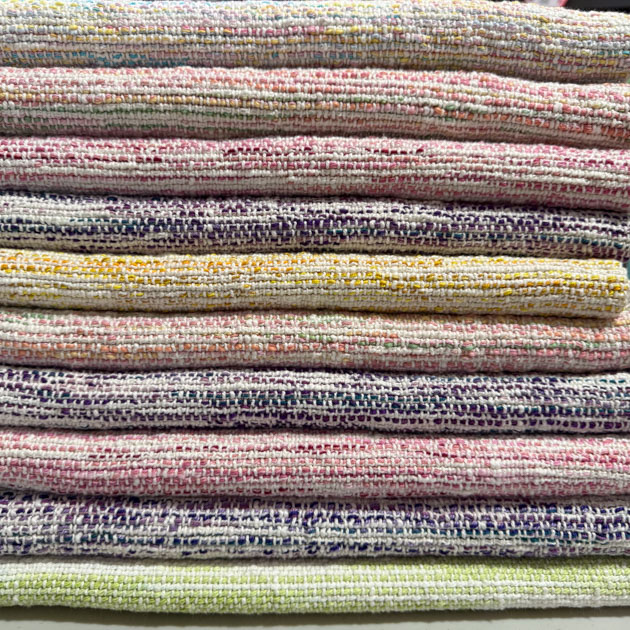
I just finished a warp with ten baby blankets. My niece will get first choice of these, because she wants a gift for a friend. Then they will be offered for sale.
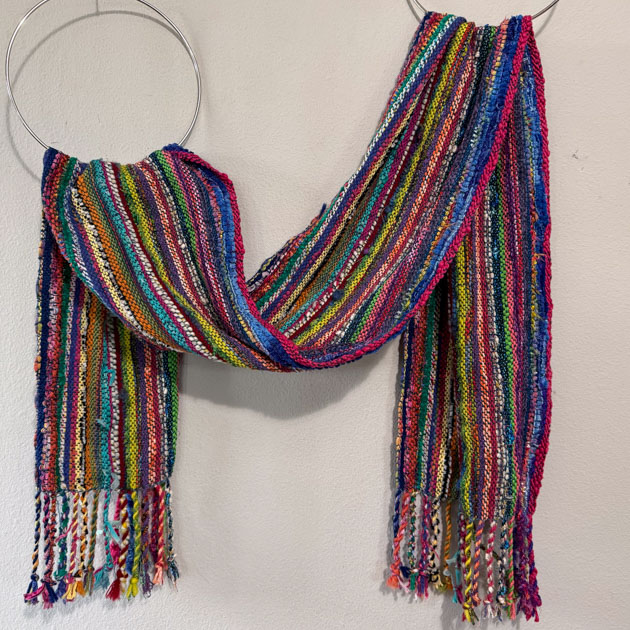
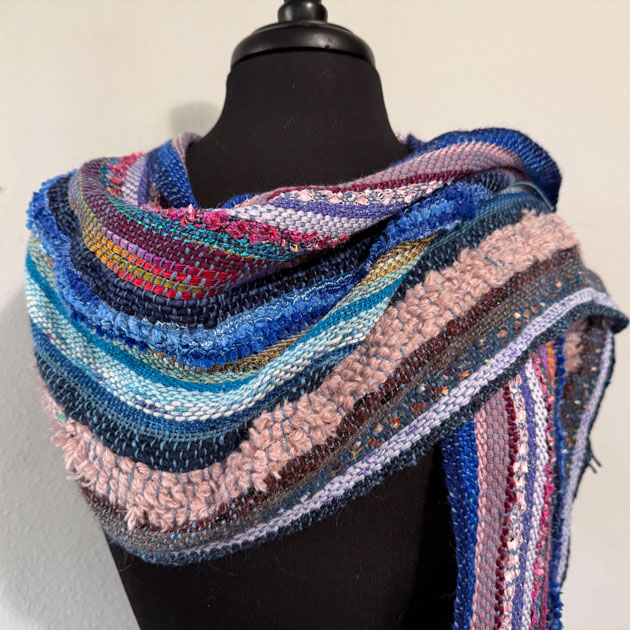
Speaking of weaving, I finished these scarves last week. These are woven using Art Fiber Frenzy yarn, in the style of the class I teach, Wild and Craze Weaving–Breaking the Rules.
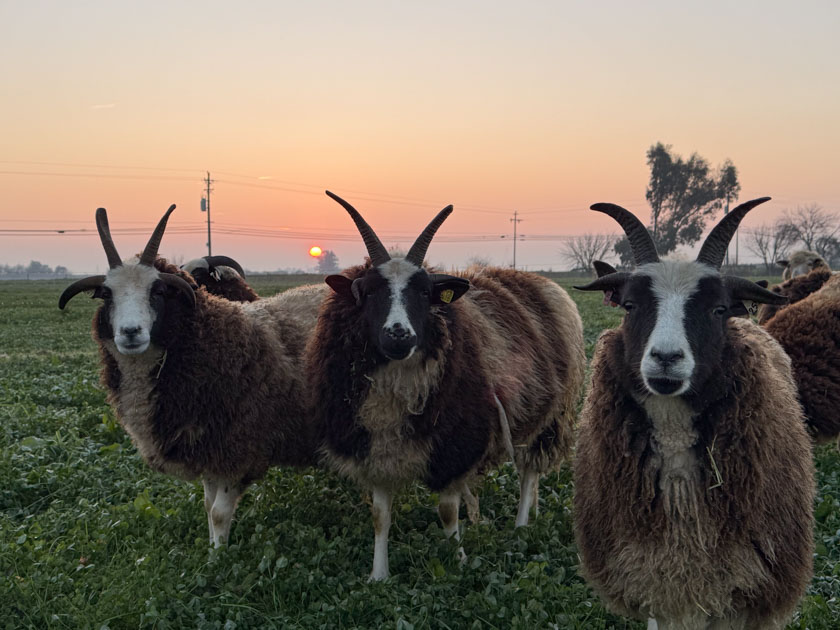
Sheep at sunrise.
I entered a photo on the last day the Farm Bureau called for entries. Mine was selected! You can probably figure out which is mine.
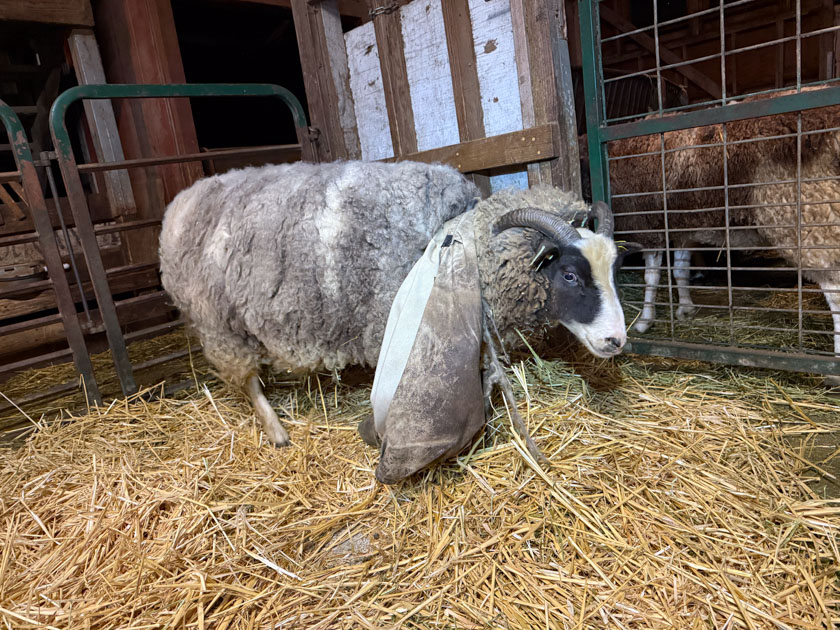
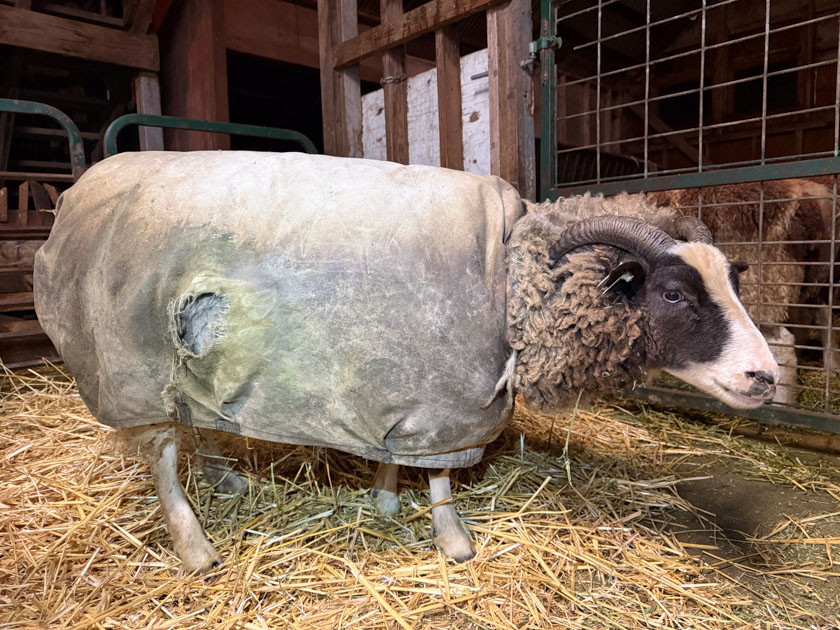
This photo shows one reason coated fleeces are priced higher. Not only do they need changing at 4 to 5 times each year, they also require constant vigilance. I took this photo a few nights ago when doing chores.
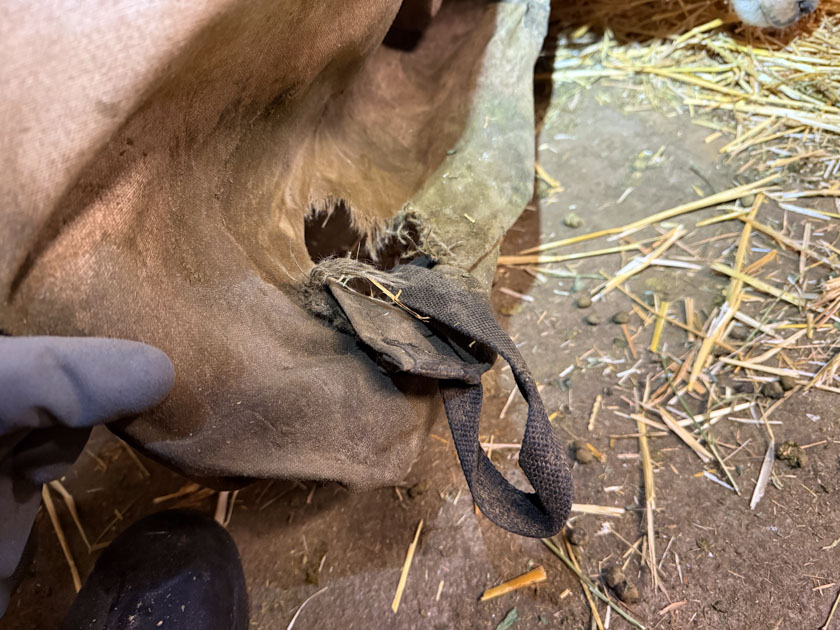
I don’t know how the leg strap got through this hole.
Fortunately the ewe wasn’t injured and this hole won’t be too difficult to fix. I had to just get through four more days until shearing.
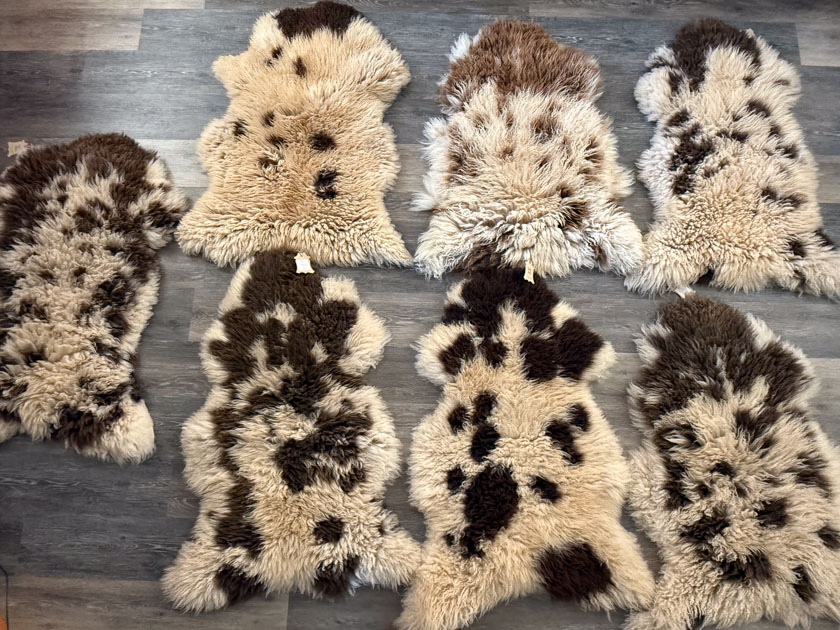
The last batch of sheepskins came back. These are available in the shop and are listed on the website.
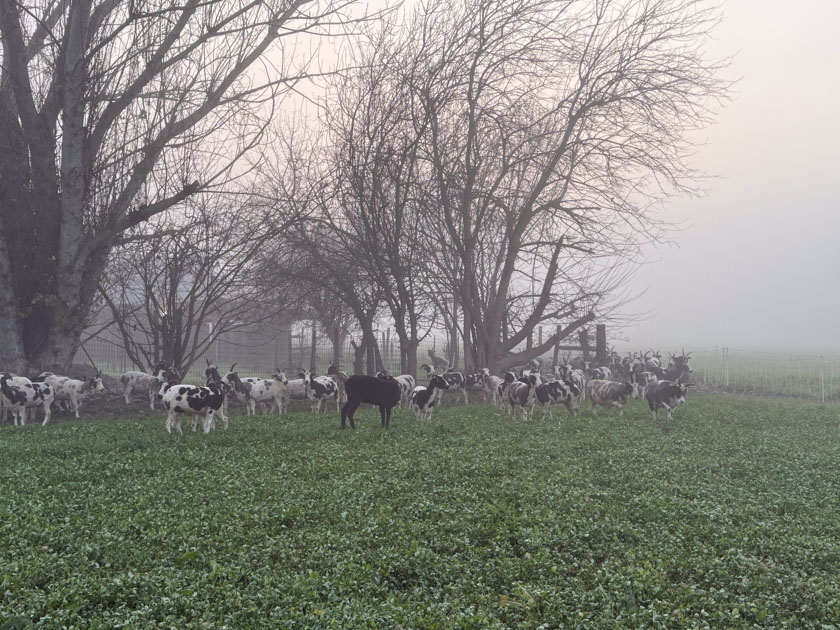
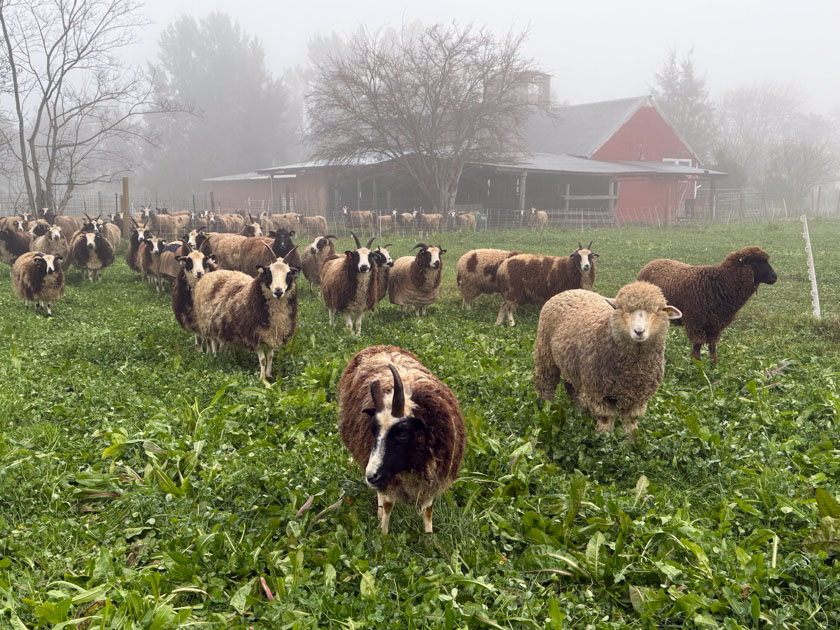
It was a foggy morning and the fog didn’t lift until mid-afternoon.
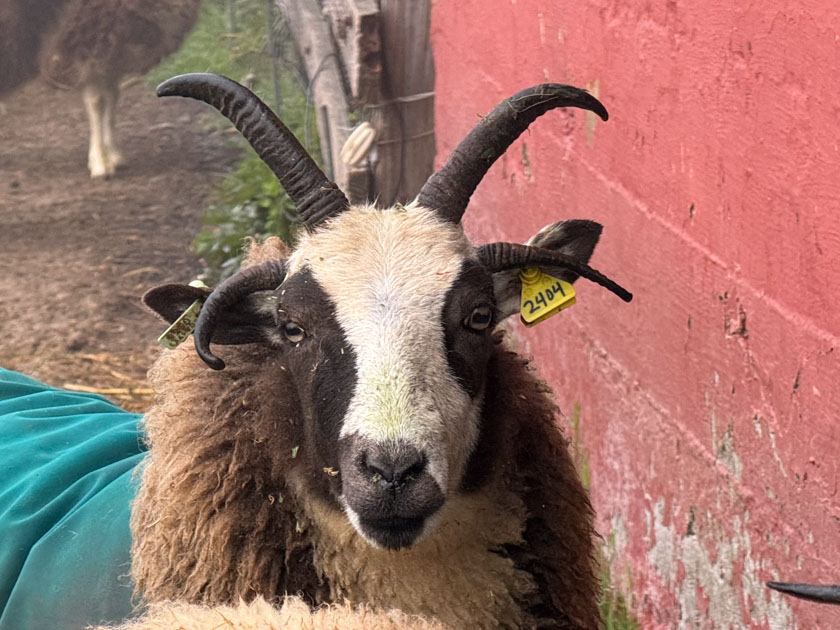
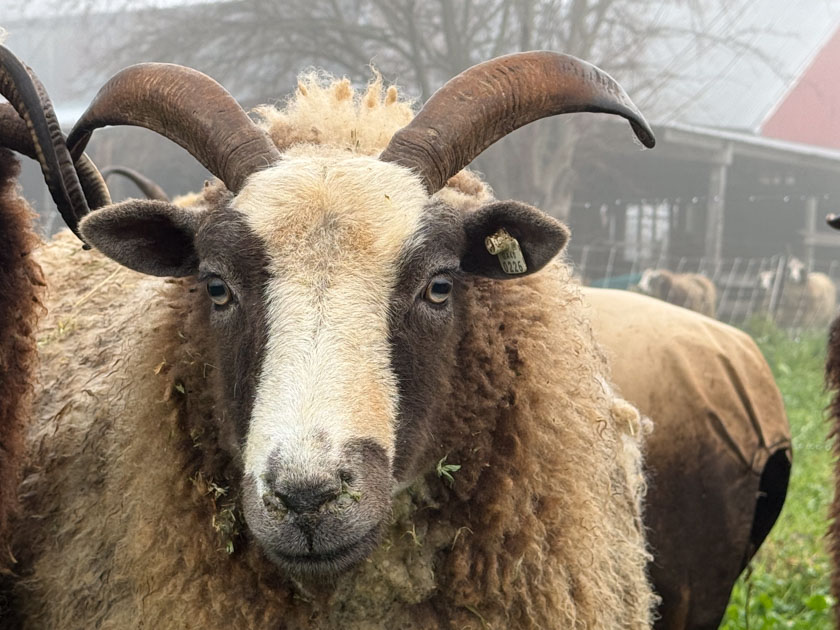
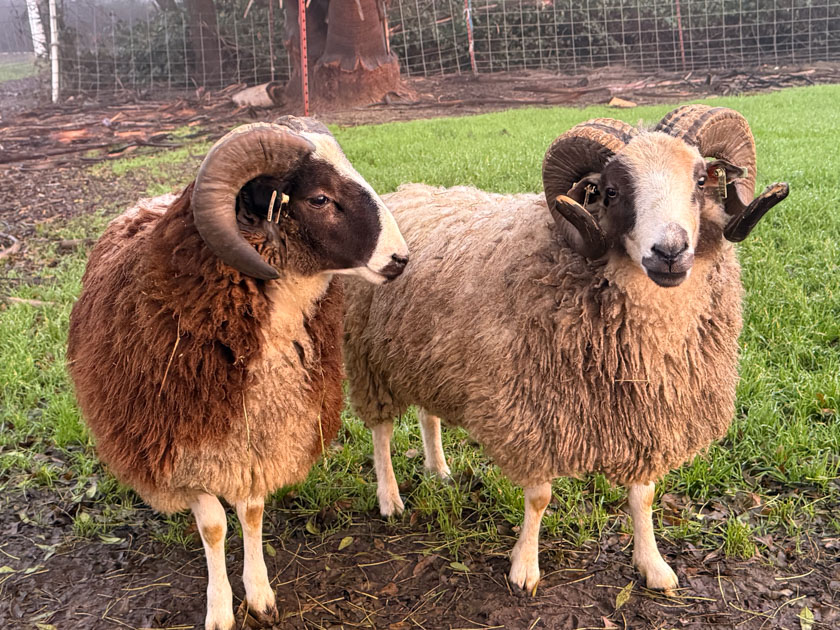
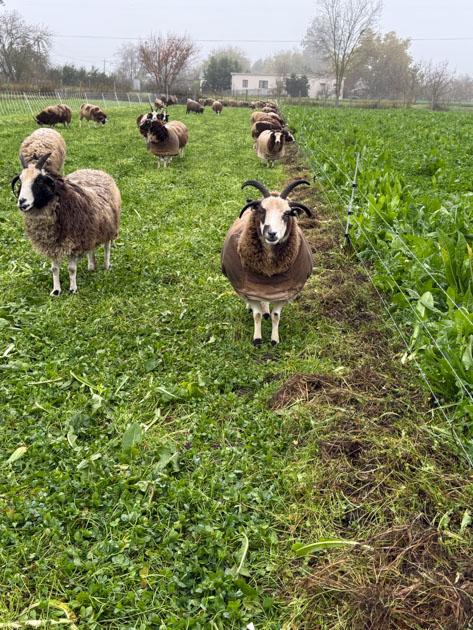
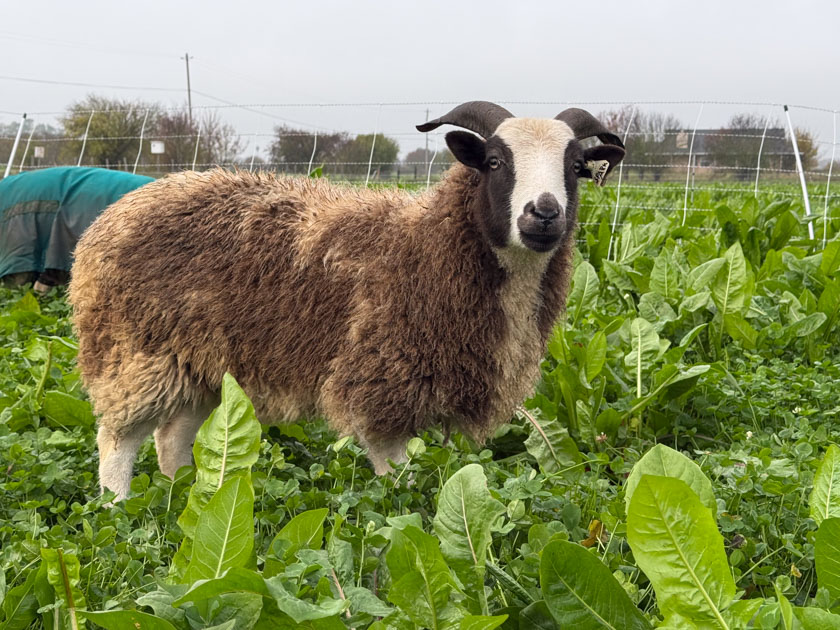
The sheep had already been out before I walked to the pasture so they didn’t bury their faces to start grazing immediately. It was a good opportunity to take sheep portraits.
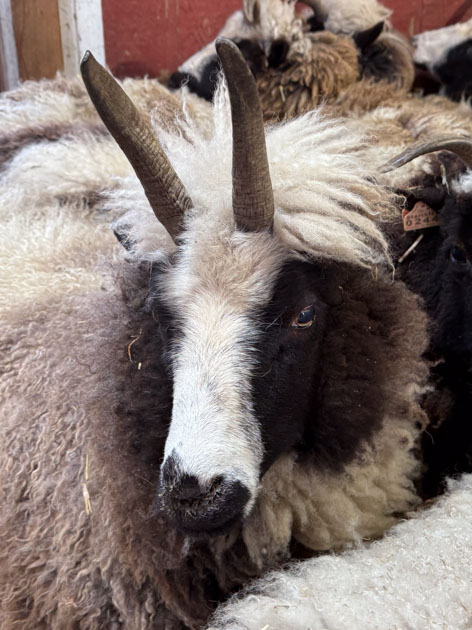
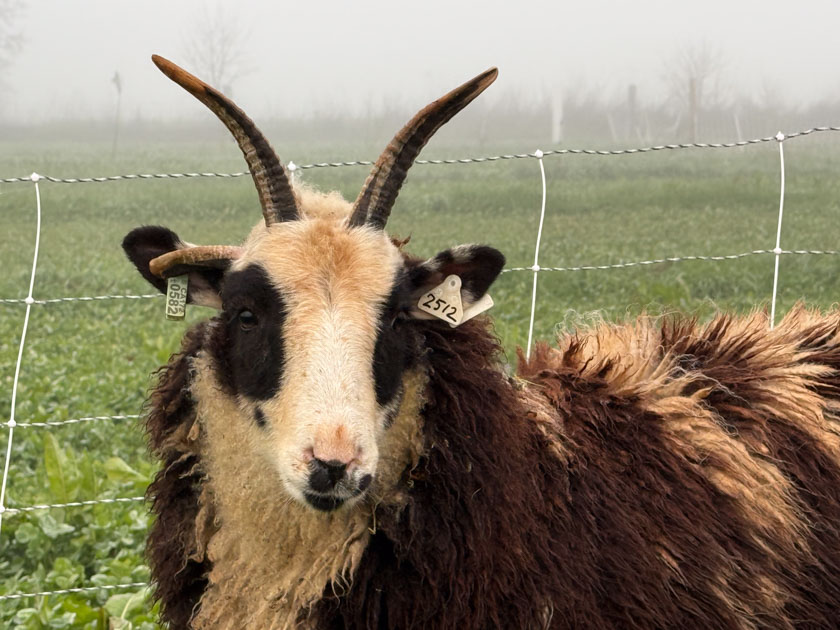
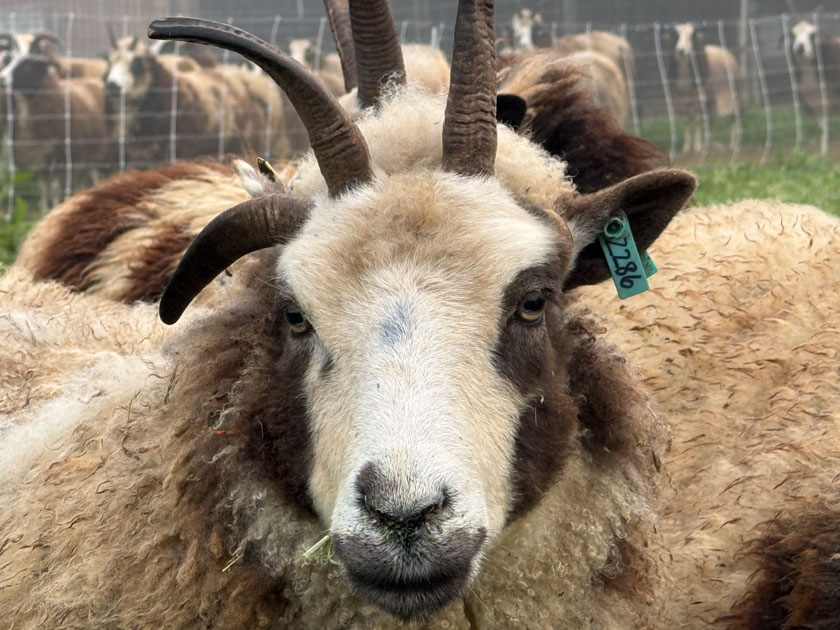
Yearling ewe, Meridian Zoe, a 4-horn lilac.
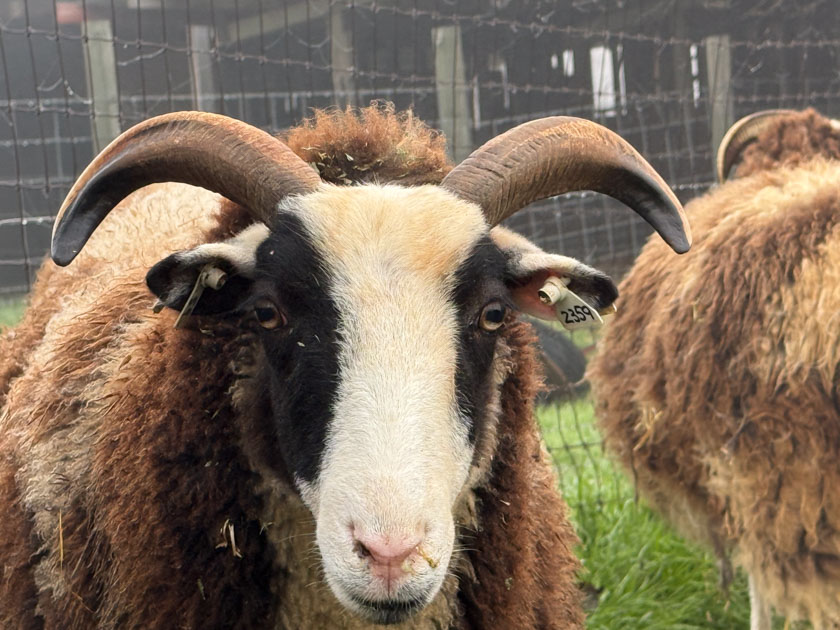
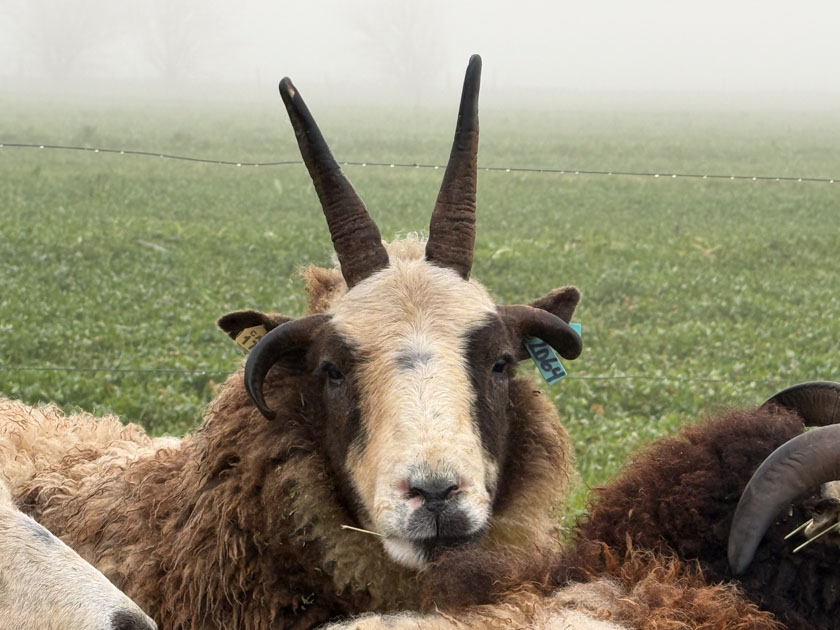
Meridian Hailee has a nice wide spread to her horns.
Meridian SallyR, a ewe lamb.
Patchwork Amara, a lilac ewe, who came from Patchwork Farm in Georgia.
This is yearling ewe, Bide a wee Bobbie Jo, one of two ewes I got last summer, originally from Oregon.
Meridian Lenore, another lilac ewe.
Meridian Pecan. The ewes born in 2020 didn’t get as much handling as in other years because that was after my accident and head injury. They were all a bit nutty and that’s why most of them have nut names.
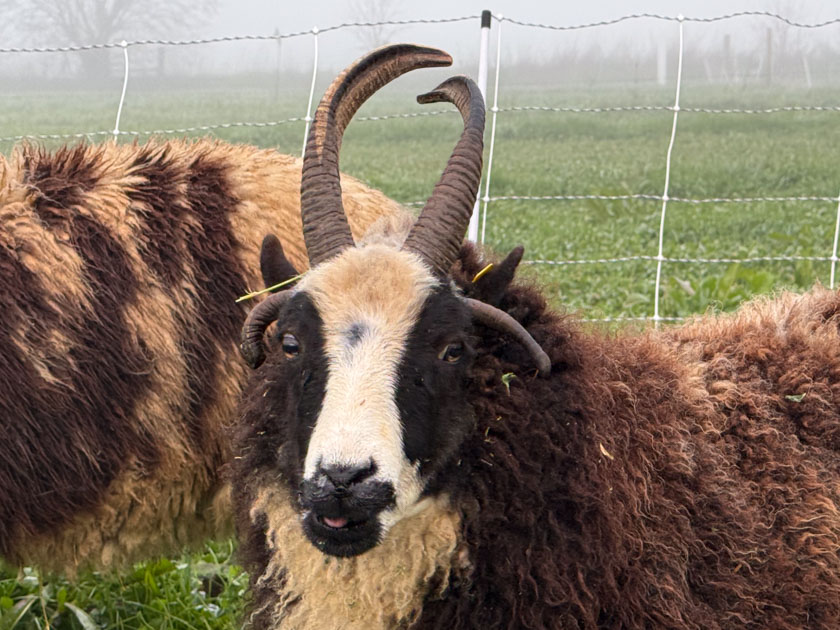
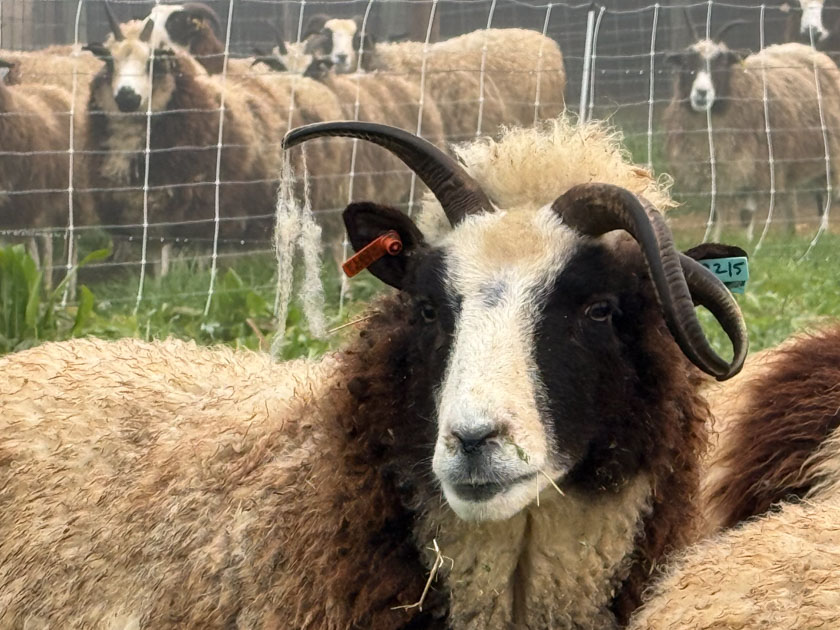
Jannie, a ewe whose horns took an interesting twist.
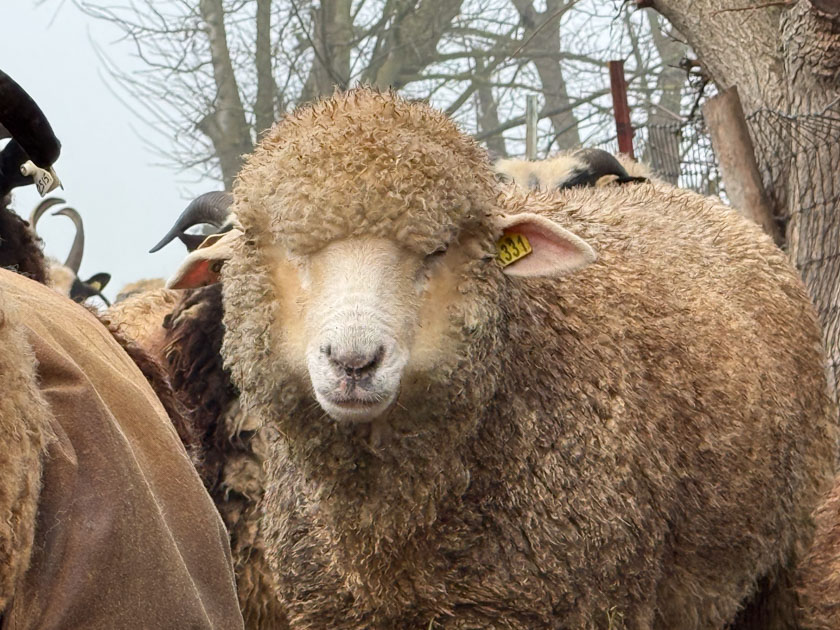
Corri-3, one of the three Corriedale ewe lambs I got in September.
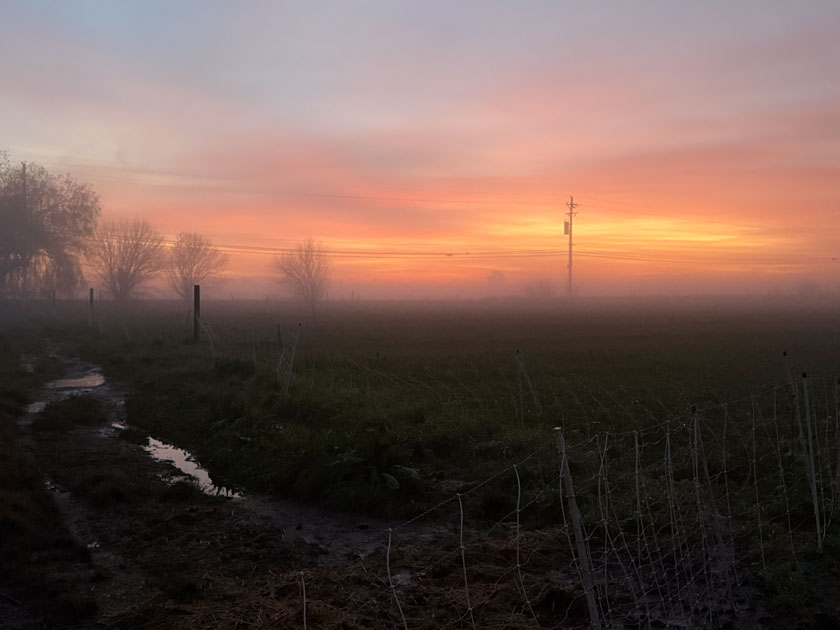
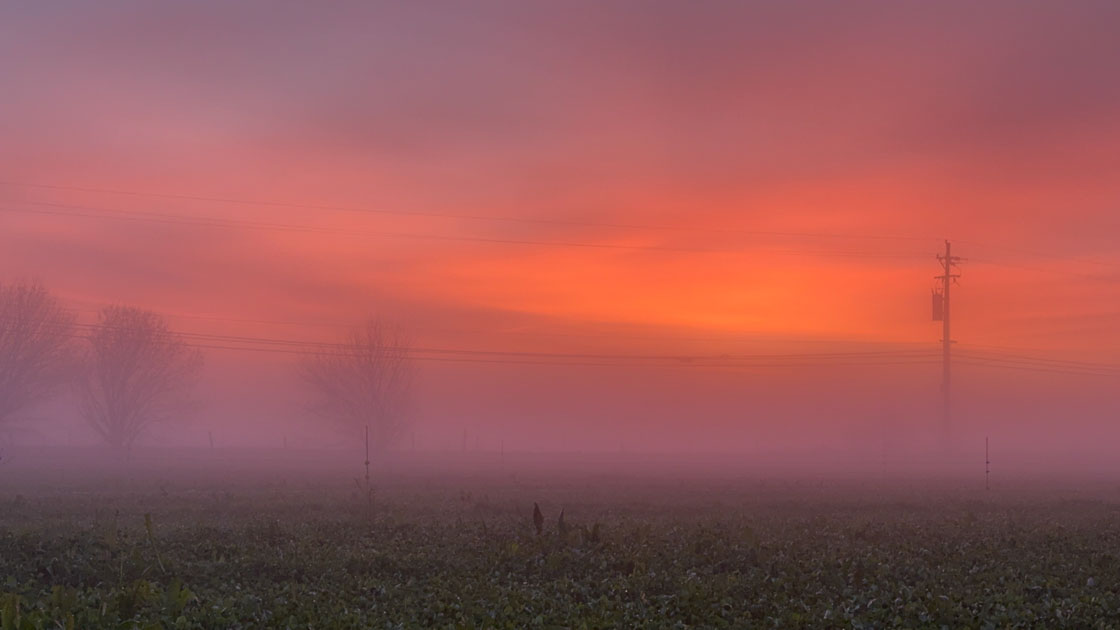
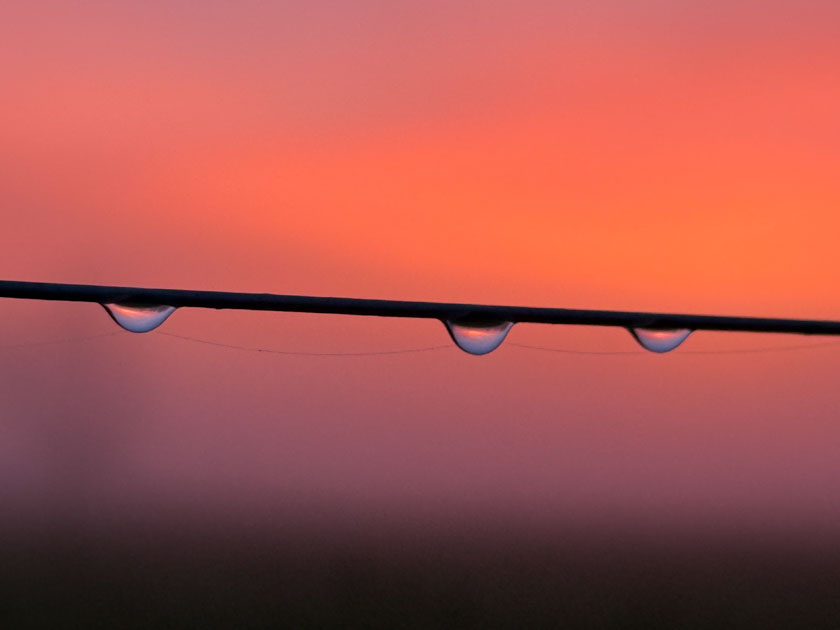
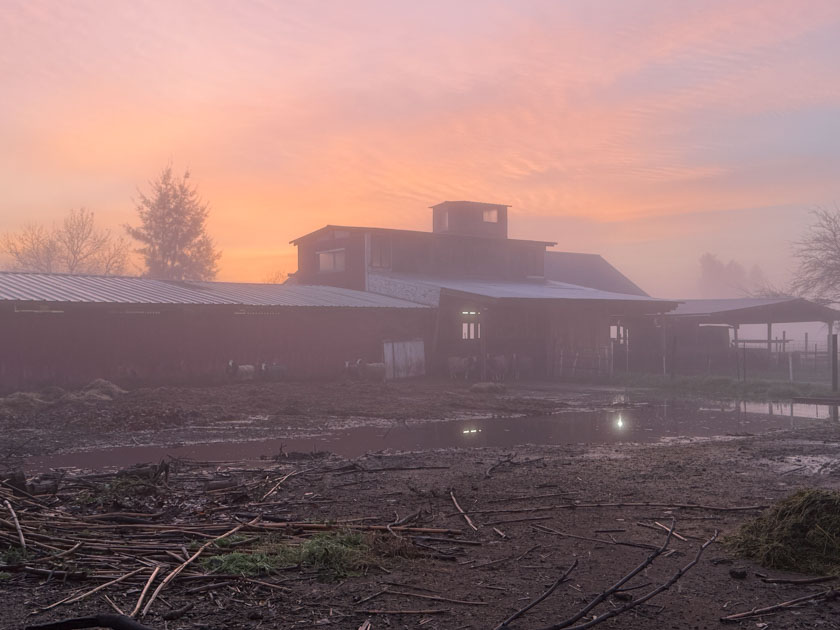
I was going to get away from a weather report, but this morning the sunrise behind the fog inspired me to take photos.
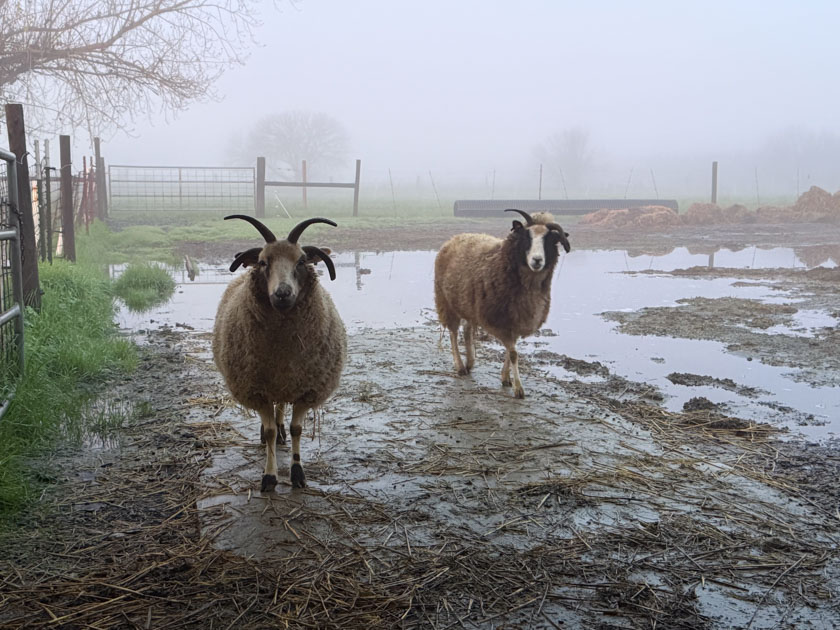
It was daylight as I finished cleaning the barn, but still foggy. Sheep are off the pasture now because it’s so wet, so they were waiting to be fed.
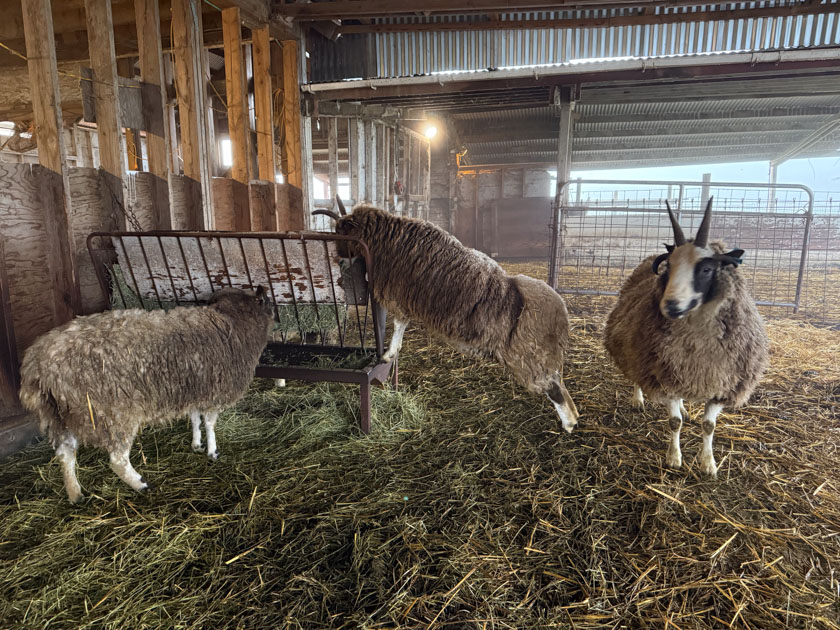
When you sit down for a meal at home do you always sit in the same place? Probably. These sheep are always at the back part of the barn because that is where they want to eat. And Zora always puts her feet up on the feeder to eat out of the top.
This is the barn from the back. There was a prompt on the phone to clean my lens. I think the phone objected to the fog.
The ram pen is just behind where I was standing for that last shot. This is Starthist Hornblower, sire of many of the lambs to be born in February and March.
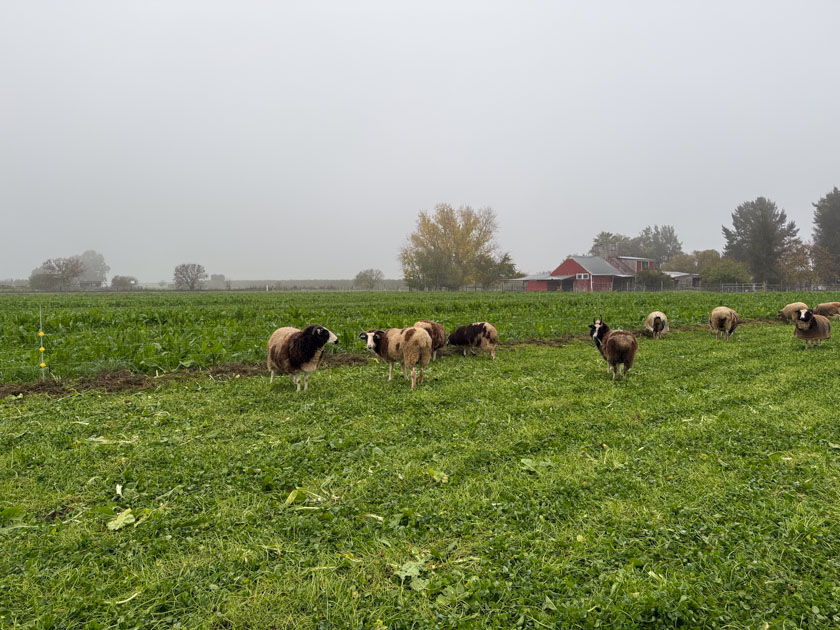
Dan saw a report that we have reached a record of 22 days of tule fog. Cold and drippy. I think I can handle cold (sort of) when it is balanced by a bit of sun. At least the green pasture and fluffy sheep look cheerful.
This is looking northwest to the hills. What hills? Fog instead.
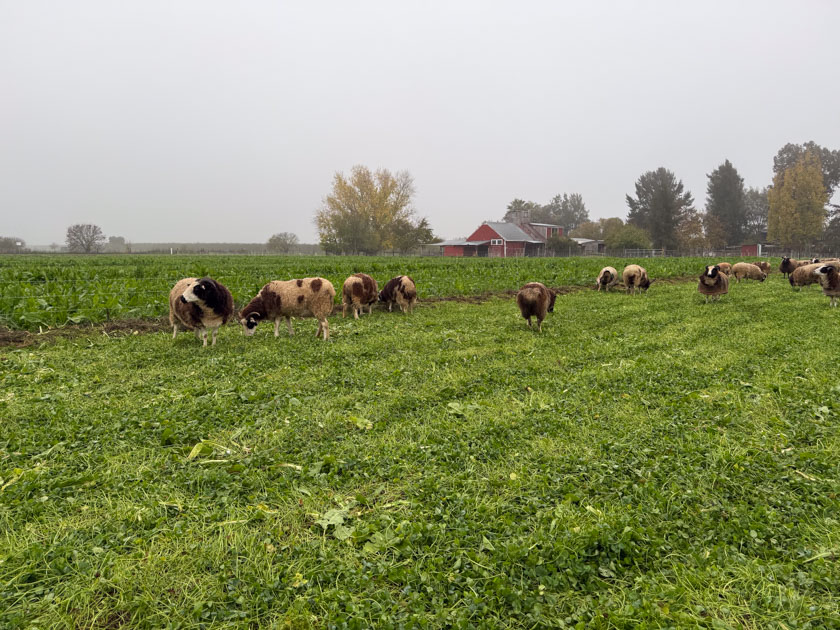
This is the second day grazing Paddock 17. There is still more feed out there, but I want to move them across the other paddocks.
It seems that two days is about right for each of these 30-foot strips. Notice in this photo and the previous one how well the sheep eat right to the edges. The fences are on the checks, the raised strips that channel the irrigation water down the pasture. I think they eat those closer because they aren’t trampled like the middle of the paddock.
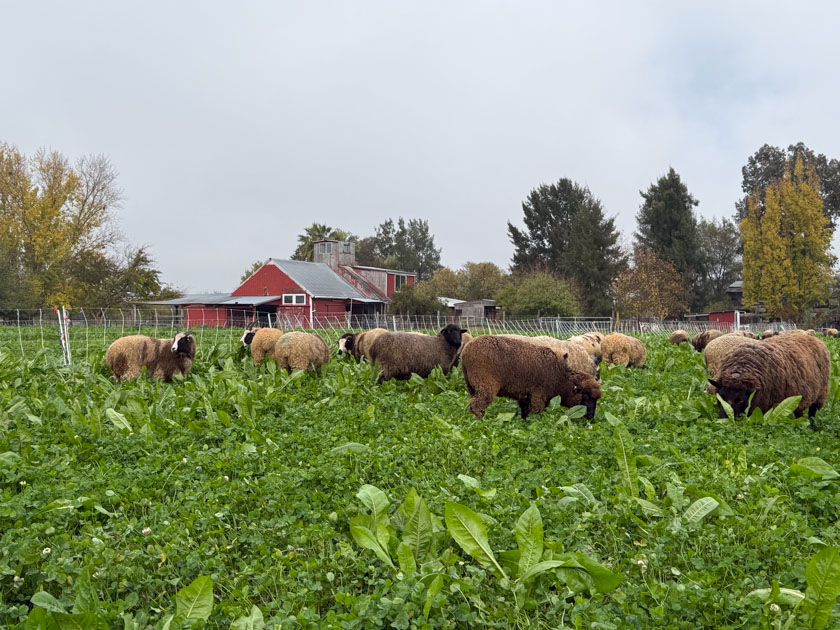
This is another view of that paddock.
I moved the net fencing this morning and this is Paddock 16. .
Some of the chicory has red in the leaves and some does not.
We’re still in the gray gloom of drizzly fog, but we accomplished some outdoor tasks that make me feel as through I accomplished something.
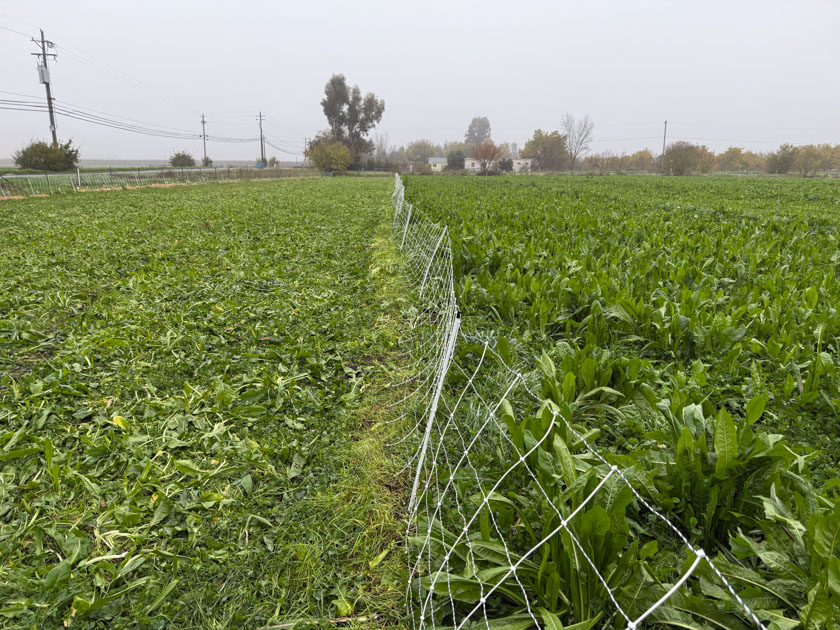
These photos were taken on Wednesday, and on Monday I had moved the sheep from the northwest paddocks to the southeast along the road. This is Paddock 20-21 (numbers assigned to indicate the irrigation valves and checks). I had just fenced off the hedgerow we planted two weeks ago (blog post).
This that same fence but from the south. You might notice that it looks as though the fence is leaning the same direction but this is the opposite view. I have developed the habit of leaning my net fence away from the field the sheep will be in. It is rare that a sheep gets tangled in the net fence, but if that happens there is often a bad outcome. I think it is less likely for those upright horns to snag the fence and cause the sheep to panic if the fence is tipped slightly away when the sheep may be grazing close to the fence, as in a field with this much growth. (The previous photo shows how closely the sheep were grazing to the fence on the other side.) It’s also more likely when the charge on the fence is on the low end, and we need to do some troubleshooting on the connections in this field. So I always tip the fence.
Harmony, one of the ewes whose coat was changed recently (last post).
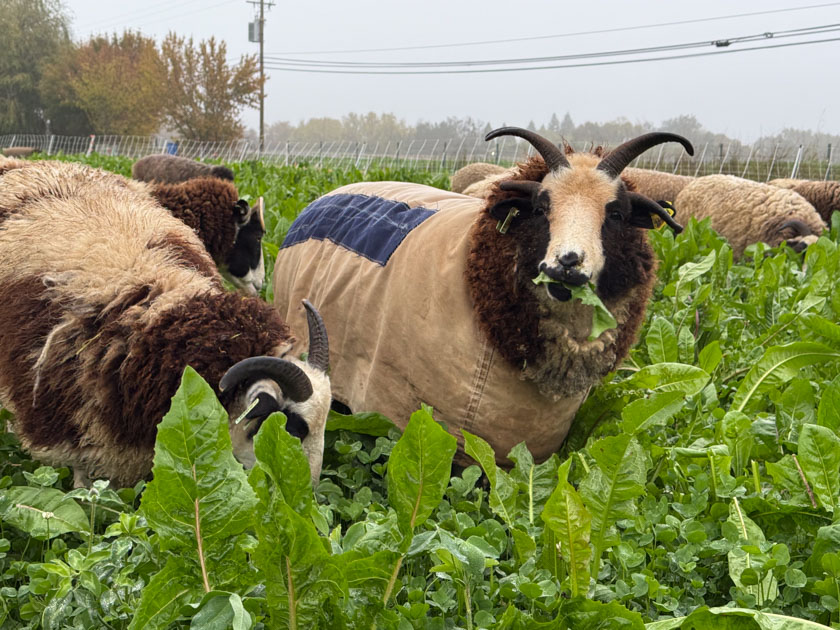
You all know Jade, the oldest sheep here, and a big pet. The plants you’re seeing are chicory and clover.
After morning chores I was looking for the wheelbarrow to use in the later project of working on the hedgerow. It was near the shop where I had been raking leaves, and I thought that, since it was here. I should rake up fallen lemons before I took the wheelbarrow away.
This tree has been here since we moved to this property in1999. I don’t know anything about growing citrus, but I think the tree may have been a combination of a few different citrus on a common rootstock. Maybe it’s always been just one variety, but I got confused with the different looks that seem to show up at other seasons. In any case, I was paying attention this month when we had loads of fruit on the ground. They sure looked like lemons, but were nothing I wanted to use. Lemons are not supposed to be sweet but I would describe these lemons as nasty. You can see a lot of fruit on the tree now, but it is not nearly ripe, and I know those are oranges. I just looked up lemon rootstock for orange trees and found this video about pruning out those rootstock suckers, which in this case had grown taller than the tree. I was right. The branches that had started as suckers but we hadn’t trimmed were taller than the tree. Do you see that empty spot on top and the one on the right? That is where branches had reached through the rest of the tree and were producing fruit. It was quite a job to cut those away as the branches had grown through other branches and they are very thorny. It took me a couple of hours to finish that job and by then it was about time for Raquel to come.
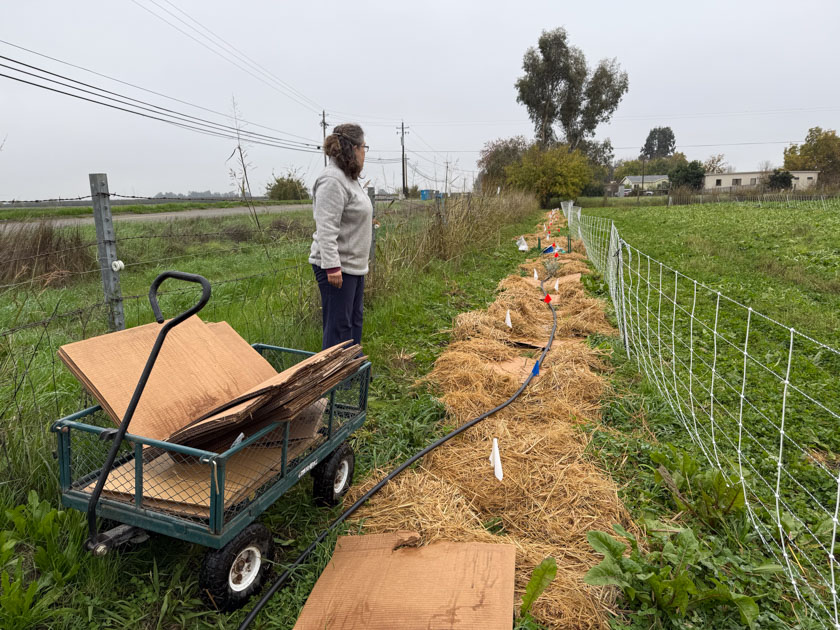
Raquel is a Farm Club member who went out of her way to help figure out how to order what was needed to install a drip system to irrigate our newly planted hedgerow. I had also picked up more cardboard from a friend so we could continue the mulching that we started. We rolled out 250′ of 3/4″ tubing and secured it with u-shaped wires.
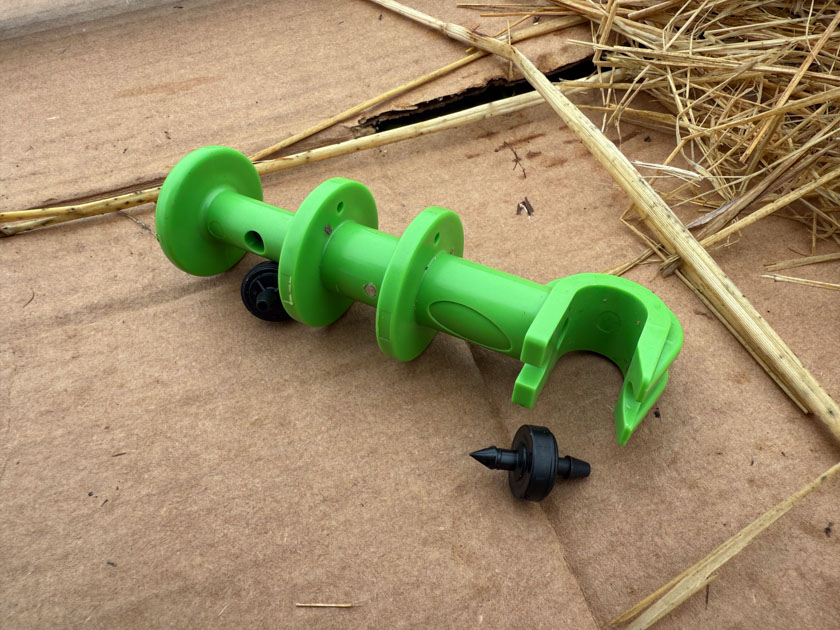
This is the tool that is used to poke holes at the appropriate places in the tube and then insert the emitters.
We had cardboard and straw mulch around the plants, but with the new cardboard we were able to cover space between the plants.
We finished the job…sort of. We used all the 250′ I had ordered. Someone (that would be me) had not measured correctly–a fact which I realized when I installed the new electric net fence for this strip. I thought we had a 250′ hedgerow, but it turns out I was 40′ short of fence. So we knew when we started on this yesterday we would run out of the main tube. We wanted to get as much done as we could though. I have ordered more tubing and all we have to do is connect it to this one and install more emitters and we’ll be good to go. It’s so damp and drizzly now that I don’t have to worry about more water on these plants right away.












 Meridian Jacobs' Blog