Road Trip 2025 – Day 4 and 5 – Trinidad

This is actually the third post for Day 4 because there are too many photos…besides there are three very different experiences.

The goal of this trip was to be in Trinidad, Colorado for the opening of Women’s Work, an art show sponsored by Cowgirl Artists of America (CGA).

The show is at the A.R. Mitchell Museum of Western Art and will be open through September 20.
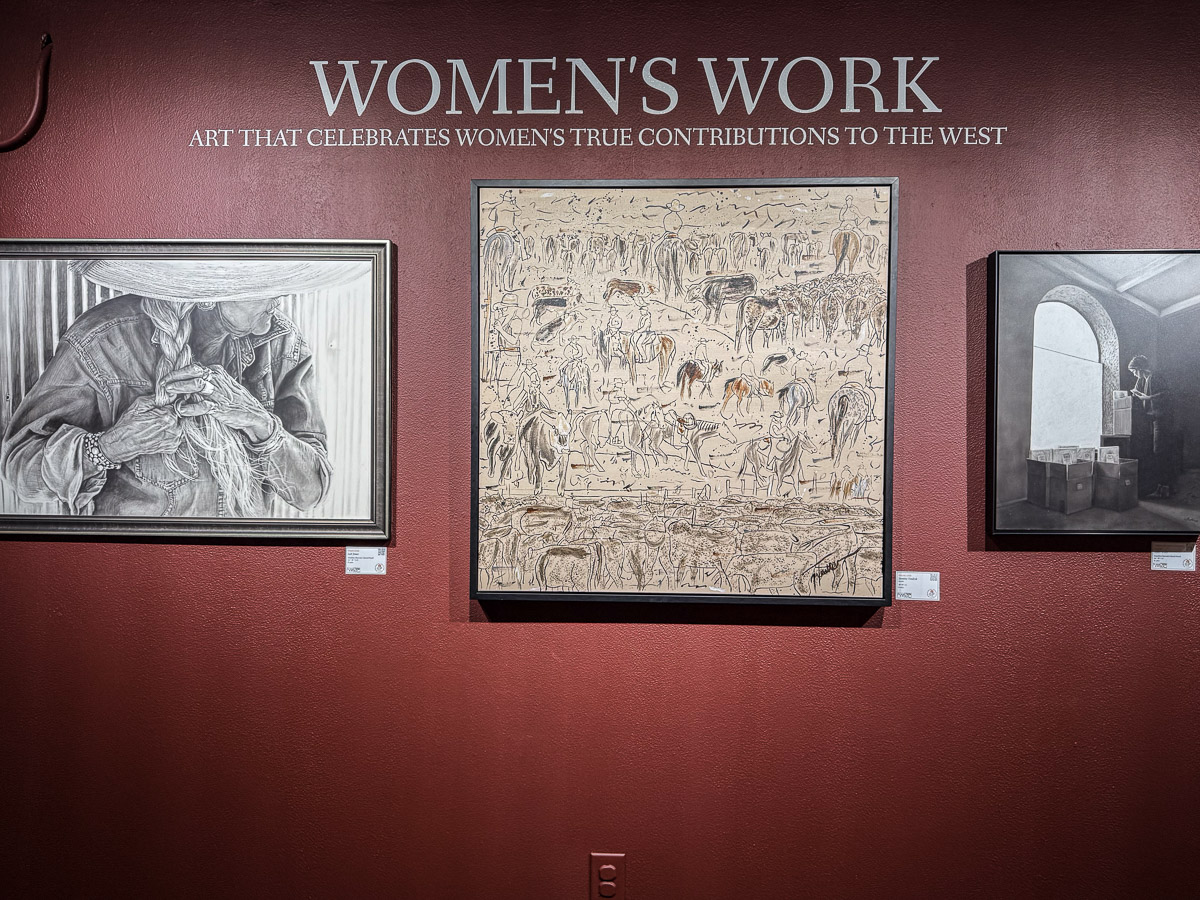
Three painting on red background with wording "Women's Work".

In 2024 we attended the opening of this show because I was a “farm partner”. The explanation and story is in this blog post from 2024. I think I did a better job of photographing last year’s show and sharing artist info in my blog. I took this quote from last year’s blog post, after copying it from the Cowgirl Artists’ website. From the website: “Celebrating the true contributions of Women in the American West…Much Western art is an ode to the work and contributions of men, while often limiting women to a single sphere, or pretty face. “Women’s Work,” a groundbreaking exhibition that teams artists up with women on working ranches, turns that notion on its head. By showcasing Western women as multi-faceted contributors to the Western way of life. Furthermore, Women’s Work aims to provide a platform for Indigenous women to authentically share their own stories, rooted in their intimate connections to culture and heritage. Traditional and fine artists are included, with all work on the theme of “Women’s Work.

After seeing the show and talking to the organizer I decided to submit an entry for this year. Entries were due in the fall and, if accepted, work was to be completed in the spring 2025. I entered Year to Remember blankets using locally produced wool, and naturally dyed by me with plants grown on the farm. I could serve as my own “ranch partner”. I was accepted! Work was shipped to the show to arrive by mid-July.

The catalog of the show is at this link. There you can see all the pieces and details about work.

Fancy saddle with tooled leatherwork and other tack hanging on rail on a wood floor. Decorations include a cow skull and cactus.

The Women’s Work show is upstairs in this building. The second floor is in a horseshoe shape over the lower floor. When I went upstairs I was immediately drawn to this display. Four artists worked together to put together the display.
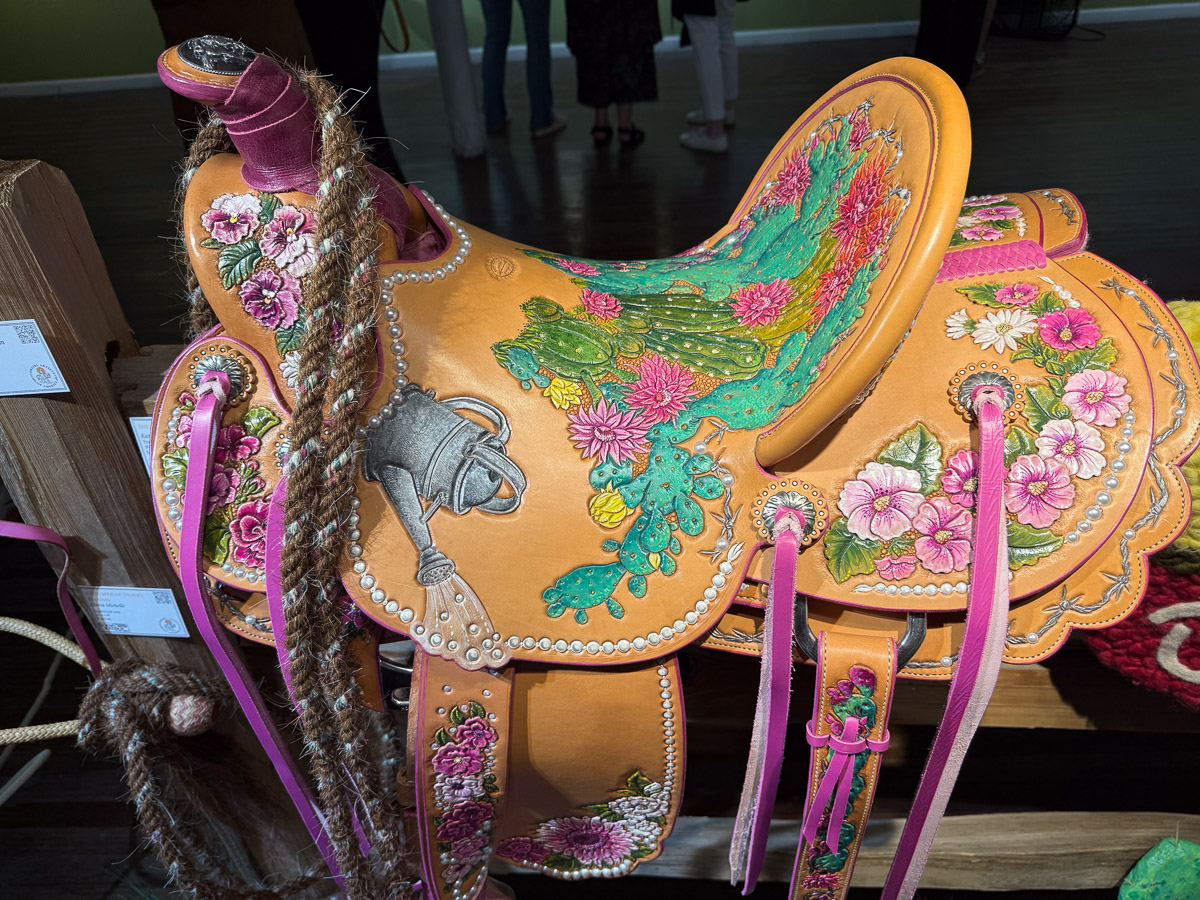
Western saddle with design of flowers and cactus tooled on the leather.

There is amazing detail on this saddle called She Who Made Me by Kari McCluey

Painting of woman on a horse with a blue background.

This painting, CowGirl II – Securing a Win, is by Megan Wimberley, the woman behind Cowgirl Artists of America.

Cowgirl boots with blue birds.

Bluebird Let Me Tag Along by Lisa Sorrell.
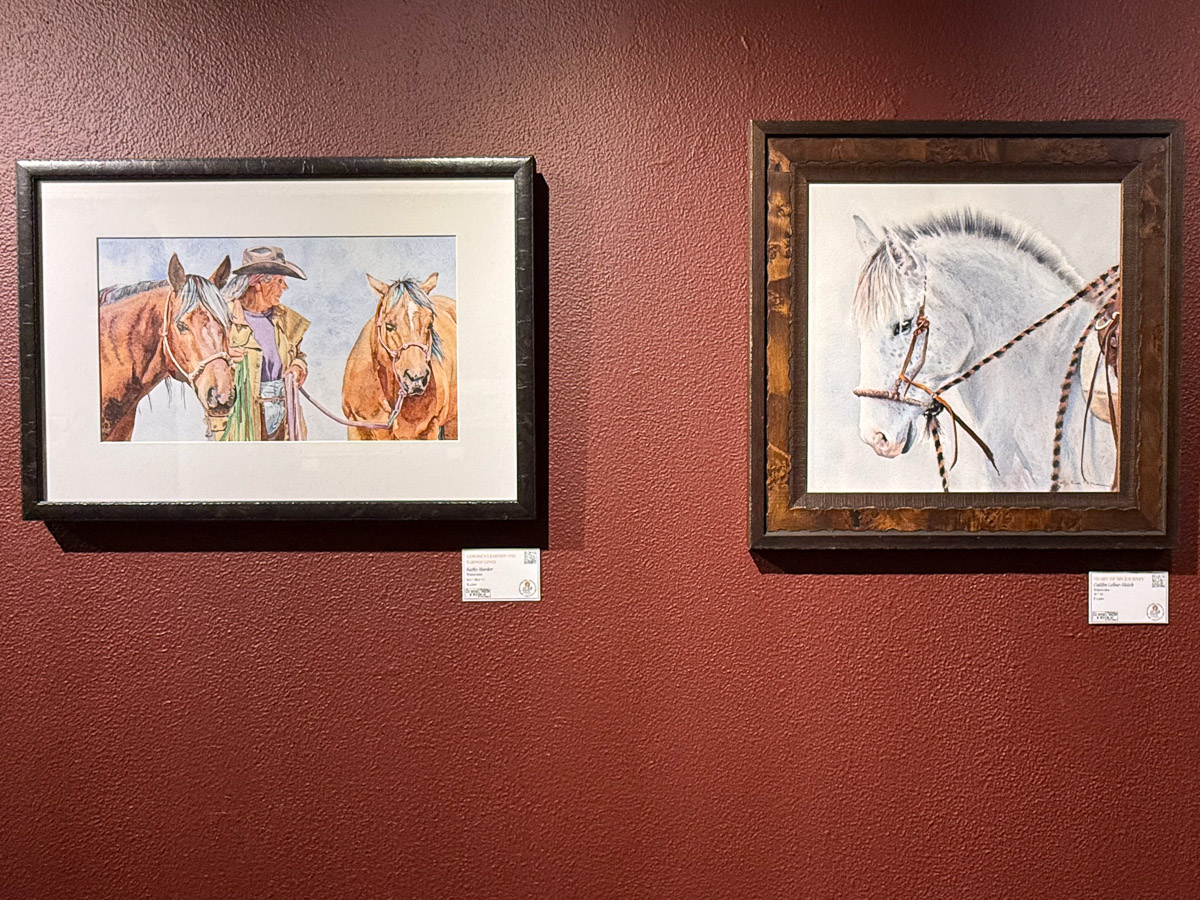
Red wall with two paintings of horses.

There are details about each piece in the catalog at the link above. There was by far more wall art than 3-D work, but it was difficult to get good photos of those. That’s why I recommend looking at the link.
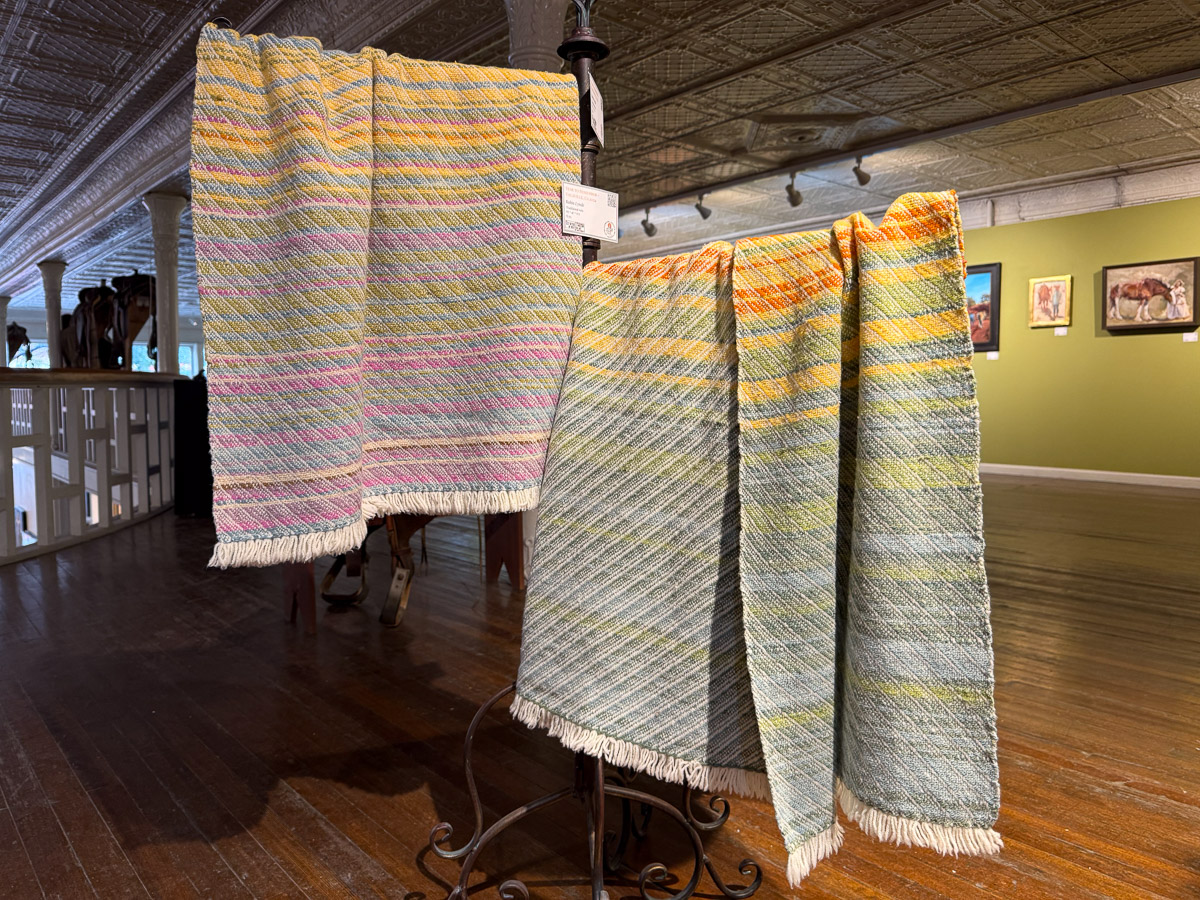
Handwoven blankets with stripes indicating temperature for the year.

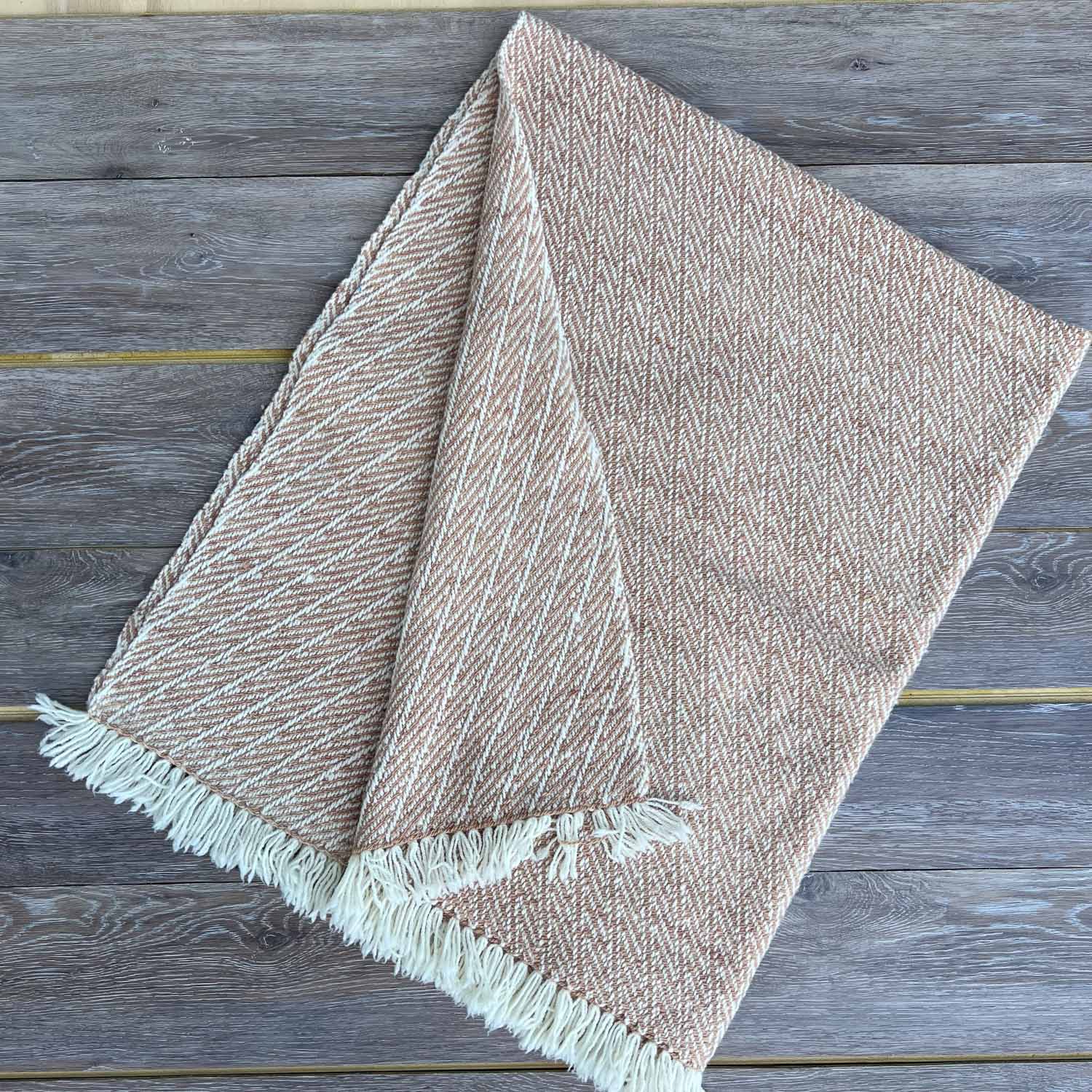
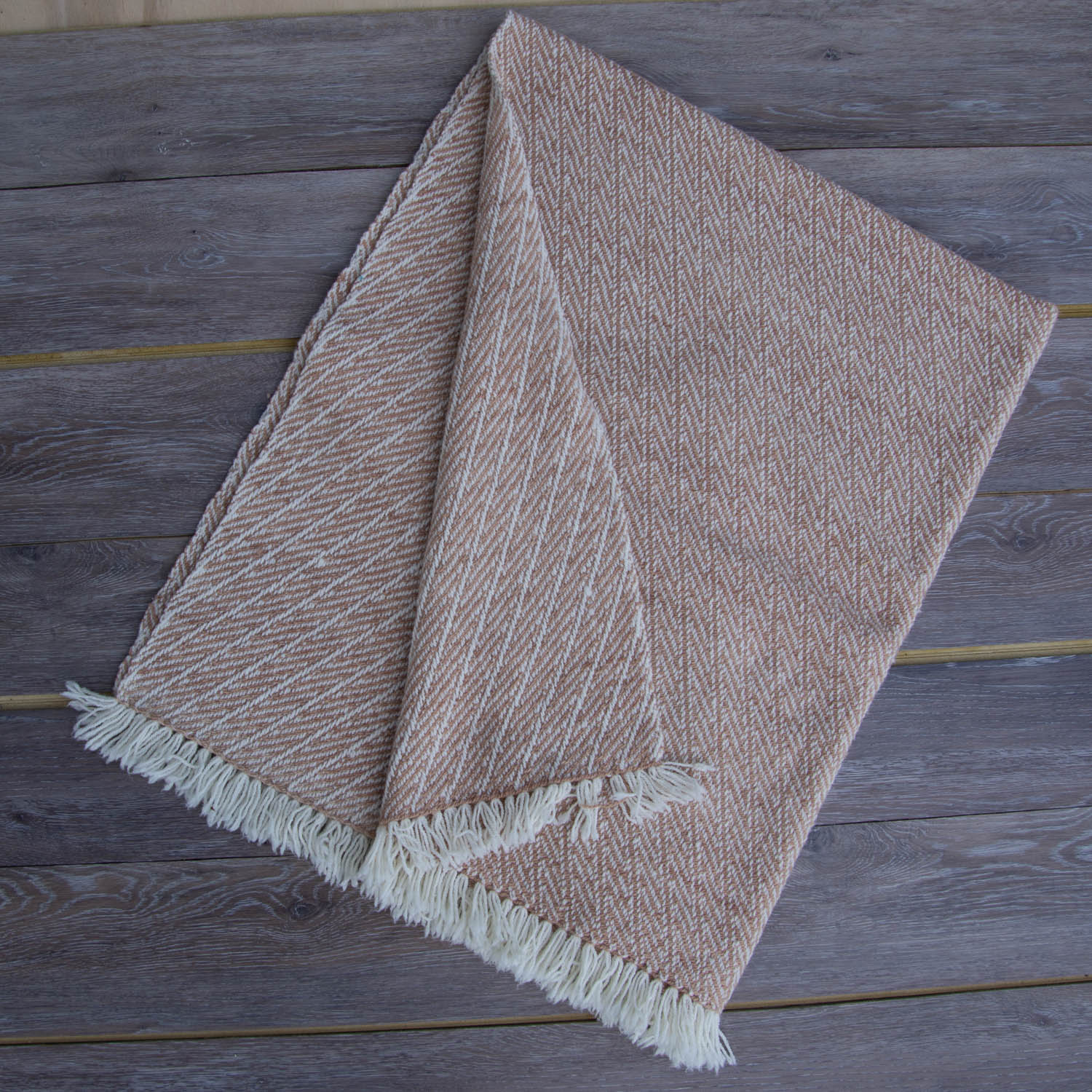
These are my two blankets. Later I rearranged them so that the more colorful side is the one that shows. The blanket on the left indicates high temperatures for Trinidad, Colorado for 2024 and the one on the right is for Vacaville. The full year is portrayed following the stripes from one end to the other.

Label on a blanket explaining the color pattern.

On Saturday I came prepared to include the info about the Year to Remember idea with color coding. I thought it would make the blankets more interesting (and more saleable). However, this is an art show and the person in charge wanted to keep the signage at a minimum. This info is in the catalog, so I took it off the blankets. I’m including it here as explanation…and because this is a plug for your custom Year to Remember blanket. I have a blanket warp on the loom now and can weave one. If these blankets don’t sell in this show they will be on my website after I get them back.
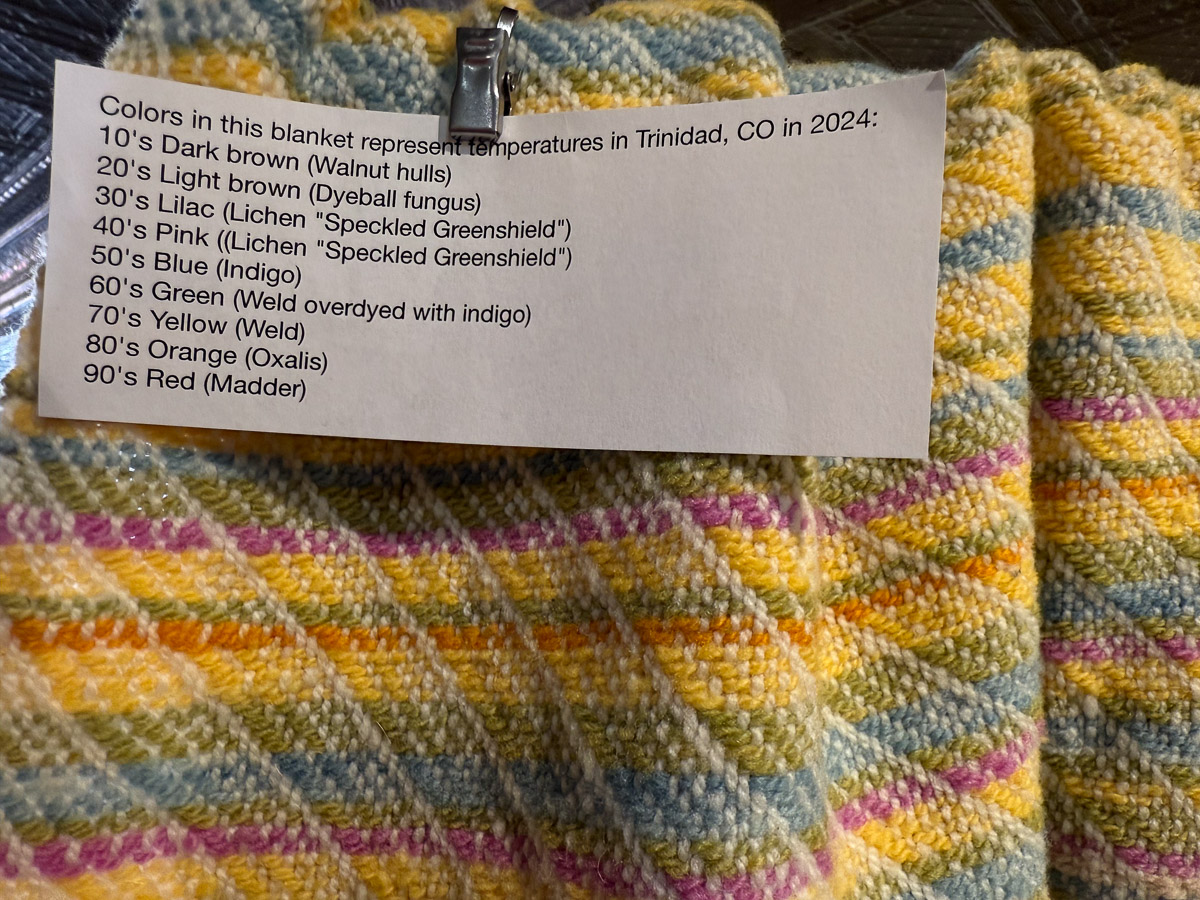
Label on a handwoven blanket that explains the color pattern.
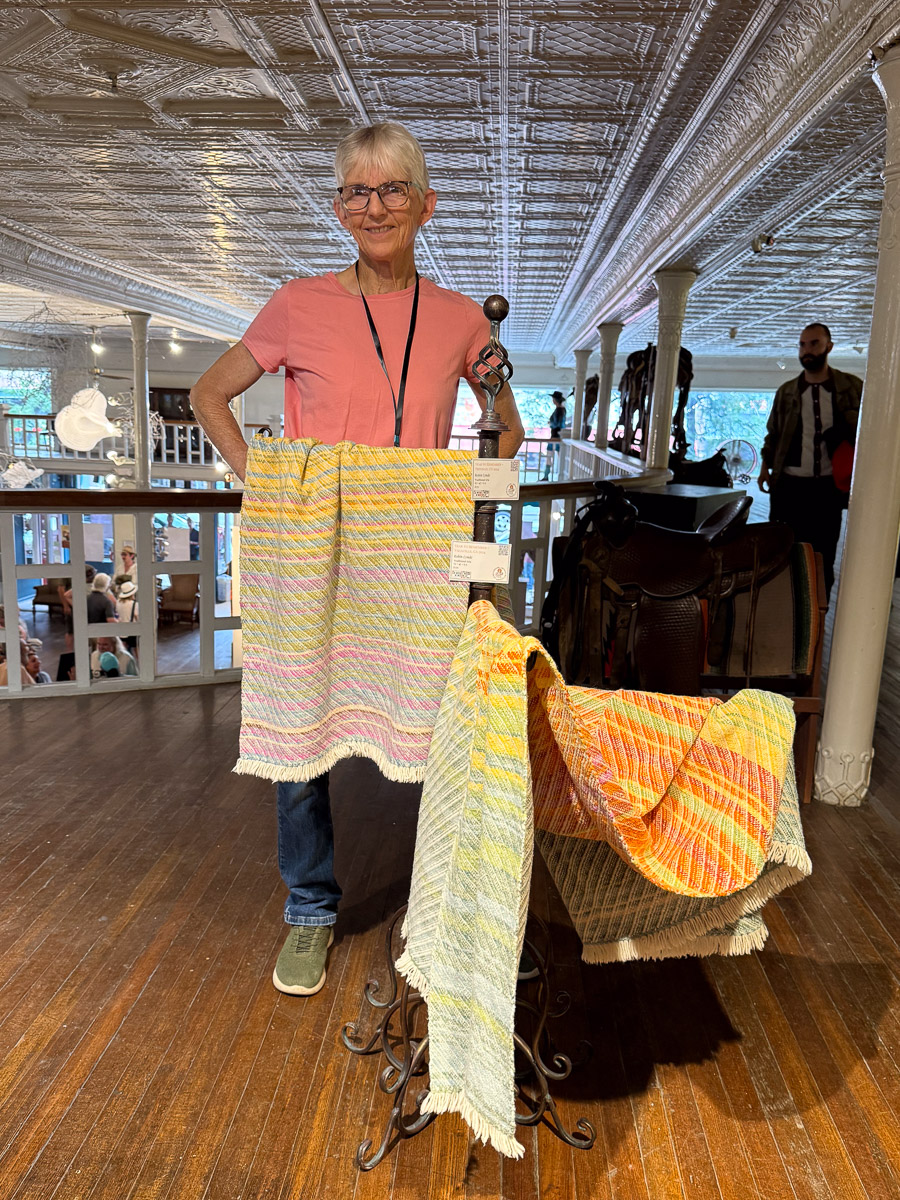
Robin standing behind two Year to Remember blankets on display.

Dan took this photo.

Painting of bucking horse with cowboy and quote by A.R. Mitchell.

The A.R. Mitchelll Museum has a large display about Mitchell and his friends as well as contemporary western art for sale. From the Museum website: “During the 1870s and 1880s Trinidad was the headquarters of the largest cattle and sheep operation in the state of Colorado. A booming cow town filled with cowboys, cowhands and ranchers, Trinidad’s streets and neighboring towns were home to the horses, cattle and beloved cowboys and cowgirls that A.R. Mitchell would paint and immortalize throughout his career.”

I am already over my self-imposed limit of 10 photos, but I want to continue the story so I can blog about things at home.

On Saturday there was a luncheon provided by CGA to be followed by an artists’ talk. I had been asked to be one of the panel. Before the luncheon we wandered around this block of Trinidad.

I got a kick out of this design. That’s a real truck, not painted.

Store window that says Corazon Gallery 149 E. Main.

We stopped in the Corazon Gallery across the street from the A.R. Mitchell Museum. I was interested in this because it is an artists’ coop as is The Artery where I sell in Davis, California. Here’s a “small world” experience. We wandered through the gallery and I noticed a landscape photograph with the photographer’s name Joe Coca. I knew that name. Having subscribed to Handwoven magazine since the first issue in fall, 1979 I was very familiar with photography by Joe Coca. I wondered if he might be the same person because Handwoven magazine was based in Colorado. We started up a conversation with the person staffing the store on that day. I assume it is like The Artery where all of us artists take turns being shopkeepers when the store is open. I said we were in town for the show across the street and I had entered handwoven pieces. It turns out that I was talked with Joe Coca! We talked awhile longer. He worked with Interweave Press for years and has been all over the world as a photographer. Joe’s website states that he is semi-retired, but it is worth looking at the website to see some stunning photography.

Back to the show!

After the luncheon awards were announced. There was a winner and an honorable mention in the 2-D and 3-D categories. I was so surprised to get the 3-D Honorable Mention!

Five women seated in a semi-circle of chairs for an interview.

The people selected for the panel discussion were all artists who were able to fill the role of their own “ranch partner”. Megan, left, had prepared questions for all of us to answer. It was a fun experience and I was very interested to hear the stories of the other women. The other women are all cattle ranchers. Megan asked questions about how we got started, how we integrate artwork with our daily lives as ranchers (I call myself a farmer, but that’s another story– what is the difference between a farmer and a rancher?), do we have issues with gender expectations, recommendations for young people just starting, etc. One difference that I thought about later is that although we all talked about seasonality of ranching/farming, I think I am the only one who direct markets. In other words, I don’t load all my lambs on a truck and send them off to market and I don’t take my fiber, yarn, and handwoven to a retail store and it’s gone. I have interaction with all the customers whether I’m selling lambs for meat or for breeding flocks or selling all the fiber products. I spend time at the computer on social media letting the world know I’m here (including this blog–please share!), time (not enough) working my website, teaching fiber arts, working at The Artery, and attending fiber shows. That doesn’t mean any of us have more or less work than the other. It’s just different. A theme in the discussion was that there is Never enough time for all of it.

Dan had my camera and recorded some of the comments. I haven’t had time to listen yet.

After this discussion we got on the road and headed north to Colorado Springs where Dan’s brother and sister live.

To be continued…

More Product Photography

I shared a lot of photos in one of the latest blog posts of my trial and error to get good product photos with consistent backgrounds. I got some suggestions from a few of you and I welcome comments again. I worked on this again today.

I bought a roll of sturdy Manila paper. Do you know why it’s called Manila? I looked it up. Merriam-Webster: “a strong and durable paper of a brownish or buff color and smooth finish made originally from Manila hemp”. Wikipedia: “Manila paper was originally made out of old Manila hemp ropes which were extensively used on ships, having replaced true hemp. The ropes were made from abaca or Musa textilis, which is grown in the Phillipines; hence the association with Manila, its capital city. Abacá is an exceptionally strong fibre, nowadays used for special papers like tea bag tissue. It is also very expensive, being several times more expensive than woodpulp, hence the change to that fiber for what is still called Manilla—usually with two L’s. More recently new woodpulp has often been replaced with a high proportion of recycled fibers. True Manila hemp folders would have been much tougher and longer lasting than modern folders.” See what you learn by reading this blog?

I also have a piece of linen that is a nice color with an interesting texture. I thought I’d try both of those as background. The linen fabric is too small, but I can get more if it works. I just made a curtain for my office and that’s why I still have a piece here.

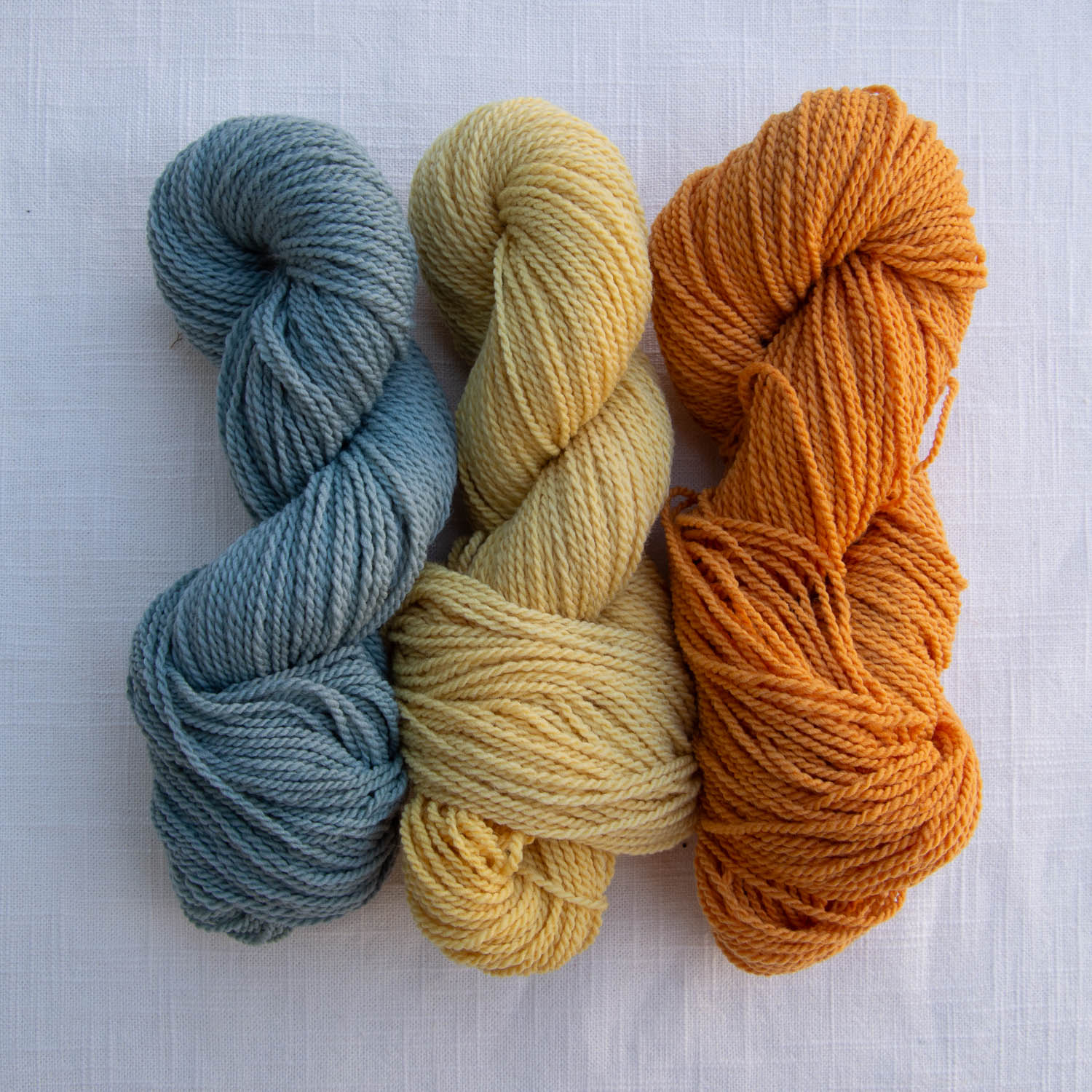
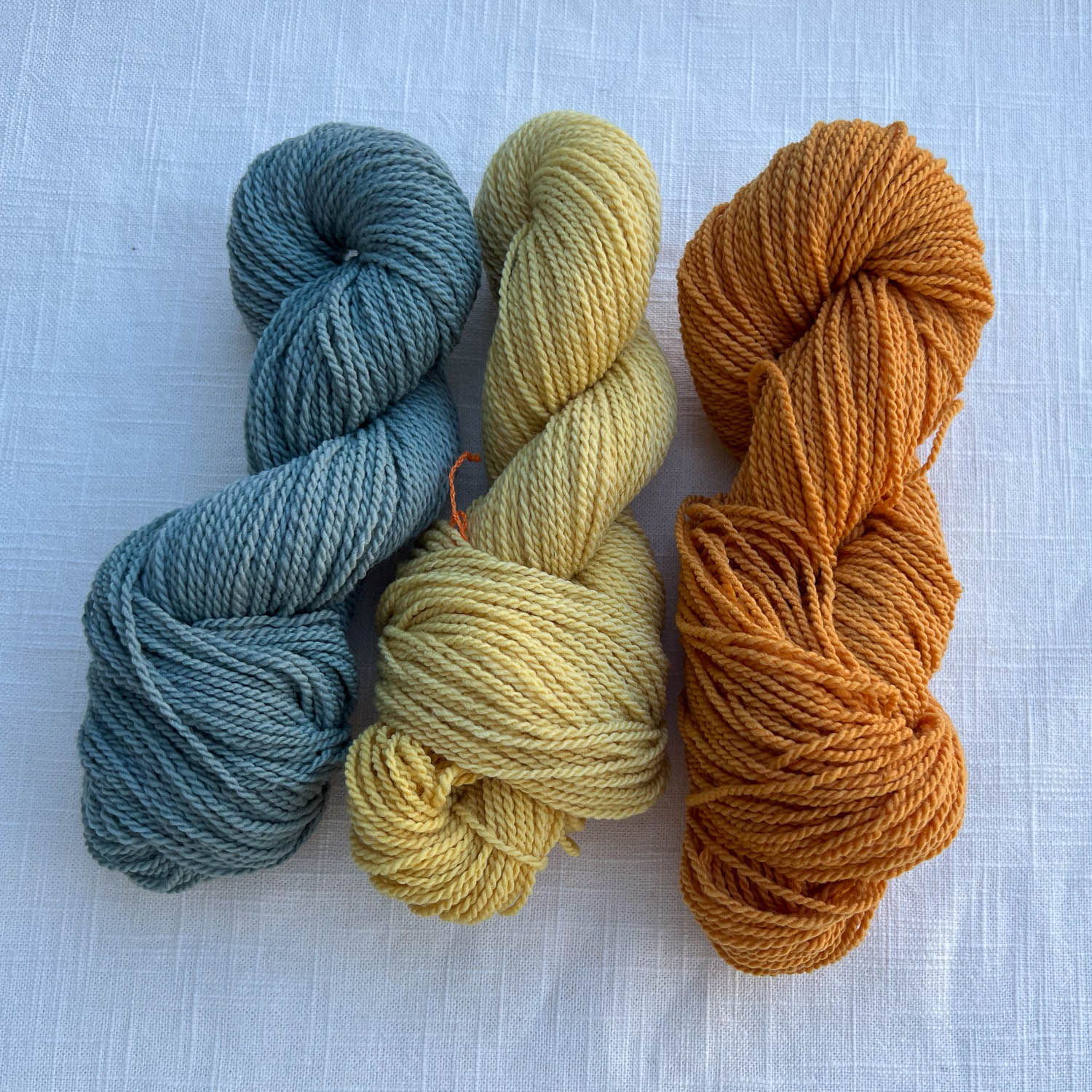
So I experimented with my phone and my camera with these different backgrounds. My goal is to take photos that don’t need much editing to make the products look like they do in real life.

This is the linen on top of the manila taken with my camera. I am not sure if the yellow/rose cast of the manila comes through the linen. Also, light is so important. I took all photos in the shade, but not all shade is the same. The place where I’m hanging the roll of paper is a different shade than if I drag the table over to the middle of the deck area and the roll of manila may affect the outcome as well.

This is that manila paper taken with my phone.

Linen on top of manila taken with phone.

The photos I used here have been minimally edited–mostly to crop to square. This time I shot the photos with my camera on manual and adjusted shutter speed one or two stops. Most of the time the slower shutter speed (more light) gave a better exposure. I don’t think I’m having such an issue with white balance as in the last batch of photos.

Linen on top of manila, taken with Nikon.

The same as above but taken with the phone. Colors are close but not the same.

I moved the table away from the wall so the linen is resting on the table. There will be no influence from the mainla paper underneath or on the wall. This photo is taken with the Nikon.

Same thing, but taken with the phone. I see a blue cast to the background linen.

These photos are also taken on the table, on the linen cloth alone. This one is with the Nikon.

Same thing but with the phone. There is that blue cast again. I could probably adjust that in the phone, but I haven’t done any adjustments on these photos other than exposure on some of the Nikon ones.

Same place, table with linen cloth, taken with Nikon.

Same photo taken with phone.

I moved the table back to the position with the manila paper. So this is linen cloth on the paper, taken with the Nikon.

Same thing but taken with phone.

This is the scarf on manila paper alone using the Nikon.

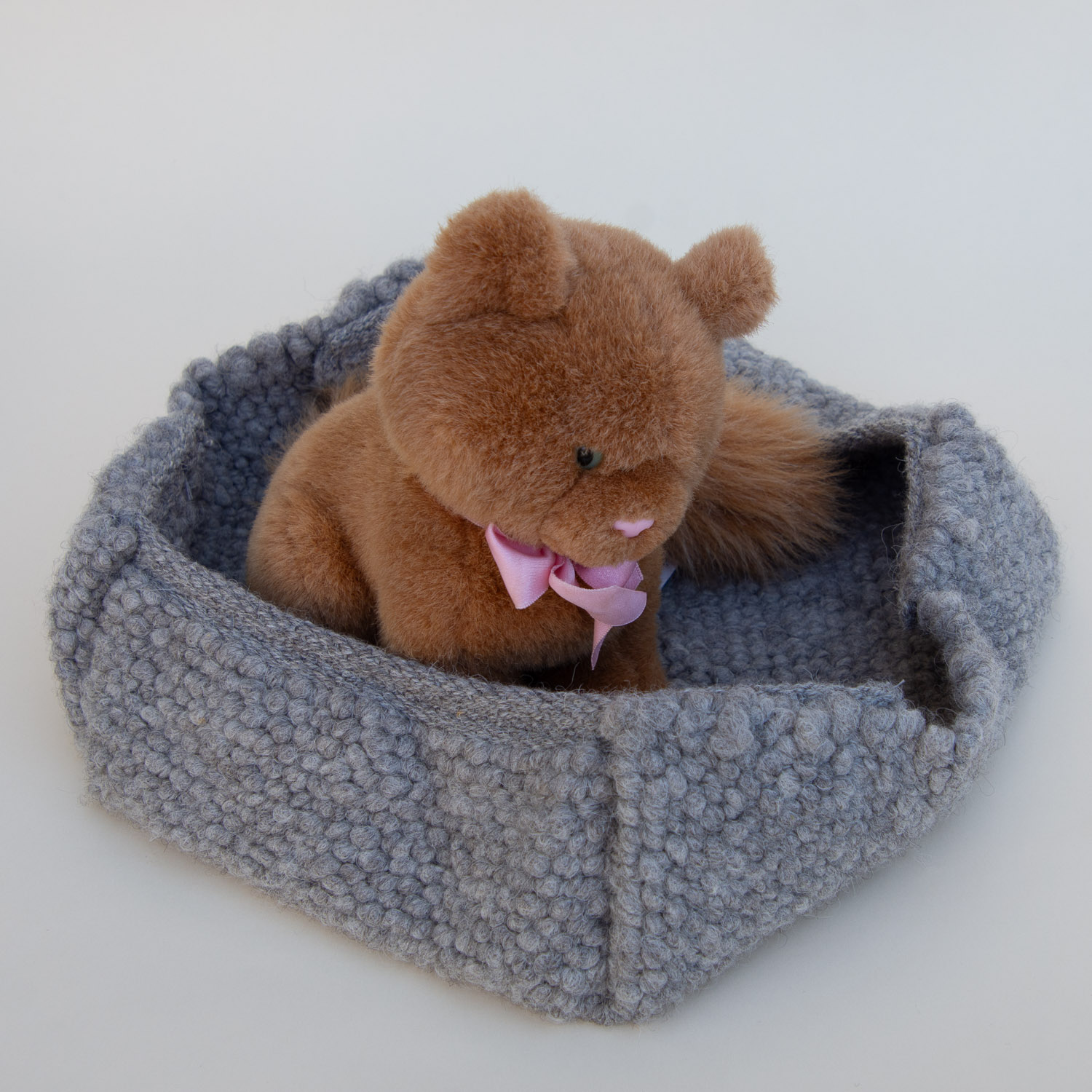
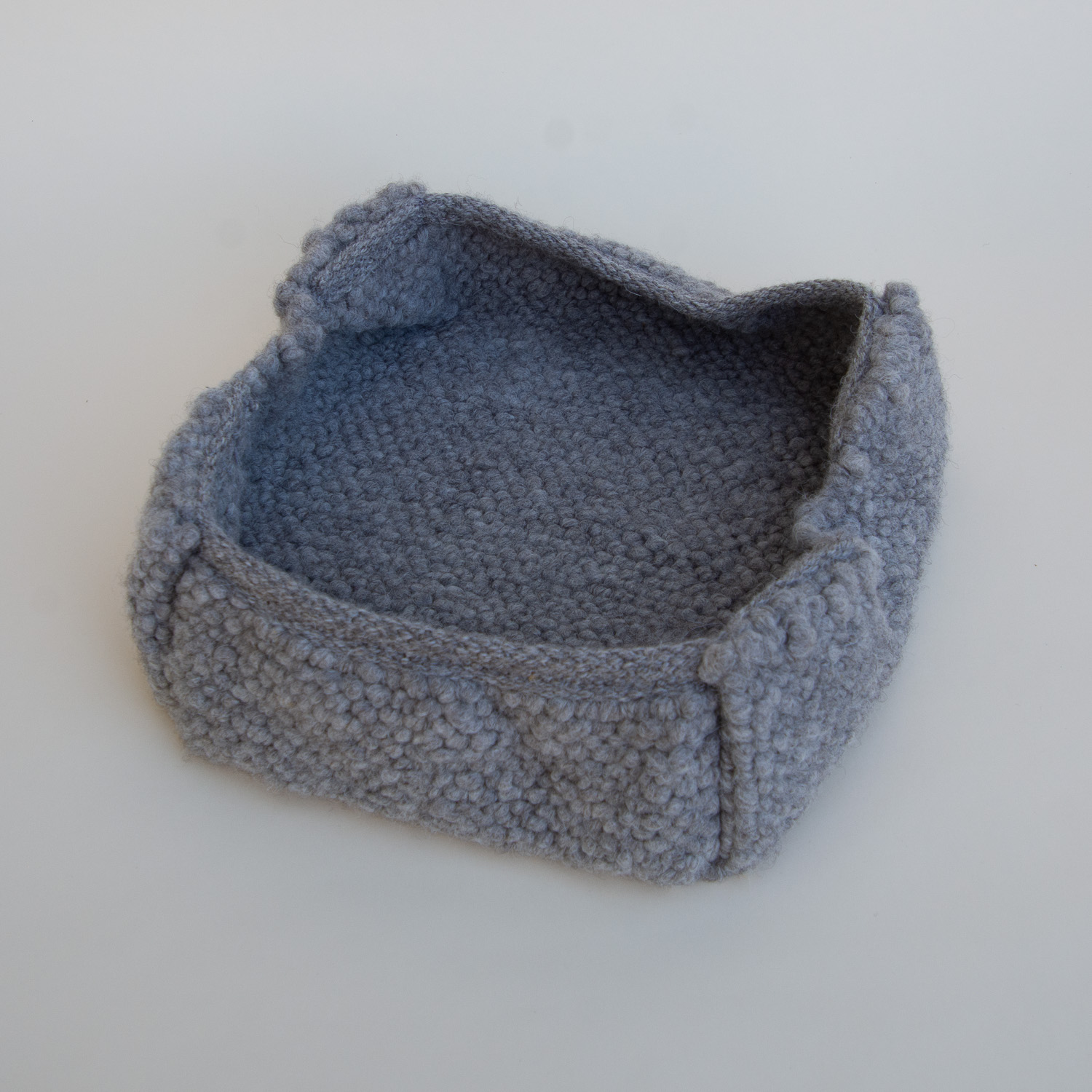
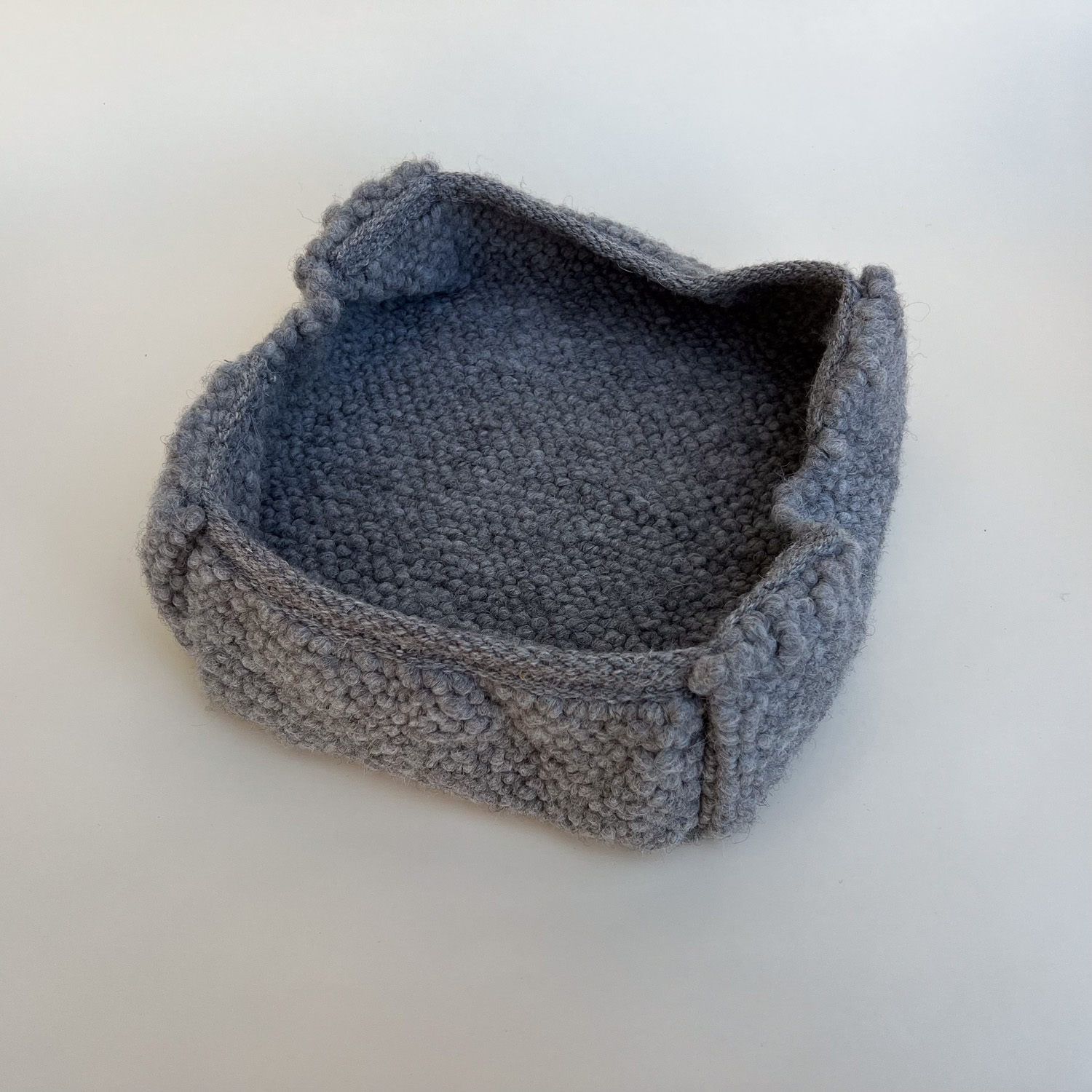
Cat basket on manila paper. Photo taken with Nikon.

Same thing but no cat.

Same thing taken with the phone.

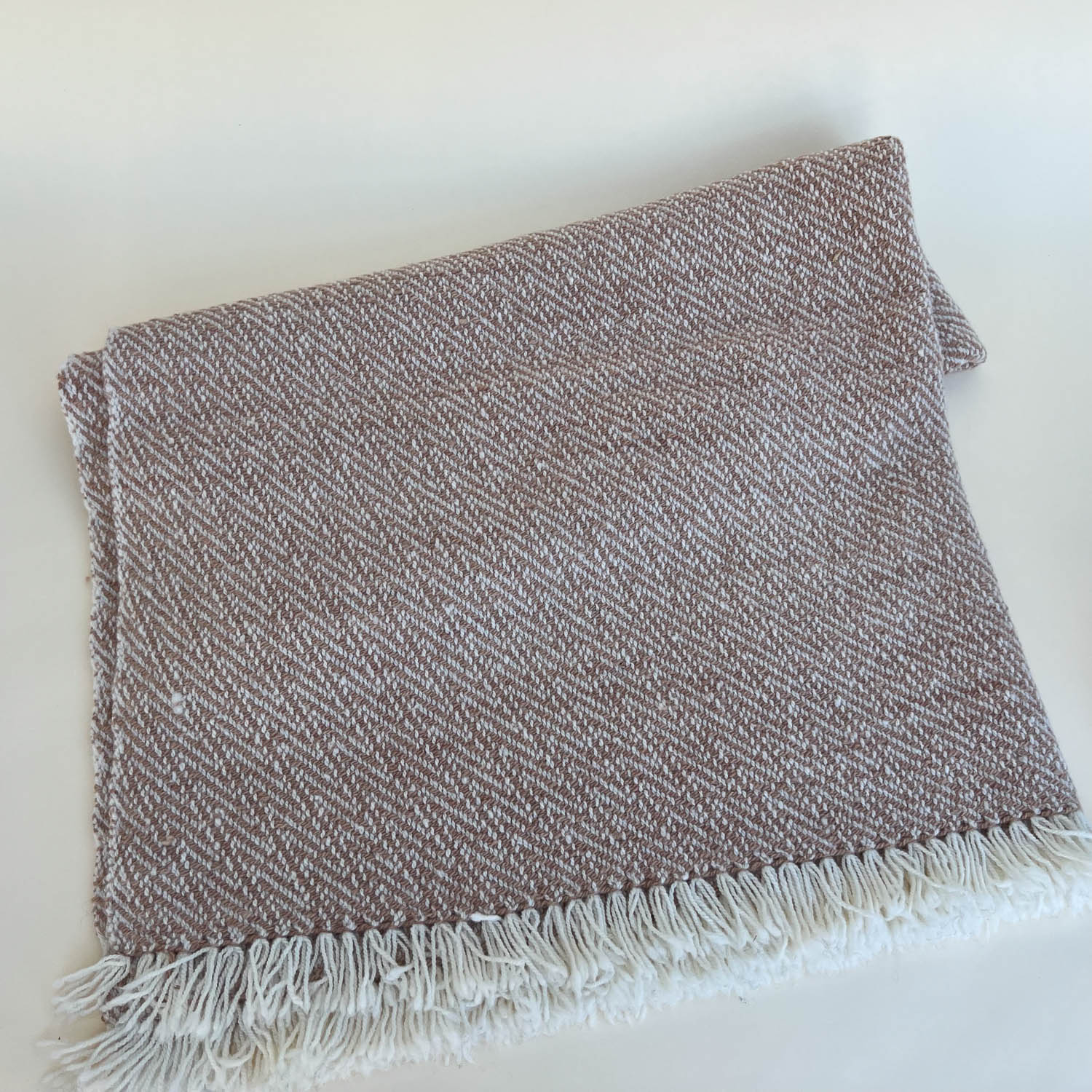
Here is a blanket on manila paper taken with the Nikon. I think this one could benefit from exposure adjustment.

Same photo taken with the camera. Color of the blanket is more natural.

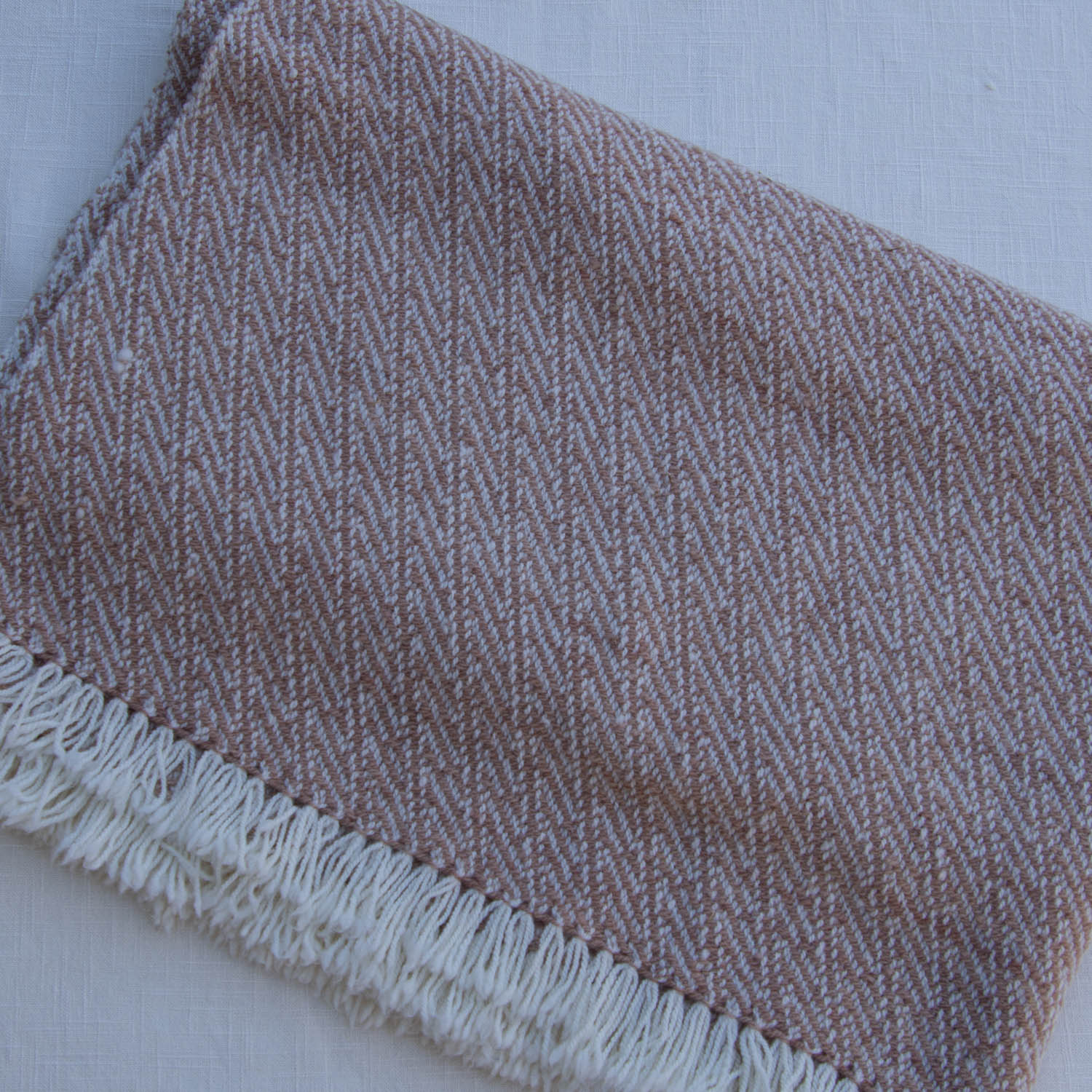
This is in the same place with the linen over the manila. Nikon photo.

Same photo taken with the phone. There is definitely a difference in the color in these photos.

I liked the photos in the last post that were taken with a wood background but I don’t like the spacing between the planks that creates a dark line. We have some leftover flooring that in the house I think of as gray, but I guess they have a brown cast. These planks were left over after we finished the floors and the “groove” edges of “tongue and groove” have been trimmed off. If I want to use these I will trim that edge so there are no big yellow gaps.

I think the colors of the yarn and products are true, but is the background distracting even if the gaps are gone?

UhOh. Why does the white fringe on the blanket look green? Compare it to the scarf at the bottom. In this last series of photos I didn’t compare Nikon to phone photos, and they are all phone photos. I just added the Nikon photo of the blanket below.

Scarf using phone.

There is a lot to figure out. Tomorrow.

Struggling with Product Photography

As you know I like to take photos. I think that most of them (at least the ones I share) are decent. I know the basics of photography and am familiar with the importance of exposure, focal length, white balance, etc. But its one think to know ABOUT the concepts. It’s another to put them into practice.

When you base most of your business on online sales, obviously the photos are very important. I really need to update all the products on my website and there is soon to be a launch of a new website with some of my pieces. I NEED to have decent photos.

I am writing this post as a tool to analyze what I’m doing and share the info with some people who might have advice. Comments are welcome.

I have used that white (but not really white) board for a couple of years. Dan put wheels on the edge so I could store it upright and roll it around to where I need it. It is cut the dimension to match the photos when I use my Nikon. That was very helpful since the template for my current website uses horizontal photos for the product pages. However I have had to provide square photos for other websites and that is what the new one will use. So I have to keep that in mind when I’m photographing products. The request for the new website is that all the main product photos have a consistent look as far as color. White? Gray? Wood? Purple??? I have to choose one. I have to choose one that will help me take good photos.

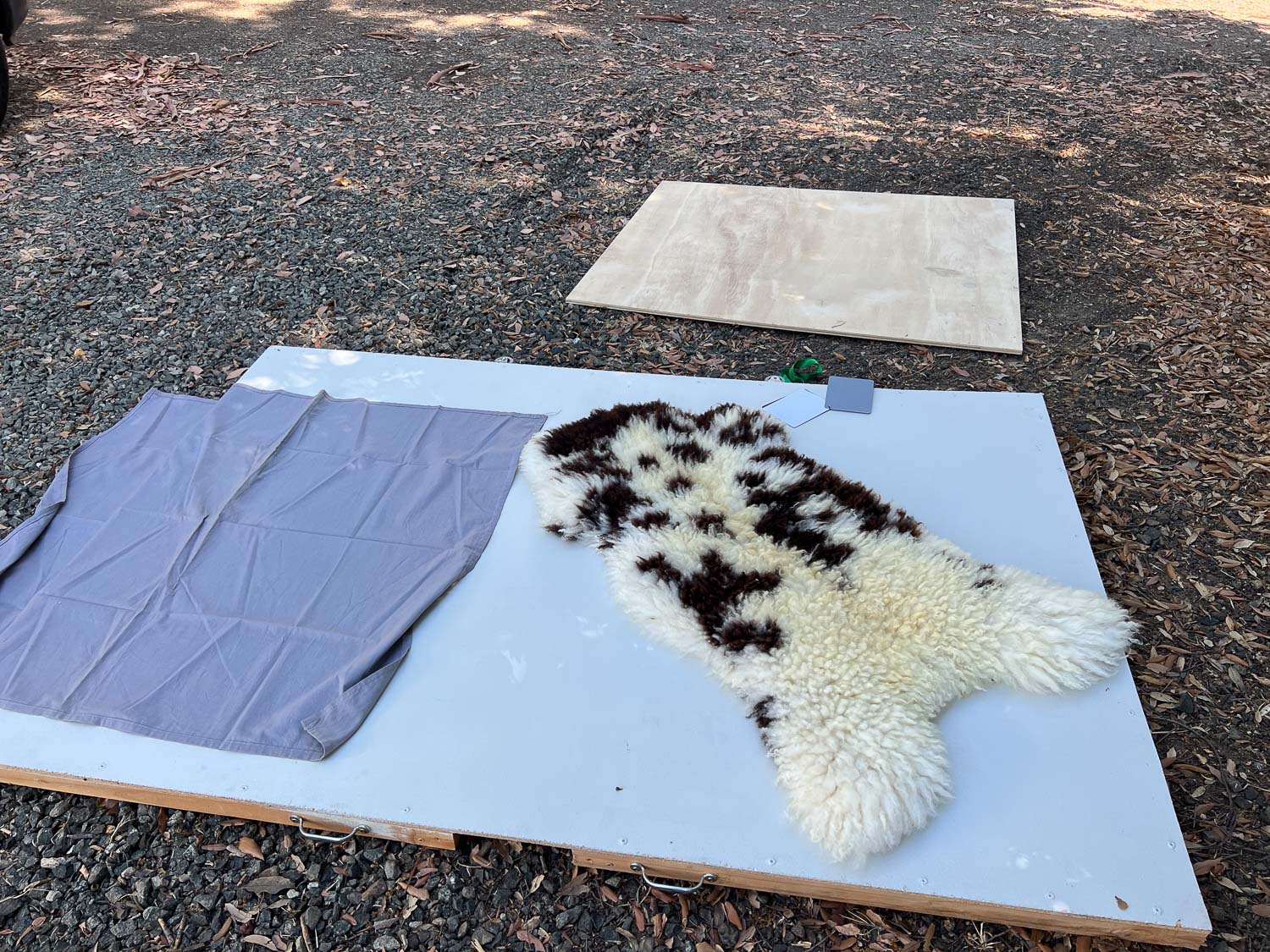
The part I struggle with is white balance. That means that the backgrounds look like what I’m seeing in real life and the products are represented properly. I am not going to try and include all the photos I took here. I tried four backgrounds with each product–the white (not quite white) board, a gray piece of fabric to decide if I want to paint something gray, a piece of raw plywood, and the deck in front of my shop. I took photos of each product on each background with my Nikon and with the iPhone. I am disappointed that I have a harder time getting the color right, at least on the white background, with my real camera. Most of these are with the iPhone. My goal is to take photos that are correct and not have to spend time with post-processing on the computer.

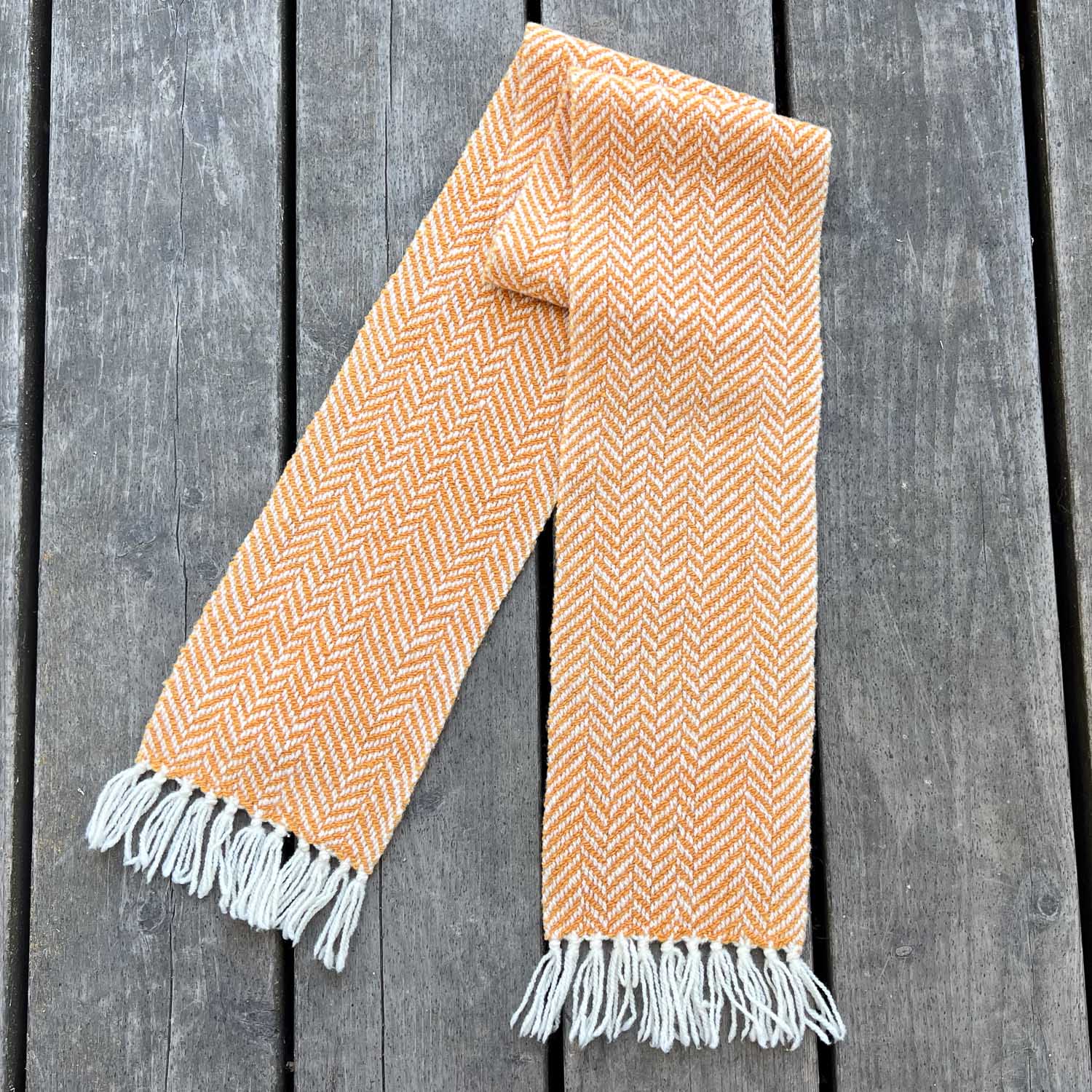
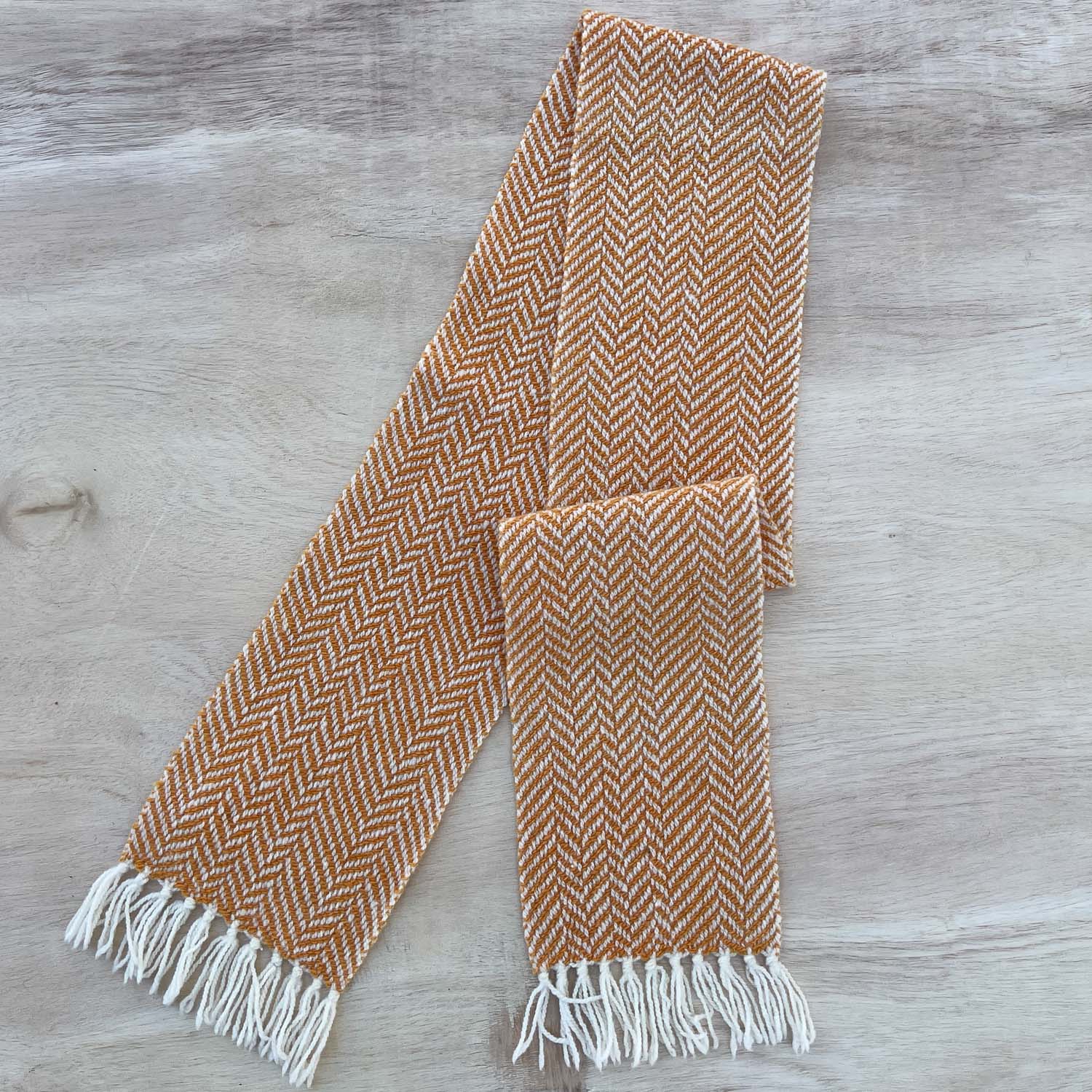
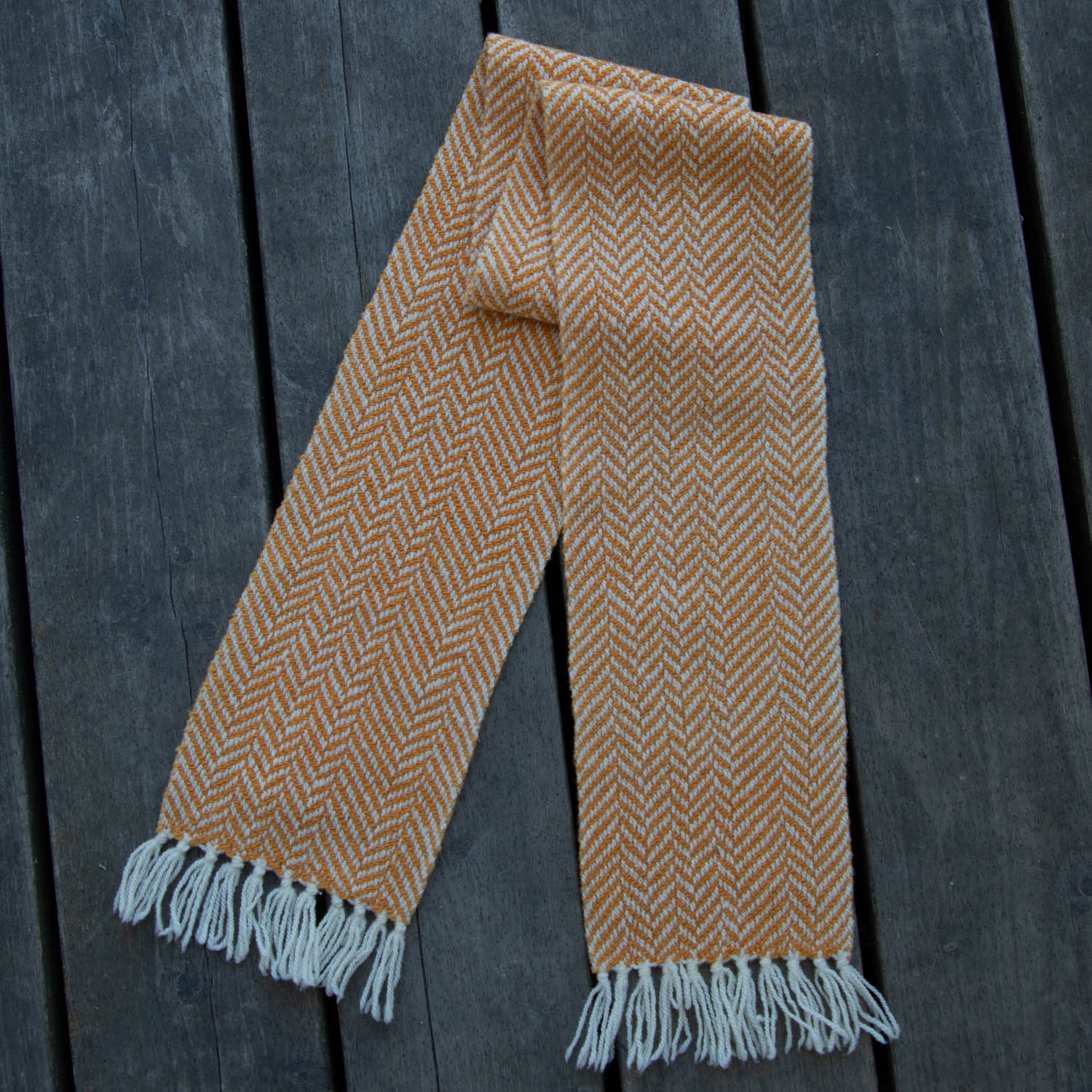
Orange herringbone patterned scarf on wood deck.

It would be simpler if I could put all these photos side-by-side or at least in a block of four, but I can’t make that work. Besides maybe when you look on a phone that would make it more difficult.

This herringbone scarf looks most natural on the wood of my deck. At least the color I see on my computer looks like the scarf. The background isn’t a good choice for smaller projects however. It’t the spaces between the boards that are the problem.

Herringbone scarf on light gray background.

My so-called white background. The whole thing looks dingy and the scarf is not the true color.

The color of the scarf is better here, but that gray looks darker than it should and there is a blue cast. (I know its wrinkled–it is a stand-in for a painted board.)

Herring bone scarf on light plywood.

The color of the scarf on the natural light plywood is wrong.

The next two photos are taken with the Nikon.

This is without editing. The exposure is too dark. I lightened it on my computer and it was OK.

I lightened the exposure and shifted the white balance in the computer on this one, also taken with the Nikon.

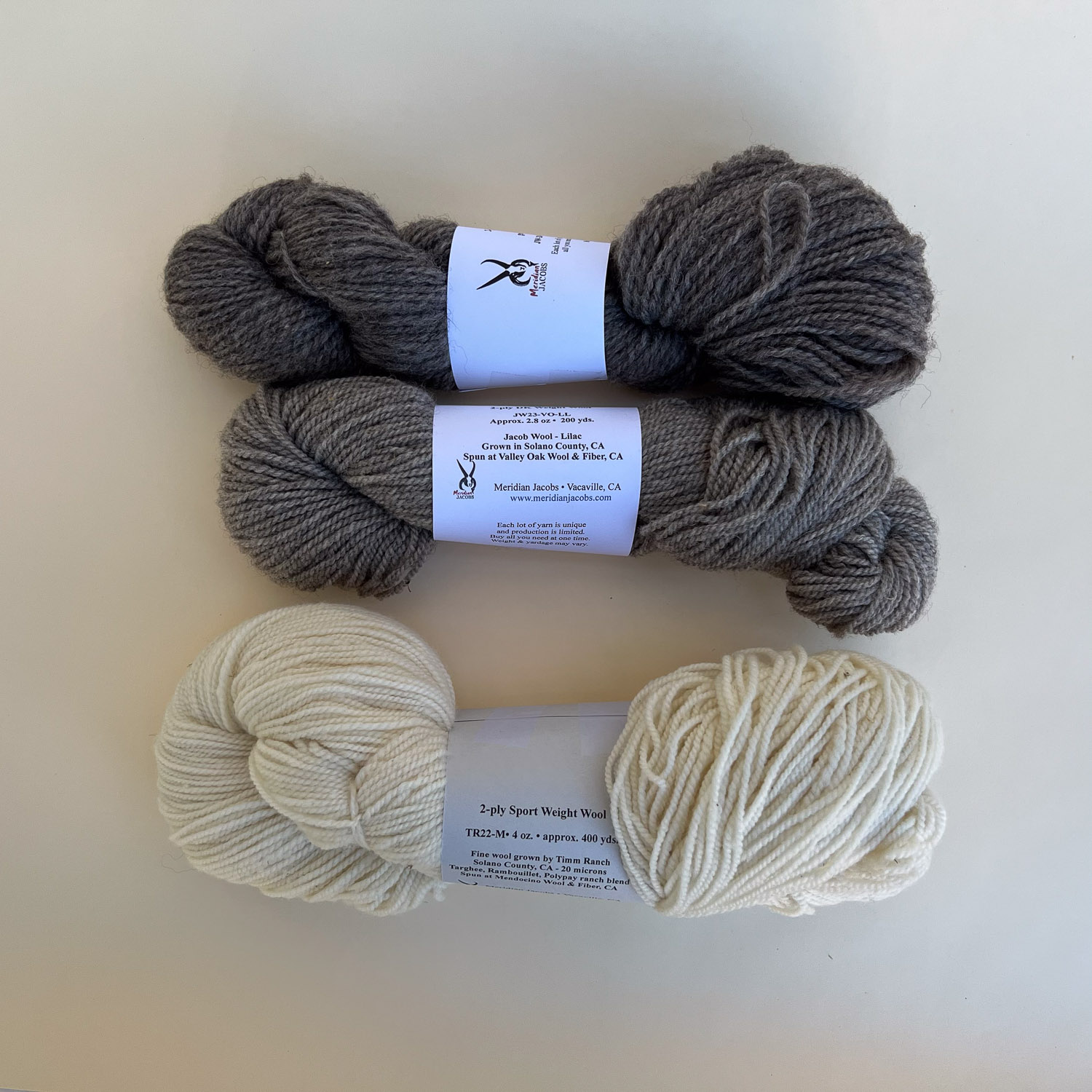
Skein of gray yarn on dark gray background.

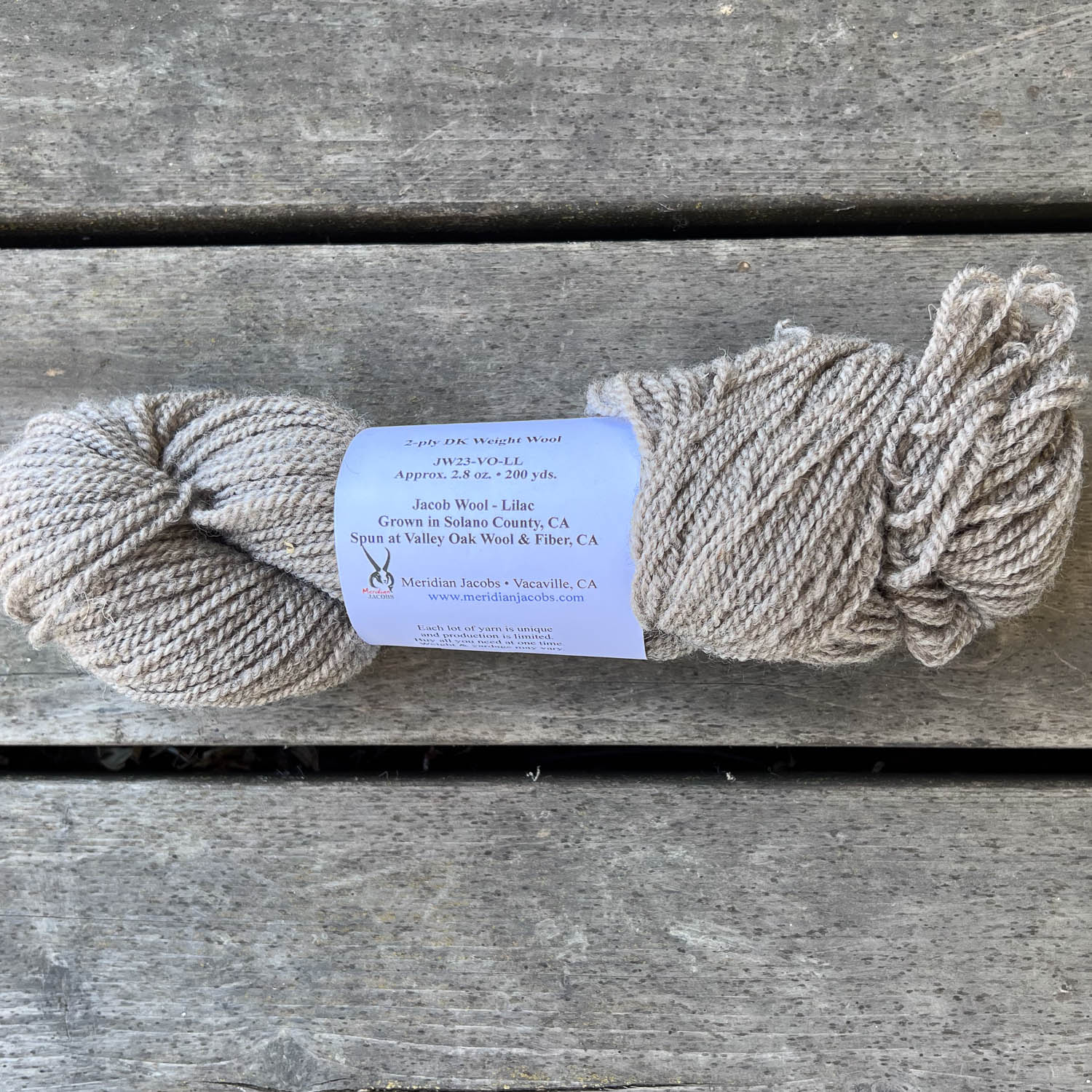
Light gray yarn on the wood deck. The lines are definitely distracting as are the speckles that weren’t as noticeable in the photo that wasn’t as close.

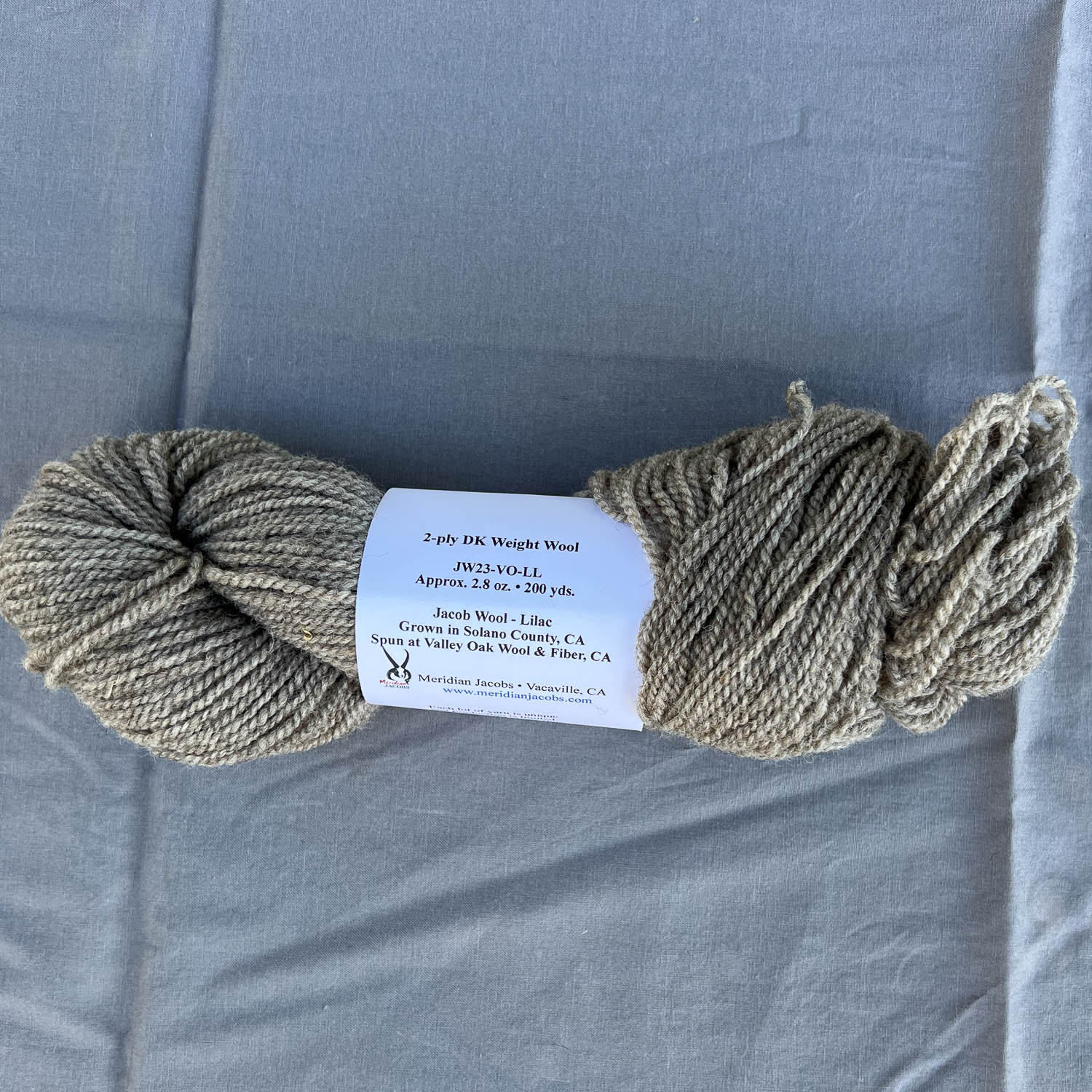
Even without the wrinkled cloth, this color doesn’t do much for me as a background.

Gray yarn on light gray background.

It bothers me that the background looks dingy here. This is the same skein of yarn in all four photos. It sure looks darker here than in the first one, which is more correct.

Skein of gray yarn on light plywood background.

The yarn color looks even darker here. I thought about having several skeins of yarn in one photo–I think that would help with the color. However, it has to be really clear that a purchase is for only one skein of yarn, unless the customer chooses more.

This is the iPhone photo from above with exposure adjusted in Lightroom.

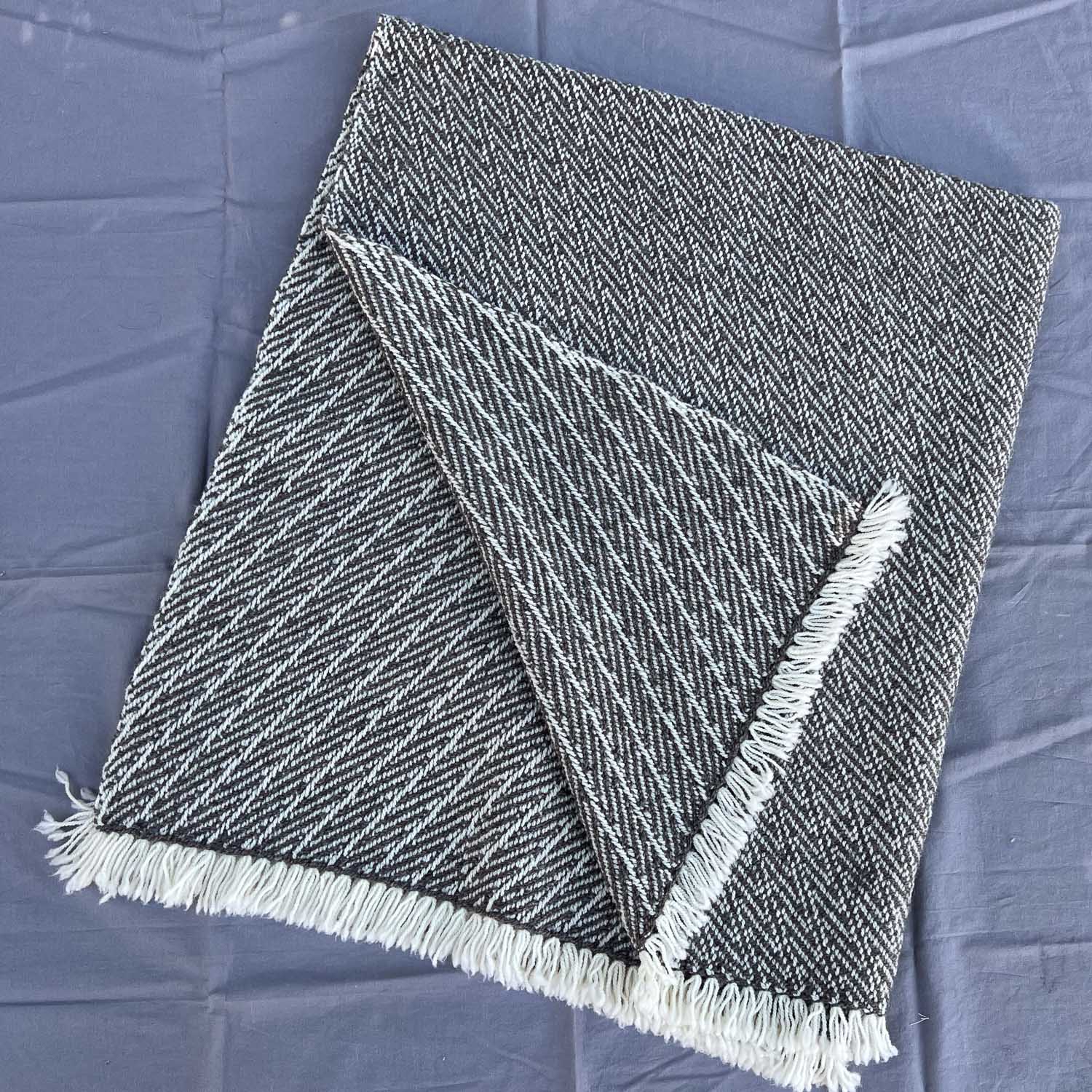
I think the color of the blanket is the best on the wood background.

The color is a little darker here and the gray fabric is darker.

The blanket looks more black white or at least dark gray than it really is.

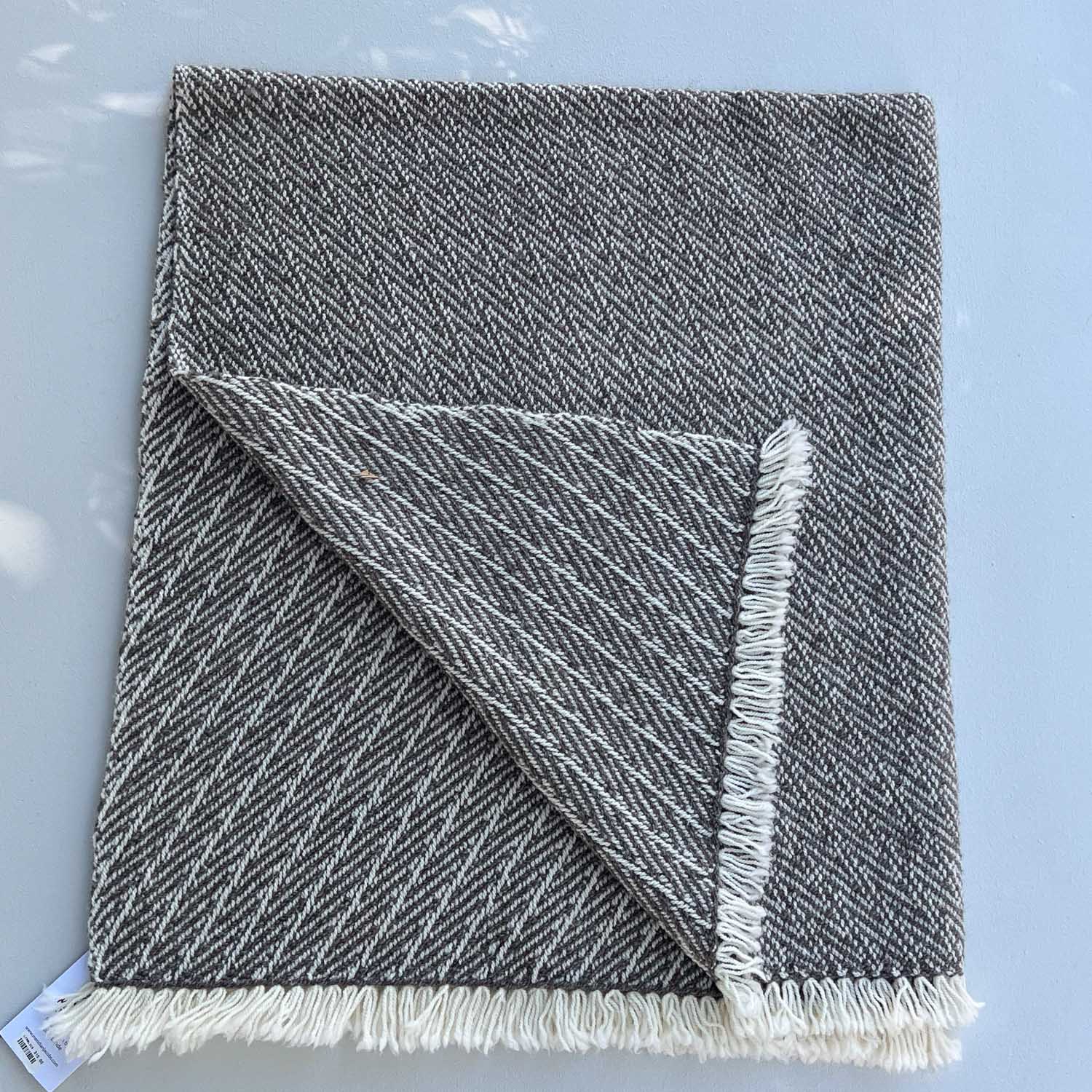
Here is that “white” background. The blanket still looks darker and the background has a blue cast.

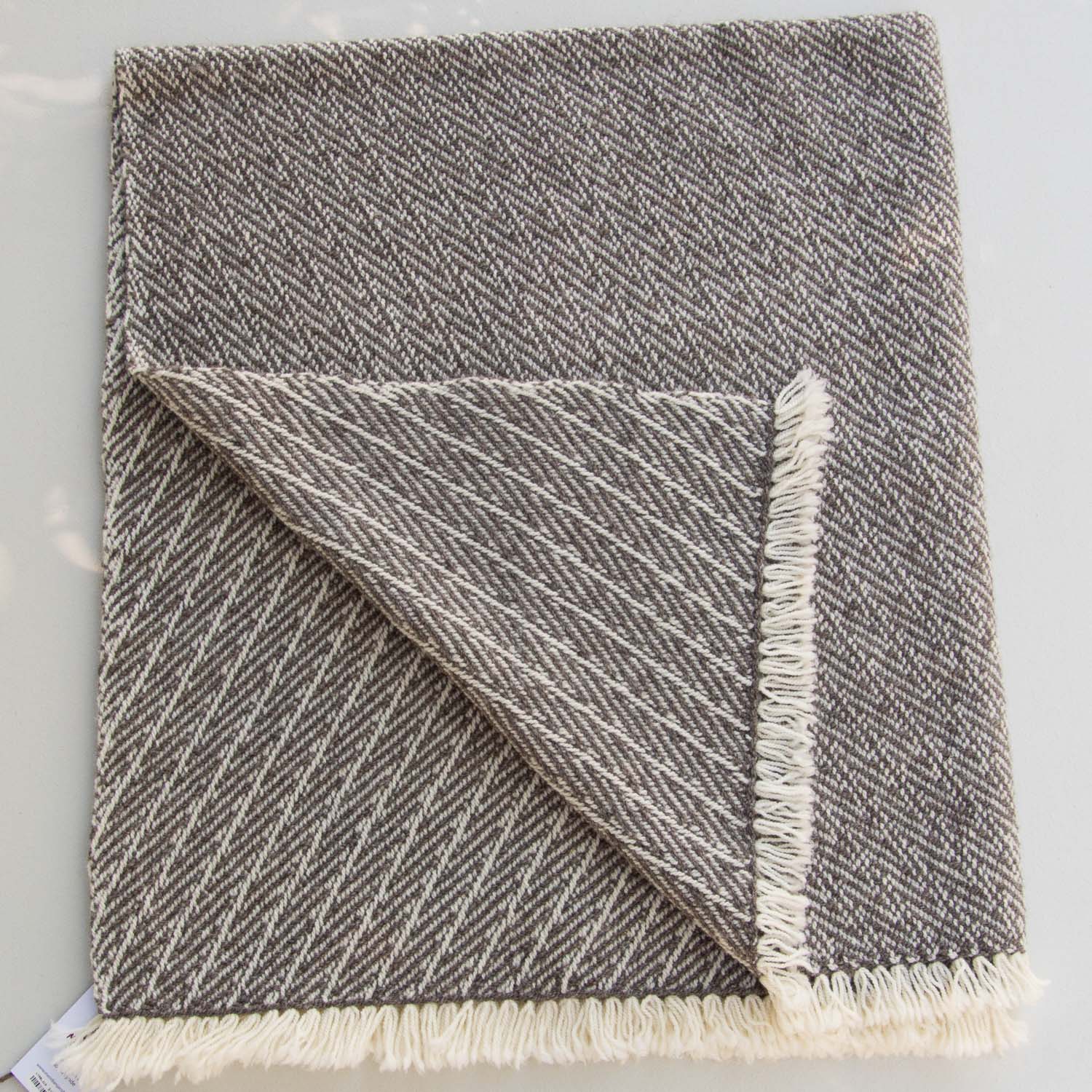
Wool blanket on white background.

This was taken with the camera. The exposure was wrong and the background looked dark gray. I lightened it and shifted the color temp from the blue side to the yellow side. But now this looks browner. The colors of the first photo in this series look more true, at least on my screen.

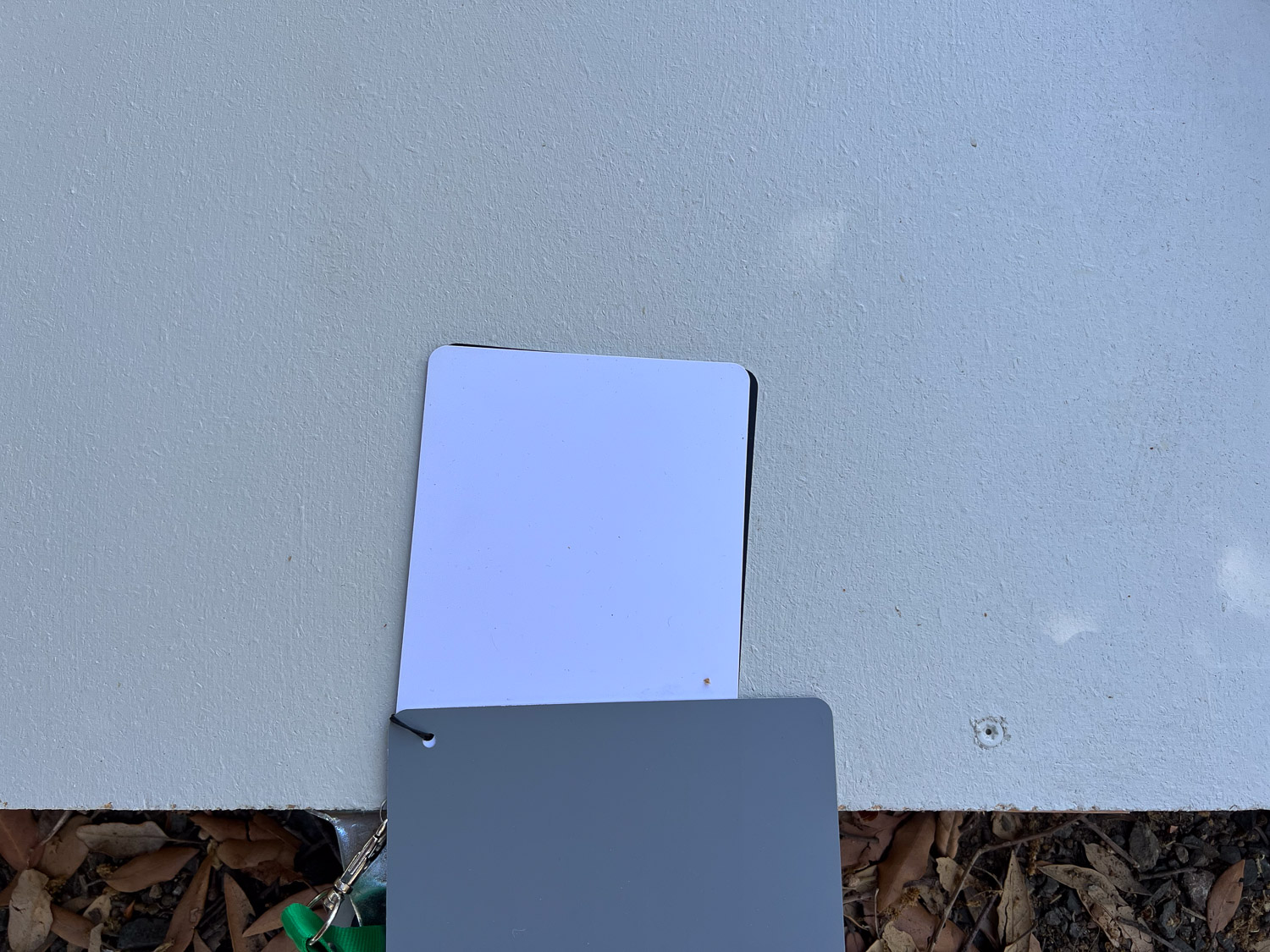
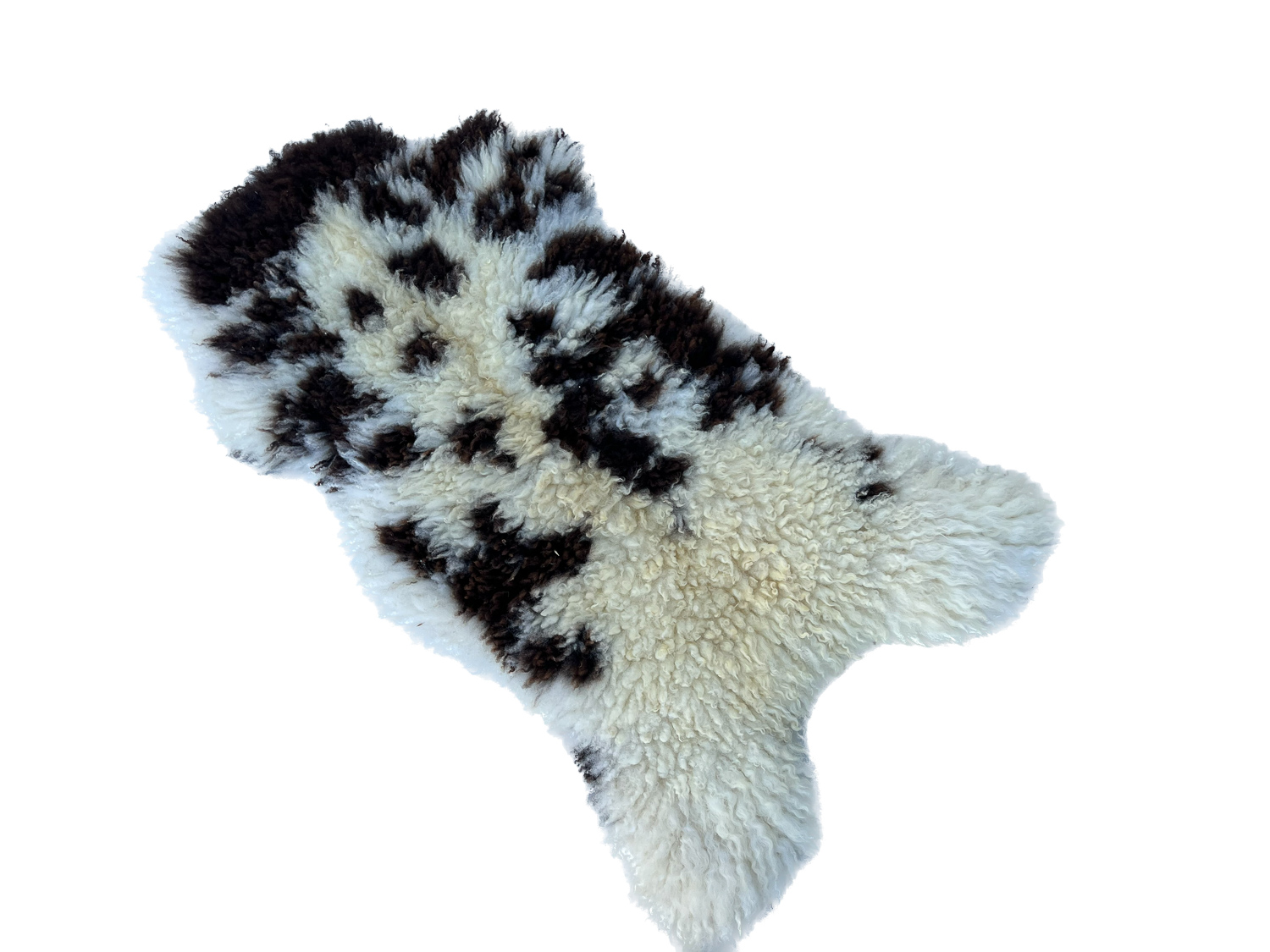
I have this set of grayscale cards, but just because I have it doesn’t mean that I can use it properly. That white one is true white, but I don’t think it looks true white in this photo. It does show how far off the board is. Some of that may be the photo though. If you look at the very first photo with the sheepskin you can see this set of cards on the board and it looks different there.

While mulling this over I saw my white truck right there. That is the truest white so far. This photo was taken in the sun and all the others were in shade.

So where does this leave me? I think that I should be able to use a white background but I’ve never felt successful with that. I think it’s easier to get true color on the wood deck. Is that because the camera is sensing more variety of color and contrast than when you use just a solid color? What if I stained a piece of plywood to have it lighter than the deck, but with some variation from grain?

Last night I experimented with ways to remove background from iPhone photos. I used one for which I didn’t have to use an app. Some look OK but it’s not foolproof.

The edges don’t look right here.

Definitely a problem here. It couldn’t distinguish the fringe yarns. I think that dark line is from the deck space.

As I type this my screen lags behind the keyboard. In addition to the photo issues my computer is full. Now what? I thought using iCloud would help but I don’t understand enough to set it up properly. As I’ve said before, where’s a millennial when you need one? Or even a 12 year old?

Red Barn Reflections

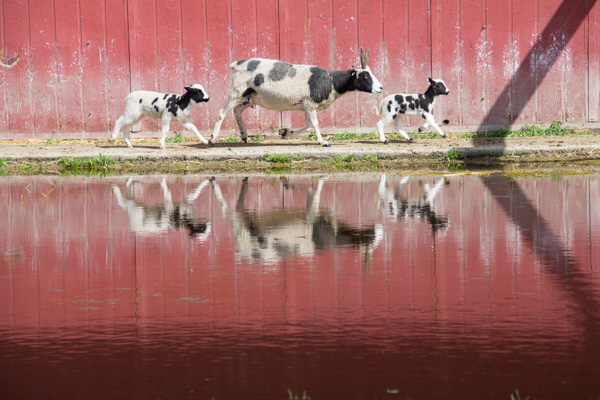
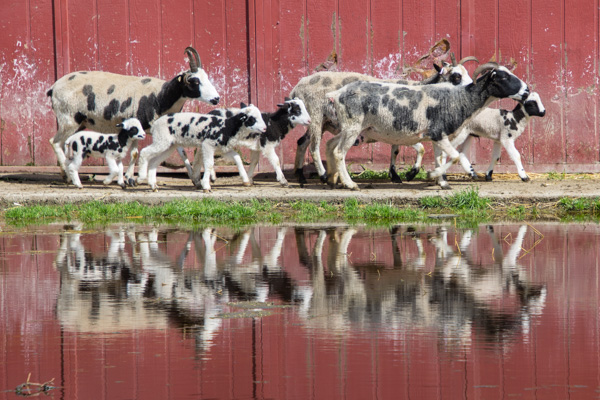
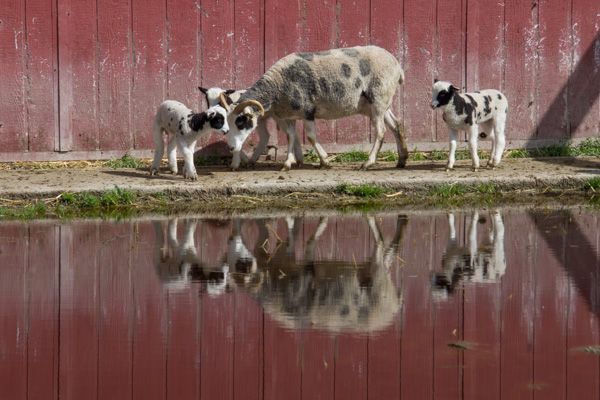
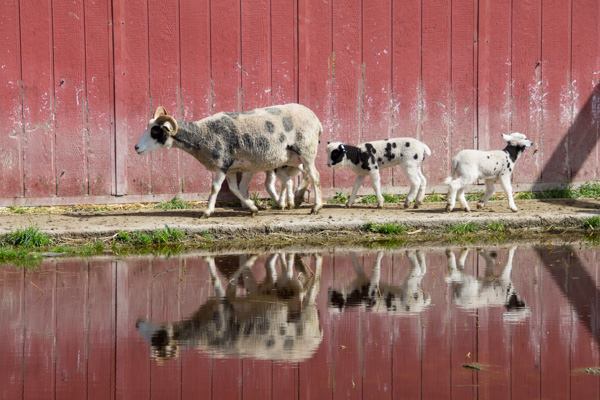
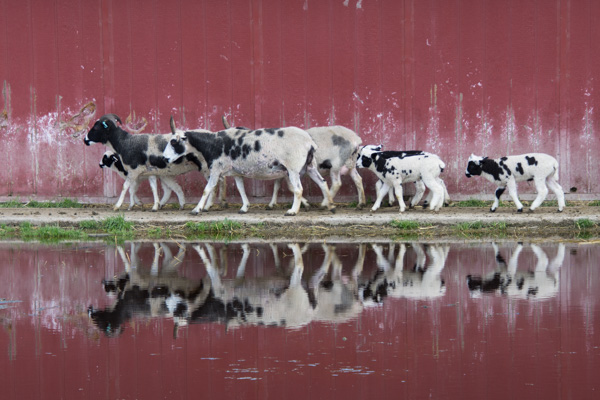
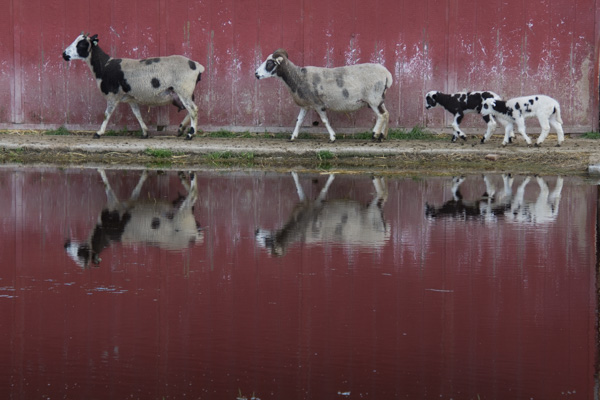
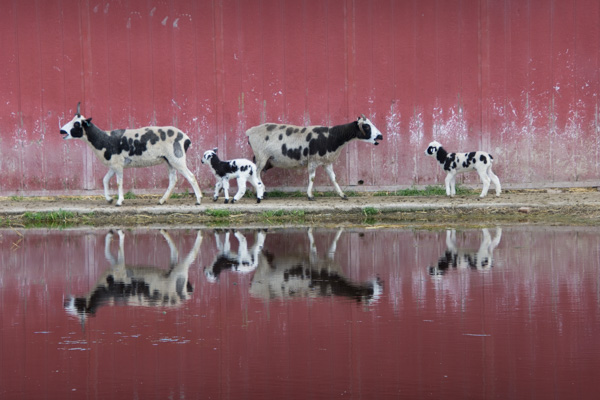
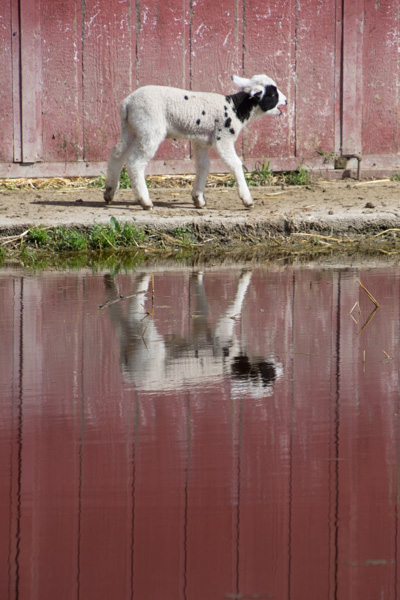
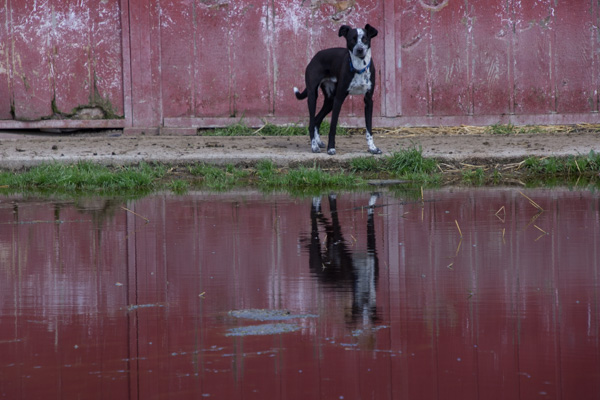
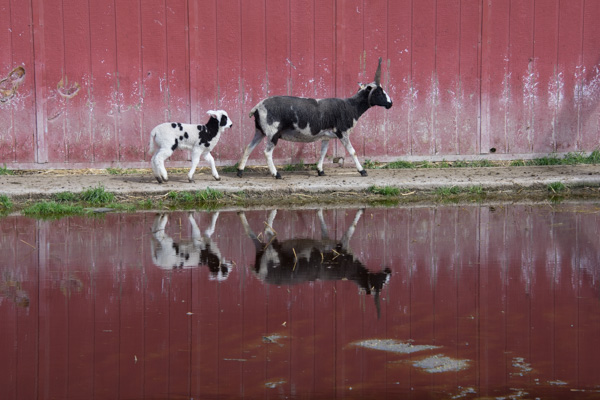
I was in the right place at the right time for these shots. I can’t decide which I like best. Well, I think I have it narrowed to three or four…or six. I haven’t edited much other than straightening and a little cropping. I could do a lot with the color, but I hesitate to change things to what doesn’t look as natural to me. I’d love to hear what you think. Do you have a favorite?

DSC_8677-2DSC_8685-2DSC_8719-2DSC_8720-2DSC_8732-2DSC_8734-2DSC_8737-218068-2-2DSC_8894-2DSC_8902-2

I could have also titled this “One of these things is not like the other.” Did you see it?

I’ll be working with these photos more and will do some editing to see how that goes.

Across the Road Close-up

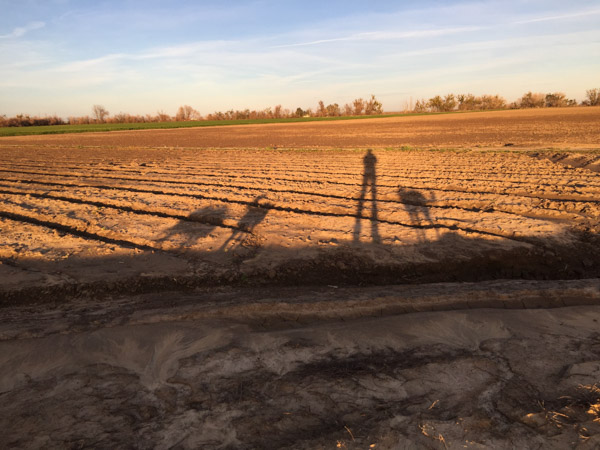
It has dried out enough to take the dogs walking again. I haven’t taken my camera lately because it’s cold and I have three leashes and the Ball Thrower Thing and my hands are too cold. (Don’t laugh if you live where it snows. I’m still cold.) Rusty wrote a post about his perspective of the latest walks. Here is what I see when I walk with the iPhone.

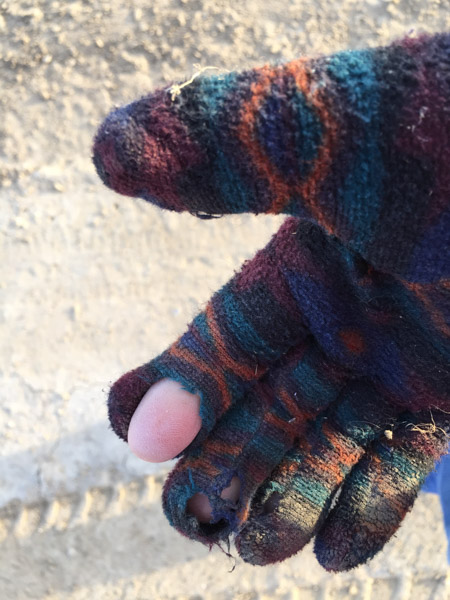
You know those gloves with the special fingers that are supposed to let you use your phone even with the gloves on? I have some too:

img_6532

img_6329

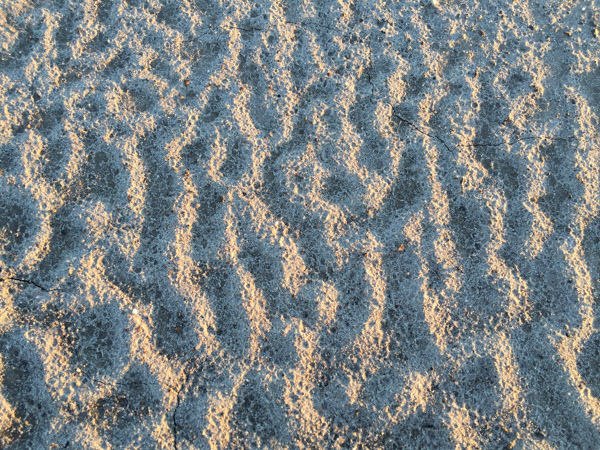
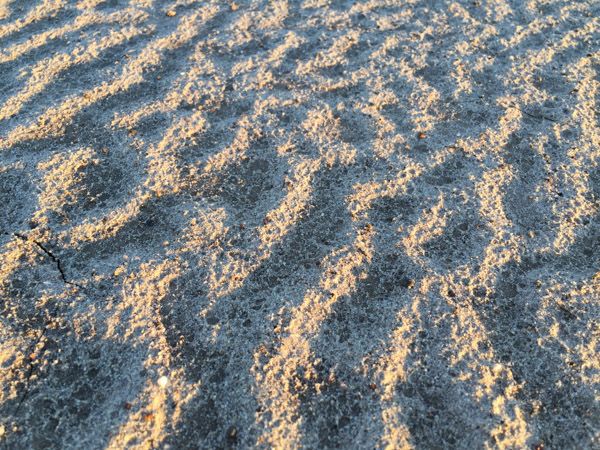
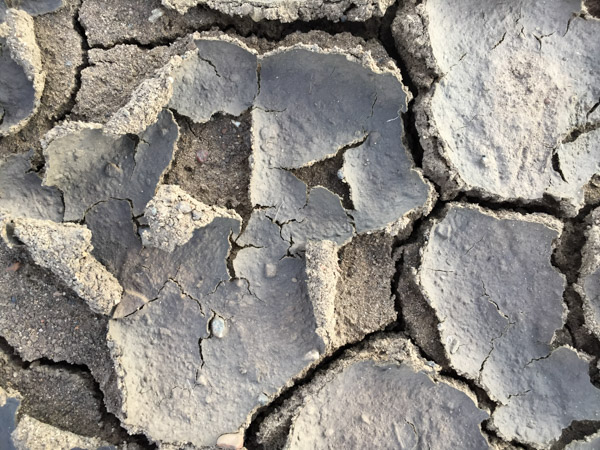
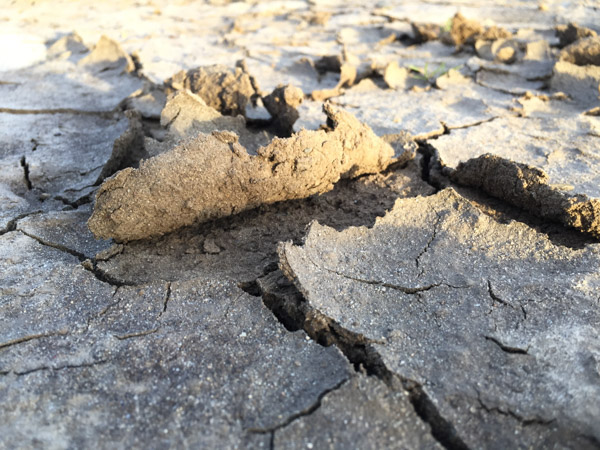
Do you know what I think when I see these photos? Or when I’m looking at the ground while taking the photos? What if these were satellite photos and these were mountain ranges? Can you see that?

img_6331

img_6536

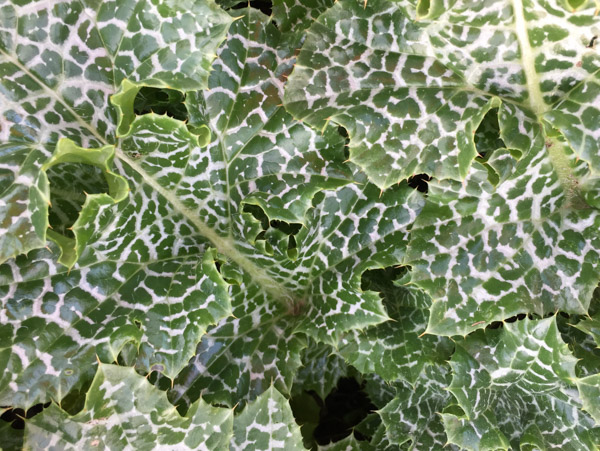
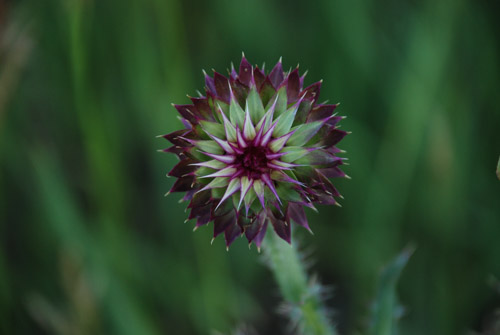
The rain has started things growing. This is in a huge patch of thistles.

img_6567

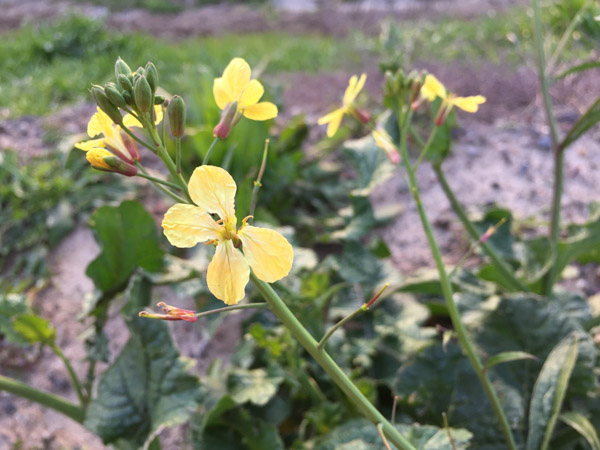
There are a few mustard flowers blooming already.

img_6540

Perspective again. What if that little red rock in the hole was really a house? Then those cracks are canyons.

img_6544

img_6555

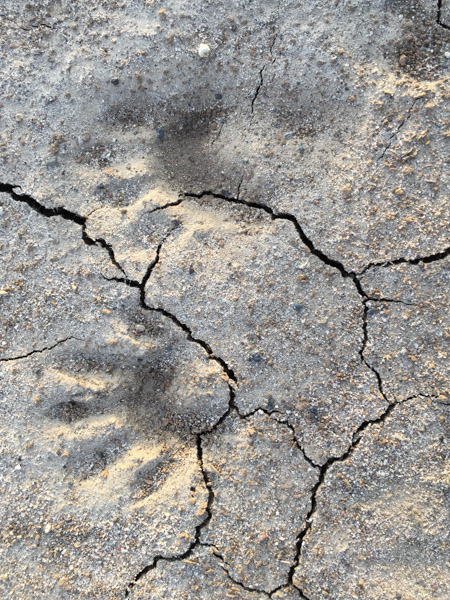
Uh oh! That perspective thing would make this a very scary photo indeed! Raccoonzilla.

img_6611

Speaking of another perspective. Three dogs and me.

img_6563

The Flock

Every year I put together a Flock List for the Farm Club members. This includes photos and a little information about each sheep (and dog and other characters) on the farm. I like to get current photos of each sheep and I’ll share a few here. Shearing Day is in just a month so they are in almost full fleece. I’ll have to get before and after shots of them as well. 11047-zoey-3

Zoey.

11086-alexandria-2

Alexandria.

12018-sonata

Sonata.

13044-ears

Ears.

13068-cascade

Cascade.

14013-jean-2

Jean.

15031-15053

Two almost 2-year-olds, Honey and Zinnia.

16015-marilla-13007

Marilla, a 2016 lamb, and her mother, Marilyn.

sheenashelby

This photo was taking during the summer of two of the sheep I bought from flocks in Oregon. That is Kenleigh’s Sheena on the left and Shadow Mountain Shelby on the right. I found this photo while I was looking for another. It is a good example showing a lilac ewe (right) and a black and white ewe.

dsc_4747

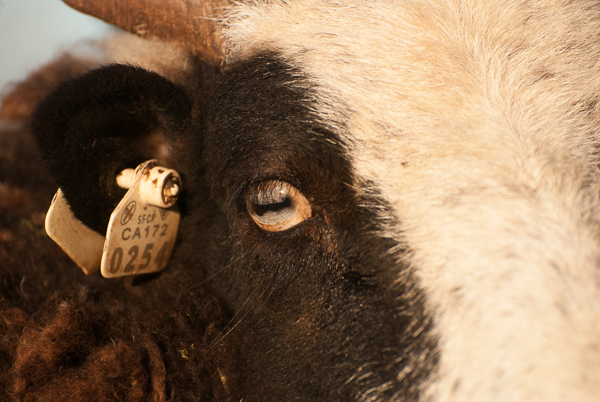
Most sheep eyes.

blue-eyes

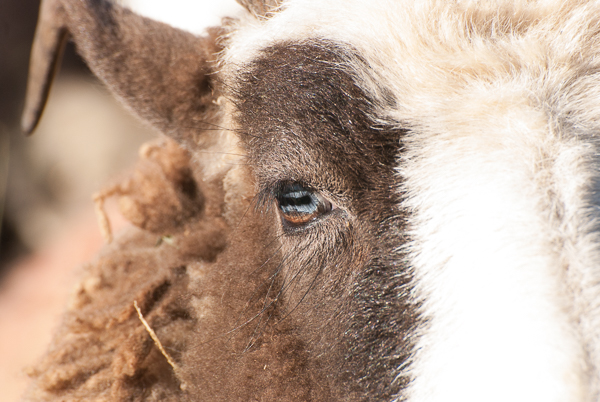
Some of the lilac sheep have striking blue eyes

A Retreat

Some friends and I had planned a retreat for a few days last week–a get-away to a house in the mountains with as many craft projects as we could fit in our cars. As it turns out it was also a retreat, albeit briefly, from the political scene. We watched, stunned, on Tuesday, but then were able to postpone thinking about it for the most part while we enjoyed friendship and fiber and walking in the woods.

Some of us brought dogs.

dsc_4273

Ginny will write her own post about the week.

dsc_4242

I debated taking a dog. Rusty couldn’t go because he would have had a difficult time with all the stairs in the house where we were staying. Maggie wouldn’t be my first choice because she gets car sick. Ginny is the one that would be going stir-crazy left home while Dan was at work all day. So Ginny came with me and I’m glad I brought her. Having her there made me get out and walk at least twice every day. It would have been very easy to just stay inside and work on my projects, but I’m glad that I didn’t miss the beautiful woods. The weather was fabulous, although a bit scary to have summer-like weather in November. Of course I had my camera with me on some of the walks.

dsc_4264

dsc_4267

dsc_4271

dsc_4297

dsc_4299

dsc_4301

dsc_4300

dsc_4308

The walks were refreshing (and necessary for Ginny), but most of my focus was spent on my projects. I didn’t get to everything but made a valiant effort, staying up late every night. We shared the cooking so I only spent one evening in the kitchen and that was making an easy batch of mac and cheese.

img_4907

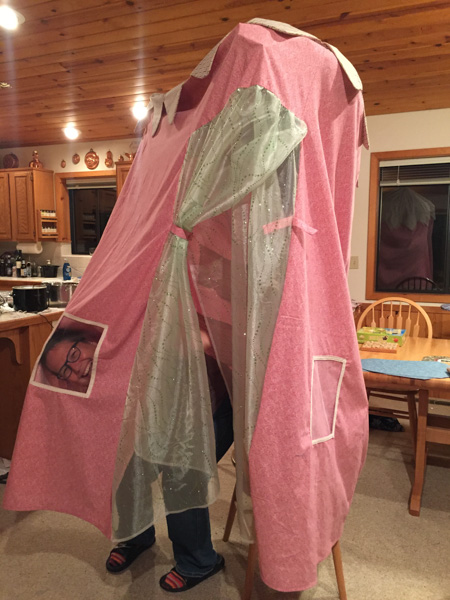
It might be hard to tell what this is from the photo. When it is delivered to my granddaughter in December it will have a covered mat on the floor, a hula-hoop supporting the scalloped roof and be supported from the ceiling. It has windows (thanks for demonstrating, Mary), inside pockets, and a door with glittery decorations. If I have time I will weave a rag rug with the leftover material. This is soooo cute, but it took soooo long to sew…and I’m not quite finished.

img_4912

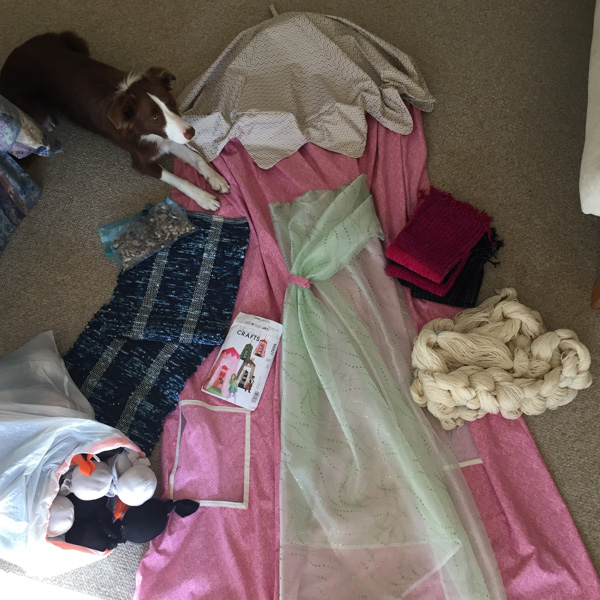
This is a photo of all my projects for the 3-1/2 days. You can see on the pattern envelope how the canopy looks when it is set up. From bottom left and around: a batch of 41 dryer balls ready to be felted, a rag runner woven on the Cricket loom, a baggie of walnuts ready for the freezer (those weren’t mine because I didn’t get to cracking any that we didn’t eat–I need to finish this at home), Ginny 🙂 , six chenille scarves fringed (half of the 12 that I brought), and a warp wound for two ponchos. Not shown is the painted warp that I did that was in a plastic bag ready to come home and be rinsed.

dsc_4317

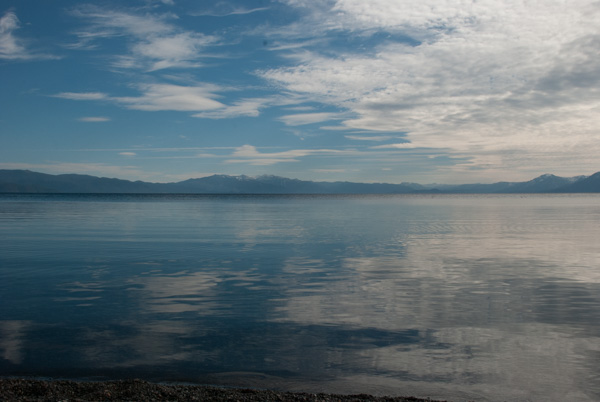
I drove home Friday, but not before stopping at the lake. It doesn’t seem right to go to Lake Tahoe and not actually go to the lake.

img_4915

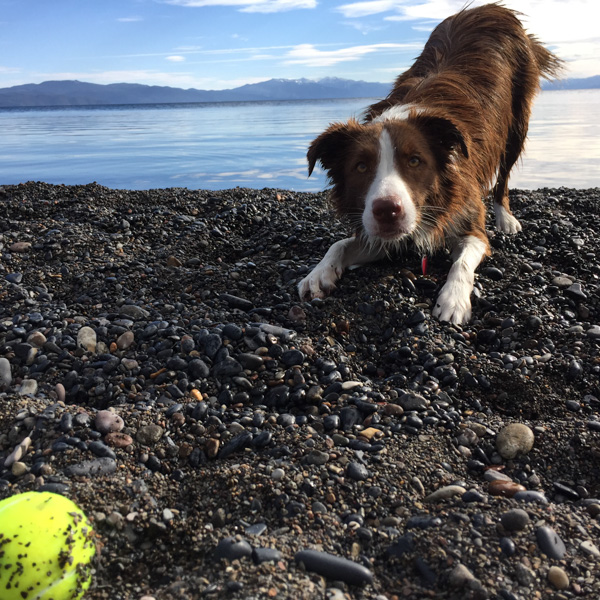
Ginny learned quickly that she could retrieve her ball from the lake but she’ll tell you about that in Rusty’s blog.

Visiting Texas

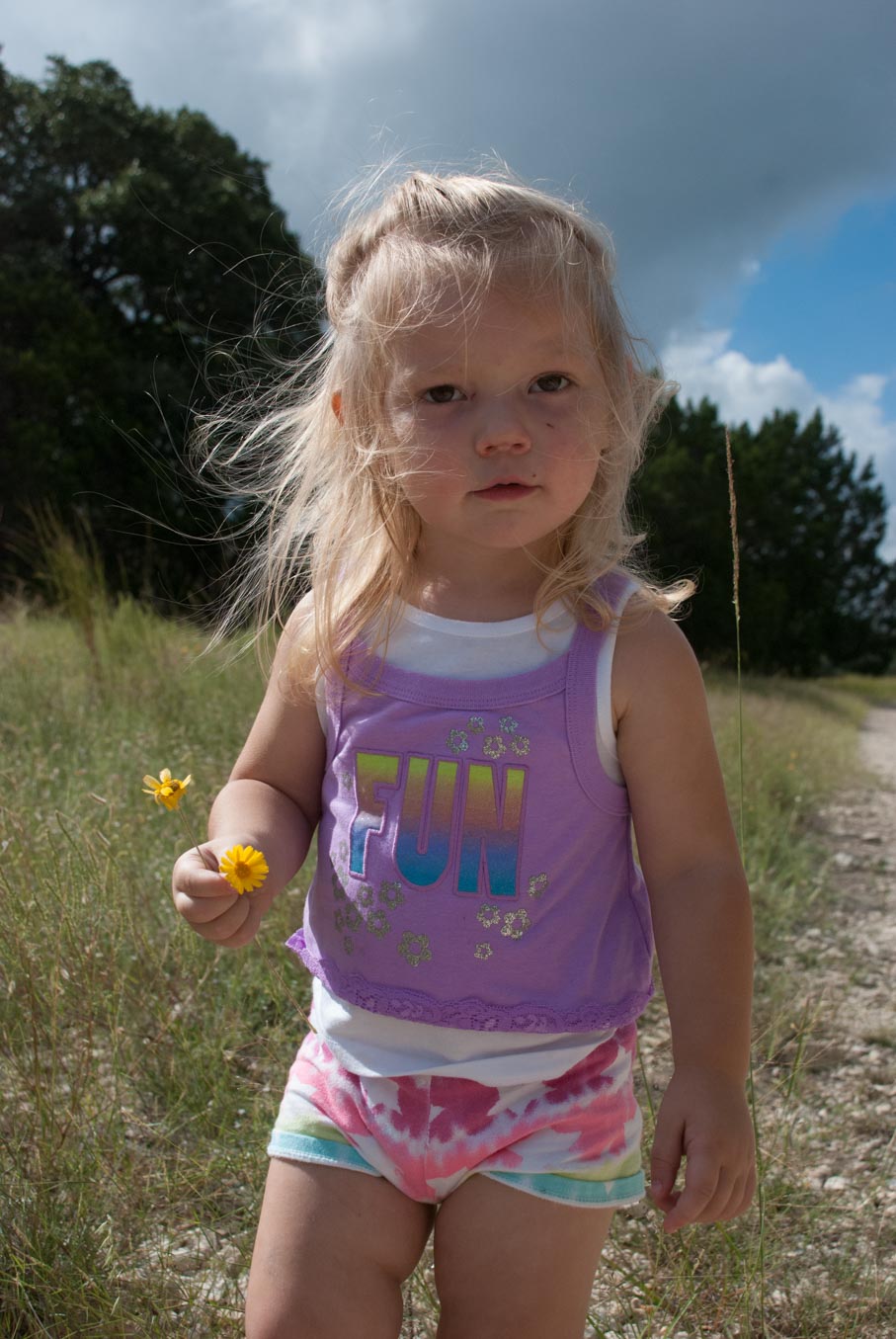
I haven’t been to Texas since last year, but that’s because we saw my granddaughter several times last winter and spring in California. It was time for me to see her again and to do that I had to travel east. She is now two.

dsc_3077-2

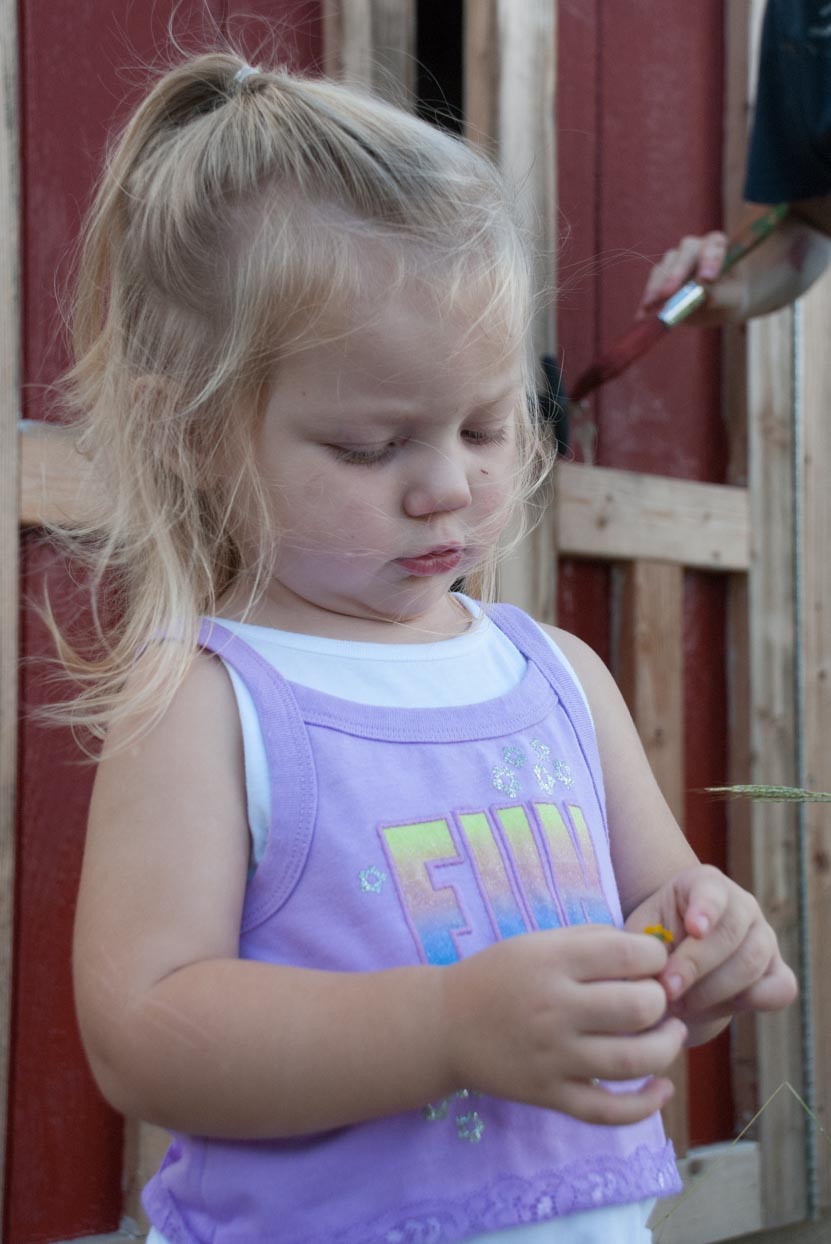
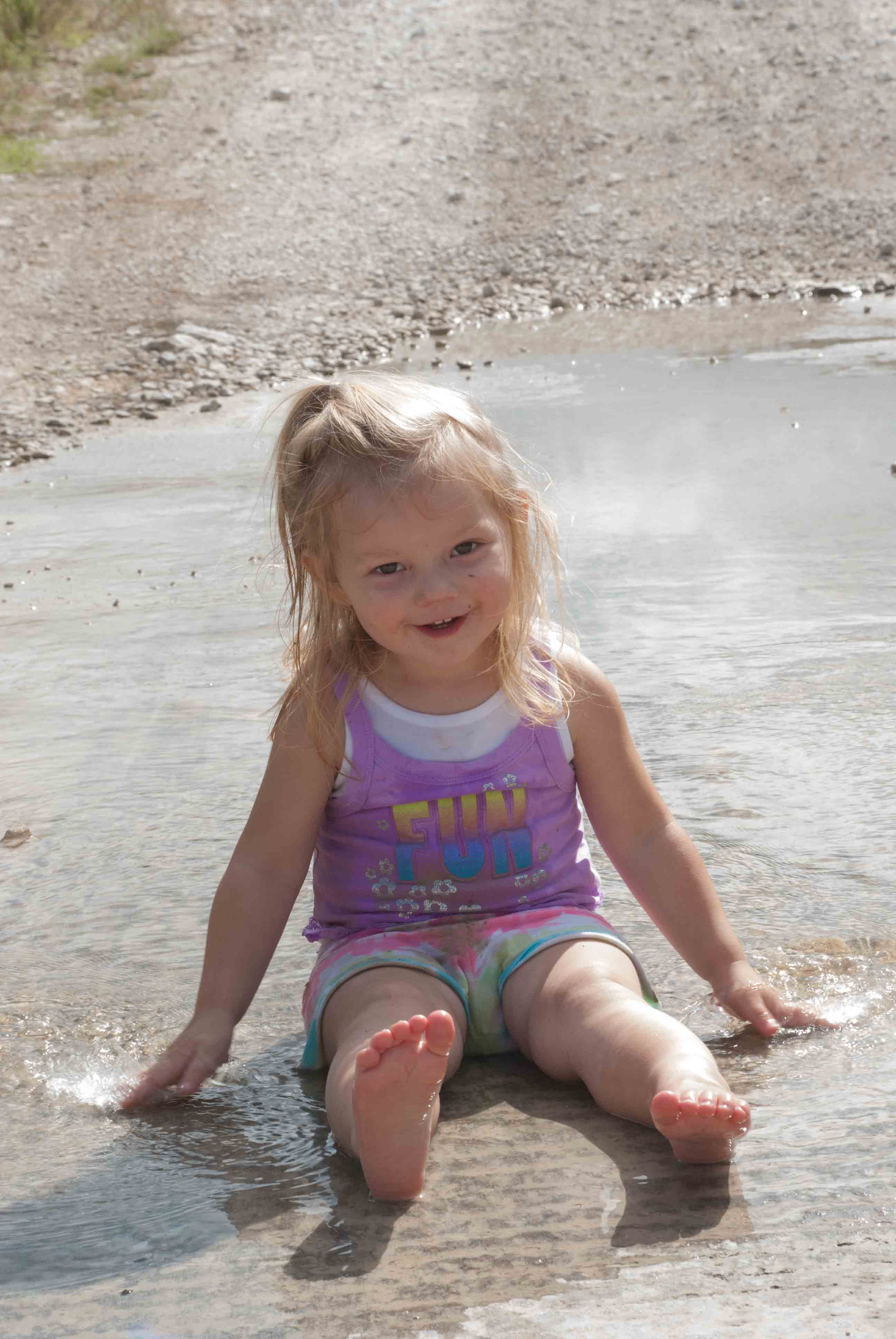
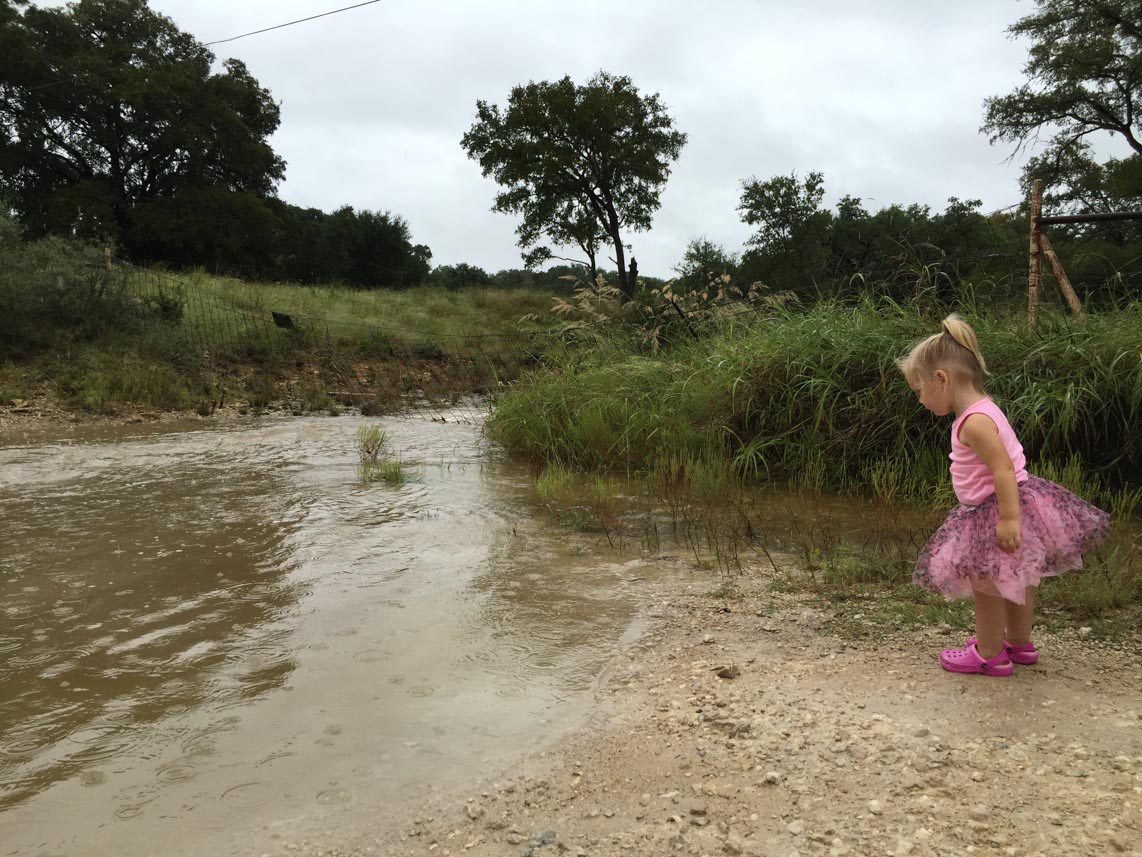
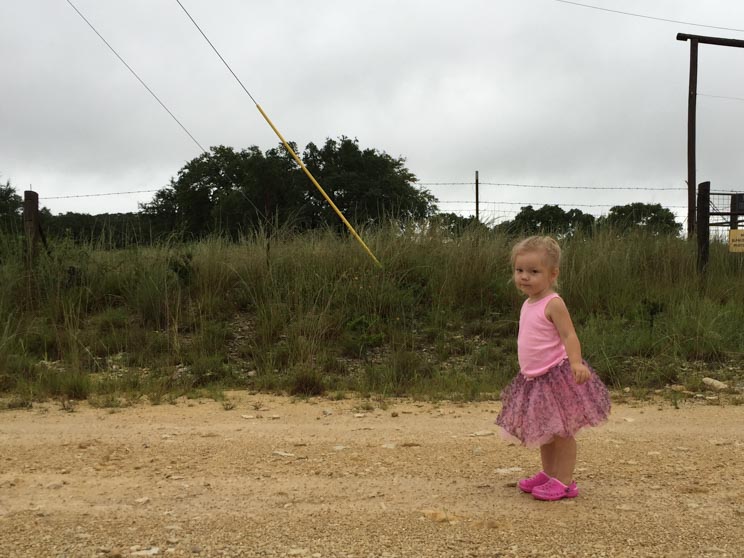
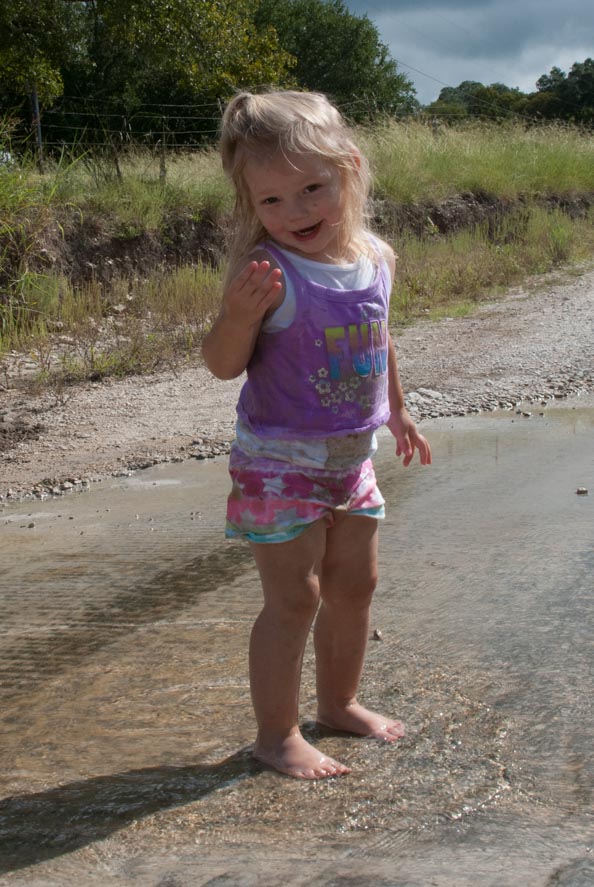
While Mommy painted the shed we went for a walk.

dsc_3084-2

img_4229-2

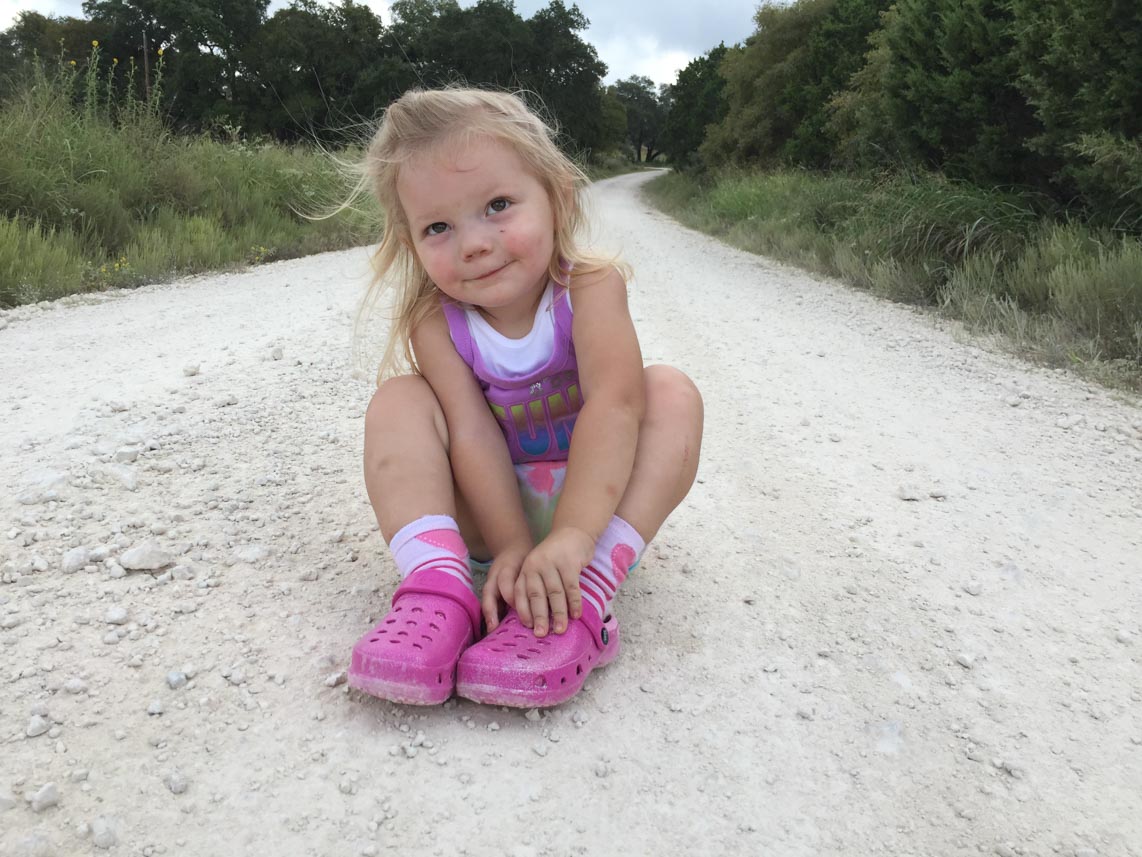
Time to take off the shoes.

dsc_3100-2

The low water crossing on the road.

dsc_3110-2

What better place to play on a hot day.

img_4250-2

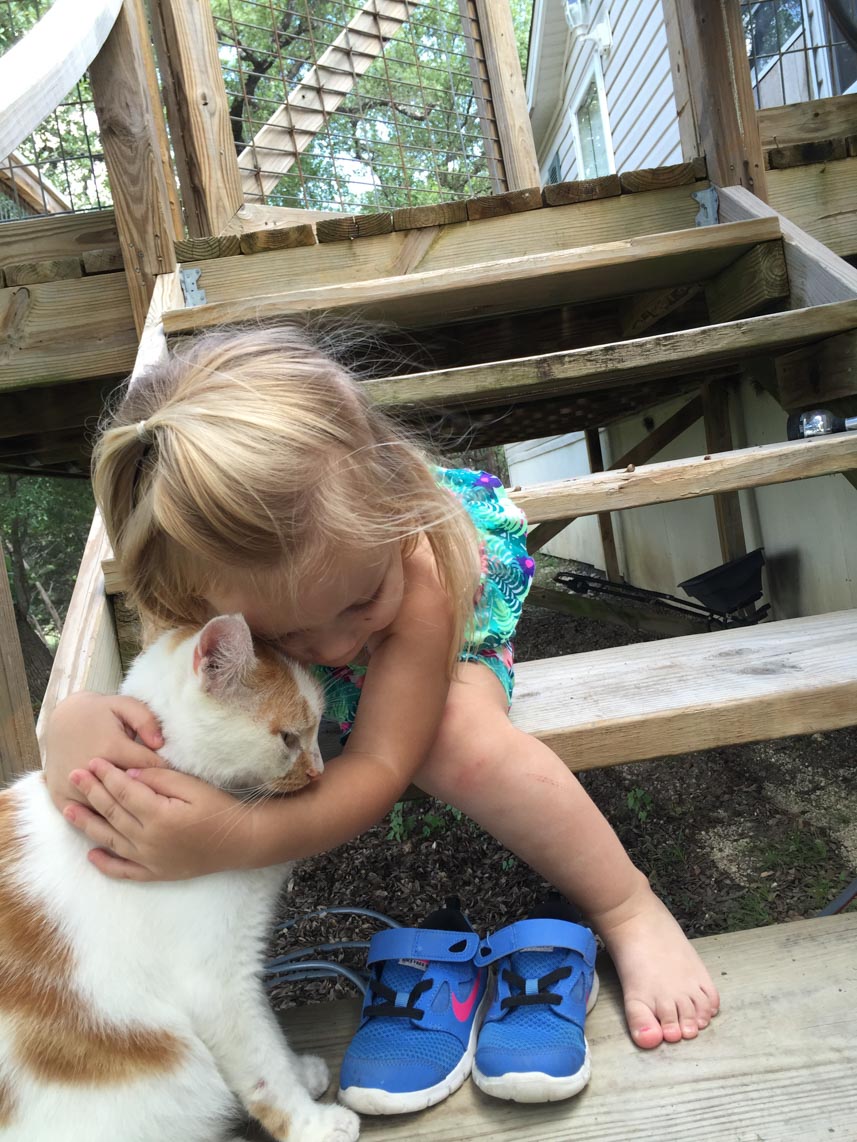
Hugging Colby.

img_4274-2

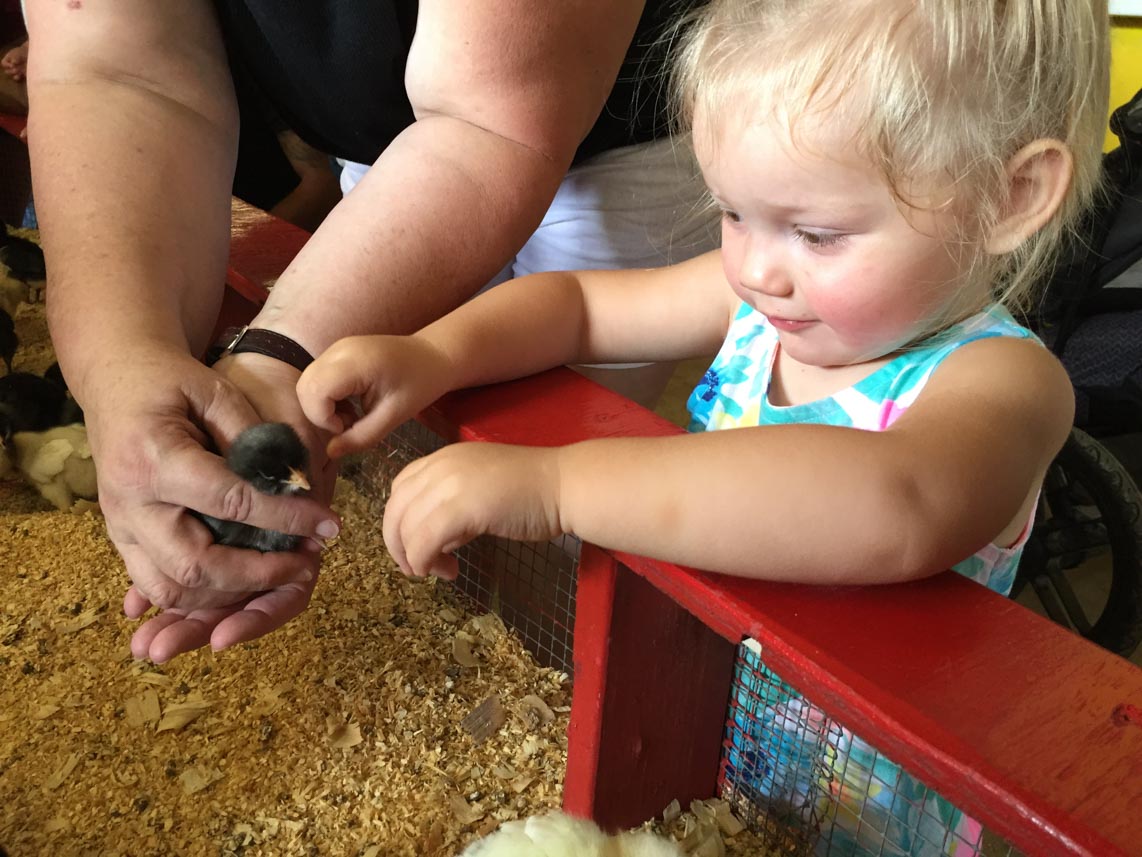
Yesterday we went to the Comal County Fair.

img_4314-2

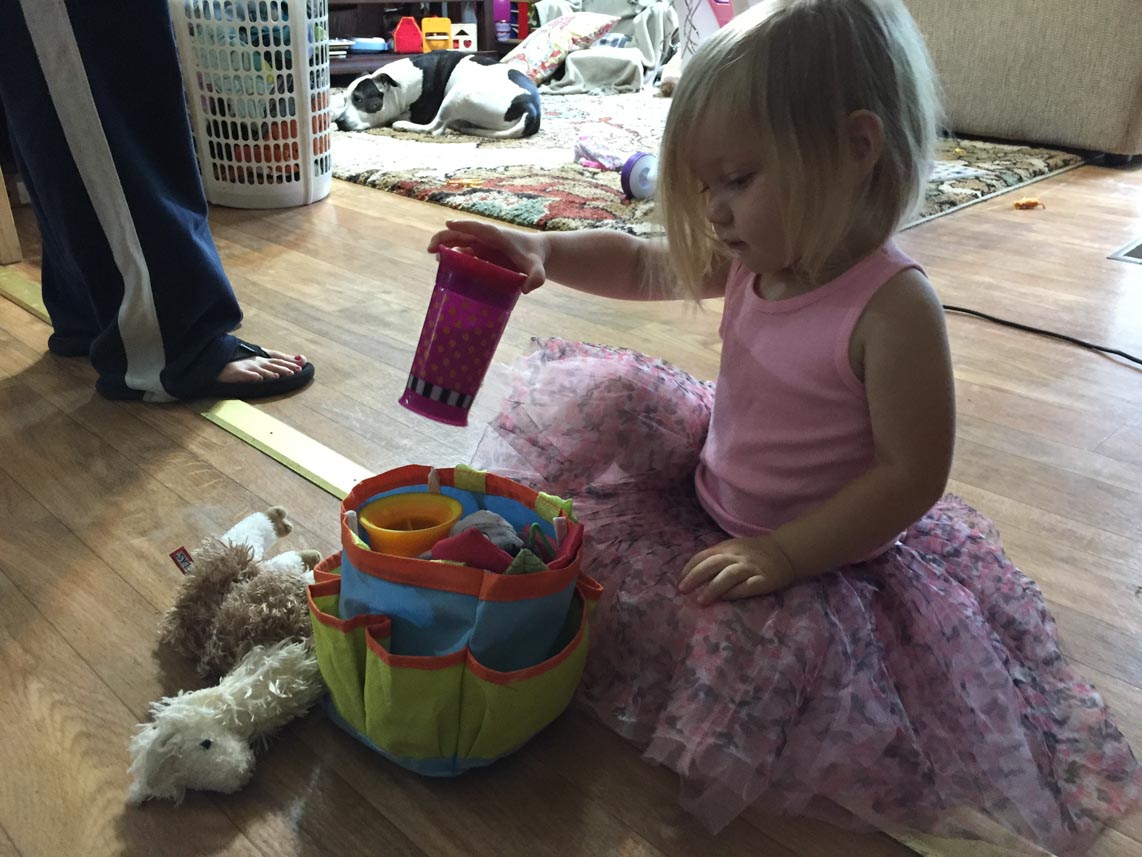
This morning I said that we’d go for a walk in the rain. Kirby started to pack. You never know when you’ll need a stuffed llama, a cup of milk, or a bunch of books.

img_4319-2

It had rained enough during the early morning hours that the water had risen too high for playing.

img_4329-2

We turned and walked up the road the other way.

img_4317-2

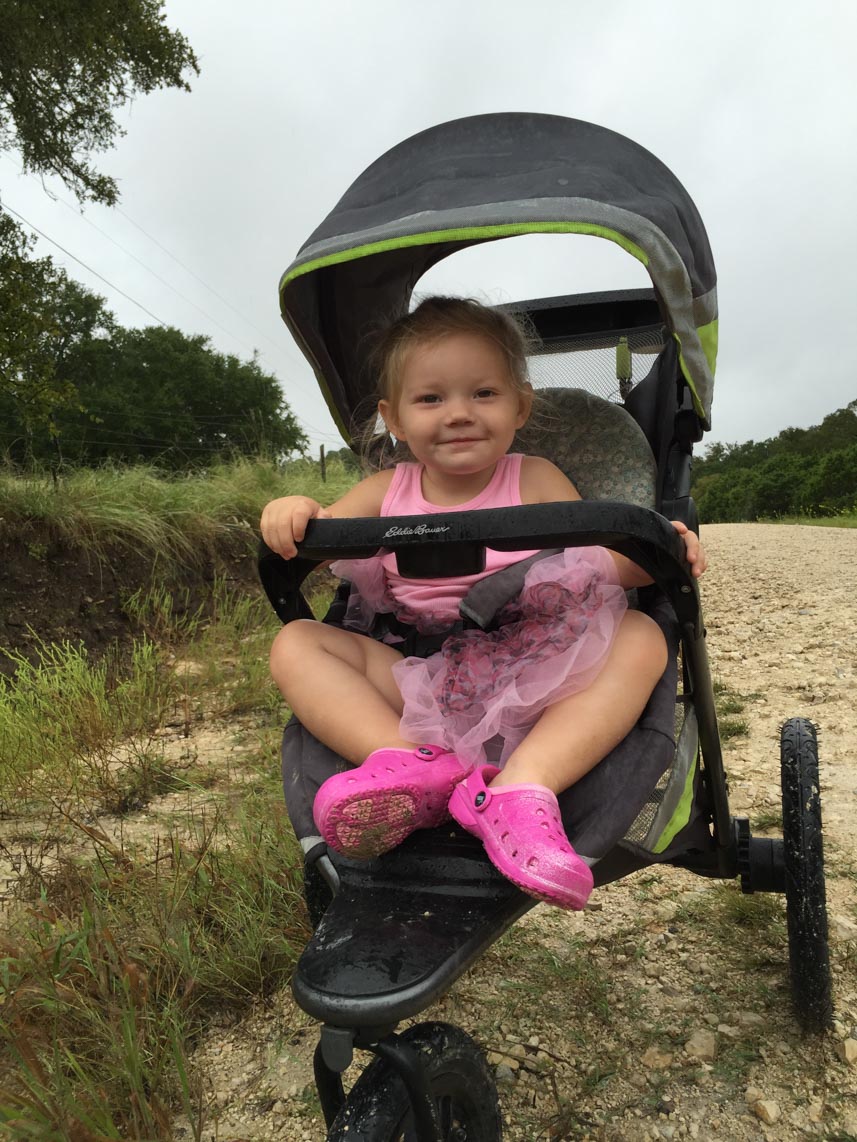
Well, one of us walked and the other rode most of the way.

Birds and Butterflies

Last week it was impossible to go to town or walk Across the Road without running into butterflies. The orange sulphur butterfly (Colias eurytheme also known as the alfalfa butterfly and in its larval stages as the alfalfa caterpillar), I found out by googling, is widespread in North America and can be a significant alfalfa pest in high densities.

The alfalfa field just south of where I walk had been cut, the sunflowers harvested, and butterflies were doubling and tripling up on field bindweed flowers and any other weedy flowers they could find.

DSC_2177

DSC_2158

DSC_2160

DSC_2176

I thought that I’d be able to get photos of butterflies in flight. Do you know how hard that is? Not possible, at least by me.

DSC_2167

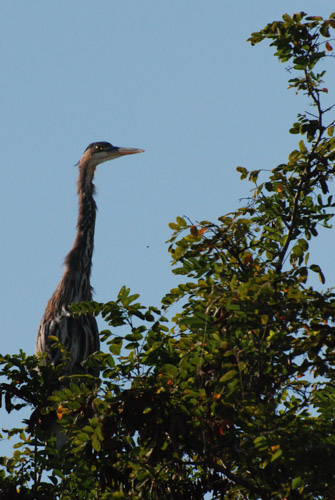
But speaking of things that fly, I did get some bird photos. I don’t usually see great blue herons in the trees.

DSC_2227

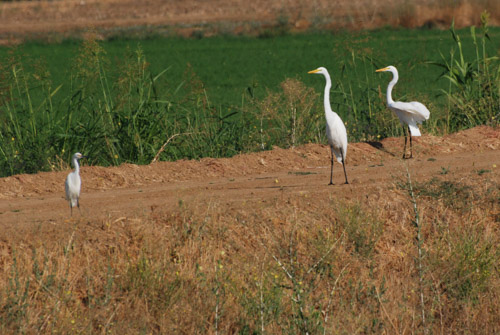
The snowy egret is dwared by two great egrets.

DSC_2222

Great egret in flight.

DSC_2233

On my way home I spotted these cattle egrets which I photographed from the road.


Road Trip to CO – Mesa Verde

It has been a few weeks since we finished our road trip and there have been plenty of distractions since I’ve been back that have kept me from sharing the story. Now that the Olympics are on  TV I am trying to multi-task. But it’s hard to pull my eyes away from the TV at times.*  However I’m close to finishing–we are still in Colorado but once we headed for home we didn’t stop for much.

After we left Black Canyon of the Gunnison  National Park we looked at our trusty Benchmark map book for Colorado and saw that we could probably get to Mesa Verde National Park in time to spend the night there. So after driving through the marvelous San Juan Mountains it was a relatively short drive from Durango to Mesa Verde. We got there about 6 p.m. and found that there were plenty of open campsites.

DSC_1323

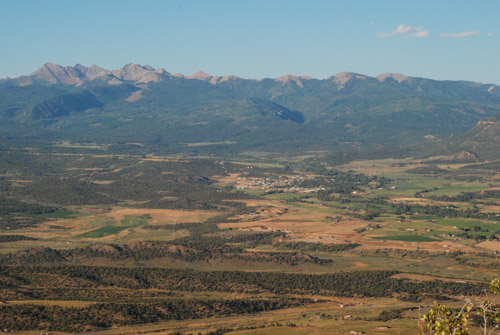
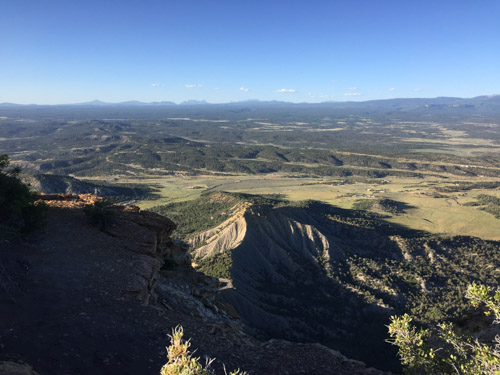
We looked at the Park maps and saw a couple of 2-mile trails that we would have time for before dark. First we hiked up to Point Lookout at 8427′ elevation. This view is to the northwest with the San Juan Mountains in the background and the town of Mancos in the center.

DSC_1295

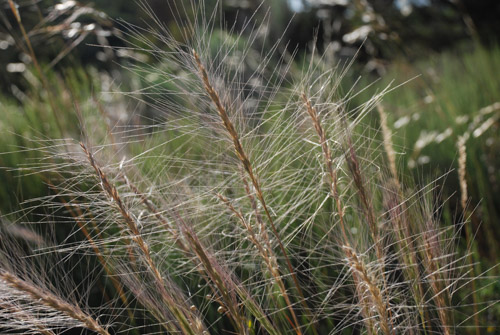
Squirreltail…

DSC_1313

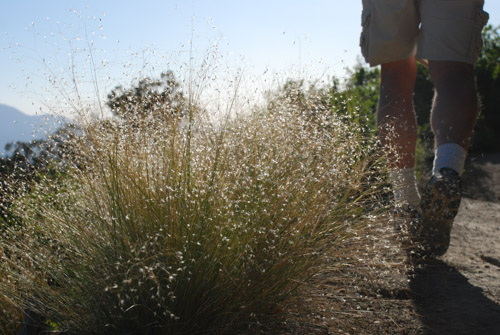
…and Indian rice grass along the trail.

DSC_1311

DSC_1321

DSC_1326

After getting hiking this trail we drove to the the Knife Edge Trail which follows a section of the precarious road built in 1914 which was part of the original main access into the park.

IMG_2869

IMG_0407

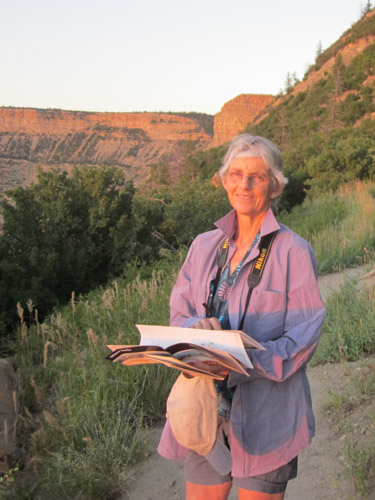
Dan took this photo of me with the booklet that described the plants and other features along this trail.

IMG_2866

IMG_2874IMG_2875

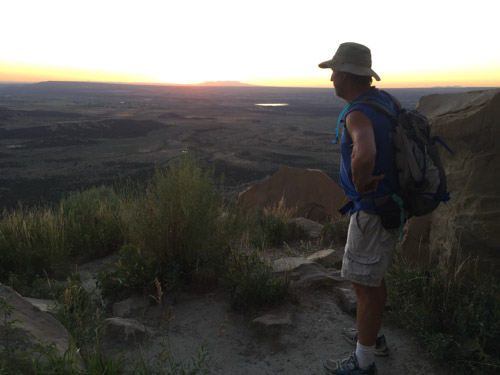
This is a popular place for park visitors to watch the sunset. We walked back to the car at dusk and it was dark when we found a campsite. With the dark it got cold and we didn’t have a working stove. We ate tuna sandwiches and went to bed. DSC_1358

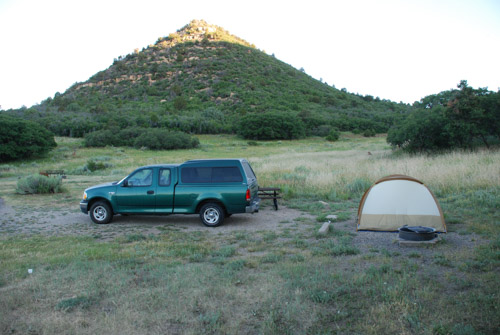
This is what camp looked like in the morning.

DSC_1354-2.jpg

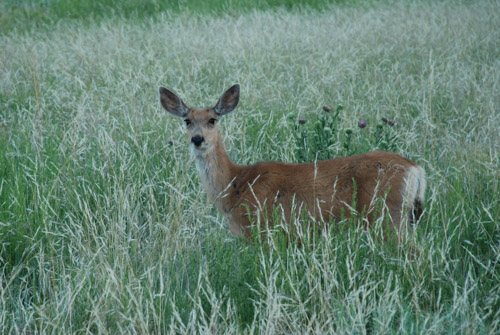
There were deer around the camp in the night and at dawn when I got up.

DSC_1366

Seen on my early morning walk.

IMG_2876

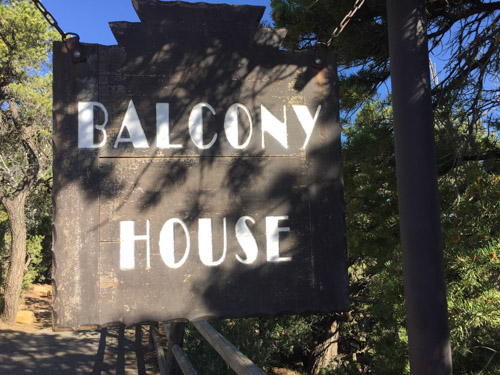
We had learned when we paid for our campsite that the way to see the features for which the park is best known (the cliff dwellings)  is to sign up for one of the tours. We showed up the next morning for the Balcony House tour.

IMG_2877

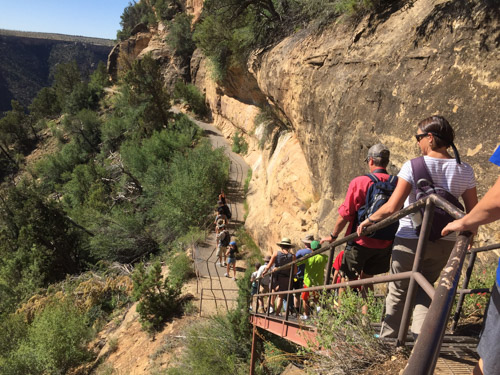
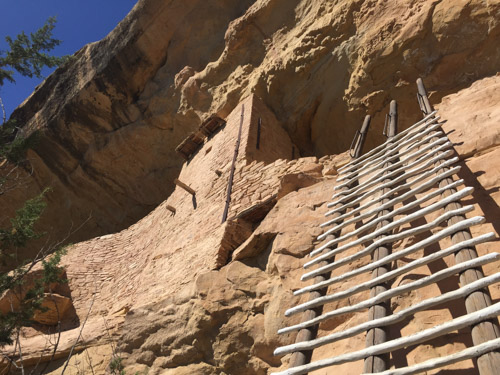
We were directed to follow the trail to the end where we would find a ladder and to wait there.

IMG_2881

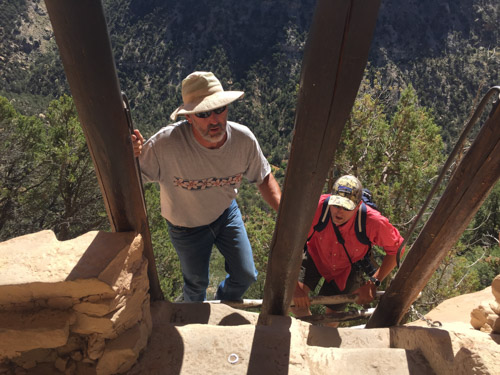
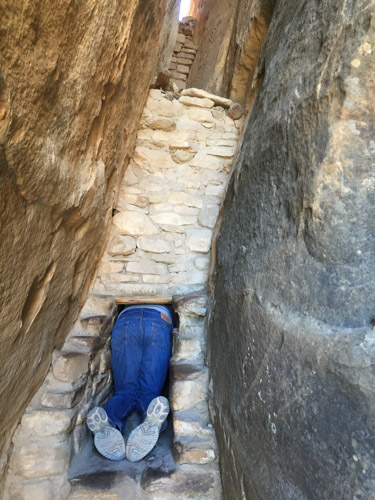
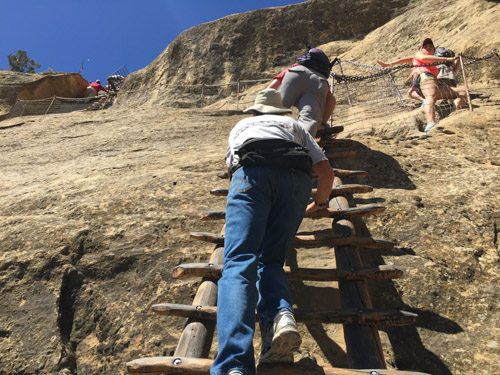
This tour is listed as the “most adventurous cliff dwelling tour” and we were warned that we would “climb a 32′ ladder, crawl through an 18″ wide by 12′ long tunnel, and climb up a 60′ open cliff face with stone steps and two 10′ ladders”. Not quite an Indiana Jones adventure but it did seem challenging for some of the tour participants.

IMG_2882

Can you imagine what this was like when people really lived here?

IMG_2902

I can see the challenge of being a mother of a toddler.

The Ancestral Pueblo people lived in the Mesa Verde area for about 700 years from about AD 550 to the 1200’s, first living in pit houses, then above-ground pole and adobe structures. The people built the cliff dwellings from the 1190’s to 1270’s and lived there for less than 100 years. It is unknown why, in the span of a generation or two, the people left the area.

IMG_2910

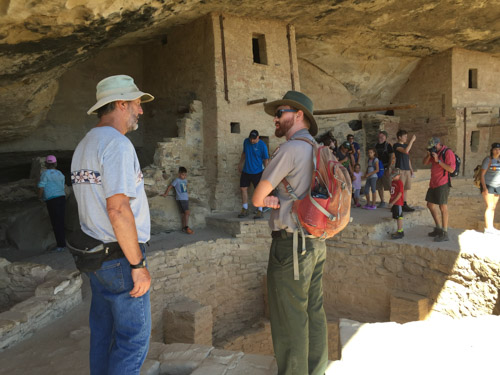
Ranger Spenser was glad to answer questions and discuss his passion for the earlier residents of these dwellings.

IMG_2908

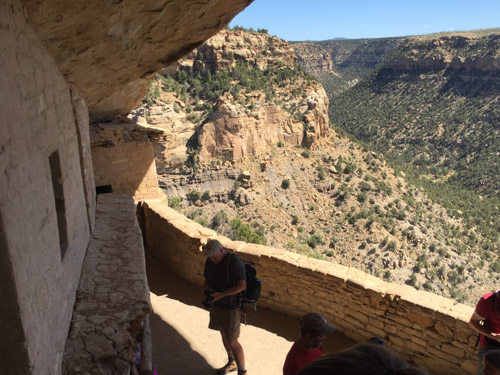
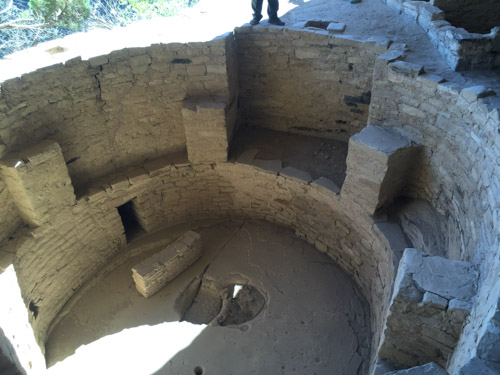
Each village or homesite has a kiva built below ground or in the case of the cliff dwellings, into the rock floor.

DSC_1386

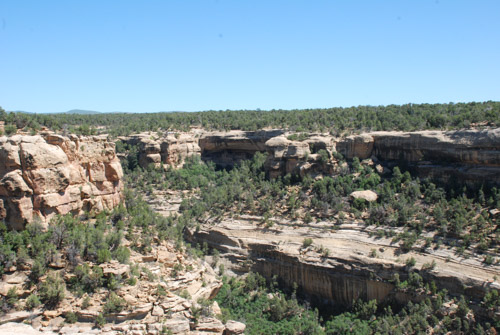
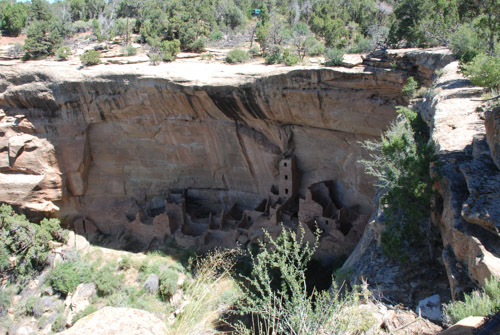
This is the view across the canyon from Balcony House.

DSC_1384

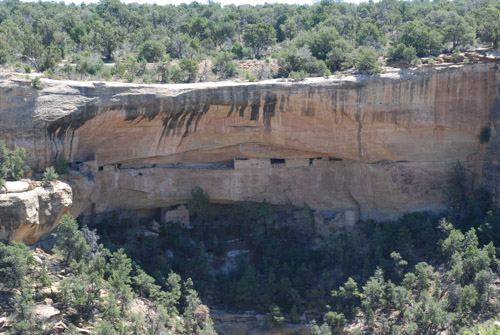
This is the same view with a longer lens. It was remarkable that when you really started to look (or got out the binoculars) that you could see dwellings in many of the cliff walls.

DSC_1376

Here is another that we saw later in the day…
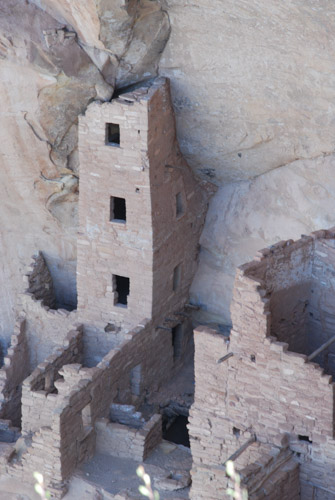
DSC_1378

…and here’s the close up. This is known as Square Tower House, a 4-story building.

IMG_2920

Remember the part about the 18″ x 12′ passage. Here it is…

IMG_2923

…followed by the ladders…

IMG_2924

…and steps up the cliff wall.

We drove through more of Mesa Verde, looking at some of the other sites, but knew that we needed to get on the road if we were to get home some time the next day.

Next post: Four Corners and Monument Valley.

*I still didn’t get this finished and now its the next day.