Random Farm Photos

These photos may seem to be unrelated, but that’s how my life is right now…or maybe all the time. Farm Club members were here on Saturday to help set up breeding groups. Too busy to get photos then. Sunday I demonstrated weaving at an alpaca farm for their open house for National Alpaca Farm Day (remembering at 6 the evening before that I needed to get a loom warped for that). Today I worked on lots of odds and ends, mostly working towards being ready for Lambtown this weekend. So this is odds and ends.

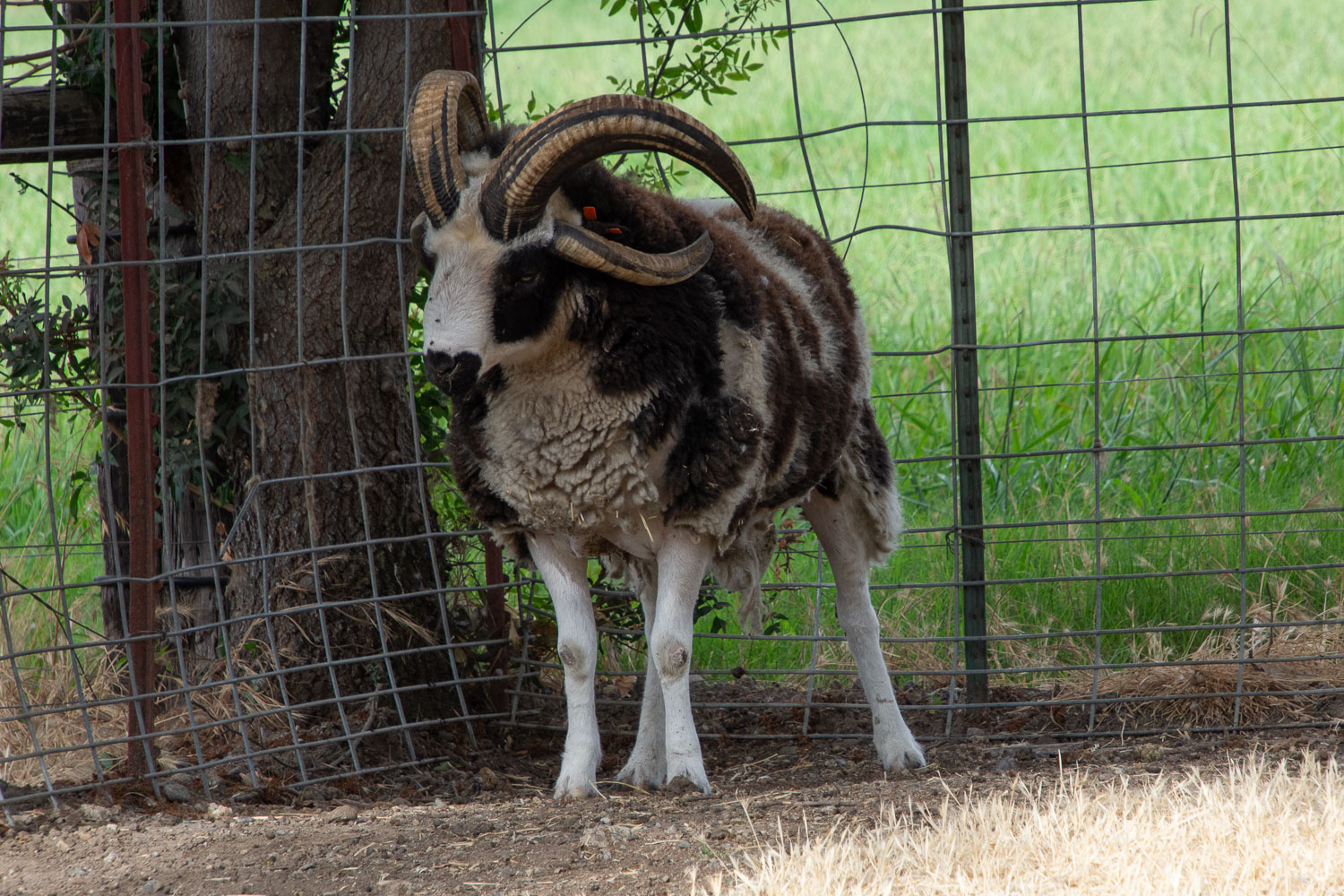
Clancy got to work right away on Saturday. (For the record, he is a BFL registered as Liongate Aylan, but I started calling him Clancy because I couldn’t remember that name. Clancy stuck.)
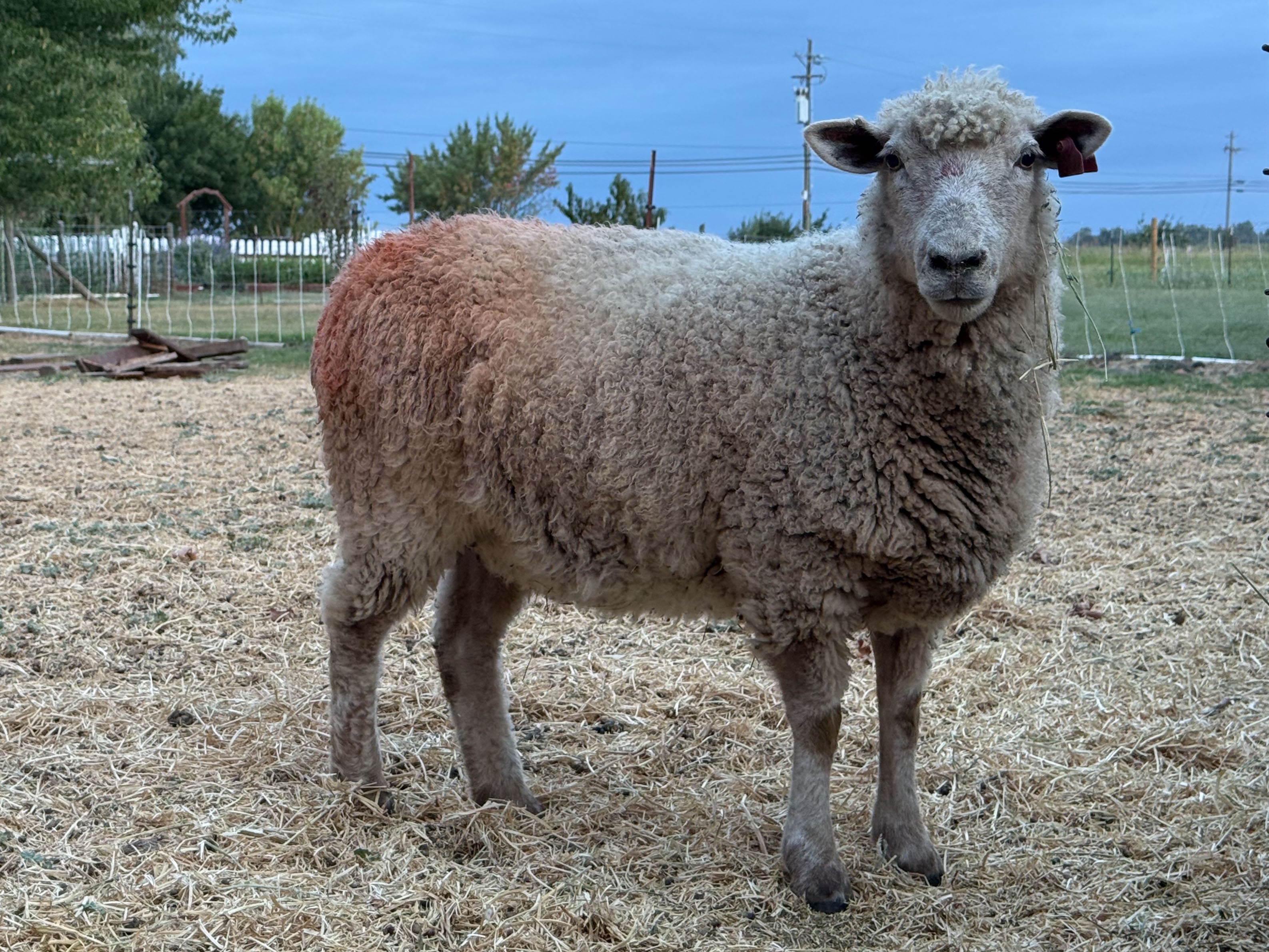
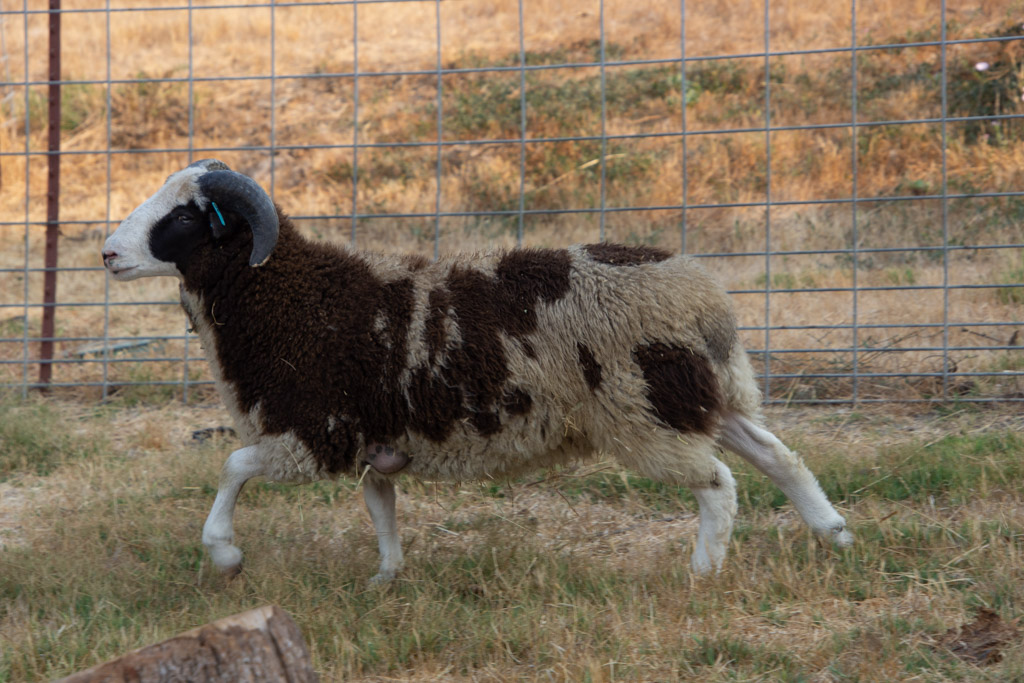
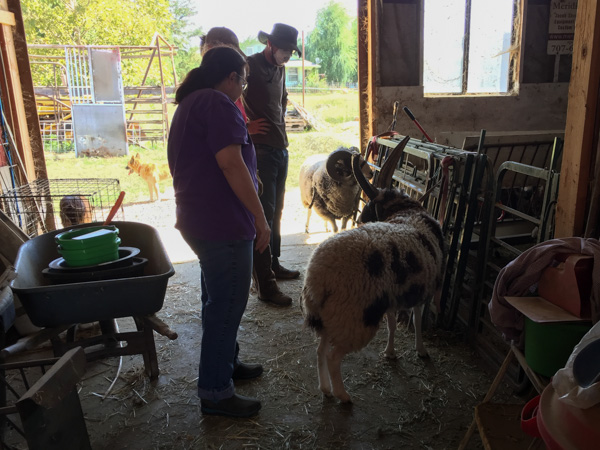
This is one of the ewes I picked up in Napa last week. That’s a story for another blog post when I have time. She is with Clancy’s group.
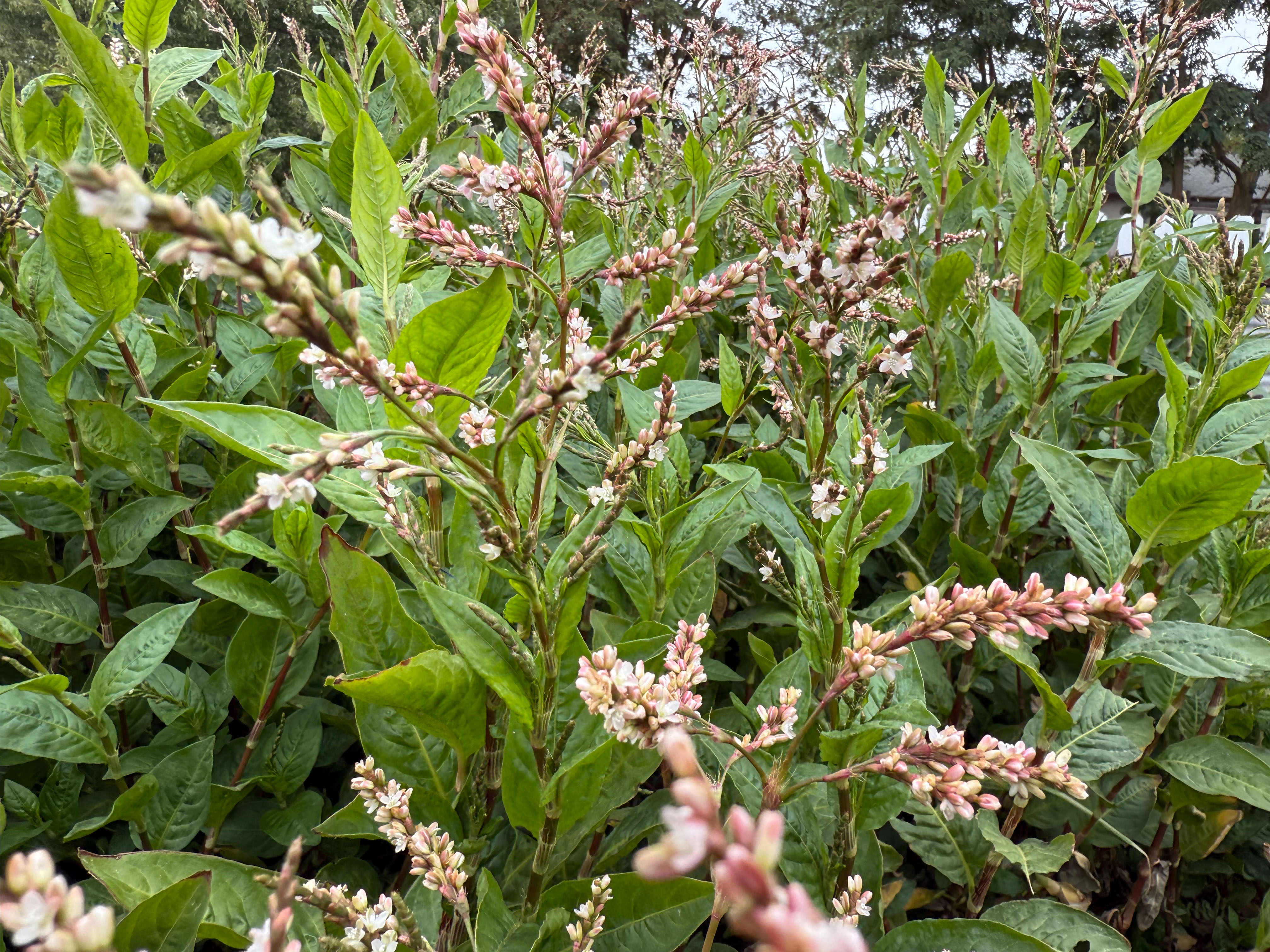
Indigo is flowering. I spent so much time trying to keep the indigo thriving during the summer that I want to make sure I use more of it for dying before it’s too late.

This is today’s fresh leaf indigo dyepot. That yarn will be blue when it is out of the pot and dry.

I made buttons over the last few weeks but hadn’t finished them yet. I use lacquer in a satin finish. I could only find semi-gloss locally and had to order what I wanted. There are also two skulls that I cleaned as well as I could and wanted to apply lacquer to the horns.

I load the buttons onto wires that I can dip in the can of lacquer and then spread them to drip and dry. This is one way to get some use out of styrofoam packing material.
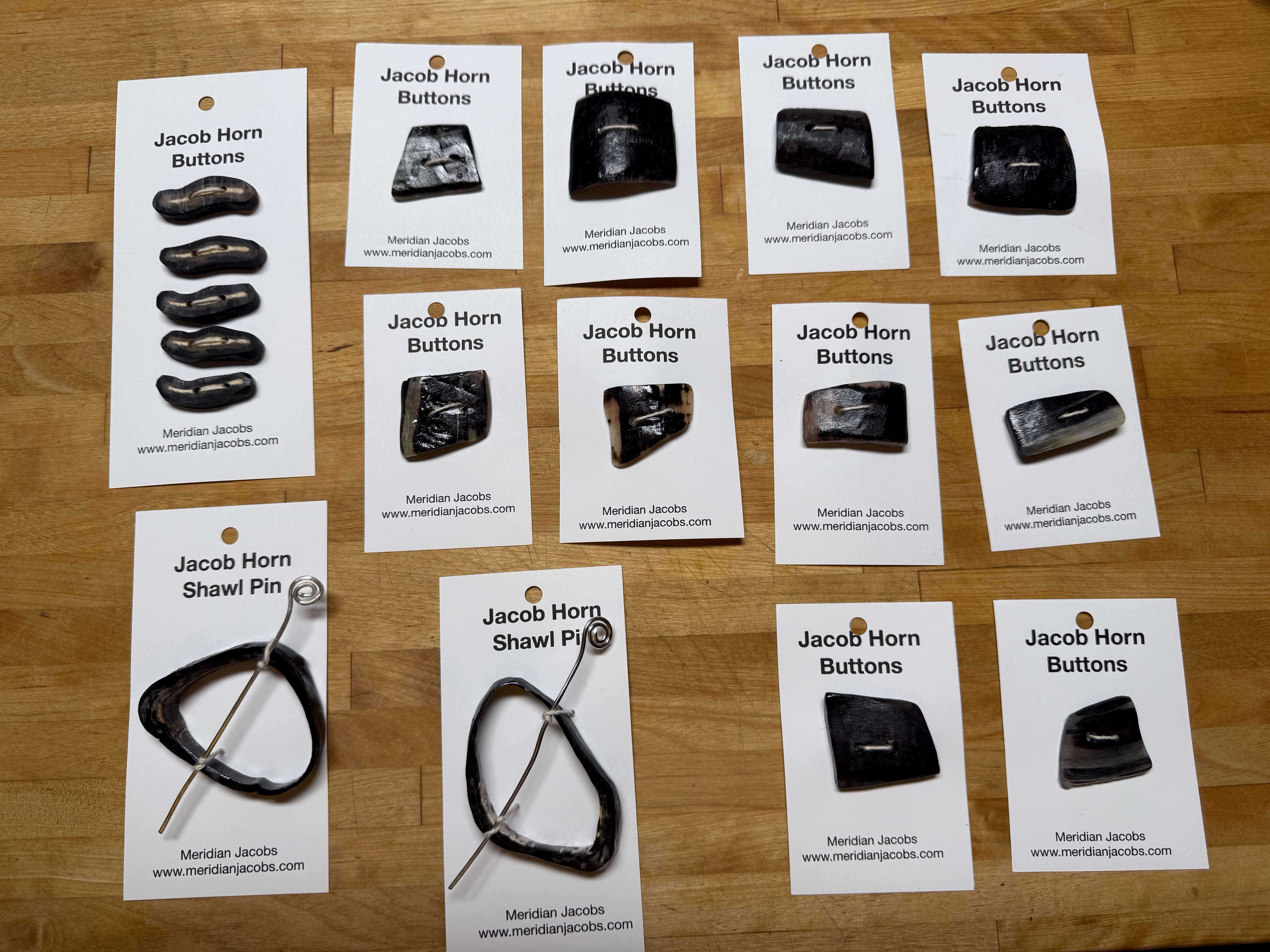
These are buttons and shawl pins that I finished a couple of weeks ago. When I couldn’t find the satin lacquer I used semi-gloss and also polyurethane. I think I like the satin finish best, but I’ll find out at Lambtown if it even makes any difference.
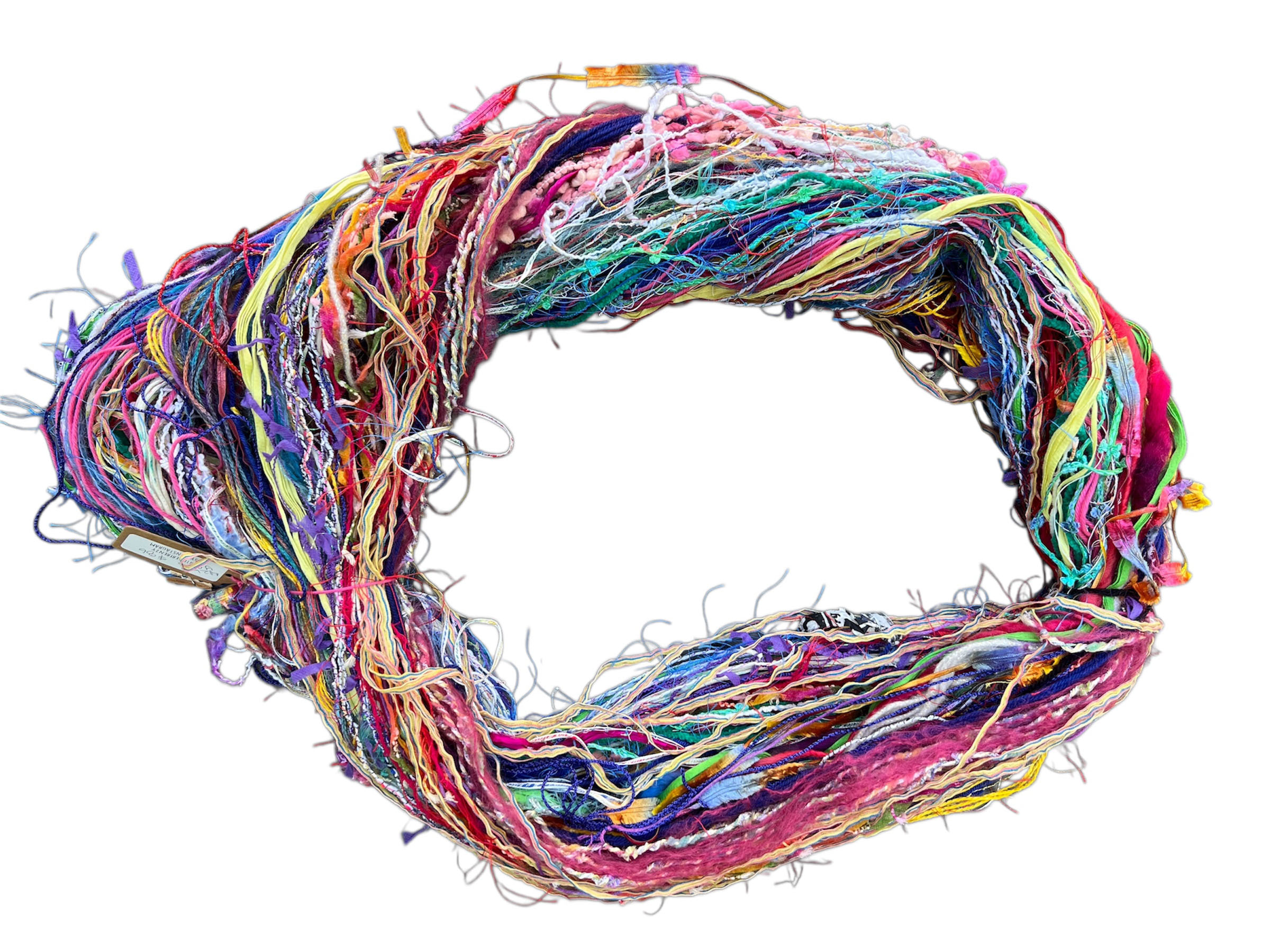
I spent a lot of time this week using a new app that will completely remove the background from photos.

This is another example. I wanted these photos for the new weaving class on my website.
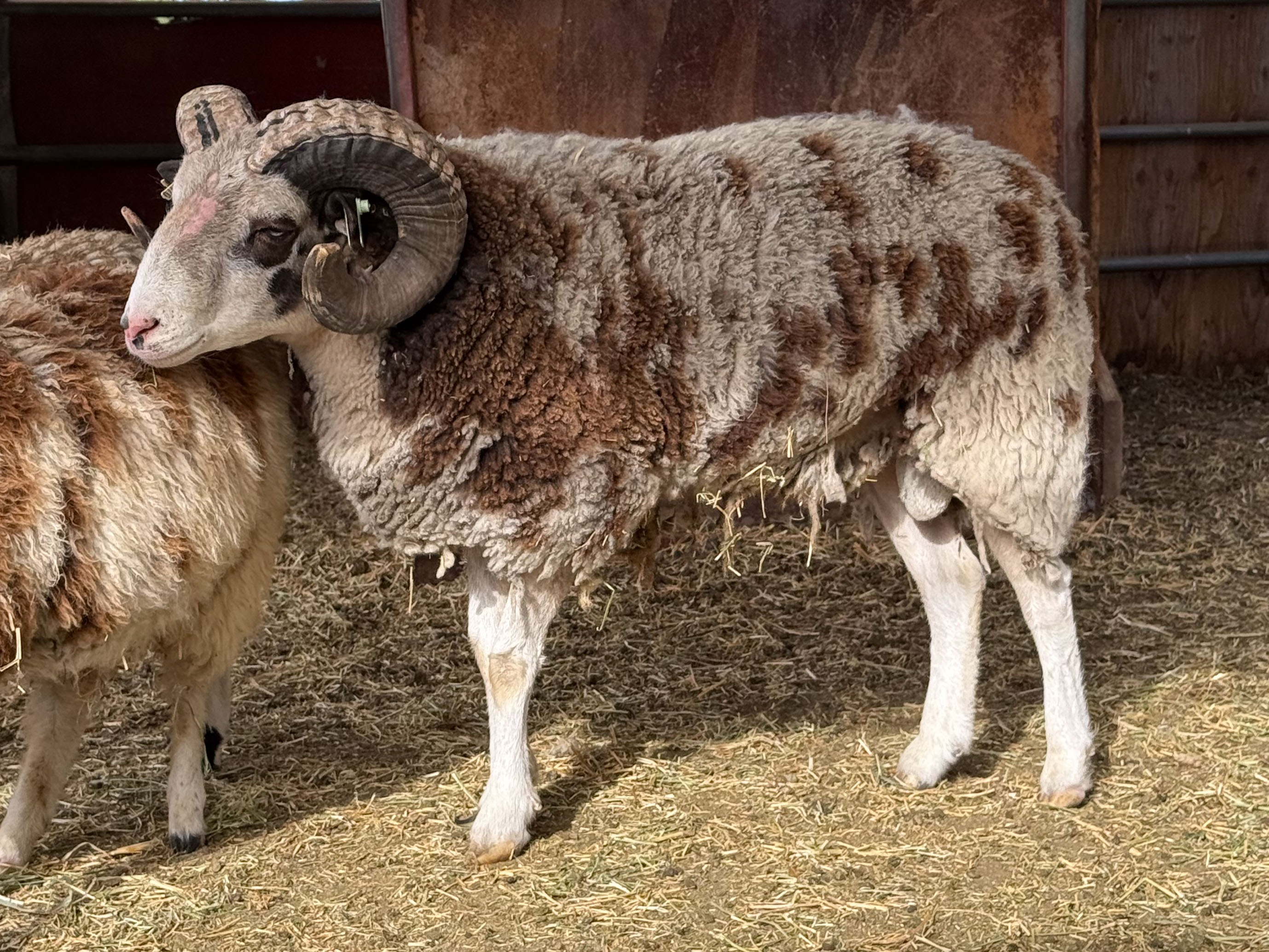
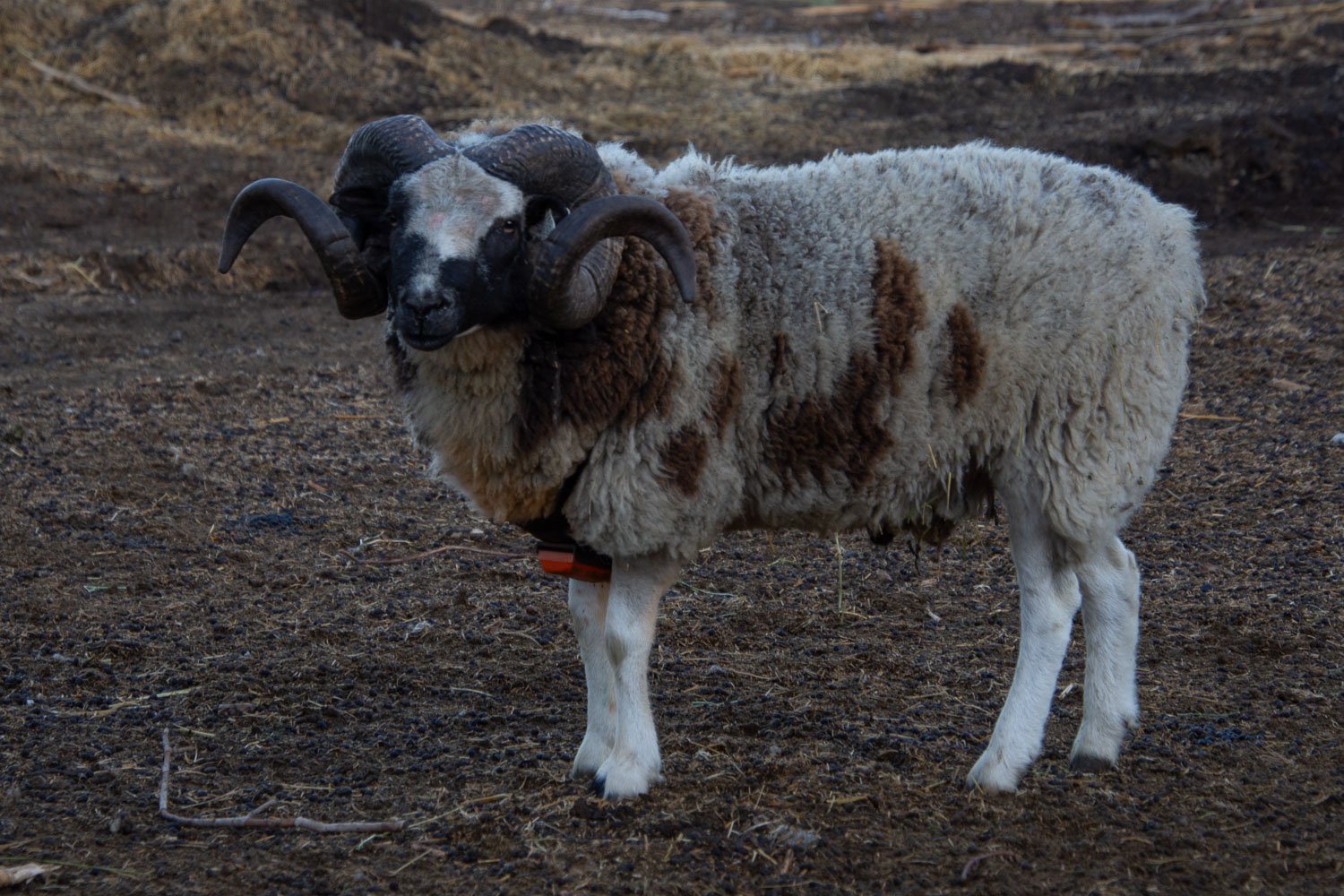
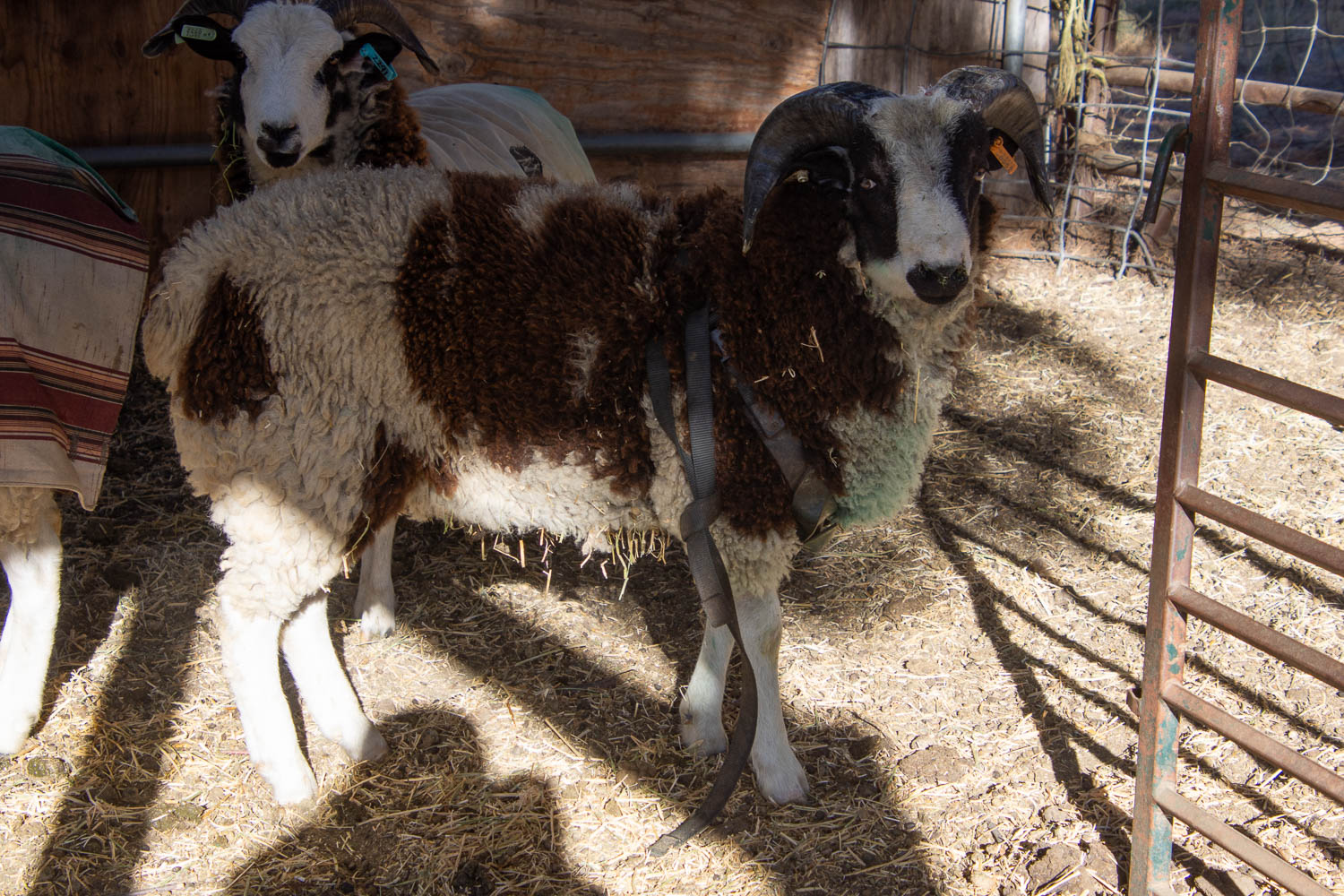
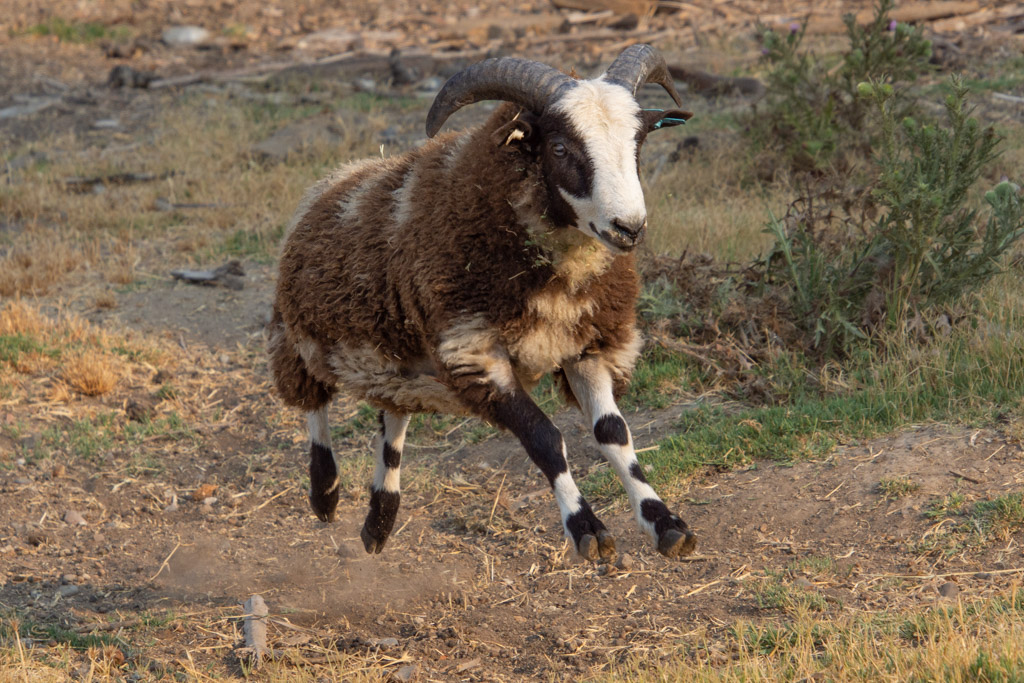
One more sheep thing. I have two registered adult rams that I need to sell. There are four rams out with ewes now and these are extra this year. This one is Hurricane. Rams are on the website here.

Time to move onto getting my newsletter out.

Shearing Day 2025 – Part 2

Shearing Day was a week ago. Here is the first post.

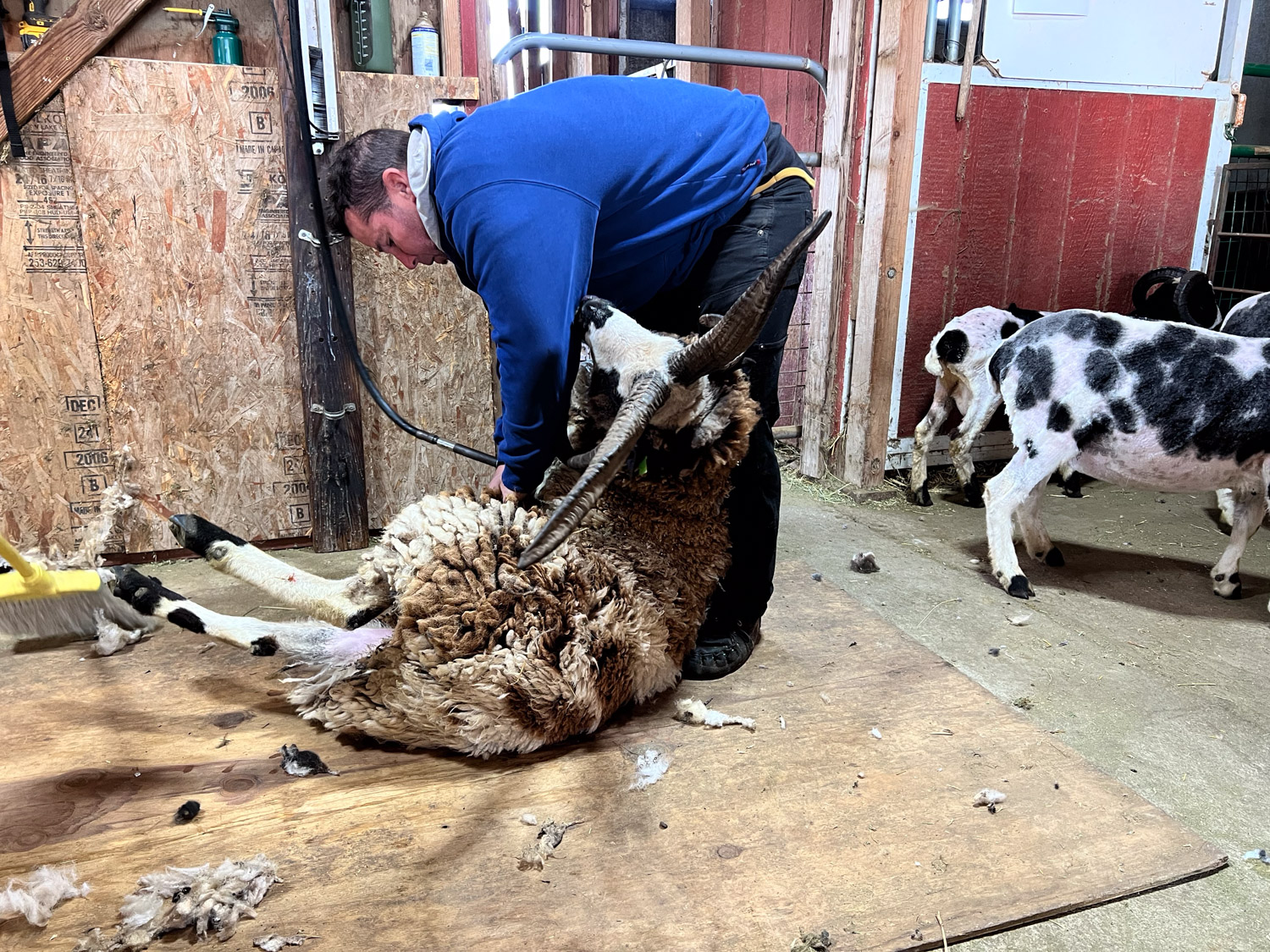
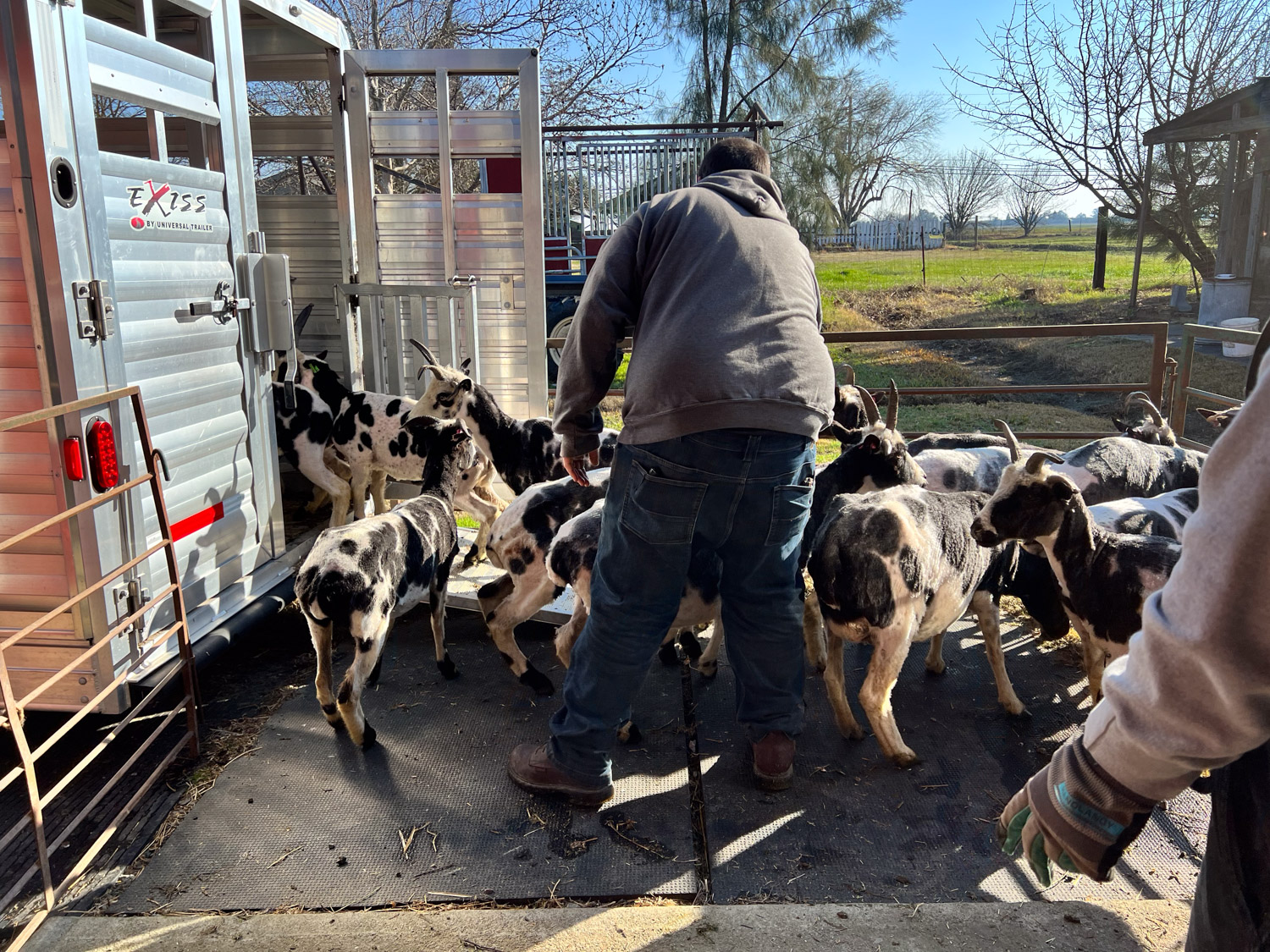
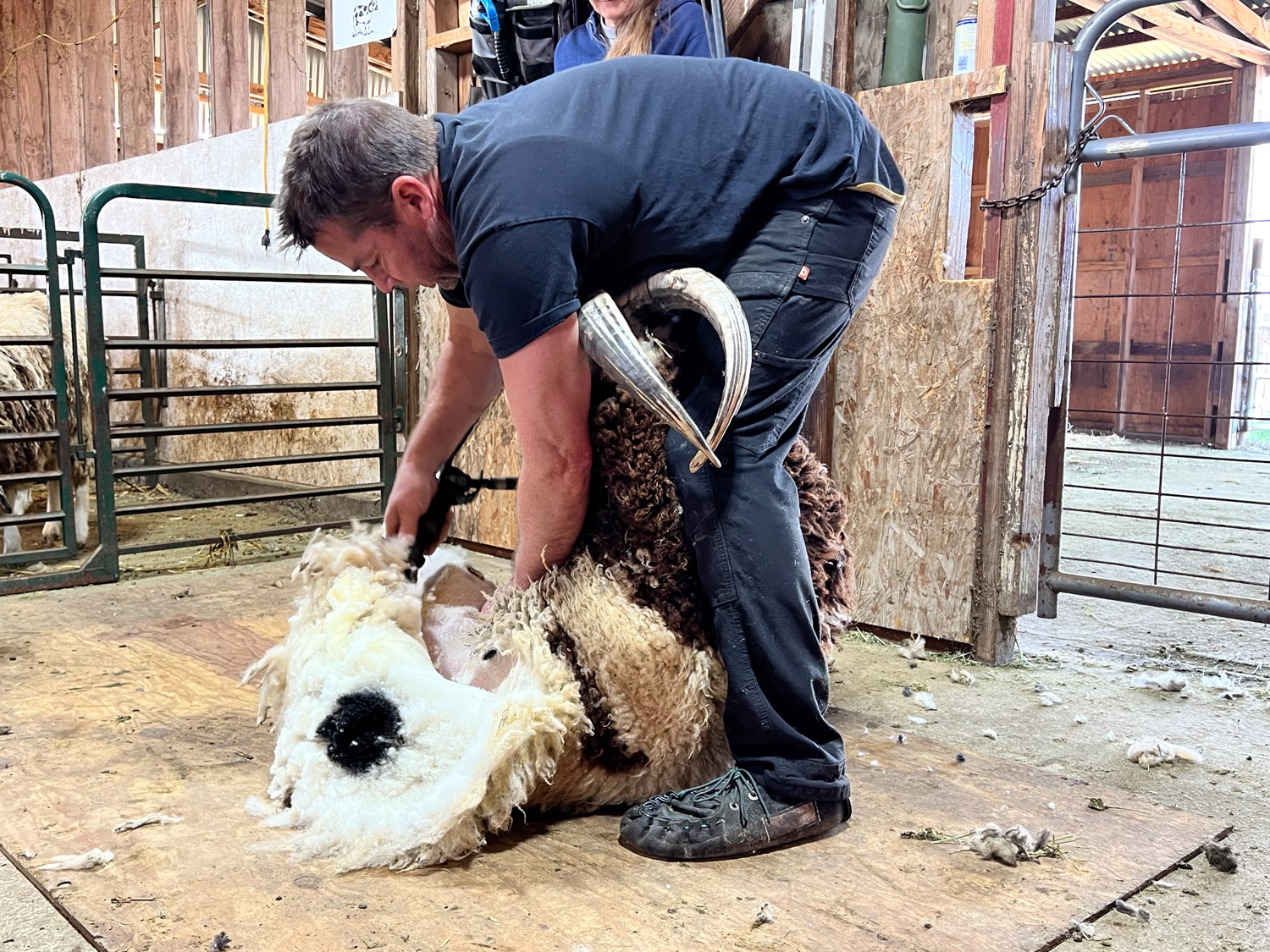
As we loaded Trish’s sheep into the trailer John kept shearing, starting with my rams…

…and then moving on to ewes.

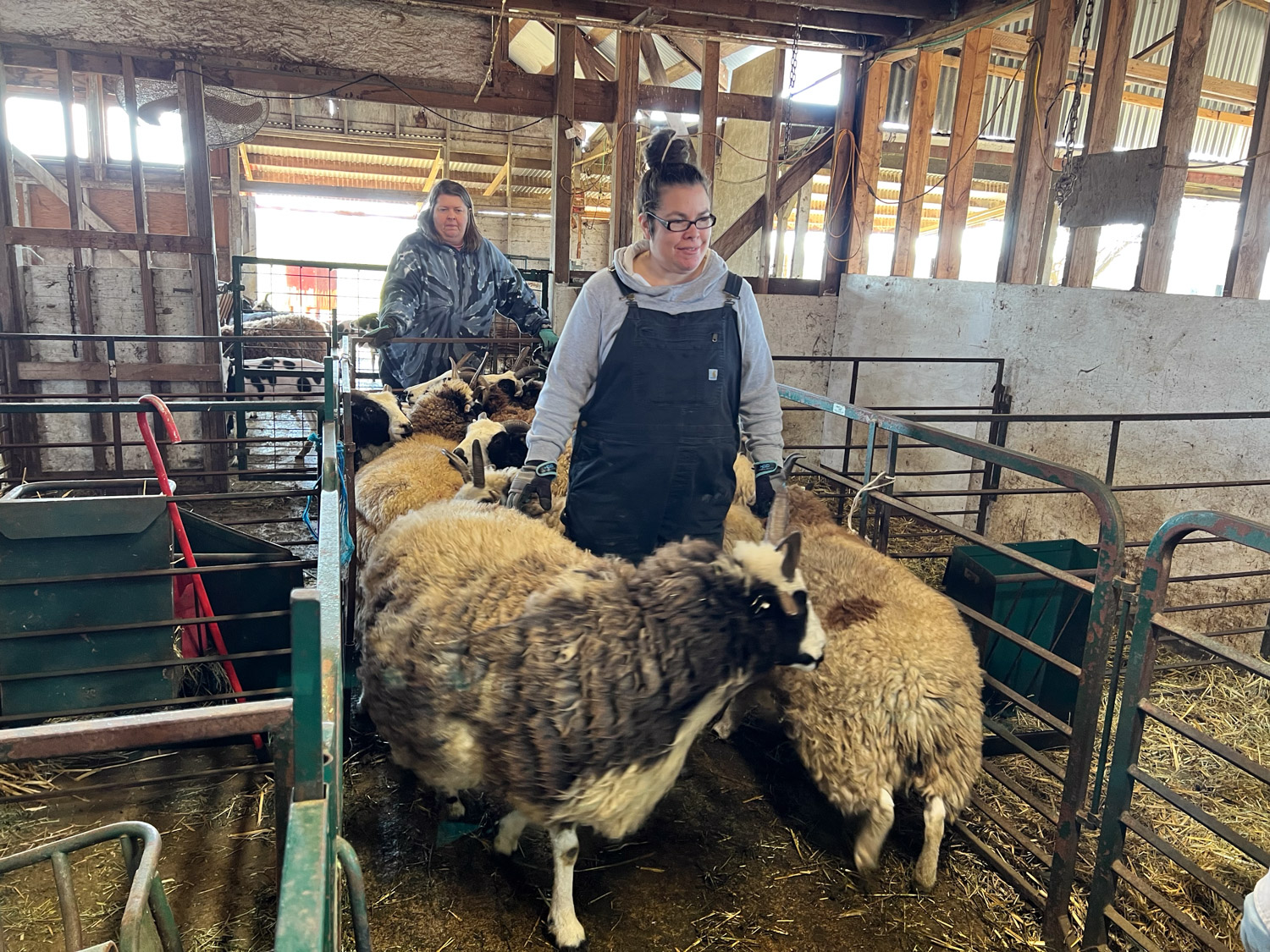
Farm Club members kept the sheep coming so that John didn’t have to wait.

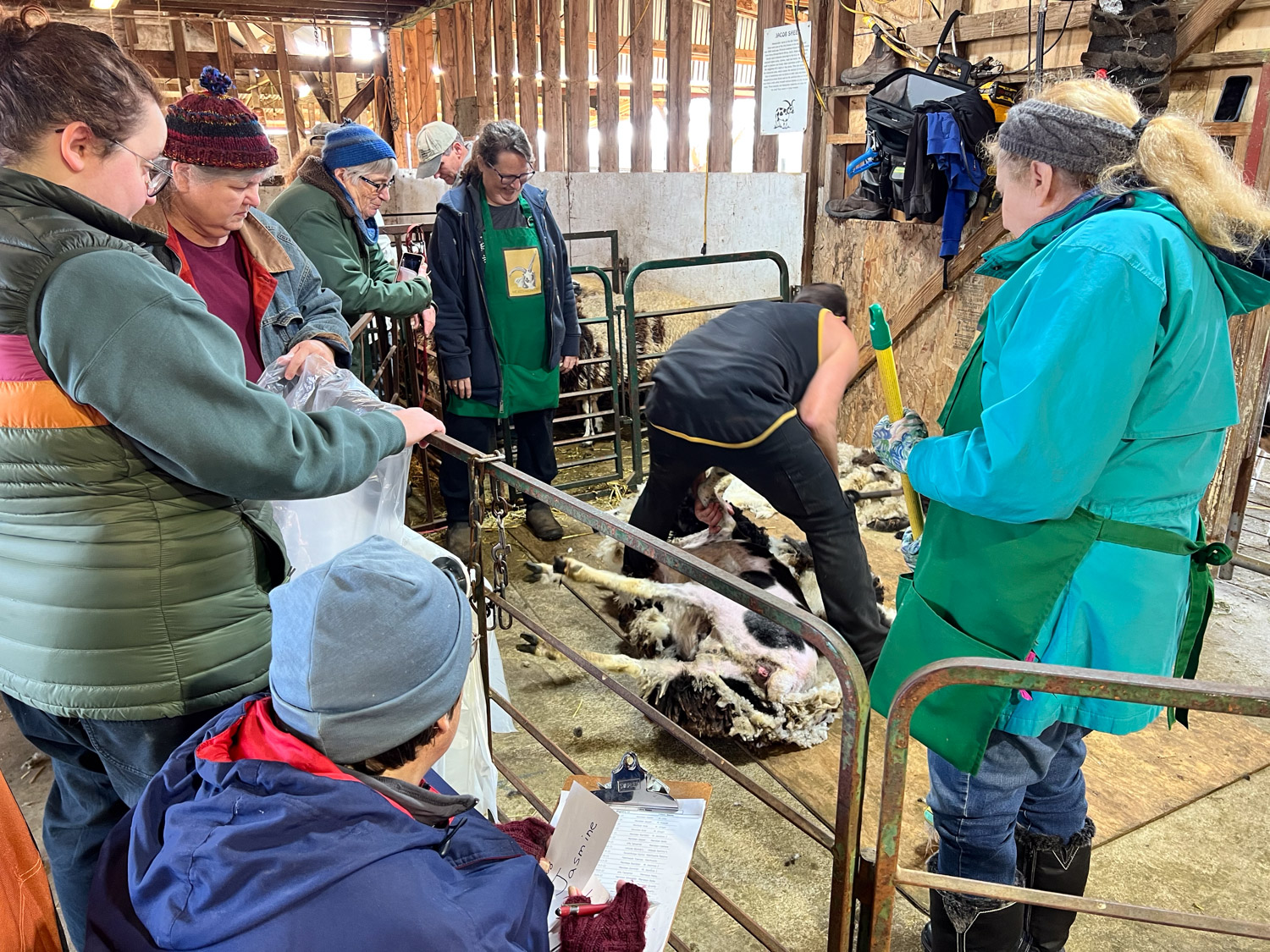
Farm Club members covered all the jobs. They moved sheep, bagged fleece, checked the ciipboard, swept between sheep and let sheep out as they finished. I have videos of shearing but haven’t had time to post them yet. Because I recorded 4 or 5 videos I can say that John shears a sheep in just over 2 minutes. It is amazing to watch.

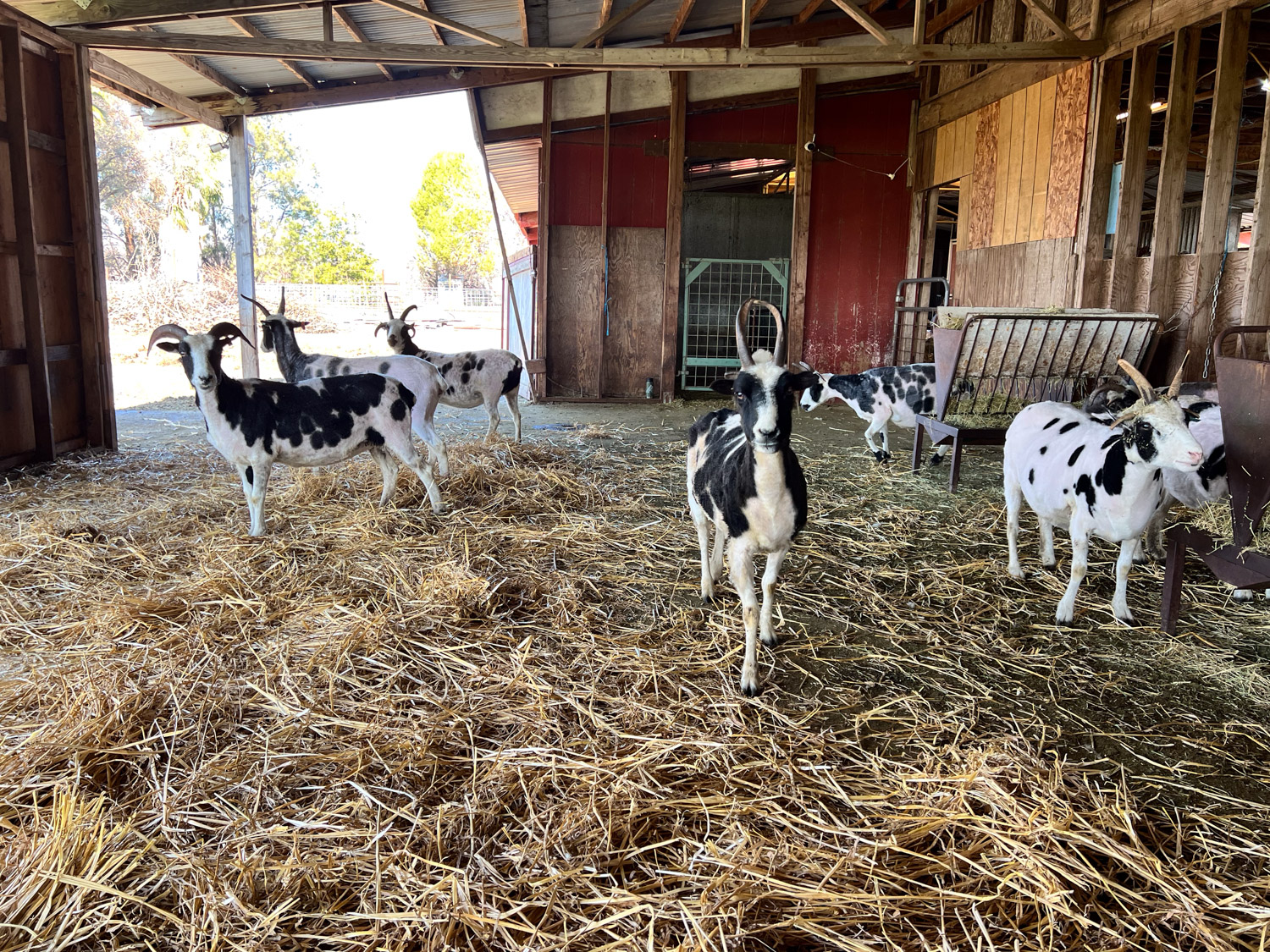
We bedded the barn with straw knowing that would help with the cold at night.

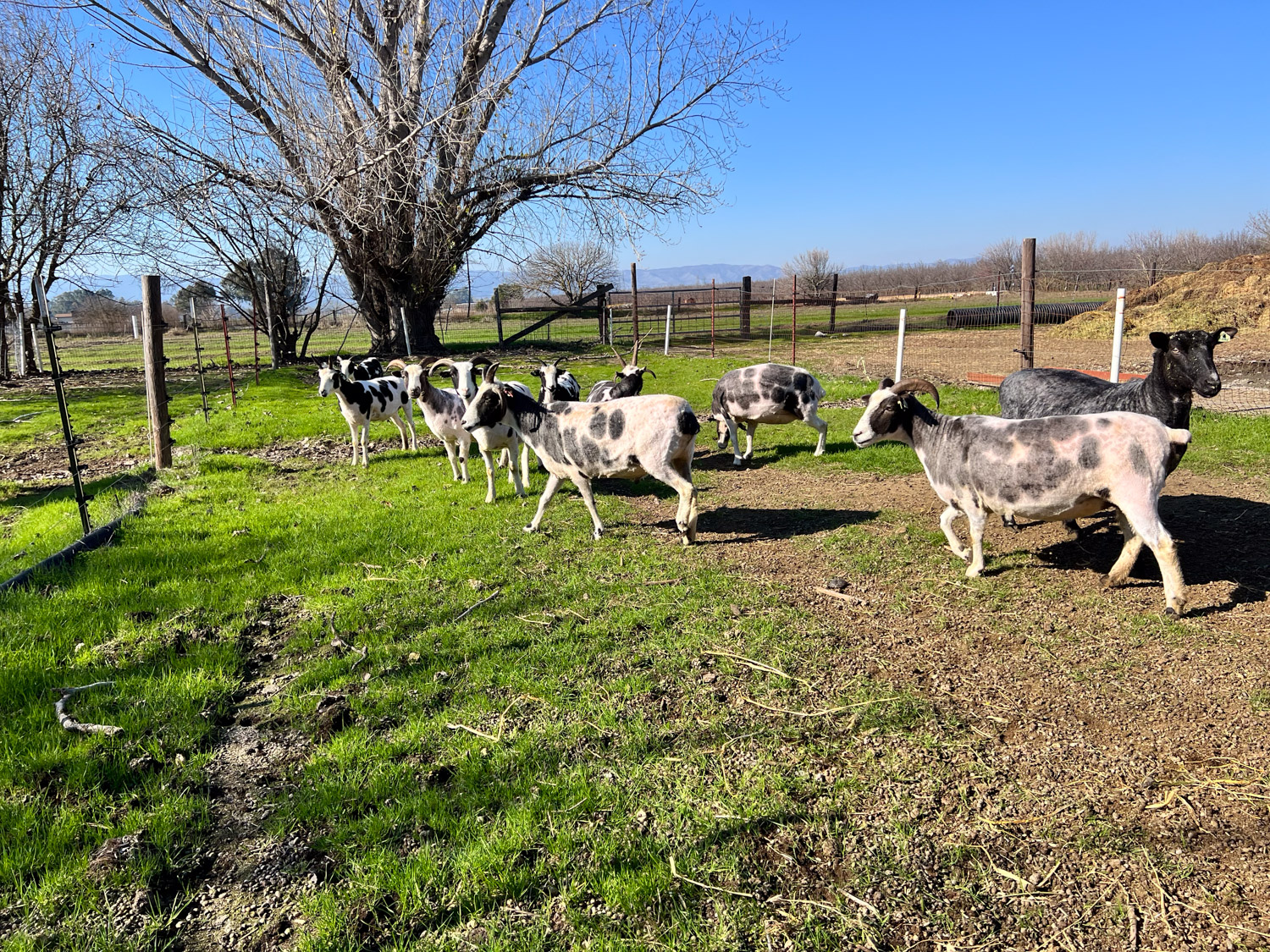
The shorn sheep enjoyed the sun during the day.

Farm Club member, Kathleen, took over her annual job of weighing fleeces.

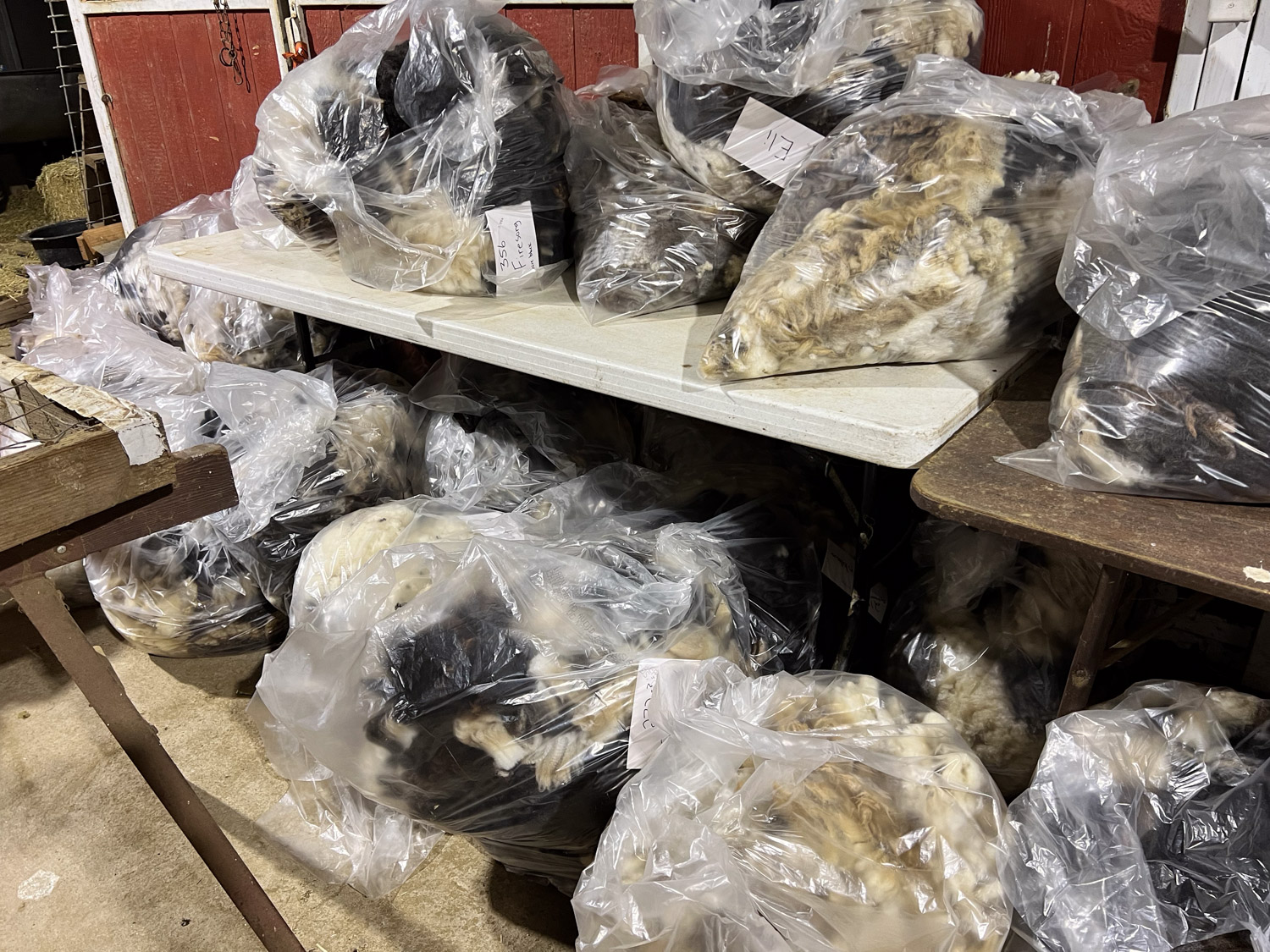
This is just some of the fleeces, bagged and labeled with sheep name and weight.

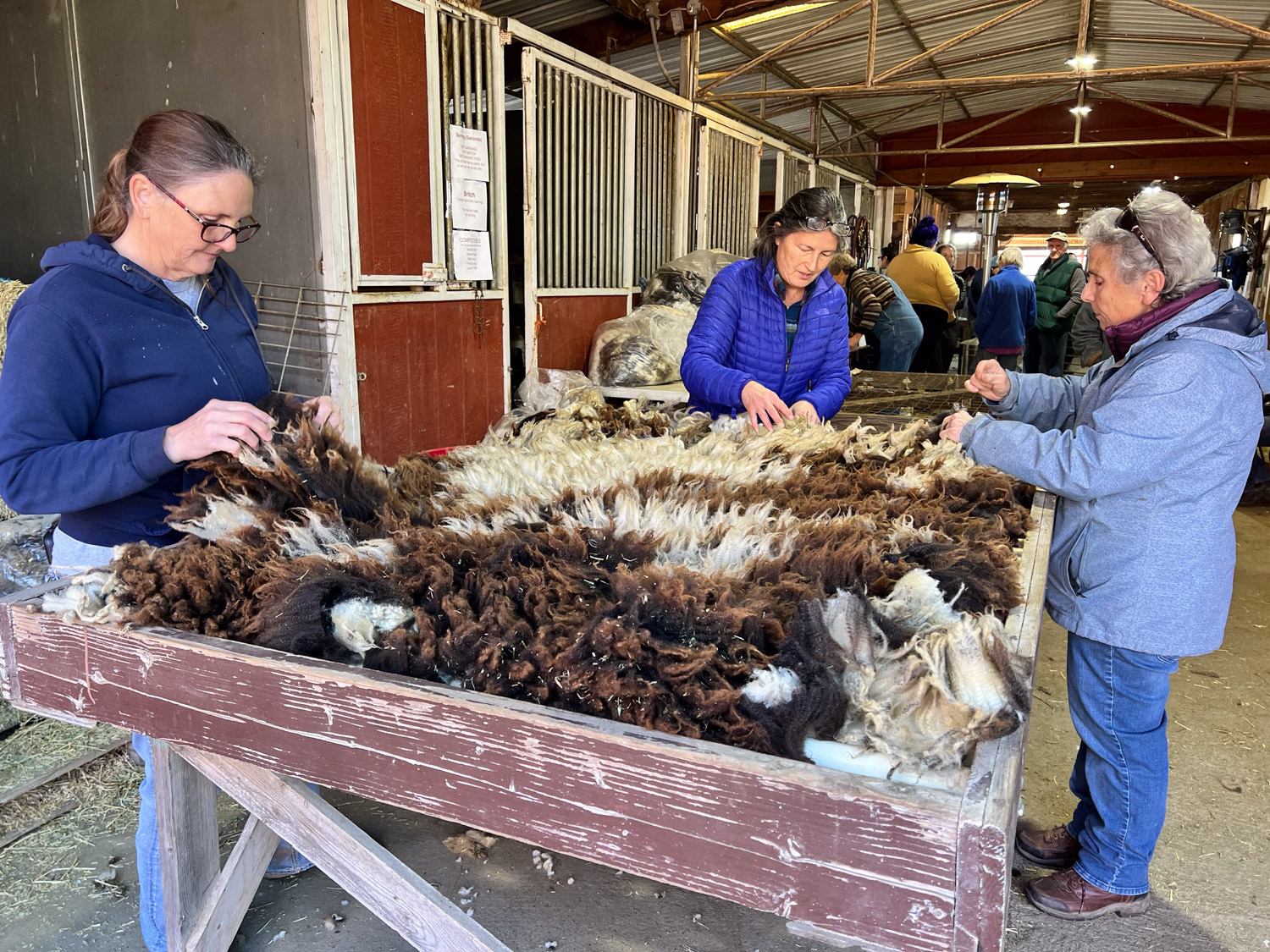
Farm Club members and other friends who purchased fleeces were able to skirt fleeces the selected.

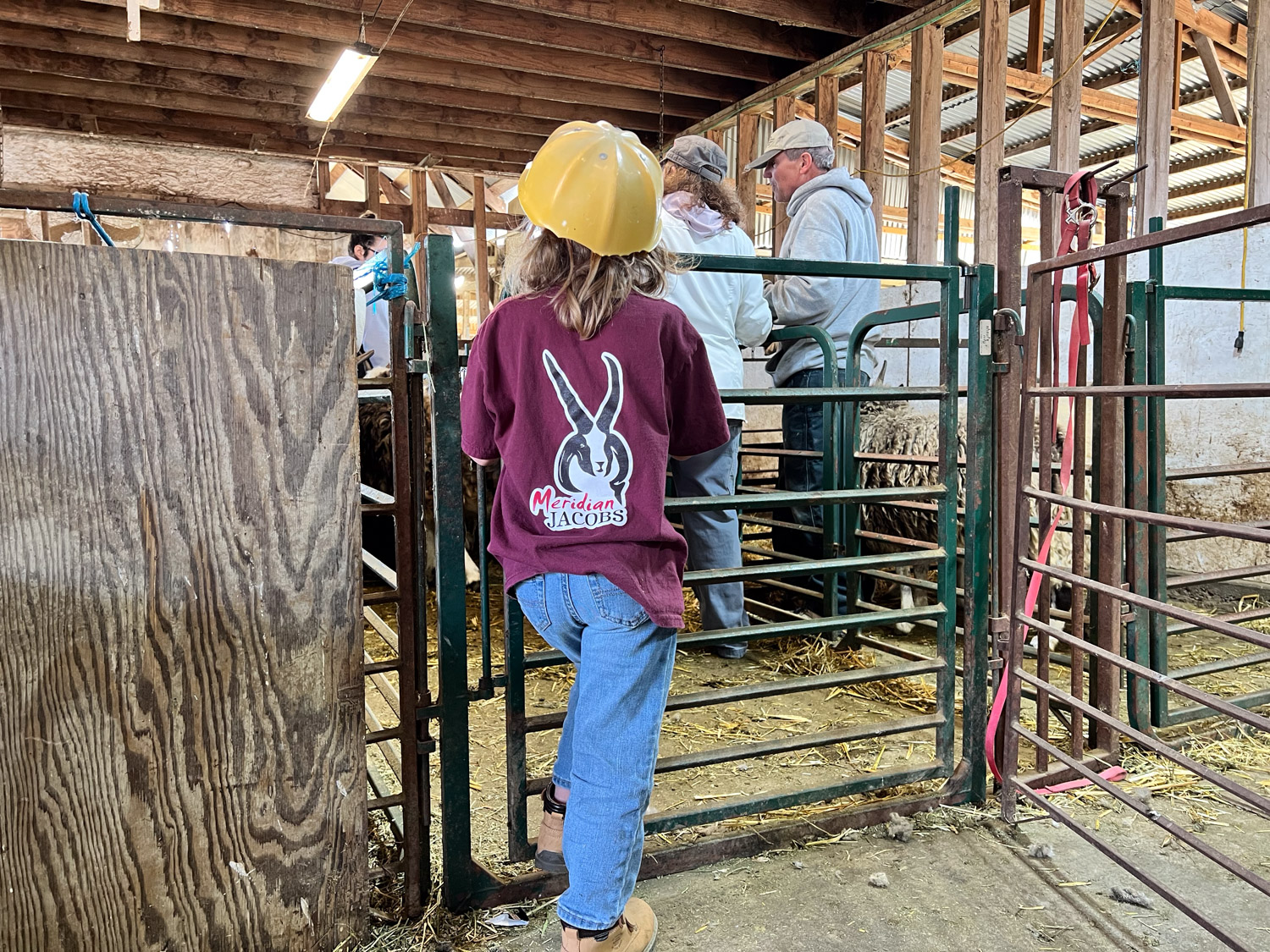
This is our youngest Farm Club associate, son of a member. He wanted a job and spent most of the morning cleaning the barn with the help of Dad.

Shearing Day can be tiring. This is Oakley, John’s dog, in a pile of belly wool.

After shearing was over I called on three Farm Club members, who are now tagged as the Tech Team, to figure out why I couldn’t get the barn cameras to work after we made a big switch to a new internet service. I hadn’t been able to get them set up again. Farm Club members have links to those cameras. Success!

Shearing stats: We sheared 64 ewes, 12 rams, and a wether. That’s important to know because shearers charge more for rams. I guess it’s a good thing that they don’t charge more for horns. (Joke) Of those sheep 47 ewes, 9 rams, and the wether are mine. We didn’t shear 2 ewes who will be the subject of another blog post. Fleece weights range from 2.5 to 6 pounds. That’s typical for Jacob sheep.

I need to start skirting and sorting fleeces so I can get some on the website for sale and others to the mill for processing.

Shearing Day 2025 – Part 1

We were lucky on Shearing Day. It was cold in the early morning, but there was no threat of rain and the sun was out.

The day before we took our trailer to Trish’s farm a few miles away. We loaded 21 sheep to bring them to our place for shearing the next day. It turns out that one of the 21 was mine–I had forgotten about the ram lamb Trish borrowed in September to breed some of her ewes. So now I have 9 rams–that’s a few too many!

These are Trish’s sheep the next morning. I remember that ewe on the left from last year. See her photo below.

Her hair style makes her memorable.

John got here at 9 and we started with Trish’s sheep. This ram is Starthist Goldhill, sired by one of my 2-horn rams who is no longer here.

Farm Club members were on hand to help with all the jobs. They kept the shorn sheep out of John’s way while he worked.

After all 20 of Trish’s sheep were shorn we moved panels around to load them back in the trailer.

They fit better after shearing.

Then John started on my rams. This is Eli.

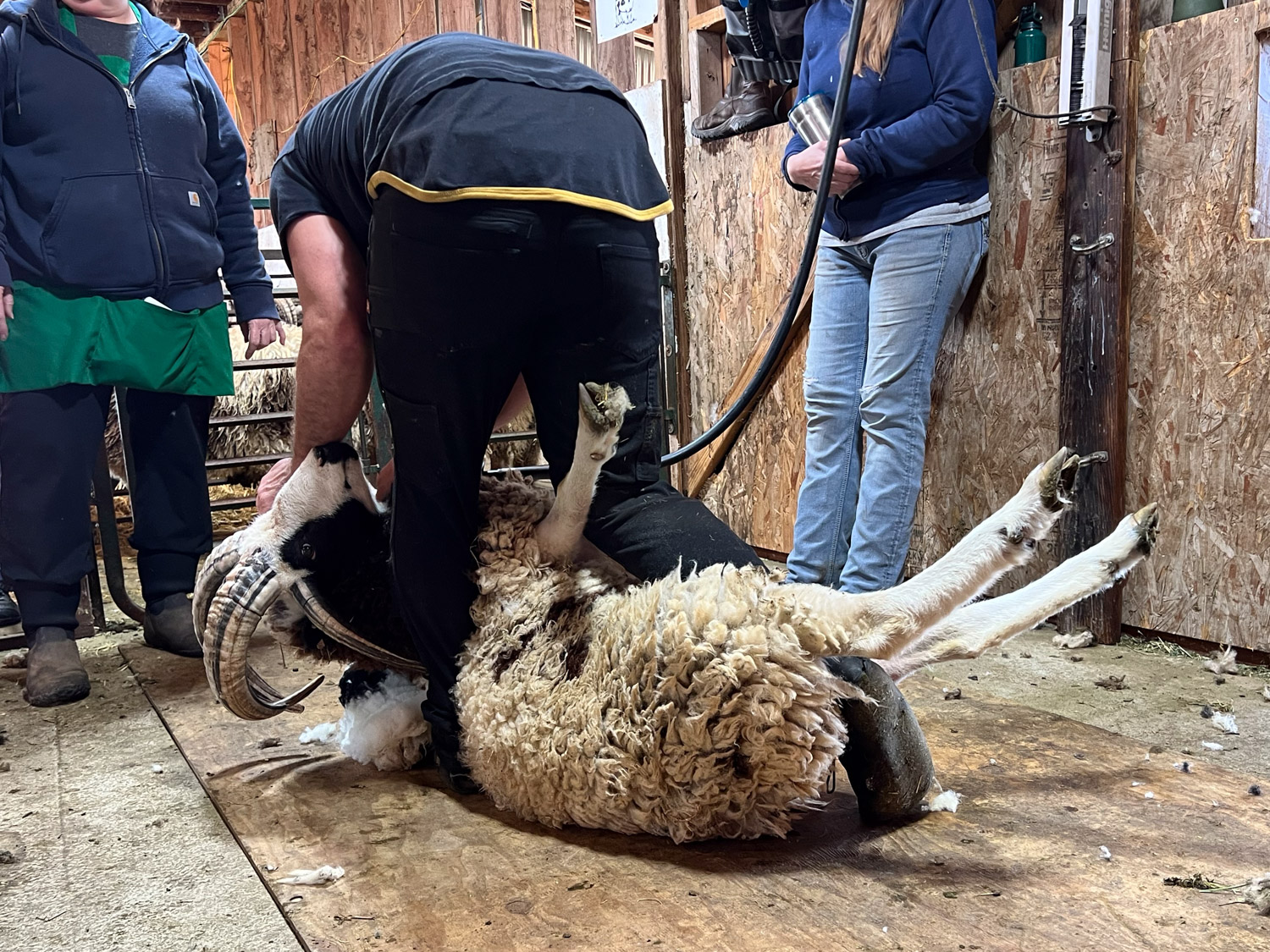
For those of you who may not have watched shearing, the shearer follows the same pattern on all the sheep.

I recorded video of shearing four or five sheep. I haven’t had time to edit and post those videos yet, but because of recording I know how long it took to shear those sheep. What do you think?

John is shearing each sheep in under 2-1/2 minutes. Some are close to 2 minutes!

More shearing photos in the next post.

Today on the Farm – February 16

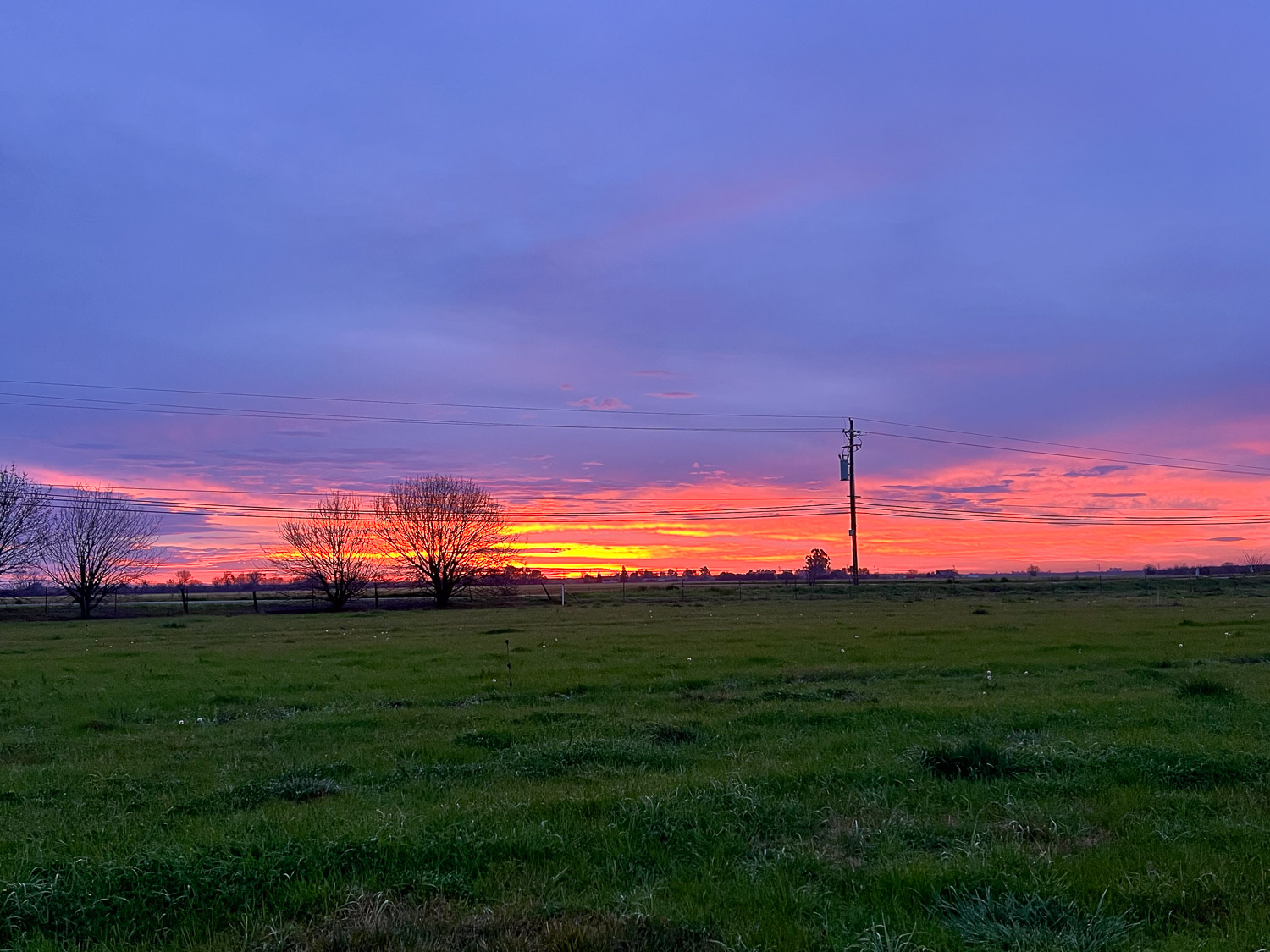
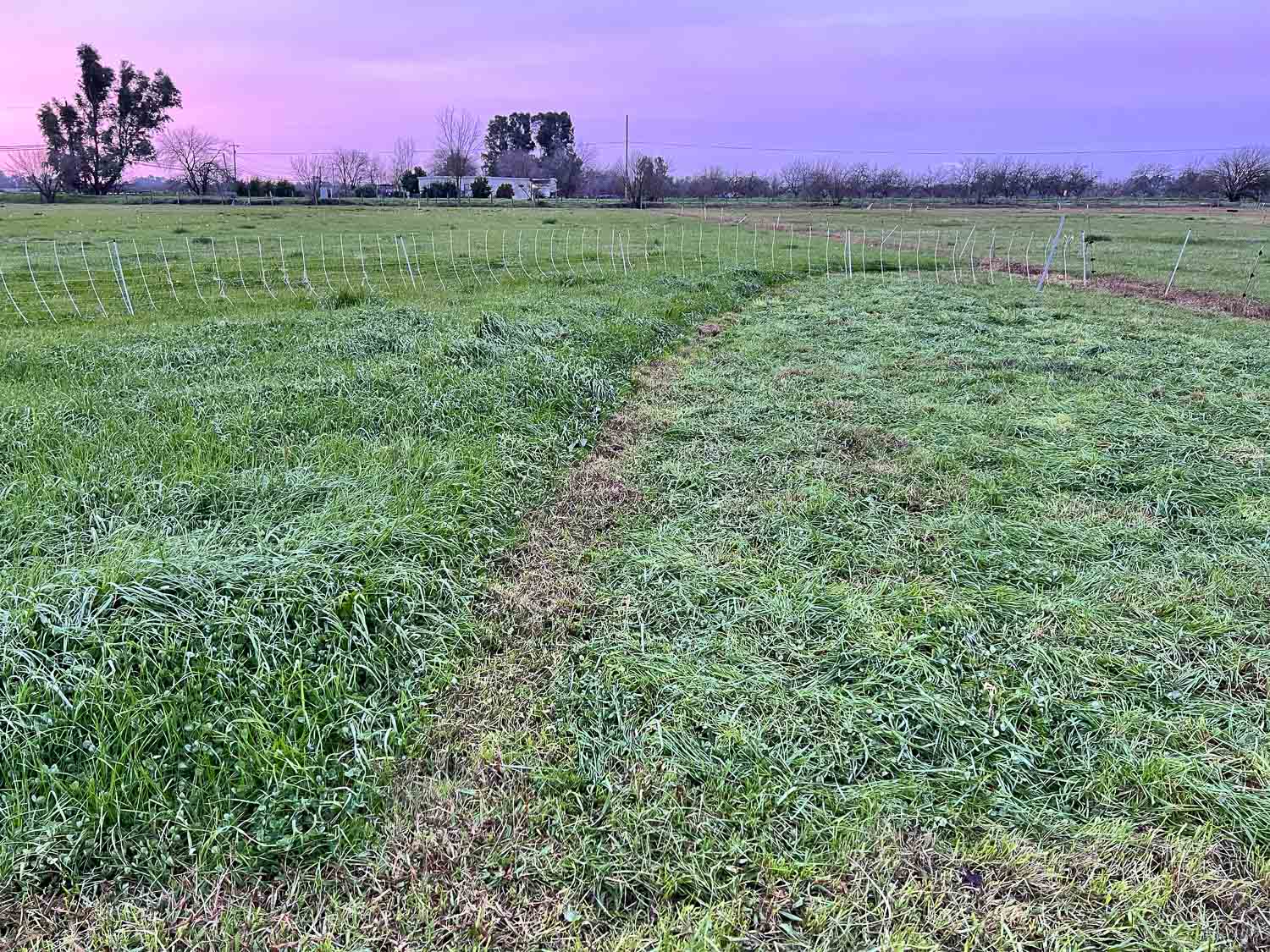
Sunrise while I was in the pasture.

This is the opposite view. It looks as though there is a lot of grass but we have to be strategic about grazing right now. The ground is wet and I don’t want to cause compaction. And much of the pasture is not fresh grass, but still-dormant dallisgrass with only a little annual grass growing through. The bulk of the green grass right now is annual, not perennial. There are clovers in here too and we want to maximize their vigor by not overgrazing them.

We first set the net fence up along the lane so the sheep could graze that down before it became so tall all they would do is trample it. The grazed part is where I had the sheep yesterday using a short bit of net fence. This morning I switched to a longer section of net fence and gave them a bit more of the grass.

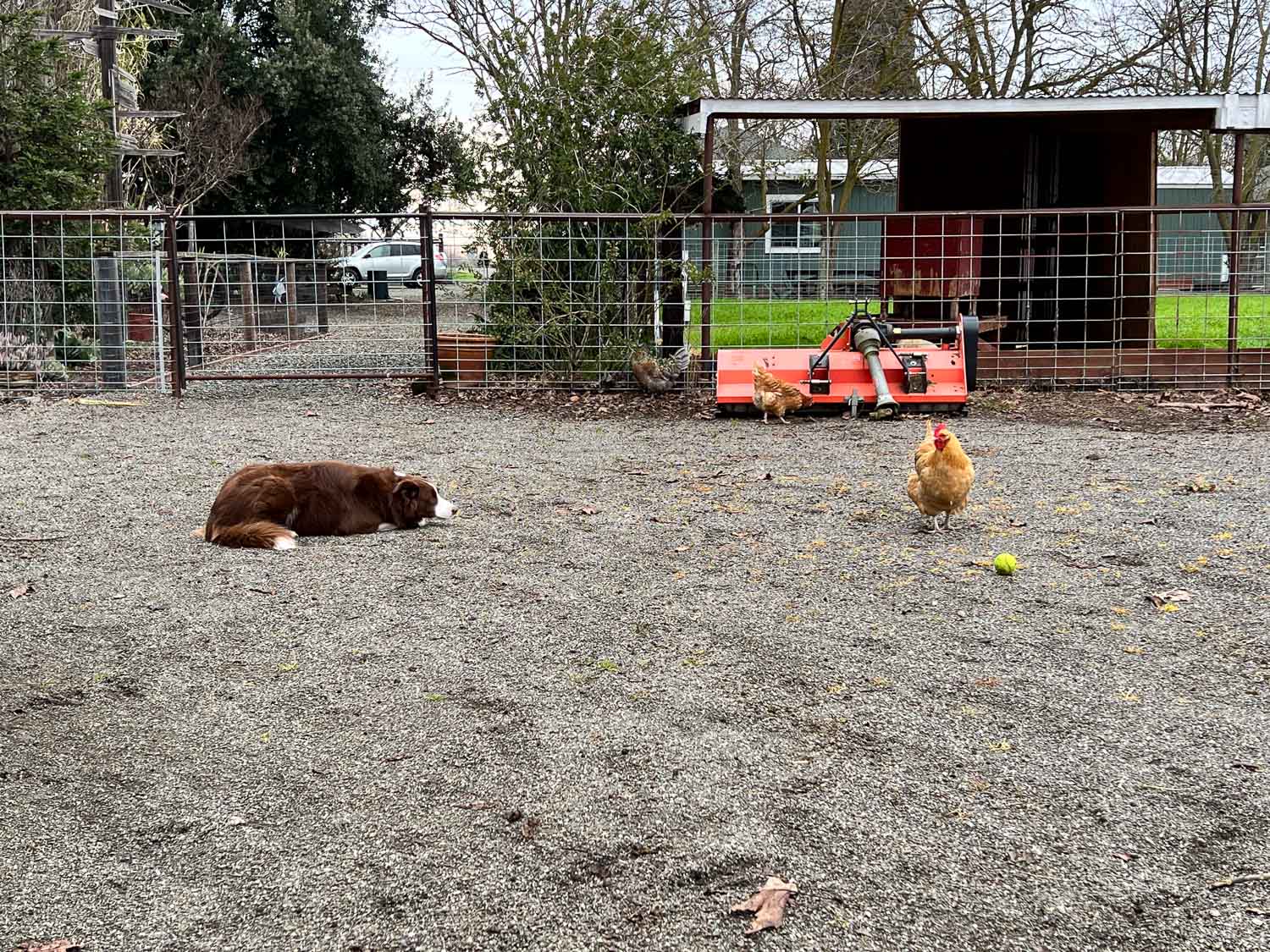
Ginny came to the barn eventually with a ball. Whose ball is this? Chicken or dog?

Trista was in last night because I thought she was next to lamb. I was right, but she sure took her time with it. It was a long time before this labor became anything that was visible.

Back at the Weaving House, one of the things on the list was to photograph the latest v-shawls to promote the class that I will teach at CNCH in April. There is still room!

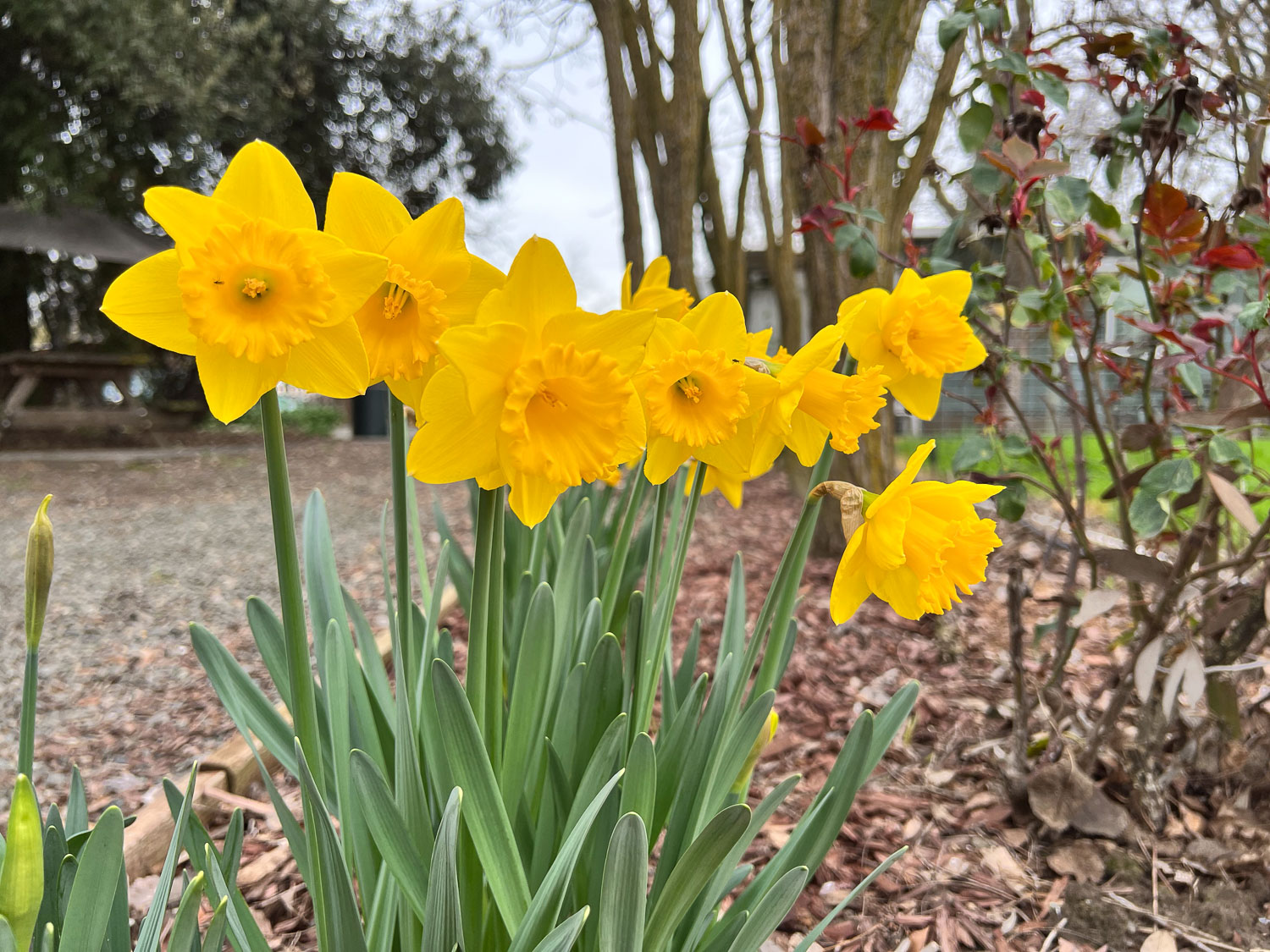
On my many trips back and forth between the barn and the house I always admire my daffodils.

It was about 1 p.m. that Trista finally lambed. It took another hour before she had the seccond lamb. Look at the horns on this ram!

Back at the Weaving House. Jacob shawls are on the loom now. I hope to finish these tomorrow.

We have seen a skunk twice in the last week around the shop. It seems to be living under the shop. Ginny has confronted it. I There is a distinct “eau de skunk” in the air, even in the shop. There are many reasons why it’s not a good idea to have a skunk around. Fortunately it was not under the shop tonight we we could deal with it.

Back to the barn. This is Coco with the first of twins.

Jade came in tonight because…well, because she is Jade. She doesn’t look particularly ready but she sure looks as though she should be. She was due yesterday I think.

Random Farm Photos

This post is just what the title says. You may have seen some of these on Instagram if you happen to notice them among all the others that bombard you.

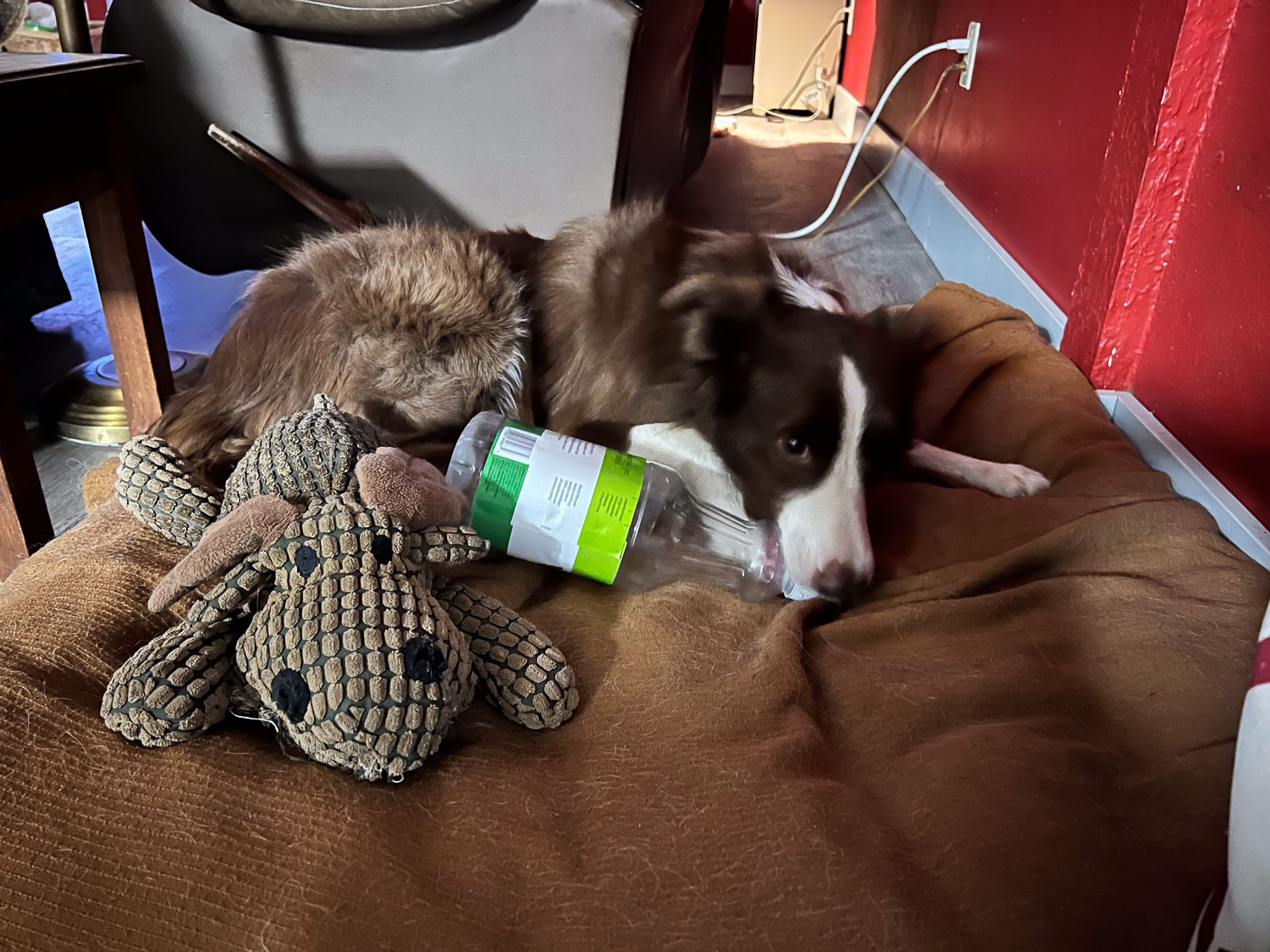
Ginny on her bed. She likes to take things out of the recycle bin on the back porch. That’s why the oil bottle is there. That moose has been a favorite inside toy since she was a puppy. Amazing that at age 9 the moose is still here with only a couple of repairs.

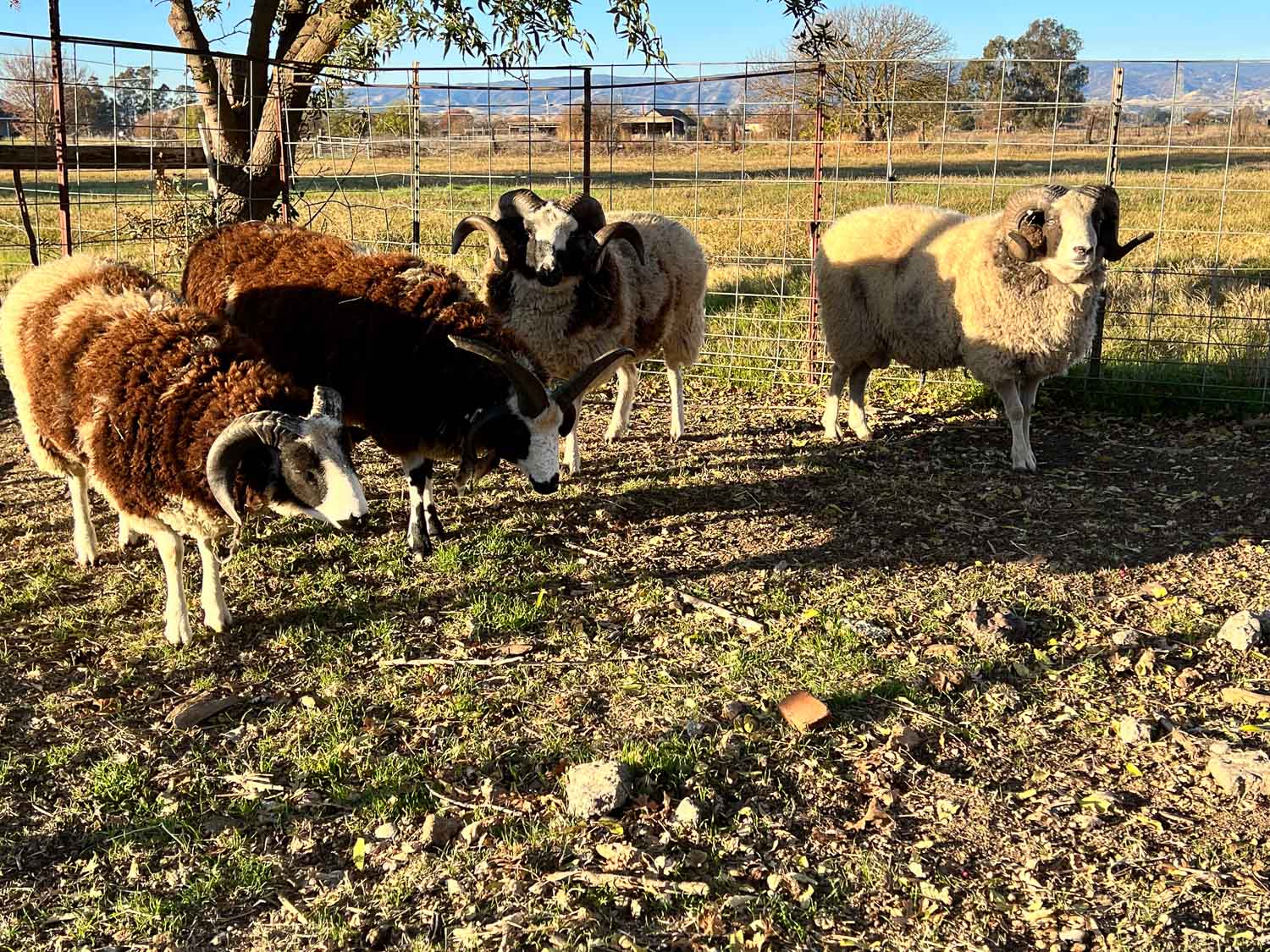
Four Jacob rams with hills in the background.

The rams that are still here after the last culling. Left to right: Meridian Blizzard, Meridian Typhoon (both born in March 2023), Hillside Gabby’s Barrett, and Fair Adventure Horatio (both born in 2021). There will be lambs sired by all of these rams in February.

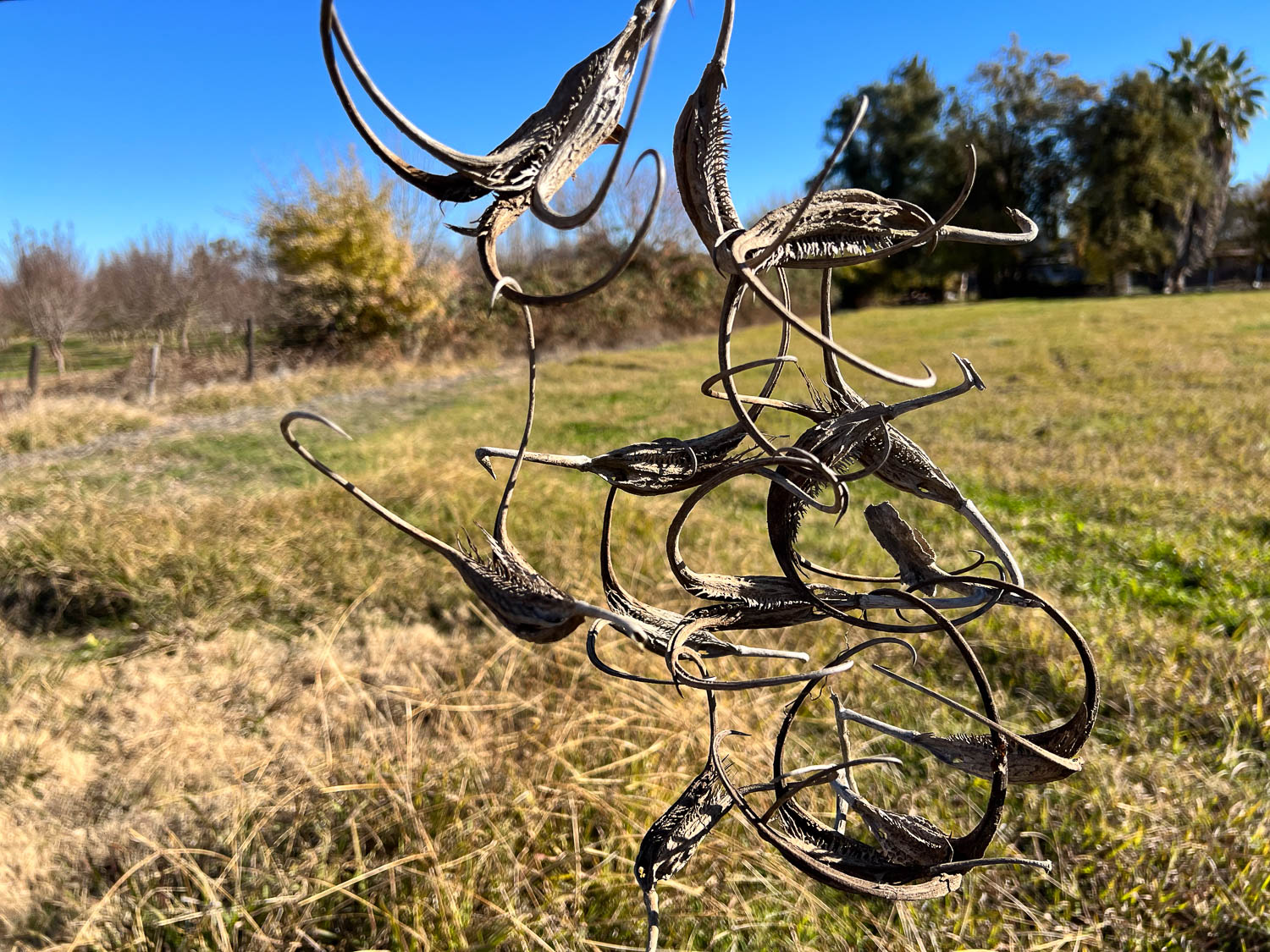
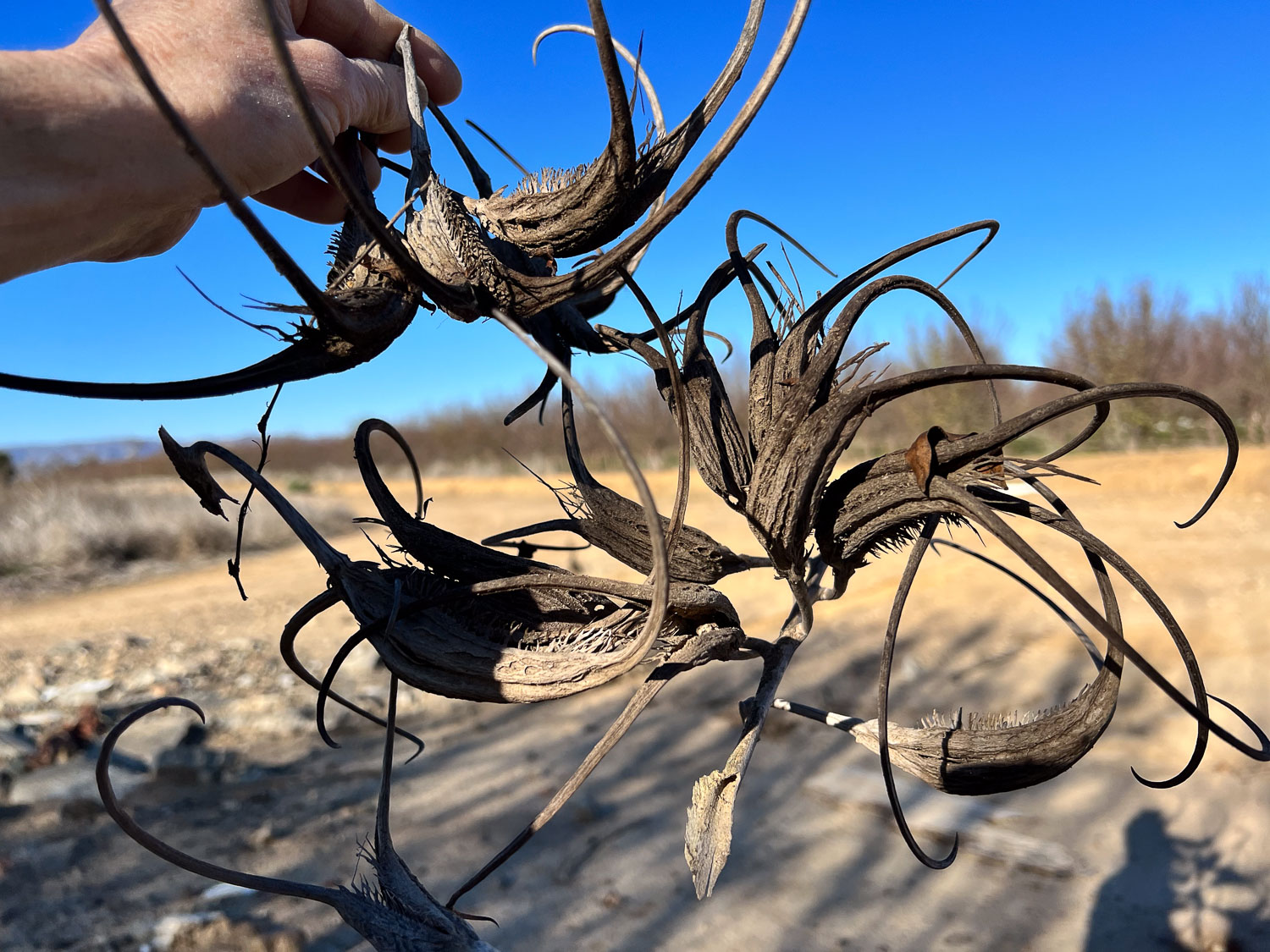
Devil's claw seedpods dried out so they are open. Pasture and trees in the background.

Devil’s claw pods. I have these listed for craft or decorative use on the website. I had an order the other day so I thought I’d take more photos while I was gathering them. Not only do they get tangled up with each other, the points on those claws are very sharp. These are not a good plant to have around when you’re raising fiber animals. If I see them on the sheep side of the fence they are removed. I gather these from places where there are no sheep.

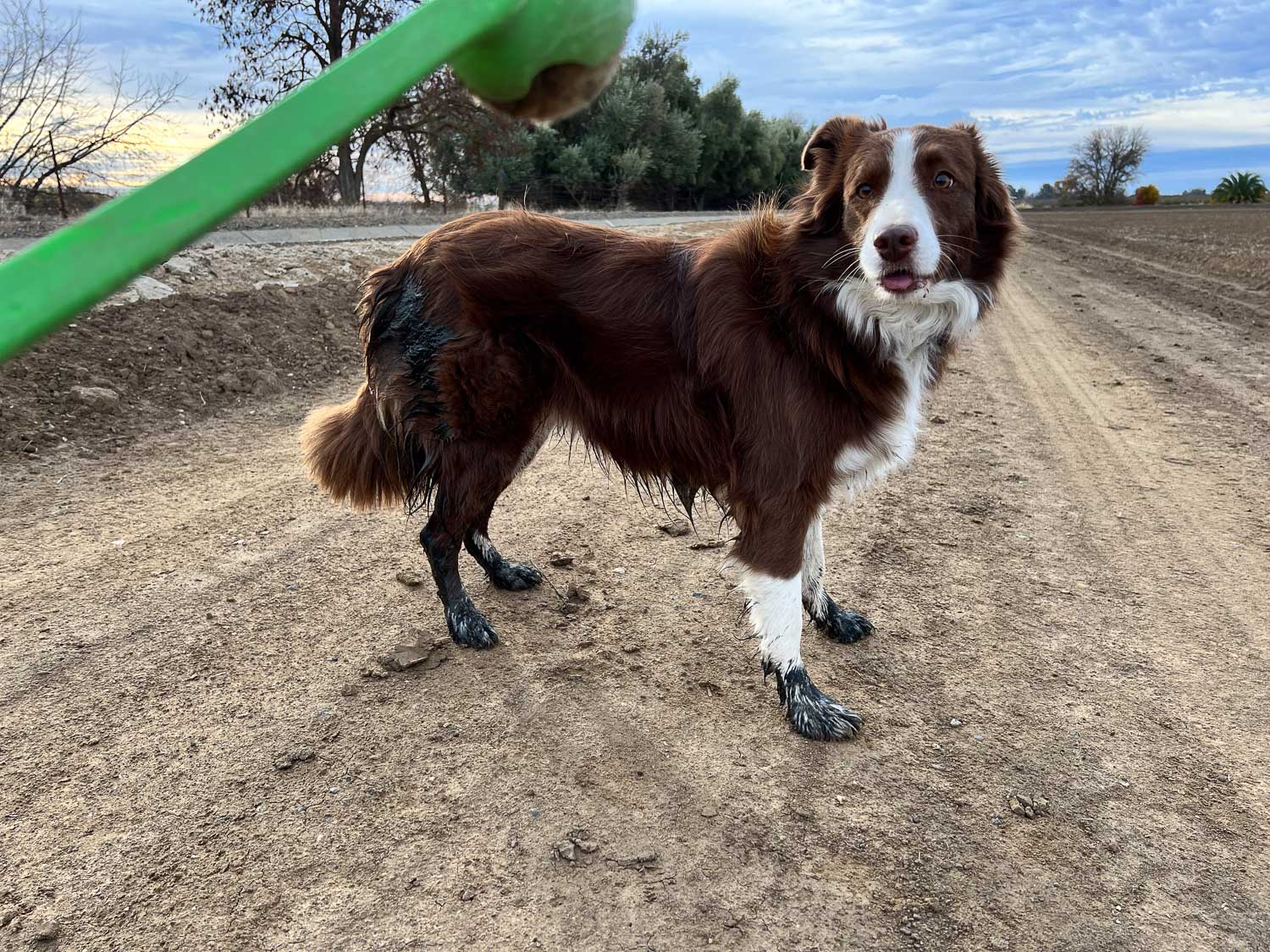
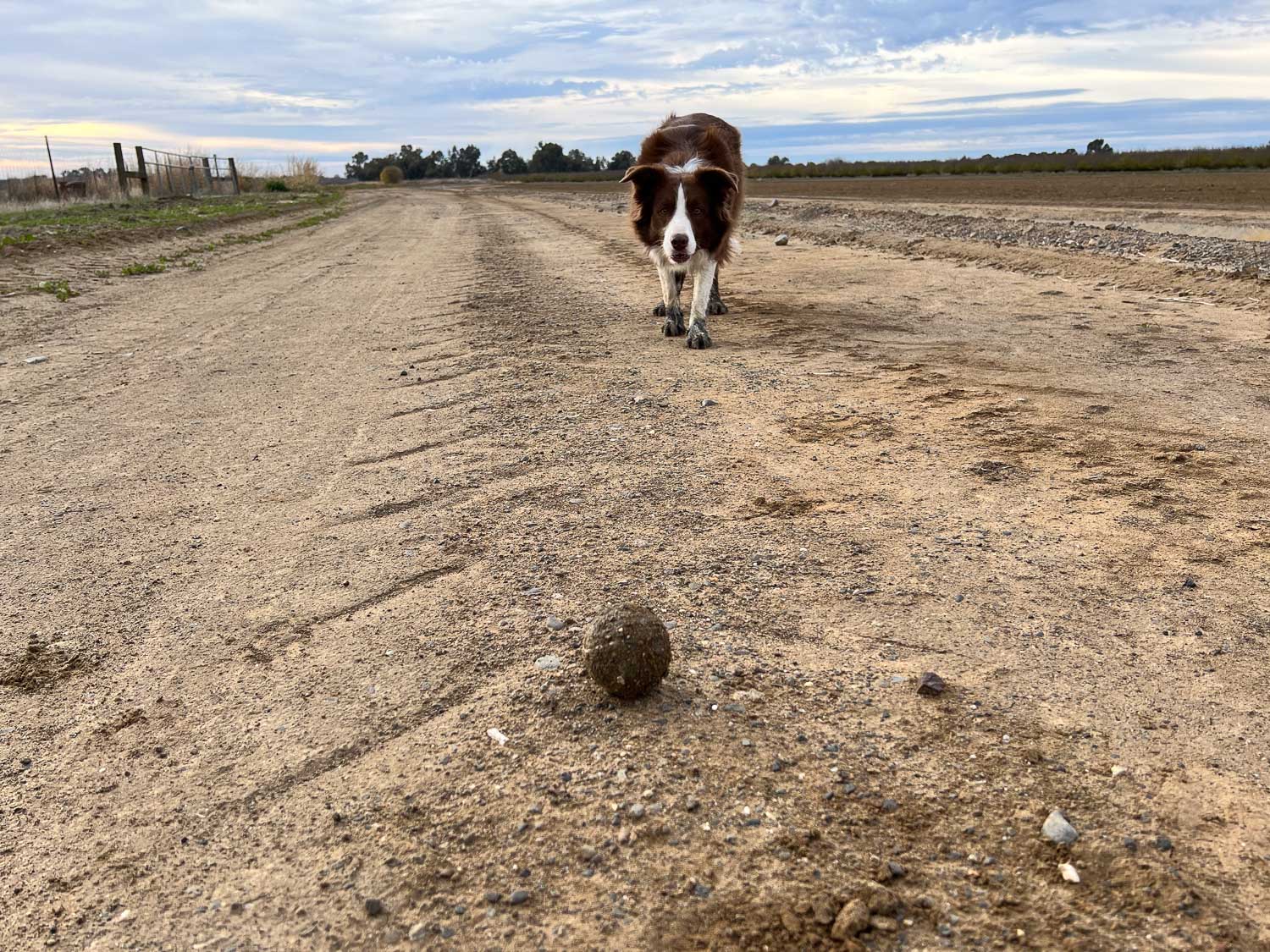
Across the Road with Ginny yesterday before the rain. There is hardly any water in the cement ditch now, but what is there is stagnant and slimy and muddy. Ginny was hot from chasing the ball and thought it was a good idea to lie down in that.

Border Collie focus.

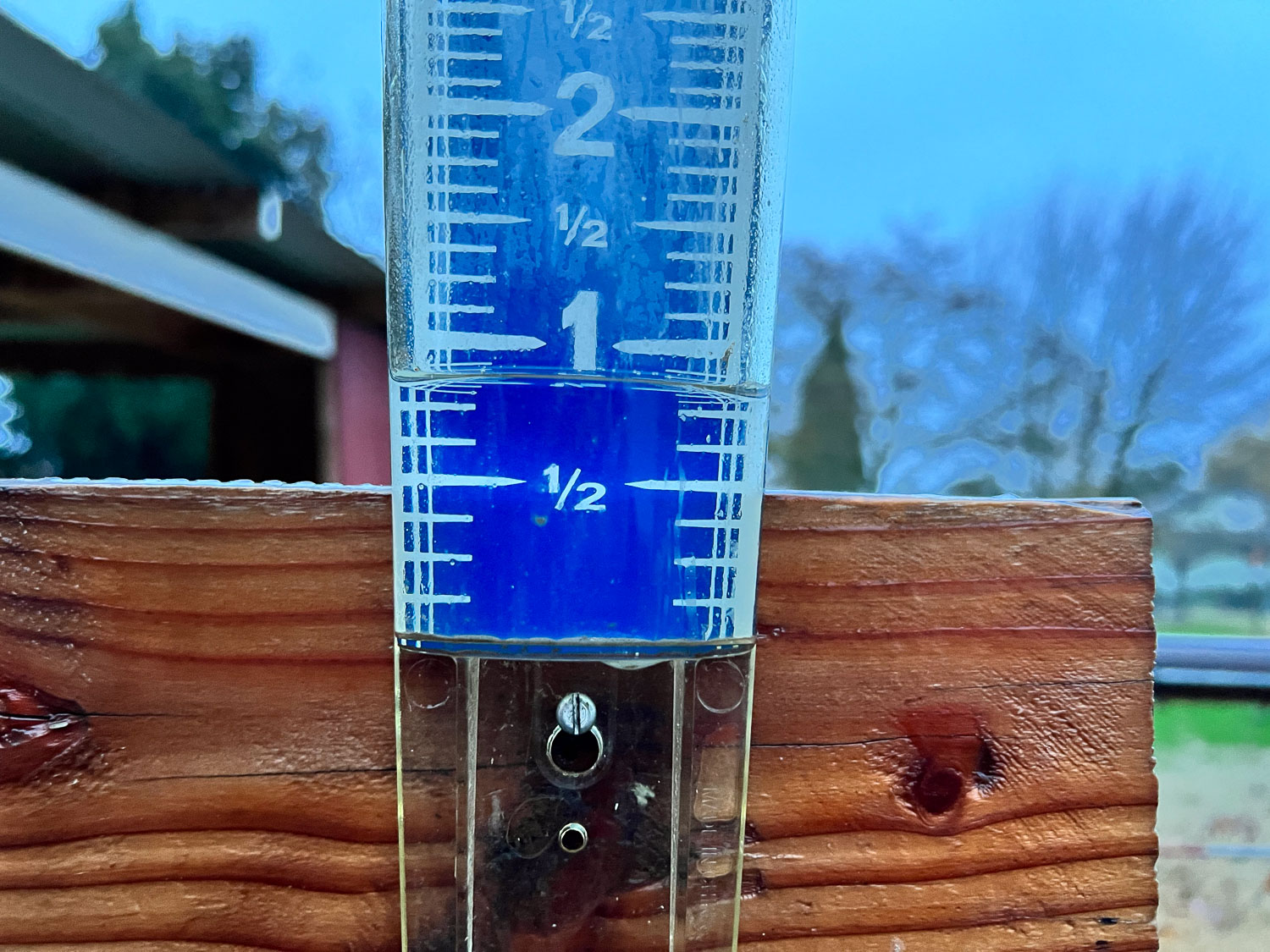
This morning’s look at the rain gauge. It’s about time we started to get some real rain.

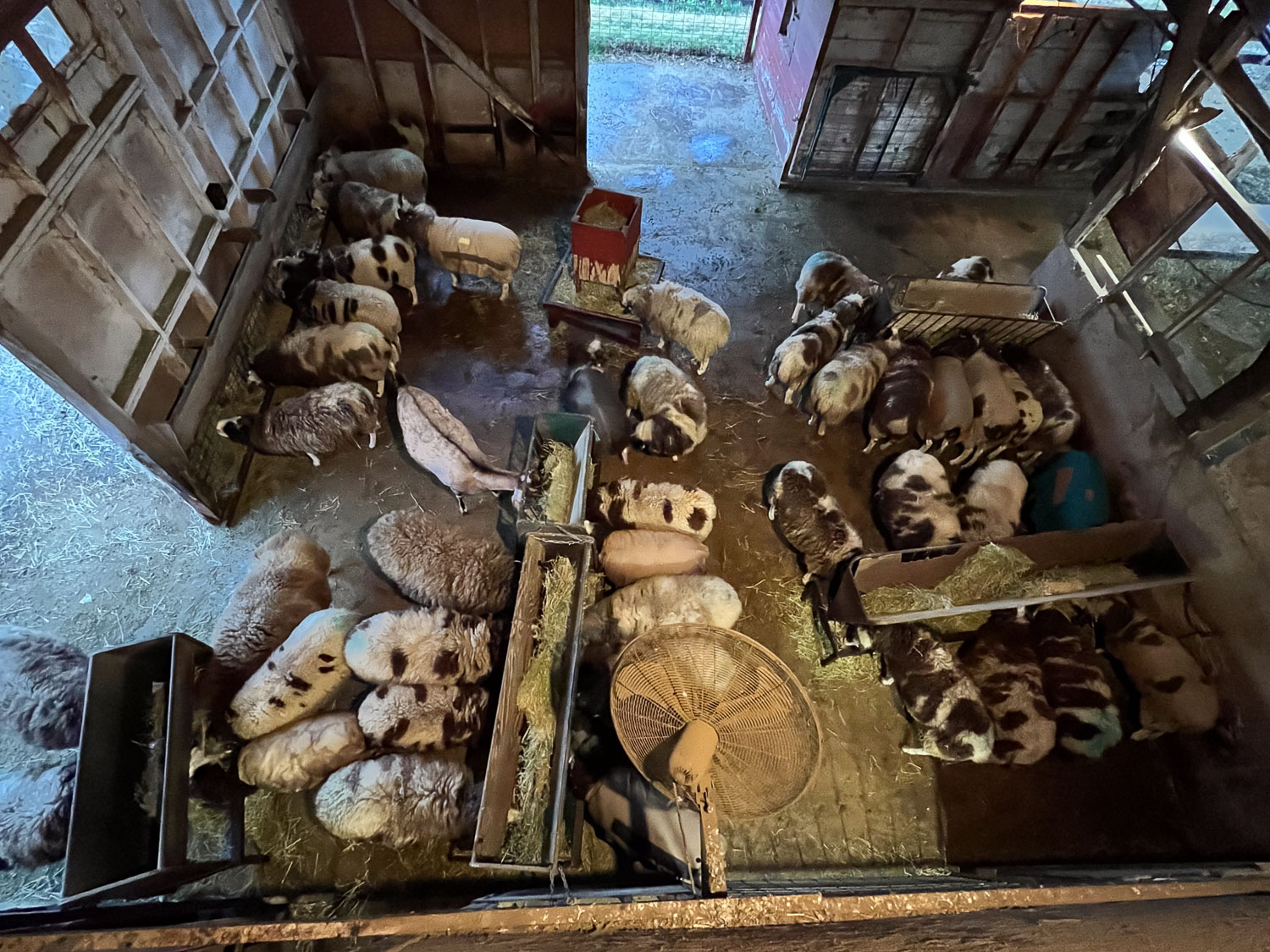
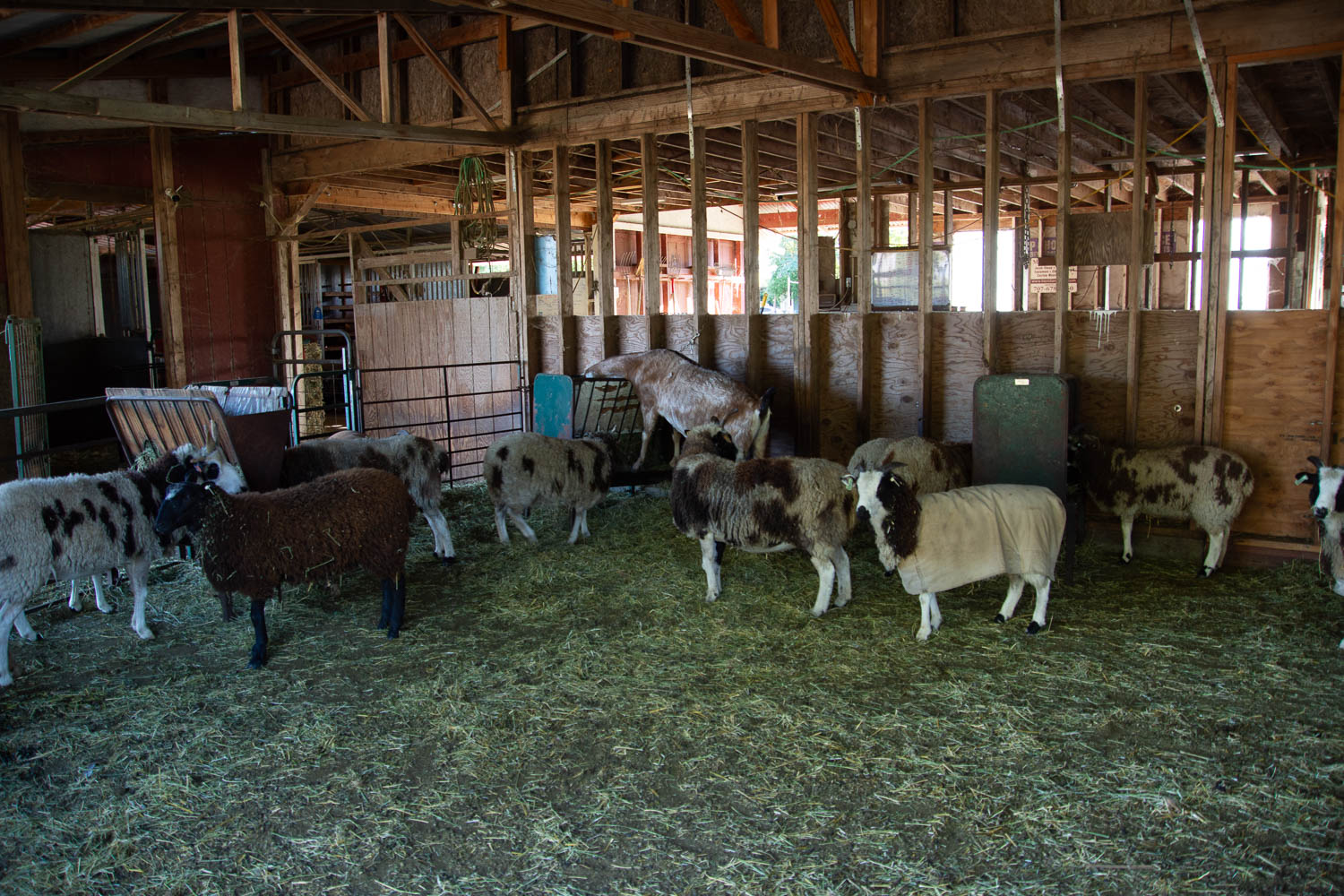
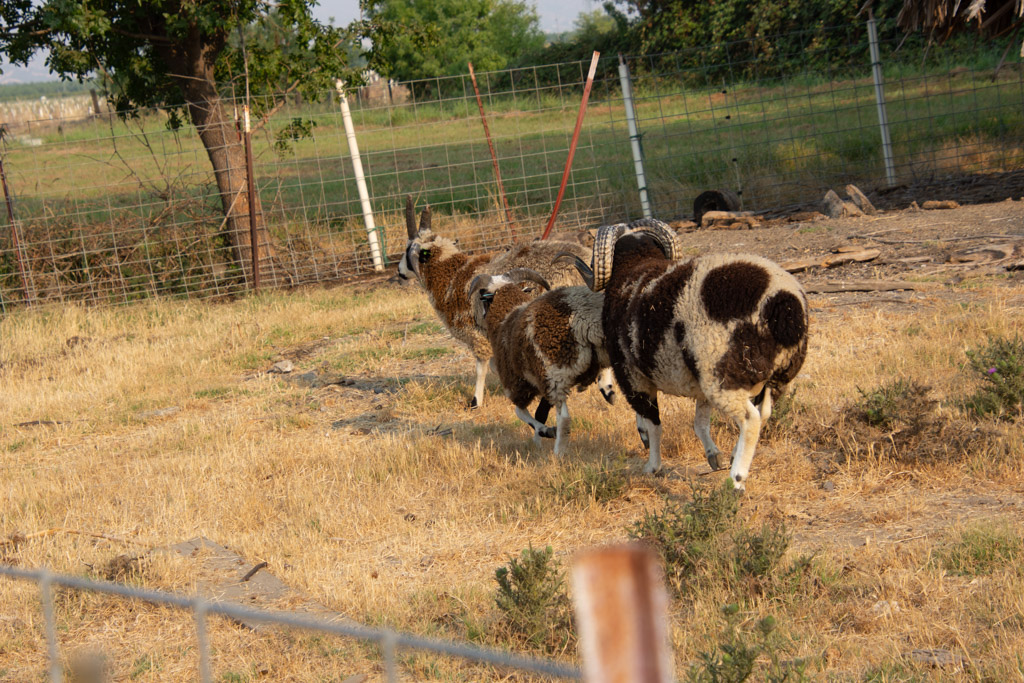
Most of the flock after feeding in the morning. I think I count 40 sheep here…and a goat.

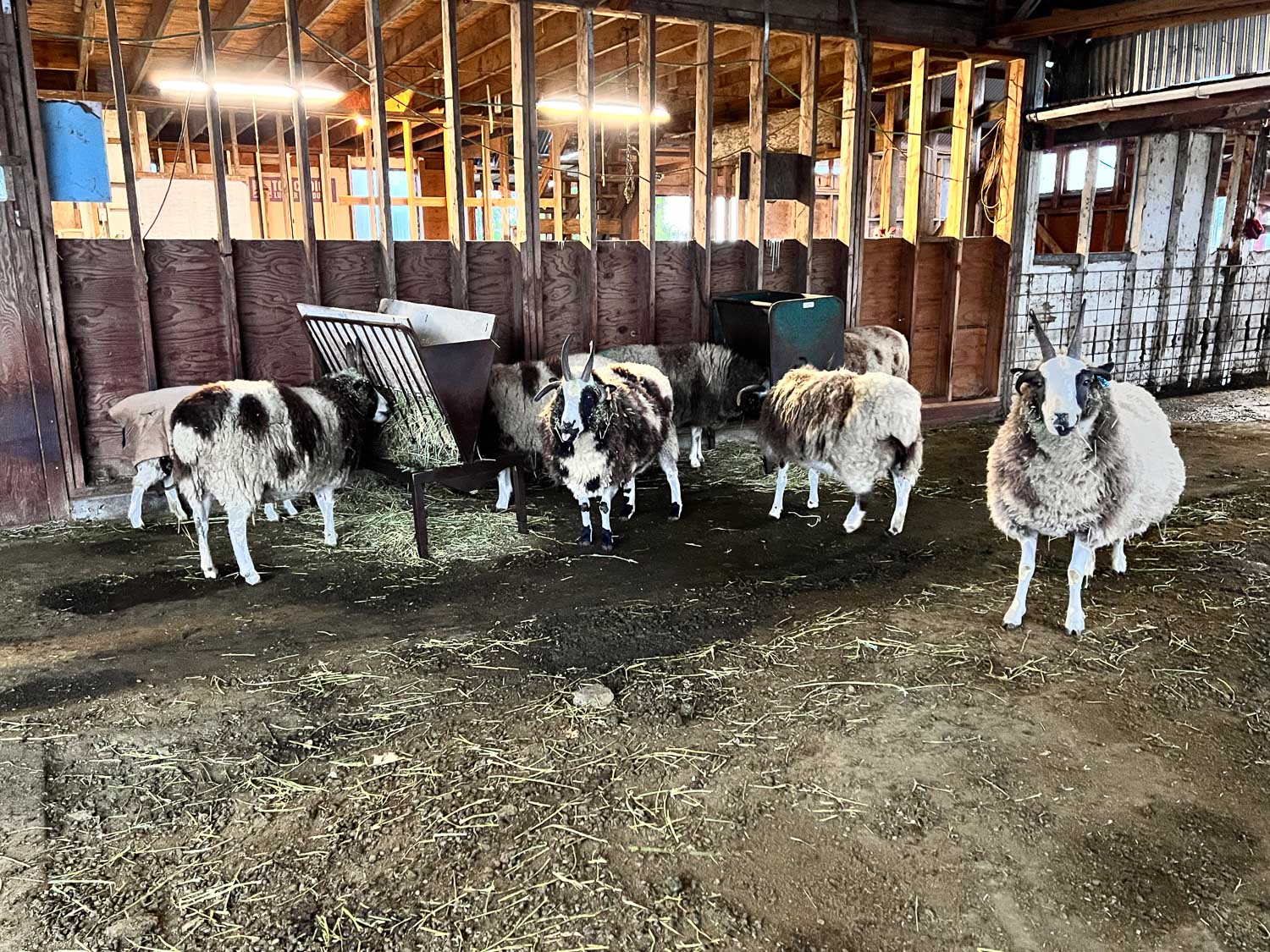
There are eight sheep here so there must be a few at another feeder. The hardest question to answer is “how many sheep do you have?” I think there are 53 ewes, 2 wethers, and 5 rams now.

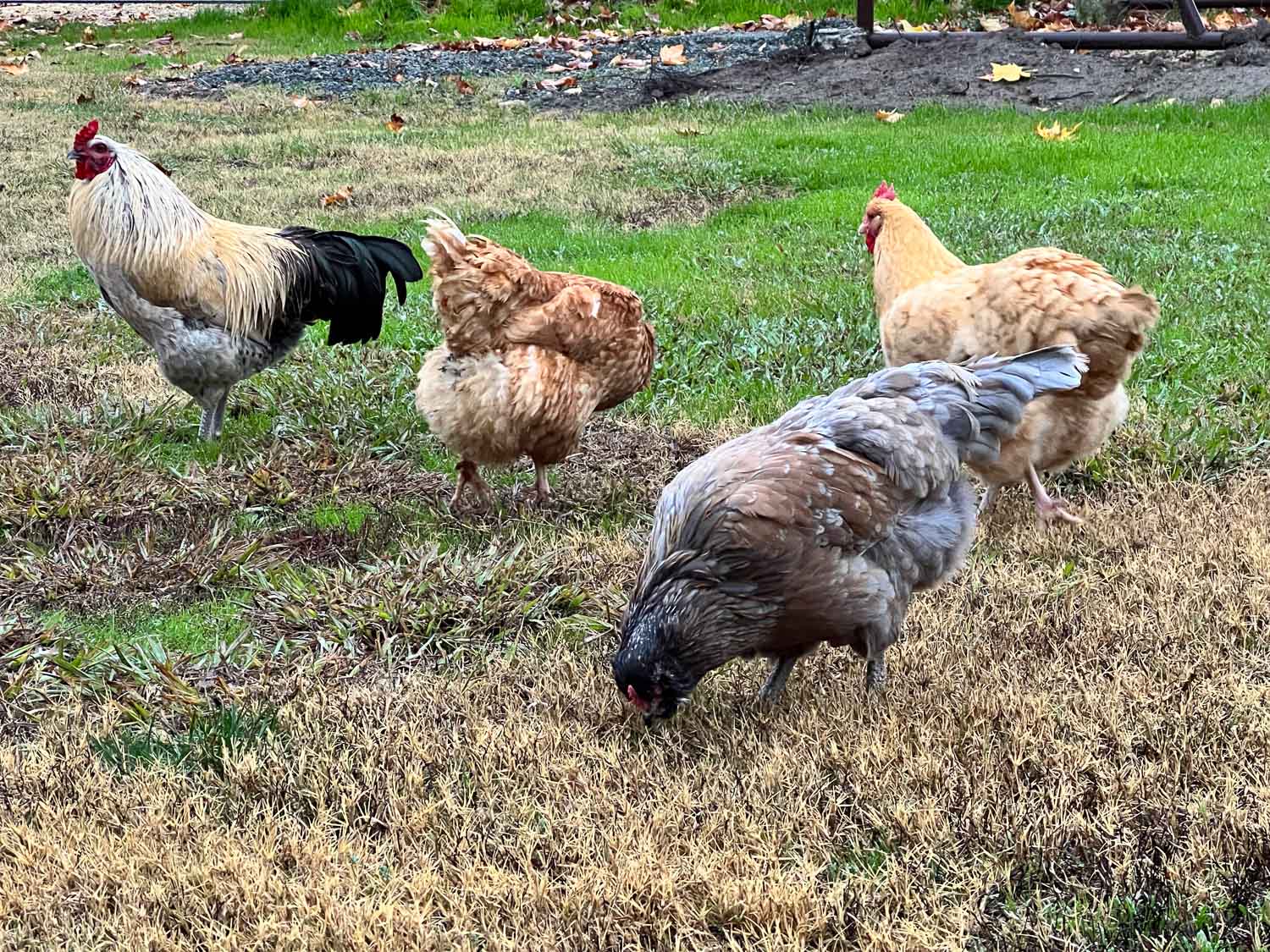
And 4 chickens. The rooster is a new addition.

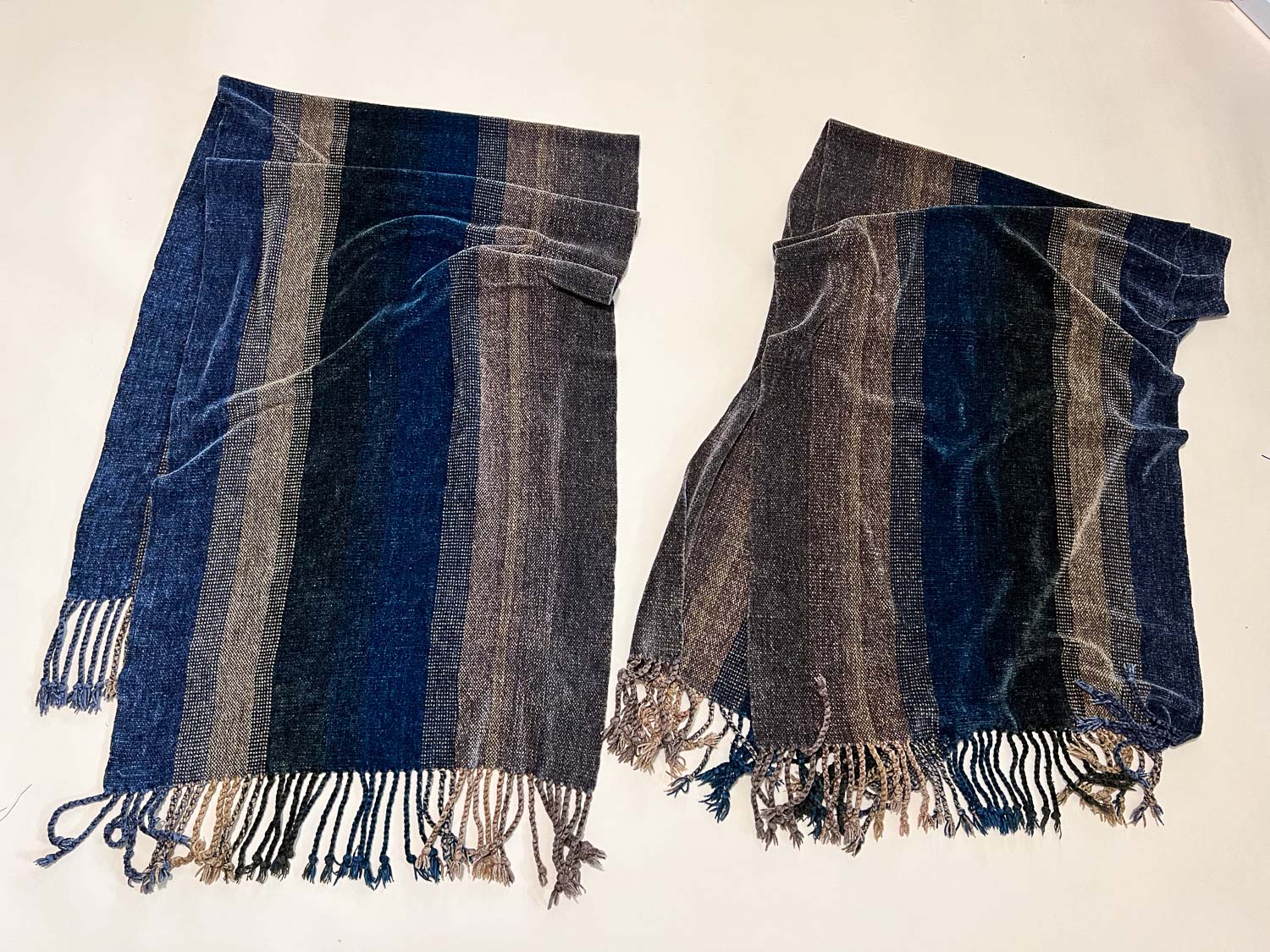
I’ve been finishing up some weaving projects. I usually weave rayon chenille scarves, but decided to weave a series of shawls. These are two different shawls on the same warp with slightly different weft colors

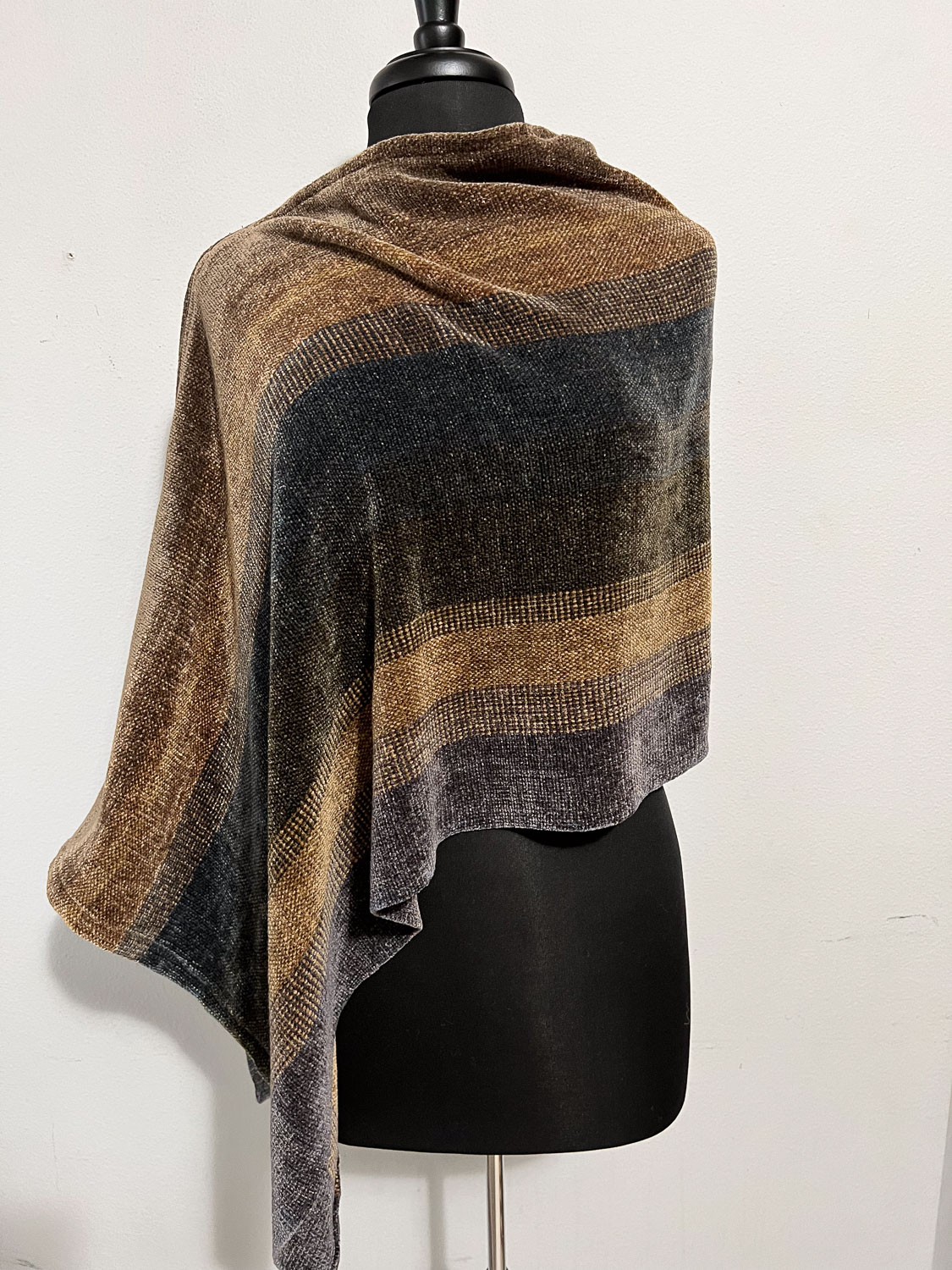
This is on the same warp with a different color weft, but stitched together to create a poncho of sorts. I really like how it came out. Even though the sewing adds a bit of work, I think it takes far less time than twisting all those fringes. I hope that this style is popular because I’d like to make more of these.
Breeding Season — Almost Over?

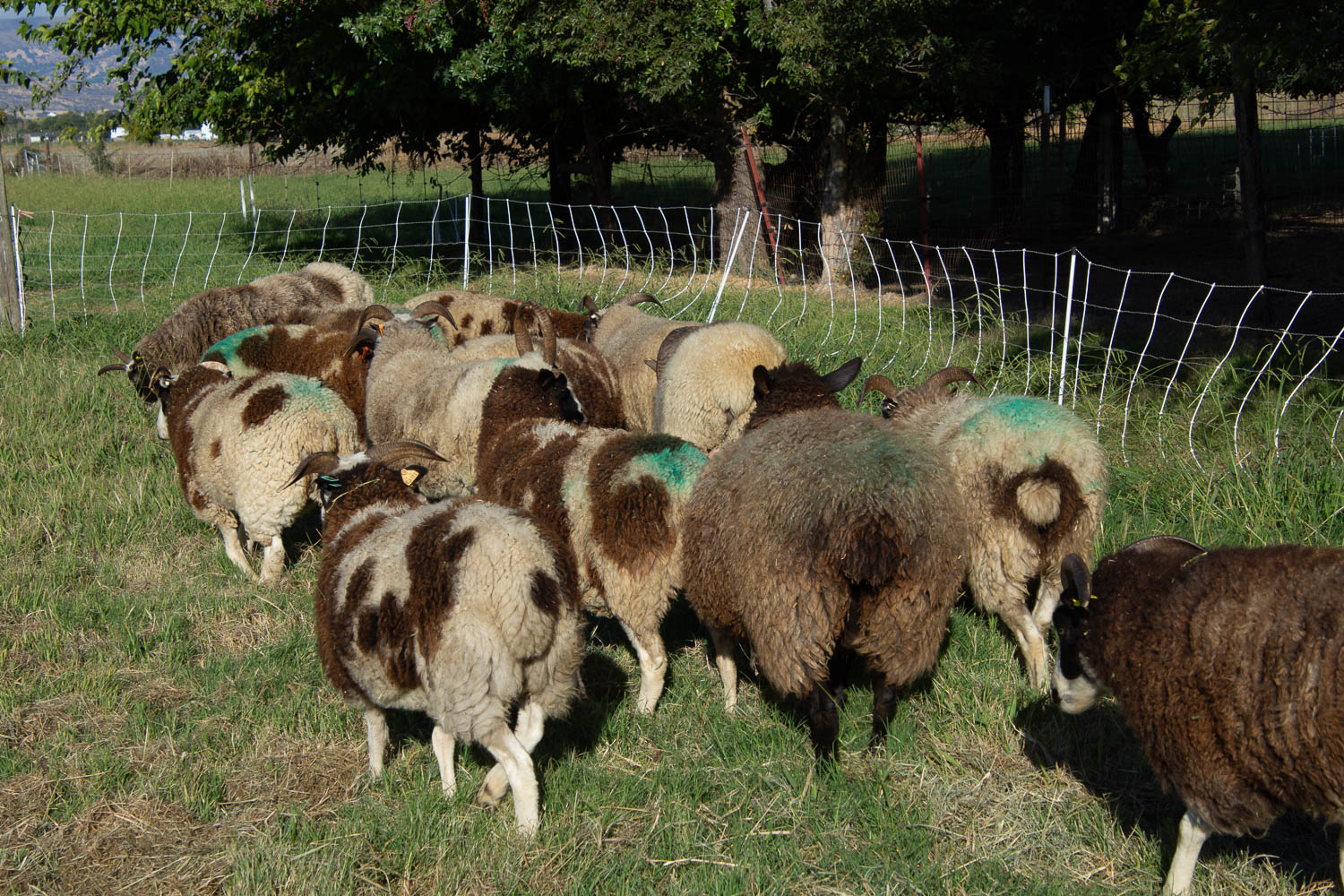
Can breeding season be over already? We put the rams out only 16 days ago and almost all ewes are marked! That makes sense because the sheep heat cycle is 16-17 days. Jacob sheep are seasonal breeders as are most breeds, and this is the season. Even though they may have all been bred we’ll keep the rams out at least another two to three weeks. I changed the marker color from green to orange. Now would be the time that I’d start to see orange on top of green if a ewe I thought was bred really was not. If there were several of those in one group that would mean that ram has a problem. Last year was the first time I had an infertility problem in the flock (one ram who got sick), and that extended lambing season as it was the clean-up ram that bred some of the ewes that were supposed to be bred earlier.

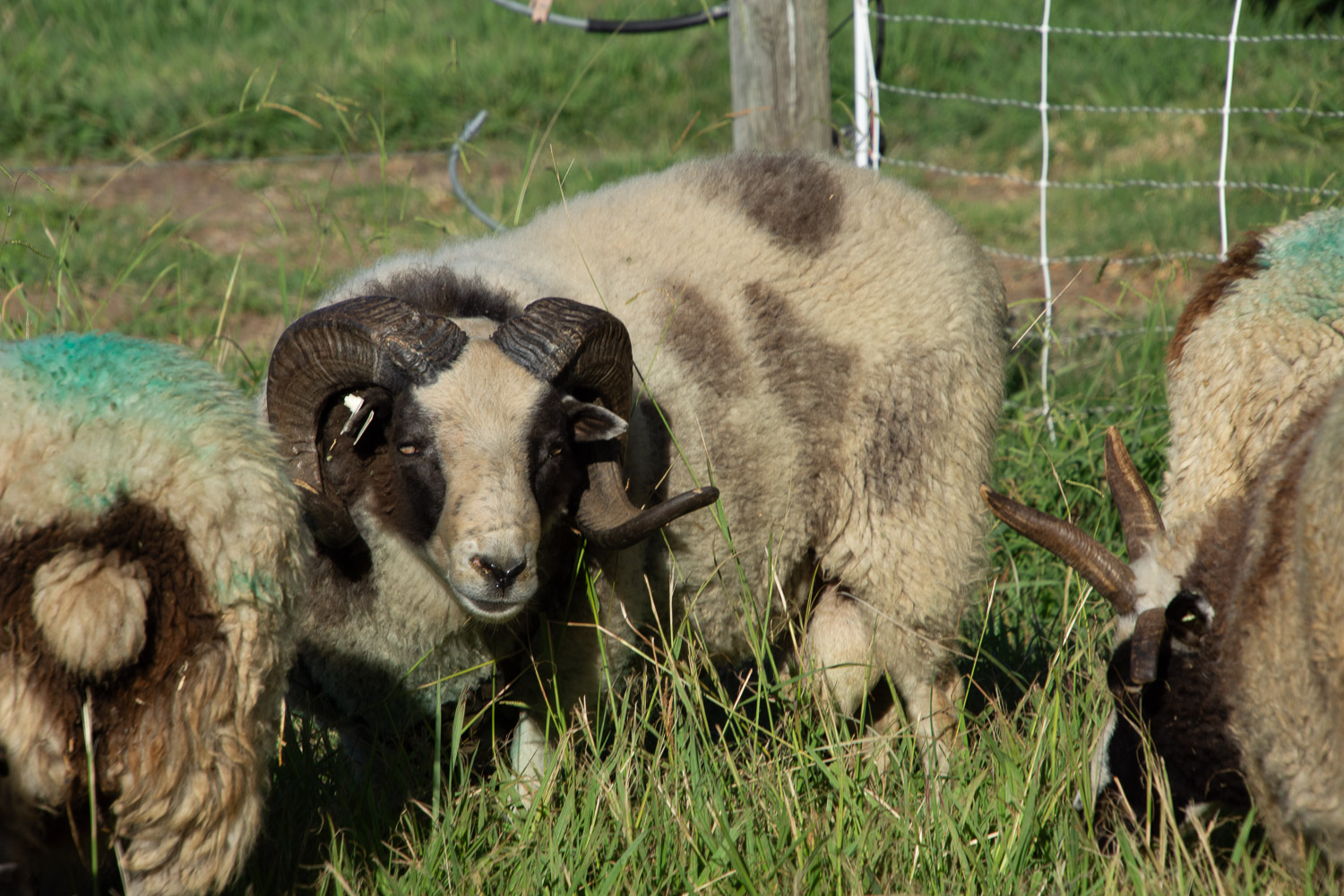
Hillside Gabby’s Barrett came from Hillside Farm in Michigan a couple of years ago. That’s an impressive set of horns for a ram that is just 2-1/2 years old. There are 13 ewes with him and all are marked as of today.

Barrett had a green marker in the first photo but I just changed to orange. The last two ewes were marked yesterday and today with orange.

I brought Fair Adventure Horatio here from Colorado in June. He is also 2-1/2 years. He has 19 ewes with him.

Horatio’s group walking out to pasture a couple of days ago.

This is today’s photo.

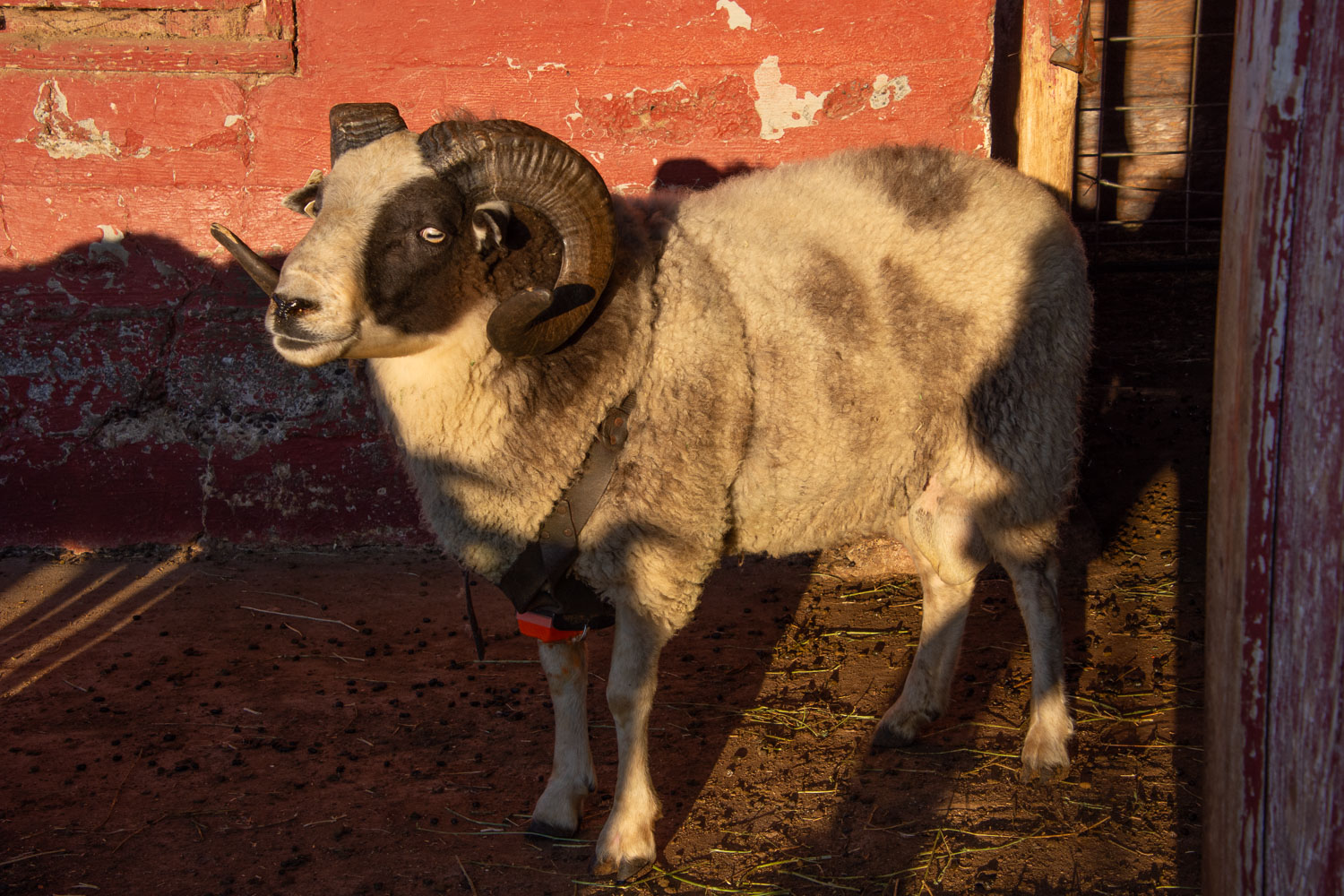
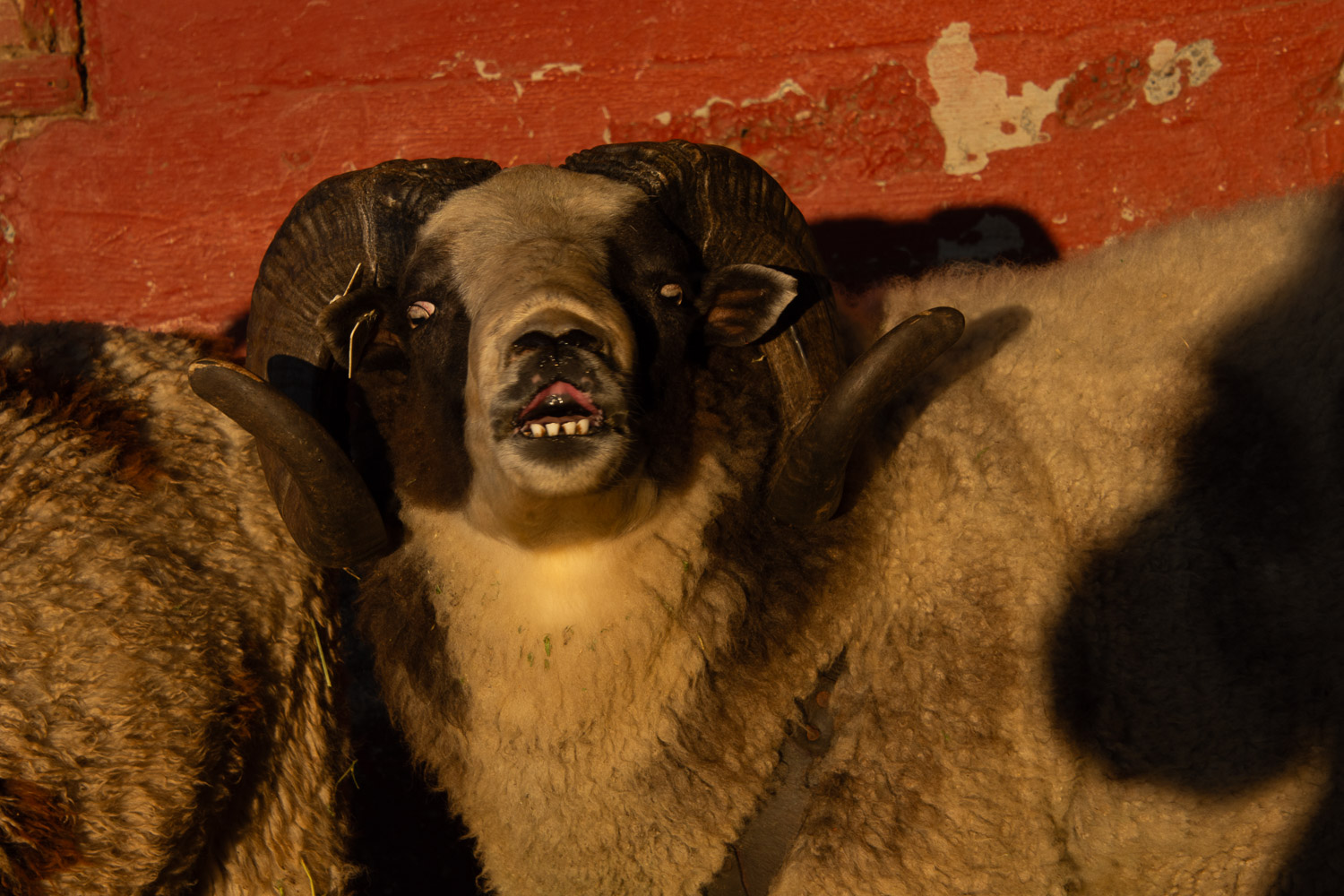
He has a bit of a demonic look here! Actually, this is common behavior for rams with ewes, and it is called Flehmen. From the linked website: “Flehmen is a behavior exhibited primarily by males, occasionally by females, in which the animal raises the nose into the air, with the mouth slightly open, to facilitate pheromone detection by an odor detection organ in the roof of the mouth.”

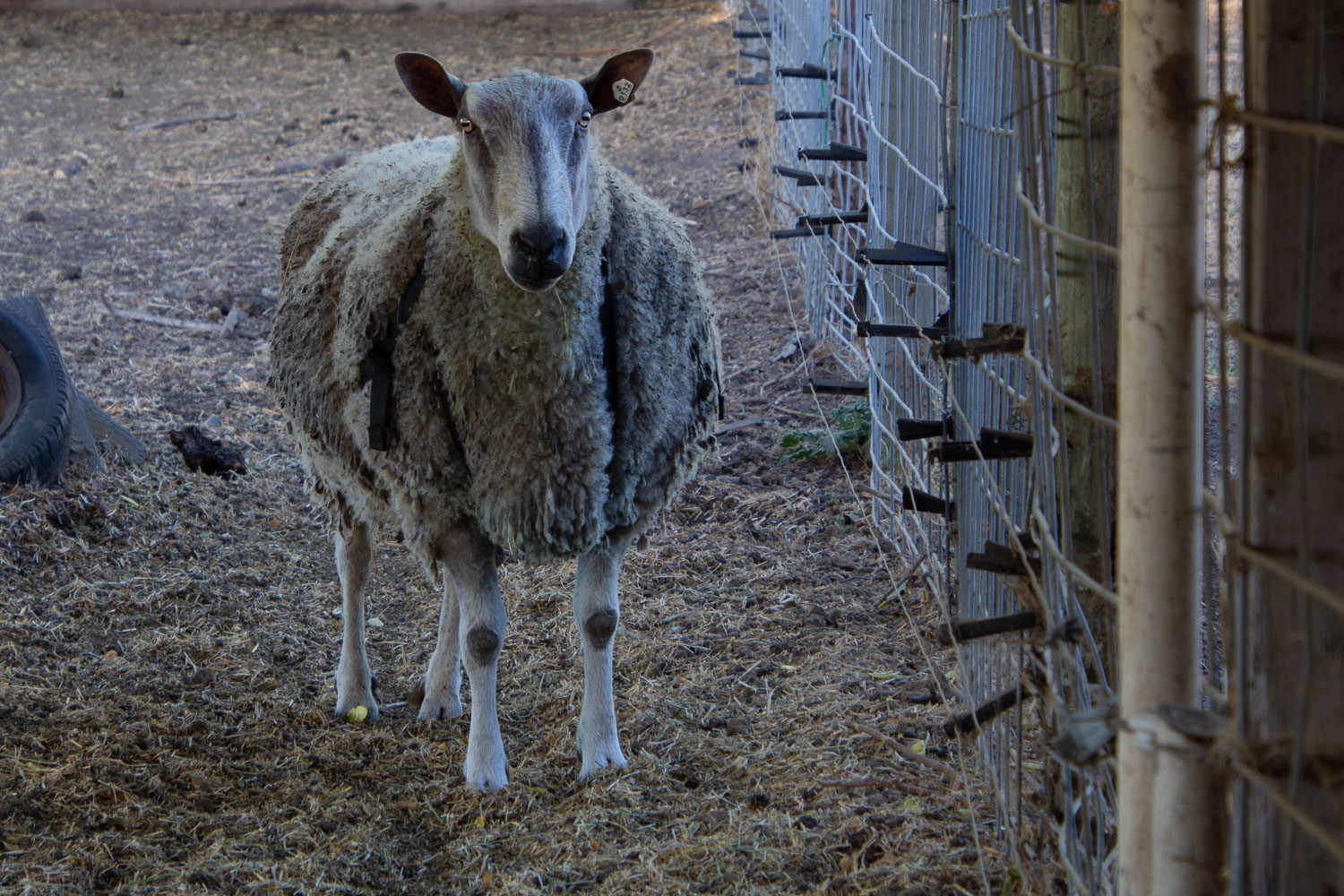
Peyton is a BFL (Bluefaced Leicester) ram and I breed him to a few of the ewes to get a few bigger lambs for the butcher market. The crossbred lambs are black.

Meridian Blizzard was born in March and he has three ewes with him. He will be shown at Lambtown this weekend along with two of the ewes in his pen.

So far these are all two-horn rams. I would normally have included a four-horn ram in the line-up.

Patchwork Townes was going to be the main ram, as he was last year. About three weeks ago I found him dead. He liked to beat up the fence and he somehow hooked the tips of those upper horns in the welded wire fence at about a foot from the ground. When we found him the only way we could get him out was to cut the fence.

Meridian Silverado was the other four horn ram I could use. However I had him fertility tested because he was sick during the summer and he failed the test. I think it’s likely he had bluetongue, a virus carried by midges this time of year. It can cause infertility and I think that’s what happened to Barrett about half way through the season in 2022. Silverado is still here but not in the breeding line-up. Blizzard is his son.

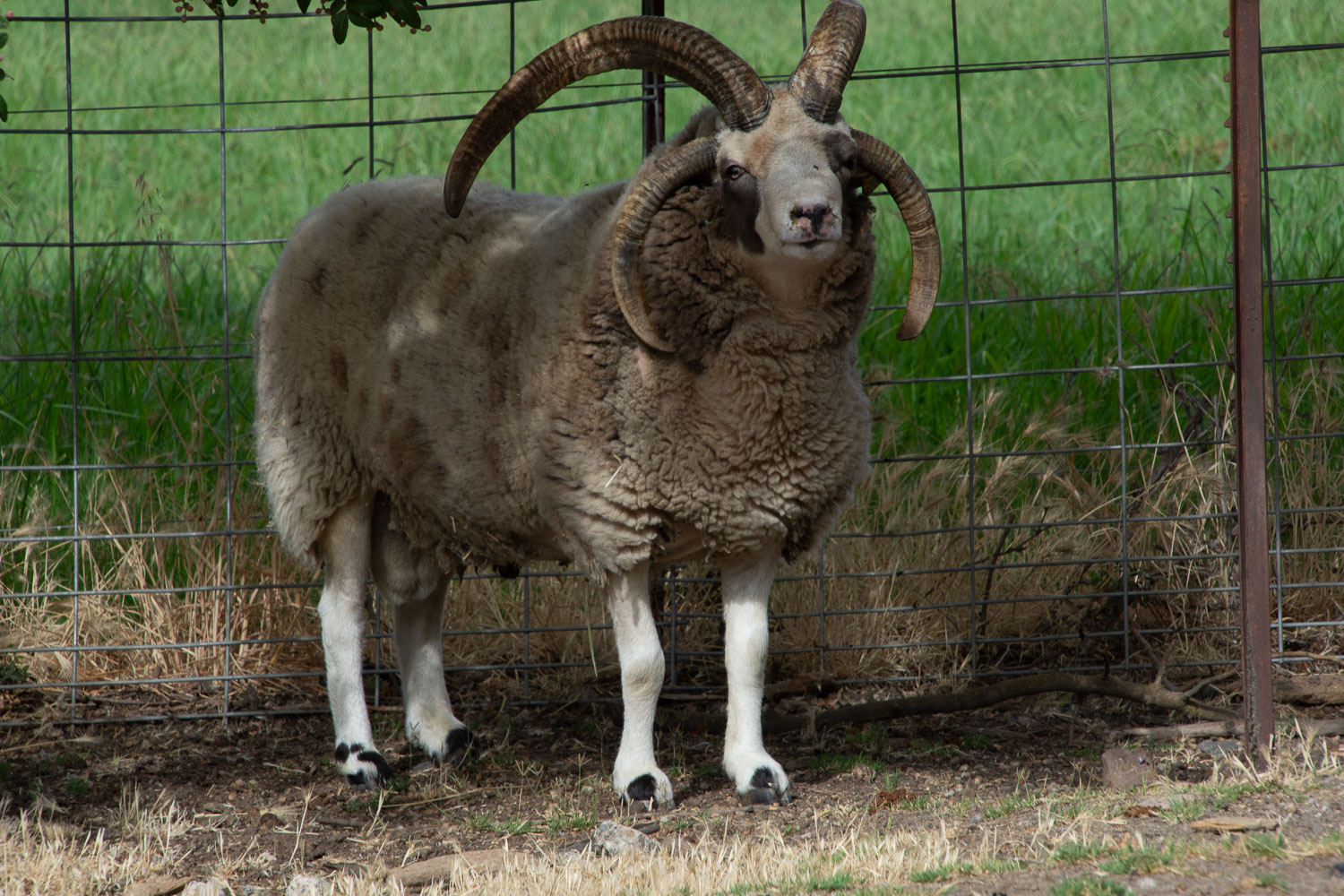
I wanted to use at least one four-horn ram and the one I had my eye on ended up with disappointing horns and will be culled. This one is Typhoon. He was almost sold this summer when I was going to Oregon. Right before that trip he broke both his lower horns and the buyer substituted another ram. I’m glad she did because Typhoon has gorgeous fleece and his horns look good now. We don’t recommend breeding to a ram lamb until after he is registered at 6 months. However I needed to breed before waiting another month for this guy to grow up. The breed standard for Jacob Sheep requires that sheep be no more than 85% black. This ram is close, but I looked at his baby photos.

When you see Typhoon as a lamb you can see that he just makes that 85% limit. At least I think so. It’s often hard to know for sure when they are in full fleece.

Typhoon has 7 ewes.

We decided to not breed the 2023 ewe lambs this year. We had too many lambs last year for the conditions (rain and more rain) and it was too crowded. So this group is not being bred. There are also a few cull ewes and a goat in here.

Looking forward to February 10, 2024!

Rams

I needed to update ram photos on the website. This is the adult ram page and the ram lamb page. I need to make decisions about which rams to keep and which to sell and how many ram lambs to continue to evaluate.

Right now there are five mature Jacob rams here and several ram lambs.

Fair Adventure Horatio is the most recent ram. I brought him home from Colorado where I sold Turbo (blog post from Estes Park). He is not with the other rams because I didn’t want to disrupt the pecking order. He has had a ram lamb or two with him for company, but after breeding season he will go with the other rams.

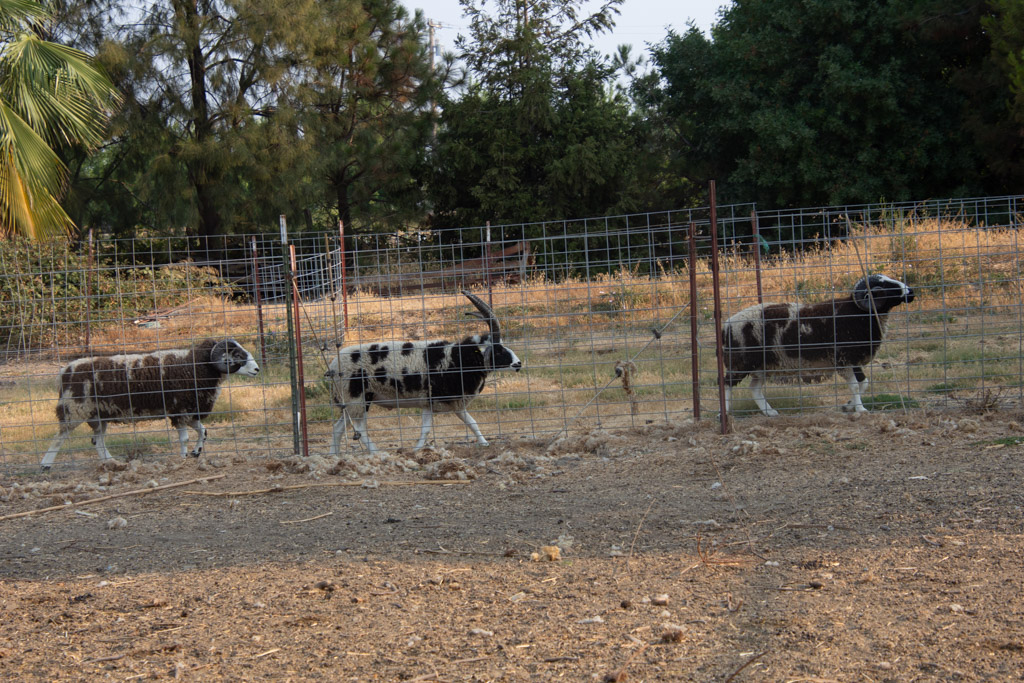
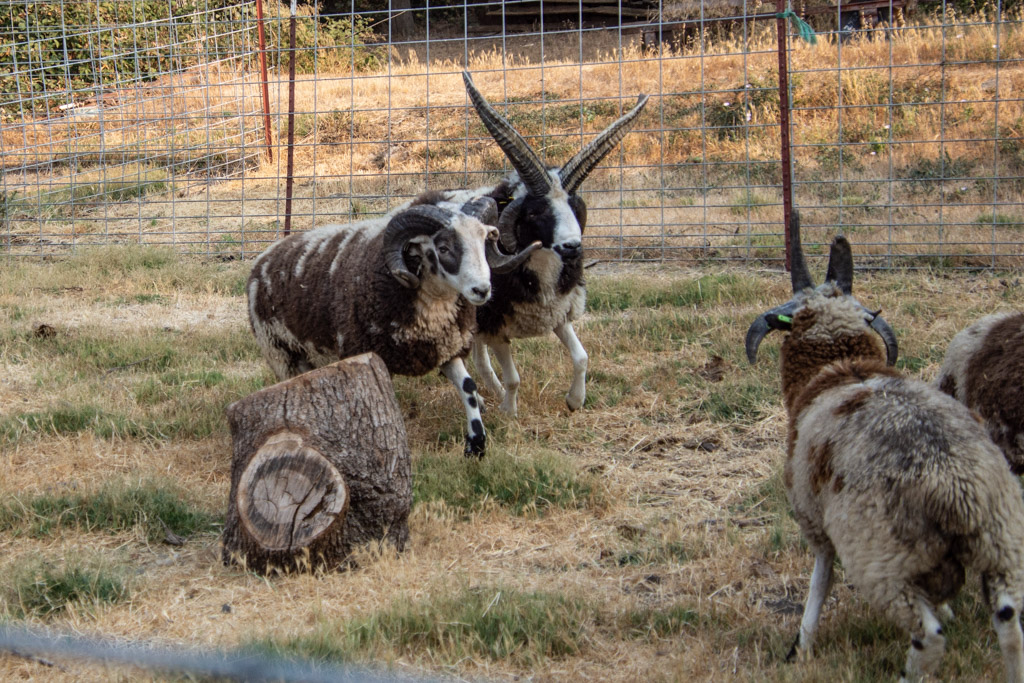
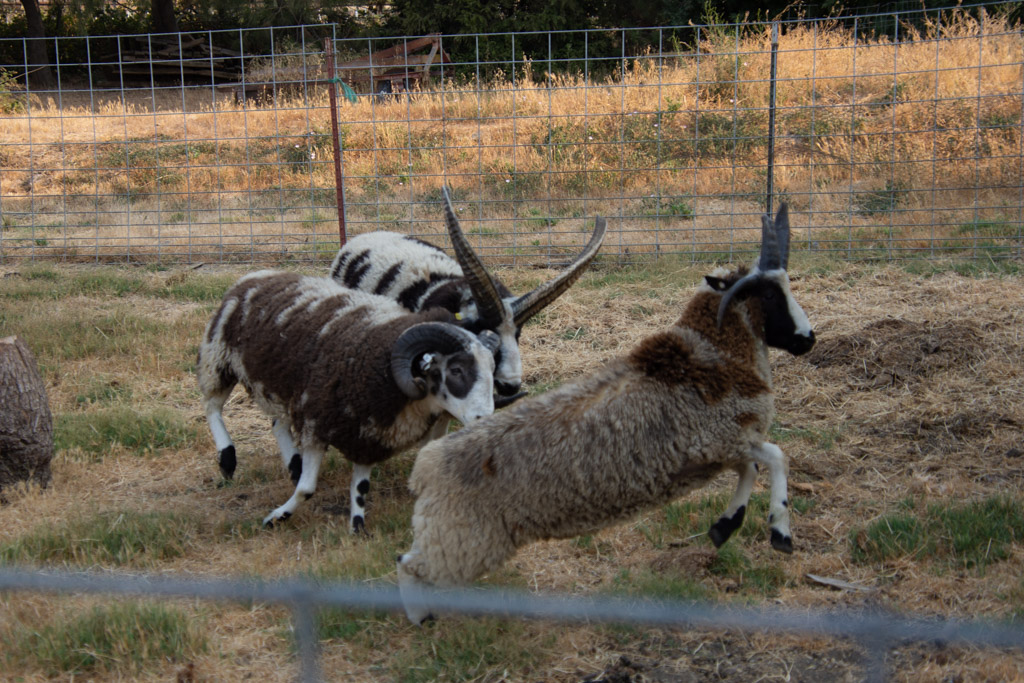
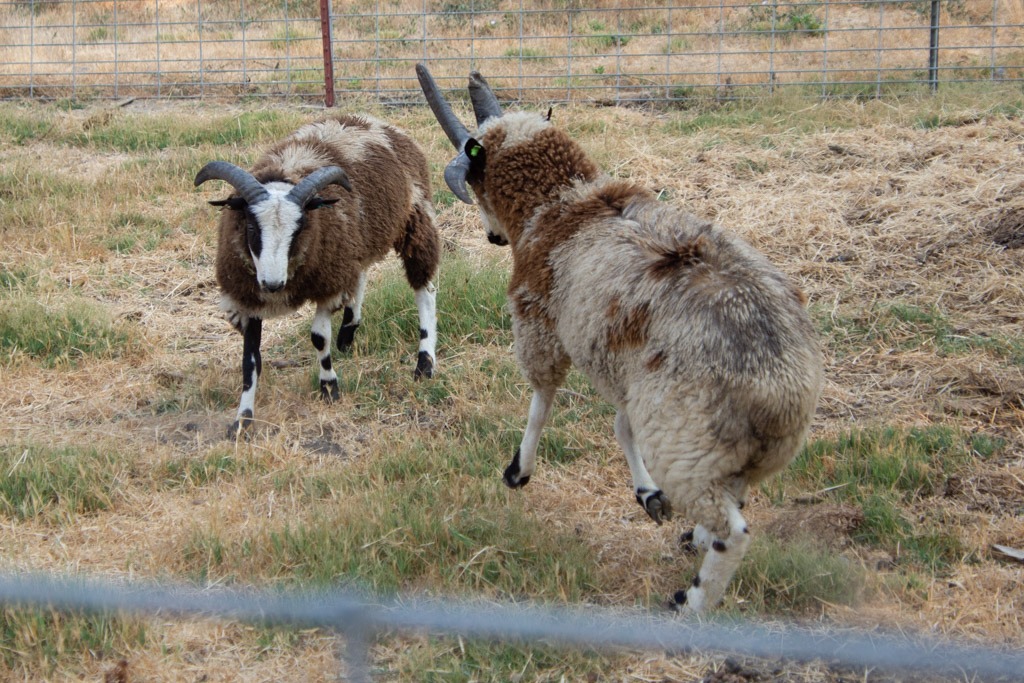
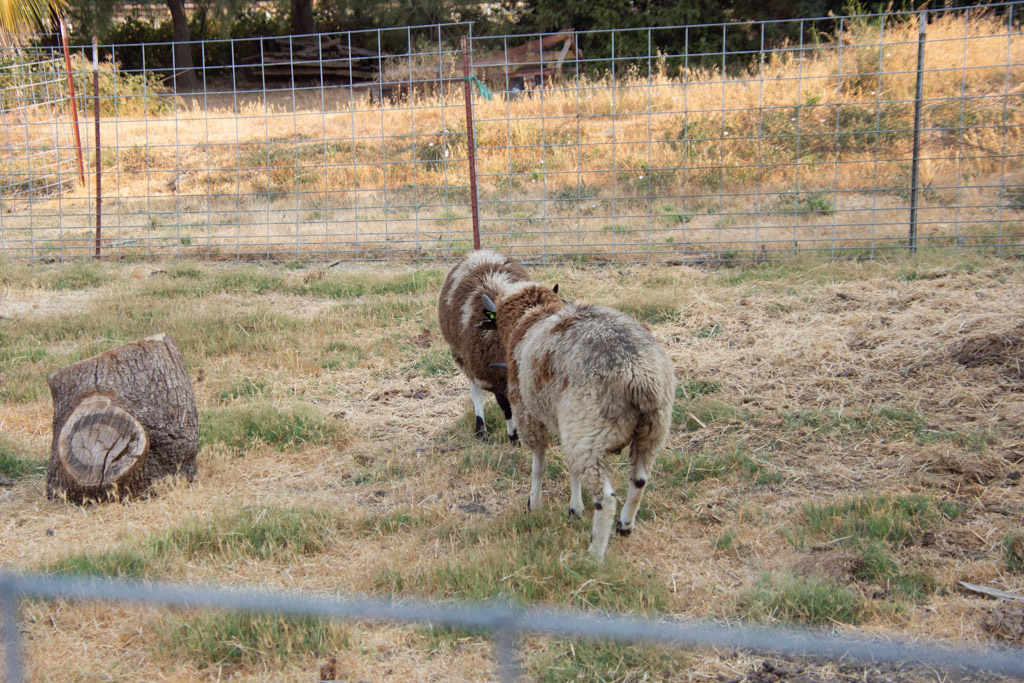
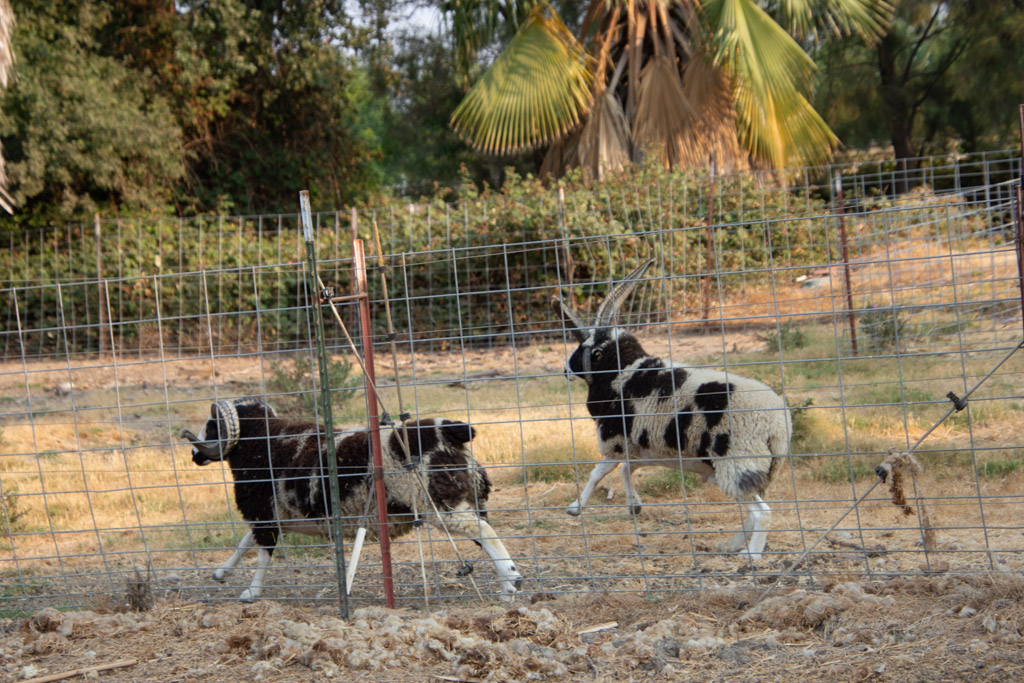
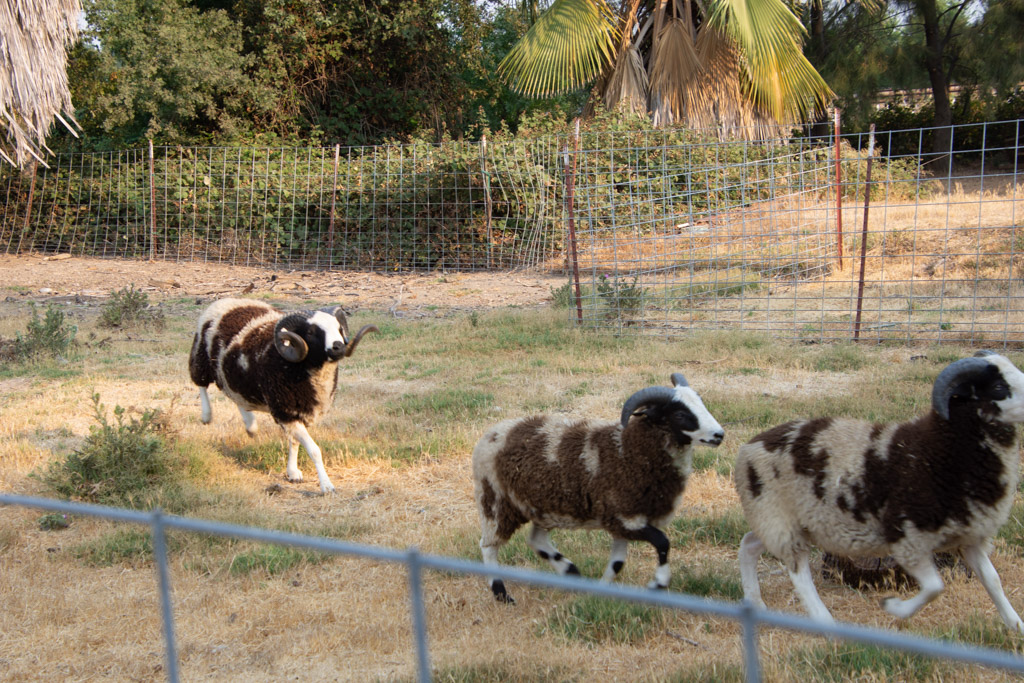
Here is what I wanted to avoid with introducing Horatio to this mix. These four have been together for several months but they were fighting a couple of days ago. I don’t know if it was because I was in the ram pen and they decided to get feisty. Or was it that the ewes are starting to cycle and there seemed to be some interest across the fence? Silverado, the 4-horn ram on the right, hasn’t been feeling well–spending a lot of time in the ram shed lying down. I think he may have had bluetongue which causes sore feet. Now he is doing better and is out with the others–so maybe that was reason to reestablish pecking order…and he is not on top anymore.

Four Jacob rams fighting.

The lilac 4-horn ram, Patchwork Townes, is the oldest at 3 years. Hillside Barrett is the 2-horn ram on the left. He and Silverado (middle) are the same age, born in 2021.

Two Jacob rams bashing heads while two others look on.

After Townes and Barrett both bashed Silverado, then they went at each other. The ram on the right is Thorn–that is my granddaughter’s ram that we showed at State Fair. He is a yearling.

Four Jacob rams facing off before bashing heads.

All four of them are facing off here.

A Jacob ram bashing another ram and pushing him off balance.

Thorn didn’t seem to be as aggressive as Barrett and Townes, but this photo shows he took his turn.

Two Jacob rams fighting while another walks closer.

Townes and Silverado.

Townes seemed to be the aggressor again…

…but Barrett was still involved.

You might ask why I let this happen. This was relatively mild as ram fighting goes. After breeding season I go through a protocol to keep the damage to a minimum. I put the rams in a very small pen. They fight but they can’t back up and put the power into the hits. After a few days they have figured out who is on top and if the others remain subservient they all get along. ..usually.

The reason I was in the ram pen was to get photos. Here are the photos I got.

Hillside Gabby’s Barrett. Don’t you love those horns? He is only two this year.

Patchwork Townes, 3 years old.

I need a better photo of Silverado.

Thorn is Silverado’s son from 2022.

Blizzard is one of Silverado’s sons from this year.

Cyclone is Blizzard’s twin. I’m not sure if he lower horns will point away from his neck–I hope so because I’d like to keep him as a replacement for Silverado.

Decisions to make…

Rams

I selected three ram lambs to keep–not that I need all three, but these are the ones that I have selected to see how they turn out as they get bigger.   With Jacob sheep it’s frustrating because you may have a ram with nice fleece and good conformation but, if the horns don’t grow correctly, he can’t be registered. With two horn rams it is important to select a lamb with horns that are growing away from the head.  With a four horn ram there needs to be space between the upper and lower, but not too much, and the lower horns should not grow into the jaw, or the neck. Too much to ask? It seems like it. I had a lot of nice two horn lambs this year, but not so many four horn ones. I sold some nice ones and some of the ones I was keeping my eye on have finally been culled due to horns fusing. There are a few left on the website.

I moved the three lambs into the big ram pen figuring that they would not be old enough to get into trouble with the adult rams. It’s true that the young rams didn’t confront the older ones but there was a lot of chasing on the part of the adults.

DSC_3186The three big rams come to see what’s going on.DSC_3165The 2-year old 4-horn is Buster and the yearling 2-horn next to him is Cayenne. DSC_3166 The lambs aren’t named yet but this one is a full brother to the yearling ram that I took to Maryland this spring and who now lives in Pennsylvania.DSC_3163Since the young rams can’t find the older rams they will fight among themselves. That two horn lamb is a full brother to Cayenne in the photos above.DSC_3164

DSC_3162 Buster again and that two horn yearling is Gotham (for sale, by the way). DSC_3167Gotham chasing the lambs.DSC_3168This is the other two-horn lamb that I’m keeping for now.DSC_3177Gotham in pursuit.18062This young guy has got moves!


Lambtown 2017–Showing Sheep

I wrote a post about teaching and vendoring (a new word?) at Lambtown. Dona send me several photos of our sheep and Farm Club members that I can also share.

DSC_0628

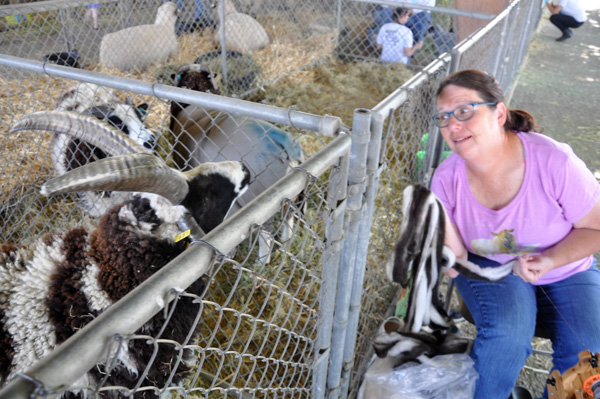
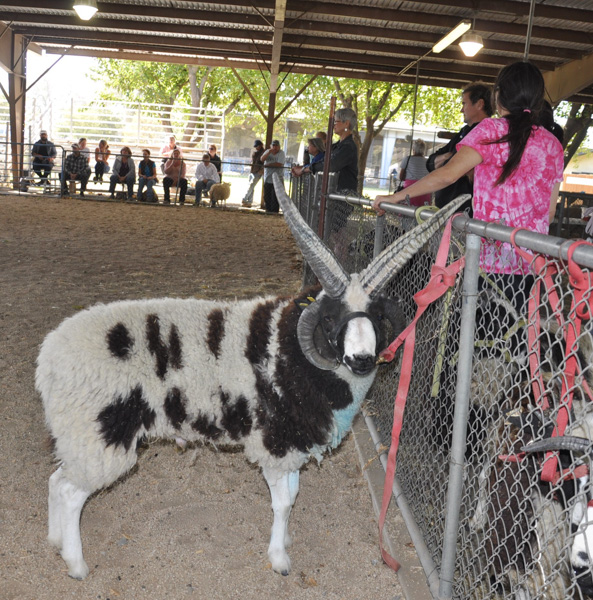
Buster had his own pen. The ewes are Cindy and Vanna.

DSC_0623

Mary having a conversation with Buster.

DSC_0626

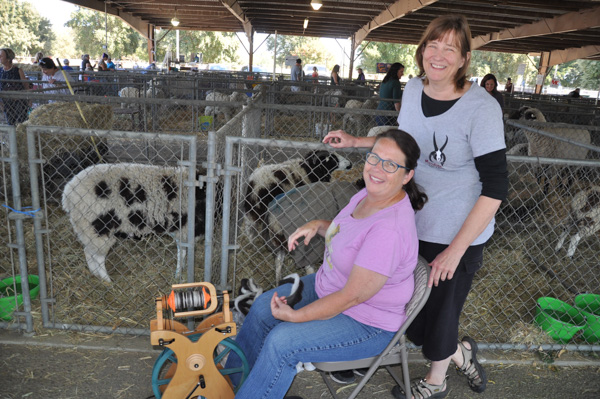
Mary and Lisa in the barn.

DSC_0635

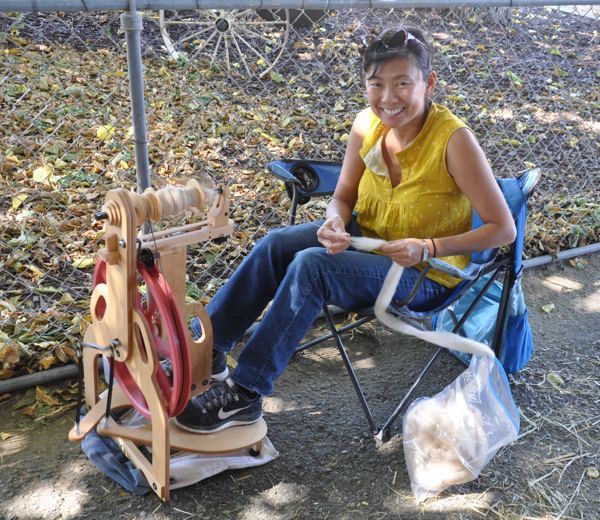
Sumi, also in the barn. A lot of the Farm Club members were also on the Spinzilla team and were working to increase their yardage spun.

DSC_0647

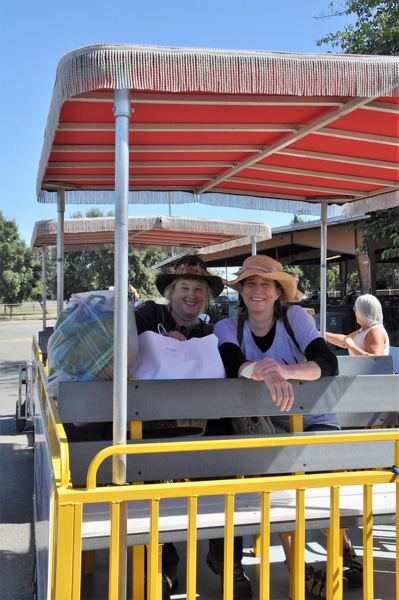
Lisa rode the train back and forth from the barn to the vendor hall.

The sheep show was Sunday afternoon. Yearling rams were up first.

DSC_0752

Buster was the only one in his class.

DSC_0753

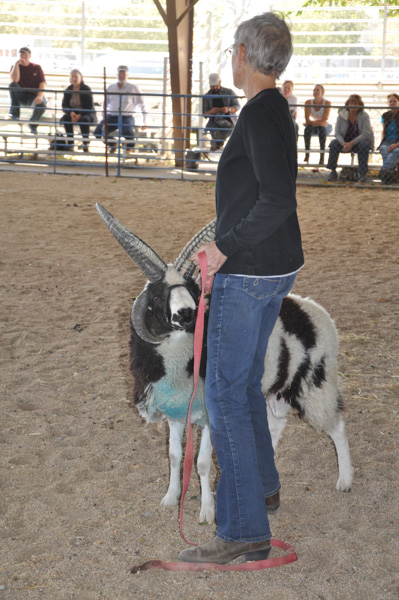
He didn’t want to cooperate.

DSC_0754

Do I really want to be dancing with a ram.

DSC_0755

I think not.

DSC_0761

He was better behaved on a halter…

DSC_0771

…and especially when tied to the fence after his turn.

DSC_0763

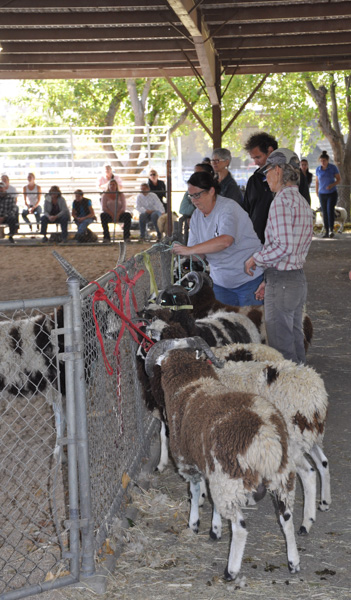
This is the rest of the sheep waiting their turns.

DSC_0768

Vicki helped with the ram lambs.

DSC_0781

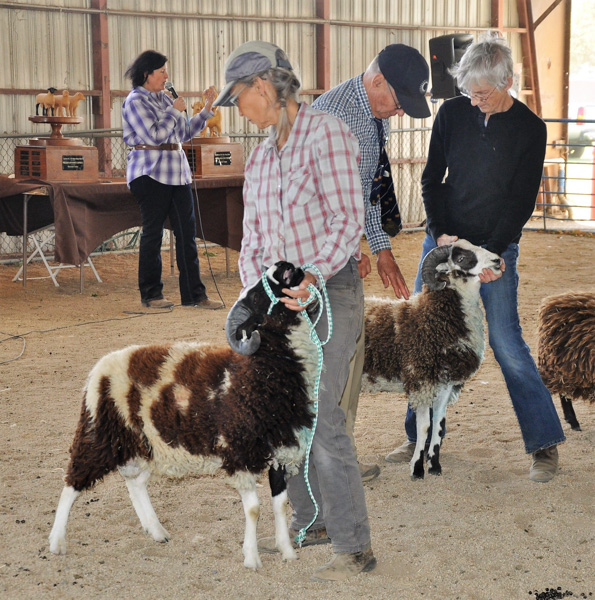
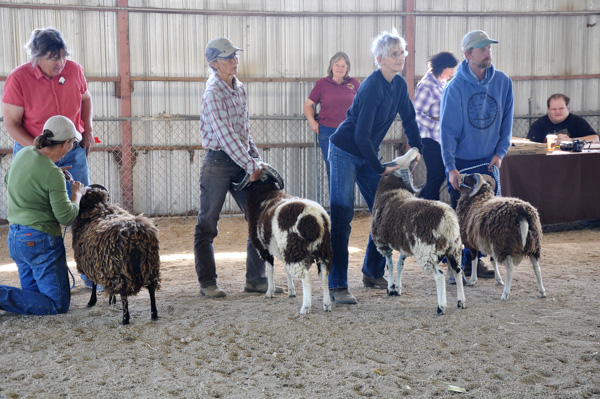
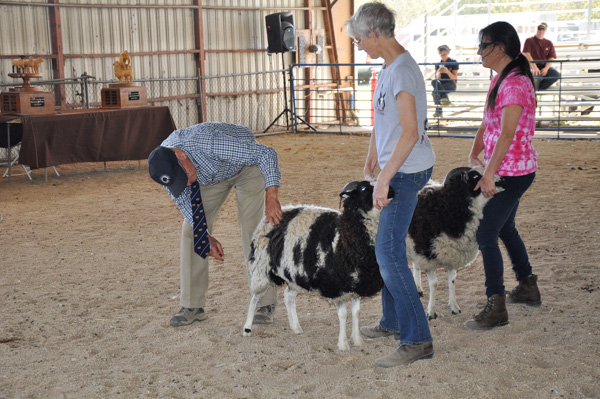
We showed against Shetlands in the Primitive Breeds Division.

DSC_0789

Doris helped with the yearling ewes.

DSC_0807

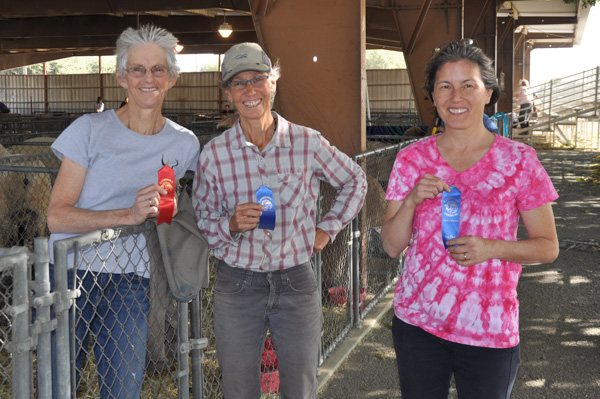
Everyone was a winner. Thanks!

Breeding Season Starts

October 1 – breeding season starts. Count 148 days more or less and there will be lambs. I know where I’ll be February 26. Farm Club came to help sort sheep.

IMG_2465

There were four breeding groups to sort–ewes that would go to three Jacob rams and Peyton, the BFL. There is also a non-breeding group. I juggled which ewe lambs to not breed–I want to have some to show next spring (maybe take to MSWF to sell?) and to show at State Fair. I debated which ewes to put with Peyton. Obviously those won’t produce purebred Jacob lambs, but the crossbred lambs grow fast and are valuable for market lambs. IMG_2484

We got the rams out and trimmed their feet.

IMG_2482

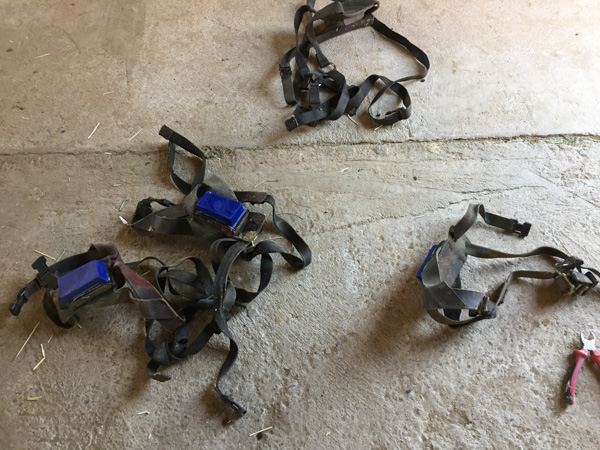
We got the marking harnesses ready. I use the same color in all of the harnesses. The breeding groups are all in separate places so I’m not trying to sort which ram bred which ewes. If they were all together I’d have fighting rams and still wouldn’t know the sires because there would be multiple breedings. I will change the color in about two weeks. Then I’ll know that all the blue marks are from the first two weeks of breeding and if the ewes are marked with the next color they were bred in the next two weeks.17008 head

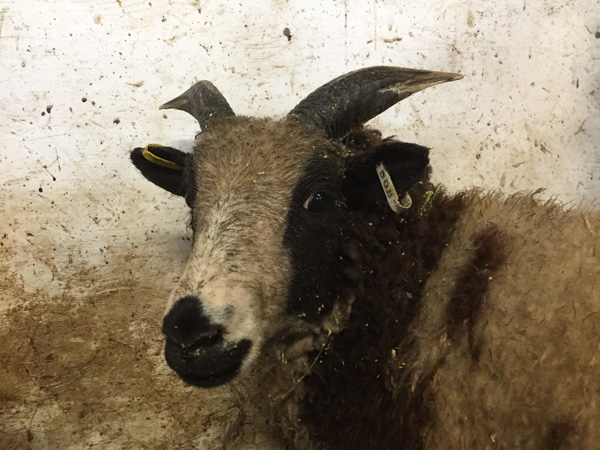
This is ewe lamb, Hollyhock. The dirty face and dirty wool is a result of the tall dallisgrass that is now sticky. As a result the sheep are covered with dirt and with dallisgrass seeds.

17059 left horn

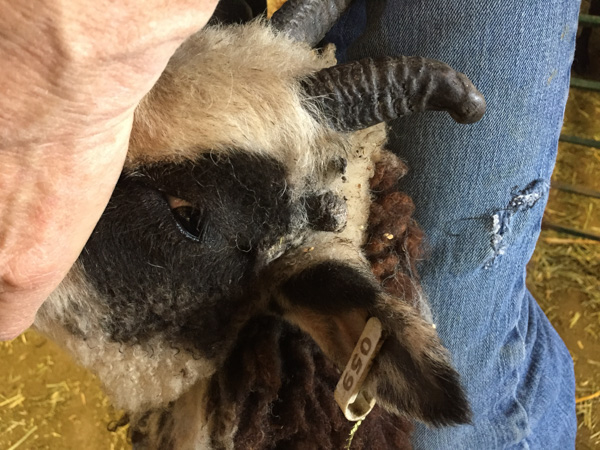
I this opportunity to take close-up photos of the ewe lambs that I need to register.

Peyton-2

Here is the main event. Rams working working overtime with their mouths open and tongues out. Uh, Peyton, that’s a wether.
Catalyst

The ewes that are in heat will hang around the ram. Sheena and Shelby were the two who were interested in Catalyst. If Catalyst showed interest in one the other started beating him up.
IMG_2542

This gives new meaning to Fall Colors.