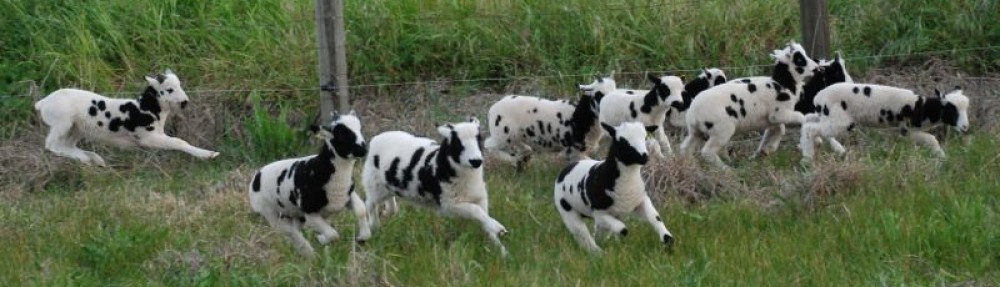
The Week Following Dental Surgery–rams, Lambtown, Fibershed

Not a very good title… and it doesn’t describe what I want to share in this post, but dental surgery was the event on Monday that set the tone for the week.

I stayed on the codeine less than 24 hours because I don’t like feeling so…well, drugged. I didn’t feel too bad on Wednesday and some Farm Club friends came to help me set up breeding groups. It is always a challenge to find enough places to put the groups where there is no fence-line contact between rams.FaulknerI left Faulkner in his area but expanded it to include the run next to it.Ringo (1)
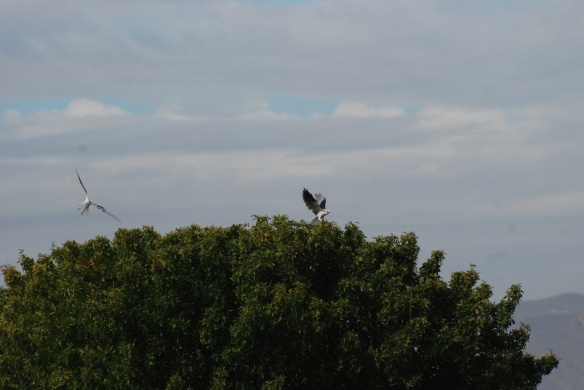
RingoRingo got the most ewes so he had the pasture.RotorRotor, one of the lambs born in March, went with his ewes to the horse pasture. We wondered if he’d be able to reach those ewes, but he’s had no problem. I don’t have a photo of Nash, the lilac ram. He went to the field behind the shop. Crosby and Alex were left in the ram pen.non-breeding groupThe non-breeding group includes the ewes to be bred in February for lambing at the State Fair, their lambs, some of the ewe lambs that I’m keeping, other ewe lambs for sale, and this year 4 ewe lambs that are sold but haven’t left yet. It’s a lot of sheep to keep away from the rams but I barricaded them in the area around the barn.white-tailed kitesOur resident white-tailed kites, seen from the barn.
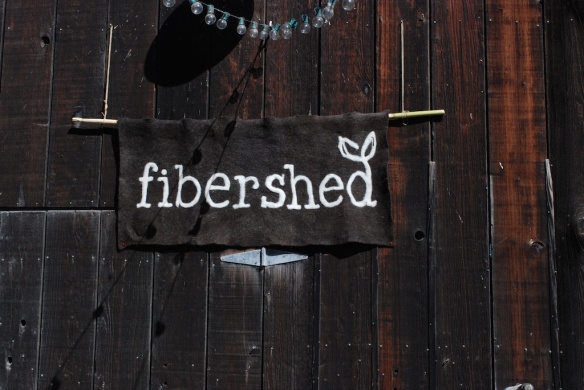
One of the adult rams, Alex, was picked up by his new owner on Thursday so I put the few remaining ram lambs with Crosby to keep him company for the day. On Friday I took 7 sheep, including Crosby, Nash, and Rotor to Lambtown for the sheep show on Sunday. Normally I am a vendor at Lambtown but this year there was a conflict with an event I had really wanted to attend and where I knew that I’d sell well. So I took sheep for the weekend but attended Fibershed on Saturday. It’s a good thing. I probably should have stayed home entirely but at least the Fibershed event was easier than doing a full vendor booth at Lambtown.lambtownHere are two of the sheep pens at Lambtown and my meager display.fibershed bannerSaturday was the Grow Your Jeans event that was the culmination of over a year’s planning and work by the Fibershed team. There are photos and a description of the work involved in growing cotton and indigo in the nearby Capay Valley and the dyeing, weaving, and pattern-making of these locally produced jeans at this link. The Grow Your Jeans event featured these jeans as well as “grass-fed tops”, the shirts and accessories worn with them on the straw-bale fashion show runway. The new felt banner was made by FC friend, Jackie, of Sheep to Shop.
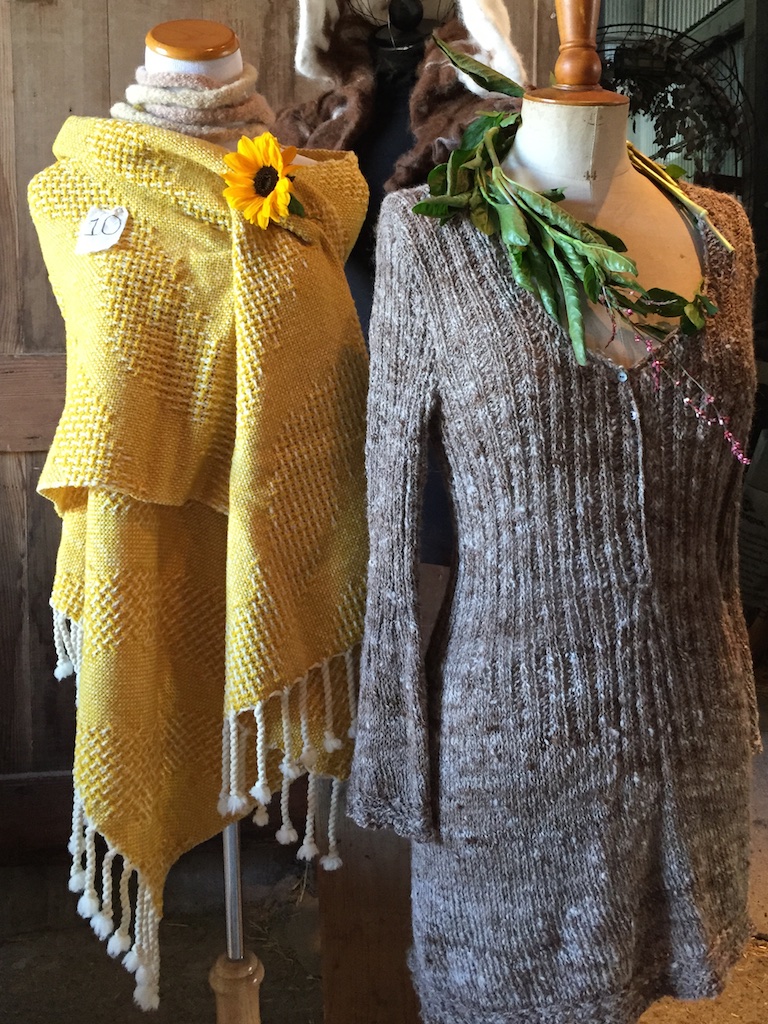
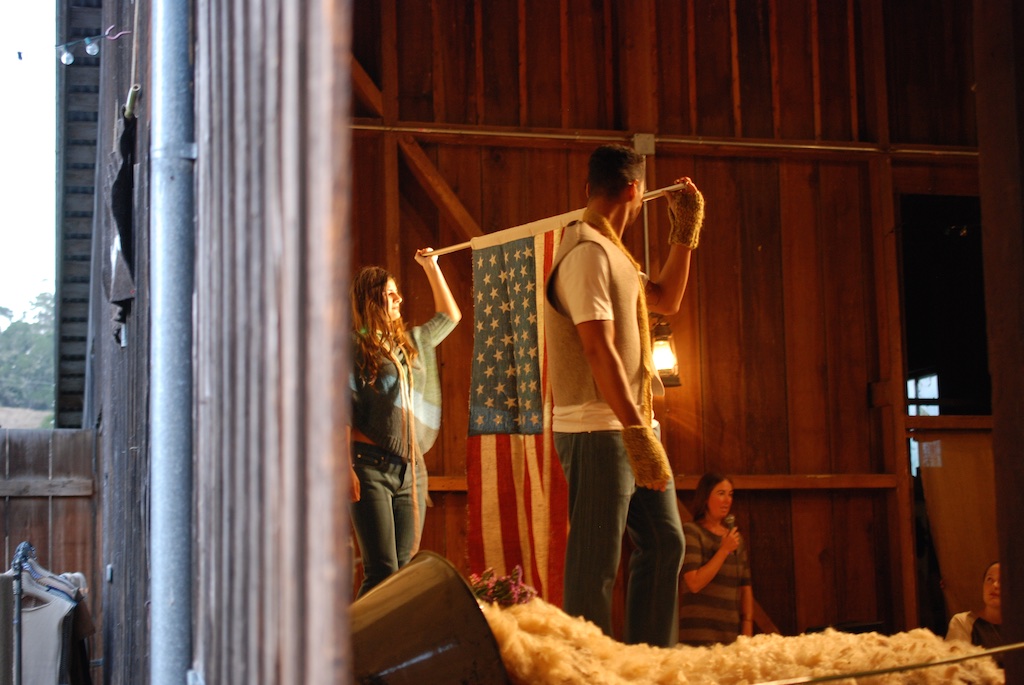
Prior to the fashion show attendees could shop at the vendor booths and eat fabulous local food. (At least it looked fabulous. I stuck to my yogurt and cottage cheese.)Grow Your Jeans boothI brought handwoven pieces, horn buttons, and lambskins. I did very well as far as sales, but, unfortunately by this point, I was not in the best of shape. I just wanted to be home on the couch. pillowThese pillows are stuffed with local wool in an cover of organic cotton. They both sold.929-2 shawl This is my “grass-fed top” on the left. It is Timm Ranch wool woven in 16-shaft huck lace. The weft is dyed with osage orange from across the road.IMG_6673The fashion show took place in an old dairy barn. Prior to the show, Rebecca and the others involved in creating the jeans told about their parts in the project.929-2 shawl (1)I stood just outside to get a photo of the model wearing my shawl.DSC_1377  I stepped back inside to see the last part of the show. Two of the models came out carrying this flag.hemp flagAlong with all of the other aspects of Fibershed that Rebecca spearheads, she has also been involved with the re-introduction of hemp as a valued agricultural crop in Kentucky. It’s a long story and you can read some interesting articles here. This is one of five flags to be woven from the veteran-grown hemp project. They use Sally Fox’s California grown cotton for warp and Kentucky hemp for weft. The first flag went to Farm Aid and this is the second one. I thought it was a fabulous way to end the evening’s program. Kind of gives you chills.
I am not doing justice here to the whole event. Everything that Fibershed puts on is exceedingly well done and the message is so important. I am grateful to be involved in this movement even in a small way.

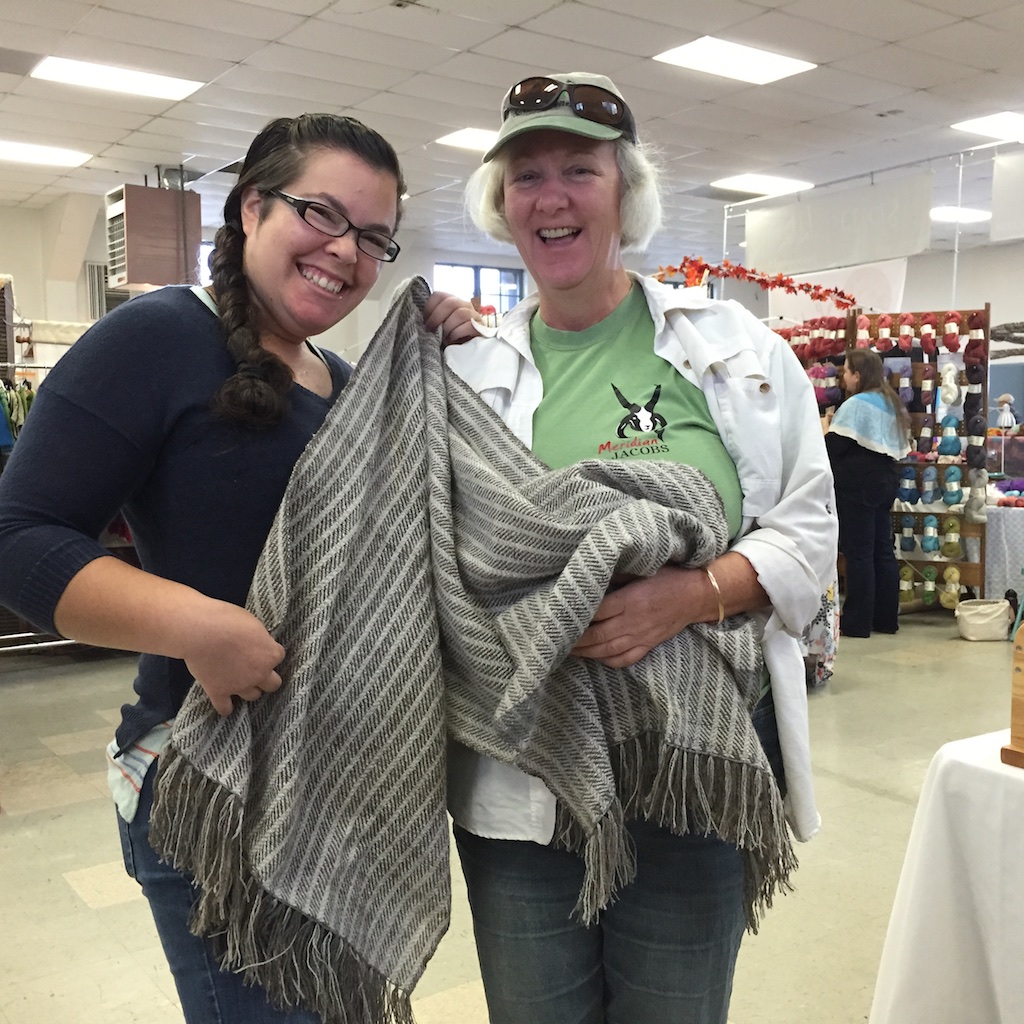
It was a long drive home to Bolinas that night and then there was still Lambtown the next day. I had a ride to and from so started in on the codeine. Gynna and Alison-shawl On Saturday Farm Club friends had been on the winning Sheep to Shawl team. This is the fabulous blanket that they spun and wove.

After the sheep show I doubled up on the codeine and waited for my husband to come drive the sheep home.
Rams…

…wouldn’t life be peaceful without them?

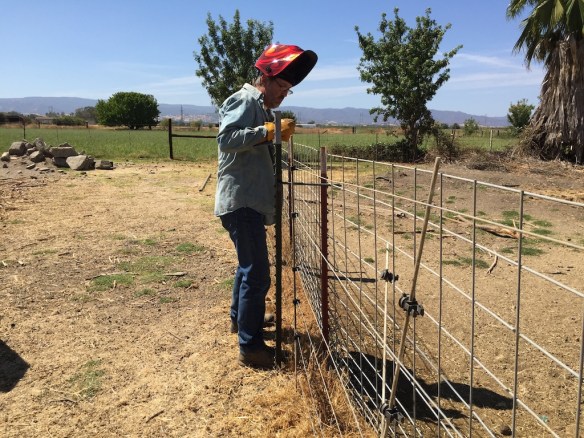
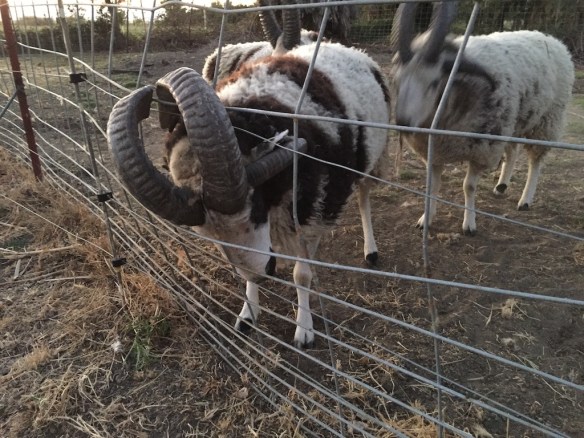
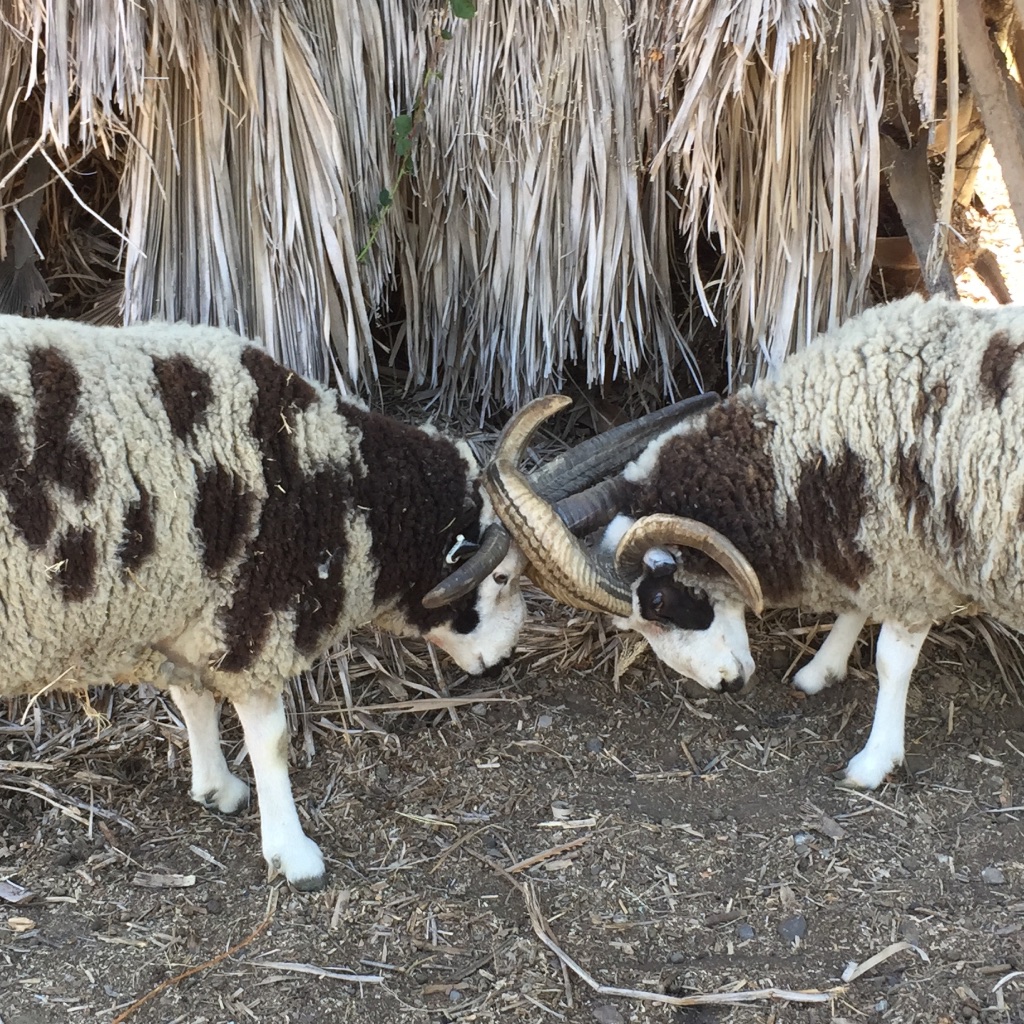
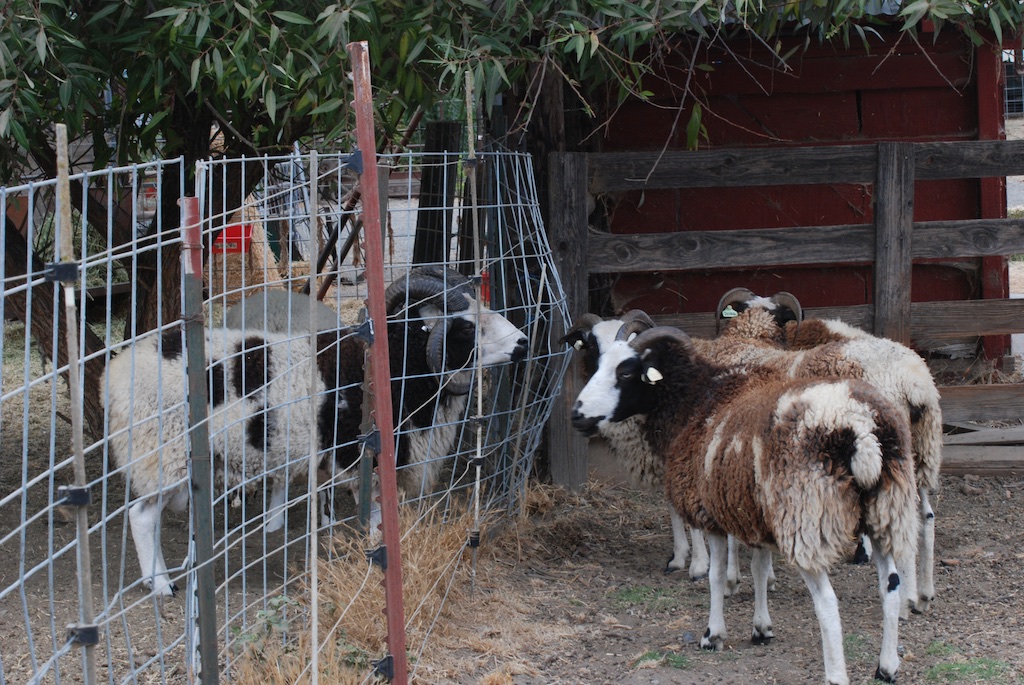
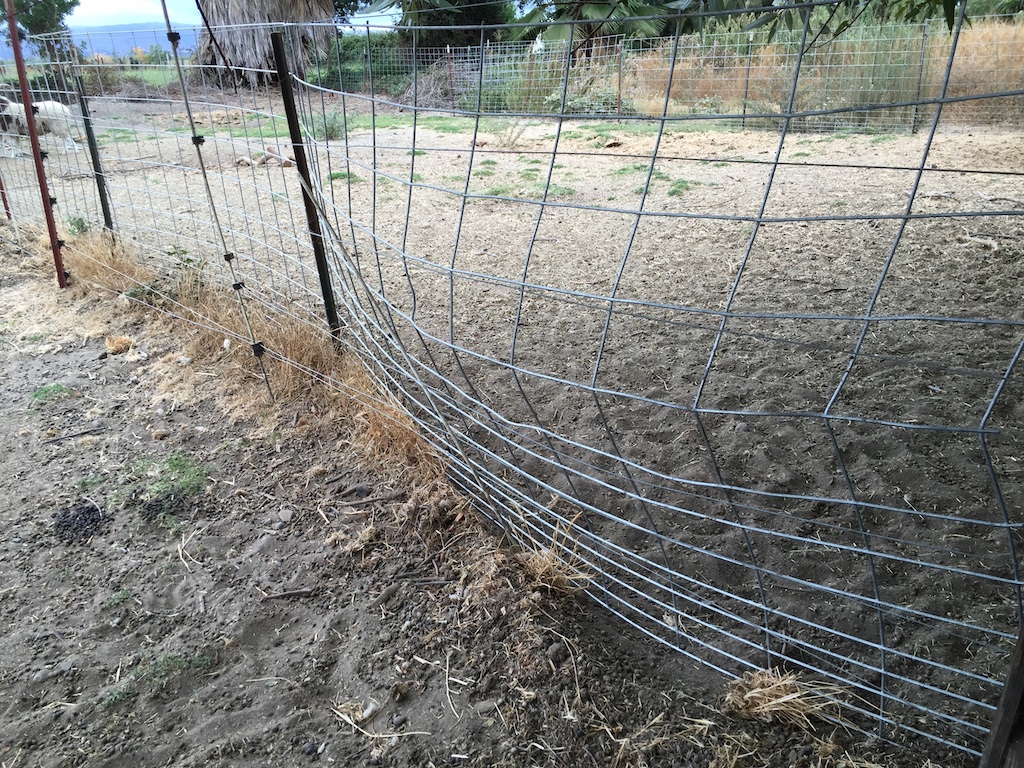
The rams were giving me so much trouble with the fence in the pen I’d used for years that we switched them to a new space about six weeks ago. It’s been working OK but now breeding season is upon us and they are getting harder to deal with. Welded wire panels alone are not enough.DSC_9911 Here is what happens when ewes flaunt themselves just across the fence. IMG_6152 Not only are the rams ruining the panels, but the electric fence on the ewe side is immediately grounded out and that means that all the electric fence on that system is out. IMG_6181Dan had an idea that would hopefully solve the problem for the short-term in the areas where the rams were pushing on their fence and bending the t-posts.IMG_6182He put in extra posts that we happened to have around and welded rebar between the posts on the two sets of fences to help make things sturdier. We hoped that it would make the whole thing more secure.
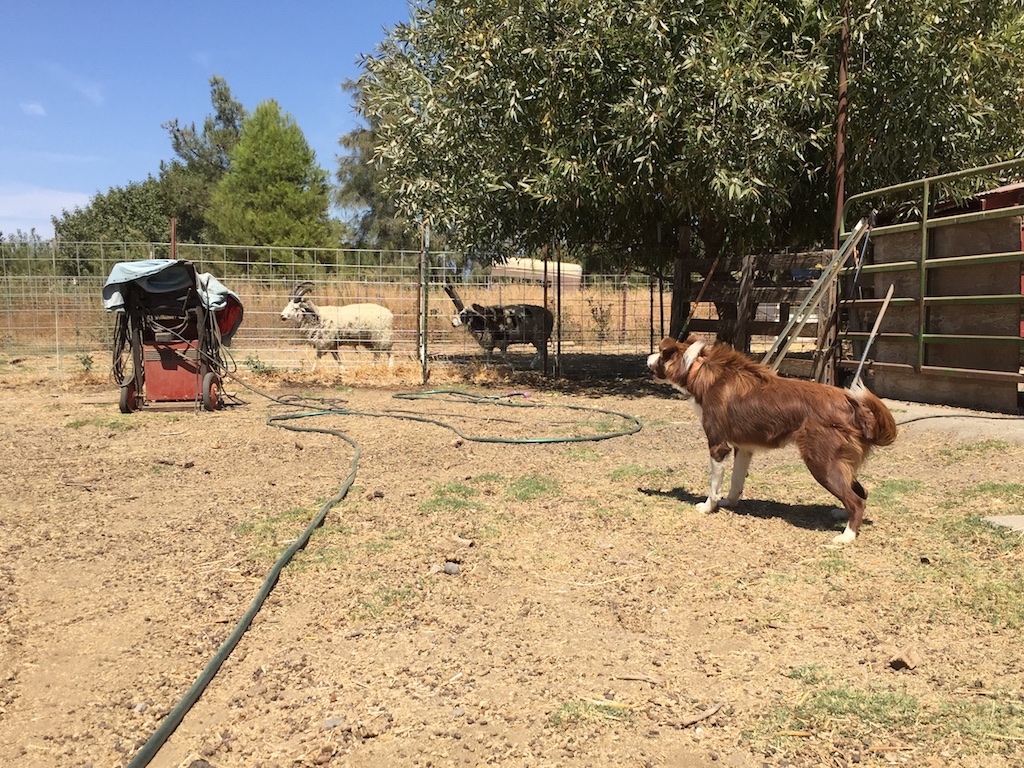
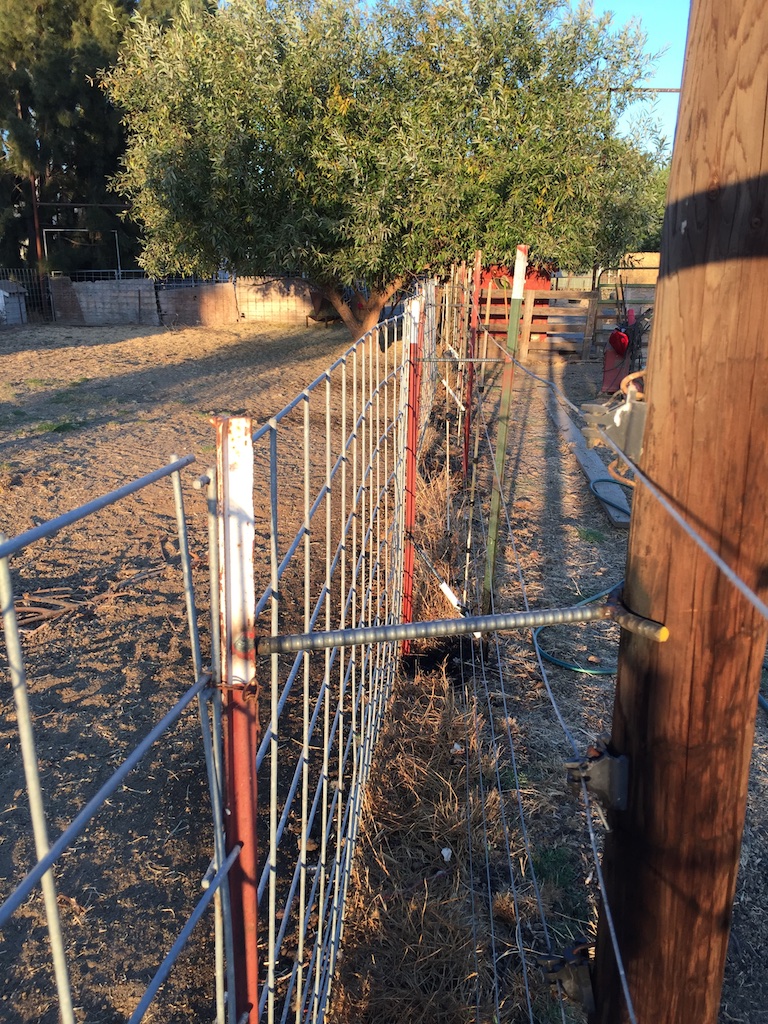
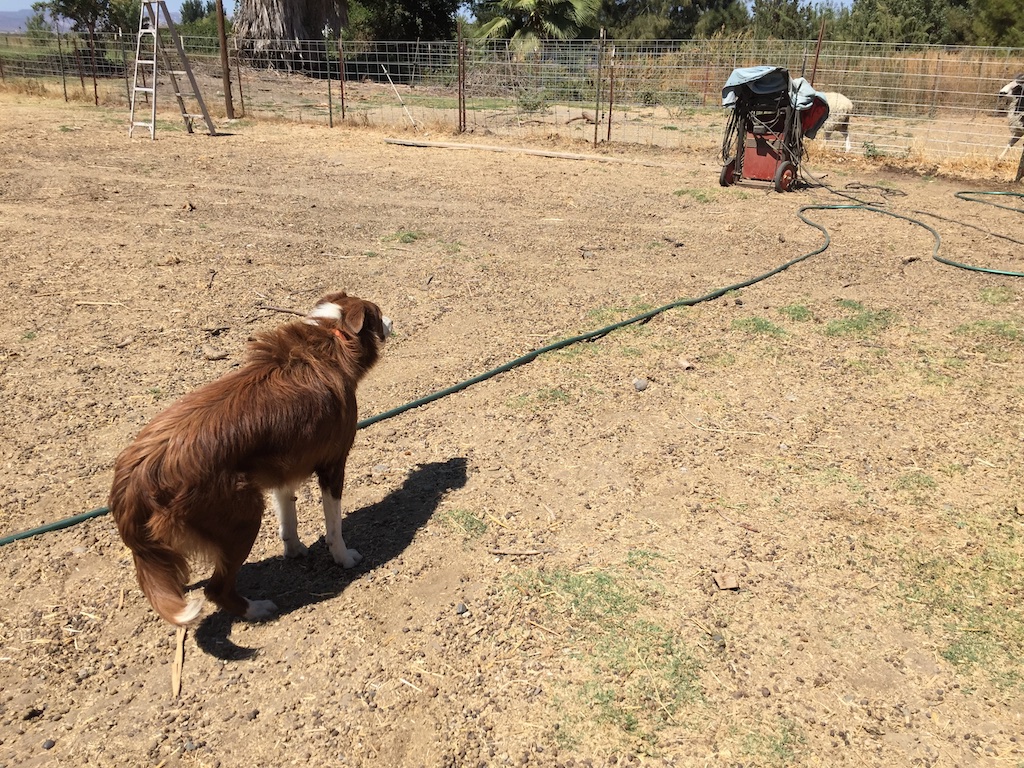
IMG_6176Here is what Ginny thought when she noticed the welder in the corral.

IMG_6177  There was a shirt hanging off of it so maybe she thought it was a short person.

IMG_6184Lots of reinforcement should keep them from pushing those t-posts over, right?IMG_6269Fence posts look good. IMG_6273The wire, not so much. He was completely stuck in the welded wire and the high tensile wire. This is Alex, by the way, whose horn I just trimmed in the last post.
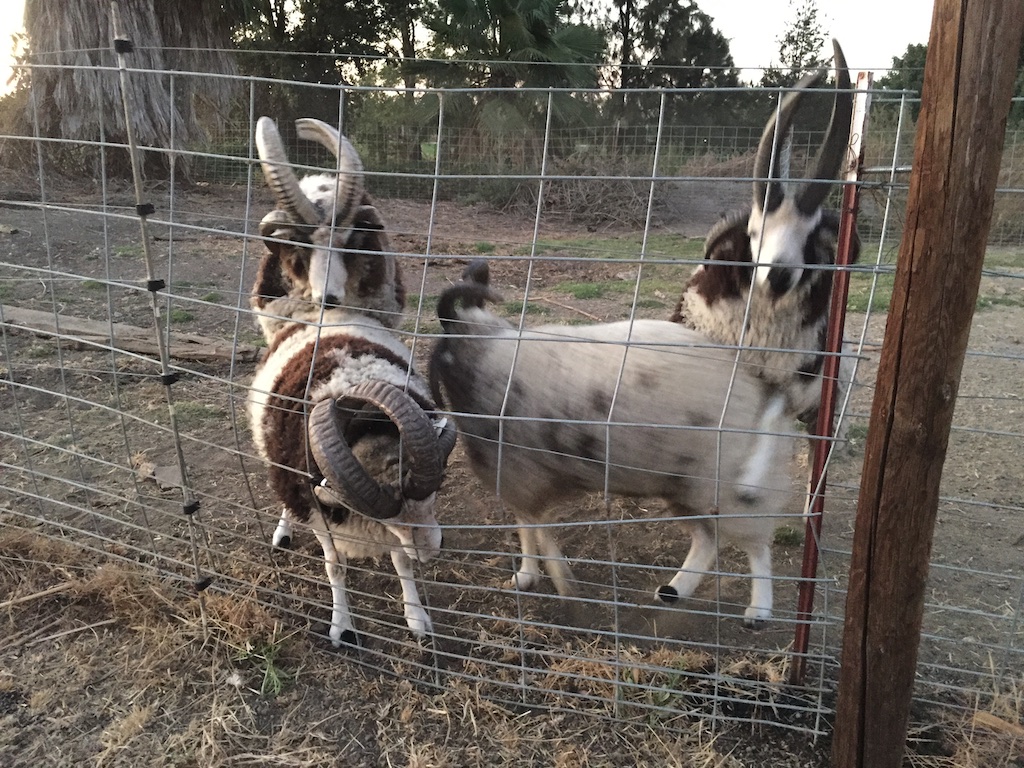
IMG_6270 The only way to get Alex out of this was to cut the welded wire panel in two places. Now I have the ewes completely separated, but that isn’t a long-term solution. Unfortunately I don’t have a big enough place to have the rams in a pen that is isolated from everyone else so we’ll be moving to Plan C when we have time (that would be when Dan has time).

Views on the Farm

Taken over the last week or so.Ewes coming in from pastureSheep coming in from the pasture.AmaryllisAmaryllis following.dallisgrassDallisgrass.

15016 Nash left Ram lamb that I’m keeping. He’ll be at the Lambtown sheep show. This is Meridian Nash (Meridian Crosby x Mud Ranch Ginseng).

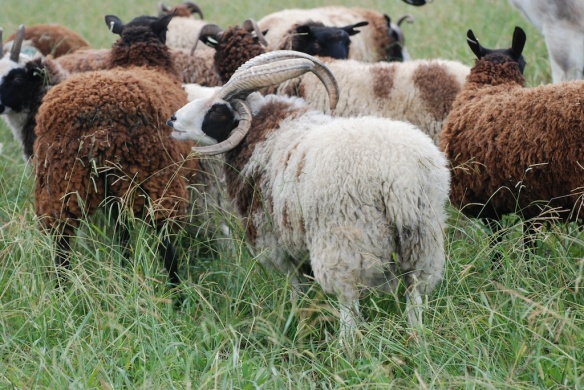
15045 Love this guy’s horn spread (Meridian Crosby x Meridian Sophia). I wish I had room to keep all the promising ram lambs for several months, but most have to go before breeding season. In fact there has already been at least one major ram break-out involving the ram lambs and I’m sure that I’ll have at least a couple of early lambs (mid January instead of late February when the planned lambs will come).DSC_9843Here are the yearling and two-year old rams. Puddleduck Ringo, Meridian Crosby, Foley, and Alex. Foley is sold and will be picked up soon I hope. Before we went to Texas these rams switched places with…

DSC_9836 …Faulkner, the BFL ram, to give them more room and so that they couldn’t keep getting tangled in the electric fence. It worked for awhile, but the ongoing saga is a subject for another blog post.

Egrets in tree Egrets looking over the pasture.Hot LipsHot LIps.

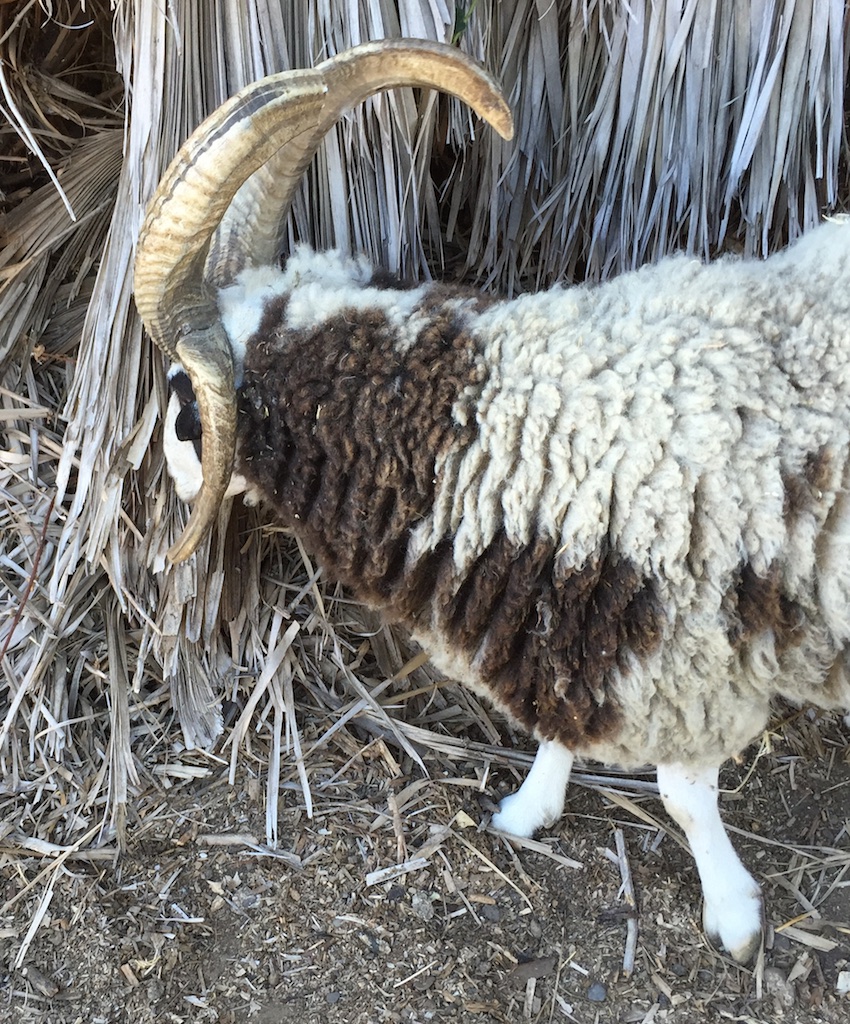
  IMG_6155Another ram issue. Notice how this horn (which has already been trimmed) is starting to irritate the skin on Alex’s shoulders.

IMG_6156 Another trim was required.waterFresh water after cleaning the water trough. I so hope it rains this fall. I’m so tired of being dusty, hot, and dry. I don’t know when I’ve looked forward to winter, but I sure am this year. I just hope it’s not a disappointment.Ginny in yardGinny in her watching the road spot. She likes to chase trucks from her side of the fence.

Searching for the Perfect Ram

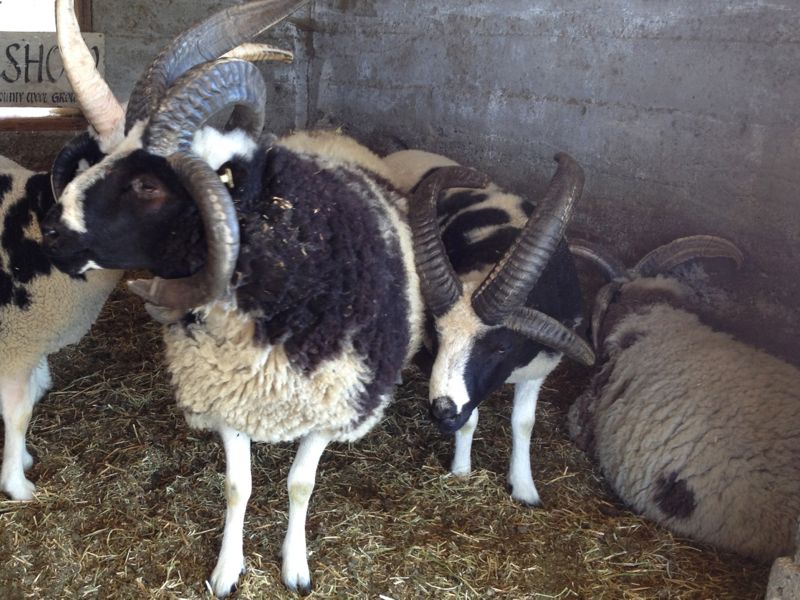
It’s the time of year when I need to sell sheep. I want to get numbers down to 50 or so ewes by early October when breeding season begins. I have just separated the March ram lambs from the ewes and am now evaluating them as prospective breeding rams. It’s hard to find that perfect ram.  Unfortunately I don’t have the space to keep these rams around for 6-8 more months to see how they look as they get a little older. That’s too bad, because I’d rather be able to choose by seeing them with a little more maturity. (By the way the red in all these photos is marking crayon, not blood.)15045-head This ram (15045) has a fabulous horn spread–no chance of those horns growing into his face. He has lilac (gray-brown) markings and a good spotting pattern. But my notes say his fleece is so-so. I think I’ll have to check again because everything else looks great. 15049 head This ram’s horns automatically disqualify him for remaining in my flock. They are fusing at the base and I don’t like the “weepiness” that happens at the join between the horns–it is an area that attracts flies and that can lead to flystrike. Besides if they are already fused at this young age there is a good chance that the upper horns may cut off the blood supply to the lower ones which will weaken and be broken off.horns fusingHere is another one with the same problem. No matter how much I might like his markings and fleece, I don’t like the horns.15054 white horns I had my eye on this ram (15054)  because I like his wool but his horns are all white which makes him ineligible for registration…

15054 …and I aso discovered that he is missing something down below. Well, it’s not completely missing, just about half size.15061So here’s a ram (15061) with nice horns and a decent fleece, but to register a ram he needs between 15% and 85% color.

15061-rt Looking from this side he doesn’t have that and he doesn’t have much more color on the other side.15062This ram (15062) has plenty of color, but his horns are much too narrow. They will grow right into his neck or face as they grow larger.

15064 head Here is another with good color, but those horns are even more fused than the ones above. See that 5th horn on the right (the ram’s left side)? People like to say that Jacob sheep can have 6 horns, but I have never seen one with 6 good horns. This is more my experience. 15030-freckledHere is a ram (15030) with decent horn spacing and nice fleece. There is a bit of a problem with the lower horns because at this time they look as though they are going to grow right into his jaw. Sometimes horns with a tight curl like that get broken off when the ram is still young and then they grow out OK. Whether or not his horns would turn out all right, upon closer inspection (hands-on) I discovered that this ram has freckled fleece. That makes a gorgeous handspinning fleece, but it is not appropriate for a breeding ram, and in fact, the JSBA Breed Standard states that “excessive freckling in the white wool of young animals” makes them ineligible for registration.

DSC_8775 How about this ram (15070)? Widespread horns. Not a lot of color but it is over 15%  and passable (I think). But I haven’t really considered him because he is so much smaller than the other sheep. Granted, he is younger than many, but I don’t want to choose one of the smaller rams in the lamb crop as my breeding ram. This is where being able to keep them awhile longer might aid in evaluation.15022-headThat 2-horn ram (15022) in the middle is a good sized lilac ram and we all had our eyes on him from the beginning. Unfortunately I think that his horn set is also narrow. This is another one that could benefit from time to find out how the horns actually do grow out.

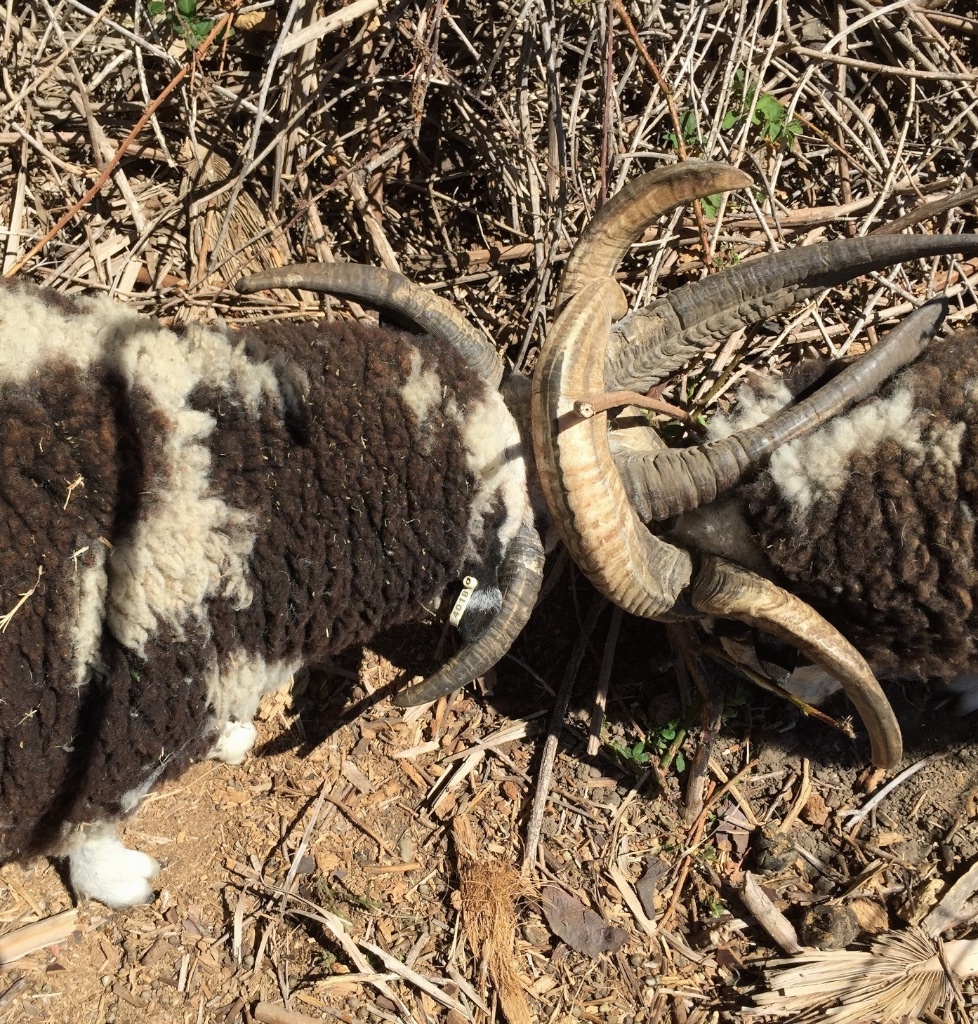
15025-rtHere is a ram (15025) that might make a nice ram to keep. 15016-group of rams The two-horn ram in the middle of this photo is Nash, a lilac ram with nice horns and a beautiful fleece. He was Champion Ram at Black Sheep Gathering in June.

The rest of the ram lambs are shown at this link. However I haven’t updated some of the listings with new photos. I will be removing some of the rams from that page now that I have evaluated them further.

Meanwhile Back at the Ranch…

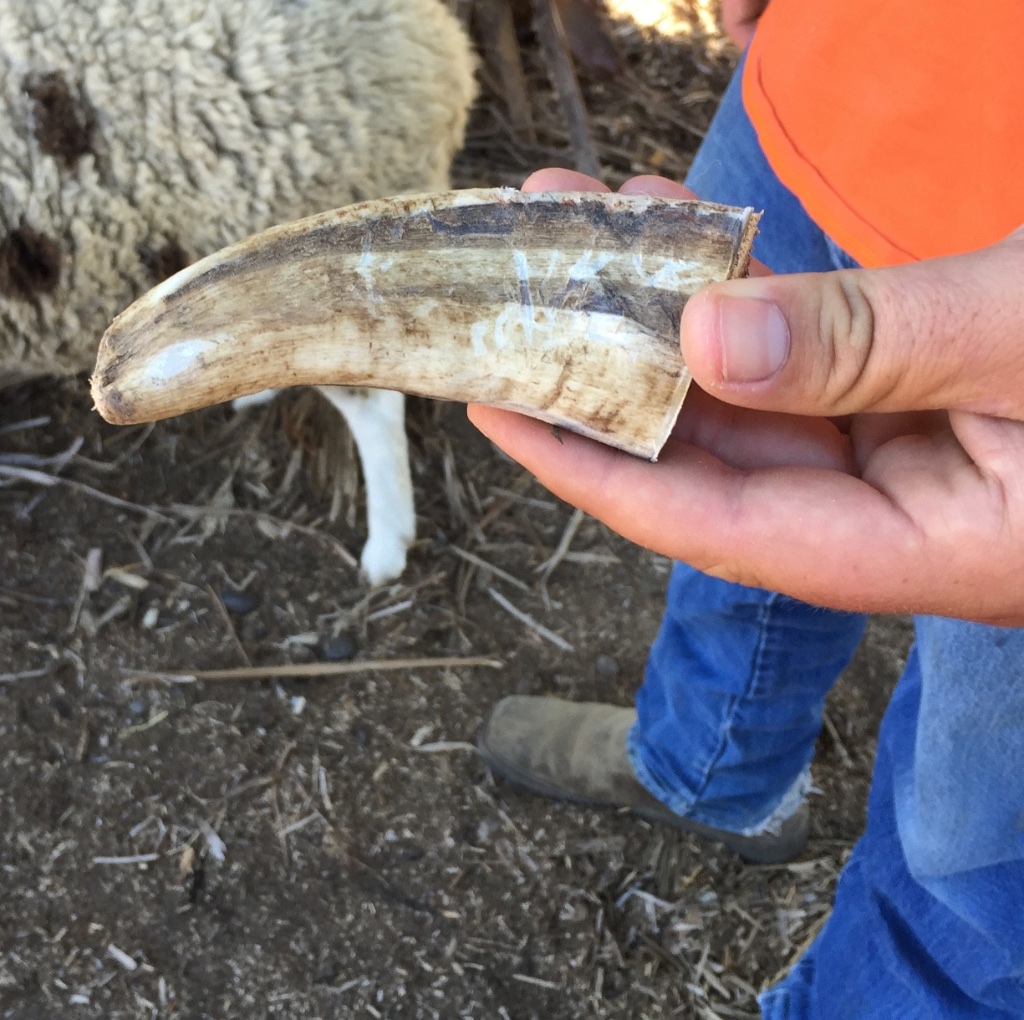
I am grateful to my friends and family who are taking care of animals and the farm while I am gone. While driving through New Mexico on Tuesday I got a call  and a text with this photo.1-IMG_2498horns (1)That’s a yearling ram, Foley, with his horns stuck in the 2-year old ram’s upper horn. 1-IMG_2504horns My two friends had been trying to separate them but couldn’t do it and called for advice. Not only did the rams continue to push against each other but the curved horn was holding the straight horns too tight.  What to do? I gave the OK to cut the horn and told them where the wire saw was. But that’s not an easy task. We finally thought of one more person to call–my future daughter-in-law’s brother who lives in the area. Fortunately he was home, came over, and cut Ringo’s horn. 1-IMG_2505cut That did the trick. Foley was fine but Ringo was a bit worn out–maybe from the angle of his head and neck for the whole time that they were stuck together and the fact that they had been struggling out in the hot sun. (He’s fine now.)1-IMG_2510pieceLyle took the horn home as a souvenir.

Once again, thanks to everyone who is helping while I’m gone.

Changing Places

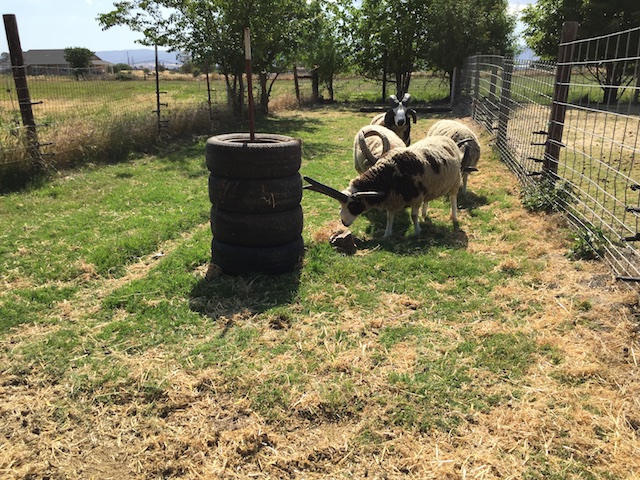
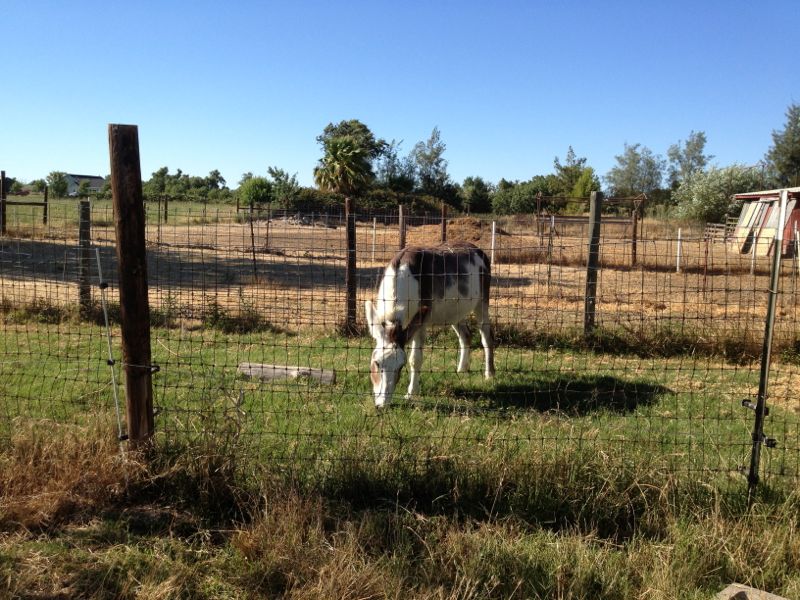
About a month ago I went out to feed and wondered by Ringo, 2 year-old ram, was standing by himself and wouldn’t come in. That usually indicates a sick sheep.Ram and broken e-fenceWhen I walked out there I saw that one electric fence wire was spiraled across the pen and Ringo wouldn’t cross it. I had been fixing the fence a couple times per week, tightening the wires, or replacing insulators, and once in awhile fixing a break. Ram and broken e-fence (1)That evening I found this–Foley with wires wrapped all around his horns and his feet. It was worse than it looks in the photo. I had to cut the wraps of wire off of him. I knew that I had to do something better. The goal of this electric wire is to keep the sheep away from the field fence on the south side and the welded wire panels on the north side, both of which the rams can easily destroy. It works well for the ewes and it works for the rams to the extent that they don’t try to eat something on the other side or put their heads through the fence. But it is obvious that the charge is not felt through the horns. The rams actually spend time trying to scratch on the insulators and bash the tree that holds some of the fence. Then their horns catch on the wire and I think they like to fight with the wire just because it’s there.e-fence I thought that if I used 4 wires that would keep the rams away…or at least I hoped it would.  I also thought that maybe they needed a diversion–something to distract them from the fence. (Dona suggested it and that reminded me that I used to have a big tree stump on a post and the rams would spend time scratching on it.)tiresWe sometimes wonder if we’re hoarders, but you’re only a hoarder if you don’t have use for all your stuff, right? I had just found a use for these wheels.
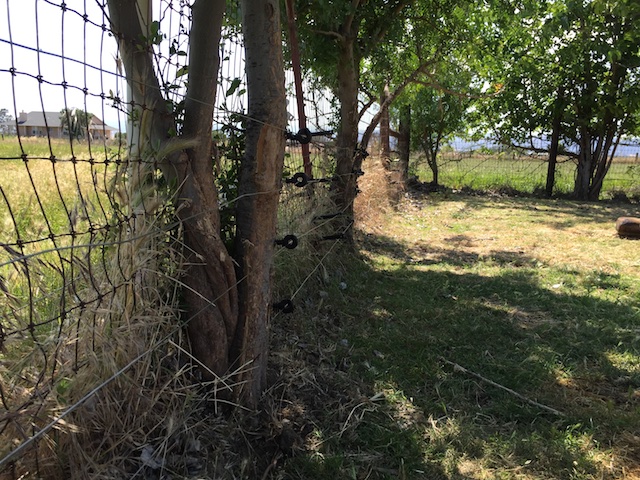
IMG_4372 This is version one–tires held upright with a t-stake. I decided that it was probably boring so added a few things.ram toyThat’s plywood with sharp corners for itchy heads and a couple of dangly chains for sound effects.IMG_4610 It took a few days before the rams started to use their new toy but it served it’s purpose…for awhile. Yesterday they were back at the fence and had broken the wire as well as broken off all the insulators on their favorite tree (third photo from the top).

We’re planning to leave for about 10 days and I found myself thinking how I’d explain to my future daughter-in-law/farm sitter how you take the cane and chase the rams into the shed and make them stay in the shed while you find the ends of the broken wire…no, first loosen the wire at the tensioners, then find the broken ends…etc. We debated about what we could do to create a safe place for these rams and be ready to leave in a couple of days.

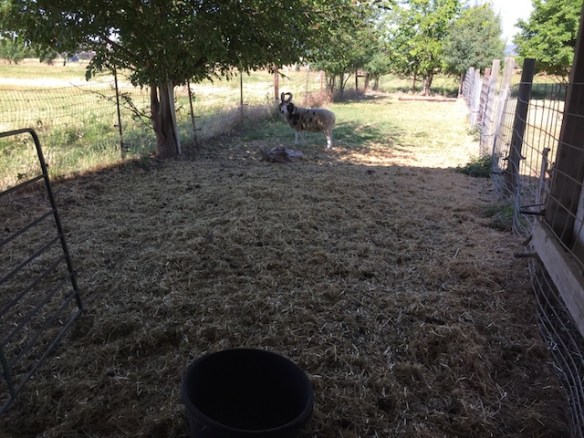
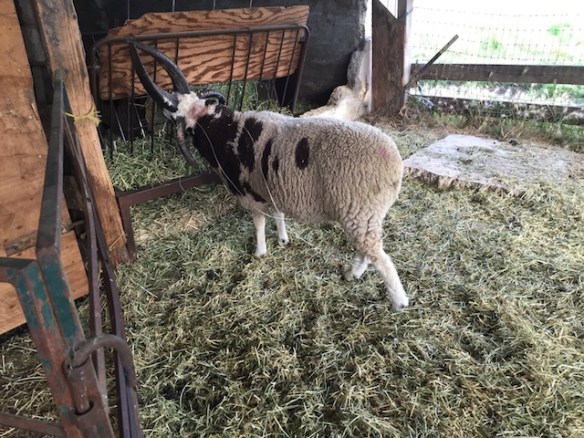
IMG_5106 I finally decided that the simplest idea was to have our rams change places. Faulkner, the BFL, and his buddy would go to the old ram pen and the four Jacob rams would to to Faulkner’s pen, after some reinforcement (2 new welded wire panels). This is the four of them exploring their new digs. They have berry bushes and trees to bash right in the middle of the pen.

IMG_5109  This is Faulker, Jerry, and the biggest lamb in the flock, who needed to be separated from the ewes. He is about 100 pounds and looked big next to all the other lambs, but next to Faulkner (about 250 lb), he looks Puny. Let’s hope that everyone is in their proper places in the morning.

Five Months to Lambs

Monday was Sorting Day (but not like at Hogwarts, although I know that some of you could probably come up with some Harry Potter  analogies). It was also the first day of the Spinzilla competition. Spinners from Team Meridian Jacobs were going to gather here in the afternoon but some of the team members are also Farm Club members. Several of them came early to help with sorting ewes and rams into breeding groups.DSC_8568Faulkner, the BFL ram, was first to get his girls and they happy to meet him. I knew that Athena was ready because she had been hanging out next to the fence. But so were Delight, Delilah, and Shelby. Four of the seven ewes with Faulkner were bred yesterday. (The red on the ewes’ rumps is the mark from the crayon in the ram harness.)

Next up was Crosby, a lilac ram lamb. I wasn’t going to use him this year because it’s hard to split the flock into too many groups. But transport for the ram that I am buying is now delayed so I thought I’d give Crosby a shot.Champion ram at LambtownHe just got back from Lambtown where he won Champion ram of the Primitive Breeds division. It was a small show, but a win is a win, right? The judge loved his fleece and so do I.DSC_8535The girls, however, were not as impressed. It seems that ribbons aren’t everything.DSC_8541To Crosby’s credit he tried hard…14052 Crosby …he didn’t give up…14052 Crosby (1)…but to no avail. None of the four ewes wanted much to do with him. I don’t have a photo but I did see him finally lying down by the fence looking exhausted and dejected.14035 AlexAlex was ready for his ewes. He is a yearling ram whose fleece is beautiful. I didn’t try to use him as a lamb last year because he had bluetongue in the fall. Even if he could have bred, he likely would have been sterile from the high fever.    DSC_8555 DSC_8557 Out of his group of 14 ewes, Alex found only one ewe who was interested.DSC_8561  IMG_1130 (1)Poor Celeste. With no one else interested in him, Celeste got all Alex’s attention. Good thing that I moved Shearing Day to January. Hopefully rain will wash out some of this color.

The rest of the flock is waiting for a ram to show up in a few weeks. Lambing season will be a bit longer this year.


Breeding Season

It’s time to think ahead five months to lambs. But that won’t happen if I don’t do something about it now. What with events and classes the last few weeks it was hard to get all the rams and ewes sorted into the right places but they are there now.  DSC_5494 Faulkner’s ewes were first to sort because at least I knew where I would put them. They are staying in Faulkner’s pen. He has 7 ewes.DSC_5502    DSC_5542 Hendrix, with 18 ewes, tried to get started right away.DSC_5543 He didn’t choose the right ewe.DSC_5545 DSC_5554 Miller, with 9 ewes, had no problem figuring it out. Each ram wears a marking harness so that I know when each ewe is bred. I will change the markers to another color after two weeks. If the ewes are marked again then there may be a problem with ram fertility. DSC_5559Presley is another adult ram but I don’t plan to use him because he is closely related to the others. (He is for sale.) He was hopeful when I moved him to another pen, but he gave up after finding that there were only ram lambs. DSC_5557   I wanted to use one of this year’s ram lambs for the fourth group of ewes. I had a hard time choosing among the rams I have saved. My first choice was a four-horn ram lamb who I think has promise and also placed well at the summer shows.   Unfortunately, he was very sick with bluetongue (insect transmitted virus common in the fall) a few weeks ago. He pulled through (I lost two others) but with the 106+ temperature I can not be sure that he is fertile. He may have his chance next year, but this year I needed to find another ram.  IMG_7826 I chose a two-horn ram whose wool I like. He wasn’t happy about the whole thing. The ewes were a little rough on him the first day. I could just hear the comments under their breaths “little pipsqueak”, “a lot of gall thinking he can handle us”, “take that” (rib-bashing)DSC_5526There were times when I thought that this ram would do OK, but most of the time I found him lying down away from the ewes. I started to wonder if he also had bluetongue because he acted so depressed and showed no interest in food or the ewes. I finally removed him and chose a second ram. Now I think that he just wasn’t ready to breed and the ewes knew that and beat him up. Most Jacob rams are ready to breed at six months, but not always. DSC_5617This guy seems to be interested and ready to go.13022  He weighs less than all these ewes but that doesn’t seem to bother him (or the ewes).IMG_7906 Hendrix has been with his ewes for a week and seven are marked.IMG_7914Miller has five marked.DSC_5531Poor Amaryllis is exiled for the moment. I don’t want the rams fighting through the fence so they are all in areas with no fence-line contact. Besides the four ram groups there are the non-breeding ewes (spring lambs, summer-lambing ewes, cull lambs) and non-breeding rams.  That doesn’t leave much space for Amaryllis since she has to be on a grass hay diet without pasture (she broke the grazing muzzle) or alfalfa. So she has her own corral for the moment.

Real life farming is not always pretty

DISCLAIMER: You wanted it real, right? At least that’s what I hear from some people who say they want to know what it’s like to raise sheep. So this post is real. No pretty pictures; in fact, some down-right yucky ones. A few sad stories. It’s the other part of life on the farm. Skip this post if you don’t want to know.

Over the last couple of months  I have had to deal with several relatively minor veterinary issues. If I had to call a vet for each of these I might as well give up raising sheep. There are some things you just have to do on your own. But also note that if I hadn’t dealt with these issues as they arose they would have become much more serious. As it is, they are mostly nuisances, taking time away from other things on the never-ending list of things-to-do.

Problem: Ram horn growing too close to jaw.IMG_6658 It doesn’t look too bad here but…IMG_6659 …here is how it looked after I cut the horn. There was already an open sore on the skin which is the perfect place for infection and fly strike to start. This ram was never registered and destined for butcher because of his horns and his personality. In fact I had counted on using his very cool striped horns for dozens of fabulous buttons. The sad story is that his horns were lost at the butcher facility and no one seems to know what happened to them. Discouraging.

Problem: Ram horn growing into skull.IMG_6660 This is Miller. He started life out with nice looking horns, but after one broke it started to grow in the wrong direction. (Those photos will be another post.) This is looking down and you can see the horn going into the top of his skull behind his ear.IMG_6663 This is the kind of saw that you use to cut horns. It’s a wire piece with two handles. I can’t find mine so this belongs to a friend (thanks, Jackie).  IMG_6666 Here is a close up after cutting the horn. It’s hard to tell but the horn had already gone into the flesh making an open wound.IMG_6670 This is the same view covered with Swat, an product that keeps the flies away. It comes in clear or pink. I like pink because I can see that it is still there. Sorry boys. I took these photos in mid-June. It’s early August and this horn needs to be cut again. I just looked up the wire saw on-line because I need to buy one. I read that the wire gets dull with use. No wonder that when I tried to cut this horn again I couldn’t get anywhere. I will buy two of these wire saws (with the wire that can be replaced) and give one to Jackie.

Problem: Ewe depressed (not in the psychiatric way), not eating, getting worse quicklyIMG_6722One morning I found Hattie, an otherwise healthy 3 year old ewe who was in a group of ewes I had recently weaned, not wanting to eat and not responding to much I did. I was teaching a class that morning and couldn’t do much other than put her in her own pen and get back to her later.

Do you see Hattie’s posture in the photo above? That is known as star-gazing and sometimes is a result of a thiamine deficiency. I didn’t think Hattie could see–not a problem with the eyes, but a neurologic problem. From Sheep101:

Polioencephalomalacia 
(PEM, CCN, polio, cerebrocortical necrosis)
Polioencephalomalacia is a disease of the central nervous system, caused by a vitamin B1 (thiamine) deficiency. Since the rumen manufactures B vitamins, polio is not caused by insufficient thiamine, but rather the inability to utilize it. The most common symptom of polio is blindness and star-gazing. 

Polio most commonly occurs in lambs that are consuming high concentrate diets. Polio can also occur in sheep that consume plants that contain a thiamase inhibitor. Polio symptoms mimic other neurological disease conditions, but a differential diagnosis can be made based on the animals' response to injections of vitamin B1.

IMG_6717  I knew that an injection of thiamine would clear this up if that was the problem so I called my vet (Dr. M) to get some. I gave Hattie the injection and saw no response. I talked to Dr. M and she asked if she could come out and bring some students who were helping her. (She said that if nothing else, I would be adding to the students’ experience.) In the long run, we gave Hattie thiamin, calcium, and glucose to no avail. She died within a few hours. I took her to the Food Animal Health and Safety Lab at UC Davis and the necropsy report showed copper toxicity. That could also be the subject of another post someday. There have been a few other deaths associated with Cu toxicity and I don’t know the source of the Cu.

Problem: Ram lamb with broken horn (and lots of blood and flies).IMG_6828 That is not the normal position of a horn. The lambs often break horns when they play and fight, but they usually break the outer covering off the horn, leaving a bloody core. It’s messy, but if you do nothing (except use Swat on the head to keep flies away) it will dry up and heal and the horn will continue to grow. But not this one.IMG_6829 This is looking down on the ram’s head. The lower horn broke at the base of the core which leaves a hole in the head. In this case you can’t just put the horn back and expect it to reattach…and you have to be careful of infection and fly strike. I ended up taking this horn off entirely and then having to cauterize the wound to stop the bleeding. IMG_6833 Swat again. I kept the ram in a pen for a day with a fan blowing to hopefully keep the flies off. The second day I decided he was better off in the field instead of the barn. He is now a 3-horn ram and is in the butcher line-up.

Problem: Ram with swollen jaw.IMG_6878 Remember this guy? This is the one from the first photos. I noticed a swollen jaw. My first thought is bottle jaw (caused by worm overload). On closer examination I saw something else.IMG_6880 This is a view of the underside of the jaw. IMG_6883 Here is the solution. Cut the horn, take a photo, then apply Swat.

Problem: Ram with gooey eye.IMG_6897 This is Miller again. I noticed eye looking gooey and let this one go for a little while. (It’s more work to catch the rams.)IMG_6898 After I took a closer look I realized that the gooey eye was a result of a wound (probably from rams fighting) and not due to illness. It was not only gooey, but the lids were swollen.IMG_6900 Clean up was in order.IMG_6903 More clean up and then Swat.

Problem: Ram with swollen jaw.  IMG_6971This ram lamb has no horns to speak of so that is not the problem. At first I thought this one was bottle jaw also and I think I treated him with worm medicine. The swelling never subsided and then started to change from an even swelling to something that felt more like an abcess. I just realized that I have no more photos of this one and that’s probably a good thing. This was a big abcess, probably from a foxtail. I treated it and kept the ram away from the others, but I could never get it to clear up well. This ram went with the last batch of rams who were butchered.

Back to pretty pictures next time.

What is wrong with this picture?

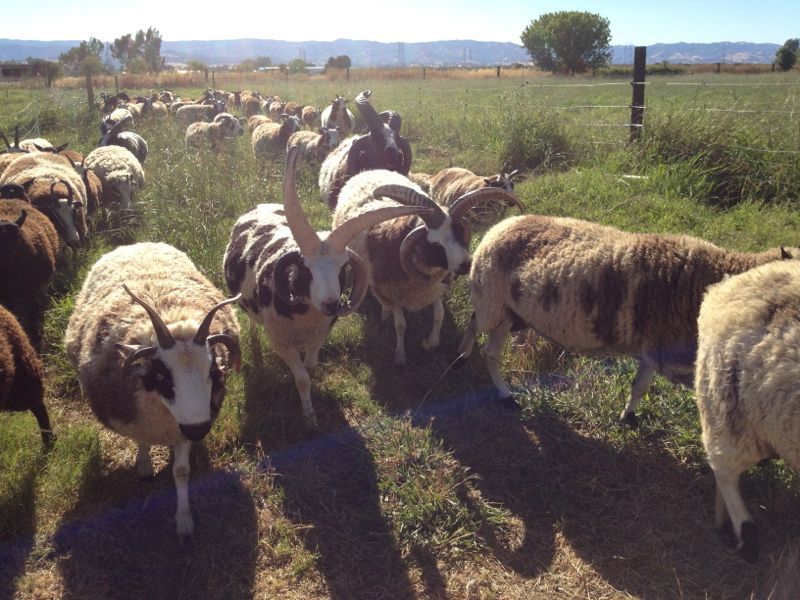
I see something wrong here. ImageThis may not be obvious to anyone but me. How about in the next photo?ImageLook more closely.ImageI wish that I could draw arrows on the photo but I don’t have the right software. See the sheep on the left? How about the sheep in the back with the white horns. And the sheep in the right center with his head down. Yes, those are rams in the pasture with the ewes. And Amaryllis is in the ram pen. OOPS! Someone didn’t latch the ram pen gate after she cleaned out the feeder.ImageBUSTED! You guys have to go back in.ImageSorry, boys.